EP0098967B1 - Verfahren zur Herstellung von obligat methylotrophen, Fremd-DNA exprimierenden Bakterien und dafür geeignete Plasmide und Wirtsorganismen - Google Patents
Verfahren zur Herstellung von obligat methylotrophen, Fremd-DNA exprimierenden Bakterien und dafür geeignete Plasmide und Wirtsorganismen Download PDFInfo
- Publication number
- EP0098967B1 EP0098967B1 EP83105569A EP83105569A EP0098967B1 EP 0098967 B1 EP0098967 B1 EP 0098967B1 EP 83105569 A EP83105569 A EP 83105569A EP 83105569 A EP83105569 A EP 83105569A EP 0098967 B1 EP0098967 B1 EP 0098967B1
- Authority
- EP
- European Patent Office
- Prior art keywords
- plasmid
- obligate methylotrophic
- bacteria
- obligate
- hybrid
- Prior art date
- Legal status (The legal status is an assumption and is not a legal conclusion. Google has not performed a legal analysis and makes no representation as to the accuracy of the status listed.)
- Expired
Links
Images
Classifications
-
- C—CHEMISTRY; METALLURGY
- C12—BIOCHEMISTRY; BEER; SPIRITS; WINE; VINEGAR; MICROBIOLOGY; ENZYMOLOGY; MUTATION OR GENETIC ENGINEERING
- C12N—MICROORGANISMS OR ENZYMES; COMPOSITIONS THEREOF; PROPAGATING, PRESERVING, OR MAINTAINING MICROORGANISMS; MUTATION OR GENETIC ENGINEERING; CULTURE MEDIA
- C12N15/00—Mutation or genetic engineering; DNA or RNA concerning genetic engineering, vectors, e.g. plasmids, or their isolation, preparation or purification; Use of hosts therefor
- C12N15/09—Recombinant DNA-technology
- C12N15/63—Introduction of foreign genetic material using vectors; Vectors; Use of hosts therefor; Regulation of expression
- C12N15/74—Vectors or expression systems specially adapted for prokaryotic hosts other than E. coli, e.g. Lactobacillus, Micromonospora
-
- C—CHEMISTRY; METALLURGY
- C12—BIOCHEMISTRY; BEER; SPIRITS; WINE; VINEGAR; MICROBIOLOGY; ENZYMOLOGY; MUTATION OR GENETIC ENGINEERING
- C12P—FERMENTATION OR ENZYME-USING PROCESSES TO SYNTHESISE A DESIRED CHEMICAL COMPOUND OR COMPOSITION OR TO SEPARATE OPTICAL ISOMERS FROM A RACEMIC MIXTURE
- C12P21/00—Preparation of peptides or proteins
- C12P21/02—Preparation of peptides or proteins having a known sequence of two or more amino acids, e.g. glutathione
Definitions
- the plasmid used in process step a) is preferably isolated from a bacterium of the genus Methylomonas, in particular of the species Methylomonas clara. Particularly preferred is the plasmid pBE 3 from the Methylomonas clara strain, which is deposited with the German Collection of Microorganisms under the number DSM 2397, and corresponding plasmids with the same replicon.
- the plasmid with selection markers used in process step b) can be the plasmid pBR 322, which is described in Gene 2 (1977) 95-113.
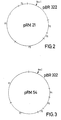
- the hydride plasmids obtained in this way are referred to below as pRM x .
- the hybrid plasmids can also contain the genetic information for the expression of insulin, as described in European patent application 0 032 675.
- the hybrid plasmid obtained after process step b) is then introduced into a suitable host organism, advantageously Escherichia coli, by transformation and amplified there.
- a suitable conjugative plasmid advantageously RP 4
- this host organism which contains the hybrid plasmid.
- the mobilizability defect is complemented by introducing suitable plasmids such as Col K and Col V.
- the host organism thus prepared can then in process step e) transfer the hybrid plasmid introduced in process step c) by conjugation to a preferably plasmid-free obligate methylotrophic bacterium as a recipient.
- Preferred recipients are bacteria of the genus Methylomonas, preferably of the species Methylomonas clara, in particular of the ATCC 31226 strain. This strain is described, for example, in German Patent No. 2,633,451 and in US Pat. No. 4,166,004.
- the desired clones are selected by culturing in a medium which contains methanol as a carbon source, and on the basis of the resistance or sensitivity to antibiotics transferred: the obligate methylotrophic bacteria obtained in this way are able to remove the foreign DNA contained to express, for example to produce insulin.
- the invention thus also relates to spheroplasts from methylotrophic bacteria, especially from obligatory methylotrophic bacteria, in particular from bacteria of the genus Methylomonas, preferably of the species Methylomonas clara.
- the strain Methylomonas clara ATCC 31226 is particularly preferred.
- the spheroplasts according to the invention can be prepared by growing the bacteria in a glycine-rich medium which contains an osmotic stabilizer.
- This medium is preferably weakly hypotonic. Further preferred configurations of this production method are explained in more detail below.
- the invention further relates to the use of the new spheroplasts for introducing external DNA into these bacteria.
- This external DNA is primarily introduced in the form of a plasmid.
- the above-mentioned hybrid plasmids are suitable as plasmids.
- the methylotrophic bacteria are grown in a suitable medium, advantageously in a minimal medium, to a suitable cell density.
- Suitable cell densities are in a range of OD 600 of preferably 0.5 to 1.8, in particular 0.9 to 1.4.
- a defined volume of these cultures is then introduced into about 5 times the amount of the medium mentioned, which is also rich in glycine and contains an osmotic stabilizer.
- the glycine content can go up to the saturation concentration; a content of 2 to 4% by weight is preferred.
- Suitable osmotic stabilizers are sugars such as sucrose, sugar alcohols such as sorbitol and polyglycols such as polyethylene glycol 6,000.
- the medium is preferably weakly hypotonic, which is set by suitable concentrations of osmotic stabilizer.
- a sucrose concentration of 10% by weight or one-molar sorbitol is suitable, for example.
- the bacteria are shaken in this medium until under the phase contrast microscope There are essentially no rod-shaped methylotrophic bacteria. In general, after about an hour of shaking (100 to 180 rpm) at about 37 ° C., the formation of the spheroplasts can be observed as immovable, spherical structures. This process is generally complete after about 4 hours.
- this resuspending medium also contains an osmotic stabilizer in a suitable concentration, for example 15% by weight polyethylene glycol with a molecular weight of 6,000.
- This suspension is mixed in an approximate volume ratio of 5: with a mixture which consists in equal parts of the medium used to resuspend the spheroplasts and the carrier of the DNA to be introduced in a suitable buffer.
- a DNA-carrier is primarily a hybrid plasmid.
- a suitable buffer for this consists of an aqueous solution which contains 10 mmol of TRIS (tris (hydroxymethyl) aminomethane) and 1 mmol of sodium ethylenediaminetetraacetate (TE buffer, pH 8.0) per liter.
- An osmotic stabilizer is added to this mixture (for example three times the volume of the spheroplast suspension of 4% by weight polyethylene glycol 6,000 solution) and mixed thoroughly. After standing briefly at room temperature, about 10 times the volume of the spheroplast suspension of resuspension medium is added and the mixture is carefully centrifuged (3,600 g).
- the precipitate is then taken up in twice the volume of the spheroplast suspension of resuspension medium and spread out on agar plates to check whether the transformation has taken place.
- the composition of these agar plates corresponds to the resuspension medium and, in addition to 1.5% by weight of Bacto agar, also contains an antibiotic suitable for selection, for example 50 ⁇ g / ml ampicillin or 10 ⁇ g / ml tetracycline, if the hybrid plasmids used contained the corresponding resistance genes.
- the plates are then incubated at 37 ° C.
- plasmid DNA Humphreys et al., BAA 383 (1975) 457 -463.
- the plasmids used for the transformation can be isolated from the methylotrophic bacteria.
- the invention further relates to plasmids from the Methylomonas clara strain DSM 2397 and the hybrid plasmids with a replicon which is an obligate methylotrophic bacterium, that is to say plasmids which are replicated in the bacteria of the genus Methylomonas, preferably of the type Methylomonas clara, in particular the strain ATCC 31226 , in which prokaryotic or eukaryotic DNA is integrated, in particular that for the expression of insulin.
- the invention further relates to the host organisms which contain the plasmids mentioned, and the host organisms which additionally contain the conjugative plasmid and furthermore those which additionally contain plasmids for eliminating the mobilization defect.
- Preferred host organisms contain RP 4 as a conjugative plasmid and Col K or Col V as plasmids for removing the mobilization defect.
- the advantage of the invention is that use is made of a replicon of a plasmid from an obligate methylotrophic bacterium, that is to say with a very narrow host range.
- the method according to the invention is thus characterized by a high level of security, so that it can be applied to recombinant DNA which contains risky information.
- TE buffer aqueous solution containing 10m mol of Tris-HCl per liter, adjusted to pH 8, and 1m mol EDTA, also adjusted to pH 8.0
- Tris (-HCI) tris-hydroxymethylaminomethane (-hydrochloride)
- the plasmid was isolated essentially according to the method of Humphreys et al. (BBA 383 (1975) 457-463). For this purpose, the bacteria were centrifuged from 1 liter of culture medium at an OD 600 of approximately 1.0 and the bacterial precipitate was resuspended in 5 ml of sucrose solution (25% sucrose in 50 mmol / l Tris-HCl solution of pH 8.0). While cooling with ice, 1 ml of lysozyme solution (5 mg / ml of lysozyme in 250 mmol / l Tris-HCl solution, pH 8.0) and 2 ml of 0.2 molar EDTA solution of pH 8.0 were added.
- the lysis was then carried out by adding 8 ml of a mixture consisting of 50 mmol / l Tris-HCl, 75.5 mmol / I EDTA and 0.2% of a nonionic surfactant ( @ Triton X-100) with a pH of 8.0. brought about.
- the highly viscous mixture was centrifuged at 48,000 g for 30 minutes, a clear lysate being obtained as the supernatant has been.
- 1.1 ml of 5 molar saline solution and 1.1 g of polyethylene glycol with an average molecular weight of 6,000 were added per 10 ml of supernatant.
- the mixture was incubated at 4 ° C overnight.
- the flocculent precipitate was collected by centrifugation at 1,500 g for 5 minutes and dissolved in 3.5 ml of buffer solution (50 mmol / l Tris-HCl, 5 mmol / l EDTA, 50 mmol / I NaCl, pH 8.0) and that Volume of the solution measured.
- buffer solution 50 mmol / l Tris-HCl, 5 mmol / l EDTA, 50 mmol / I NaCl, pH 8.0
- the mixture was centrifuged at 16,000 g for 10 minutes.
- the supernatant from this centrifugation was centrifuged in equilibrium (20 hours at 47,000 revolutions per minute, 18 ° C., in a vertical rotor) and showed two clearly visible bands, approximately one centimeter apart, even without irradiation with UV light.
- the fluorescent bands were highlighted by irradiation of UV light with a wavelength of 366 nm and the lower plasmid band was harvested by piercing the gradient laterally with a needle and then pulling the band open in a syringe.
- the ethidium bromide was removed by repeated shaking with isopropanol saturated with CsCI. After 3 times dialysis against 2 I TE buffer for at least 2 hours each, the plasmid DNA was obtained in a purity that allowed use in the following process steps.
- the DNA solution was extracted twice with equal volumes of phenol saturated with 0.1 molar Tris-HCl solution of pH 8.0 and then 3 times with absolute ether. The excess ether was blown off, 1/9 of the volume of three-molar sodium acetate solution was added to the solution and the DNA was precipitated by adding the same volume of isopropanol. After standing overnight, the mixture was centrifuged at 12,000 g for 30 minutes and the DNA precipitate was washed with 90% ethanol. The DNA was then lyophilized and taken up in TE buffer.
- the DNA was applied to a horizontal 0.5% agarose gel (low melting agarose, type VII, No. A-4018, Sigma). After electrophoresis, the bands were visualized by ethidium bromide staining and cut out of the gel.
- the agarose disk containing the DNA was melted in a glass tube at 70 ° C., the volume measured and cooled to 37 ° C. To this end, equal volumes of the butanol and water phases described below were added.
- PAA polyacrylamide
- the electrophoresis was carried out at 100 V and a current flow of 12 mA.
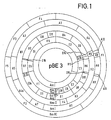
- the plasmid pBE 3 was digested with the restriction endonucleases mentioned in Table 1 and the fragments formed were separated by gel electrophoresis.
- the results set out in Table 2 and FIG. 1 were obtained by double digestion and by characterizing individual fragments cloned in pBR 322, as described below.
- the plasmid pBR 3 is a deletion mutant from a larger plasmid. Smaller plasmids also exist. All these plasmids are equivalent in the sense of this invention, provided that they contain the methylomonas replicon.
- the buffer consisted of a solution containing 50 mmol saline, 5 mmol Tris-HCl (adjusted to pH 7.5), 6 mmol magnesium chloride, 6 mmol 2-mercaptoethanol and 100 mg bovine serum albumin per liter. Control experiments showed that the enzymes in this buffer gave the same results as those recommended by the manufacturers. The only exceptions are enzymes that have an above-average salt requirement. In these cases, the first enzyme was digested at a low salt concentration and the second enzyme was only added after the salt concentration had been increased.
- the plasmid pBE 3 was partially digested with the restriction enzyme Eco RI, so that the main part of the plasmid was cut only once and was in the linearized form.
- pBR 322-DNA was totally digested with Eco RI and then subjected to treatment with alkaline phosphatase.
- the DNAs prepared in this way were combined and incubated with T4 DNA ligase at 14 ° C. overnight. 50 ⁇ g of this ligated mixture were then used for transformation into the E. coli strain HB 101, which had been made competent by CaCl 2 treatment.
- the bacteria were streaked on L-Broth plates with 20 ⁇ g / ml tetracycline and incubated overnight. Resistant colonies were inoculated on fresh plates and well-grown clones were examined by single colony lysis for the presence of plasmid DNA with a higher molecular weight than pBR 322. Clones which contained such a plasmid DNA were finally grown in 100 ml of L-broth with or without tetracycline, and the plasmid DNA was obtained after chloramphenicol stimulation of the bacteria.
- hybrid plasmids can be identified which contain fractions of pBE 3.
- Ligase reactions were carried out in 50 ⁇ l volume with a total DNA concentration of 20 ⁇ g / ml.
- the buffer contained 30 mmol of Tris-HCl (adjusted to pH 7.5), 4 mmol of magnesium chloride, 10 mmol of dithioerythritol and 0.2 mmol of ATP per liter.
- 1 ⁇ l of T4 ligase corresponding to 400 U was added to these batches (1 U corresponds to the amount of enzyme required to convert 50% of a Hind III-digested lambda DNA in 30 minutes at - 16 ° C in a volume of 20
- the concentration of the DNA in this approach is about 330 ⁇ g / ml).
- the optimal ratio of the two DNAs to one another for a particular ligase experiment was achieved by the methods of Dugaiczyk et al., JMB 96 (1975) 171. Incubation was at 14 ° C for at least 16 hours.
- the recipient and donor were grown overnight to an OD 600 of 1.0-1.2 (recipient) and 1.4-1.6 (donor), respectively, and equal volumes of recipient and donor were added so that the mixture had a large surface area was available.
- the mixture was incubated for 2 hours without shaking at 37 ° C. and then 200 ⁇ l of it was spread onto agar plates, the composition of which allowed selection against the donor and for the receptor endowed with a new property mediated by the plasmid to be transferred.
- E. coli HB 101 and M. clara DSM 2397 these were methanol minimal medium plates with the addition of an antibiotic (determined by the type of plasmid to be transferred).
- the recipient and donor were incubated as described above and 200 ⁇ l of this mixture were spread on minimal-medium methanol plates without an antibiotic. These plates were incubated at 37 ° C. overnight and the resulting bacterial lawn was washed off with 2 ml of minimal methanol medium. 200 jJ of this suspension was then streaked again on methanol minimal medium plates with the corresponding antibiotic. Clones appeared after incubating the plates at 37 ° C for 48-72 hours.
- Monkey insulin c-DNA has been incorporated into the Pst I site of pBR 322 in such a way that this foreign information was expressed in E. coli under the control of the ⁇ -lactamase promoter. This resulted in a fusion protein that could be detected with anti-insulin antibodies (European patent application 0 032 675).
- the strain Merthylomonas clara ATCC 31226 is grown in the minimal medium M 36 up to an OD soo of 0.9 to 1.4. 20 ml of these cultures are introduced into 100 ml of M 36 medium which also contains 4% glycine and 10% sucrose. The bacteria are shaken in this medium for 4 hours at 37 ° C and 100 to 180 rpm. Under the phase contrast microscope, elongated, mobile bacteria can no longer be seen.
- the spheroplasts formed are centrifuged at 2,600 g at 4 ° C. for 10 minutes and resuspended in 1 ml of M 36 medium which additionally contains 10% sucrose.
- the media mentioned can also contain 1 mol per liter of sorbitol or 15% polyethylene glycol with an average molecular weight of 6,000.
- the spheroplasts can also be separated by centrifuging at 4 ° C. and 3,600 g for 10 minutes.
- Example 13 0.5 ml of the suspension obtained according to Example 12 is mixed with 0.1 ml of a mixture which consists in equal parts of resuspension medium and TE buffer, in which the plasmid pRM 21 is contained. 1.5 ml of 4% polyethylene glycol 6000 solution are added to this mixture and mixed thoroughly. This mixture is left to stand at room temperature for 2 minutes, 5 ml of resuspension medium are added and the mixture is centrifuged at 3,600 g.
- the precipitate is taken up in 1 ml resuspension medium and spread on agar plates which correspond in their composition to the resuspension medium and additionally contain 1.5% Bakto agar and 50 f.Lg / ml ampicillin.
- the plates are incubated at 37 ° C for 3 days and the colonies are grown in M 36 medium containing 50 ⁇ g / ml ampicillin. From the bacteria thus obtained the plamide pRM 21 used for the transformation could be isolated.
- tetracycline in a concentration of 10 ⁇ l / ml can also be used in this process.
Landscapes
- Life Sciences & Earth Sciences (AREA)
- Health & Medical Sciences (AREA)
- Organic Chemistry (AREA)
- Genetics & Genomics (AREA)
- Chemical & Material Sciences (AREA)
- Engineering & Computer Science (AREA)
- Zoology (AREA)
- Wood Science & Technology (AREA)
- Biotechnology (AREA)
- Bioinformatics & Cheminformatics (AREA)
- General Engineering & Computer Science (AREA)
- General Health & Medical Sciences (AREA)
- Biomedical Technology (AREA)
- Microbiology (AREA)
- Molecular Biology (AREA)
- Biochemistry (AREA)
- Proteomics, Peptides & Aminoacids (AREA)
- Chemical Kinetics & Catalysis (AREA)
- Physics & Mathematics (AREA)
- General Chemical & Material Sciences (AREA)
- Biophysics (AREA)
- Plant Pathology (AREA)
- Micro-Organisms Or Cultivation Processes Thereof (AREA)
- Preparation Of Compounds By Using Micro-Organisms (AREA)
- Saccharide Compounds (AREA)
- Medicines Containing Material From Animals Or Micro-Organisms (AREA)
- Peptides Or Proteins (AREA)
Priority Applications (1)
| Application Number | Priority Date | Filing Date | Title |
|---|---|---|---|
| AT83105569T ATE45381T1 (de) | 1982-06-11 | 1983-06-07 | Verfahren zur herstellung von obligat methylotrophen, fremd-dna exprimierenden bakterien und dafuer geeignete plasmide und wirtsorganismen. |
Applications Claiming Priority (4)
| Application Number | Priority Date | Filing Date | Title |
|---|---|---|---|
| DE3222142A DE3222142A1 (de) | 1982-06-11 | 1982-06-11 | Verfahren zur herstellung von obligat methylotrophen bakterien und dafuer geeignete plasmide und wirtsorganismen |
| DE3222142 | 1982-06-11 | ||
| DE3313643 | 1983-04-15 | ||
| DE19833313643 DE3313643A1 (de) | 1983-04-15 | 1983-04-15 | Sphaeroplasten aus methylotrophen bakterien, ihre herstellung und verwendung |
Publications (3)
| Publication Number | Publication Date |
|---|---|
| EP0098967A2 EP0098967A2 (de) | 1984-01-25 |
| EP0098967A3 EP0098967A3 (en) | 1986-01-22 |
| EP0098967B1 true EP0098967B1 (de) | 1989-08-09 |
Family
ID=25802388
Family Applications (1)
| Application Number | Title | Priority Date | Filing Date |
|---|---|---|---|
| EP83105569A Expired EP0098967B1 (de) | 1982-06-11 | 1983-06-07 | Verfahren zur Herstellung von obligat methylotrophen, Fremd-DNA exprimierenden Bakterien und dafür geeignete Plasmide und Wirtsorganismen |
Country Status (15)
| Country | Link |
|---|---|
| EP (1) | EP0098967B1 (OSRAM) |
| AU (1) | AU572096B2 (OSRAM) |
| CA (1) | CA1270216A (OSRAM) |
| DD (1) | DD209847A5 (OSRAM) |
| DE (1) | DE3380357D1 (OSRAM) |
| DK (1) | DK268483A (OSRAM) |
| ES (1) | ES523110A0 (OSRAM) |
| FI (1) | FI832086L (OSRAM) |
| GR (1) | GR77539B (OSRAM) |
| IL (1) | IL68949A0 (OSRAM) |
| NO (1) | NO832116L (OSRAM) |
| NZ (1) | NZ204501A (OSRAM) |
| PL (1) | PL242467A1 (OSRAM) |
| PT (1) | PT76835B (OSRAM) |
| RO (1) | RO90638B (OSRAM) |
Families Citing this family (2)
| Publication number | Priority date | Publication date | Assignee | Title |
|---|---|---|---|---|
| DE3720834A1 (de) * | 1987-06-24 | 1989-01-05 | Hoechst Ag | Promotoren zur expression von fremd-dna in methylotrophen bakterien, deren gewinnung und deren verwendung |
| USD1077400S1 (en) * | 2022-02-21 | 2025-05-27 | GEM S.N.C. di Enrico Xodo e Guido Cappelli | Washing container for tray |
Family Cites Families (6)
| Publication number | Priority date | Publication date | Assignee | Title |
|---|---|---|---|---|
| GB2003926B (en) * | 1977-09-08 | 1982-03-17 | Ici Ltd | Microbiological process |
| DE3001928A1 (de) * | 1980-01-19 | 1981-08-06 | Hoechst Ag, 6000 Frankfurt | Genprodukt eines hoeheren organismus aus einem dieses gen enthaltenden mikroorganismus |
| EP0035831B1 (en) * | 1980-03-07 | 1986-01-08 | Imperial Chemical Industries Plc | Method for making genetically modified microorganisms |
| NZ196643A (en) * | 1980-03-28 | 1984-10-19 | Ici Ltd | Application of genetic engineering techniques to autotrophic or methylotrophic bacteria;composite plasmid derived from r300b |
| DE3280127D1 (de) * | 1981-03-27 | 1990-04-12 | Ici Plc | Genetisch modifizierte mikroorganismen. |
| EP0066994A3 (en) * | 1981-06-04 | 1984-02-01 | Imperial Chemical Industries Plc | Production and use of genetically-modified microorganisms |
-
1983
- 1983-06-07 EP EP83105569A patent/EP0098967B1/de not_active Expired
- 1983-06-07 DE DE8383105569T patent/DE3380357D1/de not_active Expired
- 1983-06-08 PT PT76835A patent/PT76835B/pt unknown
- 1983-06-09 NZ NZ204501A patent/NZ204501A/en unknown
- 1983-06-09 GR GR71606A patent/GR77539B/el unknown
- 1983-06-09 DD DD83251862A patent/DD209847A5/de unknown
- 1983-06-09 RO RO111210A patent/RO90638B/ro unknown
- 1983-06-09 FI FI832086A patent/FI832086L/fi not_active Application Discontinuation
- 1983-06-09 ES ES523110A patent/ES523110A0/es active Granted
- 1983-06-10 NO NO832116A patent/NO832116L/no unknown
- 1983-06-10 CA CA000430123A patent/CA1270216A/en not_active Expired - Fee Related
- 1983-06-10 DK DK268483A patent/DK268483A/da not_active Application Discontinuation
- 1983-06-10 IL IL68949A patent/IL68949A0/xx unknown
- 1983-06-10 AU AU15712/83A patent/AU572096B2/en not_active Ceased
- 1983-06-10 PL PL24246783A patent/PL242467A1/xx unknown
Also Published As
| Publication number | Publication date |
|---|---|
| PL242467A1 (en) | 1984-08-13 |
| NZ204501A (en) | 1986-12-05 |
| DE3380357D1 (en) | 1989-09-14 |
| EP0098967A3 (en) | 1986-01-22 |
| NO832116L (no) | 1983-12-12 |
| AU572096B2 (en) | 1988-05-05 |
| DD209847A5 (de) | 1984-05-23 |
| RO90638B (ro) | 1987-01-31 |
| PT76835A (de) | 1983-07-01 |
| RO90638A (ro) | 1987-01-30 |
| DK268483D0 (da) | 1983-06-10 |
| CA1270216A (en) | 1990-06-12 |
| FI832086A0 (fi) | 1983-06-09 |
| ES8406543A1 (es) | 1984-07-01 |
| EP0098967A2 (de) | 1984-01-25 |
| ES523110A0 (es) | 1984-07-01 |
| FI832086A7 (fi) | 1983-12-12 |
| GR77539B (OSRAM) | 1984-09-24 |
| DK268483A (da) | 1983-12-12 |
| IL68949A0 (en) | 1983-10-31 |
| FI832086L (fi) | 1983-12-12 |
| PT76835B (de) | 1986-02-27 |
| AU1571283A (en) | 1983-12-15 |
Similar Documents
| Publication | Publication Date | Title |
|---|---|---|
| DE2535554C2 (de) | Biologisches Verfahren | |
| EP0099084A2 (de) | Verfahren zur Herstellung von Interferon und Expressionsvektoren dafür | |
| DE3687266T2 (de) | Bakterielle enzyme und verfahren fuer deren produktion. | |
| DE3889021T2 (de) | Verfahren zum Transformieren von Zellen. | |
| DD212982A5 (de) | Verfahren zur herstellung von rinder-wachstumshormon-aehnlichen polypeptiden | |
| DE69128843T2 (de) | Indolessigsäure Synthetase Gen | |
| DE69233336T2 (de) | Vektor | |
| DE3320339C2 (OSRAM) | ||
| EP0219034B1 (de) | Verfahren zur Herstellung von mesophilen Mikroorganismen, die eine bei höherer Temperatur aktive D-Hydantoinase enthalten | |
| DE68927074T2 (de) | Codierende DNS für ein Enzym, das die Position- 4'' von makrolidischen Antibiotika azyliert | |
| EP0066701B1 (de) | Plasmid p SG 2 und Verfahren zu seiner Gewinnung | |
| EP0070522B1 (de) | Plasmid p SVH 1 und seine Verwendung | |
| DE3750240T2 (de) | Gen, das ein Insektizid-Protein kodiert, und Herstellung des Proteins durch Verwendung dieses Gens. | |
| EP0098967A2 (de) | Verfahren zur Herstellung von obligat methylotrophen, Fremd-DNA exprimierenden Bakterien und dafür geeignete Plasmide und Wirtsorganismen | |
| DE69229392T2 (de) | Neuartiges plasmid | |
| EP0158201B1 (de) | Hybridplasmide mit einem Streptomyceten- und einem Escherichia coli-Replicon | |
| EP0161629A1 (de) | Signalpeptid für die Exkretion von Peptiden in Streptomyceten | |
| DE3640382C2 (OSRAM) | ||
| DE69231306T2 (de) | Fermentationsverfahren zur Herstellung von Peptiden durch einen Wirt | |
| EP1636389B1 (de) | Plasmidfreier klon des e. coli-stammes dsm 6601 | |
| EP0158872A1 (de) | Das Streptomyceten-Plasmid pSG5, Verfahren zu seiner Gewinnung und seine Verwendung | |
| DE69107263T2 (de) | Klonierung der Sac-II-Restruktionsendonuklease und Methylase. | |
| DE3688487T2 (de) | Streptomycetes-plasmide mit sehr hoher kopienzahl. | |
| DE3141691A1 (de) | Plasmid pac 1, verfahren zu seiner gewinnung und seine verwendung | |
| DE3786947T2 (de) | Mikrobiologisches Verfahren zur Gewinnung eines Proteins durch Züchtung eines mutanten Bakterienstammes. |
Legal Events
| Date | Code | Title | Description |
|---|---|---|---|
| PUAI | Public reference made under article 153(3) epc to a published international application that has entered the european phase |
Free format text: ORIGINAL CODE: 0009012 |
|
| AK | Designated contracting states |
Designated state(s): AT BE CH DE FR GB IT LI LU NL SE |
|
| PUAL | Search report despatched |
Free format text: ORIGINAL CODE: 0009013 |
|
| AK | Designated contracting states |
Designated state(s): AT BE CH DE FR GB IT LI LU NL SE |
|
| 17P | Request for examination filed |
Effective date: 19860326 |
|
| 17Q | First examination report despatched |
Effective date: 19870723 |
|
| GRAA | (expected) grant |
Free format text: ORIGINAL CODE: 0009210 |
|
| AK | Designated contracting states |
Kind code of ref document: B1 Designated state(s): AT BE CH DE FR GB IT LI LU NL SE |
|
| REF | Corresponds to: |
Ref document number: 45381 Country of ref document: AT Date of ref document: 19890815 Kind code of ref document: T |
|
| REF | Corresponds to: |
Ref document number: 3380357 Country of ref document: DE Date of ref document: 19890914 |
|
| ITF | It: translation for a ep patent filed | ||
| ET | Fr: translation filed | ||
| GBT | Gb: translation of ep patent filed (gb section 77(6)(a)/1977) | ||
| PLBE | No opposition filed within time limit |
Free format text: ORIGINAL CODE: 0009261 |
|
| STAA | Information on the status of an ep patent application or granted ep patent |
Free format text: STATUS: NO OPPOSITION FILED WITHIN TIME LIMIT |
|
| 26N | No opposition filed | ||
| PGFP | Annual fee paid to national office [announced via postgrant information from national office to epo] |
Ref country code: DE Payment date: 19900814 Year of fee payment: 8 |
|
| PGFP | Annual fee paid to national office [announced via postgrant information from national office to epo] |
Ref country code: FR Payment date: 19910517 Year of fee payment: 9 |
|
| PGFP | Annual fee paid to national office [announced via postgrant information from national office to epo] |
Ref country code: LU Payment date: 19910522 Year of fee payment: 9 |
|
| PGFP | Annual fee paid to national office [announced via postgrant information from national office to epo] |
Ref country code: SE Payment date: 19910527 Year of fee payment: 9 |
|
| PGFP | Annual fee paid to national office [announced via postgrant information from national office to epo] |
Ref country code: GB Payment date: 19910528 Year of fee payment: 9 |
|
| PGFP | Annual fee paid to national office [announced via postgrant information from national office to epo] |
Ref country code: AT Payment date: 19910604 Year of fee payment: 9 |
|
| PGFP | Annual fee paid to national office [announced via postgrant information from national office to epo] |
Ref country code: BE Payment date: 19910607 Year of fee payment: 9 |
|
| PGFP | Annual fee paid to national office [announced via postgrant information from national office to epo] |
Ref country code: CH Payment date: 19910619 Year of fee payment: 9 |
|
| ITTA | It: last paid annual fee | ||
| PGFP | Annual fee paid to national office [announced via postgrant information from national office to epo] |
Ref country code: NL Payment date: 19910630 Year of fee payment: 9 |
|
| EPTA | Lu: last paid annual fee | ||
| PG25 | Lapsed in a contracting state [announced via postgrant information from national office to epo] |
Ref country code: DE Effective date: 19920401 |
|
| PG25 | Lapsed in a contracting state [announced via postgrant information from national office to epo] |
Ref country code: LU Free format text: LAPSE BECAUSE OF NON-PAYMENT OF DUE FEES Effective date: 19920607 Ref country code: GB Effective date: 19920607 Ref country code: AT Effective date: 19920607 |
|
| PG25 | Lapsed in a contracting state [announced via postgrant information from national office to epo] |
Ref country code: SE Effective date: 19920608 |
|
| PG25 | Lapsed in a contracting state [announced via postgrant information from national office to epo] |
Ref country code: LI Effective date: 19920630 Ref country code: CH Effective date: 19920630 Ref country code: BE Effective date: 19920630 |
|
| BERE | Be: lapsed |
Owner name: HOECHST A.G. Effective date: 19920630 |
|
| PG25 | Lapsed in a contracting state [announced via postgrant information from national office to epo] |
Ref country code: NL Effective date: 19930101 |
|
| GBPC | Gb: european patent ceased through non-payment of renewal fee |
Effective date: 19920607 |
|
| NLV4 | Nl: lapsed or anulled due to non-payment of the annual fee | ||
| PG25 | Lapsed in a contracting state [announced via postgrant information from national office to epo] |
Ref country code: FR Effective date: 19930226 |
|
| REG | Reference to a national code |
Ref country code: CH Ref legal event code: PL |
|
| REG | Reference to a national code |
Ref country code: FR Ref legal event code: ST |
|
| EUG | Se: european patent has lapsed |
Ref document number: 83105569.4 Effective date: 19930109 |