EP0073014A2 - Verfahren zum Zugreifen auf Übertragungskanäle eines Nachrichtenübertragungssystems - Google Patents
Verfahren zum Zugreifen auf Übertragungskanäle eines Nachrichtenübertragungssystems Download PDFInfo
- Publication number
- EP0073014A2 EP0073014A2 EP82107529A EP82107529A EP0073014A2 EP 0073014 A2 EP0073014 A2 EP 0073014A2 EP 82107529 A EP82107529 A EP 82107529A EP 82107529 A EP82107529 A EP 82107529A EP 0073014 A2 EP0073014 A2 EP 0073014A2
- Authority
- EP
- European Patent Office
- Prior art keywords
- subscriber station
- signaling
- central device
- access
- transmission
- Prior art date
- Legal status (The legal status is an assumption and is not a legal conclusion. Google has not performed a legal analysis and makes no representation as to the accuracy of the status listed.)
- Granted
Links
Images
Classifications
-
- H—ELECTRICITY
- H04—ELECTRIC COMMUNICATION TECHNIQUE
- H04W—WIRELESS COMMUNICATION NETWORKS
- H04W74/00—Wireless channel access
- H04W74/04—Scheduled access
-
- H—ELECTRICITY
- H04—ELECTRIC COMMUNICATION TECHNIQUE
- H04W—WIRELESS COMMUNICATION NETWORKS
- H04W74/00—Wireless channel access
- H04W74/08—Non-scheduled access, e.g. ALOHA
- H04W74/0866—Non-scheduled access, e.g. ALOHA using a dedicated channel for access
Definitions
- the invention relates to a method for accessing transmission channels of a communication system with at least one central device, with at least one duplex transmission channel and a plurality of mutually independent subscriber stations, in which each subscriber station can access the duplex transmission channel using a multiple access method.
- a system for the transmission of messages via radio links may be mentioned as an example of such a message system.
- a radio transmission system with fixed radio stations and mobile subscriber stations is known.
- Each fixed radio station central facility
- Each fixed radio station central facility
- One is used for the transmission of control information for the operational sequence
- the others are used for the speech transmission.
- the direction of transmission from the subscriber stations to the central facility is referred to as the forward direction, the reverse direction of transmission as the reverse direction.
- the operating sequence and various channel access methods are described in DE-OS 25 37 683.
- a further increase in the likelihood of destruction results from the repetition of accesses based on unrecognized identifications.
- the transmission channel cannot be used at least for the duration of an identification, ie is blocked.
- the amount of time the service channel is blocked by access destruction increases with the length of the identification, i.e. with the number of subscriber stations to be allowed in the entire messaging system.
- the capacity of the duplex transmission channel is used only to a small extent because of the effects mentioned.
- the object of the invention is to provide a method for accessing communication channels of a communication system of the type mentioned such that the N is increased utzberry a duplex transmission channel.
- each subscriber station assigns a signaling abbreviation to the duplex transmission channel in order to initiate a transmission from it, and in that the central device then requests the identified subscriber station for complete identification and thus an information transmission from and to the subscriber station initiates.
- the method according to the invention has the advantage that free access by a subscriber station to the duplex transmission channel does not take place with complete identification, but with a significantly shorter signal.
- This signaling abbreviation notifies the central device that there is a transmission request from a subscriber station.
- the complete and unambiguous identification of this subscriber station can then be coordinated by the central device, e.g. Queuing, later on the same or a different transmission channel.
- the subclaims 2 to 4 specify refinements of the method with regard to the way in which the central device, after receiving a signaling short code, requests the subscriber station concerned for complete identification.
- an identifier of the signaling abbreviation known both to the central device and to the subscriber station must be used. This identifier is used in the central facility to distinguish between the subscriber stations that have actually accessed with signaling abbreviations for a certain period of time and thus wish to transmit messages.
- the risk of access destruction and so that the portion of time for which the duplex transmission channel can only be used to a limited extent is reduced by shortening the duration of the individual access. This significantly increases the usability of the transmission channel with useful information.
- the temporal position or the information content of the signaling abbreviation or both can be used for partial identification.
- the effects of simultaneous accesses that nevertheless occur or of faults present on the transmission channel and simulating accesses can be reduced (dependent claim 3).
- the subscriber stations can each select one of different signaling abbreviations.
- the central device also specifies the type of signaling abbreviation used by the subscriber station during access.
- a further improvement in the channel utilization results from subclaim 4 if the central device only sends an identification request if a signaling abbreviation with sufficient reception quality has been recognized. This detection of access destruction or simulations as well as accesses with insufficient performance means that no periods of time in the duplex transmission channel are kept free for unsuccessful identifications.
- Subclaims 7 to 9 indicate possible explanations for the coordination of the concentration of commercial traffic.
- a transmission channel is used both for access by the subscriber stations during the periods permitted for free access and for the transmission of useful information during the periods blocked for free access. Destruction of the user information by free access by other subscriber stations is largely avoided in accordance with a method according to subclaim 15, with a method according to one of subclaims 7 to 9.
- a simple implementation of the processes in the subscriber station is obtained if, according to subclaim 13, the duplex transmission channel is divided into time slots of the same length in the forward and backward direction. Each time slot permitted for free access is subdivided into a number of short so-called call slots, the time duration of a call slot corresponding at least to the duration of a signaling abbreviation that is the same for all subscriber stations (subclaims 11 to 13).
- subclaim 14 there is the possibility of providing a period of time in some or all transmissions of the central facility, in particular those to a specific (already fully identified) subscriber station. This can be used for an identification request to another subscriber station that had accessed with a signaling abbreviation. Instead of such an identification request in the period provided in a message, a release mark or a block mark according to subclaim 8 can also be entered.
- radio stations In the case of a radio telephone service, fixed radio stations (the central facilities) are spatially arranged according to a cell system. A geographical area covered by a radio station is also referred to as a radio zone. Each radio station (and thus each unkzone F) is called a number of duplex communication channels, even wireless channels assigned. Of these, at least one channel, the service channel, is used for signaling to control the system functions. This includes, for example, the transmission of dialing information when setting up calls to and from mobile subscriber stations as well as residence reports from the mobile subscriber stations to indicate their availability.
- the method according to the invention is applied to this service channel in order to be able to serve as large a number of mobile subscriber stations as possible without providing additional service channels, so that radio channels can be saved and a contribution can be made to frequency economy.
- Each time slot ZS allowed for free access is determined in the system by a certain number of e.g. divided into eight call slots. Also by system definition, a uniform duration of the signaling abbreviations SK is agreed for all mobile subscriber stations.
- a mobile subscriber station wants to access the service channel, it first waits on a release permit Er for free access to the time slot assigned to the release permit Er (indicated by the arrowed line) of the forward direction HR.
- This time slot is designated by X and, by arrangement, is divided into eight call slots, for example.
- the mobile subscriber station randomly selects one of these call slots, hereinafter referred to as Y, and sends its signaling abbreviation therein. This consists, for example, of a bit pattern that is uniform for all mobile subscriber stations and therefore does not offer any possibility of differentiation.
- the temporal position of the signaling abbreviation identified by the pair of values XY is thus known to both the mobile subscriber station and the fixed radio station.
- the request for complete identification now consists in the specification of XY as a marker with the meaning already explained.
- the time slot but one that is permanently assigned to this marker is only available to the requested mobile subscriber station in order to send its complete identification and the type of dialogue it desires with the fixed radio station in a message ID (XY).
- Each of these dialogs consists of at least two messages and can be structured as described below.
- the mobile subscriber station After receiving the identification request, designated in FIG. 3a with IDG, the mobile subscriber station sends its complete identification in the outward direction H-R as well as the indication that it wants to set up a call.
- the stationary radio station acknowledges the identification and, as described in FIG. 3a with WAF, requests the mobile subscriber station to transmit dialing information.
- the mobile subscriber station then transmits dialing information WÜT in the time slot after next.
- the stationary radio station acknowledges this with a dialing receipt WLQ and begins to set up the desired connection.
- the fixed radio station uses a KBF channel command to refer to a speech channel intended for the call.
- the mobile subscriber station When switched on or at certain intervals during operational readiness, the mobile subscriber station informs the fixed radio station that it can be reached for calls in its radio zone. After successful access to the service channel and the request for complete identification, the mobile subscriber station sends an attendance message IDA which contains the complete identification. This message IDA is confirmed by the fixed radio station with an acknowledgment AMQ, which concludes the dialog.
- a mobile subscriber station If a mobile subscriber station changes the radio zone ), it must inform the fixed radio station in whose radio zone it is going about the change of radio zone so that it remains accessible for calls.
- the necessary dialog corresponds to that of the presence notification (2.), the messages IDA being replaced by re-registration with identification IDU and AMQ by re-registration acknowledgment UMQ.
- ID G IDA and IDU messages
- the identification takes up the largest part due to the large number of mobile subscriber stations to be permitted in the entire system. In comparison, the information to distinguish the types of dialog is of little importance.
- WAF, WLQ, KBF, AMQ and UMQ messages there are other messages for other system functions in the reverse direction RR. These system functions are not to be differentiated further here and are denoted by Mld in the figures (FIGS. 1 and 4).
- FIG. 4 shows a time segment of the service channel with various dialogues.
- the various dialogues are processed with several mobile subscriber stations Tln nested in time.
- Marked time slots represent parts of dialogues that started before the beginning of the time period shown in FIG. 4.
- the time slots are numbered cyclically using the numbers 0 to 9.
- the XY request for complete identification therefore consists of two digits.
- the first digit X denotes the number of the timeslot
- the second digit Y denotes the number of the call slot (in timeslot X) in which the signaling code was sent.
- the method according to the invention also offers a number of advantages for the implementation of the control processes, in particular in the mobile subscriber station.
Landscapes
- Engineering & Computer Science (AREA)
- Computer Networks & Wireless Communication (AREA)
- Signal Processing (AREA)
- Mobile Radio Communication Systems (AREA)
- Telephonic Communication Services (AREA)
- Measurement Of Resistance Or Impedance (AREA)
Abstract
Description
- Die Erfindung betrifft ein Verfahren zum Zugreifen auf Übertragungskanäle eines Nachrichtenübertragungssystems mit mindestens einer zentralen Einrichtung, mit mindestens einem Duplex-Übertragungskanal und einer Vielzahl voneinander unabhängiger Teilnehmerstationen, bei dem jede Teilnehmerstation nach einem Vielfachzugriff-Verfahren auf den Duplex-Übertragungskanal zugreifen kann.
- Als Beispiel für ein derartiges Nachrichtensystem sei ein System zur Übertragung von Nachrichten über Funkstrecken genannt. Aus der DE-OS 25 37 683 ist ein Funkübertragungssystem mit ortsfesten Funkstationen und beweglichen Teilnehmerstationen bekannt. Dabei ist jeder ortsfesten Funkstation (zentralen Einrichtung) ein Satz von Duplex-Übertragungskanälen zugeordnet. Einer (der Dienstkanal) wird zur Übertragung von Steuerungsinformationen für den Betriebsablauf und die übrigen (die Sprechkanäle) werden zur Sprachübertragung verwendet. Im folgenden wird die Übertragungsrichtung von den Teilnehmerstationen zur zentralen Einrichtung als Hin-Richtung, die umgekehrte Übertragungsrichtung als Rück-Richtung bezeichnet. Der Betriebsablauf und verschiedene Kanalzugriff-Verfahren sind in der DE-OS 25 37 683 beschrieben.
- Zu Beginn jeder Übertragung von einer Teilnehmersta- tion zur zentralen Einrichtung wird auf dem Dienstkanal (Duplex-Übertragungskanal) in Hin-Richtung zunächst die eigene Fahrzeugkennung (Identifizierung) gesendet. Senden zwei oder mehrere Teilnehmerstationen ihre jeweilige Identifizierung gleichzeitig auf dem Dienstkanal, so kann keine dieser Identifizierungen in der zentralen Einrichtung erkannt werden, außer eine der Identifizierungen wird mit erheblich höherer Leistung als alle anderen empfangen.
- Mit wachsender Anzahl von Teilnehmerstationen steigt die Wahrscheinlichkeit, daß mehrere Teilnehmerstationen gleichzeitig auf den Dienstkanal zugreifen wollen. Da der Dienstkanal von allen Teilnehmerstationen gemeinsam benutzt werden muß, ist die Wahrscheinlichkeit für gleichzeitige Zugriffe auf diesen und damit die Zerstörungswahrscheinlichkeit besonders groß.
- Eine weitere Vergrößerung der Zerstörungswahrscheinlichkeit ergibt sich durch die Wiederholung von Zugriffen aufgrund von nicht erkannten Identifizierungen. Bei jeder Zugriffszerstörung ist der Übertragungskanal mindestens für die Dauer einer Identifizierung nicht nutzbar, also blockiert. Der zeitliche Anteil der Blockierung des Dienstkanals durch Zugriffszerstörungen wächst zusätzlich mit der Länge der Identifizierung, d.h. mit der Zahl der im gesamten Nachrichtensystem zuzulassenden Teilnehmerstationen.
- Bei häufigen und kurzen Übertragungen wird wegen der genannten Effekte die Kapazität des Duplex-Übertragungskanals nur zu einem geringen Teil genutzt.
- Aufgabe der Erfindung ist es, ein Verfahren zum Zugreifen auf Übertragungskanäle eines Nachrichtensystems der eingangs genannten Art derart anzugeben, daß die Nutzbarkeit eines Duplex-Übertragungskanals erhöht wird.
- Diese Aufgabe wird erfindungsgemäß dadurch gelöst, daß jede Teilnehmerstation zur Einleitung einer von ihr ausgehenden Übertragung den Duplex-Übertragungskanal mit einem Signalisierungs-Kurzzeichen belegt, und daß daraufhin die zentrale Einrichtung die gekennzeichnete Teilnehmerstation zur vollständigen Identifizierung auffordert und damit eine Informationsübertragung von und zu der Teilnehmerstation einleitet.
- Das Verfahren gemäß der Erfindung weist den Vorteil auf, daß der freie Zugriff einer Teilnehmerstation auf den Duplex-Übertragungskanal nicht mit einer vollständigen Identifizierung, sondern mit einem wesentlich kürzeren Signal erfolgt. Dieses Signalisierungs-Kurzzeichen teilt der zentralen Einrichtung mit, daß ein Übertragungswunsch von einer Teilnehmerstation besteht. Die vollständige und eindeutige Identifizierung dieser Teilnehmerstation kann dann, wie auch gegebenenfalls die Übertragung weiterer Nutzinformation, unter Koordination durch die zentrale Einrichtung, z.B. Warteschlangenbildung, zu einem späteren Zeitpunkt auf dem gleichen oder einem anderen Übertragungskanal erfolgen.
- Die Unteransprüche 2 bis 4 geben Ausgestaltungen des Verfahrens hinsichtlich der Art und Weise an, wie die zentrale Einrichtung nach Empfang eines Signalisierungs-Kurzzeichens die betreffende Teilnehmerstation zur vollständigen Identifizierung auffordert. Dazu muß ein sowohl der zentralen Einrichtung als auch der Teilnehmerstation bekanntes Kennzeichen des Signalisierungs-Kurzzeichens verwendet werden. Dieses Kennzeichen dient in der zentralen Einrichtung zur Unterscheidung zwischen den Teilnehmerstationen, die während eines bestimmten Zeitraums mit Signalisierungs-Kurzzeichen tatsächlich zugegriffen haben und damit eine Nachrichtenübertragung wünschen. Die Gefahr von Zugriffszerstörungen und damit derjenige Zeitanteil,für den der Duplex-Übertragungskanal nur gering nutzbar ist, wird durch die Verkürzung der Dauer des einzelnen Zugriffs verringert. Damit wird die mögliche Nutzbarkeit des Übertragungskanals mit Nutzinformation wesentlich erhöht.
- Nach den Unteransprüchen 2 oder 3 kann zur teilweisen Identifizierung die zeitliche Lage oder der Informationsinhalt des Signalisierungs-Kurzzeichens oder beides verwendet werden. Die Auswirkungen von trotzdem vorkommenden gleichzeitigen Zugriffen oder von auf dem Übertragungskanal vorhandenen und Zugriffe vortäuschenden Störungen kann vermindert werden (Unteranspruch 3). Die Teilnehmerstationen können jeweils eines von verschiedenen Signalisierungs-Kurzzeichen auswählen. Die zentrale Einrichtung gibt in der Aufforderung zur Identifizierung auch die Art des von der Teilnehmerstation beim Zugriff verwendeten Signalisierungs-Kurzzeichens an.
- Eine weitere Verbesserung der Kanalausnutzung ergibt sich nach Unteranspruch 4, wenn die zentrale Einrichtung nur dann eine Identifizierungsaufforderung sendet, wenn ein Signalisierungs-Kurzzeichen mit hinreichender Empfangsqualität erkannt wurde. Durch diese Erkennung von Zugriffszerstörungen oder -vortäuschungen sowie von Zugriffen mit zu geringer Leistung werden keine Zeiträume des Duplex-Übertragungskanals für ohnedies erfolglose Identifizierungen freigehalten.
- Weiterhin erhöht sich die Nutzbarkeit von zugriffsgesperrten Zeiten (Zeiträume, während derer der freie Zugriff für andere Teilnehmerstationen gesperrt ist), wenn die zur Identifizierung aufgeforderte Teilnehmerstation die ihr hierfür zur Verfügung gestellte Zeit möglichst gut nutzt. Eine Teilnehmerstation benötigt eine gewisse Reaktionszeit, z.B. zur Auswertung der Identifizierungsaufforderung, bevor sie ihre Identifizierung senden kann. Gemäß Unteranspruch 5 oder Unteranspruch 6 wird eine vom System festgelegte oder eine fallweise von der zentralen Einrichtung zu bestimmende Verzögerung zwischen Übertragungen in Rück-Richtung (z.B. Aufforderung zur vollständigen Identifizierung) und den zugehörigen Übertragungen in Hin-Richtung (z.B. Identifizierung) verwendet,um die genannte Reaktionszeit für andere Zwecke nutzen zu können.
- Die Unteransprüche 7 bis 9 geben mögliche Ausführungen für die Koordination zur Konzentration des Nutzverkehrs an. Bei einem Verfahren gemäß Unteranspruch 7 und 8 wird ein Übertragungskanal sowohl für Zugriffe der Teilnehmerstationen während der für freie Zugriffe erlaubten Zeiträume, als auch zur Übertragung von Nutzinformationen während der für freie Zugriffe gesperrten Zeiträume verwendet. Eine Zerstörung der Nutzinformation durch freie Zugriffe anderer Teilnehmerstationen wird dabei gemäß einem Verfahren nach Unteranspruch 15 weitgehend, bei einem Verfahren gemäß einem der Unteransprüche 7 bis 9,völlig vermieden.
- Die Wahrscheinlichkeit der gegenseitigen Zerstörung von Signalisierungs-Kurzzeichen ist geringer, wenn während der für Zugriffe erlaubten Zeiten die Zugriffe möglichst gleichmäßig verteilt erfolgen. Gemäß Unteranspruch 10 greift eine Teilnehmerstation nach Erkennen der Erlaubnis zum freien Zugriff nicht unbedingt sofort zu. Der genaue Zeitpunkt zum Senden des Signalisierungs-Kurzzeichens wird z. B. zufällig ausgewählt.
- Eine einfache Realisierung der Abläufe in der Teilnehmerstation ergibt sich, wenn gemäß Unteranspruch 13 der Duplex-Übertragungskanal in Hin- und Rück-Richtung in Zeitschlitze gleicher Länge aufgeteilt wird. Jeder für freie Zugriffe erlaubte Zeitschlitz wird gemäß Unteranspruch 12 in eine Anzahl von kurzen sogenannten Rufschlitzen unterteilt, wobei die Zeitdauer eines Rufschlitzes mindestens der, für alle Teilnehmerstationen gleichen, Dauer eines Signalisierungs-Kurzzeichens (Unteransprüche 11 bis 13) entspricht.
- Gemäß Unteranspruch 14 besteht die Möglichkeit, in manchen oder allen Übertragungen der zentralen Einrichtung, insbesondere solchen zu einer bestimmten (bereits vollständig identifizierten) Teilnehmerstation, einen Zeitraum vorzusehen. Dieser kann für eine Identifizierungsaufforderung an eine andere Teilnehmerstation, die mit einem Signalisierungs-Kurzzeichen zugegriffen hatte, verwendet werden. Anstelle einer solchen Identifizierungsaufforderung in dem in einer Meldung vorgesehenen Zeitraum kann auch eine Freigabe-Markierung bzw. eine Sperre-Markierung nach Unteranspruch 8 eingetragen werden.
- Die Erfindung wird im folgenden anhand der Figuren 1 bis 4 für eine Anwendung bei einem Funkfernsprechdienst näher beschrieben und erläutert.
- Es zeigt:
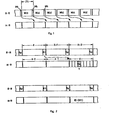
- Fig.l .die Organisation eines Kanals,
- Fig.2 den Ablauf eines Zugriffs auf den Dienstkanal,
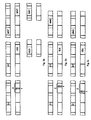
- Fig.3a, die Dialoge zwischen Teilnehmerstation 3b, und zentraler Einrichtung beim Gesprächs-3c aufbau, bei Anwesenheitsmitteilung und bei Ummeldung und
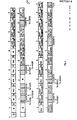
- Fig. 4 einen Zeitabschnitt des Dienstkanals mit verschiedenen Dialogen gemäß der Erfindung.
- Bei einem Funkfernsprechdienst sind ortsfeste Funkstationen (die zentralen Einrichtungen) räumlich nach einem Zellensystem geordnet. Ein von einer Funkstation versorgtes geographisches Gebiet wird auch als Funkzone bezeichnet. Jeder Funkstation (und damit jeder Funkzone)ist eine Anzahl von Duplex-Übertragungskanälen, auch Funkkanäle genannt, zugeordnet. Von diesen wird mindestens ein Kanal, der Dienstkanal, für Signalisierungen zur Steuerung der Systemfunktionen verwendet. Dazu gehört z.B. die Übertragung von Wahlinformationen beim Aufbau von Gesprächen von und zu mobilen Teilnehmerstationen sowie von Aufenthaltsmeldungen der mobilen Teilnehmerstationen zur Mitteilung ihrer Erreichbarkeit. Auf diesen Dienstkanal wird das erfindungsgemäße Verfahren angewendet, um eine möglichst große Zahl von mobilen Teilnehmerstationen ohne Bereitstellung weiterer Dienstkanäle bedienen zu können, damit Funkkanäle einzusparen und einen Beitrag zur Frequenzökonomie zu leisten.
- Wie in Fig. 1 dargestellt) ist jeder Dienstkanal in jeder Übertragungsrichtung in eine Folge von gleichlangen Zeitschlitzen unterteilt. Jedem Zeitschlitz ZS in Rück-Richtung R-R (von der ortsfesten Funkstation zu den mobilen Teilnehmerstationen) ist der übernächste Zeitschlitz in Hin-Richtung H-R (von den mobilen Teilnehmerstationen zur ortsfesten Funkstation) fest zugeordnet. Dies ist in Fig. 1 durch gepfeilte Linien angedeutet. Eine entsprechende Zuordnung zwischen Hin-Richtung H-R und Rück-Richtung R-R wird nicht vorgenommen. Die ortsfeste Funkstation sendet in der Rück-Richtung R-R kontinuierlich Meldungen Mld mit fester Zeitdauer aus, welche einem Zeitschlitz ZS entspricht. In jeder Meldung Mld der Rück-Richtung R-R ist eine Markierung Mk enthaltendie über den Verwendungszweck des zugeordneten Zeitschlitzes ZS der Hin-Richtung H-R Auskunft gibt. Die Markierung Mk kann eine der folgenden drei Bedeutungen haben:
- Er = Erlaubnis für freie Zugriffe von mobilen Teilnehmerstationen mittels Signalisierungs-Kurzzeichen im zugeordneten Zeitschlitz
- Sp = Sperre des zugeordneten Zeitschlitzes ZS für freie Zugriffe
- XY = Aufforderung zur vollständigen Identifizierung im zugeordneten Zeitschlitz ZS für diejenige mobile Teilnehmerstation, die mit dem durch XY gekennzeichneten Signalisierungs-Kurzzeichen zugegriffen hatte. Für alle anderen mobilen Teilnehmerstationen entspricht dies einer Zugriffssperre.
- Jeder für freie Zugriffe erlaubte Zeitschlitz ZS wird durch Festlegung im System in eine bestimmte Anzahl von z.B. acht Rufschlitzen unterteilt. Ebenfalls durch Systemfestlegung wird für alle mobilen Teilnehmerstationen eine einheitliche Dauer der Signalisierungs-Kurzzeichen SK vereinbart.
- In Fig. 2 ist der Ablauf eines Zugriffs auf den Dienstkanal dargestellt. Will eine mobile Teilnehmerstation auf den Dienstkanal zugreifen, so wartet sie zunächst auf eine Freigabe-Erlaubnis Er zum freien Zugriff auf den, der Freigabe-Erlaubnis Er zugeordneten (durch gepfeilte Linie angedeutet) Zeitschlitz der Hin-Richtung H-R. Dieser Zeitschlitz sei mit.X bezeichnet und ist nach Vereinbarung z.B. in acht Rufschlitze unterteilt. Von diesen Rufschlitzen wählt sich die mobile Teilnehmerstation zufällig einen, im folgenden mit Y bezeichneten, Rufschlitz aus und sendet darin ihr Signalisierungs-Kurzzeichen. Dieses besteht z.B. aus einem für alle mobilen Teilnehmerstationen einheitlichen Bitmuster und bietet daher keine Unterscheidungsmöglichkeit. Die durch das Wertepaar XY gekennzeichnete zeitliche Lage des Signalisierungs-Kurzzeichens ist damit sowohl der mobilen Teilnehmerstation als auch der ortsfesten Funkstation bekannt. Die Aufforderung zur vollständigen Identifizierung besteht nun in der Angabe von XY als Markierung mit der bereits erläuterten Bedeutung. Der dieser Markierung fest zugeordnete übernächste Zeitschlitz steht allein der aufgeforderten mobilen Teilnehmerstation zur Verfügung, um in einer Meldung ID(XY) ihre vollständige Identifizierung sowie die Art des von ihr gewünschten Dialogs mit der ortsfesten Funkstation zu senden.
- In Fig. 3a, 3b und 3c sind verschiedene Dialogarten dargestellt. Als Dialogarten seien z.B. vorgesehen:
- 1. Aufbau eines Gesprächs von einer mobilen Teilnehmerstation zu einem festen Teilnehmer des Telefonnetzes (Fig. 3a),
- 2. Anwesenheitsmitteilung bei Betriebsbereitschaft der mobilen Teilnehmerstation (Fig. 3b) und
- 3. Ummeldung beim Wechsel von einer Funkzone in eine andere (Fig. 3c).
- Jeder dieser Dialoge besteht aus mindestens zwei Meldungen und kann wie nachfolgend beschrieben aufgebaut sein.
- Nach Erhalt der Identifizierungsaufforderung sendet, in Fig. 3a mit IDG bezeichnet, die mobile Teilnehmerstation in der Hin-Richtung H-R ihre vollständige Identifizierung sowie den Hinweis, daß sie ein Gespräch aufbauen will. Nach einer gewissen Zeit quittiert die ortsfeste Funkstation die Identifizierung und fordert, in Fig. 3a mit WAF beschrieben, die mobile Teilnehmerstation zur Übertragung einer Wahlinformation auf. Darauf nimmt die mobile Teilnehmerstation im übernächsten Zeitschlitz die Übertragung einer Wahlinformation WÜT vor. Die ortsfeste Funkstation quittiert dies mit einer Wahlquittung WLQ und beginnt mit dem Aufbau der gewünschten Verbindung. Wenn sich der gerufene Teilnehmer meldet, verweist die ortsfeste Funkstation mit einem Kanalbefehl KBF auf einen für das Gespräch vorgesehenen Sprechkanal.
- Beim Einschalten oder in bestimmten Zeitabständen während der Betriebsbereitschaft teilt die mobile Teilnehmerstation der ortsfesten Funkstation mit, daß sie in deren Funkzone für Rufe erreichbar ist. Nach erfolgreichem Zugriff auf den Dienstkanal und der Aufforderung zur vollständigen Identifizierung sendet die mobile Teilnehmerstation eine Anwesenheitsmitteilung IDA, die die vollständige Identifizierung enthält. Diese Mitteilung IDA wird von der ortsfesten Funkstation durch eine Quittung AMQ bestätigt, womit der Dialog abgeschlossen ist.
- Wechselt eine mobile Teilnehmerstation die Funkzone) so muß sie derjenigen ortsfesten Funkstation, in deren Funkzone sie sich begibt, den Funkzonenwechsel mitteilen, damit sie für Rufe erreichbar bleibt. Der notwendige Dialog entspricht dem der Anwesenheitsmitteilung (2.) wobei die Meldungen IDA durch Ummeldung mit Identifizierung IDU und AMQ durch Ummeldequittung UMQ ersetzt werden. In den Meldungen IDG, IDA und IDU nimmt wegen der großen Anzahl von im gesamten System zuzulassenden mobilen Teilnehmerstationen die Identifizierung den größten Teil ein. Im Vergleich dazu fällt die Information zur Unterscheidung der Dialogarten kaum ins Gewicht. Neben den genannten Meldungen WAF, WLQ, KBF, AMQ und UMQ gibt es in Rück-Richtung R-R noch weitere Meldungen für andere Systemfunktionen. Diese Systemfunktionen sollen hier nicht weiter unterschieden werden und sind in den Figuren (Fig. 1 und Fig. 4) mit Mld bezeichnet.
- In Fig. 4 ist ein Zeitabschnitt des Dienstkanals mit verschiedenen Dialogen dargestellt. Die verschiedenen Dialoge werden mit mehreren mobilen Teilnehmerstationen Tln zeitlich verschachtelt abgewickelt. Die mit. gekennzeichneten Zeitschlitze stellen Teile von Dialogen dar, die vor Beginn des in Fig. 4 dargestellten Zeitabschnitts begonnen wurden. Die Numerierung der Zeitschlitzewird zyklisch mit den Ziffern 0 bis 9 vorgenommen. Die Aufforderung XY zur vollständigen Identifizierung besteht daher aus zwei Ziffern. Die erste Ziffer X bezeichnet die Nummer des Zeitschlitzes, die zweite Ziffer Y bezeichnet die Nummer des Rufschlitzes (im Zeitschlitz X), in dem das Signalisierungs-Kurzzeichen gesendet wurde. Bei der Realisierung kann es im Gegensatz zu dieser vereinfachten Darstellungsweise günstiger sein, mit der Nummer x die
- Zahl der seit dem Senden des Signalisierungs-Kurzzeichen vergangenen Zeitschlitze anzugeben. Aus Fig. 4 ist ersichtlich, daß
- - die für freie Zugriffe gesperrte Zeit vollständig für die Übertragung von Nutzinformation (Meldungen) ausgenutzt werden kann,
- - nur ein relativ geringer Teil der Kapazität des Dienstkanals für freie Zugriffe zur Verfügung gestellt werden muß,
- - dennoch nur ein geringer Teil der verfügbaren Rufschlitze mit Signalisierungs-Kurzzeichen belegt ist, woraus eine geringe Zerstörungswahrscheinlichkeit folgt und damit,
- - insgesamt durch das erfindungsgemäße Verfahren eine hohe Nutzbarkeit (Auslastbarkeit) des Dienstkanals bei geringer Wahrscheinlichkeit von Zugriffszerstörungen erzielt wird.
- Das erfindungsgemäße Verfahren bietet zudem eine Reihe von Vorteilen für die Realisierung der Steuerungsabläufe insbesondere in der mobilen Teilnehmerstation.
Claims (14)
Priority Applications (1)
| Application Number | Priority Date | Filing Date | Title |
|---|---|---|---|
| AT82107529T ATE16549T1 (de) | 1981-08-22 | 1982-08-18 | Verfahren zum zugreifen auf uebertragungskanaele eines nachrichtenuebertragungssystems. |
Applications Claiming Priority (2)
| Application Number | Priority Date | Filing Date | Title |
|---|---|---|---|
| DE3133347 | 1981-08-22 | ||
| DE19813133347 DE3133347A1 (de) | 1981-08-22 | 1981-08-22 | Verfahren zum zugreifen auf uebertragungskanaele eines nachrichtenuebertragungssystems |
Publications (3)
| Publication Number | Publication Date |
|---|---|
| EP0073014A2 true EP0073014A2 (de) | 1983-03-02 |
| EP0073014A3 EP0073014A3 (en) | 1983-04-27 |
| EP0073014B1 EP0073014B1 (de) | 1985-11-13 |
Family
ID=6139941
Family Applications (1)
| Application Number | Title | Priority Date | Filing Date |
|---|---|---|---|
| EP82107529A Expired EP0073014B1 (de) | 1981-08-22 | 1982-08-18 | Verfahren zum Zugreifen auf Übertragungskanäle eines Nachrichtenübertragungssystems |
Country Status (12)
| Country | Link |
|---|---|
| US (2) | US5088094A (de) |
| EP (1) | EP0073014B1 (de) |
| JP (1) | JPS5842332A (de) |
| AR (1) | AR231891A1 (de) |
| AT (1) | ATE16549T1 (de) |
| AU (1) | AU557944B2 (de) |
| BR (1) | BR8204895A (de) |
| CA (1) | CA1202096A (de) |
| DE (2) | DE3133347A1 (de) |
| DK (1) | DK160121C (de) |
| ES (1) | ES8306304A1 (de) |
| NO (1) | NO157760C (de) |
Cited By (4)
| Publication number | Priority date | Publication date | Assignee | Title |
|---|---|---|---|---|
| EP0134057A1 (de) * | 1983-08-01 | 1985-03-13 | Philips Electronics Uk Limited | Nachrichtensystem mit Vielfachzugriff |
| EP0245024A3 (en) * | 1986-05-06 | 1989-08-09 | Nec Corporation | Radio communication system with power saving disablement prior to call handling processes |
| EP0339740A3 (de) * | 1988-04-28 | 1991-10-09 | Philips Patentverwaltung GmbH | Nachrichtenübertragungssystem |
| EP0529859A3 (en) * | 1991-08-22 | 1993-09-01 | Northern Telecom Limited | Radio link architecture for wireless communications systems |
Families Citing this family (36)
| Publication number | Priority date | Publication date | Assignee | Title |
|---|---|---|---|---|
| DE3230999A1 (de) * | 1982-08-20 | 1984-02-23 | Philips Kommunikations Industrie AG, 8500 Nürnberg | Verfahren zur zugriffssteuerung bei einem nachrichtensystem |
| GB2165127B (en) * | 1984-09-26 | 1988-04-07 | Philips Electronic Associated | Multiple access communications system |
| US4802200A (en) * | 1985-08-27 | 1989-01-31 | Nippon Telegraph And Telephone Corporation | Radio telephone system control apparatus and method |
| JPS6248131A (ja) * | 1985-08-27 | 1987-03-02 | Nippon Telegr & Teleph Corp <Ntt> | 無線電話方式 |
| FR2625389B1 (fr) * | 1987-12-23 | 1990-05-04 | Trt Telecom Radio Electr | Systeme radioelectrique pour permettre l'echange d'informations entre un ensemble de stations |
| US4977612A (en) * | 1989-10-10 | 1990-12-11 | Motorola, Inc. | Channel selection in a multi-frequency radio data communication system |
| SE464955B (sv) * | 1989-11-03 | 1991-07-01 | Ericsson Telefon Ab L M | Foerfarande att indela en ramstruktur i en mobilstation |
| EP0454647B1 (de) * | 1990-04-27 | 1998-06-03 | Telefonaktiebolaget L M Ericsson | Einrichtung und Verfahren zur Anrufvermittlung für mobile Telefonteilnehmer |
| GB2249918A (en) * | 1990-11-14 | 1992-05-20 | Philips Electronic Associated | Channel scanning in tdd cordless telephone system |
| US5257399A (en) * | 1990-11-28 | 1993-10-26 | Telefonaktiebolaget L M Ericsson | Multiple access handling in a cellular communications system |
| US5229996A (en) * | 1991-02-28 | 1993-07-20 | Telefonaktiebolaget L M Ericsson | Split-window time alignment |
| GB2254971B (en) * | 1991-03-07 | 1994-12-21 | Ericsson Telefon Ab L M | Mobile radio communications stations |
| US5239677A (en) * | 1991-07-01 | 1993-08-24 | Motorola, Inc. | Method and apparatus for initiating communication on an assigned frequency |
| SE517499C2 (sv) | 1991-08-01 | 2002-06-11 | Ericsson Ge Mobile Communicat | Förfarande för åtkomst av ett mobilradiolandsystem från en av ett antal mobilstationer |
| US5404355A (en) * | 1992-10-05 | 1995-04-04 | Ericsson Ge Mobile Communications, Inc. | Method for transmitting broadcast information in a digital control channel |
| US5768276A (en) * | 1992-10-05 | 1998-06-16 | Telefonaktiebolaget Lm Ericsson | Digital control channels having logical channels supporting broadcast SMS |
| US6041047A (en) * | 1992-10-05 | 2000-03-21 | Telefonaktiebolaget Lm Ericsson | Digital control channels having logical channels supporting broadcast SMS |
| US5604744A (en) * | 1992-10-05 | 1997-02-18 | Telefonaktiebolaget Lm Ericsson | Digital control channels having logical channels for multiple access radiocommunication |
| JPH0738613B2 (ja) * | 1993-03-30 | 1995-04-26 | 日本電気株式会社 | 複合データ通信方式およびこの方式に用いる装置 |
| US5390181A (en) * | 1993-06-04 | 1995-02-14 | Illinois Institute Of Technology | Method for detecting collisions on and controlling access to a transmission channel |
| US5586150A (en) * | 1993-11-24 | 1996-12-17 | Rajupandaram K. Balasubramaniam | Method and apparatus for symbol synchronization in multi-level digital FM radio |
| FI97933C (fi) * | 1994-04-20 | 1997-03-10 | Nokia Telecommunications Oy | Menetelmä yhteydenmuodostamisen helpottamiseksi solukkoradioverkossa sekä tukiasema |
| US5542115A (en) * | 1994-06-24 | 1996-07-30 | Pioneer Tech Development Limited | Paging method and apparatus |
| JP2738340B2 (ja) * | 1995-05-11 | 1998-04-08 | 日本電気株式会社 | マルチアクセス通信方式 |
| US5742592A (en) * | 1995-09-01 | 1998-04-21 | Motorola, Inc. | Method for communicating data in a wireless communication system |
| US5926755A (en) * | 1996-08-07 | 1999-07-20 | Telefonaktiebolaget Lm Ericsson | Method and an arrangement for conducting multiple calls simultaneously |
| JP2861985B2 (ja) * | 1997-06-16 | 1999-02-24 | 日本電気株式会社 | Cdma用高速セルサーチ方式 |
| US6252884B1 (en) * | 1998-03-20 | 2001-06-26 | Ncr Corporation | Dynamic configuration of wireless networks |
| US6775548B1 (en) * | 1998-06-22 | 2004-08-10 | Nokia Mobile Phones Ltd. | Access channel for reduced access delay in a telecommunications system |
| KR100429540B1 (ko) * | 1998-08-26 | 2004-08-09 | 삼성전자주식회사 | 이동통신시스템의패킷데이터통신장치및방법 |
| US6996088B1 (en) | 1998-09-18 | 2006-02-07 | Harris Corporation | Distributed trunking mechanism for VHF networking |
| IL142400A0 (en) * | 1998-09-18 | 2002-03-10 | Harris Corp | Distributed trunking mechanism for vhf networking |
| US6807160B1 (en) * | 2000-06-19 | 2004-10-19 | Lucent Technologies Inc. | Transmission of mobile requests in wireless uplink system |
| US6708040B1 (en) * | 2000-06-19 | 2004-03-16 | Rajiv Laroia | Link level support of wireless data |
| GB0403128D0 (en) * | 2004-02-12 | 2004-03-17 | Koninkl Philips Electronics Nv | Multicast transmission |
| US8787989B2 (en) | 2008-02-15 | 2014-07-22 | Qualcomm Incorporated | Efficient sleep mode operation for OFDMA systems |
Family Cites Families (14)
| Publication number | Priority date | Publication date | Assignee | Title |
|---|---|---|---|---|
| US3458664A (en) * | 1965-10-14 | 1969-07-29 | Motorola Inc | Control unit for mobile radio telephone system |
| FR1527136A (fr) * | 1967-04-18 | 1968-05-31 | Ibm France | Système de transmission multiplex synchrone |
| AT338877B (de) * | 1969-07-23 | 1977-09-26 | Sits Soc It Telecom Siemens | Fernmeldesystem mit einer anzahl von zweirichtungskanalen, von denen jeweils einer nur wahrend der dauer der verbindung zwischen wenigstens zwei sende-empfangs-geraten belegt ist |
| US3646274A (en) * | 1969-09-29 | 1972-02-29 | Adaptive Tech | Adaptive system for information exchange |
| CA893337A (en) * | 1969-11-10 | 1972-02-15 | Ibm Canada Limited - Ibm Canada Limitee | Data communication system |
| US3680056A (en) * | 1970-10-08 | 1972-07-25 | Bell Telephone Labor Inc | Use equalization on closed loop message block transmission systems |
| US3790717A (en) * | 1972-08-07 | 1974-02-05 | Adaptive Tech | Telephone communications system with distributed control |
| DE2537683C2 (de) * | 1975-08-23 | 1986-06-26 | Licentia Patent-Verwaltungs-Gmbh, 6000 Frankfurt | Anordnung zur Kanalzuweisung in einem Funkübertragungssystem mit ortsfesten Funkstationen und Fahrzeugstationen |
| CH607474A5 (de) * | 1976-11-12 | 1978-12-29 | Ibm | |
| DE2932701C2 (de) * | 1979-08-11 | 1982-06-09 | Licentia Patent-Verwaltungs-Gmbh, 6000 Frankfurt | Verfahren für eine Datenübertragung nach dem Prinzip der Zeitmultiplexübertragung |
| GB2063011B (en) * | 1979-11-09 | 1983-10-12 | Philips Electronic Associated | Information transmission system |
| US4398063A (en) * | 1980-10-24 | 1983-08-09 | Hass Ronald J | Mobile telephone interoffice handoff limiting method and apparatus |
| US4414661A (en) * | 1981-07-02 | 1983-11-08 | Trancom Ab | Apparatus for communicating with a fleet of vehicles |
| US4475010A (en) * | 1983-05-05 | 1984-10-02 | At&T Bell Laboratories | High density cellular mobile radio communications |
-
1981
- 1981-08-22 DE DE19813133347 patent/DE3133347A1/de not_active Withdrawn
-
1982
- 1982-08-12 US US06/407,691 patent/US5088094A/en not_active Expired - Lifetime
- 1982-08-13 DK DK363982A patent/DK160121C/da not_active IP Right Cessation
- 1982-08-18 AT AT82107529T patent/ATE16549T1/de not_active IP Right Cessation
- 1982-08-18 DE DE8282107529T patent/DE3267443D1/de not_active Expired
- 1982-08-18 EP EP82107529A patent/EP0073014B1/de not_active Expired
- 1982-08-19 AU AU87406/82A patent/AU557944B2/en not_active Expired
- 1982-08-19 CA CA000409755A patent/CA1202096A/en not_active Expired
- 1982-08-20 BR BR8204895A patent/BR8204895A/pt unknown
- 1982-08-20 NO NO822846A patent/NO157760C/no not_active IP Right Cessation
- 1982-08-20 JP JP57143486A patent/JPS5842332A/ja active Granted
- 1982-08-20 AR AR290378A patent/AR231891A1/es active
- 1982-08-20 ES ES515148A patent/ES8306304A1/es not_active Expired
-
1986
- 1986-07-15 US US06/885,764 patent/US4815073A/en not_active Expired - Lifetime
Cited By (4)
| Publication number | Priority date | Publication date | Assignee | Title |
|---|---|---|---|---|
| EP0134057A1 (de) * | 1983-08-01 | 1985-03-13 | Philips Electronics Uk Limited | Nachrichtensystem mit Vielfachzugriff |
| EP0245024A3 (en) * | 1986-05-06 | 1989-08-09 | Nec Corporation | Radio communication system with power saving disablement prior to call handling processes |
| EP0339740A3 (de) * | 1988-04-28 | 1991-10-09 | Philips Patentverwaltung GmbH | Nachrichtenübertragungssystem |
| EP0529859A3 (en) * | 1991-08-22 | 1993-09-01 | Northern Telecom Limited | Radio link architecture for wireless communications systems |
Also Published As
| Publication number | Publication date |
|---|---|
| ATE16549T1 (de) | 1985-11-15 |
| ES515148A0 (es) | 1983-05-01 |
| US5088094A (en) | 1992-02-11 |
| AU557944B2 (en) | 1987-01-15 |
| EP0073014A3 (en) | 1983-04-27 |
| NO822846L (no) | 1983-02-23 |
| CA1202096A (en) | 1986-03-18 |
| BR8204895A (pt) | 1984-03-27 |
| EP0073014B1 (de) | 1985-11-13 |
| AR231891A1 (es) | 1985-03-29 |
| JPH038133B2 (de) | 1991-02-05 |
| DK363982A (da) | 1983-02-23 |
| DE3267443D1 (en) | 1985-12-19 |
| JPS5842332A (ja) | 1983-03-11 |
| NO157760B (no) | 1988-02-01 |
| ES8306304A1 (es) | 1983-05-01 |
| DE3133347A1 (de) | 1983-03-10 |
| DK160121C (da) | 1991-07-01 |
| US4815073A (en) | 1989-03-21 |
| NO157760C (no) | 1988-05-11 |
| AU8740682A (en) | 1983-03-03 |
| DK160121B (da) | 1991-01-28 |
Similar Documents
| Publication | Publication Date | Title |
|---|---|---|
| EP0073014B1 (de) | Verfahren zum Zugreifen auf Übertragungskanäle eines Nachrichtenübertragungssystems | |
| EP2309815B1 (de) | Betrieb eines Mobilfunknetzes unter Verwendung von Zugriffsberechtigungsdaten | |
| EP0339740B1 (de) | Verfahren zum Erteilen einer Zugriffsberechtigung für ein Nachrichtenübertragungssystem | |
| DE69315820T2 (de) | Direktzugriffsverfahren für funksystem | |
| DE1791135C3 (de) | Nachrichtenübertragungssystem unter Anwendung eines Zeit- oder Frequenzmultiplex-Verfahrens | |
| EP0101634B1 (de) | Verfahren zur Zugriffssteuerung bei einem Nachrichtensystem | |
| EP1159842B1 (de) | Kommunikationssystem für den mobilfunk zur festlegung eines teilnehmergebietes und geeignetes verfahren hierfür | |
| DE3402941A1 (de) | Digitales zellenfunksystem mit zeitmultiplex | |
| DE3130408A1 (de) | Verfahren und anordnung zur durchffuehrung eines gruppenrufes mit und ohne standortbedingung in zellularen mobilfunknetzen | |
| DE19838832B4 (de) | Verfahren zur Zuteilung von Telekommunikationsdiensten | |
| DE69313077T2 (de) | Verfahren für sprachkanalzuweisung in einem mobil-telekommunikationssystem | |
| DE3586618T2 (de) | Datenuebertragungssystem. | |
| EP0183926A2 (de) | Verfahren zum Übertragen von digitalen Informationen in einem Funktelefonnetz | |
| DE3876470T2 (de) | Verfahren zur anrufverwaltung in einem funknetzwerk von mehreren auf derselben frequenz arbeitenden stationen mittels einer dienststelle. | |
| DE3203052A1 (de) | Verfahren zum aufbauen von verbindungen in sprache und daten uebertragenden digitalen fernmeldenetzen und vermittlungseinrichtungen | |
| EP0386417A2 (de) | Funknetz mit ortsfesten und mobilen Funkstationen | |
| EP1083758A1 (de) | Verfahren zum Zugriff mehrerer Teilnehmerstationen eines Telekommunikationsnetzes auf einen Zugriffskanal |
Legal Events
| Date | Code | Title | Description |
|---|---|---|---|
| PUAI | Public reference made under article 153(3) epc to a published international application that has entered the european phase |
Free format text: ORIGINAL CODE: 0009012 |
|
| PUAL | Search report despatched |
Free format text: ORIGINAL CODE: 0009013 |
|
| AK | Designated contracting states |
Designated state(s): AT BE CH DE FR GB IT LI LU NL SE |
|
| AK | Designated contracting states |
Designated state(s): AT BE CH DE FR GB IT LI LU NL SE |
|
| 17P | Request for examination filed |
Effective date: 19830606 |
|
| ITF | It: translation for a ep patent filed | ||
| GRAA | (expected) grant |
Free format text: ORIGINAL CODE: 0009210 |
|
| AK | Designated contracting states |
Designated state(s): AT BE CH DE FR GB IT LI LU NL SE |
|
| REF | Corresponds to: |
Ref document number: 16549 Country of ref document: AT Date of ref document: 19851115 Kind code of ref document: T |
|
| REF | Corresponds to: |
Ref document number: 3267443 Country of ref document: DE Date of ref document: 19851219 |
|
| ET | Fr: translation filed | ||
| PG25 | Lapsed in a contracting state [announced via postgrant information from national office to epo] |
Ref country code: LU Free format text: LAPSE BECAUSE OF NON-PAYMENT OF DUE FEES Effective date: 19860831 |
|
| PLBE | No opposition filed within time limit |
Free format text: ORIGINAL CODE: 0009261 |
|
| STAA | Information on the status of an ep patent application or granted ep patent |
Free format text: STATUS: NO OPPOSITION FILED WITHIN TIME LIMIT |
|
| 26N | No opposition filed | ||
| PGFP | Annual fee paid to national office [announced via postgrant information from national office to epo] |
Ref country code: LU Payment date: 19900711 Year of fee payment: 9 |
|
| PGFP | Annual fee paid to national office [announced via postgrant information from national office to epo] |
Ref country code: BE Payment date: 19900808 Year of fee payment: 9 |
|
| PGFP | Annual fee paid to national office [announced via postgrant information from national office to epo] |
Ref country code: NL Payment date: 19900831 Year of fee payment: 9 |
|
| PG25 | Lapsed in a contracting state [announced via postgrant information from national office to epo] |
Ref country code: BE Effective date: 19910831 |
|
| BERE | Be: lapsed |
Owner name: FELTEN & GUILLEAUME FERNMELDEANLAGEN G.M.B.H. Effective date: 19910831 |
|
| PG25 | Lapsed in a contracting state [announced via postgrant information from national office to epo] |
Ref country code: NL Effective date: 19920301 |
|
| NLV4 | Nl: lapsed or anulled due to non-payment of the annual fee | ||
| ITTA | It: last paid annual fee | ||
| EAL | Se: european patent in force in sweden |
Ref document number: 82107529.8 |
|
| REG | Reference to a national code |
Ref country code: FR Ref legal event code: TP |
|
| PGFP | Annual fee paid to national office [announced via postgrant information from national office to epo] |
Ref country code: FR Payment date: 20010824 Year of fee payment: 20 |
|
| PGFP | Annual fee paid to national office [announced via postgrant information from national office to epo] |
Ref country code: SE Payment date: 20010828 Year of fee payment: 20 |
|
| PGFP | Annual fee paid to national office [announced via postgrant information from national office to epo] |
Ref country code: AT Payment date: 20010829 Year of fee payment: 20 |
|
| PGFP | Annual fee paid to national office [announced via postgrant information from national office to epo] |
Ref country code: GB Payment date: 20010831 Year of fee payment: 20 |
|
| PGFP | Annual fee paid to national office [announced via postgrant information from national office to epo] |
Ref country code: DE Payment date: 20011015 Year of fee payment: 20 |
|
| PGFP | Annual fee paid to national office [announced via postgrant information from national office to epo] |
Ref country code: CH Payment date: 20011114 Year of fee payment: 20 |
|
| REG | Reference to a national code |
Ref country code: GB Ref legal event code: IF02 |
|
| PG25 | Lapsed in a contracting state [announced via postgrant information from national office to epo] |
Ref country code: LI Free format text: LAPSE BECAUSE OF EXPIRATION OF PROTECTION Effective date: 20020817 Ref country code: GB Free format text: LAPSE BECAUSE OF EXPIRATION OF PROTECTION Effective date: 20020817 Ref country code: CH Free format text: LAPSE BECAUSE OF EXPIRATION OF PROTECTION Effective date: 20020817 |
|
| PG25 | Lapsed in a contracting state [announced via postgrant information from national office to epo] |
Ref country code: AT Free format text: LAPSE BECAUSE OF EXPIRATION OF PROTECTION Effective date: 20020818 |
|
| REG | Reference to a national code |
Ref country code: GB Ref legal event code: PE20 Effective date: 20020817 |
|
| REG | Reference to a national code |
Ref country code: CH Ref legal event code: PL |
|
| EUG | Se: european patent has lapsed |
Ref document number: 82107529.8 |