EP0052745B1 - Verfahren zur Herstellung von Phthalsäureanhydrid - Google Patents
Verfahren zur Herstellung von Phthalsäureanhydrid Download PDFInfo
- Publication number
- EP0052745B1 EP0052745B1 EP81108265A EP81108265A EP0052745B1 EP 0052745 B1 EP0052745 B1 EP 0052745B1 EP 81108265 A EP81108265 A EP 81108265A EP 81108265 A EP81108265 A EP 81108265A EP 0052745 B1 EP0052745 B1 EP 0052745B1
- Authority
- EP
- European Patent Office
- Prior art keywords
- air
- xylene
- reactor
- naphthalene
- separator
- Prior art date
- Legal status (The legal status is an assumption and is not a legal conclusion. Google has not performed a legal analysis and makes no representation as to the accuracy of the status listed.)
- Expired
Links
- 238000000034 method Methods 0.000 title claims abstract description 32
- LGRFSURHDFAFJT-UHFFFAOYSA-N Phthalic anhydride Natural products C1=CC=C2C(=O)OC(=O)C2=C1 LGRFSURHDFAFJT-UHFFFAOYSA-N 0.000 title claims abstract description 11
- JHIWVOJDXOSYLW-UHFFFAOYSA-N butyl 2,2-difluorocyclopropane-1-carboxylate Chemical compound CCCCOC(=O)C1CC1(F)F JHIWVOJDXOSYLW-UHFFFAOYSA-N 0.000 title claims abstract description 11
- 238000002360 preparation method Methods 0.000 title claims abstract description 4
- CTQNGGLPUBDAKN-UHFFFAOYSA-N O-Xylene Chemical group CC1=CC=CC=C1C CTQNGGLPUBDAKN-UHFFFAOYSA-N 0.000 claims abstract description 46
- UFWIBTONFRDIAS-UHFFFAOYSA-N Naphthalene Chemical compound C1=CC=CC2=CC=CC=C21 UFWIBTONFRDIAS-UHFFFAOYSA-N 0.000 claims abstract description 30
- 239000000203 mixture Substances 0.000 claims abstract description 23
- 229940078552 o-xylene Drugs 0.000 claims abstract description 23
- 239000012495 reaction gas Substances 0.000 claims abstract description 13
- 230000003647 oxidation Effects 0.000 claims abstract description 11
- 238000007254 oxidation reaction Methods 0.000 claims abstract description 11
- 230000003197 catalytic effect Effects 0.000 claims abstract description 6
- 239000007787 solid Substances 0.000 claims abstract description 6
- 239000003054 catalyst Substances 0.000 claims abstract description 5
- 239000004215 Carbon black (E152) Substances 0.000 claims description 18
- 229930195733 hydrocarbon Natural products 0.000 claims description 18
- 150000002430 hydrocarbons Chemical class 0.000 claims description 18
- 238000001816 cooling Methods 0.000 claims description 11
- 239000003570 air Substances 0.000 description 40
- 239000007789 gas Substances 0.000 description 18
- 239000002918 waste heat Substances 0.000 description 7
- 238000006243 chemical reaction Methods 0.000 description 6
- 238000004880 explosion Methods 0.000 description 5
- 239000007788 liquid Substances 0.000 description 5
- XLYOFNOQVPJJNP-UHFFFAOYSA-N water Substances O XLYOFNOQVPJJNP-UHFFFAOYSA-N 0.000 description 5
- 230000006835 compression Effects 0.000 description 4
- 238000007906 compression Methods 0.000 description 4
- 238000010438 heat treatment Methods 0.000 description 4
- 239000012080 ambient air Substances 0.000 description 3
- 238000000926 separation method Methods 0.000 description 3
- 239000002826 coolant Substances 0.000 description 2
- 230000000694 effects Effects 0.000 description 2
- 238000004519 manufacturing process Methods 0.000 description 2
- 238000002844 melting Methods 0.000 description 2
- 230000008018 melting Effects 0.000 description 2
- 229920006395 saturated elastomer Polymers 0.000 description 2
- OKTJSMMVPCPJKN-UHFFFAOYSA-N Carbon Chemical compound [C] OKTJSMMVPCPJKN-UHFFFAOYSA-N 0.000 description 1
- 150000008064 anhydrides Chemical class 0.000 description 1
- 150000004945 aromatic hydrocarbons Chemical class 0.000 description 1
- 229910052799 carbon Inorganic materials 0.000 description 1
- 239000000567 combustion gas Substances 0.000 description 1
- 230000000052 comparative effect Effects 0.000 description 1
- 238000009833 condensation Methods 0.000 description 1
- 230000005494 condensation Effects 0.000 description 1
- 238000004821 distillation Methods 0.000 description 1
- 239000002360 explosive Substances 0.000 description 1
- 239000012530 fluid Substances 0.000 description 1
- 230000017525 heat dissipation Effects 0.000 description 1
- 238000002347 injection Methods 0.000 description 1
- 239000007924 injection Substances 0.000 description 1
- 238000011031 large-scale manufacturing process Methods 0.000 description 1
- 239000000376 reactant Substances 0.000 description 1
- 238000011084 recovery Methods 0.000 description 1
- 150000003839 salts Chemical class 0.000 description 1
Images
Classifications
-
- C—CHEMISTRY; METALLURGY
- C07—ORGANIC CHEMISTRY
- C07C—ACYCLIC OR CARBOCYCLIC COMPOUNDS
- C07C51/00—Preparation of carboxylic acids or their salts, halides or anhydrides
- C07C51/16—Preparation of carboxylic acids or their salts, halides or anhydrides by oxidation
- C07C51/21—Preparation of carboxylic acids or their salts, halides or anhydrides by oxidation with molecular oxygen
- C07C51/255—Preparation of carboxylic acids or their salts, halides or anhydrides by oxidation with molecular oxygen of compounds containing six-membered aromatic rings without ring-splitting
- C07C51/265—Preparation of carboxylic acids or their salts, halides or anhydrides by oxidation with molecular oxygen of compounds containing six-membered aromatic rings without ring-splitting having alkyl side chains which are oxidised to carboxyl groups
-
- C—CHEMISTRY; METALLURGY
- C07—ORGANIC CHEMISTRY
- C07C—ACYCLIC OR CARBOCYCLIC COMPOUNDS
- C07C51/00—Preparation of carboxylic acids or their salts, halides or anhydrides
- C07C51/16—Preparation of carboxylic acids or their salts, halides or anhydrides by oxidation
- C07C51/31—Preparation of carboxylic acids or their salts, halides or anhydrides by oxidation of cyclic compounds with ring-splitting
- C07C51/313—Preparation of carboxylic acids or their salts, halides or anhydrides by oxidation of cyclic compounds with ring-splitting with molecular oxygen
Definitions
- the invention relates to a process for the preparation of phthalic anhydride (PSA) by catalytic air oxidation of naphthalene or o-xylene.
- PSA phthalic anhydride
- PSA is produced on an industrial scale by catalytic gas phase oxidation of naphthalene or o-xylene with air.
- the o-xylene is injected into compressed and preheated air, or the compressed and preheated air is loaded with naphthalene vapors and the vaporous mixture thus obtained, which has a temperature of about 130 to 190 ° C, for oxidation by a the reactor charged to the catalyst.
- the reaction gas leaving the reactor and containing the PSA after pre-cooling to temperatures of 140 to 180 ° C., enters a separator system in which the PSA is separated off in solid or liquid form by further cooling of the reaction gas.
- the hydrocarbon / air ratio is kept both below the explosion limit (for o-xylene / air it is 0.044 kg / Nm 3 ) and above the explosion limit.
- This process which is operated at an operating pressure of less than 2 bar, does not allow PSA liquid separation because the dew point is only reached after the PSA has fallen below the melting point.
- This method requires considerably less compression energy because the necessary pressure level of the process air is based only on the pressure loss of the entire system.
- the PPE separation is complex, and so far it has largely eluded a satisfactory use of waste heat.
- PSA is permanently separated by lowering the temperature of the gas and, after switching to heating mode, is obtained in liquid form by melting.
- the heat dissipation during the cooling phase takes place via a heat transfer medium which is recooled against ambient air, or directly through the cooling medium itself, e.g. B. water.
- a heat transfer medium which is recooled against ambient air, or directly through the cooling medium itself, e.g. B. water.
- It is difficult to use the heat to be dissipated because the temperature profile of the gas to be cooled is too low to operate, for example, evaporative cooling with saturated steam generation.
- Using the process air as a cooling medium before it is compressed, and compressing it when heated prohibits the increase in the compression power required in proportion to the absolute temperature, which is anyway the main part of the total energy requirement. After compression, the heated process air is no longer suitable for cooling, especially in summer.
- anhydrides can be prepared by catalytic oxidation of the corresponding aromatic hydrocarbons with air using a multi-layer catalyst bed. Characteristic is a division of the overall reaction between the different layers, whereby a maximum temperature increase of the gas mixture by the partial reaction of 50 to 60 ° C per layer is not exceeded. Between the layers, the respective heat of reaction is transferred (one after the other) to the feedstocks in order to preheat them from 146 ° C to 350 ° C before they enter the first layer (see example).
- the heat of reaction is used to cover the heat requirements of PSA distillation using an organic heat transfer circuit and to generate and superheat steam using a salt bath circuit.
- the superheated steam is expanded in a condensation turbine, which in turn drives the process air compressor.
- PSA can be obtained by catalytic air oxidation of naphthalene or o-xylene, in which a preheated mixture of air and naphthalene or o-xylene is passed in a reactor charged with the catalyst and the reaction gas leaving the reactor is passed through a separator , in which the PSA is deposited in solid form, can be produced particularly advantageously if the air to be fed to the reactor is compressed to 1.4 to 1.7 bar and, after the addition of naphthalene or o-xylene in the PSA separator, by cooling the re Action gas, which has a temperature of 140 to 180 ° C, preheats.
- the process according to the invention considerably improves waste heat recovery and the energy balance in the large-scale production of PPE and significantly reduces the investment in product costs by eliminating several units and accessories, such as piping and instrumentation.
- the process air which is compressed to 1.4 to 1.7 bar as known per se, is heated to temperatures of 125 to 145 ° C in a PSA separator after admixing the hydrocarbon.
- the waste heat from the PSA separators is thus used for this preheating, economically dispensing with the previously usual heating of the process air and the hydrocarbon in separate preheaters.
- the hydrocarbon / air mixture is passed into the reactor after this preheating.
- the cooling effect of the hydrocarbon / air mixture is usually sufficient to separate the PSA. If the injection cooling of the compressed air by the hydrocarbon alone is not sufficient when operating under high summer temperatures, the desired effect can be achieved by adding a hydrocarbon / water mixture without increasing the dew point of the exhaust gas after the separator.
- those mixtures of hydrocarbon and air in which the carbon / air ratio is below the lower explosion limit are suitable for cooling the reaction gases leaving the reactor region which have a temperature of 140 to 180 ° C.
- These are mixtures that contain no more than 40 g naphthalene or 44 g o-xylene per Nm 3 air.
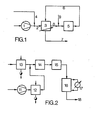
- the reaction gas to be cooled in the separator which at a temperature of 170 ° C from the oxidation part (5), which contains the reactor, the waste heat boiler and the gas cooler, reaches the separator (3) via the discharge line (6) per hour extracted useful heat of 1.922 million kcal.
- the residual heat is dissipated to the environment.
- the exhaust gas leaves the separator (3) through the department (7).
- the air / o-xylene mixture heated to 135 ° C. in the separator (3) reaches the reactor (5) via the line (8).
- a further 2240 kg of o-xylene are added to the mixture per hour (9).
- Example 2 comparative example (see FIG. 2)
Landscapes
- Chemical & Material Sciences (AREA)
- Organic Chemistry (AREA)
- Engineering & Computer Science (AREA)
- Oil, Petroleum & Natural Gas (AREA)
- Organic Low-Molecular-Weight Compounds And Preparation Thereof (AREA)
- Furan Compounds (AREA)
Description
- Die Erfindung betrifft ein Verfahren zur Herstellung von Phthalsäureanhydrid (PSA) durch katalytische Luftoxidation von Naphthalin oder o-Xylol.
- PSA wird grosstechnisch durch katalytische Gasphasenoxidation von Naphthalin oder o-Xylol mit Luft hergestellt. Bei diesem bekannten Verfahren wird das o-Xylol in komprimierte und vorgewärmte Luft eingedüst, bzw. die komprimierte und vorgewärmte Luft mit Naphthalindämpfen beladen und das so erhaltene dampfförmige Gemisch, das eine Temperatur von etwa 130 bis 190°C aufweist, zur Oxidation durch einen mit dem Katalysator beschickten Reaktor geleitet. Das den Reaktor verlassende, das PSA enthaltende Reaktionsgas gelangt nach einer Vorkühlung auf Temperaturen von 140 bis 180°C in ein Abscheidersystem, in dem das PSA durch weitere Abkühlung des Reaktionsgases in fester oder flüssiger Form abgeschieden wird.
- Je nach dem Gehalt des Kohlenwasserstoffs im dampfförmigen Luftgemisch unterscheidet man zwei Verfahrensvarianten. Bei dem einen Verfahren wird mit einem Betriebsdruck von über 1 bar und mit einem Verhältnis Kohlenwasserstoff/Luft gearbeitet, das meist über der unteren Explosionsgrenze des Kohlenwasserstoff/Luft-Gemisches liegt. Die Oxidation findet hierbei in der Regel im Fliessbett statt und das PSA wird überwiegend flüssig abgeschieden. So wird beispielsweise in der US-Patentschrift 3,535,345 ein Verfahren beschrieben, das im Fliessbett mit 5,2 bis 6,6 bar Betriebsdruck und einem Kohlenwasserstoff/Luft-Verhältnis von 0,1 bis 0,144 betrieben wird und das eine PSA-Flüssigabscheidung von 90% ermöglichen soll. Teile der Kompressionsenergie und fühlbare Wärme im Abgas werden genutzt, indem das Abgas nach Anreicherung mittels Heizgas mit Luft verbrannt wird und die Verbrennungsgase in einer Gasturbine entspannt werden, welche ihrerseits den Prozessluftverdichter antreibt.
- Bei dem anderen Verfahren, bei dem es sich meist um ein Festbettverfahren handelt, hält man das Kohlenwasserstoff/Luft-Verhältnis sowohl unterhalb der Explosionsgrenze (für o-Xylol/Luft liegt sie bei 0,044 kg/Nm3) als auch oberhalb der Explosionsgrenze. Dieses Verfahren, das mit einem Betriebsdruck von unter 2 bar betrieben wird, erlaubt keine PSA-Flüssigabscheidung, weil der Taupunkt erst nach Unterschreitung des Schmelzpunktes von PSA erreicht wird. Bei diesem Verfahren wird erheblich weniger Kompressionsenergie benötigt, weil sich die notwendige Druckhöhe der Prozessluft nur an dem Druckverlust der Gesamtanlage orientiert. Andererseits ist die PSA-Abscheidung aufwendig, sie entzog sich auch bisher weitgehend einer zufriedenstellenden Abwärmenutzung. Üblicherweise wird in mehreren parallel betriebenen Abscheidern, die in einem Kühl/Heiz-Zyklus arbeiten, PSA durch Temperatursenkung des Gases fest abgeschieden und nach Umschaltung auf Heizbetrieb durch Abschmelzen flüssig gewonnen. Die Wärmeabfuhr während der Kühlphase erfolgt über ein Wärmeübertragungsmittel, das gegen Umgebungsluft rückgekühlt wird, oder unmittelbar durch das Kühlmedium selbst, z. B. Wasser. Die Nutzung der abzuführenden Wärme ist schwierig, weil das Temperaturprofil des abzukühlenden Gases zu niedrig liegt, um beispielsweise Verdampfungskühlung mit Sattdampferzeugung zu betreiben. Die Prozessluft vor ihrer Verdichtung als Kühlmedium einzusetzen und erwärmt zu verdichten, verbietet der proportional zur absoluten Temperatur zunehmende Kompressionsleistungsbedarf, der ohnehin Hauptanteil des Gesamtenergiebedarfs ist. Nach der Kompression ist die erwärmte Prozessluft zur Kühlung vor allem im Sommerbetrieb nicht mehr geeignet.
- Ferner sind als Stand der Technik noch folgende Druckschriften zu nennen:
- In der DE-B-1 193 493 wird ein Teil derfühlbaren Wärme des den Reaktor verlassenden Gasgemisches zur Erwärmung der Reaktionspartner genutzt. Wie man den Angaben (s. Spalte 5, Zeilen 41 bis Spalte 6, Zeile 19) entnehmen kann, findet der Wärmeaustausch in den Wärmeaustauschern 12 und 13 statt, wobei die heissen Reaktionsgase von 380°C auf 175°C abgekühlt werden. Mit dieser Temperatur werden die Gase dann in die PSA-Abscheider geleitet, in denen keine weiteren Abwärmenutzung stattfindet.
- Aus der US-A-3 466 300 ist bekannt, dass man Anhydride durch katalytische Oxidation der entsprechenden aromatischen Kohlenwasserstoffe mit Luft unter Verwendung eines vielschichtigen Katalysatorbettes herstellen kann. Kennzeichnend ist eine Aufteilung der Gesamtreaktion auf die verschiedenen Schichten, wobei eine maximale Temperaturerhöhung des Gasgemisches durch die Teilreaktion von 50 bis 60°C pro Schicht nicht überschritten wird. Zwischen den Schichten wird die jeweilige Reaktionswärme (nacheinander) an die Einsatzstoffe übertragen, um diese vor ihrem Eintritt in die erste Schicht von 146°C auf 350°C vorzuwärmen (s. Beispiel).
- Bei dem in der FR-A-2 339 603 beschriebenen Verfahren wird die Reaktionswärme zur Deckung des Wärmebedarfs der PSA-Destillation unter Verwendung eines organischen Wärmeträgerkreislaufes und zur Erzeugung und Überhitzung von Wasserdampf unter Verwendung eines Salzbadkreislaufes herangezogen. Der überhitzte Dampf wird in einer Kondensationsturbine entspannt, welche ihrerseits den Prozessluftverdichter antreibt.
- Es wurde nun gefunden, dass man PSA durch katalytische Luftoxidation von Naphthalin oder o-Xylol, bei der man ein vorgewärmtes Gemisch aus Luft und Naphthalin oder o-Xylol in einem mit dem Katalysator beschickten Reaktor leitet und das den Reaktor verlassende Reaktionsgas durch einen Abscheider führt, in dem das PSA in fester Form abgeschieden wird, besonders vorteilhaft herstellen kann, wenn man die dem Reaktor zuzuführende Luft auf 1,4 bis 1,7 bar komprimiert und nach der Zumischung von Naphthalin oder o-Xylol im PSA-Abscheider durch Abkühlung des Reaktionsgases, das eine Temperatur von 140 bis 180°C aufweist, vorwärmt.
- Durch das erfindungsgemässe Verfahren wird die Abwärmeverwertung und der Energiehaushalt bei der grosstechnischen Herstellung von PSA erheblich verbessert und der Investitionsanteil an den Produktkosten durch Wegfall mehrerer Aggregate nebst Zubehör, wie Verrohrung und Instrumentierung deutlich gesenkt.
- Nach dem neuen Verfahren wird die Prozessluft, die wie an sich bekannt auf 1,4 bis 1,7 bar komprimiert wird, nach Zumischung des Kohlenwasserstoffes in einem PSA-Abscheider auf Temperaturen von 125 bis 145°C erwärmt.
- Bei dem erfindungsgemässen Verfahren wird somit unter wirtschaftlichem Verzicht auf die bisher übliche Erwärmung der Prozessluft und des Kohlenwasserstoffs in separaten Vorerhitzern die Abwärme der PSA-Abscheider für diese Vorerwärmung ausgenutzt.
- Das Kohlenwasserstoff/Luft-Gemisch wird nach dieser Vorerwärmung in den Reaktor geleitet. Bei Verwendung von Abscheidern, in denen das PSA in fester Form abgeschieden wird, reicht die Kühlwirkung des Kohlenwasserstoff/Luft-Gemisches zur Abscheidung des PSA in der Regel aus. Sollte beim Betrieb unter hochsommerlichen Temperaturen die Einspritzkühlung der verdichteten Luft durch den Kohlenwasserstoff allein nicht ausreichen, so kann der erwünschte Effekt durch Zugabe eines Kohlenwasserstoff/Wassergemisches erzielt werden, ohne dass dadurch der Taupunkt des Abgases nach dem Abscheider unzulässig erhöht wird.
- Für das erfindungsgemässe Verfahren sind zur Abkühlung der den Reaktorbereich verlassenden Reaktionsgase, die eine Temperatur von 140 bis 180°C aufweisen, solche Gemische aus Kohlenwasserstoff und Luft geeignet, bei denen das Kohlenstoff/Luft-Verhältnis unter der unteren Explosionsgrenze liegt. Das sind Gemische, die je Nm3 Luft nicht mehr als 40 g Naphthalin oder 44 g o-Xylol enthalten.
- Will man das neue Verfahren auf eine PSA-Herstellung anwenden, bei der ein Gemisch aus Kohlenwasserstoff und Luft in den Reaktor eingeleitet wird, bei dem das Kohlenwasserstoff/Luft-Verhältnis über der unteren Explosionsgrenze liegt, so verfährt man zweckmässigerweise so, dass man den Festabscheider mit einem nichtexplosiblen Gemisch aus Luft und Kohlenwasserstoff beaufschlägt und dieses Gemisch erst unmittelbar vor dem Reaktor durch Zusatz von weiterem Kohenwasserstoff auf das gewünschte Verhältnis aufstockt. Die Übertragung der nutzbaren Wärme aus dem abzukühlenden PSA-haltigen Reaktionsgas auf die Prozessluft kann auch mittels eines zwischengeschalteten Wärmeübertragungssystems, wie z. B. Ölkreislauf, erfolgen.
- 56000 Nm3 Umgebungsluft von 10°C (Jahresmittel) werden pro Stunde in einem Luftverdichter (1) auf 1,513 bar verdichtet. In die verdichtete Luft, die man über eine Zuleitung (2) in den PSA-Abscheider (3) leitet, werden pro Stunde 2240 kg o-Xylol handelsüblicher Qualität und 239 kg Wasser von 25°C eingedüst (4), wobei sich das Gemisch aus Luft, o-Xylol und Wasser auf 32°C abkühlt. Beim Durchströmen des Abscheiders wird das Luft/o-Xylol-Gemisch auf 135°C erwärmt. Dadurch werden dem im Abscheider abzukühlenden Reaktionsgas, das mit einer Temperatur von 170°C aus dem Oxidationsteil (5), der den Reaktor, den Abhitzekessel und den Gaskühler enthält, über die Ableitung (6) in den Abscheider (3) gelangt, pro Stunde eine Nutzwärme von 1,922 Mio kcal entnommen. Die Restwärme wird an die Umgebung abgeführt. Das Abgas verlässt den Abscheider (3) durch die Abteilung (7). Das im Abscheider (3) auf 135°C erwärmte Luft/o-Xylol-Gemisch gelangt über die Leitung (8) in den Reaktor (5). Dabei werden dem Gemisch weitere 2240 kg o-Xylol pro Stunde zugegeben (9).
- Im Unterschied zur herkömmlichen Arbeitsweise (siehe Beispiel 2) nutzt man 1,922 Mio kcal/h Abwärme. Dies entspricht bei Verfügbarkeit von 152-grädigem Kesselspeisewasser einer Mehrproduktion von 3,815 to/h 5-bar-Dampf zugunsten des erfindungsgemässen Verfahrens.
- 56 000 Nm3 Umgebungsluft von 10°C werden pro Stunde in einem Luftverdichter (11) auf 1,513 bar verdichtet und anschliessend in einem dampfbeheizten Wärmeaustauscher (12) auf 130°C vorgewärmt. Gleichzeitig werden pro Stunde 4 480 kg o-Xylol handelsüblicher Qualität in einem dampfbeheizten Wärmeaustauscher (13) auf 150°C erwärmt. Das so vorgewärmte o-Xylol wird mit der vorerwärmten Luft gemischt und das Gemisch in den Oxidationsteil (14), der den Reaktor und den Abhitzekessel enthält, geleitet. Das PSA-haltige Reaktionsgas, das den Oxidationsteil (14) mit einer Temperatur von 370°C verlässt, durchströmt den Gaskühler (15), wo es unter Erzeugung von 6 bar Sattdampf auf ca. 170°C abgekühlt wird. Die restliche abzuführende Wärme wird im PSA-Abscheider (16) an einen Wärmeträgerkreislauf und aus diesem im Luftkühler (17) an die Umgebung abgeführt. Das Abgas verlässt den Abscheider (16) durch die Ableitung (18).
Claims (3)
Priority Applications (1)
| Application Number | Priority Date | Filing Date | Title |
|---|---|---|---|
| AT81108265T ATE11287T1 (de) | 1980-11-26 | 1981-10-13 | Verfahren zur herstellung von phthalsaeureanhydrid. |
Applications Claiming Priority (2)
| Application Number | Priority Date | Filing Date | Title |
|---|---|---|---|
| DE3044518 | 1980-11-26 | ||
| DE19803044518 DE3044518A1 (de) | 1980-11-26 | 1980-11-26 | Verfahren zur herstellung von phthalsaeureanhydrid |
Publications (2)
| Publication Number | Publication Date |
|---|---|
| EP0052745A1 EP0052745A1 (de) | 1982-06-02 |
| EP0052745B1 true EP0052745B1 (de) | 1985-01-16 |
Family
ID=6117625
Family Applications (1)
| Application Number | Title | Priority Date | Filing Date |
|---|---|---|---|
| EP81108265A Expired EP0052745B1 (de) | 1980-11-26 | 1981-10-13 | Verfahren zur Herstellung von Phthalsäureanhydrid |
Country Status (5)
| Country | Link |
|---|---|
| US (1) | US4369327A (de) |
| EP (1) | EP0052745B1 (de) |
| JP (1) | JPS57109775A (de) |
| AT (1) | ATE11287T1 (de) |
| DE (2) | DE3044518A1 (de) |
Families Citing this family (5)
| Publication number | Priority date | Publication date | Assignee | Title |
|---|---|---|---|---|
| DE3336022A1 (de) * | 1983-10-04 | 1985-04-18 | Metallgesellschaft Ag, 6000 Frankfurt | Verfahren zum vermischen einer fein verduesten fluessigkeit mit einem gas und erzeugen einer explosiven mischung |
| DE3411732A1 (de) * | 1984-03-30 | 1985-10-10 | Metallgesellschaft Ag, 6000 Frankfurt | Verfahren zum periodischen beheizen des produktabscheiders einer anlage zur herstellung von phthalsaeureanhydrid oder maleinsaeureanhydrid |
| US5225575A (en) * | 1991-06-17 | 1993-07-06 | Institute Of Catalysis | Oxidation process and apparatus |
| DE19852894B4 (de) * | 1998-11-17 | 2007-02-15 | GEA Luftkühler GmbH | Verfahren zur Gewinnung von Phthalsäureanhydrid durch katalytische Gasphasenreaktion und Vorrichtung zur Durchführung des Verfahrens |
| DE19962616A1 (de) * | 1999-12-23 | 2001-06-28 | Basf Ag | Verfahren und Vorrichtung zur Erzeugung eines homogenen Gemisches aus einem dampfförmigen aromatischen Kohlenwasserstoff und einem Sauerstoff enthaltenden Gas |
Family Cites Families (8)
| Publication number | Priority date | Publication date | Assignee | Title |
|---|---|---|---|---|
| FR1271069A (fr) * | 1960-05-18 | 1961-09-08 | Norbert Roger Beyrard | Procédé et dispositifs d'oxydation d'hydrocarbures |
| DE1568273A1 (de) * | 1966-04-19 | 1970-03-26 | Zieren Chemiebau Gmbh Dr A | Verfahren zur katalytischen Dampfphasenoxydation von aromatischen Kohlenwasserstoffen |
| US3535345A (en) * | 1967-08-15 | 1970-10-20 | Badger Co | Method of producing phthalic anhydride |
| DE2005628A1 (de) * | 1970-02-07 | 1970-10-29 | ||
| US4119645A (en) * | 1973-04-11 | 1978-10-10 | Rhone-Progil | Method of preparing phthalic anhydride |
| DE2602895B2 (de) * | 1976-01-27 | 1978-06-15 | Davy Powergas Gmbh, 5000 Koeln | Verfahren zur Verwertung der bei der katalytischen Oxidation von o-Xylol zu Phthalsäureanhydrid anfallenden Reaktionswärme |
| DE2826346C2 (de) * | 1978-06-16 | 1985-02-07 | Davy McKee AG, 6000 Frankfurt | Verfahren zur Absaugung von Gasen und Dämpfen aus Vakuum-Destillationskolonnen |
| US4252772A (en) * | 1978-09-15 | 1981-02-24 | Way Peter F | Apparatus for the recovery of vaporized phthalic anhydride from gas streams |
-
1980
- 1980-11-26 DE DE19803044518 patent/DE3044518A1/de not_active Withdrawn
-
1981
- 1981-10-13 DE DE8181108265T patent/DE3168363D1/de not_active Expired
- 1981-10-13 EP EP81108265A patent/EP0052745B1/de not_active Expired
- 1981-10-13 AT AT81108265T patent/ATE11287T1/de active
- 1981-10-20 US US06/313,177 patent/US4369327A/en not_active Expired - Fee Related
- 1981-11-16 JP JP56182397A patent/JPS57109775A/ja active Pending
Also Published As
| Publication number | Publication date |
|---|---|
| ATE11287T1 (de) | 1985-02-15 |
| US4369327A (en) | 1983-01-18 |
| DE3168363D1 (en) | 1985-02-28 |
| EP0052745A1 (de) | 1982-06-02 |
| JPS57109775A (en) | 1982-07-08 |
| DE3044518A1 (de) | 1982-07-01 |
Similar Documents
| Publication | Publication Date | Title |
|---|---|---|
| DE2608486C2 (de) | ||
| DE2730210A1 (de) | Energiegewinnung durch methanolverbrennung | |
| DE2757478A1 (de) | Verfahren zur herstellung von methanol | |
| DE2920425A1 (de) | Integrierte kohlevergasungs-energieerzeugungsanlage und verfahren zum betreiben einer solchen anlage | |
| DE3137751A1 (de) | Verfahren zum erzeugen von benzinkohlenwasserstoffen aus methanol | |
| EP0264065B1 (de) | Verfahren zur Herstellung von Vinylchlorid durch thermische Spaltung von 1,2-Dichlorethan | |
| DE2224306A1 (de) | Verfahren zur Herstellung von Ammoniak | |
| DE2554666B2 (de) | Verfahren zum Betrieb eines Hochtemperatur-Vergasers | |
| EP0052745B1 (de) | Verfahren zur Herstellung von Phthalsäureanhydrid | |
| DE3608611C2 (de) | ||
| DE2711897B2 (de) | Verfahren und Vorrichtung zur katalytischen Oxidation von gasförmigen Schwefelverbindungen zu Schwefeltrioxid | |
| EP0058327A2 (de) | Verfahren zur kontinuierlichen Herstellung von Kohlenwasserstoffölen aus Kohle durch Druckhydrierung in zwei Stufen | |
| DE3441080A1 (de) | Verfahren zur aufarbeitung des pyrolyse-produkts aus der 1.2-dichlorethan-spaltung unter waermerueckgewinnung | |
| DE3505553C2 (de) | Verfahren zur Vorbehandlung der Einsatzprodukte für die Kohlehydrierung | |
| DE2925720A1 (de) | Verfahren zur herstellung von vinylchlorid durch thermische spaltung von 1,2-dichlorethan | |
| DE2602895B2 (de) | Verfahren zur Verwertung der bei der katalytischen Oxidation von o-Xylol zu Phthalsäureanhydrid anfallenden Reaktionswärme | |
| DE60124489T2 (de) | Verfahren zur endothermischen Umsetzung von Kohlenwasserstoffen, ihre Anwendung und Vorrichtung zur Anwendung dieses Verfahren | |
| AT165284B (de) | Verfahren zur Herstellung eines den Richtlinien für Stadtgase entsprechenden Gases aus schwerem Rückstandsöl (Pacura) und Wasserdampf | |
| DE2603204C2 (de) | Verfahren zur Herstellung von Methanol | |
| DE3236504C2 (de) | ||
| US1981150A (en) | Treatment of hydrocarbon oils | |
| WO1982001715A1 (en) | Coal hydrogenation process | |
| DE2821413C2 (de) | ||
| EP0056487B1 (de) | Verfahren zum Hydrieren von Kohle | |
| US2535418A (en) | Process for the production of vapor phase converted hydrocarbons |
Legal Events
| Date | Code | Title | Description |
|---|---|---|---|
| PUAI | Public reference made under article 153(3) epc to a published international application that has entered the european phase |
Free format text: ORIGINAL CODE: 0009012 |
|
| 17P | Request for examination filed |
Effective date: 19811013 |
|
| AK | Designated contracting states |
Designated state(s): AT BE DE IT |
|
| ITF | It: translation for a ep patent filed | ||
| GRAA | (expected) grant |
Free format text: ORIGINAL CODE: 0009210 |
|
| AK | Designated contracting states |
Designated state(s): AT BE DE IT |
|
| REF | Corresponds to: |
Ref document number: 11287 Country of ref document: AT Date of ref document: 19850215 Kind code of ref document: T |
|
| REF | Corresponds to: |
Ref document number: 3168363 Country of ref document: DE Date of ref document: 19850228 |
|
| PLBE | No opposition filed within time limit |
Free format text: ORIGINAL CODE: 0009261 |
|
| STAA | Information on the status of an ep patent application or granted ep patent |
Free format text: STATUS: NO OPPOSITION FILED WITHIN TIME LIMIT |
|
| 26N | No opposition filed | ||
| PGFP | Annual fee paid to national office [announced via postgrant information from national office to epo] |
Ref country code: AT Payment date: 19890914 Year of fee payment: 9 |
|
| PGFP | Annual fee paid to national office [announced via postgrant information from national office to epo] |
Ref country code: BE Payment date: 19890925 Year of fee payment: 9 |
|
| ITTA | It: last paid annual fee | ||
| PG25 | Lapsed in a contracting state [announced via postgrant information from national office to epo] |
Ref country code: AT Effective date: 19901013 |
|
| PG25 | Lapsed in a contracting state [announced via postgrant information from national office to epo] |
Ref country code: BE Effective date: 19901031 |
|
| BERE | Be: lapsed |
Owner name: BASF A.G. Effective date: 19901031 |
|
| PGFP | Annual fee paid to national office [announced via postgrant information from national office to epo] |
Ref country code: DE Payment date: 19911018 Year of fee payment: 11 |
|
| PG25 | Lapsed in a contracting state [announced via postgrant information from national office to epo] |
Ref country code: DE Effective date: 19930701 |