EP0043659B1 - Bei der Behandlung der Diarrhöe verwendbare Clonidin-Derivate - Google Patents
Bei der Behandlung der Diarrhöe verwendbare Clonidin-Derivate Download PDFInfo
- Publication number
- EP0043659B1 EP0043659B1 EP81302710A EP81302710A EP0043659B1 EP 0043659 B1 EP0043659 B1 EP 0043659B1 EP 81302710 A EP81302710 A EP 81302710A EP 81302710 A EP81302710 A EP 81302710A EP 0043659 B1 EP0043659 B1 EP 0043659B1
- Authority
- EP
- European Patent Office
- Prior art keywords
- formula
- compound
- alkyl
- group
- hydrogen
- Prior art date
- Legal status (The legal status is an assumption and is not a legal conclusion. Google has not performed a legal analysis and makes no representation as to the accuracy of the status listed.)
- Expired
Links
- 0 CN(*)CC(*)=[N+][O-] Chemical compound CN(*)CC(*)=[N+][O-] 0.000 description 4
Classifications
-
- A—HUMAN NECESSITIES
- A61—MEDICAL OR VETERINARY SCIENCE; HYGIENE
- A61K—PREPARATIONS FOR MEDICAL, DENTAL OR TOILETRY PURPOSES
- A61K31/00—Medicinal preparations containing organic active ingredients
- A61K31/33—Heterocyclic compounds
- A61K31/395—Heterocyclic compounds having nitrogen as a ring hetero atom, e.g. guanethidine or rifamycins
- A61K31/41—Heterocyclic compounds having nitrogen as a ring hetero atom, e.g. guanethidine or rifamycins having five-membered rings with two or more ring hetero atoms, at least one of which being nitrogen, e.g. tetrazole
- A61K31/425—Thiazoles
- A61K31/429—Thiazoles condensed with heterocyclic ring systems
- A61K31/43—Compounds containing 4-thia-1-azabicyclo [3.2.0] heptane ring systems, i.e. compounds containing a ring system of the formula, e.g. penicillins, penems
-
- A—HUMAN NECESSITIES
- A61—MEDICAL OR VETERINARY SCIENCE; HYGIENE
- A61P—SPECIFIC THERAPEUTIC ACTIVITY OF CHEMICAL COMPOUNDS OR MEDICINAL PREPARATIONS
- A61P1/00—Drugs for disorders of the alimentary tract or the digestive system
- A61P1/12—Antidiarrhoeals
-
- C—CHEMISTRY; METALLURGY
- C07—ORGANIC CHEMISTRY
- C07D—HETEROCYCLIC COMPOUNDS
- C07D233/00—Heterocyclic compounds containing 1,3-diazole or hydrogenated 1,3-diazole rings, not condensed with other rings
- C07D233/04—Heterocyclic compounds containing 1,3-diazole or hydrogenated 1,3-diazole rings, not condensed with other rings having one double bond between ring members or between a ring member and a non-ring member
- C07D233/28—Heterocyclic compounds containing 1,3-diazole or hydrogenated 1,3-diazole rings, not condensed with other rings having one double bond between ring members or between a ring member and a non-ring member with hetero atoms or with carbon atoms having three bonds to hetero atoms with at the most one bond to halogen, e.g. ester or nitrile radicals, directly attached to ring carbon atoms
- C07D233/44—Nitrogen atoms not forming part of a nitro radical
- C07D233/50—Nitrogen atoms not forming part of a nitro radical with carbocyclic radicals directly attached to said nitrogen atoms
Definitions
- This invention relates to the formulations for use in treatment of diarrhoea in animals including man, to a class of novel compounds having activity useful in such treatment and to processes for their production.
- Diarrhoea (also referred to as scours in cattle, sheep and pigs) can be a severe disease particularly in young animals and can often result in death. Diarrhoea is also common amongst human travellers and those exposed to low standards of hygiene. The diarrhoea frequently involves colonisation of the small intestine with enteropathogenic strains of E. coli which produce heat stable and/or heat labile enterotoxins. Related enterotoxins are produced by other enteropathogens, for example, cholera, and also cause diarrhoea. These enterotoxins stimulate fluid secretion in the gut lumen and hence cause diarrhoea. The associated fluid loss may lead to loss of condition, reduced weight gain of livestock and often to death.
- the present invention provides an oral rehydration composition for treating diarrhoea in animals, including man, which comprises an effective, non-toxic amount of a compound of formula (I): wherein A is a 2-imidazolinyl group optionally substituted on a nitrogen atom with C ' - 4 alkyl group;
- any one or more of the available nitrogen atoms of a compound of formula (I) may be acylated. It will be appreciated that not all the nitrogen atoms may be available for acylation, thus when B is, for instance, a group NR 3 and R 3 is an alkyl moiety, only one of the nitrogen atoms of the imidazoline moiety may be acylated. However, if B is a group NR 3 and R 3 is hydrogen, both nitrogens of the imidazolinyl moiety may be acylated, or one of these nitrogens and the nitrogen atom of B may be acylated.
- Suitable nitrogen containing substituents include groups of formula: wherein X is methylene or a bond;
- A is 2-imidazolinyl or an acyl derivative thereof.
- B is NH
- C is a substituted phenyl group having a nitrogen-containing substituent in the ortho or para position with respect to B.
- Suitable acyl moieties are C l - 3 alkyl carbonyl, tri-haloacetyl, benzoyl and phenacetyl groups.
- Suitable salts are mono- and di-hydrochlorides, -hydrobromides, -hydroiodides, nitrates, sulphates, citrates, tartrates and pamoates.
- the nitrogen containing substituent on C is amino, guanidinyl or aminomethyl.
- C is a substituted phenyl group it is preferred that there is a substituent in the position ortho to the group B. It is also preferred that the nitrogen-containing substituent is located in the para-position.
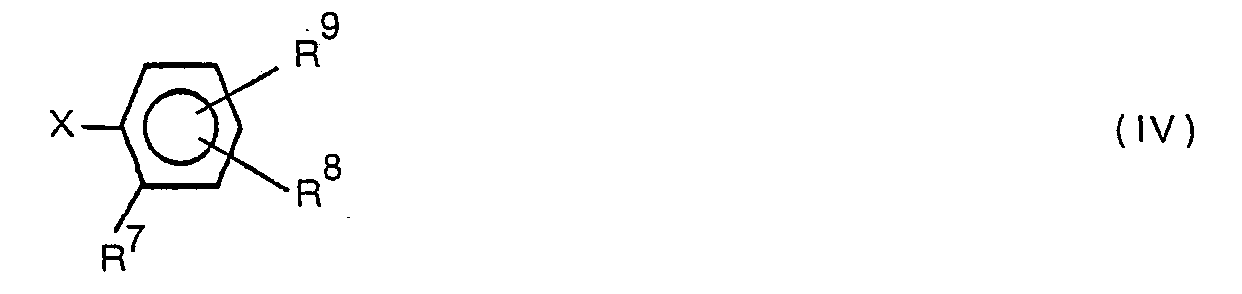
- Preferred compounds within formula (I) include compounds of formula (II) as hereinafter defined and p-amino clonidine and salts thereof.
- the effective dose of the compounds of the formula (I) will depend in the usual way upon factors such as the severity of the diarrhoea, the weight of the sufferer, the particular drug chosen, and on similar variables. However, as a guide, we believe that a suitable dose will be within the range 1 pg to 1 mg/kg a day as a single or divided dose.
- Antibacterial agents such as penicillins, aminoglycosides and sulphonamides may also be administered as part of the treatment of diarrhoea in conjunction with the present method of treatment.
- Compounds of formula (I) may be produced by known methods such as those described below in relation to compounds of formula (II) and used, for instance, for producing p-amino clonidine.
- p-amino Clonidine can be prepared by known methods, such as that described in U.K. Patent No. 1,450,250 wherein 2,6-dichloro-4-nitro aniline is treated with N-acetyl-2-imidazolidone, the acetyl moiety is removed and then the nitro group is reduced to an amino group, for instance, by the method of Rouot and Leclerc, Bull. Soc. Chem. Fr., (1979), 520.
- Salts of p-amino clonidine can be prepared by known methods.
- the preparation of both the hydrochloride and dihydrochloride is disclosed by Rouot and Leclerc (above).
- R 5 and R 6 are hydrogen.
- R 8 is at the 4-position.
- R 7 and R 9 are the same and are at the 2,6 positions.
- R 8 is amino, substituted amino or guanidinyl.
- Preferred compounds within formula (II) include:
- Salts of compounds of formula (II) need not be pharmaceutically acceptable; if they are not they may be useful in purification of compounds of formula (II).
- the present invention also provides compounds of formula (II) for use in treating diarrhoea.
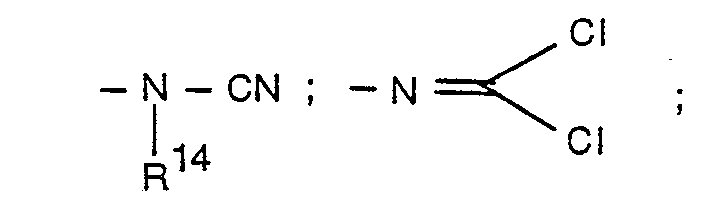
- Process (a) may be conducted according to the process described in UK Patent No. 1,229,995 when X is according to the process described in Netherlands Patent No. 6,411,516 (Chem. Abs. 63, P18102 g) when X is according to the present process described in Chem. Abs., 85, P94364b when X is and according to the process described in Chem. Abs., 85, P5633g when
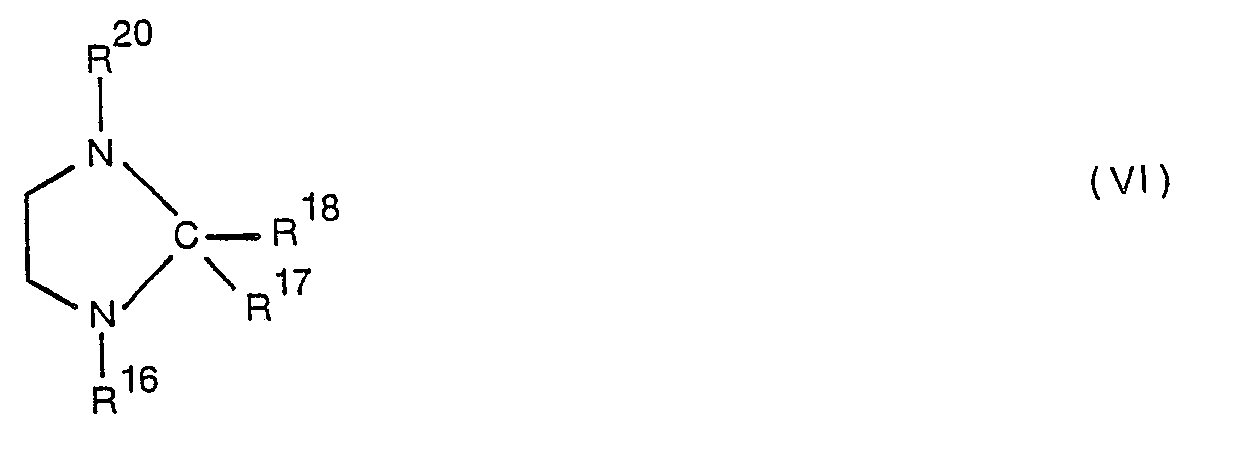
- Process (b) may be conducted according to the process described in German Offenlegungsschrift 2,505,297 or Netherlands Patent No. 7,404,472 when R17 and R' 8 together form an oxo group, and according to the process described in Chem. Abs., 84, P59465t when R 16 and R 17 together form a bond.
- Process (c) may be conducted according to the process described in Rouot & Leclerc (supra) or in European Patent Application No. 12,822, German Offenlegungsschrift No. 2,806,811 and U.K. Patent No. 1,180,766.
- the starting materials may be produced by conventional methods, as may the salts and acyl derivatives of compounds of formula (II).
- the present invention further provides a pharmaceutical composition
- a pharmaceutical composition comprising a compound of formula (I) and a pharmaceutically acceptable carrier therefor.
- compositions suitable for human and/ or animal use and 'pharmaceutically acceptable' includes veterinarily acceptable.
- compositions of compounds of formula (I) will, of course, be adapted for administration to humans or the animals to be treated.
- the composition may be a shaped composition, such as a bolus, tablet or capsule.
- the pharmaceutically acceptable carrier will be chosen from the usual range of lubricants, dispersants, binders, fillers and the like.
- these shaped compositions are for administration to cattle and pigs, often they will weigh at least 1 g, on occasions at least 2 g.
- the drug may suitably be presented as a syrup including suitable colouring and/or flavouring agents.
- Such syrups are conveniently presented in unit or multi-dose containers.
- the composition may also be a dispersion or a solution of a compound of formula (I) (hereinafter referred to as 'the drug') in a suitable vehicle for use with an oral doser (this is a well known item of farm equipment, basically comprising a liquid reservoir, a mouthpiece adapted for insertion into animal mouths, and a pump mechanism whereby unit doses can be ejected from the reservoir through the mouthpiece).
- a suitable vehicle for use with an oral doser this is a well known item of farm equipment, basically comprising a liquid reservoir, a mouthpiece adapted for insertion into animal mouths, and a pump mechanism whereby unit doses can be ejected from the reservoir through the mouthpiece.
- the vehicle will be an oil or water based cream to ensure homogeneity of the unit doses administered.
- the drug may be administered as an aqueous solution using an oral doser.
- the drugs of the invention may also be added to the animal feed or drinking water. Itwill be convenient to formulate these animal feed and drinking water compositions with a multi-dose of the drug so that the animal takes in an appropriate quantity of the drug along with its diet. It will also be convenient to present the composition of the invention as pre-mixes for addition to the feed or drinking water.
- compositions of the invention may also be formulated for injection.
- the drug chosen is suitably dissolved in water for injection.
- compositions a further medicine such as an antibacterial agent, for example an antibiotic such as amoxycillin or neomycin or a sulphonamide such as sulfadoxin.
- an antibiotic such as amoxycillin or neomycin
- a sulphonamide such as sulfadoxin.
- compositions of the invention will contain sufficient drug to enable this effective dose to be administered in convenient manner.
- useful dosage units of the composition may contain 1 pg to 50 mg of the drug, more suitably 20 pg to 20 mg.
- many preferred compositions of the invention are in multi-dose form, as for the therapy of animals, it is often most desirable to be able rapidly to treat a number of animals.
- Such multi-dose compositions will contain by way of example, at least 1 mg of the drug. Depending on the exact nature of the said multi-dose composition, often it will contain at least 50 mg of the drug, and on occasions as much as 1 g.
- the loops are washed with saline and then a saline bolus is left in the loops for 30 minutes to establish a basal absorptive rate. After 30 minutes the fluid in the loops is removed and measured. Heat stable E. coli enterotoxin from E. coli strain p16 is added to the loop infusate which is then returned to the loops.
- results are expressed in terms of fluid (ml) secreted into or absorbed from the loops after each 30 minute period. A minimum of six observations are undertaken with each experimental compound. Perfusion periods in which drugs are present in a loop are alternated with perfusion periods in which drug is absent from the same loop.
- the drugs have been found to have a satisfactory therapeutic ratio.
- Colostrum deprived piglets were infected with 5 ml of an overnight culture containing 10 8- 10 9 viable E. coli P16/ml. The following day, piglets were matched by weight and scour score and then treated and observed for 6 hours in a similar manner to toxin challenged piglets, as described above. Formulations of the drugs
- the ingredients were passed through a 30 mesh stainless steel screen and blended in a suitable blender.
- the resultant compression mix was compressed directly on a tabletting machine to give tablets each containing 0.2 mg p-amino Clonidine dihydrochloride.
- the aluminium stearate was dispersed with stirring in a portion of the sunflower oil heated to 115°C.
- the dispersion was added to the rest of the sunflower oil heated to 140°C.
- the gel was stirred at 130°C for 15 minutes and then allowed to cool without stirring to room temperature.
- the milled p-Amino Clonidine dihydrochloride was dispersed in the cooled gel base and then passed through a colloid mill to produce a fine, homogenous dispersion.
- the dispersion was filled into plastic bottles fitted with a dosing pump.
- the p-amino Clonidine dihydrochloride and sodium chloride were dissolved in the water for injections and the solution was filtered and filled into glass ampoules.
- the ampoules were sterilised by autoclaving.
- the ingredients were mixed together in a ribbon blender to give a homogenous mixture.
- the premix was mixed into animal feed at the rate of 1 kg per metric ton to provide a concentration of 10 g of p-amino Clonidine dihydrochloride per metric ton.
- the p-Amino Clonidine dihydrochloride and lactose were sieved and mixed together in a suitable blender to give a homogenous powder.
- the powder was filled into jars. The powder was used at the rate 0.5 g per gallon of drinking water to medicate pigs.
- 1 kg of the following composition was prepared by mixing together the ingredients in dry powder form: 60 g of the composition was then dissolved in 2 litres of water and fed to diarrhoeic calves.
- the Bentone was dispersed in the soya-bean oil, and when thoroughly distributed, the propylene carbonate was added with high speed mixing, followed by colloid milling to produce the base.
- the base was first mixed the phosphoric acid, and then the pharmasort and the penicillin, and the resultant suspension was then passed through a colloid mill once more.
- Example 8 was repeated, but using amoxycillin trihydrate in place of the ampicillin trihydrate.
- Example 10 was repeated, but using amoxycillin trihydrate in place of the ampicillin trihydrate.
- the 2-(2,6-dimethyl-4-nitrophenylimino)imidazolidine (8.75 g) was reduced with iron and hydrochloric acid in aqueous ethanol according to the process of Example 12.
- the product was chromatographed on a silica column and eluted with a methanol in methylene chloride gradient. The fractions containing the required compound were evaporated and the residue was treated with ethanolic hydrochloric acid to give 2-(4-amino-2,6-dimethylphenylimino)imidazolidine dihydrochloride.
- An analytical sample was recrystallised as the mono-hydro-iodide salt, mp 252-253°C.
- Lithium aluminium hydride (3.4 g, 0.08 M) was added portionwise to 2-(4-diethylcarboxamido-2,6-dichlorophenylimino)imidazolidine (3.4 g, 0.01 M) in ether (350 ml) with stirring. After 2.5 hours ethyl acetate was added followed by methanol. The mixture was then evaporated and dilute sodium hydroxide was added to the residue. The residue was extracted with methylene chloride and the extract was evaporated to give the required compound as an oil (3.3 g) which was recrystallised as 2-(2,6-dichloro-4-diethylaminomethylphenylimino)imidazolidine dihydrochloride, MP 272-274°C.
- Phosphoryl chloride (4.4 ml, 0.047 M) was added with cooling to dimethylurea (4 g, 0.045 M) in tetrahydrofuran (60 ml). After stirring at room temperature for 5 hours the mixture was added to 2-(4-amino-2,6-dichlorophenylimino)imidazolidine (3.0 g, 0.012 M) in tetrahydrofuran (60 mi). The mixture was refluxed for 18 hours and then evaporated to give an oily solid. The residue was extracted into 2M HCI, washed with methylene chloride and then basified. Extraction of the alkaline mixture with methyl chloride yielded a gum on evaporation of the extract.
Landscapes
- Chemical & Material Sciences (AREA)
- Health & Medical Sciences (AREA)
- Organic Chemistry (AREA)
- General Health & Medical Sciences (AREA)
- Public Health (AREA)
- Veterinary Medicine (AREA)
- Medicinal Chemistry (AREA)
- Animal Behavior & Ethology (AREA)
- Life Sciences & Earth Sciences (AREA)
- Pharmacology & Pharmacy (AREA)
- Epidemiology (AREA)
- Bioinformatics & Cheminformatics (AREA)
- Nuclear Medicine, Radiotherapy & Molecular Imaging (AREA)
- Engineering & Computer Science (AREA)
- Chemical Kinetics & Catalysis (AREA)
- General Chemical & Material Sciences (AREA)
- Pharmaceuticals Containing Other Organic And Inorganic Compounds (AREA)
Claims (10)





Applications Claiming Priority (4)
| Application Number | Priority Date | Filing Date | Title |
|---|---|---|---|
| GB8022407 | 1980-07-09 | ||
| GB8022407 | 1980-07-09 | ||
| GB8105339 | 1981-02-20 | ||
| GB8105339 | 1981-02-20 |
Publications (2)
| Publication Number | Publication Date |
|---|---|
| EP0043659A1 EP0043659A1 (de) | 1982-01-13 |
| EP0043659B1 true EP0043659B1 (de) | 1985-02-06 |
Family
ID=26276158
Family Applications (1)
| Application Number | Title | Priority Date | Filing Date |
|---|---|---|---|
| EP81302710A Expired EP0043659B1 (de) | 1980-07-09 | 1981-06-17 | Bei der Behandlung der Diarrhöe verwendbare Clonidin-Derivate |
Country Status (9)
| Country | Link |
|---|---|
| US (2) | US4450170A (de) |
| EP (1) | EP0043659B1 (de) |
| JP (1) | JPS5740470A (de) |
| AU (1) | AU547193B2 (de) |
| CA (1) | CA1171418A (de) |
| DE (1) | DE3168754D1 (de) |
| ES (2) | ES8301929A1 (de) |
| IE (1) | IE52021B1 (de) |
| NZ (1) | NZ197530A (de) |
Families Citing this family (25)
| Publication number | Priority date | Publication date | Assignee | Title |
|---|---|---|---|---|
| EP0043659B1 (de) * | 1980-07-09 | 1985-02-06 | Beecham Group Plc | Bei der Behandlung der Diarrhöe verwendbare Clonidin-Derivate |
| EP0070084A3 (de) * | 1981-04-24 | 1983-02-16 | Beecham Group Plc | Imidazolin-Derivate |
| US4517199A (en) * | 1981-11-20 | 1985-05-14 | Alcon Laboratories, Inc. | Method for lowering intraocular pressure using phenylimino-imidazoles |
| CA1201066A (en) * | 1981-11-20 | 1986-02-25 | Alcon Laboratories, Inc. | N-¬3,5-dichloro-4-(2-imidazolidinylideneamino)- phenyl|-acetamide solutions for lowering intraocular pressure |
| US4515800A (en) * | 1981-11-20 | 1985-05-07 | Icilio Cavero | Method of lowering intraocular pressure using phenylimino-imidazoles |
| US4461904A (en) * | 1981-11-20 | 1984-07-24 | Alcon Laboratories, Inc. | 2-(Trisubstituted phenylimino)-imidazolines |
| US4644007A (en) * | 1981-11-20 | 1987-02-17 | Alcon Laboratories, Inc. | 3-chloro-4-(4,5-dihydro-1H-imidazo-2-yl)-amino-5-alkylbenzoic acids, esters, salts, compositions and methods |
| DE3360148D1 (en) * | 1982-02-10 | 1985-06-05 | Beecham Group Plc | Guanidine derivatives |
| EP0107306B1 (de) * | 1982-09-16 | 1986-04-30 | Beecham Group Plc | Imidazolin-Derivate |
| US4444782A (en) * | 1982-12-23 | 1984-04-24 | Smithkline Beckman Corporation | 2(4-tert.-Butyl-2,6-dichlorophenyl-imino)imidazolidine and use as an anti-hypertension agent |
| GB8304593D0 (en) * | 1983-02-18 | 1983-03-23 | Beecham Group Plc | Amidines |
| FR2549049B1 (fr) * | 1983-07-13 | 1986-06-20 | Chauvin Blache Lab | Nouvelles amidines, leur procede de preparation et leur application therapeutique |
| DE3481707D1 (de) * | 1983-08-17 | 1990-04-26 | Schering Ag | 7-alpha-substituierte 3-oxo-17alpha-pregn-4-en-21.17-carbolactone, verfahren zu ihrer herstellung und diese enthaltende pharmazeutische praeparate. |
| US4505926A (en) * | 1983-09-15 | 1985-03-19 | Beecham Group P.L.C. | Quaternary amino imidazolidines, compositions and use |
| GB8333835D0 (en) * | 1983-12-20 | 1984-02-01 | Beecham Group Plc | Compounds |
| US4801617A (en) * | 1987-04-06 | 1989-01-31 | Leclerc Gerard | Iminoimidazolidines useful in lowering intraocular pressure |
| US4897412A (en) * | 1987-04-06 | 1990-01-30 | Laboratories Alcon S.A. | Imidazolines useful in lowering intraocular pressure |
| GB8903592D0 (en) * | 1989-02-16 | 1989-04-05 | Boots Co Plc | Therapeutic agents |
| US5369095A (en) * | 1990-02-14 | 1994-11-29 | Alcon Laboratories, Inc. | Compositions and method comprising substituted glycosides as mucus membrane permeation enhancers |
| US5869458A (en) * | 1994-10-14 | 1999-02-09 | Waite; Christopher S. | Frozen rehydration formulation and delivery system therefor |
| DE19514579A1 (de) * | 1995-04-20 | 1996-10-24 | Boehringer Ingelheim Kg | Verwendung von alpha¶1¶¶L¶-Agonisten zur Behandlung der Harninkontinenz |
| SG72827A1 (en) * | 1997-06-23 | 2000-05-23 | Hoffmann La Roche | Phenyl-and aminophenyl-alkylsulfonamide and urea derivatives |
| US6572898B2 (en) | 1999-05-21 | 2003-06-03 | Pts Labs Llc | Electrolyte gels for maintaining hydration and rehydration |
| PE20070182A1 (es) | 2005-07-29 | 2007-03-06 | Wyeth Corp | Derivados cianopirrol-fenil amida como moduladores del receptor de progesterona |
| BR112017022321B1 (pt) | 2015-04-17 | 2023-03-14 | Monopar Therapeutics Inc | Uso de clonidina e/ou de um derivado de clonidina para o tratamento de astenia e/ou fadiga devido a quimioterapia de agente alquilante |
Family Cites Families (9)
| Publication number | Priority date | Publication date | Assignee | Title |
|---|---|---|---|---|
| US3202660A (en) * | 1961-10-09 | 1965-08-24 | Boehringer Sohn Ingelheim | Process for the preparation of 3-arylamino-1, 3-diazacycloalkenes |
| DE1670274A1 (de) * | 1966-10-31 | 1970-07-16 | Boehringer Sohn Ingelheim | Neues Verfahren zur Herstellung von 2-Arylamino-1,3-diazacycloalkenen-(2) |
| AT285599B (de) * | 1968-06-21 | 1970-11-10 | Boehringer Sohn Ingelheim | Verfahren zur Herstellung von neuen trisubstituierten 2-Arylaminoimidazolinen und ihren Salzen |
| DE2806775A1 (de) * | 1978-02-17 | 1979-08-30 | Boehringer Sohn Ingelheim | Neue substituierte 2-phenylimino- imidazolidine deren saeureadditionssalze, diese enthaltende arzneimittel und verfahren zur herstellung derselben |
| DE2806811A1 (de) * | 1978-02-17 | 1979-08-23 | Boehringer Sohn Ingelheim | Neue substituierte 2-phenylimino- imidazolidine, deren saeureadditionssalze, diese enthaltene arzneimittel und verfahren zur herstellung derselben |
| EP0025269B1 (de) * | 1979-08-23 | 1985-11-13 | Beecham Group Plc | Veterinärzusammensetzung gegen Diarrhöe |
| US4265900A (en) * | 1979-10-29 | 1981-05-05 | Mcneilab, Inc. | N-Aryl-N'-imidazol-2-ylureas |
| EP0043659B1 (de) * | 1980-07-09 | 1985-02-06 | Beecham Group Plc | Bei der Behandlung der Diarrhöe verwendbare Clonidin-Derivate |
| US4312879A (en) * | 1980-08-14 | 1982-01-26 | Richardson-Merrell Inc. | Clonidine and lofexidine as antidiarrheal agents |
-
1981
- 1981-06-17 EP EP81302710A patent/EP0043659B1/de not_active Expired
- 1981-06-17 DE DE8181302710T patent/DE3168754D1/de not_active Expired
- 1981-06-24 US US06/277,034 patent/US4450170A/en not_active Expired - Fee Related
- 1981-06-25 NZ NZ197530A patent/NZ197530A/en unknown
- 1981-07-08 IE IE1541/81A patent/IE52021B1/en unknown
- 1981-07-08 CA CA000381322A patent/CA1171418A/en not_active Expired
- 1981-07-08 JP JP56106830A patent/JPS5740470A/ja active Pending
- 1981-07-08 AU AU72646/81A patent/AU547193B2/en not_active Ceased
- 1981-07-08 ES ES503790A patent/ES8301929A1/es not_active Expired
-
1982
- 1982-06-17 ES ES513228A patent/ES8307755A1/es not_active Expired
-
1984
- 1984-02-27 US US06/584,015 patent/US4558063A/en not_active Expired - Fee Related
Also Published As
| Publication number | Publication date |
|---|---|
| NZ197530A (en) | 1985-05-31 |
| IE52021B1 (en) | 1987-05-27 |
| AU7264681A (en) | 1982-01-14 |
| US4450170A (en) | 1984-05-22 |
| ES503790A0 (es) | 1982-11-01 |
| DE3168754D1 (en) | 1985-03-21 |
| ES513228A0 (es) | 1983-08-01 |
| EP0043659A1 (de) | 1982-01-13 |
| AU547193B2 (en) | 1985-10-10 |
| IE811541L (en) | 1982-01-09 |
| CA1171418A (en) | 1984-07-24 |
| ES8307755A1 (es) | 1983-08-01 |
| ES8301929A1 (es) | 1982-11-01 |
| US4558063A (en) | 1985-12-10 |
| JPS5740470A (en) | 1982-03-06 |
Similar Documents
| Publication | Publication Date | Title |
|---|---|---|
| US4558063A (en) | Treatment of diarrhoea with 2-aminoimidazoline derivatives | |
| US4332814A (en) | Treatment of diarrhoea | |
| JPS6028836B2 (ja) | 5−メチル−イソフラボン誘導体の製造方法 | |
| US4505926A (en) | Quaternary amino imidazolidines, compositions and use | |
| GB2057439A (en) | Quinazolinones | |
| JPS60166616A (ja) | サッカラーゼ抑制剤 | |
| EP0070084A2 (de) | Imidazolin-Derivate | |
| US4372966A (en) | Use of dihydro-1H-pyrrolizine-3,5(2H,6H)-dione as a cognition activator | |
| US4594195A (en) | 5,6,7,8-tetrahydro-napthonitrile intermediates | |
| US3666860A (en) | Substituted nitroimidazolylthiadiazoles and oxadiazoles as antiprotozoal agents | |
| US4596818A (en) | Amidines | |
| CA1181009A (en) | Treatment of diarrhoea | |
| CA1158558A (en) | Antidiarrhoeal agents | |
| EP0107306B1 (de) | Imidazolin-Derivate | |
| US3903159A (en) | Methanesulfonamidophenyl guanidine compounds | |
| JPS60166615A (ja) | 新規な2−ヒドロキシメチル−3,4,5−トリヒドロキシ−ピペリジン化合物を含有する薬剤 | |
| EP0126343A1 (de) | Behandlung der Diarrhöe | |
| TW200418462A (en) | 2'-halo-3'-5'-dialkoxyphen-1'-yl-imino-2-imidazolidine and the use thereof as a drug | |
| EP0112061A2 (de) | Pharmazeutische und tierärztliche Guanoxabenz enthaltende Zusammensetzung | |
| EP0149140A2 (de) | Verbindungen | |
| US4235995A (en) | 3-Nitropyrazole derivatives | |
| JPS61251621A (ja) | 抗消化性胃潰瘍剤 | |
| NZ205390A (en) | Imidazolidine derivatives | |
| EP0178581B1 (de) | Verwendung von 2-[(2-Brom-6-fluorphenyl)imino]imidazolidin als Sedativum | |
| US3814756A (en) | Derivatives of 1,2-dihydro-2-oxo-4-aminopyrimido(4,5-b)quinoxaline-5,10-microndioxides |
Legal Events
| Date | Code | Title | Description |
|---|---|---|---|
| PUAI | Public reference made under article 153(3) epc to a published international application that has entered the european phase |
Free format text: ORIGINAL CODE: 0009012 |
|
| AK | Designated contracting states |
Designated state(s): BE CH DE FR GB IT NL |
|
| RAP1 | Party data changed (applicant data changed or rights of an application transferred) |
Owner name: BEECHAM GROUP PLC |
|
| 17P | Request for examination filed |
Effective date: 19820518 |
|
| ITF | It: translation for a ep patent filed | ||
| GRAA | (expected) grant |
Free format text: ORIGINAL CODE: 0009210 |
|
| AK | Designated contracting states |
Designated state(s): BE CH DE FR GB IT LI NL |
|
| REF | Corresponds to: |
Ref document number: 3168754 Country of ref document: DE Date of ref document: 19850321 |
|
| ET | Fr: translation filed | ||
| PLBE | No opposition filed within time limit |
Free format text: ORIGINAL CODE: 0009261 |
|
| STAA | Information on the status of an ep patent application or granted ep patent |
Free format text: STATUS: NO OPPOSITION FILED WITHIN TIME LIMIT |
|
| 26N | No opposition filed | ||
| PGFP | Annual fee paid to national office [announced via postgrant information from national office to epo] |
Ref country code: NL Payment date: 19860630 Year of fee payment: 6 |
|
| PG25 | Lapsed in a contracting state [announced via postgrant information from national office to epo] |
Ref country code: LI Effective date: 19870630 Ref country code: CH Effective date: 19870630 |
|
| BERE | Be: lapsed |
Owner name: BEECHAM GROUP P.L.C. Effective date: 19870630 |
|
| PG25 | Lapsed in a contracting state [announced via postgrant information from national office to epo] |
Ref country code: NL Effective date: 19880101 |
|
| NLV4 | Nl: lapsed or anulled due to non-payment of the annual fee | ||
| PG25 | Lapsed in a contracting state [announced via postgrant information from national office to epo] |
Ref country code: FR Free format text: LAPSE BECAUSE OF NON-PAYMENT OF DUE FEES Effective date: 19880226 |
|
| REG | Reference to a national code |
Ref country code: CH Ref legal event code: PL |
|
| PG25 | Lapsed in a contracting state [announced via postgrant information from national office to epo] |
Ref country code: DE Effective date: 19880301 |
|
| GBPC | Gb: european patent ceased through non-payment of renewal fee | ||
| REG | Reference to a national code |
Ref country code: FR Ref legal event code: ST |
|
| PG25 | Lapsed in a contracting state [announced via postgrant information from national office to epo] |
Ref country code: GB Effective date: 19881118 |
|
| PG25 | Lapsed in a contracting state [announced via postgrant information from national office to epo] |
Ref country code: BE Effective date: 19890630 |