EP0009679B1 - Fluoreszenzfarbstoffe der Stilbenreihe, Verfahren zu deren Herstellung und ihre Verwendung zum Weisstönen organischer Materialien sowie als Laserfarbstoffe - Google Patents
Fluoreszenzfarbstoffe der Stilbenreihe, Verfahren zu deren Herstellung und ihre Verwendung zum Weisstönen organischer Materialien sowie als Laserfarbstoffe Download PDFInfo
- Publication number
- EP0009679B1 EP0009679B1 EP79103409A EP79103409A EP0009679B1 EP 0009679 B1 EP0009679 B1 EP 0009679B1 EP 79103409 A EP79103409 A EP 79103409A EP 79103409 A EP79103409 A EP 79103409A EP 0009679 B1 EP0009679 B1 EP 0009679B1
- Authority
- EP
- European Patent Office
- Prior art keywords
- formula
- laser
- fluorescent
- independently
- dyestuffs
- Prior art date
- Legal status (The legal status is an assumption and is not a legal conclusion. Google has not performed a legal analysis and makes no representation as to the accuracy of the status listed.)
- Expired
Links
- 238000000034 method Methods 0.000 title claims description 6
- 239000011368 organic material Substances 0.000 title claims description 6
- 238000002360 preparation method Methods 0.000 title claims description 3
- 230000008569 process Effects 0.000 title claims description 3
- 230000002087 whitening effect Effects 0.000 title claims 2
- PJANXHGTPQOBST-UHFFFAOYSA-N stilbene Chemical class C=1C=CC=CC=1C=CC1=CC=CC=C1 PJANXHGTPQOBST-UHFFFAOYSA-N 0.000 title description 4
- 150000001875 compounds Chemical class 0.000 claims description 26
- -1 aralkoxy Chemical group 0.000 claims description 22
- 239000000975 dye Substances 0.000 claims description 22
- ZLMJMSJWJFRBEC-UHFFFAOYSA-N Potassium Chemical compound [K] ZLMJMSJWJFRBEC-UHFFFAOYSA-N 0.000 claims description 11
- 239000001257 hydrogen Substances 0.000 claims description 9
- 229910052739 hydrogen Inorganic materials 0.000 claims description 9
- 229910052700 potassium Inorganic materials 0.000 claims description 9
- 239000011591 potassium Substances 0.000 claims description 9
- DGAQECJNVWCQMB-PUAWFVPOSA-M Ilexoside XXIX Chemical compound C[C@@H]1CC[C@@]2(CC[C@@]3(C(=CC[C@H]4[C@]3(CC[C@@H]5[C@@]4(CC[C@@H](C5(C)C)OS(=O)(=O)[O-])C)C)[C@@H]2[C@]1(C)O)C)C(=O)O[C@H]6[C@@H]([C@H]([C@@H]([C@H](O6)CO)O)O)O.[Na+] DGAQECJNVWCQMB-PUAWFVPOSA-M 0.000 claims description 6
- 229910052708 sodium Inorganic materials 0.000 claims description 6
- 239000011734 sodium Substances 0.000 claims description 6
- 125000000217 alkyl group Chemical group 0.000 claims description 5
- VYPSYNLAJGMNEJ-UHFFFAOYSA-N Silicium dioxide Chemical compound O=[Si]=O VYPSYNLAJGMNEJ-UHFFFAOYSA-N 0.000 claims description 4
- 125000004093 cyano group Chemical group *C#N 0.000 claims description 4
- 125000003302 alkenyloxy group Chemical group 0.000 claims description 3
- 125000003545 alkoxy group Chemical group 0.000 claims description 3
- 125000000051 benzyloxy group Chemical group [H]C1=C([H])C([H])=C(C([H])=C1[H])C([H])([H])O* 0.000 claims description 3
- 125000004432 carbon atom Chemical group C* 0.000 claims description 3
- 125000003178 carboxy group Chemical group [H]OC(*)=O 0.000 claims description 3
- 150000001768 cations Chemical class 0.000 claims description 3
- 230000001427 coherent effect Effects 0.000 claims description 3
- 229910052736 halogen Inorganic materials 0.000 claims description 3
- 150000002367 halogens Chemical group 0.000 claims description 3
- 125000002023 trifluoromethyl group Chemical group FC(F)(F)* 0.000 claims description 3
- 125000003172 aldehyde group Chemical group 0.000 claims description 2
- 125000003118 aryl group Chemical group 0.000 claims description 2
- 125000003262 carboxylic acid ester group Chemical group [H]C([H])([*:2])OC(=O)C([H])([H])[*:1] 0.000 claims description 2
- 150000001733 carboxylic acid esters Chemical class 0.000 claims description 2
- 239000002798 polar solvent Substances 0.000 claims description 2
- 125000004435 hydrogen atom Chemical group [H]* 0.000 claims 4
- 150000001339 alkali metal compounds Chemical class 0.000 claims 1
- 125000004390 alkyl sulfonyl group Chemical group 0.000 claims 1
- 125000003710 aryl alkyl group Chemical group 0.000 claims 1
- 125000004391 aryl sulfonyl group Chemical group 0.000 claims 1
- 125000005392 carboxamide group Chemical group NC(=O)* 0.000 claims 1
- 150000003857 carboxamides Chemical class 0.000 claims 1
- 238000006482 condensation reaction Methods 0.000 claims 1
- 125000000753 cycloalkyl group Chemical group 0.000 claims 1
- 238000004519 manufacturing process Methods 0.000 claims 1
- 239000004576 sand Substances 0.000 claims 1
- 125000000565 sulfonamide group Chemical group 0.000 claims 1
- ZMXDDKWLCZADIW-UHFFFAOYSA-N N,N-Dimethylformamide Chemical compound CN(C)C=O ZMXDDKWLCZADIW-UHFFFAOYSA-N 0.000 description 18
- XLYOFNOQVPJJNP-UHFFFAOYSA-N water Substances O XLYOFNOQVPJJNP-UHFFFAOYSA-N 0.000 description 14
- IJGRMHOSHXDMSA-UHFFFAOYSA-N Atomic nitrogen Chemical compound N#N IJGRMHOSHXDMSA-UHFFFAOYSA-N 0.000 description 10
- 230000003287 optical effect Effects 0.000 description 9
- QTBSBXVTEAMEQO-UHFFFAOYSA-N Acetic acid Chemical compound CC(O)=O QTBSBXVTEAMEQO-UHFFFAOYSA-N 0.000 description 8
- 239000000203 mixture Substances 0.000 description 8
- 238000006243 chemical reaction Methods 0.000 description 7
- 239000000047 product Substances 0.000 description 7
- 239000002904 solvent Substances 0.000 description 7
- LYCAIKOWRPUZTN-UHFFFAOYSA-N Ethylene glycol Chemical compound OCCO LYCAIKOWRPUZTN-UHFFFAOYSA-N 0.000 description 6
- HEMHJVSKTPXQMS-UHFFFAOYSA-M Sodium hydroxide Chemical compound [OH-].[Na+] HEMHJVSKTPXQMS-UHFFFAOYSA-M 0.000 description 6
- MVPPADPHJFYWMZ-UHFFFAOYSA-N chlorobenzene Chemical compound ClC1=CC=CC=C1 MVPPADPHJFYWMZ-UHFFFAOYSA-N 0.000 description 6
- 230000000694 effects Effects 0.000 description 6
- 230000005855 radiation Effects 0.000 description 6
- FYSNRJHAOHDILO-UHFFFAOYSA-N thionyl chloride Chemical compound ClS(Cl)=O FYSNRJHAOHDILO-UHFFFAOYSA-N 0.000 description 6
- LFQSCWFLJHTTHZ-UHFFFAOYSA-N Ethanol Chemical compound CCO LFQSCWFLJHTTHZ-UHFFFAOYSA-N 0.000 description 5
- UFHFLCQGNIYNRP-UHFFFAOYSA-N Hydrogen Chemical compound [H][H] UFHFLCQGNIYNRP-UHFFFAOYSA-N 0.000 description 5
- 238000005282 brightening Methods 0.000 description 5
- 238000001816 cooling Methods 0.000 description 5
- 239000004744 fabric Substances 0.000 description 5
- 239000007850 fluorescent dye Substances 0.000 description 5
- 239000000990 laser dye Substances 0.000 description 5
- 229910052757 nitrogen Inorganic materials 0.000 description 5
- 239000001301 oxygen Substances 0.000 description 5
- 229910052760 oxygen Inorganic materials 0.000 description 5
- ISDBWOPVZKNQDW-UHFFFAOYSA-N 4-phenylbenzaldehyde Chemical compound C1=CC(C=O)=CC=C1C1=CC=CC=C1 ISDBWOPVZKNQDW-UHFFFAOYSA-N 0.000 description 4
- OKTJSMMVPCPJKN-UHFFFAOYSA-N Carbon Chemical compound [C] OKTJSMMVPCPJKN-UHFFFAOYSA-N 0.000 description 4
- 239000004952 Polyamide Substances 0.000 description 4
- 239000002253 acid Substances 0.000 description 4
- 239000003513 alkali Substances 0.000 description 4
- QVGXLLKOCUKJST-UHFFFAOYSA-N atomic oxygen Chemical group [O] QVGXLLKOCUKJST-UHFFFAOYSA-N 0.000 description 4
- 238000004891 communication Methods 0.000 description 4
- VJVLURADIZYFAW-UHFFFAOYSA-N ethyl 4-[4-(chloromethyl)phenyl]benzenesulfonate Chemical compound C1=CC(S(=O)(=O)OCC)=CC=C1C1=CC=C(CCl)C=C1 VJVLURADIZYFAW-UHFFFAOYSA-N 0.000 description 4
- 239000000835 fiber Substances 0.000 description 4
- 125000004970 halomethyl group Chemical group 0.000 description 4
- 150000002431 hydrogen Chemical class 0.000 description 4
- 239000000463 material Substances 0.000 description 4
- UAEPNZWRGJTJPN-UHFFFAOYSA-N methylcyclohexane Chemical compound CC1CCCCC1 UAEPNZWRGJTJPN-UHFFFAOYSA-N 0.000 description 4
- 229920002647 polyamide Polymers 0.000 description 4
- 230000003595 spectral effect Effects 0.000 description 4
- 239000007858 starting material Substances 0.000 description 4
- 125000001424 substituent group Chemical group 0.000 description 4
- MXJFARPIWAGEAP-UHFFFAOYSA-N 4-[4-(hydroxymethyl)phenyl]benzenesulfonic acid Chemical compound C1=CC(CO)=CC=C1C1=CC=C(S(O)(=O)=O)C=C1 MXJFARPIWAGEAP-UHFFFAOYSA-N 0.000 description 3
- 0 C=*CC1C(C2)C2CC1 Chemical compound C=*CC1C(C2)C2CC1 0.000 description 3
- ZAMOUSCENKQFHK-UHFFFAOYSA-N Chlorine atom Chemical compound [Cl] ZAMOUSCENKQFHK-UHFFFAOYSA-N 0.000 description 3
- OKKJLVBELUTLKV-UHFFFAOYSA-N Methanol Chemical compound OC OKKJLVBELUTLKV-UHFFFAOYSA-N 0.000 description 3
- CTQNGGLPUBDAKN-UHFFFAOYSA-N O-Xylene Chemical compound CC1=CC=CC=C1C CTQNGGLPUBDAKN-UHFFFAOYSA-N 0.000 description 3
- MASVCBBIUQRUKL-UHFFFAOYSA-N POPOP Chemical compound C=1N=C(C=2C=CC(=CC=2)C=2OC(=CN=2)C=2C=CC=CC=2)OC=1C1=CC=CC=C1 MASVCBBIUQRUKL-UHFFFAOYSA-N 0.000 description 3
- WCUXLLCKKVVCTQ-UHFFFAOYSA-M Potassium chloride Chemical compound [Cl-].[K+] WCUXLLCKKVVCTQ-UHFFFAOYSA-M 0.000 description 3
- YXFVVABEGXRONW-UHFFFAOYSA-N Toluene Chemical compound CC1=CC=CC=C1 YXFVVABEGXRONW-UHFFFAOYSA-N 0.000 description 3
- ZMANZCXQSJIPKH-UHFFFAOYSA-N Triethylamine Chemical compound CCN(CC)CC ZMANZCXQSJIPKH-UHFFFAOYSA-N 0.000 description 3
- 229960000583 acetic acid Drugs 0.000 description 3
- 239000002585 base Substances 0.000 description 3
- 238000009835 boiling Methods 0.000 description 3
- HQABUPZFAYXKJW-UHFFFAOYSA-N butan-1-amine Chemical compound CCCCN HQABUPZFAYXKJW-UHFFFAOYSA-N 0.000 description 3
- 238000001035 drying Methods 0.000 description 3
- UNPNQNSJRAWAFF-UHFFFAOYSA-N ethyl 4-[4-[bis(ethylperoxy)phosphorylmethyl]phenyl]benzenesulfonate Chemical compound C1=CC(CP(=O)(OOCC)OOCC)=CC=C1C1=CC=C(S(=O)(=O)OCC)C=C1 UNPNQNSJRAWAFF-UHFFFAOYSA-N 0.000 description 3
- 230000005284 excitation Effects 0.000 description 3
- 230000007717 exclusion Effects 0.000 description 3
- UHZYTMXLRWXGPK-UHFFFAOYSA-N phosphorus pentachloride Chemical compound ClP(Cl)(Cl)(Cl)Cl UHZYTMXLRWXGPK-UHFFFAOYSA-N 0.000 description 3
- 239000010453 quartz Substances 0.000 description 3
- 150000003254 radicals Chemical class 0.000 description 3
- 239000011541 reaction mixture Substances 0.000 description 3
- 238000004611 spectroscopical analysis Methods 0.000 description 3
- XTHPWXDJESJLNJ-UHFFFAOYSA-N sulfurochloridic acid Chemical class OS(Cl)(=O)=O XTHPWXDJESJLNJ-UHFFFAOYSA-N 0.000 description 3
- BDZBKCUKTQZUTL-UHFFFAOYSA-N triethyl phosphite Chemical compound CCOP(OCC)OCC BDZBKCUKTQZUTL-UHFFFAOYSA-N 0.000 description 3
- 239000008096 xylene Substances 0.000 description 3
- UOZBHLHYUHTDGI-UHFFFAOYSA-N 1-[4-(benzenesulfonyl)phenyl]-4-(bromomethyl)benzene Chemical group C1=CC(CBr)=CC=C1C1=CC=C(S(=O)(=O)C=2C=CC=CC=2)C=C1 UOZBHLHYUHTDGI-UHFFFAOYSA-N 0.000 description 2
- AFHGKUYAXFAASZ-UHFFFAOYSA-N 1-bromo-4-[4-(bromomethyl)phenyl]-2-methylbenzene Chemical group C1=C(Br)C(C)=CC(C=2C=CC(CBr)=CC=2)=C1 AFHGKUYAXFAASZ-UHFFFAOYSA-N 0.000 description 2
- AJHADXHEAFCOTE-UHFFFAOYSA-N 1-bromo-4-[4-(bromomethyl)phenyl]benzene Chemical group C1=CC(CBr)=CC=C1C1=CC=C(Br)C=C1 AJHADXHEAFCOTE-UHFFFAOYSA-N 0.000 description 2
- OMFFUMDRNYYSFR-UHFFFAOYSA-N 4-(3,4-dichlorophenyl)benzaldehyde Chemical compound C1=C(Cl)C(Cl)=CC=C1C1=CC=C(C=O)C=C1 OMFFUMDRNYYSFR-UHFFFAOYSA-N 0.000 description 2
- FWNFADHEFYQRKY-UHFFFAOYSA-N 4-(4-bromo-3-methylphenyl)benzaldehyde Chemical compound C1=C(Br)C(C)=CC(C=2C=CC(C=O)=CC=2)=C1 FWNFADHEFYQRKY-UHFFFAOYSA-N 0.000 description 2
- AZDGDDGUHUQQMO-UHFFFAOYSA-N 4-(4-bromophenyl)benzaldehyde Chemical compound C1=CC(Br)=CC=C1C1=CC=C(C=O)C=C1 AZDGDDGUHUQQMO-UHFFFAOYSA-N 0.000 description 2
- RGZWLQDGQDLMJX-UHFFFAOYSA-N 4-[4-(bromomethyl)phenyl]benzonitrile Chemical group C1=CC(CBr)=CC=C1C1=CC=C(C#N)C=C1 RGZWLQDGQDLMJX-UHFFFAOYSA-N 0.000 description 2
- WYAXSEZBQMFBNA-UHFFFAOYSA-N 4-[4-(chloromethyl)phenyl]benzenesulfonyl chloride Chemical compound C1=CC(CCl)=CC=C1C1=CC=C(S(Cl)(=O)=O)C=C1 WYAXSEZBQMFBNA-UHFFFAOYSA-N 0.000 description 2
- XKRFYHLGVUSROY-UHFFFAOYSA-N Argon Chemical compound [Ar] XKRFYHLGVUSROY-UHFFFAOYSA-N 0.000 description 2
- LSNNMFCWUKXFEE-UHFFFAOYSA-M Bisulfite Chemical compound OS([O-])=O LSNNMFCWUKXFEE-UHFFFAOYSA-M 0.000 description 2
- WKBOTKDWSSQWDR-UHFFFAOYSA-N Bromine atom Chemical compound [Br] WKBOTKDWSSQWDR-UHFFFAOYSA-N 0.000 description 2
- IAZDPXIOMUYVGZ-UHFFFAOYSA-N Dimethylsulphoxide Chemical compound CS(C)=O IAZDPXIOMUYVGZ-UHFFFAOYSA-N 0.000 description 2
- VEXZGXHMUGYJMC-UHFFFAOYSA-N Hydrochloric acid Chemical compound Cl VEXZGXHMUGYJMC-UHFFFAOYSA-N 0.000 description 2
- MHAJPDPJQMAIIY-UHFFFAOYSA-N Hydrogen peroxide Chemical compound OO MHAJPDPJQMAIIY-UHFFFAOYSA-N 0.000 description 2
- WHXSMMKQMYFTQS-UHFFFAOYSA-N Lithium Chemical compound [Li] WHXSMMKQMYFTQS-UHFFFAOYSA-N 0.000 description 2
- YNAVUWVOSKDBBP-UHFFFAOYSA-N Morpholine Chemical compound C1COCCN1 YNAVUWVOSKDBBP-UHFFFAOYSA-N 0.000 description 2
- PCLIMKBDDGJMGD-UHFFFAOYSA-N N-bromosuccinimide Chemical compound BrN1C(=O)CCC1=O PCLIMKBDDGJMGD-UHFFFAOYSA-N 0.000 description 2
- OAICVXFJPJFONN-UHFFFAOYSA-N Phosphorus Chemical compound [P] OAICVXFJPJFONN-UHFFFAOYSA-N 0.000 description 2
- NQRYJNQNLNOLGT-UHFFFAOYSA-N Piperidine Chemical compound C1CCNCC1 NQRYJNQNLNOLGT-UHFFFAOYSA-N 0.000 description 2
- 239000004793 Polystyrene Substances 0.000 description 2
- JUJWROOIHBZHMG-UHFFFAOYSA-N Pyridine Chemical compound C1=CC=NC=C1 JUJWROOIHBZHMG-UHFFFAOYSA-N 0.000 description 2
- 229920002125 Sokalan® Polymers 0.000 description 2
- PJANXHGTPQOBST-VAWYXSNFSA-N Stilbene Natural products C=1C=CC=CC=1/C=C/C1=CC=CC=C1 PJANXHGTPQOBST-VAWYXSNFSA-N 0.000 description 2
- QAOWNCQODCNURD-UHFFFAOYSA-N Sulfuric acid Chemical compound OS(O)(=O)=O QAOWNCQODCNURD-UHFFFAOYSA-N 0.000 description 2
- WYURNTSHIVDZCO-UHFFFAOYSA-N Tetrahydrofuran Chemical compound C1CCOC1 WYURNTSHIVDZCO-UHFFFAOYSA-N 0.000 description 2
- GSEJCLTVZPLZKY-UHFFFAOYSA-N Triethanolamine Chemical compound OCCN(CCO)CCO GSEJCLTVZPLZKY-UHFFFAOYSA-N 0.000 description 2
- 150000001408 amides Chemical class 0.000 description 2
- 150000003863 ammonium salts Chemical class 0.000 description 2
- 239000004305 biphenyl Substances 0.000 description 2
- 235000010290 biphenyl Nutrition 0.000 description 2
- 125000005997 bromomethyl group Chemical group 0.000 description 2
- OSGAYBCDTDRGGQ-UHFFFAOYSA-L calcium sulfate Chemical compound [Ca+2].[O-]S([O-])(=O)=O OSGAYBCDTDRGGQ-UHFFFAOYSA-L 0.000 description 2
- 125000005521 carbonamide group Chemical group 0.000 description 2
- 229920002678 cellulose Polymers 0.000 description 2
- 239000003795 chemical substances by application Substances 0.000 description 2
- 239000000460 chlorine Substances 0.000 description 2
- 229910052801 chlorine Inorganic materials 0.000 description 2
- 238000009833 condensation Methods 0.000 description 2
- 230000005494 condensation Effects 0.000 description 2
- JQVDAXLFBXTEQA-UHFFFAOYSA-N dibutylamine Chemical compound CCCCNCCCC JQVDAXLFBXTEQA-UHFFFAOYSA-N 0.000 description 2
- 239000000945 filler Substances 0.000 description 2
- 239000007789 gas Substances 0.000 description 2
- VKYKSIONXSXAKP-UHFFFAOYSA-N hexamethylenetetramine Chemical compound C1N(C2)CN3CN1CN2C3 VKYKSIONXSXAKP-UHFFFAOYSA-N 0.000 description 2
- 229930195733 hydrocarbon Natural products 0.000 description 2
- 150000002500 ions Chemical class 0.000 description 2
- 229910052743 krypton Inorganic materials 0.000 description 2
- DNNSSWSSYDEUBZ-UHFFFAOYSA-N krypton atom Chemical compound [Kr] DNNSSWSSYDEUBZ-UHFFFAOYSA-N 0.000 description 2
- 239000007788 liquid Substances 0.000 description 2
- 229910052744 lithium Inorganic materials 0.000 description 2
- 238000002844 melting Methods 0.000 description 2
- 230000008018 melting Effects 0.000 description 2
- GYNNXHKOJHMOHS-UHFFFAOYSA-N methyl-cycloheptane Natural products CC1CCCCCC1 GYNNXHKOJHMOHS-UHFFFAOYSA-N 0.000 description 2
- GLDOVTGHNKAZLK-UHFFFAOYSA-N octadecan-1-ol Chemical compound CCCCCCCCCCCCCCCCCCO GLDOVTGHNKAZLK-UHFFFAOYSA-N 0.000 description 2
- JRZJOMJEPLMPRA-UHFFFAOYSA-N olefin Natural products CCCCCCCC=C JRZJOMJEPLMPRA-UHFFFAOYSA-N 0.000 description 2
- ZUOUZKKEUPVFJK-UHFFFAOYSA-N phenylbenzene Natural products C1=CC=CC=C1C1=CC=CC=C1 ZUOUZKKEUPVFJK-UHFFFAOYSA-N 0.000 description 2
- 150000003018 phosphorus compounds Chemical class 0.000 description 2
- 239000004033 plastic Substances 0.000 description 2
- 229920003023 plastic Polymers 0.000 description 2
- 239000004584 polyacrylic acid Substances 0.000 description 2
- 239000002244 precipitate Substances 0.000 description 2
- 239000004627 regenerated cellulose Substances 0.000 description 2
- 239000012279 sodium borohydride Substances 0.000 description 2
- 229910000033 sodium borohydride Inorganic materials 0.000 description 2
- JHJLBTNAGRQEKS-UHFFFAOYSA-M sodium bromide Chemical compound [Na+].[Br-] JHJLBTNAGRQEKS-UHFFFAOYSA-M 0.000 description 2
- GEHJYWRUCIMESM-UHFFFAOYSA-L sodium sulfite Chemical compound [Na+].[Na+].[O-]S([O-])=O GEHJYWRUCIMESM-UHFFFAOYSA-L 0.000 description 2
- 238000001228 spectrum Methods 0.000 description 2
- 235000021286 stilbenes Nutrition 0.000 description 2
- 230000007704 transition Effects 0.000 description 2
- GETQZCLCWQTVFV-UHFFFAOYSA-N trimethylamine Chemical compound CN(C)C GETQZCLCWQTVFV-UHFFFAOYSA-N 0.000 description 2
- 210000002268 wool Anatomy 0.000 description 2
- NCXUNZWLEYGQAH-UHFFFAOYSA-N 1-(dimethylamino)propan-2-ol Chemical compound CC(O)CN(C)C NCXUNZWLEYGQAH-UHFFFAOYSA-N 0.000 description 1
- HXKKHQJGJAFBHI-UHFFFAOYSA-N 1-aminopropan-2-ol Chemical compound CC(O)CN HXKKHQJGJAFBHI-UHFFFAOYSA-N 0.000 description 1
- RVQYQHCBOQRIIX-UHFFFAOYSA-N 2-(hydroxymethyl)-6-phenylbenzenesulfonic acid Chemical class OCC1=CC=CC(C=2C=CC=CC=2)=C1S(O)(=O)=O RVQYQHCBOQRIIX-UHFFFAOYSA-N 0.000 description 1
- XNWFRZJHXBZDAG-UHFFFAOYSA-N 2-METHOXYETHANOL Chemical compound COCCO XNWFRZJHXBZDAG-UHFFFAOYSA-N 0.000 description 1
- VQMBXLGTPLWJOJ-UHFFFAOYSA-N 2-amino-1,1,2-triethoxyethanol Chemical compound CCOC(N)C(O)(OCC)OCC VQMBXLGTPLWJOJ-UHFFFAOYSA-N 0.000 description 1
- HHBZZTKMMLDNDN-UHFFFAOYSA-N 2-butan-2-yloxybutane Chemical compound CCC(C)OC(C)CC HHBZZTKMMLDNDN-UHFFFAOYSA-N 0.000 description 1
- BFSVOASYOCHEOV-UHFFFAOYSA-N 2-diethylaminoethanol Chemical compound CCN(CC)CCO BFSVOASYOCHEOV-UHFFFAOYSA-N 0.000 description 1
- NJBCRXCAPCODGX-UHFFFAOYSA-N 2-methyl-n-(2-methylpropyl)propan-1-amine Chemical compound CC(C)CNCC(C)C NJBCRXCAPCODGX-UHFFFAOYSA-N 0.000 description 1
- LCRCBXLHWTVPEQ-UHFFFAOYSA-N 2-phenylbenzaldehyde Chemical class O=CC1=CC=CC=C1C1=CC=CC=C1 LCRCBXLHWTVPEQ-UHFFFAOYSA-N 0.000 description 1
- RCQRVCXPHMXSRD-UHFFFAOYSA-N 4-(4-formylphenyl)benzonitrile Chemical compound C1=CC(C=O)=CC=C1C1=CC=C(C#N)C=C1 RCQRVCXPHMXSRD-UHFFFAOYSA-N 0.000 description 1
- QGZKDVFQNNGYKY-UHFFFAOYSA-O Ammonium Chemical compound [NH4+] QGZKDVFQNNGYKY-UHFFFAOYSA-O 0.000 description 1
- NLXLAEXVIDQMFP-UHFFFAOYSA-N Ammonium chloride Substances [NH4+].[Cl-] NLXLAEXVIDQMFP-UHFFFAOYSA-N 0.000 description 1
- VHUUQVKOLVNVRT-UHFFFAOYSA-N Ammonium hydroxide Chemical compound [NH4+].[OH-] VHUUQVKOLVNVRT-UHFFFAOYSA-N 0.000 description 1
- ZOXJGFHDIHLPTG-UHFFFAOYSA-N Boron Chemical compound [B] ZOXJGFHDIHLPTG-UHFFFAOYSA-N 0.000 description 1
- LJDCWTYCFSQXPC-UHFFFAOYSA-N C1(=CC=CC=C1)C(=C(C=1C(=CC=CC=1)S(=O)(=O)O)C1=CC=CC=C1)C1=CC=CC=C1 Chemical class C1(=CC=CC=C1)C(=C(C=1C(=CC=CC=1)S(=O)(=O)O)C1=CC=CC=C1)C1=CC=CC=C1 LJDCWTYCFSQXPC-UHFFFAOYSA-N 0.000 description 1
- OYPRJOBELJOOCE-UHFFFAOYSA-N Calcium Chemical compound [Ca] OYPRJOBELJOOCE-UHFFFAOYSA-N 0.000 description 1
- 229920003043 Cellulose fiber Polymers 0.000 description 1
- 229920000742 Cotton Polymers 0.000 description 1
- ROSDSFDQCJNGOL-UHFFFAOYSA-N Dimethylamine Chemical compound CNC ROSDSFDQCJNGOL-UHFFFAOYSA-N 0.000 description 1
- MYMOFIZGZYHOMD-UHFFFAOYSA-N Dioxygen Chemical compound O=O MYMOFIZGZYHOMD-UHFFFAOYSA-N 0.000 description 1
- QUSNBJAOOMFDIB-UHFFFAOYSA-N Ethylamine Chemical compound CCN QUSNBJAOOMFDIB-UHFFFAOYSA-N 0.000 description 1
- IAYPIBMASNFSPL-UHFFFAOYSA-N Ethylene oxide Chemical compound C1CO1 IAYPIBMASNFSPL-UHFFFAOYSA-N 0.000 description 1
- 239000000899 Gutta-Percha Substances 0.000 description 1
- FYYHWMGAXLPEAU-UHFFFAOYSA-N Magnesium Chemical compound [Mg] FYYHWMGAXLPEAU-UHFFFAOYSA-N 0.000 description 1
- PWHULOQIROXLJO-UHFFFAOYSA-N Manganese Chemical compound [Mn] PWHULOQIROXLJO-UHFFFAOYSA-N 0.000 description 1
- 229920000877 Melamine resin Polymers 0.000 description 1
- BAVYZALUXZFZLV-UHFFFAOYSA-N Methylamine Chemical compound NC BAVYZALUXZFZLV-UHFFFAOYSA-N 0.000 description 1
- FXHOOIRPVKKKFG-UHFFFAOYSA-N N,N-Dimethylacetamide Chemical compound CN(C)C(C)=O FXHOOIRPVKKKFG-UHFFFAOYSA-N 0.000 description 1
- SUAKHGWARZSWIH-UHFFFAOYSA-N N,N‐diethylformamide Chemical compound CCN(CC)C=O SUAKHGWARZSWIH-UHFFFAOYSA-N 0.000 description 1
- SECXISVLQFMRJM-UHFFFAOYSA-N N-Methylpyrrolidone Chemical compound CN1CCCC1=O SECXISVLQFMRJM-UHFFFAOYSA-N 0.000 description 1
- UEEJHVSXFDXPFK-UHFFFAOYSA-N N-dimethylaminoethanol Chemical compound CN(C)CCO UEEJHVSXFDXPFK-UHFFFAOYSA-N 0.000 description 1
- AKNUHUCEWALCOI-UHFFFAOYSA-N N-ethyldiethanolamine Chemical compound OCCN(CC)CCO AKNUHUCEWALCOI-UHFFFAOYSA-N 0.000 description 1
- 239000000020 Nitrocellulose Substances 0.000 description 1
- MUBZPKHOEPUJKR-UHFFFAOYSA-N Oxalic acid Chemical compound OC(=O)C(O)=O MUBZPKHOEPUJKR-UHFFFAOYSA-N 0.000 description 1
- 240000000342 Palaquium gutta Species 0.000 description 1
- 229930040373 Paraformaldehyde Natural products 0.000 description 1
- ISWSIDIOOBJBQZ-UHFFFAOYSA-N Phenol Chemical compound OC1=CC=CC=C1 ISWSIDIOOBJBQZ-UHFFFAOYSA-N 0.000 description 1
- 239000005062 Polybutadiene Substances 0.000 description 1
- 239000004698 Polyethylene Substances 0.000 description 1
- 239000004743 Polypropylene Substances 0.000 description 1
- 229920001328 Polyvinylidene chloride Polymers 0.000 description 1
- 229920001131 Pulp (paper) Polymers 0.000 description 1
- KEAYESYHFKHZAL-UHFFFAOYSA-N Sodium Chemical compound [Na] KEAYESYHFKHZAL-UHFFFAOYSA-N 0.000 description 1
- 239000005708 Sodium hypochlorite Substances 0.000 description 1
- 238000006007 Sommelet synthesis reaction Methods 0.000 description 1
- SLINHMUFWFWBMU-UHFFFAOYSA-N Triisopropanolamine Chemical compound CC(O)CN(CC(C)O)CC(C)O SLINHMUFWFWBMU-UHFFFAOYSA-N 0.000 description 1
- HCHKCACWOHOZIP-UHFFFAOYSA-N Zinc Chemical compound [Zn] HCHKCACWOHOZIP-UHFFFAOYSA-N 0.000 description 1
- FJWGYAHXMCUOOM-QHOUIDNNSA-N [(2s,3r,4s,5r,6r)-2-[(2r,3r,4s,5r,6s)-4,5-dinitrooxy-2-(nitrooxymethyl)-6-[(2r,3r,4s,5r,6s)-4,5,6-trinitrooxy-2-(nitrooxymethyl)oxan-3-yl]oxyoxan-3-yl]oxy-3,5-dinitrooxy-6-(nitrooxymethyl)oxan-4-yl] nitrate Chemical compound O([C@@H]1O[C@@H]([C@H]([C@H](O[N+]([O-])=O)[C@H]1O[N+]([O-])=O)O[C@H]1[C@@H]([C@@H](O[N+]([O-])=O)[C@H](O[N+]([O-])=O)[C@@H](CO[N+]([O-])=O)O1)O[N+]([O-])=O)CO[N+](=O)[O-])[C@@H]1[C@@H](CO[N+]([O-])=O)O[C@@H](O[N+]([O-])=O)[C@H](O[N+]([O-])=O)[C@H]1O[N+]([O-])=O FJWGYAHXMCUOOM-QHOUIDNNSA-N 0.000 description 1
- 238000004847 absorption spectroscopy Methods 0.000 description 1
- 230000002378 acidificating effect Effects 0.000 description 1
- 150000007513 acids Chemical class 0.000 description 1
- 239000011149 active material Substances 0.000 description 1
- 239000000853 adhesive Substances 0.000 description 1
- 230000001070 adhesive effect Effects 0.000 description 1
- 238000013019 agitation Methods 0.000 description 1
- 150000001298 alcohols Chemical class 0.000 description 1
- 150000001299 aldehydes Chemical class 0.000 description 1
- 229910052783 alkali metal Inorganic materials 0.000 description 1
- 150000001340 alkali metals Chemical class 0.000 description 1
- 150000001412 amines Chemical class 0.000 description 1
- 235000011114 ammonium hydroxide Nutrition 0.000 description 1
- 230000003321 amplification Effects 0.000 description 1
- 229910052786 argon Inorganic materials 0.000 description 1
- 150000005840 aryl radicals Chemical class 0.000 description 1
- 125000005362 aryl sulfone group Chemical group 0.000 description 1
- 244000001591 balata Species 0.000 description 1
- 235000016302 balata Nutrition 0.000 description 1
- 229910052788 barium Inorganic materials 0.000 description 1
- DSAJWYNOEDNPEQ-UHFFFAOYSA-N barium atom Chemical compound [Ba] DSAJWYNOEDNPEQ-UHFFFAOYSA-N 0.000 description 1
- 230000008901 benefit Effects 0.000 description 1
- 230000001588 bifunctional effect Effects 0.000 description 1
- 125000006267 biphenyl group Chemical group 0.000 description 1
- 229910052796 boron Inorganic materials 0.000 description 1
- 230000031709 bromination Effects 0.000 description 1
- 238000005893 bromination reaction Methods 0.000 description 1
- GDTBXPJZTBHREO-UHFFFAOYSA-N bromine Substances BrBr GDTBXPJZTBHREO-UHFFFAOYSA-N 0.000 description 1
- 229910052794 bromium Inorganic materials 0.000 description 1
- 239000011575 calcium Substances 0.000 description 1
- 229910052791 calcium Inorganic materials 0.000 description 1
- AXCZMVOFGPJBDE-UHFFFAOYSA-L calcium dihydroxide Chemical compound [OH-].[OH-].[Ca+2] AXCZMVOFGPJBDE-UHFFFAOYSA-L 0.000 description 1
- 239000000920 calcium hydroxide Substances 0.000 description 1
- 229910001861 calcium hydroxide Inorganic materials 0.000 description 1
- 159000000007 calcium salts Chemical class 0.000 description 1
- 150000004649 carbonic acid derivatives Chemical class 0.000 description 1
- 150000001735 carboxylic acids Chemical class 0.000 description 1
- 239000005018 casein Substances 0.000 description 1
- BECPQYXYKAMYBN-UHFFFAOYSA-N casein, tech. Chemical compound NCCCCC(C(O)=O)N=C(O)C(CC(O)=O)N=C(O)C(CCC(O)=N)N=C(O)C(CC(C)C)N=C(O)C(CCC(O)=O)N=C(O)C(CC(O)=O)N=C(O)C(CCC(O)=O)N=C(O)C(C(C)O)N=C(O)C(CCC(O)=N)N=C(O)C(CCC(O)=N)N=C(O)C(CCC(O)=N)N=C(O)C(CCC(O)=O)N=C(O)C(CCC(O)=O)N=C(O)C(COP(O)(O)=O)N=C(O)C(CCC(O)=N)N=C(O)C(N)CC1=CC=CC=C1 BECPQYXYKAMYBN-UHFFFAOYSA-N 0.000 description 1
- 235000021240 caseins Nutrition 0.000 description 1
- 239000001913 cellulose Substances 0.000 description 1
- 229920003086 cellulose ether Polymers 0.000 description 1
- HRYZWHHZPQKTII-UHFFFAOYSA-N chloroethane Chemical compound CCCl HRYZWHHZPQKTII-UHFFFAOYSA-N 0.000 description 1
- 125000004218 chloromethyl group Chemical group [H]C([H])(Cl)* 0.000 description 1
- 230000000052 comparative effect Effects 0.000 description 1
- 239000002131 composite material Substances 0.000 description 1
- 239000007859 condensation product Substances 0.000 description 1
- 238000010276 construction Methods 0.000 description 1
- 239000010779 crude oil Substances 0.000 description 1
- 239000012043 crude product Substances 0.000 description 1
- 229960002887 deanol Drugs 0.000 description 1
- 239000003599 detergent Substances 0.000 description 1
- 150000001991 dicarboxylic acids Chemical class 0.000 description 1
- HPNMFZURTQLUMO-UHFFFAOYSA-N diethylamine Chemical compound CCNCC HPNMFZURTQLUMO-UHFFFAOYSA-N 0.000 description 1
- LVTYICIALWPMFW-UHFFFAOYSA-N diisopropanolamine Chemical compound CC(O)CNCC(C)O LVTYICIALWPMFW-UHFFFAOYSA-N 0.000 description 1
- 239000012972 dimethylethanolamine Substances 0.000 description 1
- 239000006185 dispersion Substances 0.000 description 1
- 238000004821 distillation Methods 0.000 description 1
- 229920001971 elastomer Polymers 0.000 description 1
- 238000005516 engineering process Methods 0.000 description 1
- 230000007613 environmental effect Effects 0.000 description 1
- 239000003822 epoxy resin Substances 0.000 description 1
- 150000002170 ethers Chemical class 0.000 description 1
- DVIFZASYAZBRJZ-UHFFFAOYSA-N ethyl 2-(chloromethyl)-5-(4-ethoxysulfonylphenyl)benzenesulfonate Chemical compound C1=CC(S(=O)(=O)OCC)=CC=C1C1=CC=C(CCl)C(S(=O)(=O)OCC)=C1 DVIFZASYAZBRJZ-UHFFFAOYSA-N 0.000 description 1
- XYLOURYFUYCYCL-UHFFFAOYSA-N ethyl 2-(chloromethyl)-5-phenylbenzenesulfonate Chemical compound C1=C(CCl)C(S(=O)(=O)OCC)=CC(C=2C=CC=CC=2)=C1 XYLOURYFUYCYCL-UHFFFAOYSA-N 0.000 description 1
- DNFZPOPRHKTMFB-UHFFFAOYSA-N ethyl 5-[4-(bromomethyl)-3-ethoxysulfonylphenyl]-2-methylbenzenesulfonate Chemical compound C1=C(C)C(S(=O)(=O)OCC)=CC(C=2C=C(C(CBr)=CC=2)S(=O)(=O)OCC)=C1 DNFZPOPRHKTMFB-UHFFFAOYSA-N 0.000 description 1
- 229960003750 ethyl chloride Drugs 0.000 description 1
- 230000005281 excited state Effects 0.000 description 1
- 239000002657 fibrous material Substances 0.000 description 1
- 239000000706 filtrate Substances 0.000 description 1
- 238000001506 fluorescence spectroscopy Methods 0.000 description 1
- 239000006260 foam Substances 0.000 description 1
- 239000011888 foil Substances 0.000 description 1
- 125000002485 formyl group Chemical group [H]C(*)=O 0.000 description 1
- 239000012362 glacial acetic acid Substances 0.000 description 1
- 239000008187 granular material Substances 0.000 description 1
- 230000005283 ground state Effects 0.000 description 1
- 229920000588 gutta-percha Polymers 0.000 description 1
- LNEPOXFFQSENCJ-UHFFFAOYSA-N haloperidol Chemical compound C1CC(O)(C=2C=CC(Cl)=CC=2)CCN1CCCC(=O)C1=CC=C(F)C=C1 LNEPOXFFQSENCJ-UHFFFAOYSA-N 0.000 description 1
- 239000004312 hexamethylene tetramine Substances 0.000 description 1
- 235000010299 hexamethylene tetramine Nutrition 0.000 description 1
- 150000004679 hydroxides Chemical class 0.000 description 1
- 238000005372 isotope separation Methods 0.000 description 1
- 239000004922 lacquer Substances 0.000 description 1
- 239000010985 leather Substances 0.000 description 1
- 239000011777 magnesium Substances 0.000 description 1
- 229910052749 magnesium Inorganic materials 0.000 description 1
- VZCYOOQTPOCHFL-UPHRSURJSA-N maleic acid Chemical compound OC(=O)\C=C/C(O)=O VZCYOOQTPOCHFL-UPHRSURJSA-N 0.000 description 1
- 229910052748 manganese Inorganic materials 0.000 description 1
- 239000011572 manganese Substances 0.000 description 1
- 238000005259 measurement Methods 0.000 description 1
- 229910052751 metal Inorganic materials 0.000 description 1
- 239000002184 metal Substances 0.000 description 1
- 150000002739 metals Chemical class 0.000 description 1
- SFAXVZYIXVOWOU-UHFFFAOYSA-N methyl 4-[4-(bromomethyl)phenyl]benzenesulfonate Chemical compound C1=CC(S(=O)(=O)OC)=CC=C1C1=CC=C(CBr)C=C1 SFAXVZYIXVOWOU-UHFFFAOYSA-N 0.000 description 1
- CRVGTESFCCXCTH-UHFFFAOYSA-N methyl diethanolamine Chemical compound OCCN(C)CCO CRVGTESFCCXCTH-UHFFFAOYSA-N 0.000 description 1
- 239000000178 monomer Substances 0.000 description 1
- 238000000465 moulding Methods 0.000 description 1
- GOQYKNQRPGWPLP-UHFFFAOYSA-N n-heptadecyl alcohol Natural products CCCCCCCCCCCCCCCCCO GOQYKNQRPGWPLP-UHFFFAOYSA-N 0.000 description 1
- 150000002825 nitriles Chemical class 0.000 description 1
- 229920001220 nitrocellulos Polymers 0.000 description 1
- 239000004745 nonwoven fabric Substances 0.000 description 1
- 238000003199 nucleic acid amplification method Methods 0.000 description 1
- 238000013021 overheating Methods 0.000 description 1
- 230000001590 oxidative effect Effects 0.000 description 1
- 229920002866 paraformaldehyde Polymers 0.000 description 1
- 239000006072 paste Substances 0.000 description 1
- 229920001568 phenolic resin Polymers 0.000 description 1
- NHKJPPKXDNZFBJ-UHFFFAOYSA-N phenyllithium Chemical compound [Li]C1=CC=CC=C1 NHKJPPKXDNZFBJ-UHFFFAOYSA-N 0.000 description 1
- 229910052698 phosphorus Inorganic materials 0.000 description 1
- 239000011574 phosphorus Substances 0.000 description 1
- 229920002239 polyacrylonitrile Polymers 0.000 description 1
- 229920002857 polybutadiene Polymers 0.000 description 1
- 229920000515 polycarbonate Polymers 0.000 description 1
- 239000004417 polycarbonate Substances 0.000 description 1
- 238000006068 polycondensation reaction Methods 0.000 description 1
- 229920000647 polyepoxide Polymers 0.000 description 1
- 229920000728 polyester Polymers 0.000 description 1
- 229920000573 polyethylene Polymers 0.000 description 1
- 229920000642 polymer Polymers 0.000 description 1
- 238000006116 polymerization reaction Methods 0.000 description 1
- 229920001155 polypropylene Polymers 0.000 description 1
- 229920002223 polystyrene Polymers 0.000 description 1
- 229920002635 polyurethane Polymers 0.000 description 1
- 239000004814 polyurethane Substances 0.000 description 1
- 229920000915 polyvinyl chloride Polymers 0.000 description 1
- 239000004800 polyvinyl chloride Substances 0.000 description 1
- 239000005033 polyvinylidene chloride Substances 0.000 description 1
- XAEFZNCEHLXOMS-UHFFFAOYSA-M potassium benzoate Chemical compound [K+].[O-]C(=O)C1=CC=CC=C1 XAEFZNCEHLXOMS-UHFFFAOYSA-M 0.000 description 1
- 239000001103 potassium chloride Substances 0.000 description 1
- 235000011164 potassium chloride Nutrition 0.000 description 1
- LPNYRYFBWFDTMA-UHFFFAOYSA-N potassium tert-butoxide Chemical compound [K+].CC(C)(C)[O-] LPNYRYFBWFDTMA-UHFFFAOYSA-N 0.000 description 1
- 239000000843 powder Substances 0.000 description 1
- 150000003138 primary alcohols Chemical class 0.000 description 1
- 238000012545 processing Methods 0.000 description 1
- 235000018102 proteins Nutrition 0.000 description 1
- 102000004169 proteins and genes Human genes 0.000 description 1
- 108090000623 proteins and genes Proteins 0.000 description 1
- 238000005086 pumping Methods 0.000 description 1
- UMJSCPRVCHMLSP-UHFFFAOYSA-N pyridine Natural products COC1=CC=CN=C1 UMJSCPRVCHMLSP-UHFFFAOYSA-N 0.000 description 1
- 239000002994 raw material Substances 0.000 description 1
- 239000000376 reactant Substances 0.000 description 1
- 230000009257 reactivity Effects 0.000 description 1
- 230000009467 reduction Effects 0.000 description 1
- 230000002829 reductive effect Effects 0.000 description 1
- 229920005989 resin Polymers 0.000 description 1
- 239000011347 resin Substances 0.000 description 1
- 239000005060 rubber Substances 0.000 description 1
- 150000003839 salts Chemical class 0.000 description 1
- 238000007127 saponification reaction Methods 0.000 description 1
- 229920002050 silicone resin Polymers 0.000 description 1
- UKLNMMHNWFDKNT-UHFFFAOYSA-M sodium chlorite Chemical compound [Na+].[O-]Cl=O UKLNMMHNWFDKNT-UHFFFAOYSA-M 0.000 description 1
- 229960002218 sodium chlorite Drugs 0.000 description 1
- SUKJFIGYRHOWBL-UHFFFAOYSA-N sodium hypochlorite Chemical compound [Na+].Cl[O-] SUKJFIGYRHOWBL-UHFFFAOYSA-N 0.000 description 1
- 235000010265 sodium sulphite Nutrition 0.000 description 1
- 239000011877 solvent mixture Substances 0.000 description 1
- 238000003756 stirring Methods 0.000 description 1
- 239000000126 substance Substances 0.000 description 1
- 238000006467 substitution reaction Methods 0.000 description 1
- 238000000967 suction filtration Methods 0.000 description 1
- 229940124530 sulfonamide Drugs 0.000 description 1
- 150000003456 sulfonamides Chemical class 0.000 description 1
- 238000006277 sulfonation reaction Methods 0.000 description 1
- 150000003459 sulfonic acid esters Chemical class 0.000 description 1
- 239000000725 suspension Substances 0.000 description 1
- YLQBMQCUIZJEEH-UHFFFAOYSA-N tetrahydrofuran Natural products C=1C=COC=1 YLQBMQCUIZJEEH-UHFFFAOYSA-N 0.000 description 1
- 239000004753 textile Substances 0.000 description 1
- 150000003568 thioethers Chemical class 0.000 description 1
- VZCYOOQTPOCHFL-UHFFFAOYSA-N trans-butenedioic acid Natural products OC(=O)C=CC(O)=O VZCYOOQTPOCHFL-UHFFFAOYSA-N 0.000 description 1
- 238000005406 washing Methods 0.000 description 1
- 239000001993 wax Substances 0.000 description 1
- 239000011701 zinc Substances 0.000 description 1
- 229910052725 zinc Inorganic materials 0.000 description 1
Images
Classifications
-
- C—CHEMISTRY; METALLURGY
- C07—ORGANIC CHEMISTRY
- C07C—ACYCLIC OR CARBOCYCLIC COMPOUNDS
- C07C309/00—Sulfonic acids; Halides, esters, or anhydrides thereof
-
- C—CHEMISTRY; METALLURGY
- C07—ORGANIC CHEMISTRY
- C07F—ACYCLIC, CARBOCYCLIC OR HETEROCYCLIC COMPOUNDS CONTAINING ELEMENTS OTHER THAN CARBON, HYDROGEN, HALOGEN, OXYGEN, NITROGEN, SULFUR, SELENIUM OR TELLURIUM
- C07F9/00—Compounds containing elements of Groups 5 or 15 of the Periodic Table
- C07F9/02—Phosphorus compounds
- C07F9/28—Phosphorus compounds with one or more P—C bonds
- C07F9/38—Phosphonic acids [RP(=O)(OH)2]; Thiophosphonic acids ; [RP(=X1)(X2H)2(X1, X2 are each independently O, S or Se)]
- C07F9/40—Esters thereof
- C07F9/4003—Esters thereof the acid moiety containing a substituent or a structure which is considered as characteristic
- C07F9/4056—Esters of arylalkanephosphonic acids
-
- H—ELECTRICITY
- H01—ELECTRIC ELEMENTS
- H01S—DEVICES USING THE PROCESS OF LIGHT AMPLIFICATION BY STIMULATED EMISSION OF RADIATION [LASER] TO AMPLIFY OR GENERATE LIGHT; DEVICES USING STIMULATED EMISSION OF ELECTROMAGNETIC RADIATION IN WAVE RANGES OTHER THAN OPTICAL
- H01S3/00—Lasers, i.e. devices using stimulated emission of electromagnetic radiation in the infrared, visible or ultraviolet wave range
- H01S3/14—Lasers, i.e. devices using stimulated emission of electromagnetic radiation in the infrared, visible or ultraviolet wave range characterised by the material used as the active medium
- H01S3/20—Liquids
-
- H—ELECTRICITY
- H01—ELECTRIC ELEMENTS
- H01S—DEVICES USING THE PROCESS OF LIGHT AMPLIFICATION BY STIMULATED EMISSION OF RADIATION [LASER] TO AMPLIFY OR GENERATE LIGHT; DEVICES USING STIMULATED EMISSION OF ELECTROMAGNETIC RADIATION IN WAVE RANGES OTHER THAN OPTICAL
- H01S3/00—Lasers, i.e. devices using stimulated emission of electromagnetic radiation in the infrared, visible or ultraviolet wave range
- H01S3/14—Lasers, i.e. devices using stimulated emission of electromagnetic radiation in the infrared, visible or ultraviolet wave range characterised by the material used as the active medium
- H01S3/20—Liquids
- H01S3/213—Liquids including an organic dye
Definitions
- the invention relates to fluorescent dyes, processes for their preparation and their use for tinting organic materials and as laser dyes.
- Possible salt-forming cations are mono- or divalent metals, such as sodium, potassium, lithium, magnesium, calcium, barium, manganese and zinc, and ammonium salts and their substitution products, which can be obtained by reacting the underlying acids with mono-, di- and trimethylamine , Mono-, di- and triethylamine, mono-, di- and triethanolamine, methyldiethanolamine, ethyldiethanolamine, dimethylethanolamine, diethylethanolamine, mono-, di- and triisopropanolamine, methyldiisopropanolamine, ethyldiisopropanolamine, dimethylisopropanolamine, n-butylamine, sec. Butylamine, dibutylamine, diisobutylamine, triethoxyethanolamine, pyridine, morpholine or piperidine.
- mono-, di- and triethylamine mono-, di- and triethylamine, mono-,
- Suitable solvents are, for example, toluene; Xylene; Chlorobenzene; Alcohols such as ethanol; Ethylene glycol monomethyl ether; but preferably N-methylpyrrolidone; Dimethylformamide; Diethylformamide; Dimethylacetamide or dimethyl sulfoxide.
- reaction temperatures 10 to 180 ° C are also possible.
- alkali compounds are the hydroxides, amides and alcoholates (preferably those of primary alcohols containing 1 to 4 carbon atoms) of the alkali metals, those of lithium, sodium and potassium being of primary interest for economic reasons.
- alkali sulfides and carbonates, arylalkali compounds, such as phenyl-lithium, or strongly basic amines (including ammonium bases, for example trialkylammonium hydroxides) can also be used successfully.
- the halomethyl compounds of the formulas IV and V can be prepared from the corresponding methyl compound in accordance with the procedure described in DE-PS 234 913 by reaction with phosphorus pentachloride and chlorine and subsequent saponification of the sulfochlorides or by bromination with N-bromosuccinimide according to the information in DE-OS 2262340.
- the bromomethyl group can also be introduced by reacting the corresponding diphenyl derivative with paraformaldehyde and sodium bromide in a sulfuric acid / glacial acetic acid mixture according to the procedure described in DE-OS 2 262 340.
- Another way of producing the halogenomethyl compounds of the formulas IV and V is to reduce the biphenylaldehyde sulfonic acids with sodium borohydride to the hydroxymethylbiphenylsulfonic acids, convert them to the halomethylbiphenylsulfochlorides with thionyl chloride or phosphorus pentachloride and then esterify the sulfochlorides to the sulfonic acid esters.
- the compounds of the formula I can also be prepared by converting the substituents of a molecule already having the basic structure of the compounds into substituents which come under the above definition of the formula I. Furthermore, substituents in the compounds of formula 1 can also be converted into other substituents falling under the same definition.
- the compounds according to the invention exhibit a more or less pronounced fluorescence. They can therefore be used for the optical brightening of synthetic or natural high-molecular materials.
- Synthetic organic high molecular materials are to be understood as meaning polymerization, polycondensation and polyaddition products and their aftertreatment products, e.g.
- Optically brightenable natural high-molecular organic materials are e.g. B. protein materials such as wool, silk and leather; Cellulose materials, such as cotton, paper, wood pulp in fine distribution; also rubber, gutta-percha or balata.
- the organic materials to be optically brightened can be in a wide variety of processing states as raw materials, semi-finished or finished products, e.g. B. as powder, chips, granules, foams, lacquers, dispersions, moldings, such as. B. foils, plates, films, tapes, threads, fibers, z. B. in the form of endless threads, staple fibers, flakes, yarns, extrudates, twists, nonwovens, felt, wadding, textile fabrics, composites and knitted fabrics, also as putties, pastes, waxes, adhesives and fillers, etc.
- B. as powder, chips, granules, foams, lacquers, dispersions, moldings, such as. B. foils, plates, films, tapes, threads, fibers, z. B. in the form of endless threads, staple fibers, flakes, yarns, extrudates, twists, nonwovens, felt, wadding, textile fabrics, composites and knitted fabrics, also
- the compounds according to the invention are preferably used for the optical brightening of fiber materials and plastics.
- the water-anionic compounds according to the invention are particularly suitable for optically brightening native and regenerated cellulose fibers, wool and synthetic polyamide fibers.
- the compounds of general formula 1 according to the invention can also be added to detergents which contain the usual fillers and auxiliaries. They are particularly characterized by the fact that they are present in the presence of oxidative and reductive bleaches, for. As hydrogen peroxide, sodium hypochlorite and sodium chlorite, can be used without impairing the optical brightening effect.
- Solutions of the compounds of the formula I are also suitable for generating coherent frequency-variable monochromatic radiation (laser light) by means of a dye laser which consists of a reservoir for the dye solution and an associated energy source which is able to excite the dye solution to emit, the radiation generated is in the wavelength range from 390 to 440 nm.
- a laser is a light amplification device with the aid of which it is possible to generate coherent monochromatic light of a high spectral and geometric intensity density.
- the laser consists of an optical resonator, which contains the liquid laser-active material in a thin-walled quartz cell.
- the cell is usually part of a closed system through which the dye solution is circulated while the laser is in operation.
- the active medium can also be in the form of a liquid jet which emerges from a nozzle perpendicular to the optical axis and crosses the resonator. Local overheating, which would lead to optical inhomogeneities, is avoided in both arrangements.
- the dyes are excited with the aid of energy sources, by means of electrons or light, and the dye laser can also be excited by a gas laser, for example a nitrogen, argon or krypton laser.
- a gas laser for example a nitrogen, argon or krypton laser.
- the excitation also referred to as optical pumping, causes molecular electrons of the laser dye to be raised from the ground state to a high energy state, from which a radiation transition takes place. If the number of molecules in the excited state exceeds that in the lower states, stimulated transitions take place, by means of which the light in the optical resonator is amplified.
- one of the laser mirrors is partially translucent, part of the radiation emerges from the apparatus in the form of a laser beam.
- Dyes that are particularly easy to excite show the appearance of superradiance with very effective excitation. This can e.g. B. be observed when a quartz cuvette with the solution of such a dye is placed in the beam of a nitrogen laser. The solution then emits light in a preferred direction, without being between resonator mirrors, similar to a laser.
- a major advantage of the dye laser compared to the solid-state or gas laser is its ability to deliver frequency-variable laser radiation. Because of the fluorescence bandwidth of the dyes used, dye lasers can be added by inserting a frequency-selective element, e.g. B. a reflection grating, prism or birefringent filter, so that laser light is emitted at any desired wavelength within the entire fluorescent band of the dye.
- a frequency-selective element e.g. B. a reflection grating, prism or birefringent filter
- Laser light of frequency-variable lasers has gained considerable importance in spectroscopy in recent years.
- the lasers can be used for analytical purposes, high-resolution spectroscopy, fluorescence spectroscopy, absorption spectroscopy, lifetime measurements, photo ionization and in the spectroscopy of negative ions. They are also of great technical importance in information technology, environmental protection and isotope separation.
- the potassium salt is heated with a semi-concentrated ammonia solution, with triethanolamine or with tris-2-hydroxyethoxyethylamine.
- the 4-diethoxyphosphonomethylbiphenyl-4'-sulfonic acid ethyl ester used as starting material was prepared in the following way:
- biphenyl-4-aldehyde-4'-sulfonic acid potassium (80%) are suspended in 600 ml of water and mixed with 100 ml of 10% sodium hydroxide solution.
- a polyamide fiber fabric is placed in a bath ratio of 1/40 at 60 ° C. in a bath which, based on the weight of the fabric, contains 0.1% of the brightener described in Example 2 and 1 g of 80% acetic acid and 0.25 g of an agitation product per liter contains from 30-35 moles of ethylene oxide to 1 mole of technical stearyl alcohol.
- the mixture is warmed to boiling temperature within 30 minutes and kept boiling for 30 minutes. After rinsing and drying, the polyamide fabric shows a good lightening effect.
- the compound prepared as described in Example 1 was dissolved in a concentration of 1.5 ⁇ 10 -3 mol / l in a mixture of 50% methanol and 50% water.
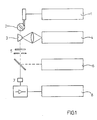
- this solution was pumped from a reservoir through the dye cell (3).
- the wavelength was tuned using a reflection grating (2) with a stepper motor drive (1
- the laser spectrum was recorded using a photomultiplier (7), which was spectrally calibrated, and the wavelength was calibrated using a monochromator (6).
- the intensity in percent of the pump power is also given in kW, since the output power of the pump laser was 100 kW.
- FIG. 1 furthermore mean: (4) N 2 laser and (5) 30% output mirror
- the nitrogen laser used had a wavelength of 337 nm, a pulse frequency of 100 Hz, a pulse width of 7 nsec and a pulse peak power of 100 kW.
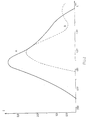
- the dependence of the laser power on the wavelength is shown in FIG. 2.
- the fluorescent dye prepared as described in Example 1 was dissolved in ethylene glycol at a concentration of 1.35 ⁇ 10 -3 mol / 1.
- this solution was introduced into the laser resonator by means of a nozzle jet.
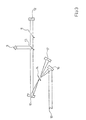
- the krypton laser (15) used as a pump laser for continuous excitation had a wavelength of 351/356 nm and a maximum output power of 3.5 W.
- the wavelength was tuned by a birefringent filter (11).
- the useful power was decoupled by means of a quartz plate (13), which was inserted into the laser resonator at a suitable angle.
- the laser spectrum was recorded point by point by rotating the frequency-selective birefringent filter, the output power being determined at a set wavelength using a thermopile power meter. The output power is given in mW.
- FIG. 3 furthermore mean: (9) tunable output beam; (10) folded filter (50 mm radius); (12) end mirror (flat); (14) dye jet (at Brewster's angle); (16) pump mirror; (17) End mirror (50 mm radius).
- Stilbene 3 whose laser activity is described in Optics Communications 24.3 - p.251 (March 1978), is used as the comparative dye.
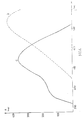
- the connection according to the invention shows a higher output power over a spectral range which is substantially extended to the near UV.
- the dye class according to the invention thus allows cw operation in the spectral range below 400 nm for the first time.
- FIG. 4 A output power; L wavelength; Laser power curve of the fluorescent dye according to Example 1; Laser power curve from Stilben 3 (3-5% output); Concentration 1.3 x 10- 3 molar; Ethylene glycol solvent; Decoupling approx. 5%; Pump power 3.5 watts UV.
Landscapes
- Chemical & Material Sciences (AREA)
- Organic Chemistry (AREA)
- Physics & Mathematics (AREA)
- Electromagnetism (AREA)
- Optics & Photonics (AREA)
- Plasma & Fusion (AREA)
- Engineering & Computer Science (AREA)
- Life Sciences & Earth Sciences (AREA)
- Molecular Biology (AREA)
- General Health & Medical Sciences (AREA)
- Biochemistry (AREA)
- Health & Medical Sciences (AREA)
- Organic Low-Molecular-Weight Compounds And Preparation Thereof (AREA)
- Nitrogen And Oxygen Or Sulfur-Condensed Heterocyclic Ring Systems (AREA)
Description
- Gegenstand der Erfindung sind Fluoreszenzfarbstoffe, Verfahren zu ihrer Herstellung und ihre Verwendung zum Weißtönen organischer Materialien sowie als Laserfarbstoffe.
- Die neuen Farbstoffe entsprechen der Formel

- R und R, unabhängig voneinander für Wasserstoff, ein salzbildendes Kation, einen Alkylrest mit 1 bis 8 Kohlenstoffatomen oder einen Aralkylrest,
- R2 bis R5 unabhängig voneinander für Wasserstoff, Alkyl, Trifluormethyl, Alkoxy, Aralkoxy, Alkenyloxy, Halogen, die Carboxyl-, Cyan-, Alkylsulfon-, Arylsulfon-, Carbonamid-, Sulfonamid- oder die Carbonsäureestergruppe stehen,
- m und n unabhängig voneinander 0, 1 und 2 bedeuten, wobei die Summe von m+n mindestens gleich 2 sein muß, und
- o, p, q und r unabhängig voneinander für 0, 1 und 2 stehen.
- Als salzbildende Kationen kommen ein- oder zweiwertige Metalle, wie Natrium, Kalium, Lithium, Magnesium, Calcium, Barium, Mangan und Zink in Frage sowie Ammoniumsalze und deren Substitutionsprodukte, die man durch Umsetzung der zugrunde liegenden Säuren mit Mono-, Di- und Trimethylamin, Mono-, Di- und Triethylamin, Mono-, Di- und Triethanolamin, Methyldiethanolamin, Ethyldiethanolamin, Dimethylethanolamin, Diethylethanolamin, Mono-, Di- und Triisopropanolamin, Methyldiisopropanolamin, Ethyldiisopropanolamin, Dimethylisopropanolamin, n-Butylamin, sek. Butylamin, Dibutylamin, Diisobutylamin, Triethoxyethanolamin, Pyridin, Morpholin oder Piperidin erhält.
- Bevorzugte Stilbenverbindungen entsprechen der Formel

- Me für Wasserstoff, Natrium, Kalium oder den gegebenenfalls substituierten Ammoniumrest,
- R2' bis R5' unabhängig voneinander für Wasserstoff, Ci- bis C4-Alkyl, Benzyloxy, Cyan sowie eine Carboxy-, Carbonsäureester- oder Carbonamidgruppe stehen und
- s und t 0 oder 1 bedeuten.
- Eine weitere bevorzugte Gruppe entspricht der Formel

- Me und R2' bis Rs' die gleiche Bedeutung wie in Formel la haben und
- m' und n' für 0 oder 1 stehen, wobei die Summe von m' und n' mindestens 2 sein muß.
- Von besonderer Bedeutung für die Verwendung als Laserfarbstoff ist die Verbindung der Formel

- Me die gleiche Bedeutung wie in Formel la hat.
- Die erfindungsgemäßen Stilbenverbindungen lassen sich in an sich bekannter Weise durch Kondensation einer Verbindung der Formel


- die Reste R bis R5 und die Indizes m, n, o, p, q, r die gleiche Bedeutung wie in Formel I haben und Z, und Z2 wechselseitig für die Aldehyldgruppe oder einen Rest der Formeln
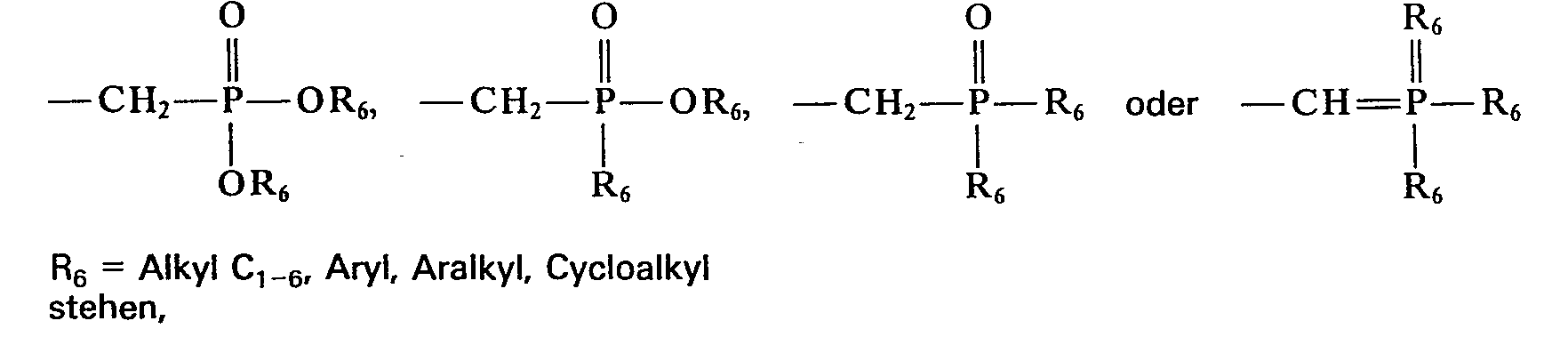
- Geeignete Lösungsmittel sind beispielsweise Toluol; Xylol; Chlorbenzol; Alkohole, wie Ethanol; Ethylenglykolmonomethylether; vorzugsweise jedoch N-Methylpyrrolidon; Dimethylformamid; Diethylformamid; Dimethylacetamid oder Dimethylsulfoxid.
- Die Temperatur, bei welcher die Umsetzung durchgeführt wird, kann in weiten Grenzen schwanken. Sie wird bestimmt
- a) durch die Beständigkeit des verwendeten Lösungsmittels gegenüber den Reaktionsteilnehmern, insbesondere gegenüber den stark basischen Alkaliverbindungen,
- b) durch die Reaktivität der Kondensationspartner und
- c) durch die Wirksamkeit der Kombination Lösungsmittel/Base als Kondensationsmittel.
- Vorzugsweise liegt sie etwa im Bereich von 30° C bis 60° C, doch können in vielen Fällen schon befriedigende Resultate bei Raumtemperatur (ca. 20°C) einerseits oder andererseits bei Temperaturen von 100° C, ja sogar bei der Siedetemperatur des Lösungsmittels erreicht werden, wenn dies aus Gründen der Zeitersparnis oder dadurch erwünscht ist, ein weniger aktives, aber billigeres Kondensationsmittel einzusetzen. Grundsätzlich sind somit auch Reaktionstemperaturen von 10 bis 180° C möglich.
- Als stark basische Alkaliverbindungen kommen vor allem die Hydroxide, Amide und Alkoholate (vorzugsweise solche primärer, 1 bis 4 Kohlenstoffatome enthaltender Alkohole) der Alkalimetalle in Betracht, wobei aus ökonomischen Gründen solche des Lithiums, Natriums und Kaliums von vorwiegendem Interesse sind. Es können jedoch grundsätzlich und in besonderen Fällen auch Alkalisulfide und -carbonate, Arylalkaliverbindungen, wie Phenyl-Lithium, oder stark basische Amine (einschließlich Ammoniumbasen, z. B. Trialkylammoniumhydroxide) mit Erfolg verwendet werden.
- Die als Ausgangsstoffe benötigten Phosphorverbindungen der Formel II bzw. III werden in an sich bekannter Weise erhalten, indem man Halogenmethylverbindungen, vorzugsweise Chlormethyl- oder Brommethylverbindungen der Formeln


- die Reste R bis R5 und die Indizes m, n, o, p, q und r die gleiche Bedeutung wie in Formel haben und Hal für Chlor oder Brom steht,
- mit Phosphorverbindungen der Formeln
- (R6O)3P, R6P(OR6)2, (R6)2POR6, P(R6)3, in denen
- R6 die oben angegebene Bedeutung hat und wobei an Sauerstoff gebundene Reste R6 vorzugsweise niedrige Alkylgruppen, unmittelbar an Phosphor gebundene Reste R6 dagegen vorzugsweise Arylreste sind,
- Die Halogenmethylverbindungen der Formeln IV und V lassen sich aus der entsprechenden Methylverbindung gemäß der in der DE-PS 234 913 beschriebenen Arbeitsweise durch Umsetzung mit Phosphorpentachlorid und Chlor und anschließende Verseifung der Sulfochloride herstellen oder durch Bromierung mit N-Bromsuccinimid gemäß den Angaben der DE-OS 2262340. Die Brommethylgruppe läßt sich auch durch Umsetzung des entsprechenden Diphenylderivats mit Paraformaldehyd und Natriumbromid in Schwefelsäure-Eisessig-Mischung nach der in der DE-OS 2 262 340 beschriebenen Arbeitsweise einführen. Ein weiterer Weg zur Herstellung der Halogenmethylverbindungen der Formeln IV und V besteht in der Reduktion der Biphenylaldehydsulfonsäuren mit Natriumborhydrid zu den Hydroxymethylbiphenylsulfonsäuren, der Überführung in die Halogenmethylbiphenylsulfochloride mit Thionylchlorid oder Phosphorpentachlorid und der anschließenden Veresterung der Sulfochloride zu den Sulfonsäureestern.
- Geeignete Halogenmethylverbindungen der Formeln IV und V sind:
- 4-Chlormethylbiphenyl-4'-sulfonsäureethylester,
- 4-Brommethylbiphenyl-4'-sulfonsäuremethylester,
- 4-Chlormethylbiphenyl-3-sulfonsäureethylester,
- 4-Chlormethylbiphenyl-3,4'-disulfonsäurediethylester,
- 4-Brommethyl-4'-methylbiphenyl-3,3'-disulfonsäurediethylester,
- 4-Brommethyl-4'-brombiphenyl,
- 4-Brommethyl-4'-phenylsulfonylbiphenyl,
- 4-Brommethyl-4'-cyanbiphenyl,
- 4-Brommethyl-3'-methyl-4'-brombiphenyl.
- Die Aldehyde der Formeln II bzw. III (Z, bzw. Z2=CHO) lassen sich aus den Halogenmethylverbindungen durch Umsetzung mit Hexamethylentetramin in Essigsäure (Sommelet-Reaktion) herstellen. Man erhält sie auch durch Nachsulfierung von Biphenylaldehyden mit Oleum gemäß der in der DE-OS 2 525 681 beschriebenen Arbeitsweise. Ein weiterer Weg zu den Biphenylaldehydsulfonsäuren besteht in der Umsetzung von halogenierten Biphenylaldehyden mit Natriumsulfit.
- Geeignete Biphenylaldehyde der Formeln II und III sind:
- Biphenyl-4-aldehyd-4'-sulfonsäure, Biphenyl-4-aldehyd-3-sulfonsäure,
- Biphenyl-4-aldehyd-3,4'-disulfonsäure, Biphenyl-4-aldehyd, 3,4-Dichlorbiphenyl-4'-aldehyd,
- 4-Methylbiphenyl-4'-aldehyd-3,3'-disulfonsäure,
- 3-Chlorbiphenyl-4'-aldehyd-4-sulfonsäure,
- 4-Brombiphenyl-4'-aldehyd, 4-Cyanbiphenyl-4'-aldehyd,
- 3-Methyl-4-brombiphenyl-4'-aldehyd.
- Die Verbindungen der Formel I können auch durch Umwandlung der Substituenten eines die Grundstruktur der Verbindungen bereits aufweisenden Moleküls in Substituenten, die unter die obige Definition der Formel I fallen, hergestellt werden. Ferner können auch in den Verbindungen der Formel 1 Substituenten in andere unter dieselbe Definition fallende Substituenten umgewandelt werden.
- Die erfindungsgemäßen Verbindungen zeigen in gelöstem oder feinverteiltem Zustand eine mehr oder weniger ausgeprägte Fluo easzenz. Sie lassen sich daher zum optischen Aufhellen snythetischer oder natürlicher hochmolekularer Materialien verwenden.
- Unter synthetischen organischen hochmolekularen Materialien sind Polymerisations-, Polykondensations- und Polyadditionsprodukte sowie deren Nachbehandl'ungsprodukte zu verstehen, z. B. Polymerisate auf Basis von α,þ-ungesättigten Carbonsäuren, Dicarbonsäuren, Carbonsäureestern, Amiden, Nitrilen, von Olefinkohlenwasserstoffen, von halogenierten oder arylgruppenhaltigen Olefinkohlenwasserstoffen (wie Polyethylen, Polypropylen, Polybutadien, Polyvinylchlorid, Polyvinylidenchlorid, Polyacrylnitril, Polystyrol, Polyacrylsäurederivate und Mischpolymerisate aus zwei oder mehreren der obengenannten polymerisationsfähigen Monomeren), Polykondensate auf Basis bi-oder polyfunktioneller Verbindungen mit kondensationsfähigen Gruppen, deren Homo- und Mischkondensationsprodukte (wie Polyester, Polyamide, Maleinatharze, Polycarbonate, Siliconharze, Phenol- oder Melaminformaldehydharze u. a.), Polyadditionsprodukte, wie vernetzte oder unvernetzte Polyurethane, sowie Epoxidharze.
- Als halbsynthetische organische Materialien seien z. B. Celluloseester und -ether, Nitrocellulose, regenerierte Cellulose und Kunststoffe auf Caseinbasis genannt.
- Optisch aufhellbare natürliche hochmolekulare organische Materialien sind z. B. Proteinmaterialien, wie Wolle, Seide und Leder; Cellulosematerialien, wie Baumwolle, Papier, Holzmassen in feiner Verteilung; ferner Kautschuk, Guttapercha oder Balata.
- Die optisch aufzuhellenden organischen Materialien können in den verschiedensten Verarbeitungszuständen als Rohstoffe, Halbfabrikate oder Fertigfabrikate vorliegen, z. B. als Pulver, Schnitzel, Granulate, Schaumstoffe, Lacke, Dispersionen, Formkörper, wie z. B. Folien, Platten, Filme, Bänder, Fäden, Fasern, z. B. in Form von endlosen Fäden, Stapelfasern, Flocken, Garnen, Strangwaren, Zwirnen, Faservliesen, Filzen, Watten, textilen Geweben, Verbundstoffen und Gewirken, weiterhin auch als Kitte, Pasten, Wachse, Kleb- und Spachtelmassen usw.
- Die erfindungsgemäßen Verbindungen werden bevorzugt für die optische Aufhellung von Fasermaterialien und Kunststoffen verwendet. Besonders geeignet sind die in Wasser anionisch löslichen erfindungsgemäßen Verbindungen zur optischen Aufhellung von nativen und regenerierten Cellulosefasern, von Wolle und synthetischen Polyamidfasern.
- Besonders gute Aufhelleffekte erhält man zuweilen auch dann, wenn die erfindungsgemäßen Verbindungen mit anderen optischen Aufhellern kombiniert werden. Solche Kombinationen sind insbesondere dann von Interesse, wenn man Nuancenverschiebungen der Aufhelleffekte erzielen will. Die erfindungsgemäßen Verbindungen der allgemeinen Formel 1 können auch Waschmitteln, die die üblichen Füll- und Hilfsstoffe enthalten, zugesetzt werden. Sie zeichnen sich insbesondere dadurch aus, daß sie in Gegenwart von oxidativen und reduktiven Bleichmitteln, z. B. Wasserstoffperoxid, Natriumhypochlorit und Natriumchlorit, ohne Beeinträchtigung der optischen Aufhellwirkung eingesetzt werden können.
- Lösungen der Verbindungen der Formel I sind auch geeignet zur Erzeugung von kohärenter frequenzveränderlicher monochromatischer Strahlung (Laserlicht) mittels eines Farbstofflasers, der aus einem Reservoir für die Farbstofflösung und einer damit verbundenen Energiequelle besteht, die in der Lage ist, die Farbstofflösung zu einer Emission anzuregen, wobei die erzeugte Strahlung im Wellenlängenbereich von 390 bis 440 nm liegt.
- Ein Laser ist eine Lichtverstärkungseinrichtung, mit deren Hilfe es möglich ist, kohärentes monochromatisches Licht einer hohen spektralen und geometrischen Intensitätsdichte zu erzeugen. Der Laser besteht aus einem optischen Resonator, der in einer dünnwandigen Quarz-Zelle das flüssige laseraktive Material enthält. Die Zelle ist gewöhnlich Teil eines geschlossenen Systems, durch welches die Farbstofflösung, während der Laser in Funktion ist, im Kreislauf gepumpt wird. Das aktive Medium kann ebenfalls in Form eines Flüssigkeitsstrahls vorliegen, der aus einer Düse senkrecht zur optischen Achse austritt und den Resonator durchquert. In beiden Anordnungen wird eine lokale Überhitzung vermieden, die zu optischen Inhomogenitäten führen würde.
- Die Anregung der Farbstoffe erfolgt mit Hilfe von Energiequellen, mittels Elektronen oder Licht, wobei der Farbstofflaser auch durch einen Gaslaser, beispielsweise einen Stickstoff-, Argon- oder Kryptonlaser angeregt werden kann.
- Die Anregung, auch als optisches Pumpen bezeichnet, bewirkt, daß Molekülelektronen des Laserfarbstoffes aus dem Grundzustand auf einen hohen Energiezustand angehoben werden, von dem aus ein Strahlungsübergang erfolgt. Übertrifft die Zahl der im angeregten Zustand befindlichen Moleküle diejenige der in tieferen Zuständen befindlichen Moleküle, so erfolgen stimulierte Übergänge, durch die das Licht im optischen Resonator verstärkt wird.
- Ist einer der Laserspiegel partiell lichtdurchlässig, so tritt ein Teil der Strahlung in Form eines Laserstrahls aus der Apparatur aus. Besonders leicht anzuregende Farbstoffe zeigen bei sehr effektiver Anregung die Erscheinung der Superradianz. Diese kann z. B. beobachtet werden, wenn eine Quarzküvette mit der Lösung eines solchen Farbstoffes in den Strahl eines Stickstofflasers gestellt wird. Die Lösung sendet dann, ohne daß sie sich zwischen Resonatorspiegeln befindet, ähnlich wie beim Laser, Licht in eine Vorzugsrichtung aus.
- Ein wesentlicher Vorteil des Farbstofflasers im Vergleich zum Festkörper- oder Gaslaser ist dessen Fähigkeit, eine frequenzveränderliche Laserstrahlung zu liefern. Wegen der Fluoreszenzbandbreite der eingesetzten Farbstoffe können Farbstofflaser durch Einfügen eines frequenzselektiven Elements, z. B. eines Reflexionsgitters, Prismas oder doppelbrechenden Filters, so abgestimmt werden, daß Laserlicht bei jeder gewünschten Wellenlänge innerhalb der gesamten Fluoreszenzbande des Farbstoffes emittiert wird.
- Obwohl bereits eine Vielzahl von geeigneten Farbstoffen vorgeschlagen wurde, besteht in vielen Bereichen des sichtbaren Wellenlängenbereiches und vor allem im nahen UV trotzdem noch ein erheblicher Mangel an Verbindungen, die einen sehr hohen Wirkungsgrad des Lasers ergeben (s. Optics Communications 24,1 - S. 33 [Januar 1978], und Optics Communications 24,3 - S. 251 [März 1978]). Darüber hinaus war es bisher nicht möglich, kontinuierliche Laserstrahlung unterhalb von 410 nm zu erzeugen. Die erfindungsgemäßen Verbindungen zeichnen sich bei der Anwendung im Farbstofflaser durch eine außerordentlich hohe Lichtbeständigkeit aus.
- Laserlicht frequenzveränderlicher Laser hat in den letzten Jahren eine erhebliche Bedeutung in der Spektroskopie erlangt. Die Laser können eingesetzt werden für analytische Zwecke, hochauflösende Spektroskopie, Fluoreszenzspektroskopie, Absorptionsspektroskopie, Lebensdauermessungen, Fotoionisation und bei der Spektroskopie negativer lonen. Sie haben ferner eine große technische Bedeutung in der lnformationstechnik, im Umweltschutz und für die Isotopentrennung.
-

- In einem Reaktionsgefäß werden unter Ausschluß von Feuchtigkeit und Luftsauerstoff 40,0 g Kalium-tert.-butylat (ca. 90%ig) in 300 ml Dimethylformamid (wasserfrei) suspendiert. Bei einer Reaktionstemperatur von 40-50°C wird innerhalb von 1 Std. eine filtrierte Lösung aus 40g biphenyl-4-aldehyd-4'-sulfonsaurem Kalium (ca. 80%ig) in 1100 ml Dimethylformamid, die mit einer Lösung aus 68 g 4-Diethoxyphosphonomethylbiphenyl-4'-sulfonsäureethylester in 100 ml Dimethylformamid verrührt wurde, zugetropft. Es wird 2 Std. bei 40-50° C gerührt, bis im Dünnschichtchromatogramm keine der Ausgangsverbindungen nachgewiesen werden kann. Unter Zusatz von 300 ml Wasser wird ca. 2 Std. bis zur Entfärbung der Reaktionsmischung auf 80-90°C erhitzt. Nach Abkühlen, Absaugen, Waschen mit wenig Wasser und Trocknen im Vakuum bei 80°C wird die Verbindung der oben angegebenen Formel als farbloses kristallines Produkt erhalten. Ausbeute: 56,8 g = 62,5% der Theorie.
- Zur Überführung in die leichter löslichen Ammoniumsalze erhitzt man das Kaliumsalz mit halbkonzentrierter Ammoniaklösung, mit Triethanolamin oder mit Tris-2-hydroxyethoxyethylamin.
- Das als Ausgangsmaterial verwendete biphenyl-4-aldehyd-4'-sulfonsaure Kalium wurde in folgender Weise gewonnen:
- 182 g Biphenyl-4-aldehyd wurden portionsweise in 400 g 20%ig. Oleum so eingetragen, daß die Temperatur langsam von 25° C auf 50° C ansteigt. Die Temperatur wird 3 Std. bei 50° C gehalten und die Reaktionsmischung dann auf 1000 g Eis und 30 g Kaliumchlorid ausgetragen. Das biphenyl-4-aldehyd-4'-sulfonsaure Kalium fällt als flockiger Niederschlag aus. Das Rohprodukt wird unter Zusatz von A-Kohle aus Wasser umkristallisiert. Ausbeute: 258,3 g =85% der Theorie.
- Der als Ausgangsmaterial verwendete 4-Diethoxyphosphonomethylbiphenyl-4'-sulfonsäureethyl- ester wurde in folgender Weise hergestellt:
- 166 g biphenyl-4-aldehyd-4'-sulfonsaures Kalium (80%ig) werden in 600 ml Wasser suspendiert und mit 100 ml 10%iger Natronlauge versetzt. Unter Stickstoff wird eine Lösung aus 6,2g Natriumborhydrid in 300 ml Wasser und 30 ml 10%iger Natronlauge portionsweise zugesetzt. Unter starker Wasserstoffentwicklung steigt die Temperatur auf 30°C. Es wird 14 Std. bei Raumtemperatur gerührt. Nach vollständiger Reduktion wird vorsichtig mit konz. Salzsäure angesäuert und die Suspension zur Zerstörung des Borkomplexes und zur Bildung der Säure 3 Std. auf 80° C erhitzt. Nach Abkühlen saugt man die 4-Hydroxymethylbiphenyl-4'-sulfonsäure ab, wäscht sie mit wenig Wasser und trocknet sie im Vakuum bei 100° C. Ausbeute:113 g =93% der Theorie.
- 113 g 4-Hydroxymethylbiphenyl-4'-sulfonsäure werden in 800 ml Chlorbenzol suspendiert und zur vollständigen Entfernung von Wasser 250 ml Chlorbenzol abdestilliert. Dann wird auf 80-90°C abgekühlt und nach Zusatz von 3 ml Dimethylformamid und 1 g Phosphorpentachlorid werden innerhalb von 2 Std. 150 ml Thionylchlorid zugetropft. Die Temperatur wird 14 Std. bei 85-90°C gehalten. Das Lösungsmittel und überschüssiges Thionylchlorid werden im Vakuum fast bis zur Trockne abdestilliert. Der Rückstand wird mit 900 ml Methylcyclohexan heiß extrahiert, wobei Salze und nicht umgesetzte Sulfonsäure als Rückstand verbleiben, während das Sulfochlorid sich aus Methylcyclohexan beim Abkühlen als farblose kristalline Verbindung abscheidet. Ausbeute: 100,6 g =78% der Theorie, Schmelzpunkt: 110 -112° C.
- 98 g 4-Chlormethylbiphenyl-4'-sulfonsäurechlorid werden unter Feuchtigkeits- und Sauerstoffausschluß in 400 ml Tetrahydrofuran (wasserfrei) gelöst und mit einem 10%igen Überschuß an Natriumalkoholat, hergestellt aus 8 g Natrium und 1000 ml absolutem Alkohol, portionsweise versetzt, so daß die Reaktionstemperatur unter Eiskühlung bei 10-15°C gehalten wird. Nach einstündigem Rühren bei Raumtemperatur wird das Lösungsmittelgemisch im Vakuum bei 50°C abgezogen. Der Rückstand wird mit 1200 ml Di-sek.-butylether (wasserfrei) heiß extrahiert. Nach Abkühlen, Absaugen und Trocknen im Vakuum bei 50°C erhält man 68,5 g 4-Chlormethylbiphenyl-4'-sulfonsäureethylester. Ausbeute: 68%, Schmelzpunkt: 112 -116° C.
- 48,5 g 4-Chlormethylbiphenyl-4'-sulfonsäureethylester werden unter Feuchtigkeits- und Sauerstoffausschluß in 100 ml wasserfreiem Xylol suspendiert. Innerhalb von 2 Std. werden bei 130-140°C beginnend 75 g Triethylphosphit unter gleichzeitiger Abdestillation des entstehenden Ethylchlorids und von Xylol und Triethylphosphit zugetropft, so daß die Innentemperatur langsam auf 165-170°C ansteigt. Die Reaktionsmischung wird 7 Std. bei dieser Temperatur gehalten. Überschüssiges Triethylphosphit wird bei 160° C und 20 mbar abdestilliert. Das als Rückstand verbleibende Rohöl (68 g) wird in 100 ml Dimethylformamid aufgenommen und in dieser Form mit biphenyl-4-aldehyd-4'-sulfon- saurem Kalium umgesetzt.
-

- 10 g der gemäß Beispiel 1 hergestellten Verbindung werden in 50 ml 20%ig. Oleum bei 0-10°C eingetragen und 30 Min. bei 5°C verrührt. Innerhalb von 1 Std. wird die Temperatur auf 25°C erhöht. Nach Austragen auf ein Gemisch von Eis und Wasser wird mit Calciumhydroxid neutralisiert, das entstehende Calciumsulfat abfiltriert und gründlich mit Wasser gewaschen. Das Filtrat wird mit A-Kohle geklärt und das Calciumsalz an einem stark sauren Ionenaustauscher in die freie Sulfonsäure überführt.
- In ähnlicher Weise wie in den vorstehenden Beispielen beschrieben, können die in der nachfolgenden Tabelle aufgeführten Diphenylstilbensulfonsäuren der Formel

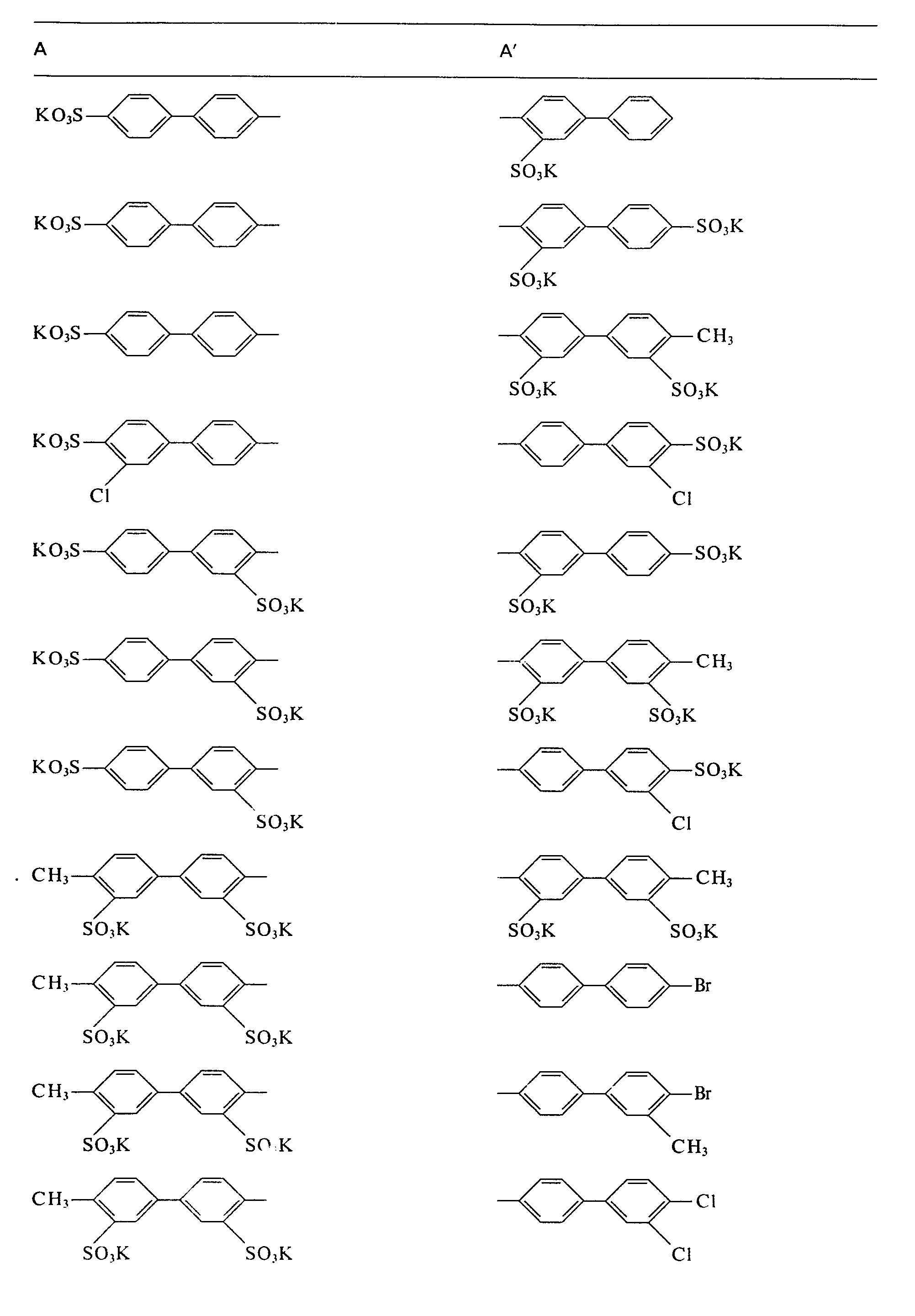

- Ein Polyamidfasergewebe wird im Flottenverhältnis 1/40 bei 60°C in ein Bad eingebracht, das, bezogen auf das Stoffgewicht, 0,1% d in Beispiel 2 beschriebenen Aufhellers sowie pro Liter 1 g 80%ige Essigsäure und 0,25g eines A agerungsproduktes von 30-35 Mol Ethylenoxid an 1 Mol technischen Stearylalkohol enthält. Man erwärmt innerhalb von 30 Min. auf Kochtemperatur und hält während 30 Min. beim Sieden. Nach dem Spülen und Trocknen zeigt das Polyamidgewebe einen guten Aufhelleffekt.
- Die nach den Angaben des Beispiels 1 hergestellte Verbindung wurde in einer Konzentration von 1,5 x 10⁻³ Mol/I in einem Gemisch aus 50% Methanol und 50% Wasser gelöst. In einer Apparatur gemäß Fig. 1 wurde diese Lösung aus einem Reservoir durch die Farbstoffzelle (3) gepumpt. Das Durchstimmen der Wellenlänge erfolgte mittels eines Reflexionsgitters (2) mit Schrittmotorantrieb (1 Die Aufnahme des Laserspektrums erfolgte über einen Photomultiplier (7), der spektral geeicht war, die Wellenlängenkalibrierung über einen Monochromator (6). Zur Leistungsmessung wurde der Photomultiplier durch einen Thermopile-Meßkopf mit zugehörigem Meßverstärker ersetzt. Die Intensität in Prozent der Pumpleistung wird zugleich in kW angegeben, da die Ausgangsleistung des Pumplasers 100 kW betrug. In Fig. 1 bedeuten weiterhin: (4) N2-Laser und (5) 30% Auskoppelspiegel. Der verwendete Stickstofflaser hatte eine Wellenlänge von 337 nm, eine Pulsfrequenz von 100 Hz, eine Pulsbreite von 7 nsec und eine Pulsspitzenleistung von 100 kW.
- Die Abhängigkeit der Laserleistung von der Wellenlänge ist in Fig. 2 wiedergegeben. Als Vergleichssubstanz diente der bekannte Laserfarbstoff POPOP (1,4-Bis-(2-(5-phenyloxazolyl)]-benzol), dessen Laseraktivität in Optics Communications 24,1 - S. 33 (Januar 1978) beschrieben ist. Die erfindungsgemäße Verbindung zeigt eine höhere Ausgangsleistung über einen erweiterten Spektralbereich.
- Erläuterung zu Fig.2: I-Intensität (in % Pumpleistung); L-Wellenlänge (nm); A-Laserleistungskurve des Fluoreszenzfarbstoffes gemäß Beispiel 1; Laserleistungskurve des Laserfarbstoffes POPOP; Konzentration 1,5 × 10⁻³ molar; Lösungsmittel 1/1, H20/CH30H; Stickstofflaser 100 kW/100 Hz; Farbstofflaseraufbau wie in Fig. 1.
- Der nach den Angaben des Beispiels 1 hergestellte Fluoreszenzfarbstoff wurde in einer Konzentration von 1,35 x 10⁻³ Mol/1 in Ethylenglykol gelöst. In einer Farbstofflaseranordnung gemäß Fig. 3 wurde diese Lösung mittels eines Düsenstrahls in den Laserresonator eingebracht. Der als Pumplaser zur kontinuierlichen Anregung verwendete Kryptonlaser (15) hatte eine Wellenlänge von 351/356 nm und eine maximale Ausgangsleistung von 3,5 W. Das Durchstimmen der Wellenlänge erfolgte durch ein doppelbrechendes Filter (11). Die Nutzleistung wurde mittels einer Quarzplatte (13) ausgekoppelt, die unter einem geeigneten Winkel in den Laserresonator eingefügt wurde. Die Aufnahme des Laserspektrums wurde punktweise durch Drehen des frequenzselektiven doppelbrechenden Filters vorgenommen, wobei die Ausgangsleistung bei einer eingestellten Wellenlänge mit einem Thermopile-Leistungsmesser ermittelt wurde. Die Ausgangsleistung ist in mW angegeben.
- In Fig. 3 bedeuten weiterhin: (9) durchstimmbarer Ausgangsstrahl; (10) Faltfilter (50 mm Radius); (12) Endspiegel (plan); (14) Farbstoff-Jet (unter Brewster-Winkel); (16) Pumpspiegel; (17) Endspiegel (50 mm Radius).
- Die Abhängigkeit der Laserleistung von der Wellenlänge ist in Fig. 4 wiedergegeben. Als Vergleichsfarbstoff dient Stilben 3, dessen Laseraktivität in Optics Communications 24,3 - S.251 (März 1978) beschrieben ist. Die erfindungsgemäße Verbindung zeigt eine höhere Ausgangsleistung über einen wesentlich zum nahen UV erweiterten Spektralbereich. Die erfindungsgemäße Farbstoffklasse erlaubt somit zum ersten Mal einen cw-Betrieb im Spektralbereich unter 400 nm.
- Ähnlich gute Ergebnisse erhält man, wenn man anstelle der oben angegebenen Verbindung Fluoreszenzfarbstoffe einsetzt, deren Formeln im Anschluß an Beispiel 2 aufgeführt wurden.
- Erläuterung zu Fig. 4: A-Ausgangsleistung; L-Wellenlänge; Laserleistungskurve des Fluoreszenzfarbstoffes gemäß Beispiel 1; Laserleistungskurve von Stilben 3 (3-5% Auskopplung); Konzentration 1,3 x 10⁻³ molar; Lösungsmittel Ethylenglycol; Auskopplung ca. 5%; Pumpleistung 3,5 Watt UV.
umsetzt.
Claims (8)


Applications Claiming Priority (2)
| Application Number | Priority Date | Filing Date | Title |
|---|---|---|---|
| DE19782841519 DE2841519A1 (de) | 1978-09-23 | 1978-09-23 | Fluoreszenzfarbstoffe |
| DE2841519 | 1978-09-23 |
Related Child Applications (2)
| Application Number | Title | Priority Date | Filing Date |
|---|---|---|---|
| EP81105610A Division EP0042181A3 (de) | 1978-09-23 | 1979-09-12 | Diphenylderivate |
| EP81105610.0 Division-Into | 1981-07-17 |
Publications (2)
| Publication Number | Publication Date |
|---|---|
| EP0009679A1 EP0009679A1 (de) | 1980-04-16 |
| EP0009679B1 true EP0009679B1 (de) | 1982-04-21 |
Family
ID=6050279
Family Applications (2)
| Application Number | Title | Priority Date | Filing Date |
|---|---|---|---|
| EP79103409A Expired EP0009679B1 (de) | 1978-09-23 | 1979-09-12 | Fluoreszenzfarbstoffe der Stilbenreihe, Verfahren zu deren Herstellung und ihre Verwendung zum Weisstönen organischer Materialien sowie als Laserfarbstoffe |
| EP81105610A Withdrawn EP0042181A3 (de) | 1978-09-23 | 1979-09-12 | Diphenylderivate |
Family Applications After (1)
| Application Number | Title | Priority Date | Filing Date |
|---|---|---|---|
| EP81105610A Withdrawn EP0042181A3 (de) | 1978-09-23 | 1979-09-12 | Diphenylderivate |
Country Status (4)
| Country | Link |
|---|---|
| US (1) | US4301091A (de) |
| EP (2) | EP0009679B1 (de) |
| JP (1) | JPS5594961A (de) |
| DE (2) | DE2841519A1 (de) |
Families Citing this family (16)
| Publication number | Priority date | Publication date | Assignee | Title |
|---|---|---|---|---|
| DE3001876A1 (de) * | 1980-01-19 | 1981-07-23 | Bayer Ag, 5090 Leverkusen | Verfahren zur herstellung von styrylsulfonsaeurederivaten |
| DE3003539A1 (de) * | 1980-01-31 | 1981-08-06 | Bayer Ag, 5090 Leverkusen | 4-phenylbenzaldehyd-2-sulfonsaeuren sowie deren herstellung |
| US4366079A (en) * | 1981-02-26 | 1982-12-28 | American Cyanamid Company | Sulfonated rubrene and aqueous chemiluminescent compositions containing the same |
| DE4039825A1 (de) * | 1990-12-13 | 1992-06-17 | Klaus Dipl Chem Dr Franke | Neue inden-verbindungen, insbesondere fluoreszenzfarbstoffe und verfahren zu ihrer herstellung |
| US7063264B2 (en) | 2001-12-24 | 2006-06-20 | Digimarc Corporation | Covert variable information on identification documents and methods of making same |
| AU2002353174A1 (en) | 2001-12-24 | 2003-07-15 | Digimarc Id Systems, Llc | Laser engraving methods and compositions |
| US7207494B2 (en) | 2001-12-24 | 2007-04-24 | Digimarc Corporation | Laser etched security features for identification documents and methods of making same |
| US7694887B2 (en) | 2001-12-24 | 2010-04-13 | L-1 Secure Credentialing, Inc. | Optically variable personalized indicia for identification documents |
| US7728048B2 (en) | 2002-12-20 | 2010-06-01 | L-1 Secure Credentialing, Inc. | Increasing thermal conductivity of host polymer used with laser engraving methods and compositions |
| US7815124B2 (en) | 2002-04-09 | 2010-10-19 | L-1 Secure Credentialing, Inc. | Image processing techniques for printing identification cards and documents |
| ATE555911T1 (de) | 2001-12-24 | 2012-05-15 | L 1 Secure Credentialing Inc | Verfahren zur vollfarb-markierung von id- dokumenten |
| US7824029B2 (en) | 2002-05-10 | 2010-11-02 | L-1 Secure Credentialing, Inc. | Identification card printer-assembler for over the counter card issuing |
| US7804982B2 (en) | 2002-11-26 | 2010-09-28 | L-1 Secure Credentialing, Inc. | Systems and methods for managing and detecting fraud in image databases used with identification documents |
| US7763179B2 (en) | 2003-03-21 | 2010-07-27 | Digimarc Corporation | Color laser engraving and digital watermarking |
| CA2522551C (en) | 2003-04-16 | 2009-12-22 | Digimarc Corporation | Three dimensional data storage |
| JP2007170593A (ja) * | 2005-12-26 | 2007-07-05 | Uchiyama Mfg Corp | ガスケット |
Family Cites Families (5)
| Publication number | Priority date | Publication date | Assignee | Title |
|---|---|---|---|---|
| CH500145A (de) * | 1967-07-14 | 1970-12-15 | Ciba Geigy Ag | Verfahren zur Herstellung aromatischer, Äthylendoppelbindungen enthaltender Verbindungen |
| DE2060228A1 (de) * | 1970-12-08 | 1972-06-15 | Hoechst Ag | Monostyryl-naphthalin-Derivate,Verfahren zu deren Herstellung und ihre Verwendung als optische Aufhellungsmittel |
| US4013713A (en) * | 1971-12-30 | 1977-03-22 | Ciba-Geigy Corporation | Diarylvinyl-dihydrophenanthrene compounds |
| DE2525683A1 (de) * | 1974-06-12 | 1976-01-02 | Ciba Geigy Ag | Sulfogruppenhaltige heterocyclen |
| DE2636424A1 (de) * | 1976-08-13 | 1978-02-16 | Hoechst Ag | Sulfogruppenhaltige beta-naphthyl- derivate, deren herstellung und verwendung als optische aufheller |
-
1978
- 1978-09-23 DE DE19782841519 patent/DE2841519A1/de not_active Withdrawn
-
1979
- 1979-09-10 US US06/073,773 patent/US4301091A/en not_active Expired - Lifetime
- 1979-09-12 EP EP79103409A patent/EP0009679B1/de not_active Expired
- 1979-09-12 EP EP81105610A patent/EP0042181A3/de not_active Withdrawn
- 1979-09-12 DE DE7979103409T patent/DE2962573D1/de not_active Expired
- 1979-09-21 JP JP12091479A patent/JPS5594961A/ja active Pending
Also Published As
| Publication number | Publication date |
|---|---|
| EP0009679A1 (de) | 1980-04-16 |
| DE2962573D1 (en) | 1982-06-03 |
| DE2841519A1 (de) | 1980-04-03 |
| EP0042181A3 (de) | 1981-12-30 |
| JPS5594961A (en) | 1980-07-18 |
| US4301091A (en) | 1981-11-17 |
| EP0042181A2 (de) | 1981-12-23 |
Similar Documents
| Publication | Publication Date | Title |
|---|---|---|
| EP0009679A1 (de) | Fluoreszenzfarbstoffe der Stilbenreihe, Verfahren zu deren Herstellung und ihre Verwendung zum Weisstönen organischer Materialien sowie als Laserfarbstoffe | |
| DE2843850C2 (de) | Farbstofflaser | |
| DE1793482C3 (de) | Neue Bis-stilbenverbindungen und Verfahren zu deren Herstellung | |
| DE2262633A1 (de) | Neue sulfogruppenhaltige 4,4'divinyldiphenyl-verbindungen | |
| CH508692A (de) | Verwendung von Styryl-naphthalin-Derivaten als optische Aufhellmittel ausserhalb der Textilindustrie | |
| DE2807497A1 (de) | Distyryl-verbindungen | |
| DE1592824A1 (de) | Chemilumineszierende Zusammensetzungen | |
| DE2401665A1 (de) | Neue distyrylbenzol-derivate, deren herstellung und deren verwendung | |
| EP0014344A1 (de) | Cumarinverbindungen, Verfahren zu ihrer Herstellung und deren Verwendung als Weisstöner und Laserfarbstoffe | |
| CN115210336B (zh) | 光吸收材料、使用了该光吸收材料的记录介质、信息的记录方法及信息的读出方法 | |
| DE69930948T2 (de) | Chelate mit chinoiden gruppen als photoinitiatoren | |
| DE2135139C3 (de) | Styrylverbindungen, Verfahren zu deren Herstellung un deren Verwendung | |
| DE2426367C3 (de) | Elektrochemilumineszenz-Laser | |
| EP0002042A1 (de) | Diamino-1,3,5-triazinylstilbenverbindungen, Verfahren zu deren Herstellung und ihre Verwendung als optische Aufheller | |
| EP0054511B1 (de) | 4-Styryl-4'-vinylbiphenyle, Verfahren zu deren Herstellung und deren Verwendung als optische Aufheller | |
| DE2626271A1 (de) | Chinolinderivate, verfahren zu ihrer herstellung und verwendung derselben | |
| DE2212480C2 (de) | Neue Triazolyl-äthenylphenylenverbindungen, deren Herstellung und Verwendung als optische Aufheller | |
| DE1794386C3 (de) | Verwendung von Bis-stilben-Verbindungen als optische Aufhellmittel | |
| EP0001991B1 (de) | Phosphoniumverbindungen, Verfahren zu deren Herstellung und Verfahren zur Herstellung von unsymmetrisch substituierten Stilbenaufhellern | |
| DE3703065C3 (de) | Laserfarbstoffe und Lösungen organischer Laserfarbstoffe | |
| EP0020298A1 (de) | Benzoxazolyl-Stilbene, Verfahren zu ihrer Herstellung und ihre Verwendung zum optischen Aufhellen von organischen Materialien | |
| DE2848149A1 (de) | Benzoxazolyl-phenylstilbene, verfahren zu deren herstellung sowie deren verwendung als optische aufheller | |
| DE1955068A1 (de) | Styrylverbindungen | |
| EP0064953B1 (de) | Stilbenverbindungen | |
| CH592705A5 (en) | Sulphonated 2,5-distilbenyl-1,3,4-oxdiazoles - optical brighteners for natural or synthetic polymers |
Legal Events
| Date | Code | Title | Description |
|---|---|---|---|
| PUAI | Public reference made under article 153(3) epc to a published international application that has entered the european phase |
Free format text: ORIGINAL CODE: 0009012 |
|
| 17P | Request for examination filed | ||
| AK | Designated contracting states |
Designated state(s): CH DE FR GB |
|
| GRAA | (expected) grant |
Free format text: ORIGINAL CODE: 0009210 |
|
| AK | Designated contracting states |
Designated state(s): CH DE FR GB |
|
| REF | Corresponds to: |
Ref document number: 2962573 Country of ref document: DE Date of ref document: 19820603 |
|
| PGFP | Annual fee paid to national office [announced via postgrant information from national office to epo] |
Ref country code: FR Payment date: 19820909 Year of fee payment: 4 |
|
| PGFP | Annual fee paid to national office [announced via postgrant information from national office to epo] |
Ref country code: CH Payment date: 19820930 Year of fee payment: 4 |
|
| PG25 | Lapsed in a contracting state [announced via postgrant information from national office to epo] |
Ref country code: CH Effective date: 19830930 |
|
| GBPC | Gb: european patent ceased through non-payment of renewal fee | ||
| PG25 | Lapsed in a contracting state [announced via postgrant information from national office to epo] |
Ref country code: FR Free format text: LAPSE BECAUSE OF NON-PAYMENT OF DUE FEES Effective date: 19840530 |
|
| REG | Reference to a national code |
Ref country code: CH Ref legal event code: PL |
|
| REG | Reference to a national code |
Ref country code: FR Ref legal event code: ST |
|
| PG25 | Lapsed in a contracting state [announced via postgrant information from national office to epo] |
Ref country code: GB Effective date: 19881118 |
|
| PGFP | Annual fee paid to national office [announced via postgrant information from national office to epo] |
Ref country code: DE Payment date: 19950926 Year of fee payment: 17 |
|
| PG25 | Lapsed in a contracting state [announced via postgrant information from national office to epo] |
Ref country code: DE Effective date: 19970603 |
|
| PLBE | No opposition filed within time limit |
Free format text: ORIGINAL CODE: 0009261 |
|
| STAA | Information on the status of an ep patent application or granted ep patent |
Free format text: STATUS: NO OPPOSITION FILED WITHIN TIME LIMIT |