EP0005545B1 - Neue Imidazolderivate, Verfahren zu ihrer Herstellung und diese enthaltende pharmazeutische Präparate - Google Patents
Neue Imidazolderivate, Verfahren zu ihrer Herstellung und diese enthaltende pharmazeutische Präparate Download PDFInfo
- Publication number
- EP0005545B1 EP0005545B1 EP79101509A EP79101509A EP0005545B1 EP 0005545 B1 EP0005545 B1 EP 0005545B1 EP 79101509 A EP79101509 A EP 79101509A EP 79101509 A EP79101509 A EP 79101509A EP 0005545 B1 EP0005545 B1 EP 0005545B1
- Authority
- EP
- European Patent Office
- Prior art keywords
- bis
- imidazole
- solution
- methoxyphenyl
- general formula
- Prior art date
- Legal status (The legal status is an assumption and is not a legal conclusion. Google has not performed a legal analysis and makes no representation as to the accuracy of the status listed.)
- Expired
Links
- 150000002460 imidazoles Chemical class 0.000 title claims abstract description 20
- 229940079865 intestinal antiinfectives imidazole derivative Drugs 0.000 title claims abstract description 15
- 238000000034 method Methods 0.000 title claims description 9
- 239000008194 pharmaceutical composition Substances 0.000 title 1
- 150000003839 salts Chemical class 0.000 claims abstract description 8
- 125000002887 hydroxy group Chemical group [H]O* 0.000 claims abstract description 7
- 125000005530 alkylenedioxy group Chemical group 0.000 claims abstract description 6
- 239000002253 acid Substances 0.000 claims abstract description 5
- 150000007513 acids Chemical class 0.000 claims abstract description 5
- 125000001997 phenyl group Chemical group [H]C1=C([H])C([H])=C(*)C([H])=C1[H] 0.000 claims abstract 4
- 229910052736 halogen Inorganic materials 0.000 claims abstract 2
- 229910052739 hydrogen Inorganic materials 0.000 claims abstract 2
- 239000001257 hydrogen Substances 0.000 claims abstract 2
- -1 sulphinyl Chemical group 0.000 claims description 33
- 125000004432 carbon atom Chemical group C* 0.000 claims description 21
- 150000001875 compounds Chemical class 0.000 claims description 11
- 125000003545 alkoxy group Chemical group 0.000 claims description 10
- 125000005843 halogen group Chemical group 0.000 claims description 7
- 125000000217 alkyl group Chemical group 0.000 claims description 5
- 125000000446 sulfanediyl group Chemical group *S* 0.000 claims description 3
- 150000002118 epoxides Chemical class 0.000 claims description 2
- UFHFLCQGNIYNRP-UHFFFAOYSA-N Hydrogen Chemical class [H][H] UFHFLCQGNIYNRP-UHFFFAOYSA-N 0.000 claims 1
- 125000005278 alkyl sulfonyloxy group Chemical group 0.000 claims 1
- 229940054051 antipsychotic indole derivative Drugs 0.000 claims 1
- 125000005279 aryl sulfonyloxy group Chemical group 0.000 claims 1
- 125000001183 hydrocarbyl group Chemical group 0.000 claims 1
- 150000002475 indoles Chemical class 0.000 claims 1
- 230000000144 pharmacologic effect Effects 0.000 abstract description 2
- 125000004178 (C1-C4) alkyl group Chemical group 0.000 abstract 3
- 125000000229 (C1-C4)alkoxy group Chemical group 0.000 abstract 3
- 125000004423 acyloxy group Chemical group 0.000 abstract 2
- 125000004453 alkoxycarbonyl group Chemical group 0.000 abstract 1
- 125000001231 benzoyloxy group Chemical group C(C1=CC=CC=C1)(=O)O* 0.000 abstract 1
- 125000004663 dialkyl amino group Chemical group 0.000 abstract 1
- 125000002541 furyl group Chemical group 0.000 abstract 1
- 150000002367 halogens Chemical group 0.000 abstract 1
- 150000002431 hydrogen Chemical group 0.000 abstract 1
- 125000004076 pyridyl group Chemical group 0.000 abstract 1
- 125000001544 thienyl group Chemical group 0.000 abstract 1
- 239000000243 solution Substances 0.000 description 86
- XEKOWRVHYACXOJ-UHFFFAOYSA-N Ethyl acetate Chemical compound CCOC(C)=O XEKOWRVHYACXOJ-UHFFFAOYSA-N 0.000 description 60
- YMWUJEATGCHHMB-UHFFFAOYSA-N Dichloromethane Chemical compound ClCCl YMWUJEATGCHHMB-UHFFFAOYSA-N 0.000 description 54
- LFQSCWFLJHTTHZ-UHFFFAOYSA-N Ethanol Chemical compound CCO LFQSCWFLJHTTHZ-UHFFFAOYSA-N 0.000 description 39
- XKRFYHLGVUSROY-UHFFFAOYSA-N Argon Chemical compound [Ar] XKRFYHLGVUSROY-UHFFFAOYSA-N 0.000 description 32
- 238000002844 melting Methods 0.000 description 31
- 230000008018 melting Effects 0.000 description 31
- 239000000203 mixture Substances 0.000 description 29
- VLKZOEOYAKHREP-UHFFFAOYSA-N n-Hexane Chemical compound CCCCCC VLKZOEOYAKHREP-UHFFFAOYSA-N 0.000 description 24
- HEMHJVSKTPXQMS-UHFFFAOYSA-M Sodium hydroxide Chemical compound [OH-].[Na+] HEMHJVSKTPXQMS-UHFFFAOYSA-M 0.000 description 21
- PMZURENOXWZQFD-UHFFFAOYSA-L Sodium Sulfate Chemical compound [Na+].[Na+].[O-]S([O-])(=O)=O PMZURENOXWZQFD-UHFFFAOYSA-L 0.000 description 20
- 229910052938 sodium sulfate Inorganic materials 0.000 description 20
- 235000011152 sodium sulphate Nutrition 0.000 description 20
- ZMXDDKWLCZADIW-UHFFFAOYSA-N N,N-Dimethylformamide Chemical compound CN(C)C=O ZMXDDKWLCZADIW-UHFFFAOYSA-N 0.000 description 18
- HEDRZPFGACZZDS-UHFFFAOYSA-N Chloroform Chemical compound ClC(Cl)Cl HEDRZPFGACZZDS-UHFFFAOYSA-N 0.000 description 16
- 229910052786 argon Inorganic materials 0.000 description 16
- OKKJLVBELUTLKV-UHFFFAOYSA-N Methanol Chemical compound OC OKKJLVBELUTLKV-UHFFFAOYSA-N 0.000 description 15
- 239000005457 ice water Substances 0.000 description 14
- RTZKZFJDLAIYFH-UHFFFAOYSA-N Diethyl ether Chemical compound CCOCC RTZKZFJDLAIYFH-UHFFFAOYSA-N 0.000 description 13
- OKTJSMMVPCPJKN-UHFFFAOYSA-N Carbon Chemical compound [C] OKTJSMMVPCPJKN-UHFFFAOYSA-N 0.000 description 12
- UIIMBOGNXHQVGW-UHFFFAOYSA-M Sodium bicarbonate Chemical class [Na+].OC([O-])=O UIIMBOGNXHQVGW-UHFFFAOYSA-M 0.000 description 12
- 239000003921 oil Substances 0.000 description 11
- 125000004172 4-methoxyphenyl group Chemical group [H]C1=C([H])C(OC([H])([H])[H])=C([H])C([H])=C1* 0.000 description 10
- XLYOFNOQVPJJNP-UHFFFAOYSA-N water Substances O XLYOFNOQVPJJNP-UHFFFAOYSA-N 0.000 description 10
- NHQDETIJWKXCTC-UHFFFAOYSA-N 3-chloroperbenzoic acid Chemical compound OOC(=O)C1=CC=CC(Cl)=C1 NHQDETIJWKXCTC-UHFFFAOYSA-N 0.000 description 9
- NZKLDYYRLVFZCE-UHFFFAOYSA-N 4,5-bis(4-methoxyphenyl)-1,3-dihydroimidazole-2-thione Chemical compound C1=CC(OC)=CC=C1C1=C(C=2C=CC(OC)=CC=2)NC(S)=N1 NZKLDYYRLVFZCE-UHFFFAOYSA-N 0.000 description 9
- 239000013078 crystal Substances 0.000 description 9
- 125000001424 substituent group Chemical group 0.000 description 9
- 241001465754 Metazoa Species 0.000 description 8
- WYURNTSHIVDZCO-UHFFFAOYSA-N Tetrahydrofuran Chemical compound C1CCOC1 WYURNTSHIVDZCO-UHFFFAOYSA-N 0.000 description 8
- 239000012043 crude product Substances 0.000 description 8
- 239000011734 sodium Substances 0.000 description 8
- 239000000126 substance Substances 0.000 description 7
- WEVYAHXRMPXWCK-UHFFFAOYSA-N Acetonitrile Chemical compound CC#N WEVYAHXRMPXWCK-UHFFFAOYSA-N 0.000 description 6
- DGAQECJNVWCQMB-PUAWFVPOSA-M Ilexoside XXIX Chemical compound C[C@@H]1CC[C@@]2(CC[C@@]3(C(=CC[C@H]4[C@]3(CC[C@@H]5[C@@]4(CC[C@@H](C5(C)C)OS(=O)(=O)[O-])C)C)[C@@H]2[C@]1(C)O)C)C(=O)O[C@H]6[C@@H]([C@H]([C@@H]([C@H](O6)CO)O)O)O.[Na+] DGAQECJNVWCQMB-PUAWFVPOSA-M 0.000 description 6
- QAOWNCQODCNURD-UHFFFAOYSA-N Sulfuric acid Chemical class OS(O)(=O)=O QAOWNCQODCNURD-UHFFFAOYSA-N 0.000 description 6
- YXFVVABEGXRONW-UHFFFAOYSA-N Toluene Chemical compound CC1=CC=CC=C1 YXFVVABEGXRONW-UHFFFAOYSA-N 0.000 description 6
- RAXXELZNTBOGNW-UHFFFAOYSA-N imidazole Natural products C1=CNC=N1 RAXXELZNTBOGNW-UHFFFAOYSA-N 0.000 description 6
- 229910052708 sodium Inorganic materials 0.000 description 6
- CGIGDMFJXJATDK-UHFFFAOYSA-N indomethacin Chemical compound CC1=C(CC(O)=O)C2=CC(OC)=CC=C2N1C(=O)C1=CC=C(Cl)C=C1 CGIGDMFJXJATDK-UHFFFAOYSA-N 0.000 description 5
- 238000001953 recrystallisation Methods 0.000 description 5
- LDLCZOVUSADOIV-UHFFFAOYSA-N 2-bromoethanol Chemical compound OCCBr LDLCZOVUSADOIV-UHFFFAOYSA-N 0.000 description 4
- 241000700159 Rattus Species 0.000 description 4
- 230000000694 effects Effects 0.000 description 4
- 230000003902 lesion Effects 0.000 description 4
- 235000017557 sodium bicarbonate Nutrition 0.000 description 4
- 229910000030 sodium bicarbonate Inorganic materials 0.000 description 4
- 238000003756 stirring Methods 0.000 description 4
- 238000012360 testing method Methods 0.000 description 4
- YLQBMQCUIZJEEH-UHFFFAOYSA-N tetrahydrofuran Natural products C=1C=COC=1 YLQBMQCUIZJEEH-UHFFFAOYSA-N 0.000 description 4
- YSPRERVCOBFZLM-UHFFFAOYSA-N 2-[[5-(4-methoxyphenyl)-1H-imidazol-2-yl]sulfanyl]ethanol Chemical compound COC1=CC=C(C=C1)C=1N=C(NC=1)SCCO YSPRERVCOBFZLM-UHFFFAOYSA-N 0.000 description 3
- QTBSBXVTEAMEQO-UHFFFAOYSA-N Acetic acid Chemical compound CC(O)=O QTBSBXVTEAMEQO-UHFFFAOYSA-N 0.000 description 3
- CSCPPACGZOOCGX-UHFFFAOYSA-N Acetone Chemical compound CC(C)=O CSCPPACGZOOCGX-UHFFFAOYSA-N 0.000 description 3
- NLXLAEXVIDQMFP-UHFFFAOYSA-N Ammonia chloride Chemical class [NH4+].[Cl-] NLXLAEXVIDQMFP-UHFFFAOYSA-N 0.000 description 3
- UHOVQNZJYSORNB-UHFFFAOYSA-N Benzene Chemical compound C1=CC=CC=C1 UHOVQNZJYSORNB-UHFFFAOYSA-N 0.000 description 3
- DLCFCFUZPSQPQV-UHFFFAOYSA-N CC1=CC=C(C=C1)C2=CN=C(N2)SCCO Chemical compound CC1=CC=C(C=C1)C2=CN=C(N2)SCCO DLCFCFUZPSQPQV-UHFFFAOYSA-N 0.000 description 3
- ULBRPSBGDHKFLP-UHFFFAOYSA-N CCOC(CSC1=NC=C(N1)C2=CC=C(C=C2)OC)OCC Chemical compound CCOC(CSC1=NC=C(N1)C2=CC=C(C=C2)OC)OCC ULBRPSBGDHKFLP-UHFFFAOYSA-N 0.000 description 3
- VEXZGXHMUGYJMC-UHFFFAOYSA-N Hydrochloric acid Chemical class Cl VEXZGXHMUGYJMC-UHFFFAOYSA-N 0.000 description 3
- KEAYESYHFKHZAL-UHFFFAOYSA-N Sodium Chemical compound [Na] KEAYESYHFKHZAL-UHFFFAOYSA-N 0.000 description 3
- FAPWRFPIFSIZLT-UHFFFAOYSA-M Sodium chloride Chemical compound [Na+].[Cl-] FAPWRFPIFSIZLT-UHFFFAOYSA-M 0.000 description 3
- 208000025865 Ulcer Diseases 0.000 description 3
- 230000003110 anti-inflammatory effect Effects 0.000 description 3
- 230000037396 body weight Effects 0.000 description 3
- KRKNYBCHXYNGOX-UHFFFAOYSA-N citric acid Chemical compound OC(=O)CC(O)(C(O)=O)CC(O)=O KRKNYBCHXYNGOX-UHFFFAOYSA-N 0.000 description 3
- 238000002425 crystallisation Methods 0.000 description 3
- 230000008025 crystallization Effects 0.000 description 3
- 238000002474 experimental method Methods 0.000 description 3
- 125000004435 hydrogen atom Chemical group [H]* 0.000 description 3
- 239000012280 lithium aluminium hydride Substances 0.000 description 3
- 239000012312 sodium hydride Substances 0.000 description 3
- 229910000104 sodium hydride Inorganic materials 0.000 description 3
- 239000000725 suspension Substances 0.000 description 3
- MOGMNOADWQORRF-UHFFFAOYSA-N 2-(2,2-dimethoxyethylsulfanyl)-4,5-bis(4-methoxyphenyl)-1h-imidazole Chemical compound N1C(SCC(OC)OC)=NC(C=2C=CC(OC)=CC=2)=C1C1=CC=C(OC)C=C1 MOGMNOADWQORRF-UHFFFAOYSA-N 0.000 description 2
- XDXHXEAAIMZHSP-UHFFFAOYSA-N 2-[[4,5-bis(4-methoxyphenyl)-1h-imidazol-2-yl]sulfanyl]propan-1-ol Chemical compound C1=CC(OC)=CC=C1C1=C(C=2C=CC(OC)=CC=2)NC(SC(C)CO)=N1 XDXHXEAAIMZHSP-UHFFFAOYSA-N 0.000 description 2
- FBTNERVLZODKEZ-UHFFFAOYSA-N 2-[[4,5-bis(4-methoxyphenyl)-1h-imidazol-2-yl]sulfinyl]ethanol Chemical compound C1=CC(OC)=CC=C1C1=C(C=2C=CC(OC)=CC=2)NC(S(=O)CCO)=N1 FBTNERVLZODKEZ-UHFFFAOYSA-N 0.000 description 2
- QVOPINRHJLTOGO-UHFFFAOYSA-N 2-[[5-(4-methoxyphenyl)-1H-imidazol-2-yl]sulfanyl]-2-methylpropan-1-ol Chemical compound COC1=CC=C(C=C1)C=1N=C(NC=1)SC(CO)(C)C QVOPINRHJLTOGO-UHFFFAOYSA-N 0.000 description 2
- LILXDMFJXYAKMK-UHFFFAOYSA-N 2-bromo-1,1-diethoxyethane Chemical compound CCOC(CBr)OCC LILXDMFJXYAKMK-UHFFFAOYSA-N 0.000 description 2
- 125000000954 2-hydroxyethyl group Chemical group [H]C([*])([H])C([H])([H])O[H] 0.000 description 2
- ZGWRBVZEHVWOEZ-UHFFFAOYSA-N 4-(4-methoxyphenyl)-1,3-dihydroimidazole-2-thione Chemical compound C1=CC(OC)=CC=C1C1=CNC(S)=N1 ZGWRBVZEHVWOEZ-UHFFFAOYSA-N 0.000 description 2
- CTLVEYATWOBMKL-UHFFFAOYSA-N C1=CC(=CC=C1C2=CN=C(N2)SCCO)Cl Chemical compound C1=CC(=CC=C1C2=CN=C(N2)SCCO)Cl CTLVEYATWOBMKL-UHFFFAOYSA-N 0.000 description 2
- ZAFNJMIOTHYJRJ-UHFFFAOYSA-N Diisopropyl ether Chemical compound CC(C)OC(C)C ZAFNJMIOTHYJRJ-UHFFFAOYSA-N 0.000 description 2
- CWCBPHRYGQQGBD-UHFFFAOYSA-N FC1=CC=C(C=C1)C=1N=C(NC=1)SCCO Chemical compound FC1=CC=C(C=C1)C=1N=C(NC=1)SCCO CWCBPHRYGQQGBD-UHFFFAOYSA-N 0.000 description 2
- CPELXLSAUQHCOX-UHFFFAOYSA-N Hydrogen bromide Chemical class Br CPELXLSAUQHCOX-UHFFFAOYSA-N 0.000 description 2
- 238000005684 Liebig rearrangement reaction Methods 0.000 description 2
- 241000186359 Mycobacterium Species 0.000 description 2
- ZYYABLSQHNSPJI-UHFFFAOYSA-N N=1C(C=2C=CC(OC)=CC=2)=C(C=2C=CC(OC)=CC=2)NC=1C1(CC)OC1=S Chemical compound N=1C(C=2C=CC(OC)=CC=2)=C(C=2C=CC(OC)=CC=2)NC=1C1(CC)OC1=S ZYYABLSQHNSPJI-UHFFFAOYSA-N 0.000 description 2
- NBIIXXVUZAFLBC-UHFFFAOYSA-N Phosphoric acid Chemical class OP(O)(O)=O NBIIXXVUZAFLBC-UHFFFAOYSA-N 0.000 description 2
- VYPSYNLAJGMNEJ-UHFFFAOYSA-N Silicium dioxide Chemical compound O=[Si]=O VYPSYNLAJGMNEJ-UHFFFAOYSA-N 0.000 description 2
- 208000007107 Stomach Ulcer Diseases 0.000 description 2
- CIUQDSCDWFSTQR-UHFFFAOYSA-N [C]1=CC=CC=C1 Chemical group [C]1=CC=CC=C1 CIUQDSCDWFSTQR-UHFFFAOYSA-N 0.000 description 2
- 239000004480 active ingredient Substances 0.000 description 2
- 239000000654 additive Substances 0.000 description 2
- 230000015572 biosynthetic process Effects 0.000 description 2
- 239000002775 capsule Substances 0.000 description 2
- 239000000969 carrier Substances 0.000 description 2
- 238000004587 chromatography analysis Methods 0.000 description 2
- 238000001816 cooling Methods 0.000 description 2
- 239000006260 foam Substances 0.000 description 2
- 230000002496 gastric effect Effects 0.000 description 2
- 210000000548 hind-foot Anatomy 0.000 description 2
- 125000002768 hydroxyalkyl group Chemical group 0.000 description 2
- 229960000905 indomethacin Drugs 0.000 description 2
- HQKMJHAJHXVSDF-UHFFFAOYSA-L magnesium stearate Chemical compound [Mg+2].CCCCCCCCCCCCCCCCCC([O-])=O.CCCCCCCCCCCCCCCCCC([O-])=O HQKMJHAJHXVSDF-UHFFFAOYSA-L 0.000 description 2
- 238000004519 manufacturing process Methods 0.000 description 2
- BDAGIHXWWSANSR-UHFFFAOYSA-N methanoic acid Natural products OC=O BDAGIHXWWSANSR-UHFFFAOYSA-N 0.000 description 2
- 239000012074 organic phase Substances 0.000 description 2
- 125000003854 p-chlorophenyl group Chemical group [H]C1=C([H])C(*)=C([H])C([H])=C1Cl 0.000 description 2
- 125000001037 p-tolyl group Chemical group [H]C1=C([H])C(=C([H])C([H])=C1*)C([H])([H])[H] 0.000 description 2
- 239000000047 product Substances 0.000 description 2
- 238000010992 reflux Methods 0.000 description 2
- 239000000741 silica gel Substances 0.000 description 2
- 229910002027 silica gel Inorganic materials 0.000 description 2
- 238000003786 synthesis reaction Methods 0.000 description 2
- 231100000397 ulcer Toxicity 0.000 description 2
- RYHBNJHYFVUHQT-UHFFFAOYSA-N 1,4-Dioxane Chemical compound C1COCCO1 RYHBNJHYFVUHQT-UHFFFAOYSA-N 0.000 description 1
- WERYXYBDKMZEQL-UHFFFAOYSA-N 1,4-butanediol Substances OCCCCO WERYXYBDKMZEQL-UHFFFAOYSA-N 0.000 description 1
- HVLALTSPOCWDHT-UHFFFAOYSA-N 1-[[4,5-bis(4-methoxyphenyl)-1h-imidazol-2-yl]sulfanyl]-2-methylpropan-2-ol Chemical compound C1=CC(OC)=CC=C1C1=C(C=2C=CC(OC)=CC=2)NC(SCC(C)(C)O)=N1 HVLALTSPOCWDHT-UHFFFAOYSA-N 0.000 description 1
- XGLJSPFXMGSGKC-UHFFFAOYSA-N 1-bromo-1-methoxyethane Chemical compound COC(C)Br XGLJSPFXMGSGKC-UHFFFAOYSA-N 0.000 description 1
- GELKGHVAFRCJNA-UHFFFAOYSA-N 2,2-Dimethyloxirane Chemical compound CC1(C)CO1 GELKGHVAFRCJNA-UHFFFAOYSA-N 0.000 description 1
- SRWSLLSPVVKZOJ-UHFFFAOYSA-N 2-(1,3-dioxolan-2-ylmethylsulfanyl)-4,5-bis(4-methoxyphenyl)-1h-imidazole Chemical compound C1=CC(OC)=CC=C1C1=C(C=2C=CC(OC)=CC=2)NC(SCC2OCCO2)=N1 SRWSLLSPVVKZOJ-UHFFFAOYSA-N 0.000 description 1
- CDOIGVSXFNGTOD-UHFFFAOYSA-N 2-(1,3-dioxolan-2-ylmethylsulfonyl)-4,5-bis(4-methoxyphenyl)-1h-imidazole Chemical compound C1=CC(OC)=CC=C1C1=C(C=2C=CC(OC)=CC=2)NC(S(=O)(=O)CC2OCCO2)=N1 CDOIGVSXFNGTOD-UHFFFAOYSA-N 0.000 description 1
- YLURJHPLCVFNKZ-UHFFFAOYSA-N 2-(2,2-diethoxyethylsulfanyl)-4,5-bis(4-methoxyphenyl)-1h-imidazole Chemical compound N1C(SCC(OCC)OCC)=NC(C=2C=CC(OC)=CC=2)=C1C1=CC=C(OC)C=C1 YLURJHPLCVFNKZ-UHFFFAOYSA-N 0.000 description 1
- SXDYWNIUOVOAOP-UHFFFAOYSA-N 2-(2,2-diethoxyethylsulfinyl)-4,5-bis(4-methoxyphenyl)-1h-imidazole Chemical compound N1C(S(=O)CC(OCC)OCC)=NC(C=2C=CC(OC)=CC=2)=C1C1=CC=C(OC)C=C1 SXDYWNIUOVOAOP-UHFFFAOYSA-N 0.000 description 1
- NMVCWFBSYZJLDW-UHFFFAOYSA-N 2-(2,2-diethoxyethylsulfonyl)-4,5-bis(4-methoxyphenyl)-1h-imidazole Chemical compound N1C(S(=O)(=O)CC(OCC)OCC)=NC(C=2C=CC(OC)=CC=2)=C1C1=CC=C(OC)C=C1 NMVCWFBSYZJLDW-UHFFFAOYSA-N 0.000 description 1
- RCXKQVFIMIGQFP-UHFFFAOYSA-N 2-(2,2-dimethoxyethylsulfanyl)-5-(4-methoxyphenyl)-1H-imidazole Chemical compound COC1=CC=C(C=C1)C=1N=C(NC=1)SCC(OC)OC RCXKQVFIMIGQFP-UHFFFAOYSA-N 0.000 description 1
- HSHZEPWRARSAAP-UHFFFAOYSA-N 2-(2,2-dimethoxyethylsulfonyl)-4,5-bis(4-methoxyphenyl)-1h-imidazole Chemical compound N1C(S(=O)(=O)CC(OC)OC)=NC(C=2C=CC(OC)=CC=2)=C1C1=CC=C(OC)C=C1 HSHZEPWRARSAAP-UHFFFAOYSA-N 0.000 description 1
- ZGULCNWGPGBDQE-UHFFFAOYSA-N 2-(2-methoxyethylsulfanyl)-4,5-bis(4-methoxyphenyl)-1h-imidazole Chemical compound N1C(SCCOC)=NC(C=2C=CC(OC)=CC=2)=C1C1=CC=C(OC)C=C1 ZGULCNWGPGBDQE-UHFFFAOYSA-N 0.000 description 1
- IEKCMVRNJCACOJ-UHFFFAOYSA-N 2-[4-(4-methoxyphenyl)-1-methylimidazol-2-yl]sulfanylethanol Chemical compound COC1=CC=C(C=C1)C=1N=C(N(C=1)C)SCCO IEKCMVRNJCACOJ-UHFFFAOYSA-N 0.000 description 1
- LRMRMKHHCZNNNW-UHFFFAOYSA-N 2-[[4,5-bis(4-chlorophenyl)-1h-imidazol-2-yl]sulfanyl]ethanol Chemical compound N1C(SCCO)=NC(C=2C=CC(Cl)=CC=2)=C1C1=CC=C(Cl)C=C1 LRMRMKHHCZNNNW-UHFFFAOYSA-N 0.000 description 1
- OWBGGOHIBJRGQL-UHFFFAOYSA-N 2-[[4,5-bis(4-fluorophenyl)-1h-imidazol-2-yl]sulfanyl]ethanol Chemical compound N1C(SCCO)=NC(C=2C=CC(F)=CC=2)=C1C1=CC=C(F)C=C1 OWBGGOHIBJRGQL-UHFFFAOYSA-N 0.000 description 1
- NSKBCBZIXJYLMA-UHFFFAOYSA-N 2-[[4,5-bis(4-methoxyphenyl)-1h-imidazol-2-yl]sulfanyl]-2-methylpropan-1-ol Chemical compound C1=CC(OC)=CC=C1C1=C(C=2C=CC(OC)=CC=2)NC(SC(C)(C)CO)=N1 NSKBCBZIXJYLMA-UHFFFAOYSA-N 0.000 description 1
- LKJOIMMFMMZDIE-UHFFFAOYSA-N 2-[[4,5-bis(4-methoxyphenyl)-1h-imidazol-2-yl]sulfanyl]ethanol Chemical compound C1=CC(OC)=CC=C1C1=C(C=2C=CC(OC)=CC=2)NC(SCCO)=N1 LKJOIMMFMMZDIE-UHFFFAOYSA-N 0.000 description 1
- WZQLUMHOPWGQJD-UHFFFAOYSA-N 2-[[4,5-bis(4-methoxyphenyl)-1h-imidazol-2-yl]sulfinyl]propan-1-ol Chemical compound C1=CC(OC)=CC=C1C1=C(C=2C=CC(OC)=CC=2)NC(S(=O)C(C)CO)=N1 WZQLUMHOPWGQJD-UHFFFAOYSA-N 0.000 description 1
- LWVXZPJROPYWIH-UHFFFAOYSA-N 2-[[4,5-bis(4-methoxyphenyl)-1h-imidazol-2-yl]sulfonyl]propan-1-ol Chemical compound C1=CC(OC)=CC=C1C1=C(C=2C=CC(OC)=CC=2)NC(S(=O)(=O)C(C)CO)=N1 LWVXZPJROPYWIH-UHFFFAOYSA-N 0.000 description 1
- KYHMIRZVQCAUGL-UHFFFAOYSA-N 2-[[5-(4-methoxyphenyl)-1H-imidazol-2-yl]sulfonyl]ethanol Chemical compound COC1=CC=C(C=C1)C=1N=C(NC=1)S(=O)(=O)CCO KYHMIRZVQCAUGL-UHFFFAOYSA-N 0.000 description 1
- WJRFDOQPCCQYAT-UHFFFAOYSA-N 2-bromoacetaldehyde;ethene Chemical group C=C.BrCC=O WJRFDOQPCCQYAT-UHFFFAOYSA-N 0.000 description 1
- CRZJPEIBPQWDGJ-UHFFFAOYSA-N 2-chloro-1,1-dimethoxyethane Chemical compound COC(CCl)OC CRZJPEIBPQWDGJ-UHFFFAOYSA-N 0.000 description 1
- RFVNOJDQRGSOEL-UHFFFAOYSA-N 2-hydroxyethyl octadecanoate Chemical compound CCCCCCCCCCCCCCCCCC(=O)OCCO RFVNOJDQRGSOEL-UHFFFAOYSA-N 0.000 description 1
- LFJJGHGXHXXDFT-UHFFFAOYSA-N 3-bromooxolan-2-one Chemical compound BrC1CCOC1=O LFJJGHGXHXXDFT-UHFFFAOYSA-N 0.000 description 1
- LAMUXTNQCICZQX-UHFFFAOYSA-N 3-chloropropan-1-ol Chemical compound OCCCCl LAMUXTNQCICZQX-UHFFFAOYSA-N 0.000 description 1
- JYEPJLSKZAHYCG-UHFFFAOYSA-N 4,5-bis(4-chlorophenyl)-1,3-dihydroimidazole-2-thione Chemical compound C1=CC(Cl)=CC=C1C1=C(C=2C=CC(Cl)=CC=2)NC(=S)N1 JYEPJLSKZAHYCG-UHFFFAOYSA-N 0.000 description 1
- KWFORLMWRZCJOS-UHFFFAOYSA-N 4,5-bis(4-fluorophenyl)-1,3-dihydroimidazole-2-thione Chemical compound C1=CC(F)=CC=C1C1=C(C=2C=CC(F)=CC=2)NC(S)=N1 KWFORLMWRZCJOS-UHFFFAOYSA-N 0.000 description 1
- RSZJNDGSQUBMTF-UHFFFAOYSA-N 4,5-bis(4-methylphenyl)-1,3-dihydroimidazole-2-thione Chemical compound C1=CC(C)=CC=C1C1=C(C=2C=CC(C)=CC=2)NC(=S)N1 RSZJNDGSQUBMTF-UHFFFAOYSA-N 0.000 description 1
- OSWFIVFLDKOXQC-UHFFFAOYSA-N 4-(3-methoxyphenyl)aniline Chemical compound COC1=CC=CC(C=2C=CC(N)=CC=2)=C1 OSWFIVFLDKOXQC-UHFFFAOYSA-N 0.000 description 1
- 125000001255 4-fluorophenyl group Chemical group [H]C1=C([H])C(*)=C([H])C([H])=C1F 0.000 description 1
- 208000035285 Allergic Seasonal Rhinitis Diseases 0.000 description 1
- 229920000856 Amylose Polymers 0.000 description 1
- 239000004215 Carbon black (E152) Substances 0.000 description 1
- XDTMQSROBMDMFD-UHFFFAOYSA-N Cyclohexane Chemical compound C1CCCCC1 XDTMQSROBMDMFD-UHFFFAOYSA-N 0.000 description 1
- FEWJPZIEWOKRBE-JCYAYHJZSA-N Dextrotartaric acid Chemical compound OC(=O)[C@H](O)[C@@H](O)C(O)=O FEWJPZIEWOKRBE-JCYAYHJZSA-N 0.000 description 1
- 208000003468 Ehrlich Tumor Carcinoma Diseases 0.000 description 1
- 208000009386 Experimental Arthritis Diseases 0.000 description 1
- 108010010803 Gelatin Proteins 0.000 description 1
- GUBGYTABKSRVRQ-QKKXKWKRSA-N Lactose Natural products OC[C@H]1O[C@@H](O[C@H]2[C@H](O)[C@@H](O)C(O)O[C@@H]2CO)[C@H](O)[C@@H](O)[C@H]1O GUBGYTABKSRVRQ-QKKXKWKRSA-N 0.000 description 1
- 201000009053 Neurodermatitis Diseases 0.000 description 1
- 206010036030 Polyarthritis Diseases 0.000 description 1
- OFOBLEOULBTSOW-UHFFFAOYSA-N Propanedioic acid Natural products OC(=O)CC(O)=O OFOBLEOULBTSOW-UHFFFAOYSA-N 0.000 description 1
- GOOHAUXETOMSMM-UHFFFAOYSA-N Propylene oxide Chemical compound CC1CO1 GOOHAUXETOMSMM-UHFFFAOYSA-N 0.000 description 1
- 241000700157 Rattus norvegicus Species 0.000 description 1
- 229920005654 Sephadex Polymers 0.000 description 1
- 239000012507 Sephadex™ Substances 0.000 description 1
- KDYFGRWQOYBRFD-UHFFFAOYSA-N Succinic acid Natural products OC(=O)CCC(O)=O KDYFGRWQOYBRFD-UHFFFAOYSA-N 0.000 description 1
- UCKMPCXJQFINFW-UHFFFAOYSA-N Sulphide Chemical compound [S-2] UCKMPCXJQFINFW-UHFFFAOYSA-N 0.000 description 1
- FEWJPZIEWOKRBE-UHFFFAOYSA-N Tartaric acid Natural products [H+].[H+].[O-]C(=O)C(O)C(O)C([O-])=O FEWJPZIEWOKRBE-UHFFFAOYSA-N 0.000 description 1
- 230000035508 accumulation Effects 0.000 description 1
- 238000009825 accumulation Methods 0.000 description 1
- 208000026816 acute arthritis Diseases 0.000 description 1
- 230000001154 acute effect Effects 0.000 description 1
- 239000002671 adjuvant Substances 0.000 description 1
- 208000026935 allergic disease Diseases 0.000 description 1
- 229910000147 aluminium phosphate Inorganic materials 0.000 description 1
- 230000003266 anti-allergic effect Effects 0.000 description 1
- 230000000259 anti-tumor effect Effects 0.000 description 1
- 230000000767 anti-ulcer Effects 0.000 description 1
- 238000013459 approach Methods 0.000 description 1
- 239000007864 aqueous solution Substances 0.000 description 1
- 206010003246 arthritis Diseases 0.000 description 1
- 208000006673 asthma Diseases 0.000 description 1
- 244000309464 bull Species 0.000 description 1
- KDYFGRWQOYBRFD-NUQCWPJISA-N butanedioic acid Chemical compound O[14C](=O)CC[14C](O)=O KDYFGRWQOYBRFD-NUQCWPJISA-N 0.000 description 1
- GEAXLHPORCRESC-UHFFFAOYSA-N chlorocyclohexatriene Chemical compound ClC1=CC=C=C[CH]1 GEAXLHPORCRESC-UHFFFAOYSA-N 0.000 description 1
- 239000012230 colorless oil Substances 0.000 description 1
- 238000004440 column chromatography Methods 0.000 description 1
- 238000010494 dissociation reaction Methods 0.000 description 1
- 230000005593 dissociations Effects 0.000 description 1
- 239000008298 dragée Substances 0.000 description 1
- 239000003651 drinking water Substances 0.000 description 1
- 235000020188 drinking water Nutrition 0.000 description 1
- 238000001035 drying Methods 0.000 description 1
- 238000000921 elemental analysis Methods 0.000 description 1
- 239000003480 eluent Substances 0.000 description 1
- 230000009841 epithelial lesion Effects 0.000 description 1
- 125000001301 ethoxy group Chemical group [H]C([H])([H])C([H])([H])O* 0.000 description 1
- IOLQWGVDEFWYNP-UHFFFAOYSA-N ethyl 2-bromo-2-methylpropanoate Chemical compound CCOC(=O)C(C)(C)Br IOLQWGVDEFWYNP-UHFFFAOYSA-N 0.000 description 1
- ARFLASKVLJTEJD-UHFFFAOYSA-N ethyl 2-bromopropanoate Chemical compound CCOC(=O)C(C)Br ARFLASKVLJTEJD-UHFFFAOYSA-N 0.000 description 1
- 125000001495 ethyl group Chemical group [H]C([H])([H])C([H])([H])* 0.000 description 1
- 230000007717 exclusion Effects 0.000 description 1
- 230000002349 favourable effect Effects 0.000 description 1
- 239000000796 flavoring agent Substances 0.000 description 1
- PTTVRIGSUJQBPB-UHFFFAOYSA-N fluorocyclohexatriene Chemical compound FC1=CC=C=C[CH]1 PTTVRIGSUJQBPB-UHFFFAOYSA-N 0.000 description 1
- 235000013355 food flavoring agent Nutrition 0.000 description 1
- 235000019253 formic acid Nutrition 0.000 description 1
- 239000008273 gelatin Substances 0.000 description 1
- 229920000159 gelatin Polymers 0.000 description 1
- 235000019322 gelatine Nutrition 0.000 description 1
- 235000011852 gelatine desserts Nutrition 0.000 description 1
- 230000035876 healing Effects 0.000 description 1
- 229930195733 hydrocarbon Natural products 0.000 description 1
- 229910000042 hydrogen bromide Inorganic materials 0.000 description 1
- IXCSERBJSXMMFS-UHFFFAOYSA-N hydrogen chloride Substances Cl.Cl IXCSERBJSXMMFS-UHFFFAOYSA-N 0.000 description 1
- 229910000041 hydrogen chloride Inorganic materials 0.000 description 1
- XMBWDFGMSWQBCA-UHFFFAOYSA-N hydrogen iodide Chemical class I XMBWDFGMSWQBCA-UHFFFAOYSA-N 0.000 description 1
- 229910000043 hydrogen iodide Inorganic materials 0.000 description 1
- 208000027866 inflammatory disease Diseases 0.000 description 1
- 230000002757 inflammatory effect Effects 0.000 description 1
- 208000030603 inherited susceptibility to asthma Diseases 0.000 description 1
- 239000000543 intermediate Substances 0.000 description 1
- INQOMBQAUSQDDS-UHFFFAOYSA-N iodomethane Chemical compound IC INQOMBQAUSQDDS-UHFFFAOYSA-N 0.000 description 1
- 239000002085 irritant Substances 0.000 description 1
- 231100000021 irritant Toxicity 0.000 description 1
- 125000001449 isopropyl group Chemical group [H]C([H])([H])C([H])(*)C([H])([H])[H] 0.000 description 1
- 239000008101 lactose Substances 0.000 description 1
- 235000019359 magnesium stearate Nutrition 0.000 description 1
- VZCYOOQTPOCHFL-UPHRSURJSA-N maleic acid Chemical compound OC(=O)\C=C/C(O)=O VZCYOOQTPOCHFL-UPHRSURJSA-N 0.000 description 1
- 239000011976 maleic acid Substances 0.000 description 1
- 238000005259 measurement Methods 0.000 description 1
- 125000000956 methoxy group Chemical group [H]C([H])([H])O* 0.000 description 1
- GPKUICFDWYEPTK-UHFFFAOYSA-N methoxycyclohexatriene Chemical compound COC1=CC=C=C[CH]1 GPKUICFDWYEPTK-UHFFFAOYSA-N 0.000 description 1
- WCYWZMWISLQXQU-UHFFFAOYSA-N methyl Chemical compound [CH3] WCYWZMWISLQXQU-UHFFFAOYSA-N 0.000 description 1
- 125000002496 methyl group Chemical group [H]C([H])([H])* 0.000 description 1
- 239000012452 mother liquor Substances 0.000 description 1
- 239000000041 non-steroidal anti-inflammatory agent Substances 0.000 description 1
- 230000003287 optical effect Effects 0.000 description 1
- 150000007524 organic acids Chemical class 0.000 description 1
- 235000005985 organic acids Nutrition 0.000 description 1
- 239000012188 paraffin wax Substances 0.000 description 1
- 125000002572 propoxy group Chemical group [*]OC([H])([H])C(C([H])([H])[H])([H])[H] 0.000 description 1
- 125000001436 propyl group Chemical group [H]C([*])([H])C([H])([H])C([H])([H])[H] 0.000 description 1
- 239000011780 sodium chloride Substances 0.000 description 1
- 239000002904 solvent Substances 0.000 description 1
- 239000007858 starting material Substances 0.000 description 1
- 210000002784 stomach Anatomy 0.000 description 1
- 125000000475 sulfinyl group Chemical group [*:2]S([*:1])=O 0.000 description 1
- 125000000472 sulfonyl group Chemical group *S(*)(=O)=O 0.000 description 1
- 150000003462 sulfoxides Chemical class 0.000 description 1
- 239000003826 tablet Substances 0.000 description 1
- 239000000454 talc Substances 0.000 description 1
- 229910052623 talc Inorganic materials 0.000 description 1
- 235000012222 talc Nutrition 0.000 description 1
- 239000011975 tartaric acid Substances 0.000 description 1
- 235000002906 tartaric acid Nutrition 0.000 description 1
- 238000002560 therapeutic procedure Methods 0.000 description 1
- VZCYOOQTPOCHFL-UHFFFAOYSA-N trans-butenedioic acid Natural products OC(=O)C=CC(O)=O VZCYOOQTPOCHFL-UHFFFAOYSA-N 0.000 description 1
- 210000004881 tumor cell Anatomy 0.000 description 1
- 230000005740 tumor formation Effects 0.000 description 1
- 230000036269 ulceration Effects 0.000 description 1
- 230000001562 ulcerogenic effect Effects 0.000 description 1
Classifications
-
- C—CHEMISTRY; METALLURGY
- C07—ORGANIC CHEMISTRY
- C07D—HETEROCYCLIC COMPOUNDS
- C07D233/00—Heterocyclic compounds containing 1,3-diazole or hydrogenated 1,3-diazole rings, not condensed with other rings
- C07D233/54—Heterocyclic compounds containing 1,3-diazole or hydrogenated 1,3-diazole rings, not condensed with other rings having two double bonds between ring members or between ring members and non-ring members
- C07D233/66—Heterocyclic compounds containing 1,3-diazole or hydrogenated 1,3-diazole rings, not condensed with other rings having two double bonds between ring members or between ring members and non-ring members with hetero atoms or with carbon atoms having three bonds to hetero atoms with at the most one bond to halogen, e.g. ester or nitrile radicals, directly attached to ring carbon atoms
- C07D233/84—Sulfur atoms
-
- A—HUMAN NECESSITIES
- A61—MEDICAL OR VETERINARY SCIENCE; HYGIENE
- A61P—SPECIFIC THERAPEUTIC ACTIVITY OF CHEMICAL COMPOUNDS OR MEDICINAL PREPARATIONS
- A61P29/00—Non-central analgesic, antipyretic or antiinflammatory agents, e.g. antirheumatic agents; Non-steroidal antiinflammatory drugs [NSAID]
-
- C—CHEMISTRY; METALLURGY
- C07—ORGANIC CHEMISTRY
- C07D—HETEROCYCLIC COMPOUNDS
- C07D233/00—Heterocyclic compounds containing 1,3-diazole or hydrogenated 1,3-diazole rings, not condensed with other rings
- C07D233/54—Heterocyclic compounds containing 1,3-diazole or hydrogenated 1,3-diazole rings, not condensed with other rings having two double bonds between ring members or between ring members and non-ring members
- C07D233/66—Heterocyclic compounds containing 1,3-diazole or hydrogenated 1,3-diazole rings, not condensed with other rings having two double bonds between ring members or between ring members and non-ring members with hetero atoms or with carbon atoms having three bonds to hetero atoms with at the most one bond to halogen, e.g. ester or nitrile radicals, directly attached to ring carbon atoms
- C07D233/88—Nitrogen atoms, e.g. allantoin
Definitions
- the substituents AR and AR 2 of the imidazole derivatives each represent a phenyl radical substituted by halogen atoms, alkyl groups or alkoxy groups.
- Phenyl radicals AR and AR 2 substituted by halogen atoms are, for example, mono- or difluorophenyl radicals or mono- or dichlorophenyl radicals and in particular para-fluorophenyl radicals or para-chlorophenyl radicals.
- Alkyl-substituted phenyl radicals are those whose alkyl groups contain 1 to 4 carbon atoms (for example methyl, ethyl, propyl or isopropyl groups).
- Phenyl radicals substituted by alkoxy groups are those whose alkoxy groups contain 1 to 4 carbon atoms (methoxy, ethoxy, propyloxy or isopropyloxy groups.
- the substituents AR, and AR 2 can be the same or different.
- the substituent R denotes a hydrogen atom or an alkyl radical with 1 to 4 carbon atoms - in particular a methyl radical.
- Z represents an alkyl radical having 2 to 6 carbon atoms substituted by one or two hydroxyl groups, alkoxy groups having 1 to 4 carbon atoms or alkylenedioxy groups having 2 to 6 carbon atoms.
- the alkoxy groups of the substituent Z are, for example, methoxy groups, ethoxy groups, propyloxy groups or isopropyloxy groups.
- Alkylenedioxy groups of the substituent Z are, for example, the 1,2-ethylenedioxy groups, the 1,3-propylenedioxy group or the 2,2-dimethylpropylenedioxy group.
- the invention particularly relates to those imidazole derivatives of the general formula I in which the substituent Z is a hydroxyalkyl group with 2 to 6 carbon atoms - in particular a 2-hydroxyethyl group -, a 1,3-dioxolan-2-yl-methyl group or a 2,2 -Diethoxyäthyl distr means.
- Physiologically acceptable salts of the imidazole derivatives of the general formula 1 are, for example, salts of hydrogen chloride, hydrogen bromide or hydrogen iodide, sulfuric acid, phosphoric acid or salts of organic acids such as formic acid, acetic acid, succinic acid, maleic acid, tartaric acid or citric acid.
- the compounds according to the invention are distinguished from the compounds known from DE-A 26 35 876, as will be explained later, in that they produce significantly less gastric ulcers with approximately the same activity.
- the compounds of the invention differ from the compounds of EP-A 79 100 962, which is state of the art according to Art.
- 54 (3) EPC in that both substituents AR 1 and AR 2 are optionally substituted phenyl radicals.
- 54 (3) includes EP-A 78 100 272 and 80 101 323, in which some thio compounds of general formula I are described as intermediates.
- Z represents a hydroxyalkyl group with 2 to 6 carbon atoms - in particular a 2-hydroxyethyl group -, a 1,3-dioxolan-2-yl-methyl group or a 2,2-diethoxyethyl group.
- the anti-inflammatory activity of the substances according to the invention can be determined with the aid of the known adjuvant arthritis test, which is carried out as follows:
- mice and male rats of the Lewis strain are used in the weight range between 110-190 g.
- the animals receive drinking water and altromin press feed ad libitum.
- Mycobacterium butyricum from Difko, Detroit is used as an irritant.
- a suspension of 0.5 mg Mycobacterium butyricum in 0.1 ml low-viscosity paraffin (DAB 7) is injected subplantally into the right hind paw.
- test substances are administered orally daily for 4 days from the 11th day of the experiment.
- the substances are administered as a clear aqueous solution or as a crystal suspension with the addition of Myrj 53 (85 mg%) in isotonic sodium chloride solution.
- the rattles are divided as evenly as possible into different groups with regard to their body weight. After plethysmographic volume measurement of the right hind paw, 0.1 ml of adjuvant is injected into this subplant. The right hind paws are measured from the 14th day of the trial to the end of the trial. The trial period is 3 weeks.
- the healing of the hind paws is determined, which is achieved with the specified dose.
- a common complication in therapy with non-steroidal anti-inflammatories is the occurrence of gastric ulcerations. This side effect can be demonstrated in animal experiments, with the number of lesions observed and their total area being determined at a given dose.
- the ulcer test is carried out as follows.
- mice Male Wistar rats (SPF) are used. The animals are in a weight range of 130 ⁇ 10 g. The animals are discontinued from the feed 16 hours before the start of the experiment; they receive water ad libitum.
- the substances are administered orally, dissolved in sodium chloride or applied as a crystal suspension with the addition of 85 mg% Myri 53.
- the factor is determined by which the number and area of the lesions has multiplied compared to the lesions of the correspondingly treated control animals.
- a dose of 50 mg / kg animal bis (4-methoxyphenyl) -2- (2-hydroxyethylsulfinyl) imidazole is able to significantly suppress the tumor formation of rats infected with 100,000 Ehrlich tumor cells.
- the new compounds are therefore suitable in combination with the carriers customary in pharmaceutical pharmacy for the treatment of, for example, acute and chronic polyarthritis, neurodermatitis, bronchial asthma and hay fever.
- the pharmaceutical specialties are produced in a customary manner by converting the active ingredients with suitable additives, carriers and flavoring agents into the desired forms of administration, such as tablets, dragées, capsules, solutions and inhalants.
- tablets, coated tablets and capsules are particularly suitable, which contain, for example, 1 to 250 mg of active ingredient and 50 mg to 2 g of pharmacologically inactive carrier, such as lactose, amylose, talc, gelatin and magnesium stearate, and also with conventional additives.
- pharmacologically inactive carrier such as lactose, amylose, talc, gelatin and magnesium stearate
- racemic imidazole derivatives of the general formula I according to claim 1 can be cleaved into their optical antipodes in a manner known per se, for example by chromatographing them on optically active supports (for example Sephadex ( R )) by column chromatography.
- optically active supports for example Sephadex ( R )
- the starting compounds for the process according to the invention are known or can be prepared in a manner known per se (Synthesis 1976, page 733 f. And Zhur, Obsch. Khim 31, 1961, page 1039 f.).
- the crude product is recrystallized from 100 ml of ethanol with the addition of a little activated carbon and 1000 ml of diisopropyl ether, and 4.29 g of 4.5-bis (4-methoxyphenyl) -2- ⁇ 2-hydroxyethylthio) -1-methyl-imidazole of melting point are obtained 127 ° C.
- Example 2 Under the conditions of Example 2, 0.5 g of 4.5-bis (4-fluorophenyl) -2- (2-hydroxyethylthio) imidazole is oxidized, and 0.24 g of 4.5-bis (4-fluorophenyl) -2 are obtained - (2-hydroxyethylsulfinyl) imidazole melting at 182 ° C.
- Example 3 Under the conditions of Example 3, 0.6 g of 4.5-bis (4-fluorophenyl) -2- (2-hydroxyethylthio) -imidazole is oxidized, and 4.5-bis (4-fluorophenyl) -2- (2- hydroxyethylsulfonyl) imidazole, melting point 167 ° C.
- the crude product is recrystallized from 500 ml of acetonitrile with the addition of a little activated carbon, and 8.76 g of 4,5-bis (4-chlorophenyl) -2- (2-hydroxyethylthio) imidazole with a melting point of 202 ° C. are obtained.
- Example 2 Under the conditions of Example 2, 0.5 g of 4.5-bis (4-chlorophenyl) -2- (2-hydroxyethylthio) imidazole is oxidized, and 0.38 g of 4.5-bis (4-chlorophenyl) -2 are obtained - (2-hydroxyethylsulfinyl) imidazo (melting point 186 ° C.
- Example 3 Under the conditions of Example 3, 0.5 g of 4.5-bis (4-chlorophenyl) -2- (2-hydroxyethylthio) imidazole is oxidized, and 0.41 g of 4.5-bis (4-chlorophenyl) -2 are obtained - (2-hydroxyethylsulfonyl) imidazole melting at 191 ° C.
- the crude product is recrystallized from 200 ml of acetonitrile with the addition of a little activated carbon, and 3.95 g of 4.5-bis (p-tolyl) -2- (2-hydroxyethylthio) imidazole with a melting point of 182 ° C. are obtained.
- Example 2 Under the conditions of Example 2, 0.5 g of 4.5-bis (p-tolyl) -2- (2-hydroxyethylthio) imidazole is oxidized, and 0.33 g of 4.5-bis (p-tolyl) -2 are obtained - (2-hydroxyethylsulfinyl) imidazole, melting point 169 ° C.
- Example 3 Under the conditions of Example 3, 0.6 g of 4.5-bis (p-tolyl) -2- (2-hydroxyethylthio) imidazole is oxidized, and 0.50 g of 4.5-bis (p-tolyl) -2 is obtained - (2-hydroxyethylsulfonyl) imidazole, melting point 166 ° C.
Landscapes
- Chemical & Material Sciences (AREA)
- Organic Chemistry (AREA)
- Health & Medical Sciences (AREA)
- Life Sciences & Earth Sciences (AREA)
- General Health & Medical Sciences (AREA)
- General Chemical & Material Sciences (AREA)
- Medicinal Chemistry (AREA)
- Nuclear Medicine, Radiotherapy & Molecular Imaging (AREA)
- Rheumatology (AREA)
- Pharmacology & Pharmacy (AREA)
- Pain & Pain Management (AREA)
- Animal Behavior & Ethology (AREA)
- Chemical Kinetics & Catalysis (AREA)
- Public Health (AREA)
- Veterinary Medicine (AREA)
- Pharmaceuticals Containing Other Organic And Inorganic Compounds (AREA)
- Plural Heterocyclic Compounds (AREA)
- Epoxy Resins (AREA)
- Medicinal Preparation (AREA)
- Nitrogen Condensed Heterocyclic Rings (AREA)
Description
- Die Erfindung betrifft Imidazol-Derivate zur Behandlung entzündlicher oder allergischer Erkrankungen des Menschen, die gekennzeichnet sind durch die allgemeine Formel I

- n die Ziffern 0, 1 oder 2 darstellt, worin AR, und AR2 einen durch Halogenatome, Alkylreste mit 1 bis 4 Kohlenstoffatomen oder Alkoxyresten mit 1 bis 4 Kohlenstoffatomen substituierter Phenylrest bedeutet, worin R, ein Wasserstoffatom oder eine Alkylgruppe mit 1 bis 4 Kohlenstoffatomen darstellt und worin
- Z eine durch ein oder zwei Hydroxygruppen, Alkoxygruppen mit 1 bis 4 Kohlenstoffatomen, oder Alkylendioxygruppen mit 2 bis 6 Kohlenstoffatomen substituierter Alkylrest mit 2 bis 6 Kohlenstoffatomen bedeutet und deren Salze mit physiologisch unbedenklichen Säuren.
- Erfindungsgemäß bedeuten die Substituenten AR, und AR2 der Imidazolderivate jeweils einen durch Halogenatome, Alkylgruppen oder Alkoxygruppen substituierten Phenylrest.
- Durch Halogenatome substituierte Phenylreste AR, und AR2 sind beispeilsweise Mono- oder Difluorphenylreste oder Mono- oder Dichlorphenylreste und insbesondere para-Fluorphenylreste oder para-Chlorphenylreste. Alkylsubstituierte Phenylreste sind solche, deren Alkylgruppen 1 bis 4 Kohlenstoffatome (beispielsweise Methyl-, Äthyl-, Propyl- oder Isopropylgruppen) enthalten. Durch Alkoxygruppen substituierte Phenylreste sind solche, deren Alkoxygruppen 1 bis 4 Kohlenstoffatome (Methoxy-, Äthoxy-, Propyloxy- oder Isopropyloxygruppen enthalten.
- Die Substituenten AR, und AR2 können gleich oder verschieden sein.
- Erfindungsgemäß bedeutet der Substituent R, ein Wasserstoffatom oder einen Alkylrest mit 1 bis 4-Kohlenstoffatome - insbesondere einen Methylrest.
- Z bedeutet eine durch ein oder zwei Hydroxygruppen, Alkoxygruppen mit 1 bis 4 Kohlenstoffatomen, oder Alkylendioxygruppen mit 2 bis 6 Kohlenstoffatomen substituierter Alkylrest mit 2 bis 6 Kohlenstoffatomen. Die Alkoxygruppen des Substituenten Z sind beispielsweise Methoxygruppen, Ethoxygruppen, Propyloxygruppen oder Isopropyloxygruppen. Alkylendioxygruppen des Substituenten Z sind beispielsweise die 1,2-Ethylendioxygruppen, der 1,3-Propylendioxygruppe oder die 2,2-Dimethylpropylendioxygruppe.
- Die Erfindung betrifft insbesondere solche Imidazol-Derivate der allgemeinen Formel I, in denen der Substituent Z eine Hydroxyalkylgruppe mit 2 bis 6 Kohlenstoffatomen - insbesondere eine 2-Hydroxyäthylgruppe-, eine 1,3-Dioxolan-2-yl-methylgruppe oder eine 2,2-Diäthoxyäthylgruppe bedeutet.
- Physiologisch unbedenkliche Salze der Imidazol-Derivate der allgemeinen Formel 1 sind beispeilsweise Salze des Chlorwasserstoffs, Bromwasserstoffs oder Jodwasserstoffs, der Schwefelsäure, Phosphorsäure oder Salze organischer Säuren wie der Ameisensäure, Essigsäure, Bernsteinsäure, Maleinsäure, Weinsäure oder Zitronensäure.
- Der erfindungsgemäßen Verbindungen zeichnen sich gegenüber den aus der DE-A 26 35 876 vorbekannten Verbindungen, wie an späterer Stelle dargelegt wird, dadurch aus, daß sie bei etwa gleicher Wirksamkeit signifikant weniger Magenulcera erzeugen. Von den Verbindungen der EP-A 79 100 962, die gemäß Art. 54 (3) EPÜ Stand der Technik ist, unterscheiden sich die erfindungsgemäßen Verbindungen dadurch, daß beide Substituenten AR1 und AR2 gegebenenfalls substituierte Phenylreste bedeuten. Ebenfalls zum Stand der Technik gemäß Art. 54 (3) sind die EP-A 78 100 272 und 80 101 323 zu rechnen, in denen einige Thioverbindungen der allgemeinen Formel I als Zwischenprodukte vorbeschrieben sind.
- Eine besonders ausgeprägte antiinflammatorische und antiallergische Wirksamkeit besitzen die Imidazol-Derivate der allgemeinen Formel I, in denen die Substituenten AR, und AR2 einen 4-Fluorphenylrest, einen 4-Chlorphenylrest, einen 4.Methylphenylrest oder 4-Methoxyphenylrest bedeuten und in denen der Substituent Z eine Hydroxyalkylgruppe mit 2 bis 6 Kohlenstoffatomen - insbesondere eine 2-Hydroxyäthylgruppe -, eine 1,3-Dioxolan-2-yl-methylgruppe oder eine 2,2-Diäthoxyäthylgruppe darstellt.
- Eine besonders günstige Dissoziation zwischen erwünschter pharmakologischer Wirksamkeit und unerwünschter - insbesondere ulcerogener - Nebenwirkung haben die Imidazol-Derivate der allgemeinen Formel I, in denen n die Bedeutung der Ziffern 1 oder 2 hat.
- Die antiinflammatorische Wirksamkeit der erfindungsgemäßen Substanzen kann mit Hilfe des bekannten Adjuvans-Arthritis-Testes ermittelt werden, der wie folgt durchgeführt wird:
- Es werden weibliche und männliche Ratten des Stammes Lewis (LEW) in der Gewichtsspanne zwischen 110-190 g verwendet. Die Tiere erhalten Trinkwasser und Altromin-Preßfutter ad libitum.
- Für jede Dosisgruppe werden 10 Ratten eingesetzt.
- Mycobacterium butyricum der Firma Difko, Detroit wird als Reizmittel verwandt. Eine Suspension von 0,5 mg Mycobacterium butyricum in 0,1 ml dünnflüssigem Paraffin (DAB 7) wird in die rechte Hinterpfote subplantar injiziert.
- Die Testsubstanzen werden vom 11. Versuchstag an täglich über 4 Tage oral gegeben. Die Substanzen werden als klare wässrige Lösung oder als Kristallsuspension unter Zusatz von Myrj 53 (85 mg %) in isotonischer Natriumchlorid-Lösung verabreicht.
- Die Rattel werden in bezug auf ihr Körpergewicht möglichst gleichmäßig in verschiedene Gruppen eingeteilt. Nach plethysmographischer Volumenmessung der rechten Hinterpfote wird in diese subplantar 0,1 ml Adjuvans injiziert. Die rechten Hinterpfoten werden vom 14. Versuchstag bis zum Versuchsende gemessen. Die Versuchsdauer beträgt 3 Wochen.
- Bestimmt wird die Abheilung der Hinterpfoten, welche bei der vorgegebenen Dosis erzielt wird.
- Eine häufige Komplikation bei der Therapie mit nichtsteroidalen Entzündungshemmern stellt das Auftreten von Magenulcerationen dar. Diese Nebenwirkung kann im Tierversuch nachgewiesen werden, wobei bei vorgebener Dosis die Anzahl der beobachteten Läsionen und deren Gesamtfläche ermittelt wird. Der Ulkus-Test wird die folgt durchgeführt.
- Es werden männliche Wistar-Ratten (SPF) verwandt. Die Tiere liegen in einer Gewichtsspanne von 130 ± 10 g. 16 Stunden vor Versuchsbeginn werden die Tiere vom Futter abgesetzt; sie erhalten Wasser ad libitum.
- Pro Dosis werden 5 Tiere eingesetzt. Die Substanzen werden einmal oral, in Natriumchlorid gelöst oder als Kristallsuspension unter Zusatz von 85 mg % Myri 53 appliziert.
- 3 Stunden nach Substanzapplikation injiziert man 1 ml einer 3 %igen Lösung des Farbstoffs Diphenylreinblau intravenös und tötet das Tier. Der Magen wird reseziert und mikroskopisch auf Anzahl und Gesamtgröße von Epithelläsionen und Ulcera, die durch Farbstoffanreicherungen hervortreten, untersucht.
- Es wird der Faktor ermittelt um den sich die Lasionen nach Anzahl und Fläche gegenüber den Lasionen der entsprechend behandelten Kontrolltiere vervielfacht hat.
- Die nachfolgende Tabelle zeigt die in diesen Testen erhaltenen Ergebnisse der erfindungsgemäßen Verbindungen im Vergleich zum vorbekannten Indomethazin (Substanz 1) und zu den aus der deutschen Offenlegungsschrift 26 35 876 vorbekannten strukturanalogen Verbindungen 2 und 3.
- Die Ergebnisse, daß die erfindungsgemäßen Verbindungen bei gleicher Wirksamkeit signifikant weniger Magenulcera verursachen als die aus der obigen Offenlegungsschrift vorbekannten strukturanalogen Substanzen.

- Überraschenderweise gibt es unter den erfindungsgemäßen Verbindungen auch solche, die zusätzlich zur antiinflammatorischen Wirksamkeit noch eine ausgeprägte antiulcerogene und tumorhemmende Wirksamkeit besitzen.
- So zeigen Ratten die neben 8 mg/kg Körpergewicht Indomethacin zusätzlich noch 50 mg/kg Körpergewicht 4,5-Bis-(4-methoxyphenyl)-2-(2-hydroxyäthylsulfinyl)-imidazol erhalten, nach Anzahl und Fläche signifikant weniger Magenlasionen als eine entsprechende Kontrollgruppe der nur Indomethacin appliziert wird.
- Andererseits vermag eine Dosis von 50 mg/kg Tier Bis(4-methoxyphenyl)-2-(2-hydroxyäthylsulfinyl)-imidazol die Tumorbildung von mit 100000 Ehrlich-Tumorzellen infizierten Ratten signifikant zu unterdrücken.
- Somit eignen sich die neuen Verbindungen in Kombination mit den in der galenischen Pharmazie üblichen Trägermitteln zur Behandlung zum Beispiel von akuter und chronischer Polyarthritis, Neurodermitis, Asthma bronchiale und Heufieber.
- Die Herstellung der Arzneimittelspezialitäten erfolgt in üblicher Weise, indem man die Wirkstoffe mit geeigneten Zusätzen, Trägersubstanzen und Geschmackskorriegentien in die gewünschten Applikationsformen wie Tabletten, Dragees, Kapseln, Lösungen und Inhalationsmitteln überführt.
- Für die orale Anwendung eignen sich insbesondere Tabletten, Dragees und Kapseln, welche beispielsweise 1 bis 250 mg Wirkstoff und 50 mg bis 2 g pharmakologisch unwirksamen Trägers, wie zum Beispiel Laktose, Amylose, Talkum, Gelatine, und Magnesiumstearat, sowie mit üblichen Zusätze enthalten.
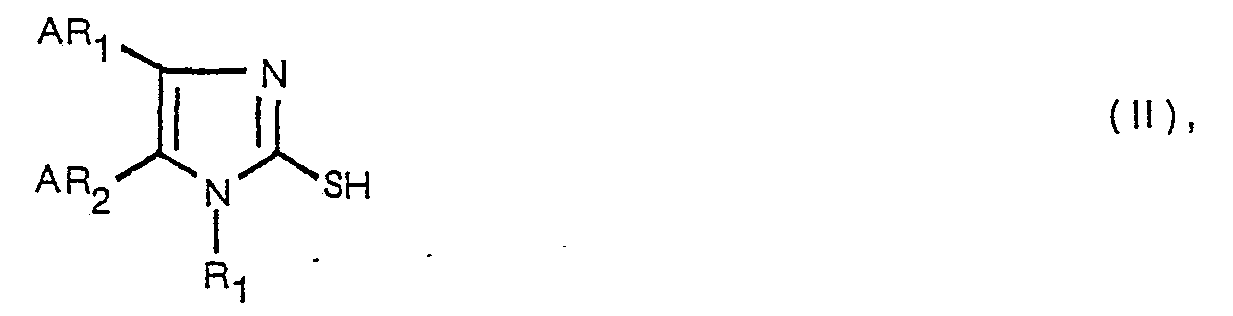
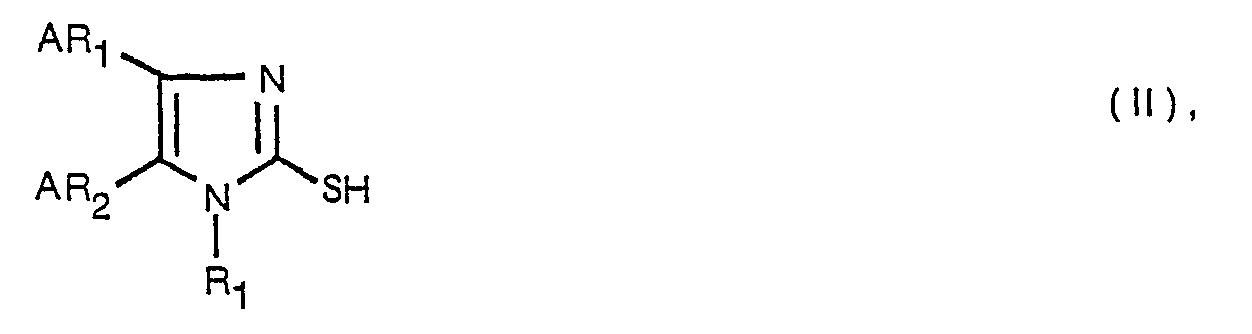
- Die neuen Imidazol-Derivate der allgemeinen Formel I gemäß Anspruch 1 können nach an sich bekannten Verfahren hergestellt werden. Ein geeignetes Herstellungsverfahren ist beispielsweise dadurch gekennzeichnet, daß man in an sich bekannter Weise
- a) ein Imidazol-Derivat der allgemeinen Formel II

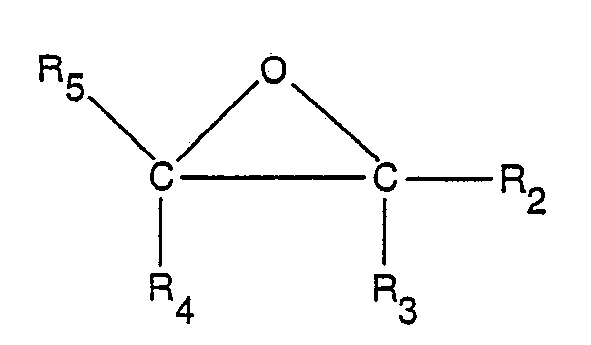
- b) zur Herstellung von Imidazol-Derivaten der allgemeinen Formel I mit Z in der Bedeutung einer Gruppierung


- Dieses Verfahren kann unter den bekannten Bedingungen durchgeführt werden (Liebigs Annalen 284, 1894, Seite 9, f., J. Chem. Soc. 1931, Seite 3043 f., J. Med. Chem. 20,1977, Seite 563 f., Liebigs Annalen 214, 1882, Seite 257, f., J. Chem. Soc., 1942, Seite 232 f., J. Chem. Soc. 1963, Seite 2195 f., Houben Weyl: Methoden der organischen Chemie Band IX, Seite 229 f., Bull Soc. France 1977, Seite 271 f., Deutsche Offenlegungsschrift 26 35 876).
- Nach erfolgter Synthese können die racemischen Imidazol-Derivate der allgemeinen Formel I gemäß Anspruch 1 in an sich bekannter Weise in ihre optischen Antipoden gespalten werden, beispielsweise indem man diese durch Säulenchromatographie an optisch aktiven Trägern (z.B. Sephadex{R)) chromatographiert.
- Die Ausgangsverbindungen für das erfindungsgemäße Verfahren sind bekannt oder können in an sich bekannter Weise hergestellt werden (Synthesis 1976, Seite 733 f. und Zhur, Obsch. Khim 31, 1961, Seite 1039 f.).
- Die nachfolgenden Beispiele dienen zur Erläuterung des erfindungsgemäßen Verfahrens.
- Ein Gemisch von 6,24 g 4.5-Bis-(4-methoxy-phenyl)-2-mercaptoimidazol und 3,0 g 2-Bromäthanol in 100 ml abs. Äthanol wird 4 Stunden unter Feuchtigkeitsausschluß und Argonabdeckung am Rückfluß gekocht. Die auf 5° abgekühlte Lösung wird durch Zugabe von 2 n Natronlauge neutralisiert, in 900 ml Eiswasser gegossen und bei Eisbadtemperatur bis zur Beendigung der Kristallisation stehengelassen. Nach 45 Minuten werden die Kristalle abgesaugt, mit Eiswasser gewaschen und bei 70° im Vakuum getrocknet. Das Rohprodukt wird aus 250 ml Essigester unter Zusatz von wenig Aktivkohle umkristallisiert, und man erhält 5,38 g 4.5-Bis-(4-methoxyphenyl)-2-(2-hydroxyäthylthio)imidazol als farblose Kristalle vom Schmelzpunkt 182°C.
- Zu der Lösung von 5,34 g 4.5-Bis-(4-methoxyphenyl)-2-(2-hydroxy-äthylthio)-imidazol in 1,25 I Dichlormethan werden 3,30 g 3-Chlorperbenzoesäure, in 150 ml Dichlormethan gelöst, getropft. Die Lösung wird 24 Stunden bei Raumtemperatur gerührt und dann mit gesättigter Natriumhydrogenkarbonatlösung gewaschen. Die organische Lösung wird abgetrennt und über Natriumsulfat getrocknet und im Vakuum eingeengt. Der Rückstand wird aus 30 ml Dioxan unter Zusatz von wenig Aktivkohle kristallisiert, und man erhält 3,01 g 4.5.Bis-(4-methoxyphenyl)-2-(2-hydroxyäthylsulfinyl)-imidazol vom Schmelzpunkt 184°C.
- Zu einer Lösung von 2,14 g 4,5-Bis(4-methoxyphenyl)-2-(2-hydroxy-äthylthio)-imidazol in 450 ml Dichlormethan werden 2,70 g 3-Chlorperbenzoesäure, in 120 ml Dichlormethan gelöst, getropft. Man rührt 4 Stunden bei Raumtemperatur, wäscht mit gesättigter Natriumhydrogenkarbonatlösung, trennt die organische Phase ab, trocknet sie über Natriumsulfat und engt sie im Vakuum ein. Der ölige Rückstand wird aus 150 ml Cyclohexan/Äther 1:1 umkristallisiert, und man erhält 1,68 g 4.5-Bis-(4-methoxyphenyl)-2-(2-hydroxyäthylsulfonyl)-imidazol vom Schmelzpunkt 168°C.
- Zu einer Lösung von 7,13 g 4.5-Bis-(4-methoxyphenyl)-2-(2-hydroxyäthylthio)-imidazol in 100 ml absolutem Äthanol, in dem 600 mg Natrium gelöst waren, werden 3,73 g Methyljodid in 20 ml abs. Äthanol gegeben. Die Lösung wird 20 Minuten unter Argon am Rückfluß erhitzt. Nach dem Abkühlen wird in 1500 ml Eiswasser gegossen, mit 2 n Salzsäure neutralisiert und mit Chloroform extrahiert. Die organische Phase wird über Natriumsulfat getrocknet und im Vakuum eingeengt. Das Rohprodukt wird aus 100 ml Äthanol unter Zusatz von wenig Aktivkohle und 1000 ml Diisopropyläther umkristallisiert, und man erhält 4,29 g 4.5-Bis-(4-methoxyphenyl)-2-{2-hydroxyäthylthio)-1-methyl-imidazol vom Schmelzpunkt 127°C.
- Ein Gemisch von 8,65 g 4.5-Bis-(4-fluorphenyl)-2-mercaptoimidazol und 4,97 g 2-Bromäthanol in 150 absolutem Äthanol wird 4 Stunden lang unter Argon am Rückfluß erhitzt. Die abgekühlte Lösung wird mit 2 n Natronlauge neutralisiert, in 800 ml Eiswasser gegossen und 45 Minuten lang bei Eisbadtemperatur belassen. Man saugt das Rohprodukt ab, wäscht es mit Wasser und trocknet es im Vakuum bei 70°. Das Rohprodukt wird aus 175 ml Essigester unter Zusatz von wenig Aktivkohle umkristallisiert, und man erhält 6,76 g 4.5-Bis-(4-fluorphenyl)-2-(2-hydroxyäthylthio)-imidazol vom Schmelzpunkt 192°C.
- Unter den Bedingungen des Beispiels 2 werden 0,5 g 4.5-Bis-(4-fluorphenyl)-2-(2-hydroxyäthylthio)-imidazol oxydiert, und man erhält 0,24 g 4.5-Bis-(4-fluorphenyl)-2-(2-hydroxyäthylsulfinyl)imidazol vom Schmelzpunkt 182°C.
- Unter den Bedingungen des Beispiels 3 werden 0,6 g 4.5-Bis-(4-fluorphenyl)-2-(2-hydroxyäthylthio)-imidazol oxydiert, und man erhält 4.5-Bis-(4-fluorphenyl)-2-(2-hydroxyäthylsulfonyl)imidazol vom Schmelzpunkt 167°C.
- Ein Gemisch aus 8,03 g 4.5-Bis-(4-chlorphenyl)-2-mercaptoimidazol und 4,14 g 2-Bromäthanol in 125 ml absolutem Äthanol wird 4 Stunden lang unter Argon am Rückfluß erhitzt. Die abgekühlte Lösung wird mit 2 n Natronlauge neutralisiert, in 1200 ml Eiswasser gegossen und 45 Minuten lang bei Eisbadtemperatur belassen. Man saugt die Kristalle ab, wäscht sie mit Wasser und trocknet sie im Vakuum bei 60°. Das Rohprodukt wird aus 500 ml Acetonitril unter Zusatz von wenig Aktivkohle umkristallisiert, und man erhält 8,76 g 4.5-Bis-(4-chlorphenyl)-2-(2-hydroxyäthylthio)imidazol vom Schmelzpunkt 202°C.
- Unter den Bedingungen des Beispiels 2 werden 0,5 g 4.5-Bis-(4-chlorphenyl)-2-(2-hydroxyäthylthio)-imidazol oxydiert, und man erhält 0,38 g 4.5-Bis-(4-chlorphenyl)-2-(2-hydroxyäthylsulfinyl)-imidazo( vom Schmelzpunkt 186°C.
- Unter dem Bedingungen des Beispiels 3 werden 0,5 g 4.5-Bis-(4-chlorphenyl)-2-(2-hydroxyäthylthio)-imidazol oxydiert, und man erhält 0,41 g 4.5-Bis-(4-chlorphenyl)-2-(2-hydroxyäthylsulfonyl)-imidazol vom Schmelzpunkt 191°C.
- Ein Gemisch aus 4,20 g 4.5-Bis-(p-tolyl)-2-mercapto-imidazol und 2,49 g 2-Bromäthanol in 75 ml absolutem Äthanol wird 4,5 Stunden unter Argon am Rückfluß erhitzt. Die auf 5°C abgekühlte Lösung wird durch Zugabe von 2 n Natronlauge neutralisiert, in 800 ml Eiswasser gegossen und 45 Minuten bei Eisbadtemperatur belassen. Es erfolgte Kristallisation. Dann saugt man die Kristalle ab, wäscht sie mit Wasser und trocknet sie im Vakuum bei 60°C. Das Rohprodukt wird aus 200 ml Acetonitril unter Zusatz von wenig Aktivkohle umkristallisiert, und man erhält 3,95 g 4.5-Bis-(p-tolyl)-2-(2-hydroxyäthylthio)-imidazol vom Schmelzpunkt 182°C.
- Unter den Bedingungen des Beispiels 2 werden 0,5 g 4.5-Bis-(p-tolyl)-2-(2-hydroxyäthylthio)-imidazol oxydiert, und man erhält 0,33 g 4.5-Bis-(p-tolyl)-2-(2-hydroxyäthylsulfinyl)-imidazol vom Schmelzpunkt 169°C.
- Unter den Bedingungen des Beispiels 3 werden 0,6 g 4.5-Bis-(p-tolyl)-2-(2-hydroxyäthylthio)-imidazol oxydiert, und man erhält 0,50 g 4.5-Bis-(p-tolyl)-2-(2-hydroxyäthylsulfonyl)-imidazol vom Schmelzpunkt 166°C.
- Ein Gemisch aus 6,25 g 4.5-Bis-(4-methoxy-phenyl)-2-mercaptoimidazol und 3,66 g 2-Brompropionsäureäthylester in 100 ml absolutem Äthanol wird 2,5 Stunden lang unter Argon am Rückfluß erhitzt. Die abgekühlte Lösung wird mit 2 n Natronlauge neutralisiert und in 1000 ml Eiswasser gegossen. Das ausgefallene Öl wird in Essigester aufgenommen, die Lösung über Natriumsulfat getrocknet und im Vakuum eingeengt. Man erhält 7,12 g [4.5-Bis-(4-methoxyphenyl)-2-imidazolyl]-2-thiopropionsäure- äthylester als farbloses Öl.
-

- Zu einer Lösung von 8,25 g [4.5-Bis-(4-methoxyphenyl)-2-imidazolyl]-2-thio-propionsäureäthylester in 150 ml absolutem Tetrahydrofuran werden anteilweise 0,607 g Lithiumaluminiumhydrid gegeben. Es wird noch 30 Minuten bei Raumtemperatur gerührt, mit gesättigter Ammoniumchloridlösung zersetzt und mit Essigester extrahiert. Nach Trocknen der organischen Lösung über Natriumsulfat wird im Vakuum zur Trockne eingeengt. Der kristalline Rückstand wird aus Toluol umkristallisiert, und man erhält 5,07 g [4.5-Bis-(4-methoxyphenyl)]-2-(2-hydroxy-1-methyl-äthylthio)-imidazol vom Schmelzpunkt 141°C.
- Zu einer Lösung von 3,71 g [4.5-Bis-(4-methoxyphenyl]-2-(2-hydroxy-1-methyläthylthio)-imidazol in 200 ml Chloroform wird bei Raumtemperatur eine Lösung von 2,16 g 3-Chlorperbenzoesäure in 150 ml Chloroform getropft. Es wird über Nacht bei Raumtemperatur gerührt und mit gesättigter Natriumhydrogenkarbonatlösung gewaschen. Man trocknet die organische Lösung über Natriumsulfat und engt sie im Vakuum ein. Der Rückstand wird durch Chromatographie an 200 g Kieselgel mit Essigester als Elutionsmittelk gereinigt. Man erhält nach Abziehen des Lösungsmittels 2,67 g [4.5-Bis-(4-methoxyphenyl)]-2-(2-hydroxy-1-methyl-äthylsulfinyl)-imidazol als amorphen Schaum.

- Zu einer Lösung von 3,71 g [4.5-Bis-(4-methoxyphenyl)]-2-(2-hydroxy-1-methyl-äthylthio)-imidazol in 200 ml Chloroform wird bei Raumtemperatur eine Lösung von 5,20 g 3-Chlorperbenzoesäure in 250 ml Chloroform getropft. Man rührt über Nacht bei Raumtemperatur, wäscht dann mit gesättigter Natriumbikarbonat-Lösung, trocknet, die organische Lösung über Natriumsulfat und engt sie im Vakuum zur Trockne eine. Man erhält 3,70 g [4.5-Bis-(4-methoxyphenyl)]-2-(2-hydroxy-1-methyl-äthylsulfonyl)-imidazol als amorphen Schaum vom Schmelzpunkt 68°C.

- Ein Gemisch aus 9,36 g 4.5.Bis.(4-methoxyphenyl)-2-mercaptoimidazol und 9,13 g 2-Bromisobuttersäureäthylester in 150 ml Äthanol wird 6 Stunden unter Argon am Rückfluß erhitzt. Die abgekühlte Lösung wird mit 2 n Natronlauge neutralisiert, in 600 ml Eiswasser gegossen, und man extrahiert das Rohprodukt mit Dichlormethan. Die organische Lösung wird über Natriumsulfat getrocknet und im Vakuum zur Trockne eingeengt. Der Rückstand kristallisiert aus Dichlormethan/Diäthyläther, und man erhält 11,29 g [4.5-Bis-(4-methoxyphenyi)-2-imidazoiyi]-2-methyi-2-thiopropionsäureäthyiester vom Schmelzpunkt 115°C.
- 8,53 g [4.5-Bis-(4-methoxyphenyl)-2-imidazolyl]-2-methyl-2-thiopropionsäureäthylester werden in einem Gemisch aus je 75 ml absolutem Tetrahydrofuran und Diäthyläther gelöst und anteilweise mit insgesamt 570 mg Lithiumaluminiumhydrid versetzt. Es wird 30 Minuten bei Raumtemperatur nachgerührt, mit gesättigter Ammonchloridlösung zersetzt und mit Essigester extrahiert. Nach Trocknen der organischen Lösung über Natriumsulfat wird im Vakuum zur Trockne eingeengt. Aus Toluol kristallisieren 6,33 g 4.5-Bis-(4-methoxyphenyl)-2-(1.1-dimethyl-2-hydroxyäthylthio)-imidazol vom SchmelzDunkt 195°C.
- Unter den Bedingungen des Beispiels 2 werden 3,81 g 4.5-Bis-(4-methoxyphenyl)-2-(1.1-dimethyl-2-hydroxyäthylthio)-imidazol oxydiert, und man erhält 2,67 g 4.5-Bis-(4-methoxyphenyl)-2-(1.1-dimethyl-2-hydroxyathylsulfinyl)-imidazol vom Schmelzpunkt 215°C.
- Unter den Bedingungen des Beispiels 3 werden 3,81 g 4.5-Bis-(4-methoxyphenyl)-2-(1.1-dimethyl-2-hydroxyäthylthio)-imidazol oxydiert, und man erhält 3,22 g 4.5-Bis-(4-methoxyphenyl)-2-(1.1-dimethyl-2-hydroxyäthylsulfonyl)-imidazol vom Schmelzpunkt 187°C.
- Zu einer Lösung von 3,95 g 4.5-Bis-(4-methoxyphenyl)-2-mercaptoimidazol in 100 ml absolutem Methanol, in dem 320 mg Natrium gelöst sind, werden 2,14 g 2-Brombutyrolacton in 30 ml absolutem Methanol gegeben, und es wird 2,5 Stunden unter Argon am Rückfluß erhitzt. Nach dem Abkühlen gießt man die Lösung in 500 ml Eiswasser und neutralisiert mit 2 n Schwefelsäure. Man extrahiert das Produkt mit Essigester, trocknet die organische Lösung über Natriumsulfat und engt sie im Vakuum ein. Das verbleibende Öl wird aus Tetrahydrofuran/Hexan zur Kristallisation gebracht. Man erhält so 1,23 g [4.5-Bis-(4-methoxyphenyl)-2-imidazolyl]-2-thiobutyrolacton vom Schmelzpunkt 140-42°C.
- Eine Lösung von 3,96 g [4.5-Bis-(4-methoxyphenyl)-2-imidazolyl]-2-thiobutyrolacton in 100 ml absolutem Tetrahydrofuran wird mit 300 mg Lithiumaluminiumhydrid versetzt. Es wird 30 Minuten bei Raumtemperatur nachgerührt, mit gesättigter Ammonchloridlösung zersetzt und mit Essigester extrahiert. Nach Trocken der organischen Lösung über Natriumsulfat wird im Vakuum zur Trockne eingeengt, und man erhält 3,26 g [4.5-Bis-(4-methoxyphenyl)-2-imidazolyl]-2-thio-1,4-butandiol in Form eines viskosen Öls.

- Zu einer Lösung von 6,25 g 4.5-Bis-(4-methoxyphenyl)-2-mercaptoimidazol in 50 ml absolutem Dimethylformamid werden 0,96 g 50% Natriumhydrid gegeben, und es wird 30 Minuten bei 60°C nachgerührt. Dann gibt man 2,74 g Chloracetaldehyddimethylacetal in 20 ml absolutem Dimethylformamid zu und rührt 4 Stunden unter Argon bei 80°C. Die abgekühlte Lösung wird in 700 ml Wasser gegossen und mit Chloroform extrahiert. Man trocknet die organische Lösung über Natriumsulfat, engt sie im Vakuum zur Trockne ein und reinigt den dunkelbraunen Rückstand durch Chromatographie an 500 g Kieselgel. Mit Essigester/Hexan im Verhältnis 1:3 eluiert man 5,01 g 4.5-Bis-(4-methoxyphenyl)-2-(2.2-dimethoxy- äthylthio)-imidazol als hellgelbes Öl.

- Zu einer Lösung von 2,0 g 4.5-Bis-(4-methoxyphenyl)-2-(2.2-dimethoxyäthylthio)-imidazol in 150 ml Dichlormethan werden 1,19 g 3-Chlorperbenzoesäure, in 100 ml Dichlormethan gelöst, getropft, und es wird 4 Stunden bei Raumtemperatur gerührt. Dann wäscht man mit Natriumbikarbonat-Lösung, trocknet die organische Lösung über Natriumsulfat und engt sie im Vakuum zur Trockne ein. Der Rückstand wird aus Essigester/Hexan kristallisiert. Nach Umkristallisation aus Essigester/Äthanol erhält man 1,52 g 4.5-Bis-(4.methoxyphenyl)-2-(2.2-dimethoxyäthylsulfinyl)-imidazol vom Schmelzpunkt 127-28°C.
- Zu einer Lösung von 2,5 g 4.5-Bis(4-methoxyphenyl)-2-(2.2-dimethoxyäthylthio)-imidazol in 150 ml Dichlormethan wird die Lösung von 2,97 g 3-Chlorperbenzoesäure in 100 ml Dichlormethan getropft, und es wird über Nacht bei Raumtemperatur gerührt. Dann wäscht man mit Natriumbikarbonat-Lösung, trocknet die organische Lösung über Natriumsulfat und engt sie im Vakuum zur Trockne ein. Der Rückstand wird aus Essigester/Hexan kristallisiert. Nach Umkristallisation aus Äthanol/Äther erhält man 1,96 g 4.5-Bis-(4-methoxyphenyl)-2-(2.2-dimethoxyäthylsulfonyl)-imidazol vom Schmelzpunkt 78-80°C.
- Zu einer Lösung von 12,48 g 4.5-Bis-(4-methoxyphenyl)-2-mercaptoimidazol in 150 ml absolutem Dimethylformamid werden 1,92 g 50% Natriumhydrid gegeben. Nach 30 Minuten Rühren bei 60°C versetzt man mit 7,35 g Bromacetaldehydäthylenketal in 40 ml absolutem Dimethylformamid und rührt 4 Stunden bei 90°C unter Argon. Die erkaltete Lösung gießt man in 1000 ml Wasser, nimmt das ausgeschiedene ÖI in Essigester auf, trocknet die organische Lösung über Natriumsulfat und engt sie im Vakuum zur Trockne ein. Der Rückstand wird aus Essigester umkristallisiert. Man erhält so 11,65 g [4.5-Bis-(4-methoxyphenyl)-2-imidazolylJ-(1.3-dioxolan-2-yl-methyl)-sulfid vom Schmelzpunkt 118-9°C.
- Zu einer Lösung von 1,99 g [4.5-Bis-(4-methoxyphenyl)-2-imidazolylJ-1.3-dioxolan-2-yl-methyl)-sulfid in 150 ml Dichlormethan werden 1,19 g (80%) 3-Chlorperbenzoesäure in 100 ml Dichlormethan getropft. Man rührt 4 Stunden bei Raumtemperatur, wäscht dann mit Natriumbikarbonat-Lösung, trocknet die organische Lösung über Natriumsulfat und engt sie im Vakuum ein. Der Rückstand wird aus Essigester/ Hexan kristallisiert. Nach Umkristallisation aus Essigester/Hexan erhält man 1,43 g [4.5-Bis-(4-methoxyphenyl)-2-imidazolylj-(1.3-dioxolan-2-yl-methyl)-sulfoxid vom Schmelzpunkt 203-4°C.
- Zu einer Lösung von 1,99 g [4.5-Bis-(4-methoxyphenyl)-2-imidazolyl]-(1.3-dioxolan-2-yl-methyl)-sulfid in 150 ml Dichlormethan wird die Lösung von 2,38 g (80%) 3-Chlorperbenzoesäure in 150 ml Dichlormethan getropft. Man rührt über Nacht bei Raumtemperatur, wäscht dann mit Natriumbikarbonat-Lösung, trocknet die organische Lösung über Natriumsulfat und engt sie im Vakuum ein. Der Rückstand wird aus Essigester/Äthanol kristallisiert. Nach Umkristallisation aus Essigester/Äthanol erhält man 1,71 g [4.5-Bis-(4-methoxyphenyl)-2-imidazolyl]-(1.3-dioxolan-2-yl-methyl)-sulfon vom Schmelzpunkt 150°C.
- Zu einer Lösung von 320 mg Natrium in 100 ml absolutem Methanol werden unter Rühren 3,95 g 4.5-Bis-(4-methoxyphenyl)-2-mercaptoimidazol gegeben. Die klare, gelbe Lösung wird mit der Lösung von 2,53 g Bromacetaldehyddiäthylacetal in 30 ml absolutem Methanol versetzt. Man erhitzt 48 Stunden unter Argon am Rückfluß, läßt erkalten und gießt in 600 ml Eiswasser. Das Produkt wird mit Essigester extrahiert. Die organische Lösung wird über Natriumsulfat getrocknet und im Vakuum zur Trockne eingeengt. Durch Kristallisation aus Aceton/Hexan entfernt man unumgesetztes Imidazol. Die Mutterlauge wird dann in Hexan eingerührt. Das ausgefallene Öl wird abgetrennt und im Ölpumpenvakuum bei 50°C getrocknet. Man erhält so 2,93 g 4.5-Bis-(4-methoxyphenyl)-2-(2.2-diäthoxyäthylthio)-imidazol als gelbliches, viskoses ÖI.

- Zu einer Lösung von 6,24 4.5-Bis-(4-methoxyphenyl)-2-mecaptoimidazol in 100 ml absolutem Dimethylformamid werden 0,96 g 50% Natriumhydrid gegeben, und es wird 30 Minuten auf 60°C erwärmt. Dann versetzt man mit einer Lösung von 4,33 g Bromacetaldehyddiäthylacetal in 20 ml absolutem Dimethylformamid und rührt 4 Stunden bei 80°C unter Argon. Man läßt abkühlen, gießt in 800 mi Eiswasser und extrahiert mit Chloroform. Die organische Lösung wird über Natriumsulfat getrocknet und im Vakuum zur Trockne eingeenigt. Der Rückstand wird, wie unter Beispiel 39 beschrieben, behandelt, und man erhält so 6,53 g 4.5-Bis-(4-methoxyphenyl)-2-(2.2-diäthoxyäthylthio)-imidazol als gelbes Öl.

- Zu einer Lösung von 4,29 g 4.5-Bis-(4-methoxyphenyl)-2-(2.2-diäthoxyäthylthio)-imidazol in 150 ml Methylenchlorid werden bei Raumtemperatur 2,38 g (80%) 3-Chlorperbenzoesäure in 150 ml Methylenchlorid getropft. Es wird 2 Stunden bei Raumtemperatur gerührt und mit NaHCO3-Lösung gewaschen. Die organische Lösung wird über Na2S04 getrocknet und im Vakuum eingeengt. Das verleibende Öl wird in Diäthyläther aufgenommen und durch Zugabe von Diisopropyläther zur Kristallisation gebracht. Man erhält so 3,49 g 4.5-Bis-(4-methoxyphenyl)-2-(2.2-diäthoxyäthylsulfinyl)-imidazol vom Schmelzpunkt 173-74°C.
- Zu einer Lösung von 4,29 g 4.5-Bis-(4-methoxyphenyl)-2-(2.2-diäthoxyäthylthio)-imidazol in 150 ml Methylenchlorid werden bei Raumtemperatur 4,76 g (80%) 3-Chlorperbenzoesaure in 150 ml Methylenchlorid getropft. Es wird 1,5 Stunden bei Raumtemperatur gerührt und mit NaHC03-Lösung gewaschen. Die organische Lösung wird über Na2S04 getrocknet und im Vakuum eingeengt. Das verbliebende Öl wird, wie unter Beispiel 40 beschrieben, behandelt, und man erhält so 3,09 g 4.5-Bis-(4-methoxyphenyl)-2-(2.2-diäthoxyäthyl-sulfonyl)-imidazol vom Schmelzpunkt 149-50°C.
- Zu einer Lösung von 3,95 g 4.5-Bis-(4-methoxyphenyl)-2-mercaptoimidazol in 100 ml absolutem Methanol, in dem 320 mg Natrium gelöst sind, werden 2,53 g 3-Chlorpropanol gegeben, und man erhitzt 24 Stunden unter Argon am Rückfluß. Die erkaltete Lösung wird in 500 ml Wasser gegossen, mit 2 n Schwefelsäure neutralisiert und mit Chloroform extrahiert. Man trocknet die organische Lösung über Natriumsulfat, engt sie im Vakuum zur Trockne ein und kristallisiert den Rückstand aus Äthanol. Man erhält so 2,98 g 4.5-Bis-(4-methoxyphenyl)-2-(3-hydroxypropylthio)-imidazol vom Schmelzpunkt 163° C.
- Zu einer Lösung von 506 mg Natrium in 150 ml absolutem Äthanol werden unter Rühren 6,24 g 4.5-Bis-(4-methoxyphenyl)-2-mercaptoimidazol gegeben. Die klare, gelbe Lösung wird dann mit der Lösung von 1,24 g Propylenoxid in 40 ml absolutem Äthanol versetzt. Man rührt 2 Stunden unter Argon bei Raumtemperatur, gießt dann in 600 ml Eiswasser, saugt die ausgefallenen Kristalle ab, wäscht sie mit Wasser und trocknet sie im Vakuum bei 70°C. Man erhält so 5,89 g 4.5-Bis-(4-methoxyphenyl)-2-(2-hydroxypropylthio)-imidazol vom Schmelzpunkt 163°C.
- Zu einer Lösung von 483 mg Natrium in 100 ml absolutem Äthanol werden unter Rühren 6,24 g 4.5-Bis(4-methoxyphenyl)-2-mercaptoimidazol gegeben. Die klare, gelbe Lösung wird dann mit der Lösung von 1,59 g Isobutenoxid in 30 ml absolutem Äthanol versetzt, und man rührt 3 Stunden unter Argon bei Raumtemperatur. Dann gießt man in 600 ml Eiswasser, saugt die ausgefallenen Kristalle ab, wäscht sie mit Wasser und trocknet sie im Vakuum bei 70°C. Nach Umkristallisation aus Benzol erhält man 6,57 g 4.5-Bis-(4-methoxyphenyl)-2-(2-hydroxy-2-methyl-propylthio)-imidazol vom Schmelzpunkt 185°C.
- Ein Gemisch aus 7,81 g 4.5-Bis-(4-methoxyphenyl)-2-mercaptoimidazol und 4,87 g 1-Bromäthylmethyl- äther wird in 150 ml Äthanol 3 Stunden unter Argon am Rückfluß erhitzt. Man läßt erkalten, neutralisiert mit 2 n Natronlauge und gießt in 1200 ml Eiswasser. Die ausgefallenen Kristalle werden abgesaugt, mit Wasser gewaschen und im Vakuum bei 50°C getrocknet. Das Rohprodukt wird aus Essigester umkristallisiert, und man erhält 6,37 g 4.5-Bis-(4-methoxyphenyl)-2-(2-methoxyäthylthio)-imidazol vom Schmelzpunkt 139°C.
Claims (38)


Priority Applications (1)
| Application Number | Priority Date | Filing Date | Title |
|---|---|---|---|
| AT79101509T ATE15662T1 (de) | 1978-05-24 | 1979-05-17 | Neue imidazolderivate, verfahren zu ihrer herstellung und diese enthaltende pharmazeutische praeparate. |
Applications Claiming Priority (2)
| Application Number | Priority Date | Filing Date | Title |
|---|---|---|---|
| DE19782823197 DE2823197A1 (de) | 1978-05-24 | 1978-05-24 | Neue imidazolderivate, verfahren zu ihrer herstellung und diese enthaltende pharmazeutische praeparate |
| DE2823197 | 1978-05-24 |
Publications (3)
| Publication Number | Publication Date |
|---|---|
| EP0005545A2 EP0005545A2 (de) | 1979-11-28 |
| EP0005545A3 EP0005545A3 (en) | 1980-01-09 |
| EP0005545B1 true EP0005545B1 (de) | 1985-09-18 |
Family
ID=6040343
Family Applications (1)
| Application Number | Title | Priority Date | Filing Date |
|---|---|---|---|
| EP79101509A Expired EP0005545B1 (de) | 1978-05-24 | 1979-05-17 | Neue Imidazolderivate, Verfahren zu ihrer Herstellung und diese enthaltende pharmazeutische Präparate |
Country Status (24)
| Country | Link |
|---|---|
| US (3) | US4269847A (de) |
| EP (1) | EP0005545B1 (de) |
| JP (1) | JPS54154766A (de) |
| AT (1) | ATE15662T1 (de) |
| AU (1) | AU4737979A (de) |
| BG (1) | BG32268A3 (de) |
| CA (1) | CA1177836A (de) |
| DD (1) | DD143770A5 (de) |
| DE (2) | DE2823197A1 (de) |
| DK (1) | DK208979A (de) |
| EG (1) | EG14365A (de) |
| ES (1) | ES480809A1 (de) |
| FI (1) | FI791639A7 (de) |
| FR (1) | FR2426682A1 (de) |
| GB (1) | GB2023600B (de) |
| GR (1) | GR72243B (de) |
| IE (1) | IE48416B1 (de) |
| IL (1) | IL57384A0 (de) |
| NO (1) | NO791707L (de) |
| NZ (1) | NZ190529A (de) |
| PL (1) | PL215774A1 (de) |
| PT (1) | PT69618A (de) |
| RO (1) | RO77293A (de) |
| ZA (1) | ZA792522B (de) |
Families Citing this family (17)
| Publication number | Priority date | Publication date | Assignee | Title |
|---|---|---|---|---|
| EP0004648B1 (de) * | 1978-04-11 | 1982-08-25 | Ciba-Geigy Ag | Neue Mercaptoimidazolderivate, Verfahren zu deren Herstellung, Mercaptoimidazolderivate zur Behandlung entzündlicher Erkrankungen und diese enthaltende pharmazeutische Präparate |
| DE2856909A1 (de) * | 1978-12-28 | 1980-07-17 | Schering Ag | Neue imidazolderivate, verfahren zu ihrer herstellung und diese enthaltende pharmazeutische praeparate |
| DE3025484A1 (de) * | 1980-07-03 | 1982-02-04 | Schering Ag, 1000 Berlin Und 4619 Bergkamen | Neue imidazol-derivate, verfahren zu ihrer herstellung und diese enthaltende pharmazeutische praeparate |
| US4503065A (en) * | 1982-08-03 | 1985-03-05 | E. I. Du Pont De Nemours And Company | Antiinflammatory 4,5-diaryl 1-2-halo imidazoles |
| US4728656A (en) * | 1985-12-12 | 1988-03-01 | Smithkline Beckman Corporation | 2,2-alkyldiylbis(thio)bis(imidazoles) useful for inhibition of the 5-lipoxygenase pathway |
| US4847270A (en) * | 1985-12-12 | 1989-07-11 | Smithkline Beckman Corporation | Inhibition of the 5-lipoxygenase pathway utilizing certain 2,2'-alkyldiyl bis(thio)bis-imidazoles and derivatives |
| JPS6440467A (en) * | 1987-08-04 | 1989-02-10 | Hisamitsu Pharmaceutical Co | Novel substituted diphenylimidazole derivative |
| US4900744A (en) * | 1988-09-14 | 1990-02-13 | E. I. Du Pont De Nemours And Company | Antihypercholesterolemic 4,5-diaryl-2-substituted thioimidazoles |
| GB9005966D0 (en) * | 1990-03-16 | 1990-05-09 | May & Baker Ltd | New compositions of matter |
| US5179117A (en) * | 1991-12-20 | 1993-01-12 | Du Pont Merck Pharmaceutical Company | Antihypercholesterolemic 2-substituted imidazoles |
| US5663053A (en) * | 1992-02-11 | 1997-09-02 | Smithkline Beecham Corporation | Inhibition of inflammatory lipid mediators |
| JP2001527506A (ja) * | 1992-02-11 | 2001-12-25 | スミスクライン・ビーチャム・コーポレイション | CoA−ITおよびPAF阻害剤 |
| WO1999003837A1 (en) * | 1997-06-30 | 1999-01-28 | Ortho-Mcneil Pharmaceutical, Inc. | 2-substituted imidazoles useful in the treatment of inflammatory diseases |
| DE10107683A1 (de) | 2001-02-19 | 2002-08-29 | Merckle Gmbh Chem Pharm Fabrik | 2-Thio-substituierte Imidazolderivate und ihre Verwendung in der Pharmazie |
| DE10114775A1 (de) * | 2001-03-26 | 2002-10-10 | Gerhard Dannhardt | 2-Mercapto-4,5-diarylimidazolderivate und ihre Verwendung in der Pharmazie |
| DE10238045A1 (de) | 2002-08-20 | 2004-03-04 | Merckle Gmbh Chem.-Pharm. Fabrik | 2-Thio-substituierte Imidazolderivate und ihre Verwendung in der Pharmazie |
| EP1894925A1 (de) * | 2006-08-24 | 2008-03-05 | Merckle Gmbh | Imidazol Derivate mit entzündungshemmender Wirkung |
Citations (2)
| Publication number | Priority date | Publication date | Assignee | Title |
|---|---|---|---|---|
| EP0000353A2 (de) * | 1977-07-07 | 1979-01-24 | Ciba-Geigy Ag | Bicyclische Thiadiazaverbindungen, Verfahren und Zwischenprodukte bei deren Herstellung, und Arzneimittel welche diese Verbindungen oder Zwischenprodukte enthalten |
| EP0004648A2 (de) * | 1978-04-11 | 1979-10-17 | Ciba-Geigy Ag | Neue Mercaptoimidazolderivate, Verfahren zu deren Herstellung, Mercaptoimidazolderivate zur Behandlung entzündlicher Erkrankungen und diese enthaltende pharmazeutische Präparate |
Family Cites Families (12)
| Publication number | Priority date | Publication date | Assignee | Title |
|---|---|---|---|---|
| US2981739A (en) * | 1958-01-27 | 1961-04-25 | Diamond Alkali Co | Certain alpha-haloaldehyde addition products of ethylenethioureas and process |
| IL26729A (en) * | 1965-10-21 | 1970-10-30 | Geigy Ag J R | 2-mercaptoimidazole derivatives and process for their preparation |
| US3651080A (en) * | 1969-11-07 | 1972-03-21 | Ciba Geigy Corp | Certain substituted 2-alkylmercaptoimidazole derivatives |
| US3636003A (en) * | 1969-11-17 | 1972-01-18 | Geigy Chem Corp | Substituted 2-mercaptoimidazole derivatives |
| US3714179A (en) * | 1970-09-08 | 1973-01-30 | Searle & Co | 1-alkyl-2-furfurylthioimidazoles and congeners |
| JPS5343958B2 (de) * | 1972-07-29 | 1978-11-24 | ||
| DE2259627A1 (de) * | 1972-12-06 | 1974-06-12 | Hoechst Ag | Imidazolyl-(2)-thio-alkansaeureester und verfahren zu ihrer herstellung |
| US3842097A (en) * | 1973-01-22 | 1974-10-15 | Searle & Co | 2-(phenoxyalkylthio)imidazoles and congeners |
| SE428686B (sv) * | 1975-08-11 | 1983-07-18 | Du Pont | Forfarande for framstellning av antiinflammatoriskt aktiva imidazoler |
| US4190666A (en) * | 1975-08-11 | 1980-02-26 | E. I. Du Pont De Nemours And Company | Anti-inflammatory 4,5-diarly-2-(substituted-thio)imidazoles and their corresponding sulfoxides and sulfones |
| US4159338A (en) * | 1977-02-09 | 1979-06-26 | E. I. Du Pont De Nemours And Company | Antiinflammatory-4,5-dicyclic-2-(substituted thio)-imidazoles and their corresponding sulfoxides and sulfones |
| US4182769A (en) * | 1977-02-09 | 1980-01-08 | E. I. Du Pont De Nemours And Company | Anti-inflammatory 1-substituted-4,5-diaryl-2-(substituted-thio) imidazoles and their corresponding sulfoxides and sulfones |
-
1978
- 1978-05-24 DE DE19782823197 patent/DE2823197A1/de not_active Withdrawn
-
1979
- 1979-05-16 PT PT69618A patent/PT69618A/de unknown
- 1979-05-17 AT AT79101509T patent/ATE15662T1/de not_active IP Right Cessation
- 1979-05-17 EP EP79101509A patent/EP0005545B1/de not_active Expired
- 1979-05-17 DE DE7979101509T patent/DE2967513D1/de not_active Expired
- 1979-05-21 FR FR7912876A patent/FR2426682A1/fr not_active Withdrawn
- 1979-05-21 BG BG043677A patent/BG32268A3/xx unknown
- 1979-05-22 GR GR59147A patent/GR72243B/el unknown
- 1979-05-22 DD DD79213065A patent/DD143770A5/de unknown
- 1979-05-22 PL PL21577479A patent/PL215774A1/xx unknown
- 1979-05-22 US US06/041,367 patent/US4269847A/en not_active Expired - Lifetime
- 1979-05-22 DK DK208979A patent/DK208979A/da not_active Application Discontinuation
- 1979-05-22 ES ES480809A patent/ES480809A1/es not_active Expired
- 1979-05-23 IL IL57384A patent/IL57384A0/xx unknown
- 1979-05-23 GB GB7917874A patent/GB2023600B/en not_active Expired
- 1979-05-23 ZA ZA792522A patent/ZA792522B/xx unknown
- 1979-05-23 EG EG311/79A patent/EG14365A/xx active
- 1979-05-23 JP JP6277479A patent/JPS54154766A/ja active Granted
- 1979-05-23 CA CA000328095A patent/CA1177836A/en not_active Expired
- 1979-05-23 NZ NZ190529A patent/NZ190529A/xx unknown
- 1979-05-23 NO NO791707A patent/NO791707L/no unknown
- 1979-05-23 FI FI791639A patent/FI791639A7/fi not_active Application Discontinuation
- 1979-05-24 RO RO7997627A patent/RO77293A/ro unknown
- 1979-05-24 AU AU47379/79A patent/AU4737979A/en not_active Abandoned
- 1979-08-08 IE IE1000/79A patent/IE48416B1/en unknown
-
1980
- 1980-09-24 US US06/190,309 patent/US4355039A/en not_active Expired - Lifetime
-
1982
- 1982-03-24 US US06/361,225 patent/US4440776A/en not_active Expired - Fee Related
Patent Citations (3)
| Publication number | Priority date | Publication date | Assignee | Title |
|---|---|---|---|---|
| EP0000353A2 (de) * | 1977-07-07 | 1979-01-24 | Ciba-Geigy Ag | Bicyclische Thiadiazaverbindungen, Verfahren und Zwischenprodukte bei deren Herstellung, und Arzneimittel welche diese Verbindungen oder Zwischenprodukte enthalten |
| EP0019688A1 (de) * | 1977-07-07 | 1980-12-10 | Ciba-Geigy Ag | Diazaverbindungen und Verfahren zu deren Herstellung |
| EP0004648A2 (de) * | 1978-04-11 | 1979-10-17 | Ciba-Geigy Ag | Neue Mercaptoimidazolderivate, Verfahren zu deren Herstellung, Mercaptoimidazolderivate zur Behandlung entzündlicher Erkrankungen und diese enthaltende pharmazeutische Präparate |
Also Published As
| Publication number | Publication date |
|---|---|
| CA1177836A (en) | 1984-11-13 |
| NZ190529A (en) | 1982-02-23 |
| PL215774A1 (de) | 1980-02-25 |
| DK208979A (da) | 1979-11-25 |
| GR72243B (de) | 1983-10-04 |
| EP0005545A3 (en) | 1980-01-09 |
| DE2823197A1 (de) | 1979-11-29 |
| DD143770A5 (de) | 1980-09-10 |
| ATE15662T1 (de) | 1985-10-15 |
| US4269847A (en) | 1981-05-26 |
| US4355039A (en) | 1982-10-19 |
| BG32268A3 (bg) | 1982-06-15 |
| RO77293A (ro) | 1981-08-17 |
| JPH0336834B2 (de) | 1991-06-03 |
| US4440776A (en) | 1984-04-03 |
| FI791639A7 (fi) | 1981-01-01 |
| AU4737979A (en) | 1979-11-29 |
| EG14365A (en) | 1984-03-31 |
| EP0005545A2 (de) | 1979-11-28 |
| IE791000L (en) | 1979-11-24 |
| ZA792522B (en) | 1980-06-25 |
| FR2426682A1 (fr) | 1979-12-21 |
| GB2023600A (en) | 1980-01-03 |
| GB2023600B (en) | 1982-11-03 |
| JPS54154766A (en) | 1979-12-06 |
| ES480809A1 (es) | 1979-12-01 |
| NO791707L (no) | 1979-11-27 |
| DE2967513D1 (en) | 1985-10-24 |
| IL57384A0 (en) | 1979-09-30 |
| IE48416B1 (en) | 1985-01-09 |
| PT69618A (de) | 1979-06-01 |
Similar Documents
| Publication | Publication Date | Title |
|---|---|---|
| EP0005545B1 (de) | Neue Imidazolderivate, Verfahren zu ihrer Herstellung und diese enthaltende pharmazeutische Präparate | |
| EP0104342B1 (de) | Triphenylimidazolyloxyalkansäuren und ihre Derivate, Verfahren zu ihrer Herstellung und diese enthaltende pharmazeutische Präparate | |
| DE69607650T2 (de) | 2,3,5-trimethyl-hydroxyanilid-derivative, ihre herstellung und ihre theraoeutische verwendung | |
| US4761404A (en) | Phospholipid analogs useful as PAF synthesis inhibitors | |
| EP0043788B1 (de) | Neue Imidazol-Derivate, Verfahren zu ihrer Herstellung und diese enthaltende pharmazeutische Präparate | |
| EP0183159A2 (de) | 1-Heteroaryl-4-aryl-pyrazolin-5-one zur Verwendung als Arzneimittel | |
| EP0023594A1 (de) | Trans-Chinazolinderivate, Verfahren zu ihrer Herstellung, Zwischenprodukte und Arzneimittel enthaltend solche Chinazolinderivate | |
| EP0053767B1 (de) | Tricyclische Cytosinderivate zur Verwendung in Arzneimitteln und Verfahren zu ihrer Herstellung | |
| EP0000353A2 (de) | Bicyclische Thiadiazaverbindungen, Verfahren und Zwischenprodukte bei deren Herstellung, und Arzneimittel welche diese Verbindungen oder Zwischenprodukte enthalten | |
| DE69232046T2 (de) | 2,4-diaryl-1,3-dithiolane als platelet activating faktor rezeptorblocker und 5-lipoxygenasehemmer | |
| EP0013732B1 (de) | Imidazolderivate, Verfahren zu ihrer Herstellung und diese Imidazolderivate enthaltende pharmazeutische Zusammensetzungen | |
| EP0056956B1 (de) | Neue Indanyl-Derivate, ihre Herstellung und Verwendung | |
| EP0416401B1 (de) | Verwendung von Phospholipid-Derivaten als antivirale Arzneimittel und neue Phospholipide | |
| DE69718968T2 (de) | 3-(bis-substituierte-phenylmethylen)oxindol-derivate | |
| EP0283857B1 (de) | Benzylidenamino-, benzylamino- und benzoylamino-imidazolderivate | |
| DE3925496C2 (de) | ||
| EP0261478A1 (de) | Neue Derivate von 4,5-Dihydro-oxazolen, Verfahren zu ihrer Herstellung und ihre Verwendung | |
| EP0304624A2 (de) | Benzimidazol-2-yl-pyridiniumverbindungen | |
| CH641444A5 (de) | N,n'-bis(n-cyano-n'-alkynyl)methanimidamidyl)cystamine sowie verfahren zu ihrer herstellung. | |
| EP0008073A1 (de) | Thiosubstituierte Diazacycloalkene, Verfahren zu ihrer Herstellung und pharmazeutische Präparate | |
| DE2359955C2 (de) | 2-(6-Carboxyhexyl)-3-alkylthio-Cyclopentanon-Derivate und diese enthaltende pharmazeutische Zubereitung | |
| DD201788A5 (de) | Verfahren zur herstellung neuer diaryl-imidazol-verbindungen | |
| EP0091045B1 (de) | 2-Pyrrolin-3-carbonitril-Derivate, Verfahren zu deren Herstellung und diese enthaltende Arzneimittel | |
| DE2740854A1 (de) | Neue substituierte 3-indolacetoxyalkansulfonsaeuresalze, verfahren zu ihrer herstellung und ihre anwendung als arzneimittel | |
| EP0001255B1 (de) | Neue fluorhaltige Prostaglandinderivate, Verfahren zu ihrer Herstellung und ihre Verwendung als Arzneimittel |
Legal Events
| Date | Code | Title | Description |
|---|---|---|---|
| PUAI | Public reference made under article 153(3) epc to a published international application that has entered the european phase |
Free format text: ORIGINAL CODE: 0009012 |
|
| PUAL | Search report despatched |
Free format text: ORIGINAL CODE: 0009013 |
|
| 17P | Request for examination filed | ||
| AK | Designated contracting states |
Designated state(s): AT BE CH DE FR GB IT LU NL SE |
|
| AK | Designated contracting states |
Designated state(s): AT BE CH DE FR GB IT LU NL SE |
|
| ITF | It: translation for a ep patent filed | ||
| GRAA | (expected) grant |
Free format text: ORIGINAL CODE: 0009210 |
|
| AK | Designated contracting states |
Designated state(s): AT BE CH DE FR GB IT LU NL SE |
|
| REF | Corresponds to: |
Ref document number: 15662 Country of ref document: AT Date of ref document: 19851015 Kind code of ref document: T |
|
| REF | Corresponds to: |
Ref document number: 2967513 Country of ref document: DE Date of ref document: 19851024 |
|
| ET | Fr: translation filed | ||
| PG25 | Lapsed in a contracting state [announced via postgrant information from national office to epo] |
Ref country code: LU Free format text: LAPSE BECAUSE OF NON-PAYMENT OF DUE FEES Effective date: 19860531 |
|
| PLBE | No opposition filed within time limit |
Free format text: ORIGINAL CODE: 0009261 |
|
| STAA | Information on the status of an ep patent application or granted ep patent |
Free format text: STATUS: NO OPPOSITION FILED WITHIN TIME LIMIT |
|
| 26N | No opposition filed | ||
| PGFP | Annual fee paid to national office [announced via postgrant information from national office to epo] |
Ref country code: AT Payment date: 19890410 Year of fee payment: 11 |
|
| PGFP | Annual fee paid to national office [announced via postgrant information from national office to epo] |
Ref country code: SE Payment date: 19890414 Year of fee payment: 11 |
|
| PGFP | Annual fee paid to national office [announced via postgrant information from national office to epo] |
Ref country code: LU Payment date: 19890421 Year of fee payment: 11 |
|
| PGFP | Annual fee paid to national office [announced via postgrant information from national office to epo] |
Ref country code: BE Payment date: 19890502 Year of fee payment: 11 |
|
| PGFP | Annual fee paid to national office [announced via postgrant information from national office to epo] |
Ref country code: NL Payment date: 19890531 Year of fee payment: 11 |
|
| PG25 | Lapsed in a contracting state [announced via postgrant information from national office to epo] |
Ref country code: AT Effective date: 19900517 |
|
| PG25 | Lapsed in a contracting state [announced via postgrant information from national office to epo] |
Ref country code: SE Effective date: 19900518 |
|
| PG25 | Lapsed in a contracting state [announced via postgrant information from national office to epo] |
Ref country code: BE Effective date: 19900531 |
|
| BERE | Be: lapsed |
Owner name: SCHERING A.G. BERLIN UND BERGKAMEN Effective date: 19900531 |
|
| PG25 | Lapsed in a contracting state [announced via postgrant information from national office to epo] |
Ref country code: NL Effective date: 19901201 |
|
| NLV4 | Nl: lapsed or anulled due to non-payment of the annual fee | ||
| PGFP | Annual fee paid to national office [announced via postgrant information from national office to epo] |
Ref country code: FR Payment date: 19920408 Year of fee payment: 14 |
|
| PGFP | Annual fee paid to national office [announced via postgrant information from national office to epo] |
Ref country code: GB Payment date: 19920410 Year of fee payment: 14 |
|
| PGFP | Annual fee paid to national office [announced via postgrant information from national office to epo] |
Ref country code: DE Payment date: 19920415 Year of fee payment: 14 |
|
| PGFP | Annual fee paid to national office [announced via postgrant information from national office to epo] |
Ref country code: CH Payment date: 19920416 Year of fee payment: 14 |
|
| ITTA | It: last paid annual fee | ||
| PG25 | Lapsed in a contracting state [announced via postgrant information from national office to epo] |
Ref country code: GB Effective date: 19930517 |
|
| PG25 | Lapsed in a contracting state [announced via postgrant information from national office to epo] |
Ref country code: CH Effective date: 19930531 |
|
| GBPC | Gb: european patent ceased through non-payment of renewal fee |
Effective date: 19930517 |
|
| PG25 | Lapsed in a contracting state [announced via postgrant information from national office to epo] |
Ref country code: FR Effective date: 19940131 |
|
| REG | Reference to a national code |
Ref country code: CH Ref legal event code: PL |
|
| PG25 | Lapsed in a contracting state [announced via postgrant information from national office to epo] |
Ref country code: DE Effective date: 19940201 |
|
| REG | Reference to a national code |
Ref country code: FR Ref legal event code: ST |
|
| EUG | Se: european patent has lapsed |
Ref document number: 79101509.2 Effective date: 19910114 |