EP0001553B1 - Bicyclische Riechstoffe, Verfahren zu ihrer Herstellung und Vorprodukt - Google Patents
Bicyclische Riechstoffe, Verfahren zu ihrer Herstellung und Vorprodukt Download PDFInfo
- Publication number
- EP0001553B1 EP0001553B1 EP78100895A EP78100895A EP0001553B1 EP 0001553 B1 EP0001553 B1 EP 0001553B1 EP 78100895 A EP78100895 A EP 78100895A EP 78100895 A EP78100895 A EP 78100895A EP 0001553 B1 EP0001553 B1 EP 0001553B1
- Authority
- EP
- European Patent Office
- Prior art keywords
- denotes
- aldehyde
- formula
- general formula
- carbon atoms
- Prior art date
- Legal status (The legal status is an assumption and is not a legal conclusion. Google has not performed a legal analysis and makes no representation as to the accuracy of the status listed.)
- Expired
Links
- 150000001875 compounds Chemical class 0.000 title claims description 15
- 238000000034 method Methods 0.000 title claims description 7
- 230000008569 process Effects 0.000 title claims description 7
- 125000002619 bicyclic group Chemical group 0.000 title claims description 5
- 238000002360 preparation method Methods 0.000 title description 3
- 239000002243 precursor Substances 0.000 title 1
- 150000001299 aldehydes Chemical class 0.000 claims description 37
- DHKHKXVYLBGOIT-UHFFFAOYSA-N acetaldehyde Diethyl Acetal Natural products CCOC(C)OCC DHKHKXVYLBGOIT-UHFFFAOYSA-N 0.000 claims description 18
- -1 ―COOC2H5 Chemical group 0.000 claims description 14
- 125000004432 carbon atom Chemical group C* 0.000 claims description 12
- 238000007239 Wittig reaction Methods 0.000 claims description 11
- 125000000113 cyclohexyl group Chemical group [H]C1([H])C([H])([H])C([H])([H])C([H])(*)C([H])([H])C1([H])[H] 0.000 claims description 10
- 150000002923 oximes Chemical class 0.000 claims description 10
- 125000001997 phenyl group Chemical group [H]C1=C([H])C([H])=C(*)C([H])=C1[H] 0.000 claims description 10
- 125000003944 tolyl group Chemical group 0.000 claims description 10
- 125000002496 methyl group Chemical group [H]C([H])([H])* 0.000 claims description 9
- 150000005840 aryl radicals Chemical class 0.000 claims description 8
- VGGSQFUCUMXWEO-UHFFFAOYSA-N Ethene Chemical compound C=C VGGSQFUCUMXWEO-UHFFFAOYSA-N 0.000 claims description 6
- 125000000217 alkyl group Chemical group 0.000 claims description 6
- 238000004519 manufacturing process Methods 0.000 claims description 6
- QQONPFPTGQHPMA-UHFFFAOYSA-N propylene Natural products CC=C QQONPFPTGQHPMA-UHFFFAOYSA-N 0.000 claims description 6
- WMBWCNHXNVANAG-UHFFFAOYSA-N 3-methyl-2-methylidenebicyclo[2.2.1]heptane-3-carbaldehyde Chemical compound C1CC2C(=C)C(C)(C=O)C1C2 WMBWCNHXNVANAG-UHFFFAOYSA-N 0.000 claims description 4
- 238000005903 acid hydrolysis reaction Methods 0.000 claims description 4
- AVXURJPOCDRRFD-UHFFFAOYSA-N Hydroxylamine Chemical class ON AVXURJPOCDRRFD-UHFFFAOYSA-N 0.000 claims description 3
- 125000001160 methoxycarbonyl group Chemical group [H]C([H])([H])OC(*)=O 0.000 claims description 3
- LMHHRCOWPQNFTF-UHFFFAOYSA-N s-propan-2-yl azepane-1-carbothioate Chemical compound CC(C)SC(=O)N1CCCCCC1 LMHHRCOWPQNFTF-UHFFFAOYSA-N 0.000 claims description 3
- 125000002777 acetyl group Chemical class [H]C([H])([H])C(*)=O 0.000 claims 6
- 239000005977 Ethylene Substances 0.000 claims 3
- 239000004411 aluminium Substances 0.000 claims 1
- XAGFODPZIPBFFR-UHFFFAOYSA-N aluminium Chemical compound [Al] XAGFODPZIPBFFR-UHFFFAOYSA-N 0.000 claims 1
- 229910052782 aluminium Inorganic materials 0.000 claims 1
- 239000002304 perfume Substances 0.000 claims 1
- 239000012279 sodium borohydride Substances 0.000 claims 1
- 229910000033 sodium borohydride Inorganic materials 0.000 claims 1
- RTZKZFJDLAIYFH-UHFFFAOYSA-N Diethyl ether Chemical compound CCOCC RTZKZFJDLAIYFH-UHFFFAOYSA-N 0.000 description 25
- LFQSCWFLJHTTHZ-UHFFFAOYSA-N Ethanol Chemical compound CCO LFQSCWFLJHTTHZ-UHFFFAOYSA-N 0.000 description 21
- 239000002904 solvent Substances 0.000 description 19
- WYURNTSHIVDZCO-UHFFFAOYSA-N Tetrahydrofuran Chemical compound C1CCOC1 WYURNTSHIVDZCO-UHFFFAOYSA-N 0.000 description 14
- XLYOFNOQVPJJNP-UHFFFAOYSA-N water Substances O XLYOFNOQVPJJNP-UHFFFAOYSA-N 0.000 description 14
- 150000001241 acetals Chemical class 0.000 description 13
- 238000006243 chemical reaction Methods 0.000 description 13
- 239000000203 mixture Substances 0.000 description 13
- OKKJLVBELUTLKV-UHFFFAOYSA-N Methanol Chemical compound OC OKKJLVBELUTLKV-UHFFFAOYSA-N 0.000 description 12
- VLKZOEOYAKHREP-UHFFFAOYSA-N n-Hexane Chemical compound CCCCCC VLKZOEOYAKHREP-UHFFFAOYSA-N 0.000 description 12
- UMRZSTCPUPJPOJ-KNVOCYPGSA-N norbornane Chemical compound C1C[C@H]2CC[C@@H]1C2 UMRZSTCPUPJPOJ-KNVOCYPGSA-N 0.000 description 12
- 239000011541 reaction mixture Substances 0.000 description 12
- 238000009835 boiling Methods 0.000 description 10
- 239000002585 base Substances 0.000 description 9
- MZRVEZGGRBJDDB-UHFFFAOYSA-N N-Butyllithium Chemical compound [Li]CCCC MZRVEZGGRBJDDB-UHFFFAOYSA-N 0.000 description 8
- 239000002253 acid Substances 0.000 description 8
- KFZMGEQAYNKOFK-UHFFFAOYSA-N Isopropanol Chemical compound CC(C)O KFZMGEQAYNKOFK-UHFFFAOYSA-N 0.000 description 7
- 239000003205 fragrance Substances 0.000 description 7
- YLQBMQCUIZJEEH-UHFFFAOYSA-N tetrahydrofuran Natural products C=1C=COC=1 YLQBMQCUIZJEEH-UHFFFAOYSA-N 0.000 description 7
- WFDIJRYMOXRFFG-UHFFFAOYSA-N Acetic anhydride Chemical compound CC(=O)OC(C)=O WFDIJRYMOXRFFG-UHFFFAOYSA-N 0.000 description 6
- YXFVVABEGXRONW-UHFFFAOYSA-N Toluene Chemical compound CC1=CC=CC=C1 YXFVVABEGXRONW-UHFFFAOYSA-N 0.000 description 6
- 150000001728 carbonyl compounds Chemical class 0.000 description 6
- 150000004714 phosphonium salts Chemical class 0.000 description 6
- 238000000605 extraction Methods 0.000 description 5
- 238000000655 nuclear magnetic resonance spectrum Methods 0.000 description 5
- RYHBNJHYFVUHQT-UHFFFAOYSA-N 1,4-Dioxane Chemical compound C1COCCO1 RYHBNJHYFVUHQT-UHFFFAOYSA-N 0.000 description 4
- CSCPPACGZOOCGX-UHFFFAOYSA-N Acetone Chemical compound CC(C)=O CSCPPACGZOOCGX-UHFFFAOYSA-N 0.000 description 4
- IJGRMHOSHXDMSA-UHFFFAOYSA-N Atomic nitrogen Chemical compound N#N IJGRMHOSHXDMSA-UHFFFAOYSA-N 0.000 description 4
- 150000001338 aliphatic hydrocarbons Chemical class 0.000 description 4
- 238000004821 distillation Methods 0.000 description 4
- 238000002329 infrared spectrum Methods 0.000 description 4
- 229910052740 iodine Inorganic materials 0.000 description 4
- 239000000047 product Substances 0.000 description 4
- QTBSBXVTEAMEQO-UHFFFAOYSA-N Acetic acid Chemical compound CC(O)=O QTBSBXVTEAMEQO-UHFFFAOYSA-N 0.000 description 3
- WEVYAHXRMPXWCK-UHFFFAOYSA-N Acetonitrile Chemical compound CC#N WEVYAHXRMPXWCK-UHFFFAOYSA-N 0.000 description 3
- UHOVQNZJYSORNB-UHFFFAOYSA-N Benzene Chemical compound C1=CC=CC=C1 UHOVQNZJYSORNB-UHFFFAOYSA-N 0.000 description 3
- VEXZGXHMUGYJMC-UHFFFAOYSA-N Hydrochloric acid Chemical compound Cl VEXZGXHMUGYJMC-UHFFFAOYSA-N 0.000 description 3
- 239000003513 alkali Substances 0.000 description 3
- SMZOGRDCAXLAAR-UHFFFAOYSA-N aluminium isopropoxide Chemical compound [Al+3].CC(C)[O-].CC(C)[O-].CC(C)[O-] SMZOGRDCAXLAAR-UHFFFAOYSA-N 0.000 description 3
- 239000003208 petroleum Substances 0.000 description 3
- 230000035484 reaction time Effects 0.000 description 3
- 238000003786 synthesis reaction Methods 0.000 description 3
- 239000001306 (7E,9E,11E,13E)-pentadeca-7,9,11,13-tetraen-1-ol Substances 0.000 description 2
- XTHFKEDIFFGKHM-UHFFFAOYSA-N Dimethoxyethane Chemical compound COCCOC XTHFKEDIFFGKHM-UHFFFAOYSA-N 0.000 description 2
- IAZDPXIOMUYVGZ-UHFFFAOYSA-N Dimethylsulphoxide Chemical compound CS(C)=O IAZDPXIOMUYVGZ-UHFFFAOYSA-N 0.000 description 2
- ZHNUHDYFZUAESO-UHFFFAOYSA-N Formamide Chemical compound NC=O ZHNUHDYFZUAESO-UHFFFAOYSA-N 0.000 description 2
- CTQNGGLPUBDAKN-UHFFFAOYSA-N O-Xylene Chemical compound CC1=CC=CC=C1C CTQNGGLPUBDAKN-UHFFFAOYSA-N 0.000 description 2
- CDBYLPFSWZWCQE-UHFFFAOYSA-L Sodium Carbonate Chemical compound [Na+].[Na+].[O-]C([O-])=O CDBYLPFSWZWCQE-UHFFFAOYSA-L 0.000 description 2
- QAOWNCQODCNURD-UHFFFAOYSA-N Sulfuric acid Chemical compound OS(O)(=O)=O QAOWNCQODCNURD-UHFFFAOYSA-N 0.000 description 2
- 239000007795 chemical reaction product Substances 0.000 description 2
- 238000001816 cooling Methods 0.000 description 2
- 230000008030 elimination Effects 0.000 description 2
- 238000003379 elimination reaction Methods 0.000 description 2
- 150000002170 ethers Chemical class 0.000 description 2
- WTDHULULXKLSOZ-UHFFFAOYSA-N hydroxylamine hydrochloride Substances Cl.ON WTDHULULXKLSOZ-UHFFFAOYSA-N 0.000 description 2
- WCYJQVALWQMJGE-UHFFFAOYSA-M hydroxylammonium chloride Chemical compound [Cl-].O[NH3+] WCYJQVALWQMJGE-UHFFFAOYSA-M 0.000 description 2
- BDAGIHXWWSANSR-UHFFFAOYSA-N methanoic acid Natural products OC=O BDAGIHXWWSANSR-UHFFFAOYSA-N 0.000 description 2
- 229910052757 nitrogen Inorganic materials 0.000 description 2
- 239000012074 organic phase Substances 0.000 description 2
- 239000012071 phase Substances 0.000 description 2
- 238000010992 reflux Methods 0.000 description 2
- 239000011734 sodium Substances 0.000 description 2
- 238000003756 stirring Methods 0.000 description 2
- LALMNAMACHKPDG-UHFFFAOYSA-N teresantalal Chemical compound C12CC3CC2C1(C)C3(C)C=O LALMNAMACHKPDG-UHFFFAOYSA-N 0.000 description 2
- JOXIMZWYDAKGHI-UHFFFAOYSA-N toluene-4-sulfonic acid Chemical compound CC1=CC=C(S(O)(=O)=O)C=C1 JOXIMZWYDAKGHI-UHFFFAOYSA-N 0.000 description 2
- RIOQSEWOXXDEQQ-UHFFFAOYSA-N triphenylphosphine Chemical compound C1=CC=CC=C1P(C=1C=CC=CC=1)C1=CC=CC=C1 RIOQSEWOXXDEQQ-UHFFFAOYSA-N 0.000 description 2
- 239000008096 xylene Substances 0.000 description 2
- JWUJQDFVADABEY-UHFFFAOYSA-N 2-methyltetrahydrofuran Chemical compound CC1CCCO1 JWUJQDFVADABEY-UHFFFAOYSA-N 0.000 description 1
- MCSXGCZMEPXKIW-UHFFFAOYSA-N 3-hydroxy-4-[(4-methyl-2-nitrophenyl)diazenyl]-N-(3-nitrophenyl)naphthalene-2-carboxamide Chemical compound Cc1ccc(N=Nc2c(O)c(cc3ccccc23)C(=O)Nc2cccc(c2)[N+]([O-])=O)c(c1)[N+]([O-])=O MCSXGCZMEPXKIW-UHFFFAOYSA-N 0.000 description 1
- OSWFIVFLDKOXQC-UHFFFAOYSA-N 4-(3-methoxyphenyl)aniline Chemical compound COC1=CC=CC(C=2C=CC(N)=CC=2)=C1 OSWFIVFLDKOXQC-UHFFFAOYSA-N 0.000 description 1
- ZCYVEMRRCGMTRW-UHFFFAOYSA-N 7553-56-2 Chemical group [I] ZCYVEMRRCGMTRW-UHFFFAOYSA-N 0.000 description 1
- QTBSBXVTEAMEQO-UHFFFAOYSA-M Acetate Chemical compound CC([O-])=O QTBSBXVTEAMEQO-UHFFFAOYSA-M 0.000 description 1
- BVKZGUZCCUSVTD-UHFFFAOYSA-M Bicarbonate Chemical compound OC([O-])=O BVKZGUZCCUSVTD-UHFFFAOYSA-M 0.000 description 1
- WKBOTKDWSSQWDR-UHFFFAOYSA-N Bromine atom Chemical group [Br] WKBOTKDWSSQWDR-UHFFFAOYSA-N 0.000 description 1
- KXDHJXZQYSOELW-UHFFFAOYSA-N Carbamic acid Chemical class NC(O)=O KXDHJXZQYSOELW-UHFFFAOYSA-N 0.000 description 1
- OKTJSMMVPCPJKN-UHFFFAOYSA-N Carbon Chemical group [C] OKTJSMMVPCPJKN-UHFFFAOYSA-N 0.000 description 1
- XDTMQSROBMDMFD-UHFFFAOYSA-N Cyclohexane Chemical compound C1CCCCC1 XDTMQSROBMDMFD-UHFFFAOYSA-N 0.000 description 1
- ZAFNJMIOTHYJRJ-UHFFFAOYSA-N Diisopropyl ether Chemical compound CC(C)OC(C)C ZAFNJMIOTHYJRJ-UHFFFAOYSA-N 0.000 description 1
- IAYPIBMASNFSPL-UHFFFAOYSA-N Ethylene oxide Chemical compound C1CO1 IAYPIBMASNFSPL-UHFFFAOYSA-N 0.000 description 1
- DGAQECJNVWCQMB-PUAWFVPOSA-M Ilexoside XXIX Chemical compound C[C@@H]1CC[C@@]2(CC[C@@]3(C(=CC[C@H]4[C@]3(CC[C@@H]5[C@@]4(CC[C@@H](C5(C)C)OS(=O)(=O)[O-])C)C)[C@@H]2[C@]1(C)O)C)C(=O)O[C@H]6[C@@H]([C@H]([C@@H]([C@H](O6)CO)O)O)O.[Na+] DGAQECJNVWCQMB-PUAWFVPOSA-M 0.000 description 1
- 238000003612 Meerwein-Ponndorf-Verley reduction reaction Methods 0.000 description 1
- ZMXDDKWLCZADIW-UHFFFAOYSA-N N,N-Dimethylformamide Chemical compound CN(C)C=O ZMXDDKWLCZADIW-UHFFFAOYSA-N 0.000 description 1
- LRHPLDYGYMQRHN-UHFFFAOYSA-N N-Butanol Chemical class CCCCO LRHPLDYGYMQRHN-UHFFFAOYSA-N 0.000 description 1
- SECXISVLQFMRJM-UHFFFAOYSA-N N-Methylpyrrolidone Chemical compound CN1CCCC1=O SECXISVLQFMRJM-UHFFFAOYSA-N 0.000 description 1
- 240000004760 Pimpinella anisum Species 0.000 description 1
- 235000012550 Pimpinella anisum Nutrition 0.000 description 1
- ZLMJMSJWJFRBEC-UHFFFAOYSA-N Potassium Chemical compound [K] ZLMJMSJWJFRBEC-UHFFFAOYSA-N 0.000 description 1
- 241000221035 Santalaceae Species 0.000 description 1
- 235000008632 Santalum album Nutrition 0.000 description 1
- VYPSYNLAJGMNEJ-UHFFFAOYSA-N Silicium dioxide Chemical compound O=[Si]=O VYPSYNLAJGMNEJ-UHFFFAOYSA-N 0.000 description 1
- LALMNAMACHKPDG-RTDTXEGNSA-N Teresantalal Natural products O=C[C@]1(C)C2(C)[C@H]3[C@@H]2CC1C3 LALMNAMACHKPDG-RTDTXEGNSA-N 0.000 description 1
- 238000006359 acetalization reaction Methods 0.000 description 1
- 150000001242 acetic acid derivatives Chemical class 0.000 description 1
- 150000007513 acids Chemical class 0.000 description 1
- 230000009471 action Effects 0.000 description 1
- 150000001298 alcohols Chemical class 0.000 description 1
- 229910001854 alkali hydroxide Inorganic materials 0.000 description 1
- 229910052783 alkali metal Inorganic materials 0.000 description 1
- 150000008044 alkali metal hydroxides Chemical class 0.000 description 1
- 150000001348 alkyl chlorides Chemical class 0.000 description 1
- 150000001350 alkyl halides Chemical class 0.000 description 1
- 150000001408 amides Chemical class 0.000 description 1
- 150000008064 anhydrides Chemical class 0.000 description 1
- 239000000010 aprotic solvent Substances 0.000 description 1
- 150000004945 aromatic hydrocarbons Chemical class 0.000 description 1
- OJYKYCDSGQGTRJ-INLOORNJSA-N beta-Santalol Natural products C1C[C@H]2C(=C)[C@](CC\C=C(CO)/C)(C)[C@@H]1C2 OJYKYCDSGQGTRJ-INLOORNJSA-N 0.000 description 1
- OJYKYCDSGQGTRJ-GQYWAMEOSA-N beta-santalol Chemical compound C1C[C@H]2C(=C)[C@@](CC/C=C(CO)/C)(C)[C@@H]1C2 OJYKYCDSGQGTRJ-GQYWAMEOSA-N 0.000 description 1
- 230000015572 biosynthetic process Effects 0.000 description 1
- GDTBXPJZTBHREO-UHFFFAOYSA-N bromine Chemical group BrBr GDTBXPJZTBHREO-UHFFFAOYSA-N 0.000 description 1
- CODNYICXDISAEA-UHFFFAOYSA-N bromine monochloride Chemical compound BrCl CODNYICXDISAEA-UHFFFAOYSA-N 0.000 description 1
- 229910052794 bromium Inorganic materials 0.000 description 1
- 229910052799 carbon Inorganic materials 0.000 description 1
- 150000004649 carbonic acid derivatives Chemical class 0.000 description 1
- 239000003795 chemical substances by application Substances 0.000 description 1
- 150000008280 chlorinated hydrocarbons Chemical class 0.000 description 1
- 239000000460 chlorine Substances 0.000 description 1
- 229910052801 chlorine Inorganic materials 0.000 description 1
- 150000001805 chlorine compounds Chemical class 0.000 description 1
- 125000001309 chloro group Chemical group Cl* 0.000 description 1
- 238000004587 chromatography analysis Methods 0.000 description 1
- 235000009508 confectionery Nutrition 0.000 description 1
- HPXRVTGHNJAIIH-UHFFFAOYSA-N cyclohexanol Chemical compound OC1CCCCC1 HPXRVTGHNJAIIH-UHFFFAOYSA-N 0.000 description 1
- FHADSMKORVFYOS-UHFFFAOYSA-N cyclooctanol Chemical compound OC1CCCCCCC1 FHADSMKORVFYOS-UHFFFAOYSA-N 0.000 description 1
- 238000000354 decomposition reaction Methods 0.000 description 1
- LEFPWWWXFFNJAA-UHFFFAOYSA-N dicyclohexylphosphorylcyclohexane Chemical compound C1CCCCC1P(C1CCCCC1)(=O)C1CCCCC1 LEFPWWWXFFNJAA-UHFFFAOYSA-N 0.000 description 1
- 239000003480 eluent Substances 0.000 description 1
- 239000012259 ether extract Substances 0.000 description 1
- 235000019253 formic acid Nutrition 0.000 description 1
- 125000002485 formyl group Chemical group [H]C(*)=O 0.000 description 1
- 150000002334 glycols Chemical class 0.000 description 1
- 230000026030 halogenation Effects 0.000 description 1
- 238000005658 halogenation reaction Methods 0.000 description 1
- 238000010438 heat treatment Methods 0.000 description 1
- GNOIPBMMFNIUFM-UHFFFAOYSA-N hexamethylphosphoric triamide Chemical compound CN(C)P(=O)(N(C)C)N(C)C GNOIPBMMFNIUFM-UHFFFAOYSA-N 0.000 description 1
- ZSIAUFGUXNUGDI-UHFFFAOYSA-N hexan-1-ol Chemical class CCCCCCO ZSIAUFGUXNUGDI-UHFFFAOYSA-N 0.000 description 1
- 150000004678 hydrides Chemical class 0.000 description 1
- 229930195733 hydrocarbon Natural products 0.000 description 1
- 150000002430 hydrocarbons Chemical class 0.000 description 1
- 230000007062 hydrolysis Effects 0.000 description 1
- 238000006460 hydrolysis reaction Methods 0.000 description 1
- 150000004679 hydroxides Chemical class 0.000 description 1
- VGYYSIDKAKXZEE-UHFFFAOYSA-L hydroxylammonium sulfate Chemical compound O[NH3+].O[NH3+].[O-]S([O-])(=O)=O VGYYSIDKAKXZEE-UHFFFAOYSA-L 0.000 description 1
- 229910000378 hydroxylammonium sulfate Inorganic materials 0.000 description 1
- 229910052500 inorganic mineral Inorganic materials 0.000 description 1
- 239000011630 iodine Chemical group 0.000 description 1
- PNDPGZBMCMUPRI-UHFFFAOYSA-N iodine Chemical compound II PNDPGZBMCMUPRI-UHFFFAOYSA-N 0.000 description 1
- 239000011707 mineral Substances 0.000 description 1
- 238000002156 mixing Methods 0.000 description 1
- 230000007935 neutral effect Effects 0.000 description 1
- 238000006386 neutralization reaction Methods 0.000 description 1
- TVMXDCGIABBOFY-UHFFFAOYSA-N octane Chemical compound CCCCCCCC TVMXDCGIABBOFY-UHFFFAOYSA-N 0.000 description 1
- 150000007524 organic acids Chemical class 0.000 description 1
- NHKJPPKXDNZFBJ-UHFFFAOYSA-N phenyllithium Chemical compound [Li]C1=CC=CC=C1 NHKJPPKXDNZFBJ-UHFFFAOYSA-N 0.000 description 1
- 239000003495 polar organic solvent Substances 0.000 description 1
- 229910052700 potassium Inorganic materials 0.000 description 1
- 239000011591 potassium Substances 0.000 description 1
- 238000004237 preparative chromatography Methods 0.000 description 1
- BDERNNFJNOPAEC-UHFFFAOYSA-N propan-1-ol Chemical compound CCCO BDERNNFJNOPAEC-UHFFFAOYSA-N 0.000 description 1
- 239000003586 protic polar solvent Substances 0.000 description 1
- 230000009257 reactivity Effects 0.000 description 1
- 230000009467 reduction Effects 0.000 description 1
- 238000006722 reduction reaction Methods 0.000 description 1
- 230000004044 response Effects 0.000 description 1
- 238000012552 review Methods 0.000 description 1
- 239000010671 sandalwood oil Substances 0.000 description 1
- 239000000741 silica gel Substances 0.000 description 1
- 229910002027 silica gel Inorganic materials 0.000 description 1
- 229910052708 sodium Inorganic materials 0.000 description 1
- 229910000029 sodium carbonate Inorganic materials 0.000 description 1
- 239000000126 substance Substances 0.000 description 1
- 239000000725 suspension Substances 0.000 description 1
- WLPUWLXVBWGYMZ-UHFFFAOYSA-N tricyclohexylphosphine Chemical class C1CCCCC1P(C1CCCCC1)C1CCCCC1 WLPUWLXVBWGYMZ-UHFFFAOYSA-N 0.000 description 1
Classifications
-
- C—CHEMISTRY; METALLURGY
- C11—ANIMAL OR VEGETABLE OILS, FATS, FATTY SUBSTANCES OR WAXES; FATTY ACIDS THEREFROM; DETERGENTS; CANDLES
- C11B—PRODUCING, e.g. BY PRESSING RAW MATERIALS OR BY EXTRACTION FROM WASTE MATERIALS, REFINING OR PRESERVING FATS, FATTY SUBSTANCES, e.g. LANOLIN, FATTY OILS OR WAXES; ESSENTIAL OILS; PERFUMES
- C11B9/00—Essential oils; Perfumes
- C11B9/0042—Essential oils; Perfumes compounds containing condensed hydrocarbon rings
- C11B9/0046—Essential oils; Perfumes compounds containing condensed hydrocarbon rings containing only two condensed rings
-
- C—CHEMISTRY; METALLURGY
- C07—ORGANIC CHEMISTRY
- C07C—ACYCLIC OR CARBOCYCLIC COMPOUNDS
- C07C1/00—Preparation of hydrocarbons from one or more compounds, none of them being a hydrocarbon
- C07C1/32—Preparation of hydrocarbons from one or more compounds, none of them being a hydrocarbon starting from compounds containing hetero-atoms other than or in addition to oxygen or halogen
- C07C1/34—Preparation of hydrocarbons from one or more compounds, none of them being a hydrocarbon starting from compounds containing hetero-atoms other than or in addition to oxygen or halogen reacting phosphines with aldehydes or ketones, e.g. Wittig reaction
-
- C—CHEMISTRY; METALLURGY
- C07—ORGANIC CHEMISTRY
- C07C—ACYCLIC OR CARBOCYCLIC COMPOUNDS
- C07C13/00—Cyclic hydrocarbons containing rings other than, or in addition to, six-membered aromatic rings
- C07C13/28—Polycyclic hydrocarbons or acyclic hydrocarbon derivatives thereof
- C07C13/32—Polycyclic hydrocarbons or acyclic hydrocarbon derivatives thereof with condensed rings
- C07C13/39—Polycyclic hydrocarbons or acyclic hydrocarbon derivatives thereof with condensed rings with a bicyclo ring system containing seven carbon atoms
- C07C13/40—Polycyclic hydrocarbons or acyclic hydrocarbon derivatives thereof with condensed rings with a bicyclo ring system containing seven carbon atoms with a bicycloheptane ring structure
-
- C—CHEMISTRY; METALLURGY
- C07—ORGANIC CHEMISTRY
- C07C—ACYCLIC OR CARBOCYCLIC COMPOUNDS
- C07C29/00—Preparation of compounds having hydroxy or O-metal groups bound to a carbon atom not belonging to a six-membered aromatic ring
- C07C29/132—Preparation of compounds having hydroxy or O-metal groups bound to a carbon atom not belonging to a six-membered aromatic ring by reduction of an oxygen containing functional group
- C07C29/136—Preparation of compounds having hydroxy or O-metal groups bound to a carbon atom not belonging to a six-membered aromatic ring by reduction of an oxygen containing functional group of >C=O containing groups, e.g. —COOH
- C07C29/14—Preparation of compounds having hydroxy or O-metal groups bound to a carbon atom not belonging to a six-membered aromatic ring by reduction of an oxygen containing functional group of >C=O containing groups, e.g. —COOH of a —CHO group
-
- C—CHEMISTRY; METALLURGY
- C07—ORGANIC CHEMISTRY
- C07C—ACYCLIC OR CARBOCYCLIC COMPOUNDS
- C07C33/00—Unsaturated compounds having hydroxy or O-metal groups bound to acyclic carbon atoms
- C07C33/05—Alcohols containing rings other than six-membered aromatic rings
- C07C33/12—Alcohols containing rings other than six-membered aromatic rings containing five-membered rings
-
- C—CHEMISTRY; METALLURGY
- C07—ORGANIC CHEMISTRY
- C07C—ACYCLIC OR CARBOCYCLIC COMPOUNDS
- C07C45/00—Preparation of compounds having >C = O groups bound only to carbon or hydrogen atoms; Preparation of chelates of such compounds
- C07C45/56—Preparation of compounds having >C = O groups bound only to carbon or hydrogen atoms; Preparation of chelates of such compounds from heterocyclic compounds
- C07C45/57—Preparation of compounds having >C = O groups bound only to carbon or hydrogen atoms; Preparation of chelates of such compounds from heterocyclic compounds with oxygen as the only heteroatom
- C07C45/60—Preparation of compounds having >C = O groups bound only to carbon or hydrogen atoms; Preparation of chelates of such compounds from heterocyclic compounds with oxygen as the only heteroatom in six-membered rings
-
- C—CHEMISTRY; METALLURGY
- C07—ORGANIC CHEMISTRY
- C07C—ACYCLIC OR CARBOCYCLIC COMPOUNDS
- C07C47/00—Compounds having —CHO groups
- C07C47/20—Unsaturated compounds having —CHO groups bound to acyclic carbon atoms
- C07C47/225—Unsaturated compounds having —CHO groups bound to acyclic carbon atoms containing rings other than six-membered aromatic rings
-
- C—CHEMISTRY; METALLURGY
- C07—ORGANIC CHEMISTRY
- C07C—ACYCLIC OR CARBOCYCLIC COMPOUNDS
- C07C2602/00—Systems containing two condensed rings
- C07C2602/36—Systems containing two condensed rings the rings having more than two atoms in common
- C07C2602/42—Systems containing two condensed rings the rings having more than two atoms in common the bicyclo ring system containing seven carbon atoms
Definitions
- the new compounds have interesting fragrance properties and thus enrich the range of valuable fully synthetic fragrances and thus also enrich the prior art.
- the compound of formula I in which R 1 stands for ⁇ CH 2 OH, has a particularly interesting fragrance note.
- the carbon structure of the new compounds resembles that of a wished natural fragrance of sandalwood, the ß-Santalol
- the new compounds of the general formula I in which R 1 represents ⁇ CH 3 , ⁇ COOCH 3 or COOC 2 H 5 can advantageously be prepared in such a way that the aldehyde of the formula II under the conditions of a Wittig reaction with a phosphorylide of the general formula III in which Ar represents the same or different aryl radicals or cyclohexyl, in particular phenyl or tolyl, and R 1 has the meaning given above.
- the new compound of general formula I in which R 1 represents -CHO, can be obtained by the fact that the aldehyde of formula II under the conditions of a Wittig reaction with a phosphorylide of the general formula III in the R 2 for the acetal grouping is in which R 3 and R 4 is an aliphatic hydrocarbon with 1 to 4 carbon atoms or R 3 and R 4 together represent an ethylene radical or propylene radical, preferably with one or more alkyl groups with 1 to 4 carbon atoms Methyl groups can be substituted and Ar for the same or various aryl radicals or cyclohexyl, in particular phenyl or tolyl, are reacted and the acetal obtained is acid hydrolyzed in a manner known per se.
- the essential common reaction step in the production of the new bicyclic fragrance substances lies in the Wittig reaction between the aldehyde of formula II and a phosphorylide of general formula 111.
- the aldehyde II (2-methylene-3-methyl-3-formyl-bicyclo- [2,2,1] -heptane has so far not been synthesized or characterized. In Helv. Chim. Acta 59 (1976), p. 738 There are some experimental indications that the bicyclic teresantalal II is also present in sandalwood oil.
- the aldehyde II can be derived from the new 2-chloromethyl-3-methyl-3-formyl- which is described in the unpublished patent application P 27 19 976.
- the phosphorylides can be used in a manner known per se, e.g. by the action of strong bases on the phosphonium salts on which they are based. More about this is i.a. from the summary work by Tripett (Quart. Reviews, Volume 17 (1963), pages 406 ff).
- the phosphorylide is prepared from the corresponding phosphonium salt in the solvent intended for the Wittg synthesis and, if appropriate, even in the presence of the aldehyde to be reacted.
- the phosphonium salts required can be prepared in a manner known per se and in a simple manner by reacting the corresponding alkyl halides, in particular the corresponding alkyl chlorides, with the triaryl (tricyclohexyl) phosphines, in particular with triphenylphosphine.
- the bases which are customary for Wittig syntheses can be used as strong bases for the preparation of the phosphoryliy.
- Alkali hydroxides, alkali hydrides, alkali amides and alkali and alkaline earth alcoholates, phenyl lithium and butyl lithium, preferably sodium and potassium alcoholates, may be mentioned.
- Suitable solvents for the preparation of the phosphorylides and for carrying out the Wittig reaction are the solvents customary for Wittig syntheses, for example aliphatic or aromatic hydrocarbons, such as hexane, octane, cyclohexane, benzene, toluene and xylene and their halogenation products, and also alcohols, such as Methanol, ethanol, isopropanol, butanols, hexanols, cyclohexanol and cyclooctanol, including glycols, and also ethers, such as diisopropyl ether, ethylene glycol dimethyl ether, tetrahydrofuran, dimethyltetrahydrofuran and dioxane, or mixtures thereof.
- solvents customary for Wittig syntheses for example aliphatic or aromatic hydrocarbons, such as hexane, octane, cyclohexan
- Polar organic solvents such as methanol, ethanol, formamide, dimethylforamide, N-methylpyrrolidone, hexamethylphosphoric acid triamide, acetonitrile and dimethyl sulfoxide or mixtures of these solvents are particularly suitable.
- the process of the invention can also be carried out in water or in mixtures containing water.
- reaction according to the invention can also be carried out by adding approximately stoichiometric amounts of a strong base to the solution of the phosphonium salts at the temperatures mentioned above, adding the aldehyde of the formula II to the solution of the phosphorylides thus obtained and then the reaction mixture as described above can react completely.
- reaction mixture is worked up in the customary manner by separating the reaction products from the triaryl (tricyclohexyl) phosphine oxide formed, for example by extraction, distillation and, if appropriate, subsequent preparative chromatography.
- the acid hydrolysis of the Wittig reaction of aldehyde 11 with the phosphorylides III containing an acetal grouping is carried out in a manner known per se.
- the acetals are advantageously mixed with 0.01 to 1 mole of a mineral acid, such as sulfuric acid or hydrochloric acid, or an organic acid, such as formic acid, p-toluenesulfonic acid or acetic acid, per mole of acetal in the form of a 1 to 20 percent solution and under intensive mixing 0.5 to 5, preferably 2 to 3 hours at temperatures of 10 to 50 ° C.
- the addition of a solubilizer to the reaction mixture is recommended.
- Lower aliphatic alcohols such as methanol, ethanol and propanol, as well as Cycloaliphatic ethers such as tetrahydrofuran and dioxane are particularly suitable.
- the aldehydes obtained can be isolated in the customary manner, for example by extraction after gentle neutralization of the reaction mixture, for example using an alkali metal bicarbonate or sodium carbonate, and distilling off the extractant.
- the aldehyde of the formula can be reduced to the alcohol of the formula I in a manner known per se using LiAIH 4 ' NaBH 4 or aluminum isopropylate.
- ethereal solvents such as diethyl ether or tetrahydrofuran (THF) are preferably used as solvents.
- the solvents are advantageously used in amounts of about 1/4 to 1 mol per mol of aldehyde.
- the reaction temperature is generally from room temperature to the reflux temperature of the solvent.
- the reaction time is about 1 to 6 hours.
- LiAIH 4 is placed in an anhydrous solvent (partially dissolved, partially suspended).
- the carbonyl compound in the solvents in question is slowly added to this mixture. Depending on the reactivity of the carbonyl compound, the reaction is complete after stirring for several hours at room temperature or the reaction mixture is heated for a few hours.
- protic solvents such as water, ethanol, preferably ethanol, are generally used.
- the solvent is advantageously used in an amount of about 1/4 to 1 mol per carbonyl compound.
- the reaction temperature is generally room temperature; the reaction time is about 2 to 12 hours.
- the reaction mixture is worked up in a conventional manner, for example by decomposing the residue with dilute acids and then extracting it with a solution. medium.
- anhydrous isopropyl alcohol is used as the solvent.
- the Al isopropylate is placed in isopropanol and the carbonyl compound is added to this mixture.
- the AI isopropylate is used in amounts of 1/3 to 2 moles per mole of carbonyl compound. Heating the mixture produces acetone, which is distilled off over a column.
- the reaction temperature is generally about 60 to 120 ° C; the response time is about 30 to 60 minutes.
- the residue is decomposed with dilute acid and the product is isolated, for example by extraction with a solvent.
- the carbonyl compound is advantageously mixed with the equimolar amount or a slight excess of a hydroxylammonium salt, such as hydroxylammonium chloride or hydroxylammonium sulfate in water or alcohol or a mixture of alcohol and water.
- a hydroxylammonium salt such as hydroxylammonium chloride or hydroxylammonium sulfate in water or alcohol or a mixture of alcohol and water.
- the reaction temperature is generally between room temperature and the boiling point of the solvent.
- bases such as hydroxides, carbonates, hydrogen carbamates, acetates or the like are added in order to achieve a pH of the reaction mixture of about 4 to 5.
- the oxime is also dehydrated in a manner known per se by reacting with dehydrating agents such as anhydrides, acid chlorides, P 2 0 5 or by thermal elimination of water.
- the oxime is expediently heated for several hours with a large excess of acetic anhydride.
- the reaction temperature is generally between room temperature and the boiling point of the particular solvent.
- the reaction time is about 1 to several hours.
- Either the oxime itself or aprotic solvents such as chlorinated hydrocarbons, CH 2 CI 2 or CHC1 3 ; Hydrocarbons such as toluene or xylene; or ether, such as dioxane or tetrahydrofuran.
- Working up is generally carried out by decomposition with water and extraction with a solvent.
- the new bicyclic compounds are characterized by interesting fragrance properties and thereby expand the range of valuable fully synthetic fragrances.
- Odor assessment sweet, fruity, aniseed.
- Odor assessment balsamic, woody, mild.
Landscapes
- Chemical & Material Sciences (AREA)
- Organic Chemistry (AREA)
- Chemical Kinetics & Catalysis (AREA)
- Life Sciences & Earth Sciences (AREA)
- Engineering & Computer Science (AREA)
- Oil, Petroleum & Natural Gas (AREA)
- Wood Science & Technology (AREA)
- Organic Low-Molecular-Weight Compounds And Preparation Thereof (AREA)
Description
- Die Erfindung betrifft neue Verbindungen der allgemeinen Formel I

- R1 für ―CH2OH; ―CHO; ―COOCH3; ―COOC2H5; ―CN oder ―CH3 steht,
- sowie Verfahren zu deren Herstellung.
- Die neuen Verbindungen besitzen interessante Riechstoffeigenschaften und stellen somit eine Bereicherung der Palette wertvoller vollsynthetischer Riechstoffe und somit auch eine Bereicherung des Standes der Technik dar.
- Eine besonders interessante Duftnote besitzt die Verbindung der Formel I, in der R1 für ―CH2OH steht. Die neuen Verbindungen besitzen in ihrem Kohlenstoffgerüst Ähnlichkeit mit dem Gerüst eines begehrten natürlichen Duftstoffes der Sandelhölzer, dem ß-Santalol

- Die Verbindung der Formel I, in der R für CH2OH steht, könnte man als Dehydro-ß-santalol bezeichnen.
- Die neuen Verbindungen der allgemeinen Formel I, in der R1 für ―CH3, ―COOCH3 oder COOC2H5 steht, können vorteilhaft so hergestellt werden, daß man den Aldehyd der Formel II


- Die neue Verbindung der allgemeinen Formel I, in der R1 für -CHO steht, kann man dadurch erhalten, daß man den Aldehyd der Formel II


- Die Verbindungen der Formel 1, in der R1 für ―CH2OH steht, kann dadurch erhalten werden, daß man
- A) den Aldehyd der Formel II


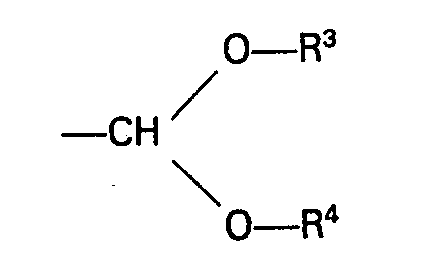
- B) das erhaltene Acetal in an sich bekannter Weise sauer hydrolysiert und
- C) den erhaltenen Aldehyd der allgemeinen Formel 1 mit LiAIH4 oder nach Meerwein-Ponndorf mit Aluminiumisopropylat reduziert.
- Die Verbindung der Formel I, in der R1 für -CN steht, kann dadurch erhalten werden, daß man den Aldehyd II

- A) unter den Bedingungen einer Wittig-Reaktion mit einem Phosphorylid der allgemeinen Formel III


- B) das erhaltene Acetal in an sich bekannter Weise sauer hydrolysiert,
- C) den erhaltenen Aldehyd der allgemeinen Formel I in an sich bekannter Weise mit einem Hydroxylammoniumsalz in das Oxim überführt und
- D) das erhaltene Oxim in an sich bekannter Weise dehydratisiert.
- Der wesentliche gemeinsame Reaktionsschritt der Herstellung der neuen bicyclischen Riechstoffe liegt in der Wittig-Reaktion zwischen dem Aldehyd der Formel II und einem Phosphorylid der allgemeinen Formel 111.
- Der Aldehyd II (2-Methylen-3-methyl-3-formyl-bicyclo-[2,2,1 ]-heptan ist bisher weder synthetisiert noch charakterisiert worden. In Helv. Chim. Acta 59 (1976), S. 738 heißt es, daß einige experimentelle Anzeichen vermuten lassen, daß das bicyclische Teresantalal II auch im Sandelholzöl vorkommt. Der Aldehyd II kann aus dem neuen, jedoch in der nicht vorveröffentlichten Patentanmeldung P 27 19 976 beschriebenen 2-Chlormethyl-3-methyl-3-formyl-bicyclo-[2,2,1]-heptan-(5) durch HCI-Abspaltung unter Schutz der Formylgruppe durch Acetalisieren erhalten werden. Er hat einen Siedepunkt von 74 bis 78°C bei einem Druck von 26 Pa (0,2 Torr).
- Die Phosphorylide können in an sich bekannter Weise, z.B. durch Einwirken starker Basen auf die ihnen zugrundeliegenden Phosphoniumsalze hergestellt werden. Näheres hierüber ist u.a. der zusammenfassenden Arbeit von Tripett (Quart. Reviews, Band 17 (1963), Seiten 406 ff) zu entnehmen.
- Für die erfindungsgemäße Umsetzung ist es zweckmäßig, daß man das Phosphorylid gleich in dem für die Wittg-Synthese vorgesehenen Lösungsmittel und gegebenenfalls sogar in Gegenwart des umzusetzenden Aldehyds aus dem entsprechenden Phosphoniumsalz herstellt. Die benötigten Phosphoniumsalze können in an sich bekannter und einfacher weise durch Umsetzung der entsprechenden Alkylhalogenide, insbesondere den entsprechenden Alkylchloriden mit den Triaryl (Tricyclohexyl)-phosphinen, insbesondere mit Triphenylphosphin hergestellt werden.
- Als starke Basen zur Herstellung der Phosphoryliie können die für Wittig-Synthesen üblichen Basen verwende werden. Genannt seien Alkalihydroxide, Alkalihydride, Alkaliamide und Alkali- und Erdalkalialkoholate, Phenyl-Lithium und Butyl-Lithium, vorzugsweise Natrium- und Kaliumalkoholate.
- Aus Äthylenoxid (siehe Angew. Chem. 80 (1968), Seite 535 ff.) und überschüssiges Phosphorylid können unter bestimmten Bedingungen die Rolle der starken Base übernehmen.
- Als Lösungsmittel für die Herstellung der Phosphorylide sowie für die Durchführung der Wittig-Reaktion kommen die für Wittig-Synthesen üblichen Lösungsmittel, beispielsweise aliphatische oder aromatische Kohlenwasserstoffe, wie Hexan, Octan, Cyclohexan, Benzol, Toluol und Xylol und deren Halogenierungsprodukte, ferner Alkohole, wie Methanol, Äthanol, Isopropanol, Butanole, Hexanole, Cyclohexanol und Cyclooctanol, auch Glykole, sowie Äther, wie Diisopropyläther, Äthylenglykoldimethyläther, Tetrahydrofuran, Dimethyltetrahydrofuran und Dioxan oder Gemische aus ihnen in Frage. Besonders geeignet sind polare organische Lösungsmittel, wie Methanol, Äthanol, Formamid, Dimethylforamid, N-Methylpyrrolidon, Hexamethylphosphorsäuretriamid, Acetonitril und Dimethylsulfoxid oder Gemische dieser Lösungsmittel. Auch in Wasser oder in Wasser enthaltenden Gemischen läßt sich das Verfahren der Erfindung ausführen.
- Zur Durchführung der erfindungsgemäßen Umsetzung des Aldehyds 11 mit den Phosphoryliden 111 werden zweckmäßig Phosphoniumsalze der Formel IV

- X für Chlor, Brom oder Jod steht und R1 bzw. R2 und Ar die oben angegebene Bedeutung haben, und etwa stöchiometrische Mengen des umzusetzenden Aldehyds in einem Lösungsmittel vorgelegt und zu dieser Suspsnsion unter Rühren, gegebenenfalls Kühlen und Einleiten von trockenem Stickstoff bei Temperaturen von -20 bis +70°C, vorzugsweise 0 bis 30°C, portionsweise etwa stöchiometrische Mengen einer starken Base eingetragen. Anschließend wird das Reaktionsgemisch noch 1 bis 24 Stunden, vorzugsweise 1 bis 2 Stunden, auf Temperaturen von 15 bis 30°C, vorzugsweise Raumtemperatur, gehalten.
- Man kann die erfindungsgemäße Umsetzung aber auch so durchführen, daß man zu der Lösung der Phosphoniumsalze bei den oben genannten Temperaturen etwa stöchiometrische Mengen einer starken Base gibt, zu der so erhaltenen Lösung der Phosphorylide den Aldehyd der Formel II addiert und dann das Reaktionsgemisch wie oben beschrieben ausreagieren läßt.
- Insgesamt werden für diese Umsetzung etwa 1 bis 1,2 Mol Base pro Mol Phosponiumsalze verwendet. Die Aufarbeitung des Reaktionsgemisches erfolgt auf übliche Weise durch Abtrennen der Reaktionsprodukte von dem entstandenen Triaryl(Tricyclohexyl)phosphinoxid, beispielsweise durch Extraktion, Destillation und gegebenenfalls anschließende präparative Chromatographie.
- Die saure Hydrolyse der bei der Wittig-Reaktion des Aldehyds 11 mit den eine Acetalgruppierung enthaltenden Phosphoryliden III erfolgt auf an sich bekannte Weise. Beispielsweise werden die Acetale zweckmäßig mit 0,01 bis 1 Mol einer Mineralsäure, wie Schwefelsäure oder Salzsäure, oder einer organischen Säure, wie Ameisensäure, p-Toluolsulfonsäure oder Essigsäure, pro Mol Acetal in Form einer 1- bis 20-prozentigen Lösung versetzt und unter intensiver Vermischung 0,5 bis 5, vorzugsweise 2 bis 3 Stunden auf Temperaturen von 10 bis 50°C erhitzt.
- Bei der Hydrolyse empfiehlt sich der Zusatz eines Lösungsvermittlers zum Reaktionsgemisch. Als Lösungsvermittler sind niedere aliphatische Alkohole, wie Methanol, Äthanol und Propanol sowie cycloaliphatische Äther, wie Tetrahydrofuran und Dioxan besonders geeignet. Die erhaltenen Aldehyde können auf übliche Weise, beispielsweise durch Extraktion nach schonender Neutralisation des Reaktionsgemisches, z.B. mit einem Alkalibicarbonat oder Natriumcarbonat, und Abdestillieren des Extraktionsmittels isoliert werden.
- Der Aldehyd der Formel kann in an sich bekannter Weise mit LiAIH4' NaBH4 oder Aluminiumisopropylat zu dem Alkohol der Formel I reduziert werden.
- Zur Umsetzung mit LiAIH4 verwendet man als Lösungsmittel vorzugsweise ätherische Lösungsmittel, wie Diäthyläther oder Tetrahydrofuran (THF), Die Lösungsmittel verwendet man zweckmäßig in Mengen von etwa 1/4 bis 1 Mol pro Mol Aldehyd. Die Reaktionstemperatur beträgt im allgemeinen Raumtemperatur bis Rückflußtemperatur des Lösungsmittels. Die Reaktionszeit beträgt etwa 1 bis 6 Stunden.
- LiAIH4 wird in einem wasserfreien Lösungsmittel (teilweise gelöst, teilweise suspendiert) vorgelegt.
- Zu dieser Mischung wird die Carbonylverbindung in den betreffenden Lösungsmitteln langsam zugefügt. Je nach Reaktivität der Carbonylverbindung ist die Reaktion nach mehrstündigem Rühren bei Raumtemperatur beendet oder aber das Reaktionsgemisch wird einige Stunden erhitzt.
- Überschüssiges LiAIH4 wird durch vorsichtiges Zugeben eines Alkohols, beispielsweise Äthanol, zerstört. Die organische Phase wird mit Wasser ausgewaschen, getrocknet und eingeengt. Das Reaktionsprodukt wird auf übliche Weise, beispielsweise durch Destillation, gereinigt.
- Zur Umsetzung mit NaBH4 verwendet man im allgemeinen protische Lösungsmittel, wie beispielsweise Wasser, Äthanol, vorzugsweise Äthanol. Zweckmäßig verwendet man das Lösungsmittel in einer Menge von etwa 1/4 bis 1 Mol pro Carbonylverbindung. Die Reaktionstemperatur ist im allgemeinen Raumtemperatur; die Reaktionsdauer beträgt etwa 2 bis 12 Stunden.
- Die Aufarbeitung des Reaktionsgemisches erfolgt auf übliche Weise, beispielsweise durch Zersetzen des Rückstandes mit verdünnten Säuren und anschließender Extraktion mit einem Lösungs- . mittel.
- Zur Reduktion des Aldehyds der Formel mit Aluminiumisopropylat (Meerwein - Ponndorf - Verley - Reduktion) verwendet man als Lösungsmittel wasserfreien Isopropylalkohol. Zur Durchführung der Reduktion wird das AI-isopropylat in lsöpropanol vorgelegt und die Carbonylverbindung zu dieser Mischung zugegeben. Man verwendet das AI-Isopropylat in Mengen von 1/3 bis 2 Mol pro Mol Carbonylverbindung. Durch Erhitzen der Mischung entsteht Aceton, das über eine Kolonne abdestilliert wird. Die Reaktionstemperatur beträgt im allgemeinen etwa 60 bis 120°C; die Reaktionszeit etwa 30 bis 60 Minuten.
- Wenn kein Aceton mehr entsteht, wird der Rückstand mit verdünnter Säure zersetzt und das Produkt beispielsweise durch Extraktion mit einem Lösungsmittel isoliert.
- Zur Überführung des Aldehyds der Formel I in das Oxim versetzt man zweckmäßig die Carbonylverbindung mit der äquimolaren Menge oder einem geringen Überschuß eines Hydroxylammoniumsalzes, wie Hydroxylammoniumchlorid oder Hydroxylammoniumsulfat in Wasser oder Alkohol oder einem Gemisch aus Alkohol und Wasser.
- Die Reaktionstemperatur liegt im allgemeinen zwischen Raumtemperatur und Siedetemperatur des Lösungsmittels. Um die freiwerdende Säure abzufangen, werden Basen, wie Hydroxide, Carbonate, Hydrogencarbamate, Acetate oder dergleichen zugefügt, um einen pH-Wert des Reaktionsgemisches von etwa 4 bis 5 zu erreichen.
- Zur Aufarbeitung wird mit Wasser versetzt und das Oxim durch Extraktion mit einem Lösungsmittel isoliert.
- Auch die Dehydratisierung des Oxims erfolgt in an sich bekannter Weise durch Umsetzen mit wasserentziehenden Mitteln, wie Anhydriden, Säurechloriden, P205 oder durch thermische Wasserabspaltung. Zweckmäßig erhitzt man das Oxim mehrere Stunden mit einem großen Überschuß von Acetanhydrid. Die Reaktionstemperatur liegt im allgemeinen zwischen Raumtemperatur und dem Siedepunkt des jeweiligen Lösungsmittels. Die Reaktionsdauer beträgt etwa 1 bis mehrere Stunden. Als Lösungsmittel werden entweder das Oxim selbst oder aber aprotische Lösungsmittel, wie chlorierte Kohlenwasserstoffe, CH2CI2 oder CHC13; Kohlenwasserstoffe, wie Toluol oder Xylol; oder aber Äther, wie Dioxan oder Tetrahydrofuran verwendet. Die Aufarbeitung erfolgt im allgemeinen durch Zersetzung mit Wasser und Extraktion mit einem Lösungsmittel.
- Die neuen bicyclichen Verbindungen zeichnen sich durch interessante Riechstoffeigenschaften aus und sie erweitern dadurch die Palette wertvoller vollsynthetischer Duftstoffe.
- 73g (0,2 Mol) 3-Methyl-2-buten-1-triphenylphosphoniumchlorid werden in 200ml THF suspendiert. Unter Kühlung wird die 1,1-molare Menge einer 1,6n Butyllithium-Lösung (138m1) in Hexan zugetropft. Der Kolbeninhalt verfärbt sich tief rot. Anschließend werden 29g (0,2 Mol) des Aldehyd 2-Methylen-3-methyl-3-formyl-bicyclo-[2,2,1]-heptan in 50ml THF zugetropft und das Reaktionsgemisch 6 Stunden auf 50°C erhitzt.
- Anschließend wird die Lösung eingeengt, der Rückstand mit petroläther ausgekocht und die Petrolätherlösung mit wäßrigem Methanol gewaschen. Es wird getrocknet und eingeengt. Es hinterbleibt ein Rückstand von 38,6g.
- Bei der anschließenden Destillation erhält man neben 3g Ausgangsaldehyd 30,6g 2-Methylen-3-methyl-3-(4'-methyl-1',3'-pentadien-1'-yl)-bicyclo-[2,2,1]-heptan (II) vom Siedepunkt Kp = 65°C bei einem Druck von 1,33 Pa (0,01 Torr);= 1,5260; IR- und NMR-Spektren bestätigen die Struktur; das NMR-Spektrum zeigt ein Gemisch aus exo- und endo-Produkt. Ausbeute 82% bezogen auf umgesetzten Aldehyd. Geruchsbeurteilung: angenehm holzig.

- 85g (0,2 Mol) 3-Äthoxycarbonyl-2-buten-1-triphenylphosphoniumchlorid werden analog Beispiel 1 mit 138m1 einer 1,6n Butyllithium-Lösung (entsprechend der 1,1-molaren Menge) in Hexan und dann mit 29g (0,2 Mol) 2-Methylen-3-methyl-3-formyl-bicyclo-[2,2,1 ]-heptan umgesetzt. Man erhält neben 14,3g unumgesetztem Aldehyd 6,2g 2-Methylen-3-methyl-3-(4'-äthoxycarbonyl-1',3'-pentadien-1'-yl)-bicyclo-[2,2,1 ]-heptan vom Siedepunkt Kp = 150°C bei 1,33 Pa (0,01 Torr); n25 = 1,5312. Ausbeute 24%, bezogen auf umgesetzten Aldehyd.
- Geruchsbeurteilung: süß, fruchtig, anisig.
-
- a) 90,5g (0,2 Mol) 3-(4'-Methyl-1',3'-dioxan-2'-yl)-2-buten-1-triphenylphosphoniumchlorid werden analog Beispiel 1 mit 138m1 einer 1,6n Butyllithium-Lösung in Hexan und dann mit 29g des Aldehyds II umgesetzt. Man erhält neben 19g unumgesetztem Aldehyd 18,6g 2-Methylen-3-methyl-3-[4'-(4"-methyl-1",3"-dioxan-2"-yl)1',3'-pentadien-1'-yl]-bicyclo-[2,2,1]-heptan vom Siedepunkt Kp = 160°C bei 1,33 Pa (0,01 Torr); n25 = 1,5233. IR- und NMR-Spektren bestätigen die Struktur. Ausbeute 93%, bezogen auf umgesetzen Aldehyd.
- b) 27g des gemäß 3 a) erhaltenen Acetals werden zusammen mit 50ml einer 10-prozentigen wäßrigen H2S04 und 50ml Dioxan 2 Stunden bei 20°C gerührt. Anschließend wird das Reaktionsgemisch mit 50ml Wasser verdünnt und mit Äther extrahiert. Die Ätherextrakte werden mit Bicarbonatlösung neutral gewaschen, getrocknet und eingeengt.
- Man erhält 10g 2-Methylen-3-methyl-3-(4'-formyl-1',3'-pentadien-1'-yl)-bicyclo-[2,2,1]-heptan vom Siedepunkt Kp = 103 bis 106°C bei 26,6 Pa (0,2 Torr); IR- und NMR-Spektren bestätigen die Struktur. Ausbeute 50%, bezogen auf eingesetzten Aldehyd II.
- Geruchsbeurteilung: frisch, holzig.
- 9,2g (0,0426 Mol) des gemäß 3b) erhaltenen Aldehyds werden in 20ml Äthanol gelöst und zu einer Mischung aus 0,6g (0,015 Mol) NaBH4 und 50ml Äthanol getropft. Das Reaktionsgemsich wird 4 Stunden bei 20°C nachgerührt, anschließend eingeengt, mit Wasser versetzt, mit verdünnter H2S04 schwach angesäuert und mit Äther extrahiert. Die erhaltene organische Phase wird getrocknet und eingeengt. Bei der anschließenden Destillation erhält man 6,4g 2-Methylen-3-methyl-3-(4'-hydroxymethyl-1',3'-pentadien-1'-yl)-bicyclo-[2,2,1]-heptan vom Siedepunkt Kp = 130°C bei 10,67 Pa (0,08 Torr). Das Produkt erstarrt im Kühlschrank wachsartig. IR- und NMR-Spektren bestätigen die Struktur. Ausbeute 70%, bezogen auf eingesetztes Acetal.
- Geruchsbeurteilung: balsamisch, holzig, mild.
- 9g des gemäß 3 b) erhaltenen bicyclischen Aldehyds werden mit 6g Hydroxylammoniumchlorid, 6g Na-acetat und 40g Wasser versetzt und das erhatlene Gemisch 30 Minuten auf 60°C erwärmt. Anschließend wird das Reaktionsgemisch abgekühlt, mit 50ml Wasser versetzt, mit Äther extrahiert und die vereinigten Ätherphasen eingeengt. Das erhaltene rohe Oxim wird mit 20g Acetanhydrid versetzt und das erhaltene Gemisch 2 Stunden unter Rückfluß zum Sieden erhitzt. Anschließend wird mit Wasser versetzt, mit Äther extrahiert, die erhaltene Ätherphase neutralisiert, getrocknet und eingeent. Der Rückstand wird durch Chromatographie an Kieselgel mit Petroläther/Äther (3 : 1) als Laufmittel gereinigt. Man erhält 5,4g 2-Methylen-3-methyl-3-(4'-cyano-1',3'-pentadien-1'-yl)-bicyclo-[2,2,1]-heptan vom Siedpunkt Kp = 100 bis 105°C bei 26,66 Pa (0,2 Torr). Ausbeute 61%, bezogen auf eingesetzten Aldehyd. Der Geruch ähnelt dem des Aldehyds der Formel I, ist aber etwas fruchtiger.
Claims (6)


Applications Claiming Priority (2)
| Application Number | Priority Date | Filing Date | Title |
|---|---|---|---|
| DE19772742185 DE2742185A1 (de) | 1977-09-20 | 1977-09-20 | Neue bicyclische riechstoffe |
| DE2742185 | 1977-09-20 |
Publications (3)
| Publication Number | Publication Date |
|---|---|
| EP0001553A2 EP0001553A2 (de) | 1979-05-02 |
| EP0001553A3 EP0001553A3 (en) | 1979-05-30 |
| EP0001553B1 true EP0001553B1 (de) | 1980-10-29 |
Family
ID=6019365
Family Applications (1)
| Application Number | Title | Priority Date | Filing Date |
|---|---|---|---|
| EP78100895A Expired EP0001553B1 (de) | 1977-09-20 | 1978-09-15 | Bicyclische Riechstoffe, Verfahren zu ihrer Herstellung und Vorprodukt |
Country Status (3)
| Country | Link |
|---|---|
| US (1) | US4224253A (de) |
| EP (1) | EP0001553B1 (de) |
| DE (2) | DE2742185A1 (de) |
Families Citing this family (3)
| Publication number | Priority date | Publication date | Assignee | Title |
|---|---|---|---|---|
| JPS61129143A (ja) * | 1984-11-27 | 1986-06-17 | Nippon Petrochem Co Ltd | ビニルノルボルニルアルコ−ルおよびそれを含む香料組成物 |
| FR2621912B1 (fr) * | 1987-10-16 | 1990-03-02 | Oreal | Nouveaux derives du norbornane, leur procede de preparation et compositions cosmetique et medicamenteuse les contenant |
| WO2015067470A1 (en) * | 2013-11-11 | 2015-05-14 | Firmenich Sa | Compound with a woody odour |
Family Cites Families (7)
| Publication number | Priority date | Publication date | Assignee | Title |
|---|---|---|---|---|
| US3662007A (en) * | 1968-11-26 | 1972-05-09 | Procter & Gamble | Process for preparing dihydro-beta-santalol from 3-endo-methyl-3-exo(4'-methyl-5'-hydroxypentyl)norcamphor |
| US3662008A (en) * | 1969-05-21 | 1972-05-09 | Procter & Gamble | Process for preparing beta-santalol from 3-methylnorcamphor |
| US3673256A (en) * | 1969-09-03 | 1972-06-27 | Procter & Gamble | 3-endo-methyl-3-exo(4{40 -methylpentanalyl)-2-methylenebicyclo{8 2.2.1{9 heptane and process for preparing same |
| US3673261A (en) * | 1969-12-12 | 1972-06-27 | Procter & Gamble | Perfume compounds and process for preparing same |
| US4128509A (en) * | 1971-12-23 | 1978-12-05 | Monsanto Company | 1-(Norborn-5'-en-2'-yl) or 1-(norborn-2'-yl) substituted 1-alken-3-ols and alkan-3-ols |
| CH600882A5 (de) * | 1975-03-25 | 1978-06-30 | Givaudan & Cie Sa | |
| DE2719976C2 (de) | 1977-05-04 | 1985-09-19 | Basf Ag, 6700 Ludwigshafen | Bicyclische Aldehyde und Verfahren zu deren Herstellung |
-
1977
- 1977-09-20 DE DE19772742185 patent/DE2742185A1/de not_active Withdrawn
-
1978
- 1978-08-28 US US05/937,267 patent/US4224253A/en not_active Expired - Lifetime
- 1978-09-15 DE DE7878100895T patent/DE2860261D1/de not_active Expired
- 1978-09-15 EP EP78100895A patent/EP0001553B1/de not_active Expired
Also Published As
| Publication number | Publication date |
|---|---|
| US4224253A (en) | 1980-09-23 |
| EP0001553A3 (en) | 1979-05-30 |
| DE2860261D1 (en) | 1981-01-29 |
| DE2742185A1 (de) | 1979-03-29 |
| EP0001553A2 (de) | 1979-05-02 |
Similar Documents
| Publication | Publication Date | Title |
|---|---|---|
| EP0633258B1 (de) | Verbessertes Verfahren zur Herstellung von Astaxanthin, neue Zwischenprodukte hierfür sowie ein Verfahren zu deren Herstellung | |
| DE2653838C2 (de) | ||
| DE2202021C3 (de) | Aliphatische, zweifach ungesättigte Ester bzw. Säuren, Verfahren zu deren Herstellung und diese enthaltende Mittel | |
| CH629736A5 (en) | Process for preparing 2-phenylethanol derivatives | |
| EP0004621B1 (de) | Verfahren zur mehrstufigen Synthese von Zeaxanthin und Alloxanthin über Cyclohexanon- und Cyclohexanolderivate; Cyclohexanon- und Cyclohexanolderivate | |
| EP0005749B1 (de) | Cyclohexenderivate, Verfahren zu deren Herstellung, sowie deren Verwendung | |
| DE2411530A1 (de) | Verfahren zur herstellung von aldehyden | |
| EP0761629A1 (de) | Offenkettige olefinisch ungesättigte Verbindungen, Verfahren zu ihrer Herstellung und ihre Verwendung als Riechstoffe | |
| DE2625259A1 (de) | Verfahren zur herstellung von cyclischen oxoverbindungen | |
| EP0044413B1 (de) | 3,6-Dimethyl-oct-1-in-3-ole und -oct-1-en-3-ole sowie Derivate davon und ihre Verwendung als Riechstoffe und Verfahren zur Herstellung von 3,6-Dimethyl-octan-3-ol | |
| EP0001553A2 (de) | Bicyclische Riechstoffe, Verfahren zu ihrer Herstellung und Vorprodukt | |
| CH625494A5 (de) | ||
| DE2225612C2 (de) | Cyclische Methyl-fumardialdehyd-monoacetale und Verfahren zu ihrer Herstellung | |
| EP0882709B1 (de) | Verfahren zur Herstellung von Zeaxanthin, Zwischenprodukte für dieses Verfahren und Verfahren zu deren Herstellung | |
| EP0131130B1 (de) | Verfahren zur Herstellung von Cycloalkenylalkinen | |
| EP0075237B1 (de) | Verfahren zur Herstellung von Derivaten des 1-Formyl-2,6,6-trimethyl-cyclohex-1-ens | |
| EP0061669B1 (de) | Verbessertes Verfahren zur Herstellung von Cyclohexan-1,3-dionen sowie einige neue bicyclische Cyclohexan-1,3-dione | |
| DE2537417B2 (de) | Verfahren zur Herstellung von tricyclischen Sesquiterpenen und diese enthaltende Parfümkompositionen | |
| DE2552615A1 (de) | Verfahren zur herstellung von dihalogenvinylcyclopropancarboxylaten | |
| DE2444003C2 (de) | 6-Methyl-octa-5,7-dien-2-on und Verfahren zu seiner Herstellung | |
| DE2102953C2 (de) | Trien-Kohlenwasserstoffe mit 2 konjugierten Doppelbindungen | |
| DE3424328A1 (de) | Verfahren zur herstellung von 3,11-di-(methyl)-nonakosan-2-on sowie 2,10-di-(methyl)-octakosansaeurealkylester und verfahren zur herstellung der letzteren | |
| DE2749794A1 (de) | Neue bicyclo eckige klammer auf 2,2,1 eckige klammer zu heptan-derivate und ein verfahren zu deren herstellung | |
| DE2804597A1 (de) | Verfahren zur herstellung von beta-damascon und beta-damascenon | |
| DE4411667A1 (de) | Verfahren zur Herstellung von substituierten Phenylessigsäurederivaten und neue Zwischenprodukte |
Legal Events
| Date | Code | Title | Description |
|---|---|---|---|
| PUAI | Public reference made under article 153(3) epc to a published international application that has entered the european phase |
Free format text: ORIGINAL CODE: 0009012 |
|
| PUAL | Search report despatched |
Free format text: ORIGINAL CODE: 0009013 |
|
| AK | Designated contracting states |
Designated state(s): CH DE FR GB NL |
|
| AK | Designated contracting states |
Designated state(s): CH DE FR GB NL |
|
| 17P | Request for examination filed | ||
| GRAA | (expected) grant |
Free format text: ORIGINAL CODE: 0009210 |
|
| AK | Designated contracting states |
Designated state(s): CH DE FR GB NL |
|
| REF | Corresponds to: |
Ref document number: 2860261 Country of ref document: DE Date of ref document: 19810129 |
|
| KL | Correction list |
Free format text: 81/02 |
|
| PGFP | Annual fee paid to national office [announced via postgrant information from national office to epo] |
Ref country code: GB Payment date: 19910805 Year of fee payment: 14 |
|
| PGFP | Annual fee paid to national office [announced via postgrant information from national office to epo] |
Ref country code: FR Payment date: 19910807 Year of fee payment: 14 |
|
| PGFP | Annual fee paid to national office [announced via postgrant information from national office to epo] |
Ref country code: CH Payment date: 19910808 Year of fee payment: 14 |
|
| PGFP | Annual fee paid to national office [announced via postgrant information from national office to epo] |
Ref country code: DE Payment date: 19910921 Year of fee payment: 14 |
|
| PGFP | Annual fee paid to national office [announced via postgrant information from national office to epo] |
Ref country code: NL Payment date: 19910930 Year of fee payment: 14 |
|
| PG25 | Lapsed in a contracting state [announced via postgrant information from national office to epo] |
Ref country code: GB Effective date: 19920915 |
|
| PG25 | Lapsed in a contracting state [announced via postgrant information from national office to epo] |
Ref country code: CH Effective date: 19920930 |
|
| PG25 | Lapsed in a contracting state [announced via postgrant information from national office to epo] |
Ref country code: NL Effective date: 19930401 |
|
| GBPC | Gb: european patent ceased through non-payment of renewal fee |
Effective date: 19920915 |
|
| NLV4 | Nl: lapsed or anulled due to non-payment of the annual fee | ||
| PG25 | Lapsed in a contracting state [announced via postgrant information from national office to epo] |
Ref country code: FR Effective date: 19930528 |
|
| REG | Reference to a national code |
Ref country code: CH Ref legal event code: PL |
|
| PG25 | Lapsed in a contracting state [announced via postgrant information from national office to epo] |
Ref country code: DE Effective date: 19930602 |
|
| REG | Reference to a national code |
Ref country code: FR Ref legal event code: ST |
|
| PLBE | No opposition filed within time limit |
Free format text: ORIGINAL CODE: 0009261 |
|
| STAA | Information on the status of an ep patent application or granted ep patent |
Free format text: STATUS: NO OPPOSITION FILED WITHIN TIME LIMIT |