WO2025100191A1 - 球状銀粉、及び球状銀粉の製造方法 - Google Patents
球状銀粉、及び球状銀粉の製造方法 Download PDFInfo
- Publication number
- WO2025100191A1 WO2025100191A1 PCT/JP2024/037069 JP2024037069W WO2025100191A1 WO 2025100191 A1 WO2025100191 A1 WO 2025100191A1 JP 2024037069 W JP2024037069 W JP 2024037069W WO 2025100191 A1 WO2025100191 A1 WO 2025100191A1
- Authority
- WO
- WIPO (PCT)
- Prior art keywords
- silver powder
- spherical silver
- surface treatment
- less
- treatment agent
- Prior art date
- Legal status (The legal status is an assumption and is not a legal conclusion. Google has not performed a legal analysis and makes no representation as to the accuracy of the status listed.)
- Pending
Links
Images









Classifications
-
- B—PERFORMING OPERATIONS; TRANSPORTING
- B22—CASTING; POWDER METALLURGY
- B22F—WORKING METALLIC POWDER; MANUFACTURE OF ARTICLES FROM METALLIC POWDER; MAKING METALLIC POWDER; APPARATUS OR DEVICES SPECIALLY ADAPTED FOR METALLIC POWDER
- B22F1/00—Metallic powder; Treatment of metallic powder, e.g. to facilitate working or to improve properties
-
- B—PERFORMING OPERATIONS; TRANSPORTING
- B22—CASTING; POWDER METALLURGY
- B22F—WORKING METALLIC POWDER; MANUFACTURE OF ARTICLES FROM METALLIC POWDER; MAKING METALLIC POWDER; APPARATUS OR DEVICES SPECIALLY ADAPTED FOR METALLIC POWDER
- B22F1/00—Metallic powder; Treatment of metallic powder, e.g. to facilitate working or to improve properties
- B22F1/05—Metallic powder characterised by the size or surface area of the particles
-
- B—PERFORMING OPERATIONS; TRANSPORTING
- B22—CASTING; POWDER METALLURGY
- B22F—WORKING METALLIC POWDER; MANUFACTURE OF ARTICLES FROM METALLIC POWDER; MAKING METALLIC POWDER; APPARATUS OR DEVICES SPECIALLY ADAPTED FOR METALLIC POWDER
- B22F1/00—Metallic powder; Treatment of metallic powder, e.g. to facilitate working or to improve properties
- B22F1/06—Metallic powder characterised by the shape of the particles
- B22F1/065—Spherical particles
-
- B—PERFORMING OPERATIONS; TRANSPORTING
- B22—CASTING; POWDER METALLURGY
- B22F—WORKING METALLIC POWDER; MANUFACTURE OF ARTICLES FROM METALLIC POWDER; MAKING METALLIC POWDER; APPARATUS OR DEVICES SPECIALLY ADAPTED FOR METALLIC POWDER
- B22F1/00—Metallic powder; Treatment of metallic powder, e.g. to facilitate working or to improve properties
- B22F1/10—Metallic powder containing lubricating or binding agents; Metallic powder containing organic material
- B22F1/102—Metallic powder coated with organic material
-
- B—PERFORMING OPERATIONS; TRANSPORTING
- B22—CASTING; POWDER METALLURGY
- B22F—WORKING METALLIC POWDER; MANUFACTURE OF ARTICLES FROM METALLIC POWDER; MAKING METALLIC POWDER; APPARATUS OR DEVICES SPECIALLY ADAPTED FOR METALLIC POWDER
- B22F9/00—Making metallic powder or suspensions thereof
- B22F9/16—Making metallic powder or suspensions thereof using chemical processes
- B22F9/18—Making metallic powder or suspensions thereof using chemical processes with reduction of metal compounds
- B22F9/24—Making metallic powder or suspensions thereof using chemical processes with reduction of metal compounds starting from liquid metal compounds, e.g. solutions
Definitions
- the present invention relates to spherical silver powder and a method for producing spherical silver powder.
- conductive films such as electrodes and electrical wiring by applying or printing a conductive paste containing conductive metal powder onto a substrate such as a film, board, or electronic component, and then heating it to dry, harden, or bake it has been widely used for some time.
- a conductive paste containing conductive metal powder onto a substrate such as a film, board, or electronic component, and then heating it to dry, harden, or bake it has been widely used for some time.
- conductive films formed using conductive pastes are required to have lower resistance, and these requirements are becoming stricter every year.
- Patent Document 1 proposes silver powder that contains a specified surface treatment agent and has a specified coefficient of thermal expansion, BET value (specific surface area), and ignition loss difference, with the aim of suppressing swelling of the conductive coating film when the sintered conductive paste is sintered and lowering the electrical resistance value of the cured film (conductive film).
- an object of the present invention is to provide a spherical silver powder that can impart excellent fine line printability to a conductive paste.
- Another object of the present invention is to provide a method for producing spherical silver powder that can impart excellent fine line printability to a conductive paste.
- the inventors conducted extensive research to solve the above problems, and as a result, they completed the present invention, which is described below.
- the gist of the present invention to solve the above problems is as follows:
- a surface treatment agent is present, In the thermal expansion coefficient measurement, the maximum value of the thermal expansion coefficient based on the value at 50°C is 0.3% or less, The BET specific surface area is 0.1 m 2 /g or more and 0.8 m 2 /g or less, A spherical silver powder having a D90 value of 2.0 ⁇ m or more and 4.0 ⁇ m or less.
- a method for producing a spherical silver powder comprising adding a reducing agent to an aqueous reaction system containing silver ions and a chelating agent made of a polymer to reduce and precipitate silver particles, comprising: a carbonic acid concentration adjusting step of adjusting a ratio of a total molar concentration of carbonic acid to a total molar concentration of silver in the aqueous reaction system to 0.004 or more and 0.051 or less before adding the reducing agent to the aqueous reaction system; a surface treatment agent addition step of adding a surface treatment agent to the aqueous reaction system after the silver particles have precipitated;
- a method for producing spherical silver powder comprising:
- the present invention it is possible to provide a spherical silver powder that can impart excellent fine line printability to a conductive paste.
- the present invention also provides a method for producing spherical silver powder that can impart excellent fine line printability to a conductive paste.
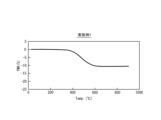
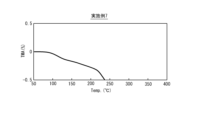
- 1 is a graph showing the results of thermomechanical analysis of the spherical silver powder obtained in Example 1.
- 2 is an enlarged graph of a portion of the graph in FIG. 1 .
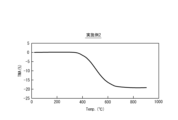
- 1 is a graph showing the results of thermomechanical analysis of the spherical silver powder obtained in Example 2.
- 4 is a graph showing an enlarged portion of the graph in FIG. 3.
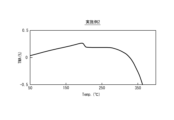
- 1 is a graph showing the results of thermomechanical analysis of the spherical silver powder obtained in Example 3.
- 6 is a graph showing an enlarged portion of the graph in FIG. 5 .
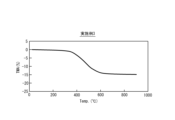
- 1 is a graph showing the results of thermomechanical analysis of the spherical silver powder obtained in Example 4.
- 8 is a graph showing an enlarged portion of the graph in FIG. 7 .
- FIG. 15 is an enlarged graph of a portion of the graph.
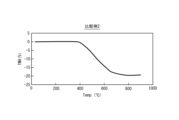
- 1 is a graph showing the results of thermomechanical analysis of the spherical silver powder obtained in Comparative Example 2.
- 18 is a graph showing an enlarged portion of the graph in FIG. 17.
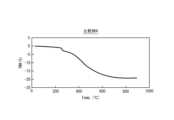
- 1 is a graph showing the results of thermomechanical analysis of the spherical silver powder obtained in Comparative Example 3.
- 20 is a graph showing an enlarged portion of the graph in FIG. 19 .
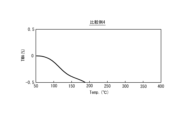
- 1 is a graph showing the results of thermomechanical analysis of the spherical silver powder obtained in Comparative Example 4.
- 22 is a graph showing an enlarged portion of the graph in FIG. 21.
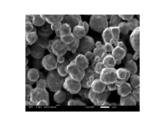
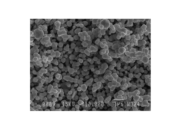
- 1 is a 10,000x SEM image of the spherical silver powder obtained in Example 1.
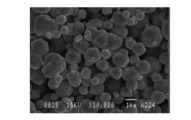
- 1 is a 10,000x SEM image of the spherical silver powder obtained in Example 2.
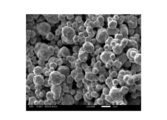
- 1 is a 10,000x SEM image of the spherical silver powder obtained in Example 3.
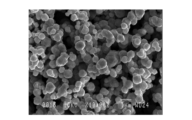
- 1 is a 10,000x SEM image of the spherical silver powder obtained in Example 4.
- 1 is a 10,000x SEM image of the spherical silver powder obtained in Example 5.
- 1 is a 10,000x SEM image of the spherical silver powder obtained in Example 6.
- 1 is a 10,000x SEM image of the spherical silver powder obtained in Example 7.
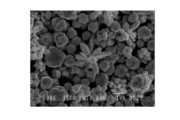
- 1 is a 10,000x SEM image of the spherical silver powder obtained in Comparative Example 3.
- the spherical silver powder of the present invention is suitable for use as a conductive filler for conductive paste.
- a conductive paste using the spherical silver powder of the present invention can be used to form a conductive pattern on a substrate or to form an electrode.
- a conductive paste using the spherical silver powder of the present invention can be printed on a substrate by, for example, screen printing, offset printing, photolithography, or the like to form a conductive film such as a conductive pattern or an electrode.
- spherical silver powder refers to silver powder in which the average shape factor of 400 or more particles observed by image analysis based on a scanning electron microscope (SEM) image is in the range of 1.0 or more and less than 1.7.
- the scanning electron microscope is not particularly limited, but for example, JSM-6100 or JSM-IT300L manufactured by JEOL Ltd. can be used.
- the silver powders of Examples 1 and 5 were observed using JSM-IT300L, and the silver powders of Examples 2, 3, 4, 6, 7, and Comparative Example 3 were observed using JSM-6100.
- shape factor refers to the ratio of the area of a virtual circle having the average maximum length as the diameter of 400 or more particles observed by the image analysis to the average particle area of the silver particles obtained by tracing the outer shape of the particles, and is the value obtained by dividing the area of the virtual circle by the average particle area.
- the shape factor is calculated by ⁇ (average maximum length/2) 2 /average particle area.
- the thermal expansion coefficient of the spherical silver powder was measured as follows. First, 0.3 g of spherical silver powder was weighed. Next, the spherical silver powder was put into a predetermined mold with a diameter of 5 mm ⁇ , and pressed with a press machine at a load of 50 kg for 1 min to prepare a cylindrical measurement sample. This measurement sample was set in a sample holder of a thermomechanical analysis (TMA) device (Thermo plus EVO 2 series TMA8311), and a measurement load of 98 mN was applied by the measurement probe, and the temperature was raised from room temperature to 900 ° C. at a heating rate of 10 ° C.
- TMA thermomechanical analysis
- TMA thermomechanical analysis
- BET specific surface area was measured by a single-point BET method using nitrogen adsorption with a Macsorb HM-model 1210 (manufactured by MOUNTECH). The BET specific surface area was measured with a sample weight of 3.0 g, a N 2 /He (30/70) mixed gas was used, the gas flow rate was 25 mL/min, and the degassing conditions before the measurement were 60°C and 10 minutes.
- the content of the fatty acid was measured according to the quantitative analysis method for fatty acids described in Japanese Patent No. 5,622,543. Specifically, first, the spherical silver powder was dissolved in acid, and then an organic solvent was mixed therein. The entire amount of the surface treatment agent was extracted into the organic solvent phase. A predetermined amount of the organic solvent phase was then separated and evaporated to dryness. The carbon content of the remaining solid matter was measured using a carbon-sulfur analyzer, and the carbon content was calculated.
- the measurement method for stearic acid is as follows.
- the carbon content was measured and calculated in the same manner as above.
- the oleic acid concentration was also calculated using the calibration curve of stearic acid.
- the content of the benzotriazole was measured according to the quantitative analysis method for benzotriazole and benzotriazole salts described in Japanese Patent No. 5,523,153. Specifically, the spherical silver powder was first washed with an aqueous hydrochloric acid solution, and the washings were quantitatively analyzed by absorptiometry.
- 0.2 g of spherical silver powder was weighed, washed with an aqueous hydrochloric acid solution and quantitatively analyzed by spectrophotometry according to the following procedure to determine the content of benzotriazole.
- concentrated hydrochloric acid Karlo Scientific Co., Ltd., special grade
- 0.2 g of silver powder and 20 mL of an aqueous hydrochloric acid solution were placed in a 100 mL glass beaker and heated to boil. After the start of boiling, heating was continued for 15 minutes to maintain the boiling state.
- an 18% by mass aqueous hydrochloric acid solution was added within a range not exceeding the amount of liquid before heating so that the solution would not evaporate to dryness.
- the solution was cooled to 25 ° C. and filtered, and an 18% by mass aqueous hydrochloric acid solution was added to the filtrate so that the amount of the filtrate was 20 mL to make a constant volume, and a measurement sample solution by spectrophotometry was prepared. Furthermore, the absorbance of the measurement sample solution was measured using a spectrophotometer (U-3210, manufactured by Hitachi, Ltd.) to measure the absorbance of the peak having a peak wavelength of 272.8 nm ⁇ 0.5 nm.
- a calibration curve was previously prepared for the relationship between the concentration of benzotriazole and the absorbance, and the concentration of benzotriazole in the filtrate was calculated from this calibration curve and the absorbance value of the measurement sample solution.
- the amount (mass%) of the spherical silver powder was calculated based on this concentration, the volume of the filtrate, and the weighed value of the silver powder.
- the type of surface treatment agent can be identified by qualitative analysis using gas chromatography of the surface treatment agent that evaporates when the spherical silver powder is heated.
- the cumulative 10% particle size (D 10 ), cumulative 50% particle size (D 50 ), and cumulative 90% particle size (D 90 ) of the spherical silver powder on a volume basis were measured using a laser diffraction/scattering type particle size distribution measuring device (Microtrac MT-3300 EXII, manufactured by Microtrack Bell Co., Ltd.).
- a laser diffraction/scattering type particle size distribution measuring device Microtrac MT-3300 EXII, manufactured by Microtrack Bell Co., Ltd.
- IPA isopropyl alcohol
- an ultrasonic homogenizer manufactured by Nippon Seiki Seisakusho, device name: US-150T; 19.5 kHz, tip diameter 18 mm
- the dispersion time was 2 minutes.
- the dispersed sample was subjected to the above device, and the particle size distribution was determined using the attached analysis software.
- the spherical silver powder of the present invention contains a surface treatment agent, and in thermal expansion coefficient measurement, the maximum value of the thermal expansion coefficient based on the value at 50°C is 0.3% or less, the BET specific surface area is 0.1 m2 /g or more and 0.8 m2 /g or less, and the D90 value is 2.0 ⁇ m or more and 4.0 ⁇ m or less.
- the "thermal expansion coefficient based on the value at 50°C in the thermal expansion coefficient measurement” may be simply referred to as the "thermal expansion coefficient”.
- the thermal expansion coefficient measurement can be performed by increasing the temperature from room temperature to 900°C at a heating rate of 10°C/min to measure the expansion coefficient in the axial direction of a cylindrical measurement sample.
- the spherical silver powder described above can impart excellent fine line printability to the conductive paste and can reduce the electrical resistance of the conductive film. This is presumably because, compared to flake powder, coarse particles that clog printing nozzles are less likely to form when the powder is made into a paste, and the specific surface area can be made smaller relative to the particle diameter, suppressing an increase in viscosity and suppressing swelling of the conductive coating film during firing.
- the surface treatment agent examples include fatty acids, compounds having an azole structure, fatty acid salts, surfactants, organometallic chelating agents, and protective colloids.
- the surface treatment agent be one or more surface treatment agents selected from the group consisting of fatty acids, compounds having an azole structure, and fatty acids.
- fatty acids examples include behenic acid, stearic acid, palmitic acid, myristic acid, lauric acid, ricinoleic acid, oleic acid, linoleic acid, linolenic acid, etc. These may be used alone or in combination of two or more. Among these, stearic acid and oleic acid are preferred.
- fatty acid salt examples include salts of the fatty acids listed above, such as sodium salts and potassium salts.
- Examples of compounds having an azole structure include benzotriazole, sodium salts of benzotriazole, and potassium salts of benzotriazole. These may be used alone or in combination of two or more. Among these, benzotriazole and sodium benzotriazole are preferred.
- the content of the surface treatment agent in the spherical silver powder is preferably 0.01% by mass or more, more preferably 0.03% by mass or more, and is preferably 1.00% by mass or less, more preferably 0.60% by mass or less, and even more preferably 0.40% by mass or less.
- the content of the surface treatment agent in the spherical silver powder is 0.01% by mass or more, the dispersibility of the silver powder can be improved.
- the content of the surface treatment agent in the spherical silver powder is 1.00 mass % or less, the dispersibility of the silver powder is maintained while not impeding sintering, thereby improving the electrical conductivity.
- the maximum value of the thermal expansion coefficient of the spherical silver powder is 0.30% or less, preferably 0.25% or less, and more preferably 0.20% or less. If the maximum coefficient of thermal expansion of the spherical silver powder is 0.30% or less, the powder will not blister during firing, the resulting cured film will not develop short circuits, and the electrical resistance will be kept low. On the other hand, the minimum value of the thermal expansion coefficient of the spherical silver powder may be 0% (no expansion) or may be 0.01% or more.
- the BET specific surface area of the spherical silver powder is 0.10 m 2 /g or more, preferably 0.25 m 2 /g or more, and more preferably 0.30 m 2 /g or more, and is 0.80 m 2 /g or less, preferably 0.65 m 2 /g or less, and more preferably 0.60 m 2 /g or less. If the BET specific surface area of the spherical silver powder is less than 0.10 m 2 /g, the particle size becomes too large, making it unsuitable for fine line printing. On the other hand, if the BET specific surface area of the spherical silver powder is greater than 0.80 m 2 /g, the particle size becomes too small, and the viscosity of the paste becomes high, making it unsuitable for fine line printing.
- the D90 value of the spherical silver powder is 2.0 ⁇ m or more, preferably 2.1 ⁇ m or more, and 4.0 ⁇ m or less, preferably 3.7 ⁇ m or less. If the D90 value is greater than 4.0 ⁇ m, the printing plate is prone to clogging with particles, making printing difficult, and is therefore unsuitable.
- the D50 value of the spherical silver powder is preferably 1.0 ⁇ m or more, more preferably 1.3 ⁇ m or more, and is preferably 2.5 ⁇ m or less, more preferably 2.2 ⁇ m or less.
- the D10 value of the spherical silver powder is preferably 0.5 ⁇ m or more, more preferably 0.7 ⁇ m or more, and is preferably 1.2 ⁇ m or less. If the D90 , D50 , or D10 value of the spherical silver powder exceeds the above upper limit, the particle size is too large and the powder is unsuitable for fine line printing. If the D90, D50, or D10 value is below the above lower limit, the viscosity of the paste becomes too high and the powder is unsuitable for fine line printing.
- the method for producing spherical silver powder of the present invention (hereinafter sometimes simply referred to as the "production method") is a method for reducing and precipitating silver particles by adding a reducing agent to an aqueous reaction system containing silver ions and a chelating agent made of a polymer.
- the production method of the present invention includes a carbonate concentration adjustment step of adjusting the ratio of the total molar concentration of carbonate ( CO3 ) to the total molar concentration of silver (Ag) in the aqueous reaction system (hereinafter sometimes referred to as " CO3 /Ag") to 0.004 or more and 0.051 or less before adding the reducing agent to the aqueous reaction system, and a surface treatment agent addition step of adding a surface treatment agent to the aqueous reaction system after the silver particles have been precipitated.
- the above-mentioned manufacturing method can obtain spherical silver powder capable of imparting excellent fine line printing properties to a conductive paste.
- the reason for this is presumably because, by setting the CO 3 /Ag ratio in the aqueous reaction system to a predetermined ratio or more, the rapid reduction of silver ions by the reducing agent, in other words, the reducing action of the reducing agent, is mitigated, and the formation of irregularly shaped particles such as confetti-like particles is effectively suppressed.
- confetti-like particles refer to particles having numerous protrusions radially extending from the center of the particle.
- the aqueous reaction system contains silver ions and a chelating agent made of a polymer (hereinafter, may be simply referred to as "chelating agent").
- chelating agent made of a polymer
- the aqueous reaction system can be obtained, for example, by adding a chelating agent to an aqueous solution containing silver ions.
- the aqueous solution containing silver ions is not particularly limited, but an aqueous silver nitrate solution or the like can be used.
- ammonia water or an ammonium salt in an amount of at least one mole of ammonia per mole of silver.
- preferred chelating agents according to the present invention include amino compounds and imine compounds.
- polyethyleneimine (PEI) is preferred.
- the chelating agent according to the present invention preferably has a weight-average molecular weight of less than 600, and more preferably 145 to 600. This is because a chelating agent having a weight-average molecular weight of 145 or more has the effect of producing highly dispersible silver particles. On the other hand, a polymeric amine having a weight-average molecular weight of 600 or less is believed to ensure the water solubility of the polymeric amine, and therefore the polymeric amine is unlikely to remain on the surface or inside of the produced silver particles.
- the weight average molecular weight of the chelating agent can be measured by a GPC-MALS method.
- the ratio of the chelating agent to the total mass of silver is preferably 0.001% by mass or more, more preferably 0.040% by mass or more, and preferably 1.000% by mass or less.
- the reducing agent to be added to the aqueous reaction system is not particularly limited, but is preferably a reducing agent that does not contain carbon dioxide.
- Specific reducing agents that can be used include, for example, hydrazine, formalin, sodium borohydride, glucose, hypophosphorous acid, etc. Among these, hydrazine is particularly preferred from the viewpoints of stable reactivity and ability to rapidly reduce silver ions.
- the ratio of the total molar concentration of carbon dioxide to the total molar concentration of silver in the aqueous reaction system is adjusted to 0.004 or more and 0.051 or less before adding a reducing agent to the aqueous reaction system.
- the CO 3 /Ag ratio in the aqueous reaction system is 0.004 or more and 0.051 or less, and preferably 0.031 or less.
- the adjustment of CO 3 /Ag is not particularly limited, and can be performed, for example, by a method of adding a predetermined amount of carbonated water and/or carbonate to the aqueous reaction system, a method of blowing carbon dioxide gas into the aqueous reaction system (so-called bubbling), etc. From the viewpoint of operability, the method of adding a predetermined amount of carbonate to the aqueous reaction system is preferred.
- the carbonate When a carbonate is used to adjust CO 3 /Ag, the carbonate may be used in the form of an aqueous solution.
- concentration of the aqueous solution of the carbonate is, for example, 1 mass % or more and 30 mass % or less.
- the carbonate is not particularly limited, and for example, sodium carbonate, potassium carbonate, etc. can be used.
- a surface treatment agent addition process After the silver particles are precipitated, a surface treatment agent is added to the aqueous reaction system, thereby obtaining surface-treated silver particles.
- the aqueous reaction system containing silver particles is usually a suspension (so-called slurry) or a dispersion in which the silver particles are dispersed.
- the surface treatment agent examples include fatty acids, compounds having an azole structure, fatty acid salts, surfactants, organometallic chelating agents, and protective colloids.
- the surface treatment agent is preferably one or more surface treatment agents selected from the group consisting of fatty acids, compounds having an azole structure, and fatty acid salts.
- fatty acids examples include behenic acid, stearic acid, palmitic acid, myristic acid, lauric acid, ricinoleic acid, oleic acid, linoleic acid, linolenic acid, etc. These may be used alone or in combination of two or more. Among these, stearic acid and oleic acid are preferred.
- fatty acid salt examples include salts of the fatty acids listed above, such as sodium salts and potassium salts.
- Examples of compounds having an azole structure include benzotriazole, sodium salts of benzotriazole, and potassium salts of benzotriazole. These may be used alone or in combination of two or more. Among these, benzotriazole and sodium benzotriazole are preferred.
- the amount of surface treatment agent added in the surface treatment agent addition process is usually 0.01% by mass or more and 1.00% by mass or less relative to the mass of silver contained in the aqueous reaction system.
- the reduced and precipitated silver particles are separated from the aqueous reaction system and dried.
- the separation step may optionally include a washing and recovery step of recovering and washing the separated silver particles and the like.
- washing and recovery process for example, aggregates of the separated silver particles, etc. are formed into a cake-like form, and the cake of aggregates of silver particles, etc. is washed.
- Washing in the washing and recovery process may be performed using, for example, pure water.
- Dehydration in the washing and recovery process may be performed, for example, by decantation or a filter press.
- the end point of washing may be determined using the electrical conductivity of the washing water. Specifically, the end of washing may be determined when the electrical conductivity of the washing water falls to a predetermined value or lower.
- the silver particles, etc., in an aggregated state such as a cake-like form, may be subjected to a drying process.
- the drying process aggregates of silver particles and the like that contain moisture and are in an agglomerated state are dried.
- the drying process may be performed using vacuum drying or an airflow dryer.
- a high-pressure air flow may be blown onto the aggregates of silver particles and the like, or the cake or spherical silver powder in the drying process may be put into a mixer with a stirring rotor and stirred, thereby applying a dispersing force to the cake or spherical silver powder in the drying process and promoting dispersion and drying.
- the temperature of the spherical silver powder is usually below 100°C. If the temperature of the spherical silver powder is below 100°C, it is possible to effectively prevent the silver particles in the spherical silver powder from sintering with each other.
- the spherical silver powder after drying may be in the form of lumps
- a dry crushing process or classification operation may be carried out simultaneously with or after the drying process in order to improve the handleability of the spherical silver powder.
- improving the handleability of the spherical silver powder means, for example, ensuring a degree of fluidity that does not interfere with the supply operation into the device, or loosening the spherical silver powder to an appropriate degree so that processing in the device proceeds efficiently.
- a crusher that rotates the stirring blades to crush and fluidize the spherical silver powder, for example a sample mill, blender, coffee mill, etc.
- the present invention will be described in more detail below using examples, but the present invention is not limited to the following examples in any way.
- the confirmation of the spherical silver powder (particle shape), thermomechanical analysis of the spherical silver powder (calculation of the maximum thermal expansion coefficient), measurement of the BET specific surface area, quantification of the surface treatment agent, and measurement of the particle size distribution were performed by the methods described above.
- the silver powder and aluminum powder (SEM average diameter 2.0 ⁇ m) obtained in the examples and comparative examples were mixed with glass powder (containing PbO as the main component and containing B 2 O 3 , SiO 2 and other oxides) as glass frit, ethyl cellulose, texanol, butyl carbitol acetate, tributyl citrate, 1-octanol, oleic acid, triacetin, methylphenylpolysiloxane, hydrogenated castor oil, and fatty acid amide to obtain the composition shown in Table 1, thereby obtaining a mixture.
- glass powder containing PbO as the main component and containing B 2 O 3 , SiO 2 and other oxides
- glass frit ethyl cellulose, texanol, butyl carbitol acetate, tributyl citrate, 1-octanol, oleic acid, triacetin, methylphenylpolysiloxane, hydrogenated
- the obtained mixture was premixed under conditions of a planetary centrifugal mixer (revolution 1000 rpm) and then kneaded with a three-roll mill (manufactured by EXAKT) to obtain a conductive paste.
- a conductive paste obtained above a straight line shape was printed by screen printing.
- the straight line had a design line width of 12 ⁇ m and a straight line length of 150 mm.
- a Microtec printer was used for printing, and printing was performed at a squeegee speed of 350 mm/s.
- a silicon substrate (for solar cell use, texture formation and SiNx film formation) with a thickness of about 170 ⁇ m was used for printing.
- the substrate was dried for 5 minutes in a dryer set at a temperature of 200 degrees, and then baked in a solar cell baking furnace (made by NGK) under conditions such that the peak temperature of the upper surface of the wafer was 750 ° C. to prepare a sample.
- the obtained sample was observed with a digital microscope (manufactured by Keyence Corporation, VHX-5000) to check for the presence or absence of breaks, and the fine line printability was evaluated according to the following criteria. A: No breaks were found. B: A break was confirmed. C: Printing was not possible because the paste viscosity was too high.
- Example 1 87,410 g of an aqueous silver nitrate solution containing 1,260 g (11.7 mol) of Ag was prepared, and 2,560 g of an aqueous ammonia solution with a concentration of 28% by mass was added thereto to prepare an aqueous solution containing silver ions.
- the liquid temperature was set to 35°C.
- 63 g of an aqueous sodium carbonate solution with a concentration of 10% by mass was added to adjust the ratio of the total molar concentration of carbonic acid to the total molar concentration of silver in the aqueous reaction system (CO 3 /Ag) to 0.005.
- an aqueous solution containing polyethyleneimine (PEI) with a weight average molecular weight of 600 as a chelating agent at a ratio of 5% by mass (0.052% by mass relative to the Ag mass) was added to the aqueous reaction system after the adjustment of CO 3 /Ag, to prepare an aqueous reaction system containing silver ions and a chelating agent.
- 2684 g of a 6.2% by mass hydrazine aqueous solution was added as a reducing agent to the aqueous reaction system and thoroughly stirred to obtain a slurry containing silver powder.
- thermomechanical analysis of the spherical silver powder (calculation of maximum thermal expansion coefficient), measurement of BET specific surface area, measurement of surface treatment agent content, measurement of particle size distribution, and evaluation of fine line printability were performed.
- the results are shown in Table 3.
- Graphs of the thermomechanical analysis of the silver powder are shown in Figures 1 and 2, and a SEM image of the silver powder at 10,000 times magnification is shown in Figure 23.
- Example 2 96,690 g of an aqueous silver nitrate solution containing 1,620 g (15.0 mol) of Ag was prepared, and 3,280 g of ammonia water with a concentration of 28% by mass was added thereto to prepare an aqueous solution containing silver ions.
- the liquid temperature was adjusted to 35°C.
- To the aqueous solution containing silver ions 65 g of an aqueous sodium carbonate solution with a concentration of 10% by mass was added, and the ratio of the total molar concentration of carbonic acid to the total molar concentration of silver in the aqueous reaction system (CO 3 /Ag) was adjusted to 0.004.
- an aqueous solution containing polyethyleneimine (PEI) with a weight average molecular weight of 600 as a chelating agent at a ratio of 5% by mass (0.049% by mass relative to Ag mass) was added to the aqueous reaction system after the adjustment of CO 3 /Ag, to prepare an aqueous reaction system containing silver ions and a chelating agent.
- 3441 g of an aqueous hydrazine solution with a concentration of 6.2% by mass was added as a reducing agent to the aqueous reaction system and thoroughly stirred, to obtain a slurry containing silver powder.
- Example 3 96,190 g of an aqueous silver nitrate solution containing 1,620 g (15.0 mol) of Ag was prepared, and 3,280 g of an aqueous ammonia solution having a concentration of 28% by mass was added thereto to prepare an aqueous solution containing silver ions.
- the liquid temperature was adjusted to 35°C.
- 324 g of a sodium carbonate aqueous solution with a concentration of 5% by mass was added to the aqueous solution containing silver ions, and the ratio of the total molar concentration of carbonic acid to the total molar concentration of silver in the aqueous reaction system (CO 3 /Ag) was adjusted to 0.010.
- aqueous solution containing polyethyleneimine (PEI) with a weight average molecular weight of 600 as a chelating agent at a ratio of 0.4% by mass (0.050% by mass relative to Ag mass) was added to the aqueous reaction system after the adjustment of CO 3 /Ag, to prepare an aqueous reaction system containing silver ions and a chelating agent.
- PI polyethyleneimine
- 3512 g of a hydrazine aqueous solution with a concentration of 6.2% by mass was added to the aqueous reaction system as a reducing agent and thoroughly stirred, to obtain a slurry containing silver powder.
- a stearic acid (surface treatment agent) emulsion with a concentration of 0.86% by mass was added to the obtained slurry, thoroughly stirred, and then aged.
- the aged slurry was filtered, and the filtered residue was washed with water.
- the residue after washing was dried, and 150 g of silver powder was added to a sample mill (SK-M10, manufactured by Kyoritsu Riko Co., Ltd.) and crushed twice for 90 seconds to obtain the silver powder of Example 3.
- Example 4 The silver powder of Example 4 was obtained in the same manner as in Example 2, except that the amount of 10 mass% sodium carbonate aqueous solution was changed from 65 g to 275 g to adjust the CO 3 /Ag to 0.017, and the amount of 3.7 mass% benzotriazole sodium (surface treatment agent) aqueous solution was changed to 147 g.
- confirmation of spherical silver powder (particle shape), thermomechanical analysis of the spherical silver powder (calculation of maximum thermal expansion coefficient), measurement of BET specific surface area, measurement of surface treatment agent content, measurement of particle size distribution, and evaluation of fine line printability were performed. The results are shown in Table 3. Graphs of the thermomechanical analysis of the silver powder are shown in Figures 7 and 8, and a 10,000x SEM image of the silver powder is shown in Figure 26.
- Example 5 Silver powder according to Example 5 was obtained in the same manner as in Example 1, except that the amount of the 10 mass % aqueous sodium carbonate solution was changed from 63 g to 189 g and the CO 3 /Ag ratio was adjusted to 0.015. Using the obtained silver powder, confirmation of spherical silver powder (particle shape), thermomechanical analysis of the spherical silver powder (calculation of maximum thermal expansion coefficient), measurement of BET specific surface area, measurement of surface treatment agent content, measurement of particle size distribution, and evaluation of fine line printability were performed. The results are shown in Table 3. Graphs of the thermomechanical analysis of the silver powder are shown in Figures 9 and 10, and a SEM image of the silver powder at 10,000 times magnification is shown in Figure 27.
- Example 6 The silver powder of Example 6 was obtained in the same manner as in Example 3, except that the amount of 5% by mass sodium carbonate aqueous solution was changed from 324 g to 971 g to adjust the CO3 /Ag to 0.031, and 340 g of 0.86% by mass stearic acid (surface treatment agent) emulsion was changed to 327 g of 1.3% by mass stearic acid emulsion aqueous solution.
- confirmation of spherical silver powder particle shape
- thermomechanical analysis of the spherical silver powder (calculation of maximum thermal expansion coefficient)
- measurement of BET specific surface area measurement of surface treatment agent content
- measurement of particle size distribution measurement of particle size distribution
- evaluation of fine line printability were performed. The results are shown in Table 3. Graphs of the thermomechanical analysis of the silver powder are shown in Figures 11 and 12, and a SEM image of the silver powder at 10,000 times magnification is shown in Figure 28.
- Example 7 The silver powder of Example 7 was obtained in the same manner as in Example 1, except that 421 g of a 15 mass% sodium carbonate aqueous solution was added to adjust the CO3 /Ag ratio to 0.051, and the amount of a 3.5 mass% oleic acid (surface treatment agent) neoethanol solution was changed from 65 g to 126 g.
- confirmation of spherical silver powder (particle shape), thermomechanical analysis of the spherical silver powder (calculation of maximum thermal expansion coefficient), measurement of BET specific surface area, measurement of surface treatment agent content, measurement of particle size distribution, and evaluation of fine line printability were performed. The results are shown in Table 3. Graphs of the thermomechanical analysis of the silver powder are shown in Figures 13 and 14, and a SEM image of the silver powder at 10,000 times magnification is shown in Figure 29.
- thermomechanical analysis of the spherical silver powder (calculation of the maximum thermal expansion coefficient), the BET specific surface area was measured, the content of the surface treatment agent was measured, the particle size distribution was measured, and the fine line printability was evaluated.
- the results are shown in Table 3. Graphs of the thermomechanical analysis of the silver powder are shown in Figures 15 and 16.
- Comparative Example 2 The silver powder of Comparative Example 2 was obtained in the same manner as Comparative Example 1, except that the chelating agent was changed from polyethyleneimine (PEI) having a weight-average molecular weight of 300 to polyethyleneimine (PEI) having a weight-average molecular weight of 600, and the surface treatment agent was changed from stearic acid to benzotriazole.
- PET polyethyleneimine
- PEI polyethyleneimine
- PEI polyethyleneimine
- surface treatment agent was changed from stearic acid to benzotriazole.
- confirmation of spherical silver powder particle shape
- thermomechanical analysis of the spherical silver powder (calculation of maximum thermal expansion coefficient)
- measurement of BET specific surface area measurement of surface treatment agent content
- measurement of particle size distribution measurement of particle size distribution
- evaluation of fine line printability were performed. The results are shown in Table 3. Graphs of the thermomechanical analysis of the silver powder are shown in Figures 17 and 18.
- an aqueous solution containing 0.043 g of polyethyleneimine (PEI) having a weight average molecular weight of 600 as a chelating agent was added to the aqueous reaction system after the addition of the sodium hydroxide aqueous solution, to prepare an aqueous reaction system containing silver ions and a chelating agent.
- PEI polyethyleneimine
- 243 g of a hydrazine aqueous solution having a concentration of 2.5% by mass was added as a reducing agent to the aqueous reaction system and thoroughly stirred to obtain a slurry containing silver powder.
- thermomechanical analysis of the spherical silver powder (calculation of maximum thermal expansion coefficient), measurement of BET specific surface area, measurement of surface treatment agent content, measurement of particle size distribution, and evaluation of fine line printability were performed.
- the results are shown in Table 3.
- Graphs of the thermomechanical analysis of the silver powder are shown in Figures 19 and 20, and a 10,000x SEM image of the silver powder is shown in Figure 30. Note that confetti-like particles were observed near the center of the SEM image in Figure 30.
- aqueous solution containing 0.028 g of polyethyleneimine (PEI) with a weight average molecular weight of 600 as a chelating agent was added to the aqueous reaction system after the addition of the aqueous sodium hydroxide solution after the adjustment of CO 3 /Ag, to prepare an aqueous reaction system containing silver ions and a chelating agent.
- 300 g of an aqueous hydrazine solution with a concentration of 2.5% by mass was added as a reducing agent to the aqueous reaction system and thoroughly stirred to obtain a slurry containing silver powder.
- thermomechanical analysis of the spherical silver powder (calculation of the maximum thermal expansion coefficient), the BET specific surface area was measured, the content of the surface treatment agent was measured, the particle size distribution was measured, and the fine line printability was evaluated.
- the results are shown in Table 3. Graphs of the thermomechanical analysis of the silver powder are shown in Figures 21 and 22.
- the spherical silver powders of Examples 1 to 7 can impart excellent fine line printability to the conductive paste. It can be seen that when the CO 3 /Ag ratio exceeds 0.051, the particle size becomes too small to print, as in Comparative Example 4. Furthermore, as is clear from the results in Tables 2 and 3, the spherical silver powders obtained by the manufacturing methods of Examples 1 to 7 can impart excellent fine line printability to conductive pastes.
- the present invention it is possible to provide a spherical silver powder that can impart excellent fine line printability to a conductive paste.
- the present invention also provides a method for producing spherical silver powder that can impart excellent fine line printability to a conductive paste.
Landscapes
- Chemical & Material Sciences (AREA)
- Chemical Kinetics & Catalysis (AREA)
- General Chemical & Material Sciences (AREA)
- Engineering & Computer Science (AREA)
- Nanotechnology (AREA)
- Powder Metallurgy (AREA)
- Manufacture Of Metal Powder And Suspensions Thereof (AREA)
Abstract
本発明の目的は、導電性ペーストに優れた細線印刷性を付与可能な球状銀粉の提供である。本発明は、表面処理剤が存在し、熱膨張率測定において、50℃における値を基準とした熱膨張率の最大値が0.3%以下であり、BET比表面積が0.1m2/g以上0.8m2/g以下であり、D90の値が2.0μm以上4.0μm以下である、球状銀粉である。
Description
本発明は球状銀粉、及び球状銀粉の製造方法に関する。
導電性金属粉末を含む導電性ペーストを、フィルム、基板、電子部品等の基材に塗布又は印刷し、加熱して乾燥硬化や焼成させることにより、電極や電気配線等の導電膜を形成するという方法は、従来から広く用いられている。しかしながら、近年の電子機器の高性能化に伴い、導電性ペーストを用いて形成される導電膜には、より低抵抗であることが要求され、その要求は年々厳しくなっている。
上記要求に対して、例えば、特許文献1には、焼成型導電性ペーストの焼成の際に導電性塗膜の膨れを抑制し、硬化膜(導電膜)の電気抵抗値を低くすることを目的として、所定の表面処理剤が存在し、且つ、所定の熱膨張率、BET値(比表面積)、及び強熱減量差を有する銀粉が提案されている。
ここで、近年では、導電膜の細線化が進められており、細線印刷可能な導電性ペーストが望まれている。
従来の銀粉においては、導電性ペーストに優れた細線印刷性を付与することについて更なる改善の余地があった。
そこで、本発明は、導電性ペーストに優れた細線印刷性を付与可能な球状銀粉を提供することを目的とする。
また、本発明は、導電性ペーストに優れた細線印刷性を付与可能な球状銀粉の製造方法を提供することを目的とする。
また、本発明は、導電性ペーストに優れた細線印刷性を付与可能な球状銀粉の製造方法を提供することを目的とする。
本発明者らは、上述の課題を解決するために鋭意研究を重ねた結果、本発明者らは、以下に述べる本発明を完成させた。
即ち、上述の課題を解決するための本発明の要旨構成は以下の通りである。
[1]表面処理剤が存在し、
熱膨張率測定において、50℃における値を基準とした熱膨張率の最大値が0.3%以下であり、
BET比表面積が0.1m2/g以上0.8m2/g以下であり、
D90の値が2.0μm以上4.0μm以下である、球状銀粉。
熱膨張率測定において、50℃における値を基準とした熱膨張率の最大値が0.3%以下であり、
BET比表面積が0.1m2/g以上0.8m2/g以下であり、
D90の値が2.0μm以上4.0μm以下である、球状銀粉。
[2]D50の値が1.0μm以上2.5μm以下である、[1]に記載の球状銀粉。
[3]D10の値が0.5μm以上1.2μm以下である、[1]又は[2]に記載の球状銀粉。
[4]前記表面処理剤が、脂肪酸、アゾール構造を有する化合物、及び脂肪酸塩からなる群から選択される1種以上の表面処理剤である、[1]~[3]の何れかに記載の球状銀粉。
[5]銀イオンと、ポリマーからなるキレート剤とを含有する水性反応系に還元剤を添加して、銀粒子を還元析出させる球状銀粉の製造方法であって、
前記水性反応系に前記還元剤を添加する前に、前記水性反応系中の銀の全モル濃度に対する炭酸の全モル濃度の比を0.004以上0.051以下に調整する、炭酸濃度調整工程と、
前記銀粒子が析出した後に、前記水性反応系に表面処理剤を添加する、表面処理剤添加工程と、
を含む、球状銀粉の製造方法。
前記水性反応系に前記還元剤を添加する前に、前記水性反応系中の銀の全モル濃度に対する炭酸の全モル濃度の比を0.004以上0.051以下に調整する、炭酸濃度調整工程と、
前記銀粒子が析出した後に、前記水性反応系に表面処理剤を添加する、表面処理剤添加工程と、
を含む、球状銀粉の製造方法。
[6]前記表面処理剤が、脂肪酸、アゾール構造を有する化合物、及び脂肪酸塩からなる群から選択される1種以上の表面処理剤である、[5]に記載の球状銀粉の製造方法。
[7]前記キレート剤が、重量平均分子量600以下のポリエチレンイミンである、[5]又は[6]に記載の球状銀粉の製造方法。
[8]前記還元剤が、ヒドラジンである、[5]~[7]の何れかに記載の球状銀粉の製造方法。
本発明によれば、導電性ペーストに優れた細線印刷性を付与可能な球状銀粉を提供できる。
また、本発明は、導電性ペーストに優れた細線印刷性を付与可能な球状銀粉の製造方法を提供できる。
また、本発明は、導電性ペーストに優れた細線印刷性を付与可能な球状銀粉の製造方法を提供できる。
本発明の球状銀粉は、導電性ペースト用の導電性フィラーとしての用途に適したものである。本発明の球状銀粉を用いた導電性ペーストは、基板上への導電パターンの形成や、電極の形成に用いることができる。本発明の球状銀粉を用いた導電性ペーストは、例えば、スクリーン印刷、オフセット印刷、フォトリソグラフィ法等により基板上に印刷することで、導電パターンや電極等の導電膜を形成できるものである。
(用語及び測定方法)
まず、実施形態の説明に先立ち、本明細書における用語及び測定方法等を説明する。
まず、実施形態の説明に先立ち、本明細書における用語及び測定方法等を説明する。
<球状銀粉(粒子形状)の確認>
本明細書において、球状銀粉とは、走査型電子顕微鏡(SEM)画像に基づく画像解析によって観察した400個以上の粒子の形状係数の平均が1.0以上1.7未満の範囲内にある銀粉を意味する。走査型電子顕微鏡としては、特に限定されないが、例えば、日本電子株式会社製のJSM―6100やJSM―IT300Lを用いることができる。なお、本発明では、JSM―IT300Lを使用して、実施例1、実施例5の銀粉を観察し、JSM-6100を使用して実施例2、実施例3、実施例4、実施例6、実施例7、比較例3の銀粉を観察した。なお、本明細書における、形状係数とは、上記画像解析によって観察した400個以上の粒子の、平均最大長を直径とした仮想的な円の面積と、粒子の外形をなぞることで得られる銀粒子の平均粒子面積との比であり、当該仮想的な円の面積を平均粒子面積で除した値である。形状係数の計算式は、π(平均最大長/2)2/平均粒子面積で表される。
本明細書において、球状銀粉とは、走査型電子顕微鏡(SEM)画像に基づく画像解析によって観察した400個以上の粒子の形状係数の平均が1.0以上1.7未満の範囲内にある銀粉を意味する。走査型電子顕微鏡としては、特に限定されないが、例えば、日本電子株式会社製のJSM―6100やJSM―IT300Lを用いることができる。なお、本発明では、JSM―IT300Lを使用して、実施例1、実施例5の銀粉を観察し、JSM-6100を使用して実施例2、実施例3、実施例4、実施例6、実施例7、比較例3の銀粉を観察した。なお、本明細書における、形状係数とは、上記画像解析によって観察した400個以上の粒子の、平均最大長を直径とした仮想的な円の面積と、粒子の外形をなぞることで得られる銀粒子の平均粒子面積との比であり、当該仮想的な円の面積を平均粒子面積で除した値である。形状係数の計算式は、π(平均最大長/2)2/平均粒子面積で表される。
<球状銀粉の熱膨張率測定>
球状銀粉の熱膨張率測定は以下のようにして実施した。
まず、球状銀粉0.3gを計量した。次に、球状銀粉を直径5mmφの所定の金型に投入し、プレス機を用いて荷重50kgで1min押し固めて円柱状の測定試料を作製した。この測定試料を、熱機械分析(TMA)装置(Thermo plus EVO 2 シリーズ TMA8311)の試料ホルダにセットし、測定プローブにより、測定荷重98mNの荷重を付与して、室温から900℃まで昇温速度10℃/分で昇温して、測定試料の熱機械分析(TMA)を実施し、下記式(1)により、50℃における値を基準とした各温度の熱膨張率を算出した。
50℃からT℃まで昇温した際における熱膨張率(%)=(LT-L50)/L50×100・・・(1)
ここで、L50は、試料温度50℃における円柱状の測定試料の軸方向の長さ(mm)であり、
LTは、試料温度T℃における円柱状の測定試料の軸方向の長さ(mm)である。
球状銀粉の熱膨張率測定は以下のようにして実施した。
まず、球状銀粉0.3gを計量した。次に、球状銀粉を直径5mmφの所定の金型に投入し、プレス機を用いて荷重50kgで1min押し固めて円柱状の測定試料を作製した。この測定試料を、熱機械分析(TMA)装置(Thermo plus EVO 2 シリーズ TMA8311)の試料ホルダにセットし、測定プローブにより、測定荷重98mNの荷重を付与して、室温から900℃まで昇温速度10℃/分で昇温して、測定試料の熱機械分析(TMA)を実施し、下記式(1)により、50℃における値を基準とした各温度の熱膨張率を算出した。
50℃からT℃まで昇温した際における熱膨張率(%)=(LT-L50)/L50×100・・・(1)
ここで、L50は、試料温度50℃における円柱状の測定試料の軸方向の長さ(mm)であり、
LTは、試料温度T℃における円柱状の測定試料の軸方向の長さ(mm)である。
<BET比表面積>
本明細書において、「BET比表面積」は、Macsorb HM-model 1210(MOUNTECH社製)を用いて窒素吸着によるBET1点法で測定した。なお、BET比表面積の測定は、試料重量3.0gとし、N2/He(30/70)混合ガスを用いて、ガス流量は25mL/minとし、測定前の脱気条件は60℃、10分間とした。
本明細書において、「BET比表面積」は、Macsorb HM-model 1210(MOUNTECH社製)を用いて窒素吸着によるBET1点法で測定した。なお、BET比表面積の測定は、試料重量3.0gとし、N2/He(30/70)混合ガスを用いて、ガス流量は25mL/minとし、測定前の脱気条件は60℃、10分間とした。
<表面処理剤の定量>
本明細書において、例えば、球状銀粉の表面処理剤が脂肪酸である場合、該脂肪酸の含有量は、特許第5622543号公報に記載された脂肪酸の定量分析方法に従って測定した。
具体的には、まず、球状銀粉を酸で溶解させた後、有機溶媒を混合し、その有機溶媒相に表面処理剤を全量抽出させた後、有機溶媒相を所定量分取し、蒸発乾燥させて残留した固形物を、炭素硫黄分析装置により炭素量を測定することで計算により求めた。
本明細書において、例えば、球状銀粉の表面処理剤が脂肪酸である場合、該脂肪酸の含有量は、特許第5622543号公報に記載された脂肪酸の定量分析方法に従って測定した。
具体的には、まず、球状銀粉を酸で溶解させた後、有機溶媒を混合し、その有機溶媒相に表面処理剤を全量抽出させた後、有機溶媒相を所定量分取し、蒸発乾燥させて残留した固形物を、炭素硫黄分析装置により炭素量を測定することで計算により求めた。
例えば、表面処理剤がステアリン酸であると特定されており、ステアリン酸以外の炭素源が球状銀粉に含まれない場合、ステアリン酸の測定方法は以下となる。
ステアリン酸の含有量(mg)が異なる標準液において、各々の炭素量(強度)を炭素硫黄分析装置により測定することで検量線を求めたとき、その傾きをA(強度/mg)とした。そして、球状銀粉中のステアリン酸質量X(mg)、濃度Y(%)は、上記球状銀粉の処理により、処理剤を全有機溶媒量a(mL)に抽出したものから、所定量b(mL)分取し、その残存固形物の測定により求めた炭素量をC(強度)、酸に溶解した球状銀粉の量をM(g)とした場合、ステアリン酸質量X及び濃度Yは、それぞれ、下記式(A)及び式(B)で計算した。
X(mg)=(C/A×a/b)・・・(A)
Y(%)=X/(M×1000)×100・・・(B)
X(mg)=(C/A×a/b)・・・(A)
Y(%)=X/(M×1000)×100・・・(B)
オレイン酸が表面処理剤の場合でも上記同様に炭素量を測定して求めた。オレイン酸についてもステアリン酸の検量線を用いて計算した。ステアリン酸の分子量が284.48で、その内の炭素量が216.19、オレイン酸の分子量が282.46、その内の炭素量が216.19となるので、オレイン酸濃度Y’は、下記式(C)により算出した。
オレイン酸濃度Y’(%)=Y×(216.19/284.48)×(282.46/216.19)・・・(C)
オレイン酸濃度Y’(%)=Y×(216.19/284.48)×(282.46/216.19)・・・(C)
また、本明細書において、例えば、球状銀粉の表面処理剤がベンゾトリアゾールである場合、該ベンゾトリアゾールの含有量は、特許第5523153号公報に記載されたベンゾトリアゾール、ベンゾトリアゾール塩の定量分析方法に従って測定した。
具体的には、まず、球状銀粉を塩酸水溶液で洗浄し、洗浄液について吸光光度法による定量分析を行うことにより求めた。
具体的には、まず、球状銀粉を塩酸水溶液で洗浄し、洗浄液について吸光光度法による定量分析を行うことにより求めた。
例えば、球状銀粉0.2gを秤量し、以下の手順により塩酸水溶液で洗浄及び吸光光度法による定量分析を行うことで、ベンゾトリアゾールの含有量を求めた。まず、濃塩酸(関東科学株式会社製、特級)を純水で希釈して、18質量%の塩酸水溶液を調整した。次に、銀粉0.2gと塩酸水溶液20mLを100mLガラス製ビーカーに入れ、加熱し沸騰させた。沸騰開始後、15分間加熱を継続して沸騰状態を維持した。加熱中は溶液が蒸発乾固しないように、加熱前の液量を超えない範囲で18質量%の塩酸水溶液を添加した。加熱終了後、溶液を25℃まで冷却後、濾過し、その濾液の液量が20mLになるように、18質量%の塩酸水溶液を添加して定容化し、吸光光度法による測定試料溶液を調整した。
さらに、測定試料溶液の吸光度を分光光度計(日立製作所製、U-3210)を用いて、272.8nm±0.5nmにピーク波長のあるピークの吸光度を測定した。ベンゾトリアゾールの濃度と吸光度との関係についてはあらかじめ検量線を求めておき、この検量線と、測定試料溶液の吸光度の値とから、濾液中のベンゾトリアゾールの濃度を求め、この濃度、濾液の液量及び銀粉の秤量値に基づいて、球状銀粉が含有する量(質量%)を求めた。
さらに、測定試料溶液の吸光度を分光光度計(日立製作所製、U-3210)を用いて、272.8nm±0.5nmにピーク波長のあるピークの吸光度を測定した。ベンゾトリアゾールの濃度と吸光度との関係についてはあらかじめ検量線を求めておき、この検量線と、測定試料溶液の吸光度の値とから、濾液中のベンゾトリアゾールの濃度を求め、この濃度、濾液の液量及び銀粉の秤量値に基づいて、球状銀粉が含有する量(質量%)を求めた。
なお、表面処理剤の種類は、球状銀粉を加熱し揮発した表面処理剤のガスクロマトグラフィーによる定性分析により特定できる。
<粒度分布>
本明細書において、球状銀粉の体積基準の累積10%粒子径(D10)、累積50%粒子径(D50)、累積90%粒子径(D90)は、レーザー回折・散乱式粒子径分布測定装置(マイクロトラック・ベル株式会社製、マイクトロラックMT-3300 EXII)により測定した。測定に当たり、試料(銀粉)0.1gをイソプロピルアルコール(IPA)40mLに加えて分散した。分散には、超音波ホモジナイザー(日本精機製作所製、装置名:US-150T;19.5kHz、チップ先端直径18mm)を用いた。分散時間は、2分間とした。分散後の試料を上記装置に供し、付属の解析ソフトにより粒度分布を求めた。
本明細書において、球状銀粉の体積基準の累積10%粒子径(D10)、累積50%粒子径(D50)、累積90%粒子径(D90)は、レーザー回折・散乱式粒子径分布測定装置(マイクロトラック・ベル株式会社製、マイクトロラックMT-3300 EXII)により測定した。測定に当たり、試料(銀粉)0.1gをイソプロピルアルコール(IPA)40mLに加えて分散した。分散には、超音波ホモジナイザー(日本精機製作所製、装置名:US-150T;19.5kHz、チップ先端直径18mm)を用いた。分散時間は、2分間とした。分散後の試料を上記装置に供し、付属の解析ソフトにより粒度分布を求めた。
(球状銀粉)
本発明の球状銀粉は、表面処理剤が存在し、熱膨張率測定において、50℃における値を基準とした熱膨張率の最大値が0.3%以下であり、BET比表面積が0.1m2/g以上0.8m2/g以下であり、D90の値が2.0μm以上4.0μm以下である。なお、以下、「熱膨張率測定において、50℃における値を基準とした熱膨張率」を単に「熱膨張率」と称する場合がある。熱膨張率測定は、上述するように、室温から900℃まで昇温速度10℃/分で昇温して円柱状の測定試料の軸方向の膨張率の測定を行うものとすることができる。
上記のような球状銀粉であれば、導電性ペーストに優れた細線印刷性を付与でき、導電膜の電気抵抗値を低くすることができる。その理由は、フレーク粉等に比べてペースト化の際に印刷ノズルを詰まらせるような粗大粒子ができにくく、粒子径に対して比表面積を小さくできるため粘度増加を抑えることができ、焼成の際に導電性塗膜の膨れを抑制するためであると推察される。
本発明の球状銀粉は、表面処理剤が存在し、熱膨張率測定において、50℃における値を基準とした熱膨張率の最大値が0.3%以下であり、BET比表面積が0.1m2/g以上0.8m2/g以下であり、D90の値が2.0μm以上4.0μm以下である。なお、以下、「熱膨張率測定において、50℃における値を基準とした熱膨張率」を単に「熱膨張率」と称する場合がある。熱膨張率測定は、上述するように、室温から900℃まで昇温速度10℃/分で昇温して円柱状の測定試料の軸方向の膨張率の測定を行うものとすることができる。
上記のような球状銀粉であれば、導電性ペーストに優れた細線印刷性を付与でき、導電膜の電気抵抗値を低くすることができる。その理由は、フレーク粉等に比べてペースト化の際に印刷ノズルを詰まらせるような粗大粒子ができにくく、粒子径に対して比表面積を小さくできるため粘度増加を抑えることができ、焼成の際に導電性塗膜の膨れを抑制するためであると推察される。
表面処理剤としては、例えば、脂肪酸、アゾール構造を有する化合物、脂肪酸塩、界面活性剤、有機金属キレート形成剤、保護コロイド等が挙げられる。
ここで、表面処理剤は、均一に銀粉の表面に付着することができ、高い分散性を得ることができるという観点から、脂肪酸、アゾール構造を有する化合物、及び脂肪酸からなる群から選択される1種以上の表面処理剤であることが好ましい。
ここで、表面処理剤は、均一に銀粉の表面に付着することができ、高い分散性を得ることができるという観点から、脂肪酸、アゾール構造を有する化合物、及び脂肪酸からなる群から選択される1種以上の表面処理剤であることが好ましい。
脂肪酸としては、例えば、ベヘン酸、ステアリン酸、パルミチン酸、ミリスチン酸、ラウリン酸、リシノール酸、オレイン酸、リノール酸、リノレン酸等が挙げられる。これらは、1種単独で使用してもよいし、2種以上を併用してもよい。これらの中でも、ステアリン酸、オレイン酸が好ましい。
脂肪酸塩としては、上記列挙した脂肪酸の塩等が挙げられる。塩としては、例えば、ナトリウム塩、カリウム塩等が挙げられる。
脂肪酸塩としては、上記列挙した脂肪酸の塩等が挙げられる。塩としては、例えば、ナトリウム塩、カリウム塩等が挙げられる。
アゾール構造を有する化合物としては、例えば、ベンゾトリアゾール、ベンゾトリアゾールのナトリウム塩、ベンゾトリアゾールのカリウム塩等が挙げられる。これらは、1種単独で使用してもよいし、2種以上を併用してもよい。これらの中でも、ベンゾトリアゾール、ベンゾトリアゾールナトリウムが好ましい。
球状銀粉における表面処理剤の含有量は、0.01質量%以上であることが好ましく、0.03質量%以上であることがより好ましく、1.00質量%以下であることが好ましく、0.60質量%以下であることがより好ましく、0.40質量%以下であることが更好ましい。
球状銀粉における表面処理剤の含有量が0.01質量%以上であれば、銀粉の分散性を向上できる。
一方、球状銀粉における表面処理剤の含有量が1.00質量%以下であれば、銀粉の分散性を維持しつつ、焼結を阻害することがないため、導電性を向上できる。
球状銀粉における表面処理剤の含有量が0.01質量%以上であれば、銀粉の分散性を向上できる。
一方、球状銀粉における表面処理剤の含有量が1.00質量%以下であれば、銀粉の分散性を維持しつつ、焼結を阻害することがないため、導電性を向上できる。
球状銀粉の熱膨張率の最大値は、0.30%以下であり、0.25%以下であることが好ましく、0.20%以下であることがより好ましい。
球状銀粉の熱膨張率の最大値が0.30%以下であれば、焼成時において膨れを生じることがなく、生成した硬化膜において回路ショートが発生せず、且つ、電気抵抗値が低く保たれる。
一方、球状銀粉の熱膨張率の最小値は、0%(膨張なし)でもよく、0.01%以上でもよい。
球状銀粉の熱膨張率の最大値が0.30%以下であれば、焼成時において膨れを生じることがなく、生成した硬化膜において回路ショートが発生せず、且つ、電気抵抗値が低く保たれる。
一方、球状銀粉の熱膨張率の最小値は、0%(膨張なし)でもよく、0.01%以上でもよい。
球状銀粉のBET比表面積は、0.10m2/g以上であり、0.25m2/g以上であることが好ましく、0.30m2/g以上であることがより好ましく、0.80m2/g以下であり、0.65m2/g以下であることが好ましく、0.60m2/g以下であることがより好ましい。
球状銀粉のBET比表面積が0.10m2/g未満の場合、粒子径が大きくなりすぎてしまうため、細線印刷に不向きである。
一方、球状銀粉のBET比表面積が0.80m2/gよりも大きくなると粒子径が小さくなりすぎてしまい、ペーストの粘度が高くなるため細線印刷に不向きである。
球状銀粉のBET比表面積が0.10m2/g未満の場合、粒子径が大きくなりすぎてしまうため、細線印刷に不向きである。
一方、球状銀粉のBET比表面積が0.80m2/gよりも大きくなると粒子径が小さくなりすぎてしまい、ペーストの粘度が高くなるため細線印刷に不向きである。
球状銀粉のD90の値は、2.0μm以上であり、2.1μm以上であることが好ましく、4.0μm以下であり、3.7μm以下であることが好ましい。
D90の値が4.0μmをよりも大きい場合、印刷版に粒子が詰まりやすくなり印刷が困難になるため、不向きである。
D90の値が4.0μmをよりも大きい場合、印刷版に粒子が詰まりやすくなり印刷が困難になるため、不向きである。
球状銀粉のD50の値は、1.0μm以上であることが好ましく、1.3μm以上であることがより好ましく、2.5μm以下であることが好ましく、2.2μm以下であることがより好ましい。
球状銀粉のD10の値は、0.5μm以上であることが好ましく、0.7μm以上であることがより好ましく、1.2μm以下であることが好ましい。
球状銀粉のD90、D50、D10の値が上記上限超の場合、粒径が大きすぎるため、細線印刷に不向きであり、上記下限未満の場合、ペーストにした際の粘度が高くなってしまい、細線印刷に不向きである。
球状銀粉のD90、D50、D10の値が上記上限超の場合、粒径が大きすぎるため、細線印刷に不向きであり、上記下限未満の場合、ペーストにした際の粘度が高くなってしまい、細線印刷に不向きである。
(球状銀粉の製造方法)
本発明の球状銀粉の製造方法(以下、単に「製造方法」と称する場合がある。)は、銀イオンと、ポリマーからなるキレート剤とを含有する水性反応系に還元剤を添加して、銀粒子を還元析出させる方法である。そして、本発明の製造方法は、水性反応系に還元剤を添加する前に、水性反応系中の銀(Ag)の全モル濃度に対する炭酸(CO3)の全モル濃度の比(以下、「CO3/Ag」と記載する場合がある。)を0.004以上0.051以下に調整する、炭酸濃度調整工程と、銀粒子が析出した後に、水性反応系に表面処理剤を添加する、表面処理剤添加工程と、を含む。
本発明の球状銀粉の製造方法(以下、単に「製造方法」と称する場合がある。)は、銀イオンと、ポリマーからなるキレート剤とを含有する水性反応系に還元剤を添加して、銀粒子を還元析出させる方法である。そして、本発明の製造方法は、水性反応系に還元剤を添加する前に、水性反応系中の銀(Ag)の全モル濃度に対する炭酸(CO3)の全モル濃度の比(以下、「CO3/Ag」と記載する場合がある。)を0.004以上0.051以下に調整する、炭酸濃度調整工程と、銀粒子が析出した後に、水性反応系に表面処理剤を添加する、表面処理剤添加工程と、を含む。
上記のような製造方法であれば、導電性ペーストに優れた細線印刷性を付与可能な球状銀粉を得ることができる。その理由は、水性反応系中のCO3/Agを所定の割合以上とすることにより、還元剤による銀イオンの急激な還元、言い換えると、還元剤の還元作用を和らげ、金平糖状(confetti-like)の粒子等の異形粒子の形成を効果的に抑制したためであると推察される。また、水性反応系中のCO3/Agを所定の割合以下とすることにより、得られる銀粒子の粒子径が小さくなりすぎることを効果的に抑制し、導電性ペーストに用いた際に導電性ペーストの粘度が高くなりすぎることを効果的に抑制できたためであると推察される。
なお、本明細書において、金平糖状(confetti-like)の粒子とは、粒子の中心から、放射状に多数の突起部を有する粒子を指す。
なお、本明細書において、金平糖状(confetti-like)の粒子とは、粒子の中心から、放射状に多数の突起部を有する粒子を指す。
水性反応系は、銀イオンと、ポリマーからなるキレート剤(以下、単に「キレート剤」と称する場合がある。)とを含有する。水性反応系は、例えば、銀イオンを含有する水溶液に、キレート剤を加えることにより得ることができる。
ここで、銀イオンを含有する水溶液としては、特に限定されないが、硝酸銀水溶液等を用いることができる。
一実施形態において、得られる球状銀粉の形状及び粒度分布を効果的に調整できることから、銀イオンを含有する水溶液にアンモニア水又はアンモニウム塩を添加して、銀アンミン錯体を得ることが好ましい。なお、アンモニア水又はアンモニウム塩は、銀1mol当たりアンモニアを等mol量以上で添加することが好ましい。
一実施形態において、得られる球状銀粉の形状及び粒度分布を効果的に調整できることから、銀イオンを含有する水溶液にアンモニア水又はアンモニウム塩を添加して、銀アンミン錯体を得ることが好ましい。なお、アンモニア水又はアンモニウム塩は、銀1mol当たりアンモニアを等mol量以上で添加することが好ましい。
本発明に係る好ましいキレート剤の具体例としては、アミノ化合物、イミン化合物が挙げられる。中でもポリエチレンイミン(PEI)が好ましい。特に、イミン化合物であるPEIは、その構造が分子中に第一アミン(-NH2)及び第二アミン(=NH)の両者を共に有する網状構造であり、本発明において好ましい結果を与える。
本発明に係るキレート剤は、重量平均分子量が600未満であることが好ましく、145以上、600以下であれば更に好ましい。これは、キレート剤の重量平均分子量が145以上あると、分散性の高い銀の粒子が得られるという効果が得られるからである。一方、高分子アミンの重量平均分子量が600以下であることで、当該高分子アミンの水溶性が担保され、当該高分子アミンが生成した銀粒子の表面及び内部に残留することが殆どないと考えられるからである。
なお、キレート剤の重量平均分子量はGPC-MALS法により測定できる。
なお、キレート剤の重量平均分子量はGPC-MALS法により測定できる。
水性反応系において、銀の全質量に対するキレート剤の割合は、0.001質量%以上であることが好ましく、0.040質量%以上であることがより好ましく、1.000質量%以下であることが好ましい。
水性反応系(後述する炭酸濃度調整工程後)に添加する還元剤は、特に限定されないが、炭酸を含まない還元剤であることが好ましい。具体的な還元剤としては、例えば、ヒドラジン、ホルマリン、水素化ホウ素ナトリウム、ブドウ糖、次亜リン酸等を用いることができる。これらの中でも、反応性が安定しており、且つ、銀イオンを速やかに還元できるという観点から、ヒドラジンが特に好ましい。
以下、本発明の製造方法に含まれる炭酸濃度調整工程及び表面処理剤添加工程について説明するが、本発明の製造方法は、これらの工程のみを含むものに限定されない。例えば、本発明の製造方法は、任意に、炭酸濃度調整工程及び表面処理剤添加工程以外の工程(以下、「その他の工程」と称する場合がある。)を含んでいてもよい。その他の工程としては、例えば、還元析出させた銀粒子を水性反応系から分離して乾燥する分離工程等が挙げられる。
<炭酸濃度調整工程>
炭酸濃度調整工程では、水性反応系に還元剤を添加する前に、水性反応系中の銀の全モル濃度に対する炭酸の全モル濃度の比を0.004以上0.051以下に調整する。
水性反応系におけるCO3/Agは、0.004以上であり、0.051以下であり、0.031以下であることが好ましい。
炭酸濃度調整工程では、水性反応系に還元剤を添加する前に、水性反応系中の銀の全モル濃度に対する炭酸の全モル濃度の比を0.004以上0.051以下に調整する。
水性反応系におけるCO3/Agは、0.004以上であり、0.051以下であり、0.031以下であることが好ましい。
ここで、CO3/Agの調整は、特に限定されず、例えば、水性反応系へ所定量の炭酸水及び/又は炭酸塩を添加する方法、水性反応系へ炭酸ガスを吹き込む方法(所謂、バブリング)等により行うことができる。なお、操作性の観点から、水性反応系へ所定量の炭酸塩を添加する方法が好ましい。
CO3/Agの調整に炭酸塩を用いる場合、炭酸塩は水溶液の形態で用いてもよい。炭酸塩の水溶液の濃度は、例えば、1質量%以上30質量%以下である。
なお、炭酸塩としては、特に限定されず、例えば、炭酸ナトリウム、炭酸カリウム等を用いることができる。
なお、炭酸塩としては、特に限定されず、例えば、炭酸ナトリウム、炭酸カリウム等を用いることができる。
<表面処理剤添加工程>
表面処理剤添加工程では、銀粒子が析出した後に、水性反応系に表面処理剤を添加する。これにより、表面処理された銀粒子を得ることができる。
なお、銀粒子を含む水性反応系は、通常、銀粒子が分散された懸濁液(所謂、スラリー)又は分散液である。
表面処理剤添加工程では、銀粒子が析出した後に、水性反応系に表面処理剤を添加する。これにより、表面処理された銀粒子を得ることができる。
なお、銀粒子を含む水性反応系は、通常、銀粒子が分散された懸濁液(所謂、スラリー)又は分散液である。
表面処理剤としては、例えば、脂肪酸、アゾール構造を有する化合物、脂肪酸塩、界面活性剤、有機金属キレート形成剤、保護コロイド等が挙げられる。
ここで、表面処理剤は、均一に銀粉表面に付着されやすい観点から、脂肪酸、アゾール構造を有する化合物、及び脂肪酸塩からなる群から選択される1種以上の表面処理剤であることが好ましい。
ここで、表面処理剤は、均一に銀粉表面に付着されやすい観点から、脂肪酸、アゾール構造を有する化合物、及び脂肪酸塩からなる群から選択される1種以上の表面処理剤であることが好ましい。
脂肪酸としては、例えば、ベヘン酸、ステアリン酸、パルミチン酸、ミリスチン酸、ラウリン酸、リシノール酸、オレイン酸、リノール酸、リノレン酸等が挙げられる。これらは、1種単独で使用してもよいし、2種以上を併用してもよい。これらの中でも、ステアリン酸、オレイン酸が好ましい。
脂肪酸塩としては、上記列挙した脂肪酸の塩が挙げられる。塩としては、例えば、ナトリウム塩、カリウム塩等が挙げられる。
脂肪酸塩としては、上記列挙した脂肪酸の塩が挙げられる。塩としては、例えば、ナトリウム塩、カリウム塩等が挙げられる。
アゾール構造を有する化合物としては、例えば、ベンゾトリアゾール、ベンゾトリアゾールのナトリウム塩、ベンゾトリアゾールのカリウム塩等が挙げられる。これらは、1種単独で使用してもよいし、2種以上を併用してもよい。これらの中でも、ベンゾトリアゾール、ベンゾトリアゾールナトリウムが好ましい。
表面処理剤添加工程における表面処理剤の添加量は、水性反応系に含まれる銀の質量に対して、通常、0.01質量%以上1.00質量%以下である。
<分離工程>
任意の分離工程では、還元析出させた銀粒子を水性反応系から分離して乾燥する。
なお、分離工程では、任意に、分離した銀粒子等を回収して洗浄する洗浄回収工程が行われてもよい。
任意の分離工程では、還元析出させた銀粒子を水性反応系から分離して乾燥する。
なお、分離工程では、任意に、分離した銀粒子等を回収して洗浄する洗浄回収工程が行われてもよい。
洗浄回収工程では、例えば、分離した銀粒子等の集合体をケーキ状とし、また、銀粒子等の集合体のケーキが洗浄される。洗浄回収工程における洗浄は、例えば純水を用いて行ってよい。洗浄回収工程における脱水は、例えばデカンテーションやフィルタープレスにより行うことができる。洗浄の終点は洗浄水の電気伝導度を用いて判定してよい。具体的には、洗浄水の電気伝導度が所定の値以下となった場合に洗浄終了を判定してよい。洗浄後の銀粒子等は、ケーキ状等の凝集状態で乾燥工程に供してよい。
乾燥工程では、水分を含み、凝集状態の銀粒子等の集合体が乾燥される。乾燥工程は、真空乾燥や、気流式の乾燥機を用いてよい。乾燥工程においては、銀粒子等の集合体に高圧空気流を吹き付けたり、ケーキや乾燥過程の球状銀粉を、撹拌ロータを有する撹拌機に投入して撹拌したりすることによって、ケーキや乾燥過程の球状銀粉に分散力を与えて、分散や乾燥を促す操作が行われてもよい。
乾燥工程においては、球状銀粉の温度は、通常100℃以下である。球状銀粉の温度が100℃以下であれば、球状銀粉中の銀粒子等同士が焼成することを効果的に抑制できる。
乾燥後の球状銀粉は塊状になっている場合があるため、乾燥工程と同時に、又は、乾燥工程後には、球状銀粉のハンドリング性を向上する等を目的として乾式解砕処理又は分級操作が行われてもよい。ここで、球状銀粉のハンドリング性の向上とは、例えば、装置内への供給操作に支障が出ない程度の流動性を確保したり、装置での処理が効率よく進行するように、適度に球状銀粉をほぐすことをいう。
乾式解砕処理の方法は特に制限はなく、目的に応じて適宜選択することができるが、撹拌翼を回転させて解砕し、球状銀粉を流動させる解砕機を用いることが好ましく、例えばサンプルミル、ブレンダー、コーヒーミル等が用いられる。
以下、実施例を用いて本発明をさらに詳細に説明するが、本発明は以下の実施例に何ら限定されるものではない。
なお、球状銀粉(粒子形状)の確認、球状銀粉の熱機械分析(熱膨張率の最大値の算出)、BET比表面積の測定、表面処理剤の定量、及び粒度分布の測定は、先に述べた手法で行った。
なお、球状銀粉(粒子形状)の確認、球状銀粉の熱機械分析(熱膨張率の最大値の算出)、BET比表面積の測定、表面処理剤の定量、及び粒度分布の測定は、先に述べた手法で行った。
<細線印刷性の評価>
まず、実施例及び比較例で得られた銀粉、アルミニウム粉(SEM平均径2.0μm)と、ガラスフリットとしてガラス粉(PbOを主成分として含有し、B2O3、SiO2及びその他の酸化物を含有)、エチルセルロース、テキサノール、ブチルカルビトールアセテート、クエン酸トリブチル、1-オクタノール、オレイン酸、トリアセチン、メチルフェニルポリシロキサン、水添ひまし油、及び脂肪酸アマイドを表1に示す組成となるように混合し、混合物を得た。
次いで、得られた混合物を、自公転撹拌機(公転1000rpm)の条件にて予備混合後、3本ロール(EXAKT製)にて混錬し、導電性ペーストを得た。
上記で得られた導電性ペーストを用いて、スクリーン印刷により直線形状を印刷した。直線は設計線幅12μmであり、直線の長さ150mmとした。印刷にはマイクロテック製印刷機を使用し、スキージ速度350mm/sで印刷した。印刷には厚み170μm程度のシリコン基板(太陽電池用途、テクスチャ形成・SiNx成膜済み)を使用した。印刷後、温度を200度に設定した乾燥機中で5分間乾燥させた後、太陽電池焼成炉(NGK製)にて、ウェハ上面のピーク温度が750℃になる条件にて焼成しサンプル作製した。得られたサンプルをデジタルマイクロスコープ(キーエンス社製、VHX-5000)で観察し断線の有無を確認し、以下の基準で細線印刷性を評価した。
A:断線は確認されなかった。
B:断線が確認された。
C:ペースト粘度が高すぎるため、印刷ができなかった。
まず、実施例及び比較例で得られた銀粉、アルミニウム粉(SEM平均径2.0μm)と、ガラスフリットとしてガラス粉(PbOを主成分として含有し、B2O3、SiO2及びその他の酸化物を含有)、エチルセルロース、テキサノール、ブチルカルビトールアセテート、クエン酸トリブチル、1-オクタノール、オレイン酸、トリアセチン、メチルフェニルポリシロキサン、水添ひまし油、及び脂肪酸アマイドを表1に示す組成となるように混合し、混合物を得た。
次いで、得られた混合物を、自公転撹拌機(公転1000rpm)の条件にて予備混合後、3本ロール(EXAKT製)にて混錬し、導電性ペーストを得た。
上記で得られた導電性ペーストを用いて、スクリーン印刷により直線形状を印刷した。直線は設計線幅12μmであり、直線の長さ150mmとした。印刷にはマイクロテック製印刷機を使用し、スキージ速度350mm/sで印刷した。印刷には厚み170μm程度のシリコン基板(太陽電池用途、テクスチャ形成・SiNx成膜済み)を使用した。印刷後、温度を200度に設定した乾燥機中で5分間乾燥させた後、太陽電池焼成炉(NGK製)にて、ウェハ上面のピーク温度が750℃になる条件にて焼成しサンプル作製した。得られたサンプルをデジタルマイクロスコープ(キーエンス社製、VHX-5000)で観察し断線の有無を確認し、以下の基準で細線印刷性を評価した。
A:断線は確認されなかった。
B:断線が確認された。
C:ペースト粘度が高すぎるため、印刷ができなかった。
(実施例1)
Agを1260g(11.7mol)含有する硝酸銀水溶液87410g準備し、そこへ濃度28質量%のアンモニア水を2560g加えて銀イオンを含有する水溶液を調製し、液温を35℃とした。
上記銀イオンを含有する水溶液へ、濃度10質量%の炭酸ナトリウム水溶液63gを加えて、水性反応系中の銀の全モル濃度に対する炭酸の全モル濃度の比(CO3/Ag)を0.005に調整した。次いで、CO3/Agの調整後の水性反応系にキレート剤としての重量平均分子量600のポリエチレンイミン(PEI)を5質量%の割合で含む水溶液13g(Ag質量に対して0.052質量%)を加え、銀イオンと、キレート剤とを含有する水性反応系を調製した。そして、該水性反応系に、還元剤として6.2質量%ヒドラジン水溶液2684gを加え十分に撹拌し、銀粉を含むスラリーを得た。更に、得られたスラリーへ、濃度3.5質量%のオレイン酸(表面処理剤)ネオエタノール溶液を65g加え、十分に撹拌した後、熟成させた。熟成後のスラリーを濾過して、濾物を水洗した。そして、水洗い後の濾物を乾燥し、サンプルミル(協立理工株式会社製、SK―M10)を用いて、銀粉150gを仕込み90秒で2回解砕し、実施例1に係る銀粉を得た。
得られた銀粉を用いて、球状銀粉(粒子形状)の確認、球状銀粉の熱機械分析(熱膨張率の最大値の算出)、BET比表面積の測定、表面処理剤の含有量の測定、及び粒度分布の測定、並びに、細線印刷性の評価を行った。結果を表3に示す。また、銀粉の熱機械分析のグラフを図1及び2に示し、銀粉の10000倍のSEM画像を図23に示す。
Agを1260g(11.7mol)含有する硝酸銀水溶液87410g準備し、そこへ濃度28質量%のアンモニア水を2560g加えて銀イオンを含有する水溶液を調製し、液温を35℃とした。
上記銀イオンを含有する水溶液へ、濃度10質量%の炭酸ナトリウム水溶液63gを加えて、水性反応系中の銀の全モル濃度に対する炭酸の全モル濃度の比(CO3/Ag)を0.005に調整した。次いで、CO3/Agの調整後の水性反応系にキレート剤としての重量平均分子量600のポリエチレンイミン(PEI)を5質量%の割合で含む水溶液13g(Ag質量に対して0.052質量%)を加え、銀イオンと、キレート剤とを含有する水性反応系を調製した。そして、該水性反応系に、還元剤として6.2質量%ヒドラジン水溶液2684gを加え十分に撹拌し、銀粉を含むスラリーを得た。更に、得られたスラリーへ、濃度3.5質量%のオレイン酸(表面処理剤)ネオエタノール溶液を65g加え、十分に撹拌した後、熟成させた。熟成後のスラリーを濾過して、濾物を水洗した。そして、水洗い後の濾物を乾燥し、サンプルミル(協立理工株式会社製、SK―M10)を用いて、銀粉150gを仕込み90秒で2回解砕し、実施例1に係る銀粉を得た。
得られた銀粉を用いて、球状銀粉(粒子形状)の確認、球状銀粉の熱機械分析(熱膨張率の最大値の算出)、BET比表面積の測定、表面処理剤の含有量の測定、及び粒度分布の測定、並びに、細線印刷性の評価を行った。結果を表3に示す。また、銀粉の熱機械分析のグラフを図1及び2に示し、銀粉の10000倍のSEM画像を図23に示す。
(実施例2)
Agを1620g(15.0mol)含有する硝酸銀水溶液を96690g準備し、そこへ濃度28質量%のアンモニア水を3280g加えて銀イオンを含有する水溶液を調製し、液温を35℃とした。
上記銀イオンを含有する水溶液へ、濃度10質量%の炭酸ナトリウム水溶液65gを加えて、水性反応系中の銀の全モル濃度に対する炭酸の全モル濃度の比(CO3/Ag)を0.004に調整した。次いで、CO3/Agの調整後の水性反応系にキレート剤としての重量平均分子量600のポリエチレンイミン(PEI)を5質量%の割合で含む水溶液16g(Ag質量に対して0.049質量%)を加え、銀イオンと、キレート剤とを含有する水性反応系を調製した。そして、該水性反応系に、還元剤として濃度6.2質量%ヒドラジン水溶液3441gを加え十分に撹拌し、銀粉を含むスラリーを得た。更に、得られたスラリーへ、濃度4.0質量%ベンゾトリアゾール(表面処理剤)のソルミックス溶液(ベンゾトリアゾール5.5gに対してソルミックス(日本アルコール販売株式会社製、ソルミックスAP-7)を133.3g加えたもの)を138.8g加え、十分に撹拌した後、熟成させた。熟成後のスラリーを濾過して、濾物を水洗した。そして、水洗い後の濾物を乾燥し、サンプルミル(協立理工株式会社製、SK―M10)を用いて、銀粉150gを仕込み90秒で2回解砕し、実施例2に係る銀粉を得た。
得られた銀粉を用いて、球状銀粉(粒子形状)の確認、球状銀粉の熱機械分析(熱膨張率の最大値の算出)、BET比表面積の測定、表面処理剤の含有量の測定、及び粒度分布の測定、並びに、細線印刷性の評価を行った。結果を表3に示す。また、銀粉の熱機械分析のグラフを図3及び4に示し、銀粉の10000倍のSEM画像を図24に示す。
Agを1620g(15.0mol)含有する硝酸銀水溶液を96690g準備し、そこへ濃度28質量%のアンモニア水を3280g加えて銀イオンを含有する水溶液を調製し、液温を35℃とした。
上記銀イオンを含有する水溶液へ、濃度10質量%の炭酸ナトリウム水溶液65gを加えて、水性反応系中の銀の全モル濃度に対する炭酸の全モル濃度の比(CO3/Ag)を0.004に調整した。次いで、CO3/Agの調整後の水性反応系にキレート剤としての重量平均分子量600のポリエチレンイミン(PEI)を5質量%の割合で含む水溶液16g(Ag質量に対して0.049質量%)を加え、銀イオンと、キレート剤とを含有する水性反応系を調製した。そして、該水性反応系に、還元剤として濃度6.2質量%ヒドラジン水溶液3441gを加え十分に撹拌し、銀粉を含むスラリーを得た。更に、得られたスラリーへ、濃度4.0質量%ベンゾトリアゾール(表面処理剤)のソルミックス溶液(ベンゾトリアゾール5.5gに対してソルミックス(日本アルコール販売株式会社製、ソルミックスAP-7)を133.3g加えたもの)を138.8g加え、十分に撹拌した後、熟成させた。熟成後のスラリーを濾過して、濾物を水洗した。そして、水洗い後の濾物を乾燥し、サンプルミル(協立理工株式会社製、SK―M10)を用いて、銀粉150gを仕込み90秒で2回解砕し、実施例2に係る銀粉を得た。
得られた銀粉を用いて、球状銀粉(粒子形状)の確認、球状銀粉の熱機械分析(熱膨張率の最大値の算出)、BET比表面積の測定、表面処理剤の含有量の測定、及び粒度分布の測定、並びに、細線印刷性の評価を行った。結果を表3に示す。また、銀粉の熱機械分析のグラフを図3及び4に示し、銀粉の10000倍のSEM画像を図24に示す。
(実施例3)
Agを1620g(15.0mol)含有する硝酸銀水溶液を96190g準備し、そこへ濃度28質量%のアンモニア水を3280g加えて銀イオンを含有する水溶液を調製し、液温を35℃とした。
上記銀イオンを含有する水溶液へ、濃度5質量%の炭酸ナトリウム水溶液324gを加えて、水性反応系中の銀の全モル濃度に対する炭酸の全モル濃度の比(CO3/Ag)を0.010に調整した。次いで、CO3/Agの調整後の水性反応系にキレート剤としての重量平均分子量600のポリエチレンイミン(PEI)を0.4質量%の割合で含む水溶液202g(Ag質量に対して0.050質量%)を加え、銀イオンと、キレート剤とを含有する水性反応系を調製した。そして、該水性反応系に、還元剤として濃度6.2質量%のヒドラジン水溶液3512gを加え十分に撹拌し、銀粉を含むスラリーを得た。更に、得られたスラリーへ、濃度0.86質量%のステアリン酸(表面処理剤)エマルションを340g加え、十分に撹拌した後、熟成させた。熟成後のスラリーを濾過して、濾物を水洗した。そして、水洗い後の濾物を乾燥し、サンプルミル(協立理工株式会社製、SK―M10)を用いて、銀粉150gを仕込み90秒で2回解砕し、実施例3に係る銀粉を得た。
得られた銀粉を用いて、球状銀粉(粒子形状)の確認、球状銀粉の熱機械分析(熱膨張率の最大値の算出)、BET比表面積の測定、表面処理剤の含有量の測定、及び粒度分布の測定、並びに、細線印刷性の評価を行った。結果を表3に示す。また、銀粉の熱機械分析のグラフを図5及び6に示し、銀粉の10000倍のSEM画像を図25に示す。
Agを1620g(15.0mol)含有する硝酸銀水溶液を96190g準備し、そこへ濃度28質量%のアンモニア水を3280g加えて銀イオンを含有する水溶液を調製し、液温を35℃とした。
上記銀イオンを含有する水溶液へ、濃度5質量%の炭酸ナトリウム水溶液324gを加えて、水性反応系中の銀の全モル濃度に対する炭酸の全モル濃度の比(CO3/Ag)を0.010に調整した。次いで、CO3/Agの調整後の水性反応系にキレート剤としての重量平均分子量600のポリエチレンイミン(PEI)を0.4質量%の割合で含む水溶液202g(Ag質量に対して0.050質量%)を加え、銀イオンと、キレート剤とを含有する水性反応系を調製した。そして、該水性反応系に、還元剤として濃度6.2質量%のヒドラジン水溶液3512gを加え十分に撹拌し、銀粉を含むスラリーを得た。更に、得られたスラリーへ、濃度0.86質量%のステアリン酸(表面処理剤)エマルションを340g加え、十分に撹拌した後、熟成させた。熟成後のスラリーを濾過して、濾物を水洗した。そして、水洗い後の濾物を乾燥し、サンプルミル(協立理工株式会社製、SK―M10)を用いて、銀粉150gを仕込み90秒で2回解砕し、実施例3に係る銀粉を得た。
得られた銀粉を用いて、球状銀粉(粒子形状)の確認、球状銀粉の熱機械分析(熱膨張率の最大値の算出)、BET比表面積の測定、表面処理剤の含有量の測定、及び粒度分布の測定、並びに、細線印刷性の評価を行った。結果を表3に示す。また、銀粉の熱機械分析のグラフを図5及び6に示し、銀粉の10000倍のSEM画像を図25に示す。
(実施例4)
濃度10質量%の炭酸ナトリウム水溶液を65gから275gに変更してCO3/Agを0.017に調整し、濃度3.7質量%ベンゾトリアゾールナトリウム(表面処理剤)水溶液を147gに変更したこと以外は、実施例2と同様にして実施例4に係る銀粉を得た。
得られた銀粉を用いて、球状銀粉(粒子形状)の確認、球状銀粉の熱機械分析(熱膨張率の最大値の算出)、BET比表面積の測定、表面処理剤の含有量の測定、及び粒度分布の測定、並びに、細線印刷性の評価を行った。結果を表3に示す。また、銀粉の熱機械分析のグラフを図7及び8に示し、銀粉の10000倍のSEM画像を図26に示す。
濃度10質量%の炭酸ナトリウム水溶液を65gから275gに変更してCO3/Agを0.017に調整し、濃度3.7質量%ベンゾトリアゾールナトリウム(表面処理剤)水溶液を147gに変更したこと以外は、実施例2と同様にして実施例4に係る銀粉を得た。
得られた銀粉を用いて、球状銀粉(粒子形状)の確認、球状銀粉の熱機械分析(熱膨張率の最大値の算出)、BET比表面積の測定、表面処理剤の含有量の測定、及び粒度分布の測定、並びに、細線印刷性の評価を行った。結果を表3に示す。また、銀粉の熱機械分析のグラフを図7及び8に示し、銀粉の10000倍のSEM画像を図26に示す。
(実施例5)
濃度10質量%の炭酸ナトリウム水溶液を63gから189gに変更してCO3/Agを0.015に調整したこと以外は、実施例1と同様にして実施例5に係る銀粉を得た。
得られた銀粉を用いて、球状銀粉(粒子形状)の確認、球状銀粉の熱機械分析(熱膨張率の最大値の算出)、BET比表面積の測定、表面処理剤の含有量の測定、及び粒度分布の測定、並びに、細線印刷性の評価を行った。結果を表3に示す。また、銀粉の熱機械分析のグラフを図9及び10に示し、銀粉の10000倍のSEM画像を図27に示す。
濃度10質量%の炭酸ナトリウム水溶液を63gから189gに変更してCO3/Agを0.015に調整したこと以外は、実施例1と同様にして実施例5に係る銀粉を得た。
得られた銀粉を用いて、球状銀粉(粒子形状)の確認、球状銀粉の熱機械分析(熱膨張率の最大値の算出)、BET比表面積の測定、表面処理剤の含有量の測定、及び粒度分布の測定、並びに、細線印刷性の評価を行った。結果を表3に示す。また、銀粉の熱機械分析のグラフを図9及び10に示し、銀粉の10000倍のSEM画像を図27に示す。
(実施例6)
濃度5質量%の炭酸ナトリウム水溶液を324gから971gに変更してCO3/Agを0.031に調整し、濃度0.86質量%のステアリン酸(表面処理剤)エマルション340gを濃度1.3質量%のステアリン酸エマルション水溶液327gに変更したこと以外は、実施例3と同様にして実施例6に係る銀粉を得た。
得られた銀粉を用いて、球状銀粉(粒子形状)の確認、球状銀粉の熱機械分析(熱膨張率の最大値の算出)、BET比表面積の測定、表面処理剤の含有量の測定、及び粒度分布の測定、並びに、細線印刷性の評価を行った。結果を表3に示す。また、銀粉の熱機械分析のグラフを図11及び12に示し、銀粉の10000倍のSEM画像を図28に示す。
濃度5質量%の炭酸ナトリウム水溶液を324gから971gに変更してCO3/Agを0.031に調整し、濃度0.86質量%のステアリン酸(表面処理剤)エマルション340gを濃度1.3質量%のステアリン酸エマルション水溶液327gに変更したこと以外は、実施例3と同様にして実施例6に係る銀粉を得た。
得られた銀粉を用いて、球状銀粉(粒子形状)の確認、球状銀粉の熱機械分析(熱膨張率の最大値の算出)、BET比表面積の測定、表面処理剤の含有量の測定、及び粒度分布の測定、並びに、細線印刷性の評価を行った。結果を表3に示す。また、銀粉の熱機械分析のグラフを図11及び12に示し、銀粉の10000倍のSEM画像を図28に示す。
(実施例7)
濃度15質量%の炭酸ナトリウム水溶液を421g加えて、CO3/Agを0.051に調整し、濃度3.5質量%のオレイン酸(表面処理剤)ネオエタノール溶液を65gから126gに変更したこと以外は、実施例1と同様にして実施例7に係る銀粉を得た。
得られた銀粉を用いて、球状銀粉(粒子形状)の確認、球状銀粉の熱機械分析(熱膨張率の最大値の算出)、BET比表面積の測定、表面処理剤の含有量の測定、及び粒度分布の測定、並びに、細線印刷性の評価を行った。結果を表3に示す。また、銀粉の熱機械分析のグラフを図13及び14に示し、銀粉の10000倍のSEM画像を図29に示す。
濃度15質量%の炭酸ナトリウム水溶液を421g加えて、CO3/Agを0.051に調整し、濃度3.5質量%のオレイン酸(表面処理剤)ネオエタノール溶液を65gから126gに変更したこと以外は、実施例1と同様にして実施例7に係る銀粉を得た。
得られた銀粉を用いて、球状銀粉(粒子形状)の確認、球状銀粉の熱機械分析(熱膨張率の最大値の算出)、BET比表面積の測定、表面処理剤の含有量の測定、及び粒度分布の測定、並びに、細線印刷性の評価を行った。結果を表3に示す。また、銀粉の熱機械分析のグラフを図13及び14に示し、銀粉の10000倍のSEM画像を図29に示す。
(比較例1)
Agを43.16g(0.40mol)含有する硝酸銀水溶液を3887g準備し、そこへ濃度28質量%のアンモニア水を97.1g加えて銀イオンを含有する水溶液を調製し、液温を34.5℃とした。
上記銀イオンを含有する水溶液へ、キレート剤としての重量平均分子量300のポリエチレンイミン(PEI)を0.043g(Ag質量に対して0.100質量%)加え、銀イオンと、キレート剤とを含有する水性反応系を調製した。次いで、該水性反応系に、還元剤としてヒドラジン水溶液7.5gを加え十分に撹拌し、銀粉を含むスラリーを得た。得られたスラリーへ、銀質量に対して0.12質量%のステアリン酸を加え、十分に撹拌した後、熟成させた。熟成後のスラリーを濾過して、濾物を水洗した。そして、水洗い後の濾物を粉砕して乾燥し、比較例1に係る銀粉を得た。
得られた銀粉を用いて、球状銀粉(粒子形状)の確認、球状銀粉の熱機械分析(熱膨張率の最大値の算出)、BET比表面積の測定、表面処理剤の含有量の測定、及び粒度分布の測定、並びに、細線印刷性の評価を行った。結果を表3に示す。また、銀粉の熱機械分析のグラフを図15及び16に示す。
Agを43.16g(0.40mol)含有する硝酸銀水溶液を3887g準備し、そこへ濃度28質量%のアンモニア水を97.1g加えて銀イオンを含有する水溶液を調製し、液温を34.5℃とした。
上記銀イオンを含有する水溶液へ、キレート剤としての重量平均分子量300のポリエチレンイミン(PEI)を0.043g(Ag質量に対して0.100質量%)加え、銀イオンと、キレート剤とを含有する水性反応系を調製した。次いで、該水性反応系に、還元剤としてヒドラジン水溶液7.5gを加え十分に撹拌し、銀粉を含むスラリーを得た。得られたスラリーへ、銀質量に対して0.12質量%のステアリン酸を加え、十分に撹拌した後、熟成させた。熟成後のスラリーを濾過して、濾物を水洗した。そして、水洗い後の濾物を粉砕して乾燥し、比較例1に係る銀粉を得た。
得られた銀粉を用いて、球状銀粉(粒子形状)の確認、球状銀粉の熱機械分析(熱膨張率の最大値の算出)、BET比表面積の測定、表面処理剤の含有量の測定、及び粒度分布の測定、並びに、細線印刷性の評価を行った。結果を表3に示す。また、銀粉の熱機械分析のグラフを図15及び16に示す。
(比較例2)
キレート剤としての重量平均分子量300のポリエチレンイミン(PEI)を重量平均分子量600のポリエチレンイミン(PEI)に変更し、表面処理剤としてのステアリン酸をベンゾトリアゾールに変更したこと以外は、比較例1と同様にして比較例2に係る銀粉を得た。
得られた銀粉を用いて、球状銀粉(粒子形状)の確認、球状銀粉の熱機械分析(熱膨張率の最大値の算出)、BET比表面積の測定、表面処理剤の含有量の測定、及び粒度分布の測定、並びに、細線印刷性の評価を行った。結果を表3に示す。また、銀粉の熱機械分析のグラフを図17及び18に示す。
キレート剤としての重量平均分子量300のポリエチレンイミン(PEI)を重量平均分子量600のポリエチレンイミン(PEI)に変更し、表面処理剤としてのステアリン酸をベンゾトリアゾールに変更したこと以外は、比較例1と同様にして比較例2に係る銀粉を得た。
得られた銀粉を用いて、球状銀粉(粒子形状)の確認、球状銀粉の熱機械分析(熱膨張率の最大値の算出)、BET比表面積の測定、表面処理剤の含有量の測定、及び粒度分布の測定、並びに、細線印刷性の評価を行った。結果を表3に示す。また、銀粉の熱機械分析のグラフを図17及び18に示す。
(比較例3)
Agを43.16g(0.40mol)含有する硝酸銀水溶液を3637g準備し、そこへ濃度28質量%のアンモニア水87.6g加えて銀イオンを含有する水溶液を調製し、液温を35℃とした。
上記銀イオンを含有する水溶液へ、濃度20質量%の水酸化ナトリウム水溶液を80g加えた。次いで、水酸化ナトリウム水溶液添加後の水性反応系にキレート剤としての重量平均分子量600のポリエチレンイミン(PEI)を0.043g含む水溶液0.86g(Ag質量に対して0.100質量%)加え、銀イオンと、キレート剤とを含有する水性反応系を調製した。そして、該水性反応系に、還元剤として濃度2.5質量%ヒドラジン水溶液243gを加え十分に撹拌し、銀粉を含むスラリーを得た。得られたスラリーへ、濃度1.5%のステアリン酸(表面処理剤)エマルションを3.34g加え、十分に撹拌した後、熟成させた。熟成後のスラリーを濾過して、濾物を水洗した。そして、水洗い後の濾物を乾燥し、サンプルミル(協立理工株式会社製、SK―M10)を用いて、銀粉150gを仕込み90秒で2回解砕し、比較例3に係る銀粉を得た。
得られた銀粉を用いて、球状銀粉(粒子形状)の確認、球状銀粉の熱機械分析(熱膨張率の最大値の算出)、BET比表面積の測定、表面処理剤の含有量の測定、及び粒度分布の測定、並びに、細線印刷性の評価を行った。結果を表3に示す。また、銀粉の熱機械分析のグラフを図19及び20に示し、銀粉の10000倍のSEM画像を図30に示す。なお、図30のSEM画像の中央付近には、金平糖状の粒子が確認された。
Agを43.16g(0.40mol)含有する硝酸銀水溶液を3637g準備し、そこへ濃度28質量%のアンモニア水87.6g加えて銀イオンを含有する水溶液を調製し、液温を35℃とした。
上記銀イオンを含有する水溶液へ、濃度20質量%の水酸化ナトリウム水溶液を80g加えた。次いで、水酸化ナトリウム水溶液添加後の水性反応系にキレート剤としての重量平均分子量600のポリエチレンイミン(PEI)を0.043g含む水溶液0.86g(Ag質量に対して0.100質量%)加え、銀イオンと、キレート剤とを含有する水性反応系を調製した。そして、該水性反応系に、還元剤として濃度2.5質量%ヒドラジン水溶液243gを加え十分に撹拌し、銀粉を含むスラリーを得た。得られたスラリーへ、濃度1.5%のステアリン酸(表面処理剤)エマルションを3.34g加え、十分に撹拌した後、熟成させた。熟成後のスラリーを濾過して、濾物を水洗した。そして、水洗い後の濾物を乾燥し、サンプルミル(協立理工株式会社製、SK―M10)を用いて、銀粉150gを仕込み90秒で2回解砕し、比較例3に係る銀粉を得た。
得られた銀粉を用いて、球状銀粉(粒子形状)の確認、球状銀粉の熱機械分析(熱膨張率の最大値の算出)、BET比表面積の測定、表面処理剤の含有量の測定、及び粒度分布の測定、並びに、細線印刷性の評価を行った。結果を表3に示す。また、銀粉の熱機械分析のグラフを図19及び20に示し、銀粉の10000倍のSEM画像を図30に示す。なお、図30のSEM画像の中央付近には、金平糖状の粒子が確認された。
(比較例4)
Agを56.11g(0.52mol)含有する硝酸銀水溶液を3572g準備し、そこへ濃度28質量%のアンモニア水を113.9g加えて銀イオンを含有する水溶液を調製し、液温を35℃とした。
上記銀イオンを含有する水溶液へ、濃度5質量%の炭酸ナトリウム水溶液78.55gを加えて、水性反応系中の銀の全モル濃度に対する炭酸の全モル濃度の比(CO3/Ag)を0.071に調整した。次いで、CO3/Agの調整後の水酸化ナトリウム水溶液添加後の水性反応系にキレート剤としての重量平均分子量600のポリエチレンイミン(PEI)を0.028g含む水溶液0.561g(Ag質量に対して0.050質量%)加え、銀イオンと、キレート剤とを含有する水性反応系を調製した。そして、該水性反応系に、還元剤として濃度2.5質量%ヒドラジン水溶液300gを加え十分に撹拌し、銀粉を含むスラリーを得た。更に、得られたスラリーへ、濃度10質量%のオレイン酸(表面処理剤)ネオエタノール溶液を1.964g加え、十分に撹拌した後、熟成させた。熟成後のスラリーを濾過して、濾物を水洗した。そして、水洗い後の濾物を乾燥し、サンプルミル(協立理工株式会社製、SK-M10)を用いて、銀粉150gを仕込み90秒で2回解砕し比較例4に係る銀粉を得た。
得られた銀粉を用いて、球状銀粉(粒子形状)の確認、球状銀粉の熱機械分析(熱膨張率の最大値の算出)、BET比表面積の測定、表面処理剤の含有量の測定、及び粒度分布の測定、並びに、細線印刷性の評価を行った。結果を表3に示す。また、銀粉の熱機械分析のグラフを図21及び22に示す。
Agを56.11g(0.52mol)含有する硝酸銀水溶液を3572g準備し、そこへ濃度28質量%のアンモニア水を113.9g加えて銀イオンを含有する水溶液を調製し、液温を35℃とした。
上記銀イオンを含有する水溶液へ、濃度5質量%の炭酸ナトリウム水溶液78.55gを加えて、水性反応系中の銀の全モル濃度に対する炭酸の全モル濃度の比(CO3/Ag)を0.071に調整した。次いで、CO3/Agの調整後の水酸化ナトリウム水溶液添加後の水性反応系にキレート剤としての重量平均分子量600のポリエチレンイミン(PEI)を0.028g含む水溶液0.561g(Ag質量に対して0.050質量%)加え、銀イオンと、キレート剤とを含有する水性反応系を調製した。そして、該水性反応系に、還元剤として濃度2.5質量%ヒドラジン水溶液300gを加え十分に撹拌し、銀粉を含むスラリーを得た。更に、得られたスラリーへ、濃度10質量%のオレイン酸(表面処理剤)ネオエタノール溶液を1.964g加え、十分に撹拌した後、熟成させた。熟成後のスラリーを濾過して、濾物を水洗した。そして、水洗い後の濾物を乾燥し、サンプルミル(協立理工株式会社製、SK-M10)を用いて、銀粉150gを仕込み90秒で2回解砕し比較例4に係る銀粉を得た。
得られた銀粉を用いて、球状銀粉(粒子形状)の確認、球状銀粉の熱機械分析(熱膨張率の最大値の算出)、BET比表面積の測定、表面処理剤の含有量の測定、及び粒度分布の測定、並びに、細線印刷性の評価を行った。結果を表3に示す。また、銀粉の熱機械分析のグラフを図21及び22に示す。
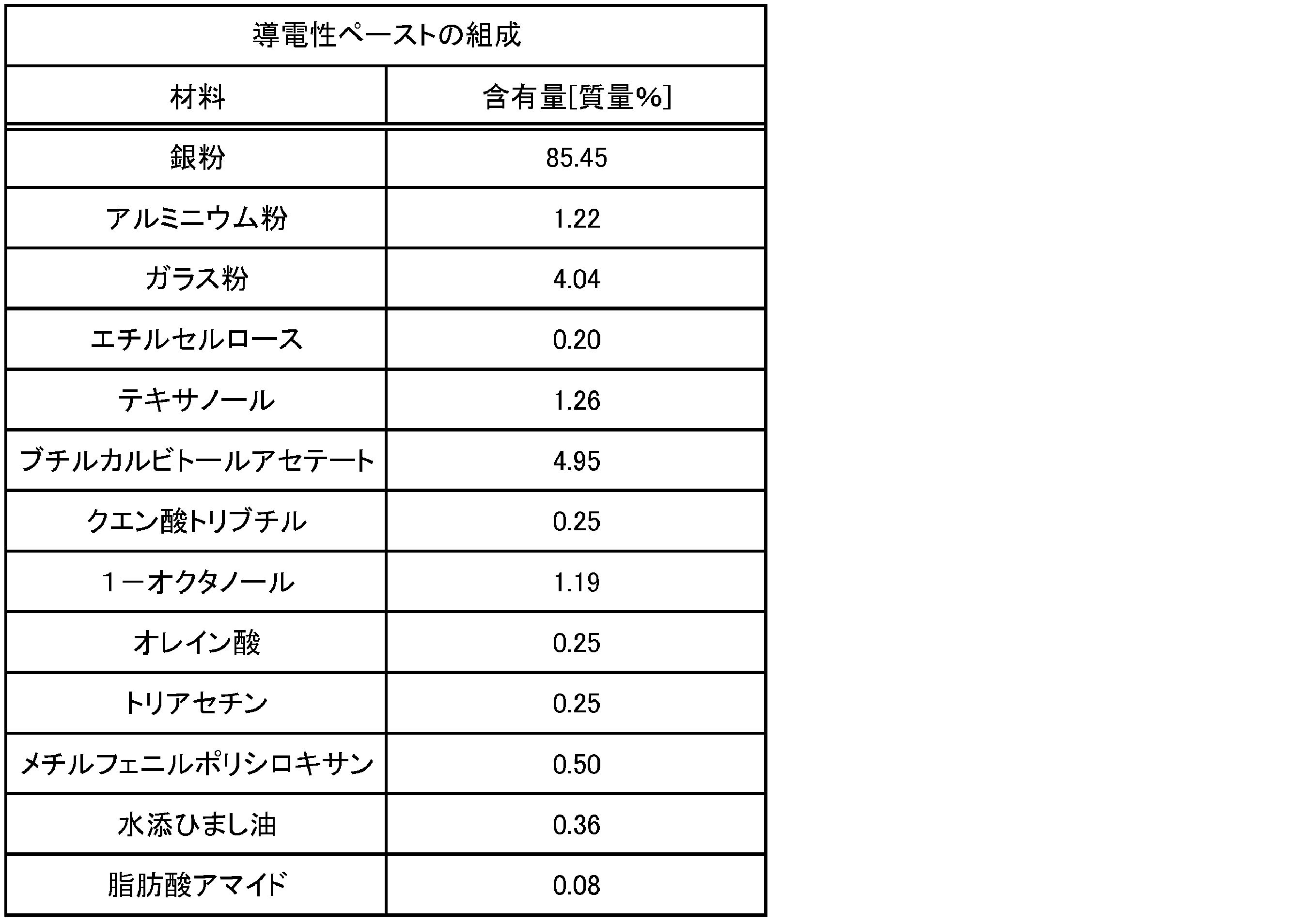
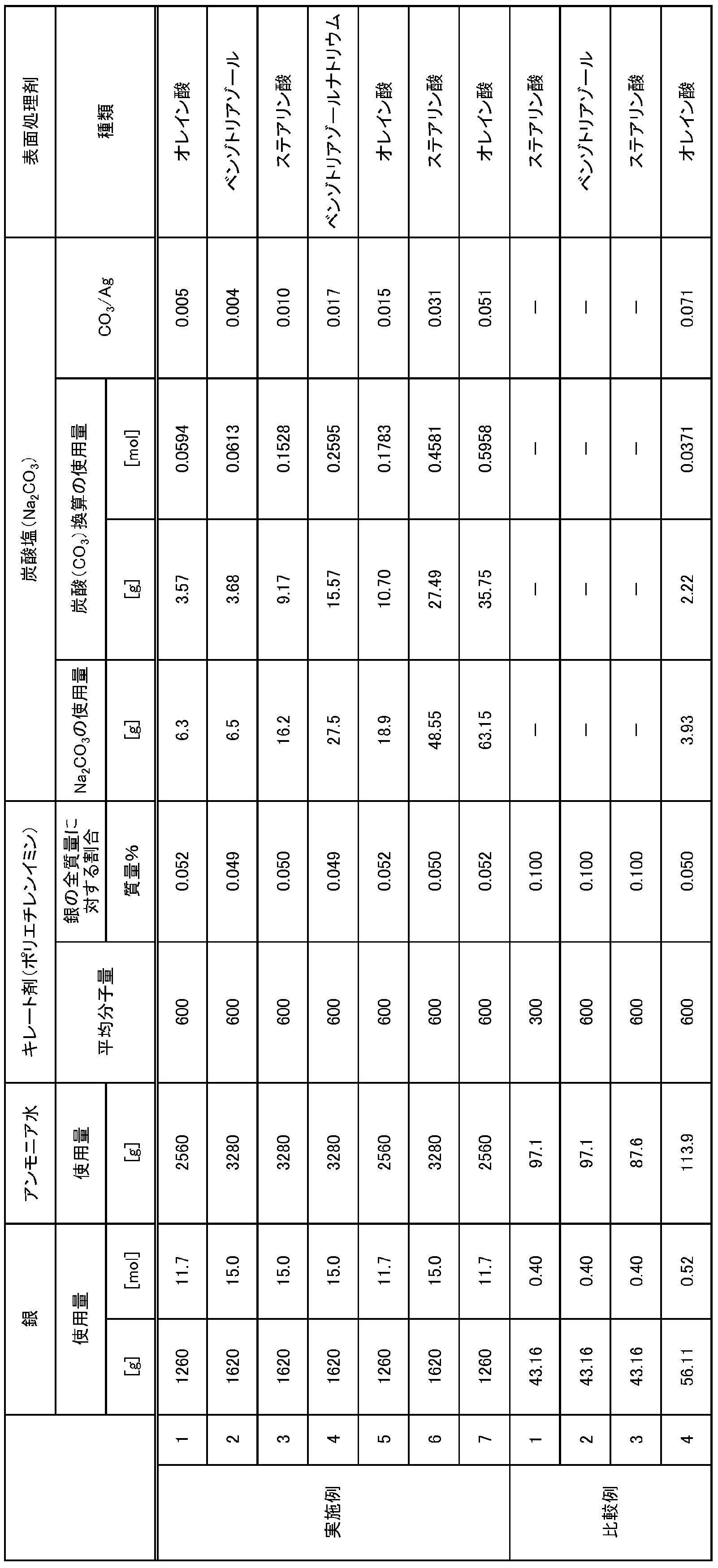
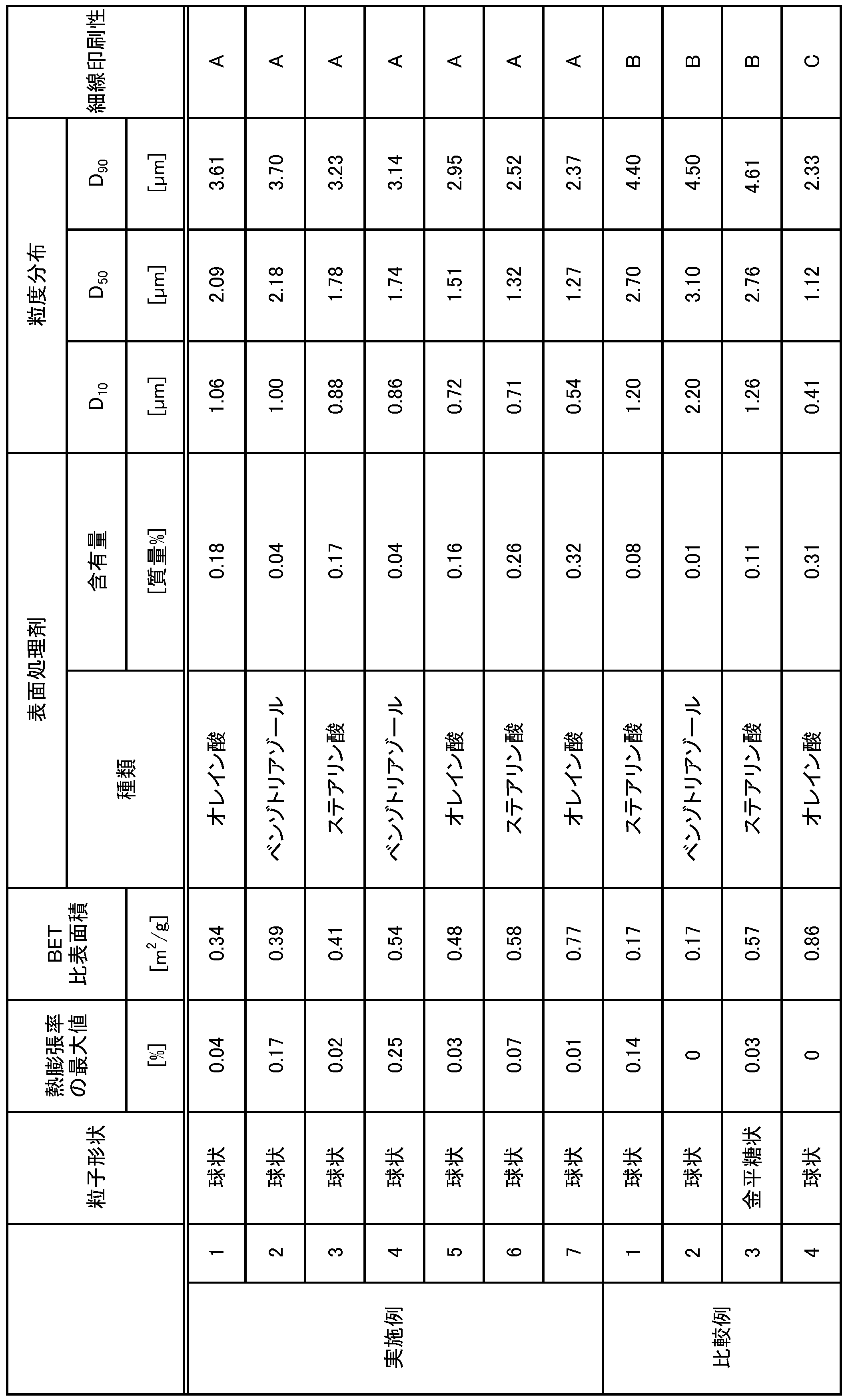
表2及び3の結果からも明らかなように、実施例1~7の球状銀粉であれば、導電性ペーストに優れた細線印刷性を付与できることが分かる。CO3/Agの割合が0.051を超えて多いと、比較例4のように粒子径が小さくなりすぎて印刷できなくなることが分かる。
また、表2及び3の結果からも明らかなように、実施例1~7の製造方法により得られた球状銀粉であれば、導電性ペーストに優れた細線印刷性を付与できることが分かる。
また、表2及び3の結果からも明らかなように、実施例1~7の製造方法により得られた球状銀粉であれば、導電性ペーストに優れた細線印刷性を付与できることが分かる。
本発明によれば、導電性ペーストに優れた細線印刷性を付与可能な球状銀粉を提供できる。
また、本発明は、導電性ペーストに優れた細線印刷性を付与可能な球状銀粉の製造方法を提供できる。
また、本発明は、導電性ペーストに優れた細線印刷性を付与可能な球状銀粉の製造方法を提供できる。
Claims (8)
- 表面処理剤が存在し、
熱膨張率測定において、50℃における値を基準とした熱膨張率の最大値が0.3%以下であり、
BET比表面積が0.1m2/g以上0.8m2/g以下であり、
D90の値が2.0μm以上4.0μm以下である、球状銀粉。 - D50の値が1.0μm以上2.5μm以下である、請求項1に記載の球状銀粉。
- D10の値が0.5μm以上1.2μm以下である、請求項1に記載の球状銀粉。
- 前記表面処理剤が、脂肪酸、アゾール構造を有する化合物、及び脂肪酸塩からなる群から選択される1種以上の表面処理剤である、請求項1~3の何れかに記載の球状銀粉。
- 銀イオンと、ポリマーからなるキレート剤とを含有する水性反応系に還元剤を添加して、銀粒子を還元析出させる球状銀粉の製造方法であって、
前記水性反応系に前記還元剤を添加する前に、前記水性反応系中の銀の全モル濃度に対する炭酸の全モル濃度の比を0.004以上0.051以下に調整する、炭酸濃度調整工程と、
前記銀粒子が析出した後に、前記水性反応系に表面処理剤を添加する、表面処理剤添加工程と、
を含む、球状銀粉の製造方法。 - 前記表面処理剤が、脂肪酸、アゾール構造を有する化合物、及び脂肪酸塩からなる群から選択される1種以上の表面処理剤である、請求項5に記載の球状銀粉の製造方法。
- 前記キレート剤が、重量平均分子量600以下のポリエチレンイミンである、請求項5に記載の球状銀粉の製造方法。
- 前記還元剤が、ヒドラジンである、請求項5~7の何れかに記載の球状銀粉の製造方法。
Applications Claiming Priority (2)
| Application Number | Priority Date | Filing Date | Title |
|---|---|---|---|
| JP2023-192545 | 2023-11-10 | ||
| JP2023192545A JP7741149B2 (ja) | 2023-11-10 | 2023-11-10 | 球状銀粉、及び球状銀粉の製造方法 |
Publications (1)
| Publication Number | Publication Date |
|---|---|
| WO2025100191A1 true WO2025100191A1 (ja) | 2025-05-15 |
Family
ID=95695798
Family Applications (1)
| Application Number | Title | Priority Date | Filing Date |
|---|---|---|---|
| PCT/JP2024/037069 Pending WO2025100191A1 (ja) | 2023-11-10 | 2024-10-17 | 球状銀粉、及び球状銀粉の製造方法 |
Country Status (3)
| Country | Link |
|---|---|
| JP (1) | JP7741149B2 (ja) |
| TW (1) | TW202519673A (ja) |
| WO (1) | WO2025100191A1 (ja) |
Citations (7)
| Publication number | Priority date | Publication date | Assignee | Title |
|---|---|---|---|---|
| JP2012214873A (ja) * | 2011-03-28 | 2012-11-08 | Dowa Electronics Materials Co Ltd | 銀粉およびその製造方法、並びに導電性ペースト |
| JP2013177688A (ja) * | 2011-11-18 | 2013-09-09 | Sumitomo Metal Mining Co Ltd | 銀粉及び導電性ペースト |
| JP2014514439A (ja) * | 2011-03-08 | 2014-06-19 | イー・アイ・デュポン・ドウ・ヌムール・アンド・カンパニー | 微小結晶子を含む銀粉末粒子の製造方法 |
| JP2018123384A (ja) * | 2017-02-02 | 2018-08-09 | Dowaエレクトロニクス株式会社 | りんを含有する銀粉および該銀粉を含む導電性ペースト |
| JP2019108610A (ja) * | 2017-12-15 | 2019-07-04 | Dowaエレクトロニクス株式会社 | 球状銀粉およびその製造方法 |
| JP2020139178A (ja) * | 2019-02-27 | 2020-09-03 | Dowaエレクトロニクス株式会社 | 銀粉およびその製造方法 |
| JP2022140325A (ja) * | 2021-03-10 | 2022-09-26 | Dowaエレクトロニクス株式会社 | 銀粉及びその製造方法 |
-
2023
- 2023-11-10 JP JP2023192545A patent/JP7741149B2/ja active Active
-
2024
- 2024-10-17 WO PCT/JP2024/037069 patent/WO2025100191A1/ja active Pending
- 2024-10-23 TW TW113140386A patent/TW202519673A/zh unknown
Patent Citations (7)
| Publication number | Priority date | Publication date | Assignee | Title |
|---|---|---|---|---|
| JP2014514439A (ja) * | 2011-03-08 | 2014-06-19 | イー・アイ・デュポン・ドウ・ヌムール・アンド・カンパニー | 微小結晶子を含む銀粉末粒子の製造方法 |
| JP2012214873A (ja) * | 2011-03-28 | 2012-11-08 | Dowa Electronics Materials Co Ltd | 銀粉およびその製造方法、並びに導電性ペースト |
| JP2013177688A (ja) * | 2011-11-18 | 2013-09-09 | Sumitomo Metal Mining Co Ltd | 銀粉及び導電性ペースト |
| JP2018123384A (ja) * | 2017-02-02 | 2018-08-09 | Dowaエレクトロニクス株式会社 | りんを含有する銀粉および該銀粉を含む導電性ペースト |
| JP2019108610A (ja) * | 2017-12-15 | 2019-07-04 | Dowaエレクトロニクス株式会社 | 球状銀粉およびその製造方法 |
| JP2020139178A (ja) * | 2019-02-27 | 2020-09-03 | Dowaエレクトロニクス株式会社 | 銀粉およびその製造方法 |
| JP2022140325A (ja) * | 2021-03-10 | 2022-09-26 | Dowaエレクトロニクス株式会社 | 銀粉及びその製造方法 |
Also Published As
| Publication number | Publication date |
|---|---|
| JP7741149B2 (ja) | 2025-09-17 |
| TW202519673A (zh) | 2025-05-16 |
| JP2025079700A (ja) | 2025-05-22 |
Similar Documents
| Publication | Publication Date | Title |
|---|---|---|
| US11713274B2 (en) | Mixed silver powder and conductive paste comprising same | |
| CN101835555B (zh) | 铜微粒和其制造方法及铜微粒分散液 | |
| TWI574761B (zh) | Silver powder and its manufacturing method | |
| TWI830525B (zh) | 銀粉、銀粉的製造方法及導電糊 | |
| CN103079729A (zh) | 银粉及其制造方法 | |
| US20160001361A1 (en) | Silver powder and silver paste | |
| US9796018B2 (en) | Silver powder | |
| JP2013122077A (ja) | 銀粉及びその製造方法 | |
| JP7145869B2 (ja) | 銀微粒子分散液 | |
| JP5985216B2 (ja) | 銀粉 | |
| JP2011208278A (ja) | フレーク状銀粉及びその製造方法 | |
| JP7741149B2 (ja) | 球状銀粉、及び球状銀粉の製造方法 | |
| WO2019117235A1 (ja) | 球状銀粉およびその製造方法 | |
| WO2025249331A1 (ja) | 球状銀粉及び球状銀粉の製造方法、並びに導電性ペースト | |
| JP2025179028A (ja) | 球状銀粉及び球状銀粉の製造方法、並びに導電性ペースト | |
| JP7785909B1 (ja) | フレーク状銅粉末及び該フレーク状銅粉末を含有する導電ペースト | |
| TWI870696B (zh) | 銀粉及銀粉的製造方法 | |
| JP2025178895A (ja) | 球状銀粉及び球状銀粉の製造方法、並びに導電性ペースト | |
| TW202547624A (zh) | 被覆有氧化鎵的銀粉、其製造方法及導電性膏 | |
| TW202605169A (zh) | 球狀銀粉及球狀銀粉之製造方法、以及導電性糊 | |
| TW202448601A (zh) | 混合銀粉、混合銀粉的製造方法以及導電糊 | |
| JP2025079697A (ja) | 銀粉の製造方法 | |
| CN117957077A (zh) | 银粉和银粉的制造方法 | |
| JP2015214759A (ja) | 銀粉の製造方法 | |
| HK1213221A1 (zh) | 银粉 |
Legal Events
| Date | Code | Title | Description |
|---|---|---|---|
| 121 | Ep: the epo has been informed by wipo that ep was designated in this application |
Ref document number: 24888489 Country of ref document: EP Kind code of ref document: A1 |