WO2025052651A1 - 切削加工システム、および切削工具 - Google Patents
切削加工システム、および切削工具 Download PDFInfo
- Publication number
- WO2025052651A1 WO2025052651A1 PCT/JP2023/032825 JP2023032825W WO2025052651A1 WO 2025052651 A1 WO2025052651 A1 WO 2025052651A1 JP 2023032825 W JP2023032825 W JP 2023032825W WO 2025052651 A1 WO2025052651 A1 WO 2025052651A1
- Authority
- WO
- WIPO (PCT)
- Prior art keywords
- power
- tool
- sensor
- housing
- cutting
- Prior art date
- Legal status (The legal status is an assumption and is not a legal conclusion. Google has not performed a legal analysis and makes no representation as to the accuracy of the status listed.)
- Pending
Links
Images





Classifications
-
- B—PERFORMING OPERATIONS; TRANSPORTING
- B23—MACHINE TOOLS; METAL-WORKING NOT OTHERWISE PROVIDED FOR
- B23B—TURNING; BORING
- B23B27/00—Tools for turning or boring machines; Tools of a similar kind in general; Accessories therefor
-
- B—PERFORMING OPERATIONS; TRANSPORTING
- B23—MACHINE TOOLS; METAL-WORKING NOT OTHERWISE PROVIDED FOR
- B23B—TURNING; BORING
- B23B29/00—Holders for non-rotary cutting tools; Boring bars or boring heads; Accessories for tool holders
- B23B29/24—Tool holders for a plurality of cutting tools, e.g. turrets
Definitions
- This disclosure relates to a cutting system and a cutting tool.
- Patent Literature 1 discloses a cutting tool including a main body, a sensor disposed in the main body, a wireless communication unit that transmits information indicating the output of the sensor to the outside, and a battery that supplies power to each of the components.
- the battery is housed in a battery housing, which is a space provided in the main body. This cutting tool is capable of monitoring the state of the cutting tool during machining using a sensor and transmitting the state to the outside.
- a cutting processing system includes a power supply device having a power transmission antenna provided in a processing space of a machine tool, and a cutting tool disposed in the processing space and having a power receiving antenna circuit that receives power transmitted from the power transmission antenna.
- the cutting tool includes a first tool body provided with a first sensor, and a housing separate from the first tool body that is connected to the first tool body via a first power line for supplying power to the first sensor and that houses the power receiving antenna circuit therein.
- FIG. 1 is a diagram showing an overall configuration of a cutting system according to an embodiment.
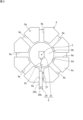
- FIG. 2 is a front view of an end face of a turret to which a cutting tool according to the first embodiment is attached.
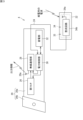
- FIG. 3 is a block diagram showing an example of the configuration of a cutting tool.
- FIG. 4 is a cross-sectional view of the housing.
- FIG. 5 is a diagram showing the board surface of the circuit board in FIG.
- FIG. 6 is a block diagram of a cutting tool according to a modified example.
- FIG. 7 is a front view of an end face of a turret to which a plurality of cutting tools are attached.
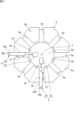
- FIG. 8 is a front view of an end face of a turret to which a cutting tool according to the second embodiment is attached.
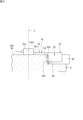
- FIG. 9 shows a cross-sectional view taken along line IV-IV in FIG.
- FIG. 10 is a front view of an end face of a turret to which a cutting tool according to the third embodiment is attached.
- FIG. 11 is a block diagram of a cutting tool according to the third embodiment.
- FIG. 12 is a diagram showing a power receiving antenna circuit according to the fourth embodiment.
- One solution is to supply power wirelessly to the cutting tool sensor.
- By supplying power wirelessly to the cutting tool sensor it becomes possible to supply power to the cutting tool during processing, and to continuously monitor the state of the cutting tool even if the processing time is long.
- the cutting tool in order to wirelessly supply power to the sensor, it is necessary to provide the cutting tool with a power receiving antenna circuit for receiving the transmitted power.
- a power receiving antenna circuit in the main body (shank) of the cutting tool instead of a battery.
- the receiving antenna circuit must be placed within a limited space, such as the space provided in the main body of the cutting tool, which limits the placement of the receiving antenna circuit and also limits the circuit scale of the receiving antenna circuit, such as the size and number of receiving antenna elements.
- a cutting system includes a power supply device having a power transmitting antenna provided in a machining space of a machine tool, and a cutting tool arranged in the machining space and having a power receiving antenna circuit that receives transmitted power from the power transmitting antenna.
- the cutting tool includes a first tool body provided with a first sensor, and a housing separate from the first tool body, connected to the first tool body via a first power line for supplying power to the first sensor, and housing the power receiving antenna circuit therein.
- the power receiving antenna circuit is housed in a housing that is separate from the first tool body, there is no need to incorporate the power receiving antenna circuit in the first tool body.
- the layout and circuit size of the power receiving antenna circuit are not limited by the first tool body, and the degree of freedom in the layout and circuit size of the power receiving antenna circuit can be increased.
- the housing when the machine tool has a turret that holds the tool body, the housing may include a housing body and a fixing portion that fixes the housing body to an axial end face of the turret. In this case, the housing can be fixed to the turret together with the tool body.
- the fixing portion may include an adhesive portion that bonds the end face and the opposing surface.
- the housing body can be fixed to the end surface of the turret by an adhesive portion, which can be a magnet, an adhesive, or the like.
- the fixed portion when the fixed portion includes a gripped portion that is gripped in the tool mounting groove of the turret, and an arm portion extending from the gripped portion and having the housing main body provided at its tip, the arm portion may extend along an end face of the turret toward the rotation axis of the turret with the gripped portion being gripped in the tool mounting groove.
- the housing body can be fixed to the end face of the turret by utilizing the tool attachment groove of the turret. This makes it possible to easily fix the housing body to the turret. Also, the housing body can be easily fixed to the vicinity of the rotation axis of the turret.
- the housing body may be fixed to an end face of the turret so that the rotation axis of the turret passes through the center of the antenna element of the power receiving antenna circuit.
- the antenna element may be a loop element.
- the housing body is fixed so that the rotation axis of the turret passes through the center of the loop element, the relative position of the antenna element with respect to the power transmitting antenna will not change significantly even if the turret rotates.
- a power storage unit may be provided in either the first tool body or the housing, and configured to store the power received by the power receiving antenna circuit. In this case, even when the power receiving antenna circuit does not receive transmitted power, the power stored in the power storage unit can be provided to the first sensor.
- the cutting tool may further include a second tool body provided with a second sensor and connected to the housing via a second power line for supplying power to the second sensor, and a power supply control unit that supplies the power received by the power receiving antenna circuit to the first sensor and the second sensor.
- power received by one power receiving antenna circuit can be supplied to a plurality of sensors.
- the power supply control unit may be configured to control the power supplied to the first sensor and the power supplied to the second sensor based on a control command from the external device provided via the communication unit. In this case, the power supply to the first sensor and the second sensor can be controlled from outside the machining space.
- the control command may be generated based on at least one of information indicating a state of the machine tool and output information including an output of the first sensor and an output of the second sensor transmitted from the communication unit.
- information indicating the state of the machine tool it is possible to ascertain which of the first and second tool bodies is in use.
- the output information it is possible to ascertain which of the first and second tool bodies is currently being used. Therefore, if a control command is output to the external device so that power is preferentially supplied to the sensor of the tool body in use, efficient power supply is possible.
- the receiving antenna circuit may include a plurality of circuit units having receiving antennas that receive transmitted power from the transmitting antenna, and a combining circuit that combines the power output by the plurality of circuit units.
- each of the multiple circuit units has a power receiving antenna, and each of the multiple circuit units outputs power. Therefore, by combining the powers output by the multiple circuit units, it is possible to receive a larger amount of power.
- FIG. 12 Another embodiment from another perspective is a cutting tool arranged in a machining space of a machine tool.
- This cutting tool includes a power receiving antenna circuit that receives power transmitted from a power supply device, which is transmitted by a power transmitting antenna provided in the machining space, a tool body provided with a sensor, and a housing separate from the tool body that is connected to the tool body via a power line for supplying power to the sensor and that houses the power receiving antenna circuit inside.
- FIG. 1 is a diagram showing an overall configuration of a cutting system according to an embodiment.
- the cutting system 1 includes a machine tool 2, a cutting tool 4, a power supply device 6, and an external device 7.
- the machine tool 2 is, for example, a turret lathe.
- the machine tool 2 has a turret 8, a drive device 10, and a movement device 12.
- the cutting tool 4 is attached to a turret 8.
- a plurality of cutting tools 4 can be attached to the turret 8.
- the driving device 10 is a device that rotates the turret 8 about a rotation axis C.
- the moving device 12 is a device that moves the turret 8 along the axial direction.
- the machine tool 2 also has a spindle portion (not shown) that grips and rotates the workpiece.
- the machine tool 2 rotates and moves the turret 8 to move the cutting tool 4 attached to the turret 8 to a processing position and perform cutting processing on the workpiece.
- the cutting process is performed in a machining space S of the machine tool 2.
- the cutting tool 4, the turret 8, the drive unit 10, the moving unit 12, the main shaft unit, etc. are arranged in the machining space S.
- the machining space S is defined by a cover made of metal, resin, or the like. In other words, the machining space S is a space closed by the cover.
- cutting oil coolant
- the cutting is performed within the closed machining space S.
- the cutting tool 4 is a tool for performing cutting on a workpiece. More specifically, the cutting tool 4 is a tool for performing turning, which is a type of cutting. Turning is a process performed by pressing a tool against a rotating workpiece.
- the cutting tool 4 includes a first tool body 20 and a housing 22 that is separate from the first tool body 20. The first tool body 20 and the housing 22 are attached to an end face 8a side of the turret 8. The end face 8a is one of the end faces on both axial sides of the turret 8 that is opposite to the drive device 10 side.
- the cutting tool 4 in this embodiment has a sensor.
- the sensor has a function of detecting the state of the cutting tool 4.
- the cutting tool 4 further has a function of transmitting output information indicating the output of the sensor to the outside.
- the configuration of the cutting tool 4 will be described in detail later.
- the power supply device 6 has a function of wirelessly supplying power to the cutting tool 4 in the machining space S.
- the power supply device 6 includes a power transmission antenna 6a and a power transmission unit 6b.
- the power transmission unit 6b generates a power supply signal based on power supplied from a power source 100 and provides the signal to the power transmission antenna 6a.
- the power transmission antenna 6a is fixed at a position in the machining space S where power can be wirelessly supplied to the cutting tool 4.
- the power transmission antenna 6a transmits the power supply signal to the cutting tool 4 as a power supply radio wave.
- the power transmitted from the power supply device 6 to the cutting tool 4 is used as operating power for the sensor of the cutting tool 4 and power for transmitting output information.
- the power supply device 6 of the present embodiment generates and transmits a signal in a frequency band including 5.7 GHz. That is, the power transmission antenna 6a radiates radio waves in a frequency band including 5.7 GHz.
- the frequency band of the radio waves radiated by the power supply device 6 is not particularly limited, but may be a frequency band including 2.4 GHz from the viewpoint of regulations, etc.
- the external device 7 is a device that is disposed outside the machine tool 2 (the machining space S of the machine tool 2).
- the external device 7 has a function of performing wireless communication with the cutting tool 4.
- the external device 7 receives output information transmitted by the cutting tool 4 via wireless communication.
- the external device 7 is configured by a computer etc.
- the external device 7 includes a processing unit 7a, a storage unit 7b, an input/output unit 7c, and a communication unit 7d.
- the processing unit 7a is, for example, a CPU (Central Processing Unit), GPU (Graphics Processing Unit), DSP (Digital Signal Processor), FPGA (Field Programmable Gate Array), ASIC (Application Specific Integrated Circuit), quantum processor, or any other processor suitable for computer control.
- CPU Central Processing Unit
- GPU Graphics Processing Unit
- DSP Digital Signal Processor
- FPGA Field Programmable Gate Array
- ASIC Application Specific Integrated Circuit
- quantum processor or any other processor suitable for computer control.
- the storage unit 7b is, for example, a flash memory, a hard disk, a ROM (Read Only Memory), a RAM (Random Access Memory), or the like.
- the storage unit 7b stores computer programs and necessary information to be executed by the processing unit 7a.
- the processing unit 7a executes the computer programs stored in a computer-readable non-transitory recording medium such as the storage unit 7b to realize various processing functions of the processing unit 7a.
- the input/output unit 7c has a function of outputting various information to the outside and a function of receiving operation input by an operator, and includes devices such as a monitor, a touch panel, a keyboard, and a mouse.
- the communication unit 7d has a function of performing wireless communication with the cutting tool 4.
- the communication unit 7d performs wireless communication with the cutting tool 4 by, for example, Bluetooth (registered trademark).
- the communication unit 7d performs wireless communication using a frequency band including 2.4 GHz.
- the processing unit 7a of the external device 7 has a function of receiving output information sent from the cutting tool 4 via the communication unit 7d and performing processing related to the output information.
- the processing unit 7a extracts information indicating the detection results by the sensor from the output information, stores it in the memory unit 7b, and outputs the detection results to the outside via the input/output unit 7c.
- the eight tool mounting grooves 9a extend in the radial direction centered on the rotation axis C.
- the eight tool mounting grooves 9a are connected to each other by an annular groove 9d that surrounds the circular surface portion 9b.
- the circular surface portion 9b is a surface provided at the center of the end surface 8a of the turret 8.
- the axial position of the circular surface portion 9b may be the same as or different from the axial position of the outer surface portion 9c.
- the cutting tool 4 includes the first tool body 20 and the housing 22 .
- the first tool body 20 has a shank 20a and a cutting tip 20b.
- the shank 20a is a rectangular prism-shaped member made of metal.
- the cutting tip 20b is a blade for cutting a workpiece.
- the cutting tip 20b is detachably attached to the tip of the shank 20a.
- the first tool body 20 is attached to the tool attachment groove 9 a of the turret 8 .
- the first tool body 20 is attached to one of the eight tool attachment grooves 9a.
- the shank 20a of the first tool body 20 is attached to the tool attachment groove 9a together with a fixing plate 21.
- the fixing plate 21 is a jig for holding the shank 20a in the tool attachment groove 9a.
- the shank 20a is held between the fixing plate 21 and the wall surface of the tool attachment groove 9a.
- the housing 22 is fixed to the circular surface portion 9b.
- the housing 22 is fixed on the rotation axis C. Therefore, the housing 22 is fixed to the center of the end surface 8a of the turret 8.
- the first tool body 20 and the housing 22 are connected to each other via a first power line 24 .
- the first power line 24 is a power line for supplying power from the housing 22 side to the first tool body 20 side.
- a sensor and a wireless communication unit (described later) are provided in the first tool body 20.
- a rectenna (described later) is housed in the housing 22.
- the first power line 24 is a power line for supplying power output by the rectenna to the sensor and the wireless communication unit.
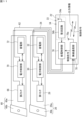
- FIG. 3 is a block diagram showing an example of the configuration of the cutting tool 4.
- the cutting tool 4 has a first sensor 26, a wireless communication unit 28, a power control unit 30, a power storage unit 32, and a power receiving antenna circuit 33.
- the first sensor 26, the wireless communication unit 28, the power control unit 30, and the power storage unit 32 are provided on the shank 20a.
- the first sensor 26, the wireless communication unit 28, the power control unit 30, and the power storage unit 32 are housed in a space provided inside the shank 20a.
- the power receiving antenna circuit 33 is housed inside the housing 22 .
- the receiving antenna circuit 33 receives the transmitted power from the transmitting antenna 6a of the power supply device 6.
- the receiving antenna circuit 33 has one rectenna 34.
- the rectenna 34 has a receiving antenna 34a and a rectifier circuit 34b.
- the receiving antenna 34a receives radio waves for power supply from the power supply device 6.
- the receiving antenna 34a provides an electrical signal based on the received radio waves to the rectifier circuit 34b.
- the rectifier circuit 34b rectifies the electrical signal provided by the receiving antenna 34a, converts it to DC power, and outputs it.
- the DC power output by the rectifier circuit 34b is provided to the power control unit 30 of the first tool body 20 via the first power line 24.
- FIG. 4 is a cross-sectional view of the housing 22.
- FIG. 4 shows a cross section along a vertical plane including the rotation axis C.
- the housing 22 has a box-shaped housing body 22a, a partition plate 22b, and a waterproof connector 22c.
- the housing body 22a is a hollow box-shaped member made of resin, etc.
- the internal space of the housing body 22a is sealed, thereby preventing cutting oil from entering the internal space of the housing body 22a.
- Waterproof connector 22c is a connector for connecting first power line 24 and rectenna 34 (power receiving antenna circuit 33) inside housing 22. Waterproof connector 22c prevents cutting oil from entering housing 22 from the connection portion between first power line 24 and rectenna 34.
- the outer plate 40 on the turret 8 side of the housing body 22a is disposed along the circular surface portion 9b of the end face 8a of the turret 8.
- the outer plate 40 has an opposing surface 40a that faces the circular surface portion 9b.
- a fixing portion 42 is fixed to the inner surface 40b of the outer plate 40.
- the fixing portion 42 has a function of fixing the housing body 22a to the turret 8.
- the fixing portion 42 in this embodiment includes a plate-shaped magnet 48.
- the magnet 48 is fixed to the inner surface 40b with an adhesive or the like. In other words, the magnet 48 is fixed within the space inside the housing body 22a.
- the circular surface portion 9b and the opposing surface 40a are adhered to each other by the magnetic force of the magnet 48.
- the housing main body 22a is fixed to the circular surface portion 9b.
- the magnet 48 constitutes an adhesive portion that adheres the circular surface portion 9b and the opposing surface 40a to each other.
- the housing body 22a since the housing body 22a is fixed to the circular surface portion 9b of the turret 8 by magnetic force, the housing body 22a can be easily attached to and detached from the turret 8, and the fixed position can also be easily changed.
- the magnet 48 is fixed in the space inside the housing body 22a, it is possible to prevent metal powder and chips generated by the cutting process from being directly attached to the magnet 48 by magnetic force, making it easy to remove metal powder and chips that adhere to the housing body 22a after processing.
- the partition plate 22b is a plate-like member made of resin, etc.
- the partition plate 22b is provided inside the housing main body 22a in a state facing the outer plate 40.
- a rectenna 34 is provided on a plate surface 22b1 of the partition plate 22b facing the opposite side to the outer plate 40.
- the rectenna 34 has a circuit board 34c.
- FIG. 5 is a diagram showing the board surface of the circuit board 34c in FIG.
- a power receiving antenna 34a and a circuit chip 35 are mounted on a board surface 34c1 of the circuit board 34c.
- the power receiving antenna 34a includes a C-shaped loop element 34a1 and a pair of lines 34a2.
- the loop element 34a1 and the pair of lines 34a2 are metal foils such as copper foils patterned on the substrate surface 34c1.
- the loop element 34a1 is an antenna element for receiving power transmitted from the power supply device 6.
- the pair of lines 34a2 connect both ends of the loop element 34a1 to the circuit chip 35.
- the circuit chip 35 is a circuit chip including a rectifier circuit 34b.
- the first power line 24 is connected to the circuit chip 35.
- the housing body 22a of this embodiment is fixed to the circular surface portion 9b of the turret 8 so that the rotation axis C passes through the center P of the loop element 34a1 (antenna element).
- the position of the power receiving antenna 34a can be changed by moving the housing 22 (housing body 22a) on the circular surface portion 9b. Even if the power receiving antenna 34a is fixed at a position where the rotation axis C does not pass through the center of the loop element 34a1, the power receiving antenna 34a is fixed to the circular surface portion 9b and is therefore fixed at a position closer to the rotation axis C on the end face 8a of the turret 8. Therefore, the power receiving antenna 34a can properly receive radio waves from the power transmitting antenna 6a even if the turret 8 rotates.
- the power receiving antenna 34a is fixed to the turret 8 so that the rotation axis C passes through the center P of the loop element 34a1.
- the turret 8 rotates around the rotation axis C, changes in the relative position of the receiving antenna 34a (loop element 34a1) with respect to the transmitting antenna 6a in the machining space S are suppressed, and the transmitted power from the transmitting antenna 6a can be received more stably.
- the housing body 22a is made of resin
- the housing body 22a may be made of metal such as a steel plate.
- a window made of resin or the like is provided in a part of the housing body 22a to allow radio waves from the power transmission antenna 6a to pass through.
- the power control unit 30 provided in the first tool body 20 receives DC power from the rectenna 34 (power receiving antenna circuit 33 ) via the first power line 24 , as described above.
- the power control unit 30 has the function of converting the DC power provided from the rectenna 34 to a predetermined voltage, controlling the charging and discharging of the power storage unit 32, and providing the DC power from the rectenna 34 and the DC power from the power storage unit 32 to the first sensor 26 and the wireless communication unit 28.
- the power control unit 30 can provide DC power only to the power storage unit 32.
- the first sensor 26 and the wireless communication unit 28 are provided with DC power from the power storage unit 32.
- the power control unit 30 can provide the DC power stored in the power storage unit 32 to the first sensor 26 and the wireless communication unit 28 .
- the power storage unit 32 includes, for example, a battery or a capacitor.
- the power storage unit 32 stores DC power provided via the power control unit 30.
- the power storage unit 32 also discharges the stored power based on the control of the power control unit 30.
- the first sensor 26 is a sensor for detecting the state of the shank 20a. More specifically, the first sensor 26 includes a strain sensor, a temperature sensor, an acceleration sensor, etc. The first sensor 26 has the function of detecting the strain, temperature, and acceleration (vibration), which are the states of the shank 20a. When DC power is provided from the power control unit 30, the first sensor 26 provides an output indicating the results of the detection of the state of the shank 20a to the wireless communication unit 28.
- the wireless communication unit 28 has an antenna 28 a and has a function of performing wireless communication with the external device 7 .
- the wireless communication unit 28 wirelessly transmits, as output information, the output provided from the first sensor 26.
- the wireless communication unit 28 is provided with DC power from the power control unit 30, it establishes a communication connection with the external device 7 and starts wireless transmission of the output information.
- an operator of the system 1 attaches a necessary cutting tool 4 to the turret 8. Furthermore, the operator attaches a workpiece to the spindle portion. After that, the operator closes the cover of the machine tool 2 to close the processing space S. Next, the operator starts wireless power supply to the cutting tool 4 by the power supply device 6 . As a result, the cutting tool 4 receives the transmitted power from the power supply device 6.
- the first sensor 26 of the cutting tool 4 starts detecting the state of the shank 20a and outputting the detection result.
- the wireless communication unit 28 establishes a communication connection with the external device 7 and starts wireless transmission of output information. Thereafter, the operator operates the machine tool 2 to start cutting.
- the first sensor 26 of the cutting tool 4 provides an output indicating the result of the detection of the state of the cutting tool 4 to the wireless communication unit 28.
- the wireless communication unit 28 wirelessly transmits the output provided from the first sensor 26 as output information.
- the output information transmitted by the wireless communication unit 28 is received by the external device 7 .
- the external device 7 that has received the output information acquires information indicating the state of the shank 20a from the output information.
- the external device 7 outputs the acquired information indicating the state of the shank 20a from the input/output unit 7c. This enables the external device 7 to output the machining state (the state of the cutting tool 4) during cutting to the operator.
- the power receiving antenna circuit 33 (rectenna 34) is housed in the housing 22 which is separate from the first tool body 20, there is no need to incorporate the power receiving antenna circuit 33 into the first tool body 20.
- the degree of freedom in the arrangement of the power receiving antenna circuit 33 and the degree of freedom in the circuit scale can be increased.
- the machine tool 2 has a turret 8
- the housing 22 is equipped with a housing main body 22a and a fixing portion 42 (magnet 48) that fixes the housing main body 22a to the circular surface portion 9b of the turret 8, so that the housing 22 can be fixed to the turret 8 together with the first tool body 20.
- the magnet 48 can adhere and fix the circular surface portion 9b and the opposing surface 40a of the housing body 22a by magnetic force.
- an adhesive layer made of adhesive, adhesive tape or the like may be provided between the circular surface portion 9b and the opposing surface 40a, and the circular surface portion 9b and the opposing surface 40a may be adhered to each other by this adhesive layer.
- the power control unit 30 and the power storage unit 32 are provided in the shank 20a, but as shown in FIG. 6, the power control unit 30 and the power storage unit 32 may be housed in the housing 22. Since the housing 22 is fixed onto the circular surface portion 9b, it is relatively easy to ensure space in the housing 22 for housing the power control unit 30 and the power storage unit 32. In addition, there is no need to provide space in the shank 20a for housing the power control unit 30 and the power storage unit 32. Furthermore, by minimizing the space provided in the shank 20a, the strength of the shank 20a can be maintained at a high level.
- each housing 22 can be freely positioned at any position on the circular surface portion 9b by the magnets 48. Therefore, by arranging each housing 22 around the rotation axis C as shown in Figure 7, each housing 22 (power receiving antenna circuit 33) can be positioned so that it moves as little as possible relative to the power transmitting antenna 6a even if the turret 8 rotates.
- FIG. 8 is a front view of an end face 8a of a turret 8 to which a cutting tool 4 according to the second embodiment is attached.
- This embodiment differs from the first embodiment in that the fixed portion 42 of the housing 22 has a gripped portion 50 and an arm portion 52 instead of the magnet 48.
- the housing 22 may or may not have a partition plate 22b.
- the gripped portion 50 and the arm portion 52 are resin members that are integrally provided on the housing main body 22a.
- the gripped portion 50 is a rectangular member, and is gripped in the tool attachment groove 9a of the turret 8.
- the tool attachment groove 9a in which the gripped portion 50 is gripped is located on the opposite side of the rotation axis C to the tool attachment groove 9a in which the first tool body 20 is gripped.
- the gripped part 50 like the shank 20a, is attached to the tool attachment groove 9a together with the fixing plate 51.
- the gripped part 50 is gripped between the fixing plate 51 and the wall surface of the tool attachment groove 9a.
- FIG. 9 shows a cross-sectional view taken along line IV-IV in FIG.
- the turret 8 is shown in cross section, and the housing 22 is shown in external appearance.
- the arm portion 52 extends from the grasped portion 50.
- the housing main body 22a is provided at a tip 52a of the arm portion 52.
- the arm portion 52 connects the grasped portion 50 and the housing main body 22a.
- the arm portion 52 is aligned along the circular surface portion 9b (end surface 8a) of the turret 8 in a state in which the gripped portion 50 is gripped in the tool attachment groove 9a.
- the arm portion 52 also extends toward the rotation axis C of the turret 8. Therefore, by positioning the housing 22 on the turret 8 so that the gripped portion 50 is gripped in the tool mounting groove 9a and the arm portion 52 is aligned along the circular surface portion 9b, the housing main body 22a can be easily fixed near the rotation axis C of the turret 8.
- a spacer 54 is provided on an inner surface 50a of the gripped portion 50.
- the inner surface 50a is a surface of the gripped portion 50 that faces the rotation axis C side.
- the spacer 54 is interposed between the inner surface 50a and the outer circumferential surface 9d1 of the annular groove 9d.
- FIG. 10 is a front view of an end face 8a of a turret 8 to which a cutting tool 4 according to the third embodiment is attached.
- This embodiment differs from the first embodiment in that the cutting tool 4 includes a second tool body 60 in addition to the first tool body 20 .
- the second tool body 60 has a shank 60a and a cutting tip 60b, similar to the first tool body 20.
- the second tool body 60 is held in a tool attachment groove 9a located adjacent in the circumferential direction to the tool attachment groove 9a in which the first tool body 20 is held.
- the second tool body 60 is held between a fixing plate 61 and a wall surface of the tool attachment groove 9a.
- the second tool body 60 is connected to the housing 22 by a second power line 62.
- the second power line 62 is a power line for supplying electric power from the housing 22 side to the second tool body 60 side.
- FIG. 11 is a block diagram of a cutting tool 4 according to the third embodiment.
- the shank 20 a of the first tool body 20 is provided with a first sensor 26 , a power control unit 30 , and a power storage unit 32 .
- the shank 60a of the second tool body 60 is provided with a second sensor 66, a power control unit 70, and a power storage unit 72.
- the second sensor 66, the power control unit 70, and the power storage unit 72 have the same configurations as the first sensor 26, the power control unit 30, and the power storage unit 32.
- the second tool body 60 has the same configuration as the first tool body 20.
- the cutting tool 4 of the present embodiment includes, in addition to the rectenna 34 , a power supply control unit 76 and a wireless communication unit 78 within the housing 22 .
- the power supply control unit 76 has a function of supplying the power received by the rectenna 34 (power receiving antenna circuit 33 ) to the first sensor 26 , the second sensor 66 , and the wireless communication unit 78 .
- the power supply control unit 76 and the power control unit 30 of the first tool body 20 are connected to each other by the first power line 24.
- the power supply control unit 76 supplies power to the first sensor 26 via the first power line 24 and the power control unit 30.
- the power supply control unit 76 and the power control unit 70 of the second tool body 60 are connected to each other by the second power line 62.
- the power supply control unit 76 supplies power to the second sensor 66 via the second power line 62 and the power control unit 70.
- the power supply control unit 76 provides power to both sensors 26 , 66 and the wireless communication unit 78 .
- the wireless communication unit 78 has an antenna 78 a and has a function of performing wireless communication with the external device 7 .
- the first tool body 20 and the second tool body 60 do not have a communication function with the external device 7, and a wireless communication unit 78 is provided in the housing 22, thereby consolidating the communication function with the external device 7.
- the wireless communication unit 78 and both sensors 26, 66 are connected to each other.
- the outputs of both sensors 26, 66 are provided to the wireless communication unit 78.
- the wireless communication unit 78 wirelessly transmits the outputs provided from both sensors 26, 66 as output information.
- the wireless communication unit 78 transmits the output information of the first sensor 26 and the output information of the second sensor 66 to the external device 7 in an identifiable manner.
- the wireless communication unit 78 establishes a communication connection with the external device 7 and starts wireless transmission of output information.
- the wireless communication unit 78 has a function of receiving a control command transmitted from the external device 7 and providing the control command to the power supply control unit 76 .
- the power supply control unit 76 controls the power supplied to the first sensor 26 and the power supplied to the second sensor 66 based on a control command from the external device 7 provided via the wireless communication unit 78. More specifically, the control command includes information indicating either the first sensor 26 or the second sensor 66.
- the power supply control unit 76 supplies more power to the sensor indicated by the control command.
- the processing unit 7 a (see FIG. 1 ) of the external device 7 generates a control command based on the output information transmitted from the wireless communication unit 78 .
- the processing unit 7a compares the output information of the first sensor 26 with the output information of the second sensor 66, and determines which of the first tool body 20 and the second tool body 60 is in use (during machining).
- the processing unit 7a causes information indicating the sensor of the tool body determined to be in use to be included in the control command.
- the power supply control section 76 supplies more power to the sensor of the tool body that is in use.
- the cutting tool 4 is equipped with a power supply control unit 76 that supplies the power received by the rectenna 34 to the first sensor 26 and the second sensor 66, so that the power received by one rectenna 34 can be supplied to multiple sensors.
- the cutting tool 4 is equipped with a wireless communication unit 78 capable of communicating with the external device 7, and the power supply control unit 76 is configured to control the power supplied to the first sensor 26 and the power supplied to the second sensor 66 based on a control command from the external device 7 provided via the wireless communication unit 78, so that the power supply to the first sensor 26 and the second sensor 66 can be controlled from outside the machining space S.
- control command is generated based on output information transmitted from the wireless communication unit 78.
- the external device 7 generates a control command to supply more power to the sensor of the tool body in use.
- the external device 7 generates a control command to preferentially supply power to the sensor of the tool body in use, thereby enabling efficient power supply.
- the control command may be generated based on the information indicating the state of the machine tool 2.
- the information indicating the state of the machine tool 2 includes information indicating which of the tool bodies attached to the turret 8 is being used. Therefore, by referring to the information indicating the state of the machine tool 2, it is possible to know which of the first tool body 20 and the second tool body 60 is being used. Therefore, based on the information indicating the state of the machine tool 2, the external device 7 can generate a control command to supply more power to the sensor of the tool body being used.
- the first tool body 20 and the second tool body 60 do not have a communication function with the external device 7, and a wireless communication unit 78 is provided in the housing 22 to consolidate the communication function with the external device 7.
- the first tool body 20 and the second tool body 60 may each be provided with a communication unit for communicating with the external device 7, and each of the first tool body 20 and the second tool body 60 may be configured to transmit sensor output information.
- the power control units 30, 70 and the power storage units 32, 72 are provided on the shanks 20a, 60a, but the power control units 30, 70 and the power storage units 32, 72 may be housed in the housing 22.
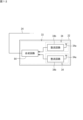
- FIG. 12 is a diagram showing a power receiving antenna circuit 33 according to the fourth embodiment. This embodiment differs from the first embodiment in that the power receiving antenna circuit 33 includes two rectennas 34 .
- the power receiving antenna circuit 33 of the present embodiment includes two rectennas 34 and a combining circuit 84 .
- the two rectennas 34 receive radio waves for power supply from the power supply device 6 and output DC power.
- the combining circuit 84 combines the DC powers output by the two rectennas 34.
- the combined DC power is provided to the power control unit 30 of the first tool body 20 via the first power line 24.
- the two rectennas 34 included in the power receiving antenna circuit 33 of this embodiment each constitute a circuit section having a power receiving antenna 34a that receives the transmitted power from the power transmitting antenna 6a. That is, in this embodiment, the two rectennas 34 each have a power receiving antenna 34a, and each of the two rectennas 34 outputs power. Therefore, by combining the powers output by the two rectennas 34, it is possible to receive more power.
- the power receiving antenna circuit 33 includes two rectennas 34 has been described as an example, but a greater number of rectennas may be included.
- the power receiving antenna circuit 33 shown in FIG. 12 can be applied not only to the cutting tool 4 of the first embodiment but also to the cutting tools 4 of the other embodiments.
- the power receiving antenna 34a includes the loop element 34a1 as an antenna element to configure a loop antenna.
- the power receiving antenna 34a may be configured as a dipole antenna having a pair of linear elements or a patch antenna having a patch element, in addition to the loop antenna.
- the center of the antenna element in a dipole antenna is the pair of base ends of a pair of linear elements or the midpoint of the pair of base ends, while the center of the antenna element in a patch antenna is the center of the radiation surface of the patch element.
- the cutting tool 4 is a tool for performing turning, but the cutting tool 4 may be a tool for performing a milling process, which is a type of cutting process. Milling is a process in which a tool is pressed against a fixed workpiece while rotating.
Landscapes
- Engineering & Computer Science (AREA)
- Mechanical Engineering (AREA)
- Machine Tool Sensing Apparatuses (AREA)
- Cutting Tools, Boring Holders, And Turrets (AREA)
Priority Applications (4)
| Application Number | Priority Date | Filing Date | Title |
|---|---|---|---|
| JP2024522328A JP7663154B1 (ja) | 2023-09-08 | 2023-09-08 | 切削加工システム、および切削工具 |
| CN202380099968.1A CN121419848A (zh) | 2023-09-08 | 2023-09-08 | 切削加工系统以及切削工具 |
| PCT/JP2023/032825 WO2025052651A1 (ja) | 2023-09-08 | 2023-09-08 | 切削加工システム、および切削工具 |
| JP2025009463A JP2025065171A (ja) | 2023-09-08 | 2025-01-22 | 切削加工システム、および切削工具 |
Applications Claiming Priority (1)
| Application Number | Priority Date | Filing Date | Title |
|---|---|---|---|
| PCT/JP2023/032825 WO2025052651A1 (ja) | 2023-09-08 | 2023-09-08 | 切削加工システム、および切削工具 |
Publications (1)
| Publication Number | Publication Date |
|---|---|
| WO2025052651A1 true WO2025052651A1 (ja) | 2025-03-13 |
Family
ID=94923096
Family Applications (1)
| Application Number | Title | Priority Date | Filing Date |
|---|---|---|---|
| PCT/JP2023/032825 Pending WO2025052651A1 (ja) | 2023-09-08 | 2023-09-08 | 切削加工システム、および切削工具 |
Country Status (3)
| Country | Link |
|---|---|
| JP (2) | JP7663154B1 (https=) |
| CN (1) | CN121419848A (https=) |
| WO (1) | WO2025052651A1 (https=) |
Families Citing this family (1)
| Publication number | Priority date | Publication date | Assignee | Title |
|---|---|---|---|---|
| WO2024128145A1 (ja) * | 2022-12-15 | 2024-06-20 | 株式会社ダイセル | 置換型ポリフェニレンサルファイド樹脂 |
Citations (6)
| Publication number | Priority date | Publication date | Assignee | Title |
|---|---|---|---|---|
| JP2005230934A (ja) * | 2004-02-17 | 2005-09-02 | Bosch Automotive Systems Corp | 検出信号伝送装置 |
| WO2020241628A1 (ja) * | 2019-05-31 | 2020-12-03 | 京セラ株式会社 | 切削工具本体、切削工具及びデータ収集システム |
| WO2021153729A1 (ja) * | 2020-01-30 | 2021-08-05 | 京セラ株式会社 | 工作機械、データ収集システム及び工作機械の機械本体 |
| WO2022080093A1 (ja) * | 2020-10-13 | 2022-04-21 | 株式会社メトロール | 給電制御システム及び制御システム |
| WO2022230149A1 (ja) | 2021-04-28 | 2022-11-03 | 住友電気工業株式会社 | 切削工具 |
| WO2023002567A1 (ja) * | 2021-07-20 | 2023-01-26 | 住友電気工業株式会社 | 切削工具および切削装置 |
Family Cites Families (2)
| Publication number | Priority date | Publication date | Assignee | Title |
|---|---|---|---|---|
| WO2021009813A1 (ja) * | 2019-07-12 | 2021-01-21 | 京セラ株式会社 | 工具、電子機器、及びプログラム |
| JP2021112001A (ja) * | 2020-01-08 | 2021-08-02 | 株式会社デンソーウェーブ | バッテリ及び携帯端末 |
-
2023
- 2023-09-08 JP JP2024522328A patent/JP7663154B1/ja active Active
- 2023-09-08 WO PCT/JP2023/032825 patent/WO2025052651A1/ja active Pending
- 2023-09-08 CN CN202380099968.1A patent/CN121419848A/zh active Pending
-
2025
- 2025-01-22 JP JP2025009463A patent/JP2025065171A/ja active Pending
Patent Citations (6)
| Publication number | Priority date | Publication date | Assignee | Title |
|---|---|---|---|---|
| JP2005230934A (ja) * | 2004-02-17 | 2005-09-02 | Bosch Automotive Systems Corp | 検出信号伝送装置 |
| WO2020241628A1 (ja) * | 2019-05-31 | 2020-12-03 | 京セラ株式会社 | 切削工具本体、切削工具及びデータ収集システム |
| WO2021153729A1 (ja) * | 2020-01-30 | 2021-08-05 | 京セラ株式会社 | 工作機械、データ収集システム及び工作機械の機械本体 |
| WO2022080093A1 (ja) * | 2020-10-13 | 2022-04-21 | 株式会社メトロール | 給電制御システム及び制御システム |
| WO2022230149A1 (ja) | 2021-04-28 | 2022-11-03 | 住友電気工業株式会社 | 切削工具 |
| WO2023002567A1 (ja) * | 2021-07-20 | 2023-01-26 | 住友電気工業株式会社 | 切削工具および切削装置 |
Also Published As
| Publication number | Publication date |
|---|---|
| JPWO2025052651A1 (https=) | 2025-03-13 |
| JP2025065171A (ja) | 2025-04-17 |
| JP7663154B1 (ja) | 2025-04-16 |
| CN121419848A (zh) | 2026-01-27 |
Similar Documents
| Publication | Publication Date | Title |
|---|---|---|
| US7883303B2 (en) | Machine tool spindle structure capable of monitoring working state in real time | |
| JP5822441B2 (ja) | 切削加工評価装置 | |
| JP2025065171A (ja) | 切削加工システム、および切削工具 | |
| JP2018535105A (ja) | センサが組み込まれたツールホルダ | |
| JP2019166600A (ja) | 旋削工具用ホルダ、旋削工具および旋削方法 | |
| WO2020241628A1 (ja) | 切削工具本体、切削工具及びデータ収集システム | |
| JP7040687B1 (ja) | 旋削工具および旋削装置 | |
| JP7617611B2 (ja) | 給電制御システム及び制御システム | |
| JP2017127911A (ja) | チャックシステム | |
| EP1719579B1 (en) | Detection signal transmitting apparatus | |
| US20220118529A1 (en) | Tool holder with measuring apparatus | |
| JP2006142402A (ja) | 携帯工具 | |
| JPWO2025052651A5 (https=) | ||
| JP7120489B1 (ja) | 切削工具および切削装置 | |
| CN101238499B (zh) | 检测信号传输装置 | |
| CN121889232A (zh) | 切削加工系统、以及铣削工具 | |
| JP7619526B1 (ja) | 切削工具 | |
| JP2024032638A (ja) | 転削工具およびセンサ装置 | |
| JP6771171B2 (ja) | 配線器具用部材 | |
| JP7563633B1 (ja) | 切削加工システム、および給電装置 | |
| WO2025181892A1 (ja) | 旋削工具 | |
| WO2026079104A1 (ja) | 給電システム | |
| JP2022148890A (ja) | 計測装置、電動装置および計測方法 | |
| JP6474001B2 (ja) | 配線用ボックス | |
| WO2021015239A1 (ja) | 工具保持具、工作機械及びデータ収集システム |
Legal Events
| Date | Code | Title | Description |
|---|---|---|---|
| ENP | Entry into the national phase |
Ref document number: 2024522328 Country of ref document: JP Kind code of ref document: A |
|
| WWE | Wipo information: entry into national phase |
Ref document number: 2024522328 Country of ref document: JP |
|
| 121 | Ep: the epo has been informed by wipo that ep was designated in this application |
Ref document number: 23951549 Country of ref document: EP Kind code of ref document: A1 |
|
| WWE | Wipo information: entry into national phase |
Ref document number: 2023951549 Country of ref document: EP |