WO2025033466A1 - 3dプリンター造形物及びその製造方法 - Google Patents
3dプリンター造形物及びその製造方法 Download PDFInfo
- Publication number
- WO2025033466A1 WO2025033466A1 PCT/JP2024/028274 JP2024028274W WO2025033466A1 WO 2025033466 A1 WO2025033466 A1 WO 2025033466A1 JP 2024028274 W JP2024028274 W JP 2024028274W WO 2025033466 A1 WO2025033466 A1 WO 2025033466A1
- Authority
- WO
- WIPO (PCT)
- Prior art keywords
- less
- resin composition
- cellulose
- resin
- fine fibers
- Prior art date
- Legal status (The legal status is an assumption and is not a legal conclusion. Google has not performed a legal analysis and makes no representation as to the accuracy of the status listed.)
- Pending
Links
Images

Classifications
-
- B—PERFORMING OPERATIONS; TRANSPORTING
- B29—WORKING OF PLASTICS; WORKING OF SUBSTANCES IN A PLASTIC STATE IN GENERAL
- B29C—SHAPING OR JOINING OF PLASTICS; SHAPING OF MATERIAL IN A PLASTIC STATE, NOT OTHERWISE PROVIDED FOR; AFTER-TREATMENT OF THE SHAPED PRODUCTS, e.g. REPAIRING
- B29C64/00—Additive manufacturing, i.e. manufacturing of three-dimensional [3D] objects by additive deposition, additive agglomeration or additive layering, e.g. by 3D printing, stereolithography or selective laser sintering
- B29C64/10—Processes of additive manufacturing
- B29C64/106—Processes of additive manufacturing using only liquids or viscous materials, e.g. depositing a continuous bead of viscous material
- B29C64/118—Processes of additive manufacturing using only liquids or viscous materials, e.g. depositing a continuous bead of viscous material using filamentary material being melted, e.g. fused deposition modelling [FDM]
-
- B—PERFORMING OPERATIONS; TRANSPORTING
- B29—WORKING OF PLASTICS; WORKING OF SUBSTANCES IN A PLASTIC STATE IN GENERAL
- B29C—SHAPING OR JOINING OF PLASTICS; SHAPING OF MATERIAL IN A PLASTIC STATE, NOT OTHERWISE PROVIDED FOR; AFTER-TREATMENT OF THE SHAPED PRODUCTS, e.g. REPAIRING
- B29C64/00—Additive manufacturing, i.e. manufacturing of three-dimensional [3D] objects by additive deposition, additive agglomeration or additive layering, e.g. by 3D printing, stereolithography or selective laser sintering
- B29C64/20—Apparatus for additive manufacturing; Details thereof or accessories therefor
- B29C64/205—Means for applying layers
- B29C64/209—Heads; Nozzles
-
- B—PERFORMING OPERATIONS; TRANSPORTING
- B29—WORKING OF PLASTICS; WORKING OF SUBSTANCES IN A PLASTIC STATE IN GENERAL
- B29C—SHAPING OR JOINING OF PLASTICS; SHAPING OF MATERIAL IN A PLASTIC STATE, NOT OTHERWISE PROVIDED FOR; AFTER-TREATMENT OF THE SHAPED PRODUCTS, e.g. REPAIRING
- B29C64/00—Additive manufacturing, i.e. manufacturing of three-dimensional [3D] objects by additive deposition, additive agglomeration or additive layering, e.g. by 3D printing, stereolithography or selective laser sintering
- B29C64/20—Apparatus for additive manufacturing; Details thereof or accessories therefor
- B29C64/295—Heating elements
-
- B—PERFORMING OPERATIONS; TRANSPORTING
- B29—WORKING OF PLASTICS; WORKING OF SUBSTANCES IN A PLASTIC STATE IN GENERAL
- B29C—SHAPING OR JOINING OF PLASTICS; SHAPING OF MATERIAL IN A PLASTIC STATE, NOT OTHERWISE PROVIDED FOR; AFTER-TREATMENT OF THE SHAPED PRODUCTS, e.g. REPAIRING
- B29C64/00—Additive manufacturing, i.e. manufacturing of three-dimensional [3D] objects by additive deposition, additive agglomeration or additive layering, e.g. by 3D printing, stereolithography or selective laser sintering
- B29C64/30—Auxiliary operations or equipment
- B29C64/386—Data acquisition or data processing for additive manufacturing
- B29C64/393—Data acquisition or data processing for additive manufacturing for controlling or regulating additive manufacturing processes
-
- B—PERFORMING OPERATIONS; TRANSPORTING
- B33—ADDITIVE MANUFACTURING TECHNOLOGY
- B33Y—ADDITIVE MANUFACTURING, i.e. MANUFACTURING OF THREE-DIMENSIONAL [3D] OBJECTS BY ADDITIVE DEPOSITION, ADDITIVE AGGLOMERATION OR ADDITIVE LAYERING, e.g. BY 3D PRINTING, STEREOLITHOGRAPHY OR SELECTIVE LASER SINTERING
- B33Y10/00—Processes of additive manufacturing
-
- B—PERFORMING OPERATIONS; TRANSPORTING
- B33—ADDITIVE MANUFACTURING TECHNOLOGY
- B33Y—ADDITIVE MANUFACTURING, i.e. MANUFACTURING OF THREE-DIMENSIONAL [3D] OBJECTS BY ADDITIVE DEPOSITION, ADDITIVE AGGLOMERATION OR ADDITIVE LAYERING, e.g. BY 3D PRINTING, STEREOLITHOGRAPHY OR SELECTIVE LASER SINTERING
- B33Y50/00—Data acquisition or data processing for additive manufacturing
- B33Y50/02—Data acquisition or data processing for additive manufacturing for controlling or regulating additive manufacturing processes
-
- B—PERFORMING OPERATIONS; TRANSPORTING
- B33—ADDITIVE MANUFACTURING TECHNOLOGY
- B33Y—ADDITIVE MANUFACTURING, i.e. MANUFACTURING OF THREE-DIMENSIONAL [3D] OBJECTS BY ADDITIVE DEPOSITION, ADDITIVE AGGLOMERATION OR ADDITIVE LAYERING, e.g. BY 3D PRINTING, STEREOLITHOGRAPHY OR SELECTIVE LASER SINTERING
- B33Y70/00—Materials specially adapted for additive manufacturing
- B33Y70/10—Composites of different types of material, e.g. mixtures of ceramics and polymers or mixtures of metals and biomaterials
-
- B—PERFORMING OPERATIONS; TRANSPORTING
- B33—ADDITIVE MANUFACTURING TECHNOLOGY
- B33Y—ADDITIVE MANUFACTURING, i.e. MANUFACTURING OF THREE-DIMENSIONAL [3D] OBJECTS BY ADDITIVE DEPOSITION, ADDITIVE AGGLOMERATION OR ADDITIVE LAYERING, e.g. BY 3D PRINTING, STEREOLITHOGRAPHY OR SELECTIVE LASER SINTERING
- B33Y80/00—Products made by additive manufacturing
-
- C—CHEMISTRY; METALLURGY
- C08—ORGANIC MACROMOLECULAR COMPOUNDS; THEIR PREPARATION OR CHEMICAL WORKING-UP; COMPOSITIONS BASED THEREON
- C08L—COMPOSITIONS OF MACROMOLECULAR COMPOUNDS
- C08L1/00—Compositions of cellulose, modified cellulose or cellulose derivatives
- C08L1/02—Cellulose; Modified cellulose
-
- C—CHEMISTRY; METALLURGY
- C08—ORGANIC MACROMOLECULAR COMPOUNDS; THEIR PREPARATION OR CHEMICAL WORKING-UP; COMPOSITIONS BASED THEREON
- C08L—COMPOSITIONS OF MACROMOLECULAR COMPOUNDS
- C08L101/00—Compositions of unspecified macromolecular compounds
-
- C—CHEMISTRY; METALLURGY
- C08—ORGANIC MACROMOLECULAR COMPOUNDS; THEIR PREPARATION OR CHEMICAL WORKING-UP; COMPOSITIONS BASED THEREON
- C08L—COMPOSITIONS OF MACROMOLECULAR COMPOUNDS
- C08L59/00—Compositions of polyacetals; Compositions of derivatives of polyacetals
-
- C—CHEMISTRY; METALLURGY
- C08—ORGANIC MACROMOLECULAR COMPOUNDS; THEIR PREPARATION OR CHEMICAL WORKING-UP; COMPOSITIONS BASED THEREON
- C08L—COMPOSITIONS OF MACROMOLECULAR COMPOUNDS
- C08L77/00—Compositions of polyamides obtained by reactions forming a carboxylic amide link in the main chain; Compositions of derivatives of such polymers
Definitions
- the present invention relates to a 3D printer model containing a thermoplastic resin and cellulose microfibers, and a method for producing the same.
- 3D printers have been developed using various modeling methods, such as the Material Extrusion Layer (MEX) method, the photolithography method, the material jetting method, the powder bonding method, and the powder bed fusion method.
- Objects created by 3D printers are useful for prototyping purposes because they are easy to manufacture, and in recent years, they are also expected to be used as actual products.
- materials that have a low environmental impact are useful as modeling materials for 3D printers.
- lightweight and biologically derived cellulose-based materials are useful as fillers to improve the physical properties of objects.
- cellulose microfibers can impart excellent properties such as high elasticity and high dimensional stability when heated to objects due to the contribution of their microstructure.
- MEX Material Extrusion Layer
- various methods have been proposed for using a 3D printer to produce objects that contain fillers such as cellulose microfibers and have the intended characteristics (physical properties, etc.).
- Patent Document 1 describes a modeling material for 3D printers, the main components of which are (A) nanofibers, (B) a dispersant, and (C) a resin component made of a thermoplastic resin or a photocurable resin.
- the technology described in Patent Document 1 aims to provide a modeling material for 3D printers that can produce three-dimensional objects with improved strength and elasticity by uniformly dispersing nanofibers such as cellulose nanofibers in the resin, allowing the designed shape to be reproduced more accurately as a model, excellent surface smoothness, and excellent transparency and dyeability.
- Patent Document 2 describes a resin composition for use as a modeling material in fused deposition modeling 3D printers, characterized by containing cellulose fibers in polyamide.
- the technology described in Patent Document 2 aims to provide a resin composition that is highly heat resistant, can be used to model objects with the dimensions as designed using a fused deposition modeling 3D printer, and has minimal warping after molding and minimal dimensional change due to water absorption.
- Patent Document 3 describes a method for manufacturing a three-dimensional object in which molten thermoplastic resin is discharged from a discharge port and layered on a base to form a three-dimensional object, the method comprising a wall formation step in which the discharge port is moved relative to the base while discharging the molten thermoplastic resin to form a wall, providing a space that is surrounded horizontally by the wall but open upward, and an injection step in which molten thermoplastic resin is discharged from above the space and injected into the space.
- the technology described in Patent Document 3 aims to provide a method for forming a three-dimensional object with high shape accuracy and high strength in a fused deposition modeling method that can prevent gaps from being formed between layers of laminated material.
- Patent Document 4 describes a method for manufacturing a three-dimensional object, which includes a first step of forming a three-dimensional object on a modeling stage under specific temperature conditions using a modeling material mainly composed of a crystalline thermoplastic resin by fused deposition modeling, and a second step of peeling off the three-dimensional object formed in the first step from the surface of the modeling stage under specific temperature conditions after the first step, in which the crystalline thermoplastic resin is one selected from the group consisting of polyacetal resin, polyethylene resin, polypropylene resin, polyethylene terephthalate resin, polybutylene terephthalate resin, and polyamide resin.
- the crystalline thermoplastic resin is one selected from the group consisting of polyacetal resin, polyethylene resin, polypropylene resin, polyethylene terephthalate resin, polybutylene terephthalate resin, and polyamide resin.
- Patent Document 4 aims to provide a method for manufacturing a three-dimensional object by fused deposition modeling, which uses a modeling material mainly composed of a crystalline thermoplastic resin, yet suppresses the occurrence of warping during stacking, and the formed three-dimensional object is firmly fixed on the modeling stage during modeling, and the three-dimensional object can be easily peeled off from the modeling stage after formation.
- Patent Document 5 describes a method for manufacturing a three-dimensional structure, which includes melting a filament containing a thermoplastic resin using a 3D printer and layering it on a substrate, adhering one end of the filament to the substrate surface so that the adhesive strength with the substrate is 15 N or more, and ejecting the filament from a nozzle of the 3D printer onto the substrate surface while moving at least one of the substrate and the nozzle, and layering the filament.
- the technology described in Patent Document 5 aims to provide a method for manufacturing a three-dimensional structure that can produce a three-dimensional structure with excellent shapeability.
- JP 2017-170881 A International Publication No. 2019/088014 JP 2018-86829 A JP 2021-172084 A International Publication No. 2017/126477
- One aspect of the present invention aims to solve the above problems and provide a molded object with excellent strength and appearance, a manufacturing method thereof, and a resin composition and a modeling material for 3D printers that can provide such a molded object.
- Another aspect of the present invention aims to provide a manufacturing method for a 3D printer-made object that can stably produce a molded object with excellent strength and appearance.
- a shaped object comprising a thermoplastic resin and cellulose fine fibers,
- the object is an output of a 3D printer,
- the shaped object has a portion having a thickness of 2.5 mm or more,
- CT X-ray computed tomography
- thermoplastic resin comprises a polyamide-based resin.
- DSC differential scanning calorimeter
- a method for producing a shaped object containing a thermoplastic resin and cellulose fine fibers comprising the steps of: The method includes discharging a resin composition containing a thermoplastic resin and cellulose fine fibers from a discharge port of a 3D printer to laminate the resin composition, The shaped object has a portion having a thickness of 2.5 mm or more, The method according to claim 1, wherein at least one 2 mm x 2 mm x 2 mm cubic region selected from the portion having a thickness of 2.5 mm or more has a porosity of 10 volume % or less as determined by X-ray computed tomography (CT).
- CT X-ray computed tomography
- a method for producing a shaped object containing a thermoplastic resin and cellulose fine fibers comprising the steps of: The method includes discharging a resin composition containing a thermoplastic resin and cellulose fine fibers from a discharge port of a 3D printer and laminating the resin composition, The temperature of the discharge port is set to a temperature at which the resin composition exhibits a shear viscosity of less than 600 kPa.s at a shear rate of 1000 sec -1 and an extensional viscosity of more than 10 kPa.s at an extensional rate of 10 sec -1 .
- a method for producing a shaped object containing a thermoplastic resin and cellulose fine fibers comprising the steps of: The method includes discharging a resin composition containing a thermoplastic resin and cellulose fine fibers from a discharge port of a 3D printer and laminating the resin composition,
- the minimum temperature (T1) at which the resin composition exhibits a shear viscosity of 600 kPa.s or less at a shear rate of 1000 sec -1 is lower than the maximum temperature (T2) at which the resin composition exhibits an extensional viscosity of 10 kPa.s or more at an extension rate of 10 sec -1 , and the difference between the temperature (T1) and the temperature (T2) is 40°C or more;
- a method comprising setting a temperature (T3) of the outlet port to be greater than the temperature (T1) and less than the temperature (T2).
- the shaped object has a portion having a thickness of 2.5 mm or more, Item 14.
- CT X-ray computed tomography
- the resin composition is supplied to the 3D printer as a filament-shaped 3D printing material, The method according to any one of items 11 to 15, wherein the molten material for 3D printing is discharged from the discharge port. [17] 17.
- thermoplastic resin is one or more selected from the group consisting of polyamide-based resins and polyacetal-based resins.
- the thermoplastic resin comprises a polyamide-based resin.
- the crystallinity of the shaped article is 50% or less, as measured by differential scanning calorimetry (DSC).
- DSC differential scanning calorimetry
- a resin composition comprising a thermoplastic resin and cellulose fine fibers,
- T1 at which the resin composition exhibits a shear viscosity of 600 kPa.s or less at a shear rate of 1000 sec -1 is lower than the maximum temperature (T2) at which the resin composition exhibits an extensional viscosity of 10 kPa.s or more at an extensional rate of 10 sec -1 ;
- T2 maximum temperature
- the resin composition wherein the difference between the temperature (T1) and the temperature (T2) is 40° C. or more.
- the thermoplastic resin is at least one selected from the group consisting of polyamide-based resins and polyacetal-based resins.
- thermoplastic resin comprises a crystalline resin having a melting point of 150° C. to 300° C.
- thermoplastic resin comprises a crystalline resin having a melting point of 150° C. to 300° C.
- the resin composition according to any one of items 24 to 26 wherein the cellulose fine fibers have an average fiber diameter of 1000 nm or less.
- Item 28 The resin composition according to any one of items 24 to 27, wherein the resin composition contains 1 part by mass to 150 parts by mass of the cellulose fine fibers relative to 100 parts by mass of the thermoplastic resin.
- a molded object obtained by molding the resin composition according to any one of items 24 to 28, or the 3D printing material according to item 29 or 30, using a 3D printer.
- Item 32 The shaped object according to item 31, having an L value of 35 or more.
- a molded object having excellent strength and appearance a method for producing the same, and a resin composition and a modeling material for 3D printers that can provide such a molded object.
- a method for producing a 3D printer-made object that can stably produce a molded object having excellent strength and appearance.
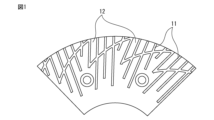
- FIG. 2 is a diagram illustrating an example of the arrangement of blades and grooves of a disc refiner.
- FIG. 2 is a diagram illustrating the blade width, groove width, and blade distance of a disc refiner.
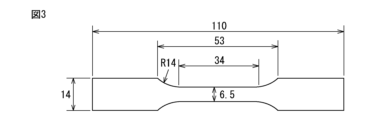
- FIG. 13 is a diagram showing dimensions of a dumbbell-shaped object.
- FIG. 13 is a diagram showing a three-dimensional image by X-ray CT at site 3 in Example A1.
- FIG. 13 is a diagram showing a three-dimensional image by X-ray CT of site 3 of comparative example A1.
- One aspect of the present invention provides a shaped object comprising a thermoplastic resin and cellulose fine fibers.
- the shaped object is an output of a 3D printer.
- the shaped object has a portion having a thickness of 2.5 mm or more, and at least one 2 mm x 2 mm x 2 mm cubic region selected from the portion having a thickness of 2.5 mm or more (in one aspect, so as not to include the surface of the shaped object) has a porosity of 10 volume % or less.
- Another aspect of the present invention is a method for producing a shaped article containing a thermoplastic resin and cellulose fine fibers (the shaped article described above in one aspect), comprising the steps of:
- the present invention provides a method for laminating a resin composition containing a thermoplastic resin and cellulose fine fibers by discharging the resin composition from a discharge port of a 3D printer.
- the resin composition is supplied to the 3D printer as a filament-shaped 3D printing material, and the molten 3D printing material is discharged from the discharge port.
- One aspect of the present invention is a method for producing a shaped object containing a thermoplastic resin and cellulose fine fibers, comprising the steps of:
- the method includes discharging a resin composition containing a thermoplastic resin and cellulose fine fibers from a discharge port of a 3D printer and laminating the resin composition,
- the present invention provides a method that satisfies the following (1) and/or (2): (1)
- the temperature of the discharge port is set to a temperature at which the resin composition (in one embodiment, in the form of a 3D printer modeling material; the same applies below) exhibits a shear viscosity of less than 600 kPa s at a shear rate of 1000 s and an extensional viscosity of more than 10 kPa s at an extensional rate of 10 s .
- the minimum temperature (T1) at which the resin composition exhibits a shear viscosity of 600 kPa ⁇ s or less at a shear rate of 1000 sec -1 is lower than the maximum temperature (T2) at which the resin composition exhibits an extensional viscosity of 10 kPa ⁇ s or more at an extension rate of 10 sec -1
- the difference between the temperature (T1) and the temperature (T2) is 40°C or more
- the temperature (T3) of the discharge port is set to be higher than the temperature (T1) and lower than the temperature (T2).
- the 3D printer is typically a material extrusion deposition (MEX) type.
- the 3D printer may have a conventionally known configuration, and typically performs modeling in the following manner: 3D printer data is generated based on various three-dimensional data related to the desired shape of the object. Based on the 3D printer data, a modeling material, which is a resin composition, is discharged as a fluid and layered.
- a modeling material which is a resin composition
- the fluid is a melt of the modeling material, which is a resin composition.
- the fluid is discharged from the nozzle outlet onto the surface of the stage (i.e., platform).
- the stage and/or the outlet is moved to move (typically scanned) the relative position of the outlet and the stage. This causes the fluid to be linearly deposited and layered.
- the deposited fluid solidifies to form a model of the desired shape.
- the modeling material is typically a filament.
- the modeling material passes through a conveying section (e.g., a gear), is heated and melted in a heating section, and then is introduced into a nozzle and discharged from the nozzle outlet.
- the nozzle may be heated to give a desired outlet temperature.
- the relationship between the shape of the object and the stacking direction may be designed as appropriate depending on the application of the object.
- the stage may be horizontal or inclined.
- a support material may be used to support the object.
- the material of the stage surface can be appropriately selected depending on the material of the object to be molded, and may be an organic material (e.g., a resin-based material), an inorganic material (e.g., metal, glass, etc.), or a combination of these.
- the stage surface is a resin-based material, since the object to be molded, which is derived from a resin composition, adheres well to the stage during molding.
- the stage surface may be subjected to a surface treatment as necessary.
- the manner in which the discharge port moves is not particularly limited and may be set appropriately depending on the purpose.
- the frame of the object may be formed first, and then the inside of the frame may be filled.
- the frame may be composed of, for example, one or two layers, but is not limited to this.
- the strength and appearance of a molded object are greatly influenced by the quality of the molding material as well as the uniformity of the laminate structure.
- the inventors have studied the details of a desirable laminate structure that will give the molded object good strength and appearance, and as a result have found that both the morphology between the layers of the laminate structure and the morphology of the solidified material itself in each layer contribute greatly to the strength and appearance. Specifically, they have found that in a molded object containing a thermoplastic resin and cellulose microfibers, setting the porosity required by the method of this embodiment to a specific level or less is advantageous for achieving both high strength and good appearance.
- thermoplastic resin and cellulose microfibers there tends to be fewer voids in the solidified product because the fillers are less likely to interfere with each other.
- the characteristics of cellulose microfibers namely, their fine structure and softness compared to inorganic fibers, contribute to this.
- the fluid can be discharged with a lower viscosity, the interlayer adhesion tends to improve.
- Modeling materials containing thermoplastic resin and cellulose microfibers tend to have a high degree of freedom in viscosity control by controlling the discharge conditions.
- the shaped object has a portion having a thickness of 2.5 mm or more, and at least one 2 mm x 2 mm x 2 mm cubic region selected from the portion having a thickness of 2.5 mm or more (in one embodiment, so as not to include the outermost layer of the shaped object) has a porosity of 10 volume % or less as determined by X-ray computed tomography (X-ray CT).
- X-ray CT X-ray computed tomography
- a tomographic image is obtained by performing tomography of a sample, a three-dimensional image is constructed from the tomographic image, and the target structural part is identified by image analysis of the three-dimensional image.
- the volumetric porosity can be calculated by analyzing the numerical data for each voxel.
- a cubic region of 2 mm x 2 mm x 2 mm is evaluated as a part representing the internal structure of the object, and voids present in the cubic region are identified by image analysis.
- 3D printing due to the principle of forming an object by linearly stacking fluid, the porosity tends to vary greatly on the surface of the object due to the need to form the desired outer shape of the object.
- the obtained porosity value appropriately represents the internal structure of the object. Therefore, in one aspect, the porosity comprehensively reflects the adhesion between layers and the uniformity within the layers in the object, and can be a useful indicator of the strength and appearance of the object.
- the porosity can represent the internal structure of the object, and the object with a low porosity in this embodiment has excellent adhesion between layers and uniformity within the layers, and therefore has excellent strength as well as appearance.
- the porosity is 10 vol. % or less, or 9 vol. % or less, or 8 vol. % or less.
- a smaller porosity is advantageous, but from the viewpoint of ease of manufacturing the molded object, in one embodiment, the porosity may be 1 vol. % or more, or 1.5 vol. % or more, or 2 vol. % or more.
- the outermost layer is not included.
- the region is selected so as to represent the entire molded object according to the shape of the molded object.
- the number of cubic regions is a number suitable for representing the entire molded object. In one embodiment, the number of cubic regions selected may be 5 or more, and in one embodiment, may be 50 or less.
- a total of five cubic regions may be selected from the tooth tip, tooth base, hub, and rim.
- the porosity is the number average value of each of the values of the selected cubic regions.
- the number of cubic regions is five, and the number average value of the porosity in the five regions is in the range exemplified above. A more detailed procedure for measuring the porosity is described in the [Example] section of this disclosure.
- Methods for adjusting the porosity include adjusting one or more of the elements exemplified in this disclosure for the composition of the resin composition and the modeling conditions of the 3D printer.
- good dispersion of the cellulose microfibers in the resin composition and a fiber diameter of the cellulose microfibers that is significantly smaller than the nozzle diameter can be advantageous in suppressing interference between the cellulose microfibers in the fluid, and adjusting the shear viscosity can be advantageous in improving interlayer adhesion.
- the crystallinity of the shaped product is preferably 50% or less, 45% or less, or 40% or less from the viewpoint of suppressing warping during shaping.
- the crystallinity may be 10% or more from the viewpoints of ease of manufacture of the shaped product and strength of the shaped product.
- the crystallinity of the thermoplastic resin of the present embodiment may be 50% or less, or 45% or less, or 40% or less, or may be 10% or more.
- the crystallinity of the polyamide resin may be in the above range.
- the crystallinity of the resin composition of the present embodiment may be 50% or less, or 45% or less, or 40% or less, and may be 10% or more.
- the fluid discharged from the discharge port it is advantageous for the fluid discharged from the discharge port to have good fluidity (in one embodiment, low viscosity).
- the fluid has a low viscosity
- the following (1) and (2) occur: (1) when the relative position of the discharge port with respect to the stage is moved while the discharge is suspended during modeling, the fluid drips from the discharge port and causes stringing, resulting in undesired fluid adhering to the formed layer and causing defects such as fuzzing, and (2) when a filament-shaped modeling material is produced from the resin composition, the resin composition drips undesirably under its own weight (i.e., drawdown), resulting in non-uniform filament diameters (i.e., non-uniform filament diameters due to repetition of drawdown and subsequent thinning), resulting in non-uniform heating of the filament during modeling and the formation of a non-uniform modeled object.
- the strength and appearance of a molded object are greatly affected by the quality of the molding material as well as the uniformity of the layered structure.
- the reasons for this include the above-mentioned (1) and (2).
- Such stringing and drawdown can prevent the formation of a high-definition and uniform layered structure, which can deteriorate the strength and appearance of the model.
- the delivery gear at the back of the nozzle is usually rotated in reverse to pull back (retract) the modeling material when the discharge is interrupted. However, even with this retraction, stringing may not be effectively prevented.
- the inventors have found that the degree of stringing and drawdown is largely influenced by the extensional viscosity, among other properties of the discharged fluid.
- a fluid has a combination of a specific shear viscosity at a specific shear rate and a specific extensional viscosity at a specific elongation rate, it is possible to obtain the advantage of achieving both easy shaping and suppression of stringing and drawdown.
- stringing and drawdown can be reduced by increasing the viscosity of the fluid, but it is difficult to discharge a fluid with an excessively high viscosity.
- the temperature of the discharge port is set to a temperature at which the resin composition exhibits a shear viscosity of less than 600 kPa.s at a shear rate of 1000 s- 1 . In one embodiment, the temperature of the discharge port is set to a temperature at which the resin composition exhibits a shear viscosity of less than 600 kPa.s at a shear rate of 1000 s -1 and an extensional viscosity of more than 10 kPa.s at an extensional rate of 10 s -1 .
- a shear rate of 1000 s -1 is an index of the shear rate applied to the fluid during discharge, and in order to stably discharge the fluid and accurately form a shaped object, it is advantageous that the shear viscosity at that shear rate is not too high.
- the shear viscosity being not too high can be advantageous in terms of reducing interlayer and/or intralayer voids in the shaped object to obtain good strength and/or appearance.
- the extension rate of 10 s -1 is an index of the extension rate applied to the fluid at the outlet due to retraction when the discharge is interrupted, and in order to suppress stringing and drawdown, it is advantageous that the extension viscosity at the extension rate is not too low.
- the resin composition when the resin composition is in a state in which it shows a shear viscosity less than a predetermined value at a shear rate of 1000 s -1 and shows an extension viscosity greater than a predetermined value at an extension rate of 10 s -1 , the resin composition can exhibit the characteristics of being able to be stably discharged from the outlet and being difficult to cause stringing or drawdown. And, the fact that the temperature range in which the above characteristics can be exhibited in a certain resin composition is wide means that the resin composition can easily achieve easy modeling, suppression of stringing and suppression of drawdown at the same time without requiring strict control of the modeling conditions (especially temperature).
- T1 The minimum temperature (T1) at which the resin composition exhibits a shear viscosity of 600 kPa.s or less at a shear rate of 1000 sec -1 varies depending on the type and amount of each of the thermoplastic resin, the cellulose fine fiber, and any additional components, but in one embodiment, it is 170°C or more, or 180°C or more, or 190°C or more, and in one embodiment, it is 260°C or less, or 250°C or less, or 240°C or less.
- T2 The maximum temperature (T2) at which the resin composition exhibits an extensional viscosity of 10 kPa.s or more at an extension rate of 10 sec -1 varies depending on the type and amount of each of the thermoplastic resin, the cellulose fine fiber, and any additional components, but in one embodiment, it is 220°C or more, or 230°C or more, or 240°C or more, and in one embodiment, it is 310°C or less, or 300°C or less, or 290°C or less.
- the temperature (T1) and the temperature (T2) tend to be higher when the melting point of the thermoplastic resin is higher, when the molecular weight of the thermoplastic resin is higher, when the content of cellulose microfibers is higher, etc.
- the temperature of the discharge port as the temperature at which the resin composition exhibits a shear viscosity of less than 600 kPa.s at a shear rate of 1000 s -1 and an extensional viscosity of more than 10 kPa.s at an extension rate of 10 s -1 varies depending on the type and amount of each of the thermoplastic resin, the cellulose fine fibers, and any additional components, but in one embodiment, it is 230°C or more, or 235°C or more, or 240°C or more, and in one embodiment, it is 300°C or less, or 295°C or less, or 290°C or less. In one embodiment, the temperature of the discharge port is controlled as the nozzle temperature.
- the number of discharge ports may be one or more, but is preferably one when forming a high-definition shaped object.
- the minimum temperature (T1) at which the resin composition exhibits a shear viscosity of 600 kPa.s or less at a shear rate of 1000 s -1 is lower than the maximum temperature (T2) at which the resin composition exhibits an elongational viscosity of 10 kPa.s or more at an elongation rate of 10 s -1 .
- T1 the minimum temperature at which the resin composition exhibits a shear viscosity of 600 kPa.s or less at a shear rate of 1000 s -1
- T2 maximum temperature
- the discharge temperature is appropriately controlled, such a resin composition can be stably discharged from the discharge port and can exhibit characteristics of being difficult to cause stringing or drawdown.
- the difference between the temperature (T1) and the temperature (T2) is advantageous for the difference between the temperature (T1) and the temperature (T2) to be large, and in one embodiment, it is 40°C or more, or 45°C or more, or 50°C or more. From the viewpoint of ease of preparation of the resin composition, in one embodiment, the difference may be 100°C or less, or 90°C or less, or 80°C or less.
- the addition of cellulose fine fibers to a thermoplastic resin does not significantly change the shear viscosity, but tends to significantly increase the extensional viscosity. Therefore, combining cellulose fine fibers with a thermoplastic resin can be one factor that increases the above difference.
- Means for increasing the above difference include reducing the fiber diameter of the cellulose fine fibers, dispersing the cellulose fine fibers more finely in the thermoplastic resin, and increasing the reinforcing properties of the cellulose fine fibers (for example, using non-wood materials such as cotton linters as the raw material for the cellulose fine fibers).
- the temperature (T3) of the discharge port is set to be greater than the temperature (T1) and less than the temperature (T2).
- the ratio (T3-T1)/(T2-T1) varies depending on the type and amount of each of the thermoplastic resin, the cellulose microfibers, and any additional components, but in one embodiment, it may be 0.25 or more, or 0.3 or more, or 0.35 or more, and in one embodiment, it may be less than 1.0, or 0.95 or less, or 0.9 or less.
- the shear viscosity and extensional viscosity are values measured using a twin capillary rheometer.
- the shear viscosity and extensional viscosity of the resin composition may be considered to be the same for 3D printer modeling materials or models made from the resin composition. However, this does not apply to models in which foaming is observed.
- the temperature of the discharge port is preferably 10°C or higher, 15°C or higher, or 20°C or higher than the melting point of the thermoplastic resin when it is a crystalline resin, or the glass transition point of the thermoplastic resin when it is an amorphous resin (the highest value when a plurality of these exist in the resin composition) (also referred to as the melting temperature in this disclosure) from the viewpoint of improving the strength of the molded object by improving the adhesion between the fluid and the formed layer, and is preferably 80°C or lower, 70°C or lower, or 60°C or lower than the melting temperature from the viewpoint of preventing stringing of the fluid and obtaining a good appearance of the molded object.
- the temperature of the discharge port is preferably 235°C or higher, 240°C or higher, or 245°C or higher, and preferably 305°C or lower, 295°C or lower, or 285°C or lower.
- the surface temperature of the stage is preferably 40°C or higher, 50°C or higher, or 60°C or higher in order to prevent the object from shrinking due to rapid cooling by the stage, and to prevent the object from falling off during printing due to insufficient adhesion between the stage and the object, and is preferably 160°C or lower, 140°C or lower, or 130°C or lower in order not to prevent the solidification of the first layer of the object (i.e. the part in contact with the stage).
- the outlet diameter may be appropriately designed depending on the type of modeling material, the desired shape of the model, etc., and in one embodiment is 0.1 mm or more, or 0.2 mm or more, or 0.4 mm or more, and in another embodiment is 1.5 mm or less, or 1.0 mm or less, or 0.8 mm or less.
- the modeling speed is the scanning speed of the relative position of the discharge port with respect to the stage.
- the modeling speed may be designed appropriately depending on the type of modeling material, the desired shape of the model, etc., and in one embodiment, may be 5 mm/sec or more, or 8 mm/sec or more, or 10 mm/sec or more, and in one embodiment, may be 200 mm/sec or less, or 100 mm/sec or less, or 50 mm/sec or less.
- the scanning speed may be constant or may be changed appropriately depending on the part of the model. An example of a change is adjusting the modeling speed to suppress warping and shrinkage in areas where warping is likely to occur.
- the layer height (layer pitch) may be appropriately designed depending on the type of modeling material, the desired shape of the model, etc. It is preferably 0.1 mm or more, or 0.15 mm or more, or 0.2 mm or more, since the number of layers is small and therefore rapid printing is possible, and it is preferably 0.8 mm or less, or 0.6 mm or less, or 0.4 mm or less, since it is possible to form a highly precise model.
- the ratio of the layer pitch (mm) to the discharge port diameter (mm) may be 0.1 or more, or 0.25 or more, and in another embodiment, it may be 1 or less, or 0.8 or less, or 0.6 or less.
- the resin composition containing the thermoplastic resin and the cellulose fine fibers may be used as a modeling material for a 3D printer for modeling. Preferred examples of the resin composition will be described below.
- the cellulose fine fibers of this embodiment may be unmodified or chemically modified.
- the cellulose fine fibers are chemically modified cellulose fine fibers.
- chemically modified cellulose fine fibers refer to cellulose fine fibers in which at least a part of the three hydroxyl groups contained in the glucopyranose units in the backbone of the cellulose molecules present in the cellulose fibers are chemically modified.
- the term "at least a part" as used herein refers to at least one hydroxyl group of at least one glucopyranose unit in a cellulose structure in which a plurality of glucopyranose units are polymerized, being chemically modified.
- the entire cellulose is not chemically modified, and the chemically modified cellulose fine fibers retain the crystalline structure of the cellulose before chemical modification.
- XRD X-ray diffraction
- the raw material for the cellulose fine fibers is not particularly limited, and wood-based cellulose raw materials (e.g., coniferous wood chips and hardwood chips) or non-wood-based cellulose raw materials (cotton-derived, hemp-derived, bagasse-derived, kenaf-derived, bamboo-derived, straw-derived, seaweed-derived, algae-derived, sea squirt-derived, bacterial cellulose-derived, etc.) can be used.
- wood-based cellulose raw materials e.g., coniferous wood chips and hardwood chips
- non-wood-based cellulose raw materials cotton-derived, hemp-derived, bagasse-derived, kenaf-derived, bamboo-derived, straw-derived, seaweed-derived, algae-derived, sea squirt-derived, bacterial cellulose-derived, etc.
- cellulose raw materials with a high I-type crystallinity such as so-called wood pulp such as coniferous wood pulp and hardwood pulp, and non-wood pulp such as cotton linter pulp, hemp pulp, bagasse pulp, kenaf pulp, bamboo pulp, and straw pulp.
- wood pulp such as coniferous wood pulp and hardwood pulp
- non-wood pulp such as cotton linter pulp, hemp pulp, bagasse pulp, kenaf pulp, bamboo pulp, and straw pulp.
- the cellulose fine fibers are derived from plants, in one embodiment, from wood, and in one embodiment, from cotton.
- the glucose content of the cellulose raw material as determined by the constituent sugar analysis is preferably 90% by mass or more, more preferably 91% by mass or more, and even more preferably 93% by mass or more.
- the glucose content it is preferable that the glucose content be 99.5% by mass or less.
- a high glucose content usually indicates a high cellulose purity.
- Cellulose microfibers obtained using a cellulose raw material with high cellulose purity have the advantage of having a small amount of components that may reduce the elastic modulus and heat resistance, such as alkali-soluble polysaccharides and acid-insoluble components.
- the glucose content was measured by structural sugar analysis as follows.
- the structural sugar analysis was performed according to the analytical procedure of the National Renewable Energy Laboratory of the US Department of Energy (Sluiter, A., Hames, B., Ruiz, R., Scarlata, C., Sluiter, J., Templeton, D., Crocker, D.: Determination of structural carbohydrates and lignin in biomass. National Renewable Energy Laboratory (NREL), USA, 2008.).
- 3 ml of 72% sulfuric acid was added to 200 mg of sample, and the mixture was allowed to swell at 30°C for 1 hour, then poured into a 125 ml pressure bottle with 84 ml of pure water and hydrolyzed at 120°C for 1 hour.
- the mixture is then filtered while still hot using a 1G-3 glass filter (weighted at 105°C), and after solid-liquid separation, the filtrate is adjusted to a constant volume of 100 ml, and the constituent sugars can be quantified using high performance liquid chromatography (HPLC) (FL detection method).
- HPLC high performance liquid chromatography
- the cellulose raw material may be refined.
- refined cellulose raw material refined pulp or cotton-like refined product obtained from the above-mentioned cellulose raw material, for example, softwood chips, hardwood chips, or non-wood cellulose raw material (cotton-derived, hemp-derived, bagasse-derived, kenaf-derived, bamboo-derived, straw-derived, etc.) through delignification by cooking and a refining process and bleaching process for the purpose of removing hemicellulose can be used.
- cut threads of regenerated cellulose fibers and cut threads of regenerated cellulose obtained by electrospinning can also be used as the refined cellulose raw material.
- refining treatment conditions for example, cooking temperature, alkali concentration during cooking, bleaching agent concentration, or bleaching time
- appropriate refining treatment conditions for example, cooking temperature, alkali concentration during cooking, bleaching agent concentration, or bleaching time
- cellulose fine fibers derived from cotton are preferred, and cellulose fine fibers derived from cotton linter pulp are particularly preferred.
- recycled materials such as recycled cotton and recycled wood can also be used as cellulose raw materials.
- Recycled cotton here refers to fibers made by collecting and crushing cotton scraps and cotton floss discarded at spinning and sewing factories, and fibers obtained by crushing cotton that has been prepared into cloth, clothing, etc.
- recycled wood refers to leftover materials from sawmills, construction wood, thinning materials, forest residues, etc. that have been chipped and pulped in the usual way.
- recycled cotton is preferable as the cellulose raw material of this embodiment.
- cellulose microfibers with excellent thermal stability to further immerse the unrefined cellulose raw material or the refined cellulose raw material (e.g., refined pulp) in water and perform a heat treatment at a temperature of 100°C or higher, or to perform an alkali treatment in which the unrefined cellulose raw material or the refined cellulose raw material is immersed in a strong alkaline aqueous solution such as an aqueous sodium hydroxide solution (alkali concentration: 1% by mass to 10% by mass) and allowed to stand or stirred for a certain period of time at a temperature in the range of 0°C to 60°C, followed by repeated washing with water.
- a strong alkaline aqueous solution such as an aqueous sodium hydroxide solution (alkali concentration: 1% by mass to 10% by mass) and allowed to stand or stirred for a certain period of time at a temperature in the range of 0°C to 60°C, followed by repeated washing with water.
- a hemicellulose-degrading enzyme such as xylase or mannanase or cellulase
- it may be effective to perform purification by combining two or more of the above-mentioned heat treatment, alkali treatment, and enzyme treatment in order to obtain a purified cellulose raw material of higher purity.
- These treatments are not only effective in reducing the load of the pulverization process, but also in expelling impurities such as lignin and hemicellulose present on the surfaces and between the microfibrils that make up the cellulose raw material into the aqueous phase, thereby increasing the cellulose purity of the purified cellulose raw material.
- the glucose content as determined by constituent sugar analysis is preferably high not only in the cellulose raw material but also in the cellulose fine fibers.
- the glucose content of the cellulose fine fibers is preferably 85% by mass or more, more preferably 90% by mass or more, and although there is no particular upper limit, in one embodiment it is 99.5% by mass or less.
- the whiteness of the cellulose fine fibers of this embodiment is preferably 50% or more, or 60% or more, or 70% or more, or 80% or more, or 90% or more, or 95% or more.
- the whiteness here refers to a value measured using a spectrophotometer/color difference meter (e.g., PF700 type manufactured by Nippon Denshoku Industries Co., Ltd.) according to the "ISO whiteness diffuse blue light reflectance measurement method for paper, paperboard and pulp (JIS P8148, ISO 2470)".
- the cellulose raw material or cellulose fine fibers are made into paper using a suction filtration device equipped with a polytetrafluoroethylene (PTFE) membrane filter so that the basis weight is 50 g/m 2 or more, and dried at 80 ° C until the equilibrium moisture is reached to prepare a cellulose sheet, which is used to measure the whiteness using the above-mentioned device.
- PTFE polytetrafluoroethylene
- the higher the whiteness of the cellulose fine fibers the higher the above-mentioned effects are, so there is no upper limit, but the whiteness of the cellulose fine fibers is 99% or less in one embodiment.
- Methods for achieving the above-mentioned whiteness of the cellulose fine fibers include subjecting the cellulose raw material to a bleaching treatment or the like prior to the defibration treatment.
- the whiteness does not usually decrease significantly, so the whiteness of the cellulose raw material subjected to defibration matches the whiteness of the cellulose fine fibers. Therefore, the whiteness of the cellulose raw material is preferably 50% or more, or 60% or more, or 70% or more, or 80% or more, or 90% or more, or 95% or more. The higher this value, the greater the effect described above, so there is no upper limit, but in one embodiment, the whiteness substantially obtained from the cellulose raw material is 99% or less.
- the cellulose raw material has an average fiber length (specifically, a length-weighted average fiber length described below) of 3 mm or less when measured by an automatic fiber shape analyzer, and/or the number ratio of fibers having a fiber length of 3 mm or more is 20% or less.
- the energy transfer to the finer or beating section during the defibration step e.g., beating using a disc refiner or a high-pressure homogenizer
- clogging is less likely to occur, so that a stable defibration process can be achieved even in a slurry containing cellulose at a relatively high concentration.
- the average fiber length is more preferably 2.5 mm or less, even more preferably 2.0 mm or less, and particularly preferably 1.6 mm or less.
- the percentage of fibers with a fiber length of 3 mm or more is more preferably 15% or less, and even more preferably 10% or less.
- the fiber length of the above-mentioned cellulose raw materials can be measured using an automatic fiber shape analyzer (Morfi Neo manufactured by Techpap). The measurement procedure is explained below.
- the cellulose raw material is dispersed in pure water to prepare 1 L of aqueous dispersion.
- the final solids concentration of the cellulose raw material is 0.003 to 0.005% by mass. If the cellulose raw material before dilution is an aqueous dispersion of less than 2% by mass, it is sufficient to simply mix it with a spatula or the like. However, if the cellulose raw material is an aqueous dispersion of 2% by mass or more, or in the form of a wet cake or powder, etc., a high shear homogenizer (for example, IKA, product name "Ultra Turrax T18”) is used for dispersion processing under the following processing conditions: rotation speed 25,000 rpm x 5 minutes.
- IKA product name "Ultra Turrax T18
- the aqueous dispersion prepared above is fed into an autosampler and measurements are taken.
- the measurement results obtained are output in txt format (or csv format), and each shape parameter is extracted or calculated from the measurement results. The following values from the measurement results are used for each parameter.
- Length-weighted average fiber length Mean length-weighted Length [ ⁇ m]
- the cellulose raw material may be subjected to one or more pretreatments selected from pulverization, grinding, and classification, and then used for defibration (e.g., beating).
- the pretreatment according to one embodiment is a process for producing a pretreated cellulose raw material having an average fiber length of 3 mm or less and/or a number ratio of fibers having a fiber length of 3 mm or more of 20% or less from a cellulose raw material having an average fiber length of 3 mm or less and/or a number ratio of fibers having a fiber length of 3 mm or more of 20% or less from a cellulose raw material having an average fiber length of 3 mm or less.
- the pulverization process is a process for pulverizing the cellulose raw material in a dry manner, and a coarse pulverizer, intermediate pulverizer, fine pulverizer, etc. can be used as the pulverizer.
- the grinding process is a process for dispersing the cellulose raw material in an aqueous medium and subjecting the aqueous dispersion to a grinding process, and is distinguished from the above-mentioned grinding process in that it is a wet process. Examples of the grinder include a rotary stone mill, a grinding machine, a planetary mixer, a single-screw extruder, a twin-screw extruder, and a bead mill.
- the classification process may be a dry classification or a wet classification.
- Dry classification includes gravity field classification, inertial field classification, and centrifugal field classification (natural vortex type or forced vortex type), while wet classification includes gravity field classification, centrifugal field classification (free vortex type), and centrifugal field classification (forced vortex type).
- Classification using the openings of sieves, screens, wires (edge wires), nets, etc., and classification by centrifugal separation can also be used.
- the cellulose fine fibers are chemically modified cellulose fine fibers.
- the chemical modification may be carried out before, during and/or after defibration, but in a preferred embodiment, the chemical modification is carried out in a state before defibration (in one embodiment, in a pulp state) and then the defibration treatment is carried out.
- the chemical modification may be carried out before the pretreatment, but from the viewpoint of ease of the process, it is preferred that the chemical modification be carried out after the pretreatment.
- Methods of chemical modification include esterification, etherification, and urethanization, but esterification is preferred from the viewpoint of obtaining chemically modified cellulose microfibers with excellent heat resistance.
- saturated monocarboxylic acid esterification such as acetate esterification (acetylation), propionate esterification, pentanoic acid (valeric acid) esterification, and hexanoic acid (caproic acid) esterification are preferred.
- acetate esterification (acetylation) is preferred from the viewpoint of the heat resistance of the cellulose microfibers after chemical modification. Esterification using dicarboxylic acids such as phthalic acid esterification may also be used.
- the cellulose microfibers are acetylated cellulose microfibers.
- modifying agents include esterifying agents such as saturated carboxylic acids or their acid anhydrides or acid chlorides; saturated monovinyl carboxylates such as vinyl acetate and vinyl propionate; etc.
- Esterification agents include, but are not limited to, aliphatic monocarboxylic acids such as acetic acid, propionic acid, butyric acid, valeric acid, caproic acid, caprylic acid, lauric acid, tridecanoic acid, myristic acid, palmitic acid, stearic acid, pivalic acid, and isobutyric acid; alicyclic monocarboxylic acids such as cyclohexanecarboxylic acid; aromatic monocarboxylic acids such as benzoic acid, toluic acid, ⁇ -naphthalenecarboxylic acid, ⁇ -naphthalenecarboxylic acid, methylnaphthalenecarboxylic acid, and phenylacetic acid; and a plurality of acids arbitrarily selected from the above.
- aliphatic monocarboxylic acids such as acetic acid, propionic acid, butyric acid, valeric acid, caproic acid, caprylic acid, lauric acid, tride
- a mixture of these, symmetric anhydrides acetic anhydride, maleic anhydride, cyclohexane-carboxylic anhydride, benzene-sulfonic anhydride), mixed acid anhydrides (butyric acid-valeric acid anhydride), cyclic anhydrides (succinic anhydride, phthalic anhydride, naphthalene-1,8:4,5-tetracarboxylic dianhydride, cyclohexane-1,2,3,4-tetracarboxylic 3,4-anhydride), ester acid anhydrides (acetic acid 3-(ethoxycarbonyl)propanoic anhydride, benzoylethyl carbonate), etc., selected arbitrarily from these are preferred.
- the solvent that effectively swells the cellulose raw material is an aprotic polar solvent, and dimethyl sulfoxide (DMSO), N-methyl-2-pyrrolidone (NMP), N,N-dimethylformamide (DMF), N,N-dimethylacetamide (DMAc), and mixtures of two or more of these are preferred.
- DMSO dimethyl sulfoxide
- NMP N-methyl-2-pyrrolidone
- DMF N,N-dimethylformamide
- DMAc N,N-dimethylacetamide
- cellulose may be chemically modified after being converted into fine fibers.
- the cellulose fine fibers are concentrated by suction filtration or the like to form a wet cake, which is then diluted and dispersed in a solvent for chemical modification.
- the method of chemical modification may be the same as that for chemical modification of cellulose raw materials.
- the solid content concentration is preferably 30% by mass or less, more preferably 20% by mass or less.
- the lower limit of the solid content concentration is preferably 5% by mass or more, more preferably 10% by mass or more. If the presence of moisture makes chemical modification difficult, the dispersion slurry diluted and dispersed in the above-mentioned solvent can be suction filtered and further solvent can be added repeatedly to reduce the amount of moisture in the system before chemical modification.
- the degree of substitution (DS) in the cellulose raw material or cellulose fine fibers is preferably 0.5 or more, or 0.6 or more, or 0.7 or more. If the DS is too high, the crystallinity is low, and the mechanical properties of the resin composition obtained by compounding the cellulose fine fibers with a resin tend to be low, so the DS is preferably 1.3 or less, or 1.1 or less, or 1.0 or less.
- the degree of substitution can be determined as follows. In the following, an example will be described in which the chemical modification is esterification (acylation).
- the degree of acyl substitution can be calculated from the reflection infrared absorption spectrum of the esterified cellulose fiber based on the peak intensity ratio between the peak derived from the acyl group and the peak derived from the cellulose skeleton.
- the peak of the absorption band of C-O based on the cellulose skeleton appears at 1030 cm -1 .
- the modifying group is an acetyl group
- the signal at 23 ppm assigned to --CH.sub.3 may be used.
- the conditions for the 13 C solid state NMR measurement are, for example, as follows: Equipment: Bruker Biospin Avance500WB Frequency: 125.77MHz Measurement method: DD/MAS method Waiting time: 75 sec NMR sample tube: 4 mm diameter Total number of times: 640 times (approximately 14 hours) MAS: 14,500Hz Chemical shift reference: glycine (external reference: 176.03 ppm)
- the cellulose fine fibers may be cellulose fine fibers whose surfaces have been chemically modified.
- the DS heterogeneity ratio (DSs/DS) defined as the ratio of the degree of substitution (DSs) of the fiber surface to the degree of substitution (DS) of the entire fiber of the chemically modified cellulose fine fibers may be 1.05 or more.
- the DS heterogeneity ratio (DSs/DS), defined as the ratio of the degree of substitution (DSs) of the fiber surface to the degree of substitution (DS) of the entire fiber, is preferably 1.05 or more.
- the larger the DS heterogeneity ratio the more pronounced the sheath-core-like heterogeneous structure (i.e., a structure in which the fiber surface is highly chemically modified while the fiber center retains a cellulose structure close to the original unmodified structure), and while maintaining the high mechanical strength and dimensional stability derived from cellulose, it is possible to improve the affinity with the resin when composited with the resin and to improve the dimensional stability of the resin composition.
- the DS heterogeneity ratio is more preferably 1.1 or more, or 1.2 or more, or 1.3 or more, or 1.5 or more, or 2.0 or more, and from the viewpoint of ease of production of chemically modified cellulose fine fibers, it is preferably 30 or less, or 20 or less, or 10 or less, or 6 or less, or 4 or less, or 3 or less.
- DSs varies depending on DS, but, as an example, it is preferably 0.1 or more, or 0.2 or more, or 0.3 or more, or 0.5 or more, and preferably 3.0 or less, or 2.5 or less, or 2.0 or less, or 1.5 or less, or 1.2 or less, or 1.0 or less.
- DSs is determined by the following method. Chemically modified cellulose fibers powdered by freeze-pulverization are placed on a dish-shaped sample stage with a diameter of 2.5 mm, the surface is pressed down to make it flat, and then measurement is performed by X-ray photoelectron spectroscopy (XPS).
- XPS X-ray photoelectron spectroscopy
- Peak separation is performed on the obtained C1s spectrum, and DSs can be calculated by the following formula based on the integrated intensity (Ixf) of the peak attributable to one carbon atom derived from the chemical modification group relative to the integrated intensity (Ixp) of the peak attributable to carbons C2-C6 derived from the pyranose ring of cellulose (289 eV, C-C bond).
- DSs (Ixf) ⁇ 5/(Ixp)
- the chemical modifying group is an acetyl group
- the C1s spectrum is subjected to peak separation at 285 eV, 286 eV, 288 eV, and 289 eV, and then the peak at 289 eV is used for Ixp, and the peak (286 eV) derived from the O—C ⁇ O bond of the acetyl group is used for Ixf.
- the conditions for the XPS measurement are, for example, as follows: Equipment used: ULVAC-Phi VersaProbe II Excitation source: mono. AlK ⁇ 15 kV x 3.33 mA Analysis size: Approximately 200 ⁇ m ⁇ Photoelectron extraction angle: 45° Capture area Narrow scan: C 1s, O 1s Pass Energy: 23.5eV
- the crystallinity of the cellulose raw material or cellulose fine fibers is preferably 50% or more.
- the mechanical properties (strength, dimensional stability) of the cellulose itself are high, so that when the cellulose fine fibers are dispersed in a resin, the strength and dimensional stability of the resin composition tend to be high.
- a more preferable lower limit of the crystallinity is 55% or more, or 60% or more, or 65% or more, or 70% or more, or 75% or more, and most preferably 80% or more.
- the crystallinity is determined by the following formula using the Segal method from a diffraction pattern (2 ⁇ /deg. is 10 to 30) obtained by measuring the sample by wide-angle X-ray diffraction.
- Crystallinity (%) [I (200) - I (amorphous) ] / I (200) ⁇ 100
- fiber length retention rate is within the above range, the fiber length of the cellulose fine fibers is maintained long, so that the strength and heat resistance of the resin composition are good.
- the higher the fiber length retention rate the greater the effect, so there is no particular upper limit, but considering realistic modification treatment, 99.5% or less is preferable.
- Known crystalline polymorphs of cellulose include types I, II, III, and IV, of which types I and II are particularly widely used, and types III and IV have been obtained on a laboratory scale but are not widely used on an industrial scale.
- the crystalline polymorph of the cellulose fine fibers is type I or type II, the mechanical properties (strength, dimensional stability) of the fibers are high, and when the cellulose fine fibers are dispersed in a resin, the strength and dimensional stability of the resin composition are high, which is preferable.
- the degree of polymerization of the cellulose raw material or cellulose fine fibers is preferably 100 or more, or 150 or more, or 200 or more, or 300 or more, or 400 or more, or 450 or more, and preferably 3500 or less, or 3300 or less, or 3200 or less, or 3100 or less, or 3000 or less.
- the degree of polymerization is desirable to set the degree of polymerization within the above-mentioned range. From the viewpoint of processability, it is preferable that the degree of polymerization is not too high, and from the viewpoint of mechanical property expression, it is desirable that the degree of polymerization is not too low.
- the degree of polymerization means an average degree of polymerization measured according to the reduced specific viscosity method using a copper ethylenediamine solution described in the Verification Test (3) of the "Japanese Pharmacopoeia, 15th Edition Commentary (published by Hirokawa Shoten)."
- the degree of polymerization of the chemically modified cellulose fine fibers may not be accurately calculated due to the presence of chemically modifying groups.
- the degree of polymerization of the cellulose fine fibers immediately before chemical modification which are the raw material for the chemically modified cellulose fine fibers, or the cellulose raw material immediately before chemical modification, may be regarded as the degree of polymerization of the chemically modified cellulose fine fibers.
- the weight average molecular weight (Mw) of the cellulose fine fibers is preferably 100,000 or more, or 120,000 or more, or 150,000 or more, or 180,000 or more, or 200,000 or more.
- the number average molecular weight (Mn) of the cellulose fine fibers is preferably 10,000 or more, or 12,000 or more, or 15,000 or more, or 17,000 or more, or 18,000 or more, or 20,000 or more, or 25,000 or more, or 30,000 or more.
- the ratio (Mw/Mn) of the weight average molecular weight to the number average molecular weight (Mn) is preferably 10.0 or less, or 9.0 or less, or 8.0 or less, or 7.0 or less, or 6.0 or less, or 5.6 or less, or 5.4 or less.
- the ratio of the weight average molecular weight to the number average molecular weight (Mw/Mn) represents the width of the molecular weight distribution, the smaller the Mw/Mn, the fewer the number of ends of the cellulose molecule.
- the weight average molecular weight (Mw) of the cellulose fine fibers may be, for example, 1,000,000 or less, or 800,000 or less, 600,000 or less, or 500,000 or less, or 400,000 or less.
- the number average molecular weight (Mn) of the cellulose fine fibers may be, for example, 600,000 or less, or 500,000 or less, or 400,000 or less.
- the ratio (Mw/Mn) of the weight average molecular weight to the number average molecular weight (Mn) may be, for example, 1.5 or more, or 1.7 or more, or 2 or more.
- Mw can be controlled to the above range by selecting a cellulose raw material having an Mw according to the purpose, appropriately performing physical treatment and/or chemical treatment on the cellulose raw material within an appropriate range, particularly performing defibration under controlled and mild conditions, etc.
- Mw/Mn can also be controlled to the above range by selecting a cellulose raw material having an Mw/Mn according to the purpose, appropriately performing physical treatment and/or chemical treatment on the cellulose raw material within an appropriate range, particularly performing defibration under controlled and mild conditions, etc.
- Each of the Mw and Mw/Mn of the cellulose raw material may be within the above range in one embodiment.
- examples of the physical treatment include dry or wet grinding using a microfluidizer, ball mill, disk mill, or the like, and physical treatments that apply mechanical forces such as impact, shear, friction, and the like using a crusher, homomixer, high-pressure homogenizer, ultrasonic device, or the like
- examples of the chemical treatment include digestion, bleaching, acid treatment, enzyme treatment, conversion to regenerated cellulose, hydrolysis treatment, and the like.
- the Mw, Mn, and Mw/Mn of the chemically modified cellulose fine fibers may not be calculated accurately due to the presence of chemically modifying groups.
- the Mw, Mn, and Mw/Mn of the cellulose fine fibers immediately before chemical modification which are the raw material for the chemically modified cellulose fine fibers, or the cellulose raw material immediately before chemical modification, may be regarded as the Mw, Mn, and Mw/Mn of the chemically modified cellulose fine fibers.
- the weight average molecular weight (Mw) and number average molecular weight (Mn) of the cellulose raw material or cellulose fine fibers are values determined by dissolving the cellulose raw material or cellulose fine fibers in N,N-dimethylacetamide to which lithium chloride has been added, and then performing gel permeation chromatography using N,N-dimethylacetamide as a solvent.
- Alkali-soluble polysaccharides such as hemicellulose and acid-insoluble components such as lignin are present between the microfibrils of cellulose raw materials or cellulose fine fibers and between the microfibril bundles.
- Hemicellulose is a polysaccharide composed of sugars such as mannan and xylan, and plays a role in binding the microfibrils together by hydrogen bonding with cellulose.
- Lignin is a compound having an aromatic ring, and is known to be covalently bonded to hemicellulose in the cell walls of plants.
- alkali-soluble polysaccharides that may be contained in cellulose raw materials or cellulose microfibers include hemicellulose, as well as ⁇ -cellulose and ⁇ -cellulose.
- alkali-soluble polysaccharides as components obtained as the alkali-soluble portion of holocellulose obtained by solvent extraction and chlorine treatment of plants (e.g. wood) (i.e., components obtained by removing ⁇ -cellulose from holocellulose).
- the average alkali-soluble polysaccharide content of the cellulose raw material or cellulose fine fibers is preferably 20% by mass or less, or 18% by mass or less, or 15% by mass or less, or 12% by mass or less, based on 100% by mass of the cellulose raw material or cellulose fine fibers, from the viewpoint of maintaining the mechanical strength of the cellulose fine fibers during melt kneading and suppressing yellowing.
- the above content may be 0.1% by mass or more, or 0.5% by mass or more, or 1% by mass or more, or 2% by mass or more, or 3% by mass or more.
- the average alkali-soluble polysaccharide content can be determined by the method described in the non-patent literature (Wood Science Experiment Manual, edited by the Japan Wood Research Society, pp. 92-97, 2000), by subtracting the ⁇ -cellulose content from the holocellulose content (Wise method). This method is understood in the industry as a method for measuring the amount of hemicellulose. The alkali-soluble polysaccharide content is calculated three times for each sample, and the number average of the calculated alkali-soluble polysaccharide contents is taken as the average alkali-soluble polysaccharide content.
- the acid-insoluble components that may be contained in cellulose raw materials or cellulose fine fibers are understood by those skilled in the art as insoluble components remaining after a defatted sample obtained by solvent extraction of a plant (e.g., wood) is treated with sulfuric acid.
- the acid-insoluble components are specifically, but not limited to, lignin derived from aromatic groups.
- the average content of acid-insoluble components in the cellulose raw material or cellulose fine fibers is preferably 10% by mass or less, 5% by mass or less, or 3% by mass or less, based on 100% by mass of the cellulose raw material or cellulose fine fibers, from the viewpoint of avoiding a decrease in the heat resistance of the cellulose fine fibers and the associated discoloration.
- the above content may be 0.1% by mass or more, 0.2% by mass or more, or 0.3% by mass or more.
- the average acid-insoluble content is quantified using the Clason method described in the non-patent literature (Wood Science Experiment Manual, edited by the Japan Wood Research Society, pp. 92-97, 2000). This method is understood in the industry as a method for measuring lignin content.
- the sample is stirred in a sulfuric acid solution to dissolve cellulose, hemicellulose, etc., and then filtered through glass fiber filter paper. The resulting residue corresponds to the acid-insoluble components.
- the acid-insoluble component content is calculated from the weight of this acid-insoluble component, and the number average of the acid-insoluble component contents calculated for the three samples is taken as the average acid-insoluble component content.
- the thermal decomposition start temperature (TD ) of the cellulose raw material or cellulose fine fibers is preferably 220° C. or higher, or 230° C. or higher, or 240° C. or higher, or 250° C. or higher, or 260° C. or higher, or 270° C. or higher, or 275° C. or higher, or 280° C. or higher, or 285° C. or higher in one aspect.
- the temperature (T 1% ) at which the cellulose raw material or cellulose fine fibers lose 1 wt % weight is preferably 230° C. or higher, or 240° C. or higher, or 250° C. or higher, or 260° C. or higher, or 270° C. or higher, or 275° C. or higher, or 280° C. or higher, or 285° C. or higher, or 290° C. or higher in one embodiment.
- the higher T 1% is, the more preferable, but from the viewpoint of ease of production of cellulose fine fibers, it may be, for example, 330° C. or lower, 320° C. or lower, or 310° C. or lower.
- the 250°C weight loss rate ( T250°C ) of the cellulose raw material or cellulose fine fibers is preferably 15% or less, or 12% or less, or 10% or less, or 8% or less, or 6% or less, or 5% or less, or 4% or less, or 3% or less in one embodiment.
- the lower the T250°C the more preferable it is, but from the viewpoint of ease of production of the cellulose fine fibers, it may be, for example, 0.1% or more, or 0.5% or more, or 0.7% or more, or 1.0% or more.
- T D is a value obtained from a graph in which the horizontal axis is temperature and the vertical axis is weight residual percentage in a thermogravimetric (TG) analysis under nitrogen flow.
- the porous sheet of the present disclosure is heated from room temperature to 150° C. at a heating rate of 10° C./min in a nitrogen flow of 100 ml/min, and then held at 150° C. for 1 hour, and then heated to 450° C. at a heating rate of 10° C./min. Starting from the weight (weight loss of 0 wt%) at 150° C.
- T D The temperature at the point where this straight line intersects with the horizontal line (baseline) that passes through the starting point of the weight loss of 0 wt% is defined as T D.
- the 1% weight loss temperature (T 1% ) is the temperature at which a 1% weight loss occurs, starting from a weight of 150° C., when the temperature is continued to be raised by the above-mentioned T D method.
- the 250°C weight loss rate ( T250°C ) of the cellulose raw material or cellulose fine fiber is the weight loss rate when the sample is held at 250°C under nitrogen flow for 2 hours in TG analysis.
- the sample is heated from room temperature to 150°C at a heating rate of 10°C/min in a nitrogen flow of 100 ml/min, held at 150°C for 1 hour, then heated from 150°C to 250°C at a heating rate of 10°C/min, and held at 250°C for 2 hours.
- the weight W0 at the time when 250°C is reached is taken as the starting point, and the weight after holding at 250°C for 2 hours is taken as W1, and is calculated according to the following formula.
- a distortion-free porous sheet as the measurement sample in order to reduce the variation in values due to the shape of the measurement sample and perform stable and reproducible measurements.
- the porous sheet is prepared as follows.
- a concentrated cake of a sample with a solid content of 10% by mass or more is added to tert-butanol, and a dispersion process is performed using a mixer or the like until no aggregates are present. The concentration is adjusted to 0.5% by mass for 0.5 g of sample solid content.
- 100 g of the obtained tert-butanol dispersion is filtered on filter paper. The filtered material is not peeled off from the filter paper, but is sandwiched between two sheets of larger filter paper, and the edges of the larger filter paper are pressed down with a weight and dried in an oven at 150°C for 5 minutes. The filter paper is then peeled off to obtain a porous sheet with little distortion.
- the sheet with an air resistance R of 100 sec/100 ml or less per 10 g/m2 sheet basis weight is used as a porous sheet and is used as a measurement sample.
- the cellulose fine fibers can be obtained by defibrating a cellulose raw material.
- the cellulose fine fibers are mechanically defibrated.
- the mechanical defibration may be a beating treatment. Defibration may be performed on a cellulose raw material that has or has not been subjected to the pretreatment of this embodiment, but is preferably performed on a cellulose raw material that has been subjected to the pretreatment.
- the cellulose raw material may be dispersed in an aqueous medium, and the resulting dispersion may be subjected to the following treatment to perform the beating treatment.
- aqueous medium examples include water itself, or a mixture of water and one or more organic solvents selected from monohydric alcohols such as ethanol, n-propanol, isopropanol, and butanol, polyhydric alcohols such as ethylene glycol, diethylene glycol, and glycerin, ketones such as acetone, nitrile solvents such as acetonitrile, and pyrrolidone solvents.
- the blending ratio of the organic solvent in the mixture of the organic solvent and water described above is preferably less than 50% by mass, more preferably 30% by mass or less, and particularly preferably 20% by mass or less.
- the ratio of the organic solvent is preferably set in consideration of the balance between defibration and inhibition of aggregation. Beating is distinguished from the pulverization as the pretreatment of the present embodiment in that it is a wet process, and from the grinding as the pretreatment of the present embodiment in that the fiber length of the cellulose subjected to the treatment is different.
- the cellulose raw material e.g., pulp sheet, etc.
- a pulper or homomixer etc.
- the beating process may be performed in one stage or multiple stages, and when performing multiple stages, the same device may be used multiple times, or different devices may be used in combination.
- a mixer such as a homomixer with a peripheral speed of 10 m/s or more in one embodiment, preferably 20 m/s or more, more preferably 25 m/s or more, and 90 m/s or less in one embodiment, preferably 80 m/s or less, more preferably 50 m/s or less.
- homogenous cellulose fine fibers can be obtained by homogenous beating treatment.
- highly pure water such as distilled water and ion-exchanged water can be effectively used.
- Multi-stage beating When beating cellulose in multiple stages, it is effective to combine a micronization mechanism or two or more types of beating devices with different shear rates.
- a method of multistage beating it is preferable to perform multistage beating using disc refiners with different disc configurations, or to perform beating in a disc refiner and then beating in a high-pressure homogenizer.
- the disc refiner any of a single disc refiner, a double disc refiner, and a conical refiner may be used, but in order to highly control beating, a single disc refiner with high clearance control accuracy between the fixed blade and the rotary blade is preferred.
- the beating be carried out using a disc refiner.
- the pulp or cotton-like cellulose raw material is dispersed and stored in a tank so as to have an appropriate solid content concentration in an aqueous medium, and is beaten using the disc refiner.
- the lower limit of the solid content concentration can be adjusted to preferably 0.5% by mass or more, more preferably 0.8% by mass or more, and even more preferably 1.0% by mass or more.
- the upper limit of the concentration is preferably 6% by mass or less, more preferably 3.5% by mass or less, and particularly preferably 3% by mass or less.
- highly pure water such as distilled water and ion-exchanged water may be effective.
- the defibration process may be carried out in a continuous circulating process in which the slurry stored in a tank is returned to the original tank via the disc refiner.
- the process is switched to continuously transfer the slurry from Tank B to Tank A via the disc refiner and store it there.
- the slurry is reliably passed through the disc refiner each time it is processed, and a uniform number of passes can be applied to the entire amount of slurry, which is more preferable from the viewpoint of the uniformity of the degree of defibration, i.e., the quality stability of the cellulose fine fibers.
- beating using a disc refiner it can be done in multiple stages (processing with multiple types of blades) or in one stage (processing with one type of blade).
- FIG. 1 is a diagram for explaining an example of the arrangement of the blades and grooves of a disc refiner
- FIG. 2 is a diagram for explaining the blade width, groove width, and blade distance of a disc refiner.
- a refiner having at least two different types of blades.
- FIGS. 1 and 2 as a specific blade configuration, in a disc refiner having a blade 11 and a groove 12 as shown in FIG. 1, the blade width W B , the groove width W G , and the value obtained by dividing the blade width W B by the groove width W G (hereinafter referred to as the blade groove ratio) shown in FIG.
- a beating process hereinafter referred to as the front stage
- a beating process hereinafter referred to as the rear stage
- a separate beating process may be added between the front and rear stages.
- Blade distance in disc refiner processing Also, referring to FIG. 2, in beating with a disk refiner, it is advantageous to control the blade distance W L (clearance) (hereinafter simply referred to as the blade distance) between two blades (specifically, the rotary blade 21 and the fixed blade 22 in FIG. 2). By controlling the blade distance, it is possible to control the fiber length and the degree of beating of the cellulose fine fibers. In the case of multi-stage processing, it is preferable to set the blade distance to 0.05 mm or more and 0.5 mm or less in the first stage processing, and to 0.05 mm or more and 0.3 mm or less in the second stage processing.
- the blade distance in the case of single-stage processing, it is preferable to set the blade distance to 0.05 mm or more and 0.3 mm or less. In addition, when adjusting the blade distance, it is preferable to gradually narrow the blade distance from a wide blade distance while suppressing the current value of the device to a certain value or less. By controlling in this way, clogging and overloading of the device can be prevented, and highly homogeneous cellulose fine fibers can be obtained.
- the blade distance adjustment of a conventionally used single disc refiner is usually performed using a screw-type screw jack, and therefore there is play in the runner part that fixes the rotating blade. Therefore, if the runner part is pulled strongly in the thrust direction, it moves about 0.3 mm. Therefore, it is preferable that this movement amount (play) is small in order to obtain beaten cellulose with good precision and reproducibility, and the movement amount is preferably 0.1 mm or less, more preferably 0.08 mm or less, and even more preferably 0.05 mm or less.
- a single disc refiner with the above-mentioned movement amount in the thrust direction of 0.03 mm may be used by using a ball screw type jack as the blade distance adjustment mechanism. Furthermore, in order to adjust the blade distance with high precision, it is preferable to attach a reducer to the ball screw type jack so that fine adjustment of the blade distance can be performed.
- the use of such a single disc refiner allows fine adjustment of the blade distance and enables beating with a constant blade distance without blade vibration during the beating process. This prevents the blades from coming into contact with each other when the blade distance is reduced, preventing the fiber length from becoming too short and reducing coarse fibers. As a result, it becomes possible to reproducibly produce cellulose fine fibers with a highly uniform shape distribution that imparts excellent mechanical properties to the resin composition obtained by compounding the cellulose fine fibers with resin.
- the beating process can also be controlled by the number of times the cellulose fibers pass between the rotary blade and the fixed blade (hereinafter referred to as the number of passes).
- the number of passes means the number of times the refining process is performed (i.e., the number of passes between the rotary blade and the fixed blade) after the blade distance is reduced to the desired blade distance.
- the number of passes through the disc refiner is preferably 5 or more, more preferably 20 or more, and even more preferably 40 or more. As the number of passes increases, the distribution of fiber shapes gradually converges to a constant, so the more passes the better, but taking productivity into account, the upper limit of the number of passes is preferably 300 or less.
- the shape of the cellulose fine fibers obtained by the disc refiner treatment is controlled by the combined effects of the type of disc refiner blade, the distance between the blades, the number of passes, the concentration, and the like.
- Viscous beating is a beating method that tends to fluff and refine the fibers, and a beating method that tends to cause cutting in the fiber length direction is called free beating.
- a tendency for free beating is shown.
- the blade distance of the disc refiner is preferably widened when a blade showing a tendency to free beating is used, and is preferably narrowed when a blade showing a tendency to free beating is used, but narrowing the blade distance too much leads to clogging, shortening of fibers due to cutting of fiber length, and excessive fineness, so the blade distance is preferably 0.05 mm or more.
- Multi-stage beating process using a combination of a disc refiner and a high-pressure homogenizer It is also a preferred embodiment to subject the cellulose fibers beaten by the disc refiner to a further beating treatment by a high-pressure homogenizer.
- the high-pressure homogenizer has a greater effect of thinning the fibers than the disc refiner.
- the high-pressure homogenizer treatment is preferably carried out at a pressure of 30 MPa or more, more preferably 50 MPa or more, and more preferably 80 MPa or more.
- the upper limit of the pressure may be preferably 300 MPa or less, more preferably 250 MPa or less, and even more preferably 150 MPa or less, depending on the characteristics of the device.
- High-pressure homogenizers include the NS-type high-pressure homogenizer from Nilo Soavi (Italy), the Lanier-type (R model) pressure homogenizer from SMT Co., Ltd., and the high-pressure homogenizer from Sanwa Machine Co., Ltd., while ultra-high-pressure homogenizers include high-pressure collision type beating machines such as the Microfluidizer from Mizuho Kogyo Co., Ltd., the Nanomizer from Yoshida Kikai Kogyo Co., Ltd., and the Ultimizer from Sugino Machine Co., Ltd., but other devices may also be used as long as they perform micronization using a mechanism similar to that of these devices.
- the defibration treatment may be performed in a continuous circulating process in which the slurry stored in a tank is returned to the original tank through the high-pressure homogenizer.
- the processing of the slurry in Tank A is completed, the slurry is continuously transferred from Tank B to Tank A through the high-pressure homogenizer and stored there.
- the slurry is reliably passed through the high-pressure homogenizer every time it is treated, and a uniform number of passes can be performed on the entire amount of slurry, which is more preferable from the viewpoint of the uniformity of the degree of defibration, i.e., the quality stability of the cellulose fine fibers.
- the cellulose fine fibers of this embodiment are preferable because the longer the average fiber length, the better the mechanical properties when the fine fibers are used as a reinforcing material for resins and the like. That is, when the fiber length is long, the fibers are entangled when blended with the resin, so that the cellulose fine fibers can be uniformly dispersed in the resin without forming aggregates. This improves the stress transmission of the resin composition, and increases the strength and fracture strain.
- the average fiber length is preferably 400 ⁇ m or more, more preferably 500 ⁇ m or more, even more preferably 600 ⁇ m or more, and particularly preferably 700 ⁇ m or more, as the length-weighted average fiber length in a fiber shape automatic analyzer.
- the length-weighted average fiber length is defined in ISO/FDIS 16065-2:2006, and is the average value of the fiber length corresponding to the actual fiber length taking into account the bending shape of the bent fiber.
- the average fiber diameter of the cellulose fine fibers of this embodiment measured by a fiber shape automatic analyzer is 1000 nm or less in one aspect, and preferably 500 nm or less, or 300 nm or less, or 200 nm or less, or 150 nm or less, or 130 nm or less.
- the average fiber diameter is in the above range, it is easy to sufficiently increase the L/D of each cellulose fiber.
- the L/D is large, the cellulose fine fibers are entangled with each other in the resin, so that the strength of the resin composition can be increased.
- the lower limit is not particularly limited, but since a certain thickness is desired to increase the bending elasticity of the resin composition, it is preferably 10 nm or more, or 20 nm or more, or 30 nm or more, or 40 nm or more.
- CV coefficient of variation (CV) of average fiber length
- the variation in fiber length is expressed by the following formula as the coefficient of variation CV.
- CV (%) (Standard deviation of fiber length ( ⁇ m) / Average fiber length ( ⁇ m)) x 100
- the CV is preferably 20% or less, more preferably 15% or less, and particularly preferably 12% or less. The lower the value, the greater the above-mentioned effects, so there is no particular lower limit, but in reality, CV is preferably 1% or more.
- the cellulose fine fibers of this embodiment can be obtained in the form of a wet molded body (wet cake) by dehydrating the slurry using a filter or a paper machine.
- the papermaking method using a paper machine is advantageous in that it reduces drying shrinkage between the cellulose fine fibers.
- the slurry is dehydrated by filtering it on a porous substrate.
- any papermaking machine equipped with wires of a mesh size that dehydrates the slurry and retains the cellulose fine fibers can be used.
- a device such as an inclined wire papermaking machine, a Fourdrinier papermaking machine, or a cylinder papermaking machine can be used as the papermaking machine.
- cellulose fine fibers When cellulose fine fibers are used as a dry filler, they can be dried using a known drying device such as a hot air dryer or a spray dryer.
- a drying device such as a hot air dryer or a spray dryer.
- Cellulose has the characteristic that it easily aggregates during the drying process and is difficult to redisperse thereafter, so it is preferable to use a dispersant. By increasing the redispersibility, it is possible to improve the mechanical properties and stability of the resulting resin composition. It is preferable to add a dispersant to an aqueous cellulose dispersion, and then dry it while applying shear to obtain cellulose powder.
- the dispersant can be at least one selected from the group consisting of surfactants, organic compounds with a boiling point of 100°C or higher, and resins with a chemical structure that can highly disperse cellulose.
- the surfactant may have a chemical structure in which a portion having a hydrophilic substituent and a portion having a hydrophobic substituent are covalently bonded.
- Surfactants that are used for various purposes such as food and industrial purposes can be used. For example, the following can be used alone or in combination:
- any of the following surfactants can be used: anionic surfactants, nonionic surfactants, amphoteric surfactants, and cationic surfactants.
- anionic surfactants and nonionic surfactants are preferred, with nonionic surfactants being more preferred.
- polyoxyethylene-based surfactants having a polyoxyethylene chain as a hydrophilic group are preferred, and nonionic polyoxyethylene derivatives are even more preferred.
- the polyoxyethylene chain length of the polyoxyethylene derivative is preferably 3 or more, more preferably 5 or more, even more preferably 10 or more, and particularly preferably 15 or more.
- the upper limit is preferably 60 or less, more preferably 50 or less, even more preferably 40 or less, particularly preferably 30 or less, and most preferably 20 or less.
- the hydrophobic groups of alkyl ether type, alkyl phenyl ether type, rosin ester type, bisphenol A type, ⁇ -naphthyl type, styrenated phenyl type, and hydrogenated castor oil type are particularly suitable due to their high affinity with resins.
- the preferred alkyl chain length (in the case of alkyl phenyl, the number of carbon atoms excluding the phenyl group) is preferably 5 or more, more preferably 10 or more, even more preferably 12 or more, and particularly preferably 16 or more.
- hydrophobic groups those having a cyclic structure or those having a bulky and multifunctional structure are preferred.
- alkyl phenyl ether type, rosin ester type, bisphenol A type, ⁇ -naphthyl type, and styrenated phenyl type are preferred, and as those having a multifunctional structure, hydrogenated castor oil type is preferred.
- rosin ester type and hydrogenated castor oil type are particularly more preferred.
- organic compounds with a boiling point of 100°C or higher may be effective as non-surfactant dispersants.
- examples of such organic compounds include polyethylene glycol, polypropylene glycol, and organic compounds with a glycerin structure.
- the resin is polyolefin, for example, high-boiling organic solvents such as liquid paraffin and decalin are effective.
- the resin is a polar resin such as nylon or polyacetate, it may be effective to use a solvent similar to the aprotic solvent that can be used in producing cellulose microfibers, such as dimethyl sulfoxide.
- the amount of cellulose microfibers per 100 parts by mass of thermoplastic resin is preferably 1 part by mass or more, or 3 parts by mass or more, or 5 parts by mass or more, or 10 parts by mass or more, from the viewpoint of obtaining a good effect of improving the physical properties of the resin composition by the cellulose microfibers, and is preferably 150 parts by mass or less, or 100 parts by mass or less, or 80 parts by mass or less, from the viewpoint of avoiding a decrease in performance due to the interruption of the continuous layer of the thermoplastic resin and molding defects due to a decrease in fluidity during molding of the resin composition.
- the content of cellulose fine fibers in the resin composition may be, in one embodiment, 1% by mass or more, or 3% by mass or more, or 5% by mass or more, or 10% by mass or more, and in one embodiment, 30% by mass or less, or 25% by mass or less, or 20% by mass or less.
- the thermoplastic resin may be, for example, a crystalline resin having a melting point in the range of 100°C to 350°C, an amorphous resin having a glass transition temperature in the range of 100 to 250°C, a thermoplastic elastomer, or the like.
- the melting point refers to the peak top temperature of the endothermic peak that appears when the temperature is increased from 23°C at a heating rate of 10°C/min using a differential scanning calorimeter (DSC), and when two or more endothermic peaks appear, it refers to the peak top temperature of the endothermic peak on the highest temperature side.
- the enthalpy of the endothermic peak at this time is preferably 10 J/g or more, more preferably 20 J/g or more.
- the glass transition temperature refers to the peak top temperature at which the storage modulus is greatly reduced and the loss modulus is maximized when measured at an applied frequency of 10 Hz while heating from 23 ° C. at a heating rate of 2 ° C. / min using a dynamic viscoelasticity measuring device.
- the measurement frequency is preferably at least once every 30 seconds to improve the measurement accuracy.
- the method of preparing the measurement sample but from the viewpoint of eliminating the influence of molding distortion, it is desirable to use a cut-out piece of a heat press molded product, and it is desirable from the viewpoint of heat conduction that the size (width and thickness) of the cut-out piece is as small as possible.
- crystalline resins include polyolefin resins, polyamide resins, polyester resins, polyacetal resins, polyphenylene sulfide resins, polyether ether ketone resins, polyimide resins, liquid crystal polymers, polytetrafluoroethylene resins, etc.
- examples include mixtures of two or more of these, and from the viewpoints of handleability and cost, preferred are polyolefin resins, polyamide resins, polyester resins, polyacetal resins, etc., with polyamide resins, polyolefin resins, and polyacetal resins being more preferred.
- polyamide resins are particularly preferred.
- the melting point of the crystalline resin is preferably 140°C or more, or 150°C or more, or 160°C or more, or 170°C or more, or 180°C or more, or 190°C or more, or 200°C or more, or 210°C or more, or 220°C or more, or 230°C or more, or 240°C or more, or 245°C or more, or 250°C or more.
- the melting point may be 300°C or less.
- Amorphous resins include amorphous polyolefin resins such as polymethylene pentene and cyclic polyolefin, amorphous polyvinyl resins such as polystyrene and polyvinyl chloride, polycarbonate resins, acrylic resins, methacrylic resins, polyvinyl alcohol resins, polysulfone resins, polyphenylene ether resins, polyethersulfone resins, acrylonitrile-styrene resins, acrylonitrile-butadiene-styrene resins, polyketone resins, polyetherimide resins, polyamideimide resins, etc.
- amorphous polyolefin resins such as polymethylene pentene and cyclic polyolefin
- amorphous polyvinyl resins such as polystyrene and polyvinyl chloride
- polycarbonate resins acrylic resins, methacrylic resins, polyvinyl alcohol resins, polysulf
- the molding temperature is preferably 130°C or higher, 140°C or higher, or 150°C or higher, or 160°C or higher, or 170°C or higher, or 180°C or higher, or 190°C or higher, or 200°C or higher, or 210°C or higher, or 220°C or higher, or 230°C or higher, or 240°C or higher, or 245°C or higher, or 250°C or higher, from the viewpoint of increasing the heat resistance of the molded object.
- the thermoplastic resin comprises a crystalline resin.
- the thermoplastic resin includes a crystalline resin having a melting point of 150°C to 300°C.
- the thermoplastic resin includes a polyamide resin.
- the thermoplastic resin includes one or more types selected from the group consisting of polyamide-based resins and polyacetal-based resins, or is one or more types selected from the group consisting of polyamide-based resins and polyacetal-based resins.
- the polyolefin resin preferred as the thermoplastic resin is a polymer obtained by polymerizing olefins (e.g., ⁇ -olefins) and/or alkenes as monomer units.
- polyolefin resin examples include ethylene (co)polymers exemplified by low-density polyethylene (e.g., linear low-density polyethylene), high-density polyethylene, ultra-low-density polyethylene, and ultra-high-molecular-weight polyethylene, polypropylene (co)polymers exemplified by polypropylene, ethylene-propylene copolymer, and ethylene-propylene-diene copolymer, and copolymers of ethylene and ⁇ -olefins exemplified by ethylene-acrylic acid copolymer, ethylene-methyl methacrylate copolymer, and ethylene-glycidyl methacrylate copolymer.
- low-density polyethylene e.g., linear low-density polyethylene
- high-density polyethylene e.g., ultra-low-density polyethylene
- ultra-low-density polyethylene ultra-high-molecular-weight
- the most preferred polyolefin resin here is polypropylene.
- polypropylene having a melt mass flow rate (MFR) of 3 g/10 min or more and 50 g/10 min or less, measured at 230° C. and a load of 21.2 N in accordance with ISO 1133 is preferred.
- MFR melt mass flow rate
- the lower limit of the MFR is more preferably 5 g/10 min, 6 g/10 min, or 8 g/10 min.
- the upper limit is more preferably 40 g/10 min, 30 g/10 min, 25 g/10 min, 20 g/10 min, or 18 g/10 min. From the viewpoint of improving the toughness of the resin composition, it is desirable for the MFR not to exceed the above upper limit, and from the viewpoint of the fluidity of the resin composition, it is desirable for the MFR not to fall below the above lower limit.
- acid-modified polyolefin resins can also be suitably used.
- acid used for acid modification mono- or polycarboxylic acids can be used, and examples thereof include maleic acid, fumaric acid, succinic acid, phthalic acid and their anhydrides, and citric acid.
- Maleic acid or its anhydride is particularly preferred because it is easy to increase the modification rate.
- a common method is to heat a polyolefin resin to above its melting point in the presence or absence of a peroxide and melt-knead it.
- the polyolefin resin to be acid-modified all of the above-mentioned polyolefin resins can be used, but polypropylene is particularly suitable.
- the acid-modified polypropylene resin may be used alone, but it is more preferable to use it in combination with an unmodified polypropylene resin in order to adjust the modification rate of the resin as a whole.
- the ratio of the acid-modified polypropylene resin to all polypropylene resins is preferably 0.5% by mass to 50% by mass.
- a more preferred lower limit is 1% by mass, or 2% by mass, or 3% by mass, or 4% by mass, or 5% by mass.
- a more preferred upper limit is 45% by mass, or 40% by mass, or 35% by mass, or 30% by mass, or 20% by mass.
- a content equal to or greater than the lower limit is preferred, and in order to maintain the ductility of the resin, a content equal to or less than the upper limit is preferred.
- the melt mass flow rate (MFR) of the acid-modified polypropylene resin measured in accordance with ISO1133 at 230°C and a load of 21.2 N, is preferably 50 g/10 min or more, 100 g/10 min or more, 150 g/10 min or more, or 200 g/10 min or more, from the viewpoint of increasing the affinity at the interface between the resin and the cellulose microfibers.
- MFR melt mass flow rate
- polyamide resin examples include polyamides obtained by polycondensation reaction of lactams (e.g., polyamide 6, polyamide 11, polyamide 12, etc.); diamines (e.g., 1,6-hexanediamine, 2-methyl-1,5-pentanediamine, 1,7-heptanediamine, 2-methyl-1-6-hexanediamine, 1,8-octanediamine, 2-methyl-1,7-heptanediamine, 1,9-nonanediamine, 2-methyl-1,8-octanediamine, 1,10-decanediamine, 1,11-undecanediamine, 1,12-dodecanediamine, m-xylylenediamine, etc.) and dicarboxylic acids (e.g., butanedioic acid, pentanedioic acid, hexanedioic acid, , heptanedioic acid, octane
- lactams e.g., polyamide 6, polyamide 11,
- polyamide resins aliphatic polyamides such as polyamide 6, polyamide 11, polyamide 12, polyamide 6,6, polyamide 6,10, polyamide 6,11, and polyamide 6,12, and alicyclic polyamides such as polyamide 6,C and polyamide 2M5,C are more preferred.
- the melting point of the polyamide resin is preferably 190°C or higher, or 200°C or higher, or 210°C or higher, or 220°C or higher, or 230°C or higher, or 240°C or higher, or 245°C or higher, or 250°C or higher, and from the viewpoint of ease of manufacture of the resin composition, the melting point is preferably 350°C or lower, or 320°C or lower, or 300°C or lower.
- terminal carboxyl group concentration of the polyamide resin is preferably 20 ⁇ mol/g or more, or 30 ⁇ mol/g or more, and preferably 150 ⁇ mol/g or less, or 100 ⁇ mol/g or less, or 80 ⁇ mol/g or less.
- the ratio of carboxyl end groups to all end groups is preferably 0.30 or more, or 0.35 or more, or 0.40 or more, or 0.45 or more, from the viewpoint of dispersibility of the cellulose microfibers in the resin composition, and is preferably 0.95 or less, or 0.90 or less, or 0.85 or less, or 0.80 or less, from the viewpoint of the color tone of the resin composition.
- the terminal amino group concentration of the polyamide resin there is no particular restriction on the terminal amino group concentration of the polyamide resin, but the lower limit is preferably 20 ⁇ mol/g, 30 ⁇ mol/g, or 50 ⁇ mol/g, and the upper limit is preferably 150 ⁇ mol/g or 100 ⁇ mol/g.
- the amino end group ratio ([ NH2 ]/([ NH2 ]+[COOH])) of the polyamide resin is preferably 0.20 or more, or 0.30 or more, or 0.35 or more from the viewpoint of dispersibility of cellulose in the resin composition, and is preferably 0.95 or less, or 0.90 or less, or 0.85 or less, or 0.80 or less from the viewpoint of the color tone of the obtained resin composition.
- the terminal group concentration is the average value of the terminal group concentrations of the respective polyamides.
- the resin composition may include a first thermoplastic resin that is a polyamide-based resin having an amino end group ratio of 65 mmol/g or more, or 75 mmol/g or more, or 85 mmol/g or more and 200 mmol/g or less, or 150 mmol/g or less, or 120 mmol/g or less, and a second thermoplastic resin that is a polyamide-based resin having an amino end group ratio of 5 mmol/g or more, or 10 mmol/g or more, or 15 mmol/g or more and 60 mmol/g or less, or 50 mmol/g or less, or 40 mmol/g or less.
- the end group concentration of polyamide resins can be adjusted by known methods.
- One adjustment method is to add a terminal regulator (e.g., diamine compounds, monoamine compounds, dicarboxylic acid compounds, monocarboxylic acid compounds, acid anhydrides, monoisocyanates, monoacid halides, monoesters, monoalcohols, etc.) that reacts with the end groups during polymerization of the polyamide to achieve a predetermined end group concentration.
- a terminal regulator e.g., diamine compounds, monoamine compounds, dicarboxylic acid compounds, monocarboxylic acid compounds, acid anhydrides, monoisocyanates, monoacid halides, monoesters, monoalcohols, etc.
- aliphatic monocarboxylic acids such as acetic acid, propionic acid, butyric acid, valeric acid, caproic acid, caprylic acid, lauric acid, tridecanoic acid, myr
- one or more terminal regulators selected from the group consisting of acetic acid, propionic acid, butyric acid, valeric acid, caproic acid, caprylic acid, lauric acid, tridecanoic acid, myristic acid, palmitic acid, stearic acid, and benzoic acid are preferred, with acetic acid being the most preferred.
- Terminal modifiers that react with terminal carboxyl groups include aliphatic monoamines such as methylamine, ethylamine, propylamine, butylamine, hexylamine, octylamine, decylamine, stearylamine, dimethylamine, diethylamine, dipropylamine, and dibutylamine; alicyclic monoamines such as cyclohexylamine and dicyclohexylamine; aromatic monoamines such as aniline, toluidine, diphenylamine, and naphthylamine, and any mixtures thereof.
- aliphatic monoamines such as methylamine, ethylamine, propylamine, butylamine, hexylamine, octylamine, decylamine, stearylamine, dimethylamine, diethylamine, dipropylamine, and dibutylamine
- alicyclic monoamines such as cyclohexylamine and
- one or more terminal modifiers selected from the group consisting of butylamine, hexylamine, octylamine, decylamine, stearylamine, cyclohexylamine, and aniline are preferred in terms of reactivity, boiling point, stability of the blocked terminals, price, etc.
- the concentrations of amino end groups and carboxyl end groups of a polyamide resin can be determined from the integrated values of characteristic signals corresponding to each end group by 1 H-NMR. This method is preferred in terms of accuracy and simplicity. More specifically, it is recommended to use the method described in JP-A-7-228775, deuterated trifluoroacetic acid as the measurement solvent, and to set the number of integration scans to 300 or more.
- the intrinsic viscosity [ ⁇ ] of a polyamide resin measured in concentrated sulfuric acid at 30°C is preferably 0.6 to 2.0 dL/g, or 0.7 to 1.4 dL/g, or 0.7 to 1.2 dL/g, or 0.7 to 1.0 dL/g, from the viewpoint of good in-mold fluidity and good appearance of molded pieces when the resin composition is, for example, injection molded.
- "intrinsic viscosity" is synonymous with the viscosity generally called limiting viscosity.
- the intrinsic viscosity is determined by measuring the ⁇ sp/c of several measurement solvents with different concentrations in 96% concentrated sulfuric acid at a temperature of 30°C, deriving a relationship between each of the ⁇ sp/c and the concentration (c), and extrapolating the concentration to zero. This value extrapolated to zero is the intrinsic viscosity. Details of the above method are described, for example, in Polymer Process Engineering (Prentice-Hall, Inc., 1994), pages 291 to 294.
- the concentrations in the above-mentioned measurement solvents having different concentrations is desirable to at least four points (e.g., 0.05 g/dL, 0.1 g/dL, 0.2 g/dL, 0.4 g/dL).
- the number average molecular weight of the polyamide resin is preferably 3,000 or more, or 5,000 or more, or 8,000 or more from the viewpoint of moldability, and is preferably 30,000 or less, or 20,000 or less, or 13,000 or less from the viewpoint of fluidity.
- the above number average molecular weight is a value determined using gel permeation chromatography in terms of standard polymethyl methacrylate.
- polyester resin As a polyester-based resin preferable as the thermoplastic resin, one or more selected from polyethylene terephthalate (PET), polyethylene naphthalate (PEN), polybutylene terephthalate (PBT), polybutylene succinate (PBS), polybutylene succinate adipate (PBSA), polybutylene adipate terephthalate (PBAT), polyhydroxyalkanoic acid (PHA), polylactic acid (PLA), polyarylate (PAR), etc. can be used. Among them, PET, PBS, PBSA, PBT and PEN are more preferable, and PBS, PBSA and PBT are particularly preferable.
- the terminal groups of the polyester resin can be changed as desired by adjusting the monomer ratio during polymerization, the presence or absence of addition of a terminal stabilizer, and the amount of the added terminal stabilizer.
- the ratio of carboxyl terminal groups to all terminal groups of the polyester resin is preferably 0.30 or more, or 0.35 or more, or 0.40 or more, or 0.45 or more from the viewpoint of dispersibility of cellulose fine fibers in the resin composition, and is preferably 0.95 or less, or 0.90 or less, or 0.85 or less, or 0.80 or less from the viewpoint of the color tone of the resin composition.
- thermoplastic resins Preferred polyacetal resins as thermoplastic resins are homopolyacetals made from formaldehyde and copolyacetals containing trioxane as a main monomer and 1,3-dioxolane as a comonomer component, and although both can be used, copolyacetals are preferred from the viewpoint of thermal stability during processing.
- the amount of the structure derived from the comonomer component is preferably 0.01 mol% or more, or 0.05 mol% or more, or 0.1 mol% or more, or 0.2 mol% or more from the viewpoint of thermal stability during extrusion processing and molding processing, and is preferably 4.0 mol% or less, or 3.5 mol% or less, or 3.0 mol% or less, or 2.5 mol% or less, or 2.3 mol% or less from the viewpoint of mechanical strength.
- an elastomer is a substance (specifically, a natural or synthetic polymer substance) that is elastic at room temperature (23° C.).
- being elastic means that the storage modulus at 23° C. and 10 Hz measured by dynamic viscoelasticity measurement is 1 MPa or more and 100 MPa or less.
- the thermoplastic elastomer may be a conjugated diene polymer or a non-conjugated diene polymer, and in one embodiment, is a crosslinked product.
- the conjugated diene polymer may be a homopolymer, a copolymer of two or more conjugated diene monomers, or a copolymer of a conjugated diene monomer and another monomer.
- the copolymer may be either a random or block copolymer.
- Conjugated diene monomers include 1,3-butadiene, isoprene, 2,3-dimethyl-1,3-butadiene, 1,3-pentadiene, 3-methyl-1,3-pentadiene, 1,3-heptadiene, and 1,3-hexadiene, and these may be used alone or in combination of two or more.
- the conjugated diene polymer is a copolymer of the above-mentioned conjugated diene monomer and an aromatic vinyl monomer.
- the aromatic vinyl monomer is not particularly limited as long as it is a monomer copolymerizable with the conjugated diene monomer, and examples thereof include styrene, m- or p-methylstyrene, ⁇ -methylstyrene, ethylstyrene, p-tert-butylstyrene, vinylethylbenzene, vinylxylene, vinylnaphthalene, diphenylethylene, and divinylbenzene, which may be used alone or in combination of two or more. From the viewpoints of the molding processability of the resin composition and the impact resistance of the molded article, styrene-based monomers, particularly styrene, are preferred.
- Random copolymers include butadiene-isoprene random copolymers, butadiene-styrene random copolymers, isoprene-styrene random copolymers, and butadiene-isoprene-styrene random copolymers.
- the composition distribution of each monomer in the copolymer chain includes completely random copolymers that are close to a statistically random composition, and tapered (gradient) random copolymers with a gradient in composition distribution.
- the bond type of the conjugated diene polymer i.e., the composition of 1,4-bonds, 1,2-bonds, etc., may be uniform or different between molecules.
- the block copolymer may be a copolymer consisting of two or more blocks.
- the block copolymer may be a block copolymer in which a block A of an aromatic vinyl monomer and a block B of a conjugated diene monomer and/or a copolymer of an aromatic vinyl monomer and a conjugated diene monomer constitute a structure such as A-B, A-B-A, or A-B-A-B.
- the boundaries of the blocks do not necessarily need to be clearly distinguished.
- block B is a copolymer of an aromatic vinyl monomer and a conjugated diene monomer
- the aromatic vinyl monomer in block B may be distributed uniformly or in a tapered shape.
- Block B may have a plurality of parts in which the aromatic vinyl monomer is distributed uniformly and/or a plurality of parts in which the aromatic vinyl monomer is distributed in a tapered shape.
- Block B may have a plurality of segments with different aromatic vinyl monomer contents.
- the molecular weights and compositions of the blocks A and B may be the same or different.
- the block copolymer may be a mixture of two or more types that differ from each other in one or more of the following: bond type, molecular weight, aromatic vinyl compound type, conjugated diene compound type, 1,2-vinyl content or the total amount of 1,2-vinyl content and 3,4-vinyl content, aromatic vinyl compound component content, hydrogenation rate, etc.
- the hydrogenated conjugated diene polymer may be any of the hydrogenated conjugated diene polymers listed above, for example, a hydrogenated butadiene homopolymer, an isoprene homopolymer, a styrene-butadiene copolymer, or an acrylonitrile-butadiene copolymer.
- the non-conjugated diene polymer may be a homopolymer, a copolymer of two or more kinds of non-conjugated diene monomers, or a copolymer of a non-conjugated diene monomer and another monomer.
- the copolymer may be either random or block.
- non-conjugated diene polymer examples include olefin polymers such as ethylene-propylene rubber, ethylene-propylene-diene rubber, ethylene-butene-diene rubber, and ethylene- ⁇ -olefin copolymer, butyl rubber, brominated butyl rubber, acrylic rubber, fluororubber, silicone rubber, chlorinated polyethylene rubber, epichlorohydrin rubber, ⁇ , ⁇ -unsaturated nitrile-acrylic acid ester-conjugated diene copolymer rubber, urethane rubber, and polysulfide rubber.
- olefin polymers such as ethylene-propylene rubber, ethylene-propylene-diene rubber, ethylene-butene-diene rubber, and ethylene- ⁇ -olefin copolymer
- butyl rubber brominated butyl rubber, acrylic rubber, fluororubber, silicone rubber, chlorinated polyethylene rubber, epichlorohydrin rubber, ⁇ , ⁇
- monomers that can be copolymerized with ethylene units include aliphatic substituted vinyl monomers such as propylene, butene-1, pentene-1, 4-methylpentene-1, hexene-1, heptene-1, octene-1, nonene-1, decene-1, undecene-1, dodecene-1, tridecene-1, tetradecene-1, pentadecene-1, hexadecene-1, heptadecene-1, octadecene-1, nonadecene-1, or eicosene-1, isobutylene, and styrene.
- aliphatic substituted vinyl monomers such as propylene, butene-1, pentene-1, 4-methylpentene-1, hexene-1, heptene-1, octene-1, nonene-1, decene-1, undecene-1, dodec
- vinyl monomers examples include aromatic vinyl monomers such as styrene and substituted styrene, ester vinyl monomers such as vinyl acetate, acrylic esters, methacrylic esters, glycidyl acrylic esters, glycidyl methacrylic esters, and hydroxyethyl methacrylic ester, nitrogen-containing vinyl monomers such as acrylamide, allylamine, vinyl-p-aminobenzene, and acrylonitrile, and dienes such as butadiene, cyclopentadiene, 1,4-hexadiene, and isoprene.
- aromatic vinyl monomers such as styrene and substituted styrene
- ester vinyl monomers such as vinyl acetate, acrylic esters, methacrylic esters, glycidyl acrylic esters, glycidyl methacrylic esters, and hydroxyethyl methacrylic ester
- nitrogen-containing vinyl monomers such as acrylamide,
- the ethylene- ⁇ -olefin copolymer is preferably a copolymer of ethylene and one or more ⁇ -olefins having 3 to 20 carbon atoms, more preferably a copolymer of ethylene and one or more ⁇ -olefins having 3 to 16 carbon atoms, and most preferably a copolymer of ethylene and one or more ⁇ -olefins having 3 to 12 carbon atoms.
- the molecular weight of the ethylene- ⁇ -olefin copolymer is preferably 10,000 or more, more preferably 10,000 to 100,000, more preferably 10,000 to 80,000, and even more preferably 20,000 to 60,000, as the number average molecular weight (Mn) measured with a gel permeation chromatography measuring device using 1,2,4-trichlorobenzene as a solvent at 140°C and polystyrene standards.
- the content of ethylene units in the ethylene- ⁇ -olefin copolymer is preferably 30 to 95% by mass based on the total amount of the ethylene- ⁇ -olefin copolymer.
- Ethylene- ⁇ -olefin copolymers can be produced by conventionally known production methods such as those described in, for example, JP-B-4-12283, JP-A-60-35006, JP-A-60-35007, JP-A-60-35008, JP-A-5-155930, JP-A-3-163088, and the specification of U.S. Pat. No. 5,272,236.
- the number average molecular weight (Mn) of the thermoplastic elastomer is preferably 10,000 to 500,000, or 40,000 to 250,000, from the viewpoint of achieving both impact strength and fluidity.
- the thermoplastic elastomer may have a core-shell structure.
- elastomers having a core-shell structure include core-shell type elastomers that have a core that is particulate rubber and a shell that is a glassy graft layer formed on the outside of the core.
- Suitable core materials include butadiene rubber, acrylic rubber, and silicone-acrylic composite rubber.
- Suitable shell materials include glassy polymers such as styrene resin, acrylonitrile-styrene copolymer, and acrylic resin.
- thermoplastic elastomer a styrene-based elastomer is preferred from the viewpoint of obtaining a molded product with excellent toughness.
- the thermoplastic resin it may be particularly advantageous in terms of toughness for the thermoplastic resin to contain a polyamide-based resin and a styrene-based elastomer.
- styrene-based elastomer at least one selected from the group consisting of styrene-butadiene block copolymer, styrene-ethylene-butadiene block copolymer, styrene-ethylene-butylene block copolymer, styrene-butadiene-butylene block copolymer, styrene-isoprene block copolymer, styrene-ethylene-propylene block copolymer, styrene-isobutylene block copolymer, hydrogenated styrene-butadiene block copolymer, hydrogenated styrene-ethylene-butadiene block copolymer, hydrogenated styrene-butadiene-butylene block copolymer, hydrogenated styrene-isoprene block copolymer, and homopolymer of styrene (polystyren
- thermoplastic elastomer may have an acidic functional group.
- an acidic functional group means a functional group that can react with a basic functional group, etc., and specific examples include a hydroxyl group, a carboxyl group, a carboxylate group, a sulfo group, an acid anhydride group, etc.
- the amount of acidic functional groups added in the elastomer is, based on 100% by mass of the elastomer, preferably 0.01% by mass or more, more preferably 0.1% by mass or more, even more preferably 0.2% by mass or more, and preferably 5% by mass or less, more preferably 3% by mass or less, and even more preferably 2% by mass or less, from the viewpoint of the affinity between the cellulose fine fibers and the elastomer component.
- the number of acidic functional groups is a value obtained by measuring a calibration curve sample, which is mixed with an acidic substance in advance, using an infrared absorption spectrometer, and measuring the sample based on a calibration curve that has been prepared using the characteristic absorption band of the acid.
- Elastomers with acidic functional groups include elastomers with a core-shell structure that have a shell layer formed using acrylic acid or the like as a copolymerization component, and elastomers that are modified by grafting ⁇ , ⁇ -unsaturated dicarboxylic acid or its derivatives onto ethylene- ⁇ -olefin copolymers, polyolefins, aromatic compound-conjugated diene copolymers, or aromatic compound-conjugated diene copolymer hydrogenated products containing acrylic acid or the like as monomers, in the presence or absence of peroxides.
- the elastomer is an anhydride-modified elastomer.
- modified products obtained by grafting ⁇ , ⁇ -unsaturated dicarboxylic acid or its derivatives onto polyolefin, aromatic compound-conjugated diene copolymer, or aromatic compound-conjugated diene copolymer hydrogenation product in the presence or absence of peroxide are more preferred, and among these, modified products obtained by grafting ⁇ , ⁇ -unsaturated dicarboxylic acid or its derivatives onto ethylene- ⁇ -olefin copolymer, or aromatic compound-conjugated diene block copolymer hydrogenation product in the presence or absence of peroxide are particularly preferred.
- ⁇ , ⁇ -unsaturated dicarboxylic acids and their derivatives include maleic acid, fumaric acid, maleic anhydride, and fumaric anhydride, with maleic anhydride being particularly preferred.
- the elastomer may be a mixture of an elastomer having an acidic functional group and an elastomer not having an acidic functional group.
- the mixing ratio of the elastomer having an acidic functional group is preferably 10% by mass or more, more preferably 20% by mass or more, even more preferably 30% by mass or more, and most preferably 40% by mass or more, from the viewpoint of maintaining high toughness and physical property stability of the resin composition.
- substantially all of the elastomer may be an elastomer having an acidic functional group, but from the viewpoint of not causing problems in fluidity, it is desirable for the mixing ratio to be 80% by mass or less.
- the content of the thermoplastic resin in the resin composition is preferably 20% by mass or more, or 30% by mass or more, and preferably 99% by mass or less, or 95% by mass or less, or 90% by mass or less.
- the resin composition may contain various conventionally known additives for elastomers (stabilizers, softeners, antioxidants, etc.).
- stabilizer for elastomers one or more antioxidants such as 2,6-di-tert-butyl-4-hydroxytoluene (BHT), n-octadecyl-3-(4'-hydroxy-3',5'-di-tert-butylphenyl)propionate, 2-methyl-4,6-bis[(octylthio)methyl]phenol, pentaerythritol tetrakis(3-(3,5-di-tert-butyl-4-hydroxyphenyl)propionate) may be used.
- BHT 2,6-di-tert-butyl-4-hydroxytoluene
- n-octadecyl-3-(4'-hydroxy-3',5'-di-tert-butylphenyl)propionate 2-methyl-4,6-bis
- the softener for elastomers one or more process oils, extender oils, etc. may be used.
- the resin composition of the present embodiment is capable of forming a flexible molded body in one embodiment, and therefore may not contain a softener for elastomers in one embodiment.
- the resin composition includes a dispersant.
- the dispersant contributes to improving the dispersibility of the cellulose fine fibers in the thermoplastic resin.
- the dispersant may be one kind of substance or a mixture of two or more kinds of substances. In the latter case, the characteristic values in the present disclosure refer to the values of the mixture.
- the dispersant preferably has a hydrophilic segment and a hydrophobic segment in the same molecule (i.e., is an amphiphilic molecule) from the viewpoint of dispersing the cellulose fine fibers more uniformly in the resin.
- the hydrophilic segment is a portion that exhibits good affinity with cellulose fine fibers due to the inclusion of a hydrophilic structure, such as a hydroxyl group, a thiol group, a carboxyl group, a sulfonic acid group, a sulfate group, a phosphate group, a boronic acid group, a silanol group, a group derived from a sugar such as sorbitan or sucrose, a group derived from glycerin, a group represented by -OM, -COOM, -SO3M , -OSO3M , -HMPO4 , or -M2PO4 (wherein M represents an alkali metal or an alkaline earth metal), as well as primary, secondary, or tertiary amines and quaternary ammonium salts.
- a hydrophilic structure such as a hydroxyl group, a thiol group, a carboxyl group, a sul
- Examples of the counter anion of the quaternary ammonium salt include one or more hydrophilic groups selected from the group consisting of a hydroxide ion; a halide ion such as a fluoride ion, a chloride ion, a bromide ion, an iodide ion, and the like; and a nitrate ion, a formate ion, an acetate ion, a trifluoroacetate ion, a p-toluenesulfonate ion, a hexafluorophosphate, a tetrafluoroborate, and the like.
- a hydroxide ion such as a fluoride ion, a chloride ion, a bromide ion, an iodide ion, and the like
- a nitrate ion such as a fluoride ion, a chloride i
- hydrophilic segments include polyethylene glycol segments, segments containing repeating units containing a quaternary ammonium salt structure, polyvinyl alcohol segments, polyvinylpyrrolidone segments, polyacrylic acid segments, carboxyvinyl polymer segments, cationized guar gum segments, hydroxyethyl cellulose segments, methyl cellulose segments, carboxymethyl cellulose segments, and polyurethane soft segments (specifically diol segments).
- Nonionic polyoxyethylene derivatives are particularly preferred, and the polyoxyethylene chain length of the polyoxyethylene derivative may be 3 or more, or 5 or more, or 10 or more, or 15 or more. The longer the chain length, the higher the affinity with cellulose fine fibers, but from the viewpoint of balance with the desired properties (e.g. mechanical properties) of the resin molded body, the polyoxyethylene chain length may be 60 or less, or 50 or less, or 40 or less, or 30 or less, or 20 or less.
- hydrophobic segments include segments containing hydrocarbons, segments containing alkylene oxide units with 3 or more carbon atoms (e.g., PPG blocks), and segments containing polymer structures.
- alkyl type, alkenyl type, alkyl ether type, alkenyl ether type, alkyl phenyl ether type, alkenyl phenyl ether type, rosin ester type, bisphenol A type, ⁇ -naphthyl type, styrenated phenyl type, and hydrogenated castor oil type are preferred.
- the number of carbon atoms in the alkyl chain or alkenyl chain of the hydrophobic group is preferably 5 or more, or 10 or more, or 12 or more, or 16 or more.
- Segments containing a polymer structure include acrylic polymers, styrene resins, vinyl chloride resins, vinylidene chloride resins, polyolefin resins, polyhexamethylene adipamide (6,6 nylon), polyhexamethylene azelamide (6,9 nylon), polyhexamethylene sebacamide (6,10 nylon), polyhexamethylene dodecanoamide (6,12 nylon), polybis(4-aminocyclohexyl)methandodecane, and other polycondensates of organic dicarboxylic acids having 4 to 12 carbon atoms and organic diamines having 2 to 13 carbon atoms, and polycondensates of ⁇ -amino acids (e.g., ⁇ -aminoundecanoic acid) (e.g., polyun Preferred are amino acid lactams including ring-opening polymerization products of lactams such as decanamide (nylon 11), polycapramide (nylon 6) which is a ring-opening
- any of anionic surfactants, nonionic surfactants, cationic surfactants, and amphoteric surfactants can be used as the amphiphilic molecule.
- the dispersant may be a polymeric surfactant, a reactive surfactant, or the like. In terms of affinity with cellulose fine fibers, cationic surfactants and nonionic surfactants are preferred, and in terms of heat resistance, nonionic surfactants are more preferred.
- the structure of the amphiphilic molecule is not particularly limited, but when the hydrophilic segment is A and the hydrophobic segment is B, examples include AB block copolymers, ABA block copolymers, BAB block copolymers, ABAB block copolymers, ABABA block copolymers, BABAB block copolymers, tri-branched copolymers containing A and B, tetra-branched copolymers containing A and B, star copolymers containing A and B, monocyclic copolymers containing A and B, polycyclic copolymers containing A and B, cage copolymers containing A and B, etc.
- the structure of the dispersant is preferably an AB block copolymer, an ABA triblock copolymer, a three-branched copolymer containing A and B, or a four-branched copolymer containing A and B, and more preferably an ABA triblock copolymer, a three-branched structure (i.e., a three-branched copolymer containing A and B), or a four-branched structure (i.e., a four-branched copolymer containing A and B).
- the dispersant is preferably a hydrophilic polymer.
- the hydrophilic polymer one or more selected from the group consisting of cellulose derivatives (hydroxyethyl cellulose, methyl cellulose, carboxymethyl cellulose, etc.), polyalkylene glycols, polyvinyl alcohols, polyvinylpyrrolidone, polyacrylic acid, carboxyvinyl polymers, cationized guar gum, water-soluble polyurethane, polymers containing a quaternary ammonium salt structure, amides, amines, etc. can be used. Among them, cellulose derivatives and polyalkylene glycols are more preferred.
- cellulose derivatives are cellulose-based substances, they have high affinity with cellulose, but are also thermoplastic resins, so they are preferred because they have a high effect of improving the dispersion stability of cellulose in the resin composition.
- Polyalkylene glycols are obtained by addition of alkylene oxides having 2 to 4 carbon atoms, and polyethylene glycols having 2 carbon atoms are preferred from the viewpoint of affinity with cellulose.
- the number of repetitions of oxyalkylene is preferably 3 or more, or 5 or more, or 10 or more, or 15 or more, 20 or more, or 30 or more, or 40 or more, or 50 or more, or 60 or more, or 70 or more, or 80 or more, or 90 or more, or 100 or more from the viewpoint of increasing high temperature rigidity, and is preferably 1000 or less, or 900 or less, or 800 or less, or 700 or less, or 600 or less, or 550 or less, or 500 or less from the viewpoint of processability.
- the dispersant is preferably a liquid polymer.
- the liquid polymer include liquid rubber, liquid polyolefin, liquid acrylic polymer, and liquid paraffin.
- Liquid rubber means a substance that has fluidity at 23°C and forms a rubber elastomer by crosslinking (more specifically, vulcanization) and/or chain extension. That is, liquid rubber is an uncured material in one embodiment. Also, having fluidity means that, in one embodiment, liquid rubber dissolved in cyclohexane is placed in a vial with a body diameter of 21 mm and a total length of 50 mm at 23°C, dried, the liquid rubber is filled in the vial to a height of 1 mm, sealed, and the vial is left standing upside down for 24 hours, and a movement of the substance in the vertical direction of 0.1 mm or more can be confirmed.
- the liquid rubber may have a monomer composition of a typical rubber, and preferably has a relatively low molecular weight from the viewpoint of ease of handling and good dispersibility of the cellulose microfibers.
- the liquid rubber has a number average molecular weight (Mn) of 80,000 or less, and thus assumes a liquid form.
- Mn number average molecular weight
- the number average molecular weight and weight average molecular weight of the various rubbers disclosed herein are values determined in terms of standard polystyrene using gel permeation chromatography, using chloroform as a solvent, and measuring at 40°C, unless otherwise specified.
- the liquid rubber may be combined with cellulose microfibers to form a masterbatch, and such masterbatch may be combined with a resin to form the resin composition of the present disclosure.
- the number average molecular weight (Mn) of the liquid rubber is preferably 1,000 or more, or 1,500 or more, or 2,000 or more from the viewpoint of thermal stability and the effect of improving the dispersibility of the cellulose microfibers in the resin, and is preferably 80,000 or less, or 50,000 or less, or 40,000 or less, or 30,000 or less, or 10,000 or less from the viewpoint of having high fluidity suitable for good dispersion when dispersing the cellulose microfibers in the liquid rubber.
- the weight average molecular weight (Mw) of the liquid rubber is preferably 1,000 or more, or 2,000 or more, or 4,000 or more from the viewpoint of thermal stability and the effect of improving the dispersibility of the cellulose microfibers in the resin, and is preferably 240,000 or less, or 150,000 or less, or 30,000 or less from the viewpoint of having high fluidity suitable for good dispersion when dispersing the cellulose microfibers in the liquid rubber.
- the ratio (Mw/Mn) of the number average molecular weight (Mn) to the weight average molecular weight (Mw) of the liquid rubber is preferably 1.5 or more, or 1.8 or more, or 2 or more, in that a certain degree of variation in molecular weight allows a high degree of compatibility between multiple properties (in one embodiment, a high degree of compatibility between good dispersion of cellulose microfibers in the resin and good flexural modulus of the resin composition), and is preferably 10 or less, or 8 or less, or 5 or less, or 3 or less, or 2.7 or less, in that the variation in molecular weight is not excessively large and the desired physical properties of the resin composition can be stably obtained, for example, in that the compatibility between fluidity and impact resistance is achieved.
- the liquid rubber can have good thermal stability.
- the thermal decomposition initiation temperature (T D ) of the liquid rubber is 200° C. or higher, 250° C. or higher, or 300° C. or higher in terms of good thermal stability.
- the thermal decomposition initiation temperature may be 500° C. or lower, 450° C. or lower, or 400° C. or lower in terms of availability of the liquid rubber.
- the glass transition temperature of the liquid rubber is preferably -150°C or higher, or -120°C or higher, or -100°C or higher, in terms of good thermal stability, and is preferably 25°C or lower, or 10°C or lower, or 0°C or lower, in terms of good fluidity.
- the liquid rubber includes a diene rubber
- the liquid rubber includes a conjugated diene polymer or a non-conjugated diene polymer, or a hydrogenated product thereof.
- Suitable examples of the conjugated diene polymer and the non-conjugated diene polymer may be the same as those exemplified above as the thermoplastic elastomer.
- the above polymer or the hydrogenated product thereof may be an oligomer.
- the monomer constituting the liquid rubber may be unmodified or modified (e.g., acid modified, hydroxyl group modified, etc.).
- the liquid rubber may have reactive groups (e.g., one or more selected from the group consisting of hydroxyl groups, carboxy groups, isocyanato groups, thio groups, amino groups, and halo groups) at both ends, and therefore may be bifunctional. These reactive groups contribute to crosslinking and/or chain extension of the liquid rubber.
- reactive groups e.g., one or more selected from the group consisting of hydroxyl groups, carboxy groups, isocyanato groups, thio groups, amino groups, and halo groups
- the liquid rubber includes one or more selected from the group consisting of diene rubber, silicone rubber, urethane rubber, polysulfide rubber, and hydrogenated versions of these.
- the viscosity of the liquid rubber at 25°C is preferably 1,000,000 mPa ⁇ s or less, or 500,000 mPa ⁇ s or less, or 200,000 mPa ⁇ s or less, from the viewpoint of good dispersion of the cellulose microfibers in the liquid rubber, and is preferably 100 mPa ⁇ s or more, or 300 mPa ⁇ s or more, or 500 mPa ⁇ s or more, from the viewpoints of thermal stability, the effect of improving the dispersibility of the cellulose microfibers in the resin, and the mechanical properties of the resin composition.
- the viscosity of the liquid rubber at 80°C is preferably 1,000,000 mPa ⁇ s or less, or 500,000 mPa ⁇ s or less, or 250,000 mPa ⁇ s or less, or 100,000 mPa ⁇ s or less, from the viewpoint of dispersing the cellulose microfibers well in the liquid rubber and from the viewpoint of dispersing the cellulose microfibers well in the resin by heating and kneading, and is preferably 50 mPa ⁇ s or more, or 100 mPa ⁇ s or more, or 300 mPa ⁇ s or more, from the viewpoints of thermal stability, the effect of improving the dispersibility of the cellulose microfibers in the resin, and the mechanical properties of the resin composition.
- the viscosity of the liquid rubber at 0°C is preferably 2,000,000 mPa ⁇ s or less, or 1,000,000 mPa ⁇ s or less, or 400,000 mPa ⁇ s or less, from the viewpoint of good dispersion of the cellulose microfibers in the liquid rubber, and is preferably 200 mPa ⁇ s or more, or 600 mPa ⁇ s or more, or 1,000 mPa ⁇ s or more, from the viewpoint of thermal stability, the effect of improving the dispersibility of the cellulose microfibers in the resin, and the mechanical properties of the resin composition.
- the small temperature dependency of the viscosity of the liquid rubber is preferable because it allows the cellulose microfibers to be well dispersed in the liquid rubber over a wide range of mixing temperatures. From this perspective, it is particularly preferable that the viscosities of the liquid rubber at 80°C, 25°C, and 0°C are all within the above range.
- the viscosity of liquid rubber is measured using a B-type viscometer at a rotation speed of 10 rpm.
- the amount of dispersant in the resin composition is preferably 0.3% by mass or more, or 0.5% by mass or more, or 1.0% by mass or more, from the viewpoint of dispersing the cellulose microfibers well in the thermoplastic resin, and is preferably 20.0% by mass or less, or 15.0% by mass or less, or 10.0% by mass or less, or 5.0% by mass or less, or 3.0% by mass or less, from the viewpoint of avoiding the dispersant acting as a plasticizer for the thermoplastic resin due to the presence of a large amount.
- the amount of dispersant can be easily confirmed by a method common to those skilled in the art.
- the confirmation method is not limited, but the following method can be exemplified.
- Soluble portion 1 is reprecipitated in a solvent that does not dissolve resin but dissolves dispersant, and separated into insoluble portion 2 (resin) and soluble portion 2 (dispersant).
- Insoluble portion 1 is also dissolved in a dispersant-dissolving solvent, and separated into soluble portion 3 (dispersant) and insoluble portion 3 (cellulose fine fibers).
- the amount of dispersant can be quantified by concentrating soluble portions 2 and 3 (drying, air drying, drying under reduced pressure, etc.). The dispersant after concentration can be identified and its molecular weight measured by the above-mentioned method.
- the resin composition may further contain additional components as necessary to improve its performance.
- additional components include filler components other than cellulose; compatibilizers; plasticizers; polysaccharides such as starches and alginic acid; natural proteins such as gelatin, glue, and casein; inorganic compounds such as zeolite, ceramics, talc, silica, metal oxides, and metal powders; colorants; fragrances; pigments; flow regulators; leveling agents; conductive agents; antioxidants; antistatic agents; ultraviolet absorbers; ultraviolet dispersants; and deodorants.
- the content ratio of any additional component in the resin composition is appropriately selected within a range in which the desired effects of the present invention are not impaired, and may be, for example, 0.01 to 50% by mass, or 0.1 to 30% by mass.
- the resin composition can be obtained by mixing the cellulose fine fibers and the thermoplastic resin, for example, by melt kneading.
- a method in which a mixture of a resin and cellulose fine fibers is melt-kneaded using a single-screw or twin-screw extruder, extruded into a strand shape, and cooled and solidified in a water bath to obtain a pellet-shaped molded product;
- a method in which a mixture of a resin and cellulose fine fibers is melt-kneaded using a single-screw or twin-screw extruder, extruded into a rod or tube, and cooled to obtain an extrusion
- an extruder such as a single screw extruder or a twin screw extruder can be used, but a twin screw extruder is preferred in terms of controlling the dispersibility of the cellulose microfibers.
- the ratio L/D obtained by dividing the cylinder length (L) of the extruder by the screw diameter (D), is preferably 30 or more, and particularly preferably 40 or more.
- the screw rotation speed during kneading is preferably in the range of 50 to 800 rpm, and more preferably in the range of 100 to 600 rpm.
- Each screw in the extruder cylinder is optimized by combining an elliptical two-blade screw-shaped conveying screw, a kneading element called a kneading disk, and other components.
- the minimum processing temperatures recommended by thermoplastic resin suppliers are 255-270°C for polyamide 66, 225-240°C for polyamide 6, 225-240°C for polybutylene terephthalate, 170°C-190°C for polyacetal resin, and 160-180°C for polypropylene.
- the heating temperature setting is preferably in the range of 20°C higher than these recommended minimum processing temperatures.
- the resin composition may contain recycled material from a molded object or other molded product.
- the content of recycled material in the resin composition may be 5% by weight or more, or 10% by weight or more, or 15% by weight or more, and in one embodiment, may be 100% by weight or less, or 95% by weight or less, or 90% by weight or less, or 85% by weight or less.
- the resin composition of this embodiment can be provided in various shapes. Specifically, resin pellets, sheets, fibers, plates, rods, etc. can be mentioned, but the resin pellet shape is preferred from the viewpoint of ease of post-processing and ease of transportation.
- Preferred resin pellet shapes include round, elliptical, and cylindrical shapes, and the shape may vary depending on the cutting method used during extrusion processing. For example, pellets cut by a cutting method called underwater cutting are often round, pellets cut by a cutting method called hot cutting are often round or elliptical, and pellets cut by a cutting method called strand cutting are often cylindrical.
- the preferred pellet diameter of round pellets is 1 mm or more and 3 mm or less.
- the preferred diameter of cylindrical pellets is 1 mm or more and 3 mm or less, and the preferred length is 2 mm or more and 10 mm or less. It is desirable to set the above diameter and length to be equal to or greater than the lower limit from the viewpoint of operational stability during extrusion, and it is desirable to set them to be equal to or less than the upper limit from the viewpoint of bite into the molding machine during post-processing.
- the 3D printing modeling material composed of the resin composition of this embodiment may have the form of a filament, pellet, powder, etc., and is typically a filament.
- the filament may be a monofilament or a multifilament, but a monofilament is preferred from the viewpoint of ease of molding.
- the diameter of the filament-like modeling material is preferably 0.5 to 5.0 mm, more preferably 1.0 to 3.5 mm, and most preferably 1.5 to 3.0 mm.
- the length of the filament-like modeling material is preferably more than 1 m, more preferably more than 10 m, more preferably more than 100 m, and most preferably more than 300 m.
- the length of the filament-like modeling material may be 20,000 m or less.
- the filament-shaped modeling material can be produced by heating and melting the resin composition, passing it through a small hole in a nozzle or the like, cooling it, and winding it up.
- the diameter of the small hole can be appropriately selected according to the diameter of the filament and the winding speed, but from the viewpoints of production efficiency and the frequency of occurrence of thread breakage defects, it is preferably 0.5 to 10.0 mm, more preferably 0.8 to 5.0 mm, and most preferably 1.0 to 3.0 mm.
- a cooling method a known method such as air cooling or water cooling can be appropriately selected, but air cooling is preferred from the viewpoint of preventing water absorption due to the hydrophilicity of the cellulose fine fibers.
- the winding speed of the filament is preferably 0.1 to 10 m/s, more preferably 0.15 to 5 m/s, and most preferably 0.2 to 1 m/s.
- the manufacturing device for the filament-shaped modeling material and the manufacturing device for the resin composition may be the same or different.
- the object according to a typical embodiment is formed using a 3D printer that uses the material extrusion deposition (MEX) method
- the object according to one embodiment may be formed using a different method, such as a powder bed fusion method.
- the generation of voids due to foaming in the molten state is suppressed.
- the resin composition, the 3D printing modeling material, and the modeled object may have the following properties.
- the various properties (e.g., shear viscosity and extensional viscosity) described above for the resin composition may be considered to be the same for the 3D printer modeling material or the modeled object.
- the tensile yield strength of the resin composition, 3D printing modeling material, or modeled object may be 20 MPa or more, or 50 MPa or more, or 80 MPa or more, and may be 300 MPa or less, or 200 MPa or less, or 150 MPa or less.
- the tensile elongation at break of the resin composition, the 3D printing modeling material, or the modeled object may be 0.5% or more, or 1% or more, or 1.5% or more, and may be 200% or less, or 100% or less, or 20% or less.
- the flexural modulus of the resin composition, 3D printing modeling material, or modeled object may be 2.0 GPa or more, or 2.5 GPa or more, or 3.0 GPa or more, or 3.5 GPa or more, or 3.7 GPa or more, or 3.9 GPa or more, and may be 20.0 GPa or less, or 10.0 GPa or less, or 8.0 GPa or less.
- the 250°C weight loss rate (T 250°C ) of the resin composition, 3D printing modeling material, or modeled object is preferably 1.5% or less, or 1.4% or less, or 1.3% or less, from the viewpoint of avoiding thermal deterioration during molding and improving the mechanical strength of the modeled object.
- the 250°C weight loss rate is preferably low, but from the viewpoint of ease of production of the resin composition, 3D printing modeling material, or modeled object, in one embodiment, it may be 0.01% or more, or 0.1% or more, or 0.3% or more.
- the 250°C weight loss rate (T250 °C ) of the resin composition, 3D printing modeling material, or modeled object is the weight loss rate when a sample of the resin composition, 3D printing modeling material, or modeled object is held at 250°C under nitrogen flow for 2 hours in TG analysis.
- the sample is heated from room temperature to 150° C. at a rate of 10° C./min in a nitrogen flow of 100 ml/min, held at 150° C. for 1 hour, then heated from 150° C. to 250° C. at a rate of 10° C./min, and held at 250° C. for 2 hours.
- the weight W0 at the time when 250° C. is reached is taken as the starting point, and the weight W1 after holding at 250° C. for 2 hours is calculated using the following formula.
- the L value of the resin composition, the 3D printing material, or the shaped object is 35 or more, or 40 or more, or 45 or more, and in another embodiment, 90 or less, or 85 or less, or 80 or less.
- the L value is an index of brightness, and is measured as the L* value using a color difference meter under D65 light and a 10° field of view. When the brightness is high, it is considered that the thermal degradation of the cellulose fine fibers is well suppressed in the resin composition, the 3D printing material, or the shaped object.
- the shaped object may be directly applied to various applications, or may be molded into a desired shape alone or together with other components to produce a desired molded product.
- the method of combining the components and the molding method are not particularly limited and may be selected according to the desired molded product.
- the molding method may include, but is not limited to, cutting molding, foam molding, etc.
- the shaped object or molded product is useful as a substitute for steel plates, fiber-reinforced plastics (e.g., carbon fiber reinforced plastics, glass fiber reinforced plastics, etc.), resin composites containing inorganic fillers, etc.
- Suitable applications of the shaped object or molded product include industrial machine parts, general machine parts, automobile, railway, vehicle, ship, aerospace-related parts, electronic and electrical parts, building and civil engineering materials, daily necessities, sports and leisure goods, wind power generation housing parts, containers and packaging parts, etc.
- the resin composition of this embodiment is mainly intended for molding by a 3D printer, but in one aspect, the resin composition may be subjected to molding other than 3D printing, such as injection molding, extrusion molding, compression molding, blow molding, vacuum molding, foam molding, rotational molding, gas injection molding, etc.
- the lower limit of the molding temperature may be +5 ° C. or +10 ° C. relative to the melting temperature, which is the melting point when the thermoplastic resin is a crystalline resin, or the glass transition point when the thermoplastic resin is an amorphous resin (the highest value when a plurality of these are present in the resin composition). By controlling the lower limit within this range, molding productivity can be improved.
- the upper limit of the molding temperature may be +100 ° C., +80 ° C., +70 ° C., or +60 ° C. relative to the melting temperature.
- the deterioration of the cellulose fine fibers can be suppressed, so that the mechanical properties of the resin composition can be maintained, and for example, in extrusion molding (e.g., profile extrusion molding), the drawdown of the resin composition between the extrusion die and the cooling zone can be suppressed, so that the dimensional accuracy of the molded product is good.
- extrusion molding e.g., profile extrusion molding
- the cross-sectional shape of the profile extrusion molding include a sheet shape, a pipe shape, a tube shape, and a square shape.
- the sheet thickness can be 0.2 to 50 mm, and the sheet width can be 10 to 1500 mm.
- the thickness can be 0.1 to 30 mm, and the inner diameter can be 1 to 1000 mm.
- the angle of the corner can be 30 to 150 degrees.
- the minimum radius of curvature on the valley side of the corner can be 0.1 mm.
- the present disclosure also includes the following items: ⁇ Item A> [Item 1] A shaped object comprising a thermoplastic resin and cellulose fine fibers, The object is an output of a 3D printer, The shaped object has a portion having a thickness of 2.5 mm or more, A molded object, in which at least one 2 mm x 2 mm x 2 mm cubic region selected from the portion with a thickness of 2.5 mm or more, so as not to include the outermost layer of the molded object, has a porosity of 10 volume % or less as determined by X-ray computed tomography (CT). [Item 2] 2.
- CT X-ray computed tomography
- the shaped object according to item 1 wherein the at least one 2 mm x 2 mm x 2 mm cubic region has five regions, and the number average value of the porosity in the five regions is 10 volume % or less.
- the thermoplastic resin is at least one selected from the group consisting of polyamide-based resins and polyacetal-based resins.
- the thermoplastic resin comprises a crystalline resin having a melting point of 150° C. to 300° C.
- Item 5 Item 5.
- the resin composition is supplied to the 3D printer as a filament-shaped 3D printing material, 8. The method according to claim 7, wherein the molten material for 3D printing is discharged from the discharge port.
- a method for producing a shaped object containing a thermoplastic resin and cellulose fine fibers comprising the steps of: The method includes discharging a resin composition containing a thermoplastic resin and cellulose fine fibers from a discharge port of a 3D printer and laminating the resin composition, The temperature of the discharge port is set to a temperature at which the resin composition exhibits a shear viscosity of less than 600 kPa.s at a shear rate of 1000 sec -1 and an extensional viscosity of more than 10 kPa.s at an extensional rate of 10 sec -1 .
- a method for producing a shaped object containing a thermoplastic resin and cellulose fine fibers comprising the steps of: The method includes discharging a resin composition containing a thermoplastic resin and cellulose fine fibers from a discharge port of a 3D printer and laminating the resin composition,
- the minimum temperature (T1) at which the resin composition exhibits a shear viscosity of 600 kPa.s or less at a shear rate of 1000 sec -1 is lower than the maximum temperature (T2) at which the resin composition exhibits an extensional viscosity of 10 kPa.s or more at an extension rate of 10 sec -1 , and the difference between the temperature (T1) and the temperature (T2) is 40°C or more;
- a method comprising setting a temperature (T3) of the outlet port to be greater than the temperature (T1) and less than the temperature (T2).
- the resin composition is supplied to the 3D printer as a filament-shaped 3D printing material, The method according to item 1 or 2, wherein the molten material for 3D printing is discharged from the discharge port.
- the thermoplastic resin is one or more selected from the group consisting of polyamide-based resins and polyacetal-based resins.
- the thermoplastic resin comprises a crystalline resin having a melting point of 150° C. to 300° C.
- the thermoplastic resin comprises a crystalline resin having a melting point of 150° C. to 300° C.
- the cellulose fine fibers have an average fiber diameter of 1000 nm or less.
- a resin composition comprising a thermoplastic resin and cellulose fine fibers,
- T1 at which the resin composition exhibits a shear viscosity of 600 kPa.s or less at a shear rate of 1000 sec -1 is lower than the maximum temperature (T2) at which the resin composition exhibits an extensional viscosity of 10 kPa.s or more at an extensional rate of 10 sec -1 ;
- T2 maximum temperature
- the resin composition wherein the difference between the temperature (T1) and the temperature (T2) is 40° C. or more.
- T1 and T2 is 40° C. or more.
- thermoplastic resin comprises a crystalline resin having a melting point of 150°C to 300°C.
- thermoplastic resin comprises a crystalline resin having a melting point of 150°C to 300°C.
- Item 12 Item 12.
- Item 13 Item 13.
- a 3D printing modeling material which is a filament composed of the resin composition according to any one of items 9 to 13.
- Item 15 Item 15.
- [Item 16] A molded object obtained by molding the resin composition according to any one of items 9 to 13, or the 3D printing material according to item 14 or 15, using a 3D printer. [Item 17] Item 17. The shaped object according to item 16, having an L value of 35 or more.
- the sample was dispersed in pure water to prepare 1 L of aqueous dispersion.
- the final solids concentration of the sample was 0.003-0.005% by mass. If the sample before dilution was an aqueous dispersion of less than 2% by mass, it was stirred with a spatula, and if it was an aqueous dispersion of 2% by mass or more, a wet cake or powder, etc., it was dispersed using a high-shear homogenizer (IKA, product name "Ultra Turrax T18”) under the following processing conditions: rotation speed 25,000 rpm x 5 minutes.
- IKA high-shear homogenizer
- the aqueous dispersion prepared above was fed to an autosampler and measured.
- the measurement results obtained were output in txt format, and the value of Mean length-weighted length [ ⁇ m] was adopted as the average fiber length.
- the cellulose fine fiber aqueous dispersion obtained in each production example was diluted to 0.01% by mass with tert-butanol, and dispersed using a high shear homogenizer (manufactured by IKA, product name "Ultra Turrax T18") under processing conditions: rotation speed 15,000 rpm x 3 minutes, cast onto an osmium-deposited silicon substrate, air-dried, and measured with a high-resolution scanning electron microscope (manufactured by Hitachi High-Technologies Corporation, Regulus 8220). The measurement was performed by adjusting the magnification so that at least 100 cellulose fibers were observed, the short diameters of 100 randomly selected cellulose fibers were measured, and the arithmetic average of the 100 cellulose fine fibers was calculated.
- a high shear homogenizer manufactured by IKA, product name "Ultra Turrax T18”
- the sheet with an air resistance of 100 sec/100 ml or less per 10 g/ m2 sheet basis weight was used as a porous sheet and was used as a measurement sample.
- the air resistance R (sec/100 ml) was measured using an Oken type air resistance tester (manufactured by Asahi Seiko Co., Ltd., model EG01).
- the value per 10 g/ m2 basis weight was calculated according to the following formula.
- Air resistance per unit area of 10 g/ m2 (sec/100 ml) R/W x 10
- the sheet had an air resistance of 100 sec/100 ml or less per 10 g/m 2 of sheet basis weight, and was obtained as a porous sheet.
- IR index H1730/H1030
- H1730 and H1030 are the absorbances at 1730 cm -1 and 1030 cm -1 (absorption bands of C-O stretching vibration of the cellulose backbone chain).
- the lines connecting 1900 cm -1 and 1500 cm -1 and the line connecting 800 cm -1 and 1500 cm -1 are taken as baselines, and the absorbances are calculated based on these baselines as 0 absorbance.
- Crystallinity of the cellulose raw material was evaluated by the following method using an X-ray diffractometer (MiniFlex II, manufactured by Rigaku Corporation). The porous sheet was subjected to X-ray diffraction measurement, and the crystallinity was calculated from the following formula.
- Crystallinity (%) [I (200) - I (amorphous) ] / I (200) ⁇ 100
- N,N-dimethylacetamide and solids were separated by centrifugation, and then 20 mL of N,N-dimethylacetamide was added, lightly stirred, and left for one day.
- the N,N-dimethylacetamide and solids were separated by centrifugation, and 19.2 g of N,N-dimethylacetamide solution prepared so that lithium chloride was 8 mass percent was added to the solids, and the mixture was stirred with a stirrer, and it was confirmed that the cellulose had dissolved by visual observation.
- the solution in which the cellulose had been dissolved was filtered through a 0.45 ⁇ m filter, and the filtrate was used as a sample for gel permeation chromatography.
- the apparatus and measurement conditions used are as follows.
- the alkali-soluble polysaccharide content was determined by subtracting the ⁇ -cellulose content from the holocellulose content (Wise method) according to the method described in the non-patent literature (Wood Science Experiment Manual, edited by the Japan Wood Research Society, pp. 92-97, 2000) for cellulose fine fibers.
- the alkali-soluble polysaccharide content was calculated three times for each sample, and the number average of the calculated alkali-soluble polysaccharide contents was taken as the average alkali-soluble polysaccharide content of the cellulose fine fibers.
- the average alkali-soluble polysaccharide content of the raw material before acetylation was used.
- Thermal decomposition starting temperature The thermal analysis of the porous sheet was carried out by the following measurement method. Apparatus: Thermo plus EVO2, manufactured by Rigaku Corporation Sample: A circular sample was cut out from the porous sheet and placed in an aluminum sample pan in a pile of 10 mg. Sample amount: 10 mg Measurement conditions: In a nitrogen flow of 100 ml/min, the temperature was increased from room temperature to 150° C. at a rate of 10° C./min, and after holding at 150° C. for 1 hour, the temperature was increased to 450° C. at a rate of 10° C./min. TD calculation method: Calculated from a graph with temperature on the horizontal axis and weight remaining rate % on the vertical axis.
- the temperature was further increased to obtain a straight line passing through the temperature at 1 wt% weight loss and the temperature at 2 wt% weight loss.
- the temperature at the point where this straight line intersects with the horizontal line (baseline) passing through the starting point of 0 wt% weight loss was determined as the thermal decomposition onset temperature ( TD ).
- ⁇ Resin Composition> [Shear viscosity at a shear rate of 1000 sec -1 and extensional viscosity at an extension rate of 10 sec -1 of the resin composition] The shear viscosity and the extensional viscosity were determined using a twin capillary rheometer (manufactured by Malvern, model RH-10). Long die length: 16mm Long die diameter: 1mm Short die length: 0.25 mm Short die diameter: 1mm Die entrance angle: 90 degrees Temperature: Measured for each material in the following ranges at 5°C intervals.
- L value Lightness (L value) of resin composition and molded object]
- the L* value was measured using a color difference meter (CM-2002 manufactured by Konica Minolta) under D65 light and a 10° visual field.
- FIG. 4 is a diagram showing a three-dimensional image of part 3 of Example A1 by X-ray CT
- FIG. 5 is a diagram showing a three-dimensional image of part 3 of Comparative Example A1 by X-ray CT.
- Equipment Bruker X-CT Skyscan 1272 (analysis software: CT-An)
- Tube voltage 40 kV
- Tube current 100 ⁇ A
- X-ray filter None Number of pixels: 2452 x 1640 pixels
- Pixel resolution 4.0 ⁇ m
- the crude linters obtained above were dried, and 70.0 g of the dried product was placed in a polyethylene (PE) plastic bottle, and pure water was added so that the solid content concentration during the reaction was 10% by mass, and the bottle was sealed.
- the bottle was then immersed in a thermostatic water bath and preheated at 70°C.
- sodium hydroxide was added to the water in the bottle so that the solid content was 10% by mass, and the water was stirred with a 3-1 motor to dissolve the sodium hydroxide.
- This slurry was introduced into a 2-L autoclave equipped with a stirring blade, and after heating to 90°C, oxygen was introduced, the internal pressure was increased to 500 kPa, and the reaction was carried out for 60 minutes.
- the linters were washed with ion-exchanged water, and then dehydrated to a solid content of 25% by mass using a centrifugal dehydrator (equipped with a filter cloth with a mesh size of 200 ⁇ m) to obtain a cellulose raw material.
- the crystallinity of the resulting cellulose raw material was 85%, and the glucose content was 98% by mass.
- the above operation was repeated several times, and the recovered cellulose raw material was immersed in water to a solid content of 1.0% by mass, dispersed using a lab pulper (manufactured by Aikawa Iron Works), and then defibrated using a single disc refiner (manufactured by Aikawa Iron Works, SDR14 type lab refiner, pressurized disc type).
- This disc refiner has two tanks (tank A and tank B) connected by piping through the device. First, the slurry was fed from tank A to tank B via the disc refiner and stored, and when the processing of the slurry in tank A was completed, the slurry was continuously fed from tank B to tank A via the disc refiner and stored, by controlling the number of passes through the disc refiner.
- the blade gap adjustment mechanism of the disc refiner is equipped with a ball screw jack and a reducer, allowing for precise blade gap adjustment with micrometer accuracy.
- the deviation in the blade distance during the beating process after the target blade distance was reached was 0.005 mm or less, as measured by a displacement sensor.
- the disk refiner blade used had a blade width of 4.0 mm and a blade groove ratio of 0.89, and was passed 30 times at a blade distance of 0.25 mm, after which a blade width of 0.8 mm and a blade groove ratio of 0.53 was used and passed 30 times at a blade distance of 0.30 mm.
- the obtained slurry was subjected to 10 passes at 80 MPa using a high-pressure homogenizer (NS3015H, manufactured by Niro Soavi Co., Ltd.).
- the high-pressure homogenizer treatment was also performed using two tanks in the same manner as in the above-mentioned disk refiner treatment, and the number of passes was controlled.
- cellulose fine fibers CNF-1 were obtained.
- This acetylated cellulose was micronized using the method of Production Example 1 to obtain cellulose microfibers CNF-2.
- the DS of the cellulose microfibers was 0.85.
- PEG-PPG or PEG was added to the cellulose fine fiber aqueous dispersion in an amount of 30 parts by mass per 70 parts by mass of the cellulose fine fibers, and the mixture was then vacuum-dried at about 40°C using a revolution/rotation type mixer (Hivismix 2P-1, manufactured by Primix Corporation) to obtain a cellulose fine fiber powder.
- a twin-screw extruder (TEM SX series extruder manufactured by Toshiba Machine Co., Ltd.) with 13 cylinder blocks and an L/D of 52 was used, with a side feed port installed in cylinder 5 to allow the supply of raw materials from that position, and a vent port for reducing pressure and suction in cylinder 12 to allow the removal of volatile components and coexisting air.
- the screw configuration is as follows: cylinders 1-2 are the conveying screws, cylinders 3-4 are the pre-mixing zone with two clockwise kneading discs (feed type kneading discs: hereinafter referred to as RKD), followed by one neutral kneading disc (non-conveying type kneading disc: hereinafter referred to as NKD) followed by a counterclockwise screw, cylinder 5, which is the side feed zone, is the conveying screw, cylinders 6-7 are the melt kneading zone with one RKD, two NKDs and one counterclockwise screw. Cylinders 8-9 are the conveying screws, and cylinder 10 is the kneading zone with one RKD, followed by one NKD and one counterclockwise screw. Cylinders 11-13 are the conveying screws and the devolatilization zone.
- a mixture containing a thermoplastic resin and cellulose fine fiber powder in the ratio shown in Table 2 was fed from cylinder 1 of an extruder, with cylinder 1 cooled by water and the other cylinders set at 200 to 300° C., kneaded, and extruded into a strand shape.
- the strand was cut with a strand cutter to obtain resin composition pellets.
- the resin composition pellets were injection molded into a dumbbell-shaped test piece, and were used to produce filaments as described below.
- Preparation Example 8 Purified water was added to the cellulose fine fibers (Celish KY100G) of Production Example 3 and the mixture was stirred in a mixer to prepare an aqueous dispersion containing 3% by mass of cellulose fibers. 100 parts by mass of the above aqueous dispersion and 100 parts by mass of ⁇ -caprolactam were further stirred and mixed in a mixer until a uniform solution was obtained. Then, this mixed solution was heated to 240°C while stirring, and the pressure was increased from 0 kgf/ cm2 to 7 kgf/ cm2 while gradually releasing water vapor. The pressure was then released to atmospheric pressure, and a polymerization reaction was carried out at 240°C for 1 hour.
- the obtained resin composition was discharged and cut into pellets.
- the obtained pellets were treated with hot water at 95°C, scoured, and dried.
- the resin composition pellets were injection molded into a dumbbell-shaped test piece, and were used to produce filaments as described below.
- the resin composition pellets produced above were used in a 3devo filament extruder (nozzle diameter 1.7 mm) manufactured by 3D Printing Corporation, and the extruder was pulled under automatic control conditions of a nozzle temperature of 250°C, a screw rotation speed of 3.5 rpm, and a winding speed of 0.02 to 0.1 m/s under air-cooled conditions to obtain a monofilament as a filament-like shaping material.
- the objects provided by the present invention can be suitably used in a wide range of applications.
Landscapes
- Chemical & Material Sciences (AREA)
- Engineering & Computer Science (AREA)
- Materials Engineering (AREA)
- Manufacturing & Machinery (AREA)
- Polymers & Plastics (AREA)
- Organic Chemistry (AREA)
- Health & Medical Sciences (AREA)
- Medicinal Chemistry (AREA)
- Chemical Kinetics & Catalysis (AREA)
- Physics & Mathematics (AREA)
- Mechanical Engineering (AREA)
- Optics & Photonics (AREA)
- Ceramic Engineering (AREA)
- Civil Engineering (AREA)
- Composite Materials (AREA)
- Structural Engineering (AREA)
Priority Applications (2)
| Application Number | Priority Date | Filing Date | Title |
|---|---|---|---|
| JP2025539555A JPWO2025033466A1 (https=) | 2023-08-07 | 2024-08-07 | |
| CN202480051543.8A CN121712639A (zh) | 2023-08-07 | 2024-08-07 | 3d打印机造型物及其制造方法 |
Applications Claiming Priority (4)
| Application Number | Priority Date | Filing Date | Title |
|---|---|---|---|
| JP2023128552 | 2023-08-07 | ||
| JP2023-128577 | 2023-08-07 | ||
| JP2023128577 | 2023-08-07 | ||
| JP2023-128552 | 2023-08-07 |
Publications (1)
| Publication Number | Publication Date |
|---|---|
| WO2025033466A1 true WO2025033466A1 (ja) | 2025-02-13 |
Family
ID=94533961
Family Applications (1)
| Application Number | Title | Priority Date | Filing Date |
|---|---|---|---|
| PCT/JP2024/028274 Pending WO2025033466A1 (ja) | 2023-08-07 | 2024-08-07 | 3dプリンター造形物及びその製造方法 |
Country Status (3)
| Country | Link |
|---|---|
| JP (1) | JPWO2025033466A1 (https=) |
| CN (1) | CN121712639A (https=) |
| WO (1) | WO2025033466A1 (https=) |
Citations (15)
| Publication number | Priority date | Publication date | Assignee | Title |
|---|---|---|---|---|
| JPS6035008A (ja) | 1983-06-06 | 1985-02-22 | エクソン・リサ−チ・アンド・エンジニアリング・カンパニ− | 幅広い分子量分布を有するポリエチレンの製造方法及びその触媒 |
| JPS6035006A (ja) | 1983-06-06 | 1985-02-22 | エクソン・リサ−チ・アンド・エンジニアリング・カンパニ− | 反応器ブレンドポリオレフインの製造方法及びその触媒 |
| JPS6035007A (ja) | 1983-06-06 | 1985-02-22 | エクソン・リサ−チ・アンド・エンジニアリング・カンパニ− | ポリオレフインの密度及び分子量を調節するための方法と触媒 |
| JPH03163088A (ja) | 1989-08-31 | 1991-07-15 | Dow Chem Co:The | 第4族金属配位錯体 |
| JPH0412283B2 (https=) | 1981-07-09 | 1992-03-04 | Hoechst Ag | |
| JPH05155930A (ja) | 1991-05-31 | 1993-06-22 | Mitsui Petrochem Ind Ltd | オレフィン重合用触媒およびオレフィンの重合方法 |
| US5272236A (en) | 1991-10-15 | 1993-12-21 | The Dow Chemical Company | Elastic substantially linear olefin polymers |
| JPH07228775A (ja) | 1994-02-17 | 1995-08-29 | Kuraray Co Ltd | 難燃性ポリアミド組成物 |
| JP2015080917A (ja) * | 2013-10-23 | 2015-04-27 | 信越ポリマー株式会社 | ポリエーテルエーテルケトン樹脂フィルムの製造方法及び製造装置 |
| WO2017126477A1 (ja) | 2016-01-22 | 2017-07-27 | 三菱瓦斯化学株式会社 | 立体構造物の製造方法 |
| JP2017170881A (ja) | 2016-03-18 | 2017-09-28 | スターライト工業株式会社 | 3dプリンタ用造形材料、その製造方法、および三次元造形物 |
| JP2018086829A (ja) | 2016-10-26 | 2018-06-07 | キヤノン株式会社 | 三次元造形物の製造方法および三次元造形装置 |
| WO2019088014A1 (ja) | 2017-10-31 | 2019-05-09 | ユニチカ株式会社 | 熱溶解積層法3dプリンターの造形材料用樹脂組成物およびそのフィラメント状成形体 |
| WO2021153637A1 (ja) * | 2020-01-28 | 2021-08-05 | 三菱ケミカル株式会社 | 3次元造形用フィラメント |
| JP2021172084A (ja) | 2020-04-17 | 2021-11-01 | ポリプラスチックス株式会社 | 立体造形物の製造方法 |
-
2024
- 2024-08-07 JP JP2025539555A patent/JPWO2025033466A1/ja active Pending
- 2024-08-07 CN CN202480051543.8A patent/CN121712639A/zh active Pending
- 2024-08-07 WO PCT/JP2024/028274 patent/WO2025033466A1/ja active Pending
Patent Citations (15)
| Publication number | Priority date | Publication date | Assignee | Title |
|---|---|---|---|---|
| JPH0412283B2 (https=) | 1981-07-09 | 1992-03-04 | Hoechst Ag | |
| JPS6035008A (ja) | 1983-06-06 | 1985-02-22 | エクソン・リサ−チ・アンド・エンジニアリング・カンパニ− | 幅広い分子量分布を有するポリエチレンの製造方法及びその触媒 |
| JPS6035006A (ja) | 1983-06-06 | 1985-02-22 | エクソン・リサ−チ・アンド・エンジニアリング・カンパニ− | 反応器ブレンドポリオレフインの製造方法及びその触媒 |
| JPS6035007A (ja) | 1983-06-06 | 1985-02-22 | エクソン・リサ−チ・アンド・エンジニアリング・カンパニ− | ポリオレフインの密度及び分子量を調節するための方法と触媒 |
| JPH03163088A (ja) | 1989-08-31 | 1991-07-15 | Dow Chem Co:The | 第4族金属配位錯体 |
| JPH05155930A (ja) | 1991-05-31 | 1993-06-22 | Mitsui Petrochem Ind Ltd | オレフィン重合用触媒およびオレフィンの重合方法 |
| US5272236A (en) | 1991-10-15 | 1993-12-21 | The Dow Chemical Company | Elastic substantially linear olefin polymers |
| JPH07228775A (ja) | 1994-02-17 | 1995-08-29 | Kuraray Co Ltd | 難燃性ポリアミド組成物 |
| JP2015080917A (ja) * | 2013-10-23 | 2015-04-27 | 信越ポリマー株式会社 | ポリエーテルエーテルケトン樹脂フィルムの製造方法及び製造装置 |
| WO2017126477A1 (ja) | 2016-01-22 | 2017-07-27 | 三菱瓦斯化学株式会社 | 立体構造物の製造方法 |
| JP2017170881A (ja) | 2016-03-18 | 2017-09-28 | スターライト工業株式会社 | 3dプリンタ用造形材料、その製造方法、および三次元造形物 |
| JP2018086829A (ja) | 2016-10-26 | 2018-06-07 | キヤノン株式会社 | 三次元造形物の製造方法および三次元造形装置 |
| WO2019088014A1 (ja) | 2017-10-31 | 2019-05-09 | ユニチカ株式会社 | 熱溶解積層法3dプリンターの造形材料用樹脂組成物およびそのフィラメント状成形体 |
| WO2021153637A1 (ja) * | 2020-01-28 | 2021-08-05 | 三菱ケミカル株式会社 | 3次元造形用フィラメント |
| JP2021172084A (ja) | 2020-04-17 | 2021-11-01 | ポリプラスチックス株式会社 | 立体造形物の製造方法 |
Non-Patent Citations (3)
| Title |
|---|
| "CM-2002", KONICA MINOLTA HOLDINGS, INC. |
| "Mokushitsu Kagaku Jikken Manual", 2000, THE JAPAN WOOD RESEARCH SOCIETY, pages: 92 - 97 |
| "Polymer Process Engineering", 1994, PRENTICE-HALL, INC., pages: 291 - 294 |
Also Published As
| Publication number | Publication date |
|---|---|
| CN121712639A (zh) | 2026-03-20 |
| JPWO2025033466A1 (https=) | 2025-02-13 |
Similar Documents
| Publication | Publication Date | Title |
|---|---|---|
| JP7385625B2 (ja) | 複合粒子及び樹脂組成物 | |
| JP7589272B2 (ja) | セルロース微細繊維を含む高耐熱性樹脂複合体 | |
| JP7583007B2 (ja) | ポリアミド-セルロース樹脂組成物 | |
| JP7688202B2 (ja) | セルロース繊維乾燥体及びその製造方法、並びに樹脂複合体の製造方法 | |
| JP7839340B2 (ja) | セルロース繊維乾燥体及びその製造方法、並びに樹脂複合体の製造方法 | |
| JP6902510B2 (ja) | 高靭性ポリアミド−セルロース樹脂組成物 | |
| JP7411378B2 (ja) | セルロース樹脂組成物 | |
| US20250353974A1 (en) | Method for Producing Resin Composition | |
| JP7444669B2 (ja) | 微細セルロース繊維を含む複合粒子、及び複合粒子を含む樹脂組成物 | |
| EP4053217A1 (en) | Cellulose microfiber-reinforced polyamide resin molded article | |
| JP7847177B2 (ja) | 微細セルロース繊維及び樹脂複合体 | |
| JP2025078773A (ja) | 樹脂組成物及びその製造方法 | |
| JP2022159126A (ja) | 樹脂組成物及びその製造方法 | |
| JP2021187885A (ja) | セルロース樹脂組成物及びその製造方法 | |
| JP2022003120A (ja) | セルロース樹脂組成物及びその製造方法 | |
| JP2020204112A (ja) | 化学修飾セルロース繊維 | |
| JP7845937B2 (ja) | 樹脂組成物及びその製造方法 | |
| JP6937817B2 (ja) | セルロース組成物 | |
| WO2025033466A1 (ja) | 3dプリンター造形物及びその製造方法 | |
| JP2023177265A (ja) | 樹脂組成物及び成形体 | |
| JP7850563B2 (ja) | セルロース微細繊維分散液の濃縮物の製造方法、及び樹脂組成物の製造方法 | |
| JP2022169490A (ja) | 乾燥体及びその製造方法、並びに樹脂組成物の製造方法 | |
| JP2024106126A (ja) | 樹脂組成物及び成形品 | |
| JP2022169489A (ja) | 乾燥体及びその製造方法、並びに樹脂組成物の製造方法 | |
| JP2024031890A (ja) | 3dプリント用造形材料及びその製造方法 |
Legal Events
| Date | Code | Title | Description |
|---|---|---|---|
| 121 | Ep: the epo has been informed by wipo that ep was designated in this application |
Ref document number: 24851887 Country of ref document: EP Kind code of ref document: A1 |
|
| DPE1 | Request for preliminary examination filed after expiration of 19th month from priority date (pct application filed from 20040101) | ||
| ENP | Entry into the national phase |
Ref document number: 2025539555 Country of ref document: JP Kind code of ref document: A |
|
| WWE | Wipo information: entry into national phase |
Ref document number: 2025539555 Country of ref document: JP |
|
| WWE | Wipo information: entry into national phase |
Ref document number: 2024851887 Country of ref document: EP |
|
| NENP | Non-entry into the national phase |
Ref country code: DE |