WO2025009017A1 - 蓄電素子 - Google Patents
蓄電素子 Download PDFInfo
- Publication number
- WO2025009017A1 WO2025009017A1 PCT/JP2023/024612 JP2023024612W WO2025009017A1 WO 2025009017 A1 WO2025009017 A1 WO 2025009017A1 JP 2023024612 W JP2023024612 W JP 2023024612W WO 2025009017 A1 WO2025009017 A1 WO 2025009017A1
- Authority
- WO
- WIPO (PCT)
- Prior art keywords
- layer
- active material
- negative electrode
- conductor
- storage element
- Prior art date
- Legal status (The legal status is an assumption and is not a legal conclusion. Google has not performed a legal analysis and makes no representation as to the accuracy of the status listed.)
- Ceased
Links
Images





Classifications
-
- H—ELECTRICITY
- H01—ELECTRIC ELEMENTS
- H01M—PROCESSES OR MEANS, e.g. BATTERIES, FOR THE DIRECT CONVERSION OF CHEMICAL ENERGY INTO ELECTRICAL ENERGY
- H01M10/00—Secondary cells; Manufacture thereof
- H01M10/42—Methods or arrangements for servicing or maintenance of secondary cells or secondary half-cells
- H01M10/4235—Safety or regulating additives or arrangements in electrodes, separators or electrolyte
-
- H—ELECTRICITY
- H01—ELECTRIC ELEMENTS
- H01M—PROCESSES OR MEANS, e.g. BATTERIES, FOR THE DIRECT CONVERSION OF CHEMICAL ENERGY INTO ELECTRICAL ENERGY
- H01M10/00—Secondary cells; Manufacture thereof
- H01M10/05—Accumulators with non-aqueous electrolyte
- H01M10/052—Li-accumulators
- H01M10/0525—Rocking-chair batteries, i.e. batteries with lithium insertion or intercalation in both electrodes; Lithium-ion batteries
-
- H—ELECTRICITY
- H01—ELECTRIC ELEMENTS
- H01M—PROCESSES OR MEANS, e.g. BATTERIES, FOR THE DIRECT CONVERSION OF CHEMICAL ENERGY INTO ELECTRICAL ENERGY
- H01M4/00—Electrodes
- H01M4/02—Electrodes composed of, or comprising, active material
- H01M4/13—Electrodes for accumulators with non-aqueous electrolyte, e.g. for lithium-accumulators; Processes of manufacture thereof
-
- H—ELECTRICITY
- H01—ELECTRIC ELEMENTS
- H01M—PROCESSES OR MEANS, e.g. BATTERIES, FOR THE DIRECT CONVERSION OF CHEMICAL ENERGY INTO ELECTRICAL ENERGY
- H01M4/00—Electrodes
- H01M4/02—Electrodes composed of, or comprising, active material
- H01M4/13—Electrodes for accumulators with non-aqueous electrolyte, e.g. for lithium-accumulators; Processes of manufacture thereof
- H01M4/133—Electrodes based on carbonaceous material, e.g. graphite-intercalation compounds or CFx
-
- H—ELECTRICITY
- H01—ELECTRIC ELEMENTS
- H01M—PROCESSES OR MEANS, e.g. BATTERIES, FOR THE DIRECT CONVERSION OF CHEMICAL ENERGY INTO ELECTRICAL ENERGY
- H01M4/00—Electrodes
- H01M4/02—Electrodes composed of, or comprising, active material
- H01M4/36—Selection of substances as active materials, active masses, active liquids
- H01M4/58—Selection of substances as active materials, active masses, active liquids of inorganic compounds other than oxides or hydroxides, e.g. sulfides, selenides, tellurides, halogenides or LiCoFy; of polyanionic structures, e.g. phosphates, silicates or borates
- H01M4/583—Carbonaceous material, e.g. graphite-intercalation compounds or CFx
-
- H—ELECTRICITY
- H01—ELECTRIC ELEMENTS
- H01M—PROCESSES OR MEANS, e.g. BATTERIES, FOR THE DIRECT CONVERSION OF CHEMICAL ENERGY INTO ELECTRICAL ENERGY
- H01M4/00—Electrodes
- H01M4/02—Electrodes composed of, or comprising, active material
- H01M4/36—Selection of substances as active materials, active masses, active liquids
- H01M4/58—Selection of substances as active materials, active masses, active liquids of inorganic compounds other than oxides or hydroxides, e.g. sulfides, selenides, tellurides, halogenides or LiCoFy; of polyanionic structures, e.g. phosphates, silicates or borates
- H01M4/583—Carbonaceous material, e.g. graphite-intercalation compounds or CFx
- H01M4/587—Carbonaceous material, e.g. graphite-intercalation compounds or CFx for inserting or intercalating light metals
-
- H—ELECTRICITY
- H01—ELECTRIC ELEMENTS
- H01M—PROCESSES OR MEANS, e.g. BATTERIES, FOR THE DIRECT CONVERSION OF CHEMICAL ENERGY INTO ELECTRICAL ENERGY
- H01M4/00—Electrodes
- H01M4/02—Electrodes composed of, or comprising, active material
- H01M4/62—Selection of inactive substances as ingredients for active masses, e.g. binders, fillers
- H01M4/621—Binders
- H01M4/622—Binders being polymers
- H01M4/623—Binders being polymers fluorinated polymers
-
- H—ELECTRICITY
- H01—ELECTRIC ELEMENTS
- H01M—PROCESSES OR MEANS, e.g. BATTERIES, FOR THE DIRECT CONVERSION OF CHEMICAL ENERGY INTO ELECTRICAL ENERGY
- H01M4/00—Electrodes
- H01M4/02—Electrodes composed of, or comprising, active material
- H01M2004/021—Physical characteristics, e.g. porosity, surface area
-
- H—ELECTRICITY
- H01—ELECTRIC ELEMENTS
- H01M—PROCESSES OR MEANS, e.g. BATTERIES, FOR THE DIRECT CONVERSION OF CHEMICAL ENERGY INTO ELECTRICAL ENERGY
- H01M4/00—Electrodes
- H01M4/02—Electrodes composed of, or comprising, active material
- H01M2004/026—Electrodes composed of, or comprising, active material characterised by the polarity
- H01M2004/027—Negative electrodes
-
- Y—GENERAL TAGGING OF NEW TECHNOLOGICAL DEVELOPMENTS; GENERAL TAGGING OF CROSS-SECTIONAL TECHNOLOGIES SPANNING OVER SEVERAL SECTIONS OF THE IPC; TECHNICAL SUBJECTS COVERED BY FORMER USPC CROSS-REFERENCE ART COLLECTIONS [XRACs] AND DIGESTS
- Y02—TECHNOLOGIES OR APPLICATIONS FOR MITIGATION OR ADAPTATION AGAINST CLIMATE CHANGE
- Y02E—REDUCTION OF GREENHOUSE GAS [GHG] EMISSIONS, RELATED TO ENERGY GENERATION, TRANSMISSION OR DISTRIBUTION
- Y02E60/00—Enabling technologies; Technologies with a potential or indirect contribution to GHG emissions mitigation
- Y02E60/10—Energy storage using batteries
-
- Y—GENERAL TAGGING OF NEW TECHNOLOGICAL DEVELOPMENTS; GENERAL TAGGING OF CROSS-SECTIONAL TECHNOLOGIES SPANNING OVER SEVERAL SECTIONS OF THE IPC; TECHNICAL SUBJECTS COVERED BY FORMER USPC CROSS-REFERENCE ART COLLECTIONS [XRACs] AND DIGESTS
- Y02—TECHNOLOGIES OR APPLICATIONS FOR MITIGATION OR ADAPTATION AGAINST CLIMATE CHANGE
- Y02P—CLIMATE CHANGE MITIGATION TECHNOLOGIES IN THE PRODUCTION OR PROCESSING OF GOODS
- Y02P70/00—Climate change mitigation technologies in the production process for final industrial or consumer products
- Y02P70/50—Manufacturing or production processes characterised by the final manufactured product
Definitions
- This disclosure relates to an energy storage element.
- Lithium-ion secondary batteries are widely used as a power source for mobile devices such as mobile phones and laptops, as well as hybrid cars.
- mobile devices such as mobile phones and laptops
- hybrid cars In recent years, there has been an increasing demand for larger batteries, such as for stationary power storage devices and electric vehicles, and there is a demand for higher performance that combines high capacity with safety.
- Reference 1 discloses that forming an intermediate layer containing at least one type of fluororesin and particles between the positive electrode and the separator and using a specific fluorine-based binder in the positive electrode suppresses gas generation and improves safety.
- Cited document 2 JP2008-506244T discloses an electrochemical element that can ensure high capacity, long life, and safety by forming a multi-component oxide coating layer on the surface of the electrode active material.
- a first conductor having a first surface and a second surface facing an opposite side to the first surface; a first active material layer provided on a first surface of the first conductor and containing a plurality of first negative electrode active material particles; a first layer containing an inorganic material, the first layer having a first portion provided across two or more first negative electrode active material particles exposed on a side of the first active material layer opposite a first electric conductor, and a second portion penetrating from the first portion into between the first negative electrode active material particles of the first active material layer.
- the negative electrode is a second active material layer provided on a second surface of the first conductor and containing a plurality of second negative electrode active material particles; the second active material layer includes a third portion provided across two or more of the second negative electrode active material particles exposed on a side opposite to the first electric conductor in the second active material layer, and a fourth portion penetrating from the third portion into between the second negative electrode active material particles in the second active material layer, the second layer including an inorganic material.
- the energy storage element according to any one of [15] to [19], further comprising a positive electrode and a separator disposed between the negative electrode and the positive electrode, and a laminate having the negative electrode, the separator, and the positive electrode is wound.
- This disclosure provides an energy storage device, such as a lithium-ion secondary battery, that has excellent cycle characteristics when used at high temperatures.
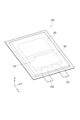
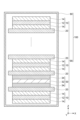
- FIG. 1 is a perspective view of a lithium-ion secondary battery 100 according to an embodiment.
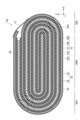
- FIG. 2 is a cross-sectional view of a laminate 90 according to one embodiment.
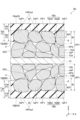
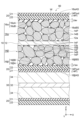
- FIG. 2 is an enlarged cross-sectional view of a laminate 90 according to one embodiment.
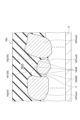
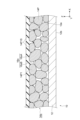
- FIG. 2 is an enlarged cross-sectional view of a negative electrode according to one embodiment.
- FIG. 4 is an enlarged cross-sectional view of a negative electrode according to another embodiment.
- FIG. 4 is an enlarged cross-sectional view of a negative electrode according to another embodiment.
- FIG. 4 is an enlarged cross-sectional view of a negative electrode according to another embodiment.
- FIG. 4 is an enlarged cross-sectional view of a negative electrode according to another embodiment.
- FIG. 4 is an enlarged cross-sectional view of a negative electrode according to another embodiment.
- FIG. 4 is an enlarged cross-sectional view of a negative electrode according to another embodiment.
- FIG. 4 is an enlarged cross-sectional view of
- FIG. 4 is an enlarged cross-sectional view of a negative electrode according to another embodiment.
- FIG. 11 is an enlarged cross-sectional view of a laminate according to another embodiment.
- FIG. 11 is an enlarged cross-sectional view of a laminate according to another embodiment.
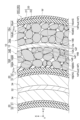
- FIG. 11 is an enlarged cross-sectional view of a curved portion of a laminate according to another embodiment.
- FIG. 11 is a cross-sectional view of a lithium-ion secondary battery according to another embodiment.
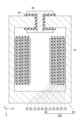
- FIG. 11 is a cross-sectional view of a lithium-ion secondary battery according to another embodiment.
- element A when element A is said to "connect" element B, it should be understood that element A may be directly connected to element B, or there may be an intermediate element C such that elements A and B are indirectly connected to one another.
- spatially related terms such as “above” may be used herein for ease of description to describe the relationship of an element or feature to another element(s) or feature(s) as illustrated in the figures. It should be understood that the spatially related terms are intended to include different orientations of the device or equipment in use or operation in addition to the orientation depicted in the figures. For example, if the device in the figures is turned over, elements described as being “above” or “on” the other elements or features would be oriented “below” or “below” the other elements or features. Thus, the exemplary term “above” can include both an orientation of above and below.
- first, second, third, etc. may be used herein to describe various elements, components, regions, layers, and/or portions, but it should be understood that these elements, components, regions, layers, and/or portions should not be limited by these terms. These terms are used to distinguish one element, component, region, layer, or portion from another. Thus, a first element, component, region, layer, or portion described below can be referred to as a second element, component, region, layer, or portion without departing from the teachings of the exemplary embodiments.
- the energy storage element 100 includes a case 80 and a laminate 90 housed in the case 80. Leads 101 and 102 are connected to the laminate 90 and are drawn out from the inside of the case 80 to the outside.
- the material of the case 80 may be a resin sheet, a resin-coated metal sheet, or the like.
- the axial direction of the winding of the laminate 90 is defined as the Y direction
- the thickness direction of the laminate 90 (the direction perpendicular to the Y direction and in which the thickness of the laminate 90 is the thinnest) is defined as the Z' direction (first direction)
- the direction perpendicular to the Y direction and Z' direction is defined as the X' direction.
- the laminate 90 has a negative electrode 10, a positive electrode 30, and a separator 20, and the negative electrode 10, the positive electrode 30, and the separator 20 are wound with the separator 20 interposed between the negative electrode 10 and the positive electrode 30.
- the wound ends of the laminate 90 are fixed with tape 13.
- the negative electrode 10, the positive electrode 30, and the separator 20 are each sheet-shaped.
- the laminate 90 has a flat portion 90M where the laminate of the positive electrode 30, the separator 20, and the negative electrode 10 is flat, and curved portions 90C where the laminate of the positive electrode 30, the separator 20, and the negative electrode 10 is curved, which are arranged at both ends of the flat portion 90M.
- the laminate 90 is wound so as to have alternating flat portions 90M and curved portions 90C.
- the positive electrode 30 has a second conductor 32 and a positive electrode active material layer 34
- the negative electrode 10 has mainly a first conductor 12 and a first active material layer 14.
- the negative electrode 10 has a first conductor 12, a first active material layer 14 ⁇ provided on the first surface 12a of the first conductor 12, a first layer 16 ⁇ sandwiching the first active material layer 14 ⁇ together with the first conductor 12, a second active material layer 14 ⁇ provided on the second surface 12b of the first conductor 12, and a second layer 16 ⁇ sandwiching the second active material layer 14 ⁇ together with the first conductor 12.
- the main surface of the first layer 16 ⁇ of the negative electrode 10 is in contact with the main surface of the separator 20.
- the main surface of the second layer 16 ⁇ of the negative electrode 10 is in contact with the main surface of the separator 20.
- the Z direction is the direction (first direction) in which the first active material layer 14 ⁇ and the first conductor 12 are aligned, and can also be said to be the direction perpendicular to the first surface 12a of the first conductor 12.
- the Z direction is also the direction (second direction) in which the second active material layer 14 ⁇ and the first conductor 12 are aligned, and can also be said to be the direction perpendicular to the second surface 12b of the first conductor 12.
- the X direction is perpendicular to the Y and Z directions.
- a cross section is a cross section taken along the Z direction unless otherwise defined. 3 to 10, the vertical direction is the Z direction, and the horizontal direction is the X direction.
- the first conductor 12 is, for example, a thin metal plate (metal foil) made of copper, nickel, stainless steel, or an alloy thereof, and is a conductive plate material.
- the thickness of the first conductor 12 can be, for example, 5 to 20 ⁇ m.
- the first active material layer 14 ⁇ includes a plurality of negative electrode active material particles (first negative electrode active material particles) 14P
- the second active material layer 14 ⁇ includes a plurality of negative electrode active material particles (second negative electrode active material particles) 14P.
- the negative electrode active material may be any material capable of absorbing and releasing (intercalating and deintercalating, or doping and dedoping) lithium ions. Examples of the negative electrode active material particles 14P include carbon materials.
- the negative electrode active material particles (second negative electrode active material particles) 14P of layer 14 ⁇ may be the same as or different from each other.
- Examples of carbon materials used for the negative electrode active material particles 14P include graphite, non-graphitizable carbon, easily graphitizable carbon, and low-temperature fired carbon.
- metals used for the negative electrode active material particles 14P are metals that can combine with lithium, such as Al and Sn.
- An example of a semimetal used for the negative electrode active material particles 14P is Si.
- metal oxides used for the negative electrode active material particles 14P are TiO 2 , SnO 2 , and lithium titanate (Li 4 Ti 5 O 12 ).
- An example of the semi-metal oxide used for the negative electrode active material particles 14P is SiO x (0 ⁇ x ⁇ 2).
- the arrangement of the negative electrode active material particles 14P may be random.
- the particle size of the negative electrode active material particles 14P may be 2 to 20 ⁇ m in D50 of the number-based distribution of the diameter of circles equivalent to the area in the cross-sectional images of the first active material layer 14 ⁇ and the second active material layer 14 ⁇ .
- the first active material layer 14 ⁇ and the second active material layer 14 ⁇ may contain an organic compound 14B such as a polymer.
- the organic compound can bond the negative electrode active material particles 14P together and/or the negative electrode active material particles 14P and the first conductor 12.
- the area with the narrowest hatching that extends from the upper left to the lower right corresponds to the organic compound 14B.
- organic compound 14B examples include fluororesins such as polyvinylidene fluoride (PVDF) and polytetrafluoroethylene (PTFE).
- PVDF polyvinylidene fluoride
- PTFE polytetrafluoroethylene
- Other examples of organic compounds include cellulose, styrene-butadiene rubber, ethylene-propylene rubber, acrylic resin, polyimide resin, polyamide-imide resin, etc.
- the organic compound may be an electronically conductive conductive polymer or an ionically conductive conductive polymer.
- An example of an electronically conductive conductive polymer is polyacetylene.
- the organic compound also functions as a conductive assistant particle, so that a conductive assistant does not need to be added.
- an ionically conductive conductive polymer for example, one having ion conductivity such as lithium ions can be used, and examples thereof include a composite of a monomer of a polymer compound (polyether-based polymer compounds such as polyethylene oxide and polypropylene oxide, polyphosphazene, etc.) and a lithium salt such as LiClO 4 , LiBF 4 , LiPF 6 or an alkali metal salt mainly composed of lithium.
- the polymerization initiator used for the composite include a photopolymerization initiator or a thermal polymerization initiator that is compatible with the above-mentioned monomer.
- the amount of organic compound added may be 2 to 20% by mass relative to the mass of the negative electrode active material particles.
- the first active material layer 14 ⁇ and the second active material layer 14 ⁇ may further contain a negative electrode conductive assistant 14F.
- a known conductive assistant may be used as the negative electrode conductive assistant.
- the conductive assistant include carbon-based materials such as graphite, carbon black, and acetylene black, metal fine powders such as copper, nickel, stainless steel, and iron, mixtures of carbon materials and metal fine powders, and conductive oxides such as ITO.
- the amount of the negative electrode conductive assistant added may be 0.5 to 5 mass% with respect to the mass of the negative electrode active material particles. In Figs. 3, 6, and 9 to 11, the hatched area extending from the upper right to the lower left and having the narrowest spacing corresponds to the negative electrode conductive assistant 14F.
- the thickness of the first active material layer 14 ⁇ and the second active material layer 14 ⁇ can be 5 to 300 ⁇ m, and may be the same or different.
- FIG. 4A shows an example of an enlarged cross-sectional view of the negative electrode 10 of the flat portion 90M of the laminate 90 in FIG. 2.
- the thickness of the first active material layer 14 ⁇ is defined as the arithmetic average of the distance DPP1 from the point PP1 farthest from the first conductor 12 in the Z direction to the first conductor 12 among the negative electrode active material particles 14Pout exposed on the opposite side to the first conductor 12 included in the first active material layer 14 ⁇ in the cross-sectional image along the Z direction of the negative electrode exemplified in FIG. 4A for all the negative electrode active material particles 14Pout exposed on the opposite side to the first conductor 12 included in the first active material layer 14 ⁇ in the cross-sectional image.
- the thickness of the second active material layer 14 ⁇ is defined as the arithmetic average of the distance DPP1 from the point PP1 farthest from the first conductor 12 in the Z direction to the first conductor 12 among the negative electrode active material particles 14Pout exposed on the side opposite the first conductor 12 contained in the second active material layer 14 ⁇ in the cross-sectional image along the Z direction of the negative electrode illustrated in Figures 4A and 4B, for all the negative electrode active material particles 14Pout exposed on the side opposite the first conductor 12 contained in the second active material layer 14 ⁇ in the cross-sectional image.
- the magnification of the cross-sectional image can be set so that the number of negative electrode active material particles 14Pout exposed on the side opposite the first conductor 12 contained in each active material layer is approximately 5 to 100.
- the first layer 16 ⁇ has a first portion 16 ⁇ A that is provided across two or more negative electrode active material particles 14Pout (first negative electrode active material particles) exposed on the side opposite the first conductor 12 in the first active material layer 14 ⁇ , and a second portion 16 ⁇ B that penetrates from the first portion 16 ⁇ A between adjacent negative electrode active material particles (first negative electrode active material particles) 14P of the first active material layer 14 ⁇ .
- the second layer 16 ⁇ has a third portion 16 ⁇ A that is provided across two or more negative electrode active material particles 14Pout (second negative electrode active material particles) exposed on the side of the second active material layer 14 ⁇ opposite the first conductor 12, and a fourth portion 16 ⁇ B that penetrates from the third portion 16 ⁇ A into the space between adjacent negative electrode active material particles (second negative electrode active material particles) 14P of the second active material layer 14 ⁇ .
- the space between the negative electrode active material particles (first negative electrode active material particles) 14P where the second portion 16 ⁇ B is arranged refers to an aggregate V of the region sandwiched between any two negative electrode active material particles 14P (first negative electrode active material particles) that may be adjacent in any direction in the first active material layer 14 ⁇ .
- the second portion 16 ⁇ B can extend until it contacts the first conductor 12.
- the first portion 16 ⁇ A is a region of the first layer 16 ⁇ that is separated from the assembly V of the above-mentioned regions.
- the space between the negative electrode active material particles (first negative electrode active material particles) 14P in which the fourth portion 16 ⁇ B is arranged refers to an aggregate V of the region sandwiched between any two negative electrode active material particles 14P (second negative electrode active material particles) that may be adjacent in any direction in the second active material layer 14 ⁇ .
- the third portion 16 ⁇ A is a region of the second layer 16 ⁇ that is separated from the assembly V of the above-mentioned regions.
- the boundary between the first portion 16 ⁇ A and the second portion 16 ⁇ B is exposed on the side opposite the first conductor 12 in the cross section and is formed by a common circumstantial line W of the negative electrode active material particles 14Pout adjacent to each other in a direction perpendicular to the Z direction (e.g., the X direction in Figures 3, 4A, etc.) (see Figure 4A).
- the boundary between the third portion 16 ⁇ A and the fourth portion 16 ⁇ B is exposed on the side opposite the first conductor 12 and is formed by a common circumstantial line W of the negative electrode active material particles 14Pout adjacent to each other in a direction perpendicular to the Z direction (e.g., the X direction in Figures 3, 4A, etc.) (see Figure 4A).
- the boundary between the first part 16 ⁇ A and the second part 16 ⁇ B of the first layer 16 ⁇ has a shape (V-shaped in the figure) formed by the parts of each common circumscribing line W1, W2 that are farthest from the first conductor 12.
- the thickness U of the first portion 16 ⁇ A is the distance of the first portion 16 ⁇ A along the Z direction.
- the thickness U' of the third portion 16 ⁇ A is the distance of the third portion 16 ⁇ A along the Z direction.
- the average thickness Uav of the first portion 16 ⁇ A and the average thickness U'av of the third portion 16 ⁇ A may be 0.1 to 5.0 ⁇ m.
- Uav and U'av may be 0.5 ⁇ m or more, 0.7 ⁇ m or more, or 1.0 ⁇ m or more.
- Uav and U'av may be 4.0 ⁇ m or less, or 3.0 ⁇ m or less.
- the average thickness Uav of the first portion 16 ⁇ A is defined as the area of the first portion 16 ⁇ A that does not penetrate between the negative electrode active material particles 14P of the first active material layer 14 ⁇ , of the first layer 16 ⁇ extracted by image processing in a cross-sectional image of the negative electrode along the Z direction, divided by the length of the first portion 16 ⁇ A in a direction perpendicular to the Z direction in the image (for example, the Z direction in FIG. 3, but in some cross sections it may be the Y direction).
- the magnification of the cross-sectional image can be set so that the length of the first portion 16 ⁇ A in the direction perpendicular to the Z direction is, for example, 50 to 500 ⁇ m.
- the average thickness U'av of the third portion 16 ⁇ A is defined as the area of the third portion 16 ⁇ A that does not penetrate between the negative electrode active material particles 14P of the second active material layer 14 ⁇ , of the second layer 16 ⁇ extracted by image processing in a cross-sectional image of the negative electrode along the Z direction, divided by the length of the third portion 16 ⁇ A in a direction perpendicular to the Z direction in the image.
- the magnification of the cross-sectional image can be set so that the length of the third portion 16 ⁇ A in a direction perpendicular to the Z direction is, for example, 50 to 500 ⁇ m.
- the thickness H of the second portion 16 ⁇ B is the distance of the second portion 16 ⁇ B along the Z direction.
- the thickness H' of the fourth portion 16 ⁇ B is the distance of the fourth portion 16 ⁇ B along the Z direction.
- the average thickness Hav of the second portion 16 ⁇ B is defined as the area of the second portion 16 ⁇ B that penetrates between the negative electrode active material particles 14P of the first active material layer 14 ⁇ of the first layer 16 ⁇ extracted by image processing in a cross-sectional image of one negative electrode, divided by the length of the second portion 16 ⁇ B in the X direction.
- the magnification of the cross-sectional image can be set so that the length of the second portion 16 ⁇ B in the X direction is, for example, 50 to 500 ⁇ m.
- the average thickness H'av of the fourth portion 16 ⁇ B is defined as the area of the fourth portion 16 ⁇ B that penetrates between the negative electrode active material particles 14P of the second active material layer 14 ⁇ of the second layer 16 ⁇ extracted by image processing in a cross-sectional image of one negative electrode, divided by the length of the fourth portion 16 ⁇ B in the X direction.
- the magnification of the cross-sectional image can be set so that the length of the fourth portion 16 ⁇ B in the X direction is, for example, 50 to 500 ⁇ m.
- the average thickness of the fourth portion 16 ⁇ B in one cross-sectional image along the second direction (Z direction) is H'av and the average particle size of the multiple negative electrode active material particles 14P contained in the second active material layer 14 ⁇ in the image is R'av, the relationship 0.3 ⁇ H'av/R'av ⁇ 3.0 is satisfied.
- Rav is the particle size obtained by D50 based on the number of the area circle equivalent diameters of all the negative electrode active material particles contained in the first active material layer 14 ⁇ in one cross-sectional image.
- R'av is the particle size obtained by D50 based on the number of the area circle equivalent diameters of all the negative electrode active material particles contained in the second active material layer 14 ⁇ in one cross-sectional image.
- the number of active material particles measured in one cross-sectional image can be 10 to 1000.
- 0.5 ⁇ Hav/Rav ⁇ 2.0 can be satisfied, Hav/Rav ⁇ 1.5 can be satisfied, Hav/Rav ⁇ 1.3 can be satisfied, 0.5 ⁇ H'av/R'av ⁇ 2.0 can be satisfied, H'av/R'av ⁇ 1.5 can be satisfied, and H'av/R'av ⁇ 1.3 can be satisfied.
- At least one of Hav/Rav and H'av/R'av may be satisfied in one cross-sectional image, but may also be satisfied in multiple cross-sectional images. Specifically, it may be satisfied in two cross-sectional images, it may be satisfied in three cross-sectional images, or it may be satisfied in five cross-sectional images.
- the thickness T of the first layer 16 ⁇ is the distance of the first layer 16 ⁇ along the Z direction.
- the thickness T' of the second layer 16 ⁇ is the distance of the second layer 16 ⁇ along the Z direction.
- the thickness T of the first layer 16 ⁇ is the distance in the Z direction from the surface 16 ⁇ AS of the first layer 16 ⁇ opposite the first conductor 12 to the surface of the second portion 16 ⁇ B that is located on the first conductor 12 side in the Z direction.
- the thickness T' of the second layer 16 ⁇ is the distance in the Z direction from the surface 16 ⁇ AS of the second layer 16 ⁇ opposite the first conductor 12 to the surface of the fourth portion 16 ⁇ B located on the first conductor 12 side in the Z direction.
- the average thickness Tav of the first layer 16 ⁇ is defined as the area of the first layer 16 ⁇ extracted by image processing in a cross-sectional image of one negative electrode divided by the length of the first layer 16 ⁇ in the first direction (X direction).
- the magnification of the cross-sectional image can be set so that the length of the first layer 16 ⁇ in the X direction is, for example, 50 to 500 ⁇ m.
- the average thickness T'av of the second layer 16 ⁇ is defined as the area of the second layer 16 ⁇ extracted by image processing in a cross-sectional image of one negative electrode divided by the length of the second layer 16 ⁇ in the second direction (X direction).
- the magnification of the cross-sectional image can be set so that the length of the second layer 16 ⁇ in the X direction is, for example, 50 to 500 ⁇ m.
- the average thickness Tav of the first layer 16 ⁇ and the average thickness T'av of the second layer 16 ⁇ may be 0.1 to 300 ⁇ m.
- Tav, Uav, Hav, and Hav/Rav may each be a numerical value obtained from one cross-sectional image, or may be the arithmetic average of the numerical values obtained from, for example, three or five cross-sectional images.
- the length L ⁇ BS of the surface 16 ⁇ BS of the first layer 16 ⁇ on the first conductor 12 side is greater than the length L ⁇ AS of the surface 16 ⁇ AS of the first layer 16 ⁇ on the opposite side to the first conductor 12.
- L ⁇ BS/L ⁇ AS may be 1.1 or more, or may be 1.2 or more.
- the length L ⁇ BS of the surface 16 ⁇ BS of the second layer 16 ⁇ on the side of the first conductor 12 is greater than the length L ⁇ AS of the surface 16 ⁇ AS of the second layer 16 ⁇ on the side opposite the first conductor 12.
- L ⁇ BS/L ⁇ AS may be 1.1 or greater, or 1.2 or greater.
- the surface 16 ⁇ BS of the first layer 16 ⁇ facing the first conductor 12 also includes the contact interface between the first layer 16 ⁇ and the negative electrode active material particles 14P.
- the surface 16 ⁇ BS of the second layer 16 ⁇ facing the first conductor 12 includes the contact interface between the second layer 16 ⁇ and the negative electrode active material particles 14P.
- the portion ISO of the second part 16 ⁇ B of the first layer 16 ⁇ that is not connected to the first part 16 ⁇ A and is isolated is excluded from the calculation of the length L ⁇ AS of the surface 16 ⁇ BS.
- the portion ISO of the fourth part 16 ⁇ B of the second layer 16 ⁇ that is not connected to the third part 16 ⁇ A and is isolated is excluded from the calculation of the length L ⁇ BS of the surface 16 ⁇ BS.
- the magnification of the cross-sectional image for obtaining the length of each surface can be set so that the number of negative electrode active material particles 14Pout exposed on the side opposite the first conductor 12 in the cross-sectional image is approximately 5 to 100.
- the length of each surface can be obtained based on the number of pixels constituting each curve and the size of the pixels after extracting curves on both surfaces of the first and second layers based on the difference in composition between the first and second layers and the negative electrode active material particles from the SEM-EDX cross-sectional image.
- the length L ⁇ AS of the surface 16 ⁇ AS of the first layer 16 ⁇ opposite the first conductor 12 may be less than 1.1 or less than 1.05 relative to the length of the first layer 16 ⁇ in a direction perpendicular to the Z direction (the X direction in Figure 3).
- the length L ⁇ AS of the surface 16 ⁇ AS of the second layer 16 ⁇ opposite the first conductor 12 may be less than 1.1 or less than 1.05 relative to the length of the second layer 16 ⁇ in a direction perpendicular to the Z direction (the X direction in FIG. 3).
- the ratio of the length of the surface 16 ⁇ AS of the first layer 16 ⁇ to the length of the first layer 16 ⁇ in a direction perpendicular to the Z direction may be less than 1.1 or less than 1.05, while the ratio of the length of the surface 16 ⁇ AS of the second layer 16 ⁇ to the length of the second layer 16 ⁇ in a direction perpendicular to the Z direction (X direction in FIG. 3) may be 1.1 or more or 1.2 or more. Conversely, the ratio of the length of the surface 16 ⁇ AS of the first layer 16 ⁇ to the length of the first layer 16 ⁇ in a direction perpendicular to the Z direction (X direction in FIG.
- 3) may be 1.1 or more or 1.2 or more, while the ratio of the length of the surface 16 ⁇ AS of the second layer 16 ⁇ to the length of the second layer 16 ⁇ in a direction perpendicular to the Z direction (X direction in FIG. 3) may be less than 1.1 or less than 1.05.
- a gap VV may be formed between the separator 20 and the surface 16 ⁇ AS of the first layer 16 ⁇ or the surface 16 ⁇ AS of the second layer 16 ⁇ , whichever has a larger ratio to the above length.
- the surface 16 ⁇ As of the first layer 16 ⁇ or the surface 16 ⁇ As of the second layer 16 ⁇ , whichever has a larger ratio to the above length, may be on the inside or outside of the winding.
- the inside of the winding refers to the side closer to the winding axis, and the outside of the winding refers to the side farther from the winding axis.
- the second portion 16 ⁇ B of the first layer 16 ⁇ includes a portion extending from the first portion 16 ⁇ A to a position that exceeds a length dp/2 that is half the particle diameter dp of at least one negative electrode active material particle 14P1 (first negative electrode active material particle) exposed on the side opposite to the first conductor 12 in the Z direction.
- the particle diameter dp of the negative electrode active material particle is the distance along the first direction (Z direction) between the point PP1 of the negative electrode active material particle 14P1 that is farthest from the first conductor 12 and the point PP2 of the negative electrode active material particle 14P that is closest to the first conductor 12 in a cross-sectional image of the negative electrode 10 along the first direction (Z direction).
- the distance DPP1 in the first direction (Z direction) between the first surface 12a of the first conductor 12 and the point PP1 of the negative electrode active material particle 14P that is farthest from the first conductor 12 may be different for each negative electrode active material particle 14P.
- the distance DPP1 in the first direction (Z direction) between the second surface 12b of the first conductor 12 and the point PP1 of the negative electrode active material particle 14P that is farthest from the first conductor 12 may be different for each negative electrode active material particle 14P.
- the second part 16 ⁇ B extending to a position exceeding dp/2, which is half the length of the particle diameter dp, means that the second part 16 ⁇ B exceeds, in the Z direction, a line A that passes through a point where half the particle diameter (dp/2) of the negative electrode active material particle 14P1 is located and runs in the X direction perpendicular to the Z direction, on at least one side of the X direction of the negative electrode active material particle P1.
- the second part 16 ⁇ B extends across the line A from the first part 16 ⁇ A in the Z direction.
- the fourth portion 16 ⁇ B of the second layer 16 ⁇ includes a portion that extends from the third portion 16 ⁇ A to a position that exceeds a length dp/2 that is half the particle diameter dp of at least one negative electrode active material particle 14P1 (second negative electrode active material particle) exposed on the side opposite to the first conductor 12 in the Z direction.
- the fourth part 16 ⁇ B of the second layer 16 ⁇ extends to a position exceeding dp/2, which is half the length of the particle diameter dp, means that the fourth part 16 ⁇ B exceeds, in the Z direction, a line A that passes through a point where it is half the particle diameter (dp/2) of the negative electrode active material particle 14P1 and that runs in the X direction perpendicular to the Z direction, on at least one side of the X direction of the negative electrode active material particle P1.
- the fourth part 16 ⁇ B extends across the line A from the third part 16 ⁇ A in the Z direction.
- the thickness and average thickness of the first conductor 12, first active material layer 14 ⁇ , second active material layer 14 ⁇ , first layer 16 ⁇ , second layer 16 ⁇ constituting the negative electrode 10, the second conductor 32 constituting the positive electrode 30, and the positive electrode active material layer 34 are the same in the flat portion 90M shown in FIG. 2 and the curved portion 90C.
- the second portion 16 ⁇ B of the first layer 16 ⁇ extends from the first portion 16 ⁇ A to a position covering a point PP2 closest to the first conductor 12 of at least one negative electrode active material particle 14P1 exposed on the side opposite the first conductor in the first direction (Z direction), and extends beyond point PP2 in the Z direction.
- the fourth portion 16 ⁇ B of the second layer 16 ⁇ extends from the third portion 16 ⁇ A to a position covering a point PP2 closest to the first conductor 12 of at least one negative electrode active material particle 14P2 exposed on the side opposite the first conductor in the second direction (Z direction), and extends beyond point PP2 in the Z direction.
- the first layer 16 ⁇ is provided for the first active material layer 14 ⁇
- the second layer 16 ⁇ is provided for the second active material layer 14 ⁇ .
- the negative electrode 10 may have only either the first layer 16 ⁇ or the second layer 16 ⁇ .
- the negative electrode 10 has a first active material layer 14 ⁇ and a second active material layer 14 ⁇ on both sides of the first conductor 12, respectively.
- the negative electrode 10 may have either the first layer 16 ⁇ or the second layer 16 ⁇ .
- the first layer 16 ⁇ and the second layer 16 ⁇ contain an inorganic material.
- An example of the inorganic material is an inorganic compound.
- An example of the inorganic compound is a metal oxide or a metal hydroxide.
- An example of the metal oxide is one or more metal oxides selected from aluminum oxide, magnesia, titania, silica, zirconia, zinc oxide, iron oxide, ceria, yttria, etc., which are prepared in a particulate form.
- An example of the metal hydroxide is magnesium hydroxide.
- An example of the aluminum oxide is alumina (Al 2 O 3 ), alumite (Al 2 O 3.3H 2 O), and boehmite (Al 2 O 3.5H 2 O).
- Preferred inorganic materials are alumina, boehmite, magnesia, and magnesium hydroxide.
- the inorganic material may be a plurality of particles.
- the inorganic material particles may have an average particle size defined by D50 of the volume-based particle size distribution of laser diffraction of 10 to 1000 nm.
- the first layer 16 ⁇ and the second layer 16 ⁇ may further contain an organic compound.
- An example of the organic compound is a polymer compound containing fluorine, such as polyvinylidene fluoride (PVdF).
- PVdF polyvinylidene fluoride
- the organic compound can function as a binder that bonds inorganic material particles together and between the inorganic material particles and the negative electrode active material particles.
- the mass ratio of the inorganic compound to the organic compound in the first layer 16 ⁇ and the second layer 16 ⁇ may be 1:1 to 100:1.
- the positive electrode 30 has a plate-shaped second conductor 32 and a positive electrode active material layer 34 provided on one or both surfaces of the second conductor 32 .
- the second conductor 32 may be, for example, a thin metal plate (metal foil) made of aluminum, copper, nickel, or an alloy thereof.
- the positive electrode active material layer 34 may mainly comprise positive electrode active material particles, a positive electrode binder, and an appropriate amount of a conductive assistant.
- the positive electrode active material is not particularly limited as long as it is capable of reversibly absorbing and releasing lithium ions, desorbing and inserting lithium ions (intercalating them), or doping and dedoping lithium ions with their counter anions (e.g., ClO 4 ⁇ ), and any known active material can be used.
- lithium cobalt oxide LiCoO2
- lithium nickel oxide LiNiO2
- lithium manganese spinel LiMn2O4
- M is one or more elements selected from Al, Mg, Nb, Ti, Cu, Zn, Cr ), lithium vanadium compound ( LiV2O5 ), olivine type LiMPO4 (wherein M is one or more elements selected from Co, Ni, Mn, Fe, Mg, Nb, Ti, Al, Zr, or VO), lithium titanate (Li4Ti5O12 ) , LiNi x Co
- the composite metal oxide include composite metal oxides such as yAlzO2 (0.9 ⁇ x + y+z ⁇
- the positive electrode active material layer 34 may contain an organic compound.
- the organic compound may function as a binder that bonds the active materials together and also bonds the active materials and the second conductor 32.
- the organic compound may be any compound capable of the above-mentioned bonding, and may be, for example, a fluororesin such as polyvinylidene fluoride (PVDF) or polytetrafluoroethylene (PTFE).
- PVDF polyvinylidene fluoride
- PTFE polytetrafluoroethylene
- cellulose, styrene-butadiene rubber, ethylene-propylene rubber, acrylic resin, polyimide resin, polyamide-imide resin, or the like may be used as the binder.
- the amount of organic compound contained in the positive electrode active material layer 34 is not particularly limited, but if added, it is preferably 0.5 to 5 mass % relative to the mass of the active material.
- the positive electrode active material layer 34 may contain a conductive assistant.
- the conductive assistant is not particularly limited as long as it improves the conductivity of the positive electrode active material layer 34, and the above-mentioned negative electrode conductive assistants can be used.
- the amount of conductive additive contained in the positive electrode active material layer 34 is not particularly limited, but if added, it may be 0.5 to 5 mass % relative to the mass of the active material.
- Separator 20 There is no particular limitation on the material of the separator 20.
- An example of the separator has a main layer 22 which is generally a porous sheet of polyolefin such as polyethylene or polypropylene, or a nonwoven fabric.
- the thickness of the main layer 22 may be 3.0 to 30 ⁇ m.
- the separator 20 may have an inorganic compound-containing layer 21 on the side of the main layer 22 that comes into contact with the positive electrode active material layer 34.
- Examples of the inorganic compound in the inorganic compound-containing layer 21 are the same as those given for the first layer 16 ⁇ , and may be, for example, alumina particles.
- the inorganic compound-containing layer 21 may have an organic compound that functions as a binder. Examples of the organic compound are the same as those given for the first layer 16 ⁇ .
- the thickness of the main layer 22 may be 3.0 to 30 ⁇ m.
- a laminate 90 having a separator/positive electrode 30/separator/negative electrode 10 structure is wound so that the separator 20 is interposed between the positive electrode 30 and the negative electrode 10.
- each positive electrode active material layer 34 of the positive electrode 30 is in contact with the second conductor 32, and the other main surface of each positive electrode active material layer 34 is in contact with the main surface of the separator 20.
- the main surface of the first active material layer 14 ⁇ of the negative electrode 10 opposite the first layer 16 ⁇ is in contact with the main surface of the first conductor 12.
- the surface of the first layer 16 ⁇ of the negative electrode 10 opposite the first active material layer 14 ⁇ is in contact with the main surface of the separator 20.
- the surface of the second active material layer 14 ⁇ of the negative electrode 10 opposite the second layer 16 ⁇ is in contact with the first conductor 12.
- the surface of the second layer 16 ⁇ of the negative electrode 10 opposite the second active material layer 14 ⁇ is in contact with the separator 20.
- each layer is stacked in the Z direction.
- the lead 101 shown in FIG. 1 is connected to the portion of the second conductor 32 exposed from the positive electrode active material layer 34.
- the lead 102 is connected to the portion of the first conductor 12 exposed from the first active material layer 14 ⁇ or the second active material layer 14 ⁇ .
- the leads 101 and 102 extend from the inside to the outside of the case 80.
- the first layer 16 ⁇ of the negative electrode 10 and the main layer 22 of the separator 20 are in contact.
- the positive electrode active material layer 34 of the positive electrode 30 and the inorganic compound-containing layer 21 of the separator 20 are in contact.
- a laminate having a first active material layer 14 ⁇ and a second active material layer 14 ⁇ formed on both sides of a first conductor 12 is prepared by a conventionally known method.
- the inorganic particles, binder, and solvent are mixed to prepare a slurry for forming the first layer.
- the slurry for forming the first layer is then applied onto at least one of the first active material layer 14 ⁇ and the second active material layer 14 ⁇ , and then dried at high temperature for a predetermined time.
- the slurry for forming the second layer may be applied separately from the slurry for forming the first layer.
- the first layer 16 ⁇ and/or the second layer 16 ⁇ are more likely to penetrate between the negative electrode active material particles.
- the drying time under reduced pressure is increased, the first layer 16 ⁇ and/or the second layer 16 ⁇ are more likely to penetrate between the negative electrode active material particles.
- the negative electrode is pressed after the formation of the first layer 16 ⁇ and/or the second layer 16 ⁇ , the first layer 16 ⁇ and/or the second layer 16 ⁇ are more likely to penetrate between the negative electrode active material particles.
- FIG. 7 is a cross-sectional view of the negative electrode 10 according to another embodiment. In this embodiment, only the structure on one side of the first conductor 12 is shown, and the structure on the other side is omitted.
- a part 14P1S of each surface of the negative electrode active material particle 14P1 exposed on the side opposite to the first conductor 12 is flattened. This form is easily obtained by pressing each surface of the negative electrode active material particle 14P1 before forming the first layer 16. In this embodiment, there is an effect of reducing the possibility that the negative electrode active material particle 14P that is not covered by the first layer 16 ⁇ is generated.
- the protrusion may protrude from the first layer 16 ⁇ . If there are any areas of the negative electrode active material particles that are not covered, the difference in resistance between the first layer 16 ⁇ and the first active material layer 14 ⁇ will cause current to concentrate in areas of the first active material layer 14 ⁇ where the first layer 16 ⁇ is not present, increasing the utilization rate of only those areas, resulting in variation in deterioration within the first active material layer 14 ⁇ and possibly reducing the cycle characteristics.
- FIG. 8 is a cross-sectional view of a negative electrode according to another embodiment.
- the negative electrode active material particles 14P are aligned in the in-plane direction in the first active material layer 14 ⁇ .
- the negative electrode 10 may be wound so that the second layer 16 ⁇ is positioned on the outer side of the winding than the first layer 16 ⁇ , but the second layer 16 ⁇ may also be wound so that it is positioned on the inner side of the winding than the first layer 16 ⁇ .
- the inner side of the winding means the side closer to the winding axis, and the outer side of the winding means the side farther from the winding axis.
- the third portion 16 ⁇ A of the second layer 16 ⁇ on the inner side of the winding which has a relatively smaller radius of curvature, can be made thinner, and the adhesion with the opposing positive electrode is improved, thereby improving the high-temperature cycle characteristics.
- the difference between the average thicknesses Uav and U'av of the first portion 16 ⁇ A and the third portion 16 ⁇ A may be 0 to 2.0 ⁇ m.
- FIG. 10 is an enlarged view of a laminate 90 according to another embodiment.
- the average thickness T'av of the second layer 16 ⁇ is smaller than the average thickness Tav of the first layer 16 ⁇ on the outer side of the winding.
- the negative electrode 10 may be wound so that the second layer 16 ⁇ is positioned on the outer side of the winding than the first layer 16 ⁇ , but may also be wound so that the second layer 16 ⁇ is positioned on the inner side of the winding than the first layer 16 ⁇ .
- the inner side of the winding means the side closer to the winding axis, and the outer side of the winding means the side farther from the winding axis.
- the average thickness T'av of the second layer 16 ⁇ on the inner side of the winding can be made thinner, and the adhesion with the opposing positive electrode is improved, thereby improving the high-temperature cycle characteristics.
- the difference between the average thicknesses Tav and T'av of the first layer 16 ⁇ and the second layer 16 ⁇ may be 0 to 2.0 ⁇ m.
- the average thickness U'av of the third portion 16 ⁇ A is smaller than the average thickness Uav of the first portion 16 ⁇ A
- the average thickness H'av of the fourth portion 16 ⁇ B is smaller than the average thickness Hav of the second portion 16 ⁇ B.
- the average thickness U'av of the third portion 16 ⁇ A is smaller than the average thickness Uav of the first portion 16 ⁇ A
- the average thickness H'av of the fourth portion 16 ⁇ B is the same as the average thickness Hav of the second portion 16 ⁇ B.
- the average thickness T'av of the third portion 16 ⁇ A is the same as the average thickness Tav of the first portion 16 ⁇ A, and the average thickness H'av of the fourth portion 16 ⁇ B is smaller than the average thickness Hav of the second portion 16 ⁇ B.
- the difference between the average thickness Hav of the second portion 16 ⁇ B and the average thickness H'av of the fourth portion 16 ⁇ B may be 0 to 2.0 ⁇ m.
- the difference between the average thickness Uav of the first portion 16 ⁇ A and the average thickness U'av of the third portion 16 ⁇ A may be 0 to 4.0 ⁇ m.
- FIG. 11 is an enlarged cross-sectional view of a curved portion 90C of a laminate 90 according to another embodiment.
- the Z direction which is the direction (first direction) in which the first active material layer 14 ⁇ and the first conductor 12 are aligned, is the radial direction of the curved portion 90C.
- the X, Y, and Z directions shown in FIG. 11 are the directions at the center of the laminate 90 in the vertical direction, that is, when the radial direction of the curved portion is horizontal.
- the average thickness Tav-c of the first layer 16 ⁇ of the curved portion 90C shown in FIG. 11 is smaller than the average thickness Tav (see FIG. 4A) of the first layer 16 ⁇ of the flat portion 90M shown in FIG. 3.
- the average thickness T'av-c of the second layer 16 ⁇ of the curved curved portion 90C in FIG. 11 is smaller than the average thickness T'av of the second layer 16 ⁇ of the flat portion 90M in FIG. 3 (see FIG. 4A).
- the average thickness Tav-c of the first layer 16 ⁇ of the curved portion 90C in FIG. 11 is smaller than the average thickness Tav of the first layer 16 ⁇ of the flat portion 90M, and the average thickness T'av-c of the second layer 16 ⁇ of the curved portion 90C is smaller than the average thickness T'av of the second layer 16 ⁇ of the flat portion 90M.
- the high-temperature cycle characteristics are improved by improving the adhesion with the opposing positive electrode.
- the difference between the average thickness Tav and the average thickness Tav-c, and the difference between the average thickness T'av and the average thickness T'av-c may each be 0 to 2.0 ⁇ m.
- the average thickness Tav-c of the first layer 16 ⁇ and the average thickness T'av-c of the second layer 16 ⁇ in the cross-sectional image of the curved portion are obtained by dividing the area of the first layer 16 ⁇ by the length of the first layer 16 ⁇ along the surface of the separator 20 facing the first layer 16 ⁇ , and by dividing the area of the second layer 16 ⁇ by the length of the second layer 16 ⁇ along the surface of the separator 20 facing the second layer 16 ⁇ .
- FIG. 12 is a cross-sectional view showing an example in which a laminate 90 having a negative electrode 10, a separator 20, and a positive electrode 30 is wound into a cylindrical shape and housed in a case 80.
- the case 80 includes a metal can 81, a gasket 83, and an electrode lead 82.
- the axis of winding is the Y direction
- the horizontal direction is the Z direction in which the first active material layer 14 ⁇ and the first conductor 12 are aligned
- the X direction is the direction perpendicular to the Y and X directions.
- FIG. 13 shows a stacked type energy storage element in which multiple negative electrodes 10 and multiple positive electrodes 30 are stacked with a separator 20 interposed between each positive electrode 30 and negative electrode 10.
- the direction in which the first active material layer 14 ⁇ and the first conductor 12 are aligned is the Z direction, and the X direction and Y direction are perpendicular to the Z direction.
- the first layer 16 ⁇ and part of the second layer 16 ⁇ which are made of inorganic material, cover the gaps between the negative electrode active material particles, thereby reducing the surface roughness on the outer surface of the negative electrode 10 and reducing the resistance at the interface between the negative electrode 10 and the separator 20.
- the groove-like parts formed by the negative electrode active material particles 14P current concentration during charging is alleviated and the generation of dendrites is suppressed, making it possible to cycle stably even at high temperatures.
- Example 1 Example in which the first layer is present only in the first active material layer 14 ⁇
- Preparation of Positive Electrode The positive electrode active material particles, the conductive material, and the binder were mixed to prepare a positive electrode mixture.
- the positive electrode active material was lithium cobalt oxide (LiCoO 2 : hereinafter, abbreviated as LCO when described below), the conductive material was carbon black, and the binder was polyvinylidene fluoride (PVDF).
- the positive electrode active material particles, the conductive material, and the binder were in a mass ratio of 96:2:2.
- the positive electrode mixture was dispersed in N-methyl-2-pyrrolidone (NMP) to prepare a positive electrode slurry.
- NMP N-methyl-2-pyrrolidone
- the positive electrode slurry was applied to one side of an aluminum foil having a thickness of 15 ⁇ m as a second conductor so that the weight per unit area after drying was about 20.0 mg/cm 2.
- the positive electrode slurry was dried at 100° C. to remove the solvent, and a positive electrode active material layer was formed on one side of the aluminum foil.
- the positive electrode slurry was applied to the other side of the aluminum foil so that the weight per unit area after drying was about 10.0 mg/cm 2 .
- the aluminum foil was dried at 100° C. to remove the solvent, and a positive electrode active material layer was formed on both sides of the aluminum foil. After the positive electrode active material layers were formed on both sides of the second conductor, the positive electrode was obtained by pressing at 1000 kgf/cm.
- a negative electrode active material particle, a conductive material, and a binder were mixed to prepare a negative electrode mixture.
- the negative electrode active material was graphite, and the binder was polyvinylidene fluoride (PVDF).
- PVDF polyvinylidene fluoride
- the negative electrode active material particle and the binder were in a mass ratio of 95:5.
- This negative electrode mixture was dispersed in N-methyl-2-pyrrolidone (NMP) to prepare a negative electrode slurry. Then, the negative electrode slurry was applied to one side of a copper foil having a thickness of 10 ⁇ m as a first conductor so that the weight per unit area after drying was about 6.0 mg/cm 2. After application, the coating was dried at 100° C.
- the negative electrode slurry was applied to the other side of the copper foil so that the weight per unit area after drying was about 10.0 mg/cm 2 .
- the coating was dried at 100° C. to remove the solvent, forming a first active material layer on both sides of the copper foil, and forming a first active material layer on both sides of the first conductor.
- the thickness of the first active material layer was about 50 ⁇ m.
- the inorganic particles and the binder were mixed to prepare a first layer composite material.
- the inorganic particles were alumina (Al 2 O 3 ), and the binder was polyvinylidene fluoride (PVDF).
- PVDF polyvinylidene fluoride
- the mass ratio of the inorganic particles to the binder was 95:5.
- This first layer composite material was dispersed in N-methyl-2-pyrrolidone (NMP) to prepare a first layer slurry.
- NMP N-methyl-2-pyrrolidone
- the obtained slurry for the first layer was applied to one surface of the first active material layer formed on the first conductor using an applicator, with the thickness adjusted to 30 ⁇ m. After application, the slurry was dried under reduced pressure at 90°C for 12 hours. After drying under reduced pressure, the negative electrode of Example 1 was obtained by pressing at 300 kgf/cm.
- Cross-section SEM observation of negative electrode The cross-section of the negative electrode was observed using a cross-sectional SEM image of the obtained negative electrode.
- Cross-sectional SEM observation was performed in five fields of view from the obtained negative electrode, and the average thickness Tav of the first layer and the second layer, the average thickness Uav of the first portion, the average thickness Hav of the second portion, the average particle diameter Rav and Hav/Rav of the active material, and the state of the first layer and the second layer regions in the negative electrode were observed.
- Example 10 The results of cross-sectional SEM observations were also performed in the following examples and comparative examples, and are shown in the table. Note that in Example 10, the average thickness of the second part was nearly zero, but some second parts were present. In Example 9, the average thickness of the second part was nearly zero, but at least one part was confirmed where the second part extended to a position exceeding half the particle size.
- an uncoated portion having a width of 1 mm where the positive electrode active material layer and the first active material layer were not formed was provided at the end, and a nickel negative electrode lead was attached to the uncoated portion of the negative electrode where the first active material layer was not provided, while in the positive electrode, an aluminum positive electrode lead was attached by an ultrasonic fusion machine to the uncoated portion of the positive electrode where the positive electrode active material layer was not provided.
- the laminate was inserted into an exterior body of aluminum laminate film and heat sealed except for one place on the periphery to form an opening.
- a non-aqueous electrolyte was injected into the exterior body.
- the non-aqueous electrolyte was made by dissolving 1.5 mol/L of lithium hexafluorophosphate (LiPF6) in a solvent that was a mixture of equal amounts of ethylene carbonate (EC) and propylene carbonate (PC).
- EC ethylene carbonate
- PC propylene carbonate
- the cycle characteristics of the lithium ion secondary battery for evaluation thus prepared were evaluated in an environment of 85° C. using a secondary battery charge/discharge tester (manufactured by Hokuto Denko Corporation).
- the cycle characteristics were evaluated by repeating 500 charge/discharge cycles of constant current and constant voltage charging at 0.5 C to 4.35 V and constant current discharging at 1 C to 2.8 V.
- the ratio of the discharge capacity after 500 cycles to the discharge capacity of the first cycle was defined as the capacity retention rate.
- the capacity retention rate to the initial capacity is the discharge capacity at the 500th cycle when the discharge capacity at the initial (first) cycle is set to 100%.
- the reduced pressure drying time was 10 hours for Example 2, 8 hours for Example 3, 5 hours for Example 4, 3 hours for Example 5, 1 hour for Example 6, 30 minutes for Example 7, 10 minutes for Example 8, and 5 minutes for Example 9.
- Example 10 (Production of negative electrode according to Example 10)
- the negative electrode of Example 10 was produced under the same conditions as in Example 1, except that after coating the first layer slurry, drying was not performed under reduced pressure but was performed in the air at 100° C.
- Example 11 (Production of a negative electrode according to Example 11: an example in which a first layer is present on a first active material layer and a second layer is present on a second active material layer)
- the slurry for the first layer was applied to one surface of the first active material layer formed on the first conductor by using an applicator, with a thickness of 20 ⁇ m. After application, the slurry was dried under reduced pressure at 90° C. for 3 hours. After drying under reduced pressure, additional drying was performed in the air at 100° C. to remove the solvent component in the first layer. That is, the drying conditions for the first layer were the same as those in Example 5.
- the slurry for the first layer was applied to the second active material layer (the back side sandwiching the current collector) using an applicator, adjusted to a thickness of 20 ⁇ m. After application, the slurry was dried under reduced pressure at 90°C for 12 hours. Then, the slurry was pressed at 300 kgf/cm to obtain the negative electrode of Example 11 having a second layer in addition to the first layer.
- Negative electrodes of Examples 12 to 20 were produced under the same conditions as in Example 11, except that the time for drying under reduced pressure was changed when the second layer was produced on the second active material layer.
- the reduced pressure drying time was 10 hours for Example 12, 8 hours for Example 13, 5 hours for Example 14, 3 hours for Example 15, 1 hour for Example 16, 30 minutes for Example 17, 10 minutes for Example 18, and 5 minutes for Example 19.
- Example 20 A negative electrode of Example 20 was produced under the same conditions as in Example 11, except that, when producing the second layer, drying was carried out in the air at 100° C. instead of drying under reduced pressure.
- Examples 23 to 32 Examples related to wound bodies (basic method for producing lithium ion secondary batteries for evaluation: Examples 23 to 32)
- the produced negative electrode and positive electrode were punched out into a predetermined long shape (negative electrode: 19 mm x 160 mm, positive electrode: 18 mm x 200 mm), and two polypropylene separators having a thickness of 25 ⁇ m were placed on both sides of the negative electrode, and the positive electrode was laminated on one side of the separator.
- an uncoated portion without an active material layer was formed at the end of the negative electrode, and a nickel negative electrode lead was attached to the uncoated portion of the negative electrode without the negative electrode active material layer.
- an uncoated portion without a positive electrode active material layer was formed at both ends of the positive electrode, and an aluminum positive electrode lead was attached to one end of the uncoated portion of the positive electrode by an ultrasonic fusion machine.
- a wound body was produced by winding the laminate with the surface of the negative electrode in which the positive electrode was not laminated as the inner surface side. At this time, the end with the negative electrode lead was laminated so as to be the inside of the winding, and the end with the positive electrode lead was laminated so as to be the outside of the winding.
- Example 23 A wound body of Example 23 was produced by using a negative electrode prepared under the same conditions as in Example 16, and winding the negative electrode so that the first layer was on the inner side of the winding and the second layer was on the outer side of the winding.
- Example 24 (Production of negative electrode according to Example 24)
- the wound body of Example 24 was produced under the same conditions as Example 23, except that the second layer of the negative electrode was wound on the inner side and the first layer was wound on the outer side.
- Example 25 (Production of negative electrode according to Example 25) A negative electrode manufactured under the same conditions as in Example 15 was used, except that when forming the first and second layers, the thickness of the slurry for the first layer was adjusted to 10 ⁇ m using an applicator, and the first layer of the negative electrode was wound so that it was on the inside of the winding and the second layer was on the outside of the winding, thereby producing the wound body of Example 25.
- Example 26 (Production of negative electrode according to Example 26)
- the wound body of Example 24 was produced under the same conditions as Example 25, except that the second layer of the negative electrode was wound on the inner side and the first layer was wound on the outer side.
- Example 27 (Production of negative electrode according to Example 27) A negative electrode manufactured under the same conditions as in Example 15 was used, except that when forming the first and second layers, the thickness of the slurry for the first layer was adjusted to 5 ⁇ m using an applicator, and the first layer of the negative electrode was wound so that it was on the inside of the winding and the second layer was on the outside of the winding, thereby producing the wound body of Example 27.
- Example 27 (Production of negative electrode according to Example 28)
- the wound body of Example 27 was produced under the same conditions as in Example 27, except that the second layer of the negative electrode was wound on the inside of the winding and the first layer was wound on the outside of the winding.
- Example 29 A negative electrode manufactured under the same conditions as in Example 15 was used, except that when forming the first layer, the thickness of the slurry for the first layer was adjusted to 10 ⁇ m using an applicator, and when forming the second layer, the thickness of the slurry for the first layer was adjusted to 5 ⁇ m using an applicator.
- the negative electrode was wound so that the first layer of the negative electrode was on the inner side of the winding and the second layer was on the outer side of the winding, to produce the wound body of Example 29.
- Example 30 (Production of negative electrode according to Example 30)
- the wound body of Example 30 was produced under the same conditions as those of Example 29, except that the second layer of the negative electrode was wound on the inner side and the first layer was wound on the outer side.
- Example 31 (Production of negative electrode according to Example 31) A negative electrode manufactured under the same conditions as in Example 15 was used, except that when forming the first layer, the thickness of the slurry for the first layer was adjusted to 5 ⁇ m using an applicator, and when forming the second layer, the thickness of the slurry for the first layer was adjusted to 8 ⁇ m using an applicator. The negative electrode was wound so that the first layer of the negative electrode was on the inner side of the winding and the second layer was on the outer side of the winding, to produce the wound body of Example 31.
- Example 32 (Production of negative electrode according to Example 32)
- the wound body of Example 32 was produced under the same conditions as Example 31, except that the second layer of the negative electrode was wound on the inner side of the winding and the first layer was wound on the outer side of the winding.
- the conditions and results are shown in Tables 1 to 3.
Landscapes
- Chemical & Material Sciences (AREA)
- Chemical Kinetics & Catalysis (AREA)
- Electrochemistry (AREA)
- General Chemical & Material Sciences (AREA)
- Engineering & Computer Science (AREA)
- Materials Engineering (AREA)
- Inorganic Chemistry (AREA)
- Manufacturing & Machinery (AREA)
- Battery Electrode And Active Subsutance (AREA)
Priority Applications (4)
| Application Number | Priority Date | Filing Date | Title |
|---|---|---|---|
| JP2025530816A JPWO2025009017A1 (https=) | 2023-07-03 | 2023-07-03 | |
| CN202380099795.3A CN121399750A (zh) | 2023-07-03 | 2023-07-03 | 蓄电元件 |
| PCT/JP2023/024612 WO2025009017A1 (ja) | 2023-07-03 | 2023-07-03 | 蓄電素子 |
| US19/417,436 US20260100426A1 (en) | 2023-07-03 | 2025-12-12 | Power storage element |
Applications Claiming Priority (1)
| Application Number | Priority Date | Filing Date | Title |
|---|---|---|---|
| PCT/JP2023/024612 WO2025009017A1 (ja) | 2023-07-03 | 2023-07-03 | 蓄電素子 |
Related Child Applications (1)
| Application Number | Title | Priority Date | Filing Date |
|---|---|---|---|
| US19/417,436 Continuation US20260100426A1 (en) | 2023-07-03 | 2025-12-12 | Power storage element |
Publications (1)
| Publication Number | Publication Date |
|---|---|
| WO2025009017A1 true WO2025009017A1 (ja) | 2025-01-09 |
Family
ID=94171598
Family Applications (1)
| Application Number | Title | Priority Date | Filing Date |
|---|---|---|---|
| PCT/JP2023/024612 Ceased WO2025009017A1 (ja) | 2023-07-03 | 2023-07-03 | 蓄電素子 |
Country Status (4)
| Country | Link |
|---|---|
| US (1) | US20260100426A1 (https=) |
| JP (1) | JPWO2025009017A1 (https=) |
| CN (1) | CN121399750A (https=) |
| WO (1) | WO2025009017A1 (https=) |
Citations (5)
| Publication number | Priority date | Publication date | Assignee | Title |
|---|---|---|---|---|
| JP2012160292A (ja) * | 2011-01-31 | 2012-08-23 | Sanyo Electric Co Ltd | 非水電解質二次電池 |
| WO2013136426A1 (ja) * | 2012-03-13 | 2013-09-19 | 株式会社日立製作所 | 非水電解質二次電池及びその製造方法 |
| WO2019003770A1 (ja) * | 2017-06-30 | 2019-01-03 | 日立オートモティブシステムズ株式会社 | 二次電池およびその製造方法 |
| JP2019164983A (ja) * | 2018-03-16 | 2019-09-26 | 株式会社リコー | 電極、絶縁層用塗布液、電極の製造方法、非水系蓄電素子及び電子デバイス |
| US20210135236A1 (en) * | 2019-10-31 | 2021-05-06 | EnPower, Inc. | Electrochemical cell with integrated ceramic separator |
-
2023
- 2023-07-03 JP JP2025530816A patent/JPWO2025009017A1/ja active Pending
- 2023-07-03 CN CN202380099795.3A patent/CN121399750A/zh active Pending
- 2023-07-03 WO PCT/JP2023/024612 patent/WO2025009017A1/ja not_active Ceased
-
2025
- 2025-12-12 US US19/417,436 patent/US20260100426A1/en active Pending
Patent Citations (5)
| Publication number | Priority date | Publication date | Assignee | Title |
|---|---|---|---|---|
| JP2012160292A (ja) * | 2011-01-31 | 2012-08-23 | Sanyo Electric Co Ltd | 非水電解質二次電池 |
| WO2013136426A1 (ja) * | 2012-03-13 | 2013-09-19 | 株式会社日立製作所 | 非水電解質二次電池及びその製造方法 |
| WO2019003770A1 (ja) * | 2017-06-30 | 2019-01-03 | 日立オートモティブシステムズ株式会社 | 二次電池およびその製造方法 |
| JP2019164983A (ja) * | 2018-03-16 | 2019-09-26 | 株式会社リコー | 電極、絶縁層用塗布液、電極の製造方法、非水系蓄電素子及び電子デバイス |
| US20210135236A1 (en) * | 2019-10-31 | 2021-05-06 | EnPower, Inc. | Electrochemical cell with integrated ceramic separator |
Also Published As
| Publication number | Publication date |
|---|---|
| CN121399750A (zh) | 2026-01-23 |
| US20260100426A1 (en) | 2026-04-09 |
| JPWO2025009017A1 (https=) | 2025-01-09 |
Similar Documents
| Publication | Publication Date | Title |
|---|---|---|
| JP5223166B2 (ja) | 電池活物質および二次電池 | |
| CN104205465B (zh) | 非水电解质二次电池 | |
| CN105322153B (zh) | 非水电解质电池、电池模块、以及电池组 | |
| CN105934847B (zh) | 电器件 | |
| JP7166265B2 (ja) | 電極、非水電解質電池及び電池パック | |
| CN108140830A (zh) | 锂离子二次电池及其制造方法 | |
| KR101838377B1 (ko) | 비수 전해액 이차 전지 및 그 제조 방법 | |
| JP7247353B2 (ja) | 電極、電池、及び電池パック | |
| JP6607388B2 (ja) | リチウムイオン二次電池用正極及びその製造方法 | |
| CN111758179A (zh) | 正极、电极组及非水电解质电池 | |
| JP7322776B2 (ja) | リチウムイオン二次電池 | |
| JP5737595B2 (ja) | 二次電池 | |
| CN115191047A (zh) | 集电体、蓄电元件和蓄电模块 | |
| CN105934840B (zh) | 电器件 | |
| JP6897228B2 (ja) | 活物質、電極及びリチウムイオン二次電池 | |
| CN105493319B (zh) | 负极活性物质、使用该负极活性物质的负极、以及锂离子二次电池 | |
| JP7003775B2 (ja) | リチウムイオン二次電池 | |
| JP2018174110A (ja) | 集電体、及びリチウムイオン二次電池 | |
| JP5692605B2 (ja) | 非水電解液二次電池 | |
| WO2023166633A1 (ja) | 集電体、蓄電デバイス用電極およびリチウムイオン二次電池 | |
| JP7363443B2 (ja) | リチウムイオン二次電池 | |
| JP6870712B2 (ja) | リチウムイオン二次電池用負極及びリチウムイオン二次電池 | |
| US20200295397A1 (en) | Lithium secondary battery | |
| WO2025009017A1 (ja) | 蓄電素子 | |
| CN105518910B (zh) | 负极活性物质、使用该负极活性物质的负极、以及锂离子二次电池 |
Legal Events
| Date | Code | Title | Description |
|---|---|---|---|
| 121 | Ep: the epo has been informed by wipo that ep was designated in this application |
Ref document number: 23944271 Country of ref document: EP Kind code of ref document: A1 |
|
| ENP | Entry into the national phase |
Ref document number: 2025530816 Country of ref document: JP Kind code of ref document: A |
|
| WWE | Wipo information: entry into national phase |
Ref document number: 2025530816 Country of ref document: JP |
|
| NENP | Non-entry into the national phase |
Ref country code: DE |