WO2025004722A1 - 積層体、フィルム加工用積層体およびフィルムの製造方法 - Google Patents
積層体、フィルム加工用積層体およびフィルムの製造方法 Download PDFInfo
- Publication number
- WO2025004722A1 WO2025004722A1 PCT/JP2024/020483 JP2024020483W WO2025004722A1 WO 2025004722 A1 WO2025004722 A1 WO 2025004722A1 JP 2024020483 W JP2024020483 W JP 2024020483W WO 2025004722 A1 WO2025004722 A1 WO 2025004722A1
- Authority
- WO
- WIPO (PCT)
- Prior art keywords
- film
- laminate
- adhesive layer
- processing
- sensor
- Prior art date
- Legal status (The legal status is an assumption and is not a legal conclusion. Google has not performed a legal analysis and makes no representation as to the accuracy of the status listed.)
- Ceased
Links
Images
Classifications
-
- B—PERFORMING OPERATIONS; TRANSPORTING
- B32—LAYERED PRODUCTS
- B32B—LAYERED PRODUCTS, i.e. PRODUCTS BUILT-UP OF STRATA OF FLAT OR NON-FLAT, e.g. CELLULAR OR HONEYCOMB, FORM
- B32B27/00—Layered products comprising a layer of synthetic resin
-
- B—PERFORMING OPERATIONS; TRANSPORTING
- B32—LAYERED PRODUCTS
- B32B—LAYERED PRODUCTS, i.e. PRODUCTS BUILT-UP OF STRATA OF FLAT OR NON-FLAT, e.g. CELLULAR OR HONEYCOMB, FORM
- B32B7/00—Layered products characterised by the relation between layers; Layered products characterised by the relative orientation of features between layers, or by the relative values of a measurable parameter between layers, i.e. products comprising layers having different physical, chemical or physicochemical properties; Layered products characterised by the interconnection of layers
- B32B7/02—Physical, chemical or physicochemical properties
-
- C—CHEMISTRY; METALLURGY
- C09—DYES; PAINTS; POLISHES; NATURAL RESINS; ADHESIVES; COMPOSITIONS NOT OTHERWISE PROVIDED FOR; APPLICATIONS OF MATERIALS NOT OTHERWISE PROVIDED FOR
- C09J—ADHESIVES; NON-MECHANICAL ASPECTS OF ADHESIVE PROCESSES IN GENERAL; ADHESIVE PROCESSES NOT PROVIDED FOR ELSEWHERE; USE OF MATERIALS AS ADHESIVES
- C09J201/00—Adhesives based on unspecified macromolecular compounds
-
- C—CHEMISTRY; METALLURGY
- C09—DYES; PAINTS; POLISHES; NATURAL RESINS; ADHESIVES; COMPOSITIONS NOT OTHERWISE PROVIDED FOR; APPLICATIONS OF MATERIALS NOT OTHERWISE PROVIDED FOR
- C09J—ADHESIVES; NON-MECHANICAL ASPECTS OF ADHESIVE PROCESSES IN GENERAL; ADHESIVE PROCESSES NOT PROVIDED FOR ELSEWHERE; USE OF MATERIALS AS ADHESIVES
- C09J7/00—Adhesives in the form of films or foils
- C09J7/30—Adhesives in the form of films or foils characterised by the adhesive composition
- C09J7/38—Pressure-sensitive adhesives [PSA]
-
- C—CHEMISTRY; METALLURGY
- C09—DYES; PAINTS; POLISHES; NATURAL RESINS; ADHESIVES; COMPOSITIONS NOT OTHERWISE PROVIDED FOR; APPLICATIONS OF MATERIALS NOT OTHERWISE PROVIDED FOR
- C09J—ADHESIVES; NON-MECHANICAL ASPECTS OF ADHESIVE PROCESSES IN GENERAL; ADHESIVE PROCESSES NOT PROVIDED FOR ELSEWHERE; USE OF MATERIALS AS ADHESIVES
- C09J133/00—Adhesives based on homopolymers or copolymers of compounds having one or more unsaturated aliphatic radicals, each having only one carbon-to-carbon double bond, and at least one being terminated by only one carboxyl radical, or of salts, anhydrides, esters, amides, imides, or nitriles thereof; Adhesives based on derivatives of such polymers
Definitions
- the present invention relates to a laminate, a laminate for film processing, and a method for producing a film.
- Sensor films used in touch panels and the like are manufactured by forming a conductive pattern on the surface of a base film (referred to as a sensor processing film in this specification) by means of, for example, photolithography.
- the conductive pattern is formed on the sensor processing film, for example, while the sensor processing film is fixed on a support.
- a method for fixing the sensor processing film on a support for example, a method is known in which the sensor processing film is fixed to the support by an adhesive sheet having adhesive layers formed on both sides of the substrate (see, for example, Patent Document 1, etc.).
- the present invention has been made in consideration of the above, and aims to provide a laminate and a laminate for film processing, and in particular, a laminate for sensor film processing and a method for manufacturing a sensor film that are suitably used for manufacturing a sensor film, that suppress adhesive residue on the sensor film, and that are less likely to lift during sensor processing.
- the inventors discovered that the above objective can be achieved by using a laminate with an adhesive layer having specific adhesive properties, which led to the completion of the present invention.
- the present invention includes, for example, the subject matter described in the following sections.
- Item 1 A laminate in which a weak adhesive layer, a substrate, and an easily peelable adhesive layer are laminated in this order, the weak adhesive layer does not have ultraviolet curing properties, and has an adhesive strength to glass of 2 N/25 mm or less as measured by the following Glass Adhesion Strength Measurement 1;
- the easily peelable adhesive layer has a property that its adhesive strength decreases when irradiated with ultraviolet light,
- the easily peelable adhesive layer has an initial adhesive strength to glass of 5 N/25 mm or more, and an adhesive strength to glass of 1 N/25 mm or less as measured by the adhesive strength to glass measurement method 2 described below.
- the test specimen which was 24 hours after the weak adhesive layer was attached to the soda glass with a pressure of 2 kg, was subjected to a heat treatment at 100° C. for 1 hour and then a heat treatment at 130° C. for 5 minutes in this order, and then irradiated with ultraviolet light of 800 mJ/cm 2 at 180 mW from the soda glass side using a UV LED (365 nm). After this, the adhesive strength of the weak adhesive layer was measured when peeled off at 180° at a peeling speed of 300 mm/min, and the value of the adhesive strength to glass was obtained.
- the test specimen which is 24 hours after the easy peeling adhesive layer of the laminate is attached to soda glass with a pressure of 2 kg, is subjected to a heat treatment at 100° C. for 1 hour and a heat treatment at 130° C. for 5 minutes in this order, and then irradiated with ultraviolet light of 800 mJ/cm 2 at 180 mW from the soda glass side using a UV LED (365 nm).
- the adhesive strength is measured when the laminate contained in the test specimen is peeled off from the soda glass at 180° at a peeling speed of 300 mm/min, and the adhesive strength of the easy peeling adhesive layer to glass is obtained.
- Item 7 A method for producing a sensor film using the laminate for film processing according to any one of items 2 to 6, A step A of forming a laminate with a support by bonding the surface of the easily peelable adhesive layer side of the laminate to a support; A process B of forming a sensor on a processing film by processing the processing film of the support-attached laminate; A step C of irradiating ultraviolet light from the support side of the laminate with the support on which the sensor is formed, and then peeling off the support and the easily peelable adhesive layer to obtain a laminate with a sensor film; A step D of peeling off the sensor film from the sensor film-attached laminate; A method for manufacturing a sensor film comprising the steps of:
- the sensor film processing laminate of the present invention is suitable for use in manufacturing sensor films, suppressing adhesive residue on the sensor film and making it less likely to lift during sensor processing.
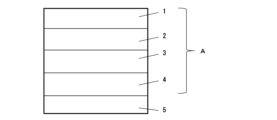
- 1 is a schematic cross-sectional view showing an example of an embodiment of a laminate for processing a sensor film of the present invention.
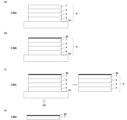
- 1 is a schematic flow diagram showing an example of a method for producing a sensor film using the laminate for sensor film processing of the present invention.
- the laminate of the present invention comprises a weak adhesive layer, a substrate, and an easily peelable adhesive layer laminated in this order, the weak adhesive layer does not have ultraviolet curing properties, and has an adhesive strength to glass of 2 N/25 mm or less as measured by the adhesive strength measurement 1 to be described later, the easily peelable adhesive layer has a property that the adhesive strength decreases when irradiated with ultraviolet rays, and the easily peelable adhesive layer has an initial adhesive strength to glass of 5 N/25 mm or more, and has an adhesive strength to glass of 1 N/25 mm or less as measured by the adhesive strength measurement 2 to be described later.
- the processing film can be appropriately processed. During this processing, the laminate is unlikely to lift off the support, making it easy to produce a good quality processing film. In addition, when the obtained processing film is peeled off, the occurrence of adhesive residue on the processing film is also suppressed.
- the laminate for film processing is the above-mentioned laminate for sensor film processing
- the laminate for sensor film processing is fixed on a support, and then the film for sensor processing is subjected to sensor processing, so that a sensor can be formed on the film for sensor processing, and a sensor film can be produced. During this processing, the laminate is unlikely to lift off the support, so that a good quality sensor film can be produced.
- the obtained sensor film meaning the film for sensor processing on which a sensor is formed
- the occurrence of adhesive residue on the sensor film is suppressed.
- FIG. 1 is a schematic cross-sectional view showing one embodiment of the sensor film processing laminate of the present invention.
- the sensor film processing laminate of the present invention is formed by laminating a sensor processing film 1, a weak adhesive layer 2, a substrate 3, and an easily peelable adhesive layer 4 in this order to form a laminate A (sensor film processing laminate).
- the sensor processing film 1, the weak adhesive layer 2, the substrate 3, and the easily peelable adhesive layer 4 are directly bonded to each other.
- the sensor processing film and each layer of the laminate including said film will be described in detail below.
- the film for sensor processing is a film for forming a sensor. That is, the film for sensor processing is a layer that becomes a sensor film by forming a sensor.
- the type of the film for sensor processing is not particularly limited, and for example, various films that have been conventionally used for producing sensor films can be widely used.
- An example of a film for sensor processing is a transparent resin film.
- an example of a film for sensor processing is a film that is transparent and whose main component is a resin.
- the main component means 50% by mass or more, preferably 70% by mass or more, more preferably 90% by mass or more, and even more preferably 95% by mass or more of the total mass of all components.
- Such sensor processing films include, for example, polyester resins such as polyethylene terephthalate (PET) and polyethylene naphthalate; polycarbonate resins; norbornene resins (COP); etc.
- PET polyethylene terephthalate
- COP norbornene resins
- films with extremely large phase differences can be preferably used as sensor processing films, and so-called hyperbirefringent films are preferred examples of sensor processing films.
- An example of a super birefringent film is a super birefringent polyester film, and among these, a super birefringent PET film is a preferred example.
- An example of a super birefringent PET film is "Cosmoshine SRF (registered trademark)" manufactured by Toyobo Co., Ltd.
- An easy-adhesion layer may be formed on at least one side of the sensor processing film.
- the type of easy-adhesion layer is not particularly limited, and any well-known easy-adhesion layer can be widely used.
- the sensor processing film is also preferably an ultraviolet-cutting film that blocks 90% or more of ultraviolet light with a wavelength of 370 nm.
- an ultraviolet-cutting film that blocks 90% or more of ultraviolet light with a wavelength of 370 nm is the aforementioned "Cosmoshine SRF (registered trademark)" manufactured by Toyobo Co., Ltd.
- the thickness of the sensor processing film is not particularly limited, and can be the same as that of conventional films used to form sensors.
- the thickness of the sensor processing film is usually 10 to 300 ⁇ m, and preferably 20 to 200 ⁇ m.
- the weak adhesive layer is a layer for exerting an adhesive function, and is a layer for bonding a processing film such as a sensor processing film, etc.
- the weak adhesive layer does not have ultraviolet curing properties, and has an adhesive strength to glass of 2 N/25 mm or less as measured by the following Glass Adhesion Strength Measurement 1.
- Glass Adhesion Strength Measurement 1> The test specimen 24 hours after the weak adhesive layer exposed by peeling off the sensor processing film from the laminate was attached to soda glass with a pressure of 2 kg was subjected to a heat treatment at 100° C. for 1 hour and a heat treatment at 130° C.
- the adhesive strength of the weak adhesive layer was measured when peeled off at 180° at a peeling speed of 300 mm/min, and the value of the adhesive strength to glass was obtained.
- the adhesive strength of the low-adhesive layer to glass is preferably 1.5 N/25 mm or less, more preferably 1 N/25 mm or less, and even more preferably 0.6 N/25 mm or less, and is preferably 0.01 N/25 mm or more, more preferably 0.05 N/25 mm or more, and even more preferably 0.1 N/25 mm or more.
- the type of the weak adhesive layer is not particularly limited as long as the adhesive strength to glass is 2 N/25 mm or less, and it can be formed, for example, from a known adhesive. Such an adhesive is referred to as "adhesive for forming a weak adhesive layer.”
- An acrylic polymer is, for example, a polymer composed of (meth)acrylic monomer units.
- (meth)acrylic means “acrylic” or “methacrylic”
- (meth)acrylate means “acrylate” or “methacrylate”
- (meth)allyl means “allyl” or “methallyl”.
- the type of acrylic polymer is not particularly limited, and examples include polymers of (meth)acrylic acid esters and monomers having crosslinkable functional groups that are copolymerizable with the (meth)acrylic acid esters.
- the acrylic polymer can contain (meth)acrylic acid ester units and monomer units having crosslinkable functional groups.
- (Meth)acrylic acid esters include, for example, (meth)acrylates having a linear, branched, or cyclic alkyl group, or (meth)acrylates having an aromatic ring.
- the number of carbon atoms can be, for example, 1 to 20, preferably 1 to 15, and more preferably 1 to 10.
- the number of carbon atoms can be, for example, 5 to 20, and preferably 6 to 10.
- (meth)acrylic acid ester monomers include methyl (meth)acrylate, ethyl (meth)acrylate, n-butyl (meth)acrylate, t-butyl (meth)acrylate, isopropyl (meth)acrylate, isooctyl (meth)acrylate, 2-ethylhexyl (meth)acrylate, lauryl (meth)acrylate, cyclohexyl (meth)acrylate, and benzyl (meth)acrylate.
- the (meth)acrylic acid ester is preferably one or more selected from the group consisting of methyl (meth)acrylate, ethyl (meth)acrylate, n-butyl (meth)acrylate, t-butyl (meth)acrylate, isopropyl (meth)acrylate, isooctyl (meth)acrylate, 2-ethylhexyl (meth)acrylate, lauryl (meth)acrylate, and cyclohexyl (meth)acrylate.
- the (meth)acrylic acid ester units contained in the acrylic polymer may be of one type alone, or may be of two or more types.
- the (meth)acrylic acid ester units contained in the acrylic polymer may contain two or more types selected from (meth)acrylates having a linear alkyl group, (meth)acrylates having a branched group, and (meth)acrylates having a cyclic alkyl group.
- Monomers having a crosslinkable functional group can be a wide variety of polymerizable compounds having a crosslinkable functional group in the molecule. There are no particular limitations on the type of crosslinkable functional group, and examples include a carboxyl group, a hydroxyl group, an amino group, and a glycidyl group.
- An example of a monomer having a crosslinkable functional group is a (meth)acrylate having the above-mentioned crosslinkable functional group.
- the above-mentioned (meth)acrylate having a crosslinkable functional group will be referred to as a "(meth)acrylate containing a crosslinkable functional group.”
- the crosslinkable functional group-containing (meth)acrylate for forming the crosslinkable functional group-containing (meth)acrylate unit may be a carboxyl group-containing (meth)acrylate unit, a hydroxyl group-containing (meth)acrylate unit, an amino group-containing (meth)acrylate unit, or a glycidyl group-containing (meth)acrylate unit.
- Carboxyl group-containing (meth)acrylates include acrylic acid and methacrylic acid.
- Hydroxy group-containing (meth)acrylates include, for example, 2-hydroxyethyl (meth)acrylate, 2-hydroxypropyl (meth)acrylate, 3-hydroxypropyl (meth)acrylate, 3-chloro-2-hydroxypropyl (meth)acrylate, 4-hydroxybutyl (meth)acrylate, 6-hydroxyhexyl (meth)acrylate, 5-hydroxypentyl (meth)acrylate, 2-hydroxybutyl (meth)acrylate, 2-hydroxy-3-phenoxypropyl (meth)acrylate, 2,2-dimethyl 2-hydroxyethyl (meth)acrylate, 3-chloro 2-hydroxypropyl (meth)acrylate, 2-hydroxy-3-phenoxypropyl (meth)acrylate, 8-hydroxyoctyl (meth)acrylate, 8-hydroxyoctyl (meth)acrylate, and polyalkylene glycol mono(meth)acryl
- the crosslinkable functional group-containing (meth)acrylate preferably contains one or more members selected from the group consisting of carboxyl group-containing (meth)acrylates and hydroxyl group-containing (meth)acrylates.
- the content ratio of the (meth)acrylic acid ester units and the monomer units having a crosslinkable functional group is not particularly limited.
- the acrylic polymer preferably contains 40% by mass or more of the (meth)acrylic acid ester units, more preferably 50% by mass or more, even more preferably 60% by mass or more, and particularly preferably 65% by mass or more, and preferably 95% by mass or less, more preferably 90% by mass or less, even more preferably 85% by mass or less, and particularly preferably 80% by mass or less.
- the remaining monomer units of the acrylic polymer are preferably monomer units having a crosslinkable functional group, and are preferably carboxyl group-containing (meth)acrylate units and/or hydroxyl group-containing (meth)acrylate units.
- the acrylic polymer may contain other monomer units other than those described above, so long as the effects of the present invention are not impaired.
- the content of the other monomer units may be 20% by mass or less, preferably 10% by mass or less, more preferably 5% by mass or less, and even more preferably 1% by mass or less.
- the acrylic polymer may be composed only of (meth)acrylic acid ester units and monomer units having a crosslinkable functional group.
- the ratio (molar ratio) of each constituent unit in the acrylic polymer can be considered to be the same as the molar ratio of each monomer used in the production of the polymer.
- the weight average molecular weight of the acrylic polymer is not particularly limited, and can be, for example, from the viewpoint of preventing a decrease in adhesive strength in the adhesive sheet, 100,000 to 2,000,000, and more preferably 300,000 to 1,000,000.
- the weight average molecular weight in the present invention refers to the weight average molecular weight in terms of polystyrene measured by gel permeation chromatography (GPC).
- GPC gel permeation chromatography
- Tetrahydrofuran is used as the eluent, and the measurement is performed at a flow rate of 1.0 ml/min.
- a calibration curve is prepared using standard polystyrene, and the weight average molecular weight (Mw) can be obtained in terms of polystyrene.
- crosslinking agent contained in the adhesive for forming the micro-adhesive layer is not particularly limited, and for example, a wide variety of known crosslinking agents can be used.
- crosslinking agents include a wide variety of components that can promote crosslinking of the acrylic polymer.
- examples of crosslinking agents include a wide variety of components that can react with hydroxyl groups and/or carboxyl groups in the acrylic polymer.
- examples of such crosslinking agents include a wide variety of known crosslinking agents, such as isocyanate crosslinking agents and epoxy crosslinking agents.
- isocyanate crosslinking agent is not particularly limited, and a wide variety of known compounds can be used.
- isocyanate crosslinking agents include polyisocyanates such as tolylene diisocyanate, chlorophenylene diisocyanate, diphenylmethane diisocyanate, butylene diisocyanate, hexamethylene diisocyanate, tetramethylene diisocyanate, hydrogenated diphenylmethane diisocyanate, and xylylene diisocyanate; alicyclic isocyanates such as cyclopentylene diisocyanate and cyclohexylene diisocyanate; and aromatic isocyanates such as 2,4-tolylene diisocyanate, 2,6-tolylene diisocyanate, and 4,4'-diphenylmethane diisocyanate.
- the isocyanate crosslinking agent can be used alone or in a mixture of two or more different types. It is more preferable to use trifunctional derivatives such as adducts, nurates, and biurets obtained from the above-mentioned diisocyanates as isocyanate crosslinking agents.
- epoxy crosslinking agent is not particularly limited, and a wide variety of known compounds can be used.
- examples of epoxy crosslinking agents include ethylene glycol diglycidyl ether, polyethylene glycol diglycidyl ether, propylene glycol diglycidyl ether, polypropylene glycol diglycidyl ether, glycerin diglycidyl ether, neopentyl glycol diglycidyl ether, 1,6-hexanediol diglycidyl ether, N,N,N',N'-tetraglycidyl-m-xylylenediamine, 1,3-bis(N,N-diglycidylaminomethyl)cyclohexanone, trimethylolpropane polyglycidyl ether, diglycerol polyglycidyl ether, polyglycerol polyglycidyl ether, and sorbitol polyglycidyl ether.
- the adhesive for forming the micro-adhesive layer preferably contains 5 to 30 parts by mass of crosslinking agent, and more preferably contains 8 to 20 parts by mass. This makes it easier to adjust the storage modulus, which will be described later, to a preferred range, and forms a micro-adhesive layer that has both heat resistance and adhesive strength, so that adhesive strength is maintained even during various processing such as sensor processing, and adhesive residue is less likely to remain on the processed film (sensor film) when the processed film is peeled off after processing such as sensor processing is completed.
- the adhesive for forming the micro-adhesive layer does not have ultraviolet curing ability.
- the adhesive for forming the micro-adhesive layer can form a micro-adhesive layer that does not have ultraviolet curing ability.
- the micro-adhesive layer that does not have ultraviolet curing ability is unlikely to be cured by ultraviolet irradiation described later, so that it is prevented from being attached to the processing film more firmly than necessary by ultraviolet irradiation, and adhesive residue on the processed film (sensor film) is more likely to be suppressed.
- the adhesive for forming the micro-adhesive layer does not have ultraviolet curing ability means that the adhesive for forming the micro-adhesive layer does not contain components that are cured by ultraviolet light, such as polymerizable double bonds and photopolymerization initiators, and in particular does not contain radical polymerizable monomers and photopolymerization initiators.
- the adhesive for forming the micro-adhesive layer does not have ultraviolet curing ability can be interpreted as the micro-adhesive layer not containing radical polymerizable monomers and photopolymerization initiators.
- the adhesive for forming the micro-adhesive layer may contain a solvent to improve coating properties.
- the type of solvent is not particularly limited, and examples thereof include hydrocarbons such as hexane, heptane, octane, toluene, xylene, ethylbenzene, cyclohexane, and methylcyclohexane; halogenated hydrocarbons such as dichloromethane, trichloroethane, trichloroethylene, tetrachloroethylene, and dichloropropane; alcohols such as methanol, ethanol, propanol, isopropyl alcohol, butanol, isobutyl alcohol, and diacetone alcohol; ethers such as diethyl ether, diisopropyl ether, dioxane, and tetrahydrofuran; ketones such as acetone, methyl ethyl ketone, methyl isobutyl
- the content is not particularly limited, and can be, for example, 25 to 500 parts by mass, and more preferably 30 to 400 parts by mass, per 100 parts by mass of the acrylic polymer.
- the method for forming the micro-adhesive layer is not particularly limited, and examples include a method in which the adhesive for forming the micro-adhesive layer is applied and then heat-treated. This heat treatment and curing after the heat treatment cause the reaction between the acrylic polymer and the crosslinking agent to proceed, forming a crosslinked acrylic polymer.
- the storage modulus of the weak adhesive layer at 100°C is preferably 100 kPa or more, and more preferably 300 kPa or more. In this case, the weak adhesive layer is less likely to leave adhesive residue on the sensor film even when the sensor film is peeled off after sensor processing is completed.
- the storage modulus of the weak adhesive layer at 100°C is, for example, preferably 2000 kPa or less, and more preferably 1500 kPa or less.
- the gel fraction of the slightly adhesive layer is preferably 70% or more, and more preferably 85% or more.
- the slightly adhesive layer is less likely to leave adhesive residue on the processed film (sensor film) even when the processed film is peeled off after processing such as sensor processing is completed.
- the thickness of the micro-adhesive layer is, for example, preferably 5 ⁇ m or more, and preferably 200 ⁇ m or less, and more preferably 100 ⁇ m or less.
- the substrate plays a role of supporting the weak adhesive layer and the easily peelable adhesive layer, and the type thereof is not particularly limited.
- the substrate include polyester resins such as polyethylene terephthalate (PET) and polyethylene naphthalate; polycarbonate resins; norbornene resins (COP); and polyacrylic resins, polyolefin resins, vinyl chloride, ABS, and the like.
- the base material is the same as the main component contained in the film for sensor processing. That is, in the present invention, it is preferable that the main component contained in the film for sensor processing and the main component contained in the base material are the same. In this case, it is particularly possible to suppress curling of the laminate or sensor film after sensor processing, and a high-quality sensor film can be obtained efficiently.
- the substrate can preferably be a polyester resin such as polyethylene terephthalate (PET) or polyethylene naphthalate; a polycarbonate resin; or a norbornene resin (COP); among these, a superbirefringent film such as a superbirefringent polyester film is preferred, and a superbirefringent PET film is even more preferred.
- PET polyethylene terephthalate
- COP norbornene resin
- a particularly preferred combination of the sensor processing film and substrate is one in which both are superbirefringent PET films.
- An easy-adhesion layer may be formed on at least one side of the substrate.
- the type of easy-adhesion layer is not particularly limited, and any well-known easy-adhesion layer can be widely used.
- the thickness of the substrate is not particularly limited, and is preferably 20 ⁇ m or more, more preferably 50 ⁇ m or more, and is preferably 200 ⁇ m or less, more preferably 150 ⁇ m or less.
- the easily peelable adhesive layer is a layer for exerting an adhesive function and for fixing the laminate to a support described later.
- the easily peelable adhesive layer has a property that the adhesive strength decreases when irradiated with ultraviolet light.
- the easily peelable adhesive layer has an initial adhesive strength to glass of 5 N/25 mm or more and an adhesive strength to glass measured in the following adhesive strength to glass measurement 2 of 1 N/25 mm or less.
- ⁇ Glass Adhesion Measurement 2> A test specimen 24 hours after the easy peeling adhesive layer of the laminate was attached to soda glass with a pressure of 2 kg was subjected to a heat treatment at 100° C. for 1 hour and a heat treatment at 130° C.
- the adhesive strength of the laminate contained in the test specimen was measured when it was peeled off from the soda glass at 180° at a peeling speed of 300 mm/min, and the adhesive strength of the easy peeling adhesive layer to glass was obtained.
- the initial adhesive strength to glass of the easily peelable adhesive layer refers to the state before the treatment performed in Glass Adhesion Strength Measurement 2 has been carried out.
- a test specimen for measuring such initial adhesive strength to glass can be obtained by bonding the easily peelable adhesive layer of the laminate to soda glass with a pressure of 2 kg.
- the peelable adhesive layer When the initial adhesive strength to glass of the peelable adhesive layer is 5 N/25 mm or more and the adhesive strength to glass measured in the following Glass Adhesion Strength Measurement 2 is 1 N/25 mm or less, the peelable adhesive layer is firmly attached to the support before UV irradiation, and the laminate can be easily peeled off from the support by UV irradiation. In this case, the laminate can be prevented from lifting off the support during sensor processing, and it is particularly possible to prevent the laminate or sensor film from curling after sensor processing, making it possible to efficiently obtain a high-quality sensor film. When the initial adhesive strength to glass of the peelable adhesive layer is below 5 N/25 mm, the laminate is likely to lift off the support during sensor processing.
- the initial adhesive strength of the easily peelable adhesive layer to glass is preferably 6 N/25 mm or more, more preferably 7 N/25 mm or more, and even more preferably 8 N/25 mm or more, and is preferably 40 N/25 mm or less, more preferably 30 N/25 mm or less, and even more preferably 25 N/25 mm or less.
- the adhesive strength to glass of the easily peelable adhesive layer measured in Glass Adhesion Strength Measurement 2 is preferably 1 N/25 mm or less, more preferably 0.5 N/25 mm or less, and is preferably 0.01 N/25 mm or more, more preferably 0.05 N/25 mm or more.
- the easily peelable adhesive layer is not particularly limited as long as it has the property of decreasing adhesive strength when irradiated with ultraviolet light, and can be formed, for example, from a known adhesive capable of forming an adhesive layer having such properties. Such an adhesive is referred to as an adhesive for forming an easily peelable adhesive layer.
- Adhesives for forming easily peelable adhesive layers include, for example, components that harden when irradiated with ultraviolet light or the like or when heated, specifically components whose adhesive strength decreases when irradiated with ultraviolet light or a laser, and components whose adhesive strength decreases when heated, and among these, components whose adhesive strength decreases when irradiated with ultraviolet light or a laser are preferred.
- Components that harden when irradiated with ultraviolet light or the like can be broadly divided into components that contain a reactive double bond as a polyfunctional or oligomer, and components in which a reactive double bond has been introduced into a polymer. From the standpoint of ease of production and heat resistance, it is more preferred that the adhesive for forming easily peelable adhesive layers is the latter, a polymer in which a reactive double bond has been introduced.
- a polymer into which a reactive double bond has been introduced for example, a polymer having a radically polymerizable double bond can be mentioned, and among them, an acrylic polymer having a radically polymerizable double bond is preferable.
- an acrylic polymer having a radically polymerizable double bond for example, a known polymer can be used. Examples of commercially available products of such acrylic polymers include "ELX-6151YF” and "ELX-6520" manufactured by Resonac.
- the polymer into which the reactive double bond has been introduced may or may not contain an acid component.
- the adhesive for forming the easily peelable adhesive layer may contain a crosslinking agent.
- the crosslinking agent include the same types as those contained in the adhesive for forming the weak adhesive layer described above. That is, examples of the crosslinking agent include the isocyanate crosslinking agent and epoxy crosslinking agent described above.
- the amount of crosslinking agent contained in the adhesive for forming an easily peelable adhesive layer is not particularly limited.
- the crosslinking agent may be contained in an amount of 0.01 to 2 parts by mass, and more preferably 0.05 to 1.8 parts by mass, per 100 parts by mass of the polymer into which the reactive double bond has been introduced.
- the adhesive for forming the easily peelable adhesive layer may also contain a photopolymerization initiator.
- a photopolymerization initiator can be used as the photopolymerization initiator.
- the photopolymerization initiator is not particularly limited, but examples thereof include acetophenone-based photopolymerization initiators such as 2,2-dimethoxy-2-phenylacetophenone, 1-hydroxycyclohexyl-phenyl ketone, 2-hydroxy-2-methyl-1-phenylpropanone, 1-[4-(2-hydroxyethoxyl)-phenyl]-2-hydroxy-methylpropanone, and 2-hydroxy-1-(4-(4-(2-hydroxy-2-methylpropionyl)benzyl)phenyl)-2-methyl-1-propanone; acylphosphine oxide-based photopolymerization initiators such as 2,4,6-trimethylbenzoyl-diphenylphosphine oxide and 2,4,6-trimethylbenzoyl)phenylphosphine oxide
- the photopolymerization initiator is preferably at least one selected from the group consisting of acetophenone-based photopolymerization initiators, acylphosphine oxide-based photopolymerization initiators, and oxime ester-based photopolymerization initiators.
- acetophenone-based photopolymerization initiators include EsacureOne (oligo(2-hydroxy-2-methyl-1-[4-(1-methylvinyl)phenylpropanone], manufactured by IGM RESINS B.V.), Omnirad 651 (2,2-dimethoxy-2-phenylacetophenone, manufactured by IGM RESINS B.V.), Omnirad 184 (1-hydroxycyclohexyl-phenyl ketone, manufactured by IGM RESINS B.V.), Omnirad 1173 (2-hydroxy-2-methyl-1-phenylpropanone, manufactured by IGM RESINS B.V.) IGM RESINS B.V., etc.
- acylphosphine oxide photopolymerization initiators include Omnirad 819 (bis(2,4,6-trimethylbenzoyl)phenylphosphine oxide, manufactured by IGM RESINS B.V.) and Omnirad TPO (2,4,6-trimethylbenzoyl-diphenylphosphine oxide, manufactured by IGM RESINS B.V.).
- oxime ester photopolymerization initiators include Irgacure OXE01 (1,2-octanedione, 1-[4-(phenylthio)phenyl[-, 2-(o-benzoyloxime), manufactured by BASF), Irgacure OXE02 (ethanone, 1-[9-ethyl-6-(2-methylbenzoyl)-9H-carbazol-3-yl]-, 1-(O-acetyloxime), manufactured by BASF), etc.
- photopolymerization initiators include benzoin ether initiators, benzophenone initiators, hydroxyalkylphenone initiators, thioxanthone initiators, and amine initiators.
- the amount of photopolymerization initiator contained in the adhesive for forming an easily peelable adhesive layer is not particularly limited.
- the amount of photopolymerization initiator may be 0.01 to 5 parts by mass, and more preferably 0.1 to 3 parts by mass, per 100 parts by mass of the polymer into which the reactive double bond has been introduced.
- the adhesive for forming the easily peelable adhesive layer may contain a solvent to improve application properties.
- the type of solvent is the same as the type of solvent that may be contained in the adhesive for forming the weakly adhesive layer described above.
- the content is not particularly limited, and can be, for example, 25 to 500 parts by mass, and more preferably 30 to 400 parts by mass, per 100 parts by mass of the acrylic polymer.
- the method for forming the easily peelable adhesive layer is not particularly limited, and for example, the easily peelable adhesive layer can be formed by coating the adhesive for forming the easily peelable adhesive layer and then subjecting it to a heat drying treatment. This heat treatment and curing after the heat treatment cause the reaction between the acrylic polymer and the crosslinking agent to proceed, forming a crosslinked body of the acrylic polymer. Meanwhile, the photopolymerization initiator contained in the adhesive for forming the easily peelable adhesive layer remains in the easily peelable adhesive layer.
- the storage modulus of the easily peelable adhesive layer at 25°C before UV irradiation is preferably 50 to 300 kPa, and more preferably 70 to 200 kPa. In this case, lifting of the laminate from the support during sensor processing can be particularly suppressed, and curling of the laminate or sensor film after sensor processing can be particularly suppressed, allowing a high-quality sensor film to be obtained efficiently.
- the tan ⁇ of the easily peelable adhesive layer at 100°C before UV irradiation is preferably 0.1 or more. In this case, lifting of the laminate from the support during sensor processing can be particularly suppressed, and curling of the laminate or sensor film after sensor processing can be particularly suppressed, allowing a high-quality sensor film to be obtained efficiently.
- the tan ⁇ of the easily peelable adhesive layer at 100°C before UV irradiation can be 1.2 or less, preferably 1.0 or less, and more preferably 0.7 or less.
- the thickness of the easily peelable adhesive layer is, for example, preferably 5 ⁇ m or more, more preferably 10 ⁇ m or more, and is preferably 200 ⁇ m or less, more preferably 100 ⁇ m or less.
- the laminate for film processing of the present invention is used for film processing,
- the laminate further comprises a processing film on the surface of the weak adhesive layer opposite to the substrate. That is, the film processing laminate of the present invention is formed by laminating a processing film, a weak adhesive layer, a substrate, and an easily peelable adhesive layer in this order.
- the sensor film processing laminate of the present invention is used for sensor processing, and further comprises a sensor processing film on the surface of the weak adhesive layer opposite to the substrate in the laminate. That is, the sensor film processing laminate of the present invention comprises a sensor processing film, a weak adhesive layer, a substrate, and an easily peelable adhesive layer in this order.
- the sensor film processing laminate of the present invention is preferably formed by laminating only a sensor processing film, a weak adhesive layer, a substrate, and an easily peelable adhesive layer, as shown in FIG. 1.
- the laminate for sensor film processing of the present invention has a release sheet 5 attached to the surface of the easily peelable adhesive layer 4 opposite the substrate 3. In this case, the easily peelable adhesive layer of the laminate is protected by the release sheet.
- the release sheet may be a release laminate sheet having a release sheet substrate and a release agent layer provided on one side of the release sheet substrate, or a polyolefin film such as a polyethylene film or a polypropylene film as a low polar substrate. Paper or polymer film is used as the release sheet substrate in the release laminate sheet.
- a general-purpose addition type or condensation type silicone-based release agent or a compound containing a long-chain alkyl group is used as the release agent that constitutes the release agent layer.
- Commercially available products may be used as the release laminate sheet.
- a heavy separator film that is a release-treated polyethylene terephthalate film manufactured by Toyobo Co., Ltd. a light separator film that is a release-treated polyethylene terephthalate film manufactured by Oji F-Tex Co., Ltd., and a light separator with antistatic function "50E-0010KF AS" manufactured by Fujimori Kogyo Co., Ltd. can be mentioned.
- the sensor processing film in the laminate may be provided with a protective film or hard coat layer as necessary.
- the method for producing the laminate for sensor film processing of the present invention is not particularly limited, and for example, a wide variety of known lamination methods can be used. An example of a method for producing the laminate for sensor film processing of the present invention is described below.
- the laminate for sensor film processing of the present invention can be, for example, Step 1: forming a weak adhesive layer on a first release sheet; A step 2 of laminating a substrate on the slightly adhesive layer and then curing the substrate; Step 3: forming an easily peelable adhesive layer on the second release sheet; A step 4 of bonding the easily peelable adhesive layer to a substrate on which the weak adhesive layer is formed, and a step 5 of bonding a film for sensor processing to the exposed weak adhesive layer after peeling off a first release sheet provided on the weak adhesive layer.
- the manufacturing method can be obtained by the method.
- a micro-adhesive layer is formed on the first release sheet, but instead of the first release sheet, a micro-adhesive layer may be formed on the substrate, and the sensor processing film may be laminated and then cured. That is, the micro-adhesive layer may be formed directly on the substrate. In this case, step 5 may be unnecessary, and the total number of steps may be reduced. On the other hand, it is preferable to manufacture the sensor film processing laminate of the present invention through steps 1 and 5, in order to make it easier to peel off the sensor processing film of the resulting laminate.
- the first release sheet and the second release sheet used in steps 1 and 3 may be the same or different.
- the release sheet used in step 1 is preferably a light release sheet. In this case, some of the silicon contained in the light release sheet may be transferred to the weak adhesive layer, which makes it possible to further reduce the adhesive strength of the weak adhesive layer to the sensor processing film.
- step 2 when laminating the substrate onto the weak adhesive layer, if the substrate has an easy-adhesion layer formed thereon, it is preferable to laminate the surface of the easy-adhesion layer onto the weak adhesive layer. This can further increase the adhesion between the weak adhesive layer and the substrate, making it easier to prevent adhesive residue on the sensor processing film.
- step 4 the easily peelable adhesive layer formed in step 3 is bonded to the substrate side surface of the substrate with the weak adhesive layer obtained in step 2.
- This step 4 results in a double-sided adhesive sheet having the easily peelable adhesive layer on one side of the substrate and the weak adhesive layer on the other side.
- Such a double-sided adhesive sheet has release sheets (a first release sheet and a second release sheet, respectively) on both sides.
- the first release sheet provided on the micro-adhesive layer is peeled off, and then the sensor processing film is attached to the exposed micro-adhesive layer.
- the sensor processing film may not be conductive, or may have a conductive layer formed in advance. If the sensor processing film used in step 5 does not have conductivity, a conductive layer can be formed on the sensor processing film in step B described below. Also, if the sensor processing film used in step 5 has a conductive layer formed in advance, the conductive layer side is attached to the micro-adhesive layer. In this case, if a conductive layer is formed on the other side in step B described below, a double-sided conductive film (a film with sensors on both sides) can be formed.
- Laminate for sensor film processing A sensor film can be produced using the laminate for sensor film processing of the present invention.
- the method for producing a sensor film using the laminate for sensor film processing is not particularly limited, and various methods can be adopted.
- Figure 2 is a schematic flow diagram showing an example of a method for manufacturing a sensor film using a laminate for sensor film processing.
- the method for producing a sensor film using the laminate for processing a sensor film includes the following steps: A step A of forming a laminate with a support by bonding a surface of the laminate A on the side of the easily peelable adhesive layer 4 to a support 10; A process B of forming a sensor 20 on the processing film by processing the processing film 1 of the laminate with the support; A step C of irradiating ultraviolet light from the support 10 side of the laminate with the support on which the sensor 20 is formed, and then peeling off the support 10 and the easily peelable adhesive layer 4 to obtain a laminate with a sensor film; A step D of peeling off the sensor film 1 from the sensor film-attached laminate; It can be provided with:
- FIG. 2(a) is a schematic diagram showing the flow of process A.
- the support 10 used in process A is a base member for fixing the sensor film processing laminate of the present invention.
- the support is made of a material that transmits ultraviolet light, such as a glass plate or various resin plates.
- step A a laminate with a support can be obtained.
- a sensor 20 is formed on the processing film 1.
- the method for forming the sensor 20 on the processing film i.e., the sensor processing method
- the method for forming the sensor 20 on the processing film is not particularly limited, and for example, a wide variety of known methods can be adopted.
- An example of a method for forming a sensor is photolithography.
- a conductive layer is formed on the processing film 1 by photolithography, and the sensor can be obtained by carrying out a known etching process, for example, alkaline etching, as necessary.
- the sensor film processing laminate of the present invention has alkaline etching resistance.
- the method for imparting alkaline etching resistance is not particularly limited, and for example, alkaline etching resistance can be imparted by adjusting the gel fraction.
- step C ultraviolet (UV) light is irradiated from the support 1 side (the back side of the support laminate) of the support laminate on which the sensor obtained in step B is formed. Then, the support 10 and the easily peelable adhesive layer 4 of the laminate A are peeled off. This gives a laminate with a sensor film.
- the ultraviolet light irradiation in step C reduces the adhesive strength of the easily peelable adhesive layer 4 in the laminate A, and therefore reduces the adhesive strength between the support 10 and the easily peelable adhesive layer 4, making it easier to peel them off.
- ultraviolet light may be irradiated with an integrated light amount of 400 mJ/cm2 or more .
- the laminate with the sensor film obtained in step C is the laminate for sensor film processing of the present invention in which the processing film 1 is replaced with a sensor film.
- the laminate with the sensor film obtained in step C is a laminate in which the sensor film, the weak adhesive layer, the substrate, and the easily peelable adhesive layer are laminated in this order.
- step D the sensor film is peeled off from the laminate with the sensor film.
- the sensor film is peeled off from the weak adhesive layer 2. This makes it possible to obtain the desired sensor film.
- the sensor film is not peeled off immediately after sensor processing, but rather the entire laminate is first peeled off from the support, which is less likely to damage the sensor film than if the sensor film was peeled off first.
- the adhesive strength of the easy-to-peel adhesive layer is very low, so it can be peeled off with almost no bending, and the sensor film can then be peeled off while bending the laminate, which makes it particularly easy to suppress damage to the sensor film.
- Example 1 A laminate for processing a sensor film was manufactured according to the laminate configuration shown in Table 1. Specifically, an antistatic separator "50E-0010KF AS" manufactured by Fujimori Kogyo Co., Ltd. was prepared as the first release sheet, and the adhesive for forming a weak adhesive layer was applied to the surface of the first release sheet so that the thickness after drying was 15 ⁇ m to form a coating film.
- the adhesive for forming the weak adhesive layer was prepared by mixing 100 parts by mass (solid content equivalent) of an acrylic adhesive ("AS-425" manufactured by Lion Specialty Chemicals Co., Ltd.) and 10 parts by mass of hexamethylene diisocyanate ("Crosslinking Agent N" manufactured by Lion Specialty Chemicals Co., Ltd.) as a crosslinking agent.
- the coating film of the adhesive for forming the weak adhesive layer formed as described above was dried at 100°C for 90 seconds to form a weak adhesive layer, and the surface of the PVA easy adhesion layer side of "TA048#80" (Cosmoshine SRF (registered trademark)) manufactured by Toyobo Co., Ltd. as a substrate was bonded to this weak adhesive layer, and then cured at 40°C for 3 days to obtain a weak adhesive layer with a substrate.
- an antistatic separator "50E-0010KF AS" manufactured by Fujimori Kogyo Co., Ltd. was prepared as the second release sheet, and an adhesive for forming an easily peelable adhesive layer was applied to the surface of this sheet so that the thickness after drying would be 20 ⁇ m to form a coating film.
- the adhesive for forming an easily peelable adhesive layer was prepared by mixing 100 parts by mass (solid content equivalent) of an acrylic polymer with a polymerizable double bond introduced (“ELX-6151YF” manufactured by Resonac Corporation), 0.8 parts by mass of tolylene diisocyanate ("Coronate L-55E” manufactured by Big Technos Corporation) as a crosslinking agent, and 1 part of "Omnirad 819" (manufactured by IGM Resins) as a photopolymerization initiator.
- the coating of the adhesive for forming the easy-to-peel adhesive layer formed as described above was dried at 100°C for 90 seconds to form an easy-to-peel adhesive layer, and the substrate side surface (the easy-to-adhere layer side for general hard coats) of the above-mentioned substrate-attached low-adhesive layer was attached to this easy-to-peel adhesive layer, and then cured at 40°C for 3 days to obtain a double-sided adhesive sheet with a release sheet.
- the first release sheet of the double-sided adhesive sheet with release sheet obtained as described above was peeled off to expose the weak adhesive layer, and the surface of the PVA easy adhesion layer side of "TA048#80" (Cosmoshine SRF (registered trademark)) manufactured by Toyobo Co., Ltd. as a processing film was bonded to this weak adhesive layer to obtain a sensor film processing laminate with release sheet (processing film/ weak adhesive layer/substrate/easy peeling adhesive layer/second release sheet).
- Example 2 As shown in Table 1, a laminate for processing a sensor film with a release sheet was obtained in the same manner as in Example 1, except that the adhesive for forming the easily peelable adhesive layer was changed to one prepared by mixing 100 parts by mass (solid content equivalent) of an acrylic polymer having a polymerizable double bond introduced therein ("ELX-6151YF” manufactured by Resonac Corporation), 0.5 parts by mass of tolylene diisocyanate (“Coronate L-55E” manufactured by Big Technos Corporation) as a crosslinking agent, and 0.5 parts by mass of "Omnirad 819" (manufactured by IGM Resins) as a photopolymerization initiator.
- an acrylic polymer having a polymerizable double bond introduced therein (“ELX-6151YF” manufactured by Resonac Corporation)
- 0.5 parts by mass of tolylene diisocyanate (“Coronate L-55E” manufactured by Big Technos Corporation)
- Omnirad 819 manufactured by IGM Resins
- Example 3 As shown in Table 1, the adhesive for forming the easily peelable adhesive layer was changed to one prepared by mixing 100 parts by mass (solid content equivalent) of an acrylic polymer having a polymerizable double bond introduced therein ("ELX-6520" manufactured by Resonac Corporation), 0.15 parts by mass of an epoxy-based thermal crosslinking agent ("CL-X50” manufactured by Resonac Corporation) as a crosslinking agent, and 2.5 parts by mass of "Omnirad 819" (manufactured by IGM Resins) as a photopolymerization initiator, and a laminate for processing a sensor film with a release sheet was obtained in the same manner as in Example 1 except that the drying temperature of the coating film of the adhesive for forming the easily peelable adhesive layer was changed to 130°C.
- ELX-6520 manufactured by Resonac Corporation
- CL-X50 epoxy-based thermal crosslinking agent
- Omnirad 819 manufactured by IGM Resins
- Example 4 As shown in Table 1, the adhesive for forming the easily peelable adhesive layer was changed to one prepared by mixing 100 parts by mass (solid content equivalent) of an acrylic polymer having a polymerizable double bond introduced therein ("ELX-6520” manufactured by Resonac), 0.1 parts by mass of an epoxy-based thermal crosslinking agent ("CL-X50” manufactured by Resonac) as a crosslinking agent, and 1 part by mass of "Omnirad 819" (manufactured by IGM Resins) as a photopolymerization initiator, and a laminate for processing a sensor film with a release sheet was obtained in the same manner as in Example 3, except that the substrate was changed to "TA048#60” (Cosmoshine SRF (registered trademark) manufactured by Toyobo Co., Ltd.).
- TA048#60 Cosmoshine SRF (registered trademark) manufactured by Toyobo Co., Ltd.
- Example 5 As shown in Table 1, the adhesive for forming the easy-to-peel adhesive layer was changed to one prepared by mixing 100 parts by mass (solid content equivalent) of an acrylic polymer having a polymerizable double bond introduced therein ("ELX-6151YF” manufactured by Resonac Co., Ltd.), 1.8 parts by mass of tolylene diisocyanate ("Coronate L-55E” manufactured by Big Technos Co., Ltd.) as a crosslinking agent, and 1 part by mass of "Omnirad 819" (manufactured by IGM Resins Co., Ltd.) as a photopolymerization initiator.
- an acrylic polymer having a polymerizable double bond introduced therein (“ELX-6151YF” manufactured by Resonac Co., Ltd.)
- tolylene diisocyanate (Coronate L-55E” manufactured by Big Technos Co., Ltd.)
- Omnirad 819 manufactured by IGM Resins Co., Ltd.
- Example 2 a laminate for sensor film processing with a release sheet was obtained in the same manner as in Example 1, except that the micro-adhesive layer was attached to the surface of the substrate coated with an easy-to-adhere layer for general HC (hard coat).
- Example 6 A laminate for processing a sensor film with a release sheet was obtained in the same manner as in Example 1, except that the slightly adhesive layer was attached to the coated surface of the general HC easy adhesion layer of "TA048#80" (Cosmoshine SRF (registered trademark)) manufactured by Toyobo Co., Ltd. as a processing film.
- T048#80 Cosmoshine SRF (registered trademark)
- Example 7 A laminate for processing a sensor film with a release sheet was obtained in the same manner as in Example 1, except that the substrate was changed to Toray Industries'"U483#50 (double-sided easy-adhesive PET)."
- Example 8 A laminate for processing a sensor film with a release sheet was obtained in the same manner as in Example 1, except that the substrate was changed to Toyobo's "A4360 #100 (double-sided easy-adhesive PET)."
- Example 10 A laminate for processing a sensor film with a release sheet was obtained in the same manner as in Example 7, except that the adhesive for forming the easily peelable adhesive layer was changed to one prepared by mixing 100 parts by mass (solid content equivalent) of an acrylic polymer having a polymerizable double bond introduced therein ("ELX-6520" manufactured by Resonac Corporation), 0.9 parts by mass of an epoxy-based thermal crosslinking agent ("CL-X50” manufactured by Resonac Corporation) as a crosslinking agent, and 2.5 parts by mass of "Omnirad 819" (manufactured by IGM Resins) as a photopolymerization initiator.
- an acrylic polymer having a polymerizable double bond introduced therein (“ELX-6520” manufactured by Resonac Corporation)
- CL-X50 an epoxy-based thermal crosslinking agent
- Omnirad 819 manufactured by IGM Resins
- Example 2 A laminate for processing a sensor film with a release sheet was obtained in the same manner as in Example 1, except that the adhesive for forming the weak adhesive layer was changed to one prepared by mixing 100 parts by mass (solid content equivalent) of an acrylic adhesive ("AS-425" manufactured by Lion Specialty Chemicals) and 3 parts by mass of hexamethylene diisocyanate ("Crosslinker N” manufactured by Lion Specialty Chemicals) as a crosslinking agent.
- AS-425" acrylic adhesive
- Crosslinker N hexamethylene diisocyanate
- the storage modulus of the weakly adhesive layer or the easily peelable adhesive layer was measured using a Rheogel-E4000 manufactured by UBM using a solid shear method under conditions of a temperature increase rate of 2°C/min, a frequency of 1 Hz, and a temperature range of 0°C to 110°C, and the storage modulus at 25°C and 100°C was read.
- the laminate for processing the sensor film with the release sheet obtained in the examples and comparative examples was cut to a width of 25 mm, and the second release sheet was peeled off to expose the easy-to-peel adhesive layer of the laminate.
- the test specimen in which the easy-to-peel adhesive layer was attached to the soda glass with a pressure of 2 kg and 24 hours had passed was treated at 100°C for 1 hour and then at 130°C for 5 minutes in this order, and then irradiated with ultraviolet light of 800 mJ/ cm2 at 180 mW from the soda glass side using a UV LED (365 nm).
- the laminate in the test specimen was peeled off from the soda glass at a peeling speed of 300 mm/min at 180° (i.e., the easy-to-peel adhesive layer of the laminate was peeled off from the soda glass at a peeling speed of 300 mm/min at 180°), and the adhesive strength at this time was measured, and this was taken as the adhesive strength of the easy-to-peel adhesive layer to glass.
- the laminate for processing sensor film with release sheet obtained in the examples and comparative examples was cut to a width of 25 mm, and the second release sheet was peeled off to expose the easy-to-peel adhesive layer of the laminate.
- the easy-to-peel adhesive layer was attached to soda glass with a pressure of 2 kg, and a test specimen was obtained after 24 hours had passed.
- the laminate was peeled off from the soda glass at a peeling speed of 300 mm/min at 180° (i.e., the easy-to-peel adhesive layer of the laminate was peeled off from the soda glass at a peeling speed of 300 mm/min at 180°), and the adhesive strength at this time was measured, and this was defined as the initial adhesive strength of the easy-to-peel adhesive layer to glass.
- the laminate for sensor film processing with a release sheet obtained in the examples and comparative examples was cut to a width of 25 mm, and the easily peelable adhesive layer exposed by peeling off the second release sheet was attached to a slide glass ("S9112" by Matsunami Glass Industry Co., Ltd.) with a pressure of 2 kg to obtain a laminate with a slide glass.
- the laminate with the slide glass was treated at 100°C for 1 hour and 130°C for 5 minutes, immersed in a 3% by mass aqueous solution of sodium hydroxide at 40°C for 3 minutes, washed with water, and air-dried in this order to perform pseudo sensor processing.
- this pseudo sensor processing whether the laminate naturally peeled off from the slide glass surface (whether there was lifting) was visually confirmed, and the presence or absence of lifting during sensor processing was evaluated by rating it as "present” when there was peeling and "absent" when there was no peeling.
- the slide glass was irradiated with ultraviolet light (365 nm, UVLED) at 180 mW and 800 mJ/ cm2 . After that, it was visually confirmed whether the laminate naturally peeled off from the slide glass surface (whether there was any lifting), and the presence or absence of lifting after UV irradiation was evaluated by rating it as "present” if peeling was present and “absent” if no peeling was present.
- ultraviolet light 365 nm, UVLED
- the laminate was peeled off from the slide glass, the distances (mm) of the lifted four corners of the peeled laminate were measured, and the average value was calculated to evaluate the presence or absence of curling after UV irradiation.
- the sensor processing film was peeled off from the laminate, the distances (mm) of the lifted four corners of this sensor processing film were measured, and the average value was calculated to evaluate the presence or absence of curling of the sensor processing film.
- Table 1 shows the configuration of the laminate for processing a sensor film, the physical properties of the weakly adhesive layer and the easily peelable adhesive layer in the laminate, and the evaluation results for the presence or absence of lifting from the glass surface and the presence or absence of curling.
- the laminate for sensor film processing obtained in the examples suppressed adhesive residue on the sensor film, was less likely to lift during and after sensor processing, and also suppressed curling of the laminate and the film for sensor processing.
- Laminate 1 Sensor processing film 2: Slightly adhesive layer 3: Substrate 4: Easily peelable adhesive layer 5: Release sheet
Landscapes
- Chemical & Material Sciences (AREA)
- Organic Chemistry (AREA)
- Adhesives Or Adhesive Processes (AREA)
- Laminated Bodies (AREA)
Abstract
積層体およびフィルム加工用積層体を提供し、とりわけ、センサーフィルムを製造するために好適に用いられ、センサーフィルムに対する糊残りが抑制され、また、センサー加工中及び加工後においても浮きが起こりにくいセンサーフィルム加工用積層体を提供する。 本発明のセンサーフィルム加工用積層体は、フィルム上にセンサーを形成するために用いられ、センサー加工用フィルムと、微粘着層と、基材と、易剥離粘着層とがこの順に積層された積層体を備え、前記微粘着層は紫外線硬化性を有さず、対ガラス粘着力が2N/25mm以下であり、前記易剥離粘着層は、紫外線の照射によって粘着力が低下する性質を有し、初期の対ガラス粘着力が5N/25mm以上であり、かつ、所定の条件で測定される対ガラス粘着力が1N/25mm以下である。
Description
本発明は、積層体、フィルム加工用積層体およびフィルムの製造方法に関する。
タッチパネル等で使用されるセンサーフィルムは、ベースフィルム(本明細書において、センサー加工用フィルムと表記する)の表面に対し、例えば、フォトリソグラフィー等の手段によって、導電パターンを形成することで製造される。
センサー加工用フィルム上への導電パターンの形成は、例えば、センサー加工用フィルムを支持体上に固定した状態で行われる。センサー加工用フィルムを支持体上に固定する方法としては種々知られており、例えば、基材の両面に粘着剤層が形成された粘着シートにより、センサー加工用フィルムを支持体に固定させる方法が知られている(例えば、特許文献1等を参照)。
しかしながら、粘着シートを用いてセンサー加工用フィルムを支持体上に固定した場合は、加工によって形成されたセンサーフィルムを支持体から分離する際に、センサーフィルムに糊残りが生じるという問題があった。この点、例えば、外力(紫外線又は熱等)により粘着力が大幅に低下する粘着剤を使用してセンサー加工用フィルムと支持体とを貼り合わせる方法が考えられるが、この場合であっても、粘着剤のフィルムに対する密着性が支持体よりも高いため、結果としてフィルム側に糊残りが生じる問題があった。また、センサー加工時の熱等の影響によって、支持体から浮きや剥がれが生じる問題があった。
本発明は、上記に鑑みてなされたものであり、積層体およびフィルム加工用積層体を提供することを目的とするものであり、とりわけ、センサーフィルムを製造するために好適に用いられ、センサーフィルムに対する糊残りが抑制され、また、センサー加工中においても浮きが起こりにくいセンサーフィルム加工用積層体及びセンサーフィルムの製造方法を提供することを目的とする。
本発明者らは、上記目的を達成すべく鋭意研究を重ねた結果、特定の粘着特性を有する粘着剤層を備えた積層体を用いることにより上記目的を達成できることを見出し、本発明を完成するに至った。
すなわち、本発明は、例えば、以下の項に記載の主題を包含する。
項1
微粘着層と、基材と、易剥離粘着層とがこの順に積層された積層体であって、
前記微粘着層は、紫外線硬化性を有さず、かつ、下記の対ガラス粘着力測定1で測定される対ガラス粘着力が2N/25mm以下であり、
前記易剥離粘着層は、紫外線の照射によって粘着力が低下する性質を有し、
前記易剥離粘着層は、初期の対ガラス粘着力が5N/25mm以上であり、かつ、下記の対ガラス粘着力測定2で測定される対ガラス粘着力が1N/25mm以下である、積層体。
<対ガラス粘着力測定1>
前記微粘着層を2kgの圧着力でソーダガラスに貼り合わせてから24時間経過した試験体に対し、100℃で1時間の加熱処理及び130℃で5分の加熱処理をこの順にした後、UV LED(365nm)を使用して、180mWで800mJ/cm2の紫外線を前記ソーダガラス側から照射する。この後、300mm/minの引き剥がし速度で180°剥離させたときの前記微粘着層の粘着力を測定して、対ガラス粘着力の値を得る。
<対ガラス粘着力測定2>
前記積層体の前記易剥離粘着層を2kgの圧着力でソーダガラスに貼り合わせてから24時間経過した試験体に対し、100℃で1時間の加熱処理及び130℃で5分の加熱処理をこの順にした後、UV LED(365nm)を使用して、180mWで800mJ/cm2の紫外線を前記ソーダガラス側から照射する。この後、前記試験体に含まれる前記積層体を、前記ソーダガラスから300mm/minの引き剥がし速度で180°剥離させたときの粘着力を測定して、前記易剥離粘着層の対ガラス粘着力の値を得る。
項2
項1に記載の積層体を備えるフィルム加工用積層体であって、
フィルム加工をするために用いられ、
前記積層体は、前記微粘着層の前記基材とは逆側の面に加工用フィルムをさらに備える、フィルム加工用積層体。
項3
前記加工用フィルムは、センサー加工用フィルムであり、
前記フィルム加工は、センサー加工である、項2に記載のフィルム加工用積層体。
項4
前記センサー加工用フィルムは、波長370nmの紫外線を90%以上遮蔽する紫外線カットフィルムである、項3に記載のフィルム加工用積層体。
項5
前記センサー加工用フィルムに含まれる主成分と、前記基材に含まれる主成分とは同一である、項3又は4に記載のフィルム加工用積層体。
項6
前記易剥離粘着層の、前記基材とは逆側の面に剥離シートが貼り合わされている、項2~5のいずれか1項に記載のフィルム加工用積層体。
項7
項2~6のいずれか1項に記載のフィルム加工用積層体を用いてセンサーフィルムを製造する方法であって、
前記積層体の前記易剥離粘着層側の面を支持体に貼り合わせて支持体付き積層体を形成する工程Aと、
前記支持体付き積層体の加工用フィルムを加工することで加工用フィルム上にセンサーを形成する工程Bと、
前記センサーが形成された支持体付き積層体の支持体側から紫外線を照射した後、前記支持体と前記易剥離粘着層とを剥離してセンサーフィルム付き積層体を得る工程Cと、
前記センサーフィルム付き積層体からセンサーフィルムを剥離する工程Dと、
を備える、センサーフィルムの製造方法。
項1
微粘着層と、基材と、易剥離粘着層とがこの順に積層された積層体であって、
前記微粘着層は、紫外線硬化性を有さず、かつ、下記の対ガラス粘着力測定1で測定される対ガラス粘着力が2N/25mm以下であり、
前記易剥離粘着層は、紫外線の照射によって粘着力が低下する性質を有し、
前記易剥離粘着層は、初期の対ガラス粘着力が5N/25mm以上であり、かつ、下記の対ガラス粘着力測定2で測定される対ガラス粘着力が1N/25mm以下である、積層体。
<対ガラス粘着力測定1>
前記微粘着層を2kgの圧着力でソーダガラスに貼り合わせてから24時間経過した試験体に対し、100℃で1時間の加熱処理及び130℃で5分の加熱処理をこの順にした後、UV LED(365nm)を使用して、180mWで800mJ/cm2の紫外線を前記ソーダガラス側から照射する。この後、300mm/minの引き剥がし速度で180°剥離させたときの前記微粘着層の粘着力を測定して、対ガラス粘着力の値を得る。
<対ガラス粘着力測定2>
前記積層体の前記易剥離粘着層を2kgの圧着力でソーダガラスに貼り合わせてから24時間経過した試験体に対し、100℃で1時間の加熱処理及び130℃で5分の加熱処理をこの順にした後、UV LED(365nm)を使用して、180mWで800mJ/cm2の紫外線を前記ソーダガラス側から照射する。この後、前記試験体に含まれる前記積層体を、前記ソーダガラスから300mm/minの引き剥がし速度で180°剥離させたときの粘着力を測定して、前記易剥離粘着層の対ガラス粘着力の値を得る。
項2
項1に記載の積層体を備えるフィルム加工用積層体であって、
フィルム加工をするために用いられ、
前記積層体は、前記微粘着層の前記基材とは逆側の面に加工用フィルムをさらに備える、フィルム加工用積層体。
項3
前記加工用フィルムは、センサー加工用フィルムであり、
前記フィルム加工は、センサー加工である、項2に記載のフィルム加工用積層体。
項4
前記センサー加工用フィルムは、波長370nmの紫外線を90%以上遮蔽する紫外線カットフィルムである、項3に記載のフィルム加工用積層体。
項5
前記センサー加工用フィルムに含まれる主成分と、前記基材に含まれる主成分とは同一である、項3又は4に記載のフィルム加工用積層体。
項6
前記易剥離粘着層の、前記基材とは逆側の面に剥離シートが貼り合わされている、項2~5のいずれか1項に記載のフィルム加工用積層体。
項7
項2~6のいずれか1項に記載のフィルム加工用積層体を用いてセンサーフィルムを製造する方法であって、
前記積層体の前記易剥離粘着層側の面を支持体に貼り合わせて支持体付き積層体を形成する工程Aと、
前記支持体付き積層体の加工用フィルムを加工することで加工用フィルム上にセンサーを形成する工程Bと、
前記センサーが形成された支持体付き積層体の支持体側から紫外線を照射した後、前記支持体と前記易剥離粘着層とを剥離してセンサーフィルム付き積層体を得る工程Cと、
前記センサーフィルム付き積層体からセンサーフィルムを剥離する工程Dと、
を備える、センサーフィルムの製造方法。
本発明に係るセンサーフィルム加工用積層体は、センサーフィルムを製造するために好適に用いられ、センサーフィルムに対する糊残りが抑制され、また、センサー加工中においても浮きが起こりにくい。
以下、本発明の実施形態について詳細に説明する。なお、本明細書中において、「含有」及び「含む」なる表現については、「含有」、「含む」、「実質的にからなる」及び「のみからなる」という概念を含む。
1.積層体およびフィルム加工用積層体
本発明の積層体は、微粘着層と、基材と、易剥離粘着層とがこの順に積層され、前記微粘着層は、紫外線硬化性を有さず、かつ、後記する対ガラス粘着力測定1で測定される対ガラス粘着力が2N/25mm以下であり、前記易剥離粘着層は、紫外線の照射によって粘着力が低下する性質を有し、前記易剥離粘着層は、初期の対ガラス粘着力が5N/25mm以上であり、かつ、後記する対ガラス粘着力測定2で測定される対ガラス粘着力が1N/25mm以下である。
また、本発明のフィルム加工用積層体は、フィルム加工をするために用いられるものであって、加工用フィルムと、微粘着層と、基材と、易剥離粘着層とがこの順に積層された積層体を備える。斯かる積層体において、前記微粘着層は、紫外線硬化性を有さず、かつ、後記する対ガラス粘着力測定1で測定される対ガラス粘着力が2N/25mm以下であり、前記易剥離粘着層は、紫外線の照射によって粘着力が低下する性質を有し、前記易剥離粘着層は、初期の対ガラス粘着力が5N/25mm以上であり、かつ、後記する対ガラス粘着力測定2で測定される対ガラス粘着力が1N/25mm以下である。前記加工用フィルムは、各種のフィルムを挙げることができ、例えば、センサー加工用フィルムである。前記加工用フィルムがセンサー加工用フィルムである場合は、本発明のフィルム加工用積層体は、フィルム上にセンサーを形成するために用いられるものであり、したがって、本発明の積層体またはフィルム加工用積層体を「センサーフィルム加工用積層体」と称することができる。
本発明の積層体は、微粘着層と、基材と、易剥離粘着層とがこの順に積層され、前記微粘着層は、紫外線硬化性を有さず、かつ、後記する対ガラス粘着力測定1で測定される対ガラス粘着力が2N/25mm以下であり、前記易剥離粘着層は、紫外線の照射によって粘着力が低下する性質を有し、前記易剥離粘着層は、初期の対ガラス粘着力が5N/25mm以上であり、かつ、後記する対ガラス粘着力測定2で測定される対ガラス粘着力が1N/25mm以下である。
また、本発明のフィルム加工用積層体は、フィルム加工をするために用いられるものであって、加工用フィルムと、微粘着層と、基材と、易剥離粘着層とがこの順に積層された積層体を備える。斯かる積層体において、前記微粘着層は、紫外線硬化性を有さず、かつ、後記する対ガラス粘着力測定1で測定される対ガラス粘着力が2N/25mm以下であり、前記易剥離粘着層は、紫外線の照射によって粘着力が低下する性質を有し、前記易剥離粘着層は、初期の対ガラス粘着力が5N/25mm以上であり、かつ、後記する対ガラス粘着力測定2で測定される対ガラス粘着力が1N/25mm以下である。前記加工用フィルムは、各種のフィルムを挙げることができ、例えば、センサー加工用フィルムである。前記加工用フィルムがセンサー加工用フィルムである場合は、本発明のフィルム加工用積層体は、フィルム上にセンサーを形成するために用いられるものであり、したがって、本発明の積層体またはフィルム加工用積層体を「センサーフィルム加工用積層体」と称することができる。
本発明のフィルム加工用積層体を支持体上に固定させてから、加工用フィルムに対して適宜の加工をすることができる。この加工中において、積層体の支持体からの浮きが起こりにくいものであるので、良質の加工フィルムを製造しやすい。また、得られた加工フィルムを剥離したときに当該加工フィルムに糊残りが発生するのも抑制される。
フィルム加工用積層体が前述のセンサーフィルム加工用積層体である場合は、当該センサーフィルム加工用積層体を支持体上に固定させてから、センサー加工用フィルムに対してセンサー加工をすることで、センサー加工用フィルム上にセンサーを形成することができ、センサーフィルムを製造することができる。この加工中において、積層体の支持体からの浮きが起こりにくいものであるので、良質のセンサーフィルムを製造しやすい。また、得られたセンサーフィルム(センサーが形成されたセンサー加工用フィルムを意味する)を剥離したときに当該センサーフィルムに糊残りが発生するのも抑制される。
フィルム加工用積層体が前述のセンサーフィルム加工用積層体である場合は、当該センサーフィルム加工用積層体を支持体上に固定させてから、センサー加工用フィルムに対してセンサー加工をすることで、センサー加工用フィルム上にセンサーを形成することができ、センサーフィルムを製造することができる。この加工中において、積層体の支持体からの浮きが起こりにくいものであるので、良質のセンサーフィルムを製造しやすい。また、得られたセンサーフィルム(センサーが形成されたセンサー加工用フィルムを意味する)を剥離したときに当該センサーフィルムに糊残りが発生するのも抑制される。
図1は、本発明のセンサーフィルム加工用積層体の実施の形態の一例を示すものであって、その概略断面図である。図1に示すように、本発明のセンサーフィルム加工用積層体は、センサー加工用フィルム1と、微粘着層2と、基材3と、易剥離粘着層4とがこの順に積層されることで、積層体A(センサーフィルム加工用積層体)が形成されている。図1に示されるように、センサー加工用フィルム1、微粘着層2、基材3及び易剥離粘着層4の各層は互いに直接貼り合わされる。
以下、センサー加工用フィルムおよび該フィルムを備える積層体の各層について詳述する。
(センサー加工用フィルム)
センサー加工用フィルムは、センサーを形成するためのフィルムである。すなわち、センサー加工用フィルムは、センサーが形成されることでセンサーフィルムとなる層である。斯かるセンサー加工用フィルムの種類は特に限定されず、例えば、従来からセンサーフィルムを製造するために使用されている各種フィルムを広く用いることができる。
(センサー加工用フィルム)
センサー加工用フィルムは、センサーを形成するためのフィルムである。すなわち、センサー加工用フィルムは、センサーが形成されることでセンサーフィルムとなる層である。斯かるセンサー加工用フィルムの種類は特に限定されず、例えば、従来からセンサーフィルムを製造するために使用されている各種フィルムを広く用いることができる。
センサー加工用フィルムとしては、透明樹脂フィルムを挙げることができる。つまり、センサー加工用フィルムとしては、透明であって、主成分が樹脂であるフィルムを挙げることができる。本明細書でいう主成分とは、全成分の総質量に対して50質量%以上、好ましくは70質量%以上、より好ましくは90質量%以上、さらに好ましくは95質量%以上を意味する。
斯かるセンサー加工用フィルムとしては、例えば、ポリエチレンテレフタレート(PET)、ポリエチレンナフタレート等のポリエステル系樹脂;ポリカーボネート系樹脂;ノルボルネン樹脂(COP)等が挙げられる。特に、視認性が向上しやすい点で、センサー加工用フィルムとしては位相差が極めて大きいフィルムを好ましく採用することができ、いわゆる超複屈折フィルムが好ましいセンサー加工用フィルムとして挙げられる。
超複屈折フィルムとしては、超複屈折ポリエステルフィルムが挙げられ、中でも、超複屈折PETフィルムが好ましく例示される。超複屈折PETフィルムの例として、東洋紡社製の「コスモシャインSRF(登録商標)」が挙げられる。
センサー加工用フィルムの少なくとも片面には、易接着層が形成されていてもよい。易接着層の種類は特に限定されず、公知の易接着層を広く採用することができる。
センサー加工用フィルムは、波長370nmの紫外線を90%以上遮蔽する紫外線カットフィルムであることも好ましい。この場合、センサー加工用フィルムから形成されるセンサーフィルムの耐久性が向上し、また、後記するように、センサーフィルムを製造するにあたって紫外線を照射したとしてもセンサーフィルムのダメージが起こりにくい。波長370nmの紫外線を90%以上遮蔽する紫外線カットフィルムとして、前述の東洋紡社製の「コスモシャインSRF(登録商標)」が挙げられる。
センサー加工用フィルムの厚み等は特に限定されず、センサーを形成するために用いられている従来のフィルムと同様の厚みとすることができる。例えば、センサー加工用フィルムの厚みは、通常、10~300μmであり、好ましくは、20~200μmである。
(微粘着層)
微粘着層は、接着機能を発揮するための層であり、センサー加工用フィルム等の加工用フィルムを貼り合わせるための層である。微粘着層は、紫外線硬化性を有さず、かつ、下記の対ガラス粘着力測定1で測定される対ガラス粘着力が2N/25mm以下である。
<対ガラス粘着力測定1>
積層体から前記センサー加工用フィルムを剥離することで露出した前記微粘着層を2kgの圧着力でソーダガラスに貼り合わせてから24時間経過した試験体に対し、100℃で1時間の加熱処理及び130℃で5分の加熱処理をこの順にした後、UV LED(365nm)を使用して、180mWで800mJ/cm2の紫外線を前記ソーダガラス側から照射する。この後、300mm/minの引き剥がし速度で180°剥離させたときの前記微粘着層の粘着力を測定して、対ガラス粘着力の値を得る。
微粘着層は、接着機能を発揮するための層であり、センサー加工用フィルム等の加工用フィルムを貼り合わせるための層である。微粘着層は、紫外線硬化性を有さず、かつ、下記の対ガラス粘着力測定1で測定される対ガラス粘着力が2N/25mm以下である。
<対ガラス粘着力測定1>
積層体から前記センサー加工用フィルムを剥離することで露出した前記微粘着層を2kgの圧着力でソーダガラスに貼り合わせてから24時間経過した試験体に対し、100℃で1時間の加熱処理及び130℃で5分の加熱処理をこの順にした後、UV LED(365nm)を使用して、180mWで800mJ/cm2の紫外線を前記ソーダガラス側から照射する。この後、300mm/minの引き剥がし速度で180°剥離させたときの前記微粘着層の粘着力を測定して、対ガラス粘着力の値を得る。
対ガラス粘着力測定1で測定される微粘着層の対ガラス粘着力が2N/25mm以下であることで、センサー加工等により高温で処理されたとしても粘着力が変化しにくく、耐熱性に優れるものとなる。これにより、センサー加工においても粘着力が保持され、加えてセンサー加工終了後にセンサーフィルムを剥離しても斯かるセンサーフィルムへの糊残りが起こりにくくなる。対ガラス粘着力測定1で測定される微粘着層の対ガラス粘着力が2N/25mmを超えると、剥離後の加工されたフィルム(例えば、センサーフィルム)への糊残りが生じやすくなる。
微粘着層の、対ガラス粘着力測定1で測定される対ガラス粘着力は、1.5N/25mm以下であることが好ましく、1N/25mm以下であることがより好ましく、0.6N/25mm以下であることがさらに好ましく、また、0.01N/25mm以上であることが好ましく、0.05N/25mm以上であることがより好ましく、0.1N/25mm以上であることがさらに好ましい。
微粘着層は前記対ガラス粘着力が2N/25mm以下である限り、その種類は特に限定されず、例えば、公知の粘着剤で形成することができる。斯かる粘着剤を「微粘着層形成用粘着剤」と表記する。
微粘着層形成用粘着剤としては、紫外線硬化性を有さない限り、種々の粘着剤を適用することができ、例えば、公知のアクリル系重合体と、架橋剤とを含むことができる。
アクリル系重合体は、例えば、(メタ)アクリル系単量単位で構成される重合体である。本明細書において、「(メタ)アクリル」とは「アクリル」または「メタクリル」を、「(メタ)アクリレート」とは「アクリレート」または「メタクリレート」を、「(メタ)アリル」とは「アリル」または「メタリル」を意味する。
アクリル系重合体の種類は特に限定されず、例えば、(メタ)アクリル酸エステルと、当該(メタ)アクリル酸エステルと共重合可能である架橋性官能基を有する単量体との重合体を挙げることができる。すなわち、アクリル系重合体は、(メタ)アクリル酸エステル単位と、架橋性官能基を有する単量体単位を含むことができる。
(メタ)アクリル酸エステルとしては、例えば、直鎖、分岐、又は環状のアルキル基を有する(メタ)アクリレート、あるいは、芳香環を有する(メタ)アクリレートを挙げることができる。(メタ)アクリレートが直鎖、分岐、又は環状のアルキル基を有する場合、その炭素数は、例えば、1~20とすることができ、好ましくは1~15、より好ましくは1~10である。(メタ)アクリレートが芳香環を有する場合、その炭素数は、例えば、5~20とすることができ、好ましくは、6~10である。(メタ)アクリル酸エステルモノマーの具体例としては、メチル(メタ)アクリレート、エチル(メタ)アクリレート、n-ブチル(メタ)アクリレート、t-ブチル(メタ)アクリレート、イソプロピル(メタ)アクリレート、イソオクチル(メタ)アクリレート、2-エチルヘキシル(メタ)アクリレート、ラウリル(メタ)アクリレート、シクロヘキシル(メタ)アクリレート、ベンジル(メタ)アクリレート等を挙げることができる。
これらの中でも(メタ)アクリル酸エステルは、メチル(メタ)アクリレート、エチル(メタ)アクリレート、n-ブチル(メタ)アクリレート、t-ブチル(メタ)アクリレート、イソプロピル(メタ)アクリレート、イソオクチル(メタ)アクリレート、2-エチルヘキシル(メタ)アクリレート、ラウリル(メタ)アクリレート、及びシクロヘキシル(メタ)アクリレートからなる群より選ばれる1種以上であることが好ましい。
アクリル系重合体に含まれる(メタ)アクリル酸エステル単位は1種単独とすることができ、あるいは、2種以上とすることもできる。アクリル系重合体に含まれる(メタ)アクリル酸エステル単位は、直鎖アルキル基を有する(メタ)アクリレート、分岐を有する(メタ)アクリレート、及び、環状のアルキル基を有する(メタ)アクリレートの中から2種以上を含むこともできる。
架橋性官能基を有する単量体は、分子中に架橋性官能基を有する重合性化合物を広く挙げることができる。架橋性官能基の種類は特に限定されず、カルボキシル基、ヒドロキシ基、アミノ基、グリシジル基等を挙げることができる。
架橋性官能基を有する単量体としては、前記架橋性官能基を有する(メタ)アクリレートを挙げることができる。前記架橋性官能基を有する(メタ)アクリレートを以下、「架橋性官能基含有(メタ)アクリレート」と表記する。
前記架橋性官能基含有(メタ)アクリレート単位を形成するための架橋性官能基含有(メタ)アクリレートは、カルボキシル基含有(メタ)アクリレート単位、ヒドロキシ基含有(メタ)アクリレート単位、アミノ基含有(メタ)アクリレート単位、グリシジル基含有(メタ)アクリレート単位を挙げることができる。
カルボキシル基含有(メタ)アクリレートは、アクリル酸、メタクリル酸が挙げられる。 ヒドロキシ基含有(メタ)アクリレートは、例えば、2-ヒドロキシエチル(メタ)アクリレート、2-ヒドロキシプロピル(メタ)アクリレート、3-ヒドロキシプロピル(メタ)アクリレート、3-クロロ-2-ヒドロキシプロピル(メタ)アクリレート、4-ヒドロシキブチル(メタ)アクリレート、6-ヒドロキシヘキシル(メタ)アクリレート、5-ヒドロキシペンチル(メタ)アクリレート、2-ヒドロキシブチル(メタ)アクリレート、2-ヒドロキシ3-フェノキシプロピル(メタ)アクリレート、2,2-ジメチル2-ヒドロキシエチル(メタ)アクリレート、3-クロロ2-ヒドロキシプロピル(メタ)アクリレート、2-ヒドロキシ3-フェノキシプロピル(メタ)アクリレート、8-ヒドロキシオクチル(メタ)アクリレート、8-ヒドロキシオクチル(メタ)アクリレート、ポリアルキレングリコールモノ(メタ)アクリレート等が挙げられる。
架橋性官能基含有(メタ)アクリレートは、カルボキシル基含有(メタ)アクリレート及びヒドロキシ基含有(メタ)アクリレートからなる群より選ばれる1種以上を含むことが好ましい。
アクリル系重合体において、(メタ)アクリル酸エステル単位及び架橋性官能基を有する単量体単位の含有割合は特に限定されない。アクリル系重合体は、(メタ)アクリル酸エステル単位を40質量%以上含むことが好ましく、50質量%以上含むことがより好ましく、60質量%以上含むことがさらに好ましく、65質量%以上含むことが特に好ましく、また、95質量%以下含むことが好ましく、90質量%以下含むことがより好ましく、85質量%以下含むことがさらに好ましく、80質量%以下含むことが特に好ましい。これらの場合において、アクリル系重合体の残りの単量体単位は、架橋性官能基を有する単量体単位であることが好ましく、カルボキシル基含有(メタ)アクリレート単位及び/又はヒドロキシ基含有(メタ)アクリレート単位であることが好ましい。
アクリル系重合体は、本発明の効果が阻害されない限り、上述以外の他の単量体単位を含むことができる。当該他の単量体単位の含有割合は、20質量%以下とすることができ、好ましくは10質量%以下、より好ましくは5質量%以下、さらに好ましくは1質量%以下である。アクリル系重合体は、(メタ)アクリル酸エステル単位及び架橋性官能基を有する単量体単位のみからなるものであってもよい。なお、アクリル系重合体中の各構成単位の割合(モル比)は、重合体の製造に使用する各単量体のモル比と一致するとみなすことができる。
アクリル系重合体の重量平均分子量は特に限定されず、例えば、粘着シートにおいて粘着力の低下が起こりにくいという観点から、10万~200万とすることができ、30万~100万とすることがより好ましい。
なお、本発明でいう重量平均分子量とは、ゲルパーミエーションクロマトグラフィー(GPC)法によって測定したポリスチレン換算重量平均分子量のことである。GPC法に使用されるGPC装置には特に制限はなく、市販のGPC測定機、例えば、日本分光株式会社製、LC-2000Plusシリーズ、検出機としてRI-2031Plus、UV-2075Plus等を使用できる。この場合、例えば、昭和電工株式会社製「Shodex KF801」、「Shodex KF803L」、「Shodex KF800L」及び「Shodex KF800D」の4本を接続してなるGPCカラムが用いられる。カラム温度を40℃とすることができる。溶離液としてテトラヒドロフランが用いられ、流速1.0ml/分にて測定される。通常、標準ポリスチレンを用いて検量線を作製し、ポリスチレン換算により重量平均分子量(Mw)を得ることができる。
微粘着層形成用粘着剤に含まれる前記架橋剤の種類は特に限定されず、例えば、公知の架橋剤を広く使用することができる。架橋剤は、例えば、アクリル系重合体の架橋を進行させることができるための成分を広く挙げることができる。特に、架橋剤は、アクリル系重合体中の水酸基及び/又はカルボキシル基と反応することができる成分を広く挙げることができる。斯かる架橋剤は、例えば、公知の架橋剤を広く挙げることができ、イソシアネート架橋剤、エポキシ架橋剤等を挙げることができる。
イソシアネート架橋剤の種類は特に限定されず、公知の化合物を広く使用できる。イソシアネート架橋剤としては、トリレンジイソシアネート、クロロフェニレンジイソシアネート、ジフェニルメタンジイソシアネート、ブチレンジイソシアネート、ヘキサメチレンジイソシアネート、テトラメチレンジイソシアネート、水添ジフェニルメタンジイソシアネート、キシリレンジイソシアネート等のポリイソシアネート;シクロペンチレンジイソシアネート、シクロへキシレンジイソシアネート等の脂環族イソシアネート類、2,4-トリレンジイソシアネート、2,6-トリレンジイソシアネート、4,4’-ジフェニルメタンジイソシアネート等の芳香族イソシアネート;が例示される。イソシアネート架橋剤は、単独又は異なる2種以上を混合して使用することができる。また、上述したジイソシアネートから得られるアダクト体、ヌレート体、ビュレット体等の3官能の誘導体をイソシアネート架橋剤として用いることがより好ましい。
エポキシ架橋剤の種類は特に限定されず、公知の化合物を広く使用できる。エポキシ架橋剤としては、例えば、エチレングリコールジグリシジルエーテル、ポリエチレングリコールジグリシジルエーテル、プロピレングリコールジグリシジルエーテル、ポリプロピレングリコールジグリシジルエーテル、グリセリンジグリシジルエーテル、ネオペンチルグリコールジグリシジルエーテル、1,6-ヘキサンジオールジグリシジルエーテル、N,N,N’,N’-テトラグリシジル-m-キシレンジアミン、1,3-ビス(N,N-ジグリシジルアミノメチル)シクロヘキサノン、トリメチロールプロパンポリグリシジルエーテル、ジグリセロールポリグリシジルエーテル、ポリグリセロールポリグリシジルエーテル、ソルビトールポリグリシジルエーテル等が挙げられる。
微粘着層形成用粘着剤において、架橋剤は5~30質量部含むことが好ましく、8~20質量部含むことがより好ましい。これにより、後記する貯蔵弾性率が好ましい範囲に調整されやすく、耐熱性と粘着力が両立された微粘着層が形成されるので、センサー加工等の各種加工中においても粘着力が保持され、センサー加工等の加工終了後に加工されたフィルム(センサーフィルム)を剥離しても斯かるフィルムへの糊残りが起こりにくくなる。
微粘着層形成用粘着剤は、紫外線硬化能を有さない。この場合、微粘着層形成用粘着剤によって、紫外線硬化性を有さない微粘着層を形成することができる。紫外線硬化性を有さない微粘着層は、後記する紫外線照射によって硬化するおそれが低いため、紫外線照射によって加工用フィルムに必要以上に強固に貼り合わされることが防止され、加工されたフィルム(センサーフィルム)への糊残りがより抑制されやすい。微粘着層形成用粘着剤が紫外線硬化能を有さないとは、微粘着層形成用粘着剤が、紫外線によって硬化する成分、例えば、重合性の二重結合及び光重合開始剤を含まないことを意味し、特にはラジカル重合性モノマー及び光重合開始剤を含まないことを意味する。すなわち、微粘着層が紫外線硬化性を有さないとは、微粘着層がラジカル重合性モノマー及び光重合開始剤を含まないと読み替えることができる。
微粘着層形成用粘着剤は、塗工性を向上させるべく、溶剤を含むことができる。溶剤の種類は特に限定されず、ヘキサン、ヘプタン、オクタン、トルエン、キシレン、エチルベンゼン、シクロヘキサン、メチルシクロヘキサン等の炭化水素類;ジクロロメタン、トリクロロエタン、トリクロロエチレン、テトラクロロエチレン、ジクロロプロパン等のハロゲン化炭化水素類;メタノール、エタノール、プロパノール、イソプロピルアルコール、ブタノール、イソブチルアルコール、ジアセトンアルコール等のアルコール類;ジエチルエーテル、ジイソプロピルエーテル、ジオキサン、テトラヒドロフラン等のエーテル類;アセトン、メチルエチルケトン、メチルイソブチルケトン、イソホロン、シクロヘキサノン等のケトン類;酢酸メチル、酢酸エチル、酢酸ブチル、酢酸イソブチル、酢酸アミル、酪酸エチル等のエステル類;エチレングリコールモノメチルエーテル、エチレングリコルモノエチルエーテル、エチレングリコールモノメチルエーテルアセタート、プロピレングリコールモノメチルエーテル、プロピレングリコールモノエチルエーテル、プロピレングリコールモノメチルエーテルアセタート等のポリオール及びその誘導体が挙げられる。
微粘着層形成用粘着剤が溶剤を含む場合、その含有量は特に限定されず、例えば、アクリル系重合体100質量部に対し、25~500質量部とすることができ、30~400質量部とすることがより好ましい。
微粘着層の形成方法は特に限定されず、例えば、前記微粘着層形成用粘着剤を塗工し、加熱処理する方法が挙げられる。この加熱処理及び加熱処理後の養生により、アクリル系重合体と架橋剤の反応が進行し、アクリル系重合体の架橋体が形成される。
微粘着層の100℃の貯蔵弾性率は、100kPa以上であることが好ましく、300kPa以上であることがより好ましい。この場合、微粘着層はセンサー加工終了後にセンサーフィルムを剥離しても斯かるセンサーフィルムへの糊残りがより起こりにくくなる。微粘着層の100℃の貯蔵弾性率は、例えば、2000kPa以下であることが好ましく、1500kPa以下であることがより好ましい。
微粘着層のゲル分率は70%以上が好ましく、85%以上であることがより好ましい。この場合、微粘着層はセンサー加工等の加工終了後に加工されたフィルム(センサーフィルム)を剥離しても斯かるフィルムへの糊残りがより起こりにくくなる。
微粘着層の厚みは、例えば、5μm以上であることが好ましく、また、200μm以下であることが好ましく、100μm以下であることがより好ましい。
(基材)
基材は、微粘着層と、易剥離粘着層とを支持する役割を果たすものであり、その種類は特に限定されない。基材は、例えば、ポリエチレンテレフタレート(PET)、ポリエチレンナフタレート等のポリエステル系樹脂;ポリカーボネート系樹脂;ノルボルネン樹脂(COP);等が挙げられるほか、ポリアクリル樹脂、ポリオレフィン樹脂、塩化ビニル、ABS等を挙げることができる。
基材は、微粘着層と、易剥離粘着層とを支持する役割を果たすものであり、その種類は特に限定されない。基材は、例えば、ポリエチレンテレフタレート(PET)、ポリエチレンナフタレート等のポリエステル系樹脂;ポリカーボネート系樹脂;ノルボルネン樹脂(COP);等が挙げられるほか、ポリアクリル樹脂、ポリオレフィン樹脂、塩化ビニル、ABS等を挙げることができる。
中でも基材は、前記センサー加工用フィルムに含まれる主成分と同一であることが好ましい。すなわち、本発明では、前記センサー加工用フィルムに含まれる主成分と、前記基材に含まれる主成分とは同一であることが好ましい。この場合、センサー加工をした後の積層体ないしセンサーフィルムがカールするのを特に抑制することが可能となり、良質なセンサーフィルムを効率良く得ることができる。
従って、基材は、ポリエチレンテレフタレート(PET)、ポリエチレンナフタレート等のポリエステル系樹脂;ポリカーボネート系樹脂;ノルボルネン樹脂(COP)等を好ましく採用でき、中でも超複屈折ポリエステルフィルム等の超複屈折フィルムが好ましく、超複屈折PETフィルムがより好ましい。特に好ましいセンサー加工用フィルム及び基材の組み合わせは両者ともに超複屈折PETフィルムであることである。
基材の少なくとも片面には、易接着層が形成されていてもよい。易接着層の種類は特に限定されず、公知の易接着層を広く採用することができる。
基材の厚みは特に限定されず、例えば、20μm以上であることが好ましく、50μm以上であることがより好ましく、また、200μm以下であることが好ましく、150μm以下であることがより好ましい。
(易剥離粘着層)
易剥離粘着層は、接着機能を発揮するための層であり、積層体を後記する支持体に固定するための層である。易剥離粘着層は、紫外線の照射によって粘着力が低下する性質を有するものであり、具体的には、易剥離粘着層は、初期の対ガラス粘着力が5N/25mm以上であり、かつ、下記の対ガラス粘着力測定2で測定される対ガラス粘着力が1N/25mm以下である。
<対ガラス粘着力測定2>
積層体の前記易剥離粘着層を2kgの圧着力でソーダガラスに貼り合わせてから24時間経過した試験体に対し、100℃で1時間の加熱処理及び130℃で5分の加熱処理をこの順にした後、UV LED(365nm)を使用して、180mWで800mJ/cm2の紫外線を前記ソーダガラス側から照射する。この後、前記試験体に含まれる前記積層体を、前記ソーダガラスから300mm/minの引き剥がし速度で180°剥離させたときの粘着力を測定して、前記易剥離粘着層の対ガラス粘着力の値を得る。
易剥離粘着層は、接着機能を発揮するための層であり、積層体を後記する支持体に固定するための層である。易剥離粘着層は、紫外線の照射によって粘着力が低下する性質を有するものであり、具体的には、易剥離粘着層は、初期の対ガラス粘着力が5N/25mm以上であり、かつ、下記の対ガラス粘着力測定2で測定される対ガラス粘着力が1N/25mm以下である。
<対ガラス粘着力測定2>
積層体の前記易剥離粘着層を2kgの圧着力でソーダガラスに貼り合わせてから24時間経過した試験体に対し、100℃で1時間の加熱処理及び130℃で5分の加熱処理をこの順にした後、UV LED(365nm)を使用して、180mWで800mJ/cm2の紫外線を前記ソーダガラス側から照射する。この後、前記試験体に含まれる前記積層体を、前記ソーダガラスから300mm/minの引き剥がし速度で180°剥離させたときの粘着力を測定して、前記易剥離粘着層の対ガラス粘着力の値を得る。
易剥離粘着層の初期の対ガラス粘着力とは、対ガラス粘着力測定2で行われる処理が行われていない状態を意味するものである。斯かる初期の対ガラス粘着力を測定するための試験体は、前記積層体の易剥離粘着層をソーダガラスに2kgの圧着力で貼り合わせることで得ることができる。
易剥離粘着層の初期の対ガラス粘着力が5N/25mm以上であり、かつ、下記の対ガラス粘着力測定2で測定される対ガラス粘着力が1N/25mm以下であることで、紫外線照射前は、易剥離粘着層が支持体に強固に貼り合わされるものであり、紫外線を照射することで容易に支持体から積層体を剥離することが可能となる。また、この場合、センサー加工において、積層体の支持体からの浮きを抑制することができ、しかも、センサー加工をした後の積層体ないしセンサーフィルムがカールするのを特に抑制することが可能となり、良質なセンサーフィルムを効率良く得ることができる。易剥離粘着層の初期の対ガラス粘着力が5N/25mmを下回ると、センサー加工において、積層体の支持体からの浮きが発生しやすい。
易剥離粘着層の初期の対ガラス粘着力は、6N/25mm以上であることが好ましく、7N/25mm以上であることがより好ましく、8N/25mm以上であることがさらに好ましく、また、40N/25mm以下であることが好ましく、30N/25mm以下であることがより好ましく、25N/25mm以下であることがさらに好ましい。
易剥離粘着層の対ガラス粘着力測定2で測定される対ガラス粘着力は、1N/25mm以下であることが好ましく、0.5N/25mm以下であることがより好ましく、また、0.01N/25mm以上であることが好ましく、0.05N/25mm以上であることがより好ましい。
易剥離粘着層は、紫外線の照射によって粘着力が低下する性質を有する限りは特に限定されず、例えば、斯かる性質を有する粘着層を形成することが可能な公知の粘着剤で形成することができる。斯かる粘着剤を易剥離粘着層形成用粘着剤と表記する。
易剥離粘着層形成用粘着剤としては、例えば、紫外線等の照射や加熱により硬化する成分、具体的には、紫外線やレーザーの照射により粘着力が低下する成分、加熱により粘着力が低下する成分が挙げられ、中でも紫外線やレーザーの照射により粘着力が低下する成分であることが好ましい。紫外線等の照射により硬化する成分(紫外線やレーザーの照射により粘着力が低下する成分)は、反応性二重結合を多官能又はオリゴマーとして含有する成分と、反応性二重結合をポリマー中に導入した成分に大別できる。製造の簡便さと、耐熱性の観点から、易剥離粘着層形成用粘着剤は、後者である反応性二重結合が導入されたポリマーであることがより好ましい。
反応性二重結合が導入されたポリマーとしては、例えば、ラジカル重合性の二重結合を有するポリマーを挙げることができ、中でも、ラジカル重合性の二重結合を有するアクリルポリマーであることが好ましい。ラジカル重合性の二重結合を有するアクリルポリマーは、例えば、公知のポリマーを採用することができる。斯かるアクリルポリマーの市販品として、レゾナック社製「ELX-6151YF」、「ELX-6520」を挙げることができる。
反応性二重結合が導入されたポリマーは酸成分を含有するものであってもよいし、含有しないものであってもよい。
易剥離粘着層形成用粘着剤は架橋剤を含むことができる。架橋剤は、前述の微粘着層形成用粘着剤に含まれる架橋剤の種類と同様の種類を挙げることができる。すなわち、前述のイソシアネート架橋剤、エポキシ架橋剤等を挙げることができる。
易剥離粘着層形成用粘着剤において、架橋剤の含有量は特に限定されない。例えば、前記反応性二重結合が導入されたポリマー100質量部あたり、架橋剤を0.01~2質量部含むことができ、0.05~1.8質量部含むことがより好ましい。
易剥離粘着層形成用粘着剤は、光重合開始剤を含むこともできる。光重合開始剤は、例えば、公知の光重合開始剤を広く使用することができる。光重合開始剤としては、特に限定されないが、例えば、2,2-ジメトキシー2-フェニルアセトフェノン、1-ヒドロキシシクロヘキシル-フェニルケトン、2-ヒドロキシ-2-メチル-1-ヘニルプロパノン、1-[4-(2-ヒドロキシエトキシル)-フェニル]-2-ヒドロキシ-メチルプロパノン、2-ヒドロキシ-1-(4-(4-(2-ヒドロキシ-2-メチルプロピオニル)ベンジル)フェニル)-2-メチル-1-プロパノン等のアセトフェノン系光重合開始剤、2,4,6-トリメチルベンゾイル-ジフェニルフォスフィンオキサイドや、2,4,6-トリメチルベンゾイル)フェニルフォスフィンオキサイド等のアシルフォスフィンオキサイド系光重合開始剤、ベンゾイルギ酸メチルや4メチルベンゾフェノン等の分子内水素引き抜き型光重合開始剤の他、オキシムエステル系光重合開始剤やカチオン系光重合開始剤などの油溶性重合開始剤を挙げることができる。中でも、光重合開始剤は、アセトフェノン系光重合開始剤、アシルフォスフィンオキサイド系光重合開始剤及びオキシムエステル系光重合開始剤からなる群から選択される少なくとも1種であることが好ましい。
アセトフェノン系光重合開始剤の市販品としては、EsacureOne(オリゴ(2-ヒドロキシ-2-メチルー1-[4-(1-メチルビニル)フェニルプロパノン]、IGM RESINS B.V.製)、Omnirad651(2,2-ジメトキシー2-フェニルアセトフェノン、IGM RESINS B.V.社製)、Omnirad184(1-ヒドロキシシクロヘキシルーフェニルケトン、IGM RESINS B.V.社製)、Omnirad1173(2-ヒドロキシー2-メチルー1-フェニルプロパノン、IGM RESINS B.V.社製)IGM RESINS B.V.IGM RESINS B.V.等が挙げられる。
アシルフォスフィンオキサイド系光重合開始剤の市販品としてはOmnirad 819(ビス(2,4,6-トリメチルベンゾイル)フェニルフォスフィンオキサイド IGM RESINS B.V.社製)やOmnirad TPO(2,4,6-トリメチルベンゾイルージフェニルフォスフィンオキサイド IGM RESINS B.V.社製)等が挙げられる。オキシムエステル系光重合開始剤の市販品としては、Irgacure OXE01(1,2-オクタンジオン,1-[4-(フェニルチオ)フェニル[-,2-(o-ベンゾイルオキシム) BASF社製)Irgacure OXE02(エタノン,1-[9-エチルー6-(2-メチルベンゾイル)-9H-カルバゾールー3-イル]-,1-(O-アセチルオキシム) BASF社製)等が挙げられる。
光重合開始剤としては、その他、ベンゾインエーテル系開始剤、ベンゾフェノン系開始剤、ヒドロキシアルキルフェノン系開始剤、チオキサントン系開始剤、アミン系開始剤等も挙げることができる。
易剥離粘着層形成用粘着剤において、光重合開始剤の含有量は特に限定されない。例えば、前記反応性二重結合が導入されたポリマー100質量部あたり、光重合開始剤を0.01~5質量部含むことができ、0.1~3質量部含むことがより好ましい。
易剥離粘着層形成用粘着剤は、塗工性を向上させるべく、溶剤を含むことができる。溶剤の種類は、前述の微粘着層形成用粘着剤に含まれ得る溶剤の種類と同様である。
易剥離粘着層形成用粘着剤が溶剤を含む場合、その含有量は特に限定されず、例えば、アクリル系重合体100質量部に対し、25~500質量部とすることができ、30~400質量部とすることがより好ましい。
易剥離粘着層の形成方法は特に限定されず、例えば、前記易剥離粘着層形成用粘着剤を塗工し、加熱乾燥処理することで、形成することができる。この加熱処理及び加熱処理後の養生により、アクリル系重合体と架橋剤の反応が進行し、アクリル系重合体の架橋体が形成される。一方、前記易剥離粘着層形成用粘着剤に含まれる光重合開始剤は易剥離粘着層中に残存する。
易剥離粘着層の紫外線照射前の25℃の貯蔵弾性率は、50~300kPa、であることが好ましく、70~200kPaであることがより好ましい。この場合、センサー加工において、積層体の支持体からの浮きを特に抑制することができ、しかも、センサー加工をした後の積層体ないしセンサーフィルムがカールするのを特に抑制することが可能となり、良質なセンサーフィルムを効率良く得ることができる。
また、易剥離粘着層の紫外線照射前の100℃のtanδは0.1以上であることが好ましい。この場合、センサー加工において、積層体の支持体からの浮きを特に抑制することができ、しかも、センサー加工をした後の積層体ないしセンサーフィルムがカールするのを特に抑制することが可能となり、良質なセンサーフィルムを効率良く得ることができる。易剥離粘着層の紫外線照射前の100℃のtanδは1.2以下とすることができ、1.0以下が好ましく、0.7以下がより好ましい。
易剥離粘着層の厚みは、例えば、5μm以上であることが好ましく、10μm以上であることがより好ましく、また、200μm以下であることが好ましく、100μm以下であることがより好ましい。
(フィルム加工用積層体)
本発明のフィルム加工用積層体は、フィルム加工をするために用いられるものであって、
前記積層体において、前記微粘着層の前記基材とは逆側の面に加工用フィルムをさらに備えるものである。すなわち、本発明のフィルム加工用積層体は、加工用フィルムと、微粘着層と、基材と、易剥離粘着層とがこの順に積層されてなるものである。また、本発明のセンサーフィルム加工用積層体は、センサー加工をするために用いられるものであって、前記積層体において、前記微粘着層の前記基材とは逆側の面にセンサー加工用フィルムをさらに備えるものである。すなわち、本発明のセンサーフィルム加工用積層体は、センサー加工用フィルムと、微粘着層と、基材と、易剥離粘着層とがこの順に積層されてなる。本発明のセンサーフィルム加工用積層体は、図1に示すように、センサー加工用フィルム、微粘着層、基材及び易剥離粘着層のみからなるものであることが好ましい。
本発明のフィルム加工用積層体は、フィルム加工をするために用いられるものであって、
前記積層体において、前記微粘着層の前記基材とは逆側の面に加工用フィルムをさらに備えるものである。すなわち、本発明のフィルム加工用積層体は、加工用フィルムと、微粘着層と、基材と、易剥離粘着層とがこの順に積層されてなるものである。また、本発明のセンサーフィルム加工用積層体は、センサー加工をするために用いられるものであって、前記積層体において、前記微粘着層の前記基材とは逆側の面にセンサー加工用フィルムをさらに備えるものである。すなわち、本発明のセンサーフィルム加工用積層体は、センサー加工用フィルムと、微粘着層と、基材と、易剥離粘着層とがこの順に積層されてなる。本発明のセンサーフィルム加工用積層体は、図1に示すように、センサー加工用フィルム、微粘着層、基材及び易剥離粘着層のみからなるものであることが好ましい。
図1に示すように、本発明のセンサーフィルム加工用積層体は、易剥離粘着層4の、前記基材3とは逆側の面に剥離シート5が貼り合わされていることも好ましい。この場合、積層体の易剥離粘着層が剥離シートによって保護される。
剥離シートとしては、剥離シート用基材及びこの剥離シート用基材の片面に設けられた剥離剤層を有する剥離性積層シート、あるいは、低極性基材としてポリエチレンフィルムやポリプロピレンフィルム等のポリオレフィンフィルムが挙げられる。剥離性積層シートにおける剥離シート用基材には、紙類、高分子フィルムが使用される。剥離剤層を構成する剥離剤としては、例えば、汎用の付加型もしくは縮合型のシリコーン系剥離剤や長鎖アルキル基含有化合物が用いられる。剥離性積層シートとして、市販品を用いてもよい。例えば、東洋紡社製の離型処理されたポリエチレンテレフタレートフィルムである重セパレータフィルムや、王子エフテックス社製の離型処理されたポリエチレンテレフタレートフィルムである軽セパレータフィルム、藤森工業社製の帯電防止機能付き軽セパレーター「50E-0010KF AS」を挙げることができる。
本発明のセンサーフィルム加工用積層体において、積層体中のセンサー加工用フィルムには必要に応じて、保護フィルムやハードコート層が設けられていてもよい。
本発明のセンサーフィルム加工用積層体を製造する方法は特に限定されず、例えば、公知の積層方法を広く採用することができる。本発明のセンサーフィルム加工用積層体の製造方法の一例を以下説明する。
本発明のセンサーフィルム加工用積層体は、例えば、
第1の剥離シート上に微粘着層を形成する工程1、
前記微粘着層上に基材を貼り合わせた後、養生する工程2、
第2の剥離シート上に易剥離粘着層を形成する工程3、
前記易剥離粘着層と、前記微粘着層が形成された基材とを貼り合わせる工程4、及び、前記微粘着層に設けられている第1の剥離シートを剥離した後、露出した微粘着層にセンサー加工用フィルムを貼り合わせる工程5
を備える製造方法により得ることができる。
第1の剥離シート上に微粘着層を形成する工程1、
前記微粘着層上に基材を貼り合わせた後、養生する工程2、
第2の剥離シート上に易剥離粘着層を形成する工程3、
前記易剥離粘着層と、前記微粘着層が形成された基材とを貼り合わせる工程4、及び、前記微粘着層に設けられている第1の剥離シートを剥離した後、露出した微粘着層にセンサー加工用フィルムを貼り合わせる工程5
を備える製造方法により得ることができる。
上記工程1では、第1の剥離シート上に微粘着層を形成させているが、第1の剥離シートに代えて基材上に微粘着層を形成し、センサー加工フィルムを貼り合わせた後養生してもよい。すなわち、微粘着層は、基材に直接形成させることもできる。この場合、工程5を不要とすることができるので、全体の工程数を減らすことが可能である。一方で、得られる積層体のセンサー加工用フィルムを剥離しやすくできる点では工程1及び工程5を経て本発明のセンサーフィルム加工用積層体を製造することが好ましい。
上記製造方法において、工程1及び工程3で使用する第1の剥離シート及び第2の剥離シートそれぞれ同一であってもよく、異なっていてもよい。工程1で使用する剥離シートは軽剥離シートであることが好ましい。この場合、軽剥離シートに含まれるケイ素が微粘着層に一部転写されることがあり、これによって、微粘着層のセンサー加工用フィルムに対する粘着力をより低くすることが可能となる。
工程2において、微粘着層上に基材を貼り合わせるにあたって、基材に前記易接着層が形成されている場合は、当該易接着層側の面を微粘着層に貼り合わせることが好ましい。これにより、微粘着層と基材の密着性をより高めることができ、センサー加工用フィルムへの糊残りをより抑制しやすくなる。
工程4では、工程3で形成した前記易剥離粘着層と、工程2で得た微粘着層付基材の基材側の面とを貼り合わせる。この工程4によって、基材の一方の面に前記易剥離粘着層、他方の面に前記微粘着層が設けられた両面粘着シートが得られる。斯かる両面粘着シートは、両面に剥離シート(それぞれ、第1の剥離シート及び第2の剥離シート)が設けられている。
工程5では、前記微粘着層に設けられている第1の剥離シートを剥離した後、露出した微粘着層にセンサー加工用フィルムを貼り合わせる。この場合、センサー加工用フィルムには導電性が形成されていなくてもよいし、あるいは、あらかじめ導電層が形成されていてもよい。工程5で使用するセンサー加工用フィルムに導電性が形成されていない場合は、後記する工程Bでセンサー加工用フィルムに導電層を形成することができる。また、工程5で使用するセンサー加工用フィルムにあらかじめ導電層が形成されている場合は、導電層側を微粘着層上に貼り合わせる。この場合、後記する工程Bで、他方の面に導電層を形成させれば、両面導電フィルム(両面にセンサを有するフィルム)を形成することができる。
2.センサーフィルム加工用積層体
本発明のセンサーフィルム加工用積層体を用いてセンサーフィルムを製造することができる。センサーフィルム加工用積層体を用いたセンサーフィルムの製造方法は特に限定されず、種々の方法を採用することができる。
本発明のセンサーフィルム加工用積層体を用いてセンサーフィルムを製造することができる。センサーフィルム加工用積層体を用いたセンサーフィルムの製造方法は特に限定されず、種々の方法を採用することができる。
以下、本発明のセンサーフィルム加工用積層体を用いてセンサーフィルムを製造する一例を、図2を参照しつつ説明する。
図2は、センサーフィルム加工用積層体を用いてセンサーフィルムを製造する方法の一例を示す概略フローである。
図2示されるように、センサーフィルム加工用積層体を用いたセンサーフィルム製造方法は、
前記積層体Aの前記易剥離粘着層4側の面を支持体10に貼り合わせて支持体付き積層体を形成する工程Aと、
前記支持体付き積層体の加工用フィルム1を加工することで加工用フィルム上にセンサー20を形成する工程Bと、
前記センサー20が形成された支持体付き積層体の支持体10側から紫外線を照射した後、前記支持体10と前記易剥離粘着層4とを剥離してセンサーフィルム付き積層体を得る工程Cと、
前記センサーフィルム付き積層体からセンサーフィルム1を剥離する工程Dと、
を備えることができる。
前記積層体Aの前記易剥離粘着層4側の面を支持体10に貼り合わせて支持体付き積層体を形成する工程Aと、
前記支持体付き積層体の加工用フィルム1を加工することで加工用フィルム上にセンサー20を形成する工程Bと、
前記センサー20が形成された支持体付き積層体の支持体10側から紫外線を照射した後、前記支持体10と前記易剥離粘着層4とを剥離してセンサーフィルム付き積層体を得る工程Cと、
前記センサーフィルム付き積層体からセンサーフィルム1を剥離する工程Dと、
を備えることができる。
図2(a)は、工程Aのフローを示す概略図である。工程Aで使用する支持体10は、本発明のセンサーフィルム加工用積層体を固定するための土台となる部材である。
支持体は、紫外線を透過する材料で形成され、例えば、ガラス板の他、各種樹脂板が挙げられる。
工程Aにより、支持体付き積層体を得ることができる。
図2(b)に示すように、工程Bでは加工用フィルム1上にセンサー20を形成する。工程Bにおいて、加工用フィルム上にセンサー20を形成する方法(すなわち、センサー加工の方法)は特に限定されず、例えば、公知の方法を広く採用することができる。センサーを形成する方法としては、フォトリソグラフィーを挙げることができる。フォトリソグラフィーにより、加工用フィルム1上に導電層が形成され、必要に応じて、公知のエッチング処理、例えば、アルカリエッチングを施すことでセンサーを得ることができる。本発明のセンサーフィルム加工用積層体はアルカリエッチング耐性を有していることも好ましい。アルカリエッチング耐性を付与する方法は特に限定されず、例えば、ゲル分率を調整することでアルカリエッチング耐性を付与することができる。
工程Cでは、図2(c)に示すように、工程Bで得られたセンサーが形成された支持体付き積層体の支持体1側(支持体付き積層体の裏面側)から紫外線(UV)を照射する。その後、支持体10と、前記積層体Aの易剥離粘着層4とを剥離する。これにより、センサーフィルム付き積層体が得られる。工程Cでの紫外線照射により、積層体A中の易剥離粘着層4の粘着力が低下するので、支持体10と易剥離粘着層4との接着力が低下し、剥離が容易になる。
工程Cで照射する紫外線の種類は特に限定されない。例えば、積算光量を400mJ/cm2以上として紫外線を照射すればよい。
なお、念のために注記するにすぎないが、工程Cで得られるセンサーフィルム付き積層体は、本発明のセンサーフィルム加工用積層体において、加工用フィルム1がセンサーフィルムに置き換えられたものである。すなわち、工程Cで得られるセンサーフィルム付き積層体は、センサーフィルムと、微粘着層と、基材と、易剥離粘着層とがこの順に積層されたものである。
工程Dでは、センサーフィルム付き積層体から、センサーフィルムを剥離する。すなわち、センサーフィルムを、微粘着層2から剥離する。これにより、目的のセンサーフィルムを得ることができる。
上記のようなセンサーフィルムを製造する方法では、センサー加工後の直後にセンサーフィルムを剥がすのではなく、まず、積層体全体を支持体から剥離させるので、センサーフィルムを最初に剥がす場合に比べてセンサーフィルムにダメージを与えにくい。積層体全体を支持体から剥離する場合は、易剥離粘着層の粘着力が非常に低くなっているため、殆どたわまさずに剥離でき、その後、積層体をたわませながらセンサーフィルム剥離できるので、センサーフィルムのダメージを特に抑制しやすい。
本開示に包含される発明を特定するにあたり、本開示の各実施形態で説明した各構成(性質、構造、機能等)は、どのように組み合わせられてもよい。すなわち、本開示には、本明細書に記載される組み合わせ可能な各構成のあらゆる組み合わせからなる主題が全て包含される。
以下、実施例により本発明をより具体的に説明するが、本発明はこれら実施例の態様に限定されるものではない。
(実施例1)
表1に示す積層体構成に従って、センサーフィルム加工用積層体を製造した。具体的には、第1の剥離シートとして、藤森工業社製の帯電防止機能付きセパレーター「50E-0010KF AS」を準備し、この表面に、微粘着層形成用粘着剤を乾燥後厚みが15μmとなるように塗布して塗膜を形成した。当該微粘着層形成用粘着剤は、アクリル系粘着剤(ライオンスペシャリティケミカルズ社製「AS-425」)100質量部(固形分換算)と、架橋剤としてヘキサメチレンジイソシアネート(ライオンスペシャリティケミカルズ社製「架橋剤N」)10質量部とを混合して調製したものを用いた。上述のように形成した微粘着層形成用粘着剤の塗膜を、100℃で90秒乾燥して微粘着層を形成し、この微粘着層に、基材として、東洋紡社製の「TA048#80」(コスモシャインSRF(登録商標))のPVA用易接着層側の面を貼り合わせた後、40℃で3日間養生し、基材付微粘着層を得た。
表1に示す積層体構成に従って、センサーフィルム加工用積層体を製造した。具体的には、第1の剥離シートとして、藤森工業社製の帯電防止機能付きセパレーター「50E-0010KF AS」を準備し、この表面に、微粘着層形成用粘着剤を乾燥後厚みが15μmとなるように塗布して塗膜を形成した。当該微粘着層形成用粘着剤は、アクリル系粘着剤(ライオンスペシャリティケミカルズ社製「AS-425」)100質量部(固形分換算)と、架橋剤としてヘキサメチレンジイソシアネート(ライオンスペシャリティケミカルズ社製「架橋剤N」)10質量部とを混合して調製したものを用いた。上述のように形成した微粘着層形成用粘着剤の塗膜を、100℃で90秒乾燥して微粘着層を形成し、この微粘着層に、基材として、東洋紡社製の「TA048#80」(コスモシャインSRF(登録商標))のPVA用易接着層側の面を貼り合わせた後、40℃で3日間養生し、基材付微粘着層を得た。
一方、第2の剥離シートとして、藤森工業社製の帯電防止機能付きセパレーター「50E-0010KF AS」を準備し、この表面に、易剥離粘着層形成用粘着剤を乾燥後厚みが20μmとなるように塗布して塗膜を形成した。当該易剥離粘着層形成用粘着剤は、重合性二重結合が導入されたアクリルポリマー(レゾナック社製「ELX-6151YF」)100質量部(固形分換算)と、架橋剤としてトリレンジイソシアネート(ビッグテクノス社製「コロネートL-55E」)0.8質量部と、光重合開始剤として「Omnirad 819」(IGMレジン社製)1量部とを混合して調製したものを使用した。上述のように形成した易剥離粘着層形成用粘着剤の塗膜を、100℃で90秒乾燥して易剥離粘着層を形成し、この易剥離粘着層に上述の基材付微粘着層の基材側の面(一般ハードコート用易接着層側)を貼り合わせた後、40℃で3日間養生することで、剥離シート付両面粘着シートを得た。
次いで、上記のように得られた剥離シート付両面粘着シートの第1の剥離シートを剥離させて微粘着層を露出させ、この微粘着層に加工用フィルムとして東洋紡社製の「TA048#80」(コスモシャインSRF(登録商標))のPVA用易接着層側の面を貼り合わせることで、剥離シート付センサーフィルム加工用積層体(加工用フィルム/微粘着層/基材/易剥離粘着層/第2の剥離シート)を得た。
(実施例2)
表1に示すように、易剥離粘着層形成用粘着剤を、重合性二重結合が導入されたアクリルポリマー(レゾナック社製「ELX-6151YF」)100質量部(固形分換算)と、架橋剤としてトリレンジイソシアネート(ビッグテクノス社製「コロネートL-55E」)0.5質量部と、光重合開始剤として「Omnirad 819」(IGMレジン社製)0.5質量部とを混合して調製したものに変更したこと以外は実施例1と同様の方法で、剥離シート付センサーフィルム加工用積層体を得た。
表1に示すように、易剥離粘着層形成用粘着剤を、重合性二重結合が導入されたアクリルポリマー(レゾナック社製「ELX-6151YF」)100質量部(固形分換算)と、架橋剤としてトリレンジイソシアネート(ビッグテクノス社製「コロネートL-55E」)0.5質量部と、光重合開始剤として「Omnirad 819」(IGMレジン社製)0.5質量部とを混合して調製したものに変更したこと以外は実施例1と同様の方法で、剥離シート付センサーフィルム加工用積層体を得た。
(実施例3)
表1に示すように、易剥離粘着層形成用粘着剤を、重合性二重結合が導入されたアクリルポリマー(レゾナック社製「ELX-6520」)100質量部(固形分換算)と、架橋剤としてエポキシ系熱架橋剤(レゾナック社製「CL-X50」)0.15質量部と、光重合開始剤として「Omnirad 819」(IGMレジン社製)2.5質量部とを混合して調製したものに変更し、さらに易剥離粘着層形成用粘着剤の塗膜の乾燥温度を130℃に変更したこと以外は実施例1と同様の方法で、剥離シート付センサーフィルム加工用積層体を得た。
表1に示すように、易剥離粘着層形成用粘着剤を、重合性二重結合が導入されたアクリルポリマー(レゾナック社製「ELX-6520」)100質量部(固形分換算)と、架橋剤としてエポキシ系熱架橋剤(レゾナック社製「CL-X50」)0.15質量部と、光重合開始剤として「Omnirad 819」(IGMレジン社製)2.5質量部とを混合して調製したものに変更し、さらに易剥離粘着層形成用粘着剤の塗膜の乾燥温度を130℃に変更したこと以外は実施例1と同様の方法で、剥離シート付センサーフィルム加工用積層体を得た。
(実施例4)
表1に示すように、易剥離粘着層形成用粘着剤を、重合性二重結合が導入されたアクリルポリマー(レゾナック社製「ELX-6520」)100質量部(固形分換算)と、架橋剤としてエポキシ系熱架橋剤(レゾナック社製「CL-X50」)0.1質量部と、光重合開始剤として「Omnirad 819」(IGMレジン社製)1質量部とを混合して調製したものに変更し、さらに、基材として、東洋紡社製の「TA048#60」(コスモシャインSRF(登録商標))に変更したこと以外は実施例3と同様の方法で、剥離シート付センサーフィルム加工用積層体を得た。
表1に示すように、易剥離粘着層形成用粘着剤を、重合性二重結合が導入されたアクリルポリマー(レゾナック社製「ELX-6520」)100質量部(固形分換算)と、架橋剤としてエポキシ系熱架橋剤(レゾナック社製「CL-X50」)0.1質量部と、光重合開始剤として「Omnirad 819」(IGMレジン社製)1質量部とを混合して調製したものに変更し、さらに、基材として、東洋紡社製の「TA048#60」(コスモシャインSRF(登録商標))に変更したこと以外は実施例3と同様の方法で、剥離シート付センサーフィルム加工用積層体を得た。
(実施例5)
表1に示すように、易剥離粘着層形成用粘着剤を、重合性二重結合が導入されたアクリルポリマー(レゾナック社製「ELX-6151YF」)100質量部(固形分換算)と、架橋剤としてトリレンジイソシアネート(ビッグテクノス社製「コロネートL-55E」)1.8質量部と、光重合開始剤として「Omnirad 819」(IGMレジン社製)1質量部とを混合して調製したものに変更し、また、微粘着層を、基材の一般HC(ハードコート)用易接着層塗布面に貼り合わせるようにしたこと以外は実施例1と同様の方法で、剥離シート付センサーフィルム加工用積層体を得た。
表1に示すように、易剥離粘着層形成用粘着剤を、重合性二重結合が導入されたアクリルポリマー(レゾナック社製「ELX-6151YF」)100質量部(固形分換算)と、架橋剤としてトリレンジイソシアネート(ビッグテクノス社製「コロネートL-55E」)1.8質量部と、光重合開始剤として「Omnirad 819」(IGMレジン社製)1質量部とを混合して調製したものに変更し、また、微粘着層を、基材の一般HC(ハードコート)用易接着層塗布面に貼り合わせるようにしたこと以外は実施例1と同様の方法で、剥離シート付センサーフィルム加工用積層体を得た。
(実施例6)
微粘着層を、加工用フィルムとして東洋紡社製の「TA048#80」(コスモシャインSRF(登録商標))の一般HC用易接着層塗布面に貼り合わせるようにしたこと以外は実施例1と同様の方法で、剥離シート付センサーフィルム加工用積層体を得た。
微粘着層を、加工用フィルムとして東洋紡社製の「TA048#80」(コスモシャインSRF(登録商標))の一般HC用易接着層塗布面に貼り合わせるようにしたこと以外は実施例1と同様の方法で、剥離シート付センサーフィルム加工用積層体を得た。
(実施例7)
基材として東レ社の「U483♯50(両面易接着PET)」に変更したこと以外は実施例1と同様の方法で、剥離シート付センサーフィルム加工用積層体を得た。
基材として東レ社の「U483♯50(両面易接着PET)」に変更したこと以外は実施例1と同様の方法で、剥離シート付センサーフィルム加工用積層体を得た。
(実施例8)
基材として東洋紡社の「A4360#100(両面易接着PET)」に変更したこと以外は実施例1と同様の方法で、剥離シート付センサーフィルム加工用積層体を得た。
基材として東洋紡社の「A4360#100(両面易接着PET)」に変更したこと以外は実施例1と同様の方法で、剥離シート付センサーフィルム加工用積層体を得た。
(実施例9)
加工用フィルムとしてとして東レ社の「U483♯50(両面易接着PET)」に変更したこと以外は実施例7と同様の方法で、剥離シート付センサーフィルム加工用積層体を得た。
加工用フィルムとしてとして東レ社の「U483♯50(両面易接着PET)」に変更したこと以外は実施例7と同様の方法で、剥離シート付センサーフィルム加工用積層体を得た。
(実施例10)
易剥離粘着層形成用粘着剤を、重合性二重結合が導入されたアクリルポリマー(レゾナック社製「ELX-6520」)100質量部(固形分換算)と、架橋剤としてエポキシ系熱架橋剤(レゾナック社製「CL-X50」)0.9質量部と、光重合開始剤として「Omnirad 819」(IGMレジン社製)2.5質量部とを混合して調製したものに変更したこと以外は実施例7と同様の方法で、剥離シート付センサーフィルム加工用積層体を得た。
易剥離粘着層形成用粘着剤を、重合性二重結合が導入されたアクリルポリマー(レゾナック社製「ELX-6520」)100質量部(固形分換算)と、架橋剤としてエポキシ系熱架橋剤(レゾナック社製「CL-X50」)0.9質量部と、光重合開始剤として「Omnirad 819」(IGMレジン社製)2.5質量部とを混合して調製したものに変更したこと以外は実施例7と同様の方法で、剥離シート付センサーフィルム加工用積層体を得た。
(実施例11)
加工用フィルムを日本ゼオン社製のCOPフィルム「ZF16」に変更したこと以外は実施例7と同様の方法で、剥離シート付センサーフィルム加工用積層体を得た。
加工用フィルムを日本ゼオン社製のCOPフィルム「ZF16」に変更したこと以外は実施例7と同様の方法で、剥離シート付センサーフィルム加工用積層体を得た。
(比較例1)
易剥離粘着層形成用粘着剤を、重合性二重結合が導入されたアクリルポリマー(レゾナック社製「ELX-6151YF」)100質量部(固形分換算)と、架橋剤としてトリレンジイソシアネート(ビッグテクノス社製「コロネートL-55E」)3質量部と、光重合開始剤として「Omnirad 819」(IGMレジン社製)1質量部とを混合して調製したものに変更したこと以外は実施例1と同様の方法で、剥離シート付センサーフィルム加工用積層体を得た。
易剥離粘着層形成用粘着剤を、重合性二重結合が導入されたアクリルポリマー(レゾナック社製「ELX-6151YF」)100質量部(固形分換算)と、架橋剤としてトリレンジイソシアネート(ビッグテクノス社製「コロネートL-55E」)3質量部と、光重合開始剤として「Omnirad 819」(IGMレジン社製)1質量部とを混合して調製したものに変更したこと以外は実施例1と同様の方法で、剥離シート付センサーフィルム加工用積層体を得た。
(比較例2)
微粘着層形成用粘着剤を、アクリル系粘着剤(ライオンスペシャリティケミカルズ社製「AS-425」)100質量部(固形分換算)と、架橋剤としてヘキサメチレンジイソシアネート(ライオンスペシャリティケミカルズ社製「架橋剤N」)3質量部とを混合して調製したものに変更したこと以外は実施例1と同様の方法で、剥離シート付センサーフィルム加工用積層体を得た。
微粘着層形成用粘着剤を、アクリル系粘着剤(ライオンスペシャリティケミカルズ社製「AS-425」)100質量部(固形分換算)と、架橋剤としてヘキサメチレンジイソシアネート(ライオンスペシャリティケミカルズ社製「架橋剤N」)3質量部とを混合して調製したものに変更したこと以外は実施例1と同様の方法で、剥離シート付センサーフィルム加工用積層体を得た。
(比較例3)
微粘着層形成用粘着剤を、易剥離粘着層形成用粘着剤を、重合性二重結合が導入されたアクリルポリマー(レゾナック社製「ELX-6151YF」)100質量部(固形分換算)と、架橋剤としてトリレンジイソシアネート(ビッグテクノス社製「コロネートL-55E」)0.8質量部と、光重合開始剤として「Omnirad 819」(IGMレジン社製)1質量部とを混合して調製したものに変更したこと以外は実施例7と同様の方法で、剥離シート付センサーフィルム加工用積層体を得た。
微粘着層形成用粘着剤を、易剥離粘着層形成用粘着剤を、重合性二重結合が導入されたアクリルポリマー(レゾナック社製「ELX-6151YF」)100質量部(固形分換算)と、架橋剤としてトリレンジイソシアネート(ビッグテクノス社製「コロネートL-55E」)0.8質量部と、光重合開始剤として「Omnirad 819」(IGMレジン社製)1質量部とを混合して調製したものに変更したこと以外は実施例7と同様の方法で、剥離シート付センサーフィルム加工用積層体を得た。
評価方法
(貯蔵弾性率及びtanδ)
微粘着層又は易剥離粘着層の貯蔵弾性率は、ユービーエム社製Rheogel-E4000を用い、固体せん断方式にて、昇温速度2℃/分、周波数1Hz、0℃~110℃の条件で測定し、25℃及び100℃の貯蔵弾性率を読み取った。
(貯蔵弾性率及びtanδ)
微粘着層又は易剥離粘着層の貯蔵弾性率は、ユービーエム社製Rheogel-E4000を用い、固体せん断方式にて、昇温速度2℃/分、周波数1Hz、0℃~110℃の条件で測定し、25℃及び100℃の貯蔵弾性率を読み取った。
(ゲル分率)
実施例及び比較例の粘着シートの作成過程で得られる基材付き微粘着層を5cm角に切り出し、第1の剥離シートを剥がした後重量W0を測定した。その後、酢酸エチル50mlを加えて24時間振とうした。その後、基材表面の付着物をサンプル瓶内にこすり落とした後基材を取り出し、このサンプル瓶の内容物を150メッシュのステンレス製金網でろ別する。金網上の残留物および基材を100℃で1時間乾燥してゲル乾燥重量W1(g)および基材乾燥重量W2(g)をそれぞれ測定した。得られた乾燥重量から下記式ゲル分率(%)=(W1/(W0-W2))×100
から算出される値を微粘着層のゲル分率とした。
実施例及び比較例の粘着シートの作成過程で得られる基材付き微粘着層を5cm角に切り出し、第1の剥離シートを剥がした後重量W0を測定した。その後、酢酸エチル50mlを加えて24時間振とうした。その後、基材表面の付着物をサンプル瓶内にこすり落とした後基材を取り出し、このサンプル瓶の内容物を150メッシュのステンレス製金網でろ別する。金網上の残留物および基材を100℃で1時間乾燥してゲル乾燥重量W1(g)および基材乾燥重量W2(g)をそれぞれ測定した。得られた乾燥重量から下記式ゲル分率(%)=(W1/(W0-W2))×100
から算出される値を微粘着層のゲル分率とした。
(耐ガラス粘着力)
<対ガラス粘着力測定1>
実施例及び比較例で得た剥離シート付センサーフィルム加工用積層体を25mm幅に裁断してから前記センサー加工用フィルムを剥離させ、微粘着層を露出させた。この微粘着層を2kgの圧着力でソーダガラスに貼り合わせてから24時間経過した試験体に対し、100℃で1時間の処理及び130℃で5分の処理をこの順にした後、UV LED(365nm)を使用して、180mWで800mJ/cm2の紫外線を前記ソーダガラス側から照射した。この後、300mm/minの引き剥がし速度で、微粘着層、基材及び易剥離粘着層からなる積層体を180°剥離させることで、前記微粘着層の粘着力を測定し、これを微粘着層の対ガラス粘着力とした。
<対ガラス粘着力測定1>
実施例及び比較例で得た剥離シート付センサーフィルム加工用積層体を25mm幅に裁断してから前記センサー加工用フィルムを剥離させ、微粘着層を露出させた。この微粘着層を2kgの圧着力でソーダガラスに貼り合わせてから24時間経過した試験体に対し、100℃で1時間の処理及び130℃で5分の処理をこの順にした後、UV LED(365nm)を使用して、180mWで800mJ/cm2の紫外線を前記ソーダガラス側から照射した。この後、300mm/minの引き剥がし速度で、微粘着層、基材及び易剥離粘着層からなる積層体を180°剥離させることで、前記微粘着層の粘着力を測定し、これを微粘着層の対ガラス粘着力とした。
<対ガラス粘着力測定2>
実施例及び比較例で得た剥離シート付センサーフィルム加工用積層体を25mm幅に裁断し、第2の剥離シートを剥離させて積層体の易剥離粘着層を露出させた。当該易剥離粘着層をソーダガラスに2kgの圧着力で貼り合わせてから24時間経過した試験体に対し、100℃で1時間の処理及び130℃で5分の処理をこの順にした後、UV LED(365nm)を使用して、180mWで800mJ/cm2の紫外線を前記ソーダガラス側から照射した。この後、試験体中の積層体を前記ソーダガラスから300mm/minの引き剥がし速度で180°剥離させ(すなわち、積層体の易剥離粘着層を前記ソーダガラスから300mm/minの引き剥がし速度で180°剥離させ)、このときの粘着力を測定し、これを易剥離粘着層の対ガラス粘着力とした。
実施例及び比較例で得た剥離シート付センサーフィルム加工用積層体を25mm幅に裁断し、第2の剥離シートを剥離させて積層体の易剥離粘着層を露出させた。当該易剥離粘着層をソーダガラスに2kgの圧着力で貼り合わせてから24時間経過した試験体に対し、100℃で1時間の処理及び130℃で5分の処理をこの順にした後、UV LED(365nm)を使用して、180mWで800mJ/cm2の紫外線を前記ソーダガラス側から照射した。この後、試験体中の積層体を前記ソーダガラスから300mm/minの引き剥がし速度で180°剥離させ(すなわち、積層体の易剥離粘着層を前記ソーダガラスから300mm/minの引き剥がし速度で180°剥離させ)、このときの粘着力を測定し、これを易剥離粘着層の対ガラス粘着力とした。
<初期の対ガラス粘着力;易剥離粘着層>
実施例及び比較例で得た剥離シート付センサーフィルム加工用積層体を25mm幅に裁断し、第2の剥離シートを剥離させて積層体の易剥離粘着層を露出させた。当該易剥離粘着層をソーダガラスに2kgの圧着力で貼り合わせてから24時間経過した試験体を得た。この後、積層体を前記ソーダガラスから300mm/minの引き剥がし速度で180°剥離させ(すなわち、積層体の易剥離粘着層を前記ソーダガラスから300mm/minの引き剥がし速度で180°剥離させ)、このときの粘着力を測定し、これを易剥離粘着層の初期の対ガラス粘着力とした。
実施例及び比較例で得た剥離シート付センサーフィルム加工用積層体を25mm幅に裁断し、第2の剥離シートを剥離させて積層体の易剥離粘着層を露出させた。当該易剥離粘着層をソーダガラスに2kgの圧着力で貼り合わせてから24時間経過した試験体を得た。この後、積層体を前記ソーダガラスから300mm/minの引き剥がし速度で180°剥離させ(すなわち、積層体の易剥離粘着層を前記ソーダガラスから300mm/minの引き剥がし速度で180°剥離させ)、このときの粘着力を測定し、これを易剥離粘着層の初期の対ガラス粘着力とした。
(ガラス面からの浮きの有無及びカールの有無)
ガラス面からの浮き(剥離)の有無
実施例及び比較例で得た剥離シート付センサーフィルム加工用積層体を25mm幅に裁断し、第2の剥離シートを剥離させて露出させた易剥離粘着層を、スライドガラス(松浪硝子工業社の「S9112」)に2kgの圧着力で貼り合わせることで、スライドガラス付き積層体を得た。24時間経過後にこのスライドガラス付き積層体を、100℃で1時間の処理及び130℃で5分の処理、3質量%の40℃水酸化ナトリウム水溶液に3分間浸漬、水洗、風乾をこの順に行うことで、疑似センサー加工を行った。この疑似センサー加工中に、スライドガラス面から積層体が自然に剥離しているかどうか(浮きがあるかどうか)を目視で確認し、剥離がある場合を「あり」、剥離がない場合を「なし」として、センサー加工中の浮きの有無を評価した。
ガラス面からの浮き(剥離)の有無
実施例及び比較例で得た剥離シート付センサーフィルム加工用積層体を25mm幅に裁断し、第2の剥離シートを剥離させて露出させた易剥離粘着層を、スライドガラス(松浪硝子工業社の「S9112」)に2kgの圧着力で貼り合わせることで、スライドガラス付き積層体を得た。24時間経過後にこのスライドガラス付き積層体を、100℃で1時間の処理及び130℃で5分の処理、3質量%の40℃水酸化ナトリウム水溶液に3分間浸漬、水洗、風乾をこの順に行うことで、疑似センサー加工を行った。この疑似センサー加工中に、スライドガラス面から積層体が自然に剥離しているかどうか(浮きがあるかどうか)を目視で確認し、剥離がある場合を「あり」、剥離がない場合を「なし」として、センサー加工中の浮きの有無を評価した。
上記疑似センサー加工の終了後、180mWで800mJ/cm2の紫外線(365nm、UVLED)を前記スライドガラス側から照射した。この後、スライドガラス面から積層体が自然に剥離しているかどうか(浮きがあるかどうか)を目視で確認し、剥離がある場合を「あり」、剥離がない場合を「なし」として、UV照射後の浮きの有無を評価した。
カールの有無
紫外線を上述のように照射した後、スライドガラスから積層体を剥離させ、剥離した積層体の4つの角の浮きの距離(mm)を測定し、それらの平均値を計算し、UV照射後のカールの有無を評価した。次いで、積層体から、センサー加工用フィルム(センサーフィルム)を剥離させ、このセンサー加工用フィルムの4つの角の浮きの距離(mm)を測定し、それらの平均値を計算し、センサー加工用フィルムのカールの有無を評価した。なお、センサー加工面側を上側に配置させた状態で角が中央よりもXmm高い状態を「+Xmm」などと表記し、中央よりXmm低い状態を「-Xmm」などと表記した。従って、±0はカールが起こらなかったことを意味する。
紫外線を上述のように照射した後、スライドガラスから積層体を剥離させ、剥離した積層体の4つの角の浮きの距離(mm)を測定し、それらの平均値を計算し、UV照射後のカールの有無を評価した。次いで、積層体から、センサー加工用フィルム(センサーフィルム)を剥離させ、このセンサー加工用フィルムの4つの角の浮きの距離(mm)を測定し、それらの平均値を計算し、センサー加工用フィルムのカールの有無を評価した。なお、センサー加工面側を上側に配置させた状態で角が中央よりもXmm高い状態を「+Xmm」などと表記し、中央よりXmm低い状態を「-Xmm」などと表記した。従って、±0はカールが起こらなかったことを意味する。
(糊残りの有無)
上述のカールの有無の評価において、スライドガラスから積層体を剥離させた際に、スライドガラス面の糊残りを目視観察し、糊残りが見られた場合を「あり」、糊残りが見られなかった場合を「なし」と表記した。次いで、剥離後の積層体から、センサー加工用フィルムを剥離させ、センサー加工用フィルム面の糊残りを目視観察し、糊残りが見られた場合を「あり」、糊残りが見られなかった場合を「なし」と表記した。
上述のカールの有無の評価において、スライドガラスから積層体を剥離させた際に、スライドガラス面の糊残りを目視観察し、糊残りが見られた場合を「あり」、糊残りが見られなかった場合を「なし」と表記した。次いで、剥離後の積層体から、センサー加工用フィルムを剥離させ、センサー加工用フィルム面の糊残りを目視観察し、糊残りが見られた場合を「あり」、糊残りが見られなかった場合を「なし」と表記した。
(評価結果)
表1にはセンサーフィルム加工用積層体の構成、該積層体中の微粘着層及び易剥離粘着層の物性、並びに、ガラス面からの浮きの有無及びカールの有無の評価結果を示している。
表1にはセンサーフィルム加工用積層体の構成、該積層体中の微粘着層及び易剥離粘着層の物性、並びに、ガラス面からの浮きの有無及びカールの有無の評価結果を示している。
表1から、実施例で得られたセンサーフィルム加工用積層体は、センサーフィルムに対する糊残りが抑制され、また、センサー加工中及び加工後においても浮きが起こりにくく、その上、積層体及びセンサー加工用フィルムのカールが抑制されたものであった。

A:積層体
1:センサー加工用フィルム
2:微粘着層
3:基材
4:易剥離粘着層
5:剥離シート
1:センサー加工用フィルム
2:微粘着層
3:基材
4:易剥離粘着層
5:剥離シート
Claims (7)
- 微粘着層と、基材と、易剥離粘着層とがこの順に積層された積層体であって、
前記微粘着層は、紫外線硬化性を有さず、かつ、下記の対ガラス粘着力測定1で測定される対ガラス粘着力が2N/25mm以下であり、
前記易剥離粘着層は、紫外線の照射によって粘着力が低下する性質を有し、
前記易剥離粘着層は、初期の対ガラス粘着力が5N/25mm以上であり、かつ、下記の対ガラス粘着力測定2で測定される対ガラス粘着力が1N/25mm以下である、積層体。
<対ガラス粘着力測定1>
前記微粘着層を2kgの圧着力でソーダガラスに貼り合わせてから24時間経過した試験体に対し、100℃で1時間の加熱処理及び130℃で5分の加熱処理をこの順にした後、UV LED(365nm)を使用して、180mWで800mJ/cm2の紫外線を前記ソーダガラス側から照射する。この後、300mm/minの引き剥がし速度で180°剥離させたときの前記微粘着層の粘着力を測定して、対ガラス粘着力の値を得る。
<対ガラス粘着力測定2>
前記積層体の前記易剥離粘着層を2kgの圧着力でソーダガラスに貼り合わせてから24時間経過した試験体に対し、100℃で1時間の加熱処理及び130℃で5分の加熱処理をこの順にした後、UV LED(365nm)を使用して、180mWで800mJ/cm2の紫外線を前記ソーダガラス側から照射する。この後、前記試験体に含まれる前記積層体を、前記ソーダガラスから300mm/minの引き剥がし速度で180°剥離させたときの粘着力を測定して、前記易剥離粘着層の対ガラス粘着力の値を得る。 - 請求項1に記載の積層体を備えるフィルム加工用積層体であって、
フィルム加工をするために用いられ、
前記積層体は、前記微粘着層の前記基材とは逆側の面に加工用フィルムをさらに備える、フィルム加工用積層体。 - 前記加工用フィルムは、センサー加工用フィルムであり、
前記フィルム加工は、センサー加工である、請求項2に記載のフィルム加工用積層体。 - 前記センサー加工用フィルムは、波長370nmの紫外線を90%以上遮蔽する紫外線カットフィルムである、請求項3に記載のフィルム加工用積層体。
- 前記センサー加工用フィルムに含まれる主成分と、前記基材に含まれる主成分とは同一である、請求項3又は4に記載のフィルム加工用積層体。
- 前記易剥離粘着層の、前記基材とは逆側の面に剥離シートが貼り合わされている、請求項3又は4に記載のフィルム加工用積層体。
- 請求項3又は4に記載のフィルム加工用積層体を用いてセンサーフィルムを製造する方法であって、
前記積層体の前記易剥離粘着層側の面を支持体に貼り合わせて支持体付き積層体を形成する工程Aと、
前記支持体付き積層体の加工用フィルムを加工することで加工用フィルム上にセンサーを形成する工程Bと、
前記センサーが形成された支持体付き積層体の支持体側から紫外線を照射した後、前記支持体と前記易剥離粘着層とを剥離してセンサーフィルム付き積層体を得る工程Cと、
前記センサーフィルム付き積層体からセンサーフィルムを剥離する工程Dと、
を備える、センサーフィルムの製造方法。
Priority Applications (2)
| Application Number | Priority Date | Filing Date | Title |
|---|---|---|---|
| JP2025529574A JPWO2025004722A1 (ja) | 2023-06-29 | 2024-06-05 | |
| CN202480040877.5A CN121358817A (zh) | 2023-06-29 | 2024-06-05 | 层叠体、薄膜加工用层叠体及薄膜的制造方法 |
Applications Claiming Priority (2)
| Application Number | Priority Date | Filing Date | Title |
|---|---|---|---|
| JP2023-107453 | 2023-06-29 | ||
| JP2023107453 | 2023-06-29 |
Publications (1)
| Publication Number | Publication Date |
|---|---|
| WO2025004722A1 true WO2025004722A1 (ja) | 2025-01-02 |
Family
ID=93938303
Family Applications (1)
| Application Number | Title | Priority Date | Filing Date |
|---|---|---|---|
| PCT/JP2024/020483 Ceased WO2025004722A1 (ja) | 2023-06-29 | 2024-06-05 | 積層体、フィルム加工用積層体およびフィルムの製造方法 |
Country Status (4)
| Country | Link |
|---|---|
| JP (1) | JPWO2025004722A1 (ja) |
| CN (1) | CN121358817A (ja) |
| TW (1) | TW202502558A (ja) |
| WO (1) | WO2025004722A1 (ja) |
Citations (4)
| Publication number | Priority date | Publication date | Assignee | Title |
|---|---|---|---|---|
| JP2018009105A (ja) * | 2016-07-14 | 2018-01-18 | ソマール株式会社 | 工程用再剥離型の粘着シート |
| JP2020194904A (ja) * | 2019-05-29 | 2020-12-03 | 古河電気工業株式会社 | ガラス加工用テープ |
| JP2021510394A (ja) * | 2018-04-12 | 2021-04-22 | エルジー・ケム・リミテッド | 臨時固定用粘着シートおよびこれを使用した半導体装置の製造方法 |
| JP2022183681A (ja) * | 2021-05-31 | 2022-12-13 | 日東電工株式会社 | 転写用両面粘着シート |
-
2024
- 2024-06-05 WO PCT/JP2024/020483 patent/WO2025004722A1/ja not_active Ceased
- 2024-06-05 JP JP2025529574A patent/JPWO2025004722A1/ja active Pending
- 2024-06-05 CN CN202480040877.5A patent/CN121358817A/zh active Pending
- 2024-06-11 TW TW113121440A patent/TW202502558A/zh unknown
Patent Citations (4)
| Publication number | Priority date | Publication date | Assignee | Title |
|---|---|---|---|---|
| JP2018009105A (ja) * | 2016-07-14 | 2018-01-18 | ソマール株式会社 | 工程用再剥離型の粘着シート |
| JP2021510394A (ja) * | 2018-04-12 | 2021-04-22 | エルジー・ケム・リミテッド | 臨時固定用粘着シートおよびこれを使用した半導体装置の製造方法 |
| JP2020194904A (ja) * | 2019-05-29 | 2020-12-03 | 古河電気工業株式会社 | ガラス加工用テープ |
| JP2022183681A (ja) * | 2021-05-31 | 2022-12-13 | 日東電工株式会社 | 転写用両面粘着シート |
Also Published As
| Publication number | Publication date |
|---|---|
| JPWO2025004722A1 (ja) | 2025-01-02 |
| TW202502558A (zh) | 2025-01-16 |
| CN121358817A (zh) | 2026-01-16 |
Similar Documents
| Publication | Publication Date | Title |
|---|---|---|
| CN107636499B (zh) | 两面附带粘合剂层的偏振膜和图像显示装置 | |
| JP5603757B2 (ja) | レーザーダイシング用粘着シート及び半導体装置の製造方法 | |
| JP3921017B2 (ja) | 感圧接着剤シート | |
| JP6071224B2 (ja) | 粘着シート | |
| JP7224641B2 (ja) | ハードコートフィルムおよびこれを用いたフレキシブルディスプレイ | |
| CN110914723A (zh) | 挠性图像显示装置用层叠体、以及挠性图像显示装置 | |
| JP6071231B2 (ja) | 粘着剤および粘着シート | |
| JP7767784B2 (ja) | 粘着シート、積層シート及びフレキシブル画像表示装置 | |
| JP5882107B2 (ja) | 粘着性組成物、粘着剤および粘着シート | |
| JP4566525B2 (ja) | ポリカーボネート用表面保護フィルム | |
| CN112175540A (zh) | 粘合片、带粘合剂的光学膜以及图像显示装置的制造方法 | |
| US20210032501A1 (en) | Adhesive sheet for temporary attachment and method for producing semiconductor device using the same | |
| KR20120099358A (ko) | 웨이퍼 가공용 시트 | |
| JP7037392B2 (ja) | 粘着シート巻回体 | |
| JP2023011940A (ja) | 柔軟性積層フィルムおよびこれを含む表示装置 | |
| JP5307069B2 (ja) | 放射線硬化性半導体ウエハ表面保護用粘着テープ | |
| WO2025004722A1 (ja) | 積層体、フィルム加工用積層体およびフィルムの製造方法 | |
| JP6935530B2 (ja) | 積層体およびそれを含む表示装置 | |
| KR102403279B1 (ko) | 광학 필름용 점착제, 점착제층, 광학 부재 및 화상표시장치 | |
| JP7378230B2 (ja) | 粘着シートおよび積層体 | |
| TWI861687B (zh) | 光學積層體 | |
| JP7739920B2 (ja) | 画像表示装置構成部材用粘着シート、離型フィルム付き粘着シート、画像表示装置構成部材付き粘着シート、積層シート及び画像表示装置 | |
| KR20230113301A (ko) | 도포형 편광 소자용 점착제 조성물, 도포형 편광 소자용 점착 시트, 화상 표시 장치 구성 부재용 점착 시트, 이형 필름을 구비하는 점착 시트, 화상 표시 장치 구성 부재를 구비하는 점착 시트, 적층 시트, 점착제층을 구비하는 도포형 편광 소자, 편광 소자를 구비하는 점착 시트, 화상 표시 장치 | |
| JP2021031539A (ja) | 粘着シート巻回体 | |
| JP6367885B2 (ja) | 粘着剤層、及び粘着フィルム |
Legal Events
| Date | Code | Title | Description |
|---|---|---|---|
| 121 | Ep: the epo has been informed by wipo that ep was designated in this application |
Ref document number: 24831592 Country of ref document: EP Kind code of ref document: A1 |
|
| ENP | Entry into the national phase |
Ref document number: 2025529574 Country of ref document: JP Kind code of ref document: A |
|
| WWE | Wipo information: entry into national phase |
Ref document number: 2025529574 Country of ref document: JP |
|
| NENP | Non-entry into the national phase |
Ref country code: DE |