WO2025004641A1 - 複合材組成物の製造方法および複合材組成物 - Google Patents
複合材組成物の製造方法および複合材組成物 Download PDFInfo
- Publication number
- WO2025004641A1 WO2025004641A1 PCT/JP2024/019058 JP2024019058W WO2025004641A1 WO 2025004641 A1 WO2025004641 A1 WO 2025004641A1 JP 2024019058 W JP2024019058 W JP 2024019058W WO 2025004641 A1 WO2025004641 A1 WO 2025004641A1
- Authority
- WO
- WIPO (PCT)
- Prior art keywords
- boron nitride
- nitride powder
- coupling agent
- silane coupling
- amount
- Prior art date
- Legal status (The legal status is an assumption and is not a legal conclusion. Google has not performed a legal analysis and makes no representation as to the accuracy of the status listed.)
- Ceased
Links
Images


Classifications
-
- C—CHEMISTRY; METALLURGY
- C08—ORGANIC MACROMOLECULAR COMPOUNDS; THEIR PREPARATION OR CHEMICAL WORKING-UP; COMPOSITIONS BASED THEREON
- C08J—WORKING-UP; GENERAL PROCESSES OF COMPOUNDING; AFTER-TREATMENT NOT COVERED BY SUBCLASSES C08B, C08C, C08F, C08G or C08H
- C08J3/00—Processes of treating or compounding macromolecular substances
- C08J3/20—Compounding polymers with additives, e.g. colouring
-
- C—CHEMISTRY; METALLURGY
- C08—ORGANIC MACROMOLECULAR COMPOUNDS; THEIR PREPARATION OR CHEMICAL WORKING-UP; COMPOSITIONS BASED THEREON
- C08K—Use of inorganic or non-macromolecular organic substances as compounding ingredients
- C08K9/00—Use of pretreated ingredients
- C08K9/04—Ingredients treated with organic substances
- C08K9/06—Ingredients treated with organic substances with silicon-containing compounds
-
- C—CHEMISTRY; METALLURGY
- C08—ORGANIC MACROMOLECULAR COMPOUNDS; THEIR PREPARATION OR CHEMICAL WORKING-UP; COMPOSITIONS BASED THEREON
- C08L—COMPOSITIONS OF MACROMOLECULAR COMPOUNDS
- C08L101/00—Compositions of unspecified macromolecular compounds
Definitions
- the present invention relates to a method for producing a composite composition and a composite composition.
- Patent Document 1 JP Patent Publication 2013-147403 A discloses a composite material composition containing a resin and a metal compound-containing boron nitride containing a metal compound derived from an additive obtained by adding an additive made of a metal oxide and heat-treating the additive in a nitrogen atmosphere. It also discloses that a surface treatment agent such as a silane coupling agent that improves the interfacial adhesion strength between the inorganic filler and the matrix resin may be added to the composite material composition.
- a surface treatment agent such as a silane coupling agent that improves the interfacial adhesion strength between the inorganic filler and the matrix resin may be added to the composite material composition.
- Patent Document 1 contains metal compound-containing boron nitride (boron nitride powder) and resin, but the viscosity of the composite composition becomes too high due to the low content of the boron nitride powder. This is because the compatibility between the boron nitride powder and resin is relatively low, causing the boron nitride powder to aggregate.
- Patent Document 1 discloses that a surface treatment agent such as a silane coupling agent may be added. However, simply adding a silane coupling agent to the composite composition may not be enough to sufficiently prevent the viscosity from increasing.
- the present invention was made in consideration of the above problems, and aims to provide a method for producing a composite composition and a composite composition that can prevent the viscosity of the composite composition from increasing.
- a method for producing a composite material composition according to one aspect of the present invention includes the steps of treating the surface of a boron nitride powder so as to increase the amount of basic groups on the surface of the boron nitride powder, mixing the surface-treated boron nitride powder with a silane coupling agent so that the silane coupling agent is adsorbed to the treated surface, and mixing the boron nitride powder with the silane coupling agent adsorbed to the treated surface with a resin.
- a composite composition according to another aspect of the present invention includes a resin, a boron nitride powder whose surface has been treated to increase the amount of basic groups on the surface, and a silane coupling agent adsorbed to the surface.
- the present invention makes it possible to prevent the viscosity of the composite composition from increasing.
- FIG. 1 is a flow diagram showing a method for producing a composite material composition and a molded article according to one embodiment of the present invention.
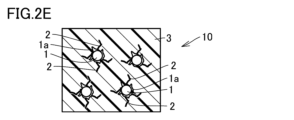
- 2A-2E are schematic diagrams illustrating steps of a method for making a composite composition according to one embodiment of the present invention.
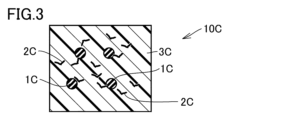
- FIG. 2 is a schematic diagram of a composite material composition according to a comparative example.
- a composite material composition according to one embodiment of the present invention includes a resin, a boron nitride powder, and a silane coupling agent.
- the resin contained in the composite material composition according to this embodiment is a matrix resin in the composite material composition.
- the resin include silicone resins, epoxy resins, (meth)acrylic resins, and urethane resins.
- the resin is preferably a silicone resin.
- the silicone resin include organopolysiloxane.
- the resin is preferably curable. This makes it possible to easily produce a molded body by curing the composite material composition.
- Boron nitride powders have relatively high thermal conductivity and are therefore used as thermally conductive fillers to be added to resins.
- the boron nitride powder is a powder of boron nitride containing boron nitride or a metal oxide.
- the boron nitride powder is preferably a boron nitride powder that is relatively easy to handle.
- the metal oxide include yttrium oxide, ytterbium oxide, cerium oxide, lanthanum oxide, iron oxide, titanium oxide, zirconium oxide, magnesium oxide, aluminum oxide, and molybdenum oxide. These may be used alone or in combination of two or more.
- the shape of the boron nitride powder is not particularly limited, but may be, for example, flaky or spherical.
- the boron nitride powder may be formed by agglomeration of flaky boron nitride powder, or may be formed into a spherical shape by a liquid phase reaction.
- the boron nitride powder has basic groups on its surface.
- the basic groups are, for example, hydroxyl groups.
- the boron nitride powder has its surface treated so as to increase the amount of basic groups on the surface.
- the surface treatment method includes treatment with a surface modifier, plasma treatment, acid treatment, etc. Detailed methods of surface treatment will be described later.
- the amount of basic groups is the physical amount of the basic groups, and can be measured by titration.
- the amount of basic groups on the surface of the boron nitride-based powder per unit surface area of the boron nitride-based powder before the surface treatment is, for example, 0.05 nmol/m 2 or more and 1.0 nmol/m 2 or less.
- the amount of basic groups on the treated surface of the boron nitride powder per unit surface area of the boron nitride powder is preferably 1.5 nmol/m2 or more and 4.5 nmol/m2 or less . If the amount of basic groups is 1.5 nmol/ m2 or more , the amount of silane coupling agent (described in detail later) that can be adsorbed on the surface of the boron nitride powder increases. If the amount of basic groups is 4.5 nmol/m2 or less , the surface treatment of the boron nitride powder becomes easy, and a more inexpensive composite composition can be provided.
- the SSA (specific surface area) of the boron nitride powder is preferably, for example, 0.1 nmol/m2 or more and 5.0 nmol/ m2 or less. If the SSA of the boron nitride powder is 0.1 nmol/m2 or more , the amount of basic groups by surface treatment can be further increased. If the SSA of the boron nitride powder is 5.0 nmol/m2 or less , the SSA of the boron nitride powder becomes easy to handle.
- the mass ratio of the content of the boron nitride-based powder to the total content of the resin and boron nitride-based powder in the composite composition may be, for example, 20 vol% or more and 60 vol% or less. If the mass ratio is 20 vol% or more, the effect of improving thermal conductivity due to the inclusion of the boron nitride-based powder can be more effectively obtained. If the mass ratio is 60 vol% or less, the increase in viscosity due to the inclusion of the boron nitride-based powder to the total content of the resin and boron nitride-based powder can be more effectively suppressed.
- the composite composition according to the present embodiment may further include a surface modifier.
- the surface modifier is used to perform a surface treatment of the boron nitride powder, and can be included in the composite composition.
- Examples of surface modifiers that can be used to perform a surface treatment of the boron nitride powder in the present embodiment include carboxylic acid-based polymer dispersants, organosilicon compounds, and phenylphosphonic acid.
- Carboxylic acid-based polymeric dispersants are not particularly limited, but are particularly preferably polymers with a comb-shaped structure.
- Dispersion transfer promoters with a comb-shaped structure have a carboxylic acid group in the anchor portion and a polyoxyalkylene group in the graft portion, and are structured so that the balance of hydrophobicity and hydrophilicity varies depending on the composition.
- Examples of polymeric dispersants that can be used as polymers with a comb-shaped structure include the Marialim AWC series and SC series manufactured by NOF Corporation.
- silicone oligomers manufactured by Momentive Performance Materials or Shin-Etsu Chemical Co., Ltd. can be used.
- silane coupling agent in the composite material composition according to this embodiment is present in the composite material composition at least in a state where it is adsorbed onto the surface of the boron nitride powder.
- the silane coupling agent may have a reactive double bond, and may have a vinyl group, an allyl group, or the like.
- silane coupling agents include allyltriethoxysilane, allylchlorodimethylsilane, allyltrimethoxysilane, allyltrichlorosilane, chlorodimethylvinylsilane, diethoxymethylvinylsilane, dimethoxymethylvinylsilane, trichlorovinylsilane, vinyltrimethoxysilane, dimethylethoxyvinylsilane, vinyltris(2-methoxyethoxy)silane, and the like.
- the amount of the silane coupling agent adsorbed on the treated surface per unit surface area of the boron nitride powder is preferably 4 mg/m 2 or more and 55 mg/m 2 or less. If the amount of adsorption is 4 mg/m 2 or more, the compatibility between the boron nitride powder and the resin and the dispersibility of the boron nitride powder in the resin are further improved. This makes it possible to further reduce the viscosity of the resulting composite composition. In addition, if the amount of adsorption is 55 mg/m 2 or less, the content of the silane coupling agent can be suppressed while improving the dispersibility of the boron nitride powder, and a more inexpensive composite composition can be provided.
- the amount of the silane coupling agent adsorbed on the treated surface of the boron nitride powder is close to the maximum adsorption amount (saturation adsorption amount) that can be adsorbed on the surface.
- the composite composition is substantially free of silane coupling agent that is not adsorbed on the surface of the surface-treated boron nitride powder. This makes it possible to suppress an increase in contact resistance between the resin and the silane coupling agent that exists simply as an additive in the composite composition. This in turn makes it possible to increase the thermal conductivity of the molded product made from the composite composition.
- the composite composition being substantially free of silane coupling agent that is not adsorbed to the surface of the surface-treated boron nitride powder may include, for example, that the content of silane coupling agent that is not adsorbed to the surface of the surface-treated boron nitride powder in the resin composition is less than 0.01 parts by mass.
- the composite material composition according to an embodiment of the present invention may further include other additives, such as other dispersants, diluting solvents, photopolymerization curing agents, and thermal polymerization curing agents.
- the composite material composition according to the present embodiment can be used, for example, as a so-called heat dissipation gap filler. From the viewpoint of ease of handling, the composite material composition according to the present embodiment is preferably in a paste form, for example.
- the viscosity of the composite composition is preferably 0.1 Pa ⁇ s or more and 1.5 Pa ⁇ s or less. If the viscosity of the composite composition is 0.1 Pa ⁇ s or more and 1.5 Pa ⁇ s or less, the composite composition can be easily handled when a molded article is formed using the composite composition.
- the molded article according to the present embodiment is molded using the composite material composition.
- the molded article can be obtained, for example, by subjecting the composite composition to a curing treatment (the curing treatment will be described later).
- the shape of the molded article is not particularly limited, but is, for example, a sheet shape.
- the thermal conductivity of the molded body formed using the composite composition according to this embodiment is preferably, for example, 0.4 W/m ⁇ K or more, and more preferably 0.5 W/m ⁇ K or more. If the thermal conductivity of the molded body is 0.4 W/m ⁇ K, the molded body can be suitably used as a heat dissipation member. There is no particular upper limit to the thermal conductivity of the molded body, but it is, for example, 5.0 W/m ⁇ K or less.
- FIG. 1 is a flow diagram showing a method for producing a composite composition and a molded body according to one embodiment of the present invention.
- the method for producing a composite composition according to one embodiment of the present invention includes a surface treatment process S1, a silane coupling agent mixing process S2, a (second) heat drying process S3, and a resin mixing process S4.
- the surface treatment step S1 the surface of the boron nitride powder is treated so as to increase the amount of basic groups on the surface of the boron nitride powder.
- the surface treatment step S1 includes a surface modifier mixing step S11 and a first heating and drying step S12.
- FIG. 2A is a schematic diagram showing the surface modifier mixing step in one embodiment of the present invention.
- boron nitride powder 1, surface modifier 1a, and a first dispersion medium SA are mixed in the surface modifier mixing step S11.
- the first dispersion medium SA include water, ethanol, methanol, isopropyl alcohol, toluene, benzene, xylene, phenol, acetone, methyl ethyl ketone, diethyl ether, dimethyl ether, hexane, and mixtures thereof.
- the boron nitride powder 1, the surface modifier 1a, and the first dispersion medium SA are mixed until the first dispersion medium SA is completely vaporized or partially vaporized.
- the mixing conditions are not particularly limited, and may be, for example, 25°C and atmospheric pressure.
- the first mixture is obtained by the mixing step S11.
- the first mixture may or may not contain the first dispersion medium SA.
- FIG. 2B is a schematic diagram showing the first heating and drying step in one embodiment of the present invention.
- the first heating and drying step S12 the first mixture is heated and dried to vaporize the first dispersion medium SA while heating the boron nitride powder 1 and the surface modifier 1a.
- This step S12 produces a boron nitride powder whose surface has been treated with the surface modifier so that the amount of basic groups on the surface of the boron nitride powder is increased.
- the drying and heating conditions are not particularly limited as long as they allow the first dispersion medium SA to vaporize, but for example, the temperature is 80°C or higher and 150°C or lower under atmospheric pressure.
- plasma treatment may be performed.
- the plasma treatment is performed, for example, by irradiating oxygen plasma. This makes it possible to efficiently increase the amount of basic groups in the boron nitride powder.
- the irradiation time of oxygen plasma may be, for example, about 1 hour.
- an acid treatment may be performed.
- the acid treatment is performed, for example, by adding the boron nitride powder to a strong acid aqueous solution such as a hydrochloric acid aqueous solution, and then removing the strong acid aqueous solution.
- a strong acid aqueous solution such as a hydrochloric acid aqueous solution
- the concentration of the hydrochloric acid aqueous solution is, for example, 1 mol/L.
- FIG. 2C is a schematic diagram showing the silane coupling agent mixing step in one embodiment of the present invention.
- the silane coupling agent mixing step S2 the surface-treated boron nitride powder 1 and the silane coupling agent 2 are mixed so that the silane coupling agent 2 is adsorbed to the treated surface.
- the second dispersion medium SB is mixed together with the surface-treated boron nitride powder 1 and the silane coupling agent 2.
- the silane coupling agent 2 is adsorbed to the treated surface of the boron nitride powder 1.
- the second dispersion medium SB can be the same as the first dispersion medium SA.
- the surface-treated boron nitride powder 1, the silane coupling agent 2, and the second dispersion medium SB are mixed until the second dispersion medium SB is completely vaporized or vaporized to a certain extent.
- the mixing conditions are not particularly limited, and may be, for example, 25°C and atmospheric pressure.
- the silane coupling agent mixing step S2 it is preferable to mix the surface-treated boron nitride powder with the silane coupling agent so that substantially all of the mixed silane coupling agent is adsorbed onto the treated surface. This makes it so that the final composite composition does not substantially contain any silane coupling agent that is not adsorbed onto the surface of the surface-treated boron nitride powder.
- FIG. 2D is a schematic diagram showing the second heating and drying step in one embodiment of the present invention.
- the second heating and drying step S3 the second mixture is heated and dried to vaporize the second dispersion medium SB. This results in a boron nitride powder 1 having the silane coupling agent 2 adsorbed on the treated surface.
- the drying and heating conditions are not particularly limited as long as they allow the second dispersion medium SB to be vaporized, but for example, the temperature is 80° C. or higher and 150° C. or lower under atmospheric pressure.
- FIG. 2E is a schematic diagram showing the resin mixing step in one embodiment of the present invention.
- the resin mixing step S4 the boron nitride powder with the silane coupling agent adsorbed on the treated surface is mixed with resin 3. This results in a paste-like composite composition.
- the mixing conditions There are no particular limitations on the mixing conditions, but it is preferable to perform the process at room temperature under reduced pressure, for example, about 0.08 MPa, for about one hour.
- the method for producing a molded body according to one embodiment of the present invention includes the above steps S1 to S4, and further includes a molding step S5.
- the molding step S5 the composite composition is formed into a desired shape, such as a sheet, and then cured to form a molded body.
- the curing process is carried out appropriately depending on the curing conditions of the resin contained therein or the effect conditions of the curing agent contained in the composite composition.
- the curing process is, for example, a heat drying process.
- Example 1 A carboxylic acid-based polymer dispersant was added to 100 g of ethanol as a surface modifier, and the mixture was mixed using a planetary mixer with a capacity of 0.5 L under the conditions of 25° C., atmospheric pressure, 500 rpm/min, and 10 minutes to obtain a first mixture. 5 g of boron nitride powder was further added to this first mixture, and the mixture was mixed using the planetary mixer under the conditions of 25° C., atmospheric pressure, 500 rpm/min, and about 1 hour to obtain a powdery first mixture that was somewhat dry.
- the boron nitride powder used had an SSA (specific surface area) of 2 m 2 /g, a basic group amount of 0.5 nmol/m 2 , and was scale-shaped.
- the amount of the surface modifier added to the ethanol was such that the weight per unit surface area of the boron nitride powder was 10 mg/m 2 relative to the 5 g of boron nitride powder.
- the first mixture was dried by heating in an oven dryer under atmospheric pressure at 100°C for 1 hour. This resulted in boron nitride powder whose surface was treated with a carboxylic acid-based polymer dispersant (surface-treated boron nitride powder).
- a silane coupling agent was added to 100 g of ethanol, and the mixture was mixed for 10 minutes at 25° C., atmospheric pressure, and 500 rpm/min using a planetary mixer with a capacity of 0.5 L to obtain a second mixture.
- the surface-treated boron nitride powder obtained above was added to this second mixture, and the mixture was mixed for about 1 hour using the planetary mixer at 25° C., atmospheric pressure, and 500 rpm/min to obtain a powdery second mixture that was somewhat dry.
- the amount of the silane coupling agent added to the ethanol was set so that the weight per unit surface area of the boron nitride powder was 40 mg/m 2 relative to the 5 g of boron nitride powder.
- the second mixture was heated and dried in an oven dryer at 100°C in an air atmosphere for 1 hour. This resulted in boron nitride powder with the silane coupling agent adsorbed on the treated surface.
- the surface-modified boron nitride powder with the silane coupling agent adsorbed thereon and the organopolysiloxane were mixed in a volume ratio of 40:60 using a 0.5 L planetary mixer at room temperature, under a reduced pressure of 0.08 MPa, at 500 rpm/min for 1 hour. This resulted in a paste-like composite composition.
- the paste-like composite composition was sandwiched between a pair of PET (polyethylene terephthalate) films, and the composite composition sandwiched between these films was rolled using a constant speed roll to obtain a sheet-like composite composition having a thickness of 2.0 mm.
- This sheet-like composite composition was dried in an oven dryer at 100°C for 1 hour, thereby carrying out a hardening process. As a result, a molded sheet was obtained.
- Example 2 A surface-modified boron nitride powder having a silane coupling agent adsorbed thereon, a paste-like composite composition, and a molded sheet were obtained in the same manner as in Example 1, except that when the silane coupling agent was added to the ethanol and mixed, the amount of the silane coupling agent added to the ethanol was set so that the weight per unit surface area of the boron nitride powder was 55 mg/ m2 relative to the 5 g of boron nitride powder.
- Example 3 A surface-modified boron nitride powder having a silane coupling agent adsorbed thereon, a paste-like composite composition, and a molded sheet were obtained in the same manner as in Example 1, except that when the silane coupling agent was added to the ethanol and mixed, the amount of the silane coupling agent added to the ethanol was set so that the weight per unit surface area of the boron nitride powder was 56 mg/ m2 relative to the 5 g of boron nitride powder.
- Example 4 A surface-modified boron nitride powder having a silane coupling agent adsorbed thereon, a paste-like composite composition, and a molded sheet were obtained in the same manner as in Example 1, except that an organosilicon compound was used as the surface modifier instead of the polymer dispersant, and that when the silane coupling agent was added to the ethanol and mixed, the amount of the silane coupling agent added to the ethanol was adjusted so that the weight per unit surface area of the boron nitride powder was 22 mg/m2 relative to the 5 g of boron nitride powder.
- Example 5 The surface of boron nitride powder (with an SSA (specific surface area) of 2 m2 /g, a basic group content of 0.5 nmol/ m2 , and a scale-like shape) was irradiated with oxygen plasma for 1 hour. This resulted in the production of boron nitride powder with a surface modified by plasma treatment.
- SSA specific surface area
- a surface-modified boron nitride powder having a silane coupling agent adsorbed thereon, a paste-like composite composition, and a molded sheet were obtained in the same manner as in Example 1, except that when the silane coupling agent was added to the ethanol and mixed, the amount of the silane coupling agent added to the ethanol was set so that the weight per unit surface area of the boron nitride powder was 4 mg/ m2 relative to the 5 g of boron nitride powder.
- Example 6 Boron nitride powder (with an SSA (specific surface area) of 2 m2 /g, a basic group content of 0.5 nmol/ m2 , and a scale shape) was added to an aqueous hydrochloric acid solution (1 mol/L), filtered, washed with water, and then dried. This yielded boron nitride powder with an acid-treated surface.
- SSA specific surface area
- a surface-modified boron nitride powder having a silane coupling agent adsorbed thereon, a paste-like composite composition, and a molded sheet were obtained in the same manner as in Example 1, except that when the silane coupling agent was added to the ethanol and mixed, the amount of the silane coupling agent added to the ethanol was set to an amount such that the weight per unit surface area of the boron nitride powder was 5 mg/m2 relative to the 5 g of boron nitride powder.
- Example 7 A surface-treated boron nitride powder having a silane coupling agent adsorbed thereon, a paste-like composite composition, and a molded sheet were obtained in the same manner as in Example 1, except that phenylphosphonic acid was used as the surface modifier instead of the polymer dispersant, and that the amount of the silane coupling agent added to the ethanol when the silane coupling agent was added to the ethanol and mixed was set to an amount such that the weight per unit surface area of the boron nitride powder was 11 mg/m2 relative to the 5 g of boron nitride powder.
- Example 8 A surface-treated boron nitride powder with adsorbed silane coupling agent, a paste-like composite composition, and a molded sheet were obtained in the same manner as in Example 1, except that boron nitride powder with an SSA of 1 m2 /g was used, and that when the silane coupling agent was added to the ethanol and mixed, the amount of silane coupling agent added to the ethanol was such that the weight per unit surface area of the boron nitride powder was 38 mg/m2 per 5 g of boron nitride powder.
- Example 9 A surface-treated boron nitride powder with adsorbed silane coupling agent, a paste-like composite composition, and a molded sheet were obtained in the same manner as in Example 1, except that boron nitride powder with an SSA of 3 m2 /g was used, and that when the silane coupling agent was added to the ethanol and mixed, the amount of silane coupling agent added to the ethanol was such that the weight per unit surface area of the boron nitride powder was 39 mg/m2 per 5 g of boron nitride powder.
- the amount of silane coupling agent mixed was such that the weight per unit surface area of the boron nitride powder was 40 mg/ m2 relative to the 5 g of boron nitride powder.
- the composite composition was then formed into a sheet and dried in the same manner as in Example 1 to obtain a molded sheet.
- the amount of the additive carboxylic acid polymer dispersant was adjusted so that the weight per unit surface area of the boron nitride powder was 10 mg/ m2 relative to the 5 g of boron nitride powder.
- the amount of the silane coupling agent mixed was set so that the weight per unit surface area of the boron nitride powder was 40 mg/ m2 relative to 5 g of the boron nitride powder.
- the composite composition was then formed into a sheet in the same manner as in Example 1, and dried to obtain a molded sheet.
- Comparative Example 3 A paste-like composite composition and a molded sheet were obtained in the same manner as in Comparative Example 2, except that an organosilicon compound was used as the additive and the amount of silane coupling agent was adjusted so that the weight per unit surface area of the boron nitride powder was 22 mg/ m2 per 5 g of boron nitride powder.
- Comparative Example 4 A paste-like composite composition and a molded sheet were obtained in the same manner as in Comparative Example 2, except that phenylphosphonic acid was used as the additive and the amount of the silane coupling agent was adjusted so that the weight per unit surface area of the boron nitride powder was 11 mg/ m2 per 5 g of boron nitride powder.
- samples for measuring the amount of adsorption of the silane coupling agent in each comparative example were prepared as samples for measuring the amount of adsorption in Reference Examples 1 to 4 below.
- the amount of the carboxylic acid polymer dispersant as additive was adjusted so that the weight per unit surface area of the boron nitride powder was 10 mg/ m2 relative to 5 g of boron nitride powder.
- the amount of the silane coupling agent was adjusted so that the weight per unit surface area of the boron nitride powder was 40 mg/ m2 relative to the 5 g of boron nitride powder.
- Reference Example 3 A sample for measuring the amount of adsorption corresponding to Comparative Example 3 was obtained in the same manner as in Reference Example 2, except that an organosilicon compound was used as the additive and the amount of the silane coupling agent was adjusted so that the weight per unit surface area of the boron nitride powder was 22 mg/ m2 relative to 5 g of boron nitride powder.
- Reference Example 4 A sample for measuring the amount of adsorption corresponding to Comparative Example 4 was obtained in the same manner as in Reference Example 2, except that phenylphosphonic acid was used as the additive and the amount of the silane coupling agent mixed was set so that the weight per unit surface area of the boron nitride powder was 11 mg/ m2 relative to 5 g of boron nitride powder.
- the amount of basic groups per unit surface area of the boron nitride powder surface-treated in each example was measured. Specifically, 3 g of the powder was weighed and placed in a container. The powder was stabilized in a constant temperature and humidity chamber at a temperature of 25° C. and a humidity of 50% for 6 hours or more while in the container. An acidic solution was added to the stabilized powder, and the container was sealed. Then, the powder contained in the sealed container was dispersed in the acidic solution using ultrasonic cleaning to obtain a dispersion. This dispersion was centrifuged, and 10 mL of the supernatant was separated.
- the supernatant was diluted with an acidic solution and titrated with a basic solution to measure the amount of acid consumed by the basic groups on the surface of the boron nitride powder. Then, based on the amount of acid and the specific surface area of the boron nitride powder, the amount of basic groups per unit surface area of the boron nitride powder was calculated.
- the amount of basic groups (0.5 nmol/ m2 ) of the boron nitride powder used in each Example and Comparative Example was also measured in the same manner as the method for measuring the amount of basic groups of the surface-modified boron nitride powder to which a silane coupling agent was adsorbed.
- the amount of silane coupling agent adsorbed to the boron nitride powder was also measured for the adsorption amount measurement samples for each reference example. Specifically, the amount of silane coupling agent adsorbed to the boron nitride powder was measured in the same manner as for the measurement of the amount of silane coupling agent adsorbed to each of the above-mentioned examples, except that the adsorption amount measurement samples were used instead of the surface-treated boron nitride powder to which the silane coupling agent was adsorbed.
- Viscosity measurement The viscosity of the paste-like composite composition according to each of the Examples and Comparative Examples was measured using an E-type viscometer at 25° C. and a rotation speed of 10 rpm.
- the amount of basic groups in the boron nitride powder before the surface treatment was 0.5 nmol/ m2
- the amount of basic groups in the boron nitride powder after the surface treatment exceeded 0.5 nmol/ m2 . That is, the surface of the boron nitride powder was treated so that the amount of basic groups on the surface of the boron nitride powder was increased.
- the amount of silane coupling agent adsorbed per unit surface area of the boron nitride powder in the surface-modified boron nitride powder to which the silane coupling agent was adsorbed exceeded 0.
- the composite composition obtained by mixing the boron nitride powder with the silane coupling agent adsorbed on the treated surface with the resin had a viscosity of 1.5 Pa ⁇ s or less.
- Comparative Examples 1 to 4 the surface of the boron nitride powder was not treated, and the boron nitride powder, the silane coupling agent, and the resin were mixed simultaneously to obtain a composite composition.
- the composite compositions of Comparative Examples 1 to 4 had a viscosity of 1.6 Pa ⁇ s or more. In other words, the composite compositions of Examples 1 to 9 had a lower viscosity than the composite compositions of Comparative Examples 1 to 4.
- FIG. 3 is a schematic diagram of a composite composition according to a comparative example.
- the composite composition 10C according to the comparative example contains at least boron nitride powder 1C, silane coupling agent 2C, and resin 3C.
- the amount of silane coupling agent 2C adsorbed is very small compared to the amount of silane coupling agent 2C mixed. Therefore, as shown in FIG. 3, the composite composition 10C according to each comparative example contains a large amount of silane coupling agent 2C that is not adsorbed to the surface of boron nitride powder 1C.
- a method for producing a composite composition comprising the steps of: treating the surface of a boron nitride powder so as to increase the amount of basic groups on the surface of the boron nitride powder; mixing the surface-treated boron nitride powder with a silane coupling agent so that the silane coupling agent is adsorbed to the treated surface; and mixing the boron nitride powder with the treated surface and the silane coupling agent adsorbed to the silane coupling agent with a resin, the increase in the amount of basic groups on the surface of the boron nitride powder allows a relatively large amount of silane coupling agent to be adsorbed to the surface.
- the amount of basic groups on the treated surface of the boron nitride powder per unit surface area of the boron nitride powder was 1.5 nmol/m2 or more and 4.5 nmol/ m2 or less.
- the amount of basic groups is significantly increased compared to the amount of basic groups of the boron nitride powder before the surface treatment, which was 0.5 nmol/ m2 .
- the amount of basic groups on the treated surface of the boron nitride powder per unit surface area of the boron nitride powder is 1.5 nmol/m2 or more and 4.5 nmol/ m2 or less
- the amount of silane coupling agent adsorbed on the treated surface of the boron nitride powder is increased, and the compatibility of the boron nitride powder with the resin and the dispersibility of the boron nitride powder in the resin are further improved, which in turn makes it possible to further reduce the viscosity of the resulting composite composition.
- the amount of silane coupling agent adsorbed on the surface of the treated boron nitride powder per unit surface area of the boron nitride powder was 4 mg/m 2 or more and 55 mg/m 2 or less. Therefore, by producing a composite composition such that the amount of silane coupling agent adsorbed on the surface of the treated boron nitride powder per unit surface area of the boron nitride powder is 4 mg/m 2 or more and 55 mg/m 2 or less, the compatibility of the boron nitride powder with the resin and the dispersibility of the boron nitride powder in the resin are further improved. In turn, the viscosity of the resulting composite composition can be further reduced.
- the amount of silane coupling agent adsorbed on the surface of the boron nitride powder per unit surface area of the boron nitride powder is equal to the amount of the mixed silane coupling agent. Therefore, in these examples, it can be understood that the surface-treated boron nitride powder and the silane coupling agent were mixed so that substantially all of the mixed silane coupling agent was adsorbed on the treated surface.
- the thermal conductivity of the sheets molded from the composite compositions of Examples 1, 2, and 4 to 9 was 0.5 W/m ⁇ K or more.
- Example 3 the amount of silane coupling agent adsorbed to the surface of the boron nitride powder per unit surface area of the boron nitride powder is smaller than the amount of silane coupling agent mixed in.
- the thermal conductivity of the sheet formed from the composite composition of Example 3 was 0.4 W/m ⁇ K. In other words, it can be seen that the thermal conductivity of the sheets formed from the composite compositions of Examples 1, 2, and 4 to 9 was higher than that of Example 3.
- the silane coupling agent is prevented from existing as a mere additive in the resulting composite composition.
- This increases the probability that the resin and the boron nitride powder will come into contact with each other, and can prevent an increase in contact resistance between the resin and the silane coupling agent, which exists as a mere additive. This therefore makes it possible to increase the thermal conductivity of the molded product made from the composite composition.
- the amount of silane coupling agent adsorbed is very small compared to the amount of silane coupling agent mixed.
- the composite composition 10C according to each comparative example contains a large amount of silane coupling agent 2C that is not adsorbed to the surface of the boron nitride powder 1C. Therefore, it can be understood that the composite compositions according to Examples 2 and 4 to 9 were able to increase the thermal conductivity of the molded product formed from the composite composition, even compared to the composite compositions according to each comparative example.
- the present embodiment includes the following disclosure.
- ⁇ 1> treating the surface of the boron nitride powder so as to increase the amount of basic groups on the surface of the boron nitride powder; mixing the surface-treated boron nitride powder with a silane coupling agent so that the silane coupling agent is adsorbed on the treated surface; and mixing the boron nitride powder having the silane coupling agent adsorbed on the treated surface with a resin.
- ⁇ 2> The method for producing a composite material composition according to ⁇ 1>, wherein the amount of basic groups on the treated surface of the boron nitride powder per unit surface area of the boron nitride powder is 1.5 nmol/ m2 or more and 4.5 nmol/m2 or less.
- ⁇ 3> The method for producing a composite material composition according to ⁇ 1> or ⁇ 2>, wherein the amount of the silane coupling agent adsorbed on the treated surface per unit surface area of the boron nitride powder is 4 mg/ m2 or more and 55 mg/ m2 or less.
- ⁇ 4> The method for producing a composite material composition according to any one of ⁇ 1> to ⁇ 3>, wherein in the step of mixing the surface-treated boron nitride-based powder with the silane coupling agent, the surface-treated boron nitride-based powder and the silane coupling agent are mixed such that substantially all of the mixed silane coupling agent is adsorbed to the treated surface.
- ⁇ 8> The composite composition according to any one of ⁇ 5> to ⁇ 7>, wherein the composite composition is substantially free of a silane coupling agent not adsorbed on the surface.
Landscapes
- Chemical & Material Sciences (AREA)
- Health & Medical Sciences (AREA)
- Chemical Kinetics & Catalysis (AREA)
- Medicinal Chemistry (AREA)
- Polymers & Plastics (AREA)
- Organic Chemistry (AREA)
- Compositions Of Macromolecular Compounds (AREA)
Abstract
複合材組成物の製造方法は、窒化ホウ素系粉体(1)の表面の塩基性基量が増加するように、窒化ホウ素系粉体(1)の表面を処理する工程(S1)と、処理された上記表面にシランカップリング剤(2)が吸着するように、上記表面が処理された窒化ホウ素系粉体(1)とシランカップリング剤(2)とを混合する工程(S2)と、処理された上記表面にシランカップリング剤(2)が吸着した窒化ホウ素系粉体(1)と、樹脂(3)とを混合する工程(S4)とを備える。
Description
本発明は、複合材組成物の製造方法および複合材組成物に関する。
特許文献1(特開2013-147403号公報)には、金属の酸化物よりなる添加剤を添加して、窒素雰囲気中で加熱処理して得られる上記添加剤由来の金属化合物を含有する金属化合物含有窒化ホウ素と、樹脂とを含有する複合材組成物が開示されている。また、複合材組成物には、無機フィラーとマトリックス樹脂の界面接着強度を改善するシランカップリング剤などの表面処理剤を添加しても良いことが開示されている。
特許文献1に開示された複合材組成物は、金属化合物含有窒化ホウ素(窒化ホウ素系粉体)と、樹脂とを含んでいるが、低当該窒化ホウ素系粉体によって、複合材組成物の粘度が高くなりすぎる。窒化ホウ素系粉体と樹脂との相溶性は比較的低いため、窒化ホウ素系粉体が凝集するためである。ここで、特許文献1には、シランカップリング剤などの表面処理剤を添加してもよいことが開示されている。しかしながら、単に複合材組成物にシランカップリング剤を添加させるだけでは、粘度が高くなることを十分に抑制することができない場合がある。
本発明は上記の問題点に鑑みてなされたものであり、複合材組成物の粘度が高くなることを抑制できる、複合材組成物の製造方法および複合材組成物を提供することを目的とする。
本発明の一の局面に係る複合材組成物の製造方法は、窒化ホウ素系粉体の表面の塩基性基量が増加するように、窒化ホウ素系粉体の上記表面を処理する工程と、処理された上記表面にシランカップリング剤が吸着するように、上記表面が処理された窒化ホウ素系粉体とシランカップリング剤とを混合する工程と、処理された上記表面にシランカップリング剤が吸着した窒化ホウ素系粉体と、樹脂とを混合する工程とを備える。
本発明の他の局面に係る複合材組成物は、樹脂と、表面の塩基性基量が増加するように当該表面が処理された窒化ホウ素系粉体と、当該表面に吸着しているシランカップリング剤とを含む。
本発明によれば、複合材組成物の粘度が高くなることを抑制できる。
以下、本発明の一実施形態に係る複合材組成物および成形体、ならびにこれらの製造方法について説明するが、本開示はこれらに限定されるものではない。また、以下の実施形態の説明においては、図中の同一または相当部分には同一符号を付してその説明は繰り返さない。
{複合体組成物および成形体}
本発明の一実施形態に係る複合材組成物は、樹脂と、窒化ホウ素系粉体と、シランカップリング剤とを含んでいる。
本発明の一実施形態に係る複合材組成物は、樹脂と、窒化ホウ素系粉体と、シランカップリング剤とを含んでいる。
[樹脂]
本実施形態に係る複合材組成物に含まれる樹脂は、複合材組成物におけるマトリックス樹脂である。当該樹脂としては、シリコーン系樹脂、エポキシ系樹脂、(メタ)アクリル系樹脂、または、ウレタン系樹脂などが挙げられる。本実施形態において、当該樹脂は、シリコーン樹脂であることが好ましい。シリコーン樹脂としてはオルガノポリシロキサンが挙げられる。また、当該樹脂は、硬化性であることが好ましい。これにより、複合材組成物を硬化してなる成形体を容易に作製できる。
本実施形態に係る複合材組成物に含まれる樹脂は、複合材組成物におけるマトリックス樹脂である。当該樹脂としては、シリコーン系樹脂、エポキシ系樹脂、(メタ)アクリル系樹脂、または、ウレタン系樹脂などが挙げられる。本実施形態において、当該樹脂は、シリコーン樹脂であることが好ましい。シリコーン樹脂としてはオルガノポリシロキサンが挙げられる。また、当該樹脂は、硬化性であることが好ましい。これにより、複合材組成物を硬化してなる成形体を容易に作製できる。
[窒化ホウ素系粉体]
窒化ホウ素系粉体は、比較的高い熱伝導性を有するため、樹脂に添加する熱伝導性フィラーとして用いられる。窒化ホウ素系粉体は、窒化ホウ素または金属酸化物などを含有する窒化ホウ素の粉体である。本実施形態において、窒化ホウ素系粉体は、比較的取り扱い容易である窒化ホウ素粉体であることが好ましい。窒化ホウ素系粉体が金属酸化物含有窒化ホウ素である場合、当該金属酸化物としては、酸化イットリウム、酸化イッテルビウム、酸化セリウム、酸化ランタン、酸化鉄、酸化チタン、酸化ジルコニウム、酸化マグネシウム、酸化アルミニウム、または、酸化モリブデンが挙げられる。これらは1種を単独で用いてもよく、2種以上を併用してもよい。
窒化ホウ素系粉体は、比較的高い熱伝導性を有するため、樹脂に添加する熱伝導性フィラーとして用いられる。窒化ホウ素系粉体は、窒化ホウ素または金属酸化物などを含有する窒化ホウ素の粉体である。本実施形態において、窒化ホウ素系粉体は、比較的取り扱い容易である窒化ホウ素粉体であることが好ましい。窒化ホウ素系粉体が金属酸化物含有窒化ホウ素である場合、当該金属酸化物としては、酸化イットリウム、酸化イッテルビウム、酸化セリウム、酸化ランタン、酸化鉄、酸化チタン、酸化ジルコニウム、酸化マグネシウム、酸化アルミニウム、または、酸化モリブデンが挙げられる。これらは1種を単独で用いてもよく、2種以上を併用してもよい。
窒化ホウ素系粉体の形状は特に限定されないが、たとえば、鱗片形状、または、球状であってもよい。窒化ホウ素系粉体の形状が球状である場合、窒化ホウ素系粉体は、鱗片形状の窒化ホウ素系粉体が凝集することにより形成されたものでもよいし、液相反応で球状に形成されたものであってもよい。
窒化ホウ素系粉体は、その表面に塩基性基を有している。塩基性基は、たとえば水酸基である。窒化ホウ素系粉体は、表面の塩基性基量が増加するように、当該表面が処理されている。本実施形態において、当該表面の処理方法としては、表面改質剤による処理、プラズマ処理、酸処理などが挙げられる。表面処理の詳細な方法については後述する。なお、塩基性基量とは当該塩基性基の物理量であって、滴定により測定され得る。
窒化ホウ素系粉体の単位表面積あたりの、表面処理前における窒化ホウ素系粉体の表面の塩基性基量は、たとえば、0.05nmmol/m2以上1.0nmol/m2以下である。
窒化ホウ素系粉体の単位表面積あたりの、窒化ホウ素系粉体の処理された表面の塩基性基量は、1.5nmmol/m2以上4.5nmol/m2以下であることが好ましい。当該塩基性基が1.5nmmol/m2以上であれば、窒化ホウ素系粉体の表面に、吸着可能なシランカップリング剤(詳細は後述)の量がより増加する。当該塩基性基が4.5nmol/m2以下であれば窒化ホウ素系粉体の表面処理が容易となり、より廉価な複合材組成物を提供できる。
窒化ホウ素系粉体のSSA(比表面積)は、たとえば、0.1nmol/m2以上5.0nmol/m2以下であることが好ましい。窒化ホウ素系粉体のSSAが0.1nmol/m2以上であれば、表面処理による塩基性基量をより増やすことができる。窒化ホウ素系粉体のSSAが5.0nmol/m2以下であれば、窒化ホウ素系粉体のSSAの取り扱いが容易となる。
複合材組成物中における、樹脂および窒化ホウ素系粉体の合計含有量に対する、窒化ホウ素系粉体の含有量の質量比率は、たとえば、20vol%以上60vol%以下であればよい。当該質量比率が20vol%以上であれば、窒化ホウ素系粉体を含有することによる熱伝導性向上効果がより得られる。当該質量比率が60vol%以下であれば、樹脂および窒化ホウ素系粉体の合計含有量に対する、窒化ホウ素系粉体の含有することによる粘度の上昇をより抑制できる。
[表面改質剤]
本実施形態に係る複合材組成物は、表面改質剤をさらに含んでもよい。当該表面改質剤は、窒化ホウ素系粉体の表面処理を行うために用いられることで、複合材組成物に含まれ得るものである。本実施形態において窒化ホウ素系粉体の表面処理を行うために用いることができる表面改質剤としては、カルボン酸系高分子分散剤、有機ケイ素化合物、または、フェニルホスホン酸などが挙げられる。
本実施形態に係る複合材組成物は、表面改質剤をさらに含んでもよい。当該表面改質剤は、窒化ホウ素系粉体の表面処理を行うために用いられることで、複合材組成物に含まれ得るものである。本実施形態において窒化ホウ素系粉体の表面処理を行うために用いることができる表面改質剤としては、カルボン酸系高分子分散剤、有機ケイ素化合物、または、フェニルホスホン酸などが挙げられる。
カルボン酸系高分子分散剤としては、特に限定されないが、櫛形の構造を有するポリマーであることが特に好ましい。櫛形の構造を有する分散移行促進剤は、アンカー部にカルボン酸基を、グラフト部にポリオキシアルキレン基を有し、その組成により疎水性と親水性のバランスが異なるような構造となっている。なお、櫛形の構造を有するポリマーとしての高分子分散剤は、たとえば、日油株式会社製のマリアリムAWCシリーズ、SCシリーズなどを用いることができる。
有機ケイ素化合物としては、たとえばモメンティブ・パフォーマンス・マテリアルズ社製、または、信越化学社製のシリコーンオリゴマーを用いることができる。
[シランカップリング剤]
本実施形態に係る複合材組成物に係るシランカップリング剤は、少なくとも、窒化ホウ素系粉体の表面に吸着している状態で、複合材組成物中に存在している。
本実施形態に係る複合材組成物に係るシランカップリング剤は、少なくとも、窒化ホウ素系粉体の表面に吸着している状態で、複合材組成物中に存在している。
シランカップリング剤は、反応性二重結合を有するものであってよく、ビニル基、アリル基等を有するものであってよい。シランカップリング剤としては、アリルトリエトキシシラン、アリルクロロジメチルシラン、アリルトリメトキシシラン、アリルトリクロロシラン、クロロジメチルビニルシラン、ジエトキシメチルビニルシラン、ジメトキシメチルビニルシラン、トリクロロビニルシラン、ビニルトリメトキシシラン、ジメチルエトキシビニルシラン、ビニルトリス(2-メトキシエトキシ)シラン等が挙げられる。
窒化ホウ素系粉体の単位表面積あたりの、処理された表面に吸着したシランカップリング剤の吸着量は、4mg/m2以上55mg/m2以下であることが好ましい。当該吸着量が4mg/m2以上であれば、窒化ホウ素系粉体と樹脂との相溶性および樹脂中の窒化ホウ素系粉体の分散性がさらに向上する。これにより、得られる複合材組成物の粘度をより低くすることができる。また、当該吸着量が55mg/m2以下であれば、窒化ホウ素系粉体の分散性等を向上させつつもシランカップリング剤の含有量を抑制でき、より廉価な複合材組成物を提供できる。また、窒化ホウ素系粉体の処理された表面に吸着したシランカップリング剤の吸着量が、当該表面に吸着可能な最大吸着量(飽和吸着量)に近いことがより好ましい。
一方で、複合材組成物は、表面の処理された窒化ホウ素系粉体の表面に吸着していないシランカップリング剤を実質的に含まないことが好ましい。これにより、複合材組成物中において単なる添加物として存在するシランカップリング剤と、樹脂との接触抵抗増加を抑制できる。ひいては、複合材組成物により成形された成形物の熱伝導率をより高くすることができる。
なお、複合材組成物は、表面の処理された窒化ホウ素系粉体の表面に吸着していないシランカップリング剤を実質的に含まないとは、たとえば、樹脂材組成物中における、表面の処理された窒化ホウ素系粉体の表面に吸着していないシランカップリング剤の含有量が0.01質量部未満であることを含んでもよい。
[その他の添加剤]
本発明の一実施形態に係る複合材組成物は、その他の添加剤をさらに含んでもよい。その他の添加剤としては、その他の分散剤、希釈溶剤、光重合硬化剤、および、熱重合硬化剤などが挙げられる。
本発明の一実施形態に係る複合材組成物は、その他の添加剤をさらに含んでもよい。その他の添加剤としては、その他の分散剤、希釈溶剤、光重合硬化剤、および、熱重合硬化剤などが挙げられる。
[複合体組成物]
本実施形態に係る複合材組成物は、たとえば、いわゆる放熱ギャップフィラーとして用いることができる。本実施形態に係る複合材組成物は、取扱性の観点から。たとえばペースト状であることが好ましい。
本実施形態に係る複合材組成物は、たとえば、いわゆる放熱ギャップフィラーとして用いることができる。本実施形態に係る複合材組成物は、取扱性の観点から。たとえばペースト状であることが好ましい。
複合材組成物の、E型粘度計を用いて25℃および回転数10rpmの条件で測定した粘度は、0.1Pa・s以上1.5Pa・s以下であることが好ましい。複合材組成物の当該粘度が0.1Pa・s以上1.5Pa・S以下であれば、複合材組成物を用いて成形体を成形するときに、複合材組成物を容易に取り扱うことができる。
[成形体]
本実施形態に係る成形体は、複合材組成物を用いて成形される。成形体は、たとえば、複合体組成物を硬化処理することで得られる(硬化処理については後述する)。成形体の形状は特に限定されないが、たとえばシート状である。
本実施形態に係る成形体は、複合材組成物を用いて成形される。成形体は、たとえば、複合体組成物を硬化処理することで得られる(硬化処理については後述する)。成形体の形状は特に限定されないが、たとえばシート状である。
本実施形態に係る複合材組成物を用いて成形された成形体の熱伝導率は、たとえば0.4W/m・K以上であることが好ましく、0.5W/m・K以上であることがより好ましい。当該成形体の熱伝導率が0.4W/m・Kであれば、成形体を放熱部材として好適に使用できる。成形体の熱伝導率の上限は特に限定されないが、たとえば、5.0W/m・K以下である。
{複合体組成物および成形体の製造方法}
以下、本発明の一実施形態に係る複合材組成物および成形体の製造方法について説明する。
以下、本発明の一実施形態に係る複合材組成物および成形体の製造方法について説明する。
図1は、本発明の一実施形態に係る複合材組成物および成形体の製造方法を示すフロー図である。図1に示すように、本発明の一実施形態に係る複合材組成物の製造方法は、表面処理工程S1と、シランカップリング剤混合工程S2と、(第2)加熱乾燥工程S3と、樹脂混合工程S4とを備えている。
表面処理工程S1においては、窒化ホウ素系粉体の表面の塩基性基量が増加するように、窒化ホウ素系粉体の表面を処理する。本実施形態において、表面処理工程S1は、表面改質剤混合工程S11と、第1加熱乾燥工程S12とを含む。
図2Aは、本発明の一実施形態における表面改質剤混合工程を模式的に示す図である。図2Aに示すように、表面改質剤混合工程S11においては、窒化ホウ素系粉体1と、表面改質剤1aと、第1分散媒SAとを混合する。第1分散媒SAとしては、たとえば水、エタノール、メタノール、イソプロピルアルコール、トルエン、ベンゼン、キシレン、フェノール、アセトン、メチルエチルケトン、ジエチルエーテル、ジメチルエーテル、ヘキサン、または、これらの混合物等が挙げられる。
窒化ホウ素系粉体1、表面改質剤1a、および、第1分散媒SAは、第1分散媒SAが完全に気化またはある程度気化するまで、混合される。混合条件は特に限定されず、たとえば、25℃、大気圧化でよい。当該混合工程S11により、第1混合物が得られる。第1混合物は第1分散媒SAを含んでいてもよいし、含んでいなくてもよい。
図2Bは、本発明の一実施形態における第1加熱乾燥工程を模式的に示す図である。図2Aおよび図2Bに示すように、第1加熱乾燥工程S12においては、第1混合物を加熱乾燥させることにより、第1分散媒SAを気化させつつ、窒化ホウ素系粉体1および表面改質剤1aを加熱する。当該工程S12により、表面改質剤により、窒化ホウ素系粉体の表面の塩基性基量が増加するように表面が処理された、窒化ホウ素系粉体が得られる。乾燥加熱条件は、第1分散媒SAが気化可能な条件であれば特に限定されないが、たとえば、大気圧雰囲下で、温度は80℃以上150℃以下である。
なお、本発明の一実施形態における表面処理工程S1においては、上記の表面改質剤混合工程S11および第1加熱乾燥工程S12に代えて、他の処理方法が採用されてもよい。
たとえば、表面処理工程S1においては、プラズマ処理がされてもよい。プラズマ処理は、たとえば、酸素プラズマの照射により行われる。これにより、窒化ホウ素系粉末の塩基性基量を効率よく増加させることができる。酸素プラズマの照射時間は、たとえば1時間程度であればよい。
また、表面処理工程S1においては、酸処理がされてもよい。酸処理は、たとえば、塩酸水溶液などの強酸水溶液に、窒化ホウ素系粉体を添加した後、当該強酸水溶液を除去することにより実施される。これにより、窒化ホウ素系粉末の塩基性基量を効率よく増加させることができる。強酸水溶液として塩酸水溶液を使用する場合、塩酸水溶液の濃度はたとえば1mol/Lである。
図2Cは、本発明の一実施形態におけるシランカップリング剤混合工程を模式的に示す図である。図2Cに示すように、シランカップリング剤混合工程S2においては、処理された表面にシランカップリング剤2が吸着するように、表面が処理された窒化ホウ素系粉体1とシランカップリング剤2とを混合する。このとき、表面が処理された窒化ホウ素系粉体1とシランカップリング剤2とともに、第2分散媒SBを混合する。これにより、シランカップリング剤2が、窒化ホウ素系粉体1の処理された表面に吸着する。第2分散媒SBとしては、第1分散媒SAと同じものを用いることができる。
表面が処理された窒化ホウ素系粉体1、シランカップリング剤2、および第2分散媒SBは、第2分散媒SBが完全に気化またはある程度気化するまで、混合される。混合条件は特に限定されず、たとえば、25℃、大気圧化でよい。当該混合工程S2により、処理された表面にシランカップリング剤2が吸着した窒化ホウ素系粉体1を含む、第2混合物が得られる。
さらに、シランカップリング剤混合工程S2においては、混合されたシランカップリング剤の実質的に全てが、処理された表面に吸着するように、表面が処理された窒化ホウ素系粉体とシランカップリング剤とを混合することが好ましい。これにより、最終的に得られる複合材組成物が、表面の処理された窒化ホウ素系粉体の表面に吸着していないシランカップリング剤を実質的に含まなくなる。
図2Dは、本発明の一実施形態における第2加熱乾燥工程を模式的に示す図である。図2Cおよび図2Dに示すように、第2加熱乾燥工程S3においては、第2混合物を加熱乾燥させることにより、第2分散媒SBを気化させる。これにより、処理された表面にシランカップリング剤2が吸着した窒化ホウ素系粉体1が得られる。乾燥加熱条件は、第2分散媒SBが気化可能な条件であれば特に限定されないが、たとえば、大気圧雰囲下で、温度は80℃以上150℃以下である。
図2Eは、本発明の一実施形態における樹脂混合工程を模式的に示す図である。図2Eに示すように、樹脂混合工程S4においては、処理された前記表面に前記シランカップリング剤が吸着した前記窒化ホウ素系粉体と、樹脂3とを混合する。これにより、ペースト状の複合材組成物が得られる。混合条件は特に限定されないが、室温下で、たとえば0.08MPa程度の減圧下で、1時間程度行われることが好ましい。
図1に示すように、本発明の一実施形態に係る成形体の製造方法は、上記工程S1~S4を備えるとともに、成形工程S5をさらに備える。成形工程S5においては、複合材組成物をシート状などの所望の形状に形成した後、これを硬化処理することにより、成形体を成形する。硬化処理は、含まれる樹脂の硬化条件または複合材組成物に含まれる硬化剤の効果条件に応じて、適宜実施される。硬化処理は、たとえば加熱乾燥処理である。
以下、実施例を挙げて本開示をより詳細に説明するが、本発明はこれらに限定されるものではない。
[実施例1]
エタノール100gに、表面改質剤としてカルボン酸系高分子分散剤を添加し、容量が0.5Lのプラネタリーミキサーを用いて、25℃、大気圧雰囲気下、500rpm/min、10分間の条件で混合することで、第1混合液を得た。この第1混合液に、窒化ホウ素粉体5gをさらに添加し、上記のプラリネタリーミキサーを用いて、25℃、大気圧下、500rpm/min、約1時間の条件で、これらを混合することで、ある程度乾燥した粉末状の第1混合物を得た。なお、窒化ホウ素粉体は、SSA(比表面積)が2m2/g、塩基性基量が0.5nmol/m2であって、鱗片形状のものを用いた。また、エタノールへの表面改質剤の添加量は、上記の5gの窒化ホウ素粉体に対して、上記窒化ホウ素粉体の単位表面積あたりの重量が10mg/m2となるような添加量にした。
エタノール100gに、表面改質剤としてカルボン酸系高分子分散剤を添加し、容量が0.5Lのプラネタリーミキサーを用いて、25℃、大気圧雰囲気下、500rpm/min、10分間の条件で混合することで、第1混合液を得た。この第1混合液に、窒化ホウ素粉体5gをさらに添加し、上記のプラリネタリーミキサーを用いて、25℃、大気圧下、500rpm/min、約1時間の条件で、これらを混合することで、ある程度乾燥した粉末状の第1混合物を得た。なお、窒化ホウ素粉体は、SSA(比表面積)が2m2/g、塩基性基量が0.5nmol/m2であって、鱗片形状のものを用いた。また、エタノールへの表面改質剤の添加量は、上記の5gの窒化ホウ素粉体に対して、上記窒化ホウ素粉体の単位表面積あたりの重量が10mg/m2となるような添加量にした。
第1混合物を、オーブン乾燥機を用いて、大気圧雰囲気下、100℃で、1時間の条件で加熱による乾燥を行った。これにより、カルボン酸系高分子分散剤により表面が処理された窒化ホウ素粉体(表面処理窒化ホウ素粉体)を得た。
エタノール100gにシランカップリング剤を添加し、容量が0.5Lのプラネタリーミキサーを用いて、25℃、大気圧下、500rpm/min、10分間の条件で混合することで、第2混合液を得た。この第2混合液に、上記で得られた表面処理窒化ホウ素粉体を添加し、上記のプラネタリーミキサーを用いて、25℃、大気圧下、500rpm/min、約1時間の条件で混合することで、ある程度乾燥した粉末状の第2混合物を得た。なお、エタノールへのシランカップリング剤の添加量は、上記の5gの窒化ホウ素粉体に対して、上記窒化ホウ素粉体の単位表面積あたりの重量が40mg/m2となるような添加量にした。
第2混合物を、オーブン乾燥機を用いて、大気雰囲気下、100℃で、1時間の条件で加熱乾燥を行った。これにより、処理された表面にシランカップリング剤が吸着した窒化ホウ素粉体が得られた。
シランカップリング剤の吸着した表面改質窒化ホウ素粉体と、オルガノポリシロキサンとを、体積比率が40:60となるようにして、容量が0.5Lのプラネタリーミキサーを用いて、室温、0.08MPaの減圧下、500rpm/min、1時間の条件で混合した。これにより、ペースト状の複合材組成物を得た。
ペースト状の複合組成物を、1対のPET(ポリエチレンテレフタレート)フィルムで挟み、これらのフィルムで挟まれた状態の複合組成物を等速ロールで圧延することで、厚さ2.0mmのシート状の複合材組成物を得た。このシート状の複合材組成物を、オーブン乾燥機を用いて、100℃、1時間の条件で乾燥させることにより、硬化処理を行った。これにより、成形シートを得た。
[実施例2]
エタノールにシランカップリング剤を添加して混合するときに、エタノールへのシランカップリング剤の添加量を、上記の5gの窒化ホウ素粉体に対して、上記窒化ホウ素粉体の単位表面積あたりの重量が55mg/m2となるような添加量にしたことを除いては、実施例1と同様の方法により、シランカップリング剤の吸着した表面改質窒化ホウ素粉体、ペースト状の複合材組成物、および、成形シートを得た。
エタノールにシランカップリング剤を添加して混合するときに、エタノールへのシランカップリング剤の添加量を、上記の5gの窒化ホウ素粉体に対して、上記窒化ホウ素粉体の単位表面積あたりの重量が55mg/m2となるような添加量にしたことを除いては、実施例1と同様の方法により、シランカップリング剤の吸着した表面改質窒化ホウ素粉体、ペースト状の複合材組成物、および、成形シートを得た。
[実施例3]
エタノールにシランカップリング剤を添加して混合するときに、エタノールへのシランカップリング剤の添加量を、上記の5gの窒化ホウ素粉体に対して、上記窒化ホウ素粉体の単位表面積あたりの重量が56mg/m2となるような添加量としたことを除いては、実施例1と同様の方法により、シランカップリング剤の吸着した表面改質窒化ホウ素粉体、ペースト状の複合材組成物、および、成形シートを得た。
エタノールにシランカップリング剤を添加して混合するときに、エタノールへのシランカップリング剤の添加量を、上記の5gの窒化ホウ素粉体に対して、上記窒化ホウ素粉体の単位表面積あたりの重量が56mg/m2となるような添加量としたことを除いては、実施例1と同様の方法により、シランカップリング剤の吸着した表面改質窒化ホウ素粉体、ペースト状の複合材組成物、および、成形シートを得た。
[実施例4]
表面改質剤として、高分子分散剤に代えて有機ケイ素化合物を用いた点、および、エタノールにシランカップリング剤を添加して混合するときに、エタノールへのシランカップリング剤の添加量を、上記の5gの窒化ホウ素粉体に対して、上記窒化ホウ素粉体の単位表面積あたりの重量が22mg/m2となるように調製した点を除いては、実施例1と同様の方法により、シランカップリング剤の吸着した表面改質窒化ホウ素粉体、ペースト状の複合材組成物、および、成形シートを得た。
表面改質剤として、高分子分散剤に代えて有機ケイ素化合物を用いた点、および、エタノールにシランカップリング剤を添加して混合するときに、エタノールへのシランカップリング剤の添加量を、上記の5gの窒化ホウ素粉体に対して、上記窒化ホウ素粉体の単位表面積あたりの重量が22mg/m2となるように調製した点を除いては、実施例1と同様の方法により、シランカップリング剤の吸着した表面改質窒化ホウ素粉体、ペースト状の複合材組成物、および、成形シートを得た。
[実施例5]
窒化ホウ素粉体(SSA(比表面積)が2m2/g、塩基性基量が0.5nmol/m2であって、鱗片形状のもの)の表面に、酸素プラズマを1時間照射した。これにより、プラズマ処理により表面が改質された窒化ホウ素粉体を得た。
窒化ホウ素粉体(SSA(比表面積)が2m2/g、塩基性基量が0.5nmol/m2であって、鱗片形状のもの)の表面に、酸素プラズマを1時間照射した。これにより、プラズマ処理により表面が改質された窒化ホウ素粉体を得た。
この後は、エタノールにシランカップリング剤を添加して混合するときに、エタノールへのシランカップリング剤の添加量を、上記の5gの窒化ホウ素粉体に対して、上記窒化ホウ素粉体の単位表面積あたりの重量が4mg/m2となるような添加量にしたことを除いては、実施例1と同様の方法により、シランカップリング剤の吸着した表面改質窒化ホウ素粉体、ペースト状の複合材組成物、および、成形シートを得た。
[実施例6]
窒化ホウ素粉体(SSA(比表面積)が2m2/g、塩基性基量が0.5nmol/m2であって、鱗片形状のもの)を、塩酸水溶液(1mol/L)に添加した後、これを濾過および水洗した後、さらに乾燥させた。これにより、酸処理により表面が処理された窒化ホウ素粉体を得た。
窒化ホウ素粉体(SSA(比表面積)が2m2/g、塩基性基量が0.5nmol/m2であって、鱗片形状のもの)を、塩酸水溶液(1mol/L)に添加した後、これを濾過および水洗した後、さらに乾燥させた。これにより、酸処理により表面が処理された窒化ホウ素粉体を得た。
この後は、エタノールにシランカップリング剤を添加して混合するときに、エタノールへのシランカップリング剤の添加量を、上記の5gの窒化ホウ素粉体に対して、上記窒化ホウ素粉体の単位表面積あたりの重量が5mg/m2となるような添加量にしたことを除いては、実施例1と同様の方法により、シランカップリング剤の吸着した表面改質窒化ホウ素粉体、ペースト状の複合材組成物、および、成形シートを得た。
[実施例7]
表面改質剤として、高分子分散剤に代えてフェニルホスホン酸を用いた点、および、エタノールにシランカップリング剤を添加して混合するときに、エタノールへのシランカップリング剤の添加量を、上記の5gの窒化ホウ素粉体に対して、上記窒化ホウ素粉体の単位表面積あたりの重量が11mg/m2となるような添加量とした点を除いては、実施例1と同様の方法により、シランカップリング剤の吸着した表面処理窒化ホウ素粉体、ペースト状の複合材組成物、および、成形シートを得た。
表面改質剤として、高分子分散剤に代えてフェニルホスホン酸を用いた点、および、エタノールにシランカップリング剤を添加して混合するときに、エタノールへのシランカップリング剤の添加量を、上記の5gの窒化ホウ素粉体に対して、上記窒化ホウ素粉体の単位表面積あたりの重量が11mg/m2となるような添加量とした点を除いては、実施例1と同様の方法により、シランカップリング剤の吸着した表面処理窒化ホウ素粉体、ペースト状の複合材組成物、および、成形シートを得た。
[実施例8]
窒化ホウ素粉体として、SSAが1m2/gのものを用いた点、および、エタノールにシランカップリング剤を添加して混合するときに、エタノールへのシランカップリング剤の添加量を、上記の5gの窒化ホウ素粉体に対して、上記窒化ホウ素粉体の単位表面積あたりの重量が38mg/m2となるような添加量とした点を除いては、実施例1と同様の方法によりシランカップリング剤の吸着した表面処理窒化ホウ素粉体、ペースト状の複合材組成物、および、成形シートを得た。
窒化ホウ素粉体として、SSAが1m2/gのものを用いた点、および、エタノールにシランカップリング剤を添加して混合するときに、エタノールへのシランカップリング剤の添加量を、上記の5gの窒化ホウ素粉体に対して、上記窒化ホウ素粉体の単位表面積あたりの重量が38mg/m2となるような添加量とした点を除いては、実施例1と同様の方法によりシランカップリング剤の吸着した表面処理窒化ホウ素粉体、ペースト状の複合材組成物、および、成形シートを得た。
[実施例9]
窒化ホウ素粉体として、SSAが3m2/gのものを用いた点、および、エタノールにシランカップリング剤を添加して混合するときに、エタノールへのシランカップリング剤の添加量を、上記の5gの窒化ホウ素粉体に対して、上記窒化ホウ素粉体の単位表面積あたりの重量が39mg/m2となるような添加量とした点を除いては、実施例1と同様の方法によりシランカップリング剤の吸着した表面処理窒化ホウ素粉体、ペースト状の複合材組成物、および、成形シートを得た。
窒化ホウ素粉体として、SSAが3m2/gのものを用いた点、および、エタノールにシランカップリング剤を添加して混合するときに、エタノールへのシランカップリング剤の添加量を、上記の5gの窒化ホウ素粉体に対して、上記窒化ホウ素粉体の単位表面積あたりの重量が39mg/m2となるような添加量とした点を除いては、実施例1と同様の方法によりシランカップリング剤の吸着した表面処理窒化ホウ素粉体、ペースト状の複合材組成物、および、成形シートを得た。
[比較例1]
5gの窒化ホウ素粉体(SSA(比表面積)が2m2/g、塩基性基量が0.5nmol/m2であって、鱗片形状のもの)と、シランカップリング剤と、オルガノポリシロキサンとを、窒化ホウ素粉体およびオルガノポリシロキサンの体積比率が40:60となるようにして、容量が0.5Lのプラネタリーミキサーを用いて、室温、0.08MPaの減圧下、500rpm/min、1時間の条件で混合した。これにより、ペースト状の複合材組成物を得た。なお、シランカップリング剤の混合量は、上記の5gの窒化ホウ素粉体に対して、上記窒化ホウ素粉体の単位表面積あたりの重量が40mg/m2となるような混合量とした。そして、実施例1と同様にして、複合組成物をシート状にし、乾燥させてなる成形シートを得た。
5gの窒化ホウ素粉体(SSA(比表面積)が2m2/g、塩基性基量が0.5nmol/m2であって、鱗片形状のもの)と、シランカップリング剤と、オルガノポリシロキサンとを、窒化ホウ素粉体およびオルガノポリシロキサンの体積比率が40:60となるようにして、容量が0.5Lのプラネタリーミキサーを用いて、室温、0.08MPaの減圧下、500rpm/min、1時間の条件で混合した。これにより、ペースト状の複合材組成物を得た。なお、シランカップリング剤の混合量は、上記の5gの窒化ホウ素粉体に対して、上記窒化ホウ素粉体の単位表面積あたりの重量が40mg/m2となるような混合量とした。そして、実施例1と同様にして、複合組成物をシート状にし、乾燥させてなる成形シートを得た。
[比較例2]
5gの窒化ホウ素粉体(SSA(比表面積)が2m2/g、塩基性基量が0.5nmol/m2であって、鱗片形状のもの)と、添加剤としてカルボン酸系高分子分散剤と、シランカップリング剤と、オルガノポリシロキサンとを、窒化ホウ素粉体およびオルガノポリシロキサンの体積比率が40:60となるようにして、容量が0.5Lのプラネタリーミキサーを用いて、室温、0.08MPaの減圧下、500rpm/min、1時間の条件で混合した。これにより、ペースト状の複合材組成物を得た。なお、添加剤としてのカルボン酸系高分子分散剤の混合量は、上記の5gの窒化ホウ素粉体に対して、上記窒化ホウ素粉体の単位表面積あたりの重量が10mg/m2となるような混合量にした。また、シランカップリング剤の混合量は、上記の5gの窒化ホウ素粉体に対して、上記窒化ホウ素粉体の単位表面積あたりの重量が40mg/m2となるような混合量とした。そして、実施例1と同様の方法で、複合組成物をシート状にし、乾燥させてなる成形シートを得た。
5gの窒化ホウ素粉体(SSA(比表面積)が2m2/g、塩基性基量が0.5nmol/m2であって、鱗片形状のもの)と、添加剤としてカルボン酸系高分子分散剤と、シランカップリング剤と、オルガノポリシロキサンとを、窒化ホウ素粉体およびオルガノポリシロキサンの体積比率が40:60となるようにして、容量が0.5Lのプラネタリーミキサーを用いて、室温、0.08MPaの減圧下、500rpm/min、1時間の条件で混合した。これにより、ペースト状の複合材組成物を得た。なお、添加剤としてのカルボン酸系高分子分散剤の混合量は、上記の5gの窒化ホウ素粉体に対して、上記窒化ホウ素粉体の単位表面積あたりの重量が10mg/m2となるような混合量にした。また、シランカップリング剤の混合量は、上記の5gの窒化ホウ素粉体に対して、上記窒化ホウ素粉体の単位表面積あたりの重量が40mg/m2となるような混合量とした。そして、実施例1と同様の方法で、複合組成物をシート状にし、乾燥させてなる成形シートを得た。
[比較例3]
添加剤として有機ケイ素化合物を用いた点、および、シランカップリング剤の混合量を、5gの窒化ホウ素粉体に対して、窒化ホウ素粉体の単位表面積あたりの重量が22mg/m2となるような混合量とした点以外については、比較例2と同様の方法で、ペースト状の複合材組成物および成形シートを得た。
添加剤として有機ケイ素化合物を用いた点、および、シランカップリング剤の混合量を、5gの窒化ホウ素粉体に対して、窒化ホウ素粉体の単位表面積あたりの重量が22mg/m2となるような混合量とした点以外については、比較例2と同様の方法で、ペースト状の複合材組成物および成形シートを得た。
[比較例4]
添加剤としてフェニルホスホン酸を用いた点、および、シランカップリング剤の混合量を、5gの窒化ホウ素粉体に対して、窒化ホウ素粉体の単位表面積あたりの重量が11mg/m2となるような混合量とした点以外については、比較例2と同様の方法で、ペースト状の複合材組成物および成形シートを得た。
添加剤としてフェニルホスホン酸を用いた点、および、シランカップリング剤の混合量を、5gの窒化ホウ素粉体に対して、窒化ホウ素粉体の単位表面積あたりの重量が11mg/m2となるような混合量とした点以外については、比較例2と同様の方法で、ペースト状の複合材組成物および成形シートを得た。
ここで、さらに、各比較例における、シランカップリング剤の吸着量の測定(詳細は後述する)のための試料を、下記参考例1~4に係る吸着量測定用試料として作製した。
[参考例1]
5gの窒化ホウ素粉体(SSA(比表面積)が2m2/g、塩基性基量が0.5nmol/m2であって、鱗片形状のもの)と、シランカップリング剤とを、容量が0.5Lのプラネタリーミキサーを用いて、室温、0.08MPaの減圧下、500rpm/min、1時間の条件で混合した。これにより、比較例1に対応する、吸着量測定用試料を得た。なお、シランカップリング剤の混合量は、上記の5gの窒化ホウ素粉体に対して、上記窒化ホウ素粉体の単位表面積あたりの重量が40mg/m2となるような混合量とした。
5gの窒化ホウ素粉体(SSA(比表面積)が2m2/g、塩基性基量が0.5nmol/m2であって、鱗片形状のもの)と、シランカップリング剤とを、容量が0.5Lのプラネタリーミキサーを用いて、室温、0.08MPaの減圧下、500rpm/min、1時間の条件で混合した。これにより、比較例1に対応する、吸着量測定用試料を得た。なお、シランカップリング剤の混合量は、上記の5gの窒化ホウ素粉体に対して、上記窒化ホウ素粉体の単位表面積あたりの重量が40mg/m2となるような混合量とした。
[参考例2]
5gの窒化ホウ素粉体(SSA(比表面積)が2m2/g、塩基性基量が0.5nmol/m2であって、鱗片形状のもの)と、添加剤としてカルボン酸系高分子分散剤と、シランカップリング剤とを、容量が0.5Lのプラネタリーミキサーを用いて、室温、0.08MPaの減圧下、500rpm/min、1時間の条件で混合した。これにより、比較例2に対応する、吸着量測定用試料を得た。なお、添加剤としてのカルボン酸系高分子分散剤の混合量は、5gの窒化ホウ素粉体に対して、窒化ホウ素粉体の単位表面積あたりの重量が10mg/m2となるような混合量にした。また、シランカップリング剤の混合量は、上記の5gの窒化ホウ素粉体に対して、上記窒化ホウ素粉体の単位表面積あたりの重量が40mg/m2となるような混合量とした。
5gの窒化ホウ素粉体(SSA(比表面積)が2m2/g、塩基性基量が0.5nmol/m2であって、鱗片形状のもの)と、添加剤としてカルボン酸系高分子分散剤と、シランカップリング剤とを、容量が0.5Lのプラネタリーミキサーを用いて、室温、0.08MPaの減圧下、500rpm/min、1時間の条件で混合した。これにより、比較例2に対応する、吸着量測定用試料を得た。なお、添加剤としてのカルボン酸系高分子分散剤の混合量は、5gの窒化ホウ素粉体に対して、窒化ホウ素粉体の単位表面積あたりの重量が10mg/m2となるような混合量にした。また、シランカップリング剤の混合量は、上記の5gの窒化ホウ素粉体に対して、上記窒化ホウ素粉体の単位表面積あたりの重量が40mg/m2となるような混合量とした。
[参考例3]
添加剤として有機ケイ素化合物を用いた点、および、シランカップリング剤の混合量を、5gの窒化ホウ素粉体に対して、窒化ホウ素粉体の単位表面積あたりの重量が22mg/m2となるような混合量とした点以外については、参考例2と同様の方法で、比較例3に対応する、吸着量測定用試料を得た。
添加剤として有機ケイ素化合物を用いた点、および、シランカップリング剤の混合量を、5gの窒化ホウ素粉体に対して、窒化ホウ素粉体の単位表面積あたりの重量が22mg/m2となるような混合量とした点以外については、参考例2と同様の方法で、比較例3に対応する、吸着量測定用試料を得た。
[参考例4]
添加剤としてフェニルホスホン酸を用いた点、および、シランカップリング剤の混合量を、5gの窒化ホウ素粉体に対して、窒化ホウ素粉体の単位表面積あたりの重量が11mg/m2となるような混合量とした点以外については、参考例2と同様の方法で、比較例4に対応する、吸着量測定用試料を得た。
添加剤としてフェニルホスホン酸を用いた点、および、シランカップリング剤の混合量を、5gの窒化ホウ素粉体に対して、窒化ホウ素粉体の単位表面積あたりの重量が11mg/m2となるような混合量とした点以外については、参考例2と同様の方法で、比較例4に対応する、吸着量測定用試料を得た。
[表面処理された窒化ホウ素粉体の塩基性基量の測定]
各実施例において表面処理された窒化ホウ素粉体について、窒化ホウ素粉体の単位表面積あたりの塩基性基量を測定した。具体的には、まず、当該粉体を3g秤量して、容器に入れた。容器に入れた状態でこの粉体を温度25℃、湿度50%の恒温高湿槽で、6時間以上、安定化処理を行った。安定化処理された当該粉体に酸性溶液を加えて容器を密栓した。そして、超音波洗浄を用いて、密栓された容器に収容された当該粉体を酸性溶液に分散させることで、分散液を得た。この分散液を遠心分離し、上澄み液10mLを分取した。この上澄み液を酸性溶液で希釈し、塩基性溶液で滴定することにより、窒化ホウ素系粉体の表面の塩基性基によって消費された酸量を測定した。そして、当該酸量および窒化ホウ素粉体の比表面積に基づき、窒化ホウ素粉体の単位表面積あたりの塩基性基量を算出した。
各実施例において表面処理された窒化ホウ素粉体について、窒化ホウ素粉体の単位表面積あたりの塩基性基量を測定した。具体的には、まず、当該粉体を3g秤量して、容器に入れた。容器に入れた状態でこの粉体を温度25℃、湿度50%の恒温高湿槽で、6時間以上、安定化処理を行った。安定化処理された当該粉体に酸性溶液を加えて容器を密栓した。そして、超音波洗浄を用いて、密栓された容器に収容された当該粉体を酸性溶液に分散させることで、分散液を得た。この分散液を遠心分離し、上澄み液10mLを分取した。この上澄み液を酸性溶液で希釈し、塩基性溶液で滴定することにより、窒化ホウ素系粉体の表面の塩基性基によって消費された酸量を測定した。そして、当該酸量および窒化ホウ素粉体の比表面積に基づき、窒化ホウ素粉体の単位表面積あたりの塩基性基量を算出した。
なお、各実施例および各比較例で使用された窒化ホウ素粉体の塩基性基量(0.5nmol/m2)も、シランカップリング剤の吸着した表面改質窒化ホウ素粉体塩基性基量の測定方法と同様にして、測定されたものである。
[シランカップリング剤の吸着量の測定]
各実施例に係る、シランカップリング剤の吸着した表面改質窒化ホウ素粉体における、窒化ホウ素粉体の単位表面積あたりのシランカップリング剤の吸着量を下記の通り測定した。
各実施例に係る、シランカップリング剤の吸着した表面改質窒化ホウ素粉体における、窒化ホウ素粉体の単位表面積あたりのシランカップリング剤の吸着量を下記の通り測定した。
まず、シランカップリング剤の吸着した表面処理窒化ホウ素粉体から、3gの当該粉体を秤り取り、これにエタノール100gを加えて、試験用混合液を得た。そして、超音波洗浄器を用いて、この試験用混合液を超音波により振動させて、分散液を得た。この分散液を遠心分離させ、上澄み液を10mL分取した。そして、この上澄み液を乾燥させる過程において、乾燥前の上澄み液の重量と、乾燥後の重量との差を測定した。この重量差に基づき、表面処理窒化ホウ素粉体に吸着しなかったシランカップリング剤の量を算出した。そして、シランカップリング剤の混合量と、吸着しなかったシランカップリング剤の量とに基づき、シランカップリング剤の吸着量を算出した。
また各参考例に係る吸着量測定用試料についても、窒化ホウ素粉体に対するシランカップリング剤の吸着量を測定した。具体的には、シランカップリング剤の吸着した表面処理窒化ホウ素粉体に代えて、吸着量測定用試料を用いた点を除いては、上述の各実施例についてのシランカップリング剤の吸着量の測定と同様にして、窒化ホウ素粉体に対するシランカップリング剤の吸着量を測定した。
[粘度の測定]
各実施例および各比較例に係るペースト状の複合材組成物について、E型粘度計を用いて、25℃、回転数10rpmの条件で粘度を測定した。
各実施例および各比較例に係るペースト状の複合材組成物について、E型粘度計を用いて、25℃、回転数10rpmの条件で粘度を測定した。
[熱伝導率の測定]
各実施例および各比較例に係る成形シートについて、NETZSCH社製「LFA467Hyperflash」を用いて、レーザー・フラッシュ法によって熱拡散率を測定した。そして、測定された当該熱拡散率に基づき、熱伝導率が算出された。
各実施例および各比較例に係る成形シートについて、NETZSCH社製「LFA467Hyperflash」を用いて、レーザー・フラッシュ法によって熱拡散率を測定した。そして、測定された当該熱拡散率に基づき、熱伝導率が算出された。
各実施例における、塩基性基量の測定、シランカップリング剤の吸着量の測定、粘度の測定、および、熱伝導率の測定の結果を下記表1に示す。また、各比較例についての、粘度の測定、および、熱伝導率の測定の結果を下記表2に示す。各参考例における、シランカップリング剤の吸着量の測定の結果を下記表3に示す。


表1に示されるように、実施例1~9においては、表面処理前の窒化ホウ素粉体の塩基性基量が0.5nmol/m2であり、表面処理後の窒化ホウ素粉体の塩基性基量が0.5nmol/m2超となった。すなわち、窒化ホウ素系粉体の表面の塩基性基量が増加するように窒化ホウ素系粉体の表面が処理された。さらに、実施例1~9においては、シランカップリング剤の吸着した表面改質窒化ホウ素粉体における、窒化ホウ素粉体の単位表面積あたりのシランカップリング剤の吸着量が、0超となった。すなわち、表面が処理された窒化ホウ素系粉体とシランカップリング剤とを混合することで、処理された表面にシランカップリング剤が吸着した窒化ホウ素系粉体が得られた。そして、実施例1~9において、処理された表面にシランカップリング剤が吸着した窒化ホウ素系粉体と、樹脂とを混合することで得られた複合剤組成物は、その粘度が1.5Pa・s以下となった。
一方、表2に示されるように、比較例1~比較例4においては、窒化ホウ素系粉体の表面が処理されることなく、窒化ホウ素系粉体と、シランカップリング剤と、樹脂とを同時に混合することで、複合材組成物を得た。比較例1~比較例4に係る複合材組成物は、その粘度が1.6Pa・s以上となった。すなわち、実施例1~9に係る複合材組成物は、比較例1~比較例4に係る複合材組成物と比較して、粘度が低くなった。
図3は、比較例に係る複合材組成物を模式的に示す図である。図3に示されるように、比較例に係る複合材組成物10Cは、窒化ホウ素系粉体1Cと、シランカップリング剤2Cと、樹脂3Cとを少なくとも含んでいる。しかしながら、表2および表3にも示されるように、各比較例においては、シランカップリング剤2Cの混合量と比較して、シランカップリング剤2Cの吸着量が、非常に少なくなっている。このため、図3に示されるように、各比較例に係る複合材組成物10Cは、窒化ホウ素系粉体1Cの表面に吸着していないシランカップリング剤2Cを多く含んでいる。
よって、窒化ホウ素系粉体の表面の塩基性基量が増加するように、窒化ホウ素系粉体の上記表面を処理する工程と、処理された上記表面にシランカップリング剤が吸着するように、上記表面が処理された窒化ホウ素系粉体とシランカップリング剤とを混合する工程と、処理された上記表面にシランカップリング剤が吸着した窒化ホウ素系粉体と、樹脂とを混合する工程とを備える、複合材組成物の製造方法によれば、窒化ホウ素系粉体の表面の塩基性基量が増加することで、当該表面に比較的多量のシランカップリング剤が吸着できる。比較的多量のシランカップリング剤が吸着すれば、窒化ホウ素系粉体と樹脂との相溶性および樹脂中の窒化ホウ素系粉体の分散性が向上する。これにより、得られる複合材組成物の粘度が高くなることを抑制できる。
表1に示されるように、実施例1~9においては、窒化ホウ素粉体の単位表面積あたりの、窒化ホウ素粉体の処理された表面の塩基性基量が、1.5nmmol/m2以上4.5nmol/m2以下であった。すなわち、表面処理前の窒化ホウ素系粉体の塩基性基量が0.5nmol/m2であるのに対して、大幅に塩基性基量が増加している。
よって、窒化ホウ素系粉体の単位表面積あたりの、窒化ホウ素系粉体の処理された表面の塩基性基量が、1.5nmmol/m2以上4.5nmol/m2以下となるように複合材組成物を製造することで、窒化ホウ素系粉体の処理された表面へのシランカップリング剤の吸着量がより増加し、窒化ホウ素系粉体と樹脂との相溶性および樹脂中の窒化ホウ素系粉体の分散性がさらに向上する。ひいては、得られる複合材組成物の粘度をより低くすることができる。
表1に示されるように、実施例1~9においては、窒化ホウ素粉体の単位表面積あたりの、処理された窒化ホウ素系粉体の表面に吸着したシランカップリング剤の吸着量が、4mg/m2以上55mg/m2以下となった。よって、窒化ホウ素系粉体の単位表面積あたりの、処理された窒化ホウ素系粉体の表面に吸着したシランカップリング剤の吸着量が、4mg/m2以上55mg/m2以下となるように複合材組成物を製造することで、窒化ホウ素系粉体と樹脂との相溶性および樹脂中の窒化ホウ素系粉体の分散性がさらに向上する。ひいては、得られる複合材組成物の粘度をより低くすることができる。
なお、表3に示されるように、参考例1から参考例4に係る吸着量測定用試料においては、窒化ホウ素系粉体の単位表面積あたり、窒化ホウ素系粉体の表面に吸着したシランカップリング剤の吸着量が、3g/m2以下となった。このため、比較例1から比較例4においても、窒化ホウ素系粉体の表面に吸着したシランカップリング剤の吸着量は、3g/m2以下となっていたものと考えられる。よって、比較例1から比較例4における複合材組成物の製造方法により得られる複合材組成物の粘度が、実施例1~実施例9と比較して、高くなったものと考えられる。
表1に示されるように、実施例1、実施例2および実施例4~実施例9においては、窒化ホウ素系粉体の単位表面積あたりの、窒化ホウ素系粉体の表面に吸着したシランカップリング剤の吸着量と、シランカップリング剤の混合量とが、互いに等しくなっている。よって、これらの実施例においては、混合されたシランカップリング剤の実質的に全てが、処理された表面に吸着するように、表面が処理された窒化ホウ素系粉体とシランカップリング剤とが混合されたことが理解される。そして、実施例1、実施例2および実施例4~実施例9に係る複合材組成物により成形されたシートの熱伝導率が、0.5W/m・K以上となった。
一方、実施例3においては、窒化ホウ素系粉体の単位表面積あたりの、窒化ホウ素系粉体の表面に吸着したシランカップリング剤の吸着量が、シランカップリング剤の混合量より小さい値となっている。そして、実施例3に係る複合材組成物により成形されたシートの熱伝導率が、0.4W/m・Kとなった。すなわち、実施例1、実施例2および実施例4~実施例9に係る複合材組成物により成形されたシートの熱伝導率は、実施例3より高くなったことがわかる。
よって、表面が処理された窒化ホウ素系粉体とシランカップリング剤とを混合する工程において、混合されたシランカップリング剤の実質的に全てが、処理された表面に吸着するように、表面が処理された窒化ホウ素系粉体とシランカップリング剤とを混合することで、得られる複合材組成物中にシランカップリング剤が単なる添加物として存在することが抑制される。ひいては、樹脂と、窒化ホウ素系粉体とが互いに接触する確率が高くなるとともに、単なる添加物として存在するシランカップリング剤と樹脂との接触抵抗増加を抑制できる。したがって、複合材組成物により成形された成形物の熱伝導率をより高くすることができる。
なお、表2および表3に示されるように、各比較例においては、シランカップリング剤の混合量と比較して、シランカップリング剤の吸着量が、非常に少なくなっている。このため、図3に示されるように、各比較例に係る複合材組成物10Cは、窒化ホウ素系粉体1Cの表面に吸着していないシランカップリング剤2Cを多く含んでいる。よって、実施例2および実施例4~実施例9に係る複合材組成物は、各比較例に係る複合材組成物と比較しても、複合材組成物により成形された成形物の熱伝導率をより高くすることができたことが理解される。
[付記]
以上のように、本実施形態においては、以下のような開示を含む。
以上のように、本実施形態においては、以下のような開示を含む。
<1>
窒化ホウ素系粉体の表面の塩基性基量が増加するように、前記窒化ホウ素系粉体の前記表面を処理する工程と、
処理された前記表面にシランカップリング剤が吸着するように、前記表面が処理された前記窒化ホウ素系粉体と前記シランカップリング剤とを混合する工程と、
処理された前記表面に前記シランカップリング剤が吸着した前記窒化ホウ素系粉体と、樹脂とを混合する工程とを備える、複合材組成物の製造方法。
窒化ホウ素系粉体の表面の塩基性基量が増加するように、前記窒化ホウ素系粉体の前記表面を処理する工程と、
処理された前記表面にシランカップリング剤が吸着するように、前記表面が処理された前記窒化ホウ素系粉体と前記シランカップリング剤とを混合する工程と、
処理された前記表面に前記シランカップリング剤が吸着した前記窒化ホウ素系粉体と、樹脂とを混合する工程とを備える、複合材組成物の製造方法。
<2>
前記窒化ホウ素系粉体の単位表面積あたりの、前記窒化ホウ素系粉体の処理された前記表面の塩基性基量が、1.5nmmol/m2以上4.5nmol/m2以下である、<1>に記載の複合材組成物の製造方法。
前記窒化ホウ素系粉体の単位表面積あたりの、前記窒化ホウ素系粉体の処理された前記表面の塩基性基量が、1.5nmmol/m2以上4.5nmol/m2以下である、<1>に記載の複合材組成物の製造方法。
<3>
前記窒化ホウ素系粉体の単位表面積あたりの、処理された前記表面に吸着した前記シランカップリング剤の吸着量が、4mg/m2以上55mg/m2以下である、<1>または<2>に記載の複合材組成物の製造方法。
前記窒化ホウ素系粉体の単位表面積あたりの、処理された前記表面に吸着した前記シランカップリング剤の吸着量が、4mg/m2以上55mg/m2以下である、<1>または<2>に記載の複合材組成物の製造方法。
<4>
前記表面が処理された前記窒化ホウ素系粉体と前記シランカップリング剤とを混合する前記工程において、混合された前記シランカップリング剤の実質的に全てが、処理された前記表面に吸着するように、前記表面が処理された前記窒化ホウ素系粉体と前記シランカップリング剤とを混合する、<1>から<3>のいずれか1つに記載の複合材組成物の製造方法。
前記表面が処理された前記窒化ホウ素系粉体と前記シランカップリング剤とを混合する前記工程において、混合された前記シランカップリング剤の実質的に全てが、処理された前記表面に吸着するように、前記表面が処理された前記窒化ホウ素系粉体と前記シランカップリング剤とを混合する、<1>から<3>のいずれか1つに記載の複合材組成物の製造方法。
<5>
樹脂と、
表面の塩基性基量が増加するように前記表面が処理された窒化ホウ素系粉体と、
前記表面に吸着しているシランカップリング剤とを含む、複合材組成物。
樹脂と、
表面の塩基性基量が増加するように前記表面が処理された窒化ホウ素系粉体と、
前記表面に吸着しているシランカップリング剤とを含む、複合材組成物。
<6>
前記窒化ホウ素系粉体の単位表面積あたりの、前記窒化ホウ素系粉体の処理された前記表面の塩基性基量が、1.5nmmol/m2以上4.5nmol/m2以下である、<5>に記載の複合材組成物。
前記窒化ホウ素系粉体の単位表面積あたりの、前記窒化ホウ素系粉体の処理された前記表面の塩基性基量が、1.5nmmol/m2以上4.5nmol/m2以下である、<5>に記載の複合材組成物。
<7>
前記窒化ホウ素系粉体の単位表面積あたりの、処理された前記表面に吸着した前記シランカップリング剤の吸着量が、4mg/m2以上55mg/m2以下である、<5>または<6>に記載の複合材組成物。
前記窒化ホウ素系粉体の単位表面積あたりの、処理された前記表面に吸着した前記シランカップリング剤の吸着量が、4mg/m2以上55mg/m2以下である、<5>または<6>に記載の複合材組成物。
<8>
前記複合材組成物は、前記表面に吸着していないシランカップリング剤を実質的に含まない、<5>から<7>のいずれか1つに記載の複合材組成物。
前記複合材組成物は、前記表面に吸着していないシランカップリング剤を実質的に含まない、<5>から<7>のいずれか1つに記載の複合材組成物。
上述した実施形態の説明において、組み合わせ可能な構成を相互に組み合わせてもよい。
今回開示された実施形態および実施例はすべての点で例示であって制限的なものではないと考えられるべきである。本発明の範囲は上記した説明ではなくて請求の範囲によって示され、請求の範囲と均等の意味および範囲内でのすべての変更が含まれることが意図される。
今回開示された実施形態および実施例はすべての点で例示であって制限的なものではないと考えられるべきである。本発明の範囲は上記した説明ではなくて請求の範囲によって示され、請求の範囲と均等の意味および範囲内でのすべての変更が含まれることが意図される。
1 窒化ホウ素系粉体、1a 表面改質剤、2 シランカップリング剤、3 樹脂、SA 第1分散媒、SB 第2分散媒。
Claims (8)
- 窒化ホウ素系粉体の表面の塩基性基量が増加するように、前記窒化ホウ素系粉体の前記表面を処理する工程と、
処理された前記表面にシランカップリング剤が吸着するように、前記表面が処理された前記窒化ホウ素系粉体と前記シランカップリング剤とを混合する工程と、
処理された前記表面に前記シランカップリング剤が吸着した前記窒化ホウ素系粉体と、樹脂とを混合する工程とを備える、複合材組成物の製造方法。 - 前記窒化ホウ素系粉体の単位表面積あたりの、前記窒化ホウ素系粉体の処理された前記表面の塩基性基量が、1.5nmmol/m2以上4.5nmol/m2以下である、請求項1に記載の複合材組成物の製造方法。
- 前記窒化ホウ素系粉体の単位表面積あたりの、処理された前記表面に吸着した前記シランカップリング剤の吸着量が、4mg/m2以上55mg/m2以下である、請求項1または請求項2に記載の複合材組成物の製造方法。
- 前記表面が処理された前記窒化ホウ素系粉体と前記シランカップリング剤とを混合する前記工程において、混合された前記シランカップリング剤の実質的に全てが、処理された前記表面に吸着するように、前記表面が処理された前記窒化ホウ素系粉体と前記シランカップリング剤とを混合する、請求項1から請求項3のいずれか1項に記載の複合材組成物の製造方法。
- 樹脂と、
表面の塩基性基量が増加するように前記表面が処理された窒化ホウ素系粉体と、
前記表面に吸着しているシランカップリング剤とを含む、複合材組成物。 - 前記窒化ホウ素系粉体の単位表面積あたりの、前記窒化ホウ素系粉体の処理された前記表面の塩基性基量が、1.5nmmol/m2以上4.5nmol/m2以下である、請求項5に記載の複合材組成物。
- 前記窒化ホウ素系粉体の単位表面積あたりの、処理された前記表面に吸着した前記シランカップリング剤の吸着量が、4mg/m2以上55mg/m2以下である、請求項5または請求項6に記載の複合材組成物。
- 前記複合材組成物は、前記表面に吸着していないシランカップリング剤を実質的に含まない、請求項5から請求項7のいずれか1項に記載の複合材組成物。
Applications Claiming Priority (2)
| Application Number | Priority Date | Filing Date | Title |
|---|---|---|---|
| JP2023104076 | 2023-06-26 | ||
| JP2023-104076 | 2023-06-26 |
Publications (1)
| Publication Number | Publication Date |
|---|---|
| WO2025004641A1 true WO2025004641A1 (ja) | 2025-01-02 |
Family
ID=93938262
Family Applications (1)
| Application Number | Title | Priority Date | Filing Date |
|---|---|---|---|
| PCT/JP2024/019058 Ceased WO2025004641A1 (ja) | 2023-06-26 | 2024-05-23 | 複合材組成物の製造方法および複合材組成物 |
Country Status (1)
| Country | Link |
|---|---|
| WO (1) | WO2025004641A1 (ja) |
Citations (5)
| Publication number | Priority date | Publication date | Assignee | Title |
|---|---|---|---|---|
| JP2010076956A (ja) * | 2008-09-24 | 2010-04-08 | Mitsui Chemicals Inc | 窒化ホウ素粉末の評価方法 |
| JP2016138194A (ja) * | 2015-01-28 | 2016-08-04 | 日立化成株式会社 | 樹脂組成物、樹脂シート及び樹脂シート硬化物 |
| JP2020037634A (ja) * | 2018-09-03 | 2020-03-12 | トヨタ自動車株式会社 | 熱伝導性材料、その製造方法、及び熱伝導性組成物 |
| WO2022070718A1 (ja) * | 2020-09-29 | 2022-04-07 | 富士フイルム株式会社 | 表面修飾窒化ホウ素粒子、表面修飾窒化ホウ素粒子の製造方法、熱伝導材料形成用組成物、熱伝導材料、熱伝導シート、熱伝導層付きデバイス |
| CN116082858A (zh) * | 2022-12-29 | 2023-05-09 | 雅安百图高新材料股份有限公司 | 一种氮化硼改性方法及产品和应用 |
-
2024
- 2024-05-23 WO PCT/JP2024/019058 patent/WO2025004641A1/ja not_active Ceased
Patent Citations (5)
| Publication number | Priority date | Publication date | Assignee | Title |
|---|---|---|---|---|
| JP2010076956A (ja) * | 2008-09-24 | 2010-04-08 | Mitsui Chemicals Inc | 窒化ホウ素粉末の評価方法 |
| JP2016138194A (ja) * | 2015-01-28 | 2016-08-04 | 日立化成株式会社 | 樹脂組成物、樹脂シート及び樹脂シート硬化物 |
| JP2020037634A (ja) * | 2018-09-03 | 2020-03-12 | トヨタ自動車株式会社 | 熱伝導性材料、その製造方法、及び熱伝導性組成物 |
| WO2022070718A1 (ja) * | 2020-09-29 | 2022-04-07 | 富士フイルム株式会社 | 表面修飾窒化ホウ素粒子、表面修飾窒化ホウ素粒子の製造方法、熱伝導材料形成用組成物、熱伝導材料、熱伝導シート、熱伝導層付きデバイス |
| CN116082858A (zh) * | 2022-12-29 | 2023-05-09 | 雅安百图高新材料股份有限公司 | 一种氮化硼改性方法及产品和应用 |
Similar Documents
| Publication | Publication Date | Title |
|---|---|---|
| TWI745158B (zh) | 含矽氧化物被覆氮化鋁粒子的製造方法及放熱性樹脂組成物的製造方法 | |
| Mishra et al. | Effect of APTMS modification on multiwall carbon nanotube reinforced epoxy nanocomposites | |
| JP2019116401A (ja) | 六方晶窒化ホウ素粉末及びその製造方法、並びにそれを用いた組成物及び放熱材 | |
| JP6128256B2 (ja) | 窒化アルミニウム粒子、エポキシ樹脂組成物、半硬化樹脂組成物、硬化樹脂組成物、樹脂シート、及び発熱性電子部品 | |
| JP6778662B2 (ja) | 造粒処理シリカの製造方法 | |
| JP4088768B2 (ja) | 窒化アルミニウム系粉末 | |
| EP2957601A1 (en) | Resin composition and method for producing same, and highly thermally conductive resin molded article | |
| CN111269576A (zh) | 一种用于改性硅橡胶的疏水性二氧化硅气凝胶纳米复合材料及其改性方法 | |
| WO2010055620A1 (ja) | 熱伝導性組成物およびその製造方法 | |
| WO2019026405A1 (ja) | セルロースナノファイバー担持無機粉体及びその製造方法 | |
| CN110198992A (zh) | 硅酮系杂化聚合物包覆AlN填料 | |
| CN108912334A (zh) | 一种含乙烯基的疏水有机硅纳米粒子的制备方法 | |
| CN112480684B (zh) | 硅烷化石墨烯/硅橡胶复合材料及其制备方法和应用 | |
| US20040068047A1 (en) | Filled silicone composition and cured silicone product | |
| KR101655511B1 (ko) | 유기 규소 화합물에 기초한 수성 가교결합성 분산물 | |
| JP2023115939A (ja) | 表面処理窒化アルミニウム粉末 | |
| KR100998184B1 (ko) | 함산소불소처리된 탄소나노재료 및 방사선을 이용한 열적기계적 특성이 향상된 에폭시 경화수지의 제조방법 | |
| CN118206952A (zh) | 一种抑制二氧化硅沉降的底部填充胶,其制备方法及应用 | |
| JP5283885B2 (ja) | 高分子樹脂と疎水化された無機物とで形成された有機無機ハイブリッド材料の製造方法、およびこれにより製造された材料 | |
| Ghosh et al. | Studies on thermal and mechanical properties of epoxy-silicon oxide hybrid materials | |
| JP2006501128A (ja) | 充填シリコーン組成物および硬化シリコーン生成物 | |
| Alhendal et al. | Synthesis and characterization of aramid composites reinforced with silanized graphene platelets | |
| TWI763838B (zh) | 包括聚合物複合物之組成物及用於製備包括聚合物複合物之組成物的方法 | |
| Kim et al. | Effect of surface modifications and their reaction conditions on multi-walled carbon nanotubes for thermal conductive composite material | |
| JP7801741B2 (ja) | カーボンナノチューブ複合樹脂薄膜およびその製造方法 |
Legal Events
| Date | Code | Title | Description |
|---|---|---|---|
| 121 | Ep: the epo has been informed by wipo that ep was designated in this application |
Ref document number: 24831512 Country of ref document: EP Kind code of ref document: A1 |
|
| NENP | Non-entry into the national phase |
Ref country code: DE |