WO2024236809A1 - 成膜装置及びこれに用いられる材料供給装置 - Google Patents
成膜装置及びこれに用いられる材料供給装置 Download PDFInfo
- Publication number
- WO2024236809A1 WO2024236809A1 PCT/JP2023/018609 JP2023018609W WO2024236809A1 WO 2024236809 A1 WO2024236809 A1 WO 2024236809A1 JP 2023018609 W JP2023018609 W JP 2023018609W WO 2024236809 A1 WO2024236809 A1 WO 2024236809A1
- Authority
- WO
- WIPO (PCT)
- Prior art keywords
- film
- forming material
- film forming
- hearth
- hearth liner
- Prior art date
- Legal status (The legal status is an assumption and is not a legal conclusion. Google has not performed a legal analysis and makes no representation as to the accuracy of the status listed.)
- Ceased
Links
Images


Classifications
-
- C—CHEMISTRY; METALLURGY
- C23—COATING METALLIC MATERIAL; COATING MATERIAL WITH METALLIC MATERIAL; CHEMICAL SURFACE TREATMENT; DIFFUSION TREATMENT OF METALLIC MATERIAL; COATING BY VACUUM EVAPORATION, BY SPUTTERING, BY ION IMPLANTATION OR BY CHEMICAL VAPOUR DEPOSITION, IN GENERAL; INHIBITING CORROSION OF METALLIC MATERIAL OR INCRUSTATION IN GENERAL
- C23C—COATING METALLIC MATERIAL; COATING MATERIAL WITH METALLIC MATERIAL; SURFACE TREATMENT OF METALLIC MATERIAL BY DIFFUSION INTO THE SURFACE, BY CHEMICAL CONVERSION OR SUBSTITUTION; COATING BY VACUUM EVAPORATION, BY SPUTTERING, BY ION IMPLANTATION OR BY CHEMICAL VAPOUR DEPOSITION, IN GENERAL
- C23C14/00—Coating by vacuum evaporation, by sputtering or by ion implantation of the coating forming material
- C23C14/22—Coating by vacuum evaporation, by sputtering or by ion implantation of the coating forming material characterised by the process of coating
- C23C14/24—Vacuum evaporation
- C23C14/246—Replenishment of source material
-
- C—CHEMISTRY; METALLURGY
- C23—COATING METALLIC MATERIAL; COATING MATERIAL WITH METALLIC MATERIAL; CHEMICAL SURFACE TREATMENT; DIFFUSION TREATMENT OF METALLIC MATERIAL; COATING BY VACUUM EVAPORATION, BY SPUTTERING, BY ION IMPLANTATION OR BY CHEMICAL VAPOUR DEPOSITION, IN GENERAL; INHIBITING CORROSION OF METALLIC MATERIAL OR INCRUSTATION IN GENERAL
- C23C—COATING METALLIC MATERIAL; COATING MATERIAL WITH METALLIC MATERIAL; SURFACE TREATMENT OF METALLIC MATERIAL BY DIFFUSION INTO THE SURFACE, BY CHEMICAL CONVERSION OR SUBSTITUTION; COATING BY VACUUM EVAPORATION, BY SPUTTERING, BY ION IMPLANTATION OR BY CHEMICAL VAPOUR DEPOSITION, IN GENERAL
- C23C14/00—Coating by vacuum evaporation, by sputtering or by ion implantation of the coating forming material
- C23C14/22—Coating by vacuum evaporation, by sputtering or by ion implantation of the coating forming material characterised by the process of coating
- C23C14/24—Vacuum evaporation
-
- C—CHEMISTRY; METALLURGY
- C23—COATING METALLIC MATERIAL; COATING MATERIAL WITH METALLIC MATERIAL; CHEMICAL SURFACE TREATMENT; DIFFUSION TREATMENT OF METALLIC MATERIAL; COATING BY VACUUM EVAPORATION, BY SPUTTERING, BY ION IMPLANTATION OR BY CHEMICAL VAPOUR DEPOSITION, IN GENERAL; INHIBITING CORROSION OF METALLIC MATERIAL OR INCRUSTATION IN GENERAL
- C23C—COATING METALLIC MATERIAL; COATING MATERIAL WITH METALLIC MATERIAL; SURFACE TREATMENT OF METALLIC MATERIAL BY DIFFUSION INTO THE SURFACE, BY CHEMICAL CONVERSION OR SUBSTITUTION; COATING BY VACUUM EVAPORATION, BY SPUTTERING, BY ION IMPLANTATION OR BY CHEMICAL VAPOUR DEPOSITION, IN GENERAL
- C23C14/00—Coating by vacuum evaporation, by sputtering or by ion implantation of the coating forming material
- C23C14/22—Coating by vacuum evaporation, by sputtering or by ion implantation of the coating forming material characterised by the process of coating
- C23C14/24—Vacuum evaporation
- C23C14/243—Crucibles for source material
-
- C—CHEMISTRY; METALLURGY
- C23—COATING METALLIC MATERIAL; COATING MATERIAL WITH METALLIC MATERIAL; CHEMICAL SURFACE TREATMENT; DIFFUSION TREATMENT OF METALLIC MATERIAL; COATING BY VACUUM EVAPORATION, BY SPUTTERING, BY ION IMPLANTATION OR BY CHEMICAL VAPOUR DEPOSITION, IN GENERAL; INHIBITING CORROSION OF METALLIC MATERIAL OR INCRUSTATION IN GENERAL
- C23C—COATING METALLIC MATERIAL; COATING MATERIAL WITH METALLIC MATERIAL; SURFACE TREATMENT OF METALLIC MATERIAL BY DIFFUSION INTO THE SURFACE, BY CHEMICAL CONVERSION OR SUBSTITUTION; COATING BY VACUUM EVAPORATION, BY SPUTTERING, BY ION IMPLANTATION OR BY CHEMICAL VAPOUR DEPOSITION, IN GENERAL
- C23C14/00—Coating by vacuum evaporation, by sputtering or by ion implantation of the coating forming material
- C23C14/22—Coating by vacuum evaporation, by sputtering or by ion implantation of the coating forming material characterised by the process of coating
- C23C14/24—Vacuum evaporation
- C23C14/26—Vacuum evaporation by resistance or inductive heating of the source
-
- C—CHEMISTRY; METALLURGY
- C23—COATING METALLIC MATERIAL; COATING MATERIAL WITH METALLIC MATERIAL; CHEMICAL SURFACE TREATMENT; DIFFUSION TREATMENT OF METALLIC MATERIAL; COATING BY VACUUM EVAPORATION, BY SPUTTERING, BY ION IMPLANTATION OR BY CHEMICAL VAPOUR DEPOSITION, IN GENERAL; INHIBITING CORROSION OF METALLIC MATERIAL OR INCRUSTATION IN GENERAL
- C23C—COATING METALLIC MATERIAL; COATING MATERIAL WITH METALLIC MATERIAL; SURFACE TREATMENT OF METALLIC MATERIAL BY DIFFUSION INTO THE SURFACE, BY CHEMICAL CONVERSION OR SUBSTITUTION; COATING BY VACUUM EVAPORATION, BY SPUTTERING, BY ION IMPLANTATION OR BY CHEMICAL VAPOUR DEPOSITION, IN GENERAL
- C23C14/00—Coating by vacuum evaporation, by sputtering or by ion implantation of the coating forming material
- C23C14/22—Coating by vacuum evaporation, by sputtering or by ion implantation of the coating forming material characterised by the process of coating
- C23C14/24—Vacuum evaporation
- C23C14/28—Vacuum evaporation by wave energy or particle radiation
- C23C14/30—Vacuum evaporation by wave energy or particle radiation by electron bombardment
-
- C—CHEMISTRY; METALLURGY
- C23—COATING METALLIC MATERIAL; COATING MATERIAL WITH METALLIC MATERIAL; CHEMICAL SURFACE TREATMENT; DIFFUSION TREATMENT OF METALLIC MATERIAL; COATING BY VACUUM EVAPORATION, BY SPUTTERING, BY ION IMPLANTATION OR BY CHEMICAL VAPOUR DEPOSITION, IN GENERAL; INHIBITING CORROSION OF METALLIC MATERIAL OR INCRUSTATION IN GENERAL
- C23C—COATING METALLIC MATERIAL; COATING MATERIAL WITH METALLIC MATERIAL; SURFACE TREATMENT OF METALLIC MATERIAL BY DIFFUSION INTO THE SURFACE, BY CHEMICAL CONVERSION OR SUBSTITUTION; COATING BY VACUUM EVAPORATION, BY SPUTTERING, BY ION IMPLANTATION OR BY CHEMICAL VAPOUR DEPOSITION, IN GENERAL
- C23C14/00—Coating by vacuum evaporation, by sputtering or by ion implantation of the coating forming material
- C23C14/22—Coating by vacuum evaporation, by sputtering or by ion implantation of the coating forming material characterised by the process of coating
- C23C14/52—Means for observation of the coating process
-
- C—CHEMISTRY; METALLURGY
- C23—COATING METALLIC MATERIAL; COATING MATERIAL WITH METALLIC MATERIAL; CHEMICAL SURFACE TREATMENT; DIFFUSION TREATMENT OF METALLIC MATERIAL; COATING BY VACUUM EVAPORATION, BY SPUTTERING, BY ION IMPLANTATION OR BY CHEMICAL VAPOUR DEPOSITION, IN GENERAL; INHIBITING CORROSION OF METALLIC MATERIAL OR INCRUSTATION IN GENERAL
- C23C—COATING METALLIC MATERIAL; COATING MATERIAL WITH METALLIC MATERIAL; SURFACE TREATMENT OF METALLIC MATERIAL BY DIFFUSION INTO THE SURFACE, BY CHEMICAL CONVERSION OR SUBSTITUTION; COATING BY VACUUM EVAPORATION, BY SPUTTERING, BY ION IMPLANTATION OR BY CHEMICAL VAPOUR DEPOSITION, IN GENERAL
- C23C14/00—Coating by vacuum evaporation, by sputtering or by ion implantation of the coating forming material
- C23C14/22—Coating by vacuum evaporation, by sputtering or by ion implantation of the coating forming material characterised by the process of coating
- C23C14/54—Controlling or regulating the coating process
-
- C—CHEMISTRY; METALLURGY
- C23—COATING METALLIC MATERIAL; COATING MATERIAL WITH METALLIC MATERIAL; CHEMICAL SURFACE TREATMENT; DIFFUSION TREATMENT OF METALLIC MATERIAL; COATING BY VACUUM EVAPORATION, BY SPUTTERING, BY ION IMPLANTATION OR BY CHEMICAL VAPOUR DEPOSITION, IN GENERAL; INHIBITING CORROSION OF METALLIC MATERIAL OR INCRUSTATION IN GENERAL
- C23C—COATING METALLIC MATERIAL; COATING MATERIAL WITH METALLIC MATERIAL; SURFACE TREATMENT OF METALLIC MATERIAL BY DIFFUSION INTO THE SURFACE, BY CHEMICAL CONVERSION OR SUBSTITUTION; COATING BY VACUUM EVAPORATION, BY SPUTTERING, BY ION IMPLANTATION OR BY CHEMICAL VAPOUR DEPOSITION, IN GENERAL
- C23C14/00—Coating by vacuum evaporation, by sputtering or by ion implantation of the coating forming material
- C23C14/22—Coating by vacuum evaporation, by sputtering or by ion implantation of the coating forming material characterised by the process of coating
- C23C14/54—Controlling or regulating the coating process
- C23C14/542—Controlling the film thickness or evaporation rate
- C23C14/543—Controlling the film thickness or evaporation rate using measurement on the vapor source
-
- C—CHEMISTRY; METALLURGY
- C23—COATING METALLIC MATERIAL; COATING MATERIAL WITH METALLIC MATERIAL; CHEMICAL SURFACE TREATMENT; DIFFUSION TREATMENT OF METALLIC MATERIAL; COATING BY VACUUM EVAPORATION, BY SPUTTERING, BY ION IMPLANTATION OR BY CHEMICAL VAPOUR DEPOSITION, IN GENERAL; INHIBITING CORROSION OF METALLIC MATERIAL OR INCRUSTATION IN GENERAL
- C23C—COATING METALLIC MATERIAL; COATING MATERIAL WITH METALLIC MATERIAL; SURFACE TREATMENT OF METALLIC MATERIAL BY DIFFUSION INTO THE SURFACE, BY CHEMICAL CONVERSION OR SUBSTITUTION; COATING BY VACUUM EVAPORATION, BY SPUTTERING, BY ION IMPLANTATION OR BY CHEMICAL VAPOUR DEPOSITION, IN GENERAL
- C23C14/00—Coating by vacuum evaporation, by sputtering or by ion implantation of the coating forming material
- C23C14/22—Coating by vacuum evaporation, by sputtering or by ion implantation of the coating forming material characterised by the process of coating
- C23C14/54—Controlling or regulating the coating process
- C23C14/542—Controlling the film thickness or evaporation rate
- C23C14/545—Controlling the film thickness or evaporation rate using measurement on deposited material
-
- C—CHEMISTRY; METALLURGY
- C23—COATING METALLIC MATERIAL; COATING MATERIAL WITH METALLIC MATERIAL; CHEMICAL SURFACE TREATMENT; DIFFUSION TREATMENT OF METALLIC MATERIAL; COATING BY VACUUM EVAPORATION, BY SPUTTERING, BY ION IMPLANTATION OR BY CHEMICAL VAPOUR DEPOSITION, IN GENERAL; INHIBITING CORROSION OF METALLIC MATERIAL OR INCRUSTATION IN GENERAL
- C23C—COATING METALLIC MATERIAL; COATING MATERIAL WITH METALLIC MATERIAL; SURFACE TREATMENT OF METALLIC MATERIAL BY DIFFUSION INTO THE SURFACE, BY CHEMICAL CONVERSION OR SUBSTITUTION; COATING BY VACUUM EVAPORATION, BY SPUTTERING, BY ION IMPLANTATION OR BY CHEMICAL VAPOUR DEPOSITION, IN GENERAL
- C23C14/00—Coating by vacuum evaporation, by sputtering or by ion implantation of the coating forming material
- C23C14/22—Coating by vacuum evaporation, by sputtering or by ion implantation of the coating forming material characterised by the process of coating
- C23C14/56—Apparatus specially adapted for continuous coating; Arrangements for maintaining the vacuum, e.g. vacuum locks
Definitions
- the present invention relates to a film forming apparatus and a material supplying device used therein, and in particular to a film forming apparatus suitable for applying a vacuum deposition method.
- a known example of this type of film formation apparatus is one that includes a film formation chamber that can be set to a predetermined film formation atmosphere, a hearth liner that contains the film formation material, a heat source that heats the film formation material contained in the hearth liner, a material supply chamber that has a material filling section that is filled with the film formation material to be supplied to the hearth liner and is connected to the film formation chamber via a communication passage that has a gate valve and can be set to a predetermined pressure atmosphere, and a weight measuring device that measures the weight of the film formation material supplied to the hearth liner (Patent Document 1).
- the weight of the film-forming material supplied to the hearth liner can be measured by a weight measuring device.
- the amount supplied may not be appropriate. For example, if the amount supplied is too small compared to the capacity of the hearth liner at the time of supply, there may be a shortage of material during film formation, and the electron beam, which serves as the heating source, may overheat the hearth liner, which may cause particles to be generated. Furthermore, if the amount supplied is too large, the material may overflow from the hearth liner, and if the material overflows from the hearth liner, it will be discarded, resulting in high material costs.
- the problem that this invention aims to solve is to provide a film forming apparatus that can supply an appropriate amount of material to the capacity of the hearth liner, and a material supply device used therein.
- the present invention solves the above problem by measuring the height of the molten surface of the film-forming material contained in the hearth liner, calculating the mass of film-forming material to be supplied based on the measured height of the molten surface, and controlling the material supply device to supply the calculated mass of film-forming material to the hearth liner.
- the height of the molten surface of the film-forming material contained in the hearth liner is measured to determine the volume of the film-forming material that is insufficient relative to the volume of the hearth liner, and the mass of the film-forming material that is insufficient is determined from the volume of the film-forming material that is insufficient and the specific gravity of the film-forming material.
- FIG. 1 is a block diagram including a vertical sectional view of a main part of a film forming apparatus according to an embodiment of the present invention
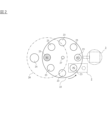
- FIG. 2 is a plan view of FIG. 1 .
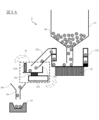
- FIG. 2 is a schematic diagram showing a first example of the material supply device of FIG. 1 .
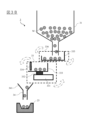
- FIG. 2 is a schematic diagram showing a second example of the material supply device of FIG. 1 .
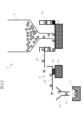
- FIG. 2 is a schematic diagram showing a third example of the material supply device of FIG. 1 .
- FIG. 2 is a front view showing a dispersion member provided in the nozzle of FIG. 1 .
- FIG. 4B is a view taken along the arrow IVB in FIG. 4A.
- FIG. 4B is a view of the IVC in FIG. 4A .
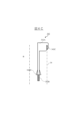
- FIG. 2 is a vertical cross-sectional view showing the height measuring device of FIG. 1 .
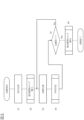
- 2 is a flowchart showing main processes executed by a controller shown in FIG. 1 .
- 7 is a flowchart showing a subroutine of step S4 in FIG. 6.
- FIG. 1 is a block diagram including a vertical cross-sectional view of the main parts of a film formation apparatus 1 according to one embodiment of the present invention
- FIG. 2 is a plan view of the same.
- the film formation apparatus of the present invention can typically be embodied as a vacuum deposition apparatus, so in the following, a film formation apparatus 1 using a vacuum deposition method will be described as one embodiment of the present invention.
- the film formation apparatus of the present invention is not intended to be limited only to vacuum deposition apparatuses using the vacuum deposition method, but is a film formation apparatus in a broad sense that includes film formation apparatuses other than vacuum deposition apparatuses.
- the film forming apparatus 1 of this embodiment includes a film forming chamber 2 in which at least a film forming material M and a film forming object S are provided and which can be set to a predetermined film forming atmosphere.
- the film forming chamber 2 is provided with an exhaust device 21 via a gate valve 21a, and the inside of the film forming chamber 2 can be set to a vacuum atmosphere suitable for deposition processing, for example, by opening the gate valve 21a to exhaust the gas inside the film forming chamber 2.
- the exhaust device 21 and the gate valve 21a are controlled by a command signal from a controller 6.
- a deposition object holder 28 that supports a deposition object S is suspended from the ceiling of the deposition chamber 2.
- the deposition object holder 28 in this embodiment is made of a plate-like member with a concave spherical surface so that the distance between the hearth liner 23, from which the deposition material M evaporates, and each deposition object S is as uniform as possible.
- the deposition object holder 28 in this embodiment is made rotatable by a holder drive unit 29 composed of a motor or the like, which also ensures that the thickness of the film formed on each deposition object S is approximately uniform.
- the holder drive unit 29 is controlled by a command signal from the controller 6.
- the film-forming chamber 2 is connected to a load lock chamber (vacuum spare chamber) 7 via a gate valve 71.
- the inside of this load lock chamber 7 can also be set to the same vacuum atmosphere as the film-forming chamber 2 by an exhaust device (not shown) provided in the load lock chamber 7.
- the load lock chamber 7 is also provided with a door (not shown), and access to the outside of the film-forming apparatus 1, which has an atmospheric pressure atmosphere, can be achieved via the door.
- the film-forming object holder 28 is detachable from the rotating shaft 29a of the holder drive unit 29.
- the film-forming object holder 28 with the multiple film-forming objects S before film formation is grasped by a robot (not shown) or the like, transported from the load lock chamber 7 to the film-forming chamber 2, and attached to the rotating shaft 29a of the holder drive unit 29.
- the load lock chamber 7 is set to the same vacuum atmosphere as the film-forming chamber 2, the gate valve 71 is opened, and the film-forming object holder 28 with the film-forming object S after film formation is grasped by a robot (not shown) or the like, and transported from the film-forming chamber 2 to the load lock chamber 7.
- the film-forming object S can be transported into and out of the film-forming chamber 2 while maintaining the vacuum atmosphere of the film-forming chamber 2.
- the film formation apparatus of the present invention can also be used in a so-called batch-type film formation apparatus in which the film formation chamber 2 is returned to atmospheric pressure and the film formation object holder 28 with multiple film formation objects S attached is replaced each time a film formation process is completed.
- a hearth holder 22 is supported on the floor inside the deposition chamber 2 so that it can rotate freely around an axis 27.
- This hearth holder 22 can be rotated stepwise at a predetermined rotation angle around the axis 27 by a hearth holder drive unit 26 consisting of a motor and the like, and a rotary encoder (not shown).
- the hearth holder 22 supports eight hearth liners 23 concentrically as shown in Figures 1 and 2, although this is not intended to be limiting.
- the eight hearth liners 23 are arranged at equal angles in the circumferential direction relative to the axis 27, although this is also not intended to be limiting.
- the hearth liner 23 is a so-called melting furnace crucible into which the film-forming material M is poured and heated to melt, and is also called a hearth block or simply a hearth.
- the hearth liner 23 in this embodiment can be made of, for example, copper, molybdenum, or tungsten, although this is not intended to be a limitation.
- an electron beam from an electron gun, which is the heating source 24 is irradiated onto the surface of the film-forming material M contained in the hearth liner 23 to introduce electrons, a current flows through the hearth liner 23, causing the hearth liner 23 to become red-hot, and the temperature at which the contained film-forming material M can evaporate is reached.
- the hearth holder 22 is made of copper, although this is not intended to be a limitation.
- the heating source 24 is provided inside the film-forming chamber 2, and heats and evaporates the film-forming material M contained in the hearth liner 23.
- the heating source 24 in addition to electron beam heating using an electron gun, resistance heating, high-frequency induction heating, and laser beam heating can be used.
- the heating source 24 of the film-forming apparatus 1 of the embodiment shown in Figure 1 is electron beam heating using an electron gun, and an electron beam is irradiated to one hearth liner 23 located closest to the hearth liner 23 (shown by hatching in Figure 2; hereinafter also referred to as evaporation position P1).
- the film-forming material M is fed into the hearth liner 23 in the form of granules, which are melted in the hearth liner 23 by the heat source 24.
- the film-forming material M fed into the eight hearth liners 23 may all be the same type of film-forming material M, or different types of film-forming material M may all be fed. Alternatively, less than eight types of film-forming material M may be distributed among the eight hearth liners 23.
- the film forming apparatus 1 of this embodiment includes, inside the film forming chamber 2, a material supply 3 that supplies the film forming material M to the hearth liner 23, and a height gauge 4 that measures the height h (see FIG. 5) of the molten surface of the film forming material M contained in the hearth liner 23.
- the film forming apparatus 1 also includes a controller 6 that calculates the mass of the film forming material M to be supplied based on the height h of the molten surface measured by the height gauge 4, and controls the material supply 3 to supply the calculated mass of film forming material M to the hearth liner 23. Note that, although the controller 6 that controls the film forming apparatus 1 and the controller 6 that controls the material supply 3 are configured as a single controller in this embodiment, they may be configured as separate controllers that transmit and receive signals to each other.
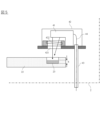
- Fig. 3A is a diagram showing a first example of the material supplying device 3 of this embodiment
- Fig. 3B is a diagram showing a second example of the material supplying device 3 of this embodiment
- Fig. 3C is a diagram showing a third example of the material supplying device 3 of this embodiment.
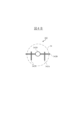
- Fig. 4A is a front view showing a dispersion member provided in a nozzle
- Fig. 4B is a view taken along the arrow IVB in Fig. 4A
- Fig. 4C is a view taken along the arrow IVC in Fig. 4A.
- the material supply device 3 of this embodiment is installed so as to supply the film-forming material M to one hearth liner 23 located at a position P3 (hereinafter also referred to as the material supply position P3) different from the evaporation position P1 in the plan view shown in FIG. 2. Also, as shown by the arrow in FIG. 2, when the hearth holder 22 rotates counterclockwise, the height gauge 4 of this embodiment is installed so as to measure the height h of the molten surface of the film-forming material M for one hearth liner 23 located at a position P2 (hereinafter also referred to as the measurement position P2) different from the evaporation position P1 and upstream in the rotation direction from the material supply position P3.
- the rotation distance of the hearth holder 22 from when the height h of the molten surface is measured to when the film forming material M is supplied is shorter if the measurement position P2 is located near the upstream side of the supply position P3 in the rotation direction of the hearth holder 22.
- the measurement position P2 and supply position P3 can be set arbitrarily as long as they are at positions other than the evaporation position P1.
- the material supply device 3 includes a hopper 31, a bowl feeder 32, a measuring and supplying mechanism 33, and a nozzle 34.
- the hopper 31 is a tank that contains granular film-forming material M, and has a shutter (not shown) at the opening at the bottom. When the shutter is opened, the granular film-forming material M falls under its own weight into the bowl feeder 32.
- the film-forming chamber 2 is in an atmospheric atmosphere, so in this preparation step, a sufficient amount of granular film-forming material M is put into the hopper 31.
- the bowl feeder 32 is a device that vibrates the granular film-forming material M that has been poured from the hopper 31 into the bowl 321, and transports the granular film-forming material M toward the chute 322 while moving along a spiral guide path (not shown) formed inside the bowl 321.
- the bowl feeder 32 in this embodiment includes a vibrating body such as a piezoelectric element, and while the vibrating body is turned ON, the granular film-forming material M is transported toward the chute, and when the vibrating body is turned OFF, the transport of the granular film-forming material M stops.
- the vibrating body is turned ON/OFF by the controller 6.
- the measuring and supplying mechanism 33 of this embodiment includes a load cell 332 provided on a base 331, a tray 333 for temporarily holding the granular film-forming material M supplied from the chute 322, and a partition plate 334 fixed to the film-forming device 1 side to prevent the granular film-forming material M from spilling from the tray 333.
- the measuring and supplying mechanism 33 of this embodiment has a function of measuring the mass of the granular film-forming material M supplied from the bowl feeder 32 by the load cell 332 while receiving it in the tray 333, and outputting a signal to stop the supply from the bowl feeder 32 when a predetermined mass is reached.
- the load cell 332 functions as a mass sensor that detects the mass of the tray 333 and the granular film-forming material M supplied to the tray 333 and outputs this as an electrical signal to the controller 6.
- the load cell 332 and tray 333 are rotated in the direction indicated by the dashed double-dashed arrow by a dump mechanism (not shown), causing the granular film-forming material M supplied to the tray 333 to fall into the inside of the opening wall 341 of the nozzle 34.
- the tray 333 has a "dustpan" shape with a bottom and three continuous side surfaces, one of which is open, so when granular film-forming material M is poured into the tray 333 in the original position shown in FIG. 3A, there is a risk that the film-forming material M will spill from the open side surface. For this reason, when the tray 333 is in the original position, a partition plate 334 is fixed to the film-forming device 1 side to cover the open side surface and prevent the film-forming material M from spilling. When the load cell 332 and tray 333 rotate in the direction indicated by the dashed double-dashed arrow, the film-forming material M falls toward the nozzle 34 through the gap between the tray 333 and the partition plate 334, which is fixed in position.
- the nozzle 34 is fixed to the film forming device 1 so that it is located directly above the material supply position P3.
- the nozzle 34 has an opening wall 341 at the upper end of the cylindrical body that has an opening area larger than the inside of the cylindrical body, which prevents the granular film forming material M that falls from the tray 333 from spilling around the upper end of the nozzle 34.
- the nozzle 34 of this embodiment is also provided with a dispersion member 342.
- Fig. 4A is a front view showing the dispersion member provided in the nozzle
- Fig. 4B is a view taken along the line IVB in Fig. 4A
- Fig. 4C is a view taken along the line IVC in Fig. 4A.
- the dispersion member 342 of this embodiment comprises a pair of side plates 342A, 342A, a back plate 342B continuous with the side plates, a notch 342C formed in the pair of side plates 342A, 342A for fixing to the nozzle 34, and a dispersion body 342D provided at the lower ends of the pair of side plates 342A, 342A and having an upwardly facing conical surface.
- the dispersion member 342 of this embodiment is attached to the nozzle 34 so that the dispersion body 342D is located approximately at the center of the nozzle 34, as shown in the IVB arrow view (plan view) of FIG. 4B.
- the granular film-forming material M that falls from the tray 333 passes through the cylindrical body of the nozzle 34 and falls from the opening at the lower end onto the hearth liner 23. At this time, it is necessary to disperse the granular film-forming material M as evenly as possible around the opening of the hearth liner 23.
- the dispersion member 342 of this embodiment to the nozzle 34, as shown in the front view of FIG. 3A, the granular film-forming material M that falls from above hits the conical surface of the dispersion body 342D and is dispersed in 360-degree directions around it, so that it can be supplied evenly to the opening of the hearth liner 23.
- FIG. 3B shows a second example of the material supply device 3 of this embodiment, in which a tray 335 and a dump mechanism 336 are provided instead of the bowl feeder 32 of the material supply device 3 of the first example shown in FIG. 3A.
- the material supply device 3 of the second example of this embodiment includes a hopper 31, a tray 335, a dump mechanism 336 for rotating the tray 335, a measuring supply mechanism 33, and a nozzle 34, as shown in FIG. 3B.
- the hopper 31 of this example is a tank that contains the granular film-forming material M, as in the first example described above, and has a shutter (not shown) at the opening at the bottom.
- the film-forming chamber 2 is in an air atmosphere, so in this preparation step, a sufficient amount of granular film-forming material M is put into the hopper 31.
- the tray 335 in this example receives the granular film-forming material M that is put into the hopper 31, and at a predetermined timing, the dump mechanism 336 rotates in the direction indicated by the dashed arrow, causing the granular film-forming material M supplied to the tray 335 to fall onto the lower tray 333.
- the measuring and supplying mechanism 33 in this example includes a load cell 332 provided on a base 331, a tray 333 for temporarily holding the granular film-forming material M supplied from the chute 322, and a partition plate 334 fixed to the film-forming device 1 side to prevent the granular film-forming material M from spilling from the tray 333.
- the measuring and supplying mechanism 33 in this example has the function of measuring the mass of the granular film-forming material M supplied from the bowl feeder 32 using the load cell 332 while receiving it in the tray 333, and outputting a signal to stop supply from the bowl feeder 32 when a predetermined mass is reached.
- the measuring and supplying mechanism 33 in this example is similar to the first example described above, and therefore the same components are given the same reference numerals, and the description thereof is incorporated herein.
- the nozzle 34 in this example is fixed to the film forming apparatus 1 so that it is located directly above the material supply position P3.
- the nozzle 34 in this example has an opening wall 341 at the upper end of the cylindrical body that has an opening area larger than the interior of the cylindrical body, thereby preventing the granular film forming material M that falls from the tray 333 from spilling around the upper end of the nozzle 34.
- the nozzle 34 in this example is also provided with the dispersion member 342 described above.
- the nozzle 34 in this example is similar to the first example described above, so the same components are given the same reference symbols and their descriptions are incorporated herein.
- FIG. 3C shows a third example of the material supply device 3 of this embodiment, in which a bowl feeder nozzle 323 is provided instead of the chute 322 of the material supply device 3 of the first example shown in FIG. 3A, and a linear feeder 337 and a linear feeder nozzle 338 are provided instead of the tray 333 and its dump mechanism.
- the material supply device 3 of the third example of this embodiment includes a hopper 31, a bowl feeder 32, a measuring supply mechanism 33, and a nozzle 34, as shown in FIG. 3C.
- the hopper 31 of this example is a tank that contains the granular film-forming material M, as in the first example described above, and has a shutter (not shown) at the opening at the bottom.
- the film-forming chamber 2 is in an air atmosphere, so in this preparation step, a sufficient amount of granular film-forming material M is put into the hopper 31.
- the bowl feeder 32 is a device that vibrates the granular film-forming material M that has been poured from the hopper 31 into the bowl 321, and transports the granular film-forming material M toward the bowl feeder nozzle 323 while moving along a spiral guide path (not shown) formed inside the bowl 321.
- the bowl feeder 32 in this embodiment includes a vibrating body such as a piezoelectric element, and while the vibrating body is ON, the granular film-forming material M is transported toward the bowl feeder nozzle 323, and when the vibrating body is OFF, the transport of the granular film-forming material M stops.
- the vibrating body is turned ON/OFF by the controller 6.
- the measuring and supplying mechanism 33 in this example includes a load cell 332 provided on the linear feeder 337, and a linear feeder nozzle 338 that temporarily holds the granular film forming material M supplied from the bowl feeder nozzle 323.
- the measuring and supplying mechanism 33 in this example has the function of measuring the mass of the granular film forming material M supplied from the bowl feeder 32 with the load cell 332 while receiving it with the linear feeder nozzle 338, and outputting a signal to stop supply from the bowl feeder 32 when a predetermined mass is reached.
- the load cell 332 functions as a mass sensor that detects the mass of the linear feeder nozzle 338 and the granular film-forming material M supplied to the linear feeder nozzle 338, and outputs this as an electrical signal to the controller 6.
- the controller 6 By operating the linear feeder 337 to vibrate the linear feeder nozzle 338, the granular film-forming material M supplied to the linear feeder nozzle 338 is caused to fall inside the opening wall 341 of the nozzle 34.
- Configuration of height measuring device 4 5 is a vertical cross-sectional view showing the height measuring device 4 of this embodiment.
- the height measuring device 4 of this embodiment includes a laser displacement sensor 41 with a built-in camera, and a casing 42 that airtightly surrounds the laser displacement sensor 41 together with a wiring tube 43.
- An opening 421 that transmits the laser light and ensures the field of view of the camera is formed on the bottom surface of the casing 42, and a glass plate 422 that maintains an airtight state is provided in this opening 421.
- the wiring 44 of the laser displacement sensor 41 is led out to the outside of the film formation chamber 2 through the wiring tube 43, so that even if the inside of the film formation chamber 2 is in a vacuum state, the laser displacement sensor 41 and its wiring 44 can be used in an atmospheric pressure atmosphere.
- the laser displacement sensor 41 which has a built-in camera, shines laser light toward the opening of the hearth liner 23 at measurement position P2 and receives the reflected light to measure the height h of the molten surface of the hearth liner 23.
- the height h of the molten surface here refers to the distance from the bottom surface of the hearth liner 23 to the molten surface. In other words, since the position of the bottom surface of the hearth liner 23 and the height position of the laser displacement sensor 41 at measurement position P2 are known, the height h of the molten surface can be calculated from the measurement value of the laser displacement sensor 41.
- the height measuring device of the present invention also includes devices that measure the height h of the molten surface using other optical means, devices that measure the height h of the molten surface from image data acquired using a camera or the like, and contact-type displacement sensors that measure the height h of the molten surface by contacting a contactor with the molten surface.
- the controller 6 calculates the mass of the film-forming material to be supplied based on the height h of the melt surface measured by the height measuring device 4, and controls the material supply device 3 to supply the calculated mass of the film-forming material M to the hearth liner 23. That is, the height h of the melt surface of the hearth liner 23 at the measurement position P2 is calculated by the laser displacement sensor 41, so that the volume of the film-forming material M remaining on the hearth liner 23 can be calculated. For example, when the hearth liner 23 is a container having a uniform cylindrical shape, the height h of the melt surface is proportional to the volume, so that the volume of the remaining film-forming material M can be calculated from the height h of the melt surface using this relationship.
- the relationship of the volume to the height h of the melt surface is obtained in advance, and the volume of the remaining film-forming material M can be calculated from the height h of the melt surface using this relationship. Then, when the remaining film forming material M becomes low, the mass of the missing material is calculated from the volume of the missing material and the specific gravity of the material, and the material supply device 3 is controlled to supply the missing weight of granular film forming material M to the hearth liner 23.
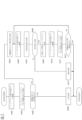
- FIG. 6 is a flowchart showing the main processes executed by the controller 6 of the film formation apparatus 1 of this embodiment.
- step S1 the gate valve 21a of the film formation chamber 2 is opened and the exhaust device 21 is used to evacuate the inside of the film formation chamber 2 to create a predetermined vacuum atmosphere.
- step S2 the deposition target holder 28 with the multiple deposition target objects S before deposition is grasped using a robot (not shown) or the like and transported into the load lock chamber 7, and the inside of the load lock chamber 7 is then made into the same vacuum atmosphere as the deposition chamber 2. Then, the gate valve 71 is opened, and the deposition target holder 28 with the multiple deposition target objects S before deposition is transported from the load lock chamber 7 to the deposition chamber 2 using a robot or the like and attached to the rotation shaft 29a of the holder drive unit 29, and the gate valve 71 of the load lock chamber 7 is closed. Note that the order of steps S1 and S2 at the start of deposition may be reversed.
- step S3 the hearth holder drive unit 26 is driven to move the hearth liner 23, which contains the film-forming material M to be evaporated, to the evaporation position P1. Then, while the holder drive unit 29 is driven to rotate the film-forming object holder 28 at a predetermined constant speed, the heat source 24 is driven to heat the hearth liner 23 at the evaporation position P1 and evaporate the film-forming material M. As a result, the evaporated film-forming material M is evaporated onto the film-forming object S to form a film.
- step S4 it is determined whether or not it is necessary to supply (replenish) the film formation material M. If film formation processes are to be performed continuously while maintaining the vacuum state of the film formation chamber 2 or if the type of film formation material M is to be changed, it is necessary to supply the film formation material. Therefore, after supplying the material as described with reference to FIG. 7, the process proceeds to step S5.
- FIG. 7 is a flow chart showing the material supply subroutine of step S4 in FIG. 6.
- step S401 the hearth holder drive unit 26 is driven to move the hearth liner 23 to which material is to be supplied to the measurement position P2.
- step S402 the laser displacement sensor 41 irradiates the molten surface of the hearth liner 23 with laser light and receives the reflected light, thereby inputting a measurement value corresponding to the height h of the molten surface from the height measuring device 4.
- an appropriate molten surface height h for each hearth liner 23 is preset, and for example, a reference value having a lower limit is set.
- step S403 it is determined whether the measured value of the molten surface height h input from the height measuring device 4 is within the preset reference value (whether it is equal to or greater than the lower limit), and if the measured value of the molten surface height h is within the reference value, the process proceeds to step S404, where normal processing is performed and there is no need to supply material, so the material supply process is terminated.
- step S405 the amount of film-forming material M to be supplied is calculated from the measured value of the height h of the molten surface input from the height measuring device 4.
- the volume of the film-forming material M to be supplied can be found from the measured value of the height h of the molten surface input from the height measuring device 4, and the mass of the film-forming material M to be supplied can be calculated from the volume of the film-forming material M to be supplied and the specific gravity of the film-forming material M.
- step S406 the hearth holder drive unit 26 is driven to move the hearth liner 23 to be fed to the material feed position P3, and in step S407 the material feeder 3 is operated.
- step S408 the weight of the granular film-forming material M is measured by the load cell 332 while being fed by the material feeder 3.
- step S409 the film-forming material M that has been weighed and confirmed to be the specified feed amount is fed to the hearth liner 23.
- the material feeder 3 is stopped.
- step S408 if the measurement value of the load cell 332 does not reach the feed amount calculated in step S405 for some reason, the process proceeds to step S413, where abnormality processing is performed and the material feed processing is terminated.
- step S410 the hearth holder drive unit 26 is driven to move the hearth liner 23 that was fed in step S409 back to the measurement position P2, and in the following step S411, the laser displacement sensor 41 irradiates the molten surface of the hearth liner 23 with laser light and receives the reflected light, so that a measurement value corresponding to the height h of the molten surface is input from the height measuring device 4.
- step S412 it is determined whether the measurement value of the height h of the molten surface input from the height measuring device 4 is within a preset reference value (whether it is equal to or greater than a lower limit value), and if the measurement value of the height h of the molten surface is within the reference value, the material supply process is terminated. On the other hand, if the measurement value of the height h of the molten surface input from the height measuring device 4 is not within the preset reference value in step S412, the process returns to step S406, and the processes of steps S406 to S411 are executed again.
- step S5 it is determined whether the film formation process has been completed. If it is to be continued, the process returns to step S3, and the film formation process is continued until a vapor deposition film of a predetermined thickness is formed on the multiple film formation objects S attached to the film formation object holder 28. If it is determined in step S5 that the film formation process has been completed, the process proceeds to step S6, in which the load lock chamber 7 is set to the same vacuum atmosphere as the film formation chamber 2, the gate valve 71 is opened, and the film formation object holder 28 with the multiple film formation objects S attached that have completed the film formation process is grasped using a robot or the like and transported from the film formation chamber 2 to the load lock chamber 7. Thereafter, the gate valve 71 is closed, the load lock chamber 7 is returned to an atmospheric pressure atmosphere, and the film formation object holder 28 with the film formation object S attached is transported to the outside through a door not shown. This ends the film formation process.
- Film-forming apparatus 2 Film-forming chamber 21: Exhaust device 21a: Gate valve 22: Hearth holder 23...Hearth liner 24... Heating source 26... Hearth holder drive unit 27... Shaft 28... Coating material holder 29... Holder drive unit 3... Material supply device 31... Hopper 32... Bowl feeder 321... Bowl 322... Chute 323... Bowl feeder nozzle 33... Measuring and supplying mechanism 331... Base 332... Load cell 333... Receiver 334... Partition plate 335... Receiver 336... Dump mechanism 337... Linear feeder 338... Linear feeder nozzle 34... Nozzle 341... Opening wall 342... Dispersion member 342A... Side plate 342B... Back plate 342C... Notch 342D...
- Dispersion body 4 Height measuring device 41... Laser displacement sensor 42... Casing 421... Opening 422... Glass plate 43... Wiring tube 44... Wiring 6... Controller 7...
- Load lock chamber 71 Gate valve M: Film-forming material S: Film-forming object P1: Evaporation position P2: Measurement position P3: Material supply position
Landscapes
- Chemical & Material Sciences (AREA)
- Chemical Kinetics & Catalysis (AREA)
- Engineering & Computer Science (AREA)
- Materials Engineering (AREA)
- Mechanical Engineering (AREA)
- Metallurgy (AREA)
- Organic Chemistry (AREA)
- Health & Medical Sciences (AREA)
- Toxicology (AREA)
- Physical Vapour Deposition (AREA)
- Processing And Handling Of Plastics And Other Materials For Molding In General (AREA)
Priority Applications (6)
| Application Number | Priority Date | Filing Date | Title |
|---|---|---|---|
| CN202380028002.9A CN119343475A (zh) | 2023-05-18 | 2023-05-18 | 成膜装置以及用于该成膜装置的材料供给装置 |
| JP2023553073A JP7430961B1 (ja) | 2023-05-18 | 2023-05-18 | 成膜装置及びこれに用いられる材料供給装置 |
| PCT/JP2023/018609 WO2024236809A1 (ja) | 2023-05-18 | 2023-05-18 | 成膜装置及びこれに用いられる材料供給装置 |
| EP23937545.4A EP4692413A1 (en) | 2023-05-18 | 2023-05-18 | Film-forming apparatus and material supply device used for same |
| KR1020247033536A KR20240167437A (ko) | 2023-05-18 | 2023-05-18 | 성막 장치 및 이것에 사용되는 재료 공급 장치 |
| TW113115951A TW202509253A (zh) | 2023-05-18 | 2024-04-29 | 成膜裝置及可使用於此其之材料供給裝置 |
Applications Claiming Priority (1)
| Application Number | Priority Date | Filing Date | Title |
|---|---|---|---|
| PCT/JP2023/018609 WO2024236809A1 (ja) | 2023-05-18 | 2023-05-18 | 成膜装置及びこれに用いられる材料供給装置 |
Publications (1)
| Publication Number | Publication Date |
|---|---|
| WO2024236809A1 true WO2024236809A1 (ja) | 2024-11-21 |
Family
ID=89852722
Family Applications (1)
| Application Number | Title | Priority Date | Filing Date |
|---|---|---|---|
| PCT/JP2023/018609 Ceased WO2024236809A1 (ja) | 2023-05-18 | 2023-05-18 | 成膜装置及びこれに用いられる材料供給装置 |
Country Status (6)
| Country | Link |
|---|---|
| EP (1) | EP4692413A1 (https=) |
| JP (1) | JP7430961B1 (https=) |
| KR (1) | KR20240167437A (https=) |
| CN (1) | CN119343475A (https=) |
| TW (1) | TW202509253A (https=) |
| WO (1) | WO2024236809A1 (https=) |
Citations (8)
| Publication number | Priority date | Publication date | Assignee | Title |
|---|---|---|---|---|
| JPH04333906A (ja) * | 1991-05-10 | 1992-11-20 | Mitsubishi Heavy Ind Ltd | 溶融金属液面レベル測定装置 |
| JP2003321768A (ja) * | 2003-05-12 | 2003-11-14 | Shincron:Kk | 蒸着材料供給装置及び蒸着装置 |
| JP2011105966A (ja) * | 2009-11-13 | 2011-06-02 | Panasonic Corp | 成膜材料供給装置 |
| JP2013127086A (ja) * | 2011-12-16 | 2013-06-27 | Ulvac Japan Ltd | 蒸着装置及び蒸着方法 |
| WO2015033713A1 (ja) * | 2013-09-05 | 2015-03-12 | 株式会社村田製作所 | 成膜装置 |
| JP2015124429A (ja) * | 2013-12-27 | 2015-07-06 | 日立造船株式会社 | 蒸着材料供給装置及び方法 |
| WO2017061481A1 (ja) * | 2015-10-06 | 2017-04-13 | 株式会社アルバック | 材料供給装置および蒸着装置 |
| JP6959680B1 (ja) | 2020-11-13 | 2021-11-05 | 株式会社シンクロン | 成膜装置 |
Family Cites Families (1)
| Publication number | Priority date | Publication date | Assignee | Title |
|---|---|---|---|---|
| JP5255423B2 (ja) * | 2008-12-18 | 2013-08-07 | シャープ株式会社 | 冷蔵庫 |
-
2023
- 2023-05-18 WO PCT/JP2023/018609 patent/WO2024236809A1/ja not_active Ceased
- 2023-05-18 KR KR1020247033536A patent/KR20240167437A/ko active Pending
- 2023-05-18 CN CN202380028002.9A patent/CN119343475A/zh active Pending
- 2023-05-18 JP JP2023553073A patent/JP7430961B1/ja active Active
- 2023-05-18 EP EP23937545.4A patent/EP4692413A1/en active Pending
-
2024
- 2024-04-29 TW TW113115951A patent/TW202509253A/zh unknown
Patent Citations (9)
| Publication number | Priority date | Publication date | Assignee | Title |
|---|---|---|---|---|
| JPH04333906A (ja) * | 1991-05-10 | 1992-11-20 | Mitsubishi Heavy Ind Ltd | 溶融金属液面レベル測定装置 |
| JP2003321768A (ja) * | 2003-05-12 | 2003-11-14 | Shincron:Kk | 蒸着材料供給装置及び蒸着装置 |
| JP2011105966A (ja) * | 2009-11-13 | 2011-06-02 | Panasonic Corp | 成膜材料供給装置 |
| JP2013127086A (ja) * | 2011-12-16 | 2013-06-27 | Ulvac Japan Ltd | 蒸着装置及び蒸着方法 |
| WO2015033713A1 (ja) * | 2013-09-05 | 2015-03-12 | 株式会社村田製作所 | 成膜装置 |
| JP2015124429A (ja) * | 2013-12-27 | 2015-07-06 | 日立造船株式会社 | 蒸着材料供給装置及び方法 |
| WO2017061481A1 (ja) * | 2015-10-06 | 2017-04-13 | 株式会社アルバック | 材料供給装置および蒸着装置 |
| JP6959680B1 (ja) | 2020-11-13 | 2021-11-05 | 株式会社シンクロン | 成膜装置 |
| JP2022078588A (ja) * | 2020-11-13 | 2022-05-25 | 株式会社シンクロン | 成膜装置 |
Also Published As
| Publication number | Publication date |
|---|---|
| JPWO2024236809A1 (https=) | 2024-11-21 |
| CN119343475A (zh) | 2025-01-21 |
| JP7430961B1 (ja) | 2024-02-14 |
| EP4692413A1 (en) | 2026-02-11 |
| KR20240167437A (ko) | 2024-11-26 |
| TW202509253A (zh) | 2025-03-01 |
Similar Documents
| Publication | Publication Date | Title |
|---|---|---|
| JP6584067B2 (ja) | 真空蒸着装置 | |
| CN101111625B (zh) | 用再装填的储存器进行真空沉积的装置和相应的真空沉积方法 | |
| JP2022168463A (ja) | 供給装置、供給方法及び光源 | |
| JP7545579B2 (ja) | 大面積金属溶融システムのためのパルス伝達 | |
| CN101688290A (zh) | 用于固态材料的真空蒸发设备 | |
| WO2022102355A1 (ja) | 成膜装置 | |
| WO2024236809A1 (ja) | 成膜装置及びこれに用いられる材料供給装置 | |
| JP6578367B2 (ja) | 材料供給装置および蒸着装置 | |
| CN118613603A (zh) | 具有再填充设备的涂覆源 | |
| KR101055979B1 (ko) | 원료 공급 장치와 원료 공급 방법 및 박막 증착 장치 | |
| JP2003321768A (ja) | 蒸着材料供給装置及び蒸着装置 | |
| KR101450598B1 (ko) | 연속박막증착장치 | |
| JPH0432979B2 (https=) | ||
| JP6100159B2 (ja) | 蒸着材料供給装置及び方法 | |
| CN114433869A (zh) | 用压电晶体监控电子束增材制造的操作 | |
| JP6265575B2 (ja) | シリコン単結晶引き上げ方法 | |
| KR20220067866A (ko) | 원료 공급기 및 이를 포함하는 기판 처리 장치 | |
| JPWO2024236809A5 (https=) | ||
| JP2005163156A (ja) | 蒸発材料の供給方法、及び真空成膜装置 | |
| KR101213094B1 (ko) | 증착 장치 | |
| KR102267012B1 (ko) | 디스플레이 진공 열 증착용 유기물 분말 토출장치 및 토출장치를 구비한 토출 시스템 | |
| JP2018150581A (ja) | 蒸着装置 | |
| CN120693422A (zh) | 改进的css沉积方法 | |
| JP2001115254A (ja) | 蒸着装置および蒸着材料擦り切り装置並びに蒸着材料供給装置 | |
| KR20200082171A (ko) | 증발원 및 이를 구비한 증착 장치 |
Legal Events
| Date | Code | Title | Description |
|---|---|---|---|
| WWE | Wipo information: entry into national phase |
Ref document number: 2023553073 Country of ref document: JP |
|
| WWE | Wipo information: entry into national phase |
Ref document number: 202380028002.9 Country of ref document: CN |
|
| ENP | Entry into the national phase |
Ref document number: 20247033536 Country of ref document: KR Kind code of ref document: A |
|
| 121 | Ep: the epo has been informed by wipo that ep was designated in this application |
Ref document number: 23937545 Country of ref document: EP Kind code of ref document: A1 |
|
| WWP | Wipo information: published in national office |
Ref document number: 202380028002.9 Country of ref document: CN |
|
| WWE | Wipo information: entry into national phase |
Ref document number: 2023937545 Country of ref document: EP |
|
| ENP | Entry into the national phase |
Ref document number: 2023937545 Country of ref document: EP Effective date: 20251024 |
|
| ENP | Entry into the national phase |
Ref document number: 2023937545 Country of ref document: EP Effective date: 20251024 |
|
| ENP | Entry into the national phase |
Ref document number: 2023937545 Country of ref document: EP Effective date: 20251024 |
|
| ENP | Entry into the national phase |
Ref document number: 2023937545 Country of ref document: EP Effective date: 20251024 |
|
| ENP | Entry into the national phase |
Ref document number: 2023937545 Country of ref document: EP Effective date: 20251024 |
|
| NENP | Non-entry into the national phase |
Ref country code: DE |
|
| ENP | Entry into the national phase |
Ref document number: 2023937545 Country of ref document: EP Effective date: 20251024 |
|
| ENP | Entry into the national phase |
Ref document number: 2023937545 Country of ref document: EP Effective date: 20251024 |
|
| ENP | Entry into the national phase |
Ref document number: 2023937545 Country of ref document: EP Effective date: 20251024 |
|
| WWP | Wipo information: published in national office |
Ref document number: 2023937545 Country of ref document: EP |