WO2024225151A1 - 豆類由来組成物及びその製造方法並びにニワトリの砂肝由来組成物及びその製造方法 - Google Patents
豆類由来組成物及びその製造方法並びにニワトリの砂肝由来組成物及びその製造方法 Download PDFInfo
- Publication number
- WO2024225151A1 WO2024225151A1 PCT/JP2024/015363 JP2024015363W WO2024225151A1 WO 2024225151 A1 WO2024225151 A1 WO 2024225151A1 JP 2024015363 W JP2024015363 W JP 2024015363W WO 2024225151 A1 WO2024225151 A1 WO 2024225151A1
- Authority
- WO
- WIPO (PCT)
- Prior art keywords
- composition
- derived
- pyroglutamylleucine
- legume
- salt
- Prior art date
- Legal status (The legal status is an assumption and is not a legal conclusion. Google has not performed a legal analysis and makes no representation as to the accuracy of the status listed.)
- Ceased
Links
Images





Classifications
-
- A—HUMAN NECESSITIES
- A23—FOODS OR FOODSTUFFS; TREATMENT THEREOF, NOT COVERED BY OTHER CLASSES
- A23L—FOODS, FOODSTUFFS OR NON-ALCOHOLIC BEVERAGES, NOT OTHERWISE PROVIDED FOR; PREPARATION OR TREATMENT THEREOF
- A23L2/00—Non-alcoholic beverages; Dry compositions or concentrates therefor; Preparation or treatment thereof
- A23L2/52—Adding ingredients
-
- A—HUMAN NECESSITIES
- A23—FOODS OR FOODSTUFFS; TREATMENT THEREOF, NOT COVERED BY OTHER CLASSES
- A23L—FOODS, FOODSTUFFS OR NON-ALCOHOLIC BEVERAGES, NOT OTHERWISE PROVIDED FOR; PREPARATION OR TREATMENT THEREOF
- A23L33/00—Modifying nutritive qualities of foods; Dietetic products; Preparation or treatment thereof
- A23L33/10—Modifying nutritive qualities of foods; Dietetic products; Preparation or treatment thereof using additives
- A23L33/17—Amino acids, peptides or proteins
- A23L33/18—Peptides; Protein hydrolysates
-
- A—HUMAN NECESSITIES
- A61—MEDICAL OR VETERINARY SCIENCE; HYGIENE
- A61K—PREPARATIONS FOR MEDICAL, DENTAL OR TOILETRY PURPOSES
- A61K31/00—Medicinal preparations containing organic active ingredients
- A61K31/33—Heterocyclic compounds
- A61K31/395—Heterocyclic compounds having nitrogen as a ring hetero atom, e.g. guanethidine or rifamycins
- A61K31/40—Heterocyclic compounds having nitrogen as a ring hetero atom, e.g. guanethidine or rifamycins having five-membered rings with one nitrogen as the only ring hetero atom, e.g. sulpiride, succinimide, tolmetin, buflomedil
-
- A—HUMAN NECESSITIES
- A61—MEDICAL OR VETERINARY SCIENCE; HYGIENE
- A61K—PREPARATIONS FOR MEDICAL, DENTAL OR TOILETRY PURPOSES
- A61K31/00—Medicinal preparations containing organic active ingredients
- A61K31/70—Carbohydrates; Sugars; Derivatives thereof
- A61K31/7042—Compounds having saccharide radicals and heterocyclic rings
- A61K31/7048—Compounds having saccharide radicals and heterocyclic rings having oxygen as a ring hetero atom, e.g. leucoglucosan, hesperidin, erythromycin, nystatin, digitoxin or digoxin
-
- A—HUMAN NECESSITIES
- A61—MEDICAL OR VETERINARY SCIENCE; HYGIENE
- A61K—PREPARATIONS FOR MEDICAL, DENTAL OR TOILETRY PURPOSES
- A61K35/00—Medicinal preparations containing materials or reaction products thereof with undetermined constitution
- A61K35/56—Materials from animals other than mammals
- A61K35/57—Birds; Materials from birds, e.g. eggs, feathers, egg white, egg yolk or endothelium corneum gigeriae galli
-
- A—HUMAN NECESSITIES
- A61—MEDICAL OR VETERINARY SCIENCE; HYGIENE
- A61K—PREPARATIONS FOR MEDICAL, DENTAL OR TOILETRY PURPOSES
- A61K36/00—Medicinal preparations of undetermined constitution containing material from algae, lichens, fungi or plants, or derivatives thereof, e.g. traditional herbal medicines
- A61K36/18—Magnoliophyta (angiosperms)
- A61K36/185—Magnoliopsida (dicotyledons)
- A61K36/48—Fabaceae or Leguminosae (Pea or Legume family); Caesalpiniaceae; Mimosaceae; Papilionaceae
-
- A—HUMAN NECESSITIES
- A61—MEDICAL OR VETERINARY SCIENCE; HYGIENE
- A61K—PREPARATIONS FOR MEDICAL, DENTAL OR TOILETRY PURPOSES
- A61K38/00—Medicinal preparations containing peptides
- A61K38/04—Peptides having up to 20 amino acids in a fully defined sequence; Derivatives thereof
- A61K38/05—Dipeptides
-
- A—HUMAN NECESSITIES
- A61—MEDICAL OR VETERINARY SCIENCE; HYGIENE
- A61P—SPECIFIC THERAPEUTIC ACTIVITY OF CHEMICAL COMPOUNDS OR MEDICINAL PREPARATIONS
- A61P1/00—Drugs for disorders of the alimentary tract or the digestive system
-
- A—HUMAN NECESSITIES
- A61—MEDICAL OR VETERINARY SCIENCE; HYGIENE
- A61P—SPECIFIC THERAPEUTIC ACTIVITY OF CHEMICAL COMPOUNDS OR MEDICINAL PREPARATIONS
- A61P37/00—Drugs for immunological or allergic disorders
- A61P37/02—Immunomodulators
- A61P37/04—Immunostimulants
-
- A—HUMAN NECESSITIES
- A61—MEDICAL OR VETERINARY SCIENCE; HYGIENE
- A61P—SPECIFIC THERAPEUTIC ACTIVITY OF CHEMICAL COMPOUNDS OR MEDICINAL PREPARATIONS
- A61P43/00—Drugs for specific purposes, not provided for in groups A61P1/00-A61P41/00
Definitions
- the present invention relates to a composition derived from beans and a method for producing the same.
- the present invention also relates to a composition derived from chicken gizzard and a method for producing the same.
- innate immunity which recognizes and immediately eliminates foreign substances such as pathogens that have invaded the body
- adaptive immunity in which lymphocytes such as T cells and B cells recognize information about the invading foreign substance and eliminate the specific foreign substance based on that information.
- Innate immunity is a biological reaction in which cells of the innate immune system quickly recognize pathogens that have invaded the body and eliminate them. For this reason, innate immunity can be said to be a mechanism that is at the forefront of the body's defenses.
- Immune cells such as macrophages are part of the innate immune system. Macrophages phagocytose and process pathogens such as bacteria.
- Adaptive immunity is able to specifically identify and memorize pathogens that have invaded the body, allowing it to effectively eliminate the pathogen when it encounters the same pathogen, but it takes longer to respond than innate immunity.
- Immunity activation is effective, for example, in strengthening or supporting immune defense against pathogens or viruses, and in preventing infectious diseases caused by pathogens or viruses. For this reason, ingredients that have immune activation effects and can be ingested on a daily basis are useful.
- intestinal barrier function intestinal barrier function
- the lamina limbal growth factor receptor (IL-12) is home to a large number of immune system cells, such as macrophages, dendritic cells, T cells, and B cells.
- immune system cells such as macrophages, dendritic cells, T cells, and B cells.
- transport proteins membrane transporters
- These membrane transporters and tight junction structures are responsible for the intestinal barrier function that prevents the invasion of harmful substances and pathogens.
- the intestinal barrier is damaged by aging, poor lifestyle, stress, etc.
- enterobacteria present in the intestine and enterobacteria-derived components migrate into the body through intercellular spaces and stimulate immune cells to promote the release of inflammatory cytokines, inducing inflammation.
- various pathologies caused by chronic inflammation are induced, such as inflammatory bowel disease in the intestine, nonalcoholic fatty liver disease (NAFLD) in the liver, symptoms caused by arteriosclerosis in blood vessels, and diabetes, lipid metabolism disorders, and autoimmune diseases in the systemic system.
- NAFLD nonalcoholic fatty liver disease
- disruptions to intestinal permeability due to environmental factors may promote the onset of food allergies.
- Pyroglutamylleucine (pyroGlu-Leu) is a dipeptide containing pyroglutamic acid, which is a cyclized form of glutamic acid.
- Non-Patent Document 1 describes that pyroglutamylleucine inhibited the induction of inducible nitric oxide synthase by inflammatory cytokines in rat hepatocytes.
- beans such as soybeans have long been considered an important food source, being rich in nutrients such as protein.
- Chicken gizzards are also attracting attention as a high-protein, low-fat, low-carbohydrate food.
- the above-mentioned protein-rich foods are also useful as ingredients for health foods and the like that contain proteins and amino acids.
- the present invention aims to provide a legume-derived composition that exhibits excellent effects in activating the immune system and improving intestinal barrier function.
- the present invention also aims to provide a chicken gizzard-derived composition that exhibits excellent effects in activating the immune system and improving intestinal barrier function.
- the present inventors have conducted intensive research to solve the above problems, and have found that a bean-derived composition containing a specific amount of pyroglutamyl-leucine or a salt thereof can be produced using beans as a raw material, and that the composition has the effect of activating the immune system and improving intestinal barrier function.
- the present inventors have also found that a chicken gizzard-derived composition containing pyroglutamyl-leucine or a salt thereof can be produced using chicken gizzard as a raw material, and that the composition has the effect of activating the immune system and improving intestinal barrier function.
- the present invention relates to the following legume-derived composition, chicken gizzard-derived composition, etc.
- a legume-derived composition comprising pyroglutamylleucine or a salt thereof, the content of pyroglutamylleucine or a salt thereof per solid content being 0.1 to 100 ⁇ g/mg in terms of pyroglutamylleucine.
- [4] The composition derived from beans described in any one of [1] to [3] above, wherein the beans are soybeans.
- [5] The bean-derived composition according to any one of [2] to [4] above, wherein the bean-derived raw material is at least one selected from the group consisting of soybean okara, defatted soybeans, and soybean extracts.
- [6] The legume-derived composition according to any one of [1] to [5] above, which satisfies the following (A) and/or (B).
- (A) Contains daidzin, and the weight ratio of pyroglutamylleucine or a salt thereof (calculated as pyroglutamylleucine) to daidzin is 0.05 to 1,000.
- An oral composition comprising the chicken gizzard-derived composition according to any one of [9] to [11] above.
- composition for oral administration according to any one of [7], [8], and [12] to [15] above, which is a food or drink or an oral pharmaceutical.
- a method for producing a bean-derived composition according to any one of [1] to [6] above the method comprising the steps of hydrolyzing a bean-derived raw material and heating the hydrolysate obtained in the hydrolysis step.
- a method for producing a chicken gizzard-derived composition according to any one of [9] to [11] above the method comprising the steps of hydrolyzing chicken gizzard and heating the hydrolysate obtained in the hydrolysis step.
- a method for producing a chicken gizzard-derived composition A method for producing a composition according to [17] or [18] above, wherein the hydrolysis is carried out using a protease.
- the present invention it is possible to provide a legume-derived composition that exhibits excellent effects in activating the immune system and improving intestinal barrier function.
- a chicken gizzard-derived composition that exhibits excellent effects in activating the immune system and improving intestinal barrier function.
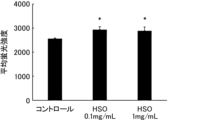
- FIG. 1A is a graph showing the results of investigating the effect of a soybean-derived hydrolysate (HSO) on the phagocytic activity of differentiated U937 cells (*: p ⁇ 0.05 vs. control).
- FIG. 1B is a graph showing the results of investigating the effect of chicken gizzard hydrolysate (HCG) on the phagocytic activity of differentiated U937 cells (**: p ⁇ 0.01 vs. control).
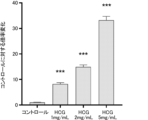
- FIG. 2A is a graph showing the results of investigating the effect of HSO on reactive oxygen species production in differentiated U937 cells (***: p ⁇ 0.001 vs. control).
- FIG. 1A is a graph showing the results of investigating the effect of a soybean-derived hydrolysate (HSO) on the phagocytic activity of differentiated U937 cells (*: p ⁇ 0.05 vs. control).
- FIG. 1B is a graph showing the results of investigating the effect of chicken gizzard hydrolysate
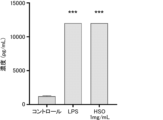
- FIG. 3A is a graph showing the concentration (pg/mL) of MCP-1 in the culture supernatant of human peripheral blood mononuclear cells (hPBMC) treated with HSO (***: p ⁇ 0.001 vs. control).
- FIG. 3B is a graph showing the IL-8 concentration (pg/mL) in the culture supernatant of hPBMC treated with HSO (***: p ⁇ 0.001 vs. control).
- FIG. 3A is a graph showing the concentration (pg/mL) of MCP-1 in the culture supernatant of human peripheral blood mononuclear cells (hPBMC) treated with HSO (***: p ⁇ 0.001 vs. control).
- hPBMC human peripheral blood mononuclear cells
- FIG. 4A is a graph showing the effect of HSO on normalized TEER of differentiated Caco-2 cells treated with stimuli (LPS and IL-1 ⁇ ) for 24 and 48 hours (**: p ⁇ 0.01, ***: p ⁇ 0.001 vs. stimulated control treated with stimuli for 24 hours, #: p ⁇ 0.05, ##: p ⁇ 0.01, ###: p ⁇ 0.001 vs. stimulated control treated with stimuli for 48 hours).
- FIG. 4B is a graph showing the effect of HCG on normalized TEER of differentiated Caco-2 cells treated with stimuli (LPS and IL-1 ⁇ ) for 24 and 48 hours (***: p ⁇ 0.001 vs. stimulated control treated with stimuli for 24 hours, ###: p ⁇ 0.001 vs.
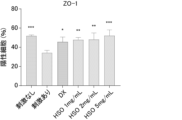
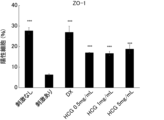
- FIG. 5A is a graph showing the effect of HSO on ZO-1 expression in differentiated Caco-2 cells (*: p ⁇ 0.05, **: p ⁇ 0.01, ***: p ⁇ 0.001 vs. stimulated control).
- FIG. 5B is a graph showing the effect of HCG on ZO-1 expression in differentiated Caco-2 cells (***: p ⁇ 0.001 vs. stimulated control).
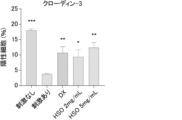
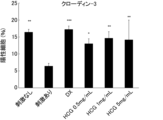
- FIG. 5C is a graph showing the effect of HSO on the expression of claudin-3 in differentiated Caco-2 cells (*: p ⁇ 0.05, **: p ⁇ 0.01, ***: p ⁇ 0.001 vs. stimulated control).
- FIG. 5D is a graph showing the effect of HCG on claudin-3 expression in differentiated Caco-2 cells (*: p ⁇ 0.05, **: p ⁇ 0.01, ***: p ⁇ 0.001 vs. stimulated control).
- the legume-derived composition of the present invention contains pyroglutamyl-leucine or a salt thereof.
- the chicken gizzard-derived composition of the present invention contains pyroglutamyl-leucine or a salt thereof.
- the legume-derived composition and chicken gizzard-derived composition of the present invention are sometimes collectively referred to as the composition of the present invention.
- Pyroglutamylleucine (Pyroglutamylleucine or its salt) Pyroglutamylleucine (pyroGlu-Leu) is a dipeptide formed by the binding of pyroglutamic acid (pyroGlu) and leucine (Leu). Pyroglutamic acid is a cyclic amino acid formed by intramolecular dehydration condensation of the ⁇ -carboxyl group and ⁇ -amino group of glutamic acid.
- the peptide is represented by the N-terminus (amino terminus) on the left and the C-terminus (carboxyl terminus) on the right, according to the convention for peptide notation.
- amino acids that make up pyroglutamylleucine may be in the D-, L-, or DL-form (racemic form), but the L-form is preferred.
- L-form is preferred.
- pyroglutamylleucine is prepared from natural proteins, all of the constituent amino acids are in the L-form.
- the salt of pyroglutamylleucine is not particularly limited as long as it is a pharmacologically acceptable salt or a salt acceptable for food and beverages, and may be either an acidic salt or a basic salt.
- acidic salts include inorganic acid salts such as hydrochloride, sulfate, nitrate, and phosphate; organic acid salts such as acetate, citrate, maleate, malate, oxalate, lactate, succinate, fumarate, and propionate.
- Examples of basic salts include alkali metal salts such as sodium salt and potassium salt; and alkaline earth metal salts such as calcium salt and magnesium salt.
- the salt of pyroglutamylleucine is preferably one that can be taken orally.
- the salt of pyroglutamylleucine can be easily prepared by a person skilled in the art by any method known in the art.
- the legume-derived composition of the present invention is made from legumes as a raw material, contains pyroglutamyl-leucine or a salt thereof, and has a pyroglutamyl-leucine or a salt thereof content of 0.1 to 100 ⁇ g/mg in terms of pyroglutamyl-leucine per solid content.
- the pyroglutamylleucine or a salt thereof contained in the legume-derived composition of the present invention is usually derived from legume protein.
- the above-mentioned beans are not particularly limited as long as they are the seeds of edible legumes, and examples thereof include soybeans, adzuki beans, chickpeas, lentils, peas, broad beans, lupins, mung beans, lima beans, cowpeas, bamboo beans, kidney beans, sand beans, green beans, cat beans, peanuts, and the like.
- beans preferred are beans having a protein content of 20% by weight or more in the dried beans.
- the more preferred legume is soybean.
- the legume-derived composition of the present invention is preferably a hydrolysate of a legume-derived raw material.
- the hydrolysate of the legume-derived raw material is preferably obtained by hydrolyzing proteins in the legume-derived raw material, and includes a hydrolysate of a protein derived from legumes (legume protein).
- the pulse protein hydrolysate is usually a mixture of peptides, etc.
- the pulse-derived composition preferably contains a pulse protein hydrolysate containing pyroglutamylleucine or a salt thereof.
- the hydrolysate of a legume-derived raw material includes a hydrolysis-treated product of a legume-derived raw material obtained by hydrolyzing the legume-derived raw material, and a product obtained by hydrolyzing the legume-derived raw material and further treating it with heating, etc.
- a product obtained by hydrolyzing and heating the legume-derived raw material is preferable, and a heated product of the hydrolysis-treated product of the raw material obtained by hydrolyzing the legume-derived raw material and then heating it is more preferable.
- the above-mentioned bean-derived composition is preferably a hydrolysate obtained by treating a bean-derived raw material with a protease.
- a form in which the above-mentioned bean-derived composition is a protease-treated product of a bean-derived raw material is one of the preferred embodiments of the present invention.
- a heated product of the protease-treated product of the raw material obtained by heating the protease-treated product of the bean-derived raw material is more preferred.
- the above-mentioned bean-derived raw material may be any raw material made from beans and containing bean protein, and examples of such raw materials include beans, processed beans, and bean extracts.
- processed beans include beans from which at least a portion of the oil has been removed (defatted beans), soymilk residue (okara) obtained by squeezing soymilk from beans, beans made into a paste or slurry by adding a solvent (solventized bean paste), and ground beans.
- the defatted beans may contain oil as long as at least a portion of the oil has been removed from the beans, but the oil content is preferably 5% by weight or less, and more preferably 1% by weight or less.
- the method for preparing the defatted beans is not particularly limited, but can be prepared, for example, by squeezing the beans, extracting oil from the beans with a solvent, etc.
- the extraction solvent for the oil is not particularly limited, but examples thereof include non-aqueous extraction solvents such as hydrocarbons such as pentane, hexane, heptane, octane, nonane, and decane. These may be used alone, or a mixed solvent (mixture) of two or more of them may be used.
- the extraction solvent for the oil component is preferably a hydrocarbon having 5 to 7 carbon atoms such as pentane, hexane, heptane, etc., more preferably a hydrocarbon having 6 carbon atoms such as n-hexane, cyclohexane, etc., and even more preferably n-hexane.
- the ground beans may be in powder form or may be in the form of a paste due to the oils and fats contained in the beans.
- the above-mentioned bean extract can be obtained by extracting beans or processed beans with a solvent.
- the bean extract can be obtained by a normal extraction method used for extracting proteins contained in beans.
- the extraction method can be appropriately set, and the extraction conditions are not particularly limited.
- an extract obtained by extracting beans or processed beans with a solvent can be used as the bean extract.
- the above-mentioned extract can be diluted with an appropriate solvent and used as the bean extract, or can be concentrated or dried to obtain a concentrate or dry product.
- the concentrate or dry product can also be dissolved or suspended in a solvent and used.
- the bean extract includes a bean extract containing proteins obtained by extracting beans or processed beans with a solvent, its concentrate, dry product, and dilutions thereof.
- a protein-containing pulse extract is preferably obtained by a plurality of successive extraction steps. After extraction, it is preferred to remove residues (pulses or processed pulses after extraction) from the extract.
- a concentration step may be carried out after the extraction step.
- the beans In preparing the bean extract, the beans may be subjected to the extraction step as they are, or may be subjected to the extraction step after being crushed, cut, dried or defatted.
- the bean extract may be an extract obtained by extracting beans as they are, or an extract obtained by extracting processed beans.
- the bean extract may be, for example, an extract obtained by extracting ground beans (an extract of ground beans) or an extract obtained by extracting defatted beans (an extract of defatted beans).
- the above-mentioned bean extract is preferably obtained by extracting proteins from defatted beans with a solvent and concentrating the obtained bean extract (extract) containing the proteins.
- the above-mentioned protein extraction and extract concentration can be performed by a commonly used method.
- the above-mentioned bean extract is preferably an extract extracted from ground beans or an extract extracted from defatted beans.
- the extraction solvent for preparing the bean extract is not particularly limited as long as it can extract proteins contained in beans or processed beans.
- the extraction solvent those usually used for extracting components contained in beans can be used.
- the extraction solvent include water; monohydric alcohols having 1 to 5 carbon atoms, such as methanol, ethanol, propanol, and butanol; polyhydric alcohols having 2 to 5 carbon atoms, such as ethylene glycol, propylene glycol, 1,2-butylene glycol, 1,3-butylene glycol, 1,4-butylene glycol, 2,3-butylene glycol, and glycerin; ketones such as acetone and methyl ethyl ketone; esters such as methyl acetate and ethyl acetate; linear and cyclic ethers such as tetrahydrofuran, ethyl ether, and diethyl ether; polyethers such as polyethylene glycol; and squalane.
- a mixed solvent (mixture) of two or more types may be used alone, or a mixed solvent (mixture) of two or more types may be used.
- the monohydric alcohol having 1 to 5 carbon atoms those having 1 to 4 carbon atoms are preferable, those having 2 to 4 carbon atoms are more preferable, and ethanol is even more preferable.
- the polyhydric alcohol having 2 to 5 carbon atoms a dihydric or trihydric alcohol having 2 to 4 carbon atoms is preferred, a dihydric alcohol having 2 to 4 carbon atoms is more preferred, and 1,3-butylene glycol is even more preferred.
- the extraction solvent is preferably an aqueous solvent, more preferably water, a monohydric alcohol having 1 to 5 carbon atoms, a polyhydric alcohol having 2 to 5 carbon atoms, or a mixed solvent of two or more of these, more preferably water, a monohydric alcohol having 2 to 4 carbon atoms or an aqueous solution thereof, or a dihydric alcohol having 2 to 4 carbon atoms or an aqueous solution thereof, still more preferably water, ethanol, an aqueous ethanol solution, 1,3-butylene glycol, or an aqueous 1,3-butylene glycol solution, and particularly preferably water, an aqueous ethanol solution, or an aqueous 1,3-butylene glycol solution.
- the aqueous ethanol solution and the aqueous 1,3-butylene glycol solution have an ethanol or 1,3-butylene glycol concentration of 10 to 98% by volume, more preferably 30 to 90% by volume, and even more preferably 30 to 70% by volume.
- the above-mentioned bean-derived raw materials are preferably soybean-derived raw materials such as soybean lees, defatted soybeans, soybean extracts, etc.
- the soybean extracts can be obtained by extracting soybeans or processed soybeans (e.g., soybean lees, defatted soybeans, crushed soybeans, etc.) with a solvent.
- the legume-derived raw material is at least one selected from the group consisting of soybean okara, defatted soybeans, and soybean extracts.
- an extract of a processed soybean is preferred, and an extract of defatted soybeans obtained by extracting defatted soybeans with a solvent is more preferred.
- the legume-derived raw material is preferably a protein-containing defatted soybean extract.
- a hydrolysate of the soybean-derived raw material is preferred.
- the soybean okara is a residue obtained after raw soybeans are heated by steaming, boiling, or the like, mashed, and pressed to extract soy milk.
- the soybean okara may contain water or may be dried.
- the soybean okara can be produced by a commonly used method.
- the defatted soybeans may be soybeans from which at least a portion of the oil has been removed, and the oil content is preferably 5% by weight or less, more preferably 1% by weight or less.
- the defatted soybeans can be produced by a commonly used method, preferably by fat extraction using hexane.
- the solid content of the legume-derived composition is not particularly limited, but is preferably 95 to 100% by weight.
- the solids content can be measured by a gravimetric method in accordance with the method for determining moisture and total solids content of AOAC 925.10-1925.
- the content of pyroglutamyl-leucine or a salt thereof per solid content in the legume-derived composition is 0.1 to 100 ⁇ g/mg calculated as pyroglutamyl-leucine.
- the content per solid content is preferably 0.5 ⁇ g/mg or more, more preferably 1 ⁇ g/mg or more, and the content per solid content is preferably 50 ⁇ g/mg or less, more preferably 25 ⁇ g/mg or less, and even more preferably 10 ⁇ g/mg or less.
- the content of the pyroglutamyl leucine or a salt thereof per solid content is preferably 0.5 to 50 ⁇ g/mg, more preferably 0.5 to 25 ⁇ g/mg, and even more preferably 1 to 10 ⁇ g/mg, calculated as pyroglutamyl leucine.
- the content of pyroglutamylleucine or a salt thereof can be quantified by a known method, for example, liquid chromatography mass spectrometry (LC/MS/MS).
- the amount converted into pyroglutamylleucine or an expression similar thereto means, in the case of pyroglutamylleucine, the amount thereof, and, in the case of a salt of pyroglutamylleucine, means the value obtained by multiplying the number of moles of the salt by the molecular weight of pyroglutamylleucine.
- the legume-derived composition usually contains legume-derived components such as peptides other than pyroglutamylleucine or a salt thereof. Furthermore, the legume-derived composition may contain components other than the legume-derived components (referred to as other components).
- the legume-derived components include components contained in legumes and decomposition products of the components, etc. Specific examples include proteins, carbohydrates, lipids, minerals, vitamins, isoflavones, amino acids, etc.
- the other components are not particularly limited, but may include the catalyst and solvent used in the hydrolysis of beans.
- isoflavones examples include isoflavone glycosides such as daidzin, genistin, glycitin, and puerarin; and isoflavone aglycones such as daidzein, 6-hydroxydaidzein, dihydroxydaidzein, genistein, glycitein, biochanin A, formonetin, and coumestrol.
- the pulse-derived composition preferably comprises daidzin and/or genistin.
- Daidzin is the 7-O-glucoside of daidzein.
- Genistin is the 7-O-glucoside of genistein.
- the content of daidzin per solid content in the bean-derived composition is not particularly limited, but is preferably 0.01 to 20 ⁇ g/mg.
- the content per solid content is more preferably 0.1 to 10 ⁇ g/mg, and even more preferably 0.2 to 3 ⁇ g/mg.
- the content of genistin per solid content in the legume-derived composition is not particularly limited, but is preferably 0.01 to 20 ⁇ g/mg.
- the content per solid content is more preferably 0.1 to 10 ⁇ g/mg, and even more preferably 0.2 to 3 ⁇ g/mg.
- the above-mentioned daidzin and genistin contents can be quantified, for example, by liquid chromatography mass spectrometry (LC/MS/MS) in accordance with AOAC Official Method 2001.10 for measuring isoflavones in soybeans and certain foods containing soybeans.
- LC/MS/MS liquid chromatography mass spectrometry
- the above-mentioned bean-derived composition preferably has a weight ratio of pyroglutamylleucine or a salt thereof (calculated as pyroglutamylleucine) to daidzin of 0.05 to 1000.
- the above weight ratio is more preferably 0.1 to 200, even more preferably 0.2 to 125, even more preferably 0.5 to 100, and particularly preferably 1 to 10.
- the bean-derived composition preferably has a weight ratio of pyroglutamyl-leucine or a salt thereof (calculated as pyroglutamyl-leucine) to genistin of 0.4 to 1000.
- the weight ratio is more preferably 0.1 to 200, even more preferably 0.2 to 125, even more preferably 0.5 to 100, and particularly preferably 1 to 10.
- the above-mentioned bean-derived composition satisfies the following (A) and/or (B).
- A) Contains daidzin, and the weight ratio of pyroglutamylleucine or a salt thereof (calculated as pyroglutamylleucine) to daidzin is 0.05 to 1,000.
- B) It contains genistin, and the weight ratio of pyroglutamylleucine or a salt thereof (calculated as pyroglutamylleucine) to the genistin is 0.04 to 1,000.
- the above-mentioned legume-derived composition is more preferably in a form that satisfies (A) and (B).
- the total amount of protein, peptide, amino acid and salts thereof in the legume-derived composition can be measured by the Kjeldahl method.
- the legume-derived composition preferably has a nitrogen content of 8 to 16% by weight based on 100% by weight of the solid content as measured by the Kjeldahl method.
- the nitrogen content is more preferably 10 to 14% by weight.
- the above nitrogen also includes nitrogen derived from pyroglutamylleucine or a salt thereof.
- the legume-derived composition may contain salt, but the sodium content is preferably 5% by weight or less based on the solid content, more preferably 0 to 3% by weight, and particularly preferably 0 to 2% by weight.
- the sodium content may be more than 0% by weight, or may be 0.01% by weight or more based on 100% by weight of the solid content.
- the sodium content can be measured, for example, by spectrophotometry.
- the form of the bean-derived composition is not particularly limited, and may be in any form, such as a solid such as a powder, a paste, or a liquid.
- the method for producing the legume-derived composition of the present invention is not particularly limited, but it is preferable to produce the legume-derived composition by carrying out a step of hydrolyzing and heating a legume-derived raw material (hereinafter also referred to as a hydrolysis and heating step).
- the above hydrolysis and heating step hydrolyzes and heats the protein in the legume-derived raw material. This allows efficient production of pyroglutamyl-leucine or a salt thereof.
- a legume-derived composition containing pyroglutamyl-leucine or a salt thereof can be obtained.
- the legume-derived composition is produced by performing a step of hydrolyzing a legume-derived raw material (hydrolysis step) and then a step of heating the hydrolysate obtained in the hydrolysis step (heating step).
- hydrolysis step a step of hydrolyzing a legume-derived raw material
- heating step a step of heating the hydrolysate obtained in the hydrolysis step.
- the bean-derived raw material is preferably at least one selected from the group consisting of soybean okara, defatted soybeans, and soybean extracts, and more preferably an extract of defatted soybeans. If the bean-derived raw material has been subjected to a defatting step, it is preferred because, for example, hydrolysis by protease proceeds more efficiently.
- the method for the hydrolysis is not particularly limited as long as it can hydrolyze the protein in the legume-derived raw material, and examples of the method include a method for hydrolyzing the protein using a catalyst such as an acid, a base, or a protease, and a method for hydrolyzing the protein by heat treatment.
- a catalyst such as an acid, a base, or a protease
- the hydrolysis method is preferably a method using a catalyst such as an acid, a base, or a protease, more preferably a method using a protease.
- the acid that can be used in the above hydrolysis is not particularly limited, but examples thereof include inorganic acids such as hydrochloric acid, sulfuric acid, nitric acid, phosphoric acid, and sulfurous acid, and organic acids such as oxalic acid, citric acid, acetic acid, and formic acid.
- inorganic acids such as hydrochloric acid, sulfuric acid, nitric acid, phosphoric acid, and sulfurous acid
- organic acids such as oxalic acid, citric acid, acetic acid, and formic acid.
- the base that can be used in the above hydrolysis is not particularly limited, but examples include hydroxides of alkali metal elements such as sodium hydroxide and potassium hydroxide.
- proteases that can be used in the above hydrolysis are not particularly limited, and examples include bacterial proteases, fungal proteases, plant proteases, and animal proteases. Proteases can also be classified into neutral proteases, alkaline proteases, and acidic proteases depending on the pH range of their optimal activity.
- Examples of bacterial proteases include Protease N, Protease NL, Protease S, Proleather (registered trademark) FG-F (all manufactured by Amano Enzyme Co., Ltd.); Protin NY, Protin P, Deskin, Depirase, Protin A, and Samoase (registered trademark) (all manufactured by Yamato Kasei Co., Ltd.); Bioprase (registered trademark) XL-416F, Bioprase (registered trademark) SP-4FG, and Bioprase (registered trademark) SP-15FG (all manufactured by Nagase ChemteX Corporation); Orientase (registered trademark) 90N, Nucleisin (registered trademark), Orientase (registered trademark) 10NL, and Orientase (registered trademark) 22BF (all manufactured by HI Corporation); Aroase (registered trademark) AP-10 (manufactured by Yakult Pharmaceutical Co., Ltd.); Examples of actinomycet
- Fungal proteases include, for example, Protease A, Protease M, Protease P, Umamizyme, Peptidase R, Neurase (registered trademark) A, and Neurase (registered trademark) F (all manufactured by Amano Enzyme Co., Ltd.); Sumizyme (registered trademark) AP, Sumizyme (registered trademark) LP, Sumizyme (registered trademark) MP, Sumizyme (registered trademark) FP, and Sumizyme (registered trademark) LPL (all manufactured by Shin Nippon Chemical Industry Co., Ltd.); Protin (registered trademark) FN (manufactured by Yamato Chemical Industry Co., Ltd.); Denapsin 2P, Denazyme (registered trademark) AP, and XP-415 (all manufactured by Nagase ChemteX Corporation); Orientase (registered trademark) 20A, Orientase (registered trademark) ONS, Tetolase (register
- plant-derived proteases examples include pineapple-derived endopeptidase (Bromelain (registered trademark)), Papain W-40 (manufactured by Amano Enzyme Co., Ltd.); and food-grade refined papain (manufactured by Nagase ChemteX Corporation).
- animal-derived proteases include pepsin, trypsin, and chymotrypsin.
- the protease is preferably a protease having endopeptidase activity.
- Preferred examples of proteases having endopeptidase activity include Protamex (registered trademark), Neutrase (registered trademark), Alcalase (registered trademark), Bromelain (registered trademark), and Sternzym BP 5200 (manufactured by Sternzym).
- the hydrolysis and heating of the legume-derived raw material is carried out in the presence of a solvent.
- the legume-derived raw material is mixed with a solvent as necessary, and the hydrolysis and heating steps are carried out.
- the raw material can also be subjected to the hydrolysis and heating steps.
- the solvent is preferably a solvent containing water, more preferably water, ethanol, or a mixed solvent of water and ethanol, and further preferably water.
- the protein content in the legume-derived raw material is not particularly limited, but is preferably 60 to 100% by weight relative to 100% by weight of the solid content, more preferably 80% by weight or more and less than 100% by weight, and even more preferably 80% by weight or more and 99% by weight or less.
- the protein content of the legume-derived raw materials can be measured by the Kjeldahl method in accordance with AOAC 984.13, which is the method for determining crude protein in feed powder.
- the amount of protease used can be set according to the amount of protein in the legume-derived raw material, but for example, it is preferably 0.01 to 10 AU/g relative to the solid content of the raw material. More preferably, it is 0.1 to 1 AU/g.
- the reaction temperature in the above hydrolysis can be set depending on the catalyst (acid, base, enzyme) used, etc., but is preferably 30 to 70° C., more preferably 50 to 60° C., and even more preferably 50 to 55° C.
- a protease is used in the hydrolysis, it is preferable to carry out the hydrolysis at a temperature close to the optimum temperature of the protease used.
- the reaction temperature is preferably, for example, 50 to 55° C.
- the temperature is preferably 50 to 55° C.
- the reaction time for the hydrolysis is not particularly limited, but is preferably 1 to 5 hours. More preferably, it is 3 to 5 hours.
- the heating temperature is preferably 110 to 150° C., and more preferably 120 to 140° C.
- the heating is preferably carried out at a pressure (gauge pressure) of 101 to 300 kPa, more preferably 180 to 220 kPa.
- the heating time is not particularly limited, but is preferably 1 to 6 hours, and more preferably 2 to 4 hours.
- the above hydrolysis and heating process produces a solution of protein hydrolysate containing pyroglutamyl-leucine or a salt thereof.
- the solution obtained by the above hydrolysis and heating process contains pyroglutamyl-leucine or a salt thereof.
- the solution can be used as the legume-derived composition of the present invention described above. If necessary, insoluble components, coarse particles, etc. may be removed from the solution. The solution may be subjected to treatments such as dilution, concentration, drying, etc.
- the solution obtained by the above hydrolysis and heating process, its diluted solution, concentrate, dry product, etc. may be used as the legume-derived composition of the present invention described above.
- the method for producing the bean-derived composition may include a purification step, a concentration step, a drying step, and the like, after the hydrolysis and heating steps.
- the purification method in the purification step is not particularly limited, and examples thereof include filtration, decantation, centrifugation, etc. More specifically, the purification step includes removing insoluble components, coarse particles, etc. by filtration, etc.
- the concentration method in the concentration step is not particularly limited, and examples thereof include vacuum concentration, heat concentration, ventilation concentration, freeze concentration, spray concentration, and the like.
- the drying method in the drying step is not particularly limited, and examples thereof include sun drying, (hot) air drying, vacuum drying, ventilation drying, fluidized drying, spray drying, freeze drying, reduced pressure drying, infrared drying, and high frequency drying.
- the chicken gizzard-derived composition of the present invention is not particularly limited as long as it is made from chicken gizzard and contains pyroglutamyl-leucine or a salt thereof.
- the chicken gizzard-derived composition of the present invention is preferably a chicken gizzard hydrolysate.
- the gizzard hydrolysate contains a hydrolysate of a protein (chicken gizzard protein) derived from chicken gizzard.
- the chicken gizzard-derived composition is preferably a chicken gizzard protein hydrolysate containing pyroglutamyl-leucine or a salt thereof.
- the pyroglutamyl-leucine or a salt thereof contained in the chicken gizzard-derived composition of the present invention is usually derived from chicken gizzard protein.
- the chicken gizzard hydrolysate includes a chicken gizzard hydrolyzate obtained by hydrolyzing chicken gizzard, and a chicken gizzard hydrolyzed and further treated with heating or the like.
- the chicken gizzard-derived composition of the present invention is preferably one obtained by hydrolyzing and heating chicken gizzard, and more preferably a heated chicken gizzard hydrolysate obtained by hydrolyzing chicken gizzard and heating the resulting hydrolysate.
- Chicken gizzard means the gizzard of a chicken.
- the content of pyroglutamylleucine or a salt thereof per solid content in the chicken gizzard-derived composition is not particularly limited, but is preferably 0.1 to 100 ⁇ g/mg calculated as pyroglutamylleucine.
- the content per solid content is more preferably 0.5 ⁇ g/mg or more, even more preferably 0.8 ⁇ g/mg or more, and particularly preferably 1 ⁇ g/mg or more.
- the content per solid content is more preferably 50 ⁇ g/mg or less, even more preferably 25 ⁇ g/mg or less, and particularly preferably 10 ⁇ g/mg or less.
- the content of the pyroglutamyl-leucine or a salt thereof per solid content is, in terms of pyroglutamyl-leucine, more preferably 0.5 to 50 ⁇ g/mg, even more preferably 0.8 to 25 ⁇ g/mg, and particularly preferably 1 to 10 ⁇ g/mg.
- the chicken gizzard-derived composition is preferably a product obtained by hydrolyzing chicken gizzard by treating it with a protease.
- a preferred embodiment of the present invention is one in which the chicken gizzard-derived composition is a protease-treated product of chicken gizzard.
- a heated product of protease-treated chicken gizzard obtained by heating the protease-treated product of chicken gizzard is more preferred.
- the form of the chicken gizzard-derived composition is not particularly limited, and may be any of a solid form such as a powder, a paste form, a liquid form, and the like.
- the chicken gizzard-derived composition may contain a solvent such as water.
- the solid content is not particularly limited, but is preferably 95 to 100% by weight.
- Chicken gizzard protein hydrolysate is usually a mixture of peptides and the like.
- the chicken gizzard-derived composition preferably contains chicken gizzard protein hydrolysate containing pyroglutamyl-leucine or a salt thereof.
- the chicken gizzard-derived composition may contain other components other than peptides such as pyroglutamyl-leucine or a salt thereof.
- the other components are not particularly limited, but include components derived from chicken gizzard, catalysts used in hydrolysis of chicken gizzard, and products such as amino acids produced in the hydrolysis reaction.
- the components derived from the chicken gizzard include proteins, lipids, minerals, vitamins, etc.
- the total amount of proteins, peptides, amino acids and salts thereof in the chicken gizzard-derived composition can be measured by the Kjeldahl method.
- the chicken gizzard-derived composition preferably has a nitrogen content of 8 to 16% by weight based on 100% by weight of solid content as measured by the Kjeldahl method.
- the nitrogen content is more preferably 10 to 14% by weight.
- the above nitrogen also includes nitrogen derived from pyroglutamylleucine or a salt thereof.
- the chicken gizzard-derived composition may contain taurine, and the content thereof is preferably 1 to 10 mg/g, more preferably 2 to 5 mg/g, based on the solid content.
- the taurine can be measured by HPLC (UV detector) in accordance with AOAC 994.12.
- the method for producing the chicken gizzard-derived composition of the present invention is not particularly limited, but it is preferable to produce it by carrying out a step of hydrolyzing and heating chicken gizzard (hereinafter also referred to as a hydrolysis and heating step). This allows the protein in the chicken gizzard to be hydrolyzed and heated, thereby efficiently producing pyroglutamylleucine or a salt thereof. In the hydrolysis and heating step, it is preferable to perform heating after hydrolysis.
- the chicken gizzard-derived composition is preferably produced by performing a step of hydrolyzing chicken gizzard (hereinafter also referred to as a hydrolysis step) and a step of heating the hydrolysate obtained in the hydrolysis step (hereinafter also referred to as a heating step).
- a hydrolysis step a step of hydrolyzing chicken gizzard
- a heating step a step of heating the hydrolysate obtained in the hydrolysis step
- hydrolysis method specific examples of proteases that can be used in the hydrolysis step, reaction temperature, and reaction time, preferred forms, and preferred ranges in the hydrolysis step of the above-mentioned method for producing a composition derived from chicken gizzard are the same as those in the hydrolysis step of the above-mentioned method for producing a composition derived from beans.
- the form of the chicken gizzard raw material used in the above hydrolysis step is not particularly limited, but from the viewpoint of hydrolysis reactivity, for example, it is preferably in minced form. More preferably, it is in the form of minced gizzard suspended in water.
- the protein content in the chicken gizzard used as the raw material in the hydrolysis step is not particularly limited, but is preferably 60 to 100% by weight relative to 100% by weight of the solid content, and more preferably 80% by weight or more and less than 100% by weight.
- the protein content in chicken gizzard can be measured by the Kjeldahl method.
- the amount of protease used can be set according to the amount of protein in the gizzard raw material, but for example, it is preferably 0.01 to 10 AU/g relative to the solid content of the raw material. More preferably, it is 0.1 to 1 AU/g.
- Specific examples and preferred ranges of the heating temperature and heating time in the heating step of the method for producing the chicken gizzard-derived composition are the same as those in the heating step of the method for producing the legume-derived composition.
- the method for producing the chicken gizzard-derived composition may include a purification step, a concentration step, a drying step, etc., after the heating step.
- Specific examples and preferred forms of the purification method in the purification step, the concentration method in the concentration step, and the drying method in the drying step are the same as those in the method for producing a bean-derived composition.
- the legume-derived composition and chicken gizzard-derived composition of the present invention are preferably compositions for oral administration.
- the present invention also includes an oral composition containing the above-mentioned bean-derived composition.
- An oral composition containing the chicken gizzard-derived composition also constitutes part of the present invention.
- the oral composition containing the above-mentioned bean-derived composition and the oral composition containing the above-mentioned chicken gizzard-derived composition are sometimes collectively referred to as the oral composition of the present invention.
- the oral composition containing the legume-derived composition of the present invention preferably contains a hydrolysate of a legume-derived raw material.
- the content of the hydrolysate of a legume-derived raw material in the oral composition is not particularly limited and may be, for example, 2 to 100% by weight, preferably 4 to 100% by weight.
- the content of pyroglutamylleucine or a salt thereof per solid content in the oral composition is not particularly limited, but is preferably the same as the content per solid content in the above-mentioned bean-derived composition.
- the oral composition containing the chicken gizzard-derived composition of the present invention preferably contains a chicken gizzard hydrolysate.
- the content of chicken gizzard hydrolysate in the composition for oral administration is not particularly limited and may be, for example, 2 to 100% by weight, preferably 4 to 100% by weight.
- the content of pyroglutamylleucine or a salt thereof per solid content in the oral composition is not particularly limited, but is preferably the same as the content per solid content in the chicken gizzard-derived composition described above.
- the oral composition containing the legume-derived composition preferably contains daidzin and/or genistin.
- Daidzin and genistin may be derived from hydrolysates of legume-derived raw materials.
- the content of daidzin per solid content in the oral composition containing the above-mentioned bean-derived composition is not particularly limited, but is preferably 0.01 to 20 ⁇ g/mg.
- the content per solid content is more preferably 0.1 to 10 ⁇ g/mg, and even more preferably 0.2 to 3 ⁇ g/mg.
- the content of genistin per solid content in the oral composition containing the above-mentioned bean-derived composition is not particularly limited, but is preferably 0.01 to 20 ⁇ g/mg.
- the content per solid content is more preferably 0.1 to 10 ⁇ g/mg, and even more preferably 0.2 to 3 ⁇ g/mg.
- the weight ratio of pyroglutamyl-leucine or a salt thereof (calculated as pyroglutamyl-leucine) to daidzin is preferably 0.05 to 1000.
- the weight ratio is more preferably 0.1 to 200, even more preferably 0.2 to 125, even more preferably 0.5 to 100, and particularly preferably 1 to 10.
- the weight ratio of daidzin to pyroglutamylleucine or a salt thereof (calculated as pyroglutamylleucine) is preferably 0.001 to 20.
- the weight ratio is more preferably 0.005 to 10, even more preferably 0.008 to 5, even more preferably 0.01 to 2, and particularly preferably 0.1 to 1.
- the weight ratio of pyroglutamyl-leucine or a salt thereof (calculated as pyroglutamyl-leucine) to genistin is preferably 0.04 to 1000.
- the weight ratio is more preferably 0.1 to 200, even more preferably 0.2 to 125, even more preferably 0.5 to 100, and particularly preferably 1 to 10.
- the weight ratio of genistin to pyroglutamyl-leucine or a salt thereof (calculated as pyroglutamyl-leucine) is preferably 0.001 to 25.
- the weight ratio is more preferably 0.005 to 10, even more preferably 0.008 to 5, even more preferably 0.01 to 2, and particularly preferably 0.1 to 1.
- An oral composition containing a bean-derived composition that satisfies the following (A) and/or (B) is one of the preferred embodiments of the present invention.
- A Contains daidzin, and the weight ratio of pyroglutamylleucine or a salt thereof (calculated as pyroglutamylleucine) to daidzin is 0.05 to 1,000.
- B It contains genistin, and the weight ratio of pyroglutamylleucine or a salt thereof (calculated as pyroglutamylleucine) to the genistin is 0.04 to 1,000.
- the above oral composition is more preferably in a form that satisfies (A) and (B).
- the legume-derived composition and chicken gizzard-derived composition of the present invention have immune stimulating activity.
- the legume-derived composition and chicken gizzard-derived composition of the present invention preferably have an innate immune activating effect.
- the composition of the present invention can be suitably used as an active ingredient for immune activation.
- the composition of the present invention can be more suitably used as an active ingredient for innate immune activation.
- the composition and oral composition of the present invention are preferably used to activate immunity, and more preferably used to activate innate immunity.
- the composition and oral composition of the present invention are preferably used as a composition for activating natural immunity. Activation of innate immunity includes strengthening innate immunity and maintaining innate immunity.
- innate immune system immune cells in the blood, such as macrophages and monocytes, play an important role. Improving macrophage function is effective in activating innate immunity. For example, improving macrophage function can enhance or maintain innate immunity. Macrophages have the ability to ingest foreign substances such as bacteria, viruses, dead cells, etc. (phagocytosis). Ingesting and destroying invading pathogens through phagocytosis is an important component of the innate immune response (Reference 1: Flannaghan RS, Jaumouille' V, Grinstein S. The cell biology of phagocytosis. Annu Rev Pathol. 2012; 7: 61-98).
- the phagocytosed foreign matter is taken up by the macrophage into a food vacuole (phagosome).
- the phagosome fuses with a lysosome to form a phagolysosome.
- the taken up foreign matter is killed or decomposed in the phagolysosome.
- reactive oxygen species ROS
- ROS reactive oxygen species
- reactive oxygen species produced by macrophages include superoxide anion (SO), hydrogen peroxide, and hydroxyl radical.
- Cytokines secreted by macrophages are important mediators of immune signaling pathways and play a role in initiating and controlling immune responses.
- Cytokines produced by macrophages include chemokines such as interleukin-8 (IL-8) and monocyte chemoattractant protein-1 (MCP-1, also known as CCL2).
- chemokines such as interleukin-8 (IL-8) and monocyte chemoattractant protein-1 (MCP-1, also known as CCL2).
- IL-8 interleukin-8
- MCP-1 monocyte chemoattractant protein-1
- IL-8 recruits and activates target cells such as neutrophils and macrophages to the site of infection by inducing an increase in intracellular calcium and a respiratory burst (Reference 2: Brechard S, Bueb JL, Tschirhart EJ. Interleukin-8 primes oxidative burst in neutrophil-like HL-60 through changes in cytosolic calcium. Cell Calcium. 2005 Jun;37(6):531-40).
- target cells such as neutrophils and macrophages arrive at the site of infection
- IL-8 also induces phagocytosis.
- MCP-1 similarly attracts monocytes and macrophages to the site of infection.
- macrophages have functions such as phagocytosis, release of cytokines, and production of reactive oxygen species.
- the composition of the present invention has the effect of promoting phagocytosis by macrophages.
- the composition of the present invention has the effect of promoting the release of cytokines by macrophages.
- the composition of the present invention has the effect of promoting the production of reactive oxygen species by macrophages.
- the composition of the present invention has the effect of improving the function of macrophages.
- compositions of the invention can be used, for example, to improve macrophage function.
- the compositions of the invention can be used, for example, to promote phagocytosis by macrophages, promote cytokine release by macrophages, or promote production of reactive oxygen species by macrophages.
- the composition of the present invention can be preferably used to enhance or maintain innate immunity by improving macrophage function.
- the improvement in macrophage function is preferably at least one selected from the group consisting of promotion of phagocytosis by macrophages, promotion of cytokine release by macrophages, and promotion of production of reactive oxygen species by macrophages.
- the cytokine is preferably MCP-1 and/or IL-8. In one aspect, the cytokine is preferably IL-8.
- the composition and oral composition of the present invention can be used to prevent or improve conditions or diseases for which immune activation is effective, and can be preferably used to prevent or improve conditions or diseases for which innate immune activation is effective.
- Immune activation such as innate immune activation is effective for preventing or improving conditions or diseases such as infectious diseases, periodontal disease, and malignant tumors. This is because these conditions or diseases are more likely to develop due to a decrease in the function of the immune system.
- Infectious diseases include infections caused by microorganisms such as viruses and bacteria, and examples of such infections include infectious enteritis caused by Vibrio cholerae, enterotoxigenic Escherichia coli, Shigella, Salmonella, viruses, influenza, cold syndrome, stomatitis, and the like.
- the composition and oral composition of the present invention can be used to prevent or improve the above conditions or diseases.
- prevention of a condition or disease includes preventing the onset of a condition or disease, delaying the onset of a condition or disease, reducing the incidence of a condition or disease, reducing the risk of onset of a condition or disease, and increasing a subject's resistance to a condition or disease.
- Amelioration of a condition or disease includes recovering a subject from a condition or disease, alleviating symptoms of a condition or disease, improving symptoms of a condition or disease, delaying or preventing the progression of a condition or disease, and the like. Recovery includes at least partial recovery.
- composition and oral composition of the present invention may be labeled with a function exhibited by immune activation such as natural immune activation.
- a label is also called a functional label.
- the above label is not particularly limited. Examples of such labels include “maintain immune function”, “maintain natural immune function”, “improve immune system response”, “improve natural immune system response”, “support immune health”, “strengthen immune defense”, “strengthen natural immune defense”, “support immune defense against pathogens”, “strengthen biological defense against pathogens”, “support initiation of appropriate immune system response”, “support initiation of appropriate natural immune system response”, “for those concerned about immune function”, “regulate the immune system”, and labels or functional labels that can be viewed as equivalent thereto.
- composition and oral composition of the present invention may be labeled with one or more of the above-mentioned labels.
- the composition and oral composition of the present invention are preferably foods and beverages to which one or more of the above-mentioned labels are attached.
- the above-mentioned label may also be a label indicating that the composition is used to obtain the above-mentioned function.
- the label may be attached to the composition itself, or to the container or packaging of the composition.
- the legume-derived composition and chicken gizzard-derived composition of the present invention have the effect of improving intestinal barrier function.
- the composition of the present invention can be used as an active ingredient for improving intestinal barrier function.
- the compositions and oral compositions of the present invention are also preferably used to improve intestinal barrier function.
- the composition and oral composition of the present invention are preferably used as a composition for improving intestinal barrier function. Improving the intestinal barrier function may also contribute to the prevention or amelioration of conditions or diseases associated with abnormalities in the intestinal barrier function.
- the intestinal barrier function refers to a function of preventing the intrusion (permeation) of foreign substances (e.g., toxins such as endotoxins, inflammatory substances, undigested matter, etc.) from outside the intestinal epithelial cells (intestinal lumen) into the body.
- the intestine includes the large intestine and the small intestine.
- a state in which the intrusion of foreign substances from outside the intestinal epithelial cells into the body is promoted compared to a normal state is called a state in which the permeability of foreign substances in the intestinal epithelial cells is increased (enhanced).
- Improvement of the intestinal barrier function means both suppressing the increase in the permeability of foreign substances in the intestinal epithelial cells and decreasing the permeability of foreign substances in the intestinal epithelial cells.
- improvement of the intestinal barrier function is also used to mean suppressing the decrease in the intestinal barrier function and enhancing the decreased intestinal barrier function.
- the intestinal barrier function is improved by promoting or maintaining the expression of tight junction proteins in the intestinal epithelial cells, or suppressing the decrease in their expression to regulate permeability.
- the composition and oral composition of the present invention can be used to improve intestinal barrier function by promoting or maintaining expression of tight junction proteins in intestinal epithelial cells, or by suppressing the decrease in expression of tight junction proteins.
- the tight junctions of intestinal epithelial cells are composed of tight junction proteins that are involved in the selective movement of solutes and organic molecules across the epithelium.
- tight junction proteins include the claudin family (e.g., claudin-3, etc.) and ZO (zonula occludens) (e.g., ZO-1). It has been reported that a decrease in tight junction proteins leads to a decrease in the function of tight junctions.
- the intestinal barrier function improving effect is demonstrated, for example, by an increase in the electrical resistance (transepithelial electric resistance (TEER)) of intestinal epithelial cells or by suppressing a decrease in TEER. Substances that increase the TEER or suppress a decrease in the TEER have the effect of normalizing or strengthening the intestinal barrier function.
- the intestinal barrier function improving effect is also demonstrated by an increase in the expression level of tight junction protein in intestinal epithelial cells or suppression of a decrease in the expression level.
- the intestinal barrier function improving effect is also demonstrated by a decrease in the amount of foreign matter that permeates from the intestinal side of intestinal epithelial cells to the inside of the body. Those skilled in the art can select a specific method for evaluating the effect of improving intestinal barrier function depending on the purpose.
- a method for measuring TEER can be used that uses an intestinal permeability model using human intestinal epithelial cells (Caco-2 cells).
- a method for investigating the expression of tight junction proteins can be used, using an intestinal permeability model using human intestinal epithelial cells (Caco-2 cells).
- lipopolysaccharide (LPS) and interleukin-1 ⁇ (IL-1 ⁇ ) are added to monolayer cultured Caco-2 cells to create a condition that can disrupt the intestinal barrier function in humans. If the addition of a test substance suppresses the decrease in TEER compared to the case where the substance is not added, the test substance can be evaluated as having an effect of improving the intestinal barrier function.
- the test substance can be evaluated as having an effect of improving intestinal barrier function.
- the composition of the present invention suppressed the decrease in TEER caused by the addition of LPS and IL-1 ⁇ in an intestinal permeability model using Caco-2, indicating that the composition of the present invention has an effect of improving the intestinal barrier function.
- the expression levels of tight junction proteins ZO-1 and claudin-3 in Caco-2 cells were decreased by the addition of LPS and IL-1 ⁇ .
- Pretreatment with the composition of the present invention suppressed the decrease in the expression levels of ZO-1 and claudin-3 caused by the addition of LPS and IL-1 ⁇ . Therefore, the composition of the present invention has the effect of promoting or maintaining the expression of tight junction proteins in intestinal epithelial cells, or suppressing the decrease in the expression of tight junction proteins, and can be used to improve intestinal barrier function.
- the composition of the present invention can be used to promote the expression of tight junction proteins in intestinal epithelial cells. In one embodiment, the composition of the present invention can be used to improve intestinal barrier function by promoting or maintaining the expression of tight junction proteins in intestinal epithelial cells, or by inhibiting the decrease in the expression of tight junction proteins.
- the tight junction protein is preferably ZO-1 and/or claudin-3.
- composition and oral composition of the present invention have an effect of improving intestinal barrier function. Therefore, the composition and oral composition of the present invention are useful for preventing or improving conditions or diseases for which improvement of intestinal barrier function is effective in preventing or improving, for example, conditions or diseases associated with abnormalities in intestinal barrier function.
- Abnormalities in intestinal barrier function include a decrease in intestinal barrier function.
- Conditions or diseases associated with abnormalities in intestinal barrier function include conditions or diseases caused by abnormalities in intestinal barrier function, or conditions or diseases accompanied by abnormalities in intestinal barrier function.
- Examples of conditions or diseases associated with abnormalities in intestinal barrier function include inflammatory bowel disease, irritable bowel syndrome, systemic autoimmune diseases (rheumatoid arthritis, lupus erythematosus, etc.), allergies (food allergies, hay fever, etc.), lifestyle-related diseases (obesity, type 1 or type 2 diabetes, hypertension, hyperlipidemia, non-alcoholic fatty liver disease (NAFLD), arteriosclerosis, etc.) (for example, Camilleri et al. t al. , Am J Physiol Gastrointest Liver Physiol 303: G775-G785, 2012; Mu et al. , Front. Immunol. , Vol. 8, Article 598, 2017; Bischoff et al. , BMC Gastroenterology 2014 14:189).
- compositions and oral composition of the present invention have the effect of improving the intestinal condition by improving the intestinal barrier function. Therefore, the composition and oral composition of the present invention can regulate the intestinal condition by improving the intestinal barrier function, and are useful for preventing or improving the intestinal symptoms described above.
- the composition and oral composition of the present invention can be used for intestinal regulation (e.g., for preventing or improving diarrhea, constipation, abdominal discomfort, etc.).
- abnormalities in the intestinal barrier function are also associated with lifestyle-related diseases, etc.
- Improving the intestinal barrier function is also effective in preventing or improving lifestyle-related diseases.
- Symptoms of lifestyle-related diseases include abnormal glucose metabolism, abnormal lipid metabolism, increased body fat, increased visceral fat, increased abdominal fat, high blood pressure, arteriosclerosis, etc. Therefore, the composition and oral composition of the present invention can improve the intestinal barrier function, thereby contributing to the improvement of glucose metabolism, the improvement of lipid metabolism, the reduction or inhibition of the increase of fat such as body fat, visceral fat, and abdominal fat, the improvement of high blood pressure, the improvement of arteriosclerosis, etc.
- Conditions or diseases associated with abnormalities in intestinal barrier function also include autism, Alzheimer's disease, Parkinson's disease, arthritis, obesity-induced osteoarthritis, and asthma.
- the composition and oral composition of the present invention can be used to prevent or improve a condition or disease associated with abnormalities in intestinal barrier function.
- the composition and oral composition of the present invention may be a composition for preventing or improving a condition or disease associated with abnormalities in intestinal barrier function.
- the condition or disease associated with abnormalities in intestinal barrier function may be diarrhea, constipation, abdominal discomfort, inflammatory bowel disease, irritable bowel syndrome, systemic autoimmune disease, allergy, lifestyle-related disease, autism, Alzheimer's disease, Parkinson's disease, arthritis, obesity-induced osteoarthritis, or asthma.
- composition and oral composition of the present invention may be labeled with a function exhibited by the intestinal barrier function improving effect.
- a labeling is also called a functional labeling.
- the above labeling is not particularly limited. Examples of such labels include “improves intestinal barrier function,” “suppresses the decline of intestinal barrier function,” “maintains the integrity of the intestinal barrier,” “suppresses the migration of bacteria from the intestinal tract to the entire body,” “suppresses the increase in intestinal permeability,” “maintains intestinal homeostasis,” “protects the intestinal barrier,” “suppresses the destruction of intestinal barrier function,” and “prevents gastrointestinal disorders,” as well as labels or functional labels that can be considered equivalent to these.
- composition and oral composition of the present invention may be labeled as having an intestinal regulating effect as an effect based on the intestinal barrier function improving effect.
- the intestinal regulating effect is not particularly limited as long as it is an intestinal regulating effect based on the improvement of the intestinal barrier function.
- Examples of the above-mentioned intestinal regulating effect are "for those who tend to have constipation or diarrhea", “for those who are concerned about their stomach condition”, “for those who easily feel stomach discomfort”, “improves bowel movements”, “improves stool condition”, “improves bowel frequency”, “improves stool volume”, “cleans the stomach”, “regulates the stomach condition”, “regulates intestinal condition”, “improves stomach discomfort”, “relieves gas production”, “relieves abdominal distension”, “relieves stomach rumbling”, “regulates the intestines”, etc.
- compositions and oral compositions of the present invention may be labeled with one or more of the above-mentioned labels.
- the composition and oral composition of the present invention are preferably foods and beverages to which one or more of the above-mentioned indications are attached.
- the above-mentioned indication may be an indication that the above-mentioned composition is used to obtain the above-mentioned function.
- the indication may be attached to the composition itself, or to a container or packaging of the composition.
- the oral composition of the present invention will be further described below.
- the oral composition of the present invention can be used for either therapeutic (medical) or non-therapeutic (non-medical) purposes.
- the oral composition of the present invention can be provided in the form of, for example, a food or drink, a medicine, a quasi-drug, a feed, etc., but is not limited thereto.
- the oral composition of the present invention may itself be a food or drink, a medicine, a quasi-drug, a feed, etc., or may be a preparation or material such as an additive used therein.
- the oral composition of the present invention can be provided in the form of an agent, for example, but is not limited to this form.
- the agent can be provided as a composition as it is, or as a composition containing the agent.
- the oral composition of the present invention can also be referred to as an immune activator.
- the oral composition of the present invention can also be referred to as an immune activator or a natural immune activator.
- the oral composition of the present invention can also be referred to as an intestinal barrier function improving agent.
- the composition for oral administration of the present invention is preferably a food or beverage, an oral drug, or an oral quasi-drug, more preferably a food or beverage or an oral drug, and even more preferably a food or beverage.
- the form of the oral composition of the present invention is not particularly limited, and may be any of a solid form (for example, powder, granules, tablet, etc.), a liquid form, a paste form, and the like.
- the oral composition of the present invention contains the above-mentioned bean-derived composition or chicken gizzard-derived composition, and may further contain various diluents, acidulants, antioxidants, stabilizers, preservatives, flavorings, emulsifiers, colorants, seasonings, pH adjusters, nutritional enhancers, etc. that are permitted as additives to foods and beverages, pharmaceuticals, quasi-drugs, etc.
- various foods and drinks can be made by blending the bean-derived composition or chicken gizzard-derived composition with ingredients that can be used in foods and drinks (e.g., food materials, food additives used as necessary, etc.).
- the foods and drinks are not particularly limited, and examples include general foods and drinks, health foods, functional foods, foods for specified health uses, dietary supplements, and foods for the sick.
- the above-mentioned health foods, functional foods, foods for specified health uses, dietary supplements, and foods for the sick can be used in various formulation forms, such as liquids, fine granules, tablets, granules, powders, capsules, chewable agents, dry syrups, and liquid diets.
- pills and granules they can be in the form of conventional coatings, such as sugar-coated tablets, gelatin encapsulated tablets, enteric encapsulated tablets, film-coated tablets, etc., if necessary, and tablets can also be in the form of multi-layer tablets, such as double tablets.
- the oral composition of the present invention When used as a pharmaceutical or quasi-drug, it can be mixed with a pharmacologically acceptable carrier, additives added as necessary, etc. to produce a pharmaceutical (pharmaceutical composition) or quasi-drug (quasi-drug composition) in various dosage forms.
- a pharmacologically acceptable carrier such as any pharmacologically acceptable carriers that can be used in pharmaceuticals or quasi-drugs, and examples of such carriers, additives, etc. include one or more of excipients, binders, disintegrants, lubricants, antioxidants, colorants, etc.
- Dosage forms for oral administration include, for example, liquids, tablets, powders, fine granules, granules, sugar-coated tablets, capsules, suspensions, emulsions, chewable tablets, etc.
- the pharmaceutical may be a medicine for non-human animals.
- the composition of the present invention may be blended with the feed.
- Feed also includes feed additives.
- feed include livestock feed for cows, pigs, chickens, sheep, horses, etc.; small animal feed for rabbits, rats, mice, etc.; and pet food for dogs, cats, small birds, etc.
- the method of production is not particularly limited, and it can be produced by a general method using the composition of the present invention or a raw material containing the composition.
- the oral composition of the present invention is preferably a liquid composition, and more preferably a beverage.
- the beverage may be, for example, a functional beverage.
- the form of the beverage is not particularly limited, and may be a packaged beverage.
- the container for the packaged beverage is not particularly limited, and any container of any form and material may be used, and any commonly used container may be used, for example, metal containers such as aluminum cans and steel cans; resin containers such as PET bottles; paper containers such as paper cartons; glass containers such as glass bottles; and wooden containers such as barrels.
- a packaged beverage is obtained by filling and sealing such a container with the beverage.
- the subject to which the oral composition of the present invention is administered or ingested is preferably a human or a non-human animal, more preferably a human or a non-human mammal, and even more preferably a human.
- subjects for which the oral composition of the present invention is administered are preferably subjects who require or desire immune activation, and more preferably subjects who require or desire innate immune activation. Suitable subjects include, for example, subjects with reduced function of the innate immune system, subjects who desire prevention or improvement of a condition or disease for which the above-mentioned immune activation or innate immune activation is effective for prevention or improvement, and subjects who require prevention or improvement of the condition or disease.
- subjects for which the composition is administered include subjects (e.g., patients) who have the above-mentioned condition or disease.
- the oral composition of the present invention can be used for subjects in a healthy state for the purpose of immune activation such as innate immune activation, or prevention of the above-mentioned condition or disease such as an infectious disease.
- subjects who need or wish to improve intestinal barrier function are preferred as subjects to which the oral composition of the present invention is administered.
- suitable subjects include, for example, subjects with impaired intestinal barrier function, subjects who wish to prevent or improve a condition or disease associated with the above-mentioned abnormality in intestinal barrier function, and subjects who need to prevent or improve such a condition or disease.
- subjects to which the composition is administered include subjects (e.g., patients) who have a condition or disease associated with abnormality in intestinal barrier function.
- the oral composition of the present invention can be used for subjects in a healthy state for the purpose of preventing a condition or disease associated with abnormality in intestinal barrier function.
- the oral composition of the present invention is taken orally (orally administered).
- the oral composition of the present invention is used to obtain, for example, an immune activation effect or an intestinal barrier function improving effect
- the dosage is not particularly limited as long as it is an amount that obtains an immune activation effect or an intestinal barrier function improving effect, and may be appropriately set depending on the dosage form, administration method, subject weight, etc.
- the intake amount of pyroglutamylleucine or a salt thereof is preferably 0.005 mg or more, more preferably 0.01 mg or more, even more preferably 0.05 mg or more, particularly preferably 0.1 mg or more, and preferably 200 mg or less, more preferably 100 mg or less, per day, calculated as pyroglutamylleucine.
- the intake amount of pyroglutamylleucine or a salt thereof is preferably 0.005 to 200 mg, more preferably 0.005 to 100 mg, even more preferably 0.01 to 100 mg, even more preferably 0.05 to 100 mg, particularly preferably 0.1 to 100 mg, per day, calculated as pyroglutamylleucine.
- the oral composition of the present invention it is preferable to administer or ingest the oral composition of the present invention, for example, once a day or in two or three divided doses, so that the intake amount of pyroglutamylleucine or a salt thereof falls within the above range.
- the intake amount of pyroglutamylleucine or a salt thereof is preferably 0.01 mg or more, more preferably 0.05 mg or more, even more preferably 0.1 mg or more, and preferably 200 mg or less, more preferably 100 mg or less, per day, calculated as pyroglutamylleucine.
- the intake amount of pyroglutamylleucine or a salt thereof is preferably 0.01 to 200 mg, more preferably 0.05 to 200 mg, even more preferably 0.1 to 200 mg, and particularly preferably 0.1 to 100 mg, per day, calculated as pyroglutamylleucine.
- the intake amount of pyroglutamylleucine or a salt thereof is preferably 0.005 mg or more, more preferably 0.01 mg or more, even more preferably 0.05 mg or more, particularly preferably 0.1 mg or more, and preferably 200 mg or less, more preferably 100 mg or less, per day, in terms of pyroglutamylleucine.
- the intake amount of pyroglutamylleucine or a salt thereof is preferably 0.005 to 200 mg, more preferably 0.01 to 200 mg, even more preferably 0.05 to 200 mg, even more preferably 0.05 to 200 mg, particularly preferably 0.1 to 100 mg, per day, in terms of pyroglutamylleucine.
- the intake amount of the pyroglutamyl leucine or a salt thereof may be an intake amount per 60 kg of body weight per day.
- the content of pyroglutamylleucine or a salt thereof in the oral composition of the present invention per adult per day is preferably 0.005 to 200 mg, more preferably 0.005 to 100 mg, even more preferably 0.01 to 100 mg, even more preferably 0.05 to 100 mg, and particularly preferably 0.1 to 100 mg, calculated as pyroglutamylleucine.
- the oral composition of the present invention is preferably one that is ingested or administered continuously. By ingesting or administering the oral composition of the present invention continuously, it is expected that a greater effect can be obtained.
- the oral composition of the present invention is preferably ingested or administered continuously for preferably one week or more, more preferably four weeks or more, and even more preferably eight weeks or more.
- the oral composition of the present invention can be ingested as a food or drink, etc., and from the viewpoint of safety, it is considered that there are few problems with long-term ingestion, for example.
- the present invention also encompasses the following immune activation methods and uses.
- a method for activating immunity comprising administering a bean-derived composition to a subject, the bean-derived composition containing pyroglutamyl-leucine or a salt thereof, and a content of pyroglutamyl-leucine or a salt thereof per solid content of the composition being 0.1 to 100 ⁇ g/mg in terms of pyroglutamyl-leucine.
- a method for activating immunity comprising administering to a subject a composition derived from chicken gizzard containing pyroglutamylleucine or a salt thereof.
- Non-therapeutic is a concept that does not include medical procedures, i.e., surgery, treatment, or diagnosis.
- the compositions of the present invention can be administered (or ingested) to a subject to activate the subject's immunity.
- compositions of the present invention can be used to improve macrophage function.
- the compositions of the present invention can be used to activate the immunity, for example, by promoting phagocytosis by macrophages, promoting cytokine release by macrophages, or promoting production of reactive oxygen species by macrophages.
- the composition of the present invention may be administered in an amount that provides an immune activation effect, i.e., an effective amount, and is not particularly limited.
- an effective amount i.e., an effective amount
- the composition of the present invention is administered orally.
- the above-mentioned composition, subject (subject to be administered), administration method, dosage, and preferred aspects thereof are the same as those of the composition of the present invention described above.
- the immune activation is preferably the activation of innate immunity.
- the composition of the present invention can be used to prevent or improve conditions or diseases such as the above-mentioned infections, periodontal disease, and malignant tumors.
- the present invention also includes a method for preventing or improving the above-mentioned conditions or diseases, in which the composition of the present invention is administered to a subject.
- the above-mentioned composition, subject (administration subject), administration method, dosage, and preferred aspects thereof are the same as those for the composition of the present invention described above.
- the present invention also includes the following methods and uses for improving intestinal barrier function.
- a method for improving intestinal barrier function comprising administering to a subject a legume-derived composition which contains pyroglutamylleucine or a salt thereof and has a pyroglutamylleucine or salt thereof content of 0.1 to 100 ⁇ g/mg calculated as pyroglutamylleucine per solid content.
- a method for improving intestinal barrier function comprising administering to a subject a composition derived from chicken gizzard containing pyroglutamylleucine or a salt thereof.
- composition of the present invention can be administered (or ingested) to a subject to improve the intestinal barrier function of the subject.
- composition of the present invention can be used to promote or maintain the expression of tight junction proteins in intestinal epithelial cells, or to suppress the decrease in the expression of tight junction proteins.
- the composition of the present invention can be used to improve the intestinal barrier function, for example, by promoting or maintaining the expression of tight junction proteins in intestinal epithelial cells, suppressing the decrease in the expression of tight junction proteins, maintaining TEER, or suppressing the decrease in TEER.
- the dosage of the composition of the present invention is not particularly limited as long as it is an amount that can obtain the effect of improving the intestinal barrier function, i.e., an effective amount, and it is preferable to administer, for example, the amount described above.
- the composition of the present invention is administered orally.
- the above-mentioned composition, subject (subject to be administered), administration method, dosage, and their preferred aspects, etc. are the same as those for the composition of the present invention described above.
- the composition of the present invention can be used to prevent or ameliorate conditions or diseases associated with abnormalities in the intestinal barrier function described above.
- the present invention also encompasses a method for preventing or improving a condition or disease associated with abnormality in intestinal barrier function, comprising administering the composition of the present invention to a subject. Pyroglutamylleucine or a salt thereof, the subject (subject for administration), the administration method, the dosage, and preferred aspects thereof are the same as those of the composition for improving intestinal barrier function described above.
- the present invention also includes use of the composition of the present invention in the manufacture of a composition for immune activation; and use of the composition of the present invention in the manufacture of a composition for improving intestinal barrier function.
- the composition for immune activation, the composition for improving intestinal barrier function, and preferred aspects thereof are the same as the composition of the present invention and preferred aspects thereof described above.
- the composition of the present invention can be used for producing foods and beverages, pharmaceuticals, quasi-drugs, and the like that are used for immune activation.
- the present invention also includes the above-mentioned legume-derived composition of the present invention, which is used for immune activation.
- the present invention further includes a chicken gizzard-derived composition containing pyroglutamylleucine or a salt thereof, which is used for immune activation.
- the composition of the present invention can be used for producing foods and beverages, pharmaceuticals, quasi-drugs, and the like that are used for improving intestinal barrier function.
- the present invention also encompasses the above-mentioned legume-derived composition of the present invention, which is used for improving intestinal barrier function.
- the present invention further encompasses a chicken gizzard-derived composition containing pyroglutamylleucine or a salt thereof, which is used for improving intestinal barrier function.
- the preferred embodiments of the composition of the present invention for the above uses are also as described above.
- a numerical range expressed by a lower limit and an upper limit includes the lower limit and the upper limit.
- a range expressed by "1 to 2" means 1 or more and 2 or less, including 1 and 2.
- the upper limit and the lower limit may be in any combination. All academic and patent literature cited herein is hereby incorporated by reference.
- Example 1 Preparation of hydrolysate of soybean raw material
- Soy protein isolate (Jebsen & Jessen, GS5100) was used as the soy raw material. Endopeptidase was added to the mixture obtained by suspending the soybean raw material in warm water, and hydrolysis was carried out by enzymatic treatment for several hours. The solution containing the obtained hydrolyzate was heated under pressure at a high temperature of 100°C or higher for several hours. The heated solution was passed through a sieve to remove large particles, and then post-treatment such as filtration, concentration, and spray drying were carried out to obtain the hydrolyzate of the soybean raw material as a powder.
- compositions (A) and (B) The above preparation method was carried out twice to obtain different batches of hydrolysates of soybean raw materials (compositions (A) and (B)).
- the contents of pyroglutamyl-leucine (pEL), daidzin and genistin per solid content in the obtained hydrolysates of soybean raw materials were measured by LC-MS/MS. These contents and the weight ratios of pyroglutamyl-leucine to daidzin or genistin are shown in Table 1.
- the measurement conditions for LC-MS/MS are as follows. Equipment used: A combination of LC (Agilent 1290, manufactured by Agilent Technologies) and a time-of-flight spectrometer (TripleTOF TM 5600 system, manufactured by AB Sciex). LC column: Eclipse plus C18, 18 ⁇ m, 2.1 ⁇ 50 mm (Agilent Technologies, Inc.) Sample injection volume: 5 ⁇ L Column temperature: room temperature
- Example 2 Preparation of Chicken Gizzard Hydrolysate
- Fresh chicken gizzards were finely minced and suspended in warm water to obtain a mixture, to which endopeptidase (alkaline protease) was added and subjected to enzymatic treatment for several hours to carry out hydrolysis.
- the resulting solution containing the hydrolysate was heated at a high temperature of 100°C or higher for several hours.
- the heated solution was passed through a sieve to remove large particles, and then subjected to post-treatments such as filtration, concentration, and spray drying to obtain chicken gizzard hydrolysate as a powder.
- the pyroglutamylleucine content per solid content in the obtained chicken gizzard hydrolysate was measured by LC-MS/MS under the above conditions and was found to be 2.1 ⁇ g/mg.
- Example 3 The immune effects of the hydrolysate of soybean raw material obtained in Example 1 (Composition (A)) (hereinafter also referred to as HSO) and the chicken gizzard hydrolysate obtained in Example 2 (hereinafter also referred to as HCG) were examined using an in vitro immune assay.
- Composition (A) Composition (A)
- HCG chicken gizzard hydrolysate obtained in Example 2
- U937 cell line was obtained from ATCC.
- Phorbol 12-myristate 13-acetate (PMA) was purchased from Sigma-Aldrich.
- pHrodo TM Red E. coli Bioparticles TM (Invitrogen TM ) were purchased from Thermo Fisher Scientific.
- U937 cells are a cell line exhibiting monocyte morphology. U937 cells were differentiated into macrophages and subjected to phagocytosis assay. U937 cells were cultured in Roswell Park Memorial Institute (RPMI) 1640 medium (hereinafter also referred to as differentiation medium) supplemented with 10% fetal bovine serum (FBS) and 1% penicillin-streptomycin. U937 cells were differentiated in 6-well plates with 10 ng/mL PMA for 24 hours, then the medium was refreshed and differentiated for another 24 hours. The differentiated U937 cells were replated in 96-well plates at a density of 5 x 10 4 cells/well and used for HSO or HCG treatment.
- RPMI Roswell Park Memorial Institute
- HSO or HCG treatment differentiated U937 cells were cultured in differentiation medium containing HSO or HCG.
- differentiation media with HSO concentrations of 0.1 mg/mL and 1 mg/mL were used.
- HCG treatment a differentiation medium with an HCG concentration of 1.5 mg/mL was used.
- Cells were treated with HSO or HCG for 24 hours and incubated with pHrodo TM Red E. coli Bioparticles TM for an additional 2 hours.
- ROS Cellular Reactive Oxygen Species
- hPBMCs Human peripheral blood mononuclear cells
- RPMI 1640 medium supplemented with 10% FBS and 1% penicillin-streptomycin.
- the cells were seeded in 96-well plates at a density of 2 ⁇ 10 5 cells/well and treated with HSO or HCG.
- HSO treatment RPMI 1640 medium with an HSO concentration of 1 mg/mL was used.
- Cells treated with 2 ⁇ g/mL LPS served as a positive control.
- cell culture supernatants were collected and subjected to inflammatory cytokine/chemokine analysis using the LEGENDplex Multi-Analyte Flow Assay Kit (BioLegend). Multiplex assays were performed according to the manufacturer's protocol. Data were analyzed using BioLegend's LEGENDplex Data Analysis Software.
- Figure 1A is a graph showing the effect of HSO on the phagocytic activity of differentiated U937 cells
- Figure 1B is a graph showing the effect of HCG on the phagocytic activity of differentiated U937 cells.
- the "mean fluorescence intensity" on the vertical axis of FIG. 1A indicates the mean fluorescence intensity of pHrodo Red-positive cells.
- Period (%) of pHrodo Red-positive cells indicates the percentage of pHrodo Red-positive cells relative to the total cells.
- a higher value on the vertical axis of the graph shown in FIG. 1A indicates that the phagocytic activity of U937 cells is more promoted.
- a higher value on the vertical axis of the graph shown in FIG. 1B indicates that the phagocytic activity of U937 cells is more promoted.
- HSO and HCG promoted the phagocytosis of differentiated U937 cells, as characterized by an increased percentage of pHrodo Red-positive cells and elevated mean fluorescence intensity (MFI) levels.
- MFI mean fluorescence intensity
- FIG. 2A is a graph showing the effect of HSO on ROS production in differentiated U937 cells
- 2A and 2B show the relative amounts of ROS in the culture supernatants after HSO or HCG treatment.
- Figures 3A and 3B show the results of investigating the effect of HSO on cytokine secretion from hPBMC.
- Figure 3A is a graph showing the MCP-1 concentration (pg/mL) in the culture supernatant of hPBMC treated with HSO.
- HSO promoted the secretion of MCP-1 and IL-8 by hPBMC.
- HSO and HCG could enhance the phagocytic activity of differentiated U937 macrophages.
- HSO also promoted chemokine expression in hPBMCs to support immune responses.
- HSO and HCG could enhance innate immunity by improving the response of infiltrating immune cells.
- Example 4 The effects of HSO obtained in Example 1 and HCG obtained in Example 2 on the intestinal barrier function were examined using an in vitro inflammatory bowel disease (IBD) model.
- IBD in vitro inflammatory bowel disease
- Caco-2 cell line was obtained from ATCC.
- Collagen I, Rat Tail, ZO-1 monoclonal antibody, Goat anti-mouse IgG (H+L) Alexa 647, Donkey anti-Rabbit IgG (H+L) Alexa 568, and Goat anti-Mouse IgG (H+L) Alexa 568 were purchased from Thermo Fisher Scientific.
- Claudin-3 monoclonal antibody and recombinant human IL-1 ⁇ (IL-1 ⁇ ) were purchased from Cell Signaling Technology and R&D Systems, respectively.
- Transwell® 0.4 ⁇ m Pore Polyester Membrane was purchased from Corning.
- Lipopolysaccharide (LPS) derived from S. typhimurium was obtained from Sigma-Aldrich.
- Caco-2 cell culture Caco-2 cells were maintained in MEM medium supplemented with 20% FBS, 1 ⁇ NEAA (non-essential amino acids) and 1 mM sodium pyruvate. In the experiments, cells were plated on collagen I-coated Transwell inserts or 96-well plates. were seeded at a density of 5 x 10⁴ cells/well and differentiated for 21 days. During the first week of differentiation, half of the medium was replaced with a medium supplemented with 20% FBS, and during the following weeks, half of the medium was replaced with a medium supplemented with 10% FBS. A complete medium change was performed with medium supplemented with 100% ethanol. Medium was changed every other day. Caco-2 cells were considered differentiated at the end of the 21-day differentiation period.
- HSO HSO or HCG treatment
- HSO HSO concentrations of 1 mg/mL, 2 mg/mL, and 5 mg/mL
- HCG HCG concentrations of 0.5 mg/mL, 1 mg/mL, and 5 mg/mL
- 10 ⁇ g/mL LPS and 10 ng/mL IL-1 ⁇ were added directly to the top chamber of the Transwell or 96-well plates and cells were cultured for 24-48 hours.
- Caco-2 cells were treated with stimulants (LPS and IL-1 ⁇ ) in the presence of HSO or HCG for 24 to 48 hours.
- stimulants LPS and IL-1 ⁇
- Wells to which stimuli (LPS and IL-1 ⁇ ) and HSO and HCG were not added were used as unstimulated controls.
- Wells to which stimuli were added but not HSO and HCG were added were used as stimulated controls.
- Dexamethasone was used as a positive control.
- cells were cultured for 24 to 48 hours in a medium containing stimuli and dexamethasone (dexamethasone concentration 100 ⁇ M).
- TEER Transepithelial Electrical Resistance
- HSO HSO
- HCG HCG (0 h (Baseline)
- stimulants LPS and IL-1 ⁇
- TEER Reported [R Cells ( ⁇ ) - R Blank ( ⁇ )] x insert surface area (cm 2 )
- R Cells ( ⁇ ) is the electrical resistance value of a well containing cells
- R Blank ( ⁇ ) is the electrical resistance value of a well not containing cells (blank).
- the insert surface area is the surface area of the well in which the cells are cultured.) In Example 4, the insert surface area was 0.33 cm2 .
- the calculated TEER Reported was normalized twice to obtain normalized TEER as follows: First, it was normalized to the Baseline TEER Reported for all time points (0 hours (before pretreatment with HSO or HCG), 24 hours or 48 hours after treatment with stimulants), and then it was normalized to the no-stimulation control at that time point (no-stimulation control (no stimulant added) after 24 hours or 48 hours of incubation).
- the Baseline TEER Reported is the reported TEER value (TEER Reported ) at 0 hours before pretreatment with HSO or HCG.
- normalization refers to division by the mean value. For example, normalization to Baseline TEER Reported at a given time point was performed by dividing the average of the calculated TEER Reported values at that time point by the average Baseline TEER Reported .
- Caco-2 cells were differentiated and treated in 96-well plates as described above. At the end of the treatment period, cells were washed with PBS, fixed with 4% PFA, and permeabilized with 0.1% Triton X-100. Cells were blocked with 1% BSA in PBS for 1 h at room temperature and then incubated with primary antibodies ZO-1 or claudin-3 overnight at 4°C. After washing with PBS, cells were incubated with secondary antibodies for 1 h. DAPI (4',6-diamidino-2-phenylindole) was incubated with secondary antibodies to visualize cell nuclei. Cells were washed three times with PBS and imaged with ImageXpress Pico (Molecular Devices). Images were processed and analyzed using Cell Reporter Xpress software (Molecular Devices, Inc.). The fluorescence intensity of each tight junction protein staining was normalized to the number of DAPI-positive cells within the field view and expressed as the percentage of positive cells.
- FIG. 4A is a graph showing the effect of HSO on normalized TEER of differentiated Caco-2 cells treated with stimuli (LPS and IL-1 ⁇ ) for 24 and 48 hours.
- FIG. 4B is a graph showing the effect of HCG on normalized TEER of differentiated Caco-2 cells treated with stimuli (LPS and IL-1 ⁇ ) for 24 and 48 hours.
- Unstimulated control cells had a higher TEER than cells treated with IL-1 ⁇ and LPS. Stimulation with IL-1 ⁇ and LPS disrupted barrier formation in differentiated Caco-2 cells, resulting in a decrease in TEER measurements compared to unstimulated controls. The decrease in TEER was attenuated by pretreatment with HSO or HCG, and the effect was maintained up to 48 hours after stimulation.
- 5A is a graph showing the effect of HSO on the expression of ZO-1 in differentiated Caco-2 cells
- FIG. 5B is a graph showing the effect of HCG on the expression of ZO-1 in differentiated Caco-2 cells
- FIG. 5C is a graph showing the effect of HSO on the expression of claudin-3 in differentiated Caco-2 cells
- FIG. 5D is a graph showing the effect of HCG on the expression of claudin-3 in differentiated Caco-2 cells.
- HSO and HCG have the effect of improving intestinal barrier function.
- HSO and HCG can restore the integrity of the intestinal barrier by preventing the decrease in TEER and maintaining the expression of tight junction proteins under chronic inflammatory conditions.
Landscapes
- Health & Medical Sciences (AREA)
- Life Sciences & Earth Sciences (AREA)
- Chemical & Material Sciences (AREA)
- Veterinary Medicine (AREA)
- Medicinal Chemistry (AREA)
- Pharmacology & Pharmacy (AREA)
- Animal Behavior & Ethology (AREA)
- General Health & Medical Sciences (AREA)
- Public Health (AREA)
- Engineering & Computer Science (AREA)
- Epidemiology (AREA)
- Bioinformatics & Cheminformatics (AREA)
- Immunology (AREA)
- Natural Medicines & Medicinal Plants (AREA)
- General Chemical & Material Sciences (AREA)
- Nuclear Medicine, Radiotherapy & Molecular Imaging (AREA)
- Organic Chemistry (AREA)
- Chemical Kinetics & Catalysis (AREA)
- Mycology (AREA)
- Proteomics, Peptides & Aminoacids (AREA)
- Polymers & Plastics (AREA)
- Food Science & Technology (AREA)
- Nutrition Science (AREA)
- Molecular Biology (AREA)
- Gastroenterology & Hepatology (AREA)
- Microbiology (AREA)
- Medical Informatics (AREA)
- Botany (AREA)
- Biotechnology (AREA)
- Alternative & Traditional Medicine (AREA)
- Medicines Containing Plant Substances (AREA)
- Medicines Containing Material From Animals Or Micro-Organisms (AREA)
- Pharmaceuticals Containing Other Organic And Inorganic Compounds (AREA)
Abstract
Description
また、ニワトリの砂肝も高タンパク質、低脂肪、低糖質の食品として着目されている。
上記のようなタンパク質を豊富に含む食品は、タンパク質やアミノ酸を含む健康食品等の原料としても有用である。
〔1〕ピログルタミルロイシン又はその塩を含み、ピログルタミルロイシン又はその塩の固形分当たりの含有量が、ピログルタミルロイシン換算で0.1~100μg/mgである、豆類由来組成物。
〔2〕上記豆類由来組成物が、豆類由来原料の加水分解物である、上記〔1〕に記載の豆類由来組成物。
〔3〕上記豆類由来組成物が、豆類由来原料のプロテアーゼ処理物である、上記〔1〕又は〔2〕に記載の豆類由来組成物。
〔4〕上記豆類が、大豆である、上記〔1〕~〔3〕のいずれかに記載の豆類由来組成物。
〔5〕上記豆類由来原料が、大豆オカラ、脱脂大豆及び大豆抽出物からなる群より選択される少なくとも1種である、上記〔2〕~〔4〕のいずれかに記載の豆類由来組成物。
〔6〕上記豆類由来組成物は、下記の(A)及び/又は(B)を満たすものである、上記〔1〕~〔5〕のいずれかに記載の豆類由来組成物。
(A)ダイジンを含み、上記ダイジンに対するピログルタミルロイシン又はその塩(ピログルタミルロイシン換算)の重量比が、0.05~1000である。
(B)ゲニスチンを含み、上記ゲニスチンに対するピログルタミルロイシン又はその塩(ピログルタミルロイシン換算)の重量比が、0.04~1000である。
〔7〕上記〔1〕~〔6〕のいずれかに記載の豆類由来組成物を含む、経口用組成物。
〔8〕上記経口用組成物は、下記の(A)及び/又は(B)を満たすものである、上記〔7〕に記載の組成物。
(A)ダイジンを含み、上記ダイジンに対するピログルタミルロイシン又はその塩(ピログルタミルロイシン換算)の重量比が、0.05~1000である。
(B)ゲニスチンを含み、上記ゲニスチンに対するピログルタミルロイシン又はその塩(ピログルタミルロイシン換算)の重量比が、0.04~1000である。
〔9〕ピログルタミルロイシン又はその塩を含む、ニワトリの砂肝由来組成物。
〔10〕上記ピログルタミルロイシン又はその塩の固形分当たりの含有量が、ピログルタミルロイシン換算で0.1~100μg/mgである、上記〔9〕に記載のニワトリの砂肝由来組成物。
〔11〕上記ニワトリの砂肝由来組成物が、ニワトリの砂肝のプロテアーゼ処理物である、上記〔9〕又は〔10〕に記載のニワトリの砂肝由来組成物。
〔12〕上記〔9〕~〔11〕のいずれかに記載のニワトリの砂肝由来組成物を含む、経口用組成物。
〔13〕上記経口用組成物は、免疫活性化のために使用される、上記〔7〕、〔8〕又は〔12〕に記載の経口用組成物。
〔14〕上記経口用組成物は、自然免疫活性化のために使用される、上記〔7〕、〔8〕又は〔12〕に記載の経口用組成物。
〔15〕上記経口用組成物は、腸管バリア機能改善のために使用される、上記〔7〕、〔8〕又は〔12〕に記載の経口用組成物。
〔16〕上記経口用組成物は、飲食品又は経口用医薬品である、上記〔7〕、〔8〕及び〔12〕~〔15〕のいずれかに記載の経口用組成物。
〔17〕上記〔1〕~〔6〕のいずれかに記載の豆類由来組成物を製造する方法であって、該製造方法は、豆類由来原料を加水分解する工程と、該加水分解工程で得られた加水分解物を加熱する工程とを有する、豆類由来組成物の製造方法。
〔18〕上記〔9〕~〔11〕のいずれかに記載のニワトリの砂肝由来組成物を製造する方法であって、該製造方法は、ニワトリの砂肝を加水分解する工程と、該加水分解工程で得られた加水分解物を加熱する工程とを有する、ニワトリの砂肝由来組成物の製造方法。
〔19〕上記加水分解は、プロテアーゼを用いて行う、上記〔17〕又は〔18〕に記載の組成物の製造方法。
本明細書中、本発明の豆類由来組成物及びニワトリの砂肝由来組成物を、まとめて本発明の組成物ということもある。
ピログルタミルロイシン(pyroGlu-Leu)は、ピログルタミン酸(pyroGlu)とロイシン(Leu)が結合したジペプチドである。ピログルタミン酸は、グルタミン酸のγカルボキシル基とαアミノ基が分子内脱水縮合した環状アミノ酸である。本明細書におけるペプチドは、ペプチド表記の慣例に従って、左端がN末端(アミノ末端)、右端がC末端(カルボキシル末端)である。
本発明の豆類由来組成物は、豆類を原料とするものであって、ピログルタミルロイシン又はその塩を含み、ピログルタミルロイシン又はその塩の固形分当たりの含有量が、ピログルタミルロイシン換算で0.1~100μg/mgである。
本発明の豆類由来組成物に含まれるピログルタミルロイシン又はその塩は、通常、豆類タンパク質に由来する。
豆類として好ましくは、乾燥させた豆におけるタンパク質の含有割合が20重量%以上の豆である。
豆類として更に好ましくは大豆である。
上記豆類由来原料の加水分解物は、豆類由来原料から、当該原料中のタンパク質を加水分解して得られるものであることが好ましい。上記豆類由来原料の加水分解物は、豆類に由来するタンパク質(豆類タンパク質)の加水分解物を含むものである。
豆類タンパク質加水分解物は、通常、ペプチド等の混合物である。上記豆類由来組成物は、ピログルタミルロイシン又はその塩を含む豆類タンパク質加水分解物を含むことが好ましい。
豆類由来原料の加水分解物には、豆類由来原料を加水分解して得られる豆類由来原料の加水分解処理物、豆類由来原料を加水分解し、さらに加熱等の処理を行ったものが含まれる。上記豆類由来組成物として、豆類由来原料を加水分解及び加熱して得られるものが好ましく、豆類由来原料を加水分解し、次いで加熱して得られる、当該原料の加水分解処理物の加熱物がより好ましい。
上記油分の抽出溶媒として好ましくはペンタン、ヘキサン、ヘプタン等の炭素数5~7の炭化水素であり、より好ましくはn-ヘキサン、シクロヘキサン等の炭素数6の炭化水素であり、更に好ましくはn-ヘキサンである。
例えば、タンパク質を含有する豆類抽出物は、複数の連続的な抽出作業工程によって得ることが好ましい。抽出後には、残渣(抽出後の豆類又は豆類処理物)を抽出液から除去することが好ましい。
上記豆類抽出物の調製において、抽出工程の後に濃縮工程を行ってもよい。
豆類抽出物の調製において、豆類はそのまま抽出工程に付されてもよく、粉砕、切断、乾燥又は脱脂された後に抽出工程に付されてもよい。本発明において豆類抽出物は、豆類をそのまま抽出した抽出物であってよいが、豆類処理物から抽出した抽出物であってもよい。豆類抽出物は、例えば、豆類の粉砕物から抽出した抽出物(豆類粉砕物の抽出物)又は豆類の脱脂物を抽出した抽出物(豆類の脱脂物の抽出物)であってよい。
上記豆類抽出物は、豆類の脱脂物から溶媒でタンパク質を抽出し、得られたタンパク質を含有する豆類抽出物(抽出液)を濃縮して得ることが好ましい。上記のタンパク質の抽出、抽出物の濃縮は通常用いられる方法により行うことができる。
上記豆類抽出物として好ましくは、豆類の粉砕物から抽出した抽出物、豆類の脱脂物から抽出した抽出物である。
抽出溶媒としては、豆類に含まれる成分の抽出に通常用いられるものを使用することができる。抽出溶媒として、例えば水;メタノール、エタノール、プロパノール、ブタノール等の炭素数1~5の1価アルコール;エチレングリコール、プロピレングリコール、1,2-ブチレングリコール、1,3-ブチレングリコール、1,4-ブチレングリコール、2,3-ブチレングリコール、グリセリン等の炭素数2~5の多価アルコール;アセトン、メチルエチルケトン等のケトン;酢酸メチル、酢酸エチル等のエステル;テトラヒドロフラン、エチルエーテル、ジエチルエーテル等の鎖状及び環状エーテル;ポリエチレングリコール等のポリエーテル;スクワラン等が挙げられる。これらは単独で用いてもよいし、2種以上を組み合わせた混合溶媒(混合液)を用いてもよい。炭素数1~5の1価アルコールとして、炭素数1~4のものが好ましく、炭素数2~4のものがより好ましく、エタノールがさらに好ましい。炭素数2~5の多価アルコールとして、炭素数2~4の2価又は3価のアルコールが好ましく、炭素数2~4の2価のアルコールがより好ましく、1,3-ブチレングリコールがさらに好ましい。中でも、抽出溶媒として好ましくは水系溶媒であり、水、炭素数1~5の1価アルコール、炭素数2~5の多価アルコール、これらの2種以上の混合溶媒がより好ましく、水、炭素数2~4の1価アルコール又はその水溶液、炭素数2~4の2価アルコール又はその水溶液が更に好ましく、水、エタノール、エタノール水溶液、1,3-ブチレングリコール、1,3-ブチレングリコール水溶液が一層好ましく、水、エタノール水溶液又は1,3-ブチレングリコール水溶液が特に好ましい。一態様において、エタノール水溶液及び1,3-ブチレングリコール水溶液は、エタノール又は1,3-ブチレングリコール濃度が10~98体積%が好ましく、30~90体積%がより好ましく、30~70体積%がさらに好ましい。
上記豆類由来原料が、大豆オカラ、脱脂大豆及び大豆抽出物からなる群より選択される少なくとも1種である形態は、本発明の好ましい実施形態の1つである。大豆抽出物として、大豆処理物の抽出物が好ましく、脱脂大豆を溶媒で抽出して得られる脱脂大豆の抽出物がより好ましい。豆類由来原料は、タンパク質を含有する脱脂大豆の抽出物であることが好ましい。豆類由来組成物として、上記大豆由来原料の加水分解物が好ましい。
上記大豆オカラは、通常用いられる方法により製造することができる。
上記脱脂大豆は、通常用いられる方法により製造することができる。好ましくは、脱脂大豆は、ヘキサンを用いた脂肪抽出によって製造されたものである。
上記固形分含有量は、AOAC 925.10-1925の水分及び全固形分の測定方法に準拠した重量法により測定することができる。
上記固形分当たりの含有量として好ましくは0.5μg/mg以上であり、より好ましくは1μg/mg以上である。また、上記固形分当たりの含有量として好ましくは50μg/mg以下であり、より好ましくは25μg/mg以下であり、更に好ましくは10μg/mg以下である。
一態様において、上記ピログルタミルロイシン又はその塩の固形分当たりの含有量は、ピログルタミルロイシン換算で0.5~50μg/mgであることが好ましく、0.5~25μg/mgであることがより好ましく、1~10μg/mgであることが更に好ましい。
ピログルタミルロイシン又はその塩の含有量は、例えば、液体クロマトグラフィー質量分析法(LC/MS/MS)により公知の方法で定量することが可能である。
ピログルタミルロイシン換算の量、又はこれに類する表現は、ピログルタミルロイシンの場合は、その量を意味し、ピログルタミルロイシンの塩の場合は、当該塩のモル数に、ピログルタミルロイシンの分子量を乗じて得られる値を意味する。
また、豆類由来組成物は、豆類由来成分以外の成分(その他の成分という)を含んでいてもよい。
上記豆類由来成分としては、豆類に含まれる成分及び該成分の分解物等が挙げられる。具体的には、タンパク質、炭水化物、脂質、ミネラル類、ビタミン類、イソフラボン類、アミノ酸等が挙げられる。
上記その他の成分としては特に制限されないが、豆類の加水分解に用いた触媒、溶媒等が挙げられる。
ダイジンは、ダイゼインの7-O-グルコシドである。
ゲニスチンは、ゲニステインの7-O-グルコシドである。
(A)ダイジンを含み、上記ダイジンに対するピログルタミルロイシン又はその塩(ピログルタミルロイシン換算)の重量比が、0.05~1000である。
(B)ゲニスチンを含み、上記ゲニスチンに対するピログルタミルロイシン又はその塩(ピログルタミルロイシン換算)の重量比が、0.04~1000である。
上記豆類由来組成物は、より好ましくは(A)及び(B)を満たす形態である。
上記窒素には、ピログルタミルロイシン又はその塩に由来する窒素も含まれる。
上記ナトリウムの含有量は例えば、吸光光度法により測定することができる。
本発明の豆類由来組成物の製造方法は特に制限されないが、豆類由来原料を加水分解及び加熱する工程(以下、加水分解及び加熱工程ともいう。)を行って製造することが好ましい。上記加水分解及び加熱工程によって、豆類由来原料中のタンパク質が加水分解及び加熱される。これによって、ピログルタミルロイシン又はその塩を効率よく生成することができる。豆類由来原料を加水分解処理及び加熱処理することで、ピログルタミルロイシン又はその塩を含む豆類由来組成物を得ることができる。
上記加水分解及び加熱工程では、加水分解後に加熱を行うことが好ましい。一態様において、上記豆類由来組成物は、豆類由来原料を加水分解する工程(加水分解工程)と、次いで、該加水分解工程で得られた加水分解物を加熱する工程(加熱工程)とを行って製造されることがより好ましい。
これにより、豆類由来原料中のタンパク質が加水分解され、該タンパク質の加水分解物が加熱されることでピログルタミルロイシン又はその塩を効率よく生成することができる。
本発明は、豆類由来原料を加水分解する工程と、該加水分解工程で得られた加水分解物を加熱する工程とを有する豆類由来組成物の製造方法でもある。豆類由来原料及びその好ましい態様は、上述した通りである。豆類由来原料として、大豆オカラ、脱脂大豆及び大豆抽出物からなる群より選択される少なくとも1種が好ましく、脱脂大豆の抽出物であることがより好ましい。豆類由来原料が脱脂工程を経たものであると、例えば、プロテアーゼによる加水分解がより効率よく進行するため好ましい。
上記加水分解を熱処理により行う場合、加水分解と加熱とを同時に行って豆類由来原料の加水分解物を製造することとなる。
上記加水分解の方法として好ましくは酸、塩基、プロテアーゼ等の触媒を用いる方法であり、より好ましくはプロテアーゼを用いる方法である。
上記加水分解において使用できる酸としては特に制限されないが、塩酸、硫酸、硝酸、リン酸、亜硫酸等の無機酸やシュウ酸、クエン酸、酢酸、ギ酸等の有機酸等が挙げられる。
動物由来プロテアーゼとしては、例えば、ペプシン、トリプシン、キモトリプシン等が挙げられる。
エンドペプチダーゼ活性を有するプロテアーゼとして好ましくはプロタメックス(登録商標)、ニュートラーゼ(登録商標)、アルカラーゼ(登録商標)、ブロメライン(登録商標)、Sternzym BP 5200(Sternzym社製)等である。
溶媒としては、水を含む溶媒が好ましく、水、エタノール、水とエタノールとの混合溶媒がより好ましく、水がさらに好ましい。
豆類由来原料中のタンパク質の含有量はAOAC 984.13の飼料粉末中の粗タンパク質の測定法に準拠したケルダール法により測定することができる。
上記加水分解においてプロテアーゼを使用する場合、使用するプロテアーゼの至適温度付近の温度で行うことが好ましい。プロテアーゼを使用する場合、反応温度は、例えば50~55℃であることが好ましい
上記加水分解において、熱処理により加水分解する場合、温度としては50~55℃であることが好ましい。
上記加熱は、圧力(ゲージ圧)101~300kPaで行うことが好ましく、180~220kPaで行うことがより好ましい。
加熱時間は特に制限されないが、1~6時間が好ましい。より好ましくは2~4時間である。
豆類由来原料を加水分解処理した後、得られた加水分解物を加熱する場合、加水分解を行った反応溶液をそのまま加熱してもよい。
上記豆類由来組成物の製造方法は、上記加水分解及び加熱工程後に、精製工程、濃縮工程、乾燥工程等を含んでいてもよい。
上記精製工程における精製方法としては特に制限されないが、ろ過、デカンテーション、遠心分離等の方法が挙げられる。上記精製工程としてより具体的には、ろ過等により不溶性成分、粗大粒子等を除去することが挙げられる。
上記濃縮工程における濃縮方法としては特に制限されないが、減圧濃縮、加熱濃縮、通風濃縮、冷凍濃縮、噴霧濃縮等の方法が挙げられる。
上記乾燥工程における乾燥方法としては特に制限されないが、天日乾燥、(熱)風乾燥、真空乾燥、通気乾燥、流動乾燥、噴霧乾燥、凍結乾燥、減圧乾燥、赤外線乾燥、高周波乾燥等の方法が挙げられる。
本発明のニワトリの砂肝由来組成物は、ニワトリの砂肝を原料とするものであって、ピログルタミルロイシン又はその塩を含むものであれば特に制限されない。本発明のニワトリの砂肝由来組成物は、ニワトリの砂肝加水分解物であることが好ましい。上記砂肝加水分解物は、ニワトリの砂肝に由来するタンパク質(ニワトリ砂肝タンパク質)の加水分解物を含むものである。ニワトリの砂肝由来組成物は、ピログルタミルロイシン又はその塩を含むニワトリ砂肝タンパク質加水分解物であることが好ましい。本発明のニワトリの砂肝由来組成物に含まれるピログルタミルロイシン又はその塩は、通常、ニワトリの砂肝タンパク質に由来する。上記ニワトリの砂肝加水分解物には、ニワトリの砂肝を加水分解して得られるニワトリ砂肝の加水分解処理物、ニワトリの砂肝を加水分解し、さらに加熱等の処理を行ったものが含まれる。
本発明のニワトリの砂肝由来組成物としては、ニワトリの砂肝を加水分解及び加熱して得られるものが好ましく、ニワトリの砂肝を加水分解し、得られた加水分解処理物を加熱して得られる、ニワトリの砂肝の加水分解処理物の加熱物がより好ましい。
ニワトリの砂肝は、ニワトリの砂嚢を意味する。
上記固形分当たりの含有量としてより好ましくは0.5μg/mg以上であり、更に好ましくは0.8μg/mg以上であり、特に好ましくは1μg/mg以上である。また、上記固形分当たりの含有量としてより好ましくは50μg/mg以下であり、更に好ましくは25μg/mg以下であり、特に好ましくは10μg/mg以下である。
一態様において、上記ニワトリの砂肝由来組成物において、上記ピログルタミルロイシン又はその塩の固形分当たりの含有量は、ピログルタミルロイシン換算で0.5~50μg/mgであることがより好ましく、0.8~25μg/mgであることが更に好ましく、1~10μg/mgであることが特に好ましい。
上記ニワトリの砂肝由来組成物は、水等の溶媒を含んでいてもよい。液状の場合、固形分濃度は特に制限されないが、95~100重量%であることが好ましい。
その他の成分としては特に制限されないが、ニワトリの砂肝由来の成分、ニワトリの砂肝の加水分解に用いた触媒等、加水分解反応で生じたアミノ酸等の生成物等が挙げられる。
上記ニワトリの砂肝由来の成分としては、タンパク質、脂質、ミネラル類、ビタミン類等が挙げられる。
上記窒素には、ピログルタミルロイシン又はその塩に由来する窒素も含まれる。
上記タウリンは、AOAC 994.12に準拠し、HPLC(UV検出器)により測定することができる。
本発明のニワトリの砂肝由来組成物の製造方法は特に制限されないが、ニワトリの砂肝を加水分解及び加熱する工程(以下、加水分解及び加熱工程ともいう。)を行って製造することが好ましい。
これにより、ニワトリの砂肝中のタンパク質が加水分解及び加熱されることでピログルタミルロイシン又はその塩を効率よく生成することができる。
上記加水分解及び加熱工程では、加水分解後に加熱を行うことが好ましい。上記ニワトリの砂肝由来組成物は、ニワトリの砂肝を加水分解する工程(以下、加水分解工程ともいう。)と、該加水分解工程で得られた加水分解物を加熱する工程(以下、加熱工程ともいう。)とを行って製造されることが好ましい。
これにより、ニワトリの砂肝中のタンパク質が加水分解され、該タンパク質の加水分解物が加熱されることでピログルタミルロイシン又はその塩を効率よく生成することができる。
本発明は、ニワトリの砂肝を加水分解する工程と、該加水分解工程で得られた加水分解物を加熱する工程とを有するニワトリの砂肝由来組成物の製造方法でもある。
ニワトリの砂肝中のタンパク質の含有量はケルダール法により測定することができる。
上記精製工程における精製方法、上記濃縮工程における濃縮方法及び上記乾燥工程における乾燥方法の具体例、好ましい形態は、上記豆類由来組成物の製造方法におけるそれらと同様である。
本発明の豆類由来組成物、及び、ニワトリの砂肝由来組成物は、一態様において、好ましくは経口用の組成物である。
上記豆類由来組成物を含む経口用組成物も本発明の1つである。
上記ニワトリの砂肝由来組成物を含む経口用組成物もまた本発明の1つである。
上記豆類由来組成物を含む経口用組成物及び上記ニワトリの砂肝由来組成物を含む経口用組成物をまとめて本発明の経口用組成物ということもある。
上記経口用組成物中の豆類由来原料の加水分解物の含有量は特に限定されず、例えば、2~100重量%であってよく、4~100重量%が好ましい。
上記経口用組成物中のピログルタミルロイシン又はその塩の固形分当たりの含有量は特に制限されないが、上述の豆類由来組成物における固形分当たりの含有量と同様であることが好ましい。
上記経口用組成物中の、ニワトリの砂肝加水分解物の含有量は特に限定されず、例えば、2~100重量%であってよく、4~100重量%が好ましい。
上記経口用組成物中のピログルタミルロイシン又はその塩の固形分当たりの含有量は特に制限されないが、上述のニワトリの砂肝由来組成物における固形分当たりの含有量と同様であることが好ましい。
上記豆類由来組成物を含む経口用組成物は、ピログルタミルロイシン又はその塩(ピログルタミルロイシン換算)に対するダイジンの重量比が、0.001~20であることが好ましい。上記重量比は、より好ましくは0.005~10であり、更に好ましくは0.008~5であり、一層好ましくは0.01~2であり、特に好ましくは0.1~1である。
上記豆類由来組成物を含む経口用組成物は、ピログルタミルロイシン又はその塩(ピログルタミルロイシン換算)に対するゲニスチンの重量比が、0.001~25であることが好ましい。上記重量比は、より好ましくは0.005~10であり、更に好ましくは0.008~5であり、一層好ましくは0.01~2であり、特に好ましくは0.1~1である。
(A)ダイジンを含み、上記ダイジンに対するピログルタミルロイシン又はその塩(ピログルタミルロイシン換算)の重量比が、0.05~1000である。
(B)ゲニスチンを含み、上記ゲニスチンに対するピログルタミルロイシン又はその塩(ピログルタミルロイシン換算)の重量比が、0.04~1000である。
上記経口用組成物は、より好ましくは(A)及び(B)を満たす形態である。
本発明の豆類由来組成物及びニワトリの砂肝由来組成物は、免疫活性化作用を有する。
本発明の豆類由来組成物及びニワトリの砂肝由来組成物は、自然免疫活性化作用を有することが好ましい。
本発明の組成物は、免疫活性化のための有効成分として好適に使用され得る。本発明の組成物は、自然免疫活性化のための有効成分としてより好適に使用され得る。
本発明の組成物及び経口用組成物は、免疫を活性化するために使用されることが好ましく、自然免疫を活性化するために使用されることがより好ましい。
一態様において、本発明の組成物及び経口用組成物は、自然免疫活性化用組成物として好ましく使用される。
自然免疫の活性化は、自然免疫の強化、自然免疫の維持を含む。
自然免疫系では、マクロファージ、単球等の血液中の免疫細胞が重要な役割を担っている。マクロファージの機能を改善することは、自然免疫の活性化に有効である。例えば、マクロファージの機能を改善することで、自然免疫を強化又は維持することができる。
マクロファージは、細菌、ウイルス、死んだ細胞等の異物を取り込む作用(貪食作用)を有する。侵入した病原体を貪食により取り込み、破壊することは、自然免疫反応の重要な構成要素である(参考文献1:Flannagan RS, Jaumouille’ V, Grinstein S. The cell biology of phagocytosis. Annu Rev Pathol. 2012;7:61-98)。
貪食された異物はマクロファージによって食胞(ファゴソーム)に取り込まれる。ファゴソームはリソソームと融合し、ファゴリソソームが形成される。取り込まれた異物はファゴリソソームで死滅又は分解される。病原体を殺傷する過程で、ファゴリソソームで活性酸素種(ROS)が産生される。貪食の間マクロファージによる活性酸素種の産生を促進することで、病原体の殺傷を促進することができる。マクロファージが産生する活性酸素種として、スーパーオキサイドアニオン(SO)、過酸化水素、ヒドロキシルラジカル等が挙げられる。
本発明の組成物及び経口用組成物には、上記のような表示の1又は2以上が付されていてもよい。本発明の一態様において、本発明の組成物及び経口用組成物は、上記の表示が1又は2以上付された飲食品であることが好ましい。また上記の表示は、上記の機能を得るために上記組成物を用いる旨の表示であってもよい。当該表示は、組成物自体に付されてもよいし、組成物の容器又は包装に付されていてもよい。
本発明の組成物は、腸管バリア機能を改善するための有効成分として使用され得る。
本発明の組成物及び経口用組成物はまた、腸管バリア機能を改善するために使用されることが好ましい。
一態様において、本発明の組成物及び経口用組成物は、腸管バリア機能改善用組成物として好ましく使用される。
腸管バリア機能を改善することにより、腸管バリア機能の異常が関連する状態又は疾患の予防又は改善にも寄与し得る。
当業者は、目的に応じて腸管バリア機能改善効果の具体的な評価方法を選択することができる。
例えば後述する実施例に示したように、ヒト腸管上皮細胞(Caco-2細胞)を用いた腸管透過モデルを用いて、TEERを測定する方法を用いることができる。
また、ヒト腸管上皮細胞(Caco-2細胞)を用いた腸管透過性モデルを用いて、タイトジャンクションタンパク質の発現を調べる方法を用いることができる。
具体的には、Caco-2単層培養細胞にリポ多糖(LPS)及びインターロイキン-1β(IL-1β)を添加してヒトで腸管バリア機能を破綻させ得る状態を作り出す。
被験物質の添加により、該物質を添加しない場合と比べてTEERの低下が抑制されれば、その被験物質には腸管バリア機能改善効果があると評価することができる。
また、被験物質の添加により、該物質を添加しない場合と比較してタイトジャンクションタンパク質の発現が促進又は発現低下が抑制されれば、その被験物質には腸管バリア機能改善効果があると評価することができる。
実施例に示されるように、本発明の組成物は、Caco-2を用いた腸管透過モデルにおいて、LPS及びIL-1βの添加によるTEERの低下を抑制した。これは、本発明の組成物が、腸管バリア機能改善効果を有することを示す。
本発明の組成物による前処理によって、LPS及びIL-1βの添加によるZO-1、クローディン-3の発現量低下が抑制された。
従って、本発明の組成物は、腸管上皮細胞においてタイトジャンクションタンパク質の発現を促進若しくは維持、又は、タイトジャンクションタンパク質の発現低下を抑制する作用を有し、腸管バリア機能を改善するために使用することができる。
タイトジャンクションタンパク質は、好ましくは、ZO-1及び/又はクローディン-3である。
本発明の一態様において、本発明の組成物及び経口用組成物は、上記の表示が1又は2以上付された飲食品であることが好ましい。また上記の表示は、上記の機能を得るために上記組成物を用いる旨の表示であってもよい。当該表示は、組成物自体に付されてもよいし、組成物の容器又は包装に付されていてもよい。
本発明の経口用組成物は、治療用途(医療用途)又は非治療用途(非医療用途)のいずれにも適用することができる。
本発明の経口用組成物は、例えば、飲食品、医薬品、医薬部外品、飼料等の形態で提供することができるが、これらに限定されるものではない。本発明の経口用組成物は、それ自体が飲食品、医薬品、医薬部外品、飼料等であってもよく、これらに使用される添加剤等の製剤、素材であってもよい。本発明の経口用組成物は、一例として、剤の形態で提供することができるが、本形態に限定されるものではない。当該剤をそのまま組成物として、又は、当該剤を含む組成物として提供することもできる。一態様において、本発明の経口用組成物は、免疫活性化剤ということもできる。一態様において、本発明の経口用組成物は、免疫活性化剤又は自然免疫活性化剤ということもできる。一態様において、本発明の経口用組成物は、腸管バリア機能改善剤ということもできる。
本発明の経口用組成物は、飲食品、経口用医薬品又は経口用医薬部外品であることが好ましく、飲食品又は経口用医薬品であることがより好ましく、飲食品であることが更に好ましい。
本発明の経口用組成物の形態は特に限定されず、固体状(例えば、粉末状、顆粒状、タブレット状等)、液状、ペースト状等のいずれであってもよい。
豆類由来組成物を対象に投与することを含み、上記豆類由来組成物は、ピログルタミルロイシン又はその塩を含み、ピログルタミルロイシン又はその塩の固形分当たりの含有量が、ピログルタミルロイシン換算で0.1~100μg/mgである、免疫活性化方法。
ピログルタミルロイシン又はその塩を含むニワトリの砂肝由来組成物を対象に投与する、免疫活性化方法。
ピログルタミルロイシン又はその塩を含み、ピログルタミルロイシン又はその塩の固形分当たりの含有量が、ピログルタミルロイシン換算で0.1~100μg/mgである豆類由来組成物の、免疫を活性化するための使用。
ピログルタミルロイシン又はその塩を含むニワトリの砂肝由来組成物の、免疫を活性化するための使用。
上記方法及び使用は、治療的な方法及び使用であってもよく、非治療的な方法及び使用であってもよい。「非治療的」とは、医療行為、すなわち手術、治療又は診断を含まない概念である。本発明の組成物は、対象の免疫を活性化するために、対象に投与して(又は摂取させて)使用することができる。一態様において、本発明の組成物は、マクロファージの機能を改善するために使用することができる。本発明の組成物は、例えば、マクロファージの貪食促進、マクロファージによるサイトカイン放出の促進又はマクロファージによる活性酸素種の産生促進によって免疫を活性化するために使用することができる。
上記方法及び使用において、免疫の活性化は、自然免疫の活性化であることが好ましい。
ピログルタミルロイシン又はその塩を含み、ピログルタミルロイシン又はその塩の固形分当たりの含有量が、ピログルタミルロイシン換算で0.1~100μg/mgである豆類由来組成物を対象に投与する、腸管バリア機能改善方法。
ピログルタミルロイシン又はその塩を含むニワトリの砂肝由来組成物を対象に投与する、腸管バリア機能改善方法。
ピログルタミルロイシン又はその塩を含み、ピログルタミルロイシン又はその塩の固形分当たりの含有量が、ピログルタミルロイシン換算で0.1~100μg/mgである豆類由来組成物の、腸管バリア機能を改善するための使用。
ピログルタミルロイシン又はその塩を含むニワトリの砂肝由来組成物の、腸管バリア機能を改善するための使用。
上記方法及び使用は、治療的な方法及び使用であってもよく、非治療的な方法及び使用であってもよい。本発明の組成物は、対象の腸管バリア機能を改善するために、対象に投与して(又は摂取させて)使用することができる。本発明の組成物は、腸管上皮細胞におけるタイトジャンクションタンパク質の発現を促進若しくは維持するため、又は、タイトジャンクションタンパク質の発現低下を抑制するために使用することができる。一態様において、本発明の組成物は、例えば、腸管上皮細胞におけるタイトジャンクションタンパク質の発現促進若しくは維持、タイトジャンクションタンパク質の発現の低下抑制、TEERの維持又はTEERの低下抑制によって腸管バリア機能を改善するために使用することができる。
本発明は、本発明の組成物を対象に投与する、腸管バリア機能の異常が関連する状態又は疾患の予防又は改善方法も包含する。ピログルタミルロイシン又はその塩、対象(投与対象)、投与方法、投与量及びそれらの好ましい態様等は、上述した腸管バリア機能改善用組成物と同じである。
本発明の組成物は、免疫活性化のために使用される飲食品、医薬品、医薬部外品等の製造のために使用することができる。
本発明は、免疫活性化のために使用される、上述した本発明の豆類由来組成物も包含する。
本発明は更に、免疫活性化のために使用される、ピログルタミルロイシン又はその塩を含むニワトリの砂肝由来組成物も包含する。
本発明の組成物は、腸管バリア機能改善のために使用される飲食品、医薬品、医薬部外品等の製造のために使用することができる。
本発明は、腸管バリア機能改善のために使用される、上述した本発明の豆類由来組成物も包含する。
本発明は更に、腸管バリア機能改善のために使用される、ピログルタミルロイシン又はその塩を含むニワトリの砂肝由来組成物も包含する。
上記使用における本発明の組成物の好ましい態様もまた、上述のとおりである。
なお、本明細書中に記載された学術文献及び特許文献の全ては、参照として本明細書に組み入れられる。
(大豆原料の加水分解物の調製)
大豆タンパク質単離物(ジェブセン&ジェッセン社製、GS5100)を、大豆原料として使用した。
大豆原料を温水で懸濁して得た混合物に、エンドペプチダーゼを添加し、数時間酵素処理して加水分解を行った。得られた加水分解物を含む溶液を加圧下で100℃以上の高温で数時間加熱した。加熱後の溶液をふるいに通して大きな粒子を除去し、次いで、ろ過、濃縮、噴霧乾燥等の後処理を行い、大豆原料の加水分解物を粉末として得た。
LC-MS/MSの測定条件は以下のとおりである。
使用機器:LC(アジレント・テクノロジー(株)製、Agilent 1290)と飛行時間型分光器(AB Sciex社製、TripleTOFTM5600システム)との組み合わせ。
LCカラム:Eclipse plus C18、18μm、2.1×50mm(アジレント・テクノロジー(株)製)
試料注入量:5μL
カラム温度:常温

(ニワトリの砂肝加水分解物の調製)
鶏の新鮮な砂肝を細かくミンチし、温水に懸濁させて得た混合物に、エンドペプチダーゼ(アルカリ性プロテアーゼ)を添加し、数時間酵素処理して加水分解を行った。得られた加水分解物を含む溶液を100℃以上の高温で数時間加熱した。加熱後の溶液をふるいに通して大きな粒子を除去し、次いで、ろ過、濃縮、噴霧乾燥等の後処理を行い、ニワトリの砂肝加水分解物を粉末として得た。
得られたニワトリの砂肝加水分解物中のピログルタミルロイシンの固形分当たりの含有量を上記条件によりLC-MS/MSで測定したところ、2.1μg/mgであった。
実施例1で得られた大豆原料の加水分解物(組成物(A))(以下、HSOともいう)、実施例2で得られたニワトリの砂肝加水分解物(以下、HCGともいう)の免疫への効果をin vitro免疫アッセイを用いて調べた。
U937細胞は、単球の形態を示す細胞株である。U937細胞をマクロファージに分化させて貪食アッセイを行った。
U937細胞は、10%ウシ胎児血清(FBS)及び1%ペニシリン-ストレプトマイシンを補充したRoswell Park Memorial Institute(RPMI) 1640培地(以下、分化培地ともいう。)で培養した。U937細胞を6ウェルプレートで10ng/mL PMAで24時間分化させた後、培地をリフレッシュし、さらに24時間分化させた。分化したU937細胞を96ウェルプレートに5×10⁴cells/wellの密度で再播種してHSO又はHCG処理に用いた。HSO又はHCG処理を行わない細胞を、コントロール(未処理コントロール)とした。HSO又はHCG処理においては、分化したU937細胞を、HSO又はHCGを含む分化培地で培養した。
HSO処理には、HSO濃度が0.1mg/mL、1mg/mLの分化培地を使用した。
HCG処理には、HCG濃度が1.5mg/mLの分化培地を使用した。
細胞をHSO又はHCGで24時間処理し、pHrodoTM Red E.coli BioparticlesTMでさらに2時間インキュベートした。フローサイトメトリー分析のため、細胞をリン酸緩衝生理食塩水(PBS)で洗浄し、4%パラホルムアルデヒド(PFA)で固定して、10μMのHoechst 33258で染色した。フローサイトメトリーは、BD LSR II Flow Cytometer(BDTM Biosciences)を用いて行った。データの解析にはFlowJo V10.7.1-CL software(BDTM Biosciences)を用いた。
分化したU937細胞(U937マクロファージ)を、上記のようにHSO又はHCGで処理した。
HSO処理には、HSO濃度が0.1mg/mL、0.5mg/mL、1mg/mLの分化培地を使用した。
HCG処理には、HCG濃度が1mg/mL、2mg/mL、5mg/mLの分化培地を使用した。
処理後、培地上清のROS産生量を測定し、HSO及びHCGの効果を評価した。
ROS産生量は、Cellular ROS/Superoxide Detection Assay Kit(Abcam社)を用いて測定した。蛍光は、Varinoskan LUX Reader(Thermo Fisher Scientific社)を用いて測定した。データは、未処理コントロールのROS産生量に対する相対比(倍率変化)で示した。
ヒト末梢血単核細胞(hPBMC)を、10%FBS及び1%ペニシリン-ストレプトマイシンを補充したRPMI 1640培地中で培養した。細胞を96ウェルプレートに2×10⁵cell/wellの密度で播種し、HSO又はHCGで処理した。
HSO処理には、HSO濃度が1mg/mLのRPMI 1640培地を使用した。
2μg/mL LPSで処理した細胞を陽性コントロールとした。24時間処理後、細胞培養上清を回収し、LEGENDplex Multi-Analyte Flow Assay Kit(BioLegend社)を用いて炎症性サイトカイン/ケモカイン分析を行った。マルチプレックスアッセイは、製造業者のプロトコールに従って実施した。データはBioLegendのLEGENDplex Data Analysis Softwareを使用して解析した。
統計解析は、GraphPad Prism version 7.0(San Diego,California,USA)を用いて実施した。すべての結果は、平均値±標準偏差(SD)で表した。統計解析は、特に断りのない限り、One-way ANOVAの後、事後検定Dunnettの多重比較検定によって行った。データは、P値、p<0.05の場合に有意であるとみなした。
(分化したU937細胞の貪食活性へのHSO及びHCGの効果)
図1Aは、分化したU937細胞の貪食活性へのHSOの効果を調べた結果を示すグラフであり、図1Bは、分化したU937細胞の貪食活性へのHCGの効果を調べた結果を示すグラフである。数値は平均値±SDを表す(n=3)。*は、コントロールに対してp<0.05、**はp<0.01の有意差を示す。
図1Aの縦軸の「平均蛍光強度」は、pHrodo Red陽性細胞の平均蛍光強度を示す。
図1Bの縦軸の「pHrodo Red陽性細胞の割合(%)」は、全細胞に対するpHrodo Red陽性細胞の割合を示す。
図1Aに示すグラフの縦軸(pHrodo Red陽性細胞の平均蛍光強度)の値が大きいほど、U937細胞の貪食活性が促進されていることを示す。
図1Bに示すグラフの縦軸(pHrodo Red陽性細胞の割合(%))の値が大きいほど、U937細胞の貪食活性が促進されていることを示す。
コントロール群と比較して、pHrodo Red陽性細胞の割合の増加及び平均蛍光強度(MFI)レベルの上昇に特徴づけられるように、HSO及びHCGは、分化したU937細胞の貪食を促進した。
食細胞の呼吸バーストにおけるROSの産生は、病原体の殺傷と関連している。さらに、HSO又はHCG処理が分化したU937細胞のROS産生を促進するかどうかを調べた。
図2Aは、分化したU937細胞におけるROS産生に対するHSOの効果を調べた結果を示すグラフであり、図2Bは、分化したU937細胞におけるROS産生に対するHCGの効果を調べた結果を示すグラフである。数値は平均値±SD(n=3)を表す。***は、コントロールに対してp<0.001で有意差があることを示す。
図2A及び図2Bは、HSO又はHCG処理後の培地上清中のROSの相対量を示す。
結果は、コントロール(未処理コントロール)の培養上清中のROSの相対量を1としたときの、当該コントロールに対する倍率変化(相対比率)を示している。
HSO及びHCGは、分化したU937細胞の活性酸素種産生を促進する作用を示した。
図3A及び図3Bに、hPBMCからのサイトカイン分泌へのHSOの効果を調べた結果を示す。図3Aは、HSOで処理したhPBMCの培養上清中のMCP-1の濃度(pg/mL)を示すグラフである。図3Bは、HSOで処理したhPBMCの培養上清中のIL-8濃度(pg/mL)を示すグラフである。数値は平均値±SDを表す(n=3)。***はコントロールに対してp<0.001の有意差を示す。HSOは、hPBMCによるMCP-1とIL-8の分泌を促進した。
実施例1で得られたHSO、実施例2で得られたHCGの腸管バリア機能への効果をin vitro炎症性腸疾患(IBD)モデルを用いて調べた。
Caco-2細胞は、20%FBS、1X NEAA(非必須アミノ酸)及び1mMピルビン酸ナトリウムを補充したMEM培地中で維持した。実験では、コラーゲンIでコートしたトランズウェルインサート又は96ウェルプレートに、細胞を5×10⁴cells/wellの密度で播種し、21日間分化させた。分化の最初の1週間は20%FBSを添加した培地で、培地の半量を交換し、その後の週は10%FBSを添加した培地で、全培地交換を行った。培地は1日おきに交換した。Caco-2細胞は、21日間の分化期間の終了時に分化したとみなされた。
分化したCaco-2単層をHSO又はHCGで1時間前処理した。
前処理において、HSOは、HSO濃度が1mg/mL、2mg/mL、5mg/mLとなるように添加し、HCGは、HCG濃度が0.5mg/mL、1mg/mL、5mg/mLとなるように添加した。
1時間の前処理後、10μg/mL LPS及び10ng/mL IL-1βをトランズウェルの頂部チャンバー又は96ウェルプレートに直接加え、24~48時間細胞を培養した。
つまり、HSO又はHCG処理サンプルでは、上記前処理後、Caco-2細胞を、HSO又はHCGの存在下、刺激剤(LPS及びIL-1β)で24~48時間処理した。
刺激剤(LPS及びIL-1β)並びにHSO及びHCGを添加しないウェルを、刺激なしコントロールとした。刺激剤を添加し、HSO及びHCGを添加しないウェルを、刺激ありコントロールとした。陽性コントロールとしてデキサメタゾンを使用した。陽性コントロールでは、刺激剤及びデキサメタゾン(デキサメタゾン濃度100μM)を添加した培地で、細胞を24~48時間培養した。
TEERは、EVOM3メーター(World Precision Instruments社)のSTX100電極を用いて測定した。TEER測定は、HSO又はHCGによる前処理前(0時間(Baseline))と刺激剤(LPS及びIL-1β)で24時間及び48時間処理した後に行った。下記式に従って、reported TEER値(TEERReported)を決定した。
TEERReported=[RCells(Ω)-RBlank(Ω)]×インサート表面積(cm2)
(上記式中、RCells(Ω)は、細胞を含むウェルの電気抵抗値であり、RBlank(Ω)は、細胞を含まないウェル(ブランク)の電気抵抗値である。インサート表面積は、細胞を培養したウェルの表面積である。)
実施例4においては、上記インサート表面積は0.33cm2であった。
上記のように、Caco-2細胞を96ウェルプレート中で分化させ、処理した。処理期間の終わりに、細胞をPBSで洗浄し、4%PFAで固定し、0.1%Triton X-100で透過処理した。細胞をPBS中の1%BSAで室温で1時間ブロックした後、一次抗体ZO-1又はクローディン-3と4℃で一晩インキュベートした。PBSで洗浄後、細胞を二次抗体と1時間インキュベートした。細胞核を可視化するために、DAPI(4’,6-diamidino-2-phenylindole)を二次抗体とともにインキュベートした。細胞をPBSで3回洗浄し、ImageXpress Pico(Molecular Devices社)で画像化した。画像はCell Reporter Xpress software(Molecular Devices社)を用いて処理及び解析した。各タイトジャンクションタンパク質の染色の蛍光強度は、フィールドビュー内のDAPI陽性細胞数に対して正規化し、陽性細胞率(%)として表した。
統計解析は、GraphPad Prism version 7.0(San Diego,California,USA)を用いて実施した。すべての結果は、平均値±標準偏差(SD)で表した。統計解析は、特に断りのない限り、One-way ANOVAの後、事後検定Dunnettの多重比較検定によって行った。データは、P値、p<0.05の場合に有意であるとみなした。
(分化したCaco-2細胞のTEERへのHSO及びHCGの効果)
図4Aは、刺激剤(LPS及びIL-1β)で24時間及び48時間処理した分化したCaco-2細胞の正規化TEERへのHSOの効果を示すグラフである。
図4Bは、刺激剤(LPS及びIL-1β)で24時間及び48時間処理した分化したCaco-2細胞の正規化TEERへのHCGの効果を示すグラフである。
データは、Two-way ANOVA分析と事後検定Dunnettの多重比較検定で解析した。数値は平均値±SD(n=3)を表す。**はp<0.01の有意差を、***はp<0.001の有意差をそれぞれ示す(刺激剤処理24時間の刺激ありコントロールに対して)。#はp<0.05の有意差を、##は、p<0.01の有意差を、###は、p<0.001の有意差をそれぞれ示す(刺激剤処理48時間の刺激ありコントロールに対して)。
図4A及び図4B中の白いバーは、0時間(HSO又はHCGによる前処理前、ベースライン)、灰色のバーは、刺激剤処理24時間、黒色のバーは、刺激剤処理48時間である。
図4A及び図4B並びに後記の図5A~図5D中、「刺激なし」は刺激なしコントロール、「刺激あり」は刺激ありコントロール、「DX」は陽性コントロール(デキサメタゾン)である。
TEERは、細胞のバリアの完全性及び透過性の指標となる。刺激なしコントロールの細胞は、IL-1β及びLPSで処理した細胞よりもTEERが高かった。
IL-1β及びLPSによる刺激は、分化したCaco-2細胞のバリア形成を破壊し、刺激なしコントロールと比較してTEER測定において低下をもたらした。
TEERの低下は、HSO又はHCGで前処理することにより軽減され、その効果は刺激後48時間まで維持された。
図5Aは、分化したCaco-2細胞におけるZO-1の発現へのHSOの効果を示すグラフであり、図5Bは、分化したCaco-2細胞におけるZO-1の発現へのHCGの効果を示すグラフであり、図5Cは、分化したCaco-2細胞におけるクローディン-3の発現へのHSOの効果を示すグラフであり、図5Dは、分化したCaco-2細胞におけるクローディン-3の発現へのHCGの効果を示すグラフである。数値は平均値±SD(n=3)を表す。***は、p<0.001、**はp<0.01、*はp<0.05の有意差を示す(刺激ありコントロールに対して)。
図5A~図5Dに示される陽性細胞(%)の値が高いほど、Caco-2細胞によるZO-1及びクローディン-3の発現が高いことを意味する。
ZO-1、クローディン-3等のタイトジャンクションタンパク質は、必要な分子の輸送を可能にし、有害な物質を制限することで、バリアの完全性の維持に寄与している。ZO-1及びクローディン-3の発現量の低下は、HSO又はHCGの前処理により抑制された。
Claims (19)
- ピログルタミルロイシン又はその塩を含み、ピログルタミルロイシン又はその塩の固形分当たりの含有量が、ピログルタミルロイシン換算で0.1~100μg/mgである、豆類由来組成物。
- 前記豆類由来組成物が、豆類由来原料の加水分解物である、請求項1に記載の豆類由来組成物。
- 前記豆類由来組成物が、豆類由来原料のプロテアーゼ処理物である、請求項1又は2に記載の豆類由来組成物。
- 前記豆類が、大豆である、請求項1又は2に記載の豆類由来組成物。
- 前記豆類由来原料が、大豆オカラ、脱脂大豆及び大豆抽出物からなる群より選択される少なくとも1種である、請求項2に記載の豆類由来組成物。
- 前記豆類由来組成物は、下記の(A)及び/又は(B)を満たすものである、請求項1又は2に記載の豆類由来組成物。
(A)ダイジンを含み、前記ダイジンに対するピログルタミルロイシン又はその塩(ピログルタミルロイシン換算)の重量比が、0.05~1000である。
(B)ゲニスチンを含み、前記ゲニスチンに対するピログルタミルロイシン又はその塩(ピログルタミルロイシン換算)の重量比が、0.04~1000である。 - 請求項1に記載の豆類由来組成物を含む、経口用組成物。
- 前記経口用組成物は、下記の(A)及び/又は(B)を満たすものである、請求項7に記載の組成物。
(A)ダイジンを含み、前記ダイジンに対するピログルタミルロイシン又はその塩(ピログルタミルロイシン換算)の重量比が、0.05~1000である。
(B)ゲニスチンを含み、前記ゲニスチンに対するピログルタミルロイシン又はその塩(ピログルタミルロイシン換算)の重量比が、0.04~1000である。 - ピログルタミルロイシン又はその塩を含む、ニワトリの砂肝由来組成物。
- 前記ピログルタミルロイシン又はその塩の固形分当たりの含有量が、ピログルタミルロイシン換算で0.1~100μg/mgである、請求項9に記載のニワトリの砂肝由来組成物。
- 前記ニワトリの砂肝由来組成物が、ニワトリの砂肝のプロテアーゼ処理物である、請求項9又は10に記載のニワトリの砂肝由来組成物。
- 請求項9に記載のニワトリの砂肝由来組成物を含む、経口用組成物。
- 前記経口用組成物は、免疫活性化のために使用される、請求項7又は12に記載の経口用組成物。
- 前記経口用組成物は、自然免疫活性化のために使用される、請求項7又は12に記載の経口用組成物。
- 前記経口用組成物は、腸管バリア機能改善のために使用される、請求項7又は12に記載の経口用組成物。
- 前記経口用組成物は、飲食品又は経口用医薬品である、請求項7又は12に記載の経口用組成物。
- 請求項1に記載の豆類由来組成物を製造する方法であって、
該製造方法は、豆類由来原料を加水分解する工程と、該加水分解工程で得られた加水分解物を加熱する工程とを有する、豆類由来組成物の製造方法。 - 請求項9に記載のニワトリの砂肝由来組成物を製造する方法であって、
該製造方法は、ニワトリの砂肝を加水分解する工程と、該加水分解工程で得られた加水分解物を加熱する工程とを有する、ニワトリの砂肝由来組成物の製造方法。 - 前記加水分解は、プロテアーゼを用いて行う、請求項17又は18に記載の組成物の製造方法。
Priority Applications (1)
| Application Number | Priority Date | Filing Date | Title |
|---|---|---|---|
| JP2025516763A JPWO2024225151A1 (ja) | 2023-04-27 | 2024-04-18 |
Applications Claiming Priority (2)
| Application Number | Priority Date | Filing Date | Title |
|---|---|---|---|
| JP2023-073370 | 2023-04-27 | ||
| JP2023073370 | 2023-04-27 |
Publications (1)
| Publication Number | Publication Date |
|---|---|
| WO2024225151A1 true WO2024225151A1 (ja) | 2024-10-31 |
Family
ID=93256633
Family Applications (1)
| Application Number | Title | Priority Date | Filing Date |
|---|---|---|---|
| PCT/JP2024/015363 Ceased WO2024225151A1 (ja) | 2023-04-27 | 2024-04-18 | 豆類由来組成物及びその製造方法並びにニワトリの砂肝由来組成物及びその製造方法 |
Country Status (3)
| Country | Link |
|---|---|
| JP (1) | JPWO2024225151A1 (ja) |
| TW (1) | TW202506161A (ja) |
| WO (1) | WO2024225151A1 (ja) |
Citations (3)
| Publication number | Priority date | Publication date | Assignee | Title |
|---|---|---|---|---|
| JP2008237127A (ja) * | 2007-03-28 | 2008-10-09 | Fuji Oil Co Ltd | 大豆たん白加水分解物及びその製造方法 |
| WO2010032322A1 (ja) * | 2008-09-22 | 2010-03-25 | 日清ファルマ株式会社 | 抗炎症性ペプチド |
| WO2011007612A1 (ja) * | 2009-07-13 | 2011-01-20 | 不二製油株式会社 | 経口性抗炎症剤及び経口性抗炎症ペプチド |
-
2024
- 2024-04-18 JP JP2025516763A patent/JPWO2024225151A1/ja active Pending
- 2024-04-18 WO PCT/JP2024/015363 patent/WO2024225151A1/ja not_active Ceased
- 2024-04-25 TW TW113115407A patent/TW202506161A/zh unknown
Patent Citations (3)
| Publication number | Priority date | Publication date | Assignee | Title |
|---|---|---|---|---|
| JP2008237127A (ja) * | 2007-03-28 | 2008-10-09 | Fuji Oil Co Ltd | 大豆たん白加水分解物及びその製造方法 |
| WO2010032322A1 (ja) * | 2008-09-22 | 2010-03-25 | 日清ファルマ株式会社 | 抗炎症性ペプチド |
| WO2011007612A1 (ja) * | 2009-07-13 | 2011-01-20 | 不二製油株式会社 | 経口性抗炎症剤及び経口性抗炎症ペプチド |
Non-Patent Citations (1)
| Title |
|---|
| SHIRAKO SAKI: "Structure and biological activities of hydrophobic short chain pyroglutamyl peptides in fermented foods and food protein hydrolysates", DOCTORAL DISSERTATION, KYOTO UNIVERSITY, 1 January 2020 (2020-01-01), XP093228962 * |
Also Published As
| Publication number | Publication date |
|---|---|
| JPWO2024225151A1 (ja) | 2024-10-31 |
| TW202506161A (zh) | 2025-02-16 |
Similar Documents
| Publication | Publication Date | Title |
|---|---|---|
| Cicero et al. | Potential role of bioactive peptides in prevention and treatment of chronic diseases: a narrative review | |
| CN102428094B (zh) | 血中转运性高的胶原肽组合物及含有其的饮食品 | |
| JP5745402B2 (ja) | α−ラクトアルブミン由来のトリプトファン含有ペプチドを含有する乳漿タンパク質加水分解物およびその使用 | |
| KR101415225B1 (ko) | 어류 유래 콜라겐 펩티드, 이의 제조방법 및 이의 용도 | |
| JP4901950B2 (ja) | 2,5−ピペラジンジオン,3,6−ビス(フェニルメチル)−,(3s,6s)−を含有する酸性飲食品 | |
| TW201121430A (en) | Nutritional composition beneficial to small intestine | |
| JP7764992B2 (ja) | 大豆ペプチド及び/又はコラーゲンペプチド含有神経心理学的機能改善剤 | |
| KR102739563B1 (ko) | 식용곤충 가수분해물 또는 상기 식용곤충 가수분해물의 분획물을 유효성분으로 포함하는 고혈압의 개선 또는 예방용 식품조성물 | |
| KR20200122312A (ko) | 플루오라이드 및 트리메틸아민 함량이 낮은 해양 단백질 가수분해물 | |
| HK1206561A1 (en) | Skin condition amelioration agent | |
| WO2017119481A1 (ja) | 環状ジペプチド含有神経性疾患予防用組成物 | |
| JP2009269832A (ja) | カルシトニン遺伝子関連ペプチド及びインスリン様成長因子−1の産生促進組成物 | |
| US20100166859A1 (en) | Novel nutraceutical compositions and use thereof | |
| US9554990B2 (en) | Cholecystokinin secretion-promoting composition | |
| JP7467345B2 (ja) | 経口/経腸栄養組成物及びその製造方法 | |
| TW202506161A (zh) | 源自豆類之組成物及其製造方法以及源自雞的砂囊之組成物及其製造方法 | |
| García-Gurrola et al. | Immunomodulatory Properties of Nutraceuticals and Functional Foods | |
| JPWO2016133155A1 (ja) | α−グルコシダーゼ阻害剤 | |
| KR20230075184A (ko) | 흰점박이 꽃무지 유충 가수분해물 유래의 펩타이드를 유효성분으로 포함하는 항고혈압 식품 조성물 | |
| JP2005075740A (ja) | 免疫賦活化組成物、並びにそれが含まれた医薬品、動物薬、食品、飼料及び化粧品 | |
| EP2352394A2 (en) | Improved peptide availability | |
| JP2009084191A (ja) | 食欲抑制用薬理組成物 | |
| KR101830480B1 (ko) | 메틸 리놀렌산염을 포함하는 고중성지방혈증의 예방 또는 치료용 약학적 조성물 | |
| WO2024225153A1 (ja) | 免疫活性化用組成物 | |
| EP4272575A1 (en) | Immuno-potentiating enzymatic extract of deer antler that excellently enhances activity of immune cell including nk cell |
Legal Events
| Date | Code | Title | Description |
|---|---|---|---|
| 121 | Ep: the epo has been informed by wipo that ep was designated in this application |
Ref document number: 24796904 Country of ref document: EP Kind code of ref document: A1 |
|
| ENP | Entry into the national phase |
Ref document number: 2025516763 Country of ref document: JP Kind code of ref document: A |
|
| WWE | Wipo information: entry into national phase |
Ref document number: 2025516763 Country of ref document: JP |
|
| WWE | Wipo information: entry into national phase |
Ref document number: 2501007139 Country of ref document: TH |
|
| NENP | Non-entry into the national phase |
Ref country code: DE |
|
| 122 | Ep: pct application non-entry in european phase |
Ref document number: 24796904 Country of ref document: EP Kind code of ref document: A1 |