WO2024219410A1 - ヒアルロン酸の皮膚浸透促進剤、及びヒアルロン酸の皮膚浸透促進方法、並びにヒアルロン酸の皮膚浸透抑制剤、及びヒアルロン酸の皮膚浸透抑制方法 - Google Patents
ヒアルロン酸の皮膚浸透促進剤、及びヒアルロン酸の皮膚浸透促進方法、並びにヒアルロン酸の皮膚浸透抑制剤、及びヒアルロン酸の皮膚浸透抑制方法 Download PDFInfo
- Publication number
- WO2024219410A1 WO2024219410A1 PCT/JP2024/015222 JP2024015222W WO2024219410A1 WO 2024219410 A1 WO2024219410 A1 WO 2024219410A1 JP 2024015222 W JP2024015222 W JP 2024015222W WO 2024219410 A1 WO2024219410 A1 WO 2024219410A1
- Authority
- WO
- WIPO (PCT)
- Prior art keywords
- hyaluronic acid
- skin
- molecular weight
- average molecular
- mass
- Prior art date
- Legal status (The legal status is an assumption and is not a legal conclusion. Google has not performed a legal analysis and makes no representation as to the accuracy of the status listed.)
- Ceased
Links
Images

Classifications
-
- A—HUMAN NECESSITIES
- A61—MEDICAL OR VETERINARY SCIENCE; HYGIENE
- A61K—PREPARATIONS FOR MEDICAL, DENTAL OR TOILETRY PURPOSES
- A61K8/00—Cosmetics or similar toiletry preparations
- A61K8/18—Cosmetics or similar toiletry preparations characterised by the composition
- A61K8/72—Cosmetics or similar toiletry preparations characterised by the composition containing organic macromolecular compounds
- A61K8/73—Polysaccharides
- A61K8/735—Mucopolysaccharides, e.g. hyaluronic acid; Derivatives thereof
-
- A—HUMAN NECESSITIES
- A61—MEDICAL OR VETERINARY SCIENCE; HYGIENE
- A61K—PREPARATIONS FOR MEDICAL, DENTAL OR TOILETRY PURPOSES
- A61K8/00—Cosmetics or similar toiletry preparations
- A61K8/18—Cosmetics or similar toiletry preparations characterised by the composition
- A61K8/72—Cosmetics or similar toiletry preparations characterised by the composition containing organic macromolecular compounds
- A61K8/73—Polysaccharides
-
- A—HUMAN NECESSITIES
- A61—MEDICAL OR VETERINARY SCIENCE; HYGIENE
- A61Q—SPECIFIC USE OF COSMETICS OR SIMILAR TOILETRY PREPARATIONS
- A61Q19/00—Preparations for care of the skin
-
- A—HUMAN NECESSITIES
- A61—MEDICAL OR VETERINARY SCIENCE; HYGIENE
- A61K—PREPARATIONS FOR MEDICAL, DENTAL OR TOILETRY PURPOSES
- A61K2800/00—Properties of cosmetic compositions or active ingredients thereof or formulation aids used therein and process related aspects
- A61K2800/40—Chemical, physico-chemical or functional or structural properties of particular ingredients
- A61K2800/59—Mixtures
- A61K2800/592—Mixtures of compounds complementing their respective functions
- A61K2800/5922—At least two compounds being classified in the same subclass of A61K8/18
Definitions
- the present invention relates to a skin penetration enhancer for hyaluronic acid, a method for enhancing skin penetration for hyaluronic acid, and a skin penetration inhibitor for hyaluronic acid, and a method for inhibiting skin penetration for hyaluronic acid.
- Hyaluronic acid is a mucopolysaccharide with a linear structure of disaccharide units composed of D-glucuronic acid and N-acetylglucosamine, and exists in large quantities in the dermis as a bonding substance that fills the spaces between cells and fibers in the body, and is also found in the epidermis.
- Hyaluronic acid has high water retention and viscoelasticity, so it is widely used as a moisturizer and ingredient in pharmaceuticals and cosmetics.
- hyaluronic acid has an extremely high molecular weight, when used as an ingredient in a skin topical agent, it is difficult for it to penetrate the skin, and in some cases it may not be able to fully exert its function in practical use. Therefore, in an attempt to improve the percutaneous absorption of hyaluronic acid, an attempt has been made to reduce the molecular weight of hyaluronic acid (Patent Document 1: JP 2002-533376 A), an attempt to combine amphoteric surfactants with hyaluronic acid (Patent Document 2: WO 2022/259901 A), and an attempt to suppress the spread of hyaluronic acid molecules and form fine particles by apparently neutralizing the negative charge of hyaluronic acid using electrolytes such as sodium chloride and making hydrogen bonds dominant (Patent Document 3: WO 2021/033725 A), but the effect of these attempts is not sufficient. In addition, it has been pointed out that conventional low-molecular-weight hyaluronic acid does not
- the present invention aims to control the skin permeability of hyaluronic acid, and specifically aims to provide a technology for promoting or inhibiting the skin permeability of a specific hyaluronic acid in a topical skin composition.
- it also aims to provide a topical skin composition that is excellent in terms of usability, such as moist feeling, plump feeling, penetration feeling, skin compatibility, and wet feeling, by controlling the skin permeability of hyaluronic acid.
- hyaluronic acid with a weight-average molecular weight of 600,000 or less promotes the skin permeability of hyaluronic acid with a weight-average molecular weight of 1,000,000 or more, while hyaluronic acid with a weight-average molecular weight of 600,000 or more inhibits the skin permeability of hyaluronic acid with a weight-average molecular weight of 100,000 or less.
- the gist of the present invention for solving the above problems is as follows.
- a skin penetration enhancer containing (A) hyaluronic acid, a hyaluronic acid derivative, or a salt thereof having a weight-average molecular weight of 600,000 or less, and (B) hyaluronic acid, a hyaluronic acid derivative, or a salt thereof having a weight-average molecular weight of 1,000,000 or more.
- the component (A) is at least one selected from the group consisting of hydroxypropyltrimonium hyaluronate, hydrolyzed hyaluronic acid, alkyl (C12-13) glyceryl hydrolyzed hyaluronate, and sodium hyaluronate.
- component (C) is at least one selected from the group consisting of hydroxypropyltrimonium hyaluronate and sodium hyaluronate.
- component (B) Use of (A) hyaluronic acid, a hyaluronic acid derivative, or a salt thereof having a weight-average molecular weight of 600,000 or less for the manufacture of a skin penetration enhancer for hyaluronic acid, a hyaluronic acid derivative, or a salt thereof having a weight-average molecular weight of 1,000,000 or more.
- component (A) is at least one selected from the group consisting of hydroxypropyltrimonium hyaluronate, hydrolyzed hyaluronic acid, hydrolyzed alkyl (C12-13) glyceryl hyaluronate, and sodium hyaluronate.
- the skin permeability of hyaluronic acid with a weight-average molecular weight of 1,000,000 or more can be promoted by using hyaluronic acid with a weight-average molecular weight of 600,000 or less, while the skin permeability of hyaluronic acid with a weight-average molecular weight of 100,000 or less can be suppressed by using hyaluronic acid with a weight-average molecular weight of 600,000 or more.
- a topical skin composition that is excellent in terms of usability, such as moistness, plumpness, penetration, skin compatibility, and wetness.
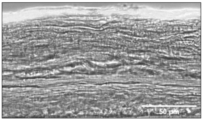
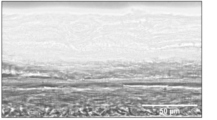
- FIG. 1-1 is a fluorescence microscope image of a skin tissue fragment after applying test solution 1-1 containing fluorescently labeled sodium hyaluronate (weight average molecular weight 1.2 million) to a three-dimensional cultured skin model.
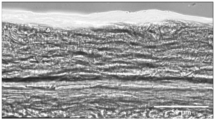
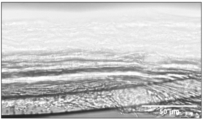
- FIG. 1-2 is a fluorescence microscope image of a skin tissue fragment after applying test solution 1-2 containing fluorescently labeled sodium hyaluronate (weight average molecular weight 1.2 million) to a three-dimensional cultured skin model.
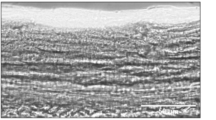
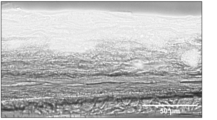
- FIG. 1-3 is a fluorescence microscope image of a skin tissue fragment after test solution 1-3 containing fluorescently labeled sodium hyaluronate (weight average molecular weight 1.2 million) was applied to a three-dimensional cultured skin model.
- FIG. 1-1 is a fluorescence microscope image of a skin tissue fragment after applying test solution 1-1 containing fluorescently labeled sodium hyaluronate (weight average molecular weight 1.2 million) to a three-dimensional cultured skin model.
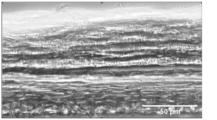
- FIG. 2-1 is a fluorescence microscope image of a skin tissue fragment after test solution 2-1 containing fluorescently labeled hydrolyzed hyaluronic acid (weight average molecular weight: 10,000) was applied to a three-dimensional cultured skin model.
- FIG. 2-2 is a fluorescence microscope image of a skin tissue fragment after test solution 2-2 containing fluorescently labeled hydrolyzed hyaluronic acid (weight average molecular weight: 10,000) was applied to a three-dimensional cultured skin model.
- FIG. 2-2 is a fluorescence microscope image of a skin tissue fragment after test solution 2-2 containing fluorescently labeled hydrolyzed hyaluronic acid (weight average molecular weight: 10,000) was applied to a three-dimensional cultured skin model.
- FIG. 3-1 is a fluorescence microscope image of a skin tissue fragment after test solution 3-1 containing fluorescently labeled hydrolyzed hyaluronate alkyl (C12-13) glyceryl (weight average molecular weight 10,000) was applied to a three-dimensional cultured skin model.
- FIG. 3-2 is a fluorescence microscope image of a skin tissue fragment after test solution 3-2 containing fluorescently labeled hydrolyzed hyaluronate alkyl (C12-13) glyceryl (weight average molecular weight 10,000) was applied to a three-dimensional cultured skin model.
- Figure 3-3 is a fluorescence microscope image of a skin tissue fragment after test solution 3-3 containing fluorescently labeled hydrolyzed hyaluronate alkyl (C12-13) glyceryl (weight average molecular weight 10,000) was applied to a three-dimensional cultured skin model.
- the skin permeation enhancer of the present invention is a skin permeation enhancer containing (A) hyaluronic acid, hyaluronic acid derivative or their salts (hereinafter also referred to as "(A) hyaluronic acids”) having a weight-average molecular weight of 600,000 or less, and (B) hyaluronic acid, hyaluronic acid derivative or their salts (hereinafter also referred to as "(B) hyaluronic acids”) having a weight-average molecular weight of 1,000,000 or more.
- the skin permeation enhancer of the present invention contains hyaluronic acid, etc.
- Hyaluronic acid has an extremely high molecular weight, so when used as a skin external preparation component, there are inconveniences such as difficulty in permeating the skin and in some cases not being able to fully demonstrate its function in practical use.
- the skin permeation enhancer of the present invention containing hyaluronic acid, etc. having a weight-average molecular weight of 600,000 or less, it is possible to make high molecular weight hyaluronic acid, etc. permeate deep into the skin.
- the skin permeation enhancer of the present invention may be blended with a skin topical composition containing (B) hyaluronic acids to obtain a skin topical composition with improved skin permeability of (B) hyaluronic acids.
- the skin permeation enhancer of the present invention may be applied as an additive to the skin topical composition.
- the skin permeation enhancer of the present invention may be separately applied to the skin to which the skin topical composition containing (B) hyaluronic acids, the skin permeation of which is to be promoted, is applied, to obtain the skin permeation enhancement effect of (B) hyaluronic acids.
- the skin permeation enhancer of the present invention may be applied as a skin topical composition.
- the skin permeation enhancer containing (A) hyaluronic acids may also contain (B) hyaluronic acids, the skin permeation of which is to be promoted.
- the skin permeation enhancer of the present invention may also be applied as a skin topical composition.
- the skin penetration enhancer of the present invention may contain, in addition to (A) hyaluronic acids, (B) hyaluronic acids as described above, and may further contain various optional components within a range that does not impair the effects of the present invention or for the purpose of improving the effects of the present invention.
- Each component contained in the skin penetration enhancer of the present invention will be described in detail below.
- hyaluronic acid refers to a mucopolysaccharide in which disaccharides consisting of N-acetylglucosamine and D-glucuronic acid (GlcNAc ⁇ 1-4GlcA ⁇ 1-3) are linked in a linear chain, and is distinct from their salts.
- the hyaluronate may be any pharmacologically or physiologically acceptable salt of hyaluronic acid, and examples thereof include salts with alkali metals such as sodium and potassium; salts with alkaline earth metals such as calcium and magnesium; salts with metals such as zinc and aluminum; ammonium salts; basic amino acid salts; and amine salts such as triethanolamine.
- hyaluronic acid derivatives refer to compounds that have been modified to such an extent that the structure and properties of hyaluronic acid, when considered as the parent, are not significantly altered by the introduction of functional groups, oxidation, reduction, atomic substitution, etc.
- hyaluronic acid derivatives include acetylated hyaluronic acid, sulfated hyaluronic acid, hydrophobized hydrolyzed hyaluronic acid (hydrolyzed alkyl hyaluronate, hydrolyzed glyceryl hyaluronate, etc.), crosslinked hyaluronic acid, carboxymethyl hyaluronic acid, alkylene glycol hyaluronate, silanol hyaluronate, and cationized hyaluronic acid.
- the salt of the hyaluronic acid derivative may be any salt that is pharmacologically or physiologically acceptable, and examples thereof include salts with alkali metals such as sodium and potassium; salts with alkaline earth metals such as calcium and magnesium; salts with metals such as zinc and aluminum; ammonium salts; basic amino acid salts; and amine salts such as triethanolamine.
- alkali metals such as sodium and potassium
- alkaline earth metals such as calcium and magnesium
- salts with metals such as zinc and aluminum
- ammonium salts such as zinc and aluminum
- basic amino acid salts and amine salts such as triethanolamine.
- sodium salts, potassium salts, zinc salts, and ammonium salts are preferred, and sodium salts and ammonium salts are more preferred.
- hyaluronic acid salts of hyaluronic acid, hyaluronic acid derivatives, and salts of hyaluronic acid derivatives are sometimes referred to as "hyaluronic acids.”
- the weight average molecular weight is a value measured by size exclusion chromatography.
- the conditions are as follows: Column: TSKgel GMPWXL 7.8 mm x 30 cm (Tosoh Corporation) Column temperature: constant temperature around 40°C Detector: differential refractometer Mobile phase: 0.2 mol/L NaCl Flow rate: 0.3mL/min Injection volume: 100 ⁇ L Standard substance: pullulan standard (STANDARD P-82, Showa Denko K.K.)
- the hyaluronic acid, hyaluronic acid derivative, or salt thereof having a weight-average molecular weight of 600,000 or less contained in the skin penetration enhancer of the present invention is not particularly limited as long as it is the above-mentioned hyaluronic acid, hyaluronic acid derivative, or salt thereof having a weight-average molecular weight of 600,000 or less.
- the hyaluronic acid (A) contained in the skin penetration enhancer of the present invention is preferably a hyaluronate such as sodium salt, potassium salt, zinc salt, or ammonium salt of hyaluronic acid, with sodium salt and ammonium salt being preferred examples.
- the hyaluronic acid (A) contained in the skin penetration enhancer of the present invention includes hyaluronic acid derivatives such as acetylated hyaluronic acid, hydroxypropyltrimonium hyaluronate, hydrolyzed alkyl hyaluronate (alkyl group having 12 to 13 carbon atoms; C12-13) glyceryl, crosslinked hyaluronic acid, carboxymethyl hyaluronic acid, propylene glycol hyaluronate, and dimethylsilanol hyaluronate.
- hyaluronic acid derivatives such as acetylated hyaluronic acid, hydroxypropyltrimonium hyaluronate, hydrolyzed alkyl hyaluronate (alkyl group having 12 to 13 carbon atoms; C12-13) glyceryl, crosslinked hyaluronic acid, carboxymethyl hyaluronic acid,
- More preferred hyaluronic acid derivatives include acetylated hyaluronic acid, hydroxypropyltrimonium hyaluronate, hydrolyzed alkyl hyaluronate (C12-13) glyceryl, crosslinked hyaluronic acid, propylene glycol hyaluronate, and dimethylsilanol hyaluronate.
- Acetylated hyaluronic acid is preferably hyaluronic acid in which the hydroxyl groups have been acetylated.
- Hyaluronic acid has four hydroxyl groups per structural unit (disaccharide), and acetylated hyaluronic acid in which two to four hydroxyl groups have been acetylated is preferred.
- Preferred examples of the hyaluronic acid (A) contained in the skin penetration enhancer of the present invention include salts of hyaluronic acid derivatives such as sodium acetylated hyaluronate, potassium acetylated hyaluronate, calcium acetylated hyaluronate, magnesium acetylated hyaluronate, zinc acetylated hyaluronate, ammonium acetylated hyaluronate, sodium hyaluronate crosspolymer, and hydroxypropyltrimonium hyaluronate.
- salts of hyaluronic acid derivatives such as sodium acetylated hyaluronate, potassium acetylated hyaluronate, calcium acetylated hyaluronate, magnesium acetylated hyaluronate, zinc acetylated hyaluronate,
- hyaluronic acid (A) contained in the skin penetration enhancer of the present invention include hydrolyzed hyaluronic acid (weight average molecular weight 10,000), sodium hyaluronate (weight average molecular weight 600,000), hydrolyzed sodium hyaluronate (weight average molecular weight 10,000 or 2,000), hydroxypropyltrimonium hyaluronate (weight average molecular weight 600,000), acetylated sodium hyaluronate (weight average molecular weight 100,000), hydrolyzed alkyl (C12-13) glyceryl hyaluronate (weight average molecular weight 10,000), etc., of which hydroxypropyltrimonium hyaluronate, hydrolyzed hyaluronic acid, hydrolyzed alkyl (C12-13) glyceryl hyaluronate, and sodium hyaluronate are more preferred.
- the content of the (A) hyaluronic acid in the skin penetration enhancer of the present invention is preferably 0.0001% by mass or more, more preferably 0.0005% by mass or more, even more preferably 0.001% by mass or more, and even more preferably 0.05% by mass or more, based on the total amount of the skin penetration enhancer.
- the content of the (A) hyaluronic acid is preferably 10.0% by mass or less, more preferably 5.0% by mass or less, even more preferably 3.0% by mass or less, and even more preferably 1.0% by mass or less, based on the total amount of the skin penetration enhancer.
- the content of the (A) hyaluronic acid in the skin penetration enhancer of the present invention is 0.0005% by mass or more and 10.0% by mass or less, preferably 0.005% by mass or more and 5.0% by mass or less, more preferably 0.001% by mass or more and 3.0% by mass or less, and particularly preferably 0.05% by mass or more and 1.0% by mass or less, based on the total amount of the skin penetration enhancer.
- the skin permeation enhancer of the present invention may contain (B) hyaluronic acid, hyaluronic acid derivative or their salts with weight-average molecular weight of 1 million or more, which is the target of skin permeation enhancement, in addition to the above-mentioned (A) hyaluronic acid.
- (B) hyaluronic acid, hyaluronic acid derivative or their salts with weight-average molecular weight of 1 million or more is not particularly limited as long as it is the above-mentioned hyaluronic acid, hyaluronic acid derivative or their salts with weight-average molecular weight of 1 million or more.
- the hyaluronic acid (B) contained in the skin penetration enhancer of the present invention is preferably a hyaluronate such as sodium salt, potassium salt, zinc salt, or ammonium salt of hyaluronic acid, with sodium salt and ammonium salt being preferred examples.
- hyaluronic acid (B) contained in the skin penetration enhancer of the present invention preferred examples include acetylated hyaluronic acid, hydroxypropyltrimonium hyaluronate, crosslinked hyaluronic acid, carboxymethyl hyaluronic acid, propylene glycol hyaluronate, and dimethylsilanol hyaluronate, with acetylated hyaluronic acid, hydroxypropyltrimonium hyaluronate, crosslinked hyaluronic acid, propylene glycol hyaluronate, and dimethylsilanol hyaluronate being more preferred examples.
- Acetylated hyaluronic acid is preferably hyaluronic acid in which the hydroxyl groups have been acetylated.
- Hyaluronic acid has four hydroxyl groups per structural unit (disaccharide), and acetylated hyaluronic acid in which two to four hydroxyl groups have been acetylated is preferred.
- Preferred examples of the hyaluronic acid (B) contained in the skin penetration enhancer of the present invention include salts of hyaluronic acid derivatives such as sodium acetylated hyaluronate, potassium acetylated hyaluronate, calcium acetylated hyaluronate, magnesium acetylated hyaluronate, zinc acetylated hyaluronate, ammonium acetylated hyaluronate, sodium hyaluronate crosspolymer, and hydroxypropyltrimonium hyaluronate.
- hyaluronic acid derivatives such as sodium acetylated hyaluronate, potassium acetylated hyaluronate, calcium acetylated hyaluronate, magnesium acetylated hyaluronate, zinc acetylated hyaluronate, ammonium
- hyaluronic acid (B) contained in the skin penetration enhancer of the present invention include hyaluronic acid crosspolymer (weight average molecular weight 7,000,000), sodium hyaluronate (weight average molecular weight 1,200,000), sodium carboxymethyl hyaluronate (weight average molecular weight 1,200,000), etc.
- Hyalocatch (trade name) (Kewpie Corporation; weight average molecular weight 800,000 to 1,200,000), Hyaljon (trade name) (Kikkoman Biochemifa Corporation; propylene glycol hyaluronate), D.S.H.CN6 (trade name) (EXSYMOL S.A.M; dimethylsilanol hyaluronate), and D.S.H.CN (trade name) (EXSYMOL S.A.M; dimethylsilanol hyaluronate).
- the content of (B) hyaluronic acids in the skin penetration enhancer is preferably 0.0001% by mass or more, more preferably 0.0005% by mass or more, even more preferably 0.001% by mass or more, and even more preferably 0.05% by mass or more, based on the total amount of the skin penetration enhancer.
- the content of (B) hyaluronic acids is preferably 10.0% by mass or less, more preferably 5.0% by mass or less, even more preferably 3.0% by mass or less, and even more preferably 1.0% by mass or less, based on the total amount of the skin penetration enhancer.
- the content of the (B) hyaluronic acid in the skin penetration enhancer of the present invention is 0.0001% by mass or more and 10.0% by mass or less, preferably 0.0005% by mass or more and 5.0% by mass or less, more preferably 0.001% by mass or more and 3.0% by mass or less, and particularly preferably 0.05% by mass or more and 1.0% by mass or less, based on the total amount of the skin penetration enhancer.
- the content of the (B) hyaluronic acid is the total content thereof.
- the ratio of the content concentration of (A) hyaluronic acids to the content concentration of (B) hyaluronic acids in the skin penetration enhancer i.e., the ratio of the content concentration (mass%) of (A) hyaluronic acids to the content concentration (mass%) of (B) hyaluronic acids ((A) hyaluronic acids (mass%)/(B) hyaluronic acids (mass%))
- the skin permeation enhancer of the present invention may contain hyaluronic acids other than the hyaluronic acids (A) or the hyaluronic acids (A) and (B) in addition to these.
- the type of the other hyaluronic acids is not particularly limited.
- the skin penetration enhancer of the present invention may comprise water, alcohol, a hydrophilic organic solvent, a fatty acid, a higher fatty acid ester, a glyceride, or a hydrophobic organic solvent, or a miscible mixture thereof.
- the solvent is preferably one that functions as a base or carrier in the skin penetration enhancer of the present invention, and includes aqueous solvents such as water, liquid paraffin, squalane, petrolatum, gelling hydrocarbons (such as Plastibase), ozokerite, ⁇ -olefin oligomers, and hydrocarbons such as light liquid paraffin; methyl polysiloxanes such as polymethylsilsesquioxane, crosslinked methyl polysiloxanes, highly polymerized methyl polysiloxanes, cyclic silicones, alkyl-modified silicones, crosslinked alkyl-modified silicones, amino-modified silicones, polyether-modified silicones, polyglycerin-modified silicones such as lauryl dimethicone polyglycerin-3 crosspolymer, crosslinked polyether-modified silicones, crosslinked alkyl polyether-modified silicones, silicone/alkyl chain co-modified polyether-modified silicones, silicone/alkyl chain
- suitable solvents include silicone oils such as polysilicone, acrylic silicone, phenyl-modified silicone, and silicone resin; higher alcohols such as cetanol, cetostearyl alcohol, stearyl alcohol, and behenyl alcohol; cellulose derivatives such as ethyl cellulose, hydroxypropyl cellulose, and hydroxypropyl methyl cellulose; polyvinylpyrrolidone; carrageenan; polyvinyl butyrate; polyethylene glycol; dioxane; butylene glycol adipate polyester; esters such as isopropyl myristate, octyldodecyl myristate, isopropyl palmitate, cetyl palmitate, octyl palmitate, isononyl isononanoate, pentaerythritol tetra-2-ethylhexanoate, glyceryl tri-2-ethylhexanoate, and jojoba oil;
- aqueous solvents are preferred, and water is particularly preferred.
- the amount of water can be appropriately selected taking into consideration the feel on the skin when used and the effects of the present invention, but is, for example, 0.001% to 99.99% by mass, preferably 0.01% to 99.9% by mass, more preferably 0.1% to 95% by mass, and most preferably 1% to 90% by mass relative to the total amount of the skin penetration enhancer of the present invention.
- the skin permeation enhancer of the present invention does not contain oil, or its content is 10% by mass or less based on the total amount of skin external composition.
- the oil content is preferably 5% by mass or less based on the total amount of skin permeation enhancer, more preferably 3% by mass or less, even more preferably 2% by mass or less, and even more preferably 1% by mass or less. This range is also preferable from the viewpoint of the permeability of the hyaluronic acid that the skin permeation enhancer of the present invention contains into the skin.
- the oil is an oily substance that is liquid or fluid at 25°C.
- the oil in the present invention is preferably an oily substance that is liquid, fluid, or semi-solid at 25°C, and more preferably a liquid, fluid, semi-solid, or solid oily substance at 25°C.
- Solid means that it has no fluidity at 25°C
- semi-solid means that it has a melting point of 25°C to 45°C
- liquid means that it has fluidity at 25°C.
- oily substances include hydrocarbons, waxes, silicones, higher alcohols, higher fatty acids, oils and fats, and esters. These oily substances are blended for purposes different from those of the above-mentioned solvents.
- Hydrocarbons include liquid paraffin, liquid isoparaffin, squalane, petrolatum, paraffin, microcrystalline wax, polybutene, polyethylene powder, gelling hydrocarbons (Plastibase, etc.), ozokerite, ⁇ -olefin oligomers, light liquid paraffin, light iso liquid paraffin, isododecane, isohexadecane, etc.
- liquid paraffin, liquid isoparaffin, squalane, petrolatum, gelling hydrocarbons (Plastibase, etc.), ⁇ -olefin oligomers, light liquid paraffin, and light iso liquid paraffin are preferred, and liquid paraffin, liquid isoparaffin, squalane, ⁇ -olefin oligomers, light liquid paraffin, and light iso liquid paraffin are more preferred.
- Waxes include jojoba oil, beeswax, candelilla wax, rice bran wax, cotton wax, carnauba wax, lanolin, liquid lanolin, reduced lanolin, etc.
- jojoba oil, beeswax, candelilla wax, and rice bran wax are preferred, with jojoba oil being particularly preferred.
- silicones include methyl polysiloxane, crosslinked methyl polysiloxane, highly polymerized methyl polysiloxane, phenyl modified silicones such as methylphenyl polysiloxane, cyclic silicones such as decamethylcyclopentasiloxane, alkyl modified silicones such as methyl hydrogen polysiloxane, methyl trimethicone, dimethiconol, dimethiconol crosspolymer, and caprylyl methicone, crosslinked alkyl modified silicones, amino modified silicones, polyether modified silicones, polyglycerin modified silicones, crosslinked polyether modified silicones, crosslinked alkyl polyether modified silicones, silicone/alkyl chain co-modified polyether modified silicones, silicone/alkyl chain co-modified polyglycerin modified silicones, polyether modified branched silicones, polyglycerin modified branched silicones, acrylic silicones, phenyl modified silicones, and silicone resins.
- methyl polysiloxane crosslinked methyl polysiloxane, highly polymerized methyl polysiloxane, methylphenyl polysiloxane, and decamethylcyclopentasiloxane are preferred.
- Higher alcohols include saturated or unsaturated, straight-chain or branched higher alcohols with 8 to 22 carbon atoms.
- Specific examples include capryl alcohol, lauryl alcohol, myristyl alcohol, cetanol, cetostearyl alcohol, stearyl alcohol, behenyl alcohol, octyldodecanol, isostearyl alcohol, phytosterol, cholesterol, oleyl alcohol, etc.
- cetanol, cetostearyl alcohol, stearyl alcohol, behenyl alcohol, octyldodecanol, and isostearyl alcohol are preferred, and octyldodecanol and isostearyl alcohol are more preferred.
- Higher fatty acids include saturated or unsaturated, straight-chain or branched higher alcohols having 8 to 22 carbon atoms.
- Specific examples include caprylic acid, capric acid, lauric acid, myristic acid, palmitic acid, palmitoleic acid, stearic acid, oleic acid, linoleic acid, linolenic acid, and behenic acid.
- isostearic acid, stearic acid, and behenic acid are preferred, and isostearic acid is more preferred.
- oils and fats include avocado oil, linseed oil, camellia oil, macadamia nut oil, kukui nut oil, hazelnut oil, corn oil, olive oil, safflower oil, apricot kernel oil, cinnamon oil, jojoba oil, grape seed oil, sunflower oil, almond oil, meadowfoam oil, camellia oil, rapeseed oil, sesame oil, cocoa butter, coconut oil, hardened coconut oil, palm oil, palm kernel oil, Japan wax kernel oil, Japan wax, wheat germ oil, rice germ oil, rice bran oil, cottonseed oil, soybean oil, peanut oil, tea seed oil, evening primrose oil, shea butter, hardened oil, orange roughy oil, and horse oil.
- avocado oil macadamia nut oil, olive oil, grape seed oil, sunflower oil, almond oil, meadowfoam oil, sesame oil, palm oil, palm kernel oil, rice germ oil, rice bran oil, soybean oil, evening primrose oil, shea butter, and orange roughy oil are preferred.
- Esters include isopropyl myristate, octyldodecyl myristate, isopropyl palmitate, cetyl palmitate, isononyl isononanoate, diisopropyl adipate, decyl oleate, oleyl oleate, isodecyl oleate, hexyldecyl dimethyloctanoate, diisopropyl sebacate, di-2-ethylhexyl sebacate, 2-hexyldecyl myristate, 2-ethylhexyl palmitate, diisopropyl adipate, and isotridecyl isononanoate.
- one or more types of oil can be used.
- the skin penetration enhancer of the present invention may contain, in addition to the above-mentioned components (A) and (B), vitamins, alkanediols, polyhydric alcohols, glycol ethers, thickeners, etc.
- other components may be contained within a range that does not impair the effects of the present invention. These components may be used alone or in any combination of two or more.
- the compounds specifically exemplified as each component overlap it is sufficient that they are contained as any of the components.
- vitamins examples include retinol derivatives such as retinol, retinol acetate, and retinol palmitate, vitamin A such as retinal, retinoic acid, methyl retinoate, ethyl retinoate, retinol retinoic acid, d- ⁇ -tocopheryl retinoate, ⁇ -tocopheryl retinoate, and ⁇ -tocopheryl retinoate; provitamin A such as ⁇ -carotene, ⁇ -carotene, ⁇ -carotene, ⁇ -carotene, lycopene, zeaxanthin, cryptoxanthin, and echinenone; ⁇ -tocopherol, ⁇ -tocopherol, ⁇ -tocopherol, dl- ⁇ -tocopherol calcium succinate, ⁇ -tocopherol, and nic
- Vitamin E such as tocopherol tartrate
- vitamin B2 such as riboflavin, flavin mononucleotide, flavin adenine dinucleotide, riboflavin butyrate, riboflavin tetrabutyrate, riboflavin sodium 5'-phosphate, and riboflavin tetranicotinate
- nicotinic acids such as methyl nicotinate, nicotinic acid, and nicotinamide
- Vitamin C such as magnesium, ascorbic acid glucoside, 3-O-ethyl ascorbic acid; Vitamin D such as methylhesperidin, ergocalciferol, cholecalciferol; Vitamin K such as phylloquinone, farnoquinone; dibenzoyl thiamine, dibenzoyl thiamine hydrochloride, thiamine hydrochloride, thiamine cetyl hydrochloride, thiamine thiocyanate, thiamine lauryl hydrochloride, thiamine nitrate, thiamine monophosphate, thiamine lysine salt, thiamine triphosphate, thiamine monophosphate ester phosphate, thiamine monophosphate ester, thiamine diphosphate ester, thiamine diphosphate ester hydrochloride, thiamine triphosphate ester, thiamine triphosphate ester, thiamine triphosphate ester Vitamin B1 such as pyridoxine hydrochloride, pyridoxine
- vitamins When vitamins are added, their amount can be appropriately selected taking into consideration the feel when used, but is, for example, 0.001% to 30% by mass, preferably 0.01% to 25% by mass, and more preferably 0.1 to 20% by mass, based on the total amount of the skin penetration enhancer of the present invention.
- the skin permeation enhancer of the present invention may contain an alkanediol having 5 to 10 carbon atoms.
- the alkanediol preferably has 5 to 10 carbon atoms, more preferably has 5 to 8 carbon atoms, and even more preferably has 5 to 6 carbon atoms.
- the alkanediol is preferably a 1,2-alkanediol.
- alkanediols having 5 to 10 carbon atoms examples include 1,2-pentanediol, 1,2-hexanediol, 1,2-heptanediol, 1,2-octanediol, 1,2-nonanediol, and 1,2-decanediol.
- 1,2-pentanediol, 1,2-hexanediol, and 1,2-octanediol are preferred, 1,2-pentanediol and 1,2-hexanediol are more preferred, and 1,2-pentanediol is even more preferred.
- alkanediols with 5 to 10 carbon atoms include HYDROLITE-5, HYDROLITE-5 Green (manufactured by Symrise Co., Ltd.), KMO-6 (manufactured by Osaka Organic Chemical Industry Co., Ltd.), Microcare Emollient PTGJ, and Microcare Emollient HXD (manufactured by THOR Co., Ltd.).
- One or more types of alkanediols having 5 to 10 carbon atoms can be used.
- the skin permeation enhancer of the present invention may further contain a polyhydric alcohol.
- a polyhydric alcohol used in the skin permeation enhancer of the present invention, any polyhydric alcohol used in cosmetics, quasi-drugs, or pharmaceuticals may be used without limitation.
- glycols ethylene glycol, diethylene glycol, propylene glycol, isopropylene glycol, dipropylene glycol, polypropylene glycol, polyethylene glycol, 1,3-butylene glycol, pentylene glycol, etc.
- glycerin diglycerin, triglycerin, polyglycerin, sorbitol, alkanediols (propanediol, 3-methyl-1,3-butanediol, pentanediol, etc.), etc. are mentioned.
- propylene glycol, dipropylene glycol, 1,3-butylene glycol, pentylene glycol, glycerin, diglycerin, sorbitol, alkanediols (propanediol, pentanediol, hexanediol), etc. are preferred, and dipropylene glycol, 1,3-butylene glycol, and pentylene glycol are more preferred.
- the content of the polyhydric alcohol in the skin penetration enhancer of the present invention is preferably 0.01% by mass to 99.9% by mass, more preferably 0.1% by mass to 75% by mass, and even more preferably 0.5% by mass to 50% by mass. If it is in the above range, in addition to the effects of the present invention, the skin penetration enhancer can be imparted with moisturizing power and a good feel when used.
- the skin permeation enhancer of the present invention may further include glycol ether.
- glycol ether used in the skin permeation enhancer of the present invention, those used as glycol ethers in cosmetics, quasi-drugs or pharmaceuticals can be used without limitation.
- ethylene glycol-based glycol ethers such as ethylene glycol monomethyl ether, ethylene glycol monoethyl ether, and ethylene glycol monopropyl ether
- diethylene glycol-based glycol ethers such as diethylene glycol monomethyl ether, diethylene glycol monoethyl ether, and diethylene glycol monopropyl ether
- propylene glycol-based glycol ethers such as propylene glycol monoethyl ether and propylene glycol monopropyl ether
- dipropylene glycol-based glycol ethers such as dipropylene glycol monoethyl ether and dipropylene glycol monopropyl ether.
- ethylene glycol-based and diethylene glycol-based glycol ethers are preferred, ethylene glycol monomethyl ether and diethylene glycol monoethyl ether are more preferred, and diethylene glycol monoethyl ether is particularly preferred.
- the content of glycol ether in the skin penetration enhancer of the present invention is preferably 0.01% by mass to 97% by mass, more preferably 0.1% by mass to 50% by mass, and even more preferably 0.5% by mass to 30% by mass. If it is in the above range, in addition to the effects of the present invention, the skin penetration enhancer can be imparted with moisturizing power and a good feel when used.
- the skin permeation enhancer of the present invention may further contain a thickener. This allows the skin permeation enhancer to have good compatibility with the skin and excellent usability.
- a thickener any thickener used in cosmetics, quasi-drugs, or pharmaceuticals may be used without limitation.
- agar for example, agar, gellan gum, guar gum, locust bean gum, carrageenan, xanthan gum, dextran, methyl cellulose, ethyl cellulose, carboxymethyl cellulose, hydroxymethyl cellulose, hydroxyethyl cellulose, hydroxypropyl cellulose, hydroxypropyl methyl cellulose, carboxymethyl cellulose, carboxyethyl cellulose, sodium alginate, propylene glycol alginate, dextran, polyvinyl alcohol, polyvinylpyrrolidone, polyvinyl methyl ether, carboxyvinyl polymer, acrylic acid alkyl methacrylate copolymer, sodium polyacrylate, polyethylene glycol, polyvinyl methacrylate ...
- the content of the thickener in the skin penetration enhancer of the present invention is preferably 0.0001% by mass to 20% by mass, more preferably 0.001% by mass to 10% by mass, and even more preferably 0.05% by mass to 5% by mass. If the content of the thickener is within the above range, the skin penetration enhancer can be made to be compatible with the skin and have an excellent feel when used.
- the skin penetration enhancer of the present invention may contain one or more of various components, such as an ultraviolet scattering component, an ultraviolet absorbing component, a component having a DNA damage prevention and/or repair effect, a brightening component, an anti-inflammatory component, a cell activation component, an astringent component, an antioxidant component, an anti-aging component, a moisturizing component, a keratin softening component, and a blood circulation promoting component, in order to impart other useful effects.
- these components are not particularly limited as long as they can be used in the fields of medicines, quasi-drugs, cosmetics, etc., and any one can be appropriately selected and used.
- components that fall under the following multiple components can be added as components with any of the effects.
- the above-mentioned UV scattering components include, for example, inorganic compounds such as zinc oxide, titanium oxide, iron oxide, cerium oxide, zirconium oxide, titanium silicate, zinc silicate, anhydrous silicic acid, cerium silicate, and hydrous silicic acid, as well as inorganic compounds coated with hydrous silicic acid, aluminum hydroxide, inorganic powders such as mica and talc, composites with resin powders such as polyamide, polyethylene, polyester, polystyrene, and nylon, and compounds treated with silicone oil, fatty acid aluminum salts, and the like.
- inorganic compounds such as zinc oxide, titanium oxide, and iron oxide, as well as inorganic compounds coated with inorganic powders such as aluminum hydroxide, hydrous silicic acid, mica, and talc, and silicone oil, are preferred.
- Examples of the ultraviolet absorbing components include 2-ethylhexyl paramethoxycinnamate, 2-[4-(diethylamino)-2-hydroxybenzoyl]benzoic acid hexyl ester, 2,4,6-tris[4-(2-ethylhexyloxycarbonyl)anilino]-1,3,5-triazine, 2-ethylhexyl dimethoxybenzylideneoxoimidazolidinepropionate, 2,4-bis-[ ⁇ 4-(2-ethylhexyloxy)-2-hydroxy ⁇ -phenyl]-6-(4-methoxyphenyl)-1,3,5-triazine, etc.
- the brightening ingredients include hydroquinone, placenta, arbutin, kojic acid, ellagic acid, phytic acid, tranexamic acid, 4-n-butylresorcinol, chamomile extract, vitamins such as vitamin A or a derivative thereof, and pantothenic acid or a derivative thereof. Furthermore, plant ingredients having a brightening effect may be used as the brightening ingredient.
- plant ingredients include iris, almond, aloe, ginkgo, oolong tea, Chinese laurel, Scutellaria baicalensis, Coptis chinensis, Hypericum perforatum, white lamb's foot, seaweed, pueraria lobata, gardenia, lily of the valley, chlorella, wheatgrass, rice, rice hyacinth, oryzanol, rice bran, saishin, Japanese pepper, perilla, peony, cnidium officinalis, soybean, natto, tea, angelica tree, and toad.
- ingredients include those derived from calendula, garlic, witch hazel, safflower, peonies, coix seed, angelica tree, amethyst, astragalus, aceae, Japanese laurel, dogwood, enoki mushroom, persimmon (Diospyros kaki), catalpa, black bean, gentian, gentiana, salsa, green onion, j ⁇ rou, sage, zenko, radish, azalea, bush clover, toshin, bitter gourd, parsley, holly, hops, Japanese bush clover, clove, licorice, grapefruit, etc.
- anti-inflammatory ingredients examples include allantoin, calamine, tranexamic acid, glycyrrhizic acid or its derivatives or their salts, glycyrrhetinic acid or its derivatives or their salts, zinc oxide, azulene, tocopherol acetate, pyridoxine hydrochloride, menthol, camphor, turpentine oil, indomethacin, salicylic acid or its derivatives, etc.
- glycyrrhizic acid or its derivatives or their salts e.g., dipotassium glycyrrhizinate, etc.
- glycyrrhetinic acid or its derivatives or their salts e.g., zinc oxide.
- the above cell activation components include, for example, amino acids such as ⁇ -aminobutyric acid and ⁇ -aminocaproic acid; ⁇ -hydroxy acids such as glycolic acid and lactic acid; tannins, flavonoids, saponin, allantoin, photosensitizer No. 301, etc.
- astringent components include metal salts such as alum, chlorohydroxyaluminum, aluminum chloride, aluminum allantoin salt, zinc sulfate, and potassium aluminum sulfate; and organic acids such as tannic acid, citric acid, lactic acid, and succinic acid.
- metal salts such as alum, chlorohydroxyaluminum, aluminum chloride, aluminum allantoin salt, zinc sulfate, and potassium aluminum sulfate
- organic acids such as tannic acid, citric acid, lactic acid, and succinic acid.
- anti-aging ingredients include, for example, pangamic acid, ursolic acid, turmeric extract, sphingosine derivatives, silicon, silicic acid, N-methyl-L-serine, mevalonolactone, etc.
- the above blood circulation promoting ingredients include, for example, ingredients derived from plants (e.g., ginseng, angelica, arnica, ginkgo, fennel, emmeisou, Dutch oak, chamomile, Roman chamomile, carrot, gentian, burdock, rice, hawthorn, shiitake mushroom, European hawthorn, European juniper, cnidium rhizome, swertia britannica, thyme, clove, tangerine peel, angelica tree, peach kernel, spruce, carrot, garlic, butcher's broom, grape, peony, horse chestnut, melissa, yuzu, coix seed, rosemary, rose hip, tangerine peel, angelica tree, spruce, peach, apricot, walnut, corn); tocopherol nicotinate, glucosyl hesperidin, and hesperidin.
- plants e.g., ginseng,
- the skin penetration enhancer of the present invention may contain additives that are commonly used in the fields of pharmaceuticals, quasi-drugs, cosmetics, etc., depending on the application or dosage form.
- additives that can be added, but examples of additives that can be added include surfactants, preservatives, pH adjusters, chelating agents, stabilizers, irritation reducers, colorants, dispersants, fragrances, etc.
- surfactants preservatives
- pH adjusters pH adjusters
- chelating agents stabilizers
- stabilizers stabilizers
- irritation reducers colorants
- dispersants fragrances, etc.
- fragrances etc.
- these components can be added alone or in any combination of two or more. The amounts of these components used can be determined as appropriate from the conventionally known ranges without impairing the effects of the present invention.
- surfactants include sorbitan esters such as sorbitan stearate, PEG sorbitan stearate, sorbitan monooleate, sorbitan monoisostearate, and sorbitan monolaurate; POE-sorbitan monooleate; polyoxyethylene hydrogenated castor oil (HCO-10); glycerin fatty acid esters such as glycerin monooleate, glycerin monostearate, and glycerin monomyristate; glycerin alkyl ethers such as monoisostearyl glyceryl ether and monomyristyl glyceryl ether; various nonionic surfactants such as polyglycerin fatty acid esters such as polyglyceride stearate, polyglyceryl-10 isostearate, diglyceryl monostearate, decaglyceryl decastearate, decaglyceryl decastearate, and diglyceryl diisost
- preservatives examples include benzoic acid, sodium benzoate, dehydroacetic acid, sodium dehydroacetate, isobutyl parahydroxybenzoate, isopropyl parahydroxybenzoate, butyl parahydroxybenzoate, ethyl parahydroxybenzoate, propyl parahydroxybenzoate, benzyl parahydroxybenzoate, methyl parahydroxybenzoate, and phenoxyethanol.
- pH adjuster examples include inorganic acids (hydrochloric acid, sulfuric acid, etc.), organic acids (lactic acid, sodium lactate, citric acid, sodium citrate, succinic acid, sodium succinate, etc.), inorganic bases (potassium hydroxide, sodium hydroxide, etc.), and organic bases (triethanolamine, diisopropanolamine, triisopropanolamine, etc.).
- the chelating agent examples include ethylenediaminetetraacetic acid (edetic acid), ethylenediaminetetraacetate (sodium salt (sodium edetate: Japanese Pharmacopoeia, EDTA-2Na, etc.), potassium salt, etc.), phytic acid, gluconic acid, polyphosphoric acid, metaphosphoric acid, etc. Among these, sodium edetate is preferred.
- the stabilizer examples include magnesium sulfate, sodium polyacrylate, dibutylhydroxytoluene, and butylhydroxyanisole.
- irritation reducers examples include licorice extract, gum arabic, polyvinylpyrrolidone, sodium alginate, etc.
- dispersing agent examples include sodium pyrophosphate, sodium hexametaphosphate, polyvinyl alcohol, polyvinylpyrrolidone, methyl vinyl ether/maleic anhydride crosslinked copolymer, organic acids, etc.
- the skin penetration enhancer of the present invention may generally have a liquid property of pH 2.0 to 9.0, but from the viewpoints of low irritation to the skin and mucous membranes and good skin feel when used, the pH is preferably 3.0 to 8.5, more preferably 3.5 to 8.0.
- the properties of the skin permeation enhancer of the present invention are not particularly limited, and can be liquid, fluid, or semi-solid.
- the formulation form can be, for example, liquid, suspension, emulsion, cream, milky lotion, ointment, gel, liniment, lotion, or sheet of nonwoven fabric impregnated with drug solution.
- emulsion, cream, milky lotion, ointment, gel, and lotion are preferred, and cream, milky lotion, ointment, and gel are particularly preferred.
- any container of a known shape can be used without any restrictions.
- the material of the container and the skin penetration enhancer can be filled and provided in a container made of a material such as, for example, plastics such as polyethylene terephthalate, polyethylene naphthalate, polyarylate, polycarbonate, polyethylene, or polypropylene, or glass.
- a container made of polyethylene terephthalate, polyethylene naphthalate, or polyarylate is particularly preferable.
- the present invention also includes within its scope "(A) use of hyaluronic acid, hyaluronic acid derivatives or salts thereof having a weight average molecular weight of 600,000 or less for the manufacture of a skin penetration enhancer of (B) hyaluronic acid, hyaluronic acid derivatives or salts thereof having a weight average molecular weight of 1,000,000 or more.”
- component (A) is at least one selected from the group consisting of hydroxypropyltrimonium hyaluronate, hydrolyzed hyaluronic acid, alkyl (C12-13) glyceryl hydrolyzed hyaluronate, and sodium hyaluronate.
- the explanation in the section on skin penetration enhancers can be applied as is.
- the present invention is characterized by using (A) hyaluronic acid, a hyaluronic acid derivative, or a salt thereof having a weight-average molecular weight of 600,000 or less, and (B) hyaluronic acid, a hyaluronic acid derivative, or a salt thereof having a weight-average molecular weight of 1,000,000 or more.
- A hyaluronic acid, a hyaluronic acid derivative, or a salt thereof having a weight-average molecular weight of 600,000 or less
- B hyaluronic acid, a hyaluronic acid derivative, or a salt thereof having a weight-average molecular weight of 1,000,000 or more.
- Hyaluronic acid has an extremely high molecular weight, so when used as an ingredient in a skin external preparation, it is difficult for it to penetrate the skin, and there are cases where it is unable to fully exert its function in practical use.
- hyaluronic acid or the like having a weight-average molecular weight of 600,000 or less according to the method of the present invention, it becomes possible to allow high molecular weight hyaluronic acid or the like to penetrate deep into the skin.
- the skin penetration enhancing method of the present invention is a method for enhancing the skin permeability of hyaluronic acid or the like having a weight-average molecular weight of 1,000,000 or more using the skin penetration enhancer of the present invention described above.
- the explanation in the section on skin penetration enhancers can be applied as is to the skin penetration enhancer of the present invention.
- the skin permeation inhibitor of the present invention is a skin permeation inhibitor of (D) hyaluronic acid, hyaluronic acid derivative or their salts (hereinafter referred to as "(D) hyaluronic acid”) having a weight-average molecular weight of 100,000 or less, containing (C) hyaluronic acid, hyaluronic acid derivative or their salts (hereinafter referred to as "(C) hyaluronic acids”).
- the skin permeation inhibitor of the present invention contains hyaluronic acid, etc. having a weight-average molecular weight of 600,000 or more, and can significantly suppress the skin permeability of hyaluronic acid, etc.
- Hyaluronic acid has an extremely high molecular weight, so when used as a skin external preparation component, it is difficult to permeate into the skin, and there are cases where it cannot fully exert its function in practical use. Therefore, attempts are being made to reduce the molecular weight of hyaluronic acid to improve its permeability.
- the hyaluronic acid with weight-average molecular weight of 100,000 or less has excellent skin permeability, it may remain in the skin surface area for a short time, and after applying the topical agent containing the hyaluronic acid with weight-average molecular weight of 100,000 or less, there is the inconvenience that the skin surface dries out relatively quickly.By using the skin permeation inhibitor of the present invention, it can suppress the penetration of the hyaluronic acid with weight-average molecular weight of 100,000 or less into the deep part of the skin, so that the hyaluronic acid with weight-average molecular weight of 100,000 or less can be kept near the skin surface, and the problem of dry skin surface can be solved.
- the skin permeation inhibitor of the present invention may be blended with a skin topical composition containing (D) hyaluronic acids to produce a skin topical composition with reduced skin permeability of (D) hyaluronic acids.
- the skin permeation inhibitor of the present invention may be applied as an additive to the skin topical composition.
- the skin permeation inhibitor of the present invention may be separately applied to the skin to which a skin topical composition containing (D) hyaluronic acids, the skin permeation of which is to be inhibited, is applied to obtain a skin permeation inhibitory effect of (D) hyaluronic acids.
- the skin permeation inhibitor of the present invention may be applied as a skin topical composition.
- the skin permeation inhibitor containing (C) hyaluronic acids may also contain (D) hyaluronic acids, the skin permeation of which is to be inhibited.
- the skin permeation inhibitor of the present invention may also be applied as a skin topical composition.
- the skin permeation inhibitor of the present invention may contain, in addition to (C) hyaluronic acids, (D) hyaluronic acids as described above, and may further contain various optional components within a range that does not impair the effects of the present invention or for the purpose of improving the effects of the present invention.
- Each component contained in the skin permeation inhibitor of the present invention will be described in detail below.
- the hyaluronic acid, hyaluronic acid derivative, or salt thereof having a weight-average molecular weight of 600,000 or more contained in the skin permeation inhibitor of the present invention is not particularly limited as long as it is the above-mentioned hyaluronic acid, hyaluronic acid derivative, or salt thereof having a weight-average molecular weight of 600,000 or more.
- the hyaluronic acid (C) contained in the skin permeation inhibitor of the present invention is preferably a hyaluronate such as sodium, potassium, zinc, or ammonium salt of hyaluronic acid, with sodium and ammonium salts being preferred.
- the hyaluronic acid (C) contained in the skin penetration inhibitor of the present invention includes hyaluronic acid derivatives such as acetylated hyaluronic acid, hydroxypropyltrimonium hyaluronate, crosslinked hyaluronic acid, carboxymethyl hyaluronic acid, propylene glycol hyaluronate, and dimethylsilanol hyaluronate, and more preferred hyaluronic acid derivatives include hydroxypropyltrimonium hyaluronate, crosslinked hyaluronic acid, propylene glycol hyaluronate, and dimethylsilanol hyaluronate.
- hyaluronic acid derivatives such as acetylated hyaluronic acid, hydroxypropyltrimonium hyaluronate, crosslinked hyaluronic acid, carboxymethyl hyaluronic acid, propylene glycol hyal
- Acetylated hyaluronic acid is preferably hyaluronic acid in which the hydroxyl groups have been acetylated.
- Hyaluronic acid has four hydroxyl groups per structural unit (disaccharide), and acetylated hyaluronic acid in which two to four hydroxyl groups have been acetylated is preferred.
- Preferred examples of the hyaluronic acid (C) contained in the skin penetration inhibitor of the present invention include salts of hyaluronic acid derivatives such as sodium acetylated hyaluronate, potassium acetylated hyaluronate, calcium acetylated hyaluronate, magnesium acetylated hyaluronate, zinc acetylated hyaluronate, ammonium acetylated hyaluronate, sodium hyaluronate crosspolymer, and hydroxypropyltrimonium hyaluronate.
- hyaluronic acid derivatives such as sodium acetylated hyaluronate, potassium acetylated hyaluronate, calcium acetylated hyaluronate, magnesium acetylated hyaluronate, zinc acetylated hyaluronate, ammonium
- hyaluronic acid (C) contained in the skin penetration inhibitor of the present invention include sodium hyaluronate (weight average molecular weight 600,000, 1.2 million), hydroxypropyltrimonium hyaluronate (weight average molecular weight 600,000), sodium hyaluronate crosspolymer (weight average molecular weight 7 million), sodium carboxymethyl hyaluronate (weight average molecular weight 1.2 million), etc.
- Hyalobell trade name
- Hyalocatch trade name
- Hyalitis trade name
- Hyalujon trade name
- EXSYMOL S.A.M dimethylsilanol hyaluronate
- D.S.H.CN trade name
- EXSYMOL S.A.M dimethylsilanol hyaluronate
- the content of (C) hyaluronic acid in the skin permeation inhibitor of the present invention is preferably 0.00005% by mass or more, more preferably 0.0001% by mass or more, even more preferably 0.005% by mass or more, and even more preferably 0.001% by mass or more, based on the total amount of the skin permeation inhibitor.
- the content of (C) hyaluronic acid is preferably 10.0% by mass or less, more preferably 5.0% by mass or less, even more preferably 3.0% by mass or less, and even more preferably 1.0% by mass or less, based on the total amount of the skin permeation inhibitor.
- the content of (C) hyaluronic acid in the skin permeation inhibitor of the present invention is 0.00001% by mass or more and 10.0% by mass or less, preferably 0.0001% by mass or more and 5.0% by mass or less, more preferably 0.005% by mass or more and 3.0% by mass or less, and particularly preferably 0.01% by mass or more and 1.0% by mass or less, based on the total amount of the skin permeation inhibitor.
- the content of (C) hyaluronic acids refers to the total content of them.
- the skin permeation inhibitor of the present invention may contain (D) hyaluronic acid, hyaluronic acid derivative or their salts, which are the target of skin permeation inhibition, in addition to the above-mentioned (C) hyaluronic acids.
- hyaluronic acid, hyaluronic acid derivative or their salts which are the target of skin permeation inhibition, and which have a weight-average molecular weight of 100,000 or less, are not particularly limited as long as the above-mentioned hyaluronic acid, hyaluronic acid derivative or their salts have a weight-average molecular weight of 100,000 or less.
- the hyaluronic acid (D) contained in the skin penetration inhibitor of the present invention is preferably a hyaluronate such as sodium, potassium, zinc, or ammonium salt of hyaluronic acid, with sodium and ammonium salts being preferred.
- the (D) hyaluronic acid contained in the skin permeation inhibitor of the present invention includes hyaluronic acid derivatives such as acetylated hyaluronic acid, hydroxypropyltrimonium hyaluronate, hydrolyzed alkyl hyaluronate (alkyl group having 12 to 13 carbon atoms; C12-13) glyceryl, crosslinked hyaluronic acid, carboxymethyl hyaluronic acid, propylene glycol hyaluronate, and dimethylsilanol hyaluronate.
- hyaluronic acid derivatives such as acetylated hyaluronic acid, hydroxypropyltrimonium hyaluronate, hydrolyzed alkyl hyaluronate (alkyl group having 12 to 13 carbon atoms; C12-13) glyceryl, crosslinked hyaluronic acid, carboxymethyl hyaluronic acid
- More preferred hyaluronic acid derivatives include acetylated hyaluronic acid, hydroxypropyltrimonium hyaluronate, hydrolyzed alkyl hyaluronate (C12-13) glyceryl, crosslinked hyaluronic acid, propylene glycol hyaluronate, and dimethylsilanol hyaluronate.
- Acetylated hyaluronic acid is preferably hyaluronic acid in which the hydroxyl groups have been acetylated.
- Hyaluronic acid has four hydroxyl groups per structural unit (disaccharide), and acetylated hyaluronic acid in which two to four hydroxyl groups have been acetylated is preferred.
- Preferred examples of the hyaluronic acid (D) contained in the skin penetration inhibitor of the present invention include salts of hyaluronic acid derivatives such as sodium acetylated hyaluronate, potassium acetylated hyaluronate, calcium acetylated hyaluronate, magnesium acetylated hyaluronate, zinc acetylated hyaluronate, ammonium acetylated hyaluronate, and hydroxypropyltrimonium hyaluronate.
- hyaluronic acid derivatives such as sodium acetylated hyaluronate, potassium acetylated hyaluronate, calcium acetylated hyaluronate, magnesium acetylated hyaluronate, zinc acetylated hyaluronate, ammonium acetylated hyaluronate,
- hyaluronic acids (D) contained in the skin penetration inhibitor of the present invention include hydrolyzed hyaluronic acid (weight average molecular weight 10,000), hydrolyzed sodium hyaluronate (weight average molecular weight 10,000 or 2,000), acetylated sodium hyaluronate (weight average molecular weight 100,000), and hydrolyzed alkyl (C12-13) glyceryl hyaluronate (weight average molecular weight 10,000), of which hydrolyzed hyaluronic acid, hydrolyzed sodium hyaluronate, and hydrolyzed alkyl (C12-13) glyceryl hyaluronate are more preferred.
- the content of (D) hyaluronic acids in the skin permeation inhibitor is preferably 0.00005% by mass or more, more preferably 0.0001% by mass or more, even more preferably 0.005% by mass or more, and even more preferably 0.001% by mass or more, based on the total amount of the skin permeation inhibitor.
- the content of (D) hyaluronic acids is preferably 10.0% by mass or less, more preferably 5.0% by mass or less, even more preferably 3.0% by mass or less, and even more preferably 1.0% by mass or less, based on the total amount of the skin permeation inhibitor.
- the content of (D) hyaluronic acids in the skin permeation inhibitor of the present invention is 0.00005% by mass or more and 10.0% by mass or less, preferably 0.0001% by mass or more and 5.0% by mass or less, more preferably 0.0005% by mass or more and 3.0% by mass or less, and particularly preferably 0.001% by mass or more and 1.0% by mass or less, based on the total amount of the skin permeation inhibitor.
- the content of (D) hyaluronic acids in the skin permeation inhibitor of the present invention is 0.00005% by mass or more and 10.0% by mass or less, preferably 0.0001% by mass or more and 5.0% by mass or less, more preferably 0.0005% by mass or more and 3.0% by mass or less, and particularly preferably 0.001% by mass or more and 1.0% by mass or less, based on the total amount of the skin permeation inhibitor.
- the ratio of the content concentration of (C) hyaluronic acids in the skin permeation inhibitor to the content concentration of (D) hyaluronic acids is, for example, the ratio of the content concentration (mass%) of (C) hyaluronic acids to the content concentration (mass%) of (D) hyaluronic acids ((C) hyaluronic acids content (mass%)/(D) hyaluronic acids content (mass%)) is 0.001 to 100, preferably 0.005 to 100, more preferably 0.01 to 50, even more preferably 0.05 to 10, and particularly preferably 0.1 to 5.
- the skin permeation inhibitor of the present invention may contain hyaluronic acids other than the hyaluronic acids (C) or the hyaluronic acids (C) and (D) in addition to these.
- the type of the other hyaluronic acids is not particularly limited.
- the skin permeation inhibitor of the present invention may contain solvents, oils, optional ingredients, other ingredients, and additives, in the same manner as the skin permeation enhancer of the present invention, to the extent that the effects of the present invention are not impaired and for the purpose of improving the effects of the present invention.
- solvents oils, optional ingredients, other ingredients, and additives, in the same manner as the skin permeation enhancer of the present invention, to the extent that the effects of the present invention are not impaired and for the purpose of improving the effects of the present invention.
- a detailed description of these ingredients can be applied as is by replacing “skin permeation enhancer" with “skin permeation inhibitor” in the description of the skin permeation enhancer.
- the skin permeation inhibitor of the present invention may generally have a liquid property of pH 2.0 to 9.0, but from the viewpoints of low irritation to the skin and mucous membranes and good skin feel when used, the pH is preferably 3.0 to 8.5, and more preferably 3.5 to 8.0.
- the properties of the skin permeation inhibitor of the present invention are not particularly limited, and can be liquid, fluid, or semi-solid.
- the formulation form can be, for example, liquid, suspension, emulsion, cream, milky lotion, ointment, gel, liniment, lotion, or sheet of nonwoven fabric impregnated with drug solution.
- emulsion, cream, milky lotion, ointment, gel, and lotion are preferred, and cream, milky lotion, ointment, and gel are particularly preferred.
- the skin permeation inhibitor of the present invention can be produced by appropriately selecting and blending (C) hyaluronic acid, or (C) hyaluronic acid and (D) hyaluronic acid, and other components mentioned above.
- the method of producing the skin permeation inhibitor of the present invention is not particularly limited, and can be produced by mixing the above-mentioned components in a solvent by ordinary method.
- the present invention also includes within its scope "(C) use of hyaluronic acid, hyaluronic acid derivatives or salts thereof with a weight average molecular weight of 600,000 or more for the manufacture of a skin permeation inhibitor of hyaluronic acid, hyaluronic acid derivatives or salts thereof with a weight average molecular weight of 100,000 or less (D)."
- component (C) is at least one selected from the group consisting of hydroxypropyltrimonium hyaluronate and sodium hyaluronate.
- the explanation in the section on skin permeation inhibitors can be applied as is.
- the present invention is characterized by using (C) hyaluronic acid, a hyaluronic acid derivative, or a salt thereof having a weight-average molecular weight of 600,000 or more, (D) hyaluronic acid, a hyaluronic acid derivative, or a salt thereof having a weight-average molecular weight of 100,000 or less, According to the method for inhibiting skin penetration of a salt of the present invention, the skin permeability of a salt of hyaluronic acid having a weight-average molecular weight of 100,000 or less is suppressed by using hyaluronic acid having a weight-average molecular weight of 600,000 or more.
- Hyaluronic acid has an extremely high molecular weight, so when used as an ingredient in a skin external preparation, it is difficult to penetrate the skin, and there are cases where it is unable to fully exert its function in practical use. Therefore, attempts have been made to improve the permeability of hyaluronic acid by reducing its molecular weight.
- hyaluronic acid with a weight-average molecular weight of 100,000 or less has excellent skin permeability, but it remains in the skin surface area. The time may be shortened, and there is an inconvenience that the skin surface dries out relatively quickly after application of an external preparation containing hyaluronic acid having a weight-average molecular weight of 100,000 or less.
- the skin permeation inhibitor of the present invention is a method for inhibiting the skin permeability of hyaluronic acid or the like having a weight-average molecular weight of 100,000 or less using the skin permeation inhibitor of the present invention described above.
- the explanation in the section on skin permeation inhibitors can be applied as is to the skin permeation inhibitor of the present invention.
- Hyaluronic acid permeability evaluation test 1 Preparation of permeation control agents (permeation enhancers, permeation suppressors) for hyaluronic acids] Each composition (test solution) was prepared by a conventional method according to the recipes shown in Tables 1 to 3 below. The units of values in each table are mass (%).
- the sodium hyaluronate (weight average molecular weight 1.2 million) in each test solution in Table 1 the hydrolyzed hyaluronic acid (weight average molecular weight 10,000) in each test solution in Table 2, and the hydrolyzed alkyl (C12-13) glyceryl hyaluronate (weight average molecular weight 10,000) in Table 3 were subjected to fluorescein amine labeling treatment.
- the skin permeability of sodium hyaluronate with a weight-average molecular weight of 1.2 million in the composition was promoted by blending hydroxypropyltrimonium hyaluronate with a weight-average molecular weight of 600,000 and hydrolyzed hyaluronic acid with a weight-average molecular weight of 10,000.
- the blending of hydrolyzed hyaluronic acid with a weight-average molecular weight of 10,000 significantly promoted the skin permeability of sodium hyaluronate with a weight-average molecular weight of 1.2 million.
- the skin permeability of hydrolyzed hyaluronic acid with a weight-average molecular weight of 10,000 in the composition was suppressed to about half by blending hydroxypropyltrimonium hyaluronate with a weight-average molecular weight of 600,000.
- the skin permeability of hydrolyzed alkyl (C12-13) glyceryl hyaluronate in the composition was suppressed by blending sodium hyaluronate with a weight-average molecular weight of 1.2 million and hydroxypropyltrimonium hyaluronate with a weight-average molecular weight of 600,000.
- Hyaluronic acid permeability evaluation test 2 [Preparation of permeation control agents (permeation enhancers, permeation suppressors) for hyaluronic acids] Each composition (test solution) was prepared by a conventional method according to the recipe shown in Table 4 below. The units of values in each table are mass (%).
- Test liquid 4-1 was given a score of 4, a score of 1 when no moist feeling was felt compared to test liquid 4-1, and a score of 7 when a stronger moist feeling was felt compared to test liquid 4-1.
- the average of the scores of the expert panel was taken as the moist feeling of the test liquid.
- test liquid 4-1 was given a score of 4, with 1 score being the case where no plumpness was felt compared to test liquid 4-1, and 7 points being the case where the plumpness was felt most compared to test liquid 4-1. The average of the scores of the expert panel was taken as the plumpness of the test liquid.
- compositions containing sodium hyaluronate with a weight-average molecular weight of 1.2 million and sodium hyaluronate with a weight-average molecular weight of 600,000 gave a stronger feeling of moisture and plumpness than the compositions containing sodium hyaluronate with a weight-average molecular weight of 1.2 million and the compositions containing sodium hyaluronate with a weight-average molecular weight of 600,000.
- Hyaluronic acid permeability evaluation test 3 [Preparation of permeation control agents (permeation enhancers, permeation suppressors) for hyaluronic acids] Each composition (test solution) was prepared by a conventional method according to the recipe shown in the following Table 5. The units of values in each table are mass (%).
- the composition containing alkyl (C12-13) glyceryl hyaluronate with a weight-average molecular weight of 10,000 and sodium hyaluronate with a weight-average molecular weight of 1.2 million was perceived to have a lower penetration sensation than the composition containing alkyl (C12-13) glyceryl hyaluronate with a weight-average molecular weight of 10,000.
- alkyl (C12-13) glyceryl hyaluronate with a weight-average molecular weight of 10,000 in the composition is suppressed by the incorporation of sodium hyaluronate with a weight-average molecular weight of 1.2 million, resulting in a decreased penetration sensation into the skin after application.
- Hyaluronic acid permeability evaluation test 4 [Preparation of permeation control agents (permeation enhancers, permeation suppressors) for hyaluronic acids] Each composition (test solution) was prepared by a conventional method according to the recipe shown in Table 6. The units of values in each table are mass (%).
- the compositions containing sodium hyaluronate with a weight-average molecular weight of 10,000 and sodium hyaluronate with a weight-average molecular weight of 600,000 had lower skin compatibility and a higher wet feeling than the composition containing sodium hyaluronate with a weight-average molecular weight of 10,000. From this, it is believed that the skin permeability of the sodium hyaluronate with a weight-average molecular weight of 10,000 in the composition was suppressed by blending in sodium hyaluronate with a weight-average molecular weight of 600,000, which resulted in a decrease in skin compatibility after application and an increase in wet feeling.
- the skin permeability of hyaluronic acid with a weight-average molecular weight of 1,000,000 or more can be promoted by using hyaluronic acid with a weight-average molecular weight of 600,000 or less, while the skin permeability of hyaluronic acid with a weight-average molecular weight of 100,000 or less can be suppressed by using hyaluronic acid with a weight-average molecular weight of 600,000 or more.
- a topical skin composition that is excellent in terms of usability, such as moistness, plumpness, penetration, skin compatibility, and wetness.
Landscapes
- Health & Medical Sciences (AREA)
- Life Sciences & Earth Sciences (AREA)
- Animal Behavior & Ethology (AREA)
- General Health & Medical Sciences (AREA)
- Public Health (AREA)
- Veterinary Medicine (AREA)
- Dermatology (AREA)
- Birds (AREA)
- Epidemiology (AREA)
- Cosmetics (AREA)
- Pharmaceuticals Containing Other Organic And Inorganic Compounds (AREA)
Priority Applications (2)
| Application Number | Priority Date | Filing Date | Title |
|---|---|---|---|
| KR1020257038388A KR20260002944A (ko) | 2023-04-17 | 2024-04-17 | 히알루론산의 피부 침투 촉진제, 및 히알루론산의 피부 침투 촉진 방법, 그리고 히알루론산의 피부 침투 억제제, 및 히알루론산의 피부 침투 억제 방법 |
| JP2025515249A JPWO2024219410A1 (cg-RX-API-DMAC7.html) | 2023-04-17 | 2024-04-17 |
Applications Claiming Priority (2)
| Application Number | Priority Date | Filing Date | Title |
|---|---|---|---|
| JP2023067455 | 2023-04-17 | ||
| JP2023-067455 | 2023-04-17 |
Publications (1)
| Publication Number | Publication Date |
|---|---|
| WO2024219410A1 true WO2024219410A1 (ja) | 2024-10-24 |
Family
ID=93152513
Family Applications (1)
| Application Number | Title | Priority Date | Filing Date |
|---|---|---|---|
| PCT/JP2024/015222 Ceased WO2024219410A1 (ja) | 2023-04-17 | 2024-04-17 | ヒアルロン酸の皮膚浸透促進剤、及びヒアルロン酸の皮膚浸透促進方法、並びにヒアルロン酸の皮膚浸透抑制剤、及びヒアルロン酸の皮膚浸透抑制方法 |
Country Status (4)
| Country | Link |
|---|---|
| JP (1) | JPWO2024219410A1 (cg-RX-API-DMAC7.html) |
| KR (1) | KR20260002944A (cg-RX-API-DMAC7.html) |
| TW (1) | TW202506141A (cg-RX-API-DMAC7.html) |
| WO (1) | WO2024219410A1 (cg-RX-API-DMAC7.html) |
Citations (6)
| Publication number | Priority date | Publication date | Assignee | Title |
|---|---|---|---|---|
| JP5066342B2 (ja) * | 2006-04-28 | 2012-11-07 | キユーピー株式会社 | 新規なヒアルロン酸および/またはその塩、ならびにこれを用いた化粧料、医薬組成物、食品組成物、および化粧料キット |
| JP2016166133A (ja) * | 2015-03-09 | 2016-09-15 | キユーピー株式会社 | パック化粧料 |
| WO2019044519A1 (ja) * | 2017-09-04 | 2019-03-07 | 大日精化工業株式会社 | 医療用・美容材料の製造方法及び医療用・美容材料 |
| JP2021169433A (ja) * | 2020-04-16 | 2021-10-28 | ロート製薬株式会社 | 皮膚外用剤 |
| WO2022044781A1 (ja) * | 2020-08-28 | 2022-03-03 | 日本コルマー株式会社 | ゲル状組成物 |
| WO2022110550A1 (zh) * | 2020-11-25 | 2022-06-02 | 华熙生物科技股份有限公司 | 一种功效促进组合物及其应用 |
Family Cites Families (4)
| Publication number | Priority date | Publication date | Assignee | Title |
|---|---|---|---|---|
| ATE245410T1 (de) | 1998-12-23 | 2003-08-15 | Esparma Gmbh | Mittel zum schutz der haut enthaltend hydrolysierte hyaluronsäure |
| JP6625311B2 (ja) | 2013-05-20 | 2019-12-25 | 株式会社テクノーブル | 化粧料 |
| JP7536018B2 (ja) | 2019-08-21 | 2024-08-19 | 株式会社 資生堂 | 化粧料 |
| CN117295486A (zh) | 2021-06-11 | 2023-12-26 | 株式会社资生堂 | 透明质酸盐的皮肤渗透用化妆料 |
-
2024
- 2024-04-17 JP JP2025515249A patent/JPWO2024219410A1/ja active Pending
- 2024-04-17 WO PCT/JP2024/015222 patent/WO2024219410A1/ja not_active Ceased
- 2024-04-17 TW TW113114301A patent/TW202506141A/zh unknown
- 2024-04-17 KR KR1020257038388A patent/KR20260002944A/ko active Pending
Patent Citations (6)
| Publication number | Priority date | Publication date | Assignee | Title |
|---|---|---|---|---|
| JP5066342B2 (ja) * | 2006-04-28 | 2012-11-07 | キユーピー株式会社 | 新規なヒアルロン酸および/またはその塩、ならびにこれを用いた化粧料、医薬組成物、食品組成物、および化粧料キット |
| JP2016166133A (ja) * | 2015-03-09 | 2016-09-15 | キユーピー株式会社 | パック化粧料 |
| WO2019044519A1 (ja) * | 2017-09-04 | 2019-03-07 | 大日精化工業株式会社 | 医療用・美容材料の製造方法及び医療用・美容材料 |
| JP2021169433A (ja) * | 2020-04-16 | 2021-10-28 | ロート製薬株式会社 | 皮膚外用剤 |
| WO2022044781A1 (ja) * | 2020-08-28 | 2022-03-03 | 日本コルマー株式会社 | ゲル状組成物 |
| WO2022110550A1 (zh) * | 2020-11-25 | 2022-06-02 | 华熙生物科技股份有限公司 | 一种功效促进组合物及其应用 |
Also Published As
| Publication number | Publication date |
|---|---|
| TW202506141A (zh) | 2025-02-16 |
| JPWO2024219410A1 (cg-RX-API-DMAC7.html) | 2024-10-24 |
| KR20260002944A (ko) | 2026-01-06 |
Similar Documents
| Publication | Publication Date | Title |
|---|---|---|
| JP6275296B2 (ja) | ミトコンドリア機能改善剤、及び製造方法 | |
| JP6592233B2 (ja) | 皮膚外用組成物 | |
| JP2024096209A (ja) | 脂肪族アルコールとグリセリンとのエーテルを含む組成物 | |
| JP5887072B2 (ja) | ヒアルロン酸含有乳化組成物 | |
| JP6847569B2 (ja) | 皮膚外用剤 | |
| JP6043145B2 (ja) | 体臭抑制用の皮膚外用組成物 | |
| JP2014001155A (ja) | 美容オイル | |
| JP6310788B2 (ja) | 外用組成物 | |
| JP5356629B2 (ja) | 外用組成物 | |
| JP2025089562A (ja) | 皮膚外用剤 | |
| JP2010248150A (ja) | アドバンスド・グリケーション・エンド・プロダクツの蓄積による肌老化の予防、抑制、又は改善剤 | |
| JP2013116870A (ja) | 皮膚外用組成物 | |
| JPWO2014069566A1 (ja) | 皮膚外用組成物 | |
| JP5398129B2 (ja) | 肌新陳代謝促進剤 | |
| JP2016027034A (ja) | 外用組成物 | |
| JP5763953B2 (ja) | 外用組成物 | |
| JP6391927B2 (ja) | 皮膚外用組成物 | |
| JP2016030725A (ja) | 日焼け止め組成物 | |
| KR20260002944A (ko) | 히알루론산의 피부 침투 촉진제, 및 히알루론산의 피부 침투 촉진 방법, 그리고 히알루론산의 피부 침투 억제제, 및 히알루론산의 피부 침투 억제 방법 | |
| JP6899200B2 (ja) | 外用組成物、及びそれを用いたメイクアップ用化粧料 | |
| JPWO2014065303A1 (ja) | 皮膚外用組成物 | |
| JP2024159327A (ja) | 皮膚外用組成物、ヒアルロン酸の皮膚浸透促進剤、及びヒアルロン酸の皮膚浸透促進方法 | |
| JP2016190815A (ja) | エアゾール型化粧料 | |
| JP2024078351A (ja) | Dkk1発現促進剤 | |
| JP5873617B2 (ja) | 油中水型乳化化粧料 |
Legal Events
| Date | Code | Title | Description |
|---|---|---|---|
| 121 | Ep: the epo has been informed by wipo that ep was designated in this application |
Ref document number: 24792682 Country of ref document: EP Kind code of ref document: A1 |
|
| ENP | Entry into the national phase |
Ref document number: 2025515249 Country of ref document: JP Kind code of ref document: A |
|
| WWE | Wipo information: entry into national phase |
Ref document number: 2025515249 Country of ref document: JP |
|
| ENP | Entry into the national phase |
Ref document number: 1020257038388 Country of ref document: KR Free format text: ST27 STATUS EVENT CODE: A-0-1-A10-A15-NAP-PA0105 (AS PROVIDED BY THE NATIONAL OFFICE) |
|
| WWE | Wipo information: entry into national phase |
Ref document number: KR1020257038388 Country of ref document: KR |
|
| NENP | Non-entry into the national phase |
Ref country code: DE |
|
| 122 | Ep: pct application non-entry in european phase |
Ref document number: 24792682 Country of ref document: EP Kind code of ref document: A1 |