WO2024214298A1 - レーザ装置及び光学素子の劣化判定方法 - Google Patents
レーザ装置及び光学素子の劣化判定方法 Download PDFInfo
- Publication number
- WO2024214298A1 WO2024214298A1 PCT/JP2023/015219 JP2023015219W WO2024214298A1 WO 2024214298 A1 WO2024214298 A1 WO 2024214298A1 JP 2023015219 W JP2023015219 W JP 2023015219W WO 2024214298 A1 WO2024214298 A1 WO 2024214298A1
- Authority
- WO
- WIPO (PCT)
- Prior art keywords
- optical element
- output data
- laser device
- laser light
- laser
- Prior art date
- Legal status (The legal status is an assumption and is not a legal conclusion. Google has not performed a legal analysis and makes no representation as to the accuracy of the status listed.)
- Ceased
Links
Images










Classifications
-
- G—PHYSICS
- G01—MEASURING; TESTING
- G01M—TESTING STATIC OR DYNAMIC BALANCE OF MACHINES OR STRUCTURES; TESTING OF STRUCTURES OR APPARATUS, NOT OTHERWISE PROVIDED FOR
- G01M11/00—Testing of optical apparatus; Testing structures by optical methods not otherwise provided for
- G01M11/02—Testing optical properties
- G01M11/0207—Details of measuring devices
-
- H—ELECTRICITY
- H01—ELECTRIC ELEMENTS
- H01S—DEVICES USING THE PROCESS OF LIGHT AMPLIFICATION BY STIMULATED EMISSION OF RADIATION [LASER] TO AMPLIFY OR GENERATE LIGHT; DEVICES USING STIMULATED EMISSION OF ELECTROMAGNETIC RADIATION IN WAVE RANGES OTHER THAN OPTICAL
- H01S3/00—Lasers, i.e. devices using stimulated emission of electromagnetic radiation in the infrared, visible or ultraviolet wave range
-
- H—ELECTRICITY
- H01—ELECTRIC ELEMENTS
- H01S—DEVICES USING THE PROCESS OF LIGHT AMPLIFICATION BY STIMULATED EMISSION OF RADIATION [LASER] TO AMPLIFY OR GENERATE LIGHT; DEVICES USING STIMULATED EMISSION OF ELECTROMAGNETIC RADIATION IN WAVE RANGES OTHER THAN OPTICAL
- H01S3/00—Lasers, i.e. devices using stimulated emission of electromagnetic radiation in the infrared, visible or ultraviolet wave range
- H01S3/10—Controlling the intensity, frequency, phase, polarisation or direction of the emitted radiation, e.g. switching, gating, modulating or demodulating
- H01S3/13—Stabilisation of laser output parameters, e.g. frequency or amplitude
- H01S3/136—Stabilisation of laser output parameters, e.g. frequency or amplitude by controlling devices placed within the cavity
-
- H—ELECTRICITY
- H01—ELECTRIC ELEMENTS
- H01S—DEVICES USING THE PROCESS OF LIGHT AMPLIFICATION BY STIMULATED EMISSION OF RADIATION [LASER] TO AMPLIFY OR GENERATE LIGHT; DEVICES USING STIMULATED EMISSION OF ELECTROMAGNETIC RADIATION IN WAVE RANGES OTHER THAN OPTICAL
- H01S3/00—Lasers, i.e. devices using stimulated emission of electromagnetic radiation in the infrared, visible or ultraviolet wave range
- H01S3/10—Controlling the intensity, frequency, phase, polarisation or direction of the emitted radiation, e.g. switching, gating, modulating or demodulating
- H01S3/13—Stabilisation of laser output parameters, e.g. frequency or amplitude
- H01S3/139—Stabilisation of laser output parameters, e.g. frequency or amplitude by controlling the mutual position or the reflecting properties of the reflectors of the cavity, e.g. by controlling the cavity length
Definitions
- This disclosure relates to a laser device and a method for determining deterioration of an optical element.
- gas laser devices used for exposure include KrF excimer laser devices that output laser light with a wavelength of approximately 248 nm, and ArF excimer laser devices that output laser light with a wavelength of approximately 193 nm.
- the spectral linewidth of the natural oscillation light of KrF excimer laser devices and ArF excimer laser devices is wide, at 350 to 400 pm. Therefore, if a projection lens is made of a material that transmits ultraviolet light, such as KrF and ArF laser light, chromatic aberration may occur. As a result, the resolution may decrease. Therefore, it is necessary to narrow the spectral linewidth of the laser light output from the gas laser device to a level where chromatic aberration can be ignored. For this reason, the laser resonator of the gas laser device may be equipped with a line narrowing module (LNM) that includes a narrowing element (such as an etalon or grating) to narrow the spectral linewidth.
- LNM line narrowing module
- a gas laser device in which the spectral linewidth is narrowed is referred to as a narrow-line gas laser device.
- a laser device includes an optical element arranged on the optical path of the laser light, a movement mechanism that moves the optical element in a direction along a surface of the optical element on which the laser light is incident, a beam measurement device that measures the laser light through the optical element, and a processor that acquires first output data output from the beam measurement device when the laser light is irradiated onto a first portion of the optical element, drives the movement mechanism to move the optical element after acquiring the first output data, acquires second output data output from the beam measurement device when the laser light is irradiated onto a second portion of the optical element different from the first portion after the optical element has been moved, and determines deterioration of the optical element based on the first output data and the second output data.
- a method for determining deterioration of an optical element is a method for determining deterioration of an optical element used in a laser device, and includes using a beam measurement device that measures laser light through an optical element, acquiring first output data output from the beam measurement device when a first portion of the optical element is irradiated with laser light, moving the optical element in a direction along the surface on which the laser light is incident after acquiring the first output data, acquiring second output data output from the beam measurement device when a second portion of the optical element different from the first portion is irradiated with laser light after moving the optical element, and determining deterioration of the optical element based on the first output data and the second output data.
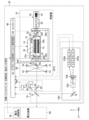
- FIG. 1 shows a schematic configuration of a laser device according to a comparative example.
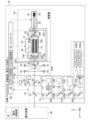
- FIG. 2 is a schematic diagram showing the configuration of the laser device according to the first embodiment.
- FIG. 3 shows a schematic configuration of a slide mechanism for moving the beam splitter.
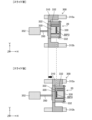
- FIG. 4 is a diagram showing the state before and after the beam splitter is slid by the slide mechanism.
- FIG. 5 is a flowchart showing an example of a method for determining deterioration of a beam splitter.
- FIG. 6 is an explanatory diagram of a method for calculating parameters from two-dimensional data of light intensity.
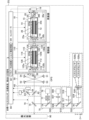
- FIG. 7 is a schematic diagram showing the configuration of a laser device according to the second embodiment.
- FIG. 8 is a plan view showing a schematic configuration of a beam expander to which a slide mechanism is added.
- FIG. 9 is a cross-sectional view taken along line 9-9 in FIG.
- FIG. 10 is a plan view that shows a schematic configuration of an output coupling mirror to which a slide mechanism is added.
- FIG. 11 is a side view including a partial cross section as seen from the V direction in FIG.
- FIG. 12 is a diagram showing the state before and after the beam expander is slid by the slide mechanism.
- FIG. 13 is a diagram showing the state before and after the output coupling mirror is slid by the slide mechanism.
- FIG. 14 is a flowchart illustrating an example of a method for determining deterioration of an optical element in a laser apparatus according to the second embodiment.
- FIG. 15 is a schematic diagram showing a configuration of a laser device according to the third embodiment.
- FIG. 16 is an explanatory diagram of a method for calculating parameters from two-dimensional data of light intensity.
- FIG. 17 is a schematic diagram showing a configuration of a laser device according to a first modification of the third embodiment.
- FIG. 18 shows an example of a pulse waveform obtained by a biplanar phototube.
- FIG. 19 is a flowchart showing an example of a method for determining deterioration of a beam splitter based on a pulse time width.
- FIG. 20 is a schematic diagram showing a configuration of a laser device according to a second modification of the third embodiment.
- FIG. 21 is a schematic diagram showing a configuration of a laser device according to the fourth embodiment.
- FIG. 22 is a schematic diagram showing the configuration of a laser device according to the fifth embodiment.
- FIG. 23 shows a schematic configuration example of an exposure apparatus.
- Embodiment 3 5.1 Configuration 5.2 Operation 5.3 Example of deterioration judgment 5.4 Actions and effects 5.5 Other 5.6 Modification 1 5.6.1 Configuration 5.6.2 Operation 5.6.3 Effects and advantages 5.7 Modification 2 5.7.1 Configuration 5.7.2 Operation 5.7.3 Effects and advantages 5.8 Others 6.
- Embodiment 5 7.1 Configuration 7.2 Operation 7.3 Actions and Effects 7.4 Modifications 8. Comparison of Output Data of Beam Measurement Devices 9. Modifications of Laser Devices 10.
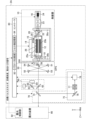
- FIG. 1 shows a schematic configuration of a laser device 2 according to the comparative example.
- the comparative example of the present disclosure is a form that the applicant recognizes as being known only by the applicant, and is not a publicly known example that the applicant acknowledges.
- the laser device 2 is an excimer laser device including an oscillator 10, an optical pulse stretcher (OPS) 50, a monitor module 60, a beam measurement device 70, and a controller 80.
- OPS optical pulse stretcher
- the OPS 50 and monitor module 60 are arranged in this order on the optical path of the pulsed laser light output from the oscillator 10.
- the oscillator 10 includes a chamber 12, a charger 14, a pulsed power module (PPM) 15, an LNM 16, an output coupling mirror 18, a base 19, a beam expander 20, and a mount 22.
- PPM pulsed power module
- the LNM 16 includes a prism 23 and a grating 24, and an actuator (not shown) that changes the angle of the prism 23 or grating 24 is connected to the controller 80.
- the output coupling mirror 18 and the LNM 16 form an optical resonator, and the chamber 12 is placed on the optical path of this optical resonator.
- the chamber 12 is a laser chamber including a pair of discharge electrodes 25a, 25b, an insulating member 26, a front window 27, and a rear window 28.
- the chamber 12 is filled with a laser gas capable of oscillating an ArF laser, a KrF laser, a XeCl laser, or a XeF laser.
- Discharge electrode 25a and discharge electrode 25b are arranged opposite each other with a predetermined gap between them. Discharge electrode 25a is connected to the high-voltage output line of PPM 15 via insulating member 26. Discharge electrode 25b is connected to ground. The space between discharge electrode 25a and discharge electrode 25b becomes the discharge space.
- the front window 27 and rear window 28 are positioned so that the pulsed laser light generated in the discharge space can pass through.
- the PPM 15 includes a switch (not shown) and is connected to a line that transmits an ON signal for the switch from the controller 80.
- the charger 14 is connected to the controller 80 and the PPM 15 so as to receive charging voltage data from the controller 80 and supply a high voltage to charge the charging capacitor of the PPM 15.
- the beam expander 20 is disposed between the rear window 28 and the LNM 16, and is fixed to the cavity plate 30a via a mount 22.
- the output coupling mirror 18 is fixed to the cavity plate 30b via a base 19.
- OPS 50 includes concave mirrors 51-54 and a beam splitter 56.
- the delay optical path length of OPS 50 is set to L.
- Beam splitter 56 is disposed on the optical path of the pulsed laser light, and is coated with a film that reflects part of the pulsed laser light and transmits the other part.
- the reflectance of beam splitter 56 is preferably about 60%.
- the concave mirrors 51 to 54 are all concave mirrors with approximately the same focal length f.
- the concave mirrors 51 to 54 are arranged to satisfy the following relationship. That is, the laser light reflected by the beam splitter 56 is reflected by the concave mirrors 51 and 52 to form a first image of the beam splitter 56 inverted, and is then reflected by the concave mirrors 53 and 54 back to the beam splitter 56 to form a second image in the normal direction.
- the delay optical path length L is 8f.
- An amplifier including a laser chamber may be arranged between the oscillator 10 and the OPS 50.
- the monitor module 60 is disposed on the optical path of the pulsed laser light output from the OPS 50, and includes a beam splitter 62, a beam splitter 63, a pulse energy meter 64, and a spectrum meter 65.
- the pulse energy meter 64 and the spectrum meter 65 are connected to lines that transmit their respective detection data to the controller 80.
- the pulsed laser light output from the laser device 2 is input to the exposure device 90.
- the controller 80 is connected to an exposure control unit 92 of the exposure device 90 via a communication line.
- the controller 80 receives target pulse energy data, a target wavelength, a light emission trigger signal, and other signals from the exposure control unit 92 via the communication line.
- the processor is a processing device that includes a storage device in which a control program is stored and a CPU that executes the control program.
- the processor is specially configured or programmed to execute the various processes included in this disclosure.
- the beam measurement device 70 includes a beam splitter 74 and an intensity distribution measurement unit 75.
- the beam splitter 74 is disposed on the optical path of the pulsed laser light that has passed through the beam splitter 62.
- the surface of the beam splitter 74 may be coated with a multilayer film that provides the same reflectance for P-polarized light and S-polarized light.
- the other surface of the beam splitter 74 may be coated with an AR coating (anti-reflection film).
- the intensity distribution measurement unit 75 includes a high-reflection mirror 76, a transfer optical system 77, and an image sensor 78.
- the high-reflection mirror 76 is disposed on the optical path of the reflected light from the beam splitter 74.
- the surface of the high-reflection mirror 76 may be coated with a multilayer film that provides the same reflectance for P-polarized light and S-polarized light.
- the transfer optical system 77 includes multiple lenses, and is disposed on the optical path of the reflected light from the high-reflection mirror 76.
- the image sensor 78 may be a camera including a two-dimensional CCD (Charge Coupled Device) element, and the CCD element may be positioned at the position of the image transferred by the transfer optical system 77 with the laser beam.
- CCD Charge Coupled Device
- the controller 80 is connected to the control signal line of the electronic shutter of the image sensor 78 so as to send a trigger signal for the electronic shutter of the image sensor 78 in synchronization with the light emission trigger signal from the exposure device 90.
- the laser device 2 may have a shutter (not shown) disposed on the optical path of the pulsed laser light between the beam splitter 74 and the exposure device 90. The opening and closing of this shutter is controlled by the controller 80.
- the controller 80 receives a target pulse energy, a target wavelength, and an emission trigger signal from the exposure control unit 92.
- the controller 80 turns on the switch of the PPM 15 in synchronization with the emission trigger signal received at a predetermined repetition frequency, a high voltage is applied between the discharge electrodes 25a, 25b of the oscillator 10. This causes a discharge to occur between the discharge electrodes 25a, 25b, exciting the excimer laser gas.
- the direction of travel of the pulsed laser light output from the output coupling mirror 18 is the Z direction.
- the direction parallel to the discharge direction between the discharge electrodes 25a, 25b is the V direction
- the direction perpendicular to the V direction and the Z direction is the H direction.
- the pulsed laser light output from the output coupling mirror 18 is expanded to a predetermined pulse width by passing through the delay optical path of the OPS 50 multiple times.
- a portion of the pulsed laser light that passes through OPS 50 is reflected by beam splitter 62, and a portion of the pulsed laser light reflected by beam splitter 62 is reflected by beam splitter 63, and the pulse energy is measured by pulse energy measuring instrument 64.
- the wavelength of the pulsed laser light that passes through beam splitter 63 is measured by spectrometer 65.
- the controller 80 controls the charger 14 based on the information obtained from the monitor module 60 so that the difference between the target energy and the measured pulse energy approaches zero.
- the controller 80 also controls the LNM 16 so that the difference between the target wavelength and the measured wavelength approaches zero.
- a pulsed laser beam is output from the oscillator 10
- the pulse width of the pulsed laser beam is expanded by the OPS 50
- a pulsed laser beam having a pulse energy close to the target pulse energy and a wavelength close to the target wavelength is output from the laser device 2.
- the pulsed laser light output from the laser device 2 enters the exposure device 90, where the pulsed laser light is irradiated onto a resist such as a semiconductor wafer (not shown).
- a pulsed laser beam is output from the laser device 2 based on this light emission trigger signal.
- the controller 80 also outputs a closing signal to the shutter of the image sensor 78 in synchronization with the light emission trigger signal, and acquires image data from the image sensor 78.
- the controller 80 determines the light intensity distribution (beam intensity distribution) of the pulsed laser beam from the image data, which is the output data of the image sensor 78.
- the laser device 2 according to the comparative example can obtain the light intensity distribution of the pulsed laser beam by using the beam measurement device 70.
- the controller 80 can detect a deterioration in beam quality by monitoring the light intensity distribution of the pulsed laser beam.
- the laser device 2 according to the comparative example has the following problem. That is, although it is possible to detect a decrease in the beam quality of the pulsed laser light output from the laser device 2, it is difficult to determine the deterioration of each optical element arranged on the laser light path in the laser device 2. For this reason, the optical elements in the laser device 2 have a set lifespan managed by the number of shots and operating time, and are replaced early before their lifespan is reached. In this way, with the method of uniformly replacing optical elements before the end of their lifespan based on the number of shots and operating time, there are cases where optical elements are replaced even though they are actually in a usable state. From the viewpoint of reducing the frequency of replacement of optical elements, it is an issue to provide a laser device that can determine whether or not an optical element has actually deteriorated.
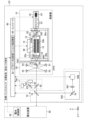
- FIG. 2 shows a schematic configuration of the laser device 2A according to the first embodiment.
- the laser device 2A will be described with respect to differences from the laser device 2 shown in FIG. 1.
- the laser device 2A according to the first embodiment includes a slide mechanism 200 for moving the beam splitter 56 of the OPS 50.
- the beam splitter 56 is located immediately after the output coupling mirror 18, and a pulsed laser beam with a pulse width that is not expanded is incident thereon. For this reason, the beam splitter 56 is exposed to a laser beam with a very high optical intensity even in the laser device 2A, and is one of the optical elements that deteriorate at a relatively high rate.
- FIG. 2 shows an example in which the slide mechanism 200 is provided on the beam splitter 56 of the OPS 50, but the present invention is not limited to this example, and other optical elements arranged on the optical path of the laser beam may be made slidable.
- the controller 80 of the laser device 2A also includes a parameter comparison unit 82 and a shot number storage unit 84.
- the parameter comparison unit 82 performs processing to compare parameters calculated from the output data of the beam measurement device 70 before and after the movement of the beam splitter 56 by the slide mechanism 200.
- the shot number memory unit 84 is a memory unit for recording the number of shots of pulsed laser light irradiated to each used portion of the slidable optical element.
- the slidable optical element in the laser device 2A is the beam splitter 56.
- the "used portion” is a part of the area of the optical element, and is the area (site) that is actually irradiated with pulsed laser light and used.
- the "used portion” may also be expressed as "used area,” "used site,” “used position,” or "beam irradiation position.”
- the used portion of the beam splitter 56 can be changed by moving the beam splitter 56 with the slide mechanism 200.
- the term “number of shots” may also be expressed as the number of pulses.
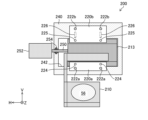
- FIG. 3 shows a schematic configuration of the slide mechanism 200.
- FIG. 3 is a view from a direction parallel to the optical path axis of the laser light passing through the beam splitter 56 (Z direction).
- the slide mechanism 200 is an example of a "moving mechanism" in this disclosure.
- the slide mechanism 200 includes a BS holder 210 that holds a beam splitter (BS) 56, a plate 213, plate holders 220a and 220b, a case 240, an actuator 252 with a rod 250, and an O-ring 254 as a rod seal.
- BS beam splitter
- Beam splitter 56 is fixed to BS holder 210, which is fixed to plate 213. Beam splitter 56 is positioned such that the optical surface onto which the pulsed laser light output from oscillator 10 is incident is inclined at 45 degrees to the optical path axis of the pulsed laser light.
- Case 240 is a container that houses concave mirrors 51 to 54 of OPS 50. In Figure 3, only a portion of the wall of case 240 is shown.
- the plate 213 is in contact with the case reference surface 242, and can be slid in the left-right direction (H direction) in FIG. 3 along the case reference surface 242.
- the case reference surface 242 is a reference surface provided on the case 240, and is a surface perpendicular to the V direction.
- the case reference surface 242 is the surface that defines the reference position of the beam splitter 56 in the V direction.
- the plate holders 220a and 220b are fixed to the case 240 using bolts 222a and 222b, and hold the plate 213 slidably in the H direction.
- Plunger 224 acting in the Z direction is attached to plate holder 220a.
- Plunger 225 acting in the Z direction and plunger 226 acting in the V direction are attached to plate holder 220b.
- Plungers 224 and 225 press plate 213 against a reference surface (not shown) on the case 240 side.
- Plunger 226 presses plate 213 against case reference surface 242. This allows plate 213 to slide in the H direction while maintaining its position in the V direction and Z direction.
- the H direction is sometimes called the sliding direction.
- Actuator 252 is disposed outside case 240, and can apply force to plate 213 from outside case 240 via rod 250 to move plate 213 in the H direction.
- Rod 250 extending from actuator 252 passes through a through hole formed in case 240 and connects to plate 213.
- a sealing O-ring 254 that keeps case 240 airtight is disposed in the through hole, and rod 250 can move in the H direction in contact with O-ring 254.
- the actuator 252 is connected to a controller 80 (see FIG. 2), and the actuator 252 is controlled by the controller 80.
- the actuator 252 is driven to move the rod 250 forward and backward in the H direction.
- FIG. 4 is a diagram showing the state before and after beam splitter 56 is slid by slide mechanism 200.
- the upper diagram in FIG. 4 shows the state before sliding, i.e., the state where beam splitter 56 is placed in the first position.
- the lower diagram in FIG. 4 shows the state after sliding, i.e., the state where beam splitter 56 is placed in the second position by slide mechanism 200. Note that the terms "before sliding” and “after sliding” are synonymous with “before movement” and "after movement.”
- beam splitter 56 when the beam splitter 56 is first used, it is placed in the first position as shown in the upper diagram of FIG. 4.
- the area where the pulsed laser light is irradiated onto the beam splitter 56 placed in the first position is illustrated as beam irradiation position BIP1.
- This beam irradiation position BIP1 is an example of the "first portion" in this disclosure.
- the beam irradiation position BIP1 is a portion to the left of the center of the beam splitter 56.
- Beam splitter 56 is used to irradiate pulsed laser light onto beam irradiation position BIP1, and controller 80 counts the number of shots onto beam irradiation position BIP1.
- the controller 80 determines whether the beam irradiation position BIP1, which is the used portion of the beam splitter 56, has deteriorated.
- beam splitter 56 When this deterioration determination is made, the beam splitter 56 is moved from the first position to the second position as shown in the lower diagram of FIG. 4.
- the area where the pulsed laser light is irradiated on the beam splitter 56 arranged in the second position is illustrated as beam irradiation position BIP2.
- This beam irradiation position BIP2 is an example of the "second portion" in this disclosure.
- the beam irradiation position BIP2 is a portion to the right of the center of the beam splitter 56.
- the beam irradiation position BIP2 is a portion that is used less frequently than the beam irradiation position BIP1, and can be considered to be a portion that is essentially unused. In other words, a determination of whether a portion of the beam splitter 56 that is used frequently is deteriorated or not is made by comparing it with a portion that is used less frequently (a portion that is not deteriorated).
- Adjustment oscillation is an operation in which laser light is oscillated without outputting laser light to the exposure device 90 in order to adjust the operating parameters of the laser device 2A.
- the laser device 2A is configured to have a shutter (not shown) in the output section.
- Step 1 Assume that the number of shots of pulsed laser light irradiated to the beam splitter 56 has progressed before the plate 213 is slid. For example, assume that the number of shots at the beam irradiation position BIP1 before the slide exceeds 30 billion pulses (Bpls).
- Step 2 In the state of Step 1, the beam measurement device 70 measures the light intensity distribution of the beam cross section of the pulsed laser light. At this time, two-dimensional data I(x, y) of the light intensity of the pulsed laser light, i.e., an image showing the light intensity distribution, is obtained from the image sensor 78. Since the beam measurement device 70 performs beam measurement of the pulsed laser light propagating through the beam splitter 56, the state of the beam splitter 56 is reflected in the output data of the beam measurement device 70.
- Step 3 Slide plate 213 using actuator 252 to shift the beam irradiation position of beam splitter 56. For example, as shown in FIG. 4, move from beam irradiation position BIP1 to beam irradiation position BIP2.
- Step 4 After the beam irradiation position is shifted, the number of shots is not increased. For example, the number of shots for beam irradiation position BIP2 is 0 Bpls.
- the intensity distribution measurement unit 75 of the beam measurement device 70 measures the light intensity distribution of the beam cross section of the pulsed laser light. At this time, two-dimensional data I(x, y) of the light intensity of the pulsed laser light, that is, an image showing the light intensity distribution, is obtained from the image sensor 78.
- the controller 80 compares parameters obtained from images before and after shifting the beam irradiation position to determine deterioration of the beam splitter 56 at the beam irradiation position BIP1, which is the used portion before sliding.
- the parameters obtained from the images are parameters that indicate the beam state, such as the beam widths (BPH, BPV) in the H and V directions and the beam cross-sectional area.
- the controller 80 may calculate multiple parameters that serve as indices for evaluating the beam quality.
- the parameter comparison unit 82 determines deterioration of the beam splitter 56 based on the parameters calculated from the images before and after sliding.
- Step 6 If the result of the judgment in step 5 indicates that the beam splitter 56 has deteriorated at the beam irradiation position BIP1 before the slide, use of the beam splitter 56 is started at the beam irradiation position BIP2 after the slide. On the other hand, if the result of the judgment in step 5 indicates that the beam irradiation position BIP1 before the slide has not deteriorated (if it is determined that it has not deteriorated), it is possible to continue using the beam irradiation position BIP1, so the beam splitter 56 is returned to its original position (first position), and use of the beam splitter 56 is resumed with the pulsed laser light irradiated at the beam irradiation position BIP1.
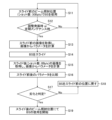
- FIG. 5 is a flowchart showing an example of a method for determining deterioration of the beam splitter 56.
- step S11 the beam splitter 56 is used at the beam irradiation position BIP1 before the slide.
- the beam splitter 56 may continue to be used in the first position until the number of shots exceeds 30 Bpls.
- step S12 the controller 80 determines whether it is time for adjustment oscillation or for regular maintenance. If the determination result in step S12 is No, the controller 80 returns to step S11.
- step S12 determines whether the determination result in step S12 is a Yes determination. If the determination result in step S12 is a Yes determination, the controller 80 proceeds to step S13.
- step S13 the controller 80 acquires an image showing the light intensity distribution of the beam before sliding from the beam measurement device 70, and calculates parameters showing the beam state from this image.
- the image acquired in step S13 is an example of the "first output data" in this disclosure.
- the output voltage during laser oscillation may be kept constant so that measurements can be performed with a beam under the same conditions before and after the slide.
- the number of accumulated pulses per image data may be kept constant, for example, 10 pulses, so that the measurement conditions of the beam measurement device 70 are constant.
- step S14 the controller 80 operates the actuator 252 to slide the beam splitter 56 to the second position.
- step S15 an image showing the light intensity distribution of the beam after this sliding state is obtained from the beam measurement device 70, and parameters are calculated from this image.
- the image obtained in step S15 is an example of the "second output data" in this disclosure.
- the beam irradiation position BIP2 of the beam splitter 56 in this post-sliding state is clearly an area that has not deteriorated, and can be considered to be a substantially unused area.
- the number of shots at the beam irradiation position BIP2 is assumed to be 0 Bpls. Note that in the second position, not only may the number of shots be 0, but it may also be a situation in which a number of shots that clearly will not result in deterioration, for example, a number of shots less than 1 Bpls, has been counted.
- a calculation example of the parameters calculated from the output data of the beam measurement device 70 will be described later.
- step S16 the controller 80 compares the parameters before and after the slide.
- step S17 the controller 80 determines whether or not there is deterioration based on the comparison result in step S16. If the determination result in step S17 is No, the controller 80 proceeds to step S18. In step S18, the controller 80 returns the beam splitter 56 to the position before it was slid, and returns to step S11.
- step S17 If the result of the determination in step S17 is Yes, the controller 80 proceeds to step S19.
- step S19 the controller 80 starts using the beam splitter 56 at the beam irradiation position after the slide.
- FIG. 5 shows the deterioration determination flow for the beam splitter 56
- the operation is not limited to that of the flowchart shown in FIG. 5, and for example, the cross-sectional intensity distribution measurement of the laser light by the beam measurement device 70 may be performed while the laser light is being output to the exposure device 90 (the shutter of the output section is open). In that case, during adjusted oscillation, etc., it is preferable to perform the operations from step S13 onwards in the flowchart shown in FIG. 5. Furthermore, a parameter may be calculated while the laser light is being output to the exposure device 90, and if it is below a reference value, an adjusted oscillation may be requested from the exposure device 90, and a deterioration determination may be made during adjusted oscillation to attempt to improve the parameter by sliding the optical element. Here, it is preferable to determine the reference value in advance by experiment, etc.
- Fig. 6 is an explanatory diagram of a method for calculating parameters from two-dimensional data of light intensity.
- the two-dimensional data of light intensity I(x, y) shown in the center of Fig. 6 is an example of image data acquired via the image sensor 78.
- x is the H-direction coordinate
- y is the V-direction coordinate.
- the controller 80 first creates cross-sectional data for calculating the beam width from the two-dimensional data of the light intensity I(x, y).
- the controller 80 integrates and averages the light intensity in the V direction, which has the same H direction coordinate, to obtain the H direction cross-sectional data.
- the controller 80 integrates and averages the light intensity in the H direction, which has the same V direction coordinate, to obtain the V direction cross-sectional data.
- the width of the light intensity at a height of 1/ e2 of the peak intensity (1/ e2 width) may be calculated, where e is Napier's constant. That is, the beam width BPH in the H direction may be the width of the light intensity at a height of 1/ e2 of the peak intensity I0 (H) of the H direction cross-sectional data. Similarly, the beam width BPV in the V direction may be the width of the light intensity at a height of 1/ e2 of the peak intensity I0 (V) of the V direction cross-sectional data.
- the controller 80 may binarize the two-dimensional data of the light intensity I(x, y) at a predetermined intensity and measure the width in the H and V directions.
- the controller 80 may calculate the area of the light intensity region from 1/ e2 of the peak intensity to the peak intensity in the cross-sectional data in the H and V directions, and use this as the beam cross-sectional area.
- the controller 80 may calculate the width or area of a certain ratio of the peak intensity, for example, 5% to 10% of the peak intensity.
- the two-dimensional data may be binarized at a predetermined intensity to calculate the beam cross-sectional area.
- the controller 80 may calculate the center of gravity (COG) in each of the H and V directions from the light intensity I(x, y) which is two-dimensional data, where the coordinate in the H direction is x and the coordinate in the V direction is y.
- the center of gravity COG(H) in the H direction and the center of gravity COG(V) in the V direction are defined as the following equations [Equation 1] and [Equation 2].
- the controller 80 may also calculate a central difference in the H direction from the difference between the center of gravity COG(H) in the H direction and the central position of the beam width BPH in the H direction. Similarly, the controller 80 may calculate a central difference in the V direction from the difference between the center of gravity COG(V) in the V direction and the central position of the beam width BPV in the V direction.
- a value ⁇ used as a condition for judgment may be set to a value greater than 1, and if the beam width before the slide is greater than ⁇ times the beam width after the slide, it may be judged that the portion of beam splitter 56 that was used before the slide (beam irradiation position BIP1) has deteriorated.
- the controller 80 may determine that there is deterioration when both of the following expressions (1) and (2) are satisfied.
- ⁇ in the expression may be, for example, 1.05.
- the pre-slide BPH and the post-slide BPH are examples of "BPH1" and “BPH2" in the present disclosure.
- the pre-slide BPV and the post-slide BPV are examples of "BPV1" and "BPV2" in the present disclosure.
- ⁇ which is a value used as a condition for judgment, may be set to a value smaller than 1, and if the beam cross-sectional area calculated from the image before sliding is smaller than ⁇ times the beam cross-sectional area calculated from the image after sliding, it may be judged that the portion of the beam splitter 56 used before sliding has deteriorated. That is, the controller 80 may judge that deterioration has occurred when the following formula (3) is satisfied.
- Beam cross-sectional area before sliding ⁇ Beam cross-sectional area after sliding ⁇ ⁇ (3)
- ⁇ may be, for example, 0.90.
- ⁇ which is a value used as a condition for judgment, may be set to a value greater than 0, and if the absolute value of the difference between the central difference calculated from the image before sliding and the central difference calculated from the image after sliding is greater than ⁇ , it may be judged that the part of the beam splitter 56 used before sliding has deteriorated. That is, the controller 80 may judge that deterioration has occurred when the following formula (4) is satisfied.
- ⁇ may be, for example, 0.5 mm.
- the first embodiment has the following effects.
- the laser device 2A according to embodiment 1 has the following advantages over existing technology that acquires image data representing the state of the beam and determines the state (presence or absence of degradation) of the optical elements in the laser device 2 by template matching with image data representing known degradation modes.
- the beam splitter 56 is used at two locations, the beam irradiation position BIP1 and the beam irradiation position BIP2.
- the number of locations in the optical element area is not limited to two, and may be three or more.
- the slide mechanism 200 is provided on the beam splitter 56 of the OPS 50, but the present invention is not limited to this, and a slide mechanism may be provided on each of a plurality of optical elements.
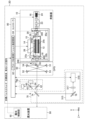
- FIG. 7 shows a schematic configuration of a laser device 2B according to embodiment 2. The differences between the laser device 2B according to embodiment 2 and embodiment 1 will be described.
- the laser device 2B shown in FIG. 7 has a configuration in which slide mechanisms 300, 400 with actuators are added to the beam expander 20 and the output coupling mirror 18. That is, the slide mechanism 300 is provided in place of the mount 22 shown in FIG. 2, and the slide mechanism 400 is provided in place of the base 19.
- the actuators of the slide mechanisms 300 and 400 are connected to the controller 80.
- the other configurations may be the same as those of the first embodiment.
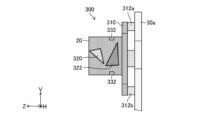
- FIG. 8 is a plan view showing the schematic configuration of the beam expander 20 to which the slide mechanism 300 has been added.
- FIG. 9 is a cross-sectional view taken along line 9-9 in FIG. 8.
- the beam expander 20 equipped with the slide mechanism 300 includes a prism base 310, linear guides 312a, 312b, prisms 320, 322, a pressing plate 330, a support 332, and an actuator 352 equipped with a rod 350.
- the prism base 310 is held by linear guides 312a, 312b arranged parallel to each other on the cavity plate 30a.
- the linear guides 312a, 312b are arranged parallel to each other along the H direction and are fixed onto the cavity plate 30a.
- the relative positions of the prisms 320 and 322 are determined by being sandwiched between the prism base 310 and the pressing plate 330.
- the prism base 310 and the pressing plate 330 are connected via a support 332.
- the actuator 352 slides the prism base 310 in the left-right direction (H direction) in FIG. 8 via the rod 350.
- the actuator 352 is connected to the controller 80.
- FIG. 10 is a plan view showing the schematic configuration of the output coupling mirror 18 to which a slide mechanism 400 has been added.
- FIG. 11 is a side view including a partial cross section as seen from the V direction in FIG. 10.
- the output coupling mirror 18 with the slide mechanism 400 includes an output coupling mirror base 410, a slide guide 412, a mirror holder mounting base 414, a mirror holder 420, an actuator 452 with a rod 450, and a case 460.
- the mirror holder 420 that holds the output coupling mirror 18 is fixed to the mirror holder mounting base 414.
- the mirror holder mounting base 414 is held by a slide guide 412 fixed on the output coupling mirror base 410, and is connected to the rod 450 of the actuator 452 arranged in the H direction.
- the actuator 452 is fixed to a case 460 positioned on the cavity plate 30b.
- the case 460 has a through hole through which the rod 450 passes.
- the output coupling mirror base 410 is fixed to the cavity plate 30b by three adjustment screws 464, and the angle with respect to the cavity plate 30b can be changed by adjusting the amount of screwing of each adjustment screw 464.
- FIG. 12 is a diagram showing the state before and after the beam expander 20 is slid by the sliding mechanism 300.
- the upper diagram in Fig. 12 shows the state before sliding, and the lower diagram shows the state after sliding.
- the sliding mechanism 300 can shift the irradiation position of the laser light on the beam expander 20 while maintaining the orientation of the light-incident surface of the beam expander 20 by sliding the prism base 310 in a direction parallel to the light-incident surface of the beam expander 20 by driving the actuator 352.
- the controller 80 drives the actuator 352 to slide the beam expander 20 together with the prism base 310 in the H direction.
- the beam expander 20 is initially placed in the first position when use begins.
- the area where the pulsed laser light is irradiated onto the beam expander 20 placed in the first position is illustrated as beam irradiation position BIP3.
- This beam irradiation position BIP3 is an example of the "first portion" in this disclosure.
- the beam expander 20 is used in a state where the pulsed laser light is irradiated onto the beam irradiation position BIP3, and the controller 80 counts the number of shots onto the beam irradiation position BIP3.
- the controller 80 determines whether the beam irradiation position BIP3, which is the used portion of the beam expander 20, has deteriorated.
- the beam expander 20 is moved from the first position to the second position as shown in the lower diagram of FIG. 12.
- the area where the pulsed laser light is irradiated onto the beam expander 20 disposed in the second position is illustrated as beam irradiation position BIP4.
- This beam irradiation position BIP4 is an example of the "second portion" in this disclosure.
- Beam irradiation position BIP4 is a portion that is used less frequently than beam irradiation position BIP3, and can essentially be considered an unused portion.
- the method for determining deterioration may be the same as that of the first embodiment. If the result of the determination is that the beam expander 20 has deteriorated at the beam irradiation position BIP3 before the slide, the beam expander 20 is used at the beam irradiation position BIP4 after the slide. On the other hand, if the result of the determination is that the beam irradiation position BIP3 before the slide is not deteriorated, the beam expander 20 is returned to its original position, and use of the beam expander 20 is resumed with the pulsed laser light irradiated at the beam irradiation position BIP3.
- FIG. 13 is a diagram showing the state before and after the output coupling mirror 18 is slid by the sliding mechanism 400.
- the upper diagram of Figure 13 is a diagram showing the state before sliding.
- the lower diagram of Figure 13 is a diagram showing the state after sliding.
- the sliding mechanism 400 can shift the irradiation position of the laser light on the output coupling mirror 18 while maintaining the orientation of the light-incident surface of the output coupling mirror 18 by sliding the mirror holder mounting base 414 in a direction parallel to the light-incident surface of the output coupling mirror 18 by driving the actuator 452.
- the controller 80 drives the actuator 452 to slide the output coupling mirror 18 together with the mirror holder mounting base 414 in the H direction.
- the output coupling mirror 18 is placed in the first position when it is first used, as shown in the upper diagram of FIG. 13.
- the area where the pulsed laser light is irradiated onto the output coupling mirror 18 placed in the first position is illustrated as beam irradiation position BIP5.
- the output coupling mirror 18 is moved from the first position to the second position as shown in the lower diagram of FIG. 13.
- the area where the pulsed laser light is irradiated on the output coupling mirror 18 placed in the second position is illustrated as beam irradiation position BIP6.
- the output coupling mirror 18 is used at the beam irradiation position BIP6 after the slide.
- the output coupling mirror 18 is returned to its original position and use is resumed.
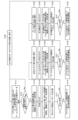
- FIG. 14 is a flowchart showing an example of a method for determining deterioration of optical elements in the laser device 2B according to embodiment 2.
- the optical elements to be determined are the beam splitter 56, the beam expander 20, and the output coupling mirror 18.
- step S111 the beam splitter 56, the beam expander 20, and the output coupling mirror 18 are each used in the beam irradiation position before the slide.
- the beam splitter 56, the beam expander 20, and the output coupling mirror 18 may continue to be used in their respective first positions until the number of shots exceeds 30 Bpls.
- Steps S112 to S119 may be the same as steps S12 to S19 in FIG. 5.
- the flowchart in FIG. 14 differs from step S18 in FIG. 5 in that in step S118, after returning the beam splitter 56 to the position before sliding, the controller 80 proceeds to step S124.
- step S124 the controller 80 slides the beam expander 20.
- step S125 an image showing the light intensity distribution of the beam is obtained from the beam measurement device 70 in the state after the beam expander 20 has been slid, and parameters are calculated from this image.
- the beam irradiation position BIP4 of the beam expander 20 in this post-sliding state (second position) is a portion that is clearly not degraded, and can be considered to be a portion that is essentially like new.
- the number of shots for the beam irradiation position BIP4 is, for example, 0 Bpls.
- step S126 the controller 80 compares the parameters before and after sliding the beam expander 20.
- step S127 the controller 80 determines whether the beam expander 20 has deteriorated.
- the method for determining deterioration may be the same as that for the beam splitter 56. If the determination result in step S127 is a Yes determination, the controller 80 proceeds to step S129.
- step S129 the controller 80 starts using the beam expander 20 at the beam irradiation position after sliding.
- step S127 If the determination result in step S127 is No, the controller 80 proceeds to step S128.
- step S1208 After returning the beam expander 20 to its pre-sliding position in step S128, the controller 80 proceeds to step S134.
- step S134 the controller 80 slides the output coupling mirror 18. Then, in step S135, after this sliding, an image showing the light intensity distribution of the beam is obtained from the beam measurement device 70, and parameters are calculated from the image.
- step S136 the controller 80 compares the parameters before and after sliding the output coupling mirror 18.
- step S137 the controller 80 determines whether the output coupling mirror 18 has deteriorated.
- the method for determining deterioration may be the same as that for the beam splitter 56. If the determination result in step S137 is a Yes determination, the controller 80 proceeds to step S139.
- step S139 the controller 80 starts using the output coupling mirror 18 at the beam irradiation position BIP6 after sliding.
- step S137 If the determination result in step S137 is No, the controller 80 proceeds to step S138.
- step S138 After returning the output coupling mirror 18 to its pre-sliding position in step S138, the controller 80 returns to step S111.
- the beam splitter 56 is slid in the order of [1] ⁇ [2] ⁇ [3] ⁇ [4]. This is for the following reason. That is, the deterioration rate of the optical element is considered to depend on the energy load, and the energy load is considered to be higher in the optical resonator.
- the beam splitter 56 is an optical element arranged downstream of the optical resonator, whereas the beam expander 20 and the output coupling mirror 18 are optical elements arranged in the optical resonator. That is, the energy load of the beam splitter 56 is considered to be the lowest among these three optical elements.
- the reflectance of the output coupling mirror 18 is about 20%, so the energy load on the output coupling mirror 18 is considered to be higher than that on the beam expander 20.
- the deterioration judgment is performed by sliding the multiple slidable optical elements (beam splitter 56, beam expander 20, and output coupling mirror 18) in order of deterioration rate, starting with the element with the slowest deterioration rate. Since the deterioration judgment is performed later on the optical element that is considered to have the fastest deterioration rate among the slidable optical elements, it is possible to identify the usable optical elements in order.
- FIG. 14 an example of performing a deterioration judgment for each of the optical elements of the beam splitter 56, the beam expander 20, and the output coupling mirror 18 has been described, but if an optical element with a low energy load is judged to be deteriorated and the number of shots used is similar, it can be said that there is a high possibility that the optical element with a high energy load is also deteriorated. Therefore, without performing a deterioration judgment for these optical elements with a high energy load, these optical elements may be slid together with the optical element confirmed to be deteriorated to change the place of use.
- step S119 since it is highly likely that the beam expander 20 and output coupling mirror 18 are also deteriorated, like the beam splitter 56, the controller 80 may also slide the beam expander 20 and output coupling mirror 18 and start using these optical elements at the beam irradiation positions BIP4 and BIP6 after sliding.
- step S129 since the output coupling mirror 18 is likely to be deteriorated like the beam expander 20, the controller 80 may also slide the output coupling mirror 18 and start using it at the beam irradiation position BIP6 after sliding.
- Embodiment 3 15 is a schematic diagram showing the configuration of a laser device 2C according to embodiment 3. The differences in the configuration of the laser device 2C from the laser device 2B (FIG. 7) according to embodiment 2 will be described.
- the laser device 2C has a beam divergence angle measurement unit 505 instead of the intensity distribution measurement unit 75 in the beam measurement device 70.
- the beam divergence angle measurement unit 505 includes a high-reflection mirror 76, a focusing optical system 507, and an image sensor 508.
- the focusing optical system 507 includes a lens and is disposed on the optical path of the reflected light from the high-reflection mirror 76.
- the focal length of the focusing optical system 507 is F.
- the image sensor 508 may be a camera including a two-dimensional CCD element, and the CCD element may be positioned at the position of the image formed by the laser beam focused by the focusing optical system 507.
- the controller 80 is connected to a control signal line for the electronic shutter of the image sensor 508 so as to send a trigger signal for the electronic shutter of the image sensor 508 in synchronization with the light emission trigger signal from the exposure device 90.
- the other configuration may be the same as that of the laser device 2B shown in FIG. 7. Note that, instead of the slide mechanisms 300 and 400, a base 19 and a mount 22 may be used as in the laser device 2A shown in FIG. 2.
- the controller 80 outputs a trigger signal to the electronic shutter of the image sensor 508 in synchronization with the light emission trigger signal, and acquires image data from the image sensor 508.
- the controller 80 obtains the beam divergence angle as a parameter from the image data from the image sensor 508.
- the flowchart shown in FIG. 5 is also applicable to the laser device 2C according to the third embodiment.
- the parameters calculated in steps S15 to S17 in the laser device 2C and the method of determining deterioration using the parameters are different from those in the laser device 2A according to the first embodiment.
- FIG. 16 is an explanatory diagram of a method for calculating parameters from two-dimensional data of light intensity obtained from the image sensor 508.
- the two-dimensional data of light intensity I(x, y) shown in the center of FIG. 16 is an example of image data acquired via the image sensor 508.
- the controller 80 first creates cross-sectional data for calculating the beam divergence angle from the two-dimensional data of the light intensity I(x, y).
- the controller 80 integrates and averages the light intensity in the V direction, which has the same H direction coordinate, to obtain the H direction cross-sectional data.
- the controller 80 integrates and averages the light intensity in the H direction, which has the same V direction coordinate, to obtain the V direction cross-sectional data.
- the width of light intensity at a height of 1/ e2 of the peak intensity (1/ e2 width) may be calculated for each of the cross-sectional data in the H direction and the V direction. That is, the beam width Wh in the H direction may be the width of light intensity at a height of 1/ e2 of the peak intensity I0 (H) of the H direction cross-sectional data. Similarly, the beam width Wv in the V direction may be the width of light intensity at a height of 1/ e2 of the peak intensity I0 (V) of the V direction cross-sectional data.
- the controller 80 may binarize the two-dimensional data of light intensity I(x, y) at a predetermined intensity and measure the width in the H and V directions.
- the beam divergence angle ( ⁇ ) may be calculated using the width (W) of the light intensity calculated by the above method and the focal length (F) of the lens of the focusing optical system 507, as shown in the following formula (5).
- the beam divergence angle BDH in the H direction and the beam divergence angle BDV in the V direction may be calculated according to the following formulas (6) and (7), respectively.
- BDH 2 ⁇ tan -1 (0.5 ⁇ Wh/F) (6)
- BDV 2 ⁇ tan -1 (0.5 ⁇ Wv/F) (7)
- a value ⁇ used as a condition for judgment may be set to a value greater than 1, and if the beam divergence angle before the slide is greater than ⁇ times the beam divergence angle after the slide, it may be judged that the portion of beam splitter 56 (beam irradiation position BIP1), which is the portion used before the slide, has deteriorated.
- the controller 80 may determine that deterioration has occurred if both of the following formulas (8) and (9) are satisfied.
- ⁇ in the formula may be, for example, 1.05.
- the pre-sliding BDH and the post-sliding BDH are examples of "BDH1" and “BDH2" in the present disclosure.
- the pre-sliding BDV and the post-sliding BDV are examples of "BDV1" and "BDV2" in the present disclosure.
- Fig. 5 shows a flow of determining deterioration of the beam splitter 56, but the deterioration determination based on the beam divergence angles (BDH, BDV) may be performed for the beam expander 20 or the output coupling mirror 18. Also, in the laser device 2C, a flow similar to that in the second embodiment (Fig. 14) may be applied.
- Modification 1 17 is a schematic diagram showing the configuration of a laser device 2D according to a first modification of the embodiment 3.
- the laser device 2D will be described with respect to differences from the laser device 2C (FIG. 15) according to the embodiment 3.
- the laser device 2D has a pulse time width measurement unit 515 in place of the beam divergence angle measurement unit 505 in the beam measurement device 70.
- the pulse time width measurement unit 515 includes a high reflection mirror 76, a diffuser plate 517, and a biplanar phototube 518.
- the diffuser 517 is placed on the optical path of the light reflected by the high-reflection mirror 76.
- the biplanar phototube 518 is placed at a position after the laser beam is diffused by the diffuser 517.
- the controller 80 is connected to the control signal line of the electronic shutter of the biplanar phototube 518 so as to send a trigger signal for the electronic shutter of the biplanar phototube 518 in synchronization with the light emission trigger signal from the exposure device 90.
- the other configurations may be the same as those of the laser device 2B shown in FIG. 7. Note that instead of the slide mechanisms 300, 400, a base 19 and a mount 22 may be used as in the laser device 2A shown in FIG. 2.
- the controller 80 outputs a trigger signal to the electronic shutter of the biplanar phototube 518 in synchronization with a light emission trigger signal from the exposure device 90, and acquires a light intensity time waveform from the biplanar phototube 518.
- the controller 80 obtains the pulse time width of the beam from the light intensity time waveform (pulse waveform) of the pulsed laser light.
- Figure 18 is an example of a pulse waveform obtained by the biplanar phototube 518.
- the horizontal axis represents time, and the vertical axis represents light intensity.
- An example of a pulse waveform is the time distribution of the light intensity of a beam. If the light intensity of the beam at a certain time t is I(t), the pulse time width is TIS (Time Integral Square) and is calculated as shown in the following equation [Equation 3] using the square of the time integral of the light intensity I(t) and the time integral of the square of the light intensity I(t).
- TIS Time Integral Square
- the pulse time width calculated as the TIS is an example of a parameter calculated from a pulse waveform, which is output data from the beam measurement device 70.
- FIG. 19 is a flowchart showing an example of a method for determining deterioration of the beam splitter 56 based on the pulse time width. Steps S21 and S22 in FIG. 19 are similar to steps S11 and S12 in FIG. 5.
- step S23 the controller 80 acquires the pre-slide pulse waveform from the beam measurement device 70 and calculates parameters from this pulse waveform.
- the TIS is calculated as a parameter.
- Step S24 is the same as step S14 in FIG. 5, and the controller 80 drives the actuator 252 to slide the beam splitter 56.
- step S25 the controller 80 obtains the pulse waveform after the slide from the beam measurement device 70, and calculates parameters from this pulse waveform.
- the pre-slide TIS is calculated in step S23
- the post-slide TIS is calculated in step S25.
- step S26 the controller 80 compares the parameters before and after the slide.
- step S27 for example, the controller 80 may determine that the used portion before the slide has deteriorated if the following formula (10) is satisfied.
- ⁇ in the formula may be, for example, 0.9.
- Steps S28 and S29 are similar to steps S18 and S19 in FIG.
- Modification 2 20 is a schematic diagram showing the configuration of a laser device 2E according to Modification 2 of Embodiment 3.
- the laser device 2E will be described with respect to differences from the laser device 2C (FIG. 15) according to Embodiment 3.
- the laser device 2E has a polarization measurement unit 520 in place of the beam divergence angle measurement unit 505 in the beam measurement device 70.
- the polarization measurement unit 520 includes a high-reflection mirror 76, a Rochon prism 524, a focusing optical system 526, and energy sensors 528a and 528b.
- the Rochon prism 524 and the focusing optical system 526 are disposed on the optical path of the light reflected by the high-reflection mirror 76.
- the energy sensors 528a and 528b are disposed so that they can separately receive the H-direction polarized component of light and the V-direction polarized component of light separated by the Rochon prism 524.
- the controller 80 is connected to the control signal lines of the electronic shutters of the energy sensors 528a and 528b so as to send electronic shutter trigger signals to the energy sensors 528a and 528b in synchronization with the light emission trigger signal from the exposure device 90.
- the other configurations may be the same as those of the laser device 2B shown in FIG. 7. Note that instead of the slide mechanisms 300 and 400, a base 19 and a mount 22 may be used as in the laser device 2A shown in FIG. 2.
- a pulsed laser beam is output from the oscillator 10 , and passes through the beam splitters 56 , 62 , 74 and the high-reflection mirror 76 to enter the Rochon prism 524 .
- the light polarized in the V direction travels straight and is collected by the collecting optical system 526, and enters the light receiving element of the energy sensor 528a.
- the light polarized in the H direction is refracted and collected by the collecting optical system 526, and enters the light receiving element of the energy sensor 528b.
- the V direction is an example of a "first direction” in this disclosure
- the H direction is an example of a "second direction” in this disclosure.
- Energy data Pv obtained from energy sensor 528a and energy data Ph obtained from energy sensor 528b are input to controller 80.
- Controller 80 integrates the values of Ph and Pv during burst oscillation (Phsum, Pvsum), and when the burst stops, calculates the degree of polarization P from the following equation (11) based on the respective integrated values Phsum and Pvsum.
- the degree of polarization P may be used for judging deterioration of an element, instead of the beam width or the beam divergence angle.
- the controller 80 may determine that degradation has occurred when the following formula (12) is satisfied.
- ⁇ is a value smaller than 1, and may be, for example, 0.98.
- the output data of the beam measurement device 70 is the energy data Pv and Ph of the energy sensors 528a and 528b, and the parameter is the degree of polarization P.
- the deterioration determination based on the degree of polarization P may be performed not only on the beam splitter 56, but also on the beam expander 20 and the output coupling mirror 18.
- the degree of polarization P can also be measured by splitting the pulsed laser light into a V-direction polarized component and an H-direction polarized component by the Rochon prism 524 and detecting the energies of the respective polarized components by separate energy sensors 528a, 528b.
- the laser device 2E according to the second modification can provide the same effects as those of the first and second embodiments.
- FIG. 21 shows a schematic configuration of a laser device 2F according to the fourth embodiment.
- the laser device 2F will be described with respect to differences from the laser device 2C (FIG. 15) according to the third embodiment.
- the beam measurement device 70 of the laser device 2F may be configured to include any two or more of the intensity distribution measurement unit 75, the beam divergence angle measurement unit 505, the pulse time width measurement unit 515, and the polarization measurement unit 520. As shown in FIG. 21, the beam measurement device 70 may be configured to include all of the intensity distribution measurement unit 75, the beam divergence angle measurement unit 505, the pulse time width measurement unit 515, and the polarization measurement unit 520.
- the configurations of the intensity distribution measurement unit 75, beam divergence angle measurement unit 505, pulse time width measurement unit 515, and polarization measurement unit 520 are as described above. However, for the intensity distribution measurement unit 75, beam divergence angle measurement unit 505, and pulse time width measurement unit 515, the high reflection mirror 76 may be replaced with beam splitters 79, 506, and 516, as shown in FIG. 21.
- the image sensors 78, 508, biplanar phototube 518, and energy sensors 528a, 528b are connected to the controller 80.
- the other configurations may be the same as those of the laser device 2C shown in FIG. 15.
- the controller 80 may acquire information on any one of the beam width, beam divergence angle, TIS, and degree of polarization P before and after sliding based on measurement information obtained from any one of the intensity distribution measurement unit 75, the beam divergence angle measurement unit 505, the pulse time width measurement unit 515, and the polarization measurement unit 520, and may perform deterioration judgment using a combination of these pieces of information.
- the deterioration judgment may be made by determining that deterioration has occurred if any one or more of the examples of deterioration judgment described above are satisfied. Other operations may be the same as those in embodiment 3.
- Embodiment 5 22 is a schematic diagram showing the configuration of a laser device 2G according to embodiment 5.
- the laser device 2G will be described with respect to differences from the laser device 2F (FIG. 21) according to embodiment 4.
- the laser device 2G includes an amplifier (Power Oscillator: PO) 110 on the laser light path between the oscillator 10 and the OPS 50.
- the amplifier 110 has a similar configuration to the oscillator 10. However, the amplifier 110 has a partially reflecting mirror 120 instead of the LNM 16 and the beam expander 20, and a base 122 instead of the mount 22.
- the partially reflecting mirror 120 is an optical element that reflects a portion of the pulsed laser light output from the oscillator 10 and transmits the other portion.
- the amplifier 110 includes a chamber 112, a charger 114, a PPM 115, an output coupling mirror 118, a base 119 with a sliding mechanism, a partial reflection mirror 120, a base 122, and cavity plates 130a, 130b.
- the chamber 112 includes a pair of discharge electrodes 125a, 125b, an insulating member 126, a front window 127, and a rear window 128.
- the chamber 112, the charger 114, the PPM 115, and the cavity plates 130a, 130b, etc., may be similar to the corresponding elements in the oscillator 10.
- the base 119 with a sliding mechanism is placed on the output coupling mirror 118 of the amplifier 110.
- the output coupling mirror 118 is fixed to the cavity plate 130b via the base 119 with a sliding mechanism.
- the output coupling mirror 18 of the oscillator 10 may be fixed to the cavity plate 30b via the base 19.
- the partial reflection mirror 120 is fixed to the cavity plate 130a via the base 122.
- the output coupling mirror 118 and the partial reflection mirror 120 form an optical resonator.
- the other configurations may be similar to those of the laser device 2F according to embodiment 4 shown in FIG. 21.
- the controller 80 controls so that a discharge occurs between the discharge electrodes 125a, 125b of the amplifier 110 at the timing when the pulsed laser light output from the oscillator 10 enters the chamber 112 of the amplifier 110.
- the pulsed laser light output from the oscillator 10 is amplified while traveling back and forth within the resonator of the amplifier 110, and is output from the output coupling mirror 118.
- the deterioration determination of the optical elements in the laser device 2G is performed in the order of the beam expander 20 ⁇ beam splitter 56 ⁇ output coupling mirror 118 of the amplifier 110.
- the other operations may be the same as those in the fourth embodiment.
- the partial reflection mirror 120 of the amplifier 110 and the output coupling mirror 18 of the oscillator 10 shown in Fig. 22 may each be provided with a base with a sliding mechanism.
- the deterioration determination may be performed by sliding the optical elements in order starting from the optical elements with the slowest deterioration rate, as in the second embodiment.
- the deterioration determination may be performed in the order of the beam expander 20 ⁇ the output coupling mirror 18 of the oscillator 10 ⁇ the beam splitter 56 ⁇ the partial reflection mirror 120 of the amplifier 110 ⁇ the output coupling mirror 118 of the amplifier 110.
- a solid-state laser system including a semiconductor laser and a wavelength conversion system may be adopted.
- the wavelength conversion system may be configured using a nonlinear optical crystal. That is, the oscillation stage laser that generates the seed light is not limited to a gas laser, and may be an ultraviolet solid-state laser that outputs pulsed laser light with an ultraviolet wavelength.
- the oscillation stage laser may be a solid-state laser that oscillates at a wavelength of about 193.4 nm, or an ultraviolet solid-state laser that outputs the fourth harmonic light of a titanium sapphire laser (wavelength of about 774 nm).
- the amplifier 110 is not limited to a configuration having a Fabry-Perot type resonator, but may be a configuration having a ring resonator. Furthermore, it is not limited to a configuration having an amplifier or optical resonator, but may be, for example, a multi-pass amplifier that amplifies the seed light by reflecting it off a cylindrical mirror and passing it through the discharge space multiple times.
- FIG. 23 shows a schematic configuration of an exposure apparatus 90.
- the exposure apparatus 90 includes an illumination optical system 906 and a projection optical system 908.
- the laser apparatus 2A generates laser light and outputs the laser light to the exposure apparatus 90.
- the illumination optical system 906 illuminates a reticle pattern of a reticle (not shown) arranged on a reticle stage RT with the laser light incident from the laser apparatus 2A.
- the projection optical system 908 reduces and projects the laser light transmitted through the reticle to form an image on a workpiece (not shown) arranged on a workpiece table WT.
- the workpiece is a photosensitive substrate such as a semiconductor wafer coated with photoresist.
- the exposure device 90 exposes the workpiece to laser light reflecting the reticle pattern by synchronously translating the reticle stage RT and the workpiece table WT. After the reticle pattern is transferred to the semiconductor wafer by the exposure process described above, a semiconductor device can be manufactured through multiple processes.
- a semiconductor device is an example of an "electronic device" in this disclosure. The configuration is not limited to using laser device 2A, and any of laser devices 2B to 2G may be used.
Landscapes
- Physics & Mathematics (AREA)
- Electromagnetism (AREA)
- Engineering & Computer Science (AREA)
- Plasma & Fusion (AREA)
- Optics & Photonics (AREA)
- Chemical & Material Sciences (AREA)
- Analytical Chemistry (AREA)
- General Physics & Mathematics (AREA)
- Exposure And Positioning Against Photoresist Photosensitive Materials (AREA)
- Photometry And Measurement Of Optical Pulse Characteristics (AREA)
Priority Applications (4)
| Application Number | Priority Date | Filing Date | Title |
|---|---|---|---|
| CN202380095495.8A CN120858497A (zh) | 2023-04-14 | 2023-04-14 | 激光装置以及光学元件的劣化判定方法 |
| JP2025513767A JPWO2024214298A1 (https=) | 2023-04-14 | 2023-04-14 | |
| PCT/JP2023/015219 WO2024214298A1 (ja) | 2023-04-14 | 2023-04-14 | レーザ装置及び光学素子の劣化判定方法 |
| US19/321,824 US20260002833A1 (en) | 2023-04-14 | 2025-09-08 | Laser device and deterioration determination method of optical element |
Applications Claiming Priority (1)
| Application Number | Priority Date | Filing Date | Title |
|---|---|---|---|
| PCT/JP2023/015219 WO2024214298A1 (ja) | 2023-04-14 | 2023-04-14 | レーザ装置及び光学素子の劣化判定方法 |
Related Child Applications (1)
| Application Number | Title | Priority Date | Filing Date |
|---|---|---|---|
| US19/321,824 Continuation US20260002833A1 (en) | 2023-04-14 | 2025-09-08 | Laser device and deterioration determination method of optical element |
Publications (1)
| Publication Number | Publication Date |
|---|---|
| WO2024214298A1 true WO2024214298A1 (ja) | 2024-10-17 |
Family
ID=93059251
Family Applications (1)
| Application Number | Title | Priority Date | Filing Date |
|---|---|---|---|
| PCT/JP2023/015219 Ceased WO2024214298A1 (ja) | 2023-04-14 | 2023-04-14 | レーザ装置及び光学素子の劣化判定方法 |
Country Status (4)
| Country | Link |
|---|---|
| US (1) | US20260002833A1 (https=) |
| JP (1) | JPWO2024214298A1 (https=) |
| CN (1) | CN120858497A (https=) |
| WO (1) | WO2024214298A1 (https=) |
Citations (13)
| Publication number | Priority date | Publication date | Assignee | Title |
|---|---|---|---|---|
| JPH07245437A (ja) * | 1994-03-04 | 1995-09-19 | Toshiba Corp | ガスレーザ発振器の出力ミラーの寿命判定方法及びその装置並びにレーザ加工機 |
| JPH11330592A (ja) * | 1998-05-19 | 1999-11-30 | Nikon Corp | レーザ光源装置およびそれを備えた露光装置 |
| JP2000012923A (ja) * | 1998-06-26 | 2000-01-14 | Sumitomo Heavy Ind Ltd | レーザ加工装置の光学部品の劣化診断装置及び方法 |
| JP2001177165A (ja) * | 1999-12-15 | 2001-06-29 | Ushio Sogo Gijutsu Kenkyusho:Kk | 加工用レーザ装置の光学部品モニタ装置 |
| US20020175149A1 (en) * | 2001-05-08 | 2002-11-28 | Lukas Gruber | Algorithm for enhancing the lifetime of critical components in a laser system |
| WO2003069300A1 (fr) * | 2002-02-13 | 2003-08-21 | Riken | Procede d'evaluation d'un cristal optique non lineaire et son dispositif ainsi que procede de conversion de longueur d'ondes et son dispositif |
| JP2004228222A (ja) * | 2003-01-21 | 2004-08-12 | Matsushita Electric Ind Co Ltd | レーザ装置 |
| JP2009260143A (ja) * | 2008-04-18 | 2009-11-05 | Toshiba Corp | 光軸補正装置 |
| WO2014038584A1 (ja) * | 2012-09-07 | 2014-03-13 | ギガフォトン株式会社 | レーザ装置及びレーザ装置の制御方法 |
| US20150295383A1 (en) * | 2014-04-14 | 2015-10-15 | Deutsches Elektronen-Synchrotron Desy | Method and device for filament-based white light generation |
| US20160079725A1 (en) * | 2014-09-12 | 2016-03-17 | Crylas Crystal Laser Systems Gmbh | Laser arrangement and method for enhancing the life span of optical elements in a laser arrangement |
| JP2021523562A (ja) * | 2018-05-03 | 2021-09-02 | クアンタム−エスアイ インコーポレイテッドQuantum−Si Incorporated | 光学素子の特徴付け |
| WO2023012988A1 (ja) * | 2021-08-05 | 2023-02-09 | ギガフォトン株式会社 | ガスレーザ装置及び電子デバイスの製造方法 |
-
2023
- 2023-04-14 JP JP2025513767A patent/JPWO2024214298A1/ja active Pending
- 2023-04-14 WO PCT/JP2023/015219 patent/WO2024214298A1/ja not_active Ceased
- 2023-04-14 CN CN202380095495.8A patent/CN120858497A/zh active Pending
-
2025
- 2025-09-08 US US19/321,824 patent/US20260002833A1/en active Pending
Patent Citations (13)
| Publication number | Priority date | Publication date | Assignee | Title |
|---|---|---|---|---|
| JPH07245437A (ja) * | 1994-03-04 | 1995-09-19 | Toshiba Corp | ガスレーザ発振器の出力ミラーの寿命判定方法及びその装置並びにレーザ加工機 |
| JPH11330592A (ja) * | 1998-05-19 | 1999-11-30 | Nikon Corp | レーザ光源装置およびそれを備えた露光装置 |
| JP2000012923A (ja) * | 1998-06-26 | 2000-01-14 | Sumitomo Heavy Ind Ltd | レーザ加工装置の光学部品の劣化診断装置及び方法 |
| JP2001177165A (ja) * | 1999-12-15 | 2001-06-29 | Ushio Sogo Gijutsu Kenkyusho:Kk | 加工用レーザ装置の光学部品モニタ装置 |
| US20020175149A1 (en) * | 2001-05-08 | 2002-11-28 | Lukas Gruber | Algorithm for enhancing the lifetime of critical components in a laser system |
| WO2003069300A1 (fr) * | 2002-02-13 | 2003-08-21 | Riken | Procede d'evaluation d'un cristal optique non lineaire et son dispositif ainsi que procede de conversion de longueur d'ondes et son dispositif |
| JP2004228222A (ja) * | 2003-01-21 | 2004-08-12 | Matsushita Electric Ind Co Ltd | レーザ装置 |
| JP2009260143A (ja) * | 2008-04-18 | 2009-11-05 | Toshiba Corp | 光軸補正装置 |
| WO2014038584A1 (ja) * | 2012-09-07 | 2014-03-13 | ギガフォトン株式会社 | レーザ装置及びレーザ装置の制御方法 |
| US20150295383A1 (en) * | 2014-04-14 | 2015-10-15 | Deutsches Elektronen-Synchrotron Desy | Method and device for filament-based white light generation |
| US20160079725A1 (en) * | 2014-09-12 | 2016-03-17 | Crylas Crystal Laser Systems Gmbh | Laser arrangement and method for enhancing the life span of optical elements in a laser arrangement |
| JP2021523562A (ja) * | 2018-05-03 | 2021-09-02 | クアンタム−エスアイ インコーポレイテッドQuantum−Si Incorporated | 光学素子の特徴付け |
| WO2023012988A1 (ja) * | 2021-08-05 | 2023-02-09 | ギガフォトン株式会社 | ガスレーザ装置及び電子デバイスの製造方法 |
Also Published As
| Publication number | Publication date |
|---|---|
| JPWO2024214298A1 (https=) | 2024-10-17 |
| CN120858497A (zh) | 2025-10-28 |
| US20260002833A1 (en) | 2026-01-01 |
Similar Documents
| Publication | Publication Date | Title |
|---|---|---|
| US9841684B2 (en) | Light source apparatus and data processing method | |
| US9711934B2 (en) | Laser apparatus | |
| JP7065138B2 (ja) | 光ビーム計測装置 | |
| JP6113426B2 (ja) | マスタオシレータシステムおよびレーザ装置 | |
| JP7674534B2 (ja) | 高安定性エキシマレーザ装置 | |
| US12140869B2 (en) | Line narrowed gas laser apparatus, control method therefor, electronic device manufacturing method | |
| CN115997169A (zh) | 激光装置和电子器件的制造方法 | |
| US7085302B2 (en) | Laser apparatus, exposure apparatus and method | |
| US11353857B2 (en) | Data analyzer, semiconductor manufacturing system, data analysis method, and semiconductor manufacturing method | |
| US9601893B2 (en) | Laser apparatus | |
| WO2024214298A1 (ja) | レーザ装置及び光学素子の劣化判定方法 | |
| JP6886525B2 (ja) | パルス光ビームのスペクトル特徴制御 | |
| US6628682B1 (en) | Wavelength detection device for line-narrowed laser apparatus and ultra line-narrowed fluorine laser apparatus | |
| US12571680B2 (en) | Wavelength measurement apparatus, narrowed-line laser apparatus, and method for manufacturing electronic devices | |
| US12401171B2 (en) | Laser device, laser oscillation method, and electronic device manufacturing method | |
| JP2001332793A (ja) | レーザ装置 | |
| CN116670948A (zh) | 激光系统的控制方法、激光系统和电子器件的制造方法 | |
| US20240405502A1 (en) | Laser apparatus, method for measuring spectral linewidth, and method for manufacturing electronic devices | |
| US20250264804A1 (en) | Exposure system and method of manufacturing electronic device | |
| US20230284365A1 (en) | Extreme ultraviolet light generation system and electronic device manufacturing method | |
| JP2000357837A (ja) | 超狭帯域化フッ素レーザ装置及びフッ素露光装置 | |
| US20250364777A1 (en) | Discharge excitation laser apparatus, discharge excitation laser apparatus control method, and electronic device manufacturing method | |
| US20250174960A1 (en) | Line narrowing laser device, and electronic device manufacturing method | |
| JP7784444B2 (ja) | パルス伸張器及び電子デバイスの製造方法 | |
| JP2023130282A (ja) | 極端紫外光生成システム及び電子デバイスの製造方法 |
Legal Events
| Date | Code | Title | Description |
|---|---|---|---|
| 121 | Ep: the epo has been informed by wipo that ep was designated in this application |
Ref document number: 23933074 Country of ref document: EP Kind code of ref document: A1 |
|
| ENP | Entry into the national phase |
Ref document number: 2025513767 Country of ref document: JP Kind code of ref document: A |
|
| WWE | Wipo information: entry into national phase |
Ref document number: 2025513767 Country of ref document: JP |
|
| WWE | Wipo information: entry into national phase |
Ref document number: 202380095495.8 Country of ref document: CN |
|
| WWP | Wipo information: published in national office |
Ref document number: 202380095495.8 Country of ref document: CN |
|
| NENP | Non-entry into the national phase |
Ref country code: DE |
|
| 122 | Ep: pct application non-entry in european phase |
Ref document number: 23933074 Country of ref document: EP Kind code of ref document: A1 |