WO2024185701A1 - プログラム、方法、およびシステム - Google Patents
プログラム、方法、およびシステム Download PDFInfo
- Publication number
- WO2024185701A1 WO2024185701A1 PCT/JP2024/007841 JP2024007841W WO2024185701A1 WO 2024185701 A1 WO2024185701 A1 WO 2024185701A1 JP 2024007841 W JP2024007841 W JP 2024007841W WO 2024185701 A1 WO2024185701 A1 WO 2024185701A1
- Authority
- WO
- WIPO (PCT)
- Prior art keywords
- group identifier
- deck
- game
- game media
- battle
- Prior art date
- Legal status (The legal status is an assumption and is not a legal conclusion. Google has not performed a legal analysis and makes no representation as to the accuracy of the status listed.)
- Ceased
Links
Images





Classifications
-
- A—HUMAN NECESSITIES
- A63—SPORTS; GAMES; AMUSEMENTS
- A63F—CARD, BOARD, OR ROULETTE GAMES; INDOOR GAMES USING SMALL MOVING PLAYING BODIES; VIDEO GAMES; GAMES NOT OTHERWISE PROVIDED FOR
- A63F13/00—Video games, i.e. games using an electronically generated display having two or more dimensions
- A63F13/55—Controlling game characters or game objects based on the game progress
- A63F13/58—Controlling game characters or game objects based on the game progress by computing conditions of game characters, e.g. stamina, strength, motivation or energy level
-
- A—HUMAN NECESSITIES
- A63—SPORTS; GAMES; AMUSEMENTS
- A63F—CARD, BOARD, OR ROULETTE GAMES; INDOOR GAMES USING SMALL MOVING PLAYING BODIES; VIDEO GAMES; GAMES NOT OTHERWISE PROVIDED FOR
- A63F13/00—Video games, i.e. games using an electronically generated display having two or more dimensions
- A63F13/60—Generating or modifying game content before or while executing the game program, e.g. authoring tools specially adapted for game development or game-integrated level editor
- A63F13/69—Generating or modifying game content before or while executing the game program, e.g. authoring tools specially adapted for game development or game-integrated level editor by enabling or updating specific game elements, e.g. unlocking hidden features, items, levels or versions
-
- A—HUMAN NECESSITIES
- A63—SPORTS; GAMES; AMUSEMENTS
- A63F—CARD, BOARD, OR ROULETTE GAMES; INDOOR GAMES USING SMALL MOVING PLAYING BODIES; VIDEO GAMES; GAMES NOT OTHERWISE PROVIDED FOR
- A63F13/00—Video games, i.e. games using an electronically generated display having two or more dimensions
- A63F13/70—Game security or game management aspects
- A63F13/79—Game security or game management aspects involving player-related data, e.g. identities, accounts, preferences or play histories
-
- A—HUMAN NECESSITIES
- A63—SPORTS; GAMES; AMUSEMENTS
- A63F—CARD, BOARD, OR ROULETTE GAMES; INDOOR GAMES USING SMALL MOVING PLAYING BODIES; VIDEO GAMES; GAMES NOT OTHERWISE PROVIDED FOR
- A63F13/00—Video games, i.e. games using an electronically generated display having two or more dimensions
- A63F13/80—Special adaptations for executing a specific game genre or game mode
Definitions
- This disclosure relates to programs, methods, and systems.
- Technology provides users with a competitive game using a deck containing a predetermined number of game media selected from a number of game media (e.g., digital cards), each of which has an associated attribute.
- a number of game media e.g., digital cards
- new game media that can be included in a deck may be added periodically.
- the new game media is generally set to have stronger abilities than the old game media.
- one of the problems this disclosure aims to solve is to provide a program, method, and system that can further increase the interest of competitive games.
- An example of a program disclosed herein is a program for causing a computer to execute a program for providing a user with a competitive game using a deck including a predetermined number of game media selected from a plurality of game media, each of which is assigned a group identifier and which can be classified into a plurality of groups based on the group identifier, and for causing the computer to execute the following operations: determining at least one group identifier as a reference group identifier; and generating an effect according to the reference group identifier when providing the competitive game.
- Another example of a method of the present disclosure is a method executed by a computer for providing a user with a competitive game using a deck including a predetermined number of game media selected from a plurality of game media, each of which is assigned a group identifier and which can be classified into a plurality of groups based on the group identifier, the method including determining at least one group identifier as a reference group identifier, and generating an effect corresponding to the reference group identifier when providing the competitive game.
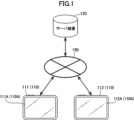
- FIG. 1 is an exemplary schematic diagram showing a configuration of a system according to an embodiment.
- FIG. 2 is an exemplary schematic block diagram illustrating a functional configuration of a terminal device according to an embodiment.
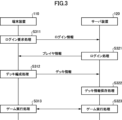
- FIG. 3 is an exemplary schematic sequence diagram illustrating a flow of processes executed by the terminal device and the server device according to the embodiment.
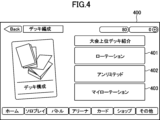
- FIG. 4 is an illustrative schematic diagram showing an example of a format selection screen according to the embodiment.
- FIG. 5 is an exemplary schematic diagram showing an example of a group selection screen according to the embodiment.
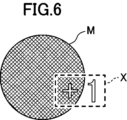
- FIG. 6 is an exemplary schematic diagram showing an example of a special ability icon according to the embodiment.
- FIG. 7 is an illustrative schematic diagram showing an example of a deck organization screen according to an embodiment.
- FIG. 1 is an exemplary schematic diagram showing a configuration of a system according to an embodiment.
- FIG. 2 is an exemplary schematic block diagram illustrating a functional configuration of a terminal device according to an embodiment.
- FIG. 3 is an exemplary schematic sequence diagram
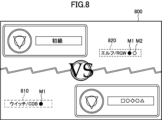
- FIG. 8 is an illustrative schematic diagram showing an example of a battle start screen according to the embodiment.
- FIG. 9 is an illustrative schematic diagram showing an example of a battle screen according to an embodiment.
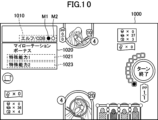
- FIG. 10 is an illustrative schematic diagram showing an example of the battle screen according to the embodiment that is different from that shown in FIG.
- FIG. 11 is an exemplary schematic diagram illustrating an example of the interruption screen according to the embodiment.
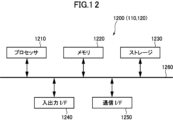
- FIG. 12 is an exemplary schematic block diagram illustrating an example of a hardware configuration of an information processing device constituting a terminal device and a server device according to an embodiment.
- ordinal numbers such as “first” and “second” are used as necessary, but these ordinal numbers are used for ease of identification and do not indicate any particular priority order.
- FIG. 1 is an exemplary schematic diagram showing the configuration of a system according to an embodiment.
- the system includes a plurality of terminal devices 110 including a display 110A having a touch panel, and a server device 120.
- the terminal devices 110 and the server device 120 are connected to each other so as to be able to communicate with each other via a network 150 such as the Internet.
- FIG. 1 illustrates terminal devices 111 and 112 configured as tablet computers including displays 111A and 112A as examples of terminal device 110 including display 110A.
- the number of terminal devices 110 may be three or more, and terminal device 110 may be configured as an electronic device other than a tablet computer as long as it has a configuration equivalent to that of a general computer (a specific example will be described later with reference to FIG. 12).
- the above-described configuration allows a competitive game to be played between users of the terminal devices 110 via the network 150.
- the competitive game is a competitive game using a deck containing a predetermined number of cards selected from a plurality of game media, such as digital cards (hereinafter simply referred to as cards), each of which is associated with an attribute (hereinafter referred to as a class).
- a user of each terminal device 110 owns cards provided by the operator of the competitive game by digitally acquiring them through a lottery or the like, and assembles a deck by selecting a predetermined number of cards from the cards owned while taking into consideration the class, and uses the assembled deck to play the competitive game with other users via the server device 120.
- game media that can be used in a competitive game are periodically added by the administrator of the competitive game.
- Each game medium is assigned a group identifier (e.g., an ID including numbers such as 1st series, 2nd series, etc.) according to the timing at which it was added as a medium that can be used in a competitive game.
- group identifier e.g., an ID including numbers such as 1st series, 2nd series, etc.
- One use of the group identifier is to set restrictions on deck composition (e.g., a restriction that only game media from series N to series M can be included in a deck) to increase the interest of the competitive game.
- the server device 120 records, for example, player information about users (players) playing a competitive game for each user participating in the competitive game.
- the player information is, for example, information about cards owned by the player and information about decks that the player has organized in the past.
- the server device 120 then updates the recorded player information and controls the progress of the competitive game based on information output from the terminal device 110 in response to user operations.
- the technology described in detail below is used to generate advantageous or disadvantageous effects in a battle game based on the group identifiers of the game media contained in the decks, so that a battle between a deck made up of new game media and a deck made up of old game media can be played without compromising the interest, thereby further enhancing the interest of the battle game.
- FIG. 2 is an exemplary schematic block diagram showing the functional configuration of a terminal device 110 according to an embodiment.
- the terminal device 110 includes a reception processing unit 201, a management processing unit 202, a game control processing unit 203, and a display processing unit 204.
- the reception processing unit 201 accepts input of various operations by the user using the terminal device 110.
- the reception processing unit 201 accepts the selection of the format of the competitive game (battle format; a specific example will be described later) before the start of the competitive game, accepts the selection of the class of cards to be included in the deck used in the competitive game, and accepts the selection of cards to be included in the deck after the class selection.
- the format of the competitive game (battle format; a specific example will be described later) before the start of the competitive game
- accepts the selection of the class of cards to be included in the deck used in the competitive game accepts the selection of cards to be included in the deck after the class selection.
- the management processing unit 202 manages the decks organized in response to user operations. For example, the management processing unit 202 manages the group identifiers of game media that can be included in a deck based on the format selected by the user.
- the game control processing unit 203 controls the progress of the competitive game while communicating with the server device 120 via communication.
- the display processing unit 204 also controls the output of images related to the competitive game to the display 110A.
- the terminal device 110 executes various processes in cooperation with the server device 120, as shown in the flow in FIG. 3 below.
- FIG. 3 is an exemplary schematic sequence diagram showing the flow of processing executed by the terminal device 110 and the server device 120 according to an embodiment.
- the terminal device 110 e.g., the game control processing unit 203 first executes a login request process in S311 to obtain player information of the user of the terminal device 110 from the server device 120, and transmits login information including the user's identification information to the server device 120.
- This process of S311 is executed, for example, at the start of an application installed on the terminal device 110 to provide a competitive game.
- the server device 120 executes a login process based on the login information received from the terminal device 110, extracts the corresponding player information from the player information recorded by the server device 120, and transmits the extracted player information to the terminal device 110.
- the terminal device 110 executes a deck organization process to organize a deck to be used in the competitive game in response to the user's operation, and transmits deck information regarding the organized deck to the server device 120.
- the deck organization process which will be described in detail later, is a process in which the reception processing unit 201 accepts the user's operation, and the management processing unit 202 manages the deck while the display processing unit 204 displays various images (screens) on the display 110A as necessary.
- the server device 120 executes a deck information saving process to save the deck information received from the terminal device 110 and update the player information recorded by the server device 120.
- the terminal device 110 e.g., the reception processing unit 201, the game control processing unit 203, and the display processing unit 204
- the server device 120 each execute a game execution process in which they cooperate with each other via communication to execute a competitive game.
- the game execution process is a process in which the reception processing unit 201 accepts user operations and the display processing unit 204 displays various images (screens) on the display 110A while the game control processing unit 203 controls the progress of the game.
- a process is executed in which the user is prompted to select the format of the competitive game via a format selection screen such as that shown in FIG. 4 below.
- FIG. 4 is an illustrative schematic diagram showing an example of a format selection screen according to an embodiment.
- Image 400 shown in FIG. 4 is an example of a format selection screen.
- This image 500 includes a first button 401 that accepts the selection of a format called “Rotation,” a second button 402 that accepts the selection of a format called “Unlimited,” and a third button 403 that accepts the selection of a format called "My Rotation.”
- the "Rotation” format which can be selected with the first button 401, is a format in which the game media that can be included in the deck used in the battle is limited to game media from a predetermined number of sets (e.g., five) including the latest set.
- the "Unlimited” format which can be selected with the second button 402, is a format in which the game media that can be included in the deck used in the battle are game media from all sets released to date.
- the "My Rotation” format which can be selected by using the third button 403, is a format in which the game media that can be included in the deck used in a battle is limited to game media from a predetermined number (five) of consecutive bullets out of all bullets released to date.
- This "My Rotation” format is a new format that makes it possible to battle using, for example, a deck from a past "Rotation” and a deck from the most recent "Rotation.”
- new game media are usually designed to have stronger abilities than older game media, so it can be difficult to hold a match between a deck made up of new game media and a deck made up of older game media without losing interest.
- a reference group identifier is determined from the group identifiers of the game media contained in the deck, and when the competitive game is provided, a process is executed to generate an effect according to the reference group identifier.
- the group identifier assigned to the game media most recently added among the group identifiers assigned to the game media contained in the deck is used as the reference group identifier. Then, in the embodiment, the game progresses such that the older the timing indicated by the reference group identifier, the more advantageous effects are generated.
- FIG. 5 is an exemplary schematic diagram showing an example of a group selection screen according to an embodiment.
- Image 500 shown in FIG. 5 is an example of a group selection screen. This image 500 may be displayed on display 110A after the format has been selected by the user via image 400 above (see FIG. 4) and after the class of cards to be included in the deck has been selected by the user.
- Image 500 includes an area 510 that displays an explanation of the effects that can occur in "My Rotation,” and an area 520 that displays the currently selected range of game media that can be included in the "My Rotation” deck.
- Mark M1 is a special ability icon for indicating to the user that, if the group identifier of the latest game medium included in the deck is in the range of the first to tenth editions, an advantageous effect (special ability) in terms of the rules of the battle game, "one additional draw at the start,” will occur.
- the rule is that the player draws one card from the deck each turn during the battle.
- Mark M2 is a special ability icon that indicates to the user that, if the group identifier of the latest game medium included in the deck is in the range of the 1st to 19th series, an advantageous effect according to the rules of the battle game, "PP +2 at the start of a turn after the evolution turn," will occur.
- the rule In a normal state without a special ability, the rule is that a parameter called PP (play points) required to use a card increases by 1 each turn during a battle. However, when the special ability "PP +2 at the start of a turn after the evolution turn" is activated, the rule is that the parameter PP increases by 2 each time a certain turn during a battle occurs, so that the player on the side on which the special ability is activated has an advantage over the player on the side on which the special ability is not activated.
- PP play points
- the special ability icons are simply displayed as round marks M1 and M2.
- the special ability icons may also be displayed including text information, as shown in the following FIG. 6.
- FIG. 6 is an illustrative and schematic diagram showing an example of a special ability icon according to an embodiment.
- a round mark M indicating a special ability icon is displayed together with a text display X reading "+1.”
- This text display X reading "+1" may be displayed in relation to the special ability of "draw one additional card at the start," for example. It goes without saying that the content of the text display X is not limited to "+1.” In an embodiment, various text display X contents may be displayed together with the mark M depending on the special ability that is generated.
- the range of 17th to 21st bullets is selected as the range of game media that can be included in the "My Rotation" deck.
- the 21st bullet since the latest group identifier of the game media that can be included in the deck is the 21st bullet, none of the effects corresponding to the above marks M1 and M2 will occur.
- the characters "FOH to RSC period" in area 520 indicate the range of the group identifier (release timing) of the game media, and are simply a different form of the number "17 to 21" displayed next to it.
- the game media up to the 24th bullet are divided into one range for every five consecutive bullets. The user can select the desired range from the multiple divided ranges.
- the criterion of dividing into one range for every five consecutive bullets is merely one example.
- a criterion of dividing into one range for every four or less consecutive bullets or every six or more consecutive bullets may be adopted.
- the bullets included in one range do not necessarily have to be consecutive.
- a deck composition screen such as that shown in FIG. 7 may be displayed on the display 110A.
- FIG. 7 is an illustrative schematic diagram showing an example of a deck composition screen according to an embodiment.
- the image 700 shown in FIG. 7 is an example of a deck composition screen.
- This image 600 includes a first area 710, a second area 720, a save button 730, and a third area 740.
- the first area 710 displays, for example, a list of game media having group identifiers that can be included in a deck, among cards that the user digitally owns.
- the second area 720 displays a list of cards in the deck.
- the user organizes a deck by performing an operation (e.g., a touch operation) to select a card displayed in the first area 710, and performing an operation (e.g., a swipe operation) to move the selected card into the second area 720.
- an operation e.g., a touch operation
- the save button 730 the organized deck is saved after a condition is determined, such as whether or not the number of cards in the deck has reached a specified number.
- the deck information displayed in the third area 740 includes the name of the class that can be included in the deck ("Elf"), characters indicating the latest group identifier of the game media that can be included in the deck (“CDB”), and marks M1 and M2 indicating the effects (special abilities) that can be generated by the deck.
- the user can use the organized deck to play a competitive game against other players.
- the display processing unit 204 can notify the player of the information about the player's and the opponent's decks when playing the battle game, using images (screens) such as those shown in Figures 8 to 11 below.
- the display processing unit 204 may display a battle start screen such as that shown in FIG. 8 at the start of a battle game, and may display information about the player's deck and the opponent's deck on the battle start screen.
- FIG. 8 is an illustrative schematic diagram showing an example of a battle start screen according to an embodiment.
- Image 800 shown in FIG. 8 is an example of a battle start screen.
- This image 800 includes a first area 810 in which information about the player's deck is displayed, and a second area 820 in which information about the opponent's deck is displayed.
- the deck information includes the name of the class that can be included in the deck ("Elf"), characters indicating the latest group identifier of the game media that can be included in the deck (“CDB”), and marks M1 and/or M2 indicating the effects (special abilities) that can be generated by the deck.
- the display processing unit 204 may display information about the opponent's deck on the battle screen in a manner as shown in the following Figures 9 and 10.
- FIG. 9 is an illustrative schematic diagram showing an example of a battle screen according to an embodiment.
- Image 900 shown in FIG. 9 is a battle screen displayed immediately after the start of a battle, and is a screen for redrawing cards as permitted by the rules.
- An area 910 is provided in the upper right corner of this image 900, where information about the opponent's deck is displayed.
- This area 910 displays, as information about the opponent's deck, characters 911 indicating the group identifier of the latest card included in the deck used by the opponent, a mark 912 indicating the class selected by the opponent when compiling their deck, and marks M1 and M2 indicating the effects (special abilities) generated by the deck used by the opponent. This allows the user to select whether to redraw cards while checking the information about the opponent's deck.
- FIG. 10 is an illustrative and schematic diagram showing an example of a battle screen according to an embodiment that is different from FIG. 9.
- the image 1000 shown in FIG. 10 is a battle screen that is displayed during the game after the redraw of cards via the image 900 (see FIG. 9) is completed.
- the left side of this image 1000 includes an area 1010 in which information about the opponent's deck is displayed, and an area 1020 in which the effects (special abilities) generated by the opponent's deck are displayed.
- the information about the opponent's deck is displayed, which includes the class selected by the opponent when forming the deck and characters indicating the group identifier of the latest card included in the deck used by the opponent, and marks M1 and M2 indicating the effects generated by the deck used by the opponent.
- the area 1020 includes areas 1021 and 2023 in which explanations of the contents of the effects indicated by marks M1 and M2 are displayed. These areas 1010 and 1020 are displayed in response to a predetermined operation by the player during the game. This allows the user to check the information about the opponent's deck at the desired timing during the game.
- the interruption screen can be displayed in response to an operation (e.g., a touch operation) of an interruption button (not shown) provided on the battle screen.
- FIG. 11 is an illustrative schematic diagram showing an example of an interruption screen according to an embodiment.
- This image 1100 includes a first area 1110 and a second area 1120.
- the first area 1110 displays characters indicating the class of the card included in the player's deck ("Witch"), characters indicating the group identifier of the latest card included in the player's deck (“CDB”), and a mark M1 indicating the effect (special ability) generated by the player's deck.
- the second area 1120 displays characters indicating the class of the card included in the opponent's deck ("Elf"), characters indicating the group identifier of the latest card included in the opponent's deck (“RGW”), and marks M1 and M2 indicating the effect generated by the opponent's deck. This allows the user to easily check the information of the player's deck and the information of the opponent's deck while the competitive game is interrupted.
- the system provides a user with a competitive game using a deck containing a predetermined number of game media selected from a plurality of game media, each of which is assigned a group identifier and which can be categorized into a plurality of groups based on the group identifier.
- the system determines a reference group identifier from one or more group identifiers assigned to the predetermined number of game media included in the deck, and generates an effect corresponding to the reference group identifier when providing the competitive game.
- the above effect is achieved by adjusting information related to the rules of the competitive game, rather than information (abilities) that is preset for a certain number of game media.
- information abilities
- new game media are periodically added (released) to the multiple game media.
- the new game media are then assigned a new group identifier that is different from the group identifiers assigned to each of the multiple game media.
- the reference group identifier is the group identifier assigned to the game medium that was most recently added, out of one or more group identifiers assigned to a predetermined number of game media included in the deck.
- the above effect becomes more advantageous the older the timing indicated by the above reference group identifier.
- this configuration it is possible to have a match between a deck made up of new game media and a deck made up of old game media without losing interest.
- the authentication module is configured as an information processing device 1200 having a hardware configuration equivalent to that of a general computer, for example, as shown in the following FIG. 12.
- the information processing device 1200 includes a processor 1210, a memory 1220, a storage 1230, an input/output interface (I/F) 1240, and a communication interface (I/F) 1250. These pieces of hardware are connected to a bus 1260.
- the processor 1210 is configured, for example, as a CPU (Central Processing Unit) and provides overall control over the operation of each part of the information processing device 1200.
- CPU Central Processing Unit
- Memory 1220 includes, for example, ROM (Read Only Memory) and RAM (Random Access Memory), and provides volatile or non-volatile storage of various data such as programs executed by processor 1210, and provides a working area for processor 1210 to execute programs.
- ROM Read Only Memory
- RAM Random Access Memory
- Storage 1230 includes, for example, a hard disk drive (HDD) or a solid state drive (SSD), and stores various types of data in a non-volatile manner.
- HDD hard disk drive
- SSD solid state drive
- the input/output interface 1240 controls the input of data to the information processing device 1200 from input devices such as a touch panel, keyboard, and mouse, and the output of data from the information processing device 1200 to output devices such as a display and speaker.
- the communication interface 1250 enables the information processing device 1200 to communicate with other devices.
- the functional configuration (see FIG. 2) of the terminal device 110 is realized as a group of functional modules through the cooperation of hardware and software as a result of the processor 1210 executing a program pre-stored in the memory 1220 or the storage 1230.
- some or all of the group of functional modules shown in FIG. 2 may be realized only by hardware such as a specially designed circuit.
- at least some of the group of functional modules shown in FIG. 2 may be realized on the server device 120 side.
- the above-mentioned programs do not necessarily have to be stored in advance in memory 1220 or storage 1230.
- the above-mentioned programs may be provided as a computer program product recorded in an installable or executable format on a computer-readable medium, such as various magnetic disks, such as a flexible disk (FD), or various optical disks, such as a digital versatile disk (DVD).
- a computer-readable medium such as various magnetic disks, such as a flexible disk (FD), or various optical disks, such as a digital versatile disk (DVD).
- the above-mentioned program may also be provided or distributed via a network such as the Internet.
- the above-mentioned program may be provided in a state where it is stored on a computer connected to a network such as the Internet, and is available for download via the network.
- a configuration is exemplified in which the older the reference group identifier, the more advantageous the special ability is imparted to the deck.
- the same result can be obtained by a configuration in which the newer the reference group identifier, the more disadvantageous the special ability is imparted to the deck.
- a configuration in which the newer the reference group identifier, the less a parameter related to play, such as physical strength, is reduced is conceivable.
- the reference group identifier is determined from the group identifiers of the game media included in the deck.
- the reference group identifier is determined in response to a user selecting a range of group identifiers of the game media to be included in the deck when organizing the deck. Such a selection is made, for example, using image 500 shown in FIG. 5 above. In this case, the group identifier corresponding to the newest bullet within the selected range becomes the reference group identifier.
- the effect that occurs according to the reference group identifier occurs so as to adjust information related to the rules of the competitive game.
- the effect that occurs according to the reference group identifier may also be an effect that adjusts information (ability) that is preset for the game medium.
- the following effect will be generated for a deck that has a game medium from the 1st to 10th edition as the latest game medium: - Effect of "Recover +2 PP and 2 HP at the start of the turn for only 3 turns from the evolution turn" (PP is as described above, and HP is one of the parameters given to the player's character.) - Effect: “Once during battle, at the start of a turn, if EP is 0, recover 2 EP” (EP is a parameter determined by the rules as points given to the player in order to generate additional abilities on the card media during a battle.) "Draw 2 additional cards on the first turn” effect (This effect is similar to the previously mentioned “Draw 1 additional card at the start of the turn” effect, so we will not go into detail here.) For decks that have game media from the 11th series onwards (for example, up to the 17th series) as their latest game media, the following effects will be generated: - "Recover +2 PP and 2 HP at the start of the turn, only for the first turn after
- Terminal device 120 Server device 201 Reception processing unit 202 Management processing unit 203 Game control processing unit 204 Display processing unit
Landscapes
- Engineering & Computer Science (AREA)
- Multimedia (AREA)
- Theoretical Computer Science (AREA)
- Human Computer Interaction (AREA)
- Business, Economics & Management (AREA)
- Computer Security & Cryptography (AREA)
- General Business, Economics & Management (AREA)
- User Interface Of Digital Computer (AREA)
- Management, Administration, Business Operations System, And Electronic Commerce (AREA)
Priority Applications (2)
| Application Number | Priority Date | Filing Date | Title |
|---|---|---|---|
| CN202480016247.4A CN120813414A (zh) | 2023-03-03 | 2024-03-01 | 程序、方法以及系统 |
| US19/317,988 US20260000989A1 (en) | 2023-03-03 | 2025-09-03 | Program, method, and system |
Applications Claiming Priority (2)
| Application Number | Priority Date | Filing Date | Title |
|---|---|---|---|
| JP2023032701A JP7443589B1 (ja) | 2023-03-03 | 2023-03-03 | プログラム、方法、およびシステム |
| JP2023-032701 | 2023-03-03 |
Related Child Applications (1)
| Application Number | Title | Priority Date | Filing Date |
|---|---|---|---|
| US19/317,988 Continuation US20260000989A1 (en) | 2023-03-03 | 2025-09-03 | Program, method, and system |
Publications (1)
| Publication Number | Publication Date |
|---|---|
| WO2024185701A1 true WO2024185701A1 (ja) | 2024-09-12 |
Family
ID=90096898
Family Applications (1)
| Application Number | Title | Priority Date | Filing Date |
|---|---|---|---|
| PCT/JP2024/007841 Ceased WO2024185701A1 (ja) | 2023-03-03 | 2024-03-01 | プログラム、方法、およびシステム |
Country Status (4)
| Country | Link |
|---|---|
| US (1) | US20260000989A1 (https=) |
| JP (2) | JP7443589B1 (https=) |
| CN (1) | CN120813414A (https=) |
| WO (1) | WO2024185701A1 (https=) |
Citations (6)
| Publication number | Priority date | Publication date | Assignee | Title |
|---|---|---|---|---|
| JP2001239067A (ja) * | 2000-03-01 | 2001-09-04 | Bandai Co Ltd | ゲームシステムとゲーム方法 |
| JP2003117235A (ja) * | 2001-10-15 | 2003-04-22 | Namco Ltd | 画像生成システム、プログラム及び情報記憶媒体 |
| JP2003175277A (ja) * | 2001-12-11 | 2003-06-24 | Konami Co Ltd | カードゲームプログラム |
| US20130283194A1 (en) * | 2012-04-19 | 2013-10-24 | Yudek, Inc. | Systems and methods for managing content using virtual cards |
| JP6652676B1 (ja) * | 2019-09-03 | 2020-02-26 | 株式会社Cygames | 情報処理システム、情報処理方法および情報処理プログラム |
| JP2021037256A (ja) * | 2020-01-23 | 2021-03-11 | 株式会社Cygames | 情報処理システム、情報処理方法および情報処理プログラム |
-
2023
- 2023-03-03 JP JP2023032701A patent/JP7443589B1/ja active Active
-
2024
- 2024-02-21 JP JP2024024373A patent/JP2024125182A/ja active Pending
- 2024-03-01 WO PCT/JP2024/007841 patent/WO2024185701A1/ja not_active Ceased
- 2024-03-01 CN CN202480016247.4A patent/CN120813414A/zh active Pending
-
2025
- 2025-09-03 US US19/317,988 patent/US20260000989A1/en active Pending
Patent Citations (6)
| Publication number | Priority date | Publication date | Assignee | Title |
|---|---|---|---|---|
| JP2001239067A (ja) * | 2000-03-01 | 2001-09-04 | Bandai Co Ltd | ゲームシステムとゲーム方法 |
| JP2003117235A (ja) * | 2001-10-15 | 2003-04-22 | Namco Ltd | 画像生成システム、プログラム及び情報記憶媒体 |
| JP2003175277A (ja) * | 2001-12-11 | 2003-06-24 | Konami Co Ltd | カードゲームプログラム |
| US20130283194A1 (en) * | 2012-04-19 | 2013-10-24 | Yudek, Inc. | Systems and methods for managing content using virtual cards |
| JP6652676B1 (ja) * | 2019-09-03 | 2020-02-26 | 株式会社Cygames | 情報処理システム、情報処理方法および情報処理プログラム |
| JP2021037256A (ja) * | 2020-01-23 | 2021-03-11 | 株式会社Cygames | 情報処理システム、情報処理方法および情報処理プログラム |
Non-Patent Citations (2)
| Title |
|---|
| ANONYMOUS: "[Shadowverse] What Is Rotation? | Rotation Rules Explained! [Shadowverse]", GAMEWITH, 7 February 2019 (2019-02-07), XP093208337 * |
| ANONYMOUS: "MTG Format List: Budget Guide and Recommended Formats", 17 March 2022 (2022-03-17), XP093208338, Retrieved from the Internet <URL:https://ojoegames-mtg.com/mtg-formats/#google_vignette> * |
Also Published As
| Publication number | Publication date |
|---|---|
| JP2024124793A (ja) | 2024-09-13 |
| CN120813414A (zh) | 2025-10-17 |
| JP7443589B1 (ja) | 2024-03-05 |
| US20260000989A1 (en) | 2026-01-01 |
| JP2024125182A (ja) | 2024-09-13 |
Similar Documents
| Publication | Publication Date | Title |
|---|---|---|
| WO2013065350A1 (ja) | 情報処理システム、情報処理方法、情報処理プログラム、情報処理プログラムを記憶したコンピュータ読み取り可能な記録媒体、データ構造、情報処理サーバおよび情報処理端末 | |
| JP2025126290A (ja) | プログラム、情報処理装置及び情報処理方法 | |
| JP6813620B2 (ja) | コンピュータプログラム、およびコンピュータ装置 | |
| JP2015217297A (ja) | ゲームを提供するシステム、方法、及びプログラム | |
| US9176925B2 (en) | Non-transitory computer-readable storage medium storing game program, and information processing device | |
| WO2024185701A1 (ja) | プログラム、方法、およびシステム | |
| JP7195465B1 (ja) | プログラム、方法、およびシステム | |
| US20240001240A1 (en) | Live gameplay updates | |
| JP7788065B2 (ja) | ゲームプログラム、ゲーム装置および情報処理方法 | |
| JP7348545B2 (ja) | コンピュータプログラム、およびコンピュータ装置 | |
| JP7104203B2 (ja) | ゲームシステム、プログラム及び情報処理方法 | |
| JP7526867B1 (ja) | プログラム、方法、およびシステム | |
| JP7817582B2 (ja) | 情報処理装置、情報処理方法、およびプログラム | |
| JP7463591B1 (ja) | ゲーム媒体セットを出力するためのシステム、情報処理装置、方法、及びプログラム | |
| JP2024145330A (ja) | プログラム、方法、およびシステム | |
| JP7454726B1 (ja) | ゲーム媒体セットを生成するためのシステム、方法、及びプログラム | |
| JP7366223B1 (ja) | ゲームを検査するためのシステム、方法、及びプログラム | |
| JP7508413B2 (ja) | ゲームシステム、プログラム及び情報処理方法 | |
| JP7554535B1 (ja) | ゲームシステム、情報処理装置、方法、及びプログラム | |
| JP7454082B1 (ja) | ゲーム媒体セットを出力するシステム、方法、及びプログラム | |
| JP6901617B1 (ja) | ゲームシステム、プログラム及び情報処理方法 | |
| US11666826B2 (en) | Modifying gameplay parameters | |
| WO2025121414A1 (ja) | プログラム、方法、およびシステム | |
| JP7486979B2 (ja) | プログラム、情報処理方法、及び情報処理装置 | |
| JP2025009425A (ja) | プログラム、方法、およびシステム |
Legal Events
| Date | Code | Title | Description |
|---|---|---|---|
| 121 | Ep: the epo has been informed by wipo that ep was designated in this application |
Ref document number: 24767069 Country of ref document: EP Kind code of ref document: A1 |
|
| WWE | Wipo information: entry into national phase |
Ref document number: 202480016247.4 Country of ref document: CN |
|
| NENP | Non-entry into the national phase |
Ref country code: DE |
|
| WWP | Wipo information: published in national office |
Ref document number: 202480016247.4 Country of ref document: CN |
|
| 122 | Ep: pct application non-entry in european phase |
Ref document number: 24767069 Country of ref document: EP Kind code of ref document: A1 |