WO2024166704A1 - プログラム、及びゲーム装置 - Google Patents
プログラム、及びゲーム装置 Download PDFInfo
- Publication number
- WO2024166704A1 WO2024166704A1 PCT/JP2024/002287 JP2024002287W WO2024166704A1 WO 2024166704 A1 WO2024166704 A1 WO 2024166704A1 JP 2024002287 W JP2024002287 W JP 2024002287W WO 2024166704 A1 WO2024166704 A1 WO 2024166704A1
- Authority
- WO
- WIPO (PCT)
- Prior art keywords
- game
- unit
- parameter
- game element
- battle
- Prior art date
- Legal status (The legal status is an assumption and is not a legal conclusion. Google has not performed a legal analysis and makes no representation as to the accuracy of the status listed.)
- Ceased
Links
Images





Classifications
-
- A—HUMAN NECESSITIES
- A63—SPORTS; GAMES; AMUSEMENTS
- A63F—CARD, BOARD, OR ROULETTE GAMES; INDOOR GAMES USING SMALL MOVING PLAYING BODIES; VIDEO GAMES; GAMES NOT OTHERWISE PROVIDED FOR
- A63F13/00—Video games, i.e. games using an electronically generated display having two or more dimensions
- A63F13/50—Controlling the output signals based on the game progress
- A63F13/52—Controlling the output signals based on the game progress involving aspects of the displayed game scene
-
- A—HUMAN NECESSITIES
- A63—SPORTS; GAMES; AMUSEMENTS
- A63F—CARD, BOARD, OR ROULETTE GAMES; INDOOR GAMES USING SMALL MOVING PLAYING BODIES; VIDEO GAMES; GAMES NOT OTHERWISE PROVIDED FOR
- A63F13/00—Video games, i.e. games using an electronically generated display having two or more dimensions
- A63F13/55—Controlling game characters or game objects based on the game progress
- A63F13/58—Controlling game characters or game objects based on the game progress by computing conditions of game characters, e.g. stamina, strength, motivation or energy level
-
- A—HUMAN NECESSITIES
- A63—SPORTS; GAMES; AMUSEMENTS
- A63F—CARD, BOARD, OR ROULETTE GAMES; INDOOR GAMES USING SMALL MOVING PLAYING BODIES; VIDEO GAMES; GAMES NOT OTHERWISE PROVIDED FOR
- A63F13/00—Video games, i.e. games using an electronically generated display having two or more dimensions
- A63F13/60—Generating or modifying game content before or while executing the game program, e.g. authoring tools specially adapted for game development or game-integrated level editor
- A63F13/69—Generating or modifying game content before or while executing the game program, e.g. authoring tools specially adapted for game development or game-integrated level editor by enabling or updating specific game elements, e.g. unlocking hidden features, items, levels or versions
-
- A—HUMAN NECESSITIES
- A63—SPORTS; GAMES; AMUSEMENTS
- A63F—CARD, BOARD, OR ROULETTE GAMES; INDOOR GAMES USING SMALL MOVING PLAYING BODIES; VIDEO GAMES; GAMES NOT OTHERWISE PROVIDED FOR
- A63F13/00—Video games, i.e. games using an electronically generated display having two or more dimensions
- A63F13/80—Special adaptations for executing a specific game genre or game mode
Definitions
- the present invention relates to a program and a game device.
- the present invention aims to provide a program and a game device that provide a game that does not lose interest.
- One aspect of the present invention is a program for causing a computer to execute a game, the program causing the computer to function as game element registration means for registering game elements to be featured in the game, parameter change means for changing parameters of the registered game elements, and game element state management means for changing the transition time required for the game elements to transition from an unbattlable state, in which the game elements are unable to battle, to a battleable state, in which the game elements are able to battle, on the condition that the parameters of the game elements have been changed.
- One aspect of the present invention is a game device that includes game element registration means for registering game elements to be included in a game, parameter change means for changing parameters of the registered game elements, and game element state management means for changing a transition time required for the game elements to transition from an unbattlable state, in which the game elements are unable to battle, to a battleable state, in which the game elements are able to battle, on the condition that the parameters of the game elements have been changed.
- the present invention makes it possible to provide a game that does not lose its interest.
- FIG. 1 is a diagram showing the system configuration of a game system according to this embodiment.
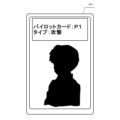
- FIG. 2 is a diagram showing an example of a game card P1 in which the first game element is a pilot, and character information of the pilot type is an attack type.
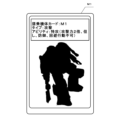
- FIG. 3 is a diagram showing an example of a game card M1 in which the second game element is a ship to be boarded, and character information of the ship type is an attack type.
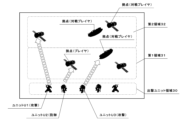
- FIG. 4 is a diagram showing an example of a game field in the competitive game of this embodiment.
- FIG. 5 is a front external view of the game device 1 according to the embodiment of the present invention.
- FIG. 6 is a block diagram showing a functional configuration of the game device 1 according to the embodiment of the present invention.
- FIG. 7 is a diagram showing an example of the game element database 190.
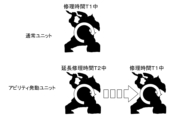
- FIG. 8 is a diagram for explaining the difference between the transition time of a normal unit and the transition time of an ability activation unit.
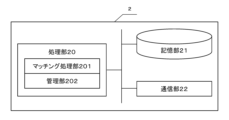
- FIG. 9 is a block diagram showing the functional configuration of the server 2 according to the embodiment of the present invention.
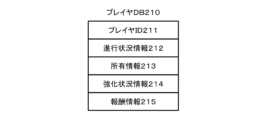
- FIG. 10 is a diagram showing an example of the player database 211.
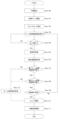
- FIG. 11 is a flowchart showing the operation of the game device 1.
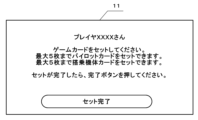
- FIG. 12 shows an example of the game element registration screen.
- FIG. 13 is a flowchart showing the operation of activating abilities and changing parameters.
- FIG. 14 is a diagram showing an example of a notification that an ability can be activated.
- FIG. 15 is a diagram showing an example of an operation for activating an ability.
- FIG. 16 shows an example of a presentation image when an ability is activated.
- FIG. 17 shows an example of a presentation image for a unit that is activating an ability.
- FIG. 18 is a flow chart of the operation of managing the state of the unit.
- FIG. 19 is a diagram showing an example of a representation image according to a transition time T. In FIG.
- Fig. 1 is a diagram showing the system configuration of a game system according to this embodiment.
- the game system is configured to include one or more game devices 1 and a server 2.
- the one or more game devices 1 and the server 2 can be connected to a communication line N and can communicate with each other.
- the communication line N means a communication path that allows data communication.
- the communication line N includes a dedicated line (dedicated cable) for direct connection, a LAN such as Ethernet (registered trademark), a telephone communication network, a cable network, the Internet, and other communication networks, and the communication method can be either wired or wireless.
- the game device 1 is a computer capable of executing a game program, and is connected to a communication line N via a wireless communication base station or the like, and can perform data communication with the server 2.
- the game device 1 is, for example, an arcade game device, a smartphone, a mobile phone, a portable game device, a stationary home game device, a personal computer, a tablet computer, a controller for a stationary home game device, etc. Basically, there are multiple game devices 1, and each is operated by a player.
- the server 2 is a server system including one or more server devices and storage devices.
- the server 2 provides various services for operating the game of this embodiment, and can manage data necessary for operating the game, and distribute game programs and data necessary for executing the game on the game device 1.
- the server 2 updates the information managed for each player based on the details of that use (game play history).
- such a system configuration allows a competitive game between players using multiple game devices 1 to be realized via the server 2 and communication line N, but the game is not limited to competitive games between players (vs. humans), and also includes cases where one of the players is a non-player character provided by the server 2. Furthermore, games for which a play experience is provided on the game device 1 are not limited to competitive games between players, and may include games configured for one person.
- an example of the present invention is applied to a game device that executes a competitive game in which a screen on which game elements are arranged on a game field is displayed, as an example of a game device.
- the present invention can be applied to any device that is capable of executing a game in which a screen on which game elements are arranged on a game field is displayed.
- the fighting game features multiple types of game elements.
- the game elements are characters (characters, mounts, items, etc.) and are represented as images, virtual or physical objects, etc. Images include still images and videos.
- An example of a virtual or physical object is a game card, which is an object with physical volume (real object). Note that the object is not limited to a game card, but is not limited to a game card as long as the object is configured to be able to identify the game element associated with the object.
- the object may be, for example, a shaped object such as a figure having the appearance of a game element.
- the multiple types of items are all tangible game cards, and each is described as being associated with one game element that appears in a competitive game in which a play experience is provided on the game device 1.
- the game element to which a game card is associated can be identified by acquiring identification information (element ID) for identifying the game element attached to the game card by a game element reading unit described below.
- the identification information (element ID) may be added to the game card by, for example, printing or otherwise attaching a one-dimensional or multi-dimensional code obtained by converting the identification information for identifying the game element to the game card, or by recording the identification information on a tag or IC chip for near field communication (NFC) included in the game card.
- NFC near field communication
- each player can use multiple game elements, and by obtaining information from a game card prior to the start of the game (before the sequence in which the game elements are actually operated begins), the game elements associated with that game card can be registered as game elements that will appear in the game (to be used by the player).
- first game element is the pilot
- second game element is the aircraft operated by the pilot.
- each of the first game element and the second game element is divided into multiple types.
- the types of pilots which are the first game elements, include, for example, an attack type (first type) and a defense type (second type).
- the attack type is a type that has the main purpose of attacking the opposing player's game elements and attacks the opposing player's game elements without protecting the player's other game elements.
- the defense type is a type that has the main purpose of defending the player's other game elements and attacks the opposing player's game elements to protect the player's other game elements.
- the types and numbers are merely examples and are not limited to these types and numbers.
- there may be multiple attack types depending on the types of the opposing player's game elements such as an attack type that can only attack X type of game elements of the opposing player and an attack type that can only attack Y type of game elements of the opposing player.
- Types of aircraft used as second game elements include, for example, attack type (first type) and defense type (second type).
- the attack type is a type that has the main purpose of attacking the opposing player's game elements and attacks the opposing player's game elements without protecting the player's other game elements.
- the defense type is a type that has the main purpose of defending the player's other game elements and attacks the opposing player's game elements to protect the player's other game elements.
- a range type (third type) according to the range of the weapon that can be used by the aircraft may be provided.
- the weapon that can be used is a long-range weapon, it is a long-range type, and if the weapon that can be used is a close-range weapon, it is a close-range type.
- the types and numbers are merely examples and are not limited to these types and numbers.
- the second game element may have two types: a defensive type and a long-range type.
- a piloted aircraft of this type can attack game elements located far away from the opposing player using a long-range weapon in order to protect the player's other game elements.
- first game element and the second game element have various parameters (level, hit points, attack power, defense power, terrain suitability, weapon used, etc.) appropriate to that type, in addition to character information of the type or kind of the first game element or the second game element.
- an attack type would have parameters specialized for attack. These various parameters may be changed as the battle game progresses.
- first game elements or second game elements have special abilities called abilities. These abilities are abilities that are used to develop the game in an advantageous way, and are abilities that strengthen game elements. For example, an ability can increase the attack power of the opposing player against the game elements for a specified period of time when a certain activation condition is met. There are abilities that are activated automatically when the activation condition is met, and abilities that are activated at the player's discretion when the activation condition is met. In addition, some abilities can be activated only once during a match, and some can be activated multiple times.
- transition time is longer than the transition time for game elements that do not normally activate abilities.
- FIG. 2 is a diagram showing an example of a game card P1 in which the first game element is a pilot, whose character information type is attack type.
- the game element reading unit reads the identification information, etc., written on the game card P1, allowing the game device 1 to obtain the character information and abilities of the game card P1.
- FIG. 3 is a diagram showing an example of a game card M1 in which the second game element is a pilot, whose type is attack type, and whose character information type is special attack (attack power is doubled, but defense and evasive action are not possible).
- the game element reading unit reads the identification information, etc., written on the game card M1, allowing the game device 1 to obtain the character information and abilities of the game card M1.
- a game element called a unit (hereinafter sometimes referred to as a squadron) appears.
- This unit is made up of a combination of the pilot, which is the first game element, and the aircraft, which is the second game element.
- the player can associate and register the pilot as the element that operates the aircraft in the battle game. In this way, the player can make a unit consisting of a pilot and an aircraft appear in the battle game.
- the capabilities of a unit can be, for example, the sum of the character information (various parameters) of the pilot, which is the first game element constituting the unit, and the character information (various parameters) of the aircraft, which is the second game element.
- a unit has behavioral characteristics that stipulate (or restrict) what actions it can take in a battle in a fighting game.
- the behavioral characteristics of the unit are subordinate (dependent) to at least one of the components, the pilot type (classification), which is the first game element, or the aircraft type (classification), which is the second game element.
- the type (type) of the aircraft piloted will not be reflected, and the behavioral characteristics will reflect the type of the pilot. For example, if the type of the pilot that makes up the unit is a defensive type and the type of the aircraft piloted that makes up the unit is an offensive type, the type of the aircraft piloted will not be reflected, and the unit's behavioral characteristics will be such that the main purpose is to protect the player's game elements, and attacks on the opposing player's game elements are limited to protecting the player's other game elements.
- the type (type) of the aircraft piloted which is the second game element
- the type (type) of the pilot will not be reflected, and the behavioral characteristics will reflect the type of the aircraft piloted.
- the behavioral characteristics of a unit dependent on both the pilot type (type), which is the first game element, and the aircraft type (type), which is the second game element is effective when the pilot type (type), which is the first game element, and the aircraft type (type), which is the second game element, are completely different.
- the pilot type (type), which is the first game element may be of attack type and defense type
- the aircraft type (type), which is the second game element may be of range type.
- the behavioral characteristics of a unit combining a defense type pilot with a long-range type aircraft will be such that it uses a long-range weapon to attack the game elements of the opposing player at a distance in order to defend against the player's other game elements. In this way, a game with a high level of strategy can be provided to the player.
- abilities possessed by the first game element or the second game element can be added as the capabilities of the unit.
- a unit whose component is the pilot's aircraft of the second game element can have the ability of the pilot's aircraft of the second game element.
- a unit whose component is game card P1 (pilot) of Figure 2 and game card M1 (aircraft) of Figure 3 can have the ability of game card M1 (aircraft).
- the battle game of this embodiment progresses by deploying (placing) the units (troops) registered for each player on a game field of a specified size, and performing movement and attack actions (the execution of these actions is accepted by the operation input unit, which will be described later).
- FIG. 4 is a diagram showing an example of a game field in the battle game of this embodiment.
- the game field includes a deployment unit area 30, a first area 31, and a second area 32.
- the deployment unit area 30 is where units that can be deployed (appear) are placed.
- the first area 31 is the area of the player himself, where the player's base and other bases (game elements) are placed.
- the second area 32 is the area of the opposing player, where the opposing player's base and other bases (game elements) are placed.
- Other game elements include bases such as battleships that can move between the areas. The player who destroys the opposing player's base (reduces its durability to 0) as a result of an attack action by any unit is the winner of the battle game.
- each player when an opposing player's unit attempts to attack the base associated with the opposing player, each player must place units to intercept (defense) the attacking action and disrupt the attacking action, or control the attacking action of their units to destroy the opposing player's base before the opposing player's units can do so.
- the type of unit is a defensive type
- the unit is a unit for defending a base such as the player's base, and the base such as the player's base is placed in the first area 31, and as a result, defensive type units can only move within the first area 31.
- the type of unit is an attacking type
- the unit is a unit for attacking a base such as the opposing player's battleship that is attacking the opposing player's base or the base of the player's base, and the base of the opposing player's base is placed in the second area 32, and the opposing player's battleship or other base can enter (be placed) in the first area 31, and as a result, attacking type units can move in both the first area 31 and the second area 32.
- FIG. 5 is a front external view of the game device 1 according to the embodiment of the present invention.
- the game device 1 is equipped with a display unit 11 (display 11) on which information necessary for progressing in the game, such as menus, and the game field are displayed, first game element reading units 12-1 to 12-5 for registering a first game element (pilot) to be caused to appear in the fighting game from game cards held by the players, and second game element reading units 13-1 to 13-5 for registering a second game element (pilot aircraft) to be caused to appear in the fighting game from game cards held by the players.
- display unit 11 display 11
- first game element reading units 12-1 to 12-5 for registering a first game element (pilot) to be caused to appear in the fighting game from game cards held by the players
- second game element reading units 13-1 to 13-5 for registering a second game element (pilot aircraft) to be caused to appear in the fighting game from game cards held by the players.
- the first game element reading units 12 1 to 12 5 are readers that read character information of pilots, which are the first game elements to be made to appear in the game, from game cards.
- the game device 1 of this embodiment is provided with five first game element reading units 12 1 to 12 5 so that up to a maximum (upper limit) of five pilots can be registered as game elements to be used.
- a player sets (places) a game card P of a pilot (first game element) to be made to appear in the battle game from among game cards he owns in the first game element reading units 12 1 to 12 5 , whereby the first game element reading units 12 1 to 12 5 can read identification information and the like of the game card of the pilot (first game element).
- the second game element reading units 13 1 to 13 5 are readers that read character information of a boarded unit, which is a second game element to be caused to appear in a game, from a game card.
- the game device 1 of this embodiment is provided with five second game element reading units 13 1 to 13 5 so that a maximum (upper limit) of five boarded units can be registered as game elements to be used.
- a player sets (places) a game card of a boarded unit (second game element) to be caused to appear in a battle game from among game cards he owns in the second game element reading units 13 1 to 13 5 , whereby the second game element reading units 13 1 to 13 5 can read identification information and the like of the game card of the boarded unit (second game element).
- players can start a battle game by organizing up to five units (squads), which are game elements that consist of one registered pilot and one piloted unit.
- squads are game elements that consist of one registered pilot and one piloted unit.
- the maximum number of pilots that can be registered for a unit (squad) is the same as the maximum number of pilots that can be registered (upper limit), which is set to five.
- each of the game elements that make up the unit (squad) does not necessarily need to be registered based on information obtained from the game cards.
- game elements prepared on the game device 1 side are additionally registered, and the maximum number of aircraft and pilots are registered, forming a squadron of five.
- the number of units (squads) to be registered may be set to multiple, less than the maximum number.
- one pilot is associated with one aircraft and registered as one unit, but the implementation of the present invention is not limited to this.
- the game elements that make up one unit may be associated with multiple pilots for one aircraft, or one pilot for multiple aircraft.
- FIG. 6 is a block diagram showing the functional configuration of the game device 1 according to the embodiment of the present invention.
- the game device 1 comprises a processing unit 10, a display unit 11, first game element reading units 12.sub.1 to 12.sub.5 , second game element reading units 13.sub.1 to 13.5 , an operation input unit 14, a cost detection unit 15, a user information reading unit 16, a sound output unit 17, a communication unit 18, and a memory unit 19.
- the processing unit 10 comprehensively controls the operation of the game device 1 based on the programs and data stored in the memory unit 19, the first game element reading unit 12, the second game element reading unit 13, and operation input signals from the operation input unit 14, etc.
- the functions of the processing unit 10 can be realized by electronic components such as a microprocessor such as a CPU or GPU, an ASIC, and an IC memory.
- the control unit 10 reads out the operation programs of each unit recorded in the recording unit 19, for example, and controls the operation of each unit by expanding them in memory and executing them.
- the processing unit 10 has, as its main functional units, a game element acquisition unit 110, a unit configuration unit 111, a game execution unit 112, a parameter change unit 113, and a state management unit 114. These units will be described later.
- the display unit 11 displays various game screens based on the image signals output from the processing unit 10.
- the functions of the display unit 11 can be realized by a display device such as a flat panel display such as a liquid crystal display, a projector, or a head-mounted display.
- the display unit 11 corresponds to the display 11.
- the first game element reading units 12 1 to 12 5 are five first game element reading units, which are the upper limit of the number of registered first game elements, and are readers that read character information of pilots, which are the first game elements to be made to appear in the game, from game cards held by players. Reading of the first game elements from game cards is possible, for example, by printing a one-dimensional or multi-dimensional code obtained by converting the identification information, etc. of the game card on the game card, and reading the one-dimensional or multi-dimensional code.
- the identification information, etc. of the game card is recorded in a tag or IC chip for near field communication (NFC) included in the game card, the information is read from the tag or IC chip.
- the second game element reading units 13 1 to 13 5 are five second game element reading units, which are the upper limit of the number of registered second game elements, and are readers that read character information of the aircraft to be boarded, which is the second game element to be made to appear in the game, from the game card held by the player. Reading of the second game element from the game card is possible, for example, by printing a one-dimensional or multi-dimensional code obtained by converting the identification information of the game card on the game card, and reading the one-dimensional or multi-dimensional code.
- the identification information of the game card is recorded on a tag or IC chip for near field communication (NFC) included in the game card, the information is read from the tag or IC chip.
- a unit is composed of the first game element read by the first game element reading units 12 1 to 12 5 and the second game element read by the second game element reading units 13 1 to 13 5 , and as described above, one unit is a combination of a pilot, which is one first game element, and a plane, which is one second game element.
- the first game element reading units 12 1 to 12 5 and the second game element reading units 13 1 to 13 5 are arranged so that at least one side of the first game element reading unit 12 1 to 12 5 and one side of the second game element reading unit 13 1 to 13 5 that make up a pair are adjacent to each other.
- the lower side of the first game element reading unit 12 1 and the upper side of the second game element reading unit 13 1 are arranged so that they are adjacent to each other to form a pair.
- the operation input unit 14 allows the player to input various operations related to the game, and outputs an operation input signal corresponding to the operation input to the processing unit 10.
- the functions of the operation input unit 14 can be realized by, for example, elements that are directly operated by the player's fingers, such as a touch panel, touch operation pad, home button, button switch, joystick, or trackball, as well as elements that detect movement or posture, such as an acceleration sensor, angular velocity sensor, tilt sensor, or geomagnetic sensor. In this embodiment, this corresponds to a touch operation panel attached to the display unit 11.
- the price detection unit 15 detects that a price has been paid on the game device 1.
- the payment of the price may be determined, for example, by detecting that a specified amount of coins or an equivalent coin has been inserted into an insertion slot (not shown) of the game device 1, or by detecting the completion of a settlement process based on communication with a chip related to a specified electronic money.
- the game device 1 of this embodiment will be described as starting to provide a service, including the provision of a series of game play experiences, based on the payment of a price related to the start of service provision. Furthermore, the payment of the price is configured to be detectable even after the start of service provision.
- the user information reading unit 16 acquires information from an item on which a player ID (player identification information) is recorded in order to identify the player using the game device 1.
- the item on which the player ID is recorded is a player card configured in the form of a card.
- the sound output unit 17 is a speaker or the like for outputting sound effects and the like related to the game based on the sound signal output from the processing unit 10.
- the communication unit 18 is a communication interface with an external device.
- the communication unit 18 can connect to an external device via a communication line N (whether wired or wireless) and enable sending and receiving of data.
- the communication unit 18 converts information input as the object to be sent into data of a predetermined format, and sends it to an external device such as the server 2 via the communication line N.
- the communication unit 18 also receives information from an external device via, for example, the communication line N.
- the recording medium 19 is a recording device capable of holding data, such as a non-volatile memory or HDD. In addition to the operating programs of each part of the game device 1, the recording medium 19 stores information on parameters required for the operation of each part, various graphics data used in the fighting game executed by the game device 1, and the like.
- the recording medium 19 stores a game element database 190 (game element DB 190).
- the game element DB 190 is a database that manages information (element information) on each of the game elements that appear in the game.
- a player places a game card on the first game element reading units 12.sub.1 to 12.sub.5 and the second game element reading units 13.sub.2 to 13.sub.5 during game play, and causes information to be acquired, thereby making the game element associated with the game card appear in the game.
- the element information managed for one game element includes type information 192 indicating a type in the game assigned to the game element in association with an element ID (identification information) 191 that uniquely identifies the game element, drawing information 193 including graphics data and the like used to generate a screen when the game element appears in the game, parameter information (character information) 194 describing the name, attributes, etc. of the game element as well as parameters and the like determined for each element level of the game element, and ability information 195 describing activation conditions and activated effects, etc.
- the parameter information 194 and ability information 195 are information referenced in the game in which the game element appears, and are involved in controlling the progress of the game.
- the game element DB 190 stores graphics data, parameter information, ability information, etc., and the element information includes these pieces of data, but the implementation of the present invention is not limited to this.
- the element information may also include information indicating the storage location of each piece of information.
- the game element acquisition unit 110 the unit configuration unit 111, the game execution unit 112, the parameter change unit 113, and the state management unit 114.
- the game element acquisition unit 110 acquires element IDs 191 of the game cards read by the first game element reading units 12.sub.1 to 12.sub.5 and the second game element reading units 13.sub.1 to 13.sub.5 . At this time, it also acquires reading unit IDs for identifying the first game element reading units 12.sub.1 to 12.sub.5 and the second game element reading units 13.sub.1 to 13.sub.5 that read the element IDs 191 of the game cards (hereinafter, the reading unit IDs of the first game element reading units 12.sub.1 to 12.sub.5 will be referred to as 12.sub.1 to 12.sub.5 , and the reading unit IDs of the second game element reading units 13.sub.1 to 13.sub.5 will be referred to as 13.sub.1 to 13.sub.5 ).
- the game element acquisition unit 110 acquires type information 192, drawing information 193, parameter information 194, and ability information 195 associated with the element IDs 191 of the acquired game cards from the game element DB 190. Then, game element acquisition unit 110 associates the reading unit ID with game element ID 191, type information 192, drawing information 193, parameter information 194 and ability information 195, and outputs them to unit configuration unit 111 and game execution unit 112. Note that first game element reading units 12.sub.1 to 12.sub.5 and game element acquisition unit 110 function as first game element registration means. Also, second game element reading units 13.sub.1 to 13.sub.5 and game element acquisition unit 110 function as second game element registration means.
- the unit configuration unit 111 receives the reading unit ID, element ID 191, type information 192, drawing information 193, and parameter information 194 from the game element acquisition unit 110, and configures one unit (squad) from a pair of a pilot, which is a first game element, and a plane, which is a second game element.
- the unit configuration unit 111 identifies the pair of the first game element and the second game element from the reading unit ID.
- combinations of reading unit IDs correspond to the game elements that configure one unit.
- the unit configuration unit 111 identifies the first game element and the second game element to be a pair by identifying the element ID 191 associated with the reading unit ID of each pair. Then, the unit configuration unit 111 configures a unit using the type information 192, the drawing information 193, and the parameter information 194 associated with the element ID 191.
- the ability of the unit is, for example, the total value of the character information (various parameters) of the pilot, which is the first game element constituting the unit, and the character information (various parameters) of the boarding machine, which is the second game element.
- other information associated with the player ID read from the player card by the user information reading unit 16 for example, the player's level, correction parameters of each game element, etc., may be reflected in the ability of the unit.
- the behavioral characteristics of the unit are made to be subordinate (dependent) to at least one of the type (type) of the pilot, which is the first game element, or the type (type) of the boarding machine, which is the second game element, which are components.
- the parameters set for each unit when the unit is configured are referred to as initial parameters.
- the game execution unit 112 controls a series of games (including the display of game images) from the start to the end of the competitive game, and starts the competitive game when the price detection unit 15 detects the payment of the price.
- the units (units) configured by the unit configuration unit 111 are placed on the game field, and the progress of the battle is controlled according to the operation input made by the player to the units (units).
- the game execution unit 112 uses various parameters of each unit in the battle to calculate attack and defense, and judges whether the unit is in a battle-ready or battle-unready state. Then, when it is judged that the unit is in a battle-unready state, it notifies the parameter change unit 113 and the state management unit 114 of the identification information that identifies the unit.
- a battle-ready state is a state in which the player can operate the unit
- a battle-unready state is a state in which the player cannot operate the unit.
- the game management unit 112 also displays various effect images that can identify the battle-ready and battle-unready states of the unit, the activation of abilities, and other such states.
- the parameter change unit 113 controls the change of the initial parameters of the unit set by the unit configuration unit 111.
- a typical example of a change of initial parameters is the activation of an ability possessed by a unit.
- An ability can be activated automatically when the activation conditions are met (automatic activation), or it can be activated at the player's discretion when the activation conditions are met (voluntary activation).
- the parameter change unit 113 judges whether the unit satisfies the activation conditions. Then, in the case of an automatically activated ability, the parameter change unit 113 activates the ability and changes the initial parameters of the unit to parameters that match the content of the ability.
- the parameter change unit 113 waits for the player's operation on the unit (operation to specify the unit and activate the ability), and when the operation is performed, the parameter change unit 113 activates the ability and changes the initial parameters of the unit to parameters that match the content of the ability.
- the parameter change is, for example, to increase the attack power or defense power parameters of the unit, but is not limited to these.
- the parameter modification unit 113 also performs processing to change the parameters of the modified unit to their initial parameters upon receiving notification from the game execution unit 112 that the unit is unable to play a battle.
- the state management unit 114 manages the transition of units from a non-battle state to a battle-ready state.
- units are in a battle-ready state, but as they battle against the opposing player's units, they become non-battle-ready due to destruction or defeat.
- the units that have become non-battle-ready must be repaired.
- a predetermined time is required for the unit to return to a battle-ready state again.
- the time required for this unit to return to a battle-ready state again is referred to as the transition time T.
- the transition time T differs depending on the state in which the unit was in the battle-ready state.
- the transition time T of a unit with an activated ability (ability-activating unit) is longer than the transition time T of a normal unit without the activation of an ability (normal unit).
- Figure 8 is a diagram for explaining the difference between the transition time of a normal unit and the transition time of an ability activation unit.
- a normal unit or an ability activation unit When a normal unit or an ability activation unit is defeated, it enters a battle-ineligible state. This state means that the player cannot control the unit.
- the state management unit 114 calculates the transition time T of the unit that has entered the battle-ineligible state.
- the transition time T of a normal unit is time T1.
- the state management unit 114 places the normal unit in a battle-ineligible state for transition time T1 after it is defeated. Then, when transition time T1 has elapsed, the state management unit 114 notifies the game execution unit 112 to place the normal unit in a battle-ineligible state.
- the transition time T of an ability activation unit is the transition time T1 of the normal unit plus an extension time T2 for the ability.
- the state management unit 114 sets the transition time T of the ability activation unit to (T1 + T2). Then, when the transition time (T1+T2) has elapsed, the state management unit 114 notifies the game execution unit 112 to put the normal unit into a battle-ready state.
- transition time (repair time) of ability-activating units longer than the transition time (repair time) of normal units, it is possible to prevent the game balance from being disrupted by units with powerful abilities appearing for a long period of time, and it is also possible for players to consider strategies for how to make the most of units with abilities while fighting, thereby making the game more interesting.
- FIG. 9 is a block diagram showing the functional configuration of the server 2 according to the embodiment of the present invention.
- the server 2 includes a processing unit 20, a storage unit 21, and a communication unit 22.
- the processing unit 20 is, for example, a CPU, and controls the operation of each block of the server 2. Specifically, the processing unit 20 controls the operation of each block by, for example, reading out the operation program of each block recorded in the recording unit 21, expanding it in memory, and executing it.
- the processing unit 20 has, as its main functional units, a matching processing unit 201 and a management unit 202.
- the matching processing unit 201 performs matching processing for a competitive game (human-versus-human battle) between players provided in the game system of this embodiment.
- a session is established for, for example, two game devices 1 that have sent matching requests at the same time among the game devices 1 connected to the server 2, and transition to a state in which information communication related to the competitive game is possible.
- the management unit 202 manages the evaluation of the player related to the game based on the play content of the game played on the game device 1. More specifically, the management unit 202 evaluates the player based on the play content for each competitive game play, and generates or updates evaluation information for the player information related to the player, which will be described later.
- the recording unit 21 is a recording device capable of holding data, such as a non-volatile memory or HDD.
- the recording unit 21 stores information such as parameters required for the operation of each block, in addition to the operation programs of each block held by the server 2.
- the recording unit 21 also stores a player database 210 (player DB210).
- the player DB 210 is a database that manages information (player information) indicating game usage status associated with each user (player) for a game for which a play experience is provided on the game device 1.
- the player information is information for managing the usage history of game play functions for each player and various game elements that are available to the player.
- the player information is updated sequentially according to the results of a game played using a player card on the game device 1, and is provided to the game device 1 when the player card is used again. This makes it possible to provide game play on the game device 1 in a state that reflects the previous game play.
- the player information may include, for example, progress status information 212 indicating the progress of the game play of the player, ownership information 213 indicating game elements that are available for use in the game by the player, enhancement status information 214 indicating the enhancement status of each of the available game elements, and reward information 215 indicating rewards granted to the player (which may be other types of game elements), associated with a player ID 211 that identifies the player.
- the progress status information 212 may include evaluation information evaluating the player's playing status in addition to progress information indicating to what stage a predetermined story has progressed and performance information indicating the performance of a battle game.
- the ownership information 213 is configured by sequentially adding the element IDs 191 of game elements associated with game cards used by the player when playing the game, i.e., game elements that are available to the player, and the strengthening status information 214 may be configured to manage element levels as indicators of parameters that have changed due to strengthening, in association with the element IDs 191 of game elements that have at least been strengthened (changed from the initial state).
- the strengthening status information 214 is described as being updated when the play result of a game played on the game device 1 is obtained, but it may be updated in response to, for example, obtaining information on the training result due to the use of a training function on the game device 1.
- the communication unit 22 is a communication interface with an external device.
- the communication unit 22 can connect to an external device via a communication line N (whether wired or wireless) and enable sending and receiving of data.
- the communication unit 22 converts information input as the object to be sent, for example, into data in a predetermined format, and sends it to an external device such as the game device 1 via the communication line N.
- the communication unit 22 also receives information from an external device, for example, via the communication line N.
- Fig. 11 is a flowchart showing the operation of the game device 1.
- the maximum number (upper limit) of cards that can be registered in the battle game is five for both pilot cards (first game element) and boarded aircraft cards (second game element).
- Step 101 When starting a competitive game, a player inserts a predetermined amount of coins or an equivalent coin into an insertion slot on the game device 1 as the payment for the service of the competitive game.
- the payment detection unit 15 detects the payment (Step 100)
- the game execution unit 113 starts executing the service of the competitive game (Step 101).
- the player has the player card read by the user information reading unit 16 (Step 102).
- the user information reading unit 16 reads the player ID 211 from the player's player card and transmits the player ID 211 to the server 2, thereby receiving from the server 2 the progress status information 212, ownership information 213, strengthening status information 214, reward information 215, etc. associated with the player ID 311. This information is passed to the processing unit 10.
- the game execution unit 112 displays a game element registration screen (Step 102).
- FIG. 12 is a diagram showing an example of the game element registration screen.
- a dialogue box is displayed to inform the player that up to five pilot cards and boarding machine cards can be set (placed) in the first game element reading units 12 1 to 12 5 and the second game element reading units 13 1 to 13 5 among the game cards owned by the player XXXX, and to press the set completion button when the setting (placement) is completed.
- the player sets (places) the pilot card of the pilot he/she wants to appear in the battle game in the first game element reading units 12 1 to 12 5 among the game cards owned by the player, and sets (places) the boarding machine card of the boarding machine he/she wants to appear in the battle game in the second game element reading units 13 1 to 13 5. Then, when the setting (placement) of the game cards is completed, the player presses the set completion button.
- the first game element reading units 12 1 to 12 5 and the second game element reading units 13 1 to 13 5 read the element ID printed on the game card, and the read element ID is output to the game element acquisition unit 110 together with the reading unit IDs of the first game element reading units 12 1 to 12 5 and the second game element reading units 13 1 to 13 5 (Step 105).
- the game element acquisition unit 110 acquires the element ID and the reading unit ID of the set (placed) game card.
- the game element acquisition unit 110 then acquires type information 192, drawing information 193, parameter information 194, and ability information 195 associated with the element ID 191 of the acquired game card from the game element DB 190, associates the reading unit ID, element ID 191, type information 192, drawing information 193, parameter information 194, and ability information 195, and outputs them to the game execution unit 112 and the unit configuration unit 111 (Step 106).
- the game execution unit 112 counts the number of reading unit IDs of the first game element reading units 12 1 to 12 5 among the reading unit IDs, and judges whether the first game elements have reached the maximum number (upper limit) that can be registered (Step 107). For example, if the player sets (places) pilot cards in all of the first game element reading units 12 1 to 12 5 , the number of reading unit IDs is five, 12 1 to 12 5 , and the maximum number (upper limit) that can be registered has been reached.
- the game executing unit 112 counts the number of reading unit IDs of the second game element reading units 13.sub.1 to 13.sub.5 among the reading unit IDs, and determines whether the maximum number (upper limit) of the second game elements has been registered (Step 108). For example, if the player has set (placed) boarding unit cards in all of the second game element reading units 13.sub.1 to 13.sub.5 , the number of reading unit IDs is five, 13.sub.1 to 13.sub.5 , and the maximum number (upper limit) that can be registered has been reached.
- the game execution unit 112 displays a battle approval button (Step 109), and once the player's approval for the battle has been obtained, the unit configuration unit 111 uses the reading unit ID, element ID 191, type information 192, drawing information 193, parameter information 194, and ability information 195 acquired from the game element acquisition unit 110 to configure a unit (squad) from the pair of the pilot, which is the first game element, and the aircraft, which is the second game element (Step 110).
- Step 107, Step 108 the game execution unit 112 performs a process to replenish game elements according to the player's level, etc., as appropriate (Step 112), and forms a unit (Step 110).
- the game execution unit 112 starts the battle processing (Step 111).
- FIG. 13 is a flowchart of the operation of activating an ability and changing parameters.
- the ability is assumed to be activated at the player's discretion when the activation conditions are met, and an example will be described in which the attack power of the game element is doubled from activation (battle-ready state) until it becomes an unbattle-ready state (defeat), but defensive or evasive action cannot be taken against attacks by the opposing player's units, etc.
- this ability will be explained as being able to be activated only once during a battle, but it may be possible to make it so that it can be activated multiple times.
- the parameter modification unit 113 determines the conditions for activating the abilities of units with abilities (Step 200).
- the conditions for activating an ability are, for example, that the cost held by the player, the amount of time elapsed since the start of the match, etc., meet a certain capacity. Note that the conditions for activating an ability may differ depending on the type of ability.
- Step 201 If a unit with an ability meets the conditions for activating the ability (Step 201), the parameter modification unit 113 displays that the unit can activate the ability (Step 202).
- Figure 14 is a diagram showing an example of a notification that an ability can be activated. In the example of Figure 14, an ability activation notification 300 is displayed to show the unit that can activate the ability.
- the parameter modification unit 113 determines whether an operation to activate an ability has been performed for a unit that can activate an ability (Step 203).
- Figure 15 is a diagram showing an example of an operation to activate an ability. In the example of Figure 15, the player drags (operates) the unit's icon upwards to specify the unit that will activate the ability and the activation of the ability.
- the parameter modification unit 113 modifies the initial parameters of the unit for which the ability has been activated (Step 205).
- the parameter modification differs for each ability, but in this example, for example, the unit's initial attack power parameter is modified to double.
- the parameter modification unit 113 then notifies the game execution unit 112 of the parameter modification (Step 206).
- the game execution unit 112 which has received notification of the parameter change, displays an effect image of the ability being activated for the unit that has activated the ability (Step 207).
- Figure 16 is a diagram showing an example of an effect image when an ability is activated. In the example of Figure 16, the effect image notifies the player that an ability has been activated and that attack power has doubled (parameter change).
- Figure 17 is a diagram showing an example of an effect image for a unit that is currently activating an ability. This effect image continues to be displayed while the ability is activated so that the unit activating the ability can be visually distinguished from other normal units that are not activating abilities.
- the parameter modification unit 113 determines the state of the unit (Step 208). The state is determined as to whether the unit that has activated the ability is in a battle-ready state or a battle-unready state. The state of each unit is notified by the game execution unit 112.
- the parameter change unit 113 maintains the changed parameters (Step 210) and continues to determine the state (Step 208). On the other hand, if the unit that has activated the ability is in a battle-unreadable state (Step 209), the parameter change unit 113 changes the parameters to the initial parameters (Step 211) and notifies the game execution unit 112 of the parameter change (Step 212).
- the game execution unit 112 having received notification of the parameter change, stops displaying the performance image to the unit (Step 213).
- Figure 18 is a flowchart of the operation of unit status management.
- the state management unit 114 receives a report from the game execution unit 112 about a unit that is no longer able to participate in a battle (Step 300). The state management unit 114 then determines whether or not the unit's ability has been activated (Step 301).
- the state management unit 114 sets the transition time T (repair time) required for the unit to transition from an incapable of battle state to a capable of battle as T1 (Step 303).
- the state management unit 114 adds T2 to T1 (T1 + T2) in order to lengthen the transition time T (repair time) required for the unit to return from an incapable of battle state to a capable of battle (Step 304).
- FIG. 19 is a diagram showing an example of a presentation image corresponding to the transition time T.
- normal units and ability activation units are displayed so that the length of repair time can be distinguished.
- repair time T1 is clearly indicated, the progress of repair time is displayed with a circular arrow, and the repair time ends when the arrow touches the other end.
- repair time T1 and extended repair time T2 are distinguished, and first extended repair time T2 is clearly indicated, the progress of repair time is displayed with a circular arrow, and when the arrow touches the other end and extended repair time T2 ends, next, repair time T1 is clearly indicated, the progress of repair time is displayed with a circular arrow, and the repair time ends when the arrow touches the other end. Displaying it this way is convenient for players, as it lets them know the current repair status of the unit and distinguishes it from other units that can be used in battle.
- the state management unit 114 compares the transition time T of the unit with the elapsed time (Step 305), and when the elapsed time exceeds the transition time T (Step 306), transitions the unit to a battle-ready state (Step 307). The state management unit 114 then notifies the game execution unit 112 of the unit that is now battle-ready (Step 308).
- the extension time T2 in the transition time of the unit when the ability is activated is fixed.
- the extension time T2 may be variable according to the parameter that is increasing.
- the extension time T2 may be a product of the parameter increase rate and a constant time.
- the parameter may increase in stages, multiple corresponding extension times T2 may be set, and the extension time T2 corresponding to the increase in the parameter may be adopted.
- a program for causing a computer to execute a game The computer, a game element registration means for registering game elements to be included in the game; a parameter changing means for changing parameters of the registered game elements; a game element state management means for changing a transition time required for the game element to transition from an incapable of battle state in which the game element is incapable of battle to a capable of battle state in which the game element is incapable of battle, as a condition that a parameter of the game element has been changed;
- the change in the parameter is a change in a parameter that is advantageous for the progress of the battle;
- the change in the transition time is a change to a transition time that is longer than a transition time of a game element whose parameter is not changed. 3.
- the parameter changing means is capable of changing the parameter set in the game element only once in one battle; 12. A program according to any one of claims 1 to 11.
- the battle-incapable state is a state in which the operation means is inoperable
- the battle-ready state is a state in which the player can operate the game machine by using the operation means. 12.
- Appendix 15 causing the computer to further function as a presentation means for presenting a presentation image presenting a game element whose parameter has been changed;
- the presentation action is a presentation image that presents that a parameter has been changed.
- the game elements are composed of a plurality of types of game elements, and a combination of these game elements forms a unit used in a battle. 17.
- a game device comprising:
Landscapes
- Engineering & Computer Science (AREA)
- Multimedia (AREA)
- Theoretical Computer Science (AREA)
- Human Computer Interaction (AREA)
- Management, Administration, Business Operations System, And Electronic Commerce (AREA)
Applications Claiming Priority (2)
| Application Number | Priority Date | Filing Date | Title |
|---|---|---|---|
| JP2023019547A JP7492045B1 (ja) | 2023-02-10 | 2023-02-10 | プログラム、及びゲーム装置 |
| JP2023-019547 | 2023-02-10 |
Publications (1)
| Publication Number | Publication Date |
|---|---|
| WO2024166704A1 true WO2024166704A1 (ja) | 2024-08-15 |
Family
ID=91194199
Family Applications (1)
| Application Number | Title | Priority Date | Filing Date |
|---|---|---|---|
| PCT/JP2024/002287 Ceased WO2024166704A1 (ja) | 2023-02-10 | 2024-01-25 | プログラム、及びゲーム装置 |
Country Status (2)
| Country | Link |
|---|---|
| JP (2) | JP7492045B1 (https=) |
| WO (1) | WO2024166704A1 (https=) |
Citations (7)
| Publication number | Priority date | Publication date | Assignee | Title |
|---|---|---|---|---|
| JP5497233B1 (ja) * | 2013-07-31 | 2014-05-21 | グリー株式会社 | プログラム、ゲームサーバ、及びゲームシステムの制御方法 |
| JP5678146B2 (ja) * | 2013-07-31 | 2015-02-25 | グリー株式会社 | プログラム、情報処理装置、及び情報処理装置の制御方法 |
| JP5989373B2 (ja) * | 2012-03-26 | 2016-09-07 | 株式会社バンダイナムコエンターテインメント | プログラム、情報記憶媒体、ゲーム装置、およびサーバシステム |
| JP6727501B2 (ja) * | 2017-06-09 | 2020-07-22 | 株式会社コナミデジタルエンタテインメント | ゲームシステム、及びプログラム |
| JP2020162987A (ja) * | 2019-03-29 | 2020-10-08 | 株式会社バンダイナムコエンターテインメント | プログラム及びゲームシステム |
| JP2021062075A (ja) * | 2019-10-15 | 2021-04-22 | 株式会社バンダイナムコエンターテインメント | コンピュータシステム、サーバシステム及びプログラム |
| JP6998286B2 (ja) * | 2018-10-16 | 2022-01-18 | 任天堂株式会社 | 情報処理プログラム、情報処理装置、情報処理システム、および、情報処理方法 |
-
2023
- 2023-02-10 JP JP2023019547A patent/JP7492045B1/ja active Active
-
2024
- 2024-01-25 WO PCT/JP2024/002287 patent/WO2024166704A1/ja not_active Ceased
- 2024-05-15 JP JP2024079203A patent/JP2024114693A/ja active Pending
Patent Citations (7)
| Publication number | Priority date | Publication date | Assignee | Title |
|---|---|---|---|---|
| JP5989373B2 (ja) * | 2012-03-26 | 2016-09-07 | 株式会社バンダイナムコエンターテインメント | プログラム、情報記憶媒体、ゲーム装置、およびサーバシステム |
| JP5497233B1 (ja) * | 2013-07-31 | 2014-05-21 | グリー株式会社 | プログラム、ゲームサーバ、及びゲームシステムの制御方法 |
| JP5678146B2 (ja) * | 2013-07-31 | 2015-02-25 | グリー株式会社 | プログラム、情報処理装置、及び情報処理装置の制御方法 |
| JP6727501B2 (ja) * | 2017-06-09 | 2020-07-22 | 株式会社コナミデジタルエンタテインメント | ゲームシステム、及びプログラム |
| JP6998286B2 (ja) * | 2018-10-16 | 2022-01-18 | 任天堂株式会社 | 情報処理プログラム、情報処理装置、情報処理システム、および、情報処理方法 |
| JP2020162987A (ja) * | 2019-03-29 | 2020-10-08 | 株式会社バンダイナムコエンターテインメント | プログラム及びゲームシステム |
| JP2021062075A (ja) * | 2019-10-15 | 2021-04-22 | 株式会社バンダイナムコエンターテインメント | コンピュータシステム、サーバシステム及びプログラム |
Also Published As
| Publication number | Publication date |
|---|---|
| JP2024114107A (ja) | 2024-08-23 |
| JP7492045B1 (ja) | 2024-05-28 |
| JP2024114693A (ja) | 2024-08-23 |
Similar Documents
| Publication | Publication Date | Title |
|---|---|---|
| TWI600455B (zh) | Game program and game device | |
| US11752437B2 (en) | Method for providing battle game, server device, and computer-readable recording medium | |
| JP7320648B1 (ja) | プログラム及びゲーム装置 | |
| CN109414617A (zh) | 游戏装置、游戏用物品以及程序 | |
| US11998847B2 (en) | Video game with reward based on use of new character | |
| JP7512463B1 (ja) | プログラム、及びゲーム装置 | |
| WO2022158386A1 (ja) | ゲームシステム、サーバ、プログラム、抽選イベント実行方法 | |
| JP7492045B1 (ja) | プログラム、及びゲーム装置 | |
| JP7604534B2 (ja) | プログラム、及びゲーム装置 | |
| JP7733034B2 (ja) | プログラム、及び、ゲーム装置 | |
| JP7693770B2 (ja) | プログラム、及びゲーム装置 | |
| JP7721588B2 (ja) | プログラム、及びゲーム装置 | |
| JP7693733B2 (ja) | プログラム、及びゲーム装置 | |
| JP2026062371A (ja) | プログラム、及びゲーム装置 | |
| JP2026032760A (ja) | プログラム、ゲーム装置、ゲーム管理装置、及びゲームシステム | |
| JP2026032759A (ja) | プログラム、及びゲーム装置 | |
| JP2026032757A (ja) | ゲーム装置、及びプログラム | |
| JP2026032758A (ja) | プログラム、ゲーム装置、及びゲーム管理装置 | |
| WO2025158843A1 (ja) | プログラム、ゲーム装置、ゲーム管理装置及びゲームシステム |
Legal Events
| Date | Code | Title | Description |
|---|---|---|---|
| 121 | Ep: the epo has been informed by wipo that ep was designated in this application |
Ref document number: 24753148 Country of ref document: EP Kind code of ref document: A1 |
|
| NENP | Non-entry into the national phase |
Ref country code: DE |
|
| 122 | Ep: pct application non-entry in european phase |
Ref document number: 24753148 Country of ref document: EP Kind code of ref document: A1 |