WO2024009470A1 - 搬送装置、搬送方法、及び半導体装置の製造方法 - Google Patents
搬送装置、搬送方法、及び半導体装置の製造方法 Download PDFInfo
- Publication number
- WO2024009470A1 WO2024009470A1 PCT/JP2022/027014 JP2022027014W WO2024009470A1 WO 2024009470 A1 WO2024009470 A1 WO 2024009470A1 JP 2022027014 W JP2022027014 W JP 2022027014W WO 2024009470 A1 WO2024009470 A1 WO 2024009470A1
- Authority
- WO
- WIPO (PCT)
- Prior art keywords
- substrate
- floating unit
- holding mechanism
- unit
- moves
- Prior art date
- Legal status (The legal status is an assumption and is not a legal conclusion. Google has not performed a legal analysis and makes no representation as to the accuracy of the status listed.)
- Ceased
Links
Images






Classifications
-
- H—ELECTRICITY
- H10—SEMICONDUCTOR DEVICES; ELECTRIC SOLID-STATE DEVICES NOT OTHERWISE PROVIDED FOR
- H10P—GENERIC PROCESSES OR APPARATUS FOR THE MANUFACTURE OR TREATMENT OF DEVICES COVERED BY CLASS H10
- H10P72/00—Handling or holding of wafers, substrates or devices during manufacture or treatment thereof
- H10P72/70—Handling or holding of wafers, substrates or devices during manufacture or treatment thereof for supporting or gripping
- H10P72/76—Handling or holding of wafers, substrates or devices during manufacture or treatment thereof for supporting or gripping using mechanical means, e.g. clamps or pinches
-
- H—ELECTRICITY
- H10—SEMICONDUCTOR DEVICES; ELECTRIC SOLID-STATE DEVICES NOT OTHERWISE PROVIDED FOR
- H10P—GENERIC PROCESSES OR APPARATUS FOR THE MANUFACTURE OR TREATMENT OF DEVICES COVERED BY CLASS H10
- H10P72/00—Handling or holding of wafers, substrates or devices during manufacture or treatment thereof
- H10P72/04—Apparatus for manufacture or treatment
- H10P72/0431—Apparatus for thermal treatment
- H10P72/0436—Apparatus for thermal treatment mainly by radiation
-
- H—ELECTRICITY
- H10—SEMICONDUCTOR DEVICES; ELECTRIC SOLID-STATE DEVICES NOT OTHERWISE PROVIDED FOR
- H10P—GENERIC PROCESSES OR APPARATUS FOR THE MANUFACTURE OR TREATMENT OF DEVICES COVERED BY CLASS H10
- H10P72/00—Handling or holding of wafers, substrates or devices during manufacture or treatment thereof
- H10P72/30—Handling or holding of wafers, substrates or devices during manufacture or treatment thereof for conveying, e.g. between different workstations
- H10P72/32—Handling or holding of wafers, substrates or devices during manufacture or treatment thereof for conveying, e.g. between different workstations between different workstations
- H10P72/3202—Mechanical details, e.g. rollers or belts
-
- H—ELECTRICITY
- H10—SEMICONDUCTOR DEVICES; ELECTRIC SOLID-STATE DEVICES NOT OTHERWISE PROVIDED FOR
- H10P—GENERIC PROCESSES OR APPARATUS FOR THE MANUFACTURE OR TREATMENT OF DEVICES COVERED BY CLASS H10
- H10P72/00—Handling or holding of wafers, substrates or devices during manufacture or treatment thereof
- H10P72/30—Handling or holding of wafers, substrates or devices during manufacture or treatment thereof for conveying, e.g. between different workstations
- H10P72/33—Handling or holding of wafers, substrates or devices during manufacture or treatment thereof for conveying, e.g. between different workstations into and out of processing chamber
- H10P72/3314—Continuous loading and unloading into and out of a processing chamber, e.g. transporting belts within processing chambers
-
- H—ELECTRICITY
- H10—SEMICONDUCTOR DEVICES; ELECTRIC SOLID-STATE DEVICES NOT OTHERWISE PROVIDED FOR
- H10P—GENERIC PROCESSES OR APPARATUS FOR THE MANUFACTURE OR TREATMENT OF DEVICES COVERED BY CLASS H10
- H10P72/00—Handling or holding of wafers, substrates or devices during manufacture or treatment thereof
- H10P72/30—Handling or holding of wafers, substrates or devices during manufacture or treatment thereof for conveying, e.g. between different workstations
- H10P72/36—Handling or holding of wafers, substrates or devices during manufacture or treatment thereof for conveying, e.g. between different workstations using air tracks
-
- H—ELECTRICITY
- H10—SEMICONDUCTOR DEVICES; ELECTRIC SOLID-STATE DEVICES NOT OTHERWISE PROVIDED FOR
- H10P—GENERIC PROCESSES OR APPARATUS FOR THE MANUFACTURE OR TREATMENT OF DEVICES COVERED BY CLASS H10
- H10P72/00—Handling or holding of wafers, substrates or devices during manufacture or treatment thereof
- H10P72/70—Handling or holding of wafers, substrates or devices during manufacture or treatment thereof for supporting or gripping
Definitions
- the present invention relates to a transport device, a transport method, and a method for manufacturing a semiconductor device.
- Patent Document 1 discloses a laser annealing apparatus for forming a polycrystalline silicon thin film.
- a projection lens focuses laser light onto a substrate so that the laser light forms a linear irradiation area.
- the amorphous silicon film is crystallized and becomes a polysilicon film.
- the transport unit transports the substrate while the floating unit levitates the board. Furthermore, in the floating unit, the loading and unloading positions of the substrates are common. The transport unit transports the substrate along each side of the floating unit. Then, by circulating the substrate twice over the floating unit, almost the entire surface of the substrate is irradiated with laser light.
- the transport device of such a laser irradiation device prefferably transport the substrate so that the laser irradiation process can be executed at high speed and stably.
- the conveyance device is a conveyance device that conveys the substrate in order to irradiate the substrate with a line-shaped laser beam, and includes an irradiation area located directly below the irradiation position of the laser beam.
- a main flotation unit that levitates the substrate on its upper surface; a holding mechanism disposed outside the main flotation unit that holds the substrate on the main flotation unit; and irradiation of the laser beam to the substrate.
- a first moving mechanism moves the holding mechanism in a first direction in order to change the position, and a first moving mechanism moves the holding mechanism and the first moving mechanism in the first direction to change the irradiation position of the laser beam on the substrate.
- a second moving mechanism for moving in a second direction inclined from the first direction.
- the conveyance device is a conveyance device that conveys the substrate in order to irradiate the substrate with a line-shaped laser beam, and includes an irradiation area located directly below the irradiation position of the laser beam.
- a main flotation unit that levitates the substrate on its upper surface; and an opening disposed outside the main flotation unit and provided along a first direction, and ejects gas onto the lower surface of the substrate.
- a holding mechanism disposed in the opening and holding the substrate; The holding mechanism and a first moving mechanism that moves the floating unit along the first direction are provided.
- the transport method is a transport method in which a transport device is used to transport the substrate in order to irradiate the substrate with a line-shaped laser light, the transport device being configured to irradiate the substrate with the laser light.
- a main flotation unit that has an irradiation area located directly below the irradiation position and levitates the substrate on its upper surface; and a holding mechanism that is disposed outside the main flotation unit and holds the substrate on the main flotation unit.
- A1 a first moving mechanism moves the holding mechanism in a first direction in order to change the irradiation position of the laser beam on the substrate; and
- the laser beam on the substrate In order to change the irradiation position of the light, the second moving mechanism moves the holding mechanism and the first moving mechanism in a second direction inclined from the first direction.
- a method for manufacturing a semiconductor device includes (sa1) forming an amorphous film on a substrate, and (sa2) transferring the substrate on which the amorphous film is formed to a transport device. and (sa3) irradiating the substrate with a line-shaped laser beam while transporting the substrate using the transport device to crystallize the amorphous film to form a crystallized film. annealing the amorphous film, and the transport device has an irradiation area located directly below the irradiation position of the laser beam, and a main floating unit that levitates the substrate on its upper surface.
- a method for manufacturing a semiconductor device includes (sb1) forming an amorphous film on a substrate, and (sb2) transferring the substrate on which the amorphous film is formed to a transport device. and (sb3) irradiating the substrate with a line-shaped laser beam while transporting the substrate using the transport device to crystallize the amorphous film to form a crystallized film. annealing the amorphous film, and the transport device has an irradiation area located directly below the irradiation position of the laser beam, and a main floating unit that levitates the substrate on its upper surface.
- a flotation unit disposed outside the main flotation unit, having an opening provided along a first direction, and spouting gas onto the lower surface of the substrate; and a flotation unit disposed in the opening, holding the substrate. and a step in which a first moving mechanism moves the holding mechanism and the floating unit along the first direction.
- FIG. 2 is a top view schematically showing the configuration of a transport device used in the laser irradiation device.
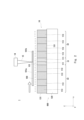
- FIG. 2 is a side cross-sectional view schematically showing a laser irradiation device.
- FIG. 2 is a side cross-sectional view schematically showing a laser irradiation device.
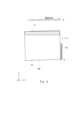
- FIG. 3 is a top view for explaining the configuration before a substrate is irradiated with laser light.
- FIG. 3 is a top view for explaining the configuration during irradiation with laser light.
- FIG. 3 is a top view for explaining the transport direction and the inclination of the substrate. It is a top view for explaining the conveyance process in a conveyance apparatus. It is a top view for explaining the conveyance process in a conveyance apparatus.
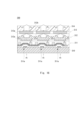
- FIG. 1 is a cross-sectional view showing a simplified configuration of an organic EL display.
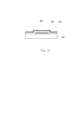
- FIG. 3 is a process cross-sectional view showing a method for manufacturing a semiconductor device according to the present embodiment.
- FIG. 3 is a process cross-sectional view showing a method for manufacturing a semiconductor device according to the present embodiment.
- the transport device is used in a laser irradiation device such as a laser annealing device.
- the laser annealing device is, for example, an excimer laser annealing (ELA) device that forms a low temperature poly-silicon (LTPS) film.
- ELA excimer laser annealing
- LTPS low temperature poly-silicon
- FIG. 1 is a top view schematically showing the basic configuration of the transport device 600.
- FIG. 2 is a side sectional view schematically showing the configuration of the transport device.
- FIG. 3 is a side sectional view schematically showing the configuration of the transport device.
- the z direction is a vertical vertical direction
- the y direction is a line direction along the linear irradiation area 15a.
- the x direction is a direction perpendicular to the z direction and the y direction. That is, the y direction is the longitudinal direction of the linear irradiation area 15a, and the x direction is the lateral direction orthogonal to the longitudinal direction.
- FIGS. 1 to 3 are conceptual diagrams showing only the basic configurations of the transport device and the laser irradiation device, and some of the configurations are omitted.
- the transport device 600 is shown in a simplified manner.
- the laser irradiation unit 14, the precision levitation unit 111, and the rough levitation unit 113 are omitted.
- the laser irradiation device 1 includes a main floating unit 10, a transport unit 11, and a laser irradiation section 14.
- the main flotation unit 10 and the transport unit 11 constitute a transport device 600.
- the transport device 600 may include an end flotation unit 18.
- the main flotation unit 10 is configured to eject gas from the surface of the main flotation unit 10.
- the main floating unit 10 floats the substrate 100 on its upper surface.
- the substrate 100 is levitated by blowing gas ejected from the surface of the main flotation unit 10 onto the lower surface of the substrate 100.
- substrate 100 is a glass substrate.
- the main floating unit 10 adjusts the flying height so that the substrate 100 does not come into contact with another mechanism (not shown) disposed above the substrate 100.
- the main levitation unit 10 is mainly divided into a precision levitation area 31 and a rough levitation area 33.
- the precision floating area 31 is an area including the irradiation area 15a of the laser beam 15. That is, in the xy plane view, the precision floating area 31 is an area that overlaps with the focal point of the laser beam (irradiation area 15a). The precision floating area 31 is larger than the irradiation area 15a.
- the precision levitation unit 111 and the rough levitation unit 113 each eject gas (for example, air) upward.
- the gas ejected from the precision flotation unit 111 and the rough flotation unit 113 may be an inert gas such as nitrogen.
- the substrate 100 floats as the gas is blown onto the lower surface of the substrate 100. Therefore, the main floating unit 10 and the substrate 100 are in a non-contact state.
- the precision levitation unit 111 sucks gas existing between the substrate 100 and the main levitation unit 10.
- the rough flotation unit 113 may or may not be configured to be able to suck gas like the precision flotation unit 111.
- the precision levitation unit 111 is a precision levitation unit formed of a porous material such as ceramic.
- the rough floating unit 113 is made of metal material.
- the rough floating unit 113 is formed of a metal block having a hollow portion. Then, a plurality of ejection holes are formed that reach the upper surface of the metal block from the hollow portion.
- the metal block may be provided with a suction hole for sucking gas.
- the semi-precision floating unit may be made of a metal material like the rough floating unit 113.
- the rough floating unit 113 and the precision floating unit 111 are collectively referred to as a floating unit cell 131.
- a plurality of rough floating units 113 are provided as floating unit cells 131.
- a plurality of precision levitation units 111 are provided as levitation unit cells 131.
- a semi-precision floating region may be provided between the precision floating region 31 and the rough floating region 33.
- An end floating unit 18 is provided on the +y side of the main floating unit 10.
- the end floating unit 18 is arranged directly below the end of the substrate 100.
- the end of the substrate 100 is floated by the gas ejected from the upper surface of the end floating unit 18.
- the end floating unit 18 has a similar configuration to the rough floating unit.
- the end floating unit 18 is made of a metal material having ejection holes and the like.
- the transport unit 11 transports the floating substrate 100 in the transport direction.
- the transport unit 11 is provided at the end of the main floating unit 10 in the +y direction. Specifically, in the y direction, the transport unit 11 is arranged between the main floating unit 10 and the end floating unit 18.
- the transport unit 11 includes a holding mechanism 12, a movable floating unit 17, an x-moving mechanism 220, a y-moving mechanism 230, and a lifting mechanism 240.
- the holding mechanism 12 holds the substrate 100.
- the holding mechanism 12 can be configured using a vacuum suction mechanism.
- the vacuum suction mechanism is made of a metal material, a resin material, a porous material, or the like. Suction grooves, suction holes, etc. are formed on the upper surface of the holding mechanism 12.
- the holding mechanism 12 may be formed of a porous material.
- the holding mechanism 12 vacuum suction mechanism
- the holding mechanism 12 is connected to an exhaust port (not shown), and the exhaust port is connected to an ejector, a vacuum pump, etc. Therefore, since negative pressure for sucking gas acts on the holding mechanism 12, the substrate 100 can be held using the holding mechanism 12.
- the holding mechanism 12 holds the substrate by suctioning the surface (lower surface) of the substrate 100 opposite to the surface (upper surface) irradiated with the laser beam 15, that is, the surface of the substrate 100 facing the main floating unit 10. Holds 100. In FIG. 1, the holding mechanism 12 holds the end of the substrate 100 in the +y direction.
- the holding mechanism 12 is supported by a lifting mechanism 240 for performing a suction operation.
- the lifting mechanism 240 raises and lowers the holding mechanism 12.
- the elevating mechanism 240 includes, for example, an actuator such as an air cylinder or a motor.
- the elevating mechanism 240 further includes a linear guide mechanism along the Z direction. Therefore, the elevating mechanism 240 moves the holding mechanism 12 up and down. For example, the holding mechanism 12 suctions the substrate 100 while being raised to the suction position. Furthermore, the holding mechanism 12 descends to the standby position in a state where the suction is released.
- a movable floating unit 17 is arranged around the holding mechanism 12.
- the movable floating unit 17 blows out gas toward the substrate 100.
- the movable floating unit 17 blows out gas onto the lower surface of the substrate 100 similarly to the main floating unit 10 .
- the end of the substrate 100 is floated by the gas ejected from the upper surface of the movable floating unit 17.
- the movable floating unit 17 has a similar configuration to the rough floating unit 113.
- the movable floating unit 17 is made of a metal material having ejection holes and the like.
- the movable floating unit 17 is provided with an opening 171 for arranging the holding mechanism 12.
- the holding mechanism 12 is arranged inside an opening 171 provided in the movable floating unit 17.
- the opening 171 is provided along the y direction.
- the opening 171 is formed in a rectangular shape with the y direction as the longitudinal direction and the x direction as the lateral direction.
- the movable floating unit 17 is provided with a plurality of openings 171.
- the plurality of openings 171 are arranged along the x direction. Although eight openings 171 are arranged along the x direction in FIG. 1, the number of openings 171 may be one or more.
- a holding mechanism 12 is arranged in each opening 171 . Each holding mechanism 12 holds the substrate 100 by suction.
- the y movement mechanism 230 moves the holding mechanism 12 in the y direction.
- the holding mechanism 12 and the lifting mechanism 240 are arranged above the y-moving mechanism 230.
- the y-moving mechanism 230 movably supports the holding mechanism 12 and the elevating mechanism 240.
- the y movement mechanism 230 includes an actuator such as a motor (not shown).
- the y-moving mechanism 230 moves the holding mechanism 12 and the elevating mechanism 240 in the y-direction. Thereby, the holding mechanism 12 moves the opening 171 in the y direction.
- the x moving mechanism 220 moves the holding mechanism 12, movable floating unit 17, lifting mechanism 240, and y moving mechanism 230 in the x direction.
- the x movement mechanism 220 includes a guide section 221 and a movable section 222.
- the guide section 221 serves as a stage that movably supports the movable section 222.
- the guide portion 221 is provided along the x direction.
- the x movement mechanism 220 has an actuator such as a motor (not shown). By driving the actuator, the movable part 222 moves on the guide part 221 in the x direction.
- a y movement mechanism 230 is provided above the movable part 222.
- the movable portion 222 supports the y-moving mechanism 230 so as to be movable in the y-direction.
- a guide mechanism such as a guide groove or a guide rail may be formed in the movable portion 222 along the y direction.
- the movable part 222 slides in the x direction on the guide part 221. Furthermore, the y movement mechanism 230 slides in the y direction on the movable part 222. By doing so, the holding mechanism 12 moves in the x direction and the y direction. Therefore, the transport unit 11 can transport the substrate 100 in the x direction and the y direction.
- the transport direction of the substrate 100 can be changed. That is, by increasing the ratio of the moving speed in the y direction to the moving speed in the x direction, the angle formed between the x direction and the transport direction can be increased. By setting the moving speed in the y direction to 0, the transport direction becomes parallel to the x direction.
- the movable part 222 supports the movable floating unit 17. Therefore, the movable section 222 moves the movable floating unit 17 in the x direction together with the y movement mechanism 230. Therefore, the movable floating unit 17, the y-moving mechanism 230, the elevating mechanism 240, and the holding mechanism 12 move together with the movable part 222.
- the movable part 222 serves as a stage that movably supports the y-moving mechanism 230, the movable floating unit 17, and the like.
- the transport unit 11 is configured to slide along the +y direction end of the main flotation unit 10 along the transport direction.
- the x movement mechanism 220 and the y movement mechanism 230 are independently controlled. By adjusting the moving speeds of the x-moving mechanism 220 and the y-moving mechanism 230, the transporting speed and direction of the substrate 100 can be controlled.
- the x movement mechanism 220 and the y movement mechanism 230 may include, for example, an actuator such as a motor (not shown), a linear guide mechanism, an air bearing, or the like.
- the x movement mechanism 220 and the y movement mechanism 230 synchronize to move the holding mechanism 12 in the x direction and the y direction.
- the substrate 100 is transported in the transport direction by moving the holding mechanism 12 along the transport direction.
- the conveyance direction is a direction inclined from the x direction.
- straight lines parallel to the x direction are shown by dashed lines.
- ⁇ is larger than 0°.
- the angle ⁇ in the transport direction can be adjusted. Thereby, conveyance suitable for the process can be realized. Furthermore, as shown in FIG. 6, it is also possible to move the y-moving mechanism 230 in the +y direction. In this case, the sign of the angle ⁇ in the transport direction can be changed. Specifically, if ⁇ in the configuration shown in FIG. 4 is a positive value, ⁇ in the configuration shown in FIG. 6 is a negative value. That is, in FIG. 6, ⁇ is less than 0°. It becomes possible to tilt the transport direction so that the angle ⁇ of the transport direction with respect to the x direction takes not only a positive value but also a negative value. For example, ⁇ can be varied within a range of ⁇ 5° or more and +5° or less.
- the main floating unit 10 has a rectangular shape when viewed from the xy plane. Specifically, in xy plane view, the main floating unit 10 has a rectangular shape having two sides parallel to the x direction and two sides parallel to the y direction.
- the transport direction is inclined from the edge of the main floating unit 10.
- the holding mechanism 12 approaches the main floating unit 10 as it moves in the +x direction.
- the substrate 100 has a rectangular shape.
- the edges of the substrate 100 are arranged to be inclined from the x direction and the y direction.
- the edge of the substrate 100 is arranged to be parallel to the transport direction.
- the edge of the substrate 100 may be arranged in a direction inclined from the transport direction.
- the transport direction is parallel to the edge of the substrate 100.
- the angle between the edge of the substrate 100 and the x direction is also ⁇ .
- the angle of the edge of the substrate 100 with respect to the transport direction can be adjusted.
- the substrate 100 can be rotated in a range of -5° to 5°.
- the transport direction and the direction of the edge of the substrate 100 can be made parallel.
- the transport direction and the direction of the edge of the substrate 100 may be different directions.
- the substrate 100 is irradiated with laser light 15.
- the irradiation area 15a of the laser beam 15 on the substrate 100 is in the form of a line whose longitudinal direction is the y direction. That is, the irradiation area 15a has the y direction as the longitudinal direction (line direction) and the x direction as the lateral direction.
- the laser irradiation unit 14 includes an excimer laser light source that generates laser light. Furthermore, the laser irradiation section 14 has an optical system that guides the laser beam to the substrate 100.
- the laser irradiation unit 14 has a lens that focuses the laser beam 15 onto the substrate 100.
- the laser irradiation unit 14 includes a cylindrical lens for forming a linear irradiation area 15a.
- the substrate 100 is irradiated with a line-shaped laser beam 15 (line beam), specifically, a laser beam 15 (line beam) whose focal point extends in the y direction. A focus of the laser beam 15 is formed on the substrate 100. Therefore, in order to suppress in-plane variations, high accuracy is required for the flying height in the precision flying region 31.
- the substrate 100 is, for example, a glass substrate on which an amorphous film (amorphous silicon film 101a) is formed.
- the amorphous film can be crystallized by irradiating the amorphous film with the laser beam 15 and subjecting it to annealing treatment.
- the amorphous silicon film 101a can be converted to a polycrystalline silicon film (polysilicon film 101b).
- the main floating unit 10 is used to levitate the substrate 100, while the transport unit 11 is used to hold the lower surface of the substrate 100 and the substrate 100 is transported in the transport direction.
- the transport unit 11 included in the laser irradiation device 1 maintains a position where the transport unit 11 does not overlap the irradiation area 15a in plan view (that is, when viewed from the z direction). is being transported. That is, as shown in FIG. 1, when the substrate 100 is transported in the transport direction, the position where the transport unit 11 holds the substrate 100 (corresponding to the position of the holding mechanism 12) is prevented from overlapping with the irradiation area 15a. There is.
- the planar shape of the substrate 100 is a quadrilateral (rectangular shape) having four sides, and the transport unit 11 (holding mechanism 12) holds only one of the four sides of the substrate 100.
- the transport unit 11 (holding mechanism 12) maintains a position where the laser beam is not irradiated while the substrate 100 is being transported.
- the position where the transport unit 11 holds the substrate 100 (corresponding to the position of the holding mechanism 12) can be separated from the irradiation area 15a.
- the irradiation area 15a is approximately half of the -y side of the substrate 100, and the transport unit 11 holds the +y side end.
- the distance between the irradiation area 15a and a location where the deflection increases near the holding mechanism 12 can be increased. Therefore, the influence of deflection caused by the holding mechanism 12 of the substrate 100 during laser irradiation can be reduced.
- the length of the irradiation area 15a is approximately half the length of the substrate 100 in the y direction.
- a region corresponding to the length of the irradiation region 15a is irradiated with laser light.
- a polysilicon film 101b is formed in the area already irradiated with the laser beam.
- the transport unit 11 transports the substrate 100 in the -x direction.
- the transport unit 11 may transport it again in the +x direction. Then, the substrate 100 is irradiated with laser light when it is transported in the -x direction or when it is transported again in the +x direction after being rotated 180 degrees.
- the substrate 100 passes through the irradiation region 15a, and the amorphous silicon film 101a is crystallized in the remaining half region of the substrate 100.
- the amorphous silicon film 101a is converted into the polysilicon film 101b over almost the entire substrate 100.
- the transport direction is inclined from the x direction which is orthogonal to the linear irradiation area 15a.
- the substrate 100 is transported in a transport direction inclined from the edge of the rectangular substrate 100.
- the substrate 100 is a glass substrate for an organic EL display device.
- the display area of the organic EL display device is rectangular, the edges of the display area are arranged parallel to the edges of the substrate 100.
- the organic EL display device has a rectangular display area whose short sides are in the x direction and the y direction.
- the transport direction is parallel to the x direction, the substrate 100 is irradiated with laser light with the pixel arrangement direction and the irradiation area 15a being parallel.
- the laser irradiation process can be performed appropriately by making the transport direction tilted from the x direction.
- the moving mechanism moves the holding mechanism 12 in a transport direction inclined from the x direction perpendicular to the longitudinal direction of the linear irradiation area 15a when viewed from above. Therefore, the crystallization process of the silicon film can be performed appropriately. For example, the occurrence of moiré can be prevented and display quality can be improved.
- the transport unit 11 is capable of two-axis operation. That is, the holding mechanism 12 moves not only in the x direction but also in the y direction. In this case, it is necessary to widen the gap between the main floating unit 10 and the end floating unit 18. In other words, it is necessary to install the end floating unit 18 apart from the main floating unit 10 in the Y direction. Even in such a case, by providing the movable floating unit 17, the deflection of the substrate 100 can be suppressed. Gas is ejected onto the lower surface of the substrate 100 in the gap between the end floating unit 18 and the main floating unit 10 . This can prevent the substrate 100 from being bent and coming into contact with the main floating unit 10 or structures around it.
- the movable floating unit 17 is provided with an opening 171.
- the holding mechanism 12 then moves within the opening 171 in the y direction. Therefore, the transport direction of the substrate 100 can be adjusted with a simple configuration.
- the movable floating unit 17 is provided with a plurality of openings 171. This allows the plurality of holding mechanisms 12 to hold the substrate 100, so that the substrate 100 can be reliably held by suction.
- the transport device is a transport device that transports the substrate in order to irradiate the substrate with a line-shaped laser beam.
- the transfer device has an irradiation area disposed directly below the irradiation position of the laser beam and has a main floating unit that levitates the substrate on its upper surface, and a main floating unit that is disposed outside the main floating unit and has an irradiation area above the main floating unit.
- a second moving mechanism is provided that moves the holding mechanism and the first moving mechanism in a second direction inclined from the first direction.
- the transport device is a transport device that transports the substrate in order to irradiate the substrate with a line-shaped laser beam.
- the transfer device has an irradiation area disposed directly below the irradiation position of the laser beam, and a main floating unit that levitates the substrate on its upper surface, and a main floating unit that is disposed outside the main floating unit and extends in a first direction.
- a floating unit having an opening provided along the substrate and spouting gas onto the lower surface of the substrate; a holding mechanism disposed in the opening to hold the substrate; a first moving mechanism that moves along one direction.
- the transport method is a transport method in which a transport device is used to transport the substrate in order to irradiate the substrate with a line-shaped laser light, and the transport device is configured to transport the substrate with the laser light.
- a main flotation unit that has an irradiation area located directly below the irradiation position and levitates the substrate on its upper surface; and a holding mechanism that is disposed outside the main flotation unit and holds the substrate on the main flotation unit.
- A1 a first moving mechanism moves the holding mechanism in a first direction in order to change the irradiation position of the laser beam on the substrate; and
- the laser beam on the substrate In order to change the irradiation position of the light, the second moving mechanism moves the holding mechanism and the first moving mechanism in a second direction inclined from the first direction.
- the conveyance method includes a conveyance device that conveys the substrate in order to irradiate the substrate with a line-shaped laser beam, the irradiation device being arranged directly below the irradiation position of the laser beam.
- a main flotation unit that levitates the substrate on its upper surface; and an opening disposed outside the main flotation unit and provided along a first direction to supply gas to the lower surface of the substrate.
- a movable floating unit that ejects water; and a holding mechanism in which a holding mechanism disposed in the opening holds the substrate, (B1) a first moving mechanism that moves the holding mechanism and the movable floating unit to the A step of moving along the first direction is provided.
- a holding mechanism disposed outside the main floating unit to hold the substrate on the main floating unit; and moving the holding mechanism in a first direction in order to change the irradiation position of the laser beam on the substrate.
- a first moving mechanism that moves the holding mechanism and the first moving mechanism in a second direction inclined from the first direction in order to change the irradiation position of the laser beam on the substrate; It is equipped with a moving mechanism.
- a method for manufacturing a semiconductor device includes the steps of (sb1) forming an amorphous film on a substrate, and (sb2) transferring the substrate on which the amorphous film is formed to a transport device. (sb3) crystallizing the amorphous film by irradiating the substrate with a line-shaped laser beam while transporting the substrate using the transport device to form a crystallized film; annealing the amorphous film in such a manner that the transport device has an irradiation area located directly below the irradiation position of the laser beam, and a main floating unit that levitates the substrate on its upper surface.
- a method for manufacturing a semiconductor device comprising: a holding mechanism for holding the holding mechanism; and a step in which a first moving mechanism moves the holding mechanism and the floating unit along the first direction.
- FIG. 7 is a top view showing the configuration of the transport device 600. Note that descriptions of the same contents as those described in FIGS. 1 to 6 will be omitted as appropriate.
- the transport device 600 includes a main floating unit 10 and end floating units 671 to 676.
- the main floating unit 10 floats a substrate (not shown in FIG. 7), which is an object to be processed.
- the main floating unit 10 has a rectangular shape.
- the main floating unit 10 has two sides parallel to the y direction and two sides parallel to the x direction.
- the end floating units 671 to 676 float the ends of the substrate protruding from the main floating unit 10.
- the main floating unit 10 is divided into six regions 60a to 60f when viewed from above.
- the main floating unit 10 includes a first region 60a to a fourth region 60d, a process region 60e, and a passage region 60f.
- the first region 60a is a rectangular region including corners on the ⁇ x side and +y side (upper left corner in FIG. 4).
- the second region 60b is a rectangular region including corners on the +x side and +y side (the upper right corner in FIG. 4).
- the third region 60c is a rectangular region including corners on the +x side and the -y side (lower right corner in FIG. 4).
- the fourth region 60d is a rectangular region including corners on the ⁇ x side and the ⁇ y side (lower left corner in FIG. 4).
- the process area 60e is a rectangular area arranged between the first area 60a and the second area 60b.
- the process area 60e is an area including the irradiation area 15a that is irradiated with laser light.
- the passage area 60f is a rectangular area arranged between the third area 60c and the fourth area 60d.
- the half area on the +y side of the main flotation unit 10 (the upper half area in FIG. 4) is divided into a first area 60a, a process area 60e, and a second area 60b in order from the -x side (left side in FIG. 4). It has become.
- the -y side half area (lower half area in FIG. 4) of the main floating unit 10 is, in order from the +x side, a third area 60c, a passing area 60f, and a fourth area 60d.
- the fourth area 60d is a carry-in area where the substrate 100 (see FIG. 8) is carried in, and a carry-out area where the substrate 100 is carried out.
- a transfer device such as a transfer robot is provided on the ⁇ x side of the fourth area 60d. Then, the transfer machine carries the substrate 100 into the fourth area 60d. Similarly, the transfer machine carries out the substrate in the fourth area 60d.
- the main floating unit 10 includes a rotation mechanism 68 and alignment mechanisms 69a and 69b.
- the rotation mechanism 68 rotates the substrate.
- Alignment mechanisms 69a and 69b align the substrates.
- Alignment mechanisms 69a and 69b are provided in the first region 60a and the second region 60b, respectively.
- a rotation mechanism 68 is provided in the fourth region 60d. The operations of the rotation mechanism 68, alignment mechanisms 69a, 69b, etc. will be described later.
- the end floating units 671 to 676 are arranged outside the main floating unit 10. End floating units 671 to 676 are arranged along the outer periphery of the rectangular main floating unit 10. The end floating units 671 to 676 are provided along the edges of the main floating unit 10. When viewed from above, the end floating units 671 to 676 are arranged so as to surround the outer periphery of the main floating unit 10.
- the end floating units 671 and 672 are arranged on the -x side of the main floating unit 10.
- An end floating unit 673 is arranged on the +y side of the main floating unit 10.
- An end floating unit 674 is arranged on the +x side of the main floating unit 10.
- End floating units 675 and 676 are arranged on the -y side of the main floating unit 10.
- the end floating units 671 and 672 are arranged along the -x side edge of the main floating unit 10. That is, the end floating units 671 and 672 are each provided along the y direction. Further, the width of the end floating unit 671 in the x direction is wider than the end floating unit 672. The end floating unit 671 is arranged on the -y side of the end floating unit 672.
- the end floating unit 673 is arranged along the +y side edge of the main floating unit 10. In other words, the end floating unit 673 is provided along the x direction.
- the end floating unit 674 is arranged along the +x side edge of the main floating unit 10. In other words, the end floating unit 674 is provided along the y direction.
- the end floating units 675 and 676 are arranged along the -y side edge of the main floating unit 10. That is, the end floating units 675 and 676 are each provided along the x direction. Furthermore, the width of the end floating unit 676 in the y direction is wider than the end floating unit 675. The end floating unit 676 is arranged on the -x side of the end floating unit 675.
- a transport unit 11a is provided between the main floating unit 10 and the end floating unit 671.
- the transport unit 11a is also arranged between the main floating unit 10 and the end floating unit 672.
- the transport unit 11a is formed along the y direction.
- the transport unit 11a transports the substrate in the +y direction. That is, the transport unit 11a transports the substrate 100 from the fourth region 60d toward the first region 60a.
- a transport unit 11b is provided between the main floating unit 10 and the end floating unit 673.
- the transport unit 11b is formed along the x direction.
- the transport unit 11b transports the substrate in a transport direction inclined from the x direction. That is, the transport unit 11b transports the substrate 100 from the first region 60a to the second region 60b.
- a transport unit 11c is provided between the main floating unit 10 and the end floating unit 674.
- the transport unit 11c is formed along the y direction.
- the transport unit 11c transports the substrate 100 in the -y direction. That is, the transport unit 11c transports the substrate 100 from the second region 60b to the third region 60c.
- a transport unit 11d is provided between the main floating unit 10 and the end floating unit 675.
- the transport unit 11d moves between the main floating unit 10 and the end floating unit 676.
- the transport unit 11d is formed along the x direction.
- the transport unit 11a transports the substrate in the -x direction. That is, the transport unit 11d transports the substrate 100 from the third region 60c to the fourth region 60d.
- the transport unit 11b has the same configuration as the transport unit 11 shown in FIGS. 1 and 3. Although shown in a simplified manner in FIGS. 7, 8, etc., the transport unit 11b has the same configuration as that shown in FIGS. 1, 3, etc. Therefore, the transport unit 11b includes the holding mechanism 12, the x-movement mechanism 220, the y-movement mechanism 230, etc. shown in FIG. 3 and the like.
- the transport unit 11b is movable in two axes and moves the substrate 100 in the x direction and the y direction. Therefore, the transport direction of the substrate 100 is a direction inclined from the x direction.
- the transport units 11a, 11c, and 11d are different from the transport unit 11 in FIG. 1, and are only capable of uniaxial movement. Specifically, the transport unit 11a and the transport unit 11c hold the substrate 100 and transport it only in the y direction. The transport unit 11d holds the substrate 100 and transports it only in the x direction.
- the transport units 11a, 11c, and 11d each include a holding mechanism that vacuum-chucks the substrate 100, and a moving mechanism that moves the holding mechanism.
- the transport unit 11a includes a holding mechanism 12a and a moving mechanism 13a.
- the transport unit 11c includes a holding mechanism 12c and a moving mechanism 13c
- the transport unit 11d includes a holding mechanism 12d and a moving mechanism 13d.
- the holding mechanisms 12a, 12c, and 12d hold the substrate 100 by suction.
- the moving directions of the moving mechanism 13a and the moving mechanism 13c are parallel to the y direction.
- the moving direction of the moving mechanism 13d is parallel to the x direction.
- the transport units 11a, 11c, and 11d have a lifting mechanism (not shown) for moving the substrate 100 up and down.
- the laser beam irradiation area 15a has the y direction as the longitudinal direction. In other words, a linear irradiation area 15a whose longitudinal direction is in the y direction is formed.
- the substrate 100 is being transported in the transport direction, the substrate 100 is irradiated with laser light.
- a laser irradiation process is performed.
- the amorphous silicon film is converted into a polysilicon film by irradiating the substrate with laser light from a laser light source.
- a precision levitation unit 111 is arranged in the irradiation area 15a and its surroundings.
- the precision levitation unit 111 has a higher accuracy in flying height than the rough levitation unit 113. Therefore, in the process region 60e including the irradiation region 15a, the flying substrate 100 is irradiated with laser light with a higher flying height than in the other regions 60a to 60d and 60f. Thereby, the substrate 100 can be stably irradiated with laser light. Further, regions other than the irradiation region 15a, for example, the passage region 60f, the third region 60c, and the fourth region 60d, are created without using the expensive precision levitation unit 111. Therefore, device cost can be reduced.
- the transport unit 11b has a movable floating unit 17.
- the transport units 11a, 11c, and 11d do not have a movable floating unit 17. Therefore, the transport unit 11b is formed wider than the transport units 11a, 11c, and 11d.
- the width of the transport unit 11b in the y direction is wider than the width of the transport unit 11d in the y direction.
- the width of the transport unit 11b in the y direction is wider than the width of the transport units 11a and 11c in the x direction.
- the size of the transport unit 11b in the width direction is larger than the size of the transport units 11a, 11c, and 11d in the width direction. Therefore, the gap between the end floating unit 673 and the main floating unit 10 is wider than the gap between the main floating unit 10 and the other end floating units. For example, the gap between the end floating unit 673 and the main floating unit 10 in the y direction is wider than the gap between the edge floating unit 675 and the main floating unit 10 in the y direction.
- the fourth region 60d is the loading position and unloading position of the substrate 100.
- the substrate 100 carried into the fourth region 60d is transported in the order of the first region 60a, the process region 60e, the second region 60b, the third region 60c, the passing region 60f, and the fourth region 60d. It will be done. That is, the substrate 100 orbits along the edge of the main floating unit 10.
- the substrate 100 rotates twice in order to irradiate the entire substrate 100 with laser light. In other words, the substrate 100 is transported so as to circulate over the main floating unit 10 twice. By doing so, almost the entire surface of the substrate 100 is irradiated with laser light.
- the substrate 100 is carried into the fourth region 60d.
- the substrate 100 carried into the fourth region 60d is floated by the main floating unit 10 and the end floating units 671, 672, and 676. That is, the -x side end of the substrate 100 is floated by the end floating units 671 and 672, and the center part is floated by the main floating unit 10.
- the ⁇ y side end of the substrate 100 is floated by an end floating unit 676.
- the holding mechanism 12a of the transport unit 11a holds the substrate 100.
- the substrate 100a in the fourth region 60d is transported to the first region 60a.
- the substrate moved to the first region 60a is shown as a substrate 100b.
- a holding mechanism 12a of the transport unit 11a holds the substrate 100a.
- the moving mechanism 13a moves the holding mechanism 12a in the +y direction, thereby moving the substrate 100a from the fourth region 60d to the first region 60a (white arrow in FIG. 9).
- the holding mechanism 12a passes between the main floating unit 10 and the end floating unit 671 and moves in the +y direction. Furthermore, in the xy plane view, the holding mechanism 12a passes between the main floating unit 10 and the end floating unit 672 and moves in the +y direction. Therefore, the substrate 100b is floated by the main floating unit 10 and the end floating units 672 and 673. That is, the -x side end of the substrate 100b is floated by the end floating unit 672, and the center part is floated by the main floating unit 10. The +y side end of the substrate 100b is floated by an end floating unit 673.
- the transport unit 11b has a movable floating unit 17, as shown in FIGS. 1 to 3.
- the movable floating unit 17 is spouting gas onto the substrate 100. This can prevent the substrate 100 from being bent and coming into contact with the edges of the main floating unit 10 and the end floating unit 673 or structures around them.
- the gap from the end floating unit 673 to the main floating unit 10 is wider than the gap from the other edge floating unit to the main floating unit 10. Even in such a case, the deflection of the substrate 100 can be suppressed by providing the movable floating unit 17 in the transport unit 11b.
- the alignment mechanism 69a aligns the position and angle of the substrate 100b transported to the first region 60a.
- the position and rotation angle of the substrate may be slightly shifted due to loading, transporting, and rotating operations of the substrate 100.
- the alignment mechanism 69a corrects deviations in position and rotation angle. Thereby, the irradiation position of the laser beam on the substrate 100 can be controlled with high precision.
- the alignment mechanism 69a is movable in the y direction and rotatable around the z axis. Furthermore, the alignment mechanism 69a is movable in the z direction.
- the alignment mechanism 69a includes an actuator such as a motor. The amount of positional deviation and the amount of angular deviation are determined from an image of the substrate 100b captured by a camera or the like. The alignment mechanism 69a performs alignment based on this amount of deviation.
- An alignment mechanism 69a is arranged directly below the center of the substrate 100b. Alignment mechanism 69a holds substrate 100b. The alignment mechanism 69a may attract and hold the substrate 100b similarly to the holding mechanism 12. The holding mechanism 12a releases the holding of the substrate 100b. Thereby, the substrate 100b is transferred from the holding mechanism 12a to the alignment mechanism 69a.
- the alignment mechanism 69a rotates the substrate 100b around the z-axis (white arrow in FIG. 10).
- the alignment mechanism 69a rotates the substrate 100b so that the edge of the substrate 100b is parallel to the transport direction.
- the substrate after rotation is shown as substrate 100c.
- the alignment mechanism 69a rotates the substrate 100 around the z-axis by a predetermined angle.
- the edge of the substrate 100c is parallel to the transport direction of the main floating unit 10.
- the transport unit 11b moves the substrate 100d.
- the substrate 100d passes through the process area 60e.
- the holding mechanism 12 passes between the main floating unit 10 and the end floating unit 673 and moves in a direction inclined from the x direction.
- approximately half of the area of the substrate 100d passes through the irradiation area 15a.
- the laser beam is irradiated onto the substrate 100d, which is moving in a direction inclined from the x direction perpendicular to the irradiation area 15a.
- the holding mechanism 12 moves between the main floating unit 10 and the end floating unit 673. Therefore, the substrate 100d is floated by the main floating unit 10 and the end floating unit 673. That is, the +y side end of the substrate 100d is floated by the end floating unit 673, and the center part is floated by the main floating unit 10.
- a laser irradiation process is performed while moving from the first region 60a to the second region 60b.
- the alignment mechanism 69b aligns the substrate 100e.
- the alignment mechanism 69b rotates the substrate 100e (white arrow in FIG. 12).
- the substrate after rotation is shown as a substrate 100f.
- An alignment mechanism 69b is arranged directly below the center of the substrate 100e. Alignment mechanism 69b holds substrate 100e. The alignment mechanism 69b may attract and hold the substrate 100e similarly to the holding mechanism 12. Further, the holding mechanism 12 releases the holding of the substrate 100e. The substrate 100e is transferred from the holding mechanism 12 of the transport unit 11b to the alignment mechanism 69b.
- the alignment mechanism 69b rotates the substrate 100e around the z-axis (white arrow in FIG. 12).
- the alignment mechanism 69a rotates the substrate 100e so that the edge of the substrate 100e is parallel to the y direction of the main floating unit 10.
- the edge of the rotated substrate 100f is parallel to the x direction or the y direction.
- the substrate 100e is floated by the main floating unit 10 and the end floating units 673 and 674.
- the +y side end of the substrate 100e is floated by the end floating unit 673.
- the +x side end of the substrate 100e is floated by the end floating unit 674, and the center part is floated by the main floating unit 10.
- the substrate 100f in the second region 60b is transported to the third region 60c.
- the substrate moved to the third region 60c is shown as a substrate 100g.
- the holding mechanism 12c of the transport unit 11c holds the substrate 100f.
- the moving mechanism 13c moves the holding mechanism 12c in the ⁇ y direction, thereby moving the substrate 100f from the second region 60b to the third region 60c (white arrow in FIG. 13).
- the holding mechanism 12c passes between the main floating unit 10 and the end floating unit 674 and moves in the -y direction. Therefore, the substrate 100e is floated by the main floating unit 10 and the end floating units 674 and 675.
- the +x side end of the substrate 100e is floated by the end floating unit 674, and the center part is floated by the main floating unit 10.
- the -y side end of the substrate 100e is floated by an end floating unit 675.
- the holding mechanism 12d of the transport unit 11d holds the substrate 100g, and the holding mechanism 12c releases the holding.
- the substrate 100g is transferred from the holding mechanism 12c of the transport unit 11c to the holding mechanism 12d of the transport unit 11d.
- the substrate 100g in the third region 60c is transported to the fourth region 60d.
- the substrate moved to the fourth region 60d is shown as a substrate 100h.
- the holding mechanism 12d of the transport unit 11d holds the substrate 100g.
- the moving mechanism 13d moves the holding mechanism 12d in the ⁇ x direction, thereby moving the substrate 100f from the third region 60c to the fourth region 60d (white arrow in FIG. 14).
- the holding mechanism 12d passes between the main floating unit 10 and the end floating unit 675 and moves in the ⁇ x direction.
- the holding mechanism 12d passes between the main floating unit 10 and the end floating unit 676 and moves in the ⁇ x direction. Therefore, the substrate 100h is floated by the main floating unit 10 and the end floating unit 676.
- the -y side end of the substrate 100h is floated by an end floating unit 676, and the center part is floated by the main floating unit 10.
- the ⁇ x side end of the substrate 100h is floated by an end floating unit 671.
- the substrate 100 that was in the fourth region 60d is transferred to the first region 60a, the process region 60e, the second region 60b, the third region 60c, the passage region 60f, and the fourth region 60d. move in order. That is, the substrate 100 orbits along the edge of the main floating unit 10.
- the rotation mechanism 68 rotates the substrate 100h by 180° around the z-axis. In other words, the substrate 100h is transferred from the holding mechanism 12d to the rotation mechanism 68.
- the rotation mechanism 68 rotates the substrate 100h, the substrate 100h is transferred from the rotation mechanism 68 to the holding mechanism 12d.
- the transport units 11a to 11d move the substrate 100h again in the order of the first region 60a, the process region 60e, the second region 60b, the third region 60c, the passage region 60f, and the fourth region 60d. I will do it. That is, as shown in FIGS. 7 to 15, the substrate 100 orbits along the edge of the main floating unit 10.
- the rotation mechanism 68 rotates the substrate 100h by 180°.
- the substrate 100e passes through the process region 60e for the second time, the remaining half region that was not irradiated with the laser light during the first pass is irradiated with the laser light.
- the substrate 100 circulates twice along the edge of the main floating unit 10. Since the substrate 100 is rotated by 180° between the first laser irradiation and the second laser irradiation, almost the entire surface of the substrate 100 is irradiated with the laser light.
- the position at which the substrate 100 is rotated is not limited to the first region 60a. For example, it may be performed in the second region 60b, the third region 60c, or the fourth region 60d.
- the transport unit 11b transports the substrate 100 in a direction inclined from the x direction perpendicular to the irradiation area 15a. Therefore, the crystallization process of the silicon film can be performed appropriately. For example, the occurrence of moiré can be prevented and display quality can be improved.
- the transport direction of the substrate 100 may be the x direction. In a top view, the transport direction of the substrate 100 may be a direction inclined from the y direction. That is, the transport direction of the substrate may be parallel to the x direction or may be a direction inclined from the x direction.
- the transport units 11a, 11c, and 11d transport the substrate 100 with the edges of the substrate 100 parallel to the x and y directions; Alternatively, the substrate 100 may be transported while being tilted from the y direction. That is, the transport units 11a, 11c, and 11d may transport the substrate 100 while the substrate 100 is parallel to the transport direction.
- FIGS. 10 and 12 it is not necessary to adjust the rotation angle by the alignment mechanisms 69a and 69b. Therefore, it is also possible to omit the alignment mechanisms 69a and 69b.
- the holding mechanism holds the short sides of the substrate 100 in FIG. 11, but it may hold the long sides of the substrate 100.
- the transfer unit 11a transfers the substrate 100 to a suitable position.
- the transfer machine may transfer the substrate 100 to the fourth region 60d with the long sides of the substrate 100 parallel to the x direction or the transport direction.
- the semiconductor device having the polysilicon film described above is suitable for a TFT (Thin Film Transistor) array substrate for an organic EL (Electro Luminescence) display. That is, the polysilicon film is used as a semiconductor layer having a source region, a channel region, and a drain region of a TFT.
- TFT Thin Film Transistor
- organic EL Electro Luminescence
- FIG. 16 is a cross-sectional view showing a simplified pixel circuit of an organic EL display.
- the organic EL display 300 shown in FIG. 16 is an active matrix display device in which a TFT is arranged in each pixel PX.
- the substrate 310 is a glass substrate or a metal substrate.
- a TFT layer 311 is provided on the substrate 310.
- the TFT layer 311 has a TFT 311a arranged in each pixel PX. Furthermore, the TFT layer 311 has wiring (not shown) etc. connected to the TFT 311a.
- the TFT 311a, wiring, etc. constitute a pixel circuit.
- An organic layer 312 is provided on the TFT layer 311.
- the organic layer 312 has an organic EL light emitting element 312a arranged for each pixel PX. Further, the organic layer 312 is provided with partition walls 312b for separating the organic EL light emitting elements 312a between the pixels PX.
- a color filter layer 313 is provided on the organic layer 312.
- the color filter layer 313 is provided with a color filter 313a for performing color display. That is, each pixel PX is provided with a resin layer colored R (red), G (green), or B (blue) as a color filter 313a.
- the current flowing through the organic EL light emitting element 312a of the organic layer 312 changes depending on the display signal supplied to the pixel circuit. Therefore, by supplying each pixel PX with a display signal corresponding to the displayed image, the amount of light emitted by each pixel PX can be controlled. Thereby, a desired image can be displayed.
- one pixel PX is provided with one or more TFTs (for example, a switching TFT or a driving TFT).
- the TFT of each pixel PX is provided with a semiconductor layer having a source region, a channel region, and a drain region.
- the polysilicon film according to this embodiment is suitable for a semiconductor layer of a TFT. That is, by using the polysilicon film manufactured by the above manufacturing method as the semiconductor layer of the TFT array substrate, in-plane variations in TFT characteristics can be suppressed. Therefore, a display device with excellent display characteristics can be manufactured with high productivity.
- the method for manufacturing a semiconductor device using the laser irradiation apparatus according to this embodiment is suitable for manufacturing a TFT array substrate.
- a method for manufacturing a semiconductor device having a TFT will be described with reference to FIGS. 17 and 18.
- 17 and 18 are process cross-sectional views showing the manufacturing process of a semiconductor device. In the following description, a method for manufacturing a semiconductor device having an inverted staggered TFT will be described. 17 and 18 show a polysilicon film forming step in a semiconductor manufacturing method. Note that for other manufacturing steps, known methods can be used, and therefore descriptions thereof will be omitted.
- a gate electrode 402 is formed on a glass substrate 401.
- a gate insulating film 403 is formed on the gate electrode 402.
- An amorphous silicon film 404 is formed on the gate insulating film 403.
- the amorphous silicon film 404 is arranged so as to overlap the gate electrode 402 with the gate insulating film 403 in between.
- a gate insulating film 403 and an amorphous silicon film 404 are successively formed by a CVD (Chemical Vapor Deposition) method.
- the glass substrate 401 on which the amorphous silicon film 404 is formed is transported to the above-mentioned transport device 600.
- a polysilicon film 405 is formed as shown in FIG. That is, the amorphous silicon film 404 is crystallized by the laser irradiation device 1 shown in FIG. 1 and the like.
- a polysilicon film 405 in which silicon is crystallized is formed on the gate insulating film 403.
- Polysilicon film 405 corresponds to the polysilicon film described above.
- the transport device 600 is transporting the glass substrate 401, the laser beam L1 is irradiated.
- the amorphous silicon film 404 is annealed and converted into a polysilicon film 405.
- the laser annealing apparatus was described as forming a polysilicon film by irradiating an amorphous silicon film with laser light. It may also form a microcrystalline silicon film.
- the laser beam used for annealing is not limited to the Nd:YAG laser.
- the method according to this embodiment can also be applied to a laser annealing apparatus that crystallizes thin films other than silicon films. That is, the method according to this embodiment is applicable to any laser annealing apparatus that forms a crystallized film by irradiating an amorphous film with laser light. According to the laser annealing apparatus according to this embodiment, a substrate with a crystallized film can be appropriately modified.
Landscapes
- Recrystallisation Techniques (AREA)
- Container, Conveyance, Adherence, Positioning, Of Wafer (AREA)
Priority Applications (4)
| Application Number | Priority Date | Filing Date | Title |
|---|---|---|---|
| US18/878,266 US20250379094A1 (en) | 2022-07-07 | 2022-07-07 | Conveyance apparatus, conveyance method, and method for manufacturing semiconductor device |
| CN202280097863.8A CN119487627A (zh) | 2022-07-07 | 2022-07-07 | 输送装置、输送方法和半导体装置的制造方法 |
| PCT/JP2022/027014 WO2024009470A1 (ja) | 2022-07-07 | 2022-07-07 | 搬送装置、搬送方法、及び半導体装置の製造方法 |
| JP2024531856A JPWO2024009470A1 (https=) | 2022-07-07 | 2022-07-07 |
Applications Claiming Priority (1)
| Application Number | Priority Date | Filing Date | Title |
|---|---|---|---|
| PCT/JP2022/027014 WO2024009470A1 (ja) | 2022-07-07 | 2022-07-07 | 搬送装置、搬送方法、及び半導体装置の製造方法 |
Publications (1)
| Publication Number | Publication Date |
|---|---|
| WO2024009470A1 true WO2024009470A1 (ja) | 2024-01-11 |
Family
ID=89453101
Family Applications (1)
| Application Number | Title | Priority Date | Filing Date |
|---|---|---|---|
| PCT/JP2022/027014 Ceased WO2024009470A1 (ja) | 2022-07-07 | 2022-07-07 | 搬送装置、搬送方法、及び半導体装置の製造方法 |
Country Status (4)
| Country | Link |
|---|---|
| US (1) | US20250379094A1 (https=) |
| JP (1) | JPWO2024009470A1 (https=) |
| CN (1) | CN119487627A (https=) |
| WO (1) | WO2024009470A1 (https=) |
Citations (9)
| Publication number | Priority date | Publication date | Assignee | Title |
|---|---|---|---|---|
| JPH11251261A (ja) * | 1998-03-04 | 1999-09-17 | Seiko Epson Corp | 半導体膜の製造方法、およびアニール装置及び薄膜トランジスタの製造方法及び液晶表示装置用アクティブマトリクス基板 |
| JP2002280321A (ja) * | 2001-03-21 | 2002-09-27 | Ishikawajima Harima Heavy Ind Co Ltd | レーザアニール装置 |
| JP2004179653A (ja) * | 2002-11-15 | 2004-06-24 | Semiconductor Energy Lab Co Ltd | 半導体膜の作製方法及び半導体装置の作製方法、並びにレーザー処理装置 |
| JP2005132626A (ja) * | 2003-10-06 | 2005-05-26 | Sumitomo Heavy Ind Ltd | 搬送装置、塗布システム、及び検査システム |
| JP2009010161A (ja) * | 2007-06-28 | 2009-01-15 | Sumitomo Heavy Ind Ltd | レーザ加工装置、及び、レーザ加工方法 |
| JP2009147240A (ja) * | 2007-12-18 | 2009-07-02 | Dainippon Printing Co Ltd | 基板支持装置、基板支持方法、基板加工装置、基板加工方法、表示装置構成部材の製造方法 |
| JP2013115331A (ja) * | 2011-11-30 | 2013-06-10 | Kawasaki Heavy Ind Ltd | 搬送ワークのヨーイング補正機構とその補正方法 |
| JP2018049897A (ja) * | 2016-09-21 | 2018-03-29 | 株式会社日本製鋼所 | レーザ照射装置、レーザ照射方法、及び半導体装置の製造方法 |
| JP2018060891A (ja) * | 2016-10-04 | 2018-04-12 | 株式会社日本製鋼所 | レーザ照射装置、レーザ照射方法、及び半導体装置の製造方法 |
-
2022
- 2022-07-07 JP JP2024531856A patent/JPWO2024009470A1/ja active Pending
- 2022-07-07 CN CN202280097863.8A patent/CN119487627A/zh active Pending
- 2022-07-07 WO PCT/JP2022/027014 patent/WO2024009470A1/ja not_active Ceased
- 2022-07-07 US US18/878,266 patent/US20250379094A1/en active Pending
Patent Citations (9)
| Publication number | Priority date | Publication date | Assignee | Title |
|---|---|---|---|---|
| JPH11251261A (ja) * | 1998-03-04 | 1999-09-17 | Seiko Epson Corp | 半導体膜の製造方法、およびアニール装置及び薄膜トランジスタの製造方法及び液晶表示装置用アクティブマトリクス基板 |
| JP2002280321A (ja) * | 2001-03-21 | 2002-09-27 | Ishikawajima Harima Heavy Ind Co Ltd | レーザアニール装置 |
| JP2004179653A (ja) * | 2002-11-15 | 2004-06-24 | Semiconductor Energy Lab Co Ltd | 半導体膜の作製方法及び半導体装置の作製方法、並びにレーザー処理装置 |
| JP2005132626A (ja) * | 2003-10-06 | 2005-05-26 | Sumitomo Heavy Ind Ltd | 搬送装置、塗布システム、及び検査システム |
| JP2009010161A (ja) * | 2007-06-28 | 2009-01-15 | Sumitomo Heavy Ind Ltd | レーザ加工装置、及び、レーザ加工方法 |
| JP2009147240A (ja) * | 2007-12-18 | 2009-07-02 | Dainippon Printing Co Ltd | 基板支持装置、基板支持方法、基板加工装置、基板加工方法、表示装置構成部材の製造方法 |
| JP2013115331A (ja) * | 2011-11-30 | 2013-06-10 | Kawasaki Heavy Ind Ltd | 搬送ワークのヨーイング補正機構とその補正方法 |
| JP2018049897A (ja) * | 2016-09-21 | 2018-03-29 | 株式会社日本製鋼所 | レーザ照射装置、レーザ照射方法、及び半導体装置の製造方法 |
| JP2018060891A (ja) * | 2016-10-04 | 2018-04-12 | 株式会社日本製鋼所 | レーザ照射装置、レーザ照射方法、及び半導体装置の製造方法 |
Also Published As
| Publication number | Publication date |
|---|---|
| JPWO2024009470A1 (https=) | 2024-01-11 |
| US20250379094A1 (en) | 2025-12-11 |
| CN119487627A (zh) | 2025-02-18 |
Similar Documents
| Publication | Publication Date | Title |
|---|---|---|
| JP6983578B2 (ja) | レーザ照射装置、レーザ照射方法、及び半導体装置の製造方法 | |
| CN109643649B (zh) | 激光照射装置、激光照射方法以及半导体器件制造方法 | |
| US11676831B2 (en) | Laser irradiation apparatus, laser irradiation method, and method for manufacturing semiconductor device | |
| JP6968243B2 (ja) | レーザ照射装置、レーザ照射方法、及び半導体装置の製造方法 | |
| JP6754266B2 (ja) | レーザ照射装置、レーザ照射方法、及び半導体装置の製造方法 | |
| JP7763792B2 (ja) | 搬送装置、搬送方法、及び半導体装置の製造方法 | |
| CN109690739B (zh) | 激光照射装置、激光照射方法以及半导体器件制造方法 | |
| WO2024009470A1 (ja) | 搬送装置、搬送方法、及び半導体装置の製造方法 | |
| JP7767587B2 (ja) | 搬送装置、移載方法、搬送方法、及び半導体装置の製造方法 | |
| JP7787295B2 (ja) | 搬送装置、搬送方法、及び半導体装置の製造方法 | |
| WO2024214213A1 (ja) | 搬送装置、レーザ照射装置、搬送方法、及び半導体装置の製造方法 | |
| JP7095166B2 (ja) | レーザ照射装置、レーザ照射方法、及び半導体装置の製造方法 | |
| WO2024171651A1 (ja) | 搬送装置、レーザ照射装置、搬送方法、及び有機elディスプレイ装置の製造方法 | |
| JP7412111B2 (ja) | レーザ処理装置及び半導体装置の製造方法 | |
| JP7159363B2 (ja) | レーザ照射装置 | |
| JP2025012185A (ja) | 搬送装置、レーザ照射装置、搬送方法、及び有機elディスプレイ装置の製造方法 | |
| WO2024134777A1 (ja) | 観察装置、観察方法、及び半導体装置の製造方法 | |
| JP6775449B2 (ja) | レーザ照射装置、レーザ照射方法、及び半導体装置の製造方法 |
Legal Events
| Date | Code | Title | Description |
|---|---|---|---|
| 121 | Ep: the epo has been informed by wipo that ep was designated in this application |
Ref document number: 22950264 Country of ref document: EP Kind code of ref document: A1 |
|
| WWE | Wipo information: entry into national phase |
Ref document number: 202417099819 Country of ref document: IN |
|
| WWE | Wipo information: entry into national phase |
Ref document number: 18878266 Country of ref document: US |
|
| WWE | Wipo information: entry into national phase |
Ref document number: 2024531856 Country of ref document: JP |
|
| WWE | Wipo information: entry into national phase |
Ref document number: 202280097863.8 Country of ref document: CN |
|
| NENP | Non-entry into the national phase |
Ref country code: DE |
|
| WWP | Wipo information: published in national office |
Ref document number: 202280097863.8 Country of ref document: CN |
|
| 122 | Ep: pct application non-entry in european phase |
Ref document number: 22950264 Country of ref document: EP Kind code of ref document: A1 |
|
| WWP | Wipo information: published in national office |
Ref document number: 18878266 Country of ref document: US |