WO2023277056A1 - ゲームシステム、ゲーム制御装置、プログラム及び記録媒体 - Google Patents
ゲームシステム、ゲーム制御装置、プログラム及び記録媒体 Download PDFInfo
- Publication number
- WO2023277056A1 WO2023277056A1 PCT/JP2022/025927 JP2022025927W WO2023277056A1 WO 2023277056 A1 WO2023277056 A1 WO 2023277056A1 JP 2022025927 W JP2022025927 W JP 2022025927W WO 2023277056 A1 WO2023277056 A1 WO 2023277056A1
- Authority
- WO
- WIPO (PCT)
- Prior art keywords
- game
- user
- team
- player
- selection
- Prior art date
- Legal status (The legal status is an assumption and is not a legal conclusion. Google has not performed a legal analysis and makes no representation as to the accuracy of the status listed.)
- Ceased
Links
Images













Classifications
-
- A—HUMAN NECESSITIES
- A63—SPORTS; GAMES; AMUSEMENTS
- A63F—CARD, BOARD, OR ROULETTE GAMES; INDOOR GAMES USING SMALL MOVING PLAYING BODIES; VIDEO GAMES; GAMES NOT OTHERWISE PROVIDED FOR
- A63F13/00—Video games, i.e. games using an electronically generated display having two or more dimensions
- A63F13/70—Game security or game management aspects
- A63F13/79—Game security or game management aspects involving player-related data, e.g. identities, accounts, preferences or play histories
- A63F13/795—Game security or game management aspects involving player-related data, e.g. identities, accounts, preferences or play histories for finding other players; for building a team; for providing a buddy list
-
- A—HUMAN NECESSITIES
- A63—SPORTS; GAMES; AMUSEMENTS
- A63F—CARD, BOARD, OR ROULETTE GAMES; INDOOR GAMES USING SMALL MOVING PLAYING BODIES; VIDEO GAMES; GAMES NOT OTHERWISE PROVIDED FOR
- A63F13/00—Video games, i.e. games using an electronically generated display having two or more dimensions
- A63F13/60—Generating or modifying game content before or while executing the game program, e.g. authoring tools specially adapted for game development or game-integrated level editor
- A63F13/65—Generating or modifying game content before or while executing the game program, e.g. authoring tools specially adapted for game development or game-integrated level editor automatically by game devices or servers from real world data, e.g. measurement in live racing competition
-
- A—HUMAN NECESSITIES
- A63—SPORTS; GAMES; AMUSEMENTS
- A63F—CARD, BOARD, OR ROULETTE GAMES; INDOOR GAMES USING SMALL MOVING PLAYING BODIES; VIDEO GAMES; GAMES NOT OTHERWISE PROVIDED FOR
- A63F13/00—Video games, i.e. games using an electronically generated display having two or more dimensions
- A63F13/60—Generating or modifying game content before or while executing the game program, e.g. authoring tools specially adapted for game development or game-integrated level editor
- A63F13/69—Generating or modifying game content before or while executing the game program, e.g. authoring tools specially adapted for game development or game-integrated level editor by enabling or updating specific game elements, e.g. unlocking hidden features, items, levels or versions
-
- A—HUMAN NECESSITIES
- A63—SPORTS; GAMES; AMUSEMENTS
- A63F—CARD, BOARD, OR ROULETTE GAMES; INDOOR GAMES USING SMALL MOVING PLAYING BODIES; VIDEO GAMES; GAMES NOT OTHERWISE PROVIDED FOR
- A63F13/00—Video games, i.e. games using an electronically generated display having two or more dimensions
- A63F13/70—Game security or game management aspects
- A63F13/79—Game security or game management aspects involving player-related data, e.g. identities, accounts, preferences or play histories
-
- A—HUMAN NECESSITIES
- A63—SPORTS; GAMES; AMUSEMENTS
- A63F—CARD, BOARD, OR ROULETTE GAMES; INDOOR GAMES USING SMALL MOVING PLAYING BODIES; VIDEO GAMES; GAMES NOT OTHERWISE PROVIDED FOR
- A63F13/00—Video games, i.e. games using an electronically generated display having two or more dimensions
- A63F13/80—Special adaptations for executing a specific game genre or game mode
- A63F13/812—Ball games, e.g. soccer or baseball
Definitions
- the present invention relates to a game system, game control device, program and recording medium.
- games are known in which users use groups of multiple objects to compete against other users.
- a baseball game in which a user selects his/her favorite player character from a plurality of player characters owned in the game, organizes a team, and competes against an opponent team (for example, patent Reference 1).
- each user tends to preferentially use popular objects and objects with high ability values, and the objects used in the game tend to be biased.
- the objects used in the game tend to be biased.
- many users use objects corresponding to popular real-life players and teams that correspond to popular real-life teams. and team bias. For this reason, matches between popular players and matches between popular teams will be mass-produced.
- one object of the present invention is to provide a game system and a game system capable of realizing a highly entertaining game by eliminating the bias in the objects used in the battle game and the bias in the group consisting of a plurality of objects. It is to provide a control device and a program.
- a game system is a game system that provides a game in which a user can participate in a specific battle game, and includes reception means for accepting participation in the battle game, and participation received by the reception means.
- Management means for storing and managing a plurality of use objects that users can use in the competitive game in a storage device; selecting means for randomly selecting a use object from among the plurality of use objects managed by the managing means based on the same selection condition.
- a game control device is a game control device that provides a game in which a user can participate in a specific competitive game, comprising reception means for accepting participation in the competitive game, and participation by the reception means.
- management means for storing and managing a plurality of usage objects that can be used in the battle game by a user who has received the above in the battle game; a selecting means for randomly selecting the available use object from among the plurality of use objects managed by the managing means based on the same selection condition.
- FIG. 1 is a schematic block diagram showing a configuration example of a game system according to one embodiment of the present invention
- FIG. 1 is a schematic block diagram showing an example of a hardware configuration of a game terminal
- FIG. It is a schematic block diagram which shows an example of the hardware constitutions of a server.
- It is explanatory drawing which shows an example of a meeting information table.
- FIG. 11 is an explanatory diagram showing an example of a game screen in an online battle mode
- FIG. 11 is an explanatory diagram showing an example of a tournament selection screen
- FIG. 10 is an explanatory diagram showing an example of a message screen
- It is a figure which shows an example of the menu screen of a player random cup.
- It is a figure which shows an example of a character information table.
- FIG. 10 is a diagram showing an example of pitcher character selection conditions.
- FIG. 10 is a diagram showing an example of selection conditions for fielder player characters.
- FIG. 11 is a diagram showing another example of selection conditions for player characters;
- FIG. 11 is a diagram showing another example of selection conditions for player characters;
- It is a figure which shows an example of a user team table.
- It is a figure which shows another example of a user team table.
- FIG. 11 is a diagram showing an example of a tally screen of battle results;
- 2 is a schematic functional block diagram showing an example of a functional configuration of a game terminal;
- FIG. 10 is a diagram showing an example of pitcher character selection conditions.
- FIG. 10 is a diagram showing an example of selection conditions for fielder player characters.
- FIG. 11 is a diagram showing another example of selection conditions for player characters;
- FIG. 11 is a diagram showing another example of selection conditions for player characters;
- It is a figure which shows an example of a user team table.
- FIG. 3 is a schematic functional block diagram showing an example of a functional configuration of a server;
- FIG. 10 is a diagram showing an example of a user management table;
- FIG. 11 is an explanatory diagram showing an example of a competition management table;
- FIG. 10 is a diagram showing an example of a character selection condition table;
- FIG. 4 is a diagram showing an example of randomly selected character data; It is a figure which shows an example of a team selection condition table. It is a figure which shows an example of random selection team data.
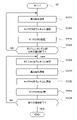
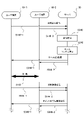
- 4 is a sequence chart showing an example of processing of the game system;
- 10 is a flow chart showing an example of another process of the game system;
- FIG. 11 is a sequence chart showing another example of processing of the game system;
- FIG. 10 is a flow chart showing an example of another process of the game system;
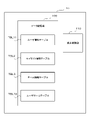
- FIG. 1 is a schematic block diagram showing a configuration example of a game system 1 according to an embodiment of the present invention.
- This game system 1 includes a plurality of game terminals 10-n (n is a positive integer, 10-1, 10-2, . . . ) and a server 30.
- the game terminal 10-n and the server 30 in the game system 1 are connected via a network N such as the Internet so as to be able to communicate with each other.
- a network N such as the Internet
- the network N of the present embodiment is not limited to the Internet. Any network that can communicably connect the game terminals 10-n and the server 30 in the game system 1 can be used. It may be a line (telephone line, mobile communication line, etc.), a wired LAN (Local Area Network), a wireless LAN, or the like, or a combination thereof with the Internet.
- the game terminal 10 operated by the user is a computer used by the user to play the game.
- the game terminal 10 is, for example, a home game machine (stationary or portable), a personal computer, a smart phone, a mobile phone terminal, a PHS (Personal Handy-phone System) terminal, a personal digital assistant (PDA: Personal Digital Assistant), These include tablet computers, multifunctional television receivers (so-called smart televisions), and business-use (commercial) game machines installed in amusement facilities and the like.
- the server 30 is, for example, a server computer.
- the server 30 associates each user with a user ID for uniquely identifying the user, and stores and manages information on the user's game in, for example, a database DB.
- the database DB may be constructed within the server 30 or may be constructed within a server computer separate from the server 30 .
- the server 30 also executes opponent determination processing (so-called matching processing) and the like when a communication competition (online competition) is held between users.
- a communication competition online competition
- user A operating game terminal 10-1 and user B operating game terminal 10-2 can play a match game via network N.
- FIG. In the case of this communication competition, for example, there is a method in which game terminals 10-1 and 10-2 matched by server 30 directly communicate with each other through a P2P (Peer-to-Peer) connection or the like. Alternatively, there is also a method of communicating data exchange between game terminals 10-1 and 10-2 via server 30 for communication competition. The communication battle may be conducted by any method.
- Communication between the game terminals 10-n and the server 30 uses, for example, HTTP (Hyper Text Transfer Protocol) operating on TCP/IP (Transmission Control Protocol/Internet Protocol) as a base protocol. It can be realized by implementing the specified application protocol on the upper layer.
- HTTP Hyper Text Transfer Protocol
- TCP/IP Transmission Control Protocol/Internet Protocol
- communication between game terminal 10-1 and game terminal 10-2 connected by P2P or the like is, for example, a communication protocol on the transport layer of the OSI reference model and is implemented mainly on the IP protocol. It can be realized by UDP (User Datagram Protocol).
- UDP User Datagram Protocol
- the above UDP is a communication method that does not perform data delivery confirmation or error correction, and keeps sending data to the terminal device of the other party, so the data reliability is low, but the data transfer speed is high.
- UDP User Datagram Protocol
- the above UDP is a communication method that does not perform data delivery confirmation or error correction, and keeps sending data to the terminal device of the other party, so the data reliability is low, but the data transfer speed is high.
- an existing protocol other than UDP for communication between game terminals 10-1 and 10-2, or to use a new protocol that will be newly defined in the future.
- a game terminal 10-n having a short-range wireless communication function using a predetermined frequency band for example, a frequency band of 2.4 GHz
- direct communication is performed between a plurality of game terminals 10-n.
- a battle game or the like can also be executed.
- FIG. 2 is a schematic block diagram showing an example of the hardware configuration of the game terminal 10.
- the game terminal 10 mainly includes a CPU (Central Processing Unit) 11, a ROM (Read Only Memory) 12, a RAM (Random Access Memory) 13, an auxiliary storage device 14, a communication section 15, and an operation section 16. , an image processing section 17, and a sound processing section 18, which are interconnected via a bus line 19 including an address bus, a data bus, a control bus, and the like.
- An interface circuit is interposed between the bus line 19 and each component as necessary, but the illustration of the interface circuit is omitted here.
- the game terminal 10 also includes a display section 20 and an audio output section 21 .
- the CPU 11 interprets and executes commands of the game program, and controls the game terminal 10 as a whole.
- the ROM 12 stores programs, data, and the like necessary for basic operation control of the game terminal 10 .
- the RAM 13 stores various programs and data and secures a working area for the CPU 11 .
- the auxiliary storage device 14 is a storage device that stores game programs and various data.
- a nonvolatile semiconductor memory for example, a nonvolatile semiconductor memory, hard disk drive, solid state drive, or the like can be used.
- the communication unit 15 has a communication interface (not shown) and has a communication control function for data communication during game execution.
- the communication control function for data communication includes, for example, an Internet connection function, a wireless LAN (Local Area Network) connection function, a short-range wireless communication function using a predetermined frequency band (for example, a frequency band of 2.4 GHz) and so on.
- Communication unit 15 transmits a connection signal for connecting game terminal 10 to network N based on a command from CPU 11 , receives information transmitted from a communication partner, and supplies the information to CPU 11 .
- the operation unit 16 is used by the user to input various operation instructions to the game terminal 10 .
- Examples of the operation unit 16 include a position input unit with a touch interface (a component of a touch panel), physical buttons, a controller, an analog stick, a keyboard, a pointing device, and the like.
- the operation unit 16 may be configured to allow voice input by identifying voice input from a voice input unit such as a microphone.
- the image processing unit 17 drives the display unit 20 based on the image display command from the CPU 11 to display the game screen.
- Various known display devices such as a liquid crystal display and an organic EL (Electro-Luminescence) display can be applied to the display unit 20 .
- the display unit 20 can also be a touch panel in which a position input unit having a touch interface is combined with a display device such as a liquid crystal display.
- the image processing unit 17 includes a touch input detection unit (not shown). When an indicator such as a finger or a pen touches the screen, the touch input detection unit detects the contact position coordinates on the screen and supplies the coordinate signal to the CPU 11 . Thereby, the contact position on the screen of the display unit 20 is recognized by the CPU 11 .
- the display unit 20 need not be integrated with the game device 10, and may be a television monitor or the like externally connected to the game device 10, for example.
- the sound processing unit 18 generates analog audio signals based on pronunciation instructions from the CPU 11 and outputs them to the audio output unit 21 .
- FIG. 3 is a schematic block diagram showing an example of the hardware configuration of the server 30.
- the server 30 mainly includes a CPU 31, a ROM 32, a RAM 33, an auxiliary storage device 34, and a communication unit 35, which communicate with each other via a bus line 36 including an address bus, a data bus, a control bus, etc. It is connected.
- An interface circuit is interposed between the bus line 36 and each component as necessary, but the illustration of the interface circuit is omitted here.
- the CPU 31 interprets and executes commands of system software and application software, and controls the server 30 as a whole.
- the ROM 32 stores programs and the like necessary for basic operation control of the server 30 .
- the RAM 13 stores various programs and data and secures a work area for the CPU 31 .
- the auxiliary storage device 34 is a storage device that stores programs, various data, and the like. A hard disk drive, for example, can be used as the auxiliary storage device 34 .
- the communication unit 35 has a communication interface (not shown) and controls communication with each game terminal 10-n via the network N.
- the communication unit 35 also controls communication with other servers (not shown) connected to the network N.
- FIG. For example, in a system configuration in which the server 30 is incorporated into a social networking service (SNS), the communication section 35 of the server 30 controls communication with the SNS server. Also, for example, the server 30 controls communication with a video distribution server that distributes game videos played by users to spectators. Note that the server 30 can also have a moving image distribution function.
- SNS social networking service
- the server 30 can be composed of a single computer, but it can also be configured as a function distribution type in which each function of the server 30 is distributed to a plurality of servers. Alternatively, a plurality of servers 30 may be provided on the network N for redundancy (multiplexing), thereby providing a load-sharing configuration. Also, the server 30 may be configured as a cloud server using cloud computing technology.
- Programs and data are supplied to the game terminal 10 or the server 30 from a remote location via the network N and stored in the RAM 13, the auxiliary storage device 14, the RAM 33, or the auxiliary storage device 34.
- the game terminal 10 or the server 30 may be provided with a component (for example, an optical disk drive or memory card slot) for reading programs and data stored in an information storage medium (for example, an optical disk or memory card). Programs and data may then be supplied to the game terminal 10 or the server 30 via the information storage medium.
- the game system 1 can execute various games. For example, various games such as sports games (baseball, soccer, tennis, American football, etc.), racing games, fighting games, fighting games, digital card games, etc. can be executed regardless of game format and genre.
- the game may be executed by data communication between the game terminal 10 and the server 30 or another game terminal 10, or may be executed by the game terminal 10 alone.
- various game modes including a competitive game are executed based on one or more objects (eg, game characters, game cards, game items, etc.).
- objects eg, game characters, game cards, game items, etc.
- a baseball game based on baseball will be described as an example of the game executed by the game system 1, and other games will be mentioned as necessary.
- a player character imitating an actual baseball player is provided as a character (an example of an object) that can be used in the game. That is, a player character is provided in which the name of an actual baseball player is set and ability parameters are set based on the ability and performance of the baseball player.
- a plurality of player characters corresponding to all baseball players registered under control of 12 professional baseball teams in Japan in the real world are provided. Also, if a new baseball player is registered under control in the 12 professional baseball teams, a player character corresponding to the baseball player is added to the game.
- the ability parameters of the player character corresponding to the real baseball player are set periodically (for example, monthly, weekly, every game, etc.) or irregularly according to the performance of the real baseball player during the season. It may be updated periodically. Also, for example, a player character corresponding to an actual professional baseball player who has retired from active duty may be used in the game.
- the player character may be a player character representing a fictitious baseball player.
- the baseball game of this embodiment is equipped with a game mode in which original player characters are trained.
- An original player character trained in this breeding mode may be used in various game modes together with a player character imitating an actual baseball player.
- the baseball game of this embodiment is equipped with various game modes in addition to the breeding mode.
- a computer battle mode also referred to as a CPU battle mode
- CPU computer
- the user performs a batting operation, a pitching operation, or a defensive operation, etc., on the player characters of his/her own team, and plays against the opposing team whose player characters are automatically controlled by the CPU.
- a manager play mode in which the user obtains a player character from among a plurality of player characters by lottery based on probability, forms his/her own team with the obtained player characters, and competes as a manager.
- this manager play mode the user performs an operation to give the player character instructions such as bunt, steal a base, hit and run, etc., to proceed with the game.
- the opponent in this manager's play mode may be another user or a computer.
- there is an offline battle mode in which two or more controllers are connected to one game terminal 10 and two users can compete against each other.
- the baseball game of the present embodiment is also equipped with an online battle mode in which a user can play an online battle with another user. In this communication competition mode, the user can compete online in real time with another remote user via the network N.
- the game between the user's team and the opponent's team progresses in communication competition based on the operations on the respective game devices 10 .
- the player character pitches or defends according to the user's operation (throwing operation or defensive operation) of the opponent, and the user's operation (hitting operation) is performed. or base-running operation), the player character performs batting or base-running.
- This real-time competition is a competition method that is also used in e-sports (electronic sports).
- “Free Battle Mode” There are two types of battle mode: “Free Battle Mode” and “Online Tournament Mode”.
- “free match mode” the user can select his or her favorite team and player characters, set the match rules (for example, the number of innings in a match, etc.) as desired, and play online matches with other users at any time. is.
- the user makes settings (creates a room) for a free battle called a room for fighting against other users.
- the battle rules can be set arbitrarily. If there is a room created by a certain user, by entering the created room (for example, performing an operation to select the room), it is possible to have a communication battle with the user who set the room. That is, each user creates a room by himself and waits for another user to enter the room, or enters a room created by another user to be able to compete. If a user sets an arbitrary passcode when creating a room, only other users who know the passcode can enter the room and compete.
- users can participate in online battle game tournaments held as official tournaments by the game management side.
- Each user can participate in various official tournaments that are held regularly or irregularly, and can compete with users nationwide (or all over the world) via the network N in real time.
- Various competitions are held, for example, for a certain period of time (eg, one week, three days, etc.).
- Each user can participate in one or more competitive games during the duration of each competition.
- there are tournaments that set an upper limit on the number of matches that can be held during the tournament period, and there are tournaments that allow players to fight as many times as they want during the tournament period.
- tournament points When a user participates in an ongoing tournament and plays a competitive game, rewards (for example, points and items that can be used in the game) and tournament points are awarded according to the results of the competition.
- a user who participates in various competitions in the online competition mode holds “total tournament points”, “weekly tournament points”, and “tournament points earned in each tournament”.
- Tournament points do not decrease depending on the match results, and increase as the competition games are played.
- a ranking corresponding to the tournament points earned by each user during the tournament is announced for each tournament.
- rewards for example, points, items, etc. that can be used in the game
- the main game cycle of the online tournament mode is "participate in tournament -> battle -> obtain reward -> end of tournament -> announcement of ranking -> obtain reward according to rank -> participate in next tournament".
- various tournaments are held regularly or irregularly, so users can enter tournaments of interest to obtain rewards and enjoy real-time battles with users all over the country (or the world). be able to.
- tournaments include “Regular Cup”, “Beginner's Cup”, “Master Cup”, “Real Speed Cup”, “Player Random Cup”, “Team Random Cup”, and the like.
- Each tournament is a different type of tournament with different tournament rules, participation conditions, tournament holding period, player characters that can be used in battles, and the like. This is only an example, and other competitions may be held in online competition mode.
- FIG. 4 shows an example of the tournament information table TBL1 managed by the server 30.
- the tournament information table TBL1 is a data table for managing each tournament held in the online tournament mode.
- the tournament information table TBL1 includes fields such as “tournament ID”, “tournament name”, “start time”, “end time”, “participation conditions", and “tournament rules”.
- the “tournament ID” field indicates identification information for uniquely identifying each tournament held in the online tournament mode.
- the “tournament name” field indicates the name of the tournament. For example, for the "random player cup”, different tournament IDs are given to "random player cup 1st", “random player cup 2nd”, ... "random player cup n" with different holding periods. managed separately.
- the "start time” field of the tournament information table TBL1 indicates the start time of the tournament.
- the "end time” field indicates the end time of the competition.
- the "participation condition” field indicates the conditions for participating in the competition. Some tournaments have participation conditions set, while others have no participation conditions (that is, anyone can participate). In the example of this embodiment, participation conditions are set based on the matching rate MR associated with the user ID of each user.
- the matching rate MR is an index indicating the level of the user's game level. For example, when a user participates in a tournament and plays a match, and wins against a user with a matching rate higher than (or similar to) the user's, the user's matching rate MR increases.
- the user's matching rate MR will drop. Even if a user loses to a user whose matching rate is higher than his own by a predetermined value or more, or wins against a user whose matching rate is lower than his own by a predetermined value or more, the user's matching rate MR may not change. Conditions other than the matching rate MR may be applied as conditions for participating in the tournament. For example, the level of player characters owned by the user, the total number of matches won, the total win percentage of matches, etc. may be used as conditions for participating in the tournament.
- the "Tournament Rules” field indicates the rules of the match held in the tournament.
- the "Tournament Rules” field for example, the number of innings, the presence or absence of extension, the maximum number of innings in extension, the speed level of the ball, the difficulty of operation (difficulty of batting operation, pitching operation, defensive operation, base running operation) It can contain configuration information about, etc.
- Other information fields are also provided in the tournament information table TBL1.
- a reward field is provided to indicate a reward obtained by participating in a tournament, a reward for winning a match, a reward according to ranking, and the like.
- a tournament called the "Regular Cup” can be a tournament in which anyone can participate, and the ball speed level and operation difficulty are set to a standard level.
- the "regular cup” is held regularly every week for a period of one week from Monday to Sunday.
- the tournament “Beginner's Cup” is for users who are not yet accustomed to operating the game.
- the matching rate MR is set to less than 50, and the ball speed level and operation difficulty are set lower than the standard level.
- a tournament called “Master Cup” is a tournament for users who are familiar with game operations.
- the matching rate MR is set to 50 or higher, and the ball speed level and operation difficulty are set to the standard level or higher than the standard level.
- the "real speed cup” can be a tournament in which the ball speed level is set to the highest level of real speed.
- the user who participates in any of the tournaments must decide the team and player characters to be used in the competition by themselves. can be done. For example, the user can freely select a favorite team from among a plurality of teams (a plurality of teams corresponding to 12 professional baseball teams in Japan in this embodiment) and play against each other. The player can freely select the player characters that form the team from the player characters owned by the player, and form his or her own team.
- the ⁇ random player cup'' is a special competition that is different from the above-mentioned tournaments such as the ⁇ regular cup,'' in that for each match, all player characters for one team that the user can use in the match are randomly assigned. It is a competition.
- the "team random cup” is similar to the above-mentioned competition such as the "regular cup", in which the team to be used by the user in the match (a default team consisting of a plurality of player characters) is randomly assigned for each match. is a different special competition.
- the game screen G100 in FIG. 5 shows an example of the game screen when the user selects the communication battle mode.
- the game screen G100 includes parts P101 to P109.
- the part P101 is a part for selecting the "online tournament mode”.
- the part P102 is a part for selecting the "free battle mode”.
- the part P103 is a part for transitioning to a screen for confirming the user's total ranking.
- the part P104 is a part for transitioning to a screen for setting team formation.
- the user can set in advance the team composition for competing in the communication competition mode before the competition.
- team formation that can be performed by selecting this part P104 is effective only in competitive games other than the "random player cup” and "random team cup". That is, in the "random player cup” and "random team cup", since the user cannot decide the team and player characters to be used in the battle by the user himself/herself, the team selected in advance by selecting the parts P104 Organization is not available.
- the part P105 is a part for transitioning to a screen where you can check your battle history or tournament participation history.
- the part P106 is a part for transitioning to a screen where the total reward obtained in the online battle mode can be checked.
- the part P107 is a part for transitioning to a screen where the user's profile can be set and changed. Profiles that can be set by the user include, for example, settings for a nickname and a user's favorite team (eg, any of the 12 Japanese professional baseball teams).
- the part P108 is a part for transitioning to the user setting screen.
- settings such as the ball speed level can be performed.
- the user can set the team (pet mark, team icon, uniform, home ballpark, cheering song, etc.) to be used in the competitive game.
- the team settings uniquely set by the user in advance on this user setting screen are applied only to competitive games other than the "random player cup” and "random team cup", and the "random player cup” and "random team cup” ” does not apply.
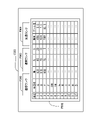
- the part P109 is a part for transitioning to a screen where the 12 team winning/losing table for all the matches held in the communication match mode can be checked. For example, the screen transitions to a screen similar to the 12 team winning/losing table illustrated in FIG.
- the tournament selection screen G200 is an example of a screen for selecting various tournaments in the online tournament mode.
- the tournament selection screen G100 includes parts P201 to P205.
- the part P201 is a part indicating the information of the tournament.
- the parts P201 including those not displayed on the competition selection screen G200, exist as many as the number of competitions that can be selected by the user.
- the parts P201 indicating the information of various competitions can be switched and displayed on the competition selection screen G200.
- the tournament of the part P201 displayed on the tournament selection screen G200 is the currently selected tournament.
- the part P204 is a user interface that represents the number of tournament listings by the number of dots. The color of the dots in the portion of the competition that is selected is changed.
- the part P205 is a part that indicates the number of users currently competing in the selected tournament.
- the part P201 displays information as to whether or not the tournament is being held (for example, "ongoing", “finished”, or “before being held”).
- the part P201 displays the name of the tournament, the duration of the tournament, the total number of users participating in the tournament, the rules of the tournament, the rewards received in the tournament, and the like. Also, after the user participates in the competition, the ranking of the user in that competition is also displayed. Participation conditions for the tournament may be displayed on the part P201. Participation conditions may also be displayed only for competitions for which participation conditions are set.
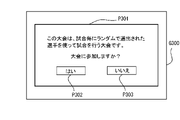
- the message screen G300 is an example of a screen for confirming the user's intention to participate in the tournament with respect to the user who has selected the "Player Random Cup”.
- the message screen G300 includes parts P301 to P303.
- the part P301 displays an outline explanation of the tournament, "This tournament is a tournament in which matches are played using players randomly selected for each match.” Also, the part P301 displays a message "Would you like to participate in the tournament?" for confirming the intention to participate in the tournament.
- the part P302 is a part for the user to select participation in the competition, and the character “yes” is displayed.
- the part P303 is a part for the user to select not to participate in the tournament, and the character “No” is displayed.
- the player random cup is a tournament different from a normal tournament (a tournament in which the user can freely select teams and player characters) in which the match is played using randomly selected player characters. , the user is notified of this fact, and the final confirmation of the intention to participate in the tournament is made.
- This message screen G300 may be omitted, or may be displayed only for the user who has selected the player random cup for the first time. For example, the message screen G300 may not be displayed for users who have already participated in the player random cup.
- the screen transitions to the tournament selection screen G200 in FIG.
- the screen transitions to the player random cup menu screen G400 of FIG.
- the message screen G300 is omitted, and the user selects "Player Random Cup” on the tournament selection screen G200 of FIG. 6, the screen transitions to the menu screen G400 of the player random cup of FIG.
- the player random cup menu screen G400 includes parts P401 to P406.
- the part P401 is a part that displays information about the player random cup.
- the part P401 displays information as to whether or not the Player Random Cup is being held (for example, one of "ongoing", “finished”, or "before being held”).
- the name of the tournament for example, the player's random cup nth
- the period the total number of users participating in the player's random cup
- the ranking of the users in the player's random cup the results of the player's random cup (For example, the number of wins, the number of losses, the number of draws, etc.), tournament points earned in the player random cup, etc. are displayed.
- the part P402 is a part that indicates the number of users currently competing in the Player Random Cup.
- the part P403 is a part for starting the competitive game of the player random cup. When the player random cup is being prepared or is ending, the part P403 becomes inactive and cannot be selected.
- Part P404 is a part for confirming the reward that the user has obtained in the player random cup.
- Part P405 is a part for the user to check the ranking in the player random cup.
- the part P406 is a part for displaying the image of the player character.
- the selection condition can be, for example, a condition related to parameters such as position information and ability information associated with the player character. In this embodiment, 29 player characters are randomly selected for each user, but the number of player characters to be selected is not limited to this.
- the player characters that can be used in the player random cup battle game may be all the characters handled in the game provided by the game system 1, or some of them.
- an example is shown in which player characters imitating real baseball players who are registered under the control of 12 professional baseball teams in Japan are used as player characters that can be used in the competitive game of the Player Random Cup. That is, in this example, some characters that can be used in competitive games and other game modes other than the Player Random Cup and Team Random Cup (for example, a player character modeled after a baseball player who has retired from active duty, each user uniquely Original player characters created by breeding) are removed from the characters usable in the competitive game of the player random cup.
- FIG. 9 shows an example of the character information table TBL2.
- the character information table TBL2 is data for managing all characters handled in the game provided by the game system 1.
- FIG. The character information table TBL2 is stored and managed in the storage devices (for example, RAM 13, auxiliary storage device 14, RAM 33, auxiliary storage device 34, database DB, etc.) of the server 30 and the game terminal 10, respectively.
- the character information table TBL2 of the server 30 and the game terminal 10 are basically the same. It is delivered to the game terminal 10 .
- the character information table TBL2 includes a "character ID” field, a "name” field, a "team ID” field, "position information", "ability information", and the like.
- the "character ID” field indicates identification information for uniquely identifying a player character.
- a "name” field shows the name of a player character. In this embodiment, the name of the actual baseball player is set for the player character imitating the actual baseball player.
- the "team ID” field indicates identification information for uniquely identifying the team (baseball club) to which the player character belongs. Teams to which player characters belong are managed by a team information table TBL3 illustrated in FIG.
- the team information table TBL3 is data for managing all teams handled in the game provided by the game system 1 (teams to which player characters belong).
- the team information table TBL3 is stored and managed in the respective storage devices of the server 30 and the game terminal 10 (for example, RAM 13, auxiliary storage device 14, RAM33, auxiliary storage device 34, database DB, etc.).
- the team information table TBL3 of the server 30 and the game terminal 10 are basically the same. It is delivered to the game terminal 10 .
- the team information table TBL3 includes a "team ID” field, a "team name” field, a "player registration” field, and the like.
- the "team name” field indicates the name of the team to which the player character belongs. That is, the name of the team to which the player character belongs is associated with the player character via the character ID and the team ID. In the present embodiment, the name of the team to which the actual baseball player actually belongs is set as the name of the team associated with the player character imitating the actual baseball player.
- the "player registration" field will be described later. Note that the team information table TBL3 may include fields other than the fields described above, for example, fields related to home ballparks.
- Position information indicates parameters related to the position of the player character.
- the "position information” includes a “main position” field indicating the main position set for the player character.
- Each player character has a baseball fielding position “pitcher”, “catcher”, “first baseman”, “second baseman”, “third baseman”, “shortstop”, “center fielder”, “right fielder”, “left fielder”. ” is set as the main position.
- Position aptitude information also includes "position aptitude information” set for player characters.
- the 'position aptitude information' includes fields of 'starter aptitude', 'relay aptitude' and 'holding aptitude', which are information of position aptitude for the pitcher character.
- the "starting pitcher aptitude” field indicates evaluation of aptitude as a starting pitcher
- the "relay aptitude” field indicates evaluation of aptitude as a relay pitcher
- the "holding aptitude” field indicates evaluation of aptitude as a closing pitcher.
- evaluation of position aptitude is indicated by three grades of " ⁇ ", " ⁇ ", and "- (no suitability or no evaluation)" in descending order.
- the aptitude evaluation may be represented by numerical values, alphabets such as A, B, C, and so on, other symbols, and the like.
- Position aptitude information also includes position aptitude information for fielder characters. In the case of a fielder character, the position aptitude of the main position and the position aptitude of the sub positions that can be defended besides the main position are set.
- ABS information includes a “total ability” field.
- This "total ability” field is an ability parameter indicating the level of the player character's overall ability.
- Comprehensive ability may be represented by alphabets such as A, B, C, etc., symbols, etc., in addition to numerical values.
- “Ability information” also includes ability parameters other than overall ability.
- the "ability information” includes parameters indicating the level of individual abilities of the pitcher (ball speed parameter, ball control parameter, stamina parameter, etc.) and parameters indicating the presence or absence of special abilities related to the pitcher.
- the level of individual abilities of fielders include offensive power parameters, trajectory parameters, meat parameters, power parameters, running parameters, etc.
- the overall ability can be, for example, the sum (or average, etc.) of the ability values of a plurality of individual abilities set for the player character.
- characters other than the fields described above are also included in the character information table TBL2.
- parameters such as "rank”, “cost”, “level”, and “rarity” of player characters are also included in the character information table TBL2.
- a player character's dominant hand and form batting or pitching form
- a plurality of types of pitches that a pitcher can throw parameters related to the types of pitches (parameters that evaluate pitch power, amount of change, etc.), the batter's strength/strength for the pitching course
- the character information table TBL2 also includes parameters such as information on weak points and information on compatibility with the pitcher.
- the character information table TBL2 also includes player character image and moving image data (two-dimensional or three-dimensional).
- the character information table TBL2 may include information indicating the type of character. For example, information such as a player character corresponding to a real active player, a player character corresponding to a real retired player, an original player character created by a user, and information such as flags for identifying other characters, etc., may be used as character information. It may be included in table TBL2. Various parameters included in the character information table TBL2 described above are set for each character (for each character ID) according to the character.
- 29 player characters that can be used by each user who will be opponents are selected from among all the player characters (an example of use objects) that can be used in the player random cup competition. , are randomly selected based on the same selection conditions regarding the parameters (position information, ability information, etc.) of the player character.
- the breakdown of the 29 player characters to be selected is, for example, pitcher (starter): 4, pitcher (relay): 3, pitcher (setupper): 2, pitcher (stopper): 2, catcher: 2. name, first baseman: 2 people, second baseman: 2 people, third baseman: 2 people, shortstop: 2 people, center fielder: 2 people, right fielder: 2 people, left fielder: 2 people, position random: 2 people.
- the two position random players can be randomly selected from any position.
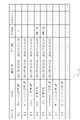
- FIG. 11 shows an example of selection conditions for each position of a pitcher player character
- FIG. 12 shows an example of selection conditions for each position of a fielder player character.
- individual player characters to be selected in each position are distinguished as candidate 1 to candidate 4 and position random frames.
- selection conditions are set for individual player characters to be selected.
- the selection conditions include conditions regarding parameters of position information (an example of role information) and ability information.
- the multiple conditions set for the individual player characters to be selected are AND conditions.
- the selection conditions for pitcher (starting pitcher) candidate 1 are “main position pitcher”, “starting pitcher aptitude”, and “comprehensive ability value of 300 or more”.
- the selection conditions for pitcher (starting pitcher) candidate 2 and candidate 3 are "main position pitcher”, “starting pitcher aptitude”, and “comprehensive ability value of 200 to 299", respectively. In this way, the same selection condition may be set for two or more selection targets.
- the selection conditions for the pitcher (starting pitcher) candidate 4 are “main position pitcher”, “starting pitcher aptitude ⁇ or higher”, and “comprehensive ability value of 199 or less”.
- the “goodness of aptitude is ⁇ or higher” means “goodness of aptitude” or “goodness of aptitude” (the same shall apply hereinafter).
- the selection conditions for the pitcher (starting pitcher) position random frame are "main position pitcher”, “starting pitcher aptitude ⁇ or higher”, and "comprehensive ability value of 150 to 350".
- the selection conditions for pitcher (intermediate) candidate 1 are “main position pitcher”, “relay aptitude”, and “overall ability value of 300 or more”.
- the selection conditions for the pitcher (intermediate) candidate 2 are “main position pitcher”, “relay aptitude”, and “comprehensive ability value of 200 to 299”.
- the selection conditions for the pitcher (intermediate) candidate 3 are "main position pitcher”, “relay aptitude ⁇ or higher”, and “comprehensive ability value of 199 or less”.
- the conditions for selecting the pitcher (intermediate) position random frame are “main position pitcher”, “relay aptitude ⁇ or higher”, and “comprehensive ability value of 150 to 350”.
- the selection conditions for pitcher (setupper) candidate 1 are “main position pitcher”, “relay aptitude”, “holding aptitude O or better”, and “comprehensive ability value of 300 or greater”.
- the selection conditions for pitcher (set uppers) candidate 2 are “main position pitcher”, “relay aptitude”, “holding aptitude O or better”, and “comprehensive ability value of 200 to 299”.
- the selection conditions for the position random frame of the pitcher (set upper) are "main position pitcher”, “relay aptitude”, “holding aptitude ⁇ or higher", and "comprehensive ability value of 150 to 350".
- candidate 1 and candidate 2 As for the pitcher (holder), two candidates, candidate 1 and candidate 2, will always be selected, and if one person in the position random frame is included, there is a possibility that a maximum of three player characters will be selected. Although the description is omitted here, selection conditions are set for candidate 1 and candidate 2 of the pitcher (holding) and the position random frame, similarly to the pitcher (starting pitcher) and the like.
- two fielder characters, candidate 1 and candidate 2 are always selected for any position, and a maximum of three player characters are selected including one character in the position random frame.
- the conditions for selecting catcher candidate 1 are "main position catcher” and “comprehensive ability value of 300 or more”.
- the conditions for selecting candidate 1 are "the main position is the target position” and "the value of the overall ability is 300 or more”.
- the conditions for selecting catcher candidate 2 are "main position catcher” and "comprehensive ability value of 200 to 299".
- the conditions for selecting candidate 2 are "the main position is the target position” and "the value of the overall ability is 200 to 299".
- the conditions for selecting a catcher's position random frame are "main position catcher” and "comprehensive ability value of 150 to 350”.
- the selection conditions for the position random frame are, for example, "the main position is the target position” and "the value of the overall ability is 150 to 350”.
- the same player character is not selected redundantly among the 29 player characters assigned to the user.
- the same player character may be redundantly selected from among the predetermined number of player characters assigned to the user.
- each candidate for each position other than the position random frame may basically be randomly selected in order from candidate 1, but may be randomly selected from any candidate of any position.
- parallel processing may be used to randomly select a plurality of candidates or randomly select a plurality of positions substantially simultaneously.
- the selection of two player characters in the position random frame for example, first, in order to determine which position to select, all positions (here, 12 positions of 4 pitchers and 8 fielders) are randomly selected. Determine two positions. The two randomly determined positions may overlap or may be prohibited from overlapping. Then, based on the selection condition set in the position random frame of the determined position, the player character of the position is randomly selected. In order to prevent the same player character from being selected redundantly among the 29 player characters assigned to the user, for example, first, random selection of 27 player characters outside the position random frame is executed, and then, Random selection of two players in the position random frame may be performed by excluding the player characters that have already been selected.
- the random selection of 2 players in the position random frame may be executed first, and then the random selection of 27 player characters out of the position random frame may be executed.
- no selection condition may be defined for the position random frame.
- the fact that no selection conditions are defined means that, for example, random selection is performed with all player characters that can be used in the match of the Player Random Cup as targets for selection.
- the selection conditions are set for the random selection of a specific number (for example, 27) player characters in the team, but the selection conditions for the random selection of the remaining (for example, 2) player characters are set.
- a player character may be selected at random without providing .
- 29 player characters are assigned to each of the two users competing against each other, so a total of 58 player characters are selected.
- 58 player characters To prevent duplicate selection of the same player character. That is, the same player character as the player character assigned to one of the two users who are competing is prevented from being selected by the other user.
- the same player character as that assigned to one of the two users may be selected by the other user.
- a player character is randomly selected for one user.
- random selection of player characters may be performed for the other user, with the selected player character excluded from the selection target.
- a player character to be assigned to one user is randomly selected, and then a player character to be assigned to the other user is randomly selected, with the selected player character excluded from selection.
- the selection probability of any player character included in the population that satisfies the selection conditions is the same for both users. be. Therefore, it can be said that the player character used by the user in the match is randomly assigned to each user from the "same population" regardless of the order of random selection processing for the two competing players.
- the order of processing for randomly selecting two players to compete against each other may be determined by a random lottery, or the order of processing may be determined without such a lottery.
- the user can choose the player character he/she wants to use, so there is a tendency to use player characters with high ability parameters in succession. Therefore, in competitions other than the Player Random Cup and Team Random Cup, the starting rotation is restricted (a player character used in the starting lineup cannot be used continuously in the next match) in order to prevent the continuous use of player characters with high ability parameters. etc. are set. On the other hand, in the player random cup and the team random cup, the player characters and teams that can be used by the user are randomly assigned, so there is no restriction on the starting rotation.
- One way to change the selection conditions is to expand the range of ability parameters, for example.
- the range of ability parameters may be expanded to the lower side of the ability, expanded to the higher side, or expanded in both directions.
- Other methods of changing selection conditions include, for example, shifting the range of ability parameters. In this case, the range of ability parameters may be shifted to lower ability or to higher ability.
- Another method of changing the selection conditions is, for example, a method of changing to conditions using individual ability parameters instead of total ability.
- Another method of changing selection conditions is, for example, a method of changing position conditions.
- Another method of changing the selection conditions is, for example, a method of changing the types of parameters used for the conditions.
- selection conditions for position parameters and ability parameters.
- selection conditions may be changed in any way. Further, for example, if there is a shortage of player characters to be selected even with the changed selection conditions, the selection conditions may be changed repeatedly until the shortage is resolved.
- the selection conditions shown in FIGS. 11 and 12 are merely examples, and are not limited to these.
- a position random frame for two persons is provided, but one person or three or more persons may be provided, and the position random frame may be eliminated.
- the condition of the ability parameter of candidate 1 is the same for all positions of the player character, but the condition of the ability parameter may be changed for some or all of the positions. The same applies to candidate 2 and the position random frame.
- the value of the overall ability of the player character is used as the condition of the ability parameter. good.
- selection conditions for example, conditions for parameters other than ability parameters and position parameters may be applied.
- selection conditions may be set by combining various types of parameters.
- the selection conditions include a plurality of conditions, the AND condition is used, but the AND condition may be used, or the AND condition and the OR condition may be combined.
- a NOT condition may be applied, or a NOT condition may be combined with an AND condition or an OR condition.
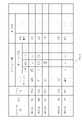
- FIG. 13 is an explanatory diagram showing another example of selection conditions for player characters randomly assigned to each user.
- FIG. 13 shows an example of setting selection conditions for selecting a predetermined number (for example, 12) of player characters for a collective position of pitcher. For example, for pitcher candidates 1 and 2, selection conditions of "main position pitcher” and “overall ability of 350" are set. For pitcher candidates 3 to 6, for example, a selection condition of "main position pitcher” and "comprehensive ability value of 300 to 349" is set.
- selection conditions of "main position pitcher” and “comprehensive ability value of 200 to 299” are set.
- selection conditions of "main position pitcher” and “comprehensive ability value of 199 or less” are set.
- FIG. 13 shows an example of setting a selection condition for selecting a predetermined number (for example, nine) of player characters for a collective position of infielder excluding catcher.
- the selection conditions of "main position infielder” and “comprehensive ability value of 350 or more” are set.
- the condition of "main position infielder” is an OR condition that the main position is "first baseman", “second baseman", “third baseman” or “shortstop”.
- selection conditions including the condition of "main position infielder” are set.
- selection conditions are set separately for catchers and infielders other than catchers, but catchers may also be included in infielders when setting selection conditions.
- FIG. 13 shows an example of setting a selection condition for selecting a predetermined number (for example, 6) of player characters for a collective position of outfielder.
- a predetermined number for example, 6
- the selection conditions of "main position outfielder” and “comprehensive ability value of 350 or more” are set.
- the condition of "main position outfielder” is an OR condition that the main position is "center fielder", “right fielder” or “left fielder”.
- selection conditions including the condition of "main position outfielder” are set.
- FIG. 14 is an explanatory diagram showing another example of selection conditions for player characters randomly assigned to each user.
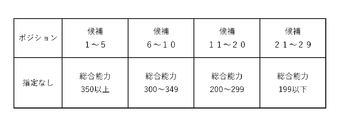
- FIG. 14 shows an example in which selection conditions are set using only parameters related to abilities without using parameters related to positions in the selection conditions.
- a selection condition of “the value of total ability is 350 or more” is set.
- a selection condition of “total ability value is 300 to 349” is set.
- a selection condition of "total ability value is 200 to 299" is set.
- a selection condition of "the value of total ability is 199 or less” is set.
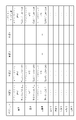
- FIG. 15 is an explanatory diagram showing another example of selection conditions for player characters assigned to each user.
- FIG. 15 shows an example in which selection conditions are set using only position-related parameters without using ability-related parameters in the selection conditions. For example, for pitcher (starting pitcher) candidates 1 and 2, selection conditions of "main position pitcher” and “starting pitcher's aptitude” are set. For example, for the pitcher (starting pitcher) candidates 3 and 4, the selection conditions of "main position pitcher” and “starting pitcher aptitude ⁇ " are set. For example, for the pitcher (intermediate) candidates 1 to 3, selection conditions of "main position pitcher” and “relay aptitude ⁇ or higher” are set. Similarly, selection conditions using position-related parameters are set for other positions as well.
- condition for selecting player characters randomly assigned to each user may be, for example, "all player characters that can be used in the match of the random player cup".
- the description is continued on the assumption that the selection conditions illustrated in FIGS. 11 and 12 are applied.
- 29 player characters are randomly selected from all player characters that can be used in the match of the player random cup. and assigned to each user to play against.
- the two matched users use 29 randomly selected player characters as members of their own teams to play against each other.
- Each player character assigned to the two users competing is randomly selected based on the same selection condition from among all player characters that can be commonly used by all users in the match of the player random cup. In other words, player characters that users can use in battles are randomly assigned to all users from the "same population".
- FIG. 16 shows an example of the user team table TBL12 in the competitive game of the Player Random Cup.
- a user team table TBL12 in FIG. 16 shows information on player characters for one team randomly assigned to a user whose user ID is "U1". The user ID is associated with the “tournament ID” and “competition ID” of the player random cup.
- the user team table TBL12 includes a "serial number” field, a "character ID” field, a "team ID” field, and the like.
- a “character ID” field shows the character ID of the player character randomly assigned to the user.
- the "team ID” field indicates the team ID associated with the character ID of the player character. In the player random cup, each player character has various team IDs (that is, the team to which it belongs).
- the user team table TBL12 includes fields and the like for setting information on order organization, which will be described later. Also, the "serial number” field may be omitted.
- the two competing users check the assigned player characters on the screen. Then, each user forms an order for a team of 29 player characters within a predetermined time limit (for example, within 300 seconds).
- a predetermined time limit for example, within 300 seconds.
- pitcher order formations There are pitcher order formations and fielder order formations for each user's team order formation.
- the user determines the roles of starting pitcher, intermediate pitcher, set upper pitcher, and closing pitcher from the player characters of pitchers assigned to him/herself.
- the fielder order organization the user selects eight starting member player characters from the player characters assigned to him/herself, and determines the position and batting order of each player. A player character not selected as a starting member becomes a substitute player on the bench, and can be used as a substitute player during the match.
- the user may be allowed to select a uniform uniform worn by a plurality of player characters forming the user's team from a plurality of options. For example, the user can select uniforms of any of the 12 professional baseball teams in Japan. The uniform selection process may be performed at any timing before the start of the match. Note that the uniform selection process may be omitted. Alternatively, a uniform corresponding to a favorite team (for example, one of the 12 Japanese professional baseball teams) previously set by the user on the profile setting screen may be automatically selected.
- the team setting (pet mark, team icon, uniform, home stadium, cheering song) of the user's favorite team (one of the 12 professional baseball teams) etc.) may be applied.
- the match in the Player Random Cup is a real-time action communication battle. Two users who are competing each other operate player characters to which all members for one team are randomly assigned.
- the game video of this battle is distributed from, for example, a server 30 having a video distribution function or a video distribution server.
- Each user can participate in multiple competitive games during a predetermined competition period (for example, 3 days) of the Player Random Cup.
- Each user may participate in any number of games during the competition period, or the number of games to be played during the competition period may be fixed.
- a league game a round robin in a predetermined number of games
- a tournament game or a game format combining them may be adopted. The same applies to the Team Random Cup, which will be explained next.
- a team (an example of a group consisting of two or more objects used by the user during a competitive game) that can be used by each user who is to compete against each other can be used in the team random cup competition. All teams (an example of the target to be used) are randomly selected based on the same selection conditions.
- all the teams that can be used in the team random cup competition are, for example, the 12 teams managed by the team information table TBL3 in FIG.
- the "team name" field of the team information table TBL3 indicates the name of one of the 12 professional baseball teams in Japan.
- the "player registration” field indicates a predetermined number (for example, 29) of player characters for which player registration has been performed.
- "participant registration” means that a player is registered so that he/she can participate in a sports competition.
- Roster Registration in the major leagues, it is also called Roster Registration.
- player characters registered in the "participating player registration” field become members of a team that can be used in a competitive game in the team random cup.
- 29 character IDs are registered in the "player registration” field.
- the 29 player characters registered in the "player registration” field are player characters corresponding to 29 real players who are registered as players in each professional baseball team in Japan.
- a real team (baseball team) in the real world corresponds to a team in the game, and 29 players who are registered as participating players in the real team, 29 player characters who are registered as participating players in the team in the game correspond.
- the game administration side registers it in the "Registering a player" field of the team information table TBL3 in accordance with the content of the change. Change the player character ID.
- the game management side will set the default character IDs of the 29 player characters by referring to the player registration in the previous season, for example. , in the "player registration" field of the team information table TBL3.
- the selection condition for the team random cup is, for example, "all teams that can be used in the team random cup match".
- one team is randomly selected and assigned to each of the users who are opponents of each other from among the 12 teams that can be used in the team random cup competition.
- a user uses a team that is randomly assigned to him/herself for each match, that is, uses 29 player characters registered as participating players in the team, and plays a team random cup match game.
- teams are randomly selected so that the teams assigned to two competing users do not overlap.
- the same team may be selected more than once for two players competing against each other.
- FIG. 17 shows an example of the user team table TBL12 in the team random cup competition game.
- the user team table TBL12 in FIG. 17 shows information on player characters for one team assigned to the user whose user ID is "U1".
- the user ID is associated with the “tournament ID” and “competition ID” of the team random cup.
- the team ID of the team randomly assigned to the user is set in the "team ID” field, and the character IDs of the 29 player characters registered as participating players in the assigned team are set in the "character ID” field. is set.
- a predetermined number of player characters forming a team are registered and managed in the "participating player registration" field of the team information table TBL3 in FIG. 10, but the present invention is not limited to this.
- information for example, a flag
- a player character registered as a participating player in the team may be set in association with the character ID.
- a real team corresponds to a team in the game, and 29 players who are registered as players in the real team and players in the team in the game 29 registered player characters correspond. Parameters such as abilities associated with a player character are set by simulating an actual player corresponding to the player character.
- the team in the game corresponding to the real team reflects the inherent strength of the real team, which is close to the ability of the real team. Therefore, in the Team Random Cup with the above selection conditions, a simulated game between teams of 12 real professional baseball teams is developed.
- the match of the team random cup of the present embodiment is not just a mock match, but a team assigned to the user is randomly selected for each match. Therefore, if the match results in the team random cup are aggregated, statistically, the team in the game corresponding to the actually strong team in the real world comes to be ranked higher.
- the team assigned to the user is randomly selected for each match, so any team will be used by users with various operating skills. For this reason, if the results of matches held in the Team Random Cup are tallied, statistically, the teams in the game corresponding to the teams that are actually strong in the real world will be ranked higher.
- the "Team Random Cup” is held before the opening games and regular season of professional baseball in the real world are held, it will be possible to liven up the opening games in the real world through the game.
- the users who play the match game of the Team Random Cup but also the spectators who watch the match are excited, for example, if the video of the match game is distributed.
- the tally screen for example, win/lose table
- the tally of all match results can be used to determine the results of professional baseball that will be played in the real world after that. You will be able to enjoy predicting the results of open games and regular season.
- FIG. 18 shows an example of a tabulation screen G500 of all match results held in the Team Random Cup.
- the tabulation screen G500 is a 12-team winning/losing table, and includes parts P501 to P504.
- Part P501 is a part that displays the ranking, team name, total wins, total losses, total draws, total winning percentage, and game difference information for all 12 teams that can be used in Team Random Cup matches.
- the part P502 is a part for switching to the screen of the total ranking of all the 1st to n-th rounds of the Team Random Cup.
- the part P503 is a part for switching to a screen showing the overall ranking of the currently held team random cup.
- the part P504 is a part for switching to the screen of the total ranking of the Team Random Cup held last week.
- Another example of the selection conditions for the Team Random Cup is the conditions regarding the league to which the team belongs.
- the 12 teams available for the Team Random Cup matchup are divided into two leagues, corresponding to the fact that the 12 professional baseball teams in Japan are divided into two leagues.
- the team information table TBL3 of FIG. 10 six teams with team IDs TC1 to TC6 belong to the first league, and six teams with team IDs TP1 to PC6 belong to the first league. It is a team belonging to the second league different from.
- information for example, a flag
- determining the league may be associated with the team ID.
- Examples of the selection conditions for the Team Random Cup are “first league” or “second league”. For example, if the selection condition is the "first league", each user who is to be an opponent is required to meet the conditions of the "first league" among the 12 teams that can be used in the match of the team random cup. One team is randomly selected and assigned from among the teams. The user uses a randomly assigned team, that is, uses 29 player characters registered as participating players in the team to play the team random cup competition game. In the team random cup of this selection condition, mock battles between teams in the same real league are developed.
- the selection condition is two teams corresponding to two real teams competing in the Japan Series of professional baseball.
- one of the two teams corresponding to the actual two teams competing in the Japan Series is randomly selected and assigned to each of the users who will be opponents.
- the user uses a randomly assigned team, that is, uses 29 player characters registered as participating players in the team to play the team random cup competition game.
- mock battles between real teams competing in the Japan Series will be developed.
- the user confirms the player characters that make up the team assigned to him on the screen. Then, as in the case of the player random cup, the teams are organized within a predetermined time limit (for example, within 300 seconds). Matches in the Team Random Cup are real-time action communication competitions. Two users who are competing each operate a player character of a randomly assigned team. The game video of this battle is distributed from, for example, a server 30 having a video distribution function or a video distribution server.
- each team assigned to the two users competing is randomly selected based on the same selection conditions from among all the teams that can be commonly used by all users in the match of the team random cup. .
- the teams that users can play against are randomly assigned to all users from the "same population”.
- the competitive game of the player random cup or the team random cup is performed within a predetermined period.
- FIG. 19 is a schematic functional block diagram showing an example of the functional configuration of game terminal 10. As shown in FIG.
- the game terminal 10 mainly includes a data storage section 100 and a terminal control section 110 that controls each section of the user terminal 10.
- the terminal control unit 110 has a function of executing various calculations and data processing based on information related to operations via the operation unit 16, information received from the server 30 or other game terminals 10, and the like.
- the terminal control unit 110 also has a storage control function of storing information on the results of the executed processing in a predetermined area of a storage device (RAM 13, auxiliary storage device 14, etc.).
- the terminal control unit 110 also has an output control function for controlling various outputs via the image processing unit 17 and the sound processing unit 18 .
- the terminal control unit 110 controls the image processing unit 17 to display a game screen on the display unit 20 (or an externally connected television monitor or the like), or controls the sound processing unit 18 to output sound. A sound effect during game play is output from the unit 21 .
- the terminal control unit 110 also has a communication control function of managing information communication with the server 30 and other game terminals 10 and the like via the communication unit 15 .
- the terminal control unit 110 has a user information management function of storing and managing information related to the user's game in a storage device (RAM 13, auxiliary storage device 14, etc.).
- the terminal control unit 110 stores information such as a user name, profile, etc. in the storage device in association with the user ID.
- the items managed by the terminal control unit 110 differ depending on the type and content of the game.
- the terminal control unit 110 associates the user ID with the matching rate MR, various points and items, match results, user IDs of other users (friends, friends, etc.) associated with the user, various parameters during the game, post-game Various information such as save data is stored and managed in a storage device.
- the terminal control unit 110 downloads information from the server 30 if there is information about the user's game stored in the server 30 .
- the above various functions of the terminal control unit 110 are basically realized by the CPU 11 of the game terminal 10 executing a program stored in a storage device (ROM 12, RAM 13, auxiliary storage device 14, etc.). be.
- the data storage unit 100 is implemented by at least one of the ROM 12, RAM 13, or auxiliary storage device 14.
- the data storage unit 100 stores data necessary for providing games. As a specific example of the data stored in the data storage unit 100, data necessary for providing the baseball game described above will be described.
- the data storage unit 100 stores a user information table TBL11, a character information table TBL2, a team information table TBL3, and a user team table TBL12. Since the character information table TBL2 (see FIG. 9), the team information table TBL3 (see FIG. 10), and the user team table TBL12 (see FIGS. 16 and 17) have already been described, their description will be omitted here. .
- FIG. 20 shows an example of the user information table TBL11.
- the user information table TBL11 includes "user ID”, “user name”, “favorite team”, “matching rate”, “game level”, “points owned”, “tournament points”, “reward”, and “match result information”. , and fields such as “owned character information”.
- the game level is information that evaluates the level of the user's operation skill in the baseball game.
- the owned points are points that can be used in the game owned by the user.
- the owned points may be virtual currency that can be used by the user in the baseball game, or may be consideration for playing the baseball game, which is consumed when the user plays the baseball game. good.
- the “tournament points” field stores the tournament points (total points, points for each tournament, etc.) earned in various tournaments in the online tournament mode.
- the “reward” field stores the reward (item, etc.) obtained in the online tournament mode or the like.
- the "possessed character information” field stores character IDs of player characters acquired by the user in the game.
- the “competition result information” field stores information on the results of competition in various competitions in the online competition mode (for example, wins and losses, points scored and lost).
- the "owned character information" field stores the character ID of the character that the user has acquired in the game and currently owns.
- the user can obtain a character by lottery by executing the lottery mode.
- a character to be given to the user is selected by lottery from among all the characters in the game.
- a predetermined amount of in-game points, billable items, etc. may be required for the user to execute the lottery mode.
- the user can receive a character as a gift from another user (such as another user associated with the user).
- the user can obtain a character as a reward for playing the game.
- the user can obtain an original player character trained in the training mode.
- a predetermined number of characters may be provided as owned characters of the user.
- Characters stored in the "possessed character information" field can be selected and used by the user in competitive games and other game modes other than the player random cup and team random cup. And in the team random cup, the user cannot select and use it by himself/herself.
- FIG. 21 is a schematic functional block diagram showing an example of a functional configuration of server 30 (an example of a game control device).
- Server 30 includes data storage unit 300 .
- the data storage unit 300 is implemented by at least one of the database DB, the ROM 32, the RAM 33, or the auxiliary storage device .
- the data storage unit 300 stores data necessary for providing games.
- the data storage unit 300 stores a tournament information table TBL1, a character information table TBL2, a team information table TBL3, a user management table TBL4, a competition management table TBL5, a character selection condition table TBL6, a team selection condition table TBL7, randomly selected character data DT1 and random Selected team data DT2 is stored.
- the character selection condition table TBL6, team selection condition table TBL7, random selection character data DT1, and random selection team data DT2 will be described later.
- the tournament information table TBL1 (see FIG. 4), the character information table TBL2 (see FIG. 9), and the team information table TBL3 (see FIG. 10) have already been described, detailed description thereof will be omitted here.
- the character information table TBL2 and the team information table TBL3 the game terminal 10 of each user also holds substantially the same data. For example, when the game operator changes the information in the character information table TBL2 or the team information table TBL3 of the server 30, the changed information is distributed from the server 30 to the game terminal 10 via the network N.
- FIG. 22 shows an example of the user management table TBL4.
- the user management table TBL4 is a data table for managing all users who play the game on the game system 1.
- FIG. The user management table TBL4 includes fields such as "user ID”, "user name”, “matching rate” and "tournament points”. Although omitted in FIG. 22, other fields are also included in the user management table TBL4.
- the user management table TBL4 includes fields such as the user's game level, owned points, and user IDs of other users (colleagues, friends, etc.) associated with the user.
- FIG. 23 shows an example of the battle management table TBL5.
- the battle management table TBL5 is a data table for managing the battle game executed by the game system 1.
- FIG. The match management table TBL5 is associated with the tournament ID and stored for each tournament (each tournament ID).
- the example of FIG. 23 shows an example of a competition management table TBL5 that manages all competition games that are held in tournament ID: E1 (player random cup 1st).
- the match management table TBL5 includes fields such as "match ID”, "first user ID”, "second user ID” and "match result”.
- “Competition ID” is identification information for uniquely identifying the competition game to be played in the competition with the competition ID associated with the competition management table TBL5.
- “match ID” field a match ID is assigned and stored every time a match game is played during the holding period of the target tournament.
- the user ID of one of the two users matched in the target match game is stored in the "first user ID” field, and the user ID of the other user is stored in the "second user ID” field.
- the “competition result” field stores information about the result of the competition game (for example, win/loss, points scored, etc.).
- the competition management table TBL5 includes fields such as team information of each user competing against each other (one of the 12 teams in the case of the baseball game described above).
- the game system 1 or server 30 of the present embodiment provides games in which users can participate in specific competitive games.
- a "user” is, for example, a person who plays a game provided by the game system 1.
- user identification information is associated with each user, and each user is identified (identified) by the user identification information.
- “User identification information” is information for uniquely identifying each user. For example, a user ID, a unique user name, an e-mail address, or the like corresponds to an example of "user identification information.”
- a “competitive game” is, for example, a computer game in which a user competes against an opponent to determine the winner or loser.
- an online competitive game played between terminals 10 of a plurality of users connected via a network N corresponds to an example of a "competitive game”.
- the term “competition” means to determine superiority or defeat with an opponent. The result of the competitive game does not necessarily have to be a victory or defeat, and may result in a draw.
- a match in a sports game, a battle in a combat game, and the like correspond to examples of the "competition".
- a user's opponent may be one user, or may be two or more.
- the above-mentioned baseball game in which two users each play a match using a plurality of player characters of their own baseball team corresponds to an example of a "fight game”.
- a game in which three or more users fight using their own characters in the same game space corresponds to an example of a "battle game.”
- the "competitive game” is, for example, a competitive game in which the user and the opponent each operate objects to be used by themselves.
- a computer executes a simulation process based on an object to be used by a user and an object to be used by an opponent to automatically determine the progress of the battle, However, it may also be a battle game in which the user and the opponent operate objects to be used by themselves.
- the above-mentioned "fight game” is, for example, a game in which a computer executes a simulation process based on an object to be used by a user and an object to be used by an opponent to automatically determine the result of the battle. It may be a battle game.
- the “competitive game” may be, for example, a specific competitive game that is played within a predetermined period of time.
- the “predetermined period of time” is a predetermined period of time, for example, a period of time during which a competitive game in which the user can participate is played.
- the “period” may be a period of days of the week, such as from Friday to Sunday, or a period of days, such as March 1st to March 5th. Alternatively, it may be a time unit period such as from 7:00:00 in the morning to 9:00:00 at night the next day. Alternatively, the "period” may be, for example, a period of weeks, months, or years.
- a "specific battle game” refers to a battle game in which the user cannot select objects that can be used in battle.
- a competitive game in which objects, etc. that can be used in the competitive game by users who are opponents are randomly selected based on the same selection conditions corresponds to an example of a "specific competitive game.”
- one or more competitive games played in the player random cup or the team random cup correspond to an example of the "specific competitive game.”
- a fighting game different from the "specific fighting game” may be called a "second fighting game”.
- the "second battle game” is a battle game in which the user can select objects such as objects that can be used in battle.
- the competition game other than the "player random cup” and “team random cup” held in the online competition mode or the competition game in the free competition mode is the "second competition game”. It corresponds to an example.
- Specific competitive games to be played within a predetermined period are, for example, one or more specific competitive games to be played within a period predetermined by the game management side.
- a specific competitive game played during a game tournament held by a game management side for a limited period of time corresponds to an example of "a specific competitive game played within a predetermined period.”
- the "game competition” is, for example, an event related to a game, in which users who participate in the competition compete with each other for superiority, victory, defeat, ranking, and the like.
- the "player random cup” or the “team random cup” corresponds to an example of the "game tournament.”
- a specific competitive game played within a predetermined period rewards such as points and items that can be used in the game may be given to the user according to the win/loss and ranking. , a title such as a rank may be given.
- a specific competitive game played within a predetermined period may be held as a so-called e-sports competition, or may be a game in which no prize money or prizes are awarded.
- one or more competitive games played in the player random cup or team random cup for which the competition period is set in advance corresponds to an example of "a specific competitive game played within a predetermined period.” do.
- a "specific match game” does not have to be a match game played during a predetermined period.
- a "specific competitive game” may be a competitive game that each user can execute at any time.
- the match game corresponds to an example of a "specific match game.”
- the server 30 mainly includes a reception section 310, a management section 320, a selection section 330, and the like. These are basically implemented by the CPU 31 of the server 30 executing a program stored in a storage device (ROM 32, RAM 33, auxiliary storage device 34, etc.).
- a storage device ROM 32, RAM 33, auxiliary storage device 34, etc.
- the accepting unit 310 in FIG. 21 has a function of accepting participation in the competitive game.
- accepting participation in the competitive game means accepting the user's operation (participation application operation) for participating in the competitive game.
- accepting participation in a competitive game may mean receiving information indicating the user's intention to participate in the competitive game. For example, when a user performs a button operation, a screen touch operation, a voice input operation, or the like for participating in a competitive game, receiving information about the operation is an example of "accepting participation in the competitive game.”
- a participation condition may be set for accepting participation in the competitive game, or the participation condition may not be set. For example, in the case of a competitive game in which participation conditions are set, participation in the competitive game may not be accepted unless the participation conditions are met. Further, for example, in the case of a competitive game played within a predetermined period, participation in the competitive game may not be accepted outside the predetermined period.
- the accepting unit 310 accepts participation in a "player random cup (or team random cup) competitive game" as an example of a specific competitive game.
- a competitive game when a process of matching users to be opponents is executed, the reception unit 310 accepts participation in the competitive game when the matching is successful and the opponent is determined. may That is, the period from the user's participation application operation to successful matching is a participation acceptance waiting period, and when the matching is successful and the opponent is determined, participation in the competitive game based on the participation application operation is accepted. can be
- the reception unit 310 not only accepts participation in "a specific battle game in which the user cannot select the use object such as an object that can be used in battle", but also allows "a user selects the use object such as an object that can be used in battle” It may have a function of accepting participation in "a second competitive game that can be played”. In other words, the accepting unit 310 may have at least a function of accepting participation in the specific competitive game.
- the management unit 320 of FIG. 21 has a function of storing and managing a plurality of usage targets that can be used in the specific battle game by the user whose participation is accepted by the reception unit 310 in the storage device.
- the "usable object” is an object that can be used by a user in a competitive game.
- the use object can be an object that can be used by the user during the competitive game.
- an "object” is something that can be used in a game.
- a game character, game card, game item, or the like corresponds to an example of the "object”.
- a game character or a game card representing a person such as an athlete, a creature such as a racehorse, a fictitious person or creature such as a monster, or an inanimate object such as a robot corresponds to an example of the "object”.
- the "object” may be a game character or game card corresponding to an actual person, or may not be an object corresponding to an actual person.
- the one or more game characters are an example of the "usage target”.
- the plurality of game cards incorporated in the deck are "targets". corresponds to an example of In the example of the baseball game described above, a player character of a pitcher or a fielder who can be used in the match game of the player random cup corresponds to an example of the "use target”.
- the use object can be a group consisting of two or more objects that can be used by the user during the battle game.
- a “group” is a group composed of two or more objects.
- a “group” can also be replaced with, for example, a team, a group, a corps, a party, a guild, or the like.
- a baseball team made up of a predetermined number (for example, 29) player characters who can enter the game on the bench corresponds to an example of a "group”.
- a soccer team composed of a predetermined number (for example, 18 or 23) of player characters who can enter the match on the bench corresponds to an example of a "group”.
- the group (and the plurality of characters included in the group) game character) corresponds to an example of the "use object”.
- the team composed of 29 player characters that can be used in the team random cup battle game managed by the team information table TBL3 in FIG. 10 corresponds to an example of the "use target”. do.
- the “a plurality of usage targets that can be used in the competitive game by the users whose participation is accepted by the accepting unit 310” managed by the management unit 320 means at least all users accepted to participate in a specific competitive game. contains multiple usages that are commonly available.
- the user identification information (for example, the user ID) needs to be associated with the use object.
- a plurality of use objects that the user can use in the competitive game is associated with the user identification information of the user.
- the "multiple usage objects that the user can use in the fighting game” managed by the management unit 320 are not limited to a specific fighting game, and are common to fighting games other than the specific fighting game and other game modes. It can be an object or group that can be used.
- "a plurality of use objects that a user can use in a specific competitive game” managed by the management unit 320 is, for example, specially managed for a specific competitive game (in the example of the baseball game described above, it is specially managed for a tournament). It may be managed as a player character prepared for a specific game), or it may be managed as an object or the like that can be commonly used in a competitive game other than a specific competitive game or in other game modes.
- the "multiple use objects that the user can use in the fighting game” managed by the management unit 320 may be all objects or groups handled in the game provided by the game system 1, or some of them may be objects or groups. may be an object or group of In other words, it is sufficient that "a plurality of use objects that the user can use in a specific fighting game” is included in the use objects (objects or groups) that can be used in the game managed by the management unit 320. .
- the management unit 320 allows the user to play the game ( It manages a plurality of player characters that can be used in a player random cup or team random cup match game.
- the selection unit 330 of FIG. 21 selects the use objects that can be used in the battle game, which are associated with the user identification information of the users who are opponents, from among the plurality of use objects managed by the management unit 320. It has a function to randomly select from among them based on the same selection conditions.
- the "use object associated with the user identification information” is a use object such as an object that is stored in association with the user identification information.
- "associating the usage object with the user identification information” means enabling the user identified by the user identification information to use the associated usage object in the fighting game.
- “Usage objects associated with user identification information” are, for example, objects such as objects that the user can use in the battle game.
- the 'usage target associated with the user identification information' can be made usable only for the specific competitive game that is played within a predetermined period (or that is not limited to a period), for example.
- the "usage object associated with the user identification information" does not continue to be associated even after the end of the specific competitive game within a predetermined period of time and becomes usable in the next competitive game.
- the association with the user identification information may be canceled or invalidated after the end (at any timing from the end of the match to the next match).
- the ⁇ usage object associated with the user identification information'' may be, for example, ⁇ a game other than the specific fighting game played within a predetermined period (for example, a fighting game other than the specific fighting game or other type of game It may be set so that it is not owned by the user so that it can be used in games).
- ⁇ Randomly select from among the plurality of usage targets managed by the management unit 320 based on the same selection condition'' means that the usage targets associated with the user identification information of each user who is an opponent with each other. is randomly selected based on the same selection conditions from among the "multiple usage targets commonly usable by all users accepted to participate in the competitive game" managed by the management unit 320. It is to be.
- the same selection condition means that the same selection condition is applied to any users who are opponents of each other.
- Randomly select based on the selection conditions means, for example, to randomly select one or more of the usage targets from the population based on the selection conditions.
- randomly select means to randomly select. For example, applying a known pseudo-random number generation algorithm to randomly sample one or more of the use objects from the population corresponds to an example of "randomly selecting.” Further, for example, applying the same lottery probability to all of the use objects contained in the population, and drawing one or more of the use objects from the population based on the probability is "randomly It corresponds to an example of "to elect”.
- the "selection condition” is, for example, a condition for randomly selecting the use object that can be used in the specific battle game from among the plurality of use objects managed by the management unit 320. .
- the “selection condition” is, for example, a condition for determining a population to be randomly sampled.
- a parameter is associated with each of the plurality of objects managed by the management unit 320 .
- "parameter associated with an object” is a parameter set for an object.
- the parameters of the game character's team, role for example, defense position
- abilities abilities related to batting, defense, base running, pitching, etc.
- body shape information for example, body shape information (height, weight, leg length, hand size, etc.) or gender information of the object may be included in the "parameter associated with the object”.
- the selection condition can be a condition related to the parameter.
- “the selection condition is a condition related to the parameter” means that the condition related to the parameter associated with the object is applied as the selection condition.
- the selection unit 330 randomly selects the object that can be used in the competitive game from among the objects that satisfy the condition among the plurality of objects managed by the management unit 320 based on the condition regarding the parameter. do.
- the parameters include capability information of the object.
- the selection conditions can include "conditions related to object capability information”.
- ability information is a parameter that indicates the ability set for an object.
- “Ability information” may be, for example, information indicating how high or low an object's ability is.
- the “ability information” may be, for example, information indicating whether or not the object has a specific ability.
- “ability” can include, for example, performance of an object.
- batting ability For example, in the case of a baseball game, information indicating batting ability, defense ability, base running ability, or pitching ability of a player character, which is an example of an object, corresponds to an example of "ability information".
- availability information For example, in the case of a soccer game, information indicating offensive ability (shoot ability, pass ability, dribbling ability, etc.) or defensive ability (tackle ability, etc.) of a player character as an example of an object is an example of "ability information”.
- information indicating the offensive ability or defensive ability of a character corresponds to an example of "ability information.”
- information indicating offensive performance or defensive performance of a weapon corresponds to an example of "ability information.”
- all player characters that can be used in the specific fighting game are managed by the management unit 320, and among all the player characters, the ability value is within a predetermined range, for example, 200 to 299.
- the condition that the ability value of the player character is in the range of 200 to 299 corresponds to an example of the "selection condition".
- all of the player characters with ability values of 200 to 299 managed by the management unit 320 form a set of selection candidates (that is, a randomly selected population).
- the total ability values shown in FIGS. 199 or less corresponds to a “condition regarding ability information of an object” as an example of a selection condition.
- the parameters include role information of the object.
- the selection conditions can include "conditions regarding object role information”.
- role information is a parameter that indicates the role set for an object.
- a position corresponds to an example of a "role”.
- occupation corresponds to an example of "role”.
- the position of "pitcher” or “fielder” corresponds to an example of "role information”.
- starting pitcher “intermediate”, “setupper”, or “holder”, which are subdivided pitcher positions, correspond to an example of "role information”.
- infielder or “outfielder”, which is obtained by subdividing the position of "fielder”, corresponds to an example of "role information”.
- the positions of "fielder” are further subdivided into “catcher", “first baseman”, “second baseman”, “third baseman”, “shortstop”, “middle fielder", “right fielder", and “left fielder”.
- designated hitter (DH) corresponds to an example of "role information”.
- the position suitability information of an object corresponds to an example of "role information”.
- the "object position suitability information” is, for example, in the case of a baseball game, information that evaluates the suitability of each of the pitcher's "starter", "relay", and "holder” positions.
- evaluation information such as "adequate starter ⁇ ", “adequate starter ⁇ ", or "no suitability (or no evaluation)" corresponds to an example of "role information”.
- the condition that the position is a catcher is an example of a "selection condition.”
- the target population for random selection is all player characters whose position is catcher.
- the conditions such as aptitude ⁇ , “advancement aptitude O or higher”, etc. correspond to the “condition regarding the role information of the object” as an example of the selection condition.
- the selection conditions may be a combination of multiple selection conditions.
- the selection condition may be a combination of "condition regarding ability information of object” and "condition regarding role information of object”.
- the selection condition may be, for example, a condition such that all of the plurality of use targets managed by the management unit 320 are a set of selection candidates (that is, a randomly selected population).
- the user identification information of each of the users who are competing with each other includes the number of objects managed by the management unit 320. From among, said two or more objects are associated.
- the selection unit 330 preferably sets the selection conditions for selecting each of the two or more objects for each object to be selected.
- the aforementioned baseball game is a game in which teams composed of 29 player characters compete against each other, and corresponds to an example of "a game in which groups composed of two or more objects compete against each other.”
- 11 and 12 show a preferable example in which selection conditions are individually set for each of the 29 player characters. In this way, by appropriately setting selection conditions such as positions and abilities for each player character to be selected, it is possible to configure a desired group with no bias in positions, abilities, and the like.
- the configuration is not limited to setting selection conditions individually for each of the two or more objects.
- common selection conditions may be set for a plurality of candidates to be selected.
- a common selection condition of "total ability is 350 or more" is set for five selection targets of candidates 1 to 5.
- FIG. 24 shows an example of the character selection condition table TBL6 that is applied in the aforementioned player random cup competition game.
- the character selection condition table TBL6 is a data table indicating selection conditions used in the random selection process by the selection unit 330.
- FIG. The character selection condition table TBL6 includes fields of "candidate ID" and "selection condition".
- the "candidate ID” field indicates identification information for uniquely identifying a character to be selected in the random selection process by the selection unit 330.
- PS1-4 has 4 pitchers (starters), PR1-3 has 3 pitchers (relay), PSM1-2 has 2 pitchers (setuppers), PC1-2 has 2 pitchers (stoppers), C1-2 has catchers.
- 2 people 1B1-2 are 2 first basemen, 2B1-2 are 2 second basemen, 3B1-2 are 2 third basemen, SS1-2 are shortstops, CF1-2 are 2 center fielders, RF1-2 are 2 right fielders.
- First name, LF1 and 2 are two left fielders, and PR1 and 2 are candidate IDs of two random position candidates. These candidate IDs correspond to the position candidates (1 to 4) and position random frames shown in FIGS. That is, the "candidate ID" is also position identification information that uniquely identifies the position of the character to be selected.
- the “selection condition” field stores the selection condition applied to the selection target of each candidate ID.
- the selection condition” field for example, the selection conditions shown in FIGS. 11 and 12 are stored. That is, selection conditions are set individually for each of the 29 selection targets.
- FIG. 26 shows an example of the team selection condition table TBL7 applied in the team random cup competition game described above.
- the team selection condition table TBL7 is a data table indicating selection conditions regarding teams, which is used in the random selection process by the selection unit 330.
- FIG. 27 the user with user ID: U1 and the user with user ID: U2 compete against each other in the competition game (competition ID: M15) held in the competition with competition ID: E2 (1st Team Random Cup). indicates the case.
- the team selection condition table TBL7 includes fields for "team selection condition ID” and "selection condition".
- the team selection condition ID is identification information for uniquely identifying the team selection condition applied in the match game of the team random cup.
- the selection condition of the team is set in the “selection condition” field.
- “all teams (TC1 to TC6, TP1 to TP6)”, “first league (TC1 to TC6)”, “second league (TP1 to TP6)” and “Japan series (TC1, TP6) four selection conditions are set.
- the selection condition of "all teams” random selection is performed for all 12 teams. In other words, when the selection condition of "all teams” is applied, selection is performed at random without substantially setting the selection condition.
- a plurality of team selection conditions are registered in the team selection condition table TBL7, but the present invention is not limited to this.
- Information on team selection conditions may be stored in the storage device without using the team selection condition table TBL7.
- the object is an object corresponding to a real person.
- a "real person” is a person in the real world, for example, a famous person in the real world.
- real-world athletes, martial artists, entertainers, etc. correspond to examples of "real people.”
- a person who actually existed in the past, such as a famous person in history may be included in the "real person", or only a person who is currently living may be the "real person”.
- OB athletes who have retired from active play may be included in the "real person", or only active athletes may be the "real person”.
- player characters and game cards corresponding to real baseball players are examples of "objects corresponding to real people.”
- the ability parameter of the player character is the performance achieved by the baseball player in the actual game (the performance achieved as a fielder (batting average, RBI, home runs, strikeouts, stolen bases, or blunders), or as a pitcher. It is set based on the results achieved (ERA, number of wins, number of strikeouts, number of hits on four pitches, ball speed, etc.)
- a soccer game game characters and game cards corresponding to real soccer players are used.
- the ability parameters of a game character are the achievements of a soccer player in a real game (number of goals, number of assists, number of shots, success rate of passes, etc.). , or the number of fouls, etc.).
- the player character is determined based on the team to which the real baseball player belongs, position, and track record (batting average, ERA, etc.).
- Setting the parameters of the team, defensive position, and abilities attack, defense, base-running, pitching, etc. can be described as "parameters associated with an object are set by simulating the real person corresponding to the object.” ” corresponds to an example.
- a simulated real-world match can be realized between users using player characters that imitate real baseball players.
- a mock battle of a professional baseball game in the real world can be realized on the game.
- the team random cup battle game a team consisting of a plurality of player characters imitating a real person used in a simulated battle in the game is randomly assigned to each competing user. A simulated battle of battle cards can be realized.
- a target to be used is randomly selected each time a competitive game is played.
- Each user can play the competitive game a plurality of times within a predetermined period of time, and the selection unit 330 selects a random selection based on the same selection condition each time the competitive game is performed within the predetermined period of time. It is preferable to perform a random election.
- the user can play the competitive game a plurality of times, and each time the competitive game is played, the user IDs of the two competing users are associated with each other.
- An example is shown in which player characters or teams are randomly selected based on the same selection conditions. The player characters or teams randomly assigned to the user in the competitive game are reset and new player characters or teams are randomly selected in the next competitive game.
- FIG. 28 is a sequence chart showing an example of processing of the game system 1.
- FIG. This FIG. 28 shows the above-mentioned baseball game player random cup competition game (specific 1 shows an example of processing when a competitive game) is performed.
- the user with user ID: U1 is referred to as "user U1”
- the user with user ID: U2 is referred to as "user U2”.
- the server 30 receives the information about the competition participation operation from the game terminals 10-1 and 10-2, and executes the process of accepting participation in the competition game of the player random cup (S300). For example, when a participation condition is set, the server 30 may accept participation in the competitive game only when the participation condition is satisfied. Further, for example, the server 30 may execute a matching process for determining opponents, and accept two users who are matched to participate in the competitive game when the matching is successful.
- the description is continued assuming that user U1 of game terminal 10-1 and user U2 of game terminal 10-2 have been matched.
- server 30 may return response information indicating acceptance of participation to game terminals 10-1 and 10-2 that have accepted participation in the competitive game. good. Server 30 may also transmit information indicating that matching has been successful to game terminals 10-1 and 10-2.
- the selection unit 330 of the server 30 selects a predetermined number (for example, 29) of player characters that can be used in the competitive game, which are associated with the user IDs of the users (U1, U2) who are competing with each other.
- a process of randomly selecting a player character from a plurality of player characters managed by 320 based on the same selection condition is executed (S302).
- S302 an example of the processing of S302 will be described below with reference to the flowchart of FIG.
- the server 30 refers to the character selection condition table TBL6 exemplified in FIG. 24, which is applied in the competitive game of the Player Random Cup, and sets the selection condition stored in the "selection condition" field (S320). For example, the selection conditions are set in order from the candidate ID: PS1 at the top of the character selection condition table TBL6.
- the server 30 randomly selects a player character from the character information table TBL2 (an example of a plurality of player characters managed by the management unit 320) illustrated in FIG. Select (S322). That is, the server 30 selects a player character by random lottery from among player characters stored in the character information table TBL2 that satisfy the selection conditions as a population.
- the server 30 stores the character ID of the player character selected in S322 in association with the user ID in a storage device (for example, RAM 33, auxiliary storage device 34, database DB, etc.) to generate randomly selected character data DT1. (S324).
- a storage device for example, RAM 33, auxiliary storage device 34, database DB, etc.
- FIG. 25 shows an example of randomly selected character data DT1.
- the randomly selected character data DT1 is data in which the character ID of the player character selected by the random selection process by the selection unit 330 is stored in association with the user ID.
- the example of FIG. 25 shows a case where user U1 and user U2 compete against each other in a competition game (competition ID: M1) held in a competition with competition ID: E1 (player random cup 1st).
- the randomly selected character data DT1 in FIG. 25 indicates data associated with the user ID of the user U1. is associated with the character ID of
- the randomly selected character data DT1 in FIG. 25 includes fields of "candidate ID” and "character ID".
- the candidate ID of the randomly selected character data DT1 corresponds to the candidate ID of the character selection condition table TBL6 of FIG.
- the character ID of the player character selected by the random selection process by the selection unit 330 is stored in the "character ID" field of the randomly selected character data DT1. That is, the character ID of the player character randomly selected based on the selection condition associated with the candidate ID in the character selection condition table TBL6 of FIG. 24 is associated with the corresponding candidate ID in the randomly selected character data DT1 of FIG. stored.
- the server 30 determines whether or not random selection processing other than the position random frame (candidate IDs at the end of FIGS. 24 and 25: PR1 and PR2) has ended (S326). If the server 30 determines NO in S326, the server 30 returns to S320, and sets the selection condition for the candidate ID of the position for which the random selection process has not yet been completed by referring to the character selection condition table TBL6 of FIG. After that, the server 30 repeats the processing of S320 to S326 until it determines YES in S326. This completes the random selection process for positions other than the position random frame.
- the processing of S320 to S326 is a routine for randomly selecting an election target (referred to as a first election target) whose position (an example of a role) is determined before the selection process.
- the server 30 determines YES in S326, it proceeds to random selection processing S328 to S336 for the position random frame.
- the processing of S328 to S336 is a routine for randomly selecting an election target (referred to as a second election target) whose position has not been determined before the selection process.
- the selection unit 330 of the server 30 first randomly determines a position from a plurality of positions, and randomly selects a player character based on the selection conditions corresponding to the determined position. elected to
- the server 30 randomly determines one position from among all positions (S328).
- the server 30 also reads out and sets the selection condition associated with the determined position candidate ID from the character selection condition table TBL6 (S330).
- the server 30 also randomly selects a player character based on the selection conditions set in S330 (S332).
- the server 30 also associates the character ID of the player character selected in S332 with the user ID and stores it as randomly selected character data DT1 in FIG. 25 (S334).
- the server 30 determines whether or not all random selection processes have ended (S336). When the server 30 determines NO in S336, the server 30 returns to S328 and executes S328 to S336 again, thereby completing all the random selection processing.
- FIG. 29 shows an example in which one player character is randomly selected for each candidate ID to be selected, but for example, random selection processing for a plurality of candidate IDs may be executed substantially simultaneously by parallel processing. .
- FIG. 29 shows an example in which the processing of S320 to S326 for the first selection target is followed by the processing of S328 to S336 for the second selection target. good.
- only the processing of S320 to S326 for the first selection target, or the processing of S328 to S336 for the second selection target may randomly select a player character associated with the user ID of each user. good.
- the process illustrated in FIG. 29 (that is, the process of S302 in FIG. 28) is performed for both user U1 and user U2. Therefore, as shown in FIG. 25, randomly selected character data DT1 associated with the user IDs of user U1 and user U2 are generated.
- the server 30 transmits the character ID of the player character randomly selected in S302 to the game terminal 10-1 of user U1 (S304-1). For example, the server 30 transfers at least the data in the "character ID" field (that is, 29 character IDs associated with the user ID of user U1) of the randomly selected character data DT1 shown in FIG. -1. At the time of this transmission, for example, data such as the user ID and competition ID are also transmitted. Similarly, server 30 transmits 29 character IDs associated with the user ID of user U2 to game terminal 10-2 of user U2 (S304-2).
- the game terminal 10-1 that has received 29 character IDs for one team from the server 30 stores the received 29 character IDs in the "character ID" field of the user team table TBL12 illustrated in FIG.
- player characters for one team associated with the user ID of user U1 can be used in the competitive game of the player random cup.
- game terminal 10-2 that has received 29 character IDs for one team from server 30.
- a battle game is executed between the game terminals 10-1 and 10-2 (S102).
- a competitive game can be executed, for example, by direct communication such as a P2P connection between game terminals 10-1 and 10-2.
- the battle game may be executed via the server 30 .
- the user U1 and the user U2 each operate player characters of their own teams to progress the game.
- the user terminals 10-1 and 10-2 transmit the result of the battle game to the server 30 (S104-1 and S104-2). Incidentally, when the competitive game is executed via the server 30, S104-1 and S104-2 can be omitted.
- the server 30 transmits to the user terminals 10-1 and 10-2 information for giving tournament points and rewards to the user U1 and the user U2 according to the result of the competitive game (S306-1). and S306-2).
- FIG. 30 is a sequence chart showing an example of processing of the game system 1. As shown in FIG.
- the selection unit 330 of the server 30 manages the teams (an example of the use target) that can be used in the competitive game, which are associated with the user IDs of the users (U1, U2) who are competing with each other.
- a process of randomly selecting a player from among a plurality of teams that are participating in the game based on the same selection conditions is executed (S342).
- S342 an example of the processing of S342 will be described below with reference to the flowchart of FIG.
- the server 30 sets team selection conditions to be applied in the team random cup competition game (S360). For example, referring to the team selection condition table TBL7 illustrated in FIG. 26, one of the selection conditions stored in the "selection condition" field is set. For example, selection conditions are set such that all teams (12 teams) are targeted, or two teams participating in the Japan Series are targeted.
- the server 30 randomly selects a team from the team information table TBL3 (an example of a plurality of teams managed by the management unit 320) illustrated in FIG. 10 based on the selection conditions set in S360. (S362). That is, the server 30 selects teams by random lottery from among the 12 teams stored in the team information table TBL3 that satisfy the selection conditions as a population.
- the server 30 stores the team ID of the team selected in S362 in association with the user ID in a storage device (for example, RAM 33, auxiliary storage device 34, database DB, etc.), and generates randomly selected team data DT2 ( S364).
- a storage device for example, RAM 33, auxiliary storage device 34, database DB, etc.
- FIG. 27 shows an example of randomly selected team data DT2.
- the randomly selected team data DT2 is data in which the team ID of the team selected by the random selection process by the selection unit 330 is associated with the user IDs of the two users who will play against each other.
- competition game consistition ID: M15
- competition ID: E2 Team Random Cup 1st
- team selection condition ID: S1 of "all teams” is applied, and user ID: U1 is associated with team ID: TC1, and user ID: U2 is associated with team ID: TP6.
- the server 30 transmits the team ID of the team associated with the user ID U1 among the teams randomly selected in S342 to the game terminal 10-1 of the user U1 (S344 -1). At the time of this transmission, for example, data such as the user ID and competition ID are also transmitted. Similarly, the server 30 transmits the team ID of the team associated with the user ID: U2 to the game terminal 10-2 of the user U2 (S344-2).
- Game terminal 10-1 which has received the team ID from server 30, refers to team information table TBL3 in FIG. to get Then, game terminal 10-1 stores the character IDs of the 29 characters obtained above in the "character ID" field of user team table TBL12 illustrated in FIG. As a result, the team assigned to user U1 (29 player characters forming the team) can be used in the team random cup competition game. The same applies to game terminal 10-2 that has received the team ID from server 30.
- steps S142, S144-1, S144-2, S346-1 and S346-2 are the same as steps S102, S104-1, S104-2, S306-1 and S306-2 of FIG. Therefore, the explanation is omitted.
- the "player character or team (each example of a target to be used)" associated with the user identification information of each user who is an opponent is not selected by each user.
- a user accepted to participate in a competitive game is randomly selected from among a plurality of player characters or teams that can be commonly used in the competitive game based on the same selection conditions.
- the objects that can be used by the users in the competitive game are randomly assigned to all users from the "same population", thereby ensuring fair game play conditions. Therefore, it is possible to prevent only popular player characters and teams from being associated with each user's user identification information, and eliminate bias in the player characters and teams used by each user in the competitive game.
- selection conditions such as position and ability are set for each player character (an example of an object) selected in a player random cup match game (an example of a specific match game). It is possible to construct a desired team that is less likely to cause imbalance in performance, ability, and the like.
- the selection unit 330 in the competitive game of the player random cup, among the player characters selected by the selection unit 330, there are a first selection target player character whose position has been determined before the selection and the corresponding player character. Before the selection, the player character of the second selection target (position random frame) whose position is not decided is included. Then, when selecting the player character to be the second selection target, the selection unit 330 randomly determines a position from among a plurality of positions, and selects the second player character based on the selection condition corresponding to the determined position. This is a configuration in which a player character to be selected is randomly selected. With this configuration, the player characters assigned to the user can include not only player characters in predetermined positions, but also player characters whose positions are not known until they are selected, thereby enhancing the interest of the game. be able to.
- parameters such as abilities associated with a player character may be set by simulating a real player (an example of a real person) corresponding to the player character.
- a mock battle of a real-world match can be realized on the game between users using player characters imitating real players.
- a team random cup match game an example of a specific match game
- a simulated match between teams in the real world can be realized on the game. For example, if a mock match of similar match cards (combination of teams) is realized in a game before a game of match cards (combination of teams) scheduled in sports in the real world is played, the match cards in the real world can be excited through the game. can be done.
- a team an example of a group consisting of characters imitating real people used in mock battles in the game is randomly assigned to each user who will compete, so that mock battles of various match cards can be performed without bias. realizable.
- the game system 1 it is possible to play a match game a plurality of times during the tournament holding period (an example of a predetermined period), and the random selection may be performed each time the match game is played. good.
- various player characters or teams are evenly assigned to each user who participates in each match.
- the team assigned to each user is randomly selected for each battle. Teams will also be used by users of varying operational skill. Therefore, if the results of mock battles in the game are tallied, statistically, the teams in the game that correspond to the teams that are actually stronger in the real world are ranked higher. Therefore, it is possible to enjoy predicting the result of a battle card match that will be held in the real world after that, based on the tallying of the results of the simulated battle in the game.
- the player characters or teams available to the user are reset for each competitive game held during the period of the player random cup or team random cup, and the player characters or teams are randomly selected for each competitive game. example is shown.
- the player character or team randomly assigned to the user in the first match game is used. may also be used in the second and subsequent battle games. That is, a player character or a team once assigned to a user during the tournament period may be used until the end of the period.
- the player character or team once assigned to the user during the tournament held in the first period is used in the next tournament (tournament held in the second period different from the first period). ) may not be available to the user.
- a player character or team randomly assigned to a user in a competitive game in the first period may be excluded from random selection in the competitive game in the second period.
- a player character or team once assigned to a user during a tournament held in the first period may be less likely to be selected in a tournament held in the second period due to a lower selection probability.
- Player characters or teams that are randomly assigned to users in one competitive game are not allowed to be used by users in the next competitive game (for example, are excluded from random selection). can be Alternatively, a player character or team randomly assigned to a user in a certain competitive game may be less likely to be selected in the next competitive game due to a lower selection probability.
- Player characters or teams that can be used by the user may be randomly selected each time two or more predetermined times of competitive games are played instead of being randomly selected for each competitive game. For example, if the predetermined number of times is 3, the player character or team randomly assigned to the user in the first game is used for the first to third games, and the fourth to sixth games are used. shall use a player character or team randomly assigned to the user in the fourth game.
- the same player character or team may be assigned to each of the users who are opponents of each other. For example, by associating a randomly selected player character or team with the user IDs of both competing users, both users may use the same player character or team in the competitive game. Also, the same player character or team (for example, randomly selected player character or team) may be assigned to all users participating in the tournament.
- a team to be assigned to a user is randomly determined, and a predetermined number of player characters associated with the user ID are randomly selected from a plurality of player characters associated with the determined team.
- a battle game is a game in which teams (an example of a group) composed of a first predetermined number (for example, 29) of player characters (an example of objects) compete against each other. For example, it is the above-mentioned player random cup competition game. After randomly selecting a second predetermined number (for example, 27) of player characters that is less than the first predetermined number, the selection unit 330 selects the second predetermined number of players selected for each user who will compete. Evaluate the difference in character abilities. For example, in the case of the above-mentioned player random cup match game, the process of randomly selecting 27 player characters other than the position random frame is executed for the two users who will compete, and then the 27 player characters are selected.
- a difference in the total value (or average, etc.) of total ability (an example of ability) between users is calculated, and it is evaluated whether or not the difference exceeds a predetermined standard (for example, less than 100).
- a predetermined standard for example, less than 100.
- the ability difference exceeds a predetermined standard the ability to be applied to each user in the selection of the remaining player characters (for example, the selection of two players in the position random frame) so that the ability difference becomes small.
- Different selection conditions To give a specific example, the total value of the total abilities of the 27 player characters assigned to the user U1 by random selection is 100% higher than the total value of the total abilities of the 27 player characters assigned to the user U2. If they are greater than this, the selection condition applied to user U1 is set to, for example, "total ability is 199 or less", and the selection condition to be applied to user U2 is set to, for example, "total ability is 200 or more".
- the above shows a specific example of adjusting the selection conditions applied in the random selection of two people in the position random frame, but it is not limited to this. For example, it can be applied to a battle game between teams composed of characters without position random frames.
- the present invention can also be applied to other games.
- other sports games games based on soccer, tennis, American football, basketball, ice hockey, volleyball, rugby, etc.
- racing games fighting games, fighting games, digital card games, role-playing games, simulation games
- the present invention can be applied to various games, such as adventure games and breeding games, regardless of the game format/genre, as long as the game includes at least a battle-type game mode.
- the present invention is suitable for games in which groups of two or more objects compete against each other.
- the reception unit 310, the management unit 320, the selection unit 330, or the like is provided in the server 30
- the game terminal 10 and the server 30 can communicate with each other to transmit and receive various data, and are both information processing devices (computers) equipped with a CPU, ROM, RAM, auxiliary storage device, communication unit, etc. has a similar hardware configuration. Therefore, part of the various functions of the server 30 described above may be realized by the CPU 11 of the game terminal 10 and the rest may be realized by the CPU 31 of the server 30 . Alternatively, the CPU 11 of the game terminal 10 may implement all of the various functions of the server 30 described above.
- the storage device since the storage device itself is not included in the configuration, it may be installed anywhere inside or outside the game system 1. .
- the storage device is a storage device in the game system 1 ((eg, RAM 13, auxiliary storage device 14, RAM 33, auxiliary storage device 34, database DB, etc.), or a file server (online storage) having a different configuration from these.
- the storage device is a storage device in the game system 1 ((eg, RAM 13, auxiliary storage device 14, RAM 33, auxiliary storage device 34, database DB, etc.), or a file server (online storage) having a different configuration from these.
- the computer-readable program according to the present embodiment is recorded on various computer-readable recording media such as hard disks, optical disks (CD-ROM, DVD-ROM, etc.), flexible disks, semiconductor memories, etc. It is read from the recording medium and executed by the CPU of the computer that constitutes the game system 1 or the game control device.
- the means for providing the program to the computer is not limited to the recording medium described above, and can be performed via a communication network such as the Internet.
- a game system (1) provides a game (for example, a baseball game) in which a user can participate in a specific competitive game (for example, a player random cup or team random cup competitive game).
- a game control device (10 or 30) provides a game in which a user can participate in a specific competitive game, and includes accepting means (310) for accepting participation in the competitive game. and management means (320) for storing and managing a plurality of use objects that can be used in the battle game by the user whose participation is accepted by the reception means (310); The use object that is associated with the user identification information of the user and that can be used in the battle game is randomly selected from the plurality of use objects managed by the management means (320) based on the same selection condition. and an electing means (330) for electing.
- a program according to an aspect of the present invention is for causing a computer to function as the game system (1) according to any one of 1) to 9) or the game control device (10 or 30) according to 10). program.
- An information storage medium is a computer-readable information storage medium recording the program described in 11).
- a method of controlling a game system (1) is a method of controlling a game system that provides a game in which a user can participate in a specific competitive game, and receives participation in the competitive game.
- a managing step for selecting the usable objects that can be used in the competitive game which are associated with the user identification information of each of the users who are competing with each other, from among the plurality of usable objects managed in the managing step, a selection step (S302 and S320 to S336 or S342 and S360 to S364) of randomly selecting based on the same selection condition.
- a method of controlling a game control device (10 or 30) is a method of controlling a game system that provides a game in which a user can participate in a specific competitive game, wherein A reception step (S300 or S340) for accepting participation, and a plurality of use objects (TBL2 or TBL3) that can be used in the battle game by the user whose participation is accepted by the reception step (S300 or S340) are stored in a storage device. and a management step of managing the plurality of usable objects managed in the managing step, which are associated with the user identification information of each user who is an opponent, and which can be used in the competitive game.
- a selection step (S302 and S320 to S336 or S342 and S360 to S364) of randomly selecting from among them based on the same selection condition.
- the use object associated with the user identification information of each user who is to be an opponent is not selected by each user, but by participation in the competition game. It is randomly selected based on the same selection condition from among a plurality of usable objects that can be commonly used by the accepted user in the battle game. In other words, the objects that can be used by the users in the competitive game are randomly assigned to all users from the "same population", thereby ensuring fair game play conditions. Therefore, it is possible to prevent the user identification information of each user from being associated with only popular use objects and highly capable use objects, and eliminate bias in the use objects used by each user in the competitive game.
- the use object may be an object (for example, a player character) that can be used by the user during the battle game.
- the fighting game is a game in which a group (for example, a team) composed of two or more objects (for example, player characters) competes against each other.
- the identification information is associated with the two or more objects from among the plurality of objects (TBL2) managed by the management means (320), and the selection means selects each of the two or more objects.
- the selection condition (TBL6) for the selection may be set for each object to be selected.
- a parameter is associated with each of the plurality of objects managed by the management means (320), the selection condition is a condition related to the parameter, and the selection means (330) randomly selects the object that can be used in the fighting game from among the plurality of objects managed by the management means (320) that satisfy the condition, based on the condition regarding the parameter. You may make it elect to.
- conditions regarding various parameters associated with objects can be set as selection conditions for random selection.
- the parameters may include capability information of the object.
- the use objects associated with the user identification information of each user who will be opponents are randomly selected based on the "same selection condition" regarding the ability parameter of the object. . Therefore, the fairness of the game play conditions regarding the abilities of the objects that can be used by the users who are opponents in the battle game is ensured.
- the parameters may include role information (for example, position information) of the object.
- the use object associated with the user identification information of each user who is a competitor is randomly selected based on the "same selection condition" regarding the role parameter of the object. . Therefore, the fairness of the game play conditions regarding the roles of the objects that can be used by the users who are opponents of each other in the competitive game is ensured.
- the object of use may be a group (for example, a team) of two or more objects that can be used by the user during the competitive game.
- the object is an object (for example, a player character) corresponding to a real person (for example, a baseball player), and the parameter associated with the object is the real person corresponding to the object.
- the object may be set to imitate
- a simulated real-world battle between users in a game using objects imitating real people when the target of use is a group of two or more objects (for example, a team in a sports game), a simulated match between teams in the real world can be realized in the game. For example, if a mock match of similar match cards (combination of teams) is realized in a game before a game of match cards (combination of teams) scheduled in sports in the real world is played, the match cards in the real world can be excited through the game. can be done.
- a group of objects imitating real people used in mock battles in the game is randomly assigned to each user who will compete, so mock battles of various match cards can be realized without bias.
- each user can play the competitive game a plurality of times within a predetermined period (for example, during the tournament period), and the selection means (330) can Random selection based on the same selection condition may be executed every time the competitive game is played.
- each time a competitive game is played the use object associated with the identification information of the user is randomly selected. Assigned for each match.
- groups assigned to each user are randomly selected for each match. Groups will also be used by users of varying operational skill. Therefore, if the match results of mock battles in the game are tallied, statistically, the groups in the game corresponding to the teams that are actually strong in the real world are ranked higher. Therefore, it is possible to enjoy predicting the result of a battle card match that will be held in the real world after that, based on the tallying of the results of the simulated battle in the game.
- the objects selected by the selecting means (330) include a first object to be selected whose role (for example, position) is determined before the selection, and Before the selection, a second selection target object whose role is not determined (for example, a player character in a position random frame) is included, and the selection means (330) selects the second selection target object.
- the role may be randomly determined from a plurality of roles, and the second object to be selected may be randomly selected based on the selection condition corresponding to the determined role.
- the objects assigned to the user can include not only objects with predetermined roles, but also objects whose role is not known until they are selected. can enhance sexuality.
- the competitive game is a game in which a group (eg, team) composed of a first predetermined number (eg, 29) of objects (eg, player characters) compete against each other, and the selection means randomly selects a second predetermined number (for example, 27) of objects smaller than the first predetermined number based on the same selection conditions, and then selects the second object selected for each user.
- a group eg, team
- the selection means randomly selects a second predetermined number (for example, 27) of objects smaller than the first predetermined number based on the same selection conditions, and then selects the second object selected for each user.
- Evaluate the ability difference for example, the total or average of ability values
- the ability difference exceeds a standard, the remaining objects are selected so that the ability difference becomes small. You may make it differ the selection conditions applied to.
- the aspect described in 16 as a result of randomly selecting the second predetermined number of objects, even if there is some difference in the ability of the objects selected for each user, the remaining (first predetermined number minus a second predetermined number), this difference in ability can be reduced. Therefore, it is possible to improve the fairness of game play conditions regarding abilities between competing users.
- DESCRIPTION OF SYMBOLS 1 Game system, N... Network, DB... Database, 10... Game terminal, 11... CPU, 13... RAM, 14... Auxiliary storage device, 30... Server, 31... CPU, 33... RAM, 34... Auxiliary storage device, DESCRIPTION OF SYMBOLS 100... Data storage part 110... Terminal control part 300. Data storage part 310... Reception part 320... Management part 330... Selection part TBL1... Tournament information table 300... Data storage part TBL2...
- Character information table TBL3...team information table, TBL4...user management table, TBL5...match management table, TBL6...character selection condition table, TBL7...team selection condition table, TBL11...user information table, TBL12...user team table, DT1...randomly selected characters Data, DT2...randomly selected team data
Landscapes
- Engineering & Computer Science (AREA)
- Multimedia (AREA)
- Business, Economics & Management (AREA)
- Computer Security & Cryptography (AREA)
- General Business, Economics & Management (AREA)
- Management, Administration, Business Operations System, And Electronic Commerce (AREA)
Priority Applications (2)
| Application Number | Priority Date | Filing Date | Title |
|---|---|---|---|
| KR1020237036024A KR102865009B1 (ko) | 2021-06-30 | 2022-06-29 | 게임 시스템, 게임 제어 장치, 프로그램, 기록 매체, 및 제어 방법 |
| CN202280033806.3A CN117320791A (zh) | 2021-06-30 | 2022-06-29 | 游戏系统、游戏控制装置、程序和记录介质 |
Applications Claiming Priority (2)
| Application Number | Priority Date | Filing Date | Title |
|---|---|---|---|
| JP2021108487A JP7718680B2 (ja) | 2021-06-30 | 2021-06-30 | ゲームシステム、ゲーム制御装置及びプログラム |
| JP2021-108487 | 2021-06-30 |
Publications (1)
| Publication Number | Publication Date |
|---|---|
| WO2023277056A1 true WO2023277056A1 (ja) | 2023-01-05 |
Family
ID=84690249
Family Applications (1)
| Application Number | Title | Priority Date | Filing Date |
|---|---|---|---|
| PCT/JP2022/025927 Ceased WO2023277056A1 (ja) | 2021-06-30 | 2022-06-29 | ゲームシステム、ゲーム制御装置、プログラム及び記録媒体 |
Country Status (4)
| Country | Link |
|---|---|
| JP (2) | JP7718680B2 (https=) |
| KR (1) | KR102865009B1 (https=) |
| CN (1) | CN117320791A (https=) |
| WO (1) | WO2023277056A1 (https=) |
Families Citing this family (3)
| Publication number | Priority date | Publication date | Assignee | Title |
|---|---|---|---|---|
| JP2025008212A (ja) * | 2023-07-04 | 2025-01-20 | 任天堂株式会社 | 情報処理システム、情報処理プログラム、および情報処理方法 |
| JP7513817B1 (ja) | 2023-08-18 | 2024-07-09 | 株式会社バンダイ | プログラム、マッチングサーバ及びマッチングシステム |
| JP7833808B1 (ja) | 2024-09-24 | 2026-03-23 | 株式会社コナミデジタルエンタテインメント | コンピュータプログラム、それに用いるゲームシステム、及び制御方法 |
Citations (3)
| Publication number | Priority date | Publication date | Assignee | Title |
|---|---|---|---|---|
| JP2010051514A (ja) * | 2008-08-28 | 2010-03-11 | Square Enix Co Ltd | ビデオゲーム処理装置、ビデオゲーム処理方法、およびビデオゲーム処理プログラム |
| JP2019080950A (ja) * | 2017-10-31 | 2019-05-30 | 株式会社コナミデジタルエンタテインメント | ゲームシステム、ゲーム制御装置、及びプログラム |
| JP2020108760A (ja) * | 2018-12-28 | 2020-07-16 | 株式会社Cygames | 情報処理プログラム、情報処理装置、及び情報処理システム |
Family Cites Families (4)
| Publication number | Priority date | Publication date | Assignee | Title |
|---|---|---|---|---|
| JP5612634B2 (ja) | 2012-02-27 | 2014-10-22 | 株式会社コナミデジタルエンタテインメント | ゲーム管理装置、ゲームシステム及びプログラム |
| JP2013220167A (ja) | 2012-04-16 | 2013-10-28 | Konami Digital Entertainment Co Ltd | ゲーム装置、ゲームシステム、ゲーム装置の制御方法、ゲームシステムの制御方法、及びプログラム |
| JP6675692B2 (ja) | 2018-02-19 | 2020-04-01 | 株式会社コナミデジタルエンタテインメント | ゲームシステム、ゲーム端末、及びプログラム |
| JP2019136552A (ja) | 2019-05-16 | 2019-08-22 | 株式会社コロプラ | ゲームプログラム、方法、および情報処理装置 |
-
2021
- 2021-06-30 JP JP2021108487A patent/JP7718680B2/ja active Active
-
2022
- 2022-06-29 WO PCT/JP2022/025927 patent/WO2023277056A1/ja not_active Ceased
- 2022-06-29 CN CN202280033806.3A patent/CN117320791A/zh active Pending
- 2022-06-29 KR KR1020237036024A patent/KR102865009B1/ko active Active
-
2025
- 2025-07-16 JP JP2025119413A patent/JP2025148529A/ja active Pending
Patent Citations (3)
| Publication number | Priority date | Publication date | Assignee | Title |
|---|---|---|---|---|
| JP2010051514A (ja) * | 2008-08-28 | 2010-03-11 | Square Enix Co Ltd | ビデオゲーム処理装置、ビデオゲーム処理方法、およびビデオゲーム処理プログラム |
| JP2019080950A (ja) * | 2017-10-31 | 2019-05-30 | 株式会社コナミデジタルエンタテインメント | ゲームシステム、ゲーム制御装置、及びプログラム |
| JP2020108760A (ja) * | 2018-12-28 | 2020-07-16 | 株式会社Cygames | 情報処理プログラム、情報処理装置、及び情報処理システム |
Also Published As
| Publication number | Publication date |
|---|---|
| JP2023006088A (ja) | 2023-01-18 |
| JP2025148529A (ja) | 2025-10-07 |
| CN117320791A (zh) | 2023-12-29 |
| JP7718680B2 (ja) | 2025-08-05 |
| KR20230159553A (ko) | 2023-11-21 |
| KR102865009B1 (ko) | 2025-09-26 |
Similar Documents
| Publication | Publication Date | Title |
|---|---|---|
| JP7790700B2 (ja) | ゲームシステム、ゲーム制御装置及びプログラム | |
| KR102865009B1 (ko) | 게임 시스템, 게임 제어 장치, 프로그램, 기록 매체, 및 제어 방법 | |
| CN111542378B (zh) | 游戏系统、游戏控制装置以及记录介质 | |
| JP6218139B2 (ja) | ゲーム管理装置、ゲームシステム及びプログラム | |
| JP7633718B2 (ja) | ゲーム管理装置、ゲームシステム、ゲーム管理方法及びプログラム | |
| JP7850421B2 (ja) | ゲームシステム、ゲーム制御装置及びプログラム | |
| JP6675724B2 (ja) | ゲームプログラムおよびゲームシステム | |
| JP6411564B2 (ja) | 情報処理システム及び情報処理プログラム | |
| JP2026042866A (ja) | ゲームシステム、ゲーム制御装置及びプログラム | |
| TW202027825A (zh) | 程式、終端、遊戲系統及遊戲管理裝置 | |
| WO2025028264A1 (ja) | プログラム、ゲーム制御装置、ゲームシステム、制御方法及び記録媒体 | |
| JP2020028785A (ja) | ゲームシステム、ゲーム制御装置、及びプログラム | |
| JP2019030699A (ja) | ゲーム制御装置、ゲームシステム、及びプログラム | |
| JP7403143B2 (ja) | ゲームシステム、ゲーム制御装置、及びプログラム | |
| JP2012254366A (ja) | サーバ装置 | |
| JP2002101400A (ja) | 実際の競技に他の要素を取り込み競技を進行させる方法 | |
| JP7776858B2 (ja) | ゲームシステム、ゲーム制御装置及びプログラム | |
| JP6420811B2 (ja) | ゲーム制御装置、ゲームシステム、及びプログラム | |
| JP7796854B1 (ja) | 情報処理プログラム、情報処理方法、情報処理システムおよびゲーム装置 | |
| JP2018199000A (ja) | 情報処理システム及び情報処理プログラム | |
| JP2024068462A (ja) | ゲームシステム、ゲーム制御装置及びプログラム | |
| JP2024117004A (ja) | プログラム、ゲーム制御装置及びゲームシステム | |
| JP2025187926A (ja) | プログラム、ゲーム制御装置、ゲームシステム及び制御方法 | |
| JP2021048912A (ja) | ビデオゲーム処理プログラム及びゲームシステム | |
| JP2020058853A (ja) | ゲームシステム、ゲーム制御装置、及びプログラム |
Legal Events
| Date | Code | Title | Description |
|---|---|---|---|
| 121 | Ep: the epo has been informed by wipo that ep was designated in this application |
Ref document number: 22833202 Country of ref document: EP Kind code of ref document: A1 |
|
| ENP | Entry into the national phase |
Ref document number: 20237036024 Country of ref document: KR Kind code of ref document: A |
|
| WWE | Wipo information: entry into national phase |
Ref document number: 1020237036024 Country of ref document: KR |
|
| WWE | Wipo information: entry into national phase |
Ref document number: 202280033806.3 Country of ref document: CN |
|
| NENP | Non-entry into the national phase |
Ref country code: DE |
|
| 122 | Ep: pct application non-entry in european phase |
Ref document number: 22833202 Country of ref document: EP Kind code of ref document: A1 |