WO2023276942A1 - 血管内皮増殖因子の増加の抑制剤およびそのスクリーニング方法 - Google Patents
血管内皮増殖因子の増加の抑制剤およびそのスクリーニング方法 Download PDFInfo
- Publication number
- WO2023276942A1 WO2023276942A1 PCT/JP2022/025549 JP2022025549W WO2023276942A1 WO 2023276942 A1 WO2023276942 A1 WO 2023276942A1 JP 2022025549 W JP2022025549 W JP 2022025549W WO 2023276942 A1 WO2023276942 A1 WO 2023276942A1
- Authority
- WO
- WIPO (PCT)
- Prior art keywords
- skin
- drug
- vegfa
- expression
- fibroblasts
- Prior art date
- Legal status (The legal status is an assumption and is not a legal conclusion. Google has not performed a legal analysis and makes no representation as to the accuracy of the status listed.)
- Ceased
Links
Images


Classifications
-
- A—HUMAN NECESSITIES
- A61—MEDICAL OR VETERINARY SCIENCE; HYGIENE
- A61K—PREPARATIONS FOR MEDICAL, DENTAL OR TOILETRY PURPOSES
- A61K36/00—Medicinal preparations of undetermined constitution containing material from algae, lichens, fungi or plants, or derivatives thereof, e.g. traditional herbal medicines
- A61K36/18—Magnoliophyta (angiosperms)
- A61K36/185—Magnoliopsida (dicotyledons)
-
- A—HUMAN NECESSITIES
- A61—MEDICAL OR VETERINARY SCIENCE; HYGIENE
- A61K—PREPARATIONS FOR MEDICAL, DENTAL OR TOILETRY PURPOSES
- A61K36/00—Medicinal preparations of undetermined constitution containing material from algae, lichens, fungi or plants, or derivatives thereof, e.g. traditional herbal medicines
- A61K36/18—Magnoliophyta (angiosperms)
- A61K36/185—Magnoliopsida (dicotyledons)
- A61K36/53—Lamiaceae or Labiatae (Mint family), e.g. thyme, rosemary or lavender
-
- A—HUMAN NECESSITIES
- A61—MEDICAL OR VETERINARY SCIENCE; HYGIENE
- A61K—PREPARATIONS FOR MEDICAL, DENTAL OR TOILETRY PURPOSES
- A61K36/00—Medicinal preparations of undetermined constitution containing material from algae, lichens, fungi or plants, or derivatives thereof, e.g. traditional herbal medicines
- A61K36/18—Magnoliophyta (angiosperms)
- A61K36/185—Magnoliopsida (dicotyledons)
- A61K36/75—Rutaceae (Rue family)
- A61K36/756—Phellodendron, e.g. corktree
-
- A—HUMAN NECESSITIES
- A61—MEDICAL OR VETERINARY SCIENCE; HYGIENE
- A61K—PREPARATIONS FOR MEDICAL, DENTAL OR TOILETRY PURPOSES
- A61K45/00—Medicinal preparations containing active ingredients not provided for in groups A61K31/00 - A61K41/00
-
- A—HUMAN NECESSITIES
- A61—MEDICAL OR VETERINARY SCIENCE; HYGIENE
- A61K—PREPARATIONS FOR MEDICAL, DENTAL OR TOILETRY PURPOSES
- A61K8/00—Cosmetics or similar toiletry preparations
- A61K8/18—Cosmetics or similar toiletry preparations characterised by the composition
- A61K8/96—Cosmetics or similar toiletry preparations characterised by the composition containing materials, or derivatives thereof of undetermined constitution
- A61K8/97—Cosmetics or similar toiletry preparations characterised by the composition containing materials, or derivatives thereof of undetermined constitution from algae, fungi, lichens or plants; from derivatives thereof
- A61K8/9783—Angiosperms [Magnoliophyta]
- A61K8/9789—Magnoliopsida [dicotyledons]
-
- A—HUMAN NECESSITIES
- A61—MEDICAL OR VETERINARY SCIENCE; HYGIENE
- A61P—SPECIFIC THERAPEUTIC ACTIVITY OF CHEMICAL COMPOUNDS OR MEDICINAL PREPARATIONS
- A61P17/00—Drugs for dermatological disorders
-
- A—HUMAN NECESSITIES
- A61—MEDICAL OR VETERINARY SCIENCE; HYGIENE
- A61P—SPECIFIC THERAPEUTIC ACTIVITY OF CHEMICAL COMPOUNDS OR MEDICINAL PREPARATIONS
- A61P17/00—Drugs for dermatological disorders
- A61P17/16—Emollients or protectives, e.g. against radiation
-
- A—HUMAN NECESSITIES
- A61—MEDICAL OR VETERINARY SCIENCE; HYGIENE
- A61P—SPECIFIC THERAPEUTIC ACTIVITY OF CHEMICAL COMPOUNDS OR MEDICINAL PREPARATIONS
- A61P43/00—Drugs for specific purposes, not provided for in groups A61P1/00-A61P41/00
-
- A—HUMAN NECESSITIES
- A61—MEDICAL OR VETERINARY SCIENCE; HYGIENE
- A61Q—SPECIFIC USE OF COSMETICS OR SIMILAR TOILETRY PREPARATIONS
- A61Q17/00—Barrier preparations; Preparations brought into direct contact with the skin for affording protection against external influences, e.g. sunlight, X-rays or other harmful rays, corrosive materials, bacteria or insect stings
- A61Q17/04—Topical preparations for affording protection against sunlight or other radiation; Topical sun tanning preparations
-
- A—HUMAN NECESSITIES
- A61—MEDICAL OR VETERINARY SCIENCE; HYGIENE
- A61Q—SPECIFIC USE OF COSMETICS OR SIMILAR TOILETRY PREPARATIONS
- A61Q19/00—Preparations for care of the skin
-
- C—CHEMISTRY; METALLURGY
- C12—BIOCHEMISTRY; BEER; SPIRITS; WINE; VINEGAR; MICROBIOLOGY; ENZYMOLOGY; MUTATION OR GENETIC ENGINEERING
- C12N—MICROORGANISMS OR ENZYMES; COMPOSITIONS THEREOF; PROPAGATING, PRESERVING, OR MAINTAINING MICROORGANISMS; MUTATION OR GENETIC ENGINEERING; CULTURE MEDIA
- C12N15/00—Mutation or genetic engineering; DNA or RNA concerning genetic engineering, vectors, e.g. plasmids, or their isolation, preparation or purification; Use of hosts therefor
- C12N15/09—Recombinant DNA-technology
-
- C—CHEMISTRY; METALLURGY
- C12—BIOCHEMISTRY; BEER; SPIRITS; WINE; VINEGAR; MICROBIOLOGY; ENZYMOLOGY; MUTATION OR GENETIC ENGINEERING
- C12N—MICROORGANISMS OR ENZYMES; COMPOSITIONS THEREOF; PROPAGATING, PRESERVING, OR MAINTAINING MICROORGANISMS; MUTATION OR GENETIC ENGINEERING; CULTURE MEDIA
- C12N5/00—Undifferentiated human, animal or plant cells, e.g. cell lines; Tissues; Cultivation or maintenance thereof; Culture media therefor
- C12N5/06—Animal cells or tissues; Human cells or tissues
-
- C—CHEMISTRY; METALLURGY
- C12—BIOCHEMISTRY; BEER; SPIRITS; WINE; VINEGAR; MICROBIOLOGY; ENZYMOLOGY; MUTATION OR GENETIC ENGINEERING
- C12Q—MEASURING OR TESTING PROCESSES INVOLVING ENZYMES, NUCLEIC ACIDS OR MICROORGANISMS; COMPOSITIONS OR TEST PAPERS THEREFOR; PROCESSES OF PREPARING SUCH COMPOSITIONS; CONDITION-RESPONSIVE CONTROL IN MICROBIOLOGICAL OR ENZYMOLOGICAL PROCESSES
- C12Q1/00—Measuring or testing processes involving enzymes, nucleic acids or microorganisms; Compositions therefor; Processes of preparing such compositions
- C12Q1/68—Measuring or testing processes involving enzymes, nucleic acids or microorganisms; Compositions therefor; Processes of preparing such compositions involving nucleic acids
- C12Q1/6844—Nucleic acid amplification reactions
- C12Q1/6851—Quantitative amplification
-
- C—CHEMISTRY; METALLURGY
- C12—BIOCHEMISTRY; BEER; SPIRITS; WINE; VINEGAR; MICROBIOLOGY; ENZYMOLOGY; MUTATION OR GENETIC ENGINEERING
- C12Q—MEASURING OR TESTING PROCESSES INVOLVING ENZYMES, NUCLEIC ACIDS OR MICROORGANISMS; COMPOSITIONS OR TEST PAPERS THEREFOR; PROCESSES OF PREPARING SUCH COMPOSITIONS; CONDITION-RESPONSIVE CONTROL IN MICROBIOLOGICAL OR ENZYMOLOGICAL PROCESSES
- C12Q1/00—Measuring or testing processes involving enzymes, nucleic acids or microorganisms; Compositions therefor; Processes of preparing such compositions
- C12Q1/68—Measuring or testing processes involving enzymes, nucleic acids or microorganisms; Compositions therefor; Processes of preparing such compositions involving nucleic acids
- C12Q1/6844—Nucleic acid amplification reactions
- C12Q1/686—Polymerase chain reaction [PCR]
-
- G—PHYSICS
- G01—MEASURING; TESTING
- G01N—INVESTIGATING OR ANALYSING MATERIALS BY DETERMINING THEIR CHEMICAL OR PHYSICAL PROPERTIES
- G01N33/00—Investigating or analysing materials by specific methods not covered by groups G01N1/00 - G01N31/00
- G01N33/15—Medicinal preparations ; Physical properties thereof, e.g. dissolubility
-
- G—PHYSICS
- G01—MEASURING; TESTING
- G01N—INVESTIGATING OR ANALYSING MATERIALS BY DETERMINING THEIR CHEMICAL OR PHYSICAL PROPERTIES
- G01N33/00—Investigating or analysing materials by specific methods not covered by groups G01N1/00 - G01N31/00
- G01N33/48—Biological material, e.g. blood, urine; Haemocytometers
- G01N33/50—Chemical analysis of biological material, e.g. blood, urine; Testing involving biospecific ligand binding methods; Immunological testing
-
- A—HUMAN NECESSITIES
- A61—MEDICAL OR VETERINARY SCIENCE; HYGIENE
- A61K—PREPARATIONS FOR MEDICAL, DENTAL OR TOILETRY PURPOSES
- A61K36/00—Medicinal preparations of undetermined constitution containing material from algae, lichens, fungi or plants, or derivatives thereof, e.g. traditional herbal medicines
Definitions
- the present disclosure relates to inhibitors of vascular endothelial growth factor increase and screening methods thereof.
- the skin that covers the entire body of various animals, including humans, is roughly divided into two layers, the epidermis and the dermis. Existing.
- the skin is exposed to external factors such as sunlight, dryness, oxidation, environmental stress, and mental stress, and changes such as wrinkle formation, hardening, spots, dullness, and loss of elasticity due to aging.
- external factors such as sunlight, dryness, oxidation, environmental stress, and mental stress, and changes such as wrinkle formation, hardening, spots, dullness, and loss of elasticity due to aging.
- changes such as wrinkle formation, hardening, spots, dullness, and loss of elasticity due to aging.
- Sunlight contains light of various wavelengths, of which ultraviolet rays A (UVA), ultraviolet rays B (UVB), and near-infrared rays are said to have an adverse effect on the skin.
- UVA wavelength 320 nm to 400 nm
- UVB wavelength 280 nm to 320 nm
- UVA and UVB wavelength 280 nm to 320 nm
- Angiogenesis is a phenomenon in which a network of new blood vessels is formed from existing blood vessels, and is closely related to diseases that mainly involve vascular lesions such as tumors, rheumatoid arthritis, diabetic retinopathy, hyperlipidemia, and hypertension.
- VEGF vascular endothelial growth factor
- factors that specifically act on angiogenesis include VEGFA, VEGFB, VEGFC, VEGFD, VEGFE, and PlGF (placental growth factor).
- VEGFA vascular endothelial growth factor
- VEGFB vascular endothelial growth factor
- VEGFC vascular endothelial growth factor
- VEGFD vascular endothelial growth factor
- VEGFE vascular endothelial growth factor
- PlGF placental growth factor
- VEGF vascular endothelial growth factor
- the present inventors have surprisingly found that a given drug can suppress the increase in VEGFA expression caused by infrared rays, heat, etc. in fibroblasts.
- the present disclosure is based on this finding.
- the following (1) to (15) can be provided.
- a medicament according to any one of (1) to (8) for topical application to the skin comprising: (a) culturing a skin cell culture containing fibroblasts in a culture medium containing the drug candidate, (b) measuring the expression of VEGFA in the skin cell culture, and (c) selecting a candidate drug capable of suppressing VEGFA expression; A method, including (11) The method according to (10), wherein the expression is mRNA or protein expression of a gene encoding a VEGFA protein.
- the use of the agent of the present disclosure is advantageous in that it can suppress the increase in VEGFA expression in fibroblasts due to infrared rays, heat, and the like.
- the agent of the present disclosure it is also possible to suppress angiogenesis in the skin, which is promoted by infrared rays and/or heat.
- wrinkles or spots on the skin can be treated, reduced or prevented by using the agents of the present disclosure.
- the method of the present disclosure it is advantageous in that it is possible to identify a drug for suppressing damage to the skin by infrared rays. It is also possible to identify drugs for inhibiting infrared- and/or heat-enhanced angiogenesis by using the methods of the present disclosure. It is also possible to identify drugs for the treatment, reduction or prevention of wrinkles or blemishes on the skin using the methods of the present disclosure.
- FIG. 1 is a graph showing the effect of infrared irradiation and/or heat on VEGFA gene expression in human fibroblasts.
- FIG. 2 is a graph showing the effect of each of the five agents on the increase in VEGFA gene expression induced by infrared irradiation and heat in human fibroblasts.
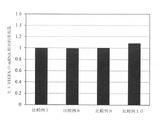
- FIG. 3 is a graph showing the effect of infrared irradiation and/or heat on VEGFA gene expression in human epidermal keratinocytes.
- the present disclosure provides agents that suppress VEGFA expression in fibroblasts.
- Also provided by the present disclosure is a method of identifying a drug for inhibiting infrared induced skin damage, the method comprising: (a) growing a skin cell culture comprising fibroblasts in a culture medium comprising a candidate drug; (b) measuring the expression of VEGFA in the skin cell culture; and (c) selecting a candidate drug capable of inhibiting the expression of VEGFA.
- Fibroblasts of the present disclosure include both in vivo cells and in vitro cells, and in vitro cells are not particularly limited, but are, for example, primary cells, primary cells that have been subcultured and proliferated. Cells obtained by inducing differentiation from pluripotent stem cells such as cells, ES cells, iPS cells, or Muse cells, and established cells.
- the fibroblasts of the present disclosure may be derived from any animal, but are preferably derived from vertebrates, more preferably from mammals, and most preferably from humans.
- VEGFA used in the present disclosure refers to VEGFA gene or protein.
- a VEGFA gene means a gene encoding a VEGFA protein and includes both genomic DNA and RNA.
- an agent that suppresses VEGFA expression in fibroblasts means that when the agent is applied to fibroblasts under conditions that allow expression of VEGFA by fibroblasts, the expression level of VEGFA is When compared with the same expression level when the drug is not applied to fibroblasts under the same conditions, the expression level when the drug is applied is lower than the expression level when the drug is not applied Means drug.
- the term "damage to skin by infrared rays” means adverse effects of infrared rays on biological skin, and is not particularly limited. Specific examples include blisters, thickening, erythema, wrinkles and spots on the skin.
- the agent of the present disclosure is not particularly limited, but is preferably an agent for suppressing infrared ray damage to the skin, and is an agent for suppressing angiogenesis in the skin that is enhanced by infrared rays and/or heat. More preferably, it is an agent for the treatment, reduction or prevention of wrinkles or spots on the skin.
- the wavelength of infrared rays (IR) in the present disclosure is not particularly limited, but is, for example, 760-1700 nm.
- a light source having such a function of irradiating infrared rays is not particularly limited, and a light source that generates infrared rays, such as an infrared lamp, a halogen lamp, and a xenon lamp, can be used.
- a xenon lamp that generates light close to sunlight is preferable as the light source.
- the xenon lamp In addition to infrared rays, the xenon lamp also emits ultraviolet rays and visible rays. Therefore, when a xenon lamp is used as the light source, an optical filter that transmits only infrared rays may be set in the light source to irradiate only infrared rays.
- an optical filter is not particularly limited, but for example, a cut filter that blocks transmission of ultraviolet light and visible light can be used.
- the drug of the present disclosure is not particularly limited, it is preferably a drug containing at least one plant extract selected from the group consisting of extracts of Gomacha, Phellodendron bark and lavender.
- the "Amacha” of the present disclosure refers to Hydrangea of the genus Hydrangea of the family Saxifragaceae. Or the use of leaves is preferred.
- “Phellodendron Bark” in the present disclosure is the dried bark of yellowfin (Phellodendron Bark) or other related plants (Rutaceae; Rutaceae) from which the pericarp has been removed.
- the bark before drying can also be used as equivalent to "Oubak”.
- Lavender in the present disclosure refers to Lavender belonging to the genus Lavendula of the Labiatae family, and any part of its flowers, flower heads, and spikes can be used.
- the part of each plant to be extracted is washed with water in advance, if necessary, cut into small pieces or pulverized, and then extracted by a conventional method such as immersion method, countercurrent extraction method, supercritical extraction method, etc. It can be carried out by contacting with a solvent. Alternatively, a commercially available extract may be used.
- extraction solvents include water; lower alcohols such as methanol, ethanol and propanol; higher alcohols such as oleyl alcohol, stearyl alcohol and octyldodecanol; ethylene glycol, 1,3-propanediol, 1,3-butylene glycol, polyhydric alcohols such as glycerin; esters such as ethyl acetate, butyl acetate, methyl propionate and glyceryl trioctanoate; ketones such as acetone and methyl ethyl ketone; ethers such as ethyl ether, isopropyl and ether; , chloroform and other hydrocarbon solvents, and the like, which can be used alone or in combination of two or more.
- lower alcohols such as methanol, ethanol and propanol
- higher alcohols such as oleyl alcohol, stearyl alcohol and octyldodecanol
- the agent of the present disclosure is not particularly limited, it is preferably a cosmetic composition, more preferably a skin care composition or sun care composition.
- the dosage form of the agent of the present disclosure is not particularly limited, but considering that many fibroblasts are mainly found in the dermis in vivo, agents for topical application to the skin, aiming for local administration Although it is not particularly limited, for example, ointments, creams, milky lotions, lotions, gels, packs, bath agents, etc., may be used as long as they are conventionally used for topical application to the skin.
- a drug in the present disclosure is a substance capable of exhibiting a desired physiological effect on a subject by itself, and a drug containing the drug is expected to exhibit the desired physiological effect. means a substance contained within.
- a drug can exhibit a desired physiological effect by itself, the desired physiological effect may be enhanced additively or synergistically by being used in combination with other drugs.
- a skin cell culture in the present disclosure refers to a culture of any cell containing fibroblasts, obtained by culturing fibroblasts alone or co-culturing them with other cells.
- Cells that can be co-cultured with fibroblasts are not particularly limited, but are preferably cells that constitute the skin, and specific examples include epidermal keratinocytes, vascular endothelial cells, and the like. be done.
- Cultivation in the present disclosure is not particularly limited as long as it is culture conditions normally used for culturing skin cultured cell products, but can be performed, for example, in a humidified atmosphere at 5% CO 2 at 37°C.
- the temperature of the culture medium and the buffer solution during infrared irradiation is not particularly limited, but is preferably 31 to 35°C or 38 to 42°C.
- the method of identifying a drug for inhibiting infrared-induced skin damage in the present disclosure includes the steps of: (a) culturing a skin cell culture containing fibroblasts in a culture medium containing a candidate drug; measuring the expression of VEGFA in the culture; and (c) selecting a candidate drug capable of inhibiting the expression of VEGFA.
- Such a method includes culturing a skin cell culture containing fibroblasts in the presence of a candidate drug under conditions such as infrared irradiation, heating, etc., that allow fibroblasts to increase expression of VEGFA.
- VEGFA in the present disclosure is not particularly limited, but is preferably the expression of mRNA or protein of the gene encoding the VEGFA protein.
- RT-PCR reverse transcription polymerase chain reaction
- Competitive RT-PCR competitive reverse transcription polymerase chain reaction
- Real-time RT-PCR real-time reverse transcription polymerase chain reaction
- RPA RNase protection assay
- the method for measuring the expression level of the VEGFA protein of the present disclosure is not particularly limited, but for example, protein chip analysis, immunoassay, ligand binding method, MALDI-TOF (Matrix Assisted Laser Desorption/Ionization Time of Flight Mass Spectrometry) analysis , SELDI-TOF (Surface Enhanced Laser Desorption/Ionization Time of Flight Mass Spectrometry) analysis, radioimmunoassay, radial immunodiffusion method, Ouchterlony immunodiffusion method, rocket immunoelectrophoresis, tissue immunostaining, complement binding assay, 2 Dimensional electrophoresis analysis, liquid chromatography-mass spectrometry (LC-MS), LC-MS/MS (liquid chromatography-mass spectrometry/mass spectrometry), western blotting and ELISA (enzyme-linked immunosorbents, etc.) are mentioned.
- MALDI-TOF Microx Assisted Laser Desorption/Ionization Time of Flight Mass
- Test Example 1 Evaluation of Relative Expression Level of VEGFA Gene mRNA in Human Fibroblasts [Preliminary Culture] Normal human fibroblasts were dispersed in Dulbecco's Modification of Eagle's Medium (DMEM: Dulbecco's Modification of Eagle's Medium) containing 10 % Fetal Bovine Serum (FBS) and cells/mL. 500 ⁇ L of this was seeded in each well of a chamber slide (product name “BioCoat Collagen I Culture Slide 4 Well”, manufactured by Corning). The chamber slide seeded with human fibroblasts was preliminarily cultured (hereinafter referred to as preculture) for three nights in an incubator set at 37° C. and 5% CO 2 .
- DMEM Dulbecco's Modification of Eagle's Medium
- FBS Fetal Bovine Serum
- the temperature of the bottom of the chamber slide was measured with a digital thermometer, and the measured temperature was taken as the liquid temperature inside the chamber slide.
- the temperature of the liquid in the chamber slide thus measured was regarded as the temperature of the cells, and the temperature of the cells was controlled by controlling the set temperature of the temperature control plate based on the measured liquid temperature.
- Infrared irradiation was performed under the following four conditions. (1) The temperature of the liquid in the chamber slide was maintained at 33°C, and infrared rays were not irradiated. Note that 33° C. assumes the surface temperature of human skin in an environment where infrared rays are not irradiated. Also, an environment without infrared irradiation is created by covering the chamber slide with a lid and aluminum foil. (2) Infrared irradiation is performed while maintaining the liquid temperature in the chamber slide at 33°C. (3) Do not irradiate infrared rays while maintaining the liquid temperature in the chamber slide at 40°C. (4) Infrared irradiation is performed while maintaining the liquid temperature in the chamber slide at 40°C. 40° C. assumes the surface temperature of human skin in an environment irradiated with infrared rays.
- VEGFA Forward primer: 5'-GCAGCTTGAGTTAAACGAACG-3' (SEQ ID NO: 1) Reverse primer: 5'-GGTTCCCGAAACCCTGAG-3' (SEQ ID NO: 2)
- GAPDH Forward primer: 5'-GAAGGTGAAGGTCGGAGTC-3' (SEQ ID NO: 3) Reverse primer: 5'-GAAGATGGTGATGGGATTTC-3' (SEQ ID NO: 4)
- FIG. 1 shows the ratio of the expression level of VEGFA mRNA obtained from each of the cell groups of Comparative Examples 2 to 4 to the expression level of VEGFA mRNA obtained from the control (Comparative Example 1).
- FIG. 1 shows that the expression of VEGFA gene mRNA is relatively increased in human fibroblasts to which heat is applied.
- Test Example 2 Evaluation of Drug Effect on VEGFA Expression in Human Fibroblasts by Infrared Irradiation After culturing human fibroblasts for two nights in the same manner as in Test Example 1, 5 ⁇ L of the medium was removed. 5 ⁇ L of 10% extract aqueous solution of each plant extract was added, cultured overnight, and pre-cultured for a total of 3 nights. Five types of plant extracts were used, ie, amacha extract, Phellodendron bark extract, lavender extract, magnolia extract and royal jelly extract. Phellodendron bark extract, lintel extract and royal jelly extract were obtained by extraction with an ethanol solution, and lavender extract and magnolia extract were obtained by extraction with a 1,3-butylene glycol solution.
- Cell temperature control and infrared irradiation were performed in the same manner as in Test Example 1. Infrared irradiation was performed under the following two conditions. (1) The temperature of the liquid in the chamber slide was maintained at 33°C, and infrared rays were not irradiated. (2) Infrared irradiation is performed while maintaining the liquid temperature in the chamber slide at 40°C.
- Test Example 3 Quantitative Evaluation of VEGFA Gene mRNA in Human Epidermal Keratinocytes [Preliminary Culture] Neonatal human epidermal keratinocytes were dispersed in EpiLifeTM medium containing growth additives (product name: “EpiLifeTM CF Kit”, manufactured by Thermo Fisher Scientific) to 3 ⁇ 10 4 cells/mL. . 500 ⁇ L of this was seeded in each well of the chamber slide. The chamber slides seeded with neonatal human epidermal keratinocytes were pre-cultured for 3 nights in an incubator set at 37° C. and 5% CO 2 .
- Infrared irradiation and evaluation of gene expression were performed in the same manner as in Test Example 1.
- the infrared irradiation was performed under the same conditions as (1) to (4) in Test Example 1, respectively.
- the buffer was removed, replaced with 500 ⁇ L of EpiLifeTM medium containing growth additives, and cultured for 24 hours in an incubator set at 37° C., 5% CO 2 , 4 cells listed in Table 3 below. Cells under various conditions (Comparative Examples 7 to 10) were prepared.
- FIG. 3 shows the ratio of the expression level of VEGFA mRNA obtained from each of the cell groups of Comparative Examples 8 to 10 to the expression level of VEGFA mRNA obtained from the control (Comparative Example 7).
- the results in FIG. 3 indicated that heat and/or infrared induced VEGFA gene expression elevation was not observed in human epidermal keratinocytes.
Landscapes
- Health & Medical Sciences (AREA)
- Life Sciences & Earth Sciences (AREA)
- Chemical & Material Sciences (AREA)
- Engineering & Computer Science (AREA)
- General Health & Medical Sciences (AREA)
- Natural Medicines & Medicinal Plants (AREA)
- Organic Chemistry (AREA)
- Biotechnology (AREA)
- Animal Behavior & Ethology (AREA)
- Veterinary Medicine (AREA)
- Public Health (AREA)
- Microbiology (AREA)
- Medicinal Chemistry (AREA)
- Bioinformatics & Cheminformatics (AREA)
- Pharmacology & Pharmacy (AREA)
- Zoology (AREA)
- Wood Science & Technology (AREA)
- Genetics & Genomics (AREA)
- Biomedical Technology (AREA)
- Epidemiology (AREA)
- Biochemistry (AREA)
- Molecular Biology (AREA)
- Chemical Kinetics & Catalysis (AREA)
- Physics & Mathematics (AREA)
- Mycology (AREA)
- Immunology (AREA)
- Botany (AREA)
- General Engineering & Computer Science (AREA)
- Biophysics (AREA)
- Alternative & Traditional Medicine (AREA)
- Dermatology (AREA)
- Medical Informatics (AREA)
- Proteomics, Peptides & Aminoacids (AREA)
- Analytical Chemistry (AREA)
- General Chemical & Material Sciences (AREA)
- Nuclear Medicine, Radiotherapy & Molecular Imaging (AREA)
- Cell Biology (AREA)
- Food Science & Technology (AREA)
- General Physics & Mathematics (AREA)
- Pathology (AREA)
Priority Applications (1)
| Application Number | Priority Date | Filing Date | Title |
|---|---|---|---|
| JP2023531931A JPWO2023276942A1 (https=) | 2021-06-28 | 2022-06-27 |
Applications Claiming Priority (2)
| Application Number | Priority Date | Filing Date | Title |
|---|---|---|---|
| JP2021-107095 | 2021-06-28 | ||
| JP2021107095 | 2021-06-28 |
Publications (1)
| Publication Number | Publication Date |
|---|---|
| WO2023276942A1 true WO2023276942A1 (ja) | 2023-01-05 |
Family
ID=84689897
Family Applications (1)
| Application Number | Title | Priority Date | Filing Date |
|---|---|---|---|
| PCT/JP2022/025549 Ceased WO2023276942A1 (ja) | 2021-06-28 | 2022-06-27 | 血管内皮増殖因子の増加の抑制剤およびそのスクリーニング方法 |
Country Status (2)
| Country | Link |
|---|---|
| JP (1) | JPWO2023276942A1 (https=) |
| WO (1) | WO2023276942A1 (https=) |
Citations (4)
| Publication number | Priority date | Publication date | Assignee | Title |
|---|---|---|---|---|
| JP2014214139A (ja) * | 2013-04-26 | 2014-11-17 | ポーラ化成工業株式会社 | Nadh産生促進剤 |
| JP2018203677A (ja) * | 2017-06-06 | 2018-12-27 | 花王株式会社 | プロコラーゲンプロセッシング促進剤 |
| WO2020196801A1 (ja) * | 2019-03-27 | 2020-10-01 | 国立大学法人 東京医科歯科大学 | 皮膚用組成物 |
| US20200383892A1 (en) * | 2017-12-19 | 2020-12-10 | Cosmaxbio Co., Ltd. | Composition for preventing or improving uv-induced skin damage using hydroangenol as active ingredient |
-
2022
- 2022-06-27 JP JP2023531931A patent/JPWO2023276942A1/ja active Pending
- 2022-06-27 WO PCT/JP2022/025549 patent/WO2023276942A1/ja not_active Ceased
Patent Citations (4)
| Publication number | Priority date | Publication date | Assignee | Title |
|---|---|---|---|---|
| JP2014214139A (ja) * | 2013-04-26 | 2014-11-17 | ポーラ化成工業株式会社 | Nadh産生促進剤 |
| JP2018203677A (ja) * | 2017-06-06 | 2018-12-27 | 花王株式会社 | プロコラーゲンプロセッシング促進剤 |
| US20200383892A1 (en) * | 2017-12-19 | 2020-12-10 | Cosmaxbio Co., Ltd. | Composition for preventing or improving uv-induced skin damage using hydroangenol as active ingredient |
| WO2020196801A1 (ja) * | 2019-03-27 | 2020-10-01 | 国立大学法人 東京医科歯科大学 | 皮膚用組成物 |
Non-Patent Citations (1)
| Title |
|---|
| ANONYMOUS: "Shiseido Elucidates the Mechanism by Which Infrared Light Adversely Affects Skin", SHISEIDO CO., LTD. SHISEIDO PRESS RELEASE, 31 August 2021 (2021-08-31), XP093017858, Retrieved from the Internet <URL:https://corp.shiseido.com/jp/newsimg/3193_a3o16_jp.pdf> [retrieved on 20230125] * |
Also Published As
| Publication number | Publication date |
|---|---|
| JPWO2023276942A1 (https=) | 2023-01-05 |
Similar Documents
| Publication | Publication Date | Title |
|---|---|---|
| US10702544B2 (en) | Composition for ameliorating loss of hair and graying of hair, and use thereof | |
| KR101830926B1 (ko) | 피부 노화를 방지 및/또는 개선하기 위해 사용되는 pedf-유도 폴리펩티드의 용도 | |
| Ghufran et al. | Curcumin preconditioned human adipose derived stem cells co-transplanted with platelet rich plasma improve wound healing in diabetic rats | |
| JP6485995B2 (ja) | エンドセリン−1mRNA発現上昇抑制剤、幹細胞増殖因子mRNA発現上昇抑制剤、塩基性線維芽細胞増殖因子mRNA発現上昇抑制剤、及びプロオピオメラノコルチンmRNA発現上昇抑制剤 | |
| JP2018150262A (ja) | 抗老化剤 | |
| Häseli et al. | Cardiomyocyte contractility and autophagy in a premature senescence model of cardiac aging | |
| CN112321741A (zh) | 一种植物源成分及其抗皮肤光老化、提高皮肤更新修复能力进而制备相关化妆品的用途 | |
| Soter | Acute effects of ultraviolet radiation on the skin | |
| WO2007107856A1 (en) | Magnolia champaca oil, its process of preparation and compositions comprising it | |
| JP5224719B2 (ja) | 毛乳頭細胞増殖促進剤、テストステロン5α−リダクターゼ阻害剤、アンドロゲン受容体結合阻害剤、血管内皮増殖因子産生促進剤、骨形成タンパク質−2産生促進剤、インスリン様増殖因子−1産生促進剤、育毛剤及び頭髪化粧料 | |
| KR101032271B1 (ko) | 피부세포 재생용 조성물, 그 제조 방법, 피부세포 재생 방법 및 화장료 조성물 | |
| CN111356468B (zh) | 包含黄漆木提取物作为有效成分的用于预防或治疗纤维化疾病的组合物 | |
| WO2023276942A1 (ja) | 血管内皮増殖因子の増加の抑制剤およびそのスクリーニング方法 | |
| JP2011184392A (ja) | メラニン産生抑制剤、エンドセリン−1mRNA発現抑制剤、幹細胞増殖因子(SCF)mRNA発現抑制剤、塩基性線維芽細胞増殖因子(bFGF)mRNA発現抑制剤、グルタチオン産生促進剤、過酸化水素に対するダメージ抑制剤、及びフィラグリン産生促進剤 | |
| JP6968772B2 (ja) | 表皮ヒアルロン酸産生促進剤 | |
| TW201225988A (en) | Methods for modulating melanin production | |
| JP5937782B2 (ja) | V型コラーゲン遺伝子転写促進剤 | |
| JP5566597B2 (ja) | I型コラーゲン産生促進剤、アデノシン三リン酸産生促進剤、フィラグリン産生促進剤、メラニン産生抑制剤、塩基性線維芽細胞増殖因子(bFGF)mRNA発現抑制剤、及び肌の透明感向上剤 | |
| JP5300223B2 (ja) | 発現抑制剤及び被験物質の評価方法 | |
| Chen et al. | Troxerutin Delays Skin Keratinocyte Senescence Induced by Ionizing Radiation Both In Vitro and In Vivo | |
| Lim et al. | Anti-oxidant and Anti-inflammatory Effects of Sinapic Acid in UVB Irradiation-Damaged HaCaT Keratinocytes | |
| Choi et al. | Justicia procumbens promotes hair growth and ameliorates age-related deterioration of hair health | |
| JP2006169149A (ja) | 皮膚表皮基底細胞増殖促進剤 | |
| JP6969042B2 (ja) | クローディン−1産生促進剤、オクルディン産生促進剤、ヒト皮膚三次元モデルにおける表皮タイトジャンクション構成蛋白質産生促進剤、及び皮膚バリア機能低下抑制剤 | |
| Kuan et al. | Rice Bran Extract Alleviates Inflammation and Promotes Wound Healing in Radiation Dermatitis |
Legal Events
| Date | Code | Title | Description |
|---|---|---|---|
| 121 | Ep: the epo has been informed by wipo that ep was designated in this application |
Ref document number: 22833089 Country of ref document: EP Kind code of ref document: A1 |
|
| WWE | Wipo information: entry into national phase |
Ref document number: 2023531931 Country of ref document: JP |
|
| NENP | Non-entry into the national phase |
Ref country code: DE |
|
| 122 | Ep: pct application non-entry in european phase |
Ref document number: 22833089 Country of ref document: EP Kind code of ref document: A1 |