WO2023210342A1 - 組成物 - Google Patents
組成物 Download PDFInfo
- Publication number
- WO2023210342A1 WO2023210342A1 PCT/JP2023/014663 JP2023014663W WO2023210342A1 WO 2023210342 A1 WO2023210342 A1 WO 2023210342A1 JP 2023014663 W JP2023014663 W JP 2023014663W WO 2023210342 A1 WO2023210342 A1 WO 2023210342A1
- Authority
- WO
- WIPO (PCT)
- Prior art keywords
- group
- aryl
- general formula
- color conversion
- composition according
- Prior art date
- Legal status (The legal status is an assumption and is not a legal conclusion. Google has not performed a legal analysis and makes no representation as to the accuracy of the status listed.)
- Ceased
Links
Images

Classifications
-
- C—CHEMISTRY; METALLURGY
- C09—DYES; PAINTS; POLISHES; NATURAL RESINS; ADHESIVES; COMPOSITIONS NOT OTHERWISE PROVIDED FOR; APPLICATIONS OF MATERIALS NOT OTHERWISE PROVIDED FOR
- C09K—MATERIALS FOR MISCELLANEOUS APPLICATIONS, NOT PROVIDED FOR ELSEWHERE
- C09K11/00—Luminescent materials, e.g. electroluminescent or chemiluminescent
- C09K11/08—Luminescent materials, e.g. electroluminescent or chemiluminescent containing inorganic luminescent materials
- C09K11/77—Luminescent materials, e.g. electroluminescent or chemiluminescent containing inorganic luminescent materials containing rare earth metals
- C09K11/7715—Luminescent materials, e.g. electroluminescent or chemiluminescent containing inorganic luminescent materials containing rare earth metals containing cerium
-
- C—CHEMISTRY; METALLURGY
- C07—ORGANIC CHEMISTRY
- C07F—ACYCLIC, CARBOCYCLIC OR HETEROCYCLIC COMPOUNDS CONTAINING ELEMENTS OTHER THAN CARBON, HYDROGEN, HALOGEN, OXYGEN, NITROGEN, SULFUR, SELENIUM OR TELLURIUM
- C07F5/00—Compounds containing elements of Groups 3 or 13 of the Periodic Table
- C07F5/02—Boron compounds
-
- C—CHEMISTRY; METALLURGY
- C09—DYES; PAINTS; POLISHES; NATURAL RESINS; ADHESIVES; COMPOSITIONS NOT OTHERWISE PROVIDED FOR; APPLICATIONS OF MATERIALS NOT OTHERWISE PROVIDED FOR
- C09K—MATERIALS FOR MISCELLANEOUS APPLICATIONS, NOT PROVIDED FOR ELSEWHERE
- C09K11/00—Luminescent materials, e.g. electroluminescent or chemiluminescent
- C09K11/06—Luminescent materials, e.g. electroluminescent or chemiluminescent containing organic luminescent materials
-
- G—PHYSICS
- G02—OPTICS
- G02B—OPTICAL ELEMENTS, SYSTEMS OR APPARATUS
- G02B5/00—Optical elements other than lenses
- G02B5/20—Filters
-
- C—CHEMISTRY; METALLURGY
- C09—DYES; PAINTS; POLISHES; NATURAL RESINS; ADHESIVES; COMPOSITIONS NOT OTHERWISE PROVIDED FOR; APPLICATIONS OF MATERIALS NOT OTHERWISE PROVIDED FOR
- C09K—MATERIALS FOR MISCELLANEOUS APPLICATIONS, NOT PROVIDED FOR ELSEWHERE
- C09K2211/00—Chemical nature of organic luminescent or tenebrescent compounds
- C09K2211/10—Non-macromolecular compounds
- C09K2211/1018—Heterocyclic compounds
- C09K2211/1025—Heterocyclic compounds characterised by ligands
- C09K2211/1044—Heterocyclic compounds characterised by ligands containing two nitrogen atoms as heteroatoms
- C09K2211/1055—Heterocyclic compounds characterised by ligands containing two nitrogen atoms as heteroatoms with other heteroatoms
Definitions
- the present invention relates to compositions. More specifically, the present invention relates to a composition containing Ce and a certain pyrromethene compound.
- Color conversion refers to converting light emitted from a light emitter into light with a longer wavelength, and includes, for example, converting blue light into green or red light.
- a composition having this color conversion function into a film and combining it with, for example, a blue light source, it becomes possible to obtain the three primary colors of blue, green, and red from the blue light source, that is, to obtain white light.
- a white light source that is a combination of such a blue light source and a film having a color conversion function as a backlight unit, and combining it with a liquid crystal driving part and a color filter, it is possible to produce a full-color display.
- a white light source that is a combination of a blue light source and a film having a color conversion function can also be used as it is as a white light source for LED lighting or the like.
- Improving color reproducibility and durability are issues for liquid crystal displays that use color conversion methods.
- it is effective to narrow the half-widths of the blue, green, and red emission spectra of the backlight unit and increase the color purity of each of the blue, green, and red colors.
- a color conversion material containing a pyrromethene compound has been proposed (see, for example, Patent Documents 1 and 2).
- a technique for improving durability a technique has been proposed in which a salt of at least one transition metal selected from the group consisting of lanthanoids and an organic acid is added as a light stabilizer to a color conversion material using a pyrromethene compound. (For example, see Patent Document 3).
- Patent Documents 1 to 3 By the techniques described in Patent Documents 1 to 3, it is possible to obtain a color conversion composition that has excellent color reproducibility, little decrease in brightness even when used continuously for a long time, and excellent durability. However, in response to the recent demand for even higher color reproducibility, it has been found that there is a new problem: low brightness.
- an object of the present invention is to provide a color conversion material with excellent brightness.
- R 1 to R 9 may be the same or different, and each may be a hydrogen atom, an alkyl group, a cycloalkyl group, a heterocyclic group, an alkenyl group, a cycloalkenyl group, an alkynyl group) , hydroxyl group, thiol group, alkoxy group, alkylthio group, aryl ether group, arylthioether group, aryl group, heteroaryl group, halogen, cyano group, aldehyde group, carbonyl group, carboxyl group, oxycarbonyl group, carbamoyl group, -COOR u , -OOCR v , selected from an amino group, a nitro group, a silyl group, a siloxanyl group, a boryl group, a phosphine oxide group, and a fused ring and aliphatic ring formed between the adjacent substituents.
- R u ⁇ R y is an alkyl group, a cycloalkyl group, an aryl group, or a heteroaryl group.
- (r is a hydrogen atom, an alkyl group, a cycloalkyl group, a heterocyclic group, an alkenyl group, a cycloalkenyl group, an alkynyl group, a hydroxyl group, a thiol group, an alkoxy group, an alkylthio group, an aryl ether group, an arylthioether group, an aryl group, It is selected from the group consisting of a heteroaryl group, halogen, cyano group, aldehyde group, carbonyl group, carboxyl group, oxycarbonyl group, carbamoyl group, amino group, nitro group, silyl group, siloxanyl group, boryl group, and phosphine oxide group.
- k is an integer from 1 to 3. If k is 2 or more, r may be the same or different.) (3) The composition according to (2), wherein in the general formulas (1) and (2), at least one of R 1 to R 7 contains a functional group having a lone pair of electrons. (4) The composition according to (2) or (3), wherein in the general formulas (1) and (2), at least two of R 1 to R 7 contain a functional group having the lone pair of electrons. (5) The composition according to any one of (2) to (4), wherein in the general formulas (1) and (2), at least four of R 1 to R 7 include a functional group having the lone pair of electrons. thing.
- the functional group having a lone pair of electrons is selected from the group consisting of a carbonyl group, an aldehyde group, a carboxyl group, an oxycarbonyl group, a carbamoyl group, and an ester group.
- the composition according to any one of (2) to (6), wherein in the general formulas (1) and (2), the functional group having a lone pair of electrons is an ester group.
- the compound represented by the general formula (1) is a compound that exhibits luminescence observed in a region with a peak wavelength of 500 nm or more and less than 580 nm when using excitation light with a wavelength of 430 nm or more and 500 nm or less, The composition according to any one of claims (1) to (8).
- the compound represented by the general formula (1) is a compound that exhibits light emission whose peak wavelength is observed in a region of 580 nm or more and 750 nm or less when using excitation light with a wavelength of 430 nm or more and less than 580 nm.
- the compound of the present invention can provide a color conversion composition with high brightness and improve the color reproducibility of liquid crystal displays.
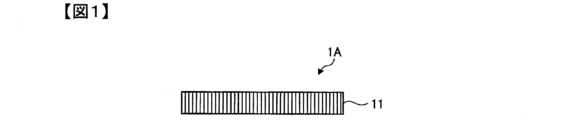
- FIG. 1 is a schematic cross-sectional view showing a first example of a color conversion sheet.
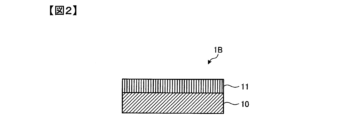
- FIG. 2 is a schematic cross-sectional view showing a second example of the color conversion sheet.
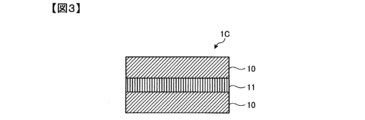
- FIG. 3 is a schematic cross-sectional view showing a third example of the color conversion sheet.
- FIG. 4 is a schematic cross-sectional view showing a fourth example of the color conversion sheet.
- compositions according to embodiments of the present invention will be specifically described below, but the present invention is not limited to the following embodiments, and can be implemented with various modifications depending on the purpose and use. I can do it.
- a composition according to an embodiment of the present invention contains Ce and a compound represented by the following general formula (1) (Compound represented by general formula (1))
- R 1 to R 9 may be the same or different, and include a hydrogen atom, an alkyl group, a cycloalkyl group, a heterocyclic group, an alkenyl group, a cycloalkenyl group, an alkynyl group, a hydroxyl group, a thiol group, an alkoxy group, an alkylthio group, Aryl ether group, arylthioether group, aryl group, heteroaryl group, halogen, cyano group, aldehyde group, carbonyl group, carboxyl group, oxycarbonyl group, carbamoyl group, -COOR u , -OOCR v , amino group, nitro group, It is selected from silyl groups, siloxanyl groups, boryl groups, phosphine oxide groups, and fused rings and aliphatic rings formed between adjacent substituents.
- R u to R y are an alkyl group, a cycloalkyl group
- hydrogen may be deuterium.
- a substituted or unsubstituted aryl group having 6 to 40 carbon atoms means 6 to 40 carbon atoms, including the number of carbon atoms contained in the substituents substituted with the aryl group, and the number of carbon atoms is specified. The same applies to other substituents.
- substituents include alkyl groups, cycloalkyl groups, heterocyclic groups, alkenyl groups, cycloalkenyl groups, alkynyl groups, hydroxyl groups, thiol groups, alkoxy groups, and alkylthio groups.
- aryl ether group arylthioether group, aryl group, heteroaryl group, halogen, cyano group, aldehyde group, carbonyl group, carboxyl group, oxycarbonyl group, carbamoyl group, amino group, nitro group, silyl group, siloxanyl group, boryl group, and a phosphine oxide group, and furthermore, the specific substituents that are preferred in the description of each substituent are preferred. Moreover, these substituents may be further substituted with the above-mentioned substituents.
- substituted means that a hydrogen atom or a deuterium atom is substituted.
- substituted or unsubstituted means that a hydrogen atom or a deuterium atom is substituted.
- substituted or unsubstituted is the same as above.
- the alkyl group refers to a saturated aliphatic hydrocarbon group such as a methyl group, an ethyl group, an n-propyl group, an isopropyl group, an n-butyl group, a sec-butyl group, and a tert-butyl group; It may or may not have.
- additional substituents when substituted and examples thereof include alkyl groups, halogens, aryl groups, heteroaryl groups, and the like, and this point is also common to the following description.
- the number of carbon atoms in the alkyl group is not particularly limited, but from the viewpoint of availability and cost, it is preferably in the range of 1 to 20, more preferably 1 to 8.
- the cycloalkyl group refers to, for example, a saturated alicyclic hydrocarbon group such as a cyclopropyl group, a cyclohexyl group, a norbornyl group, or an adamantyl group, which may or may not have a substituent.
- the number of carbon atoms in the alkyl group moiety is not particularly limited, but is preferably in the range of 3 or more and 20 or less.
- a heterocyclic group refers to an aliphatic ring having an atom other than carbon in the ring, such as a pyran ring, a piperidine ring, or a cyclic amide, which may or may not have a substituent. .
- the number of carbon atoms in the heterocyclic group is not particularly limited, but is preferably in the range of 2 or more and 20 or less.
- the alkenyl group refers to an unsaturated aliphatic hydrocarbon group containing a double bond, such as a vinyl group, allyl group, butadienyl group, and may or may not have a substituent.
- the number of carbon atoms in the alkenyl group is not particularly limited, but is preferably in the range of 2 or more and 20 or less.
- a cycloalkenyl group refers to an unsaturated alicyclic hydrocarbon group containing a double bond, such as a cyclopentenyl group, a cyclopentadienyl group, or a cyclohexenyl group, even if it has a substituent. You don't have to.
- the number of carbon atoms in the cycloalkenyl group is not particularly limited, but is preferably in the range of 3 or more and 20 or less.
- the alkynyl group refers to, for example, an unsaturated aliphatic hydrocarbon group containing a triple bond such as an ethynyl group, which may or may not have a substituent.
- the number of carbon atoms in the alkynyl group is not particularly limited, but is preferably in the range of 2 or more and 20 or less.
- An alkoxy group refers to a functional group to which an aliphatic hydrocarbon group is bonded via an ether bond, such as a methoxy group, an ethoxy group, or a propoxy group, and this aliphatic hydrocarbon group may have a substituent. It is not necessary to have it.
- the number of carbon atoms in the alkoxy group is not particularly limited, but is preferably in the range of 1 to 20.
- An alkylthio group is an alkoxy group in which the oxygen atom of the ether bond is replaced with a sulfur atom.
- the hydrocarbon group of the alkylthio group may or may not have a substituent.
- the number of carbon atoms in the alkylthio group is not particularly limited, but is preferably in the range of 1 to 20.
- the aryl ether group refers to a functional group such as a phenoxy group to which an aromatic hydrocarbon group is bonded via an ether bond, and the aromatic hydrocarbon group may have a substituent or not. good.
- the number of carbon atoms in the aryl ether group is not particularly limited, but is preferably in the range of 6 or more and 40 or less.
- An arylthioether group is an aryl ether group in which the oxygen atom of the ether bond is replaced with a sulfur atom.
- the aromatic hydrocarbon group in the aryl ether group may or may not have a substituent.
- the number of carbon atoms in the aryl ether group is not particularly limited, but is preferably in the range of 6 or more and 40 or less.
- Aryl groups include, for example, phenyl group, biphenyl group, terphenyl group, naphthyl group, fluorenyl group, benzofluorenyl group, dibenzofluorenyl group, phenanthryl group, anthracenyl group, benzophenanthryl group, and benzanthracetyl group.
- Indicates aromatic hydrocarbon groups such as nyl group, chrysenyl group, pyrenyl group, fluoranthenyl group, triphenylenyl group, benzofluoranthenyl group, dibenzaanthracenyl group, perylenyl group, and helicenyl group.
- phenyl group biphenyl group, terphenyl group, naphthyl group, fluorenyl group, phenanthryl group, anthracenyl group, pyrenyl group, fluoranthenyl group, and triphenylenyl group are preferable.
- the aryl group may or may not have a substituent.
- the number of carbon atoms in the aryl group is not particularly limited, but is preferably in the range of 6 or more and 40 or less, more preferably 6 or more and 30 or less.
- the aryl group is preferably a phenyl group, a biphenyl group, a terphenyl group, a naphthyl group, a fluorenyl group, a phenanthryl group, an anthracenyl group, and a phenyl group, a biphenyl group, Terphenyl group and naphthyl group are more preferred. More preferred are phenyl, biphenyl, and terphenyl, with phenyl being particularly preferred.
- the aryl group is preferably a phenyl group, a biphenyl group, a terphenyl group, a naphthyl group, a fluorenyl group, a phenanthryl group, or an anthracenyl group; More preferred are phenyl group and naphthyl group. Particularly preferred is a phenyl group.
- Heteroaryl groups include, for example, pyridyl group, furanyl group, thiophenyl group, quinolinyl group, isoquinolinyl group, pyrazinyl group, pyrimidyl group, pyridazinyl group, triazinyl group, naphthyridinyl group, cinnolinyl group, phthalazinyl group, quinoxalinyl group, quinazolinyl group, Benzofuranyl group, benzothiophenyl group, indolyl group, dibenzofuranyl group, dibenzothiophenyl group, carbazolyl group, benzocarbazolyl group, carbolinyl group, indolocarbazolyl group, benzofurocarbazolyl group, benzothienocarba Non-carbon groups such as zolyl group, dihydroindenocarbazolyl group, benzoquinolinyl group, acridinyl
- the naphthyridinyl group refers to any of the following: 1,5-naphthyridinyl group, 1,6-naphthyridinyl group, 1,7-naphthyridinyl group, 1,8-naphthyridinyl group, 2,6-naphthyridinyl group, 2,7-naphthyridinyl group. Show that.
- a heteroaryl group may or may not have a substituent.
- the number of carbon atoms in the heteroaryl group is not particularly limited, but is preferably in the range of 2 or more and 40 or less, more preferably 2 or more and 30 or less.
- heteroaryl group examples include pyridyl group, furanyl group, thiophenyl group, quinolinyl group, pyrimidyl group, triazinyl group, benzofuranyl group, benzothiophenyl group, and indolyl group.
- dibenzofuranyl group, dibenzothiophenyl group, carbazolyl group, benzimidazolyl group, imidazopyridyl group, benzoxazolyl group, benzothiazolyl group, and phenanthrolinyl group are preferable, and pyridyl group, furanyl group, thiophenyl group, and quinolinyl group are preferable. More preferred. Particularly preferred is a pyridyl group.
- heteroaryl group examples include a pyridyl group, a furanyl group, a thiophenyl group, a quinolinyl group, a pyrimidyl group, a triazinyl group, a benzofuranyl group, a benzothiophenyl group, an indolyl group, Dibenzofuranyl group, dibenzothiophenyl group, carbazolyl group, benzimidazolyl group, imidazopyridyl group, benzoxazolyl group, benzothiazolyl group, and phenanthrolinyl group are preferred, and pyridyl group, furanyl group, thiophenyl group, and quinolinyl group are more preferred. preferable. Particularly preferred is a pyridyl group.
- Halogen refers to an atom selected from fluorine, chlorine, bromine, and iodine.
- the carbonyl group, carboxyl group, oxycarbonyl group, and carbamoyl group may or may not have a substituent.
- substituents include an alkyl group, a cycloalkyl group, an aryl group, a heteroaryl group, and these substituents may be further substituted.
- esters groups are groups having an ester structure.
- ester groups these structures will be referred to as "ester groups.”
- the amino group is a substituted or unsubstituted amino group.
- substituents in the case of substitution include an aryl group, a heteroaryl group, a straight-chain alkyl group, and a branched alkyl group.
- aryl group and heteroaryl group phenyl group, naphthyl group, pyridyl group, and quinolinyl group are preferable. These substituents may be further substituted.
- the number of carbon atoms is not particularly limited, but is preferably in the range of 2 or more and 50 or less, more preferably 6 or more and 40 or less, particularly preferably 6 or more and 30 or less.
- Silyl groups include, for example, alkylsilyl groups such as trimethylsilyl group, triethylsilyl group, tert-butyldimethylsilyl group, propyldimethylsilyl group, and vinyldimethylsilyl group, phenyldimethylsilyl group, tert-butyldiphenylsilyl group, and trimethylsilyl group.
- alkylsilyl groups such as trimethylsilyl group, triethylsilyl group, tert-butyldimethylsilyl group, propyldimethylsilyl group, and vinyldimethylsilyl group, phenyldimethylsilyl group, tert-butyldiphenylsilyl group, and trimethylsilyl group.
- arylsilyl group such as a phenylsilyl group or a trinaphthylsilyl group.
- Substituents on silicon
- the siloxanyl group refers to a silicon compound group via an ether bond, such as a trimethylsiloxanyl group. Substituents on silicon may be further substituted.
- a boryl group is a substituted or unsubstituted boryl group.
- substituent in the case of substitution include an aryl group, a heteroaryl group, a straight-chain alkyl group, a branched alkyl group, an aryl ether group, an alkoxy group, and a hydroxyl group, and among them, an aryl group and an aryl ether group are preferred.
- R 10 R 11 is selected from the same group as R 1 to R 9 .
- two arbitrary adjacent substituents may be bonded to each other to form a conjugated or non-conjugated condensed ring.
- the constituent elements of the condensed ring may include, in addition to carbon, an element selected from nitrogen, oxygen, sulfur, phosphorus, and silicon.
- the fused ring may be further fused with another ring.
- the compound represented by the general formula (1) exhibits a high fluorescence quantum yield and a small peak half-width of the emission spectrum, so it can achieve efficient color conversion and high color purity. The durability of can be further improved.
- the compound represented by general formula (1) can be improved with various properties such as luminous efficiency, color purity, thermal stability, photostability, and dispersibility. ⁇ Physical properties can be adjusted.
- R 1 , R 3 , R 4 and R 6 are all hydrogen, at least one of R 1 , R 3 , R 4 and R 6 is a substituted or unsubstituted alkyl group or a substituted or unsubstituted aryl group.
- a substituted or unsubstituted heteroaryl group exhibits better thermal stability and photostability.
- R 1 , R 3 , R 4 and R 6 are a methyl group, an ethyl group, an isopropyl group, a tert-butyl group, a phenyl group, a biphenyl group, a terphenyl group, a naphthyl group, a pyridyl group, and a quinolinyl group. . Furthermore, R 1 , R 3 , R 4 and R 6 may be the same or different.
- R 2 and R 5 are preferably hydrogen, an alkyl group, a carbonyl group, an oxycarbonyl group, or an aryl group, but an alkyl group or hydrogen is preferable from the viewpoint of thermal stability, and it is easy to obtain a narrow half-width in the emission spectrum. Hydrogen is more preferred.
- R 8 and R 9 are preferably an alkyl group, an aryl group, a heteroaryl group, fluorine, a fluorine-containing alkyl group, a fluorine-containing heteroaryl group, or a fluorine-containing aryl group, which is stable to excitation light and has a higher fluorescence quantum yield. is more preferably a fluorine or fluorine-containing aryl group.
- r is hydrogen, alkyl group, cycloalkyl group, heterocyclic group, alkenyl group, cycloalkenyl group, alkynyl group, hydroxyl group, thiol group, alkoxy group, alkylthio group, aryl ether group, arylthioether group, aryl group, heteroaryl group, halogen, cyano group, aldehyde group, carbonyl group, carboxyl group, oxycarbonyl group, carbamoyl group, amino group, nitro group, silyl group, siloxanyl group, boryl group, and phosphine oxide group.
- k is an integer from 1 to 3. When k is 2 or more, r may be the same or different.
- r is a substituted or unsubstituted aryl group.
- aryl groups phenyl and naphthyl groups are particularly preferred.
- k in general formula (2) is preferably 1 or 2, and more preferably 2.
- at least one of r is substituted with an alkyl group or an aryl group.
- the alkyl group in this case include a methyl group, an ethyl group, and a tert-butyl group.
- aryl groups can further include an alkyl group, a heterocyclic group, an alkenyl group, a hydroxyl group, an alkoxy group, an aryl ether group, an aryl group, a heteroaryl group, a halogen, It may be substituted with a cyano group, carboxyl group, ester group, oxycarbonyl group, or alkoxy group.
- r is preferably a substituted or unsubstituted alkyl group, a substituted or unsubstituted alkoxy group, or a halogen; More preferred are ethyl group, tert-butyl group, and methoxy group. From the viewpoint of dispersibility, tert-butyl group and methoxy group are particularly preferred, and can prevent quenching due to aggregation of molecules.
- At least one of R 1 to R 7 is a functional group having a lone pair of electrons.
- at least one of R 1 to R 6 contains a functional group having a lone pair of electrons
- R 7 contains a functional group having a lone pair of electrons
- R 1 It is preferable that at least one of ⁇ R 6 contains a functional group having a lone pair of electrons
- R 7 contains a functional group having a lone pair of electrons.
- the electrons of the lone pair of electrons can be coordinated with a metal atom, by introducing a functional group having a lone pair of electrons into the pyrromethene skeleton, it becomes possible to coordinate Ce with the pyrromethene compound.
- the number of functional groups having lone pairs contained in R 1 to R 7 is preferably two or more, more preferably four or more, from the viewpoint of facilitating coordination of Ce with the pyrromethene compound.
- Preferred examples of the functional group having a lone pair of electrons include a hydroxyl group, a thiol group, an alkoxy group, an alkylthio group, an aryl ether group, an arylthioether group, a halogen, a cyano group, an aldehyde group, a carbonyl group, a carboxyl group, and an oxycarbonyl group. , a carbamoyl group, an amino group, a nitro group, a silyl group, a siloxanyl group, a boryl group, and a phosphine oxide group. This is because these are difficult to chemically decompose.
- the functional group having a lone pair of electrons include one or more groups selected from the group consisting of a carbonyl group, an aldehyde group, a carboxyl group, an oxycarbonyl group, a carbamoyl group, and an ester group. This is because when the compound represented by the general formula (1) has these groups, it leads to the effect of preventing concentration quenching and improving the fluorescence quantum yield. Particularly preferred are substituted or unsubstituted ester groups.
- the compound represented by the general formula (1) can be produced, for example, by the method described in Japanese Patent Publication No. 8-509471 and Japanese Patent Application Laid-open No. 2000-208262. That is, the desired pyrromethene-based metal complex can be obtained by reacting a pyrromethene compound and a metal salt in the presence of a base.
- a method of generating a carbon-carbon bond using a coupling reaction between a halogenated derivative and a boronic acid or a boronic acid ester derivative can be mentioned, but the method is not limited to this. It is not something that will be done.
- a method of generating a carbon-nitrogen bond using a coupling reaction between a halogenated derivative and an amine or carbazole derivative under a metal catalyst such as palladium is available. These include, but are not limited to.
- the compound represented by general formula (1) exhibits luminescence observed in a region with a peak wavelength of 500 nm or more and less than 580 nm by using excitation light with a wavelength of 430 nm or more and 500 nm or less.
- light emission observed in a region with a peak wavelength of 500 nm or more and less than 580 nm will be referred to as "green light emission.”
- the higher the energy of excitation light the more likely it is to cause material decomposition, but excitation light in the wavelength range of 430 nm or more and 500 nm or less has relatively low excitation energy, so it does not cause decomposition of the luminescent material and has good color purity. A bright green luminescence can be obtained.
- the compound represented by general formula (1) exhibits luminescence observed in a region with a peak wavelength of 580 nm or more and 750 nm or less by using excitation light with a wavelength of 430 nm or more and less than 580 nm.
- light emission observed in a region with a peak wavelength of 580 nm or more and 750 nm or less will be referred to as "red light emission.”
- the higher the energy of excitation light the more likely it is to cause decomposition of the material, but excitation light in the wavelength range of 430 nm or more and less than 580 nm has relatively low excitation energy, so it does not cause decomposition of the luminescent material and has good color purity. A bright red luminescence can be obtained.
- Examples of methods for measuring fluorescence spectra include a method in which a compound is dissolved in an organic solvent such as toluene and excited using excitation light in the range of 430 nm or more and 500 nm or less and measuring the fluorescence spectrum.
- the composition according to the embodiment of the present invention can obtain high-intensity light emission by containing Ce.
- the compound represented by the general formula (1) has a problem in that its brightness decreases due to concentration quenching.
- Concentration quenching refers to a phenomenon in which the fluorescence intensity (fluorescence quantum yield) decreases when the concentration of a fluorescent substance exceeds a certain level. This occurs either by dynamic quenching due to collisions between photoexcited molecules and unexcited molecules, or by static quenching due to the formation of aggregates of molecules in the ground state.
- the presence of Ce increases the distance between molecules of the compound represented by general formula (1), making it difficult for dynamic quenching to occur.
- the presence of Ce increases the compatibility between the compound represented by general formula (1) and the binder resin, making static quenching less likely to occur.
- the composition according to the embodiment of the present invention can suppress concentration quenching by containing Ce, and therefore can improve brightness.
- Ce is closely connected to the compound represented by the general formula (1) due to the lone pair of electrons. Since the compatibility between the compound represented by the general formula (1) and the binder resin is increased, the effect of improving brightness is particularly large.
- Examples include, but are not limited to, a method in which cerium (III) nitrate hexahydrate is present in addition to triethylamine in the step of reacting the compound.
- Examples of the containing form of Ce in the composition include a mixture with the compound represented by the general formula (1), a coordination product with the compound represented by the general formula (1), and the like. From the viewpoint of increasing the compatibility between the compound represented by general formula (1) and the binder resin, it is preferably contained as a coordinate with the compound represented by general formula (1).
- the content of Ce in the composition is set to 100 parts by weight of the compound represented by general formula (1) from the viewpoint of increasing the compatibility between the compound represented by general formula (1) and the binder resin and suppressing concentration quenching. 1.0 ⁇ 10 ⁇ 5 parts by weight or more, more preferably 1.0 ⁇ 10 ⁇ 4 parts by weight or more. Further, from the viewpoint of suppressing visible light absorption when irradiated with light, the amount is preferably 3 parts by weight or less, more preferably 1 part by weight or less, based on 100 parts by weight of the compound represented by general formula (1).
- the Ce content is a value measured by inductively coupled plasma mass spectrometry (ICP-MS).
- a color conversion composition using a composition according to an embodiment of the present invention is a color conversion composition that converts incident light into light with a longer wavelength than the incident light, and is a color conversion composition that uses the above composition and a binder resin. It is preferable to include. That is, it is preferable that Ce, a compound represented by general formula (1), and a binder resin are included.
- the color conversion composition exhibits luminescence (green luminescence) observed in a region with a peak wavelength of 500 nm or more and less than 580 nm by using excitation light, or exhibits luminescence (green luminescence) observed in a region with a peak wavelength of 580 nm or more and 750 nm or less. It is preferable that the material emits red light.
- a color conversion composition that emits green light has a higher excitation energy than a color conversion composition that emits red light, so if it does not contain Ce, dynamic quenching due to collisions between excited molecules and unexcited molecules will occur. It's easy to happen.
- a color conversion composition that emits green light is preferable because it greatly suppresses dynamic quenching by containing Ce and exhibits a large concentration quenching suppressing effect. Further, it is more preferable to use excitation light having a wavelength of 430 nm or more and 500 nm or less.
- Part of the excitation light in the wavelength range of 430 nm or more and 500 nm or less is partially transmitted through the color conversion film of the present invention, so when a blue LED with a sharp emission peak is used, sharp-shaped light emission is generated in each color of blue, green, and red. It shows a spectrum and can provide white light with good color purity. As a result, a larger color gamut with more vivid colors can be efficiently created, especially in displays.
- the currently mainstream white LED which is a combination of a blue LED and a yellow phosphor, the light emitting characteristics in the green and red regions are improved, which improves color rendering and is a preferred white light source. becomes.
- the content of the compound represented by general formula (1) in the color conversion composition is determined by the molar absorption coefficient, fluorescence quantum yield, and absorption intensity at the excitation wavelength of the compound represented by general formula (1), as well as the film to be produced. Although it depends on the thickness and transmittance of the binder resin, it is usually 1.0 x 10 -4 parts by weight to 30 parts by weight, and 1.0 x 10 -3 parts by weight to 10 parts by weight per 100 parts by weight of the binder resin. Parts by weight are more preferable, and 1.0 ⁇ 10 ⁇ 2 parts by weight to 5 parts by weight are particularly preferable.
- the binder resin is preferably a material that forms a continuous phase and has excellent moldability, transparency, heat resistance, etc.
- photocurable resist materials with reactive vinyl groups such as acrylic, methacrylic, polyvinyl cinnamate, polyimide, ring rubber, etc., epoxy resins, silicone resins (organopolysiloxanes such as silicone rubber, silicone gel, etc.) (including cured products (crosslinked products)), urea resins, fluororesins, polycarbonate resins, acrylic resins, methacrylic resins, polyimide resins, cyclic olefins, polyethylene terephthalate resins, polypropylene resins, polystyrene resins, urethane resins, melamine resins, polyvinyl resins, Polyamide resin, phenol resin, polyvinyl alcohol resin, cellulose resin, aliphatic ester resin, aromatic ester resin, aliphatic polyolefin resin, aromatic polyolefin
- epoxy resins epoxy resins, silicone resins, acrylic resins, and ester resins are preferred from the viewpoint of transparency, and acrylic resins and ester resins are more preferably used from the viewpoint of heat resistance.
- These resins can be obtained, for example, by copolymerizing each raw material monomer in the presence of a polymerization initiator. Moreover, commercially available products can also be used.
- the silicone resin may be either a thermosetting silicone resin or a thermoplastic silicone resin.
- Thermosetting silicone resins cure at room temperature or temperatures of 50 to 200°C, and have excellent transparency, heat resistance, and adhesiveness.
- the thermosetting silicone resin it is also possible to use commercially available ones, for example, silicone sealants for general LED applications. Specific examples include OE-6630A/B and OE-6336A/B manufactured by DuPont Toray Specialty Materials, and SCR-1012A/B and SCR-1016A/B manufactured by Shin-Etsu Chemical Co., Ltd. Examples include.
- Examples of the thermoplastic silicone resin include commercially available ones, such as RSN series such as RSN-0805 and RSN-0217 manufactured by DuPont-Toray Specialty Materials.
- the color conversion composition includes a compound represented by general formula (1) and a binder resin, as well as a light stabilizer, an antioxidant, a processing and heat stabilizer, a light resistance stabilizer such as an ultraviolet absorber, and silicone fine particles. and a silane coupling agent.
- Examples of the light stabilizer include tertiary amines, catechol derivatives, and lanthanoid compounds. Two or more types of these may be contained.
- antioxidants examples include phenolic antioxidants such as 2,6-di-tert-butyl-p-cresol and 2,6-di-tert-butyl-4-ethylphenol. Two or more types of these may be contained.
- processing and heat stabilizers include phosphorus stabilizers such as tributyl phosphite, tricyclohexyl phosphite, triethylphosphine, and diphenylbutylphosphine. Two or more types of these may be contained.
- Examples of the light resistance stabilizer include 2-(5-methyl-2-hydroxyphenyl)benzotriazole, 2-[2-hydroxy-3,5-bis( ⁇ , ⁇ -dimethylbenzyl)phenyl]-2H- Examples include benzotriazoles such as benzotriazole. Two or more types of these may be contained.
- the content of these additives in the color conversion composition depends on the molar extinction coefficient, fluorescence quantum yield, and absorption intensity at the excitation wavelength of the compound represented by general formula (1), as well as the thickness and transmittance of the film to be produced. can also be set accordingly.
- the content of the additive is 1.0 x 10 -3 parts by weight or more and 30 parts by weight or less, and 1.0 x 10 -2 parts by weight or more and 15 parts by weight or less, based on 100 parts by weight of the resin. More preferably, the amount is 1.0 ⁇ 10 -1 parts by weight or more and 10 parts by weight or less.
- the color conversion composition using the compound of the present invention may further contain a solvent.
- the solvent is preferably one that can adjust the viscosity of the resin in a fluid state and does not excessively affect the luminescence and durability of the luminescent material. Examples include toluene, methyl ethyl ketone, methyl isobutyl ketone, hexane, acetone, terpineol, texanol, methyl cellosolve, butyl carbitol, butyl carbitol acetate, propylene glycol monomethyl ether acetate, and the like. Two or more types of these may be contained. Among these solvents, toluene is particularly preferably used because it does not affect the deterioration of the compound represented by the general formula (1) and leaves little solvent remaining after drying.
- a color conversion composition can be obtained by mixing the above-mentioned composition and, if necessary, additives, solvents, etc. to a predetermined composition, and then homogeneously mixing or kneading using a stirring/kneading machine.
- the stirring/kneading machine include a homogenizer, a revolution-revolution type stirrer, a three-roller mill, a ball mill, a planetary ball mill, and a bead mill.
- defoaming is also preferably carried out under vacuum or reduced pressure conditions. Further, certain specific components may be mixed in advance, or treatments such as aging may be performed. It is also possible to remove the solvent with an evaporator to reach the desired solids concentration.
- the color conversion sheet includes a cured product of the color conversion composition described above.
- the color conversion film may have a color conversion layer containing a color conversion composition or a cured product thereof, and if necessary, a base material layer or a barrier film, and may have two or more of these layers.
- the composition of the color conversion sheet is not limited as long as it contains a cured product of the color conversion composition.
- the thickness of the color conversion sheet is preferably 200 ⁇ m or less, more preferably 100 ⁇ m or less, and even more preferably 50 ⁇ m or less.
- the film thickness of the color conversion sheet in the present invention is the film thickness (average film thickness ).
- color conversion sheets include a sheet with only a color conversion layer 11 as shown in FIG. 1, and a sheet obtained by curing a base layer 10 and a color conversion composition as shown in FIG. Examples include a laminate with the color conversion layer 11, or a laminate in which the color conversion layer 11 is sandwiched between a plurality of base layers 10 as shown in FIG.
- the color conversion sheet may further be provided with a barrier film 12 as shown in FIG. 4 in order to prevent deterioration of the color conversion layer due to oxygen, moisture, and heat.
- Base material layer examples of the base material layer include glass and resin films.
- resin film plastic films such as polyethylene terephthalate (PET), polyphenylene sulfide, polycarbonate, polypropylene, and polyimide are preferred.
- PET polyethylene terephthalate
- polyphenylene sulfide polyphenylene sulfide
- polycarbonate polycarbonate
- polypropylene polypropylene
- polyimide polyimide
- the surface of the base layer may be subjected to a release treatment in advance.
- the thickness of the base material layer is preferably 25 ⁇ m or more, more preferably 38 ⁇ m or more. Further, the thickness is preferably 5000 ⁇ m or less, more preferably 3000 ⁇ m or less.
- the color conversion layer contains the above-mentioned color conversion composition or a cured product thereof.
- each color conversion layer may be directly laminated or may be laminated via an adhesive layer.
- the thickness of the color conversion layer is preferably 30 to 100 ⁇ m.
- the barrier film is preferably one that suppresses entry of oxygen, moisture, heat, etc. into the color conversion layer, and may have two or more barrier films.
- the light conversion layer may have a barrier film on both sides, or may have a barrier film on one side.
- Color conversion sheets have anti-reflection function, anti-glare function, anti-reflection anti-glare function, hard coat function (friction resistance function), anti-static function, anti-fouling function, electromagnetic shielding function, and infrared ray cut function, depending on the required functions.
- An auxiliary layer having functions such as UV cut function, polarization function, and color toning function may be further provided.
- a color conversion layer is formed by applying the color conversion composition prepared by the method described above onto a base material and drying it.
- the binder resin is a thermosetting resin
- the color conversion composition may be applied onto the base material and then heated and cured to form a color conversion layer
- the binder resin is a photocurable resin
- the color conversion composition The material may be applied onto a substrate and then photocured to form a color conversion layer.
- Application can be done using reverse roll coater, blade coater, slit die coater, direct gravure coater, offset gravure coater, kiss coater, natural roll coater, air knife coater, roll blade coater, varibar roll blade coater, two stream coater, rod coater, wire
- This can be carried out using a bar coater, applicator, dip coater, curtain coater, spin coater, knife coater, etc.
- the color conversion layer can be dried using a general heating device such as a hot air dryer or an infrared dryer.
- the heating temperature is preferably 60°C to 200°C, and the heating time is preferably 2 minutes to 4 hours. It is also possible to thermally cure the material in stages by a method such as step curing.
- examples of the heating device include a hot air oven. Heating conditions can be selected depending on the binder resin. For example, the heating temperature is preferably 100°C to 300°C, and the heating time is preferably 1 minute to 2 hours.
- the wavelength of the irradiated light is preferably 200 nm to 500 nm, and the irradiation amount is preferably 10 mJ/cm 2 to 10 J/cm 2 .
- Metal content measurement using ICP-MS> The metal content of the composition was measured using AGILENT 8800 (manufactured by Agilent Technologies). Weigh the sample into a Teflon (registered trademark) container, heat decompose it with sulfuric acid, nitric acid, hydrofluoric acid, and perchloric acid, concentrate it until white sulfuric acid fumes are produced, and dissolve it in dilute nitric acid to make a fixed volume solution. Measurements were taken.
- the fluorescence spectrum of the compound was measured using an F-2500 spectrofluorometer (manufactured by Hitachi, Ltd.) when the compound was dissolved in toluene at a concentration of 1 x 10 -6 mol/L and excited at a wavelength of 460 nm. Fluorescence spectra were measured. The peak wavelength and half-width were determined from the obtained fluorescence spectrum. The results are shown in Table 1. It was used as an index to evaluate the half-width of the spectrum and the color purity. The smaller the half-width of the spectrum, the higher the color purity, which is preferable.
- a color conversion film was created using the composition.
- a sample obtained by cutting the produced film into 8 mm squares was excited with excitation light of 460 nm using an absolute fluorescence quantum yield measuring device Quantaurus-QY manufactured by Hamamatsu Photonics, and the fluorescence quantum yield was measured.
- boron trifluoride diethyl ether complex (1.6 mL), cerium (III) nitrate hexahydrate (0.5 g) and diisopropylethylamine (1.1 mL) were added and stirred for 2 hours.
- a 5% aqueous sodium chloride solution (12.5 mL) was added and stirred, and the organic layer was separated.
- the organic layer was dehydrated by azeotropic dehydration, the solvent removed after filtration, and then added to a flask with benzonitrile (4.7 mL), trimethylsilyl cyanide (0.6 mL), and boron trifluoride diethyl ether complex (1.6 mL). and stirred for 1 hour.
- the peak wavelength of the fluorescence spectrum of compound G-7 was 521 nm, and the half width was 25 nm.
- the Ce content was 3000 ppm when the product was measured using inductively coupled plasma mass spectrometry (ICP-MS) as a sample. That is, this product is a composition containing about 0.3 parts by weight of Ce per 100 parts by weight of compound G-7.
- compositions containing Ce and each compound could be obtained according to the above method.
- Table 1 shows the peak wavelength and half-value width of the fluorescence spectrum of each compound and the Ce content of each composition.
- Example 1 1.1 parts by weight of Composition 1 and 200 parts by weight of ethyl acetate as a solvent were mixed with 100 parts by weight of polymethyl methacrylate resin "BR-88" (manufactured by Mitsubishi Chemical Corporation), followed by planetary stirring. ⁇ Using a defoaming device "Mazerstar KK-400" (manufactured by Kurabo Industries), stirring and defoaming were performed at 1000 rpm for 20 minutes to obtain a color conversion composition as a resin liquid for film production.Next, using a slit die coater The green color conversion composition was applied onto a polyester film "Lumirror” (registered trademark) U48 (manufactured by Toray Industries, Inc., thickness 50 ⁇ m), and heated and dried at 140° C. for 20 minutes to produce a green color with an average film thickness of 18 ⁇ m. A conversion film was formed. The fluorescence quantum yield of this green color conversion film was measured and found to be 71%.
- BR-88 polymethyl meth
- Example 2 A color conversion film was produced and evaluated in the same manner as in Example 1, except that the compounds listed in Table 2 were used as the luminescent material.
- Example 9 to 16 In Examples 9 to 16, compounds G-1 to G-7 and R-1 obtained in Synthesis Example 1 using 0.02 g of cerium (III) nitrate hexahydrate were used as main components, respectively. Color conversion films were prepared and evaluated in the same manner as in Example 1 using Compositions 9 to 16.
- Example 17 to 24 In Examples 17 to 24, compounds G-1 to G-7 and R-1 obtained in Synthesis Example 1 using 1.2 g of cerium (III) nitrate hexahydrate were used as main components, respectively. Color conversion films were prepared and evaluated in the same manner as in Example 1 using Compositions 17 to 24.
- Examples 25-32 In Examples 25 to 32, compounds G-1 to G-7 and R-1 obtained in Synthesis Example 1 using 0.005 g of cerium (III) nitrate hexahydrate were used as main components, respectively. Color conversion films were prepared and evaluated in the same manner as in Example 1 using Compositions 25 to 32.
- Examples 33-40 In Examples 33 to 40, compounds G-1 to G-7 and R-1 obtained in Synthesis Example 1 using 2.5 g of cerium (III) nitrate hexahydrate were used as main components, respectively. Color conversion films were produced and evaluated in the same manner as in Example 1 using Compositions 33 to 40.
- Comparative Examples 1 to 8 In Comparative Example 1, Composition 41 containing no Ce and containing Compound G-1 as a main component, which was obtained without using cerium (III) nitrate hexahydrate in Synthesis Example 1, was used, and Example 1 A color conversion film was prepared and evaluated in the same manner as above. In addition, in Comparative Examples 2 to 8, compositions 42 to 48 containing no Ce and containing Compounds G-2 to G-7 and R-1 as main components were used in the same manner as in Example 1. A color conversion film was prepared and evaluated.
- a comparison of Examples 1 to 8 and Comparative Examples 1 to 8 shows that when the same compounds are compared, the fluorescence quantum yield of the color conversion sheet is improved by using a composition containing Ce. Furthermore, when comparing Examples 1 to 7, the improvement rate of fluorescence quantum yield is higher when the compound represented by general formula (1) has a group having a lone pair of electrons; It can be seen that the value is higher in the case of an ester group, and highest in the case of having a plurality of ester groups. In addition, when Examples 1 to 7 are compared with Example 8, it can be seen that the compound that emits green light has a higher improvement rate in fluorescence quantum yield than the compound that emits red light.
Landscapes
- Chemical & Material Sciences (AREA)
- Organic Chemistry (AREA)
- Physics & Mathematics (AREA)
- Engineering & Computer Science (AREA)
- Materials Engineering (AREA)
- General Physics & Mathematics (AREA)
- Optics & Photonics (AREA)
- Inorganic Chemistry (AREA)
- Plural Heterocyclic Compounds (AREA)
Priority Applications (3)
| Application Number | Priority Date | Filing Date | Title |
|---|---|---|---|
| CN202380029117.XA CN118922512A (zh) | 2022-04-25 | 2023-04-11 | 组合物 |
| KR1020247033908A KR20250006018A (ko) | 2022-04-25 | 2023-04-11 | 조성물 |
| JP2023528438A JPWO2023210342A1 (https=) | 2022-04-25 | 2023-04-11 |
Applications Claiming Priority (2)
| Application Number | Priority Date | Filing Date | Title |
|---|---|---|---|
| JP2022-071298 | 2022-04-25 | ||
| JP2022071298 | 2022-04-25 |
Publications (1)
| Publication Number | Publication Date |
|---|---|
| WO2023210342A1 true WO2023210342A1 (ja) | 2023-11-02 |
Family
ID=88518405
Family Applications (1)
| Application Number | Title | Priority Date | Filing Date |
|---|---|---|---|
| PCT/JP2023/014663 Ceased WO2023210342A1 (ja) | 2022-04-25 | 2023-04-11 | 組成物 |
Country Status (4)
| Country | Link |
|---|---|
| JP (1) | JPWO2023210342A1 (https=) |
| KR (1) | KR20250006018A (https=) |
| CN (1) | CN118922512A (https=) |
| WO (1) | WO2023210342A1 (https=) |
Citations (3)
| Publication number | Priority date | Publication date | Assignee | Title |
|---|---|---|---|---|
| JP2000208262A (ja) * | 1999-01-13 | 2000-07-28 | Nec Corp | 有機エレクトロルミネッセンス素子 |
| WO2016190283A1 (ja) * | 2015-05-26 | 2016-12-01 | 東レ株式会社 | ピロメテンホウ素錯体、色変換組成物、色変換フィルムならびにそれを含む光源ユニット、ディスプレイおよび照明 |
| WO2017057074A1 (ja) * | 2015-09-29 | 2017-04-06 | 東レ株式会社 | 蛍光体組成物、蛍光体シート並びにそれらを用いた形成物、ledチップ、ledパッケージ、発光装置、バックライトユニット、ディスプレイおよびledパッケージの製造方法 |
Family Cites Families (3)
| Publication number | Priority date | Publication date | Assignee | Title |
|---|---|---|---|---|
| JP2010061824A (ja) | 2008-09-01 | 2010-03-18 | Toray Ind Inc | 色変換組成物 |
| JP6279209B2 (ja) | 2013-01-17 | 2018-02-14 | 山本化成株式会社 | 波長変換層、及びこれを用いた波長変換フィルタ |
| CN115315639A (zh) | 2020-03-23 | 2022-11-08 | 东丽株式会社 | 颜色转换组合物、颜色转换膜、包含其的光源单元、显示器和照明以及化合物 |
-
2023
- 2023-04-11 JP JP2023528438A patent/JPWO2023210342A1/ja active Pending
- 2023-04-11 KR KR1020247033908A patent/KR20250006018A/ko active Pending
- 2023-04-11 CN CN202380029117.XA patent/CN118922512A/zh active Pending
- 2023-04-11 WO PCT/JP2023/014663 patent/WO2023210342A1/ja not_active Ceased
Patent Citations (3)
| Publication number | Priority date | Publication date | Assignee | Title |
|---|---|---|---|---|
| JP2000208262A (ja) * | 1999-01-13 | 2000-07-28 | Nec Corp | 有機エレクトロルミネッセンス素子 |
| WO2016190283A1 (ja) * | 2015-05-26 | 2016-12-01 | 東レ株式会社 | ピロメテンホウ素錯体、色変換組成物、色変換フィルムならびにそれを含む光源ユニット、ディスプレイおよび照明 |
| WO2017057074A1 (ja) * | 2015-09-29 | 2017-04-06 | 東レ株式会社 | 蛍光体組成物、蛍光体シート並びにそれらを用いた形成物、ledチップ、ledパッケージ、発光装置、バックライトユニット、ディスプレイおよびledパッケージの製造方法 |
Also Published As
| Publication number | Publication date |
|---|---|
| JPWO2023210342A1 (https=) | 2023-11-02 |
| KR20250006018A (ko) | 2025-01-10 |
| CN118922512A (zh) | 2024-11-08 |
Similar Documents
| Publication | Publication Date | Title |
|---|---|---|
| KR102070833B1 (ko) | 피로메텐 붕소 착체, 색 변환 조성물, 색 변환 필름, 및 그것을 포함하는 광원 유닛, 디스플레이 및 조명 | |
| CN107922835B (zh) | 颜色转换组合物、颜色转换膜以及包含其的背光单元、显示器及照明 | |
| CN109996802B (zh) | 亚甲基吡咯硼络合物、颜色转换组合物、颜色转换膜、光源单元、显示器及照明装置 | |
| WO2017141795A1 (ja) | 色変換シート、それを含む光源ユニット、ディスプレイおよび照明装置 | |
| JP7290047B2 (ja) | 色変換組成物、色変換シートならびにそれを含む光源ユニット、ディスプレイおよび照明装置 | |
| JP7359151B2 (ja) | ピロメテンホウ素錯体、色変換組成物、色変換フィルム、光源ユニット、ディスプレイおよび照明装置 | |
| WO2022070877A1 (ja) | 色変換シートならびにそれを含む光源ユニット、ディスプレイおよび照明装置 | |
| WO2023210342A1 (ja) | 組成物 | |
| KR20240020715A (ko) | 색 변환 시트, 그것을 포함하는 광원 유닛, 디스플레이 및 조명 장치 | |
| WO2024075649A1 (ja) | ピロメテンホウ素錯体、色変換組成物、色変換シート、色変換基板、光源ユニット、表示装置および照明装置 | |
| JP2021162665A (ja) | ピロメテンホウ素錯体、色変換組成物、色変換フィルムならびにそれを含む光源ユニット、ディスプレイおよび照明装置 | |
| WO2025205226A1 (ja) | ピロメテンホウ素錯体、色変換組成物、色変換部材、光源ユニット、ディスプレイおよび照明装置 | |
| JP2023104057A (ja) | 色変換組成物、色変換シートならびにそれを含む光源ユニット、ディスプレイおよび照明装置 | |
| JP2023061532A (ja) | 色変換組成物、色変換シート、光源ユニット、ディスプレイおよび照明装置 |
Legal Events
| Date | Code | Title | Description |
|---|---|---|---|
| WWE | Wipo information: entry into national phase |
Ref document number: 2023528438 Country of ref document: JP |
|
| 121 | Ep: the epo has been informed by wipo that ep was designated in this application |
Ref document number: 23796086 Country of ref document: EP Kind code of ref document: A1 |
|
| WWE | Wipo information: entry into national phase |
Ref document number: 202380029117.X Country of ref document: CN |
|
| NENP | Non-entry into the national phase |
Ref country code: DE |
|
| 122 | Ep: pct application non-entry in european phase |
Ref document number: 23796086 Country of ref document: EP Kind code of ref document: A1 |