WO2023162706A1 - プレイ管理システム、プレイ制御装置、プレイ管理方法及び記録媒体 - Google Patents
プレイ管理システム、プレイ制御装置、プレイ管理方法及び記録媒体 Download PDFInfo
- Publication number
- WO2023162706A1 WO2023162706A1 PCT/JP2023/004447 JP2023004447W WO2023162706A1 WO 2023162706 A1 WO2023162706 A1 WO 2023162706A1 JP 2023004447 W JP2023004447 W JP 2023004447W WO 2023162706 A1 WO2023162706 A1 WO 2023162706A1
- Authority
- WO
- WIPO (PCT)
- Prior art keywords
- information
- play
- output
- unit
- ticket
- Prior art date
- Legal status (The legal status is an assumption and is not a legal conclusion. Google has not performed a legal analysis and makes no representation as to the accuracy of the status listed.)
- Ceased
Links
Images








Classifications
-
- A—HUMAN NECESSITIES
- A63—SPORTS; GAMES; AMUSEMENTS
- A63F—CARD, BOARD, OR ROULETTE GAMES; INDOOR GAMES USING SMALL MOVING PLAYING BODIES; VIDEO GAMES; GAMES NOT OTHERWISE PROVIDED FOR
- A63F13/00—Video games, i.e. games using an electronically generated display having two or more dimensions
- A63F13/20—Input arrangements for video game devices
- A63F13/21—Input arrangements for video game devices characterised by their sensors, purposes or types
- A63F13/213—Input arrangements for video game devices characterised by their sensors, purposes or types comprising photodetecting means, e.g. cameras, photodiodes or infrared cells
-
- A—HUMAN NECESSITIES
- A63—SPORTS; GAMES; AMUSEMENTS
- A63F—CARD, BOARD, OR ROULETTE GAMES; INDOOR GAMES USING SMALL MOVING PLAYING BODIES; VIDEO GAMES; GAMES NOT OTHERWISE PROVIDED FOR
- A63F13/00—Video games, i.e. games using an electronically generated display having two or more dimensions
- A63F13/45—Controlling the progress of the video game
- A63F13/48—Starting a game, e.g. activating a game device or waiting for other players to join a multiplayer session
-
- A—HUMAN NECESSITIES
- A63—SPORTS; GAMES; AMUSEMENTS
- A63F—CARD, BOARD, OR ROULETTE GAMES; INDOOR GAMES USING SMALL MOVING PLAYING BODIES; VIDEO GAMES; GAMES NOT OTHERWISE PROVIDED FOR
- A63F13/00—Video games, i.e. games using an electronically generated display having two or more dimensions
- A63F13/60—Generating or modifying game content before or while executing the game program, e.g. authoring tools specially adapted for game development or game-integrated level editor
- A63F13/69—Generating or modifying game content before or while executing the game program, e.g. authoring tools specially adapted for game development or game-integrated level editor by enabling or updating specific game elements, e.g. unlocking hidden features, items, levels or versions
-
- G—PHYSICS
- G06—COMPUTING OR CALCULATING; COUNTING
- G06Q—INFORMATION AND COMMUNICATION TECHNOLOGY [ICT] SPECIALLY ADAPTED FOR ADMINISTRATIVE, COMMERCIAL, FINANCIAL, MANAGERIAL OR SUPERVISORY PURPOSES; SYSTEMS OR METHODS SPECIALLY ADAPTED FOR ADMINISTRATIVE, COMMERCIAL, FINANCIAL, MANAGERIAL OR SUPERVISORY PURPOSES, NOT OTHERWISE PROVIDED FOR
- G06Q30/00—Commerce
- G06Q30/06—Buying, selling or leasing transactions
-
- G—PHYSICS
- G06—COMPUTING OR CALCULATING; COUNTING
- G06Q—INFORMATION AND COMMUNICATION TECHNOLOGY [ICT] SPECIALLY ADAPTED FOR ADMINISTRATIVE, COMMERCIAL, FINANCIAL, MANAGERIAL OR SUPERVISORY PURPOSES; SYSTEMS OR METHODS SPECIALLY ADAPTED FOR ADMINISTRATIVE, COMMERCIAL, FINANCIAL, MANAGERIAL OR SUPERVISORY PURPOSES, NOT OTHERWISE PROVIDED FOR
- G06Q50/00—Information and communication technology [ICT] specially adapted for implementation of business processes of specific business sectors, e.g. utilities or tourism
- G06Q50/10—Services
- G06Q50/12—Hotels or restaurants
Definitions
- the present invention relates to a play management system, a play control device, a play management method, and a program that allow a user who has consumed a product to play using ticket information.
- a user can play a so-called video game, a game using other amusement devices, or a game performed according to predetermined rules (hereinafter collectively referred to as a game).
- a game a game performed according to predetermined rules
- Various mechanisms have been proposed for this purpose.
- Patent Document 1 it is possible to purchase the right to play using a chargeable IC card, and to store information on the purchased right to play in a rental medium equipped with an IC chip, and to communicate with the rental medium.
- a configuration of a game system is described in which play can be permitted based on play right information.
- the present invention has been made in view of such a background, and includes a play management system, a play control device, a play management method, and a play management system that can easily provide users with rare plays according to the consumption of products.
- the purpose is to provide a program.
- the play management system of the first aspect of the invention comprises a consumption information acquisition unit that acquires consumption information regarding the amount or quantity of products consumed by a user, and a lottery when it is determined that the lottery execution condition is satisfied based on the consumption information.
- a ticket information output unit that outputs ticket information according to the result of the lottery;
- a ticket information reception unit that receives ticket information input by a user using a reading device; and a ticket received by the ticket information reception unit.
- a play management system comprising a play permitting unit that permits a user to play when it is determined that a play condition is satisfied based on information.
- the consumption information acquisition unit acquires consumption information for each seat corresponding to the user, and the lottery unit performs a lottery for each seat.
- the ticket information output unit is a play management system that outputs ticket information for each seat.
- the ticket information output unit outputs unique access information when the lottery is won, and uses the access information from the user.
- This is a play management system that outputs ticket information to a user when access is received.
- access information and ticket information can be output by different means.
- the play management system of the fourth invention is a play management system in which the access information is an encoded image that can be read by a camera, in contrast to the third invention.
- the user can read the access image with the camera and output the ticket information.
- the ticket information output unit displays the access information on the screen arranged in association with the seat corresponding to the user, and displays the access information on the screen.
- a play management system used by users at corresponding seats to place product orders.
- the ticket information output unit receives an access using the access information from the user, and the access condition is satisfied. It is a play management system that outputs ticket information when it is determined that
- the play management system of the seventh invention in contrast to any one of the first to sixth inventions, further includes a ticket output information storage unit for accumulating ticket output information related to ticket information output by the ticket information output unit.
- the play permission unit is a play management system that permits play according to the correspondence relationship between the ticket information received by the ticket information reception unit and the ticket output information stored in the ticket output information storage unit. .
- the play permission unit acquires timing information related to the time when the ticket information received by the ticket information reception unit is output, and the acquired timing A play management system that authorizes play based on information.
- the ticket output information includes rights information indicating the rights owned by the user regarding the provision of each of two or more types of plays
- the play permission unit is a play management system that permits the user to play at least one type of play among two or more types of play based on the rights information.
- the play management system of the tenth invention in contrast to any one of the first to ninth inventions, comprises a play result acquisition unit for acquiring play result information of a user who is permitted to play; and a prize output instruction unit for outputting a prize output instruction for outputting a prize to the user according to the determination result of whether or not the prize output condition is satisfied.
- the prize output instructing unit selects the prize output device corresponding to the prize output condition to be satisfied among the two or more prize output devices. It is a play management system that outputs an output instruction.
- the ticket information is an encoded image that can be read by a reading device. is.
- the ticket information output unit outputs information about the location of the reading device together with the ticket information. is.
- the consumption information acquisition unit counts the number of product plates consumed by the user as consumption information. Acquisition is a play management system.
- the lottery section conducts the first lottery based on the consumption information, and the winner of the first lottery A second lottery is performed, and the ticket information output unit is a play management system that outputs ticket information to users who win the second lottery.
- the play condition includes a condition regarding whether or not consumption of the product by the user is completed. management system.
- the play control device of the seventeenth aspect of the invention includes a ticket information reception unit that receives ticket information input by a user using a reading device; a play permission unit that permits play to a player; a play result acquisition unit that acquires play result information of a user who is permitted to play; A play control device comprising a prize output instruction unit that outputs a prize output instruction for outputting a prize to a prize output device corresponding to a condition.
- the play control device of the eighteenth invention includes a ticket information reception unit that receives ticket information input by a user using a reading device, and when it is determined that the play condition is satisfied based on the ticket information, At least one of the two or more plays is offered to the user based on the right information indicating the rights owned by the user regarding the provision of each of the two or more plays and corresponding to the ticket information. and a play permitting unit for permitting.
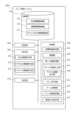
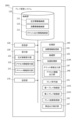
- Block diagram of the same first information processing device and terminal device Block diagram of the second information processing device
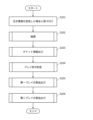
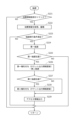
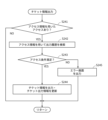
- a diagram showing an example of ticket output information stored in the same ticket output information storage unit Flowchart explaining the flow of operations of the play management system Flowchart showing an example of lottery processing of the first information processing device
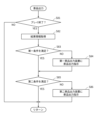
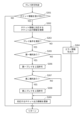
- Flowchart showing an example of ticket information output processing of the first information processing device Flowchart showing an example of play permission determination processing of the second information processing device
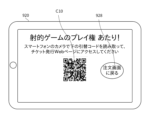
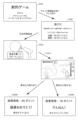
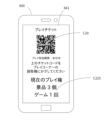
- Flowchart showing an example of prize output processing of the second information processing device Diagram showing an output example of access information output by the same play management system
- Block diagram showing the configuration of a play management system according to a modified example of the present embodiment A diagram showing the overall configuration of a store system with play using a play management system according to Embodiment 2
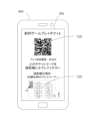
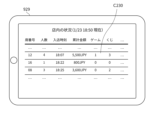
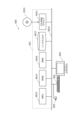
- Block diagram of the play management system A diagram showing an example of ticket output information used in the same play management system Flowchart explaining the flow of operations of the play management system Flowchart showing an example of lottery processing of the same play management system Flowchart showing an example of ticket information output processing of the same play management system Flowchart showing an example of play permission determination processing of the same play management system Flowchart showing an example of prize output processing of the second play of the same play management system Diagram showing an output example of access information output by the same play management system A diagram showing an output example of ticket information output by the same play management system A diagram showing an output example of management information output by the play management system Schematic diagram of a computer system in the above embodiment Block diagram of the same computer system
- An identifier for a certain item is a character, a code, or the like that uniquely indicates the item.
- the identifier is, for example, an ID, but any type of information can be used as long as it can identify the corresponding item. That is, an identifier may be the exact name of what it designates, or it may be a uniquely corresponding combination of codes.
- Acquisition may include acquiring items input by a user or the like, or may include acquiring information stored in another device.
- Obtaining information stored in another device may include obtaining information stored in another device via an API or the like, or obtaining a document file provided by another device. It may include obtaining the content (including the content of a web page) by scraping or the like. It may also include obtaining information in a different format based on the original information, such as obtaining the information by performing optical character reading on the image file.
- the machine learning method can be used as follows. That is, a classifier that receives a specific type of input information as an input and outputs a desired type of output information is configured using a machine learning technique. For example, two or more sets of input information and output information are prepared in advance, the two or more sets of information are provided to a module for configuring a machine learning classifier to configure a classifier, and the configured classifier is Accumulate in storage. Note that the classifier can also be called a learning device.
- the machine learning technique may be, for example, deep learning, random forest, SVR, or the like.
- functions in various machine learning frameworks such as fastText, tinySVM, random forest, TensorFlow, and various existing libraries can be used.
- classifiers are not limited to those obtained by machine learning.
- the classifier may be, for example, a table showing correspondence between input vectors based on input information or the like and output information.
- the output information corresponding to the feature vector based on the input information may be obtained from the table, or two or more input vectors in the table and parameters for weighting each input vector may be used for input.
- a vector approximating the feature vector based on the information may be generated, and the output information and parameters corresponding to each input vector used for generation may be used to obtain the final output information.
- the classifier may be, for example, a function representing the relationship between an input vector based on input information or the like and information for generating output information. In this case, for example, information corresponding to a feature vector based on input information may be obtained by a function, and output information may be obtained using the obtained information.
- Outputting information means display on a display, projection using a projector, printing on a printer, sound output, transmission to an external device, storage on a recording medium, processing by another processing device or other program, etc.
- This is a concept that includes delivery of results. Specifically, it includes, for example, enabling display of information on a web page, transmitting as e-mail or the like, and outputting information for printing.
- Acceptance of information means acceptance of information input from input devices such as keyboards, mice, touch panels, etc., reception of information sent from other devices via wired or wireless communication lines, optical discs, magnetic discs, semiconductors, etc. This concept includes acceptance of information read from a recording medium such as memory.
- updating means changing the stored information, adding new information to the stored information, or updating the stored information. It is a concept including erasing a part or all of it.
- the play management system roughly operates as follows. That is, the play management system performs a lottery based on the amount or quantity of products consumed by the user, and outputs ticket information to the winning user. When the user inputs ticket information using the reader, the play management system accepts it. Based on the ticket information, the play management system permits the user who has entered the ticket information to play. Such a play management system 1 will be described below.
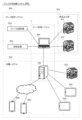
- FIG. 1 is a diagram showing the overall configuration of a play-equipped store system 900 using the play management system 1 according to Embodiment 1 of the present invention.
- the play management system 1 is used, for example, in a store system 900 with play used in stores such as restaurants.
- the store system 900 with play generally includes a store system 910 used for selling food and drink and various services at the store, and a play providing system 950 for providing a play to a user who has a predetermined play right. contains.
- the play management system 1 includes a first information processing device 100 included in the store system 910 and a second information processing device 200 included in the play providing system 950 . It can be said that the second information processing device 200 is a play control device that controls the play.
- the first information processing device 100 and the second information processing device 200 are connected so as to be able to communicate with each other.
- the play-equipped store system 900 enables users, who are visitors, to order products for each seat in, for example, a so-called conveyor belt sushi restaurant.
- the store using the store system 900 with play may be a restaurant of other business types or industries, and is not limited to a restaurant.
- the store system 900 with play is not necessarily used for an existing store, and may be used for a virtual store or a facility that provides public services. Moreover, it does not matter whether the product provided to the user who ordered the product is paid or free of charge.
- the product may be a physical object or an intangible object such as a service provided to the user.
- a seat is a concept that means a seat or table to which products are provided.
- One seat corresponds, for example, to a customer group of one or more users who purchase a product (a customer group includes one or more users and may be one user).
- a customer group includes one or more users and may be one user.
- the one table corresponds to a seat.
- the one counter seat is a seat correspond to Note that the seat is not limited to an actual seat or table.
- the seat may correspond to a group consisting of one or more users and may be other items that indicate the purchaser, order source, supply destination, etc. of the product by the group. Such seats may be real or virtual.
- a seat is a concept indicating a unit to which a product is provided and for which the price of the product is charged.
- the store system 910 has a first information processing device 100, a reception terminal 920 corresponding to the seat, and a table prize output device 925 corresponding to the seat. Also, the store system 910 can be interpreted as having a terminal device 600 capable of communicating with the first information processing device 100 via a network, for example. That is, the play management system 1 is configured to be usable by a user who is a customer of a restaurant or the like using the terminal device 600 or the like. The play management system 1 can be configured to be usable after various settings are made by an administrator of a restaurant or the like.
- one customer group can place an order for products using a reception terminal 920 having a screen such as a touch panel installed to correspond to the seat they use.
- the customer group may be able to place an order for products using one or more terminal devices 600 owned by them.
- FIG. 1 shows a mobile information terminal device such as a so-called smartphone as the terminal device 600 .
- a tablet-type information terminal device, a personal computer (PC) such as a laptop computer, or the like may be used as the terminal device 600 .
- a tablet-type information terminal device is shown as the reception terminal 920, a mobile information terminal device, a personal computer (PC), or the like may be used as the reception terminal 920.
- devices that can communicate with each other can communicate with each other via a network such as a local area network or the Internet, but the communication is not limited to this.
- the number of devices included in the store system 900 with play does not matter, and other devices may be included in the store system 900 with play.
- the table prize output device 925 has the same mechanical structure as the prize ejection mechanism used with the plate collecting device described in Japanese Patent No. 3859962, for example.
- the table prize output device 925 is configured to output a prize in response to receiving a prize output instruction transmitted from another device via a network.
- the prize output device is not limited to having such a mechanical structure, and may be a device that displays information or outputs information, for example.
- a gift is not limited to an item, and may be a coupon code that can be exchanged for a product or other items, points, or the like.
- the output of a prize may be performed by handing an object from the table prize output device 925 to the user.
- the output of the prize is performed by displaying information on a display device provided in the table prize output device 925 or the like, or by transmitting the information to the terminal device 600 or the like owned by the user. You can
- the play providing system 950 has a second information processing device 200 , a reading device 951 and a play support device 952 .
- the reading device 951 and the play support device 952 are connected to the second information processing device 200 and configured to function while exchanging information with the second information processing device 200 .
- the reading device 951 is, for example, a device equipped with a camera or a scanning sensor configured to optically read an image such as a two-dimensional code or a one-dimensional code.
- the reading device 951 may be configured to output information indicated by the image to the second information processing device 200 based on the read image, or output the read image to the second information processing device 200. It may be configured to be able to In the latter case, the second information processing apparatus 200 is configured to obtain information indicated by the image.
- the reading device 951 is not limited to this, and may be a device that reads magnetism recorded on a medium and outputs information, or outputs read information by communicating with a medium on which information is recorded. It may be a device that
- the play support device 952 is a device used when the user plays.
- the play support device 952 is composed of a game machine, a game controller, a display, and the like for executing the video game.
- the play support device 952 may include a device for controlling communication functions for that purpose.
- the play support device 952 may be an arcade game machine including a photo-creation game machine, a crane game machine, and the like.
- the play support device 952 includes a simulated operation terminal equipped with a sensor (for example, a simulated gun, a simulated ball game racket, etc.) and a device equipped with a game content display function.
- the play support device 952 may be configured to be able to play.
- the play support device 952 may be a device for performing lottery effects and information transmission, or may be configured to receive operations from the user according to the lottery mode.
- the play support device 952 can enable the user to play (provide play) according to instructions from the second information processing device 200 .
- the second information processing device 200 can be expressed as permitting the user to play.
- Providing a play is not limited to switching from a state in which a play cannot be performed to a state in which a play can be performed. Extending the range of play that a user can perform or allowing the user to play in a different manner may be referred to as providing play.
- play may mean outputting a prize from the prize output unit 970, which will be described later, or enabling the user to acquire various rights.
- the user's playing means that the user outputs a prize or that the user acquires various rights.
- the play support device 952 may not be used.
- the various rights and the like are, for example, the right to obtain valuable items (regardless of whether they are tangible or intangible) such as products and coupon information, or to perform a predetermined action. but not limited to these rights.
- the play providing system 950 uses a prize output unit 970 including two or more prize output devices.
- the prize output unit 970 enables the first prize output device 971 and the second prize output device 972 to output prizes according to instructions from the second information processing device 200.
- the first prize output device 971 and the second prize output device 972 have, for example, the same mechanical structure as the table prize output device 925. As described for the table prize output device 925, such a structure is not limited to those having
- the prize output unit 970 is configured to output a prize according to an instruction output from the second information processing device 200 .
- the prize output from the first prize output device 971 is configured to be of higher value to ordinary users than the prize output from the second prize output device 972 .
- the difference between the prize output from the first prize output device 971 and the prize output from the second prize output device 972 is not limited to this.
- the two premiums may be the same or different in nature such as type, color, or purpose, or may differ in form such that one premium is an object and the other is information. It can be different.
- the prize output unit 970 may use more prize output devices, or may use only one prize output device.
- FIG. 2 is a block diagram of the first information processing device 100 and the terminal device 600.
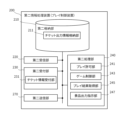
- FIG. FIG. 3 is a block diagram of the second information processing device 200. As shown in FIG.
- the first information processing device 100 includes a storage unit 110, a reception unit 120, a reception unit 130, a processing unit 140, and a transmission unit 170.
- the first information processing device 100 is, for example, a server device.
- the storage unit 110 includes an order information storage unit 111 and a consumption information storage unit 113.
- the order information storage unit 111 stores order information received by the order information reception unit 131 as described later.
- the order information is, for example, information regarding an order for a product, information having seat identification information for identifying a seat, and information transmitted from a user-operable terminal such as reception terminal 920 or terminal device 600.
- the seat identification information is a seat identifier that identifies the seat or a terminal identifier that identifies the terminal device 600 .
- the order information can be associated with the seat identifier by managing the terminal identifier and the seat identifier in association with each other. That is, in the present embodiment, a product is ordered for each seat, and the order information is stored in the first information processing device 100 . In other words, in the present embodiment, users of customer groups can place orders for products for each customer group.
- the order information has a product identifier that can uniquely identify the product.
- the order information includes, for example, product identifiers and the number of products to be ordered. Note that the order information may have, for example, a product identifier and a price.
- the storage unit 110 usually stores two or more items of product management information having product identifiers and unit prices.
- the product management information is, for example, a database in which product identifiers and their unit prices are associated and recorded. Merchandise management information may be stored in another device. With such product management information, the unit price of the product identifier included in the order information can be specified. That is, it is possible to calculate the amount corresponding to the product identifier included in the order information.
- the order information may be, for example, information indicating that the plate on which the product is placed has been served (provided) to the customer group.
- the order information may be post-order information.
- the consumption information storage unit 113 stores consumption information acquired by the consumption information acquisition unit 141, which will be described later.
- the consumption information is information about the amount or quantity of products consumed by the user.
- consumption information can be stored for each seat identifier, ie, each seat.
- the consumption information is, for example, the amount of goods consumed by the user, but is not limited to this.
- the number of products consumed by the user may be used as the consumption information.
- products are placed on a plate in predetermined units and provided to the user. In this case, the number of plates of products consumed by the user may be used as the consumption information.
- the consumption information may be stored for each terminal identifier, ie for each user, for example.
- the receiving unit 120 receives information transmitted from other devices.
- the receiving unit 120 stores the received information in the storage unit 110, for example.
- the user uses the terminal device 600 to input information, for example, and transmits the information to the first information processing device 100 .
- the receiving unit 120 can store each piece of transmitted information in the storage unit 110 in association with the terminal identifier and the seat identifier.
- the receiving section can receive order information transmitted from each terminal device 600 or reception terminal 920 and store it in the storage section 110 in association with the terminal identifier and the seat identifier.
- reception section 120 can identify a seat identifier that identifies a seat corresponding to reception terminal 920 related to transmission, based on the transmitted information. Further, when receiving information from terminal device 600, receiving section 120 can identify a terminal identifier related to transmission based on the transmitted information.
- the reception unit 130 receives information input using input means (not shown) connected to the first information processing device 100 .
- the reception unit 130 stores the received information in the storage unit 110, for example.
- the input means may be anything, such as a numeric keypad, a keyboard, a mouse, or a menu screen.
- the reception unit 130 accepts information input by an input operation (including information read by the device) performed using a reading device (for example, a code reader) connected to the first information processing device 100. may be accepted.
- the reception unit 130 receives the information received by the reception unit 120 as information input to the first information processing device 100 . That is, the input of information to the first information processing apparatus 100 means that the information is indirectly input to the first information processing apparatus 100 by the user via the reception terminal 920, the terminal device 600, or the like. may be interpreted.
- the reception unit 130 includes an order information reception unit 131 and an access reception unit 133.
- the order information reception section 131 receives the order information.
- the order information receiving unit 131 stores the received order information in the order information storage unit 111 in association with the seat identifier or the terminal identifier.
- the access reception unit 133 receives an access using the access information from the user's terminal device 600 as described later.
- the access information represents information such as a character string that is used to output ticket information as described later. This character string or the like may include, for example, a unique identifier, or may include a predetermined keyword or information specific to the user.
- the access information includes, for example, information indicating the location of a web page that is provided by first information processing device 100 and accessible from terminal device 600 or the like.
- Access information is, for example, information indicating a URL including a unique identifier as a URL parameter. In this case, the access reception unit 133 receives access to the web page, if any, and also receives the URL parameter included in the access information.
- the access information is not limited to this.
- a unique identifier or the like and a code string for displaying a reception screen for receiving the identifier or the like on the terminal device 600 may be used as the access information.
- a code string for transmitting a message (for example, SMS or e-mail) containing an identifier or the like from the terminal device 600 to the first information processing device 100 may be used as the access information.
- so-called custom URL schemes may be used for such access information.
- the access reception unit 133 may be configured to receive information (for example, an identifier) based on access information transmitted from the terminal device 600 by various methods.
- the access destination is not limited to the first information processing device 100 . In this case, the access reception unit 133 may be configured to receive, for example, information indicating that there has been an access using the access information, which is transmitted from the access destination.
- the processing unit 140 includes a consumption information acquisition unit 141, a lottery unit 143, a first lottery processing unit 144, and a ticket information output unit 147.
- the ticket information output section 147 includes an access information output section 148 .
- the processing unit 140 performs various types of processing. Various types of processing are, for example, processing performed by each unit of the processing unit 140 as follows.
- the consumption information acquisition unit 141 acquires consumption information and stores the acquired consumption information in the consumption information storage unit 113.
- the consumption information acquisition unit 141 acquires from the order information storage unit 111 past order information corresponding to the seat identifier of the seat to be acquired, and aggregates the amount of the acquired product to be consumed. Calculate information.
- the consumption information storage unit 113 acquires consumption information for each seat corresponding to the user.
- the consumption information acquisition unit 141 stores the consumption information in the consumption information storage unit 113 in association with the seat identifier.
- the consumption information may be aggregated for each seat, for example, each time the customer group using the seat changes, with respect to the customer group.
- the calculation and accumulation of consumption information may be performed, for example, when new order information is received.
- the calculation and accumulation of consumption information may be performed, for example, each time a predetermined period of time elapses, or may be performed when an instruction from a user or the like is received by the receiving unit 130 .
- the consumption information acquisition unit 141 may be configured to acquire consumption information by counting the number of product plates consumed by the user. In this case, the consumption information acquisition unit 141 does not have to use the order information. For example, the consumption information acquiring unit 141 counts the number of collected plates using a known plate collecting device configured to collect sushi plates in conveyor belt sushi restaurants. Then, the number of plates may be used as the consumption information, or the amount obtained by multiplying the number of plates by a predetermined unit price may be acquired as the consumption information.
- the consumption information acquisition unit 141 may be configured to acquire, as consumption information, the amount of money based on the number of plates collected and the amount of money for products consumed without using plates. Only one of them may be acquired as consumption information.
- the lottery unit 143 determines whether a predetermined lottery execution condition is satisfied based on the consumption information.
- the lottery section 143 conducts a lottery when determining that the lottery executing means is satisfied.
- lottery refers to determining whether or not to perform a predetermined process (whether or not a lottery is won).
- the lottery section 143 is configured to draw a lottery for each seat.
- the lottery unit 143 is configured to perform a first lottery based on the consumption information and a second lottery for the winner of the first lottery.
- Each lottery process of the first lottery and the second lottery can be performed by various methods. For example, a pseudo-random number may be used to randomly determine that the customer has won the lottery. may
- the lottery process may be performed when a user's instruction is input through the terminal device 600 or the reception terminal 920, or may be performed regardless of the presence or absence of such a user's instruction.
- the lottery execution conditions are, for example, conditions related to the amount of money purchased by the user (e.g., 500 yen or more, etc.) and conditions related to the total number of products purchased by the user (e.g., 10 points or more, etc.). and so on.
- the lottery execution conditions are set in advance and stored in the storage unit 110, for example, but may be changed as appropriate. Lottery execution conditions, for example, depending on various factors such as season, time of day, weather, customer group characteristics (e.g., number of visits, number of people, age, gender, etc.), product inventory, store congestion, etc. It may be set by the processing unit 140 or the like according to preset setting rules or the like, or may be set according to information transmitted from another management device (not shown) that can communicate via a network.
- the lottery execution condition is, for example, a condition related only to consumption information related to one or more predetermined products among two or more products.
- the lottery execution condition may be, for example, information including a product identifier that identifies the product targeted for the lottery, information including a product identifier that identifies a product that is not targeted for the lottery, or information that identifies the product targeted for the lottery. It may be information including a product type identifier that identifies the type, or information that includes a product type identifier that identifies the type of product that is not subject to the lottery.
- sushi e.g. “tuna”, “hamachi”, “salmon roe”, “egg”, etc.
- beverages eg, , "bottled beer (large)", “bottled beer (small)”, “oolong tea”, “orange juice”, “drink bar”, etc.
- side menus noodles ("kitsune udon”, “meat udon”, “soy sauce Ramen”, etc.), “Hamburger”, etc.) and desserts ("pudding”, “vanilla ice cream”, “strawberry”, etc.).
- noodles and beverages are determined as predetermined items among the items that can be ordered by these customer groups, these beverages (for example, “bottled beer (large)", “ Bottled beer (small), oolong tea, orange juice, drink bar, etc.) and noodles (kitsune udon, meat udon, soy sauce ramen, etc.) consumption information based on order information is related to the lottery execution conditions.
- these beverages for example, "bottled beer (large)", “ Bottled beer (small), oolong tea, orange juice, drink bar, etc.
- noodles kitsune udon, meat udon, soy sauce ramen, etc.
- the predetermined one or more products may be determined from various viewpoints. For example, a product that is not provided on a plate that can be collected by the plate collecting device can be defined as one or more predetermined products. Note that one or more predetermined products may be changed as appropriate.
- preset settings according to various factors such as season, time of day, weather, customer group characteristics (e.g., number of visits, number of people, age, gender, etc.), product inventory, store congestion level, etc. It may be set by the processing unit 140 or the like according to a rule or the like, or may be set according to information transmitted from another management device that can communicate through a network.
- the consumption information for the relevant seat is reset when settlement (payment for the product) is made. Further, when the lottery process is performed, the consumption information of the relevant seat up to that point becomes irrelevant to the reward process, but it is not limited to this.
- the first lottery processing unit 144 performs reward giving processing for giving prizes to the customer group, ie, the user, who won the lottery in the first lottery.
- the reward giving process is, for example, a process of transmitting a prize delivery instruction to the table prize output device 925 . More specifically, for example, by transmitting a prize delivery instruction, the product opening of the table prize output device 925 is opened, and one prize is delivered from the table prize output device 925 .
- the types of prizes and the output mode are not limited to these.
- the ticket information output unit 147 outputs ticket information according to the results of the lottery.
- the ticket information output unit 147 is configured to be able to output ticket information for each winning seat. That is, it can be said that the ticket information output unit 147 outputs the ticket information according to the winning result.
- the ticket information output unit 147 includes an access information output unit 148 that outputs access information for outputting ticket information.
- the ticket information output unit 147 outputs ticket information after performing processing using access information as will be described later for users who win the second lottery. That is, the ticket information output unit 147 outputs unique access information from the access information output unit 148 when winning the second lottery. This access information is acquired and used by the terminal device 600 of the user. Then, the ticket information output unit 147 outputs the ticket information to the user when access using the access information is accepted from the user. In the present embodiment, ticket information output unit 147 outputs ticket information when it determines that an access condition is satisfied when access reception unit 133 receives access from a user using access information.
- access is a concept that includes, for example, access to information provided via a network such as web pages and APIs, as well as transmission of e-mails and other messages.
- the access information output unit 148 outputs access information as follows. That is, in the present embodiment, access information output unit 148 transmits access information to reception terminal 920 arranged in association with the seat to be output, and displays the access information on the screen of reception terminal 920 .
- the access information is displayed on the screen of reception terminal 920 as an encoded image that can be read by the camera of terminal device 600, for example.
- the access information which is such an image, is, for example, a two-dimensional code representing a character string used to inquire about the right to play.
- the access information may be output as, for example, a so-called bar code or other multidimensional code, or may be other images that can be read using the terminal device 600, character strings themselves, or the like. Thereby, the user can read the access information, which is the displayed image, with the terminal device 600, and can easily use the access information.
- the access condition is, for example, that valid access information has been accepted by the access acceptance unit 133.
- Valid access information is, for example, access information output by the access information output unit 148, and access using the access information has not been accepted by the access acceptance unit 133 so far.
- the access condition is not limited to this, and the access condition may be satisfied in any case, for example, when access using one piece of access information is accepted up to a predetermined number of times. Also, when access using one piece of access information is accepted, it may be determined that the access condition is satisfied regardless of the number of times.
- a condition regarding time may be provided as an access condition.
- the access condition may include that the access is made within a predetermined time after the access information is output, or that the access is made within the same day.
- conditions based on information different from the access information such as information on the type and model of the terminal device 600 that performs access, conditions on the method used for access, and the like, may be provided.
- the condition regarding the method used for access is, for example, the type of web browser used for access, the web browser used for access, other applications, etc., but is not limited to this.
- Whether or not the access information used for the access received by the access reception unit 133 is output by the access information output unit 148 may be determined, for example, as follows.
- the access information output unit 148 outputs the access information
- the output history of the access information is recorded in the storage unit 110 .
- information such as the identifier indicated by the access information and the date and time of output can be recorded.
- the ticket information output unit 147 confirms whether or not there is a record corresponding to the output history based on the information received by the access reception unit 133, and makes determination based on the confirmation result.
- the determination may be made using such an output history.
- the access information output unit 148 may be configured to output access information including information in accordance with a predetermined rule, without being limited to information using such an output history.
- the ticket information output unit 147 may confirm whether the information received by the access reception unit 133 complies with the predetermined rule. For example, encoded information about output timing (day, time, etc.) may be used as the information according to a predetermined rule.
- the ticket information output unit 147 can be configured to acquire the output timing based on information based on the received access information, and determine whether or not the time-related condition is satisfied.
- ticket information can be said to be information indicating that the user presenting the ticket has the right to play.
- the ticket information is information that can be read by the reading device 951 .
- the ticket information is output as an encoded image readable by the reader 951, for example. More specifically, the ticket information is, for example, a two-dimensional code representing a character string including an identifier used for inquiring about the right to play.
- the ticket information may be output as, for example, a so-called bar code or other multidimensional code, or may be output as an image optically readable by the reading device 951 or as a character string itself.
- the ticket information may be magnetically readable magnetic patterns or other forms.
- outputting ticket information means transmitting ticket information to the terminal device 600 of the user.
- the ticket information is an image as described above
- transmitting information to the terminal device 600 so that the image can be displayed on the terminal device 600 can be referred to as outputting the ticket information.
- the information itself indicating the image may be transmitted to the terminal device 600, or if the terminal device 600 can generate an encoded image, the character string indicated by the image may be used as the ticket information on the terminal device 600. may be sent to
- the ticket information is transmitted so that it can be displayed by the application of the terminal device 600 used to access the access information.
- the ticket information output unit 147 outputs the ticket information so that the ticket information is displayed in the web page displayed on the terminal device 600 when the access is performed using the access information. good. Further, the ticket information may be displayed when a predetermined button displayed in the web page displayed on the terminal device 600 is operated when access is performed using the access information. Further, for example, ticket information may be sent as a reply when access is performed using access information by e-mail, message, or the like.
- the output of the ticket information may be the output of a sheet on which the information is written using a printer or the like, or the display on the screen of the reception terminal 920 or the like. good.
- the ticket information output unit 147 is configured to output ticket information identified by a different identifier every time it outputs ticket information. That is, the ticket information output unit 147 is configured to output unique ticket information. Note that the ticket information to be output may be unique within a predetermined period. Further, the ticket information output unit 147 may be configured to output the same ticket information multiple times.
- the ticket information output unit 147 When the ticket information output unit 147 outputs the ticket information, it transmits the ticket output information, which is the output record, to the second information processing device 200 .
- the ticket output information can include, for example, an identifier that can identify the ticket information and information such as output date and time.
- the ticket information output unit 147 may output information about the location of the reading device 951 (reading location information) together with the ticket information.
- the reading location information is output so as to be displayed on the screen of the terminal device 600 (terminal display unit 661) at the same time as the ticket information, for example.
- the image may be output so as to include the reading location information.
- an image including ticket information and reading location information may be displayed so as to be included in the same web page.
- the reading location information may be included in the same document file as the document file including the ticket information.
- various forms such as a map of the inside of the store, a code string indicating the coordinates in the map, and the like can be used.
- ticket information may be output to the user who won the first lottery, or only one lottery may be performed when the lottery execution condition is satisfied. good. Further, without using access information, ticket information may be output to users to be output, such as users who have won a lottery.
- the ticket information output unit 147 may transmit the ticket information to the terminal device 600 associated in advance so as to correspond to the seat. Further, the ticket information output unit 147 may output the ticket information on paper using a printer provided in the store, or may display the ticket information on the screen of the reception terminal 920 and allow the user to record it.
- the transmission unit 170 transmits the information to other devices that constitute the play-equipped store system 900 via a network or the like.
- the transmission unit 170 transmits information to the second information processing device 200 and the terminal device 600, for example.
- the transmitting unit 170 outputs information to the second information processing device 200 and the terminal device 600, for example.
- the terminal device 600 includes a terminal storage section 610, a terminal reception section 620, a terminal reception section 630, a terminal processing section 640, a terminal output section 660, a terminal transmission section 670, and a sensor section 680.
- the terminal output section 660 has a terminal display section 661 .
- the terminal storage unit 610 includes a ticket information storage unit 611 and a device identification information storage unit 613.
- the ticket information storage unit 611 temporarily or permanently stores the ticket information transmitted from the first information processing device 100 . This enables the terminal device 600 to output the ticket information to the terminal display section 661 .
- the device identification information storage unit 613 stores device identification information.
- the device identification information is information that can identify the model of the terminal device 600, but is not limited to this. Different information may not be writable in the device identification information storage unit 613 .
- the terminal reception unit 620 receives information transmitted from the first information processing device 100 and other devices via the network.
- the terminal reception unit 620 accumulates the received information in, for example, the terminal storage unit 610 so that the terminal processing unit 640 and the like can acquire the information.
- the terminal reception unit 630 receives various input operations on the terminal device 600 by the user using the terminal device 600 .
- the operation is performed using, for example, an input device (not shown), but is not limited to this.
- the terminal processing unit 640 uses each unit of the terminal device 600 to perform various information processing operations.
- the terminal output unit 660 outputs information by, for example, displaying on a terminal display unit 661, which is a display device. Note that the information output method is not limited to this, and may be performed by outputting voice or the like from a speaker or the like.
- the terminal transmission unit 670 transmits, for example, information acquired by the terminal processing unit 640 or the like via the network.
- the sensor unit 680 has a camera.
- the sensor unit 680 can capture and record images using a camera, and store the obtained information in the terminal storage unit 610 .
- the terminal processing unit 640 acquires information contained in the image by performing predetermined recognition processing based on the image (which may be a moving image) obtained by the sensor unit 680. configured as possible. For example, when an image including an image such as a two-dimensional code is captured by the sensor unit 680, the terminal processing unit 640 recognizes the two-dimensional code included in the captured image and acquires information encoded in the code. can be used as For example, when access information including a URL is photographed by the sensor unit 680, the terminal processing unit 640 acquires the URL using the photographed image so that access using the URL can be performed using a web browser or the like. is configured to
- the second information processing device 200 includes a second storage section 210 , a second reception section 220 , a second reception section 230 , a second processing section 240 and a second transmission section 270 .
- the second information processing device 200 is, for example, a server device.
- the second storage unit 210 includes a ticket output information storage unit 211.
- the ticket output information storage unit 211 stores ticket output information related to the ticket information output by the ticket information output unit 147 .
- the second receiving unit 220 receives information transmitted from other devices.
- the second reception unit 220 stores the received information in the second storage unit 210, for example.
- the second receiving section 220 can receive information about play transmitted from the play support device 952 and store it in the second storage section 210 .
- the second reception unit 230 receives information input using input means (not shown) connected to the second information processing device 200 .
- the second reception unit 230 stores the received information in the second storage unit 210, for example.
- the input means may be anything, such as a numeric keypad, a keyboard, a mouse, or a menu screen.
- the second reception unit 230 may be configured to receive user operations performed by the play support device 952 and information acquired by the play support device 952 .
- the second reception unit 230 includes a ticket information reception unit 231.
- the ticket information reception unit 231 receives ticket information input using the reading device 951 connected to the second information processing device 200 . That is, the second reception unit 230 receives the ticket information read by the reader 951 .
- the second accepting unit 230 stores the accepted ticket information in the second storage unit 210 .
- the second processing section 240 includes a play permission section 241 , a game control section 243 , a play result acquisition section 245 and a prize output instruction section 247 .
- the second processing unit 240 performs various types of processing. Various types of processing are, for example, processing performed by each unit of the second processing unit 240 as follows.
- the play permitting section 241 permits the user to play when it determines that a predetermined play condition is satisfied. That is, when the play permitting section 241 determines that the play condition is satisfied, it transmits an instruction to the play support device 952 to allow the play support device 952 to allow the user to play. This allows the user to play.
- the play permission unit 241 determines whether or not the play conditions are satisfied based on the ticket information received by the ticket information reception unit 231. That is, the play conditions include conditions related to ticket information.
- the play condition is, for example, that valid ticket information has been accepted by the ticket information acceptance unit 231.
- Valid ticket information is, for example, ticket information output by the ticket information output unit 147 that has not been received by the ticket information reception unit 231 so far. It should be noted that the present invention is not limited to this, and for example, acceptance of one piece of ticket information up to a predetermined number of times may be treated as fulfilling the play condition, or such a limit on the number of times may not be provided.
- the play conditions may include conditions based on information different from the ticket information.
- the play permitting unit 241 permits play according to the correspondence between the ticket information received by the ticket information receiving unit 231 and the ticket output information stored in the ticket output information storage unit 211. configured to do so. For example, the play permitting unit 241 inquires about ticket output information based on the ticket information received by the ticket information receiving unit 231, confirms whether or not there is corresponding ticket output information, and makes a determination based on the confirmation result. conduct.
- the play permission unit 241 determines that the play condition is satisfied when there is corresponding ticket output information.
- the play permitting section 241 is configured to perform a process of erasing the ticket output information when determining that the play condition is satisfied. In the erasing process, the play permission unit 241 deletes the corresponding ticket output information from the ticket output information storage unit 211, for example.
- the play permission unit 241 records flag information or the like indicating that the ticket information has already been received in the ticket output information storage unit 211 in association with the corresponding ticket output information as the erasing process. good too. In this case, the play permitting section 241, when inquiring the ticket output information, may check whether there is corresponding ticket output information with or without the flag information.
- a condition regarding time may be provided as a play condition.
- the play conditions may include that the ticket information has been received within a predetermined time after being output, or that the ticket information has been received on the same day that the ticket information was output.
- the play permitting unit 241 acquires timing information regarding the output time of the ticket information received by the ticket information accepting unit 231, and permits play based on the acquired timing information.
- the ticket information output unit can be used to determine whether the play condition is satisfied. That is, the play permitting section 241 can refer to the corresponding ticket output information to acquire the timing information, and determine whether or not the condition regarding time is satisfied based on the timing information.
- the play condition output unit 147 is configured to output ticket information that conforms to a predetermined rule, and the play permission unit 241 determines whether the received ticket information conforms to the predetermined rule. You can check it. Thereby, it is possible to confirm whether or not the received ticket information is the ticket information output by the ticket information output unit 147 . In this case, whether or not a piece of ticket information has been accepted by the ticket information accepting unit 231 can be determined by accumulating history information related to ticket information accepted in the past in the second storage unit 210, and referring to the history information.
- the play permitting unit 241 can acquire timing information based on the received ticket information and determine whether or not the time condition is satisfied.
- the requirement for ticket information to be valid may include, for example, that the user for whom the ticket information is to be output has finished eating and drinking.
- the fact that the payment of the bill has been completed or that a predetermined procedure for starting the payment has been performed may mean that the user has finished eating and drinking. In such a case, if the user has not finished eating and drinking, the user cannot play.
- the play condition includes a condition regarding whether or not the user has finished eating and drinking.
- the play condition includes a condition that the user has finished eating and drinking. By setting such play conditions, the user cannot play until the user finishes eating and drinking.
- the fact that the user has not finished eating and drinking may be a requirement for the validity of the ticket information.
- the validity of the ticket information may be unrelated to the end of the user's eating and drinking. It can be said that it includes at least each condition of being completed.
- whether or not the user has finished eating and drinking may be detected by the processing unit 140 acquiring information from the store system 910, for example.
- the processing unit 140 can determine that the customer group corresponding to the reception terminal 920 has finished eating and drinking. It should be noted that completion of eating and drinking may be expressed as completion of consumption of the product by the user.
- the game control unit 243 cooperates with the play support device 952 to perform control related to the play. For example, based on the information transmitted from the play support device 952, the game control section 243 accumulates information regarding the play in the second storage section 210, or changes the display on the display section (not shown). Also, the game control unit 243 transmits information to the play support device 952 so that the information is reflected in the play. Note that the control related to the play is not limited to this, and can be appropriately set according to the type and contents of the game. For example, when executing a video game program in the second information processing device 200, the control related to play may include executing the program.
- control related to the play may include appropriate control such as counting the time until the play is finished, determining the end of the play, or providing guidance to the user. good.
- game control unit 243 may not be provided, and almost all the control relating to the game may be performed by the play support device 952 .
- the play result acquisition unit 245 acquires the play result information of the user who is permitted to play.
- the play result acquisition unit 245 acquires, as result information, for example, a score in the game recorded in the user's play, a play result, or the like.
- the types of result information are not limited to those illustrated, and can be set as appropriate.
- the prize output instruction unit 247 determines whether or not the user's play result information satisfies a predetermined prize output condition. Then, the prize output instruction unit 247 outputs a prize output instruction for outputting a prize to the user who has played the game, according to the determination result.
- the prize output instruction is transmitted to the prize output unit 970, for example. Upon receiving a prize output instruction, the prize output unit 970 outputs a prize accordingly.
- the prize output condition can include, for example, that the result information is better than a predetermined level, or that it is within the range of a predetermined level.
- the prize output condition may be that the score is higher than a predetermined threshold value or that the score is within a predetermined value range.
- the prize output condition is not limited to this, and may include a condition related to a comparison result with other users' result information and a condition related to a specific record in the play.
- the prize output condition may include a score higher than that of other users.
- the score must be a predetermined rank or higher in the score ranking.
- the prize output condition may include achievement of a specific mission in the game. Specifically, it may include, for example, that a specific result was achieved with respect to a specific element.
- the prize output instruction unit 247 outputs the prize output instruction to the device corresponding to the prize output condition satisfied by the result information, out of the first prize output device 971 and the second prize output device 972. It is configured. For example, when the first condition is satisfied, the prize output instruction section 247 outputs a prize output instruction to the first prize output device 971 . Also, when the second condition is satisfied, the prize output instruction unit 247 outputs a prize output instruction to the second prize output device 972 .
- the first condition is "score of 1000 points or more" and the second condition is "score of 500 points or more and less than 1000 points”.
- the result information is, for example, 1200 points
- the first condition is satisfied, so a prize output instruction is output to the first prize output device 971 .
- the result information is, for example, 700 points
- the second condition is satisfied, so a prize output instruction is output to the second prize output device 972 .
- the user can acquire the prize output from the second prize output device 972 .
- Neither condition is satisfied when the result information is, for example, 300 points. In this case, no instruction is output to the prize output unit 970, and no prize is output.
- a predetermined form of notification to the user may be output according to a combination of whether or not each of these conditions is satisfied. The predetermined notification can be made by displaying on the screen, outputting sound, outputting on paper or the like.
- the prize output instruction unit 247 outputs the prize output instruction to either the first prize output device 971 or the second prize output device 972 depending on whether the result information satisfies one prize output condition. or may be switched. In this case, it is also possible to say that the first condition is that one prize output condition is satisfied, and the second condition is that one prize output condition is not satisfied.
- the prize output unit 970 may be provided with three or more prize output devices.
- the prize output instruction unit 247 outputs a prize output instruction for outputting a prize to a prize output device corresponding to a predetermined prize output condition satisfied by the result information among the three or more prize output devices. It just needs to be configured.
- the play result acquisition unit 245 and the prize output instruction unit 247 are configured to perform the above operations each time one user plays. It should be noted that, without being limited to this, acquisition of result information, determination of prize output conditions, and the like may be performed when a predetermined timing arrives. For example, the operation may be performed every day, day of the week, month, or the like, or may be performed each time an instruction is given by the store manager or the like.
- play result information may be transmitted to the first information processing device 100, and the first information processing device 100 may be configured to perform the process performed by the prize output instruction section 247 described above.
- the second transmission unit 270 transmits information to other devices that constitute the store system with play 900 via a network or the like.
- the second transmission unit 270 transmits information to, for example, the first information processing device 100, the prize output unit 970, the play support device 952, and the like.
- the second transmission unit 270 outputs information to the second information processing device 200 and the terminal device 600, for example.
- non-volatile recording media are preferable for the storage unit 110, the second storage unit 210, and the terminal storage unit 610 described above, they can also be realized with volatile recording media.
- Information and the like acquired by each device are stored in these, respectively, but the process of storing information and the like is not limited to this.
- information may be stored via a recording medium, information transmitted via a communication line may be stored, or input may be performed via an input device. The information received may be stored.
- processing unit 140, the second processing unit 240, and the terminal processing unit 640 described above can usually be implemented by an MPU, memory, or the like.
- the processing procedures of the processing unit 140, the second processing unit 240, and the terminal processing unit 640 are usually realized by software, and the software is recorded in a recording medium such as a ROM. However, it may be realized by hardware (dedicated circuit).
- input means that can be used to input information that can be received by the reception unit 130, the second reception unit 230, and the terminal reception unit 630 can be anything, such as a numeric keypad, keyboard, mouse, or menu screen.
- the reception unit 130, the second reception unit 230, and the terminal reception unit 630 can be implemented by device drivers for input means such as numeric keys and keyboards, menu screen control software, and the like.
- the receiving unit 120, the second receiving unit 220, and the terminal receiving unit 620 are usually implemented by wireless or wired communication means, but may be implemented by means of receiving broadcast.
- the transmission unit 170, the second transmission unit 270, and the terminal transmission unit 670 are usually realized by wireless or wired communication means, but may be realized by broadcasting means.
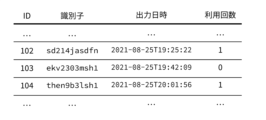
- FIG. 4 is a diagram showing an example of ticket output information stored in the ticket output information storage unit 211.
- FIG. 4 is a diagram showing an example of ticket output information stored in the ticket output information storage unit 211.
- the ticket output information storage unit 211 records records of ticket output information output in the past.
- the ticket output information may include, for example, an identifier included in the ticket information, that is, an identifier specifying the ticket information, the date and time when the ticket information was output by the ticket information output unit 147, and the number of times of use. As the number of times of use, for example, the number of times the corresponding ticket information has been accepted can be recorded.
- the play permitting unit 241 uses an identifier specifying the received ticket information to search for the corresponding ticket output information. Then, the play permission unit 241 can determine that the play condition is satisfied when the value of the number of times of use has not reached the predetermined value. For example, if the play condition is set so that one piece of ticket information can be used only once, the play condition is satisfied when the value of the number of times of use is 0.
- use timing information such as the date and time may be recorded. For example, if one piece of ticket information can be used only once, and if usage timing information is recorded in the ticket output information, the play condition is not satisfied when the corresponding ticket information is accepted. can be determined. Instead of the number of times of use, a flag may be recorded that indicates whether or not play can be permitted when ticket information corresponding to the ticket output information is received next time.
- the record of the ticket output information corresponding to the ticket information may be deleted from the ticket output information storage unit 211. For example, if one piece of ticket information can be used only once, the maximum number of times is one.
- the access information output unit 148 records the output history of the access information in the storage unit 110 so that the access condition can be determined based on the output history, the ticket shown in FIG.
- the example of the output information should be followed.
- the first information processing device 100 and the second information processing device 200 perform various operations, for example, as follows. These operations are performed by the processing unit 140 and the second processing unit 240 executing control operations and the like while using each unit.
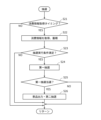
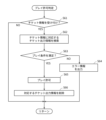
- FIG. 5 is a flowchart explaining the operation flow of the play management system 1.
- processing is performed in the first information processing device 100 .
- Step S1 That is, when the processing unit 140 receives the order information transmitted from the user, the order information receiving unit 131 receives the order information.
- Step S2 The processing unit 140 performs lottery processing. Details of the flow of the lottery process will be described later. Thereby, the second lottery is performed in a predetermined case.
- Step S3 The processing unit 140 performs ticket information output processing. Details of the flow of the ticket information output process will be described later. As a result, ticket information is output in a predetermined case.
- the user can cause the reading device 951 to read the ticket information. Processing is performed in the second information processing device 200 .
- Step S4 The second processing unit 240 performs play permission determination processing.
- the details of the flow of play permission determination processing will be described later. Thereby, the user can play in a predetermined case.
- Step S5 The second processing unit 240 performs prize output processing. Details of the flow of the prize output process will be described later. Thereby, a prize is output in a predetermined case.
- a series of operations ends.
- Such processing is started repeatedly on a regular basis.
- the processing from step S1 to step S3 performed by the first information processing device 100 and the processing of steps S4 and S5 performed by the second information processing device 200 are described to be performed successively in this order. However, it is not limited to this.
- the processing of the first information processing device 100 and the processing of the second information processing device 200 may be performed independently without synchronization. Also, the order of steps S1 to S5 is not limited to this.
- FIG. 6 is a flowchart showing an example of lottery processing of the first information processing device 100.
- Step S21 The processing unit 140 determines whether or not the consumption information acquisition timing has arrived. If it is determined that it has arrived, the process proceeds to step S22, and if not, the lottery process ends. For example, the processing unit 140 can determine that the consumption information acquisition timing has arrived for each seat each time order information is received.
- Step S22 The processing unit 140 acquires consumption information using the order information of the seats to be acquired.
- the processing unit 140 stores the acquired consumption information in the consumption information storage unit 113 in association with the seat identifier.
- Step S23 The processing unit 140 determines whether or not the lottery execution condition is satisfied for each seat based on the consumption information. If it is determined that the lottery execution condition is satisfied, the process proceeds to step S24. Otherwise, the lottery process ends.
- Step S24 The processing unit 140 conducts a first lottery for the user of the seat.
- Step S25 The processing unit 140 determines whether or not the result of the first lottery is winning. In the case of winning, the process proceeds to step S26. Otherwise, the lottery process ends.
- Step S26 The processing unit 140 transmits a prize delivery instruction to the table prize output device 925 corresponding to the seat. As a result, the prize is output from the table prize output device 925, and the user at that seat can obtain the prize. In addition, the processing unit 140 conducts a second lottery for the user of the seat. When the process of step S26 ends, the lottery process ends.
- FIG. 7 is a flowchart showing an example of ticket information output processing of the first information processing device 100.
- Step S41 The processing unit 140 determines whether or not the second lottery is performed in the immediately preceding lottery process and the result is a win. In the case of winning, the process proceeds to step S42. If the lottery is not won or if the second lottery has not been conducted in the previous lottery process, the process proceeds to step S43.
- Step S42 The processing unit 140 transmits access information to the reception terminal 920 corresponding to the seat, and outputs the access information to the screen of the reception terminal 920. Thereby, the user of the seat concerned can obtain the access information.
- the user can access the first information processing apparatus 100 using the access information by reading the access information using the camera of the terminal device 600 .
- the processing unit 140 updates the output history stored in the storage unit 110 regarding the output of the access information.
- Step S43 The processing unit 140 determines whether the access reception unit 133 has received access from the user using the access information. If it is determined that the access has been accepted, the process proceeds to step S44; otherwise, the ticket information output process is terminated.
- Step S44 The processing unit 140 searches the output history using the information received by the access receiving unit 133, and confirms the output record of the corresponding access information.
- Step S45 The processing unit 140 determines whether or not the access condition is satisfied. If it is determined that the access condition is satisfied, the process proceeds to step S46. Otherwise, the process proceeds to step S47.
- Step S46 The processing unit 140 outputs the ticket information to the terminal device 600 that is the access source. In addition, the processing unit 140 transmits ticket output information corresponding to the output ticket information to the second information processing device 200 . As a result, the ticket output information is accumulated in the ticket output information storage unit 211 in the second information processing device 200 . When the process of step S46 ends, the ticket information output process ends.
- Step S47 On the other hand, if it is determined that the access condition is not satisfied, the processing unit 140 outputs an error screen to the terminal device 600 that is the access source.
- the error screen includes, for example, a display indicating that the access information is invalid. This allows the user to easily know that the access was made but was not valid.
- the ticket information output process ends.
- FIG. 8 is a flowchart showing an example of play permission determination processing of the second information processing device 200.
- Step S61 The second processing unit 240 reads the ticket information by the reading device 951 and determines whether or not it has been accepted. If it is determined that the ticket information has been received, the process proceeds to step S62; otherwise, the play permission determination process is terminated.
- Step S62 The second processing unit 240 searches for ticket output information corresponding to the ticket information stored in the ticket output information storage unit 211.
- Step S63 The second processing unit 240 determines whether or not the play condition is satisfied. If it is determined that the play condition is satisfied, the process proceeds to step S65. Otherwise, proceed to step S64.
- Step S64 If it is determined that the play condition is not satisfied, the second processing unit 240 outputs error information.
- the error information includes, for example, information indicating that the ticket information is not valid.
- the error information can be output by, for example, displaying on the screen or outputting sound. By outputting the error information in this way, the user can easily know that the ticket information was not valid.
- the play permission determination process ends.
- Step S65 On the other hand, when it is determined that the play condition is satisfied, the second processing unit 240 permits play. That is, an instruction is transmitted from the second information processing device 200 to the play support device 952 to allow the play support device 952 to allow the user to play. As a result, the user who causes the reading device 951 to read the ticket information can play.
- Step S66 The second processing unit 240 deletes the ticket output information corresponding to the ticket information from the ticket output information storage unit 211. As a result, even if the same ticket information is read by the reading device 951 again, the play condition can be prevented from being satisfied. When the process of step S66 ends, the play permission determination process ends.
- FIG. 9 is a flowchart showing an example of the prize output process of the second information processing device 200.
- Step S81 The second processing unit 240 determines whether or not the play that was made possible by issuing an instruction to the play support device 952 last time has ended. If it is determined that the play has ended, the process proceeds to step S82, otherwise the prize output process is terminated.
- Step S82 The second processing unit 240 acquires result information.
- Step S83 The second processing unit 240 determines whether the first condition is satisfied based on the result information. If it is determined that the first condition is satisfied, the process proceeds to step S84. Otherwise, proceed to step S85.
- Step S84 The second processing unit 240 transmits a prize output instruction to the first prize output device 971.
- the first prize output device 971 outputs the prize, and the user who has played the game can obtain the prize. After that, the process proceeds to step S85.
- Step S85 The second processing unit 240 determines whether the second condition is satisfied based on the result information. If it is determined that the second condition is satisfied, the process proceeds to step S86. Otherwise, the prize output process is terminated.
- Step S86 The second processing unit 240 transmits a prize output instruction to the second prize output device 972. As a result, the prize is output from the second prize output device 972, and the user who has played the game can obtain the prize.
- the play permission determination process ends.
- FIG. 10 is a diagram showing an output example of access information output by the play management system 1.
- FIG. 10 is a diagram showing an output example of access information output by the play management system 1.
- FIG. 10 shows an example of a state in which the access information is transmitted to one reception terminal 920 and displayed on the screen of the reception terminal 920 .
- the access information is displayed on the screen as a two-dimensional code C10.
- the user can read the displayed two-dimensional code C10 with the camera of the terminal device 600 and receive the output of the ticket information.
- the screen may include an explanation about access information, an explanation about output conditions of ticket information, and the like.
- This screen may also display an order screen transition button 928 for returning the display to the order screen. When the order screen transition button 928 is operated, it is sufficient to return to the order screen for receiving the order.
- a screen displaying such access information may be restored to its original state when access is made using the access information, or when a predetermined period of time allowing access has elapsed.
- You may be comprised so that it may change to screens, such as an order screen.
- Such a configuration can be realized, for example, by having the processing unit 140 transmit an instruction to the reception terminal 920 in accordance with the issuance of a ticket or the elapse of a predetermined period of time. As a result, it is possible to prevent the access information for which the ticket information cannot be output any more from being newly read, thereby reducing the user's confusion.
- FIG. 11 is a diagram showing an output example of ticket information output by the play management system 1.
- FIG. 11 is a diagram showing an output example of ticket information output by the play management system 1.
- FIG. 11 shows an example of a state in which ticket information is displayed on the terminal display unit 661 of one terminal device 600 that has made access that satisfies the access conditions using the access information.
- a screen is automatically displayed. good.
- Such a screen is, for example, a web page screen displayed by the web browser of the terminal device 600 based on the information transmitted from the first information processing device 100 .
- the display method of the screen and the progress until the screen is displayed are not limited to this, and can be configured as appropriate.
- the ticket information displayed on the terminal display unit 661 is included in the screen as, for example, a two-dimensional code C20.
- the user can obtain permission to play by causing the reading device 951 to read the two-dimensional code C20 displayed on the terminal display unit 661 .
- the screen may include an explanation about the ticket information, such as how to use the ticket information and the validity period of the ticket information.
- the location information C25 regarding the location of the reading device 951 is displayed on the screen.
- the location information C25 is, for example, a map or description indicating the location where the reading device 951 is installed, but is not limited to this.
- the place information C25 may be said to be information about a place where play can be performed.
- FIG. 12 is a diagram explaining an example of a game output by the play management system 1.
- FIG. 12 is a diagram explaining an example of a game output by the play management system 1.
- FIG. 12 shows an example of screen transition of a shooting game when the play providing system 950 provides the shooting game.
- the shooting game can be played using a screen on which images are displayed and a simulated gun held by the player toward the screen (an example of the play support device 952).
- the simulated gun has a camera that can read markers placed on the screen side, and is configured to be able to determine the orientation and distance of the simulated gun with respect to the screen.
- the title screen S101 is displayed on the screen. It may be configured to display other guidance information. From this state, when valid ticket information is read by the reading device 951, play is permitted. Then, toward the start of play, the screen transitions to an explanation screen S102 that may include, for example, rules and prize output conditions. Then, for example, after a predetermined period of time has elapsed or when the internal processing for executing the game is completed, the screen transitions to the start instruction screen S103.
- the start instruction screen includes a display prompting an operation to start playing.
- the screen transitions to the in-game screen S104.
- the in-game screen S104 includes, for example, a target to be aimed with a simulated gun (for example, an image of a fish), a remaining time display bar, and a score bar indicating the score. For example, when the remaining time reaches zero, the play is completed. Then, based on the score, that is, the result information, the screen transitions to one of the result display screens S105b and S105c. For example, when the score satisfies the prize output condition, that is, when a prize output instruction is issued, the screen transitions to the result display screen S105b indicating that a prize will be output.
- the screen transitions to the result display screen S105c that does not indicate that a prize will be output.
- the result display screens S105b and S105c are displayed, for example, if the player or the like performs a predetermined operation or a predetermined period of time elapses, the process returns to the title screen S101. It should be noted that when the result display screens S105b and S105c are displayed, if new ticket information is read, the screen may transition to the explanation screen S102.
- the present embodiment it is possible to allow the user to experience playing based on the consumption information regarding the amount and quantity of products consumed by the user.
- Providing a play to a user does not necessarily require direct support or work by a store manager or the like using the play management system 1 or other devices. Therefore, it is possible to easily provide a user who consumes a product with a high value-added experience of purchasing a product or using a service.
- the second information processing device 200 which is a play control device, together with other devices of the play providing system 950, these operations are automatically performed. can be done. Therefore, it is possible to easily provide scarce plays to users, and to reduce the amount of human resources required to provide plays to users.
- a lottery will be held if the conditions for executing the lottery are satisfied based on the consumption information, and the ticket information necessary to play will be output according to the results. Therefore, the play can be positioned as something with rarity, and the appeal of the play can be enhanced. Since the lottery can be automatically performed without human intervention, it is possible to easily provide the user with rare play according to the consumption of the product.
- the lottery is performed in multiple stages, and the user can feel the enjoyment of obtaining ticket information in addition to the enjoyment of obtaining a prize from the table prize output device 925 . Therefore, it is possible to make the user aware of the possibility of obtaining various prizes and benefits, thereby further increasing the enjoyment of the user. Furthermore, a prize can be output according to the result of the play. Therefore, it is possible to further enhance the attractiveness of the play, and it is possible to easily provide the user with a play that is rare and attractive to the user.
- the processing in this embodiment may be realized by software. Then, this software may be distributed by software download or the like. Also, this software may be recorded on a recording medium such as a CD-ROM and distributed.
- the software that implements the play management system 1 in this embodiment is the following program. In other words, this program is a program executed by one or more computers included in the play management system 1, and the computer of the play management system 1 acquires consumption information regarding the amount or quantity of products consumed by the user.
- a lottery unit that performs a lottery when it is determined that a lottery execution condition is satisfied based on the consumption information; a ticket information output unit that outputs ticket information according to the result of the lottery; a ticket information reception unit that receives the ticket information input by using a reading device from the ticket information reception unit; It is a program for functioning as a play permission part that permits.
- the play management system may consist of one device (for example, a server).
- a device for example, a server.
- the configuration of such a play management system is shown below.
- FIG. 13 is a block diagram showing the configuration of play management system 1001 according to one modification of the present embodiment.
- the functions of the first information processing device 100 and the second information processing device 200 are performed by one piece of hardware. That is, the play management system 1001 has the same hardware configuration as the first information processing device 100, and similarly to the first information processing device 100, the storage unit 110, the reception unit 120, the reception unit 130 , a processing unit 140 and a transmission unit 170 .
- the storage unit 110 may include an order information storage unit 111 , a consumption information storage unit 113 and a ticket output information storage unit 211 .
- the reception unit 130 can include an order information reception unit 131 , an access reception unit 133 , and a ticket information reception unit 231 .
- the processing unit 140 includes a consumption information acquisition unit 141, a lottery unit 143, a first winning processing unit 144, and a ticket information output unit 147 similar to those of the first information processing device 100, and the second information processing device 200
- a play permission unit 241, a game control unit 243, a play result acquisition unit 245, and a prize output instruction unit 247 are included.
- the play management system is mainly configured to be able to manage the provision of two or more types of plays in correspondence with the ticket information output for each seat. It is different from In Embodiment 2, for example, a first play and a second play can be provided as two kinds of plays.
- the first play is, for example, playing a game (game play) as in the first embodiment.
- the second play is, for example, playing a lottery (lottery play).
- the two or more types of plays may be of the same kind, for example, may be game plays with different content, or may be lottery plays with different content. Also, different types of games may be playable and offered.
- the provision of products and various contents of works can be called the provision of play.
- the play management system 2001 will be described with a focus on the configuration different from that of the first embodiment described above.
- FIG. 14 is a diagram showing the overall configuration of a store system with play 2900 using the play management system 2001 according to Embodiment 2 of the present invention.
- the play management system 2001 uses one piece of hardware to implement the first information processing device 100 and the second information processing device. 200 are responsible for the functions corresponding to each of them. Note that the play management system 2001 may be divided into, for example, a device responsible for functions corresponding to the first information processing device 100 and a device responsible for functions corresponding to the second information processing device 200, or may be divided into devices responsible for functions corresponding to the second information processing device 200. It may be divided into subsystems.
- store system with play 2900 differs from store system with play 900 according to Embodiment 1 in the following points. That is, in the store system 2900 with play, the play management system 2001 is used in place of the play management system 1 . Further, in the store system 2900 with play, the store system 910 is provided with a management terminal device 929 . Further, in the store system 2900 with play, the table prize output device 925 is not provided in the store system 910 . In the play-equipped store system 2900, instead of outputting a prize at each seat when the first lottery is won, the first right to output a prize to the prize output unit 970 is given in association with the seat. It's like
- the management terminal device 929 is, for example, configured to be able to communicate with the play management system 2001 via a network.
- the management terminal device 929 has a screen such as a touch panel, for example.
- the administrator uses the management terminal device 929 to transmit information such as instructions to the play management system 2001 to cause the play management system 2001 to execute information processing, or to transmit information to the management terminal device 929 to manage play. Information accumulated in the system 2001 can be checked.
- a tablet-type information terminal device is shown as the reception terminal 920, a mobile information terminal device, a personal computer (PC), or the like may be used as the reception terminal 920.
- FIG. the role of the management terminal device 929 in the store system 2900 with play may be played by the play management system 2001 or an input/output device or the like provided therewith.
- FIG. 15 is a block diagram of the play management system 2001.
- FIG. 15 is a block diagram of the play management system 2001.
- the processing section 140 has a second play control section 2243. Also, instead of the first winning processing unit 144, a winning processing unit 2144 is provided. Also, it has a first play control unit 1243 instead of the game control unit 243 .
- Other configurations of the play management system 2001 are roughly the same as those of the play management system 1001 according to the modification of the first embodiment. Each unit of the play management system 2001 can operate differently from the first embodiment mainly in the following points.
- the winning processing unit 2144 performs the first right granting process of granting the first right regarding the first play to the customer group, ie, the user, who won the first lottery.
- the first right is, for example, the right to play the first play, but is not limited to this.
- it is configured so that the first play can be played when the number of granted first rights reaches a predetermined number, or in addition to the first right, by satisfying a predetermined condition, the second It may be configured so that one play can be played.
- the winning processing unit 2144 performs a second right granting process of granting a second right related to the second play to the customer group, that is, the user who won the second lottery.
- the second right is, for example, the right to play the second play, but is not limited to this.
- it is configured so that the second play can be played when the number of granted second rights reaches a predetermined number, or in addition to the second right, the second right can be played by satisfying predetermined conditions. It may be configured so that two plays can be played.
- the winning processing unit 2144 grants the first right and the second right as follows. That is, the winning processing unit 2144 accumulates right information about the right to be granted in the storage unit 110 or the like in association with an identifier that can identify the user, such as a seat identifier.
- an identifier that can identify the user, such as a seat identifier.
- right information indicating the number of first rights and the number of second rights is stored in association with ticket information corresponding to seat identifiers and the like.
- Winning processing unit 2144 updates information indicating the number of rights associated with the identifier corresponding to the user who won the lottery so that the number of rights increases in response to the winning.
- information indicating the number of first rights and the number of second rights is included in the ticket output information.
- the winning processing unit 2144 updates the ticket output information according to the grant of the first right and the second right. It can be said that the winning processing unit 2144 updates the ticket output information according to the lottery result. That is, in the present embodiment, the ticket output information includes, for example, rights information indicating the rights owned by the user regarding the provision of each of the two types of plays. Note that when three or more types of play are provided, the ticket output information may include rights information indicating the rights owned by the user with respect to the provision of each of the three or more types of play.
- the ticket information output unit 147 outputs ticket information according to the results of the lottery. Also in Embodiment 2, the ticket information output unit 147 is configured to be able to output ticket information for each winning seat. For example, if the user inputs a predetermined request operation, the ticket information output unit 147 may output the ticket information accordingly.
- the lottery result is a concept that can include the fact that a lottery was held in addition to the fact that the lottery was won or not. For example, when a lottery is held, ticket information may be output regardless of winning or losing, or ticket information may be output when a lottery is won. The ticket information may be output regardless of the result of the lottery after the first lottery win for one user. It should be noted that the ticket information may be output even when the lottery is not performed regardless of the result of the lottery.
- the ticket information output unit 147 outputs ticket information after performing processing using access information. That is, the ticket information output unit 147 outputs the unique access information from the access information output unit 148 prior to outputting the ticket information.
- the access information may be output, for example, when the user wins the lottery or when the user inputs a predetermined request operation. This access information is acquired and used by the terminal device 600 of the user. Then, the ticket information output unit 147 outputs the ticket information to the user when access using the access information is accepted from the user.
- the ticket information output unit 147 outputs the ticket information when the access reception unit 133 determines that the access conditions are satisfied when the access reception unit 133 receives access using the access information from the user. do it.
- the access condition is, for example, that valid access information has been accepted by the access acceptance unit 133 .
- valid access information is, for example, access information output by the access information output unit 148, and any valid rights remain for the ticket information corresponding to the access information. That is. That is, since the access information can be said to correspond to the user, the ticket information output unit 147, when receiving access using the access information, outputs the ticket according to the state of the right related to the play corresponding to the user. Information can be output.
- the access condition is not limited to this, and the access information may be output even when there is no right. Further, as in the first embodiment, the access condition may include that the corresponding access has not been accepted by the access accepting unit 133 so far. In this case, the ticket information is output only to one terminal device 600 accessed first among the users. Moreover, as the access condition, conditions other than these may be used, and a plurality of conditions may be combined.
- the ticket information output unit 147 is configured to output different ticket information each time one customer group makes a payment. The same ticket information can be output at different timings for one customer group. That is, the ticket information output unit 147 is configured to output unique ticket information for one user. Note that the ticket information to be output may be unique within a predetermined period. Further, the ticket information output unit 147 may be configured to output different ticket information for each output timing for one user. In this case, a plurality of pieces of ticket information that can be output for one user may be managed in association with each other.
- the ticket information output unit 147 When the ticket information output unit 147 outputs the ticket information, it updates the ticket output information, which is the output record.
- the play permitting section 241 permits the user to play when it determines that a predetermined play condition is satisfied. That is, when the play permitting section 241 determines that the play condition is satisfied, it transmits an instruction to the play support device 952 to allow the play support device 952 to allow the user to play. This allows the user to play.
- the play permission unit 241 determines whether or not the play conditions are satisfied based on the ticket information received by the ticket information reception unit 231. That is, the play conditions include conditions related to ticket information.
- the play condition is, for example, that valid ticket information has been accepted by the ticket information acceptance unit 231.
- Valid ticket information is, for example, ticket information output by the ticket information output unit 147, and any valid right corresponding to the ticket information remains. That is, it can be said that the play permitting unit 241 determines whether or not the play condition is satisfied according to the state of the right related to play corresponding to the ticket information.
- the play condition may include that the ticket information has not been received by the ticket information receiving unit 231 so far. Also, as the play conditions, conditions other than these may be used, and a plurality of conditions may be combined.
- the play conditions may include conditions based on information different from the ticket information.
- the ticket information output by the ticket information output unit 147 has a remaining valid right corresponding to the ticket information as a play condition.
- whether or not the ticket information received by the ticket information receiving unit 231 satisfies the play condition may be determined as follows, for example.
- the play permitting section 241 is configured to permit play based on the ticket output information corresponding to the ticket information received by the ticket information receiving section 231 .
- the play permitting unit 241 inquires about ticket output information based on the ticket information received by the ticket information receiving unit 231, confirms whether or not there is corresponding ticket output information, and makes a determination based on the confirmation result. conduct.
- the play permitting unit 241 acquires rights information corresponding to the ticket information received by the ticket information accepting unit 231 and makes a determination based on the acquired rights information. For example, when the number of rights corresponding to the corresponding ticket output information is 1 or more, the play permission unit 241 determines that the play condition is satisfied.
- the play permission unit 241 acquires the ticket output information corresponding to the ticket information, that is, the right information, and determines that the play condition is satisfied based on the ticket information. It is configured to allow the user to perform at least one type of play among two or more types of play based on the information. Specifically, the play permission unit 241 permits the user to play the type of play for which the user is granted the right in the right information, among the two or more types of play. As a specific example, assume that the rights information indicates that there is a first right but no second right. In this case, the play permitting section 241 enables the first play (permits the first play) based on the first right.
- the play permitting section 241 enables the second play (permits the second play) based on the second right.
- the play permitting section 241 can enable both the first play and the second play.
- the play permitting section 241 may be configured to permit two or more plays based on the ticket output information for one opportunity when the ticket information receiving section 231 receives the ticket information. For example, once the ticket information is accepted, the play permission unit 241 may allow each play to be provided to the user according to the number of rights to each play recorded as the ticket output information at that time. . In this case, the play permitting section 241 is configured to update the ticket output information according to the exercised right by executing the erasing process. For example, the play permitting unit 241 sets the number of valid rights to zero for the ticket output information corresponding to the ticket information.
- the play permitting unit 241 is not limited to this, and the play permitting unit 241 may be configured to permit one play based on the ticket output information for one opportunity when the ticket information accepting unit 231 accepts the ticket information. good. In this case, the play permitting section 241 may subtract the number of exercised rights from the ticket output information corresponding to the ticket information by performing the erasing process.
- tickets output information records for each right may be separately managed in association with one piece of ticket information. In this case, the attribute value indicating the right may be updated, the record may be deleted, or the like for the record regarding the exercised right.
- the requirement that the ticket information is valid may include, for example, that the user for whom the ticket information is to be output has finished eating and drinking.
- Such a configuration is expressed as the play condition including a condition regarding whether or not the user has finished eating and drinking, or the play condition including the condition that the user has finished eating and drinking. It can be expressed as In addition, such a configuration may be expressed as that the play condition includes a condition regarding whether or not the user has finished consuming the product, It may be expressed as including the condition that Also in this case, as in the first embodiment described above, it is possible to motivate the user to quickly finish eating and drinking, and to increase the turnover rate of the user at the store.
- the first play control unit 1243 cooperates with the play support device 952 and performs control related to the first play.
- the control related to the play is the same as that performed by the play control unit 243 in Embodiment 1 described above, for example, but is not limited thereto, and the content of the first play (for example, the type and content of the game, etc.) can be set as appropriate.
- the second play control unit 2243 is configured to perform control without cooperating with the play support device 952. may have been
- the second play control unit 2243 cooperates with the play support device 952 and performs control related to the second play.
- the control related to play is the same as that performed by the play control unit 243 in Embodiment 1 described above, for example, but is not limited thereto, and the content of the second play (for example, the type and content of the game, etc.) can be set as appropriate.
- the second play control unit 2243 is configured to perform control without cooperating with the play support device 952. may have been
- the play result acquisition unit 245 acquires the play result information of the user who is permitted to play.
- the play result acquisition unit 245 acquires, as result information, for example, a score in the game recorded in the user's play, a play result, or the like.
- the types of result information are not limited to those illustrated, and can be set as appropriate.
- the play result acquisition unit 245 may be configured to acquire result information of either the first play or the second play, or may be configured to acquire result information of both plays. may
- the prize output instruction unit 247 determines whether or not the user's play result information satisfies a predetermined prize output condition. Then, the prize output instruction unit 247 outputs a prize output instruction for outputting a prize to the user who has played the game, according to the determination result.
- the prize output instruction is transmitted to the prize output unit 970, for example. Upon receiving a prize output instruction, the prize output unit 970 outputs a prize accordingly.
- the prize output instruction unit 247 may be configured to determine whether or not the result information of either the first play or the second play satisfies the prize output condition. Also, the prize output instruction section 247 may be configured to determine whether or not the prize output condition is satisfied for each piece of the result information of both plays.
- the prize output condition regarding the result information of the first play and the prize output condition regarding the result information of the second play may be different.
- the prize output instruction section 247 may be configured to determine whether or not one prize output condition is satisfied using both of the pieces of play result information.
- the prize output condition can be set in the same manner as in the first embodiment, it is not limited to this. Also, the prize output condition may be that a play has been performed (that a play has been permitted). In this case, if the corresponding play is permitted, it can be said that the prize output condition is satisfied. Such a mode may be considered as having no prize output condition.
- FIG. 16 is a diagram showing an example of ticket output information used in the play management system 2001.
- FIG. 16 is a diagram showing an example of ticket output information used in the play management system 2001.
- the ticket output information includes, for example, an identifier specifying the ticket information, the date and time when the ticket information was output by the ticket information output unit 147, and the number of first rights. and the number of secondary rights.
- the number of each right is the number of rights granted to the user, and can be said to be the number of times the play can be offered.
- the play permitting unit 241 uses an identifier specifying the received ticket information to search for the corresponding ticket output information. Then, the play permission unit 241 can determine that the play condition is satisfied when any number of rights is 1 or more.
- the play permission unit 241 determines that the play condition is satisfied for the first right when the number of first rights is one or more, and determines that the second right is satisfied when the number of second rights is one or more. can be determined to satisfy the play conditions.
- ticket output information can be managed even for ticket information that has not yet been output. However, if the ticket information has not yet been output, information indicating the number of rights granted in association with the seat identifier, etc. is accumulated, and the ticket information is output using this information. The ticket output information may be recorded when the ticket is issued.
- the play management system 2001 performs various operations, for example, as follows. These operations are performed by the processing unit 140 executing control operations and the like while using each unit.
- FIG. 17 is a flow chart explaining the operation flow of the play management system 2001.
- steps S201 to S204 in FIG. 17 are generally the same as steps S1 to S4 in the first embodiment.
- a prize is output for the first play in step S205.
- a prize is output for the second play. Note that the flow of the prize output process for the first play shown in step S205 can be the same as that of the first embodiment (for example, steps S81 to S86), so the explanation here is omitted. .
- steps S201 to S206 have been described to be performed successively in this order, the present invention is not limited to this.
- FIG. 18 is a flowchart showing an example of lottery processing of the play management system 2001.
- FIG. 18 is a flowchart showing an example of lottery processing of the play management system 2001.
- step S221 to step S225 is the same as the processing from step S21 to step S25 in the first embodiment.
- Step S226) The processing unit 140 grants the first right to the user of the seat. That is, by updating the ticket output information, the fact that the user has the first right is recorded in association with the ticket information corresponding to the user. Specifically, for example, the attribute value related to the number of first rights associated with the ticket information is increased by a predetermined number (for example, one).
- the processing unit 140 conducts a second lottery for the user of the seat.
- Step S22-7 The processing unit 140 determines whether or not the result of the second lottery is winning. In the case of winning, the process proceeds to step S228. If not winning, the process proceeds to step S229.
- Step S228) The processing unit 140 grants the second right to the user of the seat. That is, by updating the ticket output information, the fact that the user has the second right is recorded in association with the ticket information corresponding to the user. Specifically, for example, the attribute value related to the number of second rights associated with the ticket information is increased by a predetermined number (for example, one).
- Step S229) The processing unit 140 transmits the access information to the reception terminal 920 corresponding to the seat, and outputs the access information to the screen of the reception terminal 920. Thereby, the user of the seat concerned can obtain the access information. In this embodiment, the user can access using the access information by reading the access information using the camera of the terminal device 600 .
- the lottery process ends.
- FIG. 19 is a flowchart showing an example of ticket information output processing of the play management system 2001.
- step S241 to step S243 and step S245 is the same as the processing from step S43 to step S45 and step S27 in the first embodiment.
- Step S244 When it is determined in step S243 that the access condition is satisfied, the processing unit 140 outputs ticket information to the terminal device 600 that is the access source. Also, the processing unit 140 updates the ticket output information corresponding to the output ticket information. When the process of step S243 ends, the ticket information output process ends.
- FIG. 20 is a flowchart showing an example of play permission determination processing of the play management system 2001.
- FIG. 20 is a flowchart showing an example of play permission determination processing of the play management system 2001.
- step S261 to step S264 is performed by the processing unit 140 in the same manner as the processing from step S61 to step S64 in the first embodiment.
- Step S265 The processing unit 140 determines whether or not there is a first right corresponding to the ticket information. If it is determined that there is the first right, the process proceeds to step S266; otherwise, the process proceeds to step S267.
- Step S266 The processing unit 140 permits the first play so that it can be played once. In other words, the user will be able to play one first play. It may be said that the play management system 2001 enables one first play to be provided to the user. Also in Embodiment 2, an instruction is transmitted from the play management system 2001 to the play support device 952, and the play support device 952 enables the user to perform the first play. As a result, the user who causes the reading device 951 to read the ticket information can play the first play. In this case, the prize output process of the first play is performed (step S205 in FIG. 17).
- Step S267 The processing unit 140 determines whether or not there is a second right corresponding to the ticket information. If it is determined that there is the second right, the process proceeds to step S268; otherwise, the process proceeds to step S269.
- Step S268 The processing unit 140 permits the second play so that it can be played once. In other words, the user will be able to play one second play. It may be said that the play management system 2001 enables one second play to be provided to the user. In Embodiment 2, for example, the prize output process of the second play is performed.
- Step S269) The processing unit 140 updates the ticket output information corresponding to the ticket information according to the number of times the first play is permitted in step S266 and the number of times the second play is permitted in step S268.
- the attribute values of the number of first rights and the number of second rights corresponding to the ticket information are subtracted by the number of times each play is permitted. More specifically, when the first play is permitted once in step S266, the number of first rights corresponding to the ticket information is decremented by one. Also, when the second play is permitted once in step S268, the number of second rights corresponding to the ticket information is subtracted by one.
- the play permission determination process ends.
- a configuration is shown as an example in which the first play and the second play are permitted at most once in response to the reception of ticket information for one time.
- the right corresponding to the ticket information remains after the play has been permitted, it should be possible to further permit one play corresponding to the right in response to the re-acceptance of the ticket information. Just do it.
- it is not limited to this, and may be configured to allow a larger number of plays at once, or the number of plays corresponding to all the rights associated with the ticket information at that time. It may be allowed. Alternatively, only one of the first play and the second play may be permitted in response to one ticket information reception.
- FIG. 21 is a flow chart showing an example of the prize output process of the second play of the play management system 2001.
- a prize is output from the second prize output device 972 as a second play that is a lottery play. Also, as the second play, a lottery is performed, and processing according to the lottery result is performed. Such an example will be described below.
- Step S ⁇ b>291 The processing unit 140 outputs a prize output instruction to the second prize output device 972 . As a result, the playing user can acquire the prize.
- the processing unit 140 executes a lottery (hereinafter, this lottery will be referred to as a second play lottery).
- the lottery can be performed by the lottery unit 143 in the same manner as the first lottery and the second lottery, for example.
- a pseudo-random number may be used to randomly determine the winning, or each time a lottery is performed a predetermined number of times so that a winning occurs with a predetermined probability for each customer group. You may make it judge.
- the lottery result may be determined according to the user's input operation.
- the input operation includes, for example, operation of a predetermined operation button performed via the play support device 952, but is not limited to this.
- Step S293 The processing unit 140 determines whether or not the playing user has won the second play lottery. When winning, the process proceeds to step S294. Otherwise, the process proceeds to step S295.
- Step S294 The processing unit 140 transmits a prize output instruction to the first prize output device 971.
- the first prize output device 971 outputs the prize, and the user who has played the game can obtain the prize.
- Step S295) The processing unit 140 notifies the user of the rejection.
- the notification of loss for example, by displaying on the display of the play support device 952 or the like that the winning has not been made, by outputting a sound, or by transmitting information to the user's terminal device 600, the user can participate in the lottery. You can know the result.
- the play permission determination process ends.
- the display of the play support device 952 or the like to the effect that it was not won is displayed, voice is output, or the terminal device of the user By transmitting information to 600, the user may be notified of the status of the second play, or an effect may be performed.
- the user can obtain one prize by performing the second play once.
- the user can obtain one additional prize according to the result of the second play lottery.
- the prize output in step S291 and the prize output in step S294 may be output from the same prize output device.
- the prize output process of the second play only the process of step S291 may be performed, or only the process of steps S292 to S295 may be performed.
- a lottery may be performed during the second play, and different prizes may be output according to the result. For example, whether the prize is output from the first prize output device 971 or the second prize output device 972 may differ depending on the lottery result. Alternatively, the process of step S295 may not be performed.
- the second play lottery is not limited to being realized by information processing by the processing unit 140 or the like.
- the play support device 952 may be configured to be able to hold a lottery, and the outcome of the lottery may be used to determine whether or not the second play lottery is successful.
- the lottery it is possible to use, for example, a lottery in which the outcome of the lottery is determined according to the direction of a ball that rolls like a pinball. It is sufficient that the device 952 is configured to be capable of outputting lottery results to the play management system 2001 . Note that the configuration of the play support device 952 is not limited to this.
- FIG. 22 is a diagram showing an output example of access information output by the play management system 2001.
- FIG. 22 is a diagram showing an output example of access information output by the play management system 2001.
- the access information is displayed on the screen as a two-dimensional code C10.
- the screen may include rights information C210 related to the number of rights corresponding to the ticket information in addition to the description of the access information.
- the rights information C210 can be displayed, for example, based on the ticket output information associated with the ticket information corresponding to the seat.
- FIG. 23 is a diagram showing an output example of ticket information output by the play management system 2001.
- FIG. 23 is a diagram showing an output example of ticket information output by the play management system 2001.
- a two-dimensional code C20 representing ticket information is displayed on the terminal display section 661 of one terminal device 600 that has made access satisfying the access conditions using the access information. Examples are given.
- this screen may include right information C225 regarding the number of rights corresponding to the ticket information.
- the rights information C225 can be displayed, for example, based on the ticket output information associated with the ticket information corresponding to the seat.
- the ticket information managed by the play management system 2001 and the management information indicating the status of the corresponding ticket output information are displayed on the management terminal device 929 so that the administrator can check them. You may make it output.
- Such an operation can be realized, for example, by the processing unit 140 outputting management information to the management terminal device 929 based on the ticket output information.
- FIG. 24 is a diagram showing an output example of management information output by the play management system 2001.
- FIG. 24 is a diagram showing an output example of management information output by the play management system 2001.
- the management information displays information about each user in a viewable manner in association with information specifying a user, such as information specifying a seat, for example.
- the management information includes attribute values such as the number of users, the time of entering the store, the amount of money spent so far, and the right information C230.
- the right information C230 includes, for example, attribute values such as the number of first rights (“game”) and the number of second rights (“lottery”). Rights information C230 may be obtained and output based on ticket output information.
- the prizes that can be provided at each table in the first embodiment can be provided without using the table prize output device 925.
- replenishment of prizes to each table prize output device 925, maintenance, etc. become unnecessary, and a system that can provide a high value-added experience to users can be realized at a lower cost. It can be installed and operated.
- FIG. 25 is an overview diagram of the computer system 800 in the above embodiment.
- FIG. 26 is a block diagram of the computer system 800. As shown in FIG.
- Computer system 800 includes computer 801 including a CD-ROM drive, keyboard 802 , mouse 803 and monitor 804 .
- the computer 801 includes a CD-ROM drive 8012, an MPU 8013, a bus 8014 connected to the CD-ROM drive 8012, a ROM 8015 for storing programs such as a boot-up program, and the MPU 8013. It includes a RAM 8016 for temporarily storing program instructions and providing temporary storage space, and a hard disk 8017 for storing application programs, system programs and data. Although not shown here, computer 801 may also include a network card that provides connection to a LAN.
- a program that causes the computer system 800 to execute the functions of the information processing apparatus of the embodiment described above may be stored in the CD-ROM 8101, inserted into the CD-ROM drive 8012, and transferred to the hard disk 8017.
- the program may be transmitted to computer 801 via a network (not shown) and stored in hard disk 8017 .
- Programs are loaded into RAM 8016 during execution.
- the program may be loaded directly from the CD-ROM 8101 or network.
- the program does not necessarily include an operating system (OS) or a third-party program that causes the computer 801 to execute the functions of the information processing apparatus of the embodiment described above.
- a program need only contain those portions of instructions that call the appropriate functions (modules) in a controlled manner to produce the desired result. How the computer system 800 operates is well known and will not be described in detail.
- the transmission step for transmitting information and the reception step for receiving information are performed by hardware. not included).
- the computer that executes the above program may be singular or plural. That is, centralized processing may be performed, or distributed processing may be performed.
- two or more components present in one device may be physically realized in one medium.
- each process may be implemented by centralized processing by a single device (system), or may be implemented by distributed processing by a plurality of devices. (In this case, it is possible to grasp the entire system composed of a plurality of devices that perform distributed processing as one "device").
- information related to processing executed by each component for example, information received, acquired, selected, generated, transmitted, or received by each component
- information such as thresholds, formulas, addresses, etc. used by each component in processing may be stored temporarily or for a long period of time in a recording medium (not shown), even if not specified in the above description.
- each component or an accumulation section may accumulate information in the recording medium (not shown).
- each component or a reading unit may read information from the recording medium (not shown).
- the information used in each component etc. for example, information such as thresholds, addresses and various set values used in processing by each component may be changed by the user, the above The user may or may not be able to change such information as appropriate, even if not explicitly stated in the description.
- the change is realized by, for example, a reception unit (not shown) that receives a change instruction from the user and a change unit (not shown) that changes the information according to the change instruction.
- the reception of the change instruction by the reception unit (not shown) may be, for example, reception from an input device, reception of information transmitted via a communication line, or reception of information read from a predetermined recording medium. .
- each component may be configured by dedicated hardware, or components that can be realized by software may be realized by executing a program.
- each component can be realized by reading and executing a software program recorded in a recording medium such as a hard disk or a semiconductor memory by a program execution unit such as a CPU.
- the program execution unit may execute the program while accessing the storage unit or recording medium.
- the program may be executed by being downloaded from a server or the like, or may be executed by reading a program recorded on a predetermined recording medium (for example, an optical disk, a magnetic disk, a semiconductor memory, etc.). good.
- this program may be used as a program constituting a program product.
- the number of computers that execute the program may be singular or plural. That is, centralized processing may be performed, or distributed processing may be performed.
- An embodiment may be configured by appropriately combining the multiple embodiments described above. For example, it is not limited to the configuration of the above-described embodiment itself, and each component of the above-described embodiment may be appropriately replaced or combined with a component of another embodiment. Also, some components and functions may be omitted from the above-described embodiments.
- the play management system according to the present invention has the effect of easily providing rare plays to users according to the consumption of products, and is useful as a play management system and the like.
Landscapes
- Engineering & Computer Science (AREA)
- Business, Economics & Management (AREA)
- Multimedia (AREA)
- Tourism & Hospitality (AREA)
- General Business, Economics & Management (AREA)
- Theoretical Computer Science (AREA)
- General Physics & Mathematics (AREA)
- Economics (AREA)
- Marketing (AREA)
- Strategic Management (AREA)
- Physics & Mathematics (AREA)
- Finance (AREA)
- Accounting & Taxation (AREA)
- Human Computer Interaction (AREA)
- Health & Medical Sciences (AREA)
- General Health & Medical Sciences (AREA)
- Human Resources & Organizations (AREA)
- Primary Health Care (AREA)
- Development Economics (AREA)
- Management, Administration, Business Operations System, And Electronic Commerce (AREA)
- Pinball Game Machines (AREA)
Applications Claiming Priority (2)
| Application Number | Priority Date | Filing Date | Title |
|---|---|---|---|
| JP2022025396A JP7741391B2 (ja) | 2022-02-22 | 2022-02-22 | プレイ管理システム、プレイ制御装置、プレイ管理方法及びプログラム |
| JP2022-025396 | 2022-02-22 |
Publications (1)
| Publication Number | Publication Date |
|---|---|
| WO2023162706A1 true WO2023162706A1 (ja) | 2023-08-31 |
Family
ID=87765710
Family Applications (1)
| Application Number | Title | Priority Date | Filing Date |
|---|---|---|---|
| PCT/JP2023/004447 Ceased WO2023162706A1 (ja) | 2022-02-22 | 2023-02-09 | プレイ管理システム、プレイ制御装置、プレイ管理方法及び記録媒体 |
Country Status (3)
| Country | Link |
|---|---|
| JP (1) | JP7741391B2 (enExample) |
| TW (1) | TW202348293A (enExample) |
| WO (1) | WO2023162706A1 (enExample) |
Cited By (1)
| Publication number | Priority date | Publication date | Assignee | Title |
|---|---|---|---|---|
| JP7905015B1 (ja) | 2026-03-13 | 2026-08-13 | 株式会社バンダイ | プログラム、ゲームシステム、及びユーザ端末 |
Families Citing this family (1)
| Publication number | Priority date | Publication date | Assignee | Title |
|---|---|---|---|---|
| JP7879510B1 (ja) * | 2025-07-14 | 2026-06-24 | くら寿司株式会社 | 飲食店管理システムおよび飲食店管理方法 |
Citations (2)
| Publication number | Priority date | Publication date | Assignee | Title |
|---|---|---|---|---|
| JP2001273565A (ja) * | 2000-03-27 | 2001-10-05 | Naoya Azuma | 商品及び/又はサービスの販売促進方法 |
| JP2002049818A (ja) * | 2000-08-01 | 2002-02-15 | Keizu:Kk | 抽選付電子式商取引方法 |
Family Cites Families (2)
| Publication number | Priority date | Publication date | Assignee | Title |
|---|---|---|---|---|
| JP2021015529A (ja) | 2019-07-16 | 2021-02-12 | くら寿司株式会社 | 情報処理装置、端末装置、及び第二端末装置 |
| JP2021186340A (ja) | 2020-06-01 | 2021-12-13 | くら寿司株式会社 | 食器回収装置 |
-
2022
- 2022-02-22 JP JP2022025396A patent/JP7741391B2/ja active Active
-
2023
- 2023-02-09 WO PCT/JP2023/004447 patent/WO2023162706A1/ja not_active Ceased
- 2023-02-20 TW TW112106130A patent/TW202348293A/zh unknown
Patent Citations (2)
| Publication number | Priority date | Publication date | Assignee | Title |
|---|---|---|---|---|
| JP2001273565A (ja) * | 2000-03-27 | 2001-10-05 | Naoya Azuma | 商品及び/又はサービスの販売促進方法 |
| JP2002049818A (ja) * | 2000-08-01 | 2002-02-15 | Keizu:Kk | 抽選付電子式商取引方法 |
Cited By (1)
| Publication number | Priority date | Publication date | Assignee | Title |
|---|---|---|---|---|
| JP7905015B1 (ja) | 2026-03-13 | 2026-08-13 | 株式会社バンダイ | プログラム、ゲームシステム、及びユーザ端末 |
Also Published As
| Publication number | Publication date |
|---|---|
| JP2023121994A (ja) | 2023-09-01 |
| JP7741391B2 (ja) | 2025-09-18 |
| TW202348293A (zh) | 2023-12-16 |
Similar Documents
| Publication | Publication Date | Title |
|---|---|---|
| TWI236924B (en) | Prize redemption system for games executed over a wide area network | |
| TW498249B (en) | Graphical user interface for providing gaming and prize redemption capabilities | |
| US9779581B2 (en) | Amusement system | |
| US20050137011A1 (en) | System to determine casino offers | |
| RU2602979C2 (ru) | Заказ лотерейных билетов с использованием изображений машиночитаемого кода, отображаемых на мобильных устройствах | |
| US9836923B2 (en) | Ordering lottery tickets using mobile devices | |
| US9076133B2 (en) | Ordering lottery tickets using machine-readable code images display on mobile devices and transmitting a lottery image ticket | |
| JP7660995B2 (ja) | 景品提供装置、景品提供システム、景品販売方法および景品提供プログラム | |
| JP6502675B2 (ja) | 遊技場用システム | |
| JP2009140187A (ja) | リアルタイム勝敗予想投票システム | |
| JP7741391B2 (ja) | プレイ管理システム、プレイ制御装置、プレイ管理方法及びプログラム | |
| JP2023126132A (ja) | 情報処理装置、情報処理方法及びプログラム | |
| JP5190171B2 (ja) | 店舗用管理装置 | |
| JP6723589B1 (ja) | サービスシステム、それに用いるコンピュータプログラム、及び制御方法 | |
| JP2019195448A (ja) | 遊技場用管理システム | |
| JP2020146396A (ja) | ゲームシステム、それに用いるコンピュータプログラム、及び制御方法 | |
| WO2016001945A1 (ja) | サービス提供装置、サービス提供システム、及びサービス提供方法 | |
| JP7369883B1 (ja) | 情報処理装置、情報処理システム、情報処理方法及びプログラム | |
| JP4928223B2 (ja) | メール送信システムおよびメール送信プログラム | |
| JP2005165372A (ja) | アンケート結果集計システム | |
| JP4748471B2 (ja) | 店舗用システム | |
| TW541477B (en) | Advertisement feedback system for a user profile based network gaming system | |
| JP2025102304A (ja) | サーバ装置、情報提供方法、ならびに、プログラム | |
| JP2026065555A (ja) | 処理装置、処理プログラム及び処理方法 | |
| JP2006333930A (ja) | 会員サービス提供システム |
Legal Events
| Date | Code | Title | Description |
|---|---|---|---|
| 121 | Ep: the epo has been informed by wipo that ep was designated in this application |
Ref document number: 23759710 Country of ref document: EP Kind code of ref document: A1 |
|
| NENP | Non-entry into the national phase |
Ref country code: DE |
|
| 122 | Ep: pct application non-entry in european phase |
Ref document number: 23759710 Country of ref document: EP Kind code of ref document: A1 |