WO2023157891A1 - がん,炎症性疾患,または肥満の治療に用いるための組成物およびその使用 - Google Patents
がん,炎症性疾患,または肥満の治療に用いるための組成物およびその使用 Download PDFInfo
- Publication number
- WO2023157891A1 WO2023157891A1 PCT/JP2023/005320 JP2023005320W WO2023157891A1 WO 2023157891 A1 WO2023157891 A1 WO 2023157891A1 JP 2023005320 W JP2023005320 W JP 2023005320W WO 2023157891 A1 WO2023157891 A1 WO 2023157891A1
- Authority
- WO
- WIPO (PCT)
- Prior art keywords
- zcchc24
- breast cancer
- expression
- inhibitor
- composition
- Prior art date
- Legal status (The legal status is an assumption and is not a legal conclusion. Google has not performed a legal analysis and makes no representation as to the accuracy of the status listed.)
- Ceased
Links
Images



Classifications
-
- A—HUMAN NECESSITIES
- A61—MEDICAL OR VETERINARY SCIENCE; HYGIENE
- A61P—SPECIFIC THERAPEUTIC ACTIVITY OF CHEMICAL COMPOUNDS OR MEDICINAL PREPARATIONS
- A61P29/00—Non-central analgesic, antipyretic or antiinflammatory agents, e.g. antirheumatic agents; Non-steroidal antiinflammatory drugs [NSAID]
-
- A—HUMAN NECESSITIES
- A61—MEDICAL OR VETERINARY SCIENCE; HYGIENE
- A61K—PREPARATIONS FOR MEDICAL, DENTAL OR TOILETRY PURPOSES
- A61K31/00—Medicinal preparations containing organic active ingredients
- A61K31/33—Heterocyclic compounds
- A61K31/395—Heterocyclic compounds having nitrogen as a ring hetero atom, e.g. guanethidine or rifamycins
- A61K31/435—Heterocyclic compounds having nitrogen as a ring hetero atom, e.g. guanethidine or rifamycins having six-membered rings with one nitrogen as the only ring hetero atom
- A61K31/44—Non condensed pyridines; Hydrogenated derivatives thereof
- A61K31/445—Non condensed piperidines, e.g. piperocaine
- A61K31/4523—Non condensed piperidines, e.g. piperocaine containing further heterocyclic ring systems
- A61K31/4545—Non condensed piperidines, e.g. piperocaine containing further heterocyclic ring systems containing a six-membered ring with nitrogen as a ring hetero atom, e.g. pipamperone, anabasine
-
- A—HUMAN NECESSITIES
- A61—MEDICAL OR VETERINARY SCIENCE; HYGIENE
- A61K—PREPARATIONS FOR MEDICAL, DENTAL OR TOILETRY PURPOSES
- A61K31/00—Medicinal preparations containing organic active ingredients
- A61K31/33—Heterocyclic compounds
- A61K31/395—Heterocyclic compounds having nitrogen as a ring hetero atom, e.g. guanethidine or rifamycins
- A61K31/55—Heterocyclic compounds having nitrogen as a ring hetero atom, e.g. guanethidine or rifamycins having seven-membered rings, e.g. azelastine, pentylenetetrazole
- A61K31/551—Heterocyclic compounds having nitrogen as a ring hetero atom, e.g. guanethidine or rifamycins having seven-membered rings, e.g. azelastine, pentylenetetrazole having two nitrogen atoms, e.g. dilazep
-
- A—HUMAN NECESSITIES
- A61—MEDICAL OR VETERINARY SCIENCE; HYGIENE
- A61K—PREPARATIONS FOR MEDICAL, DENTAL OR TOILETRY PURPOSES
- A61K31/00—Medicinal preparations containing organic active ingredients
- A61K31/70—Carbohydrates; Sugars; Derivatives thereof
- A61K31/7088—Compounds having three or more nucleosides or nucleotides
- A61K31/713—Double-stranded nucleic acids or oligonucleotides
-
- A—HUMAN NECESSITIES
- A61—MEDICAL OR VETERINARY SCIENCE; HYGIENE
- A61K—PREPARATIONS FOR MEDICAL, DENTAL OR TOILETRY PURPOSES
- A61K45/00—Medicinal preparations containing active ingredients not provided for in groups A61K31/00 - A61K41/00
- A61K45/06—Mixtures of active ingredients without chemical characterisation, e.g. antiphlogistics and cardiaca
-
- A—HUMAN NECESSITIES
- A61—MEDICAL OR VETERINARY SCIENCE; HYGIENE
- A61P—SPECIFIC THERAPEUTIC ACTIVITY OF CHEMICAL COMPOUNDS OR MEDICINAL PREPARATIONS
- A61P15/00—Drugs for genital or sexual disorders; Contraceptives
-
- A—HUMAN NECESSITIES
- A61—MEDICAL OR VETERINARY SCIENCE; HYGIENE
- A61P—SPECIFIC THERAPEUTIC ACTIVITY OF CHEMICAL COMPOUNDS OR MEDICINAL PREPARATIONS
- A61P35/00—Antineoplastic agents
-
- A—HUMAN NECESSITIES
- A61—MEDICAL OR VETERINARY SCIENCE; HYGIENE
- A61P—SPECIFIC THERAPEUTIC ACTIVITY OF CHEMICAL COMPOUNDS OR MEDICINAL PREPARATIONS
- A61P43/00—Drugs for specific purposes, not provided for in groups A61P1/00-A61P41/00
-
- C—CHEMISTRY; METALLURGY
- C12—BIOCHEMISTRY; BEER; SPIRITS; WINE; VINEGAR; MICROBIOLOGY; ENZYMOLOGY; MUTATION OR GENETIC ENGINEERING
- C12N—MICROORGANISMS OR ENZYMES; COMPOSITIONS THEREOF; PROPAGATING, PRESERVING, OR MAINTAINING MICROORGANISMS; MUTATION OR GENETIC ENGINEERING; CULTURE MEDIA
- C12N15/00—Mutation or genetic engineering; DNA or RNA concerning genetic engineering, vectors, e.g. plasmids, or their isolation, preparation or purification; Use of hosts therefor
- C12N15/09—Recombinant DNA-technology
- C12N15/11—DNA or RNA fragments; Modified forms thereof; Non-coding nucleic acids having a biological activity
- C12N15/113—Non-coding nucleic acids modulating the expression of genes, e.g. antisense oligonucleotides; Antisense DNA or RNA; Triplex- forming oligonucleotides; Catalytic nucleic acids, e.g. ribozymes; Nucleic acids used in co-suppression or gene silencing
-
- C—CHEMISTRY; METALLURGY
- C40—COMBINATORIAL TECHNOLOGY
- C40B—COMBINATORIAL CHEMISTRY; LIBRARIES, e.g. CHEMICAL LIBRARIES
- C40B30/00—Methods of screening libraries
- C40B30/06—Methods of screening libraries by measuring effects on living organisms, tissues or cells
-
- G—PHYSICS
- G01—MEASURING; TESTING
- G01N—INVESTIGATING OR ANALYSING MATERIALS BY DETERMINING THEIR CHEMICAL OR PHYSICAL PROPERTIES
- G01N33/00—Investigating or analysing materials by specific methods not covered by groups G01N1/00 - G01N31/00
- G01N33/48—Biological material, e.g. blood, urine; Haemocytometers
- G01N33/50—Chemical analysis of biological material, e.g. blood, urine; Testing involving biospecific ligand binding methods; Immunological testing
- G01N33/53—Immunoassay; Biospecific binding assay; Materials therefor
- G01N33/575—Immunoassay; Biospecific binding assay; Materials therefor for cancer
- G01N33/57515—Immunoassay; Biospecific binding assay; Materials therefor for cancer of the breast
-
- G—PHYSICS
- G01—MEASURING; TESTING
- G01N—INVESTIGATING OR ANALYSING MATERIALS BY DETERMINING THEIR CHEMICAL OR PHYSICAL PROPERTIES
- G01N33/00—Investigating or analysing materials by specific methods not covered by groups G01N1/00 - G01N31/00
- G01N33/48—Biological material, e.g. blood, urine; Haemocytometers
- G01N33/50—Chemical analysis of biological material, e.g. blood, urine; Testing involving biospecific ligand binding methods; Immunological testing
- G01N33/53—Immunoassay; Biospecific binding assay; Materials therefor
- G01N33/575—Immunoassay; Biospecific binding assay; Materials therefor for cancer
- G01N33/5758—Immunoassay; Biospecific binding assay; Materials therefor for cancer involving compounds serving as markers for tumours, cancers or neoplasias, e.g. cellular determinants, receptors, heat shock/stress proteins, A-protein, oligosaccharides or metabolites
- G01N33/57585—Immunoassay; Biospecific binding assay; Materials therefor for cancer involving compounds serving as markers for tumours, cancers or neoplasias, e.g. cellular determinants, receptors, heat shock/stress proteins, A-protein, oligosaccharides or metabolites involving compounds identifiable in body fluids
-
- G—PHYSICS
- G01—MEASURING; TESTING
- G01N—INVESTIGATING OR ANALYSING MATERIALS BY DETERMINING THEIR CHEMICAL OR PHYSICAL PROPERTIES
- G01N33/00—Investigating or analysing materials by specific methods not covered by groups G01N1/00 - G01N31/00
- G01N33/48—Biological material, e.g. blood, urine; Haemocytometers
- G01N33/50—Chemical analysis of biological material, e.g. blood, urine; Testing involving biospecific ligand binding methods; Immunological testing
- G01N33/53—Immunoassay; Biospecific binding assay; Materials therefor
- G01N33/575—Immunoassay; Biospecific binding assay; Materials therefor for cancer
- G01N33/5758—Immunoassay; Biospecific binding assay; Materials therefor for cancer involving compounds serving as markers for tumours, cancers or neoplasias, e.g. cellular determinants, receptors, heat shock/stress proteins, A-protein, oligosaccharides or metabolites
- G01N33/5759—Immunoassay; Biospecific binding assay; Materials therefor for cancer involving compounds serving as markers for tumours, cancers or neoplasias, e.g. cellular determinants, receptors, heat shock/stress proteins, A-protein, oligosaccharides or metabolites involving compounds localised on the membrane of tumour or cancer cells
-
- C—CHEMISTRY; METALLURGY
- C12—BIOCHEMISTRY; BEER; SPIRITS; WINE; VINEGAR; MICROBIOLOGY; ENZYMOLOGY; MUTATION OR GENETIC ENGINEERING
- C12N—MICROORGANISMS OR ENZYMES; COMPOSITIONS THEREOF; PROPAGATING, PRESERVING, OR MAINTAINING MICROORGANISMS; MUTATION OR GENETIC ENGINEERING; CULTURE MEDIA
- C12N2310/00—Structure or type of the nucleic acid
- C12N2310/10—Type of nucleic acid
- C12N2310/14—Type of nucleic acid interfering nucleic acids [NA]
- C12N2310/141—MicroRNAs, miRNAs
-
- G—PHYSICS
- G01—MEASURING; TESTING
- G01N—INVESTIGATING OR ANALYSING MATERIALS BY DETERMINING THEIR CHEMICAL OR PHYSICAL PROPERTIES
- G01N2500/00—Screening for compounds of potential therapeutic value
- G01N2500/10—Screening for compounds of potential therapeutic value involving cells
-
- G—PHYSICS
- G01—MEASURING; TESTING
- G01N—INVESTIGATING OR ANALYSING MATERIALS BY DETERMINING THEIR CHEMICAL OR PHYSICAL PROPERTIES
- G01N2800/00—Detection or diagnosis of diseases
- G01N2800/56—Staging of a disease; Further complications associated with the disease
Definitions
- the present invention relates to compositions for use in treating cancer, inflammatory diseases, or obesity. More specifically, it relates to a composition for treating cancer, inflammatory disease, or obesity, especially triple-negative breast cancer, containing as an active ingredient a ZCCHC24 protein inhibitor or a drug that suppresses ZCCHC24 gene expression.
- TNBC triple-negative breast cancer
- RNA-binding proteins such as Musashi-2 regulate the expression of pancreatic cancer and brain tumors to maintain the stemness of cancer stem cells.
- the gene network including the RNA hierarchy in the breast cancer stem cell-like population has not been elucidated.
- PDL1 is one of the particularly important effector molecules in this breast cancer stem cell-like population. Recently, it has been reported that the expression of CD44, which is particularly important as a breast cancer stem-like marker, is important for the maintenance of PDL1 expression, and that PDL1 expression is very high in the cancer stem cell-like fraction.
- One of the objects of the present invention is to provide a composition for use in treating cancer, inflammatory diseases, or obesity, especially triple negative breast cancer (TNBC).
- TNBC triple negative breast cancer
- RNA-binding protein that controls cancer stemness by performing RNA-binding protein screening using reporter cells labeled with PDL1 protein expression with a HiBiT tag. tried.
- the present inventors succeeded in identifying an RNA-binding protein, ZCCHC24, whose function is unknown.
- ZCCHC24 is strongly localized in breast cancer stem cell-like fractions, broadly characterizing cancer stemness and contributing to tumorigenesis. found to do. Then, we succeeded in identifying a TNBC drug that targets this ZCCHC24.
- the present inventors found that an inhibitor of the ZCCHC24 protein or a drug that suppresses the expression of the ZCCHC24 gene can be used as a therapeutic drug for TNBC. /Chk1 inhibitors were identified.
- the present inventors have also found a novel breast cancer stem cell fraction (hereinafter also referred to as "Stem II") showing particularly high expression of ZCCHC24, and as a combination of cell surface markers that define this Stem II cell fraction, NRP1 (+) NCAM1 (-) was identified. Furthermore, we found that this Stem II population has high tumorigenicity and has characteristics as breast cancer stem cells, and that ZCCHC24 is important for maintaining the Stem II population and maintaining tumorigenicity.
- the present inventors identified a novel cancer stem cell population (Stem II population) as a therapeutic target for the TNBC therapeutic agent targeting ZCCHC24 of the present invention. Furthermore, the present inventors found that a ZCCHC24 protein inhibitor or a drug that suppresses ZCCHC24 gene expression is effective in improving inflammatory diseases and obesity.
- the present invention is based on these findings and includes the following aspects: [1] Triple-negative breast cancer for treatment of patients with cell fractions of NRP1 (+) NCAM1 (-), containing as an active ingredient an inhibitor of ZCCHC24 protein or a drug that suppresses the expression of ZCCHC24 gene Compositions for use in therapy. [2] The composition for use in treating triple-negative breast cancer according to [1], wherein the drug that suppresses ZCCHC24 gene expression is a Wee1/Chk1 inhibitor. [3] A composition for treating triple-negative breast cancer according to [1] or [2], for use in combination with a BET inhibitor.
- the ZCCHC24 protein inhibitor is selected from the group consisting of neutralizing antibodies, nucleic acid drugs, and low-molecular-weight compounds Composition for use.
- the Wee1/Chk1 inhibitor is PD407824, AZD-1775, ZN-c3, Debio-0123, IMP-7068, GDC-0575, ESP-01, PNT-737, BEBT-260, AZD7762, LY2603618, MK- 8776, CHIR-124, PF-477736, losovitine, SNS-032, dinaciclib, flavopiridol, AT7519, Purvalanol A, RO-3306, SU9516, XL413, NU6027, P276-00, AZD5438, PHA-793887, JNJ-7706621 , BMS-265246, milciclib, MK-8776, R547, and adavosertib, for use in treating triple-negative breast cancer according to any one of [2] to [4].
- the BET inhibitor is JQ1, Perabresive, BMS-986158, INCB-057643, ODM-207, PLX-2853, ABBV-744, BI-894999, BPI-23314, CC-90010, FT-1101, JAB- 8263, mivebresib, SF-1126, and SYHA-1801, for use in treating triple-negative breast cancer according to [6].
- the inhibitor of ZCCHC24 protein is Full-length GC content consisting of (i) a seed sequence complementary to at least a portion of WGUWHWWA, (ii) an adenine or uracil base 5' to the seed sequence, and (iii) a scrambled sequence 3' to the seed sequence.
- the composition for use in treating triple-negative breast cancer according to [1] comprising a 19- to 25-mer miRNA having a sequence in which the ratio is 40-60%.
- a composition for use in treating triple-negative breast cancer containing as an active ingredient a ZCCHC24 protein inhibitor or a drug that suppresses ZCCHC24 gene expression (excluding mirciclib and adavosertib).
- a composition for treatment of triple-negative breast cancer containing as an active ingredient a ZCCHC24 protein inhibitor or a nucleic acid drug that suppresses ZCCHC24 gene expression.
- a composition for treating triple-negative breast cancer containing as an active ingredient a ZCCHC24 protein inhibitor or a drug that suppresses ZCCHC24 gene expression
- a drug that suppresses the expression of the ZCCHC24 gene is a Wee1 / Chk1 inhibitor, Wee1/Chk1 inhibitor PD407824, AZD-1775, ZN-c3, Debio-0123, IMP-7068, GDC-0575, ESP-01, PNT-737, BEBT-260, AZD7762, LY2603618, MK-8776, CHIR -124, PF-477736, rosovitine, SNS-032, dinaciclib, flavopiridol, AT7519, Purvalanol A, RO-3306, SU9516, XL413, NU6027, P276-00, AZD5438, PHA-793887, JNJ-7706621, BMS- A composition selected from the group consisting of 265246, MK-8776, and R5
- a method for examining breast cancer in a subject a) measuring the amount of ZCCHC24 protein in a bodily fluid sample derived from said subject; b) A testing method comprising comparing the amount of ZCCHC24 protein with a predetermined reference value, wherein the possibility of breast cancer is indicated when the amount of ZCCHC24 protein is higher than the predetermined reference value.
- a method for examining breast cancer in a subject including determining whether the cell sample derived from the subject has NRP1 (+) NCAM1 (-) cell fractions, and having the fine cell fractions indicates the possibility of breast cancer Indicated, inspection method.
- a method for examining the status of breast cancer in a subject comprising: Determining whether the cell sample derived from the subject has a NRP1 (+) NCAM1 (-) cell fraction, and if it has the fine cell fraction, the malignancy of breast cancer is Inspection method judged to be high.
- a method for examining the status of breast cancer in a subject comprising: comprising determining whether the cell sample derived from the subject has the NRP1 (+) NCAM1 (-) cell fraction, and if it has the cell fraction, for the treatment of triple-negative breast cancer
- a composition for use in treating inflammatory diseases which contains, as an active ingredient, a ZCCHC24 protein inhibitor or a drug that suppresses ZCCHC24 gene expression.
- a ZCCHC24 protein inhibitor or a drug that suppresses ZCCHC24 gene expression contains, as an active ingredient, a ZCCHC24 protein inhibitor or a drug that suppresses ZCCHC24 gene expression.
- the composition for use in treating the inflammatory disease of [19], wherein the drug that suppresses ZCCHC24 gene expression is a Wee1/Chk1 inhibitor.
- the composition for use in treating the inflammatory disease of [19], wherein the drug that suppresses ZCCHC24 gene expression is a nucleic acid drug.
- An inhibitor of ZCCHC24 protein is Full-length GC content consisting of (i) a seed sequence complementary to at least a portion of WGUWHWWA, (ii) an adenine or uracil base 5' to the seed sequence, and (iii) a scrambled sequence 3' to the seed sequence.
- a composition for the treatment of obesity which contains, as an active ingredient, a ZCCHC24 protein inhibitor or a drug that suppresses ZCCHC24 gene expression.
- the composition for use in treating obesity according to [23], wherein the drug that suppresses ZCCHC24 gene expression is a Wee1/Chk1 inhibitor.
- the composition for use in treating obesity according to [23], wherein the drug that suppresses ZCCHC24 gene expression is a nucleic acid drug.
- the inhibitor of ZCCHC24 protein is Full-length GC content consisting of (i) a seed sequence complementary to at least a portion of WGUWHWWA, (ii) an adenine or uracil base 5' to the seed sequence, and (iii) a scrambled sequence 3' to the seed sequence.
- a method of screening for drugs used to treat triple-negative breast cancer, inflammatory disease, or obesity comprising: (i) providing cells expressing ZCCHC24, (ii) contacting the cells with a test substance; (iii) measuring the expression level of ZCCHC24; and (iv) selecting a substance that reduces the expression level of ZCCHC24.
- a method of treatment including administering to a subject.
- ZCCHC24 As a result of reanalysis of scRNA-seq data from human breast cancer specimens, we identified ZCCHC24 as one of the novel RNA-binding proteins with unknown functions that are highly expressed in cell fractions that exhibit breast cancer stem cell-like expression.
- ZCCHC24 was identified as a gene that increases PDL1 expression (Fig. 2A, Fig. 2B). Increased expression was confirmed (Fig. 2C).
- a comparison among multiple cell lines showed high ZCCHC24 expression in MDAMB231, a triple-negative breast cancer cell line (Fig. 2D).
- RNA-Seq/qPCR analysis of human breast cancer cell line MDAMB231 showed that knockdown of ZCCHC24 significantly decreased the expression of genes that characterize cancer stemness in breast cancer, especially CD44, NRP1, and ZEB1.
- knockdown of ZCCHC24 decreased the expression levels of CD44, NRP1, and ZEB1 in human sample cells (PDX) derived from breast cancer patients.
- RNA-Seq results for ZCCHC24-knockdown cell group showed decreased expression of genes (DEGs) that characterize cancer stemness in breast cancer, PDL1, and cytokines/chemokines important for cancer survival. It was revealed that the expression of such as was significantly reduced (Fig. 5A).
- ZCCHC24 recognizes a novel unique motif sequence of (A/U)GU(A/U)U(A/U)U and promotes cancer stemness such as ZEB1, CD44, and NRP1. It was found to bind to the 3'UTR of the mRNAs of the gene clusters to be characterized. BRIC-Seq analysis of MDAMB231 showed that knockdown of ZCCHC24 tended to significantly decrease the RNA stability of genes that characterize breast cancer stemness, such as ZEB1, CD44, and NRP1.
- Actinomycin D test results showed that knockdown of ZCCHC24 decreased mRNA stability of target genes such as CD274 (PDL1), CXCL8 (IL8), IL6, CD44, NRP1, and ZEB1 in MDAMB231 (Fig. 9A). It was also found that the stability of CD44 and NRP1 mRNAs was decreased in the . As a result of a sphere formation assay using MDAMB231, knockdown of ZCCHC24 significantly decreased the sphere formation ability (FIGS. 10A and 10B). Extreme Dilution Assay (ELDA) for MDAMB231 and HCC38 revealed that knockdown of ZCCHC24 tends to decrease the number of breast cancer stem cells per cell number.
- ELDA Extreme Dilution Assay
- NRP1 (+) ZEB1 (+) CD24 (-) EPCAM (-) are roughly divided into two, among which NRP1 (+) It was confirmed that ZCCHC24 was specifically expressed in the ZEB1(+) NCAM1(-) fraction (Stem II fraction) (Fig. 13B).
- the same samples were sorted by FACS (Stem I cell fraction: NRP1(+) NCAM1(+), Stem II cell fraction: NRP1(+) NCAM1(-)).
- the recovered Stem I cell fraction (NRP1(+) NCAM1(+)), Stem II cell fraction (NRP1(+) NCAM1(-)), and their mixture (Stem I + Stem II) were reimplanted into mice.
- the Stem II cell fraction showed higher tumorigenicity than the Stem I cell fraction and the Stem I+II cell fraction.
- Tumor samples formed by reimplantation of Stem I, Stem II, and Stem I + Stem II cell fractions were reanalyzed by scRNAseq.
- the EC 50 concentration of the BET inhibitor JQ1 with respect to the maximum ZCCHC24 expression increase was about 50 nM, indicating that the BET inhibitor JQ1 increases the expression of ZCCHC24 (Fig. 18A).
- the IC50 of MDAMB231 for the maximum inhibition of JQ1 cell survival was about 0.1 ⁇ M (Fig. 18B).
- the transcription factor ZEB1 from the ChIP database of histone markers and the past ChIP-Seq data by ZEB1, the histone markers of H3K4Me1 and H3K27Ac showed peaks between the first exon and the second exon, and the peak of ZEB1 was also observed.
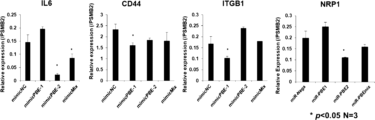
- FIG. 2 shows the structures of miRNAs (miR-PBE1 and miR-PBE2) having sequences complementary to at least part of the binding target sequence of ZCCHC24 protein.
- miRNAs miR-PBE1 and miR-PBE2
- miR-PBE1 and/or miR-PBE2 into breast cancer TNBC patient-derived cells (PDX) suppressed the expression of genes such as IL-6, CD44, ITGB1, and NRP1 involved in breast cancer stemness and cancer cell invasion. was done.
- an inhibitor of the ZCCHC24 protein or a drug that suppresses the expression of the ZCCHC24 gene can be used as a therapeutic agent for TNBC, inflammatory diseases, or obesity, and suppressed the expression of the ZCCHC24 gene.
- a Wee1/Chk1 inhibitor was identified as a specific drug to suppress this. The present invention will be described in detail below.
- TNBC Triple Negative Breast Cancer
- TNBC Triple-negative breast cancer
- HER2 human epidermal growth factor receptor 2
- TNBC accounts for about 20% of all breast cancers, has a very high recurrence rate within 3 years, and has a shorter survival time after recurrence than other types of breast cancer.
- hormone therapy and molecular-targeted drug Herceptin therapy which are commonly used in the treatment of breast cancer, are ineffective, and only anticancer agents are expected to be effective. Therefore, there are many cases that are difficult to treat, and many patients suffer from side effects of anticancer drugs.
- a composition for use in treating TNBC One embodiment of the present invention is used for the treatment and/or prevention of triple-negative breast cancer containing, as an active ingredient, a ZCCHC24 protein inhibitor or a drug that suppresses the expression of the ZCCHC24 gene. It relates to a composition for
- ZCCHC24 Zinc Finger CCHC-Type Containing 24
- ZCCHC24 is a protein with two different zinc finger domains. The present inventors found that (1) ZCCHC24 is an RNA-binding protein strongly expressed in cancer tissues and cells, mainly in breast cancer stem cells; (2) ZCCHC24 is a group of proteins that promote cancer. (3) downregulation of ZCCHC24 inhibits cancer growth and tumorigenicity; and (4) ZCCHC24 is , was found to be a therapeutic target in intractable breast cancer such as triple-negative breast cancer.
- a drug that inhibits the function of ZCCHC24 protein (hereinafter also referred to as a ZCCHC24 inhibitor or ZCCHC24 protein inhibitor) can be used for treatment and/or prevention of triple-negative breast cancer.
- ZCCHC24 inhibitors include, but are not limited to, nucleic acid drugs such as neutralizing antibodies, aptamers, miRNA, antimiR, and antagomiR, and low-molecular-weight compounds.
- nucleic acid medicine with respect to agents that inhibit the function of ZCCHC24 protein and agents that suppress the expression of ZCCHC24 gene described below includes nucleic acid molecules containing any modified base.
- Modified nucleic acids are not particularly limited, but include 2'-MOE, 2'-O-MCE, LNA (2'-4'BNA), ENA, AmNA, GuNA, scpBNA, 2'-OMe, phosphorothioate modifications, and the like. .
- Neutralizing antibodies may be polyclonal antibodies or monoclonal antibodies.
- Neutralizing antibodies can be produced by any method known to those skilled in the art.
- As an antigen for example, the whole ZCCHC24 protein or a fragment thereof can be used.
- Antibody production may be outsourced to a contract production company such as Eurofins Genomics Co., Ltd. (Tokyo). Mammals from which antibodies are derived are not particularly limited, and human antibodies, mouse antibodies, rat antibodies, rabbit antibodies, sheep antibodies, camel antibodies and the like can be used.
- the antibody When used for humans, the antibody may be a human antibody, a humanized antibody, or a chimeric antibody, but is preferably a human antibody.
- Neutralizing antibodies may also include antibody fragments.
- Neutralizing antibodies can thus also include, for example, scFv, Fab, Fab', F(ab') 2 , Fv, rIgG, nanobodies, peptibodies, minibodies, and diabodies.
- Neutralizing antibodies may also contain ZCCHC24-binding peptides obtained by phage display or the like.
- RNA nucleic acid molecules
- Aptamers may be used as ZCCHC24 inhibitors.
- Aptamers that bind to ZCCHC24 can be obtained by any method known to those skilled in the art, for example, the SELEX method.
- ⁇ Novel miRNA A novel miRNA that targets the target gene of ZCCHCH24 can be used as the miRNA.
- An example of miRNA according to this embodiment will be described below.
- miRNAs Endogenous microRNAs
- RISC RNA-induced silencing complex
- miRNA-incorporated RISC recognizes target mRNAs through imperfect base-pairing with miRNAs, resulting in translational inhibition of the target mRNA. Or cause destabilization.
- Target motif sequences are, for example, “UGUAHAWA” (*2 in Table 1), "WGUWUWUA (that is, (A/U)GU(A/U)U(A/U)UA) (*3 in Table 1)". etc. (in the sequence, W represents A or U, H represents A, C or U).
- the novel miRNA according to this embodiment recognizes this ZCCHC24 target sequence as a target.
- the miRNA of the present embodiment competitively binds to ZCCHCH24 for the target gene of ZCCHCH24, thereby inhibiting the function of ZCCHC24 protein, that is, suppressing the effect of promoting expression of the target gene by ZCCHC24.
- the miRNA of this embodiment can inhibit translation or destabilize the mRNA of the target gene through the original functions of the miRNA. Due to such dual effects, the miRNA of the present embodiment can exhibit excellent effects as a ZCCHC24 inhibitor that suppresses the expression of the ZCCHC24 target gene.
- the miRNA of this embodiment is It can be designed as an RNA molecule having a sequence consisting of (i) a seed sequence that recognizes the target sequence of ZCCHCH24, (ii) an adenine or uracil base on the 5' side of the seed sequence, and (iii) a scrambled sequence on the 3' side of the seed sequence. can.
- the seed sequence can be configured to be complementary to at least a partial sequence of the ZCCHCH24 target sequence WGUWHWWA (*1 in Table 1) (also referred to herein as the "seed target sequence").
- the base length of the seed sequence is generally 5 bases or more, preferably 6 bases or more, more preferably 7 bases or more. As an example, the base length of the seed sequence can be 5-7 bases.
- the scramble sequence may be any random sequence, but can be constructed such that the GC content of the full-length miRNA is 40-60%, preferably 45-55%, more preferably 48-52%. It is also preferred that the scramble sequence be constructed so as not to form complementary base pairs with transcripts other than the target mRNA.
- the miRNA can have a sequence of 19-25 bases, preferably 20-24 bases, more preferably 21-23 bases in total length. Specific examples of miRNAs according to this embodiment are described in detail in Examples. Also, in the sequences described in Examples below, adenine on the 5' side of the seed sequence may be substituted with uracil.
- Low-molecular-weight compounds may be used as ZCCHC24 inhibitors.
- Small molecules that bind to ZCCHC24 can be designed by any method known to those of skill in the art, for example, by computer simulation based on the crystal structure of ZCCHC24.
- ZCCHC24 expression inhibitors include, but are not limited to, nucleic acid drugs such as low-molecular-weight compounds, peptides, proteins, antisense nucleic acids, siRNA, miRNA, antimiR, and antagomiR.
- Suppression of ZCCHC24 gene expression can be performed at any level of suppression of mRNA transcription, degradation of transcribed mRNA, or inhibition of translation from mRNA to protein, but is not limited to these. Suppression of ZCCHC24 gene expression can be evaluated by measuring the amount of ZCCHC24 mRNA or protein by a known method.
- Substances that can be used as ZCCHC24 expression inhibitors can be identified, for example, by the screening methods described herein.
- Nucleic acid medicines such as antisense nucleic acids, siRNA, miRNA, antimiR, and antagomiR that can be used as ZCCHC24 expression inhibitors can be designed based on a sequence complementary to a part of the ZCCHC24 gene sequence.
- the miRNA according to this embodiment can be any miRNA that targets ZCCHCH24, that is, any miRNA that inhibits translation and/or destabilizes ZCCHCH24 mRNA.
- Wee1/Chk1 inhibitor as one of the compounds that reduce ZCCHC24 expression.
- Wee1/Chk1 inhibitor means a substance that inhibits at least one of Wee1 and Chk1, but substances that inhibit both Wee1 and Chk1 are also effective.
- Wee1 inhibitors include, for example, PD407824, AZD-1775, ZN-c3, Debio-0123, IMP-7068, GDC-0575 (that is, (R)-N-(4-(3-aminopiperidin-1-yl )-5-bromo-1H-pyrrolo[2,3-b]pyridin-3-yl)cyclopropanecarboxamide (CAS No.
- MKK-1775 i.e., also commonly known as adavosertib1 -[6-(2-hydroxypropan-2-yl)pyridin-2-yl]-6-[4-(4-methylpiperazin-1-yl)anilino]-2-prop-2-enylpyrazolo[3,4 -d]pyrimidin-3-ones (CAS No. 955365-80-7) may be used, but are not limited to these.
- Chk1 inhibitors include PD407824, ESP-01, PNT-737, BEBT-260, AZD7762, LY2603618, MK-8776, CHIR-124, PF-477736, losovitine, SNS-032, dinaciclib, flavopiridol, AT7519, purvalanol A, RO-3306, SU9516, XL413, NU6027, P276-00, AZD5438, PHA-793887, JNJ-7706621, BMS-265246, milciclib, MK-8776, R547, or MKK-1775 (i.e., adavosertib in general) 1-[6-(2-Hydroxypropan-2-yl)pyridin-2-yl]-6-[4-(4-methylpiperazin-1-yl)anilino]-2-prop-2-, also known as Enylpyrazolo[3,4-d]pyrimidin-3-one (CAS No
- WO2017/151554A1 exemplifies WEE1/CHK1 inhibitors as examples of DNA damaging agents.
- WO2020/104777A1 exemplifies WEE1/CHK1 inhibitors as examples of DNA damage response inhibitors.
- Bromodomain and extraterminal domain (BET) proteins are proteins that recognize acetylated histones and regulate gene transcription through the recruitment of transcription factors. Inhibition of BET protein has been shown to have anti-tumor activity.
- ZCCHC24 is dramatically increased by the action of BET inhibitors, which are expected to be new therapeutic agents for triple-negative breast cancer. This indicates that ZCCHC24 is involved in the mechanism of resistance to treatment with BET inhibitors.
- Wee1/Chk1 inhibitors are compounds that reduce the expression of ZCCHC24, and combination with existing BET inhibitors is possible in the treatment of refractory breast cancer.
- a composition for use in the treatment and/or prevention of triple-negative breast cancer which contains as an active ingredient the inhibitor of the ZCCHC24 protein or the drug that suppresses the expression of the ZCCHC24 gene, is BET It can be used in combination with an inhibitor.
- a composition for treating and/or preventing triple-negative breast cancer containing, as an active ingredient, a ZCCHC24 protein inhibitor or a drug that suppresses ZCCHC24 gene expression is a BET inhibitor further includes
- BET inhibitors include, for example, JQ1, Perabresive, BMS-986158, INCB-057643, ODM-207, PLX-2853, ABBV-744, BI-894999, BPI-23314, CC-90010, FT-1101, JAB- 8263, mivebresib, SF-1126, or SYHA-1801 may be used, but are not limited to these.
- compositions for Use in Treatment of Patients Having Stem II Cell Fractions the present inventors discovered a new breast cancer stem cell fraction, Stem II, in which ZCCHC24 is specifically expressed at high levels.
- NRP1(+) NCAM1(-) was identified as a combination of cell surface markers that could identify Stem II.
- the therapeutic target of the compositions for use in treating and/or preventing triple-negative breast cancer of the invention is the stem cell fraction Stem II identified by NRP1(+) NCAM1(-).
- the present invention relates to compositions for use in treating triple-negative breast cancer, for use in treating patients with the NRP1(+)NCAM1(-) cellular fraction.
- “(+)" and “positive” are synonymous with respect to surface antigens and mean positive for the presence of the surface antigen.
- “(-)” and “negative” mean negative for the presence of that surface antigen.
- compositions for Use in Treatment of Inflammatory Diseases are not limited to triple-negative breast cancer, but include co-stimulatory inhibitory molecules such as PDL1, IL-6, IL-8, and CXCL1.
- co-stimulatory inhibitory molecules such as PDL1, IL-6, IL-8, and CXCL1.
- ZCCHC24 has been shown to be a therapeutic target molecule in the treatment of a wide range of inflammatory diseases.
- one aspect of the present invention relates to a composition for treatment and/or prevention of inflammatory diseases, containing as an active ingredient a ZCCHC24 protein inhibitor or a drug that suppresses ZCCHC24 gene expression.
- a drug that suppresses the expression of the ZCCHC24 gene can be, for example, a Wee1/Chk1 inhibitor.
- statements herein regarding compositions for treating triple-negative breast cancer apply equally to compositions for use in treating and/or preventing inflammatory diseases.
- Inflammatory diseases include systemic inflammatory response syndrome (SIRS) including sepsis, rheumatoid arthritis (TNF, IL6 involved), psoriatic arthritis (TNF, IL17, IL12/23 involved), psoriasis ( TNF, IL17, IL12/23), ankylosing myelitis (TNF, IL17 involved), inflammatory bowel disease (TNF involved), SLE, atopic dermatitis (IL4/IL13 involved), asthma (IL4 /IL13, IL5 are involved), COPD (IL5 is involved), gout (IL1 is involved), knee osteoarthritis (MMP13, IL1- ⁇ is involved), and the like.
- SIRS systemic inflammatory response syndrome
- compositions for use in treating obesity Inflammatory cytokines and chemokines such as IL-6, IL-8, CXCL1 and TNF ⁇ play important roles in pathogenesis of obesity in inflammatory cells such as macrophages infiltrating adipose tissue. It is clear that The discoveries and experimental results by the present inventors indicate that ZCCHC24, as a molecule that integrates and regulates these inflammatory cytokines and chemokines in a broad RNA hierarchy, can serve as a therapeutic target molecule in the treatment of obesity.
- one aspect of the present invention relates to a composition for treating and/or preventing obesity, containing as an active ingredient a ZCCHC24 protein inhibitor or a drug that suppresses ZCCHC24 gene expression.
- a drug that suppresses the expression of the ZCCHC24 gene can be, for example, a Wee1/Chk1 inhibitor.
- statements herein regarding compositions for treating triple-negative breast cancer apply equally to compositions for use in treating and/or preventing obesity.
- BMI body mass index
- Obesity results primarily from an imbalance between energy intake and expenditure (increased ratio of intake to expenditure) in physical activity and daily living. Obesity thus includes, for example, food-induced insulin resistance and/or weight gain.
- the treatment and/or prevention of obesity includes preventing an increase in body weight and/or fat mass and decreasing fat mass and/or body weight.
- Compositions for use in treating and/or preventing obesity may also be effective in treating and/or preventing diseases, conditions, and complications caused by and/or related to obesity.
- Diseases and conditions caused by and/or related to overweight due to obesity include sleep apnea syndrome, orthopedic musculoskeletal disorders, and the like.
- Diseases, conditions, and complications caused by and/or associated with metabolic disorders due to obesity include impaired glucose tolerance/diabetes, dyslipidemia, fatty liver, hyperuricemia/gout, cardiovascular disease/cerebrovascular disease ( atherosclerosis), nonalcoholic fatty liver disease, nonalcoholic steatohepatitis, obesity-related kidney disease, diabetic nephropathy, diabetic retinopathy, diabetic angiopathy, diabetic neuropathy, hyperleptinemia , renal steatosis, pancreatic steatosis, cardiac steatosis, steatohepatitis, fibrosis, cirrhosis, chronic low-grade inflammation, hypertension, cardiovascular disease, and other obesity-related inflammatory conditions and diseases mentioned.
- atherosclerosis atherosclerosis
- nonalcoholic fatty liver disease nonalcoholic steatohepatitis
- obesity-related kidney disease diabetic nephropathy, diabetic retinopathy, diabetic angiopathy, diabetic neuropathy, hyperleptin
- compositions are for the treatment and/or prevention of triple-negative breast cancer, inflammatory diseases, or obesity, containing as an active ingredient a ZCCHC24 protein inhibitor or a drug that suppresses ZCCHC24 gene expression. It relates to a pharmaceutical composition for use. That is, one aspect of the present invention relates to the use of a ZCCHC24 protein inhibitor or a drug that suppresses ZCCHC24 gene expression in the manufacture of therapeutic or preventive pharmaceuticals for triple-negative breast cancer, inflammatory diseases, or obesity. Further, in some embodiments, a pharmaceutical composition for use in treating triple-negative breast cancer containing, as an active ingredient, a ZCCHC24 protein inhibitor or a drug that suppresses ZCCHC24 gene expression further comprises a BET inhibitor. be able to.
- the content of the ZCCHC24 protein inhibitor or the drug that suppresses the expression of the ZCCHC24 gene in 100% by weight of the pharmaceutical composition can be appropriately set within the range of 0.001 to 99.99% by weight. Also, the content of the BET inhibitor can be appropriately set within the range of 0 to 99.99% by weight.
- Other ingredients in the pharmaceutical composition according to the present invention are not particularly limited and can be appropriately selected depending on the intended purpose. Examples thereof include pharmaceutically acceptable carriers and additives.
- a pharmaceutical composition can comprise or consist of an inhibitor of ZCCHC24 protein or an agent that suppresses ZCCHC24 gene expression and a carrier or buffer.
- the dosage form of the pharmaceutical composition according to the present invention is not particularly limited, and can be appropriately selected according to the desired administration method.
- solid formulations tablettes (tablets, capsules, suppositories, powders, etc.).
- pH adjusters, buffers, stabilizers, tonicity agents, local anesthetics, etc. are added to the composition, and subcutaneous, intramuscular, intravenous, etc., are administered in a conventional manner. of injections can be produced.
- pH adjusters and buffers include sodium citrate, sodium acetate, sodium phosphate and the like.
- stabilizers include sodium pyrosulfite, EDTA, thioglycolic acid, thiolactic acid and the like.
- tonicity agents include sodium chloride and glucose.
- local anesthetics include procaine hydrochloride and lidocaine hydrochloride.
- Solid formulations may be enteric coated.
- the administration method of the pharmaceutical composition according to the present invention is not particularly limited.
- either local administration or systemic administration can be selected according to the dosage form of the pharmaceutical composition, the patient's condition, etc.
- Administration can be performed, for example, by intravenous administration, subcutaneous administration, intramuscular administration, oral administration, enteral administration, enema administration, tube feeding, and the like.
- enteral administration is not limited to administration through the anus, but also includes administration through a tube or the like inserted into the digestive tract from outside the individual, such as through a gastrostomy.
- the insertion position is not limited to the intestine, and includes the esophagus, stomach, small intestine, large intestine, and the like.
- the subject of administration of the pharmaceutical composition according to the present invention is not particularly limited and can be appropriately selected according to the purpose. Dogs, cats, etc., but preferably humans, especially human patients suffering from triple-negative breast cancer, inflammatory disease, or obesity.
- the pharmaceutical composition according to the present invention may be administered for the purpose of preventing the onset of triple-negative breast cancer, inflammatory diseases, or obesity, particularly for the purpose of preventing recurrence.
- the subject can be a human with the stem cell fraction Stem II identified by NRP1(+) NCAM1(-).
- the dosage of the pharmaceutical composition according to the present invention is not particularly limited, and can be appropriately selected according to the dosage form, age and weight of the subject to be administered, degree of desired effect, and the like.
- the dosage of the ZCCHC24 protein inhibitor or the drug that suppresses the expression of the ZCCHC24 gene is, for example, 100 to 1,000,000 nmol per day, preferably 150 to 100,000 nmol, and the administration frequency is, for example, 1 to 100 times per month. can do.
- the administration timing of the pharmaceutical composition according to the present invention is not particularly limited and can be appropriately selected according to the purpose. For example, it may be administered prophylactically to patients susceptible to the above diseases, It may be administered therapeutically to symptomatic patients. Also, the number of administrations is not particularly limited, and can be appropriately selected according to the age, body weight, degree of desired effect, etc. of the administration subject.
- One aspect of the present invention is a method of treating triple-negative breast cancer, inflammatory disease, or obesity in a subject in need of treatment and/or prevention, comprising an effective amount of an inhibitor of the ZCCHC24 protein or the ZCCHC24 gene. It relates to a method of treatment and/or prevention, comprising administering to the subject an agent that suppresses the expression of A subject in need of treatment and/or prevention is a mammal, eg, a human.
- the dose can be appropriately determined according to the type of drug used and the subject to be administered.
- the route of administration can also be appropriately determined according to the type of drug used and the subject to be administered.
- Preferred routes of administration include, for example, intravenous administration.
- some embodiments are a method of treating triple-negative breast cancer, an inflammatory disease, or obesity in a subject in need of treatment and/or prevention, comprising: (i) an effective amount of an inhibitor of ZCCHC24 protein or ZCCHC24
- the present invention relates to a therapeutic and/or prophylactic method comprising administering an agent that suppresses gene expression and (ii) an effective amount of a BET inhibitor to the subject.
- the administration of the ZCCHC24 protein inhibitor or the drug that suppresses the expression of the ZCCHC24 gene and the administration of the BET inhibitor may be performed at the same time or at different timings.
- the administration frequency within a certain period may be different between the administration of the ZCCHC24 protein inhibitor or the drug that suppresses the expression of the ZCCHC24 gene and the administration of the BET inhibitor.
- ZCCHC24 is an RNA-binding protein that is strongly expressed in cancer tissues and cells, particularly breast cancer stem cells.
- one of the embodiments of the present invention is a method for examining breast cancer in a subject, comprising a) measuring the amount of ZCCHC24 protein in a body fluid sample derived from the subject, b) the amount of ZCCHC24 protein is compared with a predetermined reference value, and the possibility of breast cancer is indicated when the amount of ZCCHC24 protein is higher than the predetermined reference value.
- one aspect of the present invention relates to the use of ZCCHC24 protein as a blood marker for breast cancer.
- one aspect of the present invention can be said to relate to a method for in vitro testing for breast cancer, a method for measuring a blood marker for breast cancer, or a method for obtaining an index for the possibility of breast cancer.
- the amount of ZCCHC24 protein can be measured, for example, by in vitro ELISA, but is not limited to this.
- a bodily fluid sample can be, for example, an isolated blood, such as a plasma or serum sample.
- a predetermined reference value for comparison with the amount of ZCCHC24 protein in a blood sample derived from the subject can be determined, for example, based on the average amount of ZCCHC24 protein in body fluid samples derived from multiple healthy subjects.
- the method for measuring the amount of ZCCHC24 protein is not particularly limited, but includes, for example, immunostaining.
- the breast cancer to be tested can be triple-negative breast cancer.
- the present inventors found a new breast cancer stem cell fraction Stem II that shows a specifically high expression of ZCCHC24, and as a combination of surface antibodies that can identify this Stem II, NRP1 (+) NCAM1(-) was identified.
- one aspect of the present invention is a method for examining breast cancer in a subject, wherein a cell sample derived from the subject has a NRP1(+)NCAM1(-) cell fraction.
- the present invention relates to an examination method, wherein the possibility of breast cancer is indicated by having the subcellular fraction.
- one aspect of the present invention relates to the use of a combination of cell surface markers NRP1(+) NCAM1(-) as a test marker for breast cancer.
- one aspect of the present invention is a method for examining the state of breast cancer in a subject, wherein a cell sample derived from the subject has a NRP1(+)NCAM1(-) cell fraction.
- the present invention relates to a test method for judging whether breast cancer is highly malignant when the subcellular fraction is present.
- one aspect of the present invention relates to the use of a combination of cell surface markers NRP1(+) NCAM1(-) as an indicator of malignancy of breast cancer.
- one aspect of the present invention is a method for examining the state of breast cancer in a subject, wherein a cell sample derived from the subject has a NRP1(+)NCAM1(-) cell fraction.
- the present invention relates to a test method, which includes determining whether or not a cell fraction is present, and specifies a subject to be administered a composition for use in treating triple-negative breast cancer when the cell fraction is present.
- the composition for use in treating triple-negative breast cancer contains, as an active ingredient, a ZCCHC24 protein inhibitor or a drug that suppresses the expression of the ZCCHC24 gene. composition.
- a cell sample can be a tumor-like site obtained from a subject.
- Methods for determining whether a cell sample has NRP1 (+) NCAM1 (-) cell fractions include, for example, single cell RNA sequence analysis (scRNAseq), fluorescence activated cell sorting (FACS), immunostaining etc.
- one aspect of the present invention relates to a method for testing breast cancer or breast cancer status in vitro, a method for measuring test markers for breast cancer, or a method for obtaining an index of the likelihood or malignancy of breast cancer.
- the screening method comprises the steps of (i) preparing cells expressing ZCCHC24, (ii) contacting the cells with a test substance, (iii) measuring the expression level of ZCCHC24, (iv) A step of selecting a substance that reduces the expression level of ZCCHC24.
- one aspect of the present invention relates to a screening method for drugs used for treating inflammatory diseases.
- the screening method comprises the steps of (i) preparing cells expressing ZCCHC24, (ii) contacting the cells with a test substance, (iii) measuring the expression level of ZCCHC24, (iv) A step of selecting a substance that reduces the expression level of ZCCHC24.
- one aspect of the present invention relates to a screening method for drugs used for treating obesity.
- the screening method comprises the steps of (i) preparing cells expressing ZCCHC24, (ii) contacting the cells with a test substance, (iii) measuring the expression level of ZCCHC24, (iv) A step of selecting a substance that reduces the expression level of ZCCHC24.
- cells expressing ZCCHC24 may be cells that have been modified to express labeled ZCCHC24. Any label known to those skilled in the art can be used as the label, such as, for example, a fluorescent protein. Cells can be used, for example, MDAMB231 cells.
- the test substance can be, for example, a small molecule, peptide, protein, or biological extract contained in a compound library. Contact between the cells and the test substance can be performed, for example, by adding the test substance to the culture medium of the cells.
- the ZCCHC24 expression level can be measured, for example, by measuring the ZCCHC24 mRNA level or by measuring the ZCCHC24 protein level. These measurement methods can be performed by any method known to those skilled in the art, such as PCR, ELISA, Northern blotting, Southern blotting, and the like. Decrease in ZCCHC24 expression level can be determined by comparison with a preset reference value. For example, the expression level of ZCCHC24 measured under the same conditions except for the presence or absence of the test substance can be used as the reference value.
- Substances identified by such screening methods can be used to treat triple-negative breast cancer, inflammatory diseases, or obesity.
- RNA-Seq 2 ⁇ 10 5 human triple-negative breast cancer cell line MDAMB231 were seeded in 6-well plates. After 24 hours, negative control (Stealth RNAiTM siRNA Negative Control Hi GC (*4 in Table 1), Thermofisher Scientific) or siRNA against ZCCHC24 (HSS137253, stealth RNA (*5 in Table 1), Thermofisher Scientific) was added to RNA. Transfection was performed using iMax (Thermofisher Scientific). After an additional 48 hours, RNA was harvested using the Relia RNA miniprep system (Promega).
- RNA-Seq was performed using Next-Seq (Illumina).
- Adapter processing for RNA-Seq was performed using Trim Galore (https://www.bioinformatics.babraham.ac.uk/projects/trim_galore/). Mapping was performed using STAR (https://github.com/alexdobin/STAR). Quantification was performed using RSEM (R package). Expression change gene was performed using iDEP 91 (http://bioinformatics.sdstate.edu/idep/).
- qPCR Analysis 2 ⁇ 10 5 human breast cancer patient-derived cells (PDX) were plated in 6-well plates. After 24 hours, control or siRNA against ZCCHC24 (*4 and 5 in Table 1) were transfected. After 48 hours, RNA was harvested using the Relia RNA miniprep system (Promega). Reverse transcription was performed using dNTPs (Toyobo), random primers (Toyobo), and Prime Script (Takara). After that, qPCR was performed using primer sets for CD44, ZCCHC24, ZEB1, and NRP1 (*6 to 9 in Table 1 (SEQ ID NOs: 1 to 8)).
- eCLIP-Seq MDAMB231 cells overexpressing ZCCHC24 with doxycycline were harvested and subjected to 254 nm UV-crosslinking at 300 mJ/cm 2 on ice with Ultraviolet Crosslinker (UVP, CA, USA).
- UV-crosslinking 300 mJ/cm 2 on ice with Ultraviolet Crosslinker (UVP, CA, USA).
- Cells are harvested, centrifuged, and lysed in lysis buffer (50mM Tris-HCl pH 7.4, 100mM NaCl, 1% NP-40 (Igepal CA630), 0.1% SDS, 0.5% sodium deoxycholate, 1:100 protease inhibitors).
- mouse anti-FLAG antibody MBL
- Dynabeads Protein G Thermo Fisher Scientific
- Antibody-bound proteins and RNA-protein complexes were separated on a magnetic stand and washed with cold wash buffer (20 mM Tris-HCl, pH 7.4, 10 mM MgCl 2 , 0.2% Tween-20), high-salt wash buffer (50 mM Tris -HCl pH7.4, 1M NaCl, 1mM EDTA, 1% NP-40, 0.1% SDS, 0.5% sodium deoxycholate), FastAP buffer (10mM Tris HCl pH7.4, 5mM MgCl2, 100mM KCl, 0.02% Triton X-100) was used for washing.
- cold wash buffer (20 mM Tris-HCl, pH 7.4, 10 mM MgCl 2 , 0.2% Tween-20
- high-salt wash buffer 50 mM Tris -HCl pH7.4, 1M NaCl, 1mM EDTA, 1% NP-40, 0.1% SDS, 0.5% sodium deoxycholate
- FastAP buffer 10mM
- RNA was treated with FastAP alkaline phosphatase (Thermo Fisher Scientific) for 30 minutes and T4 polynucleotide kinase (PNK) (NEB) for 45 minutes. The bound beads were then washed with cold wash buffer, high salt wash buffer and ligase buffer (50 mM Tris-HCl pH 7.5, 10 mM MgCl 2 ). The bound RNA was ligated to the 3' RNA linker using high-concentration RNA ligase (NEB) and an RNA adapter (*11 (SEQ ID NO: 11) in Table 1) for 3 hours, followed by cold wash buffer and high salt wash buffer.
- NNK polynucleotide kinase
- RNA-protein complexes were extracted with NuPAGE sample buffer (Invitrogen) and subjected to SDS-PAGE. It was then transferred to a nitrocellulose membrane. Proteinase K (NEB), acidic phenol/chloroform/isoamyl alcohol (Nippon Gene, Tokyo, Japan), and Quick-RNA miniprep kit (Zymo Research, CA, USA) were used to excise the target region of the membrane and extract RNA from the membrane.
- NEB Proteinase K
- acidic phenol/chloroform/isoamyl alcohol Nippon Gene, Tokyo, Japan
- Quick-RNA miniprep kit Zymo Research, CA, USA
- RNA was reverse transcribed with a reverse transcription primer (*12 in Table 1 (SEQ ID NO: 12)) and TGIRT-III enzyme (InGex, MO, USA), treated with ExoSAP-IT (Thermo Fisher Scientific), and then subjected to high-concentration RNA.
- a rand103Tr3 linker (*13 in Table 1 (SEQ ID NO: 13)) was ligated to the 5' region of the cDNA using a ligase (NEB) and allowed to stand overnight at room temperature.
- the adapter-ligated cDNA was amplified by PCR using Q5 PCR enzyme (NEB) for 15 cycles, purified with Ampure XP beads (Beckman Coulter, Calif., USA), and gel-purified.
- the CLIP-Seq library was sequenced using Next-Seq 500 (Ilumina). Adapter sequences were removed from the sequence data by Cut-adapt. Against the GRCh38 genomic data, STAR was used to map the adaptor-removed reads, and the UMI tool was used to remove duplicate reads.
- UV cross-linker UV cross-linker
- Cells were harvested and lysis buffer (50 mM Tris-HCl (pH 7.4), 100 mM NaCl, 1% NP-40 (Igepal CA630), 0.1% SDS, 0.5% sodium deoxycholate, protease inhibitor (1:100)) and placed on ice for 15 minutes.
- lysis buffer 50 mM Tris-HCl (pH 7.4), 100 mM NaCl, 1% NP-40 (Igepal CA630), 0.1% SDS, 0.5% sodium deoxycholate, protease inhibitor (1:100)
- Antibody-bound proteins and RNA-protein complexes were purified using a magnetic stand (Invitrogen), washed with a wash buffer (20 mM Tris-HCl (pH 7.4), 10 mM MgCl 2 , 0.2% Tween-20), and washed with a high salt concentration.
- buffer 50 mM Tris-HCl (pH 7.4), 1 M NaCl, 1 mM ethylenediaminetetraacetic acid, 1% NP-40, 0.1% SDS, and 0.5% sodium deoxycholate
- FastAP buffer (10 mM Tris-HCl (pH 7.4), Washed with 5 mM MgCl 2 , 100 mM KCl, and 0.02% Triton X-100).
- PNK polynucleotide kinase
- RNA ligase NEB
- the adaptor-ligated cDNA was PCR amplified for 15 cycles using Q5 PCR enzyme (NEB) and purified with Ampure XP beads (Beckman Coulter). Samples were then recovered by gel purification.
- the CLIP-Seq library was sequenced using Next-Seq 500 (Illumina).
- Adapter sequences included in the sequence reads were removed using Cutadapt (https://cutadapt.readthedocs.io/en/stable/guide.html). Reads were mapped to the genome of GRCh38 using STAR (https://github.com/alexdobin/STAR) and extracted using UMI Tools (https://umi-tools.readthedocs.io/en/latest/reference/extract.html). ) was used to remove duplicate reads. Read data were annotated using RSeqC (http://rseqc.sourceforge.net/).
- BRIC-Seq 1 ⁇ 10 6 MDAMB231 cells were seeded in a 15 cm dish. After 24 hours, control or ZCCHC24 siRNA (*4, 5 in Table 1) was transfected using RNA iMax (Invitrogen). After 24 hours, 150 ⁇ M (final concentration) of BrdU (Sigma Aldrich) was added. After washing with PBS twice, they were harvested at 0 and 1 hour using TRIZOL (Thermofisher Scientific). Immunoprecipitation with an anti-BrDU antibody (MBL, 2B1) was performed as follows to measure the rate of RNA degradation.
- Actinomycin D test MDAMB231 or HCC38 was seeded in a 24-well plate at a rate of 5 ⁇ 10 4 /well. After 24 hours, 0.5 ⁇ L of 20 ⁇ M siRNA (Thermofisher Scientific) and 3 ⁇ L of RNA iMax (Thermofisher Scientific) were transfected. Forty-eight hours after transfection, 10 ⁇ M actinomycin D was added to the medium, and RNA was collected at 0, 1, and 2 hours. RNA collected by Relia Prep RNA mini prep (Promega) was reverse transcribed with Random Primer (Toyobo), dNTP (NEB), and Prime Script (Takara), and expression changes of target genes were evaluated by qPCR.
- siRNA Thermofisher Scientific
- RNA iMax Thermofisher Scientific
- Sphere formation assay Human breast cancer cell lines MDAMB231 and HCC38 were seeded at 2 ⁇ 10 5 cells each on a 6-well plate. After 24 hours, control and siRNA against ZCCHC24 (*4, 5 in Table 1) were transfected. After 24 hours, the cells were cultured in DMEM F-12 medium (Gibco) containing 20 ng/mL EGF (R&D), 20 ng/mL FGF (Wako), and B27 supplement for 1 week, and 10 visual field images were taken at random. calculated the number.
- DMEM F-12 medium Gibco
- ELDA Extreme Dilution Assay
- Human breast cancer cell line MDAMB231 or breast cancer PDX at 1 ⁇ 10 4 , 10 3 , 10 2 cells/1 24 hours after transfection with control or siRNA against ZCCHC24 (*4, 5 in Table 1) 7-week-old female nude mice (NOG mice (Oriental Yeast)) were implanted subcutaneously with 50% Matrigel (Corning) at a rate of 1. The number of tumors formed was counted after 1 month.
- NOG mice Oriental Yeast
- RNA-Seq analysis of PDX xenograft model PDX was transfected with negative control or ZCCHC24 siRNA (*4, 5 in Table 1) (Thermofisher Scientific). After 24 hours, 10 3 siRNA-transfected cells were subcutaneously implanted into 7-week-old female NOG mice (Oriental Yeast) together with 50% Matrigel (Corning). After 19 days, grown tumors were harvested and treated with 3 ⁇ g/ml collagenase (Wako). The treated tumors were library prepared using the Chromium Next GEM Chip G Single Cell Kit (10x chromium). The prepared library was sequenced by Nova-Seq (Illumina). The sequence data were analyzed with Seurat (https://satijalab.org/seurat/articles/get_started.html) to analyze the breast cancer stem cell fraction.
- Tumor specimens from three triple-negative breast cancer patients were implanted subcutaneously into NOG mice. When the tumor reached an appropriate size, the tumor was excised and treated with Collagenase (Wako) to break up tumor masses.
- the treated tumors were library prepared using the Chromium Next GEM Chip G Single Cell Kit (10x chromium). The prepared library was sequenced by Nova-Seq (Illumina). The sequence data were analyzed with Seurat (https://satijalab.org/seurat/articles/get_started.html) to analyze the breast cancer stem cell fraction.
- cells of Stem I cell fraction, cells of Stem II cell fraction, and cells mixed with Stem I cell fraction and Stem II fraction were used in female 7-week-old NOG mice (CLEA Japan).
- 10 4 , 10 3 , 10 2 cells/site were subcutaneously implanted together with Matrigel (Corning, #354262), and tumors were sampled 6 weeks after implantation.
- scRNAseq analysis was performed on samples re-implanted with 10 2 Stem II cells/site using 10x chromium (10x genomics) to prepare an NGS library.
- the prepared NGS library was sequenced by NovaSeq (Ilumina), and the sequenced read was a cell ranger (https://support.10xgenomics.com/single-cell-gene-expression/software/pipelines/latest/what-is-cell- Analysis was performed using mapping by ranger) and Seurat (https://satijalab.org/seurat/).
- HiBiT-tagged MDAMB231 cells were prepared by the following procedure. First, crRNA (*14 in Table 1 (SEQ ID NO: 14)) (IDT) resuspended in Nuclease-Free Duplex Buffer (IDT) to a final concentration of 100 ⁇ M was dissolved at 95°C together with the same amount of tracrRNA (IDT). for 5 min, then slowly cool the oligo complex to room temperature and incubate with ALT-R Cas9 Nuclease V3 (61 ⁇ M) (Integrated DNA Technologies, IA, USA) for 20 min at room temperature to form the Cas9 complex.
- ALT-R Cas9 Nuclease V3 Integrated DNA Technologies, IA, USA
- a single-stranded DNA oligo (*15 in Table 1 (SEQ ID NO: 15)) (containing a sequence complementary to the sequence of HiBiT and the C-terminal region of ZCCHC24) and a Cas9 complex were added to MDAMB231 cells.
- Co-transfection was performed by electroporation using an electroporator (NEPAGENE). After single-cell cloning, HiBiT-tagged cells were harvested.
- the procedure for compound screening is as follows. 1 ⁇ 10 4 of HiBiT tag-inserted cells were plated on a 96-well plate and cultured for 24 hours, followed by reaction with a low-molecular-weight compound library (LOPAC; Sigma Aldrich) at 1 ⁇ M (final concentration) for 24 hours. After discarding the culture medium, the cells were incubated with 12.5 ⁇ L PBS, 12.5 ⁇ L lysis buffer (Promega), 0.5 ⁇ L substrate (Promega), 0.25 ⁇ L LgBiT (Promega) for 10 minutes at room temperature in the dark. Emission intensity was measured using ARVO X3 (Perkin Elmer).
- LOPAC low-molecular-weight compound library
- EC50 Effective concentration 50 assay 1 ⁇ 10 4 HiBiT-tagged cells were plated on a 96-well plate. After 24 hours, 0.1% DMSO or 10 ⁇ 5 , 10 ⁇ 4 , 10 ⁇ 3 , 10 ⁇ 2 , 10 ⁇ 1 , 1, 10 ⁇ M JQ1 (Selleck) or PD407824 (Sigma Aldrich) was added. After 24 hours, the medium was discarded, and 12.5 ⁇ L of PBS, 12.5 ⁇ L of Lytic Buffer of HiBiT kit (Promega), 0.5 ⁇ L of Substrate, and 0.25 ⁇ L of LgBiT were added. After 10 minutes, after reaction at room temperature, luminescence was measured using ARVO X3 (Perkin Elmer).
- IC50 Inhibitory concentration 50 assay 2 ⁇ 10 3 HiBiT-tagged cells were plated on a 96-well plate. After 24 hours, 0.1% DMSO or 10 ⁇ 5 , 10 ⁇ 4 , 10 ⁇ 3 , 10 ⁇ 2 , 10 ⁇ 1 , 1, 10 ⁇ M JQ1 (Selleck) or PD407824 (Sigma Aldrich) was added. After 48 hours, 20 ⁇ L of Cell Titer Glo (Promega) was added. After 30 minutes, the mixture was allowed to react at 37°C, and the absorbance of A490 was measured with ARVO X3 (Perkin Elmer).
- qPCR Analysis for JQ1-treated MDAMB231 2 ⁇ 10 5 MDAMB231 cells were plated on a 6-well plate. After 24 hours, 0.1% DMSO or 100 nM JQ1 was added. After 24 hours, RNA was extracted using Relia Prep RNA MiniPrep (Promega) and reverse transcribed using Random Primer (Takara), dNTP (NEB) and Prime Script (Takara). For this cDNA, PSMB2 (*10 in Table 1 (SEQ ID NOS: 9 and 10)) and ZCCHC24 (*6 in Table 1 (SEQ ID NOS: 1 and 2)) were quantified by qPCR.
- Cell growth assay 2 ⁇ 10 3 MDAMB231 cells were seeded in 96-well plates. 100 nM JQ1 (Selleck) or 1 ⁇ M PD407824 (Sigma Aldrich) was added after 24 h. After 0, 24 and 48 hours, the number of cells was quantified by absorbance measurement using Cell Titer Glo (Promega) and ARVO X3 (Perkin Elmer).
- LPS lipopolysaccharide
- High Fat Diet model ZCCHC24KO mice and Wild type mice as controls were continuously fed with High Fat Diet. In addition, body weight was measured and recorded every week.
- Novel nucleic acid drug experiments (miR-PBE1, 2) A mimic-miR-RNA was designed that binds complementary to the RNA sequence (“UGUAHAWA” (*2 in Table 1)) to which ZCCHC24 binds. "UGAUAUAU” (*17 in Table 1) or "UGUACAU” (*18 in Table 1) was used as the seed target sequence.
- the sequences are miR-PBE1 (5'-AAUAUACAUCCUCCGGGAUCCA-3') (*19 in Table 1 (SEQ ID NO: 17)), miR-PBE2 (5'-AAUGUACAUCCUCCGGGAUCCA-3') (*20 in Table 1 (SEQ ID NO: 18) ) (Thermofisher miRNA mimics).
- Samples were collected after 48 hours.
- SW1353 was stimulated with 10 nM human IL-1 ⁇ from 6 hours before collection.
- RNA was purified using Relia-Prep RNA Miniprep Systems (Promega) and reverse transcribed with random primer (Takara), dNTP Mix (Takara) and Prime Script (Takara). After that, the amount of mRNA was quantified by performing qPCR.
- the primer sets are shown in Table 1 (IL-1b: *21 in Table 1 (SEQ ID NOS: 19 and 20), (MMP13: *22 in Table 1 (SEQ ID NOS: 21 and 22)).
- a PC9-KI cell line was established by knocking in a HiBiT tag at the C-terminus of PDL1 against the lung adenocarcinoma cell line PC9.
- Genetic screening was performed to quantitatively measure changes in PD-L1 protein expression by forcibly expressing 1030 types of RNA-binding proteins in this PC9-KI cell line by lentiviral vector infection (Fig. 2A).
- ZCCHC24 was identified as a gene that increases the expression of PDL1 (Fig. 2B).
- RNA-Seq/qPCR analysis and RNA-Seq was performed on control and ZCCHC24-knockdown cell groups (human breast cancer cell line MDAMB231) to identify genes upregulated by ZCCHC24 by whole-transcriptome analysis. did. As a result, 797 genes were identified as downregulated expression genes (DEGs). In particular, it became clear that the expression of important gene groups that characterize cancer stemness in breast cancer, such as CD44, NRP1, ZEB1, and ZEB2, was significantly reduced (Fig. 4 left, Fig. 5A). In addition, it was found that not only PDL1 but also IL6, IL8, CXCL1, and other cytokines and chemokines important for cancer survival were significantly reduced (Fig. 5A). Similarly, it was confirmed by qPCR that knockdown of ZCCHC24 decreased the expression levels of CD44, NRP1, and ZEB1 in human sample cells (PDX) derived from breast cancer patients (Fig. 4, right).
- PDX human sample cells
- eCLIP-Seq was performed on ZCCHC24-forced expression cells to identify mRNA regions to which ZCCHC24 directly binds as an RNA-binding protein by whole-transcriptome analysis.
- ZCCHC24 targets 4821 genes, and when merged with the DEGs of RNA-Seq, 364 genes were identified as target genes whose expression is controlled by direct binding of ZCCHC24.
- Fig. 6A Classification of binding regions in these target genes by RSeqC revealed binding to the 3'UTR region and CDS (Fig. 6B).
- PAR-CLIP Furthermore, PAR-CLIP analysis was performed on MDAMB231 with the aim of identifying the mRNAs directly targeted by ZCCHC24 and their binding motifs by whole-transcriptome analysis. It was found that a novel unique motif sequence /U)U(A/U)U was recognized and bound to the 3'UTR of the mRNAs of genes that characterize cancer stemness, such as ZEB1, CD44, and NRP1. (Fig. 7).
- BRIC-Seq which measures the rate of RNA degradation, was performed on MDAMB231, in which ZCCHC24 and the control were knocked down by siRNA, in order to understand at which level the expression is regulated by ZCCHC24.
- RNA stability of gene groups that characterize breast cancer stemness, such as ZEB1, CD44, and NRP1, was greatly decrease (Fig. 8).
- ELDA Extreme Dilution Assay
- Single-cell RNA-seq analysis for PDX subcutaneous transplantation model In order to analyze changes in cancer-constituting cells due to ZCCHC24 knockdown in PDX subcutaneous transplantation model, cells knocked down by siRNA against ZCCHC24 and control NOG When single-cell RNA-seq analysis was performed on samples subcutaneously transplanted into mice, a stem cell-like population showing cancer stem cell-like expression of NRP1 (+) ZEB1 (+) CD24 (-) EPCAM (-) was found. found to be significantly reduced.
- stem cell-like populations are divided into a cell population characterized by NRP1(+)NCAM1(+) (referred to as “Stem I”) and a cell population characterized by NRP1(+)NCAM1(-) (referred to as “Stem II”). It was found that the Stem II population in particular was greatly reduced by ZCCHC24 knockdown. This greatly reduced Stem II is a cell fraction positive for genes such as ZCCHC24 and ZEB1 and NRP1, and expresses specific proteoglycans such as POSTN and DCN (Fig. 13A).
- NRP1 (+) ZEB1 (+) CD24 (-) EPCAM (-) fraction which has been pointed out as a conventional breast cancer stem cell fraction, can be roughly divided into two in specimens derived from other breast cancer patients.
- ZCCHC24 was identified as an RNA-binding protein specifically expressed in the NRP1(+) ZEB1(+) NCAM1(-) fraction (defined as Stem II) (Fig. 13B).
- ZCCHC24 is specifically expressed in high breast cancer stem cell fractions defined as CD44 positive CD24 negative NRP1 positive ZEB1 positive.
- the expression of ZCCHC24 is particularly high in the cells of the Stem II population characterized by NRP1 positive NCAM1 negative (Fig. 3D), and under the condition where ZCCHC24 is knocked down, the number of cells in the Stem II population decreases (Fig. 13A), indicating tumorigenicity. (Fig. 12) was revealed by single-cell RNAseq analysis using PDX, indicating that ZCCHC24 is important in maintaining the Stem II population.
- the tumorigenicity assay showed that sorting and reimplantation of this Stem II population showed high tumorigenicity (Fig. 15), and single-cell RNASeq analysis showed that the tumor population established by this Stem II reimplantation was It was revealed that differentiation into each tumor cell fraction was again shown (Fig. 16), and the Stem II population centered on ZCCHC24 had a high breast cancer-forming ability. It has been shown that the stem cell fraction itself can also be a therapeutic target.
- BET inhibitors and topoisomerase inhibitors such as idarubicin, nitidine, and camptothecin, which are expected to have promising clinical effects on intractable breast cancers such as triple-negative breast cancer, have been specifically extracted. It is worth noting (Fig. 17C).
- a microtubule polymerization inhibitor and a Wee1/Chk1 inhibitor important for the DNA damage response pathway were identified as down-regulators (Fig. 17D). Considering the possibility that the DNA damage response pathway is particularly important for the regulation of ZCCHC24 expression, we focused on BET inhibitors as up-regulators and Wee1/Chk1 inhibitors as down-regulators.
- the EC 50 concentration for the maximum expression increase of ZCCHC24 was measured, and it was found to be about 50 nM, which certainly increased the expression of ZCCHC24. (Fig. 18A).
- the IC50 of MDAMB231 for the maximum inhibition of JQ1 cell survival was about 0.1 ⁇ M (Fig. 18B).
- ZEB1 is a transcription factor whose importance in EMT and drug resistance is strongly suggested in lung cancer as well as breast cancer, and has been identified as a target gene of ZCCHC24 as shown in Figures 6 and 7. Therefore, referring to the ChIP database of histone markers and the past ChIP-Seq data by ZEB1, there is a region where the histone markers of H3K4Me1 and H3K27Ac show peaks between the first exon and the second exon, and the peak of ZEB1 is also seen. It was found (Fig. 18C). In addition, administration of JQ1 dramatically increased the expression of ZEB1 (Fig. 18D).
- JQ1 and PD407824 were administered, respectively, there was no decrease in the cancer stem cell-like population when JQ1 was administered, whereas a tendency for the cell population to decrease was observed when PD407824 was administered. Furthermore, the combined administration of JQ1 and PD407824 also reduced the cancer stem cell-like population (FIGS. 19C and 19D).
- ZCCHC24-knockout mice were resistant to LPS shock, and we established ZCCHC24-knockout mice using the CRISPR-Cas9 system. Intraperitoneal injection of 15 mg/kg of LPS into ZCCHC24 knockout mice prolongs survival after LPS injection compared with wild type mice. It is suggested that ZCCHC24 is important as an RNA-binding protein that regulates inflammation (Fig. 20).
- ZCCHC24 knockout mice were given High Fat Diet (HFD) to ZCCHC24 knockout mice that showed resistance to high-fat diet loading .
- HFD High Fat Diet
- ZCCHC24-knockout mice showed significant suppression of body weight gain compared to wild-type mice about three months after the initiation of stress loading. It has been shown that ZCCHC24 may also play an important role in obesity (Figure 21).
- a novel nucleic acid preparation targeting the RNA sequence targeted by ZCCHC24 By using a microRNA-mimic preparation designed, we attempted to broadly and simultaneously regulate breast cancer stemness genes and inflammatory genes targeted by ZCCHC24.
- a mixture of mimic-1 (miR-PBE1), mimic-2 (miR-PBE2), and mimic1,2 (miR-mix) was introduced into the MDAMB231 cell line and found that it is necessary for breast cancer stemness and cancer cell invasion. It suppressed the expression of a group of genes such as ZEB1, IL-6, ITGB1, and THBS1 (Figs. 22 and 23).
- mimic-1 miR-PBE1
- mimic-2 miR-PBE2
- mimic1,2 miR-mix
- Table 1 below shows the sequence symbols, sequence names, sequences, and sequence numbers in the attached sequence listing used in the examples.
- CDK4/6 inhibitors and other molecular-targeted drugs have been used to treat refractory breast cancers such as triple-negative breast cancer, but effective treatments have not been sufficiently established. do not have.
- ZCCHC24 increases the expression of cancer-promoting genes through post-transcriptional regulation.
- the present inventors have also succeeded in identifying a novel breast cancer stem cell fraction that highly expresses ZCCHC24 and a cell surface marker that defines it. It is thought that it can become a target.
- the present inventors have succeeded in identifying compounds that reduce the expression of ZCCHC24, and using these compounds may reduce drug resistance to existing refractory breast cancer treatments. it is conceivable that.
- ZCCHC24 is useful as a therapeutic target not only for breast cancer, including triple-negative breast cancer, but also for inflammatory diseases and obesity.
Landscapes
- Health & Medical Sciences (AREA)
- Life Sciences & Earth Sciences (AREA)
- Chemical & Material Sciences (AREA)
- Engineering & Computer Science (AREA)
- General Health & Medical Sciences (AREA)
- Medicinal Chemistry (AREA)
- Molecular Biology (AREA)
- Biomedical Technology (AREA)
- Immunology (AREA)
- Public Health (AREA)
- Animal Behavior & Ethology (AREA)
- Veterinary Medicine (AREA)
- Organic Chemistry (AREA)
- Pharmacology & Pharmacy (AREA)
- Urology & Nephrology (AREA)
- Hematology (AREA)
- Biochemistry (AREA)
- General Chemical & Material Sciences (AREA)
- Chemical Kinetics & Catalysis (AREA)
- Biotechnology (AREA)
- Epidemiology (AREA)
- Microbiology (AREA)
- Genetics & Genomics (AREA)
- Physics & Mathematics (AREA)
- Nuclear Medicine, Radiotherapy & Molecular Imaging (AREA)
- Bioinformatics & Cheminformatics (AREA)
- Pathology (AREA)
- Food Science & Technology (AREA)
- Cell Biology (AREA)
- Analytical Chemistry (AREA)
- General Physics & Mathematics (AREA)
- General Engineering & Computer Science (AREA)
- Zoology (AREA)
- Wood Science & Technology (AREA)
- Biophysics (AREA)
- Plant Pathology (AREA)
- Endocrinology (AREA)
- Reproductive Health (AREA)
- Pain & Pain Management (AREA)
- Rheumatology (AREA)
Priority Applications (2)
| Application Number | Priority Date | Filing Date | Title |
|---|---|---|---|
| EP23756416.6A EP4480494A4 (en) | 2022-02-16 | 2023-02-15 | COMPOSITION INTENDED FOR USE IN THE TREATMENT OF CANCER, INFLAMMATORY DISEASES OR OBESITY, AND ITS USE |
| JP2024501414A JPWO2023157891A1 (https=) | 2022-02-16 | 2023-02-15 |
Applications Claiming Priority (2)
| Application Number | Priority Date | Filing Date | Title |
|---|---|---|---|
| JP2022-021824 | 2022-02-16 | ||
| JP2022021824 | 2022-02-16 |
Publications (1)
| Publication Number | Publication Date |
|---|---|
| WO2023157891A1 true WO2023157891A1 (ja) | 2023-08-24 |
Family
ID=87578349
Family Applications (1)
| Application Number | Title | Priority Date | Filing Date |
|---|---|---|---|
| PCT/JP2023/005320 Ceased WO2023157891A1 (ja) | 2022-02-16 | 2023-02-15 | がん,炎症性疾患,または肥満の治療に用いるための組成物およびその使用 |
Country Status (3)
| Country | Link |
|---|---|
| EP (1) | EP4480494A4 (https=) |
| JP (1) | JPWO2023157891A1 (https=) |
| WO (1) | WO2023157891A1 (https=) |
Cited By (1)
| Publication number | Priority date | Publication date | Assignee | Title |
|---|---|---|---|---|
| WO2024172057A1 (ja) * | 2023-02-15 | 2024-08-22 | 国立大学法人 東京医科歯科大学 | 人工miRNA構築物 |
Citations (3)
| Publication number | Priority date | Publication date | Assignee | Title |
|---|---|---|---|---|
| WO2017151554A1 (en) | 2016-02-29 | 2017-09-08 | Synta Pharmaceuticals Corp | Combination therapy for treatment of ovarian cancer |
| JP2018531891A (ja) * | 2015-08-10 | 2018-11-01 | デイナ ファーバー キャンサー インスティチュート,インコーポレイテッド | Betブロモドメインインヒビターに対する抵抗性の機構 |
| WO2020104777A1 (en) | 2018-11-19 | 2020-05-28 | Telonostix Ltd | Compounds for telomere length-related treatment of cancer |
-
2023
- 2023-02-15 EP EP23756416.6A patent/EP4480494A4/en active Pending
- 2023-02-15 JP JP2024501414A patent/JPWO2023157891A1/ja active Pending
- 2023-02-15 WO PCT/JP2023/005320 patent/WO2023157891A1/ja not_active Ceased
Patent Citations (3)
| Publication number | Priority date | Publication date | Assignee | Title |
|---|---|---|---|---|
| JP2018531891A (ja) * | 2015-08-10 | 2018-11-01 | デイナ ファーバー キャンサー インスティチュート,インコーポレイテッド | Betブロモドメインインヒビターに対する抵抗性の機構 |
| WO2017151554A1 (en) | 2016-02-29 | 2017-09-08 | Synta Pharmaceuticals Corp | Combination therapy for treatment of ovarian cancer |
| WO2020104777A1 (en) | 2018-11-19 | 2020-05-28 | Telonostix Ltd | Compounds for telomere length-related treatment of cancer |
Non-Patent Citations (17)
| Title |
|---|
| ALI REEM, ALBLIHY ADEL, TOSS MICHAEL S., ALGETHAMI MASHAEL, AL SUNNI RABAB, GREEN ANDREW R., RAKHA EMAD A., MADHUSUDAN SRINIVASAN: "XRCC1 deficient triple negative breast cancers are sensitive to ATR, ATM and Wee1 inhibitor either alone or in combination with olaparib", THERAPEUTIC ADVANCES IN MEDICAL ONCOLOGY, SAGE PUBLISHING, vol. 12, 1 January 2020 (2020-01-01), pages 175883592097420, XP093086682, ISSN: 1758-8359, DOI: 10.1177/1758835920974201 * |
| BIANCHINI GBALKO JMMAYER IASANDERS MEGIANNI L.: "Triple negative breast cancer: challenges and opportunities of a heterogeneous disease", NAT REV CLIN ONCOL., vol. 13, no. 11, 2016, pages 674 - 90 |
| CHEN XIAN, YANG DONG, CAREY JASON P. W., KARAKAS CANSU, ALBARRACIN CONSTANCE, SAHIN AYSEGUL A., ARUN BANU K., GURAY DURAK MERIH, L: "Targeting Replicative Stress and DNA Repair by Combining PARP and Wee1 Kinase Inhibitors Is Synergistic in Triple Negative Breast Cancers with Cyclin E or BRCA1 Alteration", CANCERS, M D P I AG, CH, vol. 13, no. 7, 1 April 2021 (2021-04-01), CH , pages 1656, XP093020957, ISSN: 2072-6694, DOI: 10.3390/cancers13071656 * |
| GLINKA YELENA, MOHAMMED NADA, SUBRAMANIAM VENKATESWARAN, JOTHY SERGE, PRUD’HOMME GÉRALD J.: "Neuropilin-1 is expressed by breast cancer stem-like cells and is linked to NF-κB activation and tumor sphere formation", BIOCHEMICAL AND BIOPHYSICAL RESEARCH COMMUNICATIONS, ELSEVIER, AMSTERDAM NL, vol. 425, no. 4, 1 September 2012 (2012-09-01), Amsterdam NL , pages 775 - 780, XP093086688, ISSN: 0006-291X, DOI: 10.1016/j.bbrc.2012.07.151 * |
| GRUENER ROBERT F., LING ALEXANDER, CHANG YA-FANG, MORRISON GLADYS, GEELEHER PAUL, GREENE GEOFFREY L., HUANG R. STEPHANIE: "Facilitating Drug Discovery in Breast Cancer by Virtually Screening Patients Using In Vitro Drug Response Modeling", CANCERS, vol. 13, no. 4, 20 February 2021 (2021-02-20), pages 885, XP093086684, DOI: 10.3390/cancers13040885 * |
| HONETH GBENDAHL PORINGNER MSAAL LHGRUVBERGER-SAAL SKLOVGREN K ET AL.: "The CD44+/CD24- phenotype is enriched in basal-like breast tumors", BREAST CANCER RES., vol. 10, no. 3, 2008, pages R53, XP021041335 |
| KATSURA ATAMURA YHOKARI SHARADA MMORIKAWA MSAKURAI T ET AL.: "ZEB1-regulated inflammatory phenotype in breast cancer cells", MOL ONCOL., vol. 11, no. 9, 2017, pages 1241 - 62 |
| LIN XIAOYU, HUANG XIAOLI, UZIEL TAMAR, HESSLER PAUL, ALBERT DANIEL H., ROBERTS-RAPP LISA A., MCDANIEL KEITH F., KATI WARREN M., SH: "HEXIM1 as a Robust Pharmacodynamic Marker for Monitoring Target Engagement of BET Family Bromodomain Inhibitors in Tumors and Surrogate Tissues", MOLECULAR CANCER THERAPEUTICS, AMERICAN ASSOCIATION FOR CANCER RESEARCH, US, vol. 16, no. 2, 1 February 2017 (2017-02-01), US , pages 388 - 396, XP055885151, ISSN: 1535-7163, DOI: 10.1158/1535-7163.MCT-16-0475 * |
| LIU TJSUN BCZHAO XLZHAO XMSUN TGU Q ET AL.: "CD133+ cells with cancer stem cell characteristics associates with vasculogenic mimicry in triple negative breast cancer", ONCOGENE, vol. 32, no. 5, 2013, pages 544 - 53, XP055284313, DOI: 10.1038/onc.2012.85 |
| MA FLI HWANG HSHI XFAN YDING X ET AL.: "Enriched CD44(+)/CD24(-) population drives the aggressive phenotypes presented in triple negative breast cancer (TNBC", CANCER LETT., vol. 353, no. 2, 2014, pages 153 - 9 |
| MARRA ATRAPANI DVIALE GCRISCITIELLO CCURIGLIANO G.: "Practical classification of triple negative breast cancer: intratumoral heterogeneity, mechanisms of drug resistance, and novel therapies", NPJ BREAST CANCER, vol. 6, 2020, pages 54 |
| MCLAUGHLIN RONAN P., HE JICHAO, VAN DER NOORD VERA E., REDEL JEVIN, FOEKENS JOHN A., MARTENS JOHN W. M., SMID MARCEL, ZHANG YINGHU: "A kinase inhibitor screen identifies a dual cdc7/CDK9 inhibitor to sensitise triple-negative breast cancer to EGFR-targeted therapy", BREAST CANCER RESEARCH, vol. 21, no. 1, 1 December 2019 (2019-12-01), pages 77, XP093086691, DOI: 10.1186/s13058-019-1161-9 * |
| RHIE SKHAZELETT DJCOETZEE SGYAN CNOUSHMEHR HCOETZEE GA.: "Nucleosome positioning and histone modifications define relationships between regulatory elements and nearby gene expression in breast epithelial cells", BMC GENOMICS, vol. 15, 2014, pages 20140000 |
| See also references of EP4480494A4 |
| TOMINAGA KMINATO HMURAYAMA TSASAHARA ANISHIMURA TKIYOKAWA E ET AL.: "Semaphorin signaling via MICAL3 induces symmetric cell division to expand breast cancer stem-like cells", PROC NATL ACAD SCI U S A., vol. 116, no. 2, 2019, pages 625 - 30 |
| WU ET AL., EMBO J., 2020 |
| YU-CHIAO CHIU;LI-JU WANG;TZU-HUNG HSIAO;ERICY. CHUANG;YIDONG CHEN: "Genome-wide identification of key modulators of gene-gene interaction networks in breast cancer", BMC GENOMICS, BIOMED CENTRAL LTD, LONDON, UK, vol. 18, no. 6, 3 October 2017 (2017-10-03), London, UK , pages 119 - 130, XP021249672, DOI: 10.1186/s12864-017-4028-4 * |
Cited By (1)
| Publication number | Priority date | Publication date | Assignee | Title |
|---|---|---|---|---|
| WO2024172057A1 (ja) * | 2023-02-15 | 2024-08-22 | 国立大学法人 東京医科歯科大学 | 人工miRNA構築物 |
Also Published As
| Publication number | Publication date |
|---|---|
| EP4480494A1 (en) | 2024-12-25 |
| EP4480494A4 (en) | 2026-03-11 |
| JPWO2023157891A1 (https=) | 2023-08-24 |
Similar Documents
| Publication | Publication Date | Title |
|---|---|---|
| US20230285439A1 (en) | Methods for treating triple-negative breast cancer | |
| JP7406278B2 (ja) | 腫瘍マーカー及び治療ターゲットとしての長鎖ノンコーディングrna letn | |
| CN113827727B (zh) | Ptpn2抑制剂在kras突变肿瘤中的应用 | |
| JP7645178B2 (ja) | Syt11抑制剤を有効成分として含む胃癌治療用組成物 | |
| Meng et al. | Histone deacetylase 1 is increased in rheumatoid arthritis synovium and promotes synovial cell hyperplasia and synovial inflammation in the collagen-induced arthritis mouse model via the microRNA-124-dependent MARCKS-JAK/STAT axis | |
| Suresh et al. | AATF inhibition exerts antiangiogenic effects against human hepatocellular carcinoma | |
| JP2021183618A (ja) | 細胞増殖抑制剤及びそれを含むがんの治療若しくは予防用医薬組成物 | |
| CA3028934C (en) | Agent for inducing cell death, agent for suppressing cell proliferation, and pharmaceutical composition used for treatment of disease resulting from abnormal cell proliferation | |
| WO2023157891A1 (ja) | がん,炎症性疾患,または肥満の治療に用いるための組成物およびその使用 | |
| JP5611953B2 (ja) | 癌の処置における治療標的としてのチロシンキナーゼ受容体tyro3 | |
| JP2021031421A (ja) | IRE1αの阻害物質を用いた、がん転移抑制 | |
| CN116256515A (zh) | Ppdpf在胆管癌诊断及药物制备中的用途 | |
| CN110251529A (zh) | miR-124-3p与其类似物在制备抗乳腺癌疾病药物中的应用 | |
| JP6768979B2 (ja) | Hsp47の阻害物質を用いた、がん転移抑制 | |
| JP2021514195A (ja) | 変異P53特異的siRNAを使用した標的癌治療 | |
| JP2021031420A (ja) | Myh9の阻害物質を用いた、がん転移抑制 | |
| JP7226763B2 (ja) | 癌幹細胞における薬物耐性の低減剤、癌幹細胞における転移能の抑制剤及び癌の転移性再発リスクを予測する方法 | |
| Gonçalves et al. | MicroRNA‐1254 contributes to the controlling of pro‐fibrogenic environment in LX‐2 cells by modulating SMAD3 and wound repair: new insights in hepatic fibrosis | |
| JP2010529852A (ja) | 癌治療のためのNuMAのRNAi媒介ノックダウン | |
| KR101445921B1 (ko) | miR-185의 항암적 용도 | |
| KR20140143880A (ko) | miRNA의 발현 증가를 이용한 성체줄기세포의 노화 억제 조성물 | |
| CN111407891B (zh) | 新型自噬受体ccdc50作为靶点在制备治疗病原体感染或癌症的药物中的应用 | |
| US20120035241A1 (en) | Use of inhibitors of plac8 activity for the modulation of adipogenesis | |
| US20150057334A1 (en) | Use of inhibitors of zdhhc2 activity for modulation of adipogenesis | |
| Caldoni | Dissecting the role of IGF2BP3 in the stress-adaptive response and in intercellular communication in Ewing Sarcoma. |
Legal Events
| Date | Code | Title | Description |
|---|---|---|---|
| 121 | Ep: the epo has been informed by wipo that ep was designated in this application |
Ref document number: 23756416 Country of ref document: EP Kind code of ref document: A1 |
|
| DPE1 | Request for preliminary examination filed after expiration of 19th month from priority date (pct application filed from 20040101) | ||
| ENP | Entry into the national phase |
Ref document number: 2024501414 Country of ref document: JP Kind code of ref document: A |
|
| WWE | Wipo information: entry into national phase |
Ref document number: 2023756416 Country of ref document: EP |
|
| NENP | Non-entry into the national phase |
Ref country code: DE |
|
| ENP | Entry into the national phase |
Ref document number: 2023756416 Country of ref document: EP Effective date: 20240916 |