WO2023120177A1 - ゲームプログラム、情報処理装置、情報処理方法及び情報処理システム - Google Patents
ゲームプログラム、情報処理装置、情報処理方法及び情報処理システム Download PDFInfo
- Publication number
- WO2023120177A1 WO2023120177A1 PCT/JP2022/045005 JP2022045005W WO2023120177A1 WO 2023120177 A1 WO2023120177 A1 WO 2023120177A1 JP 2022045005 W JP2022045005 W JP 2022045005W WO 2023120177 A1 WO2023120177 A1 WO 2023120177A1
- Authority
- WO
- WIPO (PCT)
- Prior art keywords
- sleep
- information
- play
- user
- game
- Prior art date
- Legal status (The legal status is an assumption and is not a legal conclusion. Google has not performed a legal analysis and makes no representation as to the accuracy of the status listed.)
- Ceased
Links
Images




Classifications
-
- A—HUMAN NECESSITIES
- A63—SPORTS; GAMES; AMUSEMENTS
- A63F—CARD, BOARD, OR ROULETTE GAMES; INDOOR GAMES USING SMALL MOVING PLAYING BODIES; VIDEO GAMES; GAMES NOT OTHERWISE PROVIDED FOR
- A63F13/00—Video games, i.e. games using an electronically generated display having two or more dimensions
- A63F13/20—Input arrangements for video game devices
- A63F13/21—Input arrangements for video game devices characterised by their sensors, purposes or types
- A63F13/212—Input arrangements for video game devices characterised by their sensors, purposes or types using sensors worn by the player, e.g. for measuring heart beat or leg activity
-
- A—HUMAN NECESSITIES
- A61—MEDICAL OR VETERINARY SCIENCE; HYGIENE
- A61B—DIAGNOSIS; SURGERY; IDENTIFICATION
- A61B5/00—Measuring for diagnostic purposes; Identification of persons
- A61B5/16—Devices for psychotechnics; Testing reaction times ; Devices for evaluating the psychological state
-
- A—HUMAN NECESSITIES
- A61—MEDICAL OR VETERINARY SCIENCE; HYGIENE
- A61B—DIAGNOSIS; SURGERY; IDENTIFICATION
- A61B5/00—Measuring for diagnostic purposes; Identification of persons
- A61B5/48—Other medical applications
- A61B5/4806—Sleep evaluation
- A61B5/4809—Sleep detection, i.e. determining whether a subject is asleep or not
-
- A—HUMAN NECESSITIES
- A61—MEDICAL OR VETERINARY SCIENCE; HYGIENE
- A61B—DIAGNOSIS; SURGERY; IDENTIFICATION
- A61B5/00—Measuring for diagnostic purposes; Identification of persons
- A61B5/48—Other medical applications
- A61B5/4806—Sleep evaluation
- A61B5/4815—Sleep quality
-
- A—HUMAN NECESSITIES
- A63—SPORTS; GAMES; AMUSEMENTS
- A63F—CARD, BOARD, OR ROULETTE GAMES; INDOOR GAMES USING SMALL MOVING PLAYING BODIES; VIDEO GAMES; GAMES NOT OTHERWISE PROVIDED FOR
- A63F13/00—Video games, i.e. games using an electronically generated display having two or more dimensions
- A63F13/20—Input arrangements for video game devices
- A63F13/21—Input arrangements for video game devices characterised by their sensors, purposes or types
-
- A—HUMAN NECESSITIES
- A63—SPORTS; GAMES; AMUSEMENTS
- A63F—CARD, BOARD, OR ROULETTE GAMES; INDOOR GAMES USING SMALL MOVING PLAYING BODIES; VIDEO GAMES; GAMES NOT OTHERWISE PROVIDED FOR
- A63F13/00—Video games, i.e. games using an electronically generated display having two or more dimensions
- A63F13/40—Processing input control signals of video game devices, e.g. signals generated by the player or derived from the environment
- A63F13/44—Processing input control signals of video game devices, e.g. signals generated by the player or derived from the environment involving timing of operations, e.g. performing an action within a time slot
-
- A—HUMAN NECESSITIES
- A63—SPORTS; GAMES; AMUSEMENTS
- A63F—CARD, BOARD, OR ROULETTE GAMES; INDOOR GAMES USING SMALL MOVING PLAYING BODIES; VIDEO GAMES; GAMES NOT OTHERWISE PROVIDED FOR
- A63F13/00—Video games, i.e. games using an electronically generated display having two or more dimensions
- A63F13/70—Game security or game management aspects
- A63F13/79—Game security or game management aspects involving player-related data, e.g. identities, accounts, preferences or play histories
Definitions
- the present disclosure relates to a game program, an information processing device, an information processing method, and an information processing system.
- Patent Literature 1 discloses a game system that encourages a user to have appropriate sleeping habits.
- Patent Literature 2 discloses a technique that motivates a user to continuously measure health-related information and confirm analysis results.
- the present disclosure has been made to solve the above problems, and the purpose thereof is to provide a technology that prompts the user to work toward good sleep habits.
- a game program comprising a processor and a storage unit, the game program being executed by a computer capable of acquiring a sleep state of a user as sleep information, wherein the game program causes the processor to acquire sleep information for multiple times of sleep.
- an acquisition step a play acquisition step of acquiring play information of a user in a game, a related step of associating multiple sleep information acquired in the sleep acquisition step with the play information acquired in the play acquisition step, and related steps and a determining step of determining a plurality of play results based on the combination of the play information and the sleep information for the plurality of times associated in the game program.
- one or more times of sleep information measured by the measurement terminal can be reflected in the game. It is possible to continuously encourage the user using the measurement terminal to make efforts toward good sleep habits.
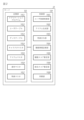
- FIG. 1 is a diagram showing an overall configuration of an information processing system 1;
- FIG. 3 is a block diagram showing the functional configuration of the server 10;
- FIG. 2 is a block diagram showing a functional configuration of a user terminal 20;
- FIG. 3 is a block diagram showing the functional configuration of a measuring terminal 40;
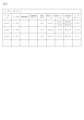
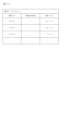
- FIG. 10 is a diagram showing the data structure of a user table 1012;
- FIG. 10 is a diagram showing the data structure of a deck table 1013;
- FIG. 10 is a diagram showing the data structure of a character master 1014;
- 4 is a diagram showing the data structure of an item master 1015;
- FIG. FIG. 4 is a diagram showing the data structure of a material master 1016;
- FIG. 10 shows the data structure of a privilege master 1017.
- FIG. It is a figure which shows the data structure of the sleep table 4013.
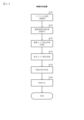
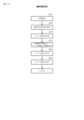
- FIG. It is a flowchart which shows operation
- 2 is a block diagram showing the basic hardware configuration of computer 90.
- FIG. 1 is a diagram showing the overall configuration of an information processing system 1.
- the information processing system 1 according to the present disclosure provides a game service that progresses based on a game operation when the user is awake (for example, during the day) and information about the sleeping state of the user when the user is sleeping (for example, at night).
- the information processing system 1 is an information processing system for maintaining motivation to send good sleep habits while the user enjoys the game service.
- a breeding game will be described as an example in the present disclosure. Note that the present disclosure is applicable to arbitrary game services such as shooting games, action games, role-playing games, adventure games, racing games, puzzle games, simulation games, and table games.
- FIG. 1 shows an information processing system 1 according to the present disclosure.
- the information processing system 1 includes a server 10, a plurality of user terminals 20A, 20B and 20C, and a plurality of measurement terminals 40A, 40B and 40C which are connected via a network N.
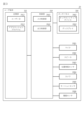
- FIG. 2 is a block diagram showing the functional configuration of the server 10.
- FIG. 3 is a block diagram showing the functional configuration of the user terminal 20.
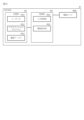
- FIG. 4 is a block diagram showing the functional configuration of the measuring terminal 40.
- the measurement terminal 40 may be configured to be connectable to the user terminal 20 and connect to the network N via the user terminal 20 .
- the server 10 is an information processing device that receives information about the user's game operations during the daytime and the user's sleep state at night, and provides a service that provides a privilege to the user or an in-game character owned by the user. .
- the user terminal 20 is an information processing device operated by a user who uses the service.
- the user terminal 20 may be, for example, a mobile terminal such as a smart phone or tablet, a stationary PC (Personal Computer), or a laptop PC. It may also be a wearable terminal such as an HMD (Head Mount Display) or a wristwatch type terminal.
- the measurement terminal 40 is an information processing device for measuring information regarding the nighttime sleep state of the user who uses the service.
- the measurement terminal 40 is preferably a dedicated terminal mainly for measuring the sleep state of the user at night. , may be a laptop PC. Moreover, it may be a wearable terminal such as an HMD (Head Mount Display) or a wristwatch type terminal.
- the measurement terminal 40 may be provided in a device such as a pillow, bed, futon, alarm clock, etc., which is installed in the user's daily sleeping environment.
- the user terminal 20 may function as the measurement terminal 40 by causing a predetermined application program 2012 to function.
- the user terminal 20 and the measurement terminal 40 may be the same terminal.
- the measurement terminal 40 may be the sleep sensor 208 of the user terminal 20 .
- the user terminal 20 may function as the measurement terminal 40 by causing another application program installed in the user terminal 20 to function.
- the measurement terminal 40 is configured to be able to communicate with the user terminal 20 via wireless communication such as Bluetooth (registered trademark), WiFi (registered trademark), etc. Even if it is configured to be able to communicate with the server 10 via the user terminal 20 good.
- Each information processing device is composed of a computer equipped with an arithmetic device and a storage device.
- the basic hardware configuration of the computer and the basic functional configuration of the computer realized by the hardware configuration will be described later.
- the server 10 the user terminal 20, and the measurement terminal 40, descriptions overlapping the basic hardware configuration of the computer and the basic functional configuration of the computer, which will be described later, will be omitted.
- the server 10 has a storage unit 101 and a control unit 104 .
- the storage unit 101 of the server 10 includes a user table 1012, a deck table 1013, a character master 1014, an item master 1015, a material master 1016, and a privilege master 1017.
- FIG. 5 is a diagram showing the data structure of the user table 1012.
- FIG. 6 is a diagram showing the data structure of the deck table 1013.
- FIG. 7 is a diagram showing the data structure of the character master 1014.
- FIG. FIG. 8 is a diagram showing the data structure of the item master 1015.
- FIG. FIG. 9 is a diagram showing the data structure of the material master 1016.
- FIG. 10 is a diagram showing the data structure of the privilege master 1017. As shown in FIG.
- the user table 1012 is a table that stores and manages information on member users (hereinafter referred to as users) who use the service. By registering to use the service, the user's information is stored in a new record in the user table 1012 . This enables the user to use the service according to the present disclosure.
- User table 1012 is a table having columns of user name, play information, sleep information, reference sleep pattern, sleep score, selected deck ID, possessed item ID, possessed material ID, and user points, with user ID as a primary key.
- a user ID is an item that stores user identification information for identifying a user.
- User identification information is an item in which a unique value is set for each user.
- the user name is an item that stores the user's name.
- the play information is an item that stores information (play information) regarding the user's game play.
- the play information as history information of the past game play by the user, the contents of the game play (points and parameter values acquired in the past game play) and the date and time when the game play was performed are stored in association with each other. .
- the contents of a plurality of game plays are stored in the play information.
- the play information is related to the user's game play, such as operation of the in-game character owned by the user, predetermined operation to the in-game character or provision of in-game items, achievement of in-game events such as quests, subjugation of enemy characters, etc. May contain arbitrary information.
- the sleep information is an item that stores information about the user's sleep.
- Sleep information may include information about sleep patterns indicating when the user goes to bed and wakes up.
- the bedtime represents the time when the user falls asleep. For example, it may be the time when the user goes to bed, or the time when the user's consciousness transitions from an awake state to a sleeping state.
- the wake-up time represents the time when the user wakes up, and may be, for example, the time when the user wakes up from bed, or the time when the user shifts from a sleeping state to an awake state.
- a sleep pattern is defined as a pair of bedtime and wake-up time from falling asleep to waking up. Sleep information may include information regarding the user's sleep quality.
- the information about sleep quality is the time of each sleep stage in the sleep cycle and the ratio of each sleep stage to the sleep time. For example, it is the time and ratio of "awakening", "light sleep”, “deep sleep”, and "REM sleep”, which are each sleep stage of the sleep cycle.
- Sleep information may include a history of sleep patterns for a day or multiple days over a given period of time, such as a day, a week, a month, or the like. Also, the history of all sleep patterns from when the user started using the service to the present may be included.
- the reference sleep pattern is an item that stores a predetermined sleep pattern based on reference bedtime and wake-up time. Since there are individual differences in sleep patterns, it is also possible to automatically set a reference sleep pattern that matches the constitution of each user based on the user's sleep history stored in the sleep information.
- the reference sleep pattern does not have to be one fixed sleep pattern, and for example, a plurality of reference sleep patterns may be stored for each day of the week, month, and season. In addition, a plurality of reference sleep patterns may be stored according to weekdays, holidays, holidays, and the like.
- the reference sleep pattern may be set by the user inputting the bedtime and wake-up time through interaction with a predetermined in-game character.
- it may be set by prompting the user to input a format in which a predetermined in-game character is promised a bedtime and a wake-up time.
- the sleep score is an item that stores the user's sleep evaluation value.
- the selected deck ID is an item in which the deck ID in the deck table 1013 of the character currently selected by the user is stored.
- the user can operate the character in the deck table 1013 associated with the selected character ID and apply items in the course of the game.
- the selected deck ID may be omitted when the number of characters possessed by the user is limited to one.
- the possessed item ID is an item in which the item IDs of one or more in-game items currently possessed by the user are stored.
- the owned material ID is an item in which the material IDs of one or more in-game materials currently owned by the user are stored.
- User points are items that store the value of item points obtained when the user applies in-game items.
- the deck table 1013 is a table for storing in-game characters owned by the user.
- the user can operate the in-game character owned by himself/herself, perform a predetermined operation on the in-game character, apply an in-game item, or the like to advance the game.
- a group of in-game characters owned by a user is called a deck in a card game or a party in an RPG (role-playing game).
- a user can obtain an in-game character by completing an in-game event such as a quest or satisfying a predetermined condition through the progress of the game such as defeating an enemy character.
- a predetermined in-game character may be possessed at the start of the game.
- the obtained in-game character is stored in the deck table 1013 in association with the user ID of the user and the character ID of the character, thereby representing that the user owns the character in the game.
- the deck table 1013 is a table having columns of user ID, character ID, name, performance value, and character point, with the deck ID as a primary key.
- the deck ID is an item that stores deck identification information for identifying the character owned by the user.
- the deck identification information is an item in which a unique value is set for each character possessed by the user.
- the user ID is an item that stores the user identification information of the user who owns the deck.
- the character ID is an item that stores character identification information of in-game characters owned by users registered in the deck.
- the name is an item that stores the name of the in-game character owned by the user registered in the deck.
- the user can freely set a name for the in-game character owned by the user.
- the performance value is an item that stores the performance parameters of the in-game character owned by the user.
- Performance parameters of in-game characters include parameters such as status, physical strength, maximum physical strength, attack power, defense power, speed, character attributes, and decoration.
- Status is an item that stores performance parameters related to the activity status of in-game characters.
- the physical strength value of the in-game character is 0 or less, information is stored indicating that the in-game character cannot act, such as fainting or death.
- the physical strength value is an item that stores performance parameters related to the physical strength of the in-game character. When a character in the game receives damage, the physical strength value decreases according to the content of the damage. Also, when in-game items are applied to in-game characters, or when in-game events such as lodging and resting occur, physical strength increases (recovers) according to the items and event details.
- the maximum physical strength value is an item that stores the upper limit of the performance parameter related to the physical strength of the in-game character.
- the in-game character's physical strength can be recovered up to the maximum physical strength.
- Attack power is an item that stores performance parameters related to the attack power of in-game characters. This is a parameter for calculating the damage inflicted by an in-game character when attacking an opponent's in-game character. The higher the attack power, the more damage you can do.
- “Defensive power” is an item that stores performance parameters related to the in-game character's defensive power. This is a parameter for calculating the damage that an in-game character receives when attacked by an opponent's game character. The higher your defense, the less damage you take.
- Agility is an item that stores performance parameters relating to the agility of in-game characters. This is a parameter for calculating the attack order in which an in-game character attacks or is attacked by an in-game character of an opponent. The greater the agility than the opponent's in-game character, the higher the probability that the attack order will be first. Also, it may be used as a parameter for calculating the probability of avoiding an attack (not receiving damage) when receiving an attack from an opponent. The greater the agility than the opponent's in-game character, the higher the probability of avoiding the opponent's attack.
- Character attributes are items that store performance parameters related to the in-game attributes of in-game characters.
- In-game attributes are information that defines the attack or defense compatibility between in-game characters and the compatibility between in-game characters and the in-game environment in the course of the game. By making it disadvantageous, the interest of the game is improved.
- Decoration is an item that stores the decoration type related to the in-game decoration of the in-game character.
- In-game decorations include clothing worn by in-game characters (shirts, pants, skirts, etc.), equipment worn (weapons such as swords and spears, armor such as armor and helmets, accessories such as rings, etc.), and other forms , posture, size, etc., that define the decoration of the in-game character when the user visually recognizes the in-game character.
- a plurality of decorations are prepared in advance for each in-game character, and decoration code values and the like corresponding to the respective decorations are stored.
- a decoration image and a decoration object corresponding to a code value are selectively applied to the in-game character, and decorated with the decoration image and the decoration object.
- In-game characters make the game service more enjoyable.
- the character points are the value of the applied in-game item when a predetermined in-game condition is satisfied (for example, when an in-game character owned by the user is applied with an in-game item described later). It is a parameter that is added accordingly.
- the character master 1014 is a table that stores and manages in-game character information.
- the character master 1014 is a table having a character ID as a primary key, character ID, character name, initial performance value, evolveable character ID, and evolution condition columns.
- a character ID is an item that stores character identification information for identifying a character.
- Character identification information is an item in which a unique value is set for each character.
- the character name is an item that stores the name of the character (type name, race name, occupation name, occupation name, job name, etc. in RPG games, etc.).
- the initial performance value is an item that stores the initial performance value of the in-game character.
- the performance value of the in-game character is set based on the initial performance value.
- the evolvable character ID is an item in which the ID of a predetermined character called "evolvable character" is stored.
- evolvable character a predetermined character
- the user can evolve the evolveable character by performing a predetermined operation (such as changing jobs, changing jobs in RPG games, etc.). , Also called a class change).
- the user selects an evolveable character stored in his/her own deck table 1013 by performing a predetermined operation.
- the character ID in the deck table 1013 for the selected evolveable character becomes the evolved character ID (linked to the evolveable character ID). character ID).
- the performance value and experience value of the character may also be changed according to the performance value and experience value of the character before and after evolution.
- the corresponding display information or decoration of the character may be changed so that the appearance of the character changes from before evolution to after evolution.
- “Evolution conditions” is an item that stores the conditions necessary to evolve an evolveable character. Specifically, the level, performance value, experience value, etc. of the evolveable character must satisfy predetermined conditions. The user possesses a prescribed item. In addition, the user must have achieved in-game events such as predetermined quests. In addition, arbitrary conditions such as defeat of predetermined enemy characters and play time can be set as evolution conditions.
- the item master 1015 is a table that stores and manages in-game item information.
- the user can obtain in-game items by completing in-game events such as quests and satisfying predetermined conditions through the progress of the game such as defeating enemy characters. Also, on condition that the game is started, a predetermined in-game item may be possessed at the start of the game.
- the obtained in-game item is stored in the user table in association with the user ID of the user and the item ID of the in-game item, for example, so that the user can own the in-game item in the game. expressed.
- the item master 1015 is a table having item name, application point, item point, and recipe columns with item ID as a primary key.
- the item ID is an item that stores item identification information for identifying in-game items.
- Item identification information is an item in which a unique value is set for each in-game item.
- the item name is an item that stores the name of the in-game item (type, race, etc.).
- Applied points are items that store parameters that are the basis for calculation when in-game items are used (for example, when in-game items are applied to in-game characters) and added to the in-game character's character points. be. Specifically, when the user applies the in-game item to the in-game character, a process is performed in which the applied points corresponding to the in-game item are added to the character point value of the in-game character. Depending on the combination of the in-game item and the in-game character, when the user applies the in-game item to the in-game character, only the item points corresponding to the in-game item may be subtracted from the value of the user's character points. may be done.
- An item point is an item that stores a parameter that is used as a calculation basis when adding an in-game item to a user's user point when the in-game item is applied to an in-game character. Specifically, when a user applies an in-game item to an in-game character, a process is performed in which item points corresponding to the in-game item are added to the value of the user's user points. Depending on the combination of the in-game item and the in-game character, when the user applies the in-game item to the in-game character, only the item points corresponding to the in-game item may be subtracted from the value of the user's user points. may be done.
- a recipe is an item that stores the creation conditions for creating in-game items from sub-items called "materials".
- the user can create and possess new in-game items by combining a plurality of materials possessed by the user.
- the material master 1016 is a table that stores and manages information on in-game materials.
- the user can acquire in-game materials by completing in-game events such as quests, and progressing the game such as defeating enemy characters. Also, the player may have predetermined in-game materials at the start of the game. Acquired in-game materials are stored in the user table in association with the user ID of the user and the material ID of the in-game material, thereby representing that the user owns the in-game material within the game. .
- the material master 1016 is a table having material ID as a primary key and columns of material name, rarity, and attribute value.
- the material ID is an item that stores material identification information for identifying in-game materials.
- the material identification information is an item in which a unique value is set for each in-game material.
- the material name is an item that stores the name of the in-game material (type, race, etc.).
- Randomity is an item that stores the rarity of in-game materials. For example, rarity values such as super rare, rare, and common are stored according to the acquisition difficulty.
- the attribute value is an item that stores the attribute value of the in-game material.
- An attribute value is an item used as a condition for generating a predetermined in-game item in a recipe item of the item master.
- the privilege master 1017 is a table for storing privileges given to users.
- the privilege master 1017 is a table having columns of privilege contents and privilege conditions.
- the content of privilege is an item for storing the content of the privilege given to the user.
- the content of the privilege given to the user may include the content of the privilege given to the user.
- the content of the privilege may include that the user newly acquires an in-game character.
- the contents of the privilege may include giving in-game items and in-game materials to the user. It may also include generating in-game items from predetermined in-game materials owned by the user.
- the content of the privilege given to the user may include the content of the privilege given to the character owned by the user.
- the content of the privilege may include strengthening or weakening the performance value of the in-game character owned by the user.
- the content of the privilege may include changing the decoration of the in-game character owned by the user.
- the content of the privilege given to the user may include evolving an in-game character (predetermined evolveable character) owned by the user.
- the privilege condition is an item that stores conditions for giving a privilege to the user.
- the total score range is stored in the present disclosure. That is, it is determined whether or not the privilege condition is met according to the value of the total score, and if the privilege condition is met, the privilege content linked to the privilege condition is given to the user. For example, privilege A is given when the total score is between 11 and 100 points, and privilege B is given when the total score is between 101 and 200 points.
- the privilege conditions do not have to be exclusive conditions for each privilege content, and may be multiple overlapping conditions. In other words, it is also possible to satisfy a plurality of privilege conditions for one total score.
- a plurality of privilege contents corresponding to a plurality of privilege conditions may be given to the user. Also, by setting the priority for the privilege content, only one privilege content with the highest priority among one or a plurality of privileges may be given to the user.
- the control unit 104 of the server 10 includes a user registration control unit 1041, an item generation unit 1042, a privilege provision unit 1043, a sleep information storage unit 1044, a sleep score calculation unit 1045, a total score calculation unit 1046, and a synchronization unit 1048.
- Control unit 104 implements each functional unit by executing application program 1011 stored in storage unit 101 .
- FIG. 12 is a flow chart showing the operation of privilege provision processing.
- FIG. 13 is a flowchart showing the operation of sleep synchronization processing.
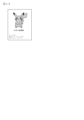
- FIG. 14 is an example of a screen showing the operation of privilege provision processing.
- FIG. 15 is an example of a presentation screen of a play result according to the first presentation mode in sleep synchronization processing.
- FIG. 16 is a presentation screen example of a play result according to the second presentation mode in the sleep synchronization process.
- the user registration control unit 1041 performs processing for storing information of users who wish to use the service according to the present disclosure in the user table 1012 .
- the user name information stored in the user table 1012 is transmitted to the server 10 by the user opening a web page or the like operated by the service provider from any information processing terminal, entering the user name in a predetermined input form.
- the user registration control unit 1041 of the server 10 stores the received user name in a new record of the user table 1012, and user registration is completed. As a result, the users stored in the user table 1012 can use the service.
- the service provider may perform a predetermined examination to limit whether or not the user can use the service.
- the user ID may be any character string or number that can identify the user, any character string or number desired by the user, or any character string or number automatically set by the user registration control unit 1041 of the server 10. can be
- the item generation unit 1042 executes item generation processing. Details will be described later.
- the privilege granting unit 1043 executes privilege granting processing. Details will be described later.
- the sleep information storage unit 1044 executes sleep information storage processing. Details will be described later.
- the sleep score calculation unit 1045 executes sleep score calculation processing. Details will be described later.
- the total score calculation unit 1046 executes total score calculation processing. Details will be described later.
- Synchronization unit 1048 executes sleep synchronization processing. Details will be described later.
- the user terminal 20 includes a storage unit 201, a control unit 204, a touch panel 206, a touch sensitive device 2061, a display 2062, a microphone 2081, a speaker 2082, a position information sensor 2083, a camera 2084, a motion sensor 2085, and a sleep sensor 2086.
- the sleep sensor 2086 is various devices that detect various states of the user terminal 20 .
- the sleep sensor 2086 includes, for example, an orientation sensor (acceleration sensor or gyro sensor) that detects the orientation and tilt of the terminal itself, a gaze sensor that detects the direction of the user's line of sight, an optical sensor that detects the brightness of the surroundings, and a user's movement. may include an infrared sensor for detecting the
- the sleep sensor 2086 is a microphone that collects sounds around the user terminal 20, a humidity sensor that detects the humidity around the user terminal 20, a geomagnetic sensor that detects the magnetic field at the location of the user terminal 20, etc. may
- the sleep sensor 2086 may detect various information using the sensor functions described above. For example, the sleep sensor 2086 may detect the number of steps of the user holding the user terminal 20 using the function of an acceleration sensor. In addition, the sleep sensor 2086 uses the function of an acceleration sensor to detect motion information indicating whether the user terminal 20 is operating or stationary at regular intervals or at each timing when the user terminal 20 operates. You may Sleep sensor 2086 can transmit sensing data detected as described above to control unit 204 .
- the sleep sensor 2086 is provided as a separate body from the user terminal 20 and connected communicatively with the user terminal 20, such as a wristwatch type or ring type terminal, which can be worn by the user (so-called wearable terminal) ). At this time, the sleep sensor 2086 can detect the user's biological information and transmit it to the user terminal 20 .
- the sleep sensor 2086 can determine the user's heart rate by, for example, photoplethysmography or the like, and transmit it to the control unit 204 as sensing data. Sensing data detected by the sleep sensor 2086 is not limited to these, and biometric information related to the user's sleep, such as brain waves, respiration, pulse, and body movement, may be detected.
- the storage unit 201 of the user terminal 20 stores a user ID 2011 for identifying a user who uses the user terminal 20 and an application program 2012 .
- the user ID is the user's account ID.
- the user transmits the user ID 2011 from the user terminal 20 to the server 10 .
- the server 10 identifies the user based on the user ID 2011 and provides the user with the service according to the present disclosure.
- the user ID includes information such as a session ID temporarily assigned by the server 10 to identify the user using the user terminal 20 .
- the application program 2012 may be stored in the storage unit 201 in advance, or may be downloaded from a web server or the like operated by the service provider via the communication IF.
- Application program 2012 includes an interpreted programming language that runs on a web browser application stored on user terminal 20 .
- the control unit 204 of the user terminal 20 has an input control unit 2041 and an output control unit 2042 .
- the control unit 204 implements functional units of an input control unit 2041 and an output control unit 2042 .
- the input control unit 2041 of the user terminal 20 is an input device such as the user's operation content to the touch-sensitive device 2061 of the touch panel 206, voice input to the microphone 2081, the position information sensor 2083, the camera 2084, the motion sensor 2085, and the sleep sensor 2086. Acquires information output from and executes various processes.
- the input control unit 2041 of the user terminal 20 executes a process of transmitting the information acquired from the input device together with the user ID 2011 to the server 10 .
- the output control unit 2042 of the user terminal 20 receives the user's operation on the input device and information from the server 10 , and executes control processing of the display content of the display 2062 and the audio output content of the speaker 2082 .
- the measurement terminal 40 includes a storage section 401 , a control section 404 and a sleep sensor 4086 . Since the sleep sensor 4086 is the same sensor as the sleep sensor 2086 that the user terminal 20 has, the description thereof is omitted.
- Storage unit 401 of measurement terminal 40 stores user ID 4011 for identifying the user who uses measurement terminal 40 , application program 4012 , and sleep table 4013 .
- FIG. 11 is a diagram showing the data structure of the sleep table 4013. As shown in FIG.
- the user ID is the user's account ID.
- the user transmits the user ID 4011 from the measuring terminal 40 to the server 10 .
- the server 10 identifies the user based on the user ID 4011 and provides the user with the service according to the present disclosure.
- the user ID includes information such as a session ID temporarily assigned by the server 10 to identify the user using the measurement terminal 40 .
- the user ID 4011 stored in the measurement terminal 40 does not need to be the same as the user ID 2011 stored in the user terminal 20.
- the user ID 4011 is not essential, and may be configured to be associated with a predetermined user during sleep synchronization processing, which will be described later.
- the application program 4012 may be stored in the storage unit 401 in advance, or may be downloaded from a web server or the like operated by the service provider via the communication IF.
- Application program 4012 includes an interpreted programming language that runs on a web browser application stored on measurement terminal 40 .
- the sleep table 4013 is a table that stores and manages information regarding the user's sleep measured by the sleep sensor 4086 of the measurement terminal 40 .
- the sleep table 4013 is a table having sleep ID as a primary key, sleep measurement information, and synchronization flag columns.
- Sleep ID is sleep identification information for identifying sleep information.
- the sleep identification information is an item for which a unique value is set for each sleep.
- the sleep measurement information is an item that stores information about the user's sleep for each sleep. That is, for each sleep, one record of sleep information is stored in the item of sleep measurement information.
- One sleep is information about one sleep from bedtime to wake-up time.
- Sleep measurement information may include information equivalent to sleep information in user table 1012 . Specifically, the sleep measurement information may include information about sleep patterns indicating when the user goes to bed and wakes up. Sleep measurement information may include information about the user's sleep quality.
- the sleep measurement information may include information regarding the day on which the sleep information was measured.
- the sleep measurement information may include information regarding the execution date and time (for example, start date and time) of the sleep measurement process.
- the synchronization flag is an item that stores whether or not the sleep measurement information has been synchronized.
- a record whose sleep measurement information is not synchronized stores an empty value, null value, or other information that indicates that the sleep measurement information is not synchronized.
- the control unit 404 of the measurement terminal 40 has an input control unit 4041 and a sleep measurement unit 4042 .
- the control unit 404 realizes functional units of the input control unit 4041 and the sleep measurement unit 4042 .
- the input control unit 4041 of the measurement terminal 40 acquires information output from an input device such as the sleep sensor 4086 and executes various processes.
- the input control unit 4041 of the measurement terminal 40 executes processing of transmitting the information acquired from the input device to the server 10 together with the user ID 4011 .
- the sleep measurement unit 4042 executes sleep measurement processing. Details will be described later.
- the control unit 104 of the server 10 receives a request including a user ID from the user terminal 20 and starts providing various services.
- a game service in which in-game items are cooked dishes (hereinafter referred to as dishes) and in-game materials are ingredients, seasonings, etc., will be described as an example.
- the item creation process is a process of creating in-game items from in-game materials.
- the item creation process is a series of processes in which the user acquires new in-game items by consuming in-game materials owned by the user.
- the user operates the touch panel 206 of his/her own user terminal 20 to send an inquiry request for his/her own user ID 2011 and a producible in-game item to the server 10 .
- the item generation unit 1042 of the server 10 searches the user table 1012 using the received user ID as a search key, and acquires the user's possessed material ID.
- the item generation unit 1042 of the server 10 searches the material master 1016 using the possessed material ID as a search key, and acquires the rarity, attribute value, etc. of the material possessed by the user.
- the item generation unit 1042 of the server 10 refers to the item of the recipe of the item master 1015 from the information based on the in-game material held by the user, searches for the item ID of the in-game item that the user can generate, and generates the item ID. to get For example, the item generation unit 1042 of the server 10 can generate the in-game item when the user possesses the in-game material (type and number of material) stored in the item of the recipe of the item master 1015. is an in-game item.
- the recipe may define conditions for generating in-game items based on conditions such as attribute values and rarity of in-game materials. As a result, the item generation unit 1042 of the server 10 can acquire the item ID of the dish that can be cooked from the ingredients owned by the user.
- the item generation unit 1042 of the server 10 transmits item IDs of in-game items that can be generated by the user to the user terminal 20 . Based on the item ID received from the server 10 , the user terminal 20 outputs and displays the in-game item that the user can create on the display 2062 of the user terminal 20 . This allows the user to view and check the dishes that can be cooked.
- the user operates the touch panel 206 of the user terminal 20 and selects an in-game item to be generated from the in-game items displayed on the display 2062 .
- the control unit 204 of the user terminal 20 transmits the item ID of the selected in-game item to the server 10 . This allows the user to select the food they want to cook.
- the item generation unit 1042 of the server 10 searches the item master 1015 based on the received item ID and acquires recipe information.
- the item generation unit 1042 of the server 10 deletes the in-game materials necessary for generating in-game items from the possessed material IDs of the records relating to the user in the user table 1012 based on the generation conditions specified in the recipe information. .
- the user consumes the in-game material owned by the user in generating the in-game item.
- the content to be processed upon generation of in-game items is not limited to the consumption of in-game materials, and arbitrary processing may be performed according to generation conditions.
- the item generation unit 1042 of the server 10 adds the received item ID to the possessed item ID column of the record relating to the user in the user table 1012 . That is, the user acquires the selected in-game item. As a result, the user can acquire new dishes by consuming in-game materials such as ingredients and seasonings.
- the in-game item that satisfies the generation conditions is automatically generated and acquired by the user.
- a configuration may be adopted in which a predetermined in-game item is randomly generated according to a predetermined probability and the user obtains the item.
- the user can acquire a new in-game item without complicated operations such as selecting a producible in-game item, and can enjoy the game service more.
- the user when the user operates the game and acquires ingredients and seasonings, the user can automatically acquire dishes that can be cooked with the ingredients and seasonings.
- the privilege giving process is a process of receiving information about the user's game operation when awake (for example, daytime) and the sleeping state of the user when sleeping (for example, nighttime), and giving a privilege to the user.
- a user can obtain a privilege through the privilege granting process.
- the benefits given to the user include benefits given to the in-game character owned by the user, benefits given to the in-game team, the in-game group, etc. to which the user belongs, and any arbitrary associated with the user. including any perks for in-game objects, in-game entities, etc.
- the details of the privilege giving process will be described below with reference to the flowchart of FIG. 12 and the display screen example of FIG.
- the privilege giving process is a process of giving a privilege (bonus) to the user according to the item and sleep score applied to the character. Specifically, the total score is calculated based on the character points calculated based on the items applied to the character and the sleep score. A benefit corresponding to the total score is determined, and the determined benefit is given to the user. Thereby, the user can acquire a privilege.
- step S101 the user performs an operation to use an item during a daytime period other than a bedtime period. Specifically, an operation of applying an item to the character currently selected by the user is executed. A user can repeatedly perform an operation using an item.
- the server 10 and the user terminal 20 may restrict operations so as not to accept operations from the user during bedtime, even if the user is awake. Thereby, it is possible to motivate the user toward better sleep habits with higher quality.
- the user operates the touch panel 206 of his/her own user terminal 20 and transmits to the server 10 a query request for his/her own user ID 2011 and in-game items held by the user.
- the privilege granting unit 1043 of the server 10 Upon receiving the request from the user terminal 20 , the privilege granting unit 1043 of the server 10 searches the user table 1012 using the received user ID as a search key, acquires the user's possessed item ID, and transmits it to the user terminal 20 . . Based on the item ID received from the server 10 , the user terminal 20 outputs and displays the in-game item applicable to the user on the display 2062 of the user terminal 20 . This allows the user to view and confirm applicable dishes, and to confirm what kind of dishes can be applied to the character.
- the user operates the touch panel 206 of the user terminal 20, selects the in-game item to be applied from the in-game items displayed on the display 2062, and instructs the use of the in-game item.
- the control unit 204 of the user terminal 20 transmits the item ID of the selected in-game item to the server 10 . This allows the user to select the dish they wish to apply.
- the privilege granting unit 1043 of the server 10 searches the item master 1015 based on the received item ID, and acquires the applicable points and item points.
- the privilege granting unit 1043 of the server 10 adds the applicable points to the character points of the character selected by the user.
- the privilege granting unit 1043 of the server 10 refers to the deck table 1013 based on the deck ID stored in the selected deck ID of the record related to the user in the user table 1012, and retrieves the record of the character selected by the user. Identify. Then, the acquired application point value is added to the character points stored in the record related to the character.
- parameters relating to the application points of the character possessed by the user are generated. In other words, parameters related to the user are generated.
- the privilege granting unit 1043 of the server 10 may change the decoration of the character according to the character points. For example, as the character points increase, the character image displayed on the display 2062 of the user terminal 20 may be displayed larger. Thus, by applying food to the character, it is possible to provide the user with an effect that the character becomes larger. Users can enjoy the game service more.
- the privilege granting unit 1043 of the server 10 adds the acquired item points to the user points of the user. Specifically, the privilege granting unit 1043 of the server 10 adds the value of the acquired item points to the user points stored in the record relating to the user in the user table 1012 .
- step S102 the sleep information storage unit 1044 of the server 10 executes sleep information storage processing for storing the sleep information of the sleeping user.
- the user terminal 20 may receive an input operation from the user indicating that he or she is going to bed, and use this as a trigger to start the sleep information storage process.
- the input operation to go to bed may be, for example, an operation to interrupt the game or an operation to put the character to sleep (stroking the character via the touch panel 206, turning off the light used by the character, etc.).
- the user terminal 20 constantly performs sensing with the sleep sensor 2086, and can detect the user's going to bed from sensing data (for example, movement of the terminal, ambient brightness, voice, etc.). Also, when a later-described reference bedtime approaches, the user may be encouraged to go to bed by making the character look sleepy or by changing the game world to night.
- the control unit 204 of the user terminal 20 instructs the sleep sensor 2086 to perform sensing. Specifically, the sleep sensor 2086 senses the movement of the user terminal 20 and biological information such as the user's heart rate. The control unit 204 of the user terminal 20 acquires sensing data from the sleep sensor 2086.
- the control unit 204 of the user terminal 20 transmits the sensing data sent from the sleep sensor 2086 to the server 10.
- the sleep information storage unit 1044 of the server 10 stores a sleep pattern indicating bedtime and wake-up time in the sleep information column of the user's record in the user table 1012 based on the sensing data.
- the sleep information may include information regarding the user's sleep quality.
- the user terminal 20 calculates information about the user's sleep quality from the user's biological information detected by the sleep sensor 2086 .
- Information about the user's sleep may be calculated by adopting a known sleep analysis function of an existing multifunction device functioning as the user terminal 20 .
- the sleep information storage unit 1044 of the server 10 stores the information about sleep quality in the sleep information column of the record of the user in the user table 1012 .
- the sleep information storage unit 1044 of the server 10 may be configured to execute sleep information storage processing only once in a predetermined period.
- the control unit 204 of the user terminal 20 may be configured to transmit the sleep pattern to the server 10 only once in a predetermined period, and the sleep information storage unit 1044 of the server 10 receives a plurality of sleep patterns from the user terminal 20 Among them, it may be configured to store in the sleep information column of the record of the user in the user table 1012 only once in a predetermined period.
- the sleep information storage unit 1044 of the server 10 stores only one sleep pattern in the user table for a plurality of sleep patterns whose bedtime is detected between 5:00 am and 4:59 am the next morning.
- the sleep information storage unit 1044 of the server 10 stores the sleep pattern first detected after 5:00 am in the sleep information column of the record of the user in the user table 1012, and after the sleep the next morning Do not store sleep patterns detected by 4:59 am.
- the sleep information storage unit 1044 of the server 10 selects only the sleep pattern with the longest sleep time for a plurality of sleep patterns in which the bedtime is detected between 5:00 am and 4:59 am the next morning. may be stored in the sleep information column of the user's record in the user table 1012 .
- the sleep information storage unit 1044 of the server 10 adds up a plurality of sleep patterns for a plurality of sleep patterns whose bedtime is detected between 5:00 am and 4:59 am the next morning. It may be stored in the sleep information column of the record of the user in the user table 1012 .
- the sleep information storage unit 1044 of the server 10 may add up the sleep times of multiple sleep patterns and store it in the sleep information column of the user's record in the user table 1012 .
- the sleep measurement information stored in the predetermined period can be limited to only one time.
- the sleep measurement information that can be stored for each user per day can be limited to only one time.
- the sleep score calculation unit 1045 of the server 10 executes sleep score calculation processing for calculating the sleep score based on the sleep information on the morning of the day after the user applies the item. That is, the sleep score is calculated and determined from the sleep information.
- the sleep score calculation process may be executed during an arbitrary time period such as a daytime period other than the bedtime period.
- the sleep score calculation process may be executed when the user operates the user terminal 20 to start or operate an application or the like related to the game service according to the present disclosure.
- the sleep score calculation unit 1045 of the server 10 may execute the sleep score calculation process when detecting the wake-up time of the user.
- the sleep score calculation unit 1045 of the server 10 determines whether the sleep pattern included in the sleep information stored in the sleep information of the user table 1012 satisfies the reference sleep pattern.
- the sleep score calculation unit 1045 of the server 10 searches the user table 1012 using the user ID received from the user terminal 20 as a search key, and acquires sleep information and reference sleep patterns.
- the reference sleep pattern is set based on the reference bedtime and the reference wake-up time (hereinafter, the reference bedtime and/or the reference wake-up time may be referred to as the reference time), and the range in which the minimum sleep time is ensured
- a range of 30 minutes before and 15 minutes after the reference time is provided.
- the width of the reference time may be different before and after the reference time. For example, from the viewpoint of recommending early to bed and early to rise, the width of the time period before the reference time is set longer than that after the time period.
- the minimum sleep time may be set according to the age of the user. For example, 7 hours for adults and 10 hours for children can be set by the user or the administrator of the game service.
- sleep score calculation unit 1045 of the server 10 determines the sleep pattern A determines that it meets the reference sleep pattern.
- Sleep pattern B satisfies the reference bedtime at 21:00, but the wake-up time is after 7:15 and does not satisfy the reference wake-up time, the sleep score calculation unit 1045 of the server 10 The sleep pattern B determines that the reference sleep pattern is not met.
- Sleep pattern C satisfies the reference wake-up time with the wake-up time between 7:00 and 7:15, but the bedtime is after 21:15 and does not meet the reference bedtime, sleep score of server 10 Calculation unit 1045 determines that sleep pattern C does not satisfy the reference sleep pattern.
- the sleep score calculator 1045 of the server 10 determines whether the sleep pattern satisfies the reference sleep pattern.
- the sleep score calculation unit 1045 of the server 10 calculates the sleep score as 10 points.
- the sleep score calculation unit 1045 of the server 10 determines whether the sleep pattern continues to satisfy the reference sleep pattern for a predetermined period or more based on the sleep information. determine whether or not The sleep score calculation unit 1045 of the server 10 calculates the sleep score as 40 points when determining that the sleep pattern based on the sleep information does not satisfy the reference sleep pattern for a predetermined period or longer.
- the sleep score calculation unit 1045 of the server 10 calculates a sleep score of 70 points when determining that the sleep pattern based on the sleep information satisfies the reference sleep pattern for a predetermined period or longer.
- the sleep score calculation unit 1045 of the server 10 may determine that the reference sleep pattern is satisfied when the sleep time based on the sleep information is longer than a predetermined time.
- the sleep score calculator 1045 of the server 10 may add a larger sleep score as the sleep time based on the sleep information is longer.
- the sleep score calculator 1045 of the server 10 may calculate the sleep score based on the sleep time based on the sleep information.
- the sleep score calculation unit 1045 of the server 10 may determine that the reference sleep pattern is satisfied when the duration of deep sleep based on sleep information is longer than a predetermined time, or when the number of deep sleeps is greater than a predetermined number.
- the sleep score calculation unit 1045 of the server 10 may add a larger sleep score as the length of time of deep sleep based on sleep information is longer and as the number of times of deep sleep is larger.
- the sleep score calculator 1045 of the server 10 may calculate the sleep score based on the deep sleep time and the number of deep sleeps based on the sleep information.
- the sleep score calculator 1045 of the server 10 may add or subtract from the sleep score according to the degree of deviation of the sleep pattern based on the sleep information from the reference sleep pattern. That is, the closer the sleep pattern based on the sleep information to the reference sleep pattern, the higher the sleep score calculated, and the more deviated from the reference sleep pattern, the lower the sleep score calculated. This allows the user to be motivated toward good sleep habits based on regular sleep patterns.
- the user or game service administrator may be able to set any predetermined time period.
- the predetermined period may be three days or one week.
- the predetermined period may be set by the user interacting with a predetermined in-game character.
- it may be set by inputting in a format that promises a predetermined in-game character and a predetermined period of time.
- the sleep score calculation unit 1045 of the server 10 adds or subtracts from the sleep score based on the sleep stage, based on the index that indicates whether the sleep is good or not. good. Sleep scores may be added or subtracted based on any algorithm to weight each sleep stage.
- the sleep score may be added or subtracted from the sleep score according to the user's activity level, meals, location, humidity, operation time to the user terminal, operation time zone, etc. For example, if the location of a highly rated hotel (such as a five-star hotel) is detected as the location information of the user terminal, it may be added to the sleep score as a good sleep. Also, for example, if the user operates the user terminal after the reference bedtime, the sleep score may be reduced.
- a highly rated hotel such as a five-star hotel
- the sleep score calculator 1045 of the server 10 stores the calculated sleep score in the sleep score column of the record related to the user in the user table 1012 .
- the total score calculator 1046 of the server 10 calculates the total score based on the character points and the sleep score.
- a total score is a value calculated based on the character points and the sleep score. That is, the total score is a value calculated and determined based on play information and sleep information.
- the total score is calculated, for example, by multiplying the sleep score of the current day (sleep score when waking up) and the character points of the previous day (character points when going to bed).
- the overall score may be calculated based on sleep score statistics (average, median, mode, maximum, minimum, etc.) for multiple days and character point statistics for multiple days.
- the total score calculator 1046 of the server 10 searches the user table 1012 using the user ID received from the user terminal 20 as a search key, and acquires character points and sleep scores.
- the total score calculator 1046 of the server 10 calculates the total score by multiplying the obtained character points and the sleep score. Note that the total score may be calculated based on an arbitrary algorithm such as the sum of character points and sleep scores.
- the total score calculation unit 1046 of the server 10 stores the calculated total score in the total score column of the record related to the user in the user table 1012 .
- the total score calculation unit 1046 of the server 10 may be configured to calculate the total score based on either the character points or the sleep score.
- the privilege granting unit 1043 of the server 10 identifies privilege contents to be granted based on the total score.
- the privilege granting unit 1043 of the server 10 searches for privilege conditions in the privilege master 1017 based on the calculated total score. Specifically, a record of privilege conditions that satisfy conditions such as the calculated total score is specified. Then, the privilege content stored in the record is acquired.
- the privilege conditions of the privilege master 1017 can be arbitrary conditions based on character points, sleep scores, etc., instead of the total score. Note that, in the present disclosure, the configuration is such that the content of the privilege is specified based on the total score, but the content of the privilege may be specified from the character points and the sleep score without calculating the total score.
- step S106 the privilege granting unit 1043 of the server 10 grants a privilege to the user or an in-game character owned by the user based on the acquired privilege content.
- the privilege granting unit 1043 of the server 10 grants a privilege to the user based on the acquired privilege content information.
- a privilege the user can acquire a new in-game character.
- FIG. 14 shows an example of a screen showing the operation of privilege provision processing.
- the display 2062 of the user terminal 20 also displays the captured image of the character, the value of the total score, the sleep score, or a text regarding the "sleeping type" indicating the user's sleep state determined based on the total score.
- the sleep type displays sentences such as "type A”, “type B”, and “type C” that express the user's sleeping state.
- the sleep information in the present disclosure includes sleep score, sleep type, and any sleep parameters determined based on the sleep state of the user.
- the privilege granting unit 1043 of the server 10 updates the record of the user in the user table 1012 and the record of the character possessed by the user in the deck table 1013 according to the acquired privilege content.
- the sleep measurement process is a process of measuring the sleep state of the user in the measurement terminal 40 and storing it in the storage unit 401 of the measurement terminal 40 .
- sleep measurement processing is executed in each of the multiple measurement terminals 40A, 40B, and 40C.
- the sleep measurement process is a series of processes that measure the sleep state of the user as sleep information and store it in the sleep table 4013 of the measurement terminal 40 .
- the measurement terminal 40 always performs sensing with the sleep sensor 4086, and detects the user's going to bed from sensing data (for example, movement of the terminal, ambient brightness, voice, etc.).
- the sleep measurement process may be automatically started by detecting that the power of the measurement terminal 40 is turned on by the user.
- the measurement terminal 40 may receive an input operation from the user indicating that the user is going to sleep, and use this as a trigger to start the sleep measurement process.
- the input operation to go to bed may be accepted based on a switch or the like provided on the measurement terminal 40 .
- the user terminal 20 accepts an input operation based on an operation to interrupt the game or an operation to put the character to sleep (stroking the character via the touch panel 206, turning off the light used by the character, etc.), and transmits the input operation to the communication IF. may be used as a trigger for starting the sleep measurement process in the measurement terminal 40 by receiving the signal via the measurement terminal 40 .
- the sleep measurement unit 4042 of the measurement terminal 40 instructs the sleep sensor 4086 to perform sensing. Specifically, the sleep sensor 4086 senses biological information such as movement of the measurement terminal 40 and the user's heart rate. Sleep measurement unit 4042 of measurement terminal 40 acquires sensing data from sleep sensor 4086 .
- the sleep measurement unit 4042 of the measurement terminal 40 Based on the sensing data acquired from the sleep sensor 4086, the sleep measurement unit 4042 of the measurement terminal 40 adds sleep information including sleep patterns indicating bedtime and wake-up time to the sleep measurement information column of the record of the sleep table 4013.
- the sleep information stored in the sleep measurement information may include information about the user's sleep quality.
- the measurement terminal 40 calculates information about the user's sleep quality from the user's biological information detected by the sleep sensor 4086 .
- Information about the user's sleep may be calculated by adopting a known sleep analysis function of an existing multifunctional device functioning as the measurement terminal 40 .
- the sleep measurement unit 4042 of the measurement terminal 40 stores sleep information including information on sleep quality in the sleep measurement information column of the sleep table 4013 .
- the sleep information stored in the sleep measurement information may include information on the date and time when the sleep information was measured.
- the sleep measurement information may include information regarding the execution date and time (for example, start date and time) of the sleep measurement process.
- the sleep measurement unit 4042 of the measurement terminal 40 may be configured to store sleep information including sensing data acquired from the sleep sensor 4086 in the sleep measurement information column of the sleep table 4013 .
- the sleep measurement unit 4042 of the measurement terminal 40 sets one measurement period from when the user goes to bed until he wakes up, and stores the sleep information measured for each measurement period as one record in the sleep table 4013 .
- the sleep synchronization process is a process of synchronizing the user's sleep-related information stored in the measurement terminal 40 with the user's sleep information stored in the server 10 . Details of the sleep synchronization process will be described below with reference to the flowchart of FIG. 13 and display screen examples of FIGS.
- the sleep synchronization process is a process of synchronizing the user's sleep-related information stored in the plurality of measurement terminals 40 with the user's sleep information stored in the server 10 .
- the sleep synchronization process acquires information about the user's sleep stored in the measurement terminal 40, acquires the user's play information stored in the server 10, associates the information about the user's sleep with the play information, and generates a play result. is determined and a play result is presented to the user.
- step S501 the synchronization unit 1048 of the server 10 starts sleep synchronization processing.
- the sleep synchronization process may be triggered by being able to communicate between the server 10 and the measurement terminal 40 .
- the sleep synchronization process may be triggered by the measurement terminal 40 becoming able to communicate with the user terminal 20 .
- the touch panel 206 of the user terminal 20 to which the measurement terminal 40 is connected may receive a predetermined operation from the user, and the process may be started using the input operation as a trigger.
- sleep synchronization processing may be started by the user pressing a synchronization button displayed on the touch panel 206 of the user terminal 20 when the measurement terminal 40 is connected to the user terminal 20 .
- step S ⁇ b>502 the synchronization unit 1048 of the server 10 acquires sleep measurement information for one or more times from the measurement terminal 40 .
- the synchronization unit 1048 of the server 10 transmits a request regarding acquisition of sleep measurement information to the measurement terminal 40 .
- the control unit 404 of the measurement terminal 40 searches the sleep table 4013 for a record in which information indicating that synchronization has not been completed is stored in the synchronization flag, and acquires sleep measurement information.
- the control unit 404 of the measurement terminal 40 transmits the acquired sleep measurement information to the server 10 as a response.
- Synchronization section 1048 of server 10 acquires sleep measurement information from measurement terminal 40 .
- the synchronization unit 1048 of the server 10 searches the sleep information of the user stored in the user table 1012, and among the sleep measurement information acquired from the measurement terminal 40, the sleep measurement information of the period already stored in the user table 1012 may be excluded. This is because it can be considered as sleep information acquired by the user terminal 20 or already measured by another measurement terminal 40 and subjected to sleep synchronization processing.
- the synchronization unit 1048 of the server 10 may exclude sleep measurement information older than a predetermined number of times or a predetermined number of days from the sleep measurement information acquired from the measurement terminal 40 . That is, the synchronizer 1048 of the server 10 may set an upper limit for the number of sleep measurement information acquired from the measurement terminal 40 and the number of days. For example, the synchronization unit 1048 of the server 10 excludes and acquires sleep measurement information from one week or more ago. An upper limit may be set for the number of times and the number of days of sleep measurement information that the measurement terminal 40 can store.
- the control unit 404 of the measurement terminal 40 may set an upper limit for the number of sleep measurement information transmitted as a response to the server 10 and the number of days. Specifically, sleep measurement information older than a predetermined number of days may not be transmitted to the server 10 . This makes it possible to prompt the user to periodically synchronize the measurement terminals.
- the upper limit of the number of times and the number of days may be changed according to the frequency of use of the user terminal 20 by the user, the frequency of playing the game, and the like.
- the upper limit of the number of times and the number of days may be changed according to the user's play information such as the progress of the game to be played. In other words, the upper limits of the number of times and the number of days are determined according to the play information.
- a notification indicating that the upper limit of the number of times and the number of days is changed may be executed on the display 2062 of the user terminal 20 . This makes it possible to prompt the user to periodically synchronize the measurement terminals.
- the control unit 404 of the measurement terminal 40 stores information indicating that the sleep measurement information has been acquired in the synchronization flag item of the corresponding record in the sleep table 4013 for the sleep measurement information transmitted to the server 10 as a response. . After receiving the information indicating that the acquisition or synchronization of the sleep measurement information has been completed from the server 10, the control unit 404 of the measurement terminal 40 adds information indicating that the sleep measurement information has been acquired in the item of the synchronization flag. may be remembered.
- the synchronization unit 1048 of the server 10 searches the user table 1012 and acquires one or more pieces of play information of the user.
- the synchronization unit 1048 of the server 10 may specify the range of play information to be acquired based on the sleep information period included in the sleep measurement information acquired in step S502. For example, among the acquired sleep information, the play information included in the period of the wakeup time or bedtime of the latest sleep information may be acquired from the wakeup time or bedtime of the oldest sleep information. Thereby, the amount of information to be processed can be reduced.
- the synchronization unit 1048 of the server 10 associates the sleep information for one or more times acquired from the measurement terminal 40 in step S502 with the one or more pieces of play information acquired in step S503 for each predetermined period.
- the predetermined period is described as one day for simplicity, but the predetermined period is a predetermined time interval such as 6 hours, 8 hours, a predetermined multiple days such as 2 days, 3 days, 1 week, 1 month Any period can be selected.
- the synchronization unit 1048 of the server 10 determines the sleep information for each day based on the sleep information acquired from the measurement terminal 40 and the measurement date information indicating the day on which the sleep information was measured.
- the synchronization unit 1048 of the server 10 that associates the sleep information including the sleep parameter and the play information including the game parameter, the user already stored in the user table 1012 Sleep information may be included and associated with the play information. That is, sleep information that has already been measured by another terminal such as the user terminal 20 and that has undergone sleep synchronization processing may be included and associated with the play information.
- Synchronization unit 1048 of server 10 although there is sleep information, if there is no play information on the day on which the sleep information exists (sleep information existence day), new play information is generated and associated with sleep information.
- the synchronization unit 1048 of the server 10 refers to the play information on the day before the sleep information existence day (previous period), generates the play information as play information on the sleep information existence day, and associates it with the sleep information. good.
- step S505 the synchronization unit 1048 of the server 10 determines the play result based on the combination of the associated sleep information and play information for each day.
- the play result a case of granting a privilege will be exemplified.
- the sleep score calculation unit 1045 of the server 10 executes sleep score calculation processing based on the associated sleep information for each day, and calculates the sleep score for each day.
- the sleep score calculation process is the same as the sleep score calculation process of step S103 in the privilege provision process. Specifically, the sleep score for each day is calculated based on information such as sleep time, sleep quality, and whether or not the sleep pattern satisfies the reference sleep pattern included in the sleep information for each day.
- the sleep score older than the predetermined number of days may be subtracted from the sleep score to reduce the influence on the play result. For example, a sleep score four or more days ago may be halved. Similarly, for sleep scores newer than a predetermined number of days, the sleep scores may be added to increase the influence on the play result. Thereby, it is possible to prompt the user to periodically perform the sleep synchronization process.
- a notification may be executed on the display 2062 of the user terminal 20 indicating that the effect on the play result will be reduced. Specifically, the user is notified that the sleep score is halved for sleep information from four days or more ago. Is there any sleep information that is not reflected?
- the synchronization unit 1048 of the server 10 determines the play result based on the combination of sleep score and play information.
- a case where character points are used as an example of play information will be exemplified.
- the total score calculation unit 1046 of the server 10 executes total score calculation processing based on the sleep score and character points to calculate the total score.
- the total score calculation process is the same as the total score calculation process of step S104 in the privilege provision process. Specifically, a total score for each day is calculated based on the sleep score and character points for each day.
- the privilege granting unit 1043 of the server 10 identifies and determines the privilege content to be granted for each day based on the total score for each day.
- the privilege granting unit 1043 of the server 10 searches for privilege conditions in the privilege master 1017 based on the calculated total score. Specifically, a record of privilege conditions that satisfy conditions such as the calculated total score is specified. Then, the privilege content stored in the record is specified and acquired.
- the privilege conditions of the privilege master 1017 can be arbitrary conditions based on character points, sleep scores, etc., instead of the total score. In the present disclosure, the privilege content is specified based on the total score, but the privilege content may be specified and determined from the character points and the sleep score without calculating the total score.
- the synchronization unit 1048 of the server 10 may exclude privilege content that has already been granted to the user from among the specified privilege content. Specifically, in this sleep synchronization process, before sleep measurement information is acquired from the measurement terminal 40, sleep synchronization processing with another measurement terminal 40, privilege provision processing with the user terminal 20, etc. have already been performed on the target day If privilege content is provided, it is preferable to exclude the privilege content. That is, the synchronization unit 1048 of the server 10 specifies only the privilege content that is given to the user for the first time based on the sleep measurement information acquired from the measurement terminal 40 in the sleep synchronization processing of this time, among the specified privilege content. and decide.
- the synchronizing unit 1048 of the server 10 identifies the privilege content to be given to the user every day and determines it as the play result.
- the synchronization unit 1048 of the server 10 gives the determined privilege content to the user. Giving the content of the privilege to the user is the same as step S106 of the privilege giving process.
- step S506 the synchronization unit 1048 of the server 10 presents the determined play results for each day to the user.
- the synchronization unit 1048 of the server 10 transmits the determined play result to the user terminal 20 .
- the display 2062 of the user terminal 20 displays the received play result and presents the play result to the user. Note that the user terminal 20 may present the play result to the user using light, sound, or the like.
- the user terminal 20 selectively switches between different presentation forms and presents the play results according to whether the received play results include the play results for one day or the play results for multiple days. .
- the user terminal 20 presents the play results in the first presentation form.
- Fig. 15 shows an example of the play result presentation screen according to the first presentation mode.
- the game screen 70 of the display 2062 of the user terminal 20 includes privilege content 701, which is information based on the play result determined by the sleep synchronization process, sleep time 702, bedtime and wake-up time 703, sleep score 704, Information regarding the play results including sleep type 705, date 706, etc. is presented to the user.
- the user can confirm the date 706 of the sleep information synchronized by the sleep synchronization process and the play result including the privilege content 701 on the display 2062 of the user terminal 20 .
- the user terminal 20 presents the play results in the second presentation form.
- FIG. 15 shows an example of a play result presentation screen according to the second presentation mode.
- the game screen 70 of the display 2062 of the user terminal 20 displays a list of information based on the play results determined in the sleep synchronization process in the form of a list 71 .
- Each item in the list presents to the user a list of information related to daily play results, including privilege content 711, sleep time 712, sleep score 714, date 716, etc., which are information based on play results. .
- Each item in the list may include bedtime, wake-up time, sleep type, and the like.
- the user can list and check the play results including the date 716 of the sleep information synchronized by the sleep synchronization process and the privilege content 711 on the display 2062 of the user terminal 20 .
- the user terminal 20 may present the play results for a plurality of days in order based on the sleep scores used for determining the play results. Specifically, the play results may be presented in order from the good sleep score. As the second presentation form, the user terminal 20 may present the play results for multiple days in order based on the total score determined by the play information and the sleep information used to determine the play results. Specifically, the play results may be presented in order from the best overall score. As the second presentation mode, the user terminal 20 may present the play results for a plurality of days in order based on the dates of the corresponding predetermined period. Specifically, the play results may be presented in order from newer play results.
- the user terminal 20 may present the play results for a plurality of days in order of the favorable play results.
- the user terminal 20 may present the play results for a plurality of days in order based on the reward given to the user based on the play results. For example, the rewards may be presented in descending order of rarity. The reward includes character points.
- the user terminal 20 may present the play results for one or a plurality of days for which sleep information could not be obtained in determining the play results, among the play results for a plurality of days. Thereby, the user can confirm the play result of the day when the play information was generated.
- the user terminal 20 presents the play results for one or more days in which the user has a good sleep state based on the sleep information used to determine the play results among the play results for a plurality of days. You can
- FIG. 17 is a block diagram showing the basic hardware configuration of the computer 90.
- the computer 90 includes at least a processor 901, a main storage device 902, an auxiliary storage device 903, and a communication IF 991 (interface). These are electrically connected to each other by a communication bus 921 .
- the processor 901 is hardware for executing the instruction set described in the program.
- the processor 901 is composed of an arithmetic unit, registers, peripheral circuits, and the like.
- the main storage device 902 is for temporarily storing programs and data processed by the programs.
- it is a volatile memory such as a DRAM (Dynamic Random Access Memory).
- the auxiliary storage device 903 is a storage device for storing data and programs. Examples include flash memory, HDD (Hard Disc Drive), magneto-optical disk, CD-ROM, DVD-ROM, and semiconductor memory.
- the communication IF 991 is an interface for inputting and outputting signals for communicating with other computers via a network using a wired or wireless communication standard.
- the network is composed of various mobile communication systems constructed by the Internet, LAN, wireless base stations, and the like.
- networks include 3G, 4G, and 5G mobile communication systems, LTE (Long Term Evolution), wireless networks (for example, Wi-Fi (registered trademark)) that can be connected to the Internet through predetermined access points, and the like.
- communication protocols include, for example, Z-Wave (registered trademark), ZigBee (registered trademark), Bluetooth (registered trademark), and the like.
- the network includes direct connection using a USB (Universal Serial Bus) cable or the like.
- the computer 90 can be virtually realized by distributing all or part of each hardware configuration to a plurality of computers 90 and connecting them to each other via a network.
- the computer 90 is a concept that includes not only the computer 90 housed in a single housing or case, but also a virtualized computer system.
- the computer includes at least functional units of a control section, a storage section, and a communication section.
- the functional units included in the computer 90 can be implemented by distributing all or part of each functional unit to a plurality of computers 90 interconnected via a network.
- the computer 90 is a concept that includes not only a single computer 90 but also a virtualized computer system.
- the control unit is implemented by the processor 901 reading various programs stored in the auxiliary storage device 903, developing them in the main storage device 902, and executing processing according to the programs.
- the control unit can implement functional units that perform various information processing according to the type of program.
- the computer is implemented as an information processing device that performs information processing.
- the storage unit is realized by the main storage device 902 and the auxiliary storage device 903.
- the storage unit stores data, various programs, and various databases.
- the processor 901 can secure a storage area corresponding to the storage unit in the main storage device 902 or the auxiliary storage device 903 according to a program.
- the control unit can cause the processor 901 to execute addition, update, and deletion processing of data stored in the storage unit according to various programs.
- a database refers to a relational database, and is used to manage tabular tables structurally defined by rows and columns, and data sets called masters in association with each other.
- a table is called a table
- a master is called a column
- a row is called a record.
- relationships between tables and masters can be set and associated.
- each table and each master has a primary key column for uniquely identifying a record, but setting a primary key to a column is not essential.
- the control unit can cause the processor 901 to add, delete, and update records in specific tables and masters stored in the storage unit according to various programs.
- the database and master in the present disclosure may include any data structure (list, dictionary, associative array, object, etc.) in which information is structurally defined.
- the data structure also includes data that can be regarded as a data structure by combining data with functions, classes, methods, etc. written in any programming language.
- the communication unit is realized by the communication IF 991.
- the communication unit implements a function of communicating with another computer 90 via a network.
- the communication section can receive information transmitted from another computer 90 and input it to the control section.
- the control unit can cause the processor 901 to execute information processing on the received information according to various programs. Also, the communication section can transmit information output from the control section to another computer 90 .
- a game program comprising a processor and a storage unit, the game program being executed by a computer capable of acquiring a sleep state of a user as sleep information, wherein the game program causes the processor to acquire sleep information for multiple times of sleep.
- An acquisition step (S502), a play acquisition step (S503) of acquiring the play information of the user in the game, sleep information for multiple times acquired in the sleep acquisition step, and the play information acquired in the play acquisition step are associated with each other.
- the sleep acquisition step acquires sleep information including measurement day information indicating the day on which the sleep information was measured and sleep parameters determined based on the sleep state of the user for each of a plurality of sleep information.
- the step of acquiring play is a step of acquiring play information including play date information indicating the date the game was played and game parameters based on the result of the play, and the related step is acquiring sleep in the step of acquiring sleep
- a step of associating the sleep parameter with the game parameter based on the acquired measurement date information and the play date information acquired in the play acquisition step, and the determining step is the sleep parameter and the game parameter associated in the association step.
- the game program according to appendix 1, which is a step of determining a plurality of play results based on a combination of . Thereby, the measured sleep information for multiple times can be reflected in the game. It is possible to continuously encourage the user to make efforts toward good sleep habits.
- the association step includes a generation step of generating play information for a period in which play information to be associated does not exist, and a step of associating the generated play information with the sleep information acquired multiple times in the sleep acquisition step.
- (Appendix 4) The game program according to appendix 3, wherein the generating step is a step of generating the play information based on the play information of a period preceding the relevant period. Thereby, play information and sleep information can be associated even during a predetermined period in which there is no play information. Users can be encouraged to play games without stress.
- the sleep acquisition step includes a step of acquiring sleep information of the user for multiple times from a plurality of measurement terminals capable of measuring the sleep state of the user as sleep information.
- the sleep information for multiple times measured by the multiple measurement terminals can be reflected in the game. It is possible to continuously encourage a user who uses a plurality of measurement terminals to make efforts toward good sleep habits.
- the determination step includes determining a first play result in the first period based on the play information and sleep information in the first period, and determining a second play result in the second period based on the play information and sleep information in the second period.
- the first period is a period newer than the second period, and the sleep information has a greater influence on the first play result than the sleep information on the second play result; 6.
- the game program according to any one of Appendices 1 to 5. As a result, the newer sleep information can have a greater influence on the play result, and the user can be encouraged to periodically synchronize the measurement terminals.
- Appendix 7 a notification step of causing the processor to notify the user that the influence of the sleep information on the play result will be reduced if the sleep acquisition step has not been performed for a predetermined time or longer; 7.
- the game program according to any one of appendices 1 to 6, which is executed. This makes it possible to prompt the user to periodically synchronize the measurement terminals.
- (Appendix 8) 8. The game program according to any one of appendices 1 to 7, wherein the sleep obtaining step is a step of obtaining sleep information of the user a predetermined number of times, and the predetermined number of times is a value determined according to the progress of the game. Thereby, the user can be encouraged to play the game.
- the game program causes the processor to execute a presentation step (S506) of presenting the play result determined in the determination step to the user, and In the first presentation step of presenting one play result to the user in the first presentation form if it is a result, and in the determination step, if the determined play result is a plurality of play results, to the user 9.
- the game program according to any one of appendices 1 to 8, further comprising: a second presentation step of presenting a plurality of play results in the second presentation mode by the second presentation step; and a step of selectively switching and presenting a plurality of play results.
- the second presentation form in the second presentation step includes a presentation form in which a plurality of play results are presented in order based on the sleep score determined by the sleep information used for determining the play result, and a presentation form in which the plurality of play results are presented in the play result.
- a presentation form that presents in order based on the total score determined by the play information and sleep information used to determine the result a presentation form that presents a plurality of play results in order based on date, and a plurality of play results.
- a presentation mode in which play results are presented in order of favorable play results a presentation mode in which a plurality of play results are presented in order based on rewards given to the user according to the play results;
- the game program stores, in the processor, information indicating that it has been acquired in association with the sleep information for multiple times in the measurement terminal according to the sleep information for multiple times acquired in the sleep acquisition step (S502 ), and the sleep acquisition step is a step of acquiring sleep information for multiple times that is not associated with information indicating that it has been acquired from the measurement terminal.
- the sleep acquisition step is a step of acquiring sleep information for multiple times that is not associated with information indicating that it has been acquired from the measurement terminal.
- (Appendix 13) 11 The program according to any one of appendices 1 to 10, wherein the sleep acquisition step is a step of acquiring sleep information for a plurality of times from a program other than the game program. Thereby, it is possible to reflect the sleep information for a plurality of times acquired in another game program in the game. It is possible to continuously encourage the user to make efforts toward good sleep habits.
- An information processing apparatus comprising a processor and a storage unit, wherein the processor includes a sleep acquisition step (S502) for acquiring sleep information of the user for multiple times, and a play acquisition step for acquiring the user's play information in the game ( S503); a related step (S504) of associating the sleep information for multiple times acquired in the sleep acquisition step with the play information acquired in the play acquisition step; An information processing device that executes a determination step (S505) of determining a plurality of play results based on combinations with information. Thereby, the measured sleep information for one or more times can be reflected in the game. It is possible to continuously encourage the user to make efforts toward good sleep habits.
- FIG. 15 An information processing method executed by a computer comprising a processor and a storage unit, wherein the processor is provided with a sleep acquisition step (S502) of acquiring sleep information of a user for a plurality of times, and acquisition of play information of the user in a game.
- the measured sleep information for one or more times can be reflected in the game. It is possible to continuously encourage the user to make efforts toward good sleep habits.
- An information processing system comprising an information processing device comprising a processor and a storage unit, and a measurement terminal, wherein a sleep acquisition step (S502) of acquiring sleep information for a plurality of times of the user from the measurement terminal; a play acquisition step (S503) of acquiring play information; a related step (S504) of associating the sleep information acquired in the sleep acquisition step with the play information acquired in the play acquisition step (S504); Further, an information processing system for executing a determining step (S505) of determining a plurality of play results based on a combination of play information and sleep information for a plurality of times. Thereby, the sleep information for one or more times measured by the measurement terminal can be reflected in the game. It is possible to continuously encourage the user using the measurement terminal to make efforts toward good sleep habits.
Landscapes
- Engineering & Computer Science (AREA)
- Health & Medical Sciences (AREA)
- Multimedia (AREA)
- Life Sciences & Earth Sciences (AREA)
- Heart & Thoracic Surgery (AREA)
- General Health & Medical Sciences (AREA)
- Biophysics (AREA)
- Human Computer Interaction (AREA)
- Medical Informatics (AREA)
- Veterinary Medicine (AREA)
- Molecular Biology (AREA)
- Surgery (AREA)
- Animal Behavior & Ethology (AREA)
- Physics & Mathematics (AREA)
- Public Health (AREA)
- Biomedical Technology (AREA)
- Pathology (AREA)
- Anesthesiology (AREA)
- Business, Economics & Management (AREA)
- Cardiology (AREA)
- General Business, Economics & Management (AREA)
- Computer Security & Cryptography (AREA)
- Child & Adolescent Psychology (AREA)
- Social Psychology (AREA)
- Psychology (AREA)
- Psychiatry (AREA)
- Hospice & Palliative Care (AREA)
- Educational Technology (AREA)
- Developmental Disabilities (AREA)
- Measurement Of The Respiration, Hearing Ability, Form, And Blood Characteristics Of Living Organisms (AREA)
- Management, Administration, Business Operations System, And Electronic Commerce (AREA)
- Measuring Pulse, Heart Rate, Blood Pressure Or Blood Flow (AREA)
Priority Applications (1)
| Application Number | Priority Date | Filing Date | Title |
|---|---|---|---|
| US18/741,850 US20240325877A1 (en) | 2021-12-20 | 2024-06-13 | Game program, information processing device, information processing method, and information processing system |
Applications Claiming Priority (2)
| Application Number | Priority Date | Filing Date | Title |
|---|---|---|---|
| JP2021206527A JP7295932B1 (ja) | 2021-12-20 | 2021-12-20 | ゲームプログラム、情報処理装置、情報処理方法及び情報処理システム |
| JP2021-206527 | 2021-12-20 |
Related Child Applications (1)
| Application Number | Title | Priority Date | Filing Date |
|---|---|---|---|
| US18/741,850 Continuation US20240325877A1 (en) | 2021-12-20 | 2024-06-13 | Game program, information processing device, information processing method, and information processing system |
Publications (1)
| Publication Number | Publication Date |
|---|---|
| WO2023120177A1 true WO2023120177A1 (ja) | 2023-06-29 |
Family
ID=86772765
Family Applications (1)
| Application Number | Title | Priority Date | Filing Date |
|---|---|---|---|
| PCT/JP2022/045005 Ceased WO2023120177A1 (ja) | 2021-12-20 | 2022-12-07 | ゲームプログラム、情報処理装置、情報処理方法及び情報処理システム |
Country Status (3)
| Country | Link |
|---|---|
| US (1) | US20240325877A1 (enExample) |
| JP (3) | JP7295932B1 (enExample) |
| WO (1) | WO2023120177A1 (enExample) |
Families Citing this family (2)
| Publication number | Priority date | Publication date | Assignee | Title |
|---|---|---|---|---|
| JP2019188062A (ja) * | 2018-04-27 | 2019-10-31 | 株式会社三洋物産 | 遊技機 |
| JP7574988B2 (ja) * | 2022-07-28 | 2024-10-29 | 任天堂株式会社 | 情報処理プログラム、情報処理装置、情報処理方法、および情報処理システム |
Citations (5)
| Publication number | Priority date | Publication date | Assignee | Title |
|---|---|---|---|---|
| JP2016049237A (ja) * | 2014-08-29 | 2016-04-11 | オムロンヘルスケア株式会社 | 動作情報測定装置、ゲーム制御プログラム、動作情報測定プログラム |
| WO2018163558A1 (ja) * | 2017-03-08 | 2018-09-13 | ソニー株式会社 | 情報処理装置、情報処理方法、およびプログラム |
| JP2020072800A (ja) * | 2014-08-07 | 2020-05-14 | 任天堂株式会社 | 情報処理システム、情報処理装置、情報処理プログラム、および、情報処理方法 |
| CN111973980A (zh) * | 2019-05-24 | 2020-11-24 | 奇酷互联网络科技(深圳)有限公司 | 虚拟宠物的控制方法、移动设备和计算机存储介质 |
| JP2021048911A (ja) * | 2019-09-20 | 2021-04-01 | 株式会社ポケモン | ゲームプログラム、方法、情報処理装置 |
Family Cites Families (4)
| Publication number | Priority date | Publication date | Assignee | Title |
|---|---|---|---|---|
| JPH08103568A (ja) * | 1994-10-04 | 1996-04-23 | Utec:Kk | 運動量入力機能付きゲーム機 |
| JP5760139B1 (ja) * | 2014-12-22 | 2015-08-05 | グリー株式会社 | ゲームプログラム、ゲーム制御方法、およびコンピュータ |
| KR101833750B1 (ko) * | 2017-09-18 | 2018-03-02 | 주식회사 엔씨소프트 | 게임 서비스 방법 및 이를 수행하기 위한 장치 |
| JP7377770B2 (ja) * | 2020-06-10 | 2023-11-10 | 株式会社ポケモン | ゲームプログラム、方法、情報処理装置 |
-
2021
- 2021-12-20 JP JP2021206527A patent/JP7295932B1/ja active Active
-
2022
- 2022-12-07 WO PCT/JP2022/045005 patent/WO2023120177A1/ja not_active Ceased
-
2023
- 2023-06-09 JP JP2023095159A patent/JP7675763B2/ja active Active
-
2024
- 2024-06-13 US US18/741,850 patent/US20240325877A1/en active Pending
-
2025
- 2025-04-28 JP JP2025074755A patent/JP2025111704A/ja active Pending
Patent Citations (5)
| Publication number | Priority date | Publication date | Assignee | Title |
|---|---|---|---|---|
| JP2020072800A (ja) * | 2014-08-07 | 2020-05-14 | 任天堂株式会社 | 情報処理システム、情報処理装置、情報処理プログラム、および、情報処理方法 |
| JP2016049237A (ja) * | 2014-08-29 | 2016-04-11 | オムロンヘルスケア株式会社 | 動作情報測定装置、ゲーム制御プログラム、動作情報測定プログラム |
| WO2018163558A1 (ja) * | 2017-03-08 | 2018-09-13 | ソニー株式会社 | 情報処理装置、情報処理方法、およびプログラム |
| CN111973980A (zh) * | 2019-05-24 | 2020-11-24 | 奇酷互联网络科技(深圳)有限公司 | 虚拟宠物的控制方法、移动设备和计算机存储介质 |
| JP2021048911A (ja) * | 2019-09-20 | 2021-04-01 | 株式会社ポケモン | ゲームプログラム、方法、情報処理装置 |
Also Published As
| Publication number | Publication date |
|---|---|
| JP2023091665A (ja) | 2023-06-30 |
| JP7675763B2 (ja) | 2025-05-13 |
| US20240325877A1 (en) | 2024-10-03 |
| JP2025111704A (ja) | 2025-07-30 |
| JP7295932B1 (ja) | 2023-06-21 |
| JP2023116636A (ja) | 2023-08-22 |
Similar Documents
| Publication | Publication Date | Title |
|---|---|---|
| JP7230164B1 (ja) | ゲームプログラム、情報処理装置、情報処理方法及び情報処理システム | |
| JP2025111704A (ja) | ゲームプログラム、情報処理装置、情報処理方法及び情報処理システム | |
| WO2021054461A1 (ja) | ゲームプログラム、方法、情報処理装置 | |
| JP7523614B2 (ja) | 情報処理システム、情報処理方法およびプログラム ~デジタルツイン環境を支援する技術~ | |
| WO2023166805A1 (ja) | ゲームシステム、ゲーム方法、及びゲームプログラム | |
| JP7373537B2 (ja) | ゲーム装置及びプログラム | |
| JP7498162B2 (ja) | ゲームプログラム、情報処理装置及び情報処理方法 | |
| JP7242955B1 (ja) | 情報処理装置、プログラム及びゲームシステム | |
| JP7383769B1 (ja) | ゲームプログラム、情報処理装置、情報処理システム、情報処理方法 | |
| JP7372406B1 (ja) | ゲームプログラム、情報処理装置、情報処理システム、情報処理方法 | |
| JP7281508B2 (ja) | ゲームサーバ、プログラム、方法、ゲームシステムおよび情報処理端末 | |
| JP7317192B1 (ja) | ゲームプログラム、情報処理装置、情報処理システム、情報処理方法 | |
| JP2022088275A (ja) | ゲームシステム、情報通信端末及びプログラム | |
| JP7458542B2 (ja) | ゲームシステム、ゲーム方法、ゲームプログラム、及び情報処理装置 | |
| JP7703801B1 (ja) | プログラム、方法、情報処理装置、システム | |
| JP7557999B2 (ja) | ゲームプログラム、方法、情報処理装置 |
Legal Events
| Date | Code | Title | Description |
|---|---|---|---|
| 121 | Ep: the epo has been informed by wipo that ep was designated in this application |
Ref document number: 22910889 Country of ref document: EP Kind code of ref document: A1 |
|
| NENP | Non-entry into the national phase |
Ref country code: DE |
|
| 122 | Ep: pct application non-entry in european phase |
Ref document number: 22910889 Country of ref document: EP Kind code of ref document: A1 |