WO2023054591A1 - 紫外線、可視光線および/または赤外線を拡散反射する物品およびその製造方法 - Google Patents
紫外線、可視光線および/または赤外線を拡散反射する物品およびその製造方法 Download PDFInfo
- Publication number
- WO2023054591A1 WO2023054591A1 PCT/JP2022/036457 JP2022036457W WO2023054591A1 WO 2023054591 A1 WO2023054591 A1 WO 2023054591A1 JP 2022036457 W JP2022036457 W JP 2022036457W WO 2023054591 A1 WO2023054591 A1 WO 2023054591A1
- Authority
- WO
- WIPO (PCT)
- Prior art keywords
- solvent
- article
- thermoplastic polymer
- layer
- contact
- Prior art date
- Legal status (The legal status is an assumption and is not a legal conclusion. Google has not performed a legal analysis and makes no representation as to the accuracy of the status listed.)
- Ceased
Links
Images
Classifications
-
- B—PERFORMING OPERATIONS; TRANSPORTING
- B32—LAYERED PRODUCTS
- B32B—LAYERED PRODUCTS, i.e. PRODUCTS BUILT-UP OF STRATA OF FLAT OR NON-FLAT, e.g. CELLULAR OR HONEYCOMB, FORM
- B32B3/00—Layered products comprising a layer with external or internal discontinuities or unevennesses, or a layer of non-planar shape; Layered products comprising a layer having particular features of form
- B32B3/26—Layered products comprising a layer with external or internal discontinuities or unevennesses, or a layer of non-planar shape; Layered products comprising a layer having particular features of form characterised by a particular shape of the outline of the cross-section of a continuous layer; characterised by a layer with cavities or internal voids ; characterised by an apertured layer
- B32B3/266—Layered products comprising a layer with external or internal discontinuities or unevennesses, or a layer of non-planar shape; Layered products comprising a layer having particular features of form characterised by a particular shape of the outline of the cross-section of a continuous layer; characterised by a layer with cavities or internal voids ; characterised by an apertured layer characterised by an apertured layer, the apertures going through the whole thickness of the layer, e.g. expanded metal, perforated layer, slit layer regular cells B32B3/12
-
- B—PERFORMING OPERATIONS; TRANSPORTING
- B32—LAYERED PRODUCTS
- B32B—LAYERED PRODUCTS, i.e. PRODUCTS BUILT-UP OF STRATA OF FLAT OR NON-FLAT, e.g. CELLULAR OR HONEYCOMB, FORM
- B32B27/00—Layered products comprising a layer of synthetic resin
- B32B27/06—Layered products comprising a layer of synthetic resin as the main or only constituent of a layer, which is next to another layer of the same or of a different material
- B32B27/08—Layered products comprising a layer of synthetic resin as the main or only constituent of a layer, which is next to another layer of the same or of a different material of synthetic resin
-
- B—PERFORMING OPERATIONS; TRANSPORTING
- B32—LAYERED PRODUCTS
- B32B—LAYERED PRODUCTS, i.e. PRODUCTS BUILT-UP OF STRATA OF FLAT OR NON-FLAT, e.g. CELLULAR OR HONEYCOMB, FORM
- B32B27/00—Layered products comprising a layer of synthetic resin
- B32B27/30—Layered products comprising a layer of synthetic resin comprising vinyl (co)polymers; comprising acrylic (co)polymers
- B32B27/302—Layered products comprising a layer of synthetic resin comprising vinyl (co)polymers; comprising acrylic (co)polymers comprising aromatic vinyl (co)polymers, e.g. styrenic (co)polymers
-
- B—PERFORMING OPERATIONS; TRANSPORTING
- B32—LAYERED PRODUCTS
- B32B—LAYERED PRODUCTS, i.e. PRODUCTS BUILT-UP OF STRATA OF FLAT OR NON-FLAT, e.g. CELLULAR OR HONEYCOMB, FORM
- B32B27/00—Layered products comprising a layer of synthetic resin
- B32B27/32—Layered products comprising a layer of synthetic resin comprising polyolefins
-
- B—PERFORMING OPERATIONS; TRANSPORTING
- B32—LAYERED PRODUCTS
- B32B—LAYERED PRODUCTS, i.e. PRODUCTS BUILT-UP OF STRATA OF FLAT OR NON-FLAT, e.g. CELLULAR OR HONEYCOMB, FORM
- B32B27/00—Layered products comprising a layer of synthetic resin
- B32B27/34—Layered products comprising a layer of synthetic resin comprising polyamides
-
- B—PERFORMING OPERATIONS; TRANSPORTING
- B32—LAYERED PRODUCTS
- B32B—LAYERED PRODUCTS, i.e. PRODUCTS BUILT-UP OF STRATA OF FLAT OR NON-FLAT, e.g. CELLULAR OR HONEYCOMB, FORM
- B32B27/00—Layered products comprising a layer of synthetic resin
- B32B27/36—Layered products comprising a layer of synthetic resin comprising polyesters
-
- G—PHYSICS
- G02—OPTICS
- G02B—OPTICAL ELEMENTS, SYSTEMS OR APPARATUS
- G02B5/00—Optical elements other than lenses
- G02B5/02—Diffusing elements; Afocal elements
- G02B5/0205—Diffusing elements; Afocal elements characterised by the diffusing properties
- G02B5/0236—Diffusing elements; Afocal elements characterised by the diffusing properties the diffusion taking place within the volume of the element
- G02B5/0247—Diffusing elements; Afocal elements characterised by the diffusing properties the diffusion taking place within the volume of the element by means of voids or pores
-
- G—PHYSICS
- G02—OPTICS
- G02B—OPTICAL ELEMENTS, SYSTEMS OR APPARATUS
- G02B5/00—Optical elements other than lenses
- G02B5/02—Diffusing elements; Afocal elements
- G02B5/0268—Diffusing elements; Afocal elements characterized by the fabrication or manufacturing method
-
- G—PHYSICS
- G02—OPTICS
- G02B—OPTICAL ELEMENTS, SYSTEMS OR APPARATUS
- G02B5/00—Optical elements other than lenses
- G02B5/02—Diffusing elements; Afocal elements
- G02B5/0273—Diffusing elements; Afocal elements characterized by the use
- G02B5/0284—Diffusing elements; Afocal elements characterized by the use used in reflection
-
- B—PERFORMING OPERATIONS; TRANSPORTING
- B32—LAYERED PRODUCTS
- B32B—LAYERED PRODUCTS, i.e. PRODUCTS BUILT-UP OF STRATA OF FLAT OR NON-FLAT, e.g. CELLULAR OR HONEYCOMB, FORM
- B32B2270/00—Resin or rubber layer containing a blend of at least two different polymers
-
- B—PERFORMING OPERATIONS; TRANSPORTING
- B32—LAYERED PRODUCTS
- B32B—LAYERED PRODUCTS, i.e. PRODUCTS BUILT-UP OF STRATA OF FLAT OR NON-FLAT, e.g. CELLULAR OR HONEYCOMB, FORM
- B32B2307/00—Properties of the layers or laminate
- B32B2307/70—Other properties
- B32B2307/732—Dimensional properties
- B32B2307/737—Dimensions, e.g. volume or area
- B32B2307/7375—Linear, e.g. length, distance or width
- B32B2307/7376—Thickness
-
- G—PHYSICS
- G02—OPTICS
- G02B—OPTICAL ELEMENTS, SYSTEMS OR APPARATUS
- G02B5/00—Optical elements other than lenses
- G02B5/20—Filters
- G02B5/208—Filters for use with infrared or ultraviolet radiation, e.g. for separating visible light from infrared and/or ultraviolet radiation
Definitions
- the present invention relates to articles that diffusely reflect ultraviolet rays (UV), visible rays (VIS) and/or infrared rays (IR).
- UV ultraviolet rays
- VIS visible rays
- IR infrared rays
- Diffuse reflection is surface reflection in which incident light is reflected at various angles instead of being reflected at only one angle as in the case of specular reflection.
- Non-Patent Document 1 discloses that diffuse reflection can be obtained by reflection from a plurality of surfaces having different directivities, such as polycrystalline bodies, porous bodies, microporous bodies, and rough surfaces.
- a diffuse reflector is usually obtained by roughening a reflective surface.
- Diffuse reflection of visible light is important in many applications.
- Direct-view displays used in electronic devices such as instrument panels, portable computer screens, liquid crystal displays (LCDs), etc., whether relying on supplemental light (such as backlighting) or ambient light,
- a diffusely reflective backside is required to maximize image quality and image intensity. Reflectivity is particularly important for backlit direct-view displays in battery-powered devices, where improved reflectivity translates directly into smaller light sources needed, which in turn reduces power demand.
- the diffuse reflectance of UV light is important in applications such as UV reactors, UV sterilizers and UV light sources.
- Patent Document 1 discloses a light reflector containing a polyolefin resin and a filler, for example, 5 to 75% by weight of an inorganic filler having an average particle size of 0.05 to 1.5 ⁇ m.
- This light reflecting plate has a porosity of 15 to 60%, is formed of a white polyolefin film oriented at least in a uniaxial direction, and has a total light reflectance of 95% or more (wavelength range 400 to 700 nm). When left at 70°C for 300 hours, it causes a dimensional change of up to 1.5% and has a melting initiation temperature of 70°C or higher.
- Patent Document 2 discloses an optical element used for display and counterfeit prevention.
- the microstructures provided on the substrate and the nanostructures (surface with hierarchical structure) provided on said microstructures provide the optical effect.
- Such surface structuring is produced mechanically, for example by surface patterning, such as stamping.
- Patent Document 3 discloses a white reflective film for backlight, which has a coating layer containing spherical particles on at least one side of a substrate white film.
- spherical particles particles made of acrylic resin or nylon resin (polyamide) having a volume average particle diameter in the range of 8 to 40 ⁇ m are used in the examples.
- Patent document 4 is obtained by mixing a polymer and a diluent, inducing phase separation of these components by heat to form a porous polymer sheet, and applying a force to the sheet to change its thickness.
- a diffuse reflector is disclosed. It is described that the reflector thus obtained is porous and has a rough surface.
- Patent Document 5 discloses a diffuse reflector used in a backlight or the like, and its manufacture.
- a cooling roll for embossing is used in the examples.
- Patent Document 6 discloses a device that diffusely reflects visible light using nanofibers with a diameter of less than 1000 nm.
- Patent Document 7 relates to a method for manufacturing a reflector, and discloses creating a reflector surface by, for example, fixing beads with a diameter of 0.1 to 3 ⁇ m on a substrate with a polymer. The size of each bead is stated to be different from the size of adjacent beads.
- Patent Document 8 discloses that a reflector can be manufactured without the need for a base material by using a melt-processable acrylic resin composition.
- Patent Document 9 relates to a reflector that diffusely reflects visible light, and discloses that a binder layer containing a material that diffusely reflects visible light is provided on one side of a nonwoven fabric.
- Patent Document 10 discloses the use of a film manufactured by a solvent casting method as a reflector used in a liquid crystal display (LCD).
- the present invention provides an article made of a thermoplastic polymer material, which is required according to the prior art to diffusely reflect light, but which renders the material difficult or impossible to recycle. Even if it does not contain such heterogeneous materials, for example, inorganic fillers such as glass beads and silica, or nanofibers, and even if it does not have a coating made of a heterogeneous material different from the material constituting the article, It is an object of the present invention to provide articles capable of diffusely reflecting ultraviolet (UV), visible (VIS) and/or infrared (IR) light, and methods of making such articles.
- UV ultraviolet
- VIS visible
- IR infrared
- the configuration of the present invention is as follows: [1] An article that diffusely reflects ultraviolet rays, visible rays and/or infrared rays, said article being made of a thermoplastic polymer and comprising at least one skin layer, said skin layer and a bulk layer formed in contact with the porous layer in the above order, or at least one porous layer An article having a layered structure composed of a layer and a bulk layer formed in contact with said porous layer in said order. [2] The article of [1], wherein the at least one skin layer, the at least one porous layer and the bulk layer are composed of the same thermoplastic polymer. [3] The product according to [1] or [2], wherein the crystallinity of the bulk layer is 25% or more and 60% or less.
- thermoplastic polymer is polyethylene (PE), polypropylene (PP), polyamide (PA), polyacetal (POM), polyethylene terephthalate (PET), polybutylene terephthalate (PBT), polylactic acid (PLA), syndiotactic a crystalline or semi-crystalline thermoplastic polymer selected from the group consisting of polystyrene (SPS), polyvinylidene fluoride (PVDF), or a mixture or blend of two or more of said thermoplastic polymers, or said thermoplastic
- SPS polystyrene
- PVDF polyvinylidene fluoride
- the article of [4], wherein the crystalline thermoplastic polymer is a homopolymer of polypropylene.
- the crystalline or semi-crystalline polymer is polyvinylidene fluoride.
- the polymer includes a nucleating agent, a flame retardant, an antioxidant, an ultraviolet absorber, a stabilizer, a filler, an antistatic agent, a lubricant, a dispersant, a reinforcing agent, a coloring agent, a diffuse reflection agent, and a conductive filler. and a thermally conductive filler.
- [14] having the shape of a flat film, sheet or plate, or having the shape of a film, sheet or plate having a bent portion, or having a three-dimensional shape, [1 ] to [13].
- Tc crystallization temperature
- the temperature of the solvent when the solvent and the molded article are brought into contact is the crystallization temperature (Tc) of the thermoplastic polymer -10°C or higher and the boiling point of the solvent or lower.
- Tc crystallization temperature
- the method according to [15] or [16], wherein the contact time between the solvent and the compact is 30 seconds to 10 minutes.
- the method according to any one of [15] to [17], wherein the temperature at which the solvent and the compact are brought into contact is 90 to 160°C.
- An article made of a thermoplastic polymer according to the present invention does not contain foreign material different from the material constituting the article, and does not have a coating or the like made of a foreign material, and is exposed to infrared rays, preferably visible light and infrared light, more preferably infrared light. is capable of diffusely reflecting UV, visible and IR radiation with high reflectance, for example greater than 60%, preferably greater than 70%, more preferably greater than 80%, especially greater than 90%.
- the above article can be produced only through a simple process of contacting a molded article made of a thermoplastic polymer with a solvent under predetermined conditions and then drying it.
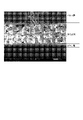
- FIG. 1 shows a cross-section of a layered structure of an article surface according to the invention
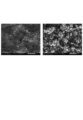
- FIG. 2 shows electron micrographs of a skin layer (left) on the surface of an article according to the present invention and a porous layer (right) after removing the skin layer.
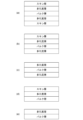
- 1 is a diagram showing a cross-sectional view of an embodiment in which an article according to the invention is in the form of a sheet; FIG.
- the article that diffusely reflects ultraviolet rays, visible rays and/or infrared rays according to the present invention and the method for producing the same will be described below.
- thermoplastic polymers examples include polyethylene (PE), polypropylene (PP), polyamide (PA), polyacetal (POM), polyethylene terephthalate (PET), polybutylene terephthalate (PBT), polylactic acid (PLA), syndiotactic polystyrene. (SPS), polyvinylidene fluoride (PVDF) can be used.
- PE polyethylene
- PP polypropylene
- PA polyamide
- POM polyacetal
- PET polyethylene terephthalate
- PBT polybutylene terephthalate
- PLA polylactic acid
- SPS syndiotactic polystyrene.
- PVDF polyvinylidene fluoride
- thermoplastic polymers a mixture or blend of two or more of the thermoplastic polymers can be used, and the main component of the mixture or blend (in the case of a blend, its continuous phase) is the thermoplastic polymer. It is also possible to use mixtures or blends of said thermoplastic polymer with other thermoplastic polymers different from said thermoplastic polymer. Also, the polymer may be a homopolymer or a copolymer. From the point of view of diffuse reflectance, block copolymers are advantageous, for example block copolymers of polypropylene composed of propylene and ethylene.
- block copolymers or polymer blends having a sea-island structure is advantageous from the standpoint of diffuse reflectance over the entire range (UV, VIS and IR) including ultraviolet light.
- the "sea-island structure” means, for example, in the case of a block copolymer whose main component is polypropylene, a copolymer component or a mixture component (for example, polyethylene) is discontinuous within a region (sea) in which polypropylene (homo PP) is continuous. Refers to a distributed (island) structure.
- polymer blend two or more incompatible polymers with different chemical structures are melt-kneaded to form a continuous sea region and discontinuously dispersed island regions within the sea region.
- a "sea-island structure" is obtained.
- copolymer components or mixed components include, in addition to ethylene, olefin compounds such as methacrylic acid, methyl methacrylate, ethyl methacrylate, butyl methacrylate, methyl acrylate, ethyl acrylate, butyl acrylate and vinyl acetate, Combinations of these polymers can be used.
- thermoplastic polymers that can be used according to the invention, for example, TIPPLEN H681F, H649FH, H145F, K793, K597, K691, K199, K395A, K948, etc. can be used.
- TIPPLEN K793, K597, K691, K199, K395A, K948 are polypropylene block copolymers obtained from propylene and ethylene. It is more resistant to sunlight and UV rays than general-purpose polymers, and may become brittle or deteriorate when used outdoors in direct sunlight or when used as a UV reflector for a long period of time. It is advantageous to use PVDF that is free of
- the article that diffusely reflects ultraviolet light, visible light and/or infrared light comprises at least one skin layer, at least one porous layer formed in contact with the skin layer, and formed in contact with the porous layer. It has a layered structure built up in the order described above from the bulk layers formed.
- FIG. 1 is an electron micrograph of a cross-sectional view of an article according to the invention.
- a “skin layer” according to the present invention is a layer formed on the surface of an article by contacting a molded article made of a thermoplastic polymer with a solvent by the method according to the present invention.
- the article according to the invention has a high reflectance for UV, visible and/or IR radiation, preferably above 60%, more preferably above 70%, particularly preferably above 80%, especially It can be diffusely reflected with a reflectance of greater than 90%.
- the skin layer can also be peeled off from the underlying porous layer.
- the article according to the present invention has a layered structure composed of at least one porous layer and a bulk layer formed in contact with the porous layer in the order described above.
- the diffuse reflectance on the surface of the article according to the present invention can be measured using a PerkinElmer LAMBDA 1050+ UV/Vis/NIR Spectrophotometer (using a 150 mm integrating sphere, fixed at 8°). Reflectance is measured at various wavelengths. The measurement results can be expressed in relative reflectance, with the reflectance of the Spectralon 1050 calibration sample being 100%.
- the "porous layer” according to the present invention is a porous layer formed by contacting a molded body made of a thermoplastic polymer with a solvent by the method according to the present invention, and the skin formed on the surface of the article. exists under the layer.
- the voids (pores) of the porous layer are formed by transcrystallization by TIPS (Thermally Induced Phase Separation) technology and/or by partial dissolution of the thermoplastic polymer that constitutes the article. .
- TIPS Thermally Induced Phase Separation
- the size of the voids (pores) in the porous layer can be reduced.
- FIG. 2 shows electron micrographs of the surface of the skin layer and the surface of the porous layer after removing the skin layer.
- the porous layer after removal of the skin layer like the surface of the skin layer, also has a high UV, visible and/or infrared radiation, particularly preferably all radiation in the UV, visible and infrared ranges. It can be diffusely reflected, preferably with a reflectance of more than 60%, more preferably more than 70%, particularly preferably more than 80%, especially more than 90%.
- a “bulk layer” according to the present invention is a layer that maintains the original composition and structure of a molding made of a thermoplastic polymer prior to contact with a solvent.
- the bulk layer is that part of the article after solvent treatment which was unaffected by the contacting of the thermoplastic compact with the solvent by the method according to the invention, and which is below the porous layer.
- It is a layer of thermoplastic polymer present on the side or inside.
- the crystallinity of the bulk layer is usually 25 to 60%, but it is conceivable that the preferred range of the crystallinity may vary depending on the type of thermoplastic polymer that constitutes the bulk layer. For example, it is 25-50% for block copolymers of polypropylene (PP), 30-50% for homopolymers of PP, and 35-60% for homopolymers of polyvinylidene fluoride (PVDF).
- PP polypropylene
- PVDF polyvinylidene fluoride
- the skin layer, the porous layer, and the bulk layer are formed by treating a molding made of a thermoplastic polymer with a solvent by a predetermined method. are composed of the same thermoplastic polymer.
- the skin layer and the porous layer can be clearly distinguished at their boundaries, and the skin layer can also be peeled off from the porous layer, while these layers are separated from the thermoplastic polymer composing the article. It does not contain a different material different from the one used, nor is it formed by coating or the like. The same applies to the porous layer and the bulk layer.
- the skin layer can be removed immediately after manufacturing the article according to the present invention, or can be left unremoved until just before the article is used for the purpose of protecting the surface of the article.
- the surface of the removed skin layer, which was in contact with the porous layer, also has a hierarchical crystal structure composed of microstructures and nanostructures, similar to the porous layer. Therefore, the peeled skin layer can also be used as a film that diffusely reflects ultraviolet rays, visible rays and/or infrared rays.
- the thickness of the at least one skin layer varies over a wide range depending on various conditions, such as the type of thermoplastic polymer and solvent, and the time and temperature for contacting the molded body made of the thermoplastic polymer with the solvent. sell.
- the thickness of said at least one skin layer is between 5 and 700 ⁇ m, preferably between 5 and 500 ⁇ m.
- the thickness of the skin layer may be less than the thickness range and may be greater than the thickness range.
- the thickness of the at least one porous layer varies widely depending on various conditions such as the type of thermoplastic polymer and solvent, and the time and temperature for contacting the molded body made of the thermoplastic polymer with the solvent. It can vary within a range.
- the thickness of said at least one porous layer is between 20 and 1000 ⁇ m, preferably between 20 and 700 ⁇ m. However, the thickness of the porous layer may be less than the thickness range and may be greater than the thickness range.
- the thickness of said at least one skin layer relative to the thickness of said at least one porous layer may be between 0.5% and 400%, preferably between 0.76 and 325%. be.
- the thickness of the at least one skin layer with respect to the thickness of the at least one porous layer may be constant or may vary. You may When the thickness of the at least one skin layer with respect to the thickness of the at least one porous layer varies in one compact, the variation may be up to about 275%.
- the thermoplastic polymer constituting the article does not contain foreign material different from the material constituting the article.
- the thermoplastic polymer constituting said article contains additives customary in the field of plastics, such as nucleating agents, flame retardants, antioxidants, UV absorbers, stabilizers, fillers, antistatic agents.
- additives customary in the field of plastics, such as nucleating agents, flame retardants, antioxidants, UV absorbers, stabilizers, fillers, antistatic agents.
- additives selected from the group consisting of agents, lubricants, dispersants, reinforcing agents, colorants, diffuse reflectors, conductive fillers and thermally conductive fillers may be added.
- the above additives are merely examples, and other additives may be added to the thermoplastic polymer instead of or in addition to these additives.
- the diffuse reflectance of the article according to the invention can be further improved by adding eg a TiO 2 filler as a diffuse reflector to the thermoplastic polymer.
- the article that diffusely reflects ultraviolet light, visible light and/or infrared light according to the present invention may have any shape.
- the article according to the invention has the shape of a flat film, sheet or plate, or has the shape of a film, sheet or plate with folds, or has a three-dimensional shape.
- may be Molded bodies having a thickness of 1 mm or more are generally called plates or boards.
- a film refers to a membranous material having a thickness of less than 250 ⁇ m
- a sheet refers to a thin plate-like material having a thickness of 250 ⁇ m or more.
- FIG. 3 illustrates an embodiment in which the article according to the invention is sheet-like or plate-like.
- a porous layer and a skin layer may be formed on both sides of the bulk layer, respectively, as shown in FIG. 3(a), or as shown in FIG. 3(c), A porous layer and a skin layer may be formed only on one side of the bulk layer.
- the skin layer on one side is peeled off to obtain the structure shown in FIG. 3(b), and the skin layers on both sides are peeled off.
- FIG. 3(c) it is also possible to obtain an article in which the porous layers are exposed on both sides.
- FIGS. 3(a), (b), and (c) are obtained when both sides of a sheet-like or plate-like article are brought into contact with a solvent by the method according to the present invention described below. and the structures shown in (d) and (e) of FIG. 3 are obtained when only one side of the sheet-like or plate-like article is brought into contact with the solvent by the method according to the present invention. are examples only and are not intended to limit the invention.
- the present invention further provides a method of manufacturing an article that diffusely reflects the ultraviolet rays, visible rays and/or infrared rays.
- the article comprises at least (a) a step of contacting a molded body made of a thermoplastic polymer with a solvent; (b) drying and cooling the compact that has been brought into contact with the solvent.
- the solvent has a boiling point higher than the crystallization temperature (Tc) of the thermoplastic polymer, and the difference between the Hildebrand solubility parameter (SP value) of the solvent and the Hildebrand solubility parameter of the thermoplastic polymer is Any solvent can be used as long as it meets the two requirements of being less than 7.5 MPa 1/2 .
- the difference between the SP value of the solvent and the SP value of the thermoplastic polymer is preferably less than 7.2 MPa 1/2 , more preferably 5.25 MPa 1 /2 , more preferably less than 5 MPa 1/2 .
- solvents examples include n-pentane, n-hexane, n-heptane, n-octane, n-nonane, n-decane, n-undecane, n-dodecane, diethyl ether, cyclohexane, xylene, decalin, and ethyl acetate.
- the SP value of a solvent is for numerically estimating the interaction of multiple substances, and serves as a measure of the solubility of a substance.
- the Hildebrand SP value can be determined based on existing database information, and can be estimated from UV measurement, swelling degree, cloud point, theoretical calculation, etc. of the solution (unit: MPa 2/1 ).
- the preferred solvents are xylene, decalin, and butyl acetate.
- the preferred solvent is decalin.
- the preferred solvent is DMSO.
- the temperature of the solvent when the solvent is brought into contact with a molded article made of a thermoplastic polymer for example, a molded article having the shape of a film, a sheet or a plate is
- the crystallization temperature (Tc) of the polymer is ⁇ 50° C. or higher, preferably the crystallization temperature (Tc) of the thermoplastic polymer is ⁇ 10° C. or higher, and the boiling point or lower of the solvent (Tc of the thermoplastic polymer is ⁇ 50° C., preferably may be in a liquid phase or a gas phase, as long as the Tc of the thermoplastic polymer - 10°C ⁇ the solvent temperature during the treatment in step (a) ⁇ the boiling point of the solvent).
- the preferred temperature range is about 90 to 160°C, and the more preferred temperature range is about 110 to 150°C.
- the molded article made of a thermoplastic polymer may be brought into contact with the solvent over its entire surface, or if necessary, only a part of its surface, for example, in the case of a sheet-like molded article, may be contacted with the solvent. Only one side may be contacted with the solvent.
- the contact time depends on the type of thermoplastic polymer and solvent used, the temperature at which the compact and solvent are contacted, and the efficiency of the process, but is preferably at least 30 seconds. This contact time is usually on the order of 30 seconds to 10 minutes from the standpoint of obtaining a good diffusely reflective surface and forming a continuous, peelable skin layer.
- the preheating temperature is not particularly limited, but from the viewpoint of process efficiency, it is preferably below the temperature at which the compact and the solvent are brought into contact.
- step (b) the solvent is removed from the compact that has been brought into contact with the solvent at a predetermined treatment temperature in step (a), and the compact is dried and cooled.
- the temperature for drying the molded article may be ambient temperature or room temperature, and from the viewpoint of forming a good skin layer, the drying temperature is preferably at least 20° C. higher than the Tc of the thermoplastic polymer constituting the molded article. is advantageously at least 30°C lower.
- the drying in step (b) may be preferably carried out multiple times at the same or different temperatures using the same or different drying means. .
- the drying means and drying temperature used in the method according to the invention are not particularly limited, but from the point of view of process efficiency, the temperature of the drying step or steps preceding the last drying step should exceed the temperature of the last drying step. preferably not.
- the method for producing the article that diffusely reflects ultraviolet rays, visible rays and/or infrared rays according to the present invention may be carried out in a batch mode or a continuous mode. Which mode is used depends on the shape of the molded article, manufacturing equipment, etc., but is not particularly limited as long as the method according to the present invention can be carried out.
- TSA co-rotating twin-screw extruder
- Example 2 A sheet obtained by extrusion molding in the same manner as in Example 1 from a polypropylene homopolymer (TIPPLEN H681F, manufactured by MOL Petrochemical Co., Ltd. in Hungary, crystallization temperature Tc: 109 ° C.) was extruded at 120 ° C. xylene (isomer mixture , CAS number: 1330-20-7, industrial grade, obtained from VWR international Ltd.) was immersed in the bath for 60 seconds.
- TIPPLEN H681F polypropylene homopolymer
- Example 3 The sheet was treated in the same manner as in Example 2, and after drying, the skin layer formed on the surface of the sheet was removed.
- Example 4 The sheet was treated as in Example 2, except the solvent temperature was 110°C.
- Example 5 A sheet obtained by extrusion molding in the same manner as in Example 1 from a polypropylene block copolymer (TIPPLEN K691, manufactured by MOL Petrochemical Co., Ltd.
- Example 6 A sheet obtained by extrusion molding in the same manner as in Example 1 from a polypropylene block copolymer (TIPPLEN K793, manufactured by MOL Petrochemical Co., Ltd.
- Example 7 A sheet obtained by extrusion molding in the same manner as in Example 1 from a polypropylene block copolymer (TIPPLEN K793, manufactured by MOL Petrochemical Co., Ltd.
- Example 8 A polyvinylidene fluoride sheet (PVDF, Simona 030001921) was immersed in a 110° C. DMSO (CAS number: 67-68-5, >99.0% purity, obtained from VWR international Ltd.) bath for 180 seconds.
- Example 1 A sheet obtained by extrusion molding in the same manner as in Example 1 from a polypropylene random copolymer (TIPPLEN R780, manufactured by MOL Petrochemical Co., Ltd. in Hungary, a random copolymer of propylene and ethylene, crystallization temperature Tc: 97.8 ° C.) was immersed in a xylene (isomer mixture, CAS number: 1330-20-7, industrial grade, obtained from VWR international Ltd.) bath at 110° C. for 60 seconds. The sheets were then dried in a drying oven at ambient temperature.
- TIPPLEN R780 manufactured by MOL Petrochemical Co., Ltd. in Hungary, a random copolymer of propylene and ethylene, crystallization temperature Tc: 97.8 ° C.
- [Comparative Example 2] A sheet obtained by extrusion in the same manner as in Example 1 from a polypropylene block copolymer (TIPPLEN K691, manufactured by MOL Petrochemical Co., Ltd. in Hungary, block copolymer of propylene and ethylene, crystallization temperature Tc: 120°C). No solvent treatment.
- [Comparative Example 3] A sheet obtained by extrusion molding in the same manner as in Example 1 from a polypropylene block copolymer (TIPPLEN K793, manufactured by MOL Petrochemical Co., Ltd., Hungary, block copolymer of propylene and ethylene, crystallization temperature Tc: 111°C). No solvent treatment.
- Example 4 A sheet obtained by extrusion molding in the same manner as in Example 1 from a polypropylene homopolymer (TIPPLEN H681F, manufactured by MOL Petrochemical Co., Ltd. located in Hungary, crystallization temperature Tc: 109°C). No solvent treatment.
- thermoplastic polymer used in these examples and comparative examples its crystallization temperature Tc, melting temperature Tm, solvent bath temperature (treatment temperature), immersion time in the solvent bath (treatment time), and ultraviolet light (222 nm, 273 nm), visible light (500 nm, 600 nm), and infrared light (1600 nm, 2000 nm) are summarized in Table 1 below.
- the method for measuring diffuse reflectance is as follows: Diffuse reflectance on the surface of articles according to the invention was performed using a PerkinElmer LAMBDA 1050+ UV/Vis/NIR Spectrophotometer 150 mm integrating sphere, position fixed at 8°. Reflectance was measured at the various wavelengths described above. The measurement results were expressed as relative reflectance, with the reflectance of the Spectralon 1050 calibration sample set to 100%.
- Examples 1 to 8 according to the invention were treated by contacting molded bodies made of thermoplastic polymers with a solvent at a temperature higher than 50° C. below the crystallization temperature Tc of the respective polymer.
- a layer structure composed of at least one skin layer, at least one porous layer and a bulk layer in the order described above is formed on the surface in contact with the solvent.
- the diffuse reflectance was measured while leaving the skin layer formed on the surface.
- the diffuse reflectance was measured after removing the skin layer formed on the surface.
- high diffuse reflectance was measured for visible light and infrared light.
- high diffuse reflectance was measured not only for visible light and infrared light but also for ultraviolet light.
- Comparative Example 1 using a sheet made of a random copolymer of polypropylene, no peelable skin layer was formed on the treated surface, and the diffuse reflectance was measured for all of ultraviolet light, visible light, and infrared light. I could't.
- Comparative Examples 2 to 4 are sheets made of the polypropylene homopolymer or polypropylene block copolymer used in the Examples, but were not surface-treated with a solvent. In these comparative examples, a certain diffuse reflectance was measured for all of ultraviolet light, visible light, and infrared light, but the value was 30% or less, which is much lower than that of the examples according to the present invention.
- the article according to the present invention can be used in many applications because it diffusely reflects ultraviolet rays, visible rays and/or infrared rays with high reflectance.
- it can be used as a diffuse reflective film in direct view displays used in electronic devices such as instrument panels, portable computer screens, liquid crystal displays (LCDs), or in diffuse reflective photoelectric sensors.
- the article according to the present invention has a high diffuse reflectance of ultraviolet rays, it is possible to improve the efficiency when used in an ultraviolet reaction device, an ultraviolet light source, and an ultraviolet lamp such as a germicidal lamp.
- the article according to the present invention has excellent diffuse reflectance of visible light, it can also be used for, for example, a diffusion type projector screen.
- the article according to the present invention due to the property of being able to diffusely reflect visible light and/or infrared rays with high reflectance, the article according to the present invention, such as a sheet or panel, can be used in the outer wall or interior of a building to provide a certain visual effect or heat shielding effect. You can also get
Landscapes
- Physics & Mathematics (AREA)
- General Physics & Mathematics (AREA)
- Optics & Photonics (AREA)
- Engineering & Computer Science (AREA)
- Manufacturing & Machinery (AREA)
- Manufacture Of Porous Articles, And Recovery And Treatment Of Waste Products (AREA)
Priority Applications (2)
| Application Number | Priority Date | Filing Date | Title |
|---|---|---|---|
| EP22876455.1A EP4410534A4 (en) | 2021-09-30 | 2022-09-29 | ARTICLE DIFFUSELY REFLECTING ULTRAVIOLET LIGHT, VISIBLE LIGHT AND/OR INFRARED LIGHT, AND METHOD FOR PRODUCING THE SAME |
| JP2023551852A JPWO2023054591A1 (enExample) | 2021-09-30 | 2022-09-29 |
Applications Claiming Priority (2)
| Application Number | Priority Date | Filing Date | Title |
|---|---|---|---|
| JP2021-161976 | 2021-09-30 | ||
| JP2021161976 | 2021-09-30 |
Publications (1)
| Publication Number | Publication Date |
|---|---|
| WO2023054591A1 true WO2023054591A1 (ja) | 2023-04-06 |
Family
ID=85782902
Family Applications (1)
| Application Number | Title | Priority Date | Filing Date |
|---|---|---|---|
| PCT/JP2022/036457 Ceased WO2023054591A1 (ja) | 2021-09-30 | 2022-09-29 | 紫外線、可視光線および/または赤外線を拡散反射する物品およびその製造方法 |
Country Status (3)
| Country | Link |
|---|---|
| EP (1) | EP4410534A4 (enExample) |
| JP (1) | JPWO2023054591A1 (enExample) |
| WO (1) | WO2023054591A1 (enExample) |
Citations (21)
| Publication number | Priority date | Publication date | Assignee | Title |
|---|---|---|---|---|
| JPS4958164A (enExample) * | 1972-06-29 | 1974-06-05 | ||
| JPS4936837B1 (enExample) * | 1970-02-16 | 1974-10-03 | ||
| JPH0780956A (ja) * | 1993-09-16 | 1995-03-28 | Nissha Printing Co Ltd | 光散乱材の製造方法 |
| US5917567A (en) | 1997-05-22 | 1999-06-29 | Lg Electronics Inc. | Method of manufacturing a reflector comprising steps forming beads and polymer layer separately |
| US6780355B2 (en) | 1997-10-24 | 2004-08-24 | 3M Innovative Properties Company | Diffuse reflective articles |
| US6898012B2 (en) | 2002-05-16 | 2005-05-24 | Eastman Kodak Company | Light reflector with variable diffuse light reflection |
| EP1637905A1 (en) | 2003-05-21 | 2006-03-22 | Yupo Corporation | Optical reflector and surface light source device |
| JP2007518832A (ja) * | 2003-06-30 | 2007-07-12 | スリーエム イノベイティブ プロパティズ カンパニー | 難燃剤を含有する微孔質物品;フィルムおよびその多層フィルム |
| US20080080055A1 (en) | 2006-09-29 | 2008-04-03 | Edwin James Lightfoot | Diffuse reflector comprising nonwoven sheet with binder layer comprising binder and scatterer of visible light |
| US20080310169A1 (en) * | 2007-06-18 | 2008-12-18 | Forhouse Cor4Poration | Diffusive plate of backlight module with porous diffusive layer |
| WO2011074418A1 (ja) * | 2009-12-14 | 2011-06-23 | ダイセル化学工業株式会社 | 多孔質層を有する積層体、及びそれを用いた機能性積層体 |
| WO2011105294A1 (ja) | 2010-02-24 | 2011-09-01 | 東レ株式会社 | エッジライト型バックライト用白色反射フィルム及びそれを用いたバックライト |
| EP2388641A1 (en) | 2010-05-20 | 2011-11-23 | LOFO High Tech Film GmbH | Reflecting films obtained by solvent casting and their use |
| JP2013508780A (ja) * | 2009-10-24 | 2013-03-07 | スリーエム イノベイティブ プロパティズ カンパニー | 空隙を有するディフューザー |
| KR20130077669A (ko) * | 2011-12-29 | 2013-07-09 | 도레이첨단소재 주식회사 | 광확산용 발포수지 필름 및 그를 이용한 광확산 필름 |
| WO2013137260A1 (ja) * | 2012-03-12 | 2013-09-19 | ナノシータ株式会社 | 高分子超薄膜及び多孔質高分子超薄膜 |
| WO2014018301A1 (en) | 2012-07-23 | 2014-01-30 | Arkema France | Optical reflectors, reflection films and sheets |
| JP2014202994A (ja) * | 2013-04-08 | 2014-10-27 | 帝人株式会社 | 反射偏光フィルム積層体、それからなる液晶ディスプレイ用光学部材および液晶ディスプレイ |
| US9228716B2 (en) | 2004-04-08 | 2016-01-05 | Research Triangle Institute | Reflective nanofiber lighting devices |
| WO2019140527A1 (en) | 2018-01-17 | 2019-07-25 | Nanotech Security Corp. | Nano-structures patterned on micro-structures |
| CN111933824A (zh) * | 2020-07-06 | 2020-11-13 | 华南理工大学 | 一种作为光取出层的微透镜、散射层及其制备方法 |
-
2022
- 2022-09-29 WO PCT/JP2022/036457 patent/WO2023054591A1/ja not_active Ceased
- 2022-09-29 JP JP2023551852A patent/JPWO2023054591A1/ja active Pending
- 2022-09-29 EP EP22876455.1A patent/EP4410534A4/en active Pending
Patent Citations (21)
| Publication number | Priority date | Publication date | Assignee | Title |
|---|---|---|---|---|
| JPS4936837B1 (enExample) * | 1970-02-16 | 1974-10-03 | ||
| JPS4958164A (enExample) * | 1972-06-29 | 1974-06-05 | ||
| JPH0780956A (ja) * | 1993-09-16 | 1995-03-28 | Nissha Printing Co Ltd | 光散乱材の製造方法 |
| US5917567A (en) | 1997-05-22 | 1999-06-29 | Lg Electronics Inc. | Method of manufacturing a reflector comprising steps forming beads and polymer layer separately |
| US6780355B2 (en) | 1997-10-24 | 2004-08-24 | 3M Innovative Properties Company | Diffuse reflective articles |
| US6898012B2 (en) | 2002-05-16 | 2005-05-24 | Eastman Kodak Company | Light reflector with variable diffuse light reflection |
| EP1637905A1 (en) | 2003-05-21 | 2006-03-22 | Yupo Corporation | Optical reflector and surface light source device |
| JP2007518832A (ja) * | 2003-06-30 | 2007-07-12 | スリーエム イノベイティブ プロパティズ カンパニー | 難燃剤を含有する微孔質物品;フィルムおよびその多層フィルム |
| US9228716B2 (en) | 2004-04-08 | 2016-01-05 | Research Triangle Institute | Reflective nanofiber lighting devices |
| US20080080055A1 (en) | 2006-09-29 | 2008-04-03 | Edwin James Lightfoot | Diffuse reflector comprising nonwoven sheet with binder layer comprising binder and scatterer of visible light |
| US20080310169A1 (en) * | 2007-06-18 | 2008-12-18 | Forhouse Cor4Poration | Diffusive plate of backlight module with porous diffusive layer |
| JP2013508780A (ja) * | 2009-10-24 | 2013-03-07 | スリーエム イノベイティブ プロパティズ カンパニー | 空隙を有するディフューザー |
| WO2011074418A1 (ja) * | 2009-12-14 | 2011-06-23 | ダイセル化学工業株式会社 | 多孔質層を有する積層体、及びそれを用いた機能性積層体 |
| WO2011105294A1 (ja) | 2010-02-24 | 2011-09-01 | 東レ株式会社 | エッジライト型バックライト用白色反射フィルム及びそれを用いたバックライト |
| EP2388641A1 (en) | 2010-05-20 | 2011-11-23 | LOFO High Tech Film GmbH | Reflecting films obtained by solvent casting and their use |
| KR20130077669A (ko) * | 2011-12-29 | 2013-07-09 | 도레이첨단소재 주식회사 | 광확산용 발포수지 필름 및 그를 이용한 광확산 필름 |
| WO2013137260A1 (ja) * | 2012-03-12 | 2013-09-19 | ナノシータ株式会社 | 高分子超薄膜及び多孔質高分子超薄膜 |
| WO2014018301A1 (en) | 2012-07-23 | 2014-01-30 | Arkema France | Optical reflectors, reflection films and sheets |
| JP2014202994A (ja) * | 2013-04-08 | 2014-10-27 | 帝人株式会社 | 反射偏光フィルム積層体、それからなる液晶ディスプレイ用光学部材および液晶ディスプレイ |
| WO2019140527A1 (en) | 2018-01-17 | 2019-07-25 | Nanotech Security Corp. | Nano-structures patterned on micro-structures |
| CN111933824A (zh) * | 2020-07-06 | 2020-11-13 | 华南理工大学 | 一种作为光取出层的微透镜、散射层及其制备方法 |
Non-Patent Citations (2)
| Title |
|---|
| A. K. R. CHOUDHURY, COLOUR AND APPEARANCE ATTRIBUTES. PRINCIPLES OF COLOUR AND APPEARANCE MEASUREMENT, 2014, pages 103 - 143 |
| See also references of EP4410534A4 |
Also Published As
| Publication number | Publication date |
|---|---|
| EP4410534A4 (en) | 2025-10-08 |
| JPWO2023054591A1 (enExample) | 2023-04-06 |
| EP4410534A1 (en) | 2024-08-07 |
Similar Documents
| Publication | Publication Date | Title |
|---|---|---|
| TW527507B (en) | White film for surface light source | |
| KR101421766B1 (ko) | 지방족 폴리에스테르계 필름 | |
| TW200829962A (en) | White polyester film for light reflecting plate | |
| KR20090108595A (ko) | 백색 폴리에스테르 필름 및 반사시트 | |
| JP2002090515A (ja) | 面光源反射部材用白色フィルム | |
| EP2751176B1 (en) | Optical film and preparation method thereof | |
| CN101596802A (zh) | 一种光学用聚酯薄膜及其制备方法 | |
| TW201609405A (zh) | 聚酯薄膜 | |
| WO2023054591A1 (ja) | 紫外線、可視光線および/または赤外線を拡散反射する物品およびその製造方法 | |
| JP2001322218A (ja) | 共押出積層ポリエステルフィルム | |
| KR101574190B1 (ko) | 백색 폴리에스테르 반사필름과 이의 제조방법 및 이를 이용한 반사시트 | |
| JP4766873B2 (ja) | 共押出し積層ポリエテルフィルム | |
| KR20160137992A (ko) | 적층 필름 | |
| JP4774720B2 (ja) | レンズシート用積層二軸延伸ポリエステルフィルム | |
| JP2007183423A (ja) | 電子ペーパー用ポリエステルフィルム | |
| JP4583105B2 (ja) | 共押出し積層ポリエテルフィルム | |
| JP2019155684A (ja) | 積層フィルム | |
| JP4630642B2 (ja) | 脂肪族ポリエステル系樹脂反射フィルム及び反射板 | |
| JP2006145568A (ja) | 脂肪族ポリエステル系樹脂反射フィルム及び反射板 | |
| JP4804741B2 (ja) | 脂肪族ポリエステル系樹脂反射フィルム及び反射板 | |
| JP2006208993A (ja) | 光拡散性フィルム | |
| KR101671817B1 (ko) | 저광택 백색 폴리에스테르 필름 및 이의 제조방법과 이를 이용한 반사 시트 | |
| JP4996844B2 (ja) | 光学用積層ポリエステルフィルム | |
| JP5393818B2 (ja) | 光学用積層ポリエステルフィルム | |
| JP5114661B2 (ja) | 光拡散性フィルムおよびその製造方法 |
Legal Events
| Date | Code | Title | Description |
|---|---|---|---|
| 121 | Ep: the epo has been informed by wipo that ep was designated in this application |
Ref document number: 22876455 Country of ref document: EP Kind code of ref document: A1 |
|
| WWE | Wipo information: entry into national phase |
Ref document number: 2023551852 Country of ref document: JP |
|
| NENP | Non-entry into the national phase |
Ref country code: DE |
|
| ENP | Entry into the national phase |
Ref document number: 2022876455 Country of ref document: EP Effective date: 20240430 |