WO2023022010A1 - 共重合体、及び樹脂組成物 - Google Patents
共重合体、及び樹脂組成物 Download PDFInfo
- Publication number
- WO2023022010A1 WO2023022010A1 PCT/JP2022/029967 JP2022029967W WO2023022010A1 WO 2023022010 A1 WO2023022010 A1 WO 2023022010A1 JP 2022029967 W JP2022029967 W JP 2022029967W WO 2023022010 A1 WO2023022010 A1 WO 2023022010A1
- Authority
- WO
- WIPO (PCT)
- Prior art keywords
- copolymer
- mol
- monomer unit
- group
- copolymer according
- Prior art date
- Legal status (The legal status is an assumption and is not a legal conclusion. Google has not performed a legal analysis and makes no representation as to the accuracy of the status listed.)
- Ceased
Links
Classifications
-
- B—PERFORMING OPERATIONS; TRANSPORTING
- B32—LAYERED PRODUCTS
- B32B—LAYERED PRODUCTS, i.e. PRODUCTS BUILT-UP OF STRATA OF FLAT OR NON-FLAT, e.g. CELLULAR OR HONEYCOMB, FORM
- B32B15/00—Layered products comprising a layer of metal
- B32B15/04—Layered products comprising a layer of metal comprising metal as the main or only constituent of a layer, which is next to another layer of the same or of a different material
- B32B15/08—Layered products comprising a layer of metal comprising metal as the main or only constituent of a layer, which is next to another layer of the same or of a different material of synthetic resin
- B32B15/082—Layered products comprising a layer of metal comprising metal as the main or only constituent of a layer, which is next to another layer of the same or of a different material of synthetic resin comprising vinyl resins; comprising acrylic resins
-
- B—PERFORMING OPERATIONS; TRANSPORTING
- B32—LAYERED PRODUCTS
- B32B—LAYERED PRODUCTS, i.e. PRODUCTS BUILT-UP OF STRATA OF FLAT OR NON-FLAT, e.g. CELLULAR OR HONEYCOMB, FORM
- B32B27/00—Layered products comprising a layer of synthetic resin
- B32B27/30—Layered products comprising a layer of synthetic resin comprising vinyl (co)polymers; comprising acrylic (co)polymers
-
- C—CHEMISTRY; METALLURGY
- C08—ORGANIC MACROMOLECULAR COMPOUNDS; THEIR PREPARATION OR CHEMICAL WORKING-UP; COMPOSITIONS BASED THEREON
- C08F—MACROMOLECULAR COMPOUNDS OBTAINED BY REACTIONS ONLY INVOLVING CARBON-TO-CARBON UNSATURATED BONDS
- C08F212/00—Copolymers of compounds having one or more unsaturated aliphatic radicals, each having only one carbon-to-carbon double bond, and at least one being terminated by an aromatic carbocyclic ring
-
- C—CHEMISTRY; METALLURGY
- C08—ORGANIC MACROMOLECULAR COMPOUNDS; THEIR PREPARATION OR CHEMICAL WORKING-UP; COMPOSITIONS BASED THEREON
- C08F—MACROMOLECULAR COMPOUNDS OBTAINED BY REACTIONS ONLY INVOLVING CARBON-TO-CARBON UNSATURATED BONDS
- C08F212/00—Copolymers of compounds having one or more unsaturated aliphatic radicals, each having only one carbon-to-carbon double bond, and at least one being terminated by an aromatic carbocyclic ring
- C08F212/02—Monomers containing only one unsaturated aliphatic radical
-
- C—CHEMISTRY; METALLURGY
- C08—ORGANIC MACROMOLECULAR COMPOUNDS; THEIR PREPARATION OR CHEMICAL WORKING-UP; COMPOSITIONS BASED THEREON
- C08F—MACROMOLECULAR COMPOUNDS OBTAINED BY REACTIONS ONLY INVOLVING CARBON-TO-CARBON UNSATURATED BONDS
- C08F212/00—Copolymers of compounds having one or more unsaturated aliphatic radicals, each having only one carbon-to-carbon double bond, and at least one being terminated by an aromatic carbocyclic ring
- C08F212/02—Monomers containing only one unsaturated aliphatic radical
- C08F212/04—Monomers containing only one unsaturated aliphatic radical containing one ring
- C08F212/06—Hydrocarbons
- C08F212/08—Styrene
-
- C—CHEMISTRY; METALLURGY
- C08—ORGANIC MACROMOLECULAR COMPOUNDS; THEIR PREPARATION OR CHEMICAL WORKING-UP; COMPOSITIONS BASED THEREON
- C08F—MACROMOLECULAR COMPOUNDS OBTAINED BY REACTIONS ONLY INVOLVING CARBON-TO-CARBON UNSATURATED BONDS
- C08F222/00—Copolymers of compounds having one or more unsaturated aliphatic radicals, each having only one carbon-to-carbon double bond, and at least one being terminated by a carboxyl radical and containing at least one other carboxyl radical in the molecule; Salts, anhydrides, esters, amides, imides, or nitriles thereof
- C08F222/36—Amides or imides
- C08F222/40—Imides, e.g. cyclic imides
-
- C—CHEMISTRY; METALLURGY
- C08—ORGANIC MACROMOLECULAR COMPOUNDS; THEIR PREPARATION OR CHEMICAL WORKING-UP; COMPOSITIONS BASED THEREON
- C08F—MACROMOLECULAR COMPOUNDS OBTAINED BY REACTIONS ONLY INVOLVING CARBON-TO-CARBON UNSATURATED BONDS
- C08F236/00—Copolymers of compounds having one or more unsaturated aliphatic radicals, at least one having two or more carbon-to-carbon double bonds
- C08F236/02—Copolymers of compounds having one or more unsaturated aliphatic radicals, at least one having two or more carbon-to-carbon double bonds the radical having only two carbon-to-carbon double bonds
- C08F236/20—Copolymers of compounds having one or more unsaturated aliphatic radicals, at least one having two or more carbon-to-carbon double bonds the radical having only two carbon-to-carbon double bonds unconjugated
-
- C—CHEMISTRY; METALLURGY
- C08—ORGANIC MACROMOLECULAR COMPOUNDS; THEIR PREPARATION OR CHEMICAL WORKING-UP; COMPOSITIONS BASED THEREON
- C08L—COMPOSITIONS OF MACROMOLECULAR COMPOUNDS
- C08L23/00—Compositions of homopolymers or copolymers of unsaturated aliphatic hydrocarbons having only one carbon-to-carbon double bond; Compositions of derivatives of such polymers
- C08L23/02—Compositions of homopolymers or copolymers of unsaturated aliphatic hydrocarbons having only one carbon-to-carbon double bond; Compositions of derivatives of such polymers not modified by chemical after-treatment
- C08L23/18—Homopolymers or copolymers of hydrocarbons having four or more carbon atoms
- C08L23/20—Homopolymers or copolymers of hydrocarbons having four or more carbon atoms having four to nine carbon atoms
-
- C—CHEMISTRY; METALLURGY
- C08—ORGANIC MACROMOLECULAR COMPOUNDS; THEIR PREPARATION OR CHEMICAL WORKING-UP; COMPOSITIONS BASED THEREON
- C08L—COMPOSITIONS OF MACROMOLECULAR COMPOUNDS
- C08L25/00—Compositions of, homopolymers or copolymers of compounds having one or more unsaturated aliphatic radicals, each having only one carbon-to-carbon double bond, and at least one being terminated by an aromatic carbocyclic ring; Compositions of derivatives of such polymers
- C08L25/02—Homopolymers or copolymers of hydrocarbons
- C08L25/04—Homopolymers or copolymers of styrene
-
- C—CHEMISTRY; METALLURGY
- C08—ORGANIC MACROMOLECULAR COMPOUNDS; THEIR PREPARATION OR CHEMICAL WORKING-UP; COMPOSITIONS BASED THEREON
- C08L—COMPOSITIONS OF MACROMOLECULAR COMPOUNDS
- C08L29/00—Compositions of homopolymers or copolymers of compounds having one or more unsaturated aliphatic radicals, each having only one carbon-to-carbon double bond, and at least one being terminated by an alcohol, ether, aldehydo, ketonic, acetal or ketal radical; Compositions of hydrolysed polymers of esters of unsaturated alcohols with saturated carboxylic acids; Compositions of derivatives of such polymers
- C08L29/10—Homopolymers or copolymers of unsaturated ethers
-
- C—CHEMISTRY; METALLURGY
- C08—ORGANIC MACROMOLECULAR COMPOUNDS; THEIR PREPARATION OR CHEMICAL WORKING-UP; COMPOSITIONS BASED THEREON
- C08L—COMPOSITIONS OF MACROMOLECULAR COMPOUNDS
- C08L35/00—Compositions of homopolymers or copolymers of compounds having one or more unsaturated aliphatic radicals, each having only one carbon-to-carbon double bond, and at least one being terminated by a carboxyl radical, and containing at least one other carboxyl radical in the molecule, or of salts, anhydrides, esters, amides, imides or nitriles thereof; Compositions of derivatives of such polymers
- C08L35/06—Copolymers with vinyl aromatic monomers
Definitions
- the present disclosure relates to copolymers and resin compositions.
- Patent Document 1 discloses an invention relating to a composition containing a predetermined fluorine-containing thermosetting resin, a siloxane compound, and a hydrosilylation reaction catalyst.
- fluorine-containing thermosetting resins is nothing more than those obtained by introducing cross-linking groups into OH group-containing fluorine resins by polymer reaction.
- Patent Literature 2 discloses an invention relating to a given laminate, and describes introducing a cross-linking group using a fluorine-containing thermosetting resin. However, it is only described that a cross-linking group is introduced into an OH group-containing fluororesin by a polymer reaction.
- Patent Document 3 discloses an invention relating to a specific curable resin composition comprising a fluoropolymer and a hydrosilylation cross-linking agent, and describes examples of dicyclopentadiene and fluoroolefin. However, it cannot be said that the polymerization efficiency is good. Further, although a curing system using a cross-linking agent is disclosed, a curing reaction by heat alone is not disclosed.
- the present disclosure provides a copolymer excellent in solvent solubility and low dielectric loss tangent.
- the present disclosure (1) relates to a copolymer comprising an aromatic vinyl monomer unit, a cross-linking group-containing monomer unit, and a monomer unit giving a homopolymer having a glass transition temperature of 150° C. or higher.
- the present disclosure (2) is the copolymer of the present disclosure (1) which is a thermosetting resin.
- (3) of the present disclosure is the copolymer of (1) or (2) of the present disclosure, wherein the aromatic vinyl monomer units are styrene units.
- the present disclosure (4) is a copolymer of any combination with any of the present disclosures (1) to (3), wherein the cross-linking group-containing monomer unit includes a diene monomer unit having an alicyclic structure.
- the present disclosure (5) is a copolymer of any combination with any of the present disclosures (1) to (3), wherein the cross-linking group-containing monomer unit includes a monomer unit having a dicyclopentenyl structure.
- the present disclosure (6) is any of the present disclosure (1) to (3), wherein the crosslinking group-containing monomer unit contains at least one selected from the group consisting of dicyclopentadiene units and dicyclopentenyl vinyl ether units. It is a copolymer of a combination of
- the present disclosure (7) is a copolymer of any combination with any of the present disclosures (1) to (6), wherein the monomer units that provide the homopolymer having a glass transition temperature of 150° C. or higher include maleimide units. .
- the present disclosure (8) is the copolymer of the present disclosure (7), wherein the maleimide units include at least one selected from the group consisting of N-cyclohexylmaleimide units and N-phenylmaleimide units.
- the present disclosure (9) is a copolymer of any combination with any of the present disclosures (1) to (8), further comprising a fluorine-containing monomer unit providing a C—F bond to the main chain.
- (10) of the present disclosure is a copolymer of any combination with any of (1) to (9) of the present disclosure having a glass transition temperature of 140° C. or higher.
- (11) of the present disclosure is a copolymer of any combination with any of (2) to (10) of the present disclosure having a heat curing temperature of 240° C. or lower.
- Disclosure (12) is a copolymer of any combination with any of Disclosures (1)-(11) having solubility in methyl ethyl ketone or toluene.
- the present disclosure (13) is any combination with any of the present disclosure (1) to (12), wherein the crosslinking group-containing monomer unit is 1 mol% or more with respect to the total polymerized units constituting the copolymer. It is a copolymer.
- the present disclosure (14) is the present disclosure (1) to (13), wherein the monomer unit that provides the homopolymer having a glass transition temperature of 150 ° C. or higher is 5 mol% or more with respect to the total polymer units constituting the copolymer. ) in any combination.
- Disclosure (15) is a copolymer of any combination with any of Disclosures (1) to (14) having a dielectric loss tangent of 0.0030 or less.
- Disclosure (16) relates to a copolymer composition
- a copolymer composition comprising a copolymer of any combination of any of the disclosures (1)-(15) and a solvent.
- Disclosure (17) is the copolymer composition of Disclosure (16) containing a polymer comprising multiple vinyl groups or a monomer component comprising multiple vinyl groups.
- This disclosure (18) is the copolymer composition of this disclosure (16) or (17) containing a photoinitiator.
- Disclosure (19) is a copolymer composition of any combination with any of Disclosures (16) to (18) having a gel fraction of 30% or more.
- This disclosure (20) relates to a film comprising a copolymer in any combination with any of this disclosure (1)-(15).
- the present disclosure (21) is a laminate comprising a substrate and a resin layer provided on the substrate, wherein the resin layer is any of the present disclosure (1) to (15). It relates to laminates comprising combinatorial copolymers.
- the present disclosure (22) is a metal-clad laminate comprising a metal foil and a resin layer provided on the metal foil, wherein the resin layer is any of the present disclosure (1) to (15).
- the present invention relates to a metal-clad laminate containing any combination of copolymers.
- the present disclosure (23) relates to a printed circuit board characterized by comprising a pattern circuit formed by etching the metal foil of the metal-clad laminate of the present disclosure (22).
- a copolymer excellent in solvent solubility and low dielectric loss tangent can be provided.
- cross-linking groups are generally introduced by synthesizing a polymer containing OH groups and introducing acrylic groups through a polymer reaction.
- acrylic monomers having isocyanate are reacted with OH groups to introduce them.
- the method is simple and widely used.
- resins having acrylic groups as cross-linking groups are not so good in electrical properties.
- there is a method of simply copolymerizing a diene monomer at the time of polymerization but there are problems such as gelation during polymerization and the introduction amount of cross-linking groups being limited.
- the copolymer (resin) of the present disclosure has aromatic vinyl monomer units, crosslinking group-containing monomer units, and monomer units that provide a homopolymer having a glass transition temperature of 150° C. or higher.
- the above copolymer is endowed with a very low dielectric loss tangent and is excellent in solvent solubility. Also, the dielectric constant and linear expansion coefficient are low.
- the cross-linking group-containing monomer unit is introduced, self-crosslinking (thermal cross-linking, etc.) is possible even when a cross-linking agent is not used, and good thermosetting properties can be imparted.
- the copolymers of the present disclosure have aromatic vinyl monomer units.
- An "aromatic vinyl monomer unit” is a polymerized unit based on an aromatic vinyl monomer.
- the above copolymer may contain one type of aromatic vinyl monomer unit, or may contain two or more types of aromatic vinyl monomer units.
- the aromatic vinyl monomer units may be either fluorine-containing monomer units (polymerized units based on fluorine-containing monomers) or fluorine-free monomer units (polymerized units based on fluorine-free monomers).
- the aromatic vinyl monomer is a monomer containing an aromatic ring and a vinyl group in the molecule, and examples thereof include styrene, ⁇ -methylstyrene, p-methylstyrene, o-methylstyrene, t-butylstyrene and the like. .
- styrene units are preferred from the viewpoint of low dielectric constant and low dielectric loss tangent.
- the aromatic vinyl monomer unit is excellent in low dielectric constant and low dielectric loss tangent, it is preferably 5 mol% or more, more preferably 20 mol% or more, relative to the total polymer units constituting the copolymer. , more preferably 30 mol % or more, preferably 90 mol % or less, more preferably 80 mol % or less, and even more preferably 70 mol % or less.
- the copolymers of the present disclosure have cross-linking group-containing monomer units.
- a “crosslinking group-containing monomer unit” is a polymerized unit based on a crosslinkable group-containing monomer (a monomer having a crosslinkable group).
- the above copolymer may contain one type of cross-linking group-containing monomer unit, or may contain two or more types.
- the cross-linking group-containing monomer unit may be either a fluorine-containing monomer unit or a non-fluorine-containing monomer unit.
- cross-linking group-containing monomer has a cross-linking group (a group having cross-linking properties) in its molecule.
- cross-linking groups include groups containing carbon-carbon double bonds, halogen atoms, acid anhydride groups, carboxy groups, amino groups, cyano groups, hydroxyl groups and the like.
- the cross-linking group-containing monomer unit is preferably 1 mol% or more, more preferably 3 mol% or more, relative to the total polymer units constituting the copolymer because it is excellent in low dielectric constant and low dielectric loss tangent. , more preferably 5 mol % or more, preferably 50 mol % or less, more preferably 30 mol % or less, and even more preferably 20 mol % or less.
- cross-linking group-containing monomer unit is not particularly limited as long as it is a monomer unit having a cross-linking group. Polymerized units based on monomers) are preferred.
- Examples of the diene monomer having an alicyclic structure include monocyclic alicyclic dienes, polycyclic alicyclic condensed dienes, and bridged ring dienes.
- Monocyclic alicyclic dienes include 1,4-cyclohexadiene, 1,5-cyclooctadiene, 1,5-cyclododecadiene, 4-vinylcyclohexene, 1-allyl-4-isopropylidenecyclohexane, 3-allyl cyclopentene, 1-isopropenyl-4-(4-butenyl)cyclohexane, limonene and the like.
- Polycyclic alicyclic condensed dienes and bridged ring dienes include tetrahydroindene, methyltetrahydroindene, dicyclopentadiene, bicyclo(2,2,1)hepta-2,5-diene, 2-methylbicycloheptadiene, alkenyl, alkylidene, cycloalkenyl and cycloalkylidene norbornene (5-methylene-2-norbornene, 5-ethylidene-2-norbornene, 5-isopropylidene norbornene, 5-(4-cyclopentenyl)-2-norbornene, 5-cyclohexyl) den-2-norbornene, etc.).
- limonene, dicyclopentadiene, and 5-ethylidene-2-norbornene are preferred.
- the above-mentioned crosslinking group-containing monomer units include dicyclopentadiene units (polymerized units based on dicyclopentadiene) and monomer units having a dicyclopentenyl structure (monomers having a dicyclopentenyl structure Polymerized units based on) are also preferred. Among them, a monomer unit having a dicyclopentenyl structure is more preferable. Here, the monomer unit having a dicyclopentenyl structure preferably contains 0 to 1 heteroatoms.
- crosslinking group-containing monomer units at least one selected from the group consisting of dicyclopentadiene units and dicyclopentenyl vinyl ether units is desirable.
- DCPD dicyclopentadiene
- the dicyclopentadiene unit is excellent in low dielectric constant and low dielectric loss tangent, it is preferably 1 mol% or more, more preferably 3 mol% or more, based on the total polymer units constituting the copolymer. 5 mol% or more is more preferable, 50 mol% or less is preferable, 30 mol% or less is more preferable, and 20 mol% or less is still more preferable.
- Examples of the monomer containing the dicyclopentenyl structure include monomers having a dicyclopentenyl group represented by the following formulas (I-1) and (I-2).
- Examples of the monomer having a dicyclopentenyl group represented by the above formulas (I-1) and (I-2) include the following compounds.
- R 51 is a hydrogen atom or a methyl group.
- dicyclopentenyl group-containing monomer represented by formulas (I-1) and (I-2) include dicyclopentenyl acrylate and dicyclopentenyl methacrylate.
- Examples of the dicyclopentenyl group-containing monomer represented by formulas (I-1) and (I-2) include the following compounds. (Wherein, R 61 is a hydrogen atom or a methyl group.)
- dicyclopentenyl group-containing monomer represented by formulas (I-1) and (I-2) include dicyclopentenyl vinyl ether.
- the monomer unit containing the dicyclopentenyl structure is excellent in low dielectric constant and low dielectric loss tangent, it is preferably 1 mol% or more, 3 mol% or more with respect to the total polymer units constituting the copolymer. is more preferably 5 mol % or more, preferably 50 mol % or less, more preferably 30 mol % or less, and even more preferably 20 mol % or less.
- the copolymer of the present disclosure has monomer units that give the homopolymer having a glass transition temperature (Tg) of 150° C. or higher (polymerized units based on a monomer that gives a homopolymer having a Tg of 150° C. or higher).
- Tg glass transition temperature
- a monomer unit that gives a homopolymer having a glass transition temperature of 150°C or higher means a monomer having a glass transition temperature of 150°C or higher when a homopolymer obtained by polymerizing only monomers of the same type, It is a polymerized unit based on The above copolymer may contain one type of such monomer units, or may contain two or more types of such monomer units.
- the monomer units may be fluorine-containing monomer units or fluorine-free monomer units.
- the Tg is preferably 170° C. or higher, more preferably 200° C. or higher, and still more preferably 250° C. or higher. It is 400° C. or lower, more preferably 350° C. or lower, still more preferably 320° C. or lower.
- the above Tg is a value obtained by measuring with a differential scanning calorimeter (DSC).
- the monomer unit that gives the homopolymer having a glass transition temperature of 150° C. or higher is excellent in low dielectric constant and low dielectric loss tangent, so it is preferable that it is 5 mol % or more with respect to the total polymer units constituting the copolymer. It is preferably 20 mol % or more, more preferably 30 mol % or more, preferably 80 mol % or less, more preferably 70 mol % or less, and still more preferably 60 mol % or less.
- the monomer unit that provides the homopolymer having a glass transition temperature of 150° C. or higher preferably contains a maleimide unit (a monomer unit based on a maleimide) because of its excellent low dielectric constant and low dielectric loss tangent, and N-substituted It more preferably contains maleimide units (monomeric units based on N-substituted maleimides).
- a maleimide unit a monomer unit based on a maleimide
- R 11 is an arylalkyl group having 7 to 14 carbon atoms or an aryl group having 6 to 14 carbon atoms
- R 12 and R 13 each independently represent a hydrogen atom, an oxygen atom, a sulfur atom, an alkyl group having 1 to 12 carbon atoms or an aryl group having 6 to 14 carbon atoms (R 11 , R 12 and R 13 may have substituents).
- R 14 is a hydrogen atom, a cycloalkyl group having 3 to 12 carbon atoms, or an alkyl group having 1 to 12 carbon atoms.
- R 15 and R 16 each independently represent a hydrogen atom, an oxygen atom, a sulfur atom, an alkyl group having 1 to 12 carbon atoms, or an aryl group having 6 to 14 carbon atoms, and R 14 , R 15 and R 16 may have a substituent.
- substituents for R 11 to R 16 in formulas (II-1) and (II-2) above include a halogen atom, an alkyl group having 1 to 6 carbon atoms, an alkoxy group having 1 to 6 carbon atoms, a nitro group, and benzyl. and the like.
- Examples of the monomer forming the monomer unit represented by the above formula (II-1) include N-arylmaleimides, N-aromatic substituted maleimides and the like. Specifically, N-phenylmaleimide, N-benzylmaleimide, N-(2-chlorophenyl)maleimide, N-(4-chlorophenyl)maleimide, N-(4-bromophenyl)maleimide, N-(2-methylphenyl ) maleimide, N-(2,6-dimethylphenyl)maleimide, N-(2-ethylphenyl)maleimide, N-(2-methoxyphenyl)maleimide, N-(2-nitrophenyl)maleimide, N-(2, 4,6-trimethylphenyl)maleimide, N-(4-benzylphenyl)maleimide, N-(2,4,6-tribromophenyl)maleimide, N-naphthylmaleimide, N-
- the monomer unit represented by the formula (II-1) is excellent in low dielectric constant and low dielectric loss tangent, it is preferably 5 mol% or more with respect to the total polymer units constituting the copolymer. mol % or more is more preferable, 30 mol % or more is more preferable, 80 mol % or less is preferable, 70 mol % or less is more preferable, and 60 mol % or less is even more preferable.
- Examples of the monomer forming the monomer unit represented by the above formula (II-2) include N-methylmaleimide, N-ethylmaleimide, Nn-propylmaleimide, N-isopropylmaleimide, Nn-butylmaleimide, N-isobutylmaleimide, Ns-butylmaleimide, Nt-butylmaleimide, Nn-pentylmaleimide, Nn-hexylmaleimide, Nn-heptylmaleimide, Nn-octylmaleimide, N-lauryl Maleimide, N-2-ethylhexylmaleimide, N-cyclopentylmaleimide, N-cyclohexylmaleimide, N-cyclohexylmethylmaleimide, 1-cyclohexyl-3-methyl-1H-pyrrole-2,5-dione, 1-cyclohexyl-3,4 -dimethyl-1H-pyrrole-2,5
- N-methylmaleimide, N-ethylmaleimide, N-isopropylmaleimide and N-cyclohexylmaleimide are preferred, and N-cyclohexylmaleimide is more preferred, from the viewpoint of low dielectric constant and low dielectric loss tangent.
- the monomer unit represented by the above formula (II-2) is excellent in low dielectric constant and low dielectric loss tangent, it is preferably 5 mol% or more with respect to the total polymer units constituting the copolymer. mol % or more is more preferable, 30 mol % or more is more preferable, 80 mol % or less is preferable, 70 mol % or less is more preferable, and 60 mol % or less is even more preferable.
- the total unit amount of the monomer units represented by the above formulas (II-1) and (II-2) is excellent in low dielectric constant and low dielectric loss tangent, 5 It is preferably at least 20 mol%, more preferably at least 30 mol%, preferably at most 80 mol%, more preferably at most 70 mol%, and even more preferably at most 60 mol%.
- the maleimide units preferably include at least one selected from the group consisting of N-cyclohexylmaleimide units and N-phenylmaleimide units.
- the copolymer of the present disclosure preferably has a molar ratio of aromatic vinyl monomer units/crosslinking group-containing monomer units of (50 to 95)/(5 to 50). , (55-95)/(5-45), more preferably (60-95)/(5-40).
- the copolymer of the present disclosure has a monomer unit/crosslinking group-containing monomer unit molar ratio that gives a homopolymer having a glass transition temperature of 150 ° C. or higher (50 to 95) / ( 5 to 50), more preferably (60 to 90)/(10 to 40), and even more preferably (65 to 90)/(10 to 35).
- the total content of the aromatic vinyl monomer units, the crosslinking group-containing monomer units, and the monomer units that provide a homopolymer having a glass transition temperature of 150° C. or higher is , preferably 70 mol % or more, more preferably 80 mol % or more, still more preferably 90 mol % or more, even more preferably 95 mol % or more, and particularly preferably 97 mol % or more. It may be 100 mol % with respect to all polymerized units.
- the copolymer of the present disclosure further has a fluorine-containing monomer unit (hereinafter simply referred to as "fluorine-containing monomer unit”) that provides a C—F bond to the main chain.
- fluorine-containing monomer unit a fluorine-containing monomer unit that provides a C—F bond to the main chain.
- the copolymer contains fluorine atoms and has C—F bonds between the carbon atoms forming the main chain and the fluorine atoms.
- the fluorine-containing monomer unit (polymerized unit based on the fluorine-containing monomer) can be introduced into the copolymer by using the fluorine-containing monomer.
- the fluorine-containing monomer may be either a cyclic monomer or an acyclic monomer. Cyclic monomers and non-cyclic monomers preferably have a C—F bond between the carbon atoms and fluorine atoms forming the main chain of the copolymer.
- fluorine-containing monomer examples include fluorine-containing vinyl monomers, fluorine-containing acrylic monomers, fluorine-containing styrene monomers, hydrogen-containing fluoroolefins, and fluorine-containing norbornene. Among them, fluorine-containing vinyl monomers and fluorine-containing acrylic monomers are preferable.
- the fluorine-containing vinyl monomer is at least one selected from the group consisting of tetrafluoroethylene [TFE], chlorotrifluoroethylene [CTFE], hexafluoropropylene [HFP] and perfluoro(alkyl vinyl ether). is preferred, and at least one selected from the group consisting of TFE, CTFE, HFP and perfluoro(alkyl vinyl ether) is more preferred.
- TFE tetrafluoroethylene
- CTFE chlorotrifluoroethylene
- HFP hexafluoropropylene
- perfluoro(alkyl vinyl ether) perfluoro(alkyl vinyl ether
- TFE perfluoro(alkyl vinyl ether)
- PVE perfluoro(methyl vinyl ether)
- PEVE perfluoro(ethyl vinyl ether)
- PPVE perfluoro(propyl vinyl ether)
- butyl vinyl ether perfluoro(butyl vinyl ether)
- fluorine-containing vinyl monomers fluorine-containing ethylene, fluorine-containing propylene, and fluorine-containing vinyl ether are preferable, and tetrafluoroethylene, chlorotrifluoroethylene, hexafluoropropylene, and perfluoro(alkyl vinyl ether) are more preferable.
- fluorine-containing vinyl monomers represented by the following formula are suitable.
- R 71 to R 74 are each independently a monovalent group, and at least one of R 71 to R 73 is a fluorine atom or a CF 3 group.
- the monovalent groups of R 71 to R 74 include, for example, hydrogen atoms, halogen atoms (fluorine atom, chlorine atom, etc.), monovalent hydrocarbon groups and the like.
- the above monovalent hydrocarbon group may have a heteroatom such as a nitrogen atom or an oxygen atom.
- the above monovalent hydrocarbon group may be linear, branched or cyclic.
- the number of carbon atoms in the monovalent hydrocarbon group is preferably 1-8, more preferably 1-5, still more preferably 1-3.
- Examples of the monovalent hydrocarbon group include alkyl groups, alkenyl groups, and alkynyl groups having the number of carbon atoms described above.
- the monovalent group is preferably a hydrogen atom, a fluorine atom, a chlorine atom, a fluorinated alkyl group having the above carbon number, or a fluorinated alkoxy group having the above carbon number.
- fluorine-containing acrylic monomer examples include compounds represented by the following formula, since they can introduce a C—F bond into the main chain of the polymer and increase the glass transition temperature of the polymer.
- R41 represents an alkyl group optionally substituted with one or more fluorine atoms.
- R42 represents an alkyl group optionally substituted with one or more fluorine atoms.
- Examples of the alkyl group of the “alkyl group optionally substituted with one or more fluorine atoms” represented by R 41 and R 42 include methyl group, ethyl group, propyl group and butyl group. Among them, a methyl group, an ethyl group and a t-butyl group are preferable, and a methyl group is more preferable.
- fluorine-containing acrylic monomers represented by the following formula are suitable.
- fluorine-containing acrylic monomer represented by the above formula examples include methyl-2-fluoroacrylate and ethyl-2-fluoroacrylate.
- fluorine-containing acrylic monomer examples include monomers represented by the following formulas (monomers having a dicyclopentenyl group represented by formulas (I-1) and (I-2) above). For example, by using these monomers, dicyclopentenyl groups represented by the above formulas (I-1) and (I-2) can be introduced into the copolymer.
- the fluorine-containing norbornene may have a polymerizable group, and may have one norbornene skeleton or a plurality of norbornene skeletons.
- a fluorine-containing norbornene is produced by a Diels-Alder addition reaction between an unsaturated compound and a diene compound.
- Examples of the unsaturated compound include fluorine-containing olefin, fluorine-containing allyl alcohol, fluorine-containing homoallyl alcohol, ⁇ -fluoroacrylic acid, ⁇ -trifluoromethyl acrylic acid, fluorine-containing acrylic acid ester or fluorine-containing methacrylic acid ester, 2- (benzoyloxy)pentafluoropropane, 2-(methoxyethoxymethyloxy)pentafluoropropene, 2-(tetrahydroxypyranyloxy)pentafluoropropene, 2-(benzoyloxy)trifluoroethylene, 2-(methoxymethyloxy) Examples include trifluoroethylene. Examples of the diene compound include cyclopentadiene and cyclohexadiene.
- fluorine-containing norbornene examples include compounds represented by the following formulas.
- the fluorine-containing monomer preferably contains at least one selected from the group consisting of fluorine-containing ethylene, fluorine-containing propylene, and fluorine-containing vinyl ether, vinylidene fluoride, tetrafluoroethylene, More preferably, it contains at least one selected from the group consisting of chlorotrifluoroethylene, vinyl fluoride, hexafluoropropylene, and perfluoro(alkyl vinyl ether).
- the fluorine-containing monomer preferably contains at least one of a compound represented by the following formula, tetrafluoroethylene, and hexafluoropropylene.
- the fluorine-containing monomer preferably contains at least one compound represented by the following formula.
- the fluorine-containing monomer unit is excellent in low dielectric constant and low dielectric loss tangent. 3 mol% or more is more preferable, 5 mol% or more is more preferable, 80 mol% or less is preferable, 50 mol% or less is more preferable, and 30 mol% or less is still more preferable.
- the copolymer of the present disclosure includes "other monomer units” other than the above-mentioned aromatic vinyl monomer units, cross-linking group-containing monomer units, monomer units that give a homopolymer having a glass transition temperature of 150 ° C. or higher, and fluorine-containing monomer units ( polymerized units based on other monomers).
- Examples of the above-mentioned other monomers include, for example, the above-mentioned aromatic vinyl monomers, cross-linking group-containing monomers, and fluorine-free monomers reactive with monomers that give homopolymers having a glass transition temperature of 150° C. or higher (hereinafter “fluorine-free monomers”). (also referred to as "monomer”).
- fluorine-free monomers include hydrocarbon-based monomers.
- the other monomer units are excellent in low dielectric constant and low dielectric loss tangent, so that they are 0.1 mol% or more with respect to all polymerized units constituting the copolymer. is preferably 0.5 mol % or more, more preferably 1 mol % or more, preferably 50 mol % or less, more preferably 40 mol % or less, and even more preferably 30 mol % or less.
- Examples of the above-mentioned other monomers include Alkenes such as ethylene, propylene, butylene, isobutylene, 1-decene; Alkyl vinyl ethers such as ethyl vinyl ether, propyl vinyl ether, butyl vinyl ether, isobutyl vinyl ether, cyclohexyl vinyl ether, 2-ethylhexyl vinyl ether; Vinyl acetate, vinyl propionate, vinyl n-butyrate, vinyl isobutyrate, vinyl valerate, vinyl pivalate, vinyl caproate, vinyl caprylate, vinyl caprate, vinyl versatate, vinyl laurate, vinyl myristate, palmitic acid Vinyl, vinyl stearate, vinyl benzoate, vinyl para-t-butylbenzoate, vinyl cyclohexanecarboxylate, vinyl monochloroacetate, vinyl adipate, vinyl acrylate, vinyl methacrylate, vinyl crotonate, vinyl sorbate, cin
- alkenes and alkyl vinyl ethers are preferable, 1-decene, ethyl vinyl ether, propyl vinyl ether, butyl vinyl ether, isobutyl vinyl ether, cyclohexyl vinyl ether and 2-ethylhexyl vinyl ether are more preferable, and 1-decene, cyclohexyl vinyl ether and 2-ethylhexyl vinyl ether are preferable. More preferred.
- a monomer having an alicyclic structure is preferably selected because it can impart solvent solubility to the copolymer.
- the monomer having an alicyclic structure one or more selected from the group consisting of isobornyl methacrylate, isobornyl acrylate, cyclohexyl methacrylate, cyclohexyl acrylate, dicyclopentanyl acrylate and dicyclopentanyl methacrylate ( Meth)acrylates are preferred.
- Functional group-containing hydrocarbon-based monomers can also be used as the hydrocarbon-based monomers as the other monomers.
- the functional group-containing hydrocarbon-based monomers include OH group-containing monomers.
- the functional group-containing hydrocarbon-based monomer include fluorine-free monomers having an OH group (hydroxyl group) such as hydroxyalkyl vinyl ethers such as hydroxyethyl vinyl ether, hydroxypropyl vinyl ether, hydroxybutyl vinyl ether, hydroxyisobutyl vinyl ether, and hydroxycyclohexyl vinyl ether.
- fluorine-free monomers having a carboxyl group such as itaconic acid, succinic acid, succinic anhydride, fumaric acid, fumaric anhydride, crotonic acid, maleic acid, maleic anhydride, bis-2-ethylhexyl fumarate
- fluorine-free monomers having a glycidyl group such as glycidyl vinyl ether and glycidyl allyl ether
- non-fluorine-containing monomers having amino groups such as aminoalkyl vinyl ethers and aminoalkyl allyl ethers
- Non-fluorine-containing monomers having an amide group such as (meth)acrylamide and methylolacrylamide are included.
- the copolymer of the present disclosure is preferably a thermosetting resin in terms of excellent low dielectric constant and low dielectric loss tangent.
- a thermosetting resin can be provided by using the aromatic vinyl monomer, the cross-linking group-containing monomer, and the monomer that gives a homopolymer having a glass transition temperature of 150° C. or higher.
- the fluorine content of the copolymer of the present disclosure is preferably 10% by mass or less, more preferably 5% by mass or less, and even more preferably 3% by mass or less, relative to the total mass of the copolymer, and contains fluorine. It may be nothing.
- the fluorine content of the copolymer can be determined by elemental analysis using an automatic sample combustion apparatus.
- the copolymer of the present disclosure preferably has a number average molecular weight of 1,000 to 50,000. Within such a range, solvent solubility and thermosetting are improved.
- the number average molecular weight of the fluorine-containing thermosetting resin is more preferably 2,000 to 30,000, still more preferably 4,000 to 20,000.
- the number average molecular weight of the copolymer can be measured by gel permeation chromatography (GPC).
- the glass transition temperature of the copolymer of the present disclosure is preferably 140 ° C. or higher, more preferably 150 ° C. or higher, further preferably 180 ° C. or higher, and 200 ° C., in terms of excellent electrical properties, particularly in terms of low dielectric loss tangent. Above is even more preferable, and 220° C. or higher is particularly preferable. The higher the glass transition temperature, the better, but from the viewpoint of workability, it is preferably 300° C. or less.
- the above glass transition temperature is a value determined by the midpoint method from heat absorption in the second run using a DSC measuring device under the following conditions according to ASTM E1356-98. Measurement conditions Heating rate; 20°C/min Sample amount; 10 mg Heat cycle; -50°C to 300°C, temperature rise, cooling, temperature rise
- thermosetting temperature of the copolymer of the present disclosure is preferably 300° C. or less, more preferably 270° C. or less, further preferably 250° C. or less, and particularly preferably 240° C. or less, in terms of excellent low dielectric constant and low dielectric loss tangent. , 230° C. or less is most preferred. Although the lower limit is not particularly limited, it is preferably 80° C. or higher, more preferably 100° C. or higher.
- the thermosetting temperature is a value determined by the method described in Examples below.
- the copolymer of the present disclosure preferably has solubility in methyl ethyl ketone (MEK) and toluene.
- MEK methyl ethyl ketone
- the solubility in MEK is evaluated by the method described in Examples below.
- the copolymer of the present disclosure preferably has a dielectric constant (relative dielectric constant) of 2.50 or less, more preferably 2.47 or less, and even more preferably 2.30 or less, in terms of excellent low dielectric constant and low dielectric loss tangent. , 2.25 or less are particularly preferred.
- the lower limit is not particularly limited, and a smaller value is more desirable.
- the dielectric constant (relative dielectric constant) is a value determined by the method described in Examples below.
- the copolymer of the present disclosure preferably has a dielectric loss tangent of 0.0030 or less, more preferably 0.0028 or less, even more preferably 0.0025 or less, and 0.0020 or less in terms of excellent low dielectric constant and low dielectric loss tangent. is particularly preferred.
- the lower limit is not particularly limited, and a smaller value is more desirable.
- the dielectric loss tangent is a value determined by the method described in Examples below.
- the copolymer of the present disclosure can be obtained, for example, by appropriately adjusting the composition of the copolymer as described above, and in the presence of a chain transfer agent, the aromatic vinyl monomer, the crosslinking group-containing monomer, and the glass transition temperature It can be produced by a method for producing a copolymer including a step of polymerizing a monomer such as a monomer that gives a homopolymer having a temperature of 150° C. or higher.
- the copolymer of the present disclosure can be produced by a solution polymerization method, an emulsion polymerization method, a suspension polymerization method, or a bulk polymerization method in polymerization. Among them, those obtained by the solution polymerization method are preferable.
- monomers such as the aromatic vinyl monomer, the crosslinking group-containing monomer, and the monomer that gives a homopolymer having a glass transition temperature of 150° C. or higher are combined with an organic solvent, a polymerization initiator, and a chain. It is preferably produced by polymerizing by a solution polymerization method using a transfer agent or the like.
- the polymerization temperature is usually 0 to 150°C, preferably 5 to 130°C.
- the polymerization pressure is usually 0.1-10 MPaG (1-100 kgf/cm 2 G).
- organic solvent examples include esters such as methyl acetate, ethyl acetate, propyl acetate, n-butyl acetate, and tert-butyl acetate; ketones such as acetone, methyl ethyl ketone, methyl isobutyl ketone, and cyclohexanone; hexane, cyclohexane, octane, and nonane.
- esters such as methyl acetate, ethyl acetate, propyl acetate, n-butyl acetate, and tert-butyl acetate
- ketones such as acetone, methyl ethyl ketone, methyl isobutyl ketone, and cyclohexanone
- hexane, cyclohexane, octane, and nonane examples include esters such as methyl acetate, ethyl acetate,
- decane, undecane, dodecane mineral spirits
- aromatic hydrocarbons such as benzene, toluene, xylene, naphthalene, solvent naphtha
- cyclic ethers such as tetrahydrofuran, tetrahydropyran and dioxane; dimethylsulfoxide and the like, or mixtures thereof.
- polymerization initiator examples include persulfates such as ammonium persulfate and potassium persulfate (reducing agents such as sodium hydrogensulfite, sodium pyrosulfite, cobalt naphthenate, and dimethylaniline can also be used in combination, if necessary); oxidizing agent; (e.g., ammonium peroxide, potassium peroxide, etc.), a reducing agent (e.g., sodium sulfite, etc.) and a transition metal salt (e.g., iron sulfate, etc.); acetyl peroxide, benzoyl peroxide, diisobutyryl peroxide, Diacyl peroxides such as dilauroyl peroxide, didecanoyl peroxide, dicyclohexylperoxydicarbonate, bis(4-tert-butylcyclohexyl)peroxydicarbonate; isopropoxycarbonyl peroxide, tert-
- dialkoxycarbonyl peroxides dialkoxycarbonyl peroxides; ketone peroxides such as methyl ethyl ketone peroxide and cyclohexanone peroxide; hydroperoxides such as hydrogen peroxide, tert-butyl hydroperoxide and cumene hydroperoxide; oxide, dialkyl peroxides such as dicumyl peroxide; tert-butyl peroxyacetate, tert-butyl peroxypivalate, tert-butyl peroxy-2-ethylhexanoate, tert-butyl peroxy isopropyl monocarbonate, tert-butyl peroxybenzoate, tert-butyl peroxyneodecanoate, tert-butyl peroxylaurate, tert-hexyl peroxypivalate, tert-hexyl peroxy-2-ethylhexanoate, tert-he
- thiol compounds can be used as the chain transfer agent.
- the thiol compound may be any thiol compound known to act as a chain transfer agent, preferably t-dodecylmercaptan, n-dodecylmercaptan, t-octylmercaptan, n-octylmercaptan, trimethylolpropane.
- t-dodecylmercaptan, n-dodecylmercaptan, t-octylmercaptan, n-octylmercaptan and the like are particularly preferably used from the viewpoint of ease of polymerization control and toughness of the resulting copolymer.
- alcohols can be used, preferably alcohols having 1 to 10 carbon atoms, more preferably monohydric alcohols having 1 to 10 carbon atoms.
- methanol, ethanol, propanol, isopropanol, n-butanol, t-butanol, 2-methylpropanol, cyclohexanol, methylcyclohexanol, cyclopentanol, methylcyclopentanol, and dimethylcyclopentanol can be used.
- methanol, isopropanol, t-butanol, cyclohexanol, methylcyclohexanol, cyclopentanol, methylcyclopentanol and the like are preferable, and methanol and isopropanol are particularly preferable.
- 2,4-diphenyl-4-methyl-pentene is preferred.
- a diene monomer containing an olefin having a different reactivity such as the diene monomer having a dicyclopentenyl group
- gelling during polymerization can be prevented, and crosslinkability can be achieved in one step.
- groups can be introduced.
- the copolymer composition (resin composition) of the present disclosure contains the above copolymer and a solvent.
- the copolymer composition of the present disclosure is excellent in solvent solubility and thermosetting due to the copolymer having the above configuration. Also, by using it in a resin layer, the resin layer can be made to have a low dielectric constant and a low dielectric loss tangent.
- the copolymer is the same as the copolymer of the present disclosure. Therefore, all suitable embodiments of the copolymers described in the copolymers of the present disclosure can be employed.
- the copolymer composition of the present disclosure contains a solvent.
- the above solvent is preferably an organic solvent, and the organic solvent is not particularly limited.
- Esters such as ethyl acetate, butyl acetate, isopropyl acetate, isobutyl acetate, cellosolve acetate, and propylene glycol methyl ether acetate; Ketones such as ketones and cyclohexanone; Cyclic ethers such as tetrahydrofuran and dioxane; Amides such as N,N-dimethylformamide and N,N-dimethylacetamide; Aromatic hydrocarbons such as toluene and xylene; Propylene glycol methyl ether alcohols such as hexane; hydrocarbons such as hexane and heptane; and mixed solvents thereof.
- the copolymer composition of the present disclosure may further include monomer components such as the aforementioned monomers and other monomer components such as styrene and methyl (meth)acrylate.
- the copolymer composition of the present disclosure may contain a cross-linking agent from the viewpoint of improving thermosetting properties.
- the cross-linking agent used in the present embodiment is not particularly limited as long as it is a cross-linking agent having two or more carbon-carbon unsaturated double bonds in its molecule. That is, the cross-linking agent forms cross-links by reacting with a copolymer of the aromatic vinyl monomer of the present disclosure, a cross-linking group-containing monomer, and a monomer that gives a homopolymer having a glass transition temperature of 150 ° C. or higher, and is cured. Anything that can make it possible.
- the cross-linking agent is preferably a compound having two or more carbon-carbon unsaturated double bonds at its terminals.
- the cross-linking agents may be used alone or in combination of two or more.
- Specific cross-linking agents include trialkenyl isocyanurate compounds such as triallyl isocyanurate (TAIC), bismaleimides described later, divinylbenzene, dicyclopentenyl (meth)acrylate, and pentaerythritol tri(meth)acrylate.
- TAIC triallyl isocyanurate
- Compounds such as monomer components containing vinyl groups and vinyl compounds having two or more vinyl groups in the molecule such as polybutadiene can be used.
- a polymer containing a plurality of vinyl groups such as polybutadiene is preferable.
- the copolymer composition of the present disclosure preferably contains the above polymer containing a plurality of vinyl groups or the above monomer component containing a plurality of vinyl groups.
- bismaleimides are preferred.
- Preferred bismaleimides include, for example, 1,2-bis(maleimido)ethane, N-succinimidyl-3-maleimidopropionate, 4,4'-diphenylmethanebismaleimide, N,N'-m-phenylenebismaleimide, N,N'-p-phenylenebismaleimide, bisphenol A diphenyl ether bismaleimide, 3,3'-dimethyl-5,5'-diethyl-4,4'-diphenylmethanebismaleimide, 4-methyl-1,3-phenylenebis Maleimide, 1,6′-bismaleimido-(2,2,4-trimethyl)hexane, 1-maleimido-3-maleimidomethyl-3,5,5-trimethylcyclohexan
- 1,2-polybutadiene for example, can be suitably used.
- a commercial product may be used, for example, it is available as a product of JSR Corporation, and liquid polybutadiene: product names B-1000, 2000, and 3000 can be obtained from Nippon Soda Co., Ltd.
- a copolymer containing a 1,2-polybutadiene structure that can be preferably used, "Ricon 100" manufactured by TOTAL CRAY VALLEY can be exemplified.
- the maleimides used in the present embodiment may be commercially available, for example, "BMI-2300” manufactured by Daiwa Kasei Kogyo Co., Ltd., "MIR-3000” manufactured by Nippon Kayaku Co., Ltd. "BMI-70” manufactured by the company and "BMI-80” manufactured by K.I Kasei Co., Ltd. can be preferably used.
- the content of the maleimides in the copolymer resin composition can be appropriately set according to the desired properties, and is not particularly limited.
- the content of the maleimide compound is preferably 1 part by mass or more, and preferably 5 parts by mass or more, when the solid content of the copolymer (resin solid content) in the copolymer composition is 100 parts by mass. more preferred.
- the upper limit is preferably 90 parts by mass or less, more preferably 60 parts by mass or less, even more preferably 40 parts by mass or less, and may be 30 parts by mass or less. Such a range tends to provide a good balance between electrical properties and curing reactivity. Only one type of maleimides may be used, or two or more types may be used. When two or more kinds are used, the total amount is preferably within the above range.
- Photoinitiators include, for example, benzoins such as benzoin, benzoin methyl ether, benzoin ethyl ether, benzoin propyl ether, benzoin isobutyl ether; acetophenone, 2,2-diethoxy-2-phenylacetophenone, 2,2-diethoxy-2 -phenylacetophenone, 1,1-dichloroacetophenone, 2-hydroxy-2-methyl-phenylpropan-1-one, diethoxyacetophenone, 1-hydroxycyclohexylphenyl ketone, 2-methyl-1-[4-(methylthio)phenyl ]-Acetophenones such as 2-morpholinopropan-1-one; Anthraquinones such as 2-ethylanthraquinone, 2-tert-butylanthraquinone, 2-chloroanthraquinone and 2-amy
- the copolymer composition of the present disclosure may be free of cross-linking agents (curing agents), or free of cross-linking agents (curing agents) and curing accelerators.
- curing agents cross-linking agents
- curing accelerators curing accelerators
- the copolymer preferably contains 10% by mass or more, more preferably 25% by mass or more, still more preferably 40% by mass or more, based on 100% by mass of solids. % by mass or less, or 80% by mass or less.
- the copolymer composition of the present disclosure may also contain flame retardants, inorganic fillers, silane coupling agents, release agents, pigments, emulsifiers, and the like.
- the copolymer composition of the present disclosure may contain various additives depending on the required properties.
- Additives include pigment dispersants, antifoaming agents, leveling agents, UV absorbers, light stabilizers, thickeners, adhesion improvers, matting agents and the like.
- the copolymer composition of the present disclosure preferably has a gel fraction of 30% or more.
- the gel fraction is more preferably 35% or more, still more preferably 40% or more, and particularly preferably 50% or more.
- the said gel fraction is a value measured by the method described in the below-mentioned Example.
- the method of preparing the copolymer composition of the present disclosure is not particularly limited. For example, a method of mixing a solution or dispersion of a copolymer with other components can be used.
- the copolymer composition of the present disclosure can be suitably used as a resin layer of a laminate including a base material and a resin layer provided on the base material, and can be particularly suitably used as a resin layer of a metal-clad laminate. . It can also be used for resins for powder coatings, resins for optical applications, and resist materials.
- the present disclosure also relates to films comprising the above copolymers.
- the present disclosure also relates to a laminate including a substrate and a resin layer provided on the substrate, wherein the resin layer contains the copolymer.
- the copolymer composition of the present disclosure is a metal-clad laminate comprising a metal foil and a resin layer provided on the metal foil, wherein the resin layer is formed from the copolymer composition of the present disclosure. It can be suitably used for metal-clad laminates. A resin layer can be formed by curing the copolymer composition of the present disclosure.
- the present disclosure also relates to a metal-clad laminate comprising a metal foil and a resin layer provided on the metal foil, wherein the resin layer contains the copolymer.
- the metal-clad laminate includes a metal foil and a resin layer.
- the resin layer has excellent insulating properties and plays a role as a base material of the metal-clad laminate.
- metal foils examples include metal foils made of copper, aluminum, iron, nickel, chromium, molybdenum, tungsten, zinc, or alloys thereof, preferably copper foil.
- chemical or mechanical surface treatment may be applied with siding, nickel plating, copper-zinc alloy plating, aluminum alcoholate, aluminum chelate, silane coupling agent, or the like.
- the metal-clad laminate comprises the metal foil and the resin layer
- the metal-clad laminate may further include other layers, and each of the metal foil and the resin layer may be one kind, or two or more kinds. may be
- the metal-clad laminate may further include a second resin layer provided on the resin layer (hereinafter referred to as "first resin layer"). That is, the metal-clad laminate may be formed by laminating a metal foil, a first resin layer, and a second resin layer in this order.
- the first resin layer not only serves as a base material, but may also serve as an adhesive layer that bonds the metal foil and the second resin layer.
- the first resin layer may be provided on the surface of the metal foil different from the surface on which the first resin layer is provided (the opposite side). That is, the metal-clad laminate may be one in which the first resin layer, the metal foil, and the first resin layer are laminated in this order, or the first resin layer, the metal foil, and the first resin layer. , and the second resin layer.
- Resins used in conventional printed circuit boards can be used for the second resin layer, but the second resin layer is at least one selected from the group consisting of polyethylene terephthalate and polyimide. It is preferably made of resin, and more preferably made of polyimide from the viewpoint of heat resistance.
- a film having a thickness of 1 to 150 ⁇ m can be used as the first resin layer.
- the thickness of the first resin layer after drying can be 1 to 100 ⁇ m.
- a resin film having a thickness of 1 to 150 ⁇ m can be used as the second resin layer.
- the metal-clad laminate can be obtained by a manufacturing method including a step of obtaining a metal-clad laminate by bonding a metal foil and a film made of the copolymer composition.
- a bonding method a method of superimposing the metal foil and the film containing the copolymer composition and then thermocompression bonding them at 50 to 300° C. with a hot press is suitable.
- the production method may further include the step of molding the copolymer composition to obtain a film made of the copolymer. Examples of the molding method include, but are not limited to, methods such as melt extrusion molding, solvent casting, and spraying.
- the copolymer composition may contain an organic solvent, a curing agent, etc., and may contain a curing accelerator, a pigment dispersant, an antifoaming agent, a leveling agent, a UV absorber, a light stabilizer, and a thickener. , adhesion improvers, matting agents, and the like.
- the metal-clad laminate can also be obtained by a manufacturing method including a step of applying the copolymer composition to a metal foil to form a first resin layer.
- a resin film to be the second resin layer is further adhered on the first resin layer, and the metal foil and the first and second It may include a step of obtaining a metal-clad laminate including a resin layer.
- the resin film include a film made of a resin suitable for forming the second resin layer.
- a method for adhering the resin film a method of thermocompression bonding at 50 to 300° C. using a hot press is suitable.
- methods for applying the composition for forming the first resin layer to the metal foil include brush coating, dip coating, spray coating, comma coating, knife coating, die coating, lip coating, and roll coating. , curtain coating, and the like. After applying the composition, it can be cured by drying in a hot air drying oven or the like at 25 to 200° C. for 1 minute to 1 week.
- the metal-clad laminate includes a step of applying the copolymer composition to a resin film that will be the second resin layer to form a first resin layer, and a first resin layer obtained by the forming step.
- a manufacturing method including a step of bonding a metal foil to a first resin layer of a laminate comprising a second resin layer to obtain a metal-clad laminate comprising the metal foil and the first and second resin layers can also be manufactured by Examples of the resin film include a film made of a resin suitable for forming the second resin layer.
- Methods for applying the composition for forming the first resin layer to the resin film include brush coating, dip coating, spray coating, comma coating, knife coating, die coating, lip coating, roll coater coating, curtain coating, and the like. method.
- the method of bonding the metal foil to the first resin layer of the laminate composed of the first resin layer and the second resin layer includes: A preferred method is to laminate the laminate and the metal foil so that the first resin layer and the metal foil of the laminate are adhered, and then thermocompress them with a hot press at 50 to 300 ° C. .
- the metal-clad laminate can be applied to a printed circuit board provided with a pattern circuit formed by etching the metal foil of the metal-clad laminate.
- the present disclosure also relates to a printed circuit board comprising a pattern circuit formed by etching the metal foil of the metal-clad laminate.
- the printed board may be a flexible board or a rigid board, but is preferably a rigid board.
- the printed circuit board may include a coverlay film on the metal-clad laminate, and the coverlay film may be adhered to the metal-clad laminate via the resin layer.
- the etching method is not limited, and conventionally known methods can be employed.
- the pattern circuit is not limited, and a printed circuit board having any pattern circuit may be used.
- the printed circuit board has a resin layer with a low dielectric constant and a low dielectric loss tangent, it is used in applications with high frequency bands such as 4G (37.5 Mbps) and 5G (several G to 20 Gbps). It can also be used for substrates.
- Example F Dielectric constant and dielectric loss tangent A film of the copolymer prepared in Synthesis Example was vacuum heat-pressed.
- the relative permittivity and dielectric loss tangent of the produced film (Sample F) were measured as follows. Using a network analyzer and a cavity resonator, changes in the resonant frequency and Q value of the sample F produced above were measured, and the dielectric loss tangent (tan ⁇ ) at 12 GHz was calculated according to the following equation.
- the cavity resonator method is according to Professor Kobayashi of Saitama University [Non-destructive measurement of complex permittivity of dielectric plate material by cavity resonator method MW87-53].
- tan ⁇ (1/Qu) ⁇ 1+(W2/W1) ⁇ (Pc/ ⁇ W1)
- D Cavity resonator diameter (mm)
- M Cavity resonator one-side length (mm)
- L sample length (mm)
- c speed of light (m/s)
- Id attenuation (dB)
- F0 resonance frequency (Hz)
- F1 upper frequency (Hz) at which the attenuation from the resonance point is 3 dB
- F2 lower frequency (Hz) at which the attenuation from the resonance point is 3 dB
- ⁇ 0 permittivity of vacuum (H/m)
- ⁇ r Relative permittivity of sample ⁇ 0: Permeability of vacuum (H/m)
- Rs Effective surface resistance ( ⁇ ) considering the surface roughness of the conductor cavity J0: -0.402759 J1: 3.83171
- Thermosetting evaluation (gel fraction) 2 g of the solution prepared in the solvent solubility evaluation or the cured composition using the copolymer and the cross-linking agent was placed in an aluminum cup and dried by heating at each set baking temperature for 1 hour to obtain a thermoset. The cured material was taken and wrapped in a pre-weighed 400 mesh metal wire mesh. 25 ml of methyl ethyl ketone and the cured product wrapped in wire netting were placed in a 50 ml sample tube, and the cured product was immersed in methyl ethyl ketone for 24 hours.
- the gel fraction was calculated as (mass of dried cured product after immersion in methyl ethyl ketone/mass of cured product before immersion in methyl ethyl ketone ⁇ 100).
- thermosetting temperature is the peak top temperature of the exothermic peak observed during measurement with a DSC measurement device, or a differential thermal/thermogravimetry device [TG-DTA] (trade name: TG/DTA7200 , Hitachi High-Tech Science Co., Ltd.), 10 mg of the sample was heated from room temperature at a heating rate of 10 ° C./min, and the temperature of the peak top of the exothermic peak seen in the temperature range where the weight loss was less than 1% was heat cured. temperature.
- TG-DTA differential thermal/thermogravimetry device
- Synthesis example 1 100 g of methyl isobutyl ketone, 16 g of styrene, 24 g of dicyclopentenyl vinyl ether, 24 g of cyclohexylmaleimide (a homopolymer having a glass transition temperature of 300° C.), and 0.8 g of 2,4-diphenyl-4-methyl-1-pentene were placed in a 300-ml four-necked flask. was put in. The internal temperature was adjusted to 70° C., 2 g of t-butyl peroxypivalate was added, and the mixture was reacted for 3 hours.
- the reaction mixture was poured into a large amount of methanol at room temperature to precipitate a copolymer.
- the resulting copolymer was washed with methanol, filtered and dried to obtain a copolymer.
- the resulting copolymer had a composition of 41 mol % of styrene-derived structures, 15 mol % of dicyclopentenyl vinyl ether-derived structures, and 44 mol % of cyclohexylmaleimide-derived structures.
- Molecular weight analysis revealed a number average molecular weight (Mn) of 16,000 and a weight average molecular weight (Mw) of 41,000.
- the glass transition temperature (Tg) was 180°C. As a result of DSC measurement up to 250°C, an exothermic peak was observed from around 190°C to 250°C.
- Synthesis example 2 A 300 ml four-necked flask was charged with 60 g of methyl isobutyl ketone, 11 g of styrene, 14 g of dicyclopentadiene, and 5 g of cyclohexylmaleimide. The inner temperature was set to 90° C., 2 g of t-butylperoxy-2-ethylhexanoate was added, and the mixture was reacted for 3 hours. After cooling the reaction vessel, the reaction mixture was poured into a large amount of methanol at room temperature to precipitate a copolymer. The resulting copolymer was washed with methanol, filtered and dried to obtain a copolymer.
- Synthesis example 3 95 g of methyl isobutyl ketone, 12 g of styrene, 15 g of dicyclopentadiene, 20 g of cyclohexylmaleimide, 18 g of 1,2,2-trifluoroethenylbenzene, and 4 g of 2,4-diphenyl-4-methyl-1-pentene were placed in a 300 ml four-necked flask. put in. The internal temperature was adjusted to 70° C., 2 g of t-butyl peroxypivalate was added, and the mixture was reacted for 3 hours. After cooling the reaction vessel, the reaction mixture was poured into a large amount of methanol at room temperature to precipitate a copolymer.
- the resulting copolymer was washed with methanol, filtered and dried to obtain a copolymer. Elemental analysis and NMR analysis revealed that the resulting copolymer had 6 mol% of the structure derived from 1,2,2-trifluoroethenylbenzene (trifluorostyrene), 59 mol% of the structure derived from styrene, and dicyclopententa. The composition was 5 mol % of diene-derived structures and 30 mol % of cyclohexylmaleimide-derived structures. Molecular weight analysis revealed a number average molecular weight (Mn) of 14,000 and a weight average molecular weight (Mw) of 34,000. The glass transition temperature (Tg) was 161°C. Elemental analysis showed a fluorine content of 3.4% by mass. As a result of DSC measurement up to 200°C, an exothermic peak was observed from around 170°C to around 200°C.
- Synthesis example 4 100 g of methyl isobutyl ketone, 35 g of dicyclopentenyl vinyl ether, 18 g of cyclohexylmaleimide, and 2 g of 2,4-diphenyl-4-methyl-1-pentene were introduced into a 300 ml four-necked flask. The internal temperature was adjusted to 70° C., 1 g of t-butylperoxy-2-ethylhexanoate was added, and the mixture was reacted for 3 hours. After cooling the reaction vessel, the reaction mixture was poured into a large amount of methanol at room temperature to precipitate a copolymer.
- the resulting copolymer was washed with methanol, filtered and dried to obtain a copolymer. Elemental analysis and NMR analysis revealed that the obtained copolymer had a composition of 46 mol % of the structure derived from dicyclopentenylvinyl ether and 54 mol % of the structure derived from cyclohexylmaleimide. Molecular weight analysis revealed a number average molecular weight (Mn) of 4,500 and a weight average molecular weight (Mw) of 7,800. The glass transition temperature (Tg) was 205°C. As a result of the same DSC measurement, an exothermic peak was observed from 160°C to around 240°C.
- Synthesis example 5 100 g of methyl isobutyl ketone, 29 g of dicyclopentadiene, 18 g of cyclohexylmaleimide, and 2 g of 2,4-diphenyl-4-methyl-1-pentene were introduced into a 300 ml four-necked flask. The internal temperature was adjusted to 70° C., 1 g of t-butyl peroxypivalate was added, and the mixture was reacted for 3 hours. After cooling the reaction vessel, the reaction mixture was poured into a large amount of methanol at room temperature to precipitate a copolymer. The resulting copolymer was washed with methanol, filtered and dried to obtain a copolymer.
- Elemental analysis and NMR analysis revealed that the obtained copolymer had a composition of 36 mol % of the structure derived from dicyclopentadiene and 64 mol % of the structure derived from cyclohexylmaleimide.
- Molecular weight analysis revealed a number average molecular weight (Mn) of 2,000 and a weight average molecular weight (Mw) of 3,000.
- the glass transition temperature (Tg) was 225°C. As a result of DSC measurement up to 220°C, an exothermic peak was observed in the vicinity of 180°C to 220°C.
- the reaction mixture was poured into a large amount of methanol at room temperature to precipitate a copolymer.
- the resulting copolymer was washed with methanol, filtered and dried to obtain a copolymer.
- the obtained copolymer had a structure derived from styrene of 30 mol%, a structure derived from dicyclopentenyl vinyl ether at 11 mol%, a structure derived from cyclohexylmaleimide at 56 mol%, and a structure derived from bis-2-ethylhexyl fumarate. structure was 3 mol %.
- Molecular weight analysis revealed a number average molecular weight (Mn) of 25,728 and a weight average molecular weight (Mw) of 187,116.
- the glass transition temperature (Tg) was 205°C.
- Tg glass transition temperature
- Synthesis example 7 120 parts by mass of methyl isobutyl ketone, 23 parts by mass of styrene, 40 parts by mass of cyclohexylmaleimide, 13 parts by mass of dicyclopentadiene, and 6 parts by mass of bis-2-ethylhexyl fumarate were charged into a 300 ml four-necked flask. The internal temperature was set to 85° C., 0.4 parts by mass of t-butylperoxy-2-ethylhexanoate was added, and the reaction was allowed to proceed for 3 hours. After cooling the reaction vessel, the reaction mixture was poured into a large amount of methanol at room temperature to precipitate a copolymer.
- the resulting copolymer was washed with methanol, filtered and dried to obtain a copolymer.
- the obtained copolymer had a structure derived from styrene of 40 mol%, a structure derived from dicyclopentadiene of 5 mol%, a structure derived from cyclohexylmaleimide of 52 mol%, and a structure derived from bis-2-ethylhexyl fumarate.
- the composition had a structure of 3 mol %.
- Molecular weight analysis revealed a number average molecular weight (Mn) of 29,862 and a weight average molecular weight (Mw) of 89,407.
- the glass transition temperature (Tg) was 190°C. As a result of TG-DTA measurement up to 600°C, an exothermic peak was observed from around 190°C to 250°C.
- Synthesis example 8 120 parts by mass of methyl isobutyl ketone, 15.6 parts by mass of styrene, 40 parts by mass of cyclohexylmaleimide, 15 parts by mass of dicyclopentenyl vinyl ether, 6 parts by mass of bis-2-ethylhexyl fumarate, and 9 parts by mass of trifluorostyrene in a 300 ml four-necked flask. was put in. The internal temperature was adjusted to 85° C., 0.2 parts by mass of t-butylperoxy-2-ethylhexanoate was added, and the mixture was reacted for 3 hours.
- the reaction mixture was poured into a large amount of methanol at room temperature to precipitate a copolymer.
- the resulting copolymer was washed with methanol, filtered and dried to obtain a copolymer.
- the resulting copolymer contained 3 mol% of a structure derived from trifluorostyrene, 33 mol% of a structure derived from styrene, 9 mol% of a structure derived from dicyclopentenyl vinyl ether, and a structure derived from cyclohexylmaleimide.
- the composition was 52 mol % and the structure derived from bis-2-ethylhexyl fumarate was 3 mol %.
- Molecular weight analysis revealed a number average molecular weight (Mn) of 38,829 and a weight average molecular weight (Mw) of 249,053.
- the glass transition temperature (Tg) was 195°C.
- Tg glass transition temperature
- Synthesis example 9 110 parts by mass of methyl isobutyl ketone, 7.8 parts by mass of styrene, 40 parts by mass of cyclohexylmaleimide, 11.7 parts by mass of dicyclopentadiene, and 10 parts by mass of 1-decene were charged into a 300 ml four-necked flask. The internal temperature was adjusted to 85° C., 0.2 parts by mass of t-butylperoxy-2-ethylhexanoate was added, and the mixture was reacted for 3 hours. After cooling the reaction vessel, the reaction mixture was poured into a large amount of methanol at room temperature to precipitate a copolymer.
- the resulting copolymer was washed with methanol, filtered and dried to obtain a copolymer.
- the resulting copolymer contained 16 mol% of structures derived from styrene, 8 mol% of structures derived from dicyclopentadiene, 66 mol% of structures derived from cyclohexylmaleimide, and 10 mol% of structures derived from 1-decene.
- the composition was mol %.
- Molecular weight analysis revealed a number average molecular weight (Mn) of 26,910 and a weight average molecular weight (Mw) of 86,654.
- the glass transition temperature (Tg) was 227°C. As a result of TG-DTA measurement up to 600°C, an exothermic peak was observed from around 190°C to 250°C.
- Synthesis example 10 120 parts by mass of methyl isobutyl ketone, 18 parts by mass of styrene, 40 parts by mass of cyclohexylmaleimide, 12 parts by mass of dicyclopentadiene, and 6 parts by mass of limonene were put into a 300 ml four-necked flask. The internal temperature was adjusted to 85° C., 0.2 parts by mass of t-butylperoxy-2-ethylhexanoate was added, and the mixture was reacted for 3 hours. After cooling the reaction vessel, the reaction mixture was poured into a large amount of methanol at room temperature to precipitate a copolymer.
- the resulting copolymer was washed with methanol, filtered and dried to obtain a copolymer.
- the resulting copolymer contained 32 mol% of the structure derived from styrene, 5 mol% of the structure derived from dicyclopentadiene, 58 mol% of the structure derived from cyclohexylmaleimide, and 5 mol% of the structure derived from limonene.
- was the composition of Molecular weight analysis revealed a number average molecular weight (Mn) of 22,677 and a weight average molecular weight (Mw) of 85,014.
- the glass transition temperature (Tg) was 220°C. As a result of TG-DTA measurement up to 600°C, an exothermic peak was observed from around 190°C to 250°C.
- the resulting copolymer was washed with methanol, filtered and dried to obtain a copolymer.
- the resulting copolymer contained 34 mol% of a structure derived from styrene, 4 mol% of a structure derived from dicyclopentadiene, 56 mol% of a structure derived from cyclohexylmaleimide, and a structure derived from 2-ethylhexyl vinyl ether.
- the composition was 6 mol %.
- Molecular weight analysis revealed a number average molecular weight (Mn) of 5,665 and a weight average molecular weight (Mw) of 10,242.
- the glass transition temperature (Tg) was 206°C. As a result of TG-DTA measurement up to 600°C, an exothermic peak was observed from around 190°C to 250°C.
- the resulting copolymer was washed with methanol, filtered and dried to obtain a copolymer.
- the resulting copolymer contained 43 mol% of a structure derived from styrene, 4 mol% of a structure derived from dicyclopentadiene, 43 mol% of a structure derived from cyclohexylmaleimide, and a structure derived from N-dodecylmaleimide.
- the composition was 10 mol %.
- Molecular weight analysis revealed a number average molecular weight (Mn) of 35,618 and a weight average molecular weight (Mw) of 124,375.
- the glass transition temperature (Tg) was 162°C. As a result of TG-DTA measurement up to 600°C, an exothermic peak was observed from around 170°C to 250°C.
- the resulting copolymer was washed with methanol, filtered and dried to obtain a copolymer.
- the resulting copolymer contained 41 mol% of a structure derived from styrene, 3 mol% of a structure derived from dicyclopentadiene, 52 mol% of a structure derived from N-benzylmaleimide, and a structure derived from 1-decene. was a composition of 4 mol %.
- Molecular weight analysis revealed a number average molecular weight (Mn) of 24,540 and a weight average molecular weight (Mw) of 98,036.
- the glass transition temperature (Tg) was 162°C. As a result of TG-DTA measurement up to 600°C, an exothermic peak was observed from around 170°C to 250°C.
- Example 18 10 parts by mass of the polymer obtained in Synthesis Example 9, 2 parts by mass of polybutadiene (B-2000 manufactured by Nippon Soda Co., Ltd.) and 0.1 parts by mass of initiator (Percumyl D-40 manufactured by NOF Corporation) 48 parts by mass of methyl isobutyl ketone to prepare a copolymer composition.
- a glass cloth was impregnated with the obtained copolymer composition, and then dried by heating at 100° C. for about 3 minutes to prepare a prepreg.
- the glass cloth is #1035 type manufactured by Asahi Kasei Corporation, E glass (density: 2.6 g/cm3, weight per 1 m2: 29.1 g, glass cloth thickness measurement value: 29 ⁇ m, relative dielectric Measured modulus: 2.66, Measured dielectric loss tangent: 0.0048).
- the content of the copolymer composition was adjusted to about 40% by mass.
- four sheets of the produced prepreg were superimposed and heated and pressed for 120 minutes under conditions of a temperature of 250° C. and a pressure of 2.44 MPa (megapascal) to prepare a specimen. The thickness of this specimen was 132.2 ⁇ m.
- the dielectric constant was 3.37
- the dielectric loss tangent was 0.00522
- the gel fraction was 67%.
- the relative dielectric constant and dielectric loss tangent of the cured polymer were calculated from the measured values of the relative dielectric constant and dielectric loss tangent of the test specimen using the following equations.
Landscapes
- Chemical & Material Sciences (AREA)
- Health & Medical Sciences (AREA)
- Chemical Kinetics & Catalysis (AREA)
- Medicinal Chemistry (AREA)
- Polymers & Plastics (AREA)
- Organic Chemistry (AREA)
- Addition Polymer Or Copolymer, Post-Treatments, Or Chemical Modifications (AREA)
- Macromonomer-Based Addition Polymer (AREA)
- Non-Metallic Protective Coatings For Printed Circuits (AREA)
- Laminated Bodies (AREA)
- Compositions Of Macromolecular Compounds (AREA)
Abstract
Description
「芳香族ビニルモノマー単位」は、芳香族ビニルモノマーに基づく重合単位である。上記共重合体は、芳香族ビニルモノマー単位を1種類含むものでも、2種類以上を含むものでもよい。なお、上記芳香族ビニルモノマー単位は、フッ素含有モノマー単位(フッ素含有モノマーに基づく重合単位)、フッ素非含有モノマー単位(フッ素非含有モノマーに基づく重合単位)のいずれでもよい。
「架橋基含有モノマー単位」は、架橋基含有モノマー(架橋基を有するモノマー)に基づく重合単位である。上記共重合体は、架橋基含有モノマー単位を1種類含むものでも、2種類以上を含むものでもよい。なお、上記架橋基含有モノマー単位は、フッ素含有モノマー単位、フッ素非含有モノマー単位のいずれでもよい。

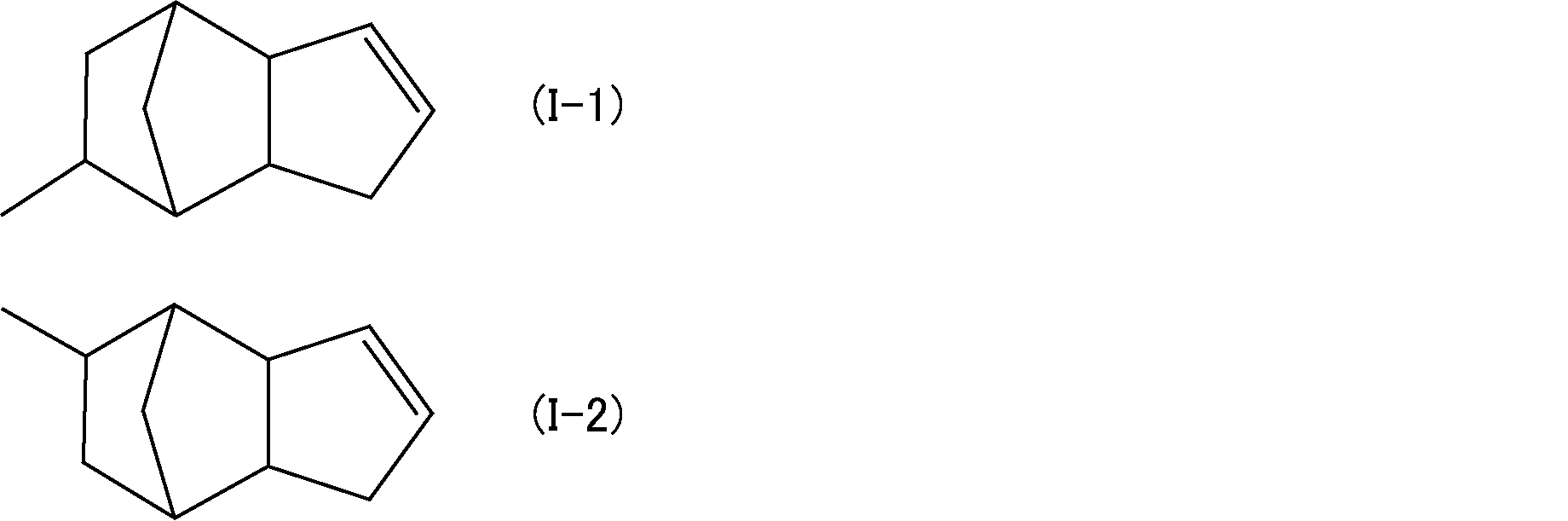
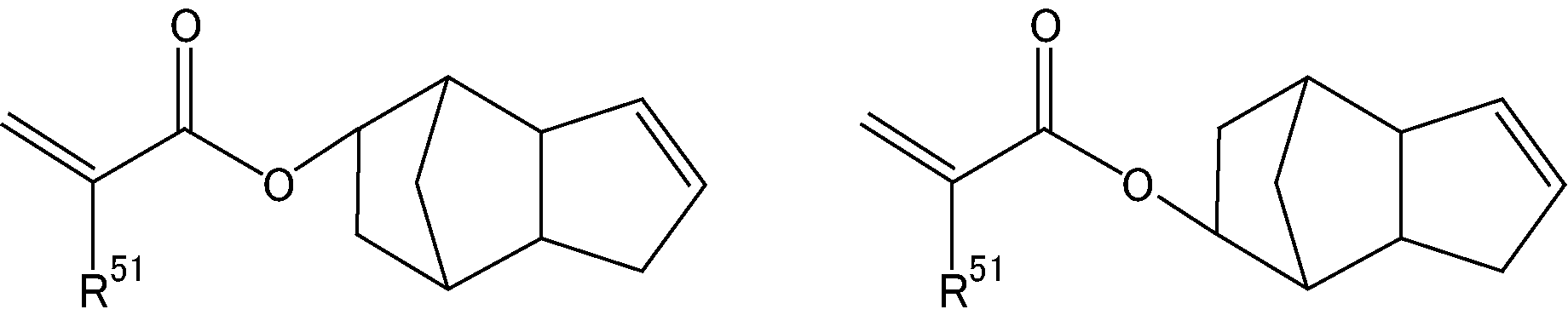


上記Tgは、示差走査熱量計(DSC)により測定して得られる値である。
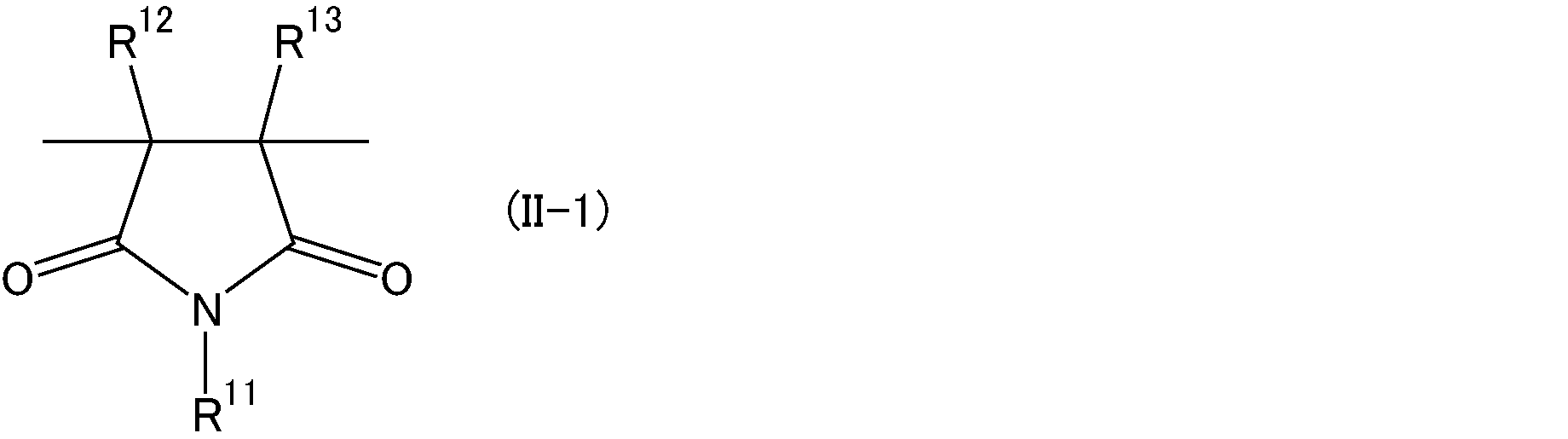

上記パーフルオロ(アルキルビニルエーテル)としては、パーフルオロ(メチルビニルエーテル)〔PMVE〕、パーフルオロ(エチルビニルエーテル)〔PEVE〕、パーフルオロ(プロピルビニルエーテル)〔PPVE〕、パーフルオロ(ブチルビニルエーテル)等が挙げられるがこれらに限定されるものではない。

上記1価の炭化水素基は、窒素原子、酸素原子などのヘテロ原子を有するものでもよい。上記1価の炭化水素基は、直鎖状、分岐状、環状のいずれでもよい。上記1価の炭化水素基の炭素数は、好ましくは1~8、より好ましくは1~5、更に好ましくは1~3である。上記1価の炭化水素基としては、上記炭素数のアルキル基、アルケニル基、アルキニル基等が挙げられる。
上記1価の基としては、水素原子、フッ素原子、塩素原子、上記炭素数のフッ素化アルキル基、上記炭素数のフッ素化アルコキシ基が好ましい。


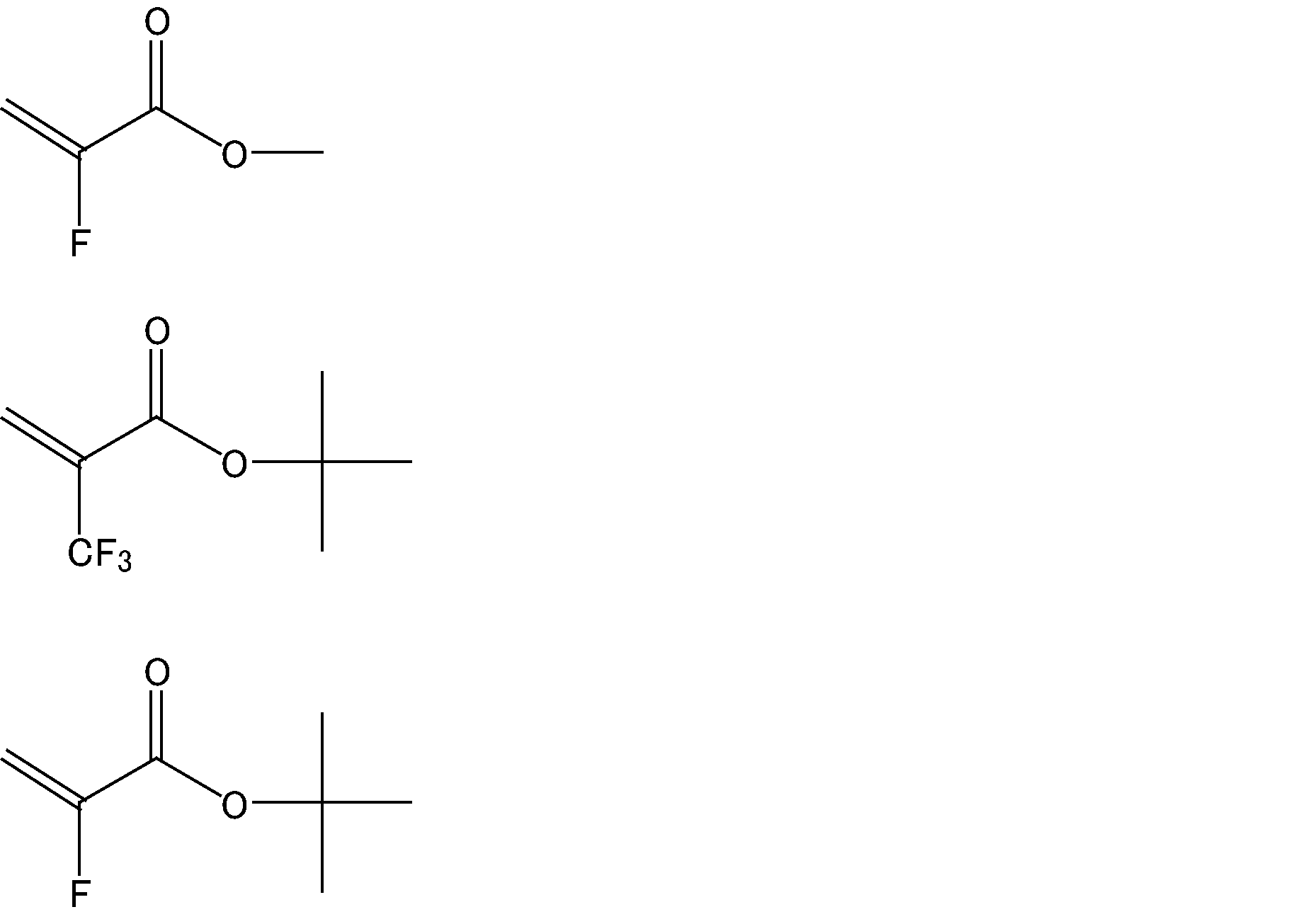
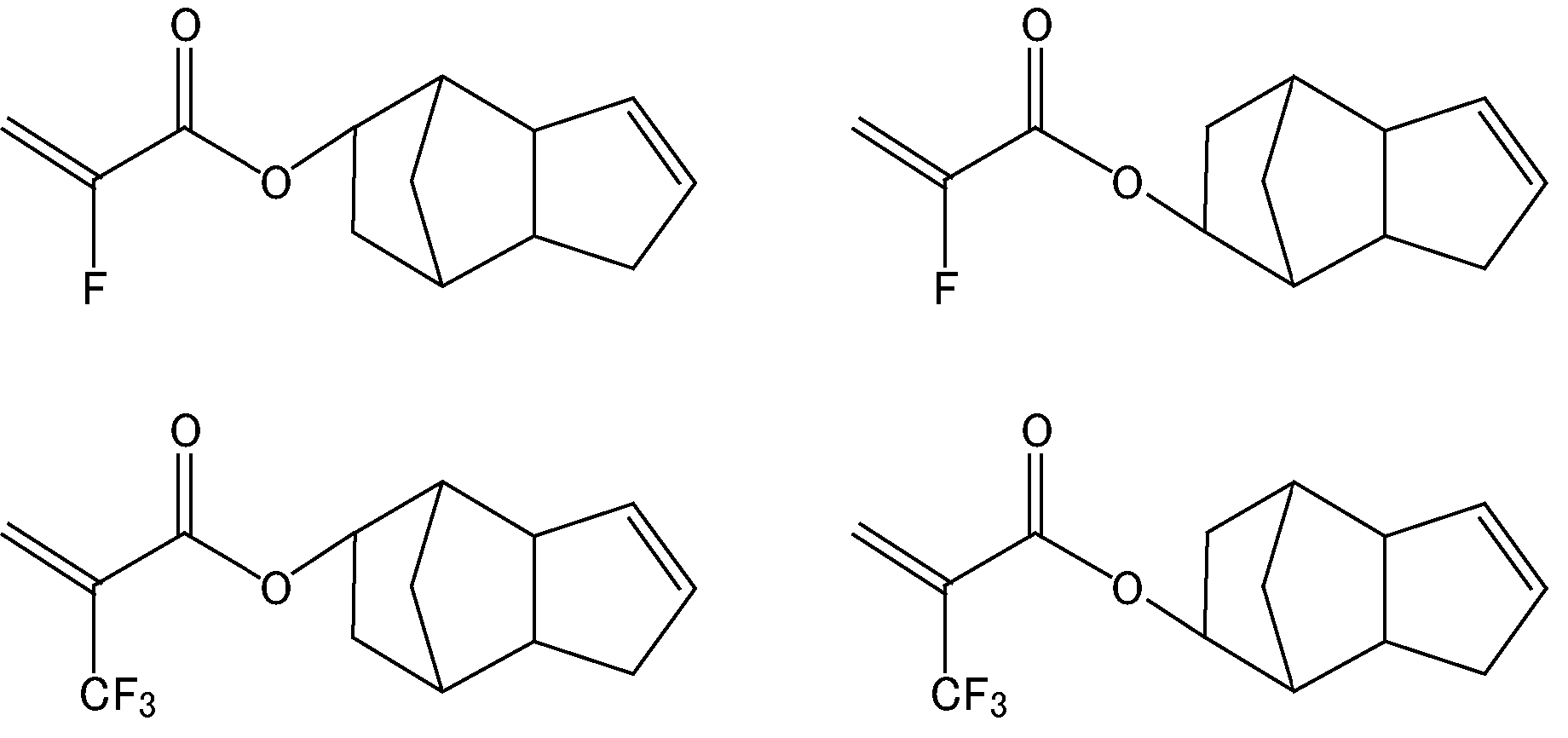

上記ジエン化合物としては、シクロペンタジエン、シクロヘキサジエンなどを例示できる。


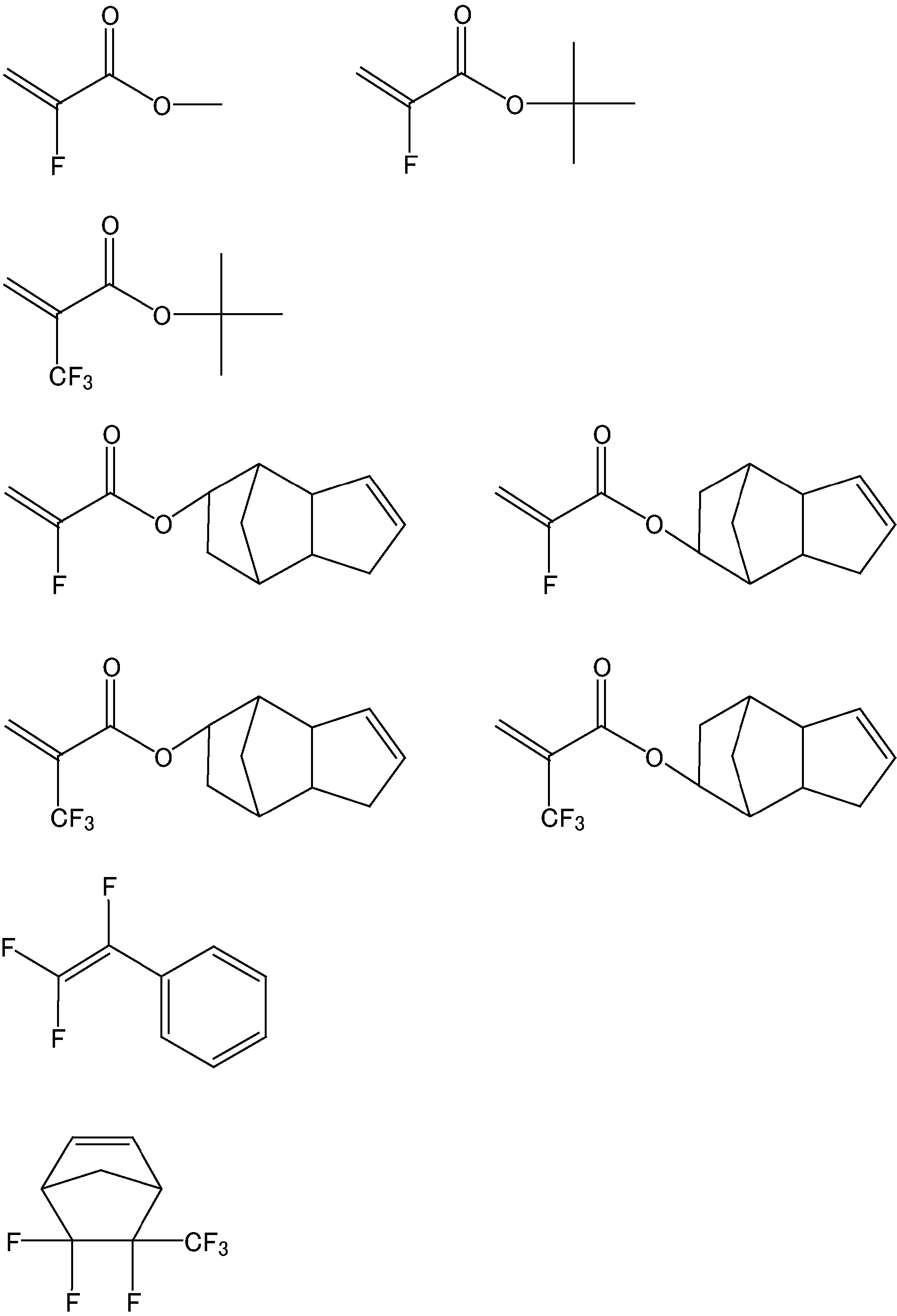
エチレン、プロピレン、ブチレン、イソブチレン、1-デセン等のアルケン類;
エチルビニルエーテル、プロピルビニルエーテル、ブチルビニルエーテル、イソブチルビニルエーテル、シクロヘキシルビニルエーテル、2-エチルヘキシルビニルエーテル等のアルキルビニルエーテル類;
酢酸ビニル、プロピオン酸ビニル、n-酪酸ビニル、イソ酪酸ビニル、吉草酸ビニル、ピバリン酸ビニル、カプロン酸ビニル、カプリル酸ビニル、カプリン酸ビニル、バーサチック酸ビニル、ラウリン酸ビニル、ミリスチン酸ビニル、パルミチン酸ビニル、ステアリン酸ビニル、安息香酸ビニル、パラ-t-ブチル安息香酸ビニル、シクロヘキサンカルボン酸ビニル、モノクロル酢酸ビニル、アジピン酸ビニル、アクリル酸ビニル、メタクリル酸ビニル、クロトン酸ビニル、ソルビン酸ビニル、桂皮酸ビニル、ウンデシレン酸ビニル、ヒドロキシ酢酸ビニル、ヒドロキシプロピオイン酸ビニル、ヒドロキシ酪酸ビニル、ヒドロキシ吉草酸ビニル、ヒドロキシイソ酪酸ビニル、ヒドロキシシクロヘキサンカルボン酸ビニル等のビニルエステル類;
エチルアリルエーテル、プロピルアリルエーテル、ブチルアリルエーテル、イソブチルアリルエーテル、シクロヘキシルアリルエーテル等のアルキルアリルエーテル類;
エチルアリルエステル、プロピルアリルエステル、ブチルアリルエステル、イソブチルアリルエステル、シクロヘキシルアリルエステル等のアルキルアリルエステル類
等も挙げられる。
中でも、アルケン類、アルキルビニルエーテル類が好ましく、1-デセン、エチルビニルエーテル、プロピルビニルエーテル、ブチルビニルエーテル、イソブチルビニルエーテル、シクロヘキシルビニルエーテル、2-エチルヘキシルビニルエーテルがより好ましく、1-デセン、シクロヘキシルビニルエーテル、2-エチルヘキシルビニルエーテルが更に好ましい。
脂環式構造を有するモノマーとしては、イソボルニルメタクリレート、イソボルニルアクリレート、シクロヘキシルメタクリレート、シクロヘキシルアクリレート、ジシクロペンタニルアクリレ-ト及びジシクロペンタニルメタクリレートからなる群から選ばれる一種以上の(メタ)アクリル酸エステル類が好ましい。
イタコン酸、コハク酸、無水コハク酸、フマル酸、無水フマル酸、クロトン酸、マレイン酸、無水マレイン酸、フマル酸ビス2-エチルヘキシル等のカルボキシル基を有するフッ素非含有モノマー;
グリシジルビニルエーテル、グリシジルアリルエーテル等のグリシジル基を有するフッ素非含有モノマー;
アミノアルキルビニルエーテル、アミノアルキルアリルエーテル等のアミノ基を有するフッ素非含有モノマー;
(メタ)アクリルアミド、メチロールアクリルアミド等のアミド基を有するフッ素非含有モノマー
等が挙げられる。
上記共重合体のフッ素含有量は、自動試料燃焼装置を用いた元素分析により求めることができる。
上記共重合体の数平均分子量は、ゲルパーミエーションクロマトグラフィ(GPC)により測定することができる。
上記ガラス転移温度は、ASTM E1356-98に従い、下記条件のDSC測定装置を使用してセカンドランにおける熱吸収から中点法によって決定した値である。
測定条件
昇温速度;20℃/min
試料量;10mg
ヒートサイクル;-50℃~300℃、昇温、冷却、昇温
上記熱硬化温度は、後述の実施例に記載の方法により決定した値である。
MEKへの溶解性は、後述の実施例に記載の方法で評価される。
上記誘電率(比誘電率)は、後述の実施例に記載の方法で決定される値である。
上記誘電正接は、後述の実施例に記載の方法で決定される値である。
また、たとえば、アルコール類を使用でき、好ましくは炭素数1~10のアルコール類、より好ましくは炭素数1~10の1価のアルコール類である。具体的には、メタノール、エタノール、プロパノール、イソプロパノール、n-ブタノール、t-ブタノール、2-メチルプロパノール、シクロヘキサノール、メチルシクロヘキサノール、シクロペンタノール、メチルシクロペンタノール、ジメチルシクロペンタノールが使用できる。なかでもメタノール、イソプロパノール、t-ブタノール、シクロヘキサノール、メチルシクロヘキサノール、シクロペンタノール、メチルシクロペンタノールなどが好ましく、特にメタノール、イソプロパノールが好ましい。
本開示の共重合体組成物は、共重合体が上記構成を有することによって、溶剤溶解性、熱硬化性に優れる。また、樹脂層に用いることで該樹脂層を低誘電率及び低誘電正接にできる。
具体的な架橋剤として、トリアリルイソシアヌレート(TAIC)等のトリアルケニルイソシアヌレート化合物、後述のビスマレイミド類や、ジビニルベンゼン、ジシクロペンテニル(メタ)アクリレート、ペンタエリスリトールトリ(メタ)アクリレートの複数のビニル基を含むモノマー成分、ポリブタジエン等のように分子中にビニル基を2個以上有するビニル化合物等の化合物等が挙げられる。上記分子中にビニル基を2個以上有するビニル化合物としては、ポリブタジエン等の複数のビニル基を含むポリマーが好ましい。本開示の共重合体組成物は、上記複数のビニル基を含むポリマー又は上記複数のビニル基を含むモノマー成分を含有することが好ましい。熱硬化性の向上の観点から、ビスマレイミド類が好ましい。好ましいビスマレイミド類としては、例えば、1,2-ビス(マレイミド)エタン、N-スクシンイミジル-3-マレイミドプロピオナート、4,4’-ジフェニルメタンビスマレイミド、N,N’-m-フェニレンビスマレイミド、N,N’-p-フェニレンビスマレイミド、ビスフェノールAジフェニルエーテルビスマレイミド、3,3’-ジメチル-5,5’-ジエチル-4,4’-ジフェニルメタンビスマレイミド、4-メチル-1,3-フェニレンビスマレイミド、1,6’-ビスマレイミド-(2,2,4-トリメチル)ヘキサン、1-マレイミド-3-マレイミドメチル-3,5,5-トリメチルシクロヘキサン、1,1’-(シクロヘキサン-1,3-ジイルビス(メチレン))ビス(1H-ピロール-2,5-ジオン)、1,1’-(4,4’-メチレンビス(シクロヘキサン-4,1-ジイル))ビス(1H-ピロール-2,5-ジオン)、1,1’-(3,3’-(ピペラジン-1,4-ジイル)ビス(プロパン-3,1-ジイル))ビス(1H-ピロール-2,5-ジオン)、2,2’-(エチレンジオキシ)ビス(エチルマレイミド)、スクシンイミジル-4-(N-マレイミドメチル)シクロ-ヘキサン-1-カルボキシレート、2,2-ビス[4-(4-マレイミドフェノキシ)フェニル]プロパン等があげられる。
本実施形態で使用するポリブタジエンは、例えば、1,2-ポリブタジエンを好適に用いることができる。市販品のものを使用しても良く、例えば、JSR株式会社の製品として入手できるほか、日本曹達株式会社から、液状ポリブタジエン:製品名B-1000、2000、3000を入手することができる。また、好適に用いることができる1,2-ポリブタジエン構造を含む共重合体としては、TOTAL CRAY VALLEY社の「Ricon100」が例示できる。本実施形態で使用するマレイミド類は市販のものを使用しても良く、例えば、大和化成工業株式会社製「BMI-2300」、日本化薬株式会社製「MIR-3000」、ケイ・アイ化成株式会社製「BMI-70」、ケイ・アイ化成株式会社製「BMI-80」を好適に使用できる。
上記共重合体樹脂組成物におけるマレイミド類の含有量は、所望する特性に応じて適宜設定することができ、特に限定されない。マレイミド化合物の含有量は、共重合体組成物中の共重合体固形分(樹脂固形分)を100質量部とした場合、1質量部以上であることが好ましく、5質量部以上であることがより好ましい。上限値としては、90質量部以下であることが好ましく、60質量部以下であることがより好ましく、40質量部以下であることが更に好ましく、30質量部以下であってもよい。このような範囲とすることにより、電気特性と硬化反応性のバランスが良い傾向にある。
マレイミド類は1種のみ用いてもよいし、2種以上用いてもよい。2種以上用いる場合は、合計量が上記範囲となることが好ましい。
これらはそれぞれ単独で用いてもよいし、2種類以上を併用してもよい。
なお、上記ゲル分率は、後述の実施例に記載の方法で測定される値である。
また、上記金属張積層板においては、金属箔の第一の樹脂層が設けられている面とは異なる面(反対側の面)にも第一の樹脂層が設けられていてもよい。すなわち、上記金属張積層板は、第一の樹脂層、金属箔、第一の樹脂層の順に積層されたものであってもよいし、第一の樹脂層、金属箔、第一の樹脂層、第二の樹脂層の順に積層されたものであってもよい。
上記接着の方法としては、金属箔と上記共重合体組成物を含むフィルムとを重ねた後、50~300℃で加熱プレス機により熱圧着させる方法が好適である。
上記製造方法は、更に、上記共重合体組成物を成形して、上記共重合体からなるフィルムを得る工程を含むものであってもよい。
成形方法としては、溶融押出成形法、溶媒キャスト法、スプレー法などの方法が挙げられるが、特に限定されるものではない。上記共重合体組成物は、有機溶剤、硬化剤等を含むものであってもよいし、硬化促進剤、顔料分散剤、消泡剤、レベリング剤、UV吸収剤、光安定剤、増粘剤、密着改良剤、つや消し剤等を含んでもよい。
上記製造方法は、上記第一の樹脂層を形成する工程の後、更に上記第一の樹脂層上に第二の樹脂層となる樹脂フィルムを接着させ、金属箔と、第一及び第二の樹脂層とを備える金属張積層板を得る工程を含むものであってもよい。樹脂フィルムとしては、第二の樹脂層を形成するのに好適な樹脂からなるフィルムが挙げられる。
上記樹脂フィルムを接着する方法としては、50~300℃で加熱プレス機により熱圧着させる方法が好適である。
上記製造方法において、第一の樹脂層を形成するための組成物を金属箔に塗布する方法としては、刷毛塗り、浸漬塗布、スプレー塗布、コンマコート、ナイフコート、ダイコート、リップコート、ロールコーター塗布、カーテン塗布等の方法が挙げられる。組成物を塗布した後、熱風乾燥炉等により25~200℃で1分~1週間乾燥し、硬化させることができる。
第一の樹脂層を形成するための組成物を樹脂フィルムに塗布する方法としては、刷毛塗り、浸漬塗布、スプレー塗布、コンマコート、ナイフコート、ダイコート、リップコート、ロールコーター塗布、カーテン塗布等の方法が挙げられる。組成物を塗布した後、熱風乾燥炉等により25~200℃で1分~1週間乾燥し、硬化させることができる。
上記製造方法において、第一の樹脂層と第二の樹脂層とからなる積層体の第一の樹脂層に金属箔を接着させる方法としては、第一の樹脂層と第二の樹脂層とからなる積層体と金属箔とを当該積層体の第一の樹脂層と金属箔とが接着することとなるように重ねた後、50~300℃で加熱プレス機により熱圧着させる方法が好適である。
上記プリント基板は、上記金属張積層板上にカバーレイフィルムを備えるものであってもよく、上記カバーレイフィルムは上記樹脂層を介して金属張積層板と接着していてもよい。
上記エッチングの方法は限定されず従来公知の方法を採用することができる。また、パターン回路は限定されず、どのようなパターン回路のプリント基板でもよい。
以下、実施例により本開示を更に具体的に説明する。
測定装置:NMR測定装置 VARIAN社製
1H-NMR測定条件:400MHz(テトラメチルシラン=0ppm)
測定装置:自動試料燃焼装置(三菱化学(株)製 AQF-100) イオンクロマト(DIONEX社製 ICS-1500 Ion Chromatography System)内蔵
試料 3mg
測定装置:昭和電工(株)製Shodex GPC-104
測定条件:溶離液としてはテトラヒドロフランを使用し、分子量の標準サンプルとしては分子量既知のポリスチレンを使用する。
ASTM E1356-98に従い、METLER TOLEDO製のDSC測定装置を使用してセカンドランにおける熱吸収から中点法によってガラス転移温度及び結晶融点を決定した。
測定条件
昇温速度:20℃/min
試料量:10mg
ヒートサイクル:-50℃~300℃、昇温、冷却、昇温
合成例で作成した共重合体のフィルムを真空ヒートプレスすることで作成した。作成したフィルム(サンプルF)の比誘電率、誘電正接を下記の様に測定した。
ネットワークアナライザーを使用し、空洞共振器により、上記で作製したサンプルFの共振周波数及びQ値の変化を測定し、12GHzにおける誘電正接(tanδ)を次式にしたがって算出した。空洞共振器法は、埼玉大学小林教授[空洞共振器法による誘電体平板材料の複素誘電率の非破壊測定 MW87-53]による。
tanδ=(1/Qu)×{1+(W2/W1)}-(Pc/ωW1)
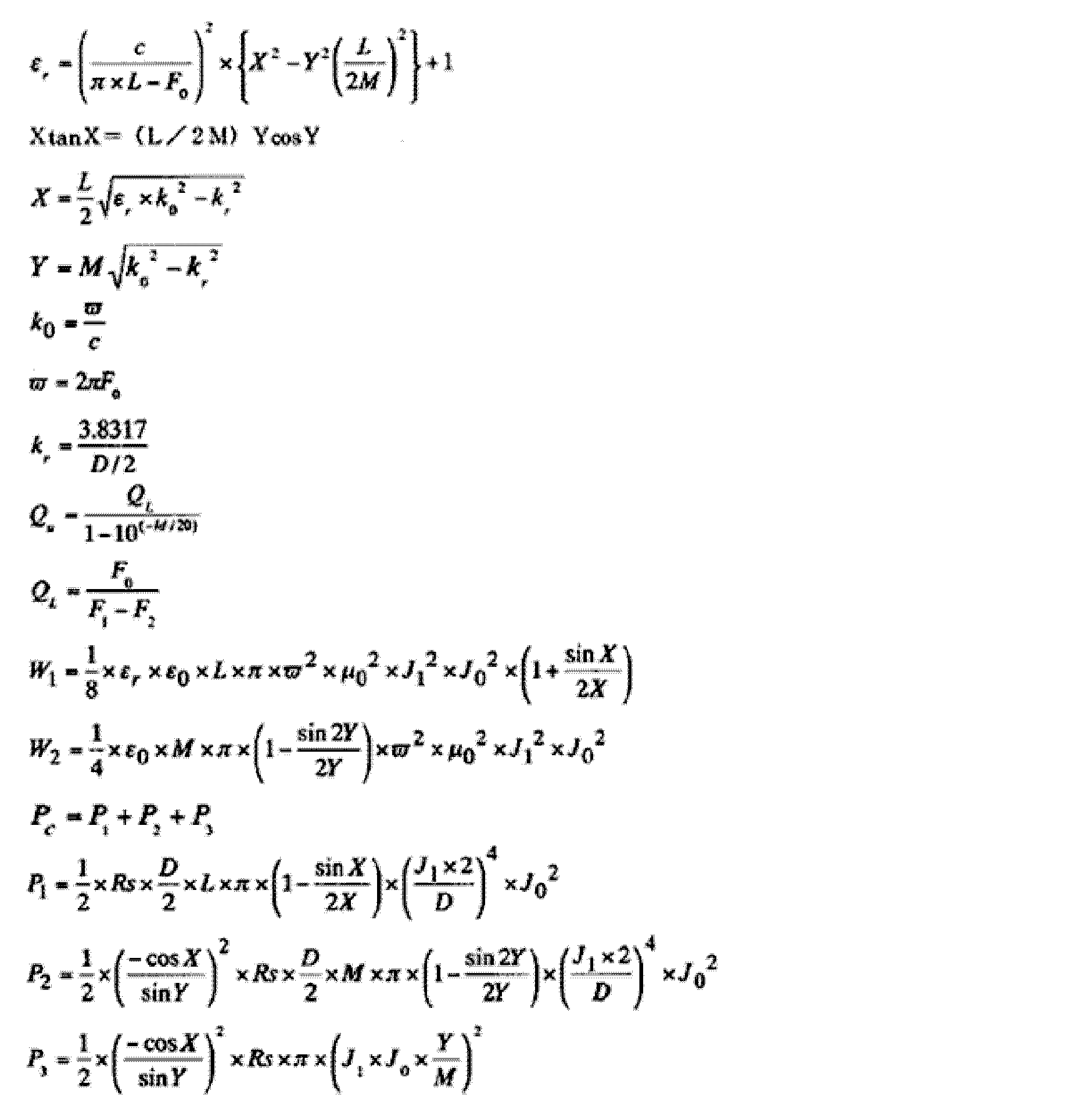
D:空洞共振器直径(mm)
M:空洞共振器片側長さ(mm)
L:サンプル長さ(mm)
c:光速(m/s)
Id:減衰量(dB)
F0:共振周波数(Hz)
F1:共振点からの減衰量が3dBである上側周波数(Hz)
F2:共振点からの減衰量が3dBである下側周波数(Hz)
ε0:真空の誘電率(H/m)
εr:サンプルの比誘電率
μ0:真空の透磁率(H/m)
Rs:導体空洞の表面粗さも考慮した実効表面抵抗(Ω)
J0:-0.402759
J1:3.83171
合成例で作成した共重合体20gをメチルエチルケトン30gを100mlサンプル瓶に秤量し振り交ぜて、溶解性を目視によって確認した。
上記溶剤溶解性評価で作成した溶液、又は共重合体と架橋剤を用いた硬化組成物をアルミカップに2g取り、各設定の焼成温度で1時間加熱乾燥し、熱硬化物を得た。この硬化物を取り、あらかじめ重さをはかった400メッシュの金属金網で包んだ。50mlのサンプル管に25mlのメチルエチルケトンと金網に包まれた硬化物を入れ、24時間メチルエチルケトン中で硬化物を浸漬した。その後、金網を取り出し、乾燥させ乾燥後の質量を測定し、メチルエチルケトン浸漬後の乾燥硬化物の質量を算出した。
ゲル分率は、メチルエチルケトン浸漬後の乾燥硬化物の質量/メチルエチルケトン浸漬前の硬化物の質量×100として算出した。
熱硬化温度は、DSC測定装置での測定時に見られた発熱ピークのピークトップの温度、又は、示差熱・熱重量測定装置〔TG-DTA〕(商品名:TG/DTA7200、日立ハイテクサイエンス社製)を用い、試料10mgを昇温速度10℃/分で室温から昇温し、重量減少が1%未満の温度域で見られた発熱ピークのピークトップの温度を熱硬化温度とした。
合成例で作成した共重合体のフィルム(サンプル片)を作成し、線膨張率(線膨張係数)を下記の様に測定した。
フィルムの線膨張率は、TMA―7100(株式会社日立ハイテクサイエンス社製)を用いて以下の圧縮モードによるTMA測定を行い求めた。
[引張モード測定]
サンプル片として、長さ10mm、幅10mm、に切出した厚み760μmの押出フィルムを用いて、49mNの荷重で圧縮ながら昇温速度2℃/分で30~200℃でのサンプルの変位量から線膨張率を求めた。
合成例1
300ml4つ口フラスコに、メチルイソブチルケトン100g、スチレン16g、ジシクロペンテニルビニルエーテル24g、シクロヘキシルマレイミド(ホモポリマーのガラス転移温度300℃)24g、2,4-ジフェニル-4-メチル-1-ペンテン0.8gを投入した。内温を70℃としてt-ブチルパーオキシピバレート2gを添加し、3時間反応させた。反応容器を冷却後、室温で反応混合液を大量のメタノールに投入し、共重合体を析出させた。得られた共重合体をメタノールで洗浄、濾別、乾燥して共重合体を得た。
得られた共重合体は、NMR分析より、スチレン由来の構造が41モル%、ジシクロペンテニルビニルエーテル由来の構造が15モル%、シクロヘキシルマレイミド由来の構造が44モル%の組成であった。
分子量分析より、数平均分子量(Mn)は、16000、重量平均分子量(Mw)は、41000であった。ガラス転移温度(Tg)は180℃であった。
250℃までのDSC測定の結果、190℃付近から250℃に発熱のピークが認められた。
300ml4つ口フラスコに、メチルイソブチルケトン60g、スチレン11g、ジシクロペンタジエン14g、シクロヘキシルマレイミド5gを投入した。内温を90℃としてt-ブチルパーオキシ-2-エチルヘキサノエート2gを添加し、3時間反応させた。反応容器を冷却後、室温で反応混合液を大量のメタノールに投入し、共重合体を析出させた。得られた共重合体をメタノールで洗浄、濾別、乾燥して共重合体を得た。
得られた共重合体は、元素分析及びNMR分析より、スチレン由来の構造が60モル%、ジシクロペンタジエン由来の構造が6モル%、シクロヘキシルマレイミド由来の構造が34モル%の組成であった。
分子量分析より、数平均分子量(Mn)は、14000、重量平均分子量(Mw)は、31000であった。ガラス転移温度(Tg)は145℃であった。
(200℃までのDSC測定の結果、発熱のピークは認められなかった。)
300ml4つ口フラスコに、メチルイソブチルケトン95g、スチレン12g、ジシクロペンタジエン15g、シクロヘキシルマレイミド20g、1,2,2-トリフルオロエテニルベンゼン18g、2,4-ジフェニル-4-メチル-1-ペンテン4gを投入した。内温を70℃としてt-ブチルパーオキシピバレート2gを添加し、3時間反応させた。反応容器を冷却後、室温で反応混合液を大量のメタノールに投入し、共重合体を析出させた。得られた共重合体をメタノールで洗浄、濾別、乾燥して共重合体を得た。
得られた共重合体は、元素分析及びNMR分析より、1,2,2-トリフルオロエテニルベンゼン(トリフルオロスチレン)由来の構造が6モル%、スチレン由来の構造が59モル%、ジシクロペンテンタジエン由来の構造が5モル%、シクロヘキシルマレイミド由来の構造が30モル%の組成であった。
分子量分析より、数平均分子量(Mn)は、14000、重量平均分子量(Mw)は、34000であった。ガラス転移温度(Tg)は161℃であった。元素分析の結果は、フッ素含有量3.4質量%であった。
200℃までのDSC測定の結果、170℃付近から200℃付近に発熱のピークが認められた。
300ml4つ口フラスコに、メチルイソブチルケトン100g、ジシクロペンテニルビニルエーテル35g、シクロヘキシルマレイミド18g、2,4-ジフェニル-4-メチル-1-ペンテン2gを投入した。内温を70℃としてt-ブチルパーオキシ-2-エチルヘキサノエート1gを添加し、3時間反応させた。反応容器を冷却後、室温で反応混合液を大量のメタノールに投入し、共重合体を析出させた。得られた共重合体をメタノールで洗浄、濾別、乾燥して共重合体を得た。
得られた共重合体は、元素分析及びNMR分析より、ジシクロペンテニルビニルエーテル由来の構造が46モル%、シクロヘキシルマレイミド由来の構造が54モル%の組成であった。
分子量分析より、数平均分子量(Mn)は、4500、重量平均分子量(Mw)は、7800であった。ガラス転移温度(Tg)は、205℃であった。
同DSC測定の結果、160℃から240℃付近まで発熱のピークが認められた。
300ml4つ口フラスコに、メチルイソブチルケトン100g、ジシクロペンタジエン29g、シクロヘキシルマレイミド18g、2,4-ジフェニル-4-メチル-1-ペンテン2gを投入した。内温を70℃としてt-ブチルパーオキシピバレート1gを添加し、3時間反応させた。反応容器を冷却後、室温で反応混合液を大量のメタノールに投入し、共重合体を析出させた。得られた共重合体をメタノールで洗浄、濾別、乾燥して共重合体を得た。
得られた共重合体は、元素分析及びNMR分析より、ジシクロペンタジエン由来の構造が36モル%、シクロヘキシルマレイミド由来の構造が64モル%の組成であった。
分子量分析より、数平均分子量(Mn)は、2000、重量平均分子量(Mw)は、3000であった。ガラス転移温度(Tg)は225℃であった。
220℃までのDSC測定の結果、180℃から220℃℃付近に発熱のピークが認められた。
また、合成例1~5で作成したポリマーのゲル分率を表1に記載の焼成温度で作成した硬化物について測定した。表1に結果を記載した。

表2の配合に従い、合成例1~3で作成したポリマーのMEK(メチルイソブチルケトン)溶液(固形分濃度40質量%(ポリマー溶液))に、架橋剤A溶液(4,4’-ジフェニルメタンビスマレイミドのアセトン溶液(濃度3質量%))又は架橋剤B溶液(N,N’-(2,2,4-トリメチルへキサン-1,6-ジイル)ビスマレイミドのメチルエチルケトン溶液(濃度10質量%))を配合した各硬化組成物を作成した。作成した組成物を表2に記載の焼成温度で焼成して硬化物を得て、そのゲル分率を測定した。結果を表2に記載した。

合成例6
300ml4つ口フラスコに、メチルイソブチルケトン120質量部、スチレン14質量部、シクロヘキシルマレイミド40質量部、ジシクロペンテニルビニルエーテル15質量部、フマル酸ビス2-エチルヘキシル6質量部を投入した。内温を85℃としてt-ブチルパーオキシ-2-エチルヘキサノエート0.4質量部を添加し、3時間反応させた。反応容器を冷却後、室温で反応混合液を大量のメタノールに投入し、共重合体を析出させた。得られた共重合体をメタノールで洗浄、濾別、乾燥して共重合体を得た。
得られた共重合体は、NMR分析より、スチレン由来の構造が30モル%、ジシクロペンテニルビニルエーテル由来の構造が11モル%、シクロヘキシルマレイミド由来の構造が56モル%、フマル酸ビス2-エチルヘキシル由来の構造が3モル%の組成であった。
分子量分析より、数平均分子量(Mn)は、25728、重量平均分子量(Mw)は、187116であった。ガラス転移温度(Tg)は205℃であった。
600℃までのTG-DTA測定の結果、190℃付近から250℃に発熱のピークが認められた。
300ml4つ口フラスコに、メチルイソブチルケトン120質量部、スチレン23質量部、シクロヘキシルマレイミド40質量部、ジシクロペンタジエン13質量部、フマル酸ビス2-エチルヘキシル6質量部を投入した。内温を85℃としてt-ブチルパーオキシ-2-エチルヘキサノエート0.4質量部を添加し、3時間反応させた。反応容器を冷却後、室温で反応混合液を大量のメタノールに投入し、共重合体を析出させた。得られた共重合体をメタノールで洗浄、濾別、乾燥して共重合体を得た。
得られた共重合体は、NMR分析より、スチレン由来の構造が40モル%、ジシクロペンタジエン由来の構造が5モル%、シクロヘキシルマレイミド由来の構造が52モル%、フマル酸ビス2-エチルヘキシル由来の構造が3モル%の組成であった。
分子量分析より、数平均分子量(Mn)は、29862、重量平均分子量(Mw)は、89407であった。ガラス転移温度(Tg)は190℃であった。
600℃までのTG-DTA測定の結果、190℃付近から250℃に発熱のピークが認められた。
300ml4つ口フラスコに、メチルイソブチルケトン120質量部、スチレン15.6質量部、シクロヘキシルマレイミド40質量部、ジシクロペンテニルビニルエーテル15質量部、フマル酸ビス2-エチルヘキシル6質量部、トリフルオロスチレン9質量部を投入した。内温を85℃としてt-ブチルパーオキシ-2-エチルヘキサノエート0.2質量部を添加し、3時間反応させた。反応容器を冷却後、室温で反応混合液を大量のメタノールに投入し、共重合体を析出させた。得られた共重合体をメタノールで洗浄、濾別、乾燥して共重合体を得た。
得られた共重合体は、NMR分析より、トリフルオロスチレン由来の構造が3モル%、スチレン由来の構造が33モル%、ジシクロペンテニルビニルエーテル由来の構造が9モル%、シクロヘキシルマレイミド由来の構造が52モル%、フマル酸ビス2-エチルヘキシル由来の構造が3モル%の組成であった。
分子量分析より、数平均分子量(Mn)は、38829、重量平均分子量(Mw)は、249053であった。ガラス転移温度(Tg)は195℃であった。
600℃までのTG-DTA測定の結果、190℃付近から250℃に発熱のピークが認められた。
300ml4つ口フラスコに、メチルイソブチルケトン110質量部、スチレン7.8質量部、シクロヘキシルマレイミド40質量部、ジシクロペンタジエン11.7質量部、1-デセン10質量部を投入した。内温を85℃としてt-ブチルパーオキシ-2-エチルヘキサノエート0.2質量部を添加し、3時間反応させた。反応容器を冷却後、室温で反応混合液を大量のメタノールに投入し、共重合体を析出させた。得られた共重合体をメタノールで洗浄、濾別、乾燥して共重合体を得た。
得られた共重合体は、NMR分析より、スチレン由来の構造が16モル%、ジシクロペンタジエン由来の構造が8モル%、シクロヘキシルマレイミド由来の構造が66モル%、1-デセン由来の構造が10モル%の組成であった。
分子量分析より、数平均分子量(Mn)は、26910、重量平均分子量(Mw)は、86654であった。ガラス転移温度(Tg)は227℃であった。
600℃までのTG-DTA測定の結果、190℃付近から250℃に発熱のピークが認められた。
300ml4つ口フラスコに、メチルイソブチルケトン120質量部、スチレン18質量部、シクロヘキシルマレイミド40質量部、ジシクロペンタジエン12質量部、リモネン6質量部を投入した。内温を85℃としてt-ブチルパーオキシ-2-エチルヘキサノエート0.2質量部を添加し、3時間反応させた。反応容器を冷却後、室温で反応混合液を大量のメタノールに投入し、共重合体を析出させた。得られた共重合体をメタノールで洗浄、濾別、乾燥して共重合体を得た。
得られた共重合体は、NMR分析より、スチレン由来の構造が32モル%、ジシクロペンタジエン由来の構造が5モル%、シクロヘキシルマレイミド由来の構造が58モル%、リモネン由来の構造が5モル%の組成であった。
分子量分析より、数平均分子量(Mn)は、22677、重量平均分子量(Mw)は、85014であった。ガラス転移温度(Tg)は220℃であった。
600℃までのTG-DTA測定の結果、190℃付近から250℃に発熱のピークが認められた。
300ml4つ口フラスコに、メチルイソブチルケトン120質量部、スチレン18質量部、シクロヘキシルマレイミド40質量部、ジシクロペンタジエン12質量部、2-エチルヘキシルビニルエーテル6質量部を投入した。内温を85℃としてt-ブチルパーオキシ-2-エチルヘキサノエート0.2質量部を添加し、3時間反応させた。反応容器を冷却後、室温で反応混合液を大量のメタノールに投入し、共重合体を析出させた。得られた共重合体をメタノールで洗浄、濾別、乾燥して共重合体を得た。
得られた共重合体は、NMR分析より、スチレン由来の構造が34モル%、ジシクロペンタジエン由来の構造が4モル%、シクロヘキシルマレイミド由来の構造が56モル%、2-エチルヘキシルビニルエーテル由来の構造が6モル%の組成であった。
分子量分析より、数平均分子量(Mn)は、5665、重量平均分子量(Mw)は、10242であった。ガラス転移温度(Tg)は206℃であった。
600℃までのTG-DTA測定の結果、190℃付近から250℃に発熱のピークが認められた。
300ml4つ口フラスコに、メチルイソブチルケトン120質量部、スチレン19質量部、シクロヘキシルマレイミド33質量部、ジシクロペンタジエン9質量部、N-ドデシルマレイミド10.3質量部を投入した。内温を85℃としてt-ブチルパーオキシ-2-エチルヘキサノエート0.2質量部を添加し、3時間反応させた。反応容器を冷却後、室温で反応混合液を大量のメタノールに投入し、共重合体を析出させた。得られた共重合体をメタノールで洗浄、濾別、乾燥して共重合体を得た。
得られた共重合体は、NMR分析より、スチレン由来の構造が43モル%、ジシクロペンタジエン由来の構造が4モル%、シクロヘキシルマレイミド由来の構造が43モル%、N-ドデシルマレイミド由来の構造が10モル%の組成であった。
分子量分析より、数平均分子量(Mn)は、35618、重量平均分子量(Mw)は、124375であった。ガラス転移温度(Tg)は162℃であった。
600℃までのTG-DTA測定の結果、170℃付近から250℃に発熱のピークが認められた。
300ml4つ口フラスコに、メチルイソブチルケトン100質量部、スチレン16.2質量部、N-ベンジルマレイミド25.3質量部、ジシクロペンタジエン12質量部、1-デセン2.5質量部を投入した。内温を85℃としてt-ブチルパーオキシ-2-エチルヘキサノエート0.2質量部を添加し、3時間反応させた。反応容器を冷却後、室温で反応混合液を大量のメタノールに投入し、共重合体を析出させた。得られた共重合体をメタノールで洗浄、濾別、乾燥して共重合体を得た。
得られた共重合体は、NMR分析より、スチレン由来の構造が41モル%、ジシクロペンタジエン由来の構造が3モル%、N-ベンジルマレイミド由来の構造が52モル%、1-デセン由来の構造が4モル%の組成であった。
分子量分析より、数平均分子量(Mn)は、24540、重量平均分子量(Mw)は、98036であった。ガラス転移温度(Tg)は162℃であった。
600℃までのTG-DTA測定の結果、170℃付近から250℃に発熱のピークが認められた。
また、合成例6~13で作成したポリマーのゲル分率を表3に記載の焼成温度で作成した硬化物について測定した。表3に結果を記載した。
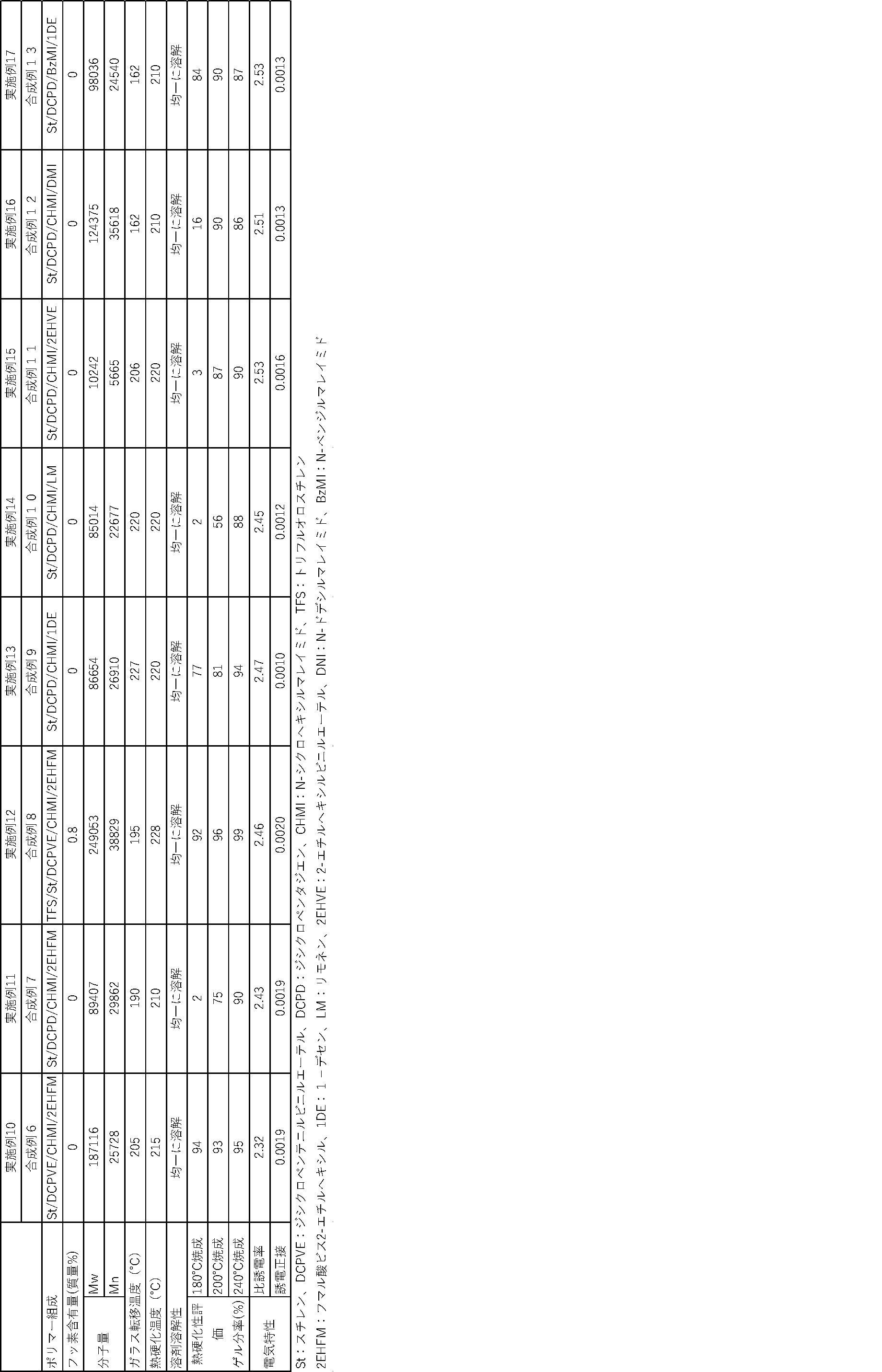
合成例9で得たポリマーを10質量部とポリブタジエン(日本曹達社製 B-2000)2質量部と開始剤(日本油脂社製 パークミルD-40)0.1質量部をメチルイソブチルケトン48質量部に溶解し共重合体組成物を作製した。
得られた共重合体組成物をガラスクロスに含浸させた後、100℃で約3分間加熱乾燥することによりプリプレグを作製した。上記ガラスクロスは、具体的には、旭化成株式会社製の♯1035タイプ、Eガラス(密度:2.6g/cm3、1m2当たりの重さ:29.1g、ガラスクロス厚み測定値:29μm、比誘電率測定値:2.66、誘電正接測定値:0.0048)である。その際、共重合体組成物の含有量(レジンコンテント)が約40質量%となるように調整した。
次に、製造したプリプレグを4枚重ね合わせ、温度250℃、圧力2.44MPa(メガパスカル)の条件で120分加熱・加圧して試験体を作製した。この試験体の厚みは、132.2μmであった。この試験体の比誘電率及び誘電正接を測定した結果、比誘電率3.37、誘電正接0.00522、ゲル分率67%であった。試験体の比誘電率、誘電正接の測定値から硬化ポリマーの比誘電率、誘電正接を下式より計算した結果、比誘電率は2.55、誘電正接は0.00145であった。
試験体誘電正接=ガラスクロス糸誘電正接×ガラスクロスvol%/100+硬化ポリマー誘電正接×硬化ポリマーvol%/100
ガラスクロス誘電正接=ガラスクロス糸誘電正接×ガラスクロス糸vol%/100+空気誘電正接×空気vol%/100
ガラスクロスvol%=ガラスクロス1m2当たりの重さ/ガラスクロス密度/含侵後の試験体でのプリプレグ1枚当たりの厚み
硬化ポリマーvol%=1-ガラスクロスvol%
Claims (23)
- 芳香族ビニルモノマー単位と、架橋基含有モノマー単位と、ガラス転移温度が150℃以上のホモポリマーを与えるモノマー単位とを含む共重合体。
- 熱硬化樹脂である請求項1記載の共重合体。
- 前記芳香族ビニルモノマー単位が、スチレン単位である請求項1又は2記載の共重合体。
- 前記架橋基含有モノマー単位が、脂環式構造を有するジエンモノマー単位を含む請求項1~3のいずれかに記載の共重合体。
- 前記架橋基含有モノマー単位が、ジシクロペンテニル構造を有するモノマー単位を含む請求項1~3のいずれかに記載の共重合体。
- 前記架橋基含有モノマー単位が、ジシクロペンタジエン単位及びジシクロペンテニルビニルエーテル単位からなる群より選択される少なくとも1種を含む請求項1~3のいずれかに記載の共重合体。
- 前記ガラス転移温度が150℃以上のホモポリマーを与えるモノマー単位が、マレイミド類単位を含む請求項1~6のいずれかに記載の共重合体。
- 前記マレイミド類単位が、N-シクロヘキシルマレイミド単位及N-フェニルマレイミド単位からなる群より選択される少なくとも1種を含む請求項7記載の共重合体。
- 更に、主鎖にC-F結合を与える含フッ素モノマー単位を含む請求項1~8のいずれかに記載の共重合体。
- ガラス転移温度が140℃以上である請求項1~9のいずれかに記載の共重合体。
- 熱硬化温度が240℃以下である請求項2~10のいずれかに記載の共重合体。
- メチルエチルケトン又はトルエンへの溶解性を持つ請求項1~11のいずれかに記載の共重合体。
- 前記架橋基含有モノマー単位が前記共重合体を構成する全重合単位に対して1モル%以上である請求項1~12のいずれかに記載の共重合体。
- 前記ガラス転移温度が150℃以上のホモポリマーを与えるモノマー単位が前記共重合体を構成する全重合単位に対して5モル%以上である請求項1~13のいずれかに記載の共重合体。
- 誘電正接が0.0030以下である請求項1~14のいずれかに記載の共重合体。
- 請求項1~15のいずれかに記載の共重合体と、溶剤とを含む共重合体組成物。
- 複数のビニル基を含むポリマー又は複数のビニル基を含むモノマー成分を含有する請求項16記載の共重合体組成物。
- 光重合開始剤を含有する請求項16又は17記載の共重合体組成物。
- ゲル分率が30%以上である請求項16~18のいずれかに記載の共重合体組成物。
- 請求項1~15のいずれかに記載の共重合体を含むフィルム。
- 基材と、前記基材上に設けられた樹脂層とを備える積層体であって、前記樹脂層が、請求項1~15のいずれかに記載の共重合体を含む積層体。
- 金属箔と、前記金属箔上に設けられた樹脂層とを備える金属張積層板であって、前記樹脂層が、請求項1~15のいずれかに記載の共重合体を含む金属張積層板。
- 請求項22に記載の金属張積層板の金属箔をエッチングして形成されたパターン回路を備えることを特徴とするプリント基板。
Priority Applications (1)
| Application Number | Priority Date | Filing Date | Title |
|---|---|---|---|
| CN202280054502.5A CN117897416A (zh) | 2021-08-17 | 2022-08-04 | 共聚物和树脂组合物 |
Applications Claiming Priority (4)
| Application Number | Priority Date | Filing Date | Title |
|---|---|---|---|
| JP2021132932 | 2021-08-17 | ||
| JP2021-132932 | 2021-08-17 | ||
| JP2022108931A JP7339576B2 (ja) | 2021-08-17 | 2022-07-06 | 共重合体、及び樹脂組成物 |
| JP2022-108931 | 2022-07-06 |
Publications (1)
| Publication Number | Publication Date |
|---|---|
| WO2023022010A1 true WO2023022010A1 (ja) | 2023-02-23 |
Family
ID=85239537
Family Applications (1)
| Application Number | Title | Priority Date | Filing Date |
|---|---|---|---|
| PCT/JP2022/029967 Ceased WO2023022010A1 (ja) | 2021-08-17 | 2022-08-04 | 共重合体、及び樹脂組成物 |
Country Status (3)
| Country | Link |
|---|---|
| JP (1) | JP2023104928A (ja) |
| TW (1) | TW202323323A (ja) |
| WO (1) | WO2023022010A1 (ja) |
Families Citing this family (1)
| Publication number | Priority date | Publication date | Assignee | Title |
|---|---|---|---|---|
| JP2025066648A (ja) * | 2023-09-25 | 2025-04-23 | 李長榮化學工業股▲ふん▼有限公司 | 炭化水素樹脂ポリマーおよびその製造方法、ならびに基板構造 |
Citations (10)
| Publication number | Priority date | Publication date | Assignee | Title |
|---|---|---|---|---|
| JP2001089533A (ja) * | 1999-09-24 | 2001-04-03 | Showa Highpolymer Co Ltd | 感光性樹脂 |
| JP2005139363A (ja) * | 2003-11-07 | 2005-06-02 | Fuji Photo Film Co Ltd | 含フッ素ポリマーとその製造方法、およびそれを含む硬化性樹脂組成物 |
| JP2006023716A (ja) * | 2004-06-08 | 2006-01-26 | Sumitomo Chemical Co Ltd | 感光性樹脂組成物 |
| JP2009244323A (ja) * | 2008-03-28 | 2009-10-22 | Fujifilm Corp | 感光性樹脂組成物及びフォトスペーサー |
| JP2009258619A (ja) * | 2008-01-31 | 2009-11-05 | Jsr Corp | インクジェット方式によりカラーフィルタを形成するために用いられる樹脂組成物、カラーフィルタおよび液晶表示装置 |
| JP2010031091A (ja) * | 2008-07-25 | 2010-02-12 | Daicel Chem Ind Ltd | 硬化性共重合体及び硬化性樹脂組成物 |
| JP2012112988A (ja) * | 2010-11-19 | 2012-06-14 | Fujifilm Corp | 感光性樹脂組成物、硬化膜の形成方法、硬化膜、有機el表示装置、及び、液晶表示装置 |
| JP2012113154A (ja) * | 2010-11-25 | 2012-06-14 | Fujifilm Corp | 感光性樹脂組成物、硬化膜の形成方法、硬化膜、有機el表示装置、及び、液晶表示装置 |
| JP2014517087A (ja) * | 2011-04-21 | 2014-07-17 | エルジー・ケム・リミテッド | 高分子およびそれを含む感光性樹脂組成物{polymerandphotosensitiveresincompositioncomprisingthesame} |
| WO2021025117A1 (ja) * | 2019-08-06 | 2021-02-11 | ダイキン工業株式会社 | 金属張積層板用含フッ素ポリマー、金属張積層板用組成物、硬化性組成物、金属張積層板及びプリント基板 |
-
2022
- 2022-08-04 WO PCT/JP2022/029967 patent/WO2023022010A1/ja not_active Ceased
- 2022-08-08 TW TW111129727A patent/TW202323323A/zh unknown
-
2023
- 2023-04-27 JP JP2023073243A patent/JP2023104928A/ja active Pending
Patent Citations (10)
| Publication number | Priority date | Publication date | Assignee | Title |
|---|---|---|---|---|
| JP2001089533A (ja) * | 1999-09-24 | 2001-04-03 | Showa Highpolymer Co Ltd | 感光性樹脂 |
| JP2005139363A (ja) * | 2003-11-07 | 2005-06-02 | Fuji Photo Film Co Ltd | 含フッ素ポリマーとその製造方法、およびそれを含む硬化性樹脂組成物 |
| JP2006023716A (ja) * | 2004-06-08 | 2006-01-26 | Sumitomo Chemical Co Ltd | 感光性樹脂組成物 |
| JP2009258619A (ja) * | 2008-01-31 | 2009-11-05 | Jsr Corp | インクジェット方式によりカラーフィルタを形成するために用いられる樹脂組成物、カラーフィルタおよび液晶表示装置 |
| JP2009244323A (ja) * | 2008-03-28 | 2009-10-22 | Fujifilm Corp | 感光性樹脂組成物及びフォトスペーサー |
| JP2010031091A (ja) * | 2008-07-25 | 2010-02-12 | Daicel Chem Ind Ltd | 硬化性共重合体及び硬化性樹脂組成物 |
| JP2012112988A (ja) * | 2010-11-19 | 2012-06-14 | Fujifilm Corp | 感光性樹脂組成物、硬化膜の形成方法、硬化膜、有機el表示装置、及び、液晶表示装置 |
| JP2012113154A (ja) * | 2010-11-25 | 2012-06-14 | Fujifilm Corp | 感光性樹脂組成物、硬化膜の形成方法、硬化膜、有機el表示装置、及び、液晶表示装置 |
| JP2014517087A (ja) * | 2011-04-21 | 2014-07-17 | エルジー・ケム・リミテッド | 高分子およびそれを含む感光性樹脂組成物{polymerandphotosensitiveresincompositioncomprisingthesame} |
| WO2021025117A1 (ja) * | 2019-08-06 | 2021-02-11 | ダイキン工業株式会社 | 金属張積層板用含フッ素ポリマー、金属張積層板用組成物、硬化性組成物、金属張積層板及びプリント基板 |
Also Published As
| Publication number | Publication date |
|---|---|
| TW202323323A (zh) | 2023-06-16 |
| JP2023104928A (ja) | 2023-07-28 |
Similar Documents
| Publication | Publication Date | Title |
|---|---|---|
| TWI879834B (zh) | 烯烴-芳香族乙烯基化合物-芳香族多烯共聚物以及含烯烴-芳香族乙烯基化合物-芳香族多烯共聚物之積層體、硬化物、組成物 | |
| JP7117498B2 (ja) | 熱硬化性樹脂組成物、樹脂シート、樹脂付き金属箔、金属張積層板、及びプリント配線板 | |
| KR100792099B1 (ko) | 열경화성 수지 조성물 및 그의 용도 | |
| KR102787278B1 (ko) | 수지 조성물, 프리프레그, 금속박 피복 적층판, 수지 복합 시트, 및 프린트 배선판 | |
| JP2009161743A (ja) | 後硬化性樹脂組成物及びそれを用いた高周波用電気絶縁材料 | |
| WO2022172923A1 (ja) | 含フッ素熱硬化性樹脂、その製造方法、及び含フッ素熱硬化性樹脂組成物 | |
| JP2023104928A (ja) | 共重合体、及び樹脂組成物 | |
| JP2012533644A (ja) | 架橋フルオロポリマー網目構造 | |
| US20220153890A1 (en) | Fluorine-containing polymer for metal-clad laminated sheet, composition for metal-clad laminated sheet, curable composition, metal-clad laminated sheet and printed substrate | |
| JP7832499B2 (ja) | 含フッ素熱硬化性樹脂、その製造方法、及び含フッ素熱硬化性樹脂組成物 | |
| JP7339576B2 (ja) | 共重合体、及び樹脂組成物 | |
| WO2017107584A1 (zh) | 一种环氧树脂改性聚苯乙烯树脂、制备方法及其用途 | |
| CN115768805A (zh) | 高分子化合物及含有该化合物的树脂组合物 | |
| JP2019182989A (ja) | 変性ポリフェニレンエーテル樹脂系高分子共重合体化合物、該高分子共重合体化合物を用いて得られる末端変性高分子化合物及びこれらの化合物を含む樹脂組成物。 | |
| WO2023074429A1 (ja) | 熱硬化性樹脂組成物、樹脂シート、樹脂付き金属箔、金属張積層板及びプリント配線板 | |
| CN116285378A (zh) | 一种树脂组合物及包含其的粘结片、覆金属箔层压板 | |
| CN113214461B (zh) | 一种活性酯树脂及其树脂组合物 | |
| CN117897416A (zh) | 共聚物和树脂组合物 | |
| TWI855754B (zh) | 含磷化合物及其製造方法、樹脂組合物及其製品 | |
| CN114230787B (zh) | 改性苯并噁嗪预聚物及其制备方法、树脂组合物及其固化产物和电子产品组件 | |
| WO2022191056A1 (ja) | 硬化性高分子化合物を含む樹脂組成物 | |
| JP2023033910A (ja) | 硬化性高分子化合物を含む樹脂組成物 | |
| JP7830566B2 (ja) | 樹脂組成物 | |
| CN116041936B (zh) | 树脂组合物、半固化片及其应用 | |
| TWI914159B (zh) | 含磷聚合物、包含其的樹脂組合物及其製品 |
Legal Events
| Date | Code | Title | Description |
|---|---|---|---|
| 121 | Ep: the epo has been informed by wipo that ep was designated in this application |
Ref document number: 22858331 Country of ref document: EP Kind code of ref document: A1 |
|
| WWE | Wipo information: entry into national phase |
Ref document number: 202280054502.5 Country of ref document: CN |
|
| NENP | Non-entry into the national phase |
Ref country code: DE |
|
| 32PN | Ep: public notification in the ep bulletin as address of the adressee cannot be established |
Free format text: NOTING OF LOSS OF RIGHTS PURSUANT TO RULE 112(1) EPC (EPO FORM 1205A DATED 29.05.2024) |
|
| 122 | Ep: pct application non-entry in european phase |
Ref document number: 22858331 Country of ref document: EP Kind code of ref document: A1 |