WO2022270607A1 - 蛍光プローブ - Google Patents
蛍光プローブ Download PDFInfo
- Publication number
- WO2022270607A1 WO2022270607A1 PCT/JP2022/025205 JP2022025205W WO2022270607A1 WO 2022270607 A1 WO2022270607 A1 WO 2022270607A1 JP 2022025205 W JP2022025205 W JP 2022025205W WO 2022270607 A1 WO2022270607 A1 WO 2022270607A1
- Authority
- WO
- WIPO (PCT)
- Prior art keywords
- compound
- calpain
- group
- salt
- disease
- Prior art date
- Legal status (The legal status is an assumption and is not a legal conclusion. Google has not performed a legal analysis and makes no representation as to the accuracy of the status listed.)
- Ceased
Links
Images











Classifications
-
- C—CHEMISTRY; METALLURGY
- C07—ORGANIC CHEMISTRY
- C07K—PEPTIDES
- C07K5/00—Peptides containing up to four amino acids in a fully defined sequence; Derivatives thereof
- C07K5/04—Peptides containing up to four amino acids in a fully defined sequence; Derivatives thereof containing only normal peptide links
- C07K5/06—Dipeptides
- C07K5/06008—Dipeptides with the first amino acid being neutral
- C07K5/06017—Dipeptides with the first amino acid being neutral and aliphatic
-
- A—HUMAN NECESSITIES
- A61—MEDICAL OR VETERINARY SCIENCE; HYGIENE
- A61K—PREPARATIONS FOR MEDICAL, DENTAL OR TOILETRY PURPOSES
- A61K49/00—Preparations for testing in vivo
- A61K49/001—Preparation for luminescence or biological staining
- A61K49/0013—Luminescence
- A61K49/0017—Fluorescence in vivo
- A61K49/005—Fluorescence in vivo characterised by the carrier molecule carrying the fluorescent agent
- A61K49/0056—Peptides, proteins, polyamino acids
-
- C—CHEMISTRY; METALLURGY
- C12—BIOCHEMISTRY; BEER; SPIRITS; WINE; VINEGAR; MICROBIOLOGY; ENZYMOLOGY; MUTATION OR GENETIC ENGINEERING
- C12Q—MEASURING OR TESTING PROCESSES INVOLVING ENZYMES, NUCLEIC ACIDS OR MICROORGANISMS; COMPOSITIONS OR TEST PAPERS THEREFOR; PROCESSES OF PREPARING SUCH COMPOSITIONS; CONDITION-RESPONSIVE CONTROL IN MICROBIOLOGICAL OR ENZYMOLOGICAL PROCESSES
- C12Q1/00—Measuring or testing processes involving enzymes, nucleic acids or microorganisms; Compositions therefor; Processes of preparing such compositions
- C12Q1/34—Measuring or testing processes involving enzymes, nucleic acids or microorganisms; Compositions therefor; Processes of preparing such compositions involving hydrolase
- C12Q1/37—Measuring or testing processes involving enzymes, nucleic acids or microorganisms; Compositions therefor; Processes of preparing such compositions involving hydrolase involving peptidase or proteinase
-
- A—HUMAN NECESSITIES
- A61—MEDICAL OR VETERINARY SCIENCE; HYGIENE
- A61K—PREPARATIONS FOR MEDICAL, DENTAL OR TOILETRY PURPOSES
- A61K45/00—Medicinal preparations containing active ingredients not provided for in groups A61K31/00 - A61K41/00
- A61K45/06—Mixtures of active ingredients without chemical characterisation, e.g. antiphlogistics and cardiaca
-
- A—HUMAN NECESSITIES
- A61—MEDICAL OR VETERINARY SCIENCE; HYGIENE
- A61K—PREPARATIONS FOR MEDICAL, DENTAL OR TOILETRY PURPOSES
- A61K49/00—Preparations for testing in vivo
- A61K49/001—Preparation for luminescence or biological staining
- A61K49/0013—Luminescence
- A61K49/0017—Fluorescence in vivo
- A61K49/0019—Fluorescence in vivo characterised by the fluorescent group, e.g. oligomeric, polymeric or dendritic molecules
- A61K49/0021—Fluorescence in vivo characterised by the fluorescent group, e.g. oligomeric, polymeric or dendritic molecules the fluorescent group being a small organic molecule
- A61K49/0041—Xanthene dyes, used in vivo, e.g. administered to a mice, e.g. rhodamines, rose Bengal
-
- A—HUMAN NECESSITIES
- A61—MEDICAL OR VETERINARY SCIENCE; HYGIENE
- A61P—SPECIFIC THERAPEUTIC ACTIVITY OF CHEMICAL COMPOUNDS OR MEDICINAL PREPARATIONS
- A61P25/00—Drugs for disorders of the nervous system
- A61P25/28—Drugs for disorders of the nervous system for treating neurodegenerative disorders of the central nervous system, e.g. nootropic agents, cognition enhancers, drugs for treating Alzheimer's disease or other forms of dementia
-
- C—CHEMISTRY; METALLURGY
- C07—ORGANIC CHEMISTRY
- C07D—HETEROCYCLIC COMPOUNDS
- C07D493/00—Heterocyclic compounds containing oxygen atoms as the only ring hetero atoms in the condensed system
- C07D493/02—Heterocyclic compounds containing oxygen atoms as the only ring hetero atoms in the condensed system in which the condensed system contains two hetero rings
- C07D493/10—Spiro-condensed systems
-
- C—CHEMISTRY; METALLURGY
- C07—ORGANIC CHEMISTRY
- C07K—PEPTIDES
- C07K5/00—Peptides containing up to four amino acids in a fully defined sequence; Derivatives thereof
- C07K5/04—Peptides containing up to four amino acids in a fully defined sequence; Derivatives thereof containing only normal peptide links
- C07K5/06—Dipeptides
- C07K5/06008—Dipeptides with the first amino acid being neutral
- C07K5/06017—Dipeptides with the first amino acid being neutral and aliphatic
- C07K5/06034—Dipeptides with the first amino acid being neutral and aliphatic the side chain containing 2 to 4 carbon atoms
- C07K5/06052—Val-amino acid
-
- C—CHEMISTRY; METALLURGY
- C09—DYES; PAINTS; POLISHES; NATURAL RESINS; ADHESIVES; COMPOSITIONS NOT OTHERWISE PROVIDED FOR; APPLICATIONS OF MATERIALS NOT OTHERWISE PROVIDED FOR
- C09B—ORGANIC DYES OR CLOSELY-RELATED COMPOUNDS FOR PRODUCING DYES, e.g. PIGMENTS; MORDANTS; LAKES
- C09B11/00—Diaryl- or thriarylmethane dyes
- C09B11/04—Diaryl- or thriarylmethane dyes derived from triarylmethanes, i.e. central C-atom is substituted by amino, cyano, alkyl
- C09B11/10—Amino derivatives of triarylmethanes
- C09B11/24—Phthaleins containing amino groups ; Phthalanes; Fluoranes; Phthalides; Rhodamine dyes; Phthaleins having heterocyclic aryl rings; Lactone or lactame forms of triarylmethane dyes
-
- G—PHYSICS
- G01—MEASURING; TESTING
- G01N—INVESTIGATING OR ANALYSING MATERIALS BY DETERMINING THEIR CHEMICAL OR PHYSICAL PROPERTIES
- G01N33/00—Investigating or analysing materials by specific methods not covered by groups G01N1/00 - G01N31/00
- G01N33/48—Biological material, e.g. blood, urine; Haemocytometers
- G01N33/50—Chemical analysis of biological material, e.g. blood, urine; Testing involving biospecific ligand binding methods; Immunological testing
- G01N33/58—Chemical analysis of biological material, e.g. blood, urine; Testing involving biospecific ligand binding methods; Immunological testing involving labelled substances
- G01N33/582—Chemical analysis of biological material, e.g. blood, urine; Testing involving biospecific ligand binding methods; Immunological testing involving labelled substances with fluorescent label
-
- G—PHYSICS
- G01—MEASURING; TESTING
- G01N—INVESTIGATING OR ANALYSING MATERIALS BY DETERMINING THEIR CHEMICAL OR PHYSICAL PROPERTIES
- G01N33/00—Investigating or analysing materials by specific methods not covered by groups G01N1/00 - G01N31/00
- G01N33/48—Biological material, e.g. blood, urine; Haemocytometers
- G01N33/50—Chemical analysis of biological material, e.g. blood, urine; Testing involving biospecific ligand binding methods; Immunological testing
- G01N33/68—Chemical analysis of biological material, e.g. blood, urine; Testing involving biospecific ligand binding methods; Immunological testing involving proteins, peptides or amino acids
- G01N33/6893—Chemical analysis of biological material, e.g. blood, urine; Testing involving biospecific ligand binding methods; Immunological testing involving proteins, peptides or amino acids related to diseases not provided for elsewhere
-
- G—PHYSICS
- G01—MEASURING; TESTING
- G01N—INVESTIGATING OR ANALYSING MATERIALS BY DETERMINING THEIR CHEMICAL OR PHYSICAL PROPERTIES
- G01N33/00—Investigating or analysing materials by specific methods not covered by groups G01N1/00 - G01N31/00
- G01N33/48—Biological material, e.g. blood, urine; Haemocytometers
- G01N33/50—Chemical analysis of biological material, e.g. blood, urine; Testing involving biospecific ligand binding methods; Immunological testing
- G01N33/68—Chemical analysis of biological material, e.g. blood, urine; Testing involving biospecific ligand binding methods; Immunological testing involving proteins, peptides or amino acids
- G01N33/6893—Chemical analysis of biological material, e.g. blood, urine; Testing involving biospecific ligand binding methods; Immunological testing involving proteins, peptides or amino acids related to diseases not provided for elsewhere
- G01N33/6896—Neurological disorders, e.g. Alzheimer's disease
-
- A—HUMAN NECESSITIES
- A61—MEDICAL OR VETERINARY SCIENCE; HYGIENE
- A61K—PREPARATIONS FOR MEDICAL, DENTAL OR TOILETRY PURPOSES
- A61K49/00—Preparations for testing in vivo
- A61K49/001—Preparation for luminescence or biological staining
- A61K49/0013—Luminescence
- A61K49/0017—Fluorescence in vivo
- A61K49/0019—Fluorescence in vivo characterised by the fluorescent group, e.g. oligomeric, polymeric or dendritic molecules
- A61K49/0021—Fluorescence in vivo characterised by the fluorescent group, e.g. oligomeric, polymeric or dendritic molecules the fluorescent group being a small organic molecule
-
- C—CHEMISTRY; METALLURGY
- C12—BIOCHEMISTRY; BEER; SPIRITS; WINE; VINEGAR; MICROBIOLOGY; ENZYMOLOGY; MUTATION OR GENETIC ENGINEERING
- C12Q—MEASURING OR TESTING PROCESSES INVOLVING ENZYMES, NUCLEIC ACIDS OR MICROORGANISMS; COMPOSITIONS OR TEST PAPERS THEREFOR; PROCESSES OF PREPARING SUCH COMPOSITIONS; CONDITION-RESPONSIVE CONTROL IN MICROBIOLOGICAL OR ENZYMOLOGICAL PROCESSES
- C12Q2521/00—Reaction characterised by the enzymatic activity
- C12Q2521/50—Other enzymatic activities
- C12Q2521/537—Protease
-
- G—PHYSICS
- G01—MEASURING; TESTING
- G01N—INVESTIGATING OR ANALYSING MATERIALS BY DETERMINING THEIR CHEMICAL OR PHYSICAL PROPERTIES
- G01N2800/00—Detection or diagnosis of diseases
- G01N2800/16—Ophthalmology
- G01N2800/168—Glaucoma
-
- Y—GENERAL TAGGING OF NEW TECHNOLOGICAL DEVELOPMENTS; GENERAL TAGGING OF CROSS-SECTIONAL TECHNOLOGIES SPANNING OVER SEVERAL SECTIONS OF THE IPC; TECHNICAL SUBJECTS COVERED BY FORMER USPC CROSS-REFERENCE ART COLLECTIONS [XRACs] AND DIGESTS
- Y02—TECHNOLOGIES OR APPLICATIONS FOR MITIGATION OR ADAPTATION AGAINST CLIMATE CHANGE
- Y02A—TECHNOLOGIES FOR ADAPTATION TO CLIMATE CHANGE
- Y02A50/00—TECHNOLOGIES FOR ADAPTATION TO CLIMATE CHANGE in human health protection, e.g. against extreme weather
- Y02A50/30—Against vector-borne diseases, e.g. mosquito-borne, fly-borne, tick-borne or waterborne diseases whose impact is exacerbated by climate change
Definitions
- the present invention relates to a fluorescent probe that detects the activity of calpain.
- Calpain is a Ca 2+ -dependently activated cysteine protease and a modulator molecule that regulates the function and structure of a substrate protein by limited cleavage of the substrate protein. Calpain is involved in various life phenomena, and its activity and pathogenic mutations in its genes are associated with various diseases such as neurodegenerative diseases, cardiac and muscle diseases, ischemic diseases, cancer, and eye diseases. has been reported. Furthermore, there are infectious diseases in which calpain is essential for the survival and infection of pathogens. For example, calpain is known to be involved in malaria, trypanosomiasis, cystosomiasis, and the like. Therefore, it is important to visualize the activity of calpain in the diagnosis of calpain-related diseases, analysis of disease mechanisms, and drug discovery research.
- Fluorescence imaging is a useful means of detecting calpain activity in real time.
- fluorescent probes based on small organic molecules such as coumarin (Non-Patent Document 1) and Hydroxymethyl Rhodamine Green (HMRG) (Patent Document 1) have been used as means for detecting calpain activity in living cells without relying on gene transfer. being developed.
- HMRG Hydroxymethyl Rhodamine Green
- the conventional HMRG probe described in Patent Document 1 has room for improvement in fluorescence intensity in the presence of enzyme.
- An object of the present invention is to provide a fluorescent probe that detects calpain enzymatic activity with high sensitivity.
- the present inventors have found that the detection sensitivity of calpain activity is improved by increasing the reactivity between calpain and a fluorescent probe. It was found that by bonding an amide group having an ⁇ carbon bonded to an oxygen atom to the N-terminus of , the enzymatic reactivity with calpain is improved.
- the present invention relates to a compound represented by the following general formula (I) or a salt thereof (hereinafter sometimes referred to as "compound (I)”):
- a and B each independently represent the same or different amino acid residues,
- R 1 is the same or different and represents a substituent attached to the benzene ring;
- p represents an integer from 0 to 4;
- R 2 , R 3 , R 4 , R 5 , R 6 , and R 7 are each independently a hydrogen atom, a hydroxyl group (OH group), a halogen atom, or an optionally substituted, linear, branched, or represents a cyclic alkyl group;
- R 8 and R 9 each independently represent a hydrogen atom or an optionally substituted linear, branched or cyclic alkyl group, or R 8 and R 9
- R 1 represents a substituent attached to the benzene ring.
- p is an integer of 0-4 and may be 0-3, 0-2, 0-1, 1, or 0;
- R 1 includes, for example, an optionally substituted linear or branched alkyl group; an optionally substituted linear or branched alkoxy group; a halogen atom; an optionally substituted amino group; a substituted silyl group; Acyl groups and the like can be mentioned, but are not limited to these.
- p is 2 or more, a plurality of R 1 may be the same or different.
- the ring may contain a heteroatom (oxygen atom, nitrogen atom, sulfur atom, etc.), for example, cycloalkyl or cyclic ether good.
- the ring may be a cyclic ether.
- substituents on alkyl groups or on the alkyl portion of other groups include halogen atoms, hydroxyl groups, amino groups, alkylamino groups, dialkylamino groups, thiol groups, alkylthiol groups, sulfonyl groups, alkylsulfonyl groups. , an alkoxy group, a cyclic ether, a carboxyl group, an alkylcarbonyl group, an alkoxycarbonyl group, an alkoxycarbonylamino group, an alkylcarbonyloxy group, an alkylaminocarbonyl group, an alkylcarbonylamino group, a carbonylamino group, and a hydrazinyl group.
- the number of substituents is, for example, 1 to 6, 1 to 5, 1 to 4, 1 to 3, 1 to 2, 1, 2, or It can be three.
- the substituent on the amino group may be an optionally substituted linear or branched alkyl group.
- the number of said substituents can be 1-2, 1 or 2.
- the substituent of the substituted silyl group may be an optionally substituted linear or branched alkyl group or an optionally substituted phenyl group.
- the number of substituents on the silyl group can be, for example, 1-4, 1-3, 1-2, 1, 2, 3, or 4.
- the amino acid may be a naturally occurring amino acid or a derivative thereof, as long as it is an amino acid that is cleaved by calpain, and may be, for example, a stereoisomer of a natural amino acid.
- amino acids include Met, Ser, Ala, Thr, Val, Tyr, Leu, Asn, Ile, Gln, Pro, Asp, Phe, Glu, Trp, Lys, Cys, Arg, Gly, His (three amino acids in letter form), norleucine (Nle), or methionine sulfoxide (MetO).
- alkyl group or “alkyl” portion in other groups means a linear, branched or cyclic saturated hydrocarbon group, preferably a saturated hydrocarbon having 1 to 6 carbon atoms.
- groups such as methyl, ethyl, n-propyl, i-propyl, n-butyl, sec-butyl, t-butyl, isobutyl, pentyl, isopentyl, 2,3- dimethylpropyl group, hexyl group, cyclopropyl group, cyclobutyl group, cyclopentyl group, cyclohexyl group and the like, more preferably a C1-5 alkyl group such as methyl group, ethyl group, n-propyl group, i-propyl group, n-butyl group, sec-butyl group, t-butyl group, isobutyl group, pentyl group, isopentyl group, isopentyl
- C1-3 alkyl groups such as methyl, ethyl, n-propyl and i-propyl groups, most preferably methyl or ethyl groups.
- An "alkylene group” is a divalent group obtained by removing one hydrogen atom from the above alkyl group.
- alkoxy group is a group ((alkyl group)--O-- group) that binds to the above alkyl group via an oxygen atom, and the alkyl group portion is as defined above.
- an alkoxy group can have from 1 to 6 carbon atoms in the alkyl group portion.
- Alkoxy groups include, for example, methoxy, ethoxy, 1-propyloxy, 2-propyloxy, 2-methyl-1-propyloxy, 2-methyl-2-propyloxy, 2,2-dimethyl -1-propyloxy group, 1-butyloxy group, 2-butyloxy group, 2-methyl-1-butyloxy group, 3-methyl-1-butyloxy group, 2-methyl-2-butyloxy group, 3-methyl-2- butyloxy group, 1-pentyloxy group, 2-pentyloxy group, 3-pentyloxy group, 2-methyl-1-pentyloxy group, 3-methyl-1-pentyloxy group, 2-methyl-2-pentyloxy group , 3-methyl-2-pentyloxy group, 1-hexyloxy group, 2-hexyloxy group, 3-hexyloxy group and the like.
- the C1-6 alkoxy group is preferably a C1-5 alkoxy group, more preferably a methoxy group, ethoxy group, n-propyloxy group, i-propyloxy group, n-butyloxy group, sec-butyloxy group, t -butyloxy, isobutyloxy, pentyloxy, isopentyloxy, and 2,3-dimethylpropyloxy.
- alkenyl group is a monovalent monovalent group formed by removing one hydrogen atom from any carbon atom of a linear, branched, or cyclic unsaturated hydrocarbon having one or more carbon-carbon double bonds. group, and may have, for example, 2 to 10, 2 to 6, or 2 to 4 carbon atoms.
- C2-10 alkenyl groups include vinyl, propenyl, isopropenyl, 1-butenyl, 2-butenyl, 3-butenyl, 1-pentenyl, 1-pentenyl, 3-pentenyl, 4-pentenyl group, 1-methyl-1-butenyl group, 1-methyl-2-butenyl group, 1-methyl-3-butenyl group, 1-methylidenebutyl group, 2-methyl-1-butenyl group, 2-methyl- 2-butenyl group, 2-methyl-3-butenyl group, 2-methylidenebutyl group, 3-methyl-1-butenyl group, 3-methyl-2-butenyl group, 3-methyl-3-butenyl group, 1-ethyl- 1-propenyl group, 1-ethyl-2-propenyl group, 1-hexenyl group, 2-hexenyl group, 3-hexenyl group, 4-hexenyl group, 5-hexenyl group, 1-methyl-1-pentenyl group, 1-methyl
- Alkynyl group is a monovalent group obtained by removing one hydrogen atom from any carbon atom of a linear or branched unsaturated hydrocarbon having one or more carbon-carbon triple bonds. , for example, may have 2 to 6 or 2 to 4 carbon atoms.
- alkynyl groups include ethynyl, 1-propynyl, 2-propynyl, 1-butynyl, 2-butynyl, 3-butynyl, pentynyl, hexynyl, and phenylethynyl groups.
- the R moiety in the acyl group represented by this structure includes a hydrogen atom, an optionally substituted linear or branched alkyl group, or an optionally substituted aryl group.
- the acyl group may have from 2 to 7 carbon atoms, acetyl, propionyl, butyryl, isobutyryl, valeryl, isovaleryl, pivaloyl, valeryl, isovaleryl, hexanoyl, heptanoyl. encompasses
- Aryl group refers to a monovalent aromatic hydrocarbon group, which may have, for example, 6 to 10 carbon atoms, and includes phenyl and naphthyl groups.
- a “heterocyclic group” is a monovalent group containing at least one heteroatom selected from a nitrogen atom, an oxygen atom, and a sulfur atom, and is preferably 5- to 14-membered.
- a heterocyclic group may be a monocyclic heterocyclic group or a fused heterocyclic group.
- the number of heteroatoms contained in the 5- to 14-membered heterocyclic group may be, for example, 1-5, 1-4, 1-3, 1-2, 2, or 1.
- a heterocyclic group containing one nitrogen atom a heterocyclic group containing two nitrogen atoms, a heterocyclic group containing three nitrogen atoms, a heterocyclic group containing one oxygen atom, a heterocyclic group containing two oxygen atoms heterocyclic groups containing one oxygen atom and one nitrogen atom, and heterocyclic groups containing one sulfur atom.
- a 5- to 14-membered heterocyclic group may be aromatic or non-aromatic.
- Monocyclic heterocyclic groups are preferably 5- to 6-membered rings.
- the fused heterocyclic group is preferably an 8- to 10-membered ring.
- Examples of 5- to 14-membered heterocyclic groups include piperidyl, piperazyl, morpholyl, quinuclidyl, pyrrolidyl, azetidyl, oxetyl, azetidin-2-one-yl, aziridinyl, tropanyl, furyl, tetrahydrofuryl, thienyl, pyrrolyl, pyrrolinyl, pyrrolidinyl, dioxolanyl, oxazolyl, oxazolinyl, isoxazolyl, thiazolyl, thiazolinyl, isothiazolyl, imidazolyl, imidazolinyl, imidazolidinyl, oxazolidinyl, thiazolidinyl, pyrazolyl, pyrazolinyl, pyrazolidinyl, oxadiazolyl, furazanyl, thi
- halogen atom means a fluorine atom, a chlorine atom, a bromine atom and an iodine atom, preferably a fluorine atom, a chlorine atom and a bromine atom, more preferably a fluorine atom, or a chlorine atom.
- Preferred amino acids A are Met, Thr, His, Tyr, Phe, Ser, Gln, Arg, Lys, MetO, and Nle.
- Amino acid B is preferably a hydrophobic amino acid such as Leu, Val, more preferably Leu.
- (Amino acid B) - (amino acid A) combination is preferably Leu-Met, Leu-Nle, Leu-Phe, Leu-Tyr, Leu-Thr, Leu-Arg, Leu-Lys, Leu-His, Leu-MetO , Val-Tyr, Val-Met, and Leu-Ser.
- R 1 is preferably a linear or branched alkyl group. Also, p is preferably 0 or 1, more preferably 0.
- R 2 is preferably a hydrogen atom.
- R 3 is preferably a hydrogen atom.
- R 4 is preferably a hydrogen atom.
- R 5 is preferably a hydrogen atom.
- R 6 is preferably a hydrogen atom.
- R7 is preferably a hydrogen atom.
- R 8 is preferably a hydrogen atom.
- R 9 is preferably a hydrogen atom.
- R 10 is preferably a hydrogen atom, an alkyl group or an alkoxy group, more preferably a hydrogen atom, a methyl group or a methoxy group.
- R 11 is preferably a hydrogen atom, an alkyl group or an alkoxy group, more preferably a hydrogen atom, a methyl group or a methoxy group.
- R 10 and R 11 preferably combine with each other to form a cycloalkyl group, more preferably a C3-C5 cycloalkyl group.
- R 12 is preferably a hydrogen atom or an optionally substituted linear, branched or cyclic alkyl group, more preferably a hydrogen atom, hydroxyl group, carboxyl group, cycloether or alkoxy group (e.g., methoxy group, ethoxy group), a sulfonyl group, a halogen atom, an amino group, a methylamino group, and a dimethylamino group.
- R 12 is preferably combined with R 10 or R 11 to form a 3- to 8-membered heterocyclic group containing 1 or 2 oxygen atoms (eg, dioxolanyl, dioxanyl).
- L is preferably -(linear or branched alkylene-O-) n - (n is an integer of 1 to 10) or a single bond.
- Linear or branched alkylene can be, for example, alkylene having 1 to 4 carbon atoms, preferably 2 or 3 carbon atoms, more preferably 2 carbon atoms.
- the group represented by —OLR 12 may be a group represented by formula (II) below.
- n an integer of 0 to 10.
- the group represented by —OLR 12 may be a hydroxyl group or a group selected from the following.
- the partial structure represented by may be a structure represented by the following formula (wherein m is an integer of 1 to 3 and q represents 0 or 1).
- Compounds of the invention preferably include, for example, compounds of formula (III).
- compounds in which the combination of amino acids in formula (III) is appropriately changed can also be preferably exemplified as the compounds of the present invention.
- salts of compound (I) include base addition salts, acid addition salts, amino acid salts, and the like.
- Base addition salts include, for example, lithium salts, sodium salts, potassium salts, calcium salts, magnesium salts and other metal salts; ammonium salts, methylamine salts, dimethylamine salts, dicyclohexylamine salts, tris(hydroxymethyl)aminomethane salts.
- Acid addition salts include, for example, mineral salts such as hydrochlorides, hydrobromides, sulfates, nitrates, and phosphates, methanesulfonates, benzenesulfonates, p-toluenesulfonates, and citrates.
- Glycine salt etc. can be illustrated as an amino acid salt.
- the salts of the compounds of the present invention are not limited to these.
- compound (I) may have one or more asymmetric carbon atoms, and may have stereoisomers such as optical isomers or diastereoisomers. All stereoisomers in pure form, any mixtures of stereoisomers, racemates, etc. are included within the scope of the present invention.
- the compounds represented by formula (I) or salts thereof may exist as hydrates or solvates, and any of these substances are included within the scope of the present invention.
- the type of solvent that forms the solvate is not particularly limited, but examples include solvents such as ethanol, acetone, and isopropanol.
- references herein to "compound (I)” also refer to any mixture of isomers or specific stereoisomers of compound (I), even if not specified, unless it is clearly incompatible. forms, pharmacologically acceptable salts, hydrates and solvates of Compound (I), and hydrates or solvates of pharmacologically acceptable salts of Compound (I).
- the present invention relates to a fluorescent probe containing compound (I).
- the fluorescent probe of the present invention is a probe that responds to fluorescence upon contact with an enzyme.
- the fluorescent probe of the present invention does not emit fluorescence when it does not react with an enzyme, but emits fluorescence when it reacts with an enzyme.
- Such enzymes include calpains. That is, since the fluorescent probe reacts with fluorescence in the presence of calpain, it can be used for detecting calpain activity.
- this invention includes the calpain activity measuring agent which contains compound (I) or its salt as an active ingredient.
- Calpain is a gene product that has a sequence region significantly homologous to the catalytic domain of human calpain-1 ( ⁇ -calpain, ⁇ CANP, ⁇ 80K, calpain I, CDP I), and includes calpain-1-16.
- calpain-1 is a heterodimer of CAPN1 and CAPNS1
- calpain-2 is a heterodimer of CAPN2 and CAPNS1. Since calpain is known to be involved in various diseases, compound (I) can be used as a diagnostic agent for diseases associated with calpain activity. Accordingly, the present invention relates to a diagnostic composition for diseases associated with calpain activity, containing compound (I).
- a disease associated with calpain activity can be a disease in which calpain expression or its activity contributes to the onset or exacerbation.
- Diseases associated with calpain activity include, for example, glaucoma including normal tension glaucoma, autosomal dominant neovascular inflammatory vitreoretinopathy, retinitis pigmentosa, age-related macular degeneration, retinal neuropathy associated with diabetes, and retinal vascular disease.
- Obstructive disease retinal disease such as retinal ischemia or retinal neuropathy, or eye disease such as cataract; muscle disease such as muscular dystrophy; diabetes; acute esophagitis, multiple sclerosis, idiopathic inflammatory muscle disease, autoimmunity inflammatory diseases such as encephalitis or autoimmune diseases; neurological diseases such as spinal cord injury, Parkinson's disease, neurodegenerative diseases, lissencephaly, Alzheimer's disease, spinocerebellar degeneration; cardiac ischemia-reperfusion injury, chronic heart disease, abdominal aortic aneurysm Cardiovascular diseases such as atherosclerosis; cancers such as melanoma, breast cancer, colon cancer, renal cancer, gastric cancer, cervical cancer, ovarian cancer, soft tissue sarcoma; brain tumor; aging syndrome; Progeria; malaria infection, trypanosomiasis, African sleeping sickness, cystosomiasis, leishmaniasis, sickle cell disease, and other parasitic and pathogenic microorganism infections; traumatic brain injury;
- the compound (I) of the present invention can be used in combination with a calpain inhibitor. Specifically, compound (I) can be used to determine indications and therapeutic effects of calpain inhibitors. Therefore, the present invention uses, as an index, the fluorescence response resulting from the interaction between calpain and compound (I) in a candidate for treatment or a sample derived from the candidate to identify or select a treatment subject having sensitivity to a calpain inhibitor, and a method for treating a disease associated with calpain activity, which comprises administering a pharmaceutical composition containing a calpain inhibitor as an active ingredient to a subject having said susceptibility.
- the present invention also provides administration of a pharmaceutical composition containing a calpain inhibitor as an active ingredient to a subject to be treated, and fluorescence response by interaction between calpain and compound (I) in the subject to be treated or a sample derived from the subject to be treated. is used as an index to determine the therapeutic effect of the pharmaceutical composition.
- the present invention further provides a pharmaceutical composition for treating a disease associated with calpain activity, containing a calpain inhibitor as an active ingredient, wherein the combination of calpain and compound (I) in a candidate for treatment or a sample derived from the candidate is
- a pharmaceutical composition that is administered to a therapeutic subject determined to have sensitivity to a calpain inhibitor, using fluorescence response due to interaction as an index.
- the invention further relates to the use of calpain inhibitors in the manufacture of said pharmaceutical composition.
- the fluorescence response due to the interaction between calpain and compound (I) in a therapeutic candidate or a sample derived from the candidate can be visualized or imaged using a fluorescence imaging technique.
- the concentration or amount of calpain or calpain activity can be obtained based on the fluorescence intensity from compound (I) measured in a candidate for treatment or a sample derived from the candidate.
- Identification or selection of a therapeutic subject having sensitivity to a calpain inhibitor can be performed using, for example, the method described in Section D below.
- the therapeutic effect of the pharmaceutical composition can be determined, for example, using the method described in section C below.
- the target disease of the pharmaceutical composition may be any disease associated with the above-described calpain activity, such as glaucoma.
- the present invention also provides, in the prevention of diseases associated with calpain activity, administration of a pharmaceutical composition containing a calpain inhibitor as an active ingredient to a subject to be prevented, and calpain and a compound in the subject or a sample derived from the subject.
- the present invention relates to a method for determining the preventive effect of a pharmaceutical composition, including determining the preventive effect of the pharmaceutical composition using the fluorescence response due to interaction with (I) as an indicator. Identification or selection of prophylactic targets can be performed in the same manner as identification or selection of therapeutic targets.
- a subject to be treated or prevented is typically a mammalian subject.
- the fluorescent probe of the present invention is a pharmaceutical composition for treating or preventing a disease associated with calpain activity containing a calpain inhibitor as an active ingredient. It can be used in combination with the pharmaceutical composition to determine the degree of efficacy in treating or preventing the disease.
- the fluorescent probe of the present invention treats or treats a disease associated with calpain activity that contains a calpain inhibitor as an active ingredient as a candidate for treatment or prevention. It can be used as a diagnostic agent (a so-called companion diagnostic agent) for preliminarily examining whether or not a subject falls under a target for treatment or prevention using a pharmaceutical composition for prevention.
- the present invention may be a cancer diagnostic agent or a pharmaceutical composition for identifying a cancer region, which is used in cancer surgical treatment or cancer examination, containing compound (I) as an active ingredient.
- Treatment or cancer examination may include, for example, open surgery such as craniotomy, thoracotomy, or laparotomy, endoscopic surgery, or endoscopy.
- the cancer diagnostic agent or pharmaceutical composition for identifying cancerous regions of the present invention can also be used for intraoperative rapid diagnosis.
- the fluorescent probe of the present invention does not emit fluorescence when it does not react with cathepsin, but emits fluorescence when it reacts with cathepsin. That is, since the fluorescent probe reacts with fluorescence in the presence of cathepsin, it can be used for detecting cathepsin activity.
- Cathepsin is a general term for acidic proteases that are localized in lysosomes, and cathepsins B, C, F, H, K, L1, L2, O, S, W, X/Z, and serine are active sites with cysteine as the active site. and cathepsins D and E with aspartic acid as the active site. Since cathepsin is contained in pancreatic juice, the fluorescent probe of the present invention (more specifically, compound (I)) that exhibits fluorescence response in the presence of cathepsin can be used to detect pancreatic juice. Therefore, in one aspect, the present invention can be a pancreatic juice detection kit containing compound (I).
- the kit may contain reagents such as a sample-collecting instrument and a sample-treating liquid, and may further contain instruments necessary for detection.
- the present invention also provides the following methods.
- [A] A method for measuring calpain activity in a sample, comprising contacting compound (I) with a sample, and measuring fluorescence from compound (I) after the contact.
- [B1] A method of providing information for the diagnosis of a disease associated with calpain activity in a mammalian subject, comprising contacting compound (I) with a sample derived from the mammalian subject, and compound after the contacting measuring fluorescence from (I).
- [B2] A method for diagnosing a disease associated with calpain activity in a mammalian subject, comprising administering compound (I) to the mammalian subject, measuring fluorescence from compound (I) after the administration, and , determining the likelihood that the mammalian subject has a disease associated with calpain activity based on the measurement results.
- [C] A test method for determining the therapeutic effect of a candidate compound on a disease associated with calpain activity, comprising preparing unadministered and administered samples of the candidate compound in a disease model associated with calpain activity; A method comprising contacting (I) with the sample, and measuring fluorescence from compound (I) after the contact.
- [D1] A method of providing information for monitoring a disease associated with calpain activity in a mammalian subject, comprising: contacting compound (I) with a sample derived from the mammalian subject; measuring fluorescence from (I).
- [D2] A method of monitoring a disease associated with calpain activity in a mammalian subject, comprising administering compound (I) to the mammalian subject, measuring fluorescence from compound (I) after the administration, and , determining the course of a disease associated with calpain activity based on the measurements.
- the present invention also provides a pharmaceutical composition for treating or preventing a disease associated with calpain activity containing a calpain inhibitor as an active ingredient, wherein a candidate for treatment or prevention or a sample derived from the candidate for calpain and a compound ( Provided is a pharmaceutical composition that is administered to a subject for treatment or prevention determined to have sensitivity to a calpain inhibitor, using the fluorescence response due to interaction with I) as an index.
- the probes provided by the present invention have improved reactivity with calpain compared to conventional HMRG probes, so they can detect calpain activity with higher sensitivity.
- FIG. 10 is an HPLC chromatogram of calpain-1 addition to compound 19.
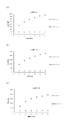
- FIG. 10 is a diagram showing changes over time in fluorescence intensity due to the addition of calpain-1 to compound 16 and compound 19.
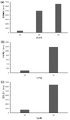
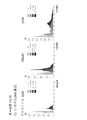
- FIG. (a) is a graph showing changes in fluorescence intensity 10 minutes after addition of calpain-1 to compounds 16 and 19-25, and (b) is a graph showing changes in calpain-1 to compounds 16-18 and 26-29.
- FIG. 10 is a graph showing changes in fluorescence intensity 10 minutes after addition
- (c) is a graph showing changes in fluorescence intensity 10 minutes after addition of calpain-1 to compound 16 and compound 30-36.
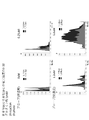
- (a) is a graph showing changes over time in fluorescence intensity due to addition of calpain-1 to compound 37
- (b) is a graph showing changes over time in fluorescence intensity due to addition of calpain-1 to compound 42
- (c) is a graph showing changes over time in fluorescence intensity due to the addition of calpain-1 to compound 45.
- FIG. (a) is a graph showing changes over time in fluorescence intensity due to addition of calpain-1 to compound 48
- (b) is a graph showing changes over time in fluorescence intensity due to addition of calpain-1 to compound 51
- (c) is a graph showing changes over time in fluorescence intensity due to the addition of calpain-1 to compound 53.
- FIG. (a) is a graph showing changes over time in fluorescence intensity due to addition of calpain-1 to compound 55
- (b) is a graph showing changes over time in fluorescence intensity due to addition of calpain-1 to compound 57
- (c) is a graph showing changes over time in fluorescence intensity due to the addition of calpain-1 to compound 59.
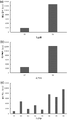
- (a) is a graph showing changes in fluorescence intensity 10 minutes after addition of calpain-1 to compounds 37-41
- (b) is a graph showing changes in fluorescence intensity 10 minutes after addition of calpain-1 to compounds 42-44.
- Fig. 4 is a graph showing changes
- (c) is a graph showing changes in fluorescence intensity 10 minutes after addition of calpain-1 to compound 45-47.
- (a) is a graph showing changes in fluorescence intensity 10 minutes after addition of calpain-1 to compounds 48-50
- (b) is a graph showing fluorescence intensity 10 minutes after addition of calpain-1 to compounds 51 and 52.
- (c) is a graph showing changes in fluorescence intensity 10 minutes after addition of calpain-1 to compound 53 and compound 54.
- FIG. (a) is a graph showing changes in fluorescence intensity 10 minutes after addition of calpain-1 to compounds 55 and 56, and (b) is fluorescence 10 minutes after addition of calpain-1 to compounds 57 and 58.
- FIG. 10 is a graph showing changes in intensity
- (c) is a graph showing changes in fluorescence intensity 10 minutes after addition of calpain-1 to compound 59-66.
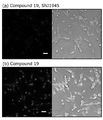
- (a) is live-cell imaging using compound 16, and (b) is live-cell imaging using compound 19.
- (a) is live-cell imaging using compound 20, (b) is live-cell imaging using compound 21, and (c) is live-cell imaging using compound 22.
- FIG. 10 is a photographed fundus image (rat) after administration of Compound 19.
- FIG. 10 is a photographed fundus image (rabbit) of the NMDA-administered group and the compound 19-administered group.
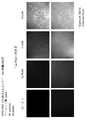
- FIG. 10 is a photographed fundus image (rabbit) of the PBS-administered group and the compound 19-administered group. It is an NMDA-administered group, a fundus photographing image (rabbit) of compound 16 administration (19 ⁇ L).
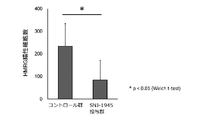
- FIG. 10 shows the number of HMRG-positive cells (rabbit) in the fundus after administration of compound 16 and compound 19;
- FIG. 11 is fluorescence imaging of retinal ganglion cells using compound 19.
- FIG. 10 shows the number of HMRG-positive cells (rabbit) in the fundus after administration of compound 16 and compound 19;
- FIG. 11 is fluorescence imaging of retinal ganglion cells using compound 19.
- FIG. 10 is a fluorescence photographed image of iPS cell-derived three-dimensional stereoscopic retinal tissue using compound 19 (glutamic acid final concentration 0 ⁇ M).
- FIG. FIG. 10 is a fluorescence photographed image of iPS cell-derived three-dimensional stereoscopic retinal tissue using Compound 19 (glutamic acid final concentration: 300 ⁇ M).
- FIG. 10 is a fluorescence photographed image (glutamic acid final concentration: 1 mM) of iPS cell-derived three-dimensional stereoscopic retinal tissue using compound 19.
- FIG. FIG. 10 is a graph showing the fluorescence intensity of iPS cell-derived three-dimensional retinal tissue using compound 19.
- FIG. 4 is a graph showing the results of comparing the fluorescence intensities of compound 19 and compound 16.
- FIG. 10 Live cell imaging with compound 19 in the presence or absence of calpain inhibitors.
- FIG. 10 is a fundus photographing image (rat) of Compound 19 administration in a calpain inhibitor administration group or a control group.
- FIG. Fig. 10 shows the number of HMRG-positive cells in fundus photographing images (rat) of compound 19 administration in the calpain inhibitor administration group or the control group.
- Fig. 10 shows the number of HMRG-positive cells in fundus photographing images (rat) of compound 19 administration in the calpain inhibitor administration group or the control group.
- Fig. 10 shows the number of HMRG-positive cells in fundus photographing images (rat) of compound 19 administration in the calpain inhibitor administration group or the control group.
- Fig. 10 shows the number of HMRG-positive cells in fundus photographing images (rat) of compound 19 administration in the calpain inhibitor administration group or the control group.
- FIG. 10 shows the number of HMRG-positive cells in fundus photographed images of Compound 19 administration in each calpain inhibitor administration group.
- FIG. 10 is a fluorescence image of an iPS cell-derived RGC axon model using compound 19.
- FIG. 2 is a graph showing changes over time in fluorescence intensity with or without addition of cathepsin B to compound 19.
- Compound (I) can be synthesized by any suitable method.
- compound (I) can be synthesized according to the method described in Example 2 of the present application.
- step a an amide bond is formed between the N atom of HMRG and the C-terminus of an amino acid.
- compound A1 is supported on a resin in step b, deprotection of the amino acid protecting group in step c, and amino acid elongation in step d.
- step e the amino acid protecting group is deprotected, and in step f, a carboxy compound R 12 -L-O having a partial structure of R 12 -L-O-C(R 10 )(R 11 ) of formula (I).
- —C(R 10 )(R 11 )—COOH or derived acid anhydrides or acid halides etc. are reacted to attach R 12 —L—O—C(R 10 )(R 11 ) Attaching an amide group with a -group.
- the compound of formula (I) can be obtained by cutting out from the resin in step g.
- step g each substituent R and the protecting groups contained in amino acid A and amino acid B can be deprotected at the same time, as appropriate.
- the resulting crude product of the compound of formula (I) may be further purified.
- the obtained crude product may be purified by reverse phase column chromatography.
- the present invention provides a method for measuring (or detecting) calpain (or calpain activity) in a sample, comprising contacting compound (I) with the sample, and It relates to a method comprising measuring (or detecting) fluorescence from (I).
- the detection of fluorescence may indicate the presence of calpain or calpain activity in the sample.
- Detected fluorescence may also indicate the calpain concentration or degree of calpain activity in the sample.
- Measurement and detection of calpain may be performed by using the measured fluorescence intensity as an absolute value, or the measured fluorescence intensity may be used as the amount of change in fluorescence intensity over time, or the fluorescence intensity of a control may be measured as a comparison.
- the fluorescence intensity of such a control may be obtained by measuring the control at the same time as the sample, or a value previously obtained using the control may be used.
- Compound (I) is brought into contact with a sample by adding, applying, spraying, or injecting a solution or suspension containing compound (I). can be selected as appropriate.
- the temperature conditions during contact are not limited as long as calpain can exhibit its catalytic action.
- Fluorescence from the compound (I) after contact is obtained by irradiating the sample with visible light of about 440 to 510 nm as an excitation wavelength at any time after contact (for example, at any time from immediately after contact until several hours have passed).
- a calpain-containing sample whose concentration and activity are known in advance may be measured in the same manner to prepare a standard curve, and the calpain concentration and activity may be calculated using the standard curve.
- Samples that can be used include tissues, liquids, or processed products derived from living organisms; cell cultures, cell culture supernatants, cell lysates, cell lysates, or processed products thereof; isolated and purified enzymes; For example, a sample derived from a mammalian subject, which will be described later, can be exemplified.
- the method for measuring or detecting calpain activity can also be performed in vivo by applying a living body as a sample to be measured or detected.
- compound (I) is brought into contact with a sample by administering compound (I) to a living body to be measured or detected.
- Any appropriate route and method can be selected for administration of compound (I) to a living body depending on the target site for measurement or detection of calpain activity.
- administration methods include eye drops, nose drops, ear drops, injections, drip infusions, and the like.
- Living organisms to be measured or detected include mammalian subjects described below.
- the measurement of calpain in the following method can be performed according to the measurement method described above.
- the present invention provides a method of providing information for the diagnosis of a disease associated with calpain activity in a mammalian subject, comprising contacting compound (I) with a sample from said mammalian subject; It relates to a method comprising measuring fluorescence from compound (I) after contact. Based on the information provided by the method of the present invention, a disease associated with calpain activity in the mammalian subject to be diagnosed can be diagnosed.
- the information to be provided includes information reflecting fluorescence response, such as fluorescence intensity, the number of cells emitting fluorescence (for example, the number of cells emitting fluorescence with a predetermined intensity or more per unit area), and the area of the fluorescence emitting range. be done. Diagnosis of diseases associated with calpain activity can be performed, for example, by comparing the information provided above with predetermined reference values. Such reference values include values measured in samples from mammalian subjects not suffering from diseases associated with calpain activity (hereinafter referred to as negative controls), mammalian subjects suffering from diseases associated with calpain activity (hereinafter referred to as positive control), and the like.
- the reference value may be a value measured simultaneously with the measurement of the sample, a value measured in advance, or a value statistically calculated from values measured in advance.
- information when information is provided reflecting a fluorescence response above a reference value based on a negative control and/or information reflecting a fluorescence response above a reference value based on a positive control is provided, It can be diagnosed that the patient may suffer from a disease related to calpain activity.
- information is provided reflecting a sub-reference fluorescence response based on a negative control and/or information reflecting a sub-reference fluorescence response based on a positive control is provided, It can be diagnosed that there is a possibility of not having a disease related to calpain activity.
- the present invention also provides a method of providing information for monitoring a disease associated with calpain activity in a mammalian subject, comprising contacting compound (I) with a sample from the mammalian subject; It relates to a method comprising measuring fluorescence from compound (I) after contact. Based on the information provided by the methods of the invention, the course of disease associated with calpain activity in the mammalian subject can be determined. Information provided includes information reflecting the same fluorescence response as described above. A determination of the course of a disease associated with calpain activity can be made, for example, by comparing the information provided above with information previously obtained from the mammalian subject.
- a disease associated with calpain activity may be cured or ameliorated, or prevented, if information is provided that reflects a lower fluorescence response than previously obtained. can be determined to be viable.
- a disease associated with calpain activity may not be cured or ameliorated or prevented if information is provided that reflects a fluorescence response greater than or equal to the previously obtained fluorescence response. It can be determined that there is
- progression of a disease associated with calpain activity is inhibited or prevented when information is provided that reflects a fluorescence response comparable to the previously obtained fluorescence response. It can be determined that there is a possibility that
- the present invention provides a method for diagnosing a disease associated with calpain activity in a mammalian subject, comprising: administering compound (I) to the mammalian subject; measuring, and determining the likelihood that the mammalian subject is suffering from a disease associated with calpain activity based on the results of the measurement.
- the measurement results are, for example, similar to the above, the fluorescence response such as fluorescence intensity, the number of cells emitting fluorescence (for example, the number of cells emitting fluorescence with a predetermined intensity or more per unit area), and the area of the fluorescence emitting range. It can be reflective information.
- Determining the likelihood that the mammalian subject suffers from a disease associated with calpain activity can be performed, for example, by comparing the measurement result with a predetermined reference value.
- reference values include measured values in negative controls, measured values in positive controls, and the like.
- the reference value may be a value measured simultaneously with the measurement of the sample, a value measured in advance, or a value statistically calculated from the values measured in advance.
- the measurement result exceeds the reference value based on the negative control and/or is equal to or greater than the reference value based on the positive control, the mammalian subject may be suffering from a disease associated with calpain activity. can be determined to be viable.
- the mammalian subject does not have a disease associated with calpain activity if the measurement result is equal to or less than the reference value based on the negative control and/or is less than the reference value based on the positive control. can be determined to be possible.
- the present invention also provides a method for monitoring a disease associated with calpain activity in a mammalian subject, comprising administering compound (I) to the mammalian subject, and measuring fluorescence from compound (I) after the administration. and determining the course of a disease associated with calpain activity based on the measurement results.
- the measurement result may be, for example, information reflecting the fluorescence response.
- Determining the course of a disease associated with calpain activity in the mammalian subject can be done, for example, by comparing the measurement to measurements previously made in the mammalian subject. In one embodiment, when a measurement result showing a fluorescence response greater than or equal to the previous measurement result is obtained, it is determined that a disease related to calpain activity has not been cured or improved, or may not have been prevented. can do. In another embodiment, when a measurement result showing a lower fluorescence response than the previous measurement result is obtained, it is determined that a disease associated with calpain activity is cured, improved, or possibly prevented. can do. In yet another embodiment, when a measurement result showing a fluorescence response comparable to the previous measurement result is obtained, the progression of a disease related to calpain activity may be suppressed or prevented. It can be determined that there is
- Monitoring can include administering a candidate therapeutic agent to the mammalian subject or determining therapeutic efficacy after applying a candidate therapeutic method to the mammalian subject.
- the monitoring method includes administering a candidate therapeutic agent to the mammalian subject or applying a candidate therapeutic method to the mammalian subject prior to the monitoring step, and the disease is not cured or ameliorated. indicates that the therapeutic drug or therapeutic method is ineffective, and that the disease is cured or improved, or that the progression of the disease is suppressed indicates that the therapeutic drug or therapeutic method is effective. good too.
- sample derived from a mammalian subject means a specimen collected from a mammalian subject, and includes tissues and body fluids.
- body fluid is meant a fluid derived from a subject, e.g. blood, such as whole blood, plasma, serum, whole blood or hemolysate of blood cells; saliva; urine; tears; exudates; Cerebrospinal fluid; joint fluid; aqueous humor;
- a control sample not suffering from a disease associated with calpain activity includes a sample from a mammalian subject known not to suffer from a disease associated with calpain activity, or a sample from a mammalian subject known not to suffer from a disease associated with calpain activity. It may also be a sample from a mammalian subject that is known to be free.
- a control sample suffering from a disease associated with calpain activity includes a sample from a mammalian subject known to suffer from a disease associated with calpain activity, or a control sample suffering from a disease associated with calpain activity. It may also be a sample from a mammalian subject known to be infected.
- the contact between the mammalian subject-derived sample and compound (I) can be performed in vivo, in vitro, or ex vivo.
- “Mammal subjects” include, for example, mammals such as humans, cows, horses, dogs, cats, pigs, sheep, rabbits, and rats, preferably humans.
- determination means that the state of a mammalian subject (eg, a patient) is thereby predicted, and does not mean that it can be determined with 100% accuracy.
- the "fluorescence intensity" to be compared may be a value converted from the fluorescence intensity (for example, concentration, amount, or activity value), if necessary.
- concentration concentration
- amount amount
- activity value for example, concentration, amount, or activity value
- a calpain-containing sample whose concentration is known in advance is measured in a similar manner to create a standard curve, the calpain concentration is calculated using the standard curve, and the fluorescence intensity between samples is calculated using the calpain concentration.
- Increases concentration increases
- Calpain inhibitors are known as therapeutic agents for diseases associated with calpain activity.
- calpain inhibitors are likely to be effective (in other words, the patient is susceptible to calpain inhibitors). Therefore, the present invention provides a method for selecting a mammalian subject that can be treated with a calpain inhibitor, comprising: contacting compound (I) with a sample derived from a mammalian subject; and selecting a mammalian subject treatable with a calpain inhibitor based on the measurement results.
- the present invention provides a method for selecting a mammalian subject treatable with a calpain inhibitor, comprising administering compound (I) to the subject mammalian subject, and measuring fluorescence from compound (I) after said administration. and selecting a mammalian subject treatable with a calpain inhibitor based on the measurement results.
- the measurement result may be information reflecting the fluorescence response described in Section C, for example.
- Selection of mammalian subjects treatable with a calpain inhibitor can be performed, for example, by comparing the results of the above measurements with predetermined reference values. Such reference values include measured values in negative controls, measured values in positive controls, and the like.
- the reference value may be a value measured simultaneously with the measurement of the sample, a value measured in advance, or a value statistically calculated from the values measured in advance.
- the subject mammalian subject when the measurement result exceeds the reference value based on the negative control and / or when it is equal to or higher than the reference value based on the positive control, the subject mammalian subject can be treated with a calpain inhibitor as a mammalian subject can be selected.
- the method of treating a mammalian subject treatable with a calpain inhibitor may further comprise administering a calpain inhibitor to a mammalian subject selected as a mammalian subject treatable with a calpain inhibitor.
- compound (I) can be used to determine whether a specific candidate compound or therapeutic method affects calpain levels or calpain activity, therapeutic effects targeting calpain can be investigated. . Therefore, compound (I) can be used in screening methods for therapeutic agents for diseases associated with calpain activity.
- the present invention provides a method for determining the therapeutic efficacy of a candidate compound or candidate therapeutic method for a disease associated with calpain activity, comprising administering the candidate compound or candidate therapeutic method to a disease model associated with calpain activity.
- a therapeutic method contacting compound (I) with a sample derived from the disease model or administering compound (I) to the disease model, fluorescence from compound (I) after the contact or administration and determining, based on the results of the measurement, the therapeutic effect of the candidate compound or candidate treatment method on a disease associated with calpain activity.
- the measurement result may be information reflecting the fluorescence response described in Section C, for example. Determination of therapeutic effect can be performed, for example, by comparing the above measurement result with a predetermined reference value. As such a reference value, a measurement result in a disease model to which a candidate compound has not been administered or a candidate therapeutic method has not been applied can be used.
- the compound or treatment method when the measurement result shows a fluorescence response equal to or greater than the predetermined reference value, it can be determined that the compound or treatment method has no therapeutic effect on a disease associated with calpain activity. In another embodiment, it can be determined that the compound or treatment method has a therapeutic effect on a disease associated with calpain activity when the measurement result shows a fluorescence response less than the predetermined reference value.
- the present invention also provides a test method for determining the therapeutic effect of a candidate compound on a disease associated with calpain activity, comprising preparing unadministered and administered samples of the candidate compound in a disease model associated with calpain activity. contacting compound (I) with the sample; and measuring fluorescence from compound (I) after the contact. Based on the measurement results, the therapeutic effect of the candidate compound can be determined in the same manner as described above.
- Disease models associated with calpain activity include, for example, NMDA-induced retinal disease models and glutamic acid-induced retinal ganglion cell injury models
- the term "level” means a quantified index related to abundance, and includes, for example, concentration, amount, or an index that can be used instead. Therefore, the level may be a measured value such as fluorescence intensity itself, or may be a value converted to concentration. In addition, the level may be an absolute numerical value (abundance amount, amount per unit area, etc.), or may be a relative numerical value compared with a comparative control set as necessary.
- compound (I) when the disease associated with calpain activity is an ophthalmic disease, compound (I) can be administered by intravitreal injection.
- the present invention provides a method for measuring (or detecting) cathepsins (or cathepsin activity) in a sample, comprising contacting compound (I) with the sample, and It relates to a method comprising measuring (or detecting) fluorescence from (I).
- the detection of fluorescence may indicate the presence of cathepsin or cathepsin activity in the sample.
- Detected fluorescence may also indicate the cathepsin concentration or degree of cathepsin activity of the sample.
- Measurement and detection of cathepsin may be performed by using the measured fluorescence intensity as an absolute value, or the measured fluorescence intensity may be used as the amount of change in fluorescence intensity over time, or the fluorescence intensity of a control may be measured as a comparison.
- the fluorescence intensity of such a control may be obtained by measuring the control at the same time as the sample, or a value previously obtained using the control may be used.
- the sample, contact of compound (I) with the sample, and measurement of fluorescence from compound (I) after contact are as described for the method for measuring or detecting calpain activity.
- Ethylene Glycol Monotertbutyl Ether (1.4 mL, 11.0 mmol) and Bromoacetic acid (1.39 g, 10.0 mmol) were added to a THF solution (30 mL) of NaH (1.20 g, 30.0 mmol) at 0°C. at room temperature for 14 hours. Water was added to the reaction solution, and the mixture was extracted with diethyl ether. 2M hydrochloric acid was added to the aqueous phase to neutralize the solution and extracted with ethyl acetate. After the organic phase was dried over sodium sulfate, the solvent was distilled off under reduced pressure to obtain the target compound (1.22 g, 69%).
- Compound 37 was synthesized by the same method as (2-1).
- Compound 7 was synthesized by replacing the amino acid in step (a) from Fmoc-Met-OH to Fmoc-Thr(tBu)-OH.
- the TFA salt was obtained (5.5 mg).
- Compound 42 was synthesized by the same method as (2-1).
- Compound 8 was synthesized by replacing the amino acid in step (a) from Fmoc-Met-OH to Fmoc-His(Trt)-OH.
- the TFA salt was obtained (7.9 mg).
- Compound 45 was synthesized by the same method as (2-1).
- Compound 9 was synthesized by replacing the amino acid in step (a) from Fmoc-Met-OH to Fmoc-Tyr(tBu)-OH.
- the TFA salt was obtained (3.0 mg).
- Compound 48 was synthesized by the same method as (2-1).
- Compound 10 was synthesized by replacing the amino acid in step (a) from Fmoc-Met-OH to Fmoc-Phe-OH.
- Compound 51 was synthesized by the same method as (2-1).
- Compound 11 was synthesized by replacing the amino acid in step (a) from Fmoc-Met-OH to Fmoc-Ser(tBu)-OH.
- Compound 53 was synthesized by the same method as (2-1).
- Compound 12 was synthesized by replacing the amino acid in step (a) from Fmoc-Met-OH to Fmoc-Gln(Trt)-OH.
- the TFA salt was obtained (2.9 mg).
- Compound 55 was synthesized by the same method as (2-1).
- Compound 13 was synthesized by replacing the amino acid in step (a) from Fmoc-Met-OH to Fmoc-Arg(Pbf)-OH.
- the TFA salt was obtained (1.5 mg).
- Compound 57 was synthesized by the same method as (2-1).
- Compound 14 was synthesized by replacing the amino acid in step (a) from Fmoc-Met-OH to Fmoc-Lys(Boc)-OH.
- the TFA salt was obtained (11.1 mg).
- Compound 59 was synthesized by the same method as (2-1).
- Compound 15 was synthesized by replacing the amino acid in step (a) from Fmoc-Met-OH to Fmoc-Nle-OH.
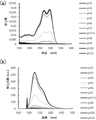
- Example 3 Optical Properties of Fluorescent Probe The absorption spectrum and fluorescence spectrum of Compound 19 at each pH were measured. Specifically, a DMSO solution (0.1 mM) of Compound 19 was added to 10 mM phosphate buffer solutions of each pH from 2 to 11, and the final probe concentration was 1 ⁇ M, and the final DMSO concentration was 1%. was prepared. The fluorescence spectrum of the measurement solution was measured at an excitation wavelength of 490 nm.
- Figures 1a and b show the spectrum at each pH.
- Compound 19 the fluorescent probe of the present invention, was shown to be mainly colorless and non-fluorescent under neutral conditions.
- Example 4 Reactivity of Fluorescent Probe (Compound 19) with Calpain Calpain-1 was allowed to act on Compound 19, and changes in absorption spectrum and fluorescence spectrum were measured. Specifically, 50 mM TRIS buffer (pH 7.4, 5 mM CaCl 2 , 100 mM NaCl, 1 mM EGTA), DMSO solution (0.5 mM) of compound 19, calpain-1 (100 Units) (Calpain-1 from Human Erythrocytes) , Cat.No.208713, Merck Millipore, hereinafter the same) was added to prepare a 2 mL reaction solution (final probe concentration 5 ⁇ M). Enzymatic reactions were carried out at 37°C. The fluorescence spectrum of the reaction solution was measured at an excitation wavelength of 490 nm. Also, the reaction solution was analyzed by HPLC chromatography. As a control, compound 19 (5 ⁇ M final concentration) without calpain-1 was used.
- TRIS buffer pH 7.4, 5 mM CaCl 2
- Time course of fluorescence intensity by calpain-1 Compound 19 and compound 16 were subjected to time course fluorescence assay. Specifically, 17.4 U/mL of calpain-1 and 5 mM CaCl2 were added to 50 mM TRIS buffer (pH 7.4, 2 mM EGTA, 2 mM DTE) containing 10 ⁇ M of the synthesized fluorescent probe and incubated at 37°C. An enzymatic reaction was performed. Calpain-1 and each compound to which CaCl 2 was not added were also measured in the same manner as negative controls.
- FIG. 4 shows the results of measurement of changes in fluorescence intensity over time due to calpain-1 (excitation wavelength 475 nm, fluorescence wavelength 500-550 nm).
- Both compound 16 and compound 19 functioned as fluorescent probes for calpain-1.
- compound 19 was shown to have improved reactivity with calpain-1.
- FIGS. 5(a) and (b) The increase in fluorescence intensity 10 minutes after the addition of calpain-1 is shown in FIGS. 5(a) and (b) (excitation wavelength 475 nm, fluorescence wavelength 500-550 nm). Both compounds were shown to function as fluorescent probes for calpain-1. In addition, the fluorescence intensity of compound 19-25 was higher than that of compound 16, and the fluorescence intensity of compound 26-29 was higher than that of compound 16-18.
- the increase in fluorescence intensity 30 minutes after the addition of calpain-1 is shown in FIG. 5(c) (excitation wavelength 460 nm, fluorescence wavelength 530 nm). Both compounds were shown to function as fluorescent probes for calpain-1. In addition, the fluorescence intensity of compound 30-36 was higher than that of compound 16.
- compound 19-36 which is the compound of the present invention, has improved enzymatic reactivity with calpain as compared to compound 16 or compounds 17 and 18, which are comparative compounds.
- compounds in which R 10 or R 11 in formula (I) has an alkyl group compounds in which R 10 and R 11 form a ring, and R 12 -L- forms a ring with R 10 It was shown that all of the compounds tested had good enzymatic reactivity with calpain.
- Compounds 17 and 18, which are comparative compounds showed a decrease in fluorescence intensity compared to Compound 16.
- an amide having an R 12 -LOC(R 10 )(R 11 )- group at the N-terminus of the peptide chain is used to improve the sensitivity for detecting the enzymatic activity of calpain-1. It was shown that it is important that the groups are attached. Since various R 12 -LOC(R 10 )(R 11 )-groups similarly exhibited the effect of improving sensitivity, R 12 -LOC(R 10 )(R 11 ) The - group is not limited to the chemical structures described in this example, and it was suggested that any chemical structure would similarly bring about the effect of improving the sensitivity of calpain activity detection.
- a similar fluorescence assay with calpain-1 was subsequently performed for compounds 37, 42, 45, 48, 51, 53, 55, 57, 59. Specifically, 17.4 U/mL of calpain-1 and 5 mM CaCl2 were added to 50 mM TRIS buffer (pH 7.4, 2 mM EGTA, 2 mM DTE) containing 10 ⁇ M of the synthesized fluorescent probe and incubated at 37°C. An enzymatic reaction was performed. Each compound to which calpain-1 was not added was used as a control. The results of plotting the time dependence of fluorescence intensity are shown in FIGS. 6 to 8 (excitation wavelength 475 nm, fluorescence wavelength 500-550 nm). All of the probes exhibited an increase in fluorescence intensity upon interaction with calpain-1, indicating that they act as substrates for the calpain-1 enzyme.
- Example 8 Reactivity of Fluorescent Probe (Compound 37-66) with Calpain
- calpain-1 fluorescence assay was performed according to the method described above. Specifically, 17.4 U/mL calpain 1 and 5 mM CaCl 2 were added to 50 mM TRIS buffer (pH 7.4, 2 mM EGTA, 2 mM DTE) containing 10 ⁇ M of the synthesized fluorescent probe, and the enzyme was incubated at 37°C. The reaction was performed and the increase in fluorescence intensity was measured 10 minutes after the addition of calpain-1.
- FIGS. 9 to 11 The obtained results are shown in FIGS. 9 to 11.
- FIG. It was confirmed that any compound having an R 12 -L-O- group had a higher fluorescence intensity than a compound having no R 12 -L-O- group.
- Various combinations of amino acids A and B were also shown to effectively detect calpain activity with compounds having R 12 -LO- groups.
- the reactivity toward calpain-1 depends on the R 12 -LOC(R 10 )(R 11 )- group in formula (I), and R 12 -LOC( Enhanced reactivity towards calpain-1 was observed when the R 10 )(R 11 )- group was present. Furthermore, the improved reactivity with calpain due to having the R 12 -LOC(R 10 )(R 11 )- group was also effective for various combinations of amino acids A and B. .
- SH-SY5Y cells (American Type Culture Collection, VA, USA) were mixed with Dulbecco's modified Eagle's medium/Ham's F-12 mixed medium (DMEM/F-12; Thermo Fisher Scientific) (10% fetal bovine serum ( FBS; Thermo Fisher Scientific, MA, USA) and 100 U/mL penicillin-100 ⁇ g/mL streptomycin (PS; Thermo Fisher Scientific)) were cultured at 37° C. under conditions of 5% CO 2 -95% air.
- DMEM/F-12 Dulbecco's modified Eagle's medium/Ham's F-12 mixed medium
- PS penicillin-100 ⁇ g/mL streptomycin
- Example 10 Imaging of Live Cells Using Fluorescent Probes Calpain activity imaging in SH-SY5Y cells was performed for compounds 20-23, 38, and 56 in the same manner as in Example 9. Brightfield and fluorescence images were taken after 30 minutes of incubation for compounds 20-23 and 38, and after 20 minutes of incubation for compound 56. As shown in FIGS. 13 and 14, calpain activity in SH-SY5Y cells could be observed in any compound.
- the present invention can provide a new fluorescent probe targeting calpain.
- formula (I) has an R 12 -LOC(R 10 )(R 11 )- group to create a probe with improved enzymatic reactivity with calpain.
- R 12 —L—O—C(R 10 )(R 11 )— group such an improvement is confirmed with a wide range of groups, for example, substituted hydroxyl, carboxyl, alkoxy, and/or amino groups. Good enzymatic reactivity was exhibited even when having a group.
- Example 11 Evaluation using rat NMDA injury model Black Brown-Norway rats were anesthetized using isoflurane. PBS or N-methyl-D-aspartate (NMDA) (10 mM, 2 ⁇ L) was administered intraocularly. After 6 hours, the animals were anesthetized again with a mixture of ketamine and xalazine, and compound 19 (18.3 ⁇ M, 3 ⁇ L) was administered intraocularly. Before administration of Compound 19 and 20 minutes after administration, fundus images were taken with F10 (Nidek confocal biomicroscope).
- NMDA N-methyl-D-aspartate
- FIG. 15 shows the results of measuring the number of HMRG-positive nerve cells in the fundus photographed image of the rat shown in FIG. The number of HMRG-positive cells was negligible in PBS-treated rats, and a significant increase in HMRG-positive cell numbers was observed in NMDA-treated rats.
- the fluorescent probe of the present invention is believed to be useful for diagnosing retinal diseases. In particular, it is possible to rapidly detect activation of calpain in the fundus, and it is expected to be useful for clinical diagnosis and treatment selection. Furthermore, the fluorescent probe of the present invention is expected to be useful for evaluation of the therapeutic effects of calpain inhibitors. Specifically, medical and industrial use of the fluorescent probe of the present invention, such as treatment with a calpain inhibitor to a mammal subject (e.g., patient) confirmed to have elevated calpain activity and determination of the therapeutic effect. The value and economic effect are extremely large.
- Example 12 Evaluation of compound 19 using rabbit NMDA injury model Black Dutch rabbits were anesthetized using a mixture of ketamine and xalazine. N-methyl-D-aspartate (NMDA) (12 mM, 50 ⁇ L) or PBS was administered intraocularly. After 9 hours, the animals were anesthetized again with a mixed solution of ketamine/xalazine, and compound 19 (18.3 ⁇ M, 19 ⁇ l), compound 16 (20 ⁇ M, 19 ⁇ l), or compound 16 (20 ⁇ M, 38 ⁇ l) was administered intraocularly. The fundus was photographed with Mirante (a confocal scanning diode laser ophthalmoscope manufactured by Nidek) before and after the administration of each compound.
- Mirante a confocal scanning diode laser ophthalmoscope manufactured by Nidek
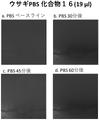
- Fig. 18 shows the results of PBS-administered eyes. As shown in Figure 18a, no clear signal was observed before compound 19 administration. In addition, as shown in Figures 18b to 18d, almost no HMRG staining of neurons was observed 30, 45, and 60 minutes after administration of Compound 19.
- FIG. 23 shows the results of measuring the number of HMRG-positive neurons in a certain area (819 ⁇ 819 pix) above the optic papilla of the fundus photographed images of compound 19 and compound 16 (19 ⁇ l and 38 ⁇ l) shown in FIGS.
- the number of HMRG-positive cells of compound 19 was significantly higher than that of compound 16 (19 ⁇ l), and tended to be higher than that of compound 16 (38 ⁇ l).
- the number of HMRG-positive cells was negligible for rabbits treated with PBS, and the number of HMRG-positive cells for compound 19 and compound 16 (38 ⁇ l) was significantly reduced compared to the number of HMRG-positive cells for rabbits treated with NMDA.
- the fluorescent probe of the present invention is believed to be useful for diagnosing retinal diseases.
- the eyeball size of rabbits, which are medium-sized animals, is more similar to that of humans than that of rats, which are small animals, and is considered to be similar to administration conditions in humans.
- Compound 19 exhibited better reactivity at a lower dose than Compound 16, the fluorescent probe of the present invention is considered to be particularly useful for intraocular administration to humans.
- Example 13 Evaluation of calpain probe using human iPS cell-derived 3D retinal tissue
- 3D 3D retinal tissue was artificially induced to differentiate from human iPS cells (strain 201B7, purchased from CiRA). and maintained in a 37° C., 5% CO 2 incubator for 60 days.
- a glutamic acid injury model was prepared in which calpain was activated in this iPS cell-derived three-dimensional retinal tissue to induce damage to retinal ganglion cells, and calpain activity by Compound 19 was evaluated.
- retinal ganglion cells were isolated from iPS cell-derived three-dimensional retinal tissue using autoMACS pro (registered trademark) with CD90 Microbeads. Glutamic acid (final concentration 300 ⁇ M) was added to the cells and allowed to react for 1 hour. One hour after the addition of glutamic acid, compound 19 (final concentration 5 ⁇ M) was added, and one hour later, the state and fluorescence were photographed (RGB and B/W modes) with a fluorescence microscope (ZEISS Axio Vert. A1). Attenuation of projections and enhancement of fluorescence were observed, confirming that retinal ganglion cell injury was induced by calpain activation (Fig. 24).
- FIG. 29 shows the result of comparing the fluorescence intensity of compound 19 and compound 16.
- compound 19 When each compound was added at a final glutamic acid concentration of 1 mM, compound 19 exhibited more fluorescence expression at final concentrations of 0.25 ⁇ M, 1.2 ⁇ M and 5.0 ⁇ M.
- compound 19 is considered useful for evaluating retinal ganglion cell damage caused by activation of human iPS cell-derived calpain. Since compound 19 was confirmed to have reactivity with human iPS cell-derived retinal ganglion cells and stereoscopic retinal tissue, it is expected to be useful for evaluating retinal ganglion cells by calpain activation in the human living retina. be.
- the fluorescent probe that is one aspect of the present invention can be used in combination with known or novel calpain inhibitors.
- a mammalian subject that can be treated or prevented by the calpain inhibitor can be selected with a fluorescent probe, and then the calpain inhibitor can be administered to the mammalian subject. It is also possible to administer a fluorescent probe to a mammalian subject to determine the degree of therapeutic or preventive effect of the calpain inhibitor.
- the fluorescent probe which is one aspect of the present invention, is administered to a mammalian subject before, after, before, after, or simultaneously with the administration of a calpain inhibitor to a mammalian subject, and its calpain activity, etc. (in other words, the calpain inhibitor effect) can be evaluated.
- the effects of the combined use of a fluorescent probe and a calpain inhibitor are specifically shown.
- FIG. 30 shows the results of live cell imaging performed in the same manner as above.
- (a) is imaging using an inhibitor-containing assay solution
- (b) is imaging using an inhibitor-free assay solution).
- the fluorescent probe according to the present invention can be used in combination to determine the pharmacological action of calpain inhibitors on living cells.
- Example 15 Combination with Calpain Inhibitors in Mammalian Subjects 1
- a 0.5% (w/v) CMC solution was prepared by dissolving sodium carboxymethylcellulose in distilled water.
- An inhibitor-containing CMC solution was prepared by suspending SNJ-1945 in a 0.5% (w/v) CMC solution to a concentration of 2.5% (w/v).
- Rats were anesthetized with isoflurane and NMDA (10 mM, 2 ⁇ L) was administered intraocularly. Two hours after NMDA administration, the inhibitor-containing CMC solution was intraperitoneally administered to rats at a dose of 100 mg/kg body weight of SNJ-1945.
- mice Four hours after inhibitor administration (6 hours after NMDA administration), rats were re-anesthetized with isoflurane and administered compound 19 (15 ⁇ M, 4 ⁇ L) intraocularly. Twenty to thirty minutes after administration of compound 19, the fundus was photographed with F10.
- FIG. 32 shows the results of measuring the number of HMRG-positive neurons in the fundus photographed image of the rat shown in FIG. As shown in FIG. 32, the number of HMRG-positive neurons was significantly decreased in the SNJ-1945 administration group compared to the control group.
- Example 16 Combination with Calpain Inhibitors in Mammalian Subjects 2
- a 0.5% (w/v) CMC solution was prepared by dissolving sodium carboxymethylcellulose in distilled water.
- An inhibitor-containing CMC solution was prepared by suspending SNJ-1945 in a 0.5% (w/v) CMC solution to a concentration of 2.5% (w/v).
- Rats were anesthetized with isoflurane and NMDA (10 mM, 2 ⁇ L) was administered intraocularly. Two hours after NMDA administration, the inhibitor-containing CMC solution was orally administered to rats at a dose of 100 mg/kg body weight of SNJ-1945.
- mice Four hours after inhibitor administration (6 hours after NMDA administration), rats were re-anesthetized with isoflurane and administered compound 19 (15 ⁇ M, 4 ⁇ L) intraocularly. Twenty to thirty minutes after administration of compound 19, the fundus was photographed with F10.
- Fig. 33 shows the results of measuring the number of HMRG-positive nerve cells in the fundus photographed image. As shown in FIG. 33, the number of HMRG-positive neurons was significantly decreased in the SNJ-1945 administration group compared to the control group.
- Example 17 Combination with Calpain Inhibitors in Mammalian Subjects 3
- a 0.5% (w/v) CMC solution was prepared by dissolving sodium carboxymethylcellulose in distilled water.
- An inhibitor-containing CMC solution was prepared by suspending SNJ-1945 in a 0.5% (w/v) CMC solution to a concentration of 2.5% (w/v).
- the inhibitor-containing CMC solution was administered intraperitoneally to rats at a dose of 100 mg/kg body weight of SNJ-1945. Two hours after the intraperitoneal administration, the rats were anesthetized with isoflurane, and NMDA (10 mM, 2 ⁇ L) was administered intraocularly.
- mice Six hours after NMDA administration, rats were re-anesthetized with isoflurane and administered compound 19 (15 ⁇ M, 4 ⁇ L) intraocularly. Twenty to thirty minutes after administration of compound 19, the fundus was photographed with F10.
- Fig. 34 shows the results of measuring the number of HMRG-positive nerve cells in the fundus photographed image. As shown in FIG. 34, the number of HMRG-positive neurons was significantly decreased in the SNJ-1945 administration group compared to the control group.
- fluorescent probes according to the present invention can be used in combination with calpain inhibitors to determine the degree of therapeutic or prophylactic effect of calpain inhibitors in mammalian subjects.
- Examples 15 and 16 demonstrate the administration of a calpain inhibitor to a mammalian subject in which calpain is activated (and, as a result, may be sensitive to calpain activators), and the use of a fluorescent probe according to the present invention.
- Example 17 is an aspect of evaluating the degree of effect of a calpain inhibitor when activation of calpain is induced in a mammalian subject to which a calpain inhibitor was administered prophylactically, using a fluorescent probe according to the present invention. corresponds to
- Example 18 Combination with Calpain Inhibitors 4 in Mammalian Subjects
- covalent inhibitors SNJ-1945 (CAS 854402-59-8), C2I (CAS 677275-28-4), or MDL 28,170 (CAS 88191-84-8) or non-covalent Neuronal imaging in combination with the binding inhibitor PD-151746 (CAS 179461-52-0) was compared.
- an inhibitor-containing CMC solution prepared by suspending each calpain inhibitor in a 0.5% (w/v) CMC solution to a concentration of 2.5% (w/v). performed imaging of rat neurons in the same manner as in Example 16.
- Figure 35 shows the results of a two-group comparison between the SNJ-1945-administered group and the other calpain inhibitor-administered group, by measuring the number of HMRG-positive neurons in fundus-photographed images. As shown in FIG. 35, the number of HMRG-positive neurons was significantly decreased in the SNJ-1945-administered group compared to the other calpain inhibitor-administered groups.
- the results show that the fluorescent probe of the present invention can detect the inhibitory ability of various calpain inhibitors, and the fluorescent probe of the present invention can detect SNJ-1945 calpain-inhibiting ability can be detected with higher accuracy.
- FIG. 36(a) is a photographed image of axons to which only compound 19 was added and neither SNJ-1945 nor A23187 was added, and (c) is the addition of compound 19 and A23187. 10 is a photographed image of an axon treated only with SNJ-1945 and not added with SNJ-1945.
- 36(a) to (c) are fluoroscopy images for detecting the fluorescence of tdTomato in these axons. tdTomato expressed in .
- Example 19 confirms the reactivity of fluorescent probes in RGC axons in a non-selective calcium influx model stimulated by calcium ionophores, and the fluorescent probes according to the embodiments of the present invention inhibit calpain activity in axons. It turns out that it is also effective for detection.
- Example 20 Time course of fluorescence intensity by cathepsin B Compound 19 was subjected to time course fluorescence assay. Specifically, 880 ng/mL of recombinant human cathepsin B (953-CY; R&D Systems, MN, USA) was added to 50 mM TRIS buffer (pH 7.4, 2 mM EGTA, 2 mM DTE) containing 10 ⁇ M of synthesized fluorescent probe. ) was added and the enzymatic reaction was carried out at 37°C. As a negative control, the same operation as above was performed except that cathepsin B was not added.
- FIG. 37 shows the results of measurement of changes in fluorescence intensity over time due to cathepsin B (excitation wavelength 475 nm, fluorescence wavelength 500-550 nm).
- compound 19 functioned as a fluorescent probe for cathepsin B.
Landscapes
- Health & Medical Sciences (AREA)
- Life Sciences & Earth Sciences (AREA)
- Chemical & Material Sciences (AREA)
- Engineering & Computer Science (AREA)
- Organic Chemistry (AREA)
- Molecular Biology (AREA)
- Biomedical Technology (AREA)
- General Health & Medical Sciences (AREA)
- Proteomics, Peptides & Aminoacids (AREA)
- Immunology (AREA)
- Biochemistry (AREA)
- Urology & Nephrology (AREA)
- Medicinal Chemistry (AREA)
- Hematology (AREA)
- Physics & Mathematics (AREA)
- Analytical Chemistry (AREA)
- Biotechnology (AREA)
- Microbiology (AREA)
- Zoology (AREA)
- Wood Science & Technology (AREA)
- Bioinformatics & Cheminformatics (AREA)
- Biophysics (AREA)
- Genetics & Genomics (AREA)
- General Physics & Mathematics (AREA)
- Pathology (AREA)
- Food Science & Technology (AREA)
- Cell Biology (AREA)
- Animal Behavior & Ethology (AREA)
- Public Health (AREA)
- Veterinary Medicine (AREA)
- Neurosurgery (AREA)
- Neurology (AREA)
- General Engineering & Computer Science (AREA)
- Epidemiology (AREA)
- Pharmacology & Pharmacy (AREA)
- Chemical Kinetics & Catalysis (AREA)
- General Chemical & Material Sciences (AREA)
- Nuclear Medicine, Radiotherapy & Molecular Imaging (AREA)
- Psychiatry (AREA)
- Hospice & Palliative Care (AREA)
Priority Applications (7)
| Application Number | Priority Date | Filing Date | Title |
|---|---|---|---|
| AU2022297106A AU2022297106A1 (en) | 2021-06-24 | 2022-06-23 | Fluorescent probes |
| US18/568,591 US20240279710A1 (en) | 2021-06-24 | 2022-06-23 | Fluorescent probes |
| JP2023530132A JPWO2022270607A1 (https=) | 2021-06-24 | 2022-06-23 | |
| KR1020237044082A KR20240024104A (ko) | 2021-06-24 | 2022-06-23 | 형광 프로브 |
| CA3219184A CA3219184A1 (en) | 2021-06-24 | 2022-06-23 | Fluorescent probe |
| EP22828523.5A EP4361166A4 (en) | 2021-06-24 | 2022-06-23 | FLUORESCENT PROBES |
| CN202280041659.4A CN117480175A (zh) | 2021-06-24 | 2022-06-23 | 荧光探针 |
Applications Claiming Priority (2)
| Application Number | Priority Date | Filing Date | Title |
|---|---|---|---|
| JP2021105163 | 2021-06-24 | ||
| JP2021-105163 | 2021-06-24 |
Publications (1)
| Publication Number | Publication Date |
|---|---|
| WO2022270607A1 true WO2022270607A1 (ja) | 2022-12-29 |
Family
ID=84544379
Family Applications (1)
| Application Number | Title | Priority Date | Filing Date |
|---|---|---|---|
| PCT/JP2022/025205 Ceased WO2022270607A1 (ja) | 2021-06-24 | 2022-06-23 | 蛍光プローブ |
Country Status (8)
| Country | Link |
|---|---|
| US (1) | US20240279710A1 (https=) |
| EP (1) | EP4361166A4 (https=) |
| JP (1) | JPWO2022270607A1 (https=) |
| KR (1) | KR20240024104A (https=) |
| CN (1) | CN117480175A (https=) |
| AU (1) | AU2022297106A1 (https=) |
| CA (1) | CA3219184A1 (https=) |
| WO (1) | WO2022270607A1 (https=) |
Cited By (3)
| Publication number | Priority date | Publication date | Assignee | Title |
|---|---|---|---|---|
| WO2024177153A1 (ja) * | 2023-02-24 | 2024-08-29 | 国立大学法人 東京大学 | 膵液を特異的に標識する蛍光プローブ |
| WO2024237099A1 (ja) | 2023-05-12 | 2024-11-21 | 五稜化薬株式会社 | 凍結乾燥製剤、凍結乾燥溶液、及びこれらの製造方法、並びに液剤 |
| WO2025110087A1 (ja) * | 2023-11-21 | 2025-05-30 | 五稜化薬株式会社 | キモトリプシン検出試薬及び検出方法 |
Families Citing this family (1)
| Publication number | Priority date | Publication date | Assignee | Title |
|---|---|---|---|---|
| CN120923579B (zh) * | 2025-10-11 | 2026-02-03 | 四川维亚本苑生物科技有限公司 | 一种高效荧光素探针及其制备方法与应用 |
Citations (4)
| Publication number | Priority date | Publication date | Assignee | Title |
|---|---|---|---|---|
| JP2004520850A (ja) * | 2001-06-29 | 2004-07-15 | ジェネトン | 生体試料のカルパイン3活性を検出する方法、および前記方法を実施するためのペプチド |
| JP2014505685A (ja) * | 2010-12-29 | 2014-03-06 | アローヘッド リサーチ コーポレイション | 酵素感受性連結を有するインビボポリヌクレオチド送達結合体 |
| WO2014136780A1 (ja) * | 2013-03-04 | 2014-09-12 | 国立大学法人 東京大学 | カルパイン活性検出蛍光プローブ |
| WO2016137004A1 (ja) * | 2015-02-27 | 2016-09-01 | 国立大学法人 東京大学 | カルパイン活性検出蛍光プローブ |
-
2022
- 2022-06-23 WO PCT/JP2022/025205 patent/WO2022270607A1/ja not_active Ceased
- 2022-06-23 AU AU2022297106A patent/AU2022297106A1/en active Pending
- 2022-06-23 JP JP2023530132A patent/JPWO2022270607A1/ja active Pending
- 2022-06-23 US US18/568,591 patent/US20240279710A1/en active Pending
- 2022-06-23 CN CN202280041659.4A patent/CN117480175A/zh active Pending
- 2022-06-23 EP EP22828523.5A patent/EP4361166A4/en active Pending
- 2022-06-23 KR KR1020237044082A patent/KR20240024104A/ko active Pending
- 2022-06-23 CA CA3219184A patent/CA3219184A1/en active Pending
Patent Citations (4)
| Publication number | Priority date | Publication date | Assignee | Title |
|---|---|---|---|---|
| JP2004520850A (ja) * | 2001-06-29 | 2004-07-15 | ジェネトン | 生体試料のカルパイン3活性を検出する方法、および前記方法を実施するためのペプチド |
| JP2014505685A (ja) * | 2010-12-29 | 2014-03-06 | アローヘッド リサーチ コーポレイション | 酵素感受性連結を有するインビボポリヌクレオチド送達結合体 |
| WO2014136780A1 (ja) * | 2013-03-04 | 2014-09-12 | 国立大学法人 東京大学 | カルパイン活性検出蛍光プローブ |
| WO2016137004A1 (ja) * | 2015-02-27 | 2016-09-01 | 国立大学法人 東京大学 | カルパイン活性検出蛍光プローブ |
Non-Patent Citations (4)
| Title |
|---|
| METHODS CELL BIOL, vol. 159, 2020, pages 279 - 302 |
| See also references of EP4361166A4 |
| STEM CELLS TR_ANSL MED, vol. 6, no. 677275-28-4, 2017, pages 1972 - 1986 |
| THE JOURNAL OF BIOLOGICACLH, vol. 268, 1993, pages 23593 - 23600 |
Cited By (4)
| Publication number | Priority date | Publication date | Assignee | Title |
|---|---|---|---|---|
| WO2024177153A1 (ja) * | 2023-02-24 | 2024-08-29 | 国立大学法人 東京大学 | 膵液を特異的に標識する蛍光プローブ |
| WO2024237099A1 (ja) | 2023-05-12 | 2024-11-21 | 五稜化薬株式会社 | 凍結乾燥製剤、凍結乾燥溶液、及びこれらの製造方法、並びに液剤 |
| EP4710949A1 (en) | 2023-05-12 | 2026-03-18 | Goryo Chemical, Inc. | Lyophilized preparation, lyophilized solution, methods for producing same, and liquid agent |
| WO2025110087A1 (ja) * | 2023-11-21 | 2025-05-30 | 五稜化薬株式会社 | キモトリプシン検出試薬及び検出方法 |
Also Published As
| Publication number | Publication date |
|---|---|
| US20240279710A1 (en) | 2024-08-22 |
| EP4361166A1 (en) | 2024-05-01 |
| AU2022297106A1 (en) | 2023-12-07 |
| CN117480175A (zh) | 2024-01-30 |
| CA3219184A1 (en) | 2022-12-29 |
| EP4361166A4 (en) | 2025-07-16 |
| JPWO2022270607A1 (https=) | 2022-12-29 |
| KR20240024104A (ko) | 2024-02-23 |
Similar Documents
| Publication | Publication Date | Title |
|---|---|---|
| WO2022270607A1 (ja) | 蛍光プローブ | |
| JP7419486B2 (ja) | τリン酸化を阻害する方法 | |
| Miti et al. | Stable, metastable, and kinetically trapped amyloid aggregate phases | |
| JP4954426B2 (ja) | 血管形成調節組成物及び利用 | |
| JP6843625B2 (ja) | 様々な疾患の処置のためのjnk阻害剤分子の新規使用 | |
| BRPI0719379A2 (pt) | Composto, composição farmacêutica, uso de composto, mistura, métodos para coletar dados para o diagnóstico de uma doença ou condição associada com amilóide em uma amostra ou um paciente, para determinar a extensão da carga de placa amiloidogênica em um tecido e/ou um fluido corporal, para coletar dados para determinar a predisposição a uma doença ou condição associada com amilóide em um paciente, para coletar dados para monitorar a doença residual mínima em um paciente seguindo o tratamento com um anticorpo ou uma composição de vacina e para coletar dados para predizer a responsividade de um paciente sendo tratado com um anticorpo ou uma composição de vacina, e, kit de teste | |
| US20090203770A1 (en) | COMPOSITIONS AND METHODS FOR MODULATING APOPTOSIS IN CELLS OVER-EXPRESSING Bcl-2 FAMILY MEMBER PROTEINS | |
| US20110081428A1 (en) | Use of thioflavin-like compounds to increase life span and/or health span | |
| JP6117993B2 (ja) | 肥満細胞−特異的アポトーシス−誘導用ペプチド及びその用途 | |
| JP7744689B2 (ja) | 脂質代謝関連疾患の予防又は治療用化合物 | |
| JP2005537245A (ja) | タンパク質活性化レセプターのアンタゴニストを含む組成物および方法 | |
| AU2009236078A1 (en) | Methods and compositions for treating age-related macular degeneration | |
| US20020164329A1 (en) | Adsorption and removal of endotoxin from physiological fluids using cationic helix peptides | |
| JP2024539150A (ja) | 眼の状態を治療、予防、阻害、改善、又はその発症を遅延させるためのペプチド模倣物を含む方法及び組成物 | |
| TWI869568B (zh) | 新穎之氫醌衍生物 | |
| CN116981480A (zh) | 抗突触核蛋白病肽以及治疗神经退行性疾病的方法 | |
| CN103946232B (zh) | 抗淀粉样蛋白的ɑ‑螺旋阻断超小肽疗法 | |
| US9624285B2 (en) | Methods of treating diabetes and compositions capable of same | |
| RU2860853C2 (ru) | Флуоресцентные зонды | |
| Adekar et al. | Inherent anti-amyloidogenic activity of human immunoglobulin γ heavy chains | |
| US20210145802A1 (en) | Therapy for ophthalmological conditions | |
| Argenti | The role of mitochondrial dysfunction in Huntington's disease: pathogenesis and its relation with striatal Rhes protein | |
| KR20170020556A (ko) | 변형된 펩타이드 및 자가면역 질환 치료를 위한 이의 용도 | |
| RU2627769C1 (ru) | 9-Бензил-2-бифенилимидазо[1,2-а]бензимидазол и его фармацевтически приемлемые соли, проявляющие свойства разрушителей поперечных сшивок гликированных белков | |
| US20230399361A1 (en) | Macrocyclic peptides |
Legal Events
| Date | Code | Title | Description |
|---|---|---|---|
| 121 | Ep: the epo has been informed by wipo that ep was designated in this application |
Ref document number: 22828523 Country of ref document: EP Kind code of ref document: A1 |
|
| WWE | Wipo information: entry into national phase |
Ref document number: 3219184 Country of ref document: CA |
|
| WWE | Wipo information: entry into national phase |
Ref document number: 2022297106 Country of ref document: AU Ref document number: AU2022297106 Country of ref document: AU |
|
| WWE | Wipo information: entry into national phase |
Ref document number: 2023530132 Country of ref document: JP |
|
| ENP | Entry into the national phase |
Ref document number: 2022297106 Country of ref document: AU Date of ref document: 20220623 Kind code of ref document: A |
|
| WWE | Wipo information: entry into national phase |
Ref document number: 18568591 Country of ref document: US |
|
| WWE | Wipo information: entry into national phase |
Ref document number: 202280041659.4 Country of ref document: CN |
|
| WWE | Wipo information: entry into national phase |
Ref document number: 202317084853 Country of ref document: IN |
|
| WWE | Wipo information: entry into national phase |
Ref document number: 2022828523 Country of ref document: EP Ref document number: 2023134504 Country of ref document: RU |
|
| NENP | Non-entry into the national phase |
Ref country code: DE |
|
| ENP | Entry into the national phase |
Ref document number: 2022828523 Country of ref document: EP Effective date: 20240124 |