WO2022254575A1 - ストレス要因推定装置、ストレス要因推定方法及び記憶媒体 - Google Patents
ストレス要因推定装置、ストレス要因推定方法及び記憶媒体 Download PDFInfo
- Publication number
- WO2022254575A1 WO2022254575A1 PCT/JP2021/020837 JP2021020837W WO2022254575A1 WO 2022254575 A1 WO2022254575 A1 WO 2022254575A1 JP 2021020837 W JP2021020837 W JP 2021020837W WO 2022254575 A1 WO2022254575 A1 WO 2022254575A1
- Authority
- WO
- WIPO (PCT)
- Prior art keywords
- stress
- difference
- chronic
- period
- event
- Prior art date
- Legal status (The legal status is an assumption and is not a legal conclusion. Google has not performed a legal analysis and makes no representation as to the accuracy of the status listed.)
- Ceased
Links
Images




Classifications
-
- G—PHYSICS
- G16—INFORMATION AND COMMUNICATION TECHNOLOGY [ICT] SPECIALLY ADAPTED FOR SPECIFIC APPLICATION FIELDS
- G16H—HEALTHCARE INFORMATICS, i.e. INFORMATION AND COMMUNICATION TECHNOLOGY [ICT] SPECIALLY ADAPTED FOR THE HANDLING OR PROCESSING OF MEDICAL OR HEALTHCARE DATA
- G16H50/00—ICT specially adapted for medical diagnosis, medical simulation or medical data mining; ICT specially adapted for detecting, monitoring or modelling epidemics or pandemics
- G16H50/20—ICT specially adapted for medical diagnosis, medical simulation or medical data mining; ICT specially adapted for detecting, monitoring or modelling epidemics or pandemics for computer-aided diagnosis, e.g. based on medical expert systems
-
- A—HUMAN NECESSITIES
- A61—MEDICAL OR VETERINARY SCIENCE; HYGIENE
- A61B—DIAGNOSIS; SURGERY; IDENTIFICATION
- A61B5/00—Measuring for diagnostic purposes; Identification of persons
- A61B5/16—Devices for psychotechnics; Testing reaction times ; Devices for evaluating the psychological state
-
- G—PHYSICS
- G16—INFORMATION AND COMMUNICATION TECHNOLOGY [ICT] SPECIALLY ADAPTED FOR SPECIFIC APPLICATION FIELDS
- G16H—HEALTHCARE INFORMATICS, i.e. INFORMATION AND COMMUNICATION TECHNOLOGY [ICT] SPECIALLY ADAPTED FOR THE HANDLING OR PROCESSING OF MEDICAL OR HEALTHCARE DATA
- G16H50/00—ICT specially adapted for medical diagnosis, medical simulation or medical data mining; ICT specially adapted for detecting, monitoring or modelling epidemics or pandemics
- G16H50/30—ICT specially adapted for medical diagnosis, medical simulation or medical data mining; ICT specially adapted for detecting, monitoring or modelling epidemics or pandemics for calculating health indices; for individual health risk assessment
Definitions
- the present disclosure relates to the technical field of stress factor estimation devices, stress factor estimation methods, and storage media that perform processing related to stress factor estimation.
- Patent Literature 1 discloses a portable stress measuring device that determines a subject's temporary stress level each day based on the subject's examination data.
- Patent Literature 2 discloses a stress estimation method for estimating chronic stress based on schedule information.
- Patent Literature 1 and Patent Literature 2 do not disclose a specific technique for identifying factors of chronic stress.
- one object of the present disclosure is to provide a stress factor estimation device, a stress factor estimation method, and a storage medium capable of accurately estimating stress factors.
- One aspect of the stress factor estimator is Chronic stress acquisition means for acquiring a first chronic stress value in a first period of a subject and a second chronic stress value in a second period of the subject; difference acquisition means for acquiring difference information representing a difference between the first chronic stress value and the second chronic stress value and a difference between events occurring in the first period and the second period; stress factor estimating means for estimating stress factors related to chronic stress of the subject based on the difference information; It is a stress factor estimation device having
- One aspect of the stress factor estimation method is the computer obtaining a first chronic stress value in a first period of the subject and a second chronic stress value in the second period of the subject; acquiring difference information representing a difference between the first chronic stress value and the second chronic stress value and a difference between events occurring in the first period and the second period; estimating stress factors related to chronic stress of the subject based on the difference information; It is a stress factor estimation method.
- the "computer” includes any electronic device (it may be a processor included in the electronic device), and may be composed of a plurality of electronic devices.
- One aspect of the storage medium is obtaining a first chronic stress value in a first period of the subject and a second chronic stress value in the second period of the subject; acquiring difference information representing a difference between the first chronic stress value and the second chronic stress value and a difference between events occurring in the first period and the second period;
- a storage medium storing a program that causes a computer to execute a process of estimating a stress factor related to chronic stress of the subject based on the difference information.
- FIG. 11 is an example of a functional block diagram of a stress factor estimation device relating to high stress event notification processing in the second embodiment;
- FIG. 11 is an example of a flowchart showing a procedure of high-stress event notification processing according to the second embodiment;
- FIG. 1 shows a schematic configuration of a stress management system according to a third embodiment; It is a block diagram of a stress factor estimation device in a 4th embodiment. It is an example of the flowchart which a stress factor estimation apparatus performs in 4th Embodiment.
- FIG. 1 shows a schematic configuration of a stress management system 100 according to the first embodiment.
- the stress management system 100 manages information regarding the subject's stress.
- the "subject” may be an athlete or employee whose stress state is managed by an organization, or an individual user.
- the stress management system 100 mainly includes a stress factor estimation device 1, an input device 2, an output device 3, a storage device 4, and a sensor 5.
- the stress factor estimation device 1 estimates the subject's stress factors and presents the estimation results.
- the stress factor estimation device 1 performs data communication with the input device 2, the output device 3, and the sensor 5 via a communication network or by direct wireless or wired communication.
- the stress factor estimation device 1 receives an input signal “S 1 ” supplied from the input device 2 , a sensor signal “S 3 ” supplied from the sensor 5 , and various information stored in the storage device 4 .
- the stress factor estimating device 1 uses information (also referred to as “observation information”) based on the sensor signal S3, which is information obtained by observing (measuring) the subject, to determine the stress state (specifically) of the subject. Specifically, a stress value that indicates the degree of stress is estimated. Then, the stress factor estimating device 1 estimates the stress factor based on the estimated stress value and the event information regarding the event that occurred during the stress estimation target period. The stress factor estimating device 1 generates an output control signal “S2” based on the estimation result of the subject's stress factor, etc., and supplies the generated output control signal S2 to the output device 3 .
- the stress factor estimating device 1 uses a short-term stress value representing the degree of short-term stress, which is stress in a relatively short period of time (from several minutes to several days), and a stress value longer than the short-term stress (for example, from several days).
- a chronic stress value representing the degree of chronic stress, which is stress from a long-term (chronic) point of view (weekly or monthly) is calculated.
- the period during which the subject's condition is reflected in the chronic stress value in estimating the chronic stress value is also referred to as a "stress reflection period.”
- the input device 2 is an interface that accepts external input (manual input) of information about each subject.
- the user who inputs information using the input device 2 may be the subject himself/herself, or may be a person who manages or supervises the activity of the subject.
- the input device 2 may be, for example, various external input interfaces such as a touch panel, buttons, keyboard, mouse, and voice input device.
- the input device 2 supplies an input signal S1 generated based on the user's input to the stress factor estimation device 1 .
- the output device 3 displays predetermined information and/or outputs sound based on the output control signal S2 supplied from the stress factor estimation device 1 .
- the output device 3 includes, for example, a display, an output device such as a virtual (augmented) reality terminal or a projector, and a sound output device such as a speaker.
- the sensor 5 measures the subject's biological signal and the like, and supplies the measured biological signal and the like to the stress factor estimation device 1 as a sensor signal S3.
- the sensor signal S3 is any biological signal (including vital information) such as heartbeat, electroencephalogram, pulse wave, perspiration, hormone secretion, cerebral blood flow, blood pressure, body temperature, myoelectricity, respiration rate, acceleration, etc. including).
- the sensor 5 may be a device that analyzes blood collected from a subject and outputs a sensor signal S3 indicating the analysis result.
- the sensor 5 may be a wearable terminal worn by the subject, a camera that photographs the subject, a microphone that generates an audio signal of the subject's speech, or the like.
- a terminal such as a computer or a smartphone may be used.
- the wearable terminal described above includes a GNSS (global navigation satellite system) receiver, an acceleration sensor, and any other sensors that detect biological signals, and outputs the output signal of each of these sensors as the sensor signal S3.
- the sensor 5 may supply the stress factor estimation device 1 with information corresponding to the operation amount of a personal computer, a smartphone, or the like as the sensor signal S3.
- the sensor 5 may output a sensor signal S3 representing biometric data (including sleep time) from the subject while the subject is sleeping.
- the storage device 4 is a memory that stores various information necessary for estimating the stress state.
- the storage device 4 may be an external storage device such as a hard disk connected to or built into the stress factor estimation device 1, or a storage medium such as a flash memory.
- the storage device 4 may be a server device that performs data communication with the stress factor estimation device 1 .
- the storage device 4 may be composed of a plurality of devices.
- the storage device 4 has an observation information storage unit 40, an event information storage unit 41, a difference information storage unit 42, and a stress factor information storage unit 43.
- the observation information storage unit 40 stores observation information, which is objective subject information based on the sensor signal S3.
- the sensor signal S3 itself may be treated as the observation information, and the feature amount (including indices representing facial expressions, emotions, etc. analyzed from image or audio data) calculated based on the sensor signal S3 is the observation information. may be treated.
- the observation information may also include questionnaire information based on the input signal S1 or diagnostic results such as personality based on the information.
- the observation information is stored in the observation information storage unit 40 in association with, for example, the identification information (subject ID) of the target person to be observed, the observation date and time information, and the like.
- the event information storage unit 41 stores event information regarding the target person.
- the event information includes, for example, at least information about the content of the event and the date and time (time zone) of the event.
- the event information storage unit 41 may be configured by a system that manages the subject's schedule, and may store the subject's schedule information acquired from the system as event information.
- the difference information storage unit 42 stores difference information calculated by the stress factor estimation device 1 .
- the difference information is information about difference values of chronic stress values with different stress reflection periods and event differences in these stress reflection periods, and is information used for estimating stress factors. Details of the difference information will be described later.
- the difference information is stored in the difference information storage unit 42 in association with the identification information of the subject, for example.
- the stress factor information storage unit 43 stores stress factor information representing the subject's stress factors (specifically, chronic stress factors) estimated by the stress factor estimation device 1 .
- a stressor may be identified by, for example, the type of event, the time of the event, the people who attended the event together, the location of the event, or a combination thereof.
- the stress factor information is stored in the stress factor information storage unit 43 in association with the subject's identification information, for example.
- the configuration of the stress management system 100 shown in FIG. 1 is an example, and various modifications may be made to the configuration.
- the input device 2 and the output device 3 may be integrally configured.
- the input device 2 and the output device 3 may be configured as tablet terminals that are integrated with or separate from the stress factor estimation device 1 .
- the input device 2 and the sensor 5 may be configured integrally.
- the stress factor estimation device 1 may be composed of a plurality of devices. In this case, the plurality of devices that make up the stress factor estimation device 1 exchange information necessary for executing pre-assigned processing among the plurality of devices. In this case, the stress factor estimation device 1 functions as an information processing system.
- FIG. 2 shows the hardware configuration of the stress factor estimating device 1. As shown in FIG.
- the stress factor estimation device 1 includes a processor 11, a memory 12, and an interface 13 as hardware. Processor 11 , memory 12 and interface 13 are connected via data bus 90 .
- the processor 11 functions as a controller (arithmetic device) that controls the entire stress factor estimation device 1 by executing the program stored in the memory 12 .
- the processor 11 is, for example, a CPU (Central Processing Unit), a GPU (Graphics Processing Unit), or a TPU (Tensor Processing Unit).
- Processor 11 may be composed of a plurality of processors.
- Processor 11 is an example of a computer.
- the memory 12 is composed of various volatile and nonvolatile memories such as RAM (Random Access Memory), ROM (Read Only Memory), and flash memory.
- the memory 12 also stores a program for executing the process executed by the stress factor estimation device 1 .
- Part of the information stored in the memory 12 may be stored in one or more external storage devices that can communicate with the stress factor estimation device 1, or may be stored in a storage medium that is detachable from the stress factor estimation device 1. may be stored.
- the interface 13 is an interface for electrically connecting the stress factor estimation device 1 and other devices.
- These interfaces may be wireless interfaces such as network adapters for wirelessly transmitting and receiving data to and from other devices, or hardware interfaces for connecting to other devices via cables or the like.
- the hardware configuration of the stress factor estimation device 1 is not limited to the configuration shown in FIG.
- the stress factor estimation device 1 may include at least one of the input device 2 and the output device 3 .
- the stress factor estimation device 1 may be connected to or built in a sound output device such as a speaker.
- the stress factor estimating process executed by the stress factor estimating device 1 will be described.
- the stress factor estimating device 1 generates difference information representing the difference between chronic stress values with different stress reflection periods and the difference between events, and estimates the stress factor based on this difference information. Thereby, the stress factor estimating device 1 estimates the subject's stress factor with high accuracy, and presents the estimation result.
- FIG. 3 is an example of functional blocks of the stress factor estimation device 1 .
- the processor 11 of the stress factor estimation device 1 functionally includes an observation information acquisition unit 14, a short-term stress estimation unit 15, a chronic stress estimation unit 16, a difference acquisition unit 17, a stress factor estimation unit 18, a notification a portion 19;
- the blocks that exchange data are connected by solid lines, but the combinations of blocks that exchange data are not limited to those shown in FIG. The same applies to other functional block diagrams to be described later.
- the observation information acquisition unit 14 acquires the observation information of the subject based on the sensor signal S3, and stores the acquired observation information in the observation information storage unit 40.
- the observation information acquisition unit 14 may acquire the sensor signal S3 as the observation information, and the feature amount calculated based on the sensor signal S3 (expression, emotion, and etc.) may be acquired as observation information.
- the observation information acquisition unit 14 may acquire, as observation information, questionnaire information based on the input signal S1 or diagnosis results such as personality based on the information.
- the observation information acquisition unit 14 may acquire the attributes of the subject (for example, age, sex, race, occupation, etc.) as observation information based on the input signal S1 or the sensor signal S3.
- the subject's attributes and the like are used as input information for the short-term stress estimator 15 or the chronic stress estimator 16 .
- the short-term stress estimation unit 15 estimates the subject's short-term stress value.
- the short-term stress estimation unit 15 extracts observation information having a correlation with the short-term stress value from the observation information storage unit 40, and estimates the short-term stress value from the extracted observation information.
- the short-term stress estimation unit 15 estimates the short-term stress value from, for example, acceleration, biometric data, other observation information (including facial expression information and the like), and the like.
- the short-term stress estimation unit 15 may estimate the short-term stress value using an estimation model for estimating the short-term stress value.
- the above-described estimation model is, for example, a model that has been learned in advance so as to output the short-term stress value of the subject when the subject's observation information is input, and parameters for configuring the model are stored in advance in the storage device 4 or the like.
- the short-term stress estimation unit 15 supplies the estimation result to the difference acquisition unit 17 .
- the chronic stress estimation unit 16 estimates the subject's chronic stress value.
- the chronic stress estimating unit 16 extracts observation information within the stress reflection period and having a correlation with the chronic stress value from the observation information storage unit 40, and estimates the chronic stress value from the extracted observation information. do.
- the chronic stress estimator 16 may estimate the chronic stress value from the observation information based on any method.
- the chronic stress estimating unit 16 may also estimate the chronic stress value from observation information (that is, subjectively measured information) based on the results of a questionnaire for estimating chronic stress.
- a questionnaire for estimating a chronic stress value there is a PSS (Perceived Stress Scale) questionnaire.
- the chronic stress estimator 16 may estimate the chronic stress value using an estimation model for estimating the chronic stress value.
- the chronic stress estimator 16 supplies the estimation result to the stress factor estimator 18 .
- the short-term stress estimating unit 15 and the chronic stress estimating unit 16 may calculate the stress value at predetermined time intervals, and when the timing for estimating the stress factor comes, the stress value necessary for estimating the stress factor may be calculated. can be done collectively.
- the short-term stress estimation unit 15 and the chronic stress estimation unit 16 may store the stress estimation results in the storage device 4 or the like instead of supplying the stress estimation results to the difference acquisition unit 17 .
- the difference acquisition unit 17 acquires the stress value necessary for calculating the difference information from the storage device 4 .
- the difference obtaining unit 17 obtains the difference between two chronic stress values with different stress reflection periods based on the stress estimation results obtained by the short-term stress estimating unit 15 and the chronic stress estimating unit 16 and the subject's event information extracted from the event information storage unit 41. and difference information representing the difference in events during the stress reflection period.
- the difference obtaining unit 17 based on the stress estimation result by the short-term stress estimating unit 15, the difference obtaining unit 17 generates difference information in which the event that becomes the difference is limited to the event whose short-term stress value is equal to or greater than the threshold.
- the difference acquisition unit 17 generates a plurality of pieces of difference information by sliding the stress reflection period. The details of the method of generating difference information will be described later.
- the difference acquisition unit 17 stores the generated difference information in the difference information storage unit 42 .
- the difference acquisition unit 17 may generate necessary (for example, a predetermined number of) difference information when the stress factor estimation unit 18 notifies the stress factor estimation unit 18, and generates the difference information at predetermined time intervals.
- the difference information may be generated every time (for example, every time the chronic stress estimator 16 calculates the chronic stress value).
- the stress factor estimating unit 18 estimates stress factors related to the subject's chronic stress based on a plurality of pieces of difference information calculated by the difference acquiring unit 17 .
- the stress factor estimating unit 18 uses, for example, any statistical method such as correlation analysis, partial correlation analysis, principal component analysis, or a machine learning method to determine stress factors (type of event, place, participants, or / and time zone, etc.). Then, the stress factor estimation unit 18 supplies stress factor information representing the estimated stress factor to the notification unit 19, and stores the stress factor information in the stress factor information storage unit 43 in association with the subject's identification information.
- the notification unit 19 controls the output device 3 to output the information on the stress factor estimated by the stress factor estimation unit 18 .
- the notification unit 19 generates an output control signal S2 for displaying or sound-outputting information about the stress factor, and supplies the output control signal S2 to the output device 3 via the interface 13 .
- the notification unit 19 causes the output device 3 to output information for notifying the user of, for example, the type, place, participants, and/or time period of the stress-causing event.
- the stress factor estimation device 1 estimates stress factors that tend to cause chronic stress, and notifies the user of the estimation results. As a result, it is possible to make the user aware of the type, time period, place, etc., of the event that causes stress that is particularly likely to become chronic, and appropriately prompt the user to deal with it.
- each component of the observation information acquisition unit 14, the short-term stress estimation unit 15, the chronic stress estimation unit 16, the difference acquisition unit 17, the stress factor estimation unit 18, and the notification unit 19 described in FIG. It can be realized by executing a program. Further, each component may be realized by recording necessary programs in an arbitrary nonvolatile storage medium and installing them as necessary. Note that at least part of each of these components may be realized by any combination of hardware, firmware, and software, without being limited to being implemented by program software. At least part of each of these components may also be implemented using programmable integrated circuits, such as FPGAs (Field-Programmable Gate Arrays) or microcontrollers. In this case, this integrated circuit may be used to implement a program composed of the above components.
- FPGAs Field-Programmable Gate Arrays
- each component may be configured by an ASSP (Application Specific Standard Produce), an ASIC (Application Specific Integrated Circuit), or a quantum processor (quantum computer control chip).
- ASSP Application Specific Standard Produce
- ASIC Application Specific Integrated Circuit
- quantum processor quantum computer control chip
- FIG. 4 is a diagram showing a specific example of generation of difference information by the difference acquisition unit 17.
- FIG. 4 shows the subject's schedule in the stress reflecting period corresponding to the chronic stress value "CS 0117 " on January 17 and the chronic stress value "CS 0118 " on January 18 the next day, respectively, and difference information to be described later. represents an expression equivalent to A specific example of generating difference information based on the difference is shown.
- the period from January 8 to January 16 is a period in which mutual stress reflection periods overlap (also called a "common period"), and January 7 and January 17 are , the stress reflection periods do not overlap each other (also referred to as a “difference period”).
- the target person's schedule for the common period is not shown in FIG. 4 because it is not related to the generation of difference information.
- the chronic stress estimator 16 when calculating the chronic stress value of a certain target day, sets the stress reflection period to the period from the day before the target day to 10 days before the target day, and observes the stress during the stress reflection period. Based on the information, the chronic stress value for the target day is calculated. Then, the chronic stress estimation unit 16 calculates the chronic stress value for each day while shifting the target day by one. Specifically, the chronic stress estimating unit 16 calculates the chronic stress value CS 0117 on January 17 based on the observation information of the stress reflection period from January 7 to January 16, Chronic stress value CS 0118 is calculated based on the observation information of the stress reflection period from January 8th to January 17th.
- the difference obtaining unit 17 generates difference information for each of the sets of chronic stress values whose stress reflection periods are shifted by one day.
- the difference acquisition unit 17 generates difference information for chronic stress values CS 0117 and CS 0118 whose stress reflection periods are shifted by one day.
- the difference acquisition unit 17 when generating difference information for the chronic stress values CS 0117 and CS 0118 , the difference acquisition unit 17 first stores event information related to events in the stress reflection periods of the chronic stress values CS 0117 and CS 0118 as event information. Acquired from the unit 41 . Then, the difference acquisition unit 17 identifies an event (also referred to as a “high stress event”) in which the subject's short-term stress value is equal to or greater than the threshold, among the events occurring in the different periods that do not overlap in these stress reflection periods. do.
- the above-mentioned threshold value also referred to as “event determination threshold value” is stored in advance in the storage device 4 or the like, for example. In the example of FIG.
- the difference acquisition unit 17 determines that the short-term stress value in the event occurrence time zone of the events on January 7 and January 17, which are non-overlapping difference periods, is greater than or equal to the event determination threshold.
- Event A, event B, and event C are recognized as high stress events.
- Events A to C correspond to various events such as "monthly report”, “customer visit”, and "internal meeting”.
- the short-term stress value for each event used to determine a high-stress event is any representative value (statistical value) such as the average value, median value, or maximum value of the short-term stress value during the execution period of the target event. or the short-term stress value at the end of the target event.
- ⁇ CS 0118 is represented by the following equation (1).
- the sign of the event C that exists only in the stress reflection period of the chronic stress value CS 0118 on the side to be subtracted in the calculation of the difference ⁇ CS 0118 is plus (+)
- the sign of the event C that is subtracted in the calculation of the difference ⁇ CS 0118 are minus (-).
- Equation (1) expresses the relationship between the difference in chronic stress values and the high stress event that is the difference, and is information that is preferably used for estimating stress factors. For example, when ⁇ CS 0118 is a positive value, event C can be regarded as having a higher correlation with the chronic stress value than events A and B.
- the difference acquiring unit 17 obtains the relationship between the difference in the chronic stress values and the high stress event that is the difference (equation (1) in the example of FIG. 4) as the difference information corresponding to the chronic stress values CS 0117 and CS 0118 .
- the difference information includes at least the difference ⁇ CS 0118 between the chronic stress values corresponding to the left side of Equation (1), and the combination of event type and sign that constitute each term on the right side of Equation (1). .
- the difference acquisition unit 17 may integrate these terms to simplify the formula. For example, if “+F (event A)” and “-F (event A)” exist, they are offset, and if “+2F (event A)” and “-F (event A)” exist, leaves “+F (event A)” that integrates these.
- the difference acquisition unit 17 preferably includes information representing the short-term stress value corresponding to each high stress event in the difference information.
- the type, sign (plus, minus), and short-term stress value of each high stress event are used by the stress factor estimation unit 18 to estimate the stress factor.
- the information representing the short-term stress value may be information representing the short-term stress value itself, or may be information representing the level of the short-term stress value.
- the difference acquisition unit 17 generates the difference information corresponding to the difference in chronic stress values corresponding to stress reflection periods shifted by one day and the difference in events in these periods. Thereby, the difference acquisition unit 17 can suitably generate the difference information necessary for estimating the stress factor.
- the set of chronic stress values CS 0117 and CS 0118 is an example of the set of "first chronic stress value” and "second chronic stress value", and the chronic stress value CS 0117 reflects the stress.
- the period (January 7-January 16) and the stress reflection period (January 8-January 17) of the chronic stress value CS 0118 are examples of the "first period" and the "second period”. .
- the stress factor estimating unit 18 estimates the type, place, participants and/or time period of the event that causes the subject's stress based on a plurality of pieces of difference information of the subject.
- the stress factor estimating unit 18 may calculate the above-mentioned correlation using short-term stress values of high stress events. Then, the stress factor estimating unit 18 regards a high stress event with a higher calculated correlation as an event that becomes a stress factor, and identifies a high stress event with a correlation equal to or greater than a predetermined value.
- the stress factor estimating unit 18 aggregates the types, locations, participants, and/or time periods of each identified high stress event, and estimates stress factors based on the aggregated results. For example, the stress factor estimating unit 18 identifies, as stress factors, event types, locations, participants, and/or time slots that account for a predetermined proportion or more of high stress events with a correlation of a predetermined value or more.
- the stress factor estimation unit 18 uses any multivariate analysis method or any machine learning (for example, cluster analysis, principal component analysis, vector quantization, self-organizing map, etc.) based on chronic stress Events that contribute to the increase in value may be identified.
- FIG. 5 is an example of a flowchart executed by the stress factor estimation device 1 in the first embodiment.
- the stress factor estimation device 1 for example, repeatedly executes the process of the flowchart shown in FIG.
- the stress factor estimation device 1 calculates a short-term stress value, a chronic stress value, and difference information at predetermined time intervals set to individual time lengths for each of them, and When the stress factor estimation timing comes, the stress factor is estimated and the estimation result is output.
- the stress factor estimation device 1 acquires observation information (step S11).
- the stress factor estimation device 1 acquires observation information based on the sensor signal S3 supplied from the sensor 5 and stores the acquired observation information in the observation information storage unit 40 .
- the stress factor estimation device 1 estimates short-term stress values and chronic stress values based on the observation information stored in the observation information storage unit 40 (step S12).
- the stress factor estimation device 1 estimates short-term stress values at first time intervals (for example, intervals of several minutes), and estimates chronic stress values at second time intervals longer than the first time intervals (for example, at intervals of several minutes). 1 day intervals).
- the stress factor estimation device 1 stores these estimation results in the storage device 4 or the like.
- the stress factor estimation device 1 generates difference information based on the short-term stress value, chronic stress value, and event information (step S13).
- the stress factor estimation device 1 generates difference information at the same second time interval as the estimation of the chronic stress value in step S12, and stores the generated difference information in the difference information storage unit 42, for example.
- the stress factor estimation device 1 generates difference information corresponding to the difference between the latest estimated chronic stress value and the chronic stress value calculated immediately before, for example, every time the chronic stress value is estimated.
- the stress factor estimation device 1 determines whether or not it is time to estimate a stress factor (step S14). For example, when the stress factor estimation device 1 detects an instruction to execute stress factor estimation based on the input signal S1 supplied from the input device 2, or when a predetermined time has passed since the timing of the previous stress factor estimation, It is determined that it is time to estimate the stress factor.
- the stress factor estimating device 1 determines that it is time to estimate the stress factor (step S14; Yes)
- the stress factor related to the subject's chronic stress is calculated based on the subject's difference information generated in step S13. Estimate (step S15).
- the stress factor estimation device 1 outputs the stress factor estimation result in step S15 (step S16).
- the stress factor estimating device 1 supplies the output control signal S2 to the output device 3, so that the type, place, participants, time zone, etc. of the specific event estimated as the stress factor are sent to the output device 3. Display or audio output.
- the stress factor estimation device 1 may collectively execute at least one of steps S12 and S13 after determining in step S14 that it is time to estimate the stress factor.
- the difference acquisition unit 17 generates difference information for a set of chronic stress values whose stress reflection period is shifted by two days or more instead of generating difference information for a set of chronic stress values whose stress reflection period is shifted by one day.
- the difference acquisition unit 17 when the difference acquisition unit 17 generates difference information based on a set of chronic stress values with stress reflection periods shifted by X days (X is an integer equal to or greater than 2), the difference acquisition unit 17 corresponds to the difference period between these stress reflection periods. Obtain event information and identify high stress events in the differential period based on short-term stress values. Then, the difference obtaining unit 17 generates difference information regarding the difference in chronic stress values and the difference in high stress events.
- the difference acquisition unit 17 can also suitably generate difference information for sets of chronic stress values whose stress reflection periods are shifted by two days or more.
- the stress factor estimating unit 18 can also estimate a combination of a plurality of factors as stress exacerbating factors.
- the above-mentioned X days may be longer than the stress reflection period of the chronic stress value.
- the stress reflection periods corresponding to the sets of chronic stress values do not overlap each other.
- the difference acquisition unit 17 calculates the amount of increase in the short-term stress value from the start time point to the end time point of the target event, and considers an event with the calculated increase amount equal to or greater than a predetermined threshold as a high stress event. It may be determined as an event. Also in this aspect, the difference acquiring unit 17 can accurately identify an event in which the subject's short-term stress value increases due to participation in the event as a high-stress event.
- the difference acquisition unit 17 selects an event that has a short-term stress value reduction amount equal to or greater than a predetermined value from the start time to the end time of the target event as an event that is effective in relieving stress (also referred to as a “stress relieving event”). may be specified as
- the difference acquisition unit 17 extracts, from among the events belonging to the difference period, an event in which the amount of decrease in the short-term stress value is equal to or greater than a predetermined threshold as a stress relief event. Then, the difference acquisition unit 17 generates difference information indicating the type and code of the stress relief event.
- the stress factor estimation unit 18 estimates stress relief factors as stress factors.
- the stress factor estimating unit 18 calculates the correlation between the chronic stress value and each stress relief event, and the type, place, participant, or event of the stress relief event where the correlation is a negative value and the absolute value is a predetermined value or more. / and time zone etc. are aggregated.
- the stress factor estimating unit 18 estimates the type, place, participants, and/or time zone, etc., of the stress relieving factor based on the totalized result.
- the notification unit 19 controls the output device 3 to output the information on the stress relief factor estimated by the stress factor estimation unit 18 .
- the stress factor estimating device 1 can suitably estimate the stress relieving factor and notify the user of the estimation result.
- the stress factor estimation device 1 may also estimate the stress increase factor based on the above-described embodiment, and perform control to output both the stress increase factor and the stress elimination factor. .
- the stress management system 100 detects the occurrence of a high stress event based on the estimated stress factor, and relieves stress based on the detection result.
- a high stress event notification process is performed to notify the user to prompt the user to According to this high-stress event notification process, when an event that tends to cause chronic stress occurs, stress relief is promoted and chronic stress is suitably suppressed.
- the same components as those in the first embodiment are denoted by the same reference numerals, and descriptions thereof are omitted.
- FIG. 6 is an example of a functional block diagram relating to high stress event notification processing of the stress factor estimation device 1A according to the second embodiment.
- the stress factor estimation device 1A in the second embodiment has the hardware configuration shown in FIG. has a functional block related to high stress event notification processing shown in .
- the processor 11 has a short-term stress estimation unit 15A, a high stress event determination unit 20, and a notification unit 19A for high stress event notification processing.
- the subject's stress factor information has already been stored in the stress factor information storage unit 43 by the stress factor estimation process described in the first embodiment.
- the short-term stress estimation unit 15A estimates the subject's short-term stress value observed by the sensor 5 based on the sensor signal S3 supplied from the sensor 5. In this case, the short-term stress estimation unit 15A estimates the current short-term stress value of the subject from the sensor signal S3 by performing processing corresponding to the observation information acquisition unit 14 and the short-term stress estimation unit 15 in the first embodiment. .
- the high stress event determination unit 20 determines a high stress event based on the subject's event information stored in the event information storage unit 41 and the subject's stress factor information stored in the stress factor information storage unit 43. conduct. In this case, for example, the high-stress event determination unit 20 determines that the currently occurring event specified based on the event information and the current date and time is an event corresponding to the stress factor indicated by the subject's stress factor information, and , and the corresponding short-term stress value is greater than or equal to the event determination threshold, it is determined that a high stress event has occurred.
- the event determination threshold is the same as the event determination threshold used when determining a high stress event from the short-term stress value in the first embodiment, and is stored in advance in the storage device 4 or the like.
- the "event corresponding to the stress factor” refers to an event corresponding to the event type, place, participants, and/or time slot indicated by the stress factor information.
- the high stress event determination unit 20 supplies the high stress event determination result to the notification unit 19A.
- the notification unit 19A controls the output device 3 to output information about the high stress event determination result by the high stress event determination unit 20.
- the notification unit 19A outputs information to the effect that a high-stress event has occurred and information prompting stress relief by the output control signal S2. Output to the device 3.
- the stress factor estimation device 1A By performing such a high stress event notification process, the stress factor estimation device 1A accurately detects the occurrence of a high stress event that tends to cause chronic stress, and the chronic stress value increases due to the occurrence of the high stress event. It is possible to favorably prompt the user to relieve stress so as not to rise.
- FIG. 7 is an example of a flowchart showing the procedure of high stress event notification processing in the second embodiment.
- the stress factor estimation device 1A repeatedly executes the process of the flowchart shown in FIG.
- the stress factor estimation device 1A estimates the subject's short-term stress value based on the sensor signal S3 supplied from the sensor 5 (step S21).
- the stress factor estimation device 1A determines whether or not an event corresponding to the stress factor indicated by the subject's stress factor information stored in the stress factor information storage unit 43 has been detected (step S22). Then, when the stress factor estimation device 1A detects an event corresponding to the stress factor described above (step S22; Yes), the stress factor estimation device 1A determines whether or not the short-term stress value calculated in step S21 is equal to or greater than the stress determination threshold (step S23). In this case, the stress factor estimation device 1A may adopt any short-term stress value estimated during the event corresponding to the stress factor as the short-term stress value to be compared with the stress determination threshold. Alternatively, an average value or other representative value (statistical value) of a plurality of short-term stress values may be adopted.
- the stress factor estimation device 1A outputs information prompting stress relief. is output to the output device 3 (step S24).
- the stress factor estimating apparatus 1A can encourage the subject to relieve stress and suitably suppress the development of chronic stress.
- step S22 determines whether an event corresponding to a stress factor is not detected (step S22; No), or if the short-term stress value is less than the stress determination threshold (step S22; No).
- the stress factor estimation device 1 proceeds to step S21. return.
- FIG. 8 shows a schematic configuration of a stress management system 100B according to the third embodiment.
- the stress management system 100B according to the third embodiment is a server-client model system, and the stress factor estimating device 1B functioning as a server device is the stress factor estimating device 1 in the first embodiment or the stress factor estimating device in the second embodiment.
- the processing of the device 1A is performed.
- symbol is attached suitably, and the description is abbreviate
- the stress management system 100B mainly includes a stress factor estimation device 1B functioning as a server, a storage device 4, and a terminal device 8 functioning as a client.
- the stress factor estimation device 1 ⁇ /b>B and the terminal device 8 perform data communication via the network 7 .
- the terminal device 8 is a terminal used by the target user, has an input function, a display function, and a communication function, and functions as the input device 2 and the output device 3 shown in FIG.
- the terminal device 8 may be, for example, a personal computer, a tablet terminal such as a smartphone, or a PDA (Personal Digital Assistant).
- the terminal device 8 is electrically connected to a sensor 5 such as a wearable sensor worn by the user, and the subject's biological signal etc. output by the sensor 5 (that is, information corresponding to the sensor signal S3 in FIG. 1), It is transmitted to the stress factor estimation device 1B.
- the terminal device 8 also transmits information generated by external input (information corresponding to the input signal S1 in FIG. 1) to the stress factor estimation device 1B.
- the stress factor estimation device 1B has the same hardware configuration as the stress factor estimation device 1 shown in FIG. 2, and the processor 11 of the stress factor estimation device 1B has the functional blocks shown in FIG. Then, the stress factor estimation device 1B receives information corresponding to the input signal S1 and the sensor signal S3 in FIG. Run. Moreover, based on the display request from the terminal device 8, the stress factor estimation device 1B transmits an output signal for outputting the stress estimation result to the terminal device 8 via the network 7.
- the subject's stress factors are estimated based on the subject's biological signals and the like received from the terminal device 8 used by the subject, and the subject is informed of the estimation result and the occurrence of a high stress event.
- the terminal device 8 can suitably notify.
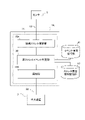
- FIG. 9 is a block diagram of the stress factor estimation device 1X in the third embodiment.
- the stress factor estimation device 1X mainly has chronic stress acquisition means 16X, difference acquisition means 17X, and stress factor estimation means 18X. Note that the stress factor estimation device 1X may be composed of a plurality of devices.
- the chronic stress acquisition means 16X acquires the first chronic stress value in the first period of the subject and the second chronic stress value in the second period of the subject.
- the chronic stress acquiring means 16X may acquire the first chronic stress value and the second chronic stress value by calculating them from the biological signals of the subject, etc. may obtain the first chronic stress value and the second chronic stress value calculated by .
- the chronic stress acquisition means 16X can be, for example, the chronic stress estimator 16 in the first to third embodiments (including modifications; the same applies hereinafter).
- the difference acquisition means 17X acquires difference information representing the difference between the first chronic stress value and the second chronic stress value and the difference between the events occurring in the first period and the second period.
- the difference acquisition means 17X can be, for example, the difference acquisition section 17 in the first to third embodiments.
- the stress factor estimating means 18X estimates stress factors related to the subject's chronic stress based on the difference information.
- the stress factor estimating means 18X can be, for example, the stress factor estimating section 18 in the first to third embodiments.
- FIG. 10 is an example of a flowchart executed by the stress factor estimation device 1X in the fourth embodiment.
- the chronic stress acquiring means 16X acquires the first chronic stress value in the first period of the subject and the second chronic stress value in the second period of the subject (step S31).
- the difference acquiring means 17X acquires difference information representing the difference between the first chronic stress value and the second chronic stress value and the difference between the events occurring in the first period and the second period (step S32).
- the stress factor estimating means 18X estimates the stress factor related to the subject's chronic stress based on the difference information (step S33).
- the stress factor estimation device 1X can suitably estimate the subject's stress factor.
- Non-transitory computer readable media include various types of tangible storage media.
- Examples of non-transitory computer-readable media include magnetic storage media (e.g., floppy disks, magnetic tapes, hard disk drives), magneto-optical storage media (e.g., magneto-optical discs), CD-ROMs (Read Only Memory), CD-Rs, CD-R/W, semiconductor memory (eg mask ROM, PROM (Programmable ROM), EPROM (Erasable PROM), flash ROM, RAM (Random Access Memory)).
- the program may also be delivered to the computer on various types of transitory computer readable medium.
- Examples of transitory computer-readable media include electrical signals, optical signals, and electromagnetic waves.
- Transitory computer-readable media can deliver the program to the computer via wired channels, such as wires and optical fibers, or wireless channels.
- Chronic stress acquisition means for acquiring a first chronic stress value in a first period of a subject and a second chronic stress value in a second period of the subject; difference acquisition means for acquiring difference information representing a difference between the first chronic stress value and the second chronic stress value and a difference between events occurring in the first period and the second period; stress factor estimating means for estimating stress factors related to chronic stress of the subject based on the difference information;
- a stress factor estimation device having [Appendix 2] further comprising short-term stress acquisition means for acquiring the short-term stress value of the subject;
- the difference obtaining means displays, as the difference, an event that occurs during a period that does not overlap between the first period and the second period and that causes an increase in the short-term stress value or the short-term stress value to be equal to or greater than a threshold.
- the stress factor estimating device which generates the difference information.
- the difference acquisition means is the difference information that represents, as the difference, an event that occurred during a period that does not overlap between the first period and the second period and that the short-term stress value of the subject decreased by a threshold value or more.
- the stress factor estimation device which generates [Appendix 6]
- the stress factor estimating means estimates at least one of the type of the event, the place where the event is held, the person who participated in the event, and the time period when the event is held, as the stress factor.
- the stress factor estimating device according to any one of 1.
- the stress factor estimating device according to any one of Appendices 1 to 6, further comprising notification means for controlling an output device to output information on the stress factor estimated by the stress factor estimating means.
- event determination means for determining whether or not an event corresponding to the stress factor estimated by the stress factor estimation means has occurred; 8.
- the stress factor estimation device according to any one of appendices 1 to 7, further comprising notification means for causing an output device to output information based on the result of determination by the event determination means.
- the notification means when an event corresponding to the stress factor occurs and the subject's short-term stress value or the amount of increase in the short-term stress value in the event becomes equal to or greater than a threshold, provides information prompting stress relief.
- the stress factor estimation device according to appendix 8, which causes the output device to output.
- Appendix 10 the computer obtaining a first chronic stress value in a first period of the subject and a second chronic stress value in the second period of the subject; acquiring difference information representing a difference between the first chronic stress value and the second chronic stress value and a difference between events occurring in the first period and the second period; estimating stress factors related to chronic stress of the subject based on the difference information; Stress factor estimation method.
- Appendix 11 obtaining a first chronic stress value in a first period of the subject and a second chronic stress value in the second period of the subject; acquiring difference information representing a difference between the first chronic stress value and the second chronic stress value and a difference between events occurring in the first period and the second period;
- a storage medium storing a program that causes a computer to execute processing for estimating stress factors related to chronic stress of the subject based on the difference information.
Landscapes
- Health & Medical Sciences (AREA)
- Engineering & Computer Science (AREA)
- Medical Informatics (AREA)
- Public Health (AREA)
- Biomedical Technology (AREA)
- Pathology (AREA)
- General Health & Medical Sciences (AREA)
- Data Mining & Analysis (AREA)
- Databases & Information Systems (AREA)
- Epidemiology (AREA)
- Primary Health Care (AREA)
- Life Sciences & Earth Sciences (AREA)
- Developmental Disabilities (AREA)
- Child & Adolescent Psychology (AREA)
- Hospice & Palliative Care (AREA)
- Psychiatry (AREA)
- Psychology (AREA)
- Social Psychology (AREA)
- Physics & Mathematics (AREA)
- Educational Technology (AREA)
- Biophysics (AREA)
- Heart & Thoracic Surgery (AREA)
- Molecular Biology (AREA)
- Surgery (AREA)
- Animal Behavior & Ethology (AREA)
- Veterinary Medicine (AREA)
- Measurement Of The Respiration, Hearing Ability, Form, And Blood Characteristics Of Living Organisms (AREA)
Priority Applications (3)
| Application Number | Priority Date | Filing Date | Title |
|---|---|---|---|
| PCT/JP2021/020837 WO2022254575A1 (ja) | 2021-06-01 | 2021-06-01 | ストレス要因推定装置、ストレス要因推定方法及び記憶媒体 |
| US18/564,695 US20240266052A1 (en) | 2021-06-01 | 2021-06-01 | Stressor estimation device, stressor estimation method, and storage medium |
| JP2023525213A JP7643545B2 (ja) | 2021-06-01 | 2021-06-01 | ストレス要因推定装置、ストレス要因推定方法及びプログラム |
Applications Claiming Priority (1)
| Application Number | Priority Date | Filing Date | Title |
|---|---|---|---|
| PCT/JP2021/020837 WO2022254575A1 (ja) | 2021-06-01 | 2021-06-01 | ストレス要因推定装置、ストレス要因推定方法及び記憶媒体 |
Publications (1)
| Publication Number | Publication Date |
|---|---|
| WO2022254575A1 true WO2022254575A1 (ja) | 2022-12-08 |
Family
ID=84323998
Family Applications (1)
| Application Number | Title | Priority Date | Filing Date |
|---|---|---|---|
| PCT/JP2021/020837 Ceased WO2022254575A1 (ja) | 2021-06-01 | 2021-06-01 | ストレス要因推定装置、ストレス要因推定方法及び記憶媒体 |
Country Status (3)
| Country | Link |
|---|---|
| US (1) | US20240266052A1 (https=) |
| JP (1) | JP7643545B2 (https=) |
| WO (1) | WO2022254575A1 (https=) |
Cited By (2)
| Publication number | Priority date | Publication date | Assignee | Title |
|---|---|---|---|---|
| JP7274253B1 (ja) | 2023-03-14 | 2023-05-16 | ロゴスサイエンス株式会社 | ヘルスケアシステムおよびその方法 |
| JP2025067563A (ja) * | 2023-10-13 | 2025-04-24 | キヤノンマーケティングジャパン株式会社 | 情報処理システム、情報処理方法、プログラム |
Citations (5)
| Publication number | Priority date | Publication date | Assignee | Title |
|---|---|---|---|---|
| JP2001344352A (ja) * | 2000-05-31 | 2001-12-14 | Toshiba Corp | 生活支援装置および生活支援方法および広告情報提供方法 |
| JP2005521506A (ja) * | 2002-04-03 | 2005-07-21 | ザ プロクター アンド ギャンブル カンパニー | 急性ストレスを測定するための方法及び装置 |
| JP2008531144A (ja) * | 2005-03-03 | 2008-08-14 | ストレスメーター・アクティーゼルスカブ | 交感神経緊張の評価 |
| JP2018011721A (ja) * | 2016-07-20 | 2018-01-25 | 日本電気株式会社 | ストレス推定装置、ストレス推定方法、及び、ストレス推定プログラム |
| WO2019159252A1 (ja) * | 2018-02-14 | 2019-08-22 | 日本電気株式会社 | 生体信号を用いるストレス推定装置およびストレス推定方法 |
Family Cites Families (1)
| Publication number | Priority date | Publication date | Assignee | Title |
|---|---|---|---|---|
| JP2018011892A (ja) * | 2016-07-22 | 2018-01-25 | 日本電気株式会社 | ストレス耐性評価装置、ストレス耐性評価方法およびストレス耐性評価プログラム |
-
2021
- 2021-06-01 JP JP2023525213A patent/JP7643545B2/ja active Active
- 2021-06-01 US US18/564,695 patent/US20240266052A1/en active Pending
- 2021-06-01 WO PCT/JP2021/020837 patent/WO2022254575A1/ja not_active Ceased
Patent Citations (5)
| Publication number | Priority date | Publication date | Assignee | Title |
|---|---|---|---|---|
| JP2001344352A (ja) * | 2000-05-31 | 2001-12-14 | Toshiba Corp | 生活支援装置および生活支援方法および広告情報提供方法 |
| JP2005521506A (ja) * | 2002-04-03 | 2005-07-21 | ザ プロクター アンド ギャンブル カンパニー | 急性ストレスを測定するための方法及び装置 |
| JP2008531144A (ja) * | 2005-03-03 | 2008-08-14 | ストレスメーター・アクティーゼルスカブ | 交感神経緊張の評価 |
| JP2018011721A (ja) * | 2016-07-20 | 2018-01-25 | 日本電気株式会社 | ストレス推定装置、ストレス推定方法、及び、ストレス推定プログラム |
| WO2019159252A1 (ja) * | 2018-02-14 | 2019-08-22 | 日本電気株式会社 | 生体信号を用いるストレス推定装置およびストレス推定方法 |
Cited By (3)
| Publication number | Priority date | Publication date | Assignee | Title |
|---|---|---|---|---|
| JP7274253B1 (ja) | 2023-03-14 | 2023-05-16 | ロゴスサイエンス株式会社 | ヘルスケアシステムおよびその方法 |
| JP2024130455A (ja) * | 2023-03-14 | 2024-09-30 | ロゴスサイエンス株式会社 | ヘルスケアシステムおよびその方法 |
| JP2025067563A (ja) * | 2023-10-13 | 2025-04-24 | キヤノンマーケティングジャパン株式会社 | 情報処理システム、情報処理方法、プログラム |
Also Published As
| Publication number | Publication date |
|---|---|
| US20240266052A1 (en) | 2024-08-08 |
| JPWO2022254575A1 (https=) | 2022-12-08 |
| JP7643545B2 (ja) | 2025-03-11 |
Similar Documents
| Publication | Publication Date | Title |
|---|---|---|
| CN107205731B (zh) | 健康管理辅助装置及健康管理辅助方法 | |
| JP7042791B2 (ja) | インスリン感受性を判断するためのシステムおよび方法 | |
| US20180008191A1 (en) | Pain management wearable device | |
| US10376207B2 (en) | Calculating a current circadian rhythm of a person | |
| JP2018515155A (ja) | ウェアラブルデバイスを用いてユーザの良好さを遠隔からモニタするためのシステム、デバイス、及び方法 | |
| WO2022254575A1 (ja) | ストレス要因推定装置、ストレス要因推定方法及び記憶媒体 | |
| US20240032851A1 (en) | Cognitive function estimation device, cognitive function estimation method, and storage medium | |
| JP2024100863A (ja) | 情報処理装置、制御方法及びプログラム | |
| EP4509050A1 (en) | Internal state estimation device, internal state estimation method, and storage medium | |
| US20240170155A1 (en) | Stress estimation device, stress estimation method, and storage medium | |
| WO2022259464A1 (ja) | 情報処理装置、制御方法及び記憶媒体 | |
| US20240225503A9 (en) | Information processing device, control method, and storage medium | |
| WO2022113276A1 (ja) | 情報処理装置、制御方法及び記憶媒体 | |
| US20250069372A1 (en) | Stress estimation device, stress estimation method, and storage medium | |
| JP7556410B2 (ja) | 情報処理装置、制御方法及びプログラム | |
| US20240071240A1 (en) | Test familiar determination device, test familiar determination method and storage medium | |
| JP7673835B2 (ja) | 制御装置、制御方法及びプログラム | |
| WO2022249330A1 (ja) | 価格決定装置、価格決定方法及び記憶媒体 | |
| JP2026007493A (ja) | 学習装置、状態予測装置、学習方法及びプログラム | |
| JP5120939B2 (ja) | うつ状態検出装置 | |
| WO2024013945A1 (ja) | 情報処理装置、情報処理方法、およびプログラム記録媒体 | |
| WO2023105790A1 (ja) | ストレス推定方法 | |
| JP2020086505A (ja) | 運転者状態確認システム、及び運転者状態確認方法 |
Legal Events
| Date | Code | Title | Description |
|---|---|---|---|
| 121 | Ep: the epo has been informed by wipo that ep was designated in this application |
Ref document number: 21944081 Country of ref document: EP Kind code of ref document: A1 |
|
| WWE | Wipo information: entry into national phase |
Ref document number: 2023525213 Country of ref document: JP |
|
| NENP | Non-entry into the national phase |
Ref country code: DE |
|
| 122 | Ep: pct application non-entry in european phase |
Ref document number: 21944081 Country of ref document: EP Kind code of ref document: A1 |