WO2022254562A1 - 情報処理装置、情報処理方法および情報処理プログラム - Google Patents
情報処理装置、情報処理方法および情報処理プログラム Download PDFInfo
- Publication number
- WO2022254562A1 WO2022254562A1 PCT/JP2021/020764 JP2021020764W WO2022254562A1 WO 2022254562 A1 WO2022254562 A1 WO 2022254562A1 JP 2021020764 W JP2021020764 W JP 2021020764W WO 2022254562 A1 WO2022254562 A1 WO 2022254562A1
- Authority
- WO
- WIPO (PCT)
- Prior art keywords
- information
- output
- prediction
- content information
- content
- Prior art date
- Legal status (The legal status is an assumption and is not a legal conclusion. Google has not performed a legal analysis and makes no representation as to the accuracy of the status listed.)
- Ceased
Links
Images




Classifications
-
- G—PHYSICS
- G01—MEASURING; TESTING
- G01C—MEASURING DISTANCES, LEVELS OR BEARINGS; SURVEYING; NAVIGATION; GYROSCOPIC INSTRUMENTS; PHOTOGRAMMETRY OR VIDEOGRAMMETRY
- G01C21/00—Navigation; Navigational instruments not provided for in groups G01C1/00 - G01C19/00
- G01C21/26—Navigation; Navigational instruments not provided for in groups G01C1/00 - G01C19/00 specially adapted for navigation in a road network
- G01C21/34—Route searching; Route guidance
- G01C21/36—Input/output arrangements for on-board computers
- G01C21/3626—Details of the output of route guidance instructions
- G01C21/3655—Timing of guidance instructions
-
- G—PHYSICS
- G01—MEASURING; TESTING
- G01C—MEASURING DISTANCES, LEVELS OR BEARINGS; SURVEYING; NAVIGATION; GYROSCOPIC INSTRUMENTS; PHOTOGRAMMETRY OR VIDEOGRAMMETRY
- G01C21/00—Navigation; Navigational instruments not provided for in groups G01C1/00 - G01C19/00
- G01C21/26—Navigation; Navigational instruments not provided for in groups G01C1/00 - G01C19/00 specially adapted for navigation in a road network
- G01C21/34—Route searching; Route guidance
- G01C21/36—Input/output arrangements for on-board computers
- G01C21/3697—Output of additional, non-guidance related information, e.g. low fuel level
-
- G—PHYSICS
- G08—SIGNALLING
- G08G—TRAFFIC CONTROL SYSTEMS
- G08G1/00—Traffic control systems for road vehicles
- G08G1/01—Detecting movement of traffic to be counted or controlled
- G08G1/0104—Measuring and analyzing of parameters relative to traffic conditions
- G08G1/0125—Traffic data processing
- G08G1/0133—Traffic data processing for classifying traffic situation
-
- G—PHYSICS
- G08—SIGNALLING
- G08G—TRAFFIC CONTROL SYSTEMS
- G08G1/00—Traffic control systems for road vehicles
- G08G1/01—Detecting movement of traffic to be counted or controlled
- G08G1/052—Detecting movement of traffic to be counted or controlled with provision for determining speed or overspeed
-
- H—ELECTRICITY
- H04—ELECTRIC COMMUNICATION TECHNIQUE
- H04W—WIRELESS COMMUNICATION NETWORKS
- H04W4/00—Services specially adapted for wireless communication networks; Facilities therefor
- H04W4/02—Services making use of location information
- H04W4/029—Location-based management or tracking services
-
- H—ELECTRICITY
- H04—ELECTRIC COMMUNICATION TECHNIQUE
- H04W—WIRELESS COMMUNICATION NETWORKS
- H04W4/00—Services specially adapted for wireless communication networks; Facilities therefor
- H04W4/30—Services specially adapted for particular environments, situations or purposes
- H04W4/40—Services specially adapted for particular environments, situations or purposes for vehicles, e.g. vehicle-to-pedestrians [V2P]
-
- G—PHYSICS
- G01—MEASURING; TESTING
- G01C—MEASURING DISTANCES, LEVELS OR BEARINGS; SURVEYING; NAVIGATION; GYROSCOPIC INSTRUMENTS; PHOTOGRAMMETRY OR VIDEOGRAMMETRY
- G01C21/00—Navigation; Navigational instruments not provided for in groups G01C1/00 - G01C19/00
- G01C21/26—Navigation; Navigational instruments not provided for in groups G01C1/00 - G01C19/00 specially adapted for navigation in a road network
- G01C21/34—Route searching; Route guidance
- G01C21/3453—Special cost functions, i.e. other than distance or default speed limit of road segments
- G01C21/3492—Special cost functions, i.e. other than distance or default speed limit of road segments employing speed data or traffic data, e.g. real-time or historical
Definitions
- the present invention relates to an information processing device, an information processing method, and an information processing program.
- the present invention has been made in view of the above, and an information processing apparatus and an information processing method are capable of optimizing the reproduction output of content information in accordance with changes in the driving conditions by reading in advance the driving conditions of the vehicle. and to provide an information processing program.
- An information processing apparatus comprises: a first acquisition unit that acquires movement information relating to a movement state of a mobile body; a second acquisition unit that acquires area information indicating a target range; a prediction unit that predicts the movement status of the mobile object in the geographical range based on the movement information; and based on the prediction result of the prediction unit a calculation unit for calculating a priority of reproduction output for each of the plurality of pieces of content information; and a determining unit that determines the order.
- An information processing method is an information processing method executed by an information processing apparatus, comprising: a first acquisition step of acquiring movement information relating to a movement state of a mobile object; a second acquiring step of acquiring range information indicating a geographical range in which the content information is to be reproduced; and predicting the movement status of the mobile object in the geographical range based on the movement information. a prediction step, a calculation step of calculating a priority of reproduction output for each of the plurality of pieces of content information based on the prediction result of the prediction step; and a determining step of determining an output order when reproducing and outputting the content information to a mobile object.
- An information processing program is an information processing program executed by an information processing apparatus comprising a computer, wherein the computer comprises first acquisition means for acquiring movement information relating to the movement status of a mobile object; second acquiring means for acquiring range information, which is area information corresponding to each piece of content information and indicates a geographical range in which the content information should be reproduced and output; Prediction means for predicting movement status of a moving object; Calculation means for calculating reproduction output priority for each of the plurality of pieces of content information based on the prediction result of the prediction means; It is characterized by functioning as determining means for determining the output order when the plurality of pieces of content information are to be reproduced and output to a mobile unit in accordance with the priority.
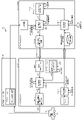
- FIG. 1 is a diagram illustrating an example of a system according to an embodiment.
- FIG. 2 is a diagram showing an example of information matching processing.
- FIG. 3 is a diagram illustrating a configuration example of an information processing apparatus according to the embodiment;
- FIG. 4 is a diagram illustrating an example of a content database according to the embodiment;
- FIG. 5 is a diagram showing an example of a travel information database according to the embodiment.
- FIG. 6 is a diagram illustrating an example of information processing according to the embodiment;
- FIG. 7 is a diagram illustrating another example of information processing according to the embodiment;
- FIG. 8 is a diagram illustrating deformability corresponding to information processing according to the embodiment.
- FIG. 9 is a flowchart showing an overview of an information processing procedure according to the embodiment.
- FIG. 10 is a flow chart showing a decision processing procedure included in the information processing procedure according to the embodiment.
- FIG. 11 is a hardware configuration diagram showing an example of a computer that implements the functions of the information processing apparatus.
- the vehicle can be read as a moving body, the travel situation can be read as the travel situation, and the travel speed can be read as the travel speed.
- the expression “reproduce and output in a vehicle” includes the meaning of “reproduce and output to a terminal device that moves with the vehicle.”
- the expression that the vehicle performs output control to reproduce and output the content information includes the meaning of output control for the terminal device and provision (output) of the content information to the user of the vehicle.
- Examples of terminal devices that move with a vehicle include a terminal device installed in a vehicle (e.g., in-vehicle device) and a terminal device such as a smartphone owned by a user (e.g., a passenger of a vehicle such as a driver).
- a terminal device installed in a vehicle
- a terminal device such as a smartphone owned by a user
- a user e.g., a passenger of a vehicle such as a driver
- there are known applications that provide various types of content to such terminal devices are known.
- the user's driving can be improved.
- content information for guidance according to various inputs for example, character input and voice input
- various inputs for example, character input and voice input
- assist There are also vehicles that assist more comfortable driving by providing various content information such as tourist information, store information, advertising information, and other useful information as the vehicle runs.
- applications may be classified into specific types depending on what category of content information they can provide. For example, applications related to ADAS (Advanced Driver-Assistance Systems) provide content information categorized into “Warning” and “Caution”, so they are categorized as “ADAS” or “Safety Assistance”. be done.
- applications related to various types of guidance for example, road guidance, sightseeing guidance, etc.
- guidance for example, road guidance, sightseeing guidance, etc.
- applications related to store information for example, advertisements about stores
- provide content information categorized as "advertisement” and thus are categorized as “advertisement provision”.
- the application reproduces and outputs the content information via the information matching engine by passing the content information to be provided to the user to an information matching engine (specifically, a computer equipped with the information matching engine), which will be described later.
- an information matching engine specifically, a computer equipped with the information matching engine
- the application provides the content information with range information indicating the range to be reproduced and output, category information indicating the category of the content information, and meta information including the length (reproduction time) of the content information.
- the range information indicating the range in which content information should be reproduced is specified by specifying a geographical range, a time range, a vehicle travel distance range, a vehicle passage area range, a vehicle speed range, etc., in which content information is to be reproduced and output. This corresponds to conditional information that conditions that the reproduction output of the content information is permitted if it is within the range.
- description will focus on area information (an example of range information) indicating a geographical range in which content information is to be reproduced and output. Range, vehicle travel distance range, vehicle passing area range, and vehicle speed range are also applicable.
- each application sets a geographical range in this way, some or all of the geographical ranges may overlap between applications. In this case, there arises a problem that reproduction output interferes between pieces of content information corresponding to overlapping geographical ranges.
- the content information is configured as a voice message considering that the user to whom it is provided is a passenger in the vehicle, interference with the playback output may hinder driving. .
- a computer equipped with an information matching engine determines an appropriate output order and appropriate output timing under the control of the information matching engine.
- the computer predicts the driving conditions of the running vehicle in response to changes in the driving conditions, and assigns priorities for optimizing the content information to be reproduced and output.
- FIG. 1 is a diagram illustrating an example of a system according to an embodiment.
- FIG. 1 shows an information processing system Sy as an example of a system according to an embodiment.
- Information processing according to an embodiment, which will be described later, is realized by an information processing system Sy.
- a terminal device 10 (edge terminal) is an information processing terminal used by a user (passenger of a vehicle).
- the terminal device 10 may be, for example, a stationary in-vehicle device installed in a vehicle, or a mobile terminal device owned by a user (for example, a smartphone, a tablet terminal, a notebook PC, a desktop PC, a PDA, etc.).
- the terminal device 10 is assumed to be an in-vehicle device.
- the terminal device 10 is provided in the vehicle VE1 driven by the user U1, and reproduces and outputs the content information in accordance with the output control by the computer having the information matching engine.
- the terminal device 10 has a notification unit (output unit), and outputs content information from this notification unit.
- the notification unit may be a speaker or a display screen, and the terminal device 10 reproduces and outputs content information (audio content) in a voice message format via the speaker.
- the notification unit may be a display screen, and the terminal device 10 can display information for supporting the content of the audio content on the display screen.
- Various applications such as an ADAS application, a navigation application, a music application, a delivery application, and an insurance application may be installed in the terminal device 10 at the user's discretion.
- User information including the setting information that has been set can be transmitted to the cloud computer CCP2, which will be described later.
- the application to be introduced into the terminal device 10 is an application for edge terminals that corresponds to an application that provides content information in a voice message format together with range information (hereinafter, may be referred to as an "application according to the embodiment"). or any application different from the application according to the embodiment.
- the edge computer ECP1 is a computer that performs data processing (edge processing) near the terminal device 10, and incorporates a situation understanding engine E30-1 and an information matching engine E100-1. Further, according to the example of FIG. 1, the edge computer ECP1 is provided with an application AP1x (for example, an application AP11, an application AP12, an application AP13, . . . ) as an application according to the embodiment.
- an application AP1x for example, an application AP11, an application AP12, an application AP13, . . .
- the application AP1x is provided inside the edge computer ECP1, but the application AP1x may be independent from the edge computer ECP1.
- the information processing system Sy may further include a server device (application server) corresponding to the application AP1x, while the edge computer ECP1 may not have the application AP1x inside.
- the application AP1x is an application that provides content information whose output to the user is more urgent, it is installed in the edge computer ECP1 that exists near the terminal device 10. As a result, the content information provided by the application AP1x can be reproduced and output with a shorter time lag according to the driving conditions of the vehicle VE1. Also, for this reason, the application AP1x may be, for example, an application related to ADAS, and provides content information categorized into "warning" and "caution”.
- edge computer ECP1 may further have a general-purpose proxy application, as shown in FIG.
- the cloud computer CCP2 is a computer that exists on the cloud side and provides various types of information, for example, in a push format, and incorporates a situation understanding engine E30-2 and an information matching engine E100-2. Further, according to the example of FIG. 1, the cloud computer CCP2 is provided with applications AP2x (for example, application AP21, application AP22, application AP23, . . . ) as applications according to the embodiment.
- applications AP2x for example, application AP21, application AP22, application AP23, . . .
- the application AP2x is provided inside the cloud computer CCP2, but the application AP2x may be independent from the cloud computer CCP2.
- the information processing system Sy may further include a server device (application server) corresponding to the application AP2x, while the cloud computer CCP2 may not have the application AP2x inside.
- the application AP2x may be an application that provides content information that is less urgent to output to the user. Therefore, the application AP2x is installed in the cloud computer CCP2 on the cloud side, which is remote from the terminal device 10.
- the application AP2x may be, for example, an application related to guidance support or advertisement provision, and provides content information categorized into "guidance” and "advertisement”.
- content information is demonstrated as audio content.
- the content information is not limited to audio content, and may be video content, for example.
- the application AP1x personalizes the audio content provided for each user based on the user's usage history. Further, the application AP1x performs a process of determining what kind of voice message should be responded to based on the utterance content indicated by the voice input by the user so as to realize dialogue with the user. In addition, the application AP1x can also determine the content of voice content to be provided to the user and the content of voice messages to be responded to the user based on the user's situation.
- the application AP1x performs generation processing for generating audio content. For example, the application AP1x determines what category of audio content should be reproduced based on the data received from the situation awareness engine E30-1 (the situation awareness engine E30-2 in the case of the application AP2x). and generate audio content that belongs to the determined category.
- the application AP1x generates audio content that corresponds to the vehicle's running situation ascertained by the situation comprehension engine E30-1.
- the voice content generated by the generation process is, for example, text data that is the basis of the voice message that is finally notified to the user, and defines the content of the voice message that will be converted into voice data later.
- the application AP1x is not limited to generating audio data as audio content, and may generate data in other formats that are the basis of a voice message as audio content.
- the application AP1x can also specify the timing for reproducing and outputting the audio content.
- the application AP1x permits the reproduction and output of the audio content using the geographical range, time range, vehicle travel distance range, vehicle passage area range, vehicle speed range, etc. in which the audio content is to be reproduced and output.
- Range information can be generated that indicates the range.
- the application AP1x transmits the audio content to which the meta information including the range information is attached to the information matching engine E100-1 (the information matching engine E100-2 in the case of the application AP2x), thereby obtaining the range information.
- a request (reservation) is made for the terminal device 10 to reproduce and output the audio content under the conditions indicated by .
- the situation comprehension engine E30-1 performs situation comprehension processing, which is analysis processing for comprehending the running situation of the vehicle.
- the situation understanding engine E30-1 senses the traveling situation of the vehicle based on sensor information obtained from various sensors.
- the sensor here may be, for example, a sensor provided in a vehicle or a sensor provided in the terminal device 10, and examples thereof include an acceleration sensor, a gyro sensor, a magnetic sensor, a GPS, a camera, a microphone, and the like.
- the situation understanding engine E30-1 can perform the following series of analysis processes. For example, the situation understanding engine E30-1 performs sensing based on the sensor information obtained from the above sensors, and performs base analysis by using the sensing results as core elements. In the base analysis, the situation understanding engine E30-1 extracts necessary data using core elements as information sources, and converts and processes the extracted data. Subsequently, the situation understanding engine E30-1 performs high-level analysis using the converted and processed data. In high-level analysis, the situation understanding engine E30-1 analyzes specific driving situations based on the converted and processed data. For example, the situation recognition engine E30-1 analyzes whether the vehicle is traveling on a straight road, whether the vehicle is on a curve, the traveling speed, the direction of travel, traffic congestion, and the like.
- the situation comprehension engine E30-2 may use statistical information obtained by statistical processing of logs related to driving conditions and user operations for situation comprehension processing.
- the information matching engine E100-1 has a request manager function and a response manager function.
- the request manager function receives requests from application AP1x (application AP2x in the case of information matching engine E100-2) and performs queuing according to the received requests.
- the request here may be an output request to reproduce and output the generated audio content, and is transmitted with the audio content included, for example. Also, the request manager function queues the received audio content in the content buffer.
- the response manager function performs output judgment processing according to rules. For example, the response manager function performs output determination processing according to an output determination algorithm. More specifically, the response manager function receives driving information indicating the driving situation grasped by the situation grasping engine E30-1 (the situation grasping engine E30-2 in the case of the information matching engine E100-2) and information included in the request. Based on the range information received, the priority and output order of the order in which the audio contents reserved for output are to be actually output are determined. Then, the response manager function controls the output of the terminal device 10 so as to reproduce and output the audio content in the output order according to the determined priority.
- the situation comprehension engine E30-1 of the edge computer ECP1 performs situation comprehension processing for comprehending the running state of the vehicle VE1.
- the situation understanding engine E30-1 performs a series of analytical processes such as sensing using sensor information, base analysis using sensing results as core elements, and high-level analysis using data obtained as a result of the base analysis. By doing so, detailed situation understanding processing is performed.
- the situation comprehension engine E30-1 transmits the travel information indicating the travel situation comprehended by the situation comprehension process to the user who uses the travel information.
- the situation comprehension engine E30-1 transmits travel information to the information matching engine E100-1, the application AP1x, and the situation comprehension engine E30-2.
- the running condition referred to here may be, for example, the position, running speed, traveling direction, etc. of the vehicle VE1.
- the application AP1x When the application AP1x acquires the travel information from the situation understanding engine E30-1, the application AP1x performs generation processing for generating audio content based on the acquired travel information. For example, the application AP1x generates audio content corresponding to the traveling situation of the vehicle VE1 based on the traveling information acquired from the situation understanding engine E30-1. Further, the application AP1x reproduces and outputs the audio content using the geographical range, time range, travel distance range of the vehicle VE1, passage area range of the vehicle VE1, speed range of the vehicle, etc., in which the audio content is to be reproduced and output. Range information indicating the allowable range is generated, and meta information including the generated range information is added to the audio content. The application AP1x then inputs the audio content to which the meta information has been added to the information matching engine E100-1.
- the situation comprehension engine E30-2 Upon acquiring the travel information from the situation comprehension engine E30-1, the situation comprehension engine E30-2 performs situation comprehension processing to comprehend the travel state of the vehicle VE1 based on the acquired travel information. For example, travel information acquired from the situation grasping engine E30-1 is stored in a predetermined database of the cloud computer CCP2. Logs related to user operations may also be accumulated in such a database, and the situation understanding engine E30-2 performs statistical processing on the travel information and operation logs that have been accumulated so far, and obtains the results of the statistical processing. Using the statistical information shown and the external data acquired from the outside, a situation comprehension process for comprehending the running state of the vehicle VE1 is performed.
- external data referred to here is data that can be obtained precisely because it exists in the cloud, and is data that is useful for understanding driving conditions.
- external data includes weather information indicating weather conditions, traffic information indicating traffic conditions, and road information indicating road conditions.
- external data is not limited to this example.
- the situation comprehension engine E30-2 transmits the travel information indicating the travel situation comprehended by the situation comprehension process to the user who uses the travel information.
- the situation understanding engine E30-2 transmits travel information to the information matching engine E100-2 and the application AP2x.
- the running condition referred to here may be, for example, the position, running speed, traveling direction, etc. of the vehicle VE1.
- information matching processing is performed. For example, from the information matching engines E100-2 to E100-1, among the output candidate audio contents generated by the generation process, information matching processing for matching such that the optimal combination of audio content is output in the optimal order. is done.
- each audio content generated by the generation process is associated with area information (an example of range information) indicating a geographical range to be reproduced and output as meta information. Therefore, in the information matching process, the reproduction output priority is calculated for each of the plurality of audio contents based on the driving information indicating the driving situation grasped by the situation grasping process. Further, in the information matching process, the output order of the combination of audio contents according to the priority is determined based on the reproduction time, area information and travel information of each of the plurality of audio contents. Then, the audio contents included in this combination are output-controlled so as to be reproduced and output in order so as not to interfere with each other according to the determined output order.
- area information an example of range information
- audio content may be associated as meta information with area information that indicates the geographical position or geographical range where reproduction output should be terminated.
- the output start timing for starting the reproduction output may be determined based on the reproduction time of each of the plurality of audio contents and the area information.
- the information matching engine E100-2 performs output determination processing in accordance with area information (rules), which is area information corresponding to each audio content input from the application AP2x and indicates a geographical range to be reproduced and output. conduct.
- area information rules
- the response manager function of the information matching engine E100-2 performs output judgment processing according to an output judgment algorithm.
- the response manager function takes into consideration the driving information indicating the driving situation ascertained by the situation grasping engine E30-2 and the playback time of each audio content, and actually reproduces the audio content reserved for output. Determine the priority and order of output in what order. For example, the response manager function determines the order of output in combination of audio contents according to priority. Note that the response manager function may further use user information transmitted from an application inserted in the terminal device 10 to perform output determination processing, as shown in FIG.
- the information matching engine E100-2 then outputs the information determined by the response manager function to the edge computer ECP1 as information corresponding to the output determination result.
- the information output to the edge computer ECP1 is input to the information matching engine E100-1 via the general-purpose proxy application of the edge computer ECP1.
- the information matching engine E100-2 generates area information (rules) corresponding to each of the audio contents input from the application AP1x and the audio contents indicated by the combinations input from the information matching engine E100-2 side as output determination results. Output judgment processing is performed according to .
- the response manager function of the information matching engine E100-1 performs output determination processing according to an output determination algorithm.
- the response manager function collects the driving information indicating the driving situation grasped by the situation grasping engine E30-1, the playback time of each audio content, and the information (priority , output order) is also taken into consideration, and the final priority and output order are determined in what order the audio contents reserved for output are to be actually output. For example, the response manager function determines the order of output in combination of audio contents according to priority.
- the information matching engine E100-2 controls the output of the terminal device 10 to reproduce and output the audio content in the output order according to the determined priority. According to the output control, the terminal device 10 sequentially reproduces and outputs the audio contents included in the combination according to the priority so as not to interfere with each other.
- the information matching engine E100-2 displays an LED corresponding to the category in order to let the user recognize, for example, to which category the audio content currently being reproduced and output belongs. It is also possible to perform LED control on the terminal device 10 so as to issue it. Further, according to the example of FIG. 1, the information matching engine E100-2 can also perform display control on the terminal device 10 so as to display information for supporting the content of the audio content on the display screen.
- FIG. 2 is a diagram showing an example of information matching processing.
- FIG. 2 shows a scene in which information matching processing is performed by the information matching engine E100-1.
- an application AP11 which is an ADAS-related application existing in the edge computer ECP1, generates a voice content C111 (safety support information C111) with a message content of "beware of jumping out", and reproduces the generated voice content C111.
- An example of reserving (requesting) reproduction output is shown by transmitting an output request requesting output to the information matching engine E100-1.
- an application AP21 which is an application related to guidance support existing in the cloud computer CCP2, generates a voice content C211 (sightseeing guide information C211) with a message content of "Ahead, on the right", and generated voice
- An example of reserving (requesting) reproduction output is shown by transmitting an output request requesting reproduction output of content C211 to the information matching engine E100-1.
- an application AP22 which is an advertisement provision-related application that exists in the cloud computer CCP2, generates a voice content C221 (store advertisement C221) with a message content of "Ahead, a three-star restaurant."
- An example of reserving (requesting) reproduction output is shown by transmitting an output request requesting reproduction output of the generated audio content C221 to the information matching engine E100-1.
- the request manager function of the information matching engine E100-1 performs queuing according to the output requests received from each of the applications AP11, AP21 and AP22. For example, the request manager function queues the audio contents C111, C211 and C221 received together with the output request in the contents buffer.
- the response manager function of the information matching engine E100-1 performs output judgment processing according to rules. For example, the response manager function performs output determination processing according to an output determination algorithm. More specifically, the response manager function, based on the driving information indicating the driving situation grasped by the situation grasping engine E30-1, the area information included in the output request, and the reproduction time of each audio content reserved for output, The priority and output order of which audio contents among the audio contents are to be output and in what order are determined. Then, the response manager function determines the output order for the combination of audio contents according to the determined priority. Also, the response manager function controls the output of the terminal device 10 so as to reproduce and output the audio content corresponding to the combination in the determined output order.
- FIG. 1 shows an example in which information processing according to the embodiment is performed between the edge computer ECP1 and the cloud computer CCP2. From here on, a computer having the information matching engine E100-1 or the information matching engine E100-2 will be described as the information processing apparatus 100 according to the embodiment.
- the information processing device 100 may be a server device compatible with the edge computer ECP1, or may be a server device compatible with the cloud computer CCP2. Further, the information processing apparatus 100 may be one server apparatus configured by integrating the functions of the edge computer ECP1 and the functions of the cloud computer CCP2.
- the information processing apparatus 100 includes area information corresponding to each of a plurality of pieces of content information and indicating a geographical range in which the content information should be reproduced and output, reproduction times of each of the plurality of pieces of content information, and further vehicle information.
- the priority of reproduction output is calculated for each of the plurality of pieces of content information using the driving information related to driving conditions. Then, the information processing apparatus 100 determines the output order when causing the vehicle to reproduce and output the plurality of pieces of content information according to the calculated priority.
- the information processing apparatus 100 may also provide feedback to the application based on the performance information regarding the reproduction output of the content information.
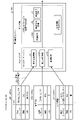
- FIG. 3 is a diagram illustrating a configuration example of the information processing apparatus 100 according to the embodiment.
- the information processing apparatus 100 has a communication unit 110, a storage unit 120, an application APx, and a control unit .
- the communication unit 110 is implemented by, for example, a NIC.
- the communication unit 110 is connected to a network by wire or wirelessly, and transmits and receives information to and from the terminal device 10, for example.
- the storage unit 120 is realized by, for example, a RAM (Random Access Memory), a semiconductor memory device such as a flash memory, or a storage device such as a hard disk or an optical disk.
- the storage unit 120 has a content database 121 (content buffer) and a travel information database 122 .
- the content database 121 stores various information related to content information.
- FIG. 4 shows an example of the content database 121 according to the embodiment.
- the content database 121 has items such as "application ID”, “content ID”, “content data”, “category”, “meta information”, and "range information”.
- Application ID indicates identification information that identifies an application (an application capable of providing content information) according to the embodiment.
- Content ID indicates identification information for identifying content information (audio content) generated by the application indicated by “application ID”.
- Content data is content information generated by the application indicated by the “application ID”.
- Category indicates the category to which the content information generated by the application indicated by the “application ID” belongs.
- the “categories” include warnings, cautions, guidance, advertisements, entertainment, and the like.
- the "meta information" is attached to the content information including range information indicating the range in which the content information should be reproduced, category information indicating the category of the content information, the length of the content information (playback time), and the like. be.
- Range information corresponds to condition information that conditions the range in which content information should be reproduced and output (permissible range for reproducing and outputting content information).
- range information is area information indicating a geographical range in which content information should be reproduced and output.
- the "range information” includes a time range in which content information is to be reproduced and output, a vehicle travel distance range, a vehicle passage area range, a vehicle speed range, and the like. Note that the "range information” may be set by an application according to the embodiment.
- the application (application AP11) identified by the application ID "AP11” is the content information (content information C111) identified by the content ID "C111" and is composed of data #111.
- content information C111 content information identified by the content ID "C111” and is composed of data #111.
- FIG. 4 shows an example in which the content information C111 is classified into the category "warning" based on the content indicated by the data #111.
- meta information #111 is added to the content information C111, and this meta information #111 indicates that the geographical range #111 is the geographical range in which the content information C111 should be reproduced and output.
- An example including area information to indicate is shown.
- the travel information database 122 stores travel information relating to the travel conditions of the vehicle.
- FIG. 5 shows an example of the travel information database 122 according to the embodiment.
- the travel information database 122 has items such as "vehicle ID”, "number of passengers”, “terminal ID”, "time”, and "travel information”.
- Vehicle ID indicates identification information that identifies a vehicle.
- Numberer of passengers indicates the number of passengers riding in the vehicle identified by the “vehicle ID”.
- Terminal ID indicates identification information for identifying the terminal device 10 (in-vehicle device) installed in the vehicle identified by the "vehicle ID”.
- “Time” indicates the date and time when “travel information” was acquired.
- “Driving information” is the driving status of the vehicle identified by the “vehicle ID” and indicates the driving status at the date and time indicated by the "time”. Further, the driving condition indicates, for example, whether or not the vehicle is traveling on a straight road, whether or not the vehicle is on a curve, the traveling speed, the traveling position, the direction of travel, and the traffic congestion.
- application APx corresponds to application AP1x or AP2x according to the embodiment described in FIG.
- the control unit 130 executes various programs (for example, an information processing program according to the embodiment) stored in a storage device inside the information processing apparatus 100 by using a CPU (Central Processing Unit), an MPU (Micro Processing Unit), or the like. It is realized by being executed as a work area. Also, the control unit 130 is implemented by an integrated circuit such as an ASIC (Application Specific Integrated Circuit) or an FPGA (Field Programmable Gate Array).
- ASIC Application Specific Integrated Circuit
- FPGA Field Programmable Gate Array
- the control unit 130 is equipped with an information matching engine E100.
- the information matching engine E100 corresponds to the information matching engine E100-1 or E100-2 described in FIG.
- the information matching engine E100 includes a request manager function E101 and a response manager function E102.
- the request manager function E101 may have a request reception unit and a queuing unit.
- the response manager function E102 includes a first acquisition unit 131, a second acquisition unit 132, a specification unit 133, a prediction unit 134, a detection unit 135, a calculation unit 136, a determination It has a section 137 , an output control section 138 , and an information control section 139 .
- the first acquisition unit 131 acquires travel information regarding the travel situation of the vehicle. For example, the first acquisition unit 131 acquires travel information indicating the travel situation of the vehicle ascertained by the situation comprehension processing by the situation comprehension engine E30-1 (E30-2).
- the second acquisition unit 132 acquires area information corresponding to each of a plurality of pieces of content information and indicating a geographical range in which the content information should be reproduced and output. For example, the second acquisition unit 132 acquires area information indicating a geographical range in which content information having a time width (reproduction time) should be reproduced and output from the beginning to the end. For example, the area information is transmitted by the application APx together with the content information in the state of being included in the meta information. Therefore, the second acquisition unit 132 can also acquire area information by acquiring the content information input by the application APx.
- the identifying unit 133 identifies a destination vehicle to which the content information is distributed, based on the driving information about the driving status of the vehicle. It should be noted that the destination vehicle to which the content information is distributed refers to the terminal device 10 to which the content information is distributed. Also, the travel information referred to here may be the travel information acquired by the first acquisition unit 131 .
- the specifying unit 133 may specify a delivery destination vehicle from among the vehicles traveling on the processing target road based on the travel information of each vehicle traveling on the processing target road.
- a delivery destination vehicle may be specified based on statistical information (statistical driving conditions) obtained from the driving information corresponding to each vehicle that has driven on the target road in the past.
- the specifying unit 133 extracts a vehicle whose direction of travel is a target point according to the content information (for example, a facility advertised by the content information) based on the travel information, and the extracted vehicle is a distribution destination. vehicle.
- the specifying unit 133 specifies a vehicle that is expected to reach the geographical range indicated by the area information in the future based on the travel information, and regards the specified vehicle as a vehicle whose traveling direction is the target point. can be extracted.
- the specifying unit 133 may extract a vehicle traveling in the lane on which the target point corresponding to the content information exists based on the travel information, and specify the extracted vehicle as the delivery destination vehicle. .
- the prediction unit 134 predicts the running condition of the vehicle in the geographical range based on the running information. For example, the prediction unit 134 updates the prediction result by repeatedly predicting the traveling state of the vehicle in a geographical range, which is the movement state at a predetermined timing in the future, according to the passage of time.
- the travel information may include direction information indicating the traveling direction of the vehicle, and the prediction unit 134 repeats the prediction of the traveling direction of the vehicle at a predetermined timing based on the direction information as time passes. Update direction prediction results.
- the travel information may include lane information indicating the travel lane of the vehicle, and the prediction unit 134 repeats the prediction of the travel lane of the vehicle at a predetermined timing based on the lane information as time passes. , to update the prediction result of the driving lane.
- the travel information may include speed information about the speed of the vehicle, and the prediction unit 134 repeatedly predicts the position of the vehicle at a predetermined timing according to the passage of time based on the speed information. Update results.
- the travel information may include traffic information related to the vehicle, and the prediction unit 134 repeats position prediction of the vehicle at a predetermined timing based on the traffic information as time elapses, thereby obtaining position prediction results. Update.
- the travel information may include speed information about the speed of the vehicle in the geographical range, and the prediction unit 134 predicts the travel speed of the vehicle at a predetermined timing as the movement status based on the speed information. Also, for example, the prediction unit 134 may predict the traveling speed of the vehicle at a predetermined timing based on traffic congestion information.
- the detection unit 135 detects area overlap between the geographical ranges indicated by the pieces of area information acquired by the second acquisition unit. For example, the detection unit 135 compares the geographical ranges indicated by each area information to detect how much overlap there is between which area and which area.
- the calculation unit 136 calculates the priority of reproduction output for each of the pieces of content information based on the prediction results of the prediction unit 134 .
- the calculation unit 136 calculates the reproduction output priority for each of the plurality of pieces of content information based on the latest prediction result among the prediction results predicted over time.
- the calculation unit 136 determines the priority of playback output for each of the plurality of pieces of content information based on the latest direction of travel. Calculate Further, for example, in a situation where the prediction of the driving lane is repeated over time and the prediction result is updated, the calculation unit 136 determines the reproduction output for each of the plurality of pieces of content information based on the latest driving lane. Calculate priority.
- the calculation unit 136 determines the reproduction output for each of the plurality of pieces of content information based on the latest travel position. Calculate priority.
- the calculation unit 136 determines the reproduction output for each of the plurality of pieces of content information based on the latest travel speed. Calculate priority.
- the calculation unit 136 can calculate a higher priority for content information that is more relevant to the prediction result of the prediction unit 134 among a plurality of pieces of content information. For example, the prediction unit 134 predicts that the vehicle will turn right at a predetermined timing. In such a case, the calculation unit 136 can calculate a higher priority for the content information advertising the store located at the right turn destination.
- the determination unit 137 determines the order of output when the vehicle reproduces and outputs a plurality of pieces of content information.
- the determining unit 137 determines the output order for reproducing and outputting the plurality of pieces of content information to the vehicle, based on the reproduction time of each piece of content information and the area information. For example, the determination unit 137 determines the driving conditions at a predetermined timing in the future based on the driving conditions of the vehicle in a geographical range so that the plurality of pieces of content information do not interfere with each other at the predetermined timing. Determines the order of output that can be reproduced and output in order.
- the determination unit 137 determines a , determines an output order in which a plurality of pieces of content information can be reproduced and output in order without interfering with each other when a predetermined timing is reached.
- the determination unit 137 determines the output order further using travel information related to the travel conditions of vehicles existing in a geographical range including the detected overlap. do. For example, when the detection unit 135 detects an overlap of areas, the determination unit 137 determines the traveling speed of the vehicle in the geographical range including the detected overlap, which is a predetermined timing predicted from the speed information. Based on the traveling speed and the playback time of each content information corresponding to the geographical range, the distance traveled by the vehicle is calculated according to the playback time of the content information, and based on the relationship between the calculated distance and overlap , determines the output order.
- the determination unit 137 determines the traveling speed of the vehicle in the geographical range including the detected overlap, which is a predetermined speed predicted from the traffic congestion information. Based on the running speed at the timing of and the playback time of each piece of content information corresponding to the geographical range, the distance traveled by the vehicle is calculated according to the playback time of the content information, and the relationship between the calculated distance and overlap is calculated. Based on this, the output order is determined.
- the determining unit 137 selects a combination among the plurality of pieces of content information that can be reproduced and output in order so that the pieces of content information do not interfere with each other at a predetermined timing. and determine the output order for the extracted combinations. For example, the determining unit 137 further uses the priority calculated from the meta information assigned to each of the plurality of content information, extracts a combination from the plurality of content information, and determines the extracted combination according to the priority. Determine the output order.
- the determination unit 137 determines the output order when causing the vehicle to reproduce and output a plurality of pieces of content information, based on the travel information and the area information. For example, the determination unit 137 uses the prediction result predicted by the prediction unit 134 based on the travel information to determine the output order in which a plurality of pieces of content information can be reproduced and output in order so as not to interfere with each other at a predetermined timing. decide. For example, the determination unit 137 can use the traveling speed predicted by the prediction unit 134 based on the speed information and the traffic jam information to sequentially reproduce and output a plurality of pieces of content information at a predetermined timing so as not to interfere with each other. Determine the output order.
- the determining unit 137 determines the output order based on the detected overlapping relationship and the moving speed predicted by the predicting unit. For example, when the detecting unit 135 detects an overlap of areas, the determining unit 137 selects the traveling speed of the vehicle in the geographical range including the detected overlap from among the traveling speeds predicted by the predicting unit 134. , and the overlapping relationship.
- the determination unit 137 determines the running speed in the geographical range including the overlap and the reproduction time of each piece of content information corresponding to the geographical range. , the distance traveled by the vehicle is calculated according to the reproduction time of the content information, and the output order is determined based on the relationship between the calculated distance and the overlap.
- the determining unit 137 extracts, from the plurality of pieces of content information, a combination that can be reproduced and output in order so as not to interfere with each other at a predetermined timing, based on the distance and relationship. Then, the output order is determined for the extracted combinations. For example, the determining unit 137 further uses the priority calculated from the meta information assigned to each of the plurality of content information, extracts a combination from the plurality of content information, and determines the extracted combination according to the priority. Determine the output order.
- the determination unit 137 determines the output order when causing the vehicle to reproduce and output a plurality of pieces of content information according to the priority calculated by the calculation unit 136 .
- the determining unit 137 determines, according to the priority, an output order in which a plurality of pieces of content information can be reproduced and output in order so as not to interfere with each other when a predetermined timing is reached.
- the output control unit 138 performs output control so that content information to be output is reproduced and output in the vehicle according to the priority and the output order determined by the determination unit 137 .
- the output control unit 138 controls the terminal device 10 to reproduce and output the content information to be output in the output order according to the priority determined by the determination unit 137 .
- the output control unit 138 outputs the content information to be output to the vehicle of the delivery destination (specifically, the terminal device 10 provided in the vehicle of the delivery destination, or the terminal device 10 owned by the user of the vehicle of the delivery destination). deliver to the vehicle of the delivery destination (specifically, the terminal device 10 provided in the vehicle of the delivery destination, or the terminal device 10 owned by the user of the vehicle of the delivery destination). deliver to
- the information control unit 139 removes the content information included in the combination. It is estimated whether or not a marginal blank area remains in the geographical range corresponding to the excluded content information even when the reproduction output is completed, and if it is estimated that it will remain, the reproduction time corresponding to the marginal area is determined. is obtained as additional content information to be reproduced and output in the blank area.
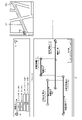
- FIG. 6 is a diagram illustrating an example of information processing according to the embodiment
- FIG. 7 is a diagram illustrating another example of information processing according to the embodiment
- FIG. 6 illustrates information processing (pattern 1) according to the embodiment.
- FIG. 7 illustrates information processing (patterns 2 and 3) according to the embodiment.
- 6 and 7 show the case where content information C111, C121, C211, and C221 are reproduced and output to the vehicle VE1 (from the MAP of FIG. 6) traveling on the road RD1 toward the target point G1. is determined in which the output order of is determined.
- the vehicle VE1 is traveling on the road RD1 at a speed of 60 km/h.
- C221 is content information of an output candidate.
- the content information C111 has a playback time of 15 seconds, and a geographical range #111 on the road RD1 is added as meta information.
- the geographical range #111 in which the content information C111 should be reproduced and output exists on the road RD1.
- the content information C121 has a reproduction time of 15 seconds, and a geographical range #121 on the road RD1 is given as meta information. In other words, the geographical range #121 in which the content information C121 should be reproduced and output exists on the road RD1.
- the content information C211 has a reproduction time of 30 seconds, and a geographical range #211 on the road RD1 is added as meta information. In other words, the geographical range #211 in which content information C211 should be reproduced and output exists on road RD1. Also, the content information C221 has a reproduction time of 30 seconds, and a geographical range #221 on the road RD1 is added as meta information. In other words, the geographical range #221 in which content information C221 should be reproduced and output exists on road RD1.
- the priority among the content information C111, C121, C211, and C221 is not taken into consideration, and the distance traveled by the vehicle VE1 and the distance between each geographical range according to the reproduction time of each piece of content information.
- An example of determining the output order in which the content information C111, C121, C211, and C221 can be reproduced and output in order so as not to interfere with each other is determined based on the overlapping relationship of the areas.
- the distance traveled by the vehicle VE1 traveling at "60 km/h” during this time is “250 m”. Further, since the reproduction time of the content information C121 is "15 seconds”, the distance traveled by the vehicle VE1 traveling at "60 km/h” during this time is “250 m”.
- the playback time of the content information C211 is “30 seconds”
- the distance traveled by the vehicle VE1 traveling at "60 km/h” during this time is “500 m”.
- the playback time of the content information C221 is “30 seconds”
- the distance traveled by the vehicle VE1 traveling at "60 km/h” during this time is "500 m”.
- the detection unit 135 detects overlapping areas by comparing the geographical ranges #111, #121, #211, and #221. As a result, as indicated by dotted lines in FIG. Four overlaps of #111-#211 are detected.
- the determining unit 137 reproduces and outputs the content information C111 within the geographical range #111 and reproduces and outputs the content information C121 within the geographical range #121 according to the running condition of the vehicle VE1, Content information C211 is reproduced within the geographical range #211, and content information C221 is reproduced within the geographical range #221.
- the output order is determined based on distance and overlap relationships.
- the determining unit 137 determines the output order of content information C221 (1st) ⁇ C121 (2nd) ⁇ C111 (3rd) ⁇ C211 (4th). be able to.
- the determination unit 137 can determine in which range of the corresponding geographical ranges each of the content information C111, C121, C211, and C221 is to be actually reproduced and output.
- the determination unit 137 determines the range position within which the content information C111 is to be actually reproduced and output within the geographical range #111. According to the example of pattern 1 in FIG. 6, the determining unit 137 determines the range position #11-1, which does not overlap with other content information, as the range position for actually reproducing and outputting the content information C111. can do. Further, the distance width indicating the range position #11-1 may correspond to the distance "250 m" traveled by the vehicle VE1 traveling at "60 km/h" for the playback time "15 seconds".
- the determination unit 137 also determines the range position within which the content information C121 is to be actually reproduced and output within the geographical range #121. According to the example of pattern 1 in FIG. 6, the determination unit 137 determines the range position #12-1, which does not overlap with other content information, as the range position for actually reproducing and outputting the content information C121. can do. Further, the distance width indicating the range position #12-1 may correspond to the distance "250 m" traveled by the vehicle VE1 at "60 km/h" in response to the reproduction time "15 seconds".
- the determination unit 137 determines the range position within which the content information C211 is actually reproduced and output within the geographical range #211. According to the example of pattern 1 in FIG. 6, the determining unit 137 determines the range position #21-1, which does not overlap with other content information, as the range position for actually reproducing and outputting the content information C211. can do. Further, the distance width indicating the range position #21-1 may correspond to the distance “500 m” traveled by the vehicle VE1 traveling at “60 km/h” in accordance with the playback time “30 seconds”.
- the determination unit 137 determines the range position within which the content information C221 is actually reproduced and output within the geographical range #221. According to the example of pattern 1 in FIG. 6, the determining unit 137 determines the range position #22-1, which does not overlap with other content information, as the range position for actually reproducing and outputting the content information C221. can do. Further, the distance width indicating the range position #22-1 may correspond to the distance "500 m" traveled by the vehicle VE1 at "60 km/h" according to the reproduction time "30 seconds".
- pattern 2 will be described with reference to FIG.
- the distance traveled by the vehicle VE1 and the area overlap between each geographical range are determined according to the playback time of each content information.
- An example of determining an output order in which the content information C111, C121, C211, and C221 can be reproduced and output in order so as not to interfere with each other is determined based on the relationship between. Since the condition setting is the same as that of pattern 1 except that the priority is taken into consideration, redundant description will be omitted.
- the prediction unit 134 predicts the running condition of the vehicle VE1 at a predetermined timing in the future, which is the running condition within the geographical range consisting of the geographical ranges #111, #121, #211, and #221. is predicted based on driving information indicating the current driving conditions (statistical driving information obtained from the history of driving conditions may be used).
- the calculation unit 136 calculates the priority of reproduction output for each piece of content information based on the prediction result of such prediction.
- determination unit 137 reproduces and outputs content information C111 within geographical range #111 and reproduces and outputs content information C121 within geographical range #121 in response to travel of vehicle VE1.
- the content information C211 is reproduced within the geographical range #211, and the content information C221 is reproduced within the geographical range #221.
- Order is determined based on distance and overlap relationships.
- the determination unit 137 determines the overall output order so that the content information C121 is output earlier than the content information C221, as shown in FIG.
- the determining unit 137 can determine the output order of content information C121 (1st) ⁇ C221 (2nd) ⁇ C111 (3rd) ⁇ C211 (4th).
- Pattern 3 also shows an example in which the output order is determined in consideration of the priority among the content information C111, C121, C211, and C221, but the priority is different from the example of pattern 2.
- FIG. 1 shows an example in which the output order is determined in consideration of the priority among the content information C111, C121, C211, and C221, but the priority is different from the example of pattern 2.
- determination unit 137 reproduces and outputs content information C111 within geographical range #111 and reproduces and outputs content information C121 within geographical range #121 in response to travel of vehicle VE1.
- the content information C211 is reproduced within the geographical range #211, and the content information C221 is reproduced within the geographical range #221.
- Order is determined based on distance and overlap relationships.
- the determination unit 137 determines the overall output order so that the content information C211 is output earlier than the content information C111, as shown in FIG.
- the determining unit 137 can determine the output order of content information C221 (1st) ⁇ C121 (2nd) ⁇ C211 (3rd) ⁇ C111 (4th).
- FIG. 8 is a diagram illustrating deformability corresponding to information processing according to the embodiment.
- the geographical range #211 corresponding to the content information C211 is narrower than in FIG. 6 for the convenience of explaining the processing performed by the information control section 139.
- FIG. 8 is a diagram illustrating deformability corresponding to information processing according to the embodiment.
- the geographical range #211 corresponding to the content information C211 is narrower than in FIG. 6 for the convenience of explaining the processing performed by the information control section 139.
- the determining unit 137 reproduces each piece of content information in order so as not to interfere with each other, based on the overlapping relationship of areas between geographical ranges and the distance traveled by the vehicle VE1 according to the reproduction time of each piece of content information. Extract combinations that can be output. Then, the determining unit 137 determines, from among the extracted combinations, a combination of the sorting order corresponding to the priority calculated by the calculating unit 136 as the content information to be output, and sets the sorting order of the combination as the output order. Determined as According to such a determination process, some content information may be excluded from the combination, that is, some content information may not be extracted as an output target.
- FIG. 8 shows an example in which the content information C211 is excluded from among the content information C111, C121, C211, and C221. Also, in this example, the content information C221, C121, and C111 are reproduced and output in this order. It is estimated that a marginal blank area MAR remains in #211. When it is estimated that the blank area MAR will remain in this way, the information control unit 139 acquires content information whose reproduction time is controlled according to the blank area MAR as additional content information to be reproduced and output in the blank area MAR. .
- the information control unit 139 stores this short version of the content information C211 as It can be acquired as additional content information to be reproduced and output in the margin area MAR. Further, in such a case, the output control unit 138 can reproduce and output the short version of the content information C211 when the reproduction output of the content information C111 is completed and the vehicle VE1 enters the blank area MAR.
- the information control unit 139 may dynamically generate a short version that has the same content as the excluded content information C211 but has a shorter playback time. Further, when it is estimated that the blank area MAR will remain, the information control unit 139 adjusts the reproduction times of the content information C111, C121, C211, and C221 so that all of the content information C111, C121, C211, and C221 are reproduced and output. It may be controlled to be shorter than the current playback time. For example, the information control unit 139 may shorten the reproduction time of all of the content information C111, C121, C211, and C221, or shorten the reproduction time of at least one of the content information C111, C121, C211, and C221. may be shortened.
- FIG. 9 is a flowchart showing an overview of an information processing procedure according to the embodiment.
- the second acquisition unit 132 recognizes which road is the processing target from among many candidate roads (step S101). Using the example of FIG. 6, it is assumed that the second acquisition unit 132 has recognized the road RD1 as the road to be processed.
- the second acquisition unit 132 acquires area information for which a geographical range is set on the road RD1 recognized in step S101 from among the area information input by each application (step S102). Similarly, using the example of FIG. 6, the second acquisition unit 132 obtains the area corresponding to the geographical range #111 set as the meta information by the application AP11 as the area information for which the geographical range is set on the road RD1. information, area information corresponding to geographical range #121 set as meta information by application AP12, area information corresponding to geographical range #211 set as meta information by application AP21, geographical range set as meta information by application AP22 Assume that the area information corresponding to range #221 has been acquired.
- the second acquisition unit 132 acquires content information associated with each area information acquired in step S102 as output candidate content information (step S103). According to the above example, the second acquisition unit 132 acquires content information C111, C121, C211, and C221 as output candidate content information.
- the first acquisition unit 131 acquires travel information about the travel situation of the vehicle (step S104). For example, the first acquisition unit 131 acquires traveling information indicating the grasped traveling situation in response to the situation grasping engine E30-1 (E30-2) grasping the traveling situation at any time. For example, the first acquisition unit 131 acquires traveling information indicating the traveling situation of a vehicle traveling on the road RD1, a vehicle traveling in the vicinity of the road RD1, or a vehicle predicted to enter the road RD1 in the future. good.
- the identifying unit 133 identifies the destination vehicle to which the content information is distributed based on the travel information acquired in step S104 (step S105). For example, the specifying unit 133 extracts vehicles whose direction of travel is the target point corresponding to each of the content information C111, C121, C211, and C221 based on the travel information, and specifies the extracted vehicles as the vehicles to which delivery is made. can be done. Further, the identifying unit 133 extracts vehicles traveling in lanes on the side where the target points corresponding to the content information C111, C121, C211, and C221 are present, based on the travel information, and identifies the extracted vehicles as distribution destination vehicles. can be specified as In the example of FIG.
- the identifying unit 133 identifies the vehicle VE1 as the delivery destination vehicle in accordance with the target point G1.
- the specifying unit 133 may specify a plurality of vehicles of the delivery destination, but for the sake of simplicity of explanation, the specifying unit 133 shall specify one vehicle VE1.
- the prediction unit 134 determines whether or not the vehicle VE1 has approached the geographical range indicated by the area information acquired in step S102 (step S106). For example, prediction unit 134 determines whether or not vehicle VE1 has approached a geographical range composed of geographical ranges #111, #121, #211, and #221. While the prediction unit 134 determines that the vehicle VE1 has not approached the geographical range (step S106; No), it waits until it can determine that the vehicle VE1 has approached the geographical range.
- the prediction unit 134 when the prediction unit 134 can determine that the vehicle VE1 has approached the geographical range (step S106; Yes), it sets the future timing for predicting the driving situation of the vehicle VE1 (step S107). In other words, the prediction unit 134 determines at what timing in the future the running situation of the vehicle VE1 is to be predicted. As an example, the prediction unit 134 may set a timing after a predetermined time from the current time (for example, a time 30 seconds from now) as a future timing. Prediction processing is performed to predict the running situation of the vehicle.
- the timing set in step S107 is referred to as "set timing".
- the prediction unit 134 predicts the driving situation of the vehicle VE1 at the set timing based on the current driving information through a loop described later (step S108).
- the prediction unit 134 repeats the prediction process of predicting the driving situation at the set timing according to the passage of time through a loop that will be described later. Therefore, the prediction unit 134 replaces the previous prediction result with the current prediction result (the prediction result by prediction) (step S109).
- the detection unit 135 detects area overlap between the geographical ranges indicated by each area information (step S110). Specifically, detection section 135 compares geographical ranges #111, #121, #211, and #221 to determine which area among geographical ranges #111, #121, #211, and #221. It detects how much overlap exists between and which area.
- step S110 Yes
- the calculation unit 136 Based on the current prediction result (latest prediction result) predicted in step S108, the calculation unit 136 prioritizes reproduction output for each of the output candidate content information (content information C111, C121, C211, C221). degree is calculated (step S111).
- the calculation unit 136 may calculate a higher priority for content information that advertises a facility (for example, a store) in a direction closer to the traveling direction of the vehicle VE1 at the set timing. Also, for example, the calculation unit 136 may calculate a higher priority for content information whose advertising target is a facility existing on the lane side of the vehicle VE1 at the set timing. Also, for example, the calculation unit 136 may calculate a higher priority for content information that advertises a facility closer to the position of the vehicle VE1 at the set timing. For this reason, the calculation unit 136 can calculate a higher priority for content information that is more relevant to the prediction result of the prediction unit 134 among the content information C111, C121, C211, and C221.
- the determining unit 137 selects what kind of combination of content information (content information C111, C121, C211, C221) of output candidates according to the priority calculated in step S111.
- the output order is determined in what order the vehicle reproduces and outputs (step S112).
- the determining unit 137 determines the content information in order so as not to interfere with each other, based on the relationship of overlapping areas detected in step S111 and the distance traveled by the vehicle VE1 according to the reproduction time of each content information. Extract combinations that can be reproduced and output.
- the determination unit 137 determines a combination according to the order of priority calculated by the calculation unit 136 from among the extracted combinations as content information to be output, and outputs the order of the combination. Decide in order.
- the determination unit 137 also determines the range position in which the content information is actually reproduced and output within the geographical range corresponding to the content information for each content information to be output. You can
- the output control unit 138 performs output control so that the content information included in the combination (content information to be output) is reproduced and output in the order of output in step S112 when the set timing comes (step S113). .
- the output control unit 138 controls the terminal device 10 to reproduce and output the content information to be output in the output order according to the priority determined by the determination unit 137 and in the range position.
- the prediction unit 134 determines whether or not the set timing set in step S107 has passed (step S114). When the prediction unit 134 determines that the set timing has passed (step S114; Yes), the process returns to step S107, and sets the next new timing to repeat the processes after step S107.
- step S114 determines whether the set timing has not passed (step S114; No). It determines whether a predetermined time has passed since the prediction was performed in step S108 (step S115). . For example, the prediction unit 134 determines whether five seconds have passed since the prediction was made in step S108.
- step S115; No While the prediction unit 134 determines that the predetermined time has not passed since the prediction was performed in step S108 (step S115; No), it waits until it can be determined that the predetermined time has passed. On the other hand, when the prediction unit 134 determines that the predetermined time has passed (step S115; Yes), the process returns to step S108.
- step S110; No the flow of processing when no area overlap is detected between the geographical ranges #111, #121, #211, and #221.
- the determining unit 137 determines in which range of the geographical range corresponding to the content information the content information is actually displayed. , the range position is determined (step S116).
- the output control unit 138 controls output to the terminal device 10 so that the content information of each output candidate is reproduced and output at the range position in step S116 when the set timing comes (step S117).
- FIG. 10 is a flow chart showing a decision processing procedure included in the information processing procedure according to the embodiment.
- the determination unit 137 acquires the content information corresponding to the geographical range including the overlap detected in step S110 from the output candidate content information (content information C111, C121, C211, C221) (step S201). .
- the determining unit 137 selects the traveling speed of the vehicle VE1 in the geographical range including the overlap detected in step S110 among the traveling speeds (an example of the traveling situation) predicted by the prediction unit 134, The travel speed at the timing is acquired (step S202).
- the determination unit 137 calculates the distance traveled by the vehicle in accordance with the reproduction time for each piece of output candidate content information based on the reproduction time of the content information and the running speed acquired in step S202 (step S203).
- the determination unit 137 extracts a combination that can be reproduced and output in order so that the output candidate content information does not interfere with each other based on the relationship and the distance of the overlapping detected in step S110 (step S204).
- the determining unit 137 determines, among the extracted combinations, a combination of the order of arrangement corresponding to the priority as content information to be output, and determines the order of arrangement of the combination as the order of output (step S205). .
- the determining unit 137 determines, for each output target content included in the combination extracted in step S204, in what range of the geographical range corresponding to the content information the content information is actually reproduced and output. A range position is determined (step S206).
- the information processing apparatus 100 acquires area information corresponding to each of a plurality of pieces of content information and indicating a geographical range in which the content information should be reproduced and output. Then, the information processing apparatus 100 determines the output order when reproducing and outputting the plurality of pieces of content information to the vehicle, based on the reproduction time of each piece of content information and the area information. According to the information processing apparatus 100 as described above, each piece of content information associated with a geographical range to be reproduced and output can be sequentially reproduced and output from the vehicle without interfering with each other within the geographical range.
- the information processing apparatus 100 acquires driving information related to the driving situation of the vehicle, and also determines a geographical range in which the content information is to be reproduced and output, which is area information corresponding to each of a plurality of pieces of content information. Get the area information shown. Then, the information processing apparatus 100 determines the output order when causing the vehicle to reproduce and output the plurality of pieces of content information based on the travel information and the area information. According to the information processing apparatus 100 as described above, each piece of content information associated with a geographical range to be reproduced and output can be sequentially reproduced and output from the vehicle without interfering with each other within the geographical range.
- the information processing apparatus 100 acquires driving information related to the driving situation of the vehicle, and also determines a geographical range in which the content information is to be reproduced and output, which is area information corresponding to each of a plurality of pieces of content information. Get the area information shown. Then, the information processing apparatus 100 predicts the driving condition of the vehicle in the geographical range based on the driving information, and calculates the priority of reproduction output for each of the plurality of pieces of content information based on the prediction result. Then, the information processing apparatus 100 determines the output order when causing the vehicle to reproduce and output the plurality of pieces of content information according to the calculated priority. According to the information processing apparatus 100 as described above, it is possible to optimize the reproduction output of the content information according to the change of the driving conditions by reading the driving conditions of the vehicle in advance.
- FIG. 11 is a hardware configuration diagram showing an example of a computer that implements the functions of the information processing apparatus 100.
- Computer 1000 has CPU 1100 , RAM 1200 , ROM 1300 , HDD 1400 , communication interface (I/F) 1500 , input/output interface (I/F) 1600 and media interface (I/F) 1700 .
- the CPU 1100 operates based on programs stored in the ROM 1300 or HDD 1400 and controls each section.
- the ROM 1300 stores a boot program executed by the CPU 1100 when the computer 1000 is started up, a program depending on the hardware of the computer 1000, and the like.
- the HDD 1400 stores programs executed by the CPU 1100 and data used by these programs.
- Communication interface 1500 receives data from another device via a predetermined communication network, sends the data to CPU 1100, and transmits data generated by CPU 1100 to another device via a predetermined communication network.
- the CPU 1100 controls output devices such as displays and printers, and input devices such as keyboards and mice, via an input/output interface 1600 .
- CPU 1100 acquires data from an input device via input/output interface 1600 .
- CPU 1100 also outputs the generated data to an output device via input/output interface 1600 .
- the media interface 1700 reads programs or data stored in the recording medium 1800 and provides them to the CPU 1100 via the RAM 1200 .
- CPU 1100 loads such a program from recording medium 1800 onto RAM 1200 via media interface 1700, and executes the loaded program.
- the recording medium 1800 is, for example, an optical recording medium such as a DVD (Digital Versatile Disc) or a PD (Phase change rewritable disk), a magneto-optical recording medium such as an MO (Magneto-Optical disk), a tape medium, a magnetic recording medium, or a semiconductor memory. etc.
- the CPU 1100 of the computer 1000 implements the functions of the control unit 130 by executing a program loaded on the RAM 1200.
- CPU 1100 of computer 1000 reads these programs from recording medium 1800 and executes them, but as another example, these programs may be obtained from another device via a predetermined communication network.
- each component of each device illustrated is functionally conceptual and does not necessarily need to be physically configured as illustrated.
- the specific form of distribution and integration of each device is not limited to the one shown in the figure, and all or part of them can be functionally or physically distributed and integrated in arbitrary units according to various loads and usage conditions. Can be integrated and configured.
- the above “section, module, unit” can be read as “means” or “circuit”.
- the determination unit can be read as determination means or a determination circuit.
- Sy information processing system 100 information processing device 120 storage unit 121 content database 122 travel information database 130 control unit 131 first acquisition unit 132 second acquisition unit 133 identification unit 134 prediction unit 135 detection unit 136 calculation unit 137 determination unit 138 output control unit 139 information control unit
Landscapes
- Engineering & Computer Science (AREA)
- Remote Sensing (AREA)
- Radar, Positioning & Navigation (AREA)
- General Physics & Mathematics (AREA)
- Physics & Mathematics (AREA)
- Automation & Control Theory (AREA)
- Analytical Chemistry (AREA)
- Chemical & Material Sciences (AREA)
- Signal Processing (AREA)
- Computer Networks & Wireless Communication (AREA)
- Management, Administration, Business Operations System, And Electronic Commerce (AREA)
- Navigation (AREA)
- Traffic Control Systems (AREA)
Priority Applications (4)
| Application Number | Priority Date | Filing Date | Title |
|---|---|---|---|
| US18/281,248 US12536898B2 (en) | 2021-05-31 | 2021-05-31 | Information processing apparatus, information processing method, and non-transitory computer readable storage |
| JP2023525203A JP7662775B2 (ja) | 2021-05-31 | 2021-05-31 | 情報処理装置、情報処理方法および情報処理プログラム |
| PCT/JP2021/020764 WO2022254562A1 (ja) | 2021-05-31 | 2021-05-31 | 情報処理装置、情報処理方法および情報処理プログラム |
| EP21944070.8A EP4350292A4 (en) | 2021-05-31 | 2021-05-31 | INFORMATION PROCESSING DEVICE, INFORMATION PROCESSING METHOD, AND INFORMATION PROCESSING PROGRAM |
Applications Claiming Priority (1)
| Application Number | Priority Date | Filing Date | Title |
|---|---|---|---|
| PCT/JP2021/020764 WO2022254562A1 (ja) | 2021-05-31 | 2021-05-31 | 情報処理装置、情報処理方法および情報処理プログラム |
Publications (1)
| Publication Number | Publication Date |
|---|---|
| WO2022254562A1 true WO2022254562A1 (ja) | 2022-12-08 |
Family
ID=84324007
Family Applications (1)
| Application Number | Title | Priority Date | Filing Date |
|---|---|---|---|
| PCT/JP2021/020764 Ceased WO2022254562A1 (ja) | 2021-05-31 | 2021-05-31 | 情報処理装置、情報処理方法および情報処理プログラム |
Country Status (4)
| Country | Link |
|---|---|
| US (1) | US12536898B2 (https=) |
| EP (1) | EP4350292A4 (https=) |
| JP (1) | JP7662775B2 (https=) |
| WO (1) | WO2022254562A1 (https=) |
Citations (9)
| Publication number | Priority date | Publication date | Assignee | Title |
|---|---|---|---|---|
| JP2001091273A (ja) * | 1999-09-20 | 2001-04-06 | Katsuyoshi Nagashima | カーナビゲーション端末自動広告宣伝システム |
| JP2002365071A (ja) * | 2001-06-12 | 2002-12-18 | Fujitsu Ten Ltd | 地図情報配信方法 |
| JP2006012081A (ja) * | 2004-06-29 | 2006-01-12 | Kenwood Corp | コンテンツ出力装置、ナビゲーション装置、コンテンツ出力プログラム、及びコンテンツ出力方法 |
| JP2007292607A (ja) * | 2006-04-25 | 2007-11-08 | Nippon Seiki Co Ltd | 運転支援装置 |
| JP2013221837A (ja) | 2012-04-16 | 2013-10-28 | Alpine Electronics Inc | 音声再生スケジュール装置および方法 |
| JP2016224318A (ja) * | 2015-06-02 | 2016-12-28 | アイシン・エィ・ダブリュ株式会社 | 音声再生制御システム、方法およびプログラム |
| JP2017181271A (ja) * | 2016-03-30 | 2017-10-05 | 富士通テン株式会社 | 車載装置、情報提供方法及び情報提供プログラム |
| JP2019178945A (ja) * | 2018-03-30 | 2019-10-17 | 株式会社ゼンリンデータコム | 情報処理装置、車線変更を案内する方法、コンピュータプログラム |
| JP2020165796A (ja) * | 2019-03-29 | 2020-10-08 | 本田技研工業株式会社 | 案内装置、案内サーバ、及び案内方法 |
Family Cites Families (3)
| Publication number | Priority date | Publication date | Assignee | Title |
|---|---|---|---|---|
| JP2001067594A (ja) * | 1999-08-31 | 2001-03-16 | Hitachi Ltd | 放送方法、及び、装置、ならびに、交通情報編集装置、及び、交通情報提示システム |
| CN100514313C (zh) | 2004-08-05 | 2009-07-15 | 松下电器产业株式会社 | 信息接收终端以及信息播发系统 |
| JP5725504B2 (ja) | 2011-07-12 | 2015-05-27 | アルパイン株式会社 | 車載装置 |
-
2021
- 2021-05-31 JP JP2023525203A patent/JP7662775B2/ja active Active
- 2021-05-31 EP EP21944070.8A patent/EP4350292A4/en active Pending
- 2021-05-31 US US18/281,248 patent/US12536898B2/en active Active
- 2021-05-31 WO PCT/JP2021/020764 patent/WO2022254562A1/ja not_active Ceased
Patent Citations (9)
| Publication number | Priority date | Publication date | Assignee | Title |
|---|---|---|---|---|
| JP2001091273A (ja) * | 1999-09-20 | 2001-04-06 | Katsuyoshi Nagashima | カーナビゲーション端末自動広告宣伝システム |
| JP2002365071A (ja) * | 2001-06-12 | 2002-12-18 | Fujitsu Ten Ltd | 地図情報配信方法 |
| JP2006012081A (ja) * | 2004-06-29 | 2006-01-12 | Kenwood Corp | コンテンツ出力装置、ナビゲーション装置、コンテンツ出力プログラム、及びコンテンツ出力方法 |
| JP2007292607A (ja) * | 2006-04-25 | 2007-11-08 | Nippon Seiki Co Ltd | 運転支援装置 |
| JP2013221837A (ja) | 2012-04-16 | 2013-10-28 | Alpine Electronics Inc | 音声再生スケジュール装置および方法 |
| JP2016224318A (ja) * | 2015-06-02 | 2016-12-28 | アイシン・エィ・ダブリュ株式会社 | 音声再生制御システム、方法およびプログラム |
| JP2017181271A (ja) * | 2016-03-30 | 2017-10-05 | 富士通テン株式会社 | 車載装置、情報提供方法及び情報提供プログラム |
| JP2019178945A (ja) * | 2018-03-30 | 2019-10-17 | 株式会社ゼンリンデータコム | 情報処理装置、車線変更を案内する方法、コンピュータプログラム |
| JP2020165796A (ja) * | 2019-03-29 | 2020-10-08 | 本田技研工業株式会社 | 案内装置、案内サーバ、及び案内方法 |
Non-Patent Citations (1)
| Title |
|---|
| See also references of EP4350292A4 |
Also Published As
| Publication number | Publication date |
|---|---|
| US20240177599A1 (en) | 2024-05-30 |
| EP4350292A1 (en) | 2024-04-10 |
| JP7662775B2 (ja) | 2025-04-15 |
| EP4350292A4 (en) | 2025-04-02 |
| US12536898B2 (en) | 2026-01-27 |
| JPWO2022254562A1 (https=) | 2022-12-08 |
Similar Documents
| Publication | Publication Date | Title |
|---|---|---|
| CN104380047B (zh) | 导航系统 | |
| CN102298608A (zh) | 信息处理装置、信息处理方法和程序 | |
| JP2005100382A (ja) | 対話装置及び対話方法 | |
| JP2008058039A (ja) | 車載不満情報収集装置、情報収集センタ及び不満情報収集システム | |
| JP2025168489A (ja) | 情報処理装置 | |
| JP2025126318A (ja) | 情報処理装置、情報処理方法および情報処理プログラム | |
| CN102334148B (zh) | 交通信息管理设备和交通信息管理方法 | |
| JP2010086187A (ja) | 移動時間算出装置及び移動時間算出システム | |
| JP2025157585A (ja) | 音出力制御装置、音出力制御方法および音出力制御プログラム | |
| WO2022254562A1 (ja) | 情報処理装置、情報処理方法および情報処理プログラム | |
| JP2022184233A (ja) | 情報処理装置、情報処理方法および情報処理プログラム | |
| JP2022184234A (ja) | 情報処理装置、情報処理方法および情報処理プログラム | |
| JP5349023B2 (ja) | ナビゲーション装置 | |
| JP7672487B2 (ja) | 情報処理装置、情報処理方法および情報処理プログラム | |
| JP2024040990A (ja) | 情報処理装置、情報処理方法、および、情報処理プログラム | |
| JP7758761B2 (ja) | 情報処理装置、情報処理方法および情報処理プログラム | |
| EP4636726A1 (en) | Information processing device, information processing method, and information processing program | |
| JP6625282B2 (ja) | 通知制御装置及び通知制御方法 | |
| JP7696216B2 (ja) | 音出力制御装置、音出力制御方法および音出力制御プログラム | |
| JP6677438B2 (ja) | ナビゲーション装置、およびプログラム | |
| JP6174951B2 (ja) | 端末装置、情報処理方法、およびプログラム | |
| US20230392936A1 (en) | Method and apparatus for determining lingering communication indicators | |
| JP7792798B2 (ja) | 情報処理装置、情報処理システム、情報処理方法、および、情報処理プログラム | |
| JP7672265B2 (ja) | 情報処理装置、情報処理方法、情報処理プログラム及び記憶媒体 | |
| EP4589585A1 (en) | Information processing device, information processing method, and information processing program |
Legal Events
| Date | Code | Title | Description |
|---|---|---|---|
| 121 | Ep: the epo has been informed by wipo that ep was designated in this application |
Ref document number: 21944070 Country of ref document: EP Kind code of ref document: A1 |
|
| WWE | Wipo information: entry into national phase |
Ref document number: 2023525203 Country of ref document: JP |
|
| WWE | Wipo information: entry into national phase |
Ref document number: 18281248 Country of ref document: US |
|
| WWE | Wipo information: entry into national phase |
Ref document number: 2021944070 Country of ref document: EP |
|
| NENP | Non-entry into the national phase |
Ref country code: DE |
|
| ENP | Entry into the national phase |
Ref document number: 2021944070 Country of ref document: EP Effective date: 20240102 |
|
| WWG | Wipo information: grant in national office |
Ref document number: 18281248 Country of ref document: US |