WO2022239195A1 - 車両乗員検知システム及び車両乗員検知方法 - Google Patents
車両乗員検知システム及び車両乗員検知方法 Download PDFInfo
- Publication number
- WO2022239195A1 WO2022239195A1 PCT/JP2021/018245 JP2021018245W WO2022239195A1 WO 2022239195 A1 WO2022239195 A1 WO 2022239195A1 JP 2021018245 W JP2021018245 W JP 2021018245W WO 2022239195 A1 WO2022239195 A1 WO 2022239195A1
- Authority
- WO
- WIPO (PCT)
- Prior art keywords
- unit
- person
- output
- vehicle
- seating
- Prior art date
- Legal status (The legal status is an assumption and is not a legal conclusion. Google has not performed a legal analysis and makes no representation as to the accuracy of the status listed.)
- Ceased
Links
Images







Classifications
-
- G—PHYSICS
- G01—MEASURING; TESTING
- G01S—RADIO DIRECTION-FINDING; RADIO NAVIGATION; DETERMINING DISTANCE OR VELOCITY BY USE OF RADIO WAVES; LOCATING OR PRESENCE-DETECTING BY USE OF THE REFLECTION OR RERADIATION OF RADIO WAVES; ANALOGOUS ARRANGEMENTS USING OTHER WAVES
- G01S13/00—Systems using the reflection or reradiation of radio waves, e.g. radar systems; Analogous systems using reflection or reradiation of waves whose nature or wavelength is irrelevant or unspecified
- G01S13/02—Systems using reflection of radio waves, e.g. primary radar systems; Analogous systems
- G01S13/50—Systems of measurement based on relative movement of target
- G01S13/52—Discriminating between fixed and moving objects or between objects moving at different speeds
- G01S13/56—Discriminating between fixed and moving objects or between objects moving at different speeds for presence detection
-
- G—PHYSICS
- G01—MEASURING; TESTING
- G01S—RADIO DIRECTION-FINDING; RADIO NAVIGATION; DETERMINING DISTANCE OR VELOCITY BY USE OF RADIO WAVES; LOCATING OR PRESENCE-DETECTING BY USE OF THE REFLECTION OR RERADIATION OF RADIO WAVES; ANALOGOUS ARRANGEMENTS USING OTHER WAVES
- G01S13/00—Systems using the reflection or reradiation of radio waves, e.g. radar systems; Analogous systems using reflection or reradiation of waves whose nature or wavelength is irrelevant or unspecified
- G01S13/02—Systems using reflection of radio waves, e.g. primary radar systems; Analogous systems
- G01S13/06—Systems determining position data of a target
- G01S13/08—Systems for measuring distance only
- G01S13/32—Systems for measuring distance only using transmission of continuous waves, whether amplitude-, frequency-, or phase-modulated, or unmodulated
- G01S13/34—Systems for measuring distance only using transmission of continuous waves, whether amplitude-, frequency-, or phase-modulated, or unmodulated using transmission of continuous, frequency-modulated waves while heterodyning the received signal, or a signal derived therefrom, with a locally-generated signal related to the contemporaneously transmitted signal
- G01S13/343—Systems for measuring distance only using transmission of continuous waves, whether amplitude-, frequency-, or phase-modulated, or unmodulated using transmission of continuous, frequency-modulated waves while heterodyning the received signal, or a signal derived therefrom, with a locally-generated signal related to the contemporaneously transmitted signal using sawtooth modulation
-
- G—PHYSICS
- G01—MEASURING; TESTING
- G01S—RADIO DIRECTION-FINDING; RADIO NAVIGATION; DETERMINING DISTANCE OR VELOCITY BY USE OF RADIO WAVES; LOCATING OR PRESENCE-DETECTING BY USE OF THE REFLECTION OR RERADIATION OF RADIO WAVES; ANALOGOUS ARRANGEMENTS USING OTHER WAVES
- G01S13/00—Systems using the reflection or reradiation of radio waves, e.g. radar systems; Analogous systems using reflection or reradiation of waves whose nature or wavelength is irrelevant or unspecified
- G01S13/02—Systems using reflection of radio waves, e.g. primary radar systems; Analogous systems
- G01S13/06—Systems determining position data of a target
- G01S13/42—Simultaneous measurement of distance and other co-ordinates
-
- G—PHYSICS
- G01—MEASURING; TESTING
- G01S—RADIO DIRECTION-FINDING; RADIO NAVIGATION; DETERMINING DISTANCE OR VELOCITY BY USE OF RADIO WAVES; LOCATING OR PRESENCE-DETECTING BY USE OF THE REFLECTION OR RERADIATION OF RADIO WAVES; ANALOGOUS ARRANGEMENTS USING OTHER WAVES
- G01S13/00—Systems using the reflection or reradiation of radio waves, e.g. radar systems; Analogous systems using reflection or reradiation of waves whose nature or wavelength is irrelevant or unspecified
- G01S13/02—Systems using reflection of radio waves, e.g. primary radar systems; Analogous systems
- G01S13/50—Systems of measurement based on relative movement of target
- G01S13/58—Velocity or trajectory determination systems; Sense-of-movement determination systems
- G01S13/583—Velocity or trajectory determination systems; Sense-of-movement determination systems using transmission of continuous unmodulated waves, amplitude-, frequency-, or phase-modulated waves and based upon the Doppler effect resulting from movement of targets
- G01S13/584—Velocity or trajectory determination systems; Sense-of-movement determination systems using transmission of continuous unmodulated waves, amplitude-, frequency-, or phase-modulated waves and based upon the Doppler effect resulting from movement of targets adapted for simultaneous range and velocity measurements
-
- G—PHYSICS
- G01—MEASURING; TESTING
- G01S—RADIO DIRECTION-FINDING; RADIO NAVIGATION; DETERMINING DISTANCE OR VELOCITY BY USE OF RADIO WAVES; LOCATING OR PRESENCE-DETECTING BY USE OF THE REFLECTION OR RERADIATION OF RADIO WAVES; ANALOGOUS ARRANGEMENTS USING OTHER WAVES
- G01S7/00—Details of systems according to groups G01S13/00, G01S15/00, G01S17/00
- G01S7/02—Details of systems according to groups G01S13/00, G01S15/00, G01S17/00 of systems according to group G01S13/00
- G01S7/41—Details of systems according to groups G01S13/00, G01S15/00, G01S17/00 of systems according to group G01S13/00 using analysis of echo signal for target characterisation; Target signature; Target cross-section
- G01S7/415—Identification of targets based on measurements of movement associated with the target
-
- G—PHYSICS
- G01—MEASURING; TESTING
- G01V—GEOPHYSICS; GRAVITATIONAL MEASUREMENTS; DETECTING MASSES OR OBJECTS; TAGS
- G01V3/00—Electric or magnetic prospecting or detecting; Measuring magnetic field characteristics of the earth, e.g. declination, deviation
- G01V3/12—Electric or magnetic prospecting or detecting; Measuring magnetic field characteristics of the earth, e.g. declination, deviation operating with electromagnetic waves
Definitions
- the present disclosure relates to a vehicle occupant detection system and a vehicle occupant detection method.
- Patent Document 1 which is an example of a vehicle occupant detection system, outputs a result of determining whether an object within a detection area in a vehicle is a person.
- the vehicle occupant detection system attempts to determine the condition of the person, such as the person's physique and the position in which the person is seated, when the object is not stationary, the result of the determination is , there is a problem that the result of the erroneous determination is output even though the object may be erroneous due to the fact that the object is not stationary.
- the purpose of the present disclosure is to prevent outputting the situation regarding seating of the wrong person in the vehicle.
- a vehicle occupant detection system includes an identification unit that identifies whether an object in a vehicle is a person, and detects the movement speed of the person identified by the identification unit.
- a control unit that permits or prohibits the output unit to output the seating situation of the person based on the speed of movement of the person detected by the first detection unit.
- the vehicle occupant detection system According to the vehicle occupant detection system according to the present disclosure, it is possible to prevent outputting a situation regarding seating of the wrong person in the vehicle.
- FIG. 1 shows the relationship (Part 1) between the vehicle and the coordinate system of the embodiment.
- 2 shows a relationship (Part 2) between the vehicle and the coordinate system of the embodiment.
- FIG. 3A shows the relationship (Part 1) between the coordinate system of the embodiment and the distance, speed, and angle.
- FIG. 3B shows the relationship (part 2) between the coordinate system of the embodiment and the distance, speed, and angle.
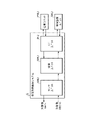
- 1 is a functional block diagram of a vehicle occupant detection system S of an embodiment
- FIG. 4 is a functional block diagram of the sensor unit SNU of the embodiment
- FIG. It is a functional block diagram of a processing unit SRU of the embodiment.
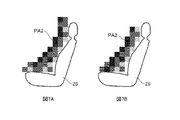
- FIG. 7A shows a three-dimensional spatial distribution (Part 1) of the embodiment.
- FIG. 7B shows a three-dimensional spatial distribution (part 2) of the embodiment.
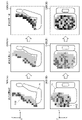
- FIG. 3 shows a three-dimensional spatial distribution of an embodiment
- 4 is a functional block diagram of the I/F unit IFU of the embodiment
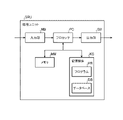
- FIG. 4 shows the configuration of a processing unit SRU of the embodiment
- It is a flow chart which shows operation of vehicle occupant detection system S of an embodiment.
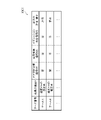
- FIG. 10 shows a permission/prohibition table KKT of Modification 1
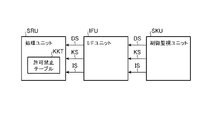
- FIG. 10 shows signals between the processing unit SRU and the control and monitoring unit SKU of variant 1
- FIG. FIG. 10 shows the opening and closing operation of the door of modification 2.
- FIG. 1 shows the relationship (Part 1) between the vehicle and the coordinate system of the embodiment.
- FIG. 2 shows the relationship (part 2) between the vehicle and the coordinate system of the embodiment.
- FIG. 3 shows the relationship between the coordinate system of the embodiment and the distance, speed, and angle.
- the vehicle occupant detection system S of the embodiment is installed between the driver's seat and the passenger's seat on the ceiling inside the vehicle VH, as shown in FIGS. Three passengers PA1 to PA3 are seated in the vehicle VH, as shown in FIGS. 1 and 2, for example.
- the vehicle occupant detection system S transmits a transmission wave TW over an irradiation range AR and is reflected in the irradiation range AR in order to perform identification, detection, output, etc. (details will be described later) within the vehicle VH. Receive the received wave RW.
- the width direction of the vehicle VH is defined as the X direction
- the length direction of the vehicle VH is defined as the Y axis direction
- the height direction of the vehicle VH is defined as the Z-axis.
- a polar coordinate system is adopted in which a distance r, an azimuth angle (azimuth angle) ⁇ , and an elevation angle (elevation angle) ⁇ are defined.
- the velocity V is the velocity when the object OB1, which is the object OB before movement, moves to the object OB2, which is the object OB after movement, under the polar coordinate system shown in FIG. 3B. Defined.
- FIG. 4 is a functional block diagram of the vehicle occupant detection system S of the embodiment.
- functions of the vehicle occupant detection system S of the embodiment will be described with reference to FIG.
- the vehicle occupant detection system S of the embodiment is designed to identify objects OB, such as passengers PA1 to PA3 (eg, shown in FIG. 1) in a vehicle VH (eg, shown in FIG. 1). 4, it includes a sensor unit SNU, a processing unit SRU, and an I/F unit IFU. I/F is an abbreviation for interface.
- the vehicle occupant detection system S of the embodiment is also connected to the control/monitoring unit SKU and the power supply unit PSU in order to exchange signals related to identification and the like described above, and to transfer and receive electric power.
- the control and monitoring unit SKU controls and monitors the operation of the vehicle VH.
- the power supply unit PSU supplies power to the vehicle occupant detection system S, namely the identification unit SK, the first detection unit KN1, the second detection unit KN2, the output unit SR and the control unit SG.
- FIG. 5 is a functional block diagram of the sensor unit SNU of the embodiment.
- the sensor unit SNU of the embodiment includes a plurality of transmitting antenna sections TA, a plurality of transmitting circuit sections TK, a high frequency generating section KH, a plurality of receiving antenna sections RA, and a plurality of receiving circuits.
- RK and A/D converter AH are examples of transmitting antenna sections TA, a plurality of transmitting circuit sections TK, a high frequency generating section KH, a plurality of receiving antenna sections RA, and a plurality of receiving circuits.
- the high frequency generator KH generates a high frequency signal KS that is a chirp wave.
- a plurality of transmission circuit units TK amplifies the generated high-frequency signal KS.
- a plurality of transmission antenna units TA transmit transmission waves TW, which are amplified high-frequency signals, into the vehicle VH.
- the transmitted wave TW extends over an irradiation range AR (eg, shown in FIG. 1).
- the plurality of receiving antenna units RA among the above-described transmission waves TW, target objects OB within the irradiation range AR within the vehicle VH, for example, three passengers PA1 to PA3, seats , receive the received wave RW reflected by the door or the like.
- a plurality of receiving circuit units RK convert the received wave RW into an intermediate frequency signal IS, which is the difference between the received wave RW and the high frequency signal KS, using the high frequency signal KS.
- the A/D converter AH A/D-converts the intermediate frequency signal IS into a digital signal DS and outputs the digital signal DS to the processing unit SRU.
- FIG. 6 is a functional block diagram of the processing unit SRU of the embodiment.
- the processing unit SRU of the embodiment has, as shown in FIG. 6, an identification unit SK, a first detection unit KN1, a second detection unit KN2, an output unit SR, and a control unit SG.
- the identification unit SK corresponds to the “identification unit”
- the first detection unit KN1 corresponds to the “first detection unit”
- the second detection unit KN2 corresponds to the “second detection unit”.
- the output section SR corresponds to the "output section”
- the control section SG corresponds to the "control section”.
- a vehicle VH corresponds to a "vehicle”
- an object OB corresponds to an "object”
- passengers PA1 to PA3 correspond to "persons”.
- the identification unit SK identifies whether the object OB in the vehicle VH is a moving object based on the digital signal DS output from the processing unit SRU, and determines whether it is a person or not.
- the first detection unit KN1 detects the speed V at which the person identified by the identification unit SK moves.
- the second detection unit KN2 generates a three-dimensional spatial distribution SKB based on the detection result of the first detection unit KN1, and determines that it is a person from its shape and position. Detect your sitting position.
- FIG. 7 shows the three-dimensional spatial distribution of the embodiment.
- the three-dimensional spatial distribution SKB is an object OB, for example, an occupant with a standard build, that is, a standard sitting height and a standard build. It is the probability distribution of the position where PA2 exists.
- the three-dimensional spatial distribution SKB shown in FIGS. 7A and 7B indicates that the occupant PA2 is present at a higher probability in a denser position.
- the three-dimensional spatial distribution SKB in FIG. 7A indicates that the object OB may exist at a slightly higher position than the height of the seat ZS. It is therefore suggested that occupant PA2 will have a relatively high sitting height.
- the three-dimensional spatial distribution SKB in FIG. 7B indicates that the occupant PA2 may be present at a position slightly lower than the height of the seat ZS. It is therefore suggested that occupant PA2 will have a relatively low sitting height.
- FIG. 8 shows the three-dimensional spatial distribution of the embodiment.
- the output unit SR it is not preferable for the output unit SR to output the seating situation of the occupant PA2 detected by the second detection unit KN2 based on the three-dimensional spatial distribution SKB(1A). It is desirable that output is prohibited.
- the output unit SR to output the seating situation of the occupant PA2 detected by the second detection unit KN2 based on the three-dimensional spatial distribution SKB(2A). It is desirable that output is prohibited.
- the output section SR outputs the seating situation of the occupant PA2 detected by the second detection section KN2 based on the three-dimensional spatial distribution SKB(3A). In other words, the output section SR outputs should be permitted.
- the output unit SR outputs to the I/F unit IFU the situation regarding the person's seating detected by the second detection unit KN2.
- the control unit SG permits or prohibits the output unit SR to output the situation regarding the seating of the person based on the speed V of the person's movement detected by the first detection unit KN1.
- FIG. 9 is a functional block diagram of the I/F unit IFU of the embodiment.
- the I/F unit IFU as shown in FIG. 9, has a receiver RB and a transmitter TB.
- the receiving unit RB receives signals related to identification and the like and signals related to power from the processing unit SRU, the power supply unit PSU, and the control and monitoring unit SKU.
- the transmission unit TB transmits signals related to identification and the like and signals related to power to the processing unit SRU, the power supply unit PSU, and the control and monitoring unit SKU.
- FIG. 10 shows the configuration of the processing unit SRU of the embodiment.
- the processing unit SRU of the embodiment includes an input section NB, a processor PC, an output section SB, a memory MM, and a storage medium KB, as shown in FIG. 10, in order to perform the functions described above. More precisely, the processing unit SRU of the embodiment optionally comprises an input part NB and an output part SB.
- the input unit NB is composed of, for example, a camera and a touch panel.
- a processor PC is the core of a familiar computer that runs hardware according to software.
- the output unit SB is composed of, for example, a liquid crystal monitor and a touch panel.
- the memory MM is composed of, for example, a DRAM (Dynamic Random Access Memory) and an SRAM (Static Random Access Memory).
- the storage medium KB is composed of, for example, a hard disk drive (HDD: Hard Disk Drive), a solid state drive (SSD: Solid State Drive), and a ROM (Read Only Memory).
- a storage medium KB stores a program PR and a database DB.
- the program PR is a group of instructions that define the content of processing to be executed by the processor PC.
- the database DB is, for example, a permission/prohibition table KKT (described later in modification 1).
- the processor PC executes the program PR stored in the storage medium KB on the memory MM, and if necessary, the input unit NB and By controlling the operation of the output section SB, the functions of the identification section SK, the first detection section KN1, the second detection section KN2, the output section SR, and the control section SG are realized.
- FIG. 11 is a flow chart showing the operation of the vehicle occupant detection system S of the embodiment.
- Step ST11 As is conventionally known, the identification unit SK (shown in FIG. 6) analyzes the digital signal DS (shown in FIG. 6) to determine the irradiation range AR (shown in FIG. 1, for example). Identifies whether the object OB within is moving or stationary, in other words whether the object OB is human or non-human.
- the identification unit SK analyzes the digital signal DS and determines that the object OB is moving when the amplitude, frequency or phase of the received wave RW (shown in FIG. 1, for example) is not uniform, in other words For example, the object OB is identified as a person, that is, the occupant PA2.
- the identification unit SK determines by analysis of the digital signal DS that the object OB is stationary when the amplitude, frequency and phase of the received wave RW are uniform, in other words , the object OB is identified as other than a person.
- Step ST12 As is conventionally known, the first detection unit KN1 uses the above-described FM-CW system, multiple transmission functions (multiple transmission antenna units TA, multiple transmission circuit units TK), and multiple Under the receiving function (multiple receiving antenna units RA, multiple receiving circuit units RK), by analyzing the digital signal DS, the distance r to the occupant PA2, the angle of the occupant PA2 (azimuth angle ⁇ , elevation angle ⁇ ), and the velocity V of the occupant PA2.
- Step ST13 As is conventionally known, the second detector KN2 generates a three-dimensional spatial distribution SKB (for example, shown in FIG. 8) by analyzing the digital signal DS.
- the second detection unit KN2 detects the seating position of the passenger PA2, for example, the seated position of the passenger PA2 and the physique of the passenger PA2, based on the three-dimensional spatial distribution SKB and in consideration of the velocity V. .
- Step ST14 The control unit SG determines whether or not the speed V of the occupant PA2 detected by the first detection unit KN1 is within the range of speed Vth predetermined as a criterion. When it is determined that the speed V of the occupant PA2 is within the range of the predetermined speed Vth, the process proceeds to step ST15 via "YES". On the other hand, when it is determined that the speed V of occupant PA2 is not within the range of the predetermined speed Vth, the process proceeds to step ST17.
- Step ST15 The control unit SG permits the output unit SR to output the seating status of the passenger PA2.
- Step ST16 The output unit SR outputs the seating status of the passenger PA2 to the I/F unit IFU.
- the I/F unit IFU also outputs the situation regarding the seating of the occupant PA2, for example to the control and monitoring unit SKU.
- Step ST17 The control unit SG prohibits the output unit SR from outputting the seating status of the passenger PA2.
- the control unit SG when the speed V at which the occupant PA2 moves is within the range of the predetermined speed Vth, the control unit SG causes the output unit SR to indicate the seating situation of the occupant PA2. to allow the output of On the other hand, the control unit SG prohibits the output unit SR from outputting the seating situation of the occupant PA2 when the speed V at which the occupant PA2 moves is not within the range of the predetermined speed Vth. As a result, it is possible to prevent the output unit SR from outputting the seating situation of the occupant PA2 detected by the second detection unit KN2, which may be erroneous.
- the vehicle occupant detection system S of Modification 1 has the same functions and configuration as the vehicle occupant detection system S of the embodiment (illustrated in FIG. 5 and the like).
- the processing unit SRU further has a permission prohibition table KKT.
- FIG. 12 shows the permission/prohibition table KKT of Modification 1.
- FIG. 13 shows signals between the processing unit SRU and the control and monitoring unit SKU in Modification 1.
- the permission/prohibition table KKT includes, as shown in FIG. 12, the case number, the occupant's speed V, the door open/closed state signal DS, the load presence/absence signal KS, the ignition state signal IS, and the permission/prohibition interval of the output from the output unit SR. shows the relationship between In FIG. 12, the symbol "*" means no question.
- a case number is a serial number assigned to each case.
- the door open/closed state signal DS indicates whether the doors of the vehicle VH are open or closed as the passengers PA1 to PA3 get on or off the vehicle VH.
- a load presence/absence signal KS indicates whether or not a load is applied to the seat due to the seating of the passengers PA1 to PA3.
- the ignition state signal IS indicates whether the ignition is turned on or off, for example, by starting the engine by the passenger PA1.
- the door open/close state signal DS, the load presence/absence signal KS, and the ignition state signal IS are combined with the speed V at which the passengers PA1 to PA3 move, for example, the speed V at which the passenger PA2 moves, and at least one or more of the above three signals. indicates whether the passengers PA1-PA3 have completed seating or leaving the seat, and whether the passengers PA1-PA3 have completed movement between seats.
- the speed V at which the occupant PA2 moves and the door open/closed state signal DS indicating that the doors of the vehicle VH are closed cooperate to indicate that the occupant PA2 has completed seating.
- the velocity V at which the occupant PA1 moves and the ignition status signal IS indicating that the ignition is on cooperate to indicate that the occupant PA1 has completed seating.
- the speed V at which the occupant PA2 moves, the fact that he/she has left one seat (for example, the driver's seat), and the fact that he/she has finished sitting on another seat (for example, the passenger seat) are continuously displayed.
- the processing unit SRU receives inputs of the door open/closed state signal DS, the load presence/absence signal KS, and the ignition state signal IS, as shown in FIG. More specifically, it receives input from the control and monitoring unit SKU via the I/F unit IFU.
- the control unit SG refers to the permission/prohibition table KKT based on the occupant movement speed V, the door open/close state signal DS, the load presence/absence signal KS, and the ignition state signal IS, which are input from the control and monitoring unit SKU. By doing so, the output unit SR is permitted or prohibited to output the situation regarding the seating of the occupant.
- the output part SR For example, it is permitted to output the situation regarding the seating of the passenger PA2.
- the control unit SG outputs the output unit SR when the speed V at which the occupant PA2 moves is "within the range of the speed Vth" and the door open/closed state signal DS is "open". Prohibits outputting the status of
- the door open/closed state signal DS, the load presence/absence signal KS, and the ignition state signal IS are used to In other words, the output unit SR outputs the seating status of the occupant PA2 after considering whether the occupant PA2 has completed the seating and whether the occupant PA2 has completed the movement between the seats. allow or prohibit As a result, permitting or prohibiting the output from the output unit SR can be controlled with finer precision than the vehicle occupant detection system S of the embodiment.
- the vehicle occupant detection system S of Modification 2 has the same functions and configuration as the vehicle occupant detection system S of the embodiment (illustrated in FIG. 5 and the like).
- the vehicle occupant detection system S of Modification 2 considers the opening and closing operation of the door of the vehicle VH.
- FIG. 14 shows the opening and closing operation of the door in Modification 2.
- the output of the seating status of the occupant PA2 is permitted or prohibited in addition to the speed V at which the occupant PA2 moves, as well as the opening/closing operation of the door DR of the vehicle VH. be considered.
- the transmission wave TW transmitted from the vehicle occupant detection system S reaches not only the area inside the vehicle VH, but also the area outside the vehicle VH. It also reaches the area and space where the door DR opens and closes.
- the door DR When the door DR is not stationary, more specifically, when the door DR is transitioning from the closed state to the open state, and when the door DR is transitioning from the open state to the closed state.
- the received wave RW that is reflected by the door DR and returns to the vehicle occupant detection system S varies due to the operation of the door DR during opening and closing. If the received wave RW fluctuates, for example, there is a strong possibility that the second detection unit KN2 may detect the seating situation of the passenger PA2 incorrectly.
- the purpose of the vehicle occupant detection system S of Modification 2 is to prohibit the output of a situation related to, for example, incorrect seating of the occupant PA2 due to the opening and closing of the door DR.
- the vehicle occupant detection system S of Modification 2 has the following different operations compared to the operation of the vehicle occupant detection system S of the embodiment (illustrated in FIG. 11).
- Step ST12 The first detection unit KN1 detects the speed V (DR) at which the door DR opens and closes in addition to detecting the speed V at which the occupant PA2 moves.
- Step ST14 In addition to determining whether the speed V at which the passenger PA2 moves is within the range of a predetermined speed Vth, the control unit SG determines whether the speed V(DR) at which the door DR opens and closes is predetermined. It is determined whether or not the speed is within the range of the determined speed Vth(DR).
- step ST15 the speed V(DR) at which the door DR opens/closes is increased regardless of whether the speed V at which the occupant PA2 moves is within the range of the predetermined speed Vth. If it is not within the range of the predetermined speed Vth(DR), the process proceeds to step ST17.
- the vehicle occupant detection system S of Modification 3 has the same functions and configuration as the vehicle occupant detection system S of the embodiment (illustrated in FIG. 5 and the like).
- the vehicle occupant detection system S of Modification 3 differs from the vehicle occupant detection system S of the embodiment in that the operation and processing of the power supply unit PSU are performed in consideration of the opening and closing of the doors of the vehicle VH. It controls the operation of the identification unit SK, the first detection unit KN1, the second detection unit KN2 and the output unit SR in the unit SRU.
- the control unit SG in the processing unit SRU controls the opening or closing of the door of the vehicle VH from the control monitoring unit SKU via the I/F unit IFU. Receives the input of the signal shown. Based on the input signal, the control unit SG activates at least one of the identification unit SK, the first detection unit KN1, the second detection unit KN2, and the output unit SR from the power supply unit PSU. Start receiving power.
- the control unit SG further starts the operation of at least one of the identification unit SK, the first detection unit KN1, the second detection unit KN2, and the output unit SR based on the input signal.
- the above-described electric power supply is started and the operation of the identification unit SK and the like is started, so that the occupants PA1 to PA3 It is possible to output the seating conditions of the passengers PA1 to PA3 without delay after getting on the vehicle VH.
- the vehicle occupant detection system according to the present disclosure can be used, for example, to control whether to output a situation regarding the seating of an occupant in the vehicle.
Landscapes
- Engineering & Computer Science (AREA)
- Remote Sensing (AREA)
- Radar, Positioning & Navigation (AREA)
- Physics & Mathematics (AREA)
- General Physics & Mathematics (AREA)
- Computer Networks & Wireless Communication (AREA)
- Life Sciences & Earth Sciences (AREA)
- Electromagnetism (AREA)
- Environmental & Geological Engineering (AREA)
- Geology (AREA)
- General Life Sciences & Earth Sciences (AREA)
- Geophysics (AREA)
- Geophysics And Detection Of Objects (AREA)
- Radar Systems Or Details Thereof (AREA)
- Air Bags (AREA)
Priority Applications (4)
| Application Number | Priority Date | Filing Date | Title |
|---|---|---|---|
| PCT/JP2021/018245 WO2022239195A1 (ja) | 2021-05-13 | 2021-05-13 | 車両乗員検知システム及び車両乗員検知方法 |
| US18/286,786 US12510648B2 (en) | 2021-05-13 | 2021-05-13 | Vehicle occupant detection system and vehicle occupant detection method |
| JP2023520690A JP7450811B2 (ja) | 2021-05-13 | 2021-05-13 | 車両乗員検知システム及び車両乗員検知方法 |
| DE112021007659.0T DE112021007659T5 (de) | 2021-05-13 | 2021-05-13 | Fahrzeuginsassenerkennungssystem und Fahrzeuginsassenerkennungsverfahren |
Applications Claiming Priority (1)
| Application Number | Priority Date | Filing Date | Title |
|---|---|---|---|
| PCT/JP2021/018245 WO2022239195A1 (ja) | 2021-05-13 | 2021-05-13 | 車両乗員検知システム及び車両乗員検知方法 |
Publications (1)
| Publication Number | Publication Date |
|---|---|
| WO2022239195A1 true WO2022239195A1 (ja) | 2022-11-17 |
Family
ID=84028039
Family Applications (1)
| Application Number | Title | Priority Date | Filing Date |
|---|---|---|---|
| PCT/JP2021/018245 Ceased WO2022239195A1 (ja) | 2021-05-13 | 2021-05-13 | 車両乗員検知システム及び車両乗員検知方法 |
Country Status (4)
| Country | Link |
|---|---|
| US (1) | US12510648B2 (https=) |
| JP (1) | JP7450811B2 (https=) |
| DE (1) | DE112021007659T5 (https=) |
| WO (1) | WO2022239195A1 (https=) |
Cited By (2)
| Publication number | Priority date | Publication date | Assignee | Title |
|---|---|---|---|---|
| WO2025182364A1 (ja) * | 2024-03-01 | 2025-09-04 | 株式会社村田製作所 | ドア開閉検知装置及びドア開閉検知方法 |
| JP2025131547A (ja) * | 2024-02-28 | 2025-09-09 | クラリオン コーポレーション オブ アメリカ | 車両用座席占有センサシステムおよびその使用方法 |
Citations (8)
| Publication number | Priority date | Publication date | Assignee | Title |
|---|---|---|---|---|
| JP2002250776A (ja) * | 2001-02-26 | 2002-09-06 | Honda Motor Co Ltd | センサの初期診断方法 |
| JP2002533259A (ja) * | 1998-12-30 | 2002-10-08 | オートモーティブ システムズ ラボラトリー インコーポレーテッド | 乗員検出システム |
| JP2004522932A (ja) * | 1999-05-27 | 2004-07-29 | オートモーティブ・テクノロジーズ・インターナショナル,インク. | 車両内の物体の存在及び姿勢を識別するシステムを開発する方法 |
| CN109490834A (zh) * | 2018-10-17 | 2019-03-19 | 北京车和家信息技术有限公司 | 一种声源定位方法、声源定位装置及车辆 |
| JP2019086354A (ja) * | 2017-11-06 | 2019-06-06 | アイシン精機株式会社 | 乗員検出装置 |
| JP2019144188A (ja) * | 2018-02-23 | 2019-08-29 | 株式会社日本アレフ | 電波センサー及びそれを搭載した装置 |
| JP2019168379A (ja) * | 2018-03-26 | 2019-10-03 | アイシン精機株式会社 | 生体検知システム |
| JP2020101415A (ja) * | 2018-12-20 | 2020-07-02 | パナソニックIpマネジメント株式会社 | 乗員状態検知システム |
Family Cites Families (22)
| Publication number | Priority date | Publication date | Assignee | Title |
|---|---|---|---|---|
| US6571106B1 (en) * | 1999-07-14 | 2003-05-27 | Texas Instruments Incorporated | Method and apparatus for glitchless signal generation |
| DE10022434A1 (de) * | 2000-05-09 | 2001-11-22 | Daimler Chrysler Ag | Verfahren zur fahrdynamischen Adaption der Körperabstützung eines Sitzenden in einem Fahrzeugsitz und Fahrzeugsitz hierzu |
| US6753780B2 (en) * | 2002-03-15 | 2004-06-22 | Delphi Technologies, Inc. | Vehicle occupant detection system and method using radar motion sensor |
| WO2007020808A1 (ja) * | 2005-08-19 | 2007-02-22 | Pioneer Corporation | コンテンツ提供装置、コンテンツ提供方法、コンテンツ提供プログラムおよびコンピュータに読み取り可能な記録媒体 |
| WO2007046269A1 (ja) * | 2005-10-17 | 2007-04-26 | Pioneer Corporation | 情報提示装置、情報提示方法、情報提示プログラムおよびコンピュータに読み取り可能な記録媒体 |
| JP5585177B2 (ja) * | 2010-04-12 | 2014-09-10 | トヨタ自動車株式会社 | 先行車位置判定装置 |
| JP5985295B2 (ja) | 2012-08-06 | 2016-09-06 | 日野自動車株式会社 | 車室内状況観察装置及び車室内事故予防装置 |
| US20160161609A1 (en) * | 2014-12-05 | 2016-06-09 | Panasonic Intellectual Property Management Co., Ltd. | Object detection device, velocity detection device, and vehicle |
| US9928673B2 (en) * | 2015-07-16 | 2018-03-27 | GM Global Technology Operations LLC | Vehicle PEPS system using directional sensors |
| US9994152B1 (en) * | 2015-08-07 | 2018-06-12 | Ryan Hess | Active scanning collision avoidance system |
| JP2017156219A (ja) * | 2016-03-02 | 2017-09-07 | 沖電気工業株式会社 | 追尾装置、追尾方法およびプログラム |
| JP2018202921A (ja) | 2017-05-31 | 2018-12-27 | パナソニックIpマネジメント株式会社 | 乗員状態検知システム |
| DE112017008200T5 (de) * | 2017-12-15 | 2020-07-23 | Mitsubishi Electric Corporation | Radarsignalverarbeitungsvorrichtung, Radarvorrichtung und Radarsignalverarbeitungsverfahren |
| EP3803451B1 (en) * | 2018-06-11 | 2023-06-28 | IEE International Electronics & Engineering S.A. | Method for robust vehicle occupancy detection with vital sign monitoring |
| US11112790B2 (en) * | 2018-12-21 | 2021-09-07 | GM Global Technology Operations LLC | Micro-authorization of remote assistance for an autonomous vehicle |
| JP7271952B2 (ja) * | 2019-01-08 | 2023-05-12 | 株式会社アイシン | 物体検出システムおよび物体検出装置 |
| EP3683596B1 (en) * | 2019-01-16 | 2022-09-21 | NXP USA, Inc. | Method and processor for determining spatial information regarding a vehicle |
| JP7203211B2 (ja) * | 2019-05-14 | 2023-01-12 | 三菱電機株式会社 | 車載用物体検知システム |
| JP7363144B2 (ja) | 2019-07-12 | 2023-10-18 | 株式会社アイシン | 車両制御装置 |
| JP7262382B2 (ja) * | 2019-12-27 | 2023-04-21 | 本田技研工業株式会社 | 情報提供装置 |
| JP7450045B2 (ja) * | 2020-09-10 | 2024-03-14 | 日産自動車株式会社 | 情報出力装置及び情報出力方法 |
| US11760291B2 (en) * | 2021-01-25 | 2023-09-19 | Ay Dee Kay Llc | Centralized occupancy detection system |
-
2021
- 2021-05-13 US US18/286,786 patent/US12510648B2/en active Active
- 2021-05-13 JP JP2023520690A patent/JP7450811B2/ja active Active
- 2021-05-13 WO PCT/JP2021/018245 patent/WO2022239195A1/ja not_active Ceased
- 2021-05-13 DE DE112021007659.0T patent/DE112021007659T5/de not_active Withdrawn
Patent Citations (8)
| Publication number | Priority date | Publication date | Assignee | Title |
|---|---|---|---|---|
| JP2002533259A (ja) * | 1998-12-30 | 2002-10-08 | オートモーティブ システムズ ラボラトリー インコーポレーテッド | 乗員検出システム |
| JP2004522932A (ja) * | 1999-05-27 | 2004-07-29 | オートモーティブ・テクノロジーズ・インターナショナル,インク. | 車両内の物体の存在及び姿勢を識別するシステムを開発する方法 |
| JP2002250776A (ja) * | 2001-02-26 | 2002-09-06 | Honda Motor Co Ltd | センサの初期診断方法 |
| JP2019086354A (ja) * | 2017-11-06 | 2019-06-06 | アイシン精機株式会社 | 乗員検出装置 |
| JP2019144188A (ja) * | 2018-02-23 | 2019-08-29 | 株式会社日本アレフ | 電波センサー及びそれを搭載した装置 |
| JP2019168379A (ja) * | 2018-03-26 | 2019-10-03 | アイシン精機株式会社 | 生体検知システム |
| CN109490834A (zh) * | 2018-10-17 | 2019-03-19 | 北京车和家信息技术有限公司 | 一种声源定位方法、声源定位装置及车辆 |
| JP2020101415A (ja) * | 2018-12-20 | 2020-07-02 | パナソニックIpマネジメント株式会社 | 乗員状態検知システム |
Cited By (4)
| Publication number | Priority date | Publication date | Assignee | Title |
|---|---|---|---|---|
| JP2025131547A (ja) * | 2024-02-28 | 2025-09-09 | クラリオン コーポレーション オブ アメリカ | 車両用座席占有センサシステムおよびその使用方法 |
| JP7847685B2 (ja) | 2024-02-28 | 2026-04-17 | クラリオン コーポレーション オブ アメリカ | 車両用座席占有センサシステムおよびその使用方法 |
| WO2025182364A1 (ja) * | 2024-03-01 | 2025-09-04 | 株式会社村田製作所 | ドア開閉検知装置及びドア開閉検知方法 |
| JP2025133646A (ja) * | 2024-03-01 | 2025-09-11 | 株式会社村田製作所 | ドア開閉検知装置及びドア開閉検知方法 |
Also Published As
| Publication number | Publication date |
|---|---|
| JPWO2022239195A1 (https=) | 2022-11-17 |
| US20240192351A1 (en) | 2024-06-13 |
| US12510648B2 (en) | 2025-12-30 |
| DE112021007659T5 (de) | 2024-03-14 |
| JP7450811B2 (ja) | 2024-03-15 |
Similar Documents
| Publication | Publication Date | Title |
|---|---|---|
| US11762385B2 (en) | Micro-authorization of remote assistance for an autonomous vehicle | |
| WO2022239195A1 (ja) | 車両乗員検知システム及び車両乗員検知方法 | |
| US12145596B2 (en) | Cabin-inside detection device and cabin-inside detection method | |
| US20210356583A1 (en) | Object detection apparatus and object detection method | |
| JP2006322897A (ja) | レーダ干渉抑制方法およびレーダシステム | |
| GB2557446A (en) | Autonomous vehicle ingress and egress | |
| US10481251B2 (en) | Radar device and target detecting method | |
| JP2011133274A (ja) | 車両用障害物監視装置 | |
| US9349292B2 (en) | Vehicle with traffic flow reminder | |
| US20210049385A1 (en) | Security features using vehicle personalization | |
| JP7657268B2 (ja) | ユーザを認証する方法、システムおよび自動車 | |
| CN110857985A (zh) | 用于成像雷达的序列目标参数估计 | |
| US20150175126A1 (en) | System and method of detecting intrusion into vehicle | |
| US20220357741A1 (en) | Remote autonomous driving control management apparatus, system including the same, and method thereof | |
| CN102656055A (zh) | 在考虑前面检测结果的条件下主动检测物体的方法和装置 | |
| CN114572065B (zh) | 用于控制车辆的装置和方法 | |
| US12024168B2 (en) | Vehicle for tracking speed profile and control method thereof | |
| KR20120032145A (ko) | 차량 도어락을 제어하는 방법 및 시스템 | |
| EP4582661A1 (en) | Vehicle, vehicle door control method therefor, and device | |
| CN120552762A (zh) | 用于车辆的座位占用传感器系统及其使用方法 | |
| US20240148213A1 (en) | Robot, robot system and controlling method thereof | |
| JP2006508366A (ja) | 対象物検出システムの信号またはデータを評価する方法および装置 | |
| CN118618258A (zh) | 一种车辆控制方法、装置及车辆 | |
| CN118441971A (zh) | 一种车辆电动车门的控制方法及装置 | |
| US20260019989A1 (en) | Method and Apparatus for Locating an Electronic Device in or at a Motor Vehicle |
Legal Events
| Date | Code | Title | Description |
|---|---|---|---|
| 121 | Ep: the epo has been informed by wipo that ep was designated in this application |
Ref document number: 21941928 Country of ref document: EP Kind code of ref document: A1 |
|
| ENP | Entry into the national phase |
Ref document number: 2023520690 Country of ref document: JP Kind code of ref document: A |
|
| WWE | Wipo information: entry into national phase |
Ref document number: 18286786 Country of ref document: US |
|
| WWE | Wipo information: entry into national phase |
Ref document number: 112021007659 Country of ref document: DE |
|
| 122 | Ep: pct application non-entry in european phase |
Ref document number: 21941928 Country of ref document: EP Kind code of ref document: A1 |
|
| WWG | Wipo information: grant in national office |
Ref document number: 18286786 Country of ref document: US |