WO2022225014A1 - パターン形成用組成物 - Google Patents
パターン形成用組成物 Download PDFInfo
- Publication number
- WO2022225014A1 WO2022225014A1 PCT/JP2022/018430 JP2022018430W WO2022225014A1 WO 2022225014 A1 WO2022225014 A1 WO 2022225014A1 JP 2022018430 W JP2022018430 W JP 2022018430W WO 2022225014 A1 WO2022225014 A1 WO 2022225014A1
- Authority
- WO
- WIPO (PCT)
- Prior art keywords
- group
- carbon atoms
- formula
- pattern
- forming composition
- Prior art date
- Legal status (The legal status is an assumption and is not a legal conclusion. Google has not performed a legal analysis and makes no representation as to the accuracy of the status listed.)
- Ceased
Links
Images


Classifications
-
- G—PHYSICS
- G03—PHOTOGRAPHY; CINEMATOGRAPHY; ANALOGOUS TECHNIQUES USING WAVES OTHER THAN OPTICAL WAVES; ELECTROGRAPHY; HOLOGRAPHY
- G03F—PHOTOMECHANICAL PRODUCTION OF TEXTURED OR PATTERNED SURFACES, e.g. FOR PRINTING, FOR PROCESSING OF SEMICONDUCTOR DEVICES; MATERIALS THEREFOR; ORIGINALS THEREFOR; APPARATUS SPECIALLY ADAPTED THEREFOR
- G03F7/00—Photomechanical, e.g. photolithographic, production of textured or patterned surfaces, e.g. printing surfaces; Materials therefor, e.g. comprising photoresists; Apparatus specially adapted therefor
- G03F7/004—Photosensitive materials
- G03F7/038—Macromolecular compounds which are rendered insoluble or differentially wettable
- G03F7/0387—Polyamides or polyimides
-
- H—ELECTRICITY
- H10—SEMICONDUCTOR DEVICES; ELECTRIC SOLID-STATE DEVICES NOT OTHERWISE PROVIDED FOR
- H10K—ORGANIC ELECTRIC SOLID-STATE DEVICES
- H10K50/00—Organic light-emitting devices
- H10K50/80—Constructional details
- H10K50/85—Arrangements for extracting light from the devices
-
- C—CHEMISTRY; METALLURGY
- C08—ORGANIC MACROMOLECULAR COMPOUNDS; THEIR PREPARATION OR CHEMICAL WORKING-UP; COMPOSITIONS BASED THEREON
- C08G—MACROMOLECULAR COMPOUNDS OBTAINED OTHERWISE THAN BY REACTIONS ONLY INVOLVING UNSATURATED CARBON-TO-CARBON BONDS
- C08G73/00—Macromolecular compounds obtained by reactions forming a linkage containing nitrogen with or without oxygen or carbon in the main chain of the macromolecule, not provided for in groups C08G12/00 - C08G71/00
- C08G73/06—Polycondensates having nitrogen-containing heterocyclic rings in the main chain of the macromolecule
-
- C—CHEMISTRY; METALLURGY
- C08—ORGANIC MACROMOLECULAR COMPOUNDS; THEIR PREPARATION OR CHEMICAL WORKING-UP; COMPOSITIONS BASED THEREON
- C08G—MACROMOLECULAR COMPOUNDS OBTAINED OTHERWISE THAN BY REACTIONS ONLY INVOLVING UNSATURATED CARBON-TO-CARBON BONDS
- C08G73/00—Macromolecular compounds obtained by reactions forming a linkage containing nitrogen with or without oxygen or carbon in the main chain of the macromolecule, not provided for in groups C08G12/00 - C08G71/00
- C08G73/06—Polycondensates having nitrogen-containing heterocyclic rings in the main chain of the macromolecule
- C08G73/0622—Polycondensates containing six-membered rings, not condensed with other rings, with nitrogen atoms as the only ring hetero atoms
- C08G73/0638—Polycondensates containing six-membered rings, not condensed with other rings, with nitrogen atoms as the only ring hetero atoms with at least three nitrogen atoms in the ring
- C08G73/0644—Poly(1,3,5)triazines
-
- C—CHEMISTRY; METALLURGY
- C08—ORGANIC MACROMOLECULAR COMPOUNDS; THEIR PREPARATION OR CHEMICAL WORKING-UP; COMPOSITIONS BASED THEREON
- C08K—Use of inorganic or non-macromolecular organic substances as compounding ingredients
- C08K3/00—Use of inorganic substances as compounding ingredients
- C08K3/10—Metal compounds
-
- C—CHEMISTRY; METALLURGY
- C08—ORGANIC MACROMOLECULAR COMPOUNDS; THEIR PREPARATION OR CHEMICAL WORKING-UP; COMPOSITIONS BASED THEREON
- C08L—COMPOSITIONS OF MACROMOLECULAR COMPOUNDS
- C08L79/00—Compositions of macromolecular compounds obtained by reactions forming in the main chain of the macromolecule a linkage containing nitrogen with or without oxygen or carbon only, not provided for in groups C08L61/00 - C08L77/00
- C08L79/04—Polycondensates having nitrogen-containing heterocyclic rings in the main chain; Polyhydrazides; Polyamide acids or similar polyimide precursors
-
- G—PHYSICS
- G03—PHOTOGRAPHY; CINEMATOGRAPHY; ANALOGOUS TECHNIQUES USING WAVES OTHER THAN OPTICAL WAVES; ELECTROGRAPHY; HOLOGRAPHY
- G03F—PHOTOMECHANICAL PRODUCTION OF TEXTURED OR PATTERNED SURFACES, e.g. FOR PRINTING, FOR PROCESSING OF SEMICONDUCTOR DEVICES; MATERIALS THEREFOR; ORIGINALS THEREFOR; APPARATUS SPECIALLY ADAPTED THEREFOR
- G03F7/00—Photomechanical, e.g. photolithographic, production of textured or patterned surfaces, e.g. printing surfaces; Materials therefor, e.g. comprising photoresists; Apparatus specially adapted therefor
- G03F7/004—Photosensitive materials
-
- G—PHYSICS
- G03—PHOTOGRAPHY; CINEMATOGRAPHY; ANALOGOUS TECHNIQUES USING WAVES OTHER THAN OPTICAL WAVES; ELECTROGRAPHY; HOLOGRAPHY
- G03F—PHOTOMECHANICAL PRODUCTION OF TEXTURED OR PATTERNED SURFACES, e.g. FOR PRINTING, FOR PROCESSING OF SEMICONDUCTOR DEVICES; MATERIALS THEREFOR; ORIGINALS THEREFOR; APPARATUS SPECIALLY ADAPTED THEREFOR
- G03F7/00—Photomechanical, e.g. photolithographic, production of textured or patterned surfaces, e.g. printing surfaces; Materials therefor, e.g. comprising photoresists; Apparatus specially adapted therefor
- G03F7/004—Photosensitive materials
- G03F7/0045—Photosensitive materials with organic non-macromolecular light-sensitive compounds not otherwise provided for, e.g. dissolution inhibitors
-
- H—ELECTRICITY
- H05—ELECTRIC TECHNIQUES NOT OTHERWISE PROVIDED FOR
- H05B—ELECTRIC HEATING; ELECTRIC LIGHT SOURCES NOT OTHERWISE PROVIDED FOR; CIRCUIT ARRANGEMENTS FOR ELECTRIC LIGHT SOURCES, IN GENERAL
- H05B33/00—Electroluminescent light sources
- H05B33/02—Details
-
- H—ELECTRICITY
- H05—ELECTRIC TECHNIQUES NOT OTHERWISE PROVIDED FOR
- H05B—ELECTRIC HEATING; ELECTRIC LIGHT SOURCES NOT OTHERWISE PROVIDED FOR; CIRCUIT ARRANGEMENTS FOR ELECTRIC LIGHT SOURCES, IN GENERAL
- H05B33/00—Electroluminescent light sources
- H05B33/10—Apparatus or processes specially adapted to the manufacture of electroluminescent light sources
Definitions
- the present invention relates to a pattern forming composition.
- liquid crystal displays organic electroluminescence (EL) displays, touch panels, optical semiconductor (light emitting diode (LED), etc.) elements, solid-state imaging elements, organic thin film solar cells, dye-sensitized solar cells, organic thin film transistors (TFT), etc.
- high-performance polymer materials have come to be required. Specific properties required include 1) heat resistance, 2) transparency, 3) high refractive index, 4) high solubility, 5) low volume shrinkage, 6) high temperature and humidity resistance, and 7) high film hardness. etc.
- a polymer containing a repeating unit having a triazine ring and an aromatic ring has a high refractive index, and the polymer alone has high heat resistance, high transparency, high refractive index, high solubility, It has already been found that it can achieve low volume shrinkage and is suitable as a film-forming composition for producing electronic devices (Patent Document 1).
- organic electroluminescence displays generally have a problem of low light extraction efficiency, that is, the efficiency with which generated light exits the device.
- various techniques have been developed in the past. , techniques using high refractive index layers and high refractive index patterns are known. Many negative photosensitive compositions have been proposed for this high refractive index pattern, and the present applicant has so far reported various materials capable of forming a negative high refractive index pattern (Patent Documents 2-4).
- the pattern is formed by leaving the part that is cured by the light irradiated from above, so the shape after development generally tends to be inversely tapered, and undercuts are likely to occur.
- the present invention has been made in view of the above circumstances, and an object of the present invention is to provide a pattern-forming composition capable of forming a pattern having a high refractive index and excellent transparency even when it contains inorganic fine particles.
- a composition containing a triazine ring-containing polymer in which at least a portion of the triazine ring terminal is blocked with a hydroxyl-substituted arylamino group and a cross-linking agent has a high refractive index and is transparent. It was found that a fine pattern can be formed.
- the inventors of the present invention found that when inorganic fine particles are contained in the composition, inorganic fine particles having an alkali-reactive group on the surface thereof are used. The inventors have found that a transparent fine pattern can be formed with a high refractive index even when it is contained, and have completed the present invention.
- a pattern-forming composition comprising a ring-containing polymer, a cross-linking agent, inorganic fine particles having an alkali-reactive group on their surface, and an organic solvent.
- R and R′ independently represent a hydrogen atom, an alkyl group, an alkoxy group, an aryl group, or an aralkyl group
- Q is a divalent group having 3 to 30 carbon atoms and having a ring structure.
- R 1 to R 92 are each independently a hydrogen atom, a halogen atom, a carboxy group, a sulfo group, an alkyl group having 1 to 10 carbon atoms, an alkyl group having 1 to 10 carbon atoms, represents a halogenated alkyl group or an alkoxy group having 1 to 10 carbon atoms
- R 93 and R 94 each represent a hydrogen atom or an alkyl group having 1 to 10 carbon atoms
- W 1 and W 2 are each independently a single bond
- CR 95 R 96 R 95 and R 96 are each independently a hydrogen atom, a C 1-10 alkyl group (provided that these may form a ring), or represents a halogenated alkyl group having 1 to
- R 1 and R 2 each independently represent an alkylene group having 1 to 5 carbon atoms which may have a branched structure. * represents a bond. .
- [3] The pattern-forming composition according to [1] or [2], wherein the hydroxyl-substituted arylamino group is represented by formula (15).
- [4] The pattern-forming composition according to [3], wherein the hydroxyl-substituted arylamino group is represented by formula (16).
- An electronic device comprising a substrate and the cured product of [10] formed on the substrate.
- An optical member comprising a substrate and the cured product of [10] formed on the substrate.
- the pattern-forming composition according to any one of [1] to [9] is applied to a substrate, the organic solvent is evaporated, light is irradiated through a patterned mask, and then developed. , and further baking.
- the composition of the present invention is masked, exposed to light, cured, developed with an alkali, and baked to give a fine pattern having a high refractive index and excellent transparency.
- the pattern produced from the composition of the present invention can exhibit the characteristics of high heat resistance, high refractive index, and low volume shrinkage due to the triazine ring-containing polymer.
- optical semiconductor devices solid-state image sensors, organic thin-film solar cells, dye-sensitized solar cells, organic thin-film transistors, lenses, prisms, cameras, binoculars, microscopes, semiconductor exposure equipment, etc. It can be suitably used in the field of materials.
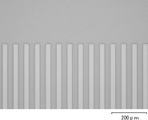
- FIG. 3 is an optical microscope photograph of a patterned film produced in Example 3-1.
- 3 is an electron micrograph of a patterned film produced in Example 3-1.
- 3 is an optical microscope photograph of a patterned film produced in Example 3-2.
- 3 is an optical microscope photograph of a patterned film produced in Example 3-3.
- the pattern-forming composition according to the present invention includes a repeating unit structure represented by the following formula (1) and has at least one triazine ring terminal, at least part of which is a hydroxyl-substituted arylamino It is characterized by containing a group-sealed triazine ring-containing polymer, a cross-linking agent, inorganic fine particles having an alkali-reactive group on the surface, and an organic solvent.
- Triazine Ring-Containing Polymer The triazine ring-containing polymer used in the present invention contains a repeating unit structure represented by the following formula (1).
- a triazine ring-containing polymer is, for example, a so-called hyperbranched polymer.
- a hyperbranched polymer is a highly branched polymer having an irregularly branched structure.
- the term "irregular" as used herein means that the branch structure is more irregular than that of a dendrimer, which is a highly branched polymer having a regular branch structure.
- a triazine ring-containing polymer which is a hyperbranched polymer, has a structure larger than the repeating unit structure represented by formula (1), and each of the three bonds of the repeating unit structure represented by formula (1) has , and a structure (structure X) in which repeating unit structures represented by formula (1) are bonded.
- the structure X is distributed throughout the triazine ring-containing polymer except for the terminals.
- the repeating unit structure may consist essentially of the repeating unit structure represented by formula (1).
- R and R′ each independently represent a hydrogen atom, an alkyl group, an alkoxy group, an aryl group, or an aralkyl group. preferable.
- the number of carbon atoms in the alkyl group is not particularly limited, but is preferably 1 to 20. Considering that the heat resistance of the polymer is further improved, the number of carbon atoms in the alkyl group is 1 to 10. More preferably, 1 to 3 are even more preferable.
- the structure of the alkyl group is not particularly limited, and may be, for example, linear, branched, cyclic, or a combination of two or more thereof.
- alkyl groups are methyl, ethyl, n-propyl, isopropyl, cyclopropyl, n-butyl, isobutyl, s-butyl, t-butyl, cyclobutyl, 1-methyl-cyclopropyl, 2-methyl-cyclopropyl.
- n-pentyl 1-methyl-n-butyl, 2-methyl-n-butyl, 3-methyl-n-butyl, 1,1-dimethyl-n-propyl, 1,2-dimethyl-n-propyl, 2 , 2-dimethyl-n-propyl, 1-ethyl-n-propyl, cyclopentyl, 1-methyl-cyclobutyl, 2-methyl-cyclobutyl, 3-methyl-cyclobutyl, 1,2-dimethyl-cyclopropyl, 2,3- dimethyl-cyclopropyl, 1-ethyl-cyclopropyl, 2-ethyl-cyclopropyl, n-hexyl, 1-methyl-n-pentyl, 2-methyl-n-pentyl, 3-methyl-n-pentyl, 4-methyl -n-pentyl, 1,1-dimethyl-n-butyl, 1,2-dimethyl-n-butyl, 1,3-dimethyl-n-butyl,
- the number of carbon atoms in the alkoxy group is not particularly limited, it is preferably 1 to 20, and in consideration of further increasing the heat resistance of the polymer, the number of carbon atoms in the alkoxy group is more preferably 1 to 10. 1 to 3 are even more preferred.
- the structure of the alkyl moiety is not particularly limited, and may be, for example, linear, branched, cyclic, or a combination of two or more thereof.
- alkoxy groups include methoxy, ethoxy, n-propoxy, isopropoxy, n-butoxy, isobutoxy, s-butoxy, t-butoxy, n-pentoxy, 1-methyl-n-butoxy, 2-methyl-n -butoxy, 3-methyl-n-butoxy, 1,1-dimethyl-n-propoxy, 1,2-dimethyl-n-propoxy, 2,2-dimethyl-n-propoxy, 1-ethyl-n-propoxy, n -hexyloxy, 1-methyl-n-pentyloxy, 2-methyl-n-pentyloxy, 3-methyl-n-pentyloxy, 4-methyl-n-pentyloxy, 1,1-dimethyl-n-butoxy, 1,2-dimethyl-n-butoxy, 1,3-dimethyl-n-butoxy, 2,2-dimethyl-n-butoxy, 2,3-dimethyl-n-butoxy, 3,3-dimethyl-n-butoxy, 1-ethoxy,
- the number of carbon atoms in the aryl group is not particularly limited, it is preferably 6 to 40, and in consideration of further increasing the heat resistance of the polymer, the number of carbon atoms in the aryl group is more preferably 6 to 16. 6 to 13 are even more preferred.
- the aryl group includes an aryl group having a substituent. Examples of substituents include halogen atoms, alkyl groups having 1 to 6 carbon atoms, alkoxy groups having 1 to 6 carbon atoms, nitro groups, and cyano groups.
- aryl groups include phenyl, o-chlorophenyl, m-chlorophenyl, p-chlorophenyl, o-fluorophenyl, p-fluorophenyl, o-methoxyphenyl, p-methoxyphenyl, p-nitrophenyl, p-cyanophenyl, ⁇ -naphthyl, ⁇ -naphthyl, o-biphenylyl, m-biphenylyl, p-biphenylyl, 1-anthryl, 2-anthryl, 9-anthryl, 1-phenanthryl, 2-phenanthryl, 3-phenanthryl, 4 -phenanthryl, 9-phenanthryl groups and the like.
- the aralkyl group includes an aralkyl group having a substituent.
- substituents include halogen atoms, alkyl groups having 1 to 6 carbon atoms, alkoxy groups having 1 to 6 carbon atoms, nitro groups, and cyano groups.
- Specific examples include benzyl, p-methylphenylmethyl, m-methylphenylmethyl, o-ethylphenylmethyl, m-ethylphenylmethyl, p-ethylphenylmethyl, 2-propylphenylmethyl, 4-isopropylphenylmethyl, 4-isobutylphenylmethyl, ⁇ -naphthylmethyl group and the like.
- Q in formula (1) is not particularly limited as long as it is a divalent group having 3 to 30 carbon atoms and having a ring structure.
- the ring structure may be an aromatic ring structure or an alicyclic structure.
- the above Q preferably represents at least one selected from the group represented by formulas (2) to (13).
- R 1 to R 92 above each independently represent a hydrogen atom, a halogen atom, a carboxy group, a sulfo group, an alkyl group having 1 to 10 carbon atoms, a halogenated alkyl group having 1 to 10 carbon atoms, or a halogen atom having 1 to 10 carbon atoms.
- R 93 and R 94 each represent a hydrogen atom or an alkyl group having 1 to 10 carbon atoms
- W 1 and W 2 are each independently a single bond
- CR 95 R 96 R 95 and R 96 are each independently a hydrogen atom, a C 1-10 alkyl group (provided that these may form a ring), or represents a halogenated alkyl group having 1 to 10 carbon atoms.
- C ⁇ O, O, S, SO, SO 2 , or NR 97 R 97 is represents a hydrogen atom, an alkyl group having 1 to 10 carbon atoms, or a phenyl group).
- Halogen atoms include fluorine, chlorine, bromine and iodine atoms. Examples of the alkyl group and alkoxy group are the same as those described above.
- the halogenated alkyl group having 1 to 10 carbon atoms is obtained by substituting at least one hydrogen atom in the alkyl group having 1 to 10 carbon atoms with a halogen atom, and specific examples thereof include trifluoromethyl , 2,2,2-trifluoroethyl, perfluoroethyl, 3,3,3-trifluoropropyl, 2,2,3,3,3-pentafluoropropyl, 2,2,3,3-tetrafluoropropyl , 2,2,2-trifluoro-1-(trifluoromethyl)ethyl, perfluoropropyl, 4,4,4-trifluorobutyl, 3,3,4,4,4-pentafluorobutyl, 2,2 , 3,3,4,4,4-heptafluorobutyl, perfluorobutyl, 2,2,3,3,4,4,5,5,5-nonafluoropentyl, 2,2,3,3,4 , 4,5,5-octafluoropenty
- a perfluoroalkyl group having 1 to 10 carbon atoms is preferred, particularly 1 to 5 carbon atoms, in consideration of enhancing the solubility of the triazine ring-containing polymer in low-polar solvents while maintaining the refractive index. is more preferred, and a trifluoromethyl group is even more preferred.
- X 1 and X 2 each independently represent a single bond, an alkylene group having 1 to 10 carbon atoms, or a group represented by formula (14).
- the structures of these alkyl groups, halogenated alkyl groups, alkoxy groups, and alkylene groups are not particularly limited, and may be, for example, linear, branched, cyclic, or combinations of two or more thereof.
- R 98 to R 101 each independently represent a hydrogen atom, a halogen atom, a carboxy group, a sulfo group, an alkyl group having 1 to 10 carbon atoms, a halogenated alkyl group having 1 to 10 carbon atoms, or a representing 10 alkoxy groups
- Y 1 and Y 2 independently represent a single bond or an alkylene group having 1 to 10 carbon atoms.
- halogen atoms, alkyl groups, halogenated alkyl groups and alkoxy groups include the same halogen atoms, alkyl groups, halogenated alkyl groups and alkoxy groups for R 1 to R 92 .
- the structures of the alkyl groups and alkoxy groups in R 98 to R 101 are not particularly limited, and may be, for example, linear, branched, cyclic, or combinations of two or more thereof.
- the structure of the alkylene group in Y 1 and Y 2 is not particularly limited, and may be linear, branched, cyclic, or a combination of two or more thereof.
- Examples of alkylene groups having 1 to 10 carbon atoms include methylene, ethylene, propylene, trimethylene, tetramethylene and pentamethylene groups.
- the structure of the alkylene group is not particularly limited, and may be linear, branched, cyclic, or a combination of two or more thereof.
- Q is preferably at least one represented by formulas (2) and (5) to (13), and formulas (2), (5), (7), (8), (11) to (13) ) is more preferred.
- Specific examples of the divalent groups represented by the above formulas (2) to (13) include, but are not limited to, those represented by the following formulae.
- Ph represents a phenyl group. * represents a bond.
- Q is more preferably a divalent group represented by the following formula, since a polymer with a higher refractive index can be obtained.
- Ph represents a phenyl group. * represents a bond.
- Q is preferably an m-phenylene group represented by formula (17).
- Q in formula (1) represents at least one selected from the group represented by formulas (102) to (115), for example. * represents a bond.
- R 1 and R 2 above independently represent an optionally branched alkylene group having 1 to 5 carbon atoms.
- alkylene groups include methylene, ethylene, propylene, trimethylene, tetramethylene, and pentamethylene groups. is preferred, and an alkylene group having 1 to 2 carbon atoms, more preferably a methylene or ethylene group, most preferably a methylene group.
- ⁇ Hydroxyl group-substituted arylamino group In the triazine ring-containing polymer used in the present invention, at least a portion of the triazine ring terminal is hydroxyl-substituted arylamino, from the viewpoint of improving the solubility of the thin film or cured film obtained using the same in an alkaline developer. is capped with a group.
- the hydroxyl group is a hydroxyl group directly bonded to an aryl group, and is a so-called phenolic hydroxyl group. Examples of the aryl group include the same groups as those exemplified above, and a phenyl group is particularly preferred.
- the hydroxyl-substituted arylamino group is preferably a hydroxyl-substituted phenylamino group represented by formula (15), and a phenylamino group having a hydroxyl group at the meta-position of the amino group represented by formula (16). is more preferred.
- the weight average molecular weight of the triazine ring-containing polymer in the present invention is not particularly limited, but is preferably 500 to 500,000, more preferably 500 to 100,000. is preferably 2,000 or more from the viewpoint of lowering the ,000 or less is more preferable, and 10,000 or less is more preferable.
- the weight average molecular weight in the present invention is the average molecular weight obtained by standard polystyrene conversion by gel permeation chromatography (hereinafter referred to as GPC) analysis.
- triazine ring-containing polymer (hyperbranched polymer) of the present invention can be produced according to the method disclosed in International Publication No. 2010/128661 mentioned above.
- triazine ring-containing polymer (19) can be obtained by reacting triazine compound (18) and aryldiamino compound (20) in a suitable organic solvent.
- the charging ratio of the aryldiamino compound (20) is arbitrary as long as the desired polymer can be obtained. is preferred, and 0.7 to 5 equivalents is more preferred.
- the aryldiamino compound (20) may be added neat or in the form of a solution dissolved in an organic solvent, but the latter method is preferred in consideration of ease of operation and ease of control of the reaction. .
- the reaction temperature may be appropriately set within the range from the melting point to the boiling point of the solvent used, preferably about 30 to 150°C, more preferably -10 to 100°C.
- organic solvent various solvents commonly used in this type of reaction can be used, such as tetrahydrofuran, dioxane, dimethylsulfoxide; N,N-dimethylformamide, N-methyl-2-pyrrolidone, tetramethylurea, hexamethylphosphoramide, N,N-dimethylacetamide, 3-methoxy-N,N-dimethylpropanamide, 3-butoxy-N,N-dimethylpropanamide, N-methyl-2-piperidone, N,N'- Dimethylethylene urea, N,N,N',N'-tetramethylmalonic acid amide, N-methylcaprolactam, N-acetylpyrrolidine, N,N-diethylacetamide, N-ethyl-2-pyrrolidone, N,N-dimethyl Amide solvents such as propionic acid amide, N,N-dimethylisobutyramide, N-methylformamide, N,N'-dimethyl
- N,N-dimethylformamide, dimethylsulfoxide, N-methyl-2-pyrrolidone, N,N-dimethylacetamide, 3-methoxy-N,N-dimethylpropanamide, 3-butoxy-N,N-dimethylpropanamide, and mixed systems thereof are preferred, particularly N,N-dimethylacetamide, N-methyl-2-pyrrolidone, 3-methoxy-N,N-dimethylpropanamide, 3-butoxy-N,N-dimethylpropanamide, preferred.
- various bases commonly used during or after polymerization may be added.
- this base include potassium carbonate, potassium hydroxide, sodium carbonate, sodium hydroxide, sodium hydrogen carbonate, sodium ethoxide, sodium acetate, lithium carbonate, lithium hydroxide, lithium oxide, potassium acetate, magnesium oxide, oxide calcium, barium hydroxide, trilithium phosphate, trisodium phosphate, tripotassium phosphate, cesium fluoride, aluminum oxide, ammonia, n-propylamine, trimethylamine, triethylamine, diisopropylamine, diisopropylethylamine, N-methylpiperidine, 2,2,6,6-tetramethyl-N-methylpiperidine, pyridine, 4-dimethylaminopyridine, N-methylmorpholine, 2-aminoethanol, ethyldiethanolamine, diethylaminoethanol and the like.
- the amount of the base to be added is preferably 1 to 100 equivalents, more preferably 1 to 10 equivalents, relative to 1 equivalent of the triazine compound (18).
- These bases may be used in the form of an aqueous solution. Although it is preferable that no raw material components remain in the resulting polymer, some of the raw materials may remain as long as the effects of the present invention are not impaired. After completion of the reaction, the product can be easily purified by a reprecipitation method or the like.
- the triazine ring-containing polymer of the present invention has at least one triazine ring terminal, and at least part of this triazine ring terminal is capped with a hydroxyl-substituted arylamino group.
- this terminal blocking method a known method may be adopted.
- the triazine ring-containing polymer (19) obtained by the above method is treated with an amino It may be treated with an arylamine compound having a phenolic hydroxyl group such as phenol.
- the amount of the terminal blocking agent used is preferably about 0.05 to 10 equivalents, more preferably 0.1 to 5 equivalents, relative to 1 equivalent of halogen atoms derived from the surplus triazine compound that was not used in the polymerization reaction. Preferably, 0.5 to 2 equivalents is even more preferred.
- the reaction solvent and the reaction temperature the same conditions as described in Scheme 1 above can be mentioned, and the terminal blocking agent may be charged simultaneously with the aryldiamino compound (20).
- An arylamine compound having no substituent may be used together with the above hydroxyl-substituted arylamine compound, and the terminals may be blocked with two or more groups.
- terminal blocking may also be performed using an arylamine compound having a specific heteroatom-containing substituent.
- the refractive index of the resulting film can be further increased by end capping with an arylamino group having a specific heteroatom-containing substituent.
- Particular heteroatom-containing substituents include cyano groups, amino groups, alkylamino groups, arylamino groups, nitro groups, thiol groups, alkylmercapto groups, arylmercapto groups, alkoxycarbonyl groups, alkoxycarbonyloxy groups.
- the arylamino group having a specific heteroatom-containing substituent includes those represented by the following formula (34).
- Y is a "specific heteroatom-containing substituent" and is a cyano group, an amino group, an alkylamino group, an arylamino group, a nitro group, a thiol group, an alkylmercapto group, an arylmercapto group, an alkoxycarbonyl group. or represents an alkoxycarbonyloxy group.
- m represents an integer of 1 to 5; When m is 2 or more, Y may be the same or different. * represents a bond.
- Y is preferably a cyano group or a nitro group.
- m is preferably 1.
- Y is preferably substituted at the para- or meta-position.
- the ratio of the arylamine compound having a phenolic hydroxyl group and the arylamine compound having a specific heteroatom-containing substituent is determined by alkali developability and high refractive index. From the viewpoint of achieving a good balance between efficiency and efficiency, 0.1 to 1.0 mol of an arylamine compound having a specific heteroatom-containing substituent per 1 mol of an arylamine compound having a phenolic hydroxyl group is preferable, and 0.1 ⁇ 0.5 mol is more preferred, and 0.1 to 0.3 mol is even more preferred.
- triazine ring-containing polymers include, but are not limited to, those represented by formulas (21) to (24).
- R 1 to R 4 have the same meanings as above.
- the content of the triazine ring-containing polymer in the pattern forming composition is not particularly limited, but is preferably 1 to 50% by mass, more preferably 5 to 30% by mass.
- cross-linking agent any compound capable of forming a cross-linked structure by causing a cross-linking reaction alone or together with the triazine ring-containing polymer described above can be used. is not particularly limited. Examples of such compounds include melamine-based compounds having cross-linking substituents such as methylol groups and methoxymethyl groups (e.g., phenoplast compounds, aminoplast compounds, etc.), substituted urea-based compounds, cross-linking groups such as epoxy groups and oxetane groups.
- Compounds containing forming substituents e.g., polyfunctional epoxy compounds, polyfunctional oxetane compounds, etc.
- compounds containing blocked isocyanate groups compounds having acid anhydride groups, compounds having (meth)acrylic groups, and the like.
- compounds containing epoxy groups, blocked isocyanate groups, and (meth)acrylic groups are preferable.
- compounds containing blocked isocyanate groups and photocurable without the use of initiators are preferable.
- a polyfunctional epoxy compound and/or a polyfunctional (meth)acrylic compound, which gives a composition having a high molecular weight, are preferred.
- the polyfunctional epoxy compound is not particularly limited as long as it has two or more epoxy groups in one molecule. Specific examples thereof include tris(2,3-epoxypropyl) isocyanurate, 1,4-butanediol diglycidyl ether, 1,2-epoxy-4-(epoxyethyl) cyclohexane, glycerol triglycidyl ether, and diethylene glycol diglycidyl.
- YH-434 and YH434L manufactured by Nippon Steel Chemical & Materials Co., Ltd.
- Epolead GT-401 which is an epoxy resin having a cyclohexene oxide structure.
- the polyfunctional (meth)acrylic compound is not particularly limited as long as it has two or more (meth)acrylic groups in one molecule.
- Specific examples include ethylene glycol diacrylate, ethylene glycol dimethacrylate, polyethylene glycol diacrylate, polyethylene glycol dimethacrylate, ethoxylated bisphenol A diacrylate, ethoxylated bisphenol A dimethacrylate, ethoxylated trimethylolpropane triacrylate, ethoxylated Trimethylolpropane trimethacrylate, ethoxylated glycerin triacrylate, ethoxylated glycerin trimethacrylate, ethoxylated pentaerythritol tetraacrylate, ethoxylated pentaerythritol tetramethacrylate, ethoxylated dipentaerythritol hexaacrylate, polyglycerin monoethylene oxide polyacrylate, polygly
- the polyfunctional (meth) acrylic compound is available as a commercial product, specific examples thereof include NK Ester A-200, A-400, A-600, A-1000, A- 9300 (tris(2-acryloyloxyethyl) isocyanurate), A-9300-1CL, A-TMPT, UA-53H, 1G, 2G, 3G, 4G, 9G, 14G, 23G, ABE-300, A-BPE-4, A-BPE-6, A-BPE-10, A-BPE-20, A-BPE-30, BPE-80N, BPE- 100N, BPE-200, BPE-500, BPE-900, BPE-1300N, A-GLY-3E, A-GLY-9E, A-GLY-20E, A-TMPT-3EO, A-TMPT-9EO, AT-20E, ATM-4E, ATM-35E, A-DPH, A-TMPT, A-DCP, A-HD-N, TMPT, DCP, NPG, HD-
- the compound having an acid anhydride group is not particularly limited as long as it is a carboxylic acid anhydride obtained by dehydration condensation of two molecules of carboxylic acid.
- Specific examples thereof include phthalic anhydride and tetrahydrophthalic anhydride. , hexahydrophthalic anhydride, methyltetrahydrophthalic anhydride, methylhexahydrophthalic anhydride, nadic anhydride, methyl nadic anhydride, maleic anhydride, succinic anhydride, octyl succinic anhydride, dodecenyl succinic anhydride, etc.
- the compound containing a blocked isocyanate group has two or more blocked isocyanate groups in one molecule in which the isocyanate group (--NCO) is blocked with an appropriate protective group, and when exposed to a high temperature during thermosetting, ,
- the protective group (blocking portion) is thermally dissociated and the resulting isocyanate group is not particularly limited as long as it causes a urethane bond reaction with the phenolic hydroxyl group of the triazine ring-containing polymer of the present invention.
- Examples include compounds having two or more groups represented by the following formulas in one molecule (these groups may be the same or different).
- Rb represents the organic group of the block portion.
- Such a compound can be obtained, for example, by reacting a compound having two or more isocyanate groups in one molecule with an appropriate blocking agent.
- compounds having two or more isocyanate groups in one molecule include polyisocyanates such as isophorone diisocyanate, 1,6-hexamethylene diisocyanate, methylenebis(4-cyclohexyl isocyanate), trimethylhexamethylene diisocyanate, and dimers thereof. , trimers, and reaction products thereof with diols, triols, diamines, or triamines.
- blocking agents include alcohols such as methanol, ethanol, isopropanol, n-butanol, 2-ethoxyhexanol, 2-N,N-dimethylaminoethanol, 2-ethoxyethanol and cyclohexanol; phenol, o-nitrophenol , p-chlorophenol, o-, m- or p-cresol, etc.; lactams, such as ⁇ -caprolactam; Pyrazoles such as pyrazole, 3,5-dimethylpyrazole and 3-methylpyrazole; Thiols such as dodecanethiol and benzenethiol.
- alcohols such as methanol, ethanol, isopropanol, n-butanol, 2-ethoxyhexanol, 2-N,N-dimethylaminoethanol, 2-ethoxyethanol and cyclohexanol
- Compounds containing a blocked isocyanate group are also available as commercial products, and specific examples thereof include Takenate (registered trademark) B-830, B-815N, B-842N, B-870N, B-874N, B-882N, B-7005, B-7030, B-7075, B-5010 (manufactured by Mitsui Chemicals, Inc.), Duranate (registered trademark) 17B-60PX, TPA-B80E, MF-B60X, MF-K60X, E402-B80T (manufactured by Asahi Kasei Corporation), Karenz MOI-BM (registered trademark) (manufactured by Showa Denko K.K.), TRIXENE (registered trademark) BI7950, 7951, 7960, No. 7961, No. 7982, No. 7990, No. 7991, No. 7992 (all manufactured by Baxenden Chemical) and the like.
- the aminoplast compound is not particularly limited as long as it has two or more methoxymethylene groups in one molecule.
- Cymel series such as tetramethoxymethylbenzoguanamine 1123 (manufactured by Nippon Cytec Industries Co., Ltd.), methylated melamine resin Nicalac (registered trademark) MW-30HM, MW-390, MW-100LM, the same Melamine compounds such as Nicalac series such as MX-750LM and methylated urea resins such as MX-270, MX-280 and MX-290 (manufactured by Sanwa Chemical Co., Ltd.).
- the oxetane compound is not particularly limited as long as it has two or more oxetanyl groups in one molecule. , manufactured by Toagosei Co., Ltd.) and the like.
- the phenoplast compound has two or more hydroxymethylene groups in one molecule, and when exposed to high temperatures during thermosetting, it undergoes a dehydration condensation reaction with the phenolic hydroxyl groups of the triazine ring-containing polymer of the present invention. The cross-linking reaction proceeds.
- phenoplast compounds include 2,6-dihydroxymethyl-4-methylphenol, 2,4-dihydroxymethyl-6-methylphenol, bis(2-hydroxy-3-hydroxymethyl-5-methylphenyl)methane, Bis(4-hydroxy-3-hydroxymethyl-5-methylphenyl)methane, 2,2-bis(4-hydroxy-3,5-dihydroxymethylphenyl)propane, bis(3-formyl-4-hydroxyphenyl)methane , bis(4-hydroxy-2,5-dimethylphenyl)formylmethane, ⁇ , ⁇ -bis(4-hydroxy-2,5-dimethylphenyl)-4-formyltoluene, and the like.
- Phenoplast compounds are also commercially available, and specific examples thereof include 26DMPC, 46DMOC, DM-BIPC-F, DM-BIOC-F, TM-BIP-A, BISA-F, and BI25X-DF. , BI25X-TPA (manufactured by Asahi Yukizai Co., Ltd.) and the like.
- a polyfunctional (meth)acrylic compound is preferable because it can suppress a decrease in the refractive index due to the addition of a cross-linking agent and the curing reaction proceeds rapidly. Therefore, dipentaerythritol hexaacrylate and its EO adduct are preferred.
- examples of such polyfunctional (meth)acrylic compounds include NK Ester A-DPH and NK Ester A-DPH-12E (both manufactured by Shin-Nakamura Chemical Co., Ltd.).
- the above-mentioned cross-linking agents may be used alone or in combination of two or more.
- the content of the cross-linking agent in the pattern forming composition is preferably 1 to 200 parts by mass with respect to 100 parts by mass of the triazine ring-containing polymer, but considering solvent resistance, the lower limit is preferably 2 parts by mass, It is more preferably 5 parts by mass, and considering controlling the refractive index and the residue in the unexposed area, the upper limit is preferably 150 parts by mass, more preferably 100 parts by mass, and even more preferably 90 parts by mass. Department.
- Inorganic Fine Particles Inorganic fine particles have alkali-reactive groups on their surfaces. Since the inorganic fine particles have an alkali-reactive group on the surface, when the unexposed portion of the pattern film obtained from the pattern-forming composition is developed with an alkaline developer, the inorganic fine particles in the unexposed portion contain a triazine ring. It becomes easy to remove with an alkaline developer together with other components such as a polymer and a cross-linking agent. As a result, the pattern formability is good in spite of containing the inorganic fine particles.
- Inorganic fine particles having alkali-reactive groups on their surfaces are, for example, organic silicon compounds having unmodified inorganic fine particles as core particles and having alkali-reactive groups. It is obtained by modifying the surface of the core particles.
- Organosilicon compounds have hydrolyzable groups that generate Si—OH groups upon hydrolysis. Hydrolyzable groups include, for example, silicon-bonded alkoxy groups and silicon-bonded acetoxy groups. The number of hydrolyzable groups in the organosilicon compound is not particularly limited, but may be 1 to 3, for example.
- alkali-reactive groups include acid anhydride groups, epoxy groups, and phenol groups.
- Organosilicon compounds having an acid anhydride group include, for example, 3-trimethoxysilylpropylsuccinic anhydride, 3-triethoxysilylpropylsuccinic anhydride, 3-dimethylmethoxysilylpropylsuccinic anhydride, 3- succinic anhydrides such as dimethylethoxysilylpropyl succinic anhydride, 3-trimethoxysilylpropylcyclohexyldicarboxylic anhydride, 3-triethoxysilylpropylcyclohexyldicarboxylic anhydride, 3-dimethylmethoxysilylpropylcyclohexyldicarboxylic anhydride dicarboxylic anhydrides such as 3-dimethylethoxysilylpropylcyclohexyldicarboxylic anhydride, 3-trimethoxysilylpropy
- the bonding amount of the organosilicon compound to the surface of the core particles is not particularly limited, but is preferably 0.1 to 30% by mass, more preferably 1 to 15% by mass, relative to the core particles.
- the primary particle size of the surface-modified inorganic fine particles is preferably 20 nm or less from the viewpoints of dispersion stability, refractive index and transparency of the resulting film.
- the secondary particle diameter (according to dynamic light scattering method) of the surface-modified inorganic fine particles is preferably 2 to 100 nm, more preferably 5 to 50 nm, from the viewpoint of dispersion stability, refractive index and transparency of the resulting thin film. ⁇ 20 nm is even more preferred.
- the surface-modified inorganic fine particles are prepared by adding a predetermined amount of an organosilicon compound to an aqueous dispersion of core particles or a dispersion in a hydrophilic organic solvent, hydrolyzing the organosilicon compound with a catalyst such as dilute hydrochloric acid, and treating the surface of the core particles. It can be obtained by binding to
- the aqueous dispersion or hydrophilic organic solvent dispersion of the core particles can be further replaced with a hydrophobic organic solvent.
- This replacement method can be carried out by a conventional method such as a distillation method or an ultrafiltration method.
- hydrophobic solvents include ketones such as methyl ethyl ketone and methyl isobutyl ketone, cyclic ketones such as cyclopentanone and cyclohexanone, and esters such as ethyl acetate and butyl acetate.
- the organic solvent dispersion of the core particles may contain optional components.
- the dispersibility of the core particles can be further improved.
- phosphoric acid derivatives include phenylphosphonic acid and metal salts thereof.
- phosphoric acid-based surfactants include Disperbyk (manufactured by BYK-Chemie), Phosphanol (manufactured by Toho Chemical Industry Co., Ltd.), and Nikkor (manufactured by Nikko Chemicals Co., Ltd.).
- Oxycarboxylic acids include, for example, lactic acid, tartaric acid, citric acid, gluconic acid, malic acid and glycolic acid.
- the content of these optional components is preferably about 30% by mass or less with respect to all metal oxides in the core particles.
- the concentration of the core particles in the organic solvent dispersion is preferably 10 to 60% by mass, more preferably 30 to 50% by mass.
- inorganic fine particles serving as core particles of surface-modified inorganic fine particles include Be, Al, Si, Ti, V, Fe, Cu, Zn, Y, Zr, Nb, Mo, In, Sn, Sb, Ta, W, It contains oxides, sulfides or nitrides of one or more metals selected from the group consisting of Pb, Bi and Ce, and it is particularly preferable to contain these metal oxides.
- the inorganic fine particles may be used alone or in combination of two or more.
- metal oxides include Al2O3 , ZnO, TiO2 , ZrO2, Fe2O3 , Sb2O5 , BeO , ZnO , SnO2 , CeO2 , SiO2 , and WO3 . is mentioned. It is also effective to use a plurality of metal oxides as a composite oxide.
- a composite oxide is a mixture of two or more kinds of inorganic oxides in the production stage of fine particles.
- composite oxides of TiO 2 and ZrO 2 , composite oxides of TiO 2 , ZrO 2 and SnO 2 , composite oxides of ZrO 2 and SnO 2 and the like can be mentioned. Further, it may be a compound of the above metals.
- Examples include ZnSb 2 O 6 , BaTiO 3 , SrTiO 3 and SrSnO 3 . These compounds can be used alone or in admixture of two or more, and may also be used in admixture with the above oxides.
- the inorganic fine particles serving as the core particles of the surface-modified inorganic fine particles are, for example, third metal oxide particles ( C).
- the first metal oxide particles (A) can be produced by known methods such as ion exchange, deflocculation, hydrolysis, and reaction methods.
- the ion exchange method include at least one metal selected from the group consisting of Ti, Fe, Cu, Zn, Y, Zr, Nb, Mo, In, Sn, Sb, Ta, W, Pb, Bi and Ce. and a method of treating an acid salt of the metal with a hydrogen-type ion exchange resin, or a method of treating a basic salt of the metal with a hydroxyl-type anion exchange resin.
- Examples of deflocculation include washing the gel obtained by neutralizing the acid salt of the metal with a base or neutralizing the basic salt of the metal with an acid, followed by peptization with an acid or a base.
- Examples of the hydrolysis method include a method of hydrolyzing the alkoxide of the above metal, or a method of hydrolyzing the basic salt of the above metal under heating and then removing unnecessary acid.
- Examples of the reaction method include a method of reacting the metal powder with an acid.
- the first metal oxide particles (A) are preferably oxides of metals having a valence of 2 to 6, such as Ti, Fe, Cu, Zn, Y, Zr, Nb, Mo, In, Sn, Sb, Ta , W, Pb, Bi, Ba, Al, Sr, Hf and Ce.
- metal oxides include, for example, TiO2 , Fe2O3 , CuO , ZnO, Y2O3 , ZrO2 , Nb2O5 , MoO3 , In2O3 , SnO2 , Sb2O5 .
- metal oxides can be used singly or in combination of two or more.
- the method of combining the metal oxides include a method of mixing several types of the metal oxides, a method of compounding the metal oxides, and a method of forming a solid solution of the metal oxides at the atomic level.
- Combinations of the metal oxides include, for example, SnO 2 —TiO 2 composite particles in which SnO 2 particles and TiO 2 particles are chemically bonded at their interfaces, and SnO 2 particles and WO 3 particles.
- 2 composite particles, and TiO 2 --ZrO 2 --SnO 2 composite particles obtained by forming a solid solution of TiO 2 , ZrO 2 and SnO 2 at the atomic level.
- the first metal oxide particles ( A ) can also be used as a compound by combining metal components. ZnO, BaTiO 3 , SrTiO 3 , aluminum-doped zinc oxide, and the like.
- the TiO 2 contained in the particles has any of anatase, rutile, anatase/rutile mixed, and brookite crystal structures.
- those containing the rutile type are preferable in consideration of the refractive index and transparency of the resulting thin film.
- the first metal oxide particles (A) form a thin film layer made of a metal oxide such as zirconium oxide, silicon oxide, and aluminum oxide on the surface from the viewpoint of suppressing the activity (for example, photocatalytic performance).
- the thin film layer can be formed, for example, by adding a zirconium compound to an aqueous dispersion of the first metal oxide particles (A) and heating the mixture at 40 to 200.degree.
- zirconium compound examples include zirconium oxychloride, zirconium chloride, zirconium hydroxide, zirconium sulfate, zirconium nitrate, zirconium oxynitrate, zirconium acetate, zirconyl carbonate, ammonium zirconium carbonate, potassium zirconium carbonate, zirconium ethylhexanoate, and stearic acid.
- the amount of the zirconia compound used, as zirconium oxide, is preferably 3 to 50% by mass relative to the first metal oxide particles (A) used.
- the primary particle size of the first metal oxide particles (A) is preferably 2 to 60 nm, more preferably 2 to 30 nm, from the viewpoints of dispersion stability, refractive index and transparency of the resulting thin film. More preferably, 2 to 20 nm is particularly preferred. From the viewpoint of dispersion stability, refractive index and transparency of the obtained thin film, 5 to 100 nm is preferred, 5 to 50 nm is more preferred, and 5 to 30 nm is particularly preferred.
- the first metal oxide particles (A) can be synthesized, for example, according to the method described in International Publication No. 2013/081136.
- the second metal oxide particles (B) are preferably oxide particles of at least one metal selected from the group consisting of Si, Al, Sn, Zr, Mo, Sb and W.
- the second metal oxide particles (B) are in the form of metal oxides, for example, SiO 2 , Al 2 O 3 , SnO 2 , ZrO 2 , MoO 3 , Sb 2 O 5 , WO 3 and the like. can. And these metal oxides can be used individually by 1 type, and can also be used in combination of 2 or more types. Examples of the method of combining the metal oxides include a method of mixing several types of the metal oxides, a method of compounding the metal oxides, and a method of forming a solid solution of the metal oxides at the atomic level.
- the second metal oxide particles (B) include, for example, SnO 2 —WO 3 composite particles, SnO 2 particles in which SnO 2 particles and WO 3 particles are chemically bonded at their interface to form a composite.
- SnO 2 —WO 3 SiO 2 composite particles produced and composited
- SnO 2 —MoO 3 composited by chemical bonding of SnO 2 particles, MoO 3 particles and SiO 2 particles at their interfaces
- Examples include SiO 2 composite particles, Sb 2 O 5 -SiO 2 composite particles in which Sb 2 O 5 particles and SiO 2 particles are chemically bonded at their interface to form a composite.
- the ratio (mass ratio) of the metal oxides contained is not particularly limited, but for example, SnO 2 —SiO 2 composite
- the particles preferably have a SiO 2 /SnO 2 mass ratio of 0.1 to 5, and the Sb 2 O 5 —SiO 2 composite particles preferably have a Sb 2 O 5 /SiO 2 mass ratio of 0.1 to 5.
- the second metal oxide particles (B) can be produced by known methods such as an ion exchange method and an oxidation method.
- the ion exchange method include a method of treating an acid salt of the above metal with a hydrogen ion exchange resin.
- the oxidation method include a method of reacting the powder of the metal or the oxide of the metal with hydrogen peroxide.
- the primary particle size of the second metal oxide particles (B) is preferably 5 nm or less, more preferably 1 to 5 nm, from the viewpoints of dispersion stability and the refractive index and transparency of the resulting thin film. preferable.
- the third metal oxide particles (C) are metal oxide particles obtained by coating the surfaces of the first metal oxide particles (A) with the second metal oxide particles (B). Examples of the manufacturing method include the following first method and second method.
- an aqueous dispersion containing the first metal oxide particles (A) and an aqueous dispersion containing the second metal oxide particles (B) are separated by (B)/(A).
- the aqueous dispersion is heated.
- An aqueous dispersion of the third metal oxide particles (C) in which the surfaces of the first metal oxide particles (A) are coated with the Sb 2 O 5 —SiO 2 composite particles is obtained.
- an aqueous dispersion containing the first metal oxide particles (A), a water-soluble tin oxide alkali salt and a silicon oxide alkali salt as the second metal oxide particles (B), SnO 2 After mixing so that the mass ratio represented by /SiO 2 (value in terms of metal oxide) is 0.1 to 5, cation exchange is performed to remove alkali metal ions SnO 2 —SiO obtained by 2 and an aqueous dispersion of composite particles so that the mass ratio represented by (B)/(A) (in terms of metal oxide) is 0.05 to 0.5, and then mixed. It is a method of heating an aqueous dispersion.
- an aqueous solution of sodium salt can be preferably used as the aqueous solution of water-soluble alkali salt used in the second method.
- an aqueous solution of sodium salt can be preferably used.
- aqueous dispersion containing the first metal oxide particles (A) and an aqueous solution of sodium stannate and sodium silicate as the second metal oxide particles (B) After mixing an aqueous dispersion containing the first metal oxide particles (A) and an aqueous solution of sodium stannate and sodium silicate as the second metal oxide particles (B), cation exchange is performed to obtain and an aqueous dispersion of SnO 2 —SiO 2 composite particles obtained above are mixed so that the mass ratio is 0.05 to 0.5, and the aqueous dispersion is heated at 70 to 350° C.
- An aqueous dispersion of the third metal oxide particles (C) in which the surface of the metal oxide particles (A) as nuclei is coated with the second metal oxide particles (B) composed of SnO 2 —SiO 2 composite particles. can get.
- the temperature at which the first metal oxide particles (A) and the second metal oxide particles (B) are mixed is usually 1 to 100°C, preferably 20 to 60°C.
- the heating temperature after mixing is preferably 70 to 350°C, more preferably 70 to 150°C.
- the heating time after mixing is usually 10 minutes to 5 hours, preferably 30 minutes to 4 hours.
- the aqueous dispersion of the third metal oxide particles (C) may contain any component.
- oxycarboxylic acids it is possible to further improve performance such as dispersibility of the third metal oxide particles (C).
- the oxycarboxylic acid include lactic acid, tartaric acid, citric acid, gluconic acid, malic acid and glycolic acid.
- the content of the oxycarboxylic acids is preferably about 30% by mass or less with respect to all metal oxides in the third metal oxide particles (C).
- the dispersion of the third metal oxide particles (C) may contain an alkaline component.
- alkali component include alkali metal hydroxides such as Li, Na, K, Rb, and Cs; ammonia; ethylamine, isopropylamine, n-propylamine, n-butylamine, diethylamine, di-n-propylamine, Diisopropylamine, di-n-butylamine, diisobutylamine, triethylamine, tripropylamine, tributylamine, triisobutylamine, triamylamine (tri-n-pentylamine), tri-n-hexylamine, tri-n-octylamine , dimethylpropylamine, dimethylbutylamine, dimethylhexylamine, etc.
- alkali component include alkali metal hydroxides such as Li, Na, K, Rb, and Cs; ammonia; ethylamine,
- alkali component is preferably about 30% by mass or less with respect to all metal oxides in the third metal oxide particles (C). Moreover, these alkali components can be used in combination with the above oxycarboxylic acid.
- the aqueous dispersion of the third metal oxide particles (C) When it is desired to further increase the concentration of the aqueous dispersion of the third metal oxide particles (C), it can be concentrated to a maximum of about 65% by mass by a conventional method.
- the method includes, for example, an evaporation method and an ultrafiltration method.
- the alkali metal hydroxide, amine, quaternary ammonium salt, oxycarboxylic acid, etc. may be added.
- the total metal oxide concentration of the solvent dispersion of the third metal oxide particles (C) is preferably 10 to 60% by mass, more preferably 20 to 50% by mass.
- an organic solvent dispersion of the third metal oxide particles (C) is obtained.
- This substitution can be carried out by an ordinary method such as a distillation method or an ultrafiltration method.
- the hydrophilic organic solvent include lower alcohols such as methanol, ethanol, isopropanol and 1-propanol, ethers such as propylene glycol monomethyl ether, linear amides such as dimethylformamide and N,N'-dimethylacetamide, Cyclic amides such as N-methyl-2-pyrrolidone, glycols such as ethyl cellosolve and ethylene glycol.
- the primary particle size of the third metal oxide particles (C) is preferably 20 nm or less from the viewpoints of dispersion stability and the refractive index and transparency of the resulting film.
- the dynamic light scattering particle diameter (according to the dynamic light scattering method), which is the secondary particle diameter of the third metal oxide particles (C), is determined by 2 to 100 nm is preferred.
- the refractive index of the surface-modified inorganic fine particles is not particularly limited, but is preferably from 1.6 to 2.6, more preferably from 1.8 to 2.6, from the viewpoint of not lowering the refractive index of the resulting film.
- the refractive index of the inorganic fine particles can be obtained, for example, by measuring the refractive index of a liquid of the surface-modified inorganic fine particles dispersed in a solvent or resin with a known refractive index with an Abbe refractometer and extrapolating from the value, or by extrapolating the measured value.
- the refractive index of a film or cured product containing fine particles is measured with an Abbe refractometer or spectroscopic ellipsometry, and the refractive index can be extrapolated from the measured value.
- the content of the surface-modified inorganic fine particles in the composition may be within a range that does not impair the dispersibility in the final composition obtained. It is possible to control accordingly. For example, it can be added in the range of 0.1 to 1,000 parts by mass, preferably 1 to 500 parts by mass, with respect to 100 parts by mass of the triazine ring-containing polymer. And from the viewpoint of obtaining solvent resistance, it is more preferably 10 to 300 parts by mass.
- organic solvents include toluene, p-xylene, o-xylene, m-xylene, ethylbenzene, styrene, ethylene glycol dimethyl ether, propylene glycol monomethyl ether, ethylene glycol monomethyl ether, propylene glycol, propylene glycol.
- the solid content concentration in the composition is not particularly limited as long as it does not affect storage stability, and may be appropriately set according to the thickness of the desired film. Specifically, from the viewpoint of solubility and storage stability, the solid content concentration is preferably 0.1 to 50% by mass, more preferably 0.1 to 40% by mass.
- composition of the present invention can also contain an initiator suitable for each cross-linking agent.
- an initiator suitable for each cross-linking agent.
- photocuring proceeds to give a cured film without using an initiator.
- an initiator may be used.
- a photoacid generator or a photobase generator can be used.
- the photoacid generator may be appropriately selected from known ones and used.
- onium salt derivatives such as diazonium salts, sulfonium salts and iodonium salts can be used.
- aryldiazonium salts such as phenyldiazonium hexafluorophosphate, 4-methoxyphenyldiazonium hexafluoroantimonate, and 4-methylphenyldiazonium hexafluorophosphate; diphenyliodonium hexafluoroantimonate, bis(4-methylphenyl) diaryliodonium salts such as iodonium hexafluorophosphate, bis(4-tert-butylphenyl)iodonium hexafluorophosphate; triphenylsulfonium hexafluoroantimonate, tris(4-methoxyphenyl)sulfonium hexafluorophosphate, diphenyl-4-thiophenoxy phenylsulfonium hexafluoroantimonate, diphenyl-4-thiophenoxyphenylsulfonium hex
- onium salts may be commercially available products, and specific examples include San-Aid SI-60, SI-80, SI-100, SI-60L, SI-80L, SI-100L, SI-L145, SI- L150, SI-L160, SI-L110, SI-L147 (manufactured by Sanshin Chemical Industry Co., Ltd.), UVI-6950, UVI-6970, UVI-6974, UVI-6990, UVI-6992 (manufactured by Union Carbide company), CPI-100P, CPI-100A, CPI-200K, CPI-200S (manufactured by San-Apro Co., Ltd.), Adeka Optomer SP-150, SP-151, SP-170, SP-171 (manufactured by San-Apro Co., Ltd.) Asahi Denka Kogyo Co., Ltd.), Irgacure 261 (BASF), CI-2481, CI-2624, CI-2639, CI-2064
- the photobase generator it may be appropriately selected from known ones and used. etc. can be used. Specific examples include 2-nitrobenzylcyclohexylcarbamate, triphenylmethanol, O-carbamoylhydroxylamide, O-carbamoyloxime, [[(2,6-dinitrobenzyl)oxy]carbonyl]cyclohexylamine, bis[[(2 -nitrobenzyl)oxy]carbonyl]hexane 1,6-diamine, 4-(methylthiobenzoyl)-1-methyl-1-morpholinoethane, (4-morpholinobenzoyl)-1-benzyl-1-dimethylaminopropane, N- (2-nitrobenzyloxycarbonyl)pyrrolidine, hexaamminecobalt (III) tris(triphenylmethylborate), 2-benzyl-2-dimethylamino-1-(4-morpholinophenyl)-butanone, 2,6-dimethyl
- a photoacid or base generator When a photoacid or base generator is used, it is preferably used in the range of 0.1 to 15 parts by mass, more preferably in the range of 1 to 10 parts by mass, per 100 parts by mass of the polyfunctional epoxy compound. If necessary, an epoxy resin curing agent may be blended in an amount of 1 to 100 parts by mass with respect to 100 parts by mass of the polyfunctional epoxy compound.
- a photoradical polymerization initiator when using a polyfunctional (meth)acrylic compound, a photoradical polymerization initiator can be used.
- the radical photopolymerization initiator it may be appropriately selected and used from known ones. is mentioned.
- a photocleavable photoradical polymerization initiator is preferred.
- the photo-cleavable photoradical polymerization initiator is described in Latest UV Curing Techniques (page 159, published by: Kazuhiro Takasusu, published by: Technical Information Institute, 1991).
- radical photopolymerization initiators include, for example, BASF trade name: Irgacure 127, 184, 369, 379, 379EG, 651, 500, 754, 819, 903, 907, 784, 2959, CGI1700, CGI1750, CGI1850 , CG24-61, OXE01, OXE02, OXE03, OXE04, Darocure 1116, 1173, MBF, manufactured by BASF Product name: Lucirin TPO, manufactured by UCB Product name: Ebecryl P36, manufactured by Fratezuri Lamberti Product name: Ezacure KIP150, KIP65LT, KIP100F, KT37, KT55, KTO46, KIP75/B and the like.
- BASF trade name Irgacure 127, 184, 369, 379, 379EG, 651, 500, 754, 819, 903, 907, 784, 2959, CGI1700, CGI1750, CGI1850 ,
- a photoradical polymerization initiator When using a photoradical polymerization initiator, it is preferable to use it in the range of 0.1 to 200 parts by weight with respect to 100 parts by weight of the polyfunctional (meth) acrylate compound, and to use it in the range of 1 to 150 parts by weight. is more preferred.
- composition of the present invention may contain other components other than the triazine ring-containing polymer, the cross-linking agent and the solvent, such as leveling agents, surfactants, Silane coupling agents, polymerization inhibitors, antioxidants, rust inhibitors, release agents, plasticizers, defoaming agents, thickeners, dispersants, antistatic agents, anti-settling agents, pigments, dyes, UV absorbers , additives such as light stabilizers may also be included.
- leveling agents such as leveling agents, surfactants, Silane coupling agents, polymerization inhibitors, antioxidants, rust inhibitors, release agents, plasticizers, defoaming agents, thickeners, dispersants, antistatic agents, anti-settling agents, pigments, dyes, UV absorbers , additives such as light stabilizers may also be included.
- surfactants include polyoxyethylene alkyl ethers such as polyoxyethylene lauryl ether, polyoxyethylene stearyl ether, polyoxyethylene cetyl ether, and polyoxyethylene oleyl ether; polyoxyethylene octylphenol ether, polyoxyethylene nonylphenol; Polyoxyethylene alkylallyl ethers such as ethers; polyoxyethylene/polyoxypropylene block copolymers; sorbitan monolaurate, sorbitan monopalmitate, sorbitan monostearate, sorbitan monooleate, sorbitan trioleate, sorbitan tristearate sorbitan fatty acid esters such as; Nonionic surfactants such as sorbitan fatty acid esters, trade names Ftop EF301, EF303, EF352 (manufactured by Mitsubishi Materials Electronic Chemicals Co., Ltd.
- surfactants may be used alone or in combination of two or more.
- the amount of the surfactant used is preferably 0.0001 to 5 parts by mass, more preferably 0.001 to 1 part by mass, and 0.01 to 0.5 parts by mass with respect to 100 parts by mass of the triazine ring-containing polymer. Even more preferable.
- Pattern production method and cured product In the pattern production method using the composition of the present invention, the composition is applied to a substrate, and then heated as necessary to evaporate the solvent, followed by heating or light.
- a desired cured film can be formed by irradiation, and in producing a cured film by light irradiation, light irradiation is performed through a mask on which a desired pattern is formed, and then development is performed with a developer to create a fine pattern. can be formed.
- a cured product can be obtained by using the pattern forming composition of the present invention.
- the method for applying the composition is arbitrary, and examples thereof include spin coating, dipping, flow coating, inkjet, jet dispenser, spraying, bar coating, gravure coating, slit coating, and roll coating.
- method, transfer printing method, brush coating method, blade coating method, air knife coating method, and the like can be used.
- the base material silicon, glass coated with indium tin oxide (ITO), glass coated with indium zinc oxide (IZO), polyethylene terephthalate (PET), plastic, glass, quartz, and ceramics. etc., and a flexible base material having flexibility can also be used.
- the calcination temperature is not particularly limited for the purpose of evaporating the solvent, and can be carried out at, for example, 70 to 400°C.
- the baking time may be any time for the solvent to evaporate, and for example, 1 to 600 seconds can be adopted.
- the baking method is not particularly limited. For example, a hot plate or an oven may be used to evaporate under an appropriate atmosphere such as air, an inert gas such as nitrogen, or vacuum.
- the sintering temperature and sintering time may be selected in accordance with the process steps of the target electronic device, and the sintering conditions may be selected such that the physical properties of the obtained film are suitable for the required characteristics of the electronic device.
- the conditions for light irradiation are not particularly limited either, and suitable irradiation energy and time may be adopted according to the triazine ring-containing polymer and cross-linking agent to be used.
- Development after exposure can be carried out, for example, by immersing the exposed resin in an organic solvent developer or an aqueous developer.
- organic solvent developer include PGME, PGMEA, a mixed solvent of PGME and PGMEA, NMP, ⁇ -butyrolactone, DMSO, etc.
- aqueous developer include sodium carbonate, potassium carbonate, Alkaline aqueous solutions such as sodium hydroxide, potassium hydroxide and tetramethylammonium hydroxide can be used.
- the composition of the present invention may further contain an oxirane ring-containing compound and a photocurable catalyst.
- the oxirane ring-containing compound include those having one or more, preferably two or more, oxirane rings in the molecule. Specific examples include glycidyl ether type epoxy resins, glycidyl ester type epoxy resins, alicyclic epoxy resins Examples include resins, epoxy-modified polybutadiene resins, oxetane compounds, and the like. These may be used alone or in combination of two or more.
- the amount of the oxirane ring-containing compound is not particularly limited, it can be about 10 to 400 parts by mass with respect to 100 parts by mass of the triazine ring-containing polymer.
- Photocurable catalysts include photocation generators.
- the photocation generator include triarylsulfonium salts such as triphenylsulfonium hexafluorophosphate and triphenylsulfonium hexafluoroantimonate; triarylselenium salts; diphenyliodonium hexafluorophosphate and diphenyliodonium hexafluoroantimonate. and diaryliodonium salts. These may be used alone or in combination of two or more.
- the amount of the photocurable catalyst to be added is not particularly limited, but can be about 0.1 to 100 parts by mass with respect to 100 parts by mass of the triazine ring-containing polymer.
- oxirane ring-containing compounds and photocurable catalysts can be blended in any order with each component constituting the composition of the present invention. Moreover, you may use the organic solvent mentioned above in that case.
- the composition containing these by the above-described method for example, it can be cured by irradiating ultraviolet light or the like at 1 to 4000 mj/cm 2 .
- Light irradiation may be performed using various known techniques such as a high-pressure mercury lamp, metal halide lamp, xenon lamp, LED, and laser light.
- the film may be heated at about 110 to 180° C. before and after the exposure. Development after exposure can be carried out by immersing the exposed resin in the organic solvent developer or aqueous developer described above.
- the cured product obtained as described above can achieve high heat resistance, high refractive index, and low volume shrinkage.
- electronic devices and optical materials such as imaging devices, organic thin-film solar cells, dye-sensitized solar cells, organic thin-film transistors (TFTs), lenses, prism cameras, binoculars, microscopes, semiconductor exposure equipment, etc. available for
- Apparatus OLYMPUS BX51 manufactured by Olympus Optical Co., Ltd.
- Device JEOL JSM-7400F
- Exposure Apparatus: Mask aligner MA6 manufactured by SUSS
- developing Apparatus: Compact developing apparatus ADE-3000S manufactured by Actes Kyosan Co., Ltd.
- 1,3-Phenylenediamine [2] (228.70 g, 2.115 mol, manufactured by Amino-Chem) and 3464.72 g of dimethylacetamide (DMAc, manufactured by Kanto Chemical Co., Ltd.) were placed in a 5,000 mL four-necked flask.
- DMAc dimethylacetamide
- 1,3-phenylenediamine [2] was dissolved in DMAc by stirring. Then, it is cooled to ⁇ 10° C. in an ethanol-dry ice bath, and 2,4,6-trichloro-1,3,5-triazine [1] (390.00 g, 2.115 mol, manufactured by Tokyo Chemical Industry Co., Ltd.).
- Tetrahydrofuran (THF, 2,246 g), ammonium acetate (2,526 g) and ion-exchanged water (2,526 g) were added to the reaction solution and stirred for 30 minutes. After stopping the stirring, the solution was transferred to a separating funnel, separated into an organic layer and an aqueous layer, and the organic layer was recovered. The recovered organic layer was added dropwise to a mixed liquid of methanol (8,421 g) and ion-exchanged water (5,614 g) for reprecipitation. The resulting precipitate was filtered and dried in a vacuum dryer at 120° C. for 8 hours to obtain 536.2 g of the objective polymer compound [4] (hereinafter referred to as P-1).
- Compound P-1 had a weight average molecular weight Mw of 5,970 and a polydispersity Mw/Mn of 2.5 as measured by GPC in terms of polystyrene.
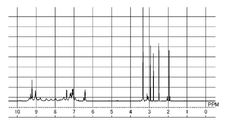
- FIG. 1 shows the measurement results of the 1 H-NMR spectrum of compound P-1.
- Production Example 1 Production of First Metal Oxide Particles (A1) Put 126.2 g of pure water in a 1-liter container, add 17.8 g of metastannic acid (contains 15 g of SnO 2 , manufactured by Showa Kako Co., Ltd.), titanium Tetraisopropoxide 284 g (contains 80 g in terms of TiO2 , manufactured by Nippon Soda Co., Ltd. A-1), oxalic acid dihydrate 98 (contains 70 g in terms of oxalic acid, manufactured by Ube Industries, Ltd.), 35 mass% 438 g of an aqueous tetraethylammonium hydroxide solution (manufactured by Seichem Japan) was added with stirring.
- metastannic acid contains 15 g of SnO 2 , manufactured by Showa Kako Co., Ltd.
- titanium Tetraisopropoxide 284 g contains 80 g in terms of TiO2 , manufactured by Nippo
- the resulting mixed solution had a molar ratio of oxalic acid/titanium atoms of 0.78 and a molar ratio of tetraethylammonium hydroxide/titanium atoms of 1.04.
- 950 g of the mixed solution was held at 80° C. for 2 hours, and further reduced to 580 Torr and held for 2 hours to prepare a titanium mixed solution.
- the titanium mixed solution after preparation had a pH of 4.7, an electrical conductivity of 27.2 mS/cm, and a metal oxide concentration of 10.0% by mass.
- 950 g of the titanium mixed solution and 950 g of pure water were charged into a 3-liter glass-lined autoclave container, and hydrothermally treated at 140° C. for 5 hours.
- the hydrothermally treated solution taken out was an aqueous dispersion of pale milky white titanium oxide-containing colloidal particles.
- the resulting dispersion had a pH of 3.9, a conductivity of 19.7 mS/cm, a TiO2 concentration of 4.2 wt%, a tetraethylammonium hydroxide concentration of 8.0 wt%, an oxalic acid concentration of 3.7 wt%, a dynamic Oval particles with a primary particle diameter of 4 to 10 nm were observed by light scattering method particle diameter 16 nm and transmission electron microscope observation.
- the obtained dispersion was dried at 110° C.
- the obtained colloidal particles containing titanium oxide were used as core particles (A).
- 70.8 g of zirconium oxychloride (containing 21.19% by mass as ZrO2, manufactured by Daiichi Kigenso Kagaku Kogyo Co., Ltd.) was diluted with 429.2 g of pure water to obtain 500 g of an aqueous zirconium oxychloride solution ( 3 as ZrO2). 0% by mass) was separately prepared, and 1,000 g of a dispersion (aqueous dispersion sol) of the core particles (A) was added thereto with stirring.
- first metal oxide particles (A1)) having a thin film layer of zirconium oxide formed on the surface thereof is hydrolyzed by heating to 95°C. was gotten.
- the resulting water-dispersed sol had a pH of 1.2 and a total metal oxide concentration of 20% by mass, and colloidal particles having a primary particle diameter of 4 to 10 nm were observed by transmission electron microscope observation.
- Second Metal Oxide Particles (B1) 77.2 g of JIS No. 3 sodium silicate (containing 29.8% by mass of SiO 2 , manufactured by Fuji Chemical Co., Ltd.) was dissolved in 1,282 g of pure water, Then, 20.9 g of sodium stannate NaSnO 3 .H 2 O (contains 55.1% by mass as SnO 2 , manufactured by Showa Kako Co., Ltd.) was dissolved. The resulting aqueous solution is passed through a column filled with a hydrogen-type cation exchange resin (Amberlite (registered trademark) IR-120B) to obtain a water-dispersed sol of acidic silicon dioxide-stannic oxide composite colloidal particles (B1).
- a hydrogen-type cation exchange resin Amberlite (registered trademark) IR-120B
- Production Example 3 Production of Third Metal Oxide Particles (C1) 1,455 g of the water-dispersed sol of the first metal oxide particles (A1) obtained in Production Example 1 was prepared in Production Example 2 as the second metal oxide. It was added to 2,634 g of the water-dispersed sol of particles (B1) under stirring. Then, the solution was passed through a column packed with 500 ml of an anion exchange resin (Amberlite (registered trademark) IRA-410, manufactured by Organo Co., Ltd.). Next, after heating the water-dispersed sol after passing the liquid at 95 ° C.
- an anion exchange resin Amberlite (registered trademark) IRA-410, manufactured by Organo Co., Ltd.
- the liquid was passed through a column packed with a hydrogen-type cation exchange resin (Amberlite (registered trademark) IR-120B), and tri-n-pentyl Stabilized with amine and concentrated by an ultrafiltration membrane method, an intermediate thin film layer made of zirconium oxide is formed between the first metal oxide particles (A1) and the second metal oxide particles (B1).
- a water-dispersed sol of silicon dioxide-stannic oxide composite oxide-coated titanium oxide-containing colloidal particles (C1) (hereinafter referred to as third metal oxide particles (C1)) was obtained.
- the resulting water-dispersed sol had a total metal oxide concentration of 20% by mass, and a primary particle size of this sol was 4 to 10 nm when observed with a transmission electron microscope.
- This methanol-dispersed sol had a total metal oxide concentration of 30.0% by mass, a viscosity of 1.5 mPa ⁇ s, a particle diameter of 18 nm as determined by the dynamic light scattering method, and a water content of 1.0% by mass.
- Production Example 4 Production of Surface-Modified Inorganic Fine Particles (D1) ), trade name: KBM-403) was added, and heated under reflux at 70° C. for 5 hours. A methanol dispersion of surface-modified inorganic fine particles (D1) having 3-glycidoxypropyltrimethoxysilane bound to the surface (hereinafter referred to as surface-modified inorganic fine particles (D1)) was obtained. Next, using an evaporator, methanol is distilled off while adding propylene glycol monomethyl ether at 80 Torr to replace methanol with propylene glycol monomethyl ether, and 530 g of the propylene glycol monomethyl ether dispersion of the surface-modified inorganic fine particles (D1) is obtained.
- the obtained dispersion (hereinafter referred to as D-1 solution) has a specific gravity of 1.210, a viscosity of 3.8 mPa s, a total metal oxide concentration of 30.3% by mass, and a primary particle diameter of 4 as determined by transmission electron microscope observation. ⁇ 10 nm, and the dynamic light scattering particle size was 15 nm.
- D-1 solution 3-glycidoxypropyltrimethoxysilane bound to the surface of the third metal oxide particles (C1) is the total metal oxidation of the third metal oxide particles (C1). It was 4.7% by mass with respect to the product.
- the film was developed with a 2.38% tetramethylammonium hydroxide (hereinafter abbreviated as TMAH) solution for 40 seconds, and then rinsed with ultrapure water for 30 seconds. After rinsing, it was dried at 100° C. for 10 minutes using a hot plate to obtain a cured film.
- TMAH tetramethylammonium hydroxide
- the cured film obtained above was measured for refractive index, film thickness, b * , transmittance at 400 to 800 nm, and HAZE. Table 1 shows the results.
- the transmittance an average transmittance of 400 to 800 nm was calculated.
- the cured film obtained from the SP-1 solution has an excellent effect of maintaining a high transmittance and a low HAZE value while maintaining a high refractive index even after washing with an alkaline aqueous solution. Recognize.
- Example 3-1 (2) Preparation of patterning film [Example 3-1]
- the SP-1 solution prepared in Example 1-1 was spin-coated on a 50 mm ⁇ 50 mm ⁇ 0.7 mm non-alkali glass substrate with a spin coater at 200 rpm for 5 seconds and 500 rpm for 30 seconds, and a hot plate was used. After temporary drying at 100 ° C. for 5 minutes, a mask with circular openings with a diameter of 15 ⁇ m arranged at intervals of 15 ⁇ m and a space (ultraviolet shielding portion) corresponding to the remaining portion other than the openings using a mask aligner MA6 manufactured by SUSS Co., Ltd.
- Example 3-2 In the same manner as in Example 3-1, except that the mask used was changed to a mask having a linear opening with a width of 10 ⁇ m and a linear space (ultraviolet shielding portion) with a width of 10 ⁇ m called line & space. A patterned film was obtained. An optical microscope photograph of the obtained patterned film is shown in FIG.
- Example 3-3 In the same manner as in Example 3-1, except that the mask used was changed to a mask having a linear opening with a width of 15 ⁇ m and a linear space (ultraviolet shielding portion) with a width of 15 ⁇ m called line & space. A patterned film was obtained. An optical microscope photograph of the obtained patterned film is shown in FIG.
Landscapes
- Chemical & Material Sciences (AREA)
- Physics & Mathematics (AREA)
- Organic Chemistry (AREA)
- Health & Medical Sciences (AREA)
- Chemical Kinetics & Catalysis (AREA)
- Medicinal Chemistry (AREA)
- Polymers & Plastics (AREA)
- General Physics & Mathematics (AREA)
- Optics & Photonics (AREA)
- Spectroscopy & Molecular Physics (AREA)
- Engineering & Computer Science (AREA)
- Manufacturing & Machinery (AREA)
- Macromolecular Compounds Obtained By Forming Nitrogen-Containing Linkages In General (AREA)
- Plural Heterocyclic Compounds (AREA)
Priority Applications (3)
| Application Number | Priority Date | Filing Date | Title |
|---|---|---|---|
| JP2023515515A JPWO2022225014A1 (https=) | 2021-04-23 | 2022-04-21 | |
| CN202280029868.7A CN117597398A (zh) | 2021-04-23 | 2022-04-21 | 图案形成用组合物 |
| KR1020237039854A KR20230175251A (ko) | 2021-04-23 | 2022-04-21 | 패턴 형성용 조성물 |
Applications Claiming Priority (2)
| Application Number | Priority Date | Filing Date | Title |
|---|---|---|---|
| JP2021-073304 | 2021-04-23 | ||
| JP2021073304 | 2021-04-23 |
Publications (1)
| Publication Number | Publication Date |
|---|---|
| WO2022225014A1 true WO2022225014A1 (ja) | 2022-10-27 |
Family
ID=83722395
Family Applications (1)
| Application Number | Title | Priority Date | Filing Date |
|---|---|---|---|
| PCT/JP2022/018430 Ceased WO2022225014A1 (ja) | 2021-04-23 | 2022-04-21 | パターン形成用組成物 |
Country Status (5)
| Country | Link |
|---|---|
| JP (1) | JPWO2022225014A1 (https=) |
| KR (1) | KR20230175251A (https=) |
| CN (1) | CN117597398A (https=) |
| TW (1) | TWI892005B (https=) |
| WO (1) | WO2022225014A1 (https=) |
Families Citing this family (1)
| Publication number | Priority date | Publication date | Assignee | Title |
|---|---|---|---|---|
| JP7334875B1 (ja) * | 2023-03-10 | 2023-08-29 | 東ソー株式会社 | ブロックイソシアネート組成物及びその製造方法、塗料用硬化剤、塗料組成物、並びに、塗膜 |
Citations (7)
| Publication number | Priority date | Publication date | Assignee | Title |
|---|---|---|---|---|
| WO2013094663A1 (ja) * | 2011-12-20 | 2013-06-27 | 日産化学工業株式会社 | トリアジン環含有重合体およびそれを含む膜形成用組成物 |
| WO2013168788A1 (ja) * | 2012-05-11 | 2013-11-14 | 日産化学工業株式会社 | 膜形成用組成物 |
| JP2013245206A (ja) * | 2012-05-28 | 2013-12-09 | Iwate Univ | ヒドロキシ基含有芳香族ジアミン、ポリアミド樹脂、樹脂組成物、及び、それらの用途 |
| JP2014162829A (ja) * | 2013-02-22 | 2014-09-08 | Idemitsu Kosan Co Ltd | トリアジン環含有線状ポリマーからなる高屈折率材料 |
| WO2017138547A1 (ja) * | 2016-02-09 | 2017-08-17 | 日産化学工業株式会社 | トリアジン環含有重合体およびそれを含む組成物 |
| WO2019093203A1 (ja) * | 2017-11-08 | 2019-05-16 | 日産化学株式会社 | トリアジン環含有重合体およびそれを含む組成物 |
| WO2021117692A1 (ja) * | 2019-12-09 | 2021-06-17 | 日産化学株式会社 | パターン形成用組成物 |
Family Cites Families (6)
| Publication number | Priority date | Publication date | Assignee | Title |
|---|---|---|---|---|
| KR101733459B1 (ko) | 2009-05-07 | 2017-05-10 | 닛산 가가쿠 고교 가부시키 가이샤 | 트리아진환 함유 중합체 및 그것을 포함하는 막 형성용 조성물 |
| JP6515811B2 (ja) * | 2013-12-24 | 2019-05-22 | 日産化学株式会社 | トリアジン系重合体含有組成物 |
| KR102364715B1 (ko) | 2014-08-13 | 2022-02-18 | 닛산 가가쿠 가부시키가이샤 | 트라이아진환 함유 중합체 및 그것을 포함하는 조성물 |
| US10228620B2 (en) * | 2015-01-15 | 2019-03-12 | Nissan Chemical Industries, Ltd. | Triazine-ring-containing polymer and composition containing same |
| CN107922614B (zh) * | 2015-06-03 | 2021-02-02 | 日产化学工业株式会社 | 含有三嗪环的聚合物和包含其的膜形成用组合物 |
| JP6838562B2 (ja) * | 2015-12-21 | 2021-03-03 | 日産化学株式会社 | トリアジン環含有重合体およびそれを含む膜形成用組成物 |
-
2022
- 2022-04-21 JP JP2023515515A patent/JPWO2022225014A1/ja active Pending
- 2022-04-21 CN CN202280029868.7A patent/CN117597398A/zh active Pending
- 2022-04-21 KR KR1020237039854A patent/KR20230175251A/ko active Pending
- 2022-04-21 WO PCT/JP2022/018430 patent/WO2022225014A1/ja not_active Ceased
- 2022-04-22 TW TW111115428A patent/TWI892005B/zh active
Patent Citations (7)
| Publication number | Priority date | Publication date | Assignee | Title |
|---|---|---|---|---|
| WO2013094663A1 (ja) * | 2011-12-20 | 2013-06-27 | 日産化学工業株式会社 | トリアジン環含有重合体およびそれを含む膜形成用組成物 |
| WO2013168788A1 (ja) * | 2012-05-11 | 2013-11-14 | 日産化学工業株式会社 | 膜形成用組成物 |
| JP2013245206A (ja) * | 2012-05-28 | 2013-12-09 | Iwate Univ | ヒドロキシ基含有芳香族ジアミン、ポリアミド樹脂、樹脂組成物、及び、それらの用途 |
| JP2014162829A (ja) * | 2013-02-22 | 2014-09-08 | Idemitsu Kosan Co Ltd | トリアジン環含有線状ポリマーからなる高屈折率材料 |
| WO2017138547A1 (ja) * | 2016-02-09 | 2017-08-17 | 日産化学工業株式会社 | トリアジン環含有重合体およびそれを含む組成物 |
| WO2019093203A1 (ja) * | 2017-11-08 | 2019-05-16 | 日産化学株式会社 | トリアジン環含有重合体およびそれを含む組成物 |
| WO2021117692A1 (ja) * | 2019-12-09 | 2021-06-17 | 日産化学株式会社 | パターン形成用組成物 |
Also Published As
| Publication number | Publication date |
|---|---|
| TWI892005B (zh) | 2025-08-01 |
| KR20230175251A (ko) | 2023-12-29 |
| JPWO2022225014A1 (https=) | 2022-10-27 |
| CN117597398A (zh) | 2024-02-23 |
| TW202309147A (zh) | 2023-03-01 |
Similar Documents
| Publication | Publication Date | Title |
|---|---|---|
| TWI620790B (zh) | 膜形成用組成物 | |
| KR102641678B1 (ko) | 트라이아진환 함유 중합체 및 그것을 포함하는 조성물 | |
| JP6638651B2 (ja) | トリアジン環含有重合体およびそれを含む組成物 | |
| JP7136119B2 (ja) | トリアジン環含有重合体およびそれを含む組成物 | |
| JP6804047B2 (ja) | トリアジン環含有重合体およびそれを含む膜形成用組成物 | |
| WO2022225020A1 (ja) | トリアジン環含有重合体、及びパターン形成用組成物 | |
| WO2016114337A1 (ja) | トリアジン環含有重合体およびそれを含む組成物 | |
| JP7077622B2 (ja) | トリアジン環含有重合体およびそれを含む膜形成用組成物 | |
| WO2022225014A1 (ja) | パターン形成用組成物 | |
| JP6702319B2 (ja) | インクジェット塗布用膜形成用組成物 | |
| JP7484332B2 (ja) | トリアジン環含有重合体およびそれを含む膜形成用組成物 | |
| TWI920293B (zh) | 含三嗪環聚合物,及圖型形成用組成物 | |
| TWI917615B (zh) | 膜形成用組成物、薄膜、電子裝置及光學構件 | |
| WO2022225012A1 (ja) | 膜形成用組成物 | |
| WO2022225003A1 (ja) | 膜形成用組成物 | |
| WO2022225017A1 (ja) | 無溶剤型組成物 | |
| WO2025229983A1 (ja) | パターン形成用組成物及び硬化膜 | |
| WO2022225001A1 (ja) | トリアジン環含有重合体、及びパターン形成用組成物 |
Legal Events
| Date | Code | Title | Description |
|---|---|---|---|
| 121 | Ep: the epo has been informed by wipo that ep was designated in this application |
Ref document number: 22791785 Country of ref document: EP Kind code of ref document: A1 |
|
| WWE | Wipo information: entry into national phase |
Ref document number: 2023515515 Country of ref document: JP |
|
| WWE | Wipo information: entry into national phase |
Ref document number: 202280029868.7 Country of ref document: CN |
|
| ENP | Entry into the national phase |
Ref document number: 20237039854 Country of ref document: KR Kind code of ref document: A |
|
| WWE | Wipo information: entry into national phase |
Ref document number: 1020237039854 Country of ref document: KR |
|
| NENP | Non-entry into the national phase |
Ref country code: DE |
|
| 122 | Ep: pct application non-entry in european phase |
Ref document number: 22791785 Country of ref document: EP Kind code of ref document: A1 |