WO2022209994A1 - アシルCoA化合物還元活性を有する組換えポリペプチド - Google Patents
アシルCoA化合物還元活性を有する組換えポリペプチド Download PDFInfo
- Publication number
- WO2022209994A1 WO2022209994A1 PCT/JP2022/012463 JP2022012463W WO2022209994A1 WO 2022209994 A1 WO2022209994 A1 WO 2022209994A1 JP 2022012463 W JP2022012463 W JP 2022012463W WO 2022209994 A1 WO2022209994 A1 WO 2022209994A1
- Authority
- WO
- WIPO (PCT)
- Prior art keywords
- amino acid
- position corresponding
- substituted
- acid residue
- phenylalanine
- Prior art date
- Legal status (The legal status is an assumption and is not a legal conclusion. Google has not performed a legal analysis and makes no representation as to the accuracy of the status listed.)
- Ceased
Links
Images




Classifications
-
- C—CHEMISTRY; METALLURGY
- C12—BIOCHEMISTRY; BEER; SPIRITS; WINE; VINEGAR; MICROBIOLOGY; ENZYMOLOGY; MUTATION OR GENETIC ENGINEERING
- C12P—FERMENTATION OR ENZYME-USING PROCESSES TO SYNTHESISE A DESIRED CHEMICAL COMPOUND OR COMPOSITION OR TO SEPARATE OPTICAL ISOMERS FROM A RACEMIC MIXTURE
- C12P7/00—Preparation of oxygen-containing organic compounds
- C12P7/40—Preparation of oxygen-containing organic compounds containing a carboxyl group including Peroxycarboxylic acids
-
- C—CHEMISTRY; METALLURGY
- C12—BIOCHEMISTRY; BEER; SPIRITS; WINE; VINEGAR; MICROBIOLOGY; ENZYMOLOGY; MUTATION OR GENETIC ENGINEERING
- C12N—MICROORGANISMS OR ENZYMES; COMPOSITIONS THEREOF; PROPAGATING, PRESERVING, OR MAINTAINING MICROORGANISMS; MUTATION OR GENETIC ENGINEERING; CULTURE MEDIA
- C12N9/00—Enzymes; Proenzymes; Compositions thereof; Processes for preparing, activating, inhibiting, separating or purifying enzymes
- C12N9/0004—Oxidoreductases (1.)
- C12N9/0008—Oxidoreductases (1.) acting on the aldehyde or oxo group of donors (1.2)
-
- C—CHEMISTRY; METALLURGY
- C12—BIOCHEMISTRY; BEER; SPIRITS; WINE; VINEGAR; MICROBIOLOGY; ENZYMOLOGY; MUTATION OR GENETIC ENGINEERING
- C12N—MICROORGANISMS OR ENZYMES; COMPOSITIONS THEREOF; PROPAGATING, PRESERVING, OR MAINTAINING MICROORGANISMS; MUTATION OR GENETIC ENGINEERING; CULTURE MEDIA
- C12N15/00—Mutation or genetic engineering; DNA or RNA concerning genetic engineering, vectors, e.g. plasmids, or their isolation, preparation or purification; Use of hosts therefor
- C12N15/09—Recombinant DNA-technology
- C12N15/11—DNA or RNA fragments; Modified forms thereof; Non-coding nucleic acids having a biological activity
- C12N15/52—Genes encoding for enzymes or proenzymes
-
- C—CHEMISTRY; METALLURGY
- C12—BIOCHEMISTRY; BEER; SPIRITS; WINE; VINEGAR; MICROBIOLOGY; ENZYMOLOGY; MUTATION OR GENETIC ENGINEERING
- C12N—MICROORGANISMS OR ENZYMES; COMPOSITIONS THEREOF; PROPAGATING, PRESERVING, OR MAINTAINING MICROORGANISMS; MUTATION OR GENETIC ENGINEERING; CULTURE MEDIA
- C12N15/00—Mutation or genetic engineering; DNA or RNA concerning genetic engineering, vectors, e.g. plasmids, or their isolation, preparation or purification; Use of hosts therefor
- C12N15/09—Recombinant DNA-technology
- C12N15/63—Introduction of foreign genetic material using vectors; Vectors; Use of hosts therefor; Regulation of expression
- C12N15/70—Vectors or expression systems specially adapted for E. coli
-
- C—CHEMISTRY; METALLURGY
- C12—BIOCHEMISTRY; BEER; SPIRITS; WINE; VINEGAR; MICROBIOLOGY; ENZYMOLOGY; MUTATION OR GENETIC ENGINEERING
- C12N—MICROORGANISMS OR ENZYMES; COMPOSITIONS THEREOF; PROPAGATING, PRESERVING, OR MAINTAINING MICROORGANISMS; MUTATION OR GENETIC ENGINEERING; CULTURE MEDIA
- C12N15/00—Mutation or genetic engineering; DNA or RNA concerning genetic engineering, vectors, e.g. plasmids, or their isolation, preparation or purification; Use of hosts therefor
- C12N15/09—Recombinant DNA-technology
- C12N15/63—Introduction of foreign genetic material using vectors; Vectors; Use of hosts therefor; Regulation of expression
- C12N15/74—Vectors or expression systems specially adapted for prokaryotic hosts other than E. coli, e.g. Lactobacillus, Micromonospora
-
- C—CHEMISTRY; METALLURGY
- C12—BIOCHEMISTRY; BEER; SPIRITS; WINE; VINEGAR; MICROBIOLOGY; ENZYMOLOGY; MUTATION OR GENETIC ENGINEERING
- C12N—MICROORGANISMS OR ENZYMES; COMPOSITIONS THEREOF; PROPAGATING, PRESERVING, OR MAINTAINING MICROORGANISMS; MUTATION OR GENETIC ENGINEERING; CULTURE MEDIA
- C12N9/00—Enzymes; Proenzymes; Compositions thereof; Processes for preparing, activating, inhibiting, separating or purifying enzymes
- C12N9/0004—Oxidoreductases (1.)
- C12N9/0006—Oxidoreductases (1.) acting on CH-OH groups as donors (1.1)
-
- C—CHEMISTRY; METALLURGY
- C12—BIOCHEMISTRY; BEER; SPIRITS; WINE; VINEGAR; MICROBIOLOGY; ENZYMOLOGY; MUTATION OR GENETIC ENGINEERING
- C12N—MICROORGANISMS OR ENZYMES; COMPOSITIONS THEREOF; PROPAGATING, PRESERVING, OR MAINTAINING MICROORGANISMS; MUTATION OR GENETIC ENGINEERING; CULTURE MEDIA
- C12N9/00—Enzymes; Proenzymes; Compositions thereof; Processes for preparing, activating, inhibiting, separating or purifying enzymes
- C12N9/10—Transferases (2.)
- C12N9/1096—Transferases (2.) transferring nitrogenous groups (2.6)
-
- C—CHEMISTRY; METALLURGY
- C12—BIOCHEMISTRY; BEER; SPIRITS; WINE; VINEGAR; MICROBIOLOGY; ENZYMOLOGY; MUTATION OR GENETIC ENGINEERING
- C12P—FERMENTATION OR ENZYME-USING PROCESSES TO SYNTHESISE A DESIRED CHEMICAL COMPOUND OR COMPOSITION OR TO SEPARATE OPTICAL ISOMERS FROM A RACEMIC MIXTURE
- C12P13/00—Preparation of nitrogen-containing organic compounds
- C12P13/001—Amines; Imines
-
- C—CHEMISTRY; METALLURGY
- C12—BIOCHEMISTRY; BEER; SPIRITS; WINE; VINEGAR; MICROBIOLOGY; ENZYMOLOGY; MUTATION OR GENETIC ENGINEERING
- C12P—FERMENTATION OR ENZYME-USING PROCESSES TO SYNTHESISE A DESIRED CHEMICAL COMPOUND OR COMPOSITION OR TO SEPARATE OPTICAL ISOMERS FROM A RACEMIC MIXTURE
- C12P13/00—Preparation of nitrogen-containing organic compounds
- C12P13/005—Amino acids other than alpha- or beta amino acids, e.g. gamma amino acids
-
- C—CHEMISTRY; METALLURGY
- C12—BIOCHEMISTRY; BEER; SPIRITS; WINE; VINEGAR; MICROBIOLOGY; ENZYMOLOGY; MUTATION OR GENETIC ENGINEERING
- C12P—FERMENTATION OR ENZYME-USING PROCESSES TO SYNTHESISE A DESIRED CHEMICAL COMPOUND OR COMPOSITION OR TO SEPARATE OPTICAL ISOMERS FROM A RACEMIC MIXTURE
- C12P7/00—Preparation of oxygen-containing organic compounds
- C12P7/02—Preparation of oxygen-containing organic compounds containing a hydroxy group
- C12P7/04—Preparation of oxygen-containing organic compounds containing a hydroxy group acyclic
- C12P7/18—Preparation of oxygen-containing organic compounds containing a hydroxy group acyclic polyhydric
-
- C—CHEMISTRY; METALLURGY
- C12—BIOCHEMISTRY; BEER; SPIRITS; WINE; VINEGAR; MICROBIOLOGY; ENZYMOLOGY; MUTATION OR GENETIC ENGINEERING
- C12P—FERMENTATION OR ENZYME-USING PROCESSES TO SYNTHESISE A DESIRED CHEMICAL COMPOUND OR COMPOSITION OR TO SEPARATE OPTICAL ISOMERS FROM A RACEMIC MIXTURE
- C12P7/00—Preparation of oxygen-containing organic compounds
- C12P7/24—Preparation of oxygen-containing organic compounds containing a carbonyl group
-
- C—CHEMISTRY; METALLURGY
- C12—BIOCHEMISTRY; BEER; SPIRITS; WINE; VINEGAR; MICROBIOLOGY; ENZYMOLOGY; MUTATION OR GENETIC ENGINEERING
- C12P—FERMENTATION OR ENZYME-USING PROCESSES TO SYNTHESISE A DESIRED CHEMICAL COMPOUND OR COMPOSITION OR TO SEPARATE OPTICAL ISOMERS FROM A RACEMIC MIXTURE
- C12P7/00—Preparation of oxygen-containing organic compounds
- C12P7/40—Preparation of oxygen-containing organic compounds containing a carboxyl group including Peroxycarboxylic acids
- C12P7/42—Hydroxy-carboxylic acids
-
- C—CHEMISTRY; METALLURGY
- C12—BIOCHEMISTRY; BEER; SPIRITS; WINE; VINEGAR; MICROBIOLOGY; ENZYMOLOGY; MUTATION OR GENETIC ENGINEERING
- C12Y—ENZYMES
- C12Y102/00—Oxidoreductases acting on the aldehyde or oxo group of donors (1.2)
- C12Y102/01—Oxidoreductases acting on the aldehyde or oxo group of donors (1.2) with NAD+ or NADP+ as acceptor (1.2.1)
- C12Y102/01024—Succinate-semialdehyde dehydrogenase (NAD+) (1.2.1.24)
-
- C—CHEMISTRY; METALLURGY
- C12—BIOCHEMISTRY; BEER; SPIRITS; WINE; VINEGAR; MICROBIOLOGY; ENZYMOLOGY; MUTATION OR GENETIC ENGINEERING
- C12Y—ENZYMES
- C12Y102/00—Oxidoreductases acting on the aldehyde or oxo group of donors (1.2)
- C12Y102/01—Oxidoreductases acting on the aldehyde or oxo group of donors (1.2) with NAD+ or NADP+ as acceptor (1.2.1)
- C12Y102/01076—Succinate-semialdehyde dehydrogenase (acetylating) (1.2.1.76)
-
- C—CHEMISTRY; METALLURGY
- C12—BIOCHEMISTRY; BEER; SPIRITS; WINE; VINEGAR; MICROBIOLOGY; ENZYMOLOGY; MUTATION OR GENETIC ENGINEERING
- C12Y—ENZYMES
- C12Y102/00—Oxidoreductases acting on the aldehyde or oxo group of donors (1.2)
- C12Y102/01—Oxidoreductases acting on the aldehyde or oxo group of donors (1.2) with NAD+ or NADP+ as acceptor (1.2.1)
- C12Y102/01079—Succinate-semialdehyde dehydrogenase (NADP+) (1.2.1.79)
-
- C—CHEMISTRY; METALLURGY
- C12—BIOCHEMISTRY; BEER; SPIRITS; WINE; VINEGAR; MICROBIOLOGY; ENZYMOLOGY; MUTATION OR GENETIC ENGINEERING
- C12R—INDEXING SCHEME ASSOCIATED WITH SUBCLASSES C12C - C12Q, RELATING TO MICROORGANISMS
- C12R2001/00—Microorganisms ; Processes using microorganisms
- C12R2001/01—Bacteria or Actinomycetales ; using bacteria or Actinomycetales
- C12R2001/145—Clostridium
-
- C—CHEMISTRY; METALLURGY
- C12—BIOCHEMISTRY; BEER; SPIRITS; WINE; VINEGAR; MICROBIOLOGY; ENZYMOLOGY; MUTATION OR GENETIC ENGINEERING
- C12R—INDEXING SCHEME ASSOCIATED WITH SUBCLASSES C12C - C12Q, RELATING TO MICROORGANISMS
- C12R2001/00—Microorganisms ; Processes using microorganisms
- C12R2001/01—Bacteria or Actinomycetales ; using bacteria or Actinomycetales
- C12R2001/185—Escherichia
- C12R2001/19—Escherichia coli
Definitions
- the present invention relates to a recombinant polypeptide having acyl-CoA compound-reducing activity, and a method for producing an aliphatic compound using the peptide.
- amine compounds containing amino groups are examples of compounds with reported examples of fermentation production processes.
- 1,5-diaminopentane and 1,6-diaminohexane are fermentatively producible monomer compounds that are expected as raw materials for polymers (Patent Documents 3 to 7).
- Non-Patent Documents 1 and 2 An example of a fermentation production pathway for C6 monomer compounds such as 1,6-hexanediol, 6-aminocaproic acid and 1,6-diaminohexane is the adipic acid fermentation pathway (Non-Patent Documents 1 and 2).
- Applications of the adipic acid fermentation pathway include pathways involving the conversion of adipyl-CoA to 5-formylpentanoic acid in one or more steps using aldehyde dehydrogenase, and existing enzymes that are potential candidates for catalyzing the reaction. (Patent Documents 4, 5 and 9).
- succinic semialdehyde dehydrogenase is an important enzyme for the growth of organisms and has a high activity for succinyl-CoA, which is an intermediate of the adipic acid pathway. Therefore, an enzyme with low activity on succinyl-CoA has been desired in order to obtain a sufficient amount of the product.
- Yu, et. al. Direct biosynthesis of adipic acid from a synthetic pathway in recombinant Escherichia coli, Biotechnology and Bioengineering, Wiley Periodicals, Inc. , 2014, vol. 111, pp. 2580. Yu Zhou, et. al. Biosynthesis of adipic acid by a highly efficient induction-free system in Escherichia Coli, Journal of Biotechnology, Elsevier, 2020, 8, pp. 314-315 Cheong, et. al. Energy- and carbon-efficient synthesis of functionalized small molecules in bacteria using non-decarboxylic Claisen condensation reactions, Nature biotechnology, 201 Turk et. al. Metabolic Engineering towards Sustainable Production of Nylon-6, ACS Synth. Biol. 2016, 5, pp. 65-73
- An object of the present invention is to provide a novel recombinant polypeptide having acyl-CoA compound reducing activity.
- a further object of the present invention is to provide a novel method for producing an aliphatic compound using the recombinant polypeptide.
- the present invention is as follows: [1] (a) 60% or more, 65% or more, 70% or more, 75% or more, 80% or more, 85% or more, 88% or more, 90% or more, 93 that has a sequence identity with the amino acid sequence shown in SEQ ID NO: 1 % or more, 95% or more, 97% or more, 98% or more, or 99% or more of the amino acid sequence A, (b) in the amino acid sequence A, at least one amino acid at a position corresponding to the substrate binding site of the polypeptide consisting of the amino acid sequence shown in SEQ ID NO: 1 is substituted; (c) having a reducing activity R to convert the CoA thioester of the acyl-CoA compound into an aldehyde group;
- the reduction activity R is (c-1) reduction activity R1 that converts adipyl CoA to 5-formylpentanoic acid in one step, and (c-2) a recombinant polypeptide which is a reducing activity R
- the reduction activity R1 of (c-1) is compared with the reduction activity R1′ of the polypeptide consisting of the amino acid sequence shown in SEQ ID NO: 1, which converts adipyl CoA to 5-formylpentanoic acid in one step.
- a recombinant microorganism comprising an exogenous nucleic acid sequence encoding a [30] (a) an amino acid with 85% or more, 88% or more, 90% or more, 93% or more, 95% or more, 97% or more, 98% or more, or 99% or more identity with the amino acid sequence shown in SEQ ID NO: 1 consists of an array A, (b) in the amino acid sequence A, at least one amino acid at a position corresponding to the substrate binding site of the polypeptide consisting of the amino acid sequence shown in SEQ ID NO: 1 is substituted; (c) A recombinant polypeptide having a reducing activity R that converts a CoA thioester of an acyl-CoA compound into an aldehyde group.
- FIG. 1 shows the amino acid sequence (SEQ ID NO: 1) of wild-type succinic semialdehyde dehydrogenase.
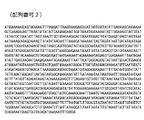
- FIG. 2 shows the base sequence (SEQ ID NO: 2) encoding wild-type succinic semialdehyde dehydrogenase.
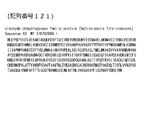
- Figure 3A shows the amino acid sequence of aldehyde dehydrogenase from Natronincola ferrireducens (SEQ ID NO: 121).
- FIG. 3B shows the result of alignment of the amino acid sequence of SEQ ID NO: 1 with the amino acid sequence of aldehyde dehydrogenase from Natronincola ferrireducens (SEQ ID NO: 121), which has 66% sequence identity with SEQ ID NO: 1.
- FIG. 1 shows the amino acid sequence (SEQ ID NO: 1) of wild-type succinic semialdehyde dehydrogenase.
- FIG. 2 shows the base sequence (SEQ ID NO: 2) encoding wild-type succinic semialdehyde de
- FIG. 3C is a diagram showing a portion of the results of alignment of the amino acid sequence of SEQ ID NO: 1 with the amino acid sequence of aldehyde dehydrogenase from Natronincola ferrireducens (SEQ ID NO: 121), which has 66% sequence identity with SEQ ID NO: 1. .
- FIG. 4 is a diagram showing reaction pathways involving recombinant polypeptides of the present invention.
- FIG. 5 is a schematic diagram of the plasmid of pSK000.
- FIG. 6 shows synthetic pathways for various compounds starting from adipyl-CoA.
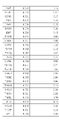
- FIG. 7 shows the mutation point of the modified enzyme, the amino acid after mutation, and the enzyme activity for each substrate (adipyl-CoA and succinyl-CoA) (substrate consumption rate per unit amount of enzyme per unit time ( ⁇ mol/min/ ⁇ g enzyme). ).
- FIG. 8 shows the mutation points and post-mutation amino acids of the modified enzyme containing multiple mutations, and the enzymatic activity for each substrate (adipyl-CoA and succinyl-CoA) (substrate consumption rate per unit amount of enzyme per unit time ( ⁇ mol/ Fig. 3 shows min/ ⁇ g enzyme)).
- a numerical range indicated using “to” indicates a range including the numerical values before and after “to” as the minimum and maximum values, respectively.
- the upper limit value or lower limit value of the numerical range in one step can be arbitrarily combined with the upper limit value or lower limit of the numerical range in another step.
- a recombinant polypeptide according to the present invention is a polypeptide that has been modified to have good acyl-CoA compound-reducing activity. More specifically, the recombinant polypeptides of the present invention have been modified so as to have improved acyl-CoA compound-reducing activity compared to wild-type acyl-CoA compound reductase. As used herein, the terms "recombinant polypeptide” and “modified enzyme” are used interchangeably.
- the "acyl-CoA compound reducing activity” is the reducing activity R for converting the CoA thioester of the acyl-CoA compound into an aldehyde group.
- the CoA thioester of an acyl-CoA compound is first converted to a carboxyl group, which is then further converted to an aldehyde group.
- CoA means coenzyme A (hereinafter also referred to as “coenzyme A").
- acyl-CoA compound reductase acyl-CoA reductase
- aldehyde dehydrogenase aldehyde dehydrogenase
- Acyl-CoA compound is a general term for compounds in which various acyl groups are thioester-bonded to a terminal thiol group.
- Examples of “acyl-CoA compounds” include acetyl-CoA (wherein the acyl group is an acetyl group), succinyl-CoA (wherein the acyl group is a succinyl group), and adipyl-CoA (wherein the acyl group is is an adipyl group).
- acyl groups have, for example, 2 to 10 carbons, preferably 2 to 6 carbons, and more preferably 4 to 6 carbons.
- acyl-CoA compounds include succinyl-CoA and adipyl-CoA.
- the recombinant polypeptides of the present invention have the following properties (a)-(c): (a) consists of an amino acid sequence A having a sequence identity of 60% or more with the amino acid sequence of a wild-type acyl-CoA compound reductase; (b) in the amino acid sequence A, at least one amino acid at a position corresponding to the substrate binding site of the wild-type acyl-CoA compound reductase is substituted; (c) It has reduction activity R to convert the CoA thioester of the acyl-CoA compound into an aldehyde group.
- the recombinant polypeptide according to the invention is (a) from the amino acid sequence A having a sequence identity of 85% or more, 88% or more, 90% or more, 93% or more, 95% or more, 97% or more, 98% or more, or 99% or more of the sequence identity with the amino acid sequence shown in SEQ ID NO: 1 become, (b) in the amino acid sequence A, at least one amino acid at a position corresponding to the substrate binding site of the polypeptide consisting of the amino acid sequence shown in SEQ ID NO: 1 is substituted; (c) It has reduction activity R to convert the CoA thioester of the acyl-CoA compound into an aldehyde group.
- a wild-type acyl-CoA compound reductase can be preferably obtained from a microorganism belonging to the genus Clostridium. Wild-type acyl-CoA compound reductase can most preferably be obtained from Clostridium difficile.
- wild-type acyl-CoA compound reductase is not limited to polypeptides having the amino acid sequence shown in SEQ ID NO: 1, and includes substitutions, additions, insertions or deletions of one or more amino acids in the amino acid sequence shown in SEQ ID NO: 1. It may be a missing amino acid sequence. In addition, one or more amino acids may be added to either or both of the N-terminus and C-terminus of the polypeptide.
- the "wild-type acyl-CoA compound reductase” includes, in addition to a polypeptide having the amino acid sequence shown in SEQ ID NO: 1, an amino acid sequence having a sequence identity of 60% or more with the amino acid sequence shown in SEQ ID NO: 1. Polypeptides are included.
- wild-type acyl-CoA compound reductase is a polypeptide having an amino acid sequence with 60% or more sequence identity with the amino acid sequence shown in SEQ ID NO: 1, and nicotinamide adenine dinucleotide phosphate. It is a polypeptide capable of performing an aldehyde synthesis reaction using an acyl-CoA compound (specifically, an acyl-CoA thioester) as a substrate in the presence of (nicotinamide adenine dinucleotide phosphate; NADPH).
- an acyl-CoA compound specifically, an acyl-CoA thioester
- acyl-CoA compound reductase activity or "acyl-CoA compound reduction activity” more specifically means an activity capable of performing an aldehyde synthesis reaction using an acyl-CoA compound as a substrate in the presence of NADPH. do.
- the recombinant polypeptide according to the present invention consists of an amino acid sequence A having a certain percentage or more of sequence identity with the amino acid sequence of the wild-type acyl-CoA compound reductase.
- the recombinant polypeptide of the present invention has a sequence identity of 60% or more, 65% or more, 70% or more, 75% or more, 80% or more with the amino acid sequence of the wild-type acyl-CoA compound reductase. 85% or more, 88% or more, 90% or more, 93% or more, 95% or more, 97% or more, 98% or more, or 99% or more of the amino acid sequence A.
- the amino acid sequence A of the recombinant polypeptide of the present invention has a sequence identity of 60% or more, 65% or more, 70% or more, 75% or more with the amino acid sequence shown in SEQ ID NO: 1, 80% or more, 85% or more, 88% or more, 90% or more, 93% or more, 95% or more, 97% or more, 98% or more, or 99% or more.
- sequence identity can be determined by a known method. obtained using an alignment search tool that can be used with A person skilled in the art would understand how to determine sequence identity using this program by referring to the above website, eg the "Help" section.
- sequence comparison the Blast2 sequence function of the BLAST® (Blastp) program can be used using default parameters (gap existence cost 11, gap cost per residue 1).
- sequence identity of polynucleotide sequences can be determined by known methods.
- the gene of the wild-type acyl-CoA compound reductase that can be used in the present invention is a polynucleotide shown in SEQ ID NO: 2, whose sequence information can be obtained from, for example, Genebank gene accession number NZ_CP019870.1 (Fig. 2 ).
- the gene can be obtained from Clostridium difficile strains by general genetic engineering techniques. That is, using genomic DNA as a template, a gene product amplified by PCR can be obtained and used for expression in a host microorganism. Polynucleotides prepared by organic synthesis are also available. Alternate codons that ultimately translate to the same amino acid may also be utilized. Typically, a method of replacing with a gene sequence that takes into consideration the codon usage frequency of the host microorganism is used.
- the wild-type acyl-CoA compound reductase is a polypeptide consisting of the amino acid sequence shown in SEQ ID NO:1.
- amino acid sequence A at least one of the amino acids at the position corresponding to the substrate binding site of the polypeptide consisting of the amino acid sequence shown in SEQ ID NO: 1 is substituted.
- amino acid sequence A at least two of the amino acids at positions corresponding to the substrate binding site of the polypeptide consisting of the amino acid sequence shown in SEQ ID NO: 1 are substituted.
- One or more of the amino acids at positions corresponding to positions 406, 407, 408, 409, 410, 411, 418, 419, 420 and 926 are substituted.
- the enzymatic activity for the substrate can be regulated. A method for identifying the substrate binding site will be described later.
- the "position corresponding to the substrate-binding site of the polypeptide consisting of the amino acid sequence shown in SEQ ID NO: 1" refers to positions 75, 78, The positions correspond to positions 79, 245, 250, 252, 405, 406, 410, 418, 419, 420 and 926. Therefore, in this aspect, in the amino acid sequence A, positions 75, 78, 79, 245, 250, 252, 405, 406, 410, and 418 relative to the amino acid sequence shown in SEQ ID NO: 1 One or more of the amino acids at positions corresponding to positions 419, 420 and 926 have been substituted.
- an amino acid residue at a position corresponding to position X (X represents an integer of 1 or more) based on the amino acid sequence shown in SEQ ID NO: 1" includes: - Based on the amino acid sequence shown in SEQ ID NO: 1, the amino acid residue at the position corresponding to the X position (Case 1), and - The amino acid residue at the X position of the amino acid sequence shown in SEQ ID NO: 1 (Case 2) shall be included.
- amino acid residues at positions corresponding to positions 926 and 926 includes - Positions 75, 78, 79, 245, 250, 252, 405, 406, 410, 418, 419, 420 and 926 based on the amino acid sequence shown in SEQ ID NO: 1 and - positions 75, 78, 79, 245, 250, 252, 405, 406, 410, 418, and 419 of the amino acid sequence shown in SEQ ID NO: 1 Both amino acid residues at positions 420 and 926 are included.
- amino acid residues at corresponding positions refer to reference amino acid sequences (specifically Specifically, when the amino acid sequence shown in SEQ ID NO: 1 (hereinafter also referred to as “reference sequence”) is aligned with a comparison amino acid sequence (specifically, amino acid sequence A), a specific site in the reference sequence and Refers to opposite amino acid residues.
- reference sequence specifically referred to as “reference sequence”
- amino acid sequence A specifically, amino acid sequence A
- amino acid residue at the position corresponding to position 17 (asparagine residue in SEQ ID NO: 1) in the amino acid sequence shown in SEQ ID NO: 1 is glycine at position 9. is a residue.
- the recombinant polypeptide of the present invention has the following (i) to (xii) in amino acid sequence A based on the amino acid sequence shown in SEQ ID NO: 1: (i) the amino acid residue at the position corresponding to position 75 is substituted with either alanine or phenylalanine; (ii) the amino acid residue at the position corresponding to position 78 is substituted with phenylalanine; (iii) the amino acid residue at the position corresponding to position 79 is substituted with either alanine and phenylalanine; (iv) the amino acid residue at the position corresponding to position 245 is replaced with any of arginine, glutamine, glycine, serine and tryptophan; (v) the amino acid residue at the position corresponding to position 250 is substituted with any of alanine, phenylalanine, leucine and proline; (vi) the amino acid residue at the position corresponding to position 252 is substituted with either alan
- the recombinant polypeptide of the present invention has the following amino acid sequence A, based on the amino acid sequence shown in SEQ ID NO: 1: (iv) the amino acid residue at a position corresponding to position 245 is substituted with any of arginine, serine and tryptophan; (v) the amino acid residue at the position corresponding to position 250 is substituted with leucine; (vii) the amino acid residue at a position corresponding to position 405 is substituted with any of lysine, histidine, serine, glutamine, tyrosine and tryptophan; is at least one of
- Mutations in these amino acid sequences may be one or a combination of two or more of the above substitutions.
- Examples of preferred combinations of mutation introduction positions and mutated amino acids are as follows in amino acid sequence A, based on the amino acid sequence shown in SEQ ID NO: 1: - the amino acid residue at the position corresponding to position 245 is arginine and the amino acid residue at the position corresponding to position 250 is leucine; - the amino acid residue at the position corresponding to position 245 is arginine and the amino acid residue at the position corresponding to position 405 is tyrosine; - the amino acid residue at the position corresponding to position 245 is tryptophan and the amino acid residue at the position corresponding to position 405 is tyrosine; - the amino acid residue at the position corresponding to position 245 is arginine, and the amino acid residue at the position corresponding to position 405 is histidine; - the amino acid residue at the position corresponding to position 250 is leucine and the amino acid residue at the position corresponding to position 405 is tyrosine; - the amino acid residue at the position corresponding to position 418 is
- the substrate binding site is estimated by, for example, existing protein crystal structure information (Protein Data Bank, http://www.rcsb.org/) and enzyme-substrate binding structure prediction using computational scientific techniques. can be done.
- binding structure prediction for example, using protein three-dimensional structure prediction software represented by Swiss-model software (https://swissmodel.expasy.org/), based on the crystal structure of an enzyme having a similar amino acid sequence A coarse model can be obtained. If necessary, this model can be subjected to molecular dynamics calculations to obtain a model in a dynamically stabilized state.
- Swiss-model software https://swissmodel.expasy.org/
- a dynamic stabilization model of the enzyme-substrate binding structure by applying the target substrate to the model described above and subjecting it to molecular dynamics calculations.
- amino acids present in the vicinity of the substrate molecule are displayed within an arbitrary distance around the substrate molecule using, for example, the Pymol software described above. can be estimated.
- the reducing activity R for converting the CoA thioester of the acyl-CoA compound into an aldehyde group includes: (c-1) reduction activity R1 that converts adipyl CoA to 5-formylpentanoic acid in one step, and (c-2) Reduction activity R2 for converting succinyl-CoA to succinic semialdehyde (Fig. 4).
- the activity "converting adipyl-CoA to 5-formylpentanoic acid in one step” refers to the direct conversion of adipyl-CoA to 5-formylpentanoic acid, i.e., from adipyl-CoA to 5-formylpentanoic acid.
- the reducing activity R1 is the reducing activity of a wild-type acyl-CoA compound reductase (for example, a polypeptide consisting of the amino acid sequence shown in SEQ ID NO: 1) to convert adipyl-CoA into 5-formylpentanoic acid in one step. It is an improvement compared to R1'.
- the reduction activity R1 is improved by, for example, 1.1 times or more, preferably 1.3 times or more, as compared with the reduction activity R1' of the wild-type acyl-CoA compound reductase.
- the reducing activity R2 is that of a wild-type acyl-CoA compound reductase (for example, a polypeptide consisting of the amino acid sequence shown in SEQ ID NO: 1) that converts succinyl-CoA into succinic semialdehyde.
- the reduction activity is low compared to R2', which converts to aldehyde.
- the reduction activity R2 is, for example, 5/6 or less, preferably 2/3 or less, more preferably 1/2 or less, and most preferably 1/5 or less compared to the reduction activity R2' of the wild-type acyl-CoA compound reductase. is.
- a wild-type acyl-CoA compound reductase (for example, a polypeptide consisting of the amino acid sequence shown in SEQ ID NO: 1) has high reactivity with a succinyl-CoA substrate, which is an important intermediate of the adipyl-CoA route, and the target substrate, adipyl-CoA. formylpentanoic acid could not be produced in a sufficient amount.
- the recombinant polypeptides of the present invention have reduced reductive activity R2 for converting succinyl-CoA to succinic semialdehyde compared to wild-type acyl-CoA compound reductase by introducing specific amino acid mutations.
- the amount of adipyl-CoA produced can be increased, and formylpentanoic acid can be produced from adipyl-CoA.
- the reduction activity R (including R1, R1', R2 and R2') can be measured and evaluated by methods known in the art.
- R acyl-CoA reduction reaction
- 1 equivalent of nicotinamide adenine dinucleotide phosphate (NADPH) as a coenzyme is consumed per molecule of substrate. Since NADPH has absorption at 340 nm, reduction activity can be evaluated by measuring absorbance change at 340 nm of an aqueous solution containing a mixture of enzyme, substrate and coenzyme.
- a second aspect of the present invention is a DNA encoding the recombinant polypeptide. Specifically, it is a DNA encoding the amino acid sequence A.
- An example of DNA encoding a recombinant polypeptide is the polynucleotide shown in SEQ ID NO:2 above.
- Another aspect of the present invention is a recombinant microorganism into which the DNA encoding the recombinant polypeptide (for example, the polynucleotide shown in SEQ ID NO: 2) has been introduced.
- Such recombinant microorganisms are produced by ligating DNA having a polynucleotide sequence encoding a recombinant polypeptide to vector DNA to prepare recombinant DNA, and transforming a host microorganism strain using the recombinant DNA.
- a recombinant microorganism into which a DNA encoding a recombinant polypeptide of the present invention has been introduced has the ability to produce adipyl-CoA.
- a recombinant microorganism according to the present invention that "has an ability to produce adipyl-CoA” means that the microorganism has an adipyl-CoA production pathway.
- a microorganism “has a production pathway” means that the microorganism expresses a sufficient amount of an enzyme for each reaction step in the production pathway of the compound to proceed, and produces the compound. It means that it can be biosynthesized.
- the recombinant microorganism of the present invention may use a host microorganism that originally has the ability to produce adipyl-CoA. It may be modified so as to have the ability.
- microorganisms that can be used in fermentation processes are available as host microorganisms, and are selected from, for example, bacteria, yeast and fungi.
- Host microorganisms are, for example, of the genera Escherichia, Bacillus, Corynebacterium, Klebsiella, Clostridium, Gluconobacter, Zymomonas, Lactobacillus, Lactococcus, Streptococcus, Pseudomonas and Streptomyces. selected from microorganisms.
- the host microorganism is preferably Escherichia coli from the viewpoint of ease of genetic recombination.
- the recombinant polypeptide DNA of the present invention is introduced into a host microorganism using a vector capable of autonomous replication in the host microorganism, or the recombinant polypeptide DNA of the present invention is inserted into the chromosome. and may be reproduced.
- Vectors are, for example, selected from the group consisting of plasmids, phages, transposons, IS elements, phasmids, cosmids, and linear and circular DNA.
- the recombinant polypeptide DNA is incorporated into a vector and introduced into a host microorganism.
- Vectors are preferably plasmids or phages.
- suitable plasmids are, for example, pLG338, pACYC184, pBR322, pUC18, pUC19, pHSG298, pHSG398, pKC30, pRep4, pHS1, pKK223-3, pDHE19.2, pHS2, pPLc236, pMBL24, pLG200, pUR290, pIN-III113-B1, ⁇ gt11 and pBdCI.
- suitable plasmids are, for example, pUB110, pC194 and pBD214. Plasmids that can be used in addition to these are described in "Gene Cloning and DNA analysis 6th edition", Wiley-Blackwell 2016.
- a vector operably links, for example, a promoter (regulatory region) upstream and a terminator downstream of a polynucleotide sequence encoding a gene, and optionally, a gene marker and/or other control elements. It can be made by operably linking sequences.
- an appropriate expression mechanism such as a promoter and terminator, can be selected and used to enhance the expression of the recombinant polypeptide.
- a promoter is defined as a DNA sequence that directs RNA polymerase to bind to the DNA and initiate RNA synthesis, whether it is a constitutive or an inducible promoter.
- a strong promoter is a promoter that initiates mRNA synthesis at a high frequency, and is also preferably used in the present invention.
- Terminators include the rrnBT1T2 terminator and the lac terminator.
- promoter and terminator sequences are, for example, selectable markers, amplification signals and origins of replication. Regulatory elements are described, for example, in “Gene Expression Technology: Methods in Enzymology 185", Academic Press (1990).
- the host microorganism used in the present invention may be a microorganism in which the gene encoding the alcohol dehydrogenase inherent in the microorganism (hereinafter also referred to as "alcohol dehydrogenase gene”) has been disrupted.
- alcohol dehydrogenase gene the gene encoding the alcohol dehydrogenase inherent in the microorganism
- Another aspect of the present invention relates to cultures and/or culture extracts of the aforementioned recombinant microorganisms.
- a desired target compound can be produced using the recombinant polypeptide of the present invention or the cells of a recombinant microorganism expressing the recombinant polypeptide.
- alcohol can be produced by adding an aldehyde reductase or by co-expressing an aldehyde reductase in the host microorganism.
- the aldehyde can be produced by adding a carboxylic acid reductase or by co-expressing a carboxylic acid reductase in the host microorganism.
- the amino compound can be produced by adding an aminotransferase or by co-expressing the aminotransferase in the host microorganism. That is, a method of introducing a DNA encoding a recombinant polypeptide according to the present invention into a host microorganism, culturing the resulting recombinant microorganism, and using the culture to produce the target compound is also provided.
- still another aspect of the present invention relates to a method for producing a target compound using the aforementioned recombinant polypeptide or recombinant microorganism.
- the production method comprises mixing a recombinant polypeptide, or a recombinant microbial culture and/or culture extract, with a substrate compound to obtain a mixture.
- the reaction time for reacting the culture and/or culture extract with the substrate compound in the mixed solution is the time during which the desired product can be produced.
- the reaction time is, for example, 24 hours to 7 days when culturing a microorganism expressing a recombinant polypeptide according to the invention, ie when mixing a culture of a recombinant microorganism with a substrate compound.
- the recombinant polypeptide of the present invention is isolated from a culture, that is, when it is mixed with a substrate compound as an extract extracted from a culture of a recombinant microorganism, the period is, for example, 15 minutes to 48 hours.
- the target compounds are, for example, 5-formylpentanoic acid, 6-aminocaproic acid, 1,6-diaminohexane, 6-hydroxyhexanoic acid, hexanedial, 6-aminohexanal, 6-hydroxyhexanal and 1,6 -hexanediol (see Figure 6).
- the production method according to the present invention comprises adding adipyl-CoA to 5-formylpentanoic acid in the presence of the aforementioned recombinant polypeptide, or the aforementioned recombinant microorganism culture and/or extract of the culture.
- target compounds are 5-formylpentanoic acid, 6-aminocaproic acid, 1,6-diaminohexane, 6-hydroxyhexanoic acid, hexanedial, 6-aminohexanal, 6-hydroxyhexanal and is selected from the group consisting of 1,6-hexanediol;
- the target compound is preferably 6-aminocaproic acid, 1,6-diaminohexane, 6-hydroxyhexanoic acid, or 1,6-hexanediol.
- the target compound is 6-aminocaproic acid, it further includes converting 5-formylpentanoic acid to 6-aminocaproic acid (see Reaction B in FIG. 6).
- an aminotransferase is added, or the aminotransferase is co-expressed in the host microorganism. may include allowing
- the target compound is 6-hydroxyhexanoic acid
- it further includes converting 5-formylpentanoic acid to 6-hydroxyhexanoic acid (reaction C in FIG. 6).
- the production method according to the present invention includes adding alcohol dehydrogenase in addition to the modified aldehyde dehydrogenase (recombinant polypeptide according to the present invention), or co-expressing aldehyde reductase in the host microorganism. may contain.
- the target compound is 1,6-hexanediol, i) converting 5-formylpentanoic acid to 6-hydroxyhexanoic acid (reaction C in FIG. 6) and 6-hydroxyhexanoic acid to 6-hydroxyhexanal (Reaction D in FIG. 6) and converting 6-hydroxyhexanal to 1,6-hexanediol (Reaction G in FIG. 6).
- reaction C in FIG. 6 6-hydroxyhexanoic acid
- Reaction D in FIG. 6 6-hydroxyhexanoic acid to 6-hydroxyhexanal
- reaction G in FIG. 6 1,6-hexanediol
- alcohol dehydrogenase and carboxylic acid reductase are added, or these enzymes are combined in the host microorganism. It may also include expressing.
- the target compound is 1,6-diaminohexane
- an aminotransferase and a carboxylic acid reductase are added, or these enzymes are added in the host microorganism. may include co-expressing the
- the target compound is 1,6-diaminohexane
- reaction I in FIG. 6 further comprising converting 6-aminohexanal to 1,6-diaminohexane (Reaction J in FIG. 6).
- 5-formylpentanoic acid is converted to 6-aminocaproic acid (reaction B in FIG. 6)
- hexanedial is converted to 6-aminohexanal
- 6-aminohexanal is converted to 1 ,6-diaminohexane (reaction J in FIG.
- aminotransferases such as - 4-aminobutanoate-2-oxoglutarate transaminase (EC 2.6.1.19), - putrescine-2-oxoglutarate transaminase (EC 2.6.1.82), 4-aminobutanoate-pyruvate transaminase (EC 2.6.1.96), and putrescine-pyruvate transaminase (EC 2.6.1.113) selected from the group consisting of These aminotransferases are derived, for example, from microorganisms selected from the group consisting of the genera Vibrio and Escherichia.
- reaction D in FIG. 6 reaction of converting 6-hydroxyhexanoic acid to 6-hydroxyhexanal
- reaction E in FIG. 6 reaction of converting 5-formylpentanoic acid to hexanedial (reaction E in FIG. 6), and from 6-aminocaproic acid
- the reaction converting to 6-aminohexanal is catalyzed by enzymes belonging to the carboxylate reductases (EC 1.2.1.30).
- carboxylate reductases are derived, for example, from microorganisms selected from the group consisting of the genera Mycobacterium and Nocardia.
- reaction C in FIG. 6 5-formylpentanoic acid to 6-hydroxyhexanoic acid
- reaction F in FIG. 6 hexanedial to 6-hydroxyhexanal
- reaction G in FIG. 6 6-hydroxyhexanediol
- an alcohol dehydrogenase which, for example, - alcohol dehydrogenase (EC 1.1.1.1) and - alcohol dehydrogenase (EC 1.1.1.2) selected from the group consisting of Alcohol dehydrogenases are derived, for example, from microorganisms selected from the group consisting of the genera Escherichia and Bacillus.
- Yet another aspect of the invention is 5-formylpentanoic acid, 6-aminocaproic acid, 1,6-diaminohexane, 6-hydroxyhexanoic acid, hexanedial, 6-aminohexanal, 6-hydroxyhexanal and 1,6 - a recombinant microorganism having a pathway that produces at least one selected from the group consisting of hexanediol, wherein the recombinant microorganism is - an enzyme consisting of the amino acid sequence shown in SEQ ID NO: 1, or ⁇ 60% or more, 65% or more, 70% or more, 75% or more, 80% or more, 85% or more, 88% or more, 90% or more, 93% or more, 95% sequence identity with the amino acid sequence shown in SEQ ID NO: 1 It includes an exogenous nucleic acid sequence consisting of 97% or more, 98% or more, or 99% or more of the amino acid sequence and encoding an enzyme having a reducing activity R
- the production method according to the present invention may further comprise culturing the above-described recombinant microorganism, accumulating any one or more of the target compounds in the culture medium, and isolating and/or purifying them.
- the conditions for the acyl-CoA reduction reaction to proceed in the presence of the modified aldehyde dehydrogenase according to the present invention may be any conditions under which the desired product is produced.
- the reaction temperature, reaction time, etc. can be adjusted and set.
- the pH of the reaction solution includes a buffer solution of pH 7-9, and more preferable conditions include a buffer solution containing HEPES-KOH of pH 8-9.
- the reaction temperature is usually 20 to 40°C, more preferably 30 to 37°C.
- the reaction time may be any time during which the target product can be produced. For example, 15 minutes to 48 hours when the peptide is extracted from a culture of a recombinant microorganism and mixed with the substrate compound.
- the recombinant microorganism culture and/or culture extract may be prepared as an enzyme-containing material containing the recombinant polypeptide of the present invention, such as an enzyme solution.
- the enzyme solution can be prepared by subjecting host microorganisms expressing the enzyme of the present invention to, for example, sonication disruption, bead mill disruption, or lysis using lysozyme, and using the centrifugal supernatant.
- the medium composition, culture conditions, and culture time for culturing the recombinant microorganisms of the present invention can be appropriately selected by methods commonly used by those skilled in the art.
- the culture temperature is typically in the range of 20-40°C, preferably 30-37°C.
- the medium may be a natural, semi-synthetic, or synthetic medium containing one or more carbon sources, nitrogen sources, inorganic salts, vitamins, and optionally trace elements or trace components such as vitamins.
- the medium used must adequately meet the nutritional requirements of the transformants to be cultured. If the host microorganism is aerobic, shaking should be used to ensure proper oxygen concentration during fermentation. Those culture conditions can be easily set by those skilled in the art.
- the medium may also contain a corresponding antibiotic if the transformant expresses useful additional traits, for example, has a marker for resistance to an antibiotic. Addition of an antibiotic stabilizes the plasmid.
- Antibiotics include, but are not limited to ampicillin, kanamycin, chloramphenicol, tetracycline, erythromycin, streptomycin, spectinomycin, and the like.
- a recombinant polypeptide having good acyl-CoA compound reducing activity and a method for producing an aliphatic compound using the recombinant polypeptide.
- a specific mutation into a wild-type acyl-CoA compound reductase, it is possible to regulate the enzymatic activity with respect to a substrate, and the enzymatic activity is superior to that of the wild-type acyl-CoA compound reductase.
- the target compound can be efficiently produced by using the modified enzyme of the present invention.
- various target compounds, especially aliphatic compounds can be obtained from 5-formylpentanoic acid by conversion with additional enzymes.
- the modified enzyme according to the present invention has a regulated enzymatic activity with respect to a substrate and can efficiently produce a target compound. Therefore, it is expected that the modified enzyme can be used for industrial-scale production of the target compound. .
- PCRs shown in this example were performed using PrimeSTAR Max DNA Polymerase (Takara Bio). Escherichia coli was transformed using the calcium chloride method (see Takaaki Tamura, Genetic Engineering Experimental Notes, Yodosha). In constructing plasmids, LB medium was used with necessary antibiotics added. Unless otherwise specified, the reagents used in this example were manufactured by Fujifilm Wako Pure Chemical Industries, Ltd. The thermal cycler used was a Bio-rad C1000Touch thermal cycler.
- composition of the medium used in each example is as follows.
- LB medium A 20 g/L LB medium, Lenox (manufactured by Difco), was steam sterilized at 120° C. for 20 minutes. If necessary, a final concentration of 100 mg/L ampicillin and 1.5% Bacto agar (manufactured by Difco) were added.
- the pymol software was then used to determine the amino acid residues in the 5 angstrom space around propionyl-CoA in the model of '5jfn' in PDB, and the model of '5jfn' was superimposed on the model of '4c3s'. and deduced amino acids corresponding to the above within '4c3s'. Furthermore, the model of SEQ ID NO: 1 and the model of "4c3s" are superimposed, and in the model of SEQ ID NO: 1, amino acids that overlap with the amino acid residues in "4c3s" determined by superimposition with the model of "5jfn” Residues were extracted.
- plasmid Construction of vector
- a gene expression vector was constructed as follows. First, the plasmid pNFP-A51 (as FERM P-22182) was transferred to the Patent Organism Depositary Center (IPOD) of the National Institute of Technology and Evaluation (Address: Central 6, 1-1-1 Higashi, Tsukuba City, Ibaraki Prefecture, Japan) in October 2011. International deposit number: FERM BP-11515), a promoter sequence was inserted using the BglII and EcoRV sites, and a terminator sequence was inserted using the XbaI and HindIII sites. It was constructed.
- the resulting DNA fragment was phosphorylated with the Mighty Cloning Reagent Set (manufactured by Takara) and used as the DNA fragment to be cloned.
- the pSK000 plasmid was treated with EcoRV restriction enzyme and then with alkaline phosphatase (BAP, Takara).
- BAP alkaline phosphatase
- the aforementioned DNA fragment and vector fragment were ligated (16°C, overnight) using Mighty Cloning Reagent Set (manufactured by Takara).
- Escherichia coli JM109 strain was transformed with 1 ⁇ L of the ligation reaction solution. Plasmids were extracted from emergent colonies and subjected to sequence analysis to prepare plasmids in which a gene was inserted so as to express the enzyme protein.
- Adipyl-CoA was synthesized with reference to the literature (Manning et al. 2018 Biochemical and Biophysical Research Communications). On ice, 100 mg of Coenzyme A manufactured by Oriental Yeast Co., Ltd. (hereinafter referred to as "CoA") was dissolved in 2.5 mL of 0.5 M KHCO 3 and 250 ⁇ L of 1 M HCl was added. Separately, 16 mg of adipic anhydride was suspended in 2.5 mL of acetonitrile, an aqueous CoA solution was added while stirring with a magnetic stirrer, and the mixture was stirred at 4° C.
- reaction solution was dispensed into a 1.5 mL tube and concentrated for 2 hours using a CVE-3110 centrifugal evaporator manufactured by Tokyo Rika Co., Ltd. Then, after freezing at -80°C for 3 hours, it was dried overnight in a vacuum dryer. Separately, the amount of residual CoA in the synthesized product was quantified by color reaction with 5,5′-Dithio-bis-2-nitrobenzoic acid (DTNB) to determine the amount of adipyl-CoA produced.
- DTNB 5,5′-Dithio-bis-2-nitrobenzoic acid
- Reaction conditions 15 ⁇ L of synthetic sample or CoA standard aqueous solution diluted 4-fold with water, 30 ⁇ L of Tris-HCl (pH 8.0), 5 ⁇ L of 10 mM DTNB, and diluted to 300 ⁇ L with water. After mixing, the mixture was allowed to stand at room temperature for 5 minutes, and the absorbance at 412 nm was measured.
- the synthetic adipyl-CoA was column-purified according to the following procedure.
- a Sep-Pak Vac 2 g/12 cc C18 (manufactured by Waters) column was conditioned with 10 mL of methanol. Then, 10 mL of 0.1% TFA aqueous solution was passed through. Then, the freeze-dried solid was dissolved in 1 mL of water and passed through the column. The column was washed three times with 10 mL of 0.1% TFA aqueous solution. 2 mL of a 0.1% TFA/50% acetonitrile solution was passed through the column twice to elute the desired product.
- Escherichia coli JM109 strain was transformed with the point mutation enzyme expression plasmid.
- E. coli JM109 strain was transformed with either a wild-type enzyme expression plasmid or an empty plasmid having no enzyme gene, and cultured on an agar medium at 30° C. for 1 day.
- the emerging colonies were inoculated into LB medium (2 ml deep well plate, liquid volume 1 mL), and cultured overnight at 37°C with shaking. 30 uL was dispensed into microplates, diluted 10-fold and absorbance at 600 nm was measured using a Tecan Infinite 200 microplate reader.
- pHAK1 (NITE P-02919), National Institute of Technology and Evaluation, Biotechnology Center, Patent Microorganism Depository Center (NPMD) (Address: 2-5-8 Kazusa Kamatari, Kisarazu City, Chiba Prefecture Room 122) was deposited on March 18, 2019. It was carried out by the homologous recombination method using the international deposit number: NITE BP-02919).
- pHAK1 contains a temperature-sensitive mutant repA gene, a kanamycin resistance gene, and a Bacillus subtilis-derived levansucrase gene SacB.
- the levansucrase gene is lethal to host microorganisms in the presence of sucrose.
- PrimeSTAR Max DNA Polymerase product name, manufactured by Takara Bio
- E. coli HST08 strain was used to prepare the plasmid.
- Genomic DNA of E. coli BL21(DE3) strain was used as a template to obtain a PCR product containing the upstream region, coding region and downstream region of the disruption target gene.
- Table 5 shows the combinations of target genes and primer sequences.
- the resulting plasmid fragment was circularized by terminal phosphorylation and self-ligation to obtain a plasmid for gene disruption.
- E. coli BL21 (DE3) strain was transformed with a plasmid for disruption of the desired gene by the calcium chloride method, spread on LB agar medium containing 100 mg/L of kanamycin sulfate, and cultured overnight at 30°C. to obtain transformants.
- One loopful of this transformant was inoculated into 1 mL of LB medium containing 100 mg/L of kanamycin sulfate, and cultured with shaking at 30°C.
- the resulting culture medium was spread on an LB agar medium containing 100 mg/L of kanamycin sulfate and cultured overnight at 42°C.
- the resulting colonies have the plasmid inserted into the genome by single crossover.
- a loopful of colonies was inoculated into 1 mL of LB liquid medium, and cultured with shaking at 30°C.
- the resulting culture solution was spread on an LB agar medium containing 10% sucrose and cultured overnight. It was confirmed by colony direct PCR using the primer set shown in Table 8 that the desired gene was disrupted in the obtained colonies.
- ADH-deficient E. coli in which the ADH7 gene was disrupted was constructed from the above operations.
- 4-oxobutanoic acid produced by the enzymatic reaction according to the present invention is (1) converted to 4-hydroxybutanoic acid by alcohol dehydrogenase, or (2) converted to 4-aminobutanoic acid by aminotransferase. Study was carried out.
- the ADH-deficient E. coli strain was transformed using either a wild-type enzyme expression plasmid, a modified enzyme expression plasmid, an alcohol dehydrogenase expression plasmid, or an empty plasmid having no enzyme gene.
- the present invention can be used for efficient fermentation production including acyl-CoA reduction reactions, and is expected to be applied to industrial-scale production of target compounds.
Landscapes
- Chemical & Material Sciences (AREA)
- Life Sciences & Earth Sciences (AREA)
- Organic Chemistry (AREA)
- Health & Medical Sciences (AREA)
- Engineering & Computer Science (AREA)
- Genetics & Genomics (AREA)
- Zoology (AREA)
- Wood Science & Technology (AREA)
- Bioinformatics & Cheminformatics (AREA)
- General Engineering & Computer Science (AREA)
- Biotechnology (AREA)
- Biochemistry (AREA)
- General Health & Medical Sciences (AREA)
- Biomedical Technology (AREA)
- Microbiology (AREA)
- Molecular Biology (AREA)
- General Chemical & Material Sciences (AREA)
- Chemical Kinetics & Catalysis (AREA)
- Physics & Mathematics (AREA)
- Biophysics (AREA)
- Plant Pathology (AREA)
- Medicinal Chemistry (AREA)
- Proteomics, Peptides & Aminoacids (AREA)
- Preparation Of Compounds By Using Micro-Organisms (AREA)
- Micro-Organisms Or Cultivation Processes Thereof (AREA)
Priority Applications (5)
| Application Number | Priority Date | Filing Date | Title |
|---|---|---|---|
| EP22780213.9A EP4317438A1 (en) | 2021-03-30 | 2022-03-17 | Recombinant polypeptide having acyl-coa compound reducing activity |
| KR1020237037160A KR20230162685A (ko) | 2021-03-30 | 2022-03-17 | 아실 CoA 화합물 환원 활성을 갖는 재조합 폴리펩티드 |
| CN202280024848.0A CN117083388A (zh) | 2021-03-30 | 2022-03-17 | 具有酰基CoA化合物还原活性的重组多肽 |
| JP2023510962A JPWO2022209994A1 (https=) | 2021-03-30 | 2022-03-17 | |
| US18/284,538 US20240158764A1 (en) | 2021-03-30 | 2022-03-17 | Recombinant polypeptide having acyl-coa compound reducing activity |
Applications Claiming Priority (2)
| Application Number | Priority Date | Filing Date | Title |
|---|---|---|---|
| JP2021057313 | 2021-03-30 | ||
| JP2021-057313 | 2021-03-30 |
Publications (1)
| Publication Number | Publication Date |
|---|---|
| WO2022209994A1 true WO2022209994A1 (ja) | 2022-10-06 |
Family
ID=83456173
Family Applications (1)
| Application Number | Title | Priority Date | Filing Date |
|---|---|---|---|
| PCT/JP2022/012463 Ceased WO2022209994A1 (ja) | 2021-03-30 | 2022-03-17 | アシルCoA化合物還元活性を有する組換えポリペプチド |
Country Status (6)
| Country | Link |
|---|---|
| US (1) | US20240158764A1 (https=) |
| EP (1) | EP4317438A1 (https=) |
| JP (1) | JPWO2022209994A1 (https=) |
| KR (1) | KR20230162685A (https=) |
| CN (1) | CN117083388A (https=) |
| WO (1) | WO2022209994A1 (https=) |
Citations (12)
| Publication number | Priority date | Publication date | Assignee | Title |
|---|---|---|---|---|
| JP2011512868A (ja) | 2008-03-11 | 2011-04-28 | ディーエスエム アイピー アセッツ ビー.ブイ. | アジピン酸(エステルまたはチオエステル)の合成 |
| JP2012511910A (ja) * | 2008-12-12 | 2012-05-31 | セレクション, エルエルシー | 炭水化物原料からの二官能性アルカンの生物学的合成 |
| JP2012522010A (ja) * | 2009-03-27 | 2012-09-20 | ゴジョ・インダストリーズ・インコーポレイテッド | 組成物及び胞子−表面の相互作用と拮抗する化合物をスクリーニングする方法及び使用する方法 |
| JP2012188407A (ja) | 2011-03-14 | 2012-10-04 | Mitsubishi Chemicals Corp | 精製ペンタメチレンジアミンの製造方法及びポリアミド樹脂の製造方法 |
| JP2012525856A (ja) | 2009-05-07 | 2012-10-25 | ゲノマチカ, インク. | アジペート、ヘキサメチレンジアミン、及び6−アミノカプロン酸の生合成のための微生物及び方法 |
| JP2016501031A (ja) | 2012-12-21 | 2016-01-18 | エボニック デグサ ゲーエムベーハーEvonik Degussa GmbH | カルボン酸又はジカルボン酸又はそれらのモノエステルからのアミン及びジアミンの製造 |
| JP2016533162A (ja) | 2013-09-17 | 2016-10-27 | ズィモケム インコーポレイテッドZymochem Inc. | 再生可能資源から化合物を生成するための高収量経路 |
| JP2016538870A (ja) | 2013-12-05 | 2016-12-15 | アールイージー ライフ サイエンシズ リミテッド ライアビリティ カンパニー | 脂肪アミンの微生物生産方法 |
| JP2017533734A (ja) | 2014-11-14 | 2017-11-16 | インビスタ テクノロジーズ エス.アー.エール.エル. | 6−炭素モノマーを産生するための方法および材料 |
| JP2018500911A (ja) * | 2014-12-23 | 2018-01-18 | ジェノマティカ, インコーポレイテッド | ジアミンの製造および処理方法 |
| JP2018046843A (ja) | 2009-06-04 | 2018-03-29 | ゲノマチカ, インク. | 1,4−ブタンジオールの生成のための微生物体及び関連する方法 |
| WO2019159831A1 (ja) | 2018-02-15 | 2019-08-22 | 国立大学法人神戸大学 | 組換え宿主細胞及びd-ブタントリオールの新規製造方法 |
-
2022
- 2022-03-17 EP EP22780213.9A patent/EP4317438A1/en not_active Withdrawn
- 2022-03-17 CN CN202280024848.0A patent/CN117083388A/zh not_active Withdrawn
- 2022-03-17 KR KR1020237037160A patent/KR20230162685A/ko active Pending
- 2022-03-17 US US18/284,538 patent/US20240158764A1/en active Pending
- 2022-03-17 JP JP2023510962A patent/JPWO2022209994A1/ja active Pending
- 2022-03-17 WO PCT/JP2022/012463 patent/WO2022209994A1/ja not_active Ceased
Patent Citations (12)
| Publication number | Priority date | Publication date | Assignee | Title |
|---|---|---|---|---|
| JP2011512868A (ja) | 2008-03-11 | 2011-04-28 | ディーエスエム アイピー アセッツ ビー.ブイ. | アジピン酸(エステルまたはチオエステル)の合成 |
| JP2012511910A (ja) * | 2008-12-12 | 2012-05-31 | セレクション, エルエルシー | 炭水化物原料からの二官能性アルカンの生物学的合成 |
| JP2012522010A (ja) * | 2009-03-27 | 2012-09-20 | ゴジョ・インダストリーズ・インコーポレイテッド | 組成物及び胞子−表面の相互作用と拮抗する化合物をスクリーニングする方法及び使用する方法 |
| JP2012525856A (ja) | 2009-05-07 | 2012-10-25 | ゲノマチカ, インク. | アジペート、ヘキサメチレンジアミン、及び6−アミノカプロン酸の生合成のための微生物及び方法 |
| JP2018046843A (ja) | 2009-06-04 | 2018-03-29 | ゲノマチカ, インク. | 1,4−ブタンジオールの生成のための微生物体及び関連する方法 |
| JP2012188407A (ja) | 2011-03-14 | 2012-10-04 | Mitsubishi Chemicals Corp | 精製ペンタメチレンジアミンの製造方法及びポリアミド樹脂の製造方法 |
| JP2016501031A (ja) | 2012-12-21 | 2016-01-18 | エボニック デグサ ゲーエムベーハーEvonik Degussa GmbH | カルボン酸又はジカルボン酸又はそれらのモノエステルからのアミン及びジアミンの製造 |
| JP2016533162A (ja) | 2013-09-17 | 2016-10-27 | ズィモケム インコーポレイテッドZymochem Inc. | 再生可能資源から化合物を生成するための高収量経路 |
| JP2016538870A (ja) | 2013-12-05 | 2016-12-15 | アールイージー ライフ サイエンシズ リミテッド ライアビリティ カンパニー | 脂肪アミンの微生物生産方法 |
| JP2017533734A (ja) | 2014-11-14 | 2017-11-16 | インビスタ テクノロジーズ エス.アー.エール.エル. | 6−炭素モノマーを産生するための方法および材料 |
| JP2018500911A (ja) * | 2014-12-23 | 2018-01-18 | ジェノマティカ, インコーポレイテッド | ジアミンの製造および処理方法 |
| WO2019159831A1 (ja) | 2018-02-15 | 2019-08-22 | 国立大学法人神戸大学 | 組換え宿主細胞及びd-ブタントリオールの新規製造方法 |
Non-Patent Citations (13)
| Title |
|---|
| "Gene Cloning and DNA analysis 6th edition", 2016, WILEY- BLACKWELL |
| "Gene Expression Technology: Methods in Enzymology", 1990, ACADEMIC PRESS, pages: 185 |
| "Molecular Cloning", 2012, COLD SPRING HARBOR LABORATORY PRESS |
| "NCBI", Database accession no. AP009048 |
| ANONYMOUS: "UPLOAD TOYOBO BIOCHEMICALS ", TOYOBO, 31 August 2007 (2007-08-31), XP055973497, Retrieved from the Internet <URL:https://lifescience.toyobo.co.jp/user_data/pdf/upload/upload87/upload87.pdf> [retrieved on 20221021] * |
| CHEONG: "Energy- and carbon-efficient synthesis of functionalized small molecules in bacteria using non-decarboxylative Claisen condensation reactions", NATURE BIOTECHNOLOGY, 2016 |
| DATABASE UNIPROTKB 25 April 2018 (2018-04-25), ANONYMOUS : "A0A2N2DQ45 · A0A2N2DQ45_9FIRM", XP055973495, retrieved from UNIPROT Database accession no. A0A2N2DQ45 * |
| Greene Publishing Associates and Wiley-Interscience; "Genebank", Database accession no. NZ CP019870.1 |
| MANNING ET AL., BIOCHEMICAL AND BIOPHYSICAL RESEARCH COMMUNICATIONS, 2018 |
| TURK STEFAN C. H. J., KLOOSTERMAN WIGARD P., NINABER DENNIS K., KOLEN KARIN P. A. M., KNUTOVA JULIA, SUIR ERWIN, SCHÜRMANN MARTIN,: "Metabolic Engineering toward Sustainable Production of Nylon-6", ACS SYNTHETIC BIOLOGY, AMERICAN CHEMICAL SOCIETY, WASHINGTON DC ,USA, vol. 5, no. 1, 15 January 2016 (2016-01-15), Washington DC ,USA , pages 65 - 73, XP055973496, ISSN: 2161-5063, DOI: 10.1021/acssynbio.5b00129 * |
| TURK: "Metabolic Engineering toward Sustainable Production of Nylon-6", ACS SYNTH. BIOL., vol. 5, 2016, pages 65 - 73, XP055973496, DOI: 10.1021/acssynbio.5b00129 |
| YU ZHOU: "Journal of Biotechnology", vol. 8, 2020, ELSEVIER, article "Biosynthesis of adipic acid by a highly efficient induction-free system in Escherichia Coli", pages: 314 - 315 |
| YU: "Biotechnology and Bioengineering", vol. 111, 2014, WILEY PERIODICALS, INC., article "Direct biosynthesis of adipic acid from a synthetic pathway in recombinant Escherichia coli", pages: 2580 |
Also Published As
| Publication number | Publication date |
|---|---|
| KR20230162685A (ko) | 2023-11-28 |
| US20240158764A1 (en) | 2024-05-16 |
| EP4317438A1 (en) | 2024-02-07 |
| CN117083388A (zh) | 2023-11-17 |
| JPWO2022209994A1 (https=) | 2022-10-06 |
Similar Documents
| Publication | Publication Date | Title |
|---|---|---|
| JP2022023169A (ja) | 1,4-ブタンジオールおよびその前駆体の生合成のための組成物および方法 | |
| JP5912529B2 (ja) | 1,4−ブタンジオールの生成のための微生物体 | |
| EP2331698A1 (en) | Enzymatic production of 2-hydroxy-isobutyrate (2-hiba) | |
| IL296348B1 (en) | Preparations and methods for robust dynamic metabolic control | |
| JP2014506466A (ja) | イソ酪酸を製造するための細胞及び方法 | |
| WO2022210708A1 (ja) | 組換え微生物及びc6化合物の製造方法 | |
| Li et al. | Effects of NADH Availability on 3-Phenyllactic Acid Production by Lactobacillus plantarum Expressing Formate Dehydrogenase: M. Li et al. | |
| CN101802200B (zh) | 使用重组微生物制备(s)-3-羟丁酸和(s)-3-羟丁酸酯的方法 | |
| US10227617B2 (en) | Sequestration of carbon dioxide with hydrogen to useful products | |
| Jang et al. | Whole Cell Biotransformation of 1-dodecanol by Escherichia coli by Soluble Expression of ADH Enzyme from Yarrowia lipolytica | |
| Tong et al. | Biosynthetic pathway for acrylic acid from glycerol in recombinant Escherichia coli | |
| US20250019671A1 (en) | Recombinant polypeptide having carboxylic acid reducing activity | |
| Zhou et al. | Enhanced catalytic activity and stability of lactate dehydrogenase for cascade catalysis of D-PLA by rational design | |
| US20220389433A1 (en) | High yield route for the production of compounds from renewable sources | |
| WO2022209994A1 (ja) | アシルCoA化合物還元活性を有する組換えポリペプチド | |
| Chen et al. | One-pot enantioselective synthesis of chiral phenyllactic acids by combining stereocomplementary d-and l-lactate dehydrogenases with multi-enzyme expression fine-tuning | |
| WO2022270597A1 (ja) | アミノ基転移酵素活性を有する組換えポリペプチド | |
| EP3519579B1 (en) | Processes to prepare elongated 2-ketoacids and c-5-c10 compounds therefrom via genetic modifications to microbial metabolic pathways | |
| US20250270596A1 (en) | Mevalonate derivatives and methods for making the same | |
| Chung et al. | Cloning, expression, and characterization of P450 monooxygenase CYP102H1 from Nocardia farcinica | |
| WO2025142009A1 (ja) | L-リジン5位水酸化酵素及びそれを利用した5-ヒドロキシ-l-リジンの製造方法 | |
| JP2023012570A (ja) | リジンアンモニアリアーゼ活性を有する組換えポリペプチド |
Legal Events
| Date | Code | Title | Description |
|---|---|---|---|
| 121 | Ep: the epo has been informed by wipo that ep was designated in this application |
Ref document number: 22780213 Country of ref document: EP Kind code of ref document: A1 |
|
| WWE | Wipo information: entry into national phase |
Ref document number: 202280024848.0 Country of ref document: CN |
|
| WWE | Wipo information: entry into national phase |
Ref document number: 2301006254 Country of ref document: TH Ref document number: 2023510962 Country of ref document: JP |
|
| WWE | Wipo information: entry into national phase |
Ref document number: 18284538 Country of ref document: US |
|
| ENP | Entry into the national phase |
Ref document number: 20237037160 Country of ref document: KR Kind code of ref document: A |
|
| WWE | Wipo information: entry into national phase |
Ref document number: 1020237037160 Country of ref document: KR |
|
| WWE | Wipo information: entry into national phase |
Ref document number: 2022780213 Country of ref document: EP |
|
| NENP | Non-entry into the national phase |
Ref country code: DE |
|
| ENP | Entry into the national phase |
Ref document number: 2022780213 Country of ref document: EP Effective date: 20231030 |
|
| WWW | Wipo information: withdrawn in national office |
Ref document number: 2022780213 Country of ref document: EP |
|
| WWW | Wipo information: withdrawn in national office |
Ref document number: 1020237037160 Country of ref document: KR |