WO2022196644A1 - 光学部材およびその製造方法 - Google Patents
光学部材およびその製造方法 Download PDFInfo
- Publication number
- WO2022196644A1 WO2022196644A1 PCT/JP2022/011370 JP2022011370W WO2022196644A1 WO 2022196644 A1 WO2022196644 A1 WO 2022196644A1 JP 2022011370 W JP2022011370 W JP 2022011370W WO 2022196644 A1 WO2022196644 A1 WO 2022196644A1
- Authority
- WO
- WIPO (PCT)
- Prior art keywords
- optical member
- carbon atoms
- general formula
- resin
- less
- Prior art date
- Legal status (The legal status is an assumption and is not a legal conclusion. Google has not performed a legal analysis and makes no representation as to the accuracy of the status listed.)
- Ceased
Links
Images




Classifications
-
- C—CHEMISTRY; METALLURGY
- C08—ORGANIC MACROMOLECULAR COMPOUNDS; THEIR PREPARATION OR CHEMICAL WORKING-UP; COMPOSITIONS BASED THEREON
- C08F—MACROMOLECULAR COMPOUNDS OBTAINED BY REACTIONS ONLY INVOLVING CARBON-TO-CARBON UNSATURATED BONDS
- C08F220/00—Copolymers of compounds having one or more unsaturated aliphatic radicals, each having only one carbon-to-carbon double bond, and only one being terminated by only one carboxyl radical or a salt, anhydride ester, amide, imide or nitrile thereof
- C08F220/02—Monocarboxylic acids having less than ten carbon atoms; Derivatives thereof
- C08F220/10—Esters
- C08F220/12—Esters of monohydric alcohols or phenols
- C08F220/14—Methyl esters, e.g. methyl (meth)acrylate
-
- B—PERFORMING OPERATIONS; TRANSPORTING
- B29—WORKING OF PLASTICS; WORKING OF SUBSTANCES IN A PLASTIC STATE IN GENERAL
- B29C—SHAPING OR JOINING OF PLASTICS; SHAPING OF MATERIAL IN A PLASTIC STATE, NOT OTHERWISE PROVIDED FOR; AFTER-TREATMENT OF THE SHAPED PRODUCTS, e.g. REPAIRING
- B29C45/00—Injection moulding, i.e. forcing the required volume of moulding material through a nozzle into a closed mould; Apparatus therefor
-
- C—CHEMISTRY; METALLURGY
- C08—ORGANIC MACROMOLECULAR COMPOUNDS; THEIR PREPARATION OR CHEMICAL WORKING-UP; COMPOSITIONS BASED THEREON
- C08F—MACROMOLECULAR COMPOUNDS OBTAINED BY REACTIONS ONLY INVOLVING CARBON-TO-CARBON UNSATURATED BONDS
- C08F8/00—Chemical modification by after-treatment
- C08F8/30—Introducing nitrogen atoms or nitrogen-containing groups
- C08F8/32—Introducing nitrogen atoms or nitrogen-containing groups by reaction with amines
-
- C—CHEMISTRY; METALLURGY
- C08—ORGANIC MACROMOLECULAR COMPOUNDS; THEIR PREPARATION OR CHEMICAL WORKING-UP; COMPOSITIONS BASED THEREON
- C08F—MACROMOLECULAR COMPOUNDS OBTAINED BY REACTIONS ONLY INVOLVING CARBON-TO-CARBON UNSATURATED BONDS
- C08F8/00—Chemical modification by after-treatment
- C08F8/48—Isomerisation; Cyclisation
-
- G—PHYSICS
- G02—OPTICS
- G02B—OPTICAL ELEMENTS, SYSTEMS OR APPARATUS
- G02B1/00—Optical elements characterised by the material of which they are made; Optical coatings for optical elements
- G02B1/04—Optical elements characterised by the material of which they are made; Optical coatings for optical elements made of organic materials, e.g. plastics
-
- G—PHYSICS
- G02—OPTICS
- G02B—OPTICAL ELEMENTS, SYSTEMS OR APPARATUS
- G02B3/00—Simple or compound lenses
-
- G—PHYSICS
- G02—OPTICS
- G02B—OPTICAL ELEMENTS, SYSTEMS OR APPARATUS
- G02B5/00—Optical elements other than lenses
- G02B5/30—Polarising elements
-
- B—PERFORMING OPERATIONS; TRANSPORTING
- B29—WORKING OF PLASTICS; WORKING OF SUBSTANCES IN A PLASTIC STATE IN GENERAL
- B29C—SHAPING OR JOINING OF PLASTICS; SHAPING OF MATERIAL IN A PLASTIC STATE, NOT OTHERWISE PROVIDED FOR; AFTER-TREATMENT OF THE SHAPED PRODUCTS, e.g. REPAIRING
- B29C71/00—After-treatment of articles without altering their shape; Apparatus therefor
- B29C71/02—Thermal after-treatment
- B29C2071/022—Annealing
-
- B—PERFORMING OPERATIONS; TRANSPORTING
- B29—WORKING OF PLASTICS; WORKING OF SUBSTANCES IN A PLASTIC STATE IN GENERAL
- B29C—SHAPING OR JOINING OF PLASTICS; SHAPING OF MATERIAL IN A PLASTIC STATE, NOT OTHERWISE PROVIDED FOR; AFTER-TREATMENT OF THE SHAPED PRODUCTS, e.g. REPAIRING
- B29C71/00—After-treatment of articles without altering their shape; Apparatus therefor
- B29C71/02—Thermal after-treatment
-
- B—PERFORMING OPERATIONS; TRANSPORTING
- B29—WORKING OF PLASTICS; WORKING OF SUBSTANCES IN A PLASTIC STATE IN GENERAL
- B29K—INDEXING SCHEME ASSOCIATED WITH SUBCLASSES B29B, B29C OR B29D, RELATING TO MOULDING MATERIALS OR TO MATERIALS FOR MOULDS, REINFORCEMENTS, FILLERS OR PREFORMED PARTS, e.g. INSERTS
- B29K2079/00—Use of polymers having nitrogen, with or without oxygen or carbon only, in the main chain, not provided for in groups B29K2061/00 - B29K2077/00, as moulding material
- B29K2079/08—PI, i.e. polyimides or derivatives thereof
-
- B—PERFORMING OPERATIONS; TRANSPORTING
- B29—WORKING OF PLASTICS; WORKING OF SUBSTANCES IN A PLASTIC STATE IN GENERAL
- B29L—INDEXING SCHEME ASSOCIATED WITH SUBCLASS B29C, RELATING TO PARTICULAR ARTICLES
- B29L2011/00—Optical elements, e.g. lenses, prisms
- B29L2011/0016—Lenses
-
- C—CHEMISTRY; METALLURGY
- C08—ORGANIC MACROMOLECULAR COMPOUNDS; THEIR PREPARATION OR CHEMICAL WORKING-UP; COMPOSITIONS BASED THEREON
- C08F—MACROMOLECULAR COMPOUNDS OBTAINED BY REACTIONS ONLY INVOLVING CARBON-TO-CARBON UNSATURATED BONDS
- C08F2800/00—Copolymer characterised by the proportions of the comonomers expressed
- C08F2800/10—Copolymer characterised by the proportions of the comonomers expressed as molar percentages
-
- C—CHEMISTRY; METALLURGY
- C08—ORGANIC MACROMOLECULAR COMPOUNDS; THEIR PREPARATION OR CHEMICAL WORKING-UP; COMPOSITIONS BASED THEREON
- C08F—MACROMOLECULAR COMPOUNDS OBTAINED BY REACTIONS ONLY INVOLVING CARBON-TO-CARBON UNSATURATED BONDS
- C08F2810/00—Chemical modification of a polymer
Definitions
- the present invention relates to a low retardation optical member and a manufacturing method thereof.
- Patent Literature 1 proposes a polarizer protective film in which retardation is reduced by using a glutarimide resin having a glutarimide unit.
- an optical member obtained by injection molding a glutarimide resin absorbs moisture in the air during storage at room temperature, even if the retardation is low at the initial stage of molding, and the retardation increases over time. there was a case.
- the present invention provides an optical member having a low retardation in the early stage of molding after injection molding and suppressing an increase in the retardation over time, and a method for manufacturing the same.
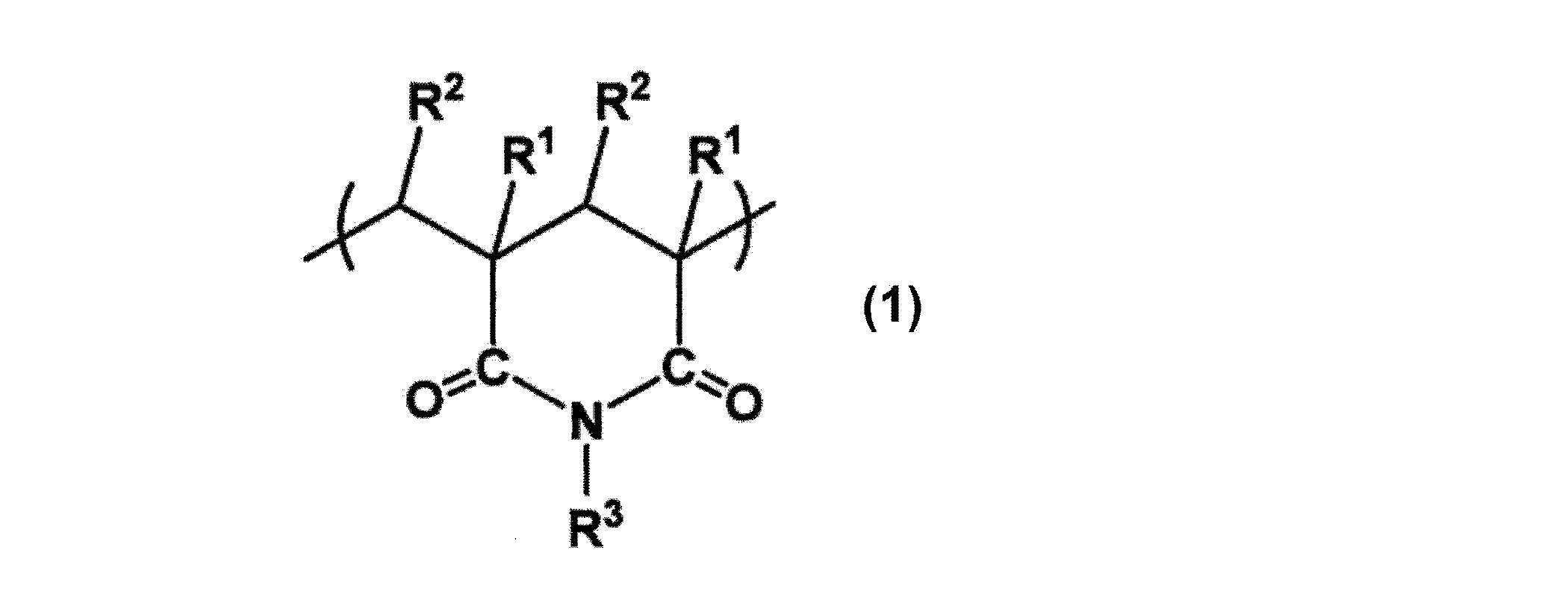
- An optical member according to the present invention is an optical member composed of an injection-molded article, wherein the injection-molded article contains a glutarimide resin, and the glutarimide resin is represented by the following general formula (1): unit, a repeating unit represented by the following general formula (2), and a repeating unit represented by the following general formula (3), and the glutarimide resin has an orientation birefringence of ⁇ 0.5 ⁇ 10 ⁇ 3 or more. 0.5 ⁇ 10 ⁇ 3 or less, a photoelastic constant of ⁇ 3.0 ⁇ 10 ⁇ 12 Pa ⁇ 1 or more and 3.0 ⁇ 10 ⁇ 12 Pa ⁇ 1 or less, and a glass transition temperature of 125° C. or more and the optical member has an average retardation value of 20 nm or less.
- R 1 and R 2 each independently represent a hydrogen atom or an alkyl group having 1 to 8 carbon atoms
- R 3 represents a hydrogen atom or an alkyl group having 1 to 18 carbon atoms.
- group a cycloalkyl group having 3 to 12 carbon atoms, or an aryl group having 6 to 10 carbon atoms.
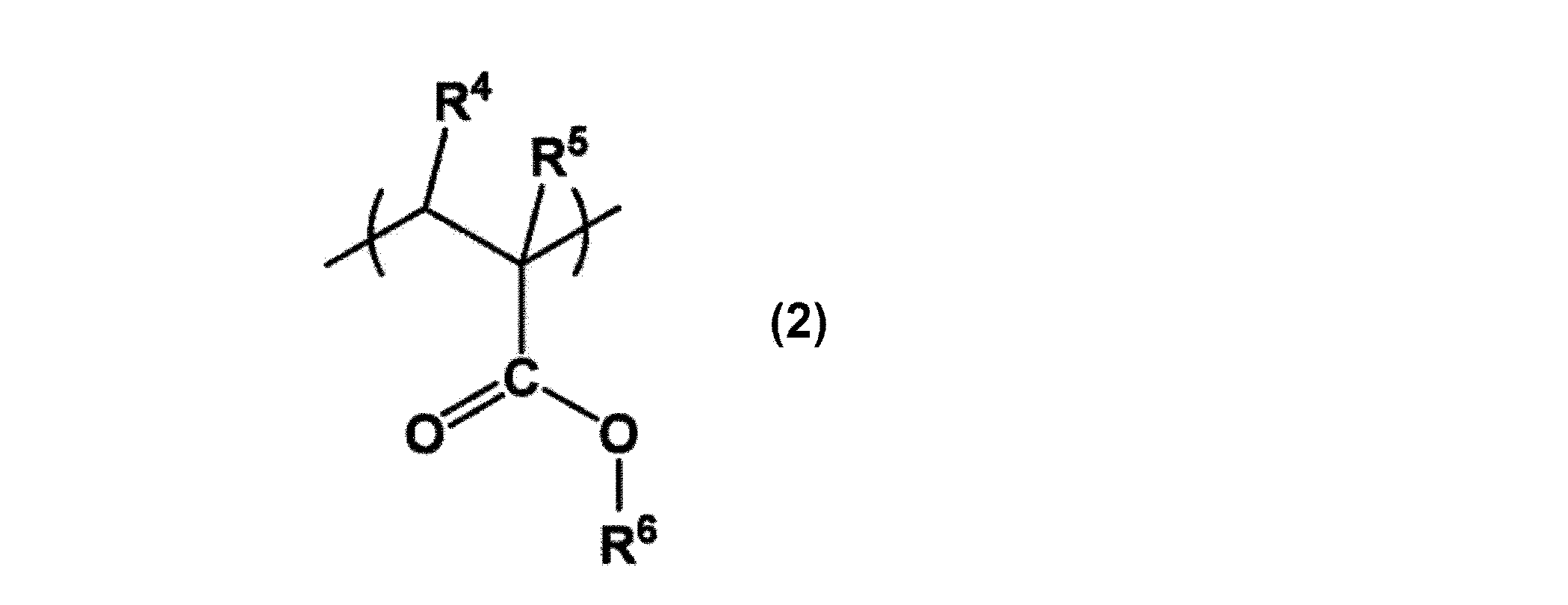
- R 4 and R 5 each independently represent a hydrogen atom or an alkyl group having 1 to 8 carbon atoms
- R 6 represents an alkyl group having 1 to 18 carbon atoms
- R 7 represents a hydrogen atom or an alkyl group having 1 to 8 carbon atoms
- R 8 represents an aryl group having 6 to 10 carbon atoms.
- a method for producing an optical member according to the present invention is a method for producing the optical member, wherein a repeating unit represented by the following general formula (2) and a repeating unit represented by the following general formula (3) are obtaining a glutarimide resin by reacting a copolymer containing the glutarimide resin with an imidizing agent; obtaining an injection-molded article by injection-molding a glutarimide resin composition containing the glutarimide resin; An annealing step is included.
- R 4 and R 5 each independently represent a hydrogen atom or an alkyl group having 1 to 8 carbon atoms;
- R 6 represents an alkyl group having 1 to 18 carbon atoms; represents a cycloalkyl group of 3 to 12 carbon atoms or an aryl group of 6 to 10 carbon atoms.
- R 7 represents a hydrogen atom or an alkyl group having 1 to 8 carbon atoms, and R 8 represents an aryl group having 6 to 10 carbon atoms.
- an optical member that has a low retardation in the early stage of molding after injection molding and that suppresses an increase in the retardation over time. Further, according to the manufacturing method of the present invention, an optical member having a low retardation in the early stage of molding and a suppressed increase in the retardation over time can be manufactured by injection molding.
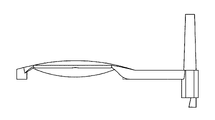
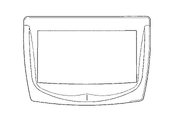
- FIG. 1 is a schematic front view of an in-vehicle display; FIG. It is a schematic rear view of the same.
- FIG. 2 is a schematic cross-sectional view taken along the line II.
- the inventors of the present invention have extensively studied how to suppress an increase in retardation over time in an injection-molded optical member or the like.
- a glutarimide resin containing specific repeating units of the following general formulas (1) to (3), having an orientation birefringence and photoelastic constant close to zero, and having a glass transition temperature of 125° C. or higher is used.
- the retardation of the optical member at the initial stage of molding is low, and the increase in the retardation over time is suppressed.
- Such an effect is particularly remarkable in the case of an optical member having a shape that tends to generate stress, such as having a large thickness, non-uniform thickness, non-isotropy, or curved surface.
- orientation birefringence near zero obtained by reacting a copolymer of a (meth)acrylate monomer and an aromatic vinyl monomer with an imidizing agent such as monomethylamine or ammonia and a photoelastic constant and a glass transition temperature of 125° C. or higher. It has been found that even in the case of having a shape that is likely to generate stress, such as having a low phase difference in the early stage of molding, an increase in the phase difference over time is suppressed.
- having a “curved surface” means that the image display surface of the optical member has curved portions such as concave portions and convex portions.
- the glutarimide resin contains specific repeating units represented by the following general formulas (1) to (3).
- the repeating unit represented by the general formula (2) is a unit derived from a (meth) acrylic acid ester-based monomer
- the repeating unit represented by the general formula (3) is derived from an aromatic vinyl-based monomer.
- the repeating unit represented by the general formula (1) is a glutarimide unit and has an imidocarbonyl group obtained by imidizing a carbonyl group derived from a (meth)acrylic acid ester-based monomer.
- R 1 and R 2 each independently represent a hydrogen atom or an alkyl group having 1 to 8 carbon atoms
- R 3 represents a hydrogen atom, an alkyl group having 1 to 18 carbon atoms
- It represents a cycloalkyl group having 3 to 12 carbon atoms or an aryl group having 6 to 10 carbon atoms.
- R 1 and R 2 are each independently a hydrogen atom or a methyl group
- R 3 is preferably a hydrogen atom, a methyl group, or a cyclohexyl group
- R 1 is a methyl group and more preferably R 2 is a hydrogen atom and R 3 is a hydrogen atom or a methyl group.
- the repeating unit represented by formula (1) may be of a single type, or may include a plurality of types having different R 1 , R 2 , and R 3 .
- R 4 and R 5 each independently represent a hydrogen atom or an alkyl group having 1 to 8 carbon atoms
- R 6 is an alkyl group having 1 to 18 carbon atoms, 3 to 12 carbon atoms, or an aryl group having 6 to 10 carbon atoms.
- Examples of the repeating unit represented by formula (2) include units derived from (meth)acrylic acid alkyl ester monomers.
- (Meth)acrylic acid alkyl ester-based monomers include, for example, methyl (meth)acrylate, ethyl (meth)acrylate, butyl (meth)acrylate, isobutyl (meth)acrylate, t-butyl (meth)acrylate, benzyl ( meth)acrylate, cyclohexyl (meth)acrylate and the like.
- “(meth)acrylic acid” may be methacrylic acid or acrylic acid.
- (meth)acrylate” may be methacrylate or acrylate.
- repeating units represented by the general formula (2) include acid anhydrides such as maleic anhydride, or half esters thereof with linear or branched alcohols having 1 to 20 carbon atoms; acrylic acid, methacrylic acid, ⁇ , ⁇ -ethylenically unsaturated carboxylic acids such as maleic acid, maleic anhydride, itaconic acid, itaconic anhydride, crotonic acid, fumaric acid and citraconic acid;
- R4 represents a hydrogen atom
- R5 represents a methyl group
- R6 represents a methyl group, i.e. Units derived from methyl methacrylate are particularly preferred.
- the repeating unit represented by formula (2) may be of a single type, or may include a plurality of types having different R 4 , R 5 and R 6 .
- R 7 represents a hydrogen atom or an alkyl group having 1 to 8 carbon atoms
- R 8 represents an aryl group having 6 to 10 carbon atoms.
- repeating units represented by formula (3) include units derived from aromatic vinyl monomers such as styrene, ⁇ -methylstyrene, vinyltoluene and vinylnaphthalene.
- aromatic vinyl monomers such as styrene, ⁇ -methylstyrene, vinyltoluene and vinylnaphthalene.
- R 7 represents a hydrogen atom
- R 8 represents a phenyl group, that is, a styrene-derived unit.
- the repeating unit represented by formula (3) may be of a single type, or may include a plurality of types having different R 7 and R 8 .
- the repeating unit represented by the general formula (2) is a unit derived from methyl methacrylate
- the repeating unit represented by the general formula (3) is a unit derived from styrene
- the general formula ( It is preferable that the repeating unit represented by 1) is a glutarimide unit and has an imidocarbonyl group obtained by imidizing a carbonyl group derived from methyl methacrylate.
- the glutarimide resin has an orientation birefringence of ⁇ 0.5 ⁇ 10 ⁇ 3 or more and 0.5 ⁇ 10 ⁇ 3 or less, and has substantially no orientation birefringence. If the orientation birefringence is out of the above range, the retardation of the optical member obtained by injection molding the glutarimide resin tends to increase.
- the orientation birefringence is preferably ⁇ 0.2 ⁇ 10 ⁇ 3 or more and 0.2 ⁇ 10 ⁇ 3 or less, more preferably ⁇ 0.1 ⁇ 10 ⁇ 3 or more and 0.2 ⁇ 10 ⁇ 3 or less. preferable.
- orientation birefringence means birefringence that develops when stretched 100% at a temperature 5°C higher than the glass transition temperature of the glutarimide resin.
- nx means the refractive index in the stretching axis (x-axis) direction of the test piece
- ny means the refractive index in the direction (y-axis) direction perpendicular to the stretching axis of the test piece in the plane of the test piece
- Re It means the in-plane retardation of the test piece
- d means the thickness of the test piece.
- orientation birefringence ( ⁇ nor) can be measured with a birefringence meter, as described below.
- the glutarimide resin has a photoelastic constant of ⁇ 3.0 ⁇ 10 ⁇ 12 Pa ⁇ 1 or more and 3.0 ⁇ 10 ⁇ 12 Pa ⁇ 1 or less, and is substantially close to zero. If the photoelastic constant is outside the above range, the retardation of the optical member obtained by injection molding the glutarimide resin tends to increase over time.
- the photoelastic constant is preferably ⁇ 2.0 ⁇ 10 ⁇ 12 Pa ⁇ 1 or more and 2.0 ⁇ 10 ⁇ 12 Pa ⁇ 1 or less, and ⁇ 1.5 ⁇ 10 ⁇ 12 Pa ⁇ 1 or more and 1.0 ⁇ It is more preferably 10 ⁇ 12 Pa ⁇ 1 or less.
- the photoelastic coefficient means that when an isotropic solid is subjected to external force to cause stress ( ⁇ F), it temporarily exhibits optical anisotropy and exhibits birefringence ( ⁇ n).
- the photoelastic modulus can be measured by the Senarmont method at 23 ⁇ 2° C. and 50 ⁇ 5% RH (relative humidity) at a wavelength of 586.4 nm, as described below.
- the glutarimide resin has a glass transition temperature of 125° C. or higher, preferably 130° C. or higher, more preferably 135° C. or higher, even more preferably 140° C. or higher, and 145° C. or higher. is particularly preferred.
- the glass transition temperature is within the range described above, the heat resistance is high, and the optical member obtained by injection molding the glutarimide resin is less likely to be distorted and easily obtains stable optical properties.
- the glutarimide resin has a 5% weight loss temperature of preferably 350° C. or higher, more preferably 365° C. or higher, from the viewpoint of obtaining an optical member having excellent heat resistance and stable optical properties. ° C. or more is more preferable.
- the 5% weight loss temperature is measured by thermogravimetric analysis (TGA).
- the glutarimide resin preferably has an imidization rate of 40% or more and 70% or less, more preferably 45% or more and 65% or less, even more preferably 50% or more and 65% or less, and 50% or more. 60% or less is particularly preferable.
- the imidization rate is within the above-described range, the retardation of the optical member obtained by injection molding the glutarimide resin is low in the early stage of molding, and the increase in the retardation over time can be easily suppressed. Excellent transparency and workability.
- R 3 is preferably a methyl group from the viewpoint of effectively suppressing moisture absorption of the optical member.
- a glutarimide resin can be obtained by using monomethylamine as an imidizing agent, which will be described later.
- the imidization rate of the glutarimide resin is more preferably 45% or more and 65% or less, and further preferably 50% or more and 60% or less.
- the optical member obtained by injection molding the glutarimide resin has a low retardation in the initial stage of molding, and is easy to suppress an increase in the retardation over time. Excellent workability.
- the glutarimide resin may also contain a repeating unit in which R3 is a hydrogen atom and a repeating unit in which R3 is a methyl group in the above general formula ( 1 ).
- a glutarimide resin can be obtained by using ammonia as an imidizing agent, which will be described later.
- the imidization rate of the glutarimide resin is more preferably 40% or more and 70% or less, and further preferably 50% or more and 65% or less.
- the imidization rate is within the above-described range, the retardation of the optical member obtained by injection molding the glutarimide resin is low in the early stage of molding, and the increase in the retardation over time can be easily suppressed. Excellent transparency and workability.
- the glutarimide resin preferably contains 30% by weight or more of the repeating unit represented by the general formula (1), more preferably 30% by weight or more and 60% by weight or less. It is more preferable to contain at least 55% by weight.
- the glutarimide resin preferably contains 60 wt% or less, more preferably 25 wt% or more and 60 wt% or less, of the repeating unit represented by the general formula (2). It is more preferable to contain at least 55% by weight.
- the glutarimide resin preferably contains 10% by weight or more of the repeating unit represented by the general formula (3), and contains 10% by weight or more and 25% by weight or less. more preferably 10% by weight or more and 20% by weight or less.
- the glutarimide resin may further contain other units in addition to the repeating units represented by the general formulas (1) to (3) as long as the object of the present invention is not impaired.
- the content is preferably 20% by weight or less, more preferably 10% by weight or less, and even more preferably 5% by weight or less.
- Other units include, for example, units derived from amide monomers such as acrylamide and methacrylamide; units derived from nitrile monomers such as acrylonitrile and methacrylonitrile; maleimide, N-methylmaleimide, and N-phenylmaleimide. , units derived from maleimide monomers such as N-cyclohexylmaleimide; and the like. These other units may be directly copolymerized or graft copolymerized into the glutarimide resin.
- the glutarimide resin is not particularly limited, but the weight average molecular weight (Mw) is preferably 10000 or more and 500000 or less, more preferably 50000 or more and 300000 or less, further preferably 50000 or more and 200000 or less. More than 150000 or less is particularly preferable. Within the above range, the molding workability and the mechanical strength of the molded product are improved, and the retardation of the optical member obtained by injection molding the glutarimide resin tends to be low.
- Mw weight average molecular weight
- the optical member of one or more embodiments of the present invention is not particularly limited. , Fresnel lenses, prisms, Fresnel rhomb wave plates, polarizing beam splitters, and the like.
- it can be suitably applied to optical lenses such as VR lenses and AR lenses that require high image quality, and displays such as in-vehicle displays.
- the glutarimide resin has repeating units derived from styrene, the refractive index increases, and it can be suitably used for optical lenses that require a high refractive index.
- optical lenses examples include spherical lenses, aspherical lenses, biconvex lenses, plano-convex lenses, convex menisca lenses, biconcave lenses, plano-concave lenses, and concave menisca lenses.
- Examples of products using the optical member include head-mounted displays, AR smart glasses, smartphones, cameras, projectors, optical connectors, CD players, DVD players, MD players, surveillance cameras, optical switches, automobile headlights, and automobile tail lamps. , head-up displays, automobile meter covers, center information displays, car navigation devices, optical sensors for automobiles, laser oscillation devices, photonic crystal devices, 3D hologram displays, biometric authentication systems, quantum cryptographic communication systems, optical operation systems, semiconductor manufacturing Devices, artificial satellites, telescopes, spectacles, contact lenses, internal vision lenses, road translucent plates, double glass lenses, lighting lenses, lighting covers, and the like.
- the shape of the optical member is not particularly limited, and can be appropriately set according to the application.
- the optical member may have a shape that is susceptible to stress. Shapes that tend to generate stress include, for example, a shape with a large thickness, a shape with an uneven thickness, a shape with no isotropy, a shape with a curved surface, and the like. Even when having such a stress-susceptible shape, the optical member of one or more embodiments of the present invention has a low retardation at the initial stage of molding and suppresses an increase in retardation over time.
- the average value of the retardation of the optical member is 20 nm or less, preferably 15 nm or less, more preferably 10 nm or less, and even more preferably 5 nm or less. This improves the image quality of the optical member.
- the “average value of retardation” refers to the area average value of retardation on the image display surface of the optical member.
- the "average phase difference" can be measured as described below.
- the optical member preferably has a gate portion retardation of 30 nm or less, more preferably 25 nm or less, even more preferably 20 nm or less, and particularly preferably 15 nm or less.
- Injection-molded articles usually tend to have a high retardation around the gate.
- the above-described glutarimide resin having orientation birefringence close to 0 is injection-molded.
- the phase difference at the gate tends to be low.
- the phase difference of the gate section can be measured as described below.
- the thickness of the optical member is not particularly limited, and can be appropriately set according to the application.
- an optical lens for example, it may be 0.01 mm or more and 100 mm or less, 0.1 mm or more and 50 mm or less, 0.5 mm or more and 30 mm or less, or 1 mm or more and 20 mm or less. good too.
- the curvature radius of the optical member is not particularly limited, and can be appropriately set according to the application.
- the radius of curvature may be 0.1 mm or more and 10000 mm or less, or 1 mm or more and 500 mm or less.
- the optical member is a display, it may be 1 mm or more and 50000 mm or less, 10 mm or more and 10000 mm or less, or 10 mm or more and 5000 mm or less.
- the optical member preferably has a total light transmittance of 80% or more, more preferably 85% or more, and still more preferably 90% or more.
- the haze is preferably 2.0% or less, more preferably 1.5% or less, and even more preferably 1.0% or less. In one or more embodiments of the present invention, total light transmittance can be measured as described below.
- the optical member preferably has a deflection temperature under load of 120° C. or higher, more preferably 125° C. or higher, even more preferably 130° C. or higher. ° C. or higher is particularly preferred.
- the load deflection temperature can be measured as described below.
- the optical member preferably has a dimensional change rate of 0.50% or less after being left for 1000 hours in an atmosphere of 85° C. and 85% relative humidity. 0.45% or less is more preferable, and 0.40% or less is even more preferable. In one or more embodiments of the present invention, dimensional change can be measured as described below.
- the optical member is a copolymer (hereinafter simply referred to as (also referred to as "(meth)acrylic acid ester-aromatic vinyl copolymer”) is reacted with an imidizing agent, and the resin composition containing the obtained glutarimide resin is injection-molded to obtain an injection-molded article. can be produced by annealing.
- (meth)acrylic acid ester-aromatic vinyl copolymer as the (meth)acrylic acid ester-based monomer and the aromatic vinyl-based monomer, those described above can be appropriately used.
- (Meth)acrylic acid ester-aromatic vinyl copolymerization includes methyl methacrylate (monomer)-derived units and styrene (monomer)-derived units (hereinafter also simply referred to as "styrene units").
- styrene units A methyl methacrylate-styrene copolymer containing
- a (meth)acrylic acid ester-aromatic vinyl copolymer (hereinafter also referred to as raw material resin) is reacted with an imidizing agent for imidization to obtain a glutarimide resin.
- the raw material resin may be a linear polymer, block polymer, core-shell polymer, branched polymer, ladder polymer, or crosslinked polymer.
- the block polymer may be of type AB, type ABA, or any other type of block polymer.
- the core-shell polymer may consist of only one layer of core and one layer of shell, or may consist of two or more layers each of core and shell.
- the raw material resin is, for example, a (meth)acrylic acid ester-based monomer and an aromatic vinyl-based monomer, and an emulsion polymerization method, an emulsion-suspension polymerization method, a suspension polymerization method, an ionic polymerization method, a bulk polymerization method, It can be produced by copolymerization by a polymerization method such as a solution polymerization method.
- a continuous polymerization method such as a bulk polymerization method or a solution polymerization method is preferable from the viewpoint of containing few impurities.
- a polymerization initiator, a chain transfer agent, a polymerization solvent, and the like are used at the time of polymerization, if necessary.
- the polymerization initiator, chain transfer agent, and polymerization solvent are not particularly limited, and known ones can be used.
- JP-A-57-149311, JP-A-57-153009, JP-A-10-152505, JP-A-2004-27191, WO 2009/41693 and the like are exemplified, but are not limited to these.
- the raw material resin such as methyl methacrylate-styrene copolymer is not particularly limited, but the weight average molecular weight (Mw) is preferably 10000 or more and 500000 or less, more preferably 50000 or more and 300000 or less, and 50000 or more and 200000. It is more preferably 50000 or more and 150000 or less is particularly preferable.
- Mw weight average molecular weight
- the molding processability of the glutarimide resin obtained by imidizing the raw material resin and the mechanical strength of the molded product are good, and the optical properties obtained by injection molding the glutarimide resin are improved.
- the phase difference of the member tends to be low.
- the raw material resin such as methyl methacrylate-styrene copolymer preferably contains more than 10 mol% and 18 mol% or less of repeating units represented by general formula (3) such as styrene units, and may contain more than 10 mol% and 15 mol% or less. more preferred.
- the glutarimide resin obtained by imidizing the raw material resin has high heat resistance, and the orientation birefringence and photoelastic coefficient are close to zero.
- the imidizing agent is not particularly limited as long as it can imidize the raw material resin to form the repeating unit represented by the general formula (1).
- Examples of imidizing agents include ammonia; monoalkylamines such as methylamine, ethylamine, n-propylamine, isopropylamine, n-butylamine, isobutylamine, tert-butylamine and n-hexylamine; alkylamines; monoarylamines such as aniline, toluidine and trichloroaniline; and the like.
- monoalkylamine and ammonia are preferred, and monomethylamine and ammonia are more preferred, from the viewpoint of bringing the orientation birefringence and photoelastic coefficient of the glutarimide resin closer to zero.
- Glutarimide resin which is a raw material resin such as methyl methacrylate-styrene copolymer imidized with monoalkylamine, has excellent water absorption resistance.
- the raw material resin preferably contains more than 10 mol% and 18 mol% or less of repeating units represented by general formula (3) such as styrene units, more preferably more than 10 mol% and 15 mol% or less, and more than 10 mol% and 13 mol%. % or less is more preferable.
- Glutarimide resin which is made by imidizing a raw material resin such as methyl methacrylate-styrene copolymer with ammonia, has a high glass transition temperature and excellent heat resistance.
- the raw material resin preferably contains more than 10 mol % and 18 mol % or less, more preferably 12 mol % or more and 16 mol % or less of repeating units represented by general formula (3) such as styrene units.
- Ammonia water may be used as the ammonia.
- concentration of aqueous ammonia is not particularly limited, but is preferably 25% by weight or more and 35% by weight or less in consideration of availability and reactivity.
- the ratio of repeating units represented by (3) can be adjusted.
- the imidizing agent can be appropriately adjusted according to the application and required properties of the optical member. is preferably 0.5 parts by weight or more, more preferably 3 parts by weight or more.
- the upper limit of the imidizing agent is not particularly limited, but for ease of handling, it is preferably 30 parts by weight or less with respect to 100 parts by weight of the raw material resin such as methyl methacrylate-styrene copolymer, and 20 parts by weight. Part or less is more preferable.
- a ring closure accelerator (catalyst) may be added, if necessary, in addition to the imidization agent.
- the method for carrying out the imidization reaction is not particularly limited, and conventionally known methods can be used.
- the imidization reaction can be advanced by using an extruder or a batch-type reactor (pressure vessel).
- the extruder is not particularly limited, and for example, a single-screw extruder, twin-screw extruder or multi-screw extruder can be used. Among them, it is preferable to use a twin-screw extruder.
- the twin-screw extruder can accelerate the mixing of the raw material resin and the imidizing agent (the imidizing agent and the ring-closing accelerator when a ring-closing accelerator is used).
- twin-screw extruder examples include non-intermeshing co-rotating, intermeshing co-rotating, non-intermeshing counter-rotating, and intermeshing counter-rotating.
- the meshing co-rotating type is preferable. Since the intermeshing co-rotating twin-screw extruder can rotate at high speed, the mixing of the raw material resin and the imidizing agent (the imidizing agent and the ring-closing accelerator when a ring-closing accelerator is used) can be performed more efficiently. can be further promoted.
- One of the extruders exemplified above may be used alone, or a plurality of extruders connected in series may be used. For example, a tandem-type reaction extruder described in JP-A-2008-273140 can be used.
- the imidization reaction is performed in an extruder, for example, a raw material resin such as methyl methacrylate-styrene copolymer is charged from the raw material charging port of the extruder, the resin is melted, and the cylinder is filled with the resin.
- a raw material resin such as methyl methacrylate-styrene copolymer
- the resin is melted, and the cylinder is filled with the resin.
- the temperature (resin temperature) of the reaction zone in the extruder is preferably 180°C or higher and 270°C or lower, more preferably 200°C or higher and 250°C or lower.
- the reaction zone in the extruder refers to a region between the injection position of the imidizing agent and the resin discharge port (die portion) in the cylinder of the extruder.
- the reaction time in the reaction zone of the extruder is not particularly limited as long as the imide reaction proceeds. For example, it may be 10 seconds or longer, or 30 seconds or longer.
- the resin pressure in the extruder is not particularly limited, but from the viewpoint of cost, for example, it may be atmospheric pressure or higher and 50 MPa or lower, or may be 1 MPa or higher and 30 MPa or lower.
- a horizontal twin-screw reactor such as Vivolac manufactured by Sumitomo Heavy Industries, Ltd. or a vertical twin-screw stirring tank such as Superblend can be suitably used. can.
- the structure of the batch-type reaction tank is not particularly limited. Specifically, it has a structure in which the raw material resin can be melted by heating and stirred, and an imidizing agent (when using a ring-closing accelerator, the imidizing agent and the ring-closing accelerator) can be added. However, it is preferable to have a structure with good stirring efficiency. According to such a batch-type reaction tank, it is possible to prevent insufficient stirring due to an increase in resin viscosity due to the progress of the reaction. As a batch-type reaction tank having such a structure, for example, Maxblend, a stirring tank manufactured by Sumitomo Heavy Industries, Ltd., and the like can be mentioned.
- a step of reacting a glutarimide resin with an imidizing agent may be repeated using the glutarimide resin as a raw material resin.
- an esterification step of treatment with an esterification agent can be included.
- the carboxy groups contained in the resin, which are by-produced in the imidization step can be converted into ester groups.
- the acid value of the glutarimide resin can be adjusted within a desired range.
- the acid value of the glutarimide resin is not particularly limited, it is preferably 0.50 mmol/g or less, more preferably 0.45 mmol/g or less.
- the lower limit is not particularly limited, it is particularly preferably substantially 0 mmol/g (below the detection limit).
- the acid value is within the above range, it is possible to obtain a glutarimide resin having an excellent balance of heat resistance, mechanical properties, and moldability.
- the acid value of the glutarimide resin was determined by dissolving 0.3 g of the glutarimide resin in 37.5 mL of methylene chloride, adding 37.5 mL of methanol, and adding 5 mL of a 0.1 mmol% sodium hydroxide aqueous solution and phenolphthalein in ethanol. After adding a few drops of the solution, it is back-titrated with 0.1 mmol % hydrochloric acid and can be determined from the amount of hydrochloric acid required for neutralization.
- the esterifying agent is not particularly limited, and examples thereof include dimethyl carbonate, 2,2-dimethoxypropane, dimethyl sulfoxide, triethyl orthoformate, trimethyl orthoacetate, trimethyl orthoformate, diphenyl carbonate, dimethyl sulfate, methyltoluenesulfonate, methyl trifluoromethylsulfonate, methyl acetate, methanol, ethanol, methyl isocyanate, p-chlorophenyl isocyanate, dimethylcarbodiimide, dimethyl-t-butylsilyl chloride, isopropenyl acetate, dimethylurea, tetramethylammonium hydroxide, dimethyldiethoxysilane, tetra -N-butoxysilane, dimethyl (trimethylsilane) phosphite, trimethyl phosphite, trimethyl phosphate, tricresyl phosphate, diazomethane, ethylene
- the amount of the esterification agent used is not particularly limited, it may be 12 parts by weight or less, or 8 parts by weight or less with respect to 100 parts by weight of the raw material resin such as methyl methacrylate-styrene copolymer. If the amount of the esterifying agent used is within the above range, the acid value of the glutarimide resin can be adjusted to an appropriate range.
- a catalyst can be used in addition to the esterification agent.
- the type of catalyst is not particularly limited, examples thereof include aliphatic tertiary amines such as trimethylamine, triethylamine and tributylamine. Among these, triethylamine is preferred from the viewpoint of cost, reactivity, and the like.
- the esterification process like the imidization process, can be advanced by using, for example, an extruder or a batch-type reactor.
- the esterification step can also be carried out only by heat treatment without using an esterification agent.
- the heat treatment can be achieved by kneading and dispersing the molten resin in an extruder.
- Some or all of the carboxy groups can be made into acid anhydride groups.
- the extruder When using an extruder in the imidization process and the esterification process, it is preferable to equip the extruder with a vent port capable of reducing the pressure to below atmospheric pressure. According to such a configuration, unreacted imidizing agents, esterifying agents, by-products such as methanol, or monomers can be removed.
- a filter at the end of the extruder for the purpose of reducing foreign matter in the glutarimide resin. It is preferable to install a gear pump in front of the filter in order to pressurize the glutarimide resin.
- the type of filter it is preferable to use a stainless steel leaf disk filter capable of removing foreign matter from the molten resin, and as the filter element, it is preferable to use a fiber type, powder type, or a combination of these types. .
- a glutarimide resin composition containing a glutarimide resin is injection molded to obtain an injection molded product.
- a molded body obtained by injection molding or injection press molding a thermoplastic resin has orientation and residual strain due to injection conditions, mold shape, gate shape, etc., and orientation birefringence occurs, resulting in a high phase difference.
- an injection-molded article having a small retardation can be obtained regardless of the shape and molding conditions.
- the glutarimide resin composition may consist essentially of the glutarimide resin, and if necessary, may contain other resins and additives in addition to the glutarimide resin to the extent that the object of the present invention is not impaired. It's okay.
- Additives include, for example, antioxidants, heat stabilizers, light stabilizers, ultraviolet absorbers, weather stabilizers such as radical scavengers; catalysts, plasticizers, lubricants, antistatic agents, coloring agents, anti-shrinking agents , antibacterial agents, deodorants; and the like. These may be used singly or in combination of two or more. Further, these additives may be added in advance to the glutarimide resin and then molded in the form of a mixture obtained, or may be directly added to the molding machine when the glutarimide resin is molded. .
- Other resins include, for example, crosslinked elastic bodies. Thereby, the mechanical strength of the glutarimide resin can be improved.
- a crosslinked elastic body a core-shell type elastic body having a core layer made of a rubbery polymer and a shell layer made of a glassy polymer (hard polymer) is preferable.
- the core layer made of a rubbery polymer may have one or more layers made of a glassy polymer as the innermost layer or an intermediate layer.
- Injection molding is not particularly limited as long as it is a molding method using a device such as a generally known injection molding machine.
- the injection molding machine may be vertical or horizontal.
- generally known molding techniques can also be used.
- the injection molding may be injection press molding from the viewpoint of reducing molding distortion.
- optical members may be susceptible to stress distortion or external stress during injection molding.
- Shapes that are likely to generate such stress include, for example, a shape with a large thickness, a shape with a non-uniform thickness, a shape that is not isotropic, a shape with a curved surface, etc. According to one or more embodiments of the present invention. Then, by using the glutarimide resin described above, it is easy to reduce the retardation of the optical member.
- the molding conditions can be appropriately determined according to the shape and dimensions of the injection molded body.
- the cylinder temperature may be 190° C. or higher and 290° C. or lower, or 210° C. or higher and 280° C. or lower.
- the nozzle temperature may be 230° C. or higher and 300° C. or lower, or 240° C. or higher and 290° C. or lower.
- the injection speed may be 1 mm/sec or more and 200 mm/sec or less, or 3 mm/sec or more and 150 mm/sec or less.
- the mold temperature is preferably lower than the glass transition temperature (Tg) of the glutarimide resin, and may be Tg-5°C or lower, or Tg-10°C or lower.
- the cooling time may be 10 sec or more and 400 sec or less, or may be 30 sec or more and 300 sec or less.
- the annealing treatment can be performed near the Tg of the glutarimide resin that constitutes the injection molded article.
- Annealing treatment for example, may be performed at (Tg-40 ° C.) or higher (Tg-5 ° C.) or lower, (Tg-30 ° C.) or higher (Tg-10 ° C.) or lower, (Tg-25 ° C.) or higher (Tg-15° C.) or lower.
- the optical member obtained above has a low retardation (average value of retardation), and even when stored for a long period of time at a temperature of 23° C. ⁇ 2° C. and a relative humidity of 50% ⁇ 5%, the retardation is little increase.
- the rate of change in phase difference is preferably 20% or less, preferably 15% or less. It is more preferably 10% or less, and particularly preferably 5% or less.
- the weight average molecular weight Mw and number average molecular weight Mn were calculated by a standard polystyrene conversion method using size exclusion chromatography (SEC).
- SEC size exclusion chromatography
- a GPC system manufactured by Waters was used, chloroform was used as a mobile phase, and a sample solution having a resin concentration of 0.04 g/3.5 mL was used at a column temperature of 35°C.
- the imidization rate was calculated using IR (infrared spectrophotometer) as follows.
- the object pellet was dissolved in methylene chloride, and the IR spectrum of the solution was measured at room temperature (23 ⁇ 2° C.) using TravelIR manufactured by SensIR Technologies. From the obtained IR spectrum, the ratio of the absorption intensity (Absester) attributed to the ester carbonyl group at 1720 cm -1 and the absorption intensity (Absimide) attributed to the imide carbonyl group at 1660 cm -1 , the ester carbonyl group and the imide carbonyl Assuming the molar extinction coefficients of the groups to be the same, the imidization rate (Im % (IR)) was determined.
- the term "imidization ratio” refers to the proportion of imidocarbonyl groups in all carbonyl groups.
- a test piece of 40 mm ⁇ 20 mm was cut out from the central portion in the TD direction of this uniaxially 2-fold stretched film.
- this test piece was measured at a temperature of 23 ⁇ 2 ° C. and a relative humidity of 50 ⁇ 5% at a wavelength of 590 nm and an incident angle of 40 °.
- a phase difference Re was measured.
- Orientation birefringence was obtained by dividing the in-plane retardation Re by the thickness of the test piece measured using a Digimatic indicator manufactured by Mitutoyo Corporation at a temperature of 23° C. ⁇ 2° C. and a relative humidity of 50% ⁇ 5%.
- Total light transmittance Using the test piece 1, using a haze meter HZ-V3 manufactured by Suga Test Instruments Co., Ltd., measure the total light transmittance according to JIS K 7361 at a temperature of 23 ° C. ⁇ 2 ° C. and a relative humidity of 50% ⁇ 5%. did.
- haze was measured according to JIS K 7136 at a temperature of 23° C. ⁇ 2° C. and a relative humidity of 50% ⁇ 5% using a haze meter HZ-V3 manufactured by Suga Test Instruments Co., Ltd.
- the heat distortion tester 148-HDPC manufactured by Yasuda Seiki Co., Ltd. was used to measure the deflection temperature under load at a load of 1.8 MPa in accordance with the ISO75 standard.
- the test piece 2 was left for one day at a temperature of 23° C. ⁇ 2° C. and a relative humidity of 50% ⁇ 5%.
- a small constant temperature and humidity chamber manufactured by ESPEC, PL-3KP
- the sample was allowed to stand for 1000 hours in an atmosphere of 85° C. temperature and 85% relative humidity.
- TMM-130D manufactured by Topcon Co., Ltd.
- MD resin flow direction
- Phase difference Using a two-dimensional birefringence evaluation system WPA-200-L manufactured by Photonic Lattice, at room temperature (23 ° C. ⁇ 2 ° C.), the phase difference of the image display surface is measured at a measurement wavelength of 543 nm, and the average value of the phase difference is obtained. was calculated. Specifically, the image display surface of the optical member was phase-contrast mapped to obtain a digital image, the target visual field was divided into pixels, and the numerical average value was obtained from the phase-contrast absolute value of each pixel. The retardation was measured after leaving the optical member at a temperature of 23° C. ⁇ 2° C. and a relative humidity of 50% ⁇ 5% for 24 hours.
- the optical member is an optical lens
- the gate position the radius of the lens is R
- the distance from the center of the optical lens is r.
- the phase difference at the 5R position was measured.
- Phase difference change rate (%) (P1-P0) / P0 ⁇ 100
- Example 1 ⁇ Production of glutarimide resin> A 40 mm ⁇ fully intermeshing co-rotating twin-screw extruder reactor was used to produce the resin. Regarding the extruder, a co-meshing twin-screw extruder with a diameter of 40 mm and an L/D (ratio of extruder length L to diameter D) of 90 is used, and a constant weight feeder (CE-T- 2E), the raw material resin was introduced into the extruder raw material supply port.
- a co-meshing twin-screw extruder with a diameter of 40 mm and an L/D (ratio of extruder length L to diameter D) of 90 is used, and a constant weight feeder (CE-T- 2E), the raw material resin was introduced into the extruder raw material supply port.
- Methyl methacrylate-styrene copolymer (Mw: 95,000, Mn: 50,000, styrene unit 11 mol%, continuous polymerization method) is used as the raw material resin, and monomethylamine (hereinafter referred to as "mMA”) was used to prepare a glutarimide resin.
- mMA monomethylamine
- the set temperature of each temperature control zone of the extruder is 240 ° C.
- the screw rotation speed is 77 rpm
- methyl methacrylate-styrene copolymer is supplied at 20 kg / hr
- the amount of monomethylamine supplied is methyl methacrylate-styrene copolymer. 8 parts per 100 parts of polymer.
- a methyl methacrylate-styrene copolymer was charged from a hopper, and after the resin was melted and filled with a kneading block, monomethylamine was injected from a nozzle. A seal ring was placed at the end of the reaction zone and filled with resin. By-products and excess monomethylamine after the reaction were devolatilized by reducing the pressure at the vent port to -0.09 MPa.
- the resin (strand) discharged from the extruder was cooled in a cooling water bath and then cut into pellets by a pelletizer.
- a resin pressure gauge was provided at the exit of the extruder in order to confirm the pressure inside the extruder or ascertain the extrusion fluctuation.
- the glutarimide resin (pellet) obtained above was dried using a hot air dryer at a temperature of 90° C. for 6 hours, and then subjected to injection molding under the molding conditions shown in Table 1 below. and a display.
- An 80-ton injection molding machine "FN-1000" manufactured by Nissei Plastic Industry Co., Ltd. was used as the injection molded body.
- the optical lens is a double-sided convex lens shown in FIGS.
- the radius is 116.45 mm
- the lower curvature is 0.017 mm
- the lower curvature radius is 58.17 mm.
- the in-vehicle display has the shape shown in FIGS.
- Example 2 ⁇ Production of glutarimide resin> A glutarimide resin was produced in the same manner as in Example 1, except that the amount of monomethylamine supplied was 10 parts per 100 parts of the starting resin. ⁇ Injection molding and annealing treatment> Injection molding and annealing were performed in the same manner as in Example 1, except that the glutarimide resin (pellet) obtained above was used.
- Example 3 ⁇ Production of glutarimide resin> Methyl methacrylate-styrene copolymer (Mw: 95,000, Mn: 50,000, styrene unit 13 mol%, continuous polymerization method) is used as the raw resin, and the amount of monomethylamine supplied is 100 parts of the raw resin.
- a glutarimide resin was produced in the same manner as in Example 1, except that the content was 12 parts.
- Example 4 ⁇ Production of glutarimide resin> A glutarimide resin was produced using 28% by weight ammonia water (hereinafter also referred to as "NH 3 water”) as an imidizing agent. At this time, the maximum temperature of the extruder was 280° C., the screw rotation speed was 100 rpm, the raw material resin supply amount was 10 kg/hr, and the ammonia water supply amount was 20.0 parts per 100 parts of the raw material resin. Except for the above, the procedure was the same as in Example 3. ⁇ Injection molding and annealing treatment> Injection molding and annealing were performed in the same manner as in Example 1 except that the glutarimide resin (pellet) obtained above was used and the injection molding was performed under the conditions shown in Table 1 below.
- NH 3 water ammonia water
- Example 5 Glutarimide resin was prepared in the same manner as in Example 4, except that a methyl methacrylate-styrene copolymer (Mw: 95,000, Mn: 50,000, styrene unit: 15 mol%, continuous polymerization method) was used as the raw material resin. manufactured.
- a methyl methacrylate-styrene copolymer Mw: 95,000, Mn: 50,000, styrene unit: 15 mol%, continuous polymerization method
- Injection molding and annealing treatment Injection molding and annealing were performed in the same manner as in Example 4, except that the glutarimide resin (pellet) obtained above was used.
- a pipe with a diameter of 38 mm and a length of 2 m connects the first extruder and the second extruder.
- a flow pressure valve was used.
- the resin (strand) discharged from the second extruder was cooled by a cooling conveyor and then cut into pellets by a pelletizer.
- the first extruder outlet, the first extruder and the second 2 A resin pressure gauge was provided at the center of the connection part with the extruder and at the outlet of the second extruder.
- polymethyl methacrylate (Mw: 105,000, acrylic ester unit less than 0.1%, continuous polymerization method) is used as the raw material resin, and imidization is performed using monomethylamine as the imidizing agent.
- a resin intermediate was produced.
- the maximum temperature of the extruder was 280° C.
- the screw rotation speed was 55 rpm
- the feed amount of the raw resin was 450 kg/hour
- the amount of monomethylamine added was 2.0 parts per 100 parts of the raw resin.
- a constant flow pressure valve was installed immediately before the raw material supply port of the second extruder, and the pressure of the monomethylamine injection section of the first extruder was adjusted to 8 MPa.
- a mixed solution of dimethyl carbonate and triethylamine was added as an esterification agent to produce an imide resin.
- the temperature of each barrel of the extruder was 260° C.
- the screw rotation speed was 55 rpm
- the amount of dimethyl carbonate added was 3.2 parts per 100 parts of the raw material resin
- the amount of triethylamine added was 0.2 parts per 100 parts of the raw material resin. 8 parts.
- (Comparative example 2) ⁇ Production of glutarimide resin> Methyl methacrylate-styrene copolymer (Mw: 105,000, Mn: 55,000, styrene unit 5 mol%, continuous polymerization method) is used as the raw resin, and the amount of monomethylamine supplied is 100 parts of the raw resin.
- a glutarimide resin was produced in the same manner as in Example 1, except that 8 parts were used.
- Injection molding and annealing treatment Injection molding and annealing were performed in the same manner as in Example 1, except that the glutarimide resin (pellet) obtained above was used.
- Glutarimide resin was prepared in the same manner as in Example 4, except that a methyl methacrylate-styrene copolymer (Mw: 105,000, Mn: 55,000, styrene unit: 20 mol%, continuous polymerization method) was used as the raw material resin. manufactured.
- the injection molded body has a low phase difference at the initial stage of molding and a low phase difference at the gate portion. Furthermore, an increase in the phase difference after being left for a long period of time was suppressed.
- Comparative Example 1 which does not contain a styrene unit, has a glass transition temperature of less than 125° C., and has an absolute value of photoelastic coefficient of greater than 3.0 ⁇ 10 ⁇ 12 Pa ⁇ 1 , the injection molded product is Although the phase difference was low, the phase difference increased greatly when left for a long time.
Landscapes
- Chemical & Material Sciences (AREA)
- Physics & Mathematics (AREA)
- Organic Chemistry (AREA)
- Chemical Kinetics & Catalysis (AREA)
- Medicinal Chemistry (AREA)
- Polymers & Plastics (AREA)
- Health & Medical Sciences (AREA)
- General Chemical & Material Sciences (AREA)
- General Physics & Mathematics (AREA)
- Optics & Photonics (AREA)
- Engineering & Computer Science (AREA)
- Manufacturing & Machinery (AREA)
- Mechanical Engineering (AREA)
- Addition Polymer Or Copolymer, Post-Treatments, Or Chemical Modifications (AREA)
Abstract
射出成形体で構成される光学部材であって、射出成形体が(メタ)アクリル酸エステル系単量体由来のカルボニル基がイミド化されたイミドカルボニル基を有するグルタルイミド単位、(メタ)アクリル酸エステル系単量体由来の繰り返し単位、および芳香族ビニル系単量体由来の繰り返し単位を含み、配向複屈折が-0.5×10⁻³以上0.5×10⁻³以下であり、光弾性定数が-3.0×10⁻¹²Pa-1以上3.0×10⁻¹²Pa-1以下であり、かつガラス転移温度が125℃以上であるグルタルイミド樹脂を含み、光学部材の位相差の平均値が20nm以下である光学部材、およびその製造方法を提供する。
Description
本発明は、低位相差の光学部材およびその製造方法に関する。
仮想空間(VR)レンズおよび拡張現実(AR)レンズを始めとする光学レンズ、車載用ディスプレイなどの光学部材では、画像品質の向上を目的に、位相差が小さい材料の使用が求められている。一方、従来から、偏光子保護フィルムなどには、位相差が小さい材料が用いられている。例えば、特許文献1には、グルタルイミド単位を有するグルタルイミド樹脂を用いることで、位相差を低減した偏光子保護フィルムが提案されている。
しかしながら、グルタルイミド樹脂を射出成形して得られた光学部材は、成形初期の位相差が低い場合でも、室温における保管時に、空気中の水分を吸収し、経時的に位相差が上昇してしまう場合があった。
本発明は、上記従来の問題を解決するため、射出成形後の成形初期の位相差が低く、かつ位相差の経時的な増加が抑制された光学部材、およびその製造方法を提供する。
本発明に係る光学部材は、射出成形体で構成される光学部材であって、前記射出成形体は、グルタルイミド樹脂を含み、前記グルタルイミド樹脂は、下記一般式(1)で表される繰り返し単位、下記一般式(2)で表される繰り返し単位、および下記一般式(3)で表される繰り返し単位を含み、前記グルタルイミド樹脂は、配向複屈折が-0.5×10⁻³以上0.5×10⁻³以下であり、光弾性定数が-3.0×10⁻¹²Pa-1以上3.0×10⁻¹²Pa-1以下であり、かつガラス転移温度が125℃以上であり、前記光学部材は、位相差の平均値が20nm以下である。
(但し、前記一般式(1)において、R1およびR2は、それぞれ独立に、水素原子または炭素数1~8のアルキル基を示し、R3は、水素原子、炭素数1~18のアルキル基、炭素数3~12のシクロアルキル基、または炭素数6~10のアリール基を示す。)
(但し、前記一般式(2)において、R4およびR5は、それぞれ独立に、水素原子または炭素数1~8のアルキル基を示し、R6は、炭素数1~18のアルキル基、炭素数3~12のシクロアルキル基、または炭素数6~10のアリール基を示す。)

(但し、前記一般式(3)において、R7は、水素原子または炭素数1~8のアルキル基を示し、R8は、炭素数6~10のアリール基を示す。)
また、本発明に係る光学部材の製造方法は、前記光学部材の製造方法であって、下記一般式(2)で表される繰り返し単位、および下記一般式(3)で表される繰り返し単位を含む共重合体と、イミド化剤とを反応させてグルタルイミド樹脂を得る工程、前記グルタルイミド樹脂を含むグルタルイミド樹脂組成物を射出成形して射出成形体を得る工程、および前記射出成形体をアニール処理する工程を含む。

(但し、前記一般式(2)において、R4およびR5は、それぞれ独立に、水素原子または炭素数1~8のアルキル基を示し、R6は、炭素数1~18のアルキル基、炭素数3~12のシクロアルキル基、または炭素数6~10のアリール基を示す。)

(但し、前記一般式(3)において、R7は、水素原子または炭素数1~8のアルキル基を示し、R8は、炭素数6~10のアリール基を示す。)
本発明によれば、射出成形後の成形初期の位相差が低く、かつ位相差の経時的な増加が抑制された光学部材を提供することができる。
また、本発明の製造方法によれば、射出成形により、成形初期の位相差が低く、かつ位相差の経時的な増加が抑制された光学部材を製造することができる。
また、本発明の製造方法によれば、射出成形により、成形初期の位相差が低く、かつ位相差の経時的な増加が抑制された光学部材を製造することができる。
本発明の発明者らは、射出成形した光学部材などの経時的位相差の増加を抑制するために鋭意検討を重ねた。その結果、下記一般式(1)~(3)の特定の繰り返し単位を含み、ゼロに近い配向複屈折および光弾性定数を有し、かつガラス転移温度が125℃以上のグルタルイミド樹脂を用いることで、光学部材の成形初期の位相差が低く、かつ位相差の経時的な増加が抑制されることを見出した。このような効果は、厚みが厚い、厚みが不均一、等方性がない、および曲面を有するなどの応力を発生しやすい形状を有する光学部材の場合に特に顕著である。
特に、(メタ)アクリル酸エステル系単量体と芳香族ビニル系単量体との共重合体をモノメチルアミン、アンモニアなどのイミド化剤と反応させることで得られた、ゼロに近い配向複屈折および光弾性定数を有し、かつガラス転移温度が125℃以上のグルタルイミド樹脂を射出成形して得られた光学部材は、例えば厚みが厚い、厚みが不均一、等方性がない、および曲面を有するなどの応力を発生しやすい形状を有する場合でも、成形初期の位相差が低く、かつ位相差の経時的増加が抑制されることを見出した。ここで、「曲面」を有するとは、光学部材の画像表示面に凹部、凸部などの曲面部が存在することを意味する。
特に、(メタ)アクリル酸エステル系単量体と芳香族ビニル系単量体との共重合体をモノメチルアミン、アンモニアなどのイミド化剤と反応させることで得られた、ゼロに近い配向複屈折および光弾性定数を有し、かつガラス転移温度が125℃以上のグルタルイミド樹脂を射出成形して得られた光学部材は、例えば厚みが厚い、厚みが不均一、等方性がない、および曲面を有するなどの応力を発生しやすい形状を有する場合でも、成形初期の位相差が低く、かつ位相差の経時的増加が抑制されることを見出した。ここで、「曲面」を有するとは、光学部材の画像表示面に凹部、凸部などの曲面部が存在することを意味する。
(光学部材)
グルタルイミド樹脂は、下記一般式(1)~(3)で表される特定の繰り返し単位を含む。一般式(2)で表される繰り返し単位は、(メタ)アクリル酸エステル系単量体由来の単位であり、一般式(3)で表される繰り返し単位は、芳香族ビニル系単量体由来の単位である。一般式(1)で表される繰り返し単位は、グルタルイミド単位であり、(メタ)アクリル酸エステル系単量体由来のカルボニル基がイミド化されたイミドカルボニル基を有する。グルタルイミド樹脂がこのような繰り返し単位を有することで、配向複屈折および光弾性定数がゼロに近づくとともに、耐熱性が高まる。
グルタルイミド樹脂は、下記一般式(1)~(3)で表される特定の繰り返し単位を含む。一般式(2)で表される繰り返し単位は、(メタ)アクリル酸エステル系単量体由来の単位であり、一般式(3)で表される繰り返し単位は、芳香族ビニル系単量体由来の単位である。一般式(1)で表される繰り返し単位は、グルタルイミド単位であり、(メタ)アクリル酸エステル系単量体由来のカルボニル基がイミド化されたイミドカルボニル基を有する。グルタルイミド樹脂がこのような繰り返し単位を有することで、配向複屈折および光弾性定数がゼロに近づくとともに、耐熱性が高まる。

一般式(1)において、R1およびR2は、それぞれ独立に、水素原子または炭素数1~8のアルキル基を示し、R3は、水素原子、炭素数1~18のアルキル基、炭素数3~12のシクロアルキル基、または炭素数6~10のアリール基を示す。一般式(1)において、R1およびR2が、それぞれ独立に、水素原子またはメチル基であり、R3が、水素原子、メチル基、またはシクロヘキシル基であることが好ましく、R1がメチル基であり、R2が水素原子であり、R3が水素原子またはメチル基であることがより好ましい。
一般式(1)で表される繰り返し単位は、単一の種類でもよく、R1、R2、R3が異なる複数の種類を含んでもよい。

一般式(2)において、R4およびR5は、それぞれ独立に、水素原子または炭素数1~8のアルキル基を示し、R6は、炭素数1~18のアルキル基、炭素数3~12のシクロアルキル基、または炭素数6~10のアリール基を示す。
一般式(2)で表される繰り返し単位としては、(メタ)アクリル酸アルキルエステル系単量体由来の単位が挙げられる。(メタ)アクリル酸アルキルエステル系単量体としては、例えば、メチル(メタ)アクリレート、エチル(メタ)アクリレート、ブチル(メタ)アクリレート、イソブチル(メタ)アクリレート、t-ブチル(メタ)アクリレート、ベンジル(メタ)アクリレート、シクロヘキシル(メタ)アクリレートなどが挙げられる。本発明の1以上の実施形態において、「(メタ)アクリル酸」は、メタクリル酸であってもよく、アクリル酸であってもよい。また、「(メタ)アクリレート」は、メタクリレートであってもよく、アクリレートであってもよい。一般式(2)で表される繰り返し単位としては、また、無水マレイン酸などの酸無水物またはそれらと炭素数1~20の直鎖または分岐のアルコールとのハーフエステル;アクリル酸、メタクリル酸、マレイン酸、無水マレイン酸、イタコン酸、無水イタコン酸、クロトン酸、フマル酸、シトラコン酸などのα,β-エチレン性不飽和カルボン酸;などのイミド化可能な単量体由来の単位でもよい。これらの中でも、高い透明性、低い複屈折を有し、安価に入手しやすいという観点から、R4が水素原子を示し、R5がメチル基を示し、R6がメチル基を示すこと、すなわちメタクリル酸メチル由来の単位が特に好ましい。
一般式(2)で表される繰り返し単位は、単一の種類でもよく、R4、R5、R6が異なる複数の種類を含んでもよい。
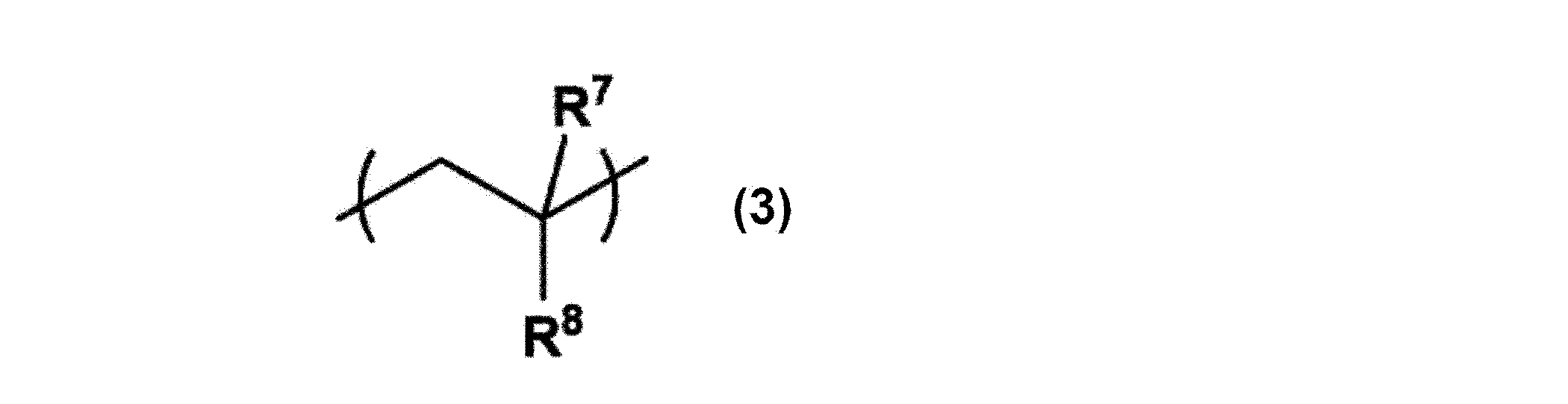
一般式(3)において、R7は、水素原子または炭素数1~8のアルキル基を示し、R8は、炭素数6~10のアリール基を示す。一般式(3)で表される繰り返し単位としては、スチレン、α-メチルスチレン、ビニルトルエン、ビニルナフタレンなどの芳香族ビニル系単量体由来の単位などが挙げられる。これらの中でも、熱安定性に優れ、配向複屈折を調節しやすいという観点から、R7が水素原子を示し、R8がフェニル基を示すこと、すなわちスチレン由来の単位が特に好ましい。
一般式(3)で表される繰り返し単位は、単一の種類でもよく、R7、R8が異なる複数の種類を含んでもよい。
グルタルイミド樹脂において、一般式(2)で表される繰り返し単位が、メタクリル酸メチル由来の単位であり、一般式(3)で表される繰り返し単位が、スチレン由来の単位であり、一般式(1)で表される繰り返し単位が、グルタルイミド単位であり、メタクリル酸メチル由来のカルボニル基がイミド化されたイミドカルボニル基を有することが好ましい。グルタルイミド樹脂がこのような繰り返し単位を有することで、配向複屈折および光弾性定数がよりゼロに近づくとともに、耐熱性も向上しやすい。
グルタルイミド樹脂は、配向複屈折が-0.5×10⁻³以上0.5×10⁻³以下であり、実質的に配向複屈折を有さない。配向複屈折が上述した範囲外の場合、グルタルイミド樹脂を射出成形して得られた光学部材の位相差が増加しやすくなる。配向複屈折は、-0.2×10⁻³以上0.2×10⁻³以下であることが好ましく、-0.1×10⁻³以上0.2×10⁻³以下であることがより好ましい。
本明細書において、特に断りのない限り、「配向複屈折」とは、グルタルイミド樹脂のガラス転移温度より5℃高い温度で、100%延伸した場合に発現する複屈折を意味する。配向複屈折(△nor)は、具体的には、△nor=nx-ny=Re/dで定義される。nxは、試験片の延伸軸(x軸)方向の屈折率を意味し、nyは、試験片の延伸軸と試験片面内において直交する軸(y軸)方向の屈折率を意味し、Reは試験片の面内位相差を意味し、dは試験片の厚みを意味する。本発明の1以上の実施態様において、配向複屈折(△nor)は、後述するとおり、複屈折計で測定することができる。
グルタルイミド樹脂は、光弾性定数が-3.0×10⁻¹²Pa-1以上3.0×10⁻¹²Pa-1以下であり、実質的に光弾性定数はゼロに近い。光弾性定数が上述した範囲外の場合、グルタルイミド樹脂を射出成形して得られた光学部材の位相差が経時的に増加しやすくなる。光弾性定数は、-2.0×10⁻¹²Pa-1以上2.0×10⁻¹²Pa-1以下であることが好ましく、-1.5×10⁻¹²Pa-1以上1.0×10⁻¹²Pa-1以下であることがより好ましい。
光弾性係数とは、等方性の固体に外力を加えて応力(ΔF)を起こさせると、一時的に光学異方性を呈し、複屈折(Δn)を示すようになるが、その応力と複屈折の比を光弾性係数(c)と呼び、c=Δn/ΔFで示される。本発明の1以上の実施態様において、後述するとおり、光弾性係数はセナルモン法により、23±2℃、50±5%RH(相対湿度)において、波長586.4nmにて測定することができる。
グルタルイミド樹脂は、ガラス転移温度が125℃以上であり、130℃以上であることが好ましく、135℃以上であることがより好ましく、140℃以上であることがさらに好ましく、145℃以上であることが特に好ましい。ガラス転移温度が上述した範囲内であると、耐熱性が高く、グルタルイミド樹脂を射出成形して得られた光学部材は、ゆがみなどが生じにくく、安定した光学的特性が得られやすい。
グルタルイミド樹脂は、耐熱性に優れ、安定した光学的特性を有する光学部材を得る観点から、5%重量減少温度が350℃以上であることが好ましく、365℃以上であることがより好ましく、375℃以上であることがさらに好ましい。本発明の1以上の実施態様において、5%重量減少温度は、熱重量分析(TGA)にて測定する。
グルタルイミド樹脂は、イミド化率が40%以上70%以下であることが好ましく、45%以上65%以下であることがより好ましく、50%以上65%以下であることがさらに好ましく、50%以上60%以下であることが特に好ましい。イミド化率が上述した範囲内であると、グルタルイミド樹脂を射出成形して得られた光学部材の成形初期の位相差が低く、かつ位相差の経時的な増加を抑制しやすく、耐熱性、透明性および加工性にも優れる。
グルタルイミド樹脂は、光学部材の吸湿を効果的に抑制する観点から、上記一般式(1)において、R3がメチル基であることが好ましい。このようなグルタルイミド樹脂は、後述するイミド化剤としてモノメチルアミンを使用することにより得ることができる。この場合、グルタルイミド樹脂のイミド化率は、45%以上65%以下であることがより好ましく、50%以上60%以下であることがさらに好ましい。イミド化率が上述した範囲内であると、グルタルイミド樹脂を射出成形して得られた光学部材の成形初期の位相差が低く、かつ位相差の経時的な増加を抑制しやすく、透明性および加工性にも優れる。
グルタルイミド樹脂は、光学部材の耐熱性をより高める観点から、上記一般式(1)において、R3が水素原子である繰り返し単位と、R3がメチル基である繰り返し単位とを含むこともまた好ましい。このようなグルタルイミド樹脂は、後述するイミド化剤としてアンモニアを使用することにより得ることができる。この場合、グルタルイミド樹脂のイミド化率は、40%以上70%以下であることがより好ましく、50%以上65%以下であることがさらに好ましい。イミド化率が上述した範囲内であると、グルタルイミド樹脂を射出成形して得られた光学部材の成形初期の位相差が低く、かつ位相差の経時的な増加を抑制しやすく、耐熱性、透明性および加工性にも優れる。
グルタルイミド樹脂は、耐熱性および透明性の観点から、一般式(1)で表される繰り返し単位を30重量%以上含むことが好ましく、30重量%以上60重量%以下含むことがより好ましく、35重量%以上55重量%以下含むことがさらに好ましい。
グルタルイミド樹脂は、耐熱性および透明性の観点から、一般式(2)で表される繰り返し単位を60重量%以下含むことが好ましく、25重量%以上60重量%以下含むことがより好ましく、30重量%以上55重量%以下含むことがさらに好ましい。
グルタルイミド樹脂は、光弾性係数、耐熱性、および機械的強度の観点から、一般式(3)で表される繰り返し単位を10重量%以上含むことが好ましく、10重量%以上25重量%以下含むことがより好ましく、10重量%以上20重量%以下含むことがさらに好ましい。
グルタルイミド樹脂は、本発明の目的を阻害しない範囲内で、上記一般式(1)~(3)で表される繰り返し単位に加えて、他の単位をさらに含んでもよいが、他の単位の含有量は、20重量%以下であることが好ましく、10重量%以下であることがより好ましく、5重量%以下であることがさらに好ましい。
他の単位としては、例えば、アクリルアミド、メタクリルアミドなどのアミド系単量体由来の単位;アクリロニトリル、メタクリロニトリルなどのニトリル系単量体由来の単位;マレイミド、N-メチルマレイミド、N-フェニルマレイミド、N-シクロヘキシルマレイミドなどのマレイミド系単量体由来の単位;などが挙げられる。これらの他の単位は、グルタルイミド樹脂中に、直接共重合されてもよいし、グラフト共重合されてもよい。
グルタルイミド樹脂は、特に限定されないが、重量平均分子量(Mw)が10000以上500000以下であることが好ましく、50000以上300000以下であることがより好ましく、50000以上200000以下であることがさらに好ましく、50000以上150000以下が特に好ましい。上記範囲内であれば、成形加工性および成形体の機械的強度が良好になるとともに、グルタルイミド樹脂を射出成形して得られた光学部材の位相差が低くなりやすい。
本発明の1以上の実施形態の光学部材は、特に限定されず、例えば、光学レンズ、光学カバーレンズ、液晶ディスプレイ、マイクロディスプレイ、液晶用導光板、光ファイバ、マイクロレンズアレイ、屈折率分布型レンズ、フレネルレンズ、プリズム、フレネルロム波長板、偏光ビームスプリッターなどが挙げられる。特に、高い画像品質が求められるVRレンズおよびARレンズを始めとする光学レンズ、および車載用ディスプレイなどのディスプレイに好適に適用することができる。特に、グルタルイミド樹脂がスチレン由来の繰り返し単位を有することで、屈折率が高くなり、高屈折率が求められる光学レンズに好適に用いることができる。
光学レンズとしては、例えば、球面レンズ、非球面レンズ、両凸レンズ、平凸レンズ、凸メニスカレンズ、両凹レンズ、平凹レンズ、凹メニスカレンズなどが挙げられる。
上記光学部材を用いた製品としては、例えば、ヘッドマウントディスプレイ、ARスマートグラス、スマートフォン、カメラ、プロジェクター、光コネクター、CDプレイヤー、DVDプレイヤー、MDプレイヤー、監視カメラ、光スイッチ、自動車ヘッドライト、自動車テールランプ、ヘッドアップディスプレイ、自動車メーターカバー、センターインフォメーションディスプレイ、カーナビゲーション装置、自動車用光学センサー、レーザー発振装置、フォトニック結晶デバイス、3Dホログラムディスプレイ、生体認証システム、量子暗号通信システム、光演算システム、半導体製造装置、人工衛星、望遠鏡、眼鏡、コンタクトレンズ、内視境用レンズ、道路透光板、ペアガラス用レンズ、照明用レンズ、照明カバーなどが挙げられる。
光学部材の形状は、特に限定されず、用途などに応じて適宜に設定することができる。本発明の1以上の実施形態において、光学部材は、応力を受けやすい形状でもよい。応力を発生しやすい形状として、例えば、厚みが厚い形状、厚みが不均一な形状、等方性がない形状、曲面を有する形状などが挙げられる。このような応力を受けやすい形状を有する場合でも、本発明の1以上の実施形態の光学部材は、成形初期の位相差が低く、かつ位相差の経時的な増加が抑制される。
光学部材の位相差の平均値が20nm以下であり、15nm以下であることが好ましく、10nm以下であることがより好ましく、5nm以下であることがさらに好ましい。これにより、光学部材の画像品質が向上する。本発明の1以上の実施形態において、「位相差の平均値」とは、光学部材の画像表示面における位相差の面積平均値を言う。本発明の1以上の実施形態において、「位相差の平均値」とは、後述するとおりに測定することができる。
光学部材は、画像品質の観点から、ゲート部の位相差が30nm以下であることが好ましく、25nm以下であることがより好ましく、20nm以下であることがさらに好ましく、15nm以下であることが特に好ましい。射出成形体において、通常、ゲート周辺部において位相差が高くなる傾向があるが、本発明の1以上の実施形態にでは、上述した配向複屈折が0に近似するグルタルイミド樹脂を射出成形したことで、ゲート部の位相差も低くなりやすい。本発明の1以上の実施形態において、ゲート部の位相差とは、後述するとおりに測定することができる。
光学部材の厚みは、特に限定されず、用途などに応じて適宜に設定することができる。光学レンズの場合、例えば、0.01mm以上100mm以下であってもよく、0.1mm以上50mm以下であってもよく、0.5mm以上30mm以下であってもよく、1mm以上20mm以下であってもよい。
光学部材の曲率半径は、特に限定されず、用途などに応じて適宜に設定することができる。光学レンズの場合、例えば、曲率半径は、0.1mm以上10000mm以下であってもよく、1mm以上500mm以下であってもよい。光学部材がディスプレイの場合、1mm以上50000mm以下であってもよく、10mm以上10000mm以下であってもよく、10mm以上5000mm以下であってもよい。
光学部材は、透明性に優れる観点から、全光線透過率が80%以上であることが好ましく、より好ましくは85%以上であり、さらに好ましくは90%以上である。また、透明性に優れる観点から、ヘイズは2.0%以下であることが好ましく、より好ましくは1.5%以下であり、さらに好ましくは1.0%以下である。本発明の1以上の実施形態において、全光線透過率は、後述するとおりに測定することができる。
光学部材は、耐熱性が高く、熱変形しにくい観点から、荷重撓み温度が120℃以上であることが好ましく、125℃以上であることがより好ましく、130℃以上であることがさらに好ましく、135℃以上であることが特に好ましい。本発明の1以上の実施形態において、荷重撓み温度は、後述するとおりに測定することができる。
光学部材は、高温高湿下における長期耐久性に優れる観点から、温度85℃、相対湿度85%雰囲気下で1000時間放置した後の寸法変化率が0.50%以下であることが好ましく、0.45%以下であることがより好ましく、0.40%以下であることがさらに好ましい。本発明の1以上の実施形態において、寸法変化率は、後述するとおりに測定することができる。
(光学部材の製造方法)
本発明の1以上の実施形態において、光学部材は、上記一般式(2)で表される繰り返し単位、および上記一般式(3)で表される繰り返し単位を含む共重合体(以下において、単に「(メタ)アクリル酸エステル-芳香族ビニル共重合体」とも記す)と、イミド化剤とを反応させ、得られたグルタルイミド樹脂を含む樹脂組成物を射出成形し、得られた射出成形体をアニール処理することで作製することができる。
本発明の1以上の実施形態において、光学部材は、上記一般式(2)で表される繰り返し単位、および上記一般式(3)で表される繰り返し単位を含む共重合体(以下において、単に「(メタ)アクリル酸エステル-芳香族ビニル共重合体」とも記す)と、イミド化剤とを反応させ、得られたグルタルイミド樹脂を含む樹脂組成物を射出成形し、得られた射出成形体をアニール処理することで作製することができる。
(メタ)アクリル酸エステル-芳香族ビニル共重合体において、(メタ)アクリル酸エステル系単量体および芳香族ビニル系単量体としては、上述したものを適宜用いることができる。(メタ)アクリル酸エステル-芳香族ビニル共重合としては、メタクリル酸メチル(単量体)由来の単位、スチレン(単量体)由来の単位(以下において、単に「スチレン単位」とも記す。)を含むメタクリル酸メチル-スチレン共重合体を好適に用いることができる。
まず、(メタ)アクリル酸エステル-芳香族ビニル共重合体(以下において、原料樹脂とも記す)を、イミド化剤と反応させてイミド化することでグルタルイミド樹脂を得る。
原料樹脂は、リニアー(線状)ポリマー、ブロックポリマー、コアシェルポリマー、分岐ポリマー、ラダーポリマー、架橋ポリマーのいずれであってもよい。ブロックポリマーは、A-B型、A-B-A型、またはこれら以外のいずれのタイプのブロックポリマーであってもよい。コアシェルポリマーは、一層のコアおよび一層のシェルのみからなるものであってもよく、コアおよびシェルのそれぞれが二層以上の多層であってもよい。
原料樹脂は、例えば、(メタ)アクリル酸エステル系単量体および芳香族ビニル系単量体を、乳化重合法、乳化-懸濁重合法、懸濁重合法、イオン重合法、塊状重合法、溶液重合法などの重合法で共重合させることで製造することができる。不純物が少ない観点から、塊状重合法又は溶液重合法等の連続重合法が好ましい。重合時に、必要に応じて、重合開始剤、連鎖移動剤、重合溶剤などが用いられる。重合開始剤、連鎖移動剤、重合溶剤としては、特に制限はなく、公知のものを使用することができる。
原料樹脂の製造方法として、例えば、特開昭57-149311号公報、特開昭57-153009号公報、特開平10-152505号公報、特開2004-27191号公報、国際公開第2009/41693号などに記載された製造方法が例示されるが、これらに限定されるものではない。
メタクリル酸メチル-スチレン共重合体などの原料樹脂は、特に限定されないが、重量平均分子量(Mw)が10000以上500000以下であることが好ましく、50000以上300000以下であることがより好ましく、50000以上200000以下であることがさらに好ましく、50000以上150000以下であることが特に好ましい。上記範囲内であれば、該原料樹脂をイミド化して得られたグルタルイミド樹脂の成形加工性および成形体の機械的強度が良好になるとともに、該グルタルイミド樹脂を射出成形して得られた光学部材の位相差が低くなりやすい。
メタクリル酸メチル-スチレン共重合体などの原料樹脂は、スチレン単位などの一般式(3)で表される繰り返し単位を10mol%超18mol%以下含むことが好ましく、10mol%超15mol%以下含むことがより好ましい。スチレン単位の含有量が上述した範囲内であると、該原料樹脂をイミド化したグルタルイミド樹脂は、耐熱性が高くなるとともに、配向複屈折および光弾性係数がゼロに近似する。
イミド化剤としては、原料樹脂をイミド化して上記一般式(1)で表される繰り返し単位を形成可能なものであれば特に制限されない。イミド化剤としては、例えば、アンモニア;メチルアミン、エチルアミン、n-プロピルアミン、イソプロピルアミン、n-ブチルアミン、イソブチルアミン、tert-ブチルアミン、n-ヘキシルアミンなどのモノアルキルアミン;シクロヘキシルアミンなどのモノシクロアルキルアミン;アニリン、トルイジン、トリクロロアニリンなどのモノアリールアミン;などが挙げられる。これらの中でも、グルタルイミド樹脂の配向複屈折および光弾性係数をゼロに近づける観点から、モノアルキルアミンおよびアンモニアが好ましく、モノメチルアミンおよびアンモニアがより好ましい。
メタクリル酸メチル-スチレン共重合体などの原料樹脂をモノアルキルアミンでイミド化したグルタルイミド樹脂は、耐吸水性に優れる。この場合、原料樹脂は、スチレン単位などの一般式(3)で表される繰り返し単位を10mol%超18mol%以下含むことが好ましく、10mol%超15mol%以下含むことがより好ましく、10mol%超13mol%以下含むことがさらに好ましい。
メタクリル酸メチル-スチレン共重合体などの原料樹脂をアンモニアでイミド化したグルタルイミド樹脂は、ガラス転移温度が高く、耐熱性により優れる。この場合、原料樹脂は、スチレン単位などの一般式(3)で表される繰り返し単位を10mol%超18mol%以下含むことが好ましく、12mol%以上16mol%以下含むことがより好ましい。
アンモニアとしては、アンモニア水を使用してもよい。アンモニア水の濃度は特に限定されないが、入手性および反応性を考慮すると25重量%以上35重量%以下が好ましい。
イミド化工程において、イミド化剤の添加割合を調整することにより、得られるグルタルイミド樹脂における一般式(1)で表される繰り返し単位、一般式(2)で表される繰り返し単位、および一般式(3)で表される繰り返し単位の割合を調整することができる。
イミド化剤は、光学部材の用途や要求される特性に応じて適宜調整することが可能であるが、例えば、耐熱性の観点から、メタクリル酸メチル-スチレン共重合体などの原料樹脂100重量部に対して、0.5重量部以上であることが好ましく、3重量部以上であることがより好ましい。イミド化剤の上限は特に限定されないが、例えば、ハンドリングの容易さから、メタクリル酸メチル-スチレン共重合体などの原料樹脂100重量部に対して、30重量部以下であることが好ましく、20重量部以下であることがより好ましい。
イミド化工程においては、イミド化剤に加えて、必要に応じて、閉環促進剤(触媒)を添加してもよい。
イミド化反応を実施するための方法は特に限定されず、従来公知の方法を用いることができる。例えば、押出機、または、バッチ式反応槽(圧力容器)を用いることでイミド化反応を進行させることができる。
押出機は特に限定されるものではなく、例えば、単軸押出機、二軸押出機または多軸押出機などを用いることができる。中でも、二軸押出機を用いることが好ましい。二軸押出機によれば、原料樹脂とイミド化剤(閉環促進剤を用いる場合は、イミド化剤および閉環促進剤)との混合を促進することができる。
二軸押出機としては、例えば、非噛合い型同方向回転式、噛合い型同方向回転式、非噛合い型異方向回転式、噛合い型異方向回転式などが挙げられる。中でも、噛合い型同方向回転式が好ましい。噛合い型同方向回転式の二軸押出機は、高速回転可能であるため、原料樹脂とイミド化剤(閉環促進剤を用いる場合は、イミド化剤および閉環促進剤)との混合を、より一層促進することができる。上記例示した押出機は、1種を単独で用いてもよいし、複数を直列に連結して用いてもよい。例えば、特開2008-273140号公報に記載のタンデム型反応押出機を用いることができる。
押出機中でイミド化反応を行う場合は、例えば、メタクリル酸メチル-スチレン共重合体などの原料樹脂を押出機の原料投入部から投入し、該樹脂を溶融させ、シリンダ内を充満させた後、添加ポンプを用いてイミド化剤を押出機中に注入することにより、押出機中でイミド化反応を進行させることができる。
この場合、押出機中での反応ゾーンの温度(樹脂温度)は、180℃以上270℃以下であることが好ましく、200℃以上250℃以下であることがより好ましい。反応ゾーンの温度が上述した範囲内であると、イミド化反応が進行しやすく、樹脂の分解も抑制することができ、得られたグルタルイミド樹脂を用いた光学部材の耐屈曲性が向上する。ここで、押出機中での反応ゾーンとは、押出機のシリンダにおいて、イミド化剤の注入位置から樹脂吐出口(ダイス部)までの間の領域をいう。
押出機の反応ゾーン内での反応時間は、特に限定されず、イミド反応が進行すればよいが、例えば、10秒以上であってもよく、30秒以上であってもよい。
押出機での樹脂圧力は、特に限定されないが、例えば、コストなどの観点から、大気圧以上50MPa以下であってもよく、1MPa以上30MPa以下であってもよい。
押出機に代えて、例えば住友重機械工業株式会社製のバイボラックのような横型二軸反応装置やスーパーブレンドのような竪型二軸撹拌槽などの高粘度対応の反応装置も好適に用いることができる。
グルタルイミド樹脂をバッチ式反応槽(圧力容器)を用いて製造する場合、そのバッチ式反応槽の構造は特に限定されない。具体的には、原料樹脂を加熱により溶融させ、撹拌することができ、イミド化剤(閉環促進剤を用いる場合は、イミド化剤および閉環促進剤)を添加することができる構造を有していればよいが、撹拌効率が良好な構造を有するものであることが好ましい。このようなバッチ式反応槽によれば、反応の進行により樹脂粘度が上昇し、撹拌が不十分となることを防止することができる。このような構造を有するバッチ式反応槽としては、例えば、住友重機械工業株式会社製の撹拌槽マックスブレンドなどが挙げられる。
イミド化方法の具体例としては、例えば、特開2008-273140号公報、特開2008-274187号公報に記載の方法など、公知の方法が挙げられる。グルタルイミド樹脂を原料樹脂として、さらにイミド化剤と反応させる工程を繰り返してもよい。
グルタルイミド樹脂を製造するにあたっては、イミド化工程に加えて、エステル化剤で処理するエステル化工程を含むことができる。このエステル化工程によって、イミド化工程にて副生した、樹脂中に含まれるカルボキシ基を、エステル基に変換することができる。これにより、グルタルイミド樹脂の酸価を所望の範囲内に調整することができる。
グルタルイミド樹脂の酸価は特に限定されないが、0.50mmol/g以下であることが好ましく、0.45mmol/g以下であることがより好ましい。下限は特に制限されないが、実質的に0mmol/gであること(検出限界以下であること)が特に好ましい。酸価が上記範囲内であれば、耐熱性、機械物性、および成形加工性のバランスに優れたグルタルイミド樹脂を得ることができる。グルタルイミド樹脂の酸価は、グルタルイミド樹脂0.3gを塩化メチレン37.5mLに溶解し、さらにメタノール37.5mLを加えた後、0.1mmol%の水酸化ナトリウム水溶液5mLとフェノールフタレインのエタノール溶液数滴を加えた後、0.1mmol%の塩酸を用いて逆滴定を行い、中和に要する塩酸の量から求めることができる。
エステル化剤としては特に限定されず、例えば、ジメチルカーボネート、2,2-ジメトキシプロパン、ジメチルスルホキシド、トリエチルオルトホルメート、トリメチルオルトアセテート、トリメチルオルトホルメート、ジフェニルカーボネート、ジメチルサルフェート、メチルトルエンスルホネート、メチルトリフルオロメチルスルホネート、メチルアセテート、メタノール、エタノール、メチルイソシアネート、p-クロロフェニルイソシアネート、ジメチルカルボジイミド、ジメチル-t-ブチルシリルクロライド、イソプロペニルアセテート、ジメチルウレア、テトラメチルアンモニウムハイドロオキサイド、ジメチルジエトキシシラン、テトラ-N-ブトキシシラン、ジメチル(トリメチルシラン)フォスファイト、トリメチルフォスファイト、トリメチルフォスフェート、トリクレジルフォスフェート、ジアゾメタン、エチレンオキサイド、プロピレンオキサイド、シクロヘキセンオキサイド、2-エチルヘキシルグリシジルエーテル、フェニルグリシジルエーテル、ベンジルグリシジルエーテルなどが挙げられる。これらの中でも、コスト、反応性などの観点から、ジメチルカーボネートおよびトリメチルオルトアセテートが好ましく、コストの観点から、ジメチルカーボネートがより好ましい。
エステル化剤の使用量は特に限定されないが、メタクリル酸メチル-スチレン共重合体などの原料樹脂100重量部に対して12重量部以下であってもよく、8重量部以下であってもよい。エステル化剤の使用量が上記範囲内であれば、グルタルイミド樹脂の酸価を適切な範囲に調整できる。
エステル化剤に加え、触媒を併用することもできる。触媒の種類は特に限定されないが、例えば、トリメチルアミン、トリエチルアミン、トリブチルアミンなどの脂肪族3級アミンが挙げられる。これらの中でもコスト、反応性などの観点からトリエチルアミンが好ましい。
エステル化工程は、イミド化工程と同様、例えば、押出機またはバッチ式反応槽を用いることで進行させることができる。
エステル化工程は、エステル化剤を使用せずに、加熱処理のみによって実施することもできる。当該加熱処理は、押出機内で溶融樹脂を混練および分散することで達成することができる。エステル化工程として加熱処理のみを行う場合、イミド化工程にて副生した樹脂中のカルボキシ基同士の脱水反応、および/または樹脂中のカルボキシ基と樹脂中のアルキルエステル基との脱アルコール反応などにより、上記カルボキシ基の一部または全部を酸無水物基とすることができる。このとき、閉環促進剤(触媒)を使用することも可能である。
エステル化剤を用いたエステル化工程においても、並行して、加熱処理による酸無水物基化を進行させることが可能である。
イミド化工程およびエステル化工程において、押出機を使用する場合は、押出機に大気圧以下に減圧可能なベント口を装着することが好ましい。このような構成によれば、未反応のイミド化剤、エステル化剤、メタノールなどの副生物、または、モノマー類などを除去することができる。
また、グルタルイミド樹脂中の異物低減を目的として、押出機の最後にフィルターを設置することも可能である。フィルターの前にはグルタルイミド樹脂を昇圧するためにギアポンプを設置した方が好ましい。フィルターの種類としては、溶融樹脂からの異物除去が可能なステンレス製のリーフディスクフィルターを使用するのが好ましく、フィルターエレメントとしては、ファイバータイプ、パウダータイプ、あるいはそれらの複合タイプを使用するのが好ましい。
次に、グルタルイミド樹脂を含むグルタルイミド樹脂組成物を射出成形して射出成形体を得る。通常、熱可塑性樹脂を射出成形または射出プレス形成して得られた成形体は、射出条件、金型形状、ゲート形状などによって配向や残留歪が生じ、配向複屈折が生じて位相差が高くなるが、本発明の1以上の実施形態においては、上記で得られたグルタルイミド樹脂を用いることで、形状や成形条件によらず、位相差が小さい射出成形体を得ることができる。
グルタルイミド樹脂組成物は、実質的にグルタルイミド樹脂のみからなるものでもよく、必要に応じて、本発明の目的を損なわない範囲で、グルタルイミド樹脂に加えて他の樹脂および添加剤などを含んでもよい。
添加剤としては、例えば、酸化防止剤、熱安定剤、光安定剤、紫外線吸収剤、ラジカル捕捉剤などの耐候性安定剤;触媒、可塑剤、滑剤、帯電防止剤、着色剤、収縮防止剤、抗菌剤、脱臭剤;などが挙げられる。これらは、1種を単独で用いてもよく、2種以上を組み合わせても用いてもよい。また、これらの添加剤は、予めグルタルイミド樹脂に添加して得られた混合物の状態で成形加工してもよく、グルタルイミド樹脂を成形加工する際に直接成形機に添加することも可能である。
他の樹脂としては、例えば、架橋弾性体などが挙げられる。これにより、グルタルイミド樹脂の機械的強度を向上させることができる。架橋弾性体としては、ゴム状重合体からなるコア層とガラス状重合体(硬質重合体)からなるシェル層とを有するコアシェル型弾性体が好ましい。ゴム状重合体からなるコア層は、最内層あるいは中間層としてガラス状重合体からなる層を一層以上有していてもよい。
射出成形は、一般的に公知の射出成形機などの装置を用いる成形方法であれば特に限定されない。射出成形機は、縦型でもよく、横型でもよい。射出成形では、一般に公知の成形技術を用いることもできる。射出成形は、成形ひずみを低減する観点から、射出プレス成形であってもよい。所定の形状を有する金型を用いることで、所定の形状を有する射出成形体を得ることができる。
光学部材は、形状、使用環境、用途などによっては、射出成形時に光学部材中に応力歪みが発生しやすい場合や外部応力をうけやすい場合がある。このような応力を発生しやすい形状として、例えば、厚みが厚い形状、厚みが不均一な形状、等方性がない形状、曲面を有する形状などが挙げられるが、本発明の1以上の実施形態では、上述したグルタルイミド樹脂を用いることで、光学部材の位相差を低減しやすい。
射出成形において、射出成形体の形状や寸法において成形条件を適宜決めればよい。例えば、シリンダ温度は、190℃以上290℃以下であってもよく、210℃以上280℃以下であってもよい。ノズル温度は、230℃以上300℃以下であってもよく、240℃以上290℃以下であってもよい。射出速度は、1mm/sec以上200mm/sec以下であってもよく、3mm/sec以上150mm/sec以下であってもよい。金型温度は、グルタルイミド樹脂のガラス転移温度(Tg)より小さくすることがよく、Tg-5℃以下であってもよく、Tg-10℃以下であってもよい。冷却時間は、10sec以上400sec以下であってもよく、30sec以上300sec以下であってもよい。
次に、射出成形体をアニーリング処理する。これにより、射出成形体の残留歪みを除去し、光学部材の位相差を低減することができる。アニーリング処理は、射出成形体を構成するグルタルイミド樹脂のTg付近で行うことができる。アニーリング処理は、例えば、(Tg-40℃)以上(Tg-5℃)以下で行ってもよく、(Tg-30℃)以上(Tg-10℃)以下で行ってもよく、(Tg-25℃)以上(Tg-15℃)以下で行ってもよい。
上記で得られた光学部材は、位相差(位相差の平均値)が低いとともに、温度23℃±2℃、相対湿度50%±5%の条件下で長期間保管した場合でも、位相差の増加が少ない。光学部材は、温度23℃±2℃、相対湿度50%±5%の条件下で29日間放置した際の位相差の変化率は20%以下であることが好ましく、15%以下であることがより好ましく、10%以下であることがさらに好ましく、5%以下であることが特に好ましい。
以下では、本発明を実施例に基づいてより具体的に説明する。なお、本発明は、下記の実施例に限定されない。以下で「部」および「%」は、特記ない限り、「重量部」および「重量%」を意味する。
まず、各種評価方法を説明する。
(平均分子量)
重量平均分子量Mwと数平均分子量Mnは、サイズ排除クロマトグラフィー(SEC)を用いた標準ポリスチレン換算法により算出した。測定装置としては、Waters社製GPCシステムを用いて、クロロホルムを移動相とし、カラム温度35℃の条件にて、樹脂濃度が0.04g/3.5mLである試料溶液を用いて測定した。
重量平均分子量Mwと数平均分子量Mnは、サイズ排除クロマトグラフィー(SEC)を用いた標準ポリスチレン換算法により算出した。測定装置としては、Waters社製GPCシステムを用いて、クロロホルムを移動相とし、カラム温度35℃の条件にて、樹脂濃度が0.04g/3.5mLである試料溶液を用いて測定した。
(イミド化率)
イミド化率の算出は、IR(赤外分光光度計)を用いて下記の通り行った。対象物のペレットを塩化メチレンに溶解し、その溶液について、SensIR Tecnologies社製TravelIRを用いて、室温(23±2℃)にてIRスペクトルを測定した。得られたIRスペクトルより、1720cm-1のエステルカルボニル基に帰属する吸収強度(Absester)と、1660cm-1のイミドカルボニル基に帰属する吸収強度(Absimide)との比から、エステルカルボニル基とイミドカルボニル基のモル吸光係数を同一とみなし、イミド化率(Im%(IR))を求めた。ここで、「イミド化率」とは、全カルボニル基中のイミドカルボニル基の占める割合をいう。
イミド化率の算出は、IR(赤外分光光度計)を用いて下記の通り行った。対象物のペレットを塩化メチレンに溶解し、その溶液について、SensIR Tecnologies社製TravelIRを用いて、室温(23±2℃)にてIRスペクトルを測定した。得られたIRスペクトルより、1720cm-1のエステルカルボニル基に帰属する吸収強度(Absester)と、1660cm-1のイミドカルボニル基に帰属する吸収強度(Absimide)との比から、エステルカルボニル基とイミドカルボニル基のモル吸光係数を同一とみなし、イミド化率(Im%(IR))を求めた。ここで、「イミド化率」とは、全カルボニル基中のイミドカルボニル基の占める割合をいう。
(メタクリル酸メチル-スチレン共重合体中のスチレン単位の含有量)
1H-NMR BRUKER AvanceIII(400MHz)を用いて、樹脂30mgを重クロロホルムに溶解し、樹脂の1H-NMR測定を行った。2.7~3.1ppm付近と3.4~3.7ppm付近の2つのピークからなるメタクリル酸メチルのOCH3プロトン由来のピークの面積を3で割った値Eと、6.8~7.3ppm付近のスチレンの芳香環由来のピークの面積を5で割った値Fより下記式で求めた。
スチレン単位の含有量(mol%)=(F/(E+F))×100
1H-NMR BRUKER AvanceIII(400MHz)を用いて、樹脂30mgを重クロロホルムに溶解し、樹脂の1H-NMR測定を行った。2.7~3.1ppm付近と3.4~3.7ppm付近の2つのピークからなるメタクリル酸メチルのOCH3プロトン由来のピークの面積を3で割った値Eと、6.8~7.3ppm付近のスチレンの芳香環由来のピークの面積を5で割った値Fより下記式で求めた。
スチレン単位の含有量(mol%)=(F/(E+F))×100
(ガラス転移温度)
グルタルイミド樹脂5mgを用いて、示差走査熱量計(DSC、株式会社日立ハイテクサイエンス製、示差走査熱量計DSC7020)を用いて、窒素雰囲気下、昇温速度10℃/minで測定し、中点法により決定した。
グルタルイミド樹脂5mgを用いて、示差走査熱量計(DSC、株式会社日立ハイテクサイエンス製、示差走査熱量計DSC7020)を用いて、窒素雰囲気下、昇温速度10℃/minで測定し、中点法により決定した。
(5%重量減少温度)
示差熱熱重量同時測定装置(TG/DTA、株式会社日立ハイテクサイエンス製、STA7200)を用いて、グルタルイミド樹脂5mgを、窒素雰囲気下、室温から10℃/minで昇温させ、グルタルイミド樹脂の熱減量(重量%)が5%になるときの温度を測定した。
示差熱熱重量同時測定装置(TG/DTA、株式会社日立ハイテクサイエンス製、STA7200)を用いて、グルタルイミド樹脂5mgを、窒素雰囲気下、室温から10℃/minで昇温させ、グルタルイミド樹脂の熱減量(重量%)が5%になるときの温度を測定した。
(配向複屈折)
グルタルイミド樹脂を、熱風乾燥機を用いて90℃で6時間乾燥した後、株式会社神藤金属工業所製の70Tプレス成形機(LM-L211A)を用いて、グルタルイミド樹脂のガラス転移温度より60℃高い温度で、0.5mm厚みのシートを作製した。得られたシートから、幅20mm、長さ100mmのサンプルを切り出し、延伸倍率100%で、ガラス転移温度より5℃高い温度で、延伸フィルムを作成した。この1軸2倍延伸フィルムのTD方向の中央部から40mm×20mmの試験片を切り出した。この試験片を、自動複屈折計(王子計測機器株式会社製「KOBRA-WR」)を用いて、温度23±2℃、相対湿度50±5%において、波長590nm、入射角40゜で面内位相差Reを測定した。面内位相差Reを、温度23℃±2℃、相対湿度50%±5%において、株式会社ミツトヨ製デジマティックインジケーターを用いて測定した試験片の厚みで割った値を配向複屈折とした。
グルタルイミド樹脂を、熱風乾燥機を用いて90℃で6時間乾燥した後、株式会社神藤金属工業所製の70Tプレス成形機(LM-L211A)を用いて、グルタルイミド樹脂のガラス転移温度より60℃高い温度で、0.5mm厚みのシートを作製した。得られたシートから、幅20mm、長さ100mmのサンプルを切り出し、延伸倍率100%で、ガラス転移温度より5℃高い温度で、延伸フィルムを作成した。この1軸2倍延伸フィルムのTD方向の中央部から40mm×20mmの試験片を切り出した。この試験片を、自動複屈折計(王子計測機器株式会社製「KOBRA-WR」)を用いて、温度23±2℃、相対湿度50±5%において、波長590nm、入射角40゜で面内位相差Reを測定した。面内位相差Reを、温度23℃±2℃、相対湿度50%±5%において、株式会社ミツトヨ製デジマティックインジケーターを用いて測定した試験片の厚みで割った値を配向複屈折とした。
(光弾性係数)
配向複屈折測定の時に作成したシートから2cm×9cmの短冊状に試験片を切り出した。この試験片を用い、自動複屈折計(王子計測機器株式会社製「KOBRA-WR」)を用いて、温度23±2℃、相対湿度50±5%において、波長586.4nmにて複屈折率を測定した。複屈折率の測定は、シートの一方を固定し、他方は無荷重および500gの荷重をかけた状態で行い、得られた結果から、単位応力による複屈折率の変化量を算出し、光弾性係数とした。
配向複屈折測定の時に作成したシートから2cm×9cmの短冊状に試験片を切り出した。この試験片を用い、自動複屈折計(王子計測機器株式会社製「KOBRA-WR」)を用いて、温度23±2℃、相対湿度50±5%において、波長586.4nmにて複屈折率を測定した。複屈折率の測定は、シートの一方を固定し、他方は無荷重および500gの荷重をかけた状態で行い、得られた結果から、単位応力による複屈折率の変化量を算出し、光弾性係数とした。
(全光線透過率)
試験片1を用いて、スガ試験機株式会社製ヘーズメーターHZ-V3を用いて、温度23℃±2℃、相対湿度50%±5%において、JIS K 7361に準じて全光線透過率を測定した。
試験片1を用いて、スガ試験機株式会社製ヘーズメーターHZ-V3を用いて、温度23℃±2℃、相対湿度50%±5%において、JIS K 7361に準じて全光線透過率を測定した。
(ヘイズ)
試験片1を用い、スガ試験機株式会社製ヘーズメーターHZ-V3にて、温度23℃±2℃、相対湿度50%±5%において、JIS K 7136に準じてヘイズを測定した。
試験片1を用い、スガ試験機株式会社製ヘーズメーターHZ-V3にて、温度23℃±2℃、相対湿度50%±5%において、JIS K 7136に準じてヘイズを測定した。
(荷重撓み温度)
試験片3を用い、株式会社安田精機製作所製ヒートディストーションテスター148-HDPCにて、ISO75規格に準拠して、荷重1.8MPaで荷重撓み温度を測定した。
試験片3を用い、株式会社安田精機製作所製ヒートディストーションテスター148-HDPCにて、ISO75規格に準拠して、荷重1.8MPaで荷重撓み温度を測定した。
(高温高湿による寸法変化率)
試験片2を温度23℃±2℃、相対湿度50%±5%で1日放置した。次に、小型恒温恒湿器(ESPEC社製、PL-3KP)を用いて、温度85℃、相対湿度85%雰囲気下で1000時間放置した。株式会社トプコン製測定顕微鏡(TMM-130D)を用いて、高温高湿条件下に放置前後の試験片の樹脂流動方向(MD)の寸法を測定し、寸法変化率(%)=放置後の寸法/放置前の寸法×100を算出した。
試験片2を温度23℃±2℃、相対湿度50%±5%で1日放置した。次に、小型恒温恒湿器(ESPEC社製、PL-3KP)を用いて、温度85℃、相対湿度85%雰囲気下で1000時間放置した。株式会社トプコン製測定顕微鏡(TMM-130D)を用いて、高温高湿条件下に放置前後の試験片の樹脂流動方向(MD)の寸法を測定し、寸法変化率(%)=放置後の寸法/放置前の寸法×100を算出した。
(位相差)
Photonic Lattice社製二次元複屈折評価システムWPA-200-Lを用いて、常温(23℃±2℃)において、測定波長543nmにて、画像表示面の位相差を測定し、位相差の平均値を算出した。具体的には、光学部材の画像表示面を位相差マッピングしてデジタルイメージを取得し、対象視野をピクセルに分割して、各ピクセルの位相差絶対値から数平均値を求めた。なお、位相差は、光学部材を温度23℃±2℃、相対湿度50%±5%で24時間放置した後に測定した。これは成形初期の位相差となる。また、光学部材が光学レンズの場合、図2に示すように、ゲート位置、レンズの半径をR、光学レンズの中心から距離をrとし、r=0、r=1/2R、r=4/5Rの位置における位相差を測定した。
Photonic Lattice社製二次元複屈折評価システムWPA-200-Lを用いて、常温(23℃±2℃)において、測定波長543nmにて、画像表示面の位相差を測定し、位相差の平均値を算出した。具体的には、光学部材の画像表示面を位相差マッピングしてデジタルイメージを取得し、対象視野をピクセルに分割して、各ピクセルの位相差絶対値から数平均値を求めた。なお、位相差は、光学部材を温度23℃±2℃、相対湿度50%±5%で24時間放置した後に測定した。これは成形初期の位相差となる。また、光学部材が光学レンズの場合、図2に示すように、ゲート位置、レンズの半径をR、光学レンズの中心から距離をrとし、r=0、r=1/2R、r=4/5Rの位置における位相差を測定した。
(経時的な位相差の変化率)
光学部材(光学レンズ)を、温度23℃±2℃、相対湿度50%±5%で29日間放置した後の画像表示面の位相差を測定し、位相差の平均値を算出した。具体的には、光学部材の画像表示面を位相差マッピングしてデジタルイメージを取得し、対象視野をピクセルに分割して、各ピクセルの位相差絶対値から数平均値を求めた。その後、成形初期の位相差P0および29日間放置後の位相差P1に基づいて、下記式で経時的な位相差の変化率を算出した。
位相差の変化率(%)=(P1-P0)/P0×100
光学部材(光学レンズ)を、温度23℃±2℃、相対湿度50%±5%で29日間放置した後の画像表示面の位相差を測定し、位相差の平均値を算出した。具体的には、光学部材の画像表示面を位相差マッピングしてデジタルイメージを取得し、対象視野をピクセルに分割して、各ピクセルの位相差絶対値から数平均値を求めた。その後、成形初期の位相差P0および29日間放置後の位相差P1に基づいて、下記式で経時的な位相差の変化率を算出した。
位相差の変化率(%)=(P1-P0)/P0×100
(吸水量)
光学部材(光学レンズ)の成形初期の重量(W0)および29日間放置後の重量(W1)を測定し、下記式より吸水率を測定した。
吸水率(%)=(W1ーW0)/W0×100
光学部材(光学レンズ)の成形初期の重量(W0)および29日間放置後の重量(W1)を測定し、下記式より吸水率を測定した。
吸水率(%)=(W1ーW0)/W0×100
(実施例1)
<グルタルイミド樹脂の製造>
40mmΦ完全噛合型同方向回転二軸押出反応機を用いて、樹脂を製造した。押出機に関しては直径40mm、L/D(押出機の長さLと直径Dの比)が90の同方向噛合型二軸押出機を使用し、定重量フィーダー(クボタ株式会社製CE-T-2E)を用いて、押出機原料供給口に原料樹脂を投入した。
原料樹脂としてメタクリル酸メチル-スチレン共重合体(Mw:9.5万、Mn:5.0万、スチレン単位11mol%、連続重合法)を使用し、イミド化剤としてモノメチルアミン(以下において、「mMA」とも記す)を用いて、グルタルイミド樹脂を製造した。この際、押出機の各温調ゾーンの設定温度を240℃、スクリュー回転数77rpm、メタクリル酸メチル-スチレン共重合体を20kg/hrで供給し、モノメチルアミンの供給量はメタクリル酸メチル-スチレン共重合体100部に対して8部とした。ホッパーからメタクリル酸メチル-スチレン共重合体を投入し、ニーディングブロックによって樹脂を溶融、充満させた後、ノズルからモノメチルアミンを注入した。反応ゾーンの末端にはシールリングを入れて樹脂を充満させた。反応後の副生成物および過剰のモノメチルアミンをベント口の圧力を-0.09MPaに減圧して脱揮した。押出機から吐出された樹脂(ストランド)は、冷却水槽で冷却した後、ペレタイザーでカッティングしペレットとした。ここで、押出機の内部の圧力確認、または押出変動を見極めるために、押出機出口に樹脂圧力計を設けた。
<射出成形>
上記で得られたグルタルイミド樹脂(ペレット)を、熱風乾燥機を用いて、温度90℃で6時間乾燥した後、下記表1に示す成形加工条件で射出成形を行い、各種試験片、光学レンズおよびディスプレイを作製した。射出成形体としては、日精樹脂工業株式会社製80トン射出成形機「FN-1000」を用いた。光学レンズは、図1~3に示す両面凸形レンズであり、レンズ半径Rは48mm、中心厚み(最大厚み)は9mm、端厚み(最小厚み)は1mm、上面曲率は0.0086mm、上面曲率半径は116.45mm、下面曲率は0.017mm、下面曲率半径は58.17mmである。車載ディスプレイは、図4~6に示す形状を有する。
<アニーリング処理>
射出成形体が試験片2、試験片3、または光学レンズである場合、グルタルイミド樹脂のガラス転移温度より15℃低い温度で4時間アニール処理した。
射出成形体が車載ディスプレイの場合、グルタルイミド樹脂のガラス転移温度より20℃低い温度で4時間アニール処理した。
<グルタルイミド樹脂の製造>
40mmΦ完全噛合型同方向回転二軸押出反応機を用いて、樹脂を製造した。押出機に関しては直径40mm、L/D(押出機の長さLと直径Dの比)が90の同方向噛合型二軸押出機を使用し、定重量フィーダー(クボタ株式会社製CE-T-2E)を用いて、押出機原料供給口に原料樹脂を投入した。
原料樹脂としてメタクリル酸メチル-スチレン共重合体(Mw:9.5万、Mn:5.0万、スチレン単位11mol%、連続重合法)を使用し、イミド化剤としてモノメチルアミン(以下において、「mMA」とも記す)を用いて、グルタルイミド樹脂を製造した。この際、押出機の各温調ゾーンの設定温度を240℃、スクリュー回転数77rpm、メタクリル酸メチル-スチレン共重合体を20kg/hrで供給し、モノメチルアミンの供給量はメタクリル酸メチル-スチレン共重合体100部に対して8部とした。ホッパーからメタクリル酸メチル-スチレン共重合体を投入し、ニーディングブロックによって樹脂を溶融、充満させた後、ノズルからモノメチルアミンを注入した。反応ゾーンの末端にはシールリングを入れて樹脂を充満させた。反応後の副生成物および過剰のモノメチルアミンをベント口の圧力を-0.09MPaに減圧して脱揮した。押出機から吐出された樹脂(ストランド)は、冷却水槽で冷却した後、ペレタイザーでカッティングしペレットとした。ここで、押出機の内部の圧力確認、または押出変動を見極めるために、押出機出口に樹脂圧力計を設けた。
<射出成形>
上記で得られたグルタルイミド樹脂(ペレット)を、熱風乾燥機を用いて、温度90℃で6時間乾燥した後、下記表1に示す成形加工条件で射出成形を行い、各種試験片、光学レンズおよびディスプレイを作製した。射出成形体としては、日精樹脂工業株式会社製80トン射出成形機「FN-1000」を用いた。光学レンズは、図1~3に示す両面凸形レンズであり、レンズ半径Rは48mm、中心厚み(最大厚み)は9mm、端厚み(最小厚み)は1mm、上面曲率は0.0086mm、上面曲率半径は116.45mm、下面曲率は0.017mm、下面曲率半径は58.17mmである。車載ディスプレイは、図4~6に示す形状を有する。
<アニーリング処理>
射出成形体が試験片2、試験片3、または光学レンズである場合、グルタルイミド樹脂のガラス転移温度より15℃低い温度で4時間アニール処理した。
射出成形体が車載ディスプレイの場合、グルタルイミド樹脂のガラス転移温度より20℃低い温度で4時間アニール処理した。
(実施例2)
<グルタルイミド樹脂の製造>
モノメチルアミンの供給量を原料樹脂100部に対して10部とした以外は、実施例1と同様にグルタルイミド樹脂を製造した。
<射出成形およびアニーリング処理>
上記で得られたグルタルイミド樹脂(ペレット)を用いた以外は、実施例1と同様に射出成形およびアニーリング処理を行った。
<グルタルイミド樹脂の製造>
モノメチルアミンの供給量を原料樹脂100部に対して10部とした以外は、実施例1と同様にグルタルイミド樹脂を製造した。
<射出成形およびアニーリング処理>
上記で得られたグルタルイミド樹脂(ペレット)を用いた以外は、実施例1と同様に射出成形およびアニーリング処理を行った。
(実施例3)
<グルタルイミド樹脂の製造>
原料樹脂としてメタクリル酸メチル-スチレン共重合体(Mw:9.5万、Mn:5.0万、スチレン単位13mol%、連続重合法)を使用し、モノメチルアミンの供給量を原料樹脂100部に対して12部とした以外は、実施例1と同様にグルタルイミド樹脂を製造した。
<射出成形およびアニーリング処理>
上記で得られたグルタルイミド樹脂(ペレット)を用いた以外は、実施例1と同様に射出成形およびアニーリング処理を行った。
<グルタルイミド樹脂の製造>
原料樹脂としてメタクリル酸メチル-スチレン共重合体(Mw:9.5万、Mn:5.0万、スチレン単位13mol%、連続重合法)を使用し、モノメチルアミンの供給量を原料樹脂100部に対して12部とした以外は、実施例1と同様にグルタルイミド樹脂を製造した。
<射出成形およびアニーリング処理>
上記で得られたグルタルイミド樹脂(ペレット)を用いた以外は、実施例1と同様に射出成形およびアニーリング処理を行った。
(実施例4)
<グルタルイミド樹脂の製造>
イミド化剤として、28重量%のアンモニア水(以下において、「NH3水」とも記す)を用いてグルタルイミド樹脂を製造した。この際、押出機最高温部温度を280℃、スクリュー回転数は100rpm、原料樹脂の供給量は10kg/hr、アンモニア水の供給量は原料樹脂100部に対して20.0部とした。上記以外は、実施例3と同様に行った。
<射出成形およびアニーリング処理>
上記で得られたグルタルイミド樹脂(ペレット)を用い、射出成形を下記表1に示す条件で行った以外は、実施例1と同様に射出成形およびアニーリング処理を行った。
<グルタルイミド樹脂の製造>
イミド化剤として、28重量%のアンモニア水(以下において、「NH3水」とも記す)を用いてグルタルイミド樹脂を製造した。この際、押出機最高温部温度を280℃、スクリュー回転数は100rpm、原料樹脂の供給量は10kg/hr、アンモニア水の供給量は原料樹脂100部に対して20.0部とした。上記以外は、実施例3と同様に行った。
<射出成形およびアニーリング処理>
上記で得られたグルタルイミド樹脂(ペレット)を用い、射出成形を下記表1に示す条件で行った以外は、実施例1と同様に射出成形およびアニーリング処理を行った。
(実施例5)
<グルタルイミド樹脂の製造>
原料樹脂としてメタクリル酸メチル-スチレン共重合体(Mw:9.5万、Mn:5.0万、スチレン単位15mol%、連続重合法)を使用した以外は、実施例4と同様にグルタルイミド樹脂を製造した。
<射出成形およびアニーリング処理>
上記で得られたグルタルイミド樹脂(ペレット)を用いた以外は、実施例4と同様に射出成形およびアニーリング処理を行った。
<グルタルイミド樹脂の製造>
原料樹脂としてメタクリル酸メチル-スチレン共重合体(Mw:9.5万、Mn:5.0万、スチレン単位15mol%、連続重合法)を使用した以外は、実施例4と同様にグルタルイミド樹脂を製造した。
<射出成形およびアニーリング処理>
上記で得られたグルタルイミド樹脂(ペレット)を用いた以外は、実施例4と同様に射出成形およびアニーリング処理を行った。
(比較例1)
<グルタルイミド樹脂の製造>
押出反応機を2台直列に並べたタンデム型反応押出機を用いて、樹脂を製造した。タンデム型反応押出機に関しては、第1押出機および第2押出機のいずれも直径75mm、L/D(押出機の長さLと直径Dの比)が74の同方向噛合型二軸押出機を使用し、定重量フィーダー(クボタ株式会社製)を用いて、第1押出機原料供給口に原料樹脂を供給した。第1押出機、第2押出機における各ベントの減圧度は-0.095MPaとした。直径38mm、長さ2mの配管で第1押出機と第2押出機を接続し、第1押出機の樹脂吐出口と第2押出機の原料供給口を接続する部品内圧力制御機構には定流圧力弁を用いた。第2押出機から吐出された樹脂(ストランド)は、冷却コンベアで冷却した後、ペレタイザーでカッティングしペレットとした。ここで、第1押出機の樹脂の吐出口と第2押出機の原料供給口とを接続する部品内圧力調整、または押出変動を見極めるために、第1押出機出口、第1押出機と第2押出機との接続部品中央部、第2押出機出口に樹脂圧力計を設けた。
第1押出機に関して、原料樹脂としてポリメタクリル酸メチル(Mw:10.5万、アクリル酸エステル単位0.1%未満、連続重合法)を使用し、イミド化剤として、モノメチルアミンを用いてイミド樹脂中間体を製造した。この際、押出機最高温部温度を280℃、スクリュー回転数は55rpm、原料樹脂の供給量は450kg/時間、モノメチルアミンの添加量は原料樹脂100部に対して2.0部とした。定流圧力弁は第2押出機原料供給口直前に設置し、第1押出機モノメチルアミン圧入部圧力を8MPaになるように調整した。
第2押出機において、リアベントおよび真空ベントで残存しているイミド化反応試剤および副生成物を脱揮したのち、エステル化剤として炭酸ジメチルとトリエチルアミンとの混合溶液を添加し、イミド樹脂を製造した。この際、押出機各バレル温度を260℃、スクリュー回転数は55rpm、炭酸ジメチルの添加量は原料樹脂100部に対して3.2部、トリエチルアミンの添加量は原料樹脂100部に対して0.8部とした。さらに、ベントでエステル化剤を除去した後、ストランドダイから押し出し、水槽で冷却した後、ペレタイザーでペレット化することで、グルタルイミド樹脂を得た。
<射出成形およびアニーリング処理>
上記で得られたグルタルイミド樹脂(ペレット)を用いた以外は、実施例1と同様に射出成形およびアニーリング処理を行った。
<グルタルイミド樹脂の製造>
押出反応機を2台直列に並べたタンデム型反応押出機を用いて、樹脂を製造した。タンデム型反応押出機に関しては、第1押出機および第2押出機のいずれも直径75mm、L/D(押出機の長さLと直径Dの比)が74の同方向噛合型二軸押出機を使用し、定重量フィーダー(クボタ株式会社製)を用いて、第1押出機原料供給口に原料樹脂を供給した。第1押出機、第2押出機における各ベントの減圧度は-0.095MPaとした。直径38mm、長さ2mの配管で第1押出機と第2押出機を接続し、第1押出機の樹脂吐出口と第2押出機の原料供給口を接続する部品内圧力制御機構には定流圧力弁を用いた。第2押出機から吐出された樹脂(ストランド)は、冷却コンベアで冷却した後、ペレタイザーでカッティングしペレットとした。ここで、第1押出機の樹脂の吐出口と第2押出機の原料供給口とを接続する部品内圧力調整、または押出変動を見極めるために、第1押出機出口、第1押出機と第2押出機との接続部品中央部、第2押出機出口に樹脂圧力計を設けた。
第1押出機に関して、原料樹脂としてポリメタクリル酸メチル(Mw:10.5万、アクリル酸エステル単位0.1%未満、連続重合法)を使用し、イミド化剤として、モノメチルアミンを用いてイミド樹脂中間体を製造した。この際、押出機最高温部温度を280℃、スクリュー回転数は55rpm、原料樹脂の供給量は450kg/時間、モノメチルアミンの添加量は原料樹脂100部に対して2.0部とした。定流圧力弁は第2押出機原料供給口直前に設置し、第1押出機モノメチルアミン圧入部圧力を8MPaになるように調整した。
第2押出機において、リアベントおよび真空ベントで残存しているイミド化反応試剤および副生成物を脱揮したのち、エステル化剤として炭酸ジメチルとトリエチルアミンとの混合溶液を添加し、イミド樹脂を製造した。この際、押出機各バレル温度を260℃、スクリュー回転数は55rpm、炭酸ジメチルの添加量は原料樹脂100部に対して3.2部、トリエチルアミンの添加量は原料樹脂100部に対して0.8部とした。さらに、ベントでエステル化剤を除去した後、ストランドダイから押し出し、水槽で冷却した後、ペレタイザーでペレット化することで、グルタルイミド樹脂を得た。
<射出成形およびアニーリング処理>
上記で得られたグルタルイミド樹脂(ペレット)を用いた以外は、実施例1と同様に射出成形およびアニーリング処理を行った。
(比較例2)
<グルタルイミド樹脂の製造>
原料樹脂としてメタクリル酸メチル-スチレン共重合体(Mw:10.5万、Mn:5.5万、スチレン単位5mol%、連続重合法)を使用し、モノメチルアミンの供給量を原料樹脂100部に対して8部とした以外は、実施例1と同様にグルタルイミド樹脂を製造した。
<射出成形およびアニーリング処理>
上記で得られたグルタルイミド樹脂(ペレット)を用いた以外は、実施例1と同様に射出成形およびアニーリング処理を行った。
<グルタルイミド樹脂の製造>
原料樹脂としてメタクリル酸メチル-スチレン共重合体(Mw:10.5万、Mn:5.5万、スチレン単位5mol%、連続重合法)を使用し、モノメチルアミンの供給量を原料樹脂100部に対して8部とした以外は、実施例1と同様にグルタルイミド樹脂を製造した。
<射出成形およびアニーリング処理>
上記で得られたグルタルイミド樹脂(ペレット)を用いた以外は、実施例1と同様に射出成形およびアニーリング処理を行った。
(比較例3)
<グルタルイミド樹脂の製造>
原料樹脂としてメタクリル酸メチル-スチレン共重合体(Mw:10.5万、Mn:5.5万、スチレン単位20mol%、連続重合法)を使用し、モノメチルアミンの供給量を原料樹脂100部に対して13部とした以外は、実施例1と同様にグルタルイミド樹脂を製造した。
<射出成形およびアニーリング処理>
上記で得られたグルタルイミド樹脂(ペレット)を用いた以外は、実施例1と同様に射出成形およびアニーリング処理を行った。
<グルタルイミド樹脂の製造>
原料樹脂としてメタクリル酸メチル-スチレン共重合体(Mw:10.5万、Mn:5.5万、スチレン単位20mol%、連続重合法)を使用し、モノメチルアミンの供給量を原料樹脂100部に対して13部とした以外は、実施例1と同様にグルタルイミド樹脂を製造した。
<射出成形およびアニーリング処理>
上記で得られたグルタルイミド樹脂(ペレット)を用いた以外は、実施例1と同様に射出成形およびアニーリング処理を行った。
(比較例4)
<グルタルイミド樹脂の製造>
原料樹脂としてメタクリル酸メチル-スチレン共重合体(Mw:10.5万、Mn:5.5万、スチレン単位20mol%、連続重合法)を使用した以外は、実施例4と同様にグルタルイミド樹脂を製造した。
<射出成形およびアニーリング処理>
上記で得られたグルタルイミド樹脂(ペレット)を用い、射出成形を下記表1に示す条件で行った以外は、実施例1と同様に射出成形およびアニーリング処理を行った。
<グルタルイミド樹脂の製造>
原料樹脂としてメタクリル酸メチル-スチレン共重合体(Mw:10.5万、Mn:5.5万、スチレン単位20mol%、連続重合法)を使用した以外は、実施例4と同様にグルタルイミド樹脂を製造した。
<射出成形およびアニーリング処理>
上記で得られたグルタルイミド樹脂(ペレット)を用い、射出成形を下記表1に示す条件で行った以外は、実施例1と同様に射出成形およびアニーリング処理を行った。
実施例および比較例において、グルタルイミド樹脂および光学部材を上述した評価方法で評価し、その結果を下記表2および表3に示した。

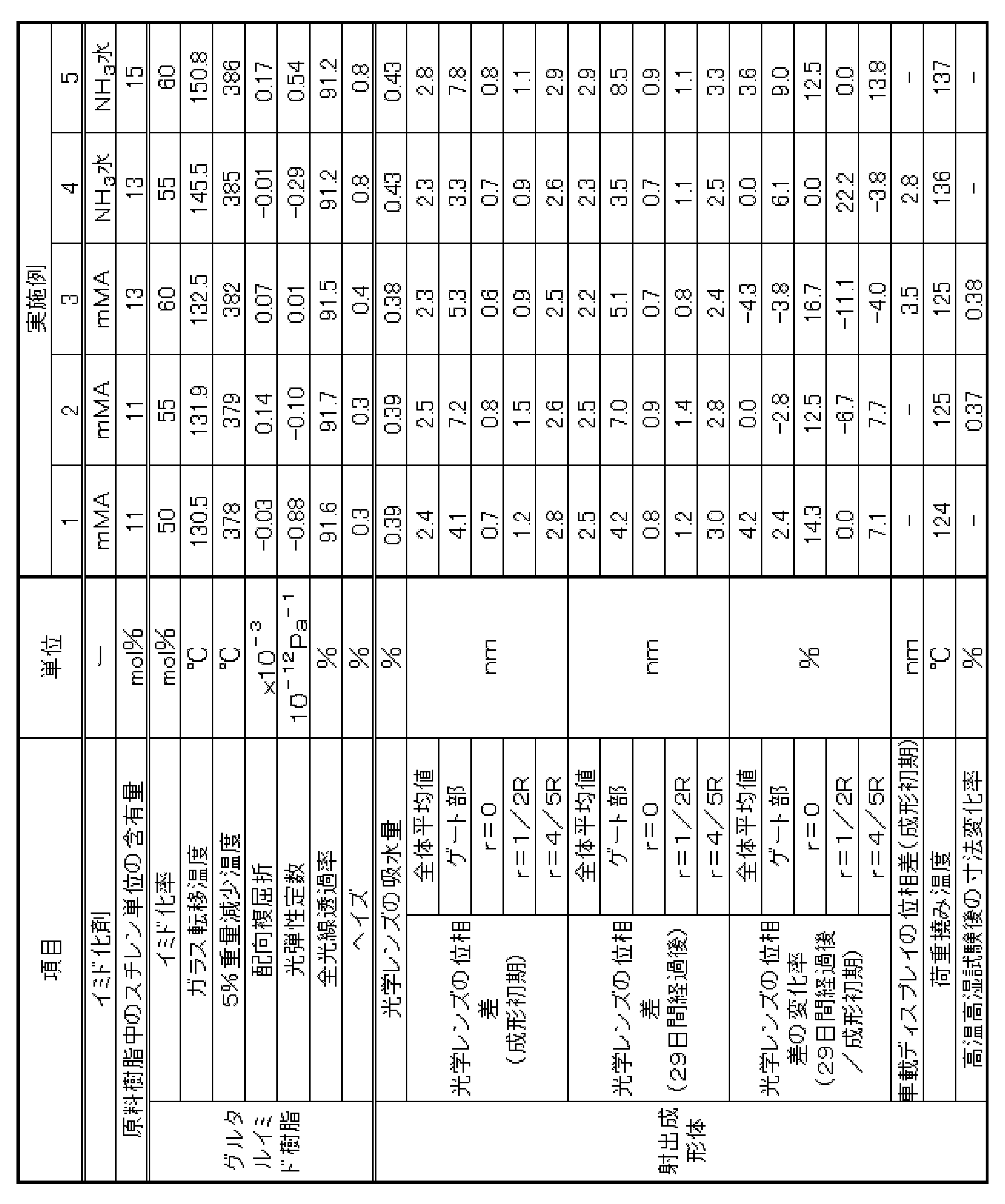
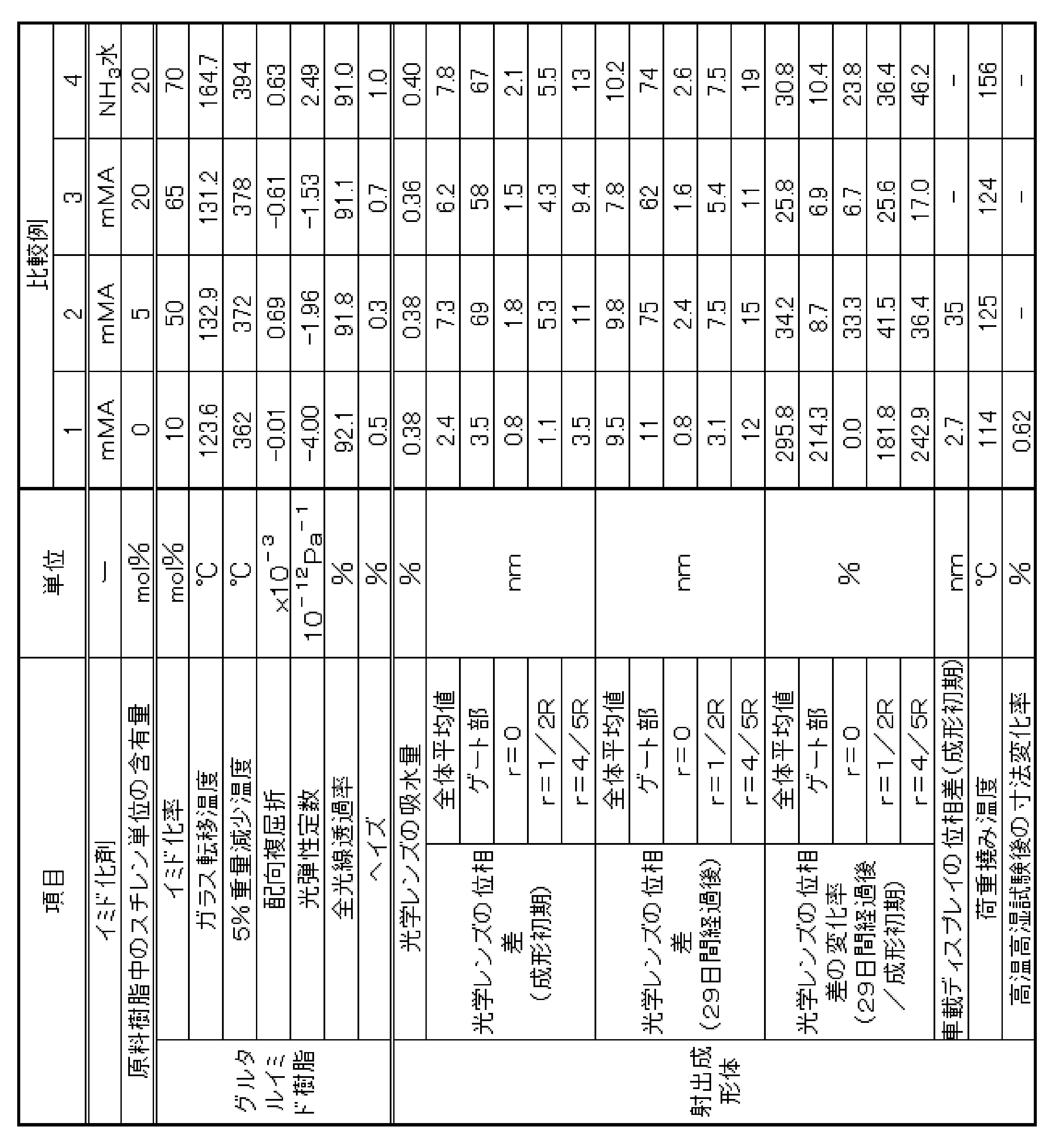
表2および表3から分かるように、実施例の場合、射出形成体は成形初期の位相差が低く、ゲート部の位相差も低い。さらに、長期間放置した後の位相差の増加が抑制されていた。
一方、スチレン単位を含まず、ガラス転移温度が125℃未満であり、光弾性係数の絶対値が3.0×10⁻¹²Pa-1より大きい比較例1の場合、射出成形体は成形初期の位相差が低いものの、長時間放置した際、位相差が大きく増加していた。また、光弾性係数の絶対値が大きく、配向複屈折の絶対値が0.5×10⁻³より大きい比較例2~4の場合、射出形成体はゲート部の位相差が高く、成形初期の位相差が低いものの、長期間放置した際、位相差が大きく増加していた。
一方、スチレン単位を含まず、ガラス転移温度が125℃未満であり、光弾性係数の絶対値が3.0×10⁻¹²Pa-1より大きい比較例1の場合、射出成形体は成形初期の位相差が低いものの、長時間放置した際、位相差が大きく増加していた。また、光弾性係数の絶対値が大きく、配向複屈折の絶対値が0.5×10⁻³より大きい比較例2~4の場合、射出形成体はゲート部の位相差が高く、成形初期の位相差が低いものの、長期間放置した際、位相差が大きく増加していた。
Claims (11)
- 射出成形体で構成される光学部材であって、
前記射出成形体は、グルタルイミド樹脂を含み、
前記グルタルイミド樹脂は、下記一般式(1)で表される繰り返し単位、下記一般式(2)で表される繰り返し単位、および下記一般式(3)で表される繰り返し単位を含み、
前記グルタルイミド樹脂は、配向複屈折が-0.5×10⁻³以上0.5×10⁻³以下であり、光弾性定数が-3.0×10⁻¹²Pa-1以上3.0×10⁻¹²Pa-1以下であり、かつガラス転移温度が125℃以上であり、
前記光学部材は、位相差の平均値が20nm以下である、光学部材。

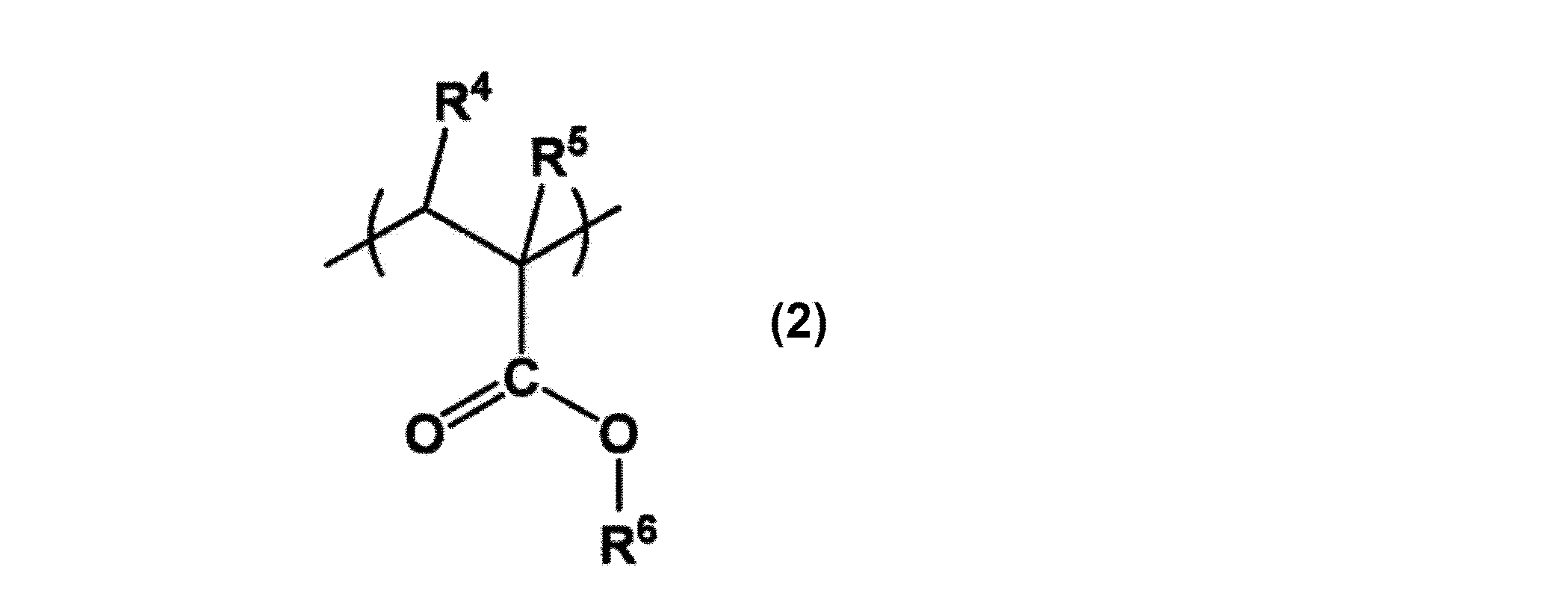
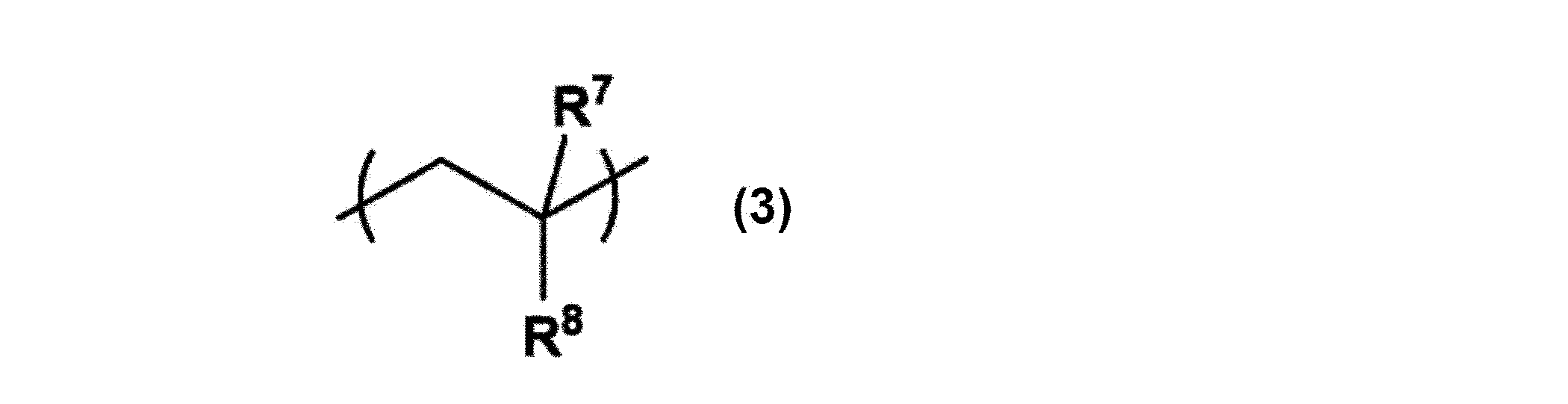
- 前記グルタルイミド樹脂は、5%重量減少温度が350℃以上である、請求項1に記載の光学部材。
- 前記グルタルイミド樹脂は、イミド化率が40%以上70%以下である、請求項1または2に記載の光学部材。
- 前記グルタルイミド樹脂は、前記一般式(1)におけるR3がメチル基であり、かつイミド化率が45%以上65%以下である、請求項1または2に記載の光学部材。
- 前記グルタルイミド樹脂は、前記一般式(1)におけるR3が水素原子である繰り返し単位と、前記一般式(1)におけるR3がメチル基である繰り返し単位とを含み、かつイミド化率が40%以上70%以下である、請求項1または2に記載の光学部材。
- 前記光学部材は、ゲート部の位相差が30nm以下である、請求項1~5のいずれかに記載の光学部材。
- 前記光学部材は、光学レンズ又は車載ディスプレイである、請求項1~6のいずれかに記載の光学部材。
- 請求項1~7のいずれかに記載の光学部材の製造方法であって、
下記一般式(2)で表される繰り返し単位、および下記一般式(3)で表される繰り返し単位を含む共重合体と、イミド化剤とを反応させてグルタルイミド樹脂を得る工程、
前記グルタルイミド樹脂を含むグルタルイミド樹脂組成物を射出成形して射出成形体を得る工程、および
前記射出成形体をアニール処理する工程を含む、光学部材の製造方法。
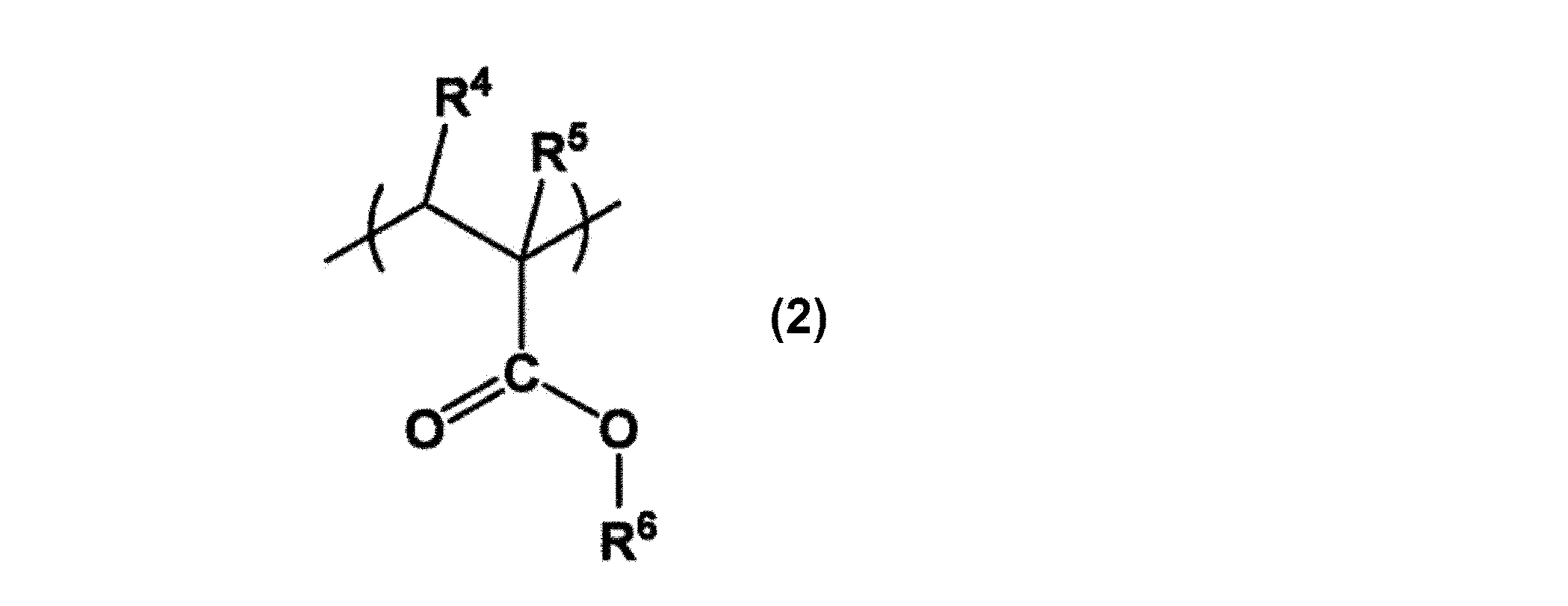
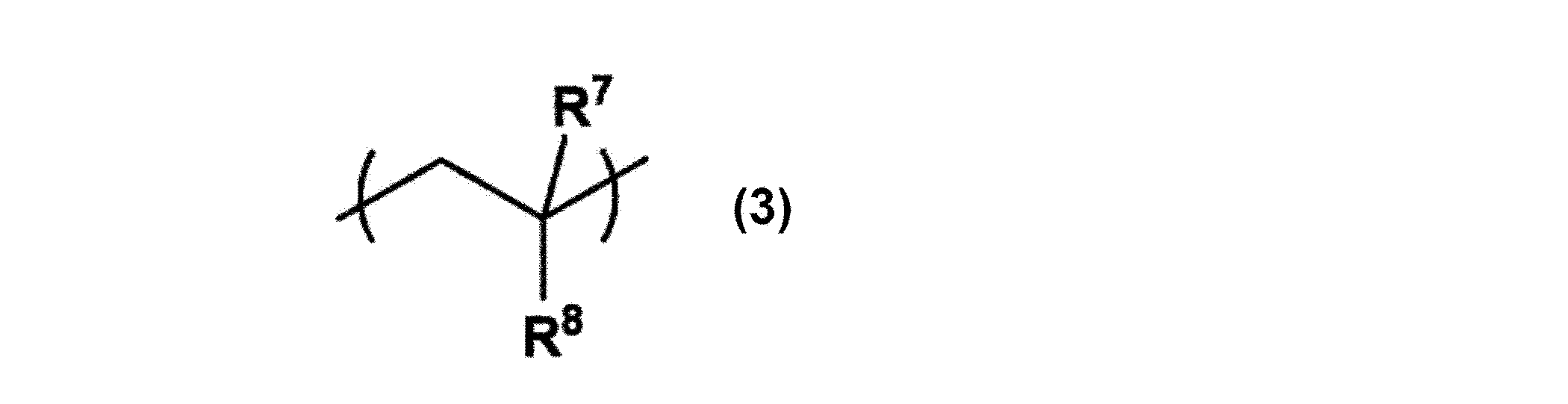
- 前記共重合体は、前記一般式(3)で表される繰り返し単位を10mol%超18mol%以下含む、請求項8に記載の光学部材の製造方法。
- 前記イミド化剤は、モノメチルアミンまたはアンモニアである、請求項8または9に記載の光学部材の製造方法。
- 前記アニール処理後の射出成形品において、温度23±2℃かつ相対湿度50±5%で24時間放置した後に測定した位相差の平均値をP0とし、温度23±2℃かつ相対湿度50±5%で29日間放置した後に測定した位相差の平均値をP1とした場合、下記式:
位相差の変化率(%)=(P1-P0)/P0×100
で表される位相差の変化率が20%以下である、請求項8~10のいずれかに記載の光学部材の製造方法。
Priority Applications (2)
| Application Number | Priority Date | Filing Date | Title |
|---|---|---|---|
| CN202280021755.2A CN117043642A (zh) | 2021-03-16 | 2022-03-14 | 光学构件及其制造方法 |
| US18/368,766 US20240002566A1 (en) | 2021-03-16 | 2023-09-15 | Optical member and method for producing same |
Applications Claiming Priority (2)
| Application Number | Priority Date | Filing Date | Title |
|---|---|---|---|
| JP2021-042744 | 2021-03-16 | ||
| JP2021042744 | 2021-03-16 |
Related Child Applications (1)
| Application Number | Title | Priority Date | Filing Date |
|---|---|---|---|
| US18/368,766 Continuation US20240002566A1 (en) | 2021-03-16 | 2023-09-15 | Optical member and method for producing same |
Publications (1)
| Publication Number | Publication Date |
|---|---|
| WO2022196644A1 true WO2022196644A1 (ja) | 2022-09-22 |
Family
ID=83320390
Family Applications (1)
| Application Number | Title | Priority Date | Filing Date |
|---|---|---|---|
| PCT/JP2022/011370 Ceased WO2022196644A1 (ja) | 2021-03-16 | 2022-03-14 | 光学部材およびその製造方法 |
Country Status (4)
| Country | Link |
|---|---|
| US (1) | US20240002566A1 (ja) |
| JP (1) | JP2022142765A (ja) |
| CN (1) | CN117043642A (ja) |
| WO (1) | WO2022196644A1 (ja) |
Citations (8)
| Publication number | Priority date | Publication date | Assignee | Title |
|---|---|---|---|---|
| JP2002338702A (ja) * | 2001-05-11 | 2002-11-27 | Kanegafuchi Chem Ind Co Ltd | 透明フィルム |
| WO2005054311A1 (ja) * | 2003-12-02 | 2005-06-16 | Kaneka Corporation | イミド樹脂、並びにその製造方法及び利用 |
| JP2010270162A (ja) * | 2009-04-22 | 2010-12-02 | Kaneka Corp | 光学用フィルム |
| JP2012008248A (ja) * | 2010-06-23 | 2012-01-12 | Nippon Shokubai Co Ltd | 位相差フィルムの製造方法 |
| WO2012114718A1 (ja) * | 2011-02-21 | 2012-08-30 | 株式会社カネカ | アクリル系樹脂フィルム |
| WO2014002491A1 (ja) * | 2012-06-26 | 2014-01-03 | 株式会社カネカ | 非複屈折性樹脂材料、およびフィルム |
| WO2015098980A1 (ja) * | 2013-12-27 | 2015-07-02 | 株式会社カネカ | 光学用熱可塑性樹脂、および成形体 |
| US20170052286A1 (en) * | 2015-08-17 | 2017-02-23 | Ripclear Llc | Lens protection systems |
Family Cites Families (2)
| Publication number | Priority date | Publication date | Assignee | Title |
|---|---|---|---|---|
| US10597524B2 (en) * | 2015-11-20 | 2020-03-24 | Asahi Kasei Kabushiki Kaisha | Methacrylic resin, methacrylic resin composition, film, and production method |
| JP7294921B2 (ja) * | 2018-07-13 | 2023-06-20 | 旭化成株式会社 | メタクリル系樹脂、成形体、光学部品又は自動車部品 |
-
2022
- 2022-03-14 CN CN202280021755.2A patent/CN117043642A/zh active Pending
- 2022-03-14 WO PCT/JP2022/011370 patent/WO2022196644A1/ja not_active Ceased
- 2022-03-14 JP JP2022039359A patent/JP2022142765A/ja active Pending
-
2023
- 2023-09-15 US US18/368,766 patent/US20240002566A1/en active Pending
Patent Citations (8)
| Publication number | Priority date | Publication date | Assignee | Title |
|---|---|---|---|---|
| JP2002338702A (ja) * | 2001-05-11 | 2002-11-27 | Kanegafuchi Chem Ind Co Ltd | 透明フィルム |
| WO2005054311A1 (ja) * | 2003-12-02 | 2005-06-16 | Kaneka Corporation | イミド樹脂、並びにその製造方法及び利用 |
| JP2010270162A (ja) * | 2009-04-22 | 2010-12-02 | Kaneka Corp | 光学用フィルム |
| JP2012008248A (ja) * | 2010-06-23 | 2012-01-12 | Nippon Shokubai Co Ltd | 位相差フィルムの製造方法 |
| WO2012114718A1 (ja) * | 2011-02-21 | 2012-08-30 | 株式会社カネカ | アクリル系樹脂フィルム |
| WO2014002491A1 (ja) * | 2012-06-26 | 2014-01-03 | 株式会社カネカ | 非複屈折性樹脂材料、およびフィルム |
| WO2015098980A1 (ja) * | 2013-12-27 | 2015-07-02 | 株式会社カネカ | 光学用熱可塑性樹脂、および成形体 |
| US20170052286A1 (en) * | 2015-08-17 | 2017-02-23 | Ripclear Llc | Lens protection systems |
Also Published As
| Publication number | Publication date |
|---|---|
| US20240002566A1 (en) | 2024-01-04 |
| CN117043642A (zh) | 2023-11-10 |
| JP2022142765A (ja) | 2022-09-30 |
Similar Documents
| Publication | Publication Date | Title |
|---|---|---|
| US9273208B2 (en) | Acrylic resin film | |
| US10035888B2 (en) | Non-birefringent resin material and film | |
| US10597525B2 (en) | Resin composition and film thereof | |
| JP5636165B2 (ja) | 光学フィルム | |
| JP2010284840A (ja) | コーティング層が付与されたフィルム、偏光子保護フィルム、及び、それを用いてなる偏光板 | |
| CN108884292A (zh) | 树脂组合物、其成型体和膜 | |
| JP5746387B2 (ja) | 光学用フィルム | |
| JP5574787B2 (ja) | 樹脂組成物及びその製造方法、成型体、フィルム、光学用フィルム、偏光子保護フィルム、偏光板 | |
| US10174191B2 (en) | Resin material and film thereof | |
| JP6310351B2 (ja) | 光学フィルム | |
| JP6591151B2 (ja) | 光学フィルム | |
| JP4961164B2 (ja) | イミド樹脂およびその製造方法、これを用いる光学用樹脂組成物、成形体 | |
| WO2022196644A1 (ja) | 光学部材およびその製造方法 | |
| JP7779857B2 (ja) | グルタルイミド樹脂 | |
| JP7779856B2 (ja) | グルタルイミド樹脂 | |
| JP5553580B2 (ja) | 樹脂組成物、成型体、光学用フィルム、偏光子保護フィルム、偏光板 | |
| JP5400296B2 (ja) | 樹脂組成物 | |
| JP7648852B2 (ja) | アクリル系樹脂フィルム、偏光板、及び、液晶表示パネル | |
| JP4768981B2 (ja) | 耐熱性イミド樹脂またはこの製造方法 | |
| WO2022168936A1 (ja) | イミド構造含有アクリル系樹脂の製造方法 | |
| CN116507649A (zh) | 戊二酰亚胺树脂 | |
| JP2012153782A (ja) | イミド樹脂の製造方法 |
Legal Events
| Date | Code | Title | Description |
|---|---|---|---|
| 121 | Ep: the epo has been informed by wipo that ep was designated in this application |
Ref document number: 22771390 Country of ref document: EP Kind code of ref document: A1 |
|
| WWE | Wipo information: entry into national phase |
Ref document number: 202280021755.2 Country of ref document: CN |
|
| NENP | Non-entry into the national phase |
Ref country code: DE |
|
| 122 | Ep: pct application non-entry in european phase |
Ref document number: 22771390 Country of ref document: EP Kind code of ref document: A1 |