WO2022181403A1 - 感光性着色樹脂組成物、硬化物、カラーフィルタ、及び表示装置 - Google Patents
感光性着色樹脂組成物、硬化物、カラーフィルタ、及び表示装置 Download PDFInfo
- Publication number
- WO2022181403A1 WO2022181403A1 PCT/JP2022/006063 JP2022006063W WO2022181403A1 WO 2022181403 A1 WO2022181403 A1 WO 2022181403A1 JP 2022006063 W JP2022006063 W JP 2022006063W WO 2022181403 A1 WO2022181403 A1 WO 2022181403A1
- Authority
- WO
- WIPO (PCT)
- Prior art keywords
- group
- resin composition
- mass
- colored resin
- general formula
- Prior art date
- Legal status (The legal status is an assumption and is not a legal conclusion. Google has not performed a legal analysis and makes no representation as to the accuracy of the status listed.)
- Ceased
Links
Images


Classifications
-
- G—PHYSICS
- G02—OPTICS
- G02B—OPTICAL ELEMENTS, SYSTEMS OR APPARATUS
- G02B5/00—Optical elements other than lenses
- G02B5/20—Filters
-
- G—PHYSICS
- G02—OPTICS
- G02F—OPTICAL DEVICES OR ARRANGEMENTS FOR THE CONTROL OF LIGHT BY MODIFICATION OF THE OPTICAL PROPERTIES OF THE MEDIA OF THE ELEMENTS INVOLVED THEREIN; NON-LINEAR OPTICS; FREQUENCY-CHANGING OF LIGHT; OPTICAL LOGIC ELEMENTS; OPTICAL ANALOGUE/DIGITAL CONVERTERS
- G02F1/00—Devices or arrangements for the control of the intensity, colour, phase, polarisation or direction of light arriving from an independent light source, e.g. switching, gating or modulating; Non-linear optics
- G02F1/01—Devices or arrangements for the control of the intensity, colour, phase, polarisation or direction of light arriving from an independent light source, e.g. switching, gating or modulating; Non-linear optics for the control of the intensity, phase, polarisation or colour
- G02F1/13—Devices or arrangements for the control of the intensity, colour, phase, polarisation or direction of light arriving from an independent light source, e.g. switching, gating or modulating; Non-linear optics for the control of the intensity, phase, polarisation or colour based on liquid crystals, e.g. single liquid crystal display cells
- G02F1/133—Constructional arrangements; Operation of liquid crystal cells; Circuit arrangements
- G02F1/1333—Constructional arrangements; Manufacturing methods
- G02F1/1335—Structural association of cells with optical devices, e.g. polarisers or reflectors
-
- G—PHYSICS
- G03—PHOTOGRAPHY; CINEMATOGRAPHY; ANALOGOUS TECHNIQUES USING WAVES OTHER THAN OPTICAL WAVES; ELECTROGRAPHY; HOLOGRAPHY
- G03F—PHOTOMECHANICAL PRODUCTION OF TEXTURED OR PATTERNED SURFACES, e.g. FOR PRINTING, FOR PROCESSING OF SEMICONDUCTOR DEVICES; MATERIALS THEREFOR; ORIGINALS THEREFOR; APPARATUS SPECIALLY ADAPTED THEREFOR
- G03F7/00—Photomechanical, e.g. photolithographic, production of textured or patterned surfaces, e.g. printing surfaces; Materials therefor, e.g. comprising photoresists; Apparatus specially adapted therefor
- G03F7/004—Photosensitive materials
-
- G—PHYSICS
- G03—PHOTOGRAPHY; CINEMATOGRAPHY; ANALOGOUS TECHNIQUES USING WAVES OTHER THAN OPTICAL WAVES; ELECTROGRAPHY; HOLOGRAPHY
- G03F—PHOTOMECHANICAL PRODUCTION OF TEXTURED OR PATTERNED SURFACES, e.g. FOR PRINTING, FOR PROCESSING OF SEMICONDUCTOR DEVICES; MATERIALS THEREFOR; ORIGINALS THEREFOR; APPARATUS SPECIALLY ADAPTED THEREFOR
- G03F7/00—Photomechanical, e.g. photolithographic, production of textured or patterned surfaces, e.g. printing surfaces; Materials therefor, e.g. comprising photoresists; Apparatus specially adapted therefor
- G03F7/004—Photosensitive materials
- G03F7/027—Non-macromolecular photopolymerisable compounds having carbon-to-carbon double bonds, e.g. ethylenic compounds
-
- G—PHYSICS
- G03—PHOTOGRAPHY; CINEMATOGRAPHY; ANALOGOUS TECHNIQUES USING WAVES OTHER THAN OPTICAL WAVES; ELECTROGRAPHY; HOLOGRAPHY
- G03F—PHOTOMECHANICAL PRODUCTION OF TEXTURED OR PATTERNED SURFACES, e.g. FOR PRINTING, FOR PROCESSING OF SEMICONDUCTOR DEVICES; MATERIALS THEREFOR; ORIGINALS THEREFOR; APPARATUS SPECIALLY ADAPTED THEREFOR
- G03F7/00—Photomechanical, e.g. photolithographic, production of textured or patterned surfaces, e.g. printing surfaces; Materials therefor, e.g. comprising photoresists; Apparatus specially adapted therefor
- G03F7/004—Photosensitive materials
- G03F7/027—Non-macromolecular photopolymerisable compounds having carbon-to-carbon double bonds, e.g. ethylenic compounds
- G03F7/028—Non-macromolecular photopolymerisable compounds having carbon-to-carbon double bonds, e.g. ethylenic compounds with photosensitivity-increasing substances, e.g. photoinitiators
- G03F7/031—Organic compounds not covered by group G03F7/029
-
- G—PHYSICS
- G09—EDUCATION; CRYPTOGRAPHY; DISPLAY; ADVERTISING; SEALS
- G09F—DISPLAYING; ADVERTISING; SIGNS; LABELS OR NAME-PLATES; SEALS
- G09F9/00—Indicating arrangements for variable information in which the information is built-up on a support by selection or combination of individual elements
- G09F9/30—Indicating arrangements for variable information in which the information is built-up on a support by selection or combination of individual elements in which the desired character or characters are formed by combining individual elements
Definitions
- the present invention relates to a photosensitive colored resin composition, a cured product, a color filter, and a display device.
- an organic light emitting element emitting white light or an inorganic light emitting element emitting white light may be used.
- An organic light-emitting display device uses a color filter for color adjustment.
- the color filter is generally formed on a substrate, a colored layer formed on the substrate and composed of colored patterns of the three primary colors of red, green, and blue, and formed on the substrate so as to partition each colored pattern. and a light shielding part.
- a method for forming a colored layer in a color filter for example, a colored resin composition obtained by adding a binder resin, a photopolymerizable compound, and a photoinitiator to a coloring material dispersion liquid in which a coloring material is dispersed using a dispersant or the like is prepared. After being coated on a glass substrate and dried, it is exposed using a photomask and developed to form a colored pattern, which is fixed by heating to form a colored layer. These steps are repeated for each color to form a color filter.
- a photoinitiator with a relatively small molecular weight such as Irgacure 907 is used as a highly sensitive photoinitiator in the colored resin composition for color filters.
- trifunctional or tetrafunctional polyfunctional monomers are used. This is because there is a problem that a pentafunctional or hexafunctional polyfunctional monomer requires a long development time.
- Patent Document 1 for the purpose of providing a colored radiation-sensitive composition suitable for XeCl excimer laser exposure, a polyfunctional monomer having 7 or more polymerizable unsaturated bonds and Irgacure 907, etc., are disclosed. and a specific ⁇ -aminoketone photoinitiator. It is described that the colored radiation-sensitive composition of Patent Document 1 is excellent in pattern shape and film retention rate when forming a colored layer by XeCl excimer laser exposure.
- Patent Document 1 an example using a polyfunctional monomer having 7 or more polymerizable unsaturated bonds having an acidic group and a polyfunctional monomer having 7 or more polymerizable unsaturated bonds having no acidic group
- a functional monomer a polyfunctional monomer having 7 or more polymerizable unsaturated bonds having an acidic group
- the film thickness difference increases due to the integrated exposure amount.
- Patent Document 2 for the purpose of providing a colored resin composition for a color filter in which the obtained pixel has good chemical resistance and the edge linearity of the pixel, an acid group and 10 polymerizable non-polymeric groups are disclosed.
- a colored resin composition for color filters is disclosed which contains a specific compound having a saturated bond.
- the present inventors have found that when producing a color filter, a colored layer is formed using a conventional highly sensitive photoinitiator and a colored resin composition containing a trifunctional or tetrafunctional polyfunctional monomer with good developability. When formed, it was found that a sublimate is likely to be generated from the colored resin composition in the drying process before exposure. On the other hand, pentafunctional and hexafunctional polyfunctional monomers that hardly generate sublimates are slow to develop, and it is difficult to achieve both excellent developability and suppression of sublimates. In addition, the colored resin composition described in Patent Document 2 still has the problem that sublimation is likely to occur and water staining is likely to occur.
- water staining refers to this phenomenon in which traces such as water stains are generated after alkali development and rinsing with pure water. Such water stains disappear after post-baking, so there is no problem with the product. occur. Therefore, if the inspection sensitivity of the inspection apparatus is lowered in the visual inspection, the yield of the final color filter product will be lowered, resulting in a problem.
- the present invention has been made in view of the above circumstances, a photosensitive colored resin composition that suppresses the occurrence of sublimates during drying, has excellent developability, and suppresses the occurrence of water stains, the photosensitive
- An object of the present invention is to provide a cured product of a colored resin composition, a color filter having a colored layer formed using the photosensitive colored resin composition, and a display device having the color filter.
- the photosensitive colored resin composition according to the present invention contains a colorant, an alkali-soluble resin, a photopolymerizable compound, a photoinitiator, and a solvent
- the photopolymerizable compound contains an acidic group-containing photopolymerizable compound having 7 or more unsaturated double bond groups and an acidic group in one molecule, and has a molecular weight of 500 or more
- the photoinitiator contains one or more selected from the group consisting of a compound represented by the following general formula (A) and a compound represented by the following general formula (B).
- Z 1 , Z 3 , Z 4 and Z 5 are each independently a hydrogen atom, a straight or branched C 1-12 alkyl group, a C 3-20 represents a cycloalkyl group or a phenyl group, and the alkyl group, cycloalkyl group, and phenyl group are each substituted with a substituent selected from the group consisting of a halogen atom, an alkoxy group having 1 to 6 carbon atoms, and a phenyl group.
- Z 2 represents an alkyl group having 1 to 20 carbon atoms substituted with a cycloalkyl group.
- R a and R b each independently represent an alkyl group having 2 to 8 carbon atoms.
- the color filter according to the present invention is a color filter comprising at least a substrate and a colored layer provided on the substrate, wherein at least one of the colored layers is a cured photosensitive colored resin composition according to the present invention. It is a thing.
- the present invention also provides a display device having the color filter according to the present invention.
- the generation of sublimation during drying is suppressed, the development is excellent, and the photosensitive colored resin composition in which the occurrence of water stains is suppressed, the cured product of the photosensitive colored resin composition, the A color filter having a colored layer formed using a photosensitive colored resin composition and a display device having the color filter can be provided.
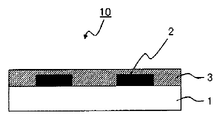
- FIG. 1 is a schematic diagram showing an example of the color filter of the present invention.
- FIG. 2 is a schematic diagram showing an example of the liquid crystal display device of the present invention.
- FIG. 3 is a schematic diagram showing an example of the organic light-emitting display device of the present invention.
- light includes electromagnetic waves with wavelengths in the visible and non-visible regions, and radiation
- radiation includes, for example, microwaves and electron beams. Specifically, it refers to electromagnetic waves with a wavelength of 5 ⁇ m or less and electron beams.
- (meth)acryl means acrylic and methacrylic
- (meth)acrylate means acrylate and methacrylate
- (meth)acryloyl means acryloyl and methacryloyl.
- the term "to" indicating a numerical range is used to include the numerical values before and after it as lower and upper limits.
- the photosensitive colored resin composition according to the present invention contains a coloring material, an alkali-soluble resin, a photopolymerizable compound, a photoinitiator, and a solvent
- the photopolymerizable compound contains an acidic group-containing photopolymerizable compound having 7 or more unsaturated double bond groups and an acidic group in one molecule, and has a molecular weight of 500 or more
- the photoinitiator contains one or more selected from the group consisting of a compound represented by the following general formula (A) and a compound represented by the following general formula (B).
- Z 1 , Z 3 , Z 4 and Z 5 are each independently a hydrogen atom, a straight or branched C 1-12 alkyl group, a C 3-20 represents a cycloalkyl group or a phenyl group, and the alkyl group, cycloalkyl group, and phenyl group are each substituted with a substituent selected from the group consisting of a halogen atom, an alkoxy group having 1 to 6 carbon atoms, and a phenyl group.
- Z 2 represents an alkyl group having 1 to 20 carbon atoms substituted with a cycloalkyl group.
- R a and R b each independently represent an alkyl group having 2 to 8 carbon atoms.
- the sublimate generated during drying before exposure is a conventional highly sensitive photoinitiator, or a trifunctional or tetrafunctional polyfunctional such as pentaerythritol tri and tetraacrylate with good developability. It was found to be derived from monomers. If a sublimate is generated from the colored resin composition during drying before exposure, the sublimate may adhere to the exhaust duct or chamber of a drying device such as a hot plate used in the drying process before exposure, and crystallization may proceed. be. If the crystals of the grown sublimate fall onto the coated film of the colored resin composition before exposure, defects such as black defects will occur in the colored layer, resulting in quality deterioration.
- the photosensitive colored resin composition according to the present invention includes a specific photoinitiator and a specific photopolymerizable compound, that is, 7 or more unsaturated double bond groups in one molecule and an acidic group. and a photopolymerizable compound having a molecular weight of 500 or more is used in combination. All of the specific photoinitiators used in the present invention hardly generate sublimate when dried and have excellent sensitivity.
- the specific photopolymerizable compound used in the present invention contains an acidic group-containing photopolymerizable compound having 7 or more unsaturated double bond groups and an acidic group in one molecule, and has a molecular weight of Since it is 500 or more, it hardly generates a sublimate when dried, and has excellent developability and excellent curability. Since the acidic group-containing photopolymerizable compound has an acidic group, it may rather cause water stains.
- the reaction It is presumed that the hardness increases, the degree of curing of the cured film increases, water absorption becomes difficult, and the occurrence of water stains is suppressed. Therefore, the photosensitive colored resin composition according to the present invention suppresses the generation of sublimates during drying, is excellent in developability, and suppresses the occurrence of water stains.
- the photosensitive colored resin composition according to the present invention Since sublimation is less likely to occur during drying before exposure, when a colored layer is formed using the photosensitive colored resin composition according to the present invention, adhesion of sublimation in the drying apparatus used in the drying step before exposure is reduced. Suppressed. Therefore, defects such as black defects caused by the sublimation adhering to the interior of the drying device can be suppressed, and the cleaning of the drying device can be simplified, thereby improving production efficiency.
- the photosensitive colored resin composition according to the present invention has excellent curability and developability, the concentration of the coloring material in the colored layer is increased, so that even if the components required for photopolymerization are relatively reduced, It is excellent in patterning properties and can form a highly precise patterned colored layer.
- the photosensitive colored resin composition according to the present invention When using an acidic group-containing photopolymerizable compound having 7 or more unsaturated double bond groups and an acidic group in one molecule contained in the photosensitive colored resin composition according to the present invention, it is easy to thin lines due to heat shrinkage. Therefore, it is particularly suitable for forming a patterned colored layer with high fine lines. Furthermore, since the photosensitive colored resin composition according to the present invention has good curability, the adhesion of the colored layer to the substrate is improved.
- the photosensitive colored resin composition according to the present invention contains a colorant, an alkali-soluble resin, a photopolymerizable compound, a photoinitiator, and a solvent, as long as the effects of the present invention are not impaired. Furthermore, it may contain other components such as a dispersing agent.
- a dispersing agent such as a dispersing agent.
- i-propyl group n-butyl group, i-butyl group, sec-butyl group, t-butyl group, n-pentyl group, n-hexyl group, n-heptyl group, n-octyl group, n-nonyl group , n-decyl group, n-undecyl group, n-dodecyl group and the like.
- Examples of the cycloalkyl group having 3 to 20 carbon atoms in Z 1 , Z 3 , Z 4 and Z 5 include cyclopropyl group, cyclobutyl group, cyclopentyl group, cyclohexyl group, cycloheptyl group, cyclooctyl group and cyclooctadecyl. and the like.
- the cycloalkyl group for Z 2 may be the same as the cycloalkyl group having 3 to 20 carbon atoms, and is preferably a cyclopentyl group or a cyclohexyl group.
- alkyl group having 1 to 20 carbon atoms in Z 2 examples include, in addition to the linear or branched alkyl group having 1 to 12 carbon atoms, n-tetradecyl, n-hexadecyl, n-octadecyl groups, and the like. be done.
- examples of the halogen atom which may be substituted on the alkyl group, cycloalkyl group and phenyl group include a fluorine atom, a chlorine atom and a bromine atom.
- the alkoxy group having 1 to 6 carbon atoms which may be substituted by the alkyl group, cycloalkyl group and phenyl group includes, for example, a methoxy group and an ethoxy group. , n-propoxy group, i-propoxy group, n-butoxy group, t-butoxy group and the like.
- Z 1 is preferably an alkyl group having 1 to 6 carbon atoms or a phenyl group, more preferably a methyl group, an ethyl group, or a phenyl group, more preferably a methyl group, from the viewpoint of improving sensitivity. More preferred.
- Z 3 , Z 4 and Z 5 are preferably a hydrogen atom, a methyl group, an ethyl group, an n-propyl group or an i-propyl group from the viewpoint of brightness.
- Z 2 is preferably an alkyl group having 1 to 14 carbon atoms and substituted with a cycloalkyl group having 5 to 6 carbon atoms, from the viewpoint of solvent solubility and compatibility.
- An alkyl group having 1 to 10 carbon atoms substituted with 6 cycloalkyl groups is more preferred, a cyclohexylmethyl group or a cyclopentylmethyl group is still more preferred, and a cyclohexylmethyl group is particularly preferred.
- an oxime ester compound represented by the following chemical formula (A-1) is preferable because sublimation is less likely to occur.
- Commercially available products include TR-PBG-3057 (manufactured by Changzhou Yuan Yuan Electronic New Materials Co., Ltd.).
- the photoinitiator represented by the general formula (A) for example, referring to JP-A-2012-526185, diphenyl sulfide or a derivative thereof is used, and depending on the material used, the solvent, reaction temperature, reaction time, It can be synthesized by appropriately selecting a purification method or the like. Moreover, you may obtain and use a commercial item suitably.
- the photoinitiator used in the present invention contains the compound represented by the general formula (B).
- R a and R b each independently represent an alkyl group having 2 or more and 8 or less carbon atoms.
- the alkyl groups may be linear, branched, cyclic, or combinations thereof.
- alkyl group examples include ethyl group, n-propyl group, isopropyl group, n-butyl group, isobutyl group, t-butyl group, n-pentyl group, isopentyl group, n-hexyl group, n-heptyl group, n-octyl group, cyclopentyl group, methylcyclopentyl group, cyclopentylmethyl group, cyclohexyl group, methylcyclohexyl group, cyclohexylmethyl group, cyclohexylethyl group and the like.
- a linear or branched alkyl group is preferable, and a linear alkyl group is more preferable, from the viewpoint of suppressing the generation of sublimate and precipitate during drying.
- the number of carbon atoms in the alkyl group is preferably 2 or more and 6 or less, more preferably 3 or more and 5 or less.
- R a and R b in the general formula (B) may be the same or different, but when R a and R b are the same, synthesis is easy and productivity is improved. It is preferable from the point of being excellent.
- Suitable specific examples of the compound represented by the general formula (B) include, but are not limited to, the following chemical formula (B-1).
- the compound represented by the general formula (B) is, for example, Step 1, reacting fluorene with isobutyryl chlorochloride in the presence of aluminum trichloride to give 2-methyl-1-fluorenyl-2-chloro-1-propanone; 2-Methyl-1-fluorenyl-2-chloro-1-propanone obtained in step 1 above is epoxidized with sodium methoxide catalyzed by calcium oxide under a nitrogen atmosphere, and then further reacted with morpholine.
- step 2 thereby obtaining 2-methyl-1-fluorenyl-2-morpholino-1-propanone;
- 2-methyl-1-fluorenyl-2-morpholino-1-propanone obtained in step 2 with an alkyl chloride having 2 to 8 carbon atoms in the presence of tetrabutylammonium bromide (TBAB),
- TBAB tetrabutylammonium bromide
- the photoinitiator is one selected from the group consisting of the compound represented by the general formula (A) and the compound represented by the general formula (B). Although it contains the above, it contains one or more selected from the group consisting of the compounds represented by the general formula (B) because it is easy to adjust the line width and is advantageous for achieving high definition of the pattern. is preferred.
- the photoinitiator is a compound represented by the general formula (A), and another photoinitiator different from the compound represented by the general formula (B).
- Other photoinitiators used in the photosensitive colored resin composition of the present invention include so-called sensitizers in addition to photopolymerization initiators.
- the photoinitiator is further selected from the group consisting of ⁇ -aminoketone photoinitiators, oxime ester photoinitiators having a carbazole skeleton, and biimidazole photoinitiators, which have a molecular weight of 300 or more.
- the other photoinitiator among others, from the viewpoint of curability and substrate adhesion, it is possible to contain one or more selected from the group consisting of ⁇ -aminoketone photoinitiators and biimidazole photoinitiators. more preferred.
- the total content of one or more selected from the group consisting of ⁇ -aminoketone photoinitiators is 50% by mass or more with respect to the total amount of the other photoinitiators. is preferably 70% by mass or more, and even more preferably 90% by mass or more.
- the other photoinitiator preferably has a molecular weight of 300 or more, more preferably 350 or more, and even more preferably 400 or more, from the viewpoint of suppressing the generation of sublimate during drying. preferable.
- the upper limit of the molecular weight of the other photoinitiator is not particularly limited, and is usually 1000 or less, may be 800 or less, or may be 600 or less.
- the total content of photoinitiators having a molecular weight of 300 or more is 50% by mass or more with respect to the total amount of the other photoinitiators in order to suppress the generation of sublimate during drying. , more preferably 70% by mass or more, and even more preferably 90% by mass or more.
- the ⁇ -aminoketone photoinitiator has the property of curing the coating film from the surface to the middle, and is easy to suppress the deep part curability of the coating film, so the compound represented by the general formula (A) and the general formula A combination with one or more selected from the group consisting of the compounds represented by (B) is preferable because there is a high tendency to improve deep-part curability of the coating film.
- Examples of ⁇ -aminoketone photoinitiators having a molecular weight of 300 or more include 2-benzyl-2-(dimethylamino)-1-(4-morpholinophenyl)-1-butanone (eg Irgacure 369, manufactured by BASF), 2-(dimethylamino)-2-[(4-methylphenyl)methyl]-1-[4-(4-morpholinyl)phenyl]-1-butanone (Irgacure 379EG, manufactured by BASF) and the like.
- 2-benzyl-2-(dimethylamino)-1-(4-morpholinophenyl)-1-butanone eg Irgacure 369, manufactured by BASF
- 2-(dimethylamino)-2-[(4-methylphenyl)methyl]-1-[4-(4-morpholinyl)phenyl]-1-butanone Irgacure 379EG, manufactured by BASF
- ⁇ -aminoketone-based photoinitiators having a molecular weight of 300 or more, when combined with at least one compound represented by the general formula (A) and the compound represented by the general formula (B), 2-benzyl -2-(dimethylamino)-1-(4-morpholinophenyl)-1-butanone (eg, Irgacure 369, manufactured by BASF) improves substrate adhesion, facilitates pattern shape adjustment, and reduces pattern chipping. It is preferable from the point that it becomes difficult to generate.
- the ⁇ -aminoketone-based photoinitiator may be used alone or in combination of two or more.
- the oxime ester photoinitiator having a carbazole skeleton is combined with one or more selected from the group consisting of the compound represented by the general formula (A) and the compound represented by the general formula (B), It is preferable because it tends to improve the effect of suppressing water staining, adhesion, and the effect of suppressing chipping.
- oxime ester photoinitiators having a carbazole skeleton examples include ethanone, 1-[9-ethyl-6-(2-methylbenzoyl)-9H-carbazol-3-yl]-,1-(O-acetyloxime ) (eg, Irgacure OXE02, manufactured by BASF), methanone, [8-[[(acetyloxy)imino][2-(2,2,3,3-tetrafluoropropoxy)phenyl]methyl]-11-(2 -ethylhexyl)-11H-benzo[a]carbazol-5-yl]-, (2,4,6-trimethylphenyl) (eg, Irgacure OXE-03, manufactured by BASF), ethanone, 1-[9-ethyl-6 -(1,3-dioxolane, 4-(2-methoxyphenoxy)-9H-carbazol-3-yl]-, 1-(o-acetylox
- the oxime ester photoinitiator having a carbazole skeleton it may be used alone or in combination of two or more.
- )-9H-carbazol-3-yl]-,1-(o-acetyloxime) for example, TR-PBG-304, manufactured by Changzhou Tenryu Electric New Materials Co., Ltd.
- ethanone 1-[9-ethyl-6-( 2-methylbenzoyl)-9H-carbazol-3-yl]-, 1-(O-acetyloxime) (eg, Irgacure OXE02, manufactured by BASF), or methanone
- (9-ethyl-6-nitro-9H- Carbazol-3-yl)[4-(2-methoxy-1-methylethoxy-2-methylphenyl]-,o-acetyloxime is preferably used from the viewpoint of high sensitivity.
- Biimidazole-based photoinitiator has the property of curing the coating film deep part, it is easy to suppress the coating film surface curability, the compound represented by the general formula (A), and the general formula (B) When combined with one or more selected from the group consisting of the compounds represented, it is preferable from the viewpoint that the effect of suppressing water stains tends to be improved.
- Biimidazole-based photoinitiators include, for example, 2,2'-bis(2-chlorophenyl)-4,4',5,5'-tetrakis(4-ethoxycarbonylphenyl)-1,2'-biimidazole, 2,2'-bis(2-bromophenyl)-4,4',5,5'-tetrakis(4-ethoxycarbonylphenyl)-1,2'-biimidazole, 2,2'-bis(2-chlorophenyl )-4,4′,5,5′-tetraphenyl-1,2′-biimidazole, 2,2′-bis(2,4-dichlorophenyl)-4,4′,5,5′-tetraphenyl- 1,2'-biimidazole, 2,2'-bis(2,4,6-trichlorophenyl)-4,4',5,5'-tetraphenyl-1,2'-biimidazole,
- the total content of the photoinitiator used in the photosensitive colored resin composition of the present invention is not particularly limited as long as the effect of the present invention is not impaired, relative to the total solid content of the photosensitive colored resin composition, For example, it is normally within the range of preferably 0.1% by mass or more and 12.0% by mass or less, more preferably 1.0% by mass or more and 8.0% by mass or less.
- the content is at least the above lower limit, photocuring proceeds sufficiently to suppress the elution of the exposed portion during development. can be suppressed.
- the solid content is everything other than the solvent, and liquid polyfunctional monomers and the like are also included.
- the total content of one or more selected from the group consisting of the compound represented by the general formula (A) and the compound represented by the general formula (B) is 50 mass with respect to the total amount of the photoinitiator % or more, and may be 100% by mass.
- the photoinitiator contains one or more selected from the group consisting of the compound represented by the general formula (A) and the compound represented by the general formula (B), and the other photoinitiator.
- the total content of one or more selected from the group consisting of the compound represented by the general formula (A) and the compound represented by the general formula (B) is preferably 20% by mass or more and 98% by mass or less, more preferably 30% by mass or more and 95% by mass or less, and 40% by mass or more and 95% by mass or less. is even more preferable, and it is particularly preferable to be 45% by mass or more and 90% by mass or less.
- the photopolymerizable compound used in the photosensitive colored resin composition of the present invention contains an acidic group-containing photopolymerizable compound having 7 or more unsaturated double bond groups and an acidic group in one molecule, and , the molecular weight is 500 or more.
- the present inventors have found that trifunctional and tetrafunctional polyfunctional monomers with relatively low molecular weight and good developability are the cause of sublimation, and in the case of photopolymerizable compounds, photoinitiators It was found that even with a large molecular weight, it easily sublimates. In the present invention, since a photopolymerizable compound having a molecular weight of 500 or more is used, generation of a sublimate resulting from the photopolymerizable compound can be suppressed.
- the unsaturated double bond group is not particularly limited as long as it can be polymerized by the photoinitiator, and examples thereof include a vinyl group, an allyl group, an acryloyl group and a methacryloyl group.
- An acryloyl group or a methacryloyl group is preferably used as the unsaturated double bond group from the viewpoint of ultraviolet curability.
- the acidic group include a carboxy group, a sulfonic acid group, a phosphoric acid group, etc. From the standpoint of developability, the carboxy group is preferably used.
- acidic group-containing photopolymerizable compound having 7 or more unsaturated double bond groups and acidic groups in one molecule among them, carboxy group-containing compounds having 7 or more (meth)acryloyl groups and carboxy groups Polyfunctional (meth)acrylates are preferred.
- Carboxy group-containing polyfunctional (meth)acrylates having 7 or more (meth)acryloyl groups and carboxy groups include, for example, polyfunctional (meth)acrylates having hydroxyl groups and (meth)acryloyl groups, and polyvalent carboxylic acids and an ester of
- polyfunctional (meth)acrylates having a hydroxyl group and a (meth)acryloyl group include, for example, hydroxyl group-containing polyfunctional (meth)acrylates obtained by esterification of a polyhydric alcohol and (meth)acrylic acid. .
- Polycarboxylic acids include dicarboxylic acids, tricarboxylic acids, tetracarboxylic acids and the like, as well as acid anhydrides such as tetracarboxylic dianhydrides.
- dicarboxylic acids include dicarboxylic acids and dicarboxylic anhydrides
- tetracarboxylic acids include tetracarboxylic acids and tetracarboxylic dianhydrides.
- carboxy group-containing polyfunctional (meth)acrylate having 7 or more (meth)acryloyl groups and carboxy groups for example, polyfunctional ( It may be a carboxy group-containing monoester product obtained by reacting meth)acrylate and dicarboxylic acids at a ratio of 1:1, or a polyfunctional (meth)acrylate containing one hydroxyl group and five (meth)acryloyl groups. and a tetracarboxylic acid at a ratio of 2:1, or a polyfunctional (meth)acrylate containing two hydroxyl groups and four (meth)acryloyl groups and a tetracarboxylic acid.
- a carboxy group-containing tetraesterified product obtained by reacting an acid with a polyfunctional (meth)acrylate containing one hydroxyl group and five (meth)acryloyl groups at a ratio of 1:2:2 may be used.
- the acidic group-containing photopolymerizable compound having 7 or more unsaturated double bond groups and acidic groups in one molecule is preferably a compound represented by the following general formula (1) from the viewpoint of curability.
- Q represents a tetracarboxylic acid residue or a tetracarboxylic dianhydride residue
- each R independently represents a hydrogen atom or a (meth) acryloyl group
- n is 1 to 4 represents an integer
- m represents an integer of 0 to 4
- j represents an integer of 1 or more
- n ⁇ j + m is an integer of 3 or more
- each repeating unit
- Each R may be the same or different, and 7 or more Rs in one molecule are (meth)acryloyl groups.
- the compound represented by the general formula (1) contains tetracarboxylic acids, a polyfunctional (meth)acrylate having one or more hydroxyl groups, and seven or more (meth)acryloyl groups in one molecule.
- tetracarboxylic acids with pentaerythritol tri (meth) acrylate and dipentaerythritol penta (meth) acrylate; reaction of tetracarboxylic acids with dipentaerythritol penta (meth) acrylate; reaction with pentaerythritol tetra(meth)acrylate; reaction of tetracarboxylic acids with tripentaerythritol hepta(meth)acrylate; and the like, and these may be a mixture.
- tetracarboxylic acids examples include pyromellitic dianhydride, 3,3′,4,4′-benzophenonetetracarboxylic dianhydride, and 2,2′,3,3′-benzophenonetetracarboxylic dianhydride.
- Polyfunctional (meth)acrylate compounds having a molecular weight of 500 or more are used as raw material polyfunctional (meth)acrylate compounds for producing compounds represented by general formula (1) so as not to cause sublimation. It is preferred to use compounds. That is, for example, it is preferable to use dipentaerythritol penta(meth)acrylate, and it is not preferable to use pentaerythritol tri(meth)acrylate.
- n represents an integer of 1 to 4
- m represents an integer of 0 to 4
- j represents an integer of 1 or more
- n ⁇ j + m is an integer of 3 or more.
- n is preferably 1 to 3, more preferably 2 to 3
- m is preferably 1 to 3, more preferably 2 to 3
- n+m is preferably 4. If the molecular weight is too large, the developability deteriorates, which is not preferred.
- j is not particularly limited as long as it is adjusted according to the numbers of n and m so that n ⁇ j+m is an integer of 3 or more, but n and m are preferably 2 or less.
- the compound represented by the general formula (1) is preferably a compound represented by the following general formula (1').
- Q represents a tetracarboxylic acid residue or a tetracarboxylic dianhydride residue
- each R independently represents a hydrogen atom or a (meth) acryloyl group
- R of each repeating unit may be the same or different, and 7 or more Rs in one molecule are (meth)acryloyl groups.
- Examples of compounds represented by general formula (1) include, but are not limited to, compounds represented by the following formulas (1-1) to (1-3).
- Q represents a residue of pyromellitic dianhydride, but it may be replaced with another residue of the tetracarboxylic acids.
- each R independently represents a hydrogen atom or a (meth)acryloyl group, and 7 or more Rs in one molecule are (meth)acryloyl groups.
- R in one molecule are (meth)acryloyl groups
- a polyfunctional (meth)acrylate having a hydroxyl group and a (meth)acryloyl group including a compound represented by the general formula (1), and a hydroxyl group and (meth) used in producing an ester of a polyvalent carboxylic acid
- the hydroxyl value of the polyfunctional (meth)acrylate containing the polyfunctional (meth)acrylate having an acryloyl group is preferably 50 mgKOH/g or more, more preferably 90 mgKOH/g or more, from the viewpoint of reactivity. , It is advantageous in terms of swinging the ratio with the acid group, but if the hydroxyl group becomes too high, the re-solubility may deteriorate. more preferred.
- the hydroxyl value means the number of mg of potassium hydroxide equivalent to hydroxyl groups in 1 g of sample, and can be measured by the method defined in JIS K0070.
- the ratio (B/A) of the carboxyl group equivalent of the polyvalent carboxylic acid (B) to the hydroxyl group equivalent of the (meth)acrylate (A) is 0.20 equivalent or more from the viewpoint that the acid value of the resulting compound is not too low. more preferably 0.50 equivalents or more, and preferably 0.90 equivalents or less from the viewpoint of not increasing the acid value of the resulting compound too much.
- carboxy group-containing polyfunctional (meth)acrylate having 7 or more (meth)acryloyl groups and carboxy groups a polyfunctional (meth)acrylate having 8 or more (meth)acryloyl groups, and mercaptocarboxylic It may be an adduct with an acid.
- a carboxy group can be introduced by adding a mercapto group of a mercaptocarboxylic acid to the unsaturated double bond group portion of the (meth)acryloyl group.
- polyfunctional (meth)acrylates having 8 or more (meth)acryloyl groups include, for example, tripentaerythritol octa(meth)acrylate, dipentaerythritol penta(meth)acrylate and polyfunctional isocyanates such as isophorone diisocyanate. and a compound obtained by reacting with.
- Mercaptocarboxylic acids include mercaptoacetic acid, 2-mercaptopropionic acid, 3-mercaptopropionic acid, o-mercaptobenzoic acid, 2-mercaptonicotinic acid and mercaptosuccinic acid.
- the number of functional groups of unsaturated double bond groups in one molecule of the (main) compound, which has the highest content rate among the acidic group-containing photopolymerizable compounds is 10. It is preferable that it is above.
- an acidic group-containing photopolymerizable compound having 10 or more unsaturated double bond groups and an acidic group in one molecule is added to the total amount of the photopolymerizable compound. , is preferably 50% by mass or more, preferably 70% by mass or more, and may be 85% by mass or more.
- the photopolymerizable compound used in the photosensitive colored resin composition of the present invention contains an acidic group-containing photopolymerizable compound having 7 or more unsaturated double bond groups and an acidic group in one molecule, and , a molecular weight of 500 or more, and may contain a photopolymerizable compound having no acidic group.
- photopolymerizable compound having no acidic group those having a molecular weight of 500 or more are used, and dipentaerythritol penta(meth)acrylate, dipentaerythritol hexa(meth)acrylate, tripentaerythritol hexa(meth)acrylate, tri Pentaerythritol hepta(meth)acrylate, tripentaerythritol octa(meth)acrylate, tetrapentaerythritol octa(meth)acrylate, tetrapentaerythritol nona(meth)acrylate, tetrapentaerythritol deca(meth)acrylate, dipentaerythritol penta(meth)acrylate ) compounds obtained by reacting acrylates with polyfunctional isocyanates such as isophorone diisocyanate; One of these polyfunctional (meth)acrylate,
- the acidic group-containing photopolymerizable compound having 7 or more unsaturated double bond groups and acidic groups in one molecule is preferably 60% by mass or more, based on the total amount of the photopolymerizable compound. It is more preferably 90% by mass or more, more preferably 90% by mass or more, may be 95% by mass or more, or may be 100% by mass.
- the weight-average molecular weight of the photopolymerizable compound containing an acidic group-containing photopolymerizable compound having 7 or more unsaturated double bond groups and an acidic group in one molecule should be 3000 or less from the viewpoint of developability. is preferred, and 2500 or less is more preferred.
- the weight-average molecular weight of the photopolymerizable compound was measured by gel permeation chromatography (GPC) using polystyrene as a standard substance (Shodex GPC System-21H using NMP to which 10 mM of LiBr was added as an eluent). can be measured by
- the acid value of the photopolymerizable compound containing an acidic group-containing photopolymerizable compound having 7 or more unsaturated double bond groups and an acidic group in one molecule is 4 mgKOH/g in terms of developability and adhesion. or more, preferably 5 mgKOH/g or more, more preferably 10 mgKOH/g or more, more preferably 25 mgKOH/g or more, from the viewpoint of improving the cross-sectional shape of the colored layer, It is preferably 120 mgKOH/g or less, more preferably 100 mgKOH/g or less, even more preferably 90 mgKOH/g or less, and even more preferably 80 mgKOH/g or less.
- the acid value can be measured according to JIS K0070:1992.
- the photopolymerizable compound used in the photosensitive colored resin composition of the present invention has a molecular weight of 500 or more, and substantially does not contain a photopolymerizable compound having a molecular weight of less than 500, but decomposed products etc. of the present invention. It may be included in a range that does not impair the effect.
- the photopolymerizable compound having a molecular weight of less than 500 is preferably 3% by mass or less, more preferably 1% by mass or less, relative to the total amount of the photopolymerizable compound.
- the content of the photopolymerizable compound having a molecular weight of less than 500 with respect to the total amount of the photopolymerizable compound was measured using a liquid chromatograph-mass spectrometer (LC-MS) (e.g., Shimadzu Corporation, LC-30A, Bruker Daltonics, microOTOFQ2). ) can be analyzed by LC-MS.
- LC-MS liquid chromatograph-mass spectrometer
- the content of the photopolymerizable compound used in the photosensitive colored resin composition is not particularly limited, but the total solid content of the photosensitive colored resin composition is, for example, usually preferably 5% by mass or more and 60% by mass. % or less, more preferably 10 mass % or more and 40 mass % or less.
- the content of the photopolymerizable compound is at least the above lower limit, the photocuring proceeds sufficiently, and the exposed portion tends to suppress elution during development, and the content of the photopolymerizable compound is at most the above upper limit. and alkali developability tend to be sufficient.
- the content ratio of the photopolymerizable compound and the photoinitiator used in the photosensitive colored resin composition is excellent in terms of curability, residual film rate, and further, from the viewpoint of improving electrical reliability, the photo
- the total content of the photoinitiator with respect to 100 parts by mass of the polymerizable compound is, for example, usually, preferably 5 parts by mass or more, more preferably 10 parts by mass or more, preferably 40 parts by mass or less, more preferably It is 30 parts by mass or less.
- the coloring material is not particularly limited as long as it can develop a desired color when the colored layer of the color filter is formed, and various organic pigments, inorganic pigments, dispersible dyes, and dyes Salt-forming compounds and the like can be used alone or in combination of two or more.
- organic pigments are preferably used because of their high color developability and high heat resistance. Examples of organic pigments include compounds classified as pigments in the Color Index (C.I.; published by The Society of Dyers and Colorists). .) numbered ones can be mentioned.
- the inorganic pigments include titanium oxide, barium sulfate, calcium carbonate, zinc white, lead sulfate, yellow lead, zinc yellow, red iron oxide (III), cadmium red, ultramarine blue, Prussian blue, oxide Chromium green, cobalt green, amber, titanium black, synthetic iron black, carbon black and the like can be mentioned.
- a black pigment having high light-shielding properties is blended in the ink.
- a black pigment with high light shielding properties for example, an inorganic pigment such as carbon black or triiron tetroxide, or an organic pigment such as cyanine black can be used.
- the dispersible dyes include dyes that are made dispersible by adding various substituents to the dye or by using the dye in combination with a solvent having low solubility.
- the salt-forming compound of the dye refers to a compound in which the dye forms a salt with a counterion. Examples thereof include a salt-forming compound of a basic dye and an acid, and a salt-forming compound of an acid dye and a base, which are soluble in solvents. It also includes a lake pigment obtained by insolubilizing the dye in a solvent using a known lake formation (chlorination) technique.
- a coloring material containing at least one selected from dyes and salt-forming compounds of dyes is used in combination with the dispersant of the present invention to improve the dispersibility and dispersion stability of the coloring material. can be done.
- the dye can be appropriately selected from conventionally known dyes.
- examples of such dyes include azo dyes, metal complex salt azo dyes, anthraquinone dyes, triphenylmethane dyes, xanthene dyes, cyanine dyes, naphthoquinone dyes, quinoneimine dyes, methine dyes, and phthalocyanine dyes.
- azo dyes metal complex salt azo dyes
- anthraquinone dyes triphenylmethane dyes
- xanthene dyes cyanine dyes
- naphthoquinone dyes naphthoquinone dyes
- quinoneimine dyes methine dyes
- phthalocyanine dyes a guideline
- the coloring material is at least one selected from the group consisting of diketopyrrolopyrrole pigments, quinophthalone pigments, copper phthalocyanine pigments, zinc phthalocyanine pigments, quinophthalone dyes, coumarin dyes, cyanine dyes, and salt-forming compounds of these dyes.
- the effect of suppressing the sublimation or precipitation of the colorant due to the use of the dispersant is high, and it is preferable in that a colored layer with high brightness can be formed.
- the coloring material contains at least one selected from the group consisting of diketopyrrolopyrrole pigments, quinophthalone pigments, copper phthalocyanine pigments, zinc phthalocyanine pigments, and quinophthalone dyes.
- diketopyrrolopyrrole pigments include C.I. I. Pigment Red 254, 255, 264, 272, 291, and diketopyrrolopyrrole pigments represented by the following general formula (i), among which C.I. I. Pigment Red 254, 272, 291, and at least one selected from diketopyrrolopyrrole pigments in which R 21 and R 22 in the following general formula (i) are each a 4-bromophenyl group are preferred.
- R 21 and R 22 are each independently a 4-chlorophenyl group or a 4-bromophenyl group.
- Examples of quinophthalone pigments include C.I. I. Pigment Yellow 138 and the like.
- Examples of copper phthalocyanine pigments include C.I. I. Pigment Blue 15, 15:1, 15:2, 15:3, 15:4, 15:5, 15:6, C.I. I. Pigment Green 7, 36 and the like, among which C.I. I. Pigment Blue 15:6 is preferred.
- Examples of zinc phthalocyanine pigments include C.I. I. Pigment Green 58, 59 and the like.
- Examples of quinophthalone dyes include C.I. I. Disperse Yellow 54, 64, 67, 134, 149, 160, C.I. I. Solvent Yellow 114, 157 and the like, among which C.I. I. Disperse Yellow 54 is preferred.
- the average primary particle diameter of the coloring material used in the present invention is not particularly limited as long as the coloring layer of the color filter can develop a desired color, and varies depending on the type of coloring material used. is preferably in the range of 10 to 100 nm, more preferably 15 to 60 nm.
- the display device equipped with the color filter produced using the photosensitive colored resin composition according to the present invention has high contrast and high quality. be able to.
- the average dispersed particle size of the coloring material in the photosensitive colored resin composition varies depending on the type of coloring material used, but is preferably in the range of 10 to 100 nm, and preferably in the range of 15 to 60 nm. is more preferred.
- the average dispersed particle size of the colorant in the photosensitive colored resin composition is the dispersed particle size of the colorant particles dispersed in the dispersion medium containing at least a solvent, and is measured by a laser light scattering particle size distribution meter. It is a thing.
- the solvent used in the photosensitive colored resin composition is diluted appropriately to a concentration that can be measured by a laser light scattering particle size distribution meter (for example, 1000 times), and measured at 23° C. by a dynamic light scattering method using a laser light scattering particle size distribution analyzer (eg, Nanotrack particle size distribution analyzer UPA-EX150 manufactured by Nikkiso Co., Ltd.).
- the average distribution particle size here is the volume average particle size.
- the coloring material used in the present invention can be produced by known methods such as recrystallization and solvent salt milling. Alternatively, a commercially available coloring material may be used after undergoing fine processing.
- the content of the coloring material in the photosensitive colored resin composition according to the present invention is not particularly limited.
- the content of the coloring material from the viewpoint of dispersibility and dispersion stability, relative to the total solid content of the photosensitive colored resin composition, for example usually, preferably 3% by mass or more and 65% by mass or less, more preferably It is 4 mass % or more and 60 mass % or less. If it is at least the above lower limit, the colored layer tends to have a sufficient color density when the photosensitive colored resin composition is applied to a predetermined film thickness (usually 1.0 ⁇ m to 5.0 ⁇ m). Moreover, if it is below the said upper limit, while being excellent in storage stability, the coloring layer which has sufficient hardness and adhesiveness with a board
- the total content of the colorant is, for example, usually preferably 15% by mass or more and 65% by mass or less, relative to the total solid content of the photosensitive colored resin composition. and more preferably 25% by mass or more and 60% by mass or less.
- the alkali-soluble resin in the present invention has an acidic group, and can be appropriately selected and used from those that act as a binder resin and are soluble in an alkali developer used for pattern formation.
- the alkali-soluble resin can be defined as having an acid value of 40 mgKOH/g or more.
- a preferable alkali-soluble resin in the present invention is a resin having an acidic group, usually a carboxy group. resins, epoxy (meth)acrylate resins having a carboxyl group, and the like. Among these, particularly preferred are those having a carboxy group in the side chain and a photopolymerizable functional group such as an ethylenically unsaturated group in the side chain.
- acrylic copolymers acrylic resins such as styrene-acrylic copolymers, and epoxy acrylate resins may be used in combination.
- Acrylic resins such as acrylic copolymers having a structural unit having a carboxy group and styrene-acrylic copolymers having a carboxy group are, for example, a carboxy group-containing ethylenically unsaturated monomer and, if necessary, a copolymer. It is a (co)polymer obtained by (co)polymerizing other polymerizable monomers by a known method.
- Carboxy group-containing ethylenically unsaturated monomers include, for example, (meth)acrylic acid, vinyl benzoic acid, maleic acid, maleic acid monoalkyl ester, fumaric acid, itaconic acid, crotonic acid, cinnamic acid, and acrylic acid dimer.
- the alkali-soluble resin preferably further has a hydrocarbon ring from the viewpoint of excellent adhesion of the colored layer. It has been found that the presence of a hydrocarbon ring, which is a bulky group, in the alkali-soluble resin suppresses the solvent resistance of the resulting colored layer, particularly swelling of the colored layer. Although the action is unknown, the presence of bulky hydrocarbon rings in the colored layer suppresses the movement of molecules in the colored layer, resulting in increased strength of the coating film and suppression of swelling by the solvent.
- hydrocarbon rings include cyclic aliphatic hydrocarbon rings which may have substituents, aromatic rings which may have substituents, and combinations thereof, and hydrocarbon rings may have a substituent such as a carbonyl group, a carboxy group, an oxycarbonyl group, an amide group, or the like. Among them, when an alicyclic ring is contained, the heat resistance and adhesion of the colored layer are improved, and the brightness of the obtained colored layer is improved.
- hydrocarbon rings include aliphatic hydrocarbons such as cyclopropane, cyclobutane, cyclopentane, cyclohexane, norbornane, tricyclo[5.2.1.0(2,6)]decane (dicyclopentane), and adamantane.
- Ring ; aromatic rings such as benzene, naphthalene, anthracene, phenanthrene, and fluorene; chain polycyclic rings such as biphenyl, terphenyl, diphenylmethane, triphenylmethane, and stilbene, and cardo structures (9,9-diarylfluorene); A group in which a part of the group is substituted with a substituent and the like are included.
- substituents include alkyl groups, cycloalkyl groups, alkylcycloalkyl groups, hydroxyl groups, carbonyl groups, nitro groups, amino groups, and halogen atoms.
- the alkali-soluble resin preferably has a maleimide structure represented by the following general formula (ii).
- RM is an optionally substituted hydrocarbon ring.
- the alkali-soluble resin has a maleimide structure represented by the general formula (ii), it has a nitrogen atom in the hydrocarbon ring, so it is a polymer having a structural unit represented by the general formula (I) described later.
- the compatibility with basic dispersants is very good, and the effect of suppressing development residue is improved.
- Specific examples of the optionally substituted hydrocarbon ring in RM of the general formula (ii) are the same as the specific examples of the hydrocarbon ring described above.
- the heat resistance and adhesiveness of the colored layer are improved, and the brightness of the obtained colored layer is also preferably improved.
- the cardo structure it is particularly preferable from the viewpoint that the curability of the colored layer is improved and the solvent resistance (NMP swelling suppression) is improved.
- the alkali-soluble resin used in the present invention apart from the structural unit having a carboxy group, using an acrylic copolymer having a structural unit having the above hydrocarbon ring makes it easy to adjust the amount of each structural unit, and the above It is preferable from the viewpoint that the amount of structural units having a hydrocarbon ring can be increased to easily improve the functions of the structural units.
- the acrylic copolymer having a structural unit having a carboxyl group and the hydrocarbon ring is prepared by using an ethylenically unsaturated monomer having a hydrocarbon ring as the above-mentioned "other copolymerizable monomer". be able to.
- Examples of ethylenically unsaturated monomers having a hydrocarbon ring include cyclohexyl (meth)acrylate, dicyclopentanyl (meth)acrylate, adamantyl (meth)acrylate, isobornyl (meth)acrylate, benzyl (meth)acrylate, phenoxy Ethyl (meth) acrylate, styrene, etc., and from the point that the cross-sectional shape of the colored layer after development is maintained even in heat treatment, cyclohexyl (meth) acrylate, dicyclopentanyl (meth) acrylate, adamantyl (Meth)acrylate, benzyl (meth)acrylate and styrene are preferred, and styrene is particularly preferred.
- the ethylenically unsaturated monomer having a hydrocarbon ring is preferably the monomer having a maleimide structure and styrene, and particularly preferably styrene.
- the alkali-soluble resin used in the present invention also preferably has an ethylenic double bond in its side chain.
- the alkali-soluble resins may form cross-links with each other, or between the alkali-soluble resin and the photopolymerizable compound.
- the film strength of the cured film is further improved, the development resistance is improved, and the heat shrinkage of the cured film is suppressed so that the adhesion to the substrate is excellent. become.
- a method for introducing an ethylenic double bond into an alkali-soluble resin may be appropriately selected from conventionally known methods.
- a method in which a compound having both an epoxy group and an ethylenic double bond in the molecule, such as glycidyl (meth)acrylate, is added to the carboxyl group of the alkali-soluble resin to introduce an ethylenic double bond into the side chain is added to the carboxyl group of the alkali-soluble resin to introduce an ethylenic double bond into the side chain.
- a structural unit having a hydroxyl group is introduced into a copolymer, a compound having an isocyanate group and an ethylenic double bond is added to the molecule, and an ethylenic double bond is introduced into the side chain.
- the alkali-soluble resin of the present invention may further contain other structural units such as structural units having an ester group such as methyl (meth)acrylate and ethyl (meth)acrylate.
- the structural unit having an ester group functions not only as a component that suppresses the alkali solubility of the photosensitive colored resin composition for color filters, but also as a component that improves solubility in solvents and solvent re-solubility. .
- the alkali-soluble resin in the present invention is preferably an acrylic resin such as an acrylic copolymer and a styrene-acrylic copolymer having a structural unit having a carboxyl group and a structural unit having a hydrocarbon ring.
- Acrylic resins such as acrylic copolymers and styrene-acrylic copolymers having a structural unit having a carboxyl group, a structural unit having a hydrocarbon ring, and a structural unit having an ethylenic double bond. is more preferred.
- the alkali-soluble resin can be made into an alkali-soluble resin having desired performance by appropriately adjusting the charge amount of each structural unit.
- the amount of the carboxyl group-containing ethylenically unsaturated monomer to be charged is preferably 5% by mass or more, more preferably 10% by mass or more, based on the total amount of the monomers in order to obtain a good pattern.
- the amount of the carboxyl group-containing ethylenically unsaturated monomer charged is preferably 50% by mass or less, and 40% by mass or less relative to the total amount of the monomer. It is more preferable to have
- the epoxy group and the ethylenic double bond is preferably 10% by mass or more and 95% by mass or less, more preferably 15% by mass or more and 90% by mass or less, based on the charged amount of the carboxy group-containing ethylenically unsaturated monomer.
- a preferred weight average molecular weight (Mw) of the carboxy group-containing copolymer is in the range of 1,000 to 50,000, more preferably 3,000 to 20,000. If it is less than 1,000, the binder function after curing may be significantly deteriorated, and if it exceeds 50,000, pattern formation may become difficult during development with an alkaline developer.
- the weight average molecular weight (Mw) of the carboxy group-containing copolymer can be measured by GPC (Shodex GPC System-21H using THF as an eluent) using polystyrene as a standard substance. can.
- the epoxy (meth)acrylate resin having a carboxy group is not particularly limited, but epoxy (meth) obtained by reacting a reaction product of an epoxy compound and an unsaturated group-containing monocarboxylic acid with an acid anhydride. Acrylate compounds are suitable. Epoxy compounds, unsaturated group-containing monocarboxylic acids, and acid anhydrides can be appropriately selected from known ones and used. Epoxy (meth)acrylate resins having a carboxy group may be used alone or in combination of two or more.
- an alkali-soluble resin having an acid value of 50 mgKOH/g or more.
- the alkali-soluble resin preferably has an acid value of 70 mgKOH/g or more and 300 mgKOH/g or less from the viewpoint of developability (solubility) in an alkaline aqueous solution used as a developer and adhesion to a substrate. It is preferably 70 mgKOH/g or more and 280 mgKOH/g or less.
- the acid value can be measured according to JIS K0070:1992.
- the ethylenically unsaturated bond equivalent is combined with the compound represented by the general formula (1) used in the present invention to increase the film strength of the cured film.
- the compound represented by the general formula (1) used in the present invention is preferably in the range of 100 to 2000, and particularly preferably in the range of 140 to 1500, from the viewpoint of obtaining effects such as improved development resistance and excellent adhesion to the substrate. If the ethylenically unsaturated bond equivalent is 2000 or less, the development resistance and adhesion are excellent. Also, if it is 100 or more, the ratio of other structural units such as structural units having a carboxy group and structural units having a hydrocarbon ring can be relatively increased, so that excellent developability and heat resistance can be obtained.
- the ethylenically unsaturated bond equivalent is the weight average molecular weight per mole of the ethylenically unsaturated bond in the alkali-soluble resin, and is represented by the following formula (1).
- Ethylenically unsaturated bond equivalent (g / mol) W (g) / M (mol) (In formula (1), W represents the mass (g) of the alkali-soluble resin, and M represents the number of moles (mol) of ethylenic double bonds contained in the alkali-soluble resin W (g).)
- the ethylenically unsaturated bond equivalent is calculated, for example, by measuring the number of ethylenic double bonds contained per 1 g of the alkali-soluble resin in accordance with the iodine value test method described in JIS K0070: 1992. You may
- the alkali-soluble resin used in the photosensitive colored resin composition may be used singly or in combination of two or more, and the content thereof is not particularly limited.
- the total content of the alkali-soluble resin is, for example, usually preferably 5% by mass or more and 60% by mass or less, more preferably 10% by mass or more and 40% by mass or less, relative to the total solid content of the photosensitive colored resin composition. is within.
- the content of the alkali-soluble resin is at least the above lower limit, it is easy to obtain sufficient alkali developability. can be suppressed.
- solvent used in the present invention is not particularly limited as long as it does not react with each component in the photosensitive colored resin composition and is capable of dissolving or dispersing them.
- a solvent can be used individually or in combination of 2 or more types.
- Specific examples of solvents include alcohol solvents such as methyl alcohol, ethyl alcohol, N-propyl alcohol, i-propyl alcohol, methoxy alcohol and ethoxy alcohol; carbitol solvents such as methoxyethoxyethanol and ethoxyethoxyethanol; ethyl acetate, butyl acetate, methyl methoxypropionate, ethyl methoxypropionate, ethyl ethoxypropionate, ethyl lactate, methyl hydroxypropionate, ethyl hydroxypropionate, n-butyl acetate, isobutyl acetate, isobutyl butyrate, n-butyl butyrate, ester solvents such as
- glycol ether acetate-based solvents examples include propylene glycol monomethyl ether acetate, propylene glycol monomethyl ether, butyl carbitol acetate (BCA), 3-methoxy-3-methyl-1-butyl acetate, ethyl ethoxypropionate, ethyl lactate, and one or more selected from the group consisting of 3-methoxybutyl acetate, from the viewpoint of solubility of other components and applicability.
- BCA butyl carbitol acetate
- 3-methoxy-3-methyl-1-butyl acetate ethyl ethoxypropionate
- ethyl lactate examples include one or more selected from the group consisting of 3-methoxybutyl acetate, from the viewpoint of solubility of other components and applicability.
- the content of the solvent may be appropriately set within a range in which the colored layer can be formed with high precision.
- the content of the solvent is usually preferably 55% by mass or more and 95% by mass or less, more preferably 65% by mass or more and 88% by mass or less, relative to the total amount of the photosensitive colored resin composition containing the solvent. be.
- excellent applicability can be obtained.
- the coloring material is preferably dispersed in a solvent with a dispersant.
- the dispersant can be appropriately selected and used from conventionally known dispersants.
- the dispersing agent for example, a cationic, anionic, nonionic, amphoteric, silicone or fluorine surfactant can be used.
- surfactants polymer dispersants are preferred because they can be uniformly and finely dispersed.
- polymer dispersants include (co)polymers of unsaturated carboxylic acid esters such as polyacrylic acid esters; (partial) amine salts of (co)polymers of unsaturated carboxylic acids such as polyacrylic acid; (Partial) ammonium salts and (partial) alkylamine salts; (co)polymers of hydroxyl group-containing unsaturated carboxylic acid esters such as hydroxyl group-containing polyacrylic acid esters and modified products thereof; polyurethanes; unsaturated polyamides; polysiloxanes long-chain polyaminoamide phosphates; polyethyleneimine derivatives (amides obtained by reacting poly(lower alkyleneimine) with free carboxyl group-containing polyesters and their bases); polyallylamine derivatives (polyallylamine and free carboxyl (a reaction product obtained by reacting one or more compounds selected from three kinds of compounds: polyesters, polyamides, or cocondensates of esters and amides (polyesteramide
- a polymer dispersant containing a nitrogen atom in the main chain or side chain and having an amine value is preferable because it can suitably disperse the coloring material and has good dispersion stability.
- a polymeric dispersant composed of a polymer containing a repeating unit having a tertiary amine is preferable from the viewpoint of good dispersibility, no deposition of foreign matter during coating film formation, and improved brightness and contrast.
- a repeating unit having a tertiary amine is a site having affinity with the coloring material.
- a polymeric dispersant comprising a polymer containing a repeating unit having a tertiary amine usually contains a repeating unit that serves as a site having affinity with a solvent.
- a polymer containing a repeating unit having a tertiary amine among others, a block copolymer having a block portion composed of a repeating unit having a tertiary amine and a block portion having solvent affinity is preferred for heat resistance. It is preferable in that it is possible to form a coating film that is excellent in brightness and has high brightness.
- the repeating unit having a tertiary amine may have a tertiary amine, and the tertiary amine may be contained in the side chain of the block polymer or may constitute the main chain.
- a repeating unit having a tertiary amine in the side chain is preferable, and among them, the structure represented by the following general formula (I) is preferable because the main chain skeleton is difficult to thermally decompose and has high heat resistance. is more preferred.
- R 1 is a hydrogen atom or a methyl group
- a 1 is a divalent linking group
- R 2 and R 3 are each independently a hydrogen atom, or a hydrocarbon optionally containing a hetero atom. group, and R 2 and R 3 may combine with each other to form a ring structure.
- the structural unit represented by the general formula (I) has basicity and functions as an adsorption site for the coloring material.
- a 1 is a divalent linking group.
- the divalent linking group includes, for example, a linear, branched or cyclic alkylene group, a linear, branched or cyclic alkylene group having a hydroxyl group, an arylene group, -CONH- group, -COO- group, -NHCOO- groups, ether groups (--O--groups), thioether groups (--S--groups), and combinations thereof.
- the bonding direction of the divalent linking group is arbitrary.
- a 1 in the general formula (I) is preferably a divalent linking group containing a -CONH- group or a -COO- group, and a -CONH- group or a -COO- group. , and an alkylene group having 1 to 10 carbon atoms.
- Examples of the hydrocarbon group in the hydrocarbon group optionally containing a heteroatom for R 2 and R 3 include an alkyl group, an aralkyl group, an aryl group and the like.
- Examples of the alkyl group include methyl group, ethyl group, propyl group, butyl group, isopropyl group, tert-butyl group, 2-ethylhexyl group, cyclopentyl group, cyclohexyl group and the like, and the number of carbon atoms in the alkyl group is 1 to 18 are preferable, and among them, a methyl group or an ethyl group is more preferable.
- the aralkyl group includes, for example, a benzyl group, a phenethyl group, a naphthylmethyl group, a biphenylmethyl group and the like.
- the number of carbon atoms in the aralkyl group is preferably 7-20, more preferably 7-14.
- Aryl groups include phenyl, biphenyl, naphthyl, tolyl, and xylyl groups.
- the number of carbon atoms in the aryl group is preferably 6-24, more preferably 6-12.
- the preferable number of carbon atoms does not include the number of carbon atoms of the substituent.
- a hydrocarbon group containing a heteroatom has a structure in which a carbon atom in the hydrocarbon group is replaced with a heteroatom, or a structure in which a hydrogen atom in the hydrocarbon group is replaced by a substituent containing a heteroatom.
- the heteroatom that the hydrocarbon group may contain include an oxygen atom, a nitrogen atom, a sulfur atom, a silicon atom and the like.
- hydrogen atoms in the hydrocarbon group may be substituted with halogen atoms such as fluorine, chlorine and bromine atoms.
- That R 2 and R 3 are bonded to each other to form a ring structure means that R 2 and R 3 form a ring structure via a nitrogen atom.
- a heteroatom may be included in the ring structure formed by R 2 and R 3 .
- the ring structure is not particularly limited, examples thereof include pyrrolidine ring, piperidine ring, morpholine ring and the like.
- R 2 and R 3 are each independently a hydrogen atom, an alkyl group having 1 to 5 carbon atoms, or a phenyl group, or R 2 and R 3 are bonded to form a pyrrolidine ring, It preferably forms a piperidine ring or a morpholine ring.
- Examples of monomers that derive structural units represented by the general formula (I) include dimethylaminoethyl (meth)acrylate, dimethylaminopropyl (meth)acrylate, diethylaminoethyl (meth)acrylate, diethylaminopropyl (meth)acrylate, and the like.
- Alkyl group-substituted amino group-containing (meth)acrylates, alkyl group-substituted amino group-containing (meth)acrylamides such as dimethylaminoethyl (meth)acrylamide, dimethylaminopropyl (meth)acrylamide, and the like can be mentioned.
- dimethylaminoethyl (meth)acrylate, diethylaminoethyl (meth)acrylate, and dimethylaminopropyl (meth)acrylamide can be preferably used in terms of improving dispersibility and dispersion stability.
- the structural unit represented by formula (I) may consist of one type, or may contain two or more types of structural units.
- 3 or more structural units represented by the general formula (I) are contained in the block portion composed of the repeating unit having the tertiary amine. Among them, from the viewpoint of improving dispersibility and dispersion stability, it is preferable to contain 3 to 100, more preferably 3 to 50, even more preferably 3 to 30. .
- a block portion comprising a repeating unit having a tertiary amine (hereinafter sometimes referred to as A block) and a block portion having solvent affinity (hereinafter sometimes referred to as B block).
- the block portion having solvent affinity does not have a structural unit represented by the general formula (I) from the viewpoint of improving the solvent affinity and improving the dispersibility, and the general formula ( It has a solvent affinity block portion having a structural unit copolymerizable with I).
- the arrangement of each block in the block copolymer is not particularly limited, and examples thereof include AB block copolymers, ABA block copolymers, and BAB block copolymers. Among them, an AB block copolymer or an ABA block copolymer is preferable because of its excellent dispersibility.
- Said B block may be similar to the B block of WO2016/104493.
- the number of structural units constituting the solvent-affinity block portion may be appropriately adjusted within a range in which the colorant dispersibility is improved.
- the solvent affinity portion and the colorant affinity portion act effectively to improve the dispersibility of the colorant, so the number of structural units constituting the solvent affinity block portion is 10 or more and 200 or less. It is preferably 10 or more and 100 or less, and further preferably 10 or more and 70 or less.
- the solvent affinity block portion may be selected so as to function as a solvent affinity portion, and the repeating units constituting the solvent affinity block portion may consist of one type or two or more types. may contain a repeating unit of In the block copolymer used as the dispersant of the present invention, the unit number m of the structural unit represented by the general formula (I) and the unit number n of other structural units constituting the solvent-affinity block portion
- the ratio m/n is preferably in the range of 0.01 or more and 1 or less, and is preferably in the range of 0.05 or more and 0.7 or less from the viewpoint of dispersibility and dispersion stability of the coloring material. more preferred.
- the dispersant in the present invention is a polymer having a structure represented by the general formula (I) and an amine value of 40 mgKOH/g or more and 120 mgKOH/g or less. It is preferable from the viewpoint of improving brightness and contrast without depositing foreign matter.
- the amine value is within the above range, the viscosity stability over time and heat resistance are excellent, and alkali developability and solvent re-solubility are also excellent.
- the amine value of the dispersant is high, the dispersibility and dispersion stability are improved, the solvent solubility and solvent re-solubility are improved, the compatibility with other components is improved, and the fine line pattern of the colored layer is improved.
- the amine value of the dispersant is preferably 80 mgKOH/g or more, more preferably 90 mgKOH/g or more.
- the amine value of the dispersant is preferably 110 mgKOH/g or less, more preferably 105 mgKOH/g or less, from the viewpoint of solvent resolubility.
- the amine value refers to the number of mg of potassium hydroxide equivalent to perchloric acid required to neutralize the amine component contained in 1 g of the sample, and can be measured by the method defined in JIS K7237. When measured by this method, even if the amino group forms a salt with the organic acid compound in the dispersant, the organic acid compound usually dissociates, so the block copolymer itself used as the dispersant can be measured.
- the lower limit of the acid value of the dispersant used in the present invention is preferably 1 mgKOH/g or more from the viewpoint of the effect of suppressing development residue. Among them, it is more preferable that the acid value of the dispersant is 2 mgKOH/g or more because the effect of suppressing development residue is more excellent. Further, the acid value of the dispersant used in the present invention can prevent deterioration of development adhesion and solvent re-solubility, improve the linearity of the fine line pattern of the colored layer, and suppress the flaking of the micropores.
- the upper limit of the acid value of the dispersant is preferably 18 mgKOH/g or less from the viewpoint of easy dispersing.
- the acid value of the dispersant is more preferably 16 mgKOH/g or less, and even more preferably 14 mgKOH/g or less, from the viewpoint of good development adhesion and solvent re-solubility.
- the block copolymer before salt formation preferably has an acid value of 1 mgKOH/g or more, more preferably 2 mgKOH/g or more. This is because the effect of suppressing development residue is improved.
- the upper limit of the acid value of the block copolymer before salt formation is preferably 18 mgKOH/g or less, more preferably 16 mgKOH/g or less, and even more preferably 14 mgKOH/g or less. . This is because development adhesion and solvent re-solubility are improved.
- the glass transition temperature of the dispersant is preferably 30° C. or higher from the viewpoint of improving adhesion to development. That is, the glass transition temperature of the dispersant is preferably 30° C. or higher, regardless of whether the dispersant is a pre-salt block copolymer or a salt-type block copolymer. If the glass transition temperature of the dispersant is low, it will be close to the temperature of the developing solution (usually about 23° C.), and there is a risk that the development adhesion will be reduced. It is presumed that this is because when the glass transition temperature approaches the developer temperature, the movement of the dispersant increases during development, and as a result, the development adhesion deteriorates.
- the glass transition temperature of the dispersant is preferably 32° C. or higher, more preferably 35° C. or higher, from the viewpoint of development adhesion. On the other hand, the temperature is preferably 200° C. or less from the viewpoint of operability during use, such as facilitating accurate weighing.
- the glass transition temperature of the dispersant in the present invention can be obtained by measuring by differential scanning calorimetry (DSC) according to JIS K7121.
- Tgi is the glass transition temperature (absolute temperature) of the homopolymer of the i-th monomer.
- Tgi homopolymer glass transition temperature value
- the dispersant contains a B block containing a structural unit derived from a carboxyl group-containing monomer, and has the above-mentioned specific acid value and glass transition temperature, thereby improving development adhesion. If the acid value is too high, the developability will be excellent, but the polarity will be too high, and it is presumed that peeling will rather easily occur during development.
- the dispersant in the present invention is a polymer containing the structure represented by the general formula (I) and having an amine value of 40 mgKOH/g or more and 120 mgKOH/g or less, and an acid value of 1 mgKOH / g or more and 18 mgKOH / g or less and a glass transition temperature of 30 ° C. or more have excellent colorant dispersion stability and improve contrast, and the colored resin containing the compound represented by the general formula (1) When it is made into a composition, it is excellent in solvent resolubility while suppressing the generation of development residues, and has high development adhesion. It is preferable from the point that it becomes easy to suppress the rippling and development residue.
- the carboxy group-containing monomer a monomer that can be copolymerized with a monomer having a structural unit represented by general formula (I) and that contains an unsaturated double bond and a carboxy group can be used.
- monomers include (meth)acrylic acid, vinyl benzoic acid, maleic acid, maleic acid monoalkyl esters, fumaric acid, itaconic acid, crotonic acid, cinnamic acid, and acrylic acid dimers.
- addition reaction products of monomers having a hydroxyl group such as 2-hydroxyethyl (meth)acrylate and cyclic anhydrides such as maleic anhydride, phthalic anhydride and cyclohexanedicarboxylic anhydride, ⁇ -carboxy-polycaprolactone Mono (meth) acrylate and the like can also be used.
- Acid anhydride group-containing monomers such as maleic anhydride, itaconic anhydride, and citraconic anhydride may also be used as a precursor of the carboxy group.
- (meth)acrylic acid is particularly preferable from the viewpoint of copolymerizability, cost, solubility, glass transition temperature, and the like.
- the content ratio of the structural unit derived from the carboxy group-containing monomer may be appropriately set so that the acid value of the block copolymer is within the specific acid value range. Although not limited, it is preferably 0.05% by mass or more and 4.5% by mass or less, and 0.07% by mass or more and 3.7% by mass or less with respect to the total mass of all structural units of the block copolymer. It is more preferable to have When the content ratio of the structural unit derived from the carboxy group-containing monomer is at least the lower limit value, the effect of suppressing development residue is exhibited, and when it is at most the upper limit value, development adhesion is deteriorated and solvent resolubility is reduced. It can prevent deterioration.
- the structural unit derived from the carboxy group-containing monomer may have the specific acid value, and may consist of one type or may contain two or more types of structural units.
- the glass transition temperature of the dispersant used in the present invention is set to a specific value or higher, and the development adhesiveness is improved, so the glass transition temperature value (Tgi) of the homopolymer of the monomer is 10 ° C. or higher. is preferably 75% by mass or more, more preferably 85% by mass or more, in the B block in total.
- the ratio m/n between the number m of the constituent units of the A block and the number n of the constituent units of the B block is in the range of 0.05 or more and 1.5 or less. It is more preferably in the range of 0.1 or more and 1.0 or less from the viewpoint of dispersibility and dispersion stability of the colorant.
- the weight average molecular weight Mw of the block copolymer is not particularly limited, it is preferably 1000 or more and 20000 or less, and 2000 or more and 15000 or less from the viewpoint of improving the colorant dispersibility and dispersion stability. is more preferably 3000 or more and 12000 or less.
- the weight average molecular weight (Mw) is determined by gel permeation chromatography (GPC) as a standard polystyrene conversion value. Note that macromonomers, salt-type block copolymers, and graft copolymers, which are raw materials for block copolymers, are also processed under the above conditions.
- block copolymer having a block portion composed of a repeating unit having such a tertiary amine and a block portion having solvent affinity include, for example, the block copolymer described in Japanese Patent No. 4911253. It can be mentioned as a suitable one.
- a polymer containing a repeating unit having the tertiary amine is used with respect to 100 parts by mass of the coloring material. is preferably 15 parts by mass or more and 300 parts by mass or less, more preferably 20 parts by mass or more and 250 parts by mass or less. Within the above range, the dispersibility and dispersion stability are excellent, and the effect of improving the contrast is enhanced.
- the polymer containing the repeating unit having the tertiary amine an organic acid compound or a halogenated hydrocarbon
- a salt formed by and such a polymer may be hereinafter referred to as a salt-type polymer.
- the polymer containing a repeating unit having a tertiary amine is a block copolymer
- the organic acid compound is an acidic organic phosphorus compound such as phenylphosphonic acid or phenylphosphinic acid.
- organic acid compound used in such a dispersant include, for example, organic acid compounds described in JP-A-2012-236882 and the like as suitable ones.
- the halogenated hydrocarbon is preferably at least one selected from allyl halides such as allyl bromide and benzyl chloride, and aralkyl halides, from the viewpoint of excellent dispersibility and dispersion stability of the coloring material.
- the content when using a dispersant is not particularly limited as long as it can uniformly disperse the coloring material. It can be used at a mass % or more and 40 mass % or less.
- the content when using a dispersant is preferably 2% by mass or more and 30% by mass or less, more preferably 3% by mass or more and 25% by mass or less, relative to the total solid content of the photosensitive colored resin composition. be.
- it is at least the above lower limit the dispersibility and dispersion stability of the coloring material are excellent, and the storage stability of the photosensitive colored resin composition tends to be excellent. Moreover, if it is below the said upper limit, developability will become favorable easily.
- the content of the dispersant is preferably 2% by mass or more and 25% by mass or less, more preferably 2% by mass or more, based on the total solid content of the photosensitive colored resin composition. It is within the range of 3 mass % or more and 20 mass % or less.
- Polyfunctional thiol compound In the photosensitive colored resin composition of the present invention, it is preferable to use a polyfunctional thiol compound from the viewpoint of improving adhesion to a substrate.
- a polyfunctional thiol compound generates a thiyl radical from a radical generated from a photoinitiator during exposure. It is presumed that the thiyl radical crosslinks through a thiol-ene reaction with an unsaturated bond of a polyfunctional monomer or the like, and as a result of improving the coating film curability, the effect of suppressing water staining is improved.
- the polyfunctional thiol compound used in the present invention is a compound having two or more thiol groups in one molecule.
- the polyfunctional thiol compound can be appropriately selected and used from known compounds having two or more thiol groups in one molecule.
- one type of polyfunctional thiol compound may be used alone, or two or more types may be used in combination.
- polyfunctional thiol compounds include 1,2-ethanedithiol, 1,3-propanedithiol, 1,4-butanedithiol, 1,6-hexanedithiol, 1,8-octanedithiol, 1, 2-cyclohexanedithiol, decanedithiol, ethylene glycol bisthioglycolate, ethylene glycol bis(3-mercaptopropionate), ethylene glycol bisthioglycolate, 1,4-butanediol dithioglycolate, 1,4-butanediol bis(3-mercaptopropionate), trimethylolpropane tristhioglycolate, trimethylolpropane tris(3-mercaptopropionate), pentaerythritol tetrakisthioglycolate, pentaerythritol tetrakisthioglycolate, pentaerythritol t
- the polyfunctional thiol compound may be a polyfunctional thiol compound having substituents on the carbon atoms at the ⁇ - and/or ⁇ -positions with respect to the thiol group.
- Specific examples thereof include 2,5-hexanedithiol, 2,9-decanedithiol, 1,4-bis(1-mercaptoethyl)benzene, phthalic acid di(1-mercaptoethyl ester), and phthalic acid.
- Examples include di(2-mercaptopropyl ester), di(3-mercaptobutyl ester) phthalate, di(3-mercaptoisobutyl ester) phthalate, and the like.
- the polyfunctional secondary thiol compound is preferably a polyfunctional secondary thiol compound having a secondary thiol group in which the carbon atom to which the thiol group is bonded is a secondary carbon atom.
- Secondary thiol as compared with the primary thiol, because the reactivity is low, the reaction with each component in the photosensitive colored resin composition is unlikely to proceed, the storage stability of the photosensitive colored resin composition is excellent. is.
- the polyfunctional thiol compound is preferably a polyfunctional thiol compound represented by the following general formula (iii) from the viewpoint of improving adhesion to the substrate and the effect of suppressing water staining.
- R 20 represents a hydrogen atom or an alkyl group having 1 to 6 carbon atoms
- R 21 represents an alkylene group having 1 to 6 carbon atoms
- E represents a hydroxyl group having 2 to 6 indicates a polyhydric alcohol residue
- s is an integer from 2 to 6.
- R 20 is a hydrogen atom or an alkyl group having 1 to 6 carbon atoms.
- R 20 is preferably an alkyl group having 1 to 6 carbon atoms, more preferably an alkyl group having 1 to 3 carbon atoms, from the viewpoint of storage stability of the photosensitive colored resin composition.
- the alkyl group having 1 to 6 carbon atoms is a linear, branched or cyclic alkyl group, such as methyl group, ethyl group, n-propyl group, isopropyl group, n-butyl group, isobutyl group, sec-butyl groups, tert-butyl groups, various pentyl groups, various hexyl groups, cyclopentyl groups, cyclohexyl groups, and the like.
- the alkylene group having 1 to 6 carbon atoms is a linear or branched alkylene group, and includes methylene group, ethylene group, trimethylene group, propylene group, various butylene groups, various pentylene groups, various hexylene groups, and the like. be able to.
- E is a polyhydric alcohol residue forming an ester with a specific thiol group-containing carboxylic acid.
- polyhydric alcohols used here include ethylene glycol, propylene glycol, butanediol, trimethylolpropane, pentaerythritol, and dipentaerythritol, but are not limited to these.
- s represents the number of esters of a specific thiol group-containing carboxylic acid and a polyhydric alcohol, and is an integer of 2 to 6 corresponding to the number of hydroxyl groups of the residue of the polyhydric alcohol having 2 to 6 hydroxyl groups.
- the number of thiol groups in one molecule is preferably 3 or more, more preferably 3 to 6 from the viewpoint of curability.
- s is more preferably an integer of 3-6.
- the content of the polyfunctional thiol compound is, for example, usually preferably 0.01% by mass or more and 15.0% by mass or less, more preferably 0.1% by mass or more, relative to the total solid content of the photosensitive colored resin composition. It is in the range of 10.0 mass % or less, more preferably 0.5 mass % or more and 5.0 mass % or less. If it is more than the said lower limit, it will be easy to improve suppression of water stain generation
- the photosensitive colored resin composition may contain various additives as necessary.
- additives include antioxidants, polymerization terminators, chain transfer agents, leveling agents, plasticizers, surfactants, antifoaming agents, silane coupling agents, ultraviolet absorbers, adhesion promoters, and the like.
- surfactants and plasticizers include those described in JP-A-2013-029832.
- the photosensitive colored resin composition of the present invention further contains an antioxidant from the viewpoint of suppressing the amount of line width shift.
- the photosensitive colored resin composition of the present invention by containing an antioxidant in combination with the specific photoinitiator, because it is possible to control excessive radical chain reaction without impairing the curability when forming a cured film
- the linearity is further improved, and the ability to form a fine line pattern as designed for the mask line width is improved.
- the heat resistance can be improved, and the decrease in luminance after exposure and post-baking can be suppressed, so that the luminance can be improved.
- the antioxidant used in the present invention is not particularly limited, and may be appropriately selected from those conventionally known.
- antioxidants include hindered phenol-based antioxidants, amine-based antioxidants, phosphorus-based antioxidants, sulfur-based antioxidants, hydrazine-based antioxidants, and the like. It is preferable to use a hindered phenol-based antioxidant from the viewpoint of improving the ability to form a fine line pattern according to the design of the line width and from the viewpoint of heat resistance. It may also be a latent antioxidant as described in WO 2014/021023.
- Hindered phenol-based antioxidants include, for example, pentaerythritol tetrakis [3-(3,5-di-tert-butyl-4-hydroxyphenyl) propionate] (trade name: trade name: IRGANOX1010, manufactured by BASF), 1,3,5-tris(3,5-di-tert-butyl-4-hydroxybenzyl) isocyanurate (trade name: Irganox 3114, manufactured by BASF), 2,4,6-tris(4-hydroxy-3 ,5-di-tert-butylbenzyl)mesitylene (trade name: Irganox 1330, manufactured by BASF), 2,2′-methylenebis(6-tert-butyl-4-methylphenol) (trade name: Sumilizer MDP-S, Sumitomo Chemical), 6,6′-thiobis(2-tert-butyl-4-methylphenol) (trade name: Irganox 1081, manufactured by BASF), 3,5-di-
- pentaerythritol tetrakis [3-(3,5-di-tert-butyl-4-hydroxyphenyl)propionate] (trade name: IRGANOX1010, manufactured by BASF) is preferable from the viewpoint of heat resistance and light resistance. .
- the content of the antioxidant is, for example, usually preferably 0.1% by mass or more and 10.0% by mass or less, more preferably 0.5% by mass or more, relative to the total solid content of the photosensitive colored resin composition. It is 5.0% by mass or less.
- it is at least the above lower limit, the ability to form a fine line pattern as designed with a mask line width is likely to be improved, and the heat resistance is excellent.
- it is below the said upper limit, it will be easy to make the photosensitive colored resin composition of this invention into a highly sensitive photosensitive colored resin composition.
- the method for producing a photosensitive colored resin composition of the present invention comprises a coloring material, an alkali-soluble resin, a photopolymerizable compound, a photoinitiator, a solvent, preferably a dispersant, a polyfunctional thiol compound, and desired It is preferable from the viewpoint of improving the contrast that it is a method that contains various additive components used by and the coloring material can be uniformly dispersed in the solvent by a dispersant. By mixing using a known mixing means, can be prepared.
- a coloring material and a dispersant are added to a solvent to prepare a coloring material dispersion, and an alkali-soluble resin and a light are added to the dispersion.
- a method of mixing a polymerizable compound, a photoinitiator, and optionally various additive components; (2) a colorant, a dispersant, an alkali-soluble resin, a photopolymerizable compound, and a photoinitiator (3) A dispersant, an alkali-soluble resin, a photopolymerizable compound, a photoinitiator, and, if desired, a dispersant in a solvent.
- the above methods (1) and (4) are preferable because they can effectively prevent the aggregation of the colorant and uniformly disperse the colorant.
- dispersing machines for dispersing include roll mills such as two-roll and three-roll roll mills, ball mills such as ball mills and vibrating ball mills, bead mills such as paint conditioners, continuous disk-type bead mills, and continuous annular-type bead mills.
- the diameter of the beads used is preferably 0.03 mm or more and 2.00 mm or less, more preferably 0.10 mm or more and 1.0 mm or less.
- the cured product according to the present invention is a cured product of the photosensitive colored resin composition according to the present invention.
- the cured product according to the present invention for example, by forming a coating film of the photosensitive colored resin composition according to the present invention, drying the coating film, exposure, and, if necessary, by developing can be done.
- the method of forming, exposing, and developing the coating film may be, for example, the same method as that used in the formation of the colored layer provided in the color filter according to the present invention, which will be described later.
- the cured product according to the present invention suppresses the generation of sublimate during drying, is formed with excellent developability, and suppresses the generation of water stains, and is suitably used as a colored layer of a color filter. .
- the color filter according to the present invention is a color filter comprising at least a substrate and a colored layer provided on the substrate, wherein at least one of the colored layers is the photosensitive colored resin composition according to the present invention. It is a hardened material.
- FIG. 1 is a schematic cross-sectional view showing an example of the color filter of the present invention.
- the color filter 10 of the present invention has a substrate 1, a light shielding portion 2 and a colored layer 3. As shown in FIG.
- At least one of the colored layers used in the color filter of the present invention is a cured product of the photosensitive colored resin composition of the present invention.
- the colored layer is usually formed in the opening of the light shielding part on the substrate, which will be described later, and is usually composed of colored patterns of three or more colors.
- the arrangement of the colored layers is not particularly limited, and may be a general arrangement such as a stripe type, mosaic type, triangle type, four-pixel arrangement type, or the like. Moreover, the width, area, etc. of the colored layer can be arbitrarily set.
- the thickness of the colored layer is appropriately controlled by adjusting the coating method, the solid content concentration and viscosity of the photosensitive colored resin composition, and is preferably in the range of 1 ⁇ m or more and 5 ⁇ m or less.
- the colored layer can be formed, for example, by the following method.
- a coating method such as a spray coating method, a dip coating method, a bar coating method, a roll coating method, a spin coating method, or a die coating method.
- the spin coating method and the die coating method can be preferably used.
- the wet coating film is dried by heating using a hot plate or an oven, and then exposed through a mask having a predetermined pattern to photopolymerize the alkali-soluble resin, the photopolymerizable compound, and the like. to form a cured coating film.
- Light sources used for exposure include, for example, ultraviolet light from low-pressure mercury lamps, high-pressure mercury lamps, metal halide lamps, electron beams, and the like.
- the amount of exposure is appropriately adjusted depending on the light source used, the thickness of the coating film, and the like.
- heat treatment may be performed.
- the heating conditions are appropriately selected according to the mixing ratio of each component in the photosensitive colored resin composition to be used, the thickness of the coating film, and the like.
- a coating film is formed in a desired pattern by developing with a developer to dissolve and remove the unexposed portions.
- a developer a solution obtained by dissolving an alkali in water or a water-soluble solvent is usually used. An appropriate amount of a surfactant or the like may be added to this alkaline solution.
- a general method can be adopted as the developing method.
- the developer is usually washed and the cured coating film of the photosensitive colored resin composition is dried to form a colored layer.
- the heating conditions are not particularly limited and are appropriately selected according to the application of the coating film.
- micropores may be formed in the colored layer during the development process.
- desired micropores can be easily formed in the colored layer.
- the shape of the micropores is appropriately selected according to the application and is not particularly limited. In the present invention, for example, micropores having a size of about 10 ⁇ m ⁇ 10 ⁇ m to 30 ⁇ m ⁇ 30 ⁇ m can be formed.
- the shape of the micropore is not particularly limited, and examples thereof include circular, elliptical, polygonal, and the like.
- micropores in the colored layer for example, as a photomask used for forming the colored layer, microscopic micropores are formed in the opening pattern of a pattern photomask capable of forming a fine line pattern.
- a method using a patterned photomask in which a mask is arranged can be used.
- the light-shielding portion in the color filter of the present invention is formed in a pattern on a substrate to be described later, and can be the same as those used as light-shielding portions in general color filters.
- the pattern shape of the light shielding portion is not particularly limited, and examples thereof include a stripe shape and a matrix shape.
- the light shielding portion may be a metal thin film of chromium or the like formed by a sputtering method, a vacuum deposition method, or the like.
- the light-shielding portion may be a resin layer containing light-shielding particles such as carbon fine particles, metal oxides, inorganic pigments, or organic pigments in a resin binder.
- a method of patterning by development using a photosensitive resist a method of patterning using an inkjet ink containing light-shielding particles, a method of thermally transferring a photosensitive resist, and the like can be used. be.
- the film thickness of the light-shielding portion is set to about 0.2 ⁇ m or more and 0.4 ⁇ m or less in the case of a metal thin film, and about 0.5 ⁇ m or more and 2 ⁇ m or less in the case of a black pigment dispersed or dissolved in a binder resin. is set by
- substrate As the substrate, a transparent substrate, a silicon substrate, and a transparent substrate or a silicon substrate on which an aluminum, silver, silver/copper/palladium alloy thin film or the like is formed are used. Other color filter layers, resin layers, transistors such as TFTs, circuits, and the like may be formed on these substrates.
- the transparent substrate in the color filter of the present invention is not particularly limited as long as it is transparent to visible light, and transparent substrates used in general color filters can be used. Specifically, transparent rigid materials such as quartz glass, alkali-free glass, and synthetic quartz plates, or transparent flexible materials such as transparent resin films, optical resin plates, and flexible glass. material. Although the thickness of the transparent substrate is not particularly limited, a thickness of about 100 ⁇ m or more and 1 mm or less can be used depending on the application of the color filter of the present invention.
- the color filter of the present invention includes, in addition to the above-described substrate, light shielding portion and colored layer, an overcoat layer, a transparent electrode layer, an alignment film, alignment protrusions, columnar spacers, and the like. good too.
- Display Device A display device according to the present invention includes the color filter according to the present invention.
- the configuration of the display device is not particularly limited, and can be appropriately selected from conventionally known display devices, such as liquid crystal display devices and organic light-emitting display devices.
- a liquid crystal display device includes the above-described color filter according to the present invention, a counter substrate, and a liquid crystal layer formed between the color filter and the counter substrate. Such a liquid crystal display device of the present invention will be described with reference to the drawings.
- FIG. 2 is a schematic diagram showing an example of the liquid crystal display device of the present invention.
- a liquid crystal display device 40 of the present invention includes a color filter 10, a counter substrate 20 having a TFT array substrate and the like, and a liquid crystal layer formed between the color filter 10 and the counter substrate 20. 30.
- the liquid crystal display device of the present invention is not limited to the configuration shown in FIG. 2, and may have a known configuration as a liquid crystal display device generally using color filters.
- the driving method of the liquid crystal display device of the present invention is not particularly limited, and a driving method generally used for liquid crystal display devices can be adopted. Examples of such driving methods include the TN method, the IPS method, the OCB method, and the MVA method. Any of these methods can be suitably used in the present invention. Also, the counter substrate can be appropriately selected and used according to the driving method of the liquid crystal display device of the present invention. Further, as the liquid crystal constituting the liquid crystal layer, various liquid crystals having different dielectric anisotropy and mixtures thereof can be used according to the driving method of the liquid crystal display device of the present invention.
- a method for forming the liquid crystal layer a method generally used as a method for manufacturing a liquid crystal cell can be used, and examples thereof include a vacuum injection method and a liquid crystal dropping method. After the liquid crystal layer is formed by the above method, the liquid crystal cell is gradually cooled to room temperature, thereby aligning the enclosed liquid crystal.
- FIG. 3 is a schematic diagram showing an example of the organic light-emitting display device of the present invention.
- the organic light-emitting display device 100 of the present invention has a color filter 10 and an organic light-emitting body 80.
- An organic protective layer 50 and an inorganic oxide film 60 may be provided between the color filter 10 and the organic light emitter 80 .
- a transparent anode 71, a hole injection layer 72, a hole transport layer 73, a light emitting layer 74, an electron injection layer 75, and a cathode 76 are sequentially formed on the upper surface of the color filter.
- method, and a method of bonding the organic light emitter 80 formed on another substrate onto the inorganic oxide film 60, and the like As for the transparent anode 71, the hole injection layer 72, the hole transport layer 73, the light emitting layer 74, the electron injection layer 75, the cathode 76, and other structures in the organic light emitter 80, known structures can be appropriately used.
- the organic light-emitting display device 100 manufactured in this way can be applied to, for example, a passive drive type organic EL display and an active drive type organic EL display.
- the organic light-emitting display device of the present invention is not limited to the configuration shown in FIG. 3, and may have a known configuration as an organic light-emitting display device generally using color filters.
- the content (% by mass) of compounds having a molecular weight of less than 500 contained in the photopolymerizable compound was obtained by LC-MS.
- the number of main functional groups in the acidic group-containing photopolymerizable compound indicates the number of functional groups in one molecule of the compound with the highest content, and the number of main functional groups was determined by LC-MS.
- the acid value and hydroxyl value were determined according to the measurement methods described in the specification of the present invention.
- the weight average molecular weight was determined as a standard polystyrene equivalent value by GPC (gel permeation chromatography) according to the measuring method of the present invention described above.
- the acid dianhydride has two carboxy groups reacting with hydroxyl groups.
- the acidic group-containing photopolymerizable compound 1 had a weight average molecular weight of 2,000, an acid value of 74 mgKOH/g, 10 main functional groups, and a content of compounds having a molecular weight of less than 500 of 0% by mass.
- a group-containing photopolymerizable compound 10 was obtained.
- Table 1 shows the weight-average molecular weight, acid value, number of main functional groups, and content of compounds having a molecular weight of less than 500 of the acidic group-containing photopolymerizable compound 10.
- the viscous liquid was extracted with dichloroethane, dried by adding 50 g of anhydrous MgSO4 , suction filtered, and the filtrate was rotary evaporated to remove the solvent to obtain an oily viscous material. Subsequently, the viscous substance was put into 150 ml of petroleum ether, stirred, precipitated, and subjected to suction filtration to obtain a white powdery solid. Then, it was dried at 60° C. for 5 hours to obtain Intermediate A2 below.
- EEMA 1-ethoxyethyl methacrylate
- HEMA 2-hydroxyethyl methacrylate
- EHMA 2-ethylhexyl methacrylate
- BMA n-butyl acid
- BzMA benzyl methacrylate
- MMA methyl methacrylate
- the resulting block copolymer PGMEA solution is reprecipitated in hexane, filtered and purified by vacuum drying to obtain the A block containing the structural unit represented by the general formula (I) and the structural unit derived from the carboxy group-containing monomer.
- a block copolymer A (acid value 8 mgKOH/g, Tg 38° C.) containing a B block having a solvent affinity was obtained.
- Block copolymer A thus obtained was confirmed by GPC (gel permeation chromatography) to find that it had a weight average molecular weight Mw of 7,730.
- the amine value was 95 mgKOH/g.
- the obtained alkali-soluble resin A is a resin in which a side chain having an ethylenic double bond is introduced using GMA to the main chain formed by copolymerization of styrene, MMA, and MAA, and the solid content is 42.6 mass. %, an acid value of 74 mgKOH/g, and a weight average molecular weight of 12,000.
- the weight average molecular weight was measured by Shodex GPC System-21H using polystyrene as a standard and THF as an eluent.
- the method for measuring the acid value was based on JIS K0070.
- Example 1 Production of colorant dispersion liquid 1 5.1 parts by mass of the block copolymer A of Synthesis Example 3 as a dispersant and C.I. I. Pigment Red 291 (trade name MT-CF CINIC) 15 parts by mass, 5.1 parts by mass of the alkali-soluble resin A solution obtained in Synthesis Example 4 in terms of solid content, 76.8 parts by mass of PGMEA, particle size 2 100 parts by mass of 0.0 mm zirconia beads are placed in a mayonnaise bottle and shaken for 1 hour with a paint shaker (manufactured by Asada Iron Works Co., Ltd.) for preliminary crushing. 200 parts by mass of 1 mm zirconia beads were added, and dispersion was similarly carried out for 4 hours using a paint shaker as main pulverization to obtain a coloring material dispersion liquid 1.
- a paint shaker manufactured by Asada Iron Works Co., Ltd.
- Examples 2 to 9 In the step of preparing the photosensitive colored resin composition of Example 1, instead of the acidic group-containing photopolymerizable compound 1 of Production Example 1, the acidic group-containing photopolymerizable compounds 2-9 of Production Examples 2-9 are shown. Photosensitive colored resin compositions 2 to 9 were obtained in the same manner as in Example 1, except that they were used as shown in 2.
- Example 10 In the step of preparing the photosensitive colored resin composition of Example 1, instead of the acidic group-containing photopolymerizable compound 1 of Production Example 1, using the acidic group-containing photopolymerizable compound 10 of Production Example 10, a photoinitiator Instead of using 5.1 parts by mass of compound A-1 as, 2.55 parts by mass of compound A-1 and 2-benzyl-2-(dimethylamino)-1-(4-morpholinophenyl)-1- Butanone (trade name Irgacure 369, manufactured by BASF, Irg369) was changed to 2.55 parts by mass, and a polyfunctional thiol compound (pentaerythritol tetrakis (3-mercaptobutyrate), trade name A photosensitive colored resin composition 10 was obtained in the same manner as in Example 1, except that Karenz MT PE1, manufactured by Showa Denko, and 1.0 parts by mass of polyfunctional thiol A) was added.
- a photoinitiator instead of using 5.1 parts by mass of
- Example 11 In Example 1, photosensitivity was performed in the same manner as in Example 1, except that 1.0 part by mass of a polyfunctional thiol compound (trade name Karenz MT PE1, manufactured by Showa Denko) was added to the photosensitive colored resin composition. A colored resin composition 11 was obtained.
- a polyfunctional thiol compound trade name Karenz MT PE1, manufactured by Showa Denko
- Example 12 In Example 1, instead of using 5.1 parts by mass of compound A-1 as a photoinitiator, 2.55 parts by mass of compound A-1 and 2-benzyl-2-(dimethylamino)-1-(4 -Morpholinophenyl)-1-butanone (trade name Irgacure 369, manufactured by BASF) was changed to 2.55 parts by mass, and a polyfunctional thiol compound (trade name Karenz MT PE1, Showa A photosensitive colored resin composition 12 was obtained in the same manner as in Example 1, except that 1.0 parts by mass of (manufactured by Denko) was added.
- Example 13 In Example 1, instead of using 5.1 parts by mass of compound A-1 as a photoinitiator, 5.1 parts by mass of compound B-1 obtained in Synthesis Example 2 was used. Then, a photosensitive colored resin composition 13 was obtained.
- Example 14 photosensitivity was performed in the same manner as in Example 13, except that 1.0 part by mass of a polyfunctional thiol compound (trade name Karenz MT PE1, manufactured by Showa Denko) was added to the photosensitive colored resin composition. A colored resin composition 14 was obtained.
- a polyfunctional thiol compound trade name Karenz MT PE1, manufactured by Showa Denko
- Example 15 In Example 12, instead of using 5.1 parts by mass of compound A-1 as a photoinitiator, except for using 5.1 parts by mass of compound B-1, in the same manner as in example 12, a photosensitive colored resin Composition 15 was obtained.
- Example 16 (1) Production of colorant dispersion liquid 2 C.I. I. Pigment Red 291 (trade name MT-CF, manufactured by CINIC) instead of using 15 parts by mass of C.I. I. Pigment Blue 15:6 (trade name: FASTOGEN BLUE A510, manufactured by DIC Corporation) 11.6 parts by mass and C.I. I. Pigment Violet 23 (trade name: Hostaperm Violet RL-NF, manufactured by Clariant) was used in the same manner as in Colorant Dispersion 1, except that 1.4 parts by mass was used to obtain Colorant Dispersion 2.
- (2) Production of photosensitive colored resin composition 16 In the same manner as in Example 12, except that the colorant dispersion 2 was used instead of the colorant dispersion 1 in Example 12, the photosensitive colored resin composition I got product 16.
- Example 17 (1) Production of colorant dispersion liquid 3 C.I. I. Pigment Red 291 (trade name MT-CF, manufactured by CINIC) instead of using 15 parts by mass of C.I. I. Pigment Green 58 (trade name FASTOGEN GREEN A350, manufactured by DIC Corporation) 10.5 parts by mass and C.I. I. Pigment Yellow 138 (trade name: Chromo Fine Yellow 6206EC, manufactured by Dainichiseika Kogyo Co., Ltd.) was used in the same manner as Colorant Dispersion 1, except that 4.5 parts by mass of Colorant Dispersion 3 was obtained.
- (2) Production of photosensitive colored resin composition 17 In the same manner as in Example 12, except that the colorant dispersion 3 was used instead of the colorant dispersion 1 in Example 12, the photosensitive colored resin composition I got product 17.
- Example 6 (Comparative Example 6) In Example 1, instead of using 5.1 parts by mass of the compound B-1 obtained in Synthesis Example 1 as a photoinitiator, ⁇ -aminoketone photoinitiator Irg907 (trade name: Irgacure 907, manufactured by BASF) was added to 2. Comparative photosensitive colored resin composition in the same manner as in Example 1 except that 55 parts by mass and oxime ester photoinitiator OXE02 (trade name Irgacure OXE-02, manufactured by BASF) were changed to 2.55 parts by mass. got 6.
- oxime ester photoinitiator OXE02 trade name Irgacure OXE-02, manufactured by BASF
- a glass substrate (10 cm square) was placed on the upper surface.
- a hot plate, a glass substrate, a coating film of a photosensitive colored resin composition, and a glass substrate on the upper surface are arranged in this order, and the hot plate is heated to 100 ° C. and held for 10 minutes to obtain the coating film. was dried by heating. After drying by heating, the surface of the upper glass substrate was observed visually and with an optical microscope (100x magnification) and evaluated according to the following evaluation criteria. In each example and each comparative example, 10 samples were evaluated. Table 2 shows the evaluation results for the one with the largest amount of sublimate adhering to the upper glass substrate.
- the photosensitive colored resin composition obtained in each example and each comparative example was coated on a glass substrate (manufactured by NH Techno Glass Co., Ltd., "NA35") using a spin coater to form a cured coating film having a thickness of 2.5 mm. It was applied so as to have a thickness of 5 ⁇ m, dried under reduced pressure at an ultimate pressure of 40 Pa, and then dried at 100° C. for 10 minutes using a hot plate to form a coating film on a glass substrate.
- This coating film is irradiated with ultraviolet rays of 40 mJ/ cm2 using an ultra-high pressure mercury lamp through a pattern photomask (chrome mask) in which a chrome mask of 20 ⁇ m x 20 ⁇ m is placed in the center of an independent fine line with an opening size of 90 ⁇ m x 300 ⁇ m.
- a post-exposure coating film was formed on the glass substrate.
- spin development is performed using a 0.05% by mass aqueous solution of potassium hydroxide as a developer, and after immersing in the developer for 60 seconds, the plate is washed with pure water for development processing to form an independent fine line pattern with micropores. A membrane was obtained. The speed of time for pattern formation was measured.
- the photosensitive colored resin composition obtained in each example and each comparative example was placed on a glass substrate (manufactured by NH Techno Glass Co., Ltd., "NA35", 100 mm ⁇ 100 mm with a thickness of 0.7 mm), and a spin coater was applied.
- a cured coating film was applied to a thickness of 2.5 ⁇ m using a hot plate, dried at 100° C. for 3 minutes, and irradiated with ultraviolet rays of 40 mJ/cm 2 using an ultra-high pressure mercury lamp without passing through a photomask. By irradiating the entire surface, a colored layer was formed on the glass substrate.
- Substrate adhesion evaluation criteria ⁇ : None of the grids are peeled off. ⁇ : There are places where the colored layer is peeled off along the cut lines, but there are no places where the entire grid is peeled off. ⁇ : There are places where the entire grid is peeled off. , The area occupied by peeling is less than 25% ⁇ : There is a part where the entire lattice is peeled off, and the area occupied by peeling is 25% or more
- ⁇ Crack resistance> The photosensitive colored resin compositions of Examples and Comparative Examples were coated on a glass substrate (manufactured by NH Techno Glass Co., Ltd., "NA35") using a spin coater so that the cured coating film had a thickness of 2.5 ⁇ m.
- a colored layer was formed by coating and drying at 100° C. for 3 minutes using a hot plate. This colored layer was irradiated with ultraviolet rays of 40 mJ/cm 2 using an ultra-high pressure mercury lamp through a photomask having a mask opening width of 80 ⁇ m and a mask light shielding width of 160 ⁇ m.
- the glass plate on which the colored layer was formed was subjected to shower development for 100 seconds using a 0.05% by mass potassium hydroxide aqueous solution as an alkaline developer.
- the substrate after development was observed with an optical microscope at a magnification of 10, and the number of chipped edges of the colored layer in the range of 50 mm ⁇ 50 mm was counted.
- a part where 5 ⁇ m or more was hollowed out was regarded as a chipped edge portion.
- the glass plate on which the colored layer was formed was subjected to shower development using a 0.05% by mass potassium hydroxide aqueous solution as an alkaline developer, and post-baked in a clean oven at 230° C. for 30 minutes.
- the line width of the actually measured independent thin lines when the opening width of the photomask is 20 ⁇ m and the design line width is 25 ⁇ m is measured, and the following criteria are measured.
- Line width shift value ( ⁇ m) measured line width ( ⁇ m) - 25 ( ⁇ m) ⁇ : Line width shift value is ⁇ 2 ⁇ m or more and 2 ⁇ m or less ⁇ : Line width shift value is ⁇ 4 ⁇ m or more and less than ⁇ 2 ⁇ m ⁇ : Line width shift value is less than ⁇ 4 ⁇ m or more than 2 ⁇ m The smaller the deviation from the design line width, the better the desired line. It is evaluated that a pattern can be formed in the width.
- the photosensitive colored resin composition produced a sublimate during drying, was inferior in the effect of suppressing water staining, and was also inferior in chipping resistance.
- a photopolymerizable compound containing an acidic group-containing photopolymerizable compound having 7 or more unsaturated double bond groups and an acidic group in one molecule and having a molecular weight of 500 or more and the present application Examples using in combination a photoinitiator containing one or more selected from the group consisting of the compound represented by the general formula (A) and the compound represented by the general formula (B) specified in In the photosensitive colored resin composition of 1 to 17, the generation of sublimate during drying is suppressed, excellent developability, and the photosensitive colored resin composition in which the occurrence of water staining is suppressed. .
Landscapes
- Physics & Mathematics (AREA)
- General Physics & Mathematics (AREA)
- Nonlinear Science (AREA)
- Optics & Photonics (AREA)
- Spectroscopy & Molecular Physics (AREA)
- Engineering & Computer Science (AREA)
- Theoretical Computer Science (AREA)
- Mathematical Physics (AREA)
- Chemical & Material Sciences (AREA)
- Crystallography & Structural Chemistry (AREA)
- Polymerisation Methods In General (AREA)
- Materials For Photolithography (AREA)
- Optical Filters (AREA)
Priority Applications (2)
| Application Number | Priority Date | Filing Date | Title |
|---|---|---|---|
| JP2023502310A JPWO2022181403A1 (https=) | 2021-02-24 | 2022-02-16 | |
| CN202280014044.2A CN116917807A (zh) | 2021-02-24 | 2022-02-16 | 感光性着色树脂组合物、固化物、彩色滤光片及显示装置 |
Applications Claiming Priority (2)
| Application Number | Priority Date | Filing Date | Title |
|---|---|---|---|
| JP2021-027498 | 2021-02-24 | ||
| JP2021027498 | 2021-02-24 |
Publications (1)
| Publication Number | Publication Date |
|---|---|
| WO2022181403A1 true WO2022181403A1 (ja) | 2022-09-01 |
Family
ID=83049287
Family Applications (1)
| Application Number | Title | Priority Date | Filing Date |
|---|---|---|---|
| PCT/JP2022/006063 Ceased WO2022181403A1 (ja) | 2021-02-24 | 2022-02-16 | 感光性着色樹脂組成物、硬化物、カラーフィルタ、及び表示装置 |
Country Status (3)
| Country | Link |
|---|---|
| JP (1) | JPWO2022181403A1 (https=) |
| CN (1) | CN116917807A (https=) |
| WO (1) | WO2022181403A1 (https=) |
Cited By (1)
| Publication number | Priority date | Publication date | Assignee | Title |
|---|---|---|---|---|
| JP2023018186A (ja) * | 2021-07-27 | 2023-02-08 | 東洋インキScホールディングス株式会社 | 感光性組成物、光学フィルタ、画像表示装置、及び固体撮像素子 |
Citations (3)
| Publication number | Priority date | Publication date | Assignee | Title |
|---|---|---|---|---|
| JP2013195971A (ja) * | 2012-03-22 | 2013-09-30 | Mitsubishi Chemicals Corp | カラーフィルタ用着色樹脂組成物、カラーフィルタ、液晶表示装置及び有機el表示装置 |
| WO2019188652A1 (ja) * | 2018-03-26 | 2019-10-03 | 富士フイルム株式会社 | 感光性組成物 |
| WO2020241328A1 (ja) * | 2019-05-29 | 2020-12-03 | 株式会社Dnpファインケミカル | カラーフィルタ用感光性着色樹脂組成物、硬化物、カラーフィルタ、及び表示装置 |
Family Cites Families (1)
| Publication number | Priority date | Publication date | Assignee | Title |
|---|---|---|---|---|
| JP6954077B2 (ja) * | 2017-12-13 | 2021-10-27 | 東洋インキScホールディングス株式会社 | カラーフィルタ用着色組成物およびその製造方法 |
-
2022
- 2022-02-16 CN CN202280014044.2A patent/CN116917807A/zh active Pending
- 2022-02-16 WO PCT/JP2022/006063 patent/WO2022181403A1/ja not_active Ceased
- 2022-02-16 JP JP2023502310A patent/JPWO2022181403A1/ja active Pending
Patent Citations (3)
| Publication number | Priority date | Publication date | Assignee | Title |
|---|---|---|---|---|
| JP2013195971A (ja) * | 2012-03-22 | 2013-09-30 | Mitsubishi Chemicals Corp | カラーフィルタ用着色樹脂組成物、カラーフィルタ、液晶表示装置及び有機el表示装置 |
| WO2019188652A1 (ja) * | 2018-03-26 | 2019-10-03 | 富士フイルム株式会社 | 感光性組成物 |
| WO2020241328A1 (ja) * | 2019-05-29 | 2020-12-03 | 株式会社Dnpファインケミカル | カラーフィルタ用感光性着色樹脂組成物、硬化物、カラーフィルタ、及び表示装置 |
Cited By (2)
| Publication number | Priority date | Publication date | Assignee | Title |
|---|---|---|---|---|
| JP2023018186A (ja) * | 2021-07-27 | 2023-02-08 | 東洋インキScホールディングス株式会社 | 感光性組成物、光学フィルタ、画像表示装置、及び固体撮像素子 |
| JP7683381B2 (ja) | 2021-07-27 | 2025-05-27 | artience株式会社 | 感光性組成物、光学フィルタ、画像表示装置、及び固体撮像素子 |
Also Published As
| Publication number | Publication date |
|---|---|
| TW202244067A (zh) | 2022-11-16 |
| CN116917807A (zh) | 2023-10-20 |
| JPWO2022181403A1 (https=) | 2022-09-01 |
Similar Documents
| Publication | Publication Date | Title |
|---|---|---|
| JP6817503B1 (ja) | カラーフィルタ用感光性着色樹脂組成物、硬化物、カラーフィルタ、及び表示装置 | |
| JP7008508B2 (ja) | カラーフィルタ用感光性着色樹脂組成物、カラーフィルタ、及び表示装置 | |
| JP5668539B2 (ja) | カラーフィルタ用着色組成物、カラーフィルタ及びカラー液晶表示素子 | |
| JP2011128239A (ja) | 着色組成物、カラーフィルタおよびカラー液晶表示素子 | |
| TWI729272B (zh) | 彩色濾光片用色材分散液、分散劑、彩色濾光片用感光性著色樹脂組成物、彩色濾光片、顯示裝置 | |
| WO2018124087A1 (ja) | カラーフィルタ用色材分散液、カラーフィルタ用着色樹脂組成物、カラーフィルタ、及び表示装置 | |
| KR20240026179A (ko) | 감광성 착색 수지 조성물, 경화물, 컬러 필터, 표시 장치, 및 유기 발광 소자와 외광 반사 방지막의 적층체의 제조 방법 | |
| JP5663823B2 (ja) | 着色層形成用感放射線性組成物、カラーフィルタおよびカラー液晶表示素子 | |
| WO2024171742A1 (ja) | 感光性着色樹脂組成物、表示装置、及び有機発光素子と外光反射防止膜の積層体の製造方法 | |
| JP5708066B2 (ja) | カラーフィルタ用着色組成物、カラーフィルタ及び表示素子 | |
| JP2014005466A (ja) | アルカリ可溶性樹脂、それを含む感光性樹脂組成物およびそれを用いたカラーフィルタ | |
| JP7449765B2 (ja) | 感光性着色樹脂組成物、硬化物、カラーフィルタ、表示装置 | |
| JP2014098140A (ja) | 硬化性組成物、硬化膜及び表示素子 | |
| WO2022181403A1 (ja) | 感光性着色樹脂組成物、硬化物、カラーフィルタ、及び表示装置 | |
| JP5853576B2 (ja) | カラーフィルタ用着色組成物、カラーフィルタ及び表示素子 | |
| WO2022070977A1 (ja) | 光硬化性着色樹脂組成物、硬化物、カラーフィルタ、表示装置 | |
| JP7263031B2 (ja) | 色材分散液、分散補助樹脂、感光性着色樹脂組成物及びその硬化物、カラーフィルタ、表示装置 | |
| TWI905292B (zh) | 感光性著色樹脂組合物、硬化物、彩色濾光片、及顯示裝置 | |
| WO2023120268A1 (ja) | 感光性着色樹脂組成物、カラーフィルタ、及び表示装置 | |
| TW202313742A (zh) | 感光性著色樹脂組合物、彩色濾光片、及顯示裝置 | |
| TWI914492B (zh) | 感光性著色樹脂組合物、硬化物、彩色濾光片、及顯示裝置 | |
| WO2022176831A1 (ja) | 感光性緑色樹脂組成物、硬化物、カラーフィルタ、表示装置、及び有機発光素子と外光反射防止膜の積層体の製造方法 | |
| CN115315483A (zh) | 色材分散液、分散剂、着色固化性组合物、滤色器、显示设备 | |
| JP7731799B2 (ja) | 色材分散液、分散剤、感光性着色樹脂組成物、硬化物、カラーフィルタ、表示装置 | |
| WO2022270349A1 (ja) | 感光性赤色樹脂組成物、硬化物、カラーフィルタ、表示装置 |
Legal Events
| Date | Code | Title | Description |
|---|---|---|---|
| 121 | Ep: the epo has been informed by wipo that ep was designated in this application |
Ref document number: 22759442 Country of ref document: EP Kind code of ref document: A1 |
|
| WWE | Wipo information: entry into national phase |
Ref document number: 2023502310 Country of ref document: JP |
|
| WWE | Wipo information: entry into national phase |
Ref document number: 202280014044.2 Country of ref document: CN |
|
| NENP | Non-entry into the national phase |
Ref country code: DE |
|
| 122 | Ep: pct application non-entry in european phase |
Ref document number: 22759442 Country of ref document: EP Kind code of ref document: A1 |