WO2022158123A1 - 熱可塑性樹脂およびそれからなる光学部材 - Google Patents
熱可塑性樹脂およびそれからなる光学部材 Download PDFInfo
- Publication number
- WO2022158123A1 WO2022158123A1 PCT/JP2021/043914 JP2021043914W WO2022158123A1 WO 2022158123 A1 WO2022158123 A1 WO 2022158123A1 JP 2021043914 W JP2021043914 W JP 2021043914W WO 2022158123 A1 WO2022158123 A1 WO 2022158123A1
- Authority
- WO
- WIPO (PCT)
- Prior art keywords
- group
- formula
- thermoplastic resin
- parts
- bis
- Prior art date
- Legal status (The legal status is an assumption and is not a legal conclusion. Google has not performed a legal analysis and makes no representation as to the accuracy of the status listed.)
- Ceased
Links
Classifications
-
- C—CHEMISTRY; METALLURGY
- C08—ORGANIC MACROMOLECULAR COMPOUNDS; THEIR PREPARATION OR CHEMICAL WORKING-UP; COMPOSITIONS BASED THEREON
- C08G—MACROMOLECULAR COMPOUNDS OBTAINED OTHERWISE THAN BY REACTIONS ONLY INVOLVING UNSATURATED CARBON-TO-CARBON BONDS
- C08G63/00—Macromolecular compounds obtained by reactions forming a carboxylic ester link in the main chain of the macromolecule
- C08G63/02—Polyesters derived from hydroxycarboxylic acids or from polycarboxylic acids and polyhydroxy compounds
- C08G63/12—Polyesters derived from hydroxycarboxylic acids or from polycarboxylic acids and polyhydroxy compounds derived from polycarboxylic acids and polyhydroxy compounds
- C08G63/16—Dicarboxylic acids and dihydroxy compounds
- C08G63/18—Dicarboxylic acids and dihydroxy compounds the acids or hydroxy compounds containing carbocyclic rings
- C08G63/199—Acids or hydroxy compounds containing cycloaliphatic rings
-
- G—PHYSICS
- G02—OPTICS
- G02B—OPTICAL ELEMENTS, SYSTEMS OR APPARATUS
- G02B1/00—Optical elements characterised by the material of which they are made; Optical coatings for optical elements
- G02B1/04—Optical elements characterised by the material of which they are made; Optical coatings for optical elements made of organic materials, e.g. plastics
Definitions
- thermoplastic resins having a high Abbe number and high heat resistance, and optical members and optical lenses formed therefrom.
- Glass which has been conventionally used as a material for optical systems, can achieve the various optical properties required and has excellent environmental resistance, but has the problem of poor workability.
- resins which are less expensive than glass materials and have excellent workability, have been used for optical members.
- the development of resins with a high refractive index and a low Abbe number has been actively carried out, and along with this, the demand for resins with a high Abbe number is increasing.
- Patent Documents 1 to 3 describe polyester resin compositions containing compounds obtained by hydrogenating bisphenol A.
- Patent Document 4 describes that a polyester resin containing a dicarboxylic acid having an alicyclic skeleton and a fluorene skeleton compound has an Abbe number of approximately 27 to 45.
- JP-A-2002-284865 Japanese Patent Application Laid-Open No. 2004-210814 Japanese Patent No. 5867664 Japanese Unexamined Patent Application Publication No. 2020-117706
- polyester resins described in Patent Documents 1 to 3 are difficult to use as molding materials, especially optical lenses, because of their low molecular weight and insufficient strength.
- the polyester resin described in Patent Document 4 uses a compound having a fluorene skeleton as a raw material, the Abbe number remains at an intermediate level, leaving room for improvement.
- an object of the present invention relates to a thermoplastic resin having a high Abbe's number and high heat resistance, and an optical member and an optical lens formed therefrom.
- the present inventors have made intensive studies to achieve this object, and as a result, have found that a heat treatment using a dihydroxy compound having an alicyclic skeleton and a dicarboxylic acid having an alicyclic skeleton and/or an ester-forming derivative thereof as constituent raw materials.
- the inventors have found that a plastic resin can solve the above problems, and have completed the present invention.
- thermoplastic resin of the present invention in the following aspects.
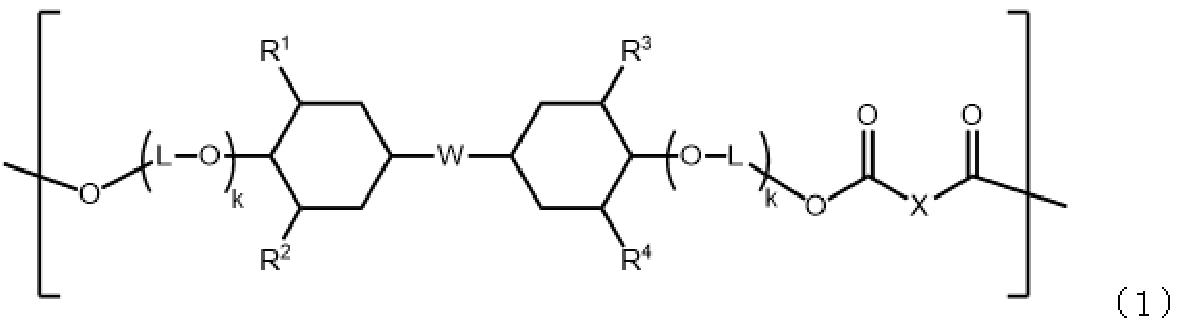
- thermoplastic resin having a number average molecular weight of 5,000 to 30,000, containing a repeating unit represented by the following formula (1).
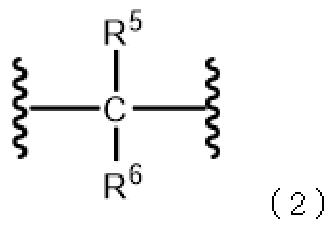
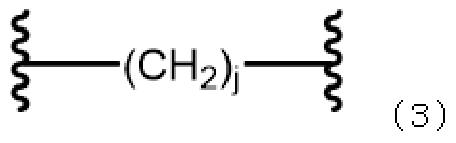
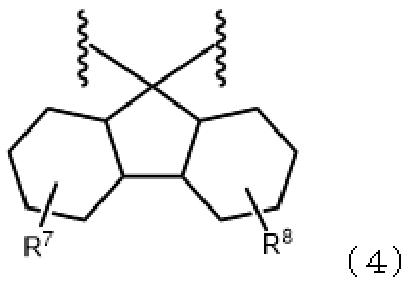
- R 1 to R 4 each independently represents a hydrogen atom, a halogen atom or a hydrocarbon group having 1 to 12 carbon atoms, k represents 0 or 1, L represents a divalent linking group, X is a divalent linking group having an alicyclic skeleton containing no unsaturated bond, W is a single bond or at least one selected from the group represented by the following formula (2), (3) or (4) is.
- R 5 and R 6 each independently represent a hydrogen atom, a halogen atom or an alkyl group having 1 to 9 carbon atoms, or represent a group in which R 5 and R 6 combine to form a carbocyclic ring.
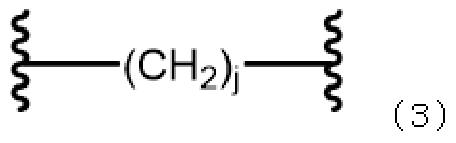
- j represents an integer of 2 to 10.
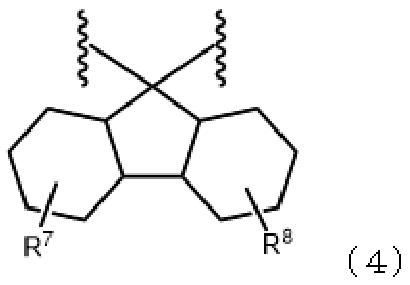
- R 7 and R 8 each independently represent a hydrogen atom, a halogen atom or a hydrocarbon group having 1 to 12 carbon atoms
- k
- thermoplastic resin according to aspect 1 wherein in the formula (1), X is at least one selected from a cyclohexyl group, a decalin group, a tricyclodecane group, or a group represented by the following formula (5).
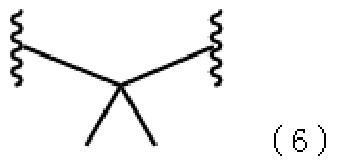
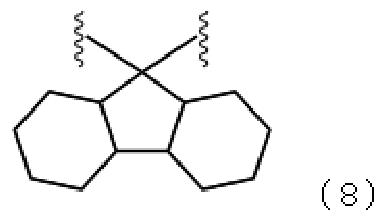
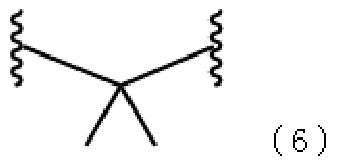
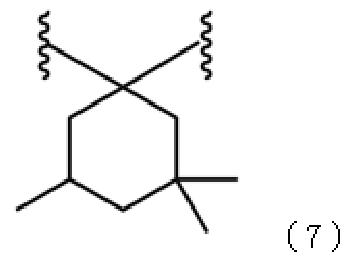
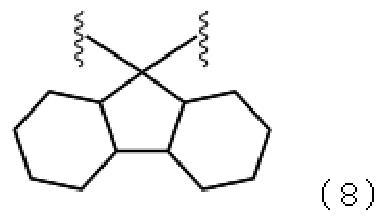
- thermoplastic resin according to mode 1 or 2 wherein in formula (1), W is at least one selected from the group represented by formula (6), (7) or (8) below.
- thermoplastic resin according to any one of aspects 1 to 4, which has a glass transition temperature of 110°C to 190°C.
- thermoplastic resin having a high Abbe number and excellent heat resistance can be obtained. It can be used for optical members such as mobile phones, smartphones, tablet terminals, personal computers, digital cameras, video cameras, in-vehicle cameras, or surveillance cameras. The industrial effect it produces is exceptional.
- the thermoplastic resin of the present invention is a thermoplastic resin characterized by containing a repeating unit represented by the following formula (1) and having a number average molecular weight of 5,000 to 30,000.
- R 1 to R 4 each independently represents a hydrogen atom, a halogen atom or a hydrocarbon group having 1 to 12 carbon atoms, k represents 0 or 1, L represents a divalent linking group, X is a divalent linking group having an alicyclic skeleton containing no unsaturated bond, W is a single bond or at least one selected from the group represented by the following formula (2), (3) or (4) is.
- R 5 and R 6 each independently represent a hydrogen atom, a halogen atom or an alkyl group having 1 to 9 carbon atoms, or represent a group in which R 5 and R 6 combine to form a carbocyclic ring.
- j represents an integer of 2 to 10.
- thermoplastic resin containing the repeating unit represented by the formula (1) has a number average molecular weight of 5,000 to 30,000, the strength of the resin is sufficiently guaranteed, and the molding material It was found that it can be effectively used as When an optical lens is molded using such a resin, a material having a high Abbe's number and excellent heat resistance can be obtained.
- R 1 to R 4 each independently represent a hydrogen atom, a halogen atom or a hydrocarbon group having 1 to 12 carbon atoms, a hydrogen atom, a methyl group, an ethyl group, a propyl group, an isopropyl group, a butyl group, t-butyl group, cyclopentyl group and cyclohexyl group are preferred, hydrogen atom, methyl group and cyclohexyl group are more preferred, and hydrogen atom is even more preferred.
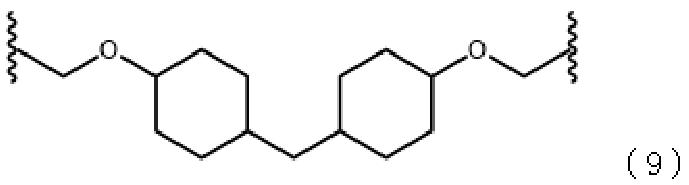
- X represents a divalent linking group having an alicyclic skeleton containing no unsaturated bond, a cyclohexyl group, decalin group, bicyclohexyl group, tricyclodecane group, bidecarin group, the following formula ( 5), groups represented by (9) to (15), and the like.
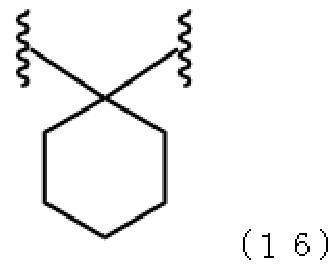
- R 5 and R 6 each independently represents a hydrogen atom, a halogen atom or an alkyl group having 1 to 9 carbon atoms, or a group in which R 5 and R 6 combine to form a carbocyclic ring. and this carbocyclic ring may have an alkyl group of 1 to 3 carbon atoms. Examples of the group forming the carbocyclic ring include a group represented by the following formula (7) and a group represented by (16).
- R 5 and R 6 each independently represent a hydrogen atom, a methyl group, an ethyl group, a propyl group, an isopropyl group, a butyl group, a t-butyl group, a cyclopentyl group, a cyclohexyl group, a group represented by the following formula (7), It is preferably a group represented by formula (16), more preferably a hydrogen atom, a methyl group, an ethyl group, a group represented by formula (7) below, or a group represented by formula (16) below. , a methyl group, and a group represented by the following formula (7) are more preferable because the heat resistance of the resin is excellent.
- j represents an integer of 2 to 10, preferably 2 to 6, more preferably 2 to 4, and even more preferably 2 or 3.
- Tg glass transition temperature
- R 7 and R 8 each independently represents a hydrogen atom, a halogen atom or a hydrocarbon group having 1 to 12 carbon atoms, a hydrogen atom, a methyl group, an ethyl group, a propyl group, an isopropyl group, a butyl is preferably a group, t-butyl group, cyclopentyl group or cyclohexyl group, more preferably a hydrogen atom or a methyl group, and even more preferably a hydrogen atom.
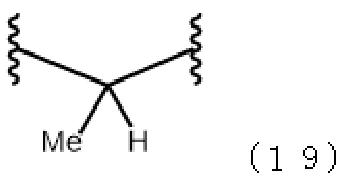
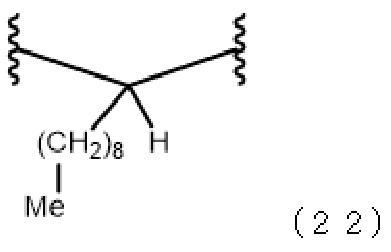
- W is preferably a group represented by the following formulas (6) to (8) and the following formulas (16) to (23), the following formulas (6) to (8), the following Groups represented by formula (16), formula (17), and formula (19) below are more preferred, and groups represented by formulas (6) to (8) below are more preferred.
- L represents a divalent linking group, preferably an alkylene group having 1 to 12 carbon atoms, more preferably an alkylene group having 1 to 4 carbon atoms, and an ethylene group. More preferred.
- Tg glass transition temperature
- k is 0 or 1.
- thermoplastic resin containing the repeating unit represented by formula (1) of the present invention can be obtained from a dihydroxy compound and a dicarboxylic acid or an ester-forming derivative thereof.
- the thermoplastic resin of the present invention may contain the repeating unit represented by the formula (1) in an amount of 5 mol% or more, 10 mol% or more, 15 mol% or more, 20 mol% or more, 25 mol% or more, 30 mol% or more. , 100 mol % or less, 90 mol % or less, 80 mol % or less, 70 mol % or less, 60 mol % or less, or 50 mol % or less.
- the thermoplastic resin of the present invention preferably contains 10 mol% or more and 100 mol% or less, more preferably 20 mol% or more and 100 mol% or less, still more preferably 30 mol% or more and 100 mol% or less, of the repeating unit represented by the formula (1). Particularly preferably, it can be contained at 40 mol % or more and 100 mol % or less. It is preferable that the repeating unit represented by the formula (1) is within the above range, because not only the Abbe number is high, but also the balance between heat resistance and moldability is excellent.
- thermoplastic resin of the present invention can contain a repeating unit represented by the following formula (24). (In the formula, Y represents a divalent linking group.)
- the molar ratio of the repeating unit represented by the formula (1) and the repeating unit represented by the formula (24) is 95:5 to 5:95, and 90:10 to 10:90. More preferably, it is 85:15 to 15:85.
- the molar ratio of the repeating unit represented by the formula (1) to the repeating unit represented by the formula (14) is within the above range, in addition to a high Abbe number, heat resistance and moldability It is preferable because it is also excellent in the balance of
- thermoplastic resin of the present invention has a number average molecular weight of 5,000 to 30,000, preferably 8,000 to 28,000, more preferably 10,000 to 25,00. It is preferable that the number average molecular weight is within the above range because the balance between moldability and mechanical strength is excellent.
- the Abbe number of the thermoplastic resin of the present invention is 46.0 or more, preferably 48.0 or more, more preferably 50.0 or more, further preferably 52.0 or more, and 54 0.0 or more is particularly preferred, and 56.0 or more is most preferred.
- the glass transition temperature (Tg) of the thermoplastic resin of the present invention is preferably 110 to 190°C, more preferably 110 to 175°C, even more preferably 115 to 170°C, and 115 to 165. °C is particularly preferred. When the glass transition temperature is within the above range, the balance between heat resistance and moldability is excellent, which is preferable.
- the refractive index of the thermoplastic resin of the present invention is 1.450 or more, 1.460 or more, 1.470 or more, 1.480 or more, 1.480 or more, when measured at a temperature of 20° C. and a wavelength of 587.56 nm. .490 or greater, or 1.500 or greater, 1.550 or less, and 1.54 It may be 0 or less, 1.530 or less, 1.520 or less, or 1.510 or less. It is preferably 1.450 to 1.550, more preferably 1.460 to 1.540, even more preferably 1.480 to 1.530.
- the dihydroxy compound used as the raw material of the formula (1) is mainly a dihydroxy compound represented by the following formula (a), and may be used alone or in combination of two or more.
- R 1 to R 4 , W, L, and k are the same as in formula (1) above.
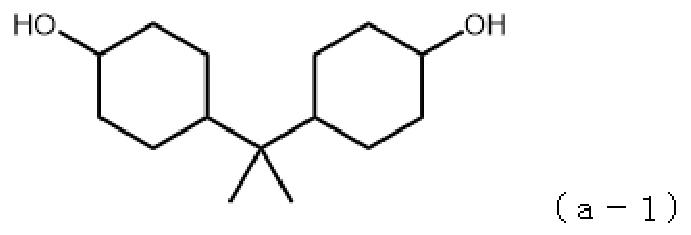
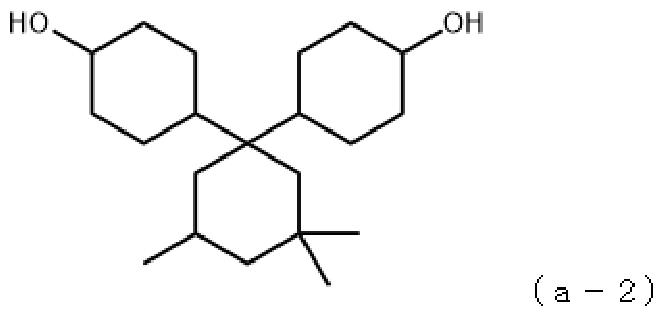
- dihydroxy compounds represented by formula (a) include 4,4′-methylenebis(hydroxycyclohexane), 2,2-bis(4-hydroxycyclohexyl)propane, 3,3-(4-hydroxycyclohexyl) butane, 2,2-bis(3-methyl-4-hydroxycyclohexyl)propane, 1,1-bis(4-hydroxycyclohexyl)cyclohexane, 1,1-bis(4-hydroxycyclohexyl)3,3,5-trimethylcyclohexane , 2,2-bis(4-hydroxycyclohexyl)tricyclo[7.4.0.0 3,8 ]dodecane, 2,2-bis(3-methyl-4hydroxycyclohexyl)tricyclo[7.4.0.0 3,8 ]dodecane, 4,4′-methylenebis[(2-hydroxyethoxy)cyclohexane], 2,2-bis[4-(2-hydroxyethoxy)cyclohexyl]propane, 3,3-bis[4-m
- the following formula (a-1) represented by the following formulas (a-1) to (a-3): 2,2-bis(4-hydroxycyclohexyl)propane
- the following formula (a-2) 1,1-bis(4-hydroxycyclohexyl)3,3,5-trimethylcyclohexane
- the following formula (a-3) 2,2-bis[4-(2-hydroxyethoxy)cyclohexyl]tricyclo[7.4.
- 0.0 3,8 ]dodecane is preferable because the resin from which 0.0 3,8 ]dodecane is obtained has excellent heat resistance. These may be used alone or in combination of two or more.
- Dicarboxylic acid component of formula (1) above Dicarboxylic acid represented by the following formula (b) or an ester-forming derivative thereof is preferably used as the dicarboxylic acid serving as a raw material of the formula (1).
- X is the same as each formula in the above formula (1).
- Dicarboxylic acids used in the thermoplastic resin of the present invention include 1,2-cyclohexanedicarboxylic acid, 1,3-cyclohexanedicarboxylic acid, 1,4-cyclohexanedicarboxylic acid, 1,5-decalinedicarboxylic acid, 1,6- decalindicarboxylic acid, 1,7-decalindicarboxylic acid, 1,8-decalindicarboxylic acid, 2,6-decalindicarboxylic acid, 2,7-decalindicarboxylic acid, 3,7-decalindicarboxylic acid, 2,2-bis[ (4-Carboxymethoxy)cyclohexyl]propane, 2,2′-dicarboxy-1,1′-bicyclohexane, 3,3′-dicarboxy-1,1′-bicyclohexane, 4,4′-dicarboxy- 1,1′-bicyclohexane, 2,2′-bis(carboxymethoxy)-1,1′-bic
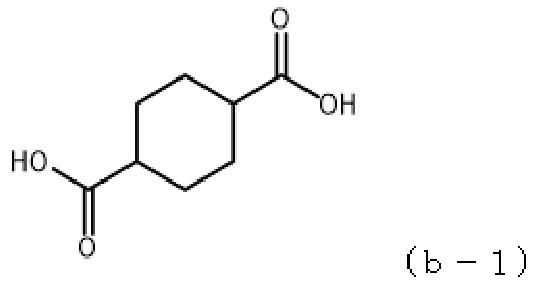
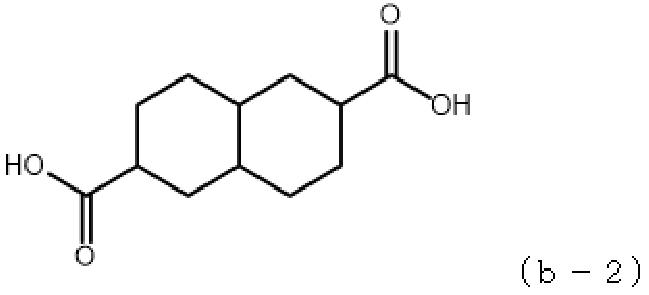
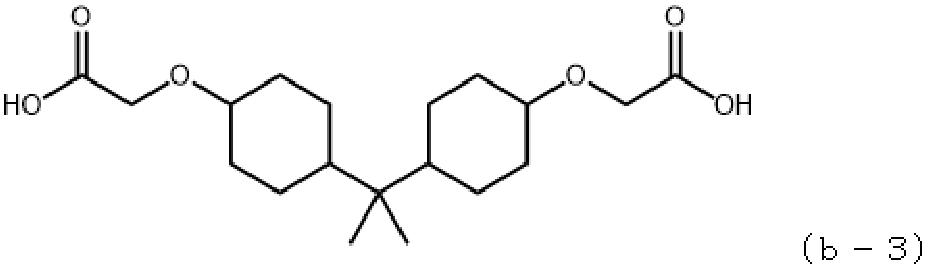
- formulas (b-1) to (b-4) represented by the following formulas (b-1) to (b-4), the following formula (b-1): 1,4-cyclohexanedicarboxylic acid, the following formula (b-2): 2,6-decalin Dicarboxylic acid, formula (b-3) below: 2,2-bis[(4-carboxymethoxy)cyclohexyl]propane, formula (b-4) below: tricyclo[5.2.1.0 2,6 ]decanedicarbonate Acids are particularly preferred due to their excellent reactivity.
- ester-forming derivatives acid chlorides and esters such as methyl esters, ethyl esters and phenyl esters may be used.
- thermoplastic resin of the present invention has a repeating unit represented by the formula (1), but may contain a copolymer component separately from it.
- a copolymer component include dihydroxy compounds other than those represented by the formula (a), repeating units having a carbonate bond, and the like.
- thermoplastic resin of the present invention examples include ethylene glycol, propanediol, butanediol, pentanediol, hexanediol, heptanediol, octanediol, nonanediol, tricyclo [5.2.
- Carbonate esters include esters of optionally substituted aryl groups having 6 to 10 carbon atoms, aralkyl groups, or alkyl groups having 1 to 4 carbon atoms. Specifically, diphenyl carbonate, ditolyl carbonate, bis(chlorophenyl) carbonate, bis(m-cresyl) carbonate, diaryl carbonate such as dinaphthyl carbonate, dialkyl carbonate such as dimethyl carbonate, diethyl carbonate, dibutyl carbonate, dicyclohexyl carbonate, and ethyl carbonate.
- Examples include alkylaryl carbonates such as phenyl carbonate and cyclohexylphenyl carbonate, and dialkenyl carbonates such as divinyl carbonate, diisopropenyl carbonate and dipropenyl carbonate. Among them, diaryl carbonate is preferred, and diphenyl carbonate is more preferred.
- thermoplastic resin of the present invention is produced, for example, by a method of reacting a dihydroxy compound with a dicarboxylic acid or an ester-forming derivative thereof, or a method of reacting a dihydroxy compound with a carbonate precursor such as phosgene or a diester carbonate. Specific examples are shown below.
- thermoplastic resin of the present invention is a polyester resin
- a reaction means known per se for example, a dihydroxy compound and a dicarboxylic acid or an ester-forming derivative thereof are subjected to an esterification reaction or a transesterification reaction, and the resulting reaction product is A polycondensation reaction may be performed to obtain a high molecular weight product having a desired molecular weight.
- thermoplastic resin of the present invention is a polyester carbonate resin
- it can be produced by reacting a dihydroxy compound and a dicarboxylic acid or an ester-forming derivative thereof with a carbonate precursor such as phosgene or a carbonate ester.
- a carbonate precursor such as phosgene or a carbonate ester.
- the same method as that for the polyester resin can be used.
- the optical member of the present invention contains the above thermoplastic resin.
- Such an optical member is not particularly limited as long as it is an optical application for which the above thermoplastic resin is useful, but optical lenses, optical discs, transparent conductive substrates, optical cards, sheets, films, optical fibers, lenses, prisms, etc. , optical films, substrates, optical filters, hard coat films, and the like.
- the optical member of the present invention may be composed of a resin composition containing the above thermoplastic resin, and the resin composition may contain a heat stabilizer, a plasticizer, a light stabilizer, a polymerization Additives such as metal deactivators, flame retardants, lubricants, antistatic agents, surfactants, antibacterial agents, ultraviolet absorbers, release agents, and antioxidants can be added.
- optical lens As an optical member of the present invention, an optical lens can be mentioned in particular. Examples of such optical lenses include optical lenses for mobile phones, smart phones, tablet terminals, personal computers, digital cameras, video cameras, vehicle-mounted cameras, surveillance cameras, and the like.
- optical member and optical lens of the present invention can be molded and processed by any method such as injection molding, compression molding, injection compression molding, melt extrusion molding, casting, etc., but injection molding is particularly preferred.
- the molding conditions for injection molding are not particularly limited, but the cylinder temperature of the molding machine is preferably 180 to 320°C, more preferably 220 to 300°C, and particularly preferably 240 to 280°C.
- the mold temperature is preferably 70 to 130°C, more preferably 80 to 125°C, even more preferably 90 to 120°C.
- the injection pressure is preferably 5 to 170 MPa, more preferably 50 to 160 MPa, even more preferably 100 to 150 MPa.
- ⁇ d (nd-1)/(nF-nC) nd: refractive index at a wavelength of 587.56 nm; nF: refractive index at a wavelength of 486.13 nm; nC: Refractive index at a wavelength of 656.27 nm.
- Tg Glass transition temperature
- the obtained resin was measured with a Discovery DSC 25 Auto model manufactured by TA Instruments Japan Co., Ltd. at a temperature increase rate of 20° C./min. Samples were measured at 5-10 mg.
- ⁇ Number average molecular weight (Mn)> The number average molecular weight was measured by the following method using gel permeation chromatography (GPC). 1.0 mg of the obtained resin was dissolved in 5 mL of chloroform to prepare a solution. For each sample, the molecular weight in terms of polystyrene was calculated using GPC. The analysis was performed under the following measurement conditions.
- Example 1 32.13 parts by mass (50 mol parts) of 2,2-bis(4-hydroxycyclohexyl)propane (hereinafter sometimes abbreviated as HBPA), diphenyl 1,4-cyclohexanedicarboxylate (hereinafter abbreviated as DPCD ) and 4.45 ⁇ 10 ⁇ 2 parts by mass (4.00 ⁇ 10 ⁇ 4 mol parts) of titanium tetrabutoxide as a catalyst were added and heated to 200° C. in a nitrogen atmosphere. melted. After that, the degree of pressure reduction was adjusted to 20 kPa over 10 minutes.
- HBPA 2,2-bis(4-hydroxycyclohexyl)propane
- DPCD diphenyl 1,4-cyclohexanedicarboxylate
- DPCD diphenyl 1,4-cyclohexanedicarboxylate
- the temperature is raised to 260°C at a rate of 30°C/hr, and after the outflow of phenol reaches 70%, the pressure is reduced to 60 kPa/hr, and the polymerization reaction is carried out until a predetermined power is reached, and the reaction is completed.
- the resin was removed from the flask.
- the obtained polyester resin was analyzed by 1 H NMR, and it was confirmed that the HBPA component was introduced in an amount of 50 mol % with respect to all monomers.
- the copolymerization ratio, refractive index, Abbe number, Tg and Mn of the polyester resin were evaluated.
- Example 2 21.42 parts by mass (50 mol parts) of HBPA, 23.47 parts by mass (52 mol parts) of dimethyl 2,6-decalinedicarboxylate (hereinafter sometimes abbreviated as DDMC), and titanium tetrabutoxide as a catalyst. .90 ⁇ 10 ⁇ 2 parts by mass (1.00 ⁇ 10 ⁇ 3 mol parts) were added, and the same procedure as in Example 1 was carried out to obtain a polyester resin. The copolymerization ratio, refractive index, Abbe number, Tg and Mn of the polyester resin were evaluated.
- DDMC dimethyl 2,6-decalinedicarboxylate
- Example 3 24.69 parts by mass (40 mol parts) of HBPA, 5.24 parts by mass (10 mol parts) of tricyclo[5.2.1.0 2,6 ]decane dimethanol (hereinafter sometimes abbreviated as TCDDM), 44.91 parts by mass (52 mol parts) of DPCD and 4.45 ⁇ 10 ⁇ 2 parts by mass (4.00 ⁇ 10 ⁇ 4 mol parts) of titanium tetrabutoxide as a catalyst were added, and polyester was prepared in the same manner as in Example 1. The copolymerization ratio, refractive index, Abbe number, Tg and Mn of the polyester resin from which the resin was obtained were evaluated.
- TCDDM tricyclo[5.2.1.0 2,6 ]decane dimethanol
- Example 4 24.69 parts by mass (40 mol parts) of HBPA and 3.85 parts by mass (10 mol parts) of 2,2,4,4-tetramethyl-1,3-cyclobutanediol (hereinafter sometimes abbreviated as TMCBD) , 44.91 parts by mass (52 mol parts) of DPCD, and 4.45 ⁇ 10 -2 parts by weight (4.00 ⁇ 10 -4 mol parts) of titanium tetrabutoxide as a catalyst were added, and in the same manner as in Example 1, A polyester resin was obtained. The copolymerization ratio, refractive index, Abbe number, Tg and Mn of the polyester resin were evaluated.
- TMCBD 2,2,4,4-tetramethyl-1,3-cyclobutanediol
- Example 5 24.69 parts by mass (40 mol parts) of HBPA, 3.90 parts by mass (10 mol parts) of isosorbide (hereinafter sometimes abbreviated as ISS), 44.91 parts by mass (52 mol parts) of DPCD, and as a catalyst 4.45 ⁇ 10 ⁇ 2 parts by mass (4.00 ⁇ 10 ⁇ 4 mol parts) of titanium tetrabutoxide were added, and in the same manner as in Example 1, a polyester resin was obtained. The copolymerization ratio, refractive index, Abbe number, Tg and Mn of the polyester resin were evaluated.
- Example 6 32.13 parts by mass (50 mol parts) of HBPA, 36.59 parts by mass (42 mol parts) of DPCD, 4.52 parts by mass (8 mol parts) of diphenyl carbonate (hereinafter sometimes abbreviated as DPC), and a catalyst 4.55 ⁇ 10 ⁇ 2 parts by mass (5.00 ⁇ 10 ⁇ 4 mol parts) of titanium tetrabutoxide was added as a material and heated to 200° C. in a nitrogen atmosphere to melt. After that, the degree of pressure reduction was adjusted to 20 kPa over 10 minutes.
- DPC diphenyl carbonate
- the temperature was raised to 250°C at a rate of 30°C/hr, and after the outflow of phenol reached 70%, the pressure was reduced to 60 kPa/hr, and the polymerization reaction was carried out until a predetermined power was reached, and the reaction was completed. After the resin was removed from the flask.
- the obtained polyester carbonate resin was analyzed by 1 H NMR, and it was confirmed that the HBPA component was introduced in an amount of 50 mol % with respect to all the monomers.
- the copolymerization ratio, refractive index, Abbe number, Tg and Mn of the polyester carbonate resin were evaluated.
- Example 7 43.1 parts by mass (50 mol parts) of 1,1-bis(4-hydroxycyclohexyl) 3,3,5-trimethylcyclohexane (hereinafter sometimes abbreviated as HTMC), 44.91 parts by mass (52 mol parts) of DPCD parts) and 4.45 ⁇ 10 ⁇ 2 parts by mass (4.00 ⁇ 10 ⁇ 4 mol parts) of titanium tetrabutoxide as a catalyst were added in the same manner as in Example 1 to obtain a polyester resin. The copolymerization ratio, refractive index, Abbe number, Tg and Mn of the polyester resin were evaluated.
- HTMC 1,1-bis(4-hydroxycyclohexyl) 3,3,5-trimethylcyclohexane
- Example 8 28.7 parts by mass (50 mol parts) of HTMC, 23.47 parts by mass (52 mol parts) of DDMC, and 9.90 ⁇ 10-2 parts by weight (1.00 ⁇ 10-3 mol parts) of titanium tetrabutoxide as a catalyst
- a polyester resin was obtained. The copolymerization ratio, refractive index, Abbe number, Tg and Mn of the polyester resin were evaluated.
- Example 9 33.1 parts by mass (40 mol parts) of HTMC, 5.24 parts by mass (10 mol parts) of TCDDM, 44.91 parts by mass (52 mol parts) of DPCD, and 4.45 ⁇ 10-2 titanium tetrabutoxide as a catalyst. Parts by mass (4.00 ⁇ 10 ⁇ 4 mol parts) were added, and the copolymerization ratio, refractive index, Abbe number, Tg, and Mn of the polyester resin obtained in the same manner as in Example 1 were evaluated.
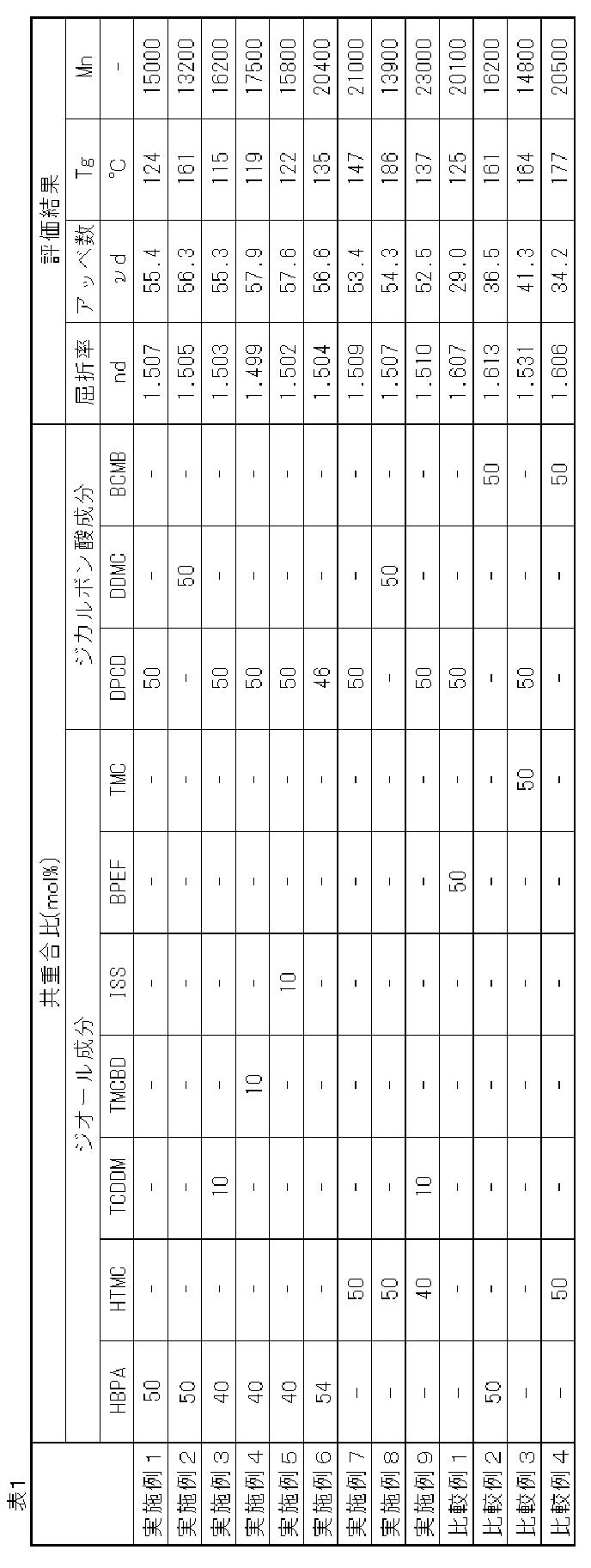
- Table 1 shows the results of the evaluation of examples for thermoplastic resins.
- HBPA 2,2-bis(4-hydroxycyclohexyl)propane
- HTMC 1,1-bis(4-hydroxycyclohexyl)3,3,5-trimethylcyclohexane
- TCDDM tricyclo[5.2.1.0 2,6 ]
- TMCBD 2,2,4,4-tetramethyl-1,3-cyclobutanediol
- ISS isosorbide
- BPEF 9,9-bis[4-(2-hydroxyethoxy)phenyl]fluorene
- TMC 1,1- Bis(4-hydroxyphenyl)-3,3,5-trimethylcyclohexane
- DPCD phenyl 1,4-cyclohexanedicarboxylate
- DDMC dimethyl 2,6-decalinedicarboxylate
- BCMB 2,2′-bis(carboxymethoxy)-1 , 1′-binaphthyl
- thermoplastic resins with high Abbe numbers were obtained in Examples 1 to 6 using HBPA. Also in Examples 7 to 9 using HTMC, thermoplastic resins having high Abbe numbers were obtained.
- Example 1 and Comparative Example 1 use a dicarboxylic acid component having an alicyclic skeleton. .0, and Example 1, which does not contain a dihydroxy compound containing a fluorene skeleton, achieves a higher Abbe number.
- Example 7 and Comparative Example 1 use a dicarboxylic acid component having an alicyclic skeleton. .0, and Example 7, which does not contain a dihydroxy compound containing a fluorene skeleton, achieves a higher Abbe number.
- Example 1 and Comparative Example 2 use a dihydroxy compound having an alicyclic skeleton. 5, and Example 1, which does not contain a dicarboxylic acid component containing an unsaturated bond, achieves a higher Abbe number.
- Example 8 and Comparative Example 4 use a dihydroxy compound having an alicyclic skeleton. 2, and Example 8, which does not contain a dicarboxylic acid component containing an unsaturated bond, achieves a higher Abbe number.
- thermoplastic resin obtained in the example when an optical lens was produced by injection molding using the thermoplastic resin obtained in the example, it had sufficient strength to be used as a molding material.
- thermoplastic resin of the present invention is used for optical materials, and is used for optical members such as optical lenses, prisms, optical discs, transparent conductive substrates, optical cards, sheets, films, optical fibers, optical films, optical filters, and hard coat films. It is very useful especially for optical lenses.
Landscapes
- Physics & Mathematics (AREA)
- Chemical & Material Sciences (AREA)
- General Physics & Mathematics (AREA)
- Optics & Photonics (AREA)
- Health & Medical Sciences (AREA)
- Chemical Kinetics & Catalysis (AREA)
- Medicinal Chemistry (AREA)
- Polymers & Plastics (AREA)
- Organic Chemistry (AREA)
- Addition Polymer Or Copolymer, Post-Treatments, Or Chemical Modifications (AREA)
- Macromolecular Compounds Obtained By Forming Nitrogen-Containing Linkages In General (AREA)
- Polyesters Or Polycarbonates (AREA)
Abstract
本発明は、高いアッベ数と高い耐熱性を有する熱可塑性樹脂を提供することを目的とする。本発明の熱可塑性樹脂は、下記式(1)で表される繰り返し単位を含み、数平均分子量が5,000から30,000である。 (式中、R1~R4はそれぞれ独立に水素原子、ハロゲン原子または炭素数1~12の炭化水素基を示し、kは0または1を示し、Lは2価の連結基を示し、Xは不飽和結合を含まず脂環式骨格を有する2価の連結基であり、Wは単結合または下記式(2)、(3)または(4)で表される群より選ばれる少なくとも1つである。)
Description
本技術は、高いアッベ数と高い耐熱性を有する熱可塑性樹脂、それにより形成される光学部材および光学レンズに関するものである。
光学系の材料として従来用いられていたガラスは要求される様々な光学特性を実現することが可能であると共に、環境耐性に優れているが、加工性が悪いという問題があった。これに対し、ガラス材料に比べて安価であると共に加工性に優れる樹脂が光学部材に用いられてきている。
光学ユニットの光学設計においては、互いにアッベ数が異なる複数のレンズを組み合わせて使用することにより色収差を補正することが知られている。例えば、低屈折率で高アッベ数の脂環式ポリオレフィン樹脂製のレンズと、高屈折率で低アッベ数のビスフェノールAからなるポリカーボネート(nd=1.59、νd=31)樹脂製のレンズとを組み合わせて色収差を補正することが行われている。高屈折率で低アッベ数の樹脂の開発が盛んに行われており、これに伴い、高アッベ数の樹脂の需要は高まっている。
特許文献1~3には、ビスフェノールAを水素化した化合物を含むポリエステル樹脂組成物が記載されている。
また、特許文献4には、脂環式骨格を有するジカルボン酸とフルオレン骨格の化合物を含むポリエステル樹脂がおよそ27~45程度のアッベ数を有することが記載されている。
特許文献1~3に記載のポリエステル樹脂は、分子量が低く、強度が充分でないため成形材料、特に光学レンズとして用いることは難しい。
また、特許文献4に記載のポリエステル樹脂はフルオレン骨格を有する化合物を原料に使用するため、アッベ数は中程度にとどまり、改善の余地がある。
そこで本発明の目的は、高いアッベ数と高い耐熱性を有する熱可塑性樹脂、それにより形成される光学部材および光学レンズに関するものである。
本発明者らはこの目的を達成せんとして鋭意研究を重ねた結果、脂環式骨格を有するジヒドロキシ化合物と脂環式骨格を有するジカルボン酸および/またはそのエステル形成性誘導体を構成原料として使用する熱可塑性樹脂が、上記課題を解決し得ることを見出し、本発明に到達した。
上記目的は、以下の態様の本発明の熱可塑性樹脂により達成される。
≪態様1≫
下記式(1)で表される繰り返し単位を含む、数平均分子量が5,000から30,000である熱可塑性樹脂。
(式中、R1~R4はそれぞれ独立に水素原子、ハロゲン原子または炭素数1~12の炭化水素基を示し、kは0または1を示し、Lは2価の連結基を示し、Xは不飽和結合を含まず脂環式骨格を有する2価の連結基であり、Wは単結合または下記式(2)、(3)または(4)で表される群より選ばれる少なくとも1つである。)

(式中、R5とR6はそれぞれ独立に水素原子、ハロゲン原子または炭素数1~9のアルキル基を示すか、R5とR6が結合して炭素環を形成する基を示す。)
(式中、jは2~10の整数を示す。)
(式中、R7とR8はそれぞれ独立に水素原子、ハロゲン原子または炭素数1~12の炭化水素基を示す。)
下記式(1)で表される繰り返し単位を含む、数平均分子量が5,000から30,000である熱可塑性樹脂。
≪態様2≫
前記式(1)において、Xがシクロヘキシル基、デカリン基、トリシクロデカン基、または下記式(5)で表される基より選ばれる少なくとも1つである、態様1に記載の熱可塑性樹脂。

前記式(1)において、Xがシクロヘキシル基、デカリン基、トリシクロデカン基、または下記式(5)で表される基より選ばれる少なくとも1つである、態様1に記載の熱可塑性樹脂。
≪態様3≫
前記式(1)において、Wが下記式(6)、(7)または(8)で表される群より選ばれる少なくとも1つである、態様1または2に記載の熱可塑性樹脂。
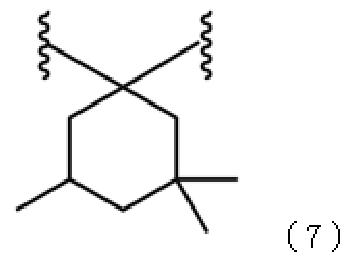
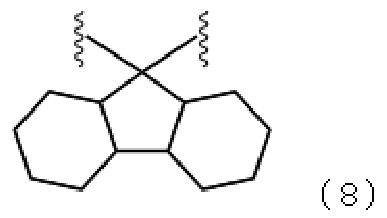
前記式(1)において、Wが下記式(6)、(7)または(8)で表される群より選ばれる少なくとも1つである、態様1または2に記載の熱可塑性樹脂。
≪態様4≫
アッベ数が、46.0以上である態様1~3のいずれか一項に記載の熱可塑性樹脂。
アッベ数が、46.0以上である態様1~3のいずれか一項に記載の熱可塑性樹脂。
≪態様5≫
ガラス転移温度が、110℃~190℃である態様1~4のいずれか一項に記載の熱可塑性樹脂。
ガラス転移温度が、110℃~190℃である態様1~4のいずれか一項に記載の熱可塑性樹脂。
≪態様6≫
前記熱可塑性樹脂は、ポリエステルまたはポリエステルカーボネート樹脂である態様1~5のいずれか一項に記載の熱可塑性樹脂。
前記熱可塑性樹脂は、ポリエステルまたはポリエステルカーボネート樹脂である態様1~5のいずれか一項に記載の熱可塑性樹脂。
≪態様7≫
態様1~6のいずれか一項に記載の熱可塑性樹脂からなる光学部材。
態様1~6のいずれか一項に記載の熱可塑性樹脂からなる光学部材。
≪態様8≫
光学レンズである態様7に記載の光学部材。
光学レンズである態様7に記載の光学部材。
本発明により、高アッベ数で耐熱性に優れる熱可塑性樹脂が得られるため、光学レンズ、プリズム、光ディスク、透明導電性基板、光カード、シート、フィルム、光ファイバー、光学膜、光学フィルター、ハードコート膜等の光学部材に用いることができ、特に携帯電話、スマートフォン、タブレット端末、パソコン、デジタルカメラ、ビデオカメラ、車載カメラ、または監視カメラのいずれかに用いるための光学レンズに極めて有用であり、そのため、その奏する産業上の効果は格別である。
本発明をさらに詳しく説明する。
<熱可塑性樹脂>
本発明の熱可塑性樹脂は、下記式(1)で表される繰り返し単位を含み、かつ数平均分子量が5,000から30,000であることを特徴とする熱可塑性樹脂である。

(式中、R1~R4はそれぞれ独立に水素原子、ハロゲン原子または炭素数1~12の炭化水素基を示し、kは0または1を示し、Lは2価の連結基を示し、Xは不飽和結合を含まず脂環式骨格を有する2価の連結基であり、Wは単結合または下記式(2)、(3)または(4)で表される群より選ばれる少なくとも1つである。)

(式中、R5とR6はそれぞれ独立に水素原子、ハロゲン原子または炭素数1~9のアルキル基を示すか、R5とR6が結合して炭素環を形成する基を示す。)
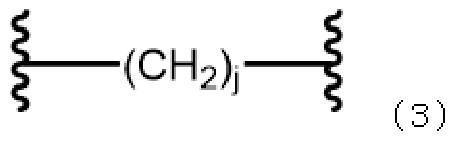
(式中、jは2~10の整数を示す。)

(式中、R7とR8はそれぞれ独立に水素原子、ハロゲン原子または炭素数1~12の炭化水素基を示す。)
本発明の熱可塑性樹脂は、下記式(1)で表される繰り返し単位を含み、かつ数平均分子量が5,000から30,000であることを特徴とする熱可塑性樹脂である。
本発明者らは、前記式(1)で表される繰り返し単位を含む熱可塑性樹脂において、数平均分子量が5,000から30,000である場合に、樹脂の強度が十分保証され、成形材料として有効に利用可能であることを見出した。このような樹脂を用いて光学レンズを成形した場合には、高アッベ数であり、かつ耐熱性に優れた材料が得られる。
前期式(1)において、R1~R4はそれぞれ独立に水素原子、ハロゲン原子または炭素数1~12の炭化水素基を示し、水素原子、メチル基、エチル基、プロピル基、イソプロピル基、ブチル基、t-ブチル基、シクロペンチル基、シクロヘキシル基であることが好ましく、水素原子、メチル基、シクロヘキシル基であるとより好ましく、水素原子であるとさらに好ましい。
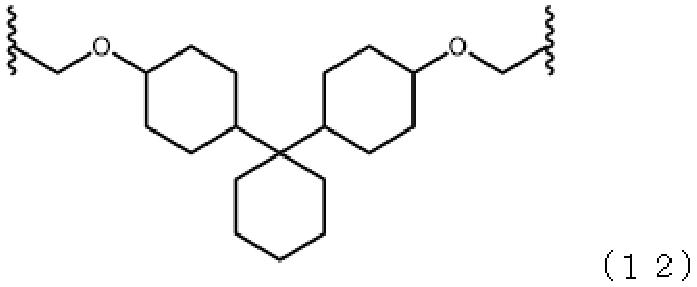
前記式(1)において、Xは不飽和結合を含まず脂環式骨格を有する2価の連結基を示し、シクロヘキシル基、デカリン基、ビシクロヘキシル基、トリシクロデカン基、ビデカリン基、下記式(5)、(9)~(15)で表される基等が挙げられる。なかでも、1,2-シクロヘキシル基、1,3-シクロヘキシル基、1,4-シクロヘキシル基、1,5-デカリン基、1,6-デカリン基、1,7-デカリン基、1,8-デカリン基、2,6-デカリン基、2,7-デカリン基、3,7-デカリン基、トリシクロ[5.2.1.02,6]デカン基、ビシクロヘキシル基、ビデカリン基、下記式(5)、(9)~(15)で表される基であることが好ましく、1,4-シクロヘキシル基、2,6-デカリン基、トリシクロ[5.2.1.02,6]デカン基、下記式(5)で表される基、下記式(9)で表される基、下記式(10)で表される基、下記式(11)で表される基であるとより好ましく、1,4-シクロヘキシル基、2,6-デカリン基、トリシクロ[5.2.1.02,6]デカン基、下記式(5)で表される基であるとさらに好ましい。





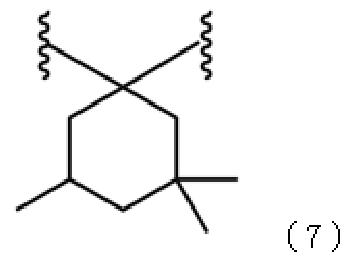
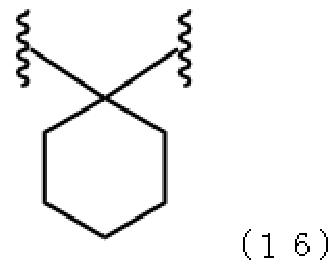
前記式(2)において、R5とR6はそれぞれ独立に水素原子、ハロゲン原子または炭素数1~9のアルキル基を示すか、R5とR6が結合して炭素環を形成する基を示し、この炭素環は炭素数1~3のアルキル基を有していてもよい。前記炭素環を形成する基としては、例えば下記式(7)で表される基、(16)で表される基が挙げられる。R5とR6はそれぞれ独立に水素原子、メチル基、エチル基、プロピル基、イソプロピル基、ブチル基、t-ブチル基、シクロペンチル基、シクロヘキシル基、下記式(7)で表される基、下記式(16)で表される基であることが好ましく、水素原子、メチル基、エチル基、下記式(7)で表される基、下記式(16)で表される基であるとより好ましく、メチル基、下記式(7)で表される基であると樹脂の耐熱性に優れるため、さらに好ましい。
前記式(3)において、jは2~10の整数を示し、2~6であることが好ましく、2~4であるとより好ましく、2または3であるとさらに好ましい。jの数が上記範囲の場合、樹脂のガラス転移温度(Tg)の低下が抑えられ、成形材料として好適に利用できる。
前記式(4)において、R7とR8はそれぞれ独立に水素原子、ハロゲン原子または炭素数1~12の炭化水素基を示し、水素原子、メチル基、エチル基、プロピル基、イソプロピル基、ブチル基、t-ブチル基、シクロペンチル基、シクロヘキシル基であることが好ましく、水素原子、メチル基であるとより好ましく、水素原子であるとさらに好ましい。
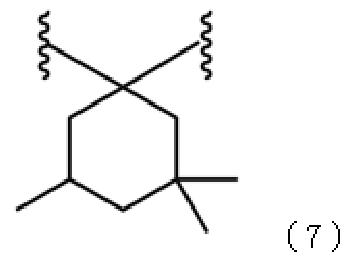
前記式(1)において、Wは下記式(6)~(8)、下記式(16)~(23)で表される基であることが好ましく、下記式(6)~(8)、下記式(16)、下記式(17)、下記式(19)で表される基であるとより好ましく、下記式(6)~(8)で表される基であるとさらに好ましい。






前記式(1)において、Lは2価の連結基を示し、炭素数1~12のアルキレン基であることが好ましく、炭素数1~4のアルキレン基であるとより好ましく、エチレン基であるとさらに好ましい。Lの連結基の長さが上記範囲の場合、樹脂のガラス転移温度(Tg)の低下が抑えられ、成形材料として好適に利用できる。
前記式(1)において、kは0または1である。
本発明の前記式(1)で表される繰り返し単位を含む熱可塑性樹脂は、ジヒドロキシ化合物とジカルボン酸またはそのエステル形成性誘導体とから得ることができる。
本発明の熱可塑性樹脂は、前記式(1)で表される繰り返し単位を、5mоl%以上、10mol%以上、15mol%以上、20mol%以上、25mol%以上、30mol%以上で含んでいてもよく、100mol%以下、90mol%以下、80mol%以下、70mol%以下、60mol%以下または50mol%以下で含んでいてもよい。
本発明の熱可塑性樹脂は、前記式(1)で表される繰返し単位を、好ましくは10mol%以上100mol%以下、より好ましくは20mol%以上100mol%以下、さらに好ましくは30mol%以上100mol%以下、特に好ましくは40mol%以上100mol%以下で含むことができる。前記式(1)で表される繰り返し単位が前記範囲であると、高アッベ数であることに加え、耐熱性と成形性のバランスにも優れるため好ましい。
本発明の熱可塑性樹脂において、下記式(24)で表される繰り返し単位を含むことができる。

(式中、Yは2価の連結基を示す。)
前記式(1)で表される繰り返し単位と前記式(24)で表される繰り返し単位のmol比が95:5~5:95であることが好ましく、90:10~10:90であるとより好ましく、85:15~15:85であるとさらに好ましい。前記式(1)で表される繰り返し単位と前記式(14)で表される繰り返し単位とのmol比が、前記範囲内であると、高アッベ数であることに加え、耐熱性と成形性のバランスにも優れるため好ましい。
<熱可塑性樹脂の物性>
本発明の熱可塑性樹脂の数平均分子量は、5,000~30,000であり、8,000~28,000であることが好ましく、10,000~25,00であるとより好ましい。数平均分子量が上記範囲内であると成形性と機械強度のバランスに優れるため好ましい。
本発明の熱可塑性樹脂の数平均分子量は、5,000~30,000であり、8,000~28,000であることが好ましく、10,000~25,00であるとより好ましい。数平均分子量が上記範囲内であると成形性と機械強度のバランスに優れるため好ましい。
本発明の熱可塑性樹脂のアッベ数は、46.0以上であり、48.0以上であることが好ましく、50.0以上であることがより好ましく、52.0以上であるとさらに好ましく、54.0以上であると特に好ましく、56.0以上であると最も好ましい。
ここで、アッベ数は、温度:20℃、波長:486.13nm、587.56nm、656.27nmの屈折率から、下記式を用いて算出する:
νd=(nd-1)/(nF-nC)
nd:波長587.56nmにおける屈折率、
nF:波長486.13nmにおける屈折率、
nC:波長656.27nmにおける屈折率を意味する。
νd=(nd-1)/(nF-nC)
nd:波長587.56nmにおける屈折率、
nF:波長486.13nmにおける屈折率、
nC:波長656.27nmにおける屈折率を意味する。
本発明の熱可塑性樹脂のガラス転移温度(Tg)は110~190℃であることが好ましく、110℃~175℃であるとより好ましく、115℃~170℃であるとさらに好ましく、115℃~165℃であると特に好ましい。ガラス転移温度が上記範囲内であると、耐熱性と成形性のバランスに優れるため好ましい。
本発明の熱可塑性樹脂の屈折率は、温度:20℃、波長:587.56nmで測定した場合に、1.450以上であり、1.460以上、1.470以上、1.480以上、1.490以上、又は1.500以上であってもよく、1.550以下であり、1.54
0以下、1.530以下、1.520以下、1.510以下であってもよい。1.450~1.550であることが好ましく、1.460~1.540であるとより好ましく、1.480~1.530であるとさらに好ましい。
0以下、1.530以下、1.520以下、1.510以下であってもよい。1.450~1.550であることが好ましく、1.460~1.540であるとより好ましく、1.480~1.530であるとさらに好ましい。
<熱可塑性樹脂の原料>
(前記式(1)のジヒドロキシ化合物成分)
前記式(1)の原料となるジヒドロキシ化合物は、主として下記式(a)で表されるジヒドロキシ化合物であり、単独で使用してもよく、または二種類以上組み合わせて用いてもよい。

前記式(a)において、R1~R4、W、L、およびkは前記式(1)における各式と同じである。
(前記式(1)のジヒドロキシ化合物成分)
前記式(1)の原料となるジヒドロキシ化合物は、主として下記式(a)で表されるジヒドロキシ化合物であり、単独で使用してもよく、または二種類以上組み合わせて用いてもよい。
以下、前記式(a)で表されるジヒドロキシ化合物の代表的具体例を示すが、前記式(1)に用いられる原料としては、それらに限定されるものではない。
式(a)で表されるジヒドロキシ化合物において、具体例として、4,4’-メチレンビス(ヒドロキシシクロヘキサン)、2,2-ビス(4-ヒドロキシシクロヘキシル)プロパン、3,3-(4-ヒドロキシシクロヘキシル)ブタン、2,2-ビス(3-メチル-4ヒドロキシシクロヘキシル)プロパン、1,1-ビス(4-ヒドロキシシクロヘキシル)シクロヘキサン、1,1-ビス(4-ヒドロキシシクロヘキシル)3,3,5-トリメチルシクロヘキサン、2,2-ビス(4-ヒドロキシシクロヘキシル)トリシクロ[7.4.0.03,8]ドデカン、2,2-ビス(3-メチル-4ヒドロキシシクロヘキシル)トリシクロ[7.4.0.03,8]ドデカン、4,4’-メチレンビス[(2-ヒドロキシエトキシ)シクロヘキサン]、2,2-ビス[4-(2-ヒドロキシエトキシ)シクロヘキシル]プロパン、3,3-ビス[4-(2-ヒドロキシエトキシ)シクロヘキシル]ブタン、2,2-ビス[3-メチル-4-(2-ヒドロキシエトキシ)シクロヘキシル]プロパン、1,1-ビス[4-(2-ヒドロキシエトキシ)シクロヘキシル]シクロヘキサン、1,1-ビス[4-(2-ヒドロキシエトキシ)シクロヘキシル]3,3,5-トリメチルシクロヘキサン、2,2-ビス[4-(2-ヒドロキシエトキシ)シクロヘキシル]トリシクロ[7.4.0.03,8]ドデカン、2,2-ビス[3-メチル-4-(2-ヒドロキシエトキシ)シクロヘキシル]トリシクロ[7.4.0.03,8]ドデカン等が例示され、2,2-ビス(4-ヒドロキシシクロヘキシル)プロパン、1,1-ビス(4-ヒドロキシシクロヘキシル)3,3,5-トリメチルシクロヘキサン、2,2-ビス(4ヒドロキシシクロヘキシル)トリシクロ[7.4.0.03,8]ドデカン、2,2-ビス[4-(2-ヒドロキシエトキシ)シクロヘキシル]プロパン、1,1-ビス[4-(2-ヒドロキシエトキシ)シクロヘキシル]3,3,5-トリメチルシクロヘキサン、2,2-ビス[4-(2-ヒドロキシエトキシ)シクロヘキシル]トリシクロ[7.4.0.03,8]ドデカンが好ましく挙げられる。
なかでも、下記式(a-1)~(a-3)で表される、下記式(a-1):2,2-ビス(4-ヒドロキシシクロヘキシル)プロパン、下記式(a-2):1,1-ビス(4-ヒドロキシシクロヘキシル)3,3,5-トリメチルシクロヘキサン、下記式(a-3):2,2-ビス[4-(2-ヒドロキシエトキシ)シクロヘキシル]トリシクロ[7.4.0.03,8]ドデカンが得られる樹脂の耐熱性に優れることから好ましい。これらは単独または二種類以上組み合わせて用いても良い。

(前記式(1)のジカルボン酸成分)
前記式(1)の原料となるジカルボン酸は、主として下記式(b)で表されるジカルボン酸、またはそのエステル形成性誘導体が好ましく用いられる。
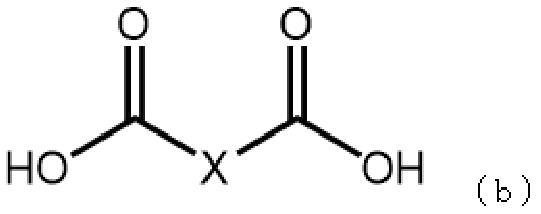
前記式(b)において、Xは前記式(1)における各式と同じである。
前記式(1)の原料となるジカルボン酸は、主として下記式(b)で表されるジカルボン酸、またはそのエステル形成性誘導体が好ましく用いられる。
以下、前記式(b)で表されるジカルボン酸の代表的具体例を示すが、本発明の前記式(1)に用いられる原料としては、そのエステル形成性誘導体であっても、本発明における効果に何ら支障はなく、また例示される具体例によって限定されるものではない。
本発明の熱可塑性樹脂に使用するジカルボン酸としては、1,2-シクロヘキサンジカルボン酸、1,3-シクロヘキサンジカルボン酸、1,4-シクロヘキサンジカルボン酸、1,5-デカリンジカルボン酸、1,6-デカリンジカルボン酸、1,7-デカリンジカルボン酸、1,8-デカリンジカルボン酸、2,6-デカリンジカルボン酸、2,7-デカリンジカルボン酸、3,7-デカリンジカルボン酸、2,2-ビス[(4-カルボキシメトキシ)シクロヘキシル]プロパン、2,2’-ジカルボキシ-1,1’-ビシクロヘキサン、3,3’-ジカルボキシ-1,1’-ビシクロヘキサン、4,4’-ジカルボキシ-1,1’-ビシクロヘキサン、2,2’-ビス(カルボキシメトキシ)-1,1’-ビシクロヘキサン、3,3’-ビス(カルボキシメトキシ)-1,1’-ビシクロヘキサン、4,4’-ビス(カルボキシメトキシ)-1,1’-ビシクロヘキサン、
2,2’-ジカルボキシ-1,1-ビデカリン、3,3’-ジカルボキシ-1,1-ビデカリン、4,4’-ジカルボキシ-1,1-ビデカリン、5,5’-ジカルボキシ-1,1-ビデカリン、6,6’-ジカルボキシ-1,1-ビデカリン、7,7’-ジカルボキシ-1,1-ビデカリン、8,8’-ジカルボキシ-1,1-ビデカリン、2,2’-ビス(カルボキシメトキシ)-1,1-ビデカリン、3,3’-ビス(カルボキシメトキシ)-1,1-ビデカリン、4,4’-ビス(カルボキシメトキシ)-1,1-ビデカリン、5,5’-ビス(カルボキシメトキシ)-1,1-ビデカリン、6,6’-ビス(カルボキシメトキシ)-1,1-ビデカリン、7,7’-ビス(カルボキシメトキシ)-1,1-ビデカリン、8,8’-ビス(カルボキシメトキシ)-1,1-ビデカリン、トリシクロ[5.2.1.02,6]デカンジカルボン酸等が例示され、1,2-シクロヘキサンジカルボン酸、1,3-シクロヘキサンジカルボン酸、1,4-シクロヘキサンジカルボン酸、1,5-デカリンジカルボン酸、1,6-デカリンジカルボン酸、1,7-デカリンジカルボン酸、1,8-デカリンジカルボン酸、2,6-デカリンジカルボン酸、2,7-デカリンジカルボン酸、3,7-デカリンジカルボン酸、2,2-ビス[(4-カルボキシメトキシ)シクロヘキシル]プロパン、トリシクロ[5.2.1.02,6]デカンジカルボン酸が好ましく挙げられる。
2,2’-ジカルボキシ-1,1-ビデカリン、3,3’-ジカルボキシ-1,1-ビデカリン、4,4’-ジカルボキシ-1,1-ビデカリン、5,5’-ジカルボキシ-1,1-ビデカリン、6,6’-ジカルボキシ-1,1-ビデカリン、7,7’-ジカルボキシ-1,1-ビデカリン、8,8’-ジカルボキシ-1,1-ビデカリン、2,2’-ビス(カルボキシメトキシ)-1,1-ビデカリン、3,3’-ビス(カルボキシメトキシ)-1,1-ビデカリン、4,4’-ビス(カルボキシメトキシ)-1,1-ビデカリン、5,5’-ビス(カルボキシメトキシ)-1,1-ビデカリン、6,6’-ビス(カルボキシメトキシ)-1,1-ビデカリン、7,7’-ビス(カルボキシメトキシ)-1,1-ビデカリン、8,8’-ビス(カルボキシメトキシ)-1,1-ビデカリン、トリシクロ[5.2.1.02,6]デカンジカルボン酸等が例示され、1,2-シクロヘキサンジカルボン酸、1,3-シクロヘキサンジカルボン酸、1,4-シクロヘキサンジカルボン酸、1,5-デカリンジカルボン酸、1,6-デカリンジカルボン酸、1,7-デカリンジカルボン酸、1,8-デカリンジカルボン酸、2,6-デカリンジカルボン酸、2,7-デカリンジカルボン酸、3,7-デカリンジカルボン酸、2,2-ビス[(4-カルボキシメトキシ)シクロヘキシル]プロパン、トリシクロ[5.2.1.02,6]デカンジカルボン酸が好ましく挙げられる。
なかでも、下記式(b-1)~(b-4)で表される、下記式(b-1):1,4-シクロヘキサンジカルボン酸、下記式(b-2):2,6-デカリンジカルボン酸、下記式(b-3):2,2-ビス[(4-カルボキシメトキシ)シクロヘキシル]プロパン、下記式(b-4):トリシクロ[5.2.1.02,6]デカンジカルボン酸が反応性に優れるため、特に好ましい。

これらは単独または二種類以上組み合わせて用いても良い。また、エステル形成性誘導体としては酸クロライドや、メチルエステル、エチルエステル、フェニルエステル等のエステル類を用いてもよい。
(前記式(1)以外の共重合成分)
本発明の熱可塑性樹脂は、前記式(1)で表される繰り返し単位を有するが、それとは別に共重合成分を含んでいても良い。そのような共重合成分としては前記式(a)で示される以外のジヒドロキシ化合物、カーボネート結合を有する繰り返し単位などが例示される。
本発明の熱可塑性樹脂は、前記式(1)で表される繰り返し単位を有するが、それとは別に共重合成分を含んでいても良い。そのような共重合成分としては前記式(a)で示される以外のジヒドロキシ化合物、カーボネート結合を有する繰り返し単位などが例示される。
具体的な、本発明の熱可塑性樹脂に使用するその他のジヒドロキシ化合物としては、エチレングリコール、プロパンジオール、ブタンジオール、ペンタンジオール、ヘキサンジオール、ヘプタンジオール、オクタンジオール、ノナンジオール、トリシクロ[5.2.1.02,6]デカンジメタノール、シクロヘキサン-1,4-ジメタノール、デカリン-2,6-ジメタノール、ノルボルナンジメタノール、ペンタシクロペンタデカンジメタノール、シクロペンタン-1,3-ジメタノール、2,2,4,4-テトラメチル-1,3-シクロブタンジオール、スピログリコール、イソソルビド、イソマンニド、イソイジド、ヒドロキノン、レゾルシノール等が例示され、これらは単独または二種類以上組み合わせて用いても良く、これらは全繰り返し単位中30mol%未満が好ましい。
また、具体的な、本発明の熱可塑性樹脂に含有されるカーボネート結合を生成する成分として、ホスゲン、カーボネートエステルがあげられる。カーボネートエステルは、置換されていてもよい炭素数6~10のアリール基、アラルキル基、あるいは炭素数1~4のアルキル基などのエステルが挙げられる。具体的にはジフェニルカーボネート、ジトリルカーボネート、ビス(クロロフェニル)カーボネート、ビス(m-クレジル)カーボネート、ジナフチルカーボネートなどの炭酸ジアリール、ジメチルカーボネート、ジエチルカーボネート、ジブチルカーボネート、ジシクロヘキシルカーボネートなどの炭酸ジアルキル、エチルフェニルカーボネート、シクロヘキシルフェニルカーボネートなどの炭酸アルキルアリール、または、ジビニルカーボネート、ジイソプロぺニルカーボネート、ジプロペニルカーボネートなどの炭酸ジアルケニルなどが挙げられ、なかでも炭酸ジアリールが好ましく、ジフェニルカーボネートがより好ましい。
本発明の熱可塑性樹脂は、例えばジヒドロキシ化合物にジカルボン酸またはそのエステル形成性誘導体を反応させる方法や、ジヒドロキシ化合物にホスゲンや炭酸ジエステルなどのカーボネート前駆物質を反応させる方法等により製造される。以下にその具体例を示す。
<製造方法>
(ポリエステル樹脂の製造方法)
本発明の熱可塑性樹脂がポリエステル樹脂である場合はそれ自体公知の反応手段、例えばジヒドロキシ化合物とジカルボン酸またはそのエステル形成性誘導体とをエステル化反応もしくはエステル交換反応させ、得られた反応生成物を重縮合反応させ、所望の分子量の高分子量体とすればよい。
(ポリエステル樹脂の製造方法)
本発明の熱可塑性樹脂がポリエステル樹脂である場合はそれ自体公知の反応手段、例えばジヒドロキシ化合物とジカルボン酸またはそのエステル形成性誘導体とをエステル化反応もしくはエステル交換反応させ、得られた反応生成物を重縮合反応させ、所望の分子量の高分子量体とすればよい。
(ポリエステルカーボネート樹脂の製造方法)
本発明の熱可塑性樹脂がポリエステルカーボネート樹脂である場合は、ジヒドロキシ化合物およびジカルボン酸またはそのエステル形成性誘導体と、ホスゲンやカーボネートエステルなどのカーボネート前駆物質とを反応させることにより製造することができる。重合方法は前記ポリエステル樹脂と同様の方法を用いることができる。
本発明の熱可塑性樹脂がポリエステルカーボネート樹脂である場合は、ジヒドロキシ化合物およびジカルボン酸またはそのエステル形成性誘導体と、ホスゲンやカーボネートエステルなどのカーボネート前駆物質とを反応させることにより製造することができる。重合方法は前記ポリエステル樹脂と同様の方法を用いることができる。
<光学部材>
本発明の光学部材は、上記の熱可塑性樹脂を含む。そのような光学部材としては、上記の熱可塑性樹脂が有用となる光学用途であれば、特に限定されないが、光学レンズ、光ディスク、透明導電性基板、光カード、シート、フィルム、光ファイバー、レンズ、プリズム、光学膜、基板、光学フィルター、ハードコート膜等を挙げることができる。
本発明の光学部材は、上記の熱可塑性樹脂を含む。そのような光学部材としては、上記の熱可塑性樹脂が有用となる光学用途であれば、特に限定されないが、光学レンズ、光ディスク、透明導電性基板、光カード、シート、フィルム、光ファイバー、レンズ、プリズム、光学膜、基板、光学フィルター、ハードコート膜等を挙げることができる。
また、本発明の光学部材は、上記の熱可塑性樹脂を含む樹脂組成物から構成されていてもよく、その樹脂組成物には、必要に応じて熱安定剤、可塑剤、光安定剤、重合金属不活性化剤、難燃剤、滑剤、帯電防止剤、界面活性剤、抗菌剤、紫外線吸収剤、離型剤、酸化防止剤等の添加剤を配合することができる。
<光学レンズ>
本発明の光学部材として、特に光学レンズを挙げることができる。このような光学レンズとしては、携帯電話、スマートフォン、タブレット端末、パソコン、デジタルカメラ、ビデオカメラ、車載カメラ、監視カメラ等のための光学レンズを挙げることができる。
本発明の光学部材として、特に光学レンズを挙げることができる。このような光学レンズとしては、携帯電話、スマートフォン、タブレット端末、パソコン、デジタルカメラ、ビデオカメラ、車載カメラ、監視カメラ等のための光学レンズを挙げることができる。
本発明の光学部材および光学レンズは、射出成形、圧縮成形、射出圧縮成形、溶融押出成形、キャスティング等の任意の方法により成形、加工することができるが、射出成形が特に好適である。
射出成形の成形条件は特に限定されないが、成形機のシリンダー温度は180~320℃が好ましく、220~300℃がより好ましく、240~280℃が特に好ましい。また、金型温度は70~130℃が好ましく、80~125℃がより好ましく、90~120℃がさらに好ましい。射出圧力は5~170MPaが好ましく、50~160MPaがより好ましく、100~150MPaがさらに好ましい。
本発明を以下の実施例でさらに具体的に説明をするが、本発明はこれによって限定されるものではない。
下記の方法で評価を行った。
<共重合比>
日本電子(株)製JNM-ECZ400Sを用いて、1H NMR測定によって、各樹脂の組成比を算出した。溶媒はCDCl3を用いた。
<共重合比>
日本電子(株)製JNM-ECZ400Sを用いて、1H NMR測定によって、各樹脂の組成比を算出した。溶媒はCDCl3を用いた。
<光学特性>
(屈折率)
各樹脂の3mm厚試験片を作製し研磨した後、島津製作所製のカルニュー精密屈折計KPR-2000を使用して、20℃における屈折率nd(587.56nm)を測定した。
(アッベ数)
アッベ数の測定波長は、486.13nm、587.56nm、656.27nmの屈折率から下記の式を用いて算出した。
νd=(nd-1)/(nF-nC)
nd:波長587.56nmでの屈折率、
nF:波長486.13nmでの屈折率、
nC:波長656.27nmでの屈折率を意味する。
(屈折率)
各樹脂の3mm厚試験片を作製し研磨した後、島津製作所製のカルニュー精密屈折計KPR-2000を使用して、20℃における屈折率nd(587.56nm)を測定した。
(アッベ数)
アッベ数の測定波長は、486.13nm、587.56nm、656.27nmの屈折率から下記の式を用いて算出した。
νd=(nd-1)/(nF-nC)
nd:波長587.56nmでの屈折率、
nF:波長486.13nmでの屈折率、
nC:波長656.27nmでの屈折率を意味する。
<ガラス転移温度(Tg)>
得られた樹脂をティー・エイ・インスツルメント・ジャパン(株)製Discovery DSC 25Auto型により、昇温速度20℃/minで測定した。試料は5~10mgで測定した。
得られた樹脂をティー・エイ・インスツルメント・ジャパン(株)製Discovery DSC 25Auto型により、昇温速度20℃/minで測定した。試料は5~10mgで測定した。
<数平均分子量(Mn)>
数平均分子量はゲル浸透クロマトグラフィー(GPC)を用いて、下記の方法により測定した。
得られた樹脂1.0mgをクロロホルム5mLに溶解して溶液を調整した。各試料において、GPCを用いてポリスチレン換算の分子量を算出した。分析は下記の測定条件で行った。
(測定条件)
装置:東ソー株式会社製 HLC―8220GPC
カラム:東ソー株式会社製 TSKgel SuperHZ4000、TSKgel SuperHZ3000、TSKgel SuperHZ2000
液量:0.350mL/min
検出器:東ソー株式会社 UV-8420
検出方法:RI
カラム温度:40.0℃
溶離液:クロロホルム
数平均分子量はゲル浸透クロマトグラフィー(GPC)を用いて、下記の方法により測定した。
得られた樹脂1.0mgをクロロホルム5mLに溶解して溶液を調整した。各試料において、GPCを用いてポリスチレン換算の分子量を算出した。分析は下記の測定条件で行った。
(測定条件)
装置:東ソー株式会社製 HLC―8220GPC
カラム:東ソー株式会社製 TSKgel SuperHZ4000、TSKgel SuperHZ3000、TSKgel SuperHZ2000
液量:0.350mL/min
検出器:東ソー株式会社 UV-8420
検出方法:RI
カラム温度:40.0℃
溶離液:クロロホルム
≪製造例≫
[実施例1]
2,2-ビス(4-ヒドロキシシクロヘキシル)プロパン(以下、HBPAと省略することがある)を32.13質量部(50mol部)、1,4-シクロヘキサンジカルボン酸ジフェニル(以下、DPCDと省略することがある)を44.91質量部(52mol部)、および触媒としてチタンテトラブトキシドを4.45×10⁻²質量部(4.00×10⁻⁴mоl部)加え窒素雰囲気下200℃に加熱し溶融させた。その後、10分間かけて減圧度を20kPaに調整した。30℃/hrの昇温速度で260℃まで昇温を行い、フェノールの流出量が70%になった後で60kPa/hrで減圧し、所定の電力に到達するまで重合反応を行い、反応終了後フラスコから樹脂を取り出した。得られたポリエステル樹脂を、1H NMRにより分析し、HBPA成分が全モノマーに対して、50mоl%導入されていることを確認した。該ポリエステル樹脂の共重合比、屈折率、アッベ数、Tg、Mnを評価した。
[実施例1]
2,2-ビス(4-ヒドロキシシクロヘキシル)プロパン(以下、HBPAと省略することがある)を32.13質量部(50mol部)、1,4-シクロヘキサンジカルボン酸ジフェニル(以下、DPCDと省略することがある)を44.91質量部(52mol部)、および触媒としてチタンテトラブトキシドを4.45×10⁻²質量部(4.00×10⁻⁴mоl部)加え窒素雰囲気下200℃に加熱し溶融させた。その後、10分間かけて減圧度を20kPaに調整した。30℃/hrの昇温速度で260℃まで昇温を行い、フェノールの流出量が70%になった後で60kPa/hrで減圧し、所定の電力に到達するまで重合反応を行い、反応終了後フラスコから樹脂を取り出した。得られたポリエステル樹脂を、1H NMRにより分析し、HBPA成分が全モノマーに対して、50mоl%導入されていることを確認した。該ポリエステル樹脂の共重合比、屈折率、アッベ数、Tg、Mnを評価した。
[実施例2]
HBPAを21.42質量部(50mol部)、2,6-デカリンジカルボン酸ジメチル(以下、DDMCと省略することがある)を23.47質量部(52mol部)、および触媒としてチタンテトラブトキシドを9.90×10⁻²質量部(1.00×10⁻³mоl部)加え、実施例1と同様にして、ポリエステル樹脂を得た。該ポリエスエル樹脂の共重合比、屈折率、アッベ数、Tg、Mnを評価した。
HBPAを21.42質量部(50mol部)、2,6-デカリンジカルボン酸ジメチル(以下、DDMCと省略することがある)を23.47質量部(52mol部)、および触媒としてチタンテトラブトキシドを9.90×10⁻²質量部(1.00×10⁻³mоl部)加え、実施例1と同様にして、ポリエステル樹脂を得た。該ポリエスエル樹脂の共重合比、屈折率、アッベ数、Tg、Mnを評価した。
[実施例3]
HBPAを24.69質量部(40mol部)、トリシクロ[5.2.1.02,6]デカンジメタノール(以下、TCDDMと省略することがある)を5.24質量部(10mol部)、DPCDを44.91質量部(52mol部)、および触媒としてチタンテトラブトキシドを4.45×10⁻²質量部(4.00×10⁻⁴mоl部)加え、実施例1と同様にして、ポリエステル樹脂を得た該ポリエスエル樹脂の共重合比、屈折率、アッベ数、Tg、Mnを評価した。
HBPAを24.69質量部(40mol部)、トリシクロ[5.2.1.02,6]デカンジメタノール(以下、TCDDMと省略することがある)を5.24質量部(10mol部)、DPCDを44.91質量部(52mol部)、および触媒としてチタンテトラブトキシドを4.45×10⁻²質量部(4.00×10⁻⁴mоl部)加え、実施例1と同様にして、ポリエステル樹脂を得た該ポリエスエル樹脂の共重合比、屈折率、アッベ数、Tg、Mnを評価した。
[実施例4]
HBPAを24.69質量部(40mol部)、2,2,4,4-テトラメチル-1,3-シクロブタンジオール(以下、TMCBDと省略することがある)を3.85質量部(10mol部)、DPCDを44.91質量部(52mol部)、および触媒としてチタンテトラブトキシドを4.45×10⁻²質量部(4.00×10⁻⁴mоl部)加え、実施例1と同様にして、ポリエステル樹脂を得た。該ポリエステル樹脂の共重合比、屈折率、アッベ数、Tg、Mnを評価した。
HBPAを24.69質量部(40mol部)、2,2,4,4-テトラメチル-1,3-シクロブタンジオール(以下、TMCBDと省略することがある)を3.85質量部(10mol部)、DPCDを44.91質量部(52mol部)、および触媒としてチタンテトラブトキシドを4.45×10⁻²質量部(4.00×10⁻⁴mоl部)加え、実施例1と同様にして、ポリエステル樹脂を得た。該ポリエステル樹脂の共重合比、屈折率、アッベ数、Tg、Mnを評価した。
[実施例5]
HBPAを24.69質量部(40mol部)、イソソルビド(以下、ISSと省略することがある)を3.90質量部(10mol部)、DPCDを44.91質量部(52mol部)、および触媒としてチタンテトラブトキシドを4.45×10⁻²質量部(4.00×10⁻⁴mоl部)加え、実施例1と同様にして、ポリエステル樹脂を得た。該ポリエステル樹脂の共重合比、屈折率、アッベ数、Tg、Mnを評価した。
HBPAを24.69質量部(40mol部)、イソソルビド(以下、ISSと省略することがある)を3.90質量部(10mol部)、DPCDを44.91質量部(52mol部)、および触媒としてチタンテトラブトキシドを4.45×10⁻²質量部(4.00×10⁻⁴mоl部)加え、実施例1と同様にして、ポリエステル樹脂を得た。該ポリエステル樹脂の共重合比、屈折率、アッベ数、Tg、Mnを評価した。
[実施例6]
HBPAを32.13質量部(50mol部)、DPCDを36.59質量部(42mol部)、ジフェニルカーボネート(以下、DPCと省略することがある)を4.52質量部(8mol部)、および触媒としてチタンテトラブトキシドを4.55×10⁻²質量部(5.00×10⁻⁴mоl部)を加え窒素雰囲気下200℃に加熱し溶融させた。その後、10分間かけて減圧度を20kPaに調整した。30℃/hrの昇温速度で250℃まで昇温を行い、フェノールの流出量が70%になった後で60kPa/hrで減圧し、所定の電力に到達するまで重合反応を行い、反応終了後フラスコから樹脂を取り出した。得られたポリエステルカーボネート樹脂を、1H NMRにより分析し、HBPA成分が全モノマーに対して、50mоl%導入されていることを確認した。該ポリエステルカーボネート樹脂の共重合比、屈折率、アッベ数、Tg、Mnを評価した。
HBPAを32.13質量部(50mol部)、DPCDを36.59質量部(42mol部)、ジフェニルカーボネート(以下、DPCと省略することがある)を4.52質量部(8mol部)、および触媒としてチタンテトラブトキシドを4.55×10⁻²質量部(5.00×10⁻⁴mоl部)を加え窒素雰囲気下200℃に加熱し溶融させた。その後、10分間かけて減圧度を20kPaに調整した。30℃/hrの昇温速度で250℃まで昇温を行い、フェノールの流出量が70%になった後で60kPa/hrで減圧し、所定の電力に到達するまで重合反応を行い、反応終了後フラスコから樹脂を取り出した。得られたポリエステルカーボネート樹脂を、1H NMRにより分析し、HBPA成分が全モノマーに対して、50mоl%導入されていることを確認した。該ポリエステルカーボネート樹脂の共重合比、屈折率、アッベ数、Tg、Mnを評価した。
[実施例7]
1,1-ビス(4-ヒドロキシシクロヘキシル)3,3,5-トリメチルシクロヘキサン(以下、HTMCと省略することがある)を43.1質量部(50mol部)、DPCDを44.91質量部(52mol部)、および触媒としてチタンテトラブトキシドを4.45×10⁻²質量部(4.00×10⁻⁴mоl部)加え、実施例1と同様にして、ポリエステル樹脂を得た。該ポリエステル樹脂の共重合比、屈折率、アッベ数、Tg、Mnを評価した。
1,1-ビス(4-ヒドロキシシクロヘキシル)3,3,5-トリメチルシクロヘキサン(以下、HTMCと省略することがある)を43.1質量部(50mol部)、DPCDを44.91質量部(52mol部)、および触媒としてチタンテトラブトキシドを4.45×10⁻²質量部(4.00×10⁻⁴mоl部)加え、実施例1と同様にして、ポリエステル樹脂を得た。該ポリエステル樹脂の共重合比、屈折率、アッベ数、Tg、Mnを評価した。
[実施例8]
HTMCを28.7質量部(50mol部)、DDMCを23.47質量部(52mol部)、および触媒としてチタンテトラブトキシドを9.90×10⁻²質量部(1.00×10⁻³mоl部)加え、実施例1と同様にして、ポリエステル樹脂を得た。該ポリエスエル樹脂の共重合比、屈折率、アッベ数、Tg、Mnを評価した。
HTMCを28.7質量部(50mol部)、DDMCを23.47質量部(52mol部)、および触媒としてチタンテトラブトキシドを9.90×10⁻²質量部(1.00×10⁻³mоl部)加え、実施例1と同様にして、ポリエステル樹脂を得た。該ポリエスエル樹脂の共重合比、屈折率、アッベ数、Tg、Mnを評価した。
[実施例9]
HTMCを33.1質量部(40mol部)、TCDDMを5.24質量部(10mol部)、DPCDを44.91質量部(52mol部)、および触媒としてチタンテトラブトキシドを4.45×10⁻²質量部(4.00×10⁻⁴mоl部)加え、実施例1と同様にして、ポリエステル樹脂を得た該ポリエスエル樹脂の共重合比、屈折率、アッベ数、Tg、Mnを評価した。
HTMCを33.1質量部(40mol部)、TCDDMを5.24質量部(10mol部)、DPCDを44.91質量部(52mol部)、および触媒としてチタンテトラブトキシドを4.45×10⁻²質量部(4.00×10⁻⁴mоl部)加え、実施例1と同様にして、ポリエステル樹脂を得た該ポリエスエル樹脂の共重合比、屈折率、アッベ数、Tg、Mnを評価した。
[比較例1]
9,9-ビス[4-(2-ヒドロキシエトキシ)フェニル]フルオレン(以下、BPEFと省略することがある)を58.57質量部(50mol部)、DPCDを44.91質量部(52mol部)、および触媒としてチタンテトラブトキシドを4.45×10⁻²質量部(4.00×10⁻⁴mоl部)加え、実施例1と同様にして、ポリエステル樹脂を得た。該ポリエステル樹脂の共重合比、屈折率、アッベ数、Tg、Mnを評価した。
9,9-ビス[4-(2-ヒドロキシエトキシ)フェニル]フルオレン(以下、BPEFと省略することがある)を58.57質量部(50mol部)、DPCDを44.91質量部(52mol部)、および触媒としてチタンテトラブトキシドを4.45×10⁻²質量部(4.00×10⁻⁴mоl部)加え、実施例1と同様にして、ポリエステル樹脂を得た。該ポリエステル樹脂の共重合比、屈折率、アッベ数、Tg、Mnを評価した。
[比較例2]
HBPAを32.12質量部(50mol部)、2,2’-ビス(カルボキシメトキシ)-1,1’-ビナフチル(以下、BCMBと省略することがある)を55.53質量部(52mol部)、および触媒としてチタンテトラブトキシドを4.45×10⁻²質量部(4.00×10⁻⁴mоl部)加え、実施例1と同様にして、ポリエステル樹脂を得た。該ポリエステル樹脂の共重合比、屈折率、アッベ数、Tg、Mnを評価した。
HBPAを32.12質量部(50mol部)、2,2’-ビス(カルボキシメトキシ)-1,1’-ビナフチル(以下、BCMBと省略することがある)を55.53質量部(52mol部)、および触媒としてチタンテトラブトキシドを4.45×10⁻²質量部(4.00×10⁻⁴mоl部)加え、実施例1と同様にして、ポリエステル樹脂を得た。該ポリエステル樹脂の共重合比、屈折率、アッベ数、Tg、Mnを評価した。
[比較例3]
1,1-ビス(4-ヒドロキシフェニル)-3,3,5-トリメチルシクロヘキサン(以下、TMCと省略することがある)を41.5質量部(50mol部)、DPCDを44.91質量部(52mol部)、および触媒としてチタンテトラブトキシドを4.45×10⁻²質量部(4.00×10⁻⁴mоl部)加え、実施例1と同様にして、ポリエステル樹脂を得た。該ポリエステル樹脂の共重合比、屈折率、アッベ数、Tg、Mnを評価した。
1,1-ビス(4-ヒドロキシフェニル)-3,3,5-トリメチルシクロヘキサン(以下、TMCと省略することがある)を41.5質量部(50mol部)、DPCDを44.91質量部(52mol部)、および触媒としてチタンテトラブトキシドを4.45×10⁻²質量部(4.00×10⁻⁴mоl部)加え、実施例1と同様にして、ポリエステル樹脂を得た。該ポリエステル樹脂の共重合比、屈折率、アッベ数、Tg、Mnを評価した。
[比較例4]
HTMCを43.10質量部(50mol部)、BCMBを55.53質量部(52mol部)、および触媒としてチタンテトラブトキシドを4.45×10⁻²質量部(4.00×10⁻⁴mоl部)加え、実施例1と同様にして、ポリエステル樹脂を得た。該ポリエステル樹脂の共重合比、屈折率、アッベ数、Tg、Mnを評価した。
HTMCを43.10質量部(50mol部)、BCMBを55.53質量部(52mol部)、および触媒としてチタンテトラブトキシドを4.45×10⁻²質量部(4.00×10⁻⁴mоl部)加え、実施例1と同様にして、ポリエステル樹脂を得た。該ポリエステル樹脂の共重合比、屈折率、アッベ数、Tg、Mnを評価した。
≪結果≫
熱可塑性樹脂に関する例の評価の結果を表1に示す。
熱可塑性樹脂に関する例の評価の結果を表1に示す。
HBPA:2,2-ビス(4-ヒドロキシシクロヘキシル)プロパン
HTMC:1,1-ビス(4-ヒドロキシシクロヘキシル)3,3,5-トリメチルシクロヘキサン
TCDDM:トリシクロ[5.2.1.02,6]デカンジメタノール
TMCBD:2,2,4,4-テトラメチル-1,3-シクロブタンジオール
ISS:イソソルビド
BPEF:9,9-ビス[4-(2-ヒドロキシエトキシ)フェニル]フルオレン
TMC:1,1-ビス(4-ヒドロキシフェニル)-3,3,5-トリメチルシクロヘキサン
DPCD:1,4-シクロヘキサンジカルボン酸フェニル
DDMC:2,6-デカリンジカルボン酸ジメチル
BCMB:2,2’-ビス(カルボキシメトキシ)-1,1’-ビナフチル
HTMC:1,1-ビス(4-ヒドロキシシクロヘキシル)3,3,5-トリメチルシクロヘキサン
TCDDM:トリシクロ[5.2.1.02,6]デカンジメタノール
TMCBD:2,2,4,4-テトラメチル-1,3-シクロブタンジオール
ISS:イソソルビド
BPEF:9,9-ビス[4-(2-ヒドロキシエトキシ)フェニル]フルオレン
TMC:1,1-ビス(4-ヒドロキシフェニル)-3,3,5-トリメチルシクロヘキサン
DPCD:1,4-シクロヘキサンジカルボン酸フェニル
DDMC:2,6-デカリンジカルボン酸ジメチル
BCMB:2,2’-ビス(カルボキシメトキシ)-1,1’-ビナフチル
HBPAを用いた実施例1~6では、高いアッベ数を有する熱可塑性樹脂が得られた。また、HTMCを用いた実施例7~9においても、高いアッベ数を有する熱可塑性樹脂が得られた。
実施例1と比較例1ではどちらも、脂環式骨格を有するジカルボン酸成分を用いているが、実施例1のアッベ数は55.4であるのに対し、比較例1のアッベ数は29.0であり、フルオレン骨格を含むジヒドロキシ化合物を含まない実施例1の方が高いアッベ数を達成している。
実施例7と比較例1ではどちらも、脂環式骨格を有するジカルボン酸成分を用いているが、実施例7のアッベ数は53.4であるのに対し、比較例1のアッベ数は29.0であり、フルオレン骨格を含むジヒドロキシ化合物を含まない実施例7の方が高いアッベ数を達成している。
実施例1と比較例2ではどちらも、脂環式骨格を有するジヒドロキシ化合物を用いているが、実施例1のアッベ数は55.4であるのに対し、比較例2のアッベ数は36.5であり、不飽和結合を含むジカルボン酸成分を含まない実施例1の方が高いアッベ数を達成している。
実施例8と比較例4ではどちらも、脂環式骨格を有するジヒドロキシ化合物を用いているが、実施例8のアッベ数は54.3であるのに対し、比較例4のアッベ数は34.2であり、不飽和結合を含むジカルボン酸成分を含まない実施例8の方が高いアッベ数を達成している。
また、実施例で得られた熱可塑性樹脂を用いて射出成形により光学レンズを作成したところ、成形材料として用いるのに十分な強度を有していた。
本発明の熱可塑性樹脂は、光学材料に用いられ、光学レンズ、プリズム、光ディスク、透明導電性基板、光カード、シート、フィルム、光ファイバー、光学膜、光学フィルター、ハードコート膜等の光学部材に用いることができ、特に光学レンズに極めて有用である。
Claims (8)
- 下記式(1)で表される繰り返し単位を含む、数平均分子量が5,000から30,000である熱可塑性樹脂。

- 前記式(1)において、Xがシクロヘキシル基、デカリン基、トリシクロデカン基、または下記式(5)で表される基より選ばれる少なくとも1つである、請求項1に記載の熱可塑性樹脂。

- 前記式(1)において、Wが下記式(6)、(7)または(8)で表される群より選ばれる少なくとも1つである、請求項1または2に記載の熱可塑性樹脂。
- アッベ数が、46.0以上である請求項1~3のいずれか一項に記載の熱可塑性樹脂。
- ガラス転移温度が、110℃~190℃である請求項1~4のいずれか一項に記載の熱可塑性樹脂。
- 前記熱可塑性樹脂は、ポリエステルまたはポリエステルカーボネート樹脂である請求項1~5のいずれか一項に記載の熱可塑性樹脂。
- 請求項1~6のいずれか一項に記載の熱可塑性樹脂からなる光学部材。
- 光学レンズである請求項7に記載の光学部材。
Priority Applications (1)
| Application Number | Priority Date | Filing Date | Title |
|---|---|---|---|
| JP2022577010A JP7566048B2 (ja) | 2021-01-19 | 2021-11-30 | 熱可塑性樹脂およびそれからなる光学部材 |
Applications Claiming Priority (2)
| Application Number | Priority Date | Filing Date | Title |
|---|---|---|---|
| JP2021-006309 | 2021-01-19 | ||
| JP2021006309 | 2021-01-19 |
Publications (1)
| Publication Number | Publication Date |
|---|---|
| WO2022158123A1 true WO2022158123A1 (ja) | 2022-07-28 |
Family
ID=82549667
Family Applications (1)
| Application Number | Title | Priority Date | Filing Date |
|---|---|---|---|
| PCT/JP2021/043914 Ceased WO2022158123A1 (ja) | 2021-01-19 | 2021-11-30 | 熱可塑性樹脂およびそれからなる光学部材 |
Country Status (3)
| Country | Link |
|---|---|
| JP (1) | JP7566048B2 (ja) |
| TW (1) | TW202239809A (ja) |
| WO (1) | WO2022158123A1 (ja) |
Citations (2)
| Publication number | Priority date | Publication date | Assignee | Title |
|---|---|---|---|---|
| JP2003048966A (ja) * | 2001-08-09 | 2003-02-21 | New Japan Chem Co Ltd | 飽和環状脂肪族2級アルコールを原料とする脂環式ポリエステルの製造方法 |
| JP2003073564A (ja) * | 2001-09-04 | 2003-03-12 | Mitsui Chemicals Inc | 熱可塑性材料組成物、及びそれを含んで構成される光学部品 |
-
2021
- 2021-11-30 JP JP2022577010A patent/JP7566048B2/ja active Active
- 2021-11-30 WO PCT/JP2021/043914 patent/WO2022158123A1/ja not_active Ceased
- 2021-12-09 TW TW110146067A patent/TW202239809A/zh unknown
Patent Citations (2)
| Publication number | Priority date | Publication date | Assignee | Title |
|---|---|---|---|---|
| JP2003048966A (ja) * | 2001-08-09 | 2003-02-21 | New Japan Chem Co Ltd | 飽和環状脂肪族2級アルコールを原料とする脂環式ポリエステルの製造方法 |
| JP2003073564A (ja) * | 2001-09-04 | 2003-03-12 | Mitsui Chemicals Inc | 熱可塑性材料組成物、及びそれを含んで構成される光学部品 |
Also Published As
| Publication number | Publication date |
|---|---|
| JPWO2022158123A1 (ja) | 2022-07-28 |
| JP7566048B2 (ja) | 2024-10-11 |
| TW202239809A (zh) | 2022-10-16 |
Similar Documents
| Publication | Publication Date | Title |
|---|---|---|
| JP6689147B2 (ja) | 熱可塑性樹脂 | |
| JP6689146B2 (ja) | 熱可塑性樹脂 | |
| JP6739255B2 (ja) | 熱可塑性樹脂 | |
| JP2024028870A (ja) | 熱可塑性樹脂および光学部材 | |
| JP2019131824A (ja) | 熱可塑性樹脂の製造方法 | |
| JP2011236336A (ja) | 光弾性定数が低いポリカーボネート樹脂および光学成形体 | |
| JP2024026220A (ja) | 熱可塑性樹脂及びそれを含む光学部材 | |
| JP7585790B2 (ja) | ポリカーボネート樹脂組成物及びそれを用いた光学レンズ | |
| JP7646071B2 (ja) | 熱可塑性樹脂及びそれを含む光学部材 | |
| JP7731434B2 (ja) | 熱可塑性樹脂および光学部材 | |
| JP2022032702A (ja) | 樹脂組成物並びにそれを含む光学レンズ及び光学フィルム | |
| TW202334069A (zh) | 熱可塑性樹脂及光學構件 | |
| KR102813015B1 (ko) | 열가소성 수지 조성물 및 그것을 사용한 광학 렌즈 또는 필름 | |
| JP7566048B2 (ja) | 熱可塑性樹脂およびそれからなる光学部材 | |
| JP7750235B2 (ja) | 樹脂組成物 | |
| WO2024225099A1 (ja) | ポリカーボネート樹脂および該樹脂を用いた光学部材 | |
| JP2024016426A (ja) | 熱可塑性樹脂および光学部材 | |
| TW202313766A (zh) | 熱塑性樹脂及包含該樹脂之光學鏡片 | |
| JP2022011687A (ja) | 熱可塑性樹脂および光学部材 | |
| TWI881089B (zh) | 樹脂組成物與包含其之光學透鏡及光學薄膜 | |
| JP2023067738A (ja) | 熱可塑性樹脂および光学部材 | |
| JP2025121009A (ja) | 熱可塑性樹脂及びそれを含む光学部材 | |
| JP2025119167A (ja) | ポリカーボネート樹脂および該樹脂を用いた光学部材 | |
| JP2024055310A (ja) | 熱可塑性樹脂組成物及びそれを含む光学部材 | |
| JP2024117295A (ja) | 熱可塑性樹脂および光学部材 |
Legal Events
| Date | Code | Title | Description |
|---|---|---|---|
| 121 | Ep: the epo has been informed by wipo that ep was designated in this application |
Ref document number: 21921225 Country of ref document: EP Kind code of ref document: A1 |
|
| ENP | Entry into the national phase |
Ref document number: 2022577010 Country of ref document: JP Kind code of ref document: A |
|
| NENP | Non-entry into the national phase |
Ref country code: DE |
|
| 122 | Ep: pct application non-entry in european phase |
Ref document number: 21921225 Country of ref document: EP Kind code of ref document: A1 |