WO2022085733A1 - 電極組成物、全固体二次電池用電極シート及び全固体二次電池、並びに、全固体二次電池用電極シート及び全固体二次電池の製造方法 - Google Patents
電極組成物、全固体二次電池用電極シート及び全固体二次電池、並びに、全固体二次電池用電極シート及び全固体二次電池の製造方法 Download PDFInfo
- Publication number
- WO2022085733A1 WO2022085733A1 PCT/JP2021/038802 JP2021038802W WO2022085733A1 WO 2022085733 A1 WO2022085733 A1 WO 2022085733A1 JP 2021038802 W JP2021038802 W JP 2021038802W WO 2022085733 A1 WO2022085733 A1 WO 2022085733A1
- Authority
- WO
- WIPO (PCT)
- Prior art keywords
- active material
- solid
- secondary battery
- polymer
- state secondary
- Prior art date
- Legal status (The legal status is an assumption and is not a legal conclusion. Google has not performed a legal analysis and makes no representation as to the accuracy of the status listed.)
- Ceased
Links
Images
Classifications
-
- H—ELECTRICITY
- H01—ELECTRIC ELEMENTS
- H01M—PROCESSES OR MEANS, e.g. BATTERIES, FOR THE DIRECT CONVERSION OF CHEMICAL ENERGY INTO ELECTRICAL ENERGY
- H01M4/00—Electrodes
- H01M4/02—Electrodes composed of, or comprising, active material
- H01M4/13—Electrodes for accumulators with non-aqueous electrolyte, e.g. for lithium-accumulators; Processes of manufacture thereof
-
- H—ELECTRICITY
- H01—ELECTRIC ELEMENTS
- H01M—PROCESSES OR MEANS, e.g. BATTERIES, FOR THE DIRECT CONVERSION OF CHEMICAL ENERGY INTO ELECTRICAL ENERGY
- H01M4/00—Electrodes
- H01M4/02—Electrodes composed of, or comprising, active material
- H01M4/36—Selection of substances as active materials, active masses, active liquids
- H01M4/38—Selection of substances as active materials, active masses, active liquids of elements or alloys
- H01M4/386—Silicon or alloys based on silicon
-
- H—ELECTRICITY
- H01—ELECTRIC ELEMENTS
- H01M—PROCESSES OR MEANS, e.g. BATTERIES, FOR THE DIRECT CONVERSION OF CHEMICAL ENERGY INTO ELECTRICAL ENERGY
- H01M10/00—Secondary cells; Manufacture thereof
- H01M10/05—Accumulators with non-aqueous electrolyte
- H01M10/052—Li-accumulators
-
- H—ELECTRICITY
- H01—ELECTRIC ELEMENTS
- H01M—PROCESSES OR MEANS, e.g. BATTERIES, FOR THE DIRECT CONVERSION OF CHEMICAL ENERGY INTO ELECTRICAL ENERGY
- H01M10/00—Secondary cells; Manufacture thereof
- H01M10/05—Accumulators with non-aqueous electrolyte
- H01M10/052—Li-accumulators
- H01M10/0525—Rocking-chair batteries, i.e. batteries with lithium insertion or intercalation in both electrodes; Lithium-ion batteries
-
- H—ELECTRICITY
- H01—ELECTRIC ELEMENTS
- H01M—PROCESSES OR MEANS, e.g. BATTERIES, FOR THE DIRECT CONVERSION OF CHEMICAL ENERGY INTO ELECTRICAL ENERGY
- H01M10/00—Secondary cells; Manufacture thereof
- H01M10/05—Accumulators with non-aqueous electrolyte
- H01M10/056—Accumulators with non-aqueous electrolyte characterised by the materials used as electrolytes, e.g. mixed inorganic/organic electrolytes
- H01M10/0561—Accumulators with non-aqueous electrolyte characterised by the materials used as electrolytes, e.g. mixed inorganic/organic electrolytes the electrolyte being constituted of inorganic materials only
- H01M10/0562—Solid materials
-
- H—ELECTRICITY
- H01—ELECTRIC ELEMENTS
- H01M—PROCESSES OR MEANS, e.g. BATTERIES, FOR THE DIRECT CONVERSION OF CHEMICAL ENERGY INTO ELECTRICAL ENERGY
- H01M4/00—Electrodes
- H01M4/02—Electrodes composed of, or comprising, active material
- H01M4/13—Electrodes for accumulators with non-aqueous electrolyte, e.g. for lithium-accumulators; Processes of manufacture thereof
- H01M4/134—Electrodes based on metals, Si or alloys
-
- H—ELECTRICITY
- H01—ELECTRIC ELEMENTS
- H01M—PROCESSES OR MEANS, e.g. BATTERIES, FOR THE DIRECT CONVERSION OF CHEMICAL ENERGY INTO ELECTRICAL ENERGY
- H01M4/00—Electrodes
- H01M4/02—Electrodes composed of, or comprising, active material
- H01M4/13—Electrodes for accumulators with non-aqueous electrolyte, e.g. for lithium-accumulators; Processes of manufacture thereof
- H01M4/139—Processes of manufacture
-
- H—ELECTRICITY
- H01—ELECTRIC ELEMENTS
- H01M—PROCESSES OR MEANS, e.g. BATTERIES, FOR THE DIRECT CONVERSION OF CHEMICAL ENERGY INTO ELECTRICAL ENERGY
- H01M4/00—Electrodes
- H01M4/02—Electrodes composed of, or comprising, active material
- H01M4/13—Electrodes for accumulators with non-aqueous electrolyte, e.g. for lithium-accumulators; Processes of manufacture thereof
- H01M4/139—Processes of manufacture
- H01M4/1395—Processes of manufacture of electrodes based on metals, Si or alloys
-
- H—ELECTRICITY
- H01—ELECTRIC ELEMENTS
- H01M—PROCESSES OR MEANS, e.g. BATTERIES, FOR THE DIRECT CONVERSION OF CHEMICAL ENERGY INTO ELECTRICAL ENERGY
- H01M4/00—Electrodes
- H01M4/02—Electrodes composed of, or comprising, active material
- H01M4/62—Selection of inactive substances as ingredients for active masses, e.g. binders, fillers
- H01M4/621—Binders
- H01M4/622—Binders being polymers
-
- C—CHEMISTRY; METALLURGY
- C08—ORGANIC MACROMOLECULAR COMPOUNDS; THEIR PREPARATION OR CHEMICAL WORKING-UP; COMPOSITIONS BASED THEREON
- C08F—MACROMOLECULAR COMPOUNDS OBTAINED BY REACTIONS ONLY INVOLVING CARBON-TO-CARBON UNSATURATED BONDS
- C08F14/00—Homopolymers and copolymers of compounds having one or more unsaturated aliphatic radicals, each having only one carbon-to-carbon double bond, and at least one being terminated by a halogen
- C08F14/18—Monomers containing fluorine
-
- C—CHEMISTRY; METALLURGY
- C08—ORGANIC MACROMOLECULAR COMPOUNDS; THEIR PREPARATION OR CHEMICAL WORKING-UP; COMPOSITIONS BASED THEREON
- C08F—MACROMOLECULAR COMPOUNDS OBTAINED BY REACTIONS ONLY INVOLVING CARBON-TO-CARBON UNSATURATED BONDS
- C08F20/00—Homopolymers and copolymers of compounds having one or more unsaturated aliphatic radicals, each having only one carbon-to-carbon double bond, and only one being terminated by only one carboxyl radical or a salt, anhydride, ester, amide, imide or nitrile thereof
- C08F20/02—Monocarboxylic acids having less than ten carbon atoms, Derivatives thereof
- C08F20/10—Esters
-
- H—ELECTRICITY
- H01—ELECTRIC ELEMENTS
- H01M—PROCESSES OR MEANS, e.g. BATTERIES, FOR THE DIRECT CONVERSION OF CHEMICAL ENERGY INTO ELECTRICAL ENERGY
- H01M4/00—Electrodes
- H01M4/02—Electrodes composed of, or comprising, active material
- H01M2004/026—Electrodes composed of, or comprising, active material characterised by the polarity
- H01M2004/027—Negative electrodes
-
- H—ELECTRICITY
- H01—ELECTRIC ELEMENTS
- H01M—PROCESSES OR MEANS, e.g. BATTERIES, FOR THE DIRECT CONVERSION OF CHEMICAL ENERGY INTO ELECTRICAL ENERGY
- H01M4/00—Electrodes
- H01M4/02—Electrodes composed of, or comprising, active material
- H01M2004/026—Electrodes composed of, or comprising, active material characterised by the polarity
- H01M2004/028—Positive electrodes
-
- H—ELECTRICITY
- H01—ELECTRIC ELEMENTS
- H01M—PROCESSES OR MEANS, e.g. BATTERIES, FOR THE DIRECT CONVERSION OF CHEMICAL ENERGY INTO ELECTRICAL ENERGY
- H01M2300/00—Electrolytes
- H01M2300/0017—Non-aqueous electrolytes
- H01M2300/0065—Solid electrolytes
- H01M2300/0068—Solid electrolytes inorganic
-
- H—ELECTRICITY
- H01—ELECTRIC ELEMENTS
- H01M—PROCESSES OR MEANS, e.g. BATTERIES, FOR THE DIRECT CONVERSION OF CHEMICAL ENERGY INTO ELECTRICAL ENERGY
- H01M4/00—Electrodes
- H01M4/02—Electrodes composed of, or comprising, active material
- H01M4/36—Selection of substances as active materials, active masses, active liquids
- H01M4/48—Selection of substances as active materials, active masses, active liquids of inorganic oxides or hydroxides
- H01M4/50—Selection of substances as active materials, active masses, active liquids of inorganic oxides or hydroxides of manganese
- H01M4/505—Selection of substances as active materials, active masses, active liquids of inorganic oxides or hydroxides of manganese of mixed oxides or hydroxides containing manganese for inserting or intercalating light metals, e.g. LiMn2O4 or LiMn2OxFy
-
- H—ELECTRICITY
- H01—ELECTRIC ELEMENTS
- H01M—PROCESSES OR MEANS, e.g. BATTERIES, FOR THE DIRECT CONVERSION OF CHEMICAL ENERGY INTO ELECTRICAL ENERGY
- H01M4/00—Electrodes
- H01M4/02—Electrodes composed of, or comprising, active material
- H01M4/36—Selection of substances as active materials, active masses, active liquids
- H01M4/48—Selection of substances as active materials, active masses, active liquids of inorganic oxides or hydroxides
- H01M4/52—Selection of substances as active materials, active masses, active liquids of inorganic oxides or hydroxides of nickel, cobalt or iron
- H01M4/525—Selection of substances as active materials, active masses, active liquids of inorganic oxides or hydroxides of nickel, cobalt or iron of mixed oxides or hydroxides containing iron, cobalt or nickel for inserting or intercalating light metals, e.g. LiNiO2, LiCoO2 or LiCoOxFy
-
- Y—GENERAL TAGGING OF NEW TECHNOLOGICAL DEVELOPMENTS; GENERAL TAGGING OF CROSS-SECTIONAL TECHNOLOGIES SPANNING OVER SEVERAL SECTIONS OF THE IPC; TECHNICAL SUBJECTS COVERED BY FORMER USPC CROSS-REFERENCE ART COLLECTIONS [XRACs] AND DIGESTS
- Y02—TECHNOLOGIES OR APPLICATIONS FOR MITIGATION OR ADAPTATION AGAINST CLIMATE CHANGE
- Y02E—REDUCTION OF GREENHOUSE GAS [GHG] EMISSIONS, RELATED TO ENERGY GENERATION, TRANSMISSION OR DISTRIBUTION
- Y02E60/00—Enabling technologies; Technologies with a potential or indirect contribution to GHG emissions mitigation
- Y02E60/10—Energy storage using batteries
-
- Y—GENERAL TAGGING OF NEW TECHNOLOGICAL DEVELOPMENTS; GENERAL TAGGING OF CROSS-SECTIONAL TECHNOLOGIES SPANNING OVER SEVERAL SECTIONS OF THE IPC; TECHNICAL SUBJECTS COVERED BY FORMER USPC CROSS-REFERENCE ART COLLECTIONS [XRACs] AND DIGESTS
- Y02—TECHNOLOGIES OR APPLICATIONS FOR MITIGATION OR ADAPTATION AGAINST CLIMATE CHANGE
- Y02P—CLIMATE CHANGE MITIGATION TECHNOLOGIES IN THE PRODUCTION OR PROCESSING OF GOODS
- Y02P70/00—Climate change mitigation technologies in the production process for final industrial or consumer products
- Y02P70/50—Manufacturing or production processes characterised by the final manufactured product
Definitions
- the present invention relates to an electrode composition, an all-solid-state secondary battery electrode sheet and an all-solid-state secondary battery, and a method for manufacturing an all-solid-state secondary battery electrode sheet and an all-solid-state secondary battery.
- the negative electrode, the electrolyte, and the positive electrode are all solid, and the safety and reliability, which are the problems of the secondary battery using the organic electrolytic solution, can be greatly improved. It is also said that it will be possible to extend the service life. Further, the all-solid-state secondary battery can have a structure in which electrodes and electrolytes are directly arranged side by side and arranged in series. Therefore, it is possible to increase the energy density as compared with a secondary battery using an organic electrolytic solution, and it is expected to be applied to an electric vehicle, a large storage battery, or the like.
- an inorganic solid electrolyte As a substance forming a constituent layer (solid electrolyte layer, negative electrode active material layer, positive electrode active material layer, etc.), an inorganic solid electrolyte, a negative electrode active material, an active material such as a positive electrode active material, etc. Can be mentioned.
- inorganic solid electrolytes particularly oxide-based inorganic solid electrolytes and sulfide-based inorganic solid electrolytes, are expected in recent years as electrolyte materials having high ionic conductivity approaching that of organic electrolytes.
- Patent Document 1 describes a "slurry containing a solid electrolyte and a specific polymer" as a "specific polymer", which is a block made of polybutadiene having a 1,2-vinyl bond content of 15% or less.
- the constituent layer composed of solid particles such as an inorganic solid electrolyte, an active material, and a conductive auxiliary agent is restricted in the interfacial contact state between the solid particles. Therefore, even if the solid particles themselves forming the constituent layer can exhibit high ionic conductivity, the interfacial resistance of the solid particles increases and the electron conductivity and ionic conductivity decrease, so that the all-solid-state secondary battery It becomes impossible to take out (discharge) a large current from.
- the active material layer is formed of a material containing an inorganic solid electrolyte and an active material (also referred to as an electrode material)
- an active material also referred to as an electrode material
- the applied electrode material is formed. It causes dripping (a phenomenon in which the electrode material flows and the shape of the edge of the coating layer collapses (thickness decreases)). This dripping tends to occur in the vicinity of both end edges in the width direction of the electrode material applied in the form of a sheet. It is effective to increase the viscosity (high concentration) of the electrode material in order to suppress the occurrence of this dripping, but if this is done, coating unevenness (uneven layer thickness) will occur in the coating layer of the electrode material. This coating unevenness tends to occur near the center in the width direction of the electrode material coated in the form of a sheet.
- the amount of the conventional electrode material having a high solid content concentration or the conventional electrode material is increased, dripping or coating unevenness occurs remarkably, and the electrode material is applied and dried on the substrate.
- the film forming method applying the roll-to-roll method which enables continuous film formation in the form of a sheet and has high productivity, a uniform and thickened (thickened) active material layer having a predetermined shape is obtained. It's hard to get.
- An object of the present invention is to provide an electrode composition capable of forming an active material layer capable of exhibiting high ionic conductivity while being able to suppress the occurrence of dripping and coating unevenness during film formation.
- the present invention also provides an electrode sheet for an all-solid secondary battery and an all-solid secondary battery, and an electrode sheet for an all-solid secondary battery and an all-solid secondary battery using this electrode composition. The task is to do.
- the present inventors From the viewpoint of improving the coatability (dripping and uneven coating) of the electrode composition and the constructability of the conduction path formed by the solid particles when used as the active material layer, the present inventors have made the electrode composition.
- the polymer binder is composed of a linear polymer.
- the turning radius ⁇ of the polymer binder in the dispersion medium and the median diameter D 50 obtained by converting the median diameters of the inorganic solid electrolyte and the active material by the content ratio have the turning radius ⁇ on the x-axis and the median diameter D.
- ⁇ 4> The electrode composition according to any one of ⁇ 1> to ⁇ 3>, wherein the linear polymer contains a component having a functional group of pKa8 or less.
- ⁇ 5> The electrode composition according to any one of ⁇ 1> to ⁇ 4>, wherein the polymer binder is dissolved in the dispersion medium.
- ⁇ 6> The electrode composition according to any one of ⁇ 1> to ⁇ 5>, wherein the active material has a silicon element as a constituent element.
- ⁇ 7> The electrode composition according to any one of ⁇ 1> to ⁇ 6>, wherein the inorganic solid electrolyte is a sulfide-based inorganic solid electrolyte.
- ⁇ 8> The electrode composition according to any one of ⁇ 1> to ⁇ 7>, wherein the SP value of the dispersion medium is 14 to 24 MPa 1/2 .
- An electrode sheet for an all-solid-state secondary battery having a layer composed of the electrode composition according to any one of ⁇ 1> to ⁇ 8> above on the surface of a substrate.
- An all-solid-state secondary battery including a positive electrode active material layer, a solid electrolyte layer, and a negative electrode active material layer in this order.
- An all-solid-state secondary battery in which at least one layer of the positive electrode active material layer and the negative electrode active material layer is a layer composed of the electrode composition according to any one of ⁇ 1> to ⁇ 8>.
- ⁇ 11> A method for producing an electrode sheet for an all-solid-state secondary battery, wherein the electrode composition according to any one of ⁇ 1> to ⁇ 8> is formed on the surface of a substrate.
- ⁇ 12> A method for manufacturing an all-solid-state secondary battery, wherein the all-solid-state secondary battery is manufactured through the manufacturing method according to ⁇ 11> above.
- the present invention can provide an electrode composition capable of forming an active material layer capable of exhibiting high ionic conductivity while being able to suppress the occurrence of dripping and coating unevenness during film formation. Further, the present invention can provide an electrode sheet for an all-solid-state secondary battery and an all-solid-state secondary battery having an active material layer composed of this electrode composition. Furthermore, the present invention can provide an electrode sheet for an all-solid-state secondary battery and a method for manufacturing an all-solid-state secondary battery using this electrode composition.
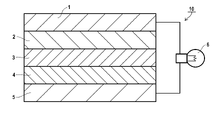
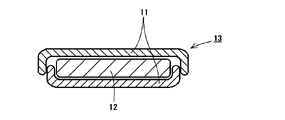
- FIG. 2 is a vertical sectional view schematically showing the coin-type all-solid-state secondary battery produced in the examples.
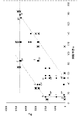
- FIG. 3 is a diagram showing the relationship between the median diameter D 50 and the turning radius ⁇ in the present invention.
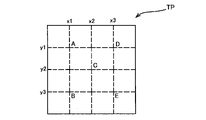
- FIG. 4 is a diagram illustrating a layer thickness measurement point in the coating unevenness test in the example.
- the numerical range represented by using "-" means a range including the numerical values before and after "-" as the lower limit value and the upper limit value.
- the upper limit value and the lower limit value forming the numerical range are not limited to a specific combination of the upper limit value and the lower limit value.
- a numerical range can be obtained by appropriately combining the upper limit value and the lower limit value of each numerical range.
- the indication of a compound is used to mean that the compound itself, its salt, and its ion are included.
- (meth) acrylic means one or both of acrylic and methacrylic.
- a substituent, etc. for which substitution or non-substitution is not specified may have an appropriate substituent in the group. Therefore, in the present invention, even if it is simply described as a YYY group, this YYY group includes a mode having a substituent in addition to a mode having no substituent. This is also synonymous with compounds that do not specify substitution or no substitution.
- Preferred substituents include, for example, substituent Z, which will be described later.
- substituents or the like when there are a plurality of substituents or the like designated by a specific reference numeral, or when a plurality of substituents or the like are specified simultaneously or selectively, the substituents or the like may be the same or different from each other. Means that. Further, even if it is not particularly specified, it means that when a plurality of substituents or the like are adjacent to each other, they may be linked to each other or condensed to form a ring.
- the polymer means a polymer, but is synonymous with a so-called polymer compound.
- the polymer binder also simply referred to as a binder
- the polymer binder means a binder composed of a polymer, and includes the polymer itself and a binder composed (formed) including the polymer.
- a composition containing an inorganic solid electrolyte and an active material and used as a material (active material layer forming material) for forming an active material layer of an all-solid secondary battery is referred to as an electrode composition.
- a composition containing an inorganic solid electrolyte and used as a material for forming a solid electrolyte layer of an all-solid secondary battery is referred to as an inorganic solid electrolyte-containing composition, and this composition usually does not contain an active material.
- the electrode composition includes a positive electrode composition containing a positive electrode active material and a negative electrode composition containing a negative electrode active material.
- either one or both of the positive electrode composition and the negative electrode composition may be collectively referred to as an electrode composition, and either one or both of the positive electrode active material layer and the negative electrode active material layer may be combined. Therefore, it may be simply referred to as an active material layer or an electrode active material layer. Further, either or both of the positive electrode active material and the negative electrode active material may be collectively referred to as an active material or an electrode active material.
- the electrode composition of the present invention contains an inorganic solid electrolyte having ionic conductivity of a metal belonging to Group 1 or Group 2 of the Periodic Table, an active material, a polymer binder, and a dispersion medium.
- the radius of gyration ⁇ in the dispersion medium of the polymer binder composed of the linear polymer and the median diameters of the inorganic solid electrolyte (particles) and the active material (particles) are defined as the electrode composition. As shown in FIG.
- the median diameter D 50 converted by the content rate (mass fraction) in the object is described later in a Cartesian coordinate system in which the turning radius ⁇ is the x-axis and the median diameter D 50 is the y-axis. It satisfies the relationship existing in the region of the pentagon having the specific five points A to E as the apex (however, including the boundary line).
- the electrode composition of the present invention satisfying this relationship can form an active material layer capable of exhibiting high ionic conductivity while being able to suppress the occurrence of dripping and coating unevenness during film formation.
- the entire substrate surface has an active material layer having a uniform layer thickness and a predetermined shape even in the film forming method and capable of appropriately thickening the layer. It is possible to realize an electrode sheet for a solid-state secondary battery and an all-solid-state secondary battery exhibiting high ionic conductivity (low resistance).
- the polymer binder is composed of a linear polymer and satisfies the relationship between the median diameter D 50 and the turning radius ⁇ , which will be described later, the inorganic solid electrolyte and the active material are contained in the electrode composition. It is possible to secure contact between the solid particles when the active material layer is formed and to construct a sufficient conduction path without excessively covering the surface of the solid particles such as the above.
- the inorganic solid electrolyte, the active material and the polymer binder satisfy the relationship between the median diameter D50 and the radius of gyration ⁇ , the size and number of the polymer binder with respect to the inorganic solid electrolyte and the active material (number of molecules per contained mass). ) Can be set in a well-balanced manner, the dispersibility of the inorganic solid electrolyte and the active material can be enhanced, and excessive interaction between the polymer binders can be reduced. As a result, it is possible to suppress an excessive increase in viscosity in the electrode composition, and to achieve both fluidity during coating and non-fluidity after coating in a well-balanced manner.
- the electrode composition of the present invention can suppress the occurrence of dripping and coating unevenness during film formation, have a uniform layer thickness and have a predetermined shape even in the film forming method, and can exhibit high ionic conductivity.
- An active material layer can be formed.
- the inorganic solid electrolyte, the active material and the polymer binder satisfy the relationship between the median diameter D 50 and the turning radius ⁇ , even if the content of the inorganic solid electrolyte and the active material is increased, the coating time The fluidity and non-fluidity of the coating can be maintained, and therefore even in thickened active material layers and by film forming methods such as the highly productive roll-to-roll method. It is possible to form an active material layer having a uniform layer thickness and a predetermined shape.
- the radius of gyration ⁇ in the dispersion medium contained in the electrode composition of the polymer binder composed of the linear polymer means the size of the polymer binder (linear polymer molecule) in the dispersion medium.
- the median diameter D 50 means the overall size of the inorganic solid electrolyte and the active material on which the polymer binder acts on the electrode composition and the active material layer formed thereby.
- the radius of gyration ⁇ also means the number of presents of the polymer binder per unit mass
- the median diameter D 50 also means the total number of presents of the inorganic solid electrolyte and the active material per unit mass.
- the size of the polymer binder, the size of the inorganic solid electrolyte and the active material, and the number of the polymer binder, the inorganic solid electrolyte and the active material per unit mass are well-balanced.
- the turning radius ⁇ and the median diameter D 50 are the points A (50, 60), B (178, 4600), C (85, 4600), and D (12,) in the Cartesian coordinate system shown in FIG. 2000) and the relationship existing in the pentagonal region (including on the boundary line) having the point E (12,60) as the apex is satisfied.
- the active material layer capable of exhibiting high ionic conductivity while suppressing the occurrence of dripping and coating unevenness of the electrode composition. can be formed.
- the size of the polymer binder becomes a size that can appropriately cover the surface of the inorganic solid electrolyte and the active material, and the dripping and dripping While maintaining the effect of suppressing the occurrence of coating unevenness, the effect of improving ionic conductivity can be particularly enhanced.
- the size of the inorganic solid electrolyte and the active material becomes such that the surface thereof is appropriately covered with the polymer binder. In particular, it has an excellent effect of improving ionic conductivity.
- the region in the Cartesian coordinate system satisfied by the radius of gyration ⁇ and the median diameter D 50 at least one of the above five points is replaced with one or two or more points other than the above five points in the region. It can be a polygonal region (however, including on the boundary line). Also in this region, it is possible to suppress the occurrence of dripping and coating unevenness and improve the ionic conductivity.
- the radius of gyration ⁇ and the median diameter D50 are the Cartesian coordinate system shown in FIG. 3 in that the suppression of dripping and coating unevenness of the electrode composition and the improvement of ionic conductivity can be achieved in a well-balanced manner at a higher level.
- a hexagonal region having points A, F (85,2800), C, G (37,2800), D and E as vertices (however, including on the boundary line). Is preferable, and the straight line connecting the points A and F is represented by, for example, D 50 78 ⁇ -3900.
- the radius of gyration ⁇ and the median diameter D 50 are more preferably within a pentagonal region having vertices at points A, F, G, D and E (however, including on the boundary line), and further. It is preferably in a rectangular area having points A, H (50, 2000), D, and E as vertices (however, including on the boundary line), and particularly preferably J point (50,900). , H, D, and I (12,900) in a rectangular area having vertices (however, including on the boundary line).
- the electrode composition contains a positive electrode active material as an active material, if the turning radius ⁇ and the median diameter D 50 are within each of the above regions, while suppressing the occurrence of dripping and coating unevenness of the electrode composition. It is also possible to form an active material layer capable of exhibiting high ionic conductivity. However, it can also be each area specified below.
- the radius of gyration ⁇ and the median diameter D 50 are the AP point (50,120), the BP point (172,4500), the CP point (85,4500), and the DP point (16, It is within the pentagonal region (but including on the boundary line) having the 1600) and the EP points (16,120) as vertices.
- the significance of the straight line connecting two of the five points defining the pentagon is synonymous with that at points A to E above. Also in this region, at least one of the above five points can be replaced with one or two or more points other than the above five points in the region to form a polygonal region.
- AP points, FP points are preferable regions in the Cartesian coordinate system in that the suppression of dripping and coating unevenness of the electrode composition and the improvement of ionic conductivity can be achieved at a higher level in a well-balanced manner.
- the inside of the hexagonal region having the CP point, the GP point (37,2600), the DP point and the EP point as the vertices (however, including the boundary line) can be mentioned.
- the radius of gyration ⁇ and the median diameter D 50 are more preferably within the pentagonal region having the AP point, the FP point, the GP point, the DP point and the EP point as the vertices (however, including the boundary line). ), And more preferably in the region of the polygon having the AP point, the HP point (50,1600), the DP point and the EP point as the vertices (however, including the boundary line).
- the turning radius ⁇ is not particularly limited as long as the above relationship is satisfied.
- the turning radius ⁇ is preferably 12 or more, more preferably 16 or more, further preferably 20 or more, and further preferably 25 or more with respect to the median diameter D 50 in the range described later. Is particularly preferable.
- the upper limit is preferably 178 or less, more preferably 172 or less, further preferably 140 or less, particularly preferably 100 or less, and most preferably 70 or less. ..
- the scattering intensity I soln , I solve , and Itol at ° and 130 ° are measured, and the excess Rayleigh ratio is calculated from the following formula. From the obtained excess Rayleigh ratio R ⁇ , a Zimm plot is further created based on the following formula (I), and the slope of q 2 when zero-concentration extrapolation (c ⁇ 0) is performed for the polymer concentration c is evaluated. The radius of gyration ⁇ can be calculated.
- n and ⁇ n / ⁇ c are the refractive index of the polymer binder solution and the rate of change in the concentration thereof, respectively, and can be obtained by using, for example, a differential refractometer (DRM-3000, manufactured by Otsuka Electronics Co., Ltd.).
- n tol and Rayleigh ratio are the refractive indexes and Rayleigh ratios of toluene, for example, in reference [1] (ER Picke, WRM Pomeroy, JM Vaughan, J. Chem. Phys., 62 (. Known values can be referred to from 1975) and 3188-3192).
- q is a scattering vector and k is an optical constant, each of which is defined by the following equation.
- M w is the mass average molecular weight of the polymer to be measured, and NA is the Avogadro constant.
- a 2 is the second virial coefficient. In this measurement, O (q 4 ) and O (c 2 ) have small values and are ignored.
- the polymer binder solution is prepared by dissolving the polymer to be measured in a dispersion medium (butyl butyrate in the example) used for preparing the electrode composition.
- the radius of gyration ⁇ of the polymer binder is the molecular structure (linearity) of the polymer (usually a linear polymer) forming the polymer binder, the mass average molecular weight, the presence or absence of a functional group of pKa8 or less, which will be described later, and the configuration having the same. It can be appropriately adjusted depending on the content of the component in the polymer, the SP value, and the like. For example, in order to increase the radius of gyration ⁇ , it is necessary to increase the mass average molecular weight, introduce a functional group having a pKa8 or less, and further reduce the SP value difference between the polymer binder and the dispersion medium to 2 or less. Can be mentioned.
- the median diameter D 50 is not particularly limited as long as the above relationship is satisfied.
- the median diameter D 50 is preferably 60 nm or more, more preferably 300 nm or more, and even more preferably 500 nm or more with respect to the radius of gyration ⁇ in the above range.
- the upper limit thereof is preferably 4600 nm or less, more preferably 4500 nm or less, further preferably 3000 nm or less, particularly preferably 2000 nm or less, and most preferably 1500 nm or less. ..
- the median diameter D 50 is a significant figure 2 obtained by measuring the median diameter DS-50 of the inorganic solid electrolyte and the median diameter DA - 50 of the active material by the methods described below and rounding off the values calculated from the following formulas. The value is rounded to a digit.
- Median diameter D 50 (DS -50 x WS ) + ( DA -50 x WA)
- DS- 50 indicates the median diameter of the inorganic solid electrolyte
- DA -50 indicates the median diameter of the active material.
- WS and WA indicate the mass fraction of the inorganic solid electrolyte and the mass fraction of the active material with respect to the total mass of the inorganic solid electrolyte and the active material in the electrode composition, respectively.
- the electrode composition of the present invention is preferably a slurry in which an inorganic solid electrolyte and an active material are dispersed in a dispersion medium in the form of particles.
- the polymer binder preferably exhibits a function of dispersing the inorganic solid electrolyte and the active material in the dispersion medium.
- the polymer binder is not particularly limited in whether or not it is adsorbed on the inorganic solid electrolyte, but it is preferable that the polymer binder is adsorbed on the active material within a range satisfying the adsorption rate described later. This makes it possible to improve the dispersibility without excessively covering the surface of the active material.
- the polymer binder functions as a binder for binding solid particles such as an active material, an inorganic solid electrolyte, and a coexisting conductive auxiliary agent in the active material layer. It also functions as a binder that binds the current collector and the solid particles.
- the polymer binder may not have a function of binding solid particles to each other.
- the viscosity (initial viscosity) after preparation is not particularly limited.
- the electrode composition contains an inorganic solid electrolyte and an active material satisfying the above relationship and a polymer binder, the viscosity under the following measurement conditions enables excellent coating property without dripping and coating unevenness. 300 to 4000 cP is preferable, and 800 to 4000 cP is more preferable.
- Measurement condition Temperature: 23 ° C Shear velocity: 10 / s
- Measuring equipment TV-35 type viscometer (manufactured by Toki Sangyo Co., Ltd.)
- Measurement method Add 1.1 ml of the composition to the sample cup, set the sample cup on the viscometer body equipped with a standard cone rotor (1 ° 34'x R24), set the measurement range to "U", and set the above shear. Rotate at speed and read the value after 1 minute.
- the electrode composition of the present invention is preferably a non-aqueous composition.
- the non-aqueous composition includes not only a water-free aspect but also a form in which the water content (also referred to as water content) is preferably 500 ppm or less.
- the water content is more preferably 200 ppm or less, further preferably 100 ppm or less, and particularly preferably 50 ppm or less.
- the water content indicates the amount of water contained in the electrode composition (mass ratio to the electrode composition), specifically, filtered through a 0.02 ⁇ m membrane filter and measured using Karl Fischer titration. Value.
- the electrode composition of the present invention can be preferably used as an electrode sheet for an all-solid-state secondary battery or a material for forming an active material layer of an all-solid-state secondary battery.
- it can be preferably used as a material for forming a negative electrode sheet for an all-solid-state secondary battery or a negative electrode active material layer containing a negative electrode active material having a large expansion and contraction due to charging and discharging.
- the electrode composition of the present invention contains an inorganic solid electrolyte.
- the inorganic solid electrolyte is an inorganic solid electrolyte
- the solid electrolyte is a solid electrolyte capable of transferring ions inside the solid electrolyte. Since it does not contain organic substances as the main ionic conductive material, it is an organic solid electrolyte (polyelectrolyte represented by polyethylene oxide (PEO), organic represented by lithium bis (trifluoromethanesulfonyl) imide (LiTFSI), etc.). It is clearly distinguished from (electrolyte salt).
- PEO polyethylene oxide
- LiTFSI lithium bis (trifluoromethanesulfonyl) imide
- the inorganic solid electrolyte is a solid in a steady state, it is usually not dissociated or liberated into cations and anions. In this respect, it is also clearly distinguished from the electrolyte or inorganic electrolyte salts (LiPF 6 , LiBF 4 , Lithium bis (fluorosulfonyl) imide (LiFSI), LiCl, etc.) that are dissociated or liberated into cations and anions in the polymer. Will be done.
- the inorganic solid electrolyte is not particularly limited as long as it has the ionic conductivity of a metal belonging to Group 1 or Group 2 of the Periodic Table, and is generally one having no electron conductivity.
- the all-solid-state secondary battery of the present invention is a lithium-ion battery
- the inorganic solid electrolyte preferably has ionic conductivity of lithium ions.
- the inorganic solid electrolyte contained in the electrode composition of the present invention is in the form of particles at least in the electrode composition.
- the shape of the particles is not particularly limited and may be flat, amorphous or the like, but spherical or granular is preferable.
- the particle diameter (volume average particle diameter: median diameter) DS -50 of the inorganic solid electrolyte is not particularly limited as long as it satisfies the median diameter D50 , and is appropriately set.
- the DS -50 is, for example, preferably 0.01 ⁇ m or more, more preferably 0.05 ⁇ m or more, further preferably 1.4 ⁇ m or more, and particularly preferably 2.7 ⁇ m or more. ..
- the upper limit of the DS -50 is preferably 4.5 ⁇ m or less, more preferably 4.0 ⁇ m or less, further preferably 3.2 ⁇ m or less, and particularly preferably 2.1 ⁇ m or less. It is preferably 1.9 ⁇ m or less, and most preferably 1.9 ⁇ m or less.
- the particle size of the inorganic solid electrolyte is measured by the following procedure. Inorganic solid electrolyte particles are prepared by diluting a 1% by mass dispersion in a 20 mL sample bottle with water (heptane in the case of a water-unstable substance). The diluted dispersion sample is irradiated with 1 kHz ultrasonic waves for 10 minutes, and immediately after that, it is used for the test.
- the median diameter is measured by the method and calculated from the following formula.
- Median diameter DS -50 D S1-50 x W S1 + D S2-50 x W S2 + ...
- DS1-50 , DS2-50 Indicates the median diameter of the inorganic solid electrolyte
- WS1, WS2 Indicates the mass fraction with respect to the total volume of the inorganic solid electrolyte.
- the method for adjusting the average particle size is not particularly limited, and a known method can be applied.
- a method using a normal crusher or a classifier can be mentioned.
- the crusher or classifier for example, a mortar, a ball mill, a sand mill, a vibrating ball mill, a satellite ball mill, a planetary ball mill, a swirling airflow type jet mill, a sieve, or the like is preferably used.
- wet pulverization in which a dispersion medium such as water or methanol coexists can be performed. It is preferable to perform classification in order to obtain a desired particle size.
- the classification is not particularly limited and can be performed using a sieve, a wind power classifier, or the like. Classification can be used for both dry type and wet type.
- a solid electrolyte material usually used for an all-solid secondary battery can be appropriately selected and used.
- the inorganic solid electrolyte include (i) a sulfide-based inorganic solid electrolyte, (ii) an oxide-based inorganic solid electrolyte, (iii) a halide-based inorganic solid electrolyte, and (iv) a hydride-based inorganic solid electrolyte.
- a sulfide-based inorganic solid electrolyte is preferable from the viewpoint that a better interface can be formed between the active material and the inorganic solid electrolyte.
- the sulfide-based inorganic solid electrolyte contains a sulfur atom, has ionic conductivity of a metal belonging to Group 1 or Group 2 of the Periodic Table, and is electronically insulated. Those having sex are preferable.
- the sulfide-based inorganic solid electrolyte preferably contains at least Li, S and P as elements and has lithium ion conductivity, but may appropriately contain other elements other than Li, S and P. ..
- Examples of the sulfide-based inorganic solid electrolyte include a lithium ion conductive inorganic solid electrolyte satisfying the composition represented by the following formula (S1).
- L a1 M b1 P c1 S d1 A e1 (S1)
- L represents an element selected from Li, Na and K, with Li being preferred.
- M represents an element selected from B, Zn, Sn, Si, Cu, Ga, Sb, Al and Ge.
- A represents an element selected from I, Br, Cl and F.
- a1 to e1 indicate the composition ratio of each element, and a1: b1: c1: d1: e1 satisfy 1 to 12: 0 to 5: 1: 2 to 12: 0 to 10.
- a1 is preferably 1 to 9, more preferably 1.5 to 7.5.
- b1 is preferably 0 to 3, more preferably 0 to 1.
- d1 is preferably 2.5 to 10, more preferably 3.0 to 8.5.
- e1 is preferably 0 to 5, more preferably 0 to 3.
- composition ratio of each element can be controlled by adjusting the blending amount of the raw material compound when producing the sulfide-based inorganic solid electrolyte as described below.
- the sulfide-based inorganic solid electrolyte may be amorphous (glass) or crystallized (glass-ceramic), or only a part thereof may be crystallized.
- Li—P—S based glass containing Li, P and S, or Li—P—S based glass ceramics containing Li, P and S can be used.
- Sulfide-based inorganic solid electrolytes include, for example, lithium sulfide (Li 2 S), phosphorus sulfide (for example, diphosphorus pentasulfide (P 2 S 5 )), simple phosphorus, simple sulfur, sodium sulfide, hydrogen sulfide, and lithium halide (eg, lithium halide). It can be produced by the reaction of at least two or more raw materials in the sulfides of the elements represented by LiI, LiBr, LiCl) and M (for example, SiS 2 , SnS, GeS 2 ).
- the ratio of Li 2S to P 2 S 5 in Li-P-S-based glass and Li-PS-based glass ceramics is the molar ratio of Li 2 S: P 2 S 5 , preferably 60:40 to. It is 90:10, more preferably 68:32 to 78:22.
- the lithium ion conductivity can be made high.
- the lithium ion conductivity can be preferably 1 ⁇ 10 -4 S / cm or more, and more preferably 1 ⁇ 10 -3 S / cm or more. There is no particular upper limit, but it is practical that it is 1 ⁇ 10 -1 S / cm or less.
- Li 2 SP 2 S 5 Li 2 SP 2 S 5 -LiCl, Li 2 SP 2 S 5 -H 2 S, Li 2 SP 2 S 5 -H 2 S-LiCl, Li 2 S-LiI-P 2 S 5 , Li 2 S-LiI-Li 2 O-P 2 S 5 , Li 2 S-LiBr-P 2 S 5 , Li 2 S-Li 2 O-P 2 S 5 , Li 2 S-Li 3 PO 4 -P 2 S 5 , Li 2 S-P 2 S 5 -P 2 O 5 , Li 2 SP 2 S 5 -SiS 2 , Li 2 SP 2 S 5 -SiS 2 -LiCl, Li 2 SP 2 S 5 -SnS, Li 2 SP 2 S 5 -Al 2 S 3 , Li 2 S-GeS 2 ,
- the mixing ratio of each raw material does not matter.
- an amorphization method can be mentioned.
- the amorphization method include a mechanical milling method, a solution method and a melt quenching method. This is because processing at room temperature is possible and the manufacturing process can be simplified.
- the oxide-based inorganic solid electrolyte contains an oxygen atom, has ionic conductivity of a metal belonging to Group 1 or Group 2 of the Periodic Table, and is electronically insulated. Those having sex are preferable.
- the oxide-based inorganic solid electrolyte preferably has an ionic conductivity of 1 ⁇ 10 -6 S / cm or more, more preferably 5 ⁇ 10 -6 S / cm or more, and 1 ⁇ 10 -5 S. It is particularly preferable that it is / cm or more.
- the upper limit is not particularly limited, but it is practical that it is 1 ⁇ 10 -1 S / cm or less.
- Li xa La ya TiO 3 [xa satisfies 0.3 ⁇ xa ⁇ 0.7, and ya satisfies 0.3 ⁇ ya ⁇ 0.7.
- LLT Li xb Layb Zr zb M bb mb Onb
- M bb is one or more elements selected from Al, Mg, Ca, Sr, V, Nb, Ta, Ti, Ge, In and Sn.
- Xb satisfies 5 ⁇ xb ⁇ 10, yb satisfies 1 ⁇ yb ⁇ 4, zb satisfies 1 ⁇ zb ⁇ 4, mb satisfies 0 ⁇ mb ⁇ 2, and nb satisfies 5 ⁇ nb ⁇ 20. Satisfies.); Li xc Byc M cc zc Onc (M cc is one or more elements selected from C, S, Al, Si, Ga, Ge, In and Sn.
- Xc is 0 ⁇ xc ⁇ 5 , Yc satisfies 0 ⁇ yc ⁇ 1, zc satisfies 0 ⁇ zc ⁇ 1, nc satisfies 0 ⁇ nc ⁇ 6); Li xd (Al, Ga) yd (Ti, Ge) zd Si.
- Dee represents a halogen atom or a combination of two or more halogen atoms.
- Li xf Si yf Ozf (xf satisfies 1 ⁇ xf ⁇ 5 and yf satisfies 0 ⁇ yf ⁇ 3).
- Zf satisfies 1 ⁇ zf ⁇ 10.
- Li xg SygO zg (xg satisfies 1 ⁇ xg ⁇ 3, yg satisfies 0 ⁇ yg ⁇ 2, zg satisfies 1 ⁇ zg ⁇ 10.
- Li 7 La 3 Zr 2 O 12 (LLZ) having a garnet-type crystal structure.
- Phosphorus compounds containing Li, P and O are also desirable.
- lithium phosphate Li 3 PO 4
- LiPON in which a part of the oxygen element of lithium phosphate is replaced with a nitrogen element
- LiPOD 1 LiPON in which a part of the oxygen element of lithium phosphate is replaced with a nitrogen element
- LiPOD 1 is preferably Ti, V, Cr, Mn, Fe, Co, It is one or more elements selected from Ni, Cu, Zr, Nb, Mo, Ru, Ag, Ta, W, Pt and Au
- LiA 1 ON A 1 is one or more elements selected from Si, B, Ge, Al, C and Ga
- the halide-based inorganic solid electrolyte contains a halogen atom, has the conductivity of an ion of a metal belonging to Group 1 or Group 2 of the Periodic Table, and has electrons. Insulating compounds are preferred.
- the halide-based inorganic solid electrolyte is not particularly limited, and examples thereof include compounds such as Li 3 YBr 6 and Li 3 YCl 6 described in LiCl, LiBr, LiI, ADVANCED MATERIALS, 2018, 30, 1803075. Of these, Li 3 YBr 6 and Li 3 YCl 6 are preferred.
- the hydride-based inorganic solid electrolyte contains a hydrogen atom, has ionic conductivity of a metal belonging to Group 1 or Group 2 of the Periodic Table, and is electronically insulated. A compound having a property is preferable.
- the hydride-based inorganic solid electrolyte is not particularly limited, and examples thereof include LiBH 4 , Li 4 (BH 4 ) 3 I, and 3LiBH 4 -LiCl.
- the inorganic solid electrolyte may contain one kind or two or more kinds.
- the content of the inorganic solid electrolyte in the electrode composition is not particularly limited, but is 50% by mass or more in total with the active material at 100% by mass of the solid content in terms of dispersibility, ionic conductivity and the like. It is preferably 70% by mass or more, more preferably 90% by mass or more, and particularly preferably 90% by mass or more. From the same viewpoint, the upper limit is preferably 99.9% by mass or less, more preferably 99.5% by mass or less, and particularly preferably 99% by mass or less.
- the solid content refers to a component that does not disappear by volatilizing or evaporating when the electrode composition is dried under a pressure of 1 mmHg and a nitrogen atmosphere at 150 ° C. for 6 hours. Typically, it refers to a component other than the dispersion medium described later.
- the content ratio of the inorganic solid electrolyte to the active material described later [content of the inorganic solid electrolyte: content of the active material] is not particularly limited, and is appropriately considered in consideration of the median diameter D50 and the like. Is set to.
- the content ratio [content of inorganic solid electrolyte: content of active substance] can be 1: 1 to 1:10, and is preferably 1: 1 to 1: 6.
- the electrode composition of the present invention may also contain an active material capable of inserting and releasing ions of a metal belonging to Group 1 or Group 2 of the Periodic Table.
- the active material contained in the electrode composition of the present invention is in the form of particles at least in the electrode composition.
- the shape of the particles is not particularly limited and may be flat, amorphous or the like, but spherical or granular is preferable.
- the average particle size (median diameter DA -50 ) of the active material used in the present invention is not particularly limited as long as it satisfies the median diameter D50 , and is appropriately set.
- DA -50 is, for example, preferably 10 ⁇ m or less, more preferably 5 ⁇ m or less, further preferably 1 ⁇ m or less, and 0.6 ⁇ m or less in terms of dispersibility, conductivity, and the like. Is particularly preferred.
- the lower limit of the average particle size is practically 0.01 ⁇ m or more, for example, preferably 0.05 ⁇ m or more, more preferably 0.2 ⁇ m or more, and 0.3 ⁇ m or more. Is even more preferable.
- the average particle size of the active material can be measured in the same manner as the particle size of the inorganic solid electrolyte. As the method for adjusting the average particle size, the known method described for the inorganic solid electrolyte can be applied without particular limitation.
- the active material examples include a positive electrode active material and a negative electrode active material.
- the positive electrode active material is an active material capable of inserting and releasing ions of a metal belonging to Group 1 or Group 2 of the Periodic Table, and is preferably a material capable of reversibly inserting and releasing lithium ions.
- the material is not particularly limited as long as it has the above-mentioned characteristics, and may be a transition metal oxide, an organic substance, an element that can be composited with Li such as sulfur, or the like by decomposing the battery.
- a transition metal oxide as the positive electrode active material, and a transition metal oxidation having a transition metal element Ma (one or more elements selected from Co, Ni, Fe, Mn, Cu and V).
- a transition metal oxidation having a transition metal element Ma one or more elements selected from Co, Ni, Fe, Mn, Cu and V.
- the element Mb (elements of Group 1 (Ia), elements of Group 2 (IIa) in the periodic table of metals other than lithium, Al, Ga, In, Ge, Sn, Pb, Pb, etc. Elements such as Sb, Bi, Si, P and B) may be mixed.
- the mixing amount is preferably 0 to 30 mol% with respect to the amount of the transition metal element Ma (100 mol%).
- the mixture is synthesized by mixing so that the molar ratio of Li / Ma is 0.3 to 2.2.
- the transition metal oxide include (MA) a transition metal oxide having a layered rock salt type structure, (MB) a transition metal oxide having a spinel type structure, (MC) a lithium-containing transition metal phosphoric acid compound, and (MD). ) Lithium-containing transition metal halide phosphoric acid compound, (ME) lithium-containing transition metal silicic acid compound and the like can be mentioned.
- transition metal oxide having a layered rock salt structure examples include LiCoO 2 (lithium cobalt oxide [LCO]), LiNi 2 O 2 (lithium nickel oxide), LiNi 0.85 Co 0.10 Al 0. 05 O 2 (Nickel Lithium Cobalt Aluminate [NCA]), LiNi 1/3 Co 1/3 Mn 1/3 O 2 (Nickel Manganese Lithium Cobalt Oxide [NMC]) and LiNi 0.5 Mn 0.5 O 2 ( Lithium manganese nickel oxide).
- LiCoO 2 lithium cobalt oxide
- LiNi 2 O 2 lithium nickel oxide
- LiNi 0.85 Co 0.10 Al 0. 05 O 2 Nickel Lithium Cobalt Aluminate [NCA]
- LiNi 1/3 Co 1/3 Mn 1/3 O 2 Nickel Manganese Lithium Cobalt Oxide [NMC]
- LiNi 0.5 Mn 0.5 O 2 Lithium manganese nickel oxide
- transition metal oxide having a spinel-type structure examples include LiMn 2 O 4 (LMO), LiComn O 4 , Li 2 Femn 3 O 8 , Li 2 Cumn 3 O 8 , Li 2 CrMn 3 O 8 and Li. 2 Nimn 3 O 8 may be mentioned.
- the (MC) lithium-containing transition metal phosphate compound include olivine-type iron phosphate salts such as LiFePO 4 and Li 3 Fe 2 (PO 4 ) 3 , iron pyrophosphates such as LiFeP 2 O 7 , LiCoPO 4 , and the like.
- Examples thereof include cobalt phosphates of Li 3 V 2 (PO 4 ) 3 (lithium vanadium phosphate) and other monoclinic pyanicon-type vanadium phosphate salts.
- Examples of the (MD) lithium-containing transition metal halide phosphate compound include iron fluoride phosphates such as Li 2 FePO 4 F, manganese fluoride phosphates such as Li 2 MnPO 4 F, and Li 2 CoPO 4 F.
- Examples thereof include cobalt fluoride phosphates such as.
- Examples of the (ME) lithium-containing transition metal silicic acid compound include Li 2 FeSiO 4 , Li 2 MnSiO 4 , and Li 2 CoSiO 4 .
- a transition metal oxide having a (MA) layered rock salt type structure is preferable, and LCO or NMC is more preferable.
- the positive electrode active material obtained by the firing method may be used after being washed with water, an acidic aqueous solution, an alkaline aqueous solution, or an organic solvent.
- the positive electrode active material contained in the electrode composition may be one kind or two or more kinds.
- the content of the positive electrode active material in the electrode composition is not particularly limited, and is preferably 10 to 97% by mass, more preferably 30 to 95% by mass, and further 40 to 93% by mass in terms of solid content of 100% by mass. It is preferable, and 50 to 90% by mass is particularly preferable.
- the negative electrode active material is an active material capable of inserting and releasing ions of a metal belonging to Group 1 or Group 2 of the Periodic Table, and is preferably a material capable of reversibly inserting and releasing lithium ions.
- the material is not particularly limited as long as it has the above-mentioned characteristics, and is a negative electrode activity capable of forming an alloy with a carbonaceous material, a metal oxide, a metal composite oxide, a single lithium substance, a lithium alloy, or lithium. Substances and the like can be mentioned. Of these, carbonaceous materials, metal composite oxides or elemental lithium are preferably used from the viewpoint of reliability.
- An active material that can be alloyed with lithium is preferable in that the capacity of the all-solid-state secondary battery can be increased.
- the carbonaceous material used as the negative electrode active material is a material substantially composed of carbon.
- carbon black such as acetylene black (AB)
- graphite artificial graphite such as natural graphite and vapor-grown graphite
- PAN polyacrylonitrile
- a carbonaceous material obtained by firing a resin can be mentioned.
- various carbon fibers such as PAN-based carbon fiber, cellulose-based carbon fiber, pitch-based carbon fiber, gas phase-grown carbon fiber, dehydrated PVA (polyvinyl alcohol) -based carbon fiber, lignin carbon fiber, glassy carbon fiber and activated carbon fiber.
- carbonaceous materials can also be divided into non-graphitizable carbonaceous materials (also referred to as hard carbon) and graphite-based carbonaceous materials depending on the degree of graphitization. Further, the carbonaceous material preferably has the plane spacing or density and the crystallite size described in JP-A No. 62-22066, JP-A No. 2-6856, and JP-A-3-45473.
- the carbonaceous material does not have to be a single material, and a mixture of natural graphite and artificial graphite described in JP-A-5-90844, graphite having a coating layer described in JP-A-6-4516, and the like should be used. You can also.
- As the carbonaceous material hard carbon or graphite is preferably used, and graphite is more preferably used.
- the metal or semi-metal element oxide applied as the negative electrode active material is not particularly limited as long as it is an oxide capable of storing and releasing lithium, and is a composite of a metal element oxide (metal oxide) and a metal element.
- metal oxide metal oxide
- examples thereof include oxides or composite oxides of metal elements and semi-metal elements (collectively referred to as metal composite oxides) and oxides of semi-metal elements (semi-metal oxides).
- metal composite oxides oxides or composite oxides of metal elements and semi-metal elements
- oxides of semi-metal elements semi-metal elements
- amorphous oxides are preferable, and chalcogenides, which are reaction products of metal elements and elements of Group 16 of the Periodic Table, are also preferable.
- the metalloid element means an element exhibiting properties intermediate between a metalloid element and a non-metalloid element, and usually contains six elements of boron, silicon, germanium, arsenic, antimony and tellurium, and further selenium. , Polonium and Asstatin.
- amorphous means an X-ray diffraction method using CuK ⁇ rays, which has a broad scattering zone having an apex in a region of 20 ° to 40 ° at a 2 ⁇ value, and a crystalline diffraction line is used. You may have.
- the strongest intensity of the crystalline diffraction lines seen at the 2 ⁇ value of 40 ° to 70 ° is 100 times or less the diffraction line intensity of the apex of the broad scattering zone seen at the 2 ⁇ value of 20 ° to 40 °. It is preferable that it is 5 times or less, and it is particularly preferable that it does not have a crystalline diffraction line.
- the amorphous oxide of the metalloid element or the chalcogenide is more preferable, and the elements of the Group 13 (IIIB) to 15 (VB) of the Periodic Table (for example). , Al, Ga, Si, Sn, Ge, Pb, Sb and Bi) alone or a combination of two or more of them (composite) oxides, or chalcogenides are particularly preferred.
- preferable amorphous oxides and chalcogenides include, for example, Ga 2 O 3 , GeO, PbO, PbO 2 , Pb 2 O 3 , Pb 2 O 4 , Pb 3 O 4 , Sb 2 O 3 , Sb 2 .
- O 4 , Sb 2 O 8 Bi 2 O 3 , Sb 2 O 8 Si 2 O 3 , Sb 2 O 5 , Bi 2 O 3 , Bi 2 O 4 , GeS, PbS, PbS 2 , Sb 2 S 3 or Sb 2 S5 is preferably mentioned.
- the oxide of a metal or a metalloid element contains at least one of titanium and lithium as a constituent component from the viewpoint of high current density charge / discharge characteristics.
- the lithium-containing metal composite oxide include a composite oxide of lithium oxide and the metal (composite) oxide or the chalcogenide, and more specifically, Li 2 SnO 2 .
- the negative electrode active material for example, a metal oxide, contains a titanium element (titanium oxide).
- Li 4 Ti 5 O 12 (lithium titanate [LTO]) has excellent rapid charge / discharge characteristics because the volume fluctuation during storage and release of lithium ions is small, and deterioration of the electrodes is suppressed. Lithium ion secondary battery It is preferable in that the life of the lithium can be improved.
- the lithium alloy as the negative electrode active material is not particularly limited as long as it is an alloy usually used as the negative electrode active material of the secondary battery.
- a lithium aluminum alloy specifically, lithium is used as a base metal and aluminum is 10 mass by mass. % May be added lithium aluminum alloy.
- the negative electrode active material that can be alloyed with lithium is not particularly limited as long as it is usually used as the negative electrode active material of the secondary battery.
- examples of such an active material include a (negative electrode) active material having a silicon element or a tin element (alloy, etc.), and metals such as Al and In, and a negative electrode active material having a silicon element that enables a higher battery capacity.
- (Silicon element-containing active material) is preferable, and a silicon element-containing active material having a silicon element content of 50 mol% or more of all constituent elements is more preferable.
- a negative electrode containing these negative electrode active materials is a carbon negative electrode (graphite, acetylene black, etc.).
- a Si negative electrode containing a silicon element-containing active material, a Sn negative electrode containing a tin element active material, etc. is a carbon negative electrode (graphite, acetylene black, etc.).
- silicon element-containing active material examples include silicon materials such as Si and SiOx (0 ⁇ x ⁇ 1), and silicon-containing alloys containing titanium, vanadium, chromium, manganese, nickel, copper, lanthanum, and the like (for example,). LaSi 2 , VSi 2 , La-Si, Gd-Si, Ni-Si) or organized active material (eg LaSi 2 / Si), as well as other silicon and tin elements such as SnSiO 3 , SnSiS 3 and the like. Examples include active materials containing the above.
- SiOx itself can be used as a negative electrode active material (semi-metal oxide), and since Si is generated by the operation of an all-solid secondary battery, a negative electrode active material that can be alloyed with lithium (its). It can be used as a precursor substance).
- the negative electrode active material having a tin element include Sn, SnO, SnO 2 , SnS, SnS 2 , and the above-mentioned active material containing a silicon element and a tin element.
- a composite oxide with lithium oxide for example, Li 2 SnO 2 can also be mentioned.
- the above-mentioned negative electrode active material can be used without particular limitation, but in terms of battery capacity, a negative electrode active material that can be alloyed with silicon is a preferred embodiment as the negative electrode active material.
- a negative electrode active material that can be alloyed with silicon is a preferred embodiment as the negative electrode active material.
- the above silicon material or a silicon-containing alloy (alloy containing a silicon element) is more preferable, and it is further preferable to contain silicon (Si) or a silicon-containing alloy.
- the negative electrode active material contained in the electrode composition may be one kind or two or more kinds.
- the content of the negative electrode active material in the electrode composition is not particularly limited, and is preferably 10 to 90% by mass, more preferably 20 to 85% by mass, and 30 to 80% by mass in terms of solid content of 100% by mass. %, More preferably 40 to 75% by mass.
- the chemical formula of the compound obtained by the above firing method can be calculated from the inductively coupled plasma (ICP) emission spectroscopic analysis method as a measurement method and the mass difference of the powder before and after firing as a simple method.
- ICP inductively coupled plasma
- the surfaces of the positive electrode active material and the negative electrode active material may be surface-coated with another metal oxide.
- the surface coating agent include metal oxides containing Ti, Nb, Ta, W, Zr, Al, Si or Li. Specific examples thereof include spinel titanate, tantalum oxide, niobate oxide, lithium niobate compound and the like, and specific examples thereof include Li 4 Ti 5 O 12 , Li 2 Ti 2 O 5 and LiTaO 3 .
- the surface of the electrode containing the positive electrode active material or the negative electrode active material may be surface-treated with sulfur or phosphorus.
- the surface of the positive electrode active material or the particle surface of the negative electrode active material may be surface-treated with active light or an active gas (plasma or the like) before and after the surface coating.
- the polymer binder contained in the electrode composition of the present invention is a binder composed of a linear polymer.
- the polymer binder is composed of a linear polymer, it reinforces the action due to the relationship between the radius of gyration ⁇ and the median diameter D 50 described above, and suppresses the occurrence of dripping and coating unevenness of the electrode composition. , Improvement of ionic conductivity can be realized.
- the linear polymer is a polymer having a main chain formed by linearly polymerizing or condensing a polycondensable compound, and has a branched polymer chain (including a graft chain) and a crosslinked structure. A polymer that does not have.
- the main chain of a polymer means a linear molecular chain in which all other molecular chains constituting the polymer can be regarded as a branched chain or a pendant group with respect to the main chain. Although it depends on the mass average molecular weight of the branched chain or the branched chain regarded as a pendant group, the longest chain among the molecular chains constituting the polymer is typically the main chain. However, the terminal group of the polymer terminal is not included in the main chain. Further, the side chain of the polymer means a branched chain other than the main chain, and includes a short chain and a long chain.
- linear polymer or polymer binder preferably satisfies the SP value in the following range, and the polymer binder preferably exhibits the adsorption rate in the following range and the solubility in the dispersion medium. Further, it is also preferable that the polymer binder or the linear polymer has the following physical properties or properties as appropriate in addition to these physical properties or properties.
- the SP value as a preferable property of the linear polymer is not particularly limited and can be, for example, 12.0 to 21.5 MPa 1/2 , but in terms of the dispersibility of the electrode composition, it is 12.0 to 12.0. It is preferably 21.5 MPa 1/2 , more preferably 16 to 20 MPa 1/2 , further preferably 17 to 20 MPa 1/2 , and preferably 17 to 19.5 MPa 1/2 . It is particularly preferable, and most preferably 18 to 19.5 MPa 1/2 .
- the method of calculating the SP value will be described. First, the SP value (MPa 1/2 ) of each component (constituent unit) constituting the linear polymer is determined by the Hoy method unless otherwise specified (HL Hoy JOURNAL OF PAINT TECHNOLOGY Vol. 42, No. 541, 1970, 76-118, and POLYMER HANDBOOK 4th, Chapter 59, VII, 686, see the following equations in Table5 , Table6 and Table6).
- the SP p value (MPa 1/2 ) of the linear polymer is calculated from the following formula.
- the SP value of the component obtained in accordance with the above document is converted into the SP value (MPa 1/2 ) (for example, 1 cal 1/2 cm -3/2 ⁇ 2.05 J 1/2 cm -3 / ). 2 ⁇ 2.05 MPa 1/2 )).
- SP p 2 (SP 1 2 x W 1 ) + (SP 2 2 x W 2 ) + ...
- SP 1 , SP 2 Indicates the SP value of the component
- W 1 , W 2 ... Indicates the mass fraction of the component.
- the mass fraction of the constituent component is the mass fraction of the constituent component (the raw material compound that leads to this constituent component) in the linear polymer.
- the SP value of the polymer can be adjusted by the type or composition (type and content of constituents) of the linear polymer.
- the SP value of the linear polymer satisfies the difference (absolute value) of the SP value in the range described later with respect to the SP value of the dispersion medium in that a higher degree of dispersibility can be realized.
- the adsorption rate as a preferable property of the polymer binder is the adsorption rate AAM with respect to the active material contained in the electrode composition in the dispersion medium contained in the electrode composition, and is not particularly limited, but may be 40% or less. preferable.
- the adsorption rate AAM with respect to the active material is 40% or less, it contributes to the improvement of dispersibility and the improvement of conductivity without being excessively adsorbed to the active material.
- the adsorption rate AAM of the polymer binder is a value measured by using the active material and the dispersion medium contained in the electrode composition, and is the degree to which the polymer binder is adsorbed on the active material in the dispersion medium. It is an index showing.
- the adsorption of the polymer binder to the active material includes not only physical adsorption but also chemical adsorption (adsorption by chemical bond formation, adsorption by transfer of electrons, etc.).
- the adsorption rate is defined as the adsorption rate for the active substance having the same composition as the active substance composition (type and content) in the electrode composition.
- the electrode composition contains a plurality of types of dispersion media, the adsorption rate is measured using a dispersion medium having the same composition as the dispersion medium (type and content) in the electrode composition.
- the adsorption rate for the plurality of types of polymer binders is set as in the case of the electrode composition and the like.
- the adsorption rate of the polymer binder is a value calculated by the method described in Examples.
- the adsorption rate AAM with respect to the active material is the type of polymer contained in the polymer binder (structure and composition of the polymer chain), the type or content of the functional group of the polymer, and the form of the polymer binder (to the dispersion medium). It can be set appropriately depending on the amount of dissolution) and the like.
- the adsorption rate AAM can be 60% or less, preferably 45% or less, still more preferably 30% or less, in that the dispersibility can be further enhanced.
- the lower limit of the adsorption rate AAM is not particularly limited and may be 0%.
- the lower limit of the adsorption rate is preferably small from the viewpoint of dispersibility, for example, 0.1% or more is preferable, and 1% or more is more preferable.
- Preferred properties of the polymer binder include the property of being soluble in the dispersion medium contained in the electrode composition (soluble).
- the polymer binder in the electrode composition usually exists in a state of being dissolved in a dispersion medium in the electrode composition, although it depends on the content thereof. As a result, the polymer binder stably exhibits the function of dispersing the solid particles in the dispersion medium.
- the fact that the polymer binder is dissolved in the dispersion medium in the electrode composition is not limited to the embodiment in which all the polymer binders are dissolved in the dispersion medium, and for example, the following solubility in the dispersion medium is 80% or more.
- the method for measuring the solubility is as follows. That is, a specified amount of the polymer binder to be measured is weighed in a glass bottle, 100 g of a dispersion medium of the same type as the dispersion medium contained in the electrode composition is added thereto, and the mixture is rotated at 80 rpm on a mix rotor at a temperature of 25 ° C. Stir at speed for 24 hours. The transmittance of the mixed solution after stirring for 24 hours thus obtained is measured under the following conditions.
- the linear polymer may have a turning radius ⁇ in the above range, and its mass average molecular weight is not particularly limited, and is appropriately set in consideration of the turning radius ⁇ .
- the mass average molecular weight of the linear polymer can be, for example, 10,000 or more, preferably 15,000 or more, more preferably 30,000 or more, and even more preferably 50,000 or more.
- the upper limit is substantially 5,000,000 or less, preferably 4,000,000 or less, more preferably 3,000,000 or less, further preferably 2,000,000 or less, and 500,000 or less. Is particularly preferable.
- the mass average molecular weight of the fluoropolymer described later can be set in the above range, but considering the radius of gyration ⁇ and the like, 150,000 or more is more preferable, 200,000 or more is particularly preferable, and 300,000 or more is particularly preferable. Most preferred.
- the upper limit is more preferably 1,500,000 or less, and particularly preferably 1,200,000 or less.
- the molecular weights of polymers, polymer chains and macromonomers are the mass average molecular weights or number average molecular weights in terms of standard polystyrene by gel permeation chromatography (GPC) unless otherwise specified.
- GPC gel permeation chromatography
- condition 1 or condition 2 (priority) method is basically mentioned.
- an appropriate eluent may be appropriately selected and used depending on the type of polymer or macromonomer.
- Carrier 10 mM LiBr / N-methylpyrrolidone Measurement temperature: 40 ° C.
- Carrier flow rate 1.0 ml / min Sample concentration: 0.1% by mass Detector: RI (refractive index) detector (Condition 2) Column: A column connected with TOSOH TSKgel Super HZM-H, TOSOH TSKgel Super HZ4000, and TOSOH TSKgel Super HZ2000 (all trade names, manufactured by Tosoh Corporation) is used.
- Carrier Tetrahydrofuran Measurement temperature: 40 ° C
- Carrier flow rate 1.0 ml / min Sample concentration: 0.1% by mass Detector: RI (refractive index) detector
- the water concentration of the polymer binder is preferably 100 ppm (mass basis) or less.
- the polymer may be crystallized and dried, or the dispersion liquid of the polymer binder may be used as it is.
- the linear polymer is preferably amorphous.
- the polymer being "amorphous" typically means that no endothermic peak due to crystal melting is observed when measured at the glass transition temperature.
- the type and composition of the linear polymer are not particularly limited as long as the above-mentioned preferable properties or physical properties are satisfied, and various polymers can be used as the binder polymer for the all-solid-state secondary battery.
- the linear polymer preferably contains a component having a functional group of pKa8 or less. When the linear polymer contains this component, the radius of gyration ⁇ can be set in an appropriate range, and the coatability and ionic conductivity of the electrode composition due to the polymer binder can be further improved.
- This component has a functional group of pKa8 or less directly or via a linking group in the partial structure incorporated in the main chain of the linear polymer.
- the partial structure incorporated into the main chain of the linear polymer is appropriately selected according to the type of the linear polymer and the like, and examples thereof include a carbon chain (carbon-carbon bond).
- pKa means the negative common logarithm (-logKa) of the acid dissociation constant (Ka) in water at 25 ° C.
- pKa can be calculated by dropping a 0.01 mL / L sodium hydroxide aqueous solution to the aqueous solution of the polymer binder and reading the amount of the sodium hydroxide aqueous solution dropped up to the half equivalence point.
- the functional group having a pKa8 or less is not particularly limited, and examples thereof include acidic functional groups such as a carboxy group, a phosphoryl group (phosphate group), a phosphonic acid group and a sulfo group (sulfonic acid group), and a phenolic hydroxyl group.
- the linking group is not particularly limited, but for example, an alkylene group (preferably 1 to 12 carbon atoms, more preferably 1 to 6 carbon atoms) and an alkenylene group (preferably 2 to 6 carbon atoms).
- arylene group (the number of carbon atoms is preferably 6 to 24, more preferably 6 to 10), oxygen atom, sulfur atom, imino group (-NR N- : RN is hydrogen atom, carbon). It indicates an alkyl group having a number of 1 to 6 or an aryl group having 6 to 10 carbon atoms.), A carbonyl group, a phosphate linking group (-OP (OH) (O) -O-), a phosphonic acid linking group (-). Examples thereof include P (OH) (O) -O-), or a group related to a combination thereof.
- a group consisting of a combination of an alkylene group, an arylene group, a carbonyl group, an oxygen atom, a sulfur atom and an imino group is preferable, and an alkylene group, an arylene group, a carbonyl group, an oxygen atom, an imino group or a polyalkyleneoxy chain ( A group consisting of a combination of an alkylene group and an oxygen atom) is more preferable, and a -CO-O- group or a -CO- N (RN) -group ( RN is a hydrogen atom and an alkyl group having 1 to 6 carbon atoms).
- a group containing an aryl group having 6 to 10 carbon atoms) or an arylene group is more preferable.
- Examples of the group containing a —CO—O— group or a —CO— N (RN) ⁇ group include a group further containing an alkylene group, an arylene group, a —CO—O— group, a polyalkyleneoxy chain and the like.
- the number of atoms constituting the linking group and the number of linking atoms are as follows. However, the above does not apply to the polyalkyleneoxy chain constituting the linking group. In the present invention, the number of atoms constituting the linking group is preferably 1 to 36, more preferably 1 to 24, and even more preferably 1 to 12.
- the number of linked atoms of the linking group is preferably 10 or less, and more preferably 8 or less.
- the lower limit is 1 or more.
- the partial structure and the linking group incorporated in the main chain may each have a substituent.
- a substituent is not particularly limited, and examples thereof include a group selected from the substituent Z described later.
- constituent component having a functional group of pKa8 or less a partial structure incorporated in the main chain, a functional group of pKa8 or less, and a linking group can be appropriately combined to form a constituent component.
- a component derived from the (meth) acrylic acid compound described later a component derived from a compound obtained by introducing a functional group of pKa8 or less into the (meth) acrylic compound (M1), and a vinyl compound (M2) described later having pKa8 or less. It is preferable that the constituent component is derived from the compound having the above functional group introduced therein.
- M2 a styrene compound having a functional group of pKa8 or less introduced therein, a ring-opened compound (including a monoester compound) of an unsaturated carboxylic acid anhydride (for example, a maleic anhydride compound), etc.) and the like
- the group forming the ester is not particularly limited, and examples thereof include a group selected from the substituent Z described later, and an alkyl group is preferable.
- Specific examples of the constituents having a functional group of pKa8 or less include, but are not limited to, the constituents of the linear polymer described below in Examples and the present invention.
- the linear polymer may have one or more constituents having a functional group of pKa8 or less.
- the content of the component having a functional group of pKa8 or less in the linear polymer is determined by appropriately considering the radius of gyration ⁇ of the linear polymer, the SP value, and the like, and the details will be described later.
- linear polymer for example, a polymer having at least one bond selected from a urethane bond, a urea bond, an amide bond, an imide bond and an ester bond, or a polymer chain having a carbon-carbon double bond as a main chain is preferable. Can be mentioned.
- the bond is not particularly limited as long as it is contained in the main chain of the polymer, and may be any of the embodiments contained in the constituent component (repeating unit) and / or the embodiment contained as a bond connecting different constituent components. .. Further, the above-mentioned bond contained in the main chain is not limited to one type, and may be two or more types, preferably 1 to 6 types, and more preferably 1 to 4 types. In this case, the binding mode of the main chain is not particularly limited, and may have two or more kinds of bonds at random, and the segmented main chain has a segment having a specific bond and a segment having another bond. It may be a chain.
- the main chain having the above bonds is not particularly limited, but a main chain having at least one segment of the above bonds is preferable, and a main chain made of polyamide, polyurea or polyurethane is more preferable.
- the polymer having a urethane bond, a urea bond, an amide bond, an imide bond or an ester bond in the main chain includes, for example, sequential polymerization (polycondensation, polyaddition or addition) of polyurethane, polyurea, polyamide, polyimide, polyester and the like. Condensation) polymers or copolymers thereof.
- the copolymer may be a block copolymer having each of the above polymers as a segment, or a random copolymer in which each component constituting two or more of the above polymers is randomly bonded.
- Examples of the polymer having a carbon-carbon double bond polymer chain in the main chain include chain polymerized polymers such as a fluoropolymer (fluorine-containing polymer), a hydrocarbon polymer, a vinyl polymer, and a (meth) acrylic polymer.
- the polymerization mode of these chain-polymers is not particularly limited, and may be any of a block copolymer, an alternate copolymer, and a random copolymer, but a random copolymer is preferable.
- each of the above polymers can be appropriately selected, but a (meth) acrylic polymer, a fluoropolymer or a vinyl polymer is preferable, and a (meth) acrylic polymer or a fluoropolymer is more preferable.
- the (meth) acrylic polymer suitable as the linear polymer is a (co) polymer with a (meth) acrylic compound (M1), preferably a compound that derives a constituent having a functional group of pKa8 or less.
- a (meth) acrylic compound (M1) preferably a compound that derives a constituent having a functional group of pKa8 or less.
- examples thereof include a polymer composed of a polymer containing 50% by mass or more of a constituent component derived from a (meth) acrylic compound.
- the component having a functional group of pKa8 or less is a component derived from a (meth) acrylic acid compound or a (meth) acrylic compound
- the content of the component derived from the (meth) acrylic compound is pKa8 or less.
- the content of the constituents having functional groups is included.
- (meth) acrylic polymer a copolymer with a vinyl-based monomer other than the (meth) acrylic compound (M1) is also preferable.
- Fluorine-based polymers suitable as linear polymers include (co) polymers of polymerizable compounds (fluorine-containing polymerizable compounds) containing fluorine atoms.
- fluoropolymer a copolymer with a vinyl-based monomer other than the (meth) acrylic compound (M1) and the (meth) acrylic compound (M1), a compound that leads to a constituent having a functional group of pKa8 or less, and the like is also used. preferable.
- a vinyl polymer suitable as a linear polymer is a (co) polymer with a vinyl-based monomer other than the (meth) acrylic compound (M1), preferably a compound that leads to a constituent having a functional group of pKa8 or less.
- a polymer composed of a copolymer containing 50% by mass or more of a constituent component derived from a vinyl-based monomer can be mentioned.
- the component having a functional group of pKa8 or less is a component derived from a vinyl-based monomer
- the content of the component having a functional group of pKa8 or less is included in the content of the component derived from the vinyl-based monomer. do.
- a copolymer with the (meth) acrylic compound (M1) is also preferable.
- the (meth) acrylic compound (M1) includes (meth) acrylic acid ester compounds, (meth) acrylamide compounds, (meth) acrylic nitrile compounds, and the like, other than compounds that lead to constituents having a functional group of pKa8 or less (meth). (PKa8 or less functional groups have not been introduced) compounds can be mentioned. Of these, (meth) acrylic acid ester compounds and (meth) acrylamide compounds are preferable. Examples of the (meth) acrylic acid ester compound include a (meth) acrylic acid alkyl ester compound, a (meth) acrylic acid aryl ester compound, a heterocyclic (meth) acrylic acid ester compound, and a polymer chain (meth).
- Examples thereof include acrylic acid ester compounds, and (meth) acrylic acid alkyl ester compounds are preferable.
- the number of carbon atoms of the alkyl group constituting the (meth) acrylic acid alkyl ester compound is not particularly limited, but may be, for example, 1 to 24, and may be 3 to 20 in terms of dispersibility and adhesion. It is preferably 4 to 16, more preferably 6 to 14, and even more preferably 6 to 14.
- the (meth) acrylic acid alkyl ester compound has a (meth) acrylic acid ester compound having a long-chain alkyl group having 4 to 16 carbon atoms and a short-chain alkyl group having 1 to 3 carbon atoms (.
- the number of carbon atoms of the aryl group constituting the aryl ester is not particularly limited, but can be, for example, 6 to 24, preferably 6 to 10, and preferably 6.
- the nitrogen atom of the amide group may be substituted with an alkyl group or an aryl group.
- the polymerized chain contained in the (meth) acrylic acid ester compound is not particularly limited, but an alkylene oxide polymerized chain is preferable, and a polymerized chain composed of an alkylene oxide having 2 to 4 carbon atoms is more preferable.
- the degree of polymerization of the polymerized chain is not particularly limited and is appropriately set. Alkyl groups or aryl groups are usually bonded to the ends of the polymerized chains.
- the fluorine-containing polymerizable compound is not particularly limited, and examples thereof include compounds usually used for fluorine-based polymers. For example, it refers to a compound in which a fluorine atom is bonded to a carbon-carbon double bond directly or via a linking group.
- the linking group is not particularly limited, and examples thereof include the linking group in the above-mentioned constituent having a functional group of pKa8 or less.
- the fluorine-containing polymerizable compound is not particularly limited, but fluorination of vinylidene fluoride (VDF), hexafluoropropylene (HFP), tetrafluoroethylene (TFE), trifluoroethylene, monofluoroethylene, chlorotrifluoroethylene and the like. Examples thereof include perfluoroalkyl ether compounds such as vinyl compounds, trifluoromethyl vinyl ethers and pentafluoroethyl vinyl ethers.
- the vinyl-based monomer is not particularly limited, but among vinyl compounds copolymerizable with (meth) acrylic compound (M1) and the like, vinyl compounds (M2) other than vinyl compounds that lead to constituents having a functional group of pKa8 or less.
- vinyl compounds such as styrene compounds, vinylnaphthalene compounds and vinylcarbazole compounds
- pKa8 such as allyl compounds, vinyl ether compounds, vinyl ester compounds, dialkyl itaconate compounds and unsaturated carboxylic acid anhydrides. Examples thereof include compounds into which the following functional groups have not been introduced.
- the vinyl compound include "vinyl-based monomers" described in JP-A-2015-88486.
- the (meth) acrylic compound (M1), the fluorine-containing polymerizable compound and the vinyl compound (M2) may each have a substituent.
- the substituent is not particularly limited as long as it is a group other than the functional group having pKa8 or less, and examples thereof include a group selected from the substituent Z described later.
- (meth) acrylic compound (M1) and the vinyl compound (M2) a compound represented by the following formula (b-1) is preferable. This compound is preferably different from the above-mentioned compound that derives a constituent having a functional group of pKa8 or less.
- R 1 is a hydrogen atom, a hydroxy group, a cyano group, a halogen atom, an alkyl group (preferably 1 to 24 carbon atoms, more preferably 1 to 12 carbon atoms, particularly preferably 1 to 6 carbon atoms), and an alkenyl group (2 carbon atoms).
- ⁇ 24 is preferred, 2-12 is more preferred, 2-6 is particularly preferred), an alkynyl group (2-24 carbon atoms is preferred, 2-12 is more preferred, 2-6 is particularly preferred), or an aryl group (preferably 2-6).
- 6 to 22 carbon atoms are preferable, and 6 to 14 carbon atoms are more preferable).
- a hydrogen atom or an alkyl group is preferable, and a hydrogen atom or a methyl group is more preferable.
- R 2 represents a hydrogen atom or a substituent.
- the substituent that can be taken as R 2 is not particularly limited, but an alkyl group (a branched chain is also preferable, but a straight chain is preferable) and an alkenyl group (the number of carbon atoms is preferably 2 to 12 is preferable, 2 to 6 is more preferable, and 2 or 3 is preferable. Particularly preferred), an aryl group (preferably 6 to 22 carbon atoms, more preferably 6 to 14 carbon atoms), an aralkyl group (preferably 7 to 23 carbon atoms, more preferably 7 to 15 carbon atoms), and a cyano group.
- the carbon number of the alkyl group is synonymous with the carbon number of the alkyl group constituting the (meth) acrylic acid alkyl ester compound, and the preferable range is also the same.
- L 1 is a linking group, and examples thereof include, but are not limited to, the linking group in the above-mentioned constituent having a functional group of pKa8 or less.
- L 1 takes an -CO-O- group or a -CO-N (RN) -group ( RN is as described above) (where -O- or -N ( RN )-is R.
- the compound represented by the above formula (b-1) corresponds to the (meth) acrylic compound (M1), and the other compounds correspond to the vinyl compound (M2).
- n is 0 or 1, preferably 1.
- ⁇ (L 1 ) n ⁇ R 2 indicates one kind of substituent (for example, an alkyl group)
- n is 0 and R 2 is a substituent (alkyl group).
- (meth) acrylic compound (M1) a compound represented by the following formula (b-2) or (b-3) is also preferable. These compounds are preferably different from the above-mentioned compounds that derive constituents having a functional group of pKa8 or less.
- R1 and n are synonymous with the above equation (b-1).
- R 3 is synonymous with R 2 .
- L 2 is a linking group and has the same meaning as L 1 described above.
- L 3 is a linking group and has the same meaning as L 1 , but an alkylene group having 1 to 6 carbon atoms (preferably 2 to 4) is preferable.
- m is preferably an integer of 1 to 200, more preferably an integer of 1 to 100, and even more preferably an integer of 1 to 50.
- the substituent is not particularly limited, and examples thereof include the above-mentioned group which can be taken as R1 .
- a substituent is used as long as the effect of the present invention is not impaired. May have.
- the substituent is not particularly limited, and examples thereof include a group selected from the substituent Z described later, and specific examples thereof include a halogen atom and the like.
- the linear polymer may have one kind of the above (meth) acrylic compound (M1), a fluorine-containing polymerizable compound or a vinyl-based monomer, or may have two or more kinds.
- the linear polymer can take a form having a component derived from a macromonomer having a number average molecular weight of 1,000 or more and a form having no component. In the present invention, a form having no constituent components derived from macromonomers is preferable.
- the macromonomer having a number average molecular weight of 1,000 or more is not particularly limited as long as it does not include the compound represented by any of the above formulas (b-1) to (b-3). Examples thereof include the macromonomer (X) described in Japanese Patent Application Laid-Open No. 088486.
- the content of each component in the linear polymer is not particularly limited, and is determined by appropriately considering the radius of gyration ⁇ of the polymer, the SP value, and the like, and is set in the following range, for example.
- the content of each component in the (meth) acrylic polymer is set in the following range, for example, so that the total content of all the components is 100% by mass.
- the content of the components derived from the (meth) acrylic compound (the components derived from the (meth) acrylic compound and the components derived from the (meth) acrylic compound (M1) among the components having a functional group of pKa8 or less) is 50% by mass. % Or more, more preferably 70% by mass or more, and even more preferably 90% by mass or more.
- the upper limit content can be 100% by mass, but can also be 98% by mass or less.
- the content of the constituent component derived from the (meth) acrylic compound (M1) (excluding the constituent component having a functional group of pKa8 or less) is preferably, for example, 45 to 100% by mass, preferably 50 to 100% by mass. It is more preferably 70 to 100% by mass, and particularly preferably 90 to 98% by mass.
- the content of the constituent having a functional group of pKa8 or less is, for example, preferably 0 to 55% by mass, more preferably 1 to 30% by mass, still more preferably 3 to 20% by mass. It is particularly preferably 3 to 7% by mass.
- the content of the constituent component derived from the vinyl compound (excluding the constituent component having a functional group of pKa8 or less) is set to 50% by mass or less, preferably 0 to 40% by mass, and preferably 0 to 30% by mass. It is more preferable to have.
- the content of the constituent component derived from the styrene compound is set in consideration of the above range, but is preferably 0 to 40% by mass, and more preferably 10 to 30% by mass.
- the content of the constituent components derived from the macromonomer is preferably 0 to 30% by mass, for example.
- the content of each component in the fluoropolymer is set in the following range, for example, so that the total content of all the components is 100% by mass.
- Fluorine-containing polymerizable compound-derived components (among the components having a functional group of pKa8 or less, the components derived from the fluorine-containing polymerizable compound and the components derived from the fluorine-containing polymerizable compound having no functional group of pKa8 or less ) Is not particularly limited, and for example, it is more preferably 60% by mass or more, and further preferably 80% by mass or more.
- the upper limit content may be 100% by mass, but is preferably 97% by mass or less, and more preferably 94% by mass or less.
- the content of the constituent component derived from the fluorine-containing polymerizable compound is, for example, preferably 50 to 100% by mass, and preferably 60 to 100% by mass. More preferably, it is more preferably 70 to 100% by mass.
- the content of the constituent component derived from the vinylidene fluoride compound is set in consideration of the above range, but is preferably 50 to 90% by mass, more preferably 60 to 85% by mass.
- the content of the constituent components derived from the hexafluoropropylene compound is set in consideration of the above range, but is preferably 10 to 50% by mass, more preferably 15 to 40% by mass.
- the content of the constituent having a functional group of pKa8 or less is, for example, preferably 0 to 30% by mass, more preferably 0 to 20% by mass, and preferably 0.05 to 10% by mass. More preferred.
- the content of the constituent component derived from the (meth) acrylic compound (M1), the constituent component derived from the vinyl compound, or the constituent component derived from the macromonomer is not particularly limited, and may be, for example, 0 to 15% by mass. ..
- the content of each component in the vinyl polymer is set in the following range, for example, so that the total content of all the components is 100% by mass.
- the content of the components derived from the vinyl-based monomer (the components derived from the vinyl-based monomer among the components having a functional group of pKa8 or less and the components derived from the vinyl-based monomer other than the (meth) acrylic compound (M1)) is 50. It is preferably more than mass%, more preferably 60% by mass or more, still more preferably 70% by mass or more.
- the upper limit content can be 100% by mass, but can also be 90% by mass or less.
- the content of the constituent component derived from the vinyl compound (excluding the constituent component having a functional group of pKa8 or less) is preferably, for example, 50 to 90% by mass, more preferably 60 to 90% by mass. It is more preferably 65 to 85% by mass.
- the content of the constituent component derived from the styrene compound is set in consideration of the above range, but is preferably 0 to 80% by mass, and more preferably 10 to 50% by mass.
- the content of the constituent having a functional group of pKa8 or less is, for example, preferably 0 to 30% by mass, more preferably 0 to 20% by mass, and preferably 0.05 to 10% by mass. More preferred.
- the content of the constituent component derived from the (meth) acrylic compound (M1) may be less than 50% by mass, for example, 0 to 40% by mass. Is preferable, and 0 to 30% by mass is more preferable.
- the content of the constituent components derived from the macromonomer is preferably 0 to 30% by mass, for example.
- the linear polymer may have a substituent.
- the substituent is not particularly limited, but preferably includes a group selected from the following substituent Z.
- the linear polymer can be synthesized by selecting a raw material compound by a known method according to the type of bond possessed by the main chain and subjecting the raw material compound to polyaddition or polycondensation.
- -Substituent Z- Alkyl groups preferably alkyl groups having 1 to 20 carbon atoms, such as methyl, ethyl, isopropyl, t-butyl, pentyl, heptyl, 1-ethylpentyl, benzyl, 2-ethoxyethyl, 1-carboxymethyl, etc.
- alkenyl groups preferably alkyl groups having 1 to 20 carbon atoms, such as methyl, ethyl, isopropyl, t-butyl, pentyl, heptyl, 1-ethylpentyl, benzyl, 2-ethoxyethyl, 1-carboxymethyl, etc.
- an alkenyl group having 2 to 20 carbon atoms for example, vinyl, allyl, oleyl, etc.
- an alkynyl group preferably an alkynyl group having 2 to 20 carbon atoms, for example, ethynyl, butadynyl, phenylethynyl, etc.
- a cycloalkyl group having 3 to 20 carbon atoms for example, cyclopropyl, cyclopentyl, cyclohexyl, 4-methylcyclohexyl, etc., is usually referred to as an alkyl group in the present invention, but it is described separately here.
- Aryl groups preferably aryl groups having 6 to 26 carbon atoms, for example, phenyl, 1-naphthyl, 4-methoxyphenyl, 2-chlorophenyl, 3-methylphenyl, etc.
- aralkyl groups preferably 7 to 7 to carbon atoms.
- Twenty-three aralkyl groups eg, benzyl, phenethyl, etc.
- heterocyclic groups preferably heterocyclic groups having 2 to 20 carbon atoms, more preferably 5 or 6 having at least one oxygen atom, sulfur atom, nitrogen atom. It is a member ring heterocyclic group.
- the heterocyclic group includes an aromatic heterocyclic group and an aliphatic heterocyclic group.
- a tetrahydropyran ring group a tetrahydrofuran ring group, 2-pyridyl, 4-pyridyl, 2-imidazolyl. , 2-Benzoimidazolyl, 2-thiazolyl, 2-oxazolyl, pyrrolidone group, etc.
- alkoxy group preferably an alkoxy group having 1 to 20 carbon atoms, for example, methoxy, ethoxy, isopropyloxy, benzyloxy, etc.
- aryloxy group preferably, methoxy, ethoxy, isopropyloxy, benzyloxy, etc.
- aryloxy group Preferably, an aryloxy group having 6 to 26 carbon atoms, for example, phenoxy, 1-naphthyloxy, 3-methylphenoxy, 4-methoxyphenoxy, etc.
- a heterocyclic oxy group —O— group is bonded to the above heterocyclic group).
- an alkoxycarbonyl group preferably an alkoxycarbonyl group having 2 to 20 carbon atoms, for example, ethoxycarbonyl, 2-ethylhexyloxycarbonyl, dodecyloxycarbonyl, etc.
- an aryloxycarbonyl group preferably an aryl having 6 to 26 carbon atoms.
- Oxycarbonyl groups eg, phenoxycarbonyl, 1-naphthyloxycarbonyl, 3-methylphenoxycarbonyl, 4-methoxyphenoxycarbonyl, etc.
- heterocyclic oxycarbonyl etc.
- It contains a group (a group in which an -O-CO- group is bonded to the above heterocyclic group), an amino group (preferably an amino group having 0 to 20 carbon atoms, an alkylamino group, and an arylamino group, and for example, amino (-NH 2 ).
- sulfamoyl group preferably sulfamoyl group having 0 to 20 carbon atoms, for example, N, N-dimethylsulfamoyl, N -Phenylsulfamoyl, etc.
- acyl group alkylcarbonyl group, alkenylcarbonyl group, alkynylcarbonyl group, arylcarbonyl group, heterocyclic carbonyl group, etc., preferably acyl group having 1 to 20 carbon atoms, for example, acetyl, propionyl.
- Is an acyloxy group having 1 to 20 carbon atoms for example, acetyloxy, propionyloxy, butyryloxy, octanoyloxy, hexadecanoyloxy, acryloyloxy, methacryloyloxy, crotonoyloxy, nicotinoyleoxy, etc.
- An aryloyloxy group having 7 to 23 carbon atoms for example, benzoyloxy, naphthoyloxy, etc., preferably a carbamoyl group (preferably a carbamoyl group having 1 to 20 carbon atoms, for example, N, N-dimethylcarbamoyl, N-phenyl).
- acylamino groups preferably acylamino groups having 1 to 20 carbon atoms, such as acetylamino, benzoylamino, etc.
- alkylthio groups preferably alkylthio groups having 1 to 20 carbon atoms, such as methylthio, ethylthio, isopropylthio).
- Benzylthio, etc. arylthio groups (preferably arylthio groups having 6 to 26 carbon atoms, for example, phenylthio, 1-naphthylthio, 3-methylphenylthio, 4-methoxyphenylthio, etc.), heterocyclic thio groups (the above heterocyclic groups).
- alkylsulfonyl group preferably an alkylsulfonyl group having 1 to 20 carbon atoms, for example, methylsulfonyl, ethylsulfonyl, etc.
- an arylsulfonyl group preferably an aryl having 6 to 22 carbon atoms.
- a sulfonyl group eg, benzenesulfonyl, etc.
- an alkylsilyl group eg, benzenesulfonyl
- alkylsilyl groups having 1 to 20 carbon atoms such as monomethylsilyl, dimethylsilyl, trimethylsilyl, triethylsilyl, etc.
- arylsilyl groups preferably arylsilyl groups having 6 to 42 carbon atoms, such as triphenylsilyl.
- An alkoxysilyl group (preferably an alkoxysilyl group having 1 to 20 carbon atoms, for example, monomethoxysilyl, dimethoxysilyl, trimethoxysilyl, triethoxysilyl, etc.), an aryloxysilyl group (preferably an aryl having 6 to 42 carbon atoms).
- Oxysilyl group such as triphenyloxysilyl
- phosphonyl group (preferably carbon number).
- phosphinyl groups preferably phosphinyl groups having 0 to 20 carbon atoms, such as -P ( RP ) 2
- phosphonic acid groups Preferably a phosphonic acid group having 0 to 20 carbon atoms, for example, -PO (OR P ) 2 ), a sulfo group (sulfonic acid group), a carboxy group, a hydroxy group, a sulfanyl group, a cyano group, a halogen atom (for example, a fluorine atom).
- RP is a hydrogen atom or a substituent (preferably a group selected from the substituent Z). Further, each of the groups listed in these substituents Z may be further substituted with the above-mentioned substituent Z.
- the alkyl group, alkylene group, alkenyl group, alkenylene group, alkynyl group and / or alkynylene group may be cyclic or chain-like, or may be linear or branched.
- linear polymer examples include the polymers shown below in addition to the polymers synthesized in Examples, but the present invention is not limited thereto.
- content of the constituent component is appropriately set in consideration of the turning radius ⁇ , the SP value, and the like.
- the linear polymer contained in the polymer binder may be one kind or two or more kinds. Further, the polymer binder may contain other polymers or the like as long as the action of the above-mentioned linear polymer is not impaired. As the other polymer, a polymer usually used as a binder for an all-solid-state secondary battery can be used without particular limitation.
- the binder contained in the electrode composition may be one kind or two or more kinds.
- the content of the binder in the electrode composition is not particularly limited, but is 0.05 to 8 in terms of improving dispersibility, suppressing a decrease in ionic conductivity, and enhancing the binding property of solid particles. It is preferably 0.0% by mass, more preferably 0.1 to 6.0% by mass, further preferably 0.2 to 4.0% by mass, and 0.2 to 1.0% by mass. % Is particularly preferable. Further, for the same reason, the content of the binder in 100% by mass of the solid content of the electrode composition is preferably 0.1 to 10.0% by mass, preferably 0.2 to 8% by mass.
- the total mass)] is preferably in the range of 1,000 to 1. This ratio is more preferably 500 to 2, and even more preferably 100 to 10.
- the electrode composition of the present invention contains a dispersion medium that disperses or dissolves each of the above components.
- the dispersion medium may be any organic compound that is liquid in the environment of use, and examples thereof include various organic solvents, and specific examples thereof include alcohol compounds, ether compounds, amide compounds, amine compounds, and ketone compounds. Examples thereof include aromatic compounds, aliphatic compounds, nitrile compounds and ester compounds.
- the dispersion medium may be a non-polar dispersion medium (hydrophobic dispersion medium) or a polar dispersion medium (hydrophilic dispersion medium), but a non-polar dispersion medium is preferable because it can exhibit excellent dispersibility.
- the non-polar dispersion medium generally refers to a property having a low affinity for water, but in the present invention, for example, an ester compound, a ketone compound, an ether compound, a fragrant compound, an aliphatic compound and the like can be mentioned.
- Examples of the alcohol compound include methyl alcohol, ethyl alcohol, 1-propyl alcohol, 2-propyl alcohol, 2-butanol, ethylene glycol, propylene glycol, glycerin, 1,6-hexanediol, cyclohexanediol, sorbitol, xylitol, and 2 -Methyl-2,4-pentanediol, 1,3-butanediol, 1,4-butanediol can be mentioned.
- ether compound examples include alkylene glycol (diethylene glycol, triethylene glycol, polyethylene glycol, dipropylene glycol, etc.), alkylene glycol monoalkyl ether (ethylene glycol monomethyl ether, ethylene glycol monobutyl ether, diethylene glycol monomethyl ether, propylene glycol monomethyl ether, etc.).
- alkylene glycol diethylene glycol, triethylene glycol, polyethylene glycol, dipropylene glycol, etc.
- alkylene glycol monoalkyl ether ethylene glycol monomethyl ether, ethylene glycol monobutyl ether, diethylene glycol monomethyl ether, propylene glycol monomethyl ether, etc.
- amide compound examples include N, N-dimethylformamide, N-methyl-2-pyrrolidone, 2-pyrrolidinone, 1,3-dimethyl-2-imidazolidinone, ⁇ -caprolactam, formamide, N-methylformamide and acetamide. , N-Methylacetamide, N, N-dimethylacetamide, N-methylpropaneamide, hexamethylphosphoric triamide and the like.
- Examples of the amine compound include triethylamine, diisopropylethylamine, tributylamine and the like.
- Examples of the ketone compound include acetone, methyl ethyl ketone, methyl isobutyl ketone (MIBK), cyclopentanone, cyclohexanone, cycloheptanone, dipropyl ketone, dibutyl ketone, diisopropyl ketone, diisobutyl ketone (DIBK), isobutylpropyl ketone, sec-. Examples thereof include butyl propyl ketone, pentyl propyl ketone and butyl propyl ketone.
- Examples of the aromatic compound include benzene, toluene, xylene, perfluorotoluene and the like.
- Examples of the aliphatic compound include hexane, heptane, octane, nonane, decane, dodecane, cyclohexane, methylcyclohexane, ethylcyclohexane, cycloheptane, cyclooctane, decalin, paraffin, gasoline, naphtha, kerosene, and light oil.
- Examples of the nitrile compound include acetonitrile, propionitrile, isobutyronitrile and the like.
- ester compound examples include ethyl acetate, propyl acetate, butyl acetate, ethyl butyrate, propyl butyrate, isopropyl butyrate, butyl butyrate, isobutyl butyrate, butyl pentanate, pentyl pentanate, ethyl isobutyrate, propyl isobutyrate, and isopropyl isobutyrate.
- ether compounds, ketone compounds, aromatic compounds, aliphatic compounds and ester compounds are preferable, and ester compounds, ketone compounds, aromatic compounds or ether compounds are more preferable.
- the carbon number of the compound constituting the dispersion medium is not particularly limited, and is preferably 2 to 30, more preferably 4 to 20, further preferably 6 to 15, and particularly preferably 7 to 12.
- the dispersion medium preferably has, for example, an SP value (unit: MPa 1/2 ) of 14 to 24, more preferably 15 to 22, and 17 to 20. Is even more preferable.
- the difference (absolute value) in the SP value between the dispersion medium and the linear polymer is not particularly limited and can be, for example, 7.0 or less, but the molecular chain of the linear polymer spreads in the dispersion medium. It is preferably 3 or less, more preferably 0 to 2, and 0 to 1 in that the dispersibility of the solid particles can be further improved by improving its own dispersibility. More preferred.
- the SP value of the dispersion medium is a value obtained by converting the SP value calculated by the Hoy method described above into the unit MPa 1/2 .
- the SP value of the dispersion medium means the SP value of the entire dispersion medium, and is the sum of the products of the SP value of each dispersion medium and the mass fraction. .. Specifically, it is calculated in the same manner as the above-mentioned method for calculating the SP value of the polymer, except that the SP value of each dispersion medium is used instead of the SP value of the constituent component.
- the SP values (units omitted) of the main dispersion media are shown below.
- MIBK diisopropyl ether (16.8), dibutyl ether (17.9), diisopropyl ketone (17.9), DIBK (17.9), butyl butyrate (18.6), butyl acetate (18) .9), Toluene (18.5), Ethylcyclohexane (17.1), Cyclooctane (18.8), Isobutyl Ethyl Ether (15.3), N-Methylpyrrolidone (NMP, 25.4), Perfluoro Toluene (13.4)
- the dispersion medium preferably has a boiling point of 50 ° C. or higher at normal pressure (1 atm), and more preferably 70 ° C. or higher.
- the upper limit is preferably 250 ° C. or lower, and more preferably 220 ° C. or lower.
- the dispersion medium contained in the electrode composition of the present invention may be one kind or two or more kinds.
- Examples of the mixture containing two or more kinds of dispersion media include mixed xylene (mixture of o-xylene, p-xylene, m-xylene, and ethylbenzene).
- the content of the dispersion medium in the electrode composition is not particularly limited and can be appropriately set.
- 10 to 80% by mass is preferable, 30 to 70% by mass is more preferable, and 40 to 60% by mass is particularly preferable.
- the electrode composition of the present invention contains an inorganic solid electrolyte and an active material and a polymer binder that satisfy the above relationship, it has a high solid content concentration without impairing dispersibility and the like (reduces the content of the dispersion medium). )be able to.
- the content of the dispersion medium in the electrode composition can be 40% by mass or less, and can be reduced to 30% by mass or less.
- the lower limit of the content at this time is actually 5% by mass or more, preferably 10% by mass or more. With such an electrode composition having an increased solid content concentration, it is possible to form a thickened active material layer suitable for increasing the energy density.
- the electrode composition of the present invention preferably contains a conductive auxiliary agent, and for example, a silicon atom-containing active material as a negative electrode active material is preferably used in combination with a conductive auxiliary agent.
- the conductive auxiliary agent is not particularly limited, and those known as general conductive auxiliary agents can be used.
- electron conductive materials such as natural graphite, artificial graphite and other graphite, acetylene black, ketjen black, furnace black and other carbon blacks, needle coke and other atypical carbon, vapor-grown carbon fiber or carbon nanotubes.
- It may be a carbon fiber such as carbon fiber, a carbonaceous material such as graphene or fullerene, a metal powder such as copper or nickel, or a metal fiber, and a conductive polymer such as polyaniline, polypyrrole, polythiophene, polyacetylene, or polyphenylene derivative. May be used.
- a conductive auxiliary agent is one that does not insert and release ions) and does not function as an active material.
- conductive auxiliary agents those that can function as an active material in the active material layer when the battery is charged and discharged are classified as active materials rather than conductive auxiliary agents. Whether or not the battery functions as an active material when it is charged and discharged is not unique and is determined by the combination with the active material.
- the conductive auxiliary agent contained in the electrode composition of the present invention may be one kind or two or more kinds.
- the shape of the conductive auxiliary agent is not particularly limited, but is preferably in the form of particles.
- the content of the conductive auxiliary agent in the electrode composition is preferably 0 to 10% by mass, more preferably 0 to 5% by mass, based on 100% by mass of solid content. ..
- the electrode composition of the present invention contains a lithium salt (supporting electrolyte).
- the lithium salt the lithium salt usually used for this kind of product is preferable, and there is no particular limitation, and for example, the lithium salt described in paragraphs 882 to 805 of JP2015-084886A is preferable.
- the electrode composition of the present invention contains a lithium salt, the content of the lithium salt is preferably 0.1 part by mass or more, more preferably 5 parts by mass or more, based on 100 parts by mass of the solid electrolyte.
- the upper limit is preferably 50 parts by mass or less, more preferably 20 parts by mass or less.
- the electrode composition of the present invention may not contain a dispersant other than this polymer binder, but may contain a dispersant.
- the dispersant those usually used for all-solid-state secondary batteries can be appropriately selected and used. Generally, compounds intended for particle adsorption, steric repulsion and / or electrostatic repulsion are preferably used.
- the electrode composition of the present invention as other components other than the above-mentioned components, appropriately includes an ionic liquid, a thickener, a polymerization initiator (such as one that generates an acid or a radical by heat or light), a defoaming agent, and the like. It can contain a leveling agent, a dehydrating agent, an antioxidant and the like.
- the ionic liquid is contained in order to further improve the ionic conductivity, and known ones can be used without particular limitation. Further, a polymer other than the above-mentioned linear polymer, a commonly used binder and the like may be contained.
- the electrode composition of the present invention comprises an inorganic solid electrolyte, an active material, the above-mentioned polymer binder, a dispersion medium, preferably a conductive auxiliary agent, and optionally a lithium salt, and any other components, for example, various types usually used.
- a mixer By mixing with a mixer, it can be prepared as a mixture, preferably as a slurry.
- the mixing method is not particularly limited, and the mixing method may be performed using a known mixer such as a ball mill, a bead mill, a planetary mixer, a blade mixer, a roll mill, a kneader, a disc mill, a self-revolving mixer, or a narrow gap type disperser. can.
- Each component may be mixed collectively or sequentially.
- the mixing environment is not particularly limited, and examples thereof include under dry air or under an inert gas. Further, the mixing conditions are not particularly limited and are appropriately set.
- the electrode sheet for an all-solid-state secondary battery of the present invention (sometimes simply referred to as an electrode sheet) forms an active material layer or an electrode (a laminate of an active material layer and a current collector) of an all-solid-state secondary battery. It is a possible sheet-shaped molded body, and includes various aspects depending on its use.
- the electrode sheet of the present invention has an active material layer composed of the above-mentioned electrode composition of the present invention on the surface of the base material. Therefore, the electrode sheet of the present invention has an active material layer having a uniform layer thickness and a predetermined shape even by an industrial manufacturing method, for example, a roll-to-roll method having high productivity.
- This electrode sheet is used as an active material layer of an all-solid-state secondary battery, and as an electrode of an all-solid-state secondary battery when a current collector is used as a base material.
- the electrode sheet of the present invention may be an electrode sheet having an active material layer on the surface of the base material. Further, the electrode sheet includes an embodiment having a base material, an active material layer and a solid electrolyte layer in this order, and an embodiment having a base material, an active material layer, a solid electrolyte layer and an active material layer in this order.
- the electrode sheet may have other layers in addition to the above-mentioned layers. Examples of the other layer include a protective layer (release sheet), a coat layer, and the like.
- the base material is not particularly limited as long as it can support the active material layer, and examples thereof include a material described in the current collector described later, a sheet body (plate-shaped body) such as an organic material and an inorganic material.
- a sheet body such as an organic material and an inorganic material.
- the organic material include various polymers, and specific examples thereof include polyethylene terephthalate, polypropylene, polyethylene, and cellulose.
- the inorganic material include glass, ceramic and the like.
- the active material layer is formed of the electrode composition of the present invention.
- the content of each component is not particularly limited, but is preferably synonymous with the content of each component in the solid content of the electrode composition of the present invention. ..
- the layer thickness of each layer constituting the electrode sheet of the present invention is the same as the layer thickness of each layer described in the all-solid-state secondary battery described later.
- each layer constituting the all-solid-state secondary battery sheet may have a single-layer structure or a multi-layer structure.
- the solid electrolyte layer and the active material layer when not formed by the electrode composition of the present invention are formed of a normal constituent layer forming material.
- the active material layer on the surface of the substrate is formed of the electrode composition of the present invention. Therefore, the electrode sheet of the present invention has high ionic conductivity (low resistance) by being used as an active material layer of an all-solid-state secondary battery and as an electrode of an all-solid-state secondary battery when a current collector is used as a base material. ) Can be realized as an all-solid-state secondary battery.
- the electrode sheet for an all-solid-state secondary battery of the present invention includes an active material layer having a uniform layer thickness and a predetermined shape even when manufactured by an industrial production, for example, a highly productive roll-to-roll method. ..
- the electrode sheet for an all-solid-state secondary battery of the present invention can be used as it is (without cutting off the edge of the sheet-like body or the like) as an electrode of the all-solid-state secondary battery.
- this electrode sheet for an all-solid-state secondary battery is used as an electrode, it contributes to the production of an all-solid-state secondary battery having high ionic conductivity and low resistance, particularly industrial production, while suppressing the production cost. Therefore, the electrode sheet for an all-solid-state secondary battery of the present invention is suitably used as a sheet capable of forming an electrode for an all-solid-state secondary battery.
- the active material layer having a uniform layer thickness and a predetermined shape is an active material layer formed by suppressing the occurrence of dripping and coating unevenness of the electrode composition, as described in Examples. Can be evaluated.
- the method for producing the electrode sheet for an all-solid-state secondary battery of the present invention is not particularly limited, and for example, the electrode composition of the present invention is formed on the surface of a base material (may be via another layer).
- a method of forming a layer (coating and drying layer) composed of an electrode composition by (coating and drying) can be mentioned. This makes it possible to produce a sheet having a base material and a coating dry layer.
- the coating dry layer is a layer formed by applying the electrode composition of the present invention and drying the dispersion medium (that is, the electrode composition of the present invention is used, and the electrode composition of the present invention is used.
- the dispersion medium may remain as long as the effect of the present invention is not impaired, and the residual amount is, for example, 3% by mass or less in each layer. can do.
- each step such as coating and drying will be described in the following method for manufacturing an all-solid-state secondary battery.
- an electrode sheet for an all-solid-state secondary battery having an active material layer made of a coated dry layer or an active material layer prepared by appropriately applying pressure treatment to the coated dry layer can be produced.
- the pressurizing conditions of the coated dry layer and the like will be described later in the method for manufacturing an all-solid-state secondary battery.
- the base material, the protective layer (particularly the release sheet) and the like can be peeled off.
- the all-solid secondary battery of the present invention has a positive electrode active material layer, a negative electrode active material layer facing the positive electrode active material layer, and a solid electrolyte layer arranged between the positive electrode active material layer and the negative electrode active material layer.
- the all-solid-state secondary battery of the present invention is not particularly limited as long as it has a solid electrolyte layer between the positive electrode active material layer and the negative electrode active material layer.
- the positive electrode active material layer is preferably formed on the positive electrode current collector and constitutes the positive electrode.
- the negative electrode active material layer is preferably formed on the negative electrode current collector to form the negative electrode.
- At least one layer of the negative electrode active material layer and the positive electrode active material layer is formed of the electrode composition of the present invention, and the negative electrode active material layer and the positive electrode active material layer are formed of the electrode composition of the present invention. ..
- the all-solid-state secondary battery of the present invention in which at least one layer of the negative electrode active material layer and the positive electrode active material layer is formed of the electrode composition of the present invention is manufactured by an industrially advantageous roll-to-roll method. However, it shows high ionic conductivity (low resistance) and can take out a large current.
- the active material layer formed of the electrode composition of the present invention preferably contains the same component species and the content thereof in the solid content of the electrode composition of the present invention.
- each constituent layer (including a current collector and the like) constituting the all-solid-state secondary battery may have a single-layer structure or a multi-layer structure.
- the thicknesses of the negative electrode active material layer and the positive electrode active material layer are not particularly limited.
- the thickness of each layer is preferably 10 to 1,000 ⁇ m, more preferably 20 ⁇ m or more and less than 500 ⁇ m, respectively, in consideration of the dimensions of a general all-solid-state secondary battery. In the all-solid-state secondary battery of the present invention, it is more preferable that the thickness of at least one of the positive electrode active material layer and the negative electrode active material layer is 50 ⁇ m or more and less than 500 ⁇ m.
- the active material layer having the above thickness may be a single layer (single application of the electrode composition) or a multi-layer (multiple application of the electrode composition), but the electrode composition of the present invention that can be thickened is used. It is preferable to form an active material layer having a large layer thickness with a single layer in terms of resistance reduction and productivity.
- the layer thickness of the thickened single-layer active material to which the electrode composition of the present invention can be preferably formed can be, for example, 70 ⁇ m or more, and further can be 100 ⁇ m or more.
- the solid electrolyte layer is formed using a known material capable of forming the solid electrolyte layer of the all-solid secondary battery.
- the thickness is not particularly limited, but is preferably 10 to 1,000 ⁇ m, more preferably 20 ⁇ m or more and less than 500 ⁇ m.
- the positive electrode active material layer and the negative electrode active material layer may each have a current collector on the opposite side of the solid electrolyte layer.
- An electron conductor is preferable as such a positive electrode current collector and a negative electrode current collector.
- either or both of the positive electrode current collector and the negative electrode current collector may be collectively referred to as a current collector.
- a material for forming a positive electrode current collector in addition to aluminum, aluminum alloy, stainless steel, nickel and titanium, the surface of aluminum or stainless steel is treated with carbon, nickel, titanium or silver (a thin film is formed). Of these, aluminum and aluminum alloys are more preferable.
- the negative electrode current collector in addition to aluminum, copper, copper alloy, stainless steel, nickel and titanium, carbon, nickel, titanium or silver is treated on the surface of aluminum, copper, copper alloy or stainless steel.
- aluminum, copper, copper alloy and stainless steel are more preferable.
- the shape of the current collector is usually a film sheet, but a net, a punched body, a lath body, a porous body, a foam body, a molded body of a fiber group, or the like can also be used.
- the thickness of the current collector is not particularly limited, but is preferably 1 to 500 ⁇ m. Further, it is also preferable that the surface of the current collector is made uneven by surface treatment.
- a functional layer or a member is appropriately interposed or arranged between or outside each of the negative electrode current collector, the negative electrode active material layer, the solid electrolyte layer, the positive electrode active material layer, and the positive electrode current collector. You may.
- the all-solid-state secondary battery of the present invention may be used as an all-solid-state secondary battery with the above structure, but in order to form a dry battery, it should be further enclosed in a suitable housing.
- the housing may be made of metal or resin (plastic).
- a metallic material for example, an aluminum alloy or a stainless steel material can be mentioned.
- the metallic housing is divided into a positive electrode side housing and a negative electrode side housing, and electrically connected to the positive electrode current collector and the negative electrode current collector, respectively. It is preferable that the housing on the positive electrode side and the housing on the negative electrode side are joined and integrated via a gasket for preventing a short circuit.
- FIG. 1 is a schematic sectional view showing an all-solid-state secondary battery (lithium ion secondary battery) according to a preferred embodiment of the present invention.
- the all-solid secondary battery 10 of the present embodiment has a negative electrode current collector 1, a negative electrode active material layer 2, a solid electrolyte layer 3, a positive electrode active material layer 4, and a positive electrode current collector 5 in this order when viewed from the negative electrode side. ..
- Each layer is in contact with each other and has an adjacent structure.
- the lithium ion (Li + ) accumulated in the negative electrode is returned to the positive electrode side, and electrons are supplied to the operating portion 6.
- a light bulb is used as a model for the operating portion 6, and the light bulb is turned on by electric discharge.
- an all-solid secondary battery laminate 12 When an all-solid secondary battery having the layer structure shown in FIG. 1 is placed in a 2032 type coin case, the all-solid secondary battery is referred to as an all-solid secondary battery laminate 12, and the all-solid secondary battery laminate is referred to as an all-solid secondary battery laminate 12.
- a battery (for example, a coin-type all-solid-state secondary battery shown in FIG. 2) manufactured by putting 12 in a 2032-inch coin case 11 may be referred to as an all-solid-state secondary battery 13.
- Solid electrolyte layer As the solid electrolyte layer, those applicable to conventional all-solid-state secondary batteries can be used without particular limitation.
- the solid electrolyte layer contains an inorganic solid electrolyte having the conductivity of metal ions belonging to Group 1 or Group 2 of the Periodic Table, and any of the above-mentioned components and the like as long as the effects of the present invention are not impaired. However, it usually does not contain active substances.
- both the positive electrode active material layer and the negative electrode active material layer are formed of the electrode composition of the present invention.
- the positive electrode in which the positive electrode active material layer and the positive electrode current collector are laminated and the negative electrode in which the negative electrode active material layer and the negative electrode current collector are laminated are formed of the electrode sheet of the present invention to which the current collector is applied as a base material. Has been done.
- the positive electrode active material layer includes an inorganic solid electrolyte having conductivity of an ion of a metal belonging to Group 1 or Group 2 of the Periodic Table, a positive electrode active material, a polymer binder, and the above-mentioned to the extent that the effects of the present invention are not impaired. It contains any component of.
- the negative electrode active material layer includes an inorganic solid electrolyte having conductivity of ions of a metal belonging to Group 1 or Group 2 of the Periodic Table, a negative electrode active material, a polymer binder, and the above-mentioned to the extent that the effects of the present invention are not impaired. Contains any component and the like. In the all-solid-state secondary battery 10, the negative electrode active material layer can be a lithium metal layer.
- the lithium metal layer examples include a layer formed by depositing or molding a lithium metal powder, a lithium foil, a lithium vapor deposition film, and the like.
- the thickness of the lithium metal layer can be, for example, 1 to 500 ⁇ m regardless of the thickness of the negative electrode active material layer.
- the inorganic solid electrolyte and the polymer binder contained in the positive electrode active material layer 4, the solid electrolyte layer 3 and the negative electrode active material layer 2 may be of the same type or different from each other.
- the active material layer when the active material layer is formed of the electrode composition of the present invention, it exhibits high ionic conductivity (low resistance) even when manufactured by the industrially advantageous roll-to-roll method.
- a battery can be realized.
- the positive electrode current collector 5 and the negative electrode current collector 1 are as described above, respectively.
- the all-solid-state secondary battery can be manufactured by a conventional method. Specifically, in the all-solid secondary battery, at least one active material layer is formed by using the electrode composition or the like of the present invention, and a solid electrolyte layer, appropriately the other active material layer, or a known material is used. It can be manufactured by forming an electrode or the like.
- the electrode composition of the present invention is applied and dried on the surface of a base material (for example, a metal foil serving as a current collector) to form a coating film (form a film). It can be manufactured by performing a method including (via) a step (a method for manufacturing an electrode sheet for an all-solid-state secondary battery of the present invention).
- a base material for example, a metal foil serving as a current collector
- an electrode composition containing a positive electrode active material as a positive electrode material positive electrode composition
- a metal foil which is a positive electrode current collector to form a positive electrode active material layer, and is used for an all-solid secondary battery. Make a positive electrode sheet.
- a solid electrolyte composition for forming the solid electrolyte layer is formed on the positive electrode active material layer to form the solid electrolyte layer.
- an electrode composition containing a negative electrode active material as a negative electrode material is formed on the solid electrolyte layer to form a negative electrode active material layer.
- a negative electrode current collector metal foil
- an all-solid secondary battery having a structure in which a solid electrolyte layer is sandwiched between the positive electrode active material layer and the negative electrode active material layer can be obtained. Can be done. This can be enclosed in a housing to obtain a desired all-solid-state secondary battery.
- a negative electrode active material layer, a solid electrolyte layer and a positive electrode active material layer are formed on the negative electrode current collector, and the positive electrode current collector is superposed to manufacture an all-solid-state secondary battery. You can also do it.
- Another method is as follows. That is, as described above, a positive electrode sheet for an all-solid-state secondary battery is manufactured. Further, an electrode composition containing a negative electrode active material as a negative electrode material (negative electrode composition) is formed on a metal foil which is a negative electrode current collector to form a negative electrode active material layer, and a negative electrode for an all-solid secondary battery is formed. Make a sheet. Next, a solid electrolyte layer is formed on the active material layer of any one of these sheets as described above. Further, the other of the positive electrode sheet for the all-solid-state secondary battery and the negative electrode sheet for the all-solid-state secondary battery is laminated on the solid electrolyte layer so that the solid electrolyte layer and the active material layer are in contact with each other.
- an all-solid-state secondary battery can be manufactured.
- the following method can be mentioned. That is, as described above, a positive electrode sheet for an all-solid-state secondary battery and a negative electrode sheet for an all-solid-state secondary battery are manufactured. Separately from this, an inorganic solid electrolyte-containing composition is formed on a substrate to prepare a solid electrolyte sheet for an all-solid secondary battery composed of a solid electrolyte layer. Further, the positive electrode sheet for the all-solid-state secondary battery and the negative electrode sheet for the all-solid-state secondary battery are laminated so as to sandwich the solid electrolyte layer peeled off from the base material. In this way, an all-solid-state secondary battery can be manufactured.
- a positive electrode sheet for an all-solid-state secondary battery or a negative-negative sheet for an all-solid-state secondary battery, and a solid electrolyte sheet for an all-solid-state secondary battery are produced.
- the positive electrode sheet for an all-solid secondary battery or the negative electrode sheet for an all-solid secondary battery and the solid electrolyte sheet for an all-solid secondary battery were brought into contact with the positive electrode active material layer or the negative electrode active material layer and the solid electrolyte layer. Put it on top of each other and pressurize it. In this way, the solid electrolyte layer is transferred to the positive electrode sheet for the all-solid-state secondary battery or the negative electrode sheet for the all-solid-state secondary battery.
- the solid electrolyte layer from which the base material of the solid electrolyte sheet for the all-solid secondary battery is peeled off and the negative electrode sheet for the all-solid secondary battery or the positive electrode sheet for the all-solid secondary battery are attached (the negative electrode active material layer or the negative electrode active material layer to the solid electrolyte layer). Pressurize the positive electrode active material layer in contact with each other. In this way, an all-solid-state secondary battery can be manufactured.
- the pressurizing method and pressurizing conditions in this method are not particularly limited, and the methods and pressurizing conditions described in the pressurizing step described later can be applied.
- the active material layer or the like can be formed, for example, on a substrate or an active material layer by pressure molding an electrode composition or the like under pressure conditions described later, or a sheet molded body can be used.
- the electrode composition of the present invention may be used for any one of the positive electrode composition and the negative electrode composition, and the electrode composition of the present invention is used for both the positive electrode composition and the negative electrode composition. You can also do it.
- the active material layer is formed of a composition other than the electrode composition of the present invention, examples thereof include commonly used compositions.
- a negative electrode active material layer can also be formed by binding metal ions with electrons and precipitating them as a metal on a negative electrode current collector or the like.
- each composition is not particularly limited and can be appropriately selected. Examples thereof include coating (preferably wet coating), spray coating, spin coating coating, dip coating coating, slit coating, stripe coating, and bar coat coating.
- the applied composition is preferably dried (heat treated). The drying treatment may be performed after each of the compositions has been applied, or may be performed after the multiple layers have been applied.
- the drying temperature is not particularly limited, and is, for example, preferably 30 ° C. or higher, more preferably 60 ° C. or higher, still more preferably 80 ° C. or higher.
- the upper limit is not particularly limited, but is preferably 300 ° C. or lower, more preferably 250 ° C. or lower, and even more preferably 200 ° C.
- the dispersion medium can be removed and a solid state (coating dry layer) can be obtained. Further, it is preferable because the temperature is not too high and each member of the all-solid-state secondary battery is not damaged. As a result, in the all-solid-state secondary battery, excellent overall performance can be exhibited and good ionic conductivity can be obtained.
- each layer or the all-solid-state secondary battery After applying each composition, superimposing the constituent layers, or producing the all-solid-state secondary battery.
- Examples of the pressurizing method include a hydraulic cylinder press machine and the like.
- the pressing force is not particularly limited, and is generally preferably in the range of 5 to 1500 MPa.
- each applied composition may be heated at the same time as pressurization.
- the heating temperature is not particularly limited, and is generally in the range of 30 to 300 ° C. It can also be pressed at a temperature higher than the glass transition temperature of the inorganic solid electrolyte. It is also possible to press at a temperature higher than the glass transition temperature of the polymer contained in the polymer binder.
- the temperature does not exceed the melting point of this polymer.
- the pressurization may be performed in a state where the coating solvent or the dispersion medium has been dried in advance, or may be performed in a state where the solvent or the dispersion medium remains.
- each composition may be applied at the same time, and the application drying press may be performed simultaneously and / or sequentially. It may be laminated by transfer after being applied to different substrates.
- the atmosphere in the film forming method is not particularly limited, and is in the atmosphere, in dry air (dew point -20 ° C or less), in an inert gas (for example, in argon gas,). In helium gas, in nitrogen gas), etc. may be used.
- the pressing time may be short (for example, within several hours) and high pressure may be applied, or medium pressure may be applied for a long time (1 day or more).
- a restraining tool for the all-solid-state secondary battery can be used in order to continue applying a medium pressure. ..
- the press pressure may be uniform or different with respect to the pressed portion such as the sheet surface.
- the press pressure can be changed according to the area or film thickness of the pressed portion. It is also possible to change the same part step by step with different pressures.
- the pressed surface may be smooth or roughened.
- each of the above-mentioned layers can be carried out by a so-called batch method using a single-wafer-shaped base material, but the productivity is high among the industrial manufacturing methods. It can also be done by the high roll-to-roll method.
- the active material layer used for manufacturing the all-solid-state secondary battery may be prepared by cutting out an electrode sheet for the all-solid-state secondary battery and punching or the like, but the prepared sheet for the all-solid-state secondary battery should be used as it is. Is preferable in terms of productivity and reduction of production cost.
- the all-solid-state secondary battery manufactured as described above is preferably initialized after manufacturing or before use. Initialization is not particularly limited, and can be performed, for example, by performing initial charge / discharge with a high press pressure, and then releasing the pressure until the pressure reaches the general working pressure of the all-solid-state secondary battery.
- the all-solid-state secondary battery of the present invention can be applied to various uses.
- the application mode is not particularly limited, but for example, when it is mounted on an electronic device, it is a notebook computer, a pen input computer, a mobile computer, an electronic book player, a mobile phone, a cordless phone handset, a pager, a handy terminal, a mobile fax, or a mobile phone. Copy, mobile printer, headphone stereo, video movie, LCD TV, handy cleaner, portable CD, mini disk, electric shaver, transceiver, electronic organizer, calculator, memory card, portable tape recorder, radio, backup power supply, etc.
- Other consumer products include automobiles (electric vehicles, etc.), electric vehicles, motors, lighting equipment, toys, game equipment, road conditioners, watches, strobes, cameras, medical equipment (pacemakers, hearing aids, shoulder massagers, etc.). .. Furthermore, it can be used for various military demands and space. It can also be combined with a solar cell.
- polymer S-3 (a fluoropolymer of a random copolymer) was synthesized to obtain a solution S-3 (concentration 20% by mass) of a binder composed of polymer S-3.
- Synthesis Example S-5 Synthesis of Polymer S-5 and Preparation of Binder Solution S-5]
- the addition amount of V-601 was changed to 1.08 g by using a compound that induces each component so that the polymer S-5 has the composition (content of the component) shown in Table 1.
- the polymers S-5 were synthesized in the same manner as in Synthesis Example S-1 to obtain a solution S-5 of a binder composed of this polymer.
- Synthesis Example S-6 Synthesis of Polymer S-6 and Preparation of Binder Solution S-6]
- the amount of V-601 added was changed to 3.16 g by using a compound that induces each component so that the polymer S-6 has the composition (content of the component) shown in Table 1.
- the polymers S-6 were synthesized in the same manner as in Synthesis Example S-1 to obtain a solution S-6 of a binder composed of this polymer.
- Synthesis Examples S-7 and S-8 Synthesis of Polymers S-7 and S-8, and Preparation of Binder Solutions S-7 and S-8]] Synthesis Example S-1 except that a compound for deriving each component so that the polymers S-7 and S-8 have the composition (content of the component) shown in Table 1 was used in Synthesis Example S-1. In the same manner as above, the polymers S-7 and S-8 were synthesized, respectively, to obtain solutions S-7 and S-8 of the binder composed of each polymer, respectively.
- Synthesis Example S-9 Synthesis of Polymer S-9 and Preparation of Binder Solution S-9] Similar to Synthesis Example S-6, except that in Synthesis Example S-6, a compound that derives each component so that the polymer S-9 has the composition (type and content of the component) shown in Table 1 is used. Then, polymer S-9 was synthesized to obtain a solution S-9 of a binder composed of this polymer.
- Synthesis Example T-5 Synthesis of Polymer T-5 and Preparation of Binder Solution T-5]
- the polymer T-5 was synthesized in the same manner as in Synthesis Example S-5 except that the addition amount of V-601 was changed to 1.20 g, and the solution T- of the binder composed of this polymer was synthesized. I got 5.
- Synthesis Example T-6 Synthesis of Polymer T-6 and Preparation of Binder Solution T-6]
- the polymer T-6 was synthesized in the same manner as in Synthesis Example S-6 except that the addition amount of V-601 was changed to 3.30 g, and the solution T- of the binder composed of this polymer was synthesized. 6 was obtained.
- Preparation Example T-8 Preparation of Binder Solution T-8]
- a polyvinylidene fluoride-hexafluoropropylene copolymer (PVDF-HFP polymer, manufactured by Armacare, mass average molecular weight 100,000) was used as the polymer T-8.
- This polymer T-8 was dissolved in butyl butyrate to prepare a binder solution T-8 having a concentration of 10% by mass.
- Table 1 shows the composition, mass average molecular weight, radius of gyration ⁇ and SP value (MPa 1/2 ) of each polymer synthesized and the like.
- the mass average molecular weight, radius of gyration ⁇ and SP value (MPa 1/2 ) of the polymer were measured by the above methods, respectively.
- the compound that derives the constituent components of the fluoropolymer is referred to as "constituent component" by using "/”. It is also written in the "M1" column. Since the composition of the polymer T-8 is unknown, it is indicated by "-" in the "content” column and the "SP value” column.
- the "S” and “T” attached to the above clearly indicate that the polymer is mainly used for the electrode composition of the example or the comparative example, and has no further meaning.
- Each synthesized polymer is shown below.
- the content (% by mass) of each component is shown in Table 1.
- -Component M1- LA Dodecyl acrylate (SP value: 18.8 MPa 1/2 , manufactured by Tokyo Chemical Industry Co., Ltd.)
- EA Ethyl acrylate (SP value: 20.1 MPa 1/2 , manufactured by Tokyo Chemical Industry Co., Ltd.)
- LMA Dodecyl methacrylate (SP value: 18.5 MPa 1/2 , manufactured by Tokyo Chemical Industry Co., Ltd.)
- VDF Vinylidene fluoride (SP value: 13.1 MPa 1/2 , manufactured by Shinquest)
- HFP Hexafluoropropylene (SP value: 9.4 MPa 1/2 , manufactured by Shinquest)
- TFE Tetrafluoroethylene (SP value: 10.1 MPa 1/2 , manufactured by Shinquest)
- the component M2 represents a component having a functional group of pKa8 or less.
- the component M3 indicates a component that does not correspond to any of the components M1 and M2.
- HEA Hydroxyethyl acrylate (SP value: 25.9 MPa 1/2 , manufactured by Tokyo Chemical Industry Co., Ltd.)
- PEGDA700 Poly (ethylene glycol) diacryllate (number average molecular weight 700, SP value: 21.7 MPa 1/2 , manufactured by Aldrich)
- NMC Preparation of LiNi 1/3 Co 1/3 Mn 1/3 O 2 (lithium nickel manganese cobalt oxide) [Synthesis example C-1: Synthesis of NMC1 with median diameter DAC -50 of 55 nm] Sodium hydroxide and ammonia are continuously supplied at 60 ° C to an aqueous solution (1 mol / L) in which nickel sulfate, cobalt sulfate and manganese sulfate are dissolved to adjust the pH to 11.3, and nickel is combined with nickel by the co-precipitation method. A metal composite hydroxide composed of manganese and cobalt dissolved in a molar ratio of 33:33:33 was prepared.
- This metal composite hydroxide and lithium carbonate are weighed so that the ratio of the total number of moles of metals other than Li (Ni, Co, Mn) to the number of moles of Li is 1: 1 and then mixed sufficiently.
- the temperature is raised at a temperature rising rate of 5 ° C./min, tentatively fired at 750 ° C. for 2 hours in an air atmosphere, then heated at a temperature rising rate of 3 ° C./min, main fired at 850 ° C. for 10 hours, and cooled to room temperature.
- NMC1 having a median diameter DAC -50 of 55 nm was synthesized.
- Synthesis Example C-2 Synthesis of NMC2 having a median diameter D AC-50 of 140 nm
- NMC2 having a median diameter DAC -50 of 140 nm was synthesized in the same manner as in Synthesis Example C-1 except that the temporary firing temperature was 800 ° C. and the main firing temperature was 830 ° C.
- Synthesis Example C-3 Synthesis of NMC3 having a median diameter D AC-50 of 200 nm
- NMC3 having a median diameter DAC -50 of 200 nm was synthesized in the same manner as in Synthesis Example C-1 except that the temporary firing temperature was 820 ° C. and the main firing temperature was 890 ° C.
- Synthesis Example C-6 Synthesis of NMC6 having a median diameter D AC-50 of 2500 nm
- NMC6 having a median diameter DAC -50 of 2500 nm was synthesized in the same manner as in Synthesis Example C-1 except that the temporary firing temperature was 930 ° C. and the main firing temperature was 990 ° C.
- Synthesis Example C-11 Synthesis of NMC11 having a median diameter D AC-50 of 5300 nm
- NMC11 having a median diameter DAC -50 of 5300 nm was synthesized in the same manner as in Synthesis Example C-1 except that the temporary firing temperature was 1080 ° C. and the main firing temperature was 1150 ° C.
- Example 1 Each composition shown in Tables 2-1 to 2-4 (collectively referred to as Table 2) was prepared as follows.
- ⁇ Preparation of positive electrode composition 60 g of zirconia beads having a diameter of 5 mm were put into a 45 mL container made of zirconia (manufactured by Fritsch), and 10.2 g of LPS shown in the "Inorganic solid electrolyte" column of Table 2-1 synthesized in each of the above synthesis examples L was added. , 13 g (total amount) of butyl butyrate was added as a dispersion medium. This container was set on a planetary ball mill P-7 (trade name) manufactured by Fritsch, and stirred at 25 ° C. at a rotation speed of 200 pm for 30 minutes.
- ⁇ Preparation of negative electrode composition 60 g of zirconia beads having a diameter of 5 mm were put into a 45 mL container made of zirconia (manufactured by Fritsch), and 11.4 g of LPS shown in the "Inorganic solid electrolyte" column of Table 2-3 synthesized in each synthesis example L was added, Table 2 0.13 g (solid content mass) of the binder solution or dispersion shown in the "Binder solution or dispersion” column of -3, and 25.0 g (total amount) of butyl butyrate were added.
- This container was set on a planetary ball mill P-7 (trade name) manufactured by Fritsch, and mixed at a temperature of 25 ° C.
- Table 2 shows the radius ⁇ , the SP value (MPa 1/2 ), the adsorption rate AAM (%) with respect to the active material, and the pKa of the functional group, respectively.
- the median diameter D 50 of the inorganic solid electrolyte and the active material contained in each composition is calculated by the above method and shown in the “D 50 ” column of Table 2 (units in the table are omitted).
- the difference (absolute value) between the SP value of each polymer and the SP value of the dispersion medium (SP value of butyl butyrate: 18.6 MPa 1/2 ) and pKa are calculated, respectively, and the “SP value difference” in Table 2 is calculated. It is shown in the column “pKa” and the column “pKa”.
- the viscosity (cP) of the composition, each median diameter (nm), mass average molecular weight, radius of gyration ⁇ and SP value (MPa 1/2 ) were measured or calculated by the above method.
- the adsorption rate A AM (%) for the active material was measured by the following method (units in the table are omitted).
- the composition content is the content (% by mass) with respect to the total mass of the composition
- the solid content is the content (% by mass) with respect to 100% by mass of the solid content of the composition. Omit the unit.
- the unit of the SP value and the SP value difference shown in Table 2 is MPa 1/2 , and the unit of the adsorption rate is mass%, but the description is omitted in Table 2.
- the polymer binder composed of the polymers S-1 to S-10, T-1 to T-6 and T-8 is dissolved in the dispersion medium and is composed of the polymers S-11 and T-7.
- the binder was in the form of particles and was dispersed in the dispersion medium.
- the adsorption rate AAM was measured using the active material, the polymer binder and the dispersion medium used in the preparation of each electrode composition shown in Table 2. That is, a polymer binder was dissolved in a dispersion medium (butyl butyrate) to prepare a binder solution having a concentration of 1% by mass. For the polymers S-11 and T-7, a binder dispersion having a concentration of 1% by mass was used.
- the adsorption rate AAM (mass%) of the polymer binder with respect to the active material was calculated by the following formula.
- the adsorption rate AAM of the polymer binder is the average value of the adsorption rates obtained by performing the above measurement twice.
- Adsorption rate A AM (%) [( WB -WA) / WB ] x 100 When the adsorption rate AAM was measured using the active material taken out from the formed active material layer, the polymer binder, and the dispersion medium used for preparing the electrode composition, the same value was obtained.
- LPS1 to LPS4 LPS1 to LPS4 synthesized in Synthesis Examples
- L-1 to L-4 NMC1 to NMC11 NMC1 to NMC11 synthesized in Synthesis Examples
- C-1 to C-10 Si1 to Si10 Silicon 1 to silicon 10 prepared as described above.
- AB Acetylene Black VGCF: Carbon Nanotube
- the prepared positive electrode sheet for all-solid-state secondary battery and negative electrode sheet for each all-solid-state secondary battery (length (length) 50 mm x width (width) 20 mm) of the active material layer are made from the base material (aluminum foil or copper foil). After peeling, a test piece TP having a length of 10 mm and a width of 10 mm was cut out from a substantially central portion in the width direction of the active material layer. In each active material layer, the position in the vertical direction from which the test piece TP was cut out was the same position avoiding both ends in the vertical direction.
- the layer thickness at 5 points was measured using a constant pressure thickness measuring device (manufactured by Teclock Co., Ltd.), and the arithmetic mean value Y of the layer thickness was calculated. From each measured value and its arithmetic mean value Y, a large deviation value (maximum deviation value) among the deviation values (%) obtained by the following formula (a) or (b) is applied to the following evaluation criteria to prevent coating unevenness. The outbreak was evaluated. In this test, it is shown that the smaller the maximum deviation value (%) is, the more uniform the layer thickness of the active material layer is, that is, the occurrence of uneven coating of the electrode composition can be suppressed. In this test, the passing level is the evaluation standard "D" or higher.
- the measurement points of the layer thickness were the following "5 points: A to E" for each test piece TP.
- three virtual lines y1, y2, and y3 that divide the vertical direction of the test piece TP into four equal parts are drawn, and then the horizontal direction of the test piece TP is divided into four equal parts 3 in the same manner.
- the virtual lines x1, x2 and x3 of the book are drawn, and the surface of the test piece TP is divided into a grid pattern.
- the measurement points are the intersection A of the virtual lines x1 and y1, the intersection B of the virtual lines x1 and y3, the intersection C of the virtual lines x2 and y2, the intersection D of the virtual lines x3 and y1, and the virtual lines x3 and y3.
- F 20% ⁇ maximum deviation value
- ⁇ Evaluation 2 Dripping test (shape maintenance characteristics)>
- Coating unevenness test> was cut out, 2 mm inside from each of both end edges in the width direction toward the direction perpendicular to this edge.
- the layer thicknesses X1 and X2 were measured using a constant pressure thickness measuring device (manufactured by Teclock Co., Ltd.) with the points as measurement points (2 points).
- Teclock Co., Ltd. the vertical position of the measurement point was set to the same position avoiding both ends in the vertical direction.
- the thickness ratio (X1 / Y and X2 / Y) of the layer thickness X1 or X2 to the "arithmetic mean value Y of the layer thickness" in the above ⁇ evaluation 1: coating unevenness test> is calculated, and the average value (X /) is calculated.
- Y) was applied to the following evaluation criteria to evaluate the occurrence of dripping. In this test, it is shown that the smaller the average value of the thickness ratio is, the more uniform the layer thickness in the width direction of the active material layer is, that is, the more the generation of dripping of the electrode composition can be suppressed. In this test, the passing level is the evaluation standard "D" or higher.
- the solid electrolyte sheet K-for all-solid secondary battery produced by the following method. 1 is laminated so that the solid electrolyte layer is in contact with the positive electrode active material layer, and is transferred (laminated) by pressurizing at 25 ° C. at 50 MPa using a press machine, and then pressed at 25 ° C. and 600 MPa to form a solid having a film thickness of 30 ⁇ m.
- Positive electrode sheets for all-solid secondary batteries provided with an electrolyte layer (thickness of the positive electrode active material layer 90 ⁇ m) 101 to 114 and c11 to c21 were prepared, respectively.
- the solid electrolyte sheet K-for all-solid secondary battery produced by the following method. 1 is laminated so that the solid electrolyte layer is in contact with the negative electrode active material layer, and is transferred (laminated) by pressurizing at 25 ° C. at 50 MPa using a press machine, and then pressed at 25 ° C. and 600 MPa to form a solid having a film thickness of 30 ⁇ m.
- the solid electrolyte sheet K-1 for a solid secondary battery used for producing the electrode sheet for an all-solid secondary battery was prepared as follows. -Preparation of Inorganic Solid Electrolyte-Containing Composition K-1- 60 g of zirconia beads having a diameter of 5 mm were put into a 45 mL container made of zirconia (manufactured by Fritsch), and 8.4 g of LPS synthesized in the above synthesis example L-2, KYNAR FLEX 2500-20 (trade name, PVdF-HFP: polyvinylidene fluoride).
- Hexafluoropropylene copolymer manufactured by Arkema was charged with 0.6 g (solid content mass), and butyl butyrate (11 g) was added as a dispersion medium. After that, this container was set in a planetary ball mill P-7 (trade name) manufactured by Fritsch.
- the composition (slurry) K-1 containing an inorganic solid electrolyte was prepared by mixing at a temperature of 25 ° C. and a rotation speed of 150 rpm for 10 minutes.
- the inorganic solid electrolyte-containing composition obtained above is applied onto an aluminum foil having a thickness of 20 ⁇ m using a baker-type applicator (trade name: SA-201, manufactured by Tester Sangyo Co., Ltd.) and heated at 80 ° C. for 2 hours. , Inorganic solid electrolyte-containing composition was dried (dispersion medium was removed). Then, using a heat press machine, the inorganic solid electrolyte-containing composition dried at a temperature of 120 ° C. and a pressure of 40 MPa for 10 seconds is heated and pressurized to obtain a solid electrolyte sheet K-1 for an all-solid secondary battery. Made. The film thickness of the solid electrolyte layer was 50 ⁇ m.
- the all-solid-state secondary battery No. 1 having the layer structure shown in FIG. 101 was manufactured.
- 101 (the aluminum foil of the solid electrolyte-containing sheet K-1 has been peeled off) is cut into a disk shape with a diameter of 14.5 mm, and as shown in FIG. 2, stainless steel incorporating a spacer and a washer (not shown in FIG. 2). It was put in a 2032 type coin case 11 made of stainless steel.
- a lithium foil cut out in a disk shape having a diameter of 15 mm was layered on the solid electrolyte layer.
- the 101 all-solid-state secondary battery 13 was manufactured.
- the all-solid-state secondary battery manufactured in this manner has the layer structure shown in FIG. 1 (however, the lithium foil corresponds to the negative electrode active material layer 2 and the negative electrode current collector 1).
- the above all-solid-state secondary battery No. In the production of 101, the positive electrode sheet No. 1 for an all-solid secondary battery provided with a solid electrolyte layer. Instead of 101, No. 1 shown in the “Electrode active material layer (sheet No.)” column of Table 4. The all-solid-state secondary battery No. 1 except that the positive electrode sheet for the all-solid-state secondary battery provided with the solid-state electrolyte layer was used. In the same manner as in the production of 101, the all-solid-state secondary battery No. 102 to 114 and c101 to c111 were manufactured, respectively.
- the all-solid-state secondary battery No. 1 having the layer structure shown in FIG. 115 was manufactured.
- 115 (the aluminum foil of the solid electrolyte-containing sheet K-1 has been peeled off) is cut into a disk shape with a diameter of 14.5 mm, and as shown in FIG. 2, stainless steel incorporating a spacer and a washer (not shown in FIG. 2). It was put in a 2032 type coin case 11 made of stainless steel.
- a positive electrode sheet (positive electrode active material layer) punched out from the positive electrode sheet for an all-solid-state secondary battery produced below with a diameter of 14.0 mm was layered on the solid electrolyte layer.
- a stainless steel foil (positive electrode current collector) is further layered on top of the laminate 12 for an all-solid secondary battery (stainless steel foil-aluminum foil-positive electrode active material layer-solid electrolyte layer-negative electrode active material layer-copper foil. Laminated body) was formed. After that, by crimping the 2032 type coin case 11, the all-solid-state secondary battery No. 2 shown in FIG. 115 was manufactured.
- All-solid-state secondary battery No. A positive electrode sheet for a solid secondary battery used in the production of 115 was prepared. -Preparation of positive electrode composition- 180 zirconia beads having a diameter of 5 mm were put into a 45 mL container made of zirconia (manufactured by Fritsch), 2.7 g of LPS2 synthesized in the above synthesis example L-2, KYNAR FLEX 2500-20 (trade name, PVdF-HFP:). Polyvinylidene fluoride hexafluoropropylene copolymer (manufactured by Arkema) was added as a solid content mass of 0.3 g, and butyl butyrate was added in an amount of 22 g.
- This container was set on a planetary ball mill P-7 (trade name) manufactured by Fritsch, and stirred at 25 ° C. and a rotation speed of 300 rpm for 60 minutes. After that, 7.0 g of LiNi 1/3 Co 1/3 Mn 1/3 O 2 (NMC) was added as the positive electrode active material, and in the same manner, the container was set in the planetary ball mill P-7, and the rotation speed was 25 ° C. Mixing was continued at 100 rpm for 5 minutes to prepare a positive electrode composition.
- NMC LiNi 1/3 Co 1/3 Mn 1/3 O 2
- the positive electrode composition obtained above is applied onto an aluminum foil (positive electrode current collector) having a thickness of 20 ⁇ m with a baker-type applicator (trade name: SA-201, manufactured by Tester Sangyo Co., Ltd.) and heated at 100 ° C. for 2 hours. , The positive electrode composition was dried (dispersion medium was removed). Then, using a heat press machine, the dried positive electrode composition was pressurized at 25 ° C. (10 MPa, 1 minute) to prepare a positive electrode sheet for an all-solid secondary battery having a positive electrode active material layer having a film thickness of 80 ⁇ m. ..
- the above all-solid-state secondary battery No. In the production of 115, the negative electrode sheet No. 1 for an all-solid secondary battery provided with a solid electrolyte layer. Instead of 115, No. 1 shown in the “Electrode active material layer (sheet No.)” column of Table 4. The all-solid-state secondary battery No. 1 except that the negative electrode sheet for the all-solid-state secondary battery provided with the solid-state electrolyte layer was used. In the same manner as in the production of 115, the all-solid-state secondary battery No. 116 to 131 and c112 to c122 were produced, respectively.
- Ion conductivity measurement> The ionic conductivity of each manufactured all-solid-state secondary battery was measured. Specifically, for each all-solid-state secondary battery, AC impedance was measured with a voltage amplitude of 5 mV and a frequency of 1 MHz to 1 Hz using a 1255B FREQUENCY RESPONSE ANALYZER (trade name, manufactured by SOLARTRON) in a constant temperature bath at 25 ° C. As a result, the resistance of the sample for measuring ionic conductivity in the layer thickness direction was obtained, and the ionic conductivity was calculated by the following formula (1).
- Ion conductivity ⁇ (mS / cm) 1000 x sample layer thickness (cm) / [resistance ( ⁇ ) x sample area (cm 2 )]
- the sample layer thickness is measured before the laminate 12 is placed in the 2032 type coin case 11, and the value obtained by subtracting the thickness of the current collector (total layer thickness of the solid electrolyte layer and the electrode active material layer).
- the sample area is the area of a disk-shaped sheet having a diameter of 14.5 mm. It was determined which of the following evaluation criteria the obtained ionic conductivity ⁇ was included in. The ionic conductivity ⁇ in this test passed the evaluation standard "D" or higher.
- the electrode compositions PKc21 to PKc31 and NKc21 to NKc31 of Comparative Examples that do not satisfy the above relationship specified in the present invention can suppress coating unevenness, suppress dripping, and further improve the ionic conductivity of the all-solid-state secondary battery. I can't. This also applies to the electrode compositions PKc29, PKc31, NKc29 and NKc31 of Comparative Examples containing the polymer binder composed of the crosslinked polymer T-7.
- the electrode compositions PK-1 to PK-14 and NK-1 to NK-17 of the present invention which contain the polymer binder specified in the present invention and further satisfy the above-mentioned relationship specified in the present invention, are produced. Even when applied to the membrane method, uneven coating and dripping can be suppressed, and a uniform and thickened active material layer having a predetermined shape can be formed.
- these electrode compositions for forming the active material layer of the all-solid-state secondary battery high ionic conductivity (low resistance) can be realized for the obtained all-solid-state secondary battery.
Landscapes
- Chemical & Material Sciences (AREA)
- Chemical Kinetics & Catalysis (AREA)
- Engineering & Computer Science (AREA)
- General Chemical & Material Sciences (AREA)
- Electrochemistry (AREA)
- Manufacturing & Machinery (AREA)
- Materials Engineering (AREA)
- Inorganic Chemistry (AREA)
- Physics & Mathematics (AREA)
- General Physics & Mathematics (AREA)
- Condensed Matter Physics & Semiconductors (AREA)
- Health & Medical Sciences (AREA)
- Medicinal Chemistry (AREA)
- Polymers & Plastics (AREA)
- Organic Chemistry (AREA)
- Secondary Cells (AREA)
- Battery Electrode And Active Subsutance (AREA)
Priority Applications (4)
| Application Number | Priority Date | Filing Date | Title |
|---|---|---|---|
| JP2022557587A JP7796662B2 (ja) | 2020-10-23 | 2021-10-20 | 電極組成物、全固体二次電池用電極シート及び全固体二次電池、並びに、全固体二次電池用電極シート及び全固体二次電池の製造方法 |
| KR1020237013138A KR102793966B1 (ko) | 2020-10-23 | 2021-10-20 | 전극 조성물, 전고체 이차 전지용 전극 시트 및 전고체 이차 전지, 및, 전고체 이차 전지용 전극 시트 및 전고체 이차 전지의 제조 방법 |
| CN202180070978.3A CN116348506B (zh) | 2020-10-23 | 2021-10-20 | 电极组合物、全固态二次电池用电极片、全固态二次电池及后两者的制造方法 |
| US18/302,796 US20230275221A1 (en) | 2020-10-23 | 2023-04-19 | Electrode composition, electrode sheet for all-solid state secondary battery, and all-solid state secondary battery, and manufacturing methods for electrode sheet for all-solid state secondary battery and all-solid state secondary battery |
Applications Claiming Priority (2)
| Application Number | Priority Date | Filing Date | Title |
|---|---|---|---|
| JP2020-177998 | 2020-10-23 | ||
| JP2020177998 | 2020-10-23 |
Related Child Applications (1)
| Application Number | Title | Priority Date | Filing Date |
|---|---|---|---|
| US18/302,796 Continuation US20230275221A1 (en) | 2020-10-23 | 2023-04-19 | Electrode composition, electrode sheet for all-solid state secondary battery, and all-solid state secondary battery, and manufacturing methods for electrode sheet for all-solid state secondary battery and all-solid state secondary battery |
Publications (1)
| Publication Number | Publication Date |
|---|---|
| WO2022085733A1 true WO2022085733A1 (ja) | 2022-04-28 |
Family
ID=81289774
Family Applications (1)
| Application Number | Title | Priority Date | Filing Date |
|---|---|---|---|
| PCT/JP2021/038802 Ceased WO2022085733A1 (ja) | 2020-10-23 | 2021-10-20 | 電極組成物、全固体二次電池用電極シート及び全固体二次電池、並びに、全固体二次電池用電極シート及び全固体二次電池の製造方法 |
Country Status (5)
| Country | Link |
|---|---|
| US (1) | US20230275221A1 (https=) |
| JP (1) | JP7796662B2 (https=) |
| KR (1) | KR102793966B1 (https=) |
| CN (1) | CN116348506B (https=) |
| WO (1) | WO2022085733A1 (https=) |
Cited By (2)
| Publication number | Priority date | Publication date | Assignee | Title |
|---|---|---|---|---|
| WO2025070662A1 (ja) * | 2023-09-27 | 2025-04-03 | 富士フイルム株式会社 | 全固体二次電池用組成物、全固体二次電池用シート及び全固体二次電池 |
| WO2025211161A1 (ja) * | 2024-03-30 | 2025-10-09 | 本田技研工業株式会社 | 固体電池の製造方法 |
Families Citing this family (2)
| Publication number | Priority date | Publication date | Assignee | Title |
|---|---|---|---|---|
| JP7773932B2 (ja) * | 2022-03-25 | 2025-11-20 | 本田技研工業株式会社 | 電極ロールの保管ケース |
| KR102785248B1 (ko) * | 2024-06-27 | 2025-03-20 | 한국화학연구원 | 탄소나노튜브와 불소계 3원 공중합체 및 이온성 액체를 포함하는 열전소재용 조성물 및 이의 제조방법 |
Citations (4)
| Publication number | Priority date | Publication date | Assignee | Title |
|---|---|---|---|---|
| JP2007087881A (ja) * | 2005-09-26 | 2007-04-05 | Jsr Corp | 二次電池電極用バインダー組成物、二次電池電極用スラリー、及び二次電池電極 |
| WO2017018456A1 (ja) * | 2015-07-30 | 2017-02-02 | 富士フイルム株式会社 | 固体電解質組成物、全固体二次電池用電極シートおよび全固体二次電池ならびに全固体二次電池用電極シートおよび全固体二次電池の製造方法 |
| WO2019087750A1 (ja) * | 2017-10-30 | 2019-05-09 | 富士フイルム株式会社 | 活物質層形成用組成物及びその製造方法、並びに、全固体二次電池用電極シート及び全固体二次電池の製造方法 |
| JP2020074277A (ja) * | 2014-10-24 | 2020-05-14 | エルジー・ケム・リミテッド | 有機無機複合多孔層を含む二次電池用セパレータ及びこの製造方法 |
Family Cites Families (1)
| Publication number | Priority date | Publication date | Assignee | Title |
|---|---|---|---|---|
| JP2011086899A (ja) | 2009-09-15 | 2011-04-28 | Toyoda Gosei Co Ltd | Iii族窒化物半導体発光素子 |
-
2021
- 2021-10-20 JP JP2022557587A patent/JP7796662B2/ja active Active
- 2021-10-20 KR KR1020237013138A patent/KR102793966B1/ko active Active
- 2021-10-20 WO PCT/JP2021/038802 patent/WO2022085733A1/ja not_active Ceased
- 2021-10-20 CN CN202180070978.3A patent/CN116348506B/zh active Active
-
2023
- 2023-04-19 US US18/302,796 patent/US20230275221A1/en active Pending
Patent Citations (4)
| Publication number | Priority date | Publication date | Assignee | Title |
|---|---|---|---|---|
| JP2007087881A (ja) * | 2005-09-26 | 2007-04-05 | Jsr Corp | 二次電池電極用バインダー組成物、二次電池電極用スラリー、及び二次電池電極 |
| JP2020074277A (ja) * | 2014-10-24 | 2020-05-14 | エルジー・ケム・リミテッド | 有機無機複合多孔層を含む二次電池用セパレータ及びこの製造方法 |
| WO2017018456A1 (ja) * | 2015-07-30 | 2017-02-02 | 富士フイルム株式会社 | 固体電解質組成物、全固体二次電池用電極シートおよび全固体二次電池ならびに全固体二次電池用電極シートおよび全固体二次電池の製造方法 |
| WO2019087750A1 (ja) * | 2017-10-30 | 2019-05-09 | 富士フイルム株式会社 | 活物質層形成用組成物及びその製造方法、並びに、全固体二次電池用電極シート及び全固体二次電池の製造方法 |
Cited By (2)
| Publication number | Priority date | Publication date | Assignee | Title |
|---|---|---|---|---|
| WO2025070662A1 (ja) * | 2023-09-27 | 2025-04-03 | 富士フイルム株式会社 | 全固体二次電池用組成物、全固体二次電池用シート及び全固体二次電池 |
| WO2025211161A1 (ja) * | 2024-03-30 | 2025-10-09 | 本田技研工業株式会社 | 固体電池の製造方法 |
Also Published As
| Publication number | Publication date |
|---|---|
| KR102793966B1 (ko) | 2025-04-09 |
| CN116348506A (zh) | 2023-06-27 |
| JP7796662B2 (ja) | 2026-01-09 |
| JPWO2022085733A1 (https=) | 2022-04-28 |
| CN116348506B (zh) | 2026-04-07 |
| US20230275221A1 (en) | 2023-08-31 |
| KR20230070268A (ko) | 2023-05-22 |
Similar Documents
| Publication | Publication Date | Title |
|---|---|---|
| JP7104800B2 (ja) | 全固体二次電池の製造方法、並びに、全固体二次電池用電極シート及びその製造方法 | |
| JP7372340B2 (ja) | 無機固体電解質含有組成物、全固体二次電池用シート及び全固体二次電池、並びに、全固体二次電池用シート及び全固体二次電池の製造方法 | |
| JP7455871B2 (ja) | 無機固体電解質含有組成物、全固体二次電池用シート及び全固体二次電池並びに、全固体二次電池用シート及び全固体二次電池の製造方法 | |
| JP7796662B2 (ja) | 電極組成物、全固体二次電池用電極シート及び全固体二次電池、並びに、全固体二次電池用電極シート及び全固体二次電池の製造方法 | |
| WO2021066060A1 (ja) | 無機固体電解質含有組成物、全固体二次電池用シート及び全固体二次電池、並びに、無機固体電解質含有組成物、全固体二次電池用シート及び全固体二次電池の製造方法 | |
| WO2021039949A1 (ja) | 無機固体電解質含有組成物、全固体二次電池用シート及び全固体二次電池並びに、全固体二次電池用シート及び全固体二次電池の製造方法 | |
| JP7514944B2 (ja) | 無機固体電解質含有組成物、全固体二次電池用シート及び全固体二次電池、並びに、全固体二次電池用シート及び全固体二次電池の製造方法 | |
| JP7292498B2 (ja) | 無機固体電解質含有組成物、全固体二次電池用シート及び全固体二次電池並びに、全固体二次電池用シート及び全固体二次電池の製造方法 | |
| WO2021039468A1 (ja) | 無機固体電解質含有組成物、全固体二次電池用シート及び全固体二次電池並びに、全固体二次電池用シート及び全固体二次電池の製造方法 | |
| WO2021014852A1 (ja) | 無機固体電解質含有組成物、全固体二次電池用シート、全固体二次電池用電極シート及び全固体二次電池、並びに、全固体二次電池用シート及び全固体二次電池の製造方法 | |
| WO2021039948A1 (ja) | 電極用組成物の製造方法、全固体二次電池用電極シートの製造方法及び全固体二次電池の製造方法 | |
| JP6985515B2 (ja) | 固体電解質組成物、固体電解質含有シート、及び全固体二次電池、並びに固体電解質含有シート及び全固体二次電池の製造方法 | |
| WO2022085637A1 (ja) | 無機固体電解質含有組成物、全固体二次電池用シート及び全固体二次電池、並びに、全固体二次電池用シート及び全固体二次電池の製造方法 | |
| JP6982682B2 (ja) | 固体電解質組成物、全固体二次電池用シート、及び全固体二次電池、並びに、全固体二次電池用シート若しくは全固体二次電池の製造方法 | |
| JP7436692B2 (ja) | 無機固体電解質含有組成物、全固体二次電池用シート及び全固体二次電池並びに、全固体二次電池用シート及び全固体二次電池の製造方法 | |
| JP7357144B2 (ja) | 電極組成物、全固体二次電池用電極シート及び全固体二次電池、並びに、全固体二次電池用電極シート及び全固体二次電池の製造方法 | |
| JP7263536B2 (ja) | 無機固体電解質含有組成物、全固体二次電池用シート及び全固体二次電池、並びに全固体二次電池用シート及び全固体二次電池の製造方法 | |
| WO2021200497A1 (ja) | 無機固体電解質含有組成物、全固体二次電池用シート及び全固体二次電池並びに、全固体二次電池用シート及び全固体二次電池の製造方法 | |
| JP7266152B2 (ja) | 無機固体電解質含有組成物、全固体二次電池用シート及び全固体二次電池、並びに、全固体二次電池用シート及び全固体二次電池の製造方法 | |
| JP7427106B2 (ja) | 無機固体電解質含有組成物、全固体二次電池用シート及び全固体二次電池、並びに、全固体二次電池用シート及び全固体二次電池の製造方法 | |
| WO2023249014A1 (ja) | 二次電池用バインダー組成物、二次電池用固体電解質含有組成物、全固体二次電池用シート及び全固体二次電池 | |
| WO2022202902A1 (ja) | 電極組成物、全固体二次電池用電極シート及び全固体二次電池、並びに、全固体二次電池用電極シート及び全固体二次電池の製造方法 | |
| WO2023054425A1 (ja) | 電極組成物、全固体二次電池用電極シート及び全固体二次電池、並びに、電極組成物、全固体二次電池用電極シート及び全固体二次電池の製造方法 | |
| WO2023282333A1 (ja) | 電極組成物、全固体二次電池用電極シート及び全固体二次電池、並びに、全固体二次電池用電極シート及び全固体二次電池の製造方法 | |
| JP7407286B2 (ja) | 無機固体電解質含有組成物、全固体二次電池用シート及び全固体二次電池、並びに、全固体二次電池用シート及び全固体二次電池の製造方法 |
Legal Events
| Date | Code | Title | Description |
|---|---|---|---|
| 121 | Ep: the epo has been informed by wipo that ep was designated in this application |
Ref document number: 21882874 Country of ref document: EP Kind code of ref document: A1 |
|
| ENP | Entry into the national phase |
Ref document number: 2022557587 Country of ref document: JP Kind code of ref document: A |
|
| ENP | Entry into the national phase |
Ref document number: 20237013138 Country of ref document: KR Kind code of ref document: A |
|
| NENP | Non-entry into the national phase |
Ref country code: DE |
|
| 122 | Ep: pct application non-entry in european phase |
Ref document number: 21882874 Country of ref document: EP Kind code of ref document: A1 |