WO2022071519A1 - 吸収性物品、及び、吸収性物品包装体 - Google Patents
吸収性物品、及び、吸収性物品包装体 Download PDFInfo
- Publication number
- WO2022071519A1 WO2022071519A1 PCT/JP2021/036273 JP2021036273W WO2022071519A1 WO 2022071519 A1 WO2022071519 A1 WO 2022071519A1 JP 2021036273 W JP2021036273 W JP 2021036273W WO 2022071519 A1 WO2022071519 A1 WO 2022071519A1
- Authority
- WO
- WIPO (PCT)
- Prior art keywords
- absorbent article
- diaper
- absorbent
- woven fabric
- hydrophilic
- Prior art date
- Legal status (The legal status is an assumption and is not a legal conclusion. Google has not performed a legal analysis and makes no representation as to the accuracy of the status listed.)
- Ceased
Links
Images






Classifications
-
- A—HUMAN NECESSITIES
- A61—MEDICAL OR VETERINARY SCIENCE; HYGIENE
- A61F—FILTERS IMPLANTABLE INTO BLOOD VESSELS; PROSTHESES; DEVICES PROVIDING PATENCY TO, OR PREVENTING COLLAPSING OF, TUBULAR STRUCTURES OF THE BODY, e.g. STENTS; ORTHOPAEDIC, NURSING OR CONTRACEPTIVE DEVICES; FOMENTATION; TREATMENT OR PROTECTION OF EYES OR EARS; BANDAGES, DRESSINGS OR ABSORBENT PADS; FIRST-AID KITS
- A61F13/00—Bandages or dressings; Absorbent pads
- A61F13/15—Absorbent pads, e.g. sanitary towels, swabs or tampons for external or internal application to the body; Supporting or fastening means therefor; Tampon applicators
- A61F13/551—Packaging before or after use
- A61F13/55105—Packaging before or after use packaging of diapers
- A61F13/55115—Packaging before or after use packaging of diapers characterized by the features before use, e.g. how are the diapers folded or arranged in a package
-
- A—HUMAN NECESSITIES
- A61—MEDICAL OR VETERINARY SCIENCE; HYGIENE
- A61F—FILTERS IMPLANTABLE INTO BLOOD VESSELS; PROSTHESES; DEVICES PROVIDING PATENCY TO, OR PREVENTING COLLAPSING OF, TUBULAR STRUCTURES OF THE BODY, e.g. STENTS; ORTHOPAEDIC, NURSING OR CONTRACEPTIVE DEVICES; FOMENTATION; TREATMENT OR PROTECTION OF EYES OR EARS; BANDAGES, DRESSINGS OR ABSORBENT PADS; FIRST-AID KITS
- A61F13/00—Bandages or dressings; Absorbent pads
- A61F13/15—Absorbent pads, e.g. sanitary towels, swabs or tampons for external or internal application to the body; Supporting or fastening means therefor; Tampon applicators
- A61F13/45—Absorbent pads, e.g. sanitary towels, swabs or tampons for external or internal application to the body; Supporting or fastening means therefor; Tampon applicators characterised by the shape
- A61F13/49—Absorbent pads, e.g. sanitary towels, swabs or tampons for external or internal application to the body; Supporting or fastening means therefor; Tampon applicators characterised by the shape specially adapted to be worn around the waist, e.g. diapers, nappies
- A61F13/496—Absorbent pads, e.g. sanitary towels, swabs or tampons for external or internal application to the body; Supporting or fastening means therefor; Tampon applicators characterised by the shape specially adapted to be worn around the waist, e.g. diapers, nappies in the form of pants or briefs
-
- A—HUMAN NECESSITIES
- A61—MEDICAL OR VETERINARY SCIENCE; HYGIENE
- A61F—FILTERS IMPLANTABLE INTO BLOOD VESSELS; PROSTHESES; DEVICES PROVIDING PATENCY TO, OR PREVENTING COLLAPSING OF, TUBULAR STRUCTURES OF THE BODY, e.g. STENTS; ORTHOPAEDIC, NURSING OR CONTRACEPTIVE DEVICES; FOMENTATION; TREATMENT OR PROTECTION OF EYES OR EARS; BANDAGES, DRESSINGS OR ABSORBENT PADS; FIRST-AID KITS
- A61F13/00—Bandages or dressings; Absorbent pads
- A61F13/15—Absorbent pads, e.g. sanitary towels, swabs or tampons for external or internal application to the body; Supporting or fastening means therefor; Tampon applicators
- A61F13/51—Absorbent pads, e.g. sanitary towels, swabs or tampons for external or internal application to the body; Supporting or fastening means therefor; Tampon applicators characterised by the outer layers of the pads
- A61F13/514—Backsheet, i.e. the impermeable cover or layer furthest from the skin
- A61F13/51456—Backsheet, i.e. the impermeable cover or layer furthest from the skin characterised by its properties
- A61F13/51458—Backsheet, i.e. the impermeable cover or layer furthest from the skin characterised by its properties being air-pervious or breathable
-
- A—HUMAN NECESSITIES
- A61—MEDICAL OR VETERINARY SCIENCE; HYGIENE
- A61F—FILTERS IMPLANTABLE INTO BLOOD VESSELS; PROSTHESES; DEVICES PROVIDING PATENCY TO, OR PREVENTING COLLAPSING OF, TUBULAR STRUCTURES OF THE BODY, e.g. STENTS; ORTHOPAEDIC, NURSING OR CONTRACEPTIVE DEVICES; FOMENTATION; TREATMENT OR PROTECTION OF EYES OR EARS; BANDAGES, DRESSINGS OR ABSORBENT PADS; FIRST-AID KITS
- A61F13/00—Bandages or dressings; Absorbent pads
- A61F13/15—Absorbent pads, e.g. sanitary towels, swabs or tampons for external or internal application to the body; Supporting or fastening means therefor; Tampon applicators
- A61F13/51—Absorbent pads, e.g. sanitary towels, swabs or tampons for external or internal application to the body; Supporting or fastening means therefor; Tampon applicators characterised by the outer layers of the pads
- A61F13/514—Backsheet, i.e. the impermeable cover or layer furthest from the skin
- A61F13/51474—Backsheet, i.e. the impermeable cover or layer furthest from the skin characterised by its structure
- A61F13/51478—Backsheet, i.e. the impermeable cover or layer furthest from the skin characterised by its structure being a laminate, e.g. multi-layered or with several layers
-
- A—HUMAN NECESSITIES
- A61—MEDICAL OR VETERINARY SCIENCE; HYGIENE
- A61F—FILTERS IMPLANTABLE INTO BLOOD VESSELS; PROSTHESES; DEVICES PROVIDING PATENCY TO, OR PREVENTING COLLAPSING OF, TUBULAR STRUCTURES OF THE BODY, e.g. STENTS; ORTHOPAEDIC, NURSING OR CONTRACEPTIVE DEVICES; FOMENTATION; TREATMENT OR PROTECTION OF EYES OR EARS; BANDAGES, DRESSINGS OR ABSORBENT PADS; FIRST-AID KITS
- A61F13/00—Bandages or dressings; Absorbent pads
- A61F13/15—Absorbent pads, e.g. sanitary towels, swabs or tampons for external or internal application to the body; Supporting or fastening means therefor; Tampon applicators
- A61F13/51—Absorbent pads, e.g. sanitary towels, swabs or tampons for external or internal application to the body; Supporting or fastening means therefor; Tampon applicators characterised by the outer layers of the pads
- A61F13/514—Backsheet, i.e. the impermeable cover or layer furthest from the skin
- A61F13/51474—Backsheet, i.e. the impermeable cover or layer furthest from the skin characterised by its structure
- A61F13/51484—Backsheet, i.e. the impermeable cover or layer furthest from the skin characterised by its structure being inhomogeneous in the plane of the sheet, i.e. having zones of different properties or structures
-
- A—HUMAN NECESSITIES
- A61—MEDICAL OR VETERINARY SCIENCE; HYGIENE
- A61F—FILTERS IMPLANTABLE INTO BLOOD VESSELS; PROSTHESES; DEVICES PROVIDING PATENCY TO, OR PREVENTING COLLAPSING OF, TUBULAR STRUCTURES OF THE BODY, e.g. STENTS; ORTHOPAEDIC, NURSING OR CONTRACEPTIVE DEVICES; FOMENTATION; TREATMENT OR PROTECTION OF EYES OR EARS; BANDAGES, DRESSINGS OR ABSORBENT PADS; FIRST-AID KITS
- A61F13/00—Bandages or dressings; Absorbent pads
- A61F13/15—Absorbent pads, e.g. sanitary towels, swabs or tampons for external or internal application to the body; Supporting or fastening means therefor; Tampon applicators
- A61F13/53—Absorbent pads, e.g. sanitary towels, swabs or tampons for external or internal application to the body; Supporting or fastening means therefor; Tampon applicators characterised by the absorbing medium
- A61F2013/530481—Absorbent pads, e.g. sanitary towels, swabs or tampons for external or internal application to the body; Supporting or fastening means therefor; Tampon applicators characterised by the absorbing medium having superabsorbent materials, i.e. highly absorbent polymer gel materials
Definitions
- the present invention relates to an absorbent article and an absorbent article package.
- a diaper using a hydrophilic non-woven fabric as in Patent Document 1 has higher water absorption than a diaper not using a hydrophilic non-woven fabric. There is a risk that water will be absorbed from the diaper and mold will form on the exterior of the diaper. For example, if the diaper is moldy when the user opens a new package and takes out the diaper, the diaper can be used even before the start of use. become unable.
- the present invention has been made in view of the above-mentioned conventional problems, and an object thereof is to prevent mold from being generated before the start of use in an absorbent article provided with a hydrophilic nonwoven fabric. be.
- the main invention for achieving the above object is an absorbent article having a liquid-absorbing absorbent body and an exterior member provided on a non-skin side of the absorbent body, wherein the exterior member is a non-woven fabric member.
- a hydrophilic non-woven fabric is provided on at least a part of the surface on the most non-skin side, and the weight of the absorbent article when the packaged absorbent article is opened and the absorbent article in a dried state.
- the absorbent article is characterized in that the hydrophilic non-woven fabric is arranged so that the value obtained by dividing the difference from the weight of the absorbent article by the weight of the absorbent article in a dried state is 0.1 or less.
- an absorbent article provided with a hydrophilic non-woven fabric it is possible to suppress the generation of mold before the start of use.
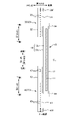
- FIG. 1 It is a schematic perspective view of the diaper 1. It is a top view of the diaper 1 in the expanded and extended state.
- FIG. 2 is a schematic cross-sectional view taken along the line AA of FIG. 4A is a plan view of the absorbent body 10
- FIG. 4B is a schematic cross-sectional view of the absorbent body 10.
- 5A to 5C are diagrams for explaining the basic principle of absorbing and evaporating water in the diaper 1.
- 6A to 6C are views for explaining how to fold the diaper 1 when it is wrapped. It is sectional drawing schematically explaining the structure of the diaper 1 in a folded state.
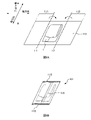
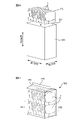
- 8A and 8B are diagrams showing an example in which the folded diaper 1 is individually wrapped.
- FIG. 9A and 9B are diagrams showing an example in which a plurality of folded diapers 1 are packaged side by side.
- 10A and 10B are views for explaining a method of attaching the waistline elastic member 35 to the front waistline portion 30 by using the welding portion 60.
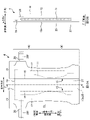
- FIG. 11A is a plan view of the unfolded and stretched diaper 2.
- 11B is a schematic cross-sectional view taken along the line DD of FIG. 11A.
- FIG. 12A is a plan view of the unfolded and stretched diaper 3.
- 12B is a schematic cross-sectional view taken along the line EE of FIG. 12A.
- FIG. 13A is a plan view of the diaper 4 in the expanded and extended state.
- 13B is a schematic cross-sectional view taken along the line FF of FIG. 13A.
- An absorbent article having a liquid-absorbing absorbent body and an exterior member provided on the non-skin side of the absorbent body, wherein the exterior member is at least a part of the surface on the non-skin side.
- it has a hydrophilic non-woven fabric, and the difference between the weight of the absorbent article when the packaged absorbent article is opened and the weight of the absorbent article in a dried state is dried.
- the absorbent article is characterized in that the hydrophilic nonwoven fabric is arranged so that the value divided by the weight of the absorbent article is 0.1 or less.
- the exterior member is provided with the hydrophilic nonwoven fabric
- the hydrophilic nonwoven fabric by appropriately arranging the hydrophilic nonwoven fabric, the water content of the absorbent article before the start of use can be determined. It can be suppressed to the same level as an absorbent article without a hydrophilic non-woven fabric. As a result, it is possible to prevent the growth and propagation of mold on the absorbent article before the start of use.
- Such an absorbent article has a vertical direction and a horizontal direction intersecting each other, and when packaged, the absorbent article is folded at at least one of the vertical direction and the horizontal direction, and in the folded state, the said article. It is desirable that at least a portion of the hydrophilic non-woven fabric is not exposed to the outside.
- the hydrophilic nonwoven fabric is located inside the absorbent article in a folded state and is not exposed to the outside. Therefore, the area of the portion where the hydrophilic nonwoven fabric comes into contact with the atmosphere becomes small, and it is suppressed that the hydrophilic nonwoven fabric absorbs moisture (humidity) in the atmosphere in the distribution process of the absorbent article. As a result, the formation of mold on the absorbent article is suppressed.
- the area of the portion of the absorbent article in which the hydrophilic nonwoven fabric is exposed to the outside when the absorbent article is folded is such that the hydrophilic nonwoven fabric is in a state where the absorbent article is not folded. It is desirable that it is smaller than 50% of the area of the part exposed to the outside.
- the area of the region where the hydrophilic non-woven fabric is exposed to the outside and may absorb moisture (moisture) from the atmosphere as compared with the absorbent article in the unfolded state. Is less than half, so it is possible to more easily suppress the growth of mold.
- At least a part of the surface of the absorbent article exposed to the outside in the folded state is composed of a hydrophobic nonwoven fabric having a lower hydrophilicity than the hydrophilic nonwoven fabric.
- the hydrophobic nonwoven fabric since the hydrophobic nonwoven fabric has a portion exposed to the outside, it becomes difficult for moisture (moisture) to infiltrate inside the absorbent article in a folded state. That is, it becomes difficult for moisture to reach the hydrophilic nonwoven fabric arranged inside the hydrophobic nonwoven fabric. As a result, it is possible to easily suppress the formation of mold on the absorbent article before use.
- the absorbent body has an absorbent core containing a highly absorbent polymer, and is contained in the hydrophilic nonwoven fabric when the packaged absorbent article is opened. It is desirable that the amount of water per unit weight contained is less than the amount of water per unit weight contained in the absorbent core.
- At least the amount of water absorbed by the hydrophilic non-woven fabric is smaller than the amount of water absorbed by SAP. Therefore, it is suppressed that the amount of water absorption becomes excessively high as a whole of the absorbent article, and it becomes easy to suppress the generation of mold.
- the absorbent article has a vertical direction and a horizontal direction that intersect with each other, and in the left-right direction, one of the first folds that folds the end region on one side to the other side and the end region on the other side. It is desirable to have a second crease that folds back to the side.
- the hydrophilic nonwoven fabric is arranged inside in the thickness direction by being folded so that the hydrophilic nonwoven fabrics face each other in the lateral direction (horizontal direction). Therefore, the area of the portion of the hydrophilic nonwoven fabric exposed to the outside becomes small, and it is possible to make it difficult to absorb moisture (humidity) from the atmosphere. Further, since the width of the absorbent article is reduced in the lateral direction, the package can be compactly formed and easily distributed in the market.
- the hydrophilic non-woven fabric arranged inside the folded fabric does not easily absorb moisture, and the generation of mold and the like can be suppressed.
- the absorbent article has a third crease in which the region on one side is folded back on the other side in the vertical direction.
- the hydrophilic nonwoven fabric is arranged inside in the thickness direction by being folded so that the hydrophilic nonwoven fabrics face each other in the vertical direction (vertical direction). Therefore, the area of the portion of the hydrophilic nonwoven fabric exposed to the outside becomes small, and it is possible to make it difficult to absorb moisture (humidity) from the atmosphere. Further, since the length of the absorbent article is shortened in the vertical direction, the package can be compactly formed and easily distributed in the market.
- the absorbent body comprises an absorbent core containing a highly absorbent polymer, and the absorbent article in a folded state is said to be absorbent when viewed in the thickness direction. It is desirable that the sex core and the hydrophilic non-woven fabric have an overlapping portion.
- the amount of water that reaches the absorbent core by being absorbed by the hydrophilic nonwoven fabric by arranging the hydrophilic nonwoven fabric on top of the absorbent core is reduced. Therefore, the amount of water absorbed by the absorbent core can be reduced. As a result, it is possible to reduce the amount of water absorbed by the absorbent article as a whole, and it is possible to easily suppress the generation of mold and the like.
- Such an absorbent article has a portion where the absorbent core and the plurality of layers of the hydrophilic nonwoven fabric overlap each other when the absorbent article in a folded state is viewed in the thickness direction. Is desirable.
- the number of layers of the hydrophilic nonwoven fabric placed on top of the absorbent core increases, so that less water permeates the layer of the hydrophilic nonwoven fabric and reaches the absorbent core. Therefore, the amount of water absorbed by the absorbent core can be reduced. Therefore, it is possible to reduce the amount of water absorbed as a whole of the absorbent article, and it is possible to easily suppress the generation of mold and the like.
- the absorbent article having the liquid-absorbable absorbent body and the exterior member provided on the non-skin side of the absorbent body is an absorbent article package packaged by the packaging member.
- the exterior member has a hydrophilic non-woven fabric on at least a part of the surface on the most non-skin side, and is the weight of the absorbent article when the package of the absorbent article is opened and the dried state.
- the hydrophilic non-woven fabric is arranged so that the value obtained by dividing the difference from the weight of the absorbent article by the weight of the absorbent article in a dried state is 0.1 or less.
- the absorbent article packaging is revealed.
- the packaging member is a leak-proof resin sheet member in the absorbent article packaging body.
- the absorbent article package in a folded state is packaged by the packaging member alone.
- an absorbent article package by packaging the absorbent article alone (individually packaged) with a leak-proof packaging member, it is difficult for moisture to infiltrate into the package (individual package). Therefore, it is possible to easily prevent the hydrophilic non-woven fabric from absorbing moisture and causing mold on the absorbent article.
- the absorbent article can be distributed to the market as a single substance, it can be easily handled and the convenience of the user can be improved.
- the absorbent article package is such an absorbent article package, and a plurality of the absorbent articles in a folded state are packaged side by side by the packaging member.
- an absorbent article package by packaging a plurality of absorbent articles together with a leak-proof packaging member, it becomes difficult for moisture to infiltrate into the package, and the hydrophilic non-woven fabric absorbs moisture. It is possible to easily suppress the formation of mold on the absorbent article by absorbing it. Further, since it is possible to distribute the absorbent goods in a plurality of units to the market, it is possible to stably supply a sufficient amount of the absorbent goods to the user.
- the absorbent article has a vertical direction, and is folded in half in the vertical direction at a crease in which a region on one side in the vertical direction is folded back to the other side. It is desirable that the absorbent article is housed so that the creases face vertically upwards.
- the heavy absorbent core is easily located on the vertically lower side, and the center of gravity is on the lower side, so that the folded state of the absorbent article is easily maintained, and the package is provided. It is possible to prevent the absorbent article contained in the container from losing its shape. Further, by maintaining the folded state, it is possible to prevent the hydrophilic nonwoven fabric from being exposed to the outside.
- the ratio of the hydrophilic nonwoven fabric to the surface area of the portion of the absorbent article package in the folded state above the center in the vertical direction is larger than the center in the vertical direction. It is desirable that the amount is larger than the ratio of the hydrophilic non-woven fabric to the surface area of the lower portion.
- a plurality of cuts penetrating the packaging member in the thickness direction have opening guide portions intermittently arranged along a predetermined direction, and the hydrophilic article of the absorbent article. It is desirable to have a portion in which the non-woven fabric is not in contact with the opening guide portion.
- the absorbent article package is not in contact with the hydrophilic non-woven fabric of the absorbent article and the entire opening guide portion.
- the absorbent article has a vertical direction, and is folded in half in the vertical direction at a crease in which a region on one side in the vertical direction is folded back to the other side. It is desirable that the absorbent article is housed so that neither the front surface nor the rear surface folded in half faces the opening guide portion.
- a disposable diaper (hereinafter, also referred to as “diaper 1”) will be described as an example.
- the absorbent articles according to the present invention shall also include napkins, panty liners, and other absorbent articles.
- FIG. 1 is a schematic perspective view of the diaper 1.
- FIG. 2 is a plan view of the unfolded and stretched diaper 1.
- FIG. 3 is a schematic cross-sectional view taken along the line AA of FIG.
- the "stretched state" of the diaper 1 is a state in which the entire diaper 1 (the entire product) is stretched without wrinkles. It refers to a state in which the size of the waistline member (20, etc.) is extended until it matches or is close to the size of the member alone.
- the diaper 1 is a disposable diaper having a pants-shaped shape in a natural state, and in the pants-shaped state of FIG. 1, it has a vertical direction, a horizontal direction, and a front-back direction that intersect with each other, and has a waist circumference opening BH and a pair of leg circumference openings. It has LH and LH.
- the upper side in the vertical direction corresponds to the waist opening BH side, and the lower side corresponds to the inseam side.
- the front side in the anteroposterior direction corresponds to the ventral side of the wearer, and the rear side corresponds to the dorsal side of the wearer.
- the diaper 1 in the unfolded state of FIG. 2, the diaper 1 has a vertical direction and a horizontal direction that intersect each other.
- the vertical direction is a direction along the vertical direction in FIG. 1, and corresponds to the longitudinal direction of the absorbent body 10.
- the lateral direction is a direction along the left-right direction in FIG.
- the direction in which the materials constituting the diaper 1 are laminated is defined as the thickness direction.
- the side in contact with the wearer's skin in the thickness direction is the skin side, and the opposite side is the non-skin side.
- the diaper 1 has a liquid-absorbing absorbent body 10 that absorbs excrement and a waistline member 20 arranged on the non-skin side of the absorbent body 10.
- the waist circumference member 20 is an exterior member constituting the exterior of the diaper 1, and has a front waist circumference portion 30 corresponding to the front body of the diaper 1 and a rear waist circumference portion 40 corresponding to the rear body of the diaper 1.
- the diaper 1 of the first embodiment has an absorbent main body 10 as a first component, which is applied to the crotch portion of the wearer and absorbs excrement such as urine, and as a second component, the wearer's abdomen. It is a so-called three-piece type pants-type diaper having a front waist circumference portion 30 covering the side portion and a rear side waist circumference portion 40 covering the back side portion of the wearer as a third component.
- the anterior girth portion 30 and the rear girth portion 40 are arranged in parallel with a vertical distance from each other, and the absorbent main body 10 is hung between them to absorb the same.
- Sex The end portions 10ea and 10eb in the longitudinal direction (longitudinal direction) of the main body 10 are joined and fixed to the skin side of the nearest waist circumference portions 30 and 40, respectively, and the external shape thereof is substantially H-shaped in a plan view. Then, from this state, the absorbent main body 10 is folded in half with the center position CL in the vertical direction as the folding position.
- the front waist circumference portion 30 and the rear side waist circumference portion 40 facing each other are joined and connected to each other at the side portions 30sw and the side portions 40sw on both sides in the left-right direction, and the pair of side joint portions 50 and 50 are formed. It is formed. That is, the front side waist circumference portion 30 and the rear side waist circumference portion 40 are formed in an annular shape by the pair of side joint portions 50, 50.
- the side bonding portion 50 is formed by a known bonding means such as welding or adhesion.
- the diaper 1 is in a pants-type state in which the waist opening BH and the pair of leg openings LH and LH are formed as shown in FIG.
- FIG. 4A is a plan view of the absorbent body 10
- FIG. 4B is a schematic cross-sectional view of the absorbent body 10.
- the absorbent body 10 has an absorbent core 11 that absorbs excrement, a top sheet 12 that is arranged on the skin side in the thickness direction of the absorbent core 11, and a non-skin side of the absorbent core 11. It also has a back sheet 13.
- the absorbent main body 10 may include a seat member other than this.
- a second sheet (not shown) may be provided between the top sheet 12 and the absorbent core 11 in the thickness direction.
- the absorbent core 11 is a member that absorbs and retains excrement such as urine, and is formed of, for example, a liquid absorbent fiber such as a pulp fiber mixed with a highly absorbent polymer (SAP).
- SAP highly absorbent polymer
- the outer peripheral surface of the absorbent core 11 may be covered with a liquid-permeable sheet member (core wrap sheet 11b) such as tissue paper or non-woven fabric.
- the absorbent core 11 of the present embodiment has a constricted portion 11c having a narrowed width in the left-right direction between the front end and the rear end in the longitudinal direction, and has a plan view as shown in FIG. 4A. It has an approximately hourglass shape.
- the constricted portion 11c is a portion sandwiched between both legs of the wearer when the diaper 1 is worn, and the length of the portion in the left-right direction is short (narrow width), so that the absorbent core 11 Makes it easier to fit in the wearer's crotch.
- the top sheet 12 is a liquid permeable sheet, and for example, a hydrophilic air-through non-woven fabric, a spunbonded non-woven fabric, or the like is used.
- both sides in the left-right direction are folded back to the non-skin side so as to involve the absorbent core 11 as shown in FIG. 4B.
- the back sheet 13 has a two-layer structure of a liquid-impermeable sheet 13a and an exterior sheet 13b arranged on the non-skin side thereof.
- a sheet member having impermeable and moisture permeable properties is used as the liquid impermeable sheet 13a.
- a microporous breathable resin film in which a plurality of fine holes are provided in a sheet mainly made of a resin such as polyethylene or polypropylene can be used.
- the liquid impermeable sheet 13a is also referred to as a "breathable film”.
- the breathable film is a sheet member having "leakage resistance” that does not allow liquids to permeate, but has "moisture permeability” and “breathability” that allows water vapor and air to permeate.
- a flexible hydrophobic non-woven fabric is used as the exterior sheet 13b.
- an air-through non-woven fabric, a spunbonded non-woven fabric, or the like can be used.
- a pair of leak-proof wall portions 15 are provided on both left and right sides of the absorbent main body 10 along the vertical direction (longitudinal direction of the absorbent main body 10).
- the leak-proof wall portion 15 is formed by the exterior sheet 13b described above. Specifically, in the left-right direction (horizontal direction), a part of the exterior sheet 13b extends outward from both ends of the absorbent core 11 and is bent toward the skin at a plurality of places as shown in FIG. 4B.
- a pair of leak-proof wall portions 15 are formed.
- a leak-proof wall elastic member 16 such as rubber thread is attached to the skin-side end (tip portion) of the leak-proof wall portion 15 in a state of being extended along the vertical direction (longitudinal direction of the absorbent body 10). ..
- the leak-proof wall portion 15 stands up on the wearer's skin side and fits on the wearer's crotch portion based on the elasticity developed by the leak-proof wall elastic member 16.
- leg elastic members 17 such as rubber threads are attached in a state of being extended along the vertical direction (longitudinal direction of the absorbent main body 10).
- leg elastic members 17 such as rubber threads are attached in a state of being extended along the vertical direction (longitudinal direction of the absorbent main body 10).
- the front waist circumference portion 30 is a non-skin side laminated so as to be adjacent to the skin side sheet 31 arranged on the most skin side in the thickness direction and the non-skin side of the skin side sheet 31. It has a sheet 32 and a waistline elastic member 35 provided between the skin side sheet 31 and the non-skin side sheet 32 in the thickness direction.
- the front waistline portion 30, which is an exterior member of the diaper 1, basically has a two-layer structure of a skin-side sheet 31 and a non-skin-side sheet 32. It may have the configuration of.
- the skin-side sheet 31 and the non-skin-side sheet 32 are rectangular sheet members in a plan view as shown in FIG. 2, and are formed of, for example, SMS non-woven fabric.
- the sheet member (nonwoven fabric) constituting the non-skin side sheet 32 is more hydrophilic than the sheet member (nonwoven fabric) constituting the skin side sheet 31. That is, the skin-side sheet 31 is made of a non-woven fabric having a low hydrophilicity, and the non-skin-side sheet 32 is made of a non-woven fabric having a higher hydrophilicity than the skin-side sheet 31.
- the nonwoven fabric constituting the skin-side sheet 31 is also referred to as a “hydrophobic nonwoven fabric”, and the nonwoven fabric constituting the non-skin-side sheet 32 is also referred to as a “hydrophilic nonwoven fabric”.
- the "hydrophilicity" of the non-woven fabric will be described later.
- the opening portion 32h is a through hole that penetrates the non-skin side sheet 32 in the thickness direction, and by providing the opening portion 32h, the air permeability of the front side waist circumference portion 30 can be enhanced. Further, since the opening portion 32h is visibly arranged on the non-skin surface side of the front waist circumference portion 30, it is easy to remind the user that the front waist circumference portion 30 has good air permeability. Can be done.
- Each opening portion 32h can have a circular shape having a diameter of, for example, about 1 mm, but the shape and arrangement (number and pattern) of the opening portions 32h can be appropriately changed.
- the skin side sheet 31 is not provided with a through hole corresponding to the opening portion 32h.
- the upper end portion (front end portion in the vertical direction) of the non-skin side sheet 32 is folded back from the non-skin side to the skin side and from the front side to the rear side in the vertical direction. have.
- the folded portion 32f By covering a part (upper end portion) of the skin side sheet 31 with the folded portion 32f, it is possible to prevent the upper end edge of the skin side sheet 31 from biting into the wearer's skin.
- the folded-back portion 32f does not necessarily have to be provided.
- a plurality of waistline elastic members 35 are arranged side by side in the vertical direction between the skin side sheet 31 and the non-skin side sheet 32, and are attached in a state of being extended in the left-right direction. Due to the elasticity developed by the waistline elastic member 35, the front waistline portion 30 fits the wearer's ventral waistline.
- the waistline elastic member 35 can be attached using an adhesive such as a hot melt adhesive.
- the waistline elastic member 35 can be attached by applying a hot melt adhesive to the waistline elastic member 35, stretching it at a predetermined elongation ratio, and sandwiching it between the skin side sheet 31 and the non-skin side sheet 32. That is, the skin-side sheet 31 and the non-skin-side sheet 32 are joined by an adhesive via the waistline elastic member 35.
- the waistline elastic member 35 may be attached by applying an adhesive to the skin side sheet 31 and the non-skin side sheet 32 side, or the waistline elastic member 35 may be attached by welding means using the welding portion 60 described later. You can do it.
- the front waist circumference portion 30 may have a skin surface sheet 36.
- the skin surface sheet 36 is a sheet member arranged so as to cover the upper end portion (front end portion in the vertical direction) of the absorbent main body 10 from the skin side, and functions as a cover sheet. Have. This prevents the upper end edge of the absorbent body 10 from biting into the wearer's skin when the diaper 1 is worn.
- the skin surface sheet 36 is formed of, for example, an SMS non-woven fabric or the like. The skin surface sheet 36 does not necessarily have to be provided.
- the sheet member When the sheet member is provided on the skin side of the skin side sheet 31 or on the non-skin side of the non-skin side sheet 32 in the front waist circumference portion 30 of the present embodiment, one of the skin side sheet 31 and the non-skin side sheet 32.
- Each sheet is arranged so that only the part is covered.
- the skin surface sheet 36 in FIG. 3 is provided so as to cover only a part of the skin side sheet 31 on the skin side, and at least a part of the skin side sheet 31 is exposed to the skin side of the wearer. It has become.
- the rear waist circumference portion 40 has substantially the same configuration as the front waist circumference portion 30. That is, the rear waist circumference portion 40 includes a skin-side sheet 41 arranged on the skinmost side in the thickness direction, a non-skin-side sheet 42 laminated so as to be adjacent to the non-skin-side of the skin-side sheet 41, and skin. It has a waistline elastic member 45 provided between the side sheet 41 and the non-skin side sheet 42 in the thickness direction. Further, similarly to the front waist circumference portion 30, it may have an opening portion 42h, a folded portion 42f, a skin surface sheet 46, and the like (see FIGS. 2 and 3). Since the configuration of each member is almost the same as that of the front waist circumference portion 30, the description thereof will be omitted.
- the external shape of the rear waist circumference portion 40 is different from that of the front waist circumference portion 30.
- the rear waist circumference portion 40 has a buttock cover 40b having a substantially trapezoidal shape on the lower side in the vertical direction with respect to the side joint portion 50 (side portion 40sw).
- the buttock cover 40b is a portion where the width in the left-right direction is narrowed from the upper side in the vertical direction to the lower side, and the outer edge thereof is curved.
- the buttock cover 40b is provided with a curved elastic member 47 such as a rubber thread as shown in FIG.
- the curved elastic member 47 is attached between the skin side sheet 41 and the non-skin side sheet 42 in a state of being extended along the edge portion of the buttocks cover 40b, and the elasticity developed by the curved elastic member 47 causes the curved elastic member 47.
- the buttock cover 40b of the posterior waist circumference portion 40 is easily fitted to the buttock portion of the wearer, and is less likely to be rolled up from the buttock portion.
- the hydrophilicity of the sheet member will be described.
- a hydrophobic non-woven fabric is used as the skin side sheets 31 and 41 constituting the waistline member 20 (front side waistline portion 30, rear side waistline portion 40) which is an exterior member, and as the exterior sheet 13b of the absorbent main body 10.
- the non-skin side sheets 32 and 42 constituting the waist circumference member 20 a hydrophilic non-woven fabric having higher hydrophilicity than the hydrophobic non-woven fabric is used.
- the hydrophilic non-woven fabric of the present embodiment is made by subjecting a hydrophobic non-woven fabric to a treatment (hydrophilic treatment) of adhering a predetermined oil agent to enhance the hydrophilicity.
- a treatment hydrophilic treatment
- the oil agent used for the hydrophilic treatment for example, a commercially available oil agent effective as an antistatic agent for fibers such as an anionic oil agent, a nonionic oil agent and a compounded product thereof can be used.
- the hydrophilicity of the hydrophobic nonwoven fabric can be enhanced and a hydrophilic nonwoven fabric can be obtained.
- the hydrophilic non-woven fabric may be formed by a method other than this.
- a hydrophilic nonwoven fabric may be obtained by producing a nonwoven fabric using highly hydrophilic fibers.
- the entire non-woven fabric constituting the non-skin side sheets 32 and 42 is subjected to the hydrophilic treatment, and the hydrophilicity of the entire sheet member is enhanced.
- the hydrophilicity may be enhanced only in a part of each sheet member.
- the sheet member may have a locally high hydrophilic portion and a low hydrophilic portion by performing hydrophilic treatment only on a part of the non-skin side sheet 32.
- the hydrophilicity of the sheet member can be evaluated by measuring the contact angle when the ion-exchanged water is brought into contact with the surface of the sheet member. Specifically, if the contact angle between the hydrophilic non-woven fabric and the ion-exchanged water is smaller than the contact angle between the hydrophobic non-woven fabric and the ion-exchanged water, the hydrophilicity of the hydrophilic non-woven fabric is more hydrophilic than that of the hydrophobic non-woven fabric. Will be higher than.
- the contact angle with ion-exchanged water is preferably less than 90 °, more preferably 50 ° or less.
- the contact angle with the ion-exchanged water is preferably 90 ° or more, and more preferably 120 ° or more.
- the contact angle can be measured by the following method using, for example, a contact angle meter MCA-J manufactured by Kyowa Interface Science Co., Ltd. First, ion-exchanged water is dropped (about 20 picolitres) on the surface of the fiber constituting the sheet member (measured sheet) to be measured, and then the contact angle is immediately measured using the contact angle meter. The measurement is performed at a plurality of locations (for example, 5 or more locations) on the surface of the sheet to be measured, and the average value thereof is used as the contact angle.
- the measurement environment temperature is 22 ° C.
- the sheet to be measured to which ion-exchanged water is dropped is imaged from the cross-sectional direction of the sheet to be measured, and the captured image is analyzed to measure the angle between the droplet of ion-exchanged water and the sheet to be measured.
- the contact angle may be measured depending on the above.
- FIG. 5 schematically shows a cross section of the front waist circumference portion 30 among the members constituting the diaper 1.
- the skin side sheet 31 (hydrophobic non-woven fabric) arranged on the skin side in the thickness direction of the front waist circumference portion 30 hits the wearer's skin.
- the skin-side sheet 31 of the present embodiment is made of SMS non-woven fabric and contains melt blown fibers having a smaller fiber diameter than spunbond fibers. Therefore, it has a portion where fine melt blown fibers are tightly entangled and the distance between the fibers is narrowed. With such a configuration, a capillary phenomenon occurs in the skin side sheet 31, and it becomes easy to absorb moisture such as sweat adhering to the wearer's skin.
- the moisture absorbed by the skin-side sheet 31 is transferred to the non-skin-side sheet 32 (hydrophilic non-woven fabric) laminated adjacent to the non-skin-side of the skin-side sheet 31.
- the non-skin-side sheet 32 is a hydrophilic non-woven fabric, so that there is a difference in hydrophilicity (hydrophilic gradient) between the two sheets, and the skin-side sheet 32 is hydrophilic. This is because moisture easily moves from the low skin side sheet 31 side to the highly hydrophilic non-skin side sheet 32 side. Therefore, it becomes difficult for moisture to be retained on the skin side sheet 31 side that is in contact with the wearer's skin, and it becomes easy for moisture to be retained on the non-skin side sheet 32 side that is not in contact with the wearer's skin.
- the non-skin side sheet 32 is arranged on the outermost (non-skin side) surface of the absorbent body 10. That is, the non-skin side surface of the non-skin side sheet 32 is an interface with the atmosphere. Therefore, the moisture contained in the non-skin side sheet 32 can be efficiently transpired to the outside of the diaper 1 from a wide range on the non-skin side surface.
- the hydrophilic non-woven fabric is arranged on the entire surface of the exterior member on the most non-skin side.
- another member for example, a tape member
- the non-skin side sheet 32 may be provided on a part of the most non-skin side surface of the exterior member.
- the diaper 1 by providing the hydrophilic non-woven fabric (non-skin side sheets 32, 42) on the exterior member (girth member 20), it is possible to absorb and evaporate the wearer's sweat or the like when wearing the diaper 1. It has become.
- the hydrophilic non-woven fabric may absorb moisture (humidity) from the atmosphere, the exterior member may become moist in the diaper 1 before use, which may cause the growth of mold.
- the hydrophilic non-woven fabric absorbs moisture while the diaper 1 is in the packaged state and is distributed on the market, the diaper 1 is moldy when the user opens the package. , Even though it is new, it may not be usable.
- the present embodiment by adjusting the folding method and the packaging method when the diaper 1 is distributed on the market, it is possible to prevent the hydrophilic non-woven fabric from absorbing water before use, and it is difficult to generate mold. are doing.
- the means for suppressing the absorption of water by the hydrophilic nonwoven fabric will be specifically described.
- FIG. 7 is a schematic cross-sectional view illustrating the structure of the diaper 1 in the folded state.
- FIG. 7 for convenience of explanation, some configurations (first part 91, second part 92, etc., which will be described later) are shown in a simplified manner.
- the diaper 1 is first folded from the outside to the inside at both ends in the left-right direction (horizontal direction). Specifically, the end region 91 on one side (left side in FIG. 6A) of the diaper 1 in the left-right direction is bent to the other side (right side) in the left-right direction along the bending line F1 along the vertical direction (vertical direction). ..
- the polygonal line F1 is also referred to as a "first fold F1”
- the end region 91 on one side of the diaper 1 in the left-right direction from the first fold F1 is also referred to as a "first portion 91".
- the polygonal line F2 is also referred to as a “second crease F2”
- the end region 92 on one side of the diaper 1 in the left-right direction with respect to the second fold F2 is also referred to as a “second portion 92”.
- the first fold F1 and the second fold F2 are arranged at positions along both ends of the absorbent main body 10 in the left-right direction.
- the rigidity is different between the portion where the absorbent body 10 is arranged and the portion where the absorbent body 10 is not arranged. Therefore, by providing the polygonal lines F1 and F2 at such positions, the first portion 91 is based on the difference in rigidity. And the second portion 92 can be easily folded.
- the arrangement of the first fold F1 and the second fold F2 is not limited to this, and the first fold F1 and the second fold F2 may be arranged at other positions, and the first fold F1 and the second fold F2 are provided diagonally with respect to the vertical direction. You may be.
- the first portion 91 and the second portion 92 are folded to the front side of the diaper 1. That is, it is folded so that the front waist circumference portion 30 is on the inside and the rear waist circumference portion 40 is on the outside, but it may be folded on the opposite side.
- the first portion 91 and the second portion 92 have portions that overlap each other as shown in FIG. 6B.
- the diaper 1 is folded so that the first portion 91 and the second portion 92 overlap at least in part when viewed in the thickness direction. The reason for this will be explained later.
- the polygonal line F3 is also referred to as a "third fold F3", and the portion of the diaper 1 on one side (lower side) in the vertical direction from the third fold F3 is also referred to as a “third portion 93" from the third fold F3.
- the other side (upper side) portion in the vertical direction is also referred to as "fourth portion 94".
- the third fold F3 is arranged at a position that does not overlap with the absorbent core 11 in the thickness direction.
- the absorbent core 11 has high rigidity, if the diaper 1 is to be bent at a position overlapping the absorbent core 11, it becomes difficult to maintain the folded state due to the restoring force of the absorbent core 11.
- the third fold F3 by arranging the third fold F3 above the upper end of the absorbent core 11 in the vertical direction (vertical direction), it is easy to maintain the folded state of the diaper 1 (see FIG. 7). ..
- the diaper 1 By folding at the first fold F1 to the third fold F3 in this way, the diaper 1 can be in a folded state having a compact shape as shown in FIG. 6C.
- the diaper 1 is packaged in this folded state by a predetermined packaging member, and is distributed on the market as a package of the diaper 1 (see FIGS. 8B and 9B described later).
- the folded diaper 1 is folded in half at the center position CL of the diaper 1 in the vertical direction (vertical direction), and further folded in half at the third fold F3. That is, it is folded in four from the unfolded state of FIG. 2 (see FIG. 7).
- a part of the non-skin side sheets 32 and 42 made of the hydrophilic non-woven fabric is located inside the folded diaper 1 and is not exposed to the outside.
- the non-skin side sheets 32 and 42 provided in the first portion 91 and the second portion 92 are sandwiched between the third portion 93 and the fourth portion 94 in the thickness direction, and are sandwiched between the outside (the third portion 93) and the fourth portion 94 in the thickness direction. Not exposed to the atmosphere).
- the non-skin side sheet 32 of the front waist circumference portion 30 is sandwiched between the rear waist circumference portion 40 and the third portion 93 in the thickness direction and is exposed to the outside (atmosphere). not.
- the non-skin side sheets 32 and 42 (hydrophilic non-woven fabric) of the first portion 91 and the second portion 92 and the non-skin side sheets 32 (hydrophilic non-woven fabric) of the fourth portion 94. ) Is arranged so as not to be exposed to the outside, and is in a state where it is difficult to come into contact with the atmosphere. Further, by packaging the folded diaper 1 with a packaging member such as a resin film, it is possible to make it more difficult for the hydrophilic non-woven fabric to come into contact with the atmosphere. As a result, in the distribution process of the diaper 1, the hydrophilic non-woven fabric naturally absorbs moisture (humidity) in the atmosphere, and it is possible to easily suppress the hydrophilic non-woven fabric from becoming moist and causing mold.
- the generation of mold can be suppressed by arranging the hydrophilic non-woven fabric so as not to come into contact with the atmosphere in this way.
- the hydrophilic non-woven fabric is arranged so that the water content of the diaper 1 when the packaged diaper 1 (the package of the diaper 1) is opened is 10% or less.
- the "moisture content” refers to the ratio of the increase in the weight of the diaper 1 which has become heavier with water at the time of opening to the weight of the diaper 1 in the state where it does not contain water. That is, the value obtained by dividing the difference between the weight of the diaper 1 when the packaged diaper 1 (the package of the diaper 1) and the weight of the diaper 1 in the dry state by the weight of the diaper 1 in the dry state is 0.
- the hydrophilic non-woven fabric is arranged so as to be 1 or less.
- the absorbent core 11 of the absorbent body 10 is configured to contain a highly absorbent polymer (SAP) that easily absorbs moisture, it may not be provided with a hydrophilic non-woven fabric.
- SAP highly absorbent polymer
- a conventional disposable diaper in which the exterior member (corresponding to the waist member 20) is composed only of a hydrophobic non-woven fabric has a certain water content when the SAP absorbs moisture and opens the diaper from the packaged state. May be.
- the exterior member (girth member 20) is provided with the hydrophilic non-woven fabric (non-skin side sheets 32, 42), and the hydrophilic non-woven fabric is appropriately arranged. It suppresses the absorption of water (moisture) before the start, and suppresses the water content to 10% or less. That is, by suppressing the water content so as not to be excessively high as compared with the disposable diaper not provided with the hydrophilic non-woven fabric, it is possible to suppress the generation and propagation of mold in the hydrophilic non-woven fabric.
- the "moisture content" can be measured by actually measuring the weight of the diaper 1. For example, an electronic balance or the like is prepared in advance, and the weight of the diaper 1 immediately after opening the package is measured and recorded. Next, the diaper 1 is placed in an oven and heated at 110 ° C. for 120 minutes to evaporate the water content, and the weight in a dry state is measured and recorded. Then, the difference between the weight of the diaper 1 at the time of opening (weight containing water) and the weight of the diaper 1 in the dry state (weight not containing water) is divided by the weight of the diaper 1 in the dry state. The water content at the time of opening the diaper 1 can be calculated. When a plurality of diapers 1 are contained in one package, the weights of at least two or more diapers 1 are measured by the above-mentioned method, and the arithmetic mean value thereof is used as the measurement result.
- the amount of water contained in the unit weight (g) of the hydrophilic non-woven fabric is the amount of water contained in the unit weight (g) of the absorbent core 11. It is desirable that it is less than the amount.
- the highly absorbent polymer (SAP) contained in the absorbent core 11 has higher water absorption than the hydrophilic non-woven fabric and easily absorbs water. That is, normally, the amount of water contained in the absorbent core 11 should be larger than that of the hydrophilic non-woven fabric. If the amount of water contained in the hydrophilic non-woven fabric is larger than that of the absorbent core 11, troubles such as intensive contact of water with the hydrophilic non-woven fabric will occur in the distribution process of the diaper 1. It is highly possible that it was.
- the amount of water absorption of the diaper 1 as a whole becomes excessively high, and there is a possibility that the hydrophilic non-woven fabric may become moldy or the proper water absorption function may be lost.
- the amount of water contained in the unit weight of the hydrophilic nonwoven fabric at the time of opening is smaller than the amount of water contained in the unit weight of the absorbent core 11, at least in the distribution process. It is unlikely that the hydrophilic non-woven fabric has absorbed an excessive amount of water. Therefore, it is less likely that the diaper 1 as a whole has absorbed excessive water, and it becomes easier to suppress the generation of mold.
- the diaper 1 is a non-woven fabric constituting the exterior member (girth member 20) by being folded at at least one of the vertical direction and the horizontal direction (crease). At least a part of the side sheets 32 and 42 (hydrophilic non-woven fabric) is not exposed to the outside. The area of the portion where the non-skin side sheets 32 and 42 (hydrophilic non-woven fabric) are exposed to the outside in this folded state is not in the state where the diaper 1 is not folded (pants type state shown in FIG. 1). It is desirable that the skin-side sheets 32 and 42 (hydrophilic non-woven fabric) are smaller than 50% of the area of the exposed portion.
- the non-skin side sheet 32 in the first portion 91 and the second portion 92, the non-skin side sheet 32 (front waist circumference portion 30) is folded so as to be inward, so that the non-skin side sheet 32 is large. The part is not exposed to the outside.
- the non-skin side sheet 42 in the fourth portion 94, the non-skin side sheet 42 (rear side waist circumference portion 40) is folded so as to be inside, so that a part of the non-skin side sheet 42 is not exposed to the outside. Become.
- the hydrophilic non-woven fabric non-skin side sheets 32, 42
- the exterior member (girth member 20) of the diaper 1 is folded so as not to be exposed to the outside. Become. Therefore, in the folded diaper 1, the area of the hydrophilic non-woven fabric that may absorb moisture (moisture) from the air is less than half that of the pants-shaped state before folding, and mold is generated. It can be more easily suppressed.
- the hydrophobic non-woven fabric may absorb a liquid such as sweat due to a capillary phenomenon, but it is unlikely to absorb water as a gas (humidity) from the atmosphere. Therefore, since the hydrophobic nonwoven fabric has a portion exposed to the outside, it becomes difficult for moisture (moisture) to infiltrate inside the hydrophobic nonwoven fabric.
- the diaper 1 has a first fold F1 that folds the first portion 91 on one side to the other side and a second fold F1 that folds the second portion 92 on the other side to one side in the lateral direction (horizontal direction). It has a second fold F2.
- a portion is formed in which the hydrophilic non-woven fabrics are folded so as to face each other in the lateral direction (left-right direction). That is, since the hydrophilic nonwoven fabrics facing each other are arranged inside in the thickness direction, the area of the portion exposed to the outside becomes small, and it is possible to make it difficult to absorb moisture (humidity) from the atmosphere.
- the package of the diaper 1 can be compactly formed and easily distributed when the diaper 1 is packaged by the packaging member.
- the first portion 91 bent by the first fold F1 and the second portion 92 bent by the second fold F2 overlap at least in a part. Is desirable.
- the laterally inner end of the folded first portion 91 and the laterally inner end of the folded second portion 92 overlap in the thickness direction. Has a part. If the first portion 91 and the second portion 92 do not overlap each other, a gap is likely to occur in the thickness direction at the lateral inner ends of the first portion 91 and the second portion 92, and the gap is likely to occur. , Moisture (moisture) may easily infiltrate into the folded inner space.
- the lateral inner ends of the first portion 91 and the second portion 92 overlap each other (see FIG. 6B), so that a gap is unlikely to occur at the inner ends, and the folded inner space. Moisture infiltration is suppressed. Therefore, it becomes difficult for the folded inner hydrophilic non-woven fabric to absorb moisture, and the generation of mold can be suppressed.
- the folded diaper 1 has a third fold F3 in which the third portion 93 on one side is folded back to the other side in the vertical direction (vertical direction).
- a portion is formed in which the hydrophilic non-woven fabrics are folded so as to face each other in the vertical direction (vertical direction). That is, since the hydrophilic nonwoven fabrics facing each other are arranged inside in the thickness direction, the area of the portion exposed to the outside becomes small, and it is possible to make it difficult to absorb moisture (humidity) from the atmosphere.
- the package of the diaper 1 can be compactly formed and easily distributed when the diaper 1 is packaged by the packaging member.
- 8A and 8B are diagrams showing an example in which the folded diaper 1 is individually wrapped.
- 9A and 9B are diagrams showing an example in which a plurality of folded diapers 1 are packaged side by side.
- the folded diaper 1 When packaging the folded diaper 1 as a single unit, first, the folded diaper 1 is arranged with respect to the packaging member 110 as shown in FIG. 8A.
- the packaging member 110 is a leak-proof resin film sheet, and for example, a polyethylene film or the like can be used.
- a leak-proof film sheet By packaging the diaper 1 with such a leak-proof film sheet, it is possible to easily prevent moisture from entering the inside of the package through the packaging member. This makes it difficult for the hydrophilic non-woven fabric of the diaper 1 to absorb water, and it is possible to prevent the diaper 1 from forming mold before use.
- the packaging member 110 Considering only the function of packaging the diaper 1, it is possible to use a sheet member such as a non-woven fabric or paper as the packaging member 110. However, since these sheet members may allow moisture to permeate and promote the absorption of moisture by the hydrophilic non-woven fabric, it is preferable to apply the sheet member having the above-mentioned leak-proof property in this embodiment.
- the both end portions of the packaging member 110 are bent inward at the folding lines L1 and L2 located on both outer sides of the diaper 1 in the lateral direction so as to wrap the diaper 1. do.
- the region 111 outside (left side) of the bending line L1 is bent inward (right side) in the lateral direction
- the region 112 outside (right side) of the bending line L2 in the lateral direction is bent. It can be folded inward (on the left side).
- the packaging members 110 stacked in the thickness direction are joined together along the horizontal direction at both ends in the vertical direction to form the sealing portions 115 and 115.
- the region 111 and the region 112 of the packaging member 110 overlapped in the thickness direction are joined along the vertical direction to form the seal portion 116.
- the package 101 is also referred to as an “individual package 101”.
- the diaper 1 By wrapping (individually wrapping) the diaper 1 alone with a leak-proof packaging member 110 and sealing it like the package 101, it becomes difficult for moisture to penetrate into the individual package 101, and a hydrophilic non-woven fabric is used. It is possible to easily suppress the formation of mold on the diaper 1 by absorbing water. In addition, since the diaper 1 can be distributed to the market as a single unit, it can be easily handled and the convenience of the user can be improved.
- a bag-shaped packaging member 120 is prepared as shown in FIG. 9A.
- the packaging member 120 is formed by forming a leak-proof resin film sheet similar to the packaging member 110 in a bag shape having an opening 121 on the upper side in the vertical direction. Further, in FIG. 9A, the packaging member 120 is formed in a substantially rectangular parallelepiped shape, and has a first direction and a second direction orthogonal to each other on a horizontal plane.
- FIG. 9A shows an example in which seven diapers 1 in a folded state are housed side by side in the front-rear direction along a first direction.
- the orientation and the number of diapers 1 when the diaper 1 is housed in the packaging member 120 are not limited to the example of FIG. 9A.
- the diaper 1 may be used as the individual package 101 as shown in FIG. 8B, and then the plurality of individual packages 101 may be housed in the packaging member 120.
- the opening 121 of the packaging member 120 is folded into a so-called gusset, and the facing surfaces at the upper end are joined along the first direction to form a sealing portion 125.
- a package 102 is formed in which a plurality of folded diapers 1 are packaged by the packaging member 120.
- the opening guide 126 is provided at a predetermined position of the packaging member 120.
- an opening guide portion 126 (so-called perforation) is provided on the upper surface portion of the packaging body 102 in which a plurality of cuts penetrating the packaging member 120 in the thickness direction are intermittently arranged along the first direction. Has been done. This makes it easier for the user to open the package 102 and take out the diapers 1 one by one.
- the position where the opening guide portion 126 is provided is not limited to the upper surface portion of the package 102.
- an opening guide portion 126 may be provided on the side surface portion of the package 102 along the vertical direction.
- the opening guide portion 126 (perforation) is provided, there is a possibility that moisture in the atmosphere may enter the inside of the package 102 through the cut of the opening guidance portion 126. There is. Therefore, it is desirable that the package 102 accommodates the diaper 1 so as to have a portion in which the hydrophilic non-woven fabric of the diaper 1 in the folded state and the opening guide portion 126 do not contact each other. In the case of FIG. 9B, a predetermined space is provided between the opening guide portion 126 and the housed diaper 1 in the vertical direction.
- the entire opening guide portion 126 is not in contact with the hydrophilic non-woven fabric of the diaper 1 in the package 102.
- the distance (distance) between the opening guide portion 126 and the hydrophilic nonwoven fabric may be increased, or a leak-proof sheet (not shown in FIG. 9B) may be separately provided between the opening guiding portion 126 and the hydrophilic nonwoven fabric. Therefore, it is desirable that the entire opening guide portion 126 does not come into contact with the hydrophilic non-woven fabric.
- the opening guide portion 126 and the hydrophilic non-woven fabric of the diaper 1 are less likely to come into contact with each other, so that water absorption by the hydrophilic non-woven fabric is more likely to be suppressed, and mold and the like are less likely to occur. can.
- each diaper 1 is accommodated so that a large area portion of the folded diaper 1 does not face the opening guide portion 126.
- the front surface and the rear surface (the surfaces corresponding to the third portion 93 and the fourth portion 94 in FIG. 6C) of the diaper 1 folded in half at the third fold F3 are the opening guide portions. It is desirable that each diaper 1 is housed so as not to face the 126. Since the hydrophilic non-woven fabric (non-skin side sheet 42) is widely arranged on the outer surface of the fourth portion 94 of the diaper 1 (see FIG. 7), the fourth portion 94 faces the opening guide portion 126.
- the hydrophilic non-woven fabric of the fourth portion 94 may easily absorb the moisture that has penetrated into the opening guide portion 126 and has penetrated into the inside.
- the third portion 93 and the fourth portion 94 having a large area and the opening guide portion 126 do not face each other. Therefore, it is possible to prevent the hydrophilic non-woven fabric from absorbing water.
- each diaper 1 is packaged so that the third fold F3 faces upward in the vertical direction as shown in FIG. 9A. It is desirable to be housed in the member 120. As described with reference to FIG. 7, the third fold F3 is provided so as not to overlap with the absorbent core 11 when the diaper 1 is folded. Therefore, in the folded diaper 1, when the third fold F3 is arranged so as to face vertically upward, it is highly possible that the heavy absorbent core 11 is located vertically downward. That is, there is a high possibility that the center of gravity of the diaper 1 is located on the lower side.
- the shape of the diaper 1 is less likely to collapse and the folded state is more likely to be maintained, as compared with the case where the center of gravity is located on the upper side. Therefore, it is possible to prevent the diaper 1 housed therein from losing its shape while the package 102 is distributed in the market. Further, by maintaining the folded state, it is possible to prevent the hydrophilic nonwoven fabric from being exposed to the outside.
- the surface area of the portion above the central position in the vertical direction of the folded diaper 1 is reached.
- the ratio of the hydrophilic non-woven fabric to the surface area below the central position in the vertical direction is larger than the ratio of the hydrophilic non-woven fabric.
- the non-skin side sheet 42 hydrophilic non-woven fabric
- the ratio of hydrophilic non-woven fabric to the surface area of diapers is high.
- the surface area of the non-skin side sheet 13b of the absorbent body 10 is exposed to the outside in the third portion 93.
- the proportion of hydrophilic non-woven fabric is low.
- the hydrophilic nonwoven fabric arranged on the surface of the region below the vertical direction is large in the diaper 1, the hydrophilic nonwoven fabric may easily absorb water.
- the proportion of the hydrophilic nonwoven fabric arranged on the surface of the lower region in the vertical direction is smaller than the proportion of the hydrophilic nonwoven fabric arranged on the surface of the upper region. There is. Therefore, as the water moves downward, the amount of water absorbed by the hydrophilic non-woven fabric as the whole diaper 1 decreases. This makes it easier to suppress the growth of mold on the diaper 1.
- the absorbent core 11 and the hydrophilic non-woven fabric have a overlapping portion.
- the folded diaper 1 is likely to come into contact with atmospheric moisture at the third portion 93 and the fourth portion 94, which have a large surface area. Therefore, if the absorbent core 11 is exposed on both surfaces of the third portion 93 and the fourth portion 94, a large amount of water may be absorbed by SAP having high water absorption.
- the hydrophilic non-woven fabric non-skin side sheets 32, 42
- the third portion 93 since the hydrophilic non-woven fabric (non-skin side sheets 32, 42) is arranged at least on the fourth portion 94 side of the absorbent core 11 (see FIG. 7), the third portion 93.
- the amount of water absorbed by the diaper 1 as a whole can be reduced as compared with the case where the absorbent cores 11 are arranged on both sides of the fourth portion 94. That is, by arranging the hydrophilic nonwoven fabric on the absorbent core 11, the amount of water reaching the absorbent core 11 can be reduced, and the amount of water absorbed by the absorbent core 11 can be reduced. Therefore, the structure in which the absorbent core 11 and the hydrophilic non-woven fabric overlap in the thickness direction makes it possible to reduce the amount of water absorbed in the diaper 1 as a whole and suppress the generation of mold and the like. Can be made easier.
- a plurality of layers of the hydrophilic nonwoven fabric are provided in the portion where the absorbent core 11 and the hydrophilic nonwoven fabric overlap in the thickness direction.
- the waistline elastic members 35 and 45 are attached to the waistline elastic members 20 by an adhesive means using a hot melt adhesive or the like, but the method of attaching the waistline elastic members 35 and 45 is not limited to this.
- the waistline elastic members 35 and 45 may be attached to the waistline member 20 by using welding means such as ultrasonic welding. Since ultrasonic welding is a known technique, the description of ultrasonic welding is omitted in the present specification.
- FIGS. 10A and 10B are diagrams illustrating a method of attaching the waistline elastic member 35 to the front waistline portion 30 by using the welding portion 60.
- the waistline elastic member 35 is attached to the front waistline portion 30 by a plurality of welded portions 60, 60 ... Dispersed in the left-right direction and the up-down direction.
- Each welded portion 60 is formed into a substantially rectangular shape by ultrasonic welding, and the skin-side sheet 31 and the non-skin-side sheet 32 of the front waist circumference portion 30 are joined in the thickness direction.
- the waistline elastic member 35 is sandwiched with respect to the front waistline portion 30. Is installed.
- the pair of welded portions 60, 60 forming the welded portion pair 60s are arranged in the vertical direction with an interval of GH60.
- the size of the interval GH60 is set to the same size as or slightly larger than the diameter d35t of the waistline elastic member 35 in a state of being stretched to a predetermined extension ratio (GH60 ⁇ d35t). That is, the elastic member 35 around the waist in the extended state is arranged between the welded portions 60s in the vertical direction.
- the waistline elastic member 35 contracts in the left-right direction and expands in the vertical direction, and the diameter d35 in the natural state is 60s with respect to the welded portion.
- the vertical spacing is greater than the GH60 (d35> GH60).
- the elastic member 35 around the waist is pinched in the vertical direction by the welded portions 60 and 60.
- the waistline elastic member 35 is attached to the front waistline portion 30.
- the waistline elastic member 35 (45) is in a natural state relaxed from the above-mentioned stretched state. Further, in the diaper 1 in the pants type state, the waist circumference elastic member 35 (45) is joined to the front side waist circumference portion 30 (rear side waist circumference portion 40) by the side joint portions 50 and 50 on both sides in the left-right direction. Therefore, even if the front waist circumference portion 30 (rear side waist circumference portion 40) is extended in the left-right direction when the diaper 1 is worn, the waist circumference elastic member 35 (45) does not come off from the waist circumference member 20.
- FIG. 11A is a plan view of the unfolded and stretched diaper 2.
- 11B is a schematic cross-sectional view taken along the line DD of FIG. 11A.
- Each direction (for example, vertical direction, horizontal direction, etc.) in FIGS. 11A and 11B is the same as each direction defined in the first embodiment.
- the diaper 2 of the second embodiment has a liquid-absorbing absorbent main body 10 and a waist circumference member 20 as an exterior member joined to the non-skin side of the absorbent main body 10.
- the waistline member 20 of the diaper 2 is integrally configured so as to be continuous in the vertical direction (longitudinal direction of the absorbent main body 10) as shown in FIGS. 11A and 11B. That is, the diaper 2 is a so-called two-piece type disposable diaper composed of two parts, an absorbent main body 10 and an exterior member (girth member 20).
- the portion on the front side of the central position CL in the vertical direction is referred to as the front girth portion 30, and the portion on the rear side of the central position CL is referred to as the posterior girth portion 40.
- An explanation will be given (see FIG. 11A).
- the absorbent body 10 and the waistline member 20 are folded in half with the center position CL in the vertical direction as the folding position.
- the front waist circumference portion 30 and the rear side waist circumference portion 40 facing each other are joined and connected to each other at the side portions 30sw and the side portions 40sw on both sides in the left-right direction, and the pair of side joint portions 50 and 50 are formed.
- the diaper 2 in a pants-type state having a waist opening BH and a pair of leg openings LH and LH is obtained.
- the back sheet 13 of the diaper 2 may include only the liquid-impermeable sheet 13a (breathable film) and may not include the exterior sheet 13b.
- the waistline member 20 is provided on the entire non-skin side surface of the absorbent body 10, and the waistline member 20 has a function as an exterior sheet of the absorbent body 10. .. Therefore, the back sheet 13 of the absorbent main body 10 of the diaper 2 may not be provided with a sheet member corresponding to the exterior sheet 13b of the diaper 1 (see FIG. 11B).
- the waistline member 20 is between the skin side sheet 21, the non-skin side sheet 22 laminated adjacent to the non-skin side of the skin side sheet 21, and the thickness direction between the skin side sheet 21 and the non-skin side sheet 22. It has elastic members 35 and 45 around the waist arranged in (see FIG. 11B).
- the skin-side sheet 21 is a hydrophobic non-woven fabric similar to the skin-side sheets 31 and 41 of the diaper 1.
- the non-skin side sheet 22 is a hydrophilic non-woven fabric similar to the non-skin side sheets 32 and 42 of the diaper 1. That is, in the diaper 2, the non-skin side sheet 22 is a non-woven fabric having higher hydrophilicity than the skin side sheet 21.
- the waistline elastic members 35 and 45 are made of rubber threads or the like like the diaper 1, and are attached between the skin side sheet 21 and the non-skin side sheet 22 in a state of being stretched in the left-right direction.
- the diaper 2 of the second embodiment The same effect as that of diaper 1 can be obtained with the diaper 2 of the second embodiment. That is, when the package of the diaper 2 (see FIGS. 6 to 9) that is folded and packaged in the same manner as the diaper 1 is opened, the diaper 2 is hydrophilic so that the water content of the diaper 2 is 0.1 or less. Non-woven fabric is arranged. In other words, the difference between the weight of the packaged diaper 2 when the packaged diaper 2 is opened and the weight of the dried diaper 2 is divided by the weight of the dried diaper 2 so that the value is 0.1 or less. , Hydrophilic non-woven fabric is arranged. By doing so, even when the diaper 2 is provided with the hydrophilic non-woven fabric, the absorption of excessive water can be suppressed, and the generation and propagation of mold can be suppressed.
- FIG. 12A is a plan view of the unfolded and stretched diaper 3.
- 12B is a schematic cross-sectional view taken along the line EE of FIG. 12A.
- Each direction (for example, vertical direction, horizontal direction, etc.) in FIGS. 12A and 12B is the same as each direction defined in the first embodiment.
- the diaper 3 of the third embodiment has a liquid-absorbing absorbent main body 10 and a waist circumference member 20 as an exterior member joined to the non-skin side of the absorbent main body 10.
- the waistline member 20 of the diaper 3 is integrally configured so as to be continuous in the vertical direction (longitudinal direction of the absorbent main body 10). That is, the skin-side sheet 21 is configured as an integral sheet member continuous from one end to the other end in the vertical direction.
- the non-skin side sheet 32 front non-skin side sheet
- the non-skin side sheet 42 rear non-skin side sheet
- a diaper with such a structure is also called a simple 3-piece type disposable diaper.
- the portion on the front side of the central position CL in the vertical direction is referred to as the front girth portion 30, and the portion on the rear side of the central position CL is referred to as the posterior girth portion.
- the description will be given as 40 (see FIG. 12A).
- the absorbent body 10 and the waistline member 20 are folded in half with the center position CL in the vertical direction as the folding position.
- the front waist circumference portion 30 and the rear side waist circumference portion 40 facing each other are joined and connected to each other at the side portions 30sw and the side portions 40sw on both sides in the left-right direction, and the pair of side joint portions 50 and 50 are formed.
- the diaper 3 in a pants-type state having a waist opening BH and a pair of leg openings LH and LH is obtained.
- the basic configuration and function of the absorbent main body 10 are substantially the same as those of the absorbent main body 10 of the diaper 2 of the second embodiment, so the description thereof will be omitted.
- the front girth portion 30 is one skin side extending from one end side (ventral side) in the vertical direction to the other end side (dorsal side) on the skin side in the thickness direction.
- the rear waist circumference portion 40 is a skin side sheet 21 common to the front waist circumference portion 30, and a non-skin side sheet laminated adjacent to the non-skin side of the skin side sheet 21 on the rear side (dorsal side) in the vertical direction. It has a waist-side elastic member 45 arranged between the skin-side sheet 21 and the non-skin-side sheet 42 in the thickness direction.
- the skin side sheet 21 is a hydrophobic non-woven fabric similar to the skin side sheets 31 and 41 of the diaper 1.
- the non-skin side sheets 32 and 42 are hydrophilic non-woven fabrics similar to the non-skin side sheets 32 and 42 of the diaper 1. That is, in the diaper 3, the non-skin side sheets 32 and 42 are non-woven fabrics having higher hydrophilicity than the skin side sheets 21.
- the waistline elastic members 35 and 45 are made of rubber threads or the like like the diaper 1, and are attached between the skin side sheet 21 and the non-skin side sheets 32 and 42 in a state of being stretched in the left-right direction. There is.
- a hydrophilic non-woven fabric so that the water content of the diaper 3 when the package of the diaper 3 (see FIGS. 6 to 9), which is folded and packaged in the same manner as the diaper 1, is opened, is 0.1 or less. Is placed. In other words, the difference between the weight of the packaged diaper 3 when the packaged diaper 3 is opened and the weight of the dried diaper 3 is divided by the weight of the dried diaper 3 so that the value is 0.1 or less.
- Hydrophilic non-woven fabric is arranged. By doing so, even when the diaper 3 is provided with the hydrophilic non-woven fabric, the absorption of excessive water can be suppressed, and the generation and propagation of mold can be suppressed.
- FIG. 13A is a plan view of the diaper 4 in the expanded and extended state.
- 13B is a schematic cross-sectional view taken along the line FF of FIG. 13A.
- Each direction (for example, vertical direction, horizontal direction, etc.) in FIGS. 13A and 13B is the same as each direction defined in the first embodiment.
- the diaper 4 is composed of an absorbent core 11 that absorbs excrement, a liquid-permeable top sheet 12 located on the skin side of the absorbent core 11, and an absorbent core 11.
- the liquid impermeable sheet 13a located on the non-skin side
- the exterior sheet 25 located on the non-skin side of the liquid impermeable sheet 13a
- the top sheet 12 joined to the skin side on both left and right sides. It has a pair of side seats 18.
- elastic members 17 around the legs for example, rubber thread
- expand and contract in the vertical direction are arranged on both sides of the diaper 4 in the left-right direction.
- the absorbent core 11, the top sheet 12, and the liquid-impermeable sheet 13a of the diaper 4 are portions corresponding to the absorbent main body 10 of the diaper 1, and the absorbent core 11 constituting the absorbent main body 10 of the diaper 1 It has the same function as the top sheet 12 and the liquid impermeable sheet 13a, respectively.
- the liquid impermeable sheet 13a is a breathable film capable of allowing water such as urine absorbed by the absorbent core 11 to permeate as water vapor.
- the exterior sheet 25 of the diaper 4 is an exterior member corresponding to the waistline member 20 of the diaper 1, and is made of a hydrophilic non-woven fabric like the non-skin side sheets 32 and 42 constituting the waistline member 20 of the diaper 1. ..
- the exterior member of the diaper 4 may have the same configuration as the waistline member 20 of the diaper 1. For example, even if a hydrophobic nonwoven fabric (not shown in FIG. 13B) is provided adjacent to the skin side of the exterior sheet 25 made of the hydrophilic nonwoven fabric, and the exterior member of the diaper 4 is formed by the two sheet members. good.
- the portion of the diaper 4 in the vertical direction in front of the central position CL is also referred to as the front waist circumference portion 30, and the portion posterior to the central position CL is also referred to as the posterior waist circumference portion 40 (FIG. 13A). reference).
- the pair of side sheets 18 are liquid-permeable non-woven fabrics similar to the top sheet 12, and a leak-proof wall elastic member such as rubber thread that can be expanded and contracted in the vertical direction is provided at the inner end portion of the side sheet 18 in the left-right direction. 16 is provided.
- a leak-proof wall elastic member such as rubber thread that can be expanded and contracted in the vertical direction is provided at the inner end portion of the side sheet 18 in the left-right direction. 16 is provided.
- a pair of fastening tapes 26 extending to both outer sides in the left-right direction are provided on the dorsal side (posterior waist circumference portion 40) of the diaper 4 in the vertical direction.
- a hook-and-loop fastener 26f provided with a plurality of hook members (not shown) is provided on the skin side surface on the free end side (outside in the left-right direction) of the fastening tape 26.
- a target sheet 27 for engaging the fastening tape 26 when the diaper 4 is worn is provided on the non-skin side surface of the ventral side (front waist circumference portion 30) in the vertical direction of the diaper 4.
- the target sheet 27 is a member that can be engaged with the hook-and-loop fastener 26f (hook member) of the fastening tape 26, and is made of, for example, a non-woven fabric.
- a dorsal elastic member 19 that expands and contracts along the left-right direction (horizontal direction) is provided.
- the dorsal elastic member 19 is a strip-shaped elastic member formed of an elastic non-woven fabric or the like, and is attached to the diaper 4 in a state of being extended in the left-right direction. The elastic force generated by the dorsal elastic member 19 makes it easier for the diaper 4 to fit around the wearer's waist when the diaper 4 is attached to the wearer's body.
- the deployed diaper 4 shown in FIG. 13A When wearing the diaper 4, for example, the deployed diaper 4 shown in FIG. 13A is placed in the inseam of the wearer, the anterior waist circumference 30 is applied to the wearer's ventral portion, and the posterior waist circumference portion is worn. Apply 40 to the wearer's dorsal part (buttocks). Then, the pair of fastening tapes 26 and 26 are wound around the wearer's waist from the dorsal side to the ventral side, and the hook-and-loop fastener 26f is engaged with the target sheet 27 on the ventral side of the wearer.
- a waist opening BH and a pair of leg openings LH and LH, which are substantially the same as those of the diaper 1, are formed, and the position of the diaper 4 can be fixed to the wearer's body (lower crotch).
- the target sheet 27 does not necessarily have to be provided in the diaper 4.
- the diaper 4 may be worn by directly engaging the surface fastener 26f with the nonwoven fabric constituting the exterior sheet 25.
- a hydrophilic non-woven fabric so that the water content of the diaper 4 when the package of the diaper 4 (see FIGS. 6 to 9), which is folded and packaged in the same manner as the diaper 1, is opened, is 0.1 or less. Is placed. In other words, the difference between the weight of the packaged diaper 4 when the packaged diaper 4 is opened and the weight of the dried diaper 4 is divided by the weight of the dried diaper 4 so that the value is 0.1 or less.
- Hydrophilic non-woven fabric is arranged. By doing so, even when the diaper 4 is provided with the hydrophilic non-woven fabric, the absorption of excessive water can be suppressed, and the generation and propagation of mold can be suppressed.
Landscapes
- Health & Medical Sciences (AREA)
- Vascular Medicine (AREA)
- Epidemiology (AREA)
- Engineering & Computer Science (AREA)
- Biomedical Technology (AREA)
- Heart & Thoracic Surgery (AREA)
- Life Sciences & Earth Sciences (AREA)
- Animal Behavior & Ethology (AREA)
- General Health & Medical Sciences (AREA)
- Public Health (AREA)
- Veterinary Medicine (AREA)
- Dermatology (AREA)
- Absorbent Articles And Supports Therefor (AREA)
Priority Applications (2)
| Application Number | Priority Date | Filing Date | Title |
|---|---|---|---|
| JP2022554113A JP7815129B2 (ja) | 2020-09-30 | 2021-09-30 | 吸収性物品包装体 |
| EP21875815.9A EP4173605A4 (en) | 2020-09-30 | 2021-09-30 | Absorbent article and absorbent article package |
Applications Claiming Priority (2)
| Application Number | Priority Date | Filing Date | Title |
|---|---|---|---|
| CN202011057366.4 | 2020-09-30 | ||
| CN202011057366.4A CN114305876B (zh) | 2020-09-30 | 2020-09-30 | 吸收性物品和吸收性物品包装体 |
Publications (1)
| Publication Number | Publication Date |
|---|---|
| WO2022071519A1 true WO2022071519A1 (ja) | 2022-04-07 |
Family
ID=80950488
Family Applications (1)
| Application Number | Title | Priority Date | Filing Date |
|---|---|---|---|
| PCT/JP2021/036273 Ceased WO2022071519A1 (ja) | 2020-09-30 | 2021-09-30 | 吸収性物品、及び、吸収性物品包装体 |
Country Status (4)
| Country | Link |
|---|---|
| EP (1) | EP4173605A4 (https=) |
| JP (1) | JP7815129B2 (https=) |
| CN (1) | CN114305876B (https=) |
| WO (1) | WO2022071519A1 (https=) |
Cited By (1)
| Publication number | Priority date | Publication date | Assignee | Title |
|---|---|---|---|---|
| WO2025205607A1 (ja) * | 2024-03-25 | 2025-10-02 | ユニ・チャーム株式会社 | パンツ型吸収性物品の収容体 |
Citations (6)
| Publication number | Priority date | Publication date | Assignee | Title |
|---|---|---|---|---|
| JP2011111165A (ja) * | 2009-11-24 | 2011-06-09 | Livedo Corporation | おむつ包装体 |
| JP2014198135A (ja) * | 2013-03-29 | 2014-10-23 | ユニ・チャーム株式会社 | 使い捨て着用物品 |
| JP2016123603A (ja) * | 2014-12-26 | 2016-07-11 | ユニ・チャーム株式会社 | 吸収性物品 |
| JP2017113186A (ja) | 2015-12-22 | 2017-06-29 | 花王株式会社 | 使い捨ておむつ |
| JP2019112103A (ja) * | 2017-12-22 | 2019-07-11 | ユニ・チャーム株式会社 | 吸収性物品の収容体 |
| JP2020018388A (ja) * | 2018-07-30 | 2020-02-06 | 大王製紙株式会社 | 使い捨て着用物品の伸縮構造、及びこの伸縮構造を有するパンツタイプ使い捨て着用物品 |
Family Cites Families (9)
| Publication number | Priority date | Publication date | Assignee | Title |
|---|---|---|---|---|
| JPH09313530A (ja) * | 1996-05-29 | 1997-12-09 | Shiseido Co Ltd | 体液吸収性物品の吸収体 |
| JP2000000268A (ja) * | 1998-06-16 | 2000-01-07 | Kao Corp | 吸収性物品 |
| EP1639908A4 (en) * | 2003-06-20 | 2011-01-19 | Livedo Corp | FOLDING STRUCTURE FOR SLEEPING PANTS AND DRESSING PANTS |
| CN101522149A (zh) * | 2006-09-29 | 2009-09-02 | 花王株式会社 | 吸收性物品 |
| US9918881B2 (en) * | 2011-11-22 | 2018-03-20 | Kimberly-Clark Worldwide, Inc. | Method of folding pant-like disposable absorbent garments in a trough |
| CN203280591U (zh) * | 2013-01-31 | 2013-11-13 | 尤妮佳股份有限公司 | 吸收性物品及吸收性物品的包装体 |
| JP7017886B2 (ja) * | 2017-09-06 | 2022-02-09 | 花王株式会社 | 吸収性物品用シート |
| CN210124916U (zh) * | 2018-04-24 | 2020-03-06 | 尤妮佳股份有限公司 | 短裤型吸收性物品 |
| JP7221715B2 (ja) * | 2019-02-07 | 2023-02-14 | ユニ・チャーム株式会社 | 吸収性物品 |
-
2020
- 2020-09-30 CN CN202011057366.4A patent/CN114305876B/zh active Active
-
2021
- 2021-09-30 JP JP2022554113A patent/JP7815129B2/ja active Active
- 2021-09-30 EP EP21875815.9A patent/EP4173605A4/en active Pending
- 2021-09-30 WO PCT/JP2021/036273 patent/WO2022071519A1/ja not_active Ceased
Patent Citations (6)
| Publication number | Priority date | Publication date | Assignee | Title |
|---|---|---|---|---|
| JP2011111165A (ja) * | 2009-11-24 | 2011-06-09 | Livedo Corporation | おむつ包装体 |
| JP2014198135A (ja) * | 2013-03-29 | 2014-10-23 | ユニ・チャーム株式会社 | 使い捨て着用物品 |
| JP2016123603A (ja) * | 2014-12-26 | 2016-07-11 | ユニ・チャーム株式会社 | 吸収性物品 |
| JP2017113186A (ja) | 2015-12-22 | 2017-06-29 | 花王株式会社 | 使い捨ておむつ |
| JP2019112103A (ja) * | 2017-12-22 | 2019-07-11 | ユニ・チャーム株式会社 | 吸収性物品の収容体 |
| JP2020018388A (ja) * | 2018-07-30 | 2020-02-06 | 大王製紙株式会社 | 使い捨て着用物品の伸縮構造、及びこの伸縮構造を有するパンツタイプ使い捨て着用物品 |
Non-Patent Citations (1)
| Title |
|---|
| See also references of EP4173605A4 |
Cited By (1)
| Publication number | Priority date | Publication date | Assignee | Title |
|---|---|---|---|---|
| WO2025205607A1 (ja) * | 2024-03-25 | 2025-10-02 | ユニ・チャーム株式会社 | パンツ型吸収性物品の収容体 |
Also Published As
| Publication number | Publication date |
|---|---|
| JP7815129B2 (ja) | 2026-02-17 |
| CN114305876A (zh) | 2022-04-12 |
| EP4173605A4 (en) | 2023-12-20 |
| EP4173605A1 (en) | 2023-05-03 |
| CN114305876B (zh) | 2025-12-30 |
| JPWO2022071519A1 (https=) | 2022-04-07 |
Similar Documents
| Publication | Publication Date | Title |
|---|---|---|
| JP6901313B2 (ja) | 吸収性物品 | |
| US20120123377A1 (en) | Boxer shorts formed by a method which does not require removal of material from the manufacturing web | |
| JP2012511993A (ja) | 処分ラッパーを備える吸収物品 | |
| KR20170013246A (ko) | 신축 탄성 부재의 제조 방법 및 그 신축 탄성 부재를 사용한 일회용 기저귀 | |
| US12115050B2 (en) | Male incontinence guard, kit, and method | |
| JP6208208B2 (ja) | 使い捨ておむつ | |
| KR20160064084A (ko) | 흡수성 물품의 신축 구조, 그 신축 구조를 구비한 흡수성 물품, 및 흡수성 물품의 신축 구조의 형성 방법 | |
| WO2022071516A1 (ja) | パンツ型吸収性物品 | |
| WO2015053057A1 (ja) | 吸収性物品 | |
| JP7221715B2 (ja) | 吸収性物品 | |
| JP6821721B2 (ja) | 吸収性物品 | |
| WO2022071519A1 (ja) | 吸収性物品、及び、吸収性物品包装体 | |
| JP2015066197A5 (https=) | ||
| RU2748037C2 (ru) | Одноразовый подгузник | |
| JP5719896B2 (ja) | 使い捨ておむつ | |
| JP6020980B2 (ja) | 吸収性物品の製造方法 | |
| JP2009254662A (ja) | 吸収性物品 | |
| JP5564291B2 (ja) | 止着タイプ使い捨ておむつ | |
| JP5191301B2 (ja) | 吸収性物品の製造方法、及び吸収性物品 | |
| JP2025066533A (ja) | パンツ型使い捨ておむつ | |
| JP6732367B2 (ja) | 使い捨ておむつ | |
| WO2022071520A1 (ja) | 吸収性物品 | |
| JP6960720B2 (ja) | 吸収性物品 | |
| JP6521298B2 (ja) | パッドタイプ吸収性物品 | |
| JP5297772B2 (ja) | パンツタイプ使い捨ておむつ |
Legal Events
| Date | Code | Title | Description |
|---|---|---|---|
| 121 | Ep: the epo has been informed by wipo that ep was designated in this application |
Ref document number: 21875815 Country of ref document: EP Kind code of ref document: A1 |
|
| ENP | Entry into the national phase |
Ref document number: 2022554113 Country of ref document: JP Kind code of ref document: A |
|
| ENP | Entry into the national phase |
Ref document number: 2021875815 Country of ref document: EP Effective date: 20230125 |
|
| REG | Reference to national code |
Ref country code: BR Ref legal event code: B01A Ref document number: 112023001743 Country of ref document: BR |
|
| WWE | Wipo information: entry into national phase |
Ref document number: 202317021095 Country of ref document: IN |
|
| NENP | Non-entry into the national phase |
Ref country code: DE |
|
| ENP | Entry into the national phase |
Ref document number: 112023001743 Country of ref document: BR Kind code of ref document: A2 Effective date: 20230131 |