WO2022024335A1 - 生体分子分析方法、生体分子分析試薬及び生体分子分析デバイス - Google Patents
生体分子分析方法、生体分子分析試薬及び生体分子分析デバイス Download PDFInfo
- Publication number
- WO2022024335A1 WO2022024335A1 PCT/JP2020/029403 JP2020029403W WO2022024335A1 WO 2022024335 A1 WO2022024335 A1 WO 2022024335A1 JP 2020029403 W JP2020029403 W JP 2020029403W WO 2022024335 A1 WO2022024335 A1 WO 2022024335A1
- Authority
- WO
- WIPO (PCT)
- Prior art keywords
- solution
- liquid tank
- electrode
- biomolecule analysis
- concentration
- Prior art date
- Legal status (The legal status is an assumption and is not a legal conclusion. Google has not performed a legal analysis and makes no representation as to the accuracy of the status listed.)
- Ceased
Links
Images






Classifications
-
- G—PHYSICS
- G01—MEASURING; TESTING
- G01N—INVESTIGATING OR ANALYSING MATERIALS BY DETERMINING THEIR CHEMICAL OR PHYSICAL PROPERTIES
- G01N27/00—Investigating or analysing materials by the use of electric, electrochemical, or magnetic means
- G01N27/26—Investigating or analysing materials by the use of electric, electrochemical, or magnetic means by investigating electrochemical variables; by using electrolysis or electrophoresis
- G01N27/28—Electrolytic cell components
- G01N27/30—Electrodes, e.g. test electrodes; Half-cells
- G01N27/327—Biochemical electrodes, e.g. electrical or mechanical details for in vitro measurements
- G01N27/3275—Sensing specific biomolecules, e.g. nucleic acid strands, based on an electrode surface reaction
- G01N27/3278—Sensing specific biomolecules, e.g. nucleic acid strands, based on an electrode surface reaction involving nanosized elements, e.g. nanogaps or nanoparticles
-
- C—CHEMISTRY; METALLURGY
- C12—BIOCHEMISTRY; BEER; SPIRITS; WINE; VINEGAR; MICROBIOLOGY; ENZYMOLOGY; MUTATION OR GENETIC ENGINEERING
- C12Q—MEASURING OR TESTING PROCESSES INVOLVING ENZYMES, NUCLEIC ACIDS OR MICROORGANISMS; COMPOSITIONS OR TEST PAPERS THEREFOR; PROCESSES OF PREPARING SUCH COMPOSITIONS; CONDITION-RESPONSIVE CONTROL IN MICROBIOLOGICAL OR ENZYMOLOGICAL PROCESSES
- C12Q1/00—Measuring or testing processes involving enzymes, nucleic acids or microorganisms; Compositions therefor; Processes of preparing such compositions
- C12Q1/68—Measuring or testing processes involving enzymes, nucleic acids or microorganisms; Compositions therefor; Processes of preparing such compositions involving nucleic acids
- C12Q1/6869—Methods for sequencing
-
- G—PHYSICS
- G01—MEASURING; TESTING
- G01N—INVESTIGATING OR ANALYSING MATERIALS BY DETERMINING THEIR CHEMICAL OR PHYSICAL PROPERTIES
- G01N33/00—Investigating or analysing materials by specific methods not covered by groups G01N1/00 - G01N31/00
- G01N33/48—Biological material, e.g. blood, urine; Haemocytometers
- G01N33/483—Physical analysis of biological material
- G01N33/487—Physical analysis of biological material of liquid biological material
- G01N33/48707—Physical analysis of biological material of liquid biological material by electrical means
- G01N33/48721—Investigating individual macromolecules, e.g. by translocation through nanopores
-
- G—PHYSICS
- G01—MEASURING; TESTING
- G01N—INVESTIGATING OR ANALYSING MATERIALS BY DETERMINING THEIR CHEMICAL OR PHYSICAL PROPERTIES
- G01N27/00—Investigating or analysing materials by the use of electric, electrochemical, or magnetic means
- G01N27/26—Investigating or analysing materials by the use of electric, electrochemical, or magnetic means by investigating electrochemical variables; by using electrolysis or electrophoresis
- G01N27/403—Cells and electrode assemblies
- G01N27/414—Ion-sensitive or chemical field-effect transistors, i.e. ISFETS or CHEMFETS
- G01N27/4145—Ion-sensitive or chemical field-effect transistors, i.e. ISFETS or CHEMFETS specially adapted for biomolecules, e.g. gate electrode with immobilised receptors
-
- G—PHYSICS
- G01—MEASURING; TESTING
- G01N—INVESTIGATING OR ANALYSING MATERIALS BY DETERMINING THEIR CHEMICAL OR PHYSICAL PROPERTIES
- G01N27/00—Investigating or analysing materials by the use of electric, electrochemical, or magnetic means
- G01N27/26—Investigating or analysing materials by the use of electric, electrochemical, or magnetic means by investigating electrochemical variables; by using electrolysis or electrophoresis
- G01N27/403—Cells and electrode assemblies
- G01N27/414—Ion-sensitive or chemical field-effect transistors, i.e. ISFETS or CHEMFETS
- G01N27/4146—Ion-sensitive or chemical field-effect transistors, i.e. ISFETS or CHEMFETS involving nanosized elements, e.g. nanotubes, nanowires
Definitions
- the present disclosure relates to biomolecule analysis methods, biomolecule analysis reagents and biomolecule analysis devices.
- next-generation DNA sequencers attention is being paid to a method of directly electrically measuring a DNA base sequence without performing an extension reaction or a fluorescent label. Specifically, research and development of a nanopore DNA sequencing method is being actively promoted. This method is a method of directly measuring a DNA strand and determining a base sequence without using a reagent.
- the base sequence is measured by measuring the blocking current generated by the passage of the DNA strand through the pores formed in the thin film (hereinafter referred to as "nanopore"). Since the blocking current changes depending on the difference between the individual base types contained in the DNA strand, the base types can be sequentially identified by measuring the amount of the blocking current. In this method, since the information of the DNA strand is directly acquired, it is possible to decode the long-strand DNA in principle, and it is also possible to directly decode the modification to the DNA strand.
- Biomolecular analysis devices used when analyzing DNA in a nanopore DNA sequencing method are generally a first and second liquid tank filled with an electrolyte solution and the first and second liquid tanks thereof.
- a thin film for partitioning the above, and a first electrode provided in the first liquid tank and a second electrode provided in the second liquid tank are provided.
- the biomolecule analysis device can also be configured as an array device.
- An array device is a device having a plurality of sets of liquid chambers partitioned by a thin film.
- the first liquid tank is a common tank
- the second liquid tank is a plurality of individual tanks. In this case, electrodes are arranged in each of the common tank and the individual tank.
- an ion current baseline current
- a potential gradient is formed in the nanopore according to the applied voltage.
- a biomolecule such as DNA
- the biomolecule is transported to the second liquid tank via the nanopore according to the diffusion and the potential gradient.
- intramolecular analysis is performed according to the blockade rate of each nucleic acid that blocks the nanopores.
- the biomolecule analyzer has a measuring unit for measuring the ion current (blocking signal) flowing between the first and second electrodes provided in the biomolecule analysis device, and the measuring unit is the measured ion. Acquires sequence information of biomolecules based on the value of current (blocking signal).
- noise is included in the baseline current here, the noise is superimposed on the blockade current, so research and development is underway to reduce the noise included at the stage of measuring the baseline current.
- RTN noise is one of the noise sources. It is considered that this noise is generated by binding or dissociating electrons or ions constituting an electrolyte with respect to unbonded hands existing on the surface of a semiconductor material such as SiN.
- Patent Document 1 as a technique for reducing RTN noise, "the first tank, the second tank, and the nanopores communicating the first tank and the second tank are provided, and the first tank is described.
- a thin film arranged between the tank and the second tank, a first electrode provided in the first tank, and a second electrode provided in the second tank are provided, and the above-mentioned
- the wall surface of the nanopore has an ion adsorption prevention structure that prevents the desorption and adsorption of ions contained in the solution filled in the first tank and / or the second tank, and the first electrode and the first electrode.
- a current measuring device that measures the ionic current passing through the nanopore by applying a voltage between the two electrodes is described (see claim 1 of the same document).
- Non-Patent Document 1 a method using an enzyme represented by a polymerase or helicase as a molecular motor has been proposed.
- Non-Patent Document 1 a high concentration substrate is required to maintain the activity of the enzyme as a molecular motor.
- the substrate present in the solution is also a noise source for the baseline current. Since the substrate also has a negative charge, it becomes a signal source by passing through the nanopores.
- Patent Document 1 the suppression of noise caused by the substrate in the solution is not studied at all.
- the present disclosure provides a technique for suppressing substrate-derived noise while suppressing baseline current noise.
- the biomolecular analysis method includes a thin film, a first liquid tank and a second liquid tank separated by the thin film, and a first electrode arranged in the first liquid tank.
- a biomolecular analysis device including a second electrode arranged in the second liquid tank is prepared, and a nanopore-forming solution is sealed in the first liquid tank and the second liquid tank.
- the nanopore-forming solution contains ammonium ions and sulfate ions, comprising applying a first voltage between the first electrode and the second electrode to form nanopores in the thin film. It is characterized by that.
- the biomolecular analysis method is arranged in the thin film having nanopores, the first liquid tank and the second liquid tank separated by the thin film, and the first liquid tank.
- a biomolecular analysis device including a first electrode and a second electrode arranged in the second liquid tank is prepared, and a measurement solution is prepared in the first liquid tank and the second liquid tank. Including the measurement of the current flowing between the first electrode and the second electrode by applying a voltage between the first electrode and the second electrode in a state of being enclosed.
- the measurement solution is characterized by containing ammonium ions and sulfate ions.
- the noise of the baseline current after the formation of nanopores can be reduced, and the noise derived from the substrate can also be suppressed. Issues, configurations and effects other than the above will be clarified by the following description of the embodiments.
- biopolymer refers to, for example, a nucleic acid (DNA, RNA, PNA, oligonucleotide, etc.), a protein, or a nucleic acid modified with a protein, regardless of whether it is a natural product or an artificial product. ..
- the "analysis" of the biological polymer refers to the characteristic analysis of the biological polymer.
- analysis of the sequence order of nucleic acid monomas sequence determination
- determination of nucleic acid length detection of single nucleotide polymorphism
- determination of the number of biological polymorphisms determination of structural polymorphisms in biological polymers
- Detection of copy number polymorphism, insertion, deletion, etc.
- FIG. 1 is a flowchart showing a biomolecule analysis method according to the first embodiment.
- Step S1 Preparation of nanopore device
- a nanopore device biological analysis device
- a solid-state nanopore device will be prepared.
- a nanopore device comprises a thin film on which nanopores should be formed and can be created by placing the thin film in a flow cell.
- liquid tanks are formed on both sides of the thin film.
- a first electrode is arranged in one liquid tank (first liquid tank), and a second electrode is arranged in the other liquid tank (second liquid tank).
- a power supply that applies a voltage is connected to the first electrode and the second electrode.
- the operator installs an ammeter that measures the current between the first electrode and the second electrode.
- Step S2 Encapsulation of nanopore forming solution
- the operator encloses the nanopore forming solution (electrolyte solution) for opening the nanopore into the first liquid tank and the second liquid tank from the supply port of the flow cell.
- Step S3 Opening of nanopore
- the operator drives a power source to apply a voltage for opening nanopores between the first electrode and the second electrode, and forms nanopores in the thin film by dielectric breakdown.
- step S4 the operator discharges the nanopore-forming solution from the outlet of the flow cell, and fills the measurement solution (electrolyte solution) having an affinity for the biological polymer containing the biological polymer to be analyzed from the supply port of the flow cell. .. This replaces the electrolyte solution in the first liquid tank and the second liquid tank.
- Step S5 Measurement
- the operator drives a power source to apply a voltage for analysis between the first electrode and the second electrode, transports nucleic acid, and passes the nanopore.
- an ammeter is used to measure changes in electrical signals (current values) from the first electrode and the second electrode.
- Step S6 Analysis of biological polymer
- the biopolymer is analyzed based on the change in the electrical signal, for example, by a computer device. Since the electrical signal changes depending on the base type when the biological polymer passes through the nanopore, it is possible to perform sequence determination based on the pattern of the electrical signal. Details of such methods are disclosed in the literature (AH Laszlo, et al., Nature Biotechnology 32, 829, 2015). As another application, it is also possible to determine the number of biopolymers contained in the solution by the total number of biopolymers that have passed through the nanopores.
- At least one of the nanopore forming solution and the measurement solution (hereinafter, may be simply referred to as “electrolyte solution”) uses ammonium ion (NH 4+ ) as the cation of the electrolyte . It contains sulfate ion ( SO 4-2 ) as an anion. That is, the electrolyte of the electrolyte solution produces ammonium ions as cations and sulfate ions as anions. Both the nanopore forming solution and the measurement solution can also contain ammonium ions and sulfate ions.
- ammonium sulfate As the electrolyte (salt) that produces ammonium ion and sulfate ion, for example, ammonium sulfate can be used. Further, as the electrolyte, a sulfate salt and an ammonium salt ionizing in a solvent can also be used. As the sulfate, for example, a sulfate in which the ion generated when ionized is a monovalent cation (for example, lithium sulfate, cesium sulfate, sodium sulfate, potassium sulfate, etc.) and an ion generated when ionized are divalent.
- a monovalent cation for example, lithium sulfate, cesium sulfate, sodium sulfate, potassium sulfate, etc.
- Examples thereof include sulfates that are cations (for example, magnesium sulfate, calcium sulfate, copper sulfate, iron sulfate, etc.).
- Examples of the ammonium salt include ammonium chloride and ammonium carbonate.
- the electrolyte solution may contain ions other than ammonium ions and sulfate ions.
- the cation can be selected from, for example, any metal ion.
- monovalent metal ions such as potassium ions may promote bond dissociation of unbonded hands on the SiN surface.
- divalent metal ions have a certain effect in reducing noise superimposed on the baseline current, but when present at high concentrations, they cause a decrease in the activity of the molecular motor used to convey the biological polymer. .. Therefore, when the electrolyte solution contains cations other than ammonium ions, it is necessary to adjust the type and concentration appropriately.
- the anion can be selected according to the compatibility with the electrode material.
- the anion contained in the electrolyte solution can be a halide ion (chloride ion, bromide ion, iodide ion).
- the anion may be an organic anion represented by glutamic acid ion or the like.
- ammonium sulfate or an electrolyte (salt) other than sulfate and ammonium salt can coexist in the electrolyte solution.
- an electrolyte examples include KCl, NaCl, LiCl, CsCl and the like.
- ferrician or ferrocyan may coexist.
- a molecular motor is used as one means for controlling the arbitrary transfer of the biological polymer, the substrate and the buffer suitable for driving the molecular motor coexist in the electrolyte solution of the first liquid tank. Let me. It is also possible to mix a buffer to stabilize the biological polymer. Generally, as a buffer, ⁇ 4 , MgCl 2 , Tween®, HEPES, Tris-HCl, EDTA, glycerol and the like can be mixed.
- the solvent of the electrolyte solution a solvent that can stably disperse the biological polyma, the electrode does not dissolve in the solvent, and the electron transfer with the electrode is not hindered can be used.
- the solvent for the electrolyte solution include water, alcohols (methanol, ethanol, isopropanol, etc.), acetic acid, acetone, acetonitrile, dimethylformamide, dimethyl sulfoxide, and the like.
- water is typically used.
- the signal-to-noise ratio can be improved.
- the lower limit of the electrolyte concentration can be 0.01 M.
- the saturation concentration can be tolerated. That is, when the electrolyte solution contains only ammonium sulfate as the electrolyte (salt), the ammonium sulfate concentration can be 0.01 M or more and a saturated concentration or less, and depending on the case, 0.01 M or more and 1 M or less, or 0.01 M or more. It can be 0.2 M or less.
- the ratio of the ammonium sulfate concentration to the total salt concentration can be 5% or more and less than 100%. Depending on the case, the ratio of the ammonium sulfate concentration to the total salt concentration can be 25% or more and less than 100%, or 50% or more and less than 100%.
- the ratio of the sulfate ion concentration to the total anion concentration can be 5% or more and less than 100%.
- the ratio of the sulfate ion concentration to the total anion concentration can be 25% or more and less than 100%, or 50% or more and less than 100%.
- the ratio of the ammonium ion concentration to the total concentration of cations can be 5% or more and less than 100%.
- the ratio of the ammonium ion concentration to the total cation concentration can be 25% or more and less than 100%, or 50% or more and less than 100%.
- the nanopore forming solution and the measurement solution is an electrolyte solution containing ammonium ion and sulfate ion.
- the nanopore is not limited to dielectric breakdown, but can also be formed in advance by microfabrication or processing using a TEM device.
- the operator assembles the nanopore device using the thin film on which the nanopores are formed in advance, and steps S2 and S3 are not performed.
- step S4 a measurement solution containing ammonium ion and sulfate ion is introduced.
- At least one of the nanopore forming solution and the measurement solution contains ammonium ion as a cation and sulfate ion as an anion.
- it can be carried out using the same equipment, process and conditions as the conventional method.
- the biomolecule analysis reagent of the present disclosure contains the electrolyte of the above-mentioned electrolyte solution as a component. That is, the biomolecular analysis reagent contains ammonium ion as a cation and sulfate ion as an anion when it is used as a solution.
- the biomolecule analysis reagent is used as at least one of a nanopore forming reagent and a measuring reagent.
- the biomolecule analysis reagent of the present disclosure can be provided together with a manual describing the procedure of use, the amount used, and the like.
- the biomolecular analysis reagent may be provided in a ready-to-use state (nanopore forming solution and measurement solution described above), may be provided as a concentrate for diluting with a suitable solvent at the time of use, or may be provided. It may be in a solid state (eg, powder) for reconstitution with a suitable solvent at the time of use.
- a ready-to-use state nanopore forming solution and measurement solution described above
- the morphology and preparation of such biomolecular analysis reagents can be understood by those skilled in the art.
- the nanopore forming reagent is used when applying a voltage between two liquid tanks formed on both sides of a thin film to form nanopores by dielectric breakdown.
- the measuring reagent is used when passing a biological polymer through the nanopore and measuring the current (blocking current) flowing through the nanopore.
- the concentration of the electrolyte of the nanopore forming reagent and the concentration of the electrolyte of the measuring reagent may be the same or different.
- only one of the nanopore forming reagent and the measuring reagent may contain the electrolyte of the above-mentioned electrolyte solution as a component, and the other one may be a reagent having a conventional composition.
- These reagents may be provided to the user as a set of a reagent for forming nanopores and a reagent for measurement, or may be provided separately.
- the biomolecular analysis reagent according to the present embodiment produces ammonium ion as a cation and sulfate ion as an anion when at least one of a nanopore forming solution and a measurement solution is used.
- a reagent for biomolecule analysis it is possible to prevent noise derived from the substrate contained in the RTN and the measurement solution with respect to the baseline current, and it is possible to smoothly and accurately measure the blockage current at the nanopore. It will be possible.
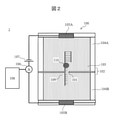
- FIG. 2 is a schematic cross-sectional view showing the configuration of the biomolecule analyzer 1 according to the first embodiment.
- the biomolecule analyzer 1 is an apparatus that measures an ion current by a blockade current method.
- the biomolecule analyzer 1 includes a nanopore device 100, an ammeter 106, a power supply 107, and a computer 108.
- the nanopore device 100 includes a thin film 102 on which the nanopore 101 is formed, a first liquid tank 104A and a second liquid tank 104B, a first electrode 105A, and a second electrode 105B.
- the first liquid tank 104A and the second liquid tank 104B are arranged so as to be in contact with the thin film 102 with the thin film 102 interposed therebetween, and the inside thereof is filled with the electrolyte solution 103.
- the first electrode 105A is provided in the first liquid tank 104A
- the second electrode 105B is provided in the second liquid tank 104B.
- the nanopore device 100 can be formed, for example, by sandwiching the thin film 102 with a flow cell.
- the nanopore device 100 of FIG. 2 is in a state where the nanopore 101 is formed on the thin film 102 and the biological polymer 109 (DNA chain or the like) is introduced.
- a molecular motor 110 made of an enzyme such as a polymerase is provided at one end of the biological polymer 109.
- the biological polyma 109 may be any object to be measured that changes its electrical properties, particularly resistance value when passing through nanopores, and is typically single-stranded DNA, double-stranded DNA, RNA, PNA (peptide nucleic acid), or oligonucleotide. , As well as nucleic acids such as combinations thereof (eg, hybrid nucleic acids).
- the biological polymer 109 needs to take the form of a linear polymer in which its higher-order structure is eliminated.
- transportation by electrophoresis can be adopted, but a solvent flow generated by a pressure potential difference or the like may be used.
- the electrolyte solution 103 is the above-mentioned pore forming solution or measurement solution.
- the volume of the electrolyte solution 103 is, for example, on the order of microliters or milliliters.
- the power supply 107 applies a predetermined voltage between the first electrode 105A and the second electrode 105B.
- a voltage is applied between the first electrode 105A and the second electrode 105B, a potential difference is generated between both sides of the thin film 102 on which the nanopore 101 is formed, and the potential difference is generated in the upper first liquid tank 104A (cis tank).
- the dissolved biological polymer 109 is run in the direction of the second liquid tank 104B (trans tank) located on the lower side.
- the ammeter 106 measures the ionic current (blocking signal) flowing between the first electrode 105A and the second electrode 105B, and outputs the measured value to the computer 108.
- the ammeter 106 has an amplifier that amplifies the current flowing between the electrodes by applying a voltage, and an ADC (Analog to Digital Converter) (not shown).
- the detection value which is the output of the ADC, is output to the computer 108.
- the computer 108 controls the voltage applied to the first electrode 105A and the second electrode 105B by the power supply 107. Further, the computer 108 analyzes the biological polymer 109 based on the detected value of the current from the ammeter 106. More specifically, the computer 108 acquires the sequence information of the biological polymer 109 based on the value of the ion current (blocking signal).
- the nanopore measurement method it is also possible to adopt the following method in addition to the method of measuring the blocking current as described above.
- One is to provide a pair of electrodes in the vicinity of the nanopore in addition to the first electrode 105A and the second electrode 105B, apply a voltage between the pair of electrodes, and generate a tunnel current when a biomolecule passes through. It is a method of measuring the change of.
- the FET device is provided on the nanopore membrane and the signal change of the transistor acquired by the device is measured. It is also possible to measure optical signals such as absorption, reflection, and fluorescence characteristics of light irradiated in the vicinity of the nanopore.
- the computer 108 typically includes an ion current measuring device, an analog / digital output conversion device, a data processing device, a data display output device, and an input / output auxiliary device.
- the ion-current measuring device is equipped with a current-voltage conversion type high-speed amplifier circuit.
- the data processing device is equipped with an arithmetic unit, a temporary storage device, and a non-volatile storage device. External noise can be reduced by covering the nanopore device 100 with a Faraday cage.
- the ammeter 106, the power supply 107, and the computer 108 may not be separate members from the pore device 100, but may be integrated with the nanopore device 100.
- the thin film 102 on which the nanopore 101 is formed may be a lipid bilayer (biopore) composed of an amphipathic molecular layer in which a protein having a pore in the center is embedded, or is made of a material that can be formed by semiconductor microfabrication technology. It may be a thin film (solid pore). Examples of materials that can be formed by semiconductor micromachining technology include silicon nitride (SiN), silicon oxide (SiO 2 ), silicon oxynitride (SiON), hafnium oxide (HfO 2 ), molybdenum disulfide (MoS 2 ), and graphene. be.
- the thickness of the thin film 102 can be 1 ⁇ (angstrom) to 200 nm, depending on the case, 1 ⁇ to 100 nm, or 1 ⁇ to 50 nm, and specifically, for example, about 5 nm.
- the area of the thin film 102 can be an area where it is difficult for two or more nanopores 101 to be formed when the nanopores 101 are formed by applying a voltage, and an area which is acceptable in terms of strength.
- the area can be, for example, about 100 to 500 nm.
- the film thickness of the thin film 102 is such that the nanopore 101 having an effective film thickness equivalent to one base can be formed, so that the single base resolution of DNA can be achieved.
- the film thickness can be about 7 nm or less.
- the thin film 102 may have a structure in which both sides are sandwiched by another thin film having through holes. In this case, the area of the thin film 102 exposed by the through holes on both sides is set as described above. Just do it.
- the size (diameter) of the nanopore 101 can be selected as appropriate according to the type of the biological polymer 109 to be analyzed.
- the dimensions of the nanopore 101 can be, for example, 0.9 nm to 100 nm, and in some cases 0.9 nm to 50 nm.
- the diameter may be set so that the single-stranded DNA can pass through, and specifically, the diameter can be set to about 0.9 nm or more and 10 nm or less.
- the diameter of the nanopore 101 used for the analysis of ssDNA (single-stranded DNA) having a diameter of about 1.4 nm can be 1.4 nm to 10 nm, and depending on the case, about 1.4 nm to 2.5 nm. Specifically, it can be about 1.6 nm.
- the diameter of the nanopore 101 used for the analysis of dsDNA (double-stranded DNA) having a diameter of about 2.6 nm can be about 3 nm to 10 nm, and may be about 3 nm to 5 nm depending on the case. can.
- the depth of the nanopore 101 can be adjusted by adjusting the thickness of the thin film 102.
- the depth of the nanopore 101 can be twice or more the monoma unit constituting the biological polymer 109, and can be three times or more, or five times or more, depending on the case.
- the biological polymer 109 is composed of nucleic acid
- the depth of the nanopore 101 can be as large as 3 or more bases, for example, about 1 nm or more.
- the biological polymer 109 can enter the nanopore 101 while controlling its shape and moving speed, and highly sensitive and accurate analysis becomes possible.
- the shape of the nanopore 101 is basically circular, but it can also be elliptical or polygonal.
- the interval at which the plurality of thin films 102 are arranged can be 0.1 ⁇ m to 1 mm, or 1 ⁇ m to 700 ⁇ m, depending on the electrodes used and the capabilities of the electrical measurement system.
- the method for forming the nanopore 101 in the thin film 102 is not particularly limited, and for example, electron beam irradiation by a transmission electron microscope (TEM) or dielectric breakdown due to application of a voltage (pulse voltage or the like) is used. be able to.
- the method for forming the nanopore 101 is described in, for example, “Itaru Yanagi et al., Sci. Rep. 4, 5000 (2014)” and “A.J. Storm et al., Nat. Mat. 2 (2003)”. You can use the method that is used.
- the first liquid tank 104A and the second liquid tank 104B that can store the measurement solution that comes into contact with the thin film 102 can be appropriately provided with a material, shape, and size that do not affect the measurement of the blocking current.
- the measurement solution is injected so as to come into contact with the thin film 102 that partitions the first liquid tank 104A and the second liquid tank 104B.
- the first electrode 105A and the second electrode 105B can be made of a material capable of performing an electron transfer reaction (Faraday reaction) with the electrolyte in the measurement solution, and is typically silver halide or halogen. Made of silver halide. From the viewpoint of potential stability and reliability, silver or silver silver chloride can be used.
- Faraday reaction electron transfer reaction
- the first electrode 105A and the second electrode 105B may be made of a material to be a polarization electrode, or may be made of, for example, gold or platinum.
- a substance capable of assisting the electron transfer reaction such as potassium ferricyanide or potassium ferrocyanide, can be added to the measurement solution in order to secure a stable ion current.
- a substance capable of performing an electron transfer reaction such as ferrocene, can be immobilized on the surface of the polarization electrode.
- the structure of the first electrode 105A and the second electrode 105B may be entirely made of the above-mentioned material, or the material may be coated on the surface of the base material (copper, aluminum, etc.).
- the shapes of the first electrode 105A and the second electrode 105B are not particularly limited, but a shape having a large surface area in contact with the measurement solution can be adopted.
- the first electrode 105A and the second electrode 105B are joined to the wiring, and an electric signal is sent to the measurement circuit (ammeter 106).
- the biomolecule analyzer 1 includes the above configuration as an element.
- the above-mentioned nanopore type biomolecule analyzer 1 can be provided together with a manual describing a usage procedure, a usage amount, and the like.
- the control chain used together with the molecular motor 110 may be provided in a state in which it can be used immediately, or may be configured and provided in a state in which only the biological polymer to be measured is not bound. Such forms and preparations can be understood by those skilled in the art.
- the nanopore device 100 may be provided in a state in which nanopores are formed in a state in which it can be used immediately, or may be provided in a state in which nanopores are formed at a delivery destination.
- the electrolyte solutions encapsulated on both sides of the thin film contain ammonium ions as cations and sulfate ions as anions.
- one thin film 102 has only one nanopore 101.
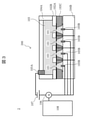
- FIG. 3 is a schematic cross-sectional view showing the configuration of the biomolecule analyzer 2.
- the biomolecule analyzer 2 is different from the biomolecule analyzer 1 in FIG. 2 in that it includes the nanopore device 200 which is an array device.
- the thin film 102A has a plurality of nanopores 101
- the second liquid tank 104B under the thin film 102A is divided into a plurality of spaces by a partition wall (specifically, a side wall of the thin film 102C).
- a partition wall specifically, a side wall of the thin film 102C.
- through holes are provided at positions corresponding to the nanopores 101, and a plurality of spaces (individual tanks) are formed by the side walls of the through holes of the thin films 102C.
- a second electrode 105B is provided in each of the plurality of spaces.
- the first liquid tank 104A is used as a common liquid tank for a plurality of spaces located on the lower side. Multiple spaces are isolated from each other by partition walls. Therefore, the current flowing through each nanopore 101 can be independently measured.
- nanopore forming solution or measurement solution may be used. This is effective in suppressing RTN noise superimposed on the baseline current and noise derived from the substrate. Since the biomolecule analyzer 2 can perform measurements in parallel, it is possible to perform monoma sequence analysis of biomolecules with extremely high throughput while maintaining high analysis accuracy.
- biomolecule analysis method include, for example, analysis of a biopolyma composed of nucleic acid, and tests, diagnosis, treatment, drug discovery, basic research, etc. using the analysis. Useful in the field.
- a single-pore biomolecule analyzer with the configuration shown in FIG. 2 will be used.
- a nanopore device was prepared as follows.
- a thin film was produced by the semiconductor microfabrication technology according to the following procedure. First, Si 3 N 4 / polySi / Si 3 N 4 were formed on the surface of an 8-inch Si wafer having a thickness of 725 mm in the order of 5 nm / 150 nm / 100 nm. Further, Si 3 N 4 was formed on the back surface of the Si wafer at 105 nm. In addition, polySi of the intermediate layer may be SiO.
- Si 3 N 4 on the uppermost surface of the Si wafer surface was removed by reactive ion etching at 500 nm square.
- Si 3 N 4 on the back surface of the Si wafer was removed by reactive ion etching in a square of 1038 ⁇ m.
- the Si substrate exposed by etching was further etched with TMAH (Tetramethylammonium hydroxide).
- TMAH Tetramethylammonium hydroxide
- the polySi layer exposed at 500 nm square was removed with an NH4 OH solution.
- a partition body in which a Si 3 N 4 thin film having a film thickness of 5 nm was exposed was obtained.
- SiO is selected as the sacrificial layer
- Hydrophilization can be carried out by Ar
- the voltage is applied not only when the nanopores are formed, but also when the ion current flowing through the nanopores after the nanopores are formed is measured.
- the liquid tank located on the lower side is called a cis tank
- the liquid tank located on the upper side is called a trans tank.
- the voltage Vcis applied to the electrode on the cis tank side is set to 0V
- the voltage Vtrans is applied to the electrode on the trans tank side.
- the voltage Vtrans is generated by a pulse generator (eg 41501B SMU AND Pulse Generator Expander, manufactured by Agilent Technologies).
- the current value after applying the pulse can be read with an ammeter (for example, 4156B PRECISION SEMICONDUCTOR ANALYZER, manufactured by Agilent Technologies).
- the current value condition can be selected according to the diameter of the nanopore formed before the application of the pulse voltage, and the desired diameter can be obtained while sequentially increasing the diameter of the nanopore.
- the diameter of the nanopore can be estimated from the ion current value.
- the criteria for selecting the conditions are as shown in Table 1.
- nth pulse voltage application time t n (where n> 2 is an integer) is determined by the following equation.
- Example 1 Change of measurement solution
- Example 1 nanopores were formed using a 1M CaCl 2 + 10 mM Tris solution (pH 7.5) as the nanopore forming solution. Then, the nanopore forming solution was discharged and replaced with a 0.5 M (NH 4 ) 2 SO 4 + 0.5 M KCl + 10 mM Tris solution (pH 7.5) as a measurement solution. After substituting with the measurement solution, the time change of the baseline current was measured. Then, ssDNA (polyT 60mer) was added and the time change of the ion current was measured.
- Comparative Example 1 In Comparative Example 1, the time change of the baseline current and the time change of the ion current after the addition of ssDNA (polyT 60mer) were obtained in the same manner as in Example 1 except that the 1M KCl + 1xTE solution was used as the measurement solution. I measured it.
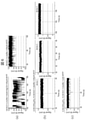
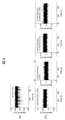
- FIG. 4 is a graph showing the results of Experimental Example 1.
- FIG. 4A shows the baseline current before the addition of ssDNA in Comparative Example 1
- FIG. 4B shows the ion current after the addition of ssDNA in Comparative Example 1.
- FIG. 4C shows the baseline current before the addition of ssDNA in Example 1
- FIG. 4D shows the ion current after the addition of ssDNA in Example 1.
- the amount of the blockade signal derived from ssDNA obtained in the (NH 4 ) 2 SO 4 mixture in Example 1 is in the KCl solution in Comparative Example 1. Compared with the obtained blockade signal amount derived from ssDNA, it became uniform until a peak could be confirmed in the histogram distribution of the blockade amount.
- Example 2 Change of nanopore forming solution
- nanopores were formed using a 0.5 M (NH 4 ) 2 SO 4 solution as the nanopore forming solution.
- the time change of the baseline current was measured without substituting with another solution.
- the nanopore forming solution was discharged and replaced with a 1M KCl solution as a measurement solution. After substituting with the measurement solution, the time change of the baseline current was measured.
- Comparative Example 2 In Comparative Example 2, nanopores were formed using a 1M CaCl 2 + 10 mM Tris solution (pH 7.5). Then, the nanopore forming solution was discharged and replaced with a 1M KCl solution as a measurement solution. After substituting with the measurement solution, the time change of the baseline current was measured.
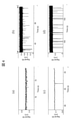
- FIG. 5 is a graph showing the results of Experimental Example 2.
- FIG. 5A shows the baseline current in Comparative Example 2.
- FIG. 5B shows the baseline current after replacement with a 1M KCl solution in Example 2.
- FIG. 5 (c) shows the baseline current measured in Example 2 after nanopore formation without replacing the solution.
- the baseline current when the buffer and substrate for driving the polymerase are mixed in the measurement solution is measured.
- Example 3 In the three nanopore devices (devices 1 to 3) prepared under the above conditions, after nanopore formation, 0.5 M (NH 4 ) 2 SO 4 + 0.5 M KCl + 1xbuffer + 100 ⁇ M dNTP solution was used as the measurement solution for the time of baseline current. The change was measured. Similarly, when the concentration of dNTP was set to 1 mM, the time change of the baseline current was measured.
- FIG. 6 is a graph showing the results of Experimental Example 3.
- FIG. 6A shows the baseline current in Comparative Example 3. As shown in FIG. 6A, it can be seen that a resistance component of about 100 to 200 pA is contained in the pore current and is superimposed on the blocking signal.
- FIG. 6B shows the baseline current when the dNTP concentration is 100 ⁇ M in Example 3. As shown in FIG. 6 (b), it can be seen that the noise derived from the substrate superimposed on the baseline is reduced as compared with FIG. 6 (a). In FIG. 6B, the noise of the baseline current was 24 pA (LPF 1 kHz) on average.
- FIG. 6 (c) shows the baseline current when the dNTP concentration is 1 mM in Example 3. As shown in FIG. 6 (c), it was found that even if the substrate concentration was added up to 1 mM, the noise level was about 50 pA, which was suppressed by about 30% with respect to the noise level of Comparative Example 3.
- Example 4 To 1x DNA polymerase buffer (buffer), add 100 ⁇ M dNTP and 0.1M, 0.2M, 0.3M, 0.4M or 0.5M (NH 4 ) 2 SO 4 to prepare a measurement solution. did. The template / primer concentration was 250 nM.
- FIG. 7A shows a change in the fluorescence intensity increase rate, that is, the reaction rate (/ time) according to the amount of the enzyme added when the salt concentration of KCl (Comparative Example 4) is changed.
- FIG. 7 (b) shows the change in the fluorescence intensity increase rate, that is, the reaction rate (/ time) according to the amount of the enzyme added when the salt concentration of (NH 4 ) 2 SO 4 (Example 4) is changed. ing. Under each condition, the reaction rate increases as the amount of enzyme added increases, so that the reaction rate increases.
- the enzyme activity of one molecule decreases, so that the time required to obtain the same DNA length increases, and the inactivation rate in the enzyme population increases.
- the amount of enzyme required also tends to increase.
- FIG. 7 (c) is a graph plotting the normalized slope according to the ionic strength of the solution used. Since the ionic strength of the buffer is 0.075 M, this is added to the electrolyte concentration at each point. In the case of (NH 4 ) 2 SO 4 , twice the salt concentration is regarded as the ionic strength and plotted.
- Example 5 In Example 5, only (NH 4 ) 2 SO 4 was used as the electrolyte (salt), and measurement solutions having a total salt concentration of 0.2 M and 0.05 M (the ratio of ammonium sulfate was 100%) were prepared. Also, assuming that the total salt concentration is 0.2M, 0.05M (NH 4 ) 2 SO 4 + 0.15M KCl solution (ammonium sulfate ratio is 25%) and 0.012M (NH 4 ) 2 SO 4 + 0.188M KCl. A solution (6% ammonium sulphate ratio) was prepared.
- the measurement solution (0.2M and 0.05M) in which the ratio of the ammonium sulfate concentration to the total salt concentration was 100%, and the ratio of the ammonium sulfate concentration to the total salt concentration was 25%.
- the time change of the baseline current was measured by substituting the measurement solution and the measurement solution in which the ratio of the ammonium sulfate concentration to the total salt concentration was 6%.
- Comparative Example 5 (Comparative Example 5)
- the CaCl 2 solution was used as the nanopore forming solution to form nanopores, and then the solution was replaced with a 1M KCl solution, and the time change of the baseline current was measured.
- FIG. 8 is a graph showing the results of Experimental Example 5.
- FIG. 8A shows the result of Comparative Example 5, and
- FIG. 8B shows the result of Example 5.
- Example 6 Change in the amount and rate of addition of ammonium sulfate when introducing the substrate]
- 100 ⁇ M dNTP was added to each measurement solution of Example 5.
- the time change of the baseline current was measured in the same manner as in Example 5.
- Comparative Example 6 100 mM dNTP was added to each measurement solution of Comparative Example 5. Other than that, the time change of the baseline current was measured in the same manner as in Comparative Example 5.
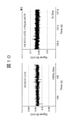
- FIG. 9 is a graph showing the results of Experimental Example 6. 9 (a) shows the result of Comparative Example 6, and FIG. 9 (b) shows the result of Example 6.
- Example 7 (NH 4 ) Nanopore formation in 2 SO 4 solution]
- Example 7 a 0.05 M (NH 4 ) 2 SO 4 + 0.15 M KCl solution (ammonium sulfate ratio was 25%) was used as the nanopore forming solution, and nanopores were formed by dielectric breakdown. Then, it was replaced with a 1M KCl solution as a measurement solution, and the time change of the baseline current was measured. Similarly, when the measurement solution was replaced with a 1 M KCl + 100 mM dNTP solution, the time change of the baseline current was measured.
- FIG. 10 is a graph showing the results of Experimental Example 7. As shown in the left figure of FIG. 10, when the nanopore was formed with the (NH 4 ) 2 SO 4 solution and then replaced with the 1 M KCl solution, the noise amount was 35.7 pA, and it was found that the noise could be sufficiently suppressed. rice field. Further, as shown in the right figure of FIG. 10, it was found that the noise derived from dNTP could be suppressed even when the solution was replaced with a solution containing dNTP. Therefore, it can be seen that the effect of noise reduction can be expected by using an ammonium sulfate-added solution having an addition rate of at least 25% as a nanopore-forming reagent used for dielectric breakdown.
- Example 8 Change of electrolyte
- ammonium sulfate was used as the electrolyte (salt) for producing ammonium ion and sulfate ion.
- ammonium chloride is used as the ammonium ion source
- magnesium sulfate is used as the sulfate ion source.
- Comparative Example 8 In Comparative Example 8, the time change of the baseline current was measured in the same manner as in Example 8 except that the 1M KCl + 1xTE solution was used as the measurement solution.
- FIG. 11 is a graph showing the results of Experimental Example 8.
- FIG. 11 (a) shows the baseline current when the 0.2 M NaCl 4 solution is used
- FIG. 11 (b) shows the baseline current when the 0.2 M NH 4 Cl solution is used
- 11 (c) shows the baseline current when the KCl solution is used.
- the noise of the baseline current is smaller than that in the case of not containing these (Comparative Example 8). You can see that.
- Comparative Example 9 In Comparative Example 9, the time change of the baseline current was measured in the same manner as in Comparative Example 8 except that 100 ⁇ M dNTP was added to the measurement solution of Comparative Example 8.
- FIG. 12 is a graph showing the results of Experimental Example 9.
- FIG. 12 (a) shows the baseline current when a 0.2 M ⁇ 4 + 100 ⁇ M dNTP solution is used
- FIG. 12 (b) shows the baseline current when a 0.2 M NH 4 Cl + 100 ⁇ M dNTP solution is used.
- FIG. 12 (c) shows the baseline current when a KCl + 100 ⁇ M dNTP solution is used.
- FIG. 12 in the case of a solution containing either sulfate ion or ammonium ion (Reference Example 2), it is assumed that the substrate is mixed as compared with the case of not containing these (Comparative Example 9). However, it can be seen that the noise of the baseline current is small.
Landscapes
- Life Sciences & Earth Sciences (AREA)
- Chemical & Material Sciences (AREA)
- Health & Medical Sciences (AREA)
- Engineering & Computer Science (AREA)
- Physics & Mathematics (AREA)
- Proteomics, Peptides & Aminoacids (AREA)
- Organic Chemistry (AREA)
- Molecular Biology (AREA)
- Analytical Chemistry (AREA)
- Immunology (AREA)
- General Health & Medical Sciences (AREA)
- Wood Science & Technology (AREA)
- Zoology (AREA)
- Biochemistry (AREA)
- Biophysics (AREA)
- Biomedical Technology (AREA)
- Bioinformatics & Cheminformatics (AREA)
- General Physics & Mathematics (AREA)
- Microbiology (AREA)
- Genetics & Genomics (AREA)
- Nanotechnology (AREA)
- Spectroscopy & Molecular Physics (AREA)
- Biotechnology (AREA)
- General Engineering & Computer Science (AREA)
- Pathology (AREA)
- Chemical Kinetics & Catalysis (AREA)
- Electrochemistry (AREA)
- Medicinal Chemistry (AREA)
- Food Science & Technology (AREA)
- Urology & Nephrology (AREA)
- Hematology (AREA)
- Investigating Or Analyzing Materials By The Use Of Electric Means (AREA)
- Apparatus Associated With Microorganisms And Enzymes (AREA)
Priority Applications (3)
| Application Number | Priority Date | Filing Date | Title |
|---|---|---|---|
| JP2022539932A JPWO2022024335A1 (https=) | 2020-07-31 | 2020-07-31 | |
| US18/018,084 US12429449B2 (en) | 2020-07-31 | 2020-07-31 | Biomolecule analysis method, biomolecule analyzing reagent, and biomolecule analysis device |
| PCT/JP2020/029403 WO2022024335A1 (ja) | 2020-07-31 | 2020-07-31 | 生体分子分析方法、生体分子分析試薬及び生体分子分析デバイス |
Applications Claiming Priority (1)
| Application Number | Priority Date | Filing Date | Title |
|---|---|---|---|
| PCT/JP2020/029403 WO2022024335A1 (ja) | 2020-07-31 | 2020-07-31 | 生体分子分析方法、生体分子分析試薬及び生体分子分析デバイス |
Publications (1)
| Publication Number | Publication Date |
|---|---|
| WO2022024335A1 true WO2022024335A1 (ja) | 2022-02-03 |
Family
ID=80035281
Family Applications (1)
| Application Number | Title | Priority Date | Filing Date |
|---|---|---|---|
| PCT/JP2020/029403 Ceased WO2022024335A1 (ja) | 2020-07-31 | 2020-07-31 | 生体分子分析方法、生体分子分析試薬及び生体分子分析デバイス |
Country Status (3)
| Country | Link |
|---|---|
| US (1) | US12429449B2 (https=) |
| JP (1) | JPWO2022024335A1 (https=) |
| WO (1) | WO2022024335A1 (https=) |
Families Citing this family (1)
| Publication number | Priority date | Publication date | Assignee | Title |
|---|---|---|---|---|
| CN117295822A (zh) * | 2021-06-15 | 2023-12-26 | 株式会社日立高新技术 | 生物体分子分析方法、生物体分子分析试剂和生物体分子分析设备 |
Citations (4)
| Publication number | Priority date | Publication date | Assignee | Title |
|---|---|---|---|---|
| JP2015517401A (ja) * | 2012-05-07 | 2015-06-22 | ジ ユニバーシティ オブ オタワ | 固体ナノポアの大きさを制御するための方法 |
| JP2016522735A (ja) * | 2013-03-15 | 2016-08-04 | プレジデント アンド フェローズ オブ ハーバード カレッジ | 極短電気パルスによる原子的に薄い膜中のナノ孔の製造 |
| WO2020044780A1 (ja) * | 2018-08-28 | 2020-03-05 | 株式会社日立ハイテクノロジーズ | 生体分子分析装置 |
| JP2020085578A (ja) * | 2018-11-21 | 2020-06-04 | 株式会社日立製作所 | 生体分子分析装置及び生体分子分析方法 |
Family Cites Families (4)
| Publication number | Priority date | Publication date | Assignee | Title |
|---|---|---|---|---|
| US5795782A (en) | 1995-03-17 | 1998-08-18 | President & Fellows Of Harvard College | Characterization of individual polymer molecules based on monomer-interface interactions |
| JP6261817B2 (ja) * | 2015-05-11 | 2018-01-17 | 株式会社日立製作所 | 分析デバイス及び分析方法 |
| CN110121645B (zh) | 2017-01-10 | 2022-03-11 | 株式会社日立高新技术 | 使用纳米孔的电流测量装置和电流测量方法 |
| WO2020084705A1 (ja) | 2018-10-24 | 2020-04-30 | 株式会社日立ハイテク | 生体ポリマ分析デバイス及びそれを用いた分析装置、並びに分析方法 |
-
2020
- 2020-07-31 JP JP2022539932A patent/JPWO2022024335A1/ja active Pending
- 2020-07-31 US US18/018,084 patent/US12429449B2/en active Active
- 2020-07-31 WO PCT/JP2020/029403 patent/WO2022024335A1/ja not_active Ceased
Patent Citations (4)
| Publication number | Priority date | Publication date | Assignee | Title |
|---|---|---|---|---|
| JP2015517401A (ja) * | 2012-05-07 | 2015-06-22 | ジ ユニバーシティ オブ オタワ | 固体ナノポアの大きさを制御するための方法 |
| JP2016522735A (ja) * | 2013-03-15 | 2016-08-04 | プレジデント アンド フェローズ オブ ハーバード カレッジ | 極短電気パルスによる原子的に薄い膜中のナノ孔の製造 |
| WO2020044780A1 (ja) * | 2018-08-28 | 2020-03-05 | 株式会社日立ハイテクノロジーズ | 生体分子分析装置 |
| JP2020085578A (ja) * | 2018-11-21 | 2020-06-04 | 株式会社日立製作所 | 生体分子分析装置及び生体分子分析方法 |
Also Published As
| Publication number | Publication date |
|---|---|
| JPWO2022024335A1 (https=) | 2022-02-03 |
| US12429449B2 (en) | 2025-09-30 |
| US20230266264A1 (en) | 2023-08-24 |
Similar Documents
| Publication | Publication Date | Title |
|---|---|---|
| JP6579948B2 (ja) | 生体ポリマを分析するための測定試薬及び分析デバイス | |
| US20160187282A1 (en) | Device for single molecule detection and fabrication methods thereof | |
| CN110121645B (zh) | 使用纳米孔的电流测量装置和电流测量方法 | |
| Horny et al. | Electrochemical DNA biosensors based on long-range electron transfer: investigating the efficiency of a fluidic channel microelectrode compared to an ultramicroelectrode in a two-electrode setup | |
| JP7253045B2 (ja) | 生体ポリマ分析装置及び生体ポリマ分析方法 | |
| US20210293750A1 (en) | Biomolecule analysis device | |
| US20250067722A1 (en) | Devices for single-molecule sequencing, including related methods and processes | |
| JP6727052B2 (ja) | 生体分子分析用デバイス及び生体分子分析装置 | |
| US20160192504A1 (en) | Single molecule detection | |
| WO2020084705A1 (ja) | 生体ポリマ分析デバイス及びそれを用いた分析装置、並びに分析方法 | |
| JP7132100B2 (ja) | 生体分子分析装置及び生体分子分析方法 | |
| WO2022024335A1 (ja) | 生体分子分析方法、生体分子分析試薬及び生体分子分析デバイス | |
| US11656219B2 (en) | Apparatus and method for storing thin film device and method for measuring biological molecule | |
| US9630175B2 (en) | Self-aligned nanogap fabrication | |
| US20240287597A1 (en) | Biomolecule analysis method, biomolecule analyzing reagent, and biomolecule analysis device | |
| JP4111961B2 (ja) | Dna固定化fetセンサ及びその作製方法 | |
| US11371980B2 (en) | Method for treating biomolecules and method for analyzing biomolecules | |
| US20060065531A1 (en) | Methods and materials for optimization of electronic transportation and hybridization reactions | |
| US20260036569A1 (en) | Devices, systems, and methods for processing samples | |
| WO2021124468A1 (ja) | 分子複合体、および生体ポリマ分析方法 | |
| WO2021240761A1 (ja) | 核酸分析用組成物、核酸分析方法及び核酸分析装置 | |
| CN117517427A (zh) | 一种基于纳米孔的环状rna疫苗纯度的定量快速检测方法 |
Legal Events
| Date | Code | Title | Description |
|---|---|---|---|
| 121 | Ep: the epo has been informed by wipo that ep was designated in this application |
Ref document number: 20946933 Country of ref document: EP Kind code of ref document: A1 |
|
| ENP | Entry into the national phase |
Ref document number: 2022539932 Country of ref document: JP Kind code of ref document: A |
|
| NENP | Non-entry into the national phase |
Ref country code: DE |
|
| 122 | Ep: pct application non-entry in european phase |
Ref document number: 20946933 Country of ref document: EP Kind code of ref document: A1 |
|
| WWG | Wipo information: grant in national office |
Ref document number: 18018084 Country of ref document: US |