WO2021245871A1 - 通話環境生成方法、通話環境生成装置、プログラム - Google Patents
通話環境生成方法、通話環境生成装置、プログラム Download PDFInfo
- Publication number
- WO2021245871A1 WO2021245871A1 PCT/JP2020/022081 JP2020022081W WO2021245871A1 WO 2021245871 A1 WO2021245871 A1 WO 2021245871A1 JP 2020022081 W JP2020022081 W JP 2020022081W WO 2021245871 A1 WO2021245871 A1 WO 2021245871A1
- Authority
- WO
- WIPO (PCT)
- Prior art keywords
- call
- signal
- filter coefficient
- sound
- speaker
- Prior art date
- Legal status (The legal status is an assumption and is not a legal conclusion. Google has not performed a legal analysis and makes no representation as to the accuracy of the status listed.)
- Ceased
Links
Images



Classifications
-
- G—PHYSICS
- G10—MUSICAL INSTRUMENTS; ACOUSTICS
- G10K—SOUND-PRODUCING DEVICES; METHODS OR DEVICES FOR PROTECTING AGAINST, OR FOR DAMPING, NOISE OR OTHER ACOUSTIC WAVES IN GENERAL; ACOUSTICS NOT OTHERWISE PROVIDED FOR
- G10K15/00—Acoustics not otherwise provided for
- G10K15/02—Synthesis of acoustic waves
-
- H—ELECTRICITY
- H04—ELECTRIC COMMUNICATION TECHNIQUE
- H04R—LOUDSPEAKERS, MICROPHONES, GRAMOPHONE PICK-UPS OR LIKE ACOUSTIC ELECTROMECHANICAL TRANSDUCERS; ELECTRIC HEARING AIDS; PUBLIC ADDRESS SYSTEMS
- H04R3/00—Circuits for transducers
- H04R3/12—Circuits for transducers for distributing signals to two or more loudspeakers
-
- G—PHYSICS
- G10—MUSICAL INSTRUMENTS; ACOUSTICS
- G10K—SOUND-PRODUCING DEVICES; METHODS OR DEVICES FOR PROTECTING AGAINST, OR FOR DAMPING, NOISE OR OTHER ACOUSTIC WAVES IN GENERAL; ACOUSTICS NOT OTHERWISE PROVIDED FOR
- G10K11/00—Methods or devices for transmitting, conducting or directing sound in general; Methods or devices for protecting against, or for damping, noise or other acoustic waves in general
- G10K11/16—Methods or devices for protecting against, or for damping, noise or other acoustic waves in general
- G10K11/175—Methods or devices for protecting against, or for damping, noise or other acoustic waves in general using interference effects; Masking sound
- G10K11/1752—Masking
- G10K11/1754—Speech masking
-
- H—ELECTRICITY
- H04—ELECTRIC COMMUNICATION TECHNIQUE
- H04R—LOUDSPEAKERS, MICROPHONES, GRAMOPHONE PICK-UPS OR LIKE ACOUSTIC ELECTROMECHANICAL TRANSDUCERS; ELECTRIC HEARING AIDS; PUBLIC ADDRESS SYSTEMS
- H04R1/00—Details of transducers, loudspeakers or microphones
- H04R1/20—Arrangements for obtaining desired frequency or directional characteristics
- H04R1/32—Arrangements for obtaining desired frequency or directional characteristics for obtaining desired directional characteristic only
- H04R1/40—Arrangements for obtaining desired frequency or directional characteristics for obtaining desired directional characteristic only by combining a number of identical transducers
- H04R1/403—Arrangements for obtaining desired frequency or directional characteristics for obtaining desired directional characteristic only by combining a number of identical transducers loud-speakers
-
- H—ELECTRICITY
- H04—ELECTRIC COMMUNICATION TECHNIQUE
- H04R—LOUDSPEAKERS, MICROPHONES, GRAMOPHONE PICK-UPS OR LIKE ACOUSTIC ELECTROMECHANICAL TRANSDUCERS; ELECTRIC HEARING AIDS; PUBLIC ADDRESS SYSTEMS
- H04R2420/00—Details of connection covered by H04R, not provided for in its groups
- H04R2420/01—Input selection or mixing for amplifiers or loudspeakers
-
- H—ELECTRICITY
- H04—ELECTRIC COMMUNICATION TECHNIQUE
- H04R—LOUDSPEAKERS, MICROPHONES, GRAMOPHONE PICK-UPS OR LIKE ACOUSTIC ELECTROMECHANICAL TRANSDUCERS; ELECTRIC HEARING AIDS; PUBLIC ADDRESS SYSTEMS
- H04R2430/00—Signal processing covered by H04R, not provided for in its groups
- H04R2430/03—Synergistic effects of band splitting and sub-band processing
-
- H—ELECTRICITY
- H04—ELECTRIC COMMUNICATION TECHNIQUE
- H04R—LOUDSPEAKERS, MICROPHONES, GRAMOPHONE PICK-UPS OR LIKE ACOUSTIC ELECTROMECHANICAL TRANSDUCERS; ELECTRIC HEARING AIDS; PUBLIC ADDRESS SYSTEMS
- H04R2499/00—Aspects covered by H04R or H04S not otherwise provided for in their subgroups
- H04R2499/10—General applications
- H04R2499/13—Acoustic transducers and sound field adaptation in vehicles
-
- H—ELECTRICITY
- H04—ELECTRIC COMMUNICATION TECHNIQUE
- H04S—STEREOPHONIC SYSTEMS
- H04S7/00—Indicating arrangements; Control arrangements, e.g. balance control
- H04S7/30—Control circuits for electronic adaptation of the sound field
- H04S7/302—Electronic adaptation of stereophonic sound system to listener position or orientation
-
- H—ELECTRICITY
- H04—ELECTRIC COMMUNICATION TECHNIQUE
- H04S—STEREOPHONIC SYSTEMS
- H04S7/00—Indicating arrangements; Control arrangements, e.g. balance control
- H04S7/30—Control circuits for electronic adaptation of the sound field
- H04S7/307—Frequency adjustment, e.g. tone control
Definitions
- the present invention relates to, for example, a technique for generating a call environment for hands-free calling in an automobile.
- Non-Patent Document 1 when a call is started, music reproduction is temporarily stopped, and only the call voice flows in the vehicle through the speaker.
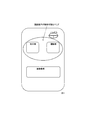
- Non-Patent Document 1 music reproduction is stopped. Therefore, for example, as shown in FIG. 1, not only the driver's seat but also the passenger's seat can hear the call voice, and the passenger in the passenger's seat can hear the call content. May be asked. Therefore, it becomes a problem when the content of the call is the content that no one wants to hear.
- an object of the present invention is to provide a technique for generating a call environment in which a call content is not heard by a person other than the caller when the call voice is played through the speaker.
- the position acquisition step of acquiring the position P M_u (M u is an integer satisfying 1 ⁇ M u ⁇ M), which is the call location of the call, and the call environment generation device n For 1, ..., N, the sound signal S n which is the input signal of the speaker SP n generated from the sound signal of the call and the sound signal whose volume of the sound signal reproduced during the call is adjusted (hereinafter, the call).
- the sound based on the acoustic signal A n which is the input signal of the speaker SP n generated from the hour acoustic signal), includes a sound emission step of emitting the sound using the speaker SP n , and the audio signal S 1 and ...
- the speech signal S N and sound based sound into audio signals of the call based on, the acoustic signal a 1, ..., a sound based on the acoustic signal a N and sound based on the call time of the acoustic signal, the call voice signal sound based on, at position P M_u, position other than the position P M_u P m (m 1 , ..., M u -1, M u +1, ..., M) is larger sound than the call time of the acoustic
- the call environment generation device When the call environment generation device detects the start signal of the call, it generates an acoustic signal (hereinafter referred to as a call acoustic signal) in which the volume of the acoustic signal to be reproduced during the call is adjusted by using a predetermined volume value.
- SP 1 a speaker installed the SP N in the acoustic space, P 1, ..., a position for identifying the call location P M in the acoustic space, F n ( ⁇ )
- the filter coefficient is different from the first filter coefficient (hereinafter referred to as the second filter coefficient).
- the position acquisition unit that acquires the position P M_u (M u is an integer that satisfies 1 ⁇ M u ⁇ M), which is the call location of the call, and the call environment generator generate the start signal.
- the acoustic signal generation step of generating an acoustic signal (hereinafter referred to as an acoustic signal during a call) in which the volume of the acoustic signal to be reproduced during the call is adjusted using a predetermined volume value, and the call environment generation device are used.
- ⁇ (Caret) represents a superscript.
- x y ⁇ z means that y z is a superscript for x
- x y ⁇ z means that y z is a subscript for x
- _ (underscore) represents a subscript.
- x y_z means that y z is a superscript for x
- x y_z means that y z is a subscript for x.
- the call environment generation device 100 generates a call environment for preventing a passenger who is a person other than the driver from hearing the call voice when the driver makes a hands-free call in the automobile. .. Therefore, the call environment generation device 100 plays a call voice and a masking sound (for example, music) for preventing the call voice from being heard from N speakers installed in the automobile as a reproduction sound. .. Specifically, the call environment generation device 100 makes it possible to hear mainly the call voice in the driver's seat and mainly the masking sound such as music in the seats other than the driver's seat.
- SP 1, ... a speaker installed the SP N in an automobile
- P 2 may be the passenger seat position
- P 3 , P 4 , and P 5 may be the rear seats.
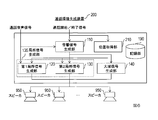
- FIG. 2 is a block diagram showing the configuration of the call environment generation device 100.
- 3 and 4 are flowcharts showing the operation of the call environment generation device 100.
- the call environment generation device 100 includes an acoustic signal generation unit 110, a first local signal generation unit 120, a second local signal generation unit 130, a global signal generation unit 140, and a recording unit 190. include.
- the filter coefficients used for filtering in the first local signal generation unit 120, the second local signal generation unit 130, and the global signal generation unit 140 are recorded. These filter coefficients are used to generate the input signal of the speaker.
- the first filter coefficient F n ( ⁇ ) (n
- the call environment generation device 100 is connected to N speakers 950 (that is, speakers SP 1 , ..., Speaker SP N).
- the acoustic signal generation unit 110 when the acoustic signal generation unit 110 detects the start signal of a call, the acoustic signal is adjusted in volume of the acoustic signal to be reproduced during the call by using a predetermined volume value (hereinafter referred to as a call acoustic signal). ) Is generated and output. That is, the acoustic signal generation unit 110 generates a masking sound during a call by generating an acoustic signal to be reproduced during the call. For example, the acoustic signal generation unit 110 provides an acoustic signal corresponding to the music being reproduced when the music is being reproduced at the start of the call, and is otherwise prepared in advance for call voice masking. An acoustic signal corresponding to the sound of (for example, music suitable for BGM) may be generated as an acoustic signal to be reproduced during a call.
- a call acoustic signal a predetermined volume value
- the acoustic signal generation unit 110 adjusts the volume of the acoustic signal to be reproduced during the call by using a predetermined volume value, and obtains the acoustic signal during the call.
- a predetermined volume value a preset volume value (for example, a volume value suitable for call voice masking) can be used.
- the volume value is such that the loudness of the sound does not hinder the hearing of the call voice.
- the acoustic signal generation unit 110 may use a volume value calculated based on the estimated volume of the acoustic signal to be reproduced during the call and the estimated volume of the voice signal of the call.
- the estimated volume of the acoustic signal to be reproduced during a call is a volume estimated based on the level of the sound corresponding to the acoustic signal
- the estimated volume of the voice signal of the call is the received voice during the call. It is the volume estimated based on the level of.
- the volume value V can be obtained by, for example, the following equation.
- Q represents the estimated volume of the acoustic signal reproduced during the call
- R represents the estimated volume of the voice signal of the call
- ⁇ represents a predetermined constant.
- the volume value V is obtained by multiplying the ratio R / Q of the estimated volume R of the voice signal of the call and the estimated volume Q of the acoustic signal reproduced during the call by a preset constant ⁇ .
- the value is such that the loudness of the sound does not hinder the hearing of the call voice, and is a preset value.
- the ratio R / Q can be made constant, and the optimum masking effect can always be obtained.
- an audio signal S n which is an input signal of the speaker SP n .
- the approximate solution can be obtained by using the method of least squares.
- the approximate solution can be obtained by using the method of least squares.
- the sound based on the voice signal S 1 and ..., the sound based on the voice signal S N is based on the sound based on the voice signal of the call, and the sound based on the sound signal A 1 and ..., the sound based on the sound signal A N is based on the sound signal during the call.
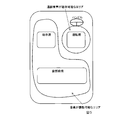
- the filter coefficient is determined so that the sound based on the voice signal of the call is hard to hear due to the sound based on the acoustic signal during the call. Therefore, for example, as shown in FIG. 5, the driver's seat mainly talks.
- the sound based on the above signal is emitted from the speaker SP 1 , ..., And the speaker SP N so that the sound is mainly heard in the other seats and the masking sound such as music is heard.
- the component including the first local signal generation unit 120 and the second local signal generation unit 130 is referred to as a local signal generation unit 135. Therefore, the local signal generation unit 135 operates as follows (see FIG. 3).
- the audio signal S n which is a signal, is generated from the audio signal during a call to generate an acoustic signal A n, which is an input signal of the speaker SP n , and is output.
- the sound will be emitted louder than 1).
- the sound based on the voice signal of the call is emitted so that it is easier to hear than the sound based on the acoustic signal during the call, and the seat other than the driver's seat (that is, the position).
- the sound based on the voice signal of the call is emitted so that it is difficult to hear due to the sound based on the acoustic signal during the call.
- the acoustic signal generation unit 110 detects the end signal of the call, the acoustic signal adjusted for the volume of the acoustic signal to be reproduced after the end of the call by using the volume value before the start of the call (hereinafter, the normal acoustic signal). ) Is generated and output.
- the third filter coefficient ⁇ F n ( ⁇ ) may be determined as a filter coefficient that filters the acoustic signal at normal times so that the sound can be heard evenly in all seats.
- the embodiment of the present invention it is possible to prevent a person other than the caller from hearing the contents of the call when the call voice is played through the speaker. That is, when the driver makes a hands-free call in the automobile, it is possible to prevent the passenger from knowing the contents of the call.
- the call environment generation device 200 does not allow anyone other than the caller to hear the call voice when making a hands-free call in an acoustic space where masking sounds such as music such as a car or a break room are reproduced. Create a call environment to do so. Therefore, the call environment generation device 200 plays a call voice and a masking sound (for example, music) for preventing the call voice from being heard from the N speakers installed in the acoustic space.
- M positions hereinafter referred to as P 1 , ..., P M ) for specifying a call location in the acoustic space are set in advance, and the call environment generation device 200 is a position that is a call location.
- P M_u (M u is 1 ⁇ M u integers satisfy ⁇ M) mainly call voice in the position P 1 is the position other than the position P M_u, ..., the position P M_u-1, the position P M_u + 1, ..., At position P M , masking sounds such as music are mainly heard.
- SP 1 , ..., SP N will be referred to as speakers installed in the acoustic space.
- FIG. 6 is a block diagram showing the configuration of the call environment generation device 200.
- FIG. 7 is a flowchart showing the operation of the call environment generation device 200.
- the call environment generation device 200 includes a position acquisition unit 210, an acoustic signal generation unit 110, a first local signal generation unit 120, a second local signal generation unit 130, and a global signal generation unit 140. , The recording unit 190 and the like.
- the call environment generation device 200 is connected to N speakers 950 (that is, speakers SP 1 , ..., Speaker SP N).
- the position acquisition unit 210 when the position acquisition unit 210 detects the start signal of the call, the position acquisition unit 210 acquires and outputs the position P M_u (M u is an integer satisfying 1 ⁇ M u ⁇ M), which is the call location of the call.
- the acoustic signal generation unit 110 detects the start signal of a call
- the acoustic signal is adjusted in volume of the acoustic signal to be reproduced during the call by using a predetermined volume value (hereinafter referred to as a call acoustic signal). ) Is generated and output.
- the first filter coefficient F n ( ⁇ ) the position P M_u the call voice is listening easily becomes such a large sound
- the approximate solution can be obtained by using the method of least squares.
- ⁇ F n ( ⁇ ) By filtering the acoustic signal during a call using ⁇ F n ( ⁇ ), an acoustic signal A n, which is an input signal of the speaker SP n , is generated and output.
- the approximate solution can be obtained by using the method of least squares.
- the sound based on the voice signal S 1 and ..., the sound based on the voice signal S N is based on the sound based on the voice signal of the call, and the sound based on the sound signal A 1 and ..., the sound based on the sound signal A N is based on the sound signal during the call.
- the component including the first local signal generation unit 120 and the second local signal generation unit 130 is referred to as a local signal generation unit 135. Therefore, the local signal generation unit 135 operates as follows (see FIG. 7).
- the audio signal S n which is a signal, is generated from the audio signal during a call to generate an acoustic signal A n, which is an input signal of the speaker SP n , and is output.
- the sound based on the voice signal of the call is emitted so that it is difficult to hear due to the sound based on the acoustic signal during the call.
- the operation of the call environment generation device 200 at the end of the call is the same as the operation of the call environment generation device 100 at the end of the call (see FIG. 4).
- the embodiment of the present invention it is possible to prevent a person other than the caller from hearing the contents of the call when the call voice is played through the speaker. That is, when a caller makes a hands-free call in an acoustic space, it is possible to prevent a person other than the caller from knowing the contents of the call.
- the present invention can be applied to conversations in a predetermined space such as a vehicle represented by an automobile or a room. can.
- a predetermined space such as a vehicle represented by an automobile or a room. can.
- the sound is emitted so as to be, and the masking sound is emphasized and emitted for a person other than the speaker, making it difficult to hear the spoken voice related to the conversation.
- An example of such a conversation is, for example, so-called in-car communication.
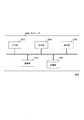
- FIG. 8 is a diagram showing an example of a functional configuration of a computer that realizes each of the above-mentioned devices (that is, each node).
- the processing in each of the above-mentioned devices can be carried out by having the recording unit 2020 read a program for making the computer function as each of the above-mentioned devices, and operating the control unit 2010, the input unit 2030, the output unit 2040, and the like.
- the device of the present invention is, for example, as a single hardware entity, an input unit to which a keyboard or the like can be connected, an output unit to which a liquid crystal display or the like can be connected, and a communication device (for example, a communication cable) capable of communicating outside the hardware entity.
- Communication unit CPU (Central Processing Unit, cache memory, registers, etc.) to which can be connected, RAM and ROM as memory, external storage device as hard hardware, and input, output, and communication units of these.
- CPU, RAM, ROM has a bus connecting so that data can be exchanged between external storage devices.
- a device (drive) or the like capable of reading and writing a recording medium such as a CD-ROM may be provided in the hardware entity.
- a physical entity equipped with such hardware resources there is a general-purpose computer or the like.
- the external storage device of the hardware entity stores a program required to realize the above-mentioned functions and data required for processing of this program (not limited to the external storage device, for example, reading a program). It may be stored in a ROM, which is a dedicated storage device). Further, the data obtained by the processing of these programs is appropriately stored in a RAM, an external storage device, or the like.
- each program stored in the external storage device (or ROM, etc.) and the data required for processing of each program are read into the memory as needed, and are appropriately interpreted and executed and processed by the CPU. ..
- the CPU realizes a predetermined function (each component represented by the above, ... section, ... means, etc.).
- the present invention is not limited to the above-described embodiment, and can be appropriately modified without departing from the spirit of the present invention. Further, the processes described in the above-described embodiment are not only executed in chronological order according to the order described, but may also be executed in parallel or individually as required by the processing capacity of the device that executes the processes. ..
- the processing function in the hardware entity (device of the present invention) described in the above embodiment is realized by a computer
- the processing content of the function that the hardware entity should have is described by a program.
- the processing function in the above hardware entity is realized on the computer.
- the program that describes this processing content can be recorded on a computer-readable recording medium.
- the recording medium that can be read by a computer may be, for example, a magnetic recording device, an optical disk, a photomagnetic recording medium, a semiconductor memory, or the like.
- a hard disk device, a flexible disk, a magnetic tape or the like as a magnetic recording device, and an optical disk such as a DVD (DigitalVersatileDisc), a DVD-RAM (RandomAccessMemory), or a CD-ROM (CompactDiscReadOnly). Memory), CD-R (Recordable) / RW (ReWritable), etc., MO (Magneto-Optical disc), etc. as a magneto-optical recording medium, EEP-ROM (Electronically Erasable and Programmable-Read Only Memory), etc. as a semiconductor memory. Can be used.
- the distribution of this program is carried out, for example, by selling, transferring, renting, etc. a portable recording medium such as a DVD or CD-ROM in which the program is recorded. Further, the program may be stored in the storage device of the server computer, and the program may be distributed by transferring the program from the server computer to another computer via the network.
- a computer that executes such a program first, for example, first stores a program recorded on a portable recording medium or a program transferred from a server computer in its own storage device. Then, when the process is executed, the computer reads the program stored in its own storage device and executes the process according to the read program. Further, as another execution form of this program, a computer may read the program directly from a portable recording medium and execute processing according to the program, and further, the program is transferred from the server computer to this computer. You may execute the process according to the received program one by one each time.
- ASP Application Service Provider
- the program in this embodiment includes information used for processing by a computer and equivalent to the program (data that is not a direct command to the computer but has a property that regulates the processing of the computer, etc.).
- the hardware entity is configured by executing a predetermined program on the computer, but at least a part of these processing contents may be realized in terms of hardware.
Landscapes
- Health & Medical Sciences (AREA)
- Engineering & Computer Science (AREA)
- Acoustics & Sound (AREA)
- Physics & Mathematics (AREA)
- Otolaryngology (AREA)
- Signal Processing (AREA)
- General Health & Medical Sciences (AREA)
- Audiology, Speech & Language Pathology (AREA)
- Multimedia (AREA)
- Fittings On The Vehicle Exterior For Carrying Loads, And Devices For Holding Or Mounting Articles (AREA)
- Telephone Function (AREA)
- Soundproofing, Sound Blocking, And Sound Damping (AREA)
- Circuit For Audible Band Transducer (AREA)
Priority Applications (5)
| Application Number | Priority Date | Filing Date | Title |
|---|---|---|---|
| PCT/JP2020/022081 WO2021245871A1 (ja) | 2020-06-04 | 2020-06-04 | 通話環境生成方法、通話環境生成装置、プログラム |
| EP20939108.5A EP4164244B1 (en) | 2020-06-04 | 2020-06-04 | Speech environment generation method, speech environment generation device, and program |
| CN202080102230.2A CN115804108B (zh) | 2020-06-04 | 2020-06-04 | 通话环境生成方法、通话环境生成装置、计算机程序产品 |
| JP2022529246A JP7487772B2 (ja) | 2020-06-04 | 2020-06-04 | 通話環境生成方法、通話環境生成装置、プログラム |
| US17/928,556 US12183317B2 (en) | 2020-06-04 | 2020-06-04 | Call environment generation method, call environment generation apparatus, and program |
Applications Claiming Priority (1)
| Application Number | Priority Date | Filing Date | Title |
|---|---|---|---|
| PCT/JP2020/022081 WO2021245871A1 (ja) | 2020-06-04 | 2020-06-04 | 通話環境生成方法、通話環境生成装置、プログラム |
Publications (1)
| Publication Number | Publication Date |
|---|---|
| WO2021245871A1 true WO2021245871A1 (ja) | 2021-12-09 |
Family
ID=78830226
Family Applications (1)
| Application Number | Title | Priority Date | Filing Date |
|---|---|---|---|
| PCT/JP2020/022081 Ceased WO2021245871A1 (ja) | 2020-06-04 | 2020-06-04 | 通話環境生成方法、通話環境生成装置、プログラム |
Country Status (5)
| Country | Link |
|---|---|
| US (1) | US12183317B2 (https=) |
| EP (1) | EP4164244B1 (https=) |
| JP (1) | JP7487772B2 (https=) |
| CN (1) | CN115804108B (https=) |
| WO (1) | WO2021245871A1 (https=) |
Cited By (1)
| Publication number | Priority date | Publication date | Assignee | Title |
|---|---|---|---|---|
| JP2024534735A (ja) * | 2022-09-09 | 2024-09-26 | エーエーシーアコースティックテクノロジーズ(シンセン)カンパニーリミテッド | 音漏れ除去方法及び装置 |
Citations (7)
| Publication number | Priority date | Publication date | Assignee | Title |
|---|---|---|---|---|
| JPH05191491A (ja) * | 1992-01-16 | 1993-07-30 | Kyocera Corp | 秘話モード付きハンズフリー電話装置 |
| JPH08289389A (ja) * | 1995-04-17 | 1996-11-01 | Fujitsu Ten Ltd | 車載用音響システム |
| JP2004112528A (ja) * | 2002-09-19 | 2004-04-08 | Matsushita Electric Ind Co Ltd | 音響信号伝送装置および方法 |
| JP2006303721A (ja) * | 2005-04-18 | 2006-11-02 | Nec Corp | 通話内容隠蔽システム、通話装置、通話内容隠蔽方法およびプログラム |
| JP2006339975A (ja) * | 2005-06-01 | 2006-12-14 | Nissan Motor Co Ltd | 秘話通話装置 |
| JP2014176052A (ja) * | 2013-03-13 | 2014-09-22 | Panasonic Corp | ハンズフリー装置 |
| JP2019075748A (ja) * | 2017-10-18 | 2019-05-16 | 株式会社デンソーテン | 車載装置、車載音響システムおよび音声出力方法 |
Family Cites Families (12)
| Publication number | Priority date | Publication date | Assignee | Title |
|---|---|---|---|---|
| DE60208480T2 (de) * | 2001-10-05 | 2006-08-03 | Matsushita Electric Industrial Co., Ltd., Kadoma | Freisprecheinrichtung zur mobilen Kommunikation im Fahrzeug |
| JP2004096664A (ja) * | 2002-09-04 | 2004-03-25 | Matsushita Electric Ind Co Ltd | ハンズフリー通話装置および方法 |
| JP5707871B2 (ja) * | 2010-11-05 | 2015-04-30 | ヤマハ株式会社 | 音声通話装置及び携帯電話 |
| CN104508737B (zh) * | 2012-06-10 | 2017-12-05 | 纽昂斯通讯公司 | 用于具有多个声学区域的车载通信系统的噪声相关的信号处理 |
| DE102014214052A1 (de) | 2014-07-18 | 2016-01-21 | Bayerische Motoren Werke Aktiengesellschaft | Virtuelle Verdeckungsmethoden |
| EP3040984B1 (en) * | 2015-01-02 | 2022-07-13 | Harman Becker Automotive Systems GmbH | Sound zone arrangment with zonewise speech suppresion |
| EP3048608A1 (en) * | 2015-01-20 | 2016-07-27 | Fraunhofer Gesellschaft zur Förderung der angewandten Forschung e.V. | Speech reproduction device configured for masking reproduced speech in a masked speech zone |
| EP3171613A1 (en) * | 2015-11-20 | 2017-05-24 | Harman Becker Automotive Systems GmbH | Audio enhancement |
| JP6972858B2 (ja) | 2017-09-29 | 2021-11-24 | 沖電気工業株式会社 | 音響処理装置、プログラム及び方法 |
| KR102526081B1 (ko) | 2018-07-26 | 2023-04-27 | 현대자동차주식회사 | 차량 및 그 제어방법 |
| CN109862472B (zh) | 2019-02-21 | 2022-03-22 | 中科上声(苏州)电子有限公司 | 一种车内隐私通话方法和系统 |
| US10418019B1 (en) * | 2019-03-22 | 2019-09-17 | GM Global Technology Operations LLC | Method and system to mask occupant sounds in a ride sharing environment |
-
2020
- 2020-06-04 EP EP20939108.5A patent/EP4164244B1/en active Active
- 2020-06-04 US US17/928,556 patent/US12183317B2/en active Active
- 2020-06-04 JP JP2022529246A patent/JP7487772B2/ja active Active
- 2020-06-04 WO PCT/JP2020/022081 patent/WO2021245871A1/ja not_active Ceased
- 2020-06-04 CN CN202080102230.2A patent/CN115804108B/zh active Active
Patent Citations (7)
| Publication number | Priority date | Publication date | Assignee | Title |
|---|---|---|---|---|
| JPH05191491A (ja) * | 1992-01-16 | 1993-07-30 | Kyocera Corp | 秘話モード付きハンズフリー電話装置 |
| JPH08289389A (ja) * | 1995-04-17 | 1996-11-01 | Fujitsu Ten Ltd | 車載用音響システム |
| JP2004112528A (ja) * | 2002-09-19 | 2004-04-08 | Matsushita Electric Ind Co Ltd | 音響信号伝送装置および方法 |
| JP2006303721A (ja) * | 2005-04-18 | 2006-11-02 | Nec Corp | 通話内容隠蔽システム、通話装置、通話内容隠蔽方法およびプログラム |
| JP2006339975A (ja) * | 2005-06-01 | 2006-12-14 | Nissan Motor Co Ltd | 秘話通話装置 |
| JP2014176052A (ja) * | 2013-03-13 | 2014-09-22 | Panasonic Corp | ハンズフリー装置 |
| JP2019075748A (ja) * | 2017-10-18 | 2019-05-16 | 株式会社デンソーテン | 車載装置、車載音響システムおよび音声出力方法 |
Non-Patent Citations (2)
| Title |
|---|
| See also references of EP4164244A4 |
| SUZUKI: "Instruction Manual", 12 May 2020, article "Smartphone-Link Navigation" |
Cited By (2)
| Publication number | Priority date | Publication date | Assignee | Title |
|---|---|---|---|---|
| JP2024534735A (ja) * | 2022-09-09 | 2024-09-26 | エーエーシーアコースティックテクノロジーズ(シンセン)カンパニーリミテッド | 音漏れ除去方法及び装置 |
| JP7653754B2 (ja) | 2022-09-09 | 2025-03-31 | エーエーシーアコースティックテクノロジーズ(シンセン)カンパニーリミテッド | 音漏れ除去方法及び装置 |
Also Published As
| Publication number | Publication date |
|---|---|
| JP7487772B2 (ja) | 2024-05-21 |
| CN115804108A (zh) | 2023-03-14 |
| CN115804108B (zh) | 2025-07-29 |
| JPWO2021245871A1 (https=) | 2021-12-09 |
| EP4164244B1 (en) | 2025-04-02 |
| US12183317B2 (en) | 2024-12-31 |
| US20230230570A1 (en) | 2023-07-20 |
| EP4164244A4 (en) | 2024-03-20 |
| EP4164244A1 (en) | 2023-04-12 |
Similar Documents
| Publication | Publication Date | Title |
|---|---|---|
| JP6290429B2 (ja) | 音声処理システム | |
| US7747028B2 (en) | Apparatus and method for improving voice clarity | |
| JP7347324B2 (ja) | エージェント連携装置 | |
| CN111801951B (zh) | 啸叫抑制装置、其方法以及计算机可读取记录介质 | |
| JP2022095689A (ja) | 音声データノイズ低減方法、装置、機器、記憶媒体及びプログラム | |
| WO2021245871A1 (ja) | 通話環境生成方法、通話環境生成装置、プログラム | |
| JP7020554B2 (ja) | 会話サポートシステム、その方法、およびプログラム | |
| US20090052681A1 (en) | System and a method of processing audio data, a program element, and a computer-readable medium | |
| JPS60145714A (ja) | 車両用音響装置 | |
| JP7639924B2 (ja) | マスキング装置、マスキング方法、プログラム | |
| JP7474548B2 (ja) | オーディオデータの再生の制御 | |
| US11705101B1 (en) | Irrelevant voice cancellation | |
| US20070237342A1 (en) | Method of listening to frequency shifted sound sources | |
| JP7677431B2 (ja) | 発話フィードバック装置、発話フィードバック方法、プログラム | |
| JP3223552B2 (ja) | メッセージ出力装置 | |
| JP2020052145A (ja) | 音声認識装置、音声認識方法、及び音声認識プログラム | |
| US11482234B2 (en) | Sound collection loudspeaker apparatus, method and program for the same | |
| JP4644876B2 (ja) | 音声処理装置 | |
| WO2025253619A1 (ja) | 制御方法、制御装置、およびプログラム | |
| Subhash | All About Audio | |
| Schmidt et al. | Evaluation of in-car communication systems | |
| WO2023129193A1 (en) | Voice reinforcement in multiple sound zone environments | |
| WO2023119416A1 (ja) | 雑音抑圧装置、雑音抑圧方法、プログラム | |
| JPH10214023A (ja) | 高齢者聴覚疑似体験装置 |
Legal Events
| Date | Code | Title | Description |
|---|---|---|---|
| 121 | Ep: the epo has been informed by wipo that ep was designated in this application |
Ref document number: 20939108 Country of ref document: EP Kind code of ref document: A1 |
|
| ENP | Entry into the national phase |
Ref document number: 2022529246 Country of ref document: JP Kind code of ref document: A |
|
| NENP | Non-entry into the national phase |
Ref country code: DE |
|
| ENP | Entry into the national phase |
Ref document number: 2020939108 Country of ref document: EP Effective date: 20230104 |
|
| WWG | Wipo information: grant in national office |
Ref document number: 2020939108 Country of ref document: EP |
|
| WWG | Wipo information: grant in national office |
Ref document number: 202080102230.2 Country of ref document: CN |