WO2021241369A1 - 新規な組成物及びそれを含む植物病害防除剤並びに植物病害防除方法 - Google Patents
新規な組成物及びそれを含む植物病害防除剤並びに植物病害防除方法 Download PDFInfo
- Publication number
- WO2021241369A1 WO2021241369A1 PCT/JP2021/019059 JP2021019059W WO2021241369A1 WO 2021241369 A1 WO2021241369 A1 WO 2021241369A1 JP 2021019059 W JP2021019059 W JP 2021019059W WO 2021241369 A1 WO2021241369 A1 WO 2021241369A1
- Authority
- WO
- WIPO (PCT)
- Prior art keywords
- disease control
- plant disease
- plant
- iron
- pqq
- Prior art date
- Legal status (The legal status is an assumption and is not a legal conclusion. Google has not performed a legal analysis and makes no representation as to the accuracy of the status listed.)
- Ceased
Links
Images


Classifications
-
- A—HUMAN NECESSITIES
- A01—AGRICULTURE; FORESTRY; ANIMAL HUSBANDRY; HUNTING; TRAPPING; FISHING
- A01G—HORTICULTURE; CULTIVATION OF VEGETABLES, FLOWERS, RICE, FRUIT, VINES, HOPS OR SEAWEED; FORESTRY; WATERING
- A01G7/00—Botany in general
-
- A—HUMAN NECESSITIES
- A01—AGRICULTURE; FORESTRY; ANIMAL HUSBANDRY; HUNTING; TRAPPING; FISHING
- A01N—PRESERVATION OF BODIES OF HUMANS OR ANIMALS OR PLANTS OR PARTS THEREOF; BIOCIDES, e.g. AS DISINFECTANTS, AS PESTICIDES OR AS HERBICIDES; PEST REPELLANTS OR ATTRACTANTS; PLANT GROWTH REGULATORS
- A01N43/00—Biocides, pest repellants or attractants, or plant growth regulators containing heterocyclic compounds
- A01N43/90—Biocides, pest repellants or attractants, or plant growth regulators containing heterocyclic compounds having two or more relevant hetero rings, condensed among themselves or with a common carbocyclic ring system
-
- A—HUMAN NECESSITIES
- A01—AGRICULTURE; FORESTRY; ANIMAL HUSBANDRY; HUNTING; TRAPPING; FISHING
- A01N—PRESERVATION OF BODIES OF HUMANS OR ANIMALS OR PLANTS OR PARTS THEREOF; BIOCIDES, e.g. AS DISINFECTANTS, AS PESTICIDES OR AS HERBICIDES; PEST REPELLANTS OR ATTRACTANTS; PLANT GROWTH REGULATORS
- A01N59/00—Biocides, pest repellants or attractants, or plant growth regulators containing elements or inorganic compounds
- A01N59/16—Heavy metals; Compounds thereof
-
- A—HUMAN NECESSITIES
- A01—AGRICULTURE; FORESTRY; ANIMAL HUSBANDRY; HUNTING; TRAPPING; FISHING
- A01P—BIOCIDAL, PEST REPELLANT, PEST ATTRACTANT OR PLANT GROWTH REGULATORY ACTIVITY OF CHEMICAL COMPOUNDS OR PREPARATIONS
- A01P21/00—Plant growth regulators
Definitions
- the present invention relates to a composition for giving a plant disease control agent capable of improving the disease resistance of crops or plants, and a plant disease control method.
- plants Diseases of agricultural crops or plants (hereinafter collectively referred to as "plants") cause a decrease in yield. Therefore, conventionally, pesticides such as fungicides and disease-resistant varieties have been combined to protect crops. It has been done. However, the problem is that the use of fungicides makes phytopathogens resistant to fungicides. In order to solve this problem, a method of combining fungicides with different action mechanisms is adopted, but there is concern about the impact on the environment, so it is necessary to develop a new environmentally friendly disease control method. Has been done. It has a wide range of control effects against multiple diseases, and its effects are not diminished by drug-resistant bacteria. By using it, the number and amount of conventional fungicides used can be reduced, and it is sustainable and has a low environmental load. Research on plant disease resistance inducers or plant activators for realizing plant cultivation has been widely conducted.
- Patent Document 1 describes a plant activator containing ⁇ -amyrin or lupeol as an active ingredient, and a plant activator consisting of a liquid containing ⁇ -amyrin or lupeol, wherein the liquid is added to a plant in the form of an aqueous solution.
- a plant activator characterized by giving to the roots is disclosed.
- Patent Document 2 describes resistance or resistance to environmental stress that plants receive when exposed to chemical substances such as dry, high temperature, low temperature, frozen, salt, water, pests, light, and herbicides.
- Pyrroloquinoline quinone official name: 4,5-dihydro-4,5-dioxo-1H-pyrrolo [2,3, f] quinoline-2,7,9-
- Non-Patent Documents 1 and 2 describe the use of iron-citric acid complexes.
- An object of the present invention is to provide a composition for giving a plant disease control agent capable of improving the disease resistance of a plant, and a plant disease control method.
- a composition comprising pyrroloquinoline quinone (hereinafter, also referred to as "PQQ") and an iron compound. 2.
- the composition according to Item 1 above which further contains water. 3.
- the composition according to Item 2, wherein the pyrroloquinoline quinone (PQQ) and iron derived from the iron compound form a complex.
- Item 3. The composition according to Item 3, wherein the concentration of pyrroloquinoline quinone is 0.1 to 1000 ⁇ M.
- a plant disease control agent comprising the composition according to any one of the above items 1 to 5. 7.
- a plant disease control method comprising a chemical application step of applying the plant disease control agent according to the above item 6 to a plant.
- the drug application step is a step of applying the plant disease control agent to the leaf surface of the plant.
- the chemical application step is a step of applying the plant disease control agent to the soil in which the plant is cultivated.
- a method for controlling plant diseases which comprises giving an iron component to the soil in which a plant is cultivated, and then giving the soil a liquid containing pyrroloquinoline quinone (PQQ) and water.
- a plant disease control agent capable of improving the disease resistance of a plant can be provided. That is, the composition of the present invention may be used as it is as a plant disease control agent, or for plant disease control, PQQ or an iron compound or other components may be further added to obtain a plant disease control agent. It can also be used as a raw material.
- the composition of the present invention contains PQQ, an iron compound, and water, a complex of PQQ and iron can be easily formed, so that plant disease control that improves plant disease resistance is improved. Suitable as an agent.
- the plant disease control method of the present invention it is possible to impart resistance to plants having diseases caused by filamentous fungi, bacteria, viruses and the like, and to recover from the diseases at an early stage.
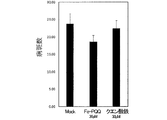
- FIG. 3 is a graph showing the results of the number of blast spots on rice after foliar spraying of water, Fe-PQQ (30 ⁇ M) and iron citrate (30 ⁇ M) in Experimental Example 2.
- Experimental Example 2 it is a graph which shows the result of the blast disease spot number of rice after foliar spraying of water, Fe-PQQ (10 ⁇ M) and PQQ (10 ⁇ M). It is a graph which shows the material spraying effect to the cucumber MNSV disease in Experimental Example 3.
- the composition of the present invention contains PQQ represented by the following formula (1) and an iron compound.
- PQQ represented by the following formula (1)
- an iron compound In the present invention, it is a useful composition as a composition for agriculture and horticulture that allows plants to grow well.
- the iron compound is not particularly limited, and may be either an inorganic compound or an organic compound, or a combination thereof. Further, the iron compound may be either a divalent compound or a trivalent compound. Examples of the inorganic compound include chloride, bromide, iodide, nitrate, sulfate, phosphate, chlorate, and iodate. Examples of the organic compound include acetate, citrate, succinate, fumarate, tartrate, lactate, pyrophosphate and the like. As the iron compound in the present invention, an inorganic compound is preferable, and chlorides and sulfates are particularly preferable because complex formation of PQQ and iron is easy.
- the composition of the present invention can be a plant disease control agent for improving plant disease resistance or a raw material thereof, and the content ratios of PQQ and iron compounds are not particularly limited.
- the plant disease control agent of the present invention applied to a plant is an iron complex-containing composition in which PQQ and an iron compound are dissolved in water in a preferable content, and the content ratio of PQQ and an iron compound in this case is as follows. be. That is, the amount of iron contained in the iron compound is preferably 0.01 to 10 mol, more preferably 0.1 to 2 mol, with respect to 1 mol of PQQ.
- PQQ or the iron compound when PQQ and the iron compound do not have the above-mentioned preferable content ratios, PQQ or the iron compound may be added to obtain a plant disease control agent before the plant disease control is performed.
- the iron compound When the iron compound is added afterwards, the iron compound may be the same as or different from the iron compound contained earlier.
- the plant disease control agent of the present invention comprises the composition of the present invention containing PQQ, an iron compound, and water, and is an aqueous liquid having a preferable content ratio of PQQ and an iron compound in the above range.
- the content ratio of water is not particularly limited, but the concentration of PQQ is preferably 0.1 to 1000 ⁇ M, more preferably 1 to 100 ⁇ M.
- the pH of the composition of the present invention containing water is preferably 1 to 11, more preferably 2 to 10, regardless of the presence or absence of other components described below.
- the pH of the plant disease control agent applied to the plant is preferably 2 to 10, more preferably 3 to 9.
- the plant disease control agent applied to plants contains a complex (iron complex) of PQQ and iron, and can contain other components. Therefore, the composition of the present invention, which can be a raw material for the plant disease control agent of the present invention, can also contain other components in addition to PQQ and the iron compound.
- ingredients include, for example, as active ingredients such as fertilizers, pesticides, and biostimulants, conventionally known chelate compounds (derived from natural products or synthetic products) and surfactants (emulsifiers, defoamers). , Dispersant, etc.), spreading agent, etc. If the other components are insoluble in water, the composition containing water is usually an aqueous dispersion.
- the upper limit of the ratio of the total amount of the other components is preferably 99 parts by mass, more preferably 95 parts by mass, based on 100 parts by mass of the total of PQQ and the iron compound. It is a department.
- the upper limit of the ratio of the total amount of the other components is preferably 95 parts by mass with respect to 100 parts by mass of the total of PQQ and the iron compound. More preferably, it is 90 parts by mass.
- the method for producing the composition of the present invention is appropriately selected depending on the composition, and is not particularly limited.
- a composition containing no water it can be produced by mixing PQQ and an iron compound.
- the composition containing water can be produced by using PQQ or a salt thereof, an iron compound, and water, and it is preferable to use the composition so that at least PQQ and the iron compound are dissolved.
- it can be produced by mixing an aqueous solution of PQQ or a salt thereof with an aqueous solution or dispersion of an iron compound.
- the plant disease control agent of the present invention is a composition suitable for controlling diseases by inducing resistance to diseases caused by pathogens such as filamentous fungi, bacteria and viruses.
- pathogens such as filamentous fungi, bacteria and viruses.
- filamentous fungi include rice blast fungus, Udonko fungus, Botrytis cinerea, root-knot fungus, sticky fungus, wilt fungus and the like.
- the bacterium include bacterial wilt, soft rot, potato scab, soybean spot bacterium, peach perforated bacterium, citrus greening bacterium, citrus bacillus and the like.
- the virus include melon yellow necrosis virus, tobacco mosaic virus, strawberry virus, potato spindle tuber viroid, tomato chlorotic dwarf viroid, and the like.
- the plant disease control method of the present invention comprises a chemical application step of applying a plant disease control agent to a plant.
- "Giving a plant disease control agent to a plant” in this chemical application step is to directly or indirectly bring the plant disease control agent into contact with the plant to be applied, and specifically, the plant disease control agent is brought into contact with the plant. It means giving a control agent to the main body of the plant and giving a plant disease control agent to the soil in which the plant is cultivated.
- the plant disease control agent when the plant disease control agent is given to the plant body, the plant disease control agent can be given to the leaf surface, stem or root of the plant, and it is particularly preferable to give the plant disease control agent to the leaf surface.
- application or spraying is preferable.
- the application of the plant disease control agent may be a part of the plant or may be the whole. Even when a plant disease control agent is applied to only a part of the plant, the metabolites produced at the site where the plant disease control agent is attached spread to the part requiring disease control, so that the whole plant is resistant to pathogens. Can be given.
- a plant disease control agent when a plant disease control agent is applied to the soil in which a plant is cultivated, a method of spraying the plant disease control agent on the soil, a method of mixing the plant disease control agent with the soil, and a method of irrigating the plant disease control agent with soil. Etc. can be applied.
- the amount and frequency of use of the plant disease control agent used in the above-mentioned chemical application step are appropriately selected according to the type of plant, growth condition, weather condition, application location, and the like.
- the plant disease control agent may be used at any time such as sowing, transplanting, planting, and growing in this field.
- an iron component is given to the soil in which the plant is cultivated, and then a liquid containing PQQ and water (hereinafter referred to as "PQQ-containing liquid") is given to the soil.
- PQQ-containing liquid a liquid containing PQQ and water
- the iron component a material containing a compound (compound only, or a solution or dispersion thereof) that forms a complex of PQQ and iron by contact with a PQQ-containing liquid is used.
- the content ratio of PQQ in the PQQ-containing liquid can be, for example, 0.001 to 50% by mass.
- the pH of the PQQ-containing liquid is preferably 1 to 11. If it is known that the soil in which the plant is cultivated contains iron, a PQQ-containing liquid can be given.
- Fe-PQQ supplement experiment of iron absorption-deficient yeast This experiment verifies whether Fe-PQQ passes through the "iron-nicotianamine iron" transporter of Arabidopsis thaliana, which is a representative plant.
- a vector (pDR196-YSL1) expressing the YSL1 gene of Arabidopsis was introduced into yeast lacking fet3 and fet4 involved in iron transport.
- the transformed clones were cultured in SD-Ura medium, washed with 10 mM EDTA solution, and washed 3 times with sterile water.
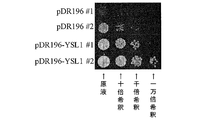
- FIG. 1 The image of the culture medium after culturing is shown in FIG. From FIG. 1, it can be seen that the yeast expressing the YSL1 transporter of Arabidopsis preferentially absorbs iron. Then, since it passed through YSL1, it can be seen that Fe and PQQ form a complex (Fe-PQQ).
- FIGS. 2 and 3 The results showing the number of lesions of blast disease are shown in FIGS. 2 and 3.
- FIG. 2 is the result of (1)
- FIG. 3 is the result of (2). From these figures, it can be seen that when Fe-PQQ is used, the number of lesions is smaller than when iron citrate and PQQ are used, and the effect on blast disease is high.
- the inoculation group (water only), PQQ (20 ⁇ M aqueous solution, pH 5), Fe-PQQ (20 ⁇ M aqueous solution, pH 5) and iron citrate (20 ⁇ M aqueous solution, pH 5) were sprayed on the leaves and continued cultivation. bottom. After 3 weeks, the plant height of the cucumber was measured.
- Figure 4 shows the measured values of plant height.
- FIG. 4 also shows data (Mock) cultivated without contact with the virus-infected solution.
- cucumbers infected with the melon yellowing gangrene virus were cultivated by feeding only water, they grew only about 10 cm.
- PQQ (20 ⁇ M aqueous solution) Fe-PQQ (20 ⁇ M aqueous solution) and iron citrate (20 ⁇ M aqueous solution) are given, it grows 15 cm or more, and in particular, when Fe-PQQ (20 ⁇ M aqueous solution) is used, an infectious disease. It can be seen that the recovery power from is high.
- composition of the present invention can be used as a plant disease control agent that easily forms a complex composed of pyrroloquinoline quinone and iron and improves the resistance of plants to diseases caused by filamentous fungi, bacteria, viruses and the like. Therefore, the plant disease control agent of the present invention and the plant disease control method using the same are useful for the growth of plants.
Landscapes
- Life Sciences & Earth Sciences (AREA)
- Environmental Sciences (AREA)
- Pest Control & Pesticides (AREA)
- Engineering & Computer Science (AREA)
- Plant Pathology (AREA)
- Wood Science & Technology (AREA)
- Zoology (AREA)
- General Health & Medical Sciences (AREA)
- Chemical & Material Sciences (AREA)
- Dentistry (AREA)
- Botany (AREA)
- Agronomy & Crop Science (AREA)
- Health & Medical Sciences (AREA)
- General Chemical & Material Sciences (AREA)
- Chemical Kinetics & Catalysis (AREA)
- Biodiversity & Conservation Biology (AREA)
- Ecology (AREA)
- Forests & Forestry (AREA)
- Inorganic Chemistry (AREA)
- Agricultural Chemicals And Associated Chemicals (AREA)
Abstract
本発明の課題は、植物の病害抵抗性を向上させることができる植物病害防除剤を与える組成物並びに植物病害防除方法を提供することである。本発明の組成物は、下記式で表されるピロロキノリンキノン又はその塩と、鉄化合物とを含有し、更に水を含有することができる。水を含む場合、ピロロキノリンキノンと、鉄化合物に由来する鉄とが錯体を形成していることが好ましい。
Description
本発明は、農作物又は植物の病害抵抗性を向上させることができる植物病害防除剤を与える組成物並びに植物病害防除方法に関する。
農作物又は植物(以下、これらを総称して「植物」という。)の病害は、収量低下の原因となるため、従来、殺菌剤等の農薬と、病害抵抗性品種とを組み合わせて作物の保護がなされている。しかしながら、殺菌剤の使用により殺菌剤に対して植物病原菌が抵抗性を持つようになることが問題となっている。この問題点の解決のために、作用機作の異なる殺菌剤どうしを組み合わせる手法が採用されているものの、環境への影響が懸念されることから、環境に配慮した新しい病害防除法の開発が求められている。そして、複数の病害に対して広範な防除効果を持ち、薬剤耐性菌による効果の減衰もなく、その利用によって、従来の殺菌剤の使用回数や使用量を低減でき、持続的で環境負荷の少ない植物の栽培を実現するための植物病害抵抗性誘導剤又はプラントアクティベーターの研究が広く行われている。
例えば、特許文献1には、β-アミリン、またはルペオールを有効成分として含むプラントアクティベーター、並びに、β-アミリン、またはルペオールを含有する液体から成るプラントアクティベーターであって、植物に前記液体を水溶液の形で根に与えることを特徴とするプラントアクティベーターが開示されている。
また、特許文献2には、例えば、乾燥、高温、低温、冷凍、塩、水、病害虫、光、除草剤等の化学物質等に晒されたときに植物が受ける環境ストレスに対する耐性又は抵抗性を付与する研究が行われているとされるなか、ピロロキノリンキノン(正式名称:4,5-ジヒドロ-4,5-ジオキソ-1H-ピロロ[2,3,f]キノリン-2,7,9-トリカルボン酸)、その塩又はその誘導体の少なくとも一種を有効成分として含む、植物に環境ストレス耐性を付与するための組成物が開示されている。
ところで、植物体に鉄錯体を散布すると病害応答性が向上することが知られている(非特許文献1及び2参照)。これらの文献には、いずれも鉄クエン酸錯体を用いたことが記載されている。
Stockwell, et al., Ferroptosis: A Regulated Cell Death Nexus Linking Metabolism, Redox Biology, and Disease (2017)
Nobori, et al., Transcriptome landscape of a bacterial pathogen under plant immunity (2018)
本発明の課題は、植物の病害抵抗性を向上させることができる植物病害防除剤を与える組成物並びに植物病害防除方法を提供することである。
本発明は、以下に示される。
1.ピロロキノリンキノン(以下、「PQQ」ともいう。)と、鉄化合物とを含有することを特徴とする組成物。
2.更に、水を含有する上記項1に記載の組成物。
3.上記ピロロキノリンキノン(PQQ)と、上記鉄化合物に由来する鉄とが錯体を形成している、上記項2に記載の組成物。
4.上記ピロロキノリンキノンの濃度が0.1~1000μMである上記項3に記載の組成物。
5.pHが1~11である上記項2乃至4のいずれか一項に記載の組成物。
6.上記項1乃至5のいずれか一項に記載の組成物を含むことを特徴とする植物病害防除剤。
7.上記項6に記載の植物病害防除剤を植物に与える薬剤付与工程を備えることを特徴とする植物病害防除方法。
8.上記薬剤付与工程は、上記植物の葉面に上記植物病害防除剤を与える工程である上記項7に記載の植物病害防除方法。
9.上記薬剤付与工程が、上記植物を栽培する土壌に上記植物病害防除剤を与える工程である上記項7に記載の植物病害防除方法。
10.植物を栽培する土壌に鉄成分を与え、その後、該土壌にピロロキノリンキノン(PQQ)及び水を含む液体を与えることを特徴とする植物病害防除方法。
1.ピロロキノリンキノン(以下、「PQQ」ともいう。)と、鉄化合物とを含有することを特徴とする組成物。
2.更に、水を含有する上記項1に記載の組成物。
3.上記ピロロキノリンキノン(PQQ)と、上記鉄化合物に由来する鉄とが錯体を形成している、上記項2に記載の組成物。
4.上記ピロロキノリンキノンの濃度が0.1~1000μMである上記項3に記載の組成物。
5.pHが1~11である上記項2乃至4のいずれか一項に記載の組成物。
6.上記項1乃至5のいずれか一項に記載の組成物を含むことを特徴とする植物病害防除剤。
7.上記項6に記載の植物病害防除剤を植物に与える薬剤付与工程を備えることを特徴とする植物病害防除方法。
8.上記薬剤付与工程は、上記植物の葉面に上記植物病害防除剤を与える工程である上記項7に記載の植物病害防除方法。
9.上記薬剤付与工程が、上記植物を栽培する土壌に上記植物病害防除剤を与える工程である上記項7に記載の植物病害防除方法。
10.植物を栽培する土壌に鉄成分を与え、その後、該土壌にピロロキノリンキノン(PQQ)及び水を含む液体を与えることを特徴とする植物病害防除方法。
本発明の組成物によれば、植物の病害抵抗性を向上させることができる植物病害防除剤を与えることができる。即ち、本発明の組成物を、そのまま、植物病害防除剤として用いてよいし、植物の病害防除のために、PQQ又は鉄化合物あるいは他の成分を更に添加して植物病害防除剤とするための原料として用いることもできる。
本発明の組成物が、PQQと、鉄化合物と、水とを含有する場合には、PQQと鉄との錯体を容易に形成することができるので、植物の病害抵抗性を向上させる植物病害防除剤として好適である。
本発明の植物病害防除方法によれば、糸状菌、細菌、ウイルス等による病害を有する植物に抵抗性を付与し、病害から早期に回復させることができる。
本発明の組成物が、PQQと、鉄化合物と、水とを含有する場合には、PQQと鉄との錯体を容易に形成することができるので、植物の病害抵抗性を向上させる植物病害防除剤として好適である。
本発明の植物病害防除方法によれば、糸状菌、細菌、ウイルス等による病害を有する植物に抵抗性を付与し、病害から早期に回復させることができる。
本発明の組成物は、下記式(1)で表されるPQQと、鉄化合物とを含有する。本発明においては、植物を良好に生育させる農園芸用組成物として有用な組成物である。

上記鉄化合物は、特に限定されず、無機化合物及び有機化合物のいずれでもよく、これらの組み合わせでもよい。また、鉄化合物は、2価の化合物及び3価の化合物のいずれでもよい。無機化合物としては、塩化物、臭化物、ヨウ化物、硝酸塩、硫酸塩、リン酸塩、塩素酸塩、ヨウ素酸塩等が挙げられる。また、有機化合物としては、酢酸塩、クエン酸塩、コハク酸塩、フマル酸塩、酒石酸塩、乳酸塩、ピロリン酸塩等が挙げられる。
本発明における鉄化合物としては、無機化合物が好ましく、PQQと鉄との錯体形成が容易であることから、塩化物及び硫酸塩が特に好ましい。
本発明における鉄化合物としては、無機化合物が好ましく、PQQと鉄との錯体形成が容易であることから、塩化物及び硫酸塩が特に好ましい。
本発明の組成物は、植物の病害抵抗性を向上させる植物病害防除剤又はその原料となり得るものであり、PQQ及び鉄化合物の含有割合は、特に限定されない。植物に施用する本発明の植物病害防除剤は、PQQ及び鉄化合物が好ましい含量で水に溶解されてなる鉄錯体含有組成物であり、この場合のPQQ及び鉄化合物の含有割合は以下のとおりである。即ち、PQQ1モルに対して、鉄化合物に含まれる鉄を好ましくは0.01~10モル、より好ましくは0.1~2モルとするものである。尚、本発明の組成物において、PQQ及び鉄化合物が上記の好ましい含有割合でない場合には、植物の病害防除を行う前に、PQQ又は鉄化合物を添加して植物病害防除剤とすればよい。鉄化合物を後添加する場合の鉄化合物は、先に含まれた鉄化合物と同一であってよいし、異なってもよい。
本発明の植物病害防除剤は、PQQと、鉄化合物と、水とを含有する本発明の組成物からなるものであり、PQQ及び鉄化合物の好ましい含有割合が上記範囲の水系液体である。水の含有割合は、特に限定されないが、PQQの濃度は、好ましくは0.1~1000μM、より好ましくは1~100μMである。
水を含有する本発明の組成物のpHは、後述する他の成分の有無にかかわらず、好ましくは1~11、より好ましくは2~10である。植物に施用する植物病害防除剤のpHは、好ましくは2~10、より好ましくは3~9である。
水を含有する本発明の組成物のpHは、後述する他の成分の有無にかかわらず、好ましくは1~11、より好ましくは2~10である。植物に施用する植物病害防除剤のpHは、好ましくは2~10、より好ましくは3~9である。
上記のように、植物に施用する植物病害防除剤は、PQQと鉄との錯体(鉄錯体)を含むものであり、他の成分を含有することができる。従って、本発明の植物病害防除剤の原料となり得る本発明の組成物もまた、PQQ及び鉄化合物以外に、他の成分を含有することができる。
他の成分としては、例えば、肥料、農薬、バイオスティミュラント等の有効成分として、従来、公知のキレート化合物(天然物に由来するもの又は合成物)や、界面活性剤(乳化剤、消泡剤、分散剤等)、展着剤等が挙げられる。他の成分が水に不溶の場合、水を含む組成物は、通常、水分散液である。
本発明の組成物が他の成分を含有する場合、他の成分の合計量の割合の上限は、PQQ及び鉄化合物の合計100質量部に対して、好ましくは99質量部、より好ましくは95質量部である。
また、植物に施用する植物病害防除剤が他の成分を含有する場合、他の成分の合計量の割合の上限は、PQQ及び鉄化合物の合計100質量部に対して、好ましくは95質量部、より好ましくは90質量部である。
また、植物に施用する植物病害防除剤が他の成分を含有する場合、他の成分の合計量の割合の上限は、PQQ及び鉄化合物の合計100質量部に対して、好ましくは95質量部、より好ましくは90質量部である。
本発明の組成物を製造する方法は、その構成により、適宜、選択され、特に限定されない。水を含有しない組成物の場合、PQQ及び鉄化合物を混合することにより製造することができる。水を含有する組成物は、PQQ又はその塩と、鉄化合物と、水とを用いて製造することができ、少なくともPQQ及び鉄化合物が溶解するように用いることが好ましい。この場合、PQQ又はその塩の水溶液と、鉄化合物の水溶液又は分散液とを混合して製造することができる。
本発明の植物病害防除剤は、糸状菌、細菌、ウイルス等の病原体による病害に対する抵抗性を誘導し、その病害の防除に好適な組成物である。
本発明の植物病害防除剤の使用による防除の対象となる病原体のうち、糸状菌としては、イネいもち病菌、うどんこ病菌、灰色かび病菌、根こぶ病菌、べと病菌、萎凋病菌等が挙げられる。細菌としては、青枯病菌、軟腐病菌、ジャガイモそうか病菌、ダイズ斑点細菌病菌、モモせん孔細菌病菌、カンキツグリーニング病菌、カンキツかいよう病菌等が挙げられる。ウイルスとしては、メロン黄化壊疽ウイルス、タバコモザイクウイルス、イチゴウイルス、ジャガイモやせいもウイロイド、トマト退緑萎縮ウイロイド等が挙げられる。
本発明の植物病害防除剤の使用による防除の対象となる病原体のうち、糸状菌としては、イネいもち病菌、うどんこ病菌、灰色かび病菌、根こぶ病菌、べと病菌、萎凋病菌等が挙げられる。細菌としては、青枯病菌、軟腐病菌、ジャガイモそうか病菌、ダイズ斑点細菌病菌、モモせん孔細菌病菌、カンキツグリーニング病菌、カンキツかいよう病菌等が挙げられる。ウイルスとしては、メロン黄化壊疽ウイルス、タバコモザイクウイルス、イチゴウイルス、ジャガイモやせいもウイロイド、トマト退緑萎縮ウイロイド等が挙げられる。
本発明の植物病害防除方法は、植物病害防除剤を植物に与える薬剤付与工程を備えるものである。この薬剤付与工程における「植物病害防除剤を植物に与える」とは、適用対象の植物に、直接的に又は間接的に、植物病害防除剤を接触させることであり、具体的には、植物病害防除剤を植物本体に与えること、及び、植物を栽培する土壌に植物病害防除剤を与えることを意味する。
上記薬剤付与工程において、植物病害防除剤を植物本体に与える場合、植物の葉面、茎又は根に植物病害防除剤を与えることができ、葉面に与えることが特に好ましい。植物の葉面又は茎に植物病害防除剤を与える場合、塗布又は噴霧(散布)が好ましい。植物病害防除剤の付与は、植物の一部であってよいし、全体であってもよい。植物の一部のみに植物病害防除剤を付与した場合にも、植物病害防除剤が付着した部位において生産された代謝物が病害防除の必要な部分に行き渡るため、植物全体に、病原体に対する抵抗性を付与することができる。
上記薬剤付与工程において、植物を栽培する土壌に植物病害防除剤を与える場合、植物病害防除剤を土壌に散布する方法、植物病害防除剤を土壌混和する方法、植物病害防除剤を土壌潅注する方法等を適用することができる。
上記薬剤付与工程において、植物を栽培する土壌に植物病害防除剤を与える場合、植物病害防除剤を土壌に散布する方法、植物病害防除剤を土壌混和する方法、植物病害防除剤を土壌潅注する方法等を適用することができる。
上記薬剤付与工程において用いる植物病害防除剤の使用量及び使用回数は、植物の種類、成長状況、気象状況、適用箇所等に応じて、適宜、選択される。また、植物病害防除剤の使用時期は、播種時、移植時、定植時、本圃生育時等のいずれでもよい。
植物病害を防除する他の方法として、植物を栽培する土壌に鉄成分を与え、その後、該土壌にPQQ及び水を含む液体(以下、「PQQ含有液体」という。)を与える方法とすることができる。この場合、鉄成分としては、PQQ含有液体との接触により、PQQと鉄との錯体を形成する化合物を含む材料(化合物のみ、又はその溶液若しくは分散液)が用いられる。PQQ含有液体におけるPQQの含有割合は、例えば、0.001~50質量%とすることができる。また、PQQ含有液体のpHは、好ましくは1~11である。尚、植物を栽培する土壌が鉄を含むことが既知である場合には、PQQ含有液体を与えることができる。
1.鉄吸収欠損酵母のFe-PQQコンプリメント実験(実験例1)
この実験は、植物の代表格であるシロイヌナズナの「鉄・ニコチアナミン鉄」トランスポーターをFe-PQQが通るか否かを検証するものである。
鉄輸送に関わるfet3及びfet4を欠損した酵母に、アラビドプシスのYSL1遺伝子を発現するベクター(pDR196-YSL1)を遺伝子導入した。形質転換されクローンを、SD-Uraの培地で培養して、10mMのEDTA溶液で洗浄し、滅菌水で3回洗浄を行った。その後、塩化鉄(III)と、PQQと、MES(緩衝剤、pH7.0)とを用いて得られた、5μMのFeと、10μMのPQQと、5mMのMESとを含む培地に、4段階の濃度(原液、10倍希釈、100倍希釈、1000倍希釈)とした酵母の培養液を滴下し30℃で4日間培養した。実験の対照として、SD-Ura(皆、生える培地)にも酵母の上記培養液を滴下し30℃で2日間培養した。これらの実験を2反復で行った。
この実験は、植物の代表格であるシロイヌナズナの「鉄・ニコチアナミン鉄」トランスポーターをFe-PQQが通るか否かを検証するものである。
鉄輸送に関わるfet3及びfet4を欠損した酵母に、アラビドプシスのYSL1遺伝子を発現するベクター(pDR196-YSL1)を遺伝子導入した。形質転換されクローンを、SD-Uraの培地で培養して、10mMのEDTA溶液で洗浄し、滅菌水で3回洗浄を行った。その後、塩化鉄(III)と、PQQと、MES(緩衝剤、pH7.0)とを用いて得られた、5μMのFeと、10μMのPQQと、5mMのMESとを含む培地に、4段階の濃度(原液、10倍希釈、100倍希釈、1000倍希釈)とした酵母の培養液を滴下し30℃で4日間培養した。実験の対照として、SD-Ura(皆、生える培地)にも酵母の上記培養液を滴下し30℃で2日間培養した。これらの実験を2反復で行った。
培養後の培地の画像を図1に示す。図1から、シロイヌナズナのYSL1トランスポーターを発現させた酵母で鉄を優先的に吸収することが分かる。そして、YSL1を通過したことから、Fe及びPQQが錯体(Fe-PQQ)を形成していることが分かる。
2.いもち病検定試験(実験例2)
この実験は、圃場で育てたイネに、以下の資材を葉面散布して、いもち病の抑制効果が見られるかどうかを確認するものである。
播種後2週間のイネの幼植物に、(1)水のみ(Mock)、Fe-PQQ(30μM水溶液、pH5)及びクエン酸鉄(30μM水溶液、pH5)の葉面散布、(2)水のみ(Mock)、Fe-PQQ(10μM水溶液、pH5)及びPQQ(10μM水溶液、pH5)の葉面散布を、別々に行った。それぞれ、葉面散布してから6時間経過したところで、いもち病(007株)を1×10⁵の濃度で、イネの噴霧感染を行った。その後、接種させたイネを、30℃の天然光温室で栽培した。いもち病処理後、一週間で病斑数を測定した。
この実験は、圃場で育てたイネに、以下の資材を葉面散布して、いもち病の抑制効果が見られるかどうかを確認するものである。
播種後2週間のイネの幼植物に、(1)水のみ(Mock)、Fe-PQQ(30μM水溶液、pH5)及びクエン酸鉄(30μM水溶液、pH5)の葉面散布、(2)水のみ(Mock)、Fe-PQQ(10μM水溶液、pH5)及びPQQ(10μM水溶液、pH5)の葉面散布を、別々に行った。それぞれ、葉面散布してから6時間経過したところで、いもち病(007株)を1×10⁵の濃度で、イネの噴霧感染を行った。その後、接種させたイネを、30℃の天然光温室で栽培した。いもち病処理後、一週間で病斑数を測定した。
いもち病の病斑数を示す結果を図2及び図3に示す。図2は(1)の結果であり、図3は(2)の結果である。これらの図から、Fe-PQQを用いると、クエン酸鉄及びPQQを用いた場合に比べて病斑数が少なく、いもち病への効果が高いことが分かる。
3.メロン黄化壊疽ウイルスに対する抵抗性試験(実験例3)
この実験は、メロン黄化壊疽ウイルス(Melon yellow spot virus: Tospovirus)を感染させたきゅうりの成長を確認するものである。
新ときわ地這きゅうり(ときわ研究所)を、水を含んだペーパータオルに播種し、暗所で3日間静置した。その後、植物を培養土へ移植し、26℃の温室で10日間培養した。Tospovirusを含んだ植物を10mM-PBS中で破砕し、ウイルス感染液を作製した。
次に、このウイルス感染液を、カーボランダムを用いてきゅうりの葉面に感染させた。24時間後、接種区(水のみ)、PQQ(20μM水溶液、pH5)、Fe-PQQ(20μM水溶液、pH5)及びクエン酸鉄(20μM水溶液、pH5)を、それぞれ、葉面散布し、栽培を継続した。3週間後、きゅうりの草丈を測定した。
この実験は、メロン黄化壊疽ウイルス(Melon yellow spot virus: Tospovirus)を感染させたきゅうりの成長を確認するものである。
新ときわ地這きゅうり(ときわ研究所)を、水を含んだペーパータオルに播種し、暗所で3日間静置した。その後、植物を培養土へ移植し、26℃の温室で10日間培養した。Tospovirusを含んだ植物を10mM-PBS中で破砕し、ウイルス感染液を作製した。
次に、このウイルス感染液を、カーボランダムを用いてきゅうりの葉面に感染させた。24時間後、接種区(水のみ)、PQQ(20μM水溶液、pH5)、Fe-PQQ(20μM水溶液、pH5)及びクエン酸鉄(20μM水溶液、pH5)を、それぞれ、葉面散布し、栽培を継続した。3週間後、きゅうりの草丈を測定した。
草丈の測定値を図4に示す。図4には、ウイルス感染液を接触させずに栽培したデータ(Mock)も示した。メロン黄化壊疽ウイルスを感染させたきゅうりに、水のみを与えて栽培すると10cm程度しか成長しなかった。一方、PQQ(20μM水溶液)、Fe-PQQ(20μM水溶液)及びクエン酸鉄(20μM水溶液)を与えた場合には、15cm以上成長し、特に、Fe-PQQ(20μM水溶液)を用いると、感染病からの回復力が高いことが分かる。
4.錯体(Fe-PQQ)の形成確認実験
初めに、ピロロキノリンキノン二ナトリウムを水に溶解させて、0.2mMのPQQ水溶液を得た。一方、0.001N-HCl水溶液に、硫酸鉄(II)7水和物、硫酸鉄(III)n水和物(Fe:18%)及び塩化鉄(III)6水和物を、それぞれ、溶解させて、0.2mMの鉄溶液を得た。
次に、上記PQQ水溶液と、各鉄溶液とを50mlずつ用いて、これらを混合して、混合液に、1N-NaOH水溶液又は1N-HClを添加してpH7とし、静置した。24時間後、アドバンテック社製濾紙「5C」を用いて濾過し、得られた濾液中の鉄濃度を、メルク社製反射式光度計「RQflex」(商品名)を用いた比色法により定量した。また、比較のために、上記PQQ水溶液に代えて、水と、各鉄溶液とを50mlずつ用いた場合についても、同様の実験を行った。これらの結果を表1に示す。
初めに、ピロロキノリンキノン二ナトリウムを水に溶解させて、0.2mMのPQQ水溶液を得た。一方、0.001N-HCl水溶液に、硫酸鉄(II)7水和物、硫酸鉄(III)n水和物(Fe:18%)及び塩化鉄(III)6水和物を、それぞれ、溶解させて、0.2mMの鉄溶液を得た。
次に、上記PQQ水溶液と、各鉄溶液とを50mlずつ用いて、これらを混合して、混合液に、1N-NaOH水溶液又は1N-HClを添加してpH7とし、静置した。24時間後、アドバンテック社製濾紙「5C」を用いて濾過し、得られた濾液中の鉄濃度を、メルク社製反射式光度計「RQflex」(商品名)を用いた比色法により定量した。また、比較のために、上記PQQ水溶液に代えて、水と、各鉄溶液とを50mlずつ用いた場合についても、同様の実験を行った。これらの結果を表1に示す。

硫酸鉄(II)7水和物、硫酸鉄(III)n水和物(Fe:18%)及び塩化鉄(III)6水和物の各水溶液と水とを等量混合した後、pH7とした場合には、各鉄化合物が析出したため、表1に示すように、濾液中の鉄濃度が0.5ppm未満と僅かであった。一方、硫酸鉄(II)7水和物、硫酸鉄(III)n水和物(Fe:18%)及び塩化鉄(III)6水和物の各水溶液とPQQ水溶液とを等量混合した後、pH7とした場合には、鉄化合物における鉄の価数によらず、濾液中の鉄濃度が5.0ppmを超えた。これより、PQQとの錯体が形成されたことが分かる。
本発明の組成物は、ピロロキノリンキノンと、鉄とからなる錯体を形成しやすく、植物の、糸状菌、細菌、ウイルス等による病害に対する抵抗性を向上させる植物病害防除剤とすることができる。従って、本発明の植物病害防除剤及びこれを用いた植物病害防除方法は、植物の生育に有用である。
Claims (10)
- ピロロキノリンキノンと、鉄化合物とを含有することを特徴とする組成物。
- 更に、水を含有する請求項1に記載の組成物。
- 前記ピロロキノリンキノンと、前記鉄化合物に由来する鉄とが錯体を形成している請求項2に記載の組成物。
- 前記ピロロキノリンキノンの濃度が0.1~1000μMである請求項3に記載の組成物。
- pHが1~11である請求項2乃至4のいずれか一項に記載の組成物。
- 請求項1乃至5のいずれか一項に記載の組成物を含むことを特徴とする植物病害防除剤。
- 請求項6に記載の植物病害防除剤を植物に与える薬剤付与工程を備えることを特徴とする植物病害防除方法。
- 前記薬剤付与工程が、前記植物の葉面に前記植物病害防除剤を与える工程である請求項7に記載の植物病害防除方法。
- 前記薬剤付与工程が、前記植物を栽培する土壌に前記植物病害防除剤を与える工程である請求項7に記載の植物病害防除方法。
- 植物を栽培する土壌に鉄成分を与え、その後、該土壌にピロロキノリンキノン及び水を含む液体を与えることを特徴とする植物病害防除方法。
Applications Claiming Priority (2)
| Application Number | Priority Date | Filing Date | Title |
|---|---|---|---|
| JP2020094998A JP2023102790A (ja) | 2020-05-29 | 2020-05-29 | 新規な組成物及びそれを含む植物病害防除剤並びに植物病害防除方法 |
| JP2020-094998 | 2020-05-29 |
Publications (1)
| Publication Number | Publication Date |
|---|---|
| WO2021241369A1 true WO2021241369A1 (ja) | 2021-12-02 |
Family
ID=78745514
Family Applications (1)
| Application Number | Title | Priority Date | Filing Date |
|---|---|---|---|
| PCT/JP2021/019059 Ceased WO2021241369A1 (ja) | 2020-05-29 | 2021-05-19 | 新規な組成物及びそれを含む植物病害防除剤並びに植物病害防除方法 |
Country Status (2)
| Country | Link |
|---|---|
| JP (1) | JP2023102790A (ja) |
| WO (1) | WO2021241369A1 (ja) |
Cited By (1)
| Publication number | Priority date | Publication date | Assignee | Title |
|---|---|---|---|---|
| CN119592606A (zh) * | 2024-09-26 | 2025-03-11 | 华中农业大学 | 番茄霍利迪连接体解离酶的应用、提高作物青枯病抗性的方法和蛋白抑制病原菌的方法 |
Families Citing this family (1)
| Publication number | Priority date | Publication date | Assignee | Title |
|---|---|---|---|---|
| CN117356578A (zh) * | 2023-10-08 | 2024-01-09 | 四川省新兰月生物科技有限公司 | 一种含pqq的增效组合物及其制备方法 |
Citations (2)
| Publication number | Priority date | Publication date | Assignee | Title |
|---|---|---|---|---|
| JP2006151881A (ja) * | 2004-11-30 | 2006-06-15 | Institute Of Physical & Chemical Research | 植物環境ストレス耐性用組成物 |
| JP2011030485A (ja) * | 2009-07-31 | 2011-02-17 | Mitsubishi Gas Chemical Co Inc | 金属イオンを使用するピロロキノリンキノン類の製造方法 |
-
2020
- 2020-05-29 JP JP2020094998A patent/JP2023102790A/ja active Pending
-
2021
- 2021-05-19 WO PCT/JP2021/019059 patent/WO2021241369A1/ja not_active Ceased
Patent Citations (2)
| Publication number | Priority date | Publication date | Assignee | Title |
|---|---|---|---|---|
| JP2006151881A (ja) * | 2004-11-30 | 2006-06-15 | Institute Of Physical & Chemical Research | 植物環境ストレス耐性用組成物 |
| JP2011030485A (ja) * | 2009-07-31 | 2011-02-17 | Mitsubishi Gas Chemical Co Inc | 金属イオンを使用するピロロキノリンキノン類の製造方法 |
Non-Patent Citations (1)
| Title |
|---|
| MATSUMOTO, KENJI: "Development of alkali-resistant iron supply agents for plants inspired by microbial siderophores", FINAL RESEARCH REPORT OF GRANTS-IN- AID FOR SCIENTIFIC RESEARCH, PROJECT NUMBER: 15K07340, 8 June 2018 (2018-06-08), pages 1 - 5, XP055879580, Retrieved from the Internet <URL:kaken.nii.ac.jp/file/KAKENHI-PROJECT-15K07340/15K07340seika.pdf> * |
Cited By (1)
| Publication number | Priority date | Publication date | Assignee | Title |
|---|---|---|---|---|
| CN119592606A (zh) * | 2024-09-26 | 2025-03-11 | 华中农业大学 | 番茄霍利迪连接体解离酶的应用、提高作物青枯病抗性的方法和蛋白抑制病原菌的方法 |
Also Published As
| Publication number | Publication date |
|---|---|
| JP2023102790A (ja) | 2023-07-26 |
Similar Documents
| Publication | Publication Date | Title |
|---|---|---|
| CA2919356C (en) | Compositions and methods related to isolated trichoderma harzianum endophyte strains | |
| JP5714603B2 (ja) | 植物の出芽および生長を増強するためのシュードモナス・アゾトフォルマンス(pseudomonasazotoformans)種の新規蛍光シュードモナス菌 | |
| JP2015528296A (ja) | 植物の非生物的ストレス抵抗性を高める方法 | |
| TWI398218B (zh) | 脯胺酸於改善生長及/或收成之用途 | |
| KR20190022670A (ko) | 제올라이트와 염기성 l-아미노산을 함유하는 비료 조성물 | |
| CA3240854A1 (en) | Agricultural compositions comprising microbial consortia and methods of use thereof | |
| KR20220076124A (ko) | 양파의 생육 촉진 효과 및 가뭄 내성 증진 효과를 갖는 바실러스 알티투디니스(Bacillus altitudinis) H5-9 균주 및 이의 용도 | |
| JPS62114903A (ja) | ヒドロキシアルキルホスフイン化合物及びその使用方法 | |
| CN105431397B (zh) | 使用芽孢杆菌属细菌栽培作物的方法 | |
| Ortiz-Martínez et al. | Elicitors and biostimulants in the production of tomato infected with Tomato brown rugose fruit virus | |
| WO2021241369A1 (ja) | 新規な組成物及びそれを含む植物病害防除剤並びに植物病害防除方法 | |
| JP2002138004A (ja) | 農園芸用資材 | |
| WO2022147314A1 (en) | Chlorella sp. accession no. ncma 202012055 and methods of use thereof to benefit plant growth | |
| US11674118B2 (en) | PGPR compositions and methods for improved cultivation of tomato and potato species | |
| El Aymani et al. | on the Development of | |
| AU2005212522A1 (en) | Plant nutrient reduction system | |
| JPH0823963A (ja) | 植物の栽培方法 | |
| Horotan et al. | Effects of fungicide and acetylsalicylic acid treatments on the physiological and enzymatic activity in tomato (Lycopersicon esculentum Mill.) | |
| Ortaş | Role of microorganisms (Mycorrhizae) in organic farming | |
| JP2022507041A (ja) | 真菌の菌核が含まれた植物管理用固形組成物及びその用途 | |
| JP3947019B2 (ja) | 薬害軽減方法 | |
| Michel et al. | Green manures and organic amendments to control corky root of tomato | |
| JP2017509570A (ja) | 酸化鉄(iii)含有土壌結合組成物 | |
| KR102642096B1 (ko) | 녹차를 이용하는 채소 또는 곡물 재배방법 | |
| JP2011168532A (ja) | 植物芽発酵液と枯草菌からなる植物栽培用組成物、および植物栽培方法 |
Legal Events
| Date | Code | Title | Description |
|---|---|---|---|
| 121 | Ep: the epo has been informed by wipo that ep was designated in this application |
Ref document number: 21814530 Country of ref document: EP Kind code of ref document: A1 |
|
| NENP | Non-entry into the national phase |
Ref country code: DE |
|
| 122 | Ep: pct application non-entry in european phase |
Ref document number: 21814530 Country of ref document: EP Kind code of ref document: A1 |
|
| NENP | Non-entry into the national phase |
Ref country code: JP |