WO2021201260A1 - 間葉系幹細胞の動員活性を有するペプチド - Google Patents
間葉系幹細胞の動員活性を有するペプチド Download PDFInfo
- Publication number
- WO2021201260A1 WO2021201260A1 PCT/JP2021/014253 JP2021014253W WO2021201260A1 WO 2021201260 A1 WO2021201260 A1 WO 2021201260A1 JP 2021014253 W JP2021014253 W JP 2021014253W WO 2021201260 A1 WO2021201260 A1 WO 2021201260A1
- Authority
- WO
- WIPO (PCT)
- Prior art keywords
- amino acid
- acid sequence
- peptide
- seq
- mesenchymal stem
- Prior art date
- Legal status (The legal status is an assumption and is not a legal conclusion. Google has not performed a legal analysis and makes no representation as to the accuracy of the status listed.)
- Ceased
Links
Images






Classifications
-
- A—HUMAN NECESSITIES
- A61—MEDICAL OR VETERINARY SCIENCE; HYGIENE
- A61K—PREPARATIONS FOR MEDICAL, DENTAL OR TOILETRY PURPOSES
- A61K38/00—Medicinal preparations containing peptides
- A61K38/16—Peptides having more than 20 amino acids; Gastrins; Somatostatins; Melanotropins; Derivatives thereof
-
- A—HUMAN NECESSITIES
- A61—MEDICAL OR VETERINARY SCIENCE; HYGIENE
- A61K—PREPARATIONS FOR MEDICAL, DENTAL OR TOILETRY PURPOSES
- A61K38/00—Medicinal preparations containing peptides
-
- A—HUMAN NECESSITIES
- A61—MEDICAL OR VETERINARY SCIENCE; HYGIENE
- A61P—SPECIFIC THERAPEUTIC ACTIVITY OF CHEMICAL COMPOUNDS OR MEDICINAL PREPARATIONS
- A61P1/00—Drugs for disorders of the alimentary tract or the digestive system
- A61P1/04—Drugs for disorders of the alimentary tract or the digestive system for ulcers, gastritis or reflux esophagitis, e.g. antacids, inhibitors of acid secretion, mucosal protectants
-
- A—HUMAN NECESSITIES
- A61—MEDICAL OR VETERINARY SCIENCE; HYGIENE
- A61P—SPECIFIC THERAPEUTIC ACTIVITY OF CHEMICAL COMPOUNDS OR MEDICINAL PREPARATIONS
- A61P17/00—Drugs for dermatological disorders
-
- A—HUMAN NECESSITIES
- A61—MEDICAL OR VETERINARY SCIENCE; HYGIENE
- A61P—SPECIFIC THERAPEUTIC ACTIVITY OF CHEMICAL COMPOUNDS OR MEDICINAL PREPARATIONS
- A61P29/00—Non-central analgesic, antipyretic or antiinflammatory agents, e.g. antirheumatic agents; Non-steroidal antiinflammatory drugs [NSAID]
-
- A—HUMAN NECESSITIES
- A61—MEDICAL OR VETERINARY SCIENCE; HYGIENE
- A61P—SPECIFIC THERAPEUTIC ACTIVITY OF CHEMICAL COMPOUNDS OR MEDICINAL PREPARATIONS
- A61P37/00—Drugs for immunological or allergic disorders
- A61P37/02—Immunomodulators
-
- A—HUMAN NECESSITIES
- A61—MEDICAL OR VETERINARY SCIENCE; HYGIENE
- A61P—SPECIFIC THERAPEUTIC ACTIVITY OF CHEMICAL COMPOUNDS OR MEDICINAL PREPARATIONS
- A61P37/00—Drugs for immunological or allergic disorders
- A61P37/08—Antiallergic agents
-
- A—HUMAN NECESSITIES
- A61—MEDICAL OR VETERINARY SCIENCE; HYGIENE
- A61P—SPECIFIC THERAPEUTIC ACTIVITY OF CHEMICAL COMPOUNDS OR MEDICINAL PREPARATIONS
- A61P43/00—Drugs for specific purposes, not provided for in groups A61P1/00-A61P41/00
-
- A—HUMAN NECESSITIES
- A61—MEDICAL OR VETERINARY SCIENCE; HYGIENE
- A61P—SPECIFIC THERAPEUTIC ACTIVITY OF CHEMICAL COMPOUNDS OR MEDICINAL PREPARATIONS
- A61P9/00—Drugs for disorders of the cardiovascular system
- A61P9/10—Drugs for disorders of the cardiovascular system for treating ischaemic or atherosclerotic diseases, e.g. antianginal drugs, coronary vasodilators, drugs for myocardial infarction, retinopathy, cerebrovascula insufficiency, renal arteriosclerosis
-
- C—CHEMISTRY; METALLURGY
- C07—ORGANIC CHEMISTRY
- C07K—PEPTIDES
- C07K14/00—Peptides having more than 20 amino acids; Gastrins; Somatostatins; Melanotropins; Derivatives thereof
-
- C—CHEMISTRY; METALLURGY
- C07—ORGANIC CHEMISTRY
- C07K—PEPTIDES
- C07K14/00—Peptides having more than 20 amino acids; Gastrins; Somatostatins; Melanotropins; Derivatives thereof
- C07K14/001—Peptides having more than 20 amino acids; Gastrins; Somatostatins; Melanotropins; Derivatives thereof by chemical synthesis
-
- C—CHEMISTRY; METALLURGY
- C07—ORGANIC CHEMISTRY
- C07K—PEPTIDES
- C07K7/00—Peptides having 5 to 20 amino acids in a fully defined sequence; Derivatives thereof
- C07K7/04—Linear peptides containing only normal peptide links
- C07K7/08—Linear peptides containing only normal peptide links having 12 to 20 amino acids
Definitions
- the present application relates to a peptide having mesenchymal stem cell mobilization activity, a composition for mobilizing mesenchymal stem cells, and a drug for treating a disease based on the mobilization of mesenchymal stem cells.
- Mesenchymal stem cells contained in bone marrow fluid and the like have the ability to differentiate into various tissues such as bone, cartilage, fat, muscle, nerve, and epithelium (pluripotency), and have been cultured in recent years. Attempts have been made to perform regenerative medicine (cell transplantation therapy) using bone marrow-derived mesenchymal stem cells proliferated in the above. However, the collection of bone marrow blood containing mesenchymal stem cells is performed by an invasive method in which a thick needle is inserted into the ilium many times, which imposes a heavy burden on the donor. In addition, mesenchymal stem cells gradually lose their proliferative ability and pluripotency when subculture is continued in vitro.
- the purpose of this application is to develop a new regenerative medicine technology that can overcome the problems of cell transplantation therapy.
- the present inventors have previously found an artificial sequence peptide "1r10” having an activity of mobilizing mesenchymal stem cells into peripheral blood based on the results of their own research, and have filed a patent application for the peptide (PCT). / JP2019 / 039232).
- the present inventors synthesize a plurality of peptides consisting of a partial sequence of the artificial sequence peptide "1r10” (hereinafter, also referred to as "1r10 fragment peptide”), and have the activity of mobilizing mesenchymal stem cells into peripheral blood.
- 1r10 fragment peptide As a result of investigating, it was found that a 1r10 fragment peptide having a specific amino acid sequence exhibits the activity. Based on this finding, the present application provides peptides that are considered to have therapeutic effects on various diseases through the recruitment of mesenchymal stem cells to peripheral blood.
- compositions for use in recruiting mesenchymal stem cells into peripheral blood containing peptides selected from the following: (A) A peptide consisting of a part of the amino acid sequence of SEQ ID NO: 1 and containing the amino acid sequence of SEQ ID NO: 17 or 19; (B) A peptide consisting of all or part of the amino acid sequence in which 1 to 5 amino acids are substituted, deleted, inserted or added in the amino acid sequence of SEQ ID NO: 1; A peptide containing an amino acid sequence; and (c) a peptide consisting of all or part of an amino acid sequence having 90% or more sequence identity with the amino acid sequence of SEQ ID NO: 1 and having an amino acid sequence of SEQ ID NO: 17 or 19.
- compositions according to [2], wherein the treatment of the disease or morbidity is selected from anti-inflammatory treatment, immunomodulatory treatment, tissue regeneration-inducing treatment, and tissue fibrosis-suppressing treatment.
- the disease or pathological condition is selected from inflammatory diseases, autoimmune diseases, diseases associated with tissue damage, ischemia or necrosis, and fibrotic diseases.
- the disease or pathological condition is inflammatory bowel disease.
- the disease or pathological condition is ulcerative colitis.
- the composition according to [2], wherein the disease or pathological condition is atopic dermatitis.
- compositions containing peptides selected from the following for use in the treatment of diseases selected from inflammatory bowel disease, atopic dermatitis and cerebral infarction (A) A peptide consisting of a part of the amino acid sequence of SEQ ID NO: 1 and containing the amino acid sequence of SEQ ID NO: 17 or 19; (B) A peptide consisting of all or part of the amino acid sequence in which 1 to 5 amino acids are substituted, deleted, inserted or added in the amino acid sequence of SEQ ID NO: 1; A peptide containing an amino acid sequence; and (c) a peptide consisting of all or part of an amino acid sequence having 90% or more sequence identity with the amino acid sequence of SEQ ID NO: 1 and having an amino acid sequence of SEQ ID NO: 17 or 19.
- Peptides containing. [10] Peptides selected from: (A) A peptide consisting of a part of the amino acid sequence of SEQ ID NO: 1 and containing the amino acid sequence of SEQ ID NO: 17 or 19; (B) A peptide consisting of all or part of the amino acid sequence in which 1 to 5 amino acids are substituted, deleted, inserted or added in the amino acid sequence of SEQ ID NO: 1; A peptide containing an amino acid sequence; and (c) a peptide consisting of all or part of an amino acid sequence having 90% or more sequence identity with the amino acid sequence of SEQ ID NO: 1 and having an amino acid sequence of SEQ ID NO: 17 or 19. Peptides containing.
- a method of recruiting mesenchymal stem cells into peripheral blood including the step of administering to a subject an effective amount of a peptide selected from the following: (A) A peptide consisting of a part of the amino acid sequence of SEQ ID NO: 1 and containing the amino acid sequence of SEQ ID NO: 17 or 19; (B) A peptide consisting of all or part of the amino acid sequence in which 1 to 5 amino acids are substituted, deleted, inserted or added in the amino acid sequence of SEQ ID NO: 1; A peptide containing an amino acid sequence; and (c) a peptide consisting of all or part of an amino acid sequence having 90% or more sequence identity with the amino acid sequence of SEQ ID NO: 1 and having an amino acid sequence of SEQ ID NO: 17 or 19.
- a method of treating a disease or pathological condition in a subject by mobilizing mesenchymal stem cells into peripheral blood including the step of administering to the subject an effective amount of a peptide selected from the following: (A) A peptide consisting of a part of the amino acid sequence of SEQ ID NO: 1 and containing the amino acid sequence of SEQ ID NO: 17 or 19; (B) A peptide consisting of all or part of the amino acid sequence in which 1 to 5 amino acids are substituted, deleted, inserted or added in the amino acid sequence of SEQ ID NO: 1; A peptide containing an amino acid sequence; and (c) a peptide consisting of all or part of an amino acid sequence having 90% or more sequence identity with the amino acid sequence of SEQ ID NO: 1 and having an amino acid sequence of SEQ ID NO: 17 or 19.
- a method of treating a disease in a subject selected from inflammatory bowel disease, atopic dermatitis and cerebral infarction which comprises the step of administering to the subject an effective amount of a peptide selected from: (A) A peptide consisting of a part of the amino acid sequence of SEQ ID NO: 1 and containing the amino acid sequence of SEQ ID NO: 17 or 19; (B) A peptide consisting of all or part of the amino acid sequence in which 1 to 5 amino acids are substituted, deleted, inserted or added in the amino acid sequence of SEQ ID NO: 1; A peptide containing an amino acid sequence; and (c) a peptide consisting of all or part of an amino acid sequence having 90% or more sequence identity with the amino acid sequence of SEQ ID NO: 1 and having an
- C1 Use of peptides selected from the following in the manufacture of drugs or reagents for the recruitment of mesenchymal stem cells into peripheral blood: (A) A peptide consisting of a part of the amino acid sequence of SEQ ID NO: 1 and containing the amino acid sequence of SEQ ID NO: 17 or 19; (B) A peptide consisting of all or part of the amino acid sequence in which 1 to 5 amino acids are substituted, deleted, inserted or added in the amino acid sequence of SEQ ID NO: 1; A peptide containing an amino acid sequence; and (c) a peptide consisting of all or part of an amino acid sequence having 90% or more sequence identity with the amino acid sequence of SEQ ID NO: 1 and having an amino acid sequence of SEQ ID NO: 17 or 19.
- Peptides containing. [C2] Use of peptides selected from: (A) A peptide consisting of a part of the amino acid sequence of SEQ ID NO: 1 and containing the amino acid sequence of SEQ ID NO: 17 or 19; (B) A peptide consisting of all or part of the amino acid sequence in which 1 to 5 amino acids are substituted, deleted, inserted or added in the amino acid sequence of SEQ ID NO: 1; A peptide containing an amino acid sequence; and (c) a peptide consisting of all or part of an amino acid sequence having 90% or more sequence identity with the amino acid sequence of SEQ ID NO: 1 and having an amino acid sequence of SEQ ID NO: 17 or 19. Peptides containing.
- the disease or pathological condition is selected from inflammatory diseases, autoimmune diseases, tissue damage, diseases associated with ischemia or necrosis, and fibrotic diseases.
- the disease or pathological condition is inflammatory bowel disease.
- the disease or pathological condition is ulcerative colitis.
- [C9] Use of peptides selected from the following in the manufacture of pharmaceuticals for the treatment of diseases selected from inflammatory bowel disease, atopic dermatitis and cerebral infarction: (A) A peptide consisting of a part of the amino acid sequence of SEQ ID NO: 1 and containing the amino acid sequence of SEQ ID NO: 17 or 19; (B) A peptide consisting of all or part of the amino acid sequence in which 1 to 5 amino acids are substituted, deleted, inserted or added in the amino acid sequence of SEQ ID NO: 1; A peptide containing an amino acid sequence; and (c) a peptide consisting of all or part of an amino acid sequence having 90% or more sequence identity with the amino acid sequence of SEQ ID NO: 1 and having an amino acid sequence of SEQ ID NO: 17 or 19. Peptides containing.
- FIG. 5 is a graph plotting the number of colonies obtained by culturing peripheral blood 16 hours after administration of saline, 1% DMSO, or peptide.
- “Saline” and “DMSO” indicate the control group, and the others indicate the peptide administration group.
- the number of colonies was shown as a value per peripheral blood volume (800 ⁇ L) collected from one mouse.
- the long horizontal bar represents the mean value and the short horizontal bar represents the standard deviation.
- the dotted line represents a threshold value (number of colonies: 10) for determining the presence or absence of activity.
- It is a graph which plotted the number of colonies obtained by culturing peripheral blood 16 hours after administration of physiological saline or a peptide.
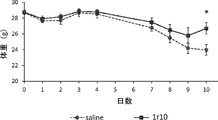
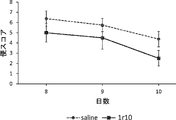
- the horizontal axis shows the number of days after the start of drinking the aqueous solution of dextran sulfate (DSS). It is a graph which shows the stool score of a mouse (mean ⁇ standard error (SEM)). In the graph, “saline” indicates a control group, and “1r10” indicates a peptide 1r10 administration group.
- the horizontal axis shows the number of days after the start of drinking the aqueous solution of dextran sulfate (DSS). It is a graph showing the DAI score of a mouse (mean ⁇ standard error (SEM); * p ⁇ 0.05 (Mann Whitney U test)).
- saline indicates a control group
- “1r10” indicates a peptide 1r10 administration group.
- the horizontal axis shows the number of days after the start of drinking the aqueous solution of dextran sulfate (DSS). It is a graph which shows the colon length 10 days after the start of drinking of the dextran sodium sulfate (DSS) aqueous solution (mean ⁇ standard error (SEM)).
- SEM standard error
- saline indicates a control group
- “1r10” indicates a peptide 1r10 administration group. It is a photograph which shows the auricle part of a mouse 4 days after the start of administration of a peptide.
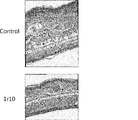
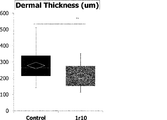
- Arrows indicate the margin of the pinna where desquamation is easily seen. It is a graph which shows the transition of auricle thickness during a peptide administration period (the vertical axis is a relative value with the peptide administration start date as 100%). Each point indicates the mean value and standard error (* p ⁇ 0.05; Repeated one way ANOVA test; post hoc Tukey-Kramer test). It is a representative photograph which shows the H.E. staining image of the skin section of the auricle 4 days after the start of peptide administration. The arrows in the photo show an example of the measured dermis thickness.
- Laminin was used to label tissue internal structures (blood vessels, basement membranes, nerves), and DAPI was used as a counterstain for the DNA of each cell.
- the present inventors have previously found a substance having an action of activating stem cells in a living body or mobilizing to injured tissue via peripheral circulation, and the substance is a new type that can overcome the weaknesses of cell therapy. We believe that it is promising as a medicine. Specifically, the present inventors have Platelet-derived growth factor receptor ⁇ (PDGFR ⁇ ) -positive cells in which High mobility group box 1 (HMGB1) released from necrotic tissue plays a role in inducing tissue regeneration in vivo. It has been found that by mobilizing mesenchymal stem cells (MSCs) to necrotic tissue via peripheral circulation, inflammation of necrotic tissue is suppressed and tissue regeneration is promoted.
- MSCs mesenchymal stem cells
- the present inventors have also found that a fragment peptide of HMGB1 exhibits peripheral blood mobilization activity and tissue regeneration-inducing activity of mesenchymal stem cells.
- the present inventors have synthesized a plurality of peptides consisting of a partial sequence of the artificial sequence peptide "1r10" found above (hereinafter, also referred to as "1r10 fragment peptide"), and investigated the presence or absence of MSC blood mobilization activity.
- the 1r10 fragment peptide containing a specific amino acid sequence showed the activity, and that there was one core region showing the MSC blood mobilization activity on the N-terminal side and the C-terminal side of the peptide 1r10. ..
- mesenchymal stem cells exert anti-inflammatory, immunomodulatory, and antifibrotic effects.
- mesenchymal stem cells also have pluripotency that allows them to differentiate into various tissues, it is well known to those skilled in the art that they exert an action of promoting regeneration of injured tissues. Therefore, a 1r10 fragment peptide having an activity of mobilizing mesenchymal stem cells into peripheral blood or a peptide having an activity of mobilizing mesenchymal stem cells into peripheral blood containing the amino acid sequence of the fragment peptide is administered to a subject.
- the mesenchymal stem cells are mobilized in the peripheral blood, and the mesenchymal stem cells have an anti-inflammatory action, an immunomodulatory action, an antifibrotic action, and a tissue regeneration promoting action (differentiation and / or anti-inflammatory action of the mesenchymal stem cells). It is thought that (according to) will bring about therapeutic effects on various diseases.
- the artificial sequence peptide 1r10 previously found by the present inventors has a therapeutic effect on inflammatory bowel disease, atopic dermatitis, and cerebral infarction, which is the recruitment of mesenchymal stem cells into the peripheral blood. It is considered that the effect is brought about through. Therefore, a 1r10 fragment peptide having an activity of mobilizing mesenchymal stem cells into peripheral blood, or a peptide having an activity of mobilizing mesenchymal stem cells into peripheral blood containing an amino acid sequence of the fragment peptide is an artificial sequence. Similar to peptide 1r10, it is thought to have a therapeutic effect on inflammatory bowel disease, atopic dermatitis, and cerebral infarction.
- the "artificial sequence peptide” refers to a peptide having an amino acid sequence that does not exist in nature. Further, in the present application, the “artificial sequence peptide” is also simply referred to as an “artificial peptide”.
- the "1r10 fragment peptide” refers to a peptide consisting of a part of the amino acid sequence (SEQ ID NO: 1) of the artificial sequence peptide 1r10.
- the present application provides a composition for use in recruiting mesenchymal stem cells into peripheral blood, which contains a specific 1r10 fragment peptide or a peptide containing the amino acid sequence of the fragment peptide.
- composition for use in mobilizing mesenchymal stem cells into the peripheral blood of the present application can be used as a pharmaceutical composition or a reagent composition.
- pharmaceutical composition is used interchangeably with “pharmaceutical”, “drug” or “pharmaceutical composition”
- reagent composition is used interchangeably with “reagent”. Be done.
- composition for use in mobilizing mesenchymal stem cells into peripheral blood of the present application can be used for treating a disease or pathological condition in a subject by, for example, mobilizing mesenchymal stem cells into peripheral blood.
- the mesenchymal stem cells mobilized in the peripheral blood using the composition for mobilizing the mesenchymal stem cells into the peripheral blood of the present application are collected from the body and then concentrated to concentrate the disease or pathological condition in the subject. It can also be used for the treatment of.
- the present application also provides the use of a particular 1r10 fragment peptide or a peptide containing the amino acid sequence of the fragment peptide in the manufacture of a medicament or reagent for recovering mesenchymal stem cells from the body.
- composition for use in mobilizing mesenchymal stem cells into the peripheral blood of the present application can also be used in, for example, basic research, clinical research, and the like.
- Basic research and clinical research include, but are not limited to, mesenchymal stem cell mobilization research in vitro and mesenchymal stem cell mobilization research in experimental animals.
- the present application also includes the use of a specific 1r10 fragment peptide or a peptide containing the amino acid sequence of the fragment peptide (these peptides are also hereinafter simply referred to as "peptides") in the manufacture of a drug or reagent for basic research or clinical research. Also provide.
- composition for use in mobilizing mesenchymal stem cells into the peripheral blood of the present application may contain one or more peptides.
- mesenchymal stem cells are cells having the ability to differentiate into mesenchymal tissues / cells such as bone, cartilage, fat, and muscle, and the ability to self-renew.
- mesenchymal stem cells also have the ability to differentiate into epithelial and neural tissues.
- Mesenchymal stem cells having self-renewal ability can be discriminated using, for example, having colony forming ability as an index.
- mesenchymal stem cells are cells capable of colonizing.
- Mesenchymal stem cells can be collected from bone marrow or other tissues (blood, such as umbilical cord blood, and skin, fat, pulp, etc.) and can be cultured and proliferated as cells attached to a solid phase, for example, a culture dish.
- the mesenchymal stem cells in the present application may exist as a heterogeneous cell population including not only stem cells in a narrow sense (cells having self-renewal ability and differentiation ability) but also progenitor cells, and under culture conditions, stem cells in a narrow sense, Alternatively, it may include differentiated cells in addition to stem cells and progenitor cells in the narrow sense. In one embodiment, the mesenchymal stem cells may be composed only of stem cells in the narrow sense.
- a progenitor cell is defined as a cell having a unidirectional differentiation ability into a specific tissue cell other than the blood system, and has a differentiation ability into a mesenchymal tissue, an epithelial tissue, a nerve tissue, a parenchymal organ, and a vascular endothelium. Contains cells that have.
- the mesenchymal stem cells include, but are not limited to, bone marrow mesenchymal stem cells and bone marrow-derived mesenchymal stem cells.
- bone marrow mesenchymal stem cells are mesenchymal stem cells existing in the bone marrow.
- bone marrow mesenchymal stem cells also have the ability to differentiate into epithelial and neural tissues.
- bone marrow mesenchymal stem cells are cells capable of colonizing.
- bone marrow mesenchymal stem cell is used interchangeably with “bone marrow mesenchymal stromal cell”, “bone marrow pluripotent stem cell” or “bone marrow pluripotent stromal cell”.
- bone marrow-derived mesenchymal stem cells refers to mesenchymal stem cells mobilized from the bone marrow to the outside of the bone marrow.
- Bone marrow-derived mesenchymal stem cells can be obtained by collecting peripheral blood, and also from mesenchymal tissues such as fat, epithelial tissues such as skin, and nerve tissues such as brain.
- mesenchymal tissues such as fat, epithelial tissues such as skin, and nerve tissues such as brain.
- the term “bone marrow-derived mesenchymal stem cell” is used interchangeably with “bone marrow-derived mesenchymal cell", “bone marrow-derived pluripotent stem cell” or “bone marrow-derived pluripotent stromal cell”. Be done.
- the bone marrow mesenchymal stem cells and the bone marrow-derived mesenchymal stem cells are prepared, for example, by administering the cells directly after collection or once attached to the culture dish to the injured part of the living body, for example, keratinocytes constituting the skin. It may also have the ability to differentiate into epithelial tissues and tissues of the nervous system that constitutes the brain.
- Mesenchymal stem cells derived from bone marrow and mesenchymal stem cells derived from bone marrow are osteoblasts (identifiable by recognizing calcium deposition when inducing differentiation), cartilage cells (positive for alcian blue staining, positive for safranin-O staining, etc.) In addition to fat cells (identifiable by Zudan III staining positive, etc.), mesenchymal cells such as fibroblasts, smooth muscle cells, skeletal muscle cells, stromal cells, and tendon cells, nerve cells, and pigment cells.
- Epidermal cells Epidermal cells, hair follicle cells (expressing cytokeratin family, hair keratin family, etc.), epithelial cells (for example, epidermal keratinized cells, intestinal epithelial cells express cytokeratin family, etc.), endothelial cells, and liver, It may have the ability to differentiate into parenchymal organ cells such as kidney and pancreas, but the differentiated cells are not limited to the above cells.
- PDGFR ⁇ positive, PDGFR ⁇ positive, Lin negative, CD45 negative, CD44 positive, CD90 positive, CD29 positive, Flk-1 negative, CD105 positive, CD73 positive, CD90 positive, CD71 positive, Stro- All or part of 1-positive, CD106-positive, CD166-positive, CD31-negative, CD271-positive, and CD11b-negative can be exemplified, but are not limited thereto.
- Markers for mouse mesenchymal stem cells include CD44 positive, PDGFR ⁇ positive, PDGFR ⁇ positive, CD45 negative, Lin negative, Sca-1 positive, c-kit negative, CD90 positive, CD105 positive, CD29 positive, Flk-1 negative, CD271. All or part of positive and CD11b negative can be exemplified, but not limited thereto.
- markers for rat mesenchymal stem cells include PDGFR ⁇ positive, CD44 positive, CD54 positive, CD73 positive, CD90 positive, CD105 positive, CD29 positive, CD271 positive, CD31 negative, and CD45 negative, all or part of these. It is not limited to.
- the mesenchymal stem cells are PDGFR ⁇ -positive mesenchymal stem cells, PDGFR ⁇ -positive bone marrow-derived mesenchymal stem cells, and PDGFR ⁇ -positive bone marrow-derived cells, which are obtained by bone marrow collection (bone marrow cell collection) or peripheral blood collection. By culturing mononuclear cell fractions in the obtained blood, cells obtained as adherent cells can be exemplified, but the cells are not limited thereto. Examples of PDGFR ⁇ -positive mesenchymal stem cells include PDGFR ⁇ and CD44-positive cells, PDGFR ⁇ and CD90-positive cells, PDGFR ⁇ and CD105-positive cells, PDGFR ⁇ and CD29-positive cells, and the like. Be done. In one embodiment, PDGFR ⁇ -positive mesenchymal stem cells may be CD44-negative cells.
- compositions for use in the treatment of a disease or pathological condition in a subject by recruiting mesenchymal stem cells into peripheral blood which comprises a particular 1r10 fragment peptide or a peptide comprising the amino acid sequence of the fragment peptide. offer.
- composition for use in the treatment of a disease or pathological condition in a subject by mobilizing mesenchymal stem cells into the peripheral blood of the present application can be used as a pharmaceutical composition.
- the target in the present application is not particularly limited, and includes mammals, birds, fish, and the like.
- mammals include humans and non-human animals, and examples thereof include, but are limited to, humans, mice, rats, monkeys, pigs, dogs, rabbits, hamsters, guinea pigs, horses, sheep, and whales. is not it.
- the term "subject” is used interchangeably with "patient,” “individual,” or "animal.”
- composition for use in the treatment of a disease or pathological condition in a subject by mobilizing mesenchymal stem cells into the peripheral blood of the present application may include one or more peptides.
- the treatment of a disease or pathological condition is selected from, for example, anti-inflammatory treatment, immunomodulatory treatment, tissue regeneration-inducing treatment, and tissue fibrosis-suppressing treatment, but is not limited thereto.
- the disease or pathological condition is selected from, for example, inflammatory disease, autoimmune disease, tissue damage, ischemic or necrotic disease, and fibrous disease, but is not limited thereto.
- examples of inflammatory diseases include, but are not limited to, inflammatory bowel disease and atopic dermatitis.
- autoimmune diseases include, but are not limited to, inflammatory bowel disease.
- Fibrotic diseases include, but are not limited to, pulmonary fibrosis, for example.
- Diseases associated with tissue damage, ischemia or necrosis include, but are not limited to, inflammatory bowel disease and cerebral infarction, for example.
- Inflammatory bowel disease includes, but is not limited to, ulcerative colitis and Crohn's disease.
- the term "activity to mobilize mesenchymal stem cells into peripheral blood” is compatible with “activity to increase the abundance of mesenchymal stem cells in peripheral blood” and “MSC blood mobilization activity”. Used.
- the MSC blood mobilization activity of the peptide in the present application is, for example, i) Collecting peripheral blood from an individual to which the peptide has been administered and an individual to which the peptide has not been administered, and seeding and culturing in a culture dish (several days to 10). Day), counting the number of colonies formed, and ii) the cells that formed the colonies have adherence to the solid phase and differentiate into osteoblasts, chondrocytes and adipocytes. It can be evaluated by confirming that it has the ability.
- red blood cells may be removed from the peripheral blood by a desired method before seeding the collected peripheral blood in the culture dish.
- surface marker analysis, transcriptome analysis, etc. are performed on the cells that have formed colonies, and the cells have properties characteristic of mesenchymal stem cells. May be confirmed.
- the peptide in the present application can be obtained as a recombinant by incorporating the DNA encoding it into an appropriate expression system, or can be artificially synthesized. Therefore, the peptides in the present application include peptides produced using cells and artificially synthesized peptides (so-called synthetic peptides).
- the DNA encoding the peptide may be incorporated into an appropriate expression system and expressed.
- Hosts applicable to the present application include, but are not limited to, prokaryotic cells and eukaryotic cells. Further, examples of hosts applicable to the present application include bacteria (for example, Escherichia coli), yeast, animal cells (for example, mammalian cells such as HEK293 cells and CHO cells, insect cells such as silkworm cells), and plant cells. , Not limited to these.
- the expression vector pGEX and Escherichia coli can be shown. Since pGEX can express a foreign gene as a fusion protein with glutathione S-transferase (GST) (Gene, 67: 31-40, 1988), pGEX incorporating the DNA encoding the peptide of the present application is heat-shocked. It is introduced into an Escherichia coli strain such as BL21, and after an appropriate culture time, isopropylthio- ⁇ -D-galactoside (IPTG) is added to induce the expression of the GST fusion peptide. Since GST in the present application is adsorbed on glutathione sepharose 4B, the expression product can be easily separated and purified by affinity chromatography.
- GST glutathione S-transferase
- the following can be applied as a host / vector system for obtaining a genetically modified product of the peptide of the present application.
- a host when a bacterium is used as a host, a vector for expressing a fusion protein using a tag or the like is commercially available.
- the genetically modified product of the present application includes a state in which a tag or a part of a peptide thereof is added.
- the tags added to the peptides of the present application are not particularly limited as long as they do not affect the activity of the peptides of the present application, and are, for example, histidine tags (for example, 6 ⁇ His, 10 ⁇ His), HA tags, FLAG tags, GST tags, etc. Examples include T7-tag, HSV-tag, E-tag, lck tag, and B-tag.
- Pichia yeast is effective for the expression of proteins having sugar chains.
- an expression system using an insect cell-hosted baculovirus vector is also useful (Bio / Technology, 6: 47-55, 1988).
- mammalian cells are used to transfect vectors using promoters such as CMV, RSV, or SV40, and these host / vector systems are all used as expression systems for the peptides of the present application. It can be used.
- genes can be introduced using virus vectors such as plasmid vector, retrovirus vector, lentivirus vector, adenovirus vector, adeno-associated virus vector Sendaivirus vector, Sendaivirus envelope vector, and papillomavirus vector. It is not limited to these.
- the vector may contain a promoter DNA sequence that effectively induces gene expression, factors that control gene expression, and molecules necessary to maintain the stability of the DNA.
- the obtained peptide of the present application can be isolated from the intracellular or extracellular (medium, etc.) of the host cell and purified as a substantially pure and uniform peptide. Separation and purification of the peptide may be performed by using the separation and purification method used in the usual purification of the peptide, and is not limited in any way. For example, chromatographic column, filter, ultrafiltration, salting out, solvent precipitation, solvent extraction, distillation, immunoprecipitation, SDS-polyacrylamide gel electrophoresis, isoelectric focusing, dialysis, recrystallization, etc. are appropriately selected. When combined, peptides can be separated and purified.
- chromatography examples include affinity chromatography, ion exchange chromatography, hydrophobic chromatography, gel filtration, reverse phase chromatography, adsorption chromatography and the like (Marshak et al., Strategies for Protein Purification and characterization: A Laboratory). Course Manual. Ed Daniel R. Cold Spring Harbor Laboratory Press, 1996). These chromatographies can be performed using liquid phase chromatography, for example, liquid phase chromatography such as HPLC or FPLC.
- the peptide of the present application is preferably a substantially purified peptide.
- substantially purified means that the degree of purification of the peptide of the present application (the ratio of the peptide of the present application to the total protein component) is 50% or more, 60% or more, 70% or more, 80% or more, 90%. Above, it means that it is 95% or more, 100% or close to 100%. The upper limit close to 100% depends on the purification technology and analysis technology of those skilled in the art, and is, for example, 99.999%, 99.99%, 99.9%, 99%.
- any peptide having the above-mentioned degree of purification which has been purified by any purification method, is included in the substantially purified peptide.
- the above-mentioned chromatography column, filter, ultrafiltration, salting out, solvent precipitation, solvent extraction, distillation, immunoprecipitation, SDS-polyacrylamide gel electrophoresis, isoelectric focusing, dialysis, recrystallization and the like are appropriately used.
- substantially purified peptides can be exemplified, but are not limited thereto.
- the peptide of the present application can also be artificially synthesized.
- peptides can be chemically synthesized by methods such as a peptide liquid phase synthesis method and a peptide solid phase synthesis method.
- the peptide solid-phase synthesis method is one of the methods generally used when chemically synthesizing a peptide. Beads of polystyrene polymer gel with a diameter of about 0.1 mm whose surface is modified with an amino group are used as a solid phase, and amino acid chains are extended one by one by a dehydration reaction from here. When the sequence of the target peptide is completed, it is excised from the solid phase surface to obtain the target substance.
- body eg, seleno amino acids such as selenomethionine
- modify peptides and protein backbones and the like.
- the peptide of the present application may be in the form of a pharmaceutically acceptable salt of the peptide.
- Examples of pharmaceutically acceptable salts include, but are not limited to, hydrochlorides, acetates, trifluoroacetates and the like.
- the peptide of the present application may be in the form of a solvate of the peptide or a solvate of a pharmaceutically acceptable salt of the peptide.
- the solvate refers to a solute molecule in which an arbitrary number of solvent molecules are coordinated, and examples thereof include, but are not limited to, hydrates.
- amino acid length of the 1r10 fragment peptide in the present application is in the range of, for example, 11 to 29 amino acids, for example, 11, 12, 13, 14, 15, 16, 17, 18, 19, 20, 21, 22, 23, 24, 25, 26. , 27, 28, or 29 amino acids.
- examples of the 1r10 fragment peptide include peptides selected from the following: (1) A peptide consisting of a part of the amino acid sequence of SEQ ID NO: 1 and containing the amino acid sequence of SEQ ID NO: 17 or 19; (2) Peptide consisting of the 1st to 27th amino acid sequences of SEQ ID NO: 1 (1r10_N03; SEQ ID NO: 2); (3) Peptide consisting of the 1st to 26th amino acid sequences of SEQ ID NO: 1 (1r10_N04; SEQ ID NO: 3); (4) Peptide consisting of the 1st to 25th amino acid sequences of SEQ ID NO: 1 (1r10_N05; SEQ ID NO: 4); (5) Peptide consisting of the 1st to 24th amino acid sequences of SEQ ID NO: 1 (1r10_N06; SEQ ID NO: 5); (6) Peptide consisting of the 1st to 23rd amino acid sequences of SEQ ID NO: 1 (1r10_N
- amino acid sequences described in (1) to (17) above the "18th to 30th amino acid sequence of SEQ ID NO: 1" (amino acid sequence of SEQ ID NO: 17) and the above (Amino acid sequence of SEQ ID NO: 17) described in (16) above. 17), "SEQ ID NO: 1: 6th to 16th amino acid sequence” (SEQ ID NO: 19 amino acid sequence) is a core region in which the 1r10 fragment peptide is important for maintaining MSC blood mobilization activity. be. MSC blood mobilization activity is retained if the 1r10 fragment peptide contains at least one of the two core regions.
- Peptides of the present application also include peptides selected from the following: (I) A peptide consisting of all or part of the amino acid sequence in which 1 to 5 amino acids are substituted, deleted, inserted or added in the amino acid sequence of SEQ ID NO: 1; A peptide containing an amino acid sequence; and (ii) a peptide consisting of all or part of an amino acid sequence having 90% or more sequence identity with the amino acid sequence of SEQ ID NO: 1 and the amino acid sequence of SEQ ID NO: 17 or 19. Peptides containing. Such peptides can be produced by methods well known to those of skill in the art.
- the peptides selected from the above (i) and (ii) are, for example, 30 or less, 29 or less, 28 or less, 27 or less, 26 or less, 25 or less, 24 or less, 23 or less, 22. Consists of 21 or less, 20 or less, 19 or less, 18 or less, 17 or less, 16 or less, 15 or less, 14 or less, 13 or less, 12 or less, or 11 or less amino acids. It can be a peptide.
- the peptide selected from the above (i) and (ii) can be a peptide excluding the peptide consisting of the amino acid sequence of SEQ ID NO: 1.
- “1 to 5" includes, for example, 5, 4, 3, 2, 1, 1 to 5, 1 to 4, and 1 piece. ⁇ 3, or 1 or 2 can be mentioned.
- “90% or more” can be expressed as “90% or more and less than 100%", and "90% or more” means, for example, 90% or more, 91% or more, 92%. Above, 93% or more, 94% or more, 95% or more, 96% or more, 97% or more, 98% or more or 99% or more can be mentioned.
- the 1r10 fragment peptide selected from the above (1) to (17) is a 1r10 fragment peptide having an activity of mobilizing mesenchymal stem cells into peripheral blood.
- the peptide selected from the above (i) and (ii) is also a peptide having an activity of mobilizing mesenchymal stem cells into peripheral blood. Therefore, these peptides have the effect of mobilizing mesenchymal stem cells into peripheral blood, as well as the therapeutic effect of inflammatory diseases, autoimmune diseases, tissue damage, diseases associated with ischemia or necrosis, and fibrotic diseases. Conceivable.
- the present application also provides peptides disclosed herein, for example, 1r10 fragment peptides selected from (1) to (17) above, and peptides selected from (i) and (ii) above.
- the amino acid sequence shown in SEQ ID NO: 1 is the amino acid sequence of the artificial sequence peptide 1r10 of the present application.
- the amino acid sequences shown in SEQ ID NOs: 2 to 19 are the amino acid sequences of the 1r10 fragment peptides of the present application.
- the regions corresponding to the amino acid sequences of the 1r10 fragment peptides in the amino acid sequence (1r10 amino acid sequence) shown in SEQ ID NO: 1 are shown in Table 1 below.
- the base sequence shown in SEQ ID NO: 20 is an example of the base sequence of the DNA encoding the artificial sequence peptide 1r10 of the present application.
- the nucleotide sequences shown in SEQ ID NOs: 21 and 22 are examples of the nucleotide sequences of DNAs encoding the 1r10 fragment peptides of the present application, 1r10_C17 and 1r10_MF5, respectively.
- the region corresponding to the base sequence of the DNA encoding the 1r10 fragment peptide in the base sequence shown in SEQ ID NO: 20 (exemplified base sequence of 1r10) is shown in Table 1 below.
- the DNA can be prepared by a method (reverse translation) of converting an amino acid residue of an artificial sequence peptide 1r10 or 1r10 fragment peptide into a corresponding codon using a codon table known to those skilled in the art. Reverse translation can optionally be performed using a variety of software (including programs, algorithms, etc.) developed for the analysis of amino acid and nucleic acid sequences.
- composition an effective amount of the peptide of the present application or a pharmaceutical composition containing the same (hereinafter referred to as "pharmaceutical composition, etc.") is administered to a subject for the treatment of the diseases and symptoms described in the present specification.
- the effective amount in the present application means an amount sufficient for the treatment of the diseases or pathological conditions described in the present specification.
- Treatments in the present application include, but are not limited to, alleviation, delay, inhibition, amelioration, remission, cure, complete cure, and the like.
- the administration site of the pharmaceutical composition of the present application there is no limitation on the administration site of the pharmaceutical composition of the present application, and the site where the symptoms of the disease or pathological condition appear or its vicinity, the site different from them (sites other than them), and the site where the symptoms of the disease or pathological condition appear.
- the site where the symptoms of the disease or pathological condition appear or its vicinity the site different from them (sites other than them), and the site where the symptoms of the disease or pathological condition appear.
- any part such as a part away from, a part distal to the part where the symptoms of the disease or pathological condition appear, or a part which is distal and ectopic to the part where the symptoms of the disease or the pathological condition appear.
- the pharmaceutical composition of the present application and the like can exert its effect.
- the pharmaceutical composition and the like of the present application are derived from a tissue different from the tissue in which the symptoms of the disease or the pathological condition appear, a tissue distant from the tissue in which the symptoms of the disease or the pathological condition appear, or a tissue in which the symptoms of the disease or the pathological condition appear. It can exert its effect when administered to any tissue, such as tissue that is distal or tissue that is distal and ectopic to tissue that manifests symptoms of a disease or pathological condition.
- parenteral administration methods include intravascular administration (arterial administration, intravenous administration, etc.), intramuscular administration, and subcutaneous administration.
- Intradermal administration, intraperitoneal administration, nasal administration, pulmonary administration, transdermal administration, and the like are included, but are not limited thereto.
- the pharmaceutical composition of the present application is administered by injection, for example, intravenous injection, intramuscular injection, intraperitoneal injection, subcutaneous injection, etc., systemically or locally (for example, subcutaneous, intradermal, skin surface, eyeball, or palpebral condyle).
- Nasal mucosa, oral and gastrointestinal mucosa, vaginal / intrauterine mucosa, or injured site for example, intravenous injection, intramuscular injection, intraperitoneal injection, subcutaneous injection, etc.
- a cell secreting the peptide a gene therapy vector into which a DNA encoding the peptide is inserted, and a pharmaceutical composition containing these can also be used.
- the administration method can be appropriately selected according to the patient's age and symptoms.
- the dose can be selected in the range of 0.0000001 mg to 1000 mg per 1 kg of body weight per administration.
- the dose can be selected in the range of 0.00001 to 100000 mg / body per patient.
- the pharmaceutical compositions in the present application are not limited to these doses.
- the pharmaceutical composition of the present application can be formulated according to a conventional method (for example, Remington's Pharmaceutical Science, latest edition, Mark Publishing Company, Easton, USA) and contains both pharmaceutically acceptable carriers and additives. There may be.
- a conventional method for example, Remington's Pharmaceutical Science, latest edition, Mark Publishing Company, Easton, USA
- pharmaceutically acceptable carriers and additives There may be.
- the present invention is not limited to these, and other commonly used carriers can be appropriately used.
- the present invention is further exemplified by the following examples, but is not limited thereto.
- peripheral blood 800 ⁇ L of peripheral blood was collected from the heart from the heart under general anesthesia 16 hours after administration of saline or 1% DMSO or peptide (using a 1 mL syringe containing heparin). ).
- peripheral blood collected from 3 mice was pooled, and an equivalent amount of Hetasep (STEMCELL Technologies, Cat No. ST-07906) was used to remove red blood cells.
- the supernatant was collected after centrifuging at 100 G for 2 minutes and incubating at room temperature for 15 minutes. The supernatant was used in the next experiment as a sample containing nucleated cells in peripheral blood.
- the cells were cultured for 10 days under the conditions of 37 ° C., 5% CO 2 , and 5% O 2 using a medium containing streptomycin (Nakalitesk) (all numerical values are final concentrations).
- the medium was replaced with fresh medium twice a week during the culture period.
- cells on the plate were stained with a Differential Quik Stain Kit (Sysmex Corporation, Cat No. 16920), and the number of colonies containing 50 or more cells was counted.
- HMGB1 peptide 1-44 peripheral blood after administration of a peptide consisting of amino acid residues 1-44 of human HMGB1 protein having the activity of mobilizing mesenchymal stem cells into peripheral blood (hereinafter referred to as HMGB1 peptide 1-44) is administered on a solid phase. All the colonies obtained as a result of culturing also have adhesion to the solid phase and self-renewal ability, and it has been confirmed that they are PDGFR ⁇ positive, and the transcriptome analysis data is clustered to perform gene ontology analysis. From the results of the test, it was confirmed that the gene expression profile was characteristic of mesenchymal stem cells.
- the colonies obtained as a result of culturing peripheral blood on a solid phase are mesenchymal stem cells, and an increase in the number of colonies detected in a solid phase culture of peripheral blood indicates an increase in the number of mesenchymal stem cells in peripheral blood. it is conceivable that.
- mesenchymal stem cells are usually rarely present in peripheral blood, it is considered that the increased amount of mesenchymal stem cells was mobilized into peripheral blood from tissues other than peripheral blood (for example, bone marrow).
- the number of colonies detected in the solid-phase culture of peripheral blood after administration of the test substance can be used as an index of the activity of the test substance to mobilize mesenchymal stem cells into the peripheral blood.
- the timing (peak time) at which the number of mesenchymal stem cells in the peripheral blood reaches the maximum after administration of the test substance is considered to vary from individual to individual, and in the above peripheral blood colony assay, the timing of blood sampling (1r10 and fragments thereof) In the case of peptides, it often happens that the peak times of the number of mesenchymal stem cells in the peripheral blood do not match (16 hours after administration of the test substance). Therefore, instead of averaging the results of multiple assays, it was decided that the test substance that produced a number of colonies exceeding a predetermined threshold even once was evaluated as having MSC blood mobilization activity.
- the number of colonies formed in the negative control is "10" no matter how many times the assay is performed. It has been confirmed that it is less than. Therefore, in this example, the number of colonies as a threshold value is set to "10", and the test substance that has produced "10 or more" colonies even once out of 4 to 6 times of the assay is used. It was determined to be a substance with MSC blood mobilization activity.
- DSS Drug Dextran sodium sulfate
- peptide 1r10 TAA salt
- IBD inflammatory bowel disease
- Peptide was administered in an amount of 10 mL / kg of a solution of peptide 1r10 adjusted to a concentration of 0.5 mg / mL using physiological saline as a solvent on the 1, 4, 7, 8 and 9 days after the start of drinking the DSS aqueous solution.
- Peptide dose was 5 mg / kg) by injection into the tail vein.
- the control group was infused with saline at a dose of 10 mL / kg into the tail vein on days 1, 4, 7, 8 and 9 after the start of drinking the DSS aqueous solution.
- Results Figure 3 shows the changes in mouse body weight during the test period (see “saline” for the control group and "1r10" for the peptide-administered group).
- the body weight decreased over time after the start of drinking DSS, but the degree of decrease was slower in the peptide-administered group than in the control group, and 10 days after the start of drinking the DSS aqueous solution, the peptide-administered group lost weight. Body weight showed a tendency to recover.
- the stool score (the sum of the "stool condition” score and the “bleeding” score scored as shown in Table 3 above) and the DAI score 8 to 10 days after the start of drinking the DSS aqueous solution are shown in FIGS. 4 and 5, respectively. (See “saline” for the control group and “1r10" for the peptide-administered group). Both the stool score and the DAI score were lower in the peptide-administered group than in the control group.
- IBD In IBD, inflammation occurs in the mucous membrane of the intestinal tract, erosions and ulcers are formed, and symptoms such as narrowing and shortening of the intestinal tract may occur.
- weight loss occurs as another symptom of IBD, and the cause is considered to be deterioration of nutritional status due to inflammation and tissue damage (ulcer, etc.) occurring in the mucous membrane of the intestinal tract.
- intravenous injection of mesenchymal stem cells in an animal IBD model improves various symptoms including weight loss, epithelial damage in the intestinal tract, and infiltration of inflammatory cells. The improvement of such symptoms is due to the suppression of inflammation of the intestinal mucosa by the anti-inflammatory action of mesenchymal stem cells, and the promotion of regeneration of mucosal tissue as a result.
- Drugs MC903 (generic name: Calcipotriol) was used to induce atopic dermatitis (hereinafter, also referred to as “AD”) in mice.
- AD atopic dermatitis
- the peptide 1r10 (TFA salt) described in Reference Example 1 was used as a test substance.
- atopic dermatitis model mice C57BL / 6 mice (C57BL / 6JJcl, 7-8 weeks old, male, microbial grade SPF) were obtained from Japan Claire Co., Ltd. and acclimated in the animal breeding room for 5 days or more. Later, it was subjected to the following experiments. An ethanol-adjusted MC903 solution was applied to the skin of the auricle of the mouse at a dose of 2.25 nmol MC903 / ear / once / day 5 times a week for 2 weeks (10 times in total) to achieve atopic dermatitis. Induced dermatitis (AD).
- AD Induced dermatitis
- Such an MC903-induced AD model induces a series of type 2 immune response cascades by artificially inducing TSLP secretion from epithelial cells actually seen in AD patients, resulting in a short-term (1-1) AD-like pathology. It is a model that can be reproduced in 2 weeks) (Li M et al., Proc Natl Acad Sci US A. 2006; 103: 11736-41.).
- the appearance and tissue of the epidermis of normal mice and AD-induced mice were observed by MC903.
- Epidermis Acanthosis thickening of the epidermis due to spinous cell proliferation), disruption of local barriers, infiltration of immune cells into the dermis, increased dermis thickness, and spongiosis in parts of the epidermis. has also been confirmed.
- the solution of peptide 1r10 was injected into the tail vein at a volume of 5 mL / kg (1.5 mg / kg as the dose of peptide).
- the control group was adjusted to 0.3 mg / mL with saline twice, once on the grouping day (Day 15) and once during the following 4 days (Day 16 to Day 19).
- a solution of bovine serum albumin (BSA) was injected into the tail vein in a volume of 5 mL / kg (1.5 mg / kg as the dose of BSA).
- mice were placed under the influence of isoflurane anesthesia, cervical spine dislocation was performed and euthanized, and while preventing protein denaturation of the sample on ice, the auricular inflammation site and The skin in the surrounding area was cut and collected. After removing excess hair and skin with tweezers, the collected auricular skin was immersed in 10% Formalin and fixed overnight at 4 ° C. with shaking on ice using a shaker.
- hematoxylin and eosin (HE) staining was performed on the paraffin slice (5 ⁇ m thickness) of the skin tissue prepared as described above, and the dermis thickness was measured.
- three sections were prepared for each individual, and each section was imaged with a microscope (Keyence BZ-X710) at the center of inflammation (center), cranial side (Head), and caudal side (Tail). (That is, a total of 9 shots were taken per individual).
- Auricular thickness (edema) The transition of auricular thickness (edema) during the peptide administration period is shown in FIG. 8 (see “Control” for the control group and “1r10” for the peptide administration group). A statistically significant reduction in auricular thickness was observed in the peptide-administered group as compared with the control group.
- mice body weight during the period of this study were not significantly different in any of the groups, and were statistically significant between the groups. No change was observed (p> 0.05, Repeated one-way ANOVA).
- the right common carotid artery, right external carotid artery and right internal carotid artery were exposed, and the right common carotid artery and right external carotid artery were ligated with sutures.
- a No. 4 nylon thread (embolus) pre-coated with silicon and cut to a length of 19 mm was inserted from the bifurcation of the right external carotid artery and the right internal carotid artery to occlude the right middle cerebral artery (MCA). .. After occlusion of the right MCA, the cervical skin was sutured and released from anesthesia. Thirty minutes after the right MCA occlusion, flexion of the contralateral forelimb on the obstructed side was confirmed.
- Peptide Peptide is administered in a volume of 2 mL / kg of a solution of peptide 1r10 adjusted to a concentration of 1 mg / mL using physiological saline as a solvent at 105 minutes and 24 hours after occlusion of the right MCA.
- the dose was 2 mg / kg) by injection into the tail vein.
- the control group was injected with saline at a volume of 2 mL / kg into the tail vein 105 minutes and 24 hours after right MCA occlusion.
- TTC 2,3,5-Triphenyltetrazolium chloride
- V Cerebral infarction volume or total brain volume (mm 3 )
- a Cerebral infarct area or brain cross-section (mm 2 ) on a 4 mm anterior cross section of Bregma
- b Cerebral infarct area or brain cross-section (mm 2 ) on Bregma anterior 2 mm cross-section
- c Cerebral infarct area or brain cross-sectional area on Bregma cross section (mm 2 )
- d Cerebral infarct area or brain cross-section (mm 2 ) on a 2 mm posterior cross section of Bregma
- e Cerebral infarct area or brain cross-section (mm 2 ) on a 4 mm posterior cross section of Bregma
- f Cerebral infarct area or brain cross-section (mm 2 ) on a 6 mm posterior cross section of Bregma
- the effect of reducing the cerebral infarction lesion was obtained by administering the artificial sequence peptide of the present application to a cerebral infarction model rat.
- This is a result of the action of the artificial sequence peptide of the present application, which mobilizes mesenchymal stem cells into the peripheral blood, and the cells exert an anti-inflammatory effect, a trophic effect (secretion of nutritional factor), a tissue regeneration effect, and the like. it is conceivable that.
- the peptides of the present application are compositions for mobilizing mesenchymal stem cells into peripheral blood, and as therapeutic agents for inflammatory diseases, autoimmune diseases, fibrotic diseases, and diseases associated with tissue damage / ischemia / necrosis. Can be used.
Landscapes
- Health & Medical Sciences (AREA)
- Chemical & Material Sciences (AREA)
- Life Sciences & Earth Sciences (AREA)
- Organic Chemistry (AREA)
- General Health & Medical Sciences (AREA)
- Medicinal Chemistry (AREA)
- Veterinary Medicine (AREA)
- Public Health (AREA)
- Engineering & Computer Science (AREA)
- Animal Behavior & Ethology (AREA)
- General Chemical & Material Sciences (AREA)
- Pharmacology & Pharmacy (AREA)
- Bioinformatics & Cheminformatics (AREA)
- Chemical Kinetics & Catalysis (AREA)
- Nuclear Medicine, Radiotherapy & Molecular Imaging (AREA)
- Proteomics, Peptides & Aminoacids (AREA)
- Immunology (AREA)
- Gastroenterology & Hepatology (AREA)
- Molecular Biology (AREA)
- Genetics & Genomics (AREA)
- Biophysics (AREA)
- Biochemistry (AREA)
- Rheumatology (AREA)
- Pain & Pain Management (AREA)
- Epidemiology (AREA)
- Dermatology (AREA)
- Urology & Nephrology (AREA)
- Vascular Medicine (AREA)
- Cardiology (AREA)
- Heart & Thoracic Surgery (AREA)
- Pulmonology (AREA)
- Peptides Or Proteins (AREA)
- Medicines That Contain Protein Lipid Enzymes And Other Medicines (AREA)
Priority Applications (7)
| Application Number | Priority Date | Filing Date | Title |
|---|---|---|---|
| IL296982A IL296982B2 (en) | 2020-04-03 | 2021-04-01 | Peptide with mesenchymal stem cell migration activity |
| EP21781212.2A EP4144359A4 (en) | 2020-04-03 | 2021-04-02 | Peptide having mesenchymal stem cell mobilizing activity |
| JP2022511147A JP7672636B2 (ja) | 2020-04-03 | 2021-04-02 | 間葉系幹細胞の動員活性を有するペプチド |
| US17/995,017 US20230241159A1 (en) | 2020-04-03 | 2021-04-02 | Peptide Having Mesenchymal Stem Cell Mobilizing Activity |
| CA3178719A CA3178719A1 (en) | 2020-04-03 | 2021-04-02 | Peptide having mesenchymal stem cell mobilizing activity |
| CN202180032617.XA CN115697372A (zh) | 2020-04-03 | 2021-04-02 | 具有间充质干细胞的动员活性的肽 |
| BR112022019434A BR112022019434A2 (pt) | 2020-04-03 | 2021-04-02 | Peptídeo que tem atividade de mobilização de células-tronco mesenquimais |
Applications Claiming Priority (2)
| Application Number | Priority Date | Filing Date | Title |
|---|---|---|---|
| JP2020-067570 | 2020-04-03 | ||
| JP2020067570 | 2020-04-03 |
Publications (1)
| Publication Number | Publication Date |
|---|---|
| WO2021201260A1 true WO2021201260A1 (ja) | 2021-10-07 |
Family
ID=77929177
Family Applications (1)
| Application Number | Title | Priority Date | Filing Date |
|---|---|---|---|
| PCT/JP2021/014253 Ceased WO2021201260A1 (ja) | 2020-04-03 | 2021-04-02 | 間葉系幹細胞の動員活性を有するペプチド |
Country Status (8)
| Country | Link |
|---|---|
| US (1) | US20230241159A1 (https=) |
| EP (1) | EP4144359A4 (https=) |
| JP (1) | JP7672636B2 (https=) |
| CN (1) | CN115697372A (https=) |
| BR (1) | BR112022019434A2 (https=) |
| CA (1) | CA3178719A1 (https=) |
| IL (1) | IL296982B2 (https=) |
| WO (1) | WO2021201260A1 (https=) |
Cited By (3)
| Publication number | Priority date | Publication date | Assignee | Title |
|---|---|---|---|---|
| US11969459B2 (en) | 2017-01-27 | 2024-04-30 | StemRIM Inc. | Therapeutic agent for cardiomyopathy, old myocardial infarction and chronic heart failure |
| US12304933B2 (en) | 2018-10-05 | 2025-05-20 | StemRIM Inc. | Disease treatment drug based on mesenchymal-stem-cell mobilization |
| US12428458B2 (en) | 2018-02-08 | 2025-09-30 | StemRIM Inc. | Therapeutic agent for psoriasis |
Citations (6)
| Publication number | Priority date | Publication date | Assignee | Title |
|---|---|---|---|---|
| WO2009133939A1 (ja) * | 2008-04-30 | 2009-11-05 | 株式会社ジェノミックス | 末梢循環への骨髄由来多能性幹細胞動員薬 |
| WO2011052668A1 (ja) * | 2009-10-28 | 2011-05-05 | 株式会社ジェノミックス | 骨髄間葉系および/または多能性幹細胞の血中動員による組織再生促進剤 |
| WO2018186480A1 (ja) * | 2017-04-07 | 2018-10-11 | 株式会社ステムリム | 線維性疾患の治療薬 |
| WO2019107530A1 (ja) * | 2017-12-01 | 2019-06-06 | 株式会社ステムリム | 炎症性腸疾患の治療薬 |
| WO2020071520A1 (ja) * | 2018-10-05 | 2020-04-09 | 株式会社ステムリム | 間葉系幹細胞の動員活性を有するペプチド |
| WO2020158924A1 (ja) * | 2019-01-31 | 2020-08-06 | 国立大学法人大阪大学 | 母児間免疫寛容を誘導する方法 |
Family Cites Families (2)
| Publication number | Priority date | Publication date | Assignee | Title |
|---|---|---|---|---|
| PT3358011T (pt) * | 2011-04-26 | 2020-04-23 | Univ Osaka | Péptido para induzir a regeneração de um tecido e a sua utilização |
| CA3059544A1 (en) * | 2017-04-25 | 2018-11-01 | Shionogi & Co., Ltd. | Peptide for inducing regeneration of tissue, and use thereof |
-
2021
- 2021-04-01 IL IL296982A patent/IL296982B2/en unknown
- 2021-04-02 BR BR112022019434A patent/BR112022019434A2/pt unknown
- 2021-04-02 US US17/995,017 patent/US20230241159A1/en active Pending
- 2021-04-02 CN CN202180032617.XA patent/CN115697372A/zh active Pending
- 2021-04-02 EP EP21781212.2A patent/EP4144359A4/en active Pending
- 2021-04-02 JP JP2022511147A patent/JP7672636B2/ja active Active
- 2021-04-02 CA CA3178719A patent/CA3178719A1/en active Pending
- 2021-04-02 WO PCT/JP2021/014253 patent/WO2021201260A1/ja not_active Ceased
Patent Citations (6)
| Publication number | Priority date | Publication date | Assignee | Title |
|---|---|---|---|---|
| WO2009133939A1 (ja) * | 2008-04-30 | 2009-11-05 | 株式会社ジェノミックス | 末梢循環への骨髄由来多能性幹細胞動員薬 |
| WO2011052668A1 (ja) * | 2009-10-28 | 2011-05-05 | 株式会社ジェノミックス | 骨髄間葉系および/または多能性幹細胞の血中動員による組織再生促進剤 |
| WO2018186480A1 (ja) * | 2017-04-07 | 2018-10-11 | 株式会社ステムリム | 線維性疾患の治療薬 |
| WO2019107530A1 (ja) * | 2017-12-01 | 2019-06-06 | 株式会社ステムリム | 炎症性腸疾患の治療薬 |
| WO2020071520A1 (ja) * | 2018-10-05 | 2020-04-09 | 株式会社ステムリム | 間葉系幹細胞の動員活性を有するペプチド |
| WO2020158924A1 (ja) * | 2019-01-31 | 2020-08-06 | 国立大学法人大阪大学 | 母児間免疫寛容を誘導する方法 |
Non-Patent Citations (10)
| Title |
|---|
| BIO/TECHNOLOGY, vol. 6, 1988, pages 47 - 55 |
| GENE, vol. 67, 1988, pages 31 - 40 |
| HE, Y. T. ET AL.: "O-34-2 HMGB1 ameliorates inflammatory bowel disease by inducing circulating mesenchymal stem cells", REGENERATIVE MEDICINE, JAPANESE SOCIETY FOR REGENERATIVE MEDICINE, JP, vol. 17, no. Suppl., 23 February 2018 (2018-02-23), JP , XP009529436, ISSN: 1347-7919 * |
| LI ET AL., PLOS ONE, vol. 10, no. 12, 7 December 2015 (2015-12-07), pages e0144101 |
| LI M ET AL., PROC NATL ACAD SCI USA., vol. 103, 2006, pages 11736 - 41 |
| MARSHAK ET AL.: "Strategies for Protein Purification and Characterization: A Laboratory Course Manual", 1996, COLD SPRING HARBOR LABORATORY PRESS |
| PAXINOS GWATSON C.: "The rat brain in stereotaxic coordinates", 1986, ACADEMIC PRESS INC. |
| PNAS, vol. 108, no. 16, 19 April 2011 (2011-04-19), pages 6609 - 14 |
| See also references of EP4144359A4 |
| YAMAOKA, S. ET AL.: "Systemic delivery of HMGB1 peptide ameliorates imiquimod-induced psoriasis-like dermatitis", JOURNAL OF INVESTIGATIVE DERMATOLOGY, vol. 138, no. 5, May 2018 (2018-05-01), pages 177, XP055629778, DOI: 10.1016/j.jid.2018.03.1055 * |
Cited By (3)
| Publication number | Priority date | Publication date | Assignee | Title |
|---|---|---|---|---|
| US11969459B2 (en) | 2017-01-27 | 2024-04-30 | StemRIM Inc. | Therapeutic agent for cardiomyopathy, old myocardial infarction and chronic heart failure |
| US12428458B2 (en) | 2018-02-08 | 2025-09-30 | StemRIM Inc. | Therapeutic agent for psoriasis |
| US12304933B2 (en) | 2018-10-05 | 2025-05-20 | StemRIM Inc. | Disease treatment drug based on mesenchymal-stem-cell mobilization |
Also Published As
| Publication number | Publication date |
|---|---|
| CA3178719A1 (en) | 2021-10-07 |
| JP7672636B2 (ja) | 2025-05-08 |
| CN115697372A (zh) | 2023-02-03 |
| JPWO2021201260A1 (https=) | 2021-10-07 |
| US20230241159A1 (en) | 2023-08-03 |
| BR112022019434A2 (pt) | 2022-12-06 |
| IL296982B1 (en) | 2025-12-01 |
| IL296982A (en) | 2022-12-01 |
| EP4144359A1 (en) | 2023-03-08 |
| EP4144359A4 (en) | 2024-05-01 |
| IL296982B2 (en) | 2026-04-01 |
Similar Documents
| Publication | Publication Date | Title |
|---|---|---|
| JP7405345B2 (ja) | 間葉系幹細胞の動員活性を有するペプチド | |
| JP5968442B2 (ja) | 心筋梗塞の修復再生を誘導する多能性幹細胞 | |
| US20240368235A1 (en) | Disease Treatment Drug Based on Mesenchymal-Stem-Cell Mobilization | |
| JP2021191271A (ja) | 組織再生を誘導するためのペプチドとその利用 | |
| KR102146815B1 (ko) | Hmgb1 단편을 이용한 신규 심근경색의 치료법 | |
| JP7672636B2 (ja) | 間葉系幹細胞の動員活性を有するペプチド | |
| US9688733B2 (en) | Method for treating spinal cord injury using HMGB1 fragment | |
| CN110494154A (zh) | 心肌病、陈旧性心肌梗塞及慢性心力衰竭的治疗剂 | |
| JP7113007B2 (ja) | 組織再生を誘導するためのペプチドとその利用 | |
| JP7561348B2 (ja) | 間葉系幹細胞の増殖促進または減少抑制のための組成物 | |
| JP7016125B2 (ja) | 脳梗塞の治療薬 | |
| RU2773055C2 (ru) | Пептид для индукции регенерации ткани и его применение | |
| JP2020174573A (ja) | 虚血組織に集積するエクソソームおよびその製造方法 | |
| RU2795320C2 (ru) | Терапевтическое средство для лечения кардиомиопатии, перенесенного инфаркта миокарда и хронической сердечной недостаточности | |
| HK1212888B (en) | Novel method for treating spinal cord injury using hmgb1 fragment |
Legal Events
| Date | Code | Title | Description |
|---|---|---|---|
| 121 | Ep: the epo has been informed by wipo that ep was designated in this application |
Ref document number: 21781212 Country of ref document: EP Kind code of ref document: A1 |
|
| ENP | Entry into the national phase |
Ref document number: 2022511147 Country of ref document: JP Kind code of ref document: A |
|
| ENP | Entry into the national phase |
Ref document number: 3178719 Country of ref document: CA |
|
| REG | Reference to national code |
Ref country code: BR Ref legal event code: B01A Ref document number: 112022019434 Country of ref document: BR |
|
| WWE | Wipo information: entry into national phase |
Ref document number: 202217061720 Country of ref document: IN |
|
| WWE | Wipo information: entry into national phase |
Ref document number: 2021781212 Country of ref document: EP |
|
| ENP | Entry into the national phase |
Ref document number: 2021781212 Country of ref document: EP Effective date: 20221103 |
|
| NENP | Non-entry into the national phase |
Ref country code: DE |
|
| ENP | Entry into the national phase |
Ref document number: 112022019434 Country of ref document: BR Kind code of ref document: A2 Effective date: 20220927 |
|
| WWG | Wipo information: grant in national office |
Ref document number: 296982 Country of ref document: IL |