WO2021177233A1 - 活性エステル、硬化性樹脂組成物、及び、硬化物 - Google Patents
活性エステル、硬化性樹脂組成物、及び、硬化物 Download PDFInfo
- Publication number
- WO2021177233A1 WO2021177233A1 PCT/JP2021/007712 JP2021007712W WO2021177233A1 WO 2021177233 A1 WO2021177233 A1 WO 2021177233A1 JP 2021007712 W JP2021007712 W JP 2021007712W WO 2021177233 A1 WO2021177233 A1 WO 2021177233A1
- Authority
- WO
- WIPO (PCT)
- Prior art keywords
- active ester
- compound
- polyol
- resin composition
- group
- Prior art date
- Legal status (The legal status is an assumption and is not a legal conclusion. Google has not performed a legal analysis and makes no representation as to the accuracy of the status listed.)
- Ceased
Links
Images






Classifications
-
- C—CHEMISTRY; METALLURGY
- C07—ORGANIC CHEMISTRY
- C07C—ACYCLIC OR CARBOCYCLIC COMPOUNDS
- C07C69/00—Esters of carboxylic acids; Esters of carbonic or haloformic acids
- C07C69/76—Esters of carboxylic acids having a carboxyl group bound to a carbon atom of a six-membered aromatic ring
- C07C69/80—Phthalic acid esters
-
- B—PERFORMING OPERATIONS; TRANSPORTING
- B32—LAYERED PRODUCTS
- B32B—LAYERED PRODUCTS, i.e. PRODUCTS BUILT-UP OF STRATA OF FLAT OR NON-FLAT, e.g. CELLULAR OR HONEYCOMB, FORM
- B32B15/00—Layered products comprising a layer of metal
- B32B15/04—Layered products comprising a layer of metal comprising metal as the main or only constituent of a layer, which is next to another layer of the same or of a different material
- B32B15/08—Layered products comprising a layer of metal comprising metal as the main or only constituent of a layer, which is next to another layer of the same or of a different material of synthetic resin
-
- B—PERFORMING OPERATIONS; TRANSPORTING
- B32—LAYERED PRODUCTS
- B32B—LAYERED PRODUCTS, i.e. PRODUCTS BUILT-UP OF STRATA OF FLAT OR NON-FLAT, e.g. CELLULAR OR HONEYCOMB, FORM
- B32B15/00—Layered products comprising a layer of metal
- B32B15/20—Layered products comprising a layer of metal comprising aluminium or copper
-
- C—CHEMISTRY; METALLURGY
- C07—ORGANIC CHEMISTRY
- C07C—ACYCLIC OR CARBOCYCLIC COMPOUNDS
- C07C69/00—Esters of carboxylic acids; Esters of carbonic or haloformic acids
- C07C69/76—Esters of carboxylic acids having a carboxyl group bound to a carbon atom of a six-membered aromatic ring
- C07C69/80—Phthalic acid esters
- C07C69/82—Terephthalic acid esters
-
- C—CHEMISTRY; METALLURGY
- C08—ORGANIC MACROMOLECULAR COMPOUNDS; THEIR PREPARATION OR CHEMICAL WORKING-UP; COMPOSITIONS BASED THEREON
- C08G—MACROMOLECULAR COMPOUNDS OBTAINED OTHERWISE THAN BY REACTIONS ONLY INVOLVING UNSATURATED CARBON-TO-CARBON BONDS
- C08G59/00—Polycondensates containing more than one epoxy group per molecule; Macromolecules obtained by polymerising compounds containing more than one epoxy group per molecule using curing agents or catalysts which react with the epoxy groups
-
- C—CHEMISTRY; METALLURGY
- C08—ORGANIC MACROMOLECULAR COMPOUNDS; THEIR PREPARATION OR CHEMICAL WORKING-UP; COMPOSITIONS BASED THEREON
- C08G—MACROMOLECULAR COMPOUNDS OBTAINED OTHERWISE THAN BY REACTIONS ONLY INVOLVING UNSATURATED CARBON-TO-CARBON BONDS
- C08G59/00—Polycondensates containing more than one epoxy group per molecule; Macromolecules obtained by polymerising compounds containing more than one epoxy group per molecule using curing agents or catalysts which react with the epoxy groups
- C08G59/18—Macromolecules obtained by polymerising compounds containing more than one epoxy group per molecule using curing agents or catalysts which react with the epoxy groups ; e.g. general methods of curing
- C08G59/40—Macromolecules obtained by polymerising compounds containing more than one epoxy group per molecule using curing agents or catalysts which react with the epoxy groups ; e.g. general methods of curing characterised by the curing agents used
- C08G59/42—Polycarboxylic acids; Anhydrides, halides or low molecular weight esters thereof
-
- C—CHEMISTRY; METALLURGY
- C08—ORGANIC MACROMOLECULAR COMPOUNDS; THEIR PREPARATION OR CHEMICAL WORKING-UP; COMPOSITIONS BASED THEREON
- C08J—WORKING-UP; GENERAL PROCESSES OF COMPOUNDING; AFTER-TREATMENT NOT COVERED BY SUBCLASSES C08B, C08C, C08F, C08G or C08H
- C08J5/00—Manufacture of articles or shaped materials containing macromolecular substances
- C08J5/24—Impregnating materials with prepolymers which can be polymerised in situ, e.g. manufacture of prepregs
-
- H—ELECTRICITY
- H05—ELECTRIC TECHNIQUES NOT OTHERWISE PROVIDED FOR
- H05K—PRINTED CIRCUITS; CASINGS OR CONSTRUCTIONAL DETAILS OF ELECTRIC APPARATUS; MANUFACTURE OF ASSEMBLAGES OF ELECTRICAL COMPONENTS
- H05K1/00—Printed circuits
- H05K1/02—Details
- H05K1/03—Use of materials for the substrate
-
- H—ELECTRICITY
- H05—ELECTRIC TECHNIQUES NOT OTHERWISE PROVIDED FOR
- H05K—PRINTED CIRCUITS; CASINGS OR CONSTRUCTIONAL DETAILS OF ELECTRIC APPARATUS; MANUFACTURE OF ASSEMBLAGES OF ELECTRICAL COMPONENTS
- H05K1/00—Printed circuits
- H05K1/02—Details
- H05K1/03—Use of materials for the substrate
- H05K1/0313—Organic insulating material
- H05K1/0353—Organic insulating material consisting of two or more materials, e.g. two or more polymers, polymer + filler, + reinforcement
- H05K1/0366—Organic insulating material consisting of two or more materials, e.g. two or more polymers, polymer + filler, + reinforcement reinforced, e.g. by fibres, fabrics
-
- H—ELECTRICITY
- H05—ELECTRIC TECHNIQUES NOT OTHERWISE PROVIDED FOR
- H05K—PRINTED CIRCUITS; CASINGS OR CONSTRUCTIONAL DETAILS OF ELECTRIC APPARATUS; MANUFACTURE OF ASSEMBLAGES OF ELECTRICAL COMPONENTS
- H05K3/00—Apparatus or processes for manufacturing printed circuits
- H05K3/46—Manufacturing multilayer circuits
-
- H—ELECTRICITY
- H10—SEMICONDUCTOR DEVICES; ELECTRIC SOLID-STATE DEVICES NOT OTHERWISE PROVIDED FOR
- H10W—GENERIC PACKAGES, INTERCONNECTIONS, CONNECTORS OR OTHER CONSTRUCTIONAL DETAILS OF DEVICES COVERED BY CLASS H10
- H10W74/00—Encapsulations, e.g. protective coatings
- H10W74/10—Encapsulations, e.g. protective coatings characterised by their shape or disposition
-
- H—ELECTRICITY
- H10—SEMICONDUCTOR DEVICES; ELECTRIC SOLID-STATE DEVICES NOT OTHERWISE PROVIDED FOR
- H10W—GENERIC PACKAGES, INTERCONNECTIONS, CONNECTORS OR OTHER CONSTRUCTIONAL DETAILS OF DEVICES COVERED BY CLASS H10
- H10W74/00—Encapsulations, e.g. protective coatings
- H10W74/40—Encapsulations, e.g. protective coatings characterised by their materials
-
- H—ELECTRICITY
- H10—SEMICONDUCTOR DEVICES; ELECTRIC SOLID-STATE DEVICES NOT OTHERWISE PROVIDED FOR
- H10W—GENERIC PACKAGES, INTERCONNECTIONS, CONNECTORS OR OTHER CONSTRUCTIONAL DETAILS OF DEVICES COVERED BY CLASS H10
- H10W74/00—Encapsulations, e.g. protective coatings
- H10W74/40—Encapsulations, e.g. protective coatings characterised by their materials
- H10W74/47—Encapsulations, e.g. protective coatings characterised by their materials comprising organic materials, e.g. plastics or resins
-
- B—PERFORMING OPERATIONS; TRANSPORTING
- B32—LAYERED PRODUCTS
- B32B—LAYERED PRODUCTS, i.e. PRODUCTS BUILT-UP OF STRATA OF FLAT OR NON-FLAT, e.g. CELLULAR OR HONEYCOMB, FORM
- B32B2311/00—Metals, their alloys or their compounds
- B32B2311/12—Copper
-
- B—PERFORMING OPERATIONS; TRANSPORTING
- B32—LAYERED PRODUCTS
- B32B—LAYERED PRODUCTS, i.e. PRODUCTS BUILT-UP OF STRATA OF FLAT OR NON-FLAT, e.g. CELLULAR OR HONEYCOMB, FORM
- B32B2457/00—Electrical equipment
- B32B2457/08—PCBs, i.e. printed circuit boards
Definitions
- the present invention relates to an active ester, a curable resin composition containing the active ester, and a cured product obtained from the curable resin composition.
- Epoxy resin compositions containing an epoxy resin and its curing agent as essential components are widely used in electronic component applications such as semiconductors and multilayer printed circuit boards because they exhibit excellent heat resistance and insulating properties in the cured product. ..
- speed and frequency of signals increase, it is becoming difficult to obtain a low dielectric loss tangent while maintaining a sufficiently low dielectric constant.
- Patent Document 1 discloses an epoxy resin composition using polyhydric phenols as a curing agent in order to satisfy low dielectric properties.
- printed circuit boards using a cured product formed from an epoxy resin composition using polyhydric phenols as a curing agent have a problem of lacking flexibility, so that they are flexible while maintaining low dielectric properties. It is desired to develop a resin composition that can obtain a cured product having both properties.
- Patent Document 2 discloses a resin composition capable of achieving low dielectric properties by using an active ester compound as a curing agent for an epoxy resin as a material capable of achieving a low dielectric constant and a low dielectric loss tangent. There is. However, even when this resin composition is used, although it exhibits low dielectric properties, it is not satisfactory in terms of flexibility at the same time.
- Japanese Unexamined Patent Publication No. 2004-169021 Japanese Unexamined Patent Publication No. 7-82348
- the problem to be solved by the present invention is an active ester capable of exhibiting excellent flexibility and low dielectric properties in the obtained cured product, a curable resin composition containing the active ester, and a curable resin composition.
- An object of the present invention is to provide a cured product obtained by using the curable resin composition, a semiconductor encapsulant, a semiconductor device, a prepreg, a circuit board, a build-up film, and the like using the curable resin composition.
- the present inventor has obtained a cured product obtained by using a specific active ester in the curable resin composition, which has excellent flexibility and low dielectric properties. We have found that the present invention is expressed, and have completed the present invention.
- the present invention has a structure in which the residue (A) of the polyhydric alcohol compound and the residue (Q) of the aromatic polyvalent carboxylic acid are bonded via an ester bond, and the terminal is end.
- An active ester characterized by being sealed with a residue (C) of a monovalent aromatic hydroxyl group-containing compound.
- the active ester of the present invention reacts an aromatic compound having at least two carboxyl groups and / or an acid halide or esterified product (i) thereof, and an aromatic compound (ii) having one aromatic hydroxyl group. It is preferable to obtain the ester compound (iii) obtained by reacting the ester compound (iii) and the polyhydric alcohol compound (iv).
- the active ester of the present invention is preferably represented by the following general formula (1).
- A is a linear or branched alkylene chain or a linear or branched alkylene ether chain
- Q is an aromatic ring
- x is 0.01 or more.
- Ar is a structure represented by the following general formula (2) or (3). * In the above formulas (2) and (3) represents a bond site between Ar and an oxygen atom in the above formula (1), and Ra is independently a halogen atom, an alkyl group, and an alkoxy group.
- Aryl group, Alkoxy group, or Naftyl group, y is an integer of 0 to 7, and z is an integer of 0 to 5.
- the active ester of the present invention preferably has a hydroxyl group equivalent of less than 270 g / eq of the polyhydric alcohol compound.
- the active ester of the present invention preferably has a hydroxyl group equivalent of 270 g / eq or more of the polyhydric alcohol compound.
- the polyhydric alcohol compound is preferably a polyol having an aliphatic hydroxyl group.
- the hydroxyl group equivalent of the polyol having an aliphatic hydroxyl group is preferably 270 g / eq or more.
- A is a residue of a polyol having the aliphatic hydroxyl group.
- the residue of the polyol having an aliphatic hydroxyl group is a structural unit derived from a hydrocarbon-based polyol, a structural unit derived from a polycarbonate polyol, a structural unit derived from a polyester polyol, or a structural unit derived from a polyether polyol.
- the present invention relates to a curable resin composition containing the active ester and an epoxy resin.
- the present invention relates to a cured product obtained by subjecting the curable resin composition to a curing reaction.
- the present invention relates to a prepreg having a reinforcing base material and a semi-cured product of the curable resin composition impregnated in the reinforcing base material.
- the present invention relates to a circuit board obtained by laminating the prepreg and copper foil and heat-pressing molding.
- the present invention relates to a build-up film containing the curable resin composition.
- the present invention relates to a semiconductor encapsulant containing the curable resin composition.
- the present invention relates to a semiconductor device containing a cured product obtained by heat-curing the semiconductor encapsulant.
- an active ester capable of exhibiting excellent flexibility and low dielectric properties in the obtained cured product, a curable resin composition containing the active ester, and the curable resin composition can be obtained. It is useful because it is possible to provide a cured product obtained by using the cured product, and further, a semiconductor encapsulant, a semiconductor device, a prepreg, a circuit board, a build-up film, and the like using the curable resin composition.
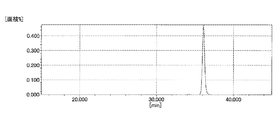
- 6 is a GPC chart of the diphenyl derivative (A) isophthalate obtained in Synthesis Example 1.
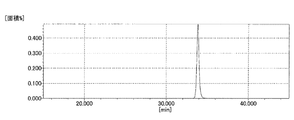
- 6 is a GPC chart of the diphenyl isophthalate derivative (B) obtained in Synthesis Example 2.
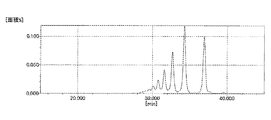
- 6 is a GPC chart of the diphenyl derivative (C) isophthalate obtained in Synthesis Example 3.
- 13 is a 13 C-NMR chart of the active ester (A-1) obtained in Example 1. It is an FD-MS spectrum of the active ester (A-1) obtained in Example 1.
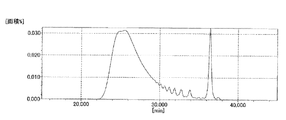
- 6 is a GPC chart of the active ester (A-1) obtained in Example 1.
- 6 is a GPC chart of the active ester (B-1) obtained in Example 2.
- 6 is a GPC chart of the active ester (C-1) obtained in Example 3.
- 6 is a GPC chart of the active ester (A-2) obtained in Example 4.
- 6 is a GPC chart of the active ester (A-3) obtained in Example 5.
- 6 is a GPC chart of the active ester (D-1) obtained in Comparative Example 1.
- 6 is a GPC chart of the active ester (E-1) obtained in Example 11. It is an infrared spectrum of the active ester (E-1) obtained in Example 11.
- 6 is a GPC chart of the active ester (E-2) obtained in Example 12.
- 6 is a GPC chart of the active ester (E-3) obtained in Example 13.
- the active ester of the present invention has a structure in which a residue (A) of a polyhydric alcohol compound and a residue (Q) of an aromatic polyvalent carboxylic acid are bonded via an ester bond, and has a terminal. Is sealed with the residue (C) of the monovalent aromatic hydroxyl group-containing compound.
- the active ester has an ester bond, has a structure having a small polarity, and contains a residue (A) of the polyhydric alcohol compound that can be a flexible segment, so that a cured product using this active ester is flexible. It is useful because it has excellent properties and low dielectric properties.
- the active ester of the present invention contains the residue (A) of the polyhydric alcohol compound, and its valence is preferably 2 to 6 valent, and more preferably divalent.
- the residue (A) of the polyhydric alcohol compound more preferably contains a hydrocarbon chain or an ether chain, and more preferably contains a hydrocarbon chain from the viewpoint of heat resistance.
- the hydrocarbon chain preferably has 3 to 17 carbon atoms, and more preferably 4 to 17 carbon atoms. When the number of carbon atoms is within the above range, the active ester has excellent compatibility and heat resistance, which is a preferable embodiment.
- the active ester of the present invention contains the residue (Q) of the aromatic polyvalent carboxylic acid, and its valence is preferably 2 to 4 valent, and more preferably divalent.
- the valence is divalent or more, the number of functional groups of the active ester produced is 2 or more, which is excellent from the viewpoint of curability.
- the aromatic is not particularly limited as long as it is a compound having an aromatic ring having a carboxyl group.
- the active ester of the present invention is an active ester in which the terminal is sealed with the residue (C) of the monovalent aromatic hydroxyl group-containing compound.
- the compound has an aromatic ring and has one hydroxyl group (monovalent) on the aromatic ring, and is not particularly limited.
- the "residue (A) of the polyhydric alcohol compound” in the present invention indicates a group obtained by removing the hydroxyl group from the alcohol
- the "residue (Q) of the aromatic polyvalent carboxylic acid” is It indicates a group obtained by removing a carboxyl group from an aromatic polyvalent carboxylic acid
- "residue (C) of an aromatic hydroxyl group-containing compound having a monovalent terminal” excludes a hydroxyl group from an aromatic hydroxyl group-containing compound. It shows the group.
- the alcohol may include not only an aliphatic alcohol but also an alcohol containing an aromatic ring.
- the active ester of the present invention reacts an aromatic compound having at least two carboxyl groups and / or an acid halide or esterified product (i) thereof, and an aromatic compound (ii) having one aromatic hydroxyl group. It is preferable to obtain the ester compound (iii) obtained by reacting the ester compound (iii) and the polyhydric alcohol compound (iv). By reacting the above (i) and (ii), an ester compound (iii) having an ester bond formed is obtained, and by further reacting the above (iv), a transesterification reaction occurs, and aryloxy at the terminal. An active ester containing a carbonyl group structure can be obtained.
- the active ester exhibits flexibility due to the polyhydric alcohol compound (iv), epoxy curability derived from the terminal aryloxycarbonyl group, and low dielectric properties
- the cured product using this active ester is flexible. It is useful because it has excellent properties and low dielectric properties.
- the active ester of the present invention it is preferable to use an aromatic compound having at least two carboxyl groups and / or an acid halide or esterified product (i) thereof, but the number of carboxyl groups is more preferably 2 to 4. The number is, more preferably two. When the number of carboxyl groups is at least 2 (2 or more), the number of functional groups of the active ester produced is 2 or more, which is excellent from the viewpoint of curability.
- the active ester of the present invention it is preferable to use the aromatic compound (ii) having one aromatic hydroxyl group.
- the aromatic compound has one aromatic hydroxyl group
- the obtained active ester has an aryloxycarbonyl terminal, which is excellent from the viewpoint of dielectric properties.
- the active ester of the present invention comprises an aromatic compound having at least two carboxyl groups and / or an acid halide or esterified product (i) thereof, and an aromatic compound (ii) having one aromatic hydroxyl group. It is preferable to use the ester compound (iii) obtained by the reaction, but the ester compound is preferable because it has an aryloxycarbonyl terminal and is excellent in dielectric properties.
- the active ester of the present invention preferably uses the polyhydric alcohol compound (iv), but its valence is preferably 2 to 6 valent, and more preferably divalent.
- the valence is divalent or more, the number of functional groups of the active ester produced is 2 or more, which is excellent from the viewpoint of curability.
- the active ester of the present invention is preferably represented by the following general formula (1).
- A is a linear or branched alkylene chain or a linear or branched alkylene ether chain
- Q is an aromatic ring
- x is 0.01 or more. It is an average number of repetitions
- Ar preferably has a structure represented by the following general formula (2) or (3).
- a in the above formula (1) is preferably a linear or branched alkylene chain or a linear or branched alkylene ether chain, and is a linear alkylene chain or a linear alkylene ether chain. It is more preferable that the alkylene ether chain is contained in a straight line, and it is more preferable that the alkylene ether chain is contained.
- the linear or branched chain preferably has 2 to 20 carbon atoms, more preferably 4 to 18 carbon atoms, and even more preferably 6 to 16 carbon atoms. .. When the number of carbon atoms is within the above range, the active ester has excellent compatibility, which is a preferable embodiment.
- Q in the above formula (1) is preferably an aromatic ring, more preferably an aromatic ring of any one of a benzene ring, a naphthalene ring, and an anthracene ring, and above all, industrially available raw materials. From the viewpoint of ease and solubility, a benzene ring is more preferable.
- x is preferably an average number of repetitions of 0.01 or more, and above all, from the viewpoint of workability and flexibility of the obtained cured product, an average number of repetitions of 0.1 to 5 is used. It is more preferable that the number of repetitions is 0.2 to 5, and the average number of repetitions is more preferably 0.2 to 5.
- Ra in the above formula (2) or (3) is preferably any of a halogen atom, an alkyl group, an alkoxy group, an aryl group, an aralkyl group, or a naphthyl group independently, and among them, dielectric. From the viewpoint of properties, workability and flexibility of the obtained cured product, it may be an alkyl group having 1 to 4 carbon atoms, an alkoxy group having 1 to 4 carbon atoms, an aryl group, an aralkyl group, or a naphthyl group. More preferred.
- y is preferably an integer of 0 to 7
- z is preferably an integer of 0 to 5
- y and z are independently of 0 to 5, respectively. It is more preferably an integer, and from the viewpoint of reactivity and flexibility of the obtained cured product, y and z are each independently preferably an integer of 0 to 4.
- the active ester of the present invention has a function as a curing agent for an epoxy resin or the like, has a flexible segment in its structure, and uses the active ester. Flexibility can be imparted to the obtained cured product, which is a preferable embodiment. Further, it is possible to prevent or suppress the generation of hydroxyl groups during the reaction between the active ester and the epoxy resin, and it is excellent in low dielectric properties and is useful.
- the active ester of the present invention is not particularly limited as long as it is an ester compound having the structure shown in any of the above active esters (I) to (III), but for example, an aromatic compound having two or more carboxyl groups and an aromatic compound.
- the reaction product (c) of the acid halide or esterified product (a) and the aromatic monohydroxy compound (b) has two or more hydroxyl groups and is a linear or branched alkylene. It is preferably a reaction product (a compound corresponding to the above-mentioned active ester) obtained by reacting a compound (d) having a chain or a linear or branched alkylene ether chain.
- the active ester By using the active ester, a cured product having a low dielectric loss tangent and more excellent heat resistance can be obtained, which is a preferable embodiment.
- the obtained active ester contains an aryloxycarbonyl group at the end, it exhibits high reactivity with the epoxy group of the epoxy resin described later, and due to this high reactivity, the epoxy group It is possible to prevent or suppress the generation of hydroxyl groups generated by the ring opening of the above, which is a preferable embodiment. Further, since the active ester has no or almost no hydroxyl group in the molecule, the cured product obtained by the reaction of the active ester also has no or almost no hydroxyl group derived from the active ester. , Almost none.
- an active ester it is possible to prevent or suppress the generation of hydroxyl groups during curing.
- a hydroxyl group having a high polarity raises the dielectric loss tangent, but by using the active ester, it is possible to realize a low dielectric loss tangent in the cured product, which is useful.
- the active ester has two or more ester bonds having a reaction activity with the epoxy group of the epoxy resin described later, the crosslink density of the cured product can be increased and the heat resistance can be improved.
- the active ester of the present invention has a flexible segment such as an alkylene chain or an alkylene ether chain, and has a structure having low polarity because it has no or almost no hydroxyl group, and in the obtained cured product.
- a curable resin composition for example, an epoxy resin composition containing an epoxy resin
- a semiconductor encapsulating material, a semiconductor device, a prepreg, a circuit board, a build-up film, etc. using the curable resin composition can be provided, which is a preferable embodiment.
- the active ester has a softening point of 200 ° C. or lower from the viewpoint of being more excellent in handleability when prepared as a curable resin composition described later, heat resistance of the cured product, and dielectric properties. It is preferably 180 ° C. or lower, and more preferably 180 ° C. or lower.
- aromatic compounds having two or more carboxyl groups and / or acid halides or esters thereof (a)]
- the aromatic compound having two or more carboxyl groups and / or its acid halide or esterified product (a) (compound derived from the residue (Q) of the aromatic polyvalent carboxylic acid) has two or more. It is a carboxylic acid having a carboxyl group or a derivative thereof, and specifically, an acid halide or an esterified product (hereinafter, may be referred to as "aromatic compound (a)").
- aromatic compound (a) has the aromatic monohydroxy compound (b) described later, and further has two or more hydroxyl groups, and is linear or branched.
- Compound (d) having a chain alkylene chain (aromatic hydrocarbon group) or a linear or branched alkylene ether chain (alkyleneoxy group) may be simply referred to as "compound (d)".
- compound (d) A compound derived from the residue (A) of the polyvalent alcohol compound), in the structure of the active ester, a flexible structural site derived from the compound (d) and epoxy curing at the terminal.
- a structure containing both an aryloxycarbonyl structure having a property can be formed, and an ester structure having a high reactive activity can be formed in the structure of the active ester.
- the aromatic compound (a) is not particularly limited, and examples thereof include compounds having two or more carboxyl groups in a substituted or unsubstituted aromatic ring.
- the "carboxyl group, etc.” refers to a carboxyl group; an acyl halide group such as an acyl fluoride group, an acyl chloride group, and an acyl bromide group; an alkyloxycarbonyl group such as a methyloxycarbonyl group and an ethyloxycarbonyl group; phenyl. Examples thereof include an aryloxycarbonyl group such as an oxycarbonyl group and a naphthyloxycarbonyl group.
- the aromatic compound When it has an acyl halide group, the aromatic compound is an acid halide, and when it has an alkyloxycarbonyl group and an aryloxycarbonyl group, the aromatic compound can be an esterified product.
- the aromatic compound preferably has a carboxyl group, an acyl halide group, and an aryloxycarbonyl group, more preferably has a carboxyl group and an acyl halide group, and has a carboxyl group, an acyl chloride group, and a bromide. It is more preferable to have an acyl group.
- the aromatic ring is not particularly limited, and examples thereof include a monocyclic aromatic ring, a condensed aromatic ring, a ring-aggregated aromatic ring, and an aromatic ring connected by an alkylene chain.
- the aromatic compound (a) is not particularly limited, but is a benzenedicarboxylic acid such as isophthalic acid, terephthalic acid, 5-allylisophthalic acid, 2-allylterephthalic acid; trimellitic acid, 5-allyltrimellitic acid and the like.
- Benzenetricarboxylic acid naphthalene-1,4-dicarboxylic acid, naphthalene-1,5-dicarboxylic acid, naphthalene-2,3-dicarboxylic acid, naphthalene-2,6-dicarboxylic acid, naphthalene-2,7-dicarboxylic acid, 3 Naphthalenedicarboxylic acids such as -allylnaphthalene-1,4-dicarboxylic acid, 3,7-diallylnaphthalene-1,4-dicarboxylic acid; pyridinetricarboxylic acids such as 2,4,5-pyridinetricarboxylic acid; 1,3,5 -Triazinecarboxylic acids such as triazine-2,4,6-tricarboxylic acids; examples thereof include acid halides and esterified acids thereof.
- benzenedicarboxylic acid and benzenetricarboxylic acid are preferable, and isophthalic acid, terephthalic acid, isophthalic acid chloride, terephthalic acid chloride, 1,3,5-benzenetricarboxylic acid, 1,3,5-benzenetricarbonyl. It is more preferably trichloride, and even more preferably isophthalic acid chloride, terephthalic acid chloride, and 1,3,5-benzenetricarbonyltrichloride.
- an aromatic ring such as an aromatic compound in which the aromatic ring is a monocyclic aromatic ring has a condensed aromatic ring. It is preferably an aromatic compound or the like which is a group ring, preferably a benzenedicarboxylic acid, a benzenetricarboxylic acid, a naphthalenedicarboxylic acid, or an acid halide thereof, and preferably a benzenedicarboxylic acid, a naphthalenedicarboxylic acid, or an acid halide thereof.
- aromatic compound (a) may be used alone or in combination of two or more.
- the aromatic monohydroxy compound (b) used in the present invention (a compound derived from the residue (C) of the aromatic hydroxyl group-containing compound having a monovalent terminal) is, for example, phenol, o-cresol, m-cresol, and the like.
- Alkylphenols such as p-cresol, 2,4-xylenol, 2,6-xylenol, tertiary butylphenol; o-phenylphenol, p-phenylphenol, 2-benzylphenol, 4-benzylphenol, styrenated phenol, 4-( Aralkylphenol such as ⁇ -cumyl) phenol; naphthol compounds such as 1-naphthol and 2-naphthol can be mentioned. Each of these may be used alone, or two or more types may be used in combination. Of these, o-cresol and naphthol are preferable because a cured product having excellent dielectric properties can be obtained.
- the reaction with the aromatic compound (a) and the aromatic monohydroxy compound (b) is not particularly limited, but is, for example, 1 to 24 under a temperature condition of 60 ° C. or lower in the presence of an alkaline catalyst. It can be done with a reaction time of time.
- alkaline catalyst that can be used here include sodium hydroxide, potassium hydroxide, triethylamine, pyridine and the like. Each of these may be used alone, or two or more types may be used in combination. Among these, sodium hydroxide or potassium hydroxide is preferable because of its high reaction efficiency. Further, these catalysts may be used as a 3 to 30% aqueous solution. At this time, a phase transfer catalyst may be used in order to increase the reaction efficiency. For example, alkylammonium salts, crown ethers and the like can be mentioned. These may be used alone or in combination of two or more.
- the above reaction is preferably carried out in an organic solvent because the reaction can be easily controlled.
- the organic solvent used here is, for example, a hydrocarbon solvent such as pentane or hexane, a ketone solvent such as acetone, methyl ethyl ketone or cyclohexanone, an ether solvent such as diethyl ether or tetrahydrofuran, ethyl acetate, butyl acetate, cellosolve acetate or propylene glycol monomethyl ether.
- Examples thereof include acetate solvents such as acetate and carbitol acetate, carbitol solvents such as cellosolve and butyl carbitol, aromatic hydrocarbon solvents such as toluene and xylene, dimethylformamide, dimethylacetamide and N-methylpyrrolidone. Each of these may be used alone or as a mixed solvent of two or more kinds.
- the reaction ratios of the aromatic compound (a) and the aromatic monohydroxy compound (b) can be appropriately changed according to the desired molecular design, and among them, while reducing the unreacted terminals, while reducing the unreacted terminals.
- the aromatic monohydroxy compound (b) is preferably in the range of 2.0 to 5.0 mol, preferably 2.0 to 4 mol, with respect to 1 mol of the aromatic compound (a). 0.0 mol is more preferable, and 2.0 to 3.0 mol is further preferable.
- reaction solution After completion of the reaction, when an aqueous solution is used in the presence of an alkaline catalyst, the reaction solution is statically separated to remove the aqueous layer, the remaining organic layer is washed with water, and the aqueous layer is almost neutral (pH 7).
- a certain reaction product (c) can be obtained.
- the active ester of the present invention has the reaction product (c) and the two or more hydroxyl groups, and is a linear or branched alkylene chain (aliphatic hydrocarbon group), or a linear or branched chain. It can be produced by reacting the compound (d) having the alkylene ether chain (oxyalkylene group) of.
- the compound (d) is not particularly limited, and examples thereof include an aliphatic polyol compound (d-1) and an oxyalkylene group-containing polyol compound (d-2).
- the aliphatic polyol compound (d-1) is a cured product (curable resin composition) that has high flexibility, breaking toughness, and tensile strength in the cured product, and is excellent in impregnation into the base material and reinforcing fibers. ) Is obtained, and from the viewpoint of easy control of the molecular weight distribution of the reactants, the aliphatic polyol compound (d-1) is preferably a diol compound containing two alcoholic hydroxyl groups, and further, a carbon atom.
- a linear aliphatic diol compound having a number of 2 to 20 is preferable, a linear aliphatic diol compound having 4 to 18 carbon atoms is more preferable, and a linear aliphatic diol compound having 6 to 16 carbon atoms is further preferable. ..
- Examples of the aliphatic polyol compound (d-1) include ethylene glycol (number average molecular weight: 62), 1,4-butanediol, 1,5-pentanediol, 1,6-hexanediol, 1,7-.
- Linear aliphatic diol compounds such as heptanediol, 1,8-octanediol, 1,9-nonanediol, 1,10-decanediol, 1,11-undecanediol, and 1,12-dodecanediol; propylene glycol, 2-Methyl-1,3-propanediol, neopentyl glycol, 2-ethyl-1,3-propanediol, 2-methyl-1,4-butanediol, 2-ethyl-2-methyl-1,3-propane Didiol, 2-ethylbutane-14-butanediol, 2,3-dimethyl-1,4-butanediol, 3-methyl-1,5-pentanediol, 2,4-dimethyl-1,5-pentanediol, 3, 3-Didimethylpentane-1,5-di
- the oxyalkylene group-containing polyol compound (d-2) is a cured product (curable resin) that has high flexibility, breaking toughness, and tensile strength in the cured product, and is excellent in impregnation into the base material and reinforcing fibers. Since the composition) can be obtained, the diol compound containing two alcoholic hydroxyl groups is preferable as the oxyalkylene group-containing polyol compound (d-2).
- a diol compound having a hydroxyl group equivalent of 50 to 269 g / eq of the oxyalkylene group-containing polyol compound (d-2) is more preferable.
- 100-250 g / eq diol compound is more preferred.
- Examples of the oxyalkylene group-containing diol compound (d-2) include ethylene oxide of glycols represented by diethylene glycol and dipropylene glycol, propylene oxide adduct, and polyvalent phenol represented by ethylene oxide adduct of bisphenol A. Examples thereof include ethylene oxide and propylene oxide adducts of compounds. These diol compounds may be used alone or in combination of two or more.
- the number average molecular weight (Mn) of the compound (d) is preferably in the range of 62 to 1000, and more preferably in the range of 62 to 500. When the number average molecular weight is within the above range, workability is good, which is preferable.
- Mn number average molecular weight of the compound (d)
- a value published by the manufacturer or a value obtained by measuring gel permeation chromatography (GPC) under the conditions described below is adopted.
- the compound (d) a commercially available compound may be used.
- examples of commercially available products include diethylene glycol manufactured by Mitsubishi Chemical Corporation and BPA-2 glycol manufactured by Japan Emulsifier.
- an active ester can be obtained by stirring and reacting for 1 to 24 hours under a temperature condition of 50 to 250 ° C. Further, the reaction is carried out by adding an alkali catalyst, particularly an amine-based catalyst (alkylamine such as triethylamine, triphenylamine and the like, condensed ring amine such as arylamine, DBU and DBN, and heterocyclic amine such as imidazole and pyridine). Can be promoted. After completion of the reaction, in order to remove the excess aromatic monohydroxy compound (b), high-purity active ester is distilled at atmospheric pressure or reduced pressure (for example, 0.9 to 0.01 atm). Can be obtained.
- an alkali catalyst particularly an amine-based catalyst (alkylamine such as triethylamine, triphenylamine and the like, condensed ring amine such as arylamine, DBU and DBN, and heterocyclic amine such as imidazole and pyridine).
- alkali catalyst particularly an amine-based catalyst
- the reaction ratios of the reaction product (c) and the compound (d) can be appropriately changed according to the desired molecular design, but among them, the active ester has more excellent workability and flexibility. Therefore, the hydroxyl equivalent of the compound (d) is preferably in the range of 0.1 to 0.9 mol, more preferably 0.2 to 0.8 mol, based on 1 equivalent of the active ester group of the reaction product (c). It is preferable, and 0.3 to 0.7 mol is more preferable.
- the hydroxyl group equivalent of the polyhydric alcohol compound is preferably less than 270 g / eq, more preferably 31 g / eq or more and less than 270 g / eq, and further preferably 38 g / eq or more and 250 g. It is less than / eq.
- the hydroacid value equivalent is less than 270 g / eq, it is excellent from the viewpoint of heat resistance of the cured product.
- the functional group equivalent of the active ester of the present invention has excellent curability, low dielectric constant and dielectric tangent (low dielectric property) when the total number of aromatic ester groups contained in the active ester structure is taken as the number of functional groups of the active ester. Since a cured product can be obtained, when the hydroxyl group equivalent of the polyhydric alcohol compound is less than 270 g / eq, it is preferably in the range of 160 to 1500 g / eq, more preferably in the range of 180 to 1200 g / eq. Even more preferably, it is in the range of 200 to 660 g / eq.
- the number average molecular weight (Mn) of the active ester of the present invention is preferably 320 to 3000, more preferably 360 to 2400, when the hydroxyl group equivalent of the polyhydric alcohol compound is less than 270 g / eq.
- Mn number average molecular weight
- the number average molecular weight (Mn) is 320 or more, it is preferable because the dielectric loss tangent is excellent.
- the number average molecular weight (Mn) is 3000 or less, it is preferable because the moldability is excellent.
- the hydroxyl group equivalent of the polyhydric alcohol compound is preferably 270 g / eq or more, more preferably 280 g / eq or more, and further preferably 300 to 10000 g / eq.
- the hydroacid value equivalent is 270 g / eq or more, the characteristics derived from the polyhydric alcohol compound are likely to be exhibited, which is excellent from the viewpoint of the flexibility of the cured product.
- the functional group equivalent of the active ester of the present invention has excellent curability, low dielectric constant and dielectric tangent (low dielectric property) when the total number of aromatic ester groups contained in the active ester structure is taken as the number of functional groups of the active ester. Since a cured product can be obtained, when the hydroxyl group equivalent of the polyhydric alcohol compound is 270 g / eq or more, it is preferably in the range of 160 to 3000 g / eq, and more preferably in the range of 180 to 2800 g / eq. It is preferably in the range of 200 to 2600 g / eq, even more preferably in the range of 200 to 2600 g / eq.
- the number average molecular weight (Mn) of the active ester of the present invention is preferably 320 to 6000, more preferably 360 to 5600, when the hydroxyl group equivalent of the polyhydric alcohol compound is 270 g / eq or more. 400-5200 is particularly preferable.
- Mn number average molecular weight
- the number average molecular weight (Mn) is 320 or more, it is preferable because the dielectric loss tangent is excellent.
- the number average molecular weight (Mn) is 6000 or less, it is preferable because the moldability is excellent.
- the hydroxyl group equivalent of the polyhydric alcohol compound even if it is less than 270 g / eq or 270 g / eq or more, low dielectric properties and the like can be satisfied.
- the active ester of the present invention is used.
- the hydroxyl group equivalent is preferably less than 270 g / eq.
- the polyhydric alcohol compound is preferably a polyol having an aliphatic hydroxyl group.
- the active ester contains a structure derived from the polyol having a plurality of ester bonds and the aliphatic hydroxyl group, and this structure has low polarity and constitutes a flexible segment, so that it is excellent in flexibility and low dielectric properties. A cured product can be obtained, which is useful.
- the residue (A) of the polyhydric alcohol compound is a residue of the polyol having the aliphatic hydroxyl group (the above formula (1)).
- A is a residue of a polyol having an aliphatic hydroxyl group), a hydrocarbon bond, a (carbonic acid) ester bond, an ether bond, a urethane bond, and at least one structure selected from the group consisting of a siloxane bond. It is more preferable to contain at least one structure selected from the group consisting of a hydrocarbon bond, a (carbonic acid) ester bond, and an ether bond from the viewpoint of flexibility and heat resistance. More preferred.
- the residue of the polyol having an aliphatic hydroxyl group is a structural unit derived from a hydrocarbon-based polyol, a structural unit derived from a polycarbonate polyol, a structural unit derived from a polyester polyol, or a structural unit derived from a polyether polyol.
- the active ester contains a structural unit derived from a compound having a specific structure having a hydroxyl group, and since these structures have low polarity and form a flexible segment, a cured product having excellent flexibility and low dielectric properties can be obtained. Can be useful.
- an olefin-based polymer having a terminal diol obtained by polymerizing one or more olefin monomers such as ethylene, propylene, butadiene, and styrene, or a dimer diol can be used. Is preferable.
- the structural unit derived from the polycarbonate polyol includes a terminal diol obtained by polymerizing one or more divalent diols such as pentanediol, 1,6-hexanediol, and methylpentanediol via a carbonic acid ester bond. It is preferably obtained by using a polycarbonate polyol.
- Examples of the structural unit derived from the polyester polyol include glycol monomers such as ethylene glycol, propylene glycol, butanediol, neopentyl glycol, pentandiol, 1,6-hexanediol, and methylpentanediol, and adipic acid, sebacic acid, and phthalic acid.
- glycol monomers such as ethylene glycol, propylene glycol, butanediol, neopentyl glycol, pentandiol, 1,6-hexanediol, and methylpentanediol
- adipic acid sebacic acid
- phthalic acid adipic acid
- Isophthalic acid, terephthalic acid, tetrahydrophthalic acid, methyltetrahydrophthalic acid and other dicarboxylic acid monomers are preferably obtained by using a polyester polyol having a terminal diol obtained by
- polyether polyol having a terminal diol obtained by adding an epoxide compound such as ethylene oxide or propylene oxide to a diol compound such as ethylene glycol, propylene glycol or bisphenol A.
- polyurethane polyol As the structural unit derived from the polyurethane polyol, one or two of the above-mentioned polyols and polyisocyanates such as diphenylmethane diisocyanate (MDI), toluene diisocyanate (TDI), hexamethylene diisocyanate (HDI), and isophorone diisocyanate (IPDI) are used. It is preferable that a polyurethane polyol having a terminal diol obtained by polymerizing seeds or more can be used.
- MDI diphenylmethane diisocyanate
- TDI toluene diisocyanate
- HDI hexamethylene diisocyanate
- IPDI isophorone diisocyanate
- polysiloxane polyol As the structural unit derived from the polysiloxane polyol, it is preferable that a polysiloxane polyol having a structural unit such as dimethylsiloxane or methylphenylsiloxane can be used.
- the active ester (IV) of the present invention has a function as a curing agent when used with an epoxy resin or the like, has a flexible segment in its structure, and can be cured by using the active ester. Flexibility can be imparted to the object, which is a preferable embodiment. Further, it is possible to prevent or suppress the generation of hydroxyl groups during the reaction between the active ester and the epoxy resin, and it is excellent in low dielectric properties and is useful.
- the active ester of the present invention is not particularly limited as long as it is an ester compound having the structure shown in the active ester (IV), and is, for example, an aromatic compound having two or more carboxyl groups and / or an acid halide or an acid halide thereof.
- the reaction product (c-1) of the esterified product (a-1) and the aromatic monohydroxy compound (b-1) contains a hydrocarbon-based polyol (e-1), a polycarbonate polyol (e-2), and a polyester.
- a compound having at least two or more hydroxyl groups of any one of a polyol (e-3), a polyether polyol (e-4), a polyurethane polyol (e-5), and a polysiloxane polyol (e-6) is reacted.
- the obtained reaction product (compound corresponding to the above active ester) is preferably used.
- the active ester By using the active ester, a cured product having a low dielectric loss tangent and more excellent heat resistance can be obtained. Since the active ester contains an aryloxycarbonyl group at the end, it exhibits high reactivity with the epoxy group of the epoxy resin described later, and this high reactivity prevents the generation of hydroxyl groups caused by the ring opening of the epoxy group.
- the active ester has no or almost no hydroxyl group in the molecule, the hydroxyl group derived from the active ester is absent or almost absent even in the cured product obtained by the reaction of the active ester. do not.
- the generation of hydroxyl groups at the time of curing can be prevented or suppressed.
- a hydroxyl group having a high polarity raises the dielectric loss tangent, but by using the active ester, it is possible to realize a low dielectric loss tangent in the cured product, which is useful.
- the active ester has two or more ester bonds having a reaction activity with the epoxy group of the epoxy resin described later, the crosslink density of the cured product can be increased and the heat resistance can be improved.
- the active ester of the present invention has a flexible segment and has no or almost no hydroxyl group, it has a structure with low polarity, and excellent flexibility is obtained in the obtained cured product, and this flexibility is obtained.
- a curable resin composition for example, an epoxy resin composition containing an epoxy resin
- a stop material, a semiconductor device, a preprig, a circuit board, a build-up film, and the like can be provided, which is a preferable embodiment.
- the active ester has a softening point of 200 ° C. or lower from the viewpoint of being more excellent in handleability when prepared as a curable resin composition described later, heat resistance of the cured product, and dielectric properties. Is preferable, and the temperature is more preferably 180 ° C. or lower.
- aromatic compounds having two or more carboxyl groups and / or acid halides or esters thereof (a-1)]
- the aromatic compound having two or more carboxyl groups and / or its acid halide or esterified product (a-1) (the compound derived from the residue (Q) of the aromatic polyvalent carboxylic acid) is two. It is a carboxylic acid having the above carboxyl group or a derivative thereof, and specifically, an acid halide or an esterified product (hereinafter, may be referred to as "aromatic compound or the like (a-1)").
- the aromatic compound or the like (a-1) has two or more carboxyl groups or the like, the aromatic monohydroxy compound (b-1) described later, and further, a hydrocarbon-based polyol (e-1), At least the hydroxyl group of any one of a polycarbonate polyol (e-2), a polyester polyol (e-3), a polyether polyol (e-4), a polyurethane polyol (e-5), or a polysiloxane polyol (e-6)
- a compound having two or more, in the structure of the active ester both the flexible structural portion derived from the compound having at least two or more hydroxyl groups and the aryloxycarbonyl structure having epoxy curability at the terminal are both.
- a structure containing By reacting with a compound having two or more, in the structure of the active ester, both the flexible structural portion derived from the compound having at least two or more hydroxyl groups and the aryloxycarbonyl structure having epoxy curability at the terminal are both.
- the aromatic compound or the like (a-1) is not particularly limited, and examples thereof include compounds having two or more carboxyl groups or the like in a substituted or unsubstituted aromatic ring.
- the "carboxyl group, etc.” refers to a carboxyl group; an acyl halide group such as an acyl fluoride group, an acyl chloride group, and an acyl bromide group; an alkyloxycarbonyl group such as a methyloxycarbonyl group and an ethyloxycarbonyl group; phenyl. Examples thereof include an aryloxycarbonyl group such as an oxycarbonyl group and a naphthyloxycarbonyl group.
- the aromatic compound When it has an acyl halide group, the aromatic compound is an acid halide, and when it has an alkyloxycarbonyl group and an aryloxycarbonyl group, the aromatic compound can be an esterified product.
- the aromatic compound preferably has a carboxyl group, an acyl halide group, and an aryloxycarbonyl group, more preferably has a carboxyl group and an acyl halide group, and has a carboxyl group, an acyl chloride group, and a bromide. It is particularly preferable to have an acyl group.
- the aromatic ring is not particularly limited, and examples thereof include a monocyclic aromatic ring, a condensed aromatic ring, a ring-aggregated aromatic ring, and an aromatic ring connected by an alkylene.
- the aromatic compound and the like (a-1) are not particularly limited, but are benzenedicarboxylic acids such as isophthalic acid, terephthalic acid, 5-allylisophthalic acid and 2-allylterephthalic acid; trimellitic acid and 5-allyltrimerit.
- Benzenetricarboxylic acids such as acids; naphthalene-1,4-dicarboxylic acid, naphthalene-2,3-dicarboxylic acid, naphthalene-2,6-dicarboxylic acid, naphthalene-2,7-dicarboxylic acid, 3-allylnaphthalene-1, Naphthalenedicarboxylic acids such as 4-dicarboxylic acid, 3,7-diallylnaphthalene-1,4-dicarboxylic acid; pyridinetricarboxylic acids such as 2,4,5-pyridinetricarboxylic acid; 1,3,5-triazine-2,4 , 6-Tricarboxylic acid such as tricarboxylic acid; these acid halides, esterified products and the like can be mentioned.
- benzenedicarboxylic acid and benzenetricarboxylic acid are preferable, and isophthalic acid, terephthalic acid, isophthalic acid chloride, terephthalic acid chloride, 1,3,5-benzenetricarboxylic acid, 1,3,5-benzenetricarbonyl. It is more preferably trichloride, and even more preferably isophthalic acid chloride, terephthalic acid chloride, and 1,3,5-benzenetricarbonyltrichloride.
- an aromatic ring such as an aromatic compound in which the aromatic ring is a monocyclic aromatic ring has a condensed aromatic ring. It is preferably an aromatic compound or the like which is a group ring, preferably a benzenedicarboxylic acid, a benzenetricarboxylic acid, a naphthalenedicarboxylic acid, or an acid halide thereof, and preferably a benzenedicarboxylic acid, a naphthalenedicarboxylic acid, or an acid halide thereof.
- the above-mentioned aromatic compound and the like (a-1) may be used alone or in combination of two or more.
- the aromatic monohydroxy compound (b-1) used in the present invention (a compound derived from the residue (C) of the aromatic hydroxyl group-containing compound having a monovalent terminal) is, for example, phenol, o-cresol, m-.
- Alkylphenols such as cresol, p-cresol, 2,4-xylenol, 2,6-xylenol, tertiary butylphenol; o-phenylphenol, p-phenylphenol, 2-benzylphenol, 4-benzylphenol, styrenated phenol, 4 Aralkylphenols such as-( ⁇ -cumyl) phenol; naphthol compounds such as 1-naphthol and 2-naphthol can be mentioned. Each of these may be used alone, or two or more types may be used in combination. Of these, o-cresol and naphthol are preferable because a cured product having excellent dielectric properties can be obtained.
- the reaction with the aromatic compound or the like (a-1) and the aromatic monohydroxy compound (b-1) is not particularly limited, but is, for example, under a temperature condition of 60 ° C. or lower in the presence of an alkaline catalyst.
- the reaction time can be 1 to 24 hours.
- the alkaline catalyst that can be used here include sodium hydroxide, potassium hydroxide, triethylamine, pyridine and the like. Each of these may be used alone, or two or more types may be used in combination. Among these, sodium hydroxide or potassium hydroxide is preferable because of its high reaction efficiency. Further, these catalysts may be used as a 3 to 30% aqueous solution. At this time, a phase transfer catalyst may be used in order to increase the reaction efficiency.
- alkylammonium salts, crown ethers and the like can be mentioned. These may be used alone or in combination of two or more.
- the above reaction is preferably carried out in an organic solvent because the reaction can be easily controlled.
- the organic solvent used here is, for example, a hydrocarbon solvent such as pentane or hexane, a ketone solvent such as acetone, methyl ethyl ketone or cyclohexanone, an ether solvent such as diethyl ether or tetrahydrofuran, ethyl acetate, butyl acetate, cellosolve acetate or propylene glycol.
- Acetate ester solvents such as monomethyl ether acetate and carbitol acetate, carbitol solvents such as cellosolve and butyl carbitol, aromatic hydrocarbon solvents such as toluene and xylene, amides such as dimethylformamide, dimethylacetamide and N-methylpyrrolidone. Examples include system solvents. Each of these may be used alone or as a mixed solvent of two or more kinds.
- the reaction ratios of the aromatic compound and the like (a-1) and the aromatic monohydroxy compound (b-1) can be appropriately changed according to the desired molecular design, and among them, more solvent-soluble. Since it is an active ester having excellent curability and excellent curability, the amount of the aromatic monohydroxy compound (b-1) is 2.0 to 5.0 mol with respect to 1 mol of the aromatic compound or the like (a-1). The range is preferred, 2.0 to 4.0 mol is more preferred, and 2.0 to 3.0 mol is even more preferred.
- reaction solution After completion of the reaction, when an aqueous solution is used in the presence of an alkaline catalyst, the reaction solution is statically separated to remove the aqueous layer, the remaining organic layer is washed with water, and the aqueous layer is almost neutral (pH 7). By repeating washing with water until the degree becomes), the aromatic compound and the like (a-1) in which the content of the inorganic salt having an adverse effect on the insulating property is reduced, and the aromatic monohydroxy compound (b-1) The reaction product (c-1), which is the reaction product of the above, can be obtained.
- the active ester of the present invention comprises the reaction product (c-1), a hydrocarbon-based polyol (e-1), a polycarbonate polyol (e-2), a polyester polyol (e-3), and a polyether polyol (e-). 4) A compound having at least two or more hydroxyl groups of any one of a polyurethane polyol (e-5) or a polysiloxane polyol (e-6) (a compound derived from a residue of the polyol having an aliphatic hydroxyl group). It can be produced by reacting with (ester exchange reaction).
- a flexible segment can be introduced into the structure of the obtained active ester, and the cured product obtained by using the active ester is flexible. And, it is possible to impart adhesion to a copper foil or the like due to flexibility, which is a preferable embodiment.
- the ester bond contributes to the improvement of adhesion to a metal such as copper foil, which is useful.
- the active ester can prevent or suppress the generation of hydroxyl groups during synthesis, and is excellent in low dielectric properties and is useful.
- the active ester obtained by using the compound having at least two hydroxyl groups has a dielectric constant, a dielectric loss tangent, etc. due to its low polarity, such as a hydrocarbon-based polyol (e-1). Because of its excellent dielectric properties, it is possible to obtain a cured product that exhibits a sufficiently low dielectric loss tangent while maintaining a sufficiently low dielectric constant even in the high frequency band (high frequency region) from the MHz band to the GHz band. Since a resin composition can be prepared, it can be used as a molding material for high frequencies and is useful.
- the hydrocarbon-based polyol (e-1) is not particularly limited, but specifically, from an olefin-based polyol having an olefin monomer compound such as ethylene, propylene, butadiene, and styrene as an essential constituent monomer, or dimer acid. Refers to a diol compound that is synthesized. Of these, an olefin-based polyol is preferable, and a polybutadiene-based polymer containing a butadiene monomer as an essential constituent monomer is more preferable from the viewpoint of flexibility.
- the olefin-based polyol may be a copolymer of other polymerizable monomers.
- the other polymerizable monomer is, for example, an aliphatic monoolefin compound such as butylene, penten, 2-methyl-1-pentene, hexene, 3-methyl-1-hexene, 3-methyl-2-hexene; cyclohexene and the like.
- Alicyclic monoolefin compounds such as 4-methylstyrene and ⁇ -methylstyrene; methyl (meth) acrylate, ethyl (meth) acrylate, propyl (meth) acrylate, butyl (meth) acrylate, 2-ethylhexyl
- Acrylic acid ester compounds such as (meth) acrylate and 2- (dimethylamino) ethyl (meth) acrylate
- vinyl ester compounds such as vinyl acetate and vinyl propionate
- vinyl ether compounds such as vinyl methyl ether and vinyl ethyl ether
- vinyl methyl ketone Vinyl ketone compounds such as methylisopropenylketone
- ethylenically unsaturated carboxylic acids such as acrylic acid, methacrylic acid, maleic acid, maleic anhydride, itaconic acid, itaconic anhydride; (meth) acrylonitrile, (meth)
- the number average molecular weight (Mn) of the olefin-based polyol is preferably 500 to 10000, more preferably 700 to 6000, and even more preferably 900 to 4000. When the number average molecular weight is within the above range, it becomes an active ester having excellent dielectric properties and workability, which is preferable.
- Mn number average molecular weight of the olefin-based polyol
- a value published by the manufacturer or a value obtained by measuring gel permeation chromatography (GPC) under the conditions described below is adopted.
- olefin-based polyol a commercially available one may be used.
- examples of commercially available products include G series manufactured by Nippon Soda Co., Ltd. (“G-1000” number average molecular weight (Mn) 1400, hydroxyl value 68 to 78 mgKOH / g, “G-2000” number average molecular weight (Mn) 1900, Hydroxyl-terminated hydroxyl group polybutadiene) and the like, such as a hydroxyl value of 35 to 55 mgKOH / g, a “G-3000” number average molecular weight (Mn) of 3000, and a hydroxyl value of 27 mgKOH / g or more.
- Examples of commercially available products include Croda Japan's Prepole 2033 (hydroxyl value 202 to 212 mgKOH / g) and the like.
- the polycarbonate polyol (e-2) is not particularly limited, and for example, one having a hydroxyl group at the terminal obtained by reacting a carbonic acid ester and / or phosgene with a small molecule polyol can be used.
- carbonic acid ester for example, methyl carbonate, dimethyl carbonate, ethyl carbonate, diethyl carbonate, cyclocarbonate, diphenyl carbonate and the like can be used.
- the low molecular weight polyol it is preferable to use a low molecular weight polyol having 2 to 20 carbon atoms, and it is more preferable to use a low molecular weight polyol having 4 to 18 carbon atoms from the viewpoint of imparting flexibility. preferable.
- low molecular weight polyol examples include ethylene glycol, diethylene glycol, triethylene glycol, tetraethylene glycol, 1,2-propanediol, 1,3-propanediol, dipropylene glycol, tripropylene glycol, and 1,2-butanediol.
- polycarbonate polyol it is preferable to use an aliphatic polycarbonate polyol and an alicyclic polycarbonate polyol, and particularly from the viewpoint of flexibility, it is more preferable to use an aliphatic polycarbonate polyol.
- the aliphatic polycarbonate polyol is not particularly limited, and for example, 1,4-butanediol, 1,5-pentanediol, 3-methyl-1,5-pentanediol, 1,6-hexanediol and the like can be used. It is preferable to use the one obtained by reaction.
- the alicyclic polycarbonate polyol is not particularly limited, but it is preferable to use one obtained by reacting, for example, cyclohexanedimethanol and a derivative thereof.
- the number average molecular weight (Mn) of the polycarbonate polyol (e-2) is preferably in the range of 500 to 5000, and more preferably in the range of 800 to 3000. When the number average molecular weight is within the above range, workability is good, which is preferable.
- Mn number average molecular weight of the polycarbonate polyol (e-2)
- GPC gel permeation chromatography
- polycarbonate polyol (e-2) a commercially available product may be used.
- examples of commercially available products include Kuraray polyol series (“C-2090”) manufactured by Kuraray Co., Ltd., Kuraray polyol series “PHC” manufactured by Kuraray Co., Ltd., and polycarbonate diol “Duranol” manufactured by Asahi Kasei Co., Ltd.
- polyester polyol (e-3) is not particularly limited, and is, for example, a dibasic acid such as terephthalic acid, isophthalic acid, adipic acid, azelaic acid, sebatic acid or a dialkyl ester thereof or a mixture thereof, and, for example, ethylene.
- Glycol propylene glycol, diethylene glycol, butylene glycol, neopentyl glycol, 1,6-hexanediol, 3-methyl-1,5-pentanediol, 3,3'-dimethylol heptane, polyoxyethylene glycol, polyoxypropylene glycol , Polyester polyol obtained by reacting glycols such as polytetramethylene ether glycol or a mixture thereof, or lactones such as polycaprolactone, polyvalerolactone, and poly ( ⁇ -methyl- ⁇ -valerolactone) are ring-open polymerized. The polyester polyol thus obtained can be mentioned.
- the number average molecular weight (Mn) of the polyester polyol (e-3) is preferably in the range of 500 to 5000, and more preferably in the range of 800 to 3000. When the number average molecular weight is within the above range, it becomes an active ester having excellent dielectric properties and workability, which is preferable.
- Mn number average molecular weight of the polyester polyol (e-3)
- GPC gel permeation chromatography
- polyester polyol (e-3) a commercially available one may be used.
- examples of commercially available products include the Polylite series manufactured by DIC Corporation.
- the polyether polyol (e-4) is not particularly limited, but for example, an oxylan compound such as ethylene oxide, propylene oxide, butylene oxide, or tetrahydrofuran can be used, for example, water, ethylene glycol, propylene glycol, trimethylpropane, glycerin and the like. Examples thereof include a polyether polyol obtained by polymerization using the low-volume polyol of the above as an initiator.
- the number average molecular weight (Mn) of the polyether polyol (e-4) is preferably in the range of 500 to 5000, and more preferably in the range of 800 to 3000. When the number average molecular weight is within the above range, it becomes an active ester having excellent dielectric properties and workability, which is preferable.
- Mn number average molecular weight of the polyether polyol (e-4)
- GPC gel permeation chromatography
- polyether polyol (e-4) a commercially available product may be used.
- examples of commercially available products include Sanniks GP-400, GP-600, GP-1000, GP-1500, GP-3000, GP-4000V, GA-5000S, FA-908, FA-961, manufactured by Mitsui Chemicals, Inc. FA-921, FA-703, FA-757, Mitsui Chemicals Co., Ltd. Actcall G-28, MN-5000, MN-4000, P-31, MN-1500, AGC Co., Ltd.
- Exenol 1030, 4030, 5030, 230, 828, 837, Preminol 3005, 3010, 3015, 3020, 7001, 7006, 7012, Preminol S3006, 3011, Preminol 7021 (tetrafunctional) and the like can be mentioned.
- the polyurethane polyol (e-5) is not particularly limited, and examples thereof include a polyol having a urethane bond in one molecule.
- it is a reaction product of the above-mentioned various polyols and polyisocyanate, and is NCO / OH.
- It is preferably a polyurethane polyol obtained by reacting with a ratio of less than 1, and more preferably 0.9 or less.
- polyisocyanate examples include aromatic polyisocyanates such as tolylene diisocyanate, xylylene diisocyanate, diphenylmethane diisocyanate, 1,5-naphthalenediisocyanate and triphenylmethane triisocyanate; 1,6-hexamethylene diisocyanate, isophorone diisocyanate, 4 , 4'-Methylenebis (cyclohexylisocyanate), lysine diisocyanate, trimethylhexamethylenediisocyanate, 1,3- (isocyanatomethyl) cyclohexane and other aliphatic polyisocyanates; Examples thereof include derivatives (modified products) of polyisocyanates such as isocyanurates of these aromatic or aliphatic polyisocyanates, and adducts obtained by modifying these aromatic or aliphatic polyisocyanates with trimethylolpropane.
- aromatic polyisocyanates such as tolylene diiso
- the number average molecular weight (Mn) of the polyurethane polyol (e-5) is preferably in the range of 500 to 5000, and more preferably in the range of 800 to 3000. When the number average molecular weight is within the above range, it becomes an active ester having excellent dielectric properties and workability, which is preferable.
- Mn number average molecular weight of the polyurethane polyol (e-5)
- GPC gel permeation chromatography
- polyurethane polyol (e-5) a commercially available one may be used.
- the polysiloxane polyol (e-6) is not particularly limited, and examples thereof include a polyol having a siloxane bond in one molecule, and examples thereof include dimethylpolysiloxane having a hydroxyl group terminal and methylphenylpolysiloxane. be able to.
- the number average molecular weight (Mn) of the polysiloxane polyol (e-6) is preferably in the range of 500 to 5000, and more preferably in the range of 800 to 3000. When the number average molecular weight is within the above range, it becomes an active ester having excellent dielectric properties and workability, which is preferable.
- Mn number average molecular weight of the polysiloxane polyol (e-6)
- GPC gel permeation chromatography
- polysiloxane polyol (e-6) a commercially available product may be used.
- Commercially available products include, for example, KF-6000, KF-6001, KF-6002, KF-6003, X-22-176DX, X-22-176F, X-22-176-GX-A manufactured by Shin-Etsu Chemical Co., Ltd. And so on.
- esters By reacting the reaction product (c-1) with any of the compound polyols (e-1) to (e-6) having at least two or more hydroxyl groups, an ester exchange reaction occurs and the activity of the present invention is activated. Esters can be obtained.
- the reaction conditions are not particularly limited, but for example, an active ester can be obtained by stirring and reacting for 1 to 24 hours under a temperature condition of 50 to 250 ° C. Further, the reaction is carried out by adding an alkali catalyst, particularly an amine-based catalyst (alkylamine such as triethylamine, triphenylamine and the like, condensed ring amine such as arylamine, DBU and DBN, and heterocyclic amine such as imidazole and pyridine). Can be promoted.
- an alkali catalyst particularly an amine-based catalyst (alkylamine such as triethylamine, triphenylamine and the like, condensed ring amine such as arylamine, DBU and DBN, and heterocycl
- the reaction ratio of the reaction product (c-1) and any of the compound polyols (e-1) to (e-6) having at least two or more hydroxyl groups is appropriately changed according to the desired molecular design. However, since it is an active ester having more excellent workability and flexibility, it has at least two or more hydroxyl groups with respect to one equivalent of the active ester group of the reaction product (c-1).
- the hydroxyl group equivalent of any of the compound polyols (e-1) to (e-6) is preferably in the range of 0.01 to 0.9 mol, more preferably 0.05 to 0.9 mol, and 0.1 to 0.1 mol. 0.8 mol is more preferred.
- the functional group equivalent of the active ester of the present invention is excellent in curability, low dielectric constant and dielectric tangent (low dielectric property) when the total number of aromatic active ester groups contained in the active ester structure is taken as the number of functional groups of the active ester.
- the hydroxyl group equivalent of the polyol having an aliphatic hydroxyl group is 270 g / eq or more, it is preferably in the range of 160 to 3000 g / eq, preferably in the range of 180 to 2800 g / eq. It is more preferably in the range of 200 to 2600 g / eq, and even more preferably in the range of 200 to 2600 g / eq.
- the number average molecular weight (Mn) of the active ester of the present invention is preferably 320 to 6000, preferably 360 to 5600, when the hydroxyl group equivalent of the polyol having an aliphatic hydroxyl group is 270 g / eq or more. More preferably, 400 to 5200 is particularly preferable.
- Mn number average molecular weight
- Mn number average molecular weight
- the number average molecular weight (Mn) is 320 or more, it is preferable because the dielectric loss tangent is excellent.
- the number average molecular weight (Mn) is 6000 or less, it is preferable because the moldability is excellent.
- the curable resin composition of the present invention preferably contains the active ester and the epoxy resin.
- Epoxy resin is not particularly limited, but is preferably a curable resin that contains two or more epoxy groups in the molecule and can be cured by forming a crosslinked network with the epoxy groups.
- the epoxy resin is not particularly limited, but is phenol novolac type epoxy resin, cresol novolac type epoxy resin, ⁇ -naphthol novolac type epoxy resin, ⁇ -naphthol novolac type epoxy resin, bisphenol A novolac type epoxy resin, biphenyl novolac type epoxy.
- Novolac type epoxy resin such as resin; Phenolic aralkyl type epoxy resin, naphthol aralkyl type epoxy resin, phenol biphenyl aralkyl type epoxy resin and other aralkyl type epoxy resins; Bisphenol A type epoxy resin, bisphenol AP type epoxy resin, bisphenol AF type epoxy resin, bisphenol B type epoxy resin, bisphenol BP type epoxy resin, bisphenol C type epoxy resin, bisphenol E type epoxy resin, bisphenol F type epoxy resin, bisphenol S Bisphenol type epoxy resin such as type epoxy resin, tetrabromobisphenol A type epoxy resin; Biphenyl type epoxy resin such as biphenyl type epoxy resin, tetramethyl biphenyl type epoxy resin, epoxy resin having biphenyl skeleton and diglycidyl oxybenzene skeleton; Naphthalene type epoxy resin; Vinaftor type epoxy resin; Binaphthyl type epoxy resin; Dicyclopentadiene type epoxy resin such as dicyclopentadiene phenol type
- glycidyl ether type epoxy resin obtained by epoxidizing a phenol compound is preferable, and among them, a novolak type epoxy resin, an aralkyl type epoxy resin, and a dicyclopentadiene type epoxy resin have dielectric properties. It is more preferable from the viewpoint of.
- the above-mentioned epoxy resin may be used alone or in combination of two or more.
- the epoxy equivalent of the epoxy resin is preferably 120 to 400 g / eq, more preferably 150 to 300 g / eq.
- the epoxy equivalent of the epoxy resin is 120 g / eq or more, it is preferable because it is superior in the dielectric properties of the obtained cured product.
- the epoxy equivalent of the epoxy resin is 400 g / eq or less, the heat resistance of the obtained cured product is high. It is preferable because it has an excellent balance between properties and dielectric loss tangent.
- the softening point of the epoxy resin is preferably 20 to 200 ° C, more preferably 40 to 150 ° C.
- the softening point of the epoxy resin is 20 ° C. or higher, it is preferable because it can have quick curing property.
- the softening point of the epoxy resin is 200 ° C. or lower, it is preferable because the moldability is excellent.
- the functional group equivalent ratio (active ester / epoxy resin) of the amount of the active ester used to the amount of the epoxy resin used is more preferably 0.2 to 2, and more preferably 0.4 to 1.5. More preferred.
- the functional group equivalent ratio is 0.2 or more, the obtained cured product can have lower dielectric loss tangent and higher flexibility, which is preferable. If the functional group equivalent ratio exceeds 2, heat resistance and curability are lowered, so that it is preferable to use within the above range.
- the curable resin composition of the present invention further contains other curing agents, other resins, solvents, additives and the like as long as the effects of the present invention are not impaired. You may.
- the other curing agent is not particularly limited, and examples thereof include an amine curing agent, an acid anhydride curing agent, and a phenol resin curing agent.
- the amine curing agent is not particularly limited, but is diethylenetriamine (DTA), triethylenetetramine (TTA), tetraethylenepentamine (TEPA), diproprenedamine (DPDA), diethylaminopropylamine (DEAPA), N-aminoethyl.
- DTA diethylenetriamine
- TTA triethylenetetramine
- TEPA tetraethylenepentamine
- DPDA diproprenedamine
- DEAPA diethylaminopropylamine
- Aliphatic amines such as piperazine, mensendiamine (MDA), isofuronediamine (IPDA), 1,3-bisaminomethylcyclohexane (1,3-BAC), piperidine, N, N'-dimethylpiperazin, triethylenediamine; m-xylene diamine (XDA), methanephenylenediamine (MPDA), diaminodiphenylmethane (DDM), diaminodiphenylsulfone (DDS), benzylmethylamine, 2- (dimethylaminomethyl) phenol, 2,4,6-tris (dimethyl) Examples include aromatic amines such as aminomethyl) phenol.
- acid anhydride curing agent examples include phthalic anhydride, trimellitic anhydride, pyromellitic anhydride, benzophenone tetracarboxylic anhydride, ethylene glycol bistrimerite, glycerol tristrimerite, maleic anhydride, and tetrahydrophthalic anhydride.
- phenol resin curing agent examples include phenol novolac resin, cresol novolac resin, naphthol novolac resin, bisphenol novolac resin, biphenyl novolac resin, dicyclopentadiene-phenol addition type resin, phenol aralkyl resin, naphthol aralkyl resin, and triphenol methane type resin. , Tetraphenol ethane type resin, aminotriazine modified phenol resin and the like.
- the above-mentioned other curing agents may be used alone or in combination of two or more.
- the curable resin composition of the present invention may contain other resins in addition to the epoxy resin.
- other resin means a resin other than an epoxy resin.
- the other resins are not particularly limited, but are limited to maleimide resin, bismaleimide resin, polymaleimide resin, polyphenylene ether resin, polyimide resin, cyanate ester resin, benzoxazine resin, triazine-containing cresol novolac resin, and cyanate ester.
- examples thereof include resins, styrene-maleic anhydride resins, allyl group-containing resins such as diallyl bisphenol and triallyl isocyanurate, polyphosphate esters, phosphate ester-carbonate copolymers and the like. These other resins may be used alone or in combination of two or more.
- the curable resin composition of the present invention may be prepared without a solvent, or may contain a solvent.
- the solvent has a function of adjusting the viscosity of the curable resin composition and the like.
- the solvent are not particularly limited, but are ketone solvents such as acetone, methyl ethyl ketone, methyl isobutyl ketone and cyclohexanone; ether solvents such as diethyl ether and tetrahydrofuran; ethyl acetate, butyl acetate, cellosolve acetate and propylene glycol monomethyl.
- ketone solvents such as acetone, methyl ethyl ketone, methyl isobutyl ketone and cyclohexanone
- ether solvents such as diethyl ether and tetrahydrofuran
- Ester solvents such as ether acetate and carbitol acetate; carbitols such as cellosolve and butyl carbitol, toluene, xylene, ethylbenzene, mesitylene, 1,2,3-trimethylbenzene, 1,2,4-trimethylbenzene and the like.
- Examples thereof include amide-based solvents such as aromatic hydrocarbons, dimethylformamide, dimethylacetamide, and N-methylpyrrolidone. These solvents may be used alone or in combination of two or more.
- the amount of the solvent used is preferably 10 to 90% by mass, more preferably 20 to 80% by mass, based on the total mass of the curable resin composition.
- the amount of the solvent used is 10% by mass or more, it is preferable because it is excellent in handleability.
- the amount of the solvent used is 90% by mass or less, it is preferable from the viewpoint of economy.
- the curable resin composition of the present invention may contain an additive.
- the additive include a curing accelerator, a flame retardant, a filler and the like.
- the curing accelerator is not particularly limited, and examples thereof include a phosphorus-based curing accelerator, an amine-based curing accelerator, an imidazole-based curing accelerator, a guanidine-based curing accelerator, and a urea-based curing accelerator.
- Examples of the phosphorus-based curing accelerator include organic phosphine compounds such as triphenylphosphine, tributylphosphine, triparatrilphosphine, diphenylcyclohexylphosphine and tricyclohexylphosphine; organic phosphite compounds such as trimethylphosphine and triethylphosphine; ethyltriphenyl.
- organic phosphine compounds such as triphenylphosphine, tributylphosphine, triparatrilphosphine, diphenylcyclohexylphosphine and tricyclohexylphosphine
- organic phosphite compounds such as trimethylphosphine and triethylphosphine
- ethyltriphenyl ethyltriphenyl.
- Phosphonium bromide benzyltriphenylphosphonium chloride, butylphosphonium tetraphenylborate, tetraphenylphosphonium tetraphenylborate, tetraphenylphosphonium tetra-p-trilborate, triphenylphosphine triphenylborane, tetraphenylphosphonium thiocyanate, tetraphenylphosphonium disianamide, Examples thereof include phosphonium salts such as butylphenylphosphonium disianamide and tetrabutylphosphonium decanoate.
- amine-based curing accelerator examples include triethylamine, tributylamine, N, N-dimethyl-4-aminopyridine (DMAP), 2,4,6-tris (dimethylaminomethyl) phenol, and 1,8-diazabicyclo [5. 4.0] -Undecene-7 (DBU), 1,5-diazabicyclo [4.3.0] -Nonene-5 (DBN) and the like can be mentioned.
- DMAP N, N-dimethyl-4-aminopyridine
- imidazole-based curing accelerator examples include 2-methylimidazole, 2-undecyl imidazole, 2-heptadecyl imidazole, 1,2-dimethyl imidazole, 2-ethyl-4-methyl imidazole, 2-phenyl imidazole, and 2-phenyl.
- Examples of the guanidine-based curing accelerator include dicyandiamide, 1-methylguanidine, 1-ethylguanidine, 1-cyclohexylguanidine, 1-phenylguanidine, dimethylguanidine, diphenylguanidine, trimethylguanidine, tetramethylguanidine, pentamethylguanidine, 1, 5,7-Triazabicyclo [4.4.0] deca-5-ene, 7-methyl-1,5,7-triazabicyclo [4.4.0] deca-5-ene, 1-methylbiguanide , 1-ethylbiguanide, 1-butylbiguanide, 1-cyclohexylbiguanide, 1-allylbiguanide, 1-phenylbiguanide and the like.
- urea-based curing accelerator examples include 3-phenyl-1,1-dimethylurea, 3- (4-methylphenyl) -1,1-dimethylurea, chlorophenylurea, and 3- (4-chlorophenyl) -1,1. -Dimethylurea, 3- (3,4-dichlorophenyl) -1,1-dimethylurea and the like can be mentioned.
- the above-mentioned curing accelerator may be used alone or in combination of two or more.
- the amount of the curing accelerator used can be appropriately adjusted to obtain the desired curability, but is 0.01 to 5 parts by mass with respect to 100 parts by mass of the total amount of the mixture of the epoxy resin and the active ester. It is preferably 0.1 to 3 parts by mass, and more preferably 0.1 to 3 parts by mass. When the amount of the curing accelerator used is 0.01 parts by mass or more, it is preferable because the curability is excellent. On the other hand, when the amount of the curing accelerator used is 5 parts by mass or less, it is preferable because the insulation reliability is excellent.
- the flame retardant is not particularly limited, and examples thereof include an inorganic phosphorus flame retardant, an organic phosphorus flame retardant, and a halogen flame retardant.
- the inorganic phosphorus-based flame retardant is not particularly limited, and examples thereof include red phosphorus; ammonium phosphate such as monoammonium phosphate, diammonium phosphate, triammonium phosphate, and ammonium polyphosphate; and phosphoric acid amide.
- the organophosphorus flame retardant is not particularly limited, but is limited to methyl acid phosphate, ethyl acid phosphate, isopropyl acid phosphate, dibutyl phosphate, monobutyl phosphate, butoxyethyl acid phosphate, 2-ethylhexyl acid phosphate, and bis (2-ethylhexyl).
- Phosphate monoisodecyl acid phosphate, lauryl acid phosphate, tridecyl acid phosphate, stearyl acid phosphate, isostearyl acid phosphate, oleyl acid phosphate, butylpyrophosphate, tetracosyl acid phosphate, ethylene glycol acid phosphate, (2-hydroxyethyl).
- Phosphate esters such as methacrylate acid phosphate; 9,10-dihydro-9-oxa-10-phosphaphenanthrene-10-oxide, diphenylphosphine oxides and the like diphenylphosphine; 10- (2,5-dihydroxyphenyl) -10H- 9-Oxa-10-phosphaphenanthrene-10-oxide, 10- (1,4-dioxynaphthalene) -10H-9-oxa-10-phosphaphenanthrene-10-oxide, diphenylphosphinyl hydroquinone, diphenylphos Phosphine-containing compounds such as phenyl-1,4-dioxynaphthalin, 1,4-cyclooctylenephosphinyl-1,4-phenyldiol, 1,5-cyclooctylenephosphinyl-1,4-phenyldiol 9,10-Dihydro-9-oxa-10-phosphaphenant
- the halogen-based flame retardant is not particularly limited, but is limited to brominated polystyrene, bis (pentabromophenyl) ethane, tetrabromobisphenol A bis (dibromopropyl ether), 1,2-bis (tetrabromophthalimide), 2,4. , 6-Tris (2,4,6-tribromophenoxy) -1,3,5-triazine, tetrabromophthalic acid and the like.
- the above-mentioned flame retardants may be used alone or in combination of two or more.
- the amount of the flame retardant used is preferably 0.1 to 50 parts by mass and more preferably 1 to 30 parts by mass with respect to 100 parts by mass of the epoxy resin.
- the amount of the flame retardant used is 0.1 parts by mass or more, flame retardancy can be imparted, which is preferable.
- the amount of the flame retardant used is 50 parts by mass or less, flame retardancy can be imparted while maintaining the dielectric property, which is preferable.
- filler examples include an organic filler and an inorganic filler.
- the organic filler has a function of improving elongation, a function of improving mechanical strength, and the like.
- Inorganic fillers have functions such as reducing the coefficient of thermal expansion and imparting flame retardancy.
- the organic filler is not particularly limited, and examples thereof include polyamide particles.
- the inorganic filler is not particularly limited, but is silica, alumina, glass, cordierite, silicon oxide, barium sulfate, barium carbonate, aluminum hydroxide, magnesium hydroxide, calcium carbonate, magnesium carbonate, magnesium oxide, and nitrided.
- silica Boron, aluminum hydroxide, manganese nitride, aluminum borate, strontium carbonate, strontium titanate, calcium titanate, magnesium titanate, bismuth titanate, titanium oxide, zirconium oxide, barium titanate, barium titanate, barium zirconate , Calcium zirconate, zirconium phosphate, zirconium tungstate phosphate, talc, clay, mica powder, zinc oxide, hydrotalcite, boehmite, carbon black and the like.
- silica it is preferable to use silica.
- the filler may be surface-treated if necessary.
- the surface treatment agent that can be used is not particularly limited, but is an aminosilane-based coupling agent, an epoxysilane-based coupling agent, a mercaptosilane-based coupling agent, a silane-based coupling agent, an organosilazane compound, and a titanate-based cup. Ring agents and the like can be used.
- Specific examples of the surface treatment agent include 3-glycidoxypropyltrimethoxysilane, 3-mercaptopropyltrimethoxysilane, 3-aminopropyltriethoxysilane, N-phenyl-3-aminopropyltrimethoxysilane, and hexamethyldi. Silane and the like can be mentioned.
- the above-mentioned filler may be used alone or in combination of two or more.
- the amount of the filler used is preferably 0.5 to 95 parts by mass and more preferably 5 to 80 parts by mass with respect to 100 parts by mass of the epoxy resin.
- the amount of the filler used is preferably 95 parts by mass or less so as not to increase the viscosity of the formulation and impair the moldability.
- the present invention relates to a cured product obtained by subjecting the curable resin composition to a curing reaction. Since the active ester itself has a low dielectric loss tangent, the cured product obtained from the curable resin composition containing the active ester also has a low dielectric loss tangent, and the obtained cured product has flexibility and flexibility. Adhesion to metals such as copper foil due to the above and low dielectric properties can be exhibited, which is a preferable embodiment.
- the heating temperature at the time of heat curing is not particularly limited, but is 100 to 300 ° C., and the heating time is 1 to 1 to 1. It is preferably 24 hours.
- curable resin composition examples include printed wiring board materials, resin compositions for flexible wiring boards, interlayer insulating materials for build-up boards, insulating materials for circuit boards such as adhesive films for build-up, and resin notes. Examples thereof include mold materials, adhesives, semiconductor encapsulant materials, semiconductor devices, prepregs, conductive pastes, build-up films, build-up substrates, fiber-reinforced composite materials, and molded products obtained by curing the composite materials.
- printed wiring board materials, insulating materials for circuit boards, and adhesive films for build-up are for so-called electronic component built-in substrates in which passive components such as capacitors and active components such as IC chips are embedded in the substrate.
- the curable resin composition of the present invention is a semiconductor encapsulating material and a semiconductor device, taking advantage of the characteristics that the cured product has excellent flexibility, adhesion, low dielectric property, heat resistance and the like.
- Prepreg flexible wiring board, circuit board, build-up film, build-up board, multilayer printed wiring board, fiber-reinforced composite material, and a molded product obtained by curing the composite material.
- a method for producing the semiconductor encapsulating material or the like from the curable resin composition will be described.
- the present invention relates to a semiconductor encapsulant material containing the curable resin composition.
- a method for obtaining a semiconductor encapsulant material from the curable resin composition an extruder, a feeder, or a compounding agent such as the curable resin composition, a curing accelerator, and an inorganic filler is used as necessary. Examples thereof include a method of sufficiently melting and mixing until the mixture becomes uniform using a roll or the like.
- fused silica is usually used as the inorganic filler, but when used as a high thermal conductivity semiconductor encapsulant for power transistors and power ICs, crystalline silica, alumina, and silicon nitride having higher thermal conductivity than fused silica are used. It is preferable to use high-filling silicon or the like, or use molten silica, crystalline silica, alumina, silicon nitride, or the like. It is preferable to use an inorganic filler in the range of 30 to 95 parts by mass per 100 parts by mass of the curable resin composition, and among them, improvement of flame retardancy, moisture resistance and solder crack resistance, linear expansion coefficient. 70 parts by mass or more is more preferable, and 80 parts by mass or more is further preferable.
- the present invention relates to a semiconductor device containing a cured product obtained by heat-curing the semiconductor encapsulant.
- the semiconductor encapsulant material is cast or molded using a transfer molding machine, an injection molding machine, or the like, and further at 50 to 200 ° C. for 2 to 10 hours. In the meantime, there is a method of heating.
- the present invention relates to a prepreg having a reinforcing base material and a semi-cured product of the curable resin composition impregnated in the reinforcing base material.
- a curable resin composition obtained by blending the following organic solvent to form a varnish is used as a reinforcing base material (paper, glass cloth, glass non-woven fabric, aramid paper, aramid cloth, glass).
- a method obtained by impregnating a mat, a glass roving cloth, etc.) and then heating at a heating temperature according to the solvent type used, preferably 50 to 170 ° C. can be mentioned.
- the mass ratio of the resin composition and the reinforcing base material used at this time is not particularly limited, but it is usually preferable to prepare the resin composition in the prepreg so as to have a mass ratio of 20 to 60% by mass.
- organic solvent used here examples include methyl ethyl ketone, acetone, dimethyl formamide, methyl isobutyl ketone, methoxypropanol, cyclohexanone, methyl cellosolve, ethyl diglycol acetate, propylene glycol monomethyl ether acetate and the like. It can be appropriately selected depending on the application, but for example, when further producing a printed circuit board from prepylene as described below, it is preferable to use a polar solvent having a boiling point of 160 ° C. or lower, such as methyl ethyl ketone, acetone, or dimethylformamide. , It is preferable to use the non-volatile content at a ratio of 40 to 80% by mass.
- Circuit board The present invention relates to a circuit board obtained by laminating the prepreg and copper foil and heat-pressing molding.
- the prepregs are laminated by a conventional method, copper foils are appropriately laminated, and the pressure is 170 to 300 ° C. for 10 minutes to 3 hours under a pressure of 1 to 10 MPa.
- a method of heat-bonding can be mentioned.
- the first step is a step of applying a curable resin composition containing an active ester, an epoxy resin, and an organic solvent to an electrically insulating film using a coating machine such as a reverse roll coater or a comma coater.
- a coating machine such as a reverse roll coater or a comma coater.
- the electrically insulating film coated with the curable resin composition is heated at 60 to 170 ° C. for 1 to 15 minutes using a heater, and the solvent is volatilized from the electrically insulating film to cure the film.
- the step is to B-stage the thermosetting resin composition
- the third step is to apply a metal foil to the adhesive by using a heating roll or the like on an electrically insulating film in which the curable resin composition is B-staged.
- a step of thermosetting preferably a crimping pressure of 2 to 200 N / cm and a crimping temperature of 40 to 200 ° C.
- the process may be completed here, but if complete adhesive performance is required, the condition is further at 100 to 200 ° C. for 1 to 24 hours. It is preferable to post-cure with.
- the thickness of the curable resin composition film after the final curing is preferably in the range of 5 to 100 ⁇ m.
- the first step is a step of applying the above-mentioned curable resin composition, which is appropriately mixed with rubber, filler, etc., to the circuit board on which the circuit is formed by using a spray coating method, a curtain coating method, or the like, and then curing the curable resin composition.
- the second step after that, if necessary, a predetermined through hole or the like is drilled, treated with a roughening agent, and the surface thereof is washed with hot water to form irregularities, and a metal such as copper is formed.
- the third step is a step of sequentially repeating such an operation as desired to alternately build up and form a resin insulating layer and a conductor layer having a predetermined circuit pattern. It is preferable that the through-hole portion is drilled after the resin insulating layer of the outermost layer is formed.
- the first step can also be performed by laminating a build-up film that has been previously coated to a desired thickness and dried.
- the build-up substrate of the present invention is roughened by heat-pressing a copper foil with a resin, which is a semi-cured resin composition on a copper foil, onto a wiring board on which a circuit is formed at 170 to 250 ° C. It is also possible to manufacture a build-up substrate by omitting the steps of forming a surface and plating.
- the present invention relates to a build-up film containing the curable resin composition.
- the curable resin composition is applied onto a support film to form a curable resin composition layer to form an adhesive film for a multilayer printed wiring board. The method of manufacturing is mentioned.
- the film When a build-up film is produced from a curable resin composition, the film is softened under the temperature conditions of lamination (usually 70 to 140 ° C.) in the vacuum laminating method, and at the same time as laminating the circuit board, via holes existing in the circuit board are present. Alternatively, it is important to exhibit fluidity (resin flow) capable of filling the through hole with resin, and it is preferable to blend each of the above components so as to exhibit such characteristics.
- the diameter of the through hole of the multilayer printed wiring board is usually 0.1 to 0.5 mm, and the depth is usually 0.1 to 1.2 mm, and it is usually preferable to enable resin filling in this range. .. When laminating both sides of the circuit board, it is desirable to fill about 1/2 of the through holes.
- the varnish-like composition is applied to the surface of the support film (Y) and further heated.
- it can be produced by drying the organic solvent by blowing hot air or the like to form a composition layer (X) made of a curable resin composition.
- the thickness of the composition layer (X) to be formed is usually preferably equal to or greater than the thickness of the conductor layer. Since the thickness of the conductor layer of the circuit board is usually in the range of 5 to 70 ⁇ m, the thickness of the resin composition layer is preferably 10 to 100 ⁇ m.
- composition layer (X) in the present invention may be protected by a protective film described later.
- a protective film By protecting with a protective film, it is possible to prevent dust and the like from adhering to the surface of the resin composition layer and scratches.
- the support film and protective film described above include polyolefins such as polyethylene, polypropylene and polyvinyl chloride, polyethylene terephthalate (hereinafter, may be abbreviated as "PET"), polyesters such as polyethylene naphthalate, polycarbonate, polyimide, and further release. Examples include metal foils such as patterns, copper foils, and aluminum foils.
- the support film and the protective film may be subjected to a mold release treatment in addition to the mud treatment and the corona treatment.
- the thickness of the support film is not particularly limited, but is usually 10 to 150 ⁇ m, and is preferably used in the range of 25 to 50 ⁇ m.
- the thickness of the protective film is preferably 1 to 40 ⁇ m.
- the above-mentioned support film (Y) is peeled off after being laminated on a circuit board or after forming an insulating layer by heat curing. If the support film (Y) is peeled off after the adhesive film is heat-cured, it is possible to prevent dust and the like from adhering in the curing step. When peeling after curing, the support film is usually subjected to a mold release treatment in advance.
- Multi-layer printed wiring board It is also possible to manufacture a multi-layer printed wiring board using the film obtained as described above.
- a method for manufacturing a multilayer printed wiring board for example, when the composition layer (X) is protected by a protective film, the composition layer (X) is directly attached to the circuit board after being peeled off. It is laminated on one side or both sides of the above, for example, by a vacuum laminating method.
- the laminating method may be a batch method or a continuous method using a roll. Further, the adhesive film and the circuit board may be preheated if necessary before laminating.
- the laminating conditions were such that the crimping temperature (lamination temperature) was preferably 70 to 140 ° C. and the crimping pressure was preferably 1 to 11 kgf / cm 2 (9.8 ⁇ 10 4 to 107.9 ⁇ 10 4 N / m 2 ). , It is preferable to laminate under a reduced pressure of 20 mmHg (26.7 hPa) or less.
- each component constituting the curable resin composition is uniformly mixed to prepare a varnish, and then the varnish is composed of reinforcing fibers. It can be produced by impregnating a reinforced base material and then subjecting it to a polymerization reaction.
- the curing temperature at the time of carrying out such a polymerization reaction is preferably in the temperature range of 50 to 250 ° C., and in particular, after curing at 50 to 100 ° C. to obtain a tack-free cured product, further , It is preferable to treat under the temperature condition of 120 to 200 ° C.
- the reinforcing fiber may be a twisted yarn, an untwisted yarn, or an untwisted yarn, but the untwisted yarn or the untwisted yarn is preferable because both the moldability and the mechanical strength of the fiber-reinforced plastic member are compatible.
- the form of the reinforcing fiber one in which the fiber directions are aligned in one direction or a woven fabric can be used.
- plain weaves, satin weaves, and the like can be freely selected according to the part to be used and the intended use. Specific examples thereof include carbon fiber, glass fiber, aramid fiber, boron fiber, alumina fiber, and silicon carbide fiber because of their excellent mechanical strength and durability, and two or more of these can be used in combination.
- carbon fibers are particularly preferable from the viewpoint of improving the strength of the molded product, and various carbon fibers such as polyacrylonitrile-based, pitch-based, and rayon-based can be used.
- various carbon fibers such as polyacrylonitrile-based, pitch-based, and rayon-based can be used.
- polyacrylonitrile-based ones which can easily obtain high-strength carbon fibers, are preferable.
- the amount of the reinforcing fiber used when impregnating the reinforcing base material made of the reinforcing fiber with the varnish to obtain the fiber-reinforced composite material is such that the volume content of the reinforcing fiber in the fiber-reinforced composite material is 40 to 85%.
- the amount is preferably in the range.
- Fiber-reinforced resin molded product As a method for producing a fiber-reinforced resin molded product from the curable resin composition, a hand lay-up method, a spray-up method, or a male method in which a fiber aggregate is laid on a mold and the varnish is laminated in multiple layers. Using either a mold or a female mold, the base material made of reinforcing fibers is impregnated with varnish and molded, and a flexible mold that can apply pressure to the molded product is placed on it, and the airtight seal is vacuumed.
- the fiber-reinforced resin molded product obtained above is a molded product having a reinforcing fiber and a cured product of a curable resin composition.
- the amount of the reinforcing fiber in the fiber-reinforced resin molded product is , 40 to 70% by mass, and particularly preferably 50 to 70% by mass from the viewpoint of strength.
- ⁇ GPC measurement> The measurement was carried out using the following measuring device and measuring conditions, and GPC charts of the diphenyl derivative of isophthalic acid, the phenolic hydroxyl group-containing resin, and the active ester obtained in the synthesis examples and examples shown below were obtained. From the results of the GPC chart, it was confirmed that the target products (isophthalic acid diphenyl derivative, phenolic hydroxyl group-containing resin, and active ester) were produced from the decrease and disappearance of the raw material peaks.
- Measuring device "HLC-8320 GPC” manufactured by Tosoh Corporation Column: Guard column “HXL-L” manufactured by Tosoh Corporation + “TSK-GEL G2000HXL” manufactured by Tosoh Corporation + “TSK-GEL G2000HXL” manufactured by Tosoh Corporation + “TSK-GEL G3000HXL” manufactured by Tosoh Corporation + Tosoh Corporation Made by “TSK-GEL G4000HXL” Detector: RI (Differential Refractometer) Data processing: "GPC Workstation EcoSEC-WorkStation” manufactured by Tosoh Corporation Measurement conditions: Column temperature 40 ° C Developing solvent Tetrahydrofuran Flow velocity 1.0 ml / min Standard: The following monodisperse polystyrene with a known molecular weight was used in accordance with the measurement manual of the above-mentioned "GPC workstation EcoSEC-WorkStation".
- Group (I) Examples when a polyhydric alcohol compound having a hydroxyl group equivalent of less than 270 g / eq was used, and comparative examples thereof are shown below.
- FIG. 1 shows a GPC chart of the obtained diphenyl derivative (A) isophthalate.
- FIG. 2 shows a GPC chart of the obtained diphenyl isophthalate derivative (B).
- FIG. 3 shows a GPC chart of the obtained diphenyl isophthalate derivative (C).
- the temperature in the flask was raised to 150 ° C. over 30 minutes, and the reaction was further carried out at 150 ° C. for 5 hours. Then, a neutralized amount of sodium phosphate was added into the flask to obtain a phenolic hydroxyl group-containing resin (D). From the GPC chart, it was confirmed that the phenolic hydroxyl group-containing resin (D) produced and obtained had a hydroxyl group equivalent of 300 g / eq.
- Example 1 Synthesis of active ester (A-1) 1,9-nonanediol (hydroxyl equivalent: 80 g / eq) 30 in a flask equipped with a thermometer, a dropping funnel, a cooling tube, a fractionation tube, and a stirrer.
- 0.0 g, 129.68 g of the diphenyl derivative (A) isophthalate obtained in Synthesis Example 1, 1,8-diazabicyclo [5.4.0] -undecene-7 (hereinafter, abbreviated as "DBU”) is 0. .80 g was charged, the temperature was raised to 190 ° C., and the mixture was stirred until the reaction was completed.
- DBU 1,8-diazabicyclo [5.4.0] -undecene-7
- the time point at which the reaction was completed was confirmed by GPC. Then, o-cresol was removed by vacuum distillation to obtain an active ester (A-1).
- a 13 C-NMR chart is shown in FIG. 4
- an FD-MS spectrum is shown in FIG. 5
- a GPC chart is shown in FIG.
- the residues (A), (Q), and (C) constituting the active ester (A-1) were confirmed from the results of the NMR chart and the FD-MS spectrum.
- the average number of repetitions x (see also the above general formula (1)) in the active ester (A-1) having the following structural formula was calculated from the charging ratio based on the following general formula (4). Further, the active esters (B-1), (C-1), (A-2), and (A-3) were also calculated by the same method.
- (Average number of repetitions in the obtained active ester x) (Number of moles of hydroxyl groups in the polyhydric alcohol compound) / [(Number of moles of active ester groups in the active ester group-containing compound used as a raw material)-( Number of moles of hydroxyl groups in the polyhydric alcohol compound)] ...
- the active ester group-containing compound corresponds to the isophthalic acid diphenyl derivative (A) and is a raw material used in the synthesis of the active ester (A-1).
- Example 2 Synthesis of active ester (B-1) 1,9-nonanediol (hydroxyl equivalent: 80 g / eq) 30 in a flask equipped with a thermometer, a dropping funnel, a cooling tube, a fractionation tube, and a stirrer. .0 g, 119.18 g of the diphenyl derivative (B) isophthalate obtained in Synthesis Example 2 and 0.75 g of DBU were charged, the inside of the system was replaced with reduced pressure nitrogen, the temperature was raised to 190 ° C., and the mixture was stirred until the reaction was completed. bottom. The time point at which the reaction was completed was confirmed by GPC.
- FIG. 7 shows a GPC chart of the obtained active ester (B-1).
- Example 3 Synthesis of active ester (C-1) 1,9-nonanediol (hydroxyl equivalent: 80 g / eq) 8 in a flask equipped with a thermometer, a dropping funnel, a cooling tube, a fractionation tube, and a stirrer.
- Add 5.5 g, 45.67 g of the diphenyl derivative (C) isophthalate obtained in Synthesis Example 3, and 0.27 g of DBU replace the inside of the system with nitrogen under reduced pressure, heat the temperature to 190 ° C., and stir until the reaction is completed. bottom. The time point at which the reaction was completed was confirmed by GPC. Then, PTBP was removed by vacuum distillation to obtain an active ester (C-1).
- FIG. 8 shows a GPC chart of the obtained active ester (C-1).
- Example 4 Synthesis of active ester (A-2)
- 30.0 g of 1,6-hexanediol (hydroxyl equivalent: 59 g / eq) was used instead of 1,9-nonanediol, and isophthalic acid.
- the same operation as in Example 1 was carried out except that the amount of the diphenyl derivative (A) was changed from 129.68 g to 175.86 g and the DBU was changed from 0.80 g to 1.03 g to obtain the active ester (A-2).
- FIG. 9 shows a GPC chart of the obtained active ester (A-2).
- Example 5 Synthesis of active ester (A-3)
- 40.0 g of 1,12-dodecanediol (hydroxyl equivalent: 101 g / eq) was used instead of 1,9-nonanediol, and isophthalic acid.
- the same operation as in Example 1 was carried out except that the amount of the diphenyl derivative (A) was changed from 129.68 g to 136.95 g and the DBU was changed from 0.80 g to 0.88 g to obtain the active ester (A-3).
- FIG. 10 shows a GPC chart of the obtained active ester (A-3).
- Comparative Example 1 Synthesis of active ester (D-1)
- the phenolic hydroxyl group-containing resin obtained in Comparative Synthesis Example 1 was placed in a flask equipped with a thermometer, a dropping funnel, a cooling tube, a fractionation tube, and a stirrer.
- D) 300 g of (hydroxyl group equivalent: 300 g / eq) and 1212 g of methyl isobutyl ketone (hereinafter abbreviated as "MIBK”) were charged, and the inside of the system was substituted with reduced pressure nitrogen to dissolve the phenolic hydroxyl group-containing resin (D). I let you.
- FIG. 11 shows a GPC chart of the obtained active ester (D-1).
- test piece 1 for measuring glass transition temperature and dielectric properties
- cresol novolac epoxy resin manufactured by DIC Co., Ltd., EPICLON N-655-EXP-S, epoxy equivalent 201 g / eq, softening point 59 ° C.
- An accelerator catalyst
- DMAP N-dimethyl-4-aminopyridine
- the obtained curable resin composition (epoxy resin composition) was heated and mixed, and then cooled to solidify. This was pressed with a 180 ° C. press for 20 minutes, cured and molded to obtain a cured product, and then further heated at 175 ° C. for 6 hours to prepare a test piece.
- test piece 2 for measuring elongation, elastic modulus, and tensile strength
- Table 1 an active ester synthesized with a cresol novolac epoxy resin (EPICLON N-655-EXP-S manufactured by DIC Co., Ltd., epoxy equivalent 201 g / eq) in a predetermined ratio, and DMAP as a curing accelerator (catalyst).
- the obtained curable resin composition epoxy resin composition
- Group (II) Examples in the case of using a polyhydric alcohol compound having a hydroxyl group equivalent of 270 g / eq or more, and comparative examples thereof are shown below.
- the active ester common to the group (I) the curable resin composition containing the active ester, and the cured product obtained from the curable resin composition have synthetic conditions and evaluation results. Etc. are common.
- Example 11 Synthesis of active ester (E-1) Polybutadiene having hydroxyl groups at both ends in a flask equipped with a thermometer, a dropping funnel, a cooling tube, a fractionation tube, and a stirrer (manufactured by Nippon Soda Co., Ltd .: Commodity) Name: G-1000, Hydroxyl value: 74.2 mgKOH / g, Hydroxyl equivalent: 756 g / eq) 200 g, Diphenyl derivative (A) 91.5 g, DBU 0.29 g, 4-[[ 4,6-bis (octylthio) -1,3,5-triazine-2-yl] amino] -1,6-di-tert-butylphenol (manufactured by BASF Japan Co., Ltd., trade name: IRGANOX 565) 0.29 g After charging and replacing the inside of the system with reduced pressure nitrogen, the temperature was raised to 180 ° C., and the mixture
- the time point at which the reaction was completed was confirmed by GPC. Then, o-cresol was removed by vacuum distillation to obtain an active ester (E-1).
- the GPC chart (FIG. 12) of the active ester (E-1) obtained in FIGS. 12 and 13 and the infrared spectrum (FIG. 13) are shown. The presence of the butadiene skeleton, the active ester bond, and the ester bond and the disappearance of the hydroxyl group were confirmed, and the formation of the target product was confirmed.
- the active ester group-containing compound corresponds to the isophthalic acid diphenyl derivative (A) and is a raw material used in the synthesis of the active ester (E-1).
- Example 12 Synthesis of active ester (E-2)
- a polycarbonate polyol Kurare Co., Ltd., trade name: C-2090, hydroxyl value: 56) .8 mgKOH / g, hydroxyl group equivalent: 988 g / eq
- the amount of the diphenyl isophthalate derivative (A) obtained in Synthesis Example 1 was 91.5 g to 70.0 g
- DBU was 0.29 g to 0.
- the same operation as in Example 11 was carried out except that the amount was changed to .27 g to obtain an active ester (E-2).
- FIG. 14 shows a GPC chart of the obtained active ester (E-2).
- Example 13 Synthesis of active ester (E-3)
- polyester polyol manufactured by Crowder Japan Co., Ltd., trade name: PRIPLAST 1837LQGD, hydroxyl value 110 mgKOH
- G-1000 except for IRGANOX 565.
- / G hydroxyl group equivalent: 510 g / eq
- the amount of the diphenyl isophthalate derivative (A) obtained in Synthesis Example 1 was 91.5 g to 34.0 g
- DBU was 0.29 g to 0.084 g.
- the same operation as in Example 11 was carried out except that the change was made to, and an active ester (E-3) was obtained.
- FIG. 15 shows a GPC chart of the obtained active ester (E-3). In Example 13, synthesis was confirmed, but evaluation was not performed.
- test piece 1 for measurement of dielectric properties
- cresol novolac epoxy resin manufactured by DIC Co., Ltd., EPICLON N-655-EXP-S, epoxy equivalent 201 g / eq, softening point 59 ° C.
- An accelerator catalyst
- DMAP N-dimethyl-4-aminopyridine, hereinafter abbreviated as DMAP
- test piece 2 for measuring elongation, elastic modulus, and tensile strength
- Table 3 an active ester synthesized with a cresol novolac epoxy resin (EPICLON N-655-EXP-S manufactured by DIC Co., Ltd., epoxy equivalent 201 g / eq) in a predetermined ratio, and DMAP as a curing accelerator (catalyst).
- the obtained curable resin composition epoxy resin composition
- the curable resin composition containing the active ester of the present invention can be suitably used for electronic members and the like because the cured product has excellent flexibility and low dielectric properties, and is particularly suitable for semiconductor encapsulation. It can be suitably used for materials, semiconductor devices, prepregs, flexible wiring boards, circuit boards, build-up films, build-up boards, fiber-reinforced composite materials, molded products, and the like.
Landscapes
- Chemical & Material Sciences (AREA)
- Organic Chemistry (AREA)
- Engineering & Computer Science (AREA)
- Medicinal Chemistry (AREA)
- Polymers & Plastics (AREA)
- Health & Medical Sciences (AREA)
- Chemical Kinetics & Catalysis (AREA)
- Materials Engineering (AREA)
- Manufacturing & Machinery (AREA)
- Microelectronics & Electronic Packaging (AREA)
- Reinforced Plastic Materials (AREA)
- Epoxy Resins (AREA)
- Organic Low-Molecular-Weight Compounds And Preparation Thereof (AREA)
- Polyesters Or Polycarbonates (AREA)
- Structures Or Materials For Encapsulating Or Coating Semiconductor Devices Or Solid State Devices (AREA)
Priority Applications (3)
| Application Number | Priority Date | Filing Date | Title |
|---|---|---|---|
| KR1020227029832A KR102828902B1 (ko) | 2020-03-03 | 2021-03-01 | 활성 에스테르, 경화성 수지 조성물, 및, 경화물 |
| CN202180018514.8A CN115210213B (zh) | 2020-03-03 | 2021-03-01 | 活性酯、固化性树脂组合物和固化物 |
| JP2022504350A JP7323048B2 (ja) | 2020-03-03 | 2021-03-01 | 活性エステル、硬化性樹脂組成物、及び、硬化物 |
Applications Claiming Priority (4)
| Application Number | Priority Date | Filing Date | Title |
|---|---|---|---|
| JP2020-036001 | 2020-03-03 | ||
| JP2020-036008 | 2020-03-03 | ||
| JP2020036001 | 2020-03-03 | ||
| JP2020036008 | 2020-03-03 |
Publications (1)
| Publication Number | Publication Date |
|---|---|
| WO2021177233A1 true WO2021177233A1 (ja) | 2021-09-10 |
Family
ID=77613459
Family Applications (1)
| Application Number | Title | Priority Date | Filing Date |
|---|---|---|---|
| PCT/JP2021/007712 Ceased WO2021177233A1 (ja) | 2020-03-03 | 2021-03-01 | 活性エステル、硬化性樹脂組成物、及び、硬化物 |
Country Status (5)
| Country | Link |
|---|---|
| JP (1) | JP7323048B2 (https=) |
| KR (1) | KR102828902B1 (https=) |
| CN (1) | CN115210213B (https=) |
| TW (1) | TWI870560B (https=) |
| WO (1) | WO2021177233A1 (https=) |
Cited By (5)
| Publication number | Priority date | Publication date | Assignee | Title |
|---|---|---|---|---|
| JP2022001612A (ja) * | 2020-06-19 | 2022-01-06 | Dic株式会社 | リン含有活性エステル、硬化性樹脂組成物、硬化物、プリプレグ、回路基板、ビルドアップフィルム、半導体封止材、及び、半導体装置 |
| JP2023037525A (ja) * | 2021-09-03 | 2023-03-15 | Dic株式会社 | 重合性不飽和基を有する樹脂組成物、硬化性樹脂組成物、硬化物、及び物品 |
| JP2023037522A (ja) * | 2021-09-03 | 2023-03-15 | Dic株式会社 | 重合性不飽和基を有する樹脂組成物、硬化性樹脂組成物、硬化物、及び物品 |
| JP2025123063A (ja) * | 2024-02-09 | 2025-08-22 | 味の素株式会社 | 樹脂組成物 |
| JP2025123062A (ja) * | 2024-02-09 | 2025-08-22 | 味の素株式会社 | 樹脂組成物 |
Citations (5)
| Publication number | Priority date | Publication date | Assignee | Title |
|---|---|---|---|---|
| JPS4915063B1 (https=) * | 1970-12-25 | 1974-04-12 | ||
| JPS4915062B1 (https=) * | 1970-12-25 | 1974-04-12 | ||
| JP2005068063A (ja) * | 2003-08-22 | 2005-03-17 | Kyoto Institute Of Technology | ニトロフェニルテレフタレート誘導体及びその製造方法 |
| JP2016098321A (ja) * | 2014-11-21 | 2016-05-30 | Dic株式会社 | エポキシ樹脂組成物、硬化性樹脂組成物、活性エステル、硬化物、半導体封止材料、半導体装置、プレプリグ、フレキシルブル配線基板、回路基板、ビルドアップフィルム、ビルドアップ基板、繊維強化複合材料、成形品 |
| WO2016098488A1 (ja) * | 2014-12-15 | 2016-06-23 | Dic株式会社 | 熱硬化性樹脂組成物、その硬化物、及びこれに用いる活性エステル樹脂 |
Family Cites Families (5)
| Publication number | Priority date | Publication date | Assignee | Title |
|---|---|---|---|---|
| JPH0782348A (ja) | 1993-07-22 | 1995-03-28 | Hitachi Chem Co Ltd | エポキシ樹脂組成物及びその硬化物 |
| JP3826322B2 (ja) | 2002-10-31 | 2006-09-27 | 大日本インキ化学工業株式会社 | エポキシ樹脂組成物およびその硬化物 |
| KR101694238B1 (ko) * | 2010-07-02 | 2017-01-09 | 디아이씨 가부시끼가이샤 | 열경화성 수지 조성물, 그 경화물, 활성 에스테르 수지, 반도체 봉지 재료, 프리프레그, 회로 기판, 및 빌드업 필름 |
| JP6255624B2 (ja) * | 2014-01-16 | 2018-01-10 | Dic株式会社 | 活性エステル樹脂、エポキシ樹脂組成物、その硬化物、プリプレグ、回路基板、及びビルドアップフィルム |
| WO2019188330A1 (ja) * | 2018-03-29 | 2019-10-03 | Dic株式会社 | 硬化性組成物及びその硬化物 |
-
2021
- 2021-03-01 KR KR1020227029832A patent/KR102828902B1/ko active Active
- 2021-03-01 WO PCT/JP2021/007712 patent/WO2021177233A1/ja not_active Ceased
- 2021-03-01 JP JP2022504350A patent/JP7323048B2/ja active Active
- 2021-03-01 CN CN202180018514.8A patent/CN115210213B/zh active Active
- 2021-03-03 TW TW110107498A patent/TWI870560B/zh active
Patent Citations (5)
| Publication number | Priority date | Publication date | Assignee | Title |
|---|---|---|---|---|
| JPS4915063B1 (https=) * | 1970-12-25 | 1974-04-12 | ||
| JPS4915062B1 (https=) * | 1970-12-25 | 1974-04-12 | ||
| JP2005068063A (ja) * | 2003-08-22 | 2005-03-17 | Kyoto Institute Of Technology | ニトロフェニルテレフタレート誘導体及びその製造方法 |
| JP2016098321A (ja) * | 2014-11-21 | 2016-05-30 | Dic株式会社 | エポキシ樹脂組成物、硬化性樹脂組成物、活性エステル、硬化物、半導体封止材料、半導体装置、プレプリグ、フレキシルブル配線基板、回路基板、ビルドアップフィルム、ビルドアップ基板、繊維強化複合材料、成形品 |
| WO2016098488A1 (ja) * | 2014-12-15 | 2016-06-23 | Dic株式会社 | 熱硬化性樹脂組成物、その硬化物、及びこれに用いる活性エステル樹脂 |
Non-Patent Citations (2)
| Title |
|---|
| CHANG HAO-SHIUNG, WU TZI-YI, CHEN YUN: "Synthesis and properties of TLCPs with 2,6- naphthalene-based mesogen, polymethylene spacer, and nonlinear 4,4'- thiodiphenyl links", JOURNAL OF APPLIED POLYMER SCIENCE, vol. 83, no. 7, 2002, pages 1536 - 1546, XP055852279 * |
| KRIIGER J K, MAN A, ROBERTS R, UNRUH H.-G, BITAR M B, NGUYEN-TRONG HA0, SELIGER H: "Segmented block copolymers of uniform chain length and defined structure", MACROMOLECULAR CHEMIE, vol. 185, no. 7, 1984, pages 1469 - 1491, XP055852283 * |
Cited By (9)
| Publication number | Priority date | Publication date | Assignee | Title |
|---|---|---|---|---|
| JP2022001612A (ja) * | 2020-06-19 | 2022-01-06 | Dic株式会社 | リン含有活性エステル、硬化性樹脂組成物、硬化物、プリプレグ、回路基板、ビルドアップフィルム、半導体封止材、及び、半導体装置 |
| JP7389967B2 (ja) | 2020-06-19 | 2023-12-01 | Dic株式会社 | リン含有活性エステル、硬化性樹脂組成物、硬化物、プリプレグ、回路基板、ビルドアップフィルム、半導体封止材、及び、半導体装置 |
| JP2023037525A (ja) * | 2021-09-03 | 2023-03-15 | Dic株式会社 | 重合性不飽和基を有する樹脂組成物、硬化性樹脂組成物、硬化物、及び物品 |
| JP2023037522A (ja) * | 2021-09-03 | 2023-03-15 | Dic株式会社 | 重合性不飽和基を有する樹脂組成物、硬化性樹脂組成物、硬化物、及び物品 |
| JP7739869B2 (ja) | 2021-09-03 | 2025-09-17 | Dic株式会社 | 重合性不飽和基を有する樹脂組成物、硬化性樹脂組成物、硬化物、及び物品 |
| JP7739870B2 (ja) | 2021-09-03 | 2025-09-17 | Dic株式会社 | 重合性不飽和基を有する樹脂組成物、硬化性樹脂組成物、硬化物、及び物品 |
| JP2025123063A (ja) * | 2024-02-09 | 2025-08-22 | 味の素株式会社 | 樹脂組成物 |
| JP2025123062A (ja) * | 2024-02-09 | 2025-08-22 | 味の素株式会社 | 樹脂組成物 |
| JP7810196B2 (ja) | 2024-02-09 | 2026-02-03 | 味の素株式会社 | 樹脂組成物 |
Also Published As
| Publication number | Publication date |
|---|---|
| JP7323048B2 (ja) | 2023-08-08 |
| CN115210213A (zh) | 2022-10-18 |
| JPWO2021177233A1 (https=) | 2021-09-10 |
| KR20220134605A (ko) | 2022-10-05 |
| TW202136362A (zh) | 2021-10-01 |
| KR102828902B1 (ko) | 2025-07-04 |
| CN115210213B (zh) | 2024-12-10 |
| TWI870560B (zh) | 2025-01-21 |
Similar Documents
| Publication | Publication Date | Title |
|---|---|---|
| JP7323048B2 (ja) | 活性エステル、硬化性樹脂組成物、及び、硬化物 | |
| TWI695022B (zh) | 含有噁唑烷酮環的環氧樹脂、其製造方法、環氧樹脂組成物、其固化物及其應用 | |
| CN110770202B (zh) | 活性酯树脂以及使用其的组合物和固化物 | |
| US8512466B2 (en) | Phosphorus-containing oligomer and method for producing the same, curable resin composition and cured product of the same, and printed wiring board | |
| JP7625940B2 (ja) | 活性エステル、硬化性樹脂組成物、及び、硬化物 | |
| TW202219107A (zh) | 硬化性樹脂、硬化性樹脂組成物、硬化物、清漆、預浸體、積層體及電路基板 | |
| CN111087809A (zh) | 热固性树脂组合物,使用彼所制得的预浸渍片、金属箔积层板及印刷电路板 | |
| KR101520202B1 (ko) | 수지 조성물, 이것을 포함하는 보호막, 드라이 필름, 회로 기판 및 다층 회로 기판 | |
| JP2017179311A (ja) | 樹脂組成物、プリプレグ、樹脂シート及び積層板 | |
| JP6956570B2 (ja) | リン含有エポキシ樹脂、その製造方法、エポキシ樹脂組成物及びその硬化物 | |
| CN112442258A (zh) | 热硬化性组合物、半硬化物或硬化物、半导体密封材、半导体装置、绝缘材料及印刷配线板 | |
| JP6610928B2 (ja) | 熱硬化性樹脂組成物 | |
| WO2017168732A1 (ja) | 樹脂組成物、プリプレグ、樹脂シート及び積層板 | |
| JP7389967B2 (ja) | リン含有活性エステル、硬化性樹脂組成物、硬化物、プリプレグ、回路基板、ビルドアップフィルム、半導体封止材、及び、半導体装置 | |
| JP5268769B2 (ja) | 難燃性を有する化合物を含む熱硬化型樹脂組成物及びその硬化物 | |
| JP2017179307A (ja) | カルボジイミド化合物、樹脂組成物、プリプレグ、樹脂シート及び積層板 | |
| JP7103499B1 (ja) | フェノール樹脂、エポキシ樹脂、硬化性樹脂組成物、硬化物、繊維強化複合材料、及び、繊維強化樹脂成形品 | |
| CN111978511A (zh) | 环氧树脂、其制造方法、硬化性环氧树脂组合物、硬化物、预浸料、绝缘片以及层叠板 | |
| JP6194603B2 (ja) | 熱硬化性樹脂組成物、プリプレグ及び積層板 | |
| JP2026022599A (ja) | 活性エステル樹脂、樹脂組成物、硬化物及びその用途並びにフェノール水酸基含有樹脂 | |
| CN120098161A (zh) | 活性酯树脂、树脂组合物、固化物及含酚性羟基的树脂 | |
| KR20260017953A (ko) | 활성 에스테르 수지, 수지 조성물, 경화물 및 그 용도 그리고 페놀 수산기 함유 수지 | |
| JP2025064281A (ja) | 樹脂組成物、硬化性樹脂組成物、硬化物、並びにかかる硬化物を用いたプリント配線基板、半導体封止材料及びビルドアップフィルム | |
| WO2026034266A1 (ja) | 樹脂組成物、プリプレグ、樹脂シート、プリント配線板、半導体パッケージ、及び半導体装置 | |
| JP2023037523A (ja) | 酸基及び重合性不飽和基を有する樹脂組成物、硬化性樹脂組成物、硬化物、絶縁材料、及びレジスト部材 |
Legal Events
| Date | Code | Title | Description |
|---|---|---|---|
| 121 | Ep: the epo has been informed by wipo that ep was designated in this application |
Ref document number: 21763652 Country of ref document: EP Kind code of ref document: A1 |
|
| ENP | Entry into the national phase |
Ref document number: 2022504350 Country of ref document: JP Kind code of ref document: A |
|
| ENP | Entry into the national phase |
Ref document number: 20227029832 Country of ref document: KR Kind code of ref document: A |
|
| NENP | Non-entry into the national phase |
Ref country code: DE |
|
| 122 | Ep: pct application non-entry in european phase |
Ref document number: 21763652 Country of ref document: EP Kind code of ref document: A1 |