WO2021132018A1 - 油性粒子及び外用組成物 - Google Patents
油性粒子及び外用組成物 Download PDFInfo
- Publication number
- WO2021132018A1 WO2021132018A1 PCT/JP2020/047151 JP2020047151W WO2021132018A1 WO 2021132018 A1 WO2021132018 A1 WO 2021132018A1 JP 2020047151 W JP2020047151 W JP 2020047151W WO 2021132018 A1 WO2021132018 A1 WO 2021132018A1
- Authority
- WO
- WIPO (PCT)
- Prior art keywords
- oil
- acid
- oily
- examples
- particles
- Prior art date
- Legal status (The legal status is an assumption and is not a legal conclusion. Google has not performed a legal analysis and makes no representation as to the accuracy of the status listed.)
- Ceased
Links
Classifications
-
- A—HUMAN NECESSITIES
- A61—MEDICAL OR VETERINARY SCIENCE; HYGIENE
- A61Q—SPECIFIC USE OF COSMETICS OR SIMILAR TOILETRY PREPARATIONS
- A61Q19/00—Preparations for care of the skin
-
- A—HUMAN NECESSITIES
- A61—MEDICAL OR VETERINARY SCIENCE; HYGIENE
- A61K—PREPARATIONS FOR MEDICAL, DENTAL OR TOILETRY PURPOSES
- A61K8/00—Cosmetics or similar toiletry preparations
- A61K8/02—Cosmetics or similar toiletry preparations characterised by special physical form
- A61K8/04—Dispersions; Emulsions
- A61K8/06—Emulsions
- A61K8/068—Microemulsions
-
- A—HUMAN NECESSITIES
- A61—MEDICAL OR VETERINARY SCIENCE; HYGIENE
- A61K—PREPARATIONS FOR MEDICAL, DENTAL OR TOILETRY PURPOSES
- A61K8/00—Cosmetics or similar toiletry preparations
- A61K8/02—Cosmetics or similar toiletry preparations characterised by special physical form
- A61K8/11—Encapsulated compositions
-
- A—HUMAN NECESSITIES
- A61—MEDICAL OR VETERINARY SCIENCE; HYGIENE
- A61K—PREPARATIONS FOR MEDICAL, DENTAL OR TOILETRY PURPOSES
- A61K8/00—Cosmetics or similar toiletry preparations
- A61K8/18—Cosmetics or similar toiletry preparations characterised by the composition
- A61K8/30—Cosmetics or similar toiletry preparations characterised by the composition containing organic compounds
- A61K8/33—Cosmetics or similar toiletry preparations characterised by the composition containing organic compounds containing oxygen
- A61K8/35—Ketones, e.g. benzophenone
-
- A—HUMAN NECESSITIES
- A61—MEDICAL OR VETERINARY SCIENCE; HYGIENE
- A61K—PREPARATIONS FOR MEDICAL, DENTAL OR TOILETRY PURPOSES
- A61K8/00—Cosmetics or similar toiletry preparations
- A61K8/18—Cosmetics or similar toiletry preparations characterised by the composition
- A61K8/30—Cosmetics or similar toiletry preparations characterised by the composition containing organic compounds
- A61K8/33—Cosmetics or similar toiletry preparations characterised by the composition containing organic compounds containing oxygen
- A61K8/37—Esters of carboxylic acids
-
- A—HUMAN NECESSITIES
- A61—MEDICAL OR VETERINARY SCIENCE; HYGIENE
- A61K—PREPARATIONS FOR MEDICAL, DENTAL OR TOILETRY PURPOSES
- A61K8/00—Cosmetics or similar toiletry preparations
- A61K8/18—Cosmetics or similar toiletry preparations characterised by the composition
- A61K8/30—Cosmetics or similar toiletry preparations characterised by the composition containing organic compounds
- A61K8/40—Cosmetics or similar toiletry preparations characterised by the composition containing organic compounds containing nitrogen
- A61K8/44—Aminocarboxylic acids or derivatives thereof, e.g. aminocarboxylic acids containing sulfur; Salts; Esters or N-acylated derivatives thereof
- A61K8/442—Aminocarboxylic acids or derivatives thereof, e.g. aminocarboxylic acids containing sulfur; Salts; Esters or N-acylated derivatives thereof substituted by amido group(s)
-
- A—HUMAN NECESSITIES
- A61—MEDICAL OR VETERINARY SCIENCE; HYGIENE
- A61K—PREPARATIONS FOR MEDICAL, DENTAL OR TOILETRY PURPOSES
- A61K8/00—Cosmetics or similar toiletry preparations
- A61K8/18—Cosmetics or similar toiletry preparations characterised by the composition
- A61K8/30—Cosmetics or similar toiletry preparations characterised by the composition containing organic compounds
- A61K8/49—Cosmetics or similar toiletry preparations characterised by the composition containing organic compounds containing heterocyclic compounds
- A61K8/494—Cosmetics or similar toiletry preparations characterised by the composition containing organic compounds containing heterocyclic compounds with more than one nitrogen as the only hetero atom
- A61K8/4966—Triazines or their condensed derivatives
-
- A—HUMAN NECESSITIES
- A61—MEDICAL OR VETERINARY SCIENCE; HYGIENE
- A61K—PREPARATIONS FOR MEDICAL, DENTAL OR TOILETRY PURPOSES
- A61K8/00—Cosmetics or similar toiletry preparations
- A61K8/18—Cosmetics or similar toiletry preparations characterised by the composition
- A61K8/92—Oils, fats or waxes; Derivatives thereof, e.g. hydrogenation products thereof
-
- A—HUMAN NECESSITIES
- A61—MEDICAL OR VETERINARY SCIENCE; HYGIENE
- A61Q—SPECIFIC USE OF COSMETICS OR SIMILAR TOILETRY PREPARATIONS
- A61Q1/00—Make-up preparations; Body powders; Preparations for removing make-up
- A61Q1/02—Preparations containing skin colorants, e.g. pigments
-
- A—HUMAN NECESSITIES
- A61—MEDICAL OR VETERINARY SCIENCE; HYGIENE
- A61Q—SPECIFIC USE OF COSMETICS OR SIMILAR TOILETRY PREPARATIONS
- A61Q17/00—Barrier preparations; Preparations brought into direct contact with the skin for affording protection against external influences, e.g. sunlight, X-rays or other harmful rays, corrosive materials, bacteria or insect stings
- A61Q17/04—Topical preparations for affording protection against sunlight or other radiation; Topical sun tanning preparations
-
- A—HUMAN NECESSITIES
- A61—MEDICAL OR VETERINARY SCIENCE; HYGIENE
- A61K—PREPARATIONS FOR MEDICAL, DENTAL OR TOILETRY PURPOSES
- A61K2800/00—Properties of cosmetic compositions or active ingredients thereof or formulation aids used therein and process related aspects
- A61K2800/10—General cosmetic use
-
- A—HUMAN NECESSITIES
- A61—MEDICAL OR VETERINARY SCIENCE; HYGIENE
- A61K—PREPARATIONS FOR MEDICAL, DENTAL OR TOILETRY PURPOSES
- A61K2800/00—Properties of cosmetic compositions or active ingredients thereof or formulation aids used therein and process related aspects
- A61K2800/40—Chemical, physico-chemical or functional or structural properties of particular ingredients
- A61K2800/41—Particular ingredients further characterized by their size
- A61K2800/412—Microsized, i.e. having sizes between 0.1 and 100 microns
Definitions
- the present invention relates to oily particles and external compositions.
- Cosmetics such as creams, milky lotions, liquid foundations, and hair conditioners are required to contain water-soluble ingredients and oils at the same time, such as water and moisturizers.
- water-soluble ingredients and oils such as water and moisturizers.
- one aspect of the present invention is to provide oily particles capable of blending a large amount of polar oil.
- oil-based particles having an average particle size of 0.05 to 10 mm, which is one aspect of the present invention, and have (A) polarity.
- Oil-based particles containing the oil and (B) an oil-based gelling agent having a melting point of 60 ° C. or higher were completed.
- One aspect of the present invention is oil-based particles having an average particle size of 0.05 to 10 mm, which comprises (A) polar oil and (B) an oil-based gelling agent having a melting point of 60 ° C. or higher. Regarding. Such oily particles can enhance the stability of the lipid shell even when a certain amount of polar oil is blended in a high content.
- One aspect of the present invention will be described in detail below, but the embodiments of the present invention are not limited thereto.
- the oily particles according to one aspect of the present invention have an average particle size of 0.05 to 10 mm, and a shell, which is a solid oil component, covers the liquid oil content.
- the solid oil content is mainly present at the interface between the oil phase and the aqueous phase, but may be partially present inside the oily particles together with other oily components.
- the liquid oil component may be partially present at the interface between the oil phase and the aqueous phase.
- the polar oil (A) is not particularly limited as long as it is usually used in cosmetics, pharmaceuticals, and foods.
- an IOB value Inorganic / Organic Balance (inorganic value / organic value)
- the ratio of the inorganic value to the organic value is used.
- the "inorganic value” and “organic value” in the IOB value for example, the "organic value” is 20 for one carbon atom in the molecule, and the “inorganic value” is 100 for one hydroxyl group.
- “Inorganic value” and “organic value” are set according to various atoms or functional groups.
- the IOB value of the desired organic compound can be calculated by integrating the above values of all the atoms and functional groups in the organic compound (for example). Fujita, "The Realm of Chemistry," Vol. 11, No. 10, pp. 719-725, 1957).
- the IOB value of the polar oil according to one aspect of the present invention is not particularly limited, but is preferably 0.05 to 0.80.
- polar oils examples include esters such as cetyl octanoate, oils having polyoxyalkylene groups, and vegetable oils, which are oils having an ester group and a polyoxyalkylene group continuously.
- the polar oil (A) which is one aspect of the present invention, may contain a polar oil having an ultraviolet absorbing function (hereinafter, may also be referred to as an ultraviolet absorbing polar oil).
- the ultraviolet absorbing polar oil contained in the polar oil (A) is not particularly limited, and is, for example, an benzoic acid derivative, a salicylic acid derivative, a silicic acid derivative, a dibenzoylmethane derivative, a ⁇ , ⁇ -diphenylacrylate derivative, and a benzophenone derivative.
- Benzilidenshonow derivative phenylbenzoimidazole derivative, triazine derivative, phenylbenzotriazole derivative, anthranil derivative, imidazoline derivative, benzalmalonate derivative, 4,4-diarylbutadiene derivative and the like. Specifically, it is as follows.
- benzoic acid derivative examples include p-aminobenzoic acid (PABA) ethyl, ethyl-dihydroxypropyl PABA, ethylhexyl-dimethyl PABA, glyceryl PABA, PEG-25 PABA, diethylaminohydroxybenzoyl hexyl benzoate and the like.
- PABA p-aminobenzoic acid
- salicylic acid derivatives include homosalate, ethylhexyl salicylate (octyl salicylate), dipropylene glycol salicylate, and TEA salicylate.
- Examples of the cinnamic acid derivative include octylmethoxycinnamate or ethylhexyl methoxycinnamate, isopropyl methoxycinnamate, isoamyl methoxycinnamate, cinoxate, DEA methoxycinnamate, diisopropyl methylsilicate, and glyceryl-ethylhexanoate-dimethoxy. Examples thereof include cinnamate and di- (2-ethylhexyl) -4'-methoxybenzalmaronate.
- dibenzoylmethane derivative examples include butylmethoxydibenzoylmethane (4-tert-butyl-4'-methoxydibenzoylmethane).
- Examples of ⁇ , ⁇ -diphenylacrylate derivatives include octocrylene and the like.
- benzophenone derivative examples include benzophenone-1, benzophenone-2, benzophenone-3 or oxybenzophenone, benzophenone-4, benzophenone-5, benzophenone-6, benzophenone-8, benzophenone-9, benzophenone-12 and the like.
- triazine derivatives examples include anisotriazine (bisethylhexyloxyphenol methoxyphenyl triazine), ethylhexyltriazone, diethihexylbutamidotriazine, and 2,4,6-tris (diisobutyl-4'-aminobenzalmaronate) -s.
- anisotriazine bisethylhexyloxyphenol methoxyphenyl triazine
- ethylhexyltriazone diethihexylbutamidotriazine
- 2,4,6-tris diisobutyl-4'-aminobenzalmaronate
- phenylbenzotriazole derivative examples include drometrizoletrisiloxane and methylenebis (benzotriazolyltetramethylbutylphenol).
- anthranil derivative examples include menthyl anthranilate.
- imidazoline derivative examples include ethylhexyldimethoxybenzylidene dioxoimidazolidine propionate.
- benzalmalonate derivative examples include polyorganosiloxane having a benzalmalonate functional group.
- 4,4-diarylbutadiene derivative examples include 1,1-dicarboxy (2,2'-dimethylpropyl) -4,4-diphenylbutadiene.
- the polar oil (A), which is one aspect of the present invention, may contain the above-mentioned ultraviolet absorbing polar oil alone or in combination of two or more.
- ultraviolet absorbing polar oils ethylhexyl methoxycinnamate, bisethylhexyloxyphenol methoxyphenyltriazine, oxybenzone-3, hexyl diethylaminohydroxybenzoyl benzoate, homosalate, ethylhexyl salicylate (octyl salicylate), butylmethoxydibenzoylmethane, octocrylene.
- Anisotriazine bisethylhexyloxyphenol methoxyphenyltriazine
- ethylhexyltriazone can be combined and blended.
- the oily particles (A) in which the polar oil contains the ultraviolet absorbing polar oil which is one aspect of the present invention, are preferable in that they are used in cosmetics and non-medicinal products having a sunscreen effect.
- (A) when the polar oil contains an ultraviolet absorbing polar oil is when only the ultraviolet absorbing polar oil is blended, or when the ultraviolet absorbing polar oil and the polar oil having no ultraviolet absorbing function are combined and blended. May be done.
- polar oils having no ultraviolet absorbing function include ester oils and polyalkylene oxide derivative oils. Specifically, it is as follows.
- ester oils isononyl isononanoate, isopropyl myristate, cetyl 2-ethylhexanate, octyldodecyl myristate, isopropyl palmitate, butyl stearate, hexyl laurate, myristyl myristate, decyl oleate, hexyl dimethyloctanoate.
- polyalkylene oxide derivative oil examples include diethylene glycol monopropyl ether, polyoxyethylene polyoxypropylene pentaerythritol ether, and polyoxypropylene butyl ether.
- ester oil and polyalkylene oxide derivative oil may be blended alone or in combination of two or more as the (A) polar oil according to one aspect of the present invention.
- a polar oil containing an ester oil is used in combination with an ultraviolet absorbing polar oil, the dissolution of the solid ultraviolet absorbing polar oil is promoted.
- ethylhexyl methoxycinnamate, bisethylhexyloxyphenol methoxyphenyltriazine, and hexyl diethylaminohydroxybenzoylbenzoate are preferably blended alone or in combination of two or more in combination with diisopropyl sebacate.
- a large amount of polar oil can be blended in the lipid shell particles, the feeling of use will be improved, and if a large amount of ultraviolet absorbing polar oil can be blended, the function as a cosmetic will be enhanced. Furthermore, if a product containing a lipid shell, which is comfortable to wear as described above, can be applied to a sunscreen, the usability of the product will be enhanced, which is preferable.
- the oily particles according to one aspect of the present invention ensure stability even when a large amount of polar oil such as ultraviolet absorbing polar oil is blended.
- the ratio of the polar oil (A) is 10 to 90% by mass or more, preferably 20 to 80% by mass or more, and more preferably 30 to 70% by mass or more based on the total mass of the oily particles of one aspect of the present invention.
- Oil-based gelling agent forms oil-based particles and enhances stability. Therefore, any substance that can enhance the stability of the lipid shell containing a large amount of oil can be used as the oil-based gelling agent according to one aspect of the present invention.
- oily gelling agent include, but are not limited to, amino acid derivatives, metal sucrose, lipophilic bentonite, dextrin fatty acid ester, sucrose fatty acid ester, and benzylidene derivative of sorbitol.
- amino acid derivative examples include acylamino acid alkylamide, N-lauroyl-L-glutamic acid, ⁇ , ⁇ -di-n-butylamine and the like.
- metal soap examples include aluminum stearate, magnesium stearate, and zinc millistate in which hydroxyl groups remain.
- lipophilic bentonite examples include dimethylbenzyldodecylammonium montmorillonite clay and dimethyldioctadecylammonium montmorillonite clay.
- dextrin fatty acid ester examples include dextrin palmitic acid ester, dextrin oleic acid ester, and dextrin stearic acid ester.
- sucrose fatty acid ester examples include those in which 3 or less of the 8 hydroxyl groups are esterified with higher fatty acids, and the higher fatty acids are stearic acid and palmitic acid.
- benzylidene derivative of sorbitol examples include monobenzylidene sorbitol and dibenzylidene sorbitol.
- Acylamino acid alkylamides are preferable, and specifically, dibutyl lauroyl glutamide and dibutyl ethyl hexanoyl glutamide are particularly preferable. These components may be blended alone or in combination with the oily particles according to one aspect of the present invention. By blending the oil-based gelling agent, the oil-based particles can be stabilized, and the solidifying power of the solid oil content can be reduced, and the hardness can be adjusted so as to be suitable for crushing and stretching the oil particles on the skin. ..
- the melting point of the oil-based gelling agent is preferably 60 ° C. or higher.
- the oily gelling agent is 0.01 to 20% by mass, preferably 0.05 to 15% by mass, and more preferably 0.50 to 10% by mass, based on the total mass of the oily particles according to one aspect of the present invention. May be included.
- the plate-like powder examples include talc, mica, mica, silicone powder, titanium oxide powder, zinc oxide powder, iron oxide powder, magnesium oxide powder, barium sulfate powder, and water, which include silicone resin powder and organic resin powder.
- silicone resin powder and organic resin powder examples include aluminum oxide powder, alumina, calcium carbonate powder, calcium phosphate powder, boron titan powder, pearlizing agent, cellulose powder, corn starch, and pearl luster pigment.
- organic resin powder (meth) acrylic acid ester resin powder, polyamide resin powder (nylon powder), polyethylene powder, polystyrene powder, styrene and (meth) acrylic acid copolymer resin powder, benzoguanamine.
- examples thereof include resin powder, polytetrafluoroethylene powder, cellulose powder, and trimethylsilsesquioxane powder.
- examples of commercially available organic resin powder include Ganzpearl (manufactured by Aica Kogyo Co., Ltd.).
- silicone resin powder examples include (vinyldimethicone / methicone silsesquioxane) crosspolymer, organopolysiloxane elastomer powder, and composite powder using this as a mother powder.
- examples of commercially available spherical silicone resin powders include Trefil E-505C, Trefil E-506C, Trefil E-506S, Trefil HP40T (above, Toray Dow Corning Silicone Co., Ltd.), Tospearl 145A (manufactured by Toshiba Silicone Co., Ltd.).
- silicone powder KSP-100 and KSP-300 examples thereof include silicone powder KSP-100 and KSP-300 (manufactured by Shin-Etsu Chemical Co., Ltd.).
- talc talc
- mica talc
- silicone powder a cross polymer (vinyldimethicone / methicone silsesquioxane) is particularly preferable.
- the plate-like powder of the present invention has an average particle size of 1 to 100 ⁇ m by laser diffraction and a ratio (aspect ratio, a / b) of long side length (a) to thickness (b) of 2 to 200. It is preferable to use it.
- the plate-like powder used in the present invention may be subjected to a hydrophobic surface treatment.
- the hydrophobized surface treatment is not particularly limited, and examples thereof include, but are not limited to, silicone treatment, fatty acid treatment, fatty acid soap treatment, and fatty acid ester treatment.
- the silicone treatment includes silicone oils such as methylhydrogenpolysiloxane, dimethylpolysiloxane, and methylphenylpolysiloxane; methyltrimethoxysilane, ethyltrimethoxysilane, hexyltrimethoxysilane, octyltrimethoxysilane, and the like.
- Alkylsilane Treatment with fluoroalkylsilane such as trifluoromethylethyltrimethoxysilane and heptadecafluorodecyltrimethoxysilane can be mentioned.
- fatty acid treatment examples include treatment with palmitic acid, isostearic acid, stearic acid, lauric acid, myristic acid, behenic acid, oleic acid, logonic acid, 12-hydroxystearic acid and the like.
- Examples of the fatty acid soap treatment include treatment with aluminum stearate, calcium stearate, 12-hydroxystearate and the like.
- fatty acid ester treatment examples include treatment with dextrin fatty acid ester, cholesterol fatty acid ester, sucrose fatty acid ester, starch fatty acid ester and the like. These can be blended alone or in combination of two or more. Among these, treatment with dimethylpolysiloxane or calcium stearate is preferable.
- hydrophobizing treatments can be carried out according to a conventional method. Of these, hydrophobized talc, hydrophobized mica (mica), hydrophobized (vinyldimethicone / methicone silsesquioxane) crosspolymer and the like are particularly preferable.
- the content of the plate-like powder (C) may be 0.1 to 5.0% by mass, preferably 0.5 to 2.5% by mass, based on the total mass of the oily particles of one aspect of the present invention. .. When the content of the plate-like powder (C) is in this range, the desired effect of suppressing aggregation of the oil-based particles is sufficiently exhibited, and the usability of the oil-based particles is good.
- an oil-based gelling agent is contained in an amount of 0.50 to 10% by mass
- (C) a plate-like powder is contained in an amount of 0.5 to 2. When it is contained in an amount of 5% by mass, the formation and stability of oily particles are enhanced.
- Stable oily particles can be provided by adding a higher alcohol as a solid component to the oily particles according to one aspect of the present invention.
- Examples of such (D) higher alcohols include higher alcohols having 16 or more carbon atoms such as isostearyl alcohol, lauryl alcohol, myristyl alcohol, cetyl alcohol, stearyl alcohol, behenyl alcohol, batyl alcohol, and octyldodecanol. .. These can be blended alone or in combination of two or more. In particular, behenyl alcohol and batyl alcohol alcohol are preferably used. When these components are used, the stability of the oil-based particles, which is one aspect of the present invention, at high temperatures is enhanced, and the versatility is also enhanced.
- the higher alcohol may be contained in an amount of 1 to 80% by mass, preferably 5 to 50% by mass, and more preferably 10 to 20% by mass, based on the total mass of the oily particles according to one aspect of the present invention.
- the oil-based particles according to one aspect of the present invention have a structure different from that of emulsified particles produced by using a surfactant. Therefore, no surfactant is used to prepare the oily particles. However, for example, particles containing emulsified particles can be produced inside the lipid shell. Therefore, the oil-based particles according to one aspect of the present invention may also contain a surfactant.
- any surfactant can be blended as long as it can form emulsified particles contained in the oily particles according to one aspect of the present invention. Can be done.
- surfactants include silicone-based surfactants, fluorine-based surfactants, polymer surfactants, nonionic surfactants, cationic surfactants, anionic surfactants or amphoteric surfactants. Activators and the like can be mentioned.
- a silicone surfactant which is a polymer of an organosilicon compound having a surface-active effect, has high water repellency and is widely used as a film-forming agent in cosmetics such as foundations, sunscreens, makeup bases, and conditioning agents for hair treatments.
- the silicone surfactant suitable for one aspect of the present invention include (PEG-10 / lauryldimethicone) crosspolymer, (PEG-15 / lauryldimethicone) crosspolymer, and (dimethicone / (PEG-10 / 15)) cloth.
- the surfactant may be contained in an amount of 0.5% or less in the total amount of oil-based particles according to one aspect of the present invention.
- the oil-based particles according to one aspect of the present invention may be blended with a cross polymer (Acrylate / alkyl acrylate (C10-30)).
- the cross polymer is an alkyl-modified carboxyvinyl polymer that is a water-soluble polymer, has surface activity, and also has an action of preventing aggregation and coalescence of giant particles.
- a water-soluble thickener that is particularly preferable for use in oily particles, which is one aspect of the present invention.
- the oily particles containing the (Acrylate / alkyl acrylate (C10-30)) crosspolymer can retain the morphology of the oily particles, which is one aspect of the present invention, and maintain their stability, and further in an aqueous solution. Is evenly distributed.
- Such a cross polymer (Acrylate / alkyl acrylate (C10-30)) contains 0.01 to 10% by mass, preferably 0.04 to 5% by mass, based on the total mass of the oily particles according to one aspect of the present invention. You can do it.
- the oily particles according to one aspect of the present invention may contain oils other than (A) polar oils.
- oils other than (A) polar oils Such an oil content is not particularly limited, and can be an oily component usually used in external compositions such as cosmetics and quasi-drugs.
- Oily components other than polar oils include solid oils and liquid oils.
- the solid oil content is a solid or semi-solid oil content at room temperature (25 ° C).
- solid or semi-solid oils at room temperature (25 ° C.) include hydrocarbon oils, higher fatty acids, higher alcohols, vegetable oils, animal oils, minerals, in addition to the above (D) higher alcohols. Examples include, but are not limited to, oils, liquid fats and oils, fragrances, fatty acid monocarboxylic acid lanolin alcohol esters, and the like.
- hydrocarbon oil examples include solid paraffin, microcrystalline wax, selecin, bees wax, varico wax, polyethylene wax, silicon wax, petrolatum and the like.
- higher fatty acids examples include myristic acid, palmitic acid, stearic acid, behenic acid, 12-hydroxystearic acid and the like.
- Higher alcohols other than higher alcohols include linear alcohols (eg, behenyl alcohols, stearyl alcohols, cetyl alcohols, batyl alcohols, etc.) and branched chain alcohols (eg, monostearyl glycerin ethers (batyl alcohols) -2. -Deciltetradecinol, lanolin alcohol, cholesterol, phytosterol, hexyldodecanol, isostearyl alcohol, octyldodecanol, etc.) and the like.
- vegetable oils examples include coconut oil, hardened castor oil, hardened oil, hydrogenated palm oil, palm oil, and hardened palm oil.
- animal oils include various water-added animal and vegetable fats and oils, whale wax, beeswax, and the like.
- waxes and others include, but are not limited to, carnauba wax, candelilla wax, jojo wax, lanolin, cellac wax, mokuro, polyethylene powder, petrolatum, and the like.
- a solid oil content having a melting point of 45 to 75 ° C. is particularly preferable, and a solid oil content having a melting point of 50 to 70 ° C. is more preferable.
- the melting point is higher than 45 ° C., the stability of the composition dispersed in the oily particles is good, and when the melting point is lower than 75 ° C., the preparation of an external composition using the oily particles becomes easy.
- solid oils examples include, but are not limited to, higher alcohols having 16 or more carbon atoms such as cetyl alcohol, stearyl alcohol, and behenyl alcohol, and candelilla wax. Further, a linear saturated higher alcohol having no unsaturated bond and having 18 or more carbon atoms is more preferable. These components can be blended alone or in combination of two or more.
- the blending amount of the solid oil content is preferably 10 to 50% by mass, more preferably 10 to 20% by mass, based on the oil phase of the oily particles according to one aspect of the present invention.
- the amount of solid oil in the oil phase is 10% by mass or more, the stability of the composition dispersed in the oily particles is good, and when it is less than 50% by mass, it is easily crushed when applied to the skin, and the skin is easily crushed. It tends to become familiar.
- the liquid oil content is a liquid oil content at room temperature (25 ° C).
- examples thereof include, but are not limited to, silicone oils, hydrocarbon oils, higher fatty acids, higher alcohols, vegetable oils, animal oils, mineral oils, liquid fats and oils, fragrances and the like.
- the silicone oil includes dimethylpolysiloxanes such as dimethicone, phenyldimethicone, decamethyltetrasiloxane, dodecamethylpentasiloxane, tetradecamethylhexasiloxane, and hexadecamethylheptasiloxane; octamethylcyclotetrasiloxane and deca.
- Cyclic polysiloxanes such as methylcyclopentasiloxane, dodecamethylcyclohexasiloxane, tetradecamethylcycloheptasiloxane; methylphenylpolysiloxane, methylhydrogenpolysiloxane, decamethylpolysiloxane, dodecamethylpolysiloxane , Tetramethyltetrahydrogenpolysiloxane, highly polymerized methylpolysiloxane, amino acid-modified silicone, caprylyl methicone and the like, but are not limited thereto.
- Silicone oil is used as the main component of the oil phase of oily particles.
- silicone oil is not added in a certain amount, a refreshing feeling cannot be obtained. It is recognized as a necessary ingredient to improve.
- cyclic silicone oil which is a cyclic oil component, among siloxane polymers in which a methyl group or the like is bonded to silicon having a silicon-oxygen bond.
- the oil-based particles according to one aspect of the present invention can provide oil-based particles having high stability and excellent usability even if cyclic silicone is not blended.
- Cyclic silicone oils include dimethylpolysiloxanes such as decamethyltetrasiloxane, dodecamethylpentasiloxane, tetradecamethylhexasiloxane, and hexadecamethylheptasiloxane; octamethylcyclotetrasiloxane, decamethylcyclopentasiloxane, and dodecamethylcyclohexane.
- Cyclic polysiloxanes cyclic dimethylpolysiloxane
- siloxane and tetradecamethylcycloheptasiloxane are mentioned, but are not limited thereto.
- higher fatty acids examples include glycerin trioctanoate, glycerin triisopartimate, triglycerin, oleic acid, tall oil fatty acid, isostearic acid and the like.
- higher alcohols examples include linear alcohols (for example, lauryl alcohol, isostearyl alcohol, oleyl alcohol, etc.), branched alcohols (for example, octyldodecanol, etc.) and the like.
- Vegetable oils include avocado oil, camellia oil, macadamia nut oil, evening primrose oil, corn oil, olive oil, rapeseed oil, sesame oil, persic oil, wheat germ oil, southern ka oil, castor oil, flaxseed oil, safflower oil, cottonseed oil, and eno oil. , Soybean oil, peanut oil, tea seed oil, kaya oil, rice bran oil, cinnamon oil, Japanese millet oil, jojoba oil, sunflower oil, almond oil, meduform oil, germ oil and the like.
- animal oils examples include squalane, turtle oil, mink oil, egg yolk oil and the like.
- liquid oils include isocetyl isostearate, ethylene glycol di-2-ethylhexanoate, cetyl 2-ethylhexanoate, trimethylrolpropane tri-2-ethylhexanoate, pentaerythlit tetra-2-ethylhexanoate, and more.
- the oil content may be contained in an amount of 1 to 90% by mass, preferably 10 to 85% by mass, and more preferably 15 to 80% by mass, based on the total mass of the oily particles according to one aspect of the present invention. Further, it may be 50 to 90% by mass, preferably 80 to 90% by mass, of the oil phase of the oily particles. When it is 50% by mass or more, it is well-adapted to the skin when applied to the skin, and when it is 90% by mass or less, the stability of the dispersion composition in the oily particles is good. Further, as other components, an ultraviolet absorber other than polar oil may be contained.
- the blending amount of the oil other than the (A) polar oil containing these solid oils and liquid oils varies depending on the intended use, desired usability, etc., and is not particularly limited, but is the total mass of the oily particles which is one aspect of the present invention. On the other hand, it is preferably 1 to 20% by mass, more preferably 3 to 10% by mass.
- the blending amount of the oil phase is 1% by mass or more, a sufficiently moist feeling can be obtained when applied to the skin as an external preparation, and when it is 20% by mass or less, the feeling of use is good.
- the oily particles according to one aspect of the present invention can be produced by a known method. For example, an oil phase containing solid oil and liquid oil is added to an aqueous phase at a temperature higher than the melting point of the solid oil and above the melting point of the solid oil containing a water-soluble thickener, and the mixture is solidified. It can be produced by shearing and mixing to a temperature below the melting point of the oil.
- a mixture of oily components heated to a temperature of about 70 ° C. and liquefied is directly injected into an aqueous phase having a similar temperature from the lower part of the aqueous phase by using an injection means such as a liquid feed pump. This introduces the oil phase into the aqueous phase.
- the oil particles formed so that the solid oil crystallizes and contains other oily components are sheared. Grind to form fine dispersions of oil.
- the oil phase containing the solid oil content is watered as fine particles having an average maximum size of 0.1 to 30 ⁇ m, more preferably 1 to 15 ⁇ m, preferably the primary particles, without forming suspended matter or agglomerates of the oily component. It can be stably dispersed in the phase.
- the shear mixing may be performed while the oil phase is being added to the aqueous phase, or the shear mixing may be started immediately after the addition without shear mixing during the addition. Further, at the time of shear mixing, for example, the mixture may be shear-mixed while being cooled by using ice or the like, or may be shear-mixed while being naturally cooled at room temperature.
- shear mixing to a temperature equal to or lower than the melting point of the solid oil means that the shear mixing is started from a temperature higher than the melting point of the solid oil, and the temperature of the mixture of the oil phase and the aqueous phase is the temperature of the solid oil. It means that the shear mixing is continuously or intermittently performed until the temperature becomes below the melting point.
- the production method of the present invention also includes a case where the shear mixing is performed to a temperature near the melting point of the solid oil, the shear mixing is stopped once, and the shear mixing is performed again at a temperature equal to or lower than the melting point of the solid oil.
- Shear mixing can be performed using any device that can mix while applying shear force.
- shear mixing can be performed by a high-speed shearing / dispersing device such as a homomixer, a homodisper, a flow jet mixer, an ultramixer, a colloid mill, or a high-pressure shearing / dispersing device such as a homogenizer, but the object of the present invention can be achieved.
- shear mixing may be performed using any other device. Above all, a more homogeneous and stable oil fine dispersion composition can be prepared by shear mixing using a homomixer.
- the rotation speed when the high-speed shearing and dispersing device is used, or the pressure when using the high-pressure shearing and dispersing device, varies depending on the type and power of the device to be used and is not particularly limited, but for example, a high-speed shearing and dispersing device such as a homomixer is used.
- the rotation speed in this case is preferably 500 to 15,000 rpm, more preferably 1,000 to 10,000 rpm, and even more preferably 4,000 to 9,000 rpm. If the rotation speed of the high-speed shear disperser is less than 500 rpm, it may not be possible to form fine particles of oil of the expected dimensions, and even if the rotation speed is increased above 10,000 rpm, the effect of fine particle formation may be further improved. Can not.
- the pressure in the case of using a high pressure shearing dispersion apparatus such as a homogenizer is preferably 50 ⁇ 1000kgf / cm 2, more preferably 100 ⁇ 500kgf / cm 2, more preferably 200 ⁇ 400kgf / cm 2. If the pressure of the high-pressure shear disperser is less than 50 kgf / cm 2, it may not be possible to form fine particles of oil of the expected dimensions, and even if the pressure is increased above 1000 kgf / cm 2, the effect of fine particle formation will be further improved. Can't.
- the time of shear mixing varies depending on the time required to bring the temperature of the mixture of the oil phase and the liquid phase to a temperature equal to or lower than the melting point of the solid oil, and is not particularly limited, but is preferably 1 minute to 60 minutes. It is more preferably 2 to 30 minutes, and even more preferably 3 to 10 minutes.
- Stirring is usually at a relatively low rotational speed of, for example, 10 to 1500 rpm, more preferably 20 to 300 rpm, for example 30 minutes to 10 hours, more preferably 1 hour to 4 hours, such as a propeller mixer, paddle mixer, anchor mixer.
- a low-speed stirrer such as a gate mixer or a planetary mixer.
- compositions may be an external composition in which the oily particles according to one aspect of the present invention are dispersed in an aqueous solvent.
- Such an external composition can also be used as a cosmetic or a skin external preparation that can be used by application or the like on the exodermis of humans or animals, for example.
- the cosmetics are not particularly limited, and for example, skin care cosmetics (also called basic cosmetics) such as lotions, beauty liquids, milky lotions, creams, and liquid wash pigments; foundations, teaks, lipsticks, glosses, eyebrows, eyeliners.
- the cosmetic is preferably a makeup base, a sunscreen, and a scalp and hair cosmetic.
- the external composition according to one aspect of the present invention is also provided as a product in a form in which fine oily particles are recognized in the aqueous phase, so to speak, "emulsified particles can be seen", taking advantage of the characteristics of the lipid shell. Can be done.
- aqueous solvent examples include water or a solvent that can be equated with water with respect to the oily particles so that the form of the oily particles, which is one aspect of the present invention, can be maintained and the stability thereof can be maintained.
- aqueous solution containing a lower alcohol, a polyhydric alcohol, a preservative, a pH adjuster, a sequestrant, a neutralizing agent, an antioxidant, a dye and the like.
- oily particles can be applied to external compositions of any dosage form such as solution type, solubilized type, emulsified type, powder dispersion type, water-powder two-phase type, water-oil-powder three-phase type, etc. Can be used.
- the external composition according to one aspect of the present invention can take any product form, and can be used, for example, as an external composition for the face, body or scalp and hair such as a lotion, a milky lotion, a cream and a facial mask. ..
- the oil-based particles according to one aspect of the present invention may contain water-soluble or oil-soluble components in addition to the above components as long as they do not deviate from the gist of the present invention.
- Such components include, for example, in the aqueous phase, in addition to general aqueous moisturizers such as glycerin, dipropylene glycol, and 1,3-butylene glycol, lower alcohols such as ethanol and other aqueous components.
- a solvent can be blended.
- other water-soluble components such as arbutin, ascorbic acid and its derivatives, tranexamic acid and its derivatives and the like can be blended.
- water-soluble UV absorbers UV scatterers, whitening agents, thickeners, antioxidants, antibacterial preservatives, chelating agents, vitamins, hormones, natural extracts extracted with sex alcohol, pH adjusters, etc.
- examples include preservatives, pigments and fragrances.
- a water-soluble thickener may be included in the aqueous phase.
- the water-soluble thickener increases the viscosity of the composition and helps the oil particles to disperse stably in the aqueous phase. It also has the function of adjusting the viscosity of the composition to a viscosity suitable for use.
- the water-soluble thickener is not particularly limited as long as it can thicken the aqueous solvent, and examples thereof include a water-soluble polymer capable of thickening the aqueous solvent.
- water-soluble polymers examples include plant-based polymers, microbial-based polymers, animal-based polymers, cellulose-based polymers, alginic acid-based polymers, vinyl-based polymers, acrylic-based polymers, and inorganic-based water-soluble polymers. Macromolecules can be mentioned.
- water-soluble polymer other than the above (F) (Acrylate / alkyl acrylate (C10-30)) cross polymer, specifically, as a plant-based polymer, gum arabic, tragacant gum, galactan, carob gum, gua gum, carrageenan. , Carrageenan, pectin, canten, quince seed (quince), algae colloid (brown algae extract) and the like.
- microbial polymers examples include dextran, succinoglucan, pullulan, xanthan gum, etc.
- animal-based polymers include collagen, casein, albumin, gelatin and the like.
- cellulosic polymer include methyl cellulose, nitro cellulose, ethyl cellulose, methyl hydroxypropyl cellulose, hydroxyethyl cellulose, sodium cellulose sulfate, hydroxypropyl cellulose, sodium carboxymethyl cellulose, crystalline cellulose, cellulose powder and the like.
- alginic acid-based polymer examples include sodium alginate and propylene glycol alginate.
- vinyl-based polymers include polyvinyl alcohol, polyvinyl methyl ether, polyvinylpyrrolidone, carboxyvinyl polymer, and alkyl-modified carboxyvinyl polymer.
- acrylic polymer examples include polyoxyethylene polymer, polyoxyethylene polyoxypropylene copolymer polymer, sodium polyacrylate, polyethyl acrylate, polyacrylamide and the like.
- inorganic water-soluble polymer examples include polyethyleneimine, cationic polymer, bentonite, magnesium aluminum silicate, laponite, hectorite, and silicic anhydride.
- agar is used as a water-soluble thickener in addition to the above (F) (Acrylate / alkyl acrylate (C10-30)) crosspolymer, it cannot be obtained by using other water-soluble thickeners. It can bring about a good feeling of use.
- a thickener made of microgel described in JP-A-2004-43785 may be used in the present invention.
- the oil phase includes sterols, octyl paramethoxysilicate, UV absorbers such as 2-hydroxy-4-methoxybenzophenone, UV scatterers, whitening agents, moisturizers, thickeners, antioxidants, antibacterial preservatives.
- a refreshing agent, sterols, extracts derived from animals, plants or microorganisms, alcohol, high molecular weight substances, neutralizers, pH adjusters, oil-soluble agents, pigments, fragrances, etc. may be blended in the oil phase.
- Vitamin C, Arbutin and other water-soluble chemicals may be dispersed in the oil phase after hydrophobizing the surface of the crystal. Further, an oil-soluble agent may be blended in the oil phase.
- the components that may be contained in the oily particles of one aspect of the present invention are as follows.
- any general-purpose ultraviolet absorber can be used. Specifically, sodium hydroxymethoxybenzophenone sulfonic acid, sodium dihydroxydimethoxybenzophenone disulfonic acid, hydroxymethoxybenzophenone sulfonic acid and its trihydrate, phenylbenzimidazole sulfonic acid, ferulic acid, terephthalidene dishono sulfonic acid, benziliden shono sulfonate. Acid etc.
- sodium hydroxymethoxybenzophenone sulfonate is preferably blended in combination with the ultraviolet absorbing polar oils ethylhexyl methoxycinnamate, bisethylhexyloxyphenol methoxyphenyltriazine, and hexyl diethylaminohydroxybenzoylbenzoate.
- an ultraviolet scattering agent may be contained in addition to the above-mentioned ultraviolet absorber.
- the ultraviolet scattering agent any particles can be used as long as they are powder particles having an ultraviolet scattering action, and examples thereof include fine particle titanium oxide and fine particle zinc oxide.
- fine particle titanium oxide and fine particle zinc oxide examples thereof include fine particle titanium oxide and fine particle zinc oxide.
- octyltriethoxysilane-treated fine particle zinc oxide and dextrin palmitate-treated fine particle zinc oxide can be mentioned, but are not limited thereto.
- whitening agents examples include tranexamic acid, potassium 4-methoxysalicylic acid salt, nicotinic acid amide, and the like.
- moisturizers examples include glycerin, 1,3-butylene glycol, polyethylene glycol, sorbitol, xylitol, maltitol, and the like.
- thickener examples include plant-based polymers (eg, arabic gum, traganth gum, galactan, guagam, carrageenan, etc.), microbial-based polymers (eg, xanthan gum, dextran, succinoglycan, purulan, etc.), and animal-based polymers (eg, xanthan gum, dextran, succinoglycan, purulan, etc.).
- plant-based polymers eg, arabic gum, traganth gum, galactan, guagam, carrageenan, etc.
- microbial-based polymers eg, xanthan gum, dextran, succinoglycan, purulan, etc.
- animal-based polymers eg, xanthan gum, dextran, succinoglycan, purulan, etc.
- collagen, casein, albumin, gelatin, etc. starch-based polymers (for example, carboxymethyl starch, methylhydroxypropyl starch, etc
- It may also be a synthetic crosspolymer such as dimethylacrylamide / acryloyldimethyltaurine sodium crosspolymer.
- components similar to the (acryloyldimethyltaurine ammonium / VP) copolymer and the above (F) (acrylic acid / alkyl acrylate (C10-30)) crosspolymer are preferable.
- antioxidant examples include butylhydroxytoluene, tocopherol, phytic acid, ascorbic acid, sodium metabisulfite and the like.
- antibacterial preservative examples include benzoic acid, sodium benzoate, salicylic acid, sorbic acid, paraoxybenzoic acid alkyl ester (ethylparaben, butylparaben, etc.), methylparaben, sodium dehydroacetate, phenoxyethanol, hexachlorophen and the like.
- chelating agent examples include salicylic acid, edetic acid, metaphosphoric acid and the like.
- vitamin B6 hydrochloride As vitamins, vitamin A and its derivatives, vitamin B6 hydrochloride, vitamin B6 tripalmitate, vitamin B6 dioctanoate, vitamin B2 and its derivatives, vitamin Bs such as vitamin B12, vitamin B15 and its derivatives, ascorbic acid, ascorbic acid Vitamin Cs such as sulfate ester (salt), ascorbic acid phosphate ester (salt), ascorbic acid dipalmitate, vitamins such as ⁇ -tocopherol, ⁇ -tocopherol, ⁇ -tocopherol, vitamin E-acetate, vitamin E-nicotinate Es, vitamins D, vitamin H, pantothenic acid, vitamins such as pantothetin, nicotinic acid amide, benzyl nicotinate, ⁇ -orizanol, allantin, glycyrrhizinic acid (salt), glycyrrhetinic acid and its derivatives, hinokithiol, musidine,
- alcohol examples include ethanol, propanol, isopropanol, isobutyl alcohol, t-butyl alcohol and the like.
- plant-based polymers such as polyhydric alcohol, Arabic gum, traganth gum, galactan, guagam, carob gum, karaya gum, gellan gum, and carrageenan; microorganisms such as xanthan gum, dextran, succinoglucan, purulan, and sodium biohyaluronate.
- Macromolecules Macromolecules; Animal macromolecules such as collagen, casein, gelatin; Stellar macromolecules such as carboxymethyl starch and methylhydroxypropyl starch; Methylcellulose, ethylcellulose, methylhydroxypropylcellulose, hydroxyethylcellulose, sodium cellulose sulfate, hydroxypropylcellulose , Cellulose-based polymers such as sodium carboxymethyl cellulose and crystalline cellulose; Alginic acid-based polymers such as sodium alginate and propylene glycol alginate; polyvinyl alcohol, polyvinyl acetate, polyvinyl methyl ether, polyvinyl pyrrolidone, vinyl pyrrolidone and vinyl acetate copolymer, Vinyl polymers such as carboxyvinyl polymers; sodium polyacrylate, polyethyl acrylate, alkanolamine polyacrylate, alkyl methacrylate and dimethylaminoethyl methacrylate copolymer, poly 2-acrylamide
- ascorbic acid such as sodium lauroylcosine, glutathione
- ⁇ -hydroxy acids such as aminocaproic acid, citric acid, malic acid, lactic acid, glycolic acid, tartrate and other organic acids, salts such as sodium and potassium, and gishigishi , Clara, Kohone, Orange, Sage, Nokogiri grass, Zeniaoi, Senkyu, Senburi, Thyme, Touki, Touhi, Birch, Sugina, Hechima, Maronie, Yukinoshita, Hiougi, Kamitsure, Arnica, Yuri, Yomogi, Shakuyaku, Aloe, Kuchinashi Sawara, royal jelly, placenta extract, pantotenil ethyl ether, dipotassium glycyrrhizinate, biotin, pyridoxin hydrochloride, adenosine triphosphate, ⁇ -lipoic acid, 3-O-ethylascorbic acid,
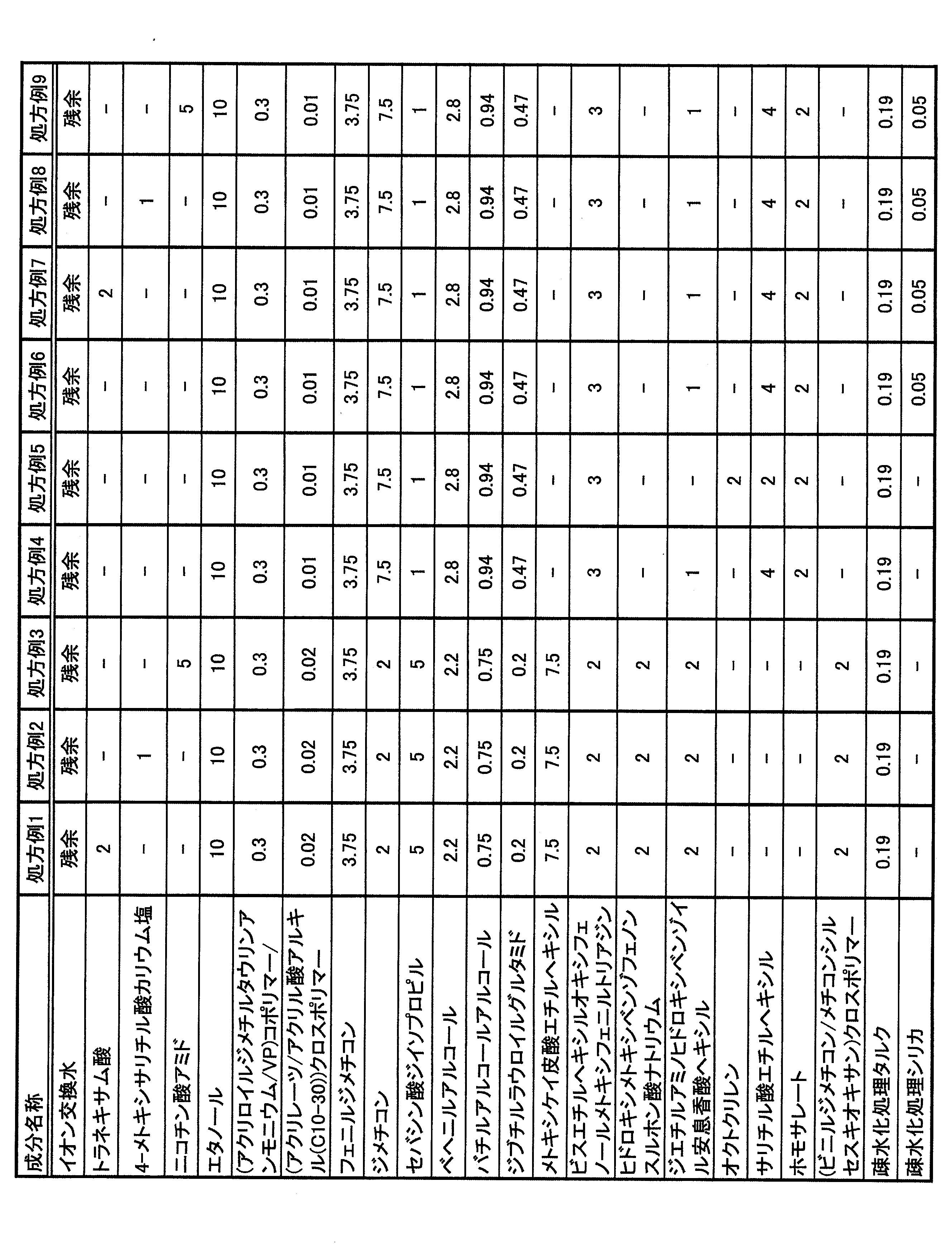
- Oily particles having the compositions listed in the following tables were prepared according to a conventional method, and the combination of the ratio of the oily gelling agent and the polar oil in which the oily particles were formed was examined in the following examples.
- the following table is a formulation example in which a whitening agent is formulated on oily particles according to one aspect of the present invention.
- Tranexamic acid, potassium 4-methoxysalicylic acid salt and nicotinic acid amide were used as whitening agents.
- Example 9 For the oily particles described in Example 1 above, a composition dispersed in an aqueous solvent was prepared. Then, the oily particles were taken out from the aqueous solvent and washed with water. Then, it was dried to obtain a granular external composition.
- This application claims priority based on Japanese Patent Application No. 2019-239664 filed on December 27, 2019, the entire contents of which are incorporated herein by reference.
Landscapes
- Health & Medical Sciences (AREA)
- Life Sciences & Earth Sciences (AREA)
- Veterinary Medicine (AREA)
- Animal Behavior & Ethology (AREA)
- General Health & Medical Sciences (AREA)
- Public Health (AREA)
- Birds (AREA)
- Epidemiology (AREA)
- Chemical & Material Sciences (AREA)
- Dermatology (AREA)
- Emergency Medicine (AREA)
- Oil, Petroleum & Natural Gas (AREA)
- Dispersion Chemistry (AREA)
- Cosmetics (AREA)
Abstract
平均粒径が0.05~10mmである油性粒子であって、(A)極性油と、(B)融点60℃以上の油性ゲル化剤と、を含む、油性粒子である。
Description
本発明は、油性粒子及び外用組成物に関する。
クリームや乳液、リキッドファンデーション、ヘアコンディショナー等の化粧料には、水や保湿剤のように水溶性成分と油分とを同時に配合することが求められる。油と水のように互いに混ざり合わない2つの液体の一方が微粒子となり、もう一方の中に分散している状態を乳化というが、分散している乳化粒子が大きいと水と油分が分離しやすいため、従来は乳化粒子をなるべく小さくする(1~50μm)手法が開発されてきた。
ところで、このような粒子が大きければ、粒子に内包しうる物質やその含有量の範囲が広がり、塗布時の使用感が向上する等の利点も多い。しかしながら、乳化粒子を巨大化すると分離や凝集、合一などが起こり乳化粒子としての安定性が得られない。そこで、界面活性剤を用いて作製する乳化粒子とは全く異なる構造、すなわち、粒子の外側が固形油分の殻(シェル)で覆われた、従来の乳化粒子よりも大きい(10mm)油性粒子であるリピッドシェルが開発された(特許文献1)。
しかしながら、従来のリピッドシェルは極性の高い油分である極性油を多量に配合できなかった。そこで、本発明の一態様は、極性油を多量に配合できる油性粒子を提供することを課題とする。
本発明の発明者らは上記課題を解決するために鋭意研究を重ねた結果、本発明の一態様である、平均粒径が0.05~10mmである油性粒子であって、(A)極性油と、(B)融点60℃以上の油性ゲル化剤と、を含む、油性粒子を完成させた。
本発明の一態様によれば、極性油を多量に配合できる油性粒子を提供することができる。
本発明の一態様は、平均粒径が0.05~10mmである油性粒子であって、(A)極性油と、(B)融点60℃以上の油性ゲル化剤と、を含む、油性粒子に関する。このような油性粒子は、一定量の極性油を高含量で配合してもリピッドシェルの安定性を高めることができる。以下に本発明の一態様について詳細に説明するが、本発明の実施の形態はこれらに限定されない。
<油性粒子>
本発明の一態様である油性粒子は、平均粒径が0.05~10mmであり、固形油分であるシェル(殻)が液状油分を被覆している。固形油分は、主として油相と水相の界面に存在するが、部分的に他の油性成分と共に油性粒子の内側に存在してもよい。また、部分的に液状油分が、油相と水相との界面に存在していてもよい。このような構成であることによって、外用剤として皮膚に塗布した際に、水分の皮膚への浸透の油相成分による阻害が抑制され、かつ、水溶性増粘剤の水相における存在により、界面活性剤を配合しなくても、油相を水相中に安定に分散させることができる。
本発明の一態様である油性粒子は、平均粒径が0.05~10mmであり、固形油分であるシェル(殻)が液状油分を被覆している。固形油分は、主として油相と水相の界面に存在するが、部分的に他の油性成分と共に油性粒子の内側に存在してもよい。また、部分的に液状油分が、油相と水相との界面に存在していてもよい。このような構成であることによって、外用剤として皮膚に塗布した際に、水分の皮膚への浸透の油相成分による阻害が抑制され、かつ、水溶性増粘剤の水相における存在により、界面活性剤を配合しなくても、油相を水相中に安定に分散させることができる。
<(A)極性油>
(A)極性油は、通常、化粧品、医薬品、食品で用いられるものであれば特に限定されない。有機化合物の極性の度合いを示す指標としては、無機性値の有機性値に対する比率を表すIOB値(Inorganic/Organic Balance(無機性値/有機性値))が用いられる。IOB値における「無機性値」、「有機性値」について、例えば、分子中の炭素原子1個について「有機性値」が20、同水酸基1個について「無機性値」が100といったように、各種原子又は官能基に応じた「無機性値」、「有機性値」が設定されている。この「無機性値」及び「有機性値」について、有機化合物中の全ての原子及び官能基の上記値を各々積算することで、所望の有機化合物のIOB値を算出することができる(例えば、藤田著、「化学の領域」第11巻、第10号、第719頁~第725頁、1957年参照)。本発明の一態様である極性油のIOB値は、特に限定されないが、0.05~0.80であることが好ましい。
(A)極性油は、通常、化粧品、医薬品、食品で用いられるものであれば特に限定されない。有機化合物の極性の度合いを示す指標としては、無機性値の有機性値に対する比率を表すIOB値(Inorganic/Organic Balance(無機性値/有機性値))が用いられる。IOB値における「無機性値」、「有機性値」について、例えば、分子中の炭素原子1個について「有機性値」が20、同水酸基1個について「無機性値」が100といったように、各種原子又は官能基に応じた「無機性値」、「有機性値」が設定されている。この「無機性値」及び「有機性値」について、有機化合物中の全ての原子及び官能基の上記値を各々積算することで、所望の有機化合物のIOB値を算出することができる(例えば、藤田著、「化学の領域」第11巻、第10号、第719頁~第725頁、1957年参照)。本発明の一態様である極性油のIOB値は、特に限定されないが、0.05~0.80であることが好ましい。
そのような極性油としては、エステル基、ポリオキシアルキレン基を連続的に有する油で、オクタン酸セチルのようなエステルや、ポリオキシアルキレン基を有する油、植物油があげられる。
それらのうち、本発明の一態様である(A)極性油は、紫外線吸収機能を有する極性油(以下、紫外線吸収極性油ともいう場合がある)を含んでいてもよい。(A)極性油に含まれる紫外線吸収極性油としては、特に限定されないが、例えば、安息香酸誘導体、サリチル酸誘導体、ケイ皮酸誘導体、ジベンゾイルメタン誘導体、β,β-ジフェニルアクリラート誘導体、ベンゾフェノン誘導体、ベンジリデンショウノウ誘導体、フェニルベンゾイミダゾール誘導体、トリアジン誘導体、フェニルベンゾトリアゾール誘導体、アントラニル誘導体、イミダゾリン誘導体、ベンザルマロナート誘導体、4,4-ジアリールブタジエン誘導体等があげられる。具体的には、以下のとおりである。
安息香酸誘導体としては、p-アミノ安息香酸(PABA)エチル、エチル-ジヒドロキシプロピルPABA、エチルヘキシル-ジメチルPABA、グリセリルPABA、PEG-25-PABA、ジエチルアミノヒドロキシベンゾイル安息香酸ヘキシル等があげられる。
サリチル酸誘導体としては、ホモサレート、エチルヘキシルサリチレート(サリチル酸オクチル)、ジプロピレングリコールサリチレート、TEAサリチレート等があげられる。
ケイ皮酸誘導体としては、オクチルメトキシシンナメート又はメトキシケイ皮酸エチルヘキシル、メトキシケイ皮酸イソプロピル、メトキシケイ皮酸イソアミル、シノキセート、DEAメトキシシンナメート、メチルケイ皮酸ジイソプロピル、グリセリル-エチルヘキサノエート-ジメトキシシンナメート、ジ-(2-エチルヘキシル)-4'-メトキシベンザルマロネート等があげられる。
ジベンゾイルメタン誘導体としては、ブチルメトキシジベンゾイルメタン(4-tert-ブチル-4'-メトキシジベンゾイルメタン)等があげられる。
β,β-ジフェニルアクリレート誘導体としては、オクトクリレン等があげられる。
ベンゾフェノン誘導体としては、ベンゾフェノン-1、ベンゾフェノン-2、ベンゾフェノン-3又はオキシベンゾン、ベンゾフェノン-4、ベンゾフェノン-5、ベンゾフェノン-6、ベンゾフェノン-8、ベンゾフェノン-9、ベンゾフェノン-12等があげられる。
トリアジン誘導体としては、アニソトリアジン(ビスエチルヘキシルオキシフェノールメトキシフェニルトリアジン)、エチルヘキシルトリアゾン、ジエチヘキシルブタミドトリアゾン、2,4,6-トリス(ジイソブチル-4'-アミノベンザルマロナート)-s-トリアジン等があげられる。
フェニルベンゾトリアゾール誘導体としては、ドロメトリゾールトリシロキサン、メチレンビス(ベンゾトリアゾリルテトラメチルブチルフェノール)等があげられる。
アントラニル誘導体としては、アントラニル酸メンチル等があげられる。
イミダゾリン誘導体としては、エチルヘキシルジメトキシベンジリデンジオキソイミダゾリジンプロピオナート等があげられる。
ベンザルマロナート誘導体としては、ベンザルマロナート官能基を有するポリオルガノシロキサン等があげられる。
4,4-ジアリールブタジエン誘導体としては、1,1-ジカルボキシ(2,2'-ジメチルプロピル)-4,4-ジフェニルブタジエン等があげられる。
本発明の一態様である(A)極性油には上記の紫外線吸収極性油を、単独で、又は2種以上を組み合わせて配合してよい。例えば、紫外線吸収極性油として、メトキシ桂皮酸エチルヘキシル、ビスエチルヘキシルオキシフェノールメトキシフェニルトリアジン、オキシベンゾン-3、ジエチルアミノヒドロキシベンゾイル安息香酸ヘキシル、ホモサレート、エチルヘキシルサリチレート(サリチル酸オクチル)、ブチルメトキシジベンゾイルメタン、オクトクリレン、アニソトリアジン(ビスエチルヘキシルオキシフェノールメトキシフェニルトリアジン)、エチルヘキシルトリアゾンを組み合わせて配合することができる。このように、上記の誘導体のベースとなる化合物が異なる複数の紫外線吸収極性油を組み合わせて用いると、広範囲の紫外線防御作用が得られるため、好ましい。特に、メトキシ桂皮酸エチルヘキシル、ビスエチルヘキシルオキシフェノールメトキシフェニルトリアジン、ジエチルアミノヒドロキシベンゾイル安息香酸ヘキシルを各々単独で、又は2以上を組み合わせて配合するのが、好ましい。
本発明の一態様である(A)極性油が紫外線吸収極性油を含む油性粒子は、日焼け止め作用がある化粧料や医薬部外品に用いられる点で好ましい。
上記のように、(A)極性油が紫外線吸収極性油を含む場合とは、紫外線吸収極性油のみが配合される場合、及び紫外線吸収極性油と紫外線吸収機能がない極性油が組み合わされて配合される場合がある。紫外線吸収機能がない極性油としては、例えば、エステル油及びポリアルキレンオキシド誘導体油があげられる。具体的には、以下のとおりである。
エステル油としては、イソノナン酸イソノニル、ミリスチン酸イソプロピル、2-エチルヘキサン酸セチル、ミリスチン酸オクチルドデシル、パルミチン酸イソプロピル、ステアリン酸ブチル、ラウリン酸ヘキシル、ミリスチン酸ミリスチル、オレイン酸デシル、ジメチルオクタン酸ヘキシルデシル、乳酸セチル、乳酸ミリスチル、酢酸ラノリン、ステアリン酸イソセチル、イソステアリン酸イソセチル、12-ヒドロキシステアリル酸コレステリル、ジ2-エチルヘキサン酸エチレングリコール、ジペンタエリスリトール脂肪酸エステル、モノイソステアリン酸N-アルキルグリコール、ジカプリン酸ネオペンチルグリコール、リンゴ酸ジイソステアリル、ジ2-ヘプチルウンデカン酸グリセリル、トリ2-エチルヘキサン酸トリメチロールプロパン、トリイソステアリン酸トリメチロールプロパン、テトラ2-エチルヘキサン酸ペンタエリスリット、トリ2-エチルヘキサン酸グリセリル(トリエチルヘキサノイン)、トリイソステアリン酸トリメチロールプロパン、セチル2-エチルヘキサノエート、2-エチルヘキシルパルミテート、ナフタリンジカルボン酸ジエチルヘキシル、安息香酸(炭素数12~15)アルキル、セテアリルイソノナノエート、トリ(カプリル酸・カプリン酸)グリセリン、(ジカプリル酸/カプリン酸)ブチレングリコール、トリミリスチン酸グリセリル、トリ2-ヘプチルウンデカン酸グリセライド、ヒマシ油脂肪酸メチルエステル、オレイン酸オレイル、セトステアリルアルコールアセトグリセライド、パルミチン酸2-ヘプチルウンデシル、アジピン酸ジイソブチル、N-ラウロイル-L-グルタミン酸2-オクチルドデシルエステル、アジピン酸ジ2-ヘプチルウンデシル、エチルラウレート、セバシン酸ジ2-エチルヘキシル、ミリスチン酸2-ヘキシルデシル、パルミチン酸2-ヘキシルデシル、アジピン酸2-ヘキシルデシル、セバシン酸ジイソプロピル、コハク酸ジ2-エチルヘキシル、酢酸エチル、酢酸ブチル、酢酸アミル、クエン酸トリエチル、ジピバリン酸トリプロピレングリコール等があげられる。特に、セバシン酸ジイソプロピルを用いるのが好ましい。
ポリアルキレンオキシド誘導体油としては、ジエチレングリコールモノプロピルエーテル、ポリオキシエチレンポリオキシプロピレンペンタエリスリトールエーテル、ポリオキシプロピレンブチルエーテル等があげられる。
上記のエステル油やポリアルキレンオキシド誘導体油は、本発明の一態様である(A)極性油として、単独で、又は2種以上を組み合わせて配合してよい。エステル油を含有する極性油を紫外線吸収極性油と組み合わせて用いると、固体状の紫外線吸収極性油の溶解が促進される。例えば、メトキシ桂皮酸エチルヘキシル、ビスエチルヘキシルオキシフェノールメトキシフェニルトリアジン、ジエチルアミノヒドロキシベンゾイル安息香酸ヘキシルを各々単独で、又は2以上を組み合わせて、セバシン酸ジイソプロピルと組み合わせて配合するのが好ましい。
リピッドシェル粒子中に極性油を多量に配合することができれば、使用感触が向上し、また紫外線吸収極性油を多量に配合することができれば、化粧料としての機能が高まる。さらに、上記のような着け心地の感触も心地よいリピッドシェルを含む製品を日焼け止め剤に適用できれば、当該製品の使用感も高まり、好ましい。
上記のように、本発明の一態様である油性粒子は、紫外線吸収極性油等の極性油を多量に配合しても安定性が確保される。
(A)極性油の比率は本発明の一態様の油性粒子の全質量中、10~90質量%以上、好ましくは20~80質量%以上、さらに好ましくは30~70質量%以上である。
<(B)油性ゲル化剤>
(B)油性ゲル化剤は、油性粒子を形成し、安定性を高める。したがって、油分が多量に配合されたリピッドシェルの安定性を高めることができる物質であれば、本発明の一態様の油性ゲル化剤として用いることができる。そのような油性ゲル化剤としては、例えば、アミノ酸誘導体、金属セッケン、親油性ベントナイト、デキストリン脂肪酸エステル、ショ糖脂肪酸エステル、ソルビトールのベンジリデン誘導体等があげられるが、これらに限定されない。
(B)油性ゲル化剤は、油性粒子を形成し、安定性を高める。したがって、油分が多量に配合されたリピッドシェルの安定性を高めることができる物質であれば、本発明の一態様の油性ゲル化剤として用いることができる。そのような油性ゲル化剤としては、例えば、アミノ酸誘導体、金属セッケン、親油性ベントナイト、デキストリン脂肪酸エステル、ショ糖脂肪酸エステル、ソルビトールのベンジリデン誘導体等があげられるが、これらに限定されない。
具体的には、アミノ酸誘導体としては、アシルアミノ酸アルキルアミド、N-ラウロイル-L-グルタミン酸、α,γ-ジ-n-ブチルアミン等があげられる。
金属セッケンとしては、水酸基の残存しているアルミニウムステアレート、マグネシウムステアレート、ジンクミリステート等があげられる。
親油性ベントナイトとしては、ジメチルベンジルドデシルアンモニウムモンモリロナイトクレー、ジメチルジオクタデシルアンモニウムモンモリナイトクレー等があげられる。
デキストリン脂肪酸エステルとしては、デキストリンパルミチン酸エステル、デキストリンオレイン酸エステル、デキストリンステアリン酸エステル等があげられる。
ショ糖脂肪酸エステルとしては、8個の水酸基のうち3個以下が高級脂肪酸でエステル化され、高級脂肪酸がステアリン酸、パルミチン酸であるものがあげられる。
ソルビトールのベンジリデン誘導体としては、例えばモノベンジリデンソルビトール、ジベンジリデンソルビトール等があげられる。
好ましくは、アシルアミノ酸アルキルアミドがあげられるが、具体的には、ジブチルラウロイルグルタミド、及びジブチルエチルヘキサノイルグルタミドが特に好ましい。本発明の一態様である油性粒子には、これらの成分を単独で、又は組み合わせて配合してよい。油性ゲル化剤の配合により、油性粒子が安定化するとともに、固形油分の固化力を低下させて、皮膚上で油の粒をつぶして伸ばすのに適切となるように硬度を調整することができる。
(B)油性ゲル化剤の融点は60℃以上であることが好ましい。また、当該油性ゲル化剤は、本発明の一態様である油性粒子全質量中、0.01~20質量%、好ましくは0.05~15質量%、さらに好ましくは0.50~10質量%含まれてよい。
<(C)板状粉末>
(C)板状粉末としては、例えばシリコーン樹脂粉末や有機樹脂粉末を含む、タルク、マイカ、雲母、シリコーン粉末、酸化チタン粉末、酸化亜鉛粉末、酸化鉄粉末、酸化マグネシウム粉末、硫酸バリウム粉末、水酸化アルミニウム粉末、アルミナ、炭酸カルシウム粉末、リン酸カルシウム粉末、チッ化ホウ素粉末、パール剤、セルロース粉末、トウモロコシデンプン、真珠光沢顔料等があげられる。
(C)板状粉末としては、例えばシリコーン樹脂粉末や有機樹脂粉末を含む、タルク、マイカ、雲母、シリコーン粉末、酸化チタン粉末、酸化亜鉛粉末、酸化鉄粉末、酸化マグネシウム粉末、硫酸バリウム粉末、水酸化アルミニウム粉末、アルミナ、炭酸カルシウム粉末、リン酸カルシウム粉末、チッ化ホウ素粉末、パール剤、セルロース粉末、トウモロコシデンプン、真珠光沢顔料等があげられる。
具体的には、例えば、有機樹脂粉末として、(メタ)アクリル酸エステル樹脂粉末、ポリアミド樹脂粉末(ナイロン粉末)、ポリエチレン粉末、ポリスチレン粉末、スチレンと(メタ)アクリル酸の共重合体樹脂粉末、ベンゾグアナミン樹脂粉末、ポリ四弗化エチレン粉末、セルロース粉末、及びトリメチルシルセスキオキサン粉末等があげられる。市販の有機樹脂粉末としては、例えば、ガンツパール(アイカ工業社製)等があげられる。
シリコーン樹脂粉末としては、(ビニルジメチコン/メチコンシルセスキオキサン)クロスポリマー、オルガノポリシロキサンエラストマー粉末またはこれを母粉末とする複合粉末があげられる。市販の球状シリコーン樹脂粉末としては、例えば、トレフィルE-505C、トレフィルE-506C、トレフィルE-506S、トレフィルHP40T(以上、東レ・ダウコーニング・シリコーン株式会社)、トスパール145A(東芝シリコーン社製)、シリコーンパウダーKSP-100、KSP-300(信越化学工業株式会社製)等があげられる。
これらを単独で、又は2以上を組み合わせて配合することができる。なかでも、タルク、マイカ、及びシリコーン粉末が好ましい。シリコーン粉末としては、特に、(ビニルジメチコン/メチコンシルセスキオキサン)クロスポリマーが好ましい。
本発明の板状粉末は、レーザー回折法による平均粒径が1~100μmで、長辺長さ(a)と厚み(b)の比(アスペクト比、a/b)が2~200のものを用いるのが好ましい。
本発明に用いられる板状粉末は、疎水化表面処理が施されていてもよい。疎水化表面処理としては、特に限定されないが、例えば、シリコーン処理、脂肪酸処理、脂肪酸石鹸処理、脂肪酸エステル処理等があげられるが、これらに限定されない。
具体的には、シリコーン処理としては、メチルハイドロジェンポリシロキサン、ジメチルポリシロキサン、メチルフェニルポリシロキサン等のシリコーンオイル;メチルトリメトキシシラン、エチルトリメトキシシラン、ヘキシルトリメトキシシラン、オクチルトリメトキシシラン等のアルキルシラン;トリフルオロメチルエチルトリメトキシシラン、ヘプタデカフルオロデシルトリメトキシシラン等のフルオロアルキルシラン等による処理等があげられる。
脂肪酸処理としては、パルミチン酸、イソステアリン酸、ステアリン酸、ラウリン酸、ミリスチン酸、ベヘニン酸、オレイン酸、ロジン酸、12-ヒドロキシステアリン酸等による処理があげられる。
脂肪酸石鹸処理としては、ステアリン酸アルミニウム、ステアリン酸カルシウム、12-ヒドロキシステアリン酸等による処理等があげられる。
脂肪酸エステル処理としては、デキストリン脂肪酸エステル、コレステロール脂肪酸エステル、ショ糖脂肪酸エステル、デンプン脂肪酸エステル等による処理等があげられる。これらを単独で、又は2以上を組み合わせて配合することができる。これらの中でも、ジメチルポリシロキサン又はステアリン酸カルシウムによる処理が、好ましい。これらの疎水化処理は、常法に従って行うことができる。このうち、特に、疎水化処理タルク、疎水化処理マイカ(雲母)、疎水化処理(ビニルジメチコン/メチコンシルセスキオキサン)クロスポリマー等が好ましい。
(C)板状粉末の含有量は、本発明の一態様の油性粒子の全質量中、0.1~5.0質量%、好ましくは、0.5~2.5質量%含まれてよい。(C)板状粉末の含有量がこの範囲であれば、所望の油性粒子の凝集抑制効果が十分に発揮され、かつ、油性粒子の使用感が良好である。
ここで、本発明の一態様である油性粒子全質量中に、(B)油性ゲル化剤が0.50~10質量%含まれ、かつ、(C)板状粉末が0.5~2.5質量%含まれる場合には、油性粒子の形成や安定性が高まる。
<(D)高級アルコール>
本発明の一態様である油性粒子に固形成分として高級アルコールを配合すると安定した油性粒子を提供することができる。そのような(D)高級アルコールとしては、例えば、イソステアリルアルコール、ラウリルアルコール、ミリスチルアルコール、セチルアルコール、ステアリルアルコール、ベヘニルアルコール、バチルアルコール、オクチルドデカノール等の炭素数が16以上の高級アルコールがあげられる。これらを単独で、又は2以上を組み合わせて配合することができる。特に、ベヘニルアルコール、バチルアルコールアルコールを用いるのが好ましい。これらの成分を用いると、本発明の一態様である油性粒子の高温での安定性が高まり、また汎用性も高まる。
本発明の一態様である油性粒子に固形成分として高級アルコールを配合すると安定した油性粒子を提供することができる。そのような(D)高級アルコールとしては、例えば、イソステアリルアルコール、ラウリルアルコール、ミリスチルアルコール、セチルアルコール、ステアリルアルコール、ベヘニルアルコール、バチルアルコール、オクチルドデカノール等の炭素数が16以上の高級アルコールがあげられる。これらを単独で、又は2以上を組み合わせて配合することができる。特に、ベヘニルアルコール、バチルアルコールアルコールを用いるのが好ましい。これらの成分を用いると、本発明の一態様である油性粒子の高温での安定性が高まり、また汎用性も高まる。
当該高級アルコールは、本発明の一態様である油性粒子全質量中、1~80質量%、好ましくは5~50質量%、さらに好ましくは10~20質量%含まれてよい。
<(E)界面活性剤>
本発明の一態様である油性粒子は、界面活性剤を用いて作製する乳化粒子とは異なる構造である。そのため油性粒子の作製には界面活性剤は用いられない。しかしながら、例えば、リピッドシェルの内部に乳化粒子を含有する粒子を作製することもできる。そこで、本発明の一態様である油性粒子にも界面活性剤が含まれる場合がある。
本発明の一態様である油性粒子は、界面活性剤を用いて作製する乳化粒子とは異なる構造である。そのため油性粒子の作製には界面活性剤は用いられない。しかしながら、例えば、リピッドシェルの内部に乳化粒子を含有する粒子を作製することもできる。そこで、本発明の一態様である油性粒子にも界面活性剤が含まれる場合がある。
本発明の一態様に関する界面活性剤としては、本発明の一態様である油性粒子に含まれる乳化粒子を形成することができるような界面活性剤であれば、いかなる界面活性剤をも配合することができる。そのような界面活性剤としては、シリコーン系界面活性剤、フッ素系界面活性剤、高分子界面活性剤、非イオン系界面活性剤、陽イオン系界面活性剤,陰イオン系界面活性剤又は両性界面活性剤等があげられる。
例えば、界面活性作用を有する有機ケイ素化合物のポリマーであるシリコーン界面活性剤は、撥水性が高く、化粧料では皮膜形成剤としてファンデーションや日焼け止め、化粧下地、ヘアトリートメントのコンディショニング剤などにも広く用いられている。本発明の一態様に適するシリコーン界面活性剤としては、例えば、(PEG-10/ラウリルジメチコン)クロスポリマー、(PEG-15/ラウリルジメチコン)クロスポリマー、(ジメチコン/(PEG-10/15))クロスポリマー、PEG/PPG-20/22ブチルエーテルジメチコン、PEG-10ジメチコン、PEG-11メチルエーテルジメチコン、PEG-3ジメチコン、PEG-9ジメチコン、PEG-9メチルエーテルジメチコン、ポリグリセリル-3ジシロキサンジメチコン、ラウリルPEG-9ポリジメチルシロキシエチルジメチコン、ラウリルポリグリセリル-3ポリジメチルシロキシエチルジメチコン等があげられるが、これらに限定されない。
当該界面活性剤は、本発明の一態様である油性粒子全量中、0.5%以下含まれてよい。
<(F)(アクリレーツ/アクリル酸アルキル(C10-30))クロスポリマー>
本発明の一態様である油性粒子には、(アクリレーツ/アクリル酸アルキル(C10-30))クロスポリマーが配合されてもよい。(アクリレーツ/アクリル酸アルキル(C10-30))クロスポリマーは、水溶性高分子のアルキル変性カルボキシビニルポリマーであり、界面活性を有し、巨大粒子の凝集や合一化を防止する作用も有するため、本発明の一態様である、油性粒子に用いるのに、特に好ましい水溶性増粘剤である。(アクリレーツ/アクリル酸アルキル(C10-30))クロスポリマーが配合された油性粒子は、本発明の一態様である油性粒子の形態を保持し、その安定性を保持することができ、さらに水溶液中に均一に分散される。
本発明の一態様である油性粒子には、(アクリレーツ/アクリル酸アルキル(C10-30))クロスポリマーが配合されてもよい。(アクリレーツ/アクリル酸アルキル(C10-30))クロスポリマーは、水溶性高分子のアルキル変性カルボキシビニルポリマーであり、界面活性を有し、巨大粒子の凝集や合一化を防止する作用も有するため、本発明の一態様である、油性粒子に用いるのに、特に好ましい水溶性増粘剤である。(アクリレーツ/アクリル酸アルキル(C10-30))クロスポリマーが配合された油性粒子は、本発明の一態様である油性粒子の形態を保持し、その安定性を保持することができ、さらに水溶液中に均一に分散される。
このような(アクリレーツ/アクリル酸アルキル(C10-30))クロスポリマーは、本発明の一態様である油性粒子全質量中、0.01~10質量%、好ましくは0.04~5質量%含まれてよい。
<(A)極性油以外の油分>
本発明の一態様である油性粒子には、(A)極性油以外の油が含まれてもよい。そのような油分は、特に限定されず、化粧料、医薬部外品等の外用組成物において通常用いられる油性成分とすることができる。極性油以外の油性成分には、固形油分と液状油分が含まれる。
本発明の一態様である油性粒子には、(A)極性油以外の油が含まれてもよい。そのような油分は、特に限定されず、化粧料、医薬部外品等の外用組成物において通常用いられる油性成分とすることができる。極性油以外の油性成分には、固形油分と液状油分が含まれる。
固形油分は常温(25℃)で固体または半固体の油分である。そ常温(25℃)で固体または半固体の油分であるの例としては、上記の(D)高級アルコールのほかに、例えば、炭化水素油、高級脂肪酸、高級アルコール、植物油、動物性油分、鉱物油、液体油脂、香料、脂肪酸モノカルボン酸ラノリンアルコールエステル等があげられるがこれらに限定されない。
具体的には、炭化水素油としては、固形パラフィン、マイクロクリスタリンワックス、セレシン、ビースワックス、バリコワックス、ポリエチレンワックス、シリコンワックス、ワセリン等があげられる。
高級脂肪酸としては、ミリスチン酸、パルミチン酸、ステアリン酸、ベヘニン酸、12-ヒドロキシステアリン酸等があげられる。
(D)高級アルコール以外の高級アルコールとしては、直鎖アルコール(例えば、ベヘニルアルコール、ステアリルアルコール、セチルアルコール、バチルアルコール、等)、及び分枝鎖アルコール(例えば、モノステアリルグリセリンエーテル(バチルアルコール)-2-デシルテトラデシノール、ラノリンアルコール、コレステロール、フィトステロール、ヘキシルドデカノール、イソステアリルアルコール、オクチルドデカノール等)等があげられる。
植物油としては、カカオ脂、硬化ヒマシ油、硬化油、水添パーム油、パーム油、硬化ヤシ油等があげられる。
動物性油分としては、各種の水添加動植物油脂、鯨ロウ、ミツロウ等があげられる。
ワックス類その他としては、カルナウバロウ、キャンデリラロウ、ジョジョバロウ、ラノリン、セラックロウ、モクロウ、ポリエチレン末、ワセリン等があげられるがこれらに限定されない。この中でも特に、融点が45~75℃である固形油分が好ましく、より好ましくは融点が50~70℃の固形油分である。融点が45℃より高いと油性粒子中に分散された組成物の安定性がよく、75℃よりより低いと、油性粒子を用いた外用組成物の調製が容易となる。そのような固形油分として、限定はされないが、例えば、セチルアルコール、ステアリルアルコール、ベヘニルアルコール等の炭素原子数が16以上の高級アルコール、及びキャンデリラロウがあげられる。さらに、不飽和結合がなく、炭素原子数が18以上の直鎖飽和高級アルコールがより好ましい。これらの成分を、単独で、又は2種以上を組み合わせて配合することができる。
固形油分の配合量は、本発明の一態様である油性粒子の油相中、10~50質量%、さらに10~20質量%が好ましい。油相中の固形油分の配合量が10質量%以上であると油性粒子中に分散された組成物の安定性がよく、50質量%より低いと、皮膚に適用した際につぶれやすくなり、肌なじみがよくなる傾向がある。
液状油分は常温(25℃)で液体の油分である。その例としては、例えば、シリコーン油、炭化水素油、高級脂肪酸、高級アルコール、植物油、動物性油分、鉱物油、液体油脂、香料等があげられるが、これらに限定されない。
具体的には、シリコーン油としては、ジメチコン、フェニルジメチコン、デカメチルテトラシロキサン、ドデカメチルペンタシロキサン、テトラデカメチルヘキサシロキサン、ヘキサデカメチルヘプタシロキサン等のジメチルポリシロキサン類;オクタメチルシクロテトラシロキサン、デカメチルシクロペンタシロキサン、ドデカメチルシクロヘキサシロキサン、テトラデカメチルシクロヘプタシロキサン等の環状ポリシロキサン類(環状ジメチルポリシロキサン);メチルフェニルポリシロキサン、メチルハイドロジェンポリシロキサン、デカメチルポリシロキサン、ドデカメチルポリシロキサン、テトラメチルテトラハイドロジェンポリシロキサン、高重合メチルポリシロキサン、アミノ酸変性シリコーン、カプリリルメチコン等があげられるが、これらに限定されない。
シリコーン油は油性粒子の油相の主要成分として用いられており、例えば、シリコーン油がある程度の量で配合されないと、さっぱりとした使用感が得られない等、油性粒子を含有する製品の使用感を向上させるために必要な成分と認識されている。しかしながら、極性油の配合量を多くしても、このような使用感が得られるような油性粒子があれば、好ましい。中でも、ケイ素-酸素結合のケイ素にメチル基等が結合したシロキサン類のポリマーのうち環状の油分である環状シリコーン油は配合しないことが好ましい。本発明の一態様である油性粒子は環状シリコーンが配合されなくても、安定性が高く、使用感にも優れた油性粒子を提供できる。
環状シリコーン油としては、デカメチルテトラシロキサン、ドデカメチルペンタシロキサン、テトラデカメチルヘキサシロキサン、ヘキサデカメチルヘプタシロキサン等のジメチルポリシロキサン類;オクタメチルシクロテトラシロキサン、デカメチルシクロペンタシロキサン、ドデカメチルシクロヘキサシロキサン、テトラデカメチルシクロヘプタシロキサン等の環状ポリシロキサン類(環状ジメチルポリシロキサン)があげられるが、これらに限定されない。
炭化水素油としては、イソドデカン、イソヘキサデカン、イソパラフィン、流動パラフィン、オゾケライト、スクワラン、植物性スクワラン、ホホバアルコール、プリスタン、α-オレフィンオリゴマー、ポリブテン、水添イソポリブテン等があげられる。
高級脂肪酸としては、トリオクタン酸グリセリン、トリイソパルチミン酸グリセリン、トリグリセリン、オレイン酸、トール油脂肪酸、イソステアリン酸等があげられる。
高級アルコールとしては、直鎖アルコール(例えば、ラウリルアルコール、イソステアリルアルコール、オレイルアルコール等)、及び分枝鎖アルコール(例えば、オクチルドデカノール等)等があげられる。
植物油としては、アボガド油、ツバキ油、マカデミアナッツ油、月見草油、トウモロコシ油、オリーブ油、ナタネ油、ゴマ油、パーシック油、小麦胚芽油、サザンカ油、ヒマシ油、アマニ油、サフラワー油、綿実油、エノ油、大豆油、落花生油、茶実油、カヤ油、コメヌカ油、シナギリ油、日本キリ油、ホホバ油、ひまわり油、アーモンド油、メデュフォーム油、及び胚芽油等があげられる。
動物性油分としては、スクワラン、タートル油、ミンク油、及び卵黄油等があげられる。
その他の液状油分としては、イソステアリン酸イソセチル、ジ-2-エチルヘキサン酸エチレングリコール、2-エチルヘキサン酸セチル、トリ-2-エチルヘキサン酸トリメチロールプロパン、テトラ-2-エチルヘキサン酸ペンタエリスリット、オクタン酸セチル、テトラオクタン酸ペンタエリスリル、トリ-2-ヘプチルウンデカン酸グリセライド、アジピン酸ジイソブチル、セバシン酸2-ヘキシルデシル、トリオクタン酸グリセリン、トリイソパルミチン酸グリセリン、リンゴ酸ジイソステアリル、イソプロピルミリステート、2-オクチルドデシルオレエート、ジメチルオクタン酸ヘキシルデシル、ミリスチン酸2-ヘキシルデシル、ミリスチン酸ミリスチル、ミリスチン酸オクチルドデシル、パルミチン酸イソプロピル、2-エチルヘキシルパルミテート、パルミチン酸2-ヘキシルデシル、パルミチン酸2-ヘプチルウンデシル、ステアリン酸ブチル、ステアリン酸イソセチル、オレイン酸デシル、ドデシルオレエート、オレイン酸オレイル、乳酸ミリスチル、乳酸セチル、12-ヒドロキシステアリル酸コレステリル、ヒマシ油脂肪酸メチルエステル、コハク酸2-エチルヘキシル、アジピン酸2-ヘキシルデシル、アジピン酸ジ-2-ヘプチルウンデシル、セバチン酸ジイソプロピル、セバチン酸ジ-2-エチルヘキシル、ジカプリン酸ネオペンチルグリコール、ジオクタン酸ネオペンチルグリコール、トリ-2-エチルヘキサン酸グリセリン、トリミリスチン酸グリセリン、トリ-2-ヘプチルウンデカン酸グリセライド、トリイソステアリン酸トリメチロールプロパン、トリ2-エチルヘキサン酸グリセリル、ミリスチン酸イソプロピル、パルミチン酸イソプロピル、ラウリン酸へキシル、オレイン酸オレイル、オレイン酸デシル、ミリスチン酸オクチルドデシル、ジメチルオクタン酸ヘキシルデシル、フタル酸ジエチル、フタル酸ジブチル、コハク酸ジオクチル、フッ素変性油、トリオクタノイン、ジピバリン酸トリプロピレングリコール等があげられるが、これらに限定されない。これらの成分を本発明の一態様に関する油分として、単独で、又は2種以上を組み合わせて配合することができる。
当該油分は、本発明の一態様である油性粒子全質量中、1~90質量%、好ましくは10~85質量%、さらに好ましくは15~80質量%含まれてよい。また、当該油性粒子の油相のうち、50~90質量%、好ましくは、80~90質量%であってよい。50質量%以上であれば、皮膚に適用した際の肌なじみがよく、90質量%以下の場合には、油性粒子中の分散組成物の安定性がよい。また、その他の成分として、極性油ではない紫外線吸収剤が含有されていてもよい。
これら固形油分及び液状油分を含む(A)極性油以外の油の配合量は、用途や所望の使用感等によって異なり、特に限定はされないが、本発明の一態様である油性粒子の全質量に対して、1~20質量%であることが好ましく、より好ましくは3~10質量%である。油相の配合量が1質量%以上であれば、外用剤として皮膚に適用した際に十分なしっとり感をもたらすことができ、また20質量%以下であれば、使用感がよい。
<油性粒子の製造方法>
本発明の一態様である油性粒子は、公知の方法で作製しうる。例えば、固形油分および液状油分を含有する油相を、固形油分の融点より高い温度で、水溶性増粘剤を含有する固形油分の融点より高い温度にある水相に添加し、その混合物を固形油分の融点以下の温度まで剪断混合することによって製造することができる。
本発明の一態様である油性粒子は、公知の方法で作製しうる。例えば、固形油分および液状油分を含有する油相を、固形油分の融点より高い温度で、水溶性増粘剤を含有する固形油分の融点より高い温度にある水相に添加し、その混合物を固形油分の融点以下の温度まで剪断混合することによって製造することができる。
通常、70℃前後の温度に加熱して液状にした油性成分の混合物を、同程度の温度の水相に、例えば、送液ポンプ等の注入手段を用いて、水相の下部から直接注入することにより、油相を水相中に導入する。
次に、例えば40℃~50℃程度の、固形油分の融点以下の温度まで剪断混合することによって、固形油分が結晶化して他の油性成分を包含するように形成した油の粒子を剪断力によって粉砕して、油の微細分散物を形成する。それによって、油性成分の浮遊物や凝集物を生じさせることなく、好ましくは一次粒子の平均最大寸法が0.1~30μm、より好ましくは1~15μmの微粒子として、固形油分を含む油相を水相中に安定に分散させることができる。尚、剪断混合は、油相を水相中に添加している間も行って差し支えなく、あるいは添加の間は剪断混合しないで、添加終了直後から剪断混合を開始してもよい。また、剪断混合の際に、例えば氷等を用いて混合物を冷却しながら剪断混合してもよく、あるいは室温で自然に冷却させながら剪断混合してもよい。本明細書において、「固形油分の融点以下の温度まで剪断混合する」とは、固形油分の融点より高い温度から剪断混合を開始して、油相と水相との混合物の温度が固形油分の融点以下の温度になるまで、剪断混合を連続的または断続的に行うことを意味する。例えば、固形油分の融点付近の温度まで剪断混合した後、一度剪断混合を停止し、再度固形油分の融点以下の温度で剪断混合を行う場合も、本発明の製造方法に含まれる。
剪断混合は、剪断力を加えながら混合できる任意の装置を用いて行うことができる。例えば、ホモミキサー、ホモディスパー、フロージェットミキサー、ウルトラミキサー、コロイドミル等の高速剪断分散装置、またはホモジナイザー等の高圧剪断分散装置によって、剪断混合を行うことができるが、本発明の目的を達成できる限り、他の任意の装置を用いて剪断混合してもよい。中でも、ホモミキサーを用いて剪断混合することによって、より均質かつ安定な油の微細分散組成物を作成できる。高速剪断分散装置を用いる場合の回転速度、または高圧剪断分散装置を用いる場合の圧力は、用いる装置の種類やパワーによって異なり、特に限定はされないが、例えば、ホモミキサー等の高速剪断分散装置を用いる場合の回転速度は、好ましくは500~15,000rpmであり、より好ましくは1,000~10,000rpmであり、さらに好ましくは4,000~9,000rpmである。高速剪断分散装置の回転速度が500rpm未満では、期待する寸法の油の微粒子を形成できない場合があり、また10,000rpmを超えて回転速度を上げても、それ以上微粒子化の効果を上げることはできない。また、ホモジナイザー等の高圧剪断分散装置を用いる場合の圧力は、好ましくは50~1000kgf/cm2、より好ましくは100~500kgf/cm2、さらに好ましくは200~400kgf/cm2である。高圧剪断分散装置の圧力が50kgf/cm2未満では、期待する寸法の油の微粒子を形成できない場合があり、1000kgf/cm2を超えて圧力を上げても、それ以上微粒子化の効果を上げることはできない。
剪断混合の時間は、油相と液相との混合物の温度を固形油分の融点以下の温度にするのに要する時間によって異なり、特に限定はされないが、好ましくは、1分~60分であり、より好ましくは2分~30分であり、さらに好ましくは3分~10分である。
さらに、剪断混合による分散工程の後、均質性および安定性を高めるために、分散物を攪拌することが好ましい。攪拌は、通常、例えば10~1500rpm、より好ましくは20~300rpm程度の比較的低速の回転速度で、例えば30分から10時間、より好ましくは1時間から4時間、例えばプロペラミキサー、パドルミキサー、アンカーミキサー、ゲートミキサー、プラネタリーミキサー等の低速攪拌装置によって行うことができる。このようにして、所望の油性粒子を作製することができるが、油性粒子の製造方法はこれらに限定されない。
<外用組成物>
本発明の他の態様としては、本発明の一態様である油性粒子が水性溶媒中に分散されている、外用組成物であってもよい。このような外用組成物は、例えば、人間や動物の外皮において、塗布等により使用することができる、化粧料や、皮膚外用剤としても用いることができる。化粧料は、特に限定されず、例えば、化粧水、美容液、乳液、クリーム、液体洗顔料等のスキンケア用の化粧料(基礎化粧品ともいう);ファンデーション、チーク、口紅、グロス、眉墨、アイライナー、アイシャドー、マスカラ、マニキュア、香水等のメイクアップ用の化粧料(メイクアップ化粧品ともいう);シャンプー、ヘアコンディショナー、ヘアトリートメント、ヘアエッセンス、ヘアミスト、頭皮用ローション、頭皮用クリーム、ヘアトニック、泡タイプ育毛剤、液タイプ育毛剤等のシャンプー、ヘアコンディショナー、ヘアトリートメント、ヘアエッセンス、ヘアミスト、頭皮用ローション、頭皮用クリーム、ヘアトニック、泡タイプ育毛剤、液タイプ育毛剤等頭皮頭髪用の化粧料(頭皮頭髪化粧品ともいう)のいずれも対象に含まれる。なお、本実施形態では、化粧料は、好ましくは化粧下地、日焼け止め、頭皮頭髪化粧品である。
本発明の他の態様としては、本発明の一態様である油性粒子が水性溶媒中に分散されている、外用組成物であってもよい。このような外用組成物は、例えば、人間や動物の外皮において、塗布等により使用することができる、化粧料や、皮膚外用剤としても用いることができる。化粧料は、特に限定されず、例えば、化粧水、美容液、乳液、クリーム、液体洗顔料等のスキンケア用の化粧料(基礎化粧品ともいう);ファンデーション、チーク、口紅、グロス、眉墨、アイライナー、アイシャドー、マスカラ、マニキュア、香水等のメイクアップ用の化粧料(メイクアップ化粧品ともいう);シャンプー、ヘアコンディショナー、ヘアトリートメント、ヘアエッセンス、ヘアミスト、頭皮用ローション、頭皮用クリーム、ヘアトニック、泡タイプ育毛剤、液タイプ育毛剤等のシャンプー、ヘアコンディショナー、ヘアトリートメント、ヘアエッセンス、ヘアミスト、頭皮用ローション、頭皮用クリーム、ヘアトニック、泡タイプ育毛剤、液タイプ育毛剤等頭皮頭髪用の化粧料(頭皮頭髪化粧品ともいう)のいずれも対象に含まれる。なお、本実施形態では、化粧料は、好ましくは化粧下地、日焼け止め、頭皮頭髪化粧品である。
また、本発明の一態様である外用組成物は、リピッドシェルの特性を生かした、水相中に、細かい油性粒子が認められる、いわば、「乳化粒子が見える」形態の製品としても提供することができる。
上記水性溶媒としては、本発明の一態様である油性粒子の形態を保持し、その安定性を保持することができるような、油性粒子に対して水又は水と同一視できる溶媒があげられる。具体的には、低級アルコール、多価アルコール、防腐剤、pH調整剤、金属イオン封鎖剤、中和剤、酸化防止剤、色素等を含んでなる水溶液があげられる。
本発明の一態様に関する油性粒子を、一般の外用組成物の製造工程において添加する一要素として用いて、多彩な剤型・形態の外用組成物を提供することができる。すなわち、溶液型、可溶化型、乳化系、粉末分散系、水-粉末二相型、水-油-粉末三相型等、どのような剤型の外用組成物に対しても、この油性粒子を用いることができる。
本発明の一態様に関する外用組成物はいかなる製品形態をもとることができるが、例えば、化粧水、乳液、クリーム、パック等の、顔面、身体又は頭皮頭髪用の外用組成物として用いることができる。
<その他の成分>
本発明の一態様である油性粒子は、本発明の趣旨から逸脱しない限り、上記の成分のほかにも水溶性又は油溶性の成分を配合することができる。そのような成分としては、例えば、水相中には、グリセリン、ジプロピレングリコール、1,3-ブチレングリコール等の一般的な水性の保湿剤の他に、エタノールに代表される低級アルコール他の水性溶媒を配合することができる。また、必要に応じて、その他の水溶性成分、例えば、アルブチン、アスコルビン酸およびその誘導体、トラネキサム酸およびその誘導体等の水溶性薬剤を配合することができる。さらに、水溶性の紫外線吸収剤、紫外線散乱剤、美白剤、増粘剤、酸化防止剤、抗菌防腐剤、キレート剤、ビタミン類、ホルモン類、性アルコール等で抽出した天然エキス、pH調整剤、防腐剤、色素、香料等があげられる。
本発明の一態様である油性粒子は、本発明の趣旨から逸脱しない限り、上記の成分のほかにも水溶性又は油溶性の成分を配合することができる。そのような成分としては、例えば、水相中には、グリセリン、ジプロピレングリコール、1,3-ブチレングリコール等の一般的な水性の保湿剤の他に、エタノールに代表される低級アルコール他の水性溶媒を配合することができる。また、必要に応じて、その他の水溶性成分、例えば、アルブチン、アスコルビン酸およびその誘導体、トラネキサム酸およびその誘導体等の水溶性薬剤を配合することができる。さらに、水溶性の紫外線吸収剤、紫外線散乱剤、美白剤、増粘剤、酸化防止剤、抗菌防腐剤、キレート剤、ビタミン類、ホルモン類、性アルコール等で抽出した天然エキス、pH調整剤、防腐剤、色素、香料等があげられる。
特に、水相中には、水溶性増粘剤を含めてよい。水溶性増粘剤は、組成物の粘度を高めて、油の微粒子が水相中に安定に分散するのを助ける。また、組成物の粘度を使用に適した粘度に調整する機能を有する。水溶性増粘剤としては、例えば、水性溶媒を増粘させることが可能なものであれば特に限定はされないが、水性溶媒を増粘させることができる水溶性高分子があげられる。そのような水溶性高分子としては、植物系高分子、微生物系高分子、動物系高分子、セルロース系高分子、アルギン酸系高分子、ビニル系高分子、アクリル系高分子、無機系水溶性高分子があげられる。
上記(F)(アクリレーツ/アクリル酸アルキル(C10-30))クロスポリマー以外の水溶性高分子としては、具体的には、植物系高分子として、アラビアゴム、トラガカントガム、ガラクタン、キャロブガム、グアガム、カラヤガム、カラギーナン、ペクチン、カンテン、クインスシード(マルメロ)、アルゲコロイド(褐藻エキス)等があげられる。
微生物系高分子として、デキストラン、サクシノグルカン、プルラン、キサンタンガム等があげられる。
動物系高分子として、コラーゲン、カゼイン、アルブミン、ゼラチン等があげられる。
セルロース系高分子として、メチルセルロース、ニトロセルロース、エチルセルロース、メチルヒドロキシプロピルセルロース、ヒドロキシエチルセルロース、セルロース硫酸ナトリウム、ヒドロキシプロピルセルロース、カルボキシメチルセルロースナトリウム、結晶セルロース、セルロース粉末等があげられる。
セルロース系高分子として、メチルセルロース、ニトロセルロース、エチルセルロース、メチルヒドロキシプロピルセルロース、ヒドロキシエチルセルロース、セルロース硫酸ナトリウム、ヒドロキシプロピルセルロース、カルボキシメチルセルロースナトリウム、結晶セルロース、セルロース粉末等があげられる。
アルギン酸系高分子として、アルギン酸ナトリウム、アルギン酸プロピレングリコールエステル等があげられる。
ビニル系高分子として、ポリビニルアルコール、ポリビニルメチルエーテル、ポリビニルピロリドン、カルボキシビニルポリマー、アルキル変性カルボキシビニルポリマー等があげられる。
アクリル系高分子として、ポリオキシエチレン系高分子、ポリオキエチレンポリオキシプロピレン共重合体系高分子、ポリアクリル酸ナトリウム、ポリエチルアクリレート、ポリアクリルアミド等があげられる。
無機系水溶性高分子として、ポリエチレンイミン、カチオンポリマー、ベントナイト、ケイ酸アルミニウムマグネシウム、ラポナイト、ヘクトライト、無水ケイ酸等があげられる。
上記(F)(アクリレーツ/アクリル酸アルキル(C10-30))クロスポリマーのほかに、水溶性増粘剤として寒天を用いると、他の水溶性増粘剤を用いたのでは得られない、新たな使用感触をもたらすことができる。さらに、特開2004-43785号公報に記載のミクロゲルからなる増粘剤を本発明において用いてもよい。
上記(F)(アクリレーツ/アクリル酸アルキル(C10-30))クロスポリマーのほかに、水溶性増粘剤として寒天を用いると、他の水溶性増粘剤を用いたのでは得られない、新たな使用感触をもたらすことができる。さらに、特開2004-43785号公報に記載のミクロゲルからなる増粘剤を本発明において用いてもよい。
油相には、ステロール類、パラメトキシケイ皮酸オクチル、2-ヒドロキシ-4-メトキシベンゾフェノン等の紫外線吸収剤、紫外線散乱剤、美白剤、保湿剤、増粘剤、酸化防止剤、抗菌防腐剤、キレート剤、ビタミンA及びその誘導体、ビタミンD及びその誘導体、ビタミンE及びその誘導体、ビタミンK及びその誘導体等のビタミン類、ホルモン類、アルギニン、アミノ酸類、抗炎症剤、抗菌剤、収斂剤、清涼剤、ステロール類、動植物又は微生物由来の抽出物、アルコール、高分子系物質、中和剤、pH調整剤、油溶性薬剤、色素、香料等を、油相中に配合してもよく、また、ビタミンC、アルブチン等の水溶性薬剤の結晶の表面を疎水化処理したものを、油相中に分散させてもよい。さらに、油相中に油溶性薬剤を配合してもよい。
本発明の一態様の油性粒子に含まれてよい成分としては、具体的には以下のとおりである。
例えば、上記の極性油としての紫外線極性油のほかに、汎用されているいかなる紫外線吸収剤をも用いることができる。具体的には、ヒドロキシメトキシベンゾフェノンスルホン酸ナトリウム、ジヒドロキシジメトキシベンゾフェノンジスルホン酸ナトリウム、ヒドロキシメトキシベンゾフェノンスルホン酸及びその三水塩、フェニルベンズイミダゾールスルホン酸、フェルラ酸、テレフタリリデンジショウノウスルホン酸、ベンジリデンショウノウスルホン酸等である。特に、ヒドロキシメトキシベンゾフェノンスルホン酸ナトリウムを、紫外線吸収極性油であるメトキシ桂皮酸エチルヘキシル、ビスエチルヘキシルオキシフェノールメトキシフェニルトリアジン、ジエチルアミノヒドロキシベンゾイル安息香酸ヘキシルと組み合わせて配合するのが、好ましい。
本発明の一態様である油性粒子を日焼け止め剤に用いる場合には、上記の紫外線吸収剤のほかに、紫外線散乱剤が含有されてもよい。紫外線散乱剤としては、紫外線散乱作用を有する粉体粒子であればいかなる粒子を用いることができるが、例えば、微粒子酸化チタン、微粒子酸化亜鉛等があげられる。具体的には、酸化チタンのほかには、オクチルトリエトキシシラン処理微粒子酸化亜鉛、パルミチン酸デキストリン処理微粒子酸化亜鉛もあげられるが、これらに限定されない。
美白剤として、トラネキサム酸、4-メトキシサリチル酸カリウム塩、ニコチン酸アミド等があげられる。
保湿剤として、グリセリン、1,3-ブチレングリコール、ポリエチレングリコール、ソルビトール、キシレトール、マルチトール、等があげられる。
増粘剤としては、植物系高分子(例えば、アラビアガム、トラガントガム、ガラクタン、グアガム、カラギーナン等)、微生物系高分子(例えば、キサンタンガム、デキストラン、スクシノグリカン、プルラン等)、動物系高分子(例えば、コラーゲン、カゼイン、アルブミン、ゼラチン等)、デンプン系高分子(例えば、カルボキシメチルデンプン、メチルヒドロキシプロピルデンプン等)、アルギン酸系高分子(例えば、アルギン酸ナトリウム、アルギン酸プロピレングリコールエステル等)等があげられる。また、ジメチルアクリルアミド/アクリロイルジメチルタウリンナトリウムクロスポリマーのような合成クロスポリマーであってもよい。特に、(アクリロイルジメチルタウリンアンモニウム/VP)コポリマーや上記(F)(アクリレーツ/アクリル酸アルキル(C10-30))クロスポリマーと類似する成分等が好ましい。
酸化防止剤として、ブチルヒドロキシトルエン、トコフェロール、フィチン酸、アスコルビン酸、ピロ亜硫酸ナトリウム等があげられる。
抗菌防腐剤として、安息香酸、安息香酸ナトリウム、サリチル酸、ソルビン酸、パラオキシ安息香酸アルキルエステル(エチルパラベン、ブチルパラベン等)、メチルパラベン、デヒドロ酢酸ナトリウム、フェノキシエタノール、ヘキサクロロフェン等があげられる。
キレート剤として、サリチル酸、エデト酸、メタリン酸等があげられる。
抗菌防腐剤として、安息香酸、安息香酸ナトリウム、サリチル酸、ソルビン酸、パラオキシ安息香酸アルキルエステル(エチルパラベン、ブチルパラベン等)、メチルパラベン、デヒドロ酢酸ナトリウム、フェノキシエタノール、ヘキサクロロフェン等があげられる。
キレート剤として、サリチル酸、エデト酸、メタリン酸等があげられる。
ビタミン類として、ビタミンA及びその誘導体、ビタミンB6塩酸塩、ビタミンB6トリパルミテート、ビタミンB6ジオクタノエート、ビタミンB2及びその誘導体、ビタミンB12、ビタミンB15及びその誘導体等のビタミンB類、アスコルビン酸、アスコルビン酸硫酸エステル(塩)、アスコルビン酸リン酸エステル(塩)、アスコルビン酸ジパルミテート等のビタミンC類、α-トコフェロール、β-トコフェロール、γ-トコフェロール、ビタミンE-アセテ-ト、ビタミンE-ニコチネート等のビタミンE類、ビタミンD類、ビタミンH、パントテン酸、パントテチン等のビタミン類、ニコチン酸アミド、ニコチン酸ベンジル、γ-オリザノール、アラントイン、グリチルリチン酸(塩)、グリチルレチン酸及びその誘導体、ヒノキチオール、ムシジン、ビサボロール、ユーカリプトール、チモールイノシトール、パントテルエチルエーテル、エチニルエストラジオール、セファランジン、プラセンタエキス等があげられる。
アルコールとして、エタノール、プロパノール、イソプロパノール、イソブチルアルコール、t-ブチルアルコール等があげられる。
高分子系物質として、多価アルコール、アラビアガム、トラガントガム、ガラクタン、グアガム、キャロブガム、カラヤガム、ジェランガム、カラギーナン等の植物系高分子;キサンタンガム、デキストラン、サクシノグルカン、プルラン、バイオヒアルロン酸ナトリウム等の微生物系高分子;コラーゲン、カゼイン、ゼラチン等の動物系高分子;カルボキシメチルデンプン、メチルヒドロキシプロピルデンプン等のデンプン系高分子;メチルセルロース、エチルセルロース、メチルヒドロキシプロピルセルロース、ヒドロキシエチルセルロース、セルロース硫酸ナトリウム、ヒドロキシプロピルセルロース、カルボキシメチルセルロースナトリウム、結晶セルロース等のセルロース系高分子;アルギン酸ナトリウム、アルギン酸プロピレングリコールエステル等のアルギン酸系高分子;ポリビニルアルコール、ポリビニルアセテート、ポリビニルメチルエーテル、ポリビニルピロリドン、ビニルピロリドンとビニルアセテート共重合物、カルボキシビニルポリマー等のビニル系高分子;ポリアクリル酸ナトリウム、ポリエチルアクリレート、ポリアクリル酸アルカノールアミン、アルキルメタクリレートとジメチルアミノエチルメタクリレート共重合物、ポリ2-アクリルアミド-2-メチルプロパンスルホン酸、ポリメタクリロイルオキシトリメチルアンモニウム等のアクリル系高分子;2-メタクリロイルオキシエチルホスホリルコリンをモノマーとして含む高分子等があげられる。
その他、ラウロイルコシンナトリウム等のアシルサルコシン酸、グルタチオン;アミノカプロン酸、クエン酸、リンゴ酸、乳酸、グリコール酸、酒石酸等の有機酸等のα-ヒドロキシ酸及びこれらのナトリウム、カリウム等の塩や、ギシギシ、クララ、コウホネ、オレンジ、セージ、ノコギリ草、ゼニアオイ、センキュウ、センブリ、タイム、トウキ、トウヒ、バーチ、スギナ、ヘチマ、マロニエ、ユキノシタ、ヒオウギ、カミツレ、アルニカ、ユリ、ヨモギ、シャクヤク、アロエ、クチナシ、サワラ、ローヤルゼリー、胎盤抽出物、パントテニールエチルエーテル、グリチルリチン酸ジカリウム、ビオチン、ピリドキシン塩酸塩、アデノシン三リン酸、α-リポ酸、3-O-エチルアスコルビン酸、アスコルビン酸リン酸マグネシウム、アルブチン、グルコシルヘスペリジン、グルコシルルチン等があげられる。
これらの物質を本発明の効果を損なわない範囲で配合することができる。
これらの物質を本発明の効果を損なわない範囲で配合することができる。
以下は本発明の一態様である油性粒子に関する実施例である。当業者であれば、本実施例で用いる物質、処方、比率、方法等は本発明の趣旨を逸脱しない限り、適宜変更できることを理解できる。また、本実施例の記載は本発明を実施例の範囲に限定することを意図しない。以下の実施例等における配合量「%」は特段の断りがない限りは「質量%」を表す。
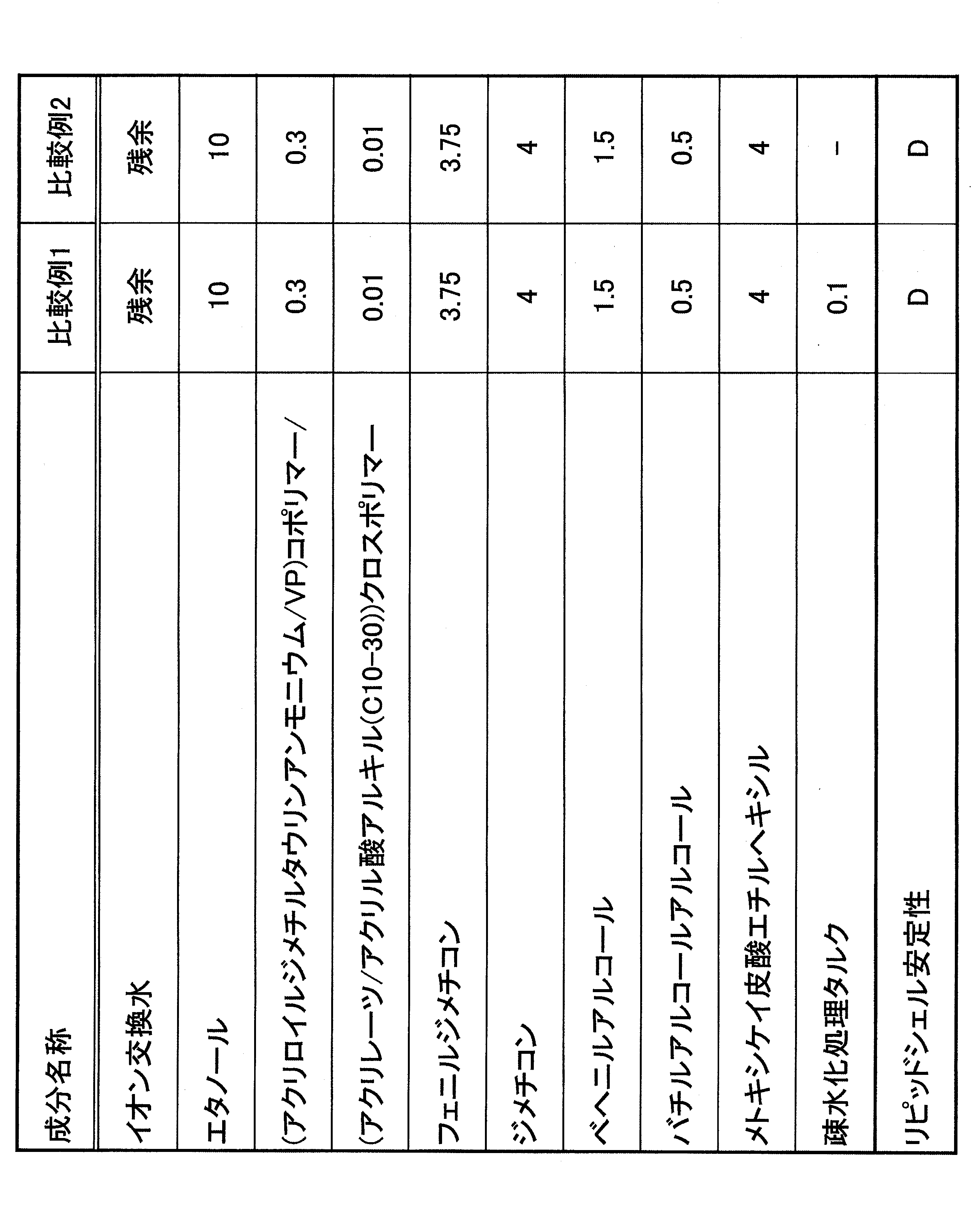
〔実施例1~8及び比較例1及び2〕
以下の各表に掲げた組成を有する油性粒子を常法に従って調製し、油性粒子が形成される油性ゲル化剤と極性油の比率の組み合わせを以下の実施例で検討した。
以下の各表に掲げた組成を有する油性粒子を常法に従って調製し、油性粒子が形成される油性ゲル化剤と極性油の比率の組み合わせを以下の実施例で検討した。
具体的な評価方法としては、油性粒子を作製後、25℃で2週間、油性粒子の経過観察を行い、以下のように評価した。
A:油性粒子の形状は、変化しなかった
B:油性粒子の2割程度が凝集(合一)した
C:油性粒子の2~5割程度が凝集(合一)した
D:油性粒子の5割以上が凝集(合一)したか、又は、作製時点で油性粒子が形成されなかった
その結果を以下の表1及び2に示す。
A:油性粒子の形状は、変化しなかった
B:油性粒子の2割程度が凝集(合一)した
C:油性粒子の2~5割程度が凝集(合一)した
D:油性粒子の5割以上が凝集(合一)したか、又は、作製時点で油性粒子が形成されなかった
その結果を以下の表1及び2に示す。

以下の表は、本発明の一態様である油性粒子に美白剤を処方した処方例である。美白剤として、トラネキサム酸、4-メトキシサリチル酸カリウム塩及びニコチン酸アミドを用いた。
〔実施例9〕
上記実施例1に記載の油性粒子について、水性溶媒中に分散されている組成物を作製した。その後、当該水性溶媒から油性粒子を取り出して、水洗した。その後、乾燥を行い、粒状の外用組成物を得た。
本出願は、2019年12月27日に出願された日本国特許出願2019-239664号に基づく優先権を主張するものであり、その全内容をここに援用する。
Claims (10)
- 平均粒径が0.05~10mmである油性粒子であって、(A)極性油と、(B)融点60℃以上の油性ゲル化剤と、を含む、油性粒子。
- 前記(A)極性油に紫外線吸収極性油が含まれる、請求項1に記載の油性粒子。
- 前記(A)極性油の比率が30質量%以上である、請求項1又は2に記載の油性粒子。
- 前記(B)油性ゲル化剤が、アシルアミノ酸アルキルアミドである、請求項1~3のいずれか1項に記載の油性粒子。
- 前記アシルアミノ酸アルキルアミドが、ジブチルラウロイルグルタミド、及びジブチルエチルヘキサノイルグルタミドから選択される少なくとも1の成分からなる、請求項1~4のいずれか1項に記載の油性粒子。
- さらに、(C)板状粉末及び/又は(D)高級アルコールを含む、請求項1~5のいずれか1項に記載の油性粒子。
- 前記(C)板状粉末が、タルク及び/又はマイカである、上記請求項6に記載の油性粒子。
- さらに、(E)界面活性剤を含む油性粒子であって、前記界面活性剤の配合量が0.5%以下である、請求項1~7のいずれか1項に記載の油性粒子。
- さらに、(F)(アクリレーツ/アクリル酸アルキル(C10-30))クロスポリマーを含む、請求項1~8のいずれか一項に記載の油性粒子。
- 請求項1~9のいずれか1項に記載の油性粒子が、水性溶媒中に分散されている、外用組成物。
Priority Applications (3)
| Application Number | Priority Date | Filing Date | Title |
|---|---|---|---|
| US17/757,901 US20230052833A1 (en) | 2019-12-27 | 2020-12-17 | Oil-based particles and external composition |
| JP2021567363A JP7690722B2 (ja) | 2019-12-27 | 2020-12-17 | 油性粒子及び外用組成物 |
| CN202080089371.5A CN114845692A (zh) | 2019-12-27 | 2020-12-17 | 油性粒子及外用组合物 |
Applications Claiming Priority (2)
| Application Number | Priority Date | Filing Date | Title |
|---|---|---|---|
| JP2019239664 | 2019-12-27 | ||
| JP2019-239664 | 2019-12-27 |
Publications (1)
| Publication Number | Publication Date |
|---|---|
| WO2021132018A1 true WO2021132018A1 (ja) | 2021-07-01 |
Family
ID=76576092
Family Applications (1)
| Application Number | Title | Priority Date | Filing Date |
|---|---|---|---|
| PCT/JP2020/047151 Ceased WO2021132018A1 (ja) | 2019-12-27 | 2020-12-17 | 油性粒子及び外用組成物 |
Country Status (4)
| Country | Link |
|---|---|
| US (1) | US20230052833A1 (ja) |
| JP (1) | JP7690722B2 (ja) |
| CN (1) | CN114845692A (ja) |
| WO (1) | WO2021132018A1 (ja) |
Cited By (4)
| Publication number | Priority date | Publication date | Assignee | Title |
|---|---|---|---|---|
| JP2022114438A (ja) * | 2021-01-26 | 2022-08-05 | 一丸ファルコス株式会社 | オイルゲル粒子及びそれを含有する皮膚外用組成物 |
| WO2023118915A1 (en) | 2021-12-23 | 2023-06-29 | L V M H Recherche | Oil-in-water emulsion |
| JP2025085113A (ja) * | 2023-11-24 | 2025-06-05 | 株式会社ファンケル | 水中油型乳化化粧料 |
| WO2025216285A1 (ja) * | 2024-04-10 | 2025-10-16 | 味の素株式会社 | 粉体の表面処理剤、表面処理した粉体及びそれを含む粉体組成物、複合粉体及びそれを含む粉体組成物、並びに粉体の製法及び粉体を表面処理する方法 |
Families Citing this family (2)
| Publication number | Priority date | Publication date | Assignee | Title |
|---|---|---|---|---|
| CN115813776B (zh) * | 2022-12-30 | 2024-06-11 | 杭州菲丝凯化妆品有限公司 | 一种带有悬浮粒子的精华液及制备方法 |
| WO2025160240A1 (en) * | 2024-01-23 | 2025-07-31 | The Regents Of The University Of California | Insect repellent formulations and methods making and using thereof |
Citations (6)
| Publication number | Priority date | Publication date | Assignee | Title |
|---|---|---|---|---|
| JP2005298388A (ja) * | 2004-04-09 | 2005-10-27 | Shiseido Co Ltd | ゲル状組成物及びその製造方法 |
| WO2009139092A1 (ja) * | 2008-05-12 | 2009-11-19 | 高級アルコール工業株式会社 | 使用感と保存安定性に優れた化粧料およびその製法 |
| JP2012020965A (ja) * | 2010-07-14 | 2012-02-02 | Shiseido Co Ltd | ハンドケア用組成物、及び、その製造方法 |
| JP2016088932A (ja) * | 2014-10-31 | 2016-05-23 | 株式会社コーセー | 多色油性固形組成物 |
| WO2018212223A1 (ja) * | 2017-05-19 | 2018-11-22 | 株式会社 資生堂 | 水中油型乳化組成物 |
| JP2018188388A (ja) * | 2017-05-02 | 2018-11-29 | 株式会社コーセー | 油性ゲル組成物及び油性ゲル組成物の製造方法 |
Family Cites Families (9)
| Publication number | Priority date | Publication date | Assignee | Title |
|---|---|---|---|---|
| JP2005036001A (ja) * | 2003-07-03 | 2005-02-10 | Shiseido Co Ltd | 油性粒子を含有する外用組成物 |
| CN1980634B (zh) * | 2004-07-02 | 2010-11-24 | 株式会社资生堂 | 含有油性粒子的外用组合物 |
| JP4330511B2 (ja) * | 2004-10-06 | 2009-09-16 | 株式会社資生堂 | 水中油型皮膚外用組成物 |
| JP6181697B2 (ja) * | 2015-04-13 | 2017-08-16 | 千葉製粉株式会社 | デキストリン脂肪酸エステル及び化粧料 |
| CN109562035A (zh) * | 2016-08-08 | 2019-04-02 | 株式会社资生堂 | 透明固体组合物 |
| JP6985025B2 (ja) * | 2017-03-29 | 2021-12-22 | 株式会社 資生堂 | 水中油型化粧料 |
| JP7320914B2 (ja) * | 2017-04-26 | 2023-08-04 | 株式会社 資生堂 | 透明組成物および透明化粧料 |
| JP6503008B2 (ja) * | 2017-05-30 | 2019-04-17 | 高級アルコール工業株式会社 | 透明油性固形化粧料 |
| CN110785160A (zh) * | 2017-06-08 | 2020-02-11 | 株式会社资生堂 | 油包水型乳化化妆品 |
-
2020
- 2020-12-17 US US17/757,901 patent/US20230052833A1/en not_active Abandoned
- 2020-12-17 WO PCT/JP2020/047151 patent/WO2021132018A1/ja not_active Ceased
- 2020-12-17 CN CN202080089371.5A patent/CN114845692A/zh active Pending
- 2020-12-17 JP JP2021567363A patent/JP7690722B2/ja active Active
Patent Citations (6)
| Publication number | Priority date | Publication date | Assignee | Title |
|---|---|---|---|---|
| JP2005298388A (ja) * | 2004-04-09 | 2005-10-27 | Shiseido Co Ltd | ゲル状組成物及びその製造方法 |
| WO2009139092A1 (ja) * | 2008-05-12 | 2009-11-19 | 高級アルコール工業株式会社 | 使用感と保存安定性に優れた化粧料およびその製法 |
| JP2012020965A (ja) * | 2010-07-14 | 2012-02-02 | Shiseido Co Ltd | ハンドケア用組成物、及び、その製造方法 |
| JP2016088932A (ja) * | 2014-10-31 | 2016-05-23 | 株式会社コーセー | 多色油性固形組成物 |
| JP2018188388A (ja) * | 2017-05-02 | 2018-11-29 | 株式会社コーセー | 油性ゲル組成物及び油性ゲル組成物の製造方法 |
| WO2018212223A1 (ja) * | 2017-05-19 | 2018-11-22 | 株式会社 資生堂 | 水中油型乳化組成物 |
Cited By (6)
| Publication number | Priority date | Publication date | Assignee | Title |
|---|---|---|---|---|
| JP2022114438A (ja) * | 2021-01-26 | 2022-08-05 | 一丸ファルコス株式会社 | オイルゲル粒子及びそれを含有する皮膚外用組成物 |
| JP7730148B2 (ja) | 2021-01-26 | 2025-08-27 | 一丸ファルコス株式会社 | オイルゲル粒子及びそれを含有する皮膚外用組成物 |
| WO2023118915A1 (en) | 2021-12-23 | 2023-06-29 | L V M H Recherche | Oil-in-water emulsion |
| JP2025085113A (ja) * | 2023-11-24 | 2025-06-05 | 株式会社ファンケル | 水中油型乳化化粧料 |
| JP7706853B2 (ja) | 2023-11-24 | 2025-07-14 | 株式会社ファンケル | 水中油型乳化化粧料 |
| WO2025216285A1 (ja) * | 2024-04-10 | 2025-10-16 | 味の素株式会社 | 粉体の表面処理剤、表面処理した粉体及びそれを含む粉体組成物、複合粉体及びそれを含む粉体組成物、並びに粉体の製法及び粉体を表面処理する方法 |
Also Published As
| Publication number | Publication date |
|---|---|
| JPWO2021132018A1 (ja) | 2021-07-01 |
| CN114845692A (zh) | 2022-08-02 |
| JP7690722B2 (ja) | 2025-06-11 |
| US20230052833A1 (en) | 2023-02-16 |
Similar Documents
| Publication | Publication Date | Title |
|---|---|---|
| JP7690722B2 (ja) | 油性粒子及び外用組成物 | |
| CN112386504B (zh) | 分散性粉体及化妆品 | |
| US8293222B2 (en) | Silicone-modified wax-containing composition and cosmetic preparation containing the composition | |
| US10398638B2 (en) | Powder dispersant, and powder dispersion composition and cosmetic product containing the same | |
| JP7243815B2 (ja) | 化粧料及び化粧料の製造方法 | |
| JP6887765B2 (ja) | 日焼け止め化粧料 | |
| US20130231401A1 (en) | External Oil-In-Water-Type Skin Preparation | |
| JP7309373B2 (ja) | 油中水型乳化組成物 | |
| EP3626229A1 (en) | Oil-in-water emulsion composition | |
| JP7581596B2 (ja) | 油性組成物 | |
| JPH09255543A (ja) | 油中水型日焼け止め化粧料 | |
| WO2021221149A1 (ja) | 水中油型乳化組成物 | |
| WO2021131948A1 (ja) | 油性組成物 | |
| CN117794512A (zh) | 水包油型乳化化妆品 | |
| JP7671952B2 (ja) | 水中油型乳化化粧料 | |
| WO2022138425A1 (ja) | 油中水型乳化化粧料 | |
| JP7370820B2 (ja) | 水中油型組成物 | |
| JP2004269418A (ja) | 化粧料 | |
| JP6418626B2 (ja) | 油中水型乳化組成物及び該組成物を用いた油中水型乳化化粧料 | |
| JP2013082649A (ja) | スイゼンジノリ由来糖誘導体被覆処理粉体およびその製造方法並びに化粧料 | |
| JP2019069912A (ja) | 非水系皮膚外用組成物およびその製造方法 | |
| JP2019069913A (ja) | 非水系皮膚外用組成物の製造方法 | |
| JP2026066897A (ja) | 油中水型乳化化粧料 | |
| CN119421689A (zh) | 油包水型乳化固态化妆品 | |
| JP2025043658A (ja) | 崩壊性粒子含有化粧料 |
Legal Events
| Date | Code | Title | Description |
|---|---|---|---|
| 121 | Ep: the epo has been informed by wipo that ep was designated in this application |
Ref document number: 20905974 Country of ref document: EP Kind code of ref document: A1 |
|
| ENP | Entry into the national phase |
Ref document number: 2021567363 Country of ref document: JP Kind code of ref document: A |
|
| NENP | Non-entry into the national phase |
Ref country code: DE |
|
| 122 | Ep: pct application non-entry in european phase |
Ref document number: 20905974 Country of ref document: EP Kind code of ref document: A1 |