WO2021132011A1 - ハロゲン化含フッ素(シクロ)アルケニル亜鉛化合物の製造方法 - Google Patents
ハロゲン化含フッ素(シクロ)アルケニル亜鉛化合物の製造方法 Download PDFInfo
- Publication number
- WO2021132011A1 WO2021132011A1 PCT/JP2020/047128 JP2020047128W WO2021132011A1 WO 2021132011 A1 WO2021132011 A1 WO 2021132011A1 JP 2020047128 W JP2020047128 W JP 2020047128W WO 2021132011 A1 WO2021132011 A1 WO 2021132011A1
- Authority
- WO
- WIPO (PCT)
- Prior art keywords
- compound
- halogenated
- fluorine
- cyclo
- alkenyl
- Prior art date
- Legal status (The legal status is an assumption and is not a legal conclusion. Google has not performed a legal analysis and makes no representation as to the accuracy of the status listed.)
- Ceased
Links
Classifications
-
- C—CHEMISTRY; METALLURGY
- C07—ORGANIC CHEMISTRY
- C07F—ACYCLIC, CARBOCYCLIC OR HETEROCYCLIC COMPOUNDS CONTAINING ELEMENTS OTHER THAN CARBON, HYDROGEN, HALOGEN, OXYGEN, NITROGEN, SULFUR, SELENIUM OR TELLURIUM
- C07F3/00—Compounds containing elements of Groups 2 or 12 of the Periodic Table
- C07F3/06—Zinc compounds
-
- B—PERFORMING OPERATIONS; TRANSPORTING
- B01—PHYSICAL OR CHEMICAL PROCESSES OR APPARATUS IN GENERAL
- B01J—CHEMICAL OR PHYSICAL PROCESSES, e.g. CATALYSIS OR COLLOID CHEMISTRY; THEIR RELEVANT APPARATUS
- B01J23/00—Catalysts comprising metals or metal oxides or hydroxides, not provided for in group B01J21/00
- B01J23/02—Catalysts comprising metals or metal oxides or hydroxides, not provided for in group B01J21/00 of the alkali- or alkaline earth metals or beryllium
- B01J23/04—Alkali metals
-
- C—CHEMISTRY; METALLURGY
- C07—ORGANIC CHEMISTRY
- C07B—GENERAL METHODS OF ORGANIC CHEMISTRY; APPARATUS THEREFOR
- C07B61/00—Other general methods
-
- C—CHEMISTRY; METALLURGY
- C07—ORGANIC CHEMISTRY
- C07C—ACYCLIC OR CARBOCYCLIC COMPOUNDS
- C07C17/00—Preparation of halogenated hydrocarbons
- C07C17/26—Preparation of halogenated hydrocarbons by reactions involving an increase in the number of carbon atoms in the skeleton
-
- C—CHEMISTRY; METALLURGY
- C07—ORGANIC CHEMISTRY
- C07C—ACYCLIC OR CARBOCYCLIC COMPOUNDS
- C07C17/00—Preparation of halogenated hydrocarbons
- C07C17/26—Preparation of halogenated hydrocarbons by reactions involving an increase in the number of carbon atoms in the skeleton
- C07C17/263—Preparation of halogenated hydrocarbons by reactions involving an increase in the number of carbon atoms in the skeleton by condensation reactions
-
- C—CHEMISTRY; METALLURGY
- C07—ORGANIC CHEMISTRY
- C07C—ACYCLIC OR CARBOCYCLIC COMPOUNDS
- C07C21/00—Acyclic unsaturated compounds containing halogen atoms
- C07C21/02—Acyclic unsaturated compounds containing halogen atoms containing carbon-to-carbon double bonds
- C07C21/18—Acyclic unsaturated compounds containing halogen atoms containing carbon-to-carbon double bonds containing fluorine
Definitions
- the present disclosure relates to a method for producing a halogenated fluorine-containing (cyclo) alkenyl-zinc compound.
- Fluorine compounds having a halogenated fluorine-containing (cyclo) alkenyl group are used for ion exchange membranes for fuel cells, sealing materials for automobiles or aircraft, fuel hoses, optical electronic parts such as optical fibers, paints, antifouling applications, etc. It is useful as a raw material monomer for fluorine-containing polymers used for various purposes such as coating materials, and as a pesticide having an enzyme inhibitory action.
- halogenated fluorine-containing (cyclo) alkenyl zinc compounds such as halogenated trifluorovinyl zinc (halogenated (1,1,2-trifluoroethenyl) zinc) are fluorine compounds having such a trifluorovinyl group. It is known that it can be used for the synthesis reaction of (see, for example, Patent Document 1). Therefore, a method for obtaining a halogenated fluorine-containing (cyclo) alkenyl-zinc compound in good yield has been studied.
- Patent Document 1 discloses a method of reacting a fluorine-containing olefin such as tetrafluoroethylene or chlorotrifluoroethylene with zinc halide in the presence of magnesium or an alloy thereof.
- fluorine-containing alkenes other than trifluorovinyl compounds can be expected to have various functions like trifluorovinyl compounds, but these have more limited choices of raw materials and synthetic methods than trifluorovinyl compounds.
- the synthetic method has hardly been studied so far.
- An object of the present disclosure is to provide a method for obtaining a halogenated fluorine-containing (cyclo) alkenyl-zinc compound in a high yield.
- This disclosure includes the following configurations.
- X 1 represents a halogen atom.
- R 1 represents a fluorine atom or a monovalent perfluorohydrocarbon group.
- R 2 and R 3 are the same or different and represent a hydrogen atom or a fluorine atom. Alternatively, R 3 and R 1 or R 2 may be combined to form a divalent perfluorohydrocarbon chain.
- the single bond shown by the wavy line indicates that the configuration for the double bond to which it is bonded is an E or Z configuration or a mixture thereof in any proportion.
- R 1 , R 2 and R 3 are the same as described above.
- X 2 represents a halogen atom.
- the single bond shown by the wavy line indicates that the configuration for the double bond to which it is bonded is an E or Z configuration or a mixture thereof in any proportion.
- X 1 is the same as described above.
- Step of reacting with the zinc halide compound represented by (1) A manufacturing method.
- Item 2 The production method according to claim 1, wherein X 2 is a fluorine atom or a chlorine atom.
- the halogenated fluorine-containing (cyclo) alkenyl zinc compound represented by the general formula (1) is a halogenated trifluorovinyl zinc compound
- the halogenated olefin compound represented by the general formula (2) is tetrafluoroethylene or tetrafluoroethylene.
- Item 2 The production method according to Item 1 or 2, which is chlorotrifluoroethylene.
- Item 4. The production method according to any one of Items 1 to 3, wherein the zero-valent alkali metal is at least one selected from the group consisting of lithium metal, sodium metal and potassium metal.
- Item 5 The production method according to any one of Items 1 to 4, wherein the zero-valent alkali metal is a sodium metal.
- Item 6. The production method according to any one of Items 1 to 5, wherein the zero-valent alkali metal is dispersed in the dispersed oil.
- Item 7 The production method according to any one of Items 1 to 6, wherein the step (1) is carried out in an aprotic polar solvent.
- Item 8 Item 1 to Item 7, wherein the aprotic polar solvent is at least one solvent selected from the group consisting of a lactam compound, a dialkyl sulfoxide compound, a tetraalkyl urea compound, and a hexaalkyl phosphate triamide compound.
- the aprotic polar solvent is at least one solvent selected from the group consisting of a lactam compound, a dialkyl sulfoxide compound, a tetraalkyl urea compound, and a hexaalkyl phosphate triamide compound.
- Item 9 The production method according to any one of Items 1 to 8, wherein the aprotic polar solvent is a tetraalkylurea compound.
- Item 10 Item 1 of Item 1 to 9, wherein in the step (1), the molar ratio of the zinc halide compound to the zero-valent alkali metal (zinc halide compound / zero-valent alkali metal) is 0.1 to 5. The manufacturing method described in.
- Item 11 Item 1 of Item 1 to 10, wherein in the step (1), the molar ratio of the halogenated olefin compound to the zero-valent alkali metal (halogenated olefin compound / zero-valent alkali metal) is 0.01 to 100.
- Item 12 Item 1 of Item 1 to 11, wherein in the step (1), the molar ratio of the halogenated olefin compound to the zinc halide compound (halogenated olefin compound / zinc halide compound) is 0.01 to 100.
- Item 13 The production method according to any one of Items 1 to 12, wherein the reaction temperature in the step (1) is 0 to 100 ° C.
- R 1 , R 2 and R 3 are the same as described above.
- the two R 1s are the same, the two R 2s are the same, and the two R 3s are the same.
- the single bond shown by the wavy line indicates that the configuration for the double bond to which it is bonded is an E or Z configuration or a mixture thereof in any proportion.
- Item 16 The production method according to Item 15, wherein the step (3) is a step of reacting a liquid phase containing the halogenated fluorine-containing (cyclo) alkenyl-zinc compound.
- Item 17 The production method according to Item 15 or 16, wherein the step (3) is carried out in the presence of a salt of copper or iron.
- a halogenated fluorine-containing (cyclo) alkenyl-zinc compound can be obtained in good yield.
- the “yield” means the ratio (mol%) of the total molar amount of the target compound contained in the outflow gas from the reactor outlet to the molar amount of the raw material compound supplied to the reactor.
- zero-valent alkali metal is intended as a simple substance of an alkali metal, and does not include a compound containing an alkali metal.
- lithium metal sodium metal
- potassium metal potassium metal
- olefin includes both acyclic olefins and cyclic olefins.
- (cyclo) alkenyl means alkenyl and / or cycloalkenyl.
- X 1 represents a halogen atom.
- R 1 represents a fluorine atom or a monovalent perfluorohydrocarbon group.
- R 2 and R 3 are the same or different and represent a hydrogen atom or a fluorine atom. Alternatively, R 3 and R 1 or R 2 may be combined to form a divalent perfluorohydrocarbon chain.
- the single bond shown by the wavy line indicates that the configuration for the double bond to which it is bonded is an E or Z configuration or a mixture thereof in any proportion.
- R 1 , R 2 and R 3 are the same as described above.
- X 2 represents a halogen atom.
- the single bond shown by the wavy line indicates that the configuration for the double bond to which it is bonded is an E or Z configuration or a mixture thereof in any proportion.
- X 1 is the same as described above.
- a halogenated fluorine-containing (cyclo) alkenyl-zinc compound can be obtained in good yield as compared with Patent Document 1 in which the reaction is carried out in the presence of magnesium or an alloy thereof. Therefore, according to the present disclosure, a halogenated fluorine-containing (cyclo) alkenyl-zinc compound can be obtained in good yield.
- the raw material compound is a general formula (2):
- R 1 represents a fluorine atom or a monovalent perfluorohydrocarbon group.
- R 2 and R 3 are the same or different and represent a hydrogen atom or a fluorine atom. Alternatively, R 3 and R 1 or R 2 may be combined to form a divalent perfluorohydrocarbon chain.
- X 2 represents a halogen atom.
- the single bond shown by the wavy line indicates that the configuration for the double bond to which it is bonded is an E or Z configuration or a mixture thereof in any proportion.
- the halogenated olefin compound represented by is used.
- the single bond shown by the wavy line indicates that the configuration for the double bond to which it is bonded is an E configuration or a Z configuration or a mixture thereof in any ratio. That is, the halogenated olefin compound represented by the general formula (2) is the general formula (2A) and (2B):
- X 2 is the same as above.
- R 1a represents a fluorine atom or a perfluorohydrocarbon group.
- R 2a and R 3a are the same or different and represent a hydrogen atom or a fluorine atom.
- R 4 represents a divalent perfluorohydrocarbon chain.
- R 1 and R 3 are combined to form a divalent perfluorohydrocarbon chain in the general formula (2). It is a fluorine-containing olefin compound.
- the fluorine-containing olefin represented by the general formula (2-4) contains R 2 and R 3 together in the general formula (2) to form a divalent perfluorohydrocarbon chain. It is a fluoroolefin compound.
- Examples of the divalent perfluorohydrocarbon chain include a perfluoroalkylene group.
- perfluoro is used in the usual meaning and means that all hydrogen atoms bonded to carbon atoms are replaced with fluorine atoms.
- R 4 is, for example, ⁇ (CF 2 ) n ⁇ (n represents an integer of 1 to 5). Is preferable.
- R 3 and R 1 or R 2 are combined to form a divalent par. It is preferable not to form a fluorohydrocarbon chain. That is, halogenated olefin compounds represented by the general formulas (2-1) and (2-2) are preferable.
- examples of the monovalent perfluorohydrocarbon group represented by R 1 include a perfluoroalkyl group, a perfluoroalkenyl group, a perfluoroalkynyl group and the like.
- perfluoro in the perfluorohydrocarbon group is used in the usual meaning and means that all the hydrogen atoms bonded to the carbon atom are replaced with fluorine atoms.
- examples of the perfluoroalkyl group as the perfluorocarbosulfide group include a methyl group, an ethyl group, an n-propyl group, an isopropyl group, an n-butyl group, an isobutyl group, a sec-butyl group and a tert-butyl group.
- alkyl group of the above particularly a group in which all of the hydrogen atoms bonded to the carbon atom in the lower (for example, 1 to 6 carbon atoms) alkyl group are substituted with a fluorine atom.
- Examples of the perfluoroalkenyl group as the perfluorocarbonic group include a vinyl group, a 1-propenyl group, an isopropenyl group, a 2-methyl-1-propenyl group, a 1-butenyl group, a 2-butenyl group, and 3 -Butenyl group, 2-ethyl-1-butenyl group, 1-pentenyl group, 2-pentenyl group, 3-pentenyl group, 4-pentenyl group, 4-methyl-3-pentenyl group, 1-hexenyl group, 2-hexenyl All alkenyl groups such as groups, 3-hexenyl groups, 4-hexenyl groups and 5-hexenyl groups, especially hydrogen atoms bonded to carbon atoms in lower (for example, 2 to 6 carbon atoms) alkenyl groups are replaced with fluorine atoms. The group that was made is mentioned.
- Examples of the perfluoroalkynyl group as the perfluorohydrocarbon group include an ethynyl group, a 1-propynyl group, a 2-propynyl group, a 1-butynyl group, a 2-butynyl group, a 3-butynyl group and a 1-pentynyl group. , 2-Pentynyl group, 3-Pentynyl group, 4-Pentinyl group, 1-Hexinyl group, 2-Hexinyl group, 3-Hexinyl group, 4-Hexinyl group, 5-Hexinyl group and other alkynyl groups, especially lower (eg carbon). Equations 2 to 6)
- Examples of the alkynyl group include a group in which all the hydrogen atoms bonded to the carbon atom are replaced with a fluorine atom.
- a fluorine atom, a perfluoroalkyl group and a perfluoroalkenyl group can be obtained from the viewpoint that a halogenated fluorine-containing (cyclo) alkenyl zinc compound can be obtained at a lower cost, more easily, and in a higher yield. Is preferable, and a fluorine atom is more preferable.
- a fluorine atom is preferable from the viewpoint that a halogenated fluorine-containing (cyclo) alkenyl zinc compound can be obtained at a lower cost, more easily, and in a higher yield.
- X 2 represents a halogen atom, and examples thereof include a fluorine atom, a chlorine atom, a bromine atom and an iodine atom.
- a fluorine atom, a chlorine atom and a bromine atom are preferable, and a fluorine atom and a chlorine atom are preferable from the viewpoint that a halogenated fluorine-containing (cyclo) alkenyl zinc compound can be obtained more inexpensively, more easily and in a higher yield. More preferred.
- the halogenated olefin compound as described above is a known compound and can be produced by a known method or is commercially available. Further, the halogenated olefin compound may be used alone or in combination of two or more. Further, these halogenated olefin compounds can be added to the reactor by a method according to the form thereof.
- a fluorine-containing olefin such as tetrafluoroethylene (TFE) or chlorotrifluoroethylene (CTFE), which is a general-purpose monomer for fluororesin
- TFE tetrafluoroethylene
- CTFE chlorotrifluoroethylene
- a fluorine-containing olefin such as tetrafluoroethylene (TFE) or chlorotrifluoroethylene (CTFE)
- CTFE chlorotrifluoroethylene
- TFE tetrafluoroethylene
- CFE chlorotrifluoroethylene
- a halogenated trifluorovinyl zinc compound can be obtained as the target compound.
- the zinc halide compound has a general formula (3): ZnX 1 (3) [In the formula, X 1 is the same as described above. ] It is a zinc halide compound represented by.
- the halogen atom represented by X 1 is not particularly limited, and examples thereof include a fluorine atom, a chlorine atom, a bromine atom and an iodine atom. Among them, chlorine atoms and bromine atoms are preferable, and chlorine atoms are more preferable, from the viewpoint that a halogenated fluorine-containing (cyclo) alkenyl-zinc compound can be obtained at a lower cost, more easily, and in a higher yield.
- the above zinc halide compounds can be used alone or in combination of two or more.
- the amount of the zinc halide compound used is not particularly limited, but it is possible to obtain the halogenated fluorine-containing (cyclo) alkenyl zinc compound at a lower cost, more easily, and in a higher yield. Therefore, the molar ratio of the halogenated olefin compound to the zinc halide compound (halogenated olefin compound / zinc halide compound) is adjusted to be 0.01 to 100, particularly 0.1 to 10, and further 1 to 5. Is preferable.
- the amount of the zinc halide compound used is not particularly limited, but the halogenated fluorine-containing (cyclo) alkenyl zinc compound can be obtained at a lower cost, more easily, and in a higher yield.
- the molar ratio of the zinc halide compound to the zero-valent alkali metal is preferably 0.1 to 5, and more preferably 0.5 to 2.
- step (1) is performed in the presence of the zero-valent alkali metal.
- the zero-valent alkali metal is not particularly limited, and examples thereof include lithium metal, sodium metal, and potassium metal. Among them, sodium metal and potassium metal are preferable, and sodium metal is more preferable, from the viewpoint that a halogenated fluorine-containing (cyclo) alkenyl-zinc compound can be obtained at a lower cost, more easily, and in a higher yield. These zero-valent alkali metals can be used alone or in combination of two or more.
- the zero-valent alkali metal can be used as it is as the zero-valent alkali metal, but in consideration of safety, the zero-valent alkali metal (specifically, the zero-valent alkali metal particles) is a dispersed oil. It is preferable to use a zero-valent alkali metal dispersion dispersed therein.
- the dispersed oil of the zero-valent alkali metal dispersion contains 3 to 20% by mass of an aromatic component, with the dispersed oil as 100% by mass.
- the dispersed oil one of commercially available mineral oils containing an aromatic component in the above ratio can be appropriately selected and adopted.
- the dispersed oil preferably contains oleic acid, sorbitan trioleate, linseed oil, etc. in order to improve the dispersibility of the zero-valent alkali metal, and the content thereof is preferably 0.005% by mass or more. , 0.05 to 0.5% by mass is more preferable.
- oleic acid sorbitan trioleate
- linseed oil can be contained in the dispersed oil, and even in that case, the total content is 0.005 to 0.5 mass. % Is preferable.
- the content of the aromatic component in the dispersed oil is preferably 5 to 15% by mass from the viewpoint that the halogenated fluorine-containing (cyclo) alkenyl-zinc compound can be obtained at a lower cost, more easily, and in a higher yield. More preferably, 10 to 15% by mass.
- the content of this aromatic component is measured based on ASTM D 3238.
- the ratio of the dispersed oil to the zero-valent alkali metal particles in the zero-valent alkali metal dispersion is not particularly limited, and can be appropriately selected depending on the application and the like.
- the zero-valent alkali metal dispersion is set to 100% by mass as described above. It preferably contains 1 to 50% by mass of alkali metal particles, and more preferably 10 to 25% by mass.
- the zero-valent alkali metal particles those having an average particle diameter of 10 ⁇ m or less can be usually used, and a halogenated fluorine-containing (cyclo) alkenyl zinc compound can be obtained at a lower cost, more easily, and in a higher yield. From the viewpoint of being able to do so, it is preferable to use the zero-valent alkali metal particles having an average particle diameter of 0.01 to 5 ⁇ m. The average particle size of the zero-valent alkali metal particles is measured by microscopic observation.
- a known or commercially available product can be used, and it can also be produced according to the method described in JP-A-2009-102678.
- the amount of the zero-valent alkali metal used is not particularly limited, but it is possible to obtain a halogenated fluorine-containing (cyclo) alkenyl-zinc compound at a lower cost, more easily, and in a higher yield. Therefore, the molar ratio of the halogenated olefin compound to the zero-valent alkali metal (halogenated olefin compound / zero-valent alkali metal) is adjusted to be 0.01 to 100, particularly 0.5 to 20, particularly 3 to 7. Is preferable. When a zero-valent alkali metal dispersion is used, it is preferable to adjust so that the zero-valent alkali metal present in the zero-valent alkali metal dispersion is within the above range.
- step (1) is a liquid phase in the presence of a solvent from the viewpoint that a halogenated fluorine-containing (cyclo) alkenyl-zinc compound can be obtained at a lower cost, more easily, and in a higher yield. It is preferable to carry out a reaction.
- a separate solvent may not be used, or a separate solvent may be used. Further, when a form other than the zero-valent alkali metal dispersion is adopted as the existing form of the zero-valent alkali metal, it is preferable to use a solvent separately.
- Such a solvent is not particularly limited, but a halogenated fluorine-containing (cyclo) alkenyl-zinc compound can be obtained at a lower cost, more easily, and in a higher yield, and in handling a zero-valent alkali metal.
- an aprotic polar solvent is preferable.
- aprotonic polar solvent examples include lactam compounds such as N-methylpyrrolidone; dialkyl sulfoxide compounds such as dimethyl sulfoxide (DMSO); 1,3-dimethyl-2-imidazolidinone (DMI) and dimethyl propylene. Tetraalkyl urea compounds such as urea (DMU) and tetramethylurea (TMU); hexaalkylphosphoric acid triamide compounds such as hexamethylphosphoric acid amide (HMPA) and the like can be mentioned.
- lactam compounds such as N-methylpyrrolidone
- dialkyl sulfoxide compounds such as dimethyl sulfoxide (DMSO); 1,3-dimethyl-2-imidazolidinone (DMI) and dimethyl propylene.
- Tetraalkyl urea compounds such as urea (DMU) and tetramethylurea (TMU); hexaalkylphosphoric acid triamide compounds such as hexa
- a halogenated fluorine-containing (cyclo) alkenyl-zinc compound can be obtained at a lower cost, more easily, and in a higher yield, and in consideration of safety in handling a zero-valent alkali metal, tetraalkylurea Compounds are preferred, with 1,3-dimethyl-2-imidazolidinone (DMI) being more preferred.
- DMI 1,3-dimethyl-2-imidazolidinone
- the amount of the solvent used is not particularly limited, but it can be an excess amount.
- step (1) in the present disclosure is usually set from the viewpoint that a halogenated fluorine-containing (cyclo) alkenyl-zinc compound can be obtained at a lower cost, more easily, and in a higher yield. 0 to 100 ° C. is preferable, 10 to 70 ° C. is more preferable, and 20 to 60 ° C. is further preferable. That is, step (1) can proceed even under mild conditions.
- reaction time of step (1) in the present disclosure can be set to a time during which the reaction proceeds sufficiently. Specifically, the reaction is carried out after the lid of the container is closed until the pressure fluctuation disappears. Can proceed. It can usually be 6 to 48 hours, especially 12 to 36 hours.
- reaction pressure in step (1) in the present disclosure is not particularly limited, and it is preferable to fill the halogenated olefin compound as a raw material compound at ⁇ 0.95 to 10 MPa at the start of the reaction. It is more preferable to fill with 0 to 5 MPa. In this disclosure, the pressure is a gauge pressure unless otherwise specified.
- the shape and structure of the reactor are not particularly limited as long as they can withstand the above temperature and pressure.
- the reactor include a vertical reactor, a horizontal reactor, a multi-tube reactor and the like.
- the material of the reactor include glass, stainless steel, iron, nickel, iron-nickel alloy and the like.
- Example of reaction Step (1) can be carried out by a liquid phase reaction (batch type reaction) in which a reactor is filled with a raw material compound (halogenated olefin compound), a zinc halide compound and a zero-valent alkali metal. it can.
- a liquid phase reaction batch type reaction
- a reactor is filled with a raw material compound (halogenated olefin compound), a zinc halide compound and a zero-valent alkali metal. it can.
- purification treatment can be carried out according to a conventional method to obtain a halogenated fluorine-containing (cyclo) alkenyl zinc compound.
- the halogenated fluorine-containing (cyclo) alkenyl-zinc compound is obtained by the above-mentioned step (1), but it can also be obtained in either a liquid phase or a gas phase.
- the liquid phase form is preferable.
- halogenated fluorine-containing (cyclo) is used as a product.
- a liquid phase containing an alkenyl-zinc compound can be obtained.
- the liquid phase containing the halogenated fluorine-containing (cyclo) alkenyl zinc compound obtained in the step (1) is mixed with a poor solvent solution of the metal halide, and the halogenated fluorine-containing (cyclo) alkenyl zinc. It is preferable to carry out the step (2) of separating the liquid phase containing the compound and the solid content containing the metal halide.
- This step (2) can be performed according to a conventional method, and specifically, can be performed according to Japanese Patent Application Laid-Open No. 2016-128415.
- step (2) impurities, particularly metal halides, can be removed from the halogenated fluorine-containing (cyclo) alkenyl-zinc compound.
- the metal source of this metal halide may be mainly zero-valent alkali metal and zinc contained in the reaction system of step (1).
- the halogen sources are mainly halogen (X 2 ) in the halogenated olefin compound represented by the general formula (2) and halogen (X 1 ) in the halogenated zinc compound represented by the general formula (3). ) Can be. That is, the metal halide as this impurity can be a by-product produced in the reaction of step (1).
- the concentration of the metal halide can be set to 10 mol% or less, although not particularly limited.
- the poor solvent that can be used in the step (2) is not particularly limited, but is used as a solvent used in the step (1) (a solvent used for a zero-valent alkali metal dispersion or a reaction solvent in the step (1)).
- a poor solvent capable of precipitating a metal halide from an aprotonic polar solvent or the like is preferable.
- those having a lower dielectric constant than the relative permittivity of the solvent used in the step (1) can be preferably used.
- the relative permittivity at room temperature is preferably 40 or less, more preferably 20 or less, still more preferably 10 or less.
- the poor solvent is not particularly limited, and examples thereof include ether compounds, aromatic hydrocarbon compounds, ketone compounds, and ester compounds.
- the ether is not particularly limited, and examples thereof include dimethyl ether, diethyl ether, dinormal propyl ether, diisopropyl ether, dibutyl ether, diphenyl ether, tert-butyl methyl ether, cyclopentyl methyl ether, dimethoxyethane, diethoxy ethane, and anisole. Be done.
- the aromatic hydrocarbon is not particularly limited, and examples thereof include benzene, toluene, xylene, and mesitylene. Among these, ether is preferable.
- the poor solvent is not particularly limited, but it is more preferable that the aprotic polar solvent has a small partition coefficient.
- the partition coefficient of the aprotic polar solvent is obtained based on the measured value of the equilibrium solubility ratio when the aprotic polar solvent is dissolved in the two phases of water and the solvent.
- Distribution coefficient of aprotic polar solvent Calculated by the concentration of aprotic polar solvent in the solvent layer / the concentration of aprotic polar solvent in the aqueous layer.
- the partition coefficient of the aprotic polar solvent is preferably 3 or less, more preferably 1 or less, and further preferably 0.2 or less.
- the poor solvent can be used alone or in combination of two or more. Further, the poor solvent can be used in combination with other solvents. In this case, both can be combined within a range in which the metal halide can be precipitated. Although not particularly limited, as long as the metal halide can be precipitated, for example, it can be combined so as to contain 50% by mass or more of a poor solvent with respect to the total amount of the solvent.
- the amount of the metal halide-poor solvent solution used in the step (2) is not particularly limited, but is usually about the same as the liquid phase containing the halogenated fluorine-containing (cyclo) alkenyl-zinc compound. ..
- the volume ratio can be 0.1 to 50, preferably 0.5 to 10, and more preferably 1 to 3 times the volume ratio of the liquid phase.
- the conditions for mixing the liquid phase containing the halogenated fluorine-containing (cyclo) alkenyl-zinc compound with the poor solvent solution of the metal halide are at room temperature for 1 minute to 72 hours, preferably 5 minutes to. Conditions such as stirring for 24 hours, more preferably about 10 minutes to 12 hours can be mentioned.
- impurities can be removed by filtration before and / or after (particularly after) separation using a poor solvent solution of the metal halide.
- the filtration method is not particularly limited, and examples thereof include Celite filtration, decantation, filtration, pressure filtration, and centrifugal filtration. In this case, although not particularly limited, it is preferable to remove 40% or more of the total mass of the added metal and the metal halide, more preferably 60% or more, and further remove 70% or more. preferable.
- X 1 , R 1 , R 2 and R 3 are the same as described above.
- the single bond shown by the wavy line indicates that the configuration for the double bond to which it is bonded is an E or Z configuration or a mixture thereof in any proportion.
- halogenated fluorine-containing (cyclo) alkenyl zinc compound also has the general formulas (1A) and (1B):
- R 1 , R 2 , R 3 and X 1 are the same as described above.
- halogenated fluorine-containing (cyclo) alkenyl-zinc compound represented by.
- the target compounds obtained are the general formulas (1-1), (1-2), (1-3) and (1-4):
- X 1 , R 1a , R 2a , R 3a and R 4 are the same as described above. ] Includes any halogenated fluorine-containing (cyclo) alkenyl-zinc compound represented by.
- R 1 and R 3 are combined in the general formula (1) to form a divalent perfluorohydrocarbon chain. It is a halogenated fluorine-containing (cyclo) alkenyl-zinc compound.
- the fluorine-containing olefin represented by the general formula (1-4) is a halogen in which R 2 and R 3 are combined to form a divalent perfluorohydrocarbon chain in the general formula (1). It is a hydrocarbon-containing (cyclo) alkenyl-zinc compound.
- halogenated fluorine-containing (cyclo) alkenyl-zinc compound can be obtained at a lower cost, more easily, and in a higher yield
- R 3 and R 1 or R 2 are combined to form a divalent par. It is preferable not to form a fluorohydrocarbon chain. That is, halogenated fluorine-containing (cyclo) alkenyl-zinc compounds represented by the general formulas (1-1) and (1-2) are preferable.
- the halogenated olefin compound as a raw material compound is particularly preferably tetrafluoroethylene (TFE), chlorotrifluoroethylene (CTFE) or the like.
- TFE tetrafluoroethylene
- CTFE chlorotrifluoroethylene
- R 1 , R 2 and R 3 all become fluorine atoms, and a halogenated trifluorovinyl zinc compound can be obtained.
- halogenated fluorine-containing (cyclo) alkenyl-zinc compounds are used for ion exchange membranes for fuel cells, sealing materials or fuel hoses for automobiles or aircraft, optical electronic parts such as optical fibers, paints or antifouling applications, etc. It is useful as a raw material monomer for fluorine-containing polymers used for various purposes such as coating materials for the above, and as an intermediate for synthesizing a fluorine compound useful as a pesticide having an enzyme inhibitory action.
- R 1 , R 2 and R 3 are the same as described above.
- the two R 1s are the same, the two R 2s are the same, and the two R 3s are the same.
- the single bond shown by the wavy line indicates that the configuration for the double bond to which it is bonded is an E or Z configuration or a mixture thereof in any proportion.
- step (3) When a liquid phase containing a halogenated fluorine-containing (cyclo) alkenyl-zinc compound can be obtained in the above-mentioned step (1), it is preferable to carry out the step of reacting the liquid phase. If the purity of the obtained halogenated fluorine-containing (cyclo) alkenyl-zinc compound in the above-mentioned step (1) is sufficiently high, the step (3) may be performed without performing the step (2). It is also possible to perform step (3) after performing step (2).
- This step (3) can be performed according to a conventional method, and specifically, can be performed according to Japanese Patent Application Laid-Open No. 2016-128415.
- the liquid phase obtained in the step (1) or the step (2) is stirred under appropriate temperature conditions to obtain the desired coupling product, that is, halogen.
- a fluorine-containing (cyclo) alkenyl dimer can be obtained.
- the reaction of step (3) may be a coupling reaction by addition / elimination reaction, and in this case, it can also be carried out in the presence of a copper or iron salt for the purpose of promoting the coupling reaction.
- a copper or iron salt for the purpose of promoting the coupling reaction.
- these metal salts are the equivalent of the halogenated fluorine-containing (cyclo) alkenyl zinc compound and the halogenated zinc compound. It is preferable to carry out the reaction under the condition that the total equivalent is equal to or more than twice the equivalent of.
- the amount of the copper or iron salt used is not particularly limited, but the number of moles of the halogenated fluorine-containing (cyclo) alkenyl zinc compound and the number of moles of the halogenated zinc compound are doubled. With respect to the total number of moles, it can be usually about 0.5 to 3 moles, preferably about 1 to 2 moles.
- the copper or iron salt one that is easily dissolved in the reaction solution is preferably used.
- the copper or iron salt can be appropriately selected depending on the reaction solution.
- the copper or iron salt is not particularly limited, and examples thereof include a trivalent iron compound and a divalent copper compound. In particular, copper salts are preferred.
- a metal complex can also be used.
- metal complex salt metal complex salt
- halogen salts, acetate salts, acetylacetone complexes and the like can be mentioned. Among them, halogen salts, acetates, acetylacetone complexes and the like are preferable as the "metal salt” in terms of yield.
- a bromine salt or a chlorine salt is preferable, and a chlorine salt is particularly preferable.
- the reaction in step (3) is not particularly limited, but may be carried out in the presence of various catalysts.
- the catalyst is not particularly limited, but for example, a transition metal complex catalyst or the like can be used.
- the target compound can be obtained by causing an oxidative addition reaction, a metal exchange reaction, and a transmetallation reaction one after another.
- the transition metal is not particularly limited, but for example, nickel, palladium, platinum, ruthenium, rhodium, cobalt and the like can be used.
- As the transition metal palladium or nickel is particularly preferable.
- the transition metal complex catalyst is not particularly limited, and is, for example, from a zero-valent transition metal complex, a zero-valent transition metal complex generated during a reaction from a II-valent transition metal complex, or a ketone, a diketone, a phosphine, a diamine, and a bipyridyl.
- a complex obtained by mixing at least one compound (blinder) selected from the above group include a complex obtained by mixing at least one compound (blinder) selected from the above group.
- the reaction temperature of the reaction in step (3) can be usually in the range of ⁇ 20 to 120 ° C., preferably 0 to 120 ° C., more preferably 20 to 80 ° C., and even more preferably 20 to 60 ° C.
- the lower limit can be further set to 40 ° C., 60 ° C., 80 ° C. or the like within the above range.
- the reaction time of the reaction in step (3) can be usually in the range of 0.5 minutes to 24 hours, preferably 5 minutes to 6 hours.
- the reaction in step (3) can preferably be carried out in an atmosphere of an inert gas such as argon or nitrogen.
- the content of the zinc halide compound, which is an impurity can be reduced to 5000 ppm or less.
- the halogenated fluorine-containing (cyclo) alkenyl dimer obtained in step (3) can be isolated and purified by a known purification method such as solvent extraction, chromatography, or distillation, if desired.
- the halogenated fluorine-containing (cyclo) alkenyl dimer thus obtained is used for ion exchange membranes for fuel cells, sealing materials or fuel hoses for automobiles or aircraft, optical electronic parts such as optical fibers, paints or antifouling applications. It is useful as a raw material monomer for fluorine-containing polymers used for various purposes such as coating materials such as, and as a pesticide having an enzyme inhibitory action.
- Example 1 A 50 cm 3 glass autoclave, which is a reaction vessel, was charged with sodium dispersion (sodium sodium dispersion; sodium content 25% by mass; 2.0 mmol in terms of sodium) and zinc chloride (4.0 mmol). Further, the reaction vessel, the 1,3-dimethyl-2-imidazolidinone (DMI) 10 cm 3, and the mixture was stirred at room temperature for 30 minutes. Then, the reaction vessel was filled with tetrafluoroethylene (TFE) up to 0.5 MPa (10 mmol), and the mixture was stirred at 60 ° C. for 24 hours. The liquid phase portion of the reaction vessel was sampled, and it was confirmed by 19 F-NMR using an internal standard that trifluorovinyl zinc chloride was produced in a yield of 70%. The results are shown in Table 1.
- sodium dispersion sodium sodium dispersion; sodium content 25% by mass; 2.0 mmol in terms of sodium
- zinc chloride 4.0 mmol
- TFE tetrafluoroethylene
- Example 2 The reaction proceeded in the same manner as in Example 1 except that chlorotrifluoroethylene (CTFE) was used instead of tetrafluoroethylene (TFE) as the starting compound.
- CTFE chlorotrifluoroethylene
- TFE tetrafluoroethylene
- Example 3 The reaction was carried out in the same manner as in Example 1 except that the amount of zinc chloride used as the raw material compound was changed from 4.0 mmol to 1.0 mmol.
- the liquid phase portion of the reaction vessel was sampled and it was confirmed by 19 F-NMR using an internal standard that trifluorovinyl zinc chloride was produced in a yield of 99% or more. The results are shown in Table 1.
- Example 4 The reaction was carried out in the same manner as in Example 1 except that the amount of zinc chloride used as the raw material compound was changed from 4.0 mmol to 2.0 mmol. Table 1 shows the results of sampling the liquid phase portion of the reaction vessel and confirming that trifluorovinyl zinc chloride was produced in a yield of 99% or more by 19 F-NMR using an internal standard.
- Example 1 and Example 1 except that magnesium powder (2.0 mmol) was used instead of sodium dispersion as the metal species and chlorotrifluoroethylene (CTFE) was used as the raw material compound instead of tetrafluoroethylene (TFE).
- CTFE chlorotrifluoroethylene
- TFE tetrafluoroethylene
Landscapes
- Chemical & Material Sciences (AREA)
- Organic Chemistry (AREA)
- Chemical Kinetics & Catalysis (AREA)
- Engineering & Computer Science (AREA)
- Materials Engineering (AREA)
- Organic Low-Molecular-Weight Compounds And Preparation Thereof (AREA)
- Catalysts (AREA)
- Low-Molecular Organic Synthesis Reactions Using Catalysts (AREA)
Abstract
0価アルカリ金属の存在下に、 一般式(2)[式中、R1、R2及びR3は前記に同じである。X2はハロゲン原子を示す。波線で示される単結合は、それが結合している二重結合についての立体配置が、E配置若しくはZ配置又はそれらの任意の割合の混合物であることを示す。] で表されるハロゲン化オレフィン化合物と、 一般式(3): ZnX1 (3) [式中、X1は前記に同じである。] で表されるハロゲン化亜鉛化合物と反応させることで、ハロゲン化含フッ素(シクロ)アルケニル亜鉛化合物を収率よく得ることができる。
Description
本開示は、ハロゲン化含フッ素(シクロ)アルケニル亜鉛化合物の製造方法に関する。
ハロゲン化含フッ素(シクロ)アルケニル基を有するフッ素化合物は、燃料電池用イオン交換膜、自動車用又は航空機用等のシール材又は燃料ホース、光ファイバー等の光学電子部品、塗料用又は防汚用途等のコーティング材等の様々な用途に用いられる含フッ素高分子の原料モノマーや、酵素阻害作用を有する農薬として有用である。
なかでも、ハロゲン化トリフルオロビニル亜鉛(ハロゲン化(1,1,2-トリフルオロエテニル)亜鉛)等のハロゲン化含フッ素(シクロ)アルケニル亜鉛化合物は、このようなトリフルオロビニル基を有するフッ素化合物の合成反応に用いることができることが知られている(例えば、特許文献1参照)。そこで、ハロゲン化含フッ素(シクロ)アルケニル亜鉛化合物を収率よく得る方法が研究されてきている。
例えば、特許文献1には、テトラフルオロエチレンやクロロトリフルオロエチレン等の含フッ素オレフィンに対して、マグネシウム又はその合金の存在下で、ハロゲン化亜鉛と反応させる方法が開示されている。
一方で、トリフルオロビニル化合物以外の含フッ素アルケン類もトリフルオロビニル化合物と同様に種々の機能が期待できるが、これらはトリフルオロビニル化合物以上に、原料および合成法の選択肢が限られており、その合成法はこれまでにほとんど検討されていない。
本開示は、ハロゲン化含フッ素(シクロ)アルケニル亜鉛化合物を収率よく得る方法を提供することを目的とする。
本開示は、以下の構成を包含する。
項1.一般式(1):

[式中、X1はハロゲン原子を示す。R1はフッ素原子又は1価のパーフルオロ炭化水素基を示す。R2及びR3は同一又は異なって、水素原子又はフッ素原子を示す。或いは、R3とR1又はR2とが一緒になって、2価のパーフルオロ炭化水素鎖を形成してもよい。波線で示される単結合は、それが結合している二重結合についての立体配置が、E配置若しくはZ配置又はそれらの任意の割合の混合物であることを示す。]
で表されるハロゲン化含フッ素(シクロ)アルケニル亜鉛化合物の製造方法であって、
0価アルカリ金属の存在下に、
一般式(2):
で表されるハロゲン化含フッ素(シクロ)アルケニル亜鉛化合物の製造方法であって、
0価アルカリ金属の存在下に、
一般式(2):

[式中、R1、R2及びR3は前記に同じである。X2はハロゲン原子を示す。波線で示される単結合は、それが結合している二重結合についての立体配置が、E配置若しくはZ配置又はそれらの任意の割合の混合物であることを示す。]
で表されるハロゲン化オレフィン化合物と、
一般式(3):
ZnX1 (3)
[式中、X1は前記に同じである。]
で表されるハロゲン化亜鉛化合物と反応させる工程(1)
を備える、製造方法。
で表されるハロゲン化オレフィン化合物と、
一般式(3):
ZnX1 (3)
[式中、X1は前記に同じである。]
で表されるハロゲン化亜鉛化合物と反応させる工程(1)
を備える、製造方法。
項2.前記X2がフッ素原子又は塩素原子である、請求項1に記載の製造方法。
項3.前記一般式(1)で表されるハロゲン化含フッ素(シクロ)アルケニル亜鉛化合物がハロゲン化トリフルオロビニル亜鉛化合物であり、前記一般式(2)で表されるハロゲン化オレフィン化合物がテトラフルオロエチレン又はクロロトリフルオロエチレンである、項1又は2に記載の製造方法。
項4.前記0価アルカリ金属が、リチウム金属、ナトリウム金属及びカリウム金属よりなる群から選ばれる少なくとも1種である、項1~3のいずれか1項に記載の製造方法。
項5.前記0価アルカリ金属が、ナトリウム金属である、項1~4のいずれか1項に記載の製造方法。
項6.前記0価アルカリ金属が分散油中に分散している、項1~5のいずれか1項に記載の製造方法。
項7.前記工程(1)が、非プロトン性極性溶媒中で行われる、項1~6のいずれか1項に記載の製造方法。
項8.前記非プロトン性極性溶媒が、ラクタム化合物、ジアルキルスルホキシド化合物、テトラアルキル尿素化合物、及びヘキサアルキルリン酸トリアミド化合物よりなる群から選ばれる少なくとも1種の溶媒である、項1~7のいずれか1項に記載の製造方法。
項9.前記非プロトン性極性溶媒がテトラアルキル尿素化合物である、項1~8のいずれか1項に記載の製造方法。
項10.前記工程(1)において、前記0価アルカリ金属に対する前記ハロゲン化亜鉛化合物のモル比(ハロゲン化亜鉛化合物/0価アルカリ金属)が0.1~5である、項1~9のいずれか1項に記載の製造方法。
項11.前記工程(1)において、前記0価アルカリ金属に対する前記ハロゲン化オレフィン化合物のモル比(ハロゲン化オレフィン化合物/0価アルカリ金属)が0.01~100である、項1~10のいずれか1項に記載の製造方法。
項12.前記工程(1)において、前記ハロゲン化亜鉛化合物に対する前記ハロゲン化オレフィン化合物のモル比(ハロゲン化オレフィン化合物/ハロゲン化亜鉛化合物)が0.01~100である、項1~11のいずれか1項に記載の製造方法。
項13.前記工程(1)における反応温度が0~100℃である、項1~12のいずれか1項に記載の製造方法。
項14.前記工程(1)により得られた前記ハロゲン化含フッ素(シクロ)アルケニル亜鉛化合物を含有する液相を、金属ハロゲン化物の貧溶媒溶液と混合し、前記ハロゲン化含フッ素(シクロ)アルケニル亜鉛化合物を含有する液相と、前記金属ハロゲン化物を含有する固形分とに分離させる工程(2)
を備える、項1~13のいずれか1項に記載の製造方法。
を備える、項1~13のいずれか1項に記載の製造方法。
項15.一般式(4):

[式中、R1、R2及びR3は前記に同じである。2個のR1は同一であり、2個のR2は同一であり、2個のR3は同一である。波線で示される単結合は、それが結合している二重結合についての立体配置が、E配置若しくはZ配置又はそれらの任意の割合の混合物であることを示す。]
で表されるハロゲン化含フッ素(シクロ)アルケニルダイマーの製造方法であって、
項1~14のいずれか1項の製造方法により得られたハロゲン化含フッ素(シクロ)アルケニル亜鉛化合物を二量化する工程(3)
を備える、製造方法。
で表されるハロゲン化含フッ素(シクロ)アルケニルダイマーの製造方法であって、
項1~14のいずれか1項の製造方法により得られたハロゲン化含フッ素(シクロ)アルケニル亜鉛化合物を二量化する工程(3)
を備える、製造方法。
項16.前記工程(3)が、前記ハロゲン化含フッ素(シクロ)アルケニル亜鉛化合物を含有する液相を反応させる工程である、項15に記載の製造方法。
項17.前記工程(3)が、銅又は鉄の塩の存在下で行われる、項15又は16に記載の製造方法。
本開示によれば、ハロゲン化含フッ素(シクロ)アルケニル亜鉛化合物を収率よく得ることができる。
本明細書において、「含有」は、「含む(comprise)」、「実質的にのみからなる(consist essentially of)」、及び「のみからなる(consist of)」のいずれも包含する概念である。また、本明細書において、数値範囲を「A~B」で示す場合、A以上B以下を意味する。
本開示において、「収率」とは、反応器に供給される原料化合物のモル量に対する、反応器出口からの流出ガスに含まれる目的化合物の合計モル量の割合(モル%)を意味する。
本開示において、「0価アルカリ金属」とは、アルカリ金属の単体を意図しており、アルカリ金属を含む化合物は包含しないものとする。「リチウム金属」、「ナトリウム金属」、「カリウム金属」等も同様である。
本開示において、「オレフィン」には、非環状オレフィン及び環状オレフィンのいずれも包含する。
本開示において、用語「(シクロ)アルケニル」は、アルケニル及び/又はシクロアルケニルを意味する。
1.ハロゲン化含フッ素(シクロ)アルケニル亜鉛化合物の製造方法
本開示の製造方法は、一般式(1):
本開示の製造方法は、一般式(1):

[式中、X1はハロゲン原子を示す。R1はフッ素原子又は1価のパーフルオロ炭化水素基を示す。R2及びR3は同一又は異なって、水素原子又はフッ素原子を示す。或いは、R3とR1又はR2とが一緒になって、2価のパーフルオロ炭化水素鎖を形成してもよい。波線で示される単結合は、それが結合している二重結合についての立体配置が、E配置若しくはZ配置又はそれらの任意の割合の混合物であることを示す。]
で表されるハロゲン化含フッ素(シクロ)アルケニル亜鉛化合物の製造方法であって、
0価アルカリ金属の存在下に、
一般式(2):
で表されるハロゲン化含フッ素(シクロ)アルケニル亜鉛化合物の製造方法であって、
0価アルカリ金属の存在下に、
一般式(2):

[式中、R1、R2及びR3は前記に同じである。X2はハロゲン原子を示す。波線で示される単結合は、それが結合している二重結合についての立体配置が、E配置若しくはZ配置又はそれらの任意の割合の混合物であることを示す。]
で表されるハロゲン化オレフィン化合物と、
一般式(3):
ZnX1 (3)
[式中、X1は前記に同じである。]
で表されるハロゲン化亜鉛化合物と反応させる工程(1)
を備える。
で表されるハロゲン化オレフィン化合物と、
一般式(3):
ZnX1 (3)
[式中、X1は前記に同じである。]
で表されるハロゲン化亜鉛化合物と反応させる工程(1)
を備える。
本開示によれば、マグネシウム又はその合金の存在下で反応を行う特許文献1と比較しても、収率よくハロゲン化含フッ素(シクロ)アルケニル亜鉛化合物を得ることができる。このため、本開示によれば、ハロゲン化含フッ素(シクロ)アルケニル亜鉛化合物を収率よく得ることができる。
(1-1)ハロゲン化オレフィン化合物
本開示の製造方法において原料化合物としては、一般式(2):
本開示の製造方法において原料化合物としては、一般式(2):

[式中、R1はフッ素原子又は1価のパーフルオロ炭化水素基を示す。R2及びR3は同一又は異なって、水素原子又はフッ素原子を示す。或いは、R3とR1又はR2とが一緒になって、2価のパーフルオロ炭化水素鎖を形成してもよい。X2はハロゲン原子を示す。波線で示される単結合は、それが結合している二重結合についての立体配置が、E配置若しくはZ配置又はそれらの任意の割合の混合物であることを示す。]
で表されるハロゲン化オレフィン化合物を使用する。
で表されるハロゲン化オレフィン化合物を使用する。
本明細書中、波線で示される単結合は、それが結合している二重結合についての立体配置が、E配置若しくはZ配置又はそれらの任意の割合の混合物であることを示す。つまり、一般式(2)で表されるハロゲン化オレフィン化合物は、一般式(2A)及び(2B):

[式中、R1、R2、R3及びX2は前記に同じである。]
で表されるハロゲン化オレフィン化合物をいずれも包含する。
で表されるハロゲン化オレフィン化合物をいずれも包含する。
つまり、原料化合物としては、一般式(2-1)、(2-2)、(2-3)及び(2-4):
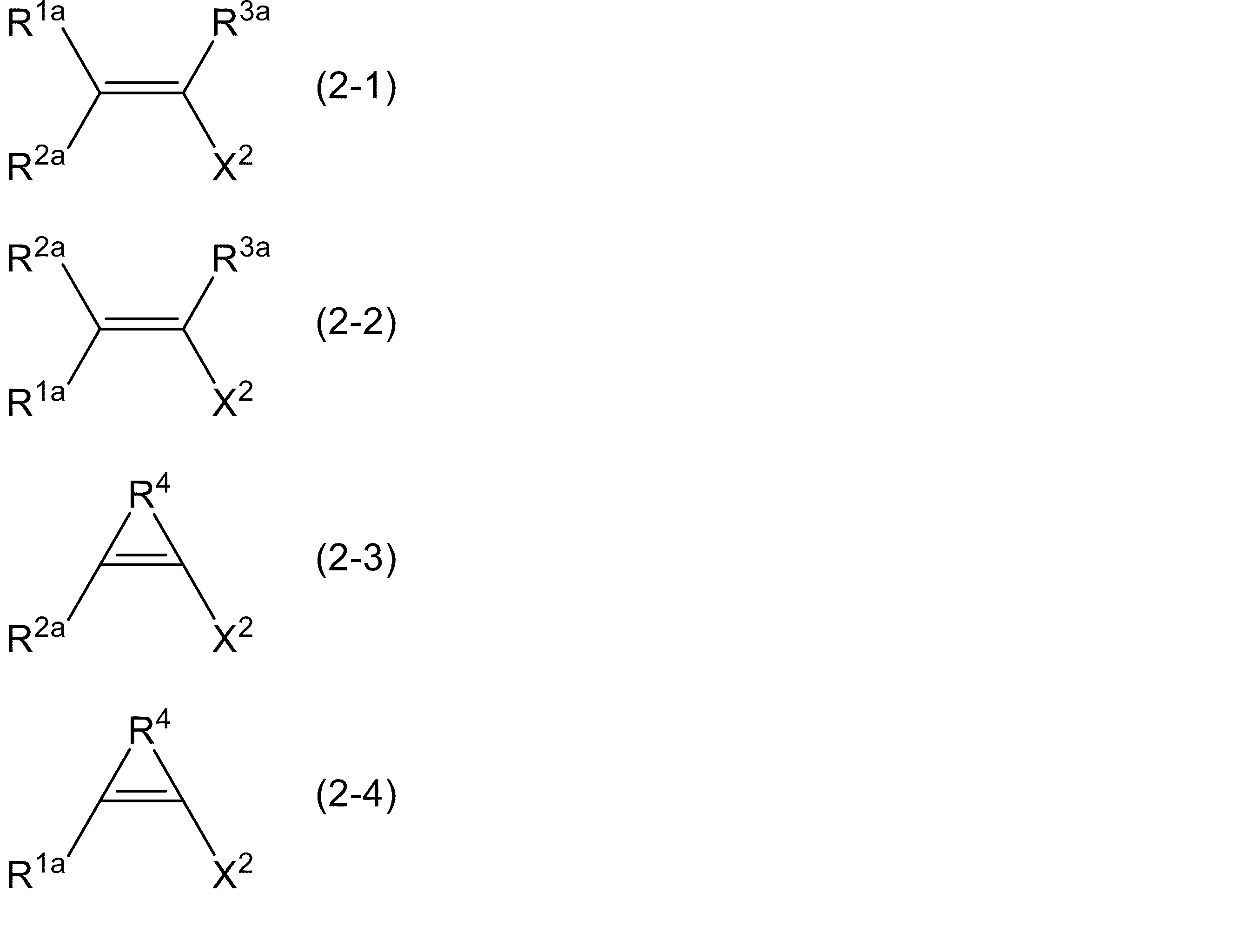
[式中、X2は前記に同じである。R1aはフッ素原子又はパーフルオロ炭化水素基を示す。R2a及びR3aは同一又は異なって、水素原子又はフッ素原子を示す。R4は2価のパーフルオロ炭化水素鎖を示す。]
で表されるハロゲン化オレフィン化合物をいずれも包含する。
で表されるハロゲン化オレフィン化合物をいずれも包含する。
なお、一般式(2-3)で表される含フッ素オレフィン化合物は、一般式(2)においてR1とR3とが一緒になって、2価のパーフルオロ炭化水素鎖を形成している含フッ素オレフィン化合物である。
また、一般式(2-4)で表される含フッ素オレフィンは、一般式(2)においてR2とR3とが一緒になって、2価のパーフルオロ炭化水素鎖を形成している含フッ素オレフィン化合物である。
2価のパーフルオロ炭化水素鎖としては、例えば、パーフルオロアルキレン基が挙げられる。ここで、接頭語「パーフルオロ」は、通常の意味に用いられ、炭素原子に結合している水素原子の全てがフッ素原子に置換されていることを意味する。パーフルオロアルキレン基を採用する場合、一般式(2-3)及び(2-4)において、R4が、例えば、-(CF2)n-(nは1~5の整数を示す)であることが好ましい。
なお、ハロゲン化含フッ素(シクロ)アルケニル亜鉛化合物をより安価及びより簡便に、且つさらに収率よく得ることができる観点から、R3とR1又はR2とが一緒になって2価のパーフルオロ炭化水素鎖を形成しないことが好ましい。つまり、一般式(2-1)及び(2-2)で表されるハロゲン化オレフィン化合物が好ましい。
一般式(2)等において、R1で示される1価のパーフルオロ炭化水素基としては、例えば、パーフルオロアルキル基、パーフルオロアルケニル基、パーフルオロアルキニル基等が挙げられる。
パーフルオロ炭化水素基における接頭語「パーフルオロ」は、通常の意味に用いられ、炭素原子に結合している水素原子の全てがフッ素原子に置換されていることを意味する。
このため、パーフルオロ炭化水素基としてのパーフルオロアルキル基としては、例えば、メチル基、エチル基、n-プロピル基、イソプロピル基、n-ブチル基、イソブチル基、sec-ブチル基、tert-ブチル基、n-ペンチル基、イソペンチル基、ネオペンチル基、1-メチルペンチル基、n-ヘキシル基、イソヘキシル基、1,1-ジメチルブチル基、2,2-ジメチルブチル基、3,3-ジメチルブチル基等のアルキル基、特に低級(例えば炭素数1~6)アルキル基における炭素原子に結合している水素原子の全てがフッ素原子に置換された基が挙げられる。
また、パーフルオロ炭化水素基としてのパーフルオロアルケニル基としては、例えば、ビニル基、1-プロペニル基、イソプロペニル基、2-メチル-1-プロペニル基、1-ブテニル基、2-ブテニル基、3-ブテニル基、2-エチル-1-ブテニル基、1-ペンテニル基、2-ペンテニル基、3-ペンテニル基、4-ペンテニル基、4-メチル-3-ペンテニル基、1-ヘキセニル基、2-ヘキセニル基、3-ヘキセニル基、4-ヘキセニル基、5-ヘキセニル基等のアルケニル基、特に低級(例えば炭素数2~6)アルケニル基における炭素原子に結合している水素原子の全てがフッ素原子に置換された基が挙げられる。
また、パーフルオロ炭化水素基としてのパーフルオロアルキニル基としては、例えば、エチニル基、1-プロピニル基、2-プロピニル基、1-ブチニル基、2-ブチニル基、3-ブチニル基、1-ペンチニル基、2-ペンチニル基、3-ペンチニル基、4-ペンチニル基、1-ヘキシニル基、2-ヘキシニル基、3-ヘキシニル基、4-ヘキシニル基、5-ヘキシニル基等のアルキニル基、特に低級(例えば炭素数2~6)アルキニル基における炭素原子に結合している水素原子の全てがフッ素原子に置換された基が挙げられる。
なかでも、R1としては、ハロゲン化含フッ素(シクロ)アルケニル亜鉛化合物をより安価及びより簡便に、且つさらに収率よく得ることができる観点から、フッ素原子、パーフルオロアルキル基及びパーフルオロアルケニル基が好ましく、フッ素原子がより好ましい。
また、R2及びR3としては、ハロゲン化含フッ素(シクロ)アルケニル亜鉛化合物をより安価及びより簡便に、且つさらに収率よく得ることができる観点から、フッ素原子が好ましい。
また、X2はハロゲン原子を示し、フッ素原子、塩素原子、臭素原子及びヨウ素原子が挙げられる。なかでも、ハロゲン化含フッ素(シクロ)アルケニル亜鉛化合物をより安価及びより簡便に、且つさらに収率よく得ることができる観点から、フッ素原子、塩素原子及び臭素原子が好ましく、フッ素原子及び塩素原子がより好ましい。
上記のようなハロゲン化オレフィン化合物は、公知の化合物であり、公知の方法で製造可能であるか、商業的に入手可能である。また、ハロゲン化オレフィン化合物は、単独で用いることもでき、2種以上を組合せて用いることもできる。また、これらハロゲン化オレフィン化合物は、その形態に応じた方法で、反応器中に添加することができる。
なお、フッ素樹脂用汎用モノマーであるテトラフルオロエチレン(TFE)、クロロトリフルオロエチレン(CTFE)等の含フッ素オレフィンをハロゲン化含フッ素(シクロ)アルケニル亜鉛化合物の原料化合物として使用することができれば、原料入手の面から特に好ましい。炭素-フッ素結合及び炭素-塩素結合は、他の炭素-ハロゲン結合に比較して不活性であるため、これまでにこの結合を別の基に置換できた例は非常に限られており、TFE又はCTFEを原料としたハロゲン化含フッ素(シクロ)アルケニル亜鉛化合物の合成例は非常に少ない。また、ヘキサフルオロプロペンのようなパーフルオロアルケンからのハロゲン化含フッ素(シクロ)アルケニル亜鉛化合物の簡便な合成法も非常に少ない。この観点からも、X2としては、フッ素原子及び塩素原子が特に好ましい。
以上から、原料化合物としては、テトラフルオロエチレン(TFE)、クロロトリフルオロエチレン(CTFE)等が特に好ましく、この場合、目的化合物としてハロゲン化トリフルオロビニル亜鉛化合物を得ることができる。
(1-2)ハロゲン化亜鉛化合物
本開示においては、上記したハロゲン化オレフィン化合物とハロゲン化亜鉛化合物とを反応させる。
本開示においては、上記したハロゲン化オレフィン化合物とハロゲン化亜鉛化合物とを反応させる。
ハロゲン化亜鉛化合物は、一般式(3):
ZnX1 (3)
[式中、X1は前記に同じである。]
で表されるハロゲン化亜鉛化合物である。
ZnX1 (3)
[式中、X1は前記に同じである。]
で表されるハロゲン化亜鉛化合物である。
一般式(3)において、X1で示されるハロゲン原子は特に制限はなく、フッ素原子、塩素原子、臭素原子及びヨウ素原子が挙げられる。なかでも、ハロゲン化含フッ素(シクロ)アルケニル亜鉛化合物をより安価及びより簡便に、且つさらに収率よく得ることができる観点から、塩素原子及び臭素原子が好ましく、塩素原子がより好ましい。
以上のハロゲン化亜鉛化合物は、単独で用いることもでき、2種以上を組合せて用いることもできる。
本開示において、ハロゲン化亜鉛化合物の使用量は、特に制限されるわけではないが、ハロゲン化含フッ素(シクロ)アルケニル亜鉛化合物をより安価及びより簡便に、且つさらに収率よく得ることができる観点から、ハロゲン化亜鉛化合物に対する前記ハロゲン化オレフィン化合物のモル比(ハロゲン化オレフィン化合物/ハロゲン化亜鉛化合物)が0.01~100、特に0.1~10、さらに1~5となるように調整することが好ましい。
また、本開示において、ハロゲン化亜鉛化合物の使用量は、特に制限されるわけではないが、ハロゲン化含フッ素(シクロ)アルケニル亜鉛化合物をより安価及びより簡便に、且つさらに収率よく得ることができる観点から、0価アルカリ金属に対する前記ハロゲン化亜鉛化合物のモル比(ハロゲン化亜鉛化合物/0価アルカリ金属)は0.1~5が好ましく、0.5~2がより好ましい。
(1-3)0価アルカリ金属
本開示においては、上記した工程(1)を、0価アルカリ金属の存在下で行う。
本開示においては、上記した工程(1)を、0価アルカリ金属の存在下で行う。
0価アルカリ金属としては、特に制限はなく、リチウム金属、ナトリウム金属、カリウム金属等が挙げられる。なかでも、ハロゲン化含フッ素(シクロ)アルケニル亜鉛化合物をより安価及びより簡便に、且つさらに収率よく得ることができる観点から、ナトリウム金属及びカリウム金属が好ましく、ナトリウム金属がより好ましい。これらの0価アルカリ金属は、単独で用いることもでき、2種以上を組合せて用いることもできる。
なお、本開示において、0価アルカリ金属としては、0価アルカリ金属をそのまま使用することもできるが、安全性を考慮すると、0価アルカリ金属(具体的には0価アルカリ金属粒子)が分散油中に分散している0価アルカリ金属分散体を使用することが好ましい。
この0価アルカリ金属分散体の分散油中には、分散油を100質量%として、芳香族成分が3~20質量%含有していることが好ましい。
前記分散油には、通常、市販されている鉱物油の内で芳香族成分を上記割合で含有しているものを適宜選択して採用することができる。
また、芳香族成分の含有割合が異なる二種類以上の油を混合して全体における芳香族成分の含有量が3~20質量%となるように調整して用いることも可能である。
また、前記分散油には、0価アルカリ金属の分散性を向上すべくオレイン酸、トリオレイン酸ソルビタン、アマニ油等を含有させることが好ましく、その含有量は、0.005質量%以上が好ましく、0.05~0.5質量%がより好ましい。
要すれば、オレイン酸、トリオレイン酸ソルビタン、アマニ油の内の2種類以上を分散油中に含有させることもでき、その場合においても、その合計含有量は、0.005~0.5質量%が好ましい。
前記分散油中の芳香族成分の含有量は、ハロゲン化含フッ素(シクロ)アルケニル亜鉛化合物をより安価及びより簡便に、且つさらに収率よく得ることができる観点から、5~15質量%が好ましく、10~15質量%がより好ましい。
なお、この芳香族成分の含有量については、ASTM D 3238に基づいて測定する。
また、0価アルカリ金属分散体における前記分散油と前記0価アルカリ金属粒子との割合については特に限定されず、用途等に応じて適宜選択可能である。なかでも、ハロゲン化含フッ素(シクロ)アルケニル亜鉛化合物をより安価及びより簡便に、且つさらに収率よく得ることができる観点から、0価アルカリ金属分散体の総量を100質量%として、前記0価アルカリ金属粒子を1~50質量%含むことが好ましく、10~25質量%含むことがより好ましい。
また、前記0価アルカリ金属粒子については、通常、平均粒子径10μm以下のものを用いることができ、ハロゲン化含フッ素(シクロ)アルケニル亜鉛化合物をより安価及びより簡便に、且つさらに収率よく得ることができる観点から、前記0価アルカリ金属粒子は、平均粒子径0.01~5μmのものを用いることが好ましい。なお、この0価アルカリ金属粒子の平均粒子径については、顕微鏡観察により測定する。
このような0価アルカリ金属分散体は、公知又は市販品を用いることができ、特開2009-102678号公報に記載の方法にしたがって製造することも可能である。
本開示において、0価アルカリ金属の使用量は、特に制限されるわけではないが、ハロゲン化含フッ素(シクロ)アルケニル亜鉛化合物をより安価及びより簡便に、且つさらに収率よく得ることができる観点から、0価アルカリ金属に対する前記ハロゲン化オレフィン化合物のモル比(ハロゲン化オレフィン化合物/0価アルカリ金属)が0.01~100、特に0.5~20、特に3~7となるように調整することが好ましい。なお、0価アルカリ金属分散体を使用する場合は、0価アルカリ金属分散体中に存在する0価アルカリ金属が上記範囲となるように調整することが好ましい。
(1-4)溶媒
上記した工程(1)は、ハロゲン化含フッ素(シクロ)アルケニル亜鉛化合物をより安価及びより簡便に、且つさらに収率よく得ることができる観点から、溶媒存在下で液相反応とすることが好ましい。
上記した工程(1)は、ハロゲン化含フッ素(シクロ)アルケニル亜鉛化合物をより安価及びより簡便に、且つさらに収率よく得ることができる観点から、溶媒存在下で液相反応とすることが好ましい。
0価アルカリ金属の存在形態として0価アルカリ金属分散体を使用する場合は、別途溶媒を使用しないこともできるし、別途溶媒を使用することもできる。また、0価アルカリ金属の存在形態として0価アルカリ金属分散体以外の形態を採用する場合は、別途溶媒を使用することが好ましい。
このような溶媒は、特に制限はないが、ハロゲン化含フッ素(シクロ)アルケニル亜鉛化合物をより安価及びより簡便に、且つさらに収率よく得ることができるとともに、0価アルカリ金属を扱ううえでの安全性を考慮し、非プロトン性極性溶媒が好ましい。
当該「非プロトン性極性溶媒」としては、例えば、N-メチルピロリドン等のラクタム化合物;ジメチルスルホキシド(DMSO)等のジアルキルスルホキシド化合物;1,3-ジメチル-2-イミダゾリジノン(DMI)、ジメチルプロピレン尿素(DMU)、テトラメチル尿素(TMU)等のテトラアルキル尿素化合物;ヘキサメチルリン酸アミド(HMPA)等のヘキサアルキルリン酸トリアミド化合物等が挙げられる。なかでも、ハロゲン化含フッ素(シクロ)アルケニル亜鉛化合物をより安価及びより簡便に、且つさらに収率よく得ることができるとともに、0価アルカリ金属を扱ううえでの安全性を考慮し、テトラアルキル尿素化合物が好ましく、1,3-ジメチル-2-イミダゾリジノン(DMI)がより好ましい。なお、これらの溶媒は、単独で用いることもでき、2種以上を組合せて用いることもできる。
上記した溶媒の使用量は特に制限されるわけではないが、過剰量とすることができる。
(1-5)反応温度
本開示における工程(1)の反応温度は、ハロゲン化含フッ素(シクロ)アルケニル亜鉛化合物をより安価及びより簡便に、且つさらに収率よく得ることができる観点から、通常0~100℃が好ましく、10~70℃がより好ましく、20~60℃がさらに好ましい。つまり、工程(1)は、温和な条件下でも進行させることができる。
本開示における工程(1)の反応温度は、ハロゲン化含フッ素(シクロ)アルケニル亜鉛化合物をより安価及びより簡便に、且つさらに収率よく得ることができる観点から、通常0~100℃が好ましく、10~70℃がより好ましく、20~60℃がさらに好ましい。つまり、工程(1)は、温和な条件下でも進行させることができる。
(1-6)反応時間
本開示における工程(1)の反応時間は、反応が十分に進行する時間とすることができ、具体的には、容器の蓋を閉めた後に圧力変動がなくなるまで反応を進行させることができる。通常、6~48時間、特に12~36時間とすることができる。
本開示における工程(1)の反応時間は、反応が十分に進行する時間とすることができ、具体的には、容器の蓋を閉めた後に圧力変動がなくなるまで反応を進行させることができる。通常、6~48時間、特に12~36時間とすることができる。
(1-7)反応圧力
本開示における工程(1)の反応圧力としては特に制限はなく、反応開始時において、原料化合物であるハロゲン化オレフィン化合物を-0.95~10MPa充填することが好ましく、0~5MPa充填することがより好ましい。なお、本開示において、圧力については特に表記が無い場合はゲージ圧とする。
本開示における工程(1)の反応圧力としては特に制限はなく、反応開始時において、原料化合物であるハロゲン化オレフィン化合物を-0.95~10MPa充填することが好ましく、0~5MPa充填することがより好ましい。なお、本開示において、圧力については特に表記が無い場合はゲージ圧とする。
本開示における工程(1)の反応において、反応器としては、上記温度及び圧力に耐え得るものであれば、形状及び構造は特に限定されない。反応器としては、例えば、縦型反応器、横型反応器、多管型反応器等が挙げられる。反応器の材質としては、例えば、ガラス、ステンレス、鉄、ニッケル、鉄ニッケル合金等が挙げられる。
(1-8)反応の例示
工程(1)は、反応器に原料化合物(ハロゲン化オレフィン化合物)、ハロゲン化亜鉛化合物及び0価アルカリ金属を充填した液相反応(バッチ式反応)により行うことができる。
工程(1)は、反応器に原料化合物(ハロゲン化オレフィン化合物)、ハロゲン化亜鉛化合物及び0価アルカリ金属を充填した液相反応(バッチ式反応)により行うことができる。
反応終了後は、必要に応じて常法にしたがって精製処理を行い、ハロゲン化含フッ素(シクロ)アルケニル亜鉛化合物を得ることができる。
(1-9)工程(2)
本開示においては、上記した工程(1)によりハロゲン化含フッ素(シクロ)アルケニル亜鉛化合物が得られるが、液相及び気相のいずれの形態で得ることもできる。なかでも、後述のように、得られたハロゲン化含フッ素(シクロ)アルケニル亜鉛化合物を用いて二量化反応を施す場合は、液相の形態が好ましい。具体的には、上記の0価アルカリ金属として0価アルカリ金属分散体を使用する場合や、上記の溶媒を使用して液相反応とする場合は、生成物として、ハロゲン化含フッ素(シクロ)アルケニル亜鉛化合物を含有する液相を得ることができる。
本開示においては、上記した工程(1)によりハロゲン化含フッ素(シクロ)アルケニル亜鉛化合物が得られるが、液相及び気相のいずれの形態で得ることもできる。なかでも、後述のように、得られたハロゲン化含フッ素(シクロ)アルケニル亜鉛化合物を用いて二量化反応を施す場合は、液相の形態が好ましい。具体的には、上記の0価アルカリ金属として0価アルカリ金属分散体を使用する場合や、上記の溶媒を使用して液相反応とする場合は、生成物として、ハロゲン化含フッ素(シクロ)アルケニル亜鉛化合物を含有する液相を得ることができる。
この場合、工程(1)により得られた前記ハロゲン化含フッ素(シクロ)アルケニル亜鉛化合物を含有する液相を、金属ハロゲン化物の貧溶媒溶液と混合し、前記ハロゲン化含フッ素(シクロ)アルケニル亜鉛化合物を含有する液相と、前記金属ハロゲン化物を含有する固形分とに分離させる工程(2)を施すことが好ましい。
この工程(2)は、常法にしたがって行うことができ、具体的には、特開2016-128415号公報にしたがって行うことができる。
工程(2)により、前記ハロゲン化含フッ素(シクロ)アルケニル亜鉛化合物から不純物、特に金属ハロゲン化物を除去することができる。この金属ハロゲン化物の金属源は、主に、工程(1)の反応系に含まれる0価アルカリ金属及び亜鉛であり得る。また、ハロゲン源は、主に、一般式(2)で表されるハロゲン化オレフィン化合物中のハロゲン(X2)、及び一般式(3)で表されるハロゲン化亜鉛化合物中のハロゲン(X1)であり得る。つまり、この不純物としての金属ハロゲン化物は、工程(1)の反応で生成する副生成物であり得る。
具体例を挙げて説明すると、0価アルカリ金属源がナトリウムであり、ハロゲン源が塩素である場合、工程(2)により、塩化ナトリウム、塩化亜鉛等が不純物として除去され得る。この結果、特に限定されないが、金属ハロゲン化物の濃度を10モル%以下とすることができる。
工程(2)において使用できる貧溶媒としては、特に限定されないが、工程(1)で使用する溶媒(0価アルカリ金属分散体に使用される溶媒や、工程(1)において反応溶媒として使用される非プロトン性極性溶媒等)から金属ハロゲン化物を析出させることのできる貧溶媒が好ましい。特に限定されないが、工程(1)で使用する溶媒の比誘電率と比較してより低い誘電率を有するものが好ましく用いられ得る。上記貧溶媒としては、室温における比誘電率は40以下が好ましく、20以下がより好ましく、10以下がさらに好ましい。
上記貧溶媒としては、特に限定されないが、例えば、エーテル化合物、芳香族炭化水素化合物、ケトン化合物、エステル化合物等が挙げられる。エーテルとしては、特に限定されないが、例えば、ジメチルエーテル、ジエチルエーテル、ジノルマルプロピルエーテル、ジイソプロピルエーテル、ジブチルエーテル、ジフェニルエーテル、tert-ブチルメチルエーテル、シクロペンチルメチルエーテル、ジメトキシエタン、ジエトキシエタン、アニソール等が挙げられる。芳香族炭化水素としては、特に限定されないが、例えば、ベンゼン、トルエン、キシレン、メシチレン等が挙げられる。これらのなかでも、エーテルが好ましい。
上記貧溶媒としては、特に限定されないが、非プロトン性極性溶媒の分配係数が小さい方がさらに好ましい。非プロトン性極性溶媒の分配係数は非プロトン性極性溶媒が水と溶媒の二相に溶解したときの平衡溶解度比を実測した値に基づき求められ、具体的には次の式:
非プロトン性極性溶媒の分配係数=溶媒層中の非プロトン性極性溶媒の濃度/水層中の非プロトン性極性溶媒の濃度
により算出される。上記貧溶媒としては、非プロトン性極性溶媒の分配係数は3以下が好ましく、1以下がより好ましく、0.2以下がさらに好ましい。
非プロトン性極性溶媒の分配係数=溶媒層中の非プロトン性極性溶媒の濃度/水層中の非プロトン性極性溶媒の濃度
により算出される。上記貧溶媒としては、非プロトン性極性溶媒の分配係数は3以下が好ましく、1以下がより好ましく、0.2以下がさらに好ましい。
貧溶媒は、単独で用いることもでき、2種以上を組合せて用いることもできる。また、貧溶媒を、それ以外の溶媒と組合せて用いることもできる。この場合、金属ハロゲン化物を析出させることのできる範囲内で両者を組合せることができる。特に限定されないが、金属ハロゲン化物を析出させることのできる限りにおいて、例えば、溶媒の総量に対して50質量%以上貧溶媒が含まれるように組合せることができる。
工程(2)における、金属ハロゲン化物の貧溶媒溶液の使用量は、特に限定されないが、通常、前記ハロゲン化含フッ素(シクロ)アルケニル亜鉛化合物を含有する液相と同量程度とすることができる。特に限定されないが、例えば、該液相に対して、容量比で0.1~50、好ましくは0.5~10、より好ましくは1~3倍とすることができる。
特に限定されないが、前記ハロゲン化含フッ素(シクロ)アルケニル亜鉛化合物を含有する液相と金属ハロゲン化物の貧溶媒溶液を混合する条件としては、室温で、1分~72時間、好ましくは5分~24時間、より好ましくは10分~12時間程度、攪拌する等の条件が挙げられる。
特に限定されないが、必要に応じて、金属ハロゲン化物の貧溶媒溶液を用いて分離を行う前及び/又は後(特に後)に、ろ過を行って不純物を除去することもできる。ろ過の方法は、特に限定されないが、例えば、セライト濾過、デカンテーション、ろ過、加圧ろ過、及び遠心ろ過等が挙げられる。この場合、特に限定されないが、加えられた金属及び金属ハロゲン化物の合計質量の40%以上を除去することが好ましく、60%以上を除去することがより好ましく、70%以上を除去することがさらに好ましい。
(1-10)目的化合物
このようにして得られたハロゲン化含フッ素(シクロ)アルケニル亜鉛化合物は、一般式(1):
このようにして得られたハロゲン化含フッ素(シクロ)アルケニル亜鉛化合物は、一般式(1):

[式中、X1、R1、R2及びR3は前記に同じである。波線で示される単結合は、それが結合している二重結合についての立体配置が、E配置若しくはZ配置又はそれらの任意の割合の混合物であることを示す。]
で表されるハロゲン化含フッ素(シクロ)アルケニル亜鉛化合物である。
で表されるハロゲン化含フッ素(シクロ)アルケニル亜鉛化合物である。
上記した一般式(2)と同様に、ハロゲン化含フッ素(シクロ)アルケニル亜鉛化合物についても、一般式(1A)及び(1B):
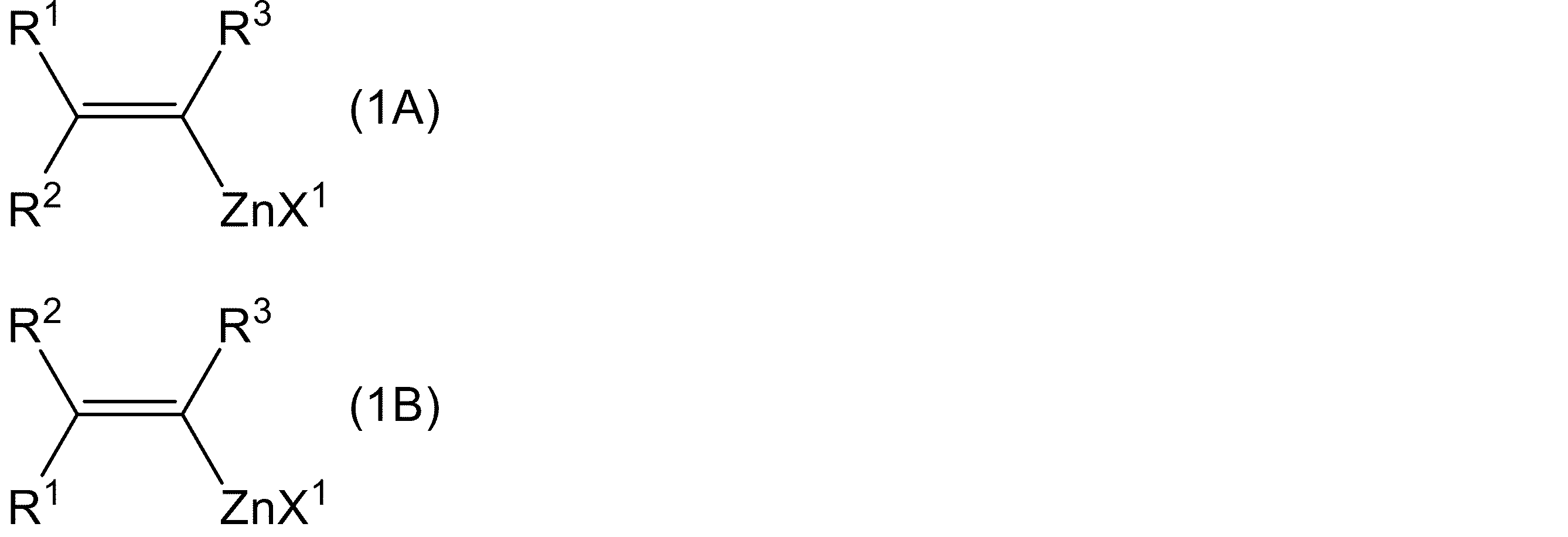
[式中、R1、R2、R3及びX1は前記に同じである。]
で表されるハロゲン化含フッ素(シクロ)アルケニル亜鉛化合物をいずれも包含する。
で表されるハロゲン化含フッ素(シクロ)アルケニル亜鉛化合物をいずれも包含する。
つまり、得られる目的化合物は、一般式(1-1)、(1-2)、(1-3)及び(1-4):

[式中、X1、R1a、R2a、R3a及びR4は前記に同じである。]
で表されるハロゲン化含フッ素(シクロ)アルケニル亜鉛化合物をいずれも包含する。
で表されるハロゲン化含フッ素(シクロ)アルケニル亜鉛化合物をいずれも包含する。
なお、一般式(1-3)で表される含フッ素オレフィン化合物は、一般式(1)においてR1とR3とが一緒になって、2価のパーフルオロ炭化水素鎖を形成しているハロゲン化含フッ素(シクロ)アルケニル亜鉛化合物である。
また、一般式(1-4)で表される含フッ素オレフィンは、一般式(1)においてR2とR3とが一緒になって、2価のパーフルオロ炭化水素鎖を形成しているハロゲン化含フッ素(シクロ)アルケニル亜鉛化合物である。
なお、ハロゲン化含フッ素(シクロ)アルケニル亜鉛化合物をより安価及びより簡便に、且つさらに収率よく得ることができる観点から、R3とR1又はR2とが一緒になって2価のパーフルオロ炭化水素鎖を形成しないことが好ましい。つまり、一般式(1-1)及び(1-2)で表されるハロゲン化含フッ素(シクロ)アルケニル亜鉛化合物が好ましい。
上記のとおり、原料化合物であるハロゲン化オレフィン化合物は、テトラフルオロエチレン(TFE)、クロロトリフルオロエチレン(CTFE)等が特に好ましい。この場合、得られる目的化合物は、一般式(1)において、R1、R2及びR3がいずれもフッ素原子となり、ハロゲン化トリフルオロビニル亜鉛化合物を得ることができる。
以上のようなハロゲン化含フッ素(シクロ)アルケニル亜鉛化合物は、燃料電池用イオン交換膜、自動車用又は航空機用等のシール材又は燃料ホース、光ファイバー等の光学電子部品、塗料用又は防汚用途等のコーティング材等の様々な用途に用いられる含フッ素高分子の原料モノマーや、酵素阻害作用を有する農薬として有用なフッ素化合物を合成するための中間体として有用である。
2.ハロゲン化含フッ素(シクロ)アルケニルダイマーの製造方法
本開示のハロゲン化含フッ素(シクロ)アルケニルダイマーの製造方法は、一般式(4):
本開示のハロゲン化含フッ素(シクロ)アルケニルダイマーの製造方法は、一般式(4):

[式中、R1、R2及びR3は前記に同じである。2個のR1は同一であり、2個のR2は同一であり、2個のR3は同一である。波線で示される単結合は、それが結合している二重結合についての立体配置が、E配置若しくはZ配置又はそれらの任意の割合の混合物であることを示す。]
で表されるハロゲン化含フッ素(シクロ)アルケニルダイマーの製造方法であって、
前記した製造方法により得られたハロゲン化含フッ素(シクロ)アルケニル亜鉛化合物を二量化する工程(3)
を備える。
で表されるハロゲン化含フッ素(シクロ)アルケニルダイマーの製造方法であって、
前記した製造方法により得られたハロゲン化含フッ素(シクロ)アルケニル亜鉛化合物を二量化する工程(3)
を備える。
上記した工程(1)において、ハロゲン化含フッ素(シクロ)アルケニル亜鉛化合物を含有する液相を得られる場合は、当該液相を反応させる工程とすることが好ましい。なお、上記した工程(1)において、得られるハロゲン化含フッ素(シクロ)アルケニル亜鉛化合物の純度が十分に高い場合は、工程(2)を施さずに工程(3)を施してもよいし、工程(2)を施した後に工程(3)を施すこともできる。
この工程(3)は、常法にしたがって行うことができ、具体的には、特開2016-128415号公報にしたがって行うことができる。
工程(3)では、具体的には、例えば、工程(1)又は工程(2)で得られた液相を、適度な温度条件下に撹拌して目的物であるカップリング生成物、すなわちハロゲン化含フッ素(シクロ)アルケニルダイマーを得ることができる。
工程(3)の反応は、付加脱離反応によるカップリング反応であってもよく、この場合、カップリング反応を促進する目的で、銅又は鉄の塩の存在下で行うこともできる。これにより、反応の効率を高めて収率を向上させることができるほか、パラジウム触媒のような高価な触媒を使用する必要がないため、コスト面でも有利となる。
銅又は鉄の塩は付加脱離反応によるカップリング反応のために用いられるものであるため、これらの金属塩が、前記ハロゲン化含フッ素(シクロ)アルケニル亜鉛化合物の当量と、前記ハロゲン化亜鉛化合物の2倍当量との合計当量以上存在する条件で反応を行うことが好ましい。銅又は鉄の塩の使用量は、特に制限されるわけではないが、前記ハロゲン化含フッ素(シクロ)アルケニル亜鉛化合物のモル数と、前記ハロゲン化亜鉛化合物のモル数を2倍したものとの合計モル数に対して、通常、0.5~3モル程度、好ましくは1~2モル程度とすることができる。
銅又は鉄の塩としては、反応溶液に溶解しやすいものが好ましく用いられる。銅又は鉄の塩は、反応溶液に応じて適宜選択することができる。
銅又は鉄の塩としては、特に限定されないが、例えば、三価の鉄化合物、二価の銅化合物等が挙げられる。特に、銅の塩が好ましい。
銅又は鉄の塩としては、金属錯体(金属錯塩)も使用できる。例えば、ハロゲン塩、酢酸塩、アセチルアセトン錯体等が挙げられる。なかでも、ハロゲン塩、酢酸塩、アセチルアセトン錯体等が、収率の点で、当該「金属塩」としては好ましい。ハロゲン塩としては、臭素塩又は塩素塩が好ましく、特に塩素塩が好ましい。
工程(3)の反応は、特に限定されないが、各種触媒の存在下で行ってもよい。触媒としては、特に限定されないが、例えば、遷移金属錯体触媒等が使用できる。
遷移金属錯体触媒を使用すると、酸化的付加反応、金属交換反応及び還元脱離反応が相次いで起こることにより、目的化合物が得られ得る。遷移金属としては、特に限定されないが、例えば、ニッケル、パラジウム、白金、ルテニウム、ロジウム、コバルト等を使用できる。遷移金属としては、特に、パラジウム又はニッケルが好ましい。
遷移金属錯体触媒としては、特に限定されないが、例えば、0価遷移金属錯体、II価遷移金属錯体から反応中に発生した0価遷移金属錯体、又はこれらとケトン、ジケトン、ホスフィン、ジアミン及びビピリジルからなる群より選択される少なくとも一種の化合物(配合子)を混合して得られうる錯体等が挙げられる。
工程(3)の反応の反応温度は、通常、-20~120℃、好ましくは0~120℃、より好ましくは20~80℃、さらに好ましくは20~60℃の範囲内とすることができる。室温以上で反応させる場合は、上記範囲内においてさらに下限を40℃、60℃又は80℃等とすることができる。
工程(3)の反応の反応時間は、通常、0.5分間~24時間、好ましくは5分~6時間の範囲内とすることができる。
工程(3)の反応は、好ましくは、アルゴン、窒素等の不活性ガス雰囲気下で行うことができる。
工程(3)によりハロゲン化含フッ素(シクロ)アルケニルダイマーを合成した場合、不純物であるハロゲン化亜鉛化合物の含有量が、5000ppm以下にまで低減することができる。
工程(3)によって得られるハロゲン化含フッ素(シクロ)アルケニルダイマーは、所望により、溶媒抽出、クロマトグラフィー、蒸留等の公知の精製方法によって単離精製することができる。
このようにして得られるハロゲン化含フッ素(シクロ)アルケニルダイマーは、燃料電池用イオン交換膜、自動車用又は航空機用等のシール材又は燃料ホース、光ファイバー等の光学電子部品、塗料用又は防汚用途等のコーティング材等の様々な用途に用いられる含フッ素高分子の原料モノマーや、酵素阻害作用を有する農薬として有用である。
以上、本開示の実施形態を説明したが、特許請求の範囲の趣旨及び範囲から逸脱することなく、形態や詳細の多様な変更が可能である。
以下に実施例を示し、本開示の特徴を明確にする。本開示はこれら実施例に限定されるものではない。
実施例1
反応容器である50cm3ガラス製オートクレーブに、ナトリウムディスパージョン(金属ナトリウム分散体;ナトリウム含有量25質量%;ナトリウム換算で2.0mmol)及び塩化亜鉛(4.0mmol)を仕込んだ。さらに、反応容器に、1,3-ジメチル-2-イミダゾリジノン(DMI)を10cm3加え、室温で30分間攪拌した。その後、反応容器にテトラフルオロエチレン(TFE)を0.5MPa(10mmol)まで充填し、60℃で24時間攪拌した。反応容器の液相部をサンプリングし、内部標準を用いた19F-NMRにて、塩化トリフルオロビニル亜鉛が70%の収率で生成していることを確認した。結果を表1に示す。
反応容器である50cm3ガラス製オートクレーブに、ナトリウムディスパージョン(金属ナトリウム分散体;ナトリウム含有量25質量%;ナトリウム換算で2.0mmol)及び塩化亜鉛(4.0mmol)を仕込んだ。さらに、反応容器に、1,3-ジメチル-2-イミダゾリジノン(DMI)を10cm3加え、室温で30分間攪拌した。その後、反応容器にテトラフルオロエチレン(TFE)を0.5MPa(10mmol)まで充填し、60℃で24時間攪拌した。反応容器の液相部をサンプリングし、内部標準を用いた19F-NMRにて、塩化トリフルオロビニル亜鉛が70%の収率で生成していることを確認した。結果を表1に示す。
実施例2
原料化合物として、テトラフルオロエチレン(TFE)の代わりにクロロトリフルオロエチレン(CTFE)を用いたこと以外は実施例1と同様に反応を進行させた。反応管の液相部をサンプリングし、内部標準を用いた19F-NMRにて、塩化トリフルオロビニル亜鉛が99%の収率で生成していることを確認した。結果を表1に示す。
原料化合物として、テトラフルオロエチレン(TFE)の代わりにクロロトリフルオロエチレン(CTFE)を用いたこと以外は実施例1と同様に反応を進行させた。反応管の液相部をサンプリングし、内部標準を用いた19F-NMRにて、塩化トリフルオロビニル亜鉛が99%の収率で生成していることを確認した。結果を表1に示す。
実施例3
原料化合物として塩化亜鉛の使用量を4.0mmolから1.0mmolに変更したこと以外は実施例1と同様に反応させた。反応容器の液相部をサンプリングして内部標準を用いた19F-NMRにて塩化トリフルオロビニル亜鉛が99%以上の収率で生成していることを確認した。結果を表1に示す。
原料化合物として塩化亜鉛の使用量を4.0mmolから1.0mmolに変更したこと以外は実施例1と同様に反応させた。反応容器の液相部をサンプリングして内部標準を用いた19F-NMRにて塩化トリフルオロビニル亜鉛が99%以上の収率で生成していることを確認した。結果を表1に示す。
実施例4
原料化合物として塩化亜鉛の使用量を4.0mmolから2.0mmolに変更したこと以外は実施例1と同様に反応させた。反応容器の液相部をサンプリングして内部標準を用いた19F-NMRにて塩化トリフルオロビニル亜鉛が99%以上の収率で生成していることを確認した結果を表1に示す。
原料化合物として塩化亜鉛の使用量を4.0mmolから2.0mmolに変更したこと以外は実施例1と同様に反応させた。反応容器の液相部をサンプリングして内部標準を用いた19F-NMRにて塩化トリフルオロビニル亜鉛が99%以上の収率で生成していることを確認した結果を表1に示す。
比較例1
金属種として、ナトリウムディスパージョンの代わりにマグネシウム粉末(2.0mmol)を用いたこと以外は実施例1と同様に反応を進行させた。反応容器の液相部をサンプリングし、内部標準を用いた19F-NMRにて、塩化トリフルオロビニル亜鉛が58%の収率で生成していることを確認した。結果を表1に示す。
金属種として、ナトリウムディスパージョンの代わりにマグネシウム粉末(2.0mmol)を用いたこと以外は実施例1と同様に反応を進行させた。反応容器の液相部をサンプリングし、内部標準を用いた19F-NMRにて、塩化トリフルオロビニル亜鉛が58%の収率で生成していることを確認した。結果を表1に示す。
比較例2
金属種として、ナトリウムディスパージョンの代わりにマグネシウム粉末(2.0mmol)を用い、原料化合物として、テトラフルオロエチレン(TFE)の代わりにクロロトリフルオロエチレン(CTFE)を用いたこと以外は実施例1と同様に反応を進行させた。反応容器の液相部をサンプリングし、内部標準を用いた19F-NMRにて、塩化トリフルオロビニル亜鉛が55%の収率で生成していることを確認した。結果を表1に示す。
金属種として、ナトリウムディスパージョンの代わりにマグネシウム粉末(2.0mmol)を用い、原料化合物として、テトラフルオロエチレン(TFE)の代わりにクロロトリフルオロエチレン(CTFE)を用いたこと以外は実施例1と同様に反応を進行させた。反応容器の液相部をサンプリングし、内部標準を用いた19F-NMRにて、塩化トリフルオロビニル亜鉛が55%の収率で生成していることを確認した。結果を表1に示す。

Claims (17)
- 一般式(1):

で表されるハロゲン化含フッ素(シクロ)アルケニル亜鉛化合物の製造方法であって、
0価アルカリ金属の存在下に、
一般式(2):

で表されるハロゲン化オレフィン化合物と、
一般式(3):
ZnX1 (3)
[式中、X1は前記に同じである。]
で表されるハロゲン化亜鉛化合物と反応させる工程(1)
を備える、製造方法。 - 前記X2がフッ素原子又は塩素原子である、請求項1に記載の製造方法。
- 前記一般式(1)で表されるハロゲン化含フッ素(シクロ)アルケニル亜鉛化合物がハロゲン化トリフルオロビニル亜鉛化合物であり、前記一般式(2)で表されるハロゲン化オレフィン化合物がテトラフルオロエチレン又はクロロトリフルオロエチレンである、請求項1又は2に記載の製造方法。
- 前記0価アルカリ金属が、リチウム金属、ナトリウム金属及びカリウム金属よりなる群から選ばれる少なくとも1種である、請求項1~3のいずれか1項に記載の製造方法。
- 前記0価アルカリ金属が、ナトリウム金属である、請求項1~4のいずれか1項に記載の製造方法。
- 前記0価アルカリ金属が分散油中に分散している、請求項1~5のいずれか1項に記載の製造方法。
- 前記工程(1)が、非プロトン性極性溶媒中で行う、請求項1~6のいずれか1項に記載の製造方法。
- 前記非プロトン性極性溶媒が、ラクタム化合物、ジアルキルスルホキシド化合物、テトラアルキル尿素化合物、及びヘキサアルキルリン酸トリアミド化合物よりなる群から選ばれる少なくとも1種の溶媒である、請求項1~7のいずれか1項に記載の製造方法。
- 前記非プロトン性極性溶媒がテトラアルキル尿素化合物である、請求項1~8のいずれか1項に記載の製造方法。
- 前記工程(1)において、前記0価アルカリ金属に対する前記ハロゲン化亜鉛化合物のモル比(ハロゲン化亜鉛化合物/0価アルカリ金属)が0.1~5である、請求項1~9のいずれか1項に記載の製造方法。
- 前記工程(1)において、前記0価アルカリ金属に対する前記ハロゲン化オレフィン化合物のモル比(ハロゲン化オレフィン化合物/0価アルカリ金属)が0.01~100である、請求項1~10のいずれか1項に記載の製造方法。
- 前記工程(1)において、前記ハロゲン化亜鉛化合物に対する前記ハロゲン化オレフィン化合物のモル比(ハロゲン化オレフィン化合物/ハロゲン化亜鉛化合物)が0.01~100である、請求項1~11のいずれか1項に記載の製造方法。
- 前記工程(1)における反応温度が0~100℃である、請求項1~12のいずれか1項に記載の製造方法。
- 前記工程(1)により得られた前記ハロゲン化含フッ素(シクロ)アルケニル亜鉛化合物を含有する液相を、金属ハロゲン化物の貧溶媒溶液と混合し、前記ハロゲン化含フッ素(シクロ)アルケニル亜鉛化合物を含有する液相と、前記金属ハロゲン化物を含有する固形分とに分離させる工程(2)
を備える、請求項1~13のいずれか1項に記載の製造方法。 - 一般式(4):
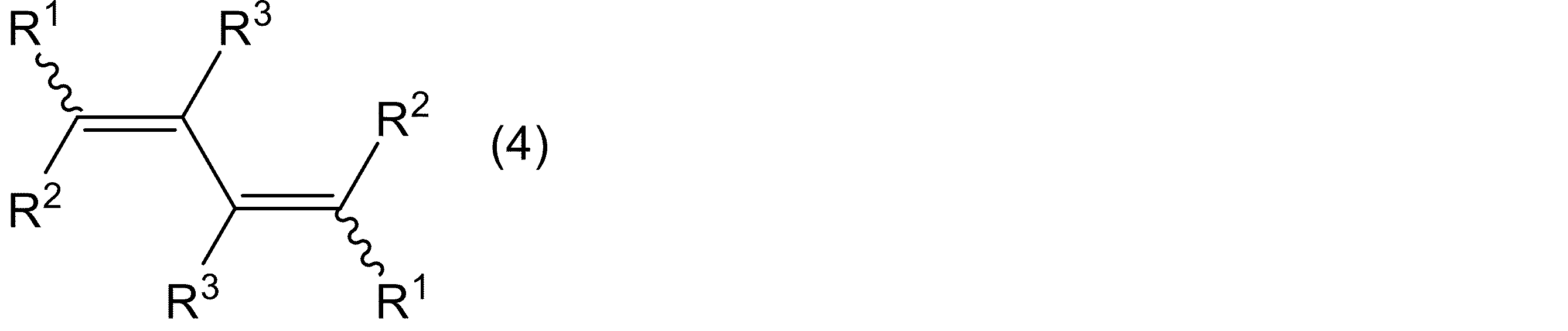
で表されるハロゲン化含フッ素(シクロ)アルケニルダイマーの製造方法であって、
請求項1~14のいずれか1項の製造方法により得られたハロゲン化含フッ素(シクロ)アルケニル亜鉛化合物を二量化する工程(3)
を備える、製造方法。 - 前記工程(3)が、前記ハロゲン化含フッ素(シクロ)アルケニル亜鉛化合物を含有する液相を反応させる工程である、請求項15に記載の製造方法。
- 前記工程(3)が、銅又は鉄の塩の存在下で行われる、請求項15又は16に記載の製造方法。
Priority Applications (4)
| Application Number | Priority Date | Filing Date | Title |
|---|---|---|---|
| KR1020227025597A KR102682091B1 (ko) | 2019-12-27 | 2020-12-17 | 할로겐화 불소 함유 (시클로)알케닐아연 화합물의 제조 방법 |
| CN202411064048.9A CN118994210A (zh) | 2019-12-27 | 2020-12-17 | 含氟(环)烯基卤化锌化合物的制造方法 |
| CN202080090324.2A CN114901667B (zh) | 2019-12-27 | 2020-12-17 | 含氟(环)烯基卤化锌化合物的制造方法 |
| US17/847,654 US12612419B2 (en) | 2019-12-27 | 2022-06-23 | Method for producing fluorine-containing (cyclo)alkenyl zinc halide compound |
Applications Claiming Priority (2)
| Application Number | Priority Date | Filing Date | Title |
|---|---|---|---|
| JP2019-239555 | 2019-12-27 | ||
| JP2019239555A JP6963263B2 (ja) | 2019-12-27 | 2019-12-27 | ハロゲン化含フッ素(シクロ)アルケニル亜鉛化合物の製造方法 |
Related Child Applications (1)
| Application Number | Title | Priority Date | Filing Date |
|---|---|---|---|
| US17/847,654 Continuation US12612419B2 (en) | 2019-12-27 | 2022-06-23 | Method for producing fluorine-containing (cyclo)alkenyl zinc halide compound |
Publications (1)
| Publication Number | Publication Date |
|---|---|
| WO2021132011A1 true WO2021132011A1 (ja) | 2021-07-01 |
Family
ID=76576091
Family Applications (1)
| Application Number | Title | Priority Date | Filing Date |
|---|---|---|---|
| PCT/JP2020/047128 Ceased WO2021132011A1 (ja) | 2019-12-27 | 2020-12-17 | ハロゲン化含フッ素(シクロ)アルケニル亜鉛化合物の製造方法 |
Country Status (6)
| Country | Link |
|---|---|
| US (1) | US12612419B2 (ja) |
| JP (1) | JP6963263B2 (ja) |
| KR (1) | KR102682091B1 (ja) |
| CN (2) | CN118994210A (ja) |
| TW (1) | TWI851863B (ja) |
| WO (1) | WO2021132011A1 (ja) |
Citations (4)
| Publication number | Priority date | Publication date | Assignee | Title |
|---|---|---|---|---|
| JPH08505440A (ja) * | 1993-02-18 | 1996-06-11 | エフ エム シー コーポレーション | アルカリ金属分散液 |
| WO2013172337A1 (ja) * | 2012-05-14 | 2013-11-21 | 国立大学法人大阪大学 | ハロゲン化含フッ素(シクロ)アルケニル亜鉛化合物の製造方法 |
| JP2016128415A (ja) * | 2014-12-18 | 2016-07-14 | 国立大学法人大阪大学 | 含フッ素(シクロ)アルケニル基を有するフッ素化合物の製造方法 |
| WO2019151467A1 (ja) * | 2018-02-02 | 2019-08-08 | 関東電化工業株式会社 | 水素及びフッ素及び/または塩素を含有したブタジエン骨格を有する化合物の製造方法 |
Family Cites Families (9)
| Publication number | Priority date | Publication date | Assignee | Title |
|---|---|---|---|---|
| NL130771C (ja) * | 1965-03-12 | |||
| US3751492A (en) * | 1970-12-18 | 1973-08-07 | Union Carbide Corp | Preparation of sodium and potassium fluoroethylenes |
| US6653515B2 (en) * | 2001-12-14 | 2003-11-25 | Ballard Power Systems Inc. | Synthesis of α, β, β-trifluorostyrene via in-situ formation of trifluorovinyl metal halide |
| CN102086144A (zh) * | 2004-08-26 | 2011-06-08 | 纳幕尔杜邦公司 | 化学生产方法和系统 |
| CN102994099A (zh) * | 2012-10-09 | 2013-03-27 | 江苏和成显示科技股份有限公司 | 液晶组合物和含有该液晶组合物的液晶显示器件 |
| CN104844411B (zh) * | 2015-04-03 | 2017-08-29 | 北京宇极科技发展有限公司 | 一种合成六氟‑1,3‑丁二烯的方法 |
| CN110267933A (zh) * | 2017-02-03 | 2019-09-20 | 大金工业株式会社 | 全氟二烯烃化合物的制造方法 |
| JP6920615B2 (ja) | 2017-09-12 | 2021-08-18 | 富士通株式会社 | 化合物 |
| TW202342408A (zh) * | 2022-02-21 | 2023-11-01 | 日商大金工業股份有限公司 | 分離方法 |
-
2019
- 2019-12-27 JP JP2019239555A patent/JP6963263B2/ja active Active
-
2020
- 2020-12-17 KR KR1020227025597A patent/KR102682091B1/ko active Active
- 2020-12-17 CN CN202411064048.9A patent/CN118994210A/zh active Pending
- 2020-12-17 CN CN202080090324.2A patent/CN114901667B/zh active Active
- 2020-12-17 WO PCT/JP2020/047128 patent/WO2021132011A1/ja not_active Ceased
- 2020-12-25 TW TW109146200A patent/TWI851863B/zh active
-
2022
- 2022-06-23 US US17/847,654 patent/US12612419B2/en active Active
Patent Citations (4)
| Publication number | Priority date | Publication date | Assignee | Title |
|---|---|---|---|---|
| JPH08505440A (ja) * | 1993-02-18 | 1996-06-11 | エフ エム シー コーポレーション | アルカリ金属分散液 |
| WO2013172337A1 (ja) * | 2012-05-14 | 2013-11-21 | 国立大学法人大阪大学 | ハロゲン化含フッ素(シクロ)アルケニル亜鉛化合物の製造方法 |
| JP2016128415A (ja) * | 2014-12-18 | 2016-07-14 | 国立大学法人大阪大学 | 含フッ素(シクロ)アルケニル基を有するフッ素化合物の製造方法 |
| WO2019151467A1 (ja) * | 2018-02-02 | 2019-08-08 | 関東電化工業株式会社 | 水素及びフッ素及び/または塩素を含有したブタジエン骨格を有する化合物の製造方法 |
Non-Patent Citations (1)
| Title |
|---|
| OPPOLZER, WOLFGANG ET AL.: "ENANTIOSELECTIVE ADDITION OF (Z)- AND (E)-ALKENYLZINC BROMIDES TO ALDEHYDES: ASYMMETRIC SYNTHESIS OF SEC- ALLYLALCOHOLS", TETRAHEDRON LETTERS, vol. 32, no. 41, 1991, pages 5777 - 5780, ISSN: 0040-4039 * |
Also Published As
| Publication number | Publication date |
|---|---|
| TWI851863B (zh) | 2024-08-11 |
| US20220324883A1 (en) | 2022-10-13 |
| CN118994210A (zh) | 2024-11-22 |
| JP2021107360A (ja) | 2021-07-29 |
| TW202134250A (zh) | 2021-09-16 |
| US12612419B2 (en) | 2026-04-28 |
| CN114901667B (zh) | 2024-08-23 |
| CN114901667A (zh) | 2022-08-12 |
| KR102682091B1 (ko) | 2024-07-08 |
| KR20220117331A (ko) | 2022-08-23 |
| JP6963263B2 (ja) | 2021-11-05 |
Similar Documents
| Publication | Publication Date | Title |
|---|---|---|
| EP1572616A1 (en) | Selective reaction of hexafluoropropylene oxide with perfluoroacyl fluorides | |
| CN107406466B (zh) | 二烷基氨基硅烷的制造方法 | |
| JP5562069B2 (ja) | 有機フッ素化合物の合成方法 | |
| US10040809B2 (en) | Method for preparing tris(trialkylsilyl)phosphine | |
| JP2018150250A (ja) | ジアルキルアミノシランの製造方法 | |
| EP2321240B1 (fr) | Procede de preparation de composes fluores olefiniques | |
| KR20160027984A (ko) | 불화메탄의 제조 방법 | |
| JP6963263B2 (ja) | ハロゲン化含フッ素(シクロ)アルケニル亜鉛化合物の製造方法 | |
| EP2456740A1 (fr) | Procede de preparation de composes fluores olefiniques | |
| JP5738486B2 (ja) | ハロゲン化含フッ素(シクロ)アルケニル亜鉛化合物の製造方法 | |
| EP0994883B1 (en) | Production of alkali metal diarylphosphide and cycloalkyldiarylphosphines | |
| JP2016128415A (ja) | 含フッ素(シクロ)アルケニル基を有するフッ素化合物の製造方法 | |
| WO2009083451A1 (en) | Addition reaction to fluoroallylfluorosulfate | |
| JP4688427B2 (ja) | (ペル)フルオロハロゲンエーテルの製造方法 | |
| WO2019151467A1 (ja) | 水素及びフッ素及び/または塩素を含有したブタジエン骨格を有する化合物の製造方法 | |
| JP4804762B2 (ja) | フルオロハロゲンエーテルの製造方法 | |
| Brisdon et al. | A generic route to fluoroalkyl-containing phosphanes | |
| JP2010001272A (ja) | 含フッ素アルキル置換エチルヨード類の製造方法 | |
| JP6572484B2 (ja) | 水素及びフッ素及び/または塩素を含有したブタジエン骨格を有する化合物の製造方法 | |
| JP5858825B2 (ja) | トリフルオロビニル誘導体の製造方法 | |
| JP5983351B2 (ja) | 末端に酸フロライド基を有する含フッ素化合物の製造方法 | |
| WO2012121340A1 (ja) | 有機基で置換された含フッ素オレフィンの製造方法 | |
| JP2021109834A (ja) | 1,1,3,3−テトラアルコキシジシロキサン−1,3−ジオールの製造方法 | |
| HK1176600A (en) | Catalyzed olefin insertion |
Legal Events
| Date | Code | Title | Description |
|---|---|---|---|
| 121 | Ep: the epo has been informed by wipo that ep was designated in this application |
Ref document number: 20907482 Country of ref document: EP Kind code of ref document: A1 |
|
| ENP | Entry into the national phase |
Ref document number: 20227025597 Country of ref document: KR Kind code of ref document: A |
|
| NENP | Non-entry into the national phase |
Ref country code: DE |
|
| 122 | Ep: pct application non-entry in european phase |
Ref document number: 20907482 Country of ref document: EP Kind code of ref document: A1 |