WO2021106060A1 - 最適化装置、最適化方法、記録媒体 - Google Patents
最適化装置、最適化方法、記録媒体 Download PDFInfo
- Publication number
- WO2021106060A1 WO2021106060A1 PCT/JP2019/046092 JP2019046092W WO2021106060A1 WO 2021106060 A1 WO2021106060 A1 WO 2021106060A1 JP 2019046092 W JP2019046092 W JP 2019046092W WO 2021106060 A1 WO2021106060 A1 WO 2021106060A1
- Authority
- WO
- WIPO (PCT)
- Prior art keywords
- objective function
- scheduling
- optimization
- schedule
- advertisement
- Prior art date
- Legal status (The legal status is an assumption and is not a legal conclusion. Google has not performed a legal analysis and makes no representation as to the accuracy of the status listed.)
- Ceased
Links
Images




Classifications
-
- G—PHYSICS
- G06—COMPUTING OR CALCULATING; COUNTING
- G06Q—INFORMATION AND COMMUNICATION TECHNOLOGY [ICT] SPECIALLY ADAPTED FOR ADMINISTRATIVE, COMMERCIAL, FINANCIAL, MANAGERIAL OR SUPERVISORY PURPOSES; SYSTEMS OR METHODS SPECIALLY ADAPTED FOR ADMINISTRATIVE, COMMERCIAL, FINANCIAL, MANAGERIAL OR SUPERVISORY PURPOSES, NOT OTHERWISE PROVIDED FOR
- G06Q30/00—Commerce
- G06Q30/02—Marketing; Price estimation or determination; Fundraising
- G06Q30/0241—Advertisements
- G06Q30/0242—Determining effectiveness of advertisements
- G06Q30/0244—Optimization
-
- G—PHYSICS
- G06—COMPUTING OR CALCULATING; COUNTING
- G06Q—INFORMATION AND COMMUNICATION TECHNOLOGY [ICT] SPECIALLY ADAPTED FOR ADMINISTRATIVE, COMMERCIAL, FINANCIAL, MANAGERIAL OR SUPERVISORY PURPOSES; SYSTEMS OR METHODS SPECIALLY ADAPTED FOR ADMINISTRATIVE, COMMERCIAL, FINANCIAL, MANAGERIAL OR SUPERVISORY PURPOSES, NOT OTHERWISE PROVIDED FOR
- G06Q10/00—Administration; Management
- G06Q10/04—Forecasting or optimisation specially adapted for administrative or management purposes, e.g. linear programming or "cutting stock problem"
-
- G—PHYSICS
- G06—COMPUTING OR CALCULATING; COUNTING
- G06Q—INFORMATION AND COMMUNICATION TECHNOLOGY [ICT] SPECIALLY ADAPTED FOR ADMINISTRATIVE, COMMERCIAL, FINANCIAL, MANAGERIAL OR SUPERVISORY PURPOSES; SYSTEMS OR METHODS SPECIALLY ADAPTED FOR ADMINISTRATIVE, COMMERCIAL, FINANCIAL, MANAGERIAL OR SUPERVISORY PURPOSES, NOT OTHERWISE PROVIDED FOR
- G06Q30/00—Commerce
- G06Q30/02—Marketing; Price estimation or determination; Fundraising
- G06Q30/0241—Advertisements
- G06Q30/0251—Targeted advertisements
- G06Q30/0264—Targeted advertisements based upon schedule
Definitions
- the present invention relates to an optimization device, an optimization method, and a recording medium.
- a lot of effort is devoted to scheduling the schedule target based on its characteristics. For example, the work of determining the date and time when an advertisement is broadcast puts a lot of effort on the worker.
- Patent Document 1 discloses a technique for creating a program guide that defines a temporal arrangement of a plurality of contents to be distributed to a user according to a user's preference and situation.
- an object of the present invention is to provide an optimization device, an optimization method, and a recording medium that solve the above-mentioned problems.
- the optimization device includes a receiving means for accepting a change in the weighting coefficient for the explanatory variable of the objective function used for optimizing the object, and the objective function to which the weighting coefficient after the change is applied. It is characterized by comprising an optimization means for optimizing the object based on the above.
- the optimization method accepts a change in the weighting coefficient for the explanatory variable of the objective function used for optimizing the object, and is based on the objective function to which the weighting coefficient after the change is applied.
- the object is optimized.
- the recording medium is a receiving means for accepting a change in the weighting coefficient for the explanatory variable of the objective function used for optimizing the object, and the weighting coefficient after the change is applied. It is characterized by recording a program that functions as an optimization means for optimizing the object based on an objective function.
- the user accepts a change in the weighting coefficient for the explanatory variable of the objective function used for optimizing the object, and the object is optimized based on the objective function to which the weighting coefficient after the change is applied. I do.
- the optimization can be performed by the objective function calculated according to the weighting coefficient for the explanatory variable intended by the user.
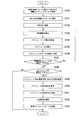
- FIG. 1 It is a figure which shows the outline of the scheduling system. It is a figure which shows the hardware configuration of the scheduling apparatus. It is a functional block diagram of a scheduling apparatus. It is the first figure which shows the processing flow of the scheduling apparatus by this Embodiment. It is a figure which shows the schedule correction screen by this embodiment. It is a 2nd figure which shows the processing flow of the scheduling apparatus by this Embodiment. It is a figure which shows the minimum configuration of a scheduling apparatus. It is a figure which shows the processing flow of the scheduling apparatus of the minimum configuration.
- FIG. 1 is a diagram showing an outline of a scheduling system including a scheduling device according to the same embodiment.
- the scheduling system 100 shown in FIG. 1 is an example of an optimization system.
- the scheduling system 100 is configured by communicating and connecting a scheduling device 1 which is an example of an optimization device and a terminal 2.
- the terminal 2 outputs the input information from the worker to the scheduling device 1.
- the scheduling device 1 automatically generates schedule data to be scheduled, which is similar to a worker who is skilled in scheduling work, based on input information indicating an instruction of the worker.
- the scheduling device 1 automatically generates schedule data that defines the broadcast time of the advertisement broadcast of the scheduling target, which is an example of the optimization target.
- FIG. 2 is a diagram showing a hardware configuration of the scheduling device 1.
- the scheduling device 1 is a computer provided with hardware such as a CPU (Central Processing Unit) 101, a ROM (Read Only Memory) 102, a RAM (Random Access Memory) 103, a database 104, and a communication module 105.
- the terminal 2 is also a computer having the same hardware.
- FIG. 3 is a functional block diagram of the scheduling device.
- the CPU 101 of the scheduling device 1 starts when the power is turned on, and executes a scheduling program stored in advance. As a result, the scheduling device 1 exerts the functions of the control unit 11, the objective function calculation unit 12, the reception unit 14, and the scheduling unit 15.
- the control unit 11 controls other functions of the scheduling device 1.
- the objective function calculation unit 12 optimizes using the optimization result of the expert who performed the optimization in the past, the constraint parameter related to the explanatory variable, the weighting coefficient after the change to the explanatory variable, and the inverse optimization method.
- the objective function J (x) used for optimizing the conversion target is calculated.
- the objective function calculation unit 12 calculates the objective function J (x) used to generate the schedule data to be scheduled and the constraint conditions.
- the reception unit 14 accepts changes in information such as weighting factors for explanatory variables of the objective function.
- the scheduling unit 15 optimizes the target based on the objective function J (x) to which the weighting coefficient after the change is applied, and generates schedule data to be scheduled.
- the schedule target is the advertisement broadcast
- the schedule data indicates the program broadcast and the advertisement broadcast schedule.
- the objective function calculation unit 12 may calculate the objective function J (x) for each advertisement broadcast. Further, the objective function calculation unit 12 may calculate the objective function J (x) and the constraint condition for each group determined based on the characteristics of the advertisement broadcast. Further, the scheduling unit 15 identifies a group based on the characteristics of the new advertisement broadcast, and uses the objective function J (x) calculated for the group and the constraint condition to obtain the schedule data of the advertisement broadcast whose schedule has not been determined. Generate.
- FIG. 4 is a first diagram showing a processing flow of the scheduling device according to the first embodiment.
- the database 104 of the scheduling device 1 stores schedule data generated by a worker such as a skilled worker in the past.
- the objective function calculation unit 12 acquires the processing start instruction information.
- the processing start instruction information may be input by the operator using the terminal 2 and received by the reception unit 14 of the scheduling device 1 via the communication network. Alternatively, the operator may directly input the processing start instruction information into the scheduling device 1 by using the input device provided in the scheduling device 1.
- the period schedule data Xe includes at least an advertisement schedule x (x1, x2, x3, ... XM) for each advertisement broadcast.
- the objective function calculation unit 12 may sequentially acquire the advertisement schedule x for each advertisement broadcast included in the period schedule data Xe generated in the past by a skilled worker.
- the period schedule data Xe ⁇ x1, x2, x3, ...
- the advertisement schedule x includes information on the individual schedule of the advertisement broadcast and information on the characteristics of the advertisement broadcast.
- the period schedule data Xe may include program information including the date and time and features of the program in addition to the information of the advertisement schedule x.
- ⁇ is an objective function parameter peculiar to a worker such as a skilled worker, and is a peculiar parameter that determines a scheduling method for a worker such as a skilled worker.
- the objective function parameter ⁇ means a weighting coefficient corresponding to each explanatory variable of the objective function J (x).
- the objective function parameter ⁇ includes at least the relative importance to each of the predetermined settable times for the advertisement broadcast to be scheduled. In equation (1), it is assumed that only the value of the objective function parameter ⁇ is unknown.
- x represents the determination variable vector R d .
- X (p) indicates a feasible region
- X (p) indicates a vector including one or more constraint parameters p that are constraints.
- ⁇ represents the feature information and the constraint condition, which are explanatory variables of the advertisement schedule x.
- the feature information includes information such as the broadcast time of the advertisement broadcast (broadcast day of the week, broadcast start time, broadcast end time).
- the feature information may further include information such as the age group targeted by the advertisement broadcast, the gender, the content type of the advertisement, and the type of the program broadcast before and after the broadcast time of the advertisement broadcast.
- the constraint condition includes information such as a time zone in which the advertisement is always broadcast, a type of program broadcast before or after the advertisement broadcast, and the number of broadcasts in a unit period.
- the unit period is a period such as one week or one month.
- the constraint parameter p is a parameter for each of these constraints. Equation (1) means that a worker such as a skilled worker creates an advertisement broadcasting schedule x that maximizes the value of ⁇ T ⁇ (x) corresponding to the objective function J (x).
- ⁇ ) is set by the skilled worker or the like. It is a parameter of the worker. More specifically, this objective function parameter ⁇ * includes a weighting coefficient for each explanatory variable (feature information, constraint condition, etc.) such as relative importance to the settable time set in the unit period for scheduling.
- the settable time indicates, for example, the time from the broadcast start time to the broadcast end time assigned to each TV program, and is preset from 0:00 to 24:00 on each day of the unit period.
- ⁇ ) for example, the following equation (3) is used.
- Equation (2) becomes the following equation (4).
- the objective function calculation unit 12 calculates a new objective function parameter ⁇ new, which is an update of the objective function parameter ⁇ * , using the steepest ascending method (step S101).
- the objective function calculation unit 12 records the ID of the advertisement broadcast to be scheduled, the ID indicating the explanatory variable, and the new objective function parameter ⁇ new calculated for the explanatory variable in a storage unit such as the database 104 in association with each other. (Step S102).
- the objective function calculation unit 12 can determine an arbitrary value for ⁇ by the step size. Further, when the objective function calculation unit 12 adopts the equation (3) as the equation expressing the likelihood p, the new objective function parameter ⁇ new is updated as in the following equation (6).
- ⁇ (x i ) is a feature amount extracted from the advertisement schedule x of the advertisement broadcast to be processed in the period schedule data Xe generated in the past by a worker such as a skilled worker. Further, ⁇ (x i ) is a feature amount (weighting coefficient) of the advertisement schedule x generated under the past objective function parameter ⁇ old.
- the objective function calculation unit 12 may separately acquire the advertisement schedule x for each advertisement broadcast included in the period schedule data Xe generated in the past by a skilled worker, and in this case, each time the acquisition is performed, the objective function calculation unit 12 is skilled.
- the unique objective function parameter ⁇ new of the worker such as the worker is sequentially updated by the above processing.
- a new worker schedules a new advertisement broadcast using the terminal 2.
- the terminal 2 communicates with the scheduling device 1 by the operation of the operator. Further, the terminal 2 outputs a scheduling request including CM data related to advertisement broadcasting to the scheduling device 1 by the operation of the operator.
- the CM data includes feature information and constraints related to advertising broadcasting.
- the feature information includes information such as the age group targeted by the advertisement broadcast, gender, the day of the week to be broadcast, the content type of the advertisement, and the type of the program broadcast before and after the broadcast time of the advertisement broadcast. included.
- the constraint condition may be the time zone to be broadcast, the type of program to be broadcast before or after the advertisement broadcast, and the like.
- the constraint condition may be stored in advance by the scheduling device 1 and this constraint condition may be used.
- the reception unit 14 of the scheduling device 1 receives the scheduling request from the terminal 2 (step S104).
- the scheduling request includes CM data and attributes related to CM data (attributes related to ID and CM, feature information, constraint conditions, etc.).
- the scheduling unit 15 of the scheduling device 1 acquires CM data included in the received scheduling request.
- the scheduling unit 15 acquires the feature information and the constraint conditions of the advertisement broadcast from the CM data.
- the scheduling unit 15 acquires the objective function J (x) calculated by the objective function calculation unit 12.
- the scheduling unit 15 sets the objective function J (x) to the entire schedule data including the feature information, the constraint conditions, the period for scheduling the advertisement broadcast, and the advertisement broadcast and the date and time of the advertisement broadcast already set in the period. (Schedule) is input (Equation (7)).
- the scheduling unit 15 calculates the optimum schedule for advertising broadcasting corresponding to the CM data included in the scheduling request (step S105).
- the schedule includes at least information on the date and time of the advertisement broadcast.
- the reception unit 14 may accept corrections to the constraint conditions and feature information included in the CM data of the advertisement broadcast. Alternatively, the reception unit 14 may accept the modification of the objective function parameter ⁇ . For example, the reception unit 14 transmits the calculated schedule data to the terminal 2 (step S106).
- the worker using the terminal 2 confirms the schedule data calculated for the advertisement broadcast, and determines whether the date and time is the time already filled with other advertisement broadcasts. Then, the worker updates the parameters (constraint parameter p) such as the feature information and the constraint condition included in the CM data, and re-requests the scheduling request. Then, the terminal 2 transmits the scheduling request with the updated constraint parameter p to the scheduling device 1.
- Scheduling device 1 receives a scheduling request.
- the reception unit 14 of the scheduling device 1 outputs a scheduling request to the scheduling unit 15.
- the scheduling unit 15 determines whether the constraint parameter p has been updated (step S107). For example, if the scheduling request includes the constraint parameter p, the scheduling unit 15 determines that the constraint parameter p has been updated by the user. When the constraint parameter p is updated, the scheduling device 1 repeats the process of calculating the objective function in step S103 described above.
- the scheduling unit 15 may automatically determine whether the schedule data calculated for the advertisement broadcast is the time already filled with other advertisement broadcasts. In this case, the scheduling unit 15 updates the constraint parameter p such as the feature information and the constraint condition included in the CM data by the specified update process, and repeats the schedule calculation process. Then, the scheduling unit 15 determines whether or not the schedule of the advertisement broadcast specified by the scheduling request can be calculated (step S108). The scheduling unit 15 operates the operator when the schedule of the advertisement broadcast cannot be calculated even if the constraint parameter p is updated a predetermined number of times, or when there is no time during which the advertisement broadcast can be applied in the free time in the entire schedule data. When the end request is received from the terminal 2 based on the above, it is determined that the schedule cannot be calculated, and the process ends.
- the constraint parameter p such as the feature information and the constraint condition included in the CM data by the specified update process
- the scheduling unit 15 determines whether to modify the schedule. For example, the scheduling unit 15 instructs the reception unit 14 to transmit the inquiry information of the necessity of schedule correction to the terminal 2.
- the reception unit 14 transmits inquiries about the necessity of schedule correction to the terminal 2 (step S109).
- the inquiry information may include calculated schedule data and information on the schedule correction screen (FIG. 5).
- Terminal 2 outputs schedule data to a monitor or the like.
- the worker confirms the data contents of the schedule and determines whether or not to make corrections.
- the worker inputs the correction information into the terminal 2.
- the worker who makes the correction is assumed to be a skilled worker or the like.
- the correction information includes a date and time indicating a schedule whose schedule has not been determined. Then, based on the operation of the operator, the terminal 2 transmits a schedule correction request including the corrected schedule data and the like to the scheduling device 1.
- the reception unit 14 acquires the schedule correction request (step S110).
- the reception unit 14 outputs the revised schedule data included in the schedule correction request to the scheduling unit 15.
- the scheduling unit 15 determines that the schedule is modified (step S111). Then, the scheduling unit 15 starts updating the objective function J (x). Similar to the process in step S103, the scheduling unit 15 calculates the objective function J (x) including the parameter ⁇ new using the modified schedule data, and updates the objective function (step S112).
- the scheduling unit 15 calculates the optimum schedule of the advertisement broadcast corresponding to the CM data to be scheduled based on the updated objective function J (x), and includes a plurality of advertisement broadcasts including the schedule data.
- the entire period schedule data indicating the program schedule is updated (step S113).
- the scheduling device 1 calculates the objective function J (x) used to generate the schedule data of the schedule target based on the determined schedule data regarding the schedule target and the characteristics of the schedule target.
- the scheduling device 1 uses a method of inverse optimization based on the determined schedule data generated in the past, and a scheduling method of a worker (skilled worker or the like) who has generated the determined schedule data.
- the scheduling device 1 generates schedule data of the scheduled object whose schedule has not been determined by using the feature of the scheduled object whose schedule has not been determined and the objective function J (x).
- the scheduling device 1 can provide a scheduling device that automatically generates schedule data similar to a worker (skilled worker or the like) who has generated the determined schedule data.
- FIG. 5 is a diagram showing a schedule correction screen.
- FIG. 6 is a second diagram showing a processing flow of the scheduling apparatus according to the first embodiment.
- the scheduling device 1 transmits the inquiry information including the data of the schedule correction screen 50 to the terminal 2.
- the schedule correction screen 50 is provided with a first display area 51 for displaying a plurality of settable times, which is one of the constraint parameters for advertising broadcasting. Further, the schedule correction screen 50 is provided with a second display area 52 for displaying the relative importance (objective function parameter ⁇ new ) with respect to each settable time of the advertisement broadcast. Relative importance is the relative importance of other settable times, and the lower the value, the more important the importance is. Is shown. Further, the schedule correction screen 50 is provided with a third display area 53 for displaying an indicator for changing the relative importance. Further, the schedule correction screen 50 is provided with a button image 54 for the user to instruct the scheduling device 1 to start correction.
- the reception unit 14 can set each settable time to be stored in the database 104 in association with the ID of the advertisement broadcast to be scheduled.
- the relative importance calculated for time (objective function parameter ⁇ new ) is read (step S201).
- the reception unit 14 generates a schedule correction screen 50 that displays each of the read settable times, the relative importance calculated for the settable time, and an indicator for changing the relative importance (step S202). ..
- the reception unit 14 transmits inquiries about the necessity of schedule correction, including the schedule correction screen 50, to the terminal 2 (step S109).
- the terminal 2 receives the inquiry information as to whether or not the schedule needs to be corrected.
- the terminal 2 displays the schedule correction screen 50 and the schedule data included in the information on the display.
- the schedule data indicates, for example, a program table in which each settable time is specified in a unit period, and a time in which the advertisement broadcast is set in the program table.
- the worker who is the user wants to check the schedule data and change the value of the relative importance to any settable time applied to the scheduling of the advertisement broadcast, he / she uses an input device such as a numeric keypad or a mouse.
- the position of the indicator in the third display area 53 of the schedule correction screen 50 is changed by moving the cursor 55 by a drag operation.
- the value of the relative importance of the settable time to be operated decreases (Down). Also, when the user moves the indicator to the right, the relative importance value for the settable time to be operated increases (Up).
- the settable time in which the relative importance value is negative and the absolute value is high is the importance as the set time in the optimization of the scheduling of the advertisement broadcast to be scheduled. It shows that it is less important as the scheduling set time with respect to the settable time.
- the relative importance value is "0"
- the settable time when the relative importance value is "0" is the scheduled advertising broadcast. It means that the importance as the scheduling setting time is the median value.
- the user can also increase the relative importance value by moving the position of the indicator to the right.
- the scheduling device 1 sets a high probability of allocating the advertisement to be scheduled to the settable time set with high relative importance in the optimization of scheduling, and also sets the relative importance. Calculates the objective function J (x) that sets the probability of allocating the advertisement to be scheduled to be low at the settable time that is set high.
- the terminal 2 has an ID indicating a settable time designated as a change target by the user changing the position of the indicator on the scheduling correction screen 50, a value of relative importance changed by the user with respect to the settable time, and a value of relative importance.
- the reception unit 14 of the scheduling device 1 acquires a schedule correction request (step S110).
- the reception unit 14 outputs the ID of the advertisement broadcast included in the schedule modification request, the ID indicating the settable time, and the value of the relative importance after the change to the scheduling unit 15.
- the scheduling unit 15 uses the ID indicating the settable time and the value of the relative importance (parameter ⁇ new ) changed by the user with respect to the settable time, and uses the objective function J (as in the process of step S103).
- x) is calculated (step S203).
- the scheduling unit 15 links the user ID, the advertisement broadcast ID, the objective function J (x), the ID indicating the settable time with the corrected relative importance value in the settable time, and the like in the database 104 and the like. Store in the storage section. As a result, the scheduling device 1 updates the objective function J (x) (step S112).
- the scheduling unit 15 calculates the optimum schedule of the advertisement broadcast corresponding to the CM data to be scheduled based on the updated objective function J (x), and includes a plurality of advertisement broadcasts including the schedule data.
- the entire period schedule data indicating the program schedule is updated (step S113).
- the user changes the relative importance of the settable time of the advertisement broadcast to be scheduled with respect to the other settable time by using the schedule correction screen automatically output by the scheduling device 1. Only by itself, it is possible to allocate the broadcast time of the advertisement broadcast to a more appropriate settable time.
- the scheduling device 1 outputs a scheduling correction screen clearly indicating that the objective parameter of the objective function J (x) is the relative importance to the terminal 2, so that the user can easily perform the scheduling correction screen. You can try to allocate the broadcast time of the ad broadcast to a more appropriate configurable time by changing the relative importance.
- the user can immediately confirm the scheduling result performed by the scheduling device 1 and confirm whether or not the advertisement broadcast is allocated to an appropriate settable time.
- the scheduling device 1 shows an example in the case of scheduling to the settable time of advertisement broadcasting.
- the scheduling device 1 may be applied to the case where the visit destination for the user's work is scheduled to the visitable time.
- the characteristics of the visited destination may be the visited address, the distance to the visited destination, and the constraints may be the difficulty level of the work at the visited destination and the time required for the work.
- the objective function parameter may also be the relative importance of assigning work to visitable time.
- the scheduling device 1 may calculate the objective function and generate the schedule data by the above-mentioned processing for each schedule target.
- FIG. 7 is a diagram showing the minimum configuration of the scheduling device.
- FIG. 8 is a diagram showing a processing flow of the scheduling apparatus having the minimum configuration.
- the scheduling device exerts at least the functions of the reception unit 71 and the optimization unit 72.
- the reception unit 71 accepts a change in the weighting coefficient for the explanatory variable of the objective function used for optimizing the target (step S401).
- the optimization unit 72 optimizes the target based on the objective function J (x) to which the weighting coefficient after the change is applied (step S402).
- the scheduling device 1 is a device that optimizes another optimization target. May be good.
- the optimization target may be the steering wheel of the car, and the optimization may be the control of the angle of the steering wheel of the car from a predetermined position.
- the objective function may schedule the angle of the handle at each time up to a few minutes in the future.
- the reception unit 71 accepts a change in the weighting coefficient of the explanatory variable in the objective function used for optimizing the scheduling of the angle according to the time of the handle to be optimized.
- the optimization unit 72 reverse-optimizes the driving history information (optimization result) such as the steering wheel angle according to each time of the skilled driver, the constraint parameters related to the explanatory variables, the weighting coefficient after the change to the explanatory variables, and the inverse optimization.
- the objective function J (x) calculated using the method of.
- the optimization unit 72 generates schedule data indicating the angles at each time up to a few minutes in the future of the handle based on the objective function J (x).
- the optimization target may be the accelerator of the car, and the optimization process may be the control of the degree of depression of the accelerator of the car.
- the objective function may schedule the degree of depression of the accelerator at each time until a few minutes in the future.
- the reception unit 71 accepts a change in the weighting coefficient with respect to the explanatory variable of the objective function used for optimizing the scheduling of the degree of depression (depression amount) of the accelerator to be optimized.
- the optimization unit 72 accepts a change in the weighting coefficient of the explanatory variable in the objective function used for scheduling the degree of depression at each time until a few minutes in the future of the accelerator according to each time of the skilled driver.
- the optimization unit 72 reverses the driving history information (optimization result) such as the degree of depression of the accelerator according to each time of the skilled driver, the constraint parameters related to the explanatory variables, and the weighting coefficient after the change to the explanatory variables.
- the objective function J (x) calculated using the optimization method and is acquired. Based on the objective function J (x), the optimization unit 72 generates schedule data indicating the degree of depression at each time until a few minutes after the accelerator.
- the optimization target may be the product, and the optimization process may be the calculation of the order quantity of the product.
- the objective function may schedule the quantity of goods ordered for each day in the future.
- the reception unit 71 accepts a change in the weighting coefficient with respect to the explanatory variable of the objective function used for optimizing the order quantity of the product to be optimized.
- the optimization unit 72 reverse-optimizes the same daily order quantity (optimization result) indicated by the order result of the skilled person, the constraint parameter related to the explanatory variable, the weighting coefficient after the change to the explanatory variable, and the inverse optimization.
- the objective function J (x) calculated using the method of conversion is obtained.
- the optimization unit 72 generates schedule data indicating the order quantity of the product on each day in the future based on the objective function J (x).
- the above-mentioned scheduling device 1 has a computer system inside.
- the process of each process described above is stored in a computer-readable recording medium in the form of a program, and the process is performed by the computer reading and executing this program.
- the computer-readable recording medium refers to a magnetic disk, a magneto-optical disk, a CD-ROM, a DVD-ROM, a semiconductor memory, or the like.
- this computer program may be distributed to a computer via a communication line, and the computer receiving the distribution may execute the program.
- the above program may be for realizing a part of the above-mentioned functions. Further, a so-called difference file (difference program) may be used, which can realize the above-mentioned functions in combination with a program already recorded in the computer system.
- difference file difference program
- Scheduling device (optimizing device) 2 ... Terminal 11 ... Control unit 12 .
- Objective function calculation unit (objective function calculation means) 14 .
- Reception department (reception means) 15 .
- Scheduling unit (optimization means) 100 ... Scheduling system
Landscapes
- Business, Economics & Management (AREA)
- Engineering & Computer Science (AREA)
- Strategic Management (AREA)
- Development Economics (AREA)
- Accounting & Taxation (AREA)
- Finance (AREA)
- Economics (AREA)
- Entrepreneurship & Innovation (AREA)
- Game Theory and Decision Science (AREA)
- Marketing (AREA)
- Physics & Mathematics (AREA)
- General Business, Economics & Management (AREA)
- General Physics & Mathematics (AREA)
- Theoretical Computer Science (AREA)
- Human Resources & Organizations (AREA)
- Operations Research (AREA)
- Quality & Reliability (AREA)
- Tourism & Hospitality (AREA)
- Management, Administration, Business Operations System, And Electronic Commerce (AREA)
Priority Applications (3)
| Application Number | Priority Date | Filing Date | Title |
|---|---|---|---|
| JP2021560790A JP7521539B2 (ja) | 2019-11-26 | 2019-11-26 | 最適化装置、最適化方法、プログラム |
| PCT/JP2019/046092 WO2021106060A1 (ja) | 2019-11-26 | 2019-11-26 | 最適化装置、最適化方法、記録媒体 |
| US17/778,493 US11869034B2 (en) | 2019-11-26 | 2019-11-26 | Optimization device, optimization method, and recording medium |
Applications Claiming Priority (1)
| Application Number | Priority Date | Filing Date | Title |
|---|---|---|---|
| PCT/JP2019/046092 WO2021106060A1 (ja) | 2019-11-26 | 2019-11-26 | 最適化装置、最適化方法、記録媒体 |
Publications (1)
| Publication Number | Publication Date |
|---|---|
| WO2021106060A1 true WO2021106060A1 (ja) | 2021-06-03 |
Family
ID=76129230
Family Applications (1)
| Application Number | Title | Priority Date | Filing Date |
|---|---|---|---|
| PCT/JP2019/046092 Ceased WO2021106060A1 (ja) | 2019-11-26 | 2019-11-26 | 最適化装置、最適化方法、記録媒体 |
Country Status (3)
| Country | Link |
|---|---|
| US (1) | US11869034B2 (https=) |
| JP (1) | JP7521539B2 (https=) |
| WO (1) | WO2021106060A1 (https=) |
Cited By (1)
| Publication number | Priority date | Publication date | Assignee | Title |
|---|---|---|---|---|
| JPWO2023170917A1 (https=) * | 2022-03-11 | 2023-09-14 |
Citations (4)
| Publication number | Priority date | Publication date | Assignee | Title |
|---|---|---|---|---|
| JP2002084240A (ja) * | 2000-09-11 | 2002-03-22 | Nippon Television Network Corp | 広告放送最適化システム及びその方法とそれに用いられるサーバ |
| JP2002344933A (ja) * | 2001-03-15 | 2002-11-29 | Matsushita Electric Ind Co Ltd | データ放送を利用した視聴情報収集システム及び方法、並びにそのシステムに用いられる放送受信端末、視聴情報サーバ、販売店端末及び視聴情報利用端末 |
| JP2011065636A (ja) * | 2009-08-31 | 2011-03-31 | Accenture Global Services Gmbh | 変数スコアリングを使用するモデル最適化システム |
| JP2019200695A (ja) * | 2018-05-18 | 2019-11-21 | 日本製鉄株式会社 | 計画作成装置、計画作成方法およびプログラム |
Family Cites Families (5)
| Publication number | Priority date | Publication date | Assignee | Title |
|---|---|---|---|---|
| JP2000293501A (ja) | 1999-04-05 | 2000-10-20 | Mitsubishi Electric Corp | 学習機能を備えた最適化装置および最適化方法 |
| DE112005000741T5 (de) | 2004-03-31 | 2007-05-03 | Denso It Laboratory, Inc. | Programmtabellen-Erzeugungsverfahren, Programmtabellen-Erzeugungsvorrichtung und Programmtabellen-Erzeugungssystem |
| JP5366171B2 (ja) | 2008-01-29 | 2013-12-11 | インターナショナル・ビジネス・マシーンズ・コーポレーション | 多目的最適化装置、重み付けの調整をするための方法及び重み付け調整プログラム |
| US20180114154A1 (en) * | 2016-10-20 | 2018-04-26 | Seok Hee Bae | O2O Business Model For Marketing Services |
| US20190391807A1 (en) * | 2018-06-20 | 2019-12-26 | Fujitsu Limited | Computer-readable recording medium storing optimization problem computing program and optimization problem computing system |
-
2019
- 2019-11-26 WO PCT/JP2019/046092 patent/WO2021106060A1/ja not_active Ceased
- 2019-11-26 US US17/778,493 patent/US11869034B2/en active Active
- 2019-11-26 JP JP2021560790A patent/JP7521539B2/ja active Active
Patent Citations (4)
| Publication number | Priority date | Publication date | Assignee | Title |
|---|---|---|---|---|
| JP2002084240A (ja) * | 2000-09-11 | 2002-03-22 | Nippon Television Network Corp | 広告放送最適化システム及びその方法とそれに用いられるサーバ |
| JP2002344933A (ja) * | 2001-03-15 | 2002-11-29 | Matsushita Electric Ind Co Ltd | データ放送を利用した視聴情報収集システム及び方法、並びにそのシステムに用いられる放送受信端末、視聴情報サーバ、販売店端末及び視聴情報利用端末 |
| JP2011065636A (ja) * | 2009-08-31 | 2011-03-31 | Accenture Global Services Gmbh | 変数スコアリングを使用するモデル最適化システム |
| JP2019200695A (ja) * | 2018-05-18 | 2019-11-21 | 日本製鉄株式会社 | 計画作成装置、計画作成方法およびプログラム |
Cited By (2)
| Publication number | Priority date | Publication date | Assignee | Title |
|---|---|---|---|---|
| JPWO2023170917A1 (https=) * | 2022-03-11 | 2023-09-14 | ||
| JP7726370B2 (ja) | 2022-03-11 | 2025-08-20 | 日本電気株式会社 | 最適化装置、最適化方法、及びプログラム |
Also Published As
| Publication number | Publication date |
|---|---|
| JP7521539B2 (ja) | 2024-07-24 |
| US11869034B2 (en) | 2024-01-09 |
| JPWO2021106060A1 (https=) | 2021-06-03 |
| US20220414707A1 (en) | 2022-12-29 |
Similar Documents
| Publication | Publication Date | Title |
|---|---|---|
| US12130144B2 (en) | Dynamic route recommendation and progress monitoring for service providers | |
| JP7423517B2 (ja) | 配達注文を叶えるために予測時間ベース判定を実行するネットワークコンピュータシステム | |
| US11386440B2 (en) | Device and method for management of shared vehicles | |
| US9911088B2 (en) | Optimizing task recommendations in context-aware mobile crowdsourcing | |
| US20180276586A1 (en) | Systems and methods for routing vehicles and scheduling vehicle rides | |
| US9135640B2 (en) | Distributing content | |
| JP7334796B2 (ja) | 最適化装置、最適化方法、プログラム | |
| JP6164598B1 (ja) | マッチング装置、マッチングシステム、マッチング方法及びプログラム | |
| KR101721011B1 (ko) | 보험사 연계형 렌터카 서비스 제공 방법 | |
| CN114580822B (zh) | 车辆调度系统和车辆候选显示方法 | |
| US11763406B2 (en) | Method and apparatus for delivery order fee determination and assignment | |
| CN111695842B (zh) | 配送方案确定方法、装置、电子设备及计算机存储介质 | |
| JP2016045806A (ja) | 駐車場予約システム | |
| JP2004295226A (ja) | 需要量予測支援システム及びそのプログラム並びにそのプログラムを記録したコンピュータで読み取り可能な記録媒体 | |
| JP7348175B2 (ja) | ネットワーク配達サービスを実行するコンピュータシステム | |
| CN112836844A (zh) | 配送计划生成装置和配送计划生成方法 | |
| WO2021106060A1 (ja) | 最適化装置、最適化方法、記録媒体 | |
| KR20170088116A (ko) | 예측기반 영업가이드시스템 | |
| JP2020060931A (ja) | 情報処理装置及びプログラム | |
| JP4064043B2 (ja) | 人員配置システムと人員配置方法及びコンピュータ読み取り可能な記録媒体 | |
| JP2025121542A (ja) | 広告配信装置、集荷管理装置、広告配信方法及び広告配信プログラム | |
| US20230289708A1 (en) | Information processing device, information processing method, and storage medium | |
| JP7813996B2 (ja) | 情報出力方法、情報出力装置及びプログラム | |
| JP7322899B2 (ja) | スケジューリング装置、スケジューリング方法、プログラム | |
| JP2021144563A (ja) | 運転者提示システムおよび運転者提示プログラム |
Legal Events
| Date | Code | Title | Description |
|---|---|---|---|
| 121 | Ep: the epo has been informed by wipo that ep was designated in this application |
Ref document number: 19954370 Country of ref document: EP Kind code of ref document: A1 |
|
| ENP | Entry into the national phase |
Ref document number: 2021560790 Country of ref document: JP Kind code of ref document: A |
|
| NENP | Non-entry into the national phase |
Ref country code: DE |
|
| 122 | Ep: pct application non-entry in european phase |
Ref document number: 19954370 Country of ref document: EP Kind code of ref document: A1 |