WO2021014630A1 - 廃水処理装置及び廃水処理方法 - Google Patents
廃水処理装置及び廃水処理方法 Download PDFInfo
- Publication number
- WO2021014630A1 WO2021014630A1 PCT/JP2019/029148 JP2019029148W WO2021014630A1 WO 2021014630 A1 WO2021014630 A1 WO 2021014630A1 JP 2019029148 W JP2019029148 W JP 2019029148W WO 2021014630 A1 WO2021014630 A1 WO 2021014630A1
- Authority
- WO
- WIPO (PCT)
- Prior art keywords
- water
- ozone
- micro
- treated
- wastewater treatment
- Prior art date
- Legal status (The legal status is an assumption and is not a legal conclusion. Google has not performed a legal analysis and makes no representation as to the accuracy of the status listed.)
- Ceased
Links
Images




Classifications
-
- B—PERFORMING OPERATIONS; TRANSPORTING
- B01—PHYSICAL OR CHEMICAL PROCESSES OR APPARATUS IN GENERAL
- B01F—MIXING, e.g. DISSOLVING, EMULSIFYING OR DISPERSING
- B01F23/00—Mixing according to the phases to be mixed, e.g. dispersing or emulsifying
- B01F23/20—Mixing gases with liquids
-
- C—CHEMISTRY; METALLURGY
- C02—TREATMENT OF WATER, WASTE WATER, SEWAGE, OR SLUDGE
- C02F—TREATMENT OF WATER, WASTE WATER, SEWAGE, OR SLUDGE
- C02F1/00—Treatment of water, waste water, or sewage
- C02F1/72—Treatment of water, waste water, or sewage by oxidation
- C02F1/78—Treatment of water, waste water, or sewage by oxidation with ozone
-
- C—CHEMISTRY; METALLURGY
- C02—TREATMENT OF WATER, WASTE WATER, SEWAGE, OR SLUDGE
- C02F—TREATMENT OF WATER, WASTE WATER, SEWAGE, OR SLUDGE
- C02F3/00—Biological treatment of water, waste water, or sewage
- C02F3/02—Aerobic processes
- C02F3/08—Aerobic processes using moving contact bodies
-
- C—CHEMISTRY; METALLURGY
- C02—TREATMENT OF WATER, WASTE WATER, SEWAGE, OR SLUDGE
- C02F—TREATMENT OF WATER, WASTE WATER, SEWAGE, OR SLUDGE
- C02F3/00—Biological treatment of water, waste water, or sewage
- C02F3/02—Aerobic processes
- C02F3/12—Activated sludge processes
- C02F3/20—Activated sludge processes using diffusers
-
- Y—GENERAL TAGGING OF NEW TECHNOLOGICAL DEVELOPMENTS; GENERAL TAGGING OF CROSS-SECTIONAL TECHNOLOGIES SPANNING OVER SEVERAL SECTIONS OF THE IPC; TECHNICAL SUBJECTS COVERED BY FORMER USPC CROSS-REFERENCE ART COLLECTIONS [XRACs] AND DIGESTS
- Y02—TECHNOLOGIES OR APPLICATIONS FOR MITIGATION OR ADAPTATION AGAINST CLIMATE CHANGE
- Y02W—CLIMATE CHANGE MITIGATION TECHNOLOGIES RELATED TO WASTEWATER TREATMENT OR WASTE MANAGEMENT
- Y02W10/00—Technologies for wastewater treatment
- Y02W10/10—Biological treatment of water, waste water, or sewage
Definitions
- the present invention relates to a wastewater treatment apparatus and a wastewater treatment method for treating wastewater including organic wastewater discharged from a complex building of a cooperative business system, food, chemicals, papermaking, automobile factories, etc.
- ozone is supplied to the treatment tank that houses the sewage to be treated, and its strong oxidizing action sterilizes and deodorizes bacteria contained in the sewage and removes organic substances and oils and fats.
- Some are designed to have effects such as decomposition and removal (see, for example, Patent Document 1).
- Such ozone is effectively mixed with sewage by foaming to a minute diameter by a bubble generator or the like to promote decomposition of organic matter in the sewage, and then most of the large number of ozone bubbles are crushed over time. It is known to disappear.
- the wastewater treatment device contains a carrier that supports microorganisms in a treatment tank, so that biological treatment by microorganisms is carried out over a certain period of time to decompose and purify organic components contained in sewage.
- a carrier that supports microorganisms in a treatment tank, so that biological treatment by microorganisms is carried out over a certain period of time to decompose and purify organic components contained in sewage.
- Japanese Unexamined Patent Publication No. 2009-131827 (Page 6, Fig. 1)
- Japanese Unexamined Patent Publication No. 2006-130448 (Page 6, Fig. 1)
- Patent Document 1 ozone is supplied to the treatment tank to sterilize organic substances contained in the sewage, while in Patent Document 2, aerobic microorganisms are utilized to sterilize the sewage.
- a treatment for decomposing organic substances in the above, that is, a microbial treatment is performed. Since these ozone-based sterilization treatments and microbial treatments are incompatible with each other, when all of these treatments are performed, they must be treated in separate treatment tanks or separate processes, resulting in bloated treatment equipment. Not only that, there is a problem that it takes a long processing time.
- the present invention has been made by paying attention to such a problem, and is a simple apparatus for performing a sterilization treatment for sterilizing organic substances in the water to be treated with ozone and a biological treatment of the water to be treated with an aerobic microorganism. It is an object of the present invention to provide a wastewater treatment apparatus and a wastewater treatment method that can be compatible with each other in the process.
- a storage tank for accommodating water to be treated, a supply means for supplying micro-nano bubbles containing ozone and oxygen into the storage tank, and at least aerobic microorganisms housed in the storage tank as components. It is characterized in that it is composed of at least a porous material containing carbon and having a micro-nano-level porous material. According to this feature, organic substances dissolved or suspended in the water to be treated are decomposed or sterilized by micro-nano bubbles of ozone in the storage tank, and carbon is used as a component of the bubbles of residual ozone floating in the water to be treated.
- ozone molecules are positively chemically changed into oxygen molecules to generate abundant hydroxyl radicals, which can reduce residual ozone and at the same time decompose organic substances by aerobic microorganisms.
- Biological treatment can be activated by promoting and activating the oxygen molecule and the oxygen bubble adsorbed on the porous material as well. Therefore, it is possible to achieve both sterilization treatment with ozone and biological treatment using aerobic microorganisms by using only a single storage tank.
- the porous material is characterized in that it is formed to have a smaller diameter than the micro-nano bubbles.
- ozone molecules chemically change into oxygen molecules by adhering to the outer surface around the pores of the porous material without the ozone bubbles entering the porous pores of the porous material. Therefore, the aerobic microorganisms in the pores come into contact with oxygen molecules without being in contact with ozone molecules, that is, they obtain abundant oxygen without dying and function actively.
- the porous material is characterized in that it is made of activated carbon. According to this feature, activated carbon can positively decompose residual ozone into oxygen effective for biological treatment. In addition, due to the far-infrared effect of activated carbon, the activation of microorganisms can be maintained even under adverse conditions such as a water temperature of 10 ° C. or lower.
- the porous material is characterized in that it is supported on a carrier.
- the carrier can be used as a reaction site for ozonolysis and biological treatment.
- micro-nano bubbles consisting of micro-diameter bubbles reduce water resistance and increase permeability, making it easier for water to penetrate into the inside of the carrier, thus stimulating facultative anaerobic microorganisms inside.
- facultative anaerobic microorganisms To activate.
- both aerobic microorganisms and facultative anaerobic microorganisms are activated, and the food chain (including cannibalism between microorganisms) is promoted, so that early and advanced biological treatment can be performed without generating excess sludge. Can be achieved.
- the carrier is characterized in that it can carry an enzyme. According to this feature, by carrying an enzyme that activates the activity of aerobic microorganisms, the action of the enzyme promotes the growth of aerobic microorganisms.
- the upper part of the storage tank is provided with an introduction part for introducing the water to be treated
- the lower part of the storage tank is provided with a discharge part for discharging the water to be treated in the storage tank.
- a bubble discharge port for discharging the micro-nano bubbles is formed in the lower part of the storage tank along the circumferential direction of the storage tank.
- the ozone and oxygen micro-nano bubbles discharged from the lower part of the containment tank rise by the buoyancy while rotating along the inner peripheral wall together with the water to be treated and the porous material of the containment tank. Since a flow can be generated, the fluidity in the storage tank is increased, and at the same time, the decomposition of suspended solids (SS) is promoted by the hydroxyl radical effect due to the crushing action of micro-nano bubbles, so that a device that hardly generates excess sludge is provided. can do.
- a water absorption port for absorbing water to be treated in the storage tank is formed above the bubble discharge port of the storage tank. According to this feature, it is possible to increase the crushing efficiency of micro-nano bubbles by making it easier to suck micro-nano bubbles from the water suction port.
- the introduction portion is provided in the vicinity of the inner peripheral wall of the storage tank. According to this feature, it is possible to efficiently mix the water to be treated introduced near the inner peripheral wall of the containment tank with the ozone and oxygen (air) micro-nano bubbles generated by the rotational upwelling along the inner peripheral wall. it can.
- the supply means for supplying the micro-nano bubbles is characterized in that it utilizes cavitation. According to this feature, it can contribute to the decomposition of suspended solids (SS) in the water to be treated.
- a porosity that has a supply process that supplies micro-nano bubbles containing ozone and oxygen, and at least aerobic microorganisms, contains carbon as a component, and has micro-nano-level porous. It is characterized in that it is composed of at least a biological treatment process in which biological treatment is performed by a material. According to this feature, in the supply process in the storage tank, organic substances floating in the water to be treated are sterilized by micro-nano bubbles of ozone, and the bubbles of residual ozone floating in the water to be treated are used as a component of a porous material containing carbon.
- ozone molecules can be positively chemically changed into oxygen molecules to reduce residual ozone, and at the same time, by generating abundant hydroxyl radicals, decomposition of organic substances by aerobic microorganisms is promoted, and the oxygen is concerned.
- Biological treatment can be activated by oxygen bubbles adsorbed on molecules and also porous materials.
- the porous material is characterized in that it is formed to have a smaller diameter than the micro-nano bubbles. According to this feature, ozone molecules are chemically changed into oxygen molecules by contacting the outer surface around the pores of the porous material without the ozone bubbles entering the inside of the porous material. Therefore, the aerobic microorganisms in the pores come into contact with oxygen molecules without being in contact with ozone molecules, that is, they obtain abundant oxygen without dying and function actively.
- the porous material is characterized in that it is made of activated carbon. According to this feature, activated carbon can positively decompose residual ozone into oxygen effective for biological treatment. In addition, due to the far-infrared effect of activated carbon, the activation of microorganisms can be maintained even under adverse conditions such as a water temperature of 10 ° C. or lower.
- FIG. It is a top view which shows the wastewater treatment apparatus in Example 1.
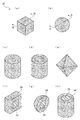
- FIG. It is a vertical sectional view which shows the processing tank. It is a vertical sectional view which shows the microbubble generation nozzle of ozone and oxygen. It is a figure explaining the structure of a fungus bed and a carrier. It is a figure which shows the other modification of a carrier. It is a top view which shows the wastewater treatment apparatus in Example 2.
- FIG. It is a vertical cross-sectional view which shows the raw water tank and the reaction tank. It is a vertical cross-sectional view which shows the microbubble generation nozzle of oxygen.
- FIG. 1 is a wastewater treatment apparatus to which the present invention is applied.
- the wastewater treatment device 1 is a device installed in a food factory and purifies sewage containing organic components such as oils and fats discarded from the factory as treated water before being discharged into a river or the like.
- the wastewater treatment device 1 that can be discharged directly to a river, a waterway, a sea area, or the like without providing a settling tank or a membrane treatment means is unique.
- the wastewater treatment device 1 is connected to a raw water tank 4 that collects sewage discharged from the factory 2 to the outside on the upstream side thereof.
- the wastewater treatment apparatus according to the present invention is not limited to the food factory of the present embodiment, and includes general wastewater such as domestic wastewater of condominiums and other condominiums, and organic wastewater such as business complex buildings and chemical factories. It can be widely applied to hospitals, hotels, restaurants, etc., or it can be operated at sewage treatment plants.
- a drainage pipe 39 for discharging the treated sewage is connected to the downstream side thereof, and the purified wastewater is discharged to a river or the like (not shown) through the drainage pipe 39.
- the wastewater treatment device 1 of the first embodiment has a treatment tank 30 for performing ozone treatment and biological treatment as a storage tank into which water to be treated is introduced, and ozone / oxygen as an ozone and oxygen (air) supply means described later. It mainly includes a (air) bubble generator 40.
- a treatment tank 30 for performing ozone treatment and biological treatment as a storage tank into which water to be treated is introduced, and ozone / oxygen as an ozone and oxygen (air) supply means described later.
- It mainly includes a (air) bubble generator 40.
- the raw water tank 4 is a water tank having a substantially rectangular shape in a plan view in which wastewater collected from the factory 2 is introduced through the wastewater groove 3, and the raw water tank 4 is connected to the next treatment tank 30.
- a raw water pump 5 for transfer and a float 6 as a water level sensor are installed (see FIG. 7).
- the internal capacity of the raw water tank 4 is approximately 2 tons, but in practice, it is transferred to the next treatment tank 30 by float control with a storage amount of less than 1 ton.
- the treatment tank 30 is a substantially cylindrical water tank in which the water to be treated from the raw water tank 4 is introduced via a transfer pipe 7 connected to the transfer pump 5, and ozone and oxygen (air) are contained in the treatment tank 30.
- a bubble discharge port 30c that discharges micro-nano bubbles (hereinafter, may be simply referred to as ozone / oxygen (air) bubble), a discharge port 30d that can be opened and closed and communicated with a drain pipe 39 via an on-off valve 38.
- Float 36 is installed.
- the internal capacity of the processing tank 30 is approximately 54 tons, and the height in the vertical direction is formed longer than the inner diameter in the plane direction.
- sterilization treatment with ozone (hereinafter, may be referred to as ozone treatment) is preferable.
- Biological treatment with tempered microorganisms and chemical changes that reduce residual ozone after ozone treatment can be promoted.
- the bubble discharge port 30c communicates with the treatment tank 30 and is connected to an ozone / oxygen (air) bubble generator 40 installed outside the treatment tank 30.
- a large number of bacterial beds 50, 50, ... Are charged inside the treatment tank 30, and these bacterial beds 50, 50, ... Are aerobic microorganisms and facultative anaerobes. It has come to be used as a bacterial bed for sexual microorganisms.
- the fungal beds 50, 50, ... Form a substantially rectangular parallelepiped carrier 51, 51, ... With a long side and a short side, and can freely move inside the treatment tank 30.
- By forming the carriers 51, 51, ... In a substantially rectangular parallelepiped in this way, it is possible not only to increase the fluidity of the carriers 51, 51, ... Floating in the water to be treated, but also to increase the fluidity of the carriers 51, 51, ...
- the occurrence of chipping of 51, ... Can be suppressed.
- the fungus bed 50 is formed of a synthetic resin made from a mineral substance having a plurality of pores. Further, not only aerobic microorganisms and facultative anaerobic microorganisms but also activated carbon 58 produced in powder form is added to the bacterial beds 50, 50, ... (See FIG. 4). Not limited to this, a neutralizing agent, an odor suppressant and the like can be added.
- an introduction port 17a opened at the tip of the transfer pipe 17 described above is provided in the upper part of the treatment tank 30, and a discharge port 30d communicating with the drain pipe 39 via an on-off valve 38 is a lower part of the treatment tank 30. Since it is provided near the bottom surface of the water, the water to be treated introduced into the treatment tank 30 descends from the introduction port 17a of the transfer pipe 17 while being biologically treated. According to this, since the water to be treated introduced from the upper part of the treatment tank 30 flows to the lower part of the treatment tank 30, it is possible to take a long time for biological treatment in the treatment tank 30.
- the drainage pipe 39 is once raised to the water level of the treatment tank 30, and the same amount of water as the amount of water flowing in from the introduction port 17a is discharged as it is under natural flow.
- the bubble discharge port 30c is open in the circumferential direction of the inner peripheral wall 30a of the processing tank 30, when micro-nano bubbles are discharged from the bubble discharge port 30c, a circulating flow is generated in the cylindrical processing tank 30.
- the micro-nano bubbles are moved upward by the circulating flow while increasing the buoyancy, and are dropped again as the micro-nano bubbles crush or detach over time. Can be done effectively.
- a stirring plate or the like for stirring the bacterial beds 50, 50, ... May be provided on the inner peripheral surface of the processing tank 30, and the inside of the processing tank 30 is rotationally driven by doing so. Then, the bacterial beds 50, 50, ... Are moved upward by the above-mentioned stirring plate and dropped downward again, so that the biological treatment can be effectively performed.
- the ozone / oxygen (air) bubble generator 40 is connected to a connection pipe 48 connected to a water suction port 30b opened near the bottom surface of the lower part of the treatment tank 30, and a water absorption pump 47 for absorbing liquid and a micro-nano bubble generation nozzle 45. It is mainly composed of an ozone generator 49 connected to the micro-nano bubble generating nozzle 45.
- the water absorption pump 47 is adapted to absorb the liquid inside the treatment tank 30 through the water absorption port 30b of the treatment tank 30.
- the micro-nano bubble generation nozzle 45 is attached to the downstream side of the connecting pipe 48 extending from the water absorption pump 47, and the liquid absorbed by the water absorption pump 47 is supplied to the micro-nano bubble generation nozzle 45 and blown out. ing.
- the micro-nano bubble generation nozzle 45 belongs to a shear type that self-absorbs ozone and air, and is characterized in that it uses cavitation.
- the pressure dissolution method can also be applied. Any model of the micro-nano bubble generation nozzle 45 may be used, but it is necessary that the nozzle 45 does not cause clogging even if a solid substance flows in.
- the micro-nano bubble generation nozzle 45 compresses a supply unit 21 connected to a connection pipe 48 of a water absorption pump 47 to supply a liquid and a liquid supplied from the supply unit 21. It is a nozzle member having a substantially cylindrical shape (straight pipe shape) having a compression portion 22 (passing portion) through which the liquid passes through while and a blowing portion 23 through which the liquid passing through the compression portion 22 is blown out.
- the inner diameter of the supply section 21 which is the inlet of the liquid is substantially parallel to the compression section 22, and the inner diameter of the blowout section 23 is expanded from the compression section 22. That is, the inner diameter of the compression unit 22 is the minimum, and the flow velocity of the liquid supplied from the supply unit 21 increases when passing through the compression unit 22, so that the flow velocity of the sewage becomes high due to the Venturi effect and the flow velocity of the sewage becomes high. It is blown out from 23.
- Ozone generated by an ozone generator 49 installed outside the treatment tank 30 and taken in through an intake pipe 41 and an intake pipe 46 connected to the ozone generator 49 passes through a plurality of branched branch pipes 24. It is designed to be ejected into the compression unit 22. Further, the oxygen-containing air taken into the micro-nano bubble generation nozzle 45 from the atmosphere through the intake pipe 46 is ejected into the compression unit 22 through the plurality of branched branch pipes 24. In this way, the ozone bubbles and oxygen (air) bubbles ejected from the branch pipe 24 into the compression section 22 become ultrafine bubbles and are mixed with the liquid in the compression section 22.
- the ultrafine bubbles are ejected as micro-nano bubbles of ozone and oxygen (air), that is, bubbles having a diameter of nano-level, from the blowing portion 23 into the processing tank 30 through the bubble discharge port 30c.
- the ozone and oxygen (air) micro-nano bubble generation nozzles 45 are arranged in the connecting pipe 48 communicating with the inside of the treatment tank 30, and the liquid containing the micro-nano bubbles is blown into the water through the bubble discharge port 30c. There is.
- an ozone / oxygen (air) bubble generator 40 that mixes ozone and oxygen (air) to generate micro-nano bubbles is provided, but the present invention is not limited to this, for example, ozone micro-nano bubbles.
- An ozone bubble generator that generates oxygen (air) and an oxygen (air) bubble generator that generates micro-nano bubbles of oxygen (air) may be provided separately. Further, it may be used in combination with a conventional air diffuser (air diffuser, diffuser, etc.).
- the procedure for treating sewage by the treatment device 1 of the above embodiment will be described with reference to FIGS. 1 to 3.
- the float 6 detects a predetermined water level, and the raw water pump 5 operates to operate the raw water tank.
- the water to be treated in 4 is transferred to the treatment tank 30. That is, the water to be treated in the raw water tank 4 is intermittently transferred to the treatment tank 30.
- an ozone supply step that is, ozone treatment with micro-nanobubbled ozone (hereinafter, simply referred to as ozone treatment) is performed. More specifically, by ozone with strong oxidizing power (O 3) is bubbled into small diameter micro nano level, a large amount of OH groups (OH -) with occurs the organic substances contained in the water to be treated Physically decompose. Since the organic matter by the ozone (O 3) it is physically degraded, easily predation by microorganisms below.
- the ozone treatment of the present invention it is possible to effectively decompose and reduce the suspended solids concentration (SS) and the normal hexane extract substance (n-Hex) of the water to be treated, which are the problems of the conventional water treatment. Therefore, the higher the SS and n-Hex in the raw water, the more compatible it is. Normally, the residence time is about 3 hours, the SS and n-Hex are 1/4 or less, and the biochemical oxygen demand is required. The result is that (BOD) is reduced to 1/2 or less.
- SS suspended solids concentration
- n-Hex normal hexane extract substance
- ozone (O 3 ) in the treatment tank 30 chemically changes to oxygen (O 2 ) by causing an oxidizing action as described above, but the rest still remains as ozone micro-nano bubbles. (Hereinafter referred to as residual ozone).
- the water to be treated in the treatment tank 30 is agitated and mixed with the biological treatment step, that is, the bacterial beds 50, 50, ... Carrying aerobic microorganisms in the treatment tank 30.
- the biological treatment step that is, the bacterial beds 50, 50, ... Carrying aerobic microorganisms in the treatment tank 30.
- the liquid containing the ozone / oxygen (air) micro-nano bubbles generated by the ozone / oxygen (air) bubble generator 40 is provided in the bubble discharge port 30c near the bottom surface of the lower part of the treatment tank 30. It is designed to be discharged into the processing tank 30.
- the bubble discharge port 30c is opened in a direction along the circumferential direction of the inner peripheral wall 30a of the substantially cylindrical treatment tank 30, and the bubble discharge port 30c is provided together with the water to be treated that has been absorbed by the water absorption pump 47 from the water absorption port 30b.
- the ozone / oxygen (air) micro-nano bubbles discharged from the water can generate a rotating ascending current that rises while rotating along the inner peripheral wall 30a together with the water to be treated and the carrier 51 of the treatment tank 30 due to its buoyancy.
- the decomposition of suspended solids (SS) is promoted by the hydroxyl radical effect due to the crushing action of micro-nano bubbles, so that it is possible to provide an apparatus in which excess sludge is hardly generated.
- the rotational ascending flow reaches the vicinity of the water surface and then subsequently generates a descending flow that descends at the substantially central portion of the treatment tank 30, and the downward flow that reaches the vicinity of the bottom surface of the processing tank 30 becomes a rotational ascending flow again.
- a circulating flow that circulates in the processing tank 30 is generated.
- the water absorption port 30b is opened at a position higher than the bubble discharge port 30c, the microbubbles discharged from the bubble discharge port 30c can be easily sucked in, and the crushing efficiency of the microbubbles can be improved.
- an introduction port 17a of a transfer pipe 17 for transferring the water to be treated from the raw water tank 4 to the treatment tank 30 is provided in the upper part of the treatment tank 30, and a discharge port 30d for discharging the biologically treated water to be treated is provided. Since it is provided in the lower part of the treatment tank 30, the water to be treated in the treatment tank 30 is in the process of flowing from the introduction port 17a located in the upper part of the treatment tank 30 to the discharge port 30d located in the lower part. It can be reliably ozone-treated and biologically treated.
- the introduction port 17a is open in the vicinity of the inner peripheral wall 30a above the treatment tank 30, the water to be treated that has just been discharged from the introduction port 17a and transferred to the treatment tank 30 immediately follows the above-mentioned downward flow.
- the mixture can be efficiently mixed.
- the bubbles having a diameter of 50 ⁇ m or less generated by the ozone / oxygen (air) bubble generator 40 have a bubble diameter that stays in water for the longest time, the liquid staying in the treatment tank 30 is removed.
- a large amount of oxygen is dissolved, and sufficient oxygen will continue to be supplied to the water to be treated and the bacterial beds 50, 50, ... In the treatment tank 30.
- the ozone / oxygen (air) bubble generator 40 can generate bubbles having a diameter of 50 ⁇ m or less, a large amount of oxygen can be dissolved in the liquid as compared with normal bubbling, and the inside of the treatment tank 30 Sufficient oxygen will continue to be supplied to the water to be treated and the bacterial beds 50, 50, .... Since the liquid permeates the water to be treated and the bacterial beds 50, 50, ... With bubbles staying, the water to be treated and the bacterial beds 50, 50, ... Are difficult to reach only by contacting with air by stirring with a circulating flow. Air can be effectively supplied to the aerobic microorganisms existing inside the mass of the aerobic microorganism, and the aerobic microorganism can be activated to exert a high aerobic decomposition ability.
- the outside air (air) is mixed in the liquid as ultrafine bubbles by the ozone / oxygen (air) bubble generator 40, this air can be allowed to stay in the sewage for a long time, and ozone.
- the air (dissolved oxygen) mixed by the oxygen (air) bubble generator 40 can be retained in the sewage to make the inside of the drain pipe 39 leading to the river, waterway, sea area, sewage treatment facility, etc. aerobic. , The effect of reducing the frequency of cleaning the inside of the drain pipe 39 can be expected.
- the treatment tank 30 containing the carrier 51 carrying the aerobic microorganisms against the water to be treated and the residual ozone sterilized by ozone in the ozone supply step is used in the biological treatment step.
- the biological treatment of the water to be treated by the aerobic microorganisms activated by oxygen is effectively performed, and the oxygen added to the residual ozone positively chemicals the hydroxyl radicals and oxygen.
- this residual ozone can be reduced at an early stage.
- the suspended solids (SS) are decomposed by the cavitation effect of the large amount of hydroxyl radicals and the micro-nano bubble generation nozzle 45, so that the generation of excess sludge is extremely reduced.
- the fungus bed 50 means a carrier 51 inoculated with aerobic microorganisms and facultative anaerobic microorganisms, and the carrier 51 means a state in which microorganisms are not inoculated.
- the synthetic resin made from the mineral substance constituting the carrier 51 excludes natural resins such as plant resins, and means those that are not decomposed by aerobic microorganisms.
- the fungus bed 50 has a carrier 51 made of a synthetic resin made from a mineral substance having a plurality of pores 52 as a raw material, and at least a part of the plurality of pores formed in the carrier 51 contains aerobic microorganisms and facultative anaerobes. It can carry a predetermined amount of an enzyme that activates the activity of aerobic microorganisms and aerobic microorganisms, and contains activated charcoal 58 produced in the form of a powder having a small diameter.
- FIG. 4 is a diagram showing the structures of the fungus bed 50 and the carrier 51. Pore 52 is formed in the carrier 51 made of a synthetic resin made of a mineral substance as a raw material.
- the holes 52 include those in which at least a part thereof communicates with other holes and those in which the holes 52 do not communicate with other holes.
- the pores 52 have a size of about 50 ⁇ m to about 800 ⁇ m, and pores 52 of various sizes are substantially uniformly dispersed in the carrier 51. Further, the pores 52 can carry the enzyme 53 and contain powdered activated carbon 58, and the pores 52 serve as nests for aerobic microorganisms and facultative anaerobic microorganisms (not shown).
- the large pores 52 are not filled with dispersible enzymes, and as will be described later, sewage and air enter and exit the pores 52 due to the stirring action, providing an environment suitable for the growth of aerobic microorganisms. .. Further, since the small pores 52 are in a state where the pores are filled with the enzyme, sewage and air hardly enter and exit, but the enzyme gradually exudes and functions as an enzyme supply source for a long period of time.
- the pores 52 can carry a spreadable enzyme that activates the activity of aerobic microorganisms, the action of the enzyme promotes the growth of aerobic microorganisms.
- the enzyme supported on the carrier aerobic microorganisms use multiple enzymes so that the growth of aerobic microorganisms is not affected even if the installation environment and operating conditions of the sewage treatment equipment change. It is designed to be able to breed.
- the above-mentioned enzyme is supported on the pores 52, but it is not always necessary to support the enzyme on the carrier 51.
- a certain amount of facultative anaerobic microorganisms are present inside the carrier 51, particularly in the pores 52 in the central portion.
- This facultative anaerobic microorganism is hardly activated in normal aerated water because the water to be treated cannot penetrate into the carrier 51, but in the case of micro-nano bubbles composed of micro-diameter bubbles, the resistance of water is reduced.
- the permeability is increased, water easily penetrates into the carrier 51, and after oxygen is adsorbed by the aerobic microorganisms on the surface layer, the facultative anaerobic microorganisms existing inside are stimulated by the micro-nanobubble water and activated. To do.
- both aerobic microorganisms and facultative anaerobic microorganisms are activated, and the food chain (including cannibalism between microorganisms) is promoted, so that early and advanced biological treatment can be performed without generating excess sludge. Can be achieved. It also realizes a cycle of nitrification by aerobic microorganisms and denitrification by anaerobic microorganisms, and also has the effect of a nitrification denitrification device.
- the wastewater treatment apparatus according to the present invention is applied to the treatment of wastewater discharged from a fruit and vegetable processing factory, the required power is significantly reduced to about 1/10 of the conventional one, and epoch-making energy saving is achieved.
- the odor which was a problem in the past, was eliminated in a few days, and the discharged water was dramatically purified. More specifically, according to the wastewater treatment apparatus of the present invention, the biochemical oxygen demand (BOD) of the discharged water is 500 mg / L to 200 mg even though the required power is reduced from 12.5 kW to 1.5 kW. It was reduced to / L, the normal hexane extract (n-Hex) was reduced from 17 mg / L to 2 mg / L, and the dissolved oxygen amount (DO) was increased from 0.5 mg / L to 5 mg / L.
- BOD biochemical oxygen demand
- the dissolved oxygen amount (DO) has the effect of increasing when the blower is stopped, and this effect is due to the action of reducing the water resistance of the micro-nano bubbles by stopping the blower, so that the inside of the carrier 51 is increased. It is considered that the facultative anaerobic microorganisms present in the pores 52 in the central part were particularly active.
- the fungus bed 50 is composed of a synthetic resin made from a mineral substance as a raw material, it is not decomposed by microorganisms, and the carrier 51 and, by extension, a plurality of pores on which microorganisms are supported are stably supported. It will be possible to secure it. Further, by the action of the activated charcoal and / or the enzyme carried in the pores of the carrier, not only the growth rate of aerobic microorganisms can be increased, but also aerobic microorganisms and facultative anaerobic microorganisms can be sufficiently propagated. It can also suppress bad odors. In addition, since aerobic microorganisms and facultative anaerobic microorganisms are supported in the pores, they do not flow out due to impact or watering due to circulating flow.
- the ozone can effectively decompose and treat the floating organic substances contained in the water to be treated in the treatment tank 30.
- minute ozone bubbles having a nano-level diameter are supplied near the bottom of the treatment tank 30 to decompose the surrounding organic substances, and further decompose the organic substances gradually while floating in the water to be treated, and then the water surface.
- the organic matter By decomposing the organic matter floating in the vicinity of the water, the organic matter can be decomposed while contacting the organic matter contained in the total amount of water from the bottom of the water to the surface of the water.
- the carrier 51 which also drifts together with the water to be treated, serves as a place for collecting residual ozone bubbles and oxygen (air) bubbles, that is, the residual ozone bubbles are adsorbed on the pores 52 of the carrier 51, so that ozone molecules are attracted to each other.
- the chemical change that becomes an oxygen molecule is promoted.
- the activated carbon 58 is contained in and around the pores 52 of the carrier 51, the activated carbon 58 is positively contained in the porous 58a (pores) of the activated carbon 58.
- Ozone molecules O 3 can be collected in and easily decomposed, that is, chemically converted into oxygen molecules O 2 .
- the porous 58a of the activated carbon 58 is formed in nano-level pores of about 2 nm to 50 nm, and many aerobic microorganisms exist as habitats inside the porous 58a.
- the ozone bubble is approximately 50 nm to 200 nm, that is, the porous 58a of the activated carbon 58 has a smaller diameter than the ozone bubble, so that the ozone bubble does not enter the inside of the porous 58a and the activated carbon 58 by adhering to the outer surface 58b of the peripheral porous 58a, ozone molecules O 3 is chemically changed into molecular oxygen O 2. Therefore, the aerobic microorganisms in the porous 58a come into contact with the oxygen molecule O 2 without being in contact with the ozone molecule O 3 , that is, obtain abundant oxygen without dying and function actively.
- microorganisms do not actively function at a water temperature of 15 ° C. or lower, but according to this example, due to the far-infrared effect of activated carbon in the pores 52 of the carrier 51, for example, the water temperature is as bad as 10 ° C. or lower. Microbial activation can be maintained even under conditions.
- the suspended solids concentration (SS) is 540 mg / L
- the normal hexane extractant (n-Hex) is 220 mg / L
- biochemistry in the raw water before the treatment is a water temperature of 15 ° C. or lower.
- the oxygen demand (BOD) was 490 mg / L and the chemical oxygen demand (COD) was 98 mg / L, whereas the suspended solids concentration (SS) was 16 mg / L in the treated water after treatment.
- Normal hexane extract (n-Hex) was improved to 5 mg / L or less
- biochemical oxygen demand (BOD) was improved to 23 mg / L
- chemical oxygen demand (COD) was improved to 17 mg / L.
- the water temperature at this time can also be operated at 10 ° C. or lower.
- the carrier 51 in the treatment tank 30 serves as a place for collecting residual ozone and oxygen bubbles in the pores 52, thereby achieving reduction / elimination of residual ozone and at the same time changing residual ozone into oxygen bubbles.
- the activation of aerobic microorganisms carried by the carrier 51 can be achieved by the abundant oxygen effective for biological treatment with the added oxygen molecules.
- the carrier 51 is composed of at least an epidermis portion made of an elastic body having abundant shape restoring force.
- the carrier 51 is composed of at least an epidermis portion made of an elastic body having abundant shape restoring force.
- the water to be treated and the fungus bed are in the process of stirring in the treatment tank, and at least the epidermis part of the fungus bed collides and contacts with each other.
- the absorption and exhaustion of water and air from the pores of the bacterial bed is promoted, and the air and water necessary for the growth of aerobic microorganisms can be sufficiently supplied into the pores of the bacterial bed.
- the fungus bed 50 may be exposed to water and at the same time, the temperature may reach about 60 ° C. due to the activity of microorganisms.
- aerobic microorganisms usually become active in neutral to weakly acidic environments.
- the pH may decrease in the process of decomposing organic matter, and the activity of aerobic microorganisms may be inhibited.
- caustic soda, lime, calcium carbonate and the like may be added in an appropriate amount into the treatment tank 30 to adjust the pH, and the pH in the sewage treatment machine may change significantly.
- urethane sponge is used as a material constituting the carrier 51.
- the urethane sponge has excellent water absorption, drainage and water resistance, and does not deteriorate even in an acidic environment, an alkaline environment, or a high temperature environment, so that it is not necessary to replenish the carrier on a regular basis.
- the urethane sponge constituting the carrier is characterized in that its density can be freely produced to some extent. Therefore, if the urethane sponge is manufactured so as to have a specific gravity almost equal to that of the suspended solids (SS) while containing sewage, the bacterial bed will not be released from the suspended solids (SS) during stirring. Contact will accelerate the decomposition of suspended solids (SS).
- the urethane sponge is an example, and any material having the same characteristics as the urethane sponge can be used.
- the stirring action in the processing tank 30 of FIG. 2 will be described.
- the fungal beds 50, 50, ... are moved upward by the rotary upwelling flow, and the fungal bed 50 previously submerged in sewage , It will be compressed and restored by collision and contact between the bacterial beds.
- the absorption and exhaustion of water and air from the pores of the bacterial bed is promoted, and oxygen and water necessary for the growth of aerobic microorganisms and facultative anaerobic microorganisms are transferred into the pores of the bacterial bed. Will be able to supply enough.
- the aerobic microorganisms and facultative anaerobic microorganisms supported on the bacterial bed 50 are activated by the combination of the stirring action, the activated carbon supported on the pores, and the action of the enzyme, and the water to be treated inside the treatment tank 30 is activated.
- the organic components contained in the sewage are decomposed and the sewage is purified.
- the configuration of the carrier 51 will be described with reference to FIG.
- the shape of the carrier can be not only a substantially rectangular parallelepiped in FIG. 4, but also a substantially cube, a substantially sphere, a substantially cylinder, a tubular body, and a substantially regular octahedron as shown in FIGS. 5 (a) to 5 (e). Further, by using a mixture of carriers 51 having different shapes, it is possible to keep a large gap between the carriers and further improve the water permeability and air permeability in the sewage treatment tank.
- the length of one side of the carrier 51 is about 5 mm to about 10 cm, but the capacity of each tank of the wastewater treatment device 1 and the quality of the sewage to be treated (BOD, COD, SS, n-Hex) are taken into consideration. And its size can be determined.
- the carrier is composed of a single synthetic resin made of the same mineral substance as a raw material, but at least the skin portion of the carrier has a shape-restoring force.
- the elastic body is rich in minerals, and other parts can be composed of different materials.
- 5 (f) shows a BB cross section of FIG. 5 (a)
- FIG. 5 (g) shows a CC cross section of FIG. 5 (b).
- the epidermis portion 54 of the cube is made of an elastic body having abundant shape restoring force
- the core portion 55 is composed of a synthetic resin made of a mineral substance having a specific gravity different from that of the epidermis portion 54, and is a carrier.
- the average specific gravity of sewage or solids can also be adjusted to match the specific gravity of sewage or solids. Further, by forming the core portion 55 with a carrier rich in enzyme and coating the epidermis portion 54 with an elastic body having abundant shape-restoring force, it is possible to supply the enzyme to aerobic microorganisms for a long period of time. Further, as shown in FIG. 5 (h), it can be configured so that a part of the core portion 55 is exposed.
- organic substances floating in the water to be treated are sterilized by micro-nanobubbles of ozone, and bubbles of residual ozone floating in the water to be treated are further generated by the carrier 51.
- results adsorbed to the activated carbon 58 (porous material) and at the same time ozone molecule O 3 with each other aggressively molecular oxygen O 2 is chemical change can be reduced residual ozone, by abundantly produce hydroxyl radicals, floating It promotes the decomposition of substances (SS) and soluble organic substances, and can activate biological treatment by oxygen bubbles adsorbed on the oxygen molecules and the activated carbon 58 of the carrier 51.
- the carrier 51 can be used as a reaction site for ozone decomposition and biological treatment. Therefore, using a single treatment tank 30, it is possible to achieve both sterilization treatment with ozone and biological treatment using aerobic microorganisms.
- the resistance of sewage is reduced by the micro-nano bubble effect, and not only aerobic microorganisms but also facultative anaerobic microorganisms existing inside the carrier 51 are activated by the permeation of micro-nano bubble water deoxidized by the aerobic microorganisms. And promotes the decomposition of organic substances.
- aerobic microorganisms nitrify using oxygen (O 2 ), and resistance is reduced by minute micro-nano bubbles, so that the facultative anaerobic microorganisms that have penetrated deep into the carrier 51 are denitrified. That is, this action also works effectively in nitrification denitrification.
- the food chain (including cannibalism between microorganisms) in the carrier 51 is promoted, and early and advanced biological treatment can be achieved without generating excess sludge.
- the facultative anaerobic microorganisms inside the carrier 51 are improved in water permeability by micro-nano bubbles, so that the supply amount of micro-nano bubbles containing oxygen at least increases the frequency of contact with water, and oxygen is adsorbed by aerobic microorganisms on the surface layer. After that, an oxygen-deficient liquid infiltrates, and as a result, the activity of facultative anaerobic microorganisms becomes active, which enables rational nitrification and denitrification, and enables miniaturization and energy saving of the bubble generator. ..
- the wastewater treatment device 11 of the second embodiment performs ozone treatment and biological treatment as a reaction tank 10 for performing ozone treatment as a pretreatment tank, an ozone bubble generator 20, and a storage tank. It mainly includes a treatment tank 30 for performing the treatment and an ozone / oxygen (air) bubble generator 40. That is, the wastewater treatment device 11 of the second embodiment is different from the wastewater treatment device 1 of the first embodiment in that the reaction tank 10 and the ozone bubble generator 20 are added, and the other configurations are the same as those of the wastewater treatment device 1. is there.
- the reaction tank 10 is a substantially cylindrical water tank in which the water to be treated from the raw water tank 4 is introduced via a transfer pipe 7 connected to the raw water pump 5, and an ozone bubble generator 20 is installed in the reaction tank 10.
- a water absorption pump 27, a transfer pump 15 for transferring to the next treatment tank 30, and a float 16 as a water level sensor are installed.
- the internal capacity of the reaction tank 10 is approximately 2.7 tons, that is, the treatment tank 30 described above has an internal capacity approximately 20 times that of the reaction tank 10.
- an ozone generator 29 constituting the ozone bubble generator 20 is installed outside the reaction tank 10, and is connected to the micro-nano bubble generator nozzle 25 via a connecting pipe 26.
- the ozone bubble generator 20 is mainly composed of a water absorption pump 27 which is arranged on the bottom surface of the reaction tank 10 and absorbs liquid, a micro-nano bubble generation nozzle 25, and an ozone generator 29 provided outside the reaction tank 10. Has been done.
- the water absorption pump 27 is adapted to absorb the liquid inside the reaction tank 10 from the water absorption unit 27a below the water absorption pump 27.
- the micro-nano bubble generation nozzle 25 is attached to the tip of a connecting pipe 28 extending from the water absorption pump 27, and the liquid absorbed by the water absorption pump 27 is supplied to the micro-nano bubble generation nozzle 25. It is designed to be blown out.
- the ozone generated by the ozone generator 29 installed outside the reaction tank 10 and taken in through the intake pipe 26 connected to the ozone generator 29 is a plurality of branched branch pipes. It is designed to be ejected into the compression unit 22 through 24. The bubbles ejected from the branch pipe 24 into the compression section 22 become ultrafine bubbles and are mixed with the liquid in the compression section 22. Then, these ultrafine bubbles are ejected from the blowing portion 23 into the reaction tank 10 as micro-nano bubbles of ozone.
- the micro-nano bubble generation nozzle 25 is submerged under the surface of the liquid in the reaction vessel 10 and blows out a liquid containing ozone micro-nano bubbles into the water.
- the procedure for treating sewage by the treatment device 11 of the second embodiment will be described with reference to FIGS. 6 to 8.
- the float 6 detects a predetermined water level, and the raw water pump 5 operates to operate the raw water tank.
- the water to be treated in 4 is transferred to the reaction tank 10. That is, the water to be treated in the raw water tank 4 is intermittently transferred to the reaction tank 10.
- an ozone supply step that is, ozone treatment with micro-nanobubble ozone is performed. More specifically, by ozone with strong oxidizing power (O 3) is bubbled into small diameter micro nano level, the large amount of OH groups (OH @ -) is generated, the organic substances contained in the water to be treated Physically decompose. Since the ozone (O 3) organic by are physically degraded, easily predation by the microorganisms in the processing tank 30.
- the float 16 provided in the reaction tank 10 detects a predetermined water level, so that the transfer pump 15 operates and the reaction tank 10 operates as described above.
- the ozone-treated water to be treated is transferred to the treatment tank 30 via the transfer pipe 17. That is, the water to be treated in the reaction tank 10 is intermittently transferred to the treatment tank 30.
- Most of the ozone (O 3 ) in the reaction vessel 10 is chemically changed to oxygen (O 2 ) by causing an oxidizing action as described above, but the rest still remains as ozone micro-nano bubbles. This residual ozone is transferred to the treatment tank 30 together with the water to be treated.
- ozone treatment is performed in the reaction tank 10 as a pretreatment tank, but the treatment is not limited to this, and an appropriate chemical such as a coagulant is added to coagulate organic substances in the water to be treated.
- -Pretreatment such as precipitation may be performed.
- the carrier 51 which also drifts together with the water to be treated, serves as a place for collecting residual ozone bubbles and oxygen (air) bubbles, that is, when the residual ozone bubbles come into contact with the pores 52 of the carrier 51, the ozone molecules move together. The chemical change that becomes an oxygen molecule is promoted.
- a treatment tank having a plurality of carriers 51 containing active carbon 58 and carrying microorganisms with the water to be treated and residual ozone sterilized by ozone in the reaction tank 10 (pretreatment tank).
- pretreatment tank By accommodating in 30 (containment tank), bubbles of residual ozone floating in the water to be treated come into contact with the carrier 51, and as a result, ozone molecules O 3 are positively chemically changed into oxygen molecules O 2 to reduce residual ozone.
- the carrier 51 can be used as a reaction site for ozone decomposition and biological treatment. Further, due to the micro-nano bubble effect, the resistance of sewage is reduced, and not only aerobic microorganisms but also facultative anaerobic microorganisms existing inside the carrier 51 are activated by the permeated micro-nano bubbles to promote the decomposition of organic substances. This promotes the food chain (including cannibalism between microorganisms), has a high nitrification and denitrification ability without generating excess sludge, and can achieve an early and advanced biological treatment. As shown in FIGS.
- the micro-nano bubble generating nozzles 25 and 45 are preferable because they contribute to the decomposition of suspended solids (SS) in the water to be treated when cavitation is generated if the device utilizes cavitation.
- the facultative anaerobic microorganisms inside the carrier 51 have improved water permeability due to micro-nano bubbles, so that the supply amount of micro-nano bubbles containing oxygen at least increases the frequency of contact with water and the activity becomes active. It is possible to reduce the size and save energy.
- the water to be treated is transferred and treated in the order of the raw water tank 4, the reaction tank 10, and the treatment tank 30, but for example, between the raw water tank 4 and the reaction tank 10, or the reaction tank.
- a separate device may be added, such as interposing a solid-liquid separation device between the treatment tank 30 and the treatment tank 30.
- Wastewater treatment equipment 2 Factory 4 Raw water tank 5 Raw water pump 7 Transfer pipe 10 Reaction tank (pretreatment tank) 15 Transfer pump 17 Transfer pipe 17a Introduction port (introduction part) 20 Ozone bubble generator (ozone supply means) 25 Micro-nano bubble generation nozzle 27 Water absorption pump 29 Ozone generator 30 Treatment tank (containment tank) 30c bubble discharge port 30d discharge port (discharge part) 39 Drainage pipe 40 Ozone / oxygen (air) bubble generator (supply means) 45 Micro-nano bubble generation nozzle 47 Water absorption pump 49 Ozone generator 50 Bacterial bed 51 Carrier 52 Pore 58 Activated carbon (porous material) 58a Porous
Landscapes
- Life Sciences & Earth Sciences (AREA)
- Chemical & Material Sciences (AREA)
- Water Supply & Treatment (AREA)
- Hydrology & Water Resources (AREA)
- Engineering & Computer Science (AREA)
- Environmental & Geological Engineering (AREA)
- Organic Chemistry (AREA)
- Biodiversity & Conservation Biology (AREA)
- Microbiology (AREA)
- Chemical Kinetics & Catalysis (AREA)
- Biological Treatment Of Waste Water (AREA)
- Treatment Of Water By Oxidation Or Reduction (AREA)
- Activated Sludge Processes (AREA)
Priority Applications (5)
| Application Number | Priority Date | Filing Date | Title |
|---|---|---|---|
| MYPI2020006195A MY201681A (en) | 2019-07-25 | 2019-07-25 | Wastewater treatment apparatus and wastewater treatment method |
| JP2021534501A JP7406265B2 (ja) | 2019-07-25 | 2019-07-25 | 廃水処理装置 |
| CN201980037361.4A CN112566715B (zh) | 2019-07-25 | 2019-07-25 | 废水处理装置和废水处理方法 |
| PCT/JP2019/029148 WO2021014630A1 (ja) | 2019-07-25 | 2019-07-25 | 廃水処理装置及び廃水処理方法 |
| PH12020552082A PH12020552082A1 (en) | 2019-07-25 | 2020-12-03 | Wastewater treatment apparatus and wastewater treatment method |
Applications Claiming Priority (1)
| Application Number | Priority Date | Filing Date | Title |
|---|---|---|---|
| PCT/JP2019/029148 WO2021014630A1 (ja) | 2019-07-25 | 2019-07-25 | 廃水処理装置及び廃水処理方法 |
Publications (1)
| Publication Number | Publication Date |
|---|---|
| WO2021014630A1 true WO2021014630A1 (ja) | 2021-01-28 |
Family
ID=74193601
Family Applications (1)
| Application Number | Title | Priority Date | Filing Date |
|---|---|---|---|
| PCT/JP2019/029148 Ceased WO2021014630A1 (ja) | 2019-07-25 | 2019-07-25 | 廃水処理装置及び廃水処理方法 |
Country Status (5)
| Country | Link |
|---|---|
| JP (1) | JP7406265B2 (https=) |
| CN (1) | CN112566715B (https=) |
| MY (1) | MY201681A (https=) |
| PH (1) | PH12020552082A1 (https=) |
| WO (1) | WO2021014630A1 (https=) |
Families Citing this family (2)
| Publication number | Priority date | Publication date | Assignee | Title |
|---|---|---|---|---|
| CN114835334A (zh) * | 2022-03-18 | 2022-08-02 | 无锡千为科技有限公司 | 强效微纳米生物净水系统 |
| CN117843127A (zh) * | 2024-03-04 | 2024-04-09 | 中国科学院过程工程研究所 | 一种用于垃圾渗滤液处理的微生物耦合臭氧高级氧化一体式装置及其方法 |
Citations (8)
| Publication number | Priority date | Publication date | Assignee | Title |
|---|---|---|---|---|
| JPS5782995U (https=) * | 1980-11-10 | 1982-05-22 | ||
| JPH04108599A (ja) * | 1990-08-28 | 1992-04-09 | Doriko Kk | ゴルフ場用農薬排水処理装置 |
| JPH06114392A (ja) * | 1992-10-05 | 1994-04-26 | Taiyo Sanso Co Ltd | 有機性廃水の処理方法及びその装置 |
| JPH07241584A (ja) * | 1994-03-07 | 1995-09-19 | Hitachi Ltd | 複合活性汚泥担体による排水の処理方法及び処理装置 |
| JPH11221587A (ja) * | 1998-02-06 | 1999-08-17 | Unitika Ltd | 廃水処理装置 |
| JP2006247469A (ja) * | 2005-03-08 | 2006-09-21 | Sanyo Electric Co Ltd | 汚水処理装置 |
| JP2011011098A (ja) * | 2009-03-04 | 2011-01-20 | Blue Aqua Industry Kk | 水質浄化装置 |
| JP2016140848A (ja) * | 2015-02-04 | 2016-08-08 | 国立研究開発法人産業技術総合研究所 | 有機性排水の処理方法および装置 |
Family Cites Families (14)
| Publication number | Priority date | Publication date | Assignee | Title |
|---|---|---|---|---|
| DE3032882A1 (de) * | 1980-09-01 | 1982-04-15 | Linde Ag, 6200 Wiesbaden | Verfahren und vorrichtung zur biologischen reinigung von abwasser |
| CN1021571C (zh) * | 1988-02-27 | 1993-07-14 | 清华大学 | 去除低浓度有机物的水处理方法 |
| JPH1052268A (ja) * | 1996-05-01 | 1998-02-24 | Kanebo Ltd | 微生物担持体及びその製造方法 |
| JP2001104982A (ja) | 1999-10-12 | 2001-04-17 | Ebara Corp | 有機性汚水の処理装置及び方法 |
| JP2004329988A (ja) * | 2003-04-30 | 2004-11-25 | Kazutoshi Sakuta | 液体の浄化処理方法 |
| JP4907103B2 (ja) * | 2005-05-12 | 2012-03-28 | 高砂熱学工業株式会社 | 生物処理槽の汚泥処理方法 |
| JP5001587B2 (ja) * | 2006-06-09 | 2012-08-15 | シャープ株式会社 | 排水処理方法および排水処理装置 |
| US8025807B2 (en) * | 2008-01-16 | 2011-09-27 | American Sterilizer Company | Method for treating rinse water in decontamination devices |
| WO2009135249A1 (en) | 2008-05-06 | 2009-11-12 | Jeffbrad Investments Pty Ltd | Apparatus for removing contaminants from water |
| CN101602562A (zh) * | 2008-06-12 | 2009-12-16 | 中国科学院生态环境研究中心 | 一种高安全性再生水深度处理系统 |
| CN102531149B (zh) * | 2010-12-10 | 2015-09-02 | 新奥科技发展有限公司 | 一种承载微生物的填料 |
| WO2013188858A2 (en) | 2012-06-15 | 2013-12-19 | Microvi Biotech Inc. | Novel biocatalyst compositions and processes for use |
| CN102807282B (zh) * | 2012-08-17 | 2013-12-18 | 甘肃银光化学工业集团有限公司 | 一种原料湿式投加装置和多种原料的投加方法 |
| CN208617629U (zh) * | 2018-05-04 | 2019-03-19 | 武汉楚易环保工程有限公司 | 一种医疗废水处理系统 |
-
2019
- 2019-07-25 CN CN201980037361.4A patent/CN112566715B/zh active Active
- 2019-07-25 MY MYPI2020006195A patent/MY201681A/en unknown
- 2019-07-25 JP JP2021534501A patent/JP7406265B2/ja active Active
- 2019-07-25 WO PCT/JP2019/029148 patent/WO2021014630A1/ja not_active Ceased
-
2020
- 2020-12-03 PH PH12020552082A patent/PH12020552082A1/en unknown
Patent Citations (8)
| Publication number | Priority date | Publication date | Assignee | Title |
|---|---|---|---|---|
| JPS5782995U (https=) * | 1980-11-10 | 1982-05-22 | ||
| JPH04108599A (ja) * | 1990-08-28 | 1992-04-09 | Doriko Kk | ゴルフ場用農薬排水処理装置 |
| JPH06114392A (ja) * | 1992-10-05 | 1994-04-26 | Taiyo Sanso Co Ltd | 有機性廃水の処理方法及びその装置 |
| JPH07241584A (ja) * | 1994-03-07 | 1995-09-19 | Hitachi Ltd | 複合活性汚泥担体による排水の処理方法及び処理装置 |
| JPH11221587A (ja) * | 1998-02-06 | 1999-08-17 | Unitika Ltd | 廃水処理装置 |
| JP2006247469A (ja) * | 2005-03-08 | 2006-09-21 | Sanyo Electric Co Ltd | 汚水処理装置 |
| JP2011011098A (ja) * | 2009-03-04 | 2011-01-20 | Blue Aqua Industry Kk | 水質浄化装置 |
| JP2016140848A (ja) * | 2015-02-04 | 2016-08-08 | 国立研究開発法人産業技術総合研究所 | 有機性排水の処理方法および装置 |
Also Published As
| Publication number | Publication date |
|---|---|
| PH12020552082A1 (en) | 2021-08-02 |
| CN112566715B (zh) | 2024-04-30 |
| JP7406265B2 (ja) | 2023-12-27 |
| MY201681A (en) | 2024-03-12 |
| JPWO2021014630A1 (https=) | 2021-01-28 |
| CN112566715A (zh) | 2021-03-26 |
Similar Documents
| Publication | Publication Date | Title |
|---|---|---|
| JP4947679B2 (ja) | Co2削減ラインアトマイジング排水処理法 | |
| KR100992080B1 (ko) | 무급수 무방류 순환 수세식 고도처리장치를 갖춘 친환경 화장실 | |
| JP7061473B2 (ja) | 廃水処理装置 | |
| JP6750930B6 (ja) | 汚排水浄化システム | |
| WO2006095509A1 (ja) | 排水処理方法および排水処理装置 | |
| JP2009254967A (ja) | 水処理システム | |
| JP5425992B2 (ja) | 水処理装置 | |
| JP3483917B2 (ja) | 汚水処理法 | |
| KR102299760B1 (ko) | 고농도 유기성 폐수 처리 시스템 | |
| JP5167447B2 (ja) | 水処理装置 | |
| JP7406265B2 (ja) | 廃水処理装置 | |
| JP4947741B2 (ja) | Co2削減排水処理装置及びco2削減排水処理方法 | |
| KR101889687B1 (ko) | 무방류 순환수세식 화장실 오수 정화처리장치 | |
| JP2011025200A5 (https=) | ||
| JP5557301B1 (ja) | 汚排水浄化システム | |
| Jin et al. | A dispersed-ozone flotation (DOF) separator for tertiary wastewater treatment | |
| KR20160018814A (ko) | 오수 처리 장치, 음식물 쓰레기나 오수를 처리하기 위하여 사용되는 균상, 및 균상을 사용한 오수 처리 방법 | |
| JP2022169414A (ja) | 排水浄化装置 | |
| KR101599797B1 (ko) | 정화조 등의 고도의 수처리방법 | |
| KR20000054588A (ko) | 분뇨, 음식물쓰레기 및 생활하수 처리 장치 및 이를이용한 분뇨, 음식물쓰레기 및 생활하수 처리 방법 | |
| JP7450898B2 (ja) | 廃水処理装置及び廃水処理方法 | |
| Ali et al. | The effectiveness of microbubble technology in the quality improvement of raw water sample | |
| KR102323795B1 (ko) | 소비전력을 줄인 오폐수 처리장치 | |
| JP2003126877A (ja) | 水処理システム | |
| JP2004025092A (ja) | 難分解性物質処理装置 |
Legal Events
| Date | Code | Title | Description |
|---|---|---|---|
| 121 | Ep: the epo has been informed by wipo that ep was designated in this application |
Ref document number: 19938134 Country of ref document: EP Kind code of ref document: A1 |
|
| NENP | Non-entry into the national phase |
Ref country code: DE |
|
| ENP | Entry into the national phase |
Ref document number: 2021534501 Country of ref document: JP Kind code of ref document: A |
|
| 122 | Ep: pct application non-entry in european phase |
Ref document number: 19938134 Country of ref document: EP Kind code of ref document: A1 |