WO2021010346A1 - 歯の再生治療のためのusag-1を標的分子とした中和抗体 - Google Patents
歯の再生治療のためのusag-1を標的分子とした中和抗体 Download PDFInfo
- Publication number
- WO2021010346A1 WO2021010346A1 PCT/JP2020/027127 JP2020027127W WO2021010346A1 WO 2021010346 A1 WO2021010346 A1 WO 2021010346A1 JP 2020027127 W JP2020027127 W JP 2020027127W WO 2021010346 A1 WO2021010346 A1 WO 2021010346A1
- Authority
- WO
- WIPO (PCT)
- Prior art keywords
- seq
- amino acid
- antibody
- acid sequence
- antigen
- Prior art date
- Legal status (The legal status is an assumption and is not a legal conclusion. Google has not performed a legal analysis and makes no representation as to the accuracy of the status listed.)
- Ceased
Links
Images










Classifications
-
- C—CHEMISTRY; METALLURGY
- C07—ORGANIC CHEMISTRY
- C07K—PEPTIDES
- C07K16/00—Immunoglobulins [IG], e.g. monoclonal or polyclonal antibodies
- C07K16/18—Immunoglobulins [IG], e.g. monoclonal or polyclonal antibodies against material from animals or humans
-
- C—CHEMISTRY; METALLURGY
- C07—ORGANIC CHEMISTRY
- C07K—PEPTIDES
- C07K16/00—Immunoglobulins [IG], e.g. monoclonal or polyclonal antibodies
- C07K16/18—Immunoglobulins [IG], e.g. monoclonal or polyclonal antibodies against material from animals or humans
- C07K16/22—Immunoglobulins [IG], e.g. monoclonal or polyclonal antibodies against material from animals or humans against growth factors ; against growth regulators
-
- A—HUMAN NECESSITIES
- A61—MEDICAL OR VETERINARY SCIENCE; HYGIENE
- A61P—SPECIFIC THERAPEUTIC ACTIVITY OF CHEMICAL COMPOUNDS OR MEDICINAL PREPARATIONS
- A61P1/00—Drugs for disorders of the alimentary tract or the digestive system
- A61P1/02—Stomatological preparations, e.g. drugs for caries, aphtae, periodontitis
-
- A—HUMAN NECESSITIES
- A61—MEDICAL OR VETERINARY SCIENCE; HYGIENE
- A61P—SPECIFIC THERAPEUTIC ACTIVITY OF CHEMICAL COMPOUNDS OR MEDICINAL PREPARATIONS
- A61P43/00—Drugs for specific purposes, not provided for in groups A61P1/00-A61P41/00
-
- A—HUMAN NECESSITIES
- A61—MEDICAL OR VETERINARY SCIENCE; HYGIENE
- A61K—PREPARATIONS FOR MEDICAL, DENTAL OR TOILETRY PURPOSES
- A61K39/00—Medicinal preparations containing antigens or antibodies
- A61K2039/505—Medicinal preparations containing antigens or antibodies comprising antibodies
-
- C—CHEMISTRY; METALLURGY
- C07—ORGANIC CHEMISTRY
- C07K—PEPTIDES
- C07K2317/00—Immunoglobulins specific features
- C07K2317/20—Immunoglobulins specific features characterized by taxonomic origin
- C07K2317/24—Immunoglobulins specific features characterized by taxonomic origin containing regions, domains or residues from different species, e.g. chimeric, humanized or veneered
-
- C—CHEMISTRY; METALLURGY
- C07—ORGANIC CHEMISTRY
- C07K—PEPTIDES
- C07K2317/00—Immunoglobulins specific features
- C07K2317/30—Immunoglobulins specific features characterized by aspects of specificity or valency
- C07K2317/34—Identification of a linear epitope shorter than 20 amino acid residues or of a conformational epitope defined by amino acid residues
-
- C—CHEMISTRY; METALLURGY
- C07—ORGANIC CHEMISTRY
- C07K—PEPTIDES
- C07K2317/00—Immunoglobulins specific features
- C07K2317/50—Immunoglobulins specific features characterized by immunoglobulin fragments
- C07K2317/56—Immunoglobulins specific features characterized by immunoglobulin fragments variable (Fv) region, i.e. VH and/or VL
-
- C—CHEMISTRY; METALLURGY
- C07—ORGANIC CHEMISTRY
- C07K—PEPTIDES
- C07K2317/00—Immunoglobulins specific features
- C07K2317/50—Immunoglobulins specific features characterized by immunoglobulin fragments
- C07K2317/56—Immunoglobulins specific features characterized by immunoglobulin fragments variable (Fv) region, i.e. VH and/or VL
- C07K2317/565—Complementarity determining region [CDR]
-
- C—CHEMISTRY; METALLURGY
- C07—ORGANIC CHEMISTRY
- C07K—PEPTIDES
- C07K2317/00—Immunoglobulins specific features
- C07K2317/70—Immunoglobulins specific features characterized by effect upon binding to a cell or to an antigen
- C07K2317/76—Antagonist effect on antigen, e.g. neutralization or inhibition of binding
-
- C—CHEMISTRY; METALLURGY
- C07—ORGANIC CHEMISTRY
- C07K—PEPTIDES
- C07K2317/00—Immunoglobulins specific features
- C07K2317/90—Immunoglobulins specific features characterized by (pharmaco)kinetic aspects or by stability of the immunoglobulin
- C07K2317/92—Affinity (KD), association rate (Ka), dissociation rate (Kd) or EC50 value
Definitions
- the present invention relates to a neutralizing antibody targeting USAG-1 for the treatment of adentia or tooth regeneration.
- Non-Patent Document 1 Various cells such as stem cells (Non-Patent Document 1) are used as cell sources.
- organ primordium method a cell manipulation technique that regenerates the organ primordium of the tooth that is the source of the organ in collagen gel.
- congenital adentia has been identified, and many of them are common to humans and mice.
- RUNX2, MSX1, EDA, WNT10A, PAX9, AXIN2 and the like are known.
- congenital adentia caused by WNT10A has the largest number of patients.
- EDA is a causative gene of nonperspirant ectoderm dysplasia, which is a typical disease of syndromic congenital anodontia.
- Congenital aneurysm is caused by the loss of the causative gene and the suppression of function, which causes the tooth development to stop prematurely.
- the present inventors have succeeded in developing a neutralizing antibody targeting USAG-1. Furthermore, they have found that the administration of the antibody can regenerate missing teeth in a congenital dentin model mouse and form excess teeth in a congenital dentia model mouse or a wild-type mouse. completed.
- the present invention [1] An antibody or an antigen-binding fragment thereof that specifically binds to and neutralizes USAG-1. [2] The antibody or antigen fragment thereof according to [1], which specifically binds to USAG-1 and neutralizes the BMP signaling inhibitory activity of USAG-1. [3] The antibody or antigen fragment thereof according to [1] or [2], which specifically binds to USAG-1 and neutralizes the WNT signaling inhibitory activity of USAG-1. [4] (a) Three heavy chain complementarity determination regions containing at least 90% sequence identity with the amino acid sequences set forth in SEQ ID NO: 5, SEQ ID NO: 6, and SEQ ID NO: 7, respectively, or each of them.
- And three light chain complementarity determination regions comprising an amino acid sequence having at least 90% sequence identity with the amino acid sequence set forth in SEQ ID NO: 19, and SEQ ID NO: 20.
- Three light chain complementarity determination regions comprising an amino acid sequence having at least 90% sequence identity with the amino acid sequence set forth in SEQ ID NO: 46, and SEQ ID NO: 47, or (E) Three heavy chain complementarity determination regions containing at least 90% sequence identity with the amino acid sequences set forth in SEQ ID NO: 52, SEQ ID NO: 53, and SEQ ID NO: 54, or SEQ ID NO: 55, respectively.
- the antibody described in the section or its antigen-binding fragment [5] (f) A heavy chain variable region containing an amino acid sequence having at least 90% sequence identity with the amino acid sequence shown in SEQ ID NO: 3, or at least 90% sequence identity with the amino acid sequence shown in SEQ ID NO: 4. A light chain variable region containing a sex amino acid sequence, (G) A heavy chain variable region containing an amino acid sequence having at least 90% sequence identity with the amino acid sequence shown in SEQ ID NO: 13, or having at least 90% sequence identity with the amino acid sequence shown in SEQ ID NO: 14.
- Light chain variable region containing amino acid sequence (H) A heavy chain variable region containing an amino acid sequence having at least 90% sequence identity with the amino acid sequence shown in SEQ ID NO: 23, or having at least 90% sequence identity with the amino acid sequence shown in SEQ ID NO: 24.
- Light chain variable region containing amino acid sequence (I) A heavy chain variable region containing an amino acid sequence having at least 90% sequence identity with the amino acid sequence shown in SEQ ID NO: 40, or having at least 90% sequence identity with the amino acid sequence shown in SEQ ID NO: 41.
- Light chain variable region containing amino acid sequence or (J) A heavy chain variable region containing an amino acid sequence having at least 90% sequence identity with the amino acid sequence shown by SEQ ID NO: 50, or having at least 90% sequence identity with the amino acid sequence shown with SEQ ID NO: 51.
- the antibody according to any one of [1] to [4] or an antigen-binding fragment thereof, which comprises a light chain variable region containing an amino acid sequence.
- [6] (k) Three heavy chain complementarity determination regions containing at least 90% sequence identity with the amino acid sequences set forth in SEQ ID NO: 5, SEQ ID NO: 6, and SEQ ID NO: 7, respectively, and their respective sequences.
- Three light chain complementarity determination regions comprising an amino acid sequence having at least 90% sequence identity with the amino acid sequences set forth in No. 8, SEQ ID NO: 9, and SEQ ID NO: 10.
- (M) Three heavy chain complementarity determination regions containing at least 90% sequence identity with the amino acid sequences set forth in SEQ ID NO: 25, SEQ ID NO: 26, and SEQ ID NO: 27, respectively, and SEQ ID NO: 28, respectively.
- Three light chain complementarity determination regions comprising an amino acid sequence having at least 90% sequence identity with the amino acid sequence set forth in SEQ ID NO: 29 and SEQ ID NO: 30.
- (N) Three heavy chain complementarity determination regions containing at least 90% sequence identity with the amino acid sequences set forth in SEQ ID NO: 42, SEQ ID NO: 43, and SEQ ID NO: 44, respectively, and SEQ ID NO: 45, respectively.
- the antibody described or an antigen-binding fragment thereof [7] (p) A heavy chain variable region containing an amino acid sequence having at least 90% sequence identity with the amino acid sequence shown in SEQ ID NO: 3, and at least 90% sequence identity with the amino acid sequence shown in SEQ ID NO: 4.
- Light chain variable region which comprises an amino acid sequence having (Q) A heavy chain variable region containing an amino acid sequence having at least 90% sequence identity with the amino acid sequence shown in SEQ ID NO: 13, and an amino acid having at least 90% sequence identity with the amino acid sequence shown in SEQ ID NO: 14.
- Light chain variable region containing the sequence (R) A heavy chain variable region containing an amino acid sequence having at least 90% sequence identity with the amino acid sequence shown in SEQ ID NO: 23, and an amino acid having at least 90% sequence identity with the amino acid sequence shown in SEQ ID NO: 24.
- Light chain variable region containing the sequence (S) A heavy chain variable region containing an amino acid sequence having at least 90% sequence identity with the amino acid sequence shown in SEQ ID NO: 40, and an amino acid having at least 90% sequence identity with the amino acid sequence shown in SEQ ID NO: 41.
- Light chain variable region containing the sequence or (T) A heavy chain variable region containing an amino acid sequence having at least 90% sequence identity with the amino acid sequence shown in SEQ ID NO: 50, and an amino acid having at least 90% sequence identity with the amino acid sequence shown in SEQ ID NO: 51.
- the antibody according to any one of [1] to [3] and [6] or an antigen-binding fragment thereof, which comprises a light chain variable region containing a sequence.
- An antibody or an antigen-binding fragment thereof that competes with the antibody according to any one of [4] to [7] or an antigen-binding fragment thereof for binding to USAG-1.
- the antibody according to any one of [1] to [8] or an antigen-binding fragment thereof, wherein the antibody is a humanized antibody or a chimeric antibody, and any one of [10] [1] to [9].
- a pharmaceutical composition for dental regeneration treatment which comprises the antibody described in the section or an antigen-binding fragment thereof.
- the treatment with the antibody preparation of the present invention can be sufficiently clinically developed as a regenerative medicine for teeth by a general dental and oral surgery approach such as conventional tooth extraction, orthodontics, and tooth transplantation.
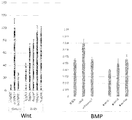
- the Wnt inhibitory activity of the Escherichia coli-derived recombinant human UASG-1 protein used as an antigen in the examples is shown.
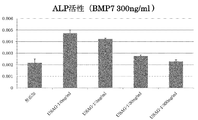
- the BMP inhibitory activity of the Escherichia coli-derived recombinant human UASG-1 protein used as an antigen in the examples is shown.
- the USAG-1KO mouse newly established using CRISPR-CAS9 is shown.
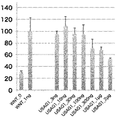
- the result of the primary screening of the anti-USAG-1 neutralizing antibody is shown.
- the result of the primary screening of the anti-USAG-1 neutralizing antibody is shown.
- the results of purification and concentration of mouse N-terminal PA-tagged USAG-1 (WISE) are shown. It shows a dose-dependent WNT signaling activity of mouse USAG-1 protein.
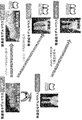
- FIG. 5 is a dental radiograph showing the effect of administration of USAG-1 neutralizing antibody on a dog with congenital dentinism.
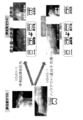
- 3 is a ⁇ CT image and a three-dimensional reconstructed image thereof showing induction of a third raw tooth of the third premolar of the mandible by administration of a USAG-1 neutralizing antibody in a ferret. It is a ⁇ CT image and its 3D reconstruction image which shows the induction of the 3rd raw tooth of the 3rd premolar part of the mandible by administration of USAG-1 neutralizing antibody in Sunkus.
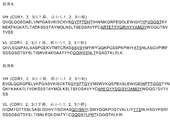
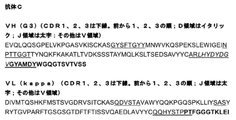
- the sequences of the heavy chain and light chain variable regions of antibody C are shown.
- the sequences of the heavy and light chain variable regions of antibodies D and E are shown.
- 3 is a ⁇ CT slice image and a three-dimensional reconstructed image thereof showing the induction of the third raw tooth of the maxillary anterior tooth part by administration of USAG-1 neutralizing antibody in a ferret. It is a three-dimensional reconstructed image prepared based on ⁇ CT data showing the induction of the third raw tooth of the mandibular premolar part by administration of USAG-1 neutralizing antibody in a ferret.
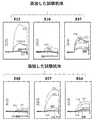
- the neutralizing activity of the antibody of the present invention with respect to the inhibitory activity of WNT signal and the inhibitory activity of BMP signal by mouse USAG-1 is shown.
- the results of a pull-down assay showing the interaction between the mouse anti-USAG-1 antibody and the mouse USAG-1 protein and the LRP6-E1E2 domain are shown.
- USAG-1 (Uterine Sensitization Associated Gene-1) is a bone morphogenetic protein (BMP) antagonist and Wnt antagonist, also called Sostdc-1, Ectodin, or Wise. It is known that in USAG-1 deficient model mice, increased BMP signaling is observed, leading to the formation of excess teeth.
- the inventors crossed a Runx2-deficient mouse, which is a congenital aneurysm model mouse, with a USAG-1 gene-deficient mouse, which is a model mouse for excess teeth (teeth existing in excess of the normal number of teeth), to obtain a double knockout mouse. When it was prepared and analyzed, it was found that tooth formation was restored. Therefore, it was suggested that inhibition of USAG-1 could treat anodontia.
- BMP bone morphogenetic protein
- an antibody was prepared using a human USAG-1 recombinant protein whose activity was confirmed as an antigen, and an antibody that specifically binds to USAG-1 was obtained. These antibodies were found to increase BMP signaling and / or Wnt signaling.
- one aspect of the present invention provides an antibody that specifically binds to and neutralizes USAG-1 and an antigen-binding fragment thereof, that is, an anti-USAG-1 neutralizing antibody and an antigen-binding fragment thereof.
- USAG-1 means mammalian USAG-1. Examples of the mammal include, but are not limited to, humans, dogs, cats, horses, mice, ferrets, sunkus, pigs, monkeys, and the like, and humans are preferable.
- neutralization means to inhibit the function of USAG-1.
- Functions of USAG-1 include, for example, BMP signaling inhibitory activity (also referred to as “BMP antagonist activity”) and Wnt signaling inhibitory activity (also referred to as “Wnt antagonist activity”).
- BMP antagonist activity also referred to as "BMP antagonist activity”
- Wnt antagonist activity also referred to as "Wnt antagonist activity”
- the antibody of the present application or an antigen-binding fragment thereof inhibits the BMP signaling inhibitory activity and / or the Wnt signaling inhibitory activity of USAG-1. Therefore, the antibody of the present application or an antigen-binding fragment thereof neutralizes either or both of the BMP signaling inhibitory activity of USAG-1 and the Wnt signaling inhibitory activity of USAG-1.
- an antibody or antigen fragment thereof that specifically binds to USAG-1 to neutralize the BMP signaling inhibitory activity of USAG-1 but does not neutralize the Wnt signaling inhibitory activity of USAG-1 is also an antibody of the present application or an antibody thereof. Included in the antigen binding fragment.
- inhibittion includes suppression and reduction.
- the neutralizing activity of the antibody or its antigen-binding fragment may be determined by a conventional method.
- the activity of neutralizing the BMP antagonist activity of USAG-1 (also referred to as "BMP antagonist neutralizing activity") can be measured in vitro by, for example, an ALP (alkaline phosphatase) assay or a reporter assay.
- ALP alkaline phosphatase
- osteoblast progenitor cells and the like are cultured in the presence of BMP by adding USAG-1 protein and antibody or an antigen-binding fragment thereof, and ALP generated when differentiation into osteoblasts is induced is measured. Do by doing.
- the activity of neutralizing the Wnt antagonist activity of USAG-1 can be measured in vitro by, for example, a reporter assay.
- a reporter assay for example, a vector in which a promoter region that reacts with BMP or Wnt is linked to a reporter gene such as luciferase is introduced into a cell, and the cell is introduced into a cell in the presence of BMP or Wnt to bind the USAG-1 protein and antibody or its antigen. This is done by adding the fragment, culturing, and measuring the expressed luciferase activity.
- the BMP antagonist activity neutralized by the anti-USAG-1 antibody of the present application and its antigen-binding fragment may be an antagonist activity against any BMP family.
- the anti-USAG-1 antibody of the present application and its antigen-binding fragment can neutralize antagonistic activity against BMP2, BMP4, BMP6, BMP7, etc., without limitation.
- the Wnt antagonist activity neutralized by the anti-USAG-1 antibody of the present application and its antigen-binding fragment may be an antagonist activity against any Wnt family.
- the anti-USAG-1 antibody of the present application and its antigen-binding fragment can neutralize antagonistic activity against Wnt-1, Wnt-3, etc., without limitation.
- the sequences of five of the obtained antibodies, antibody A, antibody B, antibody C, antibody D and antibody E, were determined and analyzed, and the variable regions and complementarity determining regions of each antibody were also determined. .. That is, the antibody A contains a heavy chain containing the amino acid sequence represented by SEQ ID NO: 1 and a light chain containing the amino acid sequence represented by SEQ ID NO: 2, and the heavy chains include SEQ ID NO: 5, SEQ ID NO: 6, and SEQ ID NO: 2.
- the light chain contains a heavy chain variable region (SEQ ID NO: 3) containing a heavy chain complementarity determination region containing the amino acid sequence set forth in SEQ ID NO: 7, and the light chain is the light chain represented by SEQ ID NO: 8, SEQ ID NO: 9, and SEQ ID NO: 10.
- Antibody B comprises a heavy chain comprising the amino acid sequence set forth in SEQ ID NO: 11 and a light chain comprising the amino acid sequence set forth in SEQ ID NO: 12, the heavy chains of which are SEQ ID NO: 15, SEQ ID NO: 16 and SEQ ID NO: 17.
- Antibody C comprises a heavy chain comprising the amino acid sequence set forth in SEQ ID NO: 21 and a light chain comprising the amino acid sequence set forth in SEQ ID NO: 22, the heavy chains of SEQ ID NO: 25, SEQ ID NO: 26, and SEQ ID NO: 27.
- Antibody D comprises a heavy chain comprising the amino acid sequence set forth in SEQ ID NO: 38 and a light chain comprising the amino acid sequence set forth in SEQ ID NO: 39, the heavy chains of which are SEQ ID NO: 42, SEQ ID NO: 43, and SEQ ID NO: 44.
- the antibody E comprises a heavy chain comprising the amino acid sequence set forth in SEQ ID NO: 48 and a light chain comprising the amino acid sequence set forth in SEQ ID NO: 49, the heavy chains of SEQ ID NO: 52, SEQ ID NO: 53, and SEQ ID NO: 54.
- a heavy chain variable region (SEQ ID NO: 50) containing the heavy chain complementarity determination region shown, wherein the light chain comprises the light chain complementarity determination region set forth in SEQ ID NO: 55, SEQ ID NO: 56, and SEQ ID NO: 57. Includes a light chain variable region (SEQ ID NO: 51).
- Antibody A, antibody B and antibody C have particularly BMP antagonist neutralizing activity.
- Antibody C has both BMP antagonist neutralizing activity and Wnt antagonist neutralizing activity in particular.
- Antibody D and antibody E in particular have Wnt antagonist neutralizing activity.
- antibody A, antibody B, antibody C, antibody D, and antibody E and variants thereof are provided as the antibody of the present application or an antigen-binding fragment thereof.
- an antibody that specifically binds to and neutralizes USAG-1 or an antigen-binding fragment thereof which is an amino acid represented by SEQ ID NO: 5, SEQ ID NO: 6, and SEQ ID NO: 7, respectively.
- amino acid sequences having at least 80%, 85%, 90%, 91%, 92%, 93%, 94%, 95%, 96%, 97%, 98%, or 99% sequence identity with the sequences 3 At least 80%, 85%, 90%, 91%, 92%, 93%, 94% with one heavy chain complementarity determining region or the amino acid sequences set forth in SEQ ID NO: 8, SEQ ID NO: 9, and SEQ ID NO: 10, respectively. , 95%, 96%, 97%, 98%, or 99% of an antibody or antigen binding fragment thereof comprising three light chain complementarity determining regions comprising an amino acid sequence having sequence identity.
- an antibody or antigen-binding fragment thereof that specifically binds and neutralizes USAG-1 contains three heavy chains containing the amino acid sequences set forth in SEQ ID NO: 5, SEQ ID NO: 6, and SEQ ID NO: 7, respectively.
- An antibody or antigen-binding fragment thereof comprising complementarity determining regions or three light chain complementarity determining regions containing the amino acid sequences set forth in SEQ ID NO: 8, SEQ ID NO: 9, and SEQ ID NO: 10, respectively, is provided. More preferably, the antibodies or antigen-binding fragments thereof that specifically bind and neutralize USAG-1s, at least 80% of the amino acid sequences set forth in SEQ ID NO: 5, SEQ ID NO: 6, and SEQ ID NO: 7, respectively.
- Three heavy chain complementarity determining of amino acid sequences with 85%, 90%, 91%, 92%, 93%, 94%, 95%, 96%, 97%, 98%, or 99% sequence identity. Regions or at least 80%, 85%, 90%, 91%, 92%, 93%, 94%, 95%, 96% with the amino acid sequences set forth in SEQ ID NO: 8, SEQ ID NO: 9, and SEQ ID NO: 10, respectively. , 97%, 98%, or 99% of the antibody or antigen-binding fragments thereof comprising three light chain complementarity determining regions consisting of amino acid sequences having sequence identity.
- it is an antibody or antigen-binding fragment thereof that specifically binds to and neutralizes USAG-1, and consists of three amino acid sequences represented by SEQ ID NO: 5, SEQ ID NO: 6, and SEQ ID NO: 7, respectively.
- An antibody or antigen-binding fragment thereof comprising a heavy chain complementarity determining region or three light chain complementarity determining regions consisting of the amino acid sequences set forth in SEQ ID NO: 8, SEQ ID NO: 9, and SEQ ID NO: 10, respectively, is provided. ..
- antibody A or variants thereof are antibodies that specifically bind and neutralize USAG-1 or antigen-binding fragments thereof, set forth in SEQ ID NO: 5, SEQ ID NO: 6, and SEQ ID NO: 7, respectively.
- An antibody or antigen-binding fragment thereof is provided in which one or more amino acid residues are substituted, deleted, inserted or added.
- it is an antibody or an antigen-binding fragment thereof that specifically binds to and neutralizes USAG-1, and is a three heavy chain consisting of the amino acid sequences represented by SEQ ID NO: 5, SEQ ID NO: 6, and SEQ ID NO: 7, respectively.
- An antibody or antigen-binding fragment thereof, in which an amino acid residue is substituted, deleted, inserted or added, is provided.
- a further example of antibody A or a variant thereof is an antibody or antigen-binding fragment thereof that specifically binds to and neutralizes USAG-1, at least 80%, 85%, and the amino acid sequence set forth in SEQ ID NO: 3.
- An antibody having at least 80%, 85%, 90%, 91%, 92%, 93%, 94%, 95%, 96%, 97%, 98%, or 99% sequence identity with the amino acid sequence shown in An antibody or antigen-binding fragment thereof comprising a light chain variable region containing a sequence is provided.
- it is an antibody or an antigen-binding fragment thereof that specifically binds to and neutralizes USAG-1, a heavy chain variable region containing the amino acid sequence shown in SEQ ID NO: 3, or an amino acid represented by SEQ ID NO: 4.
- An antibody or antigen-binding fragment thereof comprising a light chain variable region containing a sequence is provided. More preferably, it is an antibody or an antigen-binding fragment thereof that specifically binds to and neutralizes USAG-1, and is at least 80%, 85%, 90%, 91%, 92 with the amino acid sequence shown in SEQ ID NO: 3.
- An antibody or an antigen-binding fragment thereof comprising. Even more preferably, it is an antibody or an antigen-binding fragment thereof that specifically binds to and neutralizes USAG-1, and is represented by a heavy chain variable region consisting of the amino acid sequence shown in SEQ ID NO: 3 or SEQ ID NO: 4.
- An antibody or antigen-binding fragment thereof comprising a light chain variable region consisting of an amino acid sequence is provided.
- an antibody that specifically binds to and neutralizes USAG-1 or an antigen-binding fragment thereof which is a heavy chain variable region containing the amino acid sequence shown in SEQ ID NO: 3, or ,
- An antibody or antigen-binding fragment thereof comprising a light chain variable region comprising the amino acid sequence set forth in SEQ ID NO: 4 and having one to several amino acid residues substituted, deleted, inserted or added in the above amino acid sequence.
- it is an antibody or an antigen-binding fragment thereof that specifically binds to and neutralizes USAG-1, and is a heavy chain variable region consisting of the amino acid sequence shown in SEQ ID NO: 3 or an amino acid represented by SEQ ID NO: 4.
- an antibody or antigen-binding fragment thereof which comprises a light chain variable region consisting of a sequence and in which one to several amino acid residues are substituted, deleted, inserted or added in the above amino acid sequence.
- antibody A or variants thereof are antibodies that specifically bind and neutralize USAG-1 or antigen-binding fragments thereof, set forth in SEQ ID NO: 5, SEQ ID NO: 6, and SEQ ID NO: 7, respectively.
- an antibody or antigen binding fragment thereof comprising three light chain complementarity determining regions comprising an amino acid sequence having sequence identity.
- an antibody or antigen-binding fragment thereof that specifically binds and neutralizes USAG-1 and contains three heavy chains containing the amino acid sequences set forth in SEQ ID NO: 5, SEQ ID NO: 6, and SEQ ID NO: 7, respectively.
- An antibody or antigen-binding fragment thereof comprising complementarity determining regions and three light chain complementarity determining regions containing the amino acid sequences set forth in SEQ ID NO: 8, SEQ ID NO: 9, and SEQ ID NO: 10, respectively, is provided.
- the antibodies or antigen-binding fragments thereof that specifically bind and neutralize USAG-1s at least 80% of the amino acid sequences set forth in SEQ ID NO: 5, SEQ ID NO: 6, and SEQ ID NO: 7, respectively.
- An antibody or antigen-binding fragment thereof comprising three light chain complementarity determining regions consisting of an amino acid sequence having 97%, 98%, or 99% sequence identity is provided. Even more preferably, it is an antibody or antigen-binding fragment thereof that specifically binds to and neutralizes USAG-1, and consists of three amino acid sequences represented by SEQ ID NO: 5, SEQ ID NO: 6, and SEQ ID NO: 7, respectively.
- An antibody or antigen binding fragment thereof comprising a heavy chain complementarity determining region and three light chain complementarity determining regions consisting of the amino acid sequences set forth in SEQ ID NO: 8, SEQ ID NO: 9, and SEQ ID NO: 10, respectively, is provided.
- antibody A or variants thereof are antibodies that specifically bind and neutralize USAG-1 or antigen-binding fragments thereof, set forth in SEQ ID NO: 5, SEQ ID NO: 6, and SEQ ID NO: 7, respectively.
- One of the above amino acid sequences which comprises three heavy chain complementarity determining regions containing an amino acid sequence and three light chain complementarity determining regions containing the amino acid sequences set forth in SEQ ID NO: 8, SEQ ID NO: 9 and SEQ ID NO: 10, respectively.
- the above provides an antibody or an antigen-binding fragment thereof in which one to several amino acid residues are substituted, deleted, inserted or added.
- it is an antibody or an antigen-binding fragment thereof that specifically binds to and neutralizes USAG-1, and is a three heavy chain consisting of the amino acid sequences represented by SEQ ID NO: 5, SEQ ID NO: 6, and SEQ ID NO: 7, respectively.
- Complementarity determining regions and three light chain complementarity determining regions consisting of the amino acid sequences set forth in SEQ ID NO: 8, SEQ ID NO: 9, and SEQ ID NO: 10, respectively, and one to several amino acids in one or more of the above amino acid sequences.
- An antibody or antigen-binding fragment thereof, in which residues are substituted, deleted, inserted or added, is provided.
- a further example of antibody A or a variant thereof is an antibody or antigen-binding fragment thereof that specifically binds to and neutralizes USAG-1, at least 80%, 85%, and the amino acid sequence set forth in SEQ ID NO: 3.
- a heavy chain variable region containing an amino acid sequence having 90%, 91%, 92%, 93%, 94%, 95%, 96%, 97%, 98%, or 99% sequence identity, and in SEQ ID NO: 4.
- An antibody or antigen-binding fragment thereof comprising a light chain variable region comprising.
- it is an antibody or an antigen-binding fragment thereof that specifically binds to and neutralizes USAG-1, a heavy chain variable region containing the amino acid sequence shown in SEQ ID NO: 3, and the amino acid sequence shown in SEQ ID NO: 4.
- An antibody or antigen-binding fragment thereof comprising a light chain variable region comprising. More preferably, it is an antibody or an antigen-binding fragment thereof that specifically binds to and neutralizes USAG-1, and is at least 80%, 85%, 90%, 91%, 92 with the amino acid sequence shown in SEQ ID NO: 3.
- An antibody or antigen-binding fragment thereof, which comprises, is provided. Even more preferably, an antibody or an antigen-binding fragment thereof that specifically binds to and neutralizes USAG-1 and is represented by a heavy chain variable region consisting of the amino acid sequence shown in SEQ ID NO: 3 and SEQ ID NO: 4. An antibody or antigen-binding fragment thereof comprising a light chain variable region consisting of an amino acid sequence is provided.
- an antibody or antigen-binding fragment thereof that specifically binds to and neutralizes USAG-1 and contains a heavy chain variable region containing the amino acid sequence shown in SEQ ID NO: 3 and a heavy chain variable region.
- An antibody or antigen-binding thereof comprising a light chain variable region containing the amino acid sequence shown in SEQ ID NO: 4 and having one or more amino acid residues substituted, deleted, inserted or added in one or more of the above amino acid sequences. Fragments are provided.
- an antibody or an antigen-binding fragment thereof that specifically binds to and neutralizes USAG-1, a heavy chain variable region consisting of the amino acid sequence shown in SEQ ID NO: 3, and an amino acid sequence shown in SEQ ID NO: 4.
- an antibody or antigen-binding fragment thereof comprising a light chain variable region consisting of one or more of the above amino acid sequences in which one to several amino acid residues are substituted, deleted, inserted or added.
- an antibody that specifically binds to and neutralizes USAG-1 or an antigen-binding fragment thereof which is an amino acid represented by SEQ ID NO: 15, SEQ ID NO: 16, and SEQ ID NO: 17, respectively.
- an antibody or antigen binding fragment thereof comprising three light chain complementarity determining regions comprising an amino acid sequence having sequence identity.
- an antibody or antigen-binding fragment thereof that specifically binds to and neutralizes USAG-1 and contains three heavy chains containing the amino acid sequences set forth in SEQ ID NO: 15, SEQ ID NO: 16, and SEQ ID NO: 17, respectively.
- An antibody or antigen-binding fragment thereof comprising complementarity determining regions or three light chain complementarity determining regions containing the amino acid sequences set forth in SEQ ID NO: 18, SEQ ID NO: 19, and SEQ ID NO: 20, respectively, is provided.
- the antibodies or antigen-binding fragments thereof that specifically bind and neutralize USAG-1s at least 80% of the amino acid sequences set forth in SEQ ID NO: 15, SEQ ID NO: 16 and SEQ ID NO: 17, respectively.
- an antibody or antigen-binding fragment thereof comprising three light chain complementarity determining regions consisting of amino acid sequences having sequence identity.
- an antibody or antigen-binding fragment thereof that specifically binds to and neutralizes USAG-1 consists of three amino acid sequences represented by SEQ ID NO: 15, SEQ ID NO: 16, and SEQ ID NO: 17, respectively.
- An antibody or antigen binding fragment thereof comprising a heavy chain complementarity determining region or three light chain complementarity determining regions consisting of the amino acid sequences set forth in SEQ ID NO: 18, SEQ ID NO: 19, and SEQ ID NO: 20, respectively, is provided. ..
- antibody B or variants thereof are antibodies that specifically bind and neutralize USAG-1 or antigen-binding fragments thereof, set forth in SEQ ID NO: 15, SEQ ID NO: 16, and SEQ ID NO: 17, respectively.
- An antibody or antigen-binding fragment thereof is provided in which one or more amino acid residues are substituted, deleted, inserted or added.
- it is an antibody or an antigen-binding fragment thereof that specifically binds to and neutralizes USAG-1, and is a three heavy chain consisting of the amino acid sequences shown by SEQ ID NO: 15, SEQ ID NO: 16, and SEQ ID NO: 17, respectively.
- Complementarity determining regions or three light chain complementarity determining regions consisting of the amino acid sequences set forth in SEQ ID NO: 18, SEQ ID NO: 19, and SEQ ID NO: 20, respectively, and one to several in one or more of the above amino acid sequences.
- An antibody or antigen-binding fragment thereof, in which an amino acid residue is substituted, deleted, inserted or added, is provided.
- an antibody or antigen-binding fragment thereof that specifically binds to and neutralizes USAG-1 at least 80%, 85%, and the amino acid sequence set forth in SEQ ID NO: 13.
- An antibody having at least 80%, 85%, 90%, 91%, 92%, 93%, 94%, 95%, 96%, 97%, 98%, or 99% sequence identity with the amino acid sequence shown in An antibody or antigen-binding fragment thereof comprising a light chain variable region containing a sequence is provided.
- it is an antibody or an antigen-binding fragment thereof that specifically binds to and neutralizes USAG-1, a heavy chain variable region containing the amino acid sequence shown in SEQ ID NO: 13, or an amino acid represented by SEQ ID NO: 14.
- An antibody or antigen-binding fragment thereof comprising a light chain variable region containing a sequence is provided. More preferably, it is an antibody or antigen-binding fragment thereof that specifically binds to and neutralizes USAG-1 and is at least 80%, 85%, 90%, 91%, 92 with the amino acid sequence shown in SEQ ID NO: 13.
- a heavy chain variable region consisting of an amino acid sequence having%, 93%, 94%, 95%, 96%, 97%, 98%, or 99% sequence identity, or at least the amino acid sequence shown in SEQ ID NO: 14.
- a light chain variable region consisting of an amino acid sequence having 80%, 85%, 90%, 91%, 92%, 93%, 94%, 95%, 96%, 97%, 98%, or 99% sequence identity.
- An antibody or an antigen-binding fragment thereof comprising. Even more preferably, it is an antibody or an antigen-binding fragment thereof that specifically binds to and neutralizes USAG-1, and is represented by a heavy chain variable region consisting of the amino acid sequence shown in SEQ ID NO: 13 or SEQ ID NO: 14.
- An antibody or antigen-binding fragment thereof comprising a light chain variable region consisting of an amino acid sequence is provided.
- an antibody that specifically binds to and neutralizes USAG-1 or an antigen-binding fragment thereof which is a heavy chain variable region containing the amino acid sequence shown in SEQ ID NO: 13 or
- An antibody or antigen-binding fragment thereof comprising a light chain variable region comprising the amino acid sequence set forth in SEQ ID NO: 14, with one to several amino acid residues substituted, deleted, inserted or added in the above amino acid sequence.
- it is an antibody or an antigen-binding fragment thereof that specifically binds to and neutralizes USAG-1, and is a heavy chain variable region consisting of the amino acid sequence shown in SEQ ID NO: 13 or an amino acid represented by SEQ ID NO: 14.
- an antibody or antigen-binding fragment thereof which comprises a light chain variable region consisting of a sequence and in which one to several amino acid residues are substituted, deleted, inserted or added in the above amino acid sequence.
- antibody B or variants thereof are antibodies that specifically bind and neutralize USAG-1 or antigen-binding fragments thereof, set forth in SEQ ID NO: 15, SEQ ID NO: 16, and SEQ ID NO: 17, respectively.
- an antibody or antigen binding fragment thereof comprising three light chain complementarity determining regions comprising an amino acid sequence having sequence identity.
- an antibody or antigen-binding fragment thereof that specifically binds to and neutralizes USAG-1 and contains three heavy chains containing the amino acid sequences set forth in SEQ ID NO: 15, SEQ ID NO: 16, and SEQ ID NO: 17, respectively.
- An antibody or antigen binding fragment thereof is provided that comprises complementarity determining regions and three light chain complementarity determining regions, each containing the amino acid sequences set forth in SEQ ID NO: 18, SEQ ID NO: 19, and SEQ ID NO: 20.
- the antibodies or antigen-binding fragments thereof that specifically bind and neutralize USAG-1s at least 80% of the amino acid sequences set forth in SEQ ID NO: 15, SEQ ID NO: 16 and SEQ ID NO: 17, respectively.
- An antibody or antigen-binding fragment thereof comprising three light chain complementarity determining regions consisting of an amino acid sequence having 97%, 98%, or 99% sequence identity is provided. Even more preferably, an antibody or antigen-binding fragment thereof that specifically binds to and neutralizes USAG-1 and consists of three amino acid sequences represented by SEQ ID NO: 15, SEQ ID NO: 16, and SEQ ID NO: 17, respectively. An antibody or antigen binding fragment thereof comprising a heavy chain complementarity determining region and three light chain complementarity determining regions consisting of the amino acid sequences set forth in SEQ ID NO: 18, SEQ ID NO: 19, and SEQ ID NO: 20, respectively, is provided.
- antibody B or variants thereof are antibodies that specifically bind and neutralize USAG-1 or antigen-binding fragments thereof, set forth in SEQ ID NO: 15, SEQ ID NO: 16, and SEQ ID NO: 17, respectively.
- One of the above amino acid sequences which comprises three heavy chain complementarity determining regions containing an amino acid sequence and three light chain complementarity determining regions containing the amino acid sequences set forth in SEQ ID NO: 18, SEQ ID NO: 19 and SEQ ID NO: 20, respectively.
- the above provides an antibody or an antigen-binding fragment thereof in which one to several amino acid residues are substituted, deleted, inserted or added.
- it is an antibody or an antigen-binding fragment thereof that specifically binds to and neutralizes USAG-1, and is a three heavy chain consisting of the amino acid sequences shown by SEQ ID NO: 15, SEQ ID NO: 16, and SEQ ID NO: 17, respectively.
- Complementarity determining regions and three light chain complementarity determining regions consisting of the amino acid sequences set forth in SEQ ID NO: 18, SEQ ID NO: 19, and SEQ ID NO: 20, respectively, and one to several amino acids in one or more of the above amino acid sequences.
- An antibody or antigen-binding fragment thereof, in which residues are substituted, deleted, inserted or added, is provided.
- an antibody or antigen-binding fragment thereof that specifically binds to and neutralizes USAG-1 at least 80%, 85%, and the amino acid sequence shown in SEQ ID NO: 13.
- a heavy chain variable region containing an amino acid sequence having 90%, 91%, 92%, 93%, 94%, 95%, 96%, 97%, 98%, or 99% sequence identity, and SEQ ID NO: 14.
- An antibody or antigen-binding fragment thereof comprising a light chain variable region comprising.
- it is an antibody or antigen-binding fragment thereof that specifically binds to and neutralizes USAG-1, a heavy chain variable region containing the amino acid sequence shown in SEQ ID NO: 13, and the amino acid sequence shown in SEQ ID NO: 14.
- An antibody or antigen-binding fragment thereof comprising a light chain variable region comprising. More preferably, it is an antibody or antigen-binding fragment thereof that specifically binds to and neutralizes USAG-1 and is at least 80%, 85%, 90%, 91%, 92 with the amino acid sequence shown in SEQ ID NO: 13.
- An antibody or antigen-binding fragment thereof, which comprises, is provided. Even more preferably, an antibody or an antigen-binding fragment thereof that specifically binds to and neutralizes USAG-1 and is represented by a heavy chain variable region consisting of the amino acid sequence shown in SEQ ID NO: 13 and SEQ ID NO: 14. An antibody or antigen-binding fragment thereof comprising a light chain variable region consisting of an amino acid sequence is provided.
- an antibody or antigen-binding fragment thereof that specifically binds to and neutralizes USAG-1 and contains a heavy chain variable region containing the amino acid sequence shown in SEQ ID NO: 13 and a heavy chain variable region.
- An antibody or antigen binding thereof comprising a light chain variable region comprising the amino acid sequence set forth in SEQ ID NO: 14 and having one or more amino acid residues substituted, deleted, inserted or added in one or more of the above amino acid sequences. Fragments are provided.
- an antibody or an antigen-binding fragment thereof that specifically binds to and neutralizes USAG-1, a heavy chain variable region consisting of the amino acid sequence shown in SEQ ID NO: 13, and an amino acid sequence shown in SEQ ID NO: 14.
- an antibody or antigen-binding fragment thereof comprising a light chain variable region consisting of one or more of the above amino acid sequences in which one to several amino acid residues are substituted, deleted, inserted or added.
- an antibody that specifically binds to and neutralizes USAG-1 or an antigen-binding fragment thereof which is an amino acid represented by SEQ ID NO: 25, SEQ ID NO: 26, and SEQ ID NO: 27, respectively.
- an antibody or antigen-binding fragment thereof comprising three light chain complementarity determining regions comprising an amino acid sequence having sequence identity.
- an antibody or antigen-binding fragment thereof that specifically binds and neutralizes USAG-1 and contains three heavy chains containing the amino acid sequences set forth in SEQ ID NO: 25, SEQ ID NO: 26, and SEQ ID NO: 27, respectively.
- An antibody or antigen binding fragment thereof comprising the complementarity determining regions or three light chain complementarity determining regions containing the amino acid sequences set forth in SEQ ID NO: 28, SEQ ID NO: 29, and SEQ ID NO: 30, respectively, is provided.
- the antibodies or antigen-binding fragments thereof that specifically bind and neutralize USAG-1s at least 80% of the amino acid sequences set forth in SEQ ID NO: 25, SEQ ID NO: 26, and SEQ ID NO: 27, respectively.
- the antibody or antigen-binding fragments thereof comprising three light chain complementarity determining regions consisting of amino acid sequences having sequence identity. Even more preferably, it is an antibody or antigen-binding fragment thereof that specifically binds to and neutralizes USAG-1, and consists of three amino acid sequences represented by SEQ ID NO: 25, SEQ ID NO: 26, and SEQ ID NO: 27, respectively.
- An antibody or antigen binding fragment thereof comprising a heavy chain complementarity determining region or three light chain complementarity determining regions consisting of the amino acid sequences set forth in SEQ ID NO: 28, SEQ ID NO: 29, and SEQ ID NO: 30, respectively, is provided. ..
- antibody C or variants thereof are antibodies that specifically bind and neutralize USAG-1 or antigen-binding fragments thereof, set forth in SEQ ID NO: 25, SEQ ID NO: 26, and SEQ ID NO: 27, respectively.
- An antibody or antigen-binding fragment thereof is provided in which one or more amino acid residues are substituted, deleted, inserted or added.
- it is an antibody or antigen-binding fragment thereof that specifically binds to and neutralizes USAG-1, and is a three heavy chain consisting of the amino acid sequences shown by SEQ ID NO: 25, SEQ ID NO: 26, and SEQ ID NO: 27, respectively.
- Complementarity determining regions or three light chain complementarity determining regions consisting of the amino acid sequences set forth in SEQ ID NO: 28, SEQ ID NO: 29, and SEQ ID NO: 30, respectively, and one to several in one or more of the above amino acid sequences.
- An antibody or antigen-binding fragment thereof, in which an amino acid residue is substituted, deleted, inserted or added, is provided.
- an antibody or antigen-binding fragment thereof that specifically binds to and neutralizes USAG-1 at least 80%, 85%, and the amino acid sequence set forth in SEQ ID NO: 23.
- An antibody having at least 80%, 85%, 90%, 91%, 92%, 93%, 94%, 95%, 96%, 97%, 98%, or 99% sequence identity with the amino acid sequence shown in An antibody or antigen-binding fragment thereof comprising a light chain variable region containing a sequence is provided.
- it is an antibody or an antigen-binding fragment thereof that specifically binds to and neutralizes USAG-1, a heavy chain variable region containing the amino acid sequence shown in SEQ ID NO: 23, or an amino acid represented by SEQ ID NO: 24.
- An antibody or antigen-binding fragment thereof comprising a light chain variable region containing a sequence is provided. More preferably, it is an antibody or antigen-binding fragment thereof that specifically binds to and neutralizes USAG-1 and is at least 80%, 85%, 90%, 91%, 92 with the amino acid sequence shown in SEQ ID NO: 23.
- An antibody or antigen-binding fragment thereof comprising a light chain variable region consisting of an amino acid sequence is provided.
- an antibody or antigen-binding fragment thereof that specifically binds to and neutralizes USAG-1 and contains a heavy chain variable region containing the amino acid sequence shown in SEQ ID NO: 23, or a heavy chain variable region thereof.
- An antibody or antigen-binding fragment thereof comprising a light chain variable region comprising the amino acid sequence set forth in SEQ ID NO: 24, wherein one to several amino acid residues have been substituted, deleted, inserted or added in the above amino acid sequence.
- an antibody or an antigen-binding fragment thereof that specifically binds to and neutralizes USAG-1, and is a heavy chain variable region consisting of the amino acid sequence shown in SEQ ID NO: 23, or the amino acid represented by SEQ ID NO: 24.
- an antibody or antigen-binding fragment thereof which comprises a light chain variable region consisting of a sequence and in which one to several amino acid residues are substituted, deleted, inserted or added in the above amino acid sequence.
- antibody C or variants thereof are antibodies or antigen-binding fragments thereof that specifically bind and neutralize USAG-1s, set forth in SEQ ID NO: 25, SEQ ID NO: 26, and SEQ ID NO: 27, respectively.
- an antibody or antigen-binding fragment thereof comprising three light chain complementarity determining regions comprising an amino acid sequence having sequence identity.
- an antibody or antigen-binding fragment thereof that specifically binds and neutralizes USAG-1 and contains three heavy chains containing the amino acid sequences set forth in SEQ ID NO: 25, SEQ ID NO: 26, and SEQ ID NO: 27, respectively.
- An antibody or antigen-binding fragment thereof comprising a complementarity determining region and three light chain complementarity determining regions containing the amino acid sequences set forth in SEQ ID NO: 28, SEQ ID NO: 29, and SEQ ID NO: 30, respectively, is provided.
- the antibodies or antigen-binding fragments thereof that specifically bind and neutralize USAG-1s at least 80% of the amino acid sequences set forth in SEQ ID NO: 25, SEQ ID NO: 26, and SEQ ID NO: 27, respectively.
- An antibody or antigen-binding fragment thereof comprising three light chain complementarity determining regions consisting of an amino acid sequence having 97%, 98%, or 99% sequence identity is provided. Even more preferably, it is an antibody or antigen-binding fragment thereof that specifically binds to and neutralizes USAG-1, and consists of three amino acid sequences represented by SEQ ID NO: 25, SEQ ID NO: 26, and SEQ ID NO: 27, respectively.
- An antibody or antigen binding fragment thereof comprising a heavy chain complementarity determining region and three light chain complementarity determining regions consisting of the amino acid sequences set forth in SEQ ID NO: 28, SEQ ID NO: 29, and SEQ ID NO: 30, respectively, is provided.
- an antibody that specifically binds and neutralizes USAG-1 or an antigen-binding fragment thereof set forth in SEQ ID NO: 25, SEQ ID NO: 26, and SEQ ID NO: 27, respectively.
- One of the above amino acid sequences which comprises three heavy chain complementarity determining regions containing an amino acid sequence and three light chain complementarity determining regions containing the amino acid sequences set forth in SEQ ID NO: 28, SEQ ID NO: 29, and SEQ ID NO: 30, respectively.
- the above provides an antibody or an antigen-binding fragment thereof in which one to several amino acid residues are substituted, deleted, inserted or added.
- it is an antibody or an antigen-binding fragment thereof that specifically binds to and neutralizes USAG-1, and is a three heavy chain consisting of the amino acid sequences represented by SEQ ID NO: 25, SEQ ID NO: 26, and SEQ ID NO: 27, respectively.
- Complementarity determining regions and three light chain complementarity determining regions consisting of the amino acid sequences set forth in SEQ ID NO: 28, SEQ ID NO: 29, and SEQ ID NO: 30, respectively, and one to several amino acids in one or more of the above amino acid sequences.
- An antibody or antigen-binding fragment thereof, in which residues are substituted, deleted, inserted or added, is provided.
- an antibody or antigen-binding fragment thereof that specifically binds to and neutralizes USAG-1 at least 80%, 85%, and the amino acid sequence set forth in SEQ ID NO: 23.
- a heavy chain variable region containing an amino acid sequence having 90%, 91%, 92%, 93%, 94%, 95%, 96%, 97%, 98%, or 99% sequence identity, and in SEQ ID NO: 24.
- An antibody or antigen-binding fragment thereof comprising a light chain variable region comprising.
- it is an antibody or antigen-binding fragment thereof that specifically binds to and neutralizes USAG-1, a heavy chain variable region containing the amino acid sequence shown in SEQ ID NO: 23, and the amino acid sequence shown in SEQ ID NO: 24.
- An antibody or antigen-binding fragment thereof comprising a light chain variable region comprising. More preferably, it is an antibody or antigen-binding fragment thereof that specifically binds to and neutralizes USAG-1 and is at least 80%, 85%, 90%, 91%, 92 with the amino acid sequence shown in SEQ ID NO: 23.
- An antibody or antigen-binding fragment thereof, which comprises, is provided. Even more preferably, it is an antibody or an antigen-binding fragment thereof that specifically binds to and neutralizes USAG-1, and is represented by a heavy chain variable region consisting of the amino acid sequence shown in SEQ ID NO: 23, and SEQ ID NO: 24.
- An antibody or antigen-binding fragment thereof comprising a light chain variable region consisting of an amino acid sequence is provided.
- antibody C or a variant thereof an antibody or antigen-binding fragment thereof that specifically binds to and neutralizes USAG-1, a heavy chain variable region containing the amino acid sequence set forth in SEQ ID NO: 23, and a heavy chain variable region thereof.
- An antibody or antigen binding thereof comprising a light chain variable region comprising the amino acid sequence set forth in SEQ ID NO: 24, with one or more amino acid residues substituted, deleted, inserted or added in one or more of the above amino acid sequences. Fragments are provided.
- an antibody or an antigen-binding fragment thereof that specifically binds to and neutralizes USAG-1, a heavy chain variable region consisting of the amino acid sequence shown in SEQ ID NO: 23, and the amino acid sequence shown in SEQ ID NO: 24.
- an antibody or antigen-binding fragment thereof comprising a light chain variable region consisting of one or more of the above amino acid sequences in which one to several amino acid residues are substituted, deleted, inserted or added.
- an antibody that specifically binds to and neutralizes USAG-1 or an antigen-binding fragment thereof which is an amino acid represented by SEQ ID NO: 42, SEQ ID NO: 43, and SEQ ID NO: 44, respectively.
- an antibody or antigen binding fragment thereof comprising three light chain complementarity determining regions comprising an amino acid sequence having sequence identity.
- an antibody or antigen-binding fragment thereof that specifically binds and neutralizes USAG-1 and contains three heavy chains containing the amino acid sequences set forth in SEQ ID NO: 42, SEQ ID NO: 43, and SEQ ID NO: 44, respectively.
- An antibody or antigen-binding fragment thereof comprising complementarity determining regions or three light chain complementarity determining regions containing the amino acid sequences set forth in SEQ ID NO: 45, SEQ ID NO: 46, and SEQ ID NO: 47, respectively, is provided.
- the antibodies or antigen-binding fragments thereof that specifically bind and neutralize USAG-1s at least 80% of the amino acid sequences set forth in SEQ ID NO: 42, SEQ ID NO: 43, and SEQ ID NO: 44, respectively.
- the antibody or antigen-binding fragments thereof comprising three light chain complementarity determining regions consisting of amino acid sequences having sequence identity. Even more preferably, it is an antibody or antigen-binding fragment thereof that specifically binds to and neutralizes USAG-1, and consists of three amino acid sequences represented by SEQ ID NO: 42, SEQ ID NO: 43, and SEQ ID NO: 44, respectively.
- An antibody or antigen-binding fragment thereof comprising a heavy chain complementarity determining region or three light chain complementarity determining regions consisting of the amino acid sequences set forth in SEQ ID NO: 45, SEQ ID NO: 46, and SEQ ID NO: 47, respectively. ..
- antibody D or variants thereof are antibodies that specifically bind and neutralize USAG-1 or antigen-binding fragments thereof, set forth in SEQ ID NO: 42, SEQ ID NO: 43, and SEQ ID NO: 44, respectively.
- An antibody or antigen-binding fragment thereof is provided in which one or more amino acid residues are substituted, deleted, inserted or added.
- it is an antibody or antigen-binding fragment thereof that specifically binds to and neutralizes USAG-1, and is a three heavy chain consisting of the amino acid sequences shown by SEQ ID NO: 42, SEQ ID NO: 43, and SEQ ID NO: 44, respectively.
- Complementarity determining regions or three light chain complementarity determining regions consisting of the amino acid sequences set forth in SEQ ID NO: 45, SEQ ID NO: 46, and SEQ ID NO: 47, respectively, and one to several in one or more of the above amino acid sequences.
- An antibody or antigen-binding fragment thereof, in which an amino acid residue is substituted, deleted, inserted or added, is provided.
- an antibody or antigen-binding fragment thereof that specifically binds to and neutralizes USAG-1 at least 80%, 85%, and the amino acid sequence set forth in SEQ ID NO: 40.
- An antibody having at least 80%, 85%, 90%, 91%, 92%, 93%, 94%, 95%, 96%, 97%, 98%, or 99% sequence identity with the amino acid sequence shown in An antibody or antigen-binding fragment thereof comprising a light chain variable region containing a sequence is provided.
- it is an antibody or an antigen-binding fragment thereof that specifically binds to and neutralizes USAG-1, a heavy chain variable region containing the amino acid sequence shown in SEQ ID NO: 40, or an amino acid represented by SEQ ID NO: 41.
- An antibody or antigen-binding fragment thereof comprising a light chain variable region containing a sequence is provided. More preferably, it is an antibody or antigen-binding fragment thereof that specifically binds to and neutralizes USAG-1 and is at least 80%, 85%, 90%, 91%, 92 with the amino acid sequence shown in SEQ ID NO: 40.
- An antibody or antigen-binding fragment thereof comprising a light chain variable region consisting of an amino acid sequence is provided.
- an antibody that specifically binds to and neutralizes USAG-1 or an antigen-binding fragment thereof which is a heavy chain variable region containing the amino acid sequence shown in SEQ ID NO: 40, or a heavy chain variable region thereof.
- An antibody or antigen thereof comprising a light chain variable region comprising the amino acid sequence set forth in SEQ ID NO: 41, with one or more amino acid residues substituted, deleted, inserted or added in one or more of the above amino acid sequences.
- a binding fragment is provided.
- an antibody or an antigen-binding fragment thereof that specifically binds to and neutralizes USAG-1, and is a heavy chain variable region consisting of the amino acid sequence shown in SEQ ID NO: 40, or an amino acid represented by SEQ ID NO: 41.
- an antibody or antigen-binding fragment thereof which comprises a light chain variable region consisting of a sequence and in which one to several amino acid residues are substituted, deleted, inserted or added in one or more of the above amino acid sequences.
- antibody D or variants thereof are antibodies that specifically bind and neutralize USAG-1 or antigen-binding fragments thereof, set forth in SEQ ID NO: 42, SEQ ID NO: 43, and SEQ ID NO: 44, respectively.
- an antibody or antigen binding fragment thereof comprising three light chain complementarity determining regions comprising an amino acid sequence having sequence identity.
- an antibody or antigen-binding fragment thereof that specifically binds to and neutralizes USAG-1 and contains three heavy chains containing the amino acid sequences set forth in SEQ ID NO: 42, SEQ ID NO: 43, and SEQ ID NO: 44, respectively.
- An antibody or antigen-binding fragment thereof comprising a complementarity determining region and three light chain complementarity determining regions containing the amino acid sequences set forth in SEQ ID NO: 45, SEQ ID NO: 46, and SEQ ID NO: 47, respectively, is provided.
- the antibodies or antigen-binding fragments thereof that specifically bind and neutralize USAG-1s at least 80% of the amino acid sequences set forth in SEQ ID NO: 42, SEQ ID NO: 43, and SEQ ID NO: 44, respectively.
- An antibody or antigen-binding fragment thereof comprising three light chain complementarity determining regions consisting of an amino acid sequence having 97%, 98%, or 99% sequence identity is provided. Even more preferably, it is an antibody or antigen-binding fragment thereof that specifically binds to and neutralizes USAG-1, and consists of three amino acid sequences represented by SEQ ID NO: 42, SEQ ID NO: 43, and SEQ ID NO: 44, respectively.
- An antibody or antigen binding fragment thereof comprising a heavy chain complementarity determining region and three light chain complementarity determining regions consisting of the amino acid sequences set forth in SEQ ID NO: 45, SEQ ID NO: 46, and SEQ ID NO: 47, respectively, is provided.
- antibody D or variants thereof are antibodies that specifically bind and neutralize USAG-1 or antigen-binding fragments thereof, set forth in SEQ ID NO: 42, SEQ ID NO: 43, and SEQ ID NO: 44, respectively.
- One of the above amino acid sequences comprising three heavy chain complementarity determining regions containing the amino acid sequence and three light chain complementarity determining regions containing the amino acid sequences set forth in SEQ ID NO: 45, SEQ ID NO: 46, and SEQ ID NO: 47, respectively.
- the above provides an antibody or an antigen-binding fragment thereof in which one to several amino acid residues are substituted, deleted, inserted or added.
- it is an antibody or antigen-binding fragment thereof that specifically binds to and neutralizes USAG-1, and is a three heavy chain consisting of the amino acid sequences shown by SEQ ID NO: 42, SEQ ID NO: 43, and SEQ ID NO: 44, respectively.
- Complementarity determining regions and three light chain complementarity determining regions consisting of the amino acid sequences set forth in SEQ ID NO: 45, SEQ ID NO: 46, and SEQ ID NO: 47, respectively, and one to several amino acids in one or more of the above amino acid sequences.
- An antibody or antigen-binding fragment thereof, in which residues are substituted, deleted, inserted or added, is provided.
- an antibody or antigen-binding fragment thereof that specifically binds to and neutralizes USAG-1 at least 80%, 85%, and the amino acid sequence set forth in SEQ ID NO: 40.
- a heavy chain variable region containing an amino acid sequence having 90%, 91%, 92%, 93%, 94%, 95%, 96%, 97%, 98%, or 99% sequence identity, and SEQ ID NO: 41.
- An antibody or antigen-binding fragment thereof comprising a light chain variable region comprising.
- it is an antibody or an antigen-binding fragment thereof that specifically binds to and neutralizes USAG-1, a heavy chain variable region containing the amino acid sequence shown in SEQ ID NO: 40, and the amino acid sequence shown in SEQ ID NO: 41.
- An antibody or antigen-binding fragment thereof comprising a light chain variable region comprising. More preferably, it is an antibody or antigen-binding fragment thereof that specifically binds to and neutralizes USAG-1, and is at least 80%, 85%, 90%, 91%, 92 with the amino acid sequence shown in SEQ ID NO: 40.
- a heavy chain variable region consisting of an amino acid sequence having a%, 93%, 94%, 95%, 96%, 97%, 98%, or 99% sequence identity, and at least 80 with the amino acid sequence set forth in SEQ ID NO: 41. %, 85%, 90%, 91%, 92%, 93%, 94%, 95%, 96%, 97%, 98%, or 99% light chain variable region consisting of an amino acid sequence having sequence identity.
- it is an antibody or an antigen-binding fragment thereof that specifically binds to and neutralizes USAG-1, and is represented by a heavy chain variable region consisting of the amino acid sequence shown in SEQ ID NO: 40, and SEQ ID NO: 41.
- An antibody or antigen-binding fragment thereof comprising a light chain variable region consisting of an amino acid sequence is provided.
- antibody D As a further example of antibody D or a variant thereof, an antibody or antigen-binding fragment thereof that specifically binds to and neutralizes USAG-1, a heavy chain variable region containing the amino acid sequence set forth in SEQ ID NO: 40, and a heavy chain variable region thereof.
- An antibody or antigen binding thereof comprising a light chain variable region comprising the amino acid sequence set forth in SEQ ID NO: 41, with one or more amino acid residues substituted, deleted, inserted or added in one or more of the above amino acid sequences. Fragments are provided.
- an antibody or an antigen-binding fragment thereof that specifically binds to and neutralizes USAG-1, a heavy chain variable region consisting of the amino acid sequence shown by SEQ ID NO: 40, and the amino acid sequence shown by SEQ ID NO: 41.
- an antibody or antigen-binding fragment thereof comprising a light chain variable region consisting of one or more of the above amino acid sequences in which one to several amino acid residues are substituted, deleted, inserted or added.
- an antibody that specifically binds to and neutralizes USAG-1 or an antigen-binding fragment thereof which is an amino acid represented by SEQ ID NO: 52, SEQ ID NO: 53, and SEQ ID NO: 54, respectively.
- an antibody or antigen binding fragment thereof comprising three light chain complementarity determining regions comprising an amino acid sequence having sequence identity.
- an antibody or antigen-binding fragment thereof that specifically binds and neutralizes USAG-1 and contains three heavy chains containing the amino acid sequences set forth in SEQ ID NO: 52, SEQ ID NO: 53, and SEQ ID NO: 54, respectively.
- An antibody or antigen binding fragment thereof comprising the complementarity determining regions or three light chain complementarity determining regions containing the amino acid sequences set forth in SEQ ID NO: 55, SEQ ID NO: 56, and SEQ ID NO: 57, respectively, is provided.
- the antibodies or antigen-binding fragments thereof that specifically bind and neutralize USAG-1s at least 80% of the amino acid sequences set forth in SEQ ID NO: 52, SEQ ID NO: 53, and SEQ ID NO: 54, respectively.
- the antibody or antigen-binding fragments thereof comprising three light chain complementarity determining regions consisting of amino acid sequences having sequence identity. Even more preferably, it is an antibody or antigen-binding fragment thereof that specifically binds to and neutralizes USAG-1, and consists of three amino acid sequences represented by SEQ ID NO: 52, SEQ ID NO: 53, and SEQ ID NO: 54, respectively.
- An antibody or antigen-binding fragment thereof comprising a heavy chain complementarity determining region or three light chain complementarity determining regions consisting of the amino acid sequences set forth in SEQ ID NO: 55, SEQ ID NO: 56, and SEQ ID NO: 57, respectively. ..
- antibody E or variants thereof are antibodies that specifically bind and neutralize USAG-1 or antigen-binding fragments thereof, set forth in SEQ ID NO: 52, SEQ ID NO: 53, and SEQ ID NO: 54, respectively.
- An antibody or antigen-binding fragment thereof is provided in which one or more amino acid residues are substituted, deleted, inserted or added.
- it is an antibody or an antigen-binding fragment thereof that specifically binds to and neutralizes USAG-1, and is a three heavy chain consisting of the amino acid sequences shown by SEQ ID NO: 52, SEQ ID NO: 53, and SEQ ID NO: 54, respectively.
- Complementarity determining regions or three light chain complementarity determining regions consisting of the amino acid sequences set forth in SEQ ID NO: 55, SEQ ID NO: 56, and SEQ ID NO: 57, respectively, and one to several in one or more of the above amino acid sequences.
- An antibody or antigen-binding fragment thereof, in which an amino acid residue is substituted, deleted, inserted or added, is provided.
- an antibody or antigen-binding fragment thereof that specifically binds to and neutralizes USAG-1 at least 80%, 85%, and the amino acid sequence set forth in SEQ ID NO: 50.
- An antibody having at least 80%, 85%, 90%, 91%, 92%, 93%, 94%, 95%, 96%, 97%, 98%, or 99% sequence identity with the amino acid sequence shown in An antibody or antigen-binding fragment thereof comprising a light chain variable region containing a sequence is provided.
- it is an antibody or an antigen-binding fragment thereof that specifically binds to and neutralizes USAG-1, a heavy chain variable region containing the amino acid sequence shown by SEQ ID NO: 50, or an amino acid represented by SEQ ID NO: 51.
- An antibody or antigen-binding fragment thereof comprising a light chain variable region containing a sequence is provided. More preferably, it is an antibody or antigen-binding fragment thereof that specifically binds to and neutralizes USAG-1 and is at least 80%, 85%, 90%, 91%, 92 with the amino acid sequence shown in SEQ ID NO: 50.
- An antibody or antigen-binding fragment thereof comprising a light chain variable region consisting of an amino acid sequence is provided.
- an antibody that specifically binds to and neutralizes USAG-1 or an antigen-binding fragment thereof which is a heavy chain variable region containing the amino acid sequence shown in SEQ ID NO: 50, or ,
- An antibody or antigen-binding fragment thereof comprising a light chain variable region comprising the amino acid sequence set forth in SEQ ID NO: 51, wherein one to several amino acid residues are substituted, deleted, inserted or added in the above amino acid sequence.
- an antibody or an antigen-binding fragment thereof that specifically binds to and neutralizes USAG-1, and is a heavy chain variable region consisting of the amino acid sequence represented by SEQ ID NO: 50, or an amino acid represented by SEQ ID NO: 51.
- an antibody or antigen-binding fragment thereof which comprises a light chain variable region consisting of a sequence and in which one to several amino acid residues are substituted, deleted, inserted or added in the above amino acid sequence.
- antibody E or variants thereof are antibodies that specifically bind and neutralize USAG-1 or antigen-binding fragments thereof, set forth in SEQ ID NO: 52, SEQ ID NO: 53, and SEQ ID NO: 54, respectively.
- an antibody or antigen binding fragment thereof comprising three light chain complementarity determining regions comprising an amino acid sequence having sequence identity.
- an antibody or antigen-binding fragment thereof that specifically binds and neutralizes USAG-1 and contains three heavy chains containing the amino acid sequences set forth in SEQ ID NO: 52, SEQ ID NO: 53, and SEQ ID NO: 54, respectively.
- An antibody or antigen-binding fragment thereof comprising a complementarity determining region and three light chain complementarity determining regions containing the amino acid sequences set forth in SEQ ID NO: 55, SEQ ID NO: 56, and SEQ ID NO: 57, respectively, is provided.
- the antibodies or antigen-binding fragments thereof that specifically bind and neutralize USAG-1s at least 80% of the amino acid sequences set forth in SEQ ID NO: 52, SEQ ID NO: 53, and SEQ ID NO: 54, respectively.
- An antibody or antigen-binding fragment thereof comprising three light chain complementarity determining regions consisting of an amino acid sequence having 97%, 98%, or 99% sequence identity is provided. Even more preferably, it is an antibody or antigen-binding fragment thereof that specifically binds to and neutralizes USAG-1, and consists of three amino acid sequences represented by SEQ ID NO: 52, SEQ ID NO: 53, and SEQ ID NO: 54, respectively.
- An antibody or antigen-binding fragment thereof comprising a heavy chain complementarity determining region and three light chain complementarity determining regions consisting of the amino acid sequences set forth in SEQ ID NO: 55, SEQ ID NO: 56, and SEQ ID NO: 57, respectively, is provided.
- antibody E or variants thereof are antibodies that specifically bind and neutralize USAG-1 or antigen-binding fragments thereof, set forth in SEQ ID NO: 52, SEQ ID NO: 53, and SEQ ID NO: 54, respectively.
- One of the above amino acid sequences which comprises three heavy chain complementarity determining regions containing an amino acid sequence and three light chain complementarity determining regions containing the amino acid sequences set forth in SEQ ID NO: 55, SEQ ID NO: 56, and SEQ ID NO: 57, respectively.
- the above provides an antibody or an antigen-binding fragment thereof in which one to several amino acid residues are substituted, deleted, inserted or added.
- it is an antibody or an antigen-binding fragment thereof that specifically binds to and neutralizes USAG-1, and is a three heavy chain consisting of the amino acid sequences shown by SEQ ID NO: 52, SEQ ID NO: 53, and SEQ ID NO: 54, respectively.
- Complementarity determining regions and three light chain complementarity determining regions consisting of the amino acid sequences set forth in SEQ ID NO: 55, SEQ ID NO: 56, and SEQ ID NO: 57, respectively, and one to several amino acids in one or more of the above amino acid sequences.
- An antibody or antigen-binding fragment thereof, in which residues are substituted, deleted, inserted or added, is provided.
- an antibody or antigen-binding fragment thereof that specifically binds to and neutralizes USAG-1 at least 80%, 85%, and the amino acid sequence set forth in SEQ ID NO: 50.
- a heavy chain variable region containing an amino acid sequence having 90%, 91%, 92%, 93%, 94%, 95%, 96%, 97%, 98%, or 99% sequence identity, and SEQ ID NO: 51.
- An antibody or antigen-binding fragment thereof comprising a light chain variable region comprising.
- it is an antibody or antigen-binding fragment thereof that specifically binds to and neutralizes USAG-1, a heavy chain variable region containing the amino acid sequence shown by SEQ ID NO: 50, and the amino acid sequence shown by SEQ ID NO: 51.
- An antibody or antigen-binding fragment thereof comprising a light chain variable region comprising. More preferably, it is an antibody or antigen-binding fragment thereof that specifically binds to and neutralizes USAG-1 and is at least 80%, 85%, 90%, 91%, 92 with the amino acid sequence shown in SEQ ID NO: 50.
- a heavy chain variable region consisting of an amino acid sequence having a%, 93%, 94%, 95%, 96%, 97%, 98%, or 99% sequence identity, and at least 80 with the amino acid sequence set forth in SEQ ID NO: 51. %, 85%, 90%, 91%, 92%, 93%, 94%, 95%, 96%, 97%, 98%, or 99% light chain variable region consisting of an amino acid sequence having sequence identity.
- it is an antibody or an antigen-binding fragment thereof that specifically binds to and neutralizes USAG-1, and is represented by a heavy chain variable region consisting of the amino acid sequence shown in SEQ ID NO: 50, and SEQ ID NO: 51.
- An antibody or antigen-binding fragment thereof comprising a light chain variable region consisting of an amino acid sequence is provided.
- antibody E or a variant thereof an antibody or antigen-binding fragment thereof that specifically binds to and neutralizes USAG-1, a heavy chain variable region containing the amino acid sequence set forth in SEQ ID NO: 50, and a heavy chain variable region thereof.
- An antibody or antigen binding thereof comprising a light chain variable region comprising the amino acid sequence set forth in SEQ ID NO: 51, wherein one or more amino acid residues are substituted, deleted, inserted or added in one or more of the above amino acid sequences. Fragments are provided.
- an antibody or an antigen-binding fragment thereof that specifically binds to and neutralizes USAG-1, a heavy chain variable region consisting of the amino acid sequence shown by SEQ ID NO: 50, and the amino acid sequence shown by SEQ ID NO: 51.
- an antibody or antigen-binding fragment thereof comprising a light chain variable region consisting of one or more of the above amino acid sequences in which one to several amino acid residues are substituted, deleted, inserted or added.
- “several” means about 2 to 10, and although it depends on the length of the amino acid sequence, it is preferably about 2 to 7, for example, 3, 4, 5, or 6.
- the "replacement” may be a conservative or non-conservative replacement, preferably a conservative replacement.
- Conservative substitutions are those known to those of skill in the art and refer to substitutions that do not alter the biological activity of the resulting molecule. Examples of conservative amino acid substitutions are alanine to glycine or serine, arginine to lysine or histidine, aspartic to glutamine or histidine, aspartic acid to glutamine or asparagine, cysteine to serine or alanine.
- sequence identity may be determined by optimally aligning two sequences and following a conventional method. For example, it may be determined using an algorithm known in the art such as BLAST or FASTA.
- the antibody of the present application or an antigen-binding fragment thereof may have amino acid residues substituted, deleted, inserted or added within the above-mentioned sequence identity.
- the antibody of the present application or an antigen-binding fragment thereof the antibody A, antibody B, antibody C, antibody D, or antibody E shown above, or a variant thereof or an antigen-binding fragment thereof.
- An antibody or antigen-binding fragment thereof that binds to all or part of the same epitope as the epitope on USAG-1 to which the antibody binds is provided.
- antibody A, antibody B, antibody C, antibody D, or as shown above an antibody or antigen-binding fragment thereof that competes with antibody E or a variant thereof or an antigen-binding fragment thereof is provided.
- antibody A is specific for a polypeptide (epitope) containing VNDKTRTQRI (SEQ ID NO: 31) on human USAG-1 (corresponding to the 134th to 143rd amino acid sequences of human USAG-1 protein). Recognized and found to combine. Therefore, an antibody or an antigen-binding fragment thereof that binds to a USAG-1 polypeptide containing the amino acid sequence shown in SEQ ID NO: 31 is also an aspect of the antibody of the present application or an antigen-binding fragment thereof.
- an antibody or an antigen-binding fragment thereof that competes with the above-mentioned antibody A or a variant thereof or an antigen-binding fragment thereof for binding to a USAG-1 polypeptide containing the amino acid sequence shown in SEQ ID NO: 31 is also applied.
- the USAG-1 polypeptide may be a polypeptide consisting of the amino acid sequence shown in SEQ ID NO: 31.
- the USAG-1 polypeptide containing the amino acid sequence shown in SEQ ID NO: 31 may be a polypeptide that is substantially the same as the polypeptide. Examples of the substantially identical polypeptide include a polypeptide at a corresponding position on the USAG-1 protein of a non-human animal.
- “competition” refers to a reference antibody (eg, antibody A, antibody B, antibody C, antibody D, in a binding assay in which an antibody or antigen-binding fragment thereof uses a USAG-1 protein or polypeptide. It means to compete with antibody E, or a variant thereof or an antigen-binding fragment thereof. For example, if a test antibody or antigen-binding fragment thereof reduces the binding of a reference antibody to a USAG-1 protein or polypeptide in a binding assay, the test antibody "competes" with the reference antibody.
- Antibodies that compete with the reference antibody for example, bind the reference antibody to the antigen protein or polypeptide by at least about 40%, preferably at least about 50%, more preferably at least about 60%, even more preferably at least about 80%. , More preferably at least 90% reduction.
- Competitive binding assays can be performed by methods known in the art, and examples thereof include, but are not limited to, ELISA, flow cytometry, SPR (surface plasmon resonance) method, BLI (Bio-Layer Interferometry) method, and the like. To.
- Epitope binning is a technique for classifying two or more antibodies based on their epitopes, for example, using the SPR method or the BLI method.
- an antigen protein target
- a biosensor on which a reference antibody is immobilized to bind the reference antibody to the target and then a biosensor carrying a complex of the reference antibody and the target is obtained.
- React with the test antibody and analyze the binding and dissociation of the test antibody to the biosensor (ie, binding to the target captured by the reference antibody immobilized on the biosensor). If the test antibody shares the same epitope as the reference antibody, the test antibody cannot bind to the biosensor because the epitope on the target is already occupied by binding to the reference antibody.
- the test antibody recognizes an epitope different from the reference antibody
- the test antibody can bind to the biosensor.
- the binding of the reference antibody to the target interferes with the binding of the test antibody to the epitope, so that the test antibody is the bio.
- epitope binning can be used to determine whether two or more antibody clones compete for binding to a target protein.
- the antibody of the present application or an antigen-binding fragment thereof is, for example, 1 ⁇ M or less, preferably 100 nM or less, more preferably 50 nM or less, still more preferably 30 nM or less, still more preferably 10 nM or less, still more preferably 8 nM or less, still more preferably 5 nM or less.
- it binds to USAG-1 or all or part of the epitope on USAG-1.
- the antibody is preferably an isolated antibody. Further, in the present invention, the antibody may be either a polyclonal antibody or a monoclonal antibody. Further, in the present invention, the antibody may be a human antibody, a humanized antibody, a chimeric antibody, or a multispecific antibody (for example, a bispecific antibody).
- humanized antibodies residues from the complementarity determining regions (CDRs) of the recipient are replaced by residues from the CDRs of a non-human species (donor antibody) with the desired specificity, affinity and binding capacity.
- CDRs complementarity determining regions
- donor antibody non-human species
- human immunoglobulins residual antibodies
- the Fv framework region (FR) residues of human immunoglobulin may be replaced by the corresponding non-human residues.
- humanized antibodies may contain residues not found in recipient or donor antibodies.
- humanized antibodies are typically at least one in which all or substantially all CDRs are replaced with non-human immunoglobulin CDRs and all or substantially all of the FR region is of human immunoglobulin sequence. It includes two variable regions.
- Chimeric antibodies include antibodies made by genetic recombination techniques in which a variable region derived from a donor antibody is linked to a constant region of a recipient antibody. The antibody can be prepared by a method known in the art.
- the antigen-binding fragment includes, for example, but not limited to, F (ab') 2 , Fab', Fab, Fv, rIgG, Fd, linear antibody, ScFv, Fv-clasp, Minibody, and the like. Examples thereof include diabody, triabody, tetrabody, single domain antibody (nanobody), and multispecific antibody formed from an antibody fragment.
- the antibody fragment can be prepared by a method known in the art.
- An isolated nucleic acid encoding an antibody of the present application or an antigen-binding fragment thereof is also included in the present invention.
- tooth regeneration includes, for example, regeneration of a missing tooth (recovery of a missing tooth) and formation of a new tooth such as a third raw tooth.
- the pharmaceutical composition of the present application may contain additives such as a pharmaceutically acceptable carrier, stabilizer, and excipient in addition to the antibody of the present application or an antigen-binding fragment thereof.
- Pharmaceutically acceptable carriers include, but are not limited to, physiological saline, buffer, glycol, glycerol, gelatin, gelatin hydrogel, polylactic acid, collagen sponge, agarose, polyvinyl alcohol, alginic acid, fibrin gel, etc. Examples thereof include ethylene-vinyl acetate copolymer and lactic acid-glycolic acid copolymer.
- Additives include, but are not limited to, carbohydrates such as glucose, sucrose or dextran, antioxidants such as ascorbic acid or glutathione, chelating agents, low molecular weight proteins and the like. Those skilled in the art can appropriately select the above carriers and additives based on the administration form or route of administration of the pharmaceutical composition.
- the pharmaceutical composition of the present application can be produced by formulating the antibody or an antigen-binding fragment thereof by a conventional method using the above-mentioned additives as appropriate.
- Examples of the form of the pharmaceutical composition of the present application include tablets, powders, capsules, granules, syrups, sustained-release tablets, sustained-release capsules, enteric solvents, inserts, injections, injections and the like. It is preferably an injection.
- the pharmaceutical composition of the present application is administered by systemic administration or topical administration.
- the route of administration may be appropriately selected by those skilled in the art and is not limited, and examples thereof include oral, nasal, subcutaneous, intravenous, intramuscular, and intraosseous administration.
- the pharmaceutical composition of the present application may be locally administered to, for example, a tooth-forming site.
- tooth regeneration treatment includes treatment of congenital aneurysm and treatment of acquired tooth loss.
- the congenital dentinosis that can be treated with the pharmaceutical composition of the present application is not particularly limited, and may be congenital dentinopathy due to any causative gene.
- Examples of congenital dentia that can be treated with the pharmaceutical composition of the present application include, but are not limited to, congenital dentia in which RUNX2, MSX1, EDA, WNT10A, PAX9, or AXIN2 is the causative gene.
- congenital anodontia whose causative gene is RUNX2, MSX1, EDA, or WNT10A.
- the antibody of the present application induced the formation of excess teeth in wild-type mice. Therefore, the pharmaceutical composition of the present application can induce tooth formation even in a normal individual in which the causative gene of adenopathy is not deleted and an individual in which the tooth is acquired acquired.
- the administration target of the pharmaceutical composition of the present application includes mammals such as humans, dogs, cats, horses, mice, ferrets, sunkus, pigs, monkeys and the like, and humans are preferable.
- the dose of the pharmaceutical composition of the present application is not particularly limited. A person skilled in the art will appropriately determine that a desired dose of the antibody of the present application or its antigen-binding fragment is administered based on the content of the antibody of the present application or its antigen-binding fragment in the pharmaceutical composition, the body weight of the subject to be administered, and the like. can do.
- the antibody of the present application or an antigen-binding fragment thereof increases the BMP signal by at least 30%, preferably at least 60%, and / or the Wnt signal by at least 30%, preferably at least 60, as compared with the non-administration. It is administered in an amount that exhibits a neutralizing activity that increases%.
- the neutralization activity may be determined based on the activity measured in vitro by, for example, an ALP assay or a reporter assay.
- a further aspect of the present invention provides a method for regenerating teeth, comprising administering an antibody of the present application or an antigen-binding fragment thereof to a subject in need of treatment.
- the above-mentioned pharmaceutical composition can be used as the antibody of the present application or an antigen-binding fragment thereof.
- Subjects in need of treatment are those with missing teeth, such as the mammals described above.
- the route and dose of the antibody of the present application or the antigen-binding fragment thereof, and the regenerative treatment of teeth are as described for the above-mentioned pharmaceutical composition of the present application.
- a human USAG-1 protein derived from an Escherichia coli expression system (R & D systems) was used as an antigen for the production of a mouse USAG-1 neutralizing antibody.
- the Wnt reporter assay using HEK293 cells the Wnt inhibitory activity of the human USAG-1 protein derived from the Escherichia coli expression system was confirmed (Fig. 1).
- the BMP7-added ALP assay using C2C12 cells the BMP inhibitory activity of the human USAG-1 protein derived from the Escherichia coli expression system was confirmed (Fig. 2).
- the neutralizing activity of each antibody was increased by adding 300 ng / ml of BMP7 (manufactured by R & D systems) to C2C12 cells in the same manner as the antigen protein, and the ALP activity was increased by adding 300 ng / ml of rat USAG-1 protein derived from a mammalian cell expression system. (MyBiosource) was added and suppressed, and various antibodies were added to the experimental system to suppress the suppression of ALP activity. Those with mild neutralization activity (*: 60-100% neutralization activity), those with moderate neutralization activity (**: 100-140% neutralization activity), severe neutralization It was classified into those with confirmed activity (***: 140% or more neutralizing activity).
- BMP reporter assay a commercially available cell line BMP Responsive Reporter Osteoblast Cell Line (Briter cell) (manufactured by Kerafast) in which BRE-Luc was incorporated was used.
- BMP7 was added to suppress the expressed luciferase activity by adding 300 ng / ml of rat USAG-1 protein derived from a mammalian cell expression system, and neutralization of suppression of luciferase activity was confirmed. .. It was classified into those with mild neutralization activity (*: 40-60% neutralization activity) and those with moderate neutralization activity (**: 60% or more neutralization activity).
- the WNT reporter assay is controlled by a TOP-Flash reporter gene with a DNA sequence that binds to the transcription factor TCF that activates downstream of the WNT signal, the WNT1 gene, and the HSV-thymidine kinase promoter to obtain internal standards.
- a system was used in which HEK293 cells into which an expression plasmid expressing a reporter gene was introduced were cultured by adding the mouse USAG-1 protein derived from a mammalian cell expression system at a concentration (EC50) that suppresses 50% of the maximum inhibitory effect of Wnt signaling. ..
- the amount of USAG-1 protein added was determined in advance.
- the culture supernatant of the antibody-producing hybridoma was added so as to be 25%, 20%, and 10% of the screening medium, respectively, and evaluated by performing three experiments.
- 25% mild neutralization activity was observed (*: luminescence value correction value was 1.5-2.0), and moderate neutralization activity was observed (**: luminescence value).
- mild neutralization activity was observed when 20% was added (*: correction value of luminescence value was 1-1.1), and moderate neutralization activity was observed.
- when 10% is added, mild neutralization activity is observed (*: luminescence value correction value is 1-1.1), moderate It was classified into those with neutralizing activity (**: correction value of luminescence value is 1.1 or more).
- The% of neutralization activity was calculated based on the activity (100%) under the condition of no addition of USAG-1 protein.
- the neutralization activity based on the luminescence value was calculated with the activity when no antibody was added as 1.
- E37 (referred to as antibody A in the present specification) and E57 (referred to as antibody B in the present specification) were determined.
- the heavy chain full-length sequence containing the signal sequence of antibody A is shown in SEQ ID NO: 1
- the light chain full-length sequence containing the signal sequence is shown in SEQ ID NO: 2.
- the heavy chain full length sequence containing the signal sequence of antibody B is shown in SEQ ID NO: 11, and the light chain full length sequence containing the signal sequence is shown in SEQ ID NO: 12.
- variable regions of antibodies A and B are shown in FIG.
- the N-terminal PA tag USAG-1 (WISE) protein of mice derived from the mammalian cell Expi293F cell expression system was dose-dependently inhibitory to WNT signaling in the WNT reporter assay (Fig. 6) and dose-dependent in the BMP ALP assay. It showed inhibitory activity on BMP signaling (Fig. 7).
- the neutralizing activity of 5 mouse anti-USAG-1 neutralizing antibodies was confirmed.
- mice USAG-1 recombinant protein and various antibodies were added to the medium in 1/1000, 1/300, or the cells into which the vector in which the promoter was linked to the luciferase gene and the Wnt1 expression vector were introduced. The cells were added and cultured at a ratio of 1/100, and the luciferase activity was measured.
- BMP ALP assay C2C12 cells were subjected to mouse USAG-1 recombinant protein 30 ng / ml and various antibodies in the presence of BMP7 30 ng / ml, 1-fold (30 ng / ml), 10-fold (300 ng / ml), 100-fold. Amount (3 ⁇ g / ml) was added, cultured together, and ALP activity was measured.
- In vivo antibody administration test 2 A single intraperitoneal administration of mouse anti-USAG-1 neutralizing antibody B (E57) was performed on pregnant mother mice of congenital aneurysm model mouse EDA deficient mice. As a result, the formation of excess teeth in the anterior teeth or fused teeth in the maxillary molars was induced in 2 of the 3 EDA-deficient homomouses born (FIG. 10). In the born EDA-deficient heterozygous mice, excess teeth in the anterior teeth or fused teeth in the molars were observed in 5 of 5 cases.
- mouse anti-USAG-1 neutralizing antibody B (E57) to pregnant mother mice of wild-type mice resulted in fusion of excess teeth or molars in the anterior teeth in 11 of 12 cases. Teeth were found (Fig. 11). Therefore, it was found that antibody B can increase the number of teeth in all of EDA-deficient homomouse, EDA-deficient heterozygous mouse and wild-type mouse.
- In vivo antibody administration test 3 A mixture of five anti-USAG-1 neutralizing antibodies obtained in Example 1 containing neutralizing antibodies A and B was intraperitoneally applied to a mother mouse pregnant with a Wnt10a-deficient mouse, which is one of the dentin model mice. Was administered once. As a result, excess teeth were formed in the anterior teeth of the maxilla (Fig. 10).
- human FLAG-tag USAG-1 cDNA was transiently forcibly expressed in HEK293 cells, and immunostaining was performed using 5 types of mouse anti-USAG-1 neutralizing antibodies (E12, E16, E37, E48, E57). ..
- a clear positive reaction was observed when the neutralizing antibody (E12, E37, E57) was used. Therefore, it was confirmed that both the mouse anti-USAG-1 neutralizing antibody A (E37) and the mouse anti-USAG-1 neutralizing antibody B (E57) whose efficacy was confirmed in vivo can recognize the human USAG-1 protein. (Fig. 13).
- rat USAG-1 protein derived from a baculovirus expression system was used as an antigen for the production of mouse USAG-1 neutralizing antibody.
- Neutralizing antibodies were prepared by the iliac lymph node method using USAG-1 KO (# 116) mice. It was confirmed that the rat USAG-1 protein derived from the baculovirus expression system has BMP inhibitory activity and Wnt inhibitory activity by the same method as described in Example 1.
- Primary screening of the obtained antibody clones by ELISA using an immunized antigen (rat USAG-1 protein derived from baculovirus expression system) and human USAG-1 protein derived from Escherichia coli expression system revealed a large number of positive wells. Was recognized.
- the cutoff value was set to 1.0 and 111 clones were selected.
- the cut-off value of absorbance was set to 0.5 or more (His tag) and 1.4 or more (Myc tag)
- the antibody subclasses were measured and found to be IgG1, 2a, 2b, and G3.
- the neutralizing activity of each of the obtained antibodies was measured by the same method as described in Example 1, and finally four kinds of mouse anti-USAG-1 neutralizing antibodies (B14, B48, B103, B108) were secured. did.
- mouse / human N A binding assay was performed using the terminal PA tag USAG-1 protein.
- Each mouse anti-USAG-1 neutralizing antibody 250 ⁇ l Protein A / G IgG binding buffer (Pierce TM ) + 250 ⁇ l 5 ⁇ g in PBS
- a culture supernatant (0.75 mL) in which a human or mouse USAG-1 (WISE) recombinant protein with a PA tag added to the N-terminal in Expi293F cells was transiently expressed was added thereto and incubated (room temperature, 2). time). Washed 3 times with TBS buffer to remove unbound proteins. All proteins attached to Sepharose were eluted, and bands were confirmed by SDS-PAGE electrophoresis and CBB (Coomassie Brilliant Blue) staining. As a result, although the binding of B103 and B108 was weaker than that of B14 and B48, all the mouse anti-USAG-1 neutralizing antibodies tested bound to both mouse USAG-1 and human USAG-1 proteins (Fig. 15). ..
- the sequence of B14 (referred to as antibody C in the present specification) was determined.
- the heavy chain full length sequence containing the signal sequence of antibody C is shown in SEQ ID NO: 21, and the light chain full length sequence containing the signal sequence is shown in SEQ ID NO: 22.
- the variable region of antibody C is shown in FIG.
- the sequences of B48 (referred to herein as antibody D) and B103 (referred to herein as antibody E) were determined.
- the heavy chain full length sequences containing the signal sequences of antibodies D and E are shown in SEQ ID NO: 38 and SEQ ID NO: 48, respectively, and the light chain full length sequences containing the signal sequences are shown in SEQ ID NO: 39 and SEQ ID NO: 49, respectively.
- the variable regions of antibodies D and E are shown in FIG.
- FIG. 16 shows a comparison of 6 types of antibodies among the obtained competitive binding data.
- Epitope binning was performed using Octet® Red (manufactured by Pall ForteBio). Simply put, each of the nine antibodies was immobilized on a biosensor as a capture antibody, a target containing the full length of purified recombinant mouse USAG-1 was added and bound, and then reacted with the test antibody to give a binding signal.
- the detection cycle was performed in succession for 9 test antibodies, including the same antibody used for capture.
- An antibody in which the recognition site does not compete with the capture antibody immobilized on the biosensor can bind to the captured USAG-1 protein and the signal is increased, but the competing antibody has this increase because the binding is attenuated. None or kept low.
- 9 antibodies were grouped for their epitope. That is, when a test antibody is reacted with the sensors of nine types of capture antibodies, it gives a signal equal to or weaker than the signal when the same antibody as the capture antibody is added (indicated by the bold underline in FIG. 16). Antibodies were considered to be in the same group as capture antibodies.
- E37 and E48 are for the E12 antibody
- E48, E57 and B14 are for the E16 antibody
- E12 is for the E37 antibody
- E16, E57 and B14 are for the E48 antibody.
- E16, E48, B14 competed against B14 antibody
- E16, E48, E57 competed against B14 antibody
- B108 competed against B103.
- 9 kinds of antibodies were divided into 4 groups. It was classified. It is shown in Table 1. However, although the antibody E48 is basically classified into group 2, it is also close to group 1 because it competes with E12.
- Epitope mapping The epitope mapping of antibody E37 (neutralizing antibody A) of group 1 was performed. Simply put, based on the human USAG-1 protein sequence (183 amino acid length) excluding the signal peptide, a peptide library of 169 overlapping 15 amino acid peptides was synthesized by shifting one amino acid from the beginning. The 169 kinds of peptides were bound onto a cellulose membrane to prepare a peptide array.
- Antibody E37 (0.3 g / ml) was added as the primary antibody and incubated. After washing, an HRP-binding anti-mouse antibody (diluted at 1/25000) was added as a secondary antibody, and the color was developed using an ECL solution.
- the antibody E37 is composed of 6 peptides: QEWRCVNDKTRTQRI (SEQ ID NO: 32), EWRCVNDKTRTQRIQ (SEQ ID NO: 33), WRCVNDKTRTQRIQL (SEQ ID NO: 34), RCVNDKTRTQRIQLQ (SEQ ID NO: 35), CVNDKTRTQRIQLQC (SEQ ID NO: 36), and VNDKTRTQRIQLQC (SEQ ID NO: 36). It was found that it specifically binds to number 37). Therefore, the amino acid sequence: VNDKTRTQRI (SEQ ID NO: 31) (corresponding to positions 134 to 143 of the full-length USAG-1 amino acid sequence including the signal peptide) was identified as an epitope.
- Example 8 In vitro test of antibody 3 BMP and Wnt signaling inhibitor neutralizing activity were measured for antibody B14 classified in Group 2 in Example 8. The experiment was carried out using the same method as described in Example 2. That is, in the WNT reporter assay, the cells into which the vector in which the promoter was ligated to the luciferase gene and the Wnt1 expression vector (1 ⁇ g) were introduced into 1 ⁇ g of mouse USAG-1 recombinant protein, and the antibody was 1.0 and 3.0 in the medium. The luciferase activity was measured by adding and culturing so as to be 4.0, 6.0, 8.0, 10.0, 12.0, 15.0, or 30.0 ⁇ g / ml.
- BMP ALP assay C2C12 cells were added in the presence of BMP7 30 ng / ml, mouse USAG-1 recombinant protein 30 ng / ml, various antibodies 30 ng / ml, 150 ng / ml, 300 ng / ml, or 1500 ng / ml, both. It was cultured and the ALP activity was measured. The results are shown in FIG.
- WNT reporter assay antibody B14 was confirmed to neutralize the inhibitory activity of WNT signaling by USAG-1 (up to 42% neutralizing activity).
- BMP ALP assay it was confirmed that antibody B14 neutralizes the inhibitory activity of BMP signal by USAG-1.
- the concentration at the time of 50% suppression was calculated with 0 when no antibody was added and 100% at the maximum neutralization activity. As a result, it was 298 ng / ml and 4.73 ⁇ g / ml for suppressing BMP and Wnt signaling, respectively.
- In vivo antibody administration test 4 (mouse) The six antibodies classified into groups 1 and 2 in Example 8 were used in pregnant mothers of congenital aneurysm model mice EDA homo-deficient mice, congenital aneurysm model mice EDA hetero-deficient mice, or wild-type mice. A single dose was administered intraperitoneally to mice. The results are shown in Table 3. It was found that all six antibodies can induce the formation of excess teeth / fused teeth in EDA-deficient mice and increase the number of teeth in EDA-deficient mice. In particular, Group 1 antibodies restored missing teeth in EDA-deficient mice.
- Group 1 antibodies did not show the formation of excess teeth and fused teeth in wild-type mice, whereas the group 2 antibodies E57 and B14 induced the formation of excess teeth and fused teeth in wild-type mice. .. It was found that antibody B14 (antibody C), like antibody E57 (antibody B), can increase the number of teeth in all EDA-deficient homomouses, EDA-deficient heteromouses and wild-type mice.
- “recovery” means that in the born EDA-deficient mouse, teeth are grown at the site (M3) normally deficient in the EDA-deficient mouse (M3 is not deficient).
- Antibody in vivo administration test 6 Like humans, ferrets are bisexual and have a number of teeth similar to the basic dentition of mammals: 3 incisors, 1 canine, 3 premolars and 2 molars. Thirty-nine USAG-1 neutralizing antibodies (16 ⁇ g / g body weight), including the antibodies prepared in Examples 1 and 7, were intraperitoneally administered 1 and 3 weeks after birth of 39 ferrets (one for each antibody). .. At 14 weeks of age, 38 survived. Four individuals administered with four types of antibodies, including the antibodies of groups 1 to 4 identified in Example 8, were followed up for a long period of time up to 30 weeks after birth.
- Example 8 In vitro test of antibody 4 BMP and Wnt signaling inhibitor neutralizing activity were measured for antibody B48 classified in Group 3 in Example 8. The experiment was carried out using the same method as described in Example 2. That is, in the WNT reporter assay, cells into which a vector in which a promoter was ligated to a luciferase gene and a Wnt1 expression vector (1 ⁇ g) were introduced into 1 ⁇ g of mouse USAG-1 recombinant protein, and antibodies were added to the medium 1, 3, 6, and 10. , Or was added to 30 ⁇ g / ml and cultured, and the luciferase activity was measured.
- mice anti-USAG-1 neutralizing antibodies E12, E16, E37, E48, E57, B14, B48, B103, B108
- LRP6-E1E2 of USAG-1 LRP6-E1E2 of USAG-1
- Each mouse anti-USAG-1 neutralizing antibody (5 ⁇ g in 1 ml PBS) was captured in protein A sepharose (30 ⁇ l) (room temperature, 1.5 hours).
- a culture supernatant (1 mL) in which a mouse USAG-1 recombinant protein with a PA tag added to the N-terminal was transiently expressed in Expi293F cells was added thereto and incubated (room temperature, 2 hours).
- a culture supernatant (1 mL) expressing LRP6-E1E2 (a region in which amino acid numbers 1 to 629 of human LRP6 was fused with a His tag) was added and incubated (room temperature, 2.5 hours). Washed 3 times with PBS buffer (1 mL) to remove unbound protein.
- LRP6-E1E2 did not bind to the complex of some antibodies (particularly the antibodies B48, B103, B108 of groups 3 and 4) and USAG-1 (FIG. 26). Therefore, the epitopes of these antibodies overlap or are in a region close to the LRP6 binding site of USAG-1, and the antibody inhibits the binding of USAG-1 to LRP6 by binding to USAG-1. It was found that this neutralized the Wnt signaling inhibition of USAG-1.
- Example 8 In vivo antibody administration test 8 (mouse) Mothers pregnant with three antibodies classified into groups 3 and 4 in Example 8 were congenital aneurysm model mice EDA homo-deficient mice, congenital aneurysm model mice EDA hetero-deficient mice, or wild-type mice. A single dose was administered intraperitoneally to mice (16 ⁇ g / g body weight). In the born pups, the presence of excess teeth and fused teeth and the presence or absence of recovery of missing teeth were examined. The results are shown in Table 5. The three antibodies restored missing teeth, especially in EDA-deficient mice.
- "recovery" means that in the born EDA-deficient mouse, teeth are grown at the site (M3) normally deficient in the EDA-deficient mouse (M3 is not deficient).
- In vivo antibody administration test 9 (mouse) Five types of antibodies (E57, B14, B48, B103, B108) were used in congenital aneurysm model mice Wnt10a homo-deficient mice, congenital aneurysm model mice Wnt10a hetero-deficient mice, or wild-type mice. A single dose was administered intraperitoneally (B103 had a body weight of 2 ⁇ g / g, and other antibodies had a body weight of 16 ⁇ g / g). In the born pups, the presence of excess teeth and fused teeth and the presence or absence of recovery of missing teeth were examined. The results are shown in Table 6. Of the antibodies in groups 3 and 4, B48 and B103 induced the formation of excess and fused teeth in homodeficient mice.
- the antibody of the present application or its antigen-binding fragment can be used for the treatment of congenital aneurysm and acquired tooth defects. Further, the antibody of the present application or an antigen-binding fragment thereof is considered to be effective for the formation of the third raw tooth, and the development of a molecular-targeted drug for tooth regeneration in the pharmaceutical field and the formation of the third raw tooth are made. This will lead to the establishment of a treatment method for regenerating teeth.
Landscapes
- Health & Medical Sciences (AREA)
- Chemical & Material Sciences (AREA)
- Organic Chemistry (AREA)
- General Health & Medical Sciences (AREA)
- Life Sciences & Earth Sciences (AREA)
- Medicinal Chemistry (AREA)
- Engineering & Computer Science (AREA)
- General Chemical & Material Sciences (AREA)
- Biophysics (AREA)
- Molecular Biology (AREA)
- Proteomics, Peptides & Aminoacids (AREA)
- Biochemistry (AREA)
- Immunology (AREA)
- Bioinformatics & Cheminformatics (AREA)
- Chemical Kinetics & Catalysis (AREA)
- Genetics & Genomics (AREA)
- Nuclear Medicine, Radiotherapy & Molecular Imaging (AREA)
- Pharmacology & Pharmacy (AREA)
- Animal Behavior & Ethology (AREA)
- Public Health (AREA)
- Veterinary Medicine (AREA)
- Peptides Or Proteins (AREA)
- Medicines Containing Antibodies Or Antigens For Use As Internal Diagnostic Agents (AREA)
- Materials For Medical Uses (AREA)
Priority Applications (5)
| Application Number | Priority Date | Filing Date | Title |
|---|---|---|---|
| KR1020227004179A KR20220034176A (ko) | 2019-07-12 | 2020-07-10 | 치아의 재생 치료를 위한 usag-1을 표적 분자로 한 중화 항체 |
| CN202080063186.9A CN114364694B (zh) | 2019-07-12 | 2020-07-10 | 靶向usag-1分子的用于牙齿再生治疗的中和抗体 |
| US17/625,520 US20220259298A1 (en) | 2019-07-12 | 2020-07-10 | Neutralizing Antibody for Tooth Regeneration Treatment Targeting USAG-1 Molecule |
| CN202410516861.9A CN118307669A (zh) | 2019-07-12 | 2020-07-10 | 靶向usag-1分子的用于牙齿再生治疗的中和抗体 |
| EP20840397.2A EP4000633A4 (en) | 2019-07-12 | 2020-07-10 | NEUTRALIZING ANTIBODIES FOR THE TREATMENT OF DENTAL REGENERATION TARGETING THE USAG-1 MOLECULE |
Applications Claiming Priority (4)
| Application Number | Priority Date | Filing Date | Title |
|---|---|---|---|
| JP2019130153 | 2019-07-12 | ||
| JP2019-130153 | 2019-07-12 | ||
| JP2020-080723 | 2020-04-30 | ||
| JP2020080723 | 2020-04-30 |
Publications (1)
| Publication Number | Publication Date |
|---|---|
| WO2021010346A1 true WO2021010346A1 (ja) | 2021-01-21 |
Family
ID=74209883
Family Applications (1)
| Application Number | Title | Priority Date | Filing Date |
|---|---|---|---|
| PCT/JP2020/027127 Ceased WO2021010346A1 (ja) | 2019-07-12 | 2020-07-10 | 歯の再生治療のためのusag-1を標的分子とした中和抗体 |
Country Status (6)
| Country | Link |
|---|---|
| US (1) | US20220259298A1 (https=) |
| EP (1) | EP4000633A4 (https=) |
| JP (2) | JP7572668B2 (https=) |
| KR (1) | KR20220034176A (https=) |
| CN (2) | CN114364694B (https=) |
| WO (1) | WO2021010346A1 (https=) |
Cited By (2)
| Publication number | Priority date | Publication date | Assignee | Title |
|---|---|---|---|---|
| WO2023148894A1 (ja) | 2022-02-03 | 2023-08-10 | 国立大学法人京都大学 | 歯の再生治療のためのusag-1を標的分子とした中和抗体 |
| EP4115889A4 (en) * | 2020-02-21 | 2024-10-02 | Kyoto University | Medicine containing usag-1-targeting rna molecule for tooth regeneration therapy |
Families Citing this family (1)
| Publication number | Priority date | Publication date | Assignee | Title |
|---|---|---|---|---|
| CN116425870A (zh) * | 2023-05-24 | 2023-07-14 | 陕西师范大学 | 一种抗新型冠状病毒n蛋白单克隆抗体31a8及其产品和应用 |
Citations (4)
| Publication number | Priority date | Publication date | Assignee | Title |
|---|---|---|---|---|
| JP2012530502A (ja) * | 2009-06-26 | 2012-12-06 | ジーイー・ヘルスケア・ユーケイ・リミテッド | 化学物質の毒性を予測する方法 |
| US20130195856A1 (en) * | 2006-12-29 | 2013-08-01 | Ossifi Inc. | Methods of altering bone growth by administration of sost or wise antagonist or agonist |
| JP2014167002A (ja) * | 2007-11-21 | 2014-09-11 | Amgen | Wise結合抗体及びエピトープ |
| JP2016121170A (ja) * | 2007-10-12 | 2016-07-07 | メレオ バイオファーマ 3 リミテッド | スクレロスチンに対する抗体の使用のための組成物および方法 |
Family Cites Families (9)
| Publication number | Priority date | Publication date | Assignee | Title |
|---|---|---|---|---|
| AU8176798A (en) * | 1997-06-30 | 1999-01-19 | Genetics Institute Inc. | Secreted proteins |
| US20040023356A1 (en) * | 2002-06-14 | 2004-02-05 | Robb Krumlauf | Wise/Sost nucleic acid sequences and amino acid sequences |
| CN1618807A (zh) * | 2003-11-21 | 2005-05-25 | 上海人类基因组研究中心 | 分泌蛋白及其编码序列和用途 |
| SI1674111T1 (sl) * | 2004-07-09 | 2011-02-28 | Chugai Pharmaceutical Co Ltd | Protitelo proti glipikanu 3 |
| US20120288507A1 (en) * | 2009-12-18 | 2012-11-15 | Amgen Inc. | Wise binding agents and epitopes |
| JP6107654B2 (ja) * | 2012-03-30 | 2017-04-05 | 東レ株式会社 | 肝臓癌の治療及び/又は予防用医薬組成物 |
| US11485787B2 (en) * | 2014-02-05 | 2022-11-01 | Dana-Farber Cancer Institute, Inc. | Agents that modulate RGMb-neogenin-BMP signaling and methods of use thereof |
| CN115636880A (zh) * | 2015-10-23 | 2023-01-24 | 辉瑞有限公司 | 抗il-2抗体及其组合物和用途 |
| US12084495B2 (en) * | 2016-08-03 | 2024-09-10 | Nextcure, Inc. | Compositions and methods for modulating LAIR signal transduction |
-
2020
- 2020-07-10 CN CN202080063186.9A patent/CN114364694B/zh active Active
- 2020-07-10 JP JP2020119469A patent/JP7572668B2/ja active Active
- 2020-07-10 WO PCT/JP2020/027127 patent/WO2021010346A1/ja not_active Ceased
- 2020-07-10 EP EP20840397.2A patent/EP4000633A4/en active Pending
- 2020-07-10 US US17/625,520 patent/US20220259298A1/en active Pending
- 2020-07-10 CN CN202410516861.9A patent/CN118307669A/zh active Pending
- 2020-07-10 KR KR1020227004179A patent/KR20220034176A/ko active Pending
-
2024
- 2024-10-02 JP JP2024173323A patent/JP2025004094A/ja active Pending
Patent Citations (4)
| Publication number | Priority date | Publication date | Assignee | Title |
|---|---|---|---|---|
| US20130195856A1 (en) * | 2006-12-29 | 2013-08-01 | Ossifi Inc. | Methods of altering bone growth by administration of sost or wise antagonist or agonist |
| JP2016121170A (ja) * | 2007-10-12 | 2016-07-07 | メレオ バイオファーマ 3 リミテッド | スクレロスチンに対する抗体の使用のための組成物および方法 |
| JP2014167002A (ja) * | 2007-11-21 | 2014-09-11 | Amgen | Wise結合抗体及びエピトープ |
| JP2012530502A (ja) * | 2009-06-26 | 2012-12-06 | ジーイー・ヘルスケア・ユーケイ・リミテッド | 化学物質の毒性を予測する方法 |
Non-Patent Citations (6)
| Title |
|---|
| CHEN, XIAOYAN ET AL.: "Mesenchymal Wnt/beta- catenin signaling induces Wnt and BMP antagonists in dental epithelium", ORGANOGENESIS, vol. 15, 2019, pages 55 - 67, XP055788088 * |
| CHO, SUNG-WON ET AL.: "Interactions between Shh, Sostdcl and Wnt signaling and a new feedback loop for spatial patterning of the teeth", DEVELOPMENT, vol. 138, 2011, pages 1807 - 1816, XP055788083 * |
| MARC MORDEKHAI ABITBOL; OLIVIA XERRI; MAUD VALENSI; VIRGINIE DINET ET AL: "Sostdc1, a secreted dual BMP and WNT antagonist, is differentially expressed in RCS rdy+ and rdy- rat retinal pigment epithelial cells", ARVO ANNUAL MEETING ABSTRACT, vol. 58, no. 8, 7 May 2017 (2017-05-07) - 11 May 2017 (2017-05-11), US, pages 610, XP009533842 * |
| NAKAO, NAT METHODS, 2007 |
| OHAZAMA, J DENR RES, 2004 |
| See also references of EP4000633A4 |
Cited By (3)
| Publication number | Priority date | Publication date | Assignee | Title |
|---|---|---|---|---|
| EP4115889A4 (en) * | 2020-02-21 | 2024-10-02 | Kyoto University | Medicine containing usag-1-targeting rna molecule for tooth regeneration therapy |
| WO2023148894A1 (ja) | 2022-02-03 | 2023-08-10 | 国立大学法人京都大学 | 歯の再生治療のためのusag-1を標的分子とした中和抗体 |
| JPWO2023148894A1 (https=) * | 2022-02-03 | 2023-08-10 |
Also Published As
| Publication number | Publication date |
|---|---|
| CN118307669A (zh) | 2024-07-09 |
| KR20220034176A (ko) | 2022-03-17 |
| US20220259298A1 (en) | 2022-08-18 |
| JP7572668B2 (ja) | 2024-10-24 |
| JP2021176829A (ja) | 2021-11-11 |
| CN114364694B (zh) | 2024-05-10 |
| EP4000633A1 (en) | 2022-05-25 |
| EP4000633A4 (en) | 2024-02-21 |
| JP2025004094A (ja) | 2025-01-14 |
| CN114364694A (zh) | 2022-04-15 |
Similar Documents
| Publication | Publication Date | Title |
|---|---|---|
| JP7044399B2 (ja) | タウ免疫療法 | |
| TWI508741B (zh) | 對抗rgma蛋白質之單株抗體及其用途 | |
| ES2382547T3 (es) | Anticuerpos humanizados que reconocen el péptido beta amiloide | |
| CN104822389B (zh) | 识别α-突触核蛋白的抗体 | |
| CN104619724B (zh) | 识别α-突触核蛋白的人源化抗体 | |
| CN109415432B (zh) | Tau免疫疗法 | |
| JP2025004094A (ja) | 歯の再生治療のためのusag-1を標的分子とした中和抗体 | |
| DK2510001T3 (en) | MONOCLONAL ANTIBODIES AGAINST RGM A PROTEIN USED TO TREAT DEGENERATION OF THE RETINAL NERVE FIBER LAYER | |
| CN117024583A (zh) | 抗N3pGlu淀粉状蛋白β肽抗体及其用途 | |
| CN119371527A (zh) | 识别tau的抗体 | |
| CN119409813A (zh) | 识别tau的抗体 | |
| JP2014511174A (ja) | Apoe免疫療法 | |
| JP7753264B2 (ja) | ソルチリンを認識する抗体 | |
| TW202342516A (zh) | 識別分選蛋白的抗體 | |
| US20250136674A1 (en) | Usag-1 molecule-targeting neutralizing antibody for tooth regeneration treatment | |
| HK40073445A (en) | Neutralizing antibody for tooth regeneration treatment targeting usag-1 molecule | |
| HK40107636A (zh) | 靶向usag-1分子的用於牙齿再生治疗的中和抗体 | |
| HK40073445B (zh) | 靶向usag-1分子的用於牙齿再生治疗的中和抗体 | |
| HK40114319A (zh) | 靶向usag-1分子的用於牙齿再生治疗的中和抗体 | |
| JP2018508193A (ja) | メディンを認識する抗体 | |
| HK40116870A (zh) | 识别sortilin的抗体 |
Legal Events
| Date | Code | Title | Description |
|---|---|---|---|
| 121 | Ep: the epo has been informed by wipo that ep was designated in this application |
Ref document number: 20840397 Country of ref document: EP Kind code of ref document: A1 |
|
| NENP | Non-entry into the national phase |
Ref country code: DE |
|
| ENP | Entry into the national phase |
Ref document number: 20227004179 Country of ref document: KR Kind code of ref document: A |
|
| ENP | Entry into the national phase |
Ref document number: 2020840397 Country of ref document: EP Effective date: 20220214 |