WO2020235367A1 - インクジェットインク組成物、およびインクジェット記録方法 - Google Patents
インクジェットインク組成物、およびインクジェット記録方法 Download PDFInfo
- Publication number
- WO2020235367A1 WO2020235367A1 PCT/JP2020/018769 JP2020018769W WO2020235367A1 WO 2020235367 A1 WO2020235367 A1 WO 2020235367A1 JP 2020018769 W JP2020018769 W JP 2020018769W WO 2020235367 A1 WO2020235367 A1 WO 2020235367A1
- Authority
- WO
- WIPO (PCT)
- Prior art keywords
- water
- ink composition
- alkanediol
- inkjet ink
- ink
- Prior art date
- Legal status (The legal status is an assumption and is not a legal conclusion. Google has not performed a legal analysis and makes no representation as to the accuracy of the status listed.)
- Ceased
Links
Images
Classifications
-
- C—CHEMISTRY; METALLURGY
- C09—DYES; PAINTS; POLISHES; NATURAL RESINS; ADHESIVES; COMPOSITIONS NOT OTHERWISE PROVIDED FOR; APPLICATIONS OF MATERIALS NOT OTHERWISE PROVIDED FOR
- C09D—COATING COMPOSITIONS, e.g. PAINTS, VARNISHES OR LACQUERS; FILLING PASTES; CHEMICAL PAINT OR INK REMOVERS; INKS; CORRECTING FLUIDS; WOODSTAINS; PASTES OR SOLIDS FOR COLOURING OR PRINTING; USE OF MATERIALS THEREFOR
- C09D11/00—Inks
- C09D11/02—Printing inks
- C09D11/03—Printing inks characterised by features other than the chemical nature of the binder
- C09D11/033—Printing inks characterised by features other than the chemical nature of the binder characterised by the solvent
-
- C—CHEMISTRY; METALLURGY
- C09—DYES; PAINTS; POLISHES; NATURAL RESINS; ADHESIVES; COMPOSITIONS NOT OTHERWISE PROVIDED FOR; APPLICATIONS OF MATERIALS NOT OTHERWISE PROVIDED FOR
- C09D—COATING COMPOSITIONS, e.g. PAINTS, VARNISHES OR LACQUERS; FILLING PASTES; CHEMICAL PAINT OR INK REMOVERS; INKS; CORRECTING FLUIDS; WOODSTAINS; PASTES OR SOLIDS FOR COLOURING OR PRINTING; USE OF MATERIALS THEREFOR
- C09D11/00—Inks
- C09D11/02—Printing inks
- C09D11/10—Printing inks based on artificial resins
- C09D11/106—Printing inks based on artificial resins containing macromolecular compounds obtained by reactions only involving carbon-to-carbon unsaturated bonds
- C09D11/107—Printing inks based on artificial resins containing macromolecular compounds obtained by reactions only involving carbon-to-carbon unsaturated bonds from unsaturated acids or derivatives thereof
-
- B—PERFORMING OPERATIONS; TRANSPORTING
- B41—PRINTING; LINING MACHINES; TYPEWRITERS; STAMPS
- B41J—TYPEWRITERS; SELECTIVE PRINTING MECHANISMS, i.e. MECHANISMS PRINTING OTHERWISE THAN FROM A FORME; CORRECTION OF TYPOGRAPHICAL ERRORS
- B41J11/00—Devices or arrangements of selective printing mechanisms, e.g. ink-jet printers or thermal printers, for supporting or handling copy material in sheet or web form
- B41J11/0015—Devices or arrangements of selective printing mechanisms, e.g. ink-jet printers or thermal printers, for supporting or handling copy material in sheet or web form for treating before, during or after printing or for uniform coating or laminating the copy material before or after printing
- B41J11/002—Curing or drying the ink on the copy materials, e.g. by heating or irradiating
-
- B—PERFORMING OPERATIONS; TRANSPORTING
- B41—PRINTING; LINING MACHINES; TYPEWRITERS; STAMPS
- B41J—TYPEWRITERS; SELECTIVE PRINTING MECHANISMS, i.e. MECHANISMS PRINTING OTHERWISE THAN FROM A FORME; CORRECTION OF TYPOGRAPHICAL ERRORS
- B41J2/00—Typewriters or selective printing mechanisms characterised by the printing or marking process for which they are designed
- B41J2/005—Typewriters or selective printing mechanisms characterised by the printing or marking process for which they are designed characterised by bringing liquid or particles selectively into contact with a printing material
- B41J2/01—Ink jet
-
- B—PERFORMING OPERATIONS; TRANSPORTING
- B41—PRINTING; LINING MACHINES; TYPEWRITERS; STAMPS
- B41M—PRINTING, DUPLICATING, MARKING, OR COPYING PROCESSES; COLOUR PRINTING
- B41M5/00—Duplicating or marking methods; Sheet materials for use therein
-
- C—CHEMISTRY; METALLURGY
- C09—DYES; PAINTS; POLISHES; NATURAL RESINS; ADHESIVES; COMPOSITIONS NOT OTHERWISE PROVIDED FOR; APPLICATIONS OF MATERIALS NOT OTHERWISE PROVIDED FOR
- C09D—COATING COMPOSITIONS, e.g. PAINTS, VARNISHES OR LACQUERS; FILLING PASTES; CHEMICAL PAINT OR INK REMOVERS; INKS; CORRECTING FLUIDS; WOODSTAINS; PASTES OR SOLIDS FOR COLOURING OR PRINTING; USE OF MATERIALS THEREFOR
- C09D11/00—Inks
- C09D11/02—Printing inks
- C09D11/03—Printing inks characterised by features other than the chemical nature of the binder
- C09D11/037—Printing inks characterised by features other than the chemical nature of the binder characterised by the pigment
-
- C—CHEMISTRY; METALLURGY
- C09—DYES; PAINTS; POLISHES; NATURAL RESINS; ADHESIVES; COMPOSITIONS NOT OTHERWISE PROVIDED FOR; APPLICATIONS OF MATERIALS NOT OTHERWISE PROVIDED FOR
- C09D—COATING COMPOSITIONS, e.g. PAINTS, VARNISHES OR LACQUERS; FILLING PASTES; CHEMICAL PAINT OR INK REMOVERS; INKS; CORRECTING FLUIDS; WOODSTAINS; PASTES OR SOLIDS FOR COLOURING OR PRINTING; USE OF MATERIALS THEREFOR
- C09D11/00—Inks
- C09D11/30—Inkjet printing inks
- C09D11/32—Inkjet printing inks characterised by colouring agents
- C09D11/322—Pigment inks
-
- C—CHEMISTRY; METALLURGY
- C09—DYES; PAINTS; POLISHES; NATURAL RESINS; ADHESIVES; COMPOSITIONS NOT OTHERWISE PROVIDED FOR; APPLICATIONS OF MATERIALS NOT OTHERWISE PROVIDED FOR
- C09D—COATING COMPOSITIONS, e.g. PAINTS, VARNISHES OR LACQUERS; FILLING PASTES; CHEMICAL PAINT OR INK REMOVERS; INKS; CORRECTING FLUIDS; WOODSTAINS; PASTES OR SOLIDS FOR COLOURING OR PRINTING; USE OF MATERIALS THEREFOR
- C09D11/00—Inks
- C09D11/30—Inkjet printing inks
- C09D11/38—Inkjet printing inks characterised by non-macromolecular additives other than solvents, pigments or dyes
Definitions
- the present invention relates to an inkjet ink composition and an inkjet recording method.
- Patent Document 1 discloses an inkjet recording method using an aqueous ink composition.
- the water-based ink composition disclosed in Patent Document 1 can obtain good image quality when printed on a base material having poor wettability of the water-based ink composition, even among the base materials having low absorbency to the water-based ink composition. difficult.
- the present invention (1) An inkjet ink composition containing a pigment, water, a water-soluble organic solvent, and a resin emulsion.
- the water-soluble organic solvent is an alkanediol having 6 or more and 10 or less carbon atoms.
- the minimum value of the mass ratio of the alkanediol to the inkjet ink composition was assumed to be 10%.
- the water-soluble organic solvent was assumed to be hexanediol having 6 carbon atoms.
- the mass ratio of the water and the alkanediol to the inkjet ink composition (water + alkanediol / inkjet ink composition) is 85% or more and 90% or less.
- the mass ratio of the alkanediol to the water was assumed to be 10% or more and 35% or less.
- the present invention (4) An inkjet recording method in which an inkjet ink composition is attached to a non-ink-absorbing or low-absorbing medium (recording medium) for printing.
- the inkjet ink composition is obtained by dispersing a solute containing a pigment and a resin emulsion in water containing an alkanediol having 6 or more and 10 or less carbon atoms.
- the inkjet ink composition is ejected onto a heated non-water-absorbent or low-absorbent medium to perform the printing, and the lower limit of the heating temperature of the non-water-absorbent or low-absorbency medium is 50 ° C. And said.
- the water-soluble organic solvent was assumed to be hexanediol having 6 carbon atoms.
- the mass ratio of the water to the alkanediol to the inkjet ink composition (water + alkanediol / inkjet ink composition) is 85% or more and 90% or less, and the mass ratio of the alkanediol to the water (6).
- Alkanediol / water was assumed to be 10% or more and 35% or less.
- the medium was assumed to be any one of vinyl chloride, polyethylene terephthalate, and polypropylene.
- good image quality can be obtained in printing on a substrate having poor wettability.
- the inkjet ink composition is a water-based inkjet ink composition containing a water-insoluble colorant, water, a water-soluble organic solvent, and a resin emulsion.
- a medium having poor wettability with respect to the inkjet ink composition a film-based medium such as vinyl chloride, polyethylene terephthalate, or polypropylene is exemplified.
- water-insoluble colorant examples include water-insoluble dyes or pigments, and pigments are preferable. Pigments include carbon black, cadmium red, molybdenum red, chrome yellow, cadmium yellow, titanium yellow, chromium oxide, viridian, titanium cobalt green, ultramarine blue, prusian blue, cobalt blue, diketopyrrolopyrrole, anthracinone, and benzimidazo.
- Ron, anthrapyrimidine, azo pigments, phthalocyanine pigments, quinacridone pigments, isoindolinone pigments, dioxazine pigments, slene pigments, perylene pigments, perinone pigments, thioindigo pigments, quinophthalone pigments, or metal complexes Pigments and the like can be used.
- the water-based inkjet ink composition can contain any pigment conventionally used in the water-based inkjet ink composition.
- the pigment for example, an organic pigment or an inorganic pigment conventionally used in an aqueous inkjet ink composition can be used.
- titanium oxide As the inorganic pigment, titanium oxide, iron oxide, and carbon black can be used.
- Organic pigments include azo pigments (eg, azo lakes, insoluble azo pigments, condensed azo pigments, or chelate azo pigments), polycyclic pigments (eg, phthalocyanine pigments, perylene pigments, verinone pigments, anthraquinone pigments, quinacridone pigments, dioxazine pigments, etc. Thioindigo pigments, isoindolinone pigments, or quinophthalone pigments), dye chelates (eg, basic dye-type chelates, or acidic dye-type chelates), nitro pigments, nitroso pigments, aniline blacks, and the like can be utilized. Of these pigments, it is preferable to use a pigment having a good affinity for water.
- azo pigments eg, azo lakes, insoluble azo pigments, condensed azo pigments, or chelate azo pigments
- polycyclic pigments eg, phthalocyanine pigments, perylene pigments
- the particle size of the pigment is not particularly limited.
- the average particle size is preferably 25 ⁇ m or less, more preferably 2 ⁇ m or less, still more preferably 0.5 ⁇ m or less.
- the content of the pigment is 1.0% or more and 5.0% or less, preferably 1.5% or more and 4.0% or less, more preferably, in terms of mass ratio (pigment / inkjet ink composition) to the entire inkjet ink composition. Is 1.7% or more and 3.8% or less.
- the above pigment is fixed on the media after printing (printing) using a water-soluble resin.
- the inkjet ink composition is provided by dispersing the above pigment together with a water-soluble resin in a solvent component.
- Water-soluble resins that can be used to disperse pigments include polyvinyl alcohols, polyvinylpyrrolidones, polyacrylic acid, acrylic acid-acrylic nitrile copolymers, vinyl acetate-acrylic acid ester copolymers, and acrylic acid-acrylic acid esters.
- Polymer styrene-acrylic acid copolymer, styrene-methacrylic acid copolymer, styrene-methacrylic acid-acrylic acid ester copolymer, styrene- ⁇ -methylstyrene-acrylic acid copolymer, styrene- ⁇ -methylstyrene -Acrylic acid-acrylic acid ester copolymer, styrene-maleic acid copolymer, styrene-maleic anhydride copolymer, vinylnaphthalene-acrylic acid copolymer, vinylnaphthalene-maleic acid copolymer, vinyl acetate-malein Examples thereof include acid ester copolymers, vinyl acetate-crotonic acid copolymers, vinyl acetate-acrylic acid copolymers and the like, and salts thereof.
- a copolymer of a monomer having a hydrophobic functional group and a monomer having a hydrophilic functional group, and a polymer composed of a monomer having both a hydrophobic functional group and a hydrophilic functional group are particularly preferable.
- the form of the copolymer any form of a random copolymer, a block copolymer, an alternating copolymer, and a graft copolymer can be used.
- an acrylic resin material is preferable in consideration of fixability to a medium having low absorbency to the aqueous inkjet ink composition described later (a recording medium having no ink absorbency).
- An emulsion of an acrylic resin material is used for adjusting the water-based inkjet ink composition.
- the resin material can be arbitrarily selected according to the medium to be printed (ink non-absorbent recording medium).
- Water and a water-soluble organic solvent are the main solvents of the inkjet ink composition, and are components that evaporate and scatter in the drying step of the inkjet recording method described later.
- the water is preferably water from which ionic impurities such as pure water or ultrapure water such as ion-exchanged water, ultra-filtered water, reverse osmosis water, and distilled water have been removed as much as possible.
- the water-soluble organic solvent is an alkanediol having 6 or more and 10 or less carbon atoms.
- alkanediol having 6 or more and 10 or less carbon atoms.
- hexanediol carbon number: 6
- heptanediol carbon number: 7
- octanediol carbon number: 8
- nonanediol carbon number: 9
- decanediol carbon number: 10.
- those having a higher boiling point than 1,2-propanediol and lower volatility than 1,2-propanediol are preferable.
- the hexanediol may be any of 1,2-hexanediol, 1,3-hexanediol, 1,4-hexanediol, 1,5-hexanediol, and 1,6-hexanediol, but the wettability to the media described later 1,2-Hexanediol is preferable.
- the heptane diol may be any of 1,2-heptane diol, 1,3-heptane diol, 1,4-heptane diol, 1,5-heptane diol, 1,6-heptane diol, and 1,7-heptane diol.
- Octanediols are 1,2-octanediol, 1,3-octanediol, 1,4-octanediol, 1,5-octanediol, 1,6-octanediol, 1,7-octanediol, 1,8- Any octane diol may be used.
- Nonanediol is 1,2-nonanediol, 1,3-nonanediol, 1,4-nonanediol, 1,5-nonanediol, 1,6-nonanediol, 1,7-nonanediol, 1,8- Either nonanediol or 1,9-nonanediol may be used.
- the decanediol is 1,2-decanediol, 1,3-decanediol, 1,4-decanediol, 1,5-decanediol, 1,6-decanediol, 1,7-decanediol, 1,8-. It may be any of decanediol, 1,9-decanediol, and 1,10-decanediol.
- the mass ratio of alkanediol to the inkjet ink composition is preferably 10% or more. That is, the minimum value of the mass ratio (alkanediol / inkjet ink composition) of alkanediol to the inkjet ink composition is preferably 10%.
- the mass ratio of water and alkanediol to the inkjet ink composition is preferably 85% or more and 90% or less.
- the mass ratio of alkanediol to water is 10% or more and 35% or less, preferably 15% or more and 25% or less, and more preferably 17% or more and 20% or less.
- the inkjet ink composition according to this embodiment may further contain a pH adjuster, a preservative / fungicide, a rust preventive, a chelating agent, and the like.
- the viscosity of the inkjet ink composition at 20 ° C. is preferably 2 mPa ⁇ s or more and 20 mPa ⁇ s or less, and more preferably 3 mPa ⁇ s or more and 10 mPa ⁇ s or less.
- the viscosity of the inkjet ink composition can be measured using a conventionally known viscometer while the temperature of the aqueous ink composition is maintained at 20 ° C.
- the inkjet recording method is carried out by the following procedure.
- A The printable medium is heated to a temperature range of 40 ° C. or higher and 60 ° C. or lower by a heating means attached to the inkjet recording device (heating step).
- B Ink droplets of the inkjet ink composition are ejected from each nozzle of the inkjet head arranged facing the media toward the media heated to the above temperature range for printing (printing step).
- (C) Water and a water-soluble organic solvent are evaporated from the ink droplets landed on the media to fix the solid content of the inkjet ink composition on the media (drying step).
- the drying step is performed by heating the media to a temperature range of 50 ° C. or higher and 90 ° C. or lower by a print heater and a dryer.
- the medium used for inkjet recording is an ink non-absorbent or low-absorbency recording medium.
- the non-ink-absorbing recording medium include resin films such as polyvinyl chloride, polyethylene terephthalate, polycarbonate, polystyrene, polyurethane, polyethylene, and polypropylene.
- a medium in which the surface of a base material such as a woven fabric (fabric) or paper is coated with a resin also corresponds to an ink non-absorbent medium in the present specification.
- a recording medium having low ink absorption art paper, coated paper, matte paper and the like are exemplified.
- non-absorbent or low-absorbent medium means a recording medium made of a substrate that is difficult for the landed ink to penetrate.
- a medium having a water absorption amount of 0 g / m 2 or more and 10 g / m 2 or less at a contact time of 100 mm sec with pure water of the media is exemplified.
- any conventionally known method can be used.
- a method of ejecting droplets by utilizing the vibration of the piezoelectric element (a recording method using an inkjet head that forms ink droplets by mechanical deformation of the electrolytic strain element) is preferable. This is because a good print result (including an image formation result) can be obtained.
- the heating means is a heater that can heat the media.
- the heater may be one that can heat the media, such as one that is provided in contact with the media and directly heats the media, or one that is arranged close to the media and indirectly heats the media.
- the heating temperature of the media in the heating step is preferably in the temperature range of 40 ° C. or higher and 60 ° C. or lower.
- the inkjet head moves in the vicinity of the surface (printed surface) of the heated media.
- a nozzle for ejecting ink droplets is provided on a portion of the inkjet head facing the media, and the inkjet head ejects ink droplets from the nozzle toward the media.
- the heating temperature of the media in the heating step before printing becomes high, when the inkjet head moves on the surface of the heated media, the water contained in the inkjet ink composition may evaporate and the nozzles may be clogged. ..
- the heating temperature of the media in the heating step is preferably 60 ° C. or lower.
- the heating temperature of the media is lower than 40 ° C.
- the time required to evaporate water and the water-soluble organic solvent from the ink droplets landing on the media becomes longer. Then, between the printing (printing process) of the ink droplets landing on the media and the completion of the drying process, the ink droplets landing on the surface of the media gather due to surface tension, and the printed matter is distorted or missing. Is likely to occur.
- the heating temperature of the media in the drying step is set to a temperature range in which the solvent components (water, alkanediol, etc.) contained in the ink droplets landing on the surface of the media can be completely evaporated. This is to fix the solid content (pigment, acrylic resin, etc.) contained in the inkjet ink composition to the medium.
- the heating temperature in the drying step is appropriately set according to the transport speed and the transport distance of the media in the drying step.
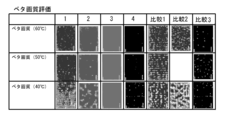
- FIG. 1 is a diagram for explaining the result of solid printing using the inkjet ink composition according to the present embodiment.
- Inkjet ink composition Ink 1 to Ink 4 in Table 1 below are an inkjet ink composition using only 1,2-hexanediol as a water-soluble organic solvent.
- Comparison 1 is an inkjet ink composition using a mixed solvent of 1,2-hexanediol and dipropylene glycol monomethyl ether as a water-soluble organic solvent.
- Comparison 2 is an inkjet ink composition in which a mixed solvent of 1,2-propanediol and dipropylene glycol monomethyl ether is used as a water-soluble organic solvent instead of 1,2-hexanediol.
- Comparison 3 is an inkjet ink composition in which 1,2-propanediol is used as a water-soluble organic solvent instead of 1,2-hexanediol.
- Inks 1 to 4 and comparisons 1, 2 and 3 all use an acrylic resin as a binder component. In addition, it contains a silicone-based surfactant.
- the inkjet ink compositions of Inks 1 to 4 and Comparative 1, 2 and 3 are obtained by pre-dispersing a solvent (pigment, acrylic resin emulsion, and silicon-based surfactant) in water. Therefore, it is adjusted by adding a water-soluble organic solvent to the one having a high solid content ratio. Specifically, a water-soluble organic solvent is gradually added to the ink solution in a state of being agitated by a dissolver or the like, and the solid content (pigment, acrylic resin, silicon-based surfactant) becomes the solvent (water and water-soluble).
- the inkjet ink composition dispersed in the organic solvent is prepared.
- Solid printing was performed on a medium made of polyvinyl chloride using an inkjet printer (JV150-160) manufactured by Mimaki Engineering Co., Ltd.
- the printing conditions are 100% density solid printing (resolution: 720 dpi ⁇ 1080 dpi, 12 passes).
- the solid printing was carried out so that the amount of ink used per 1 m 2 was 18.0 g to 20.0 g, more preferably 18.5 g to 19.5 g.
- the evaluation of the printed matter was carried out on the following two points.
- the heater temperature (print heater temperature) of the inkjet printer (JV150-160) is set to 60 ° C., and after drawing continuously for 30 minutes, the test drawing pattern mounted on the inkjet printer is printed. The number of nozzles with missing nozzles was counted.
- the solid printed matter was visually confirmed and magnified by a microscope, and graded.
- the criteria for scoring are as follows. 5: No white spots are confirmed in the image by checking with a microscope (the surface of the base material is not visible). 4: Check with a microscope and a slight amount of white spots are confirmed in the image. 3: There is a lot of unevenness in the solid image visually. 2: There are many white spots in the solid image visually. 1: The solid image is not clearly filled visually.
- the heating temperature of the media before printing is 60 ° C., if only 1,2-hexanediol is used as the water-soluble organic solvent, nozzle omission does not occur (inks 1 to 4). ).
- the heating temperature of the media is 60 ° C., which is the highest temperature under the above three conditions of solid printing, and is a temperature at which nozzle omission is likely to occur.
- 1,2-Hexanediol (boiling point: 223 ° C.) has a higher boiling point and a slower evaporation rate than 1,2-propanediol (boiling point: 188 ° C.) and dipropylene glycol monomethyl ether (boiling point: 194 ° C.). Therefore, an inkjet ink composition containing 1,2-hexanediol is less likely to evaporate when exposed to the heat of heated media than an inkjet ink composition containing 1,2-hexanediol. The degree of ease of evaporation affects the presence or absence of nozzle omission and the degree of nozzle omission.
- the ink composition in the nozzle is dried by the heat of the heated media when printing on the heated media, and the nozzle is clogged. Resulting in.
- the ink composition contains more water-soluble organic solvent having a higher boiling point, so that the ink in the nozzle is used when printing on a heated medium. It preferably suppresses the composition from drying out and causing clogging of the nozzles.
- the time until the water-soluble organic solvent contained in the ink composition evaporates becomes long, and as a result, the nozzles are less likely to be clogged.
- the ease of evaporation of the inkjet ink composition affects the image quality of solid printing.
- the solid image quality when the heating temperature of the medium before printing is 60 ° C. is good when only 1,2-hexanediol is contained as a water-soluble organic solvent (inks 1 to 4).
- the position where the ink droplets landed on the surface of the media landed between the printing (printing process) by landing the ink droplets on the media and the completion of the drying process. Since the shape of the droplets cannot be maintained, the print quality deteriorates. It is considered that this is because the landed ink droplets spread on the surface of the media and cannot maintain the shape, and the adjacent ink droplets gather due to surface tension or the like to form a gap on the surface of the media.
- the reason why the solid image quality improves as the heating temperature of the medium before printing increases is that 1,2-hexanediol has a favorable effect on maintaining the shape of the landed ink droplets.
- the higher the heating temperature before printing promotes the volatilization of volatile components (water, water-soluble organic solvent) contained in the inkjet ink composition immediately after landing. This is because the viscosity of the landed ink droplets increases (thickens) according to the amount of volatilized components, making it easier to maintain the shape of the ink droplets, and the movement of the ink droplets is restricted, so that the media It is considered that the cause is that the surface of the ink is hard to be exposed.
- An inkjet ink composition containing a pigment, water, a water-soluble organic solvent, and a resin emulsion containing a pigment, water, a water-soluble organic solvent, and a resin emulsion.
- the water-soluble organic solvent is an alkanediol having 6 or more and 10 or less carbon atoms.
- the minimum value of the mass ratio of alkanediol to the inkjet ink composition was assumed to be 10%.
- the water-soluble organic solvent was assumed to be hexanediol having 6 carbon atoms.
- the mass ratio of water and alkanediol to the inkjet ink composition (water + alkanediol / inkjet ink composition) is 85% or more and 90% or less.
- the mass ratio of alkanediol to water (alkanediol / water) was assumed to be 10% or more and 35% or less.
- the inkjet ink composition having such a configuration is ejected onto a medium preheated to a predetermined temperature and printed (printed), clogging of the nozzle for ejecting the inkjet ink composition can be suppressed. This makes it possible to preferably prevent deterioration of printing quality due to nozzle omission.
- the present invention (4) An inkjet recording method in which an inkjet ink composition is attached to a non-ink-absorbing or low-absorbing medium (recording medium) for printing.
- the inkjet ink composition is obtained by dispersing a solute containing a pigment and a resin emulsion in water containing an alkanediol having 6 or more and 10 or less carbon atoms.
- the inkjet ink composition is ejected onto a heated non-water-absorbent or low-absorbent medium for printing.
- the lower limit of the heating temperature of the non-water-absorbent or low-absorbent media was set to 50 ° C.
- the heating temperature of the non-water-absorbent media is 40 ° C. or higher and 70 ° C. or lower, more preferably 50 ° C. or higher and 60 ° C. or lower.
- alkanediol which has a higher boiling point, as a water-soluble organic solvent as the heating temperature of the media becomes higher, clogging of nozzles can be suppressed and good printing results can be obtained.
- the minimum value of the mass ratio (alkanediol / inkjet ink composition) of alkanediol to the inkjet ink composition was assumed to be 10%.
- the mass ratio of water and alkanediol to the inkjet ink composition (water + alkanediol / inkjet ink composition) is 85% or more and 90% or less, and the mass ratio of alkanediol to water (alkanediol / water). However, it was assumed that it was 10% or more and 30% or less.
- the shape of the ink droplets that land on the media is formed from printing (printing) by ejecting the inkjet ink composition onto the media preheated to a predetermined temperature to drying and removing the solvent component in the inkjet ink composition. While holding, it is possible to suppress the aggregation of ink droplets due to surface tension. Thereby, a printed matter obtained by using the water-based inkjet ink composition can be produced with good print quality.
- the water-soluble organic solvent was assumed to be hexanediol having 6 carbon atoms.
- the medium was one of vinyl chloride, polyethylene terephthalate, and polypropylene.
- These media are examples of media having low absorbency to an aqueous inkjet ink composition (ink non-absorbent media).
- inkjet ink composition having the above structure is used, printing (printing) on these non-ink-absorbing media can be performed with good quality.
Landscapes
- Chemical & Material Sciences (AREA)
- Life Sciences & Earth Sciences (AREA)
- Engineering & Computer Science (AREA)
- Materials Engineering (AREA)
- Wood Science & Technology (AREA)
- Organic Chemistry (AREA)
- Chemical Kinetics & Catalysis (AREA)
- General Chemical & Material Sciences (AREA)
- Ink Jet Recording Methods And Recording Media Thereof (AREA)
- Inks, Pencil-Leads, Or Crayons (AREA)
- Ink Jet (AREA)
Abstract
水系のインクジェットインク組成物を用いて、インク非吸収性または低吸収性のぬれ性が悪いメディアに印字を行う。 顔料と、水と、炭素数が6以上10以下のアルカンジオールと、樹脂エマルジョンと、を含有し、アルカンジオールのインクジェットインク組成物に対する質量比の最小値が10%であるインクジェットインク組成物、および、インク非吸収性のまたは低吸収性のメディアに、水系のインクジェットインク組成物を付着させて印字を行うインクジェット記録方法であって、インクジェットインク組成物は、顔料と樹脂エマルジョンを含む溶質を、炭素数が6以上10以下のアルカンジオールを含む水に分散したものであり、50℃以上60°以下に加熱した非吸水性のまたは低吸収性のメディアに、インクジェットインク組成物を吐出して印字を行う方法によりこれを解決する。
Description
本発明は、インクジェットインク組成物、およびインクジェット記録方法に関する。
特許文献1には、水性インク組成物を用いるインクジェット記録方法が開示されている。
特許文献1に開示された水性インク組成物は、水性インク組成物に対する吸収性が低い基材のなかでも、水性インク組成物のぬれ性の悪い基材に印字すると、良好な画質を得ることが難しい。
本発明は、
(1)顔料と、水と、水溶性有機溶剤と、樹脂エマルジョンと、を含有するインクジェットインク組成物であって、
前記水溶性有機溶剤は、炭素数が6以上10以下のアルカンジオールであり、
前記アルカンジオールの前記インクジェットインク組成物に対する質量比(アルカンジオール/インクジェットインク組成物)の最小値が10%であるものとした。
(1)顔料と、水と、水溶性有機溶剤と、樹脂エマルジョンと、を含有するインクジェットインク組成物であって、
前記水溶性有機溶剤は、炭素数が6以上10以下のアルカンジオールであり、
前記アルカンジオールの前記インクジェットインク組成物に対する質量比(アルカンジオール/インクジェットインク組成物)の最小値が10%であるものとした。
このような構成のインクジェットインク組成物を、所定温度まで予め加熱したメディアに対して吐出して印字(印刷)すると、良好な印字(印刷)品質を得ることができる。
(2)前記水溶性有機溶剤は、炭素数が6のヘキサンジオールであるものとした。
炭素数6のヘキサンジオールを水溶性有機溶剤として採用したインクジェットインク組成物を、所定温度まで予め加熱したメディアに対して吐出して印字(印刷)すると、ベタ印刷でのベタ画質の向上が可能になる。
(3)前記水と前記アルカンジオールの前記インクジェットインク組成物に対する質量比(水+アルカンジオール/インクジェットインク組成物)が、85%以上90%以下であり、
前記アルカンジオールの前記水に対する質量比(アルカンジオール/水)が、10%以上35%以下であるものとした。
前記アルカンジオールの前記水に対する質量比(アルカンジオール/水)が、10%以上35%以下であるものとした。
このような構成のインクジェットインク組成物を、所定温度まで予め加熱したメディアに対して吐出して印字(印刷)すると、インクジェットインク組成物を吐出するノズルの目詰まりを抑制できる。これにより、ノズル抜けに起因する印字(印刷)品質を好適に防止できる。
さらに、本発明は、
(4)インク非吸収性のまたは低吸収性のメディア(記録媒体)にインクジェットインク組成物を付着させて印字を行うインクジェット記録方法であって、
前記インクジェットインク組成物は、顔料と樹脂エマルジョンを含む溶質を、炭素数が6以上10以下のアルカンジオールを含む水に分散したものであり、
加熱した非吸水性のまたは低吸収性のメディアに、前記インクジェットインク組成物を吐出して、前記印字を行うものであり、非吸水性のまたは低吸収性のメディアの加熱温度の下限を50℃とした。
(4)インク非吸収性のまたは低吸収性のメディア(記録媒体)にインクジェットインク組成物を付着させて印字を行うインクジェット記録方法であって、
前記インクジェットインク組成物は、顔料と樹脂エマルジョンを含む溶質を、炭素数が6以上10以下のアルカンジオールを含む水に分散したものであり、
加熱した非吸水性のまたは低吸収性のメディアに、前記インクジェットインク組成物を吐出して、前記印字を行うものであり、非吸水性のまたは低吸収性のメディアの加熱温度の下限を50℃とした。
このような構成のインクジェットインク組成物を、所定温度まで予め加熱したメディアに対して吐出して印字(印刷)すると、良好な印字(印刷)品質を得ることができる。
(5)前記水溶性有機溶剤は、炭素数が6のヘキサンジオールであるものとした。
炭素数6のヘキサンジオールを水溶性有機溶剤として採用したインクジェットインク組成物を、所定温度まで予め加熱したメディアに対して吐出して印字(印刷)すると、ベタ印刷でのベタ画質の向上が可能になる。
(6)前記水と前記アルカンジオールの前記インクジェットインク組成物に対する質量比(水+アルカンジオール/インクジェットインク組成物)が、85%以上90%以下であり、前記アルカンジオールの前記水に対する質量比(アルカンジオール/水)が、10%以上35%以下であるものとした。
このように構成すると、インクジェットインク組成物を吐出するノズルの目詰まりを抑制できる。これにより、ノズル抜けに起因する印字(印刷)品質の低下を好適に防止できる。
(7)前記メディアは、塩化ビニル、ポリエチレンテレフタレート、ポリプロピレンの何れかひとつであるものとした。
(7)前記メディアは、塩化ビニル、ポリエチレンテレフタレート、ポリプロピレンの何れかひとつであるものとした。
このように構成すると、インク非吸収性のメディアに対する印字(印刷)を良好な品質で行うことができる。
本発明によれば、ぬれ性の悪い基材に対する印字において良好な画質を得ることができる。
以下、本願発明の実施形態を説明する。
[インクジェットインク組成物]
インクジェットインク組成物は、水不溶性の着色剤と、水と、水溶性有機溶剤と、樹脂エマルジョンと、を含有する水系のインクジェットインク組成物である。
このインクジェットインク組成物を用いて、後記するインクジェット記録方法を実施すると、水系のインクジェットインク組成物に対するぬれ性が悪いメディアに対する印字(印刷)において、良好な画質を得ることができる。
ここで、インクジェットインク組成物に対するぬれ性が悪いメディアとして、塩化ビニル、ポリエチレンテレフタレート、ポリプロピレンなどのフイルム系のメディアが例示される。
[インクジェットインク組成物]
インクジェットインク組成物は、水不溶性の着色剤と、水と、水溶性有機溶剤と、樹脂エマルジョンと、を含有する水系のインクジェットインク組成物である。
このインクジェットインク組成物を用いて、後記するインクジェット記録方法を実施すると、水系のインクジェットインク組成物に対するぬれ性が悪いメディアに対する印字(印刷)において、良好な画質を得ることができる。
ここで、インクジェットインク組成物に対するぬれ性が悪いメディアとして、塩化ビニル、ポリエチレンテレフタレート、ポリプロピレンなどのフイルム系のメディアが例示される。
(水不溶性の着色剤)
水不溶性の着色剤としては、水不溶性の染料または顔料が挙げられるが、顔料であることが好ましい。
顔料としてはカーボンブラック、カドミウムレッド、モリブデンレッド、クロムイエロー、カドミウムイエロー、チタンイエロー、酸化クロム、ビリジアン、チタンコバルトグリーン、ウルトラマリンブルー、プルシアンブルー、コバルトブルー、ジケトピロロピロール、アンスラキノン、ベンズイミダゾロン、アンスラピリミジン、アゾ系顔料、フタロシアニン系顔料、キナクリドン系顔料、イソインドリノン系顔料、ジオキサジン系顔料、スレン系顔料、ペリレン系顔料、ペリノン系顔料、チオインジゴ系顔料、キノフタロン系顔料、または金属錯体顔料等を用いることができる。
水不溶性の着色剤としては、水不溶性の染料または顔料が挙げられるが、顔料であることが好ましい。
顔料としてはカーボンブラック、カドミウムレッド、モリブデンレッド、クロムイエロー、カドミウムイエロー、チタンイエロー、酸化クロム、ビリジアン、チタンコバルトグリーン、ウルトラマリンブルー、プルシアンブルー、コバルトブルー、ジケトピロロピロール、アンスラキノン、ベンズイミダゾロン、アンスラピリミジン、アゾ系顔料、フタロシアニン系顔料、キナクリドン系顔料、イソインドリノン系顔料、ジオキサジン系顔料、スレン系顔料、ペリレン系顔料、ペリノン系顔料、チオインジゴ系顔料、キノフタロン系顔料、または金属錯体顔料等を用いることができる。
水系のインクジェットインク組成物は、水系のインクジェットインク組成物において従来から使用されている任意の顔料を含むことができる。顔料としては、例えば、水系のインクジェットインク組成物において従来から使用されている有機顔料または無機顔料を用いることができる。
無機顔料としては、酸化チタンおよび酸化鉄や、カーボンブラックを利用することができる。
有機顔料としては、アゾ顔料(例えば、アゾレーキ、不溶性アゾ顔料、縮合アゾ顔料、またはキレートアゾ顔料)、多環式顔料(例えば、フタロシアニン顔料、ペリレン顔料、ベリノン顔料、アントラキノン顔料、キナクリドン顔料、ジオキサジン顔料、チオインジゴ顔料、イソインドリノン顔料、またはキノフタロン顔料)、染料キレート(例えば、塩基性染料型キレート、または酸性染料型キレート)、ニトロ顔料、ニトロソ顔料、またはアニリンブラックなどを利用することができる。これらの顔料のうち、水との親和性が良好な顔料を用いるのが好ましい。
顔料の粒径は、特に限定されるものではない。平均粒径として、好ましくは25μm以下、より好ましくは2μm以下、さらに好ましくは0.5μm以下である。平均粒径が25μm以下の顔料を用いることにより、後記するノズルの目詰まりの発生を抑制することができる。
顔料の含有量は、インクジェットインク組成物全体に対する質量比(顔料/インクジェットインク組成物)で、1.0%以上5.0%以下、好ましくは1.5%以上4.0%以下、より好ましくは、1.7%以上3.8%以下である。
(樹脂エマルジョン)
上記の顔料は、水溶性樹脂を用いて、印字(印刷)後のメディアに定着させる。
インクジェットインク組成物は、上記の顔料を、水溶性樹脂と共に溶媒成分中に分散させて提供される。
上記の顔料は、水溶性樹脂を用いて、印字(印刷)後のメディアに定着させる。
インクジェットインク組成物は、上記の顔料を、水溶性樹脂と共に溶媒成分中に分散させて提供される。
顔料の分散に使用できる水溶性樹脂としては、ポリビニルアルコール類、ポリビニルピロリドン類、ポリアクリル酸、アクリル酸-アクリルニトリル共重合体、酢酸ビニル-アクリル酸エステル共重合体、アクリル酸-アクリル酸エステル共重合体、スチレン-アクリル酸共重合体、スチレン-メタクリル酸共重合体、スチレン-メタクリル酸-アクリル酸エステル共重合体、スチレン-α―メチルスチレン-アクリル酸共重合体、スチレン-α―メチルスチレン-アクリル酸-アクリル酸エステル共重合体、スチレン-マレイン酸共重合体、スチレン-無水マレイン酸共重合体、ビニルナフタレン-アクリル酸共重合体、ビニルナフタレン-マレイン酸共重合体、酢酸ビニル-マレイン酸エステル共重合体、酢酸ビニル-クロトン酸共重合体、酢酸ビニル-アクリル酸共重合体等およびこれらの塩が挙げられる。これらの中で、特に疎水性官能基を有するモノマーと親水性官能基を持つモノマーとの共重合体、疎水性官能基と親水性官能基とを併せ持つモノマーからなる重合体が好ましい。共重合体の形態としては、ランダム共重合体、ブロック共重合体、交互共重合体、グラフト共重合体の何れの形態でも用いることができる。
ここで、後記する水性のインクジェットインク組成物に対する吸収性が低いメディア(インク非吸収性の記録媒体)に対する定着性を考慮すると、アクリル系の樹脂材料であることが好ましい。
なお、水系のインクジェットインク組成物の調整にあたり、アクリル系の樹脂材料のエマルジョンが用いられる。
なお、樹脂材料は、印刷対象のメディア(インク非吸収性の記録媒体)に応じて任意に選択可能である。
なお、水系のインクジェットインク組成物の調整にあたり、アクリル系の樹脂材料のエマルジョンが用いられる。
なお、樹脂材料は、印刷対象のメディア(インク非吸収性の記録媒体)に応じて任意に選択可能である。
(水、水溶性有機溶剤)
水と水溶性有機溶剤は、インクジェットインク組成物の主となる溶媒であり、後記するインクジェット記録方法の乾燥工程において蒸発飛散させる成分である。
水は、イオン交換水、限外濾過水、逆浸透水、蒸留水等の純水または超純水のようなイオン性不純物を極力除去したものであることが好ましい。
水と水溶性有機溶剤は、インクジェットインク組成物の主となる溶媒であり、後記するインクジェット記録方法の乾燥工程において蒸発飛散させる成分である。
水は、イオン交換水、限外濾過水、逆浸透水、蒸留水等の純水または超純水のようなイオン性不純物を極力除去したものであることが好ましい。
水溶性有機溶剤は、炭素数が6以上10以下のアルカンジオールである。
例えば、ヘキサンジオール(炭素数:6)、ヘプタンジオール(炭素数:7)、オクタンジオール(炭素数:8)、ノナンジオール(炭素数:9)、デカンジオール(炭素数:10)などである。
少なくとも、1,2-プロパンジオールよりも沸点が高く、かつ1,2-プロパンジオールよりも揮発性が低いものが好ましい。
例えば、ヘキサンジオール(炭素数:6)、ヘプタンジオール(炭素数:7)、オクタンジオール(炭素数:8)、ノナンジオール(炭素数:9)、デカンジオール(炭素数:10)などである。
少なくとも、1,2-プロパンジオールよりも沸点が高く、かつ1,2-プロパンジオールよりも揮発性が低いものが好ましい。
ヘキサンジオールは、1,2-ヘキサンジオール、1,3-ヘキサンジオール、1,4-ヘキサンジオール、1,5-ヘキサンジオール、1,6-ヘキサンジオールの何れでも良いが、後記するメディアに対するぬれ性が良好な、1,2-ヘキサンジオールが好ましい。
ヘプタンジオールは、1,2-ヘプタンジオール、1,3-ヘプタンジオール、1,4-ヘプタンジオール、1,5-ヘプタンジオール、1,6-ヘプタンジオール、1,7-ヘプタンジオールの何れでも良い。
オクタンジオールは、1,2-オクタンジオール、1,3-オクタンジオール、1,4-オクタンジオール、1,5-オクタンジオール、1,6-オクタンジオール、1,7-オクタンジオール、1,8-オクタンジオールの何れでも良い。
オクタンジオールは、1,2-オクタンジオール、1,3-オクタンジオール、1,4-オクタンジオール、1,5-オクタンジオール、1,6-オクタンジオール、1,7-オクタンジオール、1,8-オクタンジオールの何れでも良い。
ノナンジオールは、1,2-ノナンジオール、1,3-ノナンジオール、1,4-ノナンジオール、1,5-ノナンジオール、1,6-ノナンジオール、1,7-ノナンジオール、1,8-ノナンジオール、1,9-ノナンジオールの何れでも良い。
デカンジオールは、1,2-デカンジオール、1,3-デカンジオール、1,4-デカンジオール、1,5-デカンジオール、1,6-デカンジオール、1,7-デカンジオール、1,8-デカンジオール、1,9-デカンジオール、1,10-デカンジオールの何れでも良い。
デカンジオールは、1,2-デカンジオール、1,3-デカンジオール、1,4-デカンジオール、1,5-デカンジオール、1,6-デカンジオール、1,7-デカンジオール、1,8-デカンジオール、1,9-デカンジオール、1,10-デカンジオールの何れでも良い。
アルカンジオールのインクジェットインク組成物に対する質量比(アルカンジオール/インクジェットインク組成物)は、10%以上であることが好ましい。すなわち、アルカンジオールのインクジェットインク組成物に対する質量比(アルカンジオール/インクジェットインク組成物)の最小値が10%であることが好ましい。
水とアルカンジオールのインクジェットインク組成物に対する質量比(水+アルカンジオール/インクジェットインク組成物)は、85%以上90%以下であることが好ましい。
そして、アルカンジオールの水に対する質量比(アルカンジオール/水)は、10%以上35%以下、好ましくは15%以上25%以下、より好ましくは17%以上20%以下である。
そして、アルカンジオールの水に対する質量比(アルカンジオール/水)は、10%以上35%以下、好ましくは15%以上25%以下、より好ましくは17%以上20%以下である。
アルカンジオールのインクジェットインク組成物に対する質量比が少なくなると、後記するインクジェット記録方法を実施する際に、インクジェットヘッドのノズルの目詰まりが生じやすくなる傾向がある。
アルカンジオールの水に対する質量比が少なくなると、後記するインクジェット記録方法を実施する際に、インクジェットヘッドのノズルの目詰まりが生じやすくなる傾向がある。
特に、アルカンジオールの水に対する質量比が10%未満になると、目詰まりが顕著になる。
アルカンジオールの水に対する質量比が少なくなると、後記するインクジェット記録方法を実施する際に、インクジェットヘッドのノズルの目詰まりが生じやすくなる傾向がある。
特に、アルカンジオールの水に対する質量比が10%未満になると、目詰まりが顕著になる。
アルカンジオールのインクジェトインク組成物に対する質量比が多くなると、後記するインクジェット記録方法によりベタ印刷を実施した際の抜けが少なくなる(画質が向上する)傾向がある。
ただし、アルカンジオールの水に対する質量比が30%を超えると、30%以下の場合に比べて、ベタ印刷物での抜けが多くなって画質が低下する傾向がある。
ただし、アルカンジオールの水に対する質量比が30%を超えると、30%以下の場合に比べて、ベタ印刷物での抜けが多くなって画質が低下する傾向がある。
アルカンジオールの水に対する質量比を上記の範囲に設定すると、後記するインクジェット記録方法を実施した際に、ノズルの目詰まりを抑えつつ、ベタ印刷物での抜けを抑制できる。これにより、印刷物(印字物)の印刷品質が向上する。
本実施形態にかかるインクジェットインク組成物は、さらに、pH調整剤、防腐剤・防かび剤、防錆剤、キレート化剤等を含有していても良い。
インクジェットインク組成物は、20℃における粘度が、好ましくは2mPa・s以上20mPa・s以下であり、より好ましくは3mPa・s以上10mPa・s以下である。
ここで、インクジェットインク組成物の粘度は、従来公知の粘度計を用いて、水性インク組成物の温度を20℃に保持した状態で測定できる。
[インクジェット記録方法]
本実施形態にかかるインクジェット記録方法は、以下の手順にて実施される。
(a)インクジェット記録装置に付設された加熱手段により、印字されるメディアを40℃以上60℃以下の温度範囲に加熱する(加熱工程)。
(b)メディアに対向配置されたインクジェットヘッドの各ノズルから、上記の温度範囲に加熱されたメディアに向けて、インクジェットインク組成物のインク滴を吐出して印字する(印字工程)。
(c)メディアに着弾したインク滴から、水と水溶性有機溶剤を蒸発させて、メディア上にインクジェットインク組成物の固形分を定着させる(乾燥工程)。
なお、乾燥工程は、プリントヒーターおよびドライヤーによって、メディアを50℃以上90℃以下の温度範囲に加熱することにより行われる。
本実施形態にかかるインクジェット記録方法は、以下の手順にて実施される。
(a)インクジェット記録装置に付設された加熱手段により、印字されるメディアを40℃以上60℃以下の温度範囲に加熱する(加熱工程)。
(b)メディアに対向配置されたインクジェットヘッドの各ノズルから、上記の温度範囲に加熱されたメディアに向けて、インクジェットインク組成物のインク滴を吐出して印字する(印字工程)。
(c)メディアに着弾したインク滴から、水と水溶性有機溶剤を蒸発させて、メディア上にインクジェットインク組成物の固形分を定着させる(乾燥工程)。
なお、乾燥工程は、プリントヒーターおよびドライヤーによって、メディアを50℃以上90℃以下の温度範囲に加熱することにより行われる。
ここで、インクジェット記録に用いられるメディアは、インク非吸収性または低吸収性の記録媒体である。
インク非吸収性の記録媒体として、ポリ塩化ビニル、ポリエチレンテレフタレート、ポリカーボネート、ポリスチレン、ポリウレタン、ポリエチレン、ポリプロピレン等の樹脂性のフイルムが例示される。
インク非吸収性の記録媒体として、ポリ塩化ビニル、ポリエチレンテレフタレート、ポリカーボネート、ポリスチレン、ポリウレタン、ポリエチレン、ポリプロピレン等の樹脂性のフイルムが例示される。
なお、織物(布帛)や紙などの基材の表面が、樹脂でコーティングされたメディアも、本明細書におけるインク非吸収性のメディアに相当する。
また、インク低吸収性の記録媒体として、アート紙、コート紙、マット紙等が例示される。
本明細書における用語「非吸収性または低吸収性のメディア」は、着弾したインクが浸透し難い基材から成る記録媒体を意味する。
一例として、メディアの純水との接触時間100mm秒における吸水量が、0g/m2以上、10g/m2以下のメディアが例示される。
また、インク低吸収性の記録媒体として、アート紙、コート紙、マット紙等が例示される。
本明細書における用語「非吸収性または低吸収性のメディア」は、着弾したインクが浸透し難い基材から成る記録媒体を意味する。
一例として、メディアの純水との接触時間100mm秒における吸水量が、0g/m2以上、10g/m2以下のメディアが例示される。
インクジェットヘッドからのインクジェット吐出方法は、従来公知の何れの方法も使用可能である。
特に、圧電素子の振動を利用して液滴を吐出させる方法(電歪素子の機械的変形によりインク滴を形成するインクジェットヘッドを用いた記録方法)が好ましい。良好な印字結果(画像の形成結果を含む)を得ることができるからである。
特に、圧電素子の振動を利用して液滴を吐出させる方法(電歪素子の機械的変形によりインク滴を形成するインクジェットヘッドを用いた記録方法)が好ましい。良好な印字結果(画像の形成結果を含む)を得ることができるからである。
加熱手段は、メディアを加熱することができるヒータである。ヒータは、メディアに接触して設けられて、メディアを直接加熱するもの、メディアに近接配置されて、メディアを間接的に加熱するものなど、メディアを加熱できるものであれば良い。
加熱工程でのメディアの加熱温度は、40℃以上60℃以下の温度範囲であることが好ましい。
インクジェット記録装置における印字工程では、インクジェットヘッドが、加熱されたメディアの表面(印字される表面)の近傍を移動する。インクジェットヘッドにおけるメディアとの対向部には、インク滴を吐出するノズルが設けられており、インクジェットヘッドは、ノズルからメディアに向けてインク滴を吐出する。
インクジェット記録装置における印字工程では、インクジェットヘッドが、加熱されたメディアの表面(印字される表面)の近傍を移動する。インクジェットヘッドにおけるメディアとの対向部には、インク滴を吐出するノズルが設けられており、インクジェットヘッドは、ノズルからメディアに向けてインク滴を吐出する。
印字前の加熱工程におけるメディアの加熱温度が高くなると、加熱されたメディアの表面をインクジェットヘッドが移動する際に、インクジェットインク組成物に含まれる水分が蒸発して、ノズルに詰まりが生じることがある。
メディアの加熱温度が60℃よりも高くなると、ノズル詰まりの発生が顕著になるので、加熱工程におけるメディアの加熱温度は、60℃以下であることが好ましい。
メディアの加熱温度が60℃よりも高くなると、ノズル詰まりの発生が顕著になるので、加熱工程におけるメディアの加熱温度は、60℃以下であることが好ましい。
また、メディアの加熱温度が40℃よりも低くなると、メディアに着弾したインク滴から水と水溶性有機溶剤を蒸発させるのに必要な時間が長くなる。
そうすると、インク滴のメディアへの着弾による印字(印刷工程)から、乾燥工程の完了までの間に、メディアの表面に着弾したインク滴が、表面張力により集合して、印字物のゆがみ、抜けなどが生じ易くなる。
そうすると、インク滴のメディアへの着弾による印字(印刷工程)から、乾燥工程の完了までの間に、メディアの表面に着弾したインク滴が、表面張力により集合して、印字物のゆがみ、抜けなどが生じ易くなる。
乾燥工程におけるメディアの加熱温度は、メディアの表面に着弾したインク滴に含まれる溶媒成分(水、アルカンジオールなど)を完全に蒸発させることができる温度範囲に設定される。インクジェットインク組成物に含まれる固形分(顔料、アクリル樹脂など)を、メディアに定着させるためである。
なお、乾燥工程における加熱温度は、乾燥工程におけるメディアの搬送速度や搬送距離などに応じて適切に設定される。
なお、乾燥工程における加熱温度は、乾燥工程におけるメディアの搬送速度や搬送距離などに応じて適切に設定される。
以下、下記表1に示す組成のインクジェットインク組成物を用いて、上記したインクジェット記録方法によりベタ印刷を実施した場合について説明する。
図1は、本実施形態にかかるインクジェットインク組成物を用いたベタ印刷の結果を説明する図である。
図1は、本実施形態にかかるインクジェットインク組成物を用いたベタ印刷の結果を説明する図である。
[インクジェットインク組成物]
下記表1のインク1~インク4は、1,2-ヘキサンジオールのみを水溶性有機溶剤として用いたインクジェットインク組成物である。
比較1は、1,2-ヘキサンジオールとジプロピレングリコールモノメチルエーテルの混合溶剤を、水溶性有機溶剤として用いたインクジェットインク組成物である。
比較2は、1,2-ヘキサンジオールに代えて、1,2-プロパンジオールとジプロピレングリコールモノメチルエーテルの混合溶剤を、水溶性有機溶剤として用いたインクジェットインク組成物である。
比較3は、1,2-ヘキサンジオールに代えて、1,2-プロパンジオールを水溶性有機溶剤として用いたインクジェットインク組成物である。
インク1~インク4と、比較1、2、3は、何れもアクリル樹脂をバインダ成分として採用している。さらに、シリコン系界面活性剤を含んでいる。
下記表1のインク1~インク4は、1,2-ヘキサンジオールのみを水溶性有機溶剤として用いたインクジェットインク組成物である。
比較1は、1,2-ヘキサンジオールとジプロピレングリコールモノメチルエーテルの混合溶剤を、水溶性有機溶剤として用いたインクジェットインク組成物である。
比較2は、1,2-ヘキサンジオールに代えて、1,2-プロパンジオールとジプロピレングリコールモノメチルエーテルの混合溶剤を、水溶性有機溶剤として用いたインクジェットインク組成物である。
比較3は、1,2-ヘキサンジオールに代えて、1,2-プロパンジオールを水溶性有機溶剤として用いたインクジェットインク組成物である。
インク1~インク4と、比較1、2、3は、何れもアクリル樹脂をバインダ成分として採用している。さらに、シリコン系界面活性剤を含んでいる。
これらインク1~インク4、および比較1、2、3のインクジェットインク組成物は、コンク液(顔料と、アクリル樹脂エマルジョンと、シリコン系界面活性剤と、を水に事前に分散させたものであって、固形分比率が高いもの)に、水溶性有機溶剤を添加して調整される。
具体的には、ディゾルバーなどにより撹拌している状態のコンク液に、水溶性有機溶剤を徐々に添加して、固形分(顔料、アクリル樹脂、シリコン系界面活性剤)が溶媒(水および水溶性有機溶剤)中に分散したインクジェットインク組成物を調整する。
具体的には、ディゾルバーなどにより撹拌している状態のコンク液に、水溶性有機溶剤を徐々に添加して、固形分(顔料、アクリル樹脂、シリコン系界面活性剤)が溶媒(水および水溶性有機溶剤)中に分散したインクジェットインク組成物を調整する。
[表1]

[ベタ印刷]
ベタ印刷は、ミマキエンジニアリング株式会社製のインクジェットプリンタ(JV150-160)を用いて、ポリ塩化ビニル製のメディアに対して実施した。
印刷条件は、100%濃度のベタ印刷(解像度:720dpi×1080dpi、12パス)である。ベタ印刷は、1m2あたりのインク使用量が、18.0g~20.0g、より好ましくは、18.5g~19.5gとなるようにして実施した。
ベタ印刷は、ミマキエンジニアリング株式会社製のインクジェットプリンタ(JV150-160)を用いて、ポリ塩化ビニル製のメディアに対して実施した。
印刷条件は、100%濃度のベタ印刷(解像度:720dpi×1080dpi、12パス)である。ベタ印刷は、1m2あたりのインク使用量が、18.0g~20.0g、より好ましくは、18.5g~19.5gとなるようにして実施した。
印刷物の評価は、以下の2点について実施した。
(a)ノズル抜け
インクジェットプリンタ(JV150-160)のヒータ温度(プリントヒータ温度)を60℃に設定し、30分間連続して作図したのち、インクジェットプリンタに搭載されているテスト作図パターンを印刷し、ノズル抜けの生じたノズル本数をカウントした。
(a)ノズル抜け
インクジェットプリンタ(JV150-160)のヒータ温度(プリントヒータ温度)を60℃に設定し、30分間連続して作図したのち、インクジェットプリンタに搭載されているテスト作図パターンを印刷し、ノズル抜けの生じたノズル本数をカウントした。
(b)ベタ画質
印字前のメディアの加熱温度を、40℃、50℃、60℃とした3条件で、100%濃度のベタ印刷(解像度:720dpi×1080dpi、12パス)を実施し、得られたベタ印刷物を、目視および顕微鏡による拡大で確認し、評点付けを行った。
評点付けの基準は、以下の通りである。
5:顕微鏡で確認して画像に白抜けが確認されない(基材表面が見えるところがない)。
4:顕微鏡で確認して画像に白抜けがごく僅か確認される。
3:目視でベタ画像にムラが多い。
2:目視でベタ画像に白抜けが多い。
1:目視でベタ画像が明らかに埋まっていない。
印字前のメディアの加熱温度を、40℃、50℃、60℃とした3条件で、100%濃度のベタ印刷(解像度:720dpi×1080dpi、12パス)を実施し、得られたベタ印刷物を、目視および顕微鏡による拡大で確認し、評点付けを行った。
評点付けの基準は、以下の通りである。
5:顕微鏡で確認して画像に白抜けが確認されない(基材表面が見えるところがない)。
4:顕微鏡で確認して画像に白抜けがごく僅か確認される。
3:目視でベタ画像にムラが多い。
2:目視でベタ画像に白抜けが多い。
1:目視でベタ画像が明らかに埋まっていない。
表1から明らかなように、印字前のメディアの加熱温度が60℃である場合において、1,2-ヘキサンジオールのみを水溶性有機溶剤として用いると、ノズル抜けが発生しない(インク1~インク4)。なお、メディアの加熱温度が60℃は、上記したベタ印刷の3条件で最も温度が高く、ノズル抜けが発生しやすい温度である。
これに対して印字前のメディアの加熱温度が同じ60℃である場合、1,2-プロパンジオールを水溶性有機溶剤として用いた場合(比較3)にノズル抜けが発生する。
さらに、1,2-ヘキサンジオールと、ジプロピレングリコールモノメチルエーテルの両方を水溶性有機溶剤として用いた場合(比較1)も、ノズル抜けが発生する。
さらに、1,2-ヘキサンジオールと、ジプロピレングリコールモノメチルエーテルの両方を水溶性有機溶剤として用いた場合(比較1)も、ノズル抜けが発生する。
1,2-ヘキサンジオール(沸点:223℃)は、1,2-プロパンジオール(沸点:188℃)やジプロピレングリコールモノメチルエーテル(沸点:194℃)よりも沸点が高く、蒸発速度が遅い。
そのため、1,2-ヘキサンジオールを含むインクジェットインク組成物のほうが、1,2-ヘキサンジオールを含まないインクジェットインク組成物よりも、加熱されたメディアの熱に曝されても蒸発し難くい。
この蒸発のし易さの程度が、ノズル抜けの有無と、ノズル抜けの程度の大小に影響している。
そのため、1,2-ヘキサンジオールを含むインクジェットインク組成物のほうが、1,2-ヘキサンジオールを含まないインクジェットインク組成物よりも、加熱されたメディアの熱に曝されても蒸発し難くい。
この蒸発のし易さの程度が、ノズル抜けの有無と、ノズル抜けの程度の大小に影響している。
すなわち、沸点が低い水溶性有機溶媒を用いると、加熱されたメディアに対して印刷を行う際に、ノズル内のインク組成物が加熱されたメディアの熱で乾燥して、ノズルの目詰まりが発生してしまう。
インク1からインク4に示すように、インク組成物が、沸点のより高い水溶性有機溶剤をより多く含むようにすることで、加熱されたメディアに対して印刷を行う際に、ノズル内のインク組成物が乾燥して、ノズルの目詰まりが発生することを好適に抑制している。
インク1からインク4に示すように、インク組成物が、沸点のより高い水溶性有機溶剤をより多く含むようにすることで、加熱されたメディアに対して印刷を行う際に、ノズル内のインク組成物が乾燥して、ノズルの目詰まりが発生することを好適に抑制している。
なお、比較2においてノズル抜けがゼロ(=0)であるのは、他のインクに比べて、水溶性有機溶媒の量が多いためである。水溶性有機溶媒の量が多くなると、インク組成物に含まれる水溶性有機溶媒が蒸発するまでの時間が長くなる結果、ノズルの目詰まりが生じにくくなる。
なお、インクジェットインク組成物の蒸発のし易さは、ベタ印刷の画質に影響する。
印字前のメディアの加熱温度が60℃である場合のベタ画質は、1,2-ヘキサンジオールのみが水溶性有機溶剤として含まれている場合(インク1~インク4)に良好である。
印字前のメディアの加熱温度が60℃である場合のベタ画質は、1,2-ヘキサンジオールのみが水溶性有機溶剤として含まれている場合(インク1~インク4)に良好である。
これに対して、以下の場合に画質が低下する(図1参照)。
(a)1,2-ヘキサンジオールと、ジプロピレングリコールモノメチルエーテルの両方を水溶性有機溶剤として用いた場合(比較1)。
(b)1,2-プロパンジオールとジプロピレングリコールモノメチルエーテル(DPM)の両方を水溶性有機溶剤として用いた場合(比較2)。
(c)1,2-プロパンジオールを水溶性有機溶剤として用いた場合(比較3)。
(a)1,2-ヘキサンジオールと、ジプロピレングリコールモノメチルエーテルの両方を水溶性有機溶剤として用いた場合(比較1)。
(b)1,2-プロパンジオールとジプロピレングリコールモノメチルエーテル(DPM)の両方を水溶性有機溶剤として用いた場合(比較2)。
(c)1,2-プロパンジオールを水溶性有機溶剤として用いた場合(比較3)。
さらに、1,2-ヘキサンジオールのみを水溶性有機溶剤として用いた場合(インク1~インク4)であっても、印字前のメディアの加熱温度が低くなるほど、ベタ画質が低下する。
ここで、加熱していないメディアに印字を行うと、インク滴のメディアへの着弾による印字(印刷工程)から乾燥工程の完了までの間で、メディアの表面に着弾したインク滴が、着弾した位置で液滴の形状を保持できないために、印字(印刷)品質が低下する。
これには、着弾したインク滴がメディアの表面に広がって形状を保持できないことや、近接するインク滴同士が表面張力などにより集合してメディアの表面に隙間が生じることなどが原因として考えられる。
これには、着弾したインク滴がメディアの表面に広がって形状を保持できないことや、近接するインク滴同士が表面張力などにより集合してメディアの表面に隙間が生じることなどが原因として考えられる。
印字前のメディアの加熱温度が高くなるほどベタ画質が向上するのは、1,2-ヘキサンジオールが、着弾したインク滴の形状保持に好ましい影響を与えるためであると判断できる。
具体的には、印字前の加熱温度が高くなることで、着弾直後のインクジェットインク組成物に含まれる揮発成分(水、水溶性有機溶剤)の揮発が促進される。
これには、着弾したインク滴の粘度が、揮発成分の揮発量に応じて増加(増粘)して、インク滴の形状が保持されやすくなることや、インク滴の移動が規制されて、メディアの表面が露出し難くなることなどが原因として考えられる。
具体的には、印字前の加熱温度が高くなることで、着弾直後のインクジェットインク組成物に含まれる揮発成分(水、水溶性有機溶剤)の揮発が促進される。
これには、着弾したインク滴の粘度が、揮発成分の揮発量に応じて増加(増粘)して、インク滴の形状が保持されやすくなることや、インク滴の移動が規制されて、メディアの表面が露出し難くなることなどが原因として考えられる。
以上の通り、本実施形態では、
(1)顔料と、水と、水溶性有機溶剤と、樹脂エマルジョンと、を含有するインクジェットインク組成物であって、
水溶性有機溶剤は、炭素数が6以上10以下のアルカンジオールであり、
アルカンジオールのインクジェットインク組成物に対する質量比(アルカンジオール/インクジェットインク組成物)の最小値が10%であるものとした。
(1)顔料と、水と、水溶性有機溶剤と、樹脂エマルジョンと、を含有するインクジェットインク組成物であって、
水溶性有機溶剤は、炭素数が6以上10以下のアルカンジオールであり、
アルカンジオールのインクジェットインク組成物に対する質量比(アルカンジオール/インクジェットインク組成物)の最小値が10%であるものとした。
このような構成のインクジェットインク組成物を、所定温度まで予め加熱したメディアに対して吐出して印字(印刷)すると、良好な印字(印刷)品質を得ることができる。
(2)水溶性有機溶剤は、炭素数が6のヘキサンジオールであるものとした。
炭素数6のヘキサンジオールを水溶性有機溶剤として採用したインクジェットインク組成物を、所定温度まで予め加熱したメディアに対して吐出して印字(印刷)すると、ベタ印刷でのベタ画質の向上が可能になる。
また、インクジェットインク組成物を吐出するノズルの目詰まりを抑制できる。これにより、ノズル抜けに起因する印字(印刷)品質を好適に防止できる。
また、インクジェットインク組成物を吐出するノズルの目詰まりを抑制できる。これにより、ノズル抜けに起因する印字(印刷)品質を好適に防止できる。
(3)水とアルカンジオールのインクジェットインク組成物に対する質量比(水+アルカンジオール/インクジェットインク組成物)が、85%以上90%以下であり、
アルカンジオールの水に対する質量比(アルカンジオール/水)が、10%以上35%以下であるものとした。
アルカンジオールの水に対する質量比(アルカンジオール/水)が、10%以上35%以下であるものとした。
かかる構成のインクジェットインク組成物を、所定温度まで予め加熱したメディアに対して吐出して印字(印刷)すると、インクジェットインク組成物を吐出するノズルの目詰まりを抑制できる。これにより、ノズル抜けに起因する印字(印刷)品質の低下を好適に防止できる。
さらに、本発明は、
(4)インク非吸収性のまたは低吸収性のメディア(記録媒体)にインクジェットインク組成物を付着させて印字を行うインクジェット記録方法であって、
インクジェットインク組成物は、顔料と樹脂エマルジョンを含む溶質を、炭素数が6以上10以下のアルカンジオールを含む水に分散したものであり、
インクジェット記録方法は、加熱した非吸水性のまたは低吸収性のメディアに、インクジェットインク組成物を吐出して、印字を行うものであり、
インク非吸水性のまたは低吸収性のメディアの加熱温度の下限を50℃とした。
(4)インク非吸収性のまたは低吸収性のメディア(記録媒体)にインクジェットインク組成物を付着させて印字を行うインクジェット記録方法であって、
インクジェットインク組成物は、顔料と樹脂エマルジョンを含む溶質を、炭素数が6以上10以下のアルカンジオールを含む水に分散したものであり、
インクジェット記録方法は、加熱した非吸水性のまたは低吸収性のメディアに、インクジェットインク組成物を吐出して、印字を行うものであり、
インク非吸水性のまたは低吸収性のメディアの加熱温度の下限を50℃とした。
このように構成すると、水系のインクジェットインク組成物における印字(印刷)に適性の低い非吸水性のメディアにおいても、良好な印字(印刷)結果を得ることができる。
この場合において、インク非吸水性のメディアの加熱温度は、40℃以上70℃以下、より好ましくは、50℃以上60℃以下である。
沸点が高いアルカンジオールを用いるほど、加熱したメディアにインクジェットインク組成物を吐出するノズルの目詰まりを抑制できる。
メディアの加熱温度が高くなるほど、沸点の高いアルカンジオールを水溶性有機溶剤として用いることで、ノズルの目詰まりを抑制して、良好な印字(印刷)結果を得ることができる。
メディアの加熱温度が高くなるほど、沸点の高いアルカンジオールを水溶性有機溶剤として用いることで、ノズルの目詰まりを抑制して、良好な印字(印刷)結果を得ることができる。
(5)アルカンジオールのインクジェットインク組成物に対する質量比(アルカンジオール/インクジェットインク組成物)の最小値が10%であるものとした。
(6)水とアルカンジオールのインクジェットインク組成物に対する質量比(水+アルカンジオール/インクジェットインク組成物)が、85%以上90%以下であり、アルカンジオールの水に対する質量比(アルカンジオール/水)が、10%以上30%以下であるものとした。
(6)水とアルカンジオールのインクジェットインク組成物に対する質量比(水+アルカンジオール/インクジェットインク組成物)が、85%以上90%以下であり、アルカンジオールの水に対する質量比(アルカンジオール/水)が、10%以上30%以下であるものとした。
このように構成すると、所定温度まで予め加熱したメディアに対するインクジェットインク組成物の吐出による印字(印刷)から、インクジェットインク組成物における溶媒成分の乾燥除去までの間、メディアに着弾したインク滴の形状を保持しつつ、表面張力によるインク滴の集合を抑制できる。
これにより、水系のインクジェットインク組成物を用いて得られる印字(印刷)物を、良好な印字品質で作成できる。
これにより、水系のインクジェットインク組成物を用いて得られる印字(印刷)物を、良好な印字品質で作成できる。
(7)水溶性有機溶剤は、炭素数が6のヘキサンジオールであるものとした。
このように構成すると、印刷でのベタ画質の向上が可能になる。
また、インクジェットインク組成物を吐出するノズルの目詰まりを抑制できる。これにより、ノズル抜けに起因する印字(印刷)品質を好適に防止できる。
また、インクジェットインク組成物を吐出するノズルの目詰まりを抑制できる。これにより、ノズル抜けに起因する印字(印刷)品質を好適に防止できる。
(8)メディアは、塩化ビニル、ポリエチレンテレフタレート、ポリプロピレンの何れかひとつであるものとした。
これらのメディアは、水性のインクジェットインク組成物に対する吸収性が低いメディア(インク非吸収性のメディア)の一例である。
上記構成のインクジェットインク組成物を用いると、これらのインク非吸収性のメディアに対する印字(印刷)を良好な品質で行うことができる。
上記構成のインクジェットインク組成物を用いると、これらのインク非吸収性のメディアに対する印字(印刷)を良好な品質で行うことができる。
以上の通り、本件発明にかかる実施形態を説明した。本件発明は、上記した態様にのみ限定されない。本件発明の技術的思想の範囲内で、適宜変更可能である。
Claims (7)
- 顔料と、水と、水溶性有機溶剤と、樹脂エマルジョンと、を含有するインクジェットインク組成物であって、
前記水溶性有機溶剤は、炭素数が6以上10以下のアルカンジオールであり、
前記アルカンジオールの前記インクジェットインク組成物に対する質量比(アルカンジオール/インクジェットインク組成物)の最小値が10%であることを特徴とするインクジェットインク組成物。 - 請求項1に記載のインクジェットインク組成物おいて、
前記水溶性有機溶剤は、炭素数が6のヘキサンジオールであることを特徴とするインクジェットインク組成物。 - 請求項1または請求項2に記載のインクジェットインク組成物であって、
前記水と前記アルカンジオールの前記インクジェットインク組成物に対する質量比(水+アルカンジオール/インクジェットインク組成物)が、85%以上90%以下であり、
前記アルカンジオールの前記水に対する質量比(アルカンジオール/水)が、10%以上35%以下であることを特徴とするインクジェットインク組成物。 - インク非吸収性のまたは低吸収性のメディアにインクジェットインク組成物を付着させて印字を行うインクジェット記録方法であって、
前記インクジェットインク組成物は、顔料と樹脂エマルジョンを含む溶質を、炭素数が6以上10以下のアルカンジオールを含む水に分散したものであり、
加熱した非吸水性のまたは低吸収性のメディアに、前記インクジェットインク組成物を吐出して、前記印字を行うものであり、前記非吸水性のまたは低吸収性のメディアの加熱温度の下限を50℃にしたことを特徴とするインクジェット記録方法。 - 請求項4に記載のインクジェット記録方法において、
前記水と前記アルカンジオールの前記インクジェットインク組成物に対する質量比(水+アルカンジオール/インクジェットインク組成物)が、80%以上90%以下であり、
前記アルカンジオールの前記水に対する質量比(アルカンジオール/水)が、10%以上35%以下であることを特徴とするインクジェット記録方法。 - 請求項4または請求項5に記載のインクジェット記録方法において、
前記アルカンジオールは、炭素数が6のヘキサンジオールであることを特徴とするインクジェット記録方法。 - 請求項4に記載のインクジェット記録方法において、
前記メディアは、塩化ビニル、ポリエチレンテレフタレート、ポリプロピレンの何れかひとつであることを特徴とするインクジェット記録方法。
Priority Applications (1)
| Application Number | Priority Date | Filing Date | Title |
|---|---|---|---|
| US17/610,691 US12509599B2 (en) | 2019-05-17 | 2020-05-11 | Ink composition for inkjet and method for inkjet recording |
Applications Claiming Priority (4)
| Application Number | Priority Date | Filing Date | Title |
|---|---|---|---|
| JP2019-093986 | 2019-05-17 | ||
| JP2019093986 | 2019-05-17 | ||
| JP2020047936A JP2020189961A (ja) | 2019-05-17 | 2020-03-18 | インクジェットインク組成物、およびインクジェット記録方法 |
| JP2020-047936 | 2020-03-18 |
Publications (1)
| Publication Number | Publication Date |
|---|---|
| WO2020235367A1 true WO2020235367A1 (ja) | 2020-11-26 |
Family
ID=73454313
Family Applications (1)
| Application Number | Title | Priority Date | Filing Date |
|---|---|---|---|
| PCT/JP2020/018769 Ceased WO2020235367A1 (ja) | 2019-05-17 | 2020-05-11 | インクジェットインク組成物、およびインクジェット記録方法 |
Country Status (3)
| Country | Link |
|---|---|
| US (1) | US12509599B2 (ja) |
| JP (1) | JP2020189961A (ja) |
| WO (1) | WO2020235367A1 (ja) |
Families Citing this family (1)
| Publication number | Priority date | Publication date | Assignee | Title |
|---|---|---|---|---|
| JP2024030393A (ja) * | 2022-08-24 | 2024-03-07 | 株式会社リコー | 印刷方法、及び印刷装置 |
Citations (4)
| Publication number | Priority date | Publication date | Assignee | Title |
|---|---|---|---|---|
| JP2014214160A (ja) * | 2013-04-22 | 2014-11-17 | 東洋インキScホールディングス株式会社 | 水性インクジェットインク |
| JP2014224248A (ja) * | 2013-04-26 | 2014-12-04 | 東洋インキScホールディングス株式会社 | 水性インキ |
| JP2015187231A (ja) * | 2014-03-27 | 2015-10-29 | 東洋インキScホールディングス株式会社 | 製版用水性インクジェットインキおよび平版印刷用刷版の製版方法 |
| JP2016183234A (ja) * | 2015-03-26 | 2016-10-20 | 東洋インキScホールディングス株式会社 | インクジェット用顔料インキ |
Family Cites Families (3)
| Publication number | Priority date | Publication date | Assignee | Title |
|---|---|---|---|---|
| JP5954393B2 (ja) | 2014-12-02 | 2016-07-20 | セイコーエプソン株式会社 | インクジェット記録方法 |
| WO2018135237A1 (ja) | 2017-01-17 | 2018-07-26 | 東洋インキScホールディングス株式会社 | インクジェット用マゼンタインキ |
| EP3663353A4 (en) | 2017-08-02 | 2021-04-28 | Kao Corporation | POLYMER EMULSION |
-
2020
- 2020-03-18 JP JP2020047936A patent/JP2020189961A/ja active Pending
- 2020-05-11 US US17/610,691 patent/US12509599B2/en active Active
- 2020-05-11 WO PCT/JP2020/018769 patent/WO2020235367A1/ja not_active Ceased
Patent Citations (4)
| Publication number | Priority date | Publication date | Assignee | Title |
|---|---|---|---|---|
| JP2014214160A (ja) * | 2013-04-22 | 2014-11-17 | 東洋インキScホールディングス株式会社 | 水性インクジェットインク |
| JP2014224248A (ja) * | 2013-04-26 | 2014-12-04 | 東洋インキScホールディングス株式会社 | 水性インキ |
| JP2015187231A (ja) * | 2014-03-27 | 2015-10-29 | 東洋インキScホールディングス株式会社 | 製版用水性インクジェットインキおよび平版印刷用刷版の製版方法 |
| JP2016183234A (ja) * | 2015-03-26 | 2016-10-20 | 東洋インキScホールディングス株式会社 | インクジェット用顔料インキ |
Also Published As
| Publication number | Publication date |
|---|---|
| JP2020189961A (ja) | 2020-11-26 |
| US12509599B2 (en) | 2025-12-30 |
| US20220213333A1 (en) | 2022-07-07 |
Similar Documents
| Publication | Publication Date | Title |
|---|---|---|
| JP5862913B1 (ja) | インク組成物及びそれを用いたインクジェット記録方法 | |
| JP4003239B2 (ja) | インクジェット記録用インク組成物及びインクジェット記録方法 | |
| JP6010122B2 (ja) | インクジェット用昇華性染料インク及び染色方法 | |
| US10100214B2 (en) | Ink composition for ink jet | |
| JP5957582B1 (ja) | インクジェット記録用受理溶液、この受理溶液を含むインクジェット記録用インクセット及びこのインクセットを用いた印刷物の製造方法 | |
| JP4937130B2 (ja) | インクジェット組成物 | |
| DE60305567T2 (de) | Nicht-wässrige Tintenzusammensetzung | |
| JP4843805B2 (ja) | インクジェットインクとそれを用いる印刷方法 | |
| KR20150005971A (ko) | 잉크젯 날염용 잉크 및 염색 방법 | |
| JP5968571B1 (ja) | インクジェット記録用受理溶液、この受理溶液を含むインクジェット記録用インクセット及びこのインクセットを用いた印刷物の製造方法 | |
| JP7017052B2 (ja) | インクセット及び記録方法 | |
| US8342670B2 (en) | Inkjet printing method and ink set | |
| JPH08269378A (ja) | インクジェット記録用インクおよびインクジェット記録方法 | |
| JP2015021037A (ja) | インクジェットインク | |
| JP5085973B2 (ja) | インクジェットインク | |
| WO2020235367A1 (ja) | インクジェットインク組成物、およびインクジェット記録方法 | |
| JP4224961B2 (ja) | インクジェット記録用水性インク及びカラーインクセット | |
| JP2011137122A (ja) | 水性インクジェットインク | |
| JP2009263557A (ja) | 水性インクジェットインク | |
| JP7773861B2 (ja) | 捺染物の製造方法 | |
| US12281232B2 (en) | Treatment liquid and recording method | |
| JP2016216699A (ja) | インクジェット用インク組成物 | |
| JP2005074656A (ja) | 反応液、インクセット及びインクジェット記録方法 | |
| JP2011231294A (ja) | インクジェットインク | |
| JP2007238813A (ja) | インクジェットインクとそれを用いた疎水性媒体への印刷方法 |
Legal Events
| Date | Code | Title | Description |
|---|---|---|---|
| 121 | Ep: the epo has been informed by wipo that ep was designated in this application |
Ref document number: 20809746 Country of ref document: EP Kind code of ref document: A1 |
|
| NENP | Non-entry into the national phase |
Ref country code: DE |
|
| 122 | Ep: pct application non-entry in european phase |
Ref document number: 20809746 Country of ref document: EP Kind code of ref document: A1 |
|
| WWG | Wipo information: grant in national office |
Ref document number: 17610691 Country of ref document: US |